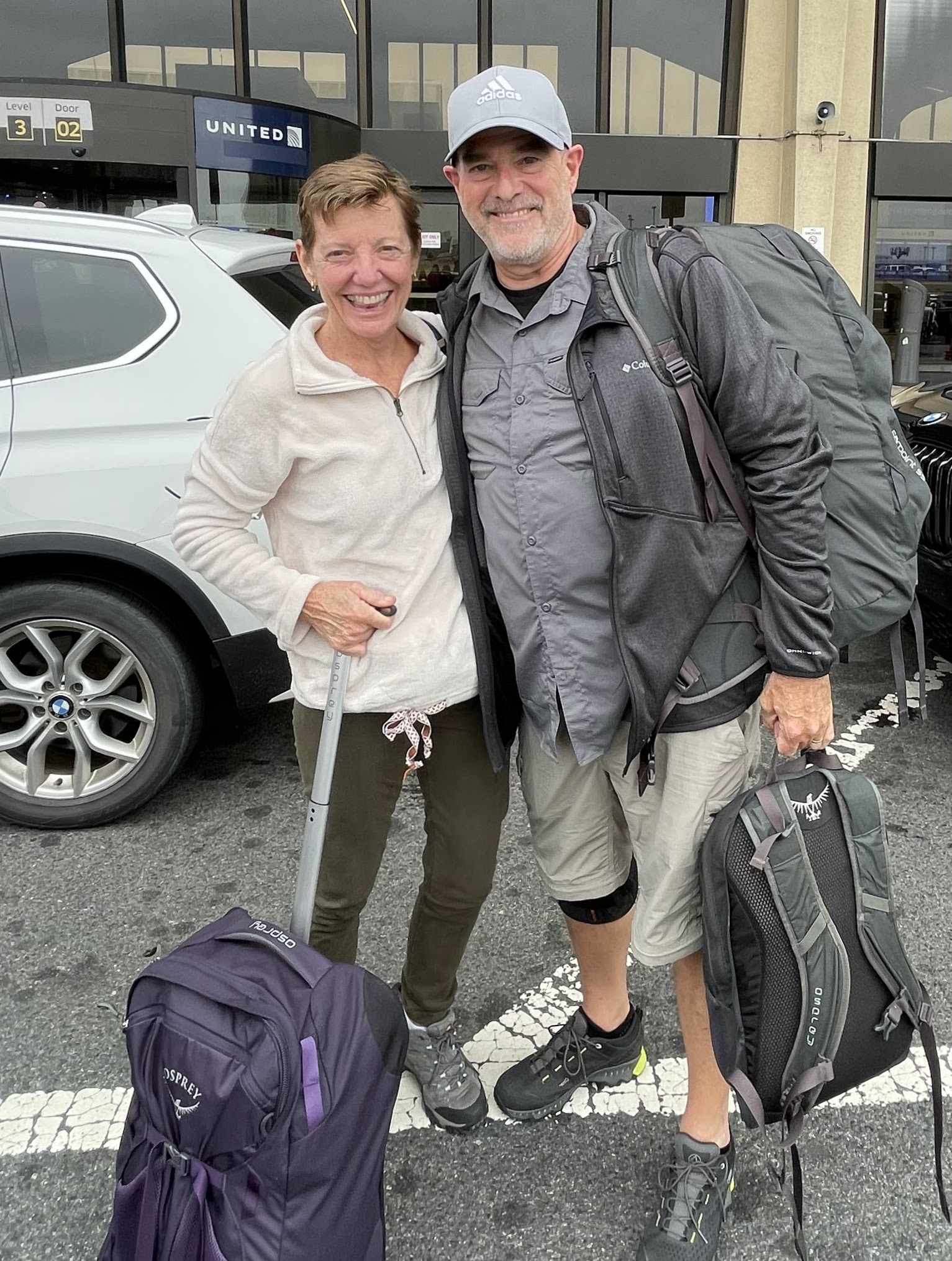

On January 12th, we said goodbye to Fremantle, Western Australia and took the local bus back to Perth to begin the next leg of our Australian adventure. We had planned a loop around the southwestern tip of the continent with stops and stays in several small towns along the way to what appeared to be the quintessential Western Australian beach town, a place called Esperance. (Every time we told someone we were going to Esperance, they would reply with “Ahhhhh, Esperance…”.)
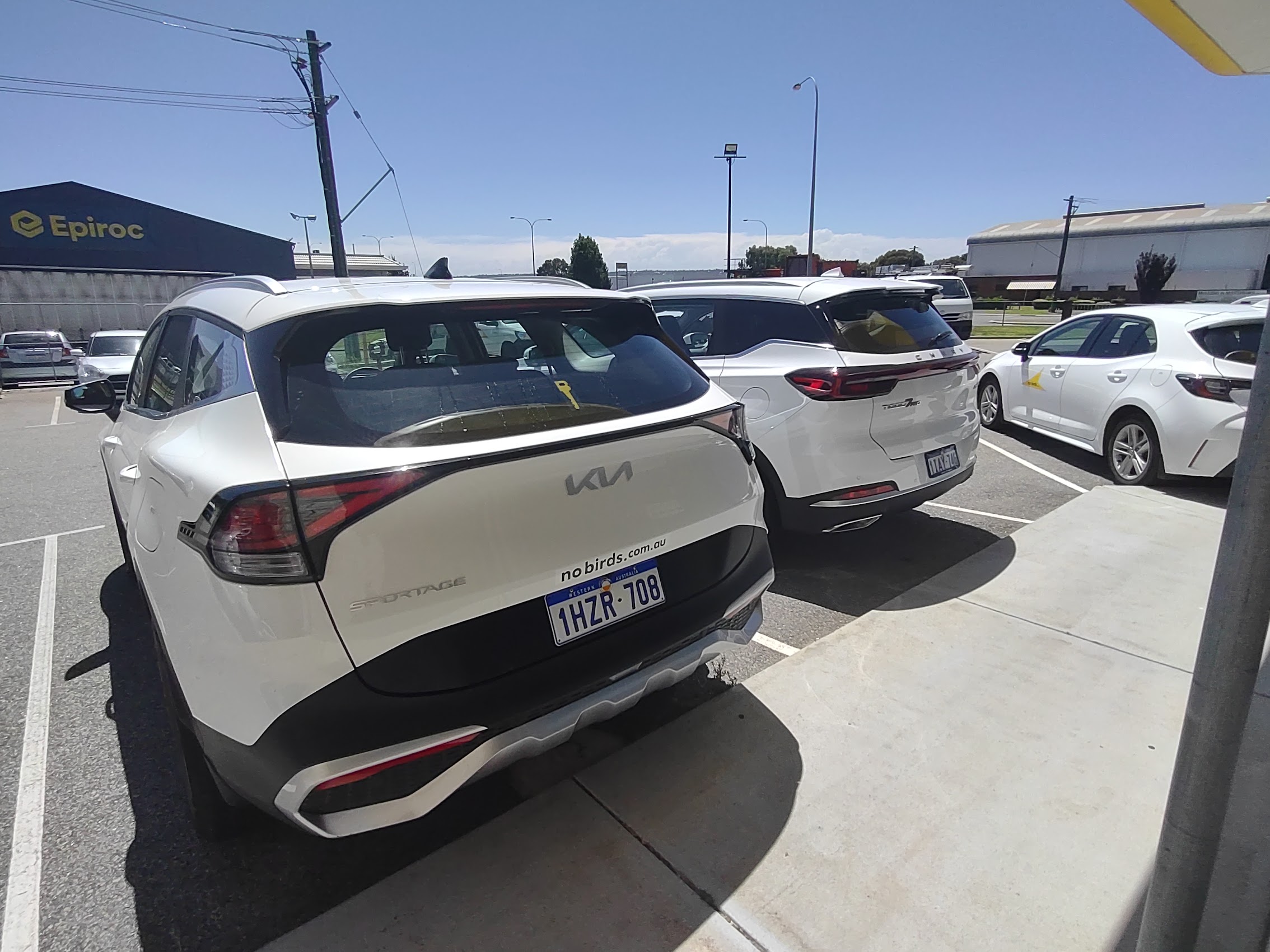
We initially looked at the option of travelling by bus on this leg, but found it to be pretty challenging logistically and surprisingly expensive and, perhaps most importantly, it would have greatly reduced our ability to be spontaneous and make stops where our fancy took us – something which seemed important on this leg of the trip. So, we did something which we haven’t done much on this trip – we decided to travel via rental car. From our bus stop in Perth, we headed to an Australian rental car place called “No Birds” (no idea!) where Colleen had gotten us a sweet deal on a Kia Sportage (less than $200 for 11 days!).

Based on our last rental car experience (and in anticipation of two weeks of driving in New Zealand with our friends the Maddens), we decided that things might work better for us all if Colleen drove and I navigated, a system which, I have to say, turned out to work pretty well. In addition to the ability to be more spontaneous and stop when you want, one of the luxuries of a rental car versus riding the bus is not having to worry about packing efficiently. We had acquired what we called “satellite bags” for things which didn’t need to be brought in from the car and added a collapsible cooler to our travel arsenal to allow us to transport perishable food from stop to stop.
And so, we settled ourselves and our now expanded luggage into our new transport and headed out for our first stop, a small town with the unlikely name of Gnarabup, about 280 kilometers down the coast from Perth.
The Giants of Mandurah
We had one planned stop on our way to Gnarabup in Mandurah, a sea-side town about an hour south of Perth which is known for a series of wooden plank sculptures known as “The Giants of Mandurah”. The Giants are the work of Danish sculptor Thomas Dambo whom we suspected (and later confirmed) is also the creator of similar sculptures Colleen had seen on one of her “Sisters of the Travelling Pants” trips to Maine.
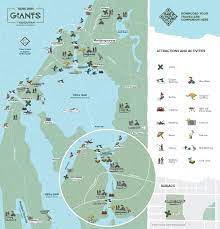
The Giants are scattered up and down the coast from Mandurah and they make a bit of a game of finding them. There are five Giants inspired by a poem written by the Artist which is about the cycle of water from the ocean to clouds to rain and back to the ocean. You start at the Giants of Mandurah Information Center where you are provided with a “Traveler’s Companion” with a map and clues as to where each of the five Giants is located and, if you visit all five and collect the clue each one provides, the location of a sixth “secret” Giant is revealed.
We stopped in the Visitor’s Center and grabbed a Traveler’s Companion, then two coffees and found a shady spot to study the map. We quickly realized that one of the five Giants was back in Perth, so we ruled out any thought of discovering the secret Giant. We identified two Giants which appeared to be more or less on our route south along Highway 1 (the Old Coast Highway) and decided to check them out.

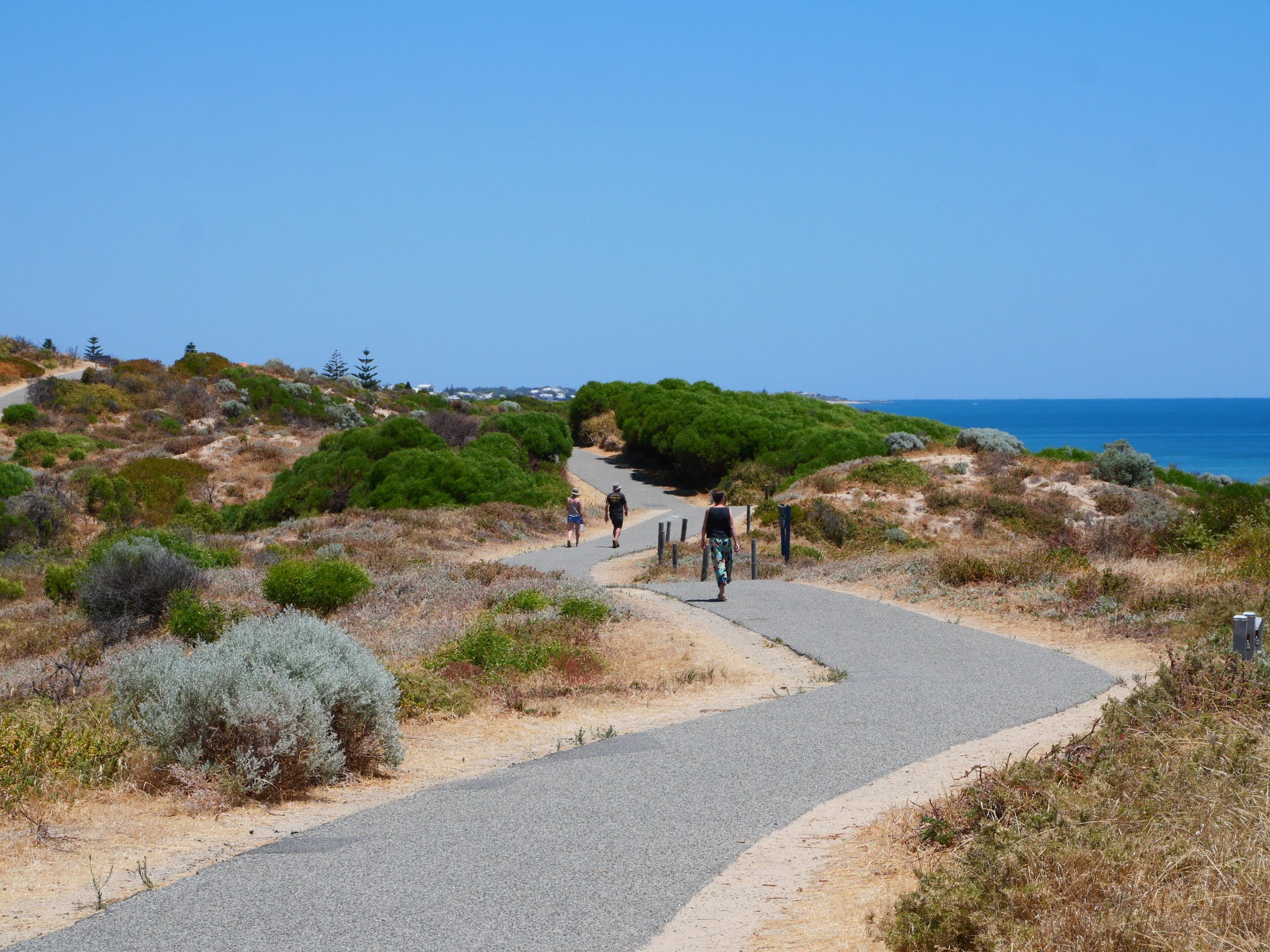
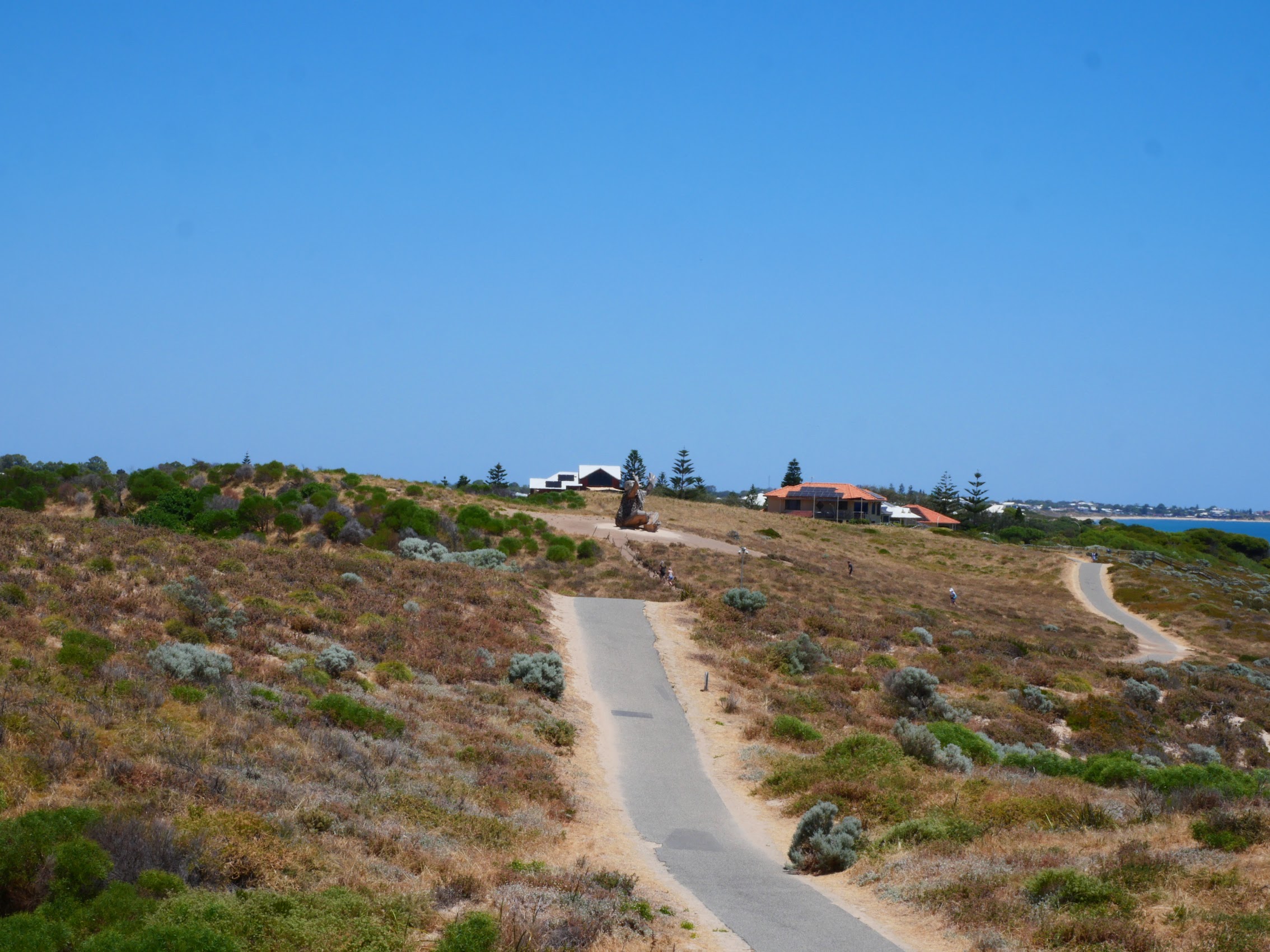
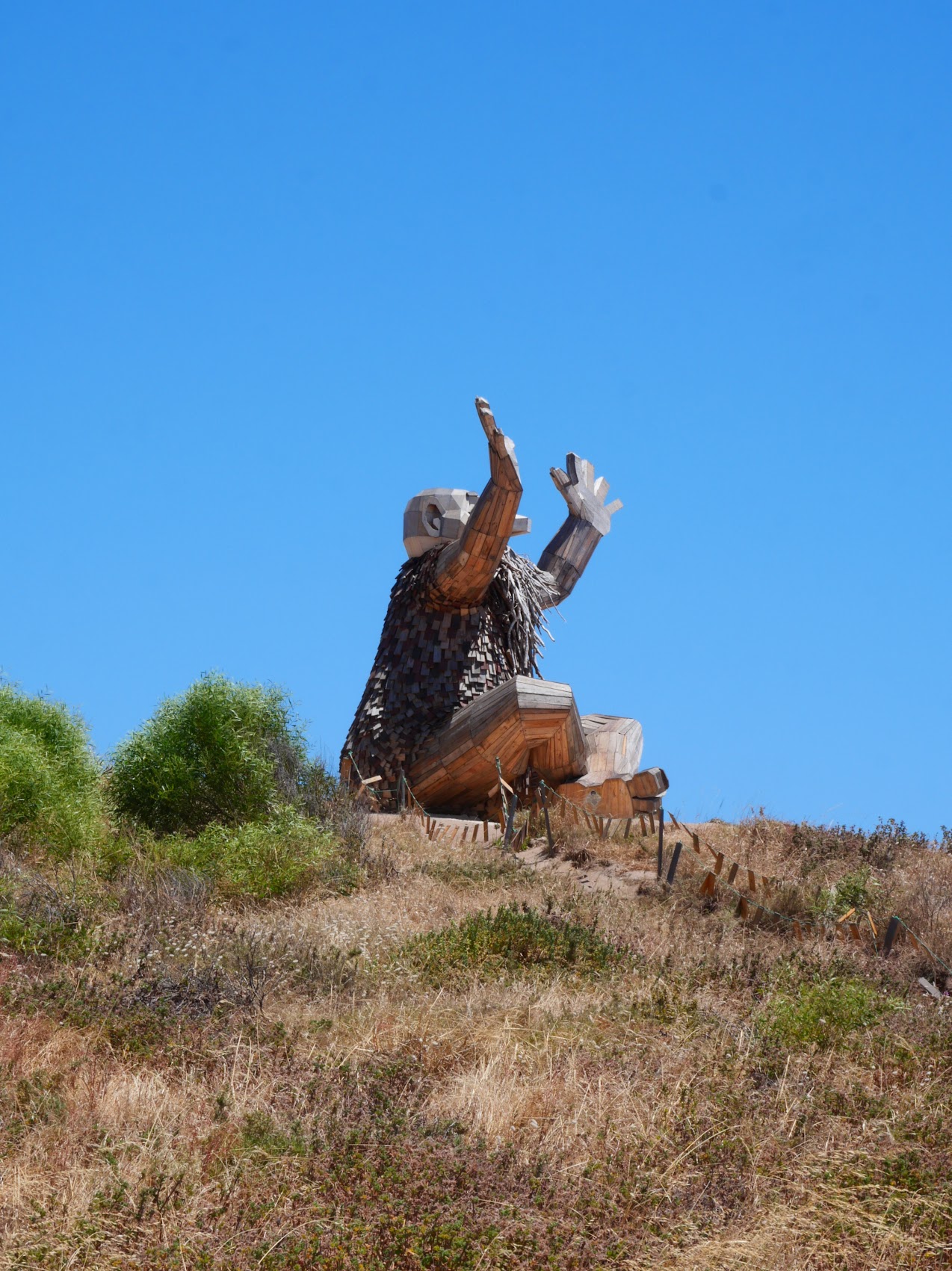
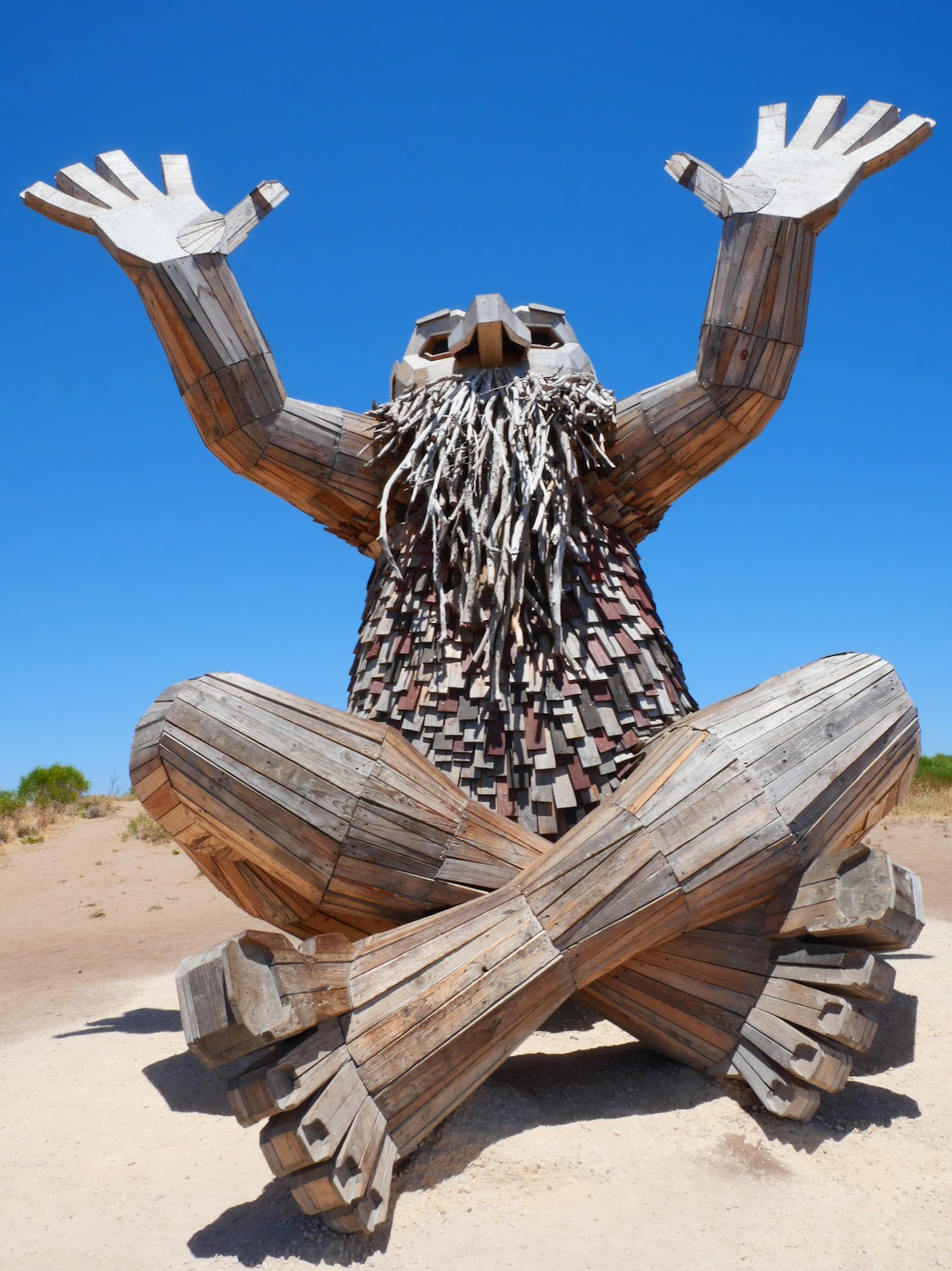
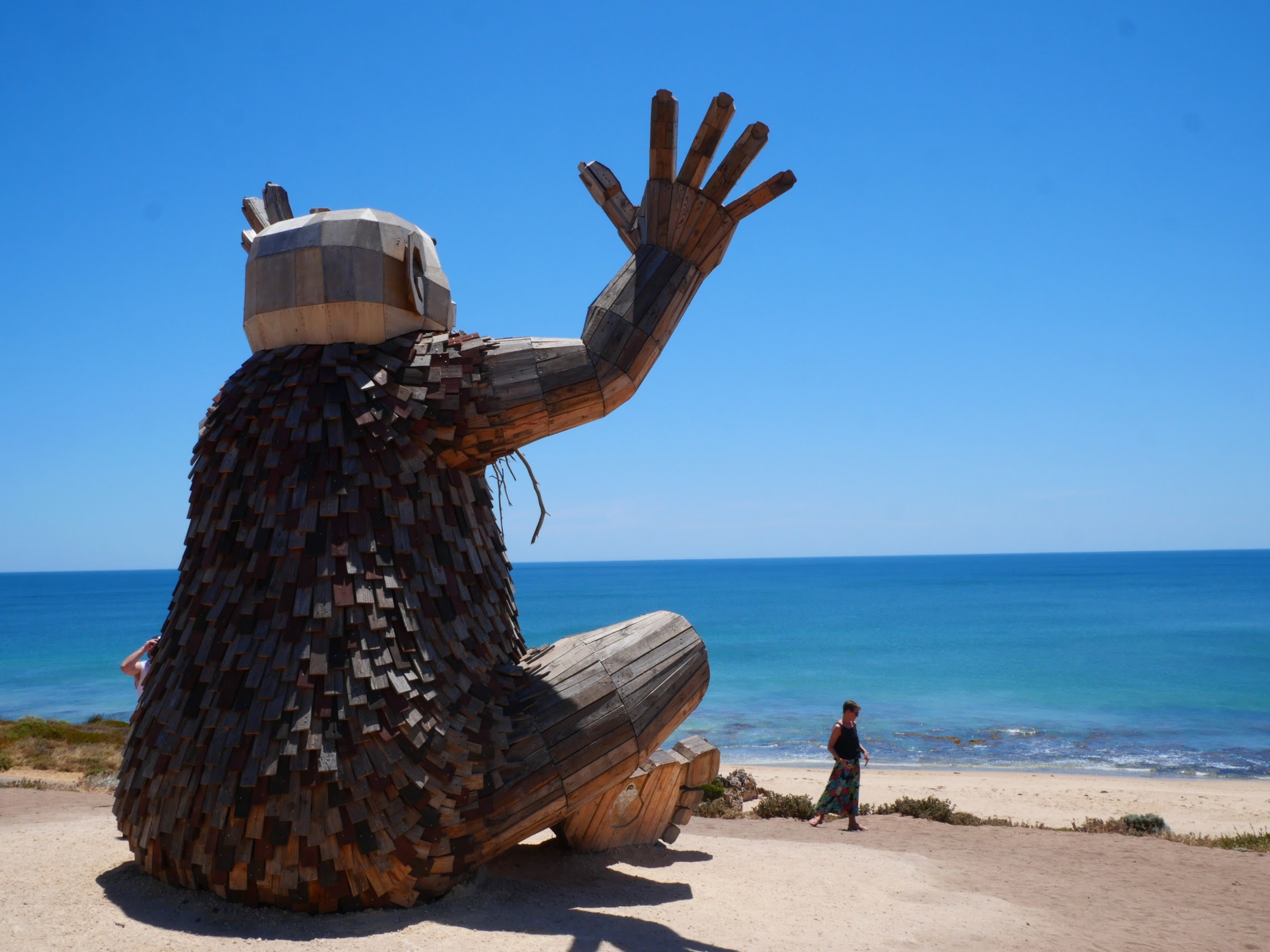
The first of these was Santi Ikto and (as is apparently the case with all the Giants) a bit of a hike was necessary in order to reach it (these are not “drive-up” attractions). From the parking area we followed a path with some nice ocean views which wound down along the coast for about a kilometer before our first Giant came into view. Because of the open ocean landscape, the scale of the sculpture is a little deceptive from a distance but once you get close you realize that it really is giant. Santi Ikto, who had a large beard, was gazing out across the Indian Ocean with his arms apparently raised to the sun.
From Santi Ikto, we drove about 10 kilometers south to the parking area for another Giant, Seba’s Song, which we discovered after another about 1 km hike. Seba’s Song gazes across Collins Pool, the large bay below Mandurah, with a horn under one arm. The absence of a beard suggested that Seba might be female (but I’m no expert on the gender of giants).
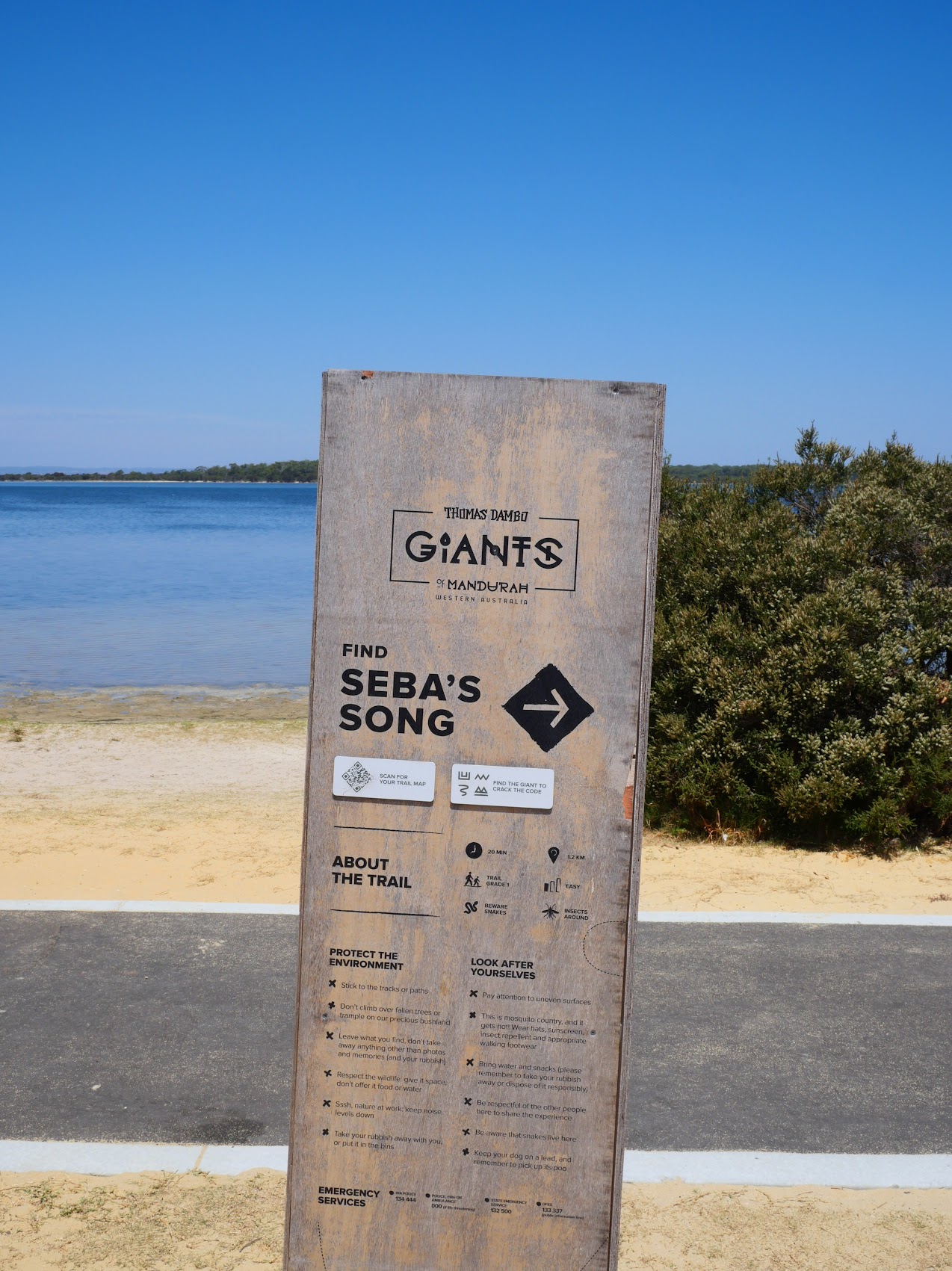

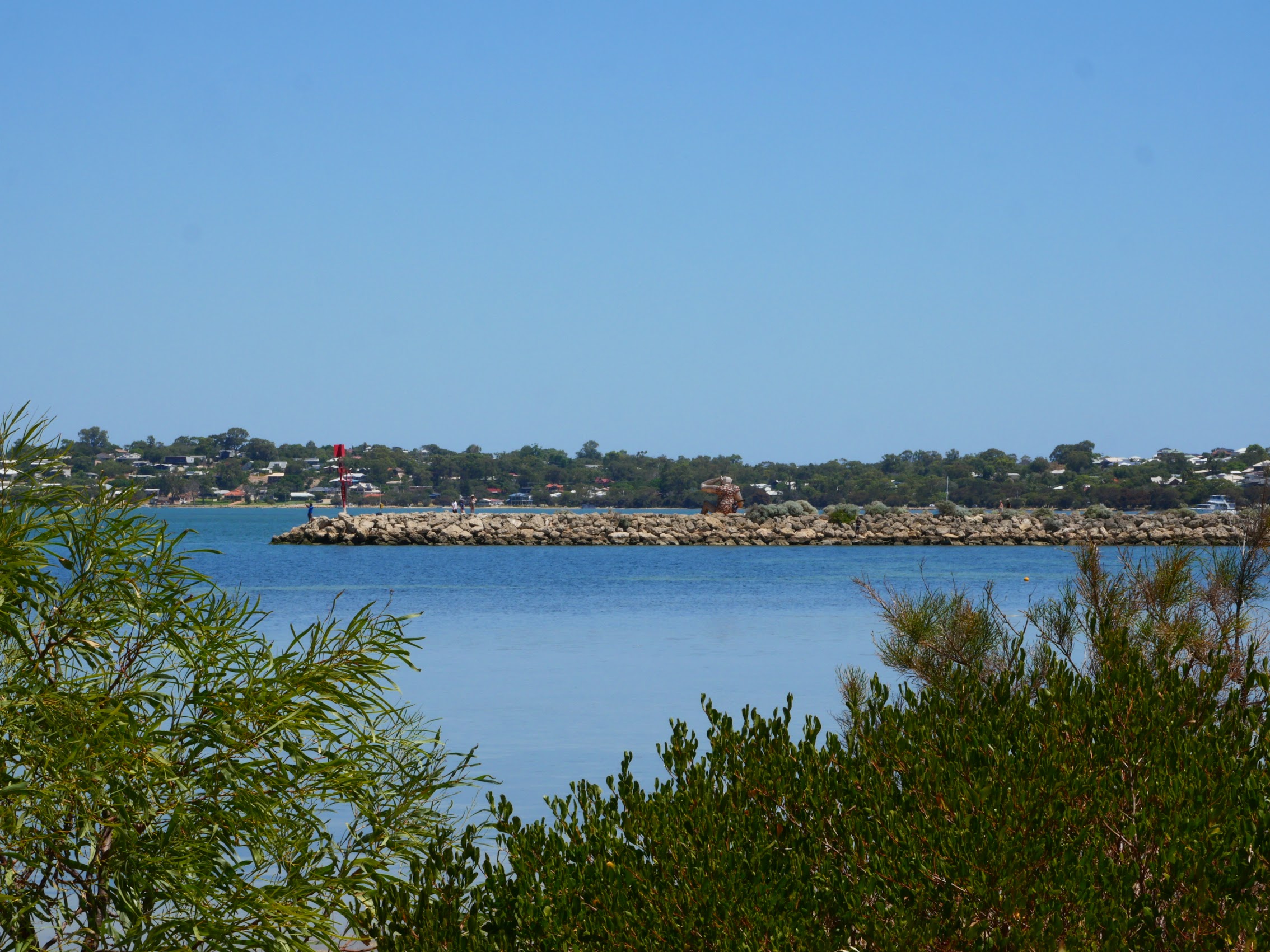
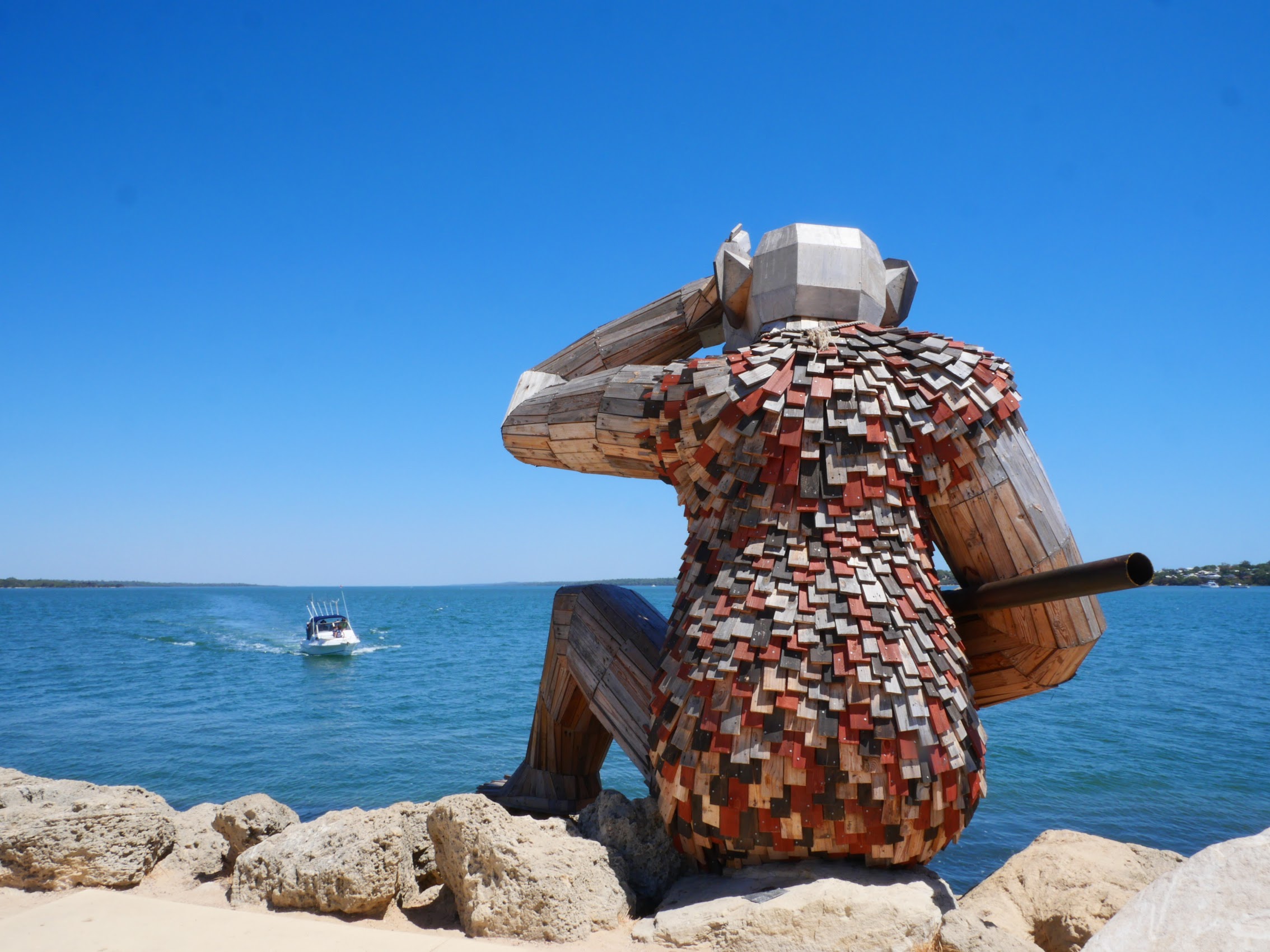

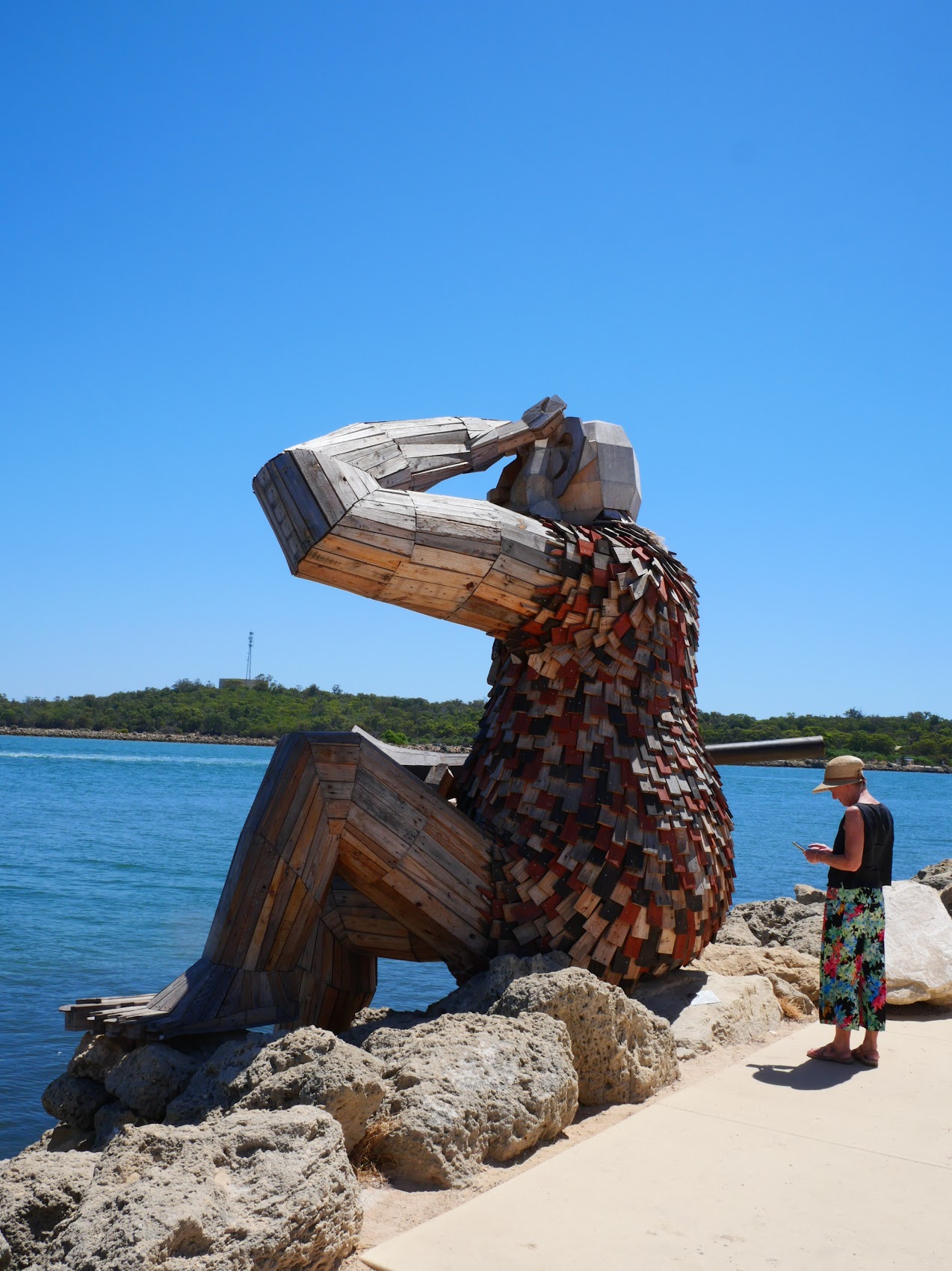
The sculptures, which were less than two years old when we saw them, were nicely weathered and fit well with the natural landscapes within which they were situated. Along the way we discovered that there is actually a lot to this installation beyond just the sculptures and it was easy to imagine how you could spend a pretty fun and entertaining day or two with kids finding each of the five Giants and collecting clues in order to find the sixth “secret” Giant. (See https://www.giantsofmandurah.com.au/)
Our First Australian Beer Garden
We continued south along the coast down old Highway 1 which pretty quickly became nothing but trees and tarmac and, after about 45 minutes of driving, we saw a sign for the Old Coast Road Brewery. Although it wasn’t on my beer radar, by this time we were feeling a bit hungry and uncertain regarding what or when other eating options might present themselves, so we decided to give it a shot. What we discovered was what would be the first of many extremely family and pet friendly Western Australian beer gardens which we would enjoy. This one was nothing particularly fancy, with a shop and restaurant and a large shaded seating area and tables, umbrellas, and games scattered around a large lawn area surrounded by farm fields.
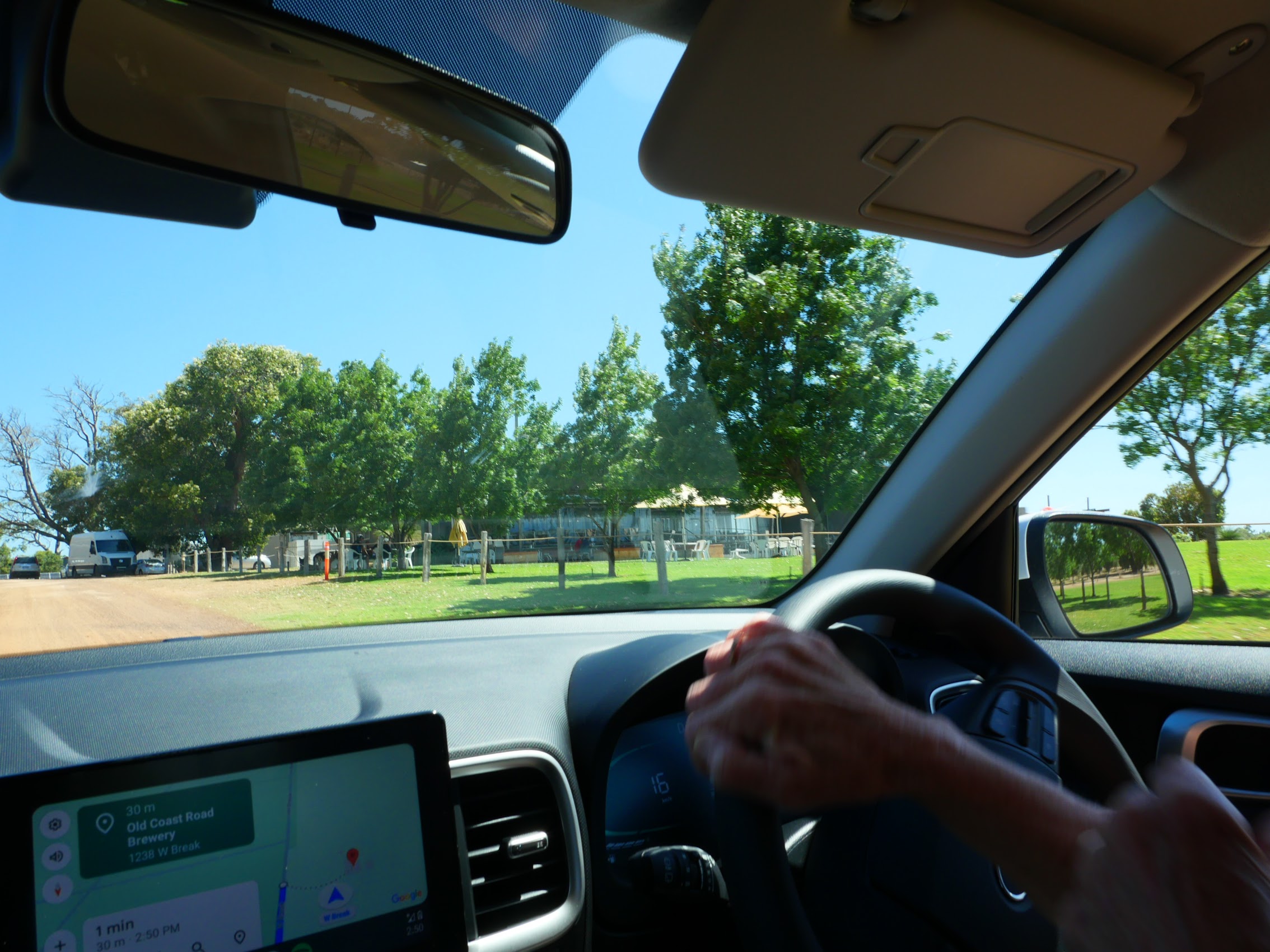
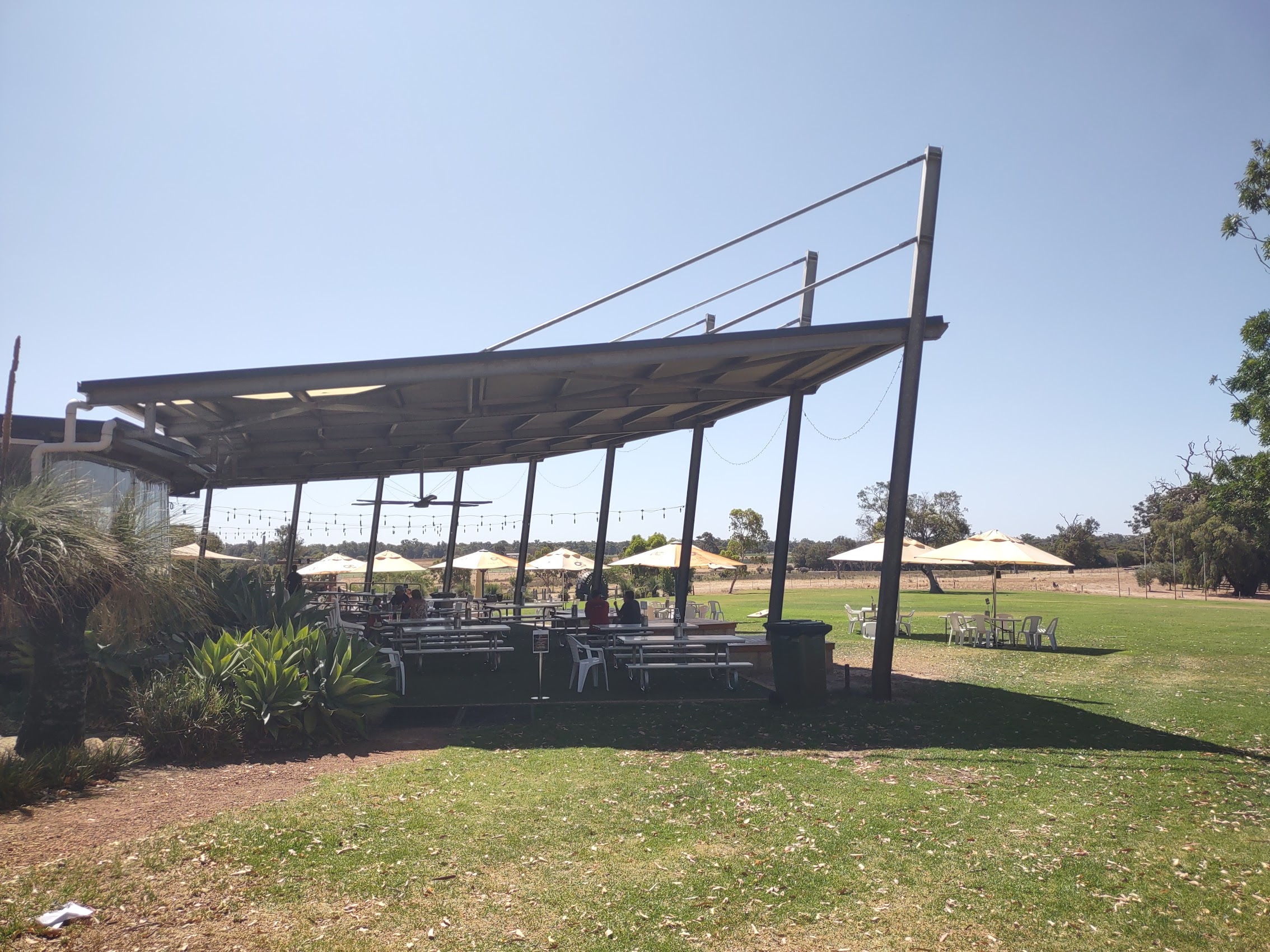
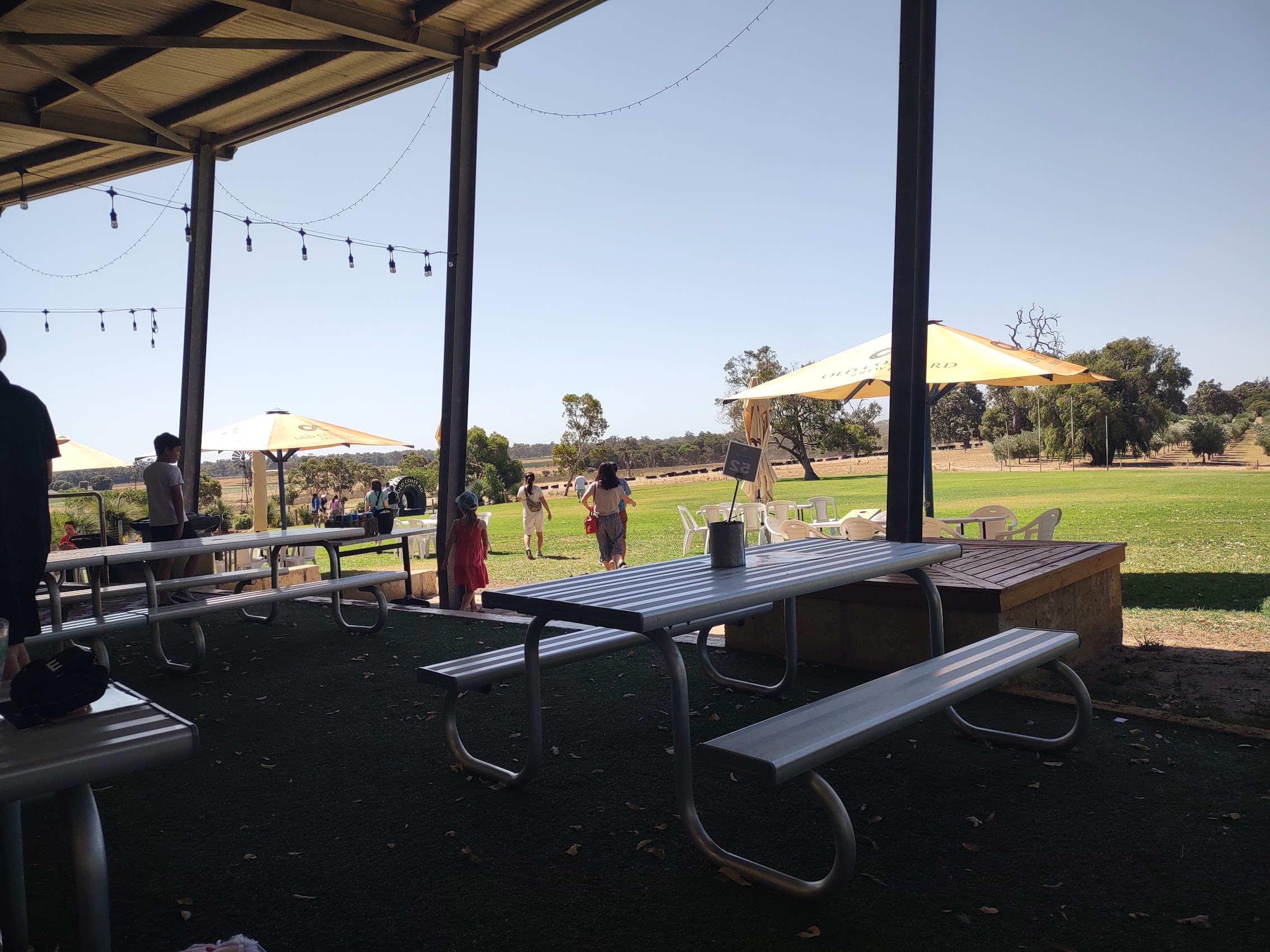
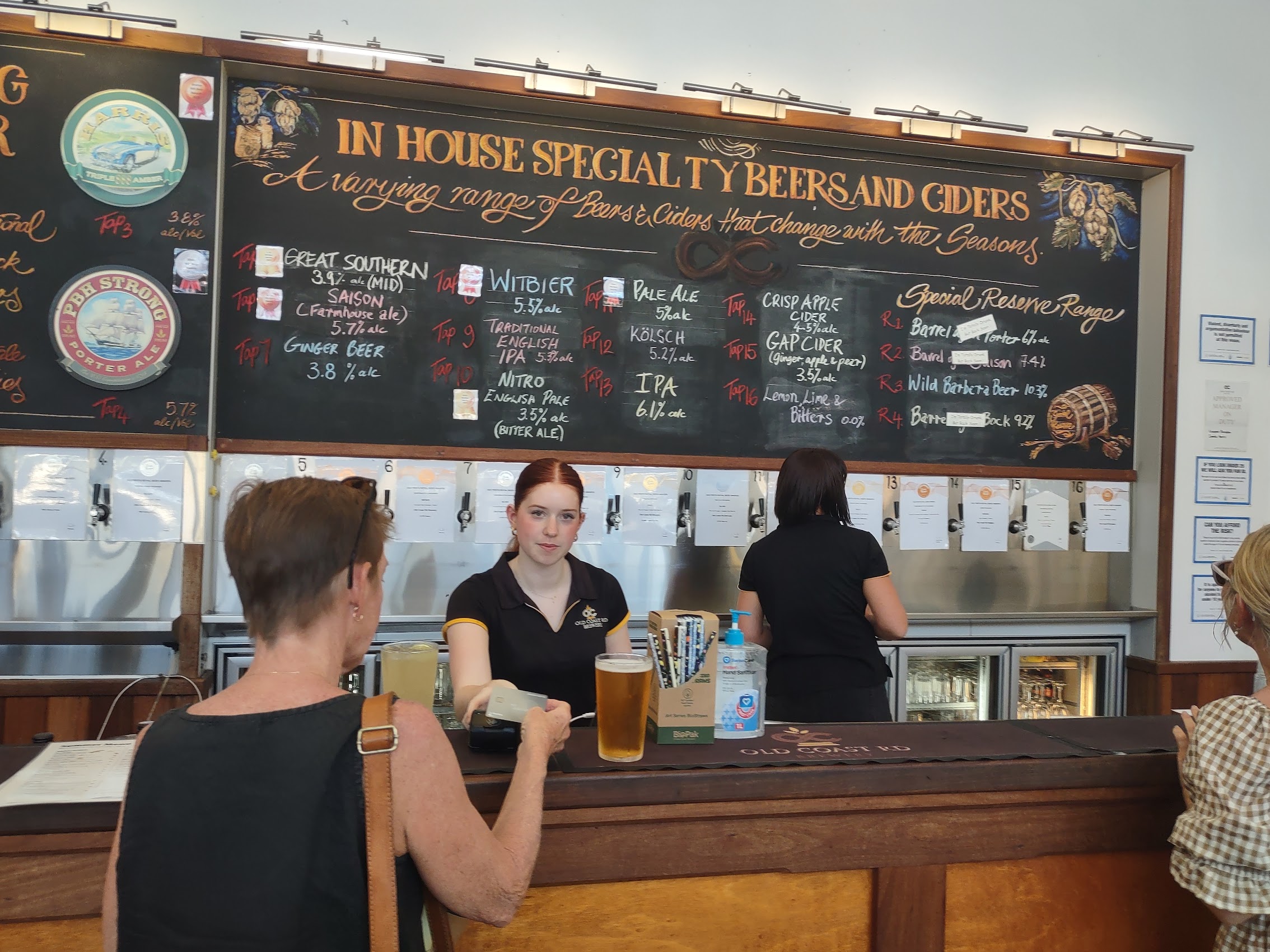

They had twenty beers on tap but, unfortunately, none of them were sour ales, so Colleen tried a lemon-lime with bitters (a drink destined to become one of our favorites in Australia!) while I went for an IPA. We ordered a pizza and fries, both or which were quite good, and relaxed in the shade with our cold beverages.
Given that it was a Friday afternoon, the place was not too crowded, but one could imagine what it must be like on weekends. Sated for the moment, we got back in the car and continued on our way south passing through many small towns with traditional names like Myalup, Binningup, Dalyellup, and Cowaramup, as well as the larger towns of Bunbury and Busselton, arriving after about two hours in the Margaret River Valley and our first stay in the town of Gnarabup.
Gnarabup
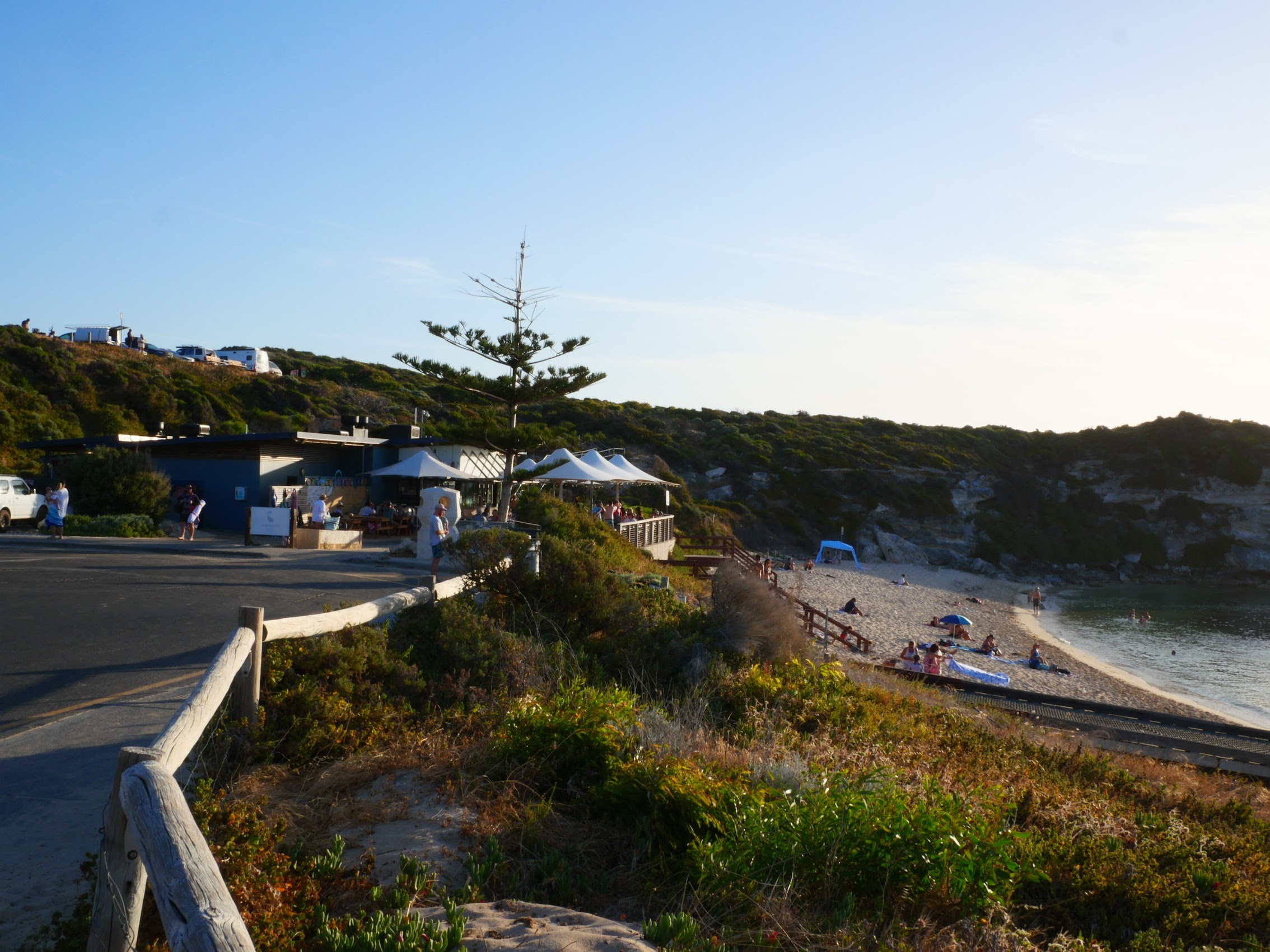
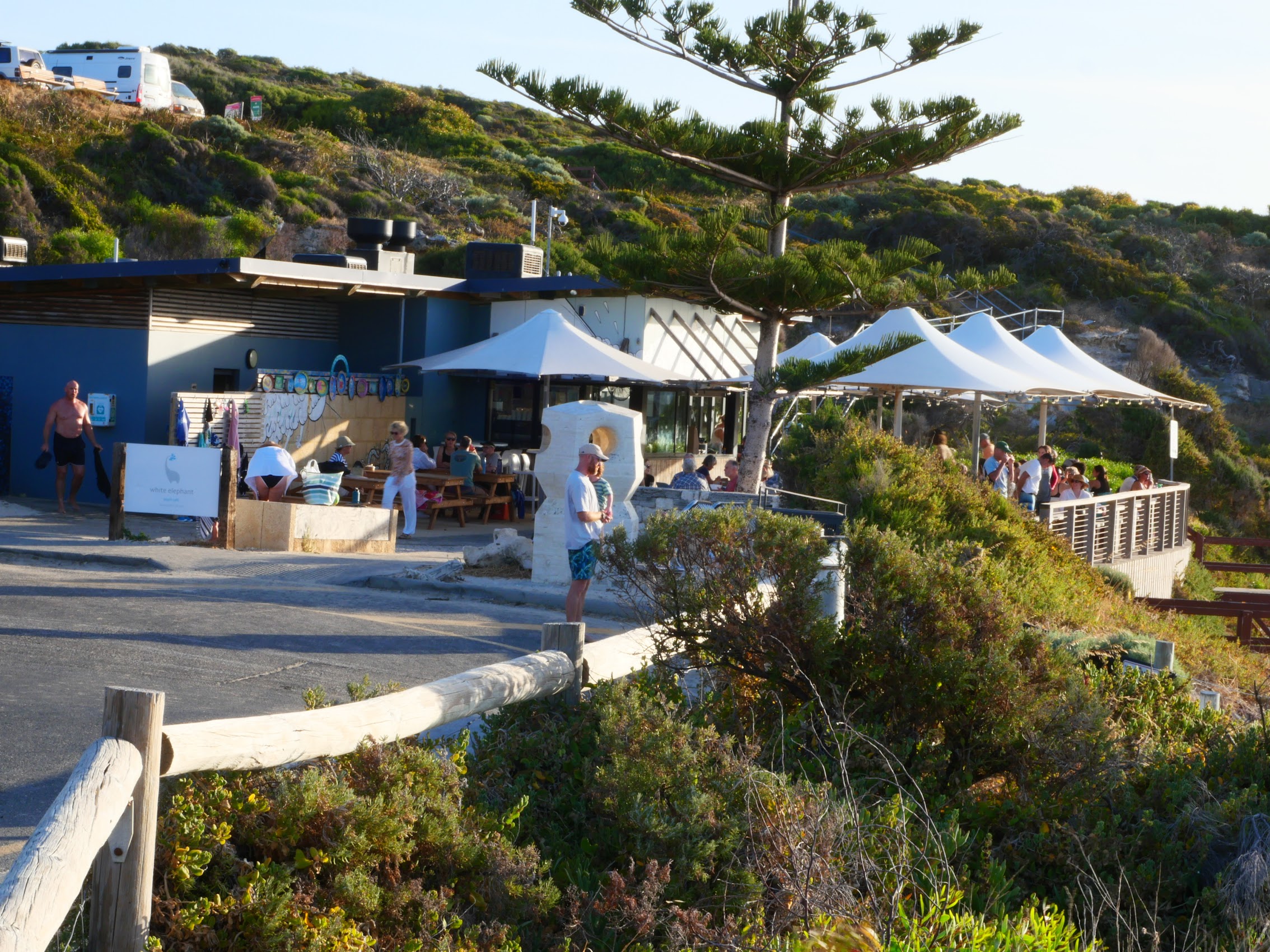
Gnarabup (which means “place of the ring-tailed possum”) is a very small coastal town of about 500 people in the Margaret River region of Western Australia. Other than being a bit fascinated with its name, we chose Gnarabup because of its location on the coast and proximity to a restaurant there called the White Elephant Café which we had read about and seen in a number of travel videos. If you’re not aware of it, the Margaret River Valley is considered to be one of Australia’s premier wine regions, so we were excited about the possibility of sampling a bit of that as well.
Our place in Gnarabup was a small purpose-built studio which our hosts had constructed in their back yard. (We found that due to lax or non-existent zoning regulations this is not uncommon in Western Australia.) The studio came with a large private bath with laundry but, due to plumbing limitations, it was located adjacent to our host’s house down a short boardwalk which we discovered became “possum alley” at night. (Given the warm dry weather, it was fine, but I don’t think I would want to try it in the rainy season.)
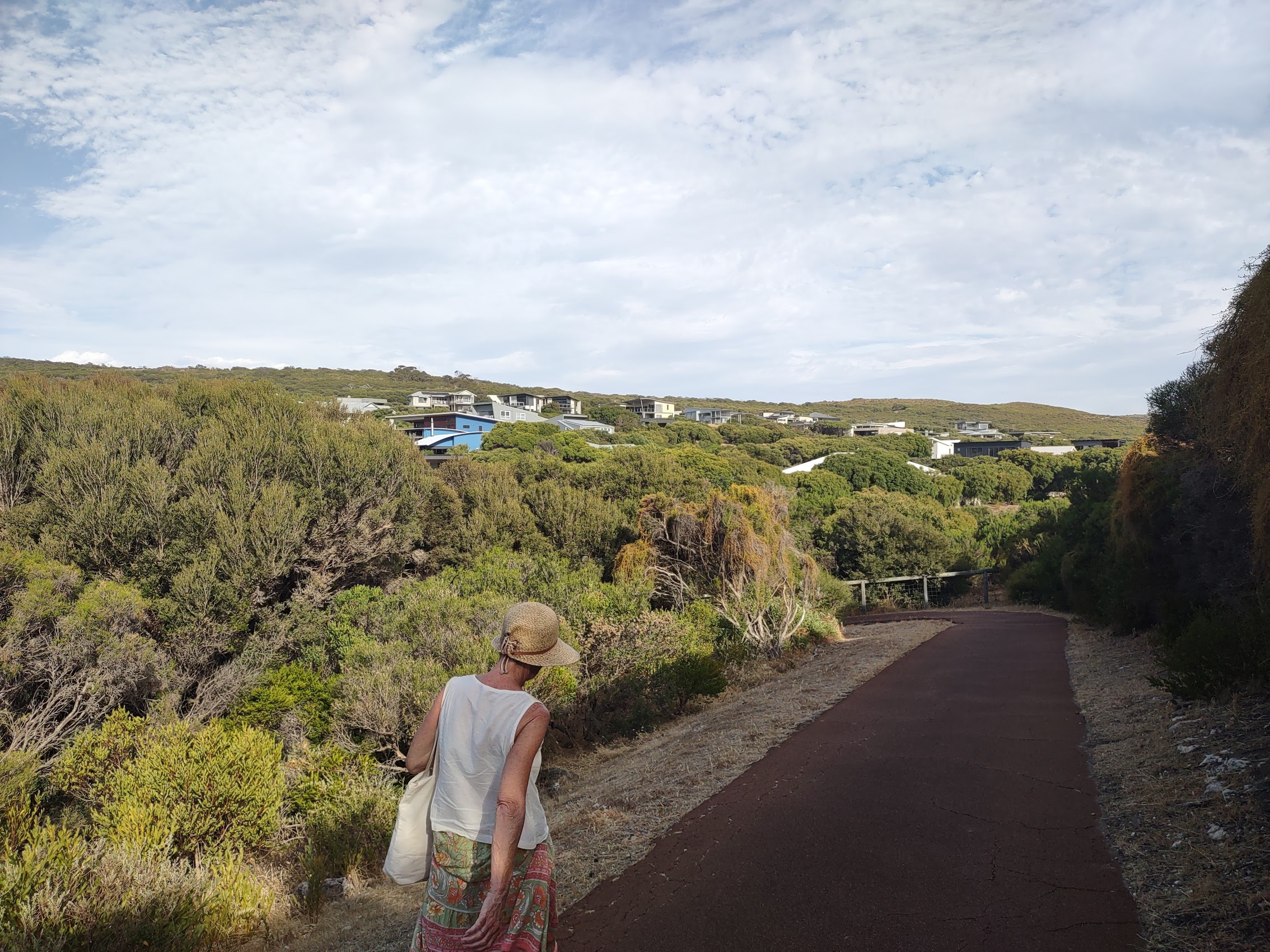

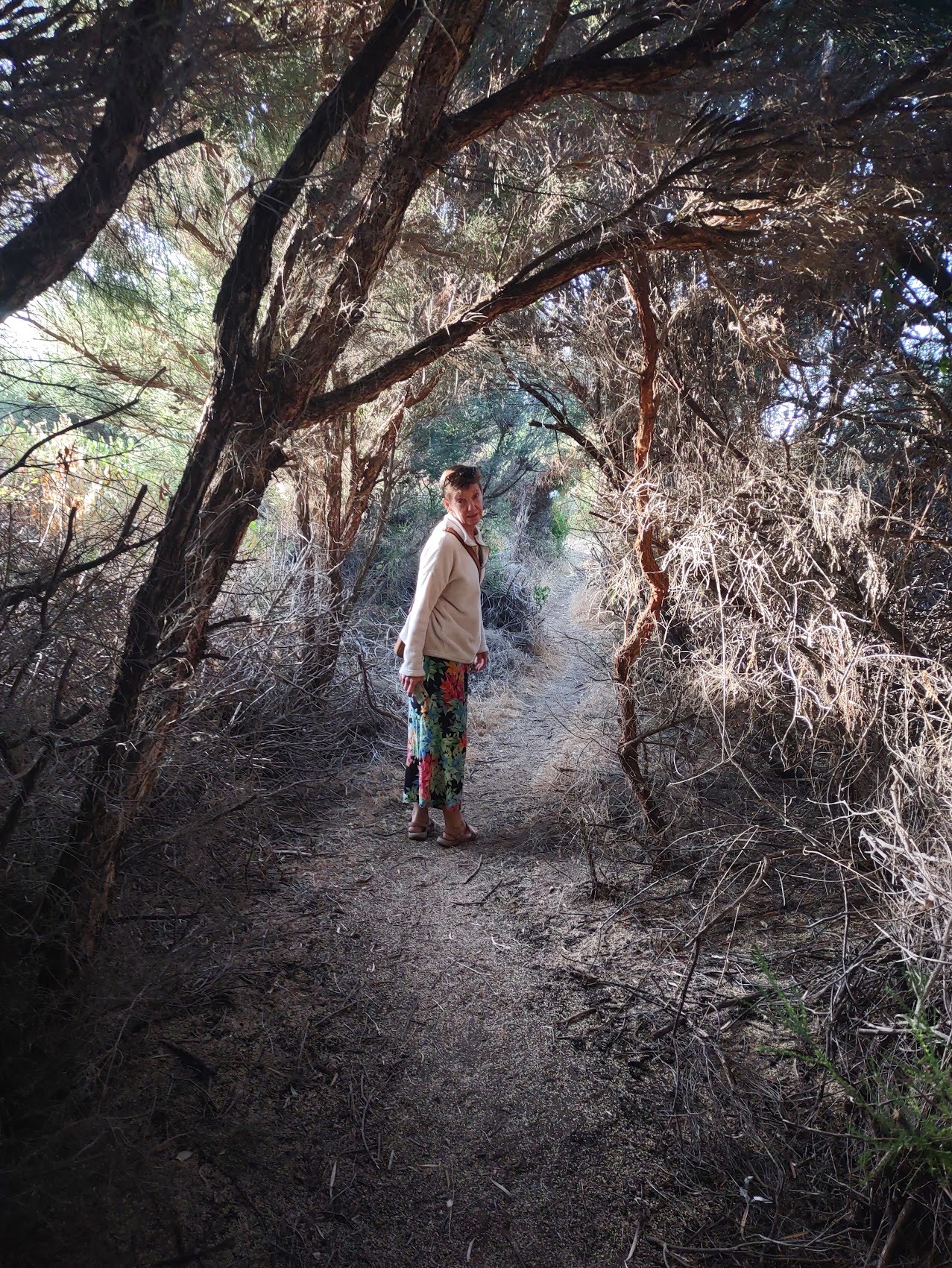
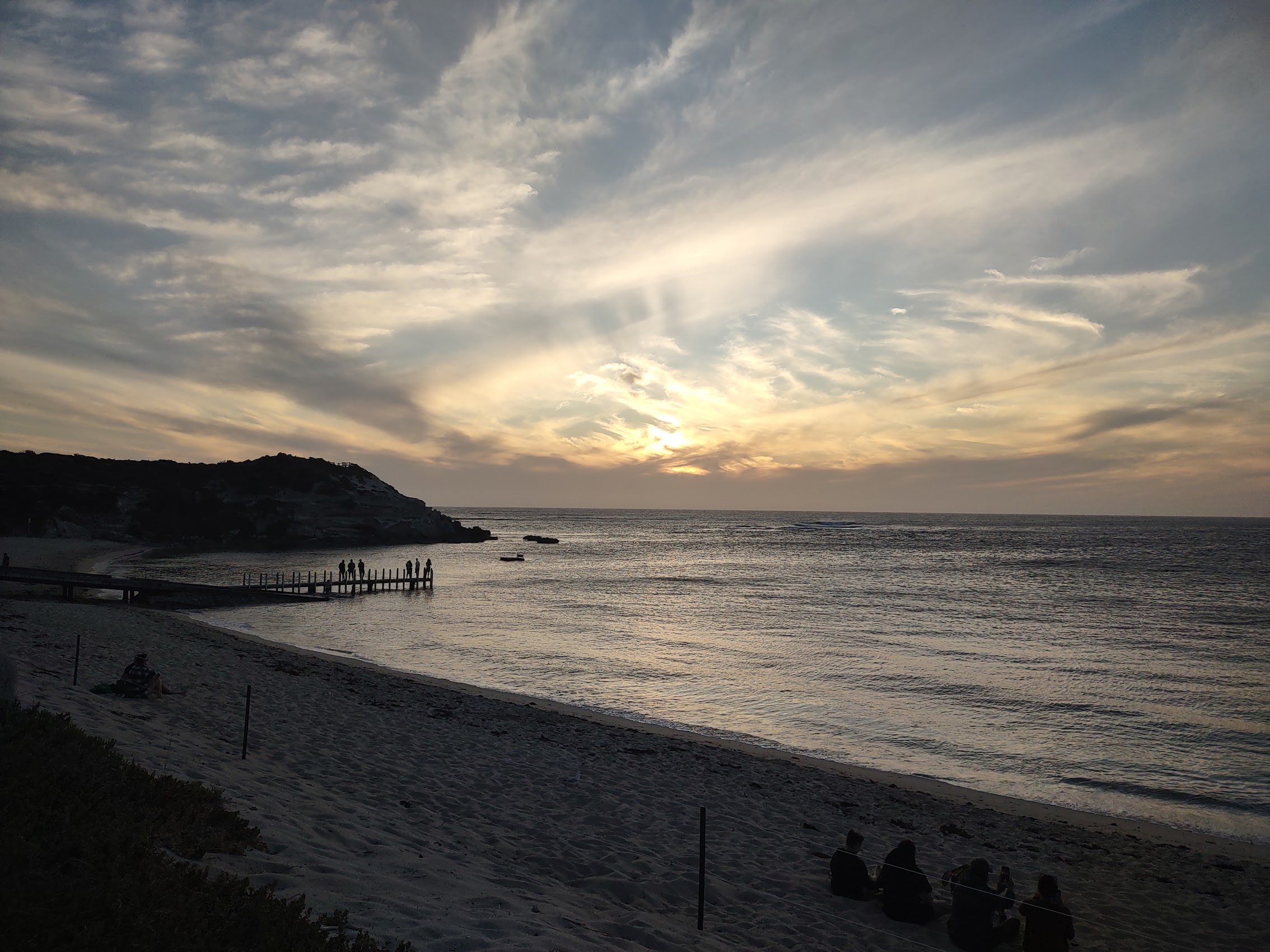
All in all, the place was great – clean, private, and just a short walk to the beach where we decided to go to watch the sunset on our first evening there. Our host advised us of a shortcut through the bush but warned us to keep an eye out for snakes. Surprisingly undeterred (or just determined to get to the beach as quickly as possible), Colleen led the way along a path which was actually more of a tunnel, applying the noise-making skills she had acquired while wandering the back alleys of Kolkata and Phnom Penh.
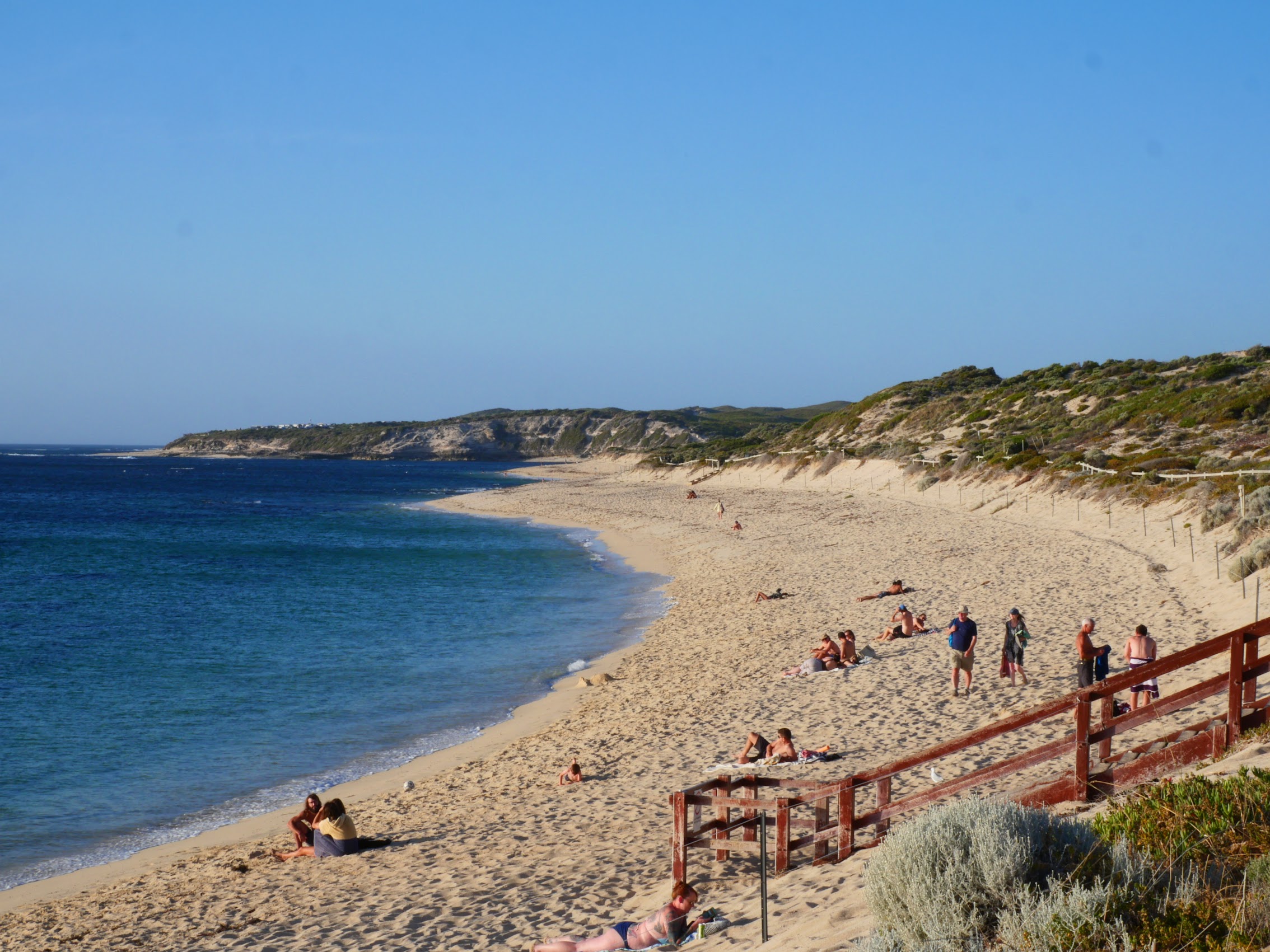
We eventually found our way out of the bush and followed a road up a hill which crested at the White Elephant Café and got our first look at Gnarabup Beach which seemed pretty uncrowded for a Friday afternoon. We found a nice spot on the beach and relaxed as the sun slowly descended on our first day in Gnarabup.
A Wine Tour
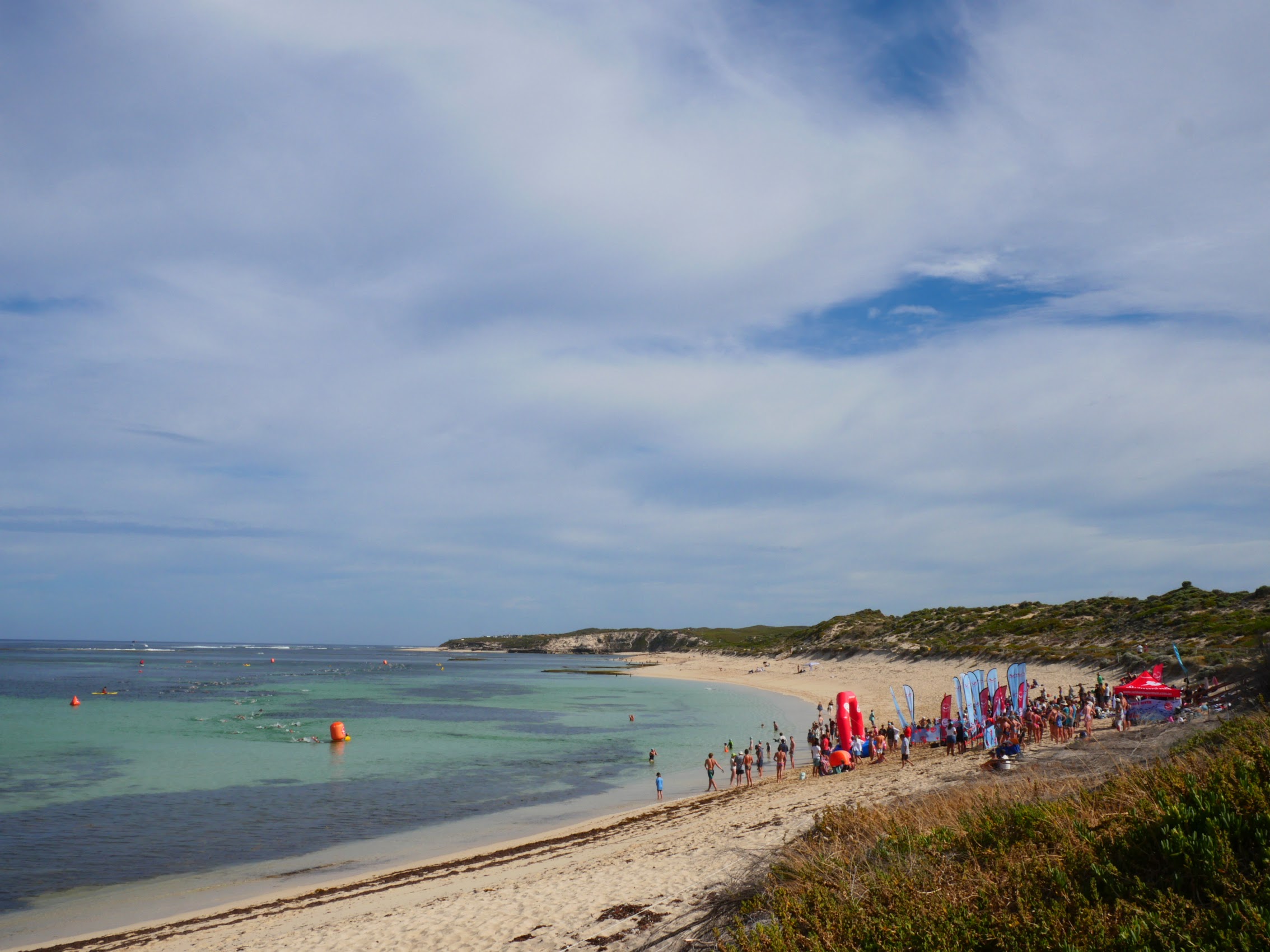
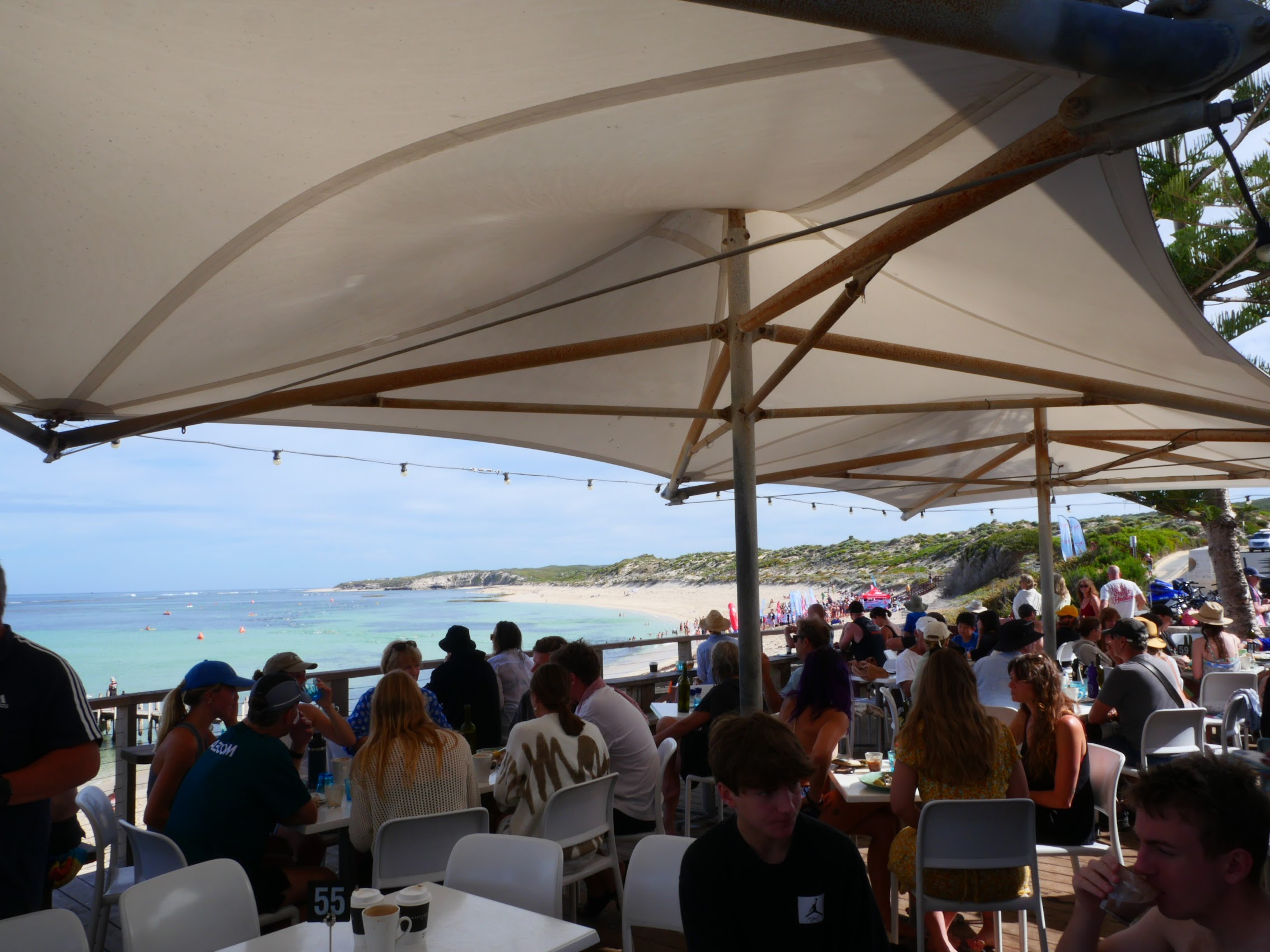
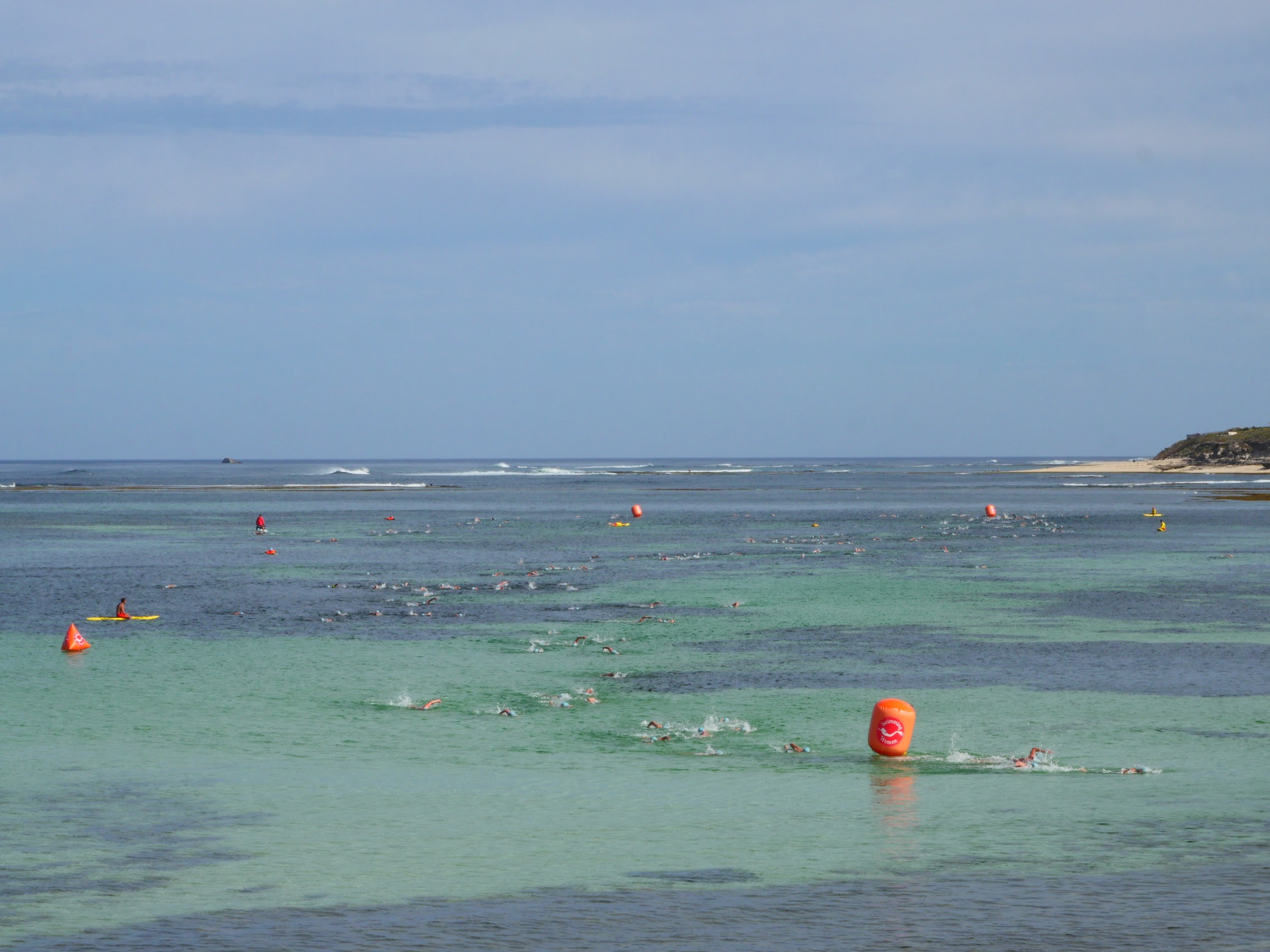
For our first (and last) full day in Gnarabup, we booked a Margaret River Valley winery tour. We were scheduled to be picked up at the White Elephant Café and left a little early to grab a coffee. When we got there, we were surprised to see what seemed like the entire town turned out for a big annual swimming event and we spent some time mingling with the crowd and watching some of the races.
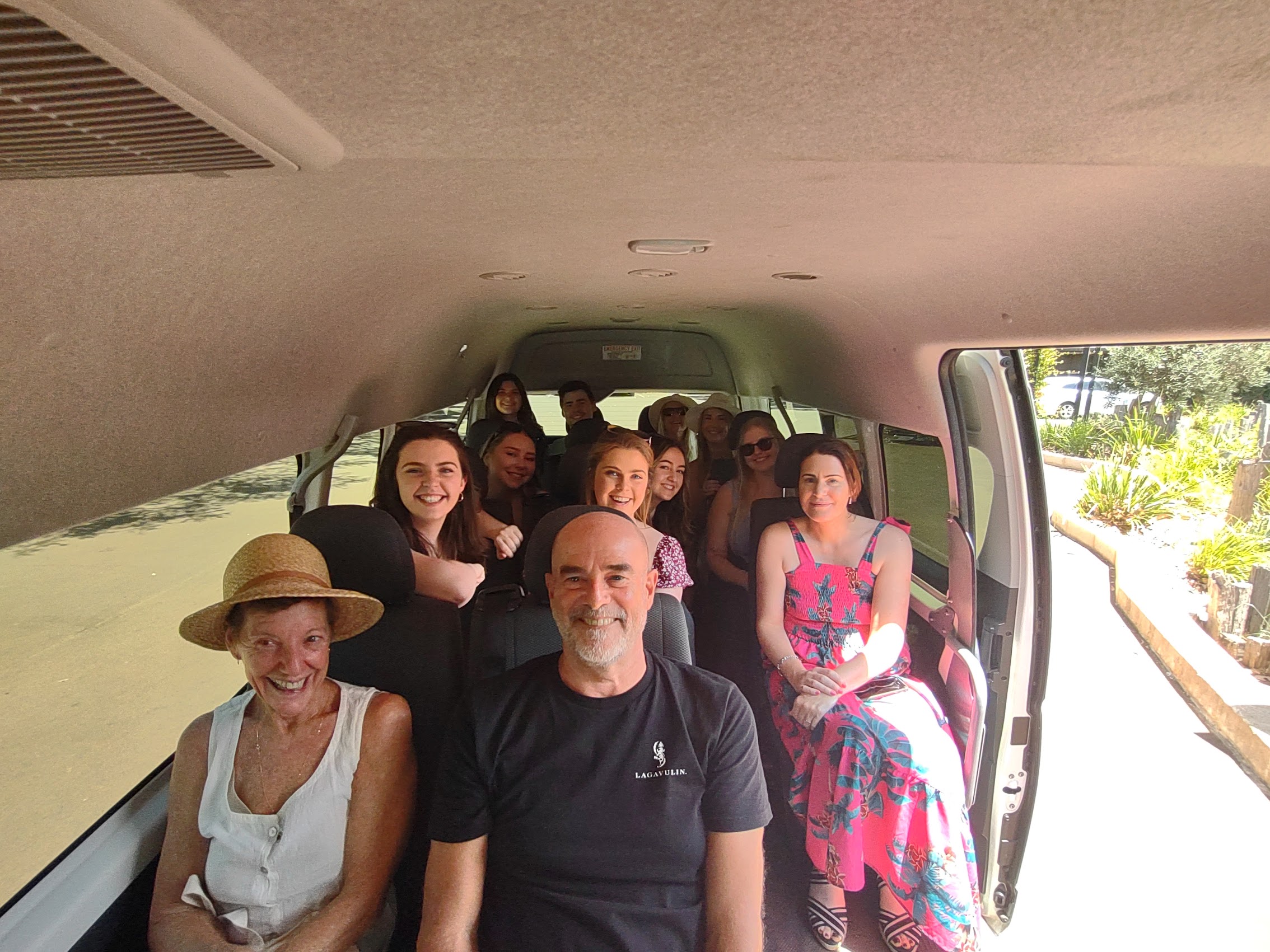
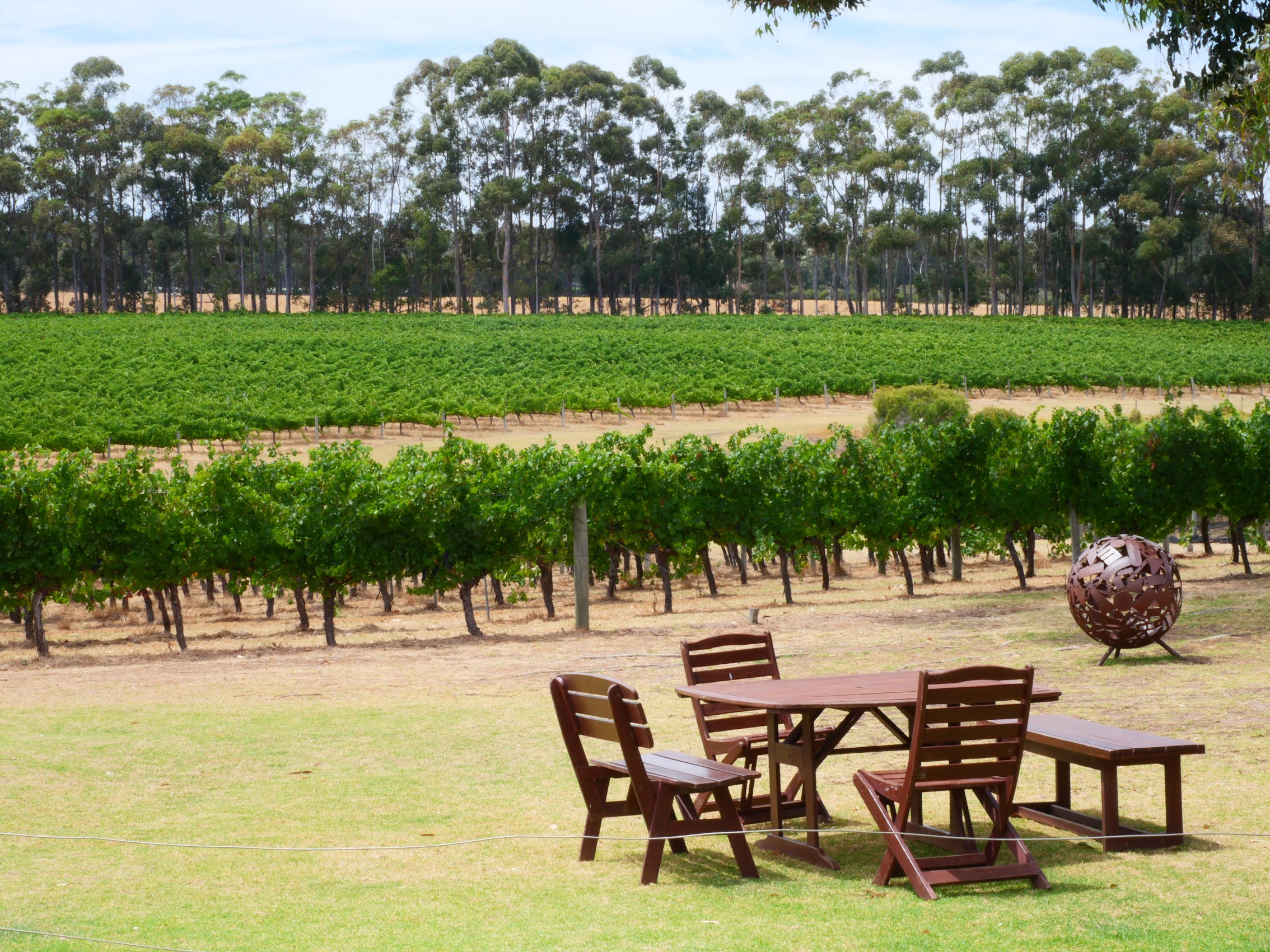
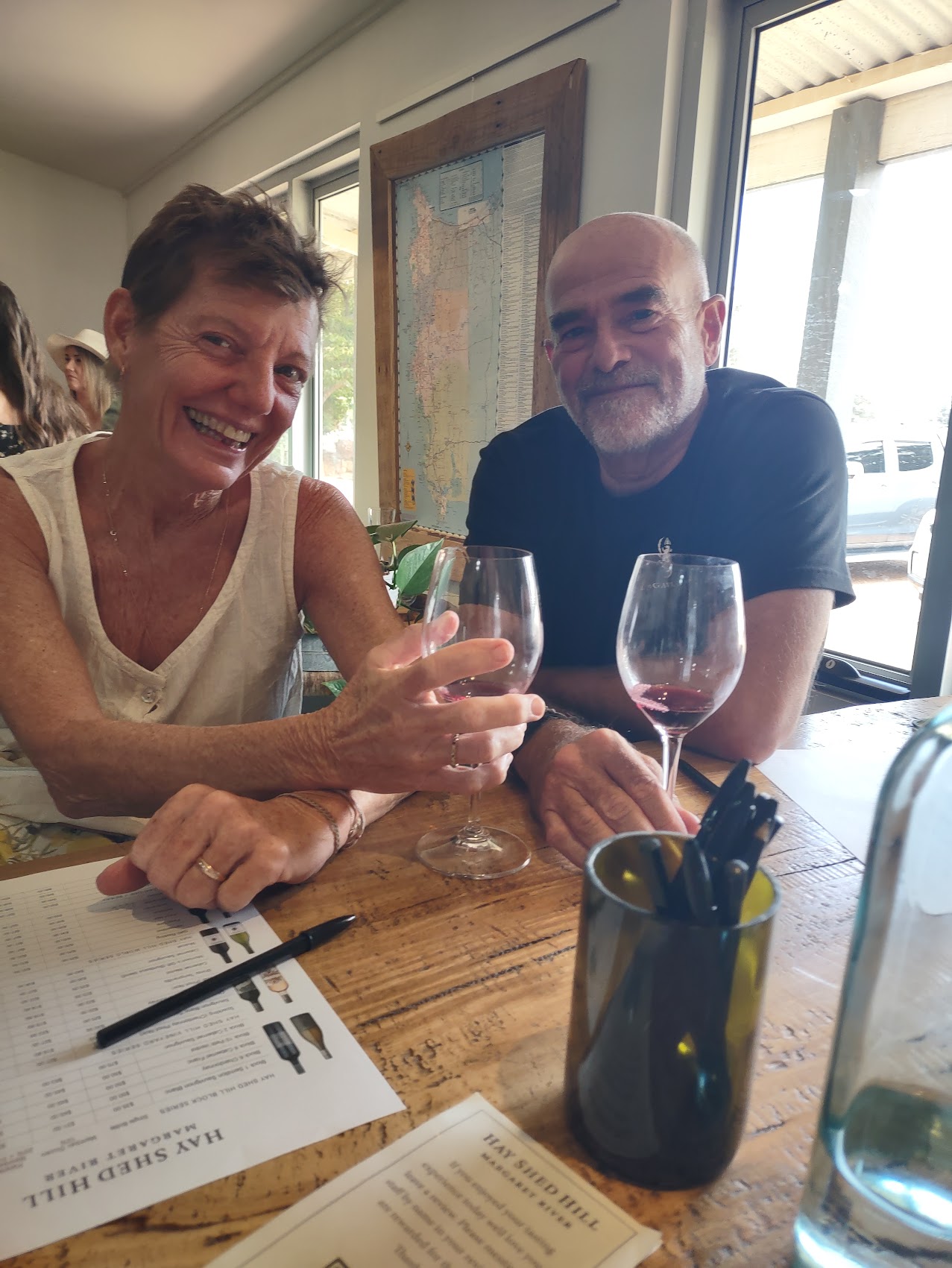
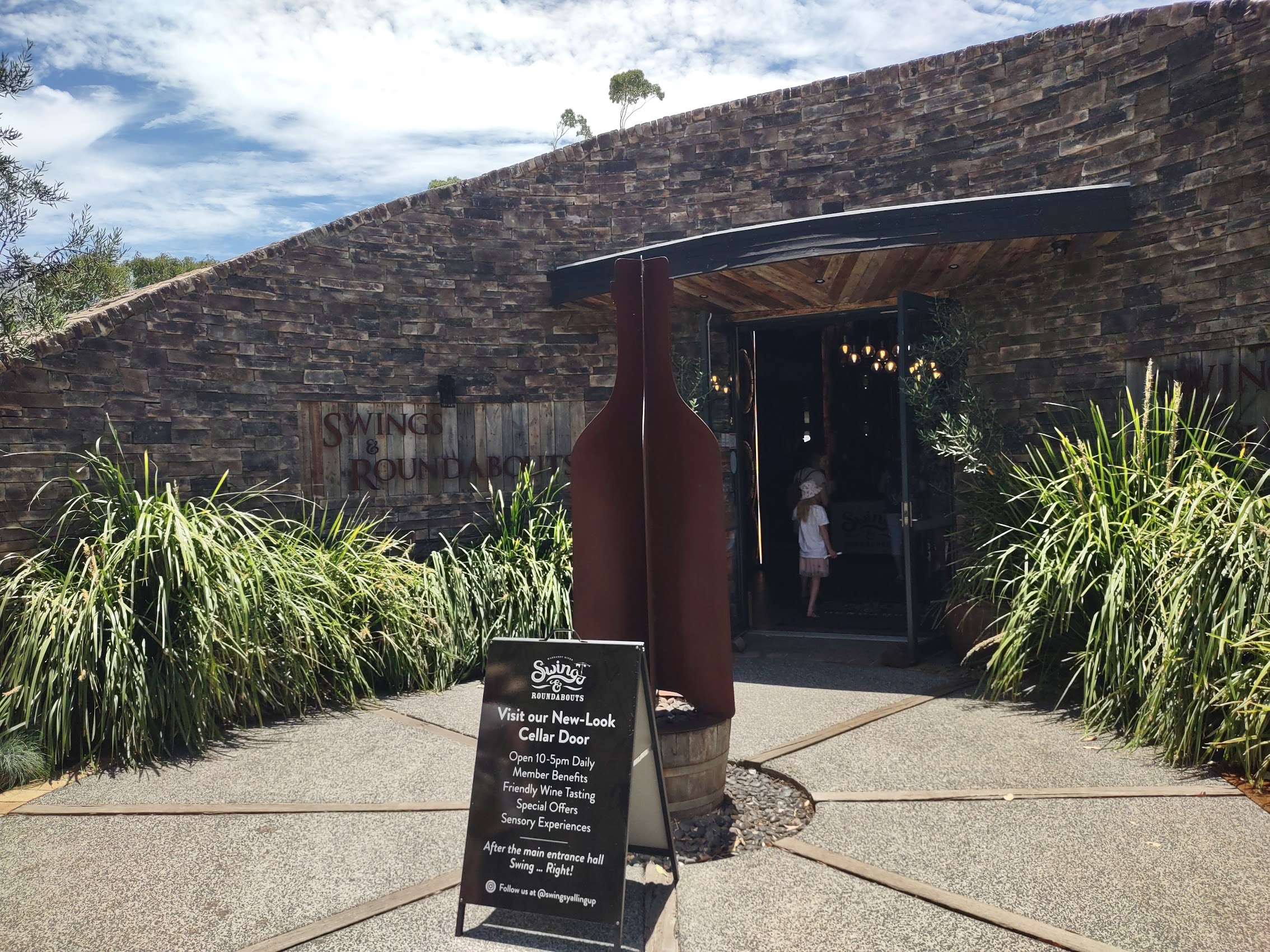
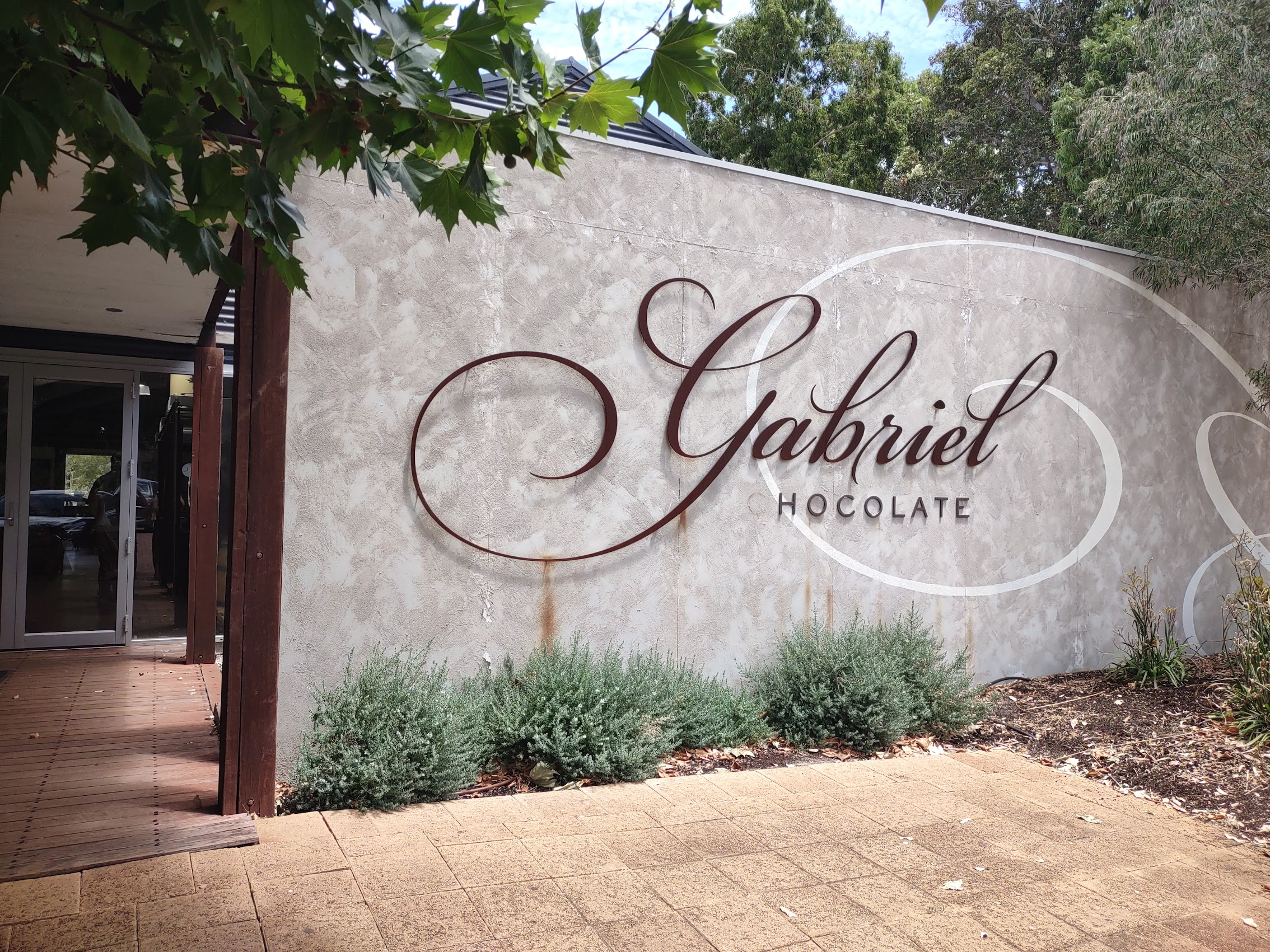
We were picked up and, along with a group of ten mostly young travelers from all over the world, we visited three wineries (Hay Shed Hill, Swings & Roundabouts, and Willespie) where we sampled a variety of wines both red and white. (Given that we usually drink red, we were very surprised at how tasty some of the whites were!) We also visited a local chocolatier (Gabriel) where we were versed in cocoa and the art of chocolate making and were (predictably) compelled to make some purchases.


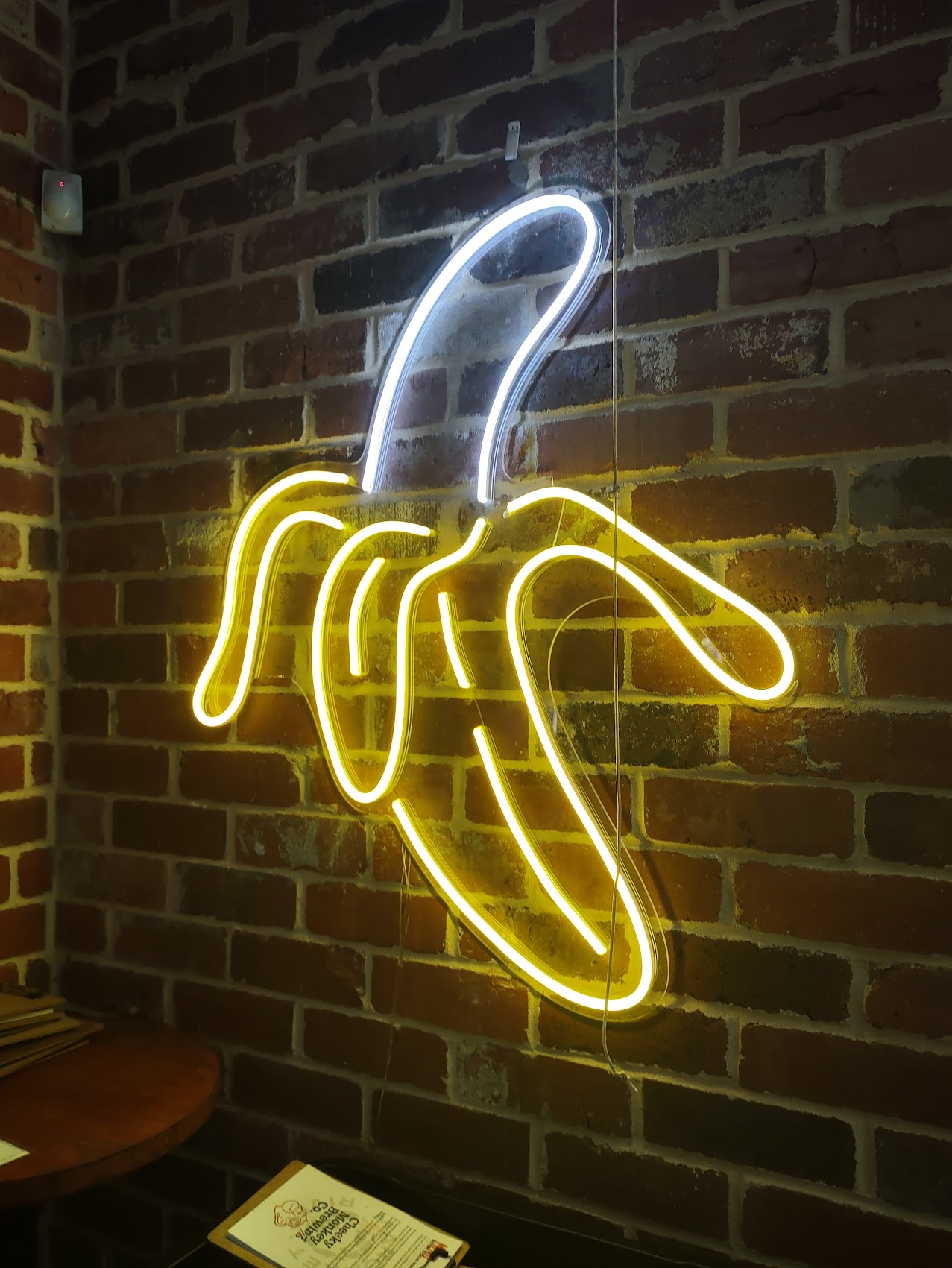
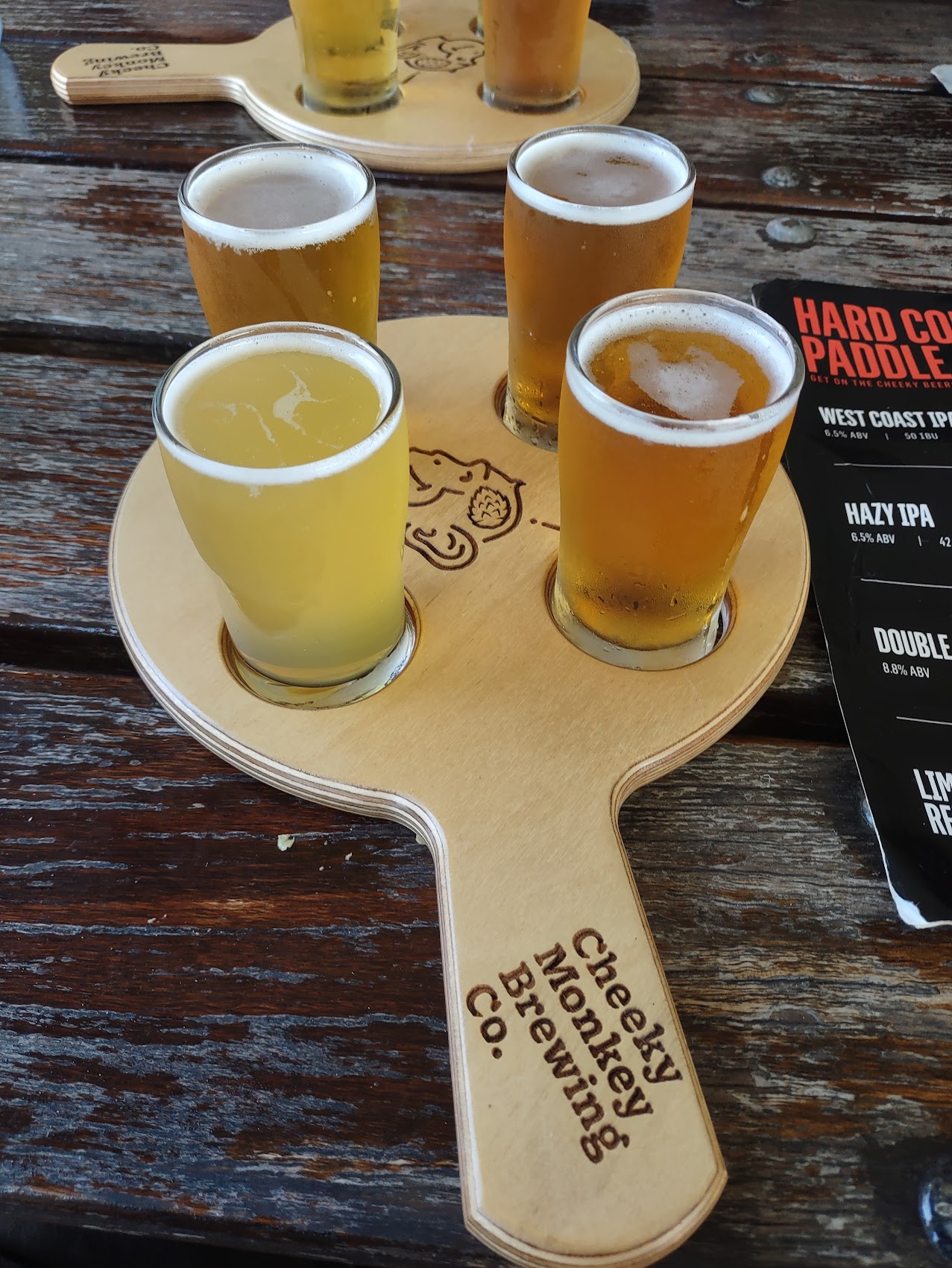
Our last stop of the day (which was my favorite) was the Cheeky Monkey Brewery (I’d already sampled a few of their beers in Fremantle) where we enjoyed a “paddle” of beers before heading home for the evening. Ah, those cheeky monkeys!

Beaches and Yoga
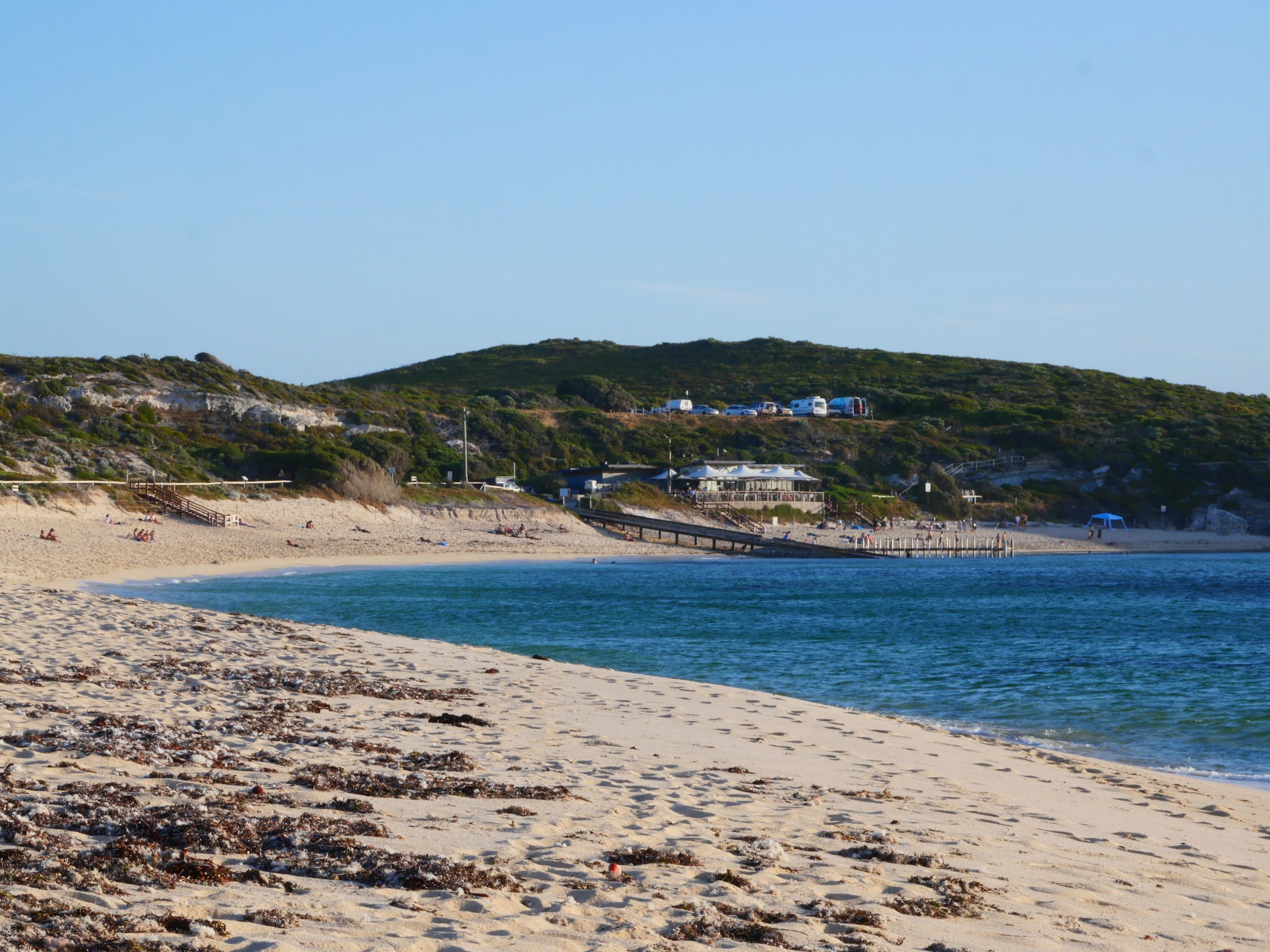
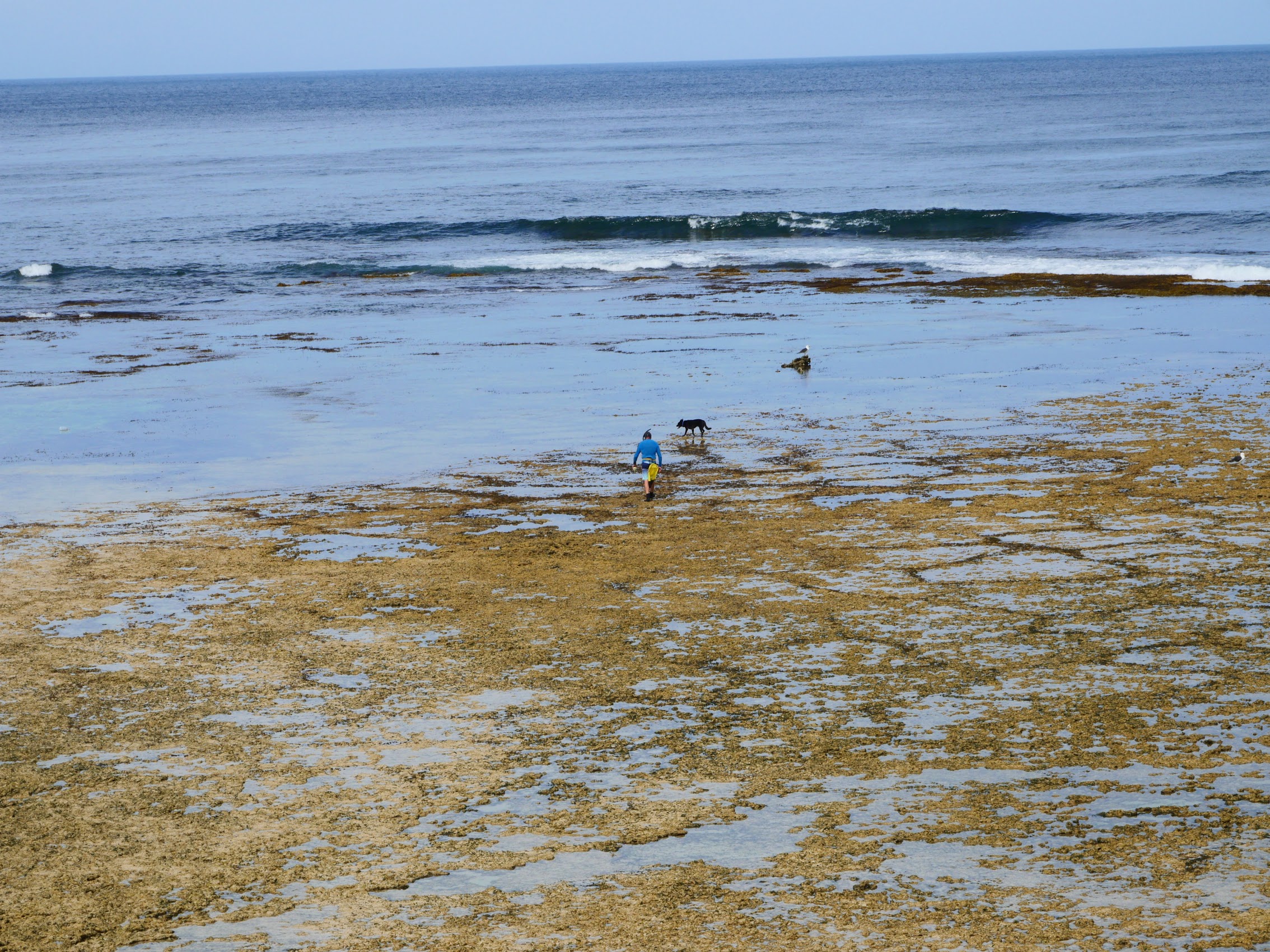
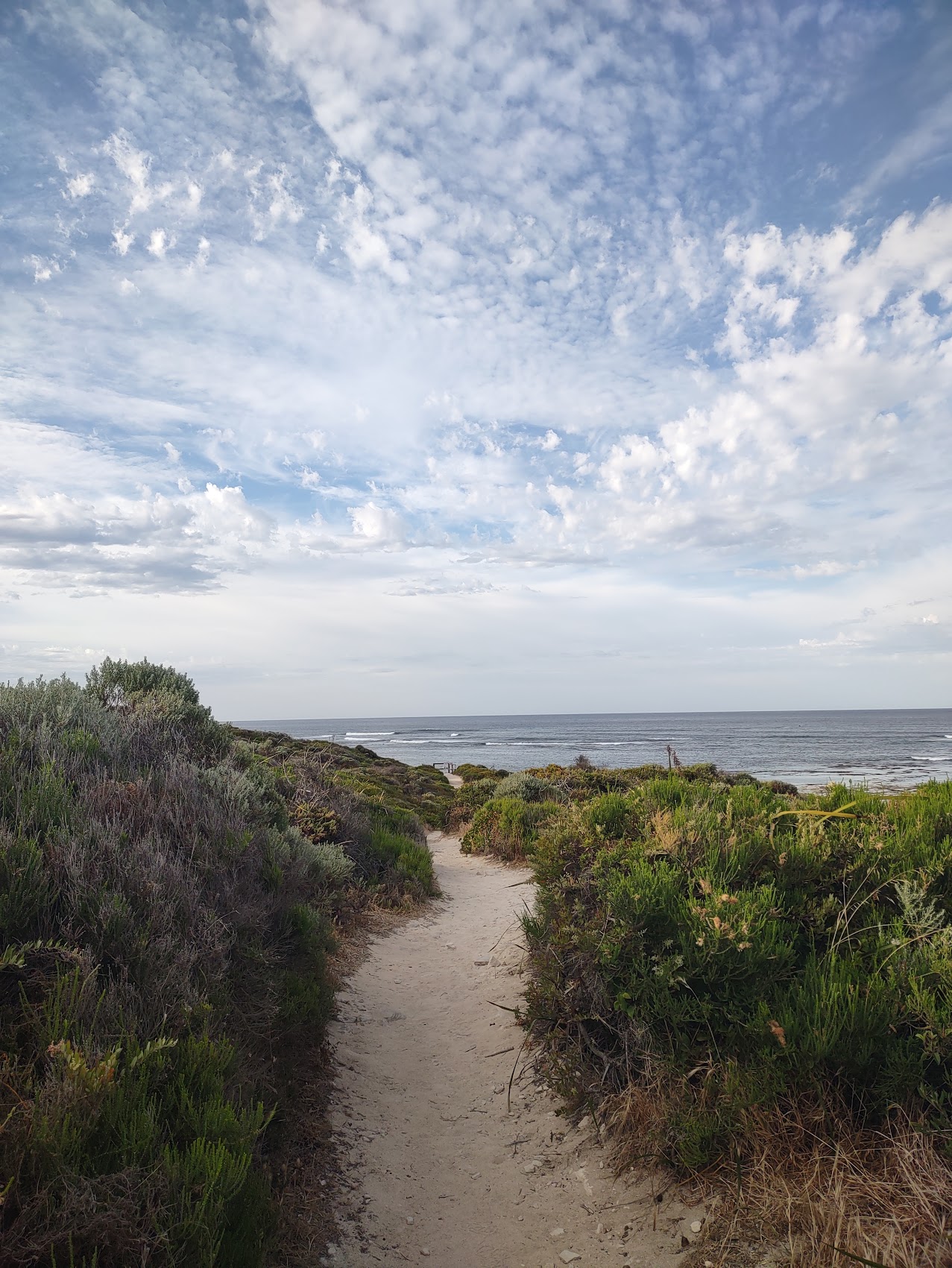
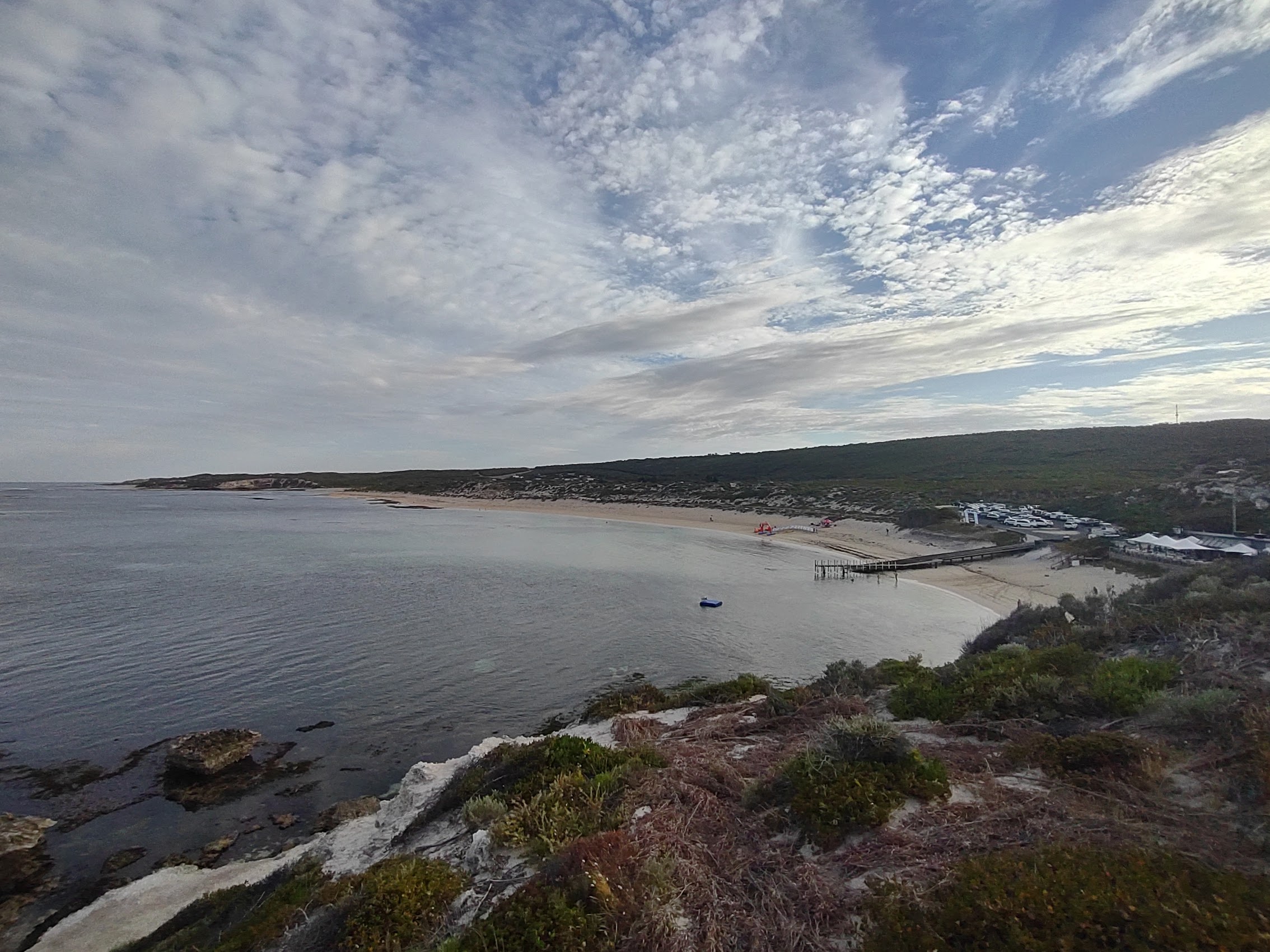
We got up early the next morning – Colleen for yoga (see below) and me to explore the beaches south of Gnarabup. This section of coast is part of what is known as the Cape to Cape Track, a walking trail which stretches over 125 kilometers from the lighthouse of Cape Naturaliste in the north to the lighthouse of Cape Leeuwin in the south. The stretch below Gnarabup was quite scenic and nearly deserted but for a few early morning swimmers and their dogs.

Yoga in Gnarabup (Colleen)
A quick 8 minute walk along the paved path from the neighborhood to the beach led me to Yoga at Gnarabup and an invigorating Sunday morning Vinyasa. Hanna, the instructor, shared a lot of her knowledge about anatomy and correct or best ways to engage muscles. It was an energetic class with 4 other young women, the studio had a window facing oceanward, but no view. All in all a lovely way to start the day.
Back on the Road
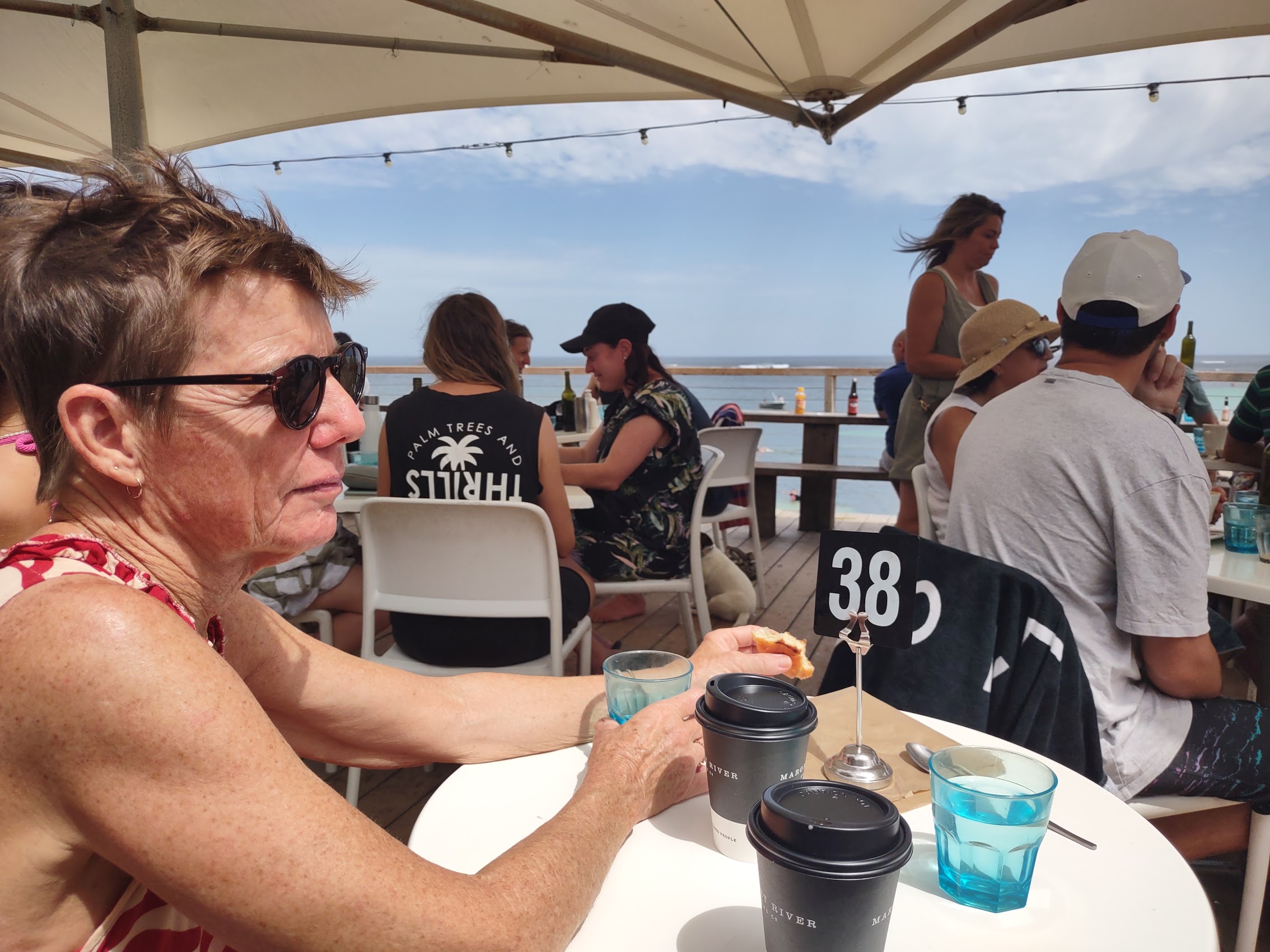
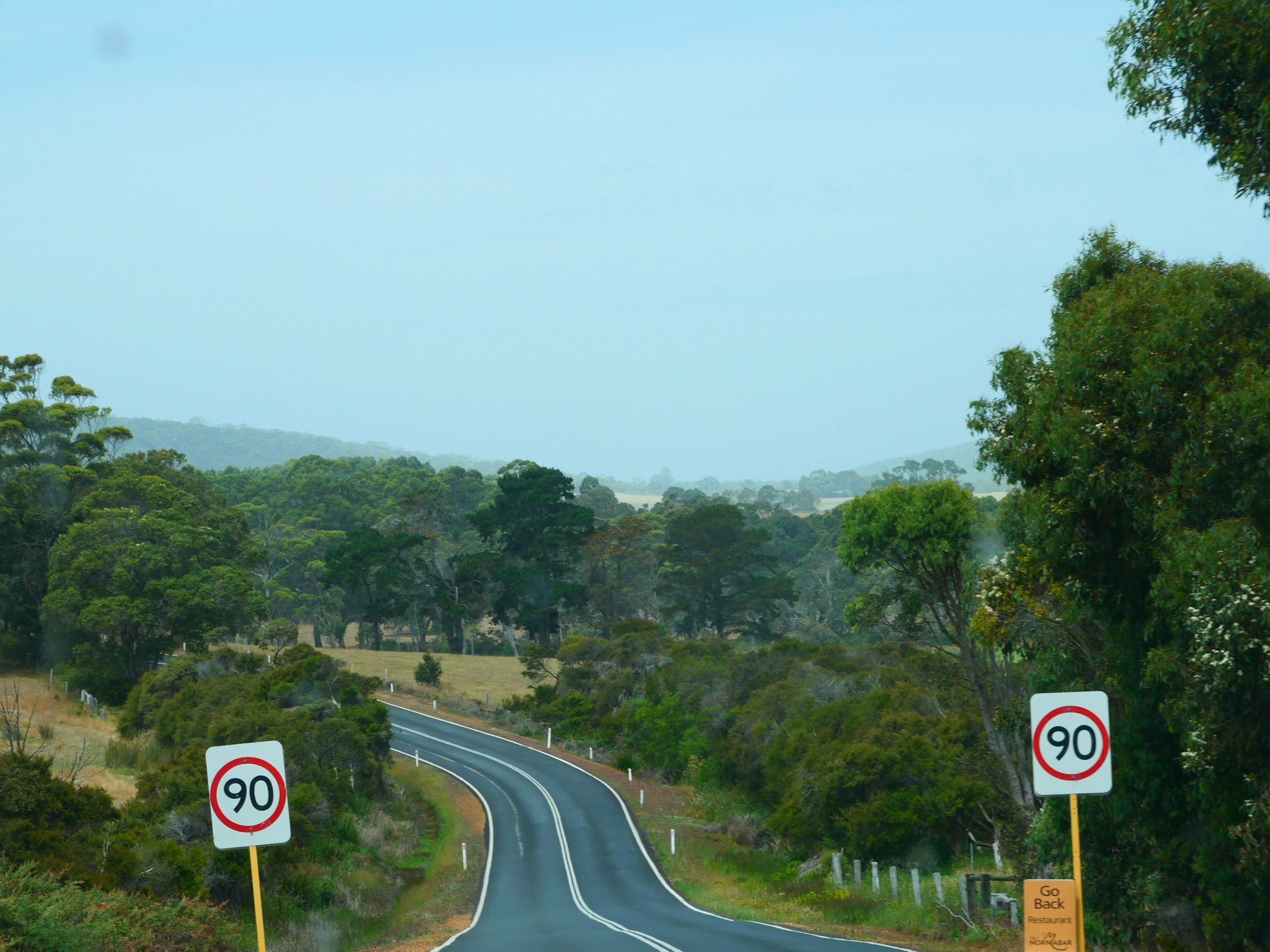
After yoga we loaded up and stopped at the White Elephant Café for a coffee and last glimpse of the beach before hitting the road for our next destination, the town of Denmark. There is not a coast road for much of the distance between Gnarabup and Denmark so we headed inland but chose what was, if not the fastest route, the one which seemed likely to be the most scenic and which took us past one of our planned stops, a place called the Valley of the Giants.
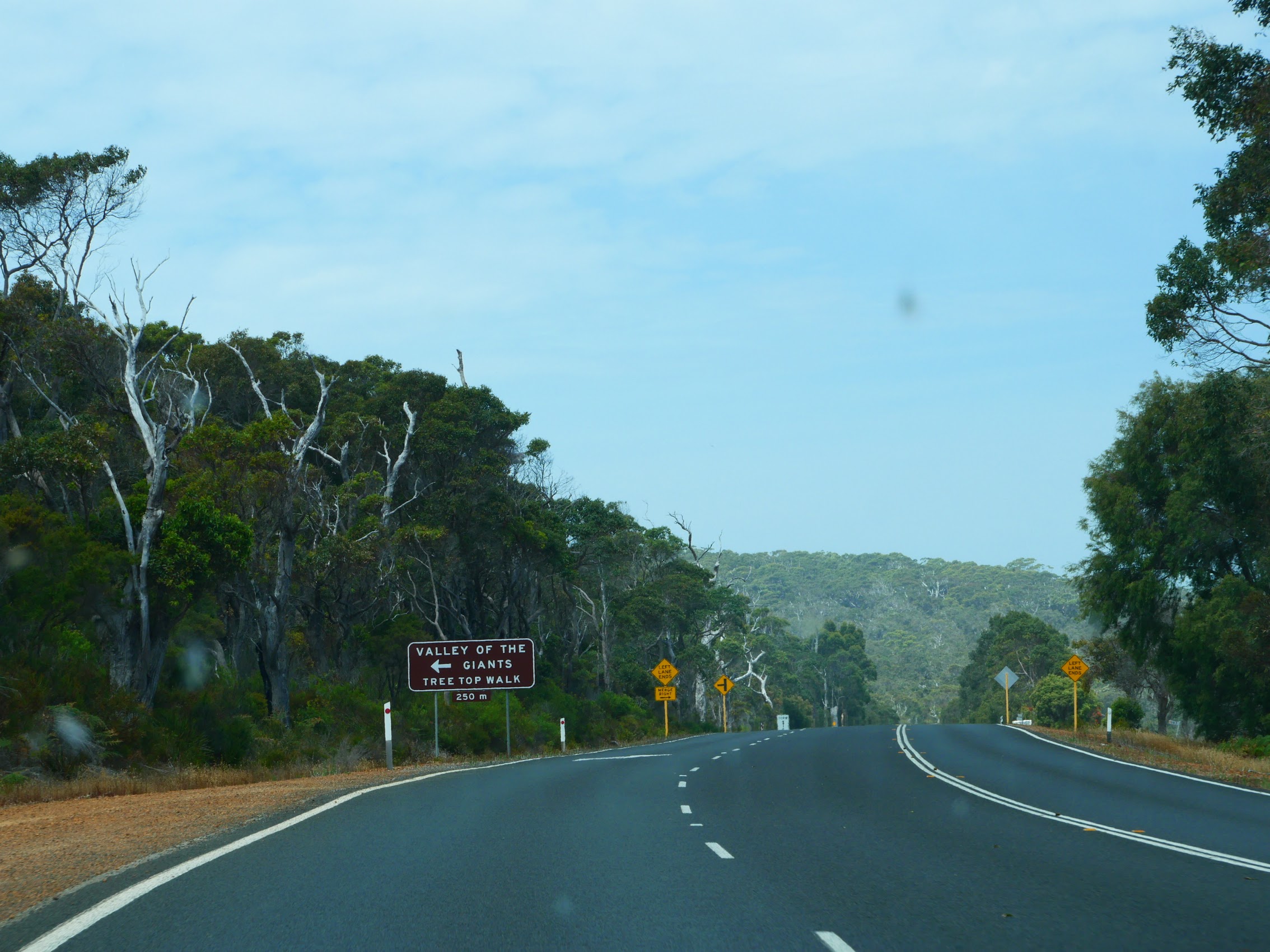
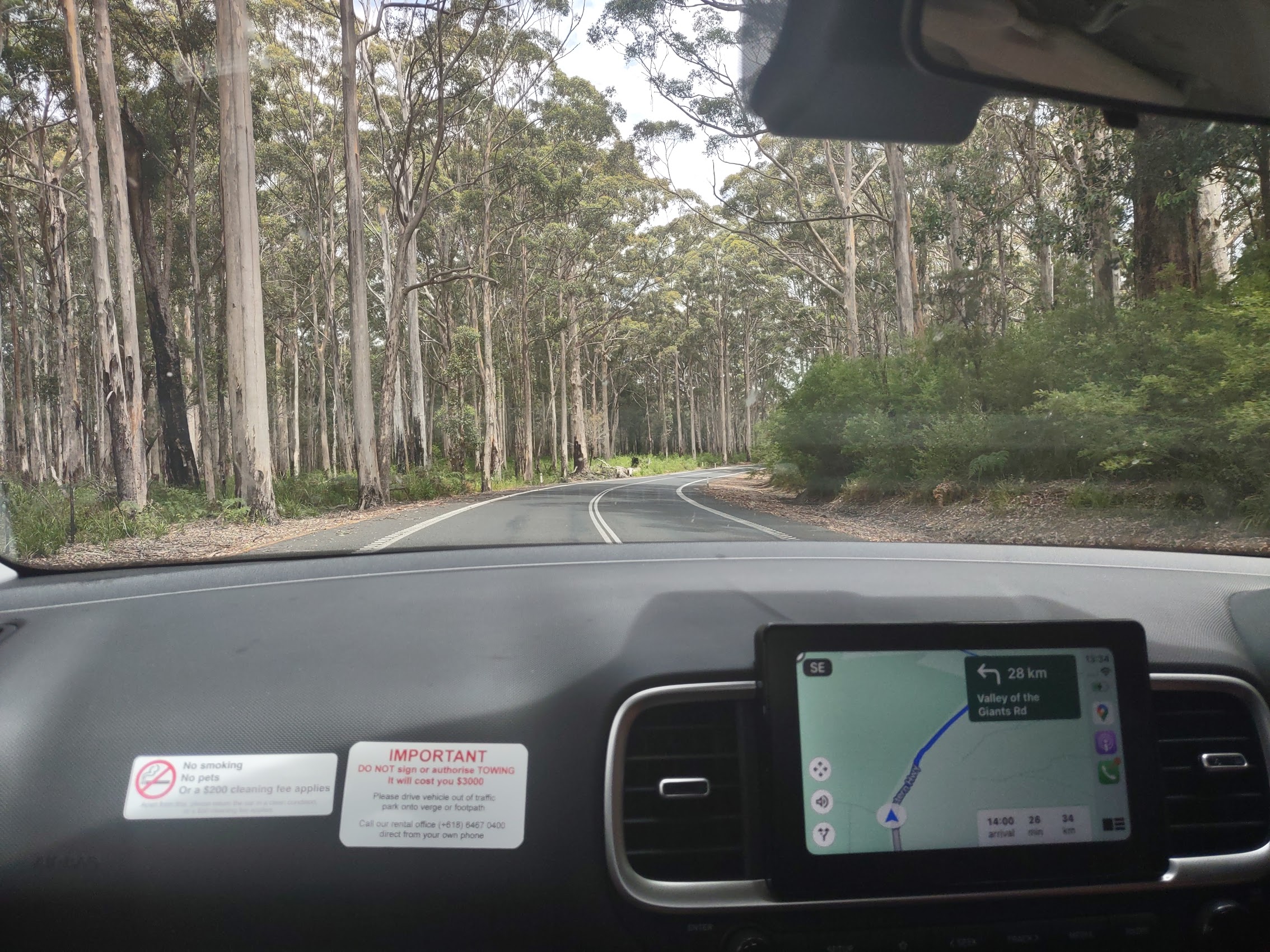
The Valley of the Giants is a nature-based tourist attraction in the Walpole Wilderness area of the Walpole-Nornalup National Park which is home to some of the tallest and oldest trees in Australia: the Red Tingle, which can grow to heights of 150 feet and the Karri with its unique creamy grey trunk which can grow to heights of 200 feet or more. The park features two primary attractions, the Tree Top Walk and the Ancient Empire.
The Tree Top Walk is an elevated walkway which rises to 120 feet above the ground and puts you in the canopy of the trees. Despite her dislike for heights, Colleen handled it like a pro (except perhaps when the walkway started to bounce up and down).
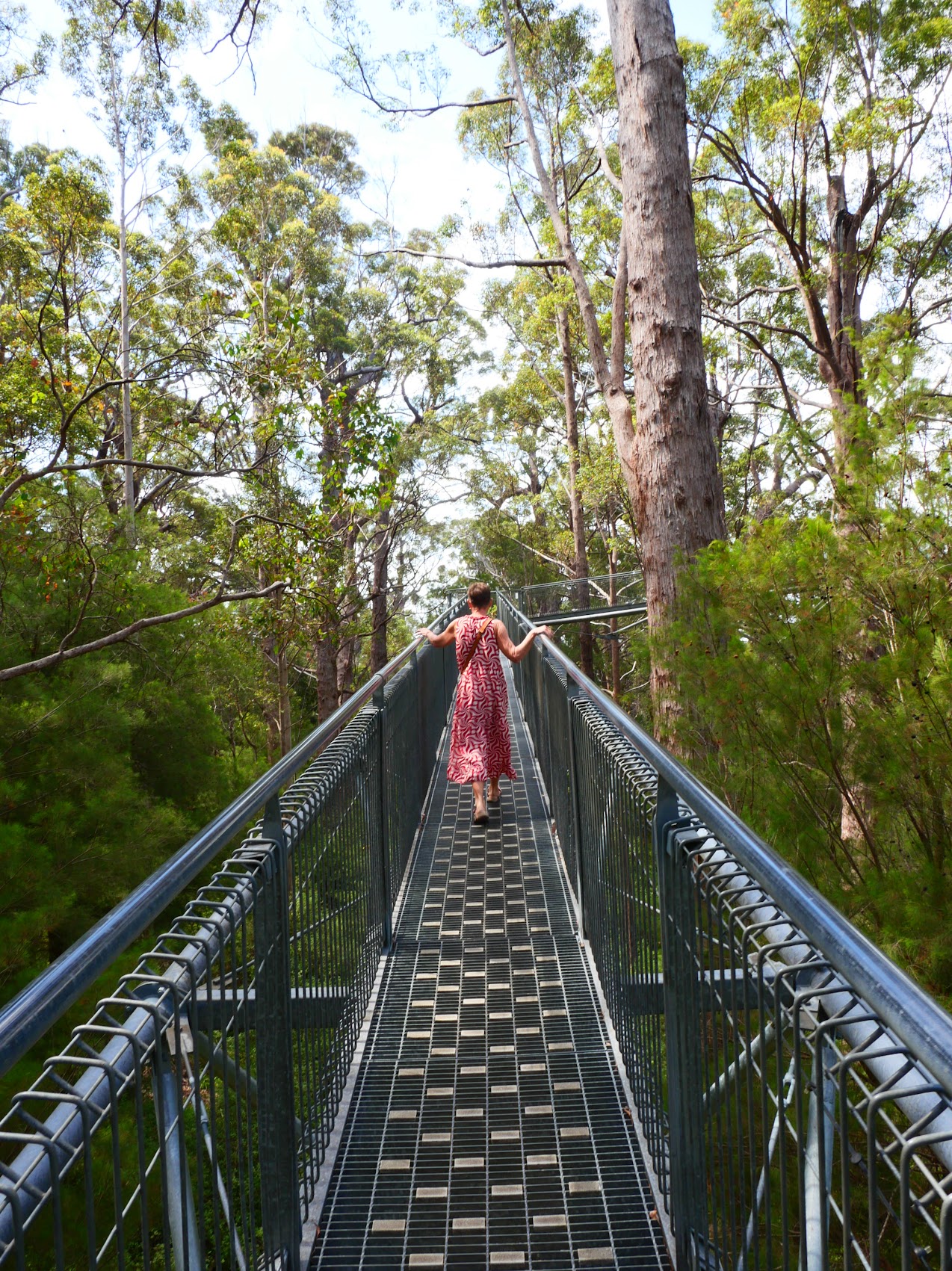
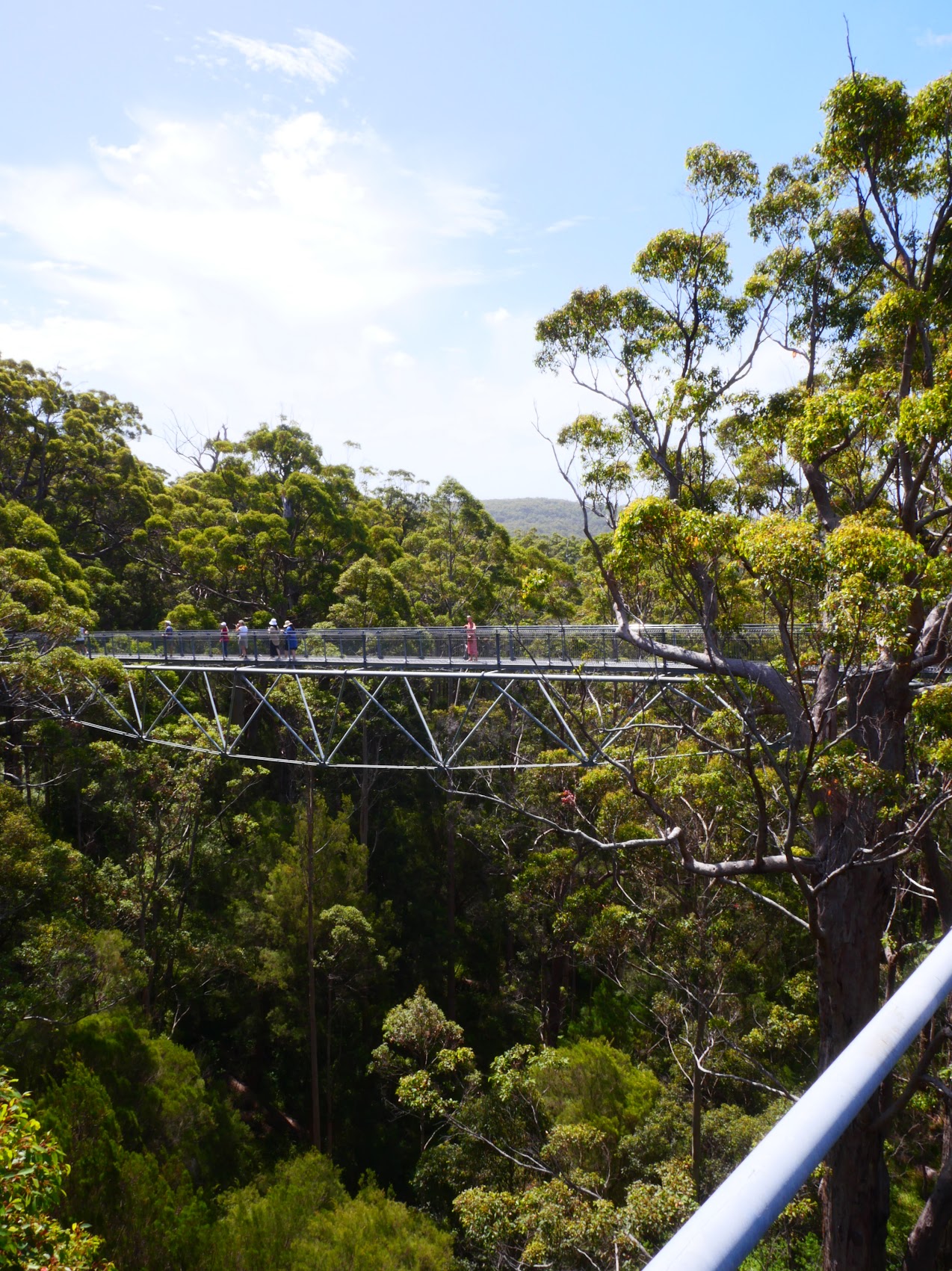
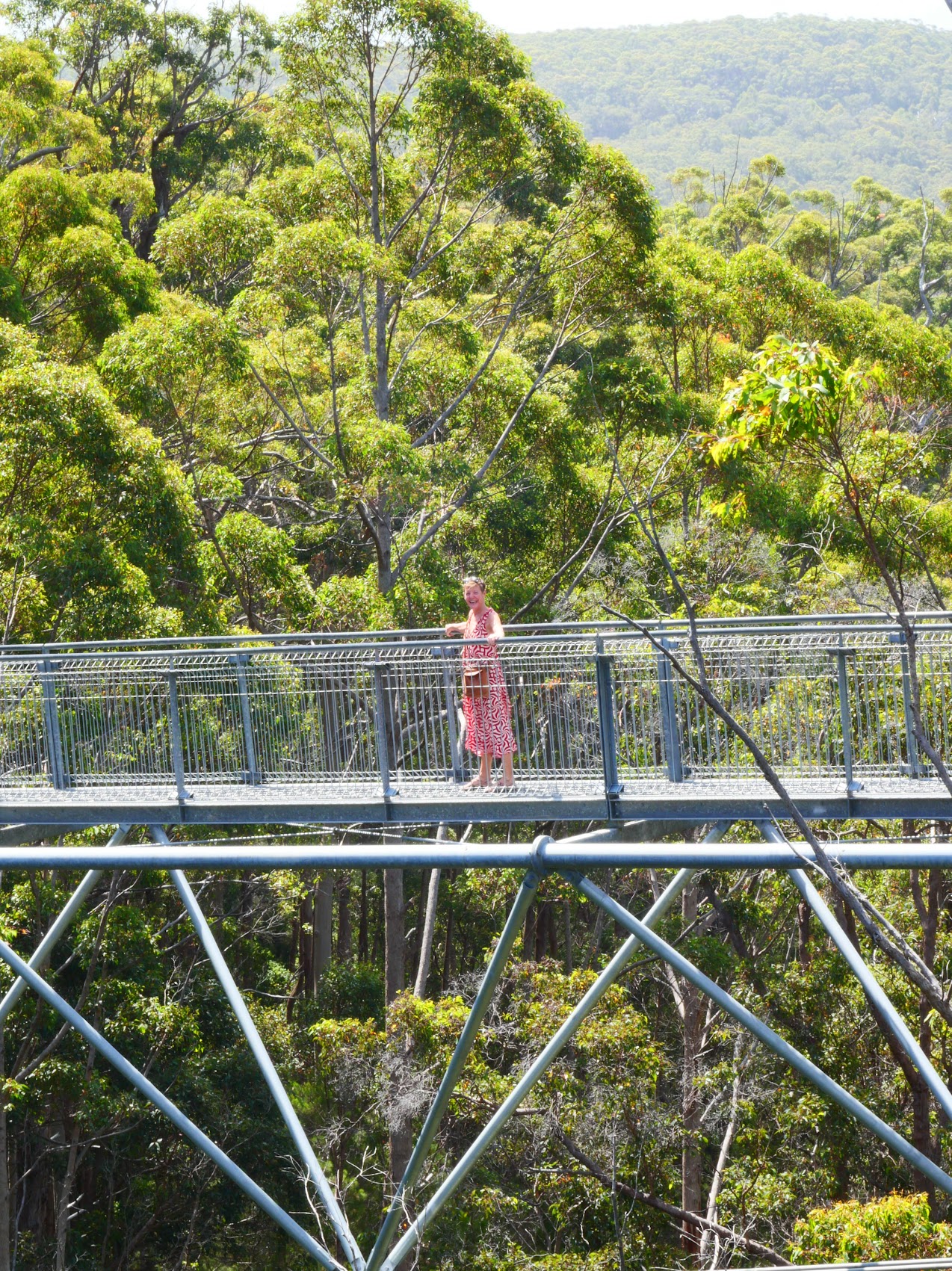
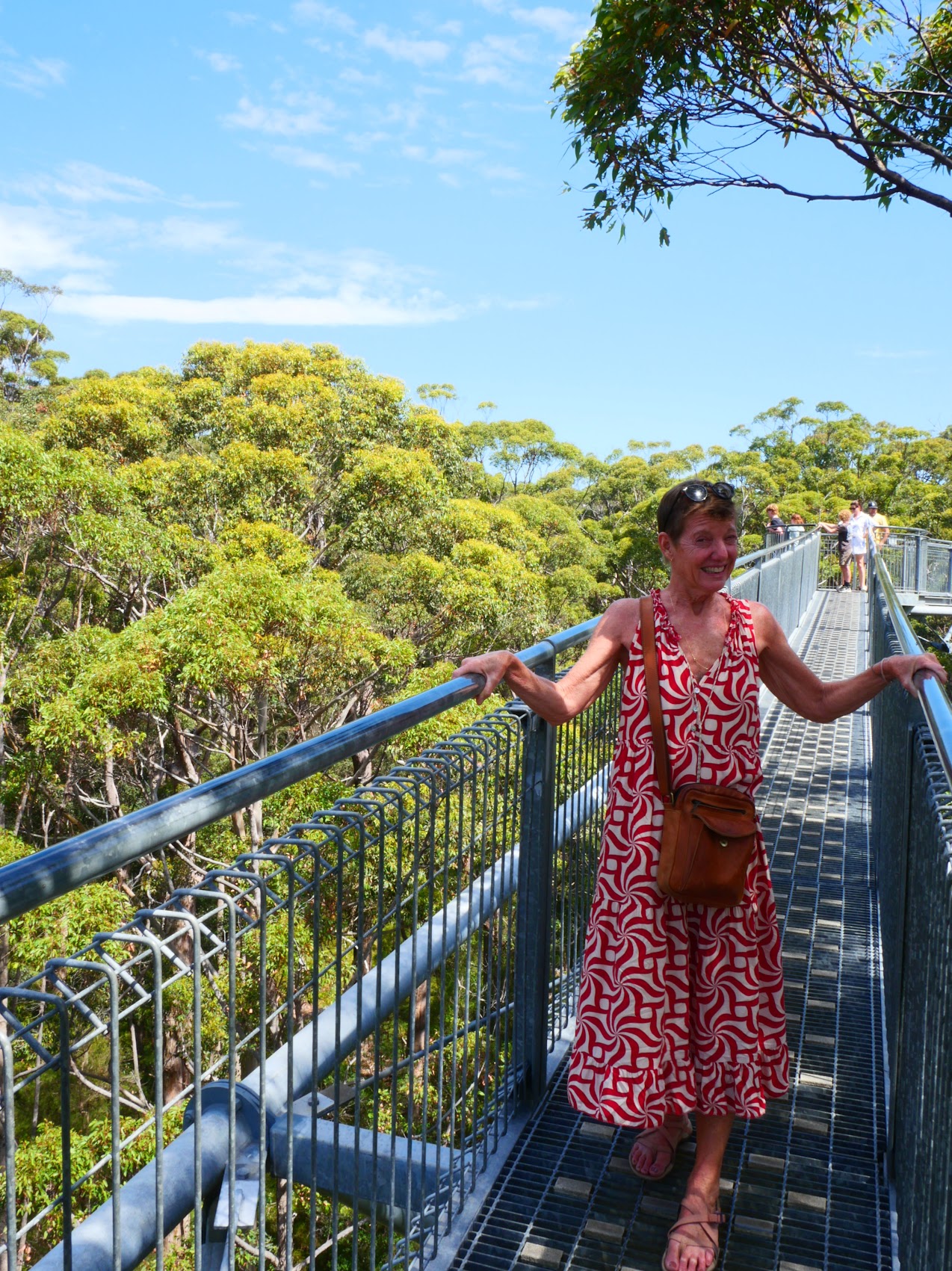
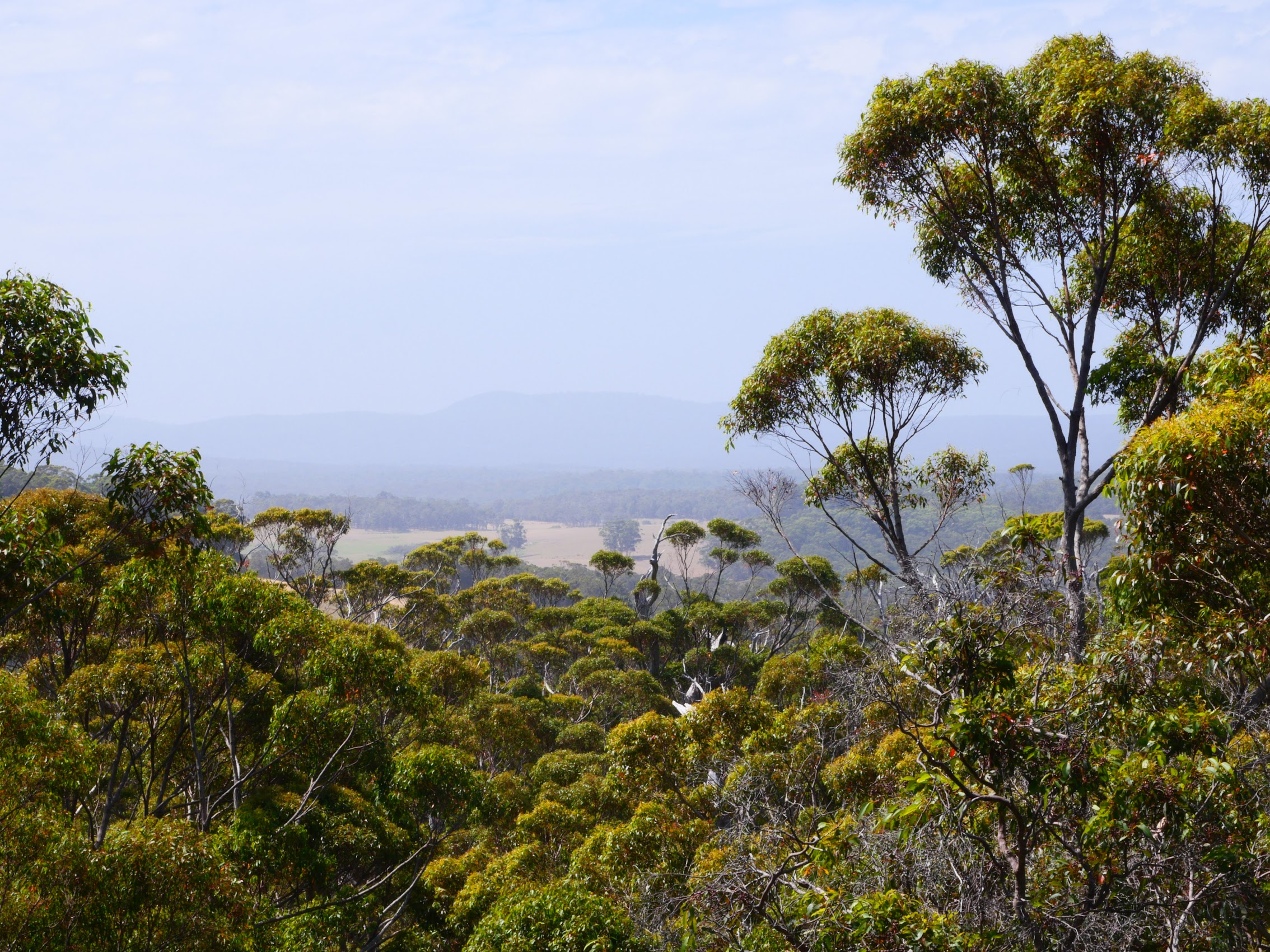
The Ancient Empire is a half kilometer path which winds through the Tingles and Karris along with a variety of unique flora and fauna (including the elusive red-winged fairy-wren!) which all felt quite primordial.
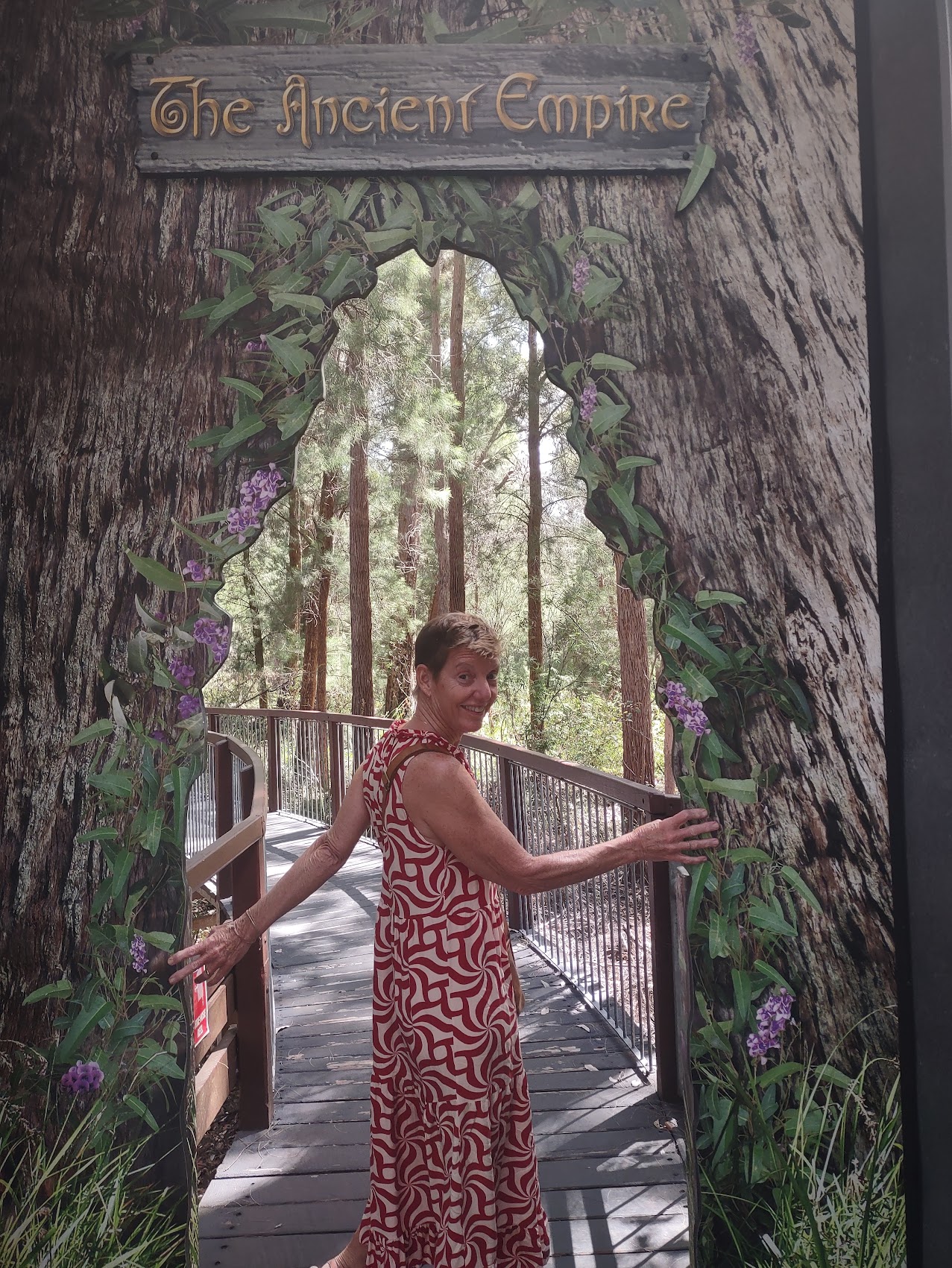

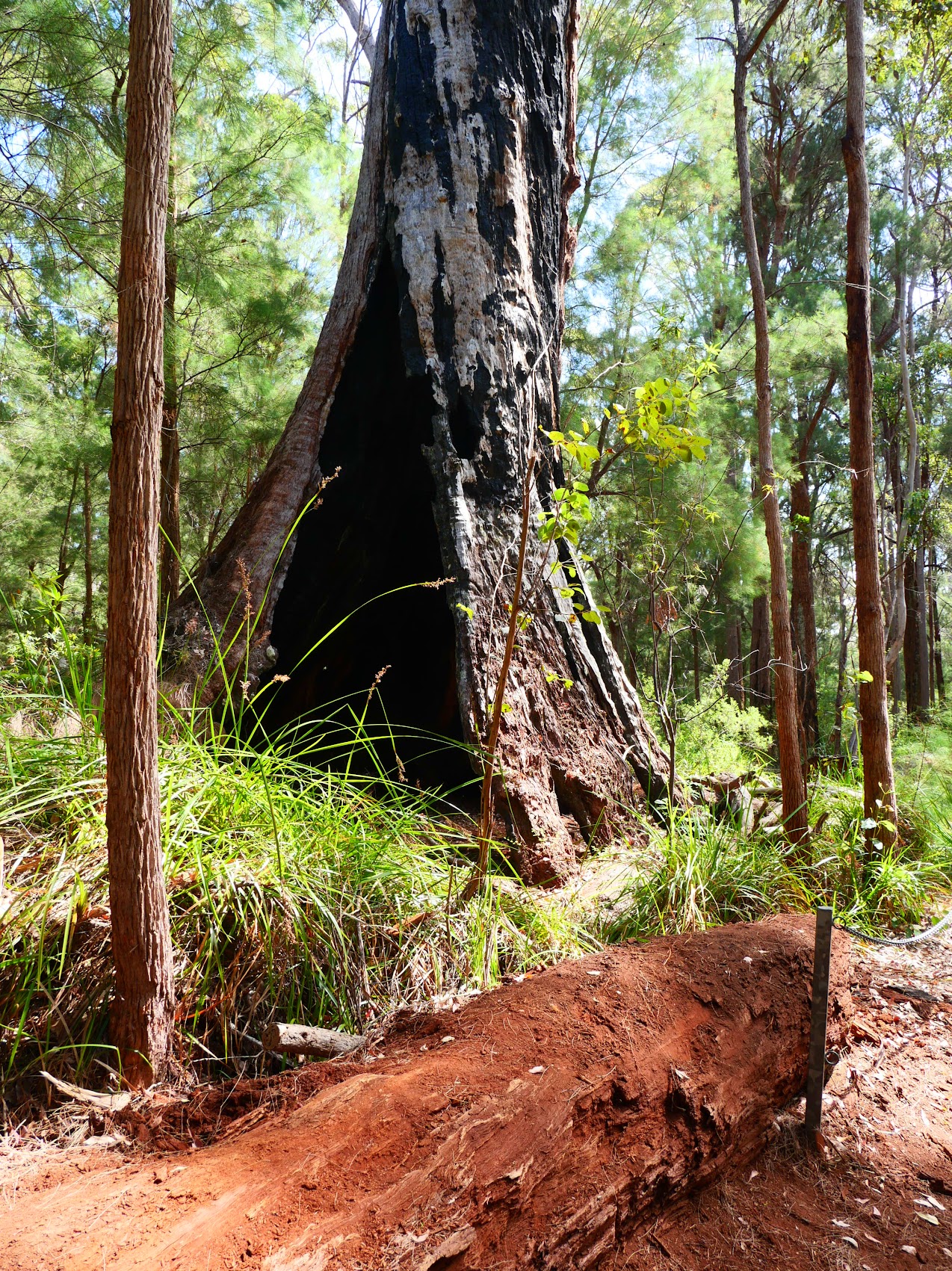
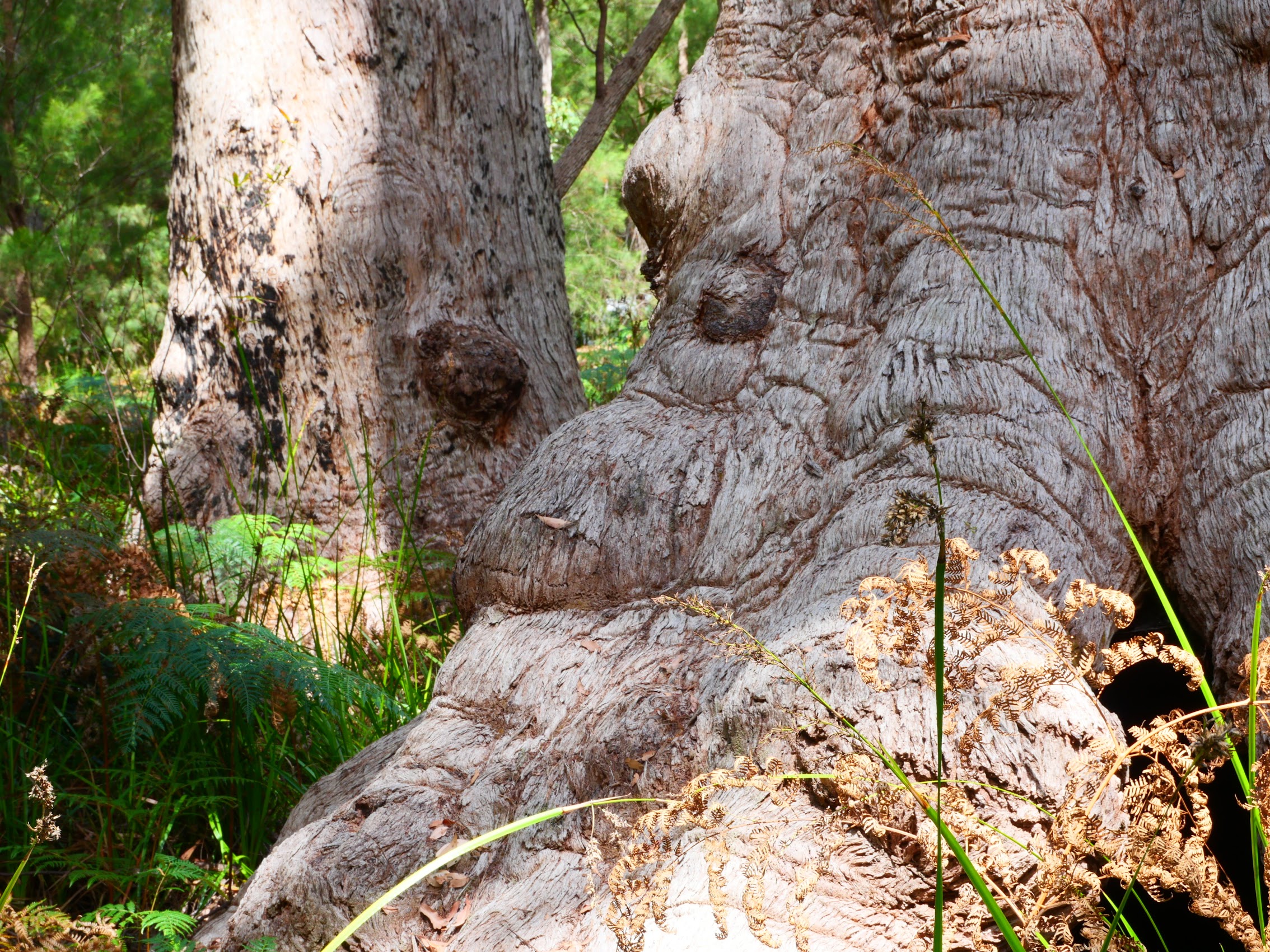
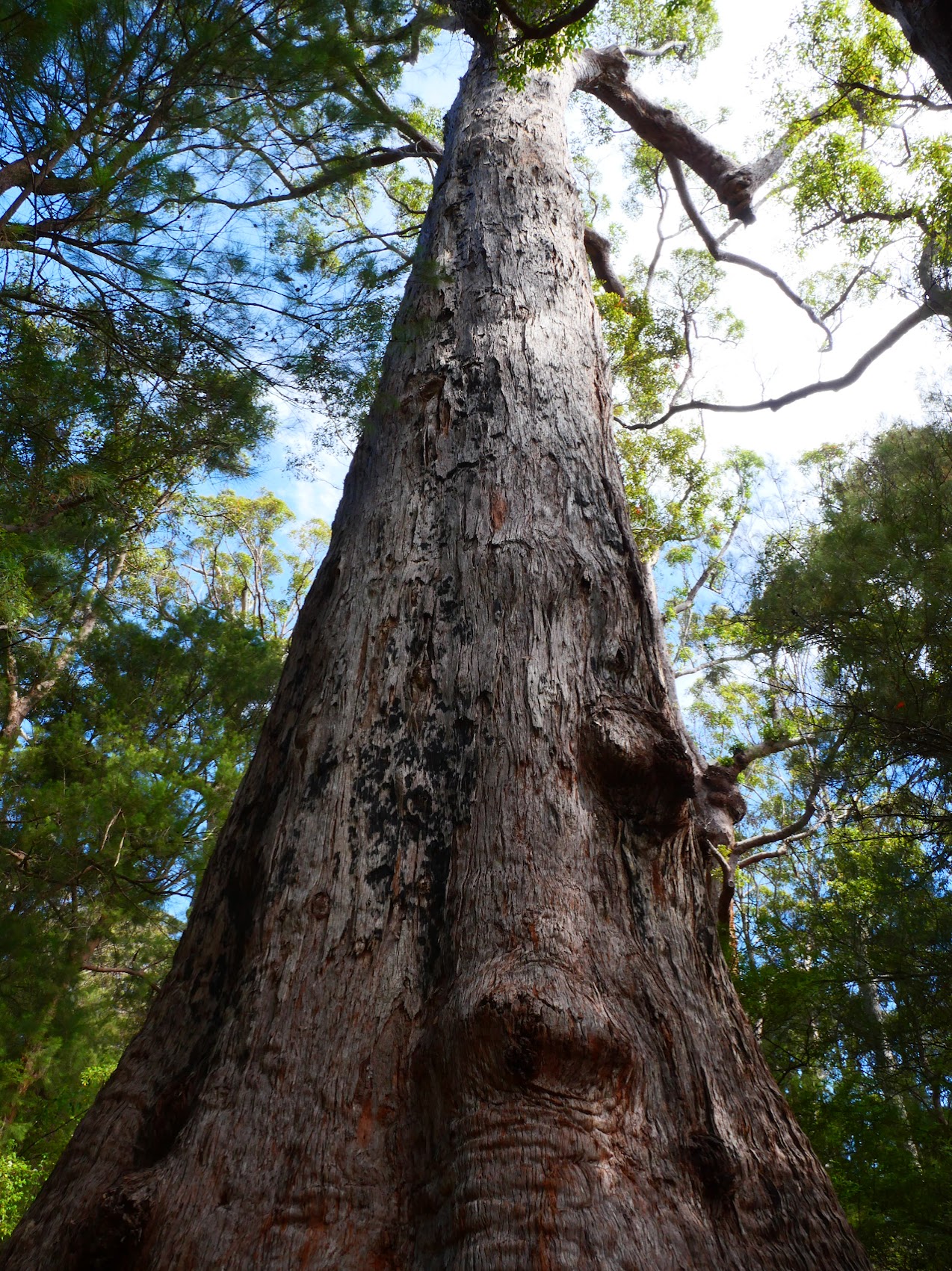
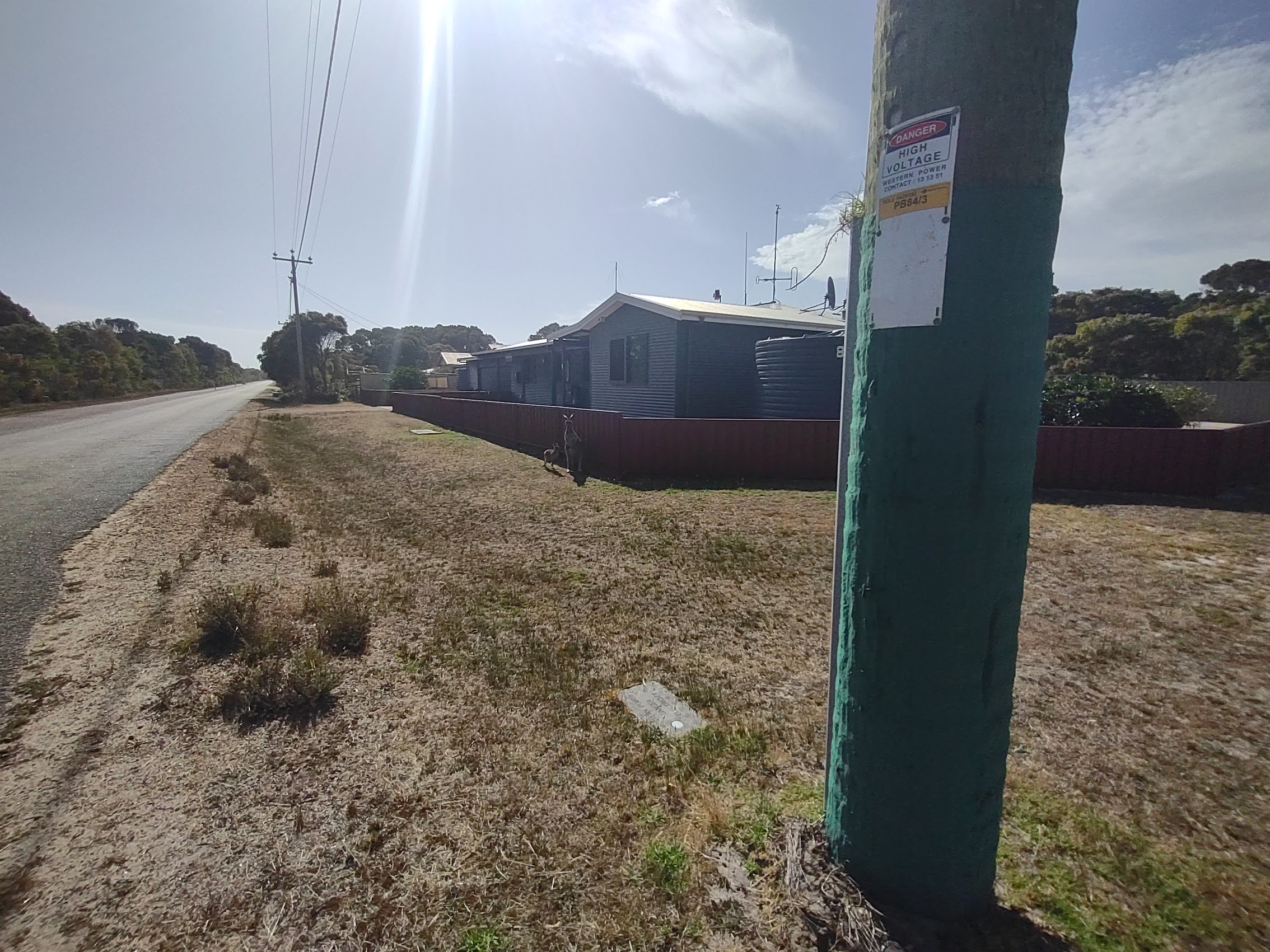
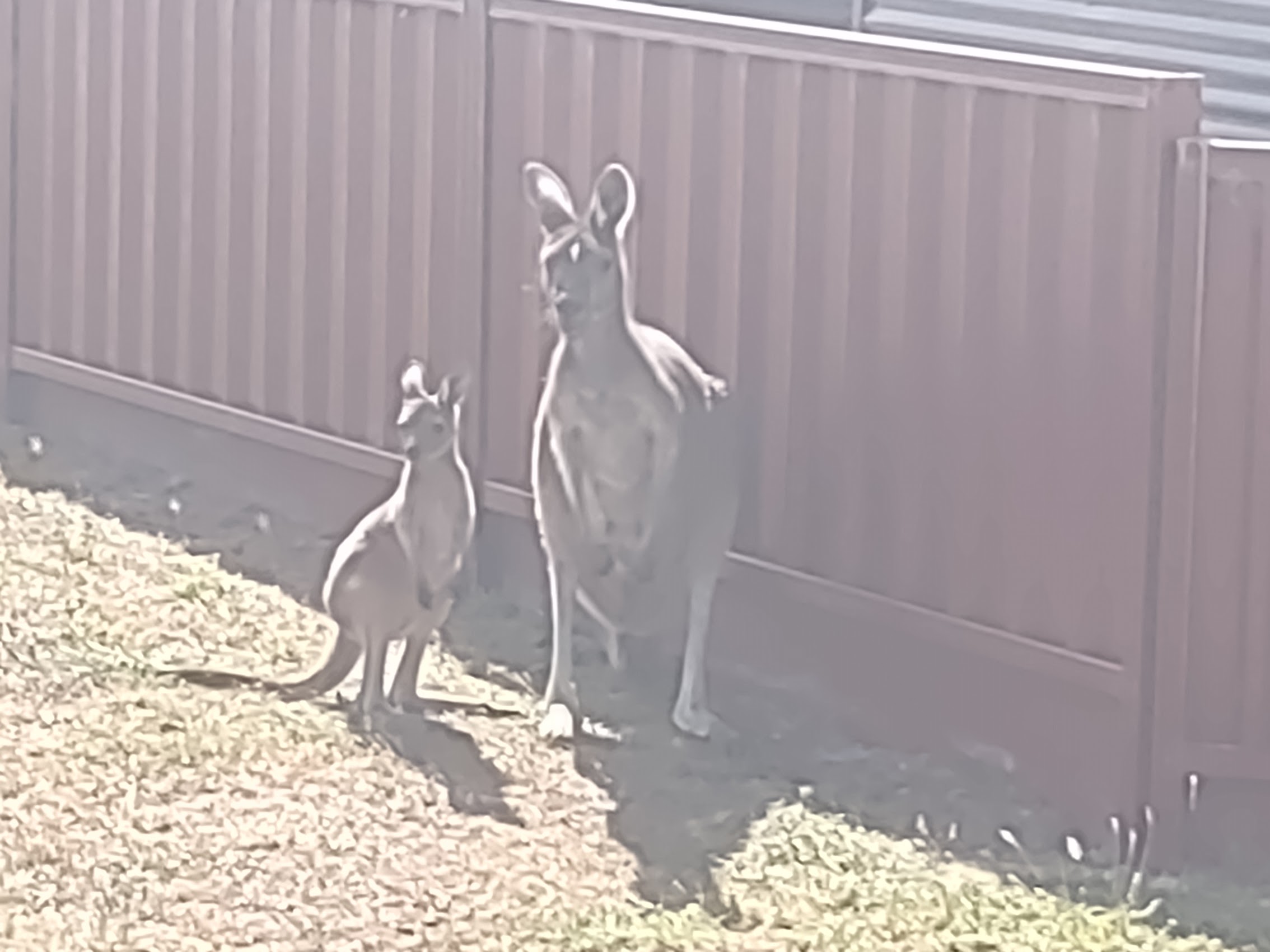
From the Valley of the Giants, we took a short drive to the coast to check out a place Colleen had spotted on the map called Peaceful Bay. (She couldn’t resist the name and was hoping for a sweatshirt!) Peaceful Bay turned out to be very peaceful, mostly because there wasn’t much there though we did find a spot to grab some lunch (but no sweatshirt) before continuing on to our destination for the day, Denmark, about 45 minutes east. On the way out of Peaceful Bay, we spotted the first kangaroos we had seen since arriving in Australia hanging out by the roadside (a sign of things to come?).
Denmark
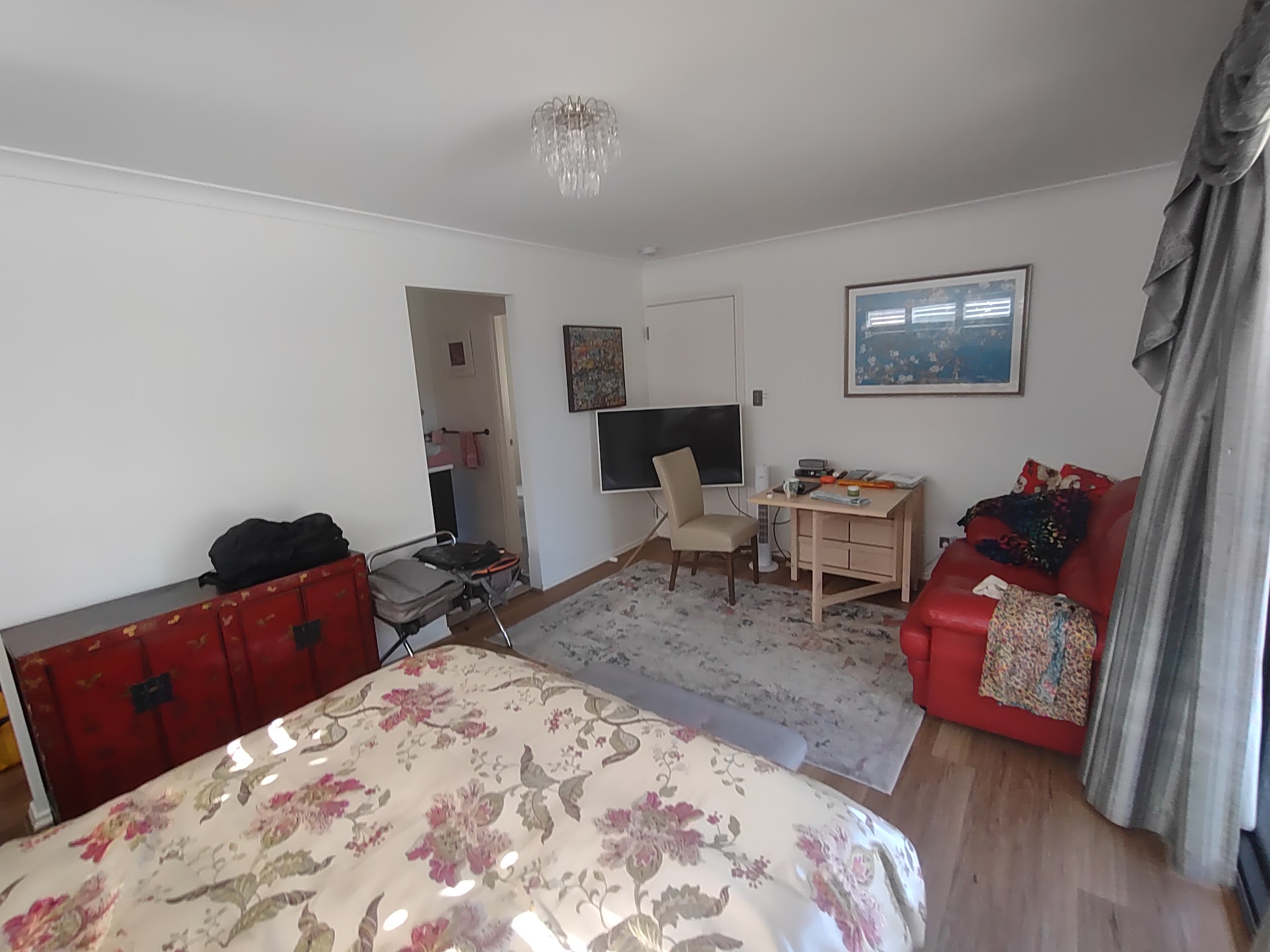
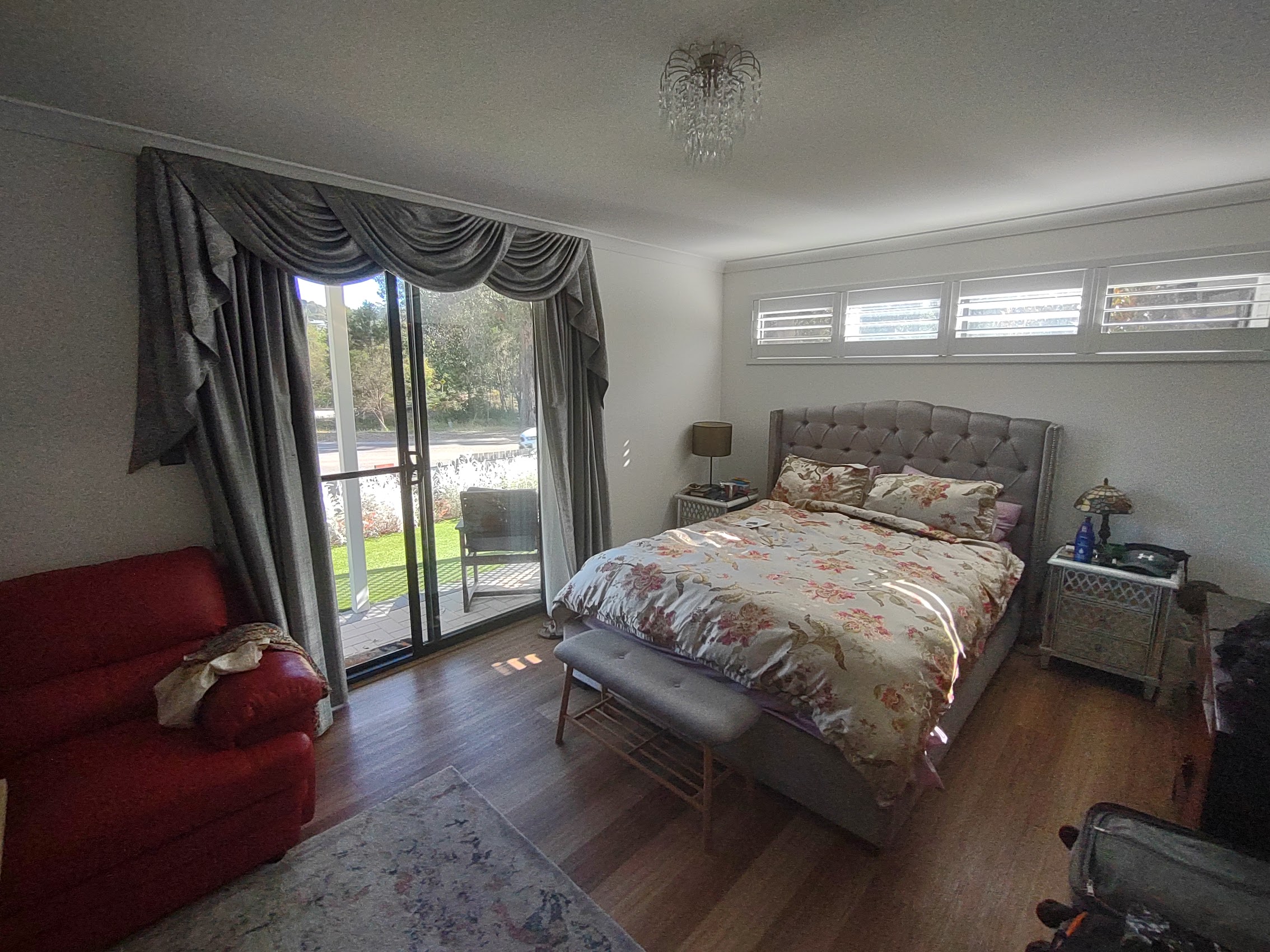
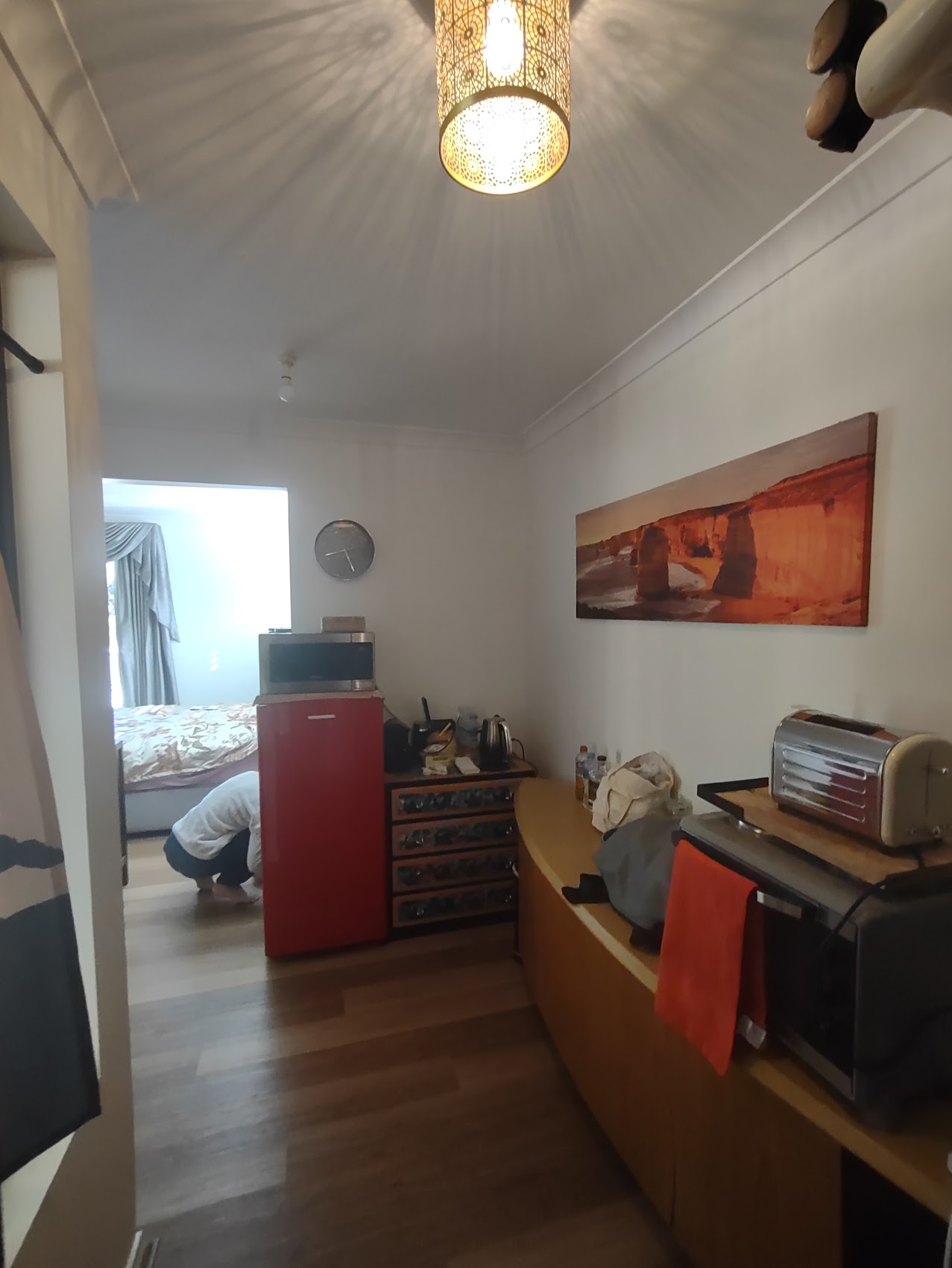
The town of Denmark is a small town of about 2,500 people located at the mouth of the Denmark River on the large, protected Wilson Bay. Denmark, which is not actually on the ocean is more of a river town, but it is in proximity of what looked to be some noteworthy beaches which it was our intent to visit. Our place in Denmark was a small studio apartment built on the front of our hosts’ property with a galley kitchen, an attached full bath (yay!), and shared laundry facilities.
Our place also had a small private porch facing the road to which we retired after dinner on our first evening and from which we were happy to see a variety of wildlife, including some colorful parrots. As the sun descended we were surprised by the sounds coming from a patch of gum trees across the road which we at first thought must be monkeys (though we saw none) but which we eventually realized were kookaburras (“kookaburra sits in the old gum tree..” as the song goes). Their call (often referred to as a “laugh”) is really quite unique and worth a listen if you’ve never heard it (https://www.youtube.com/watch?v=7jW7A2glZbk).

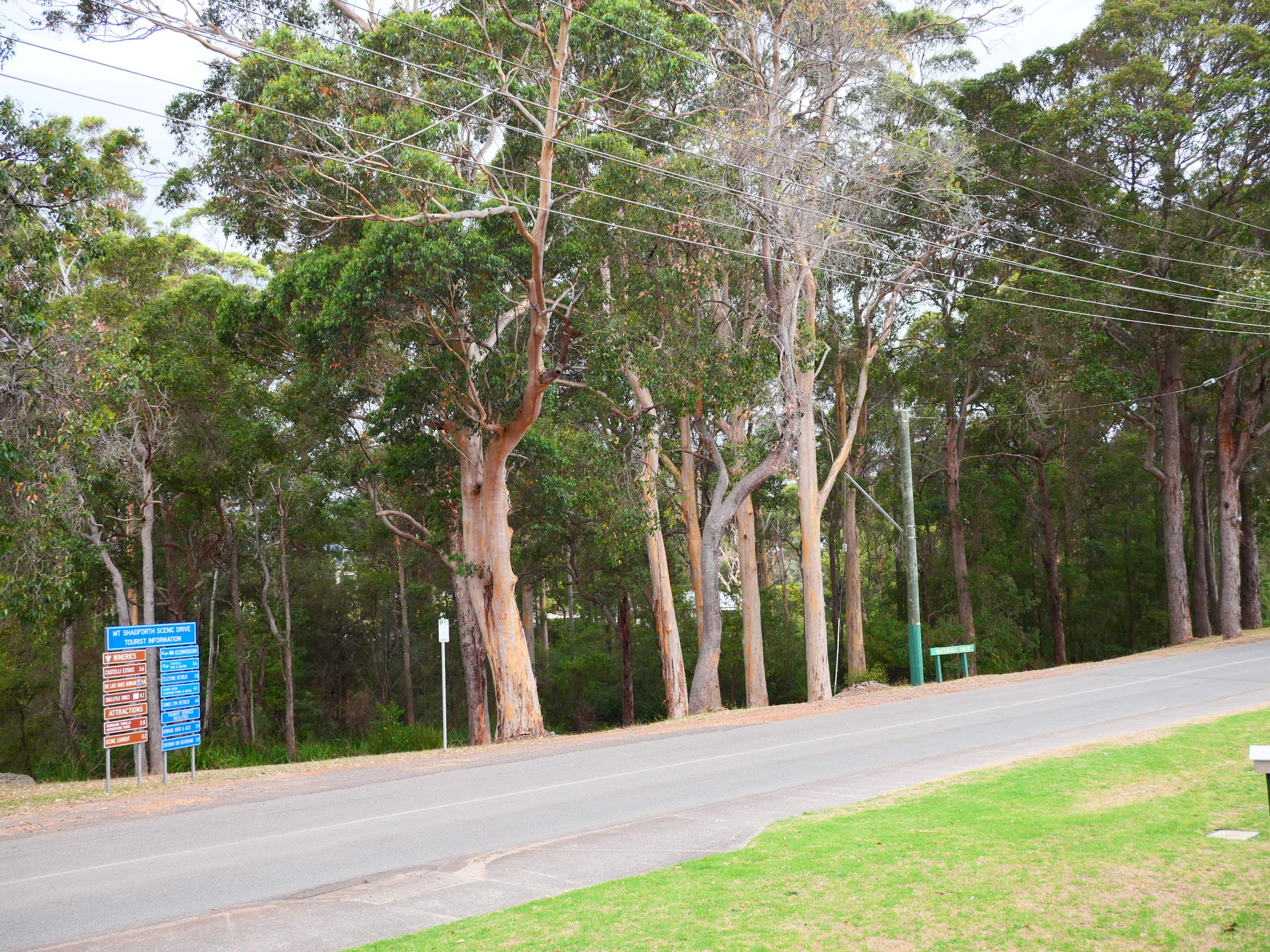
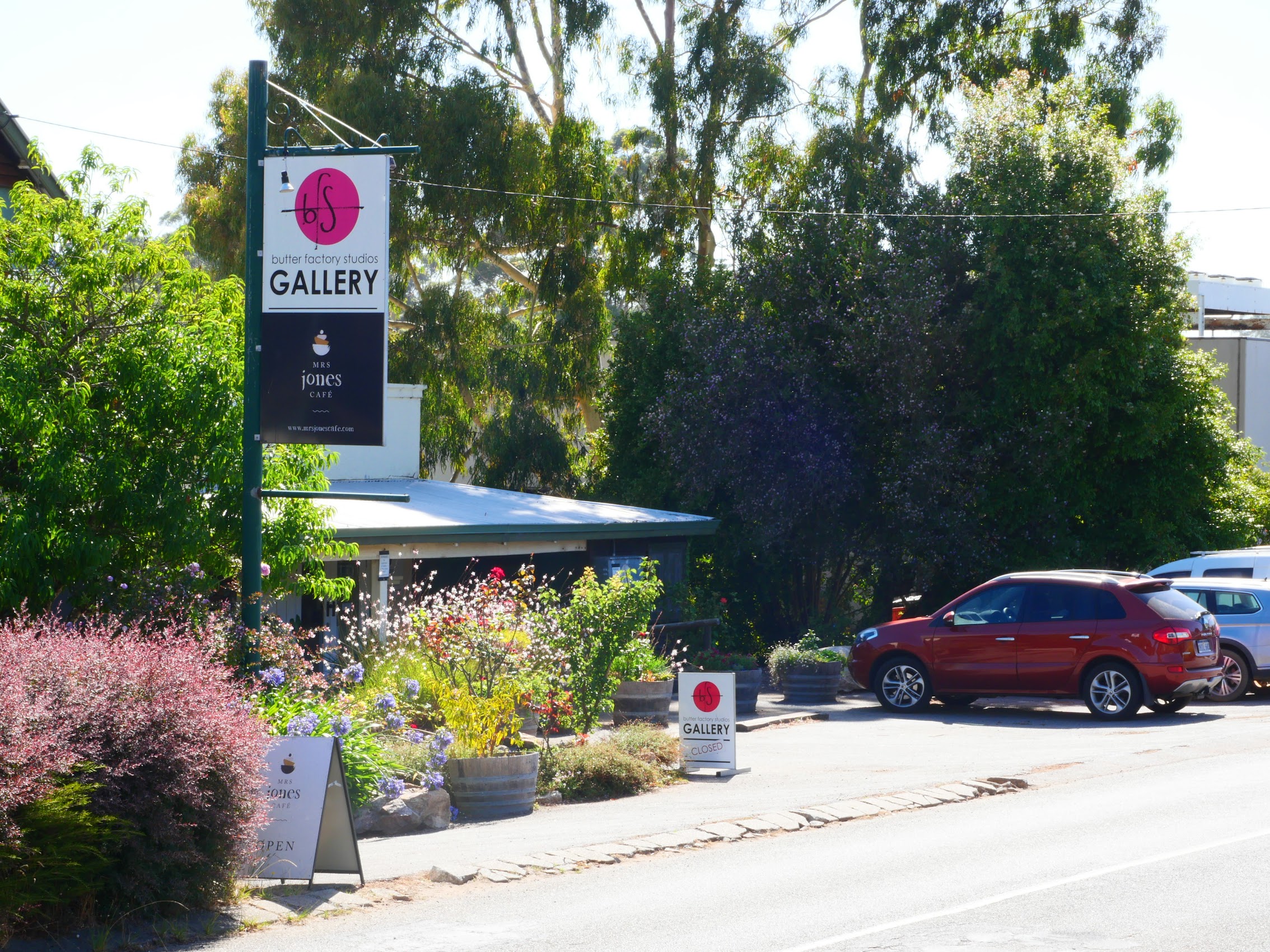
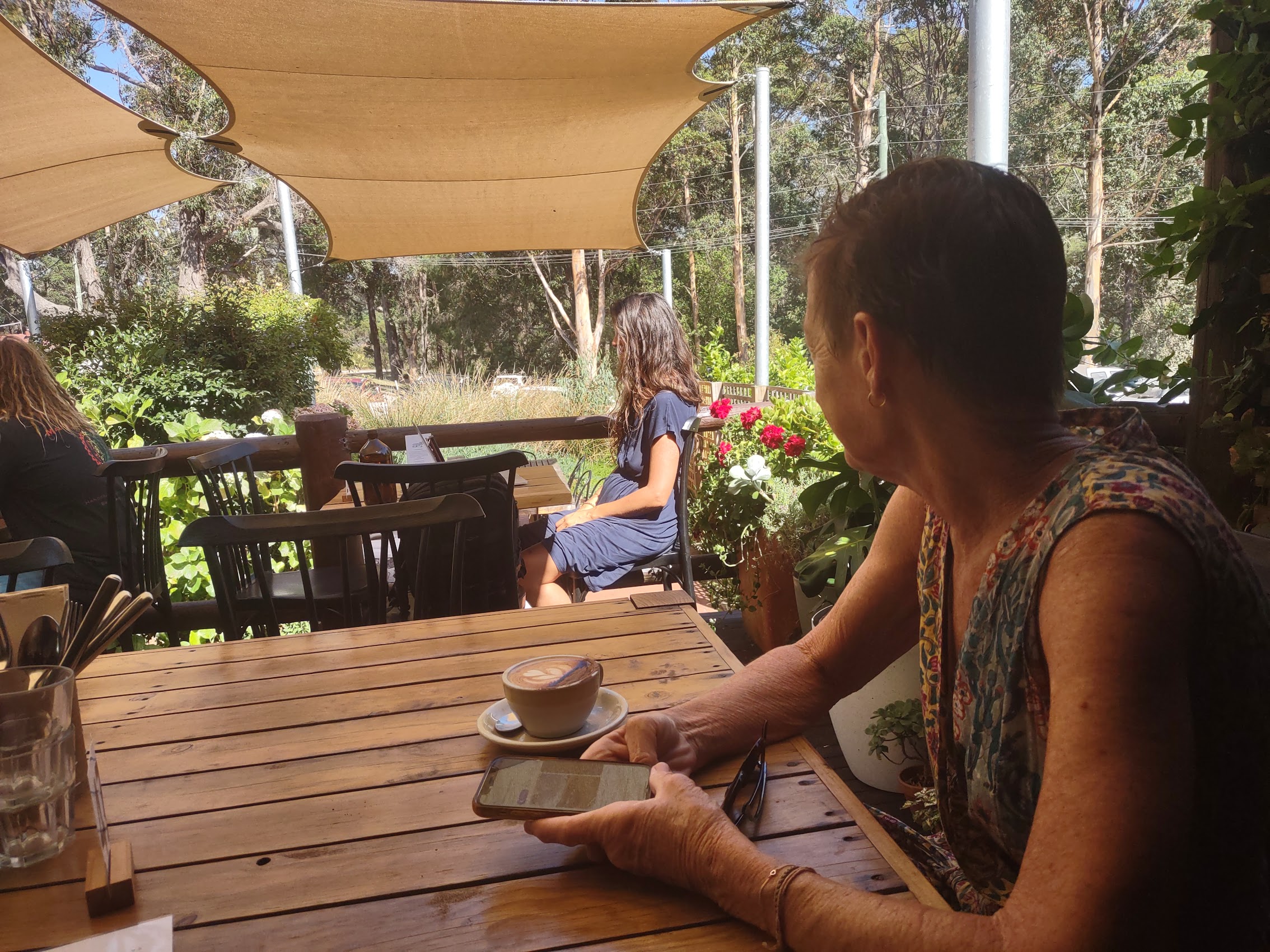
We got going early the next morning after yoga (see below) to explore town which was just a short walk away. We stopped in at a place just a block down the street from our place called Mrs. Jones Café for breakfast before exploring the local artists gallery next door to it.
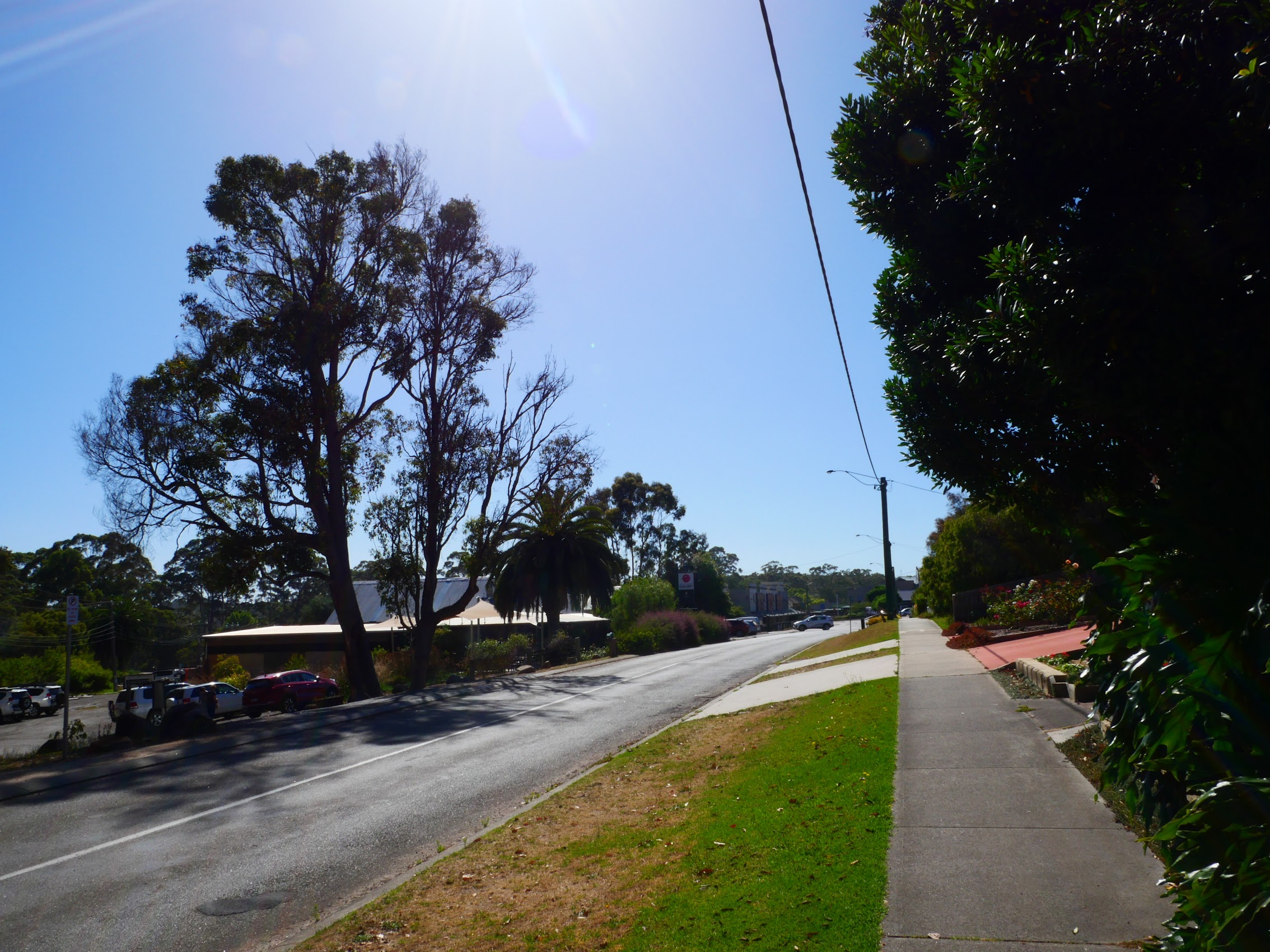
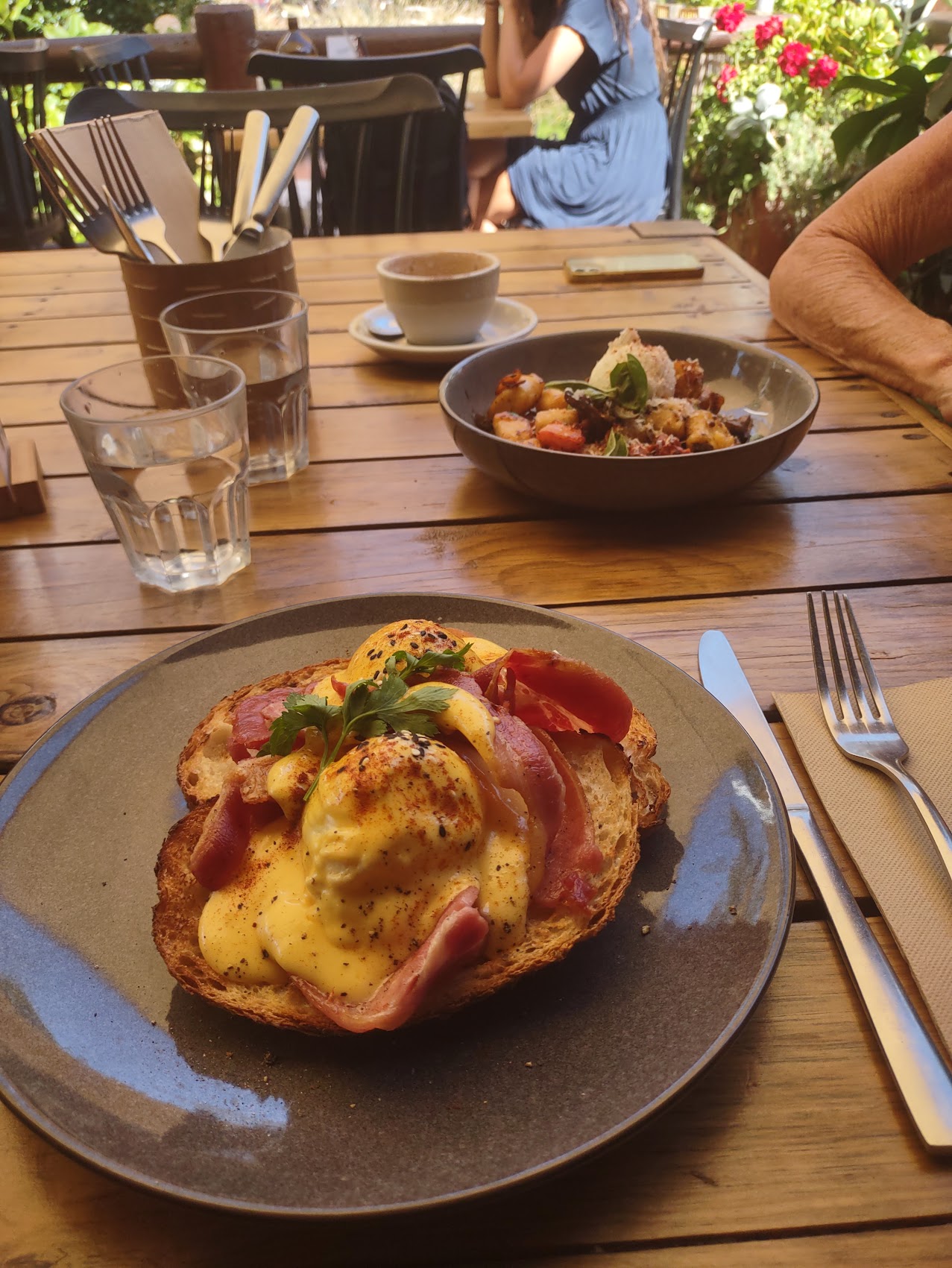
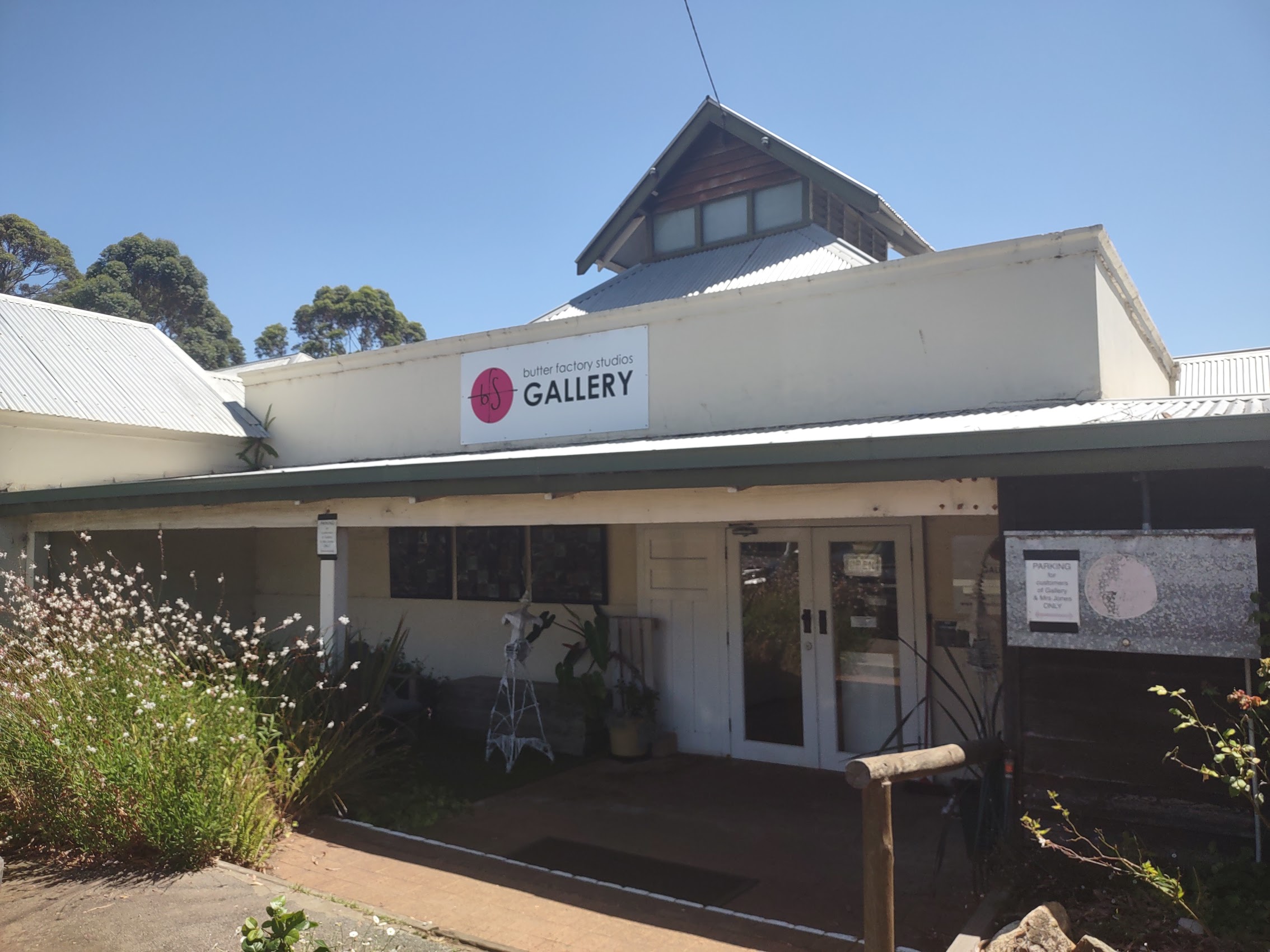
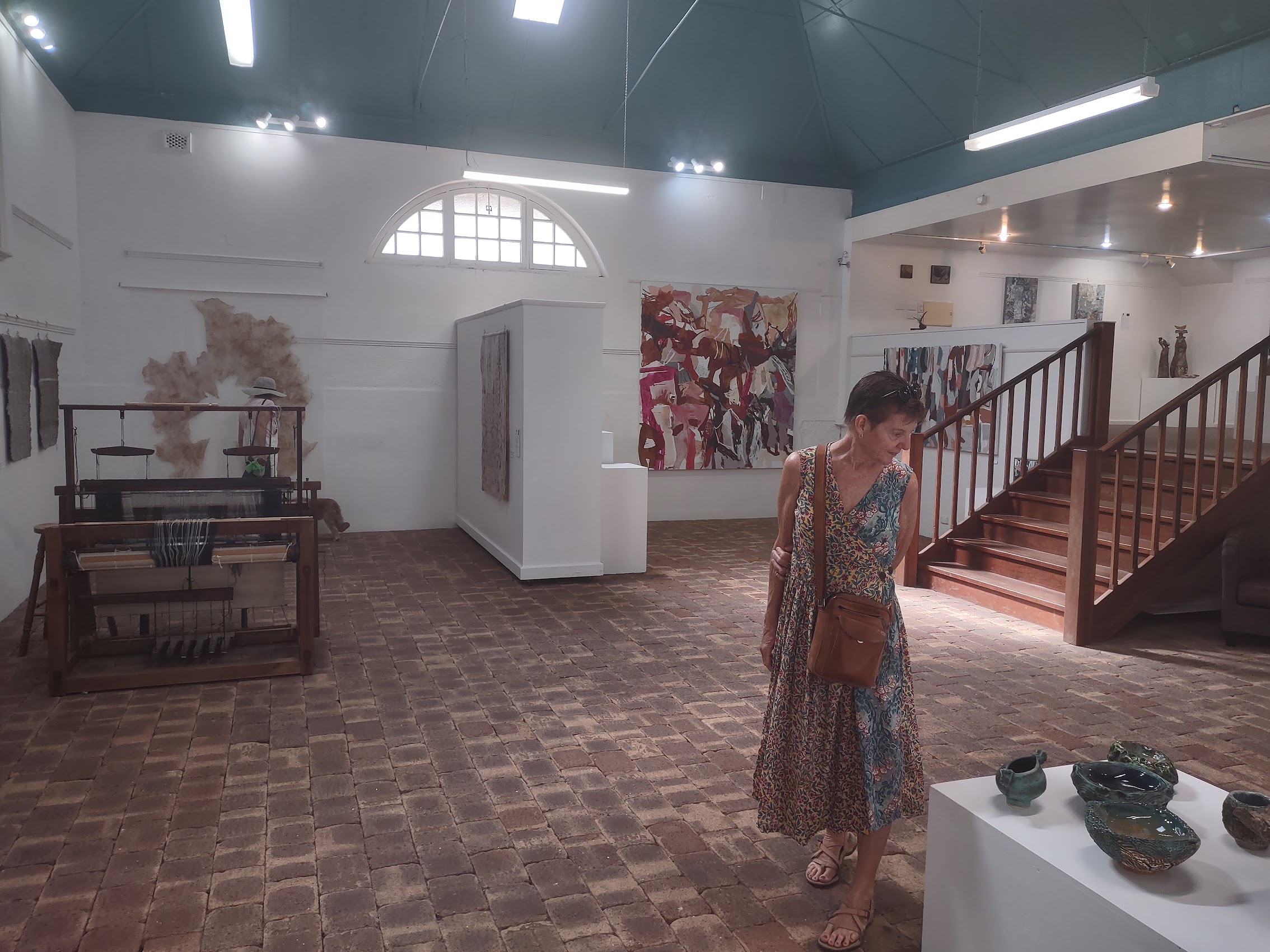
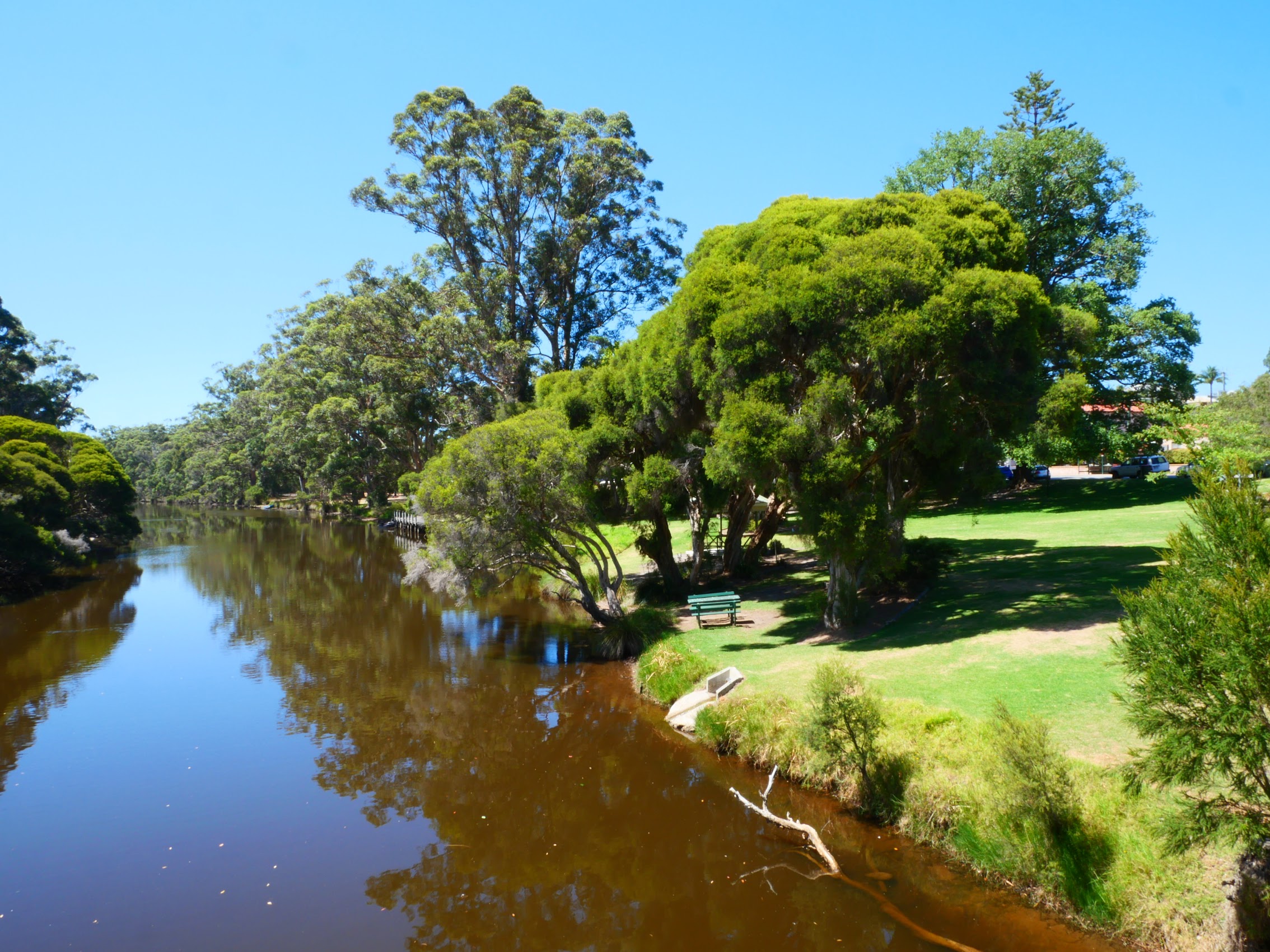
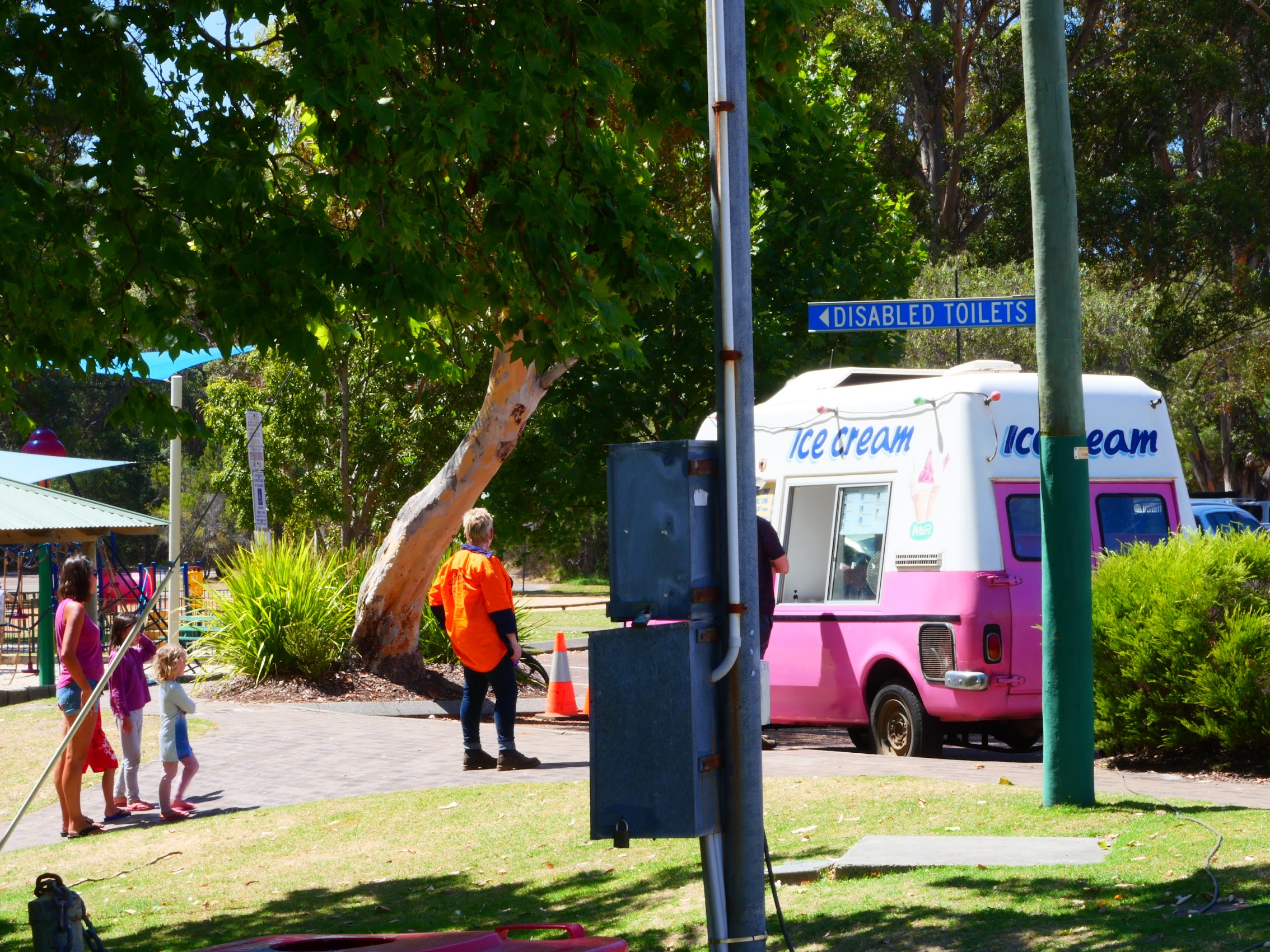
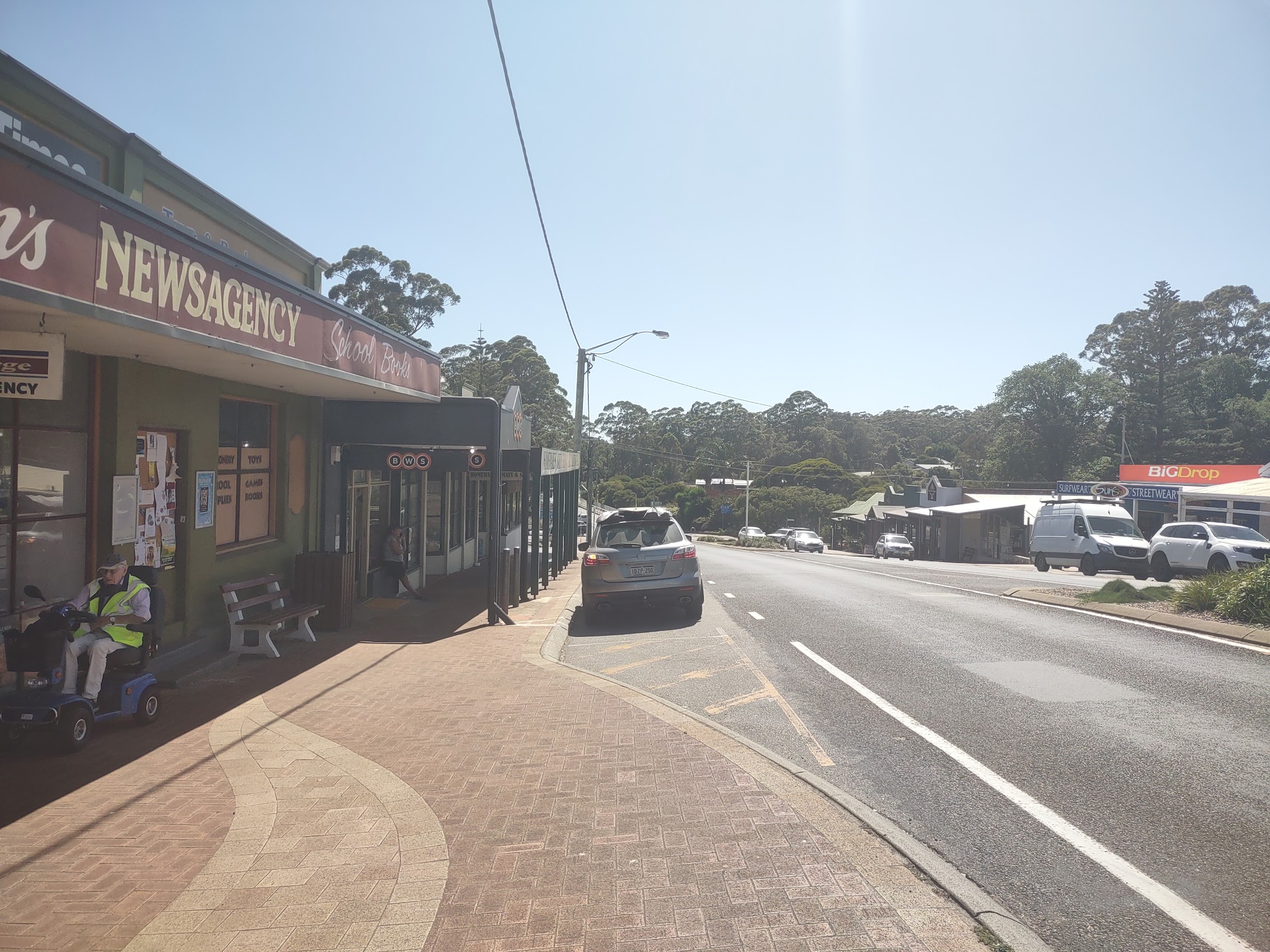
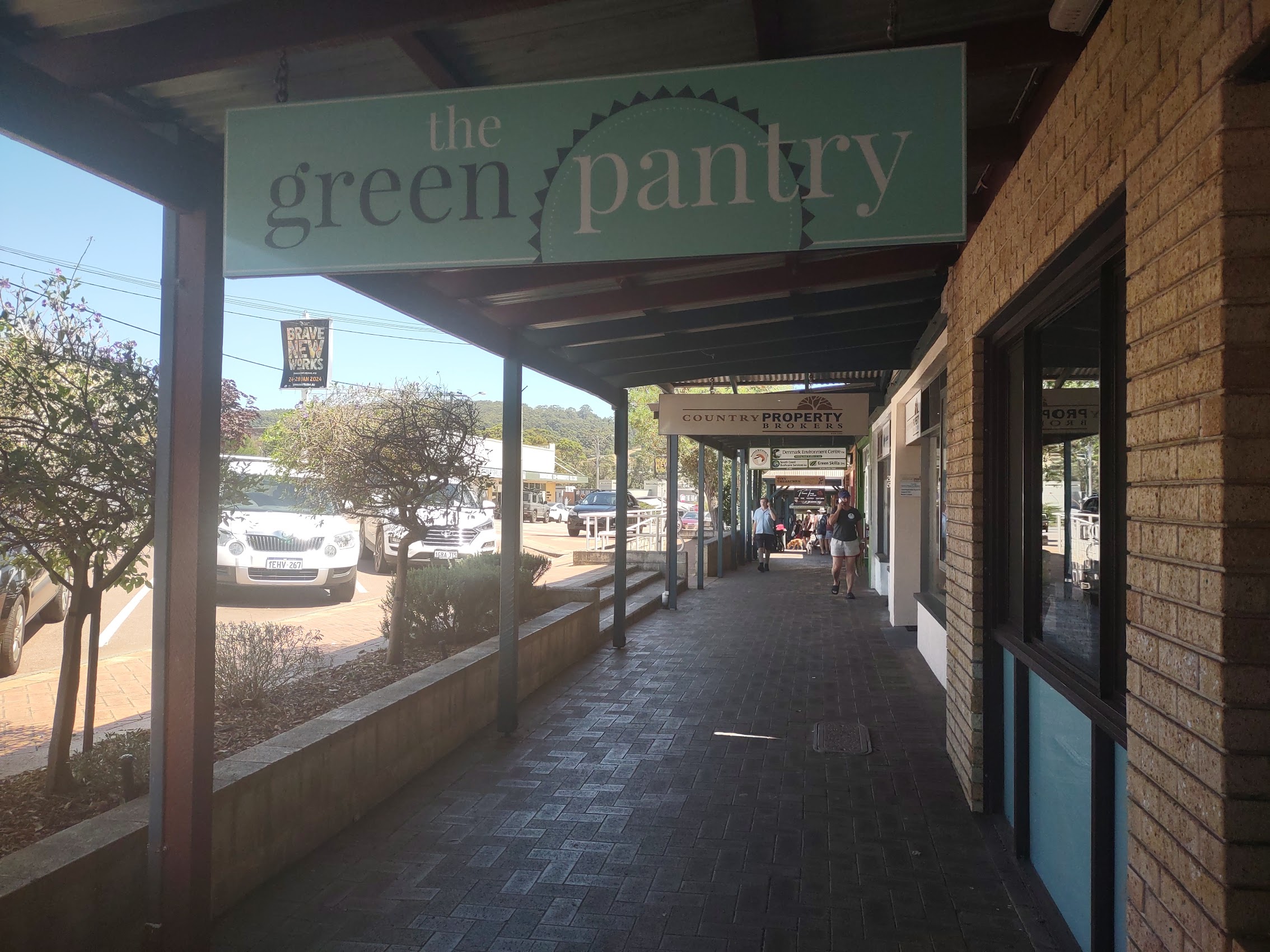
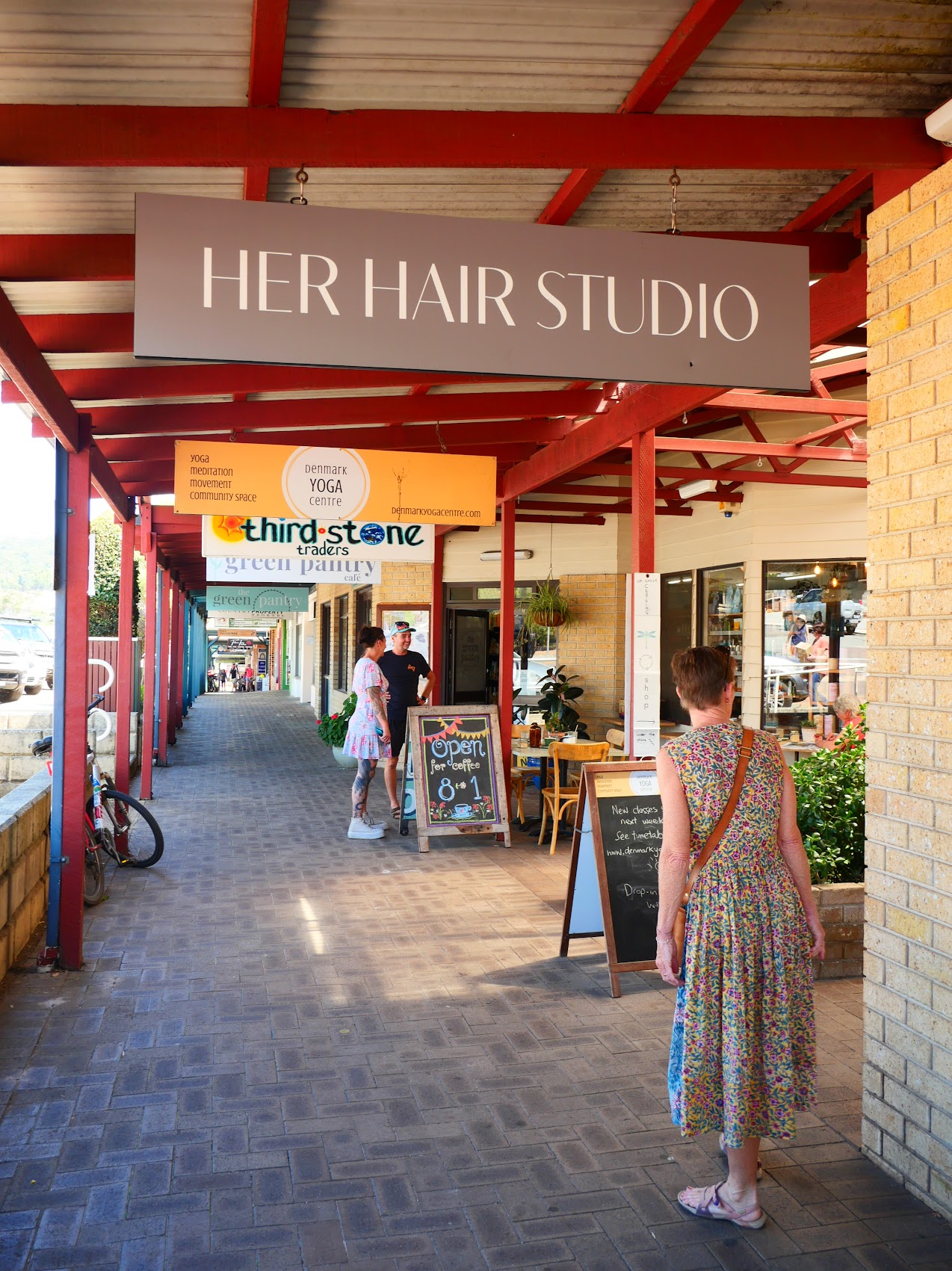
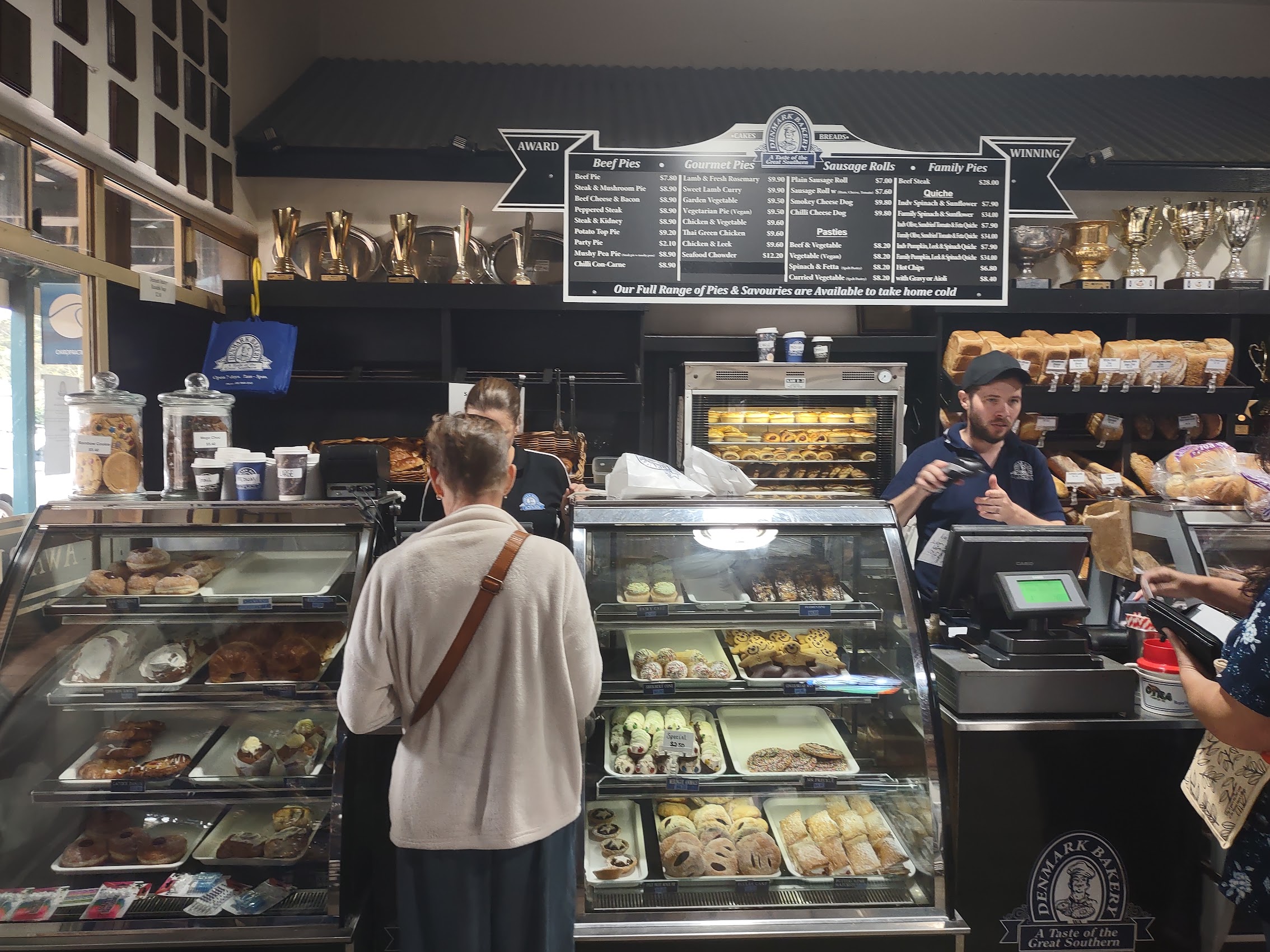
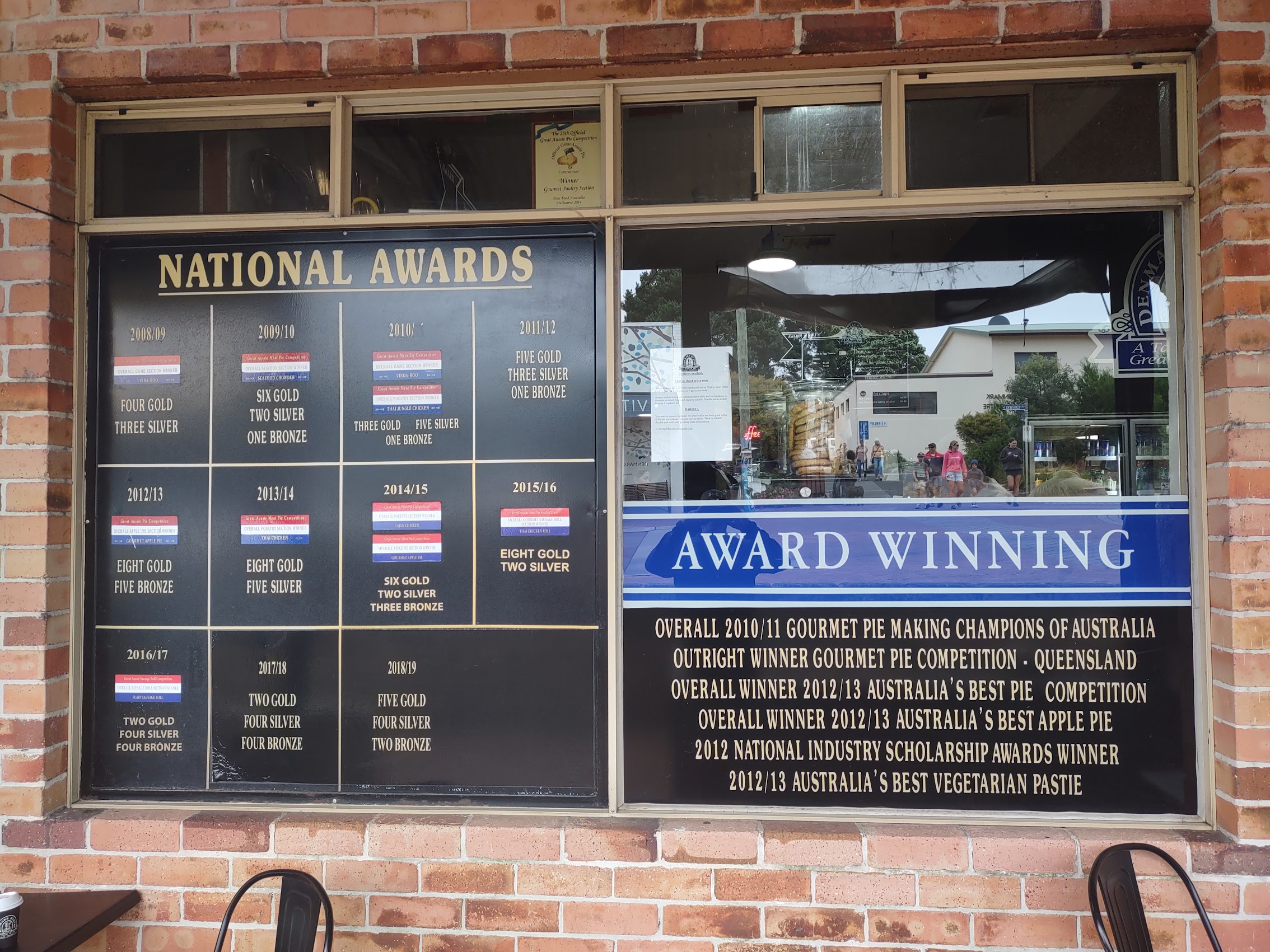
From there we wandered on into the town proper, which turned out to be small but interesting little place with a beautiful riverside park and some nice shops including the award-winning Denmark Bakery with an amazing assortment of both sweet and savory baked goods. (Over time we learned that good bakeries are a staple of all Australian towns.) On our way home we stopped at the local IGA, which we were happy to see on our way into town, to restock on groceries. (Again, nice to be in a place where there are real grocery stores!)


The Beaches of Denmark
Our plan for the afternoon was to visit a couple of the local beaches which were rumored to be pretty nice. We were not disappointed. Our first stop was a place called Green’s Pool which was a bit crowded near the beach access point but thinned out dramatically as one proceeded west up the beach. The mix of (what we thought at the time were) large rocks and sand was a bit unusual in our experience but was quite beautiful and created many shallow pools and small sheltered beach areas for relaxing out of the wind.
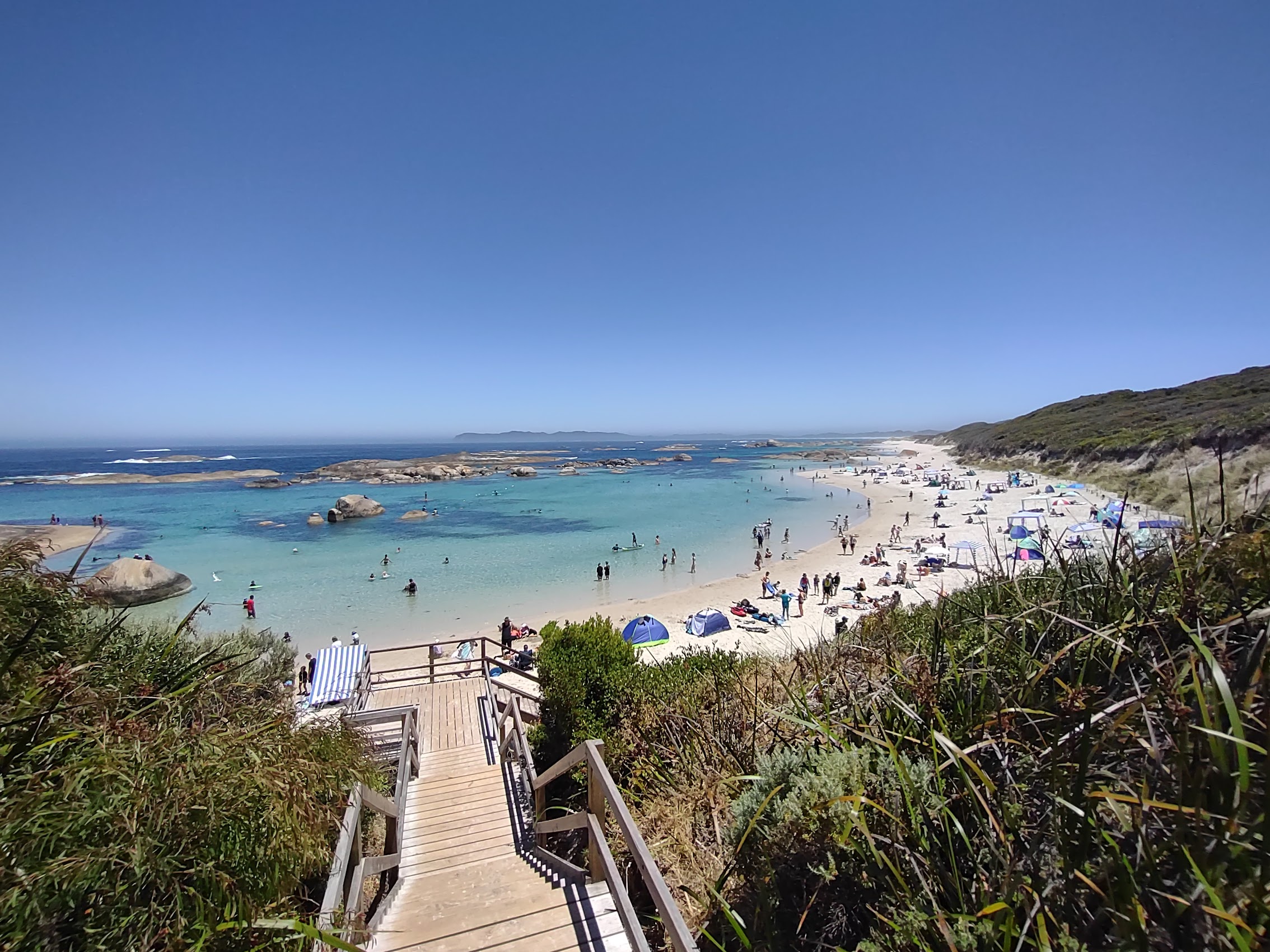

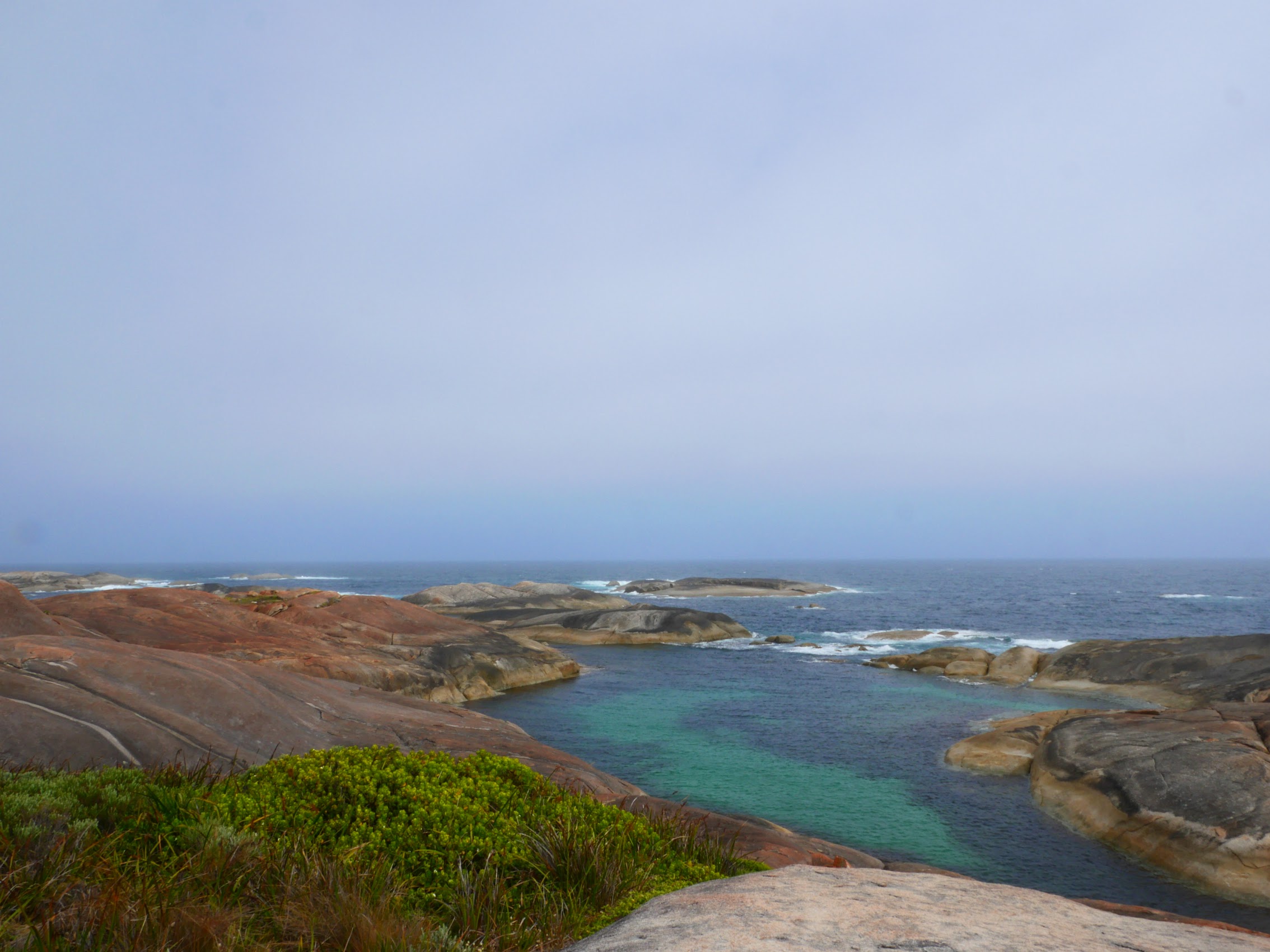


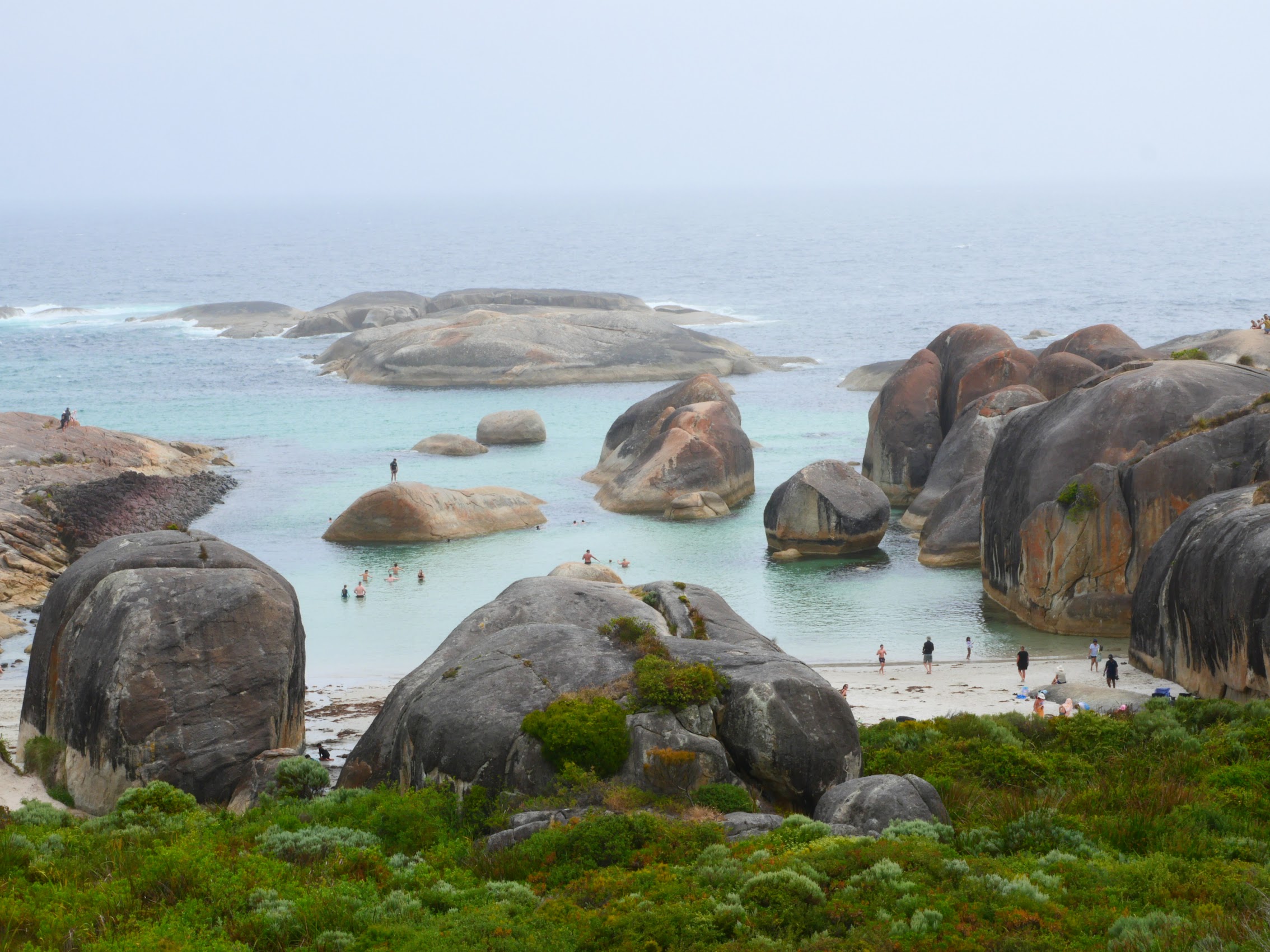
From Green’s Pool we headed east down the coast to a somewhat legendary spot called Elephant Rocks which I would have to say was one of the more surreal beaches we had yet encountered in our travels with enormous rocks surrounding a small beach. Just beautiful!
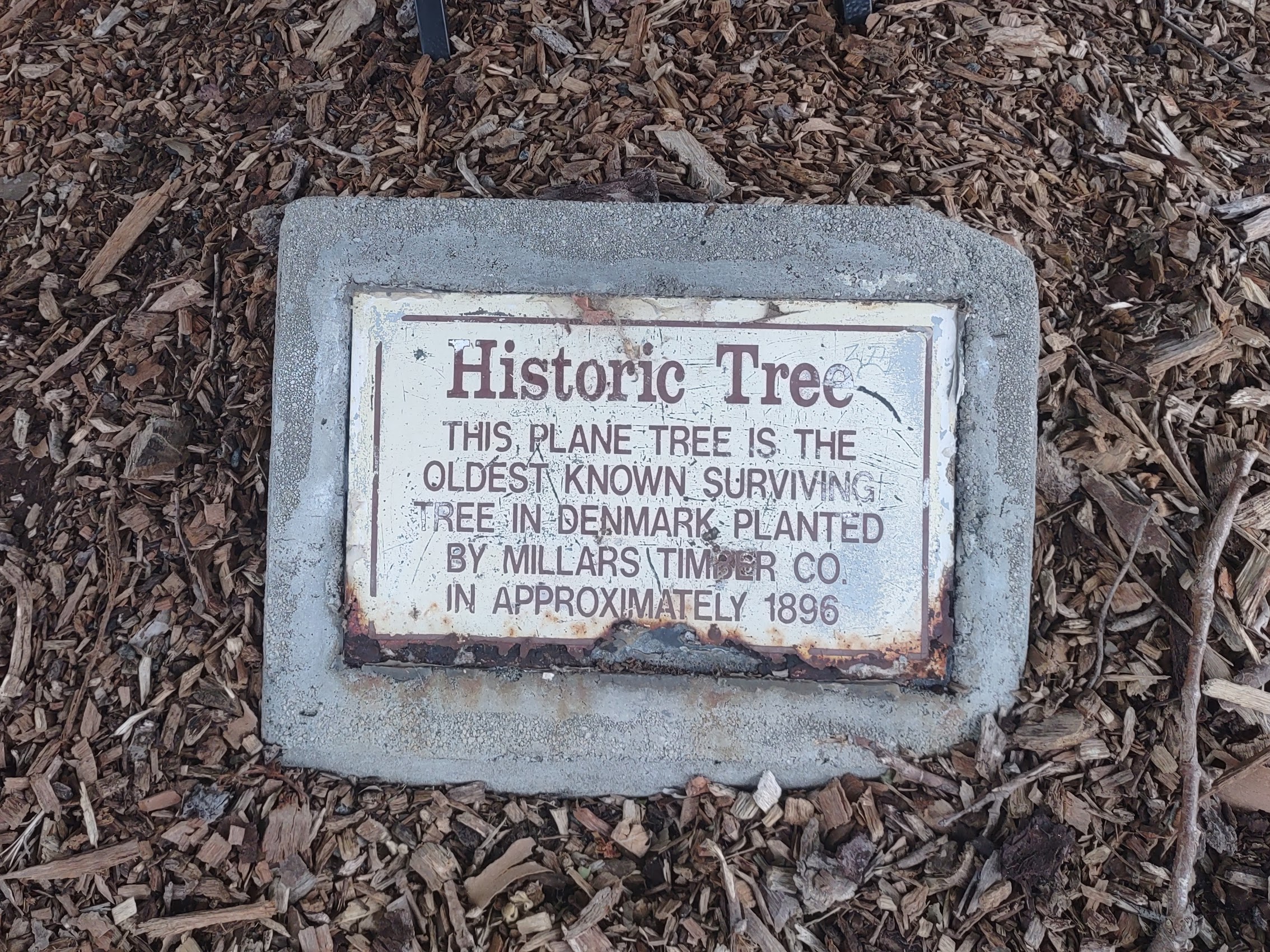
On our way out of town the next day we felt compelled to stop back in at the Denmark Bakery to stock up on some pastries as well as some of their award-winning pies. (As we would learn, meat pies of all sorts are popular fare in Australia for breakfast, lunch, or dinner.) Along the way we came across what turned out to be the oldest tree in Denmark, a Plane tree planted in 1896! Now feeling like we had seen everything there was to see in Denmark, we hit the road for our next stay in the town of Bremer Bay.


Yoga in Denmark (Colleen)
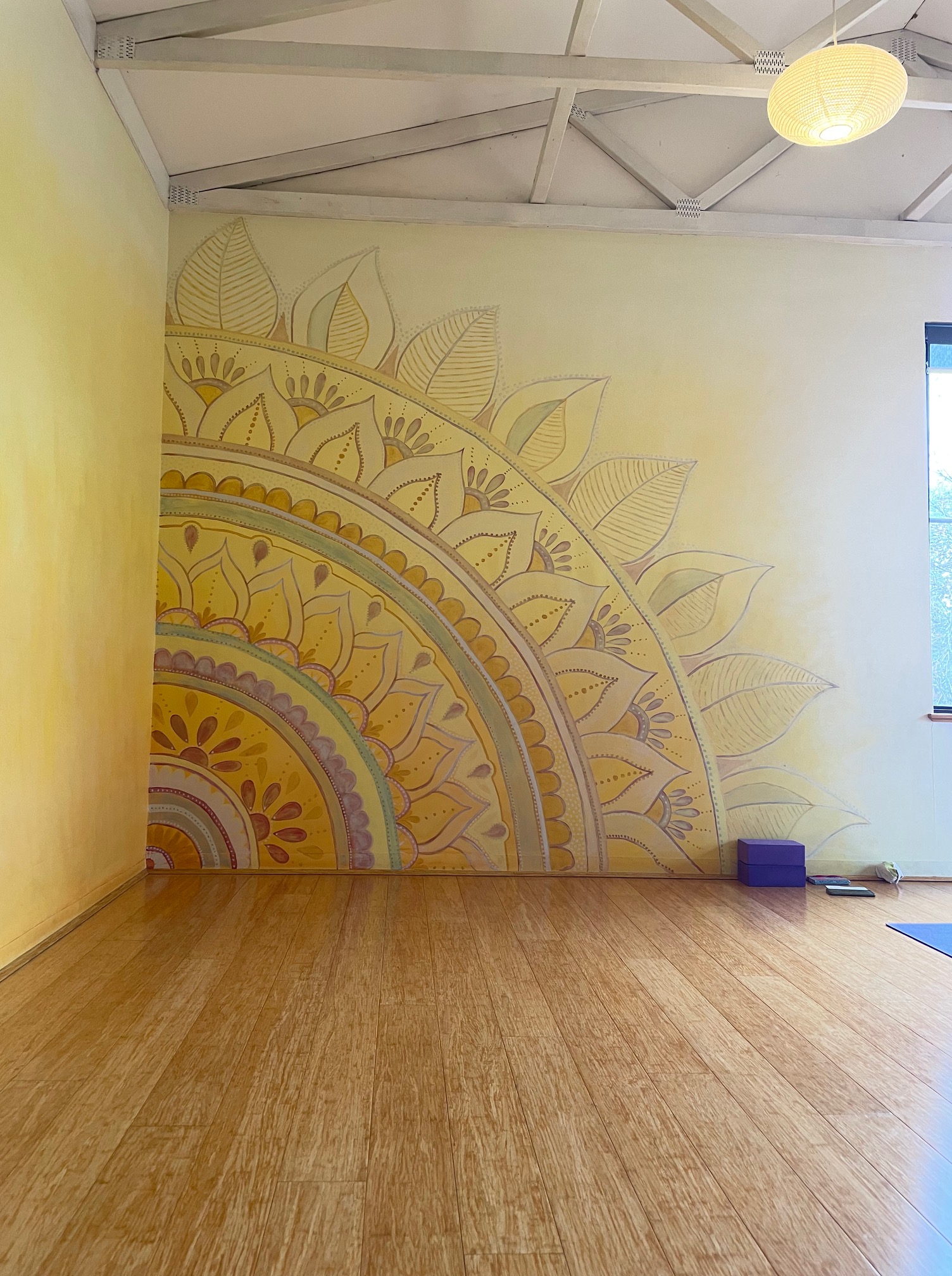
Denmark Yoga Centre listed a yoga/pilates class that fit in with our travel schedule, so I headed into the town seeing vivid green parrots along the way. There were three other participants in various stages of getting settled in when I arrived. I enjoyed listening to the banter with that strong Australian accent as the locals shared aspects of their daily lives, not too dissimilar to ours back home. The studio was very sunny and cheerfully decorated. Our instructor was Carol who offered an interesting mix of yoga and what I presume to be pilates-like. Immediately following class, we found the Denmark Bakery completing our civic duty before heading out.
Torndirrup National Park and The Gap
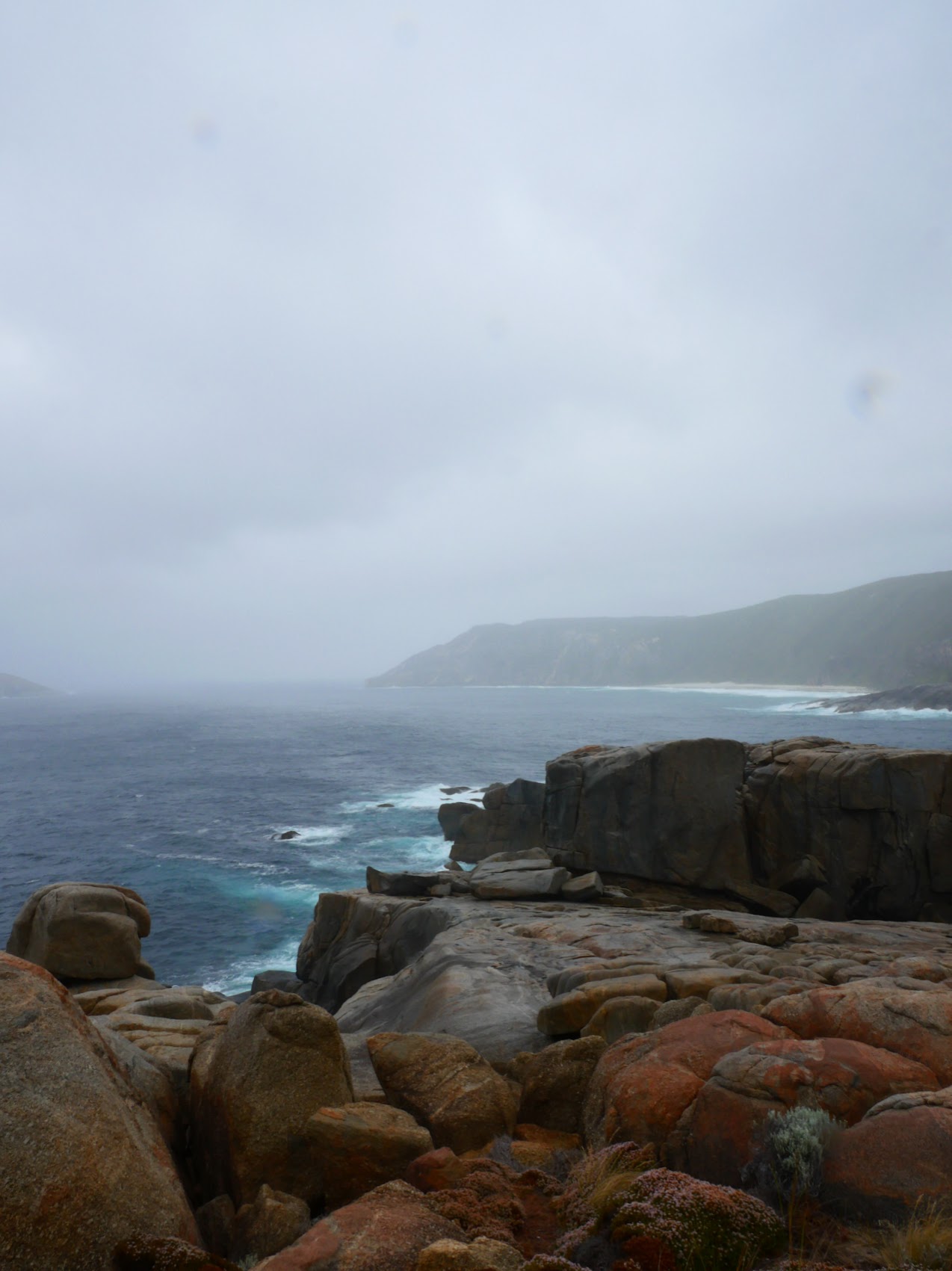
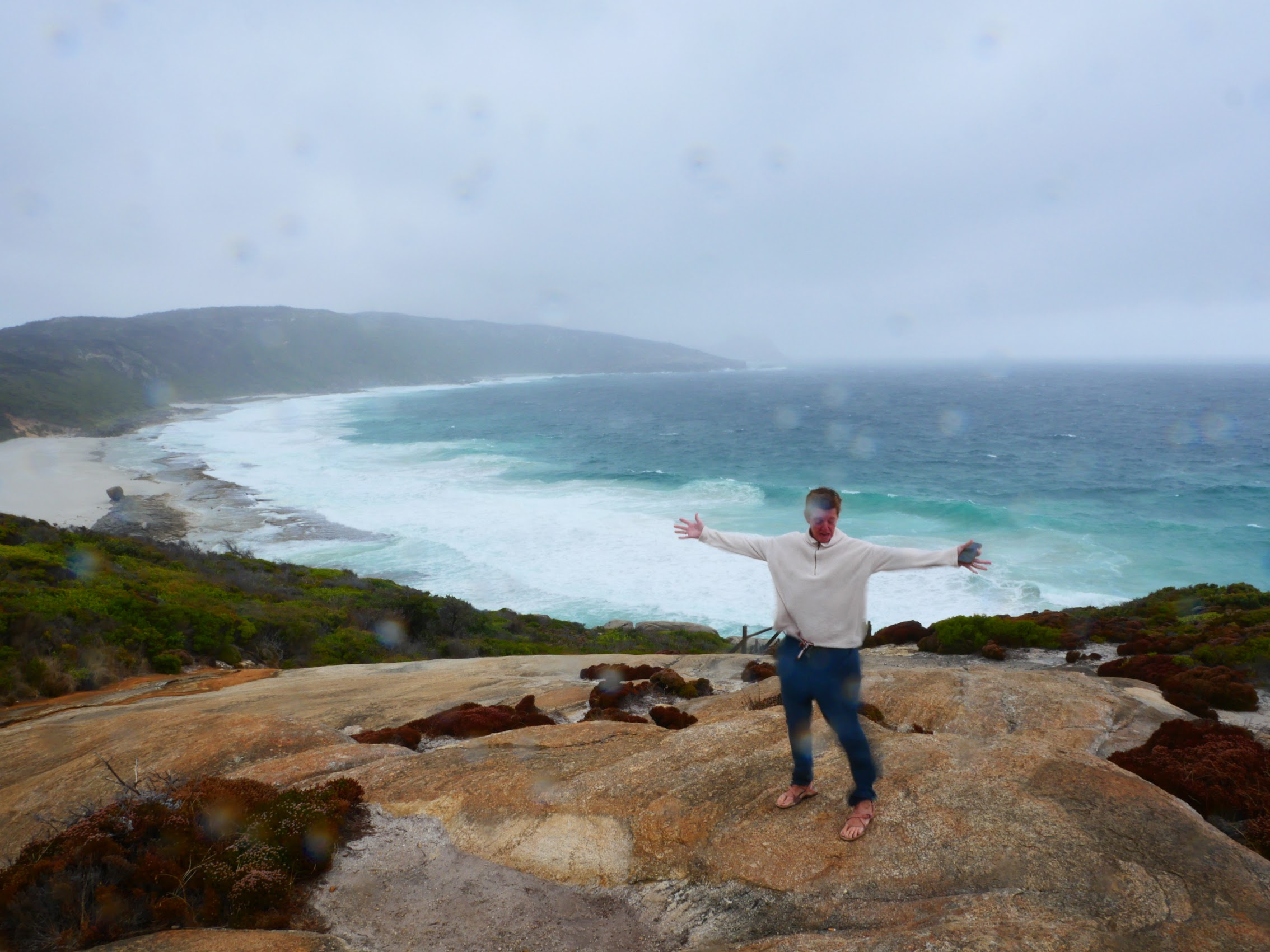
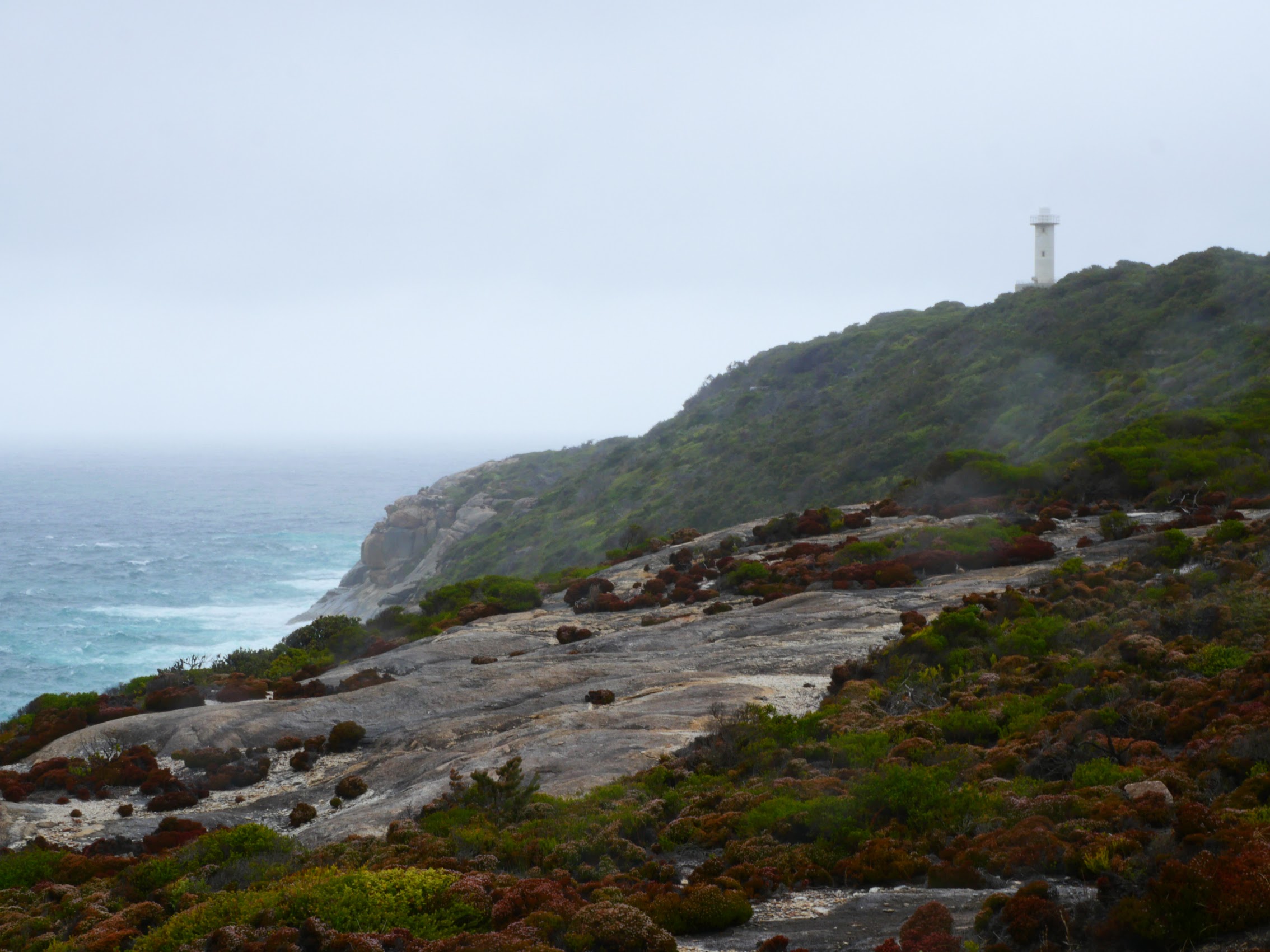
On the way to Bremer Bay we detoured south around the town of Albany through the Torndirrup National Park to the southernmost point in Western Australia, a rocky peninsula stretching into the Southern Ocean. We visited a spot called The Gap which featured scenic overlooks and a rock bridge as well as some interesting interpretive signage regarding both the geological and cultural significance of the place.
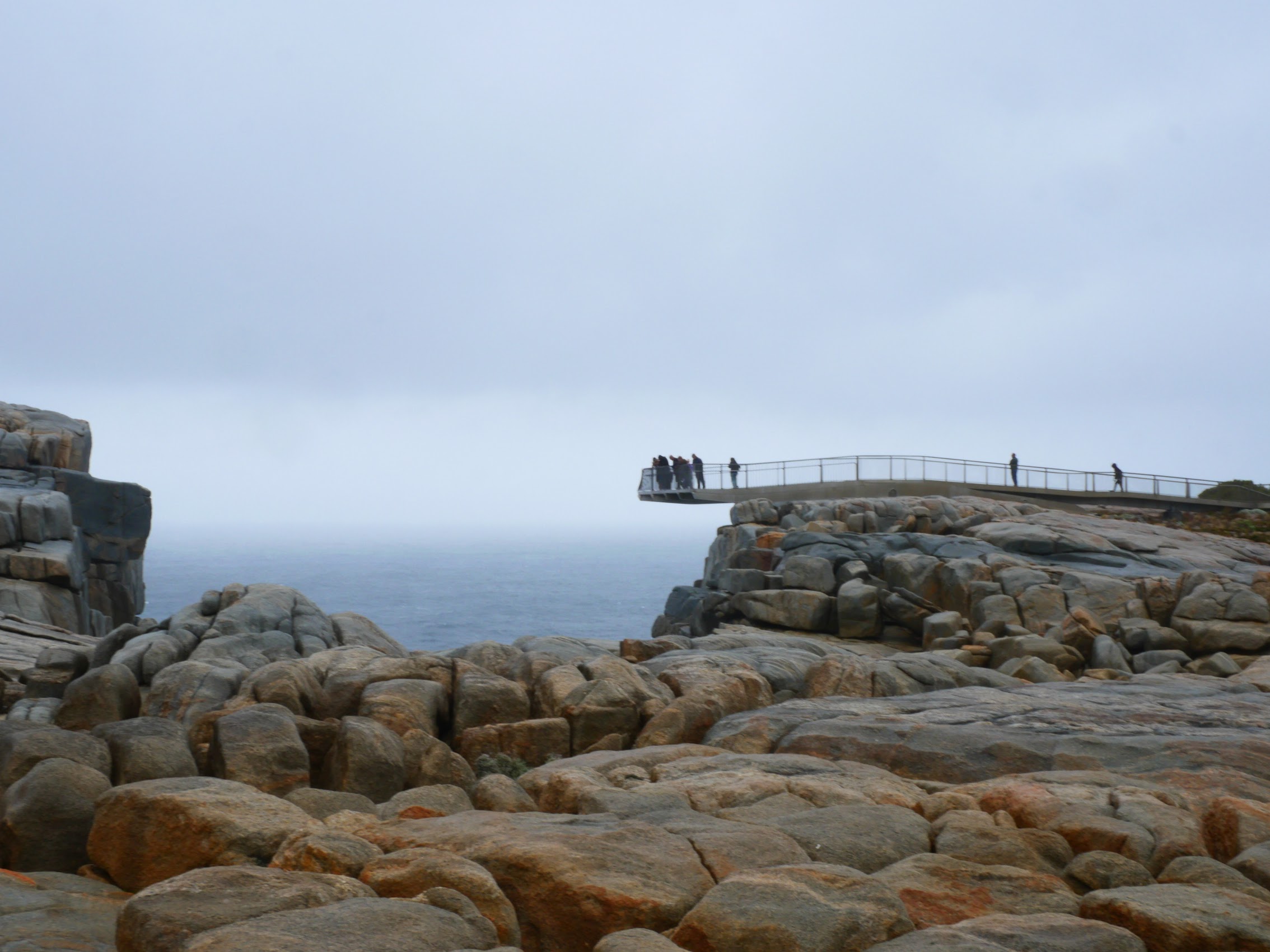
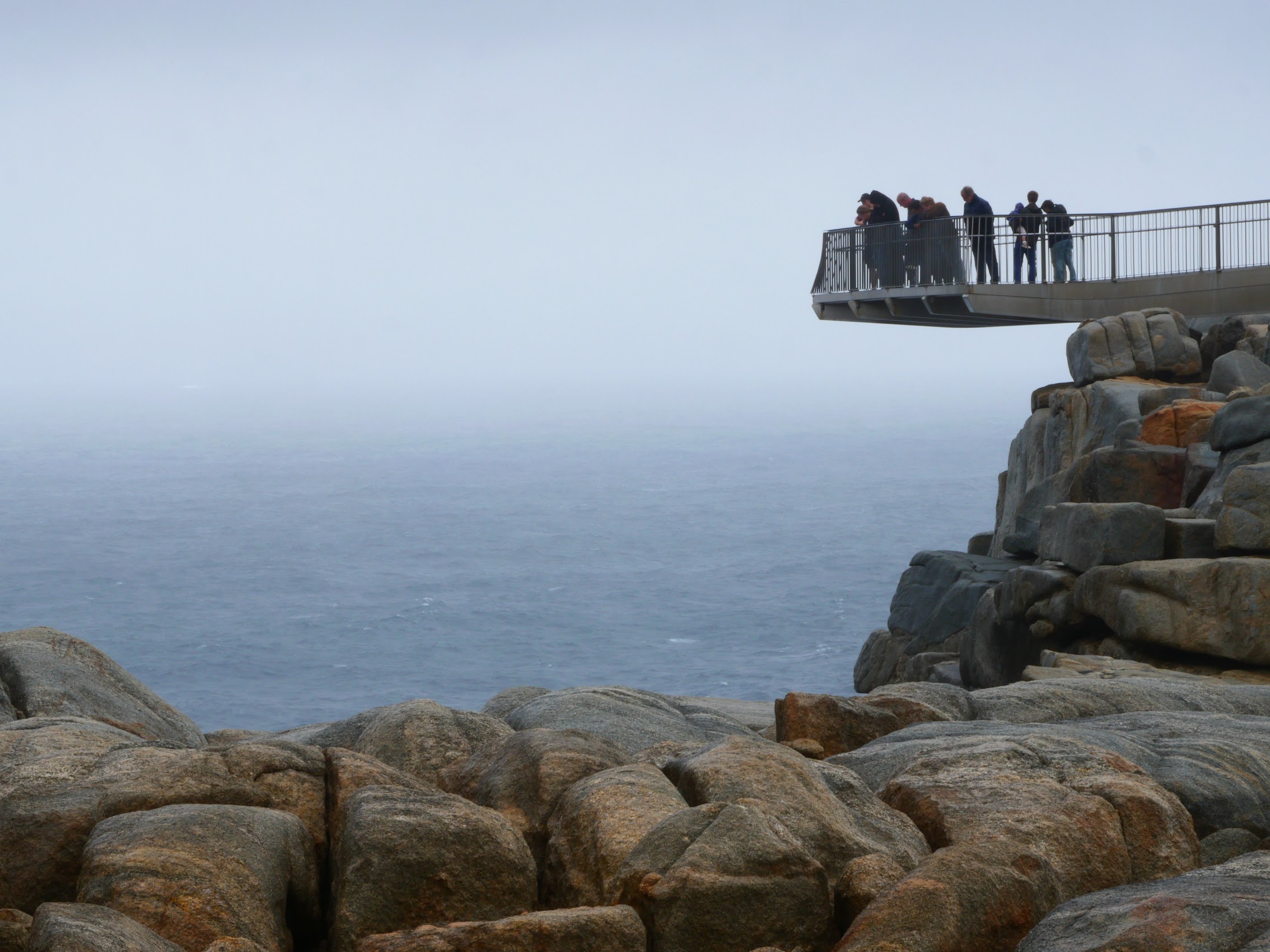
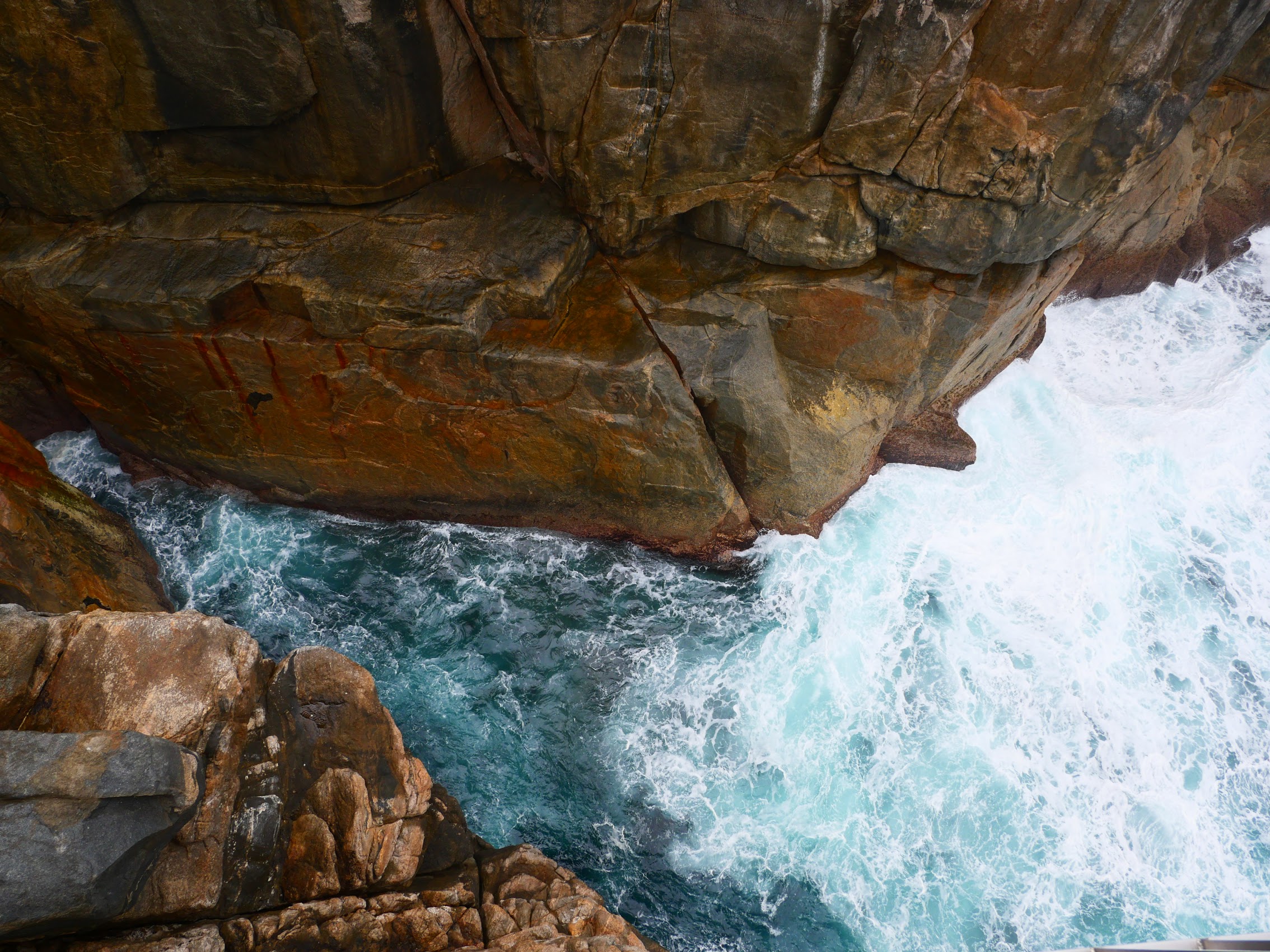
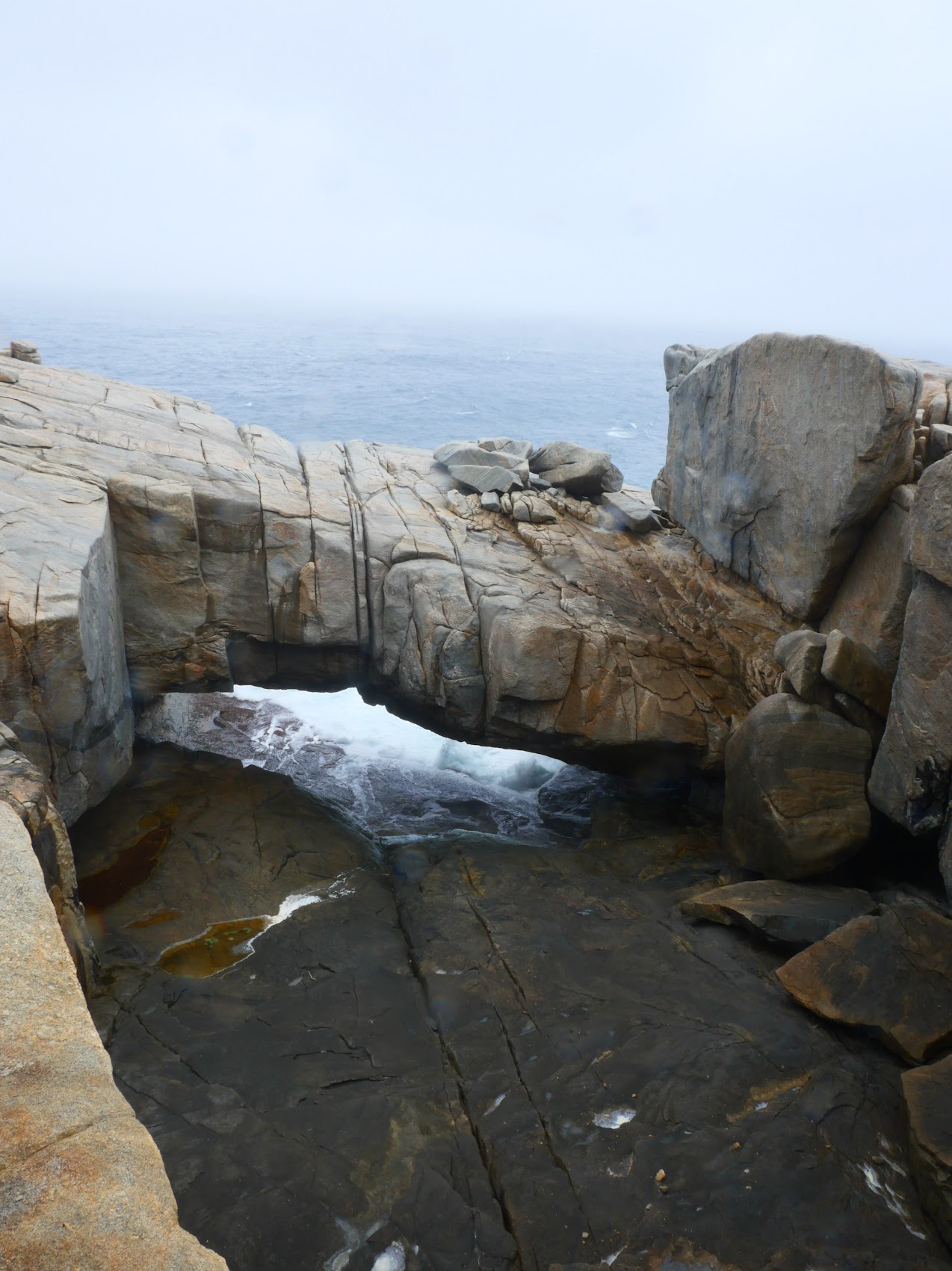
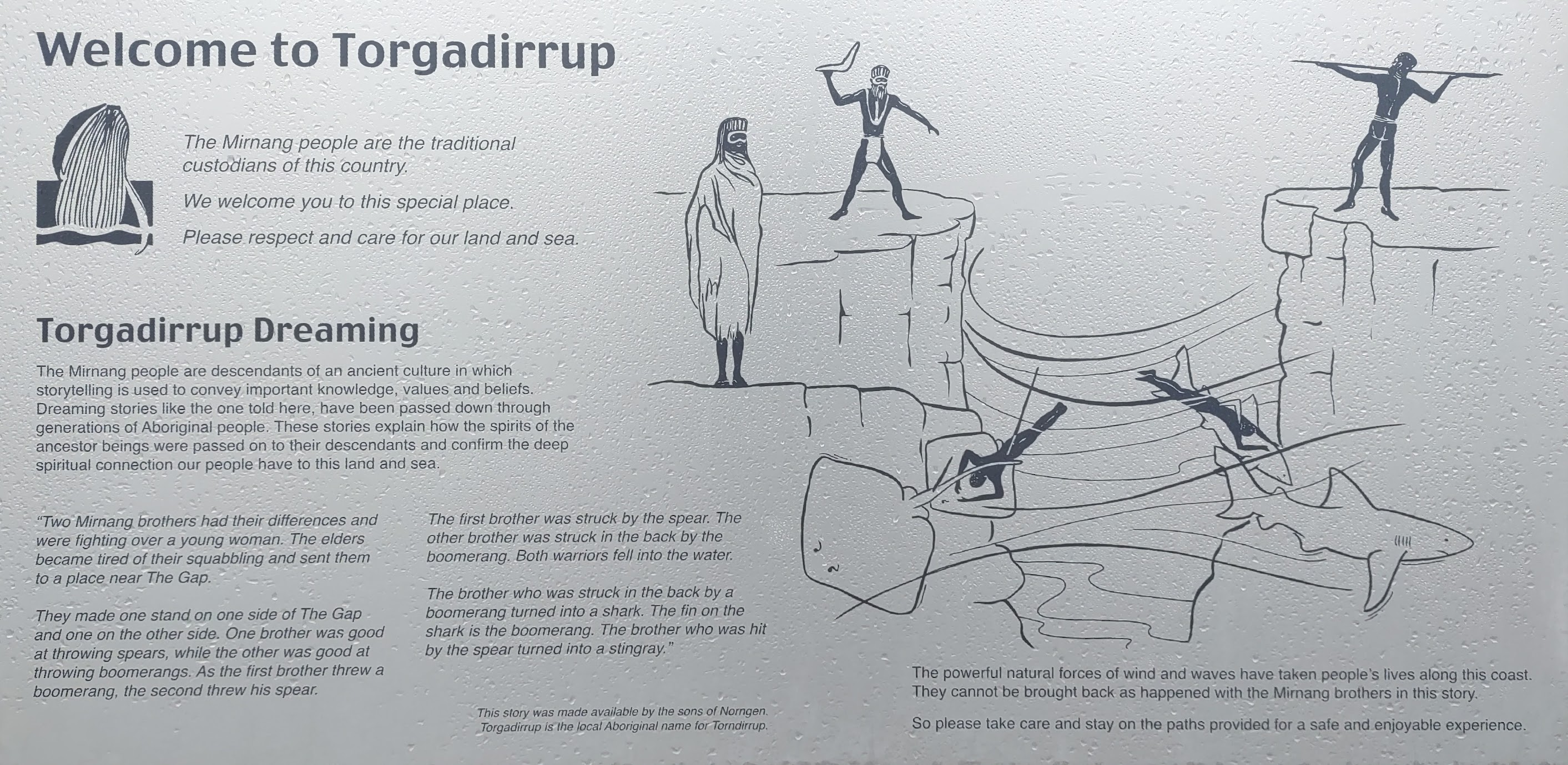
The weather was markedly different than what we had seen until now being so fully exposed to the cold wind and rain coming off the Southern Ocean and it felt like you might be able to glimpse Antarctica in the distance if you looked hard enough. More spectacular scenery!
Bremer Bay
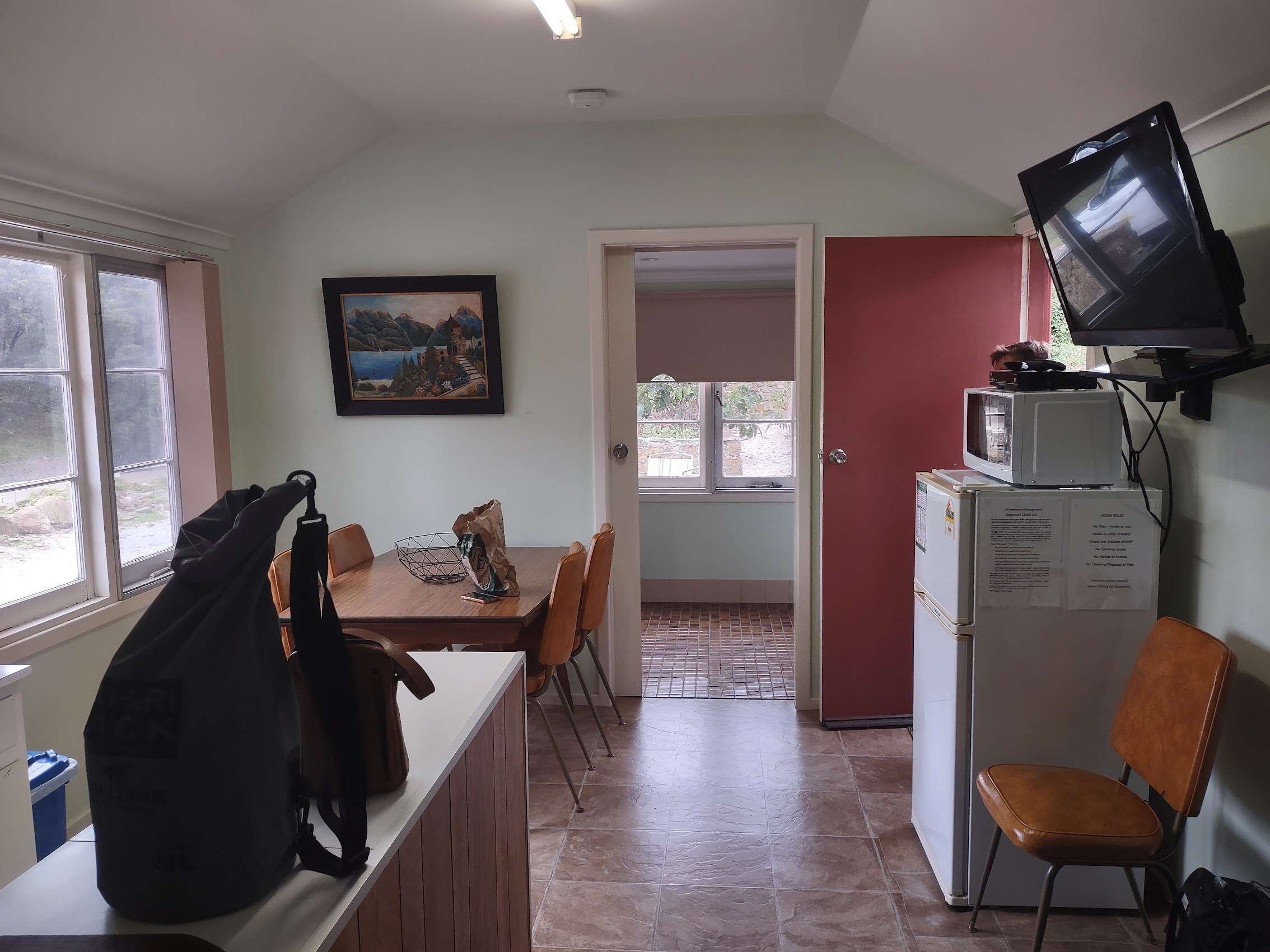
After getting our fill of wind and rain, we made a retreat back to the wooded coast and continued on our way to our next stay in Bremer Bay, an extremely small town (the smallest thus far) with a population of about 250 people. Our place in Bremer Bay was a small cottage located in the flower garden of our host’s house and was definitely one of the more unique places we have stayed.
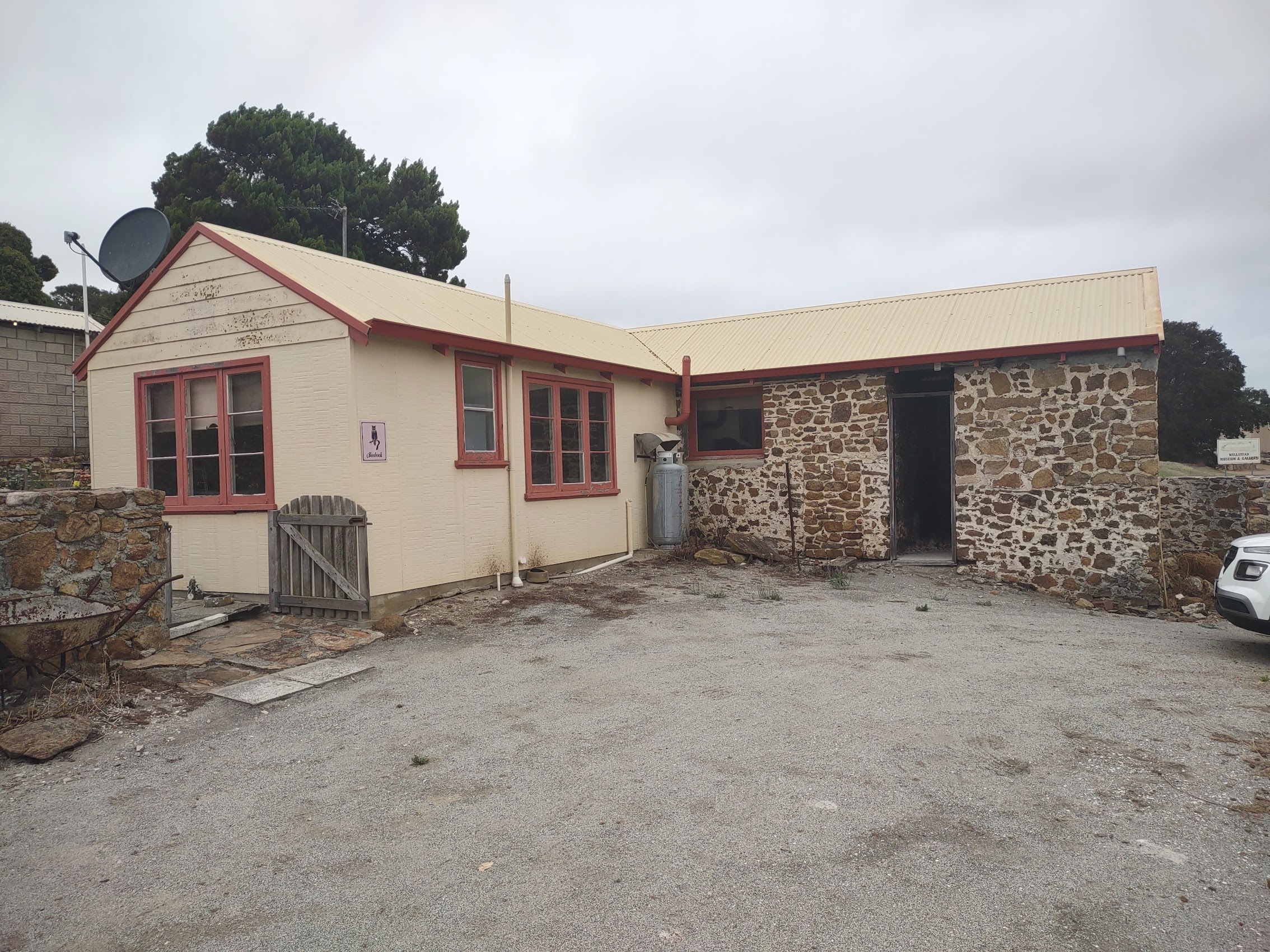
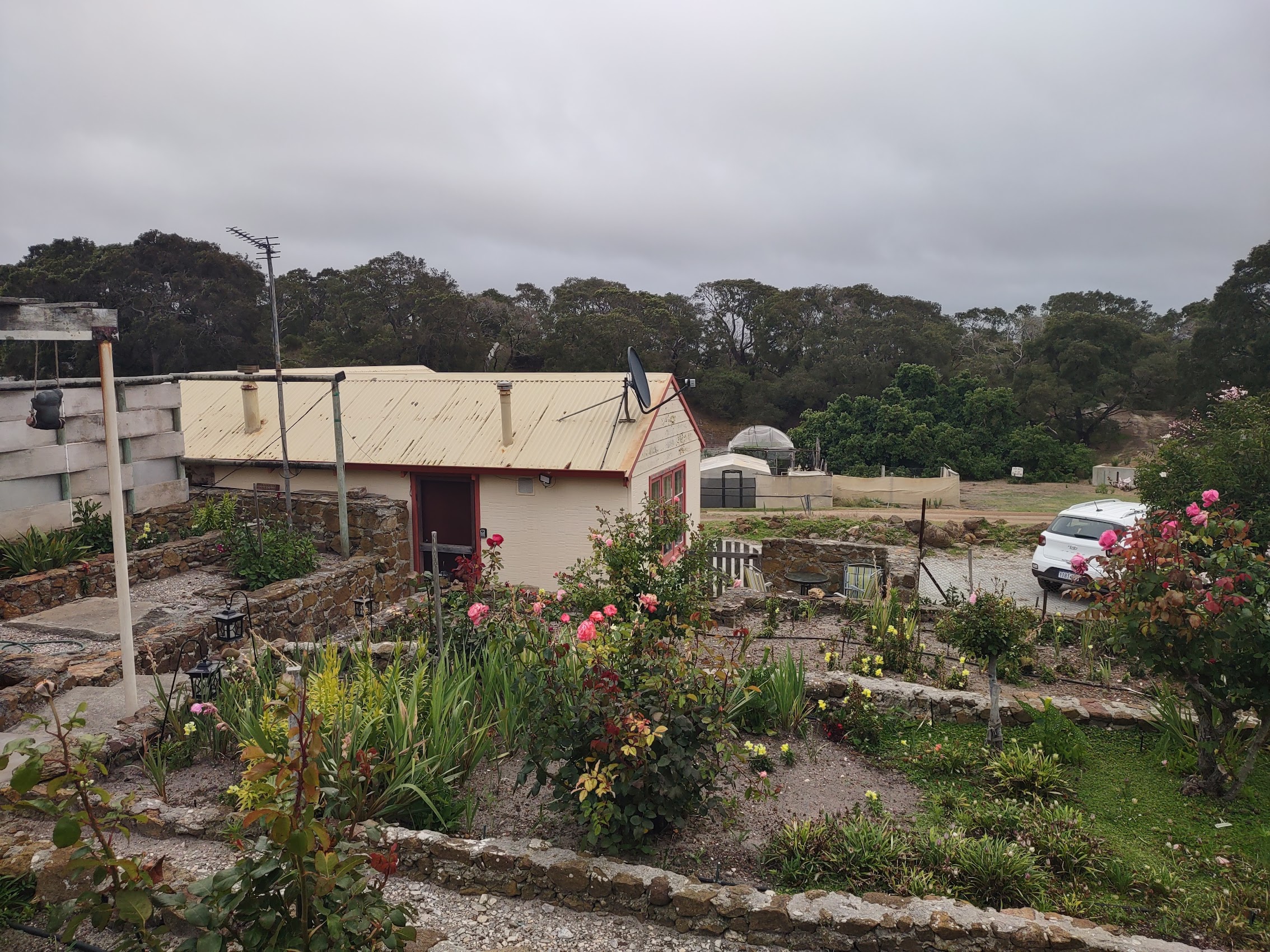
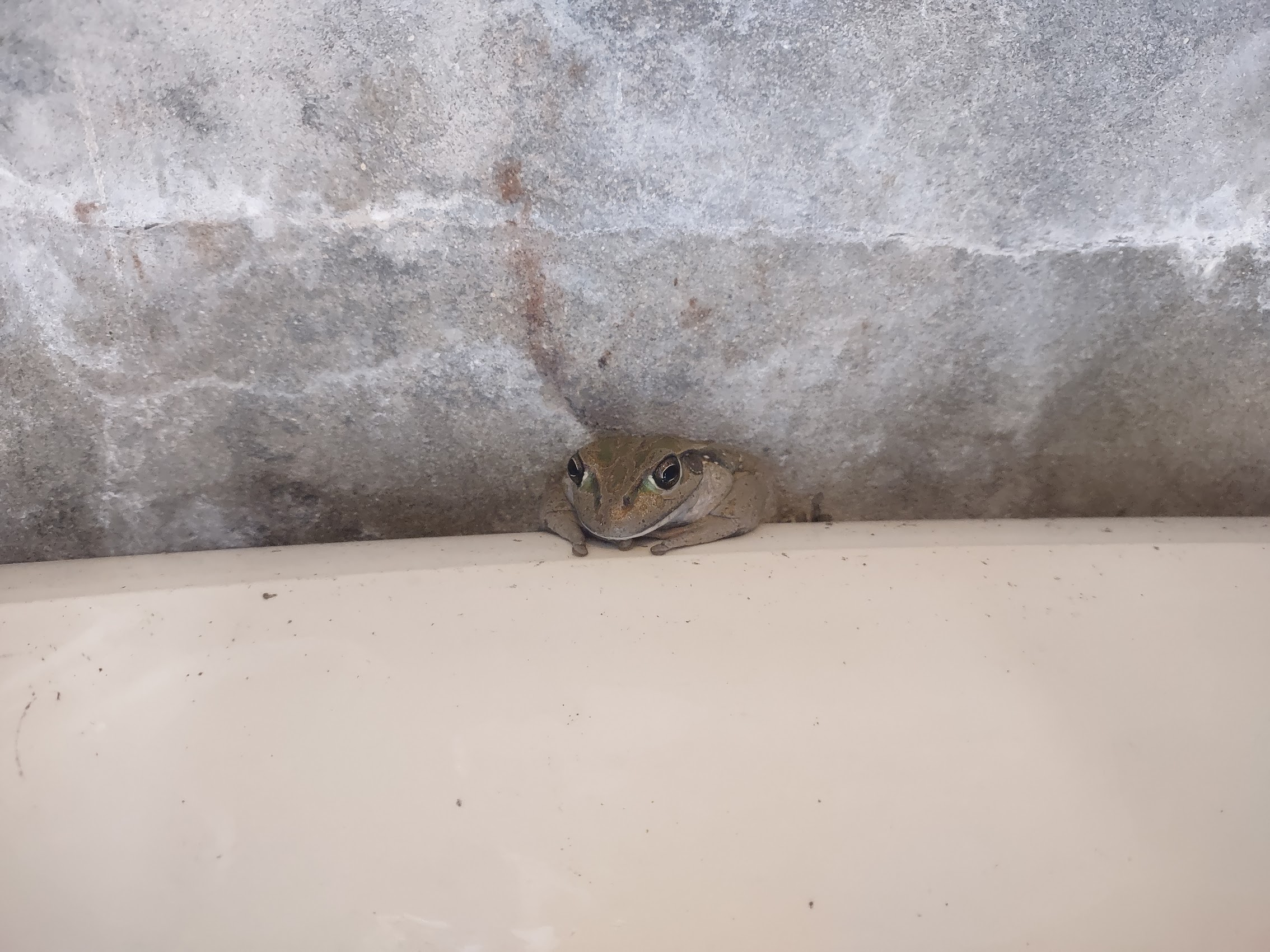
It had a living and dining area with kitchen and a separate bedroom and a bathroom with a sink, shower, and clothes washer, but, somewhat to our surprise (you really have to go over the listings closely!), the toilet was in a separate shed (really an outhouse) located a few steps above the cottage in the garden. We quickly learned that it was important to securely close the outhouse door securely at night, both to keep the weather out and the frogs who liked to hang out in there!

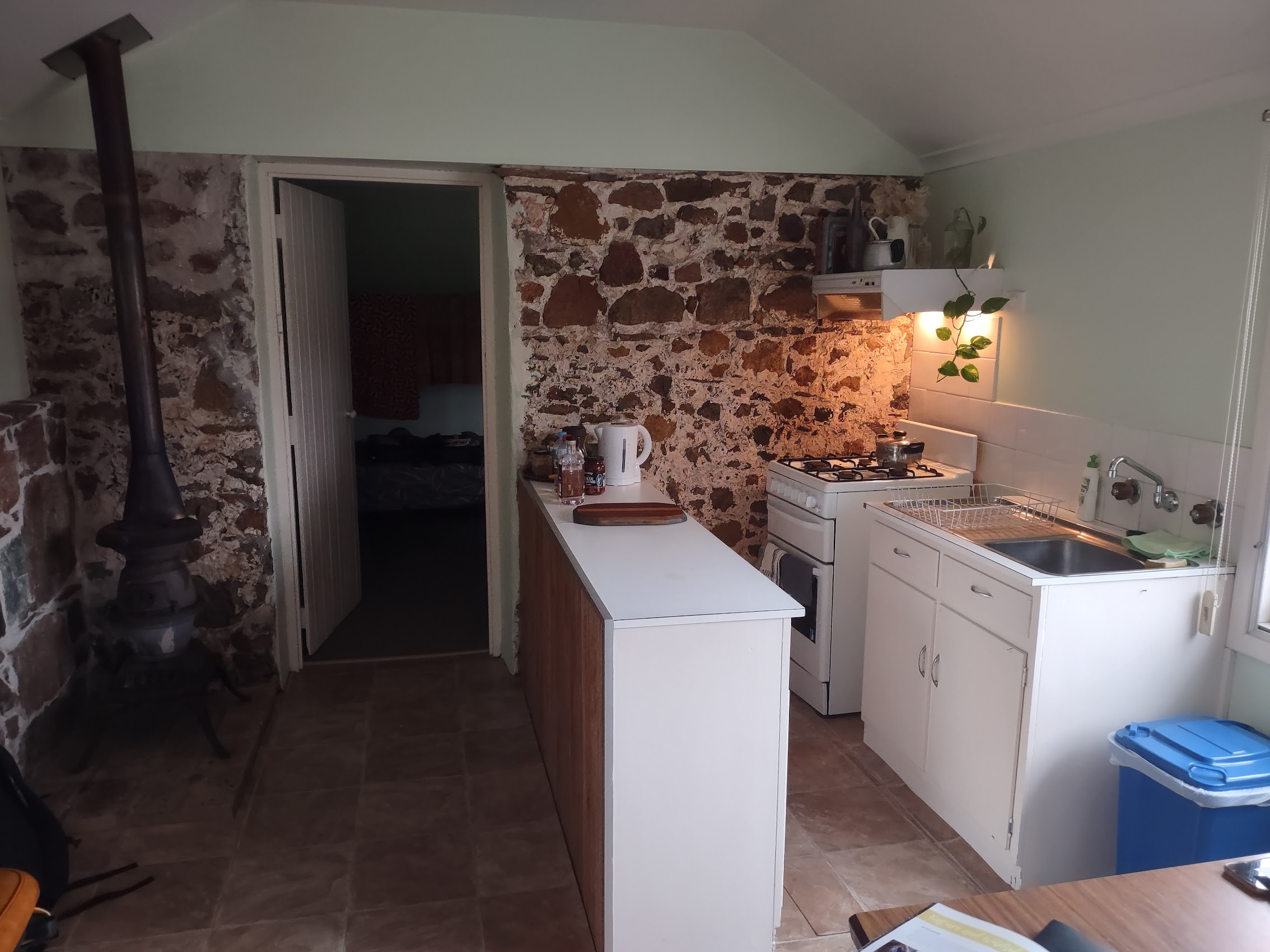
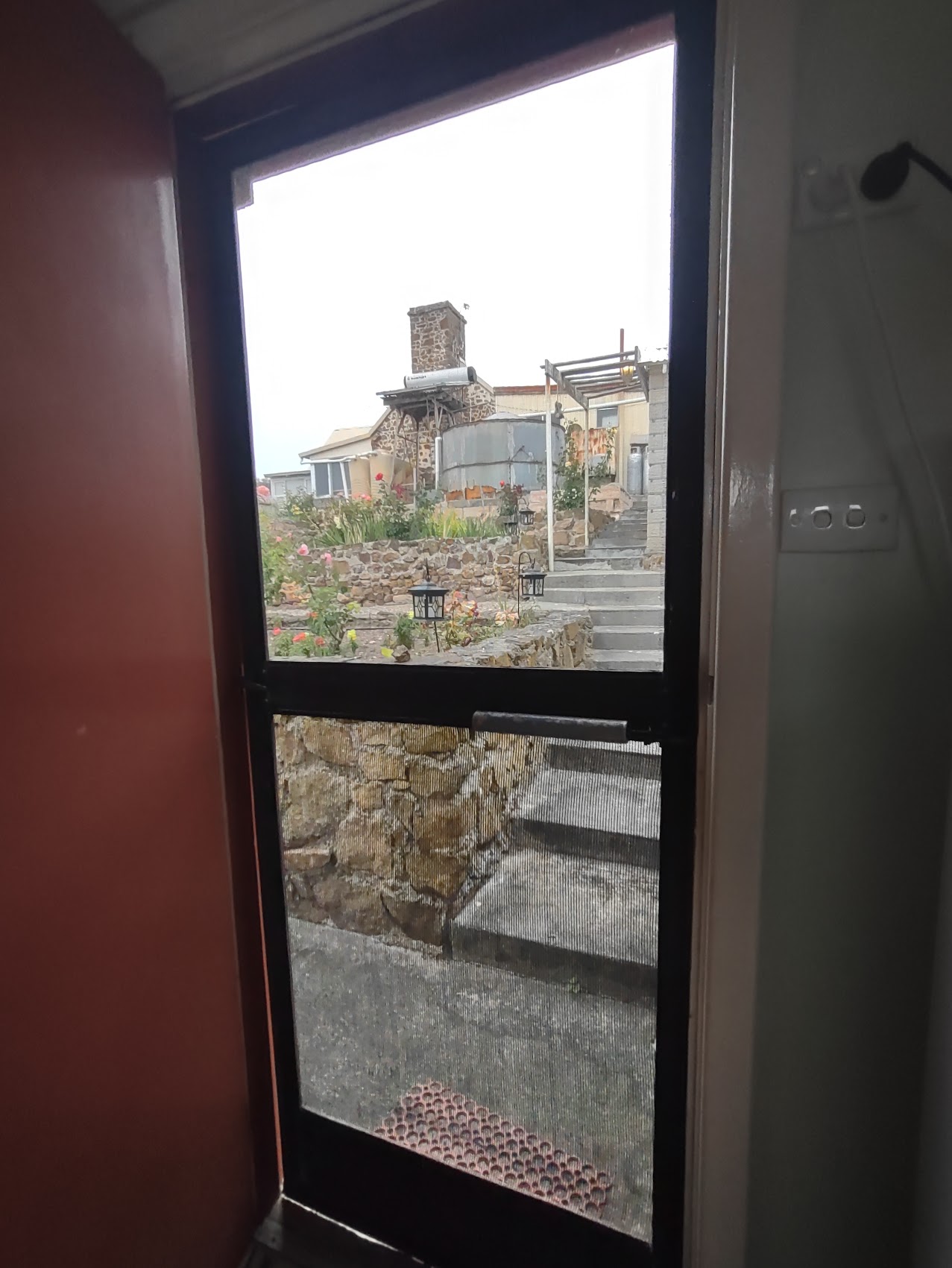
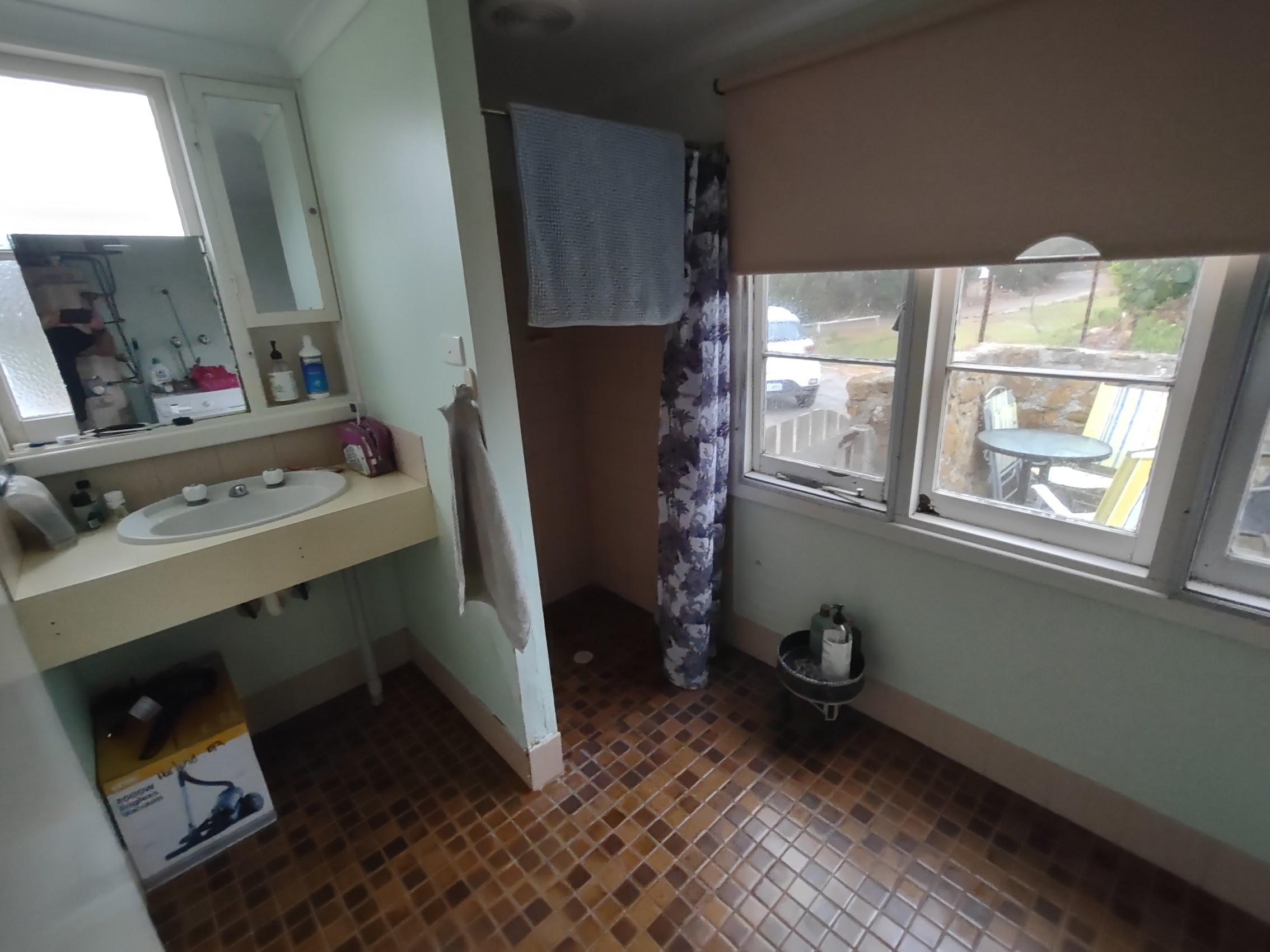

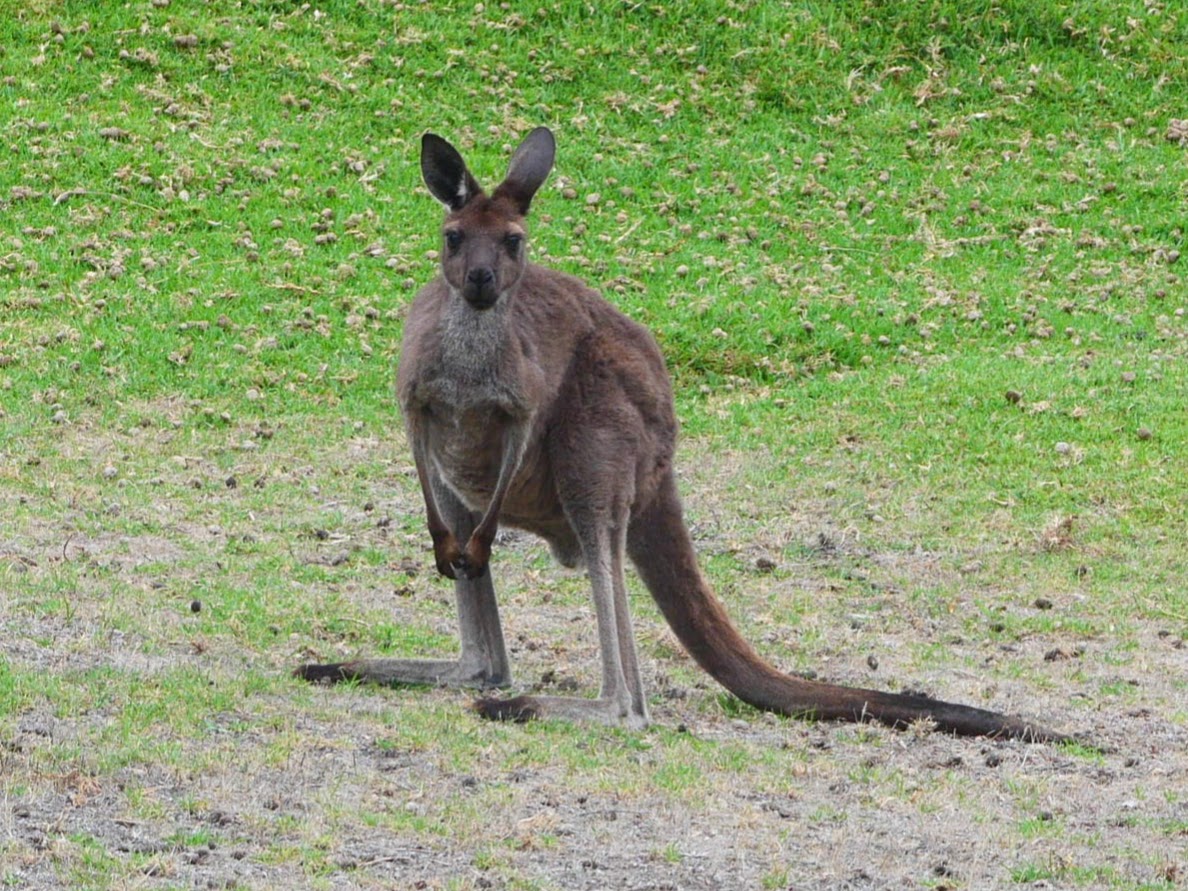
The outhouse aside, the biggest surprise of our place in Bremer Bay was that it came complete with its own kangaroo “mob” (that’s what a herd of kangaroos is called here). Although they made themselves scarce during the day, every morning and evening 15 to 20 kangaroos of varying sizes would emerge from the surrounding bush and wander around the property grazing. It was interesting to see how they balance with their fat tails and that there is usually one watching while the others graze. Welcome to Australia mate!
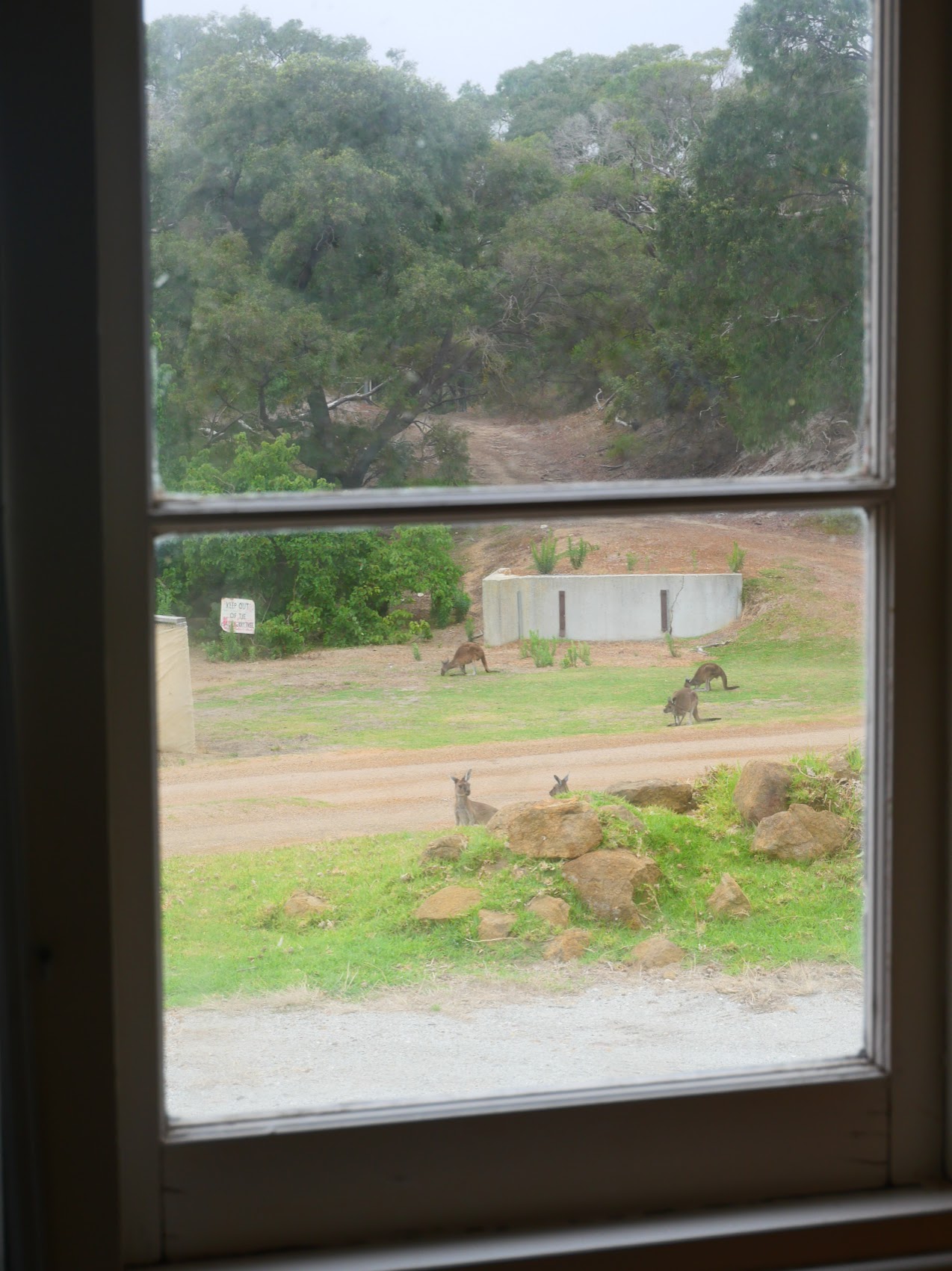
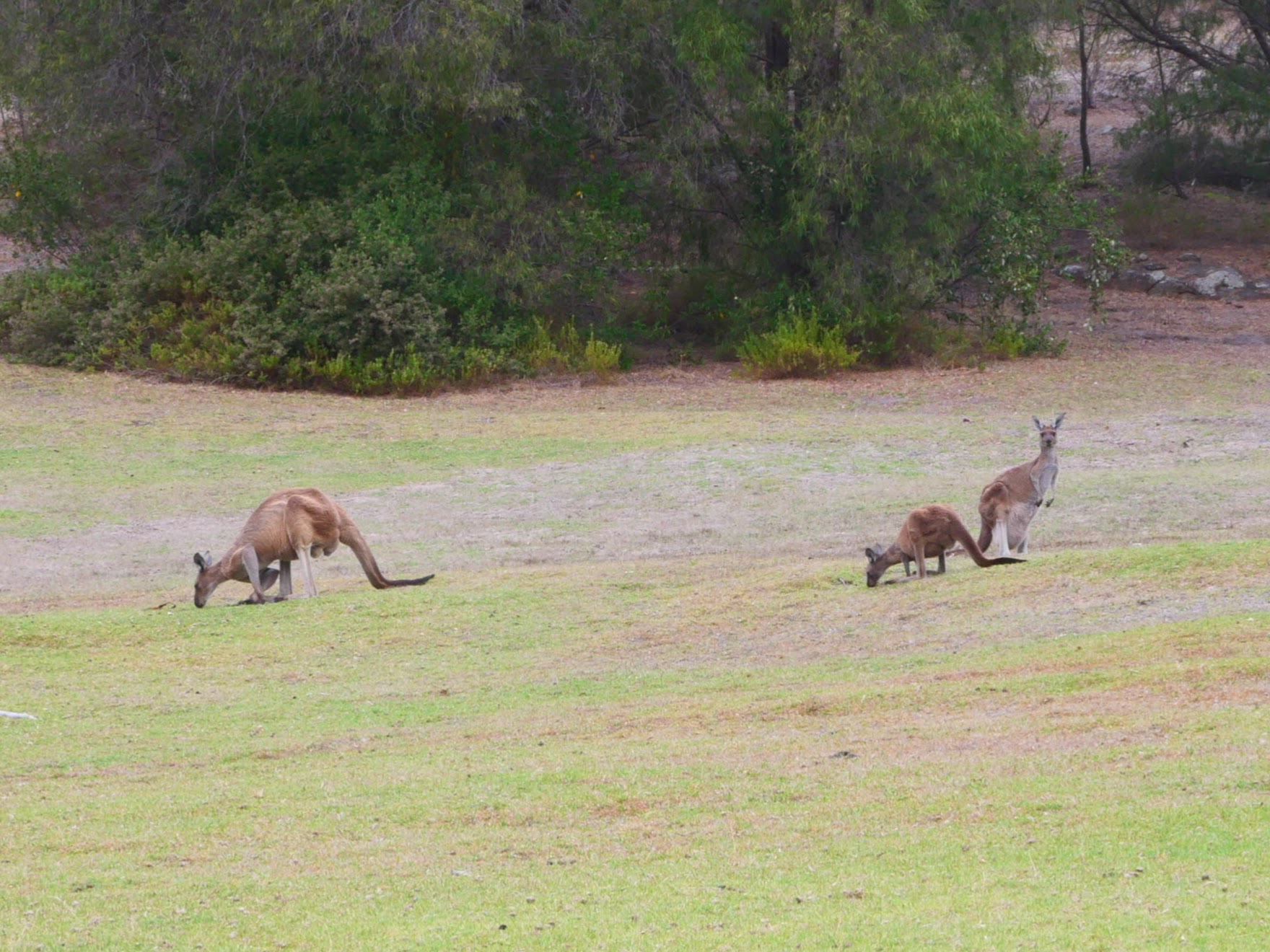
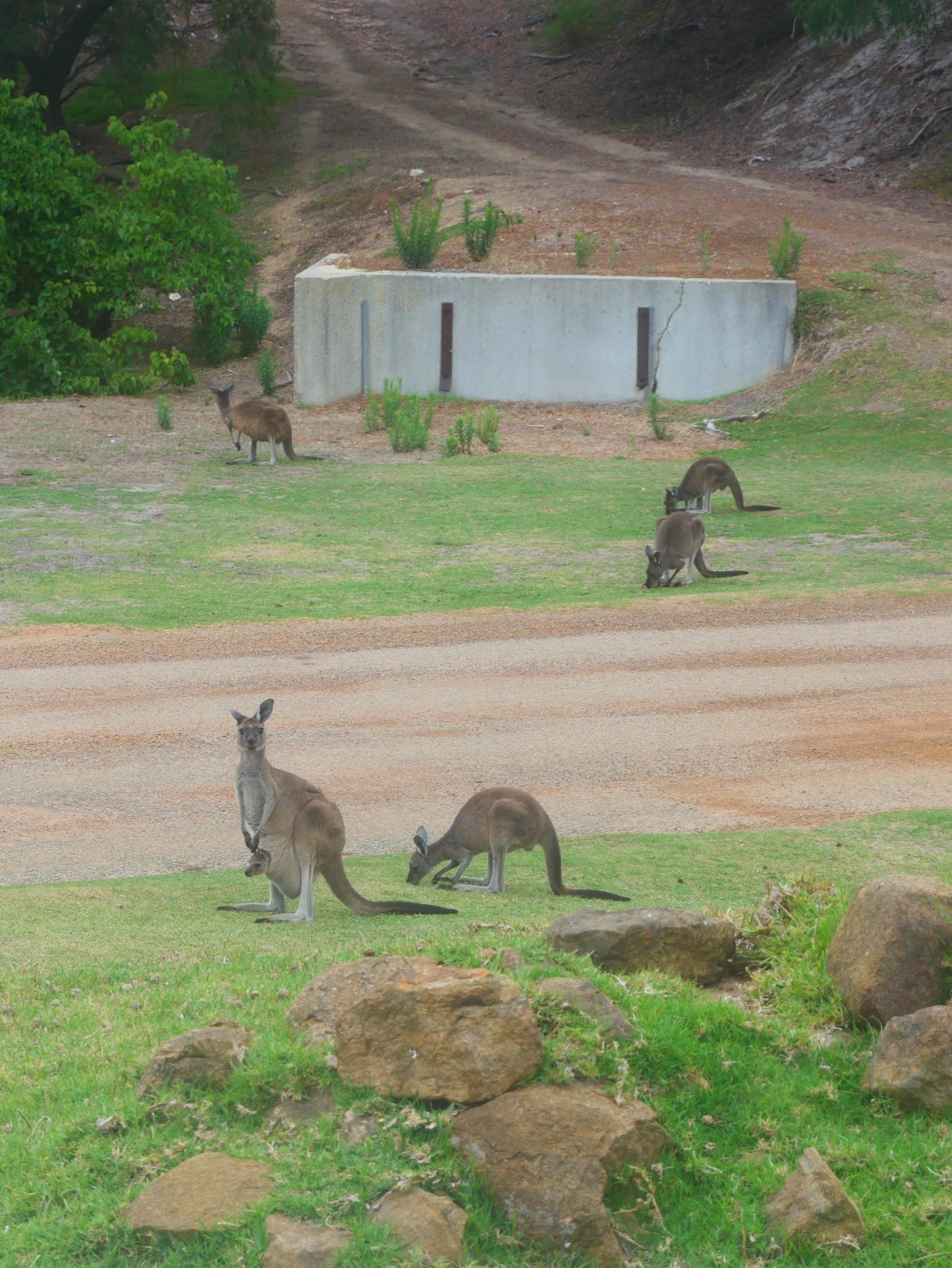
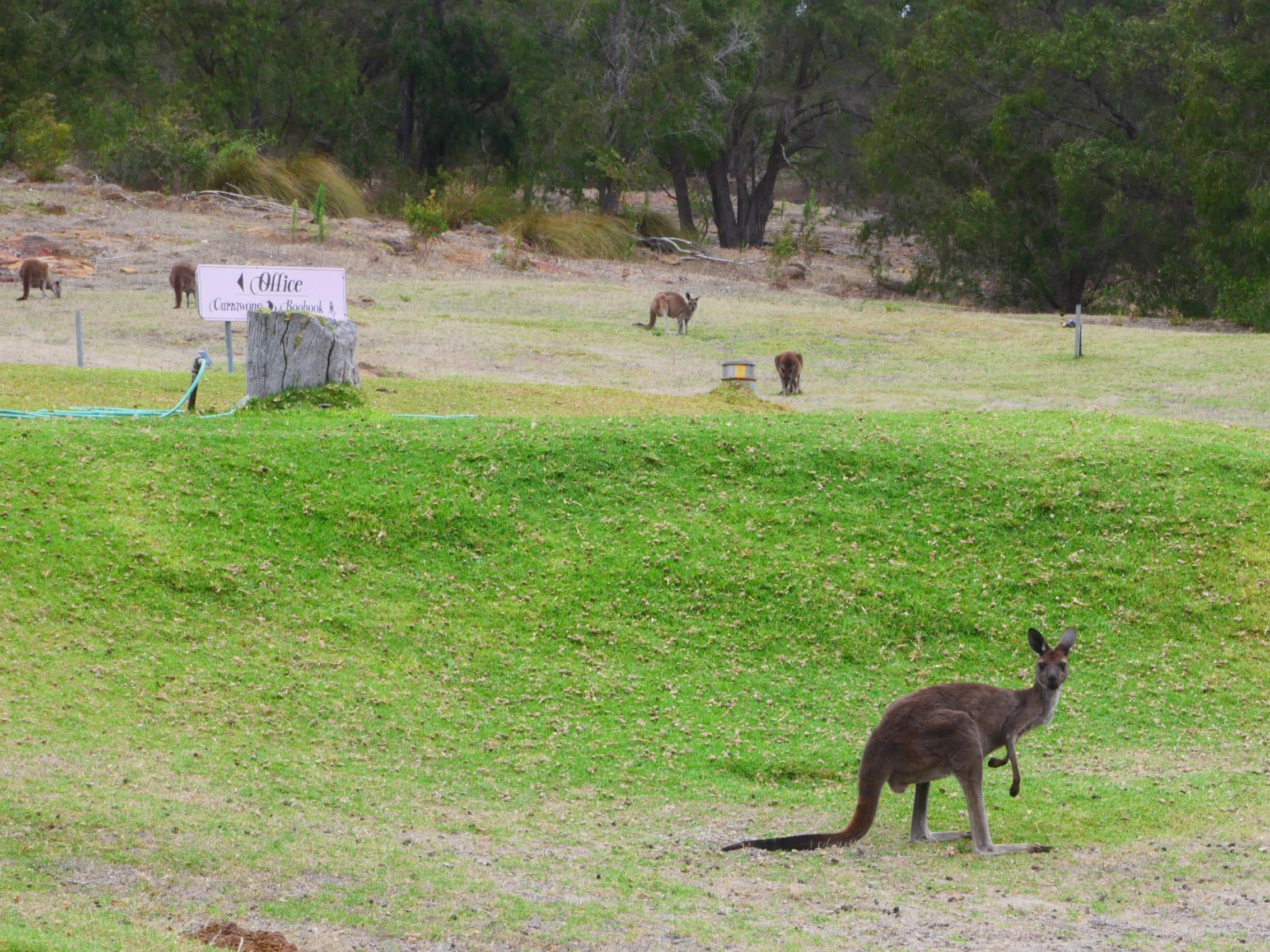
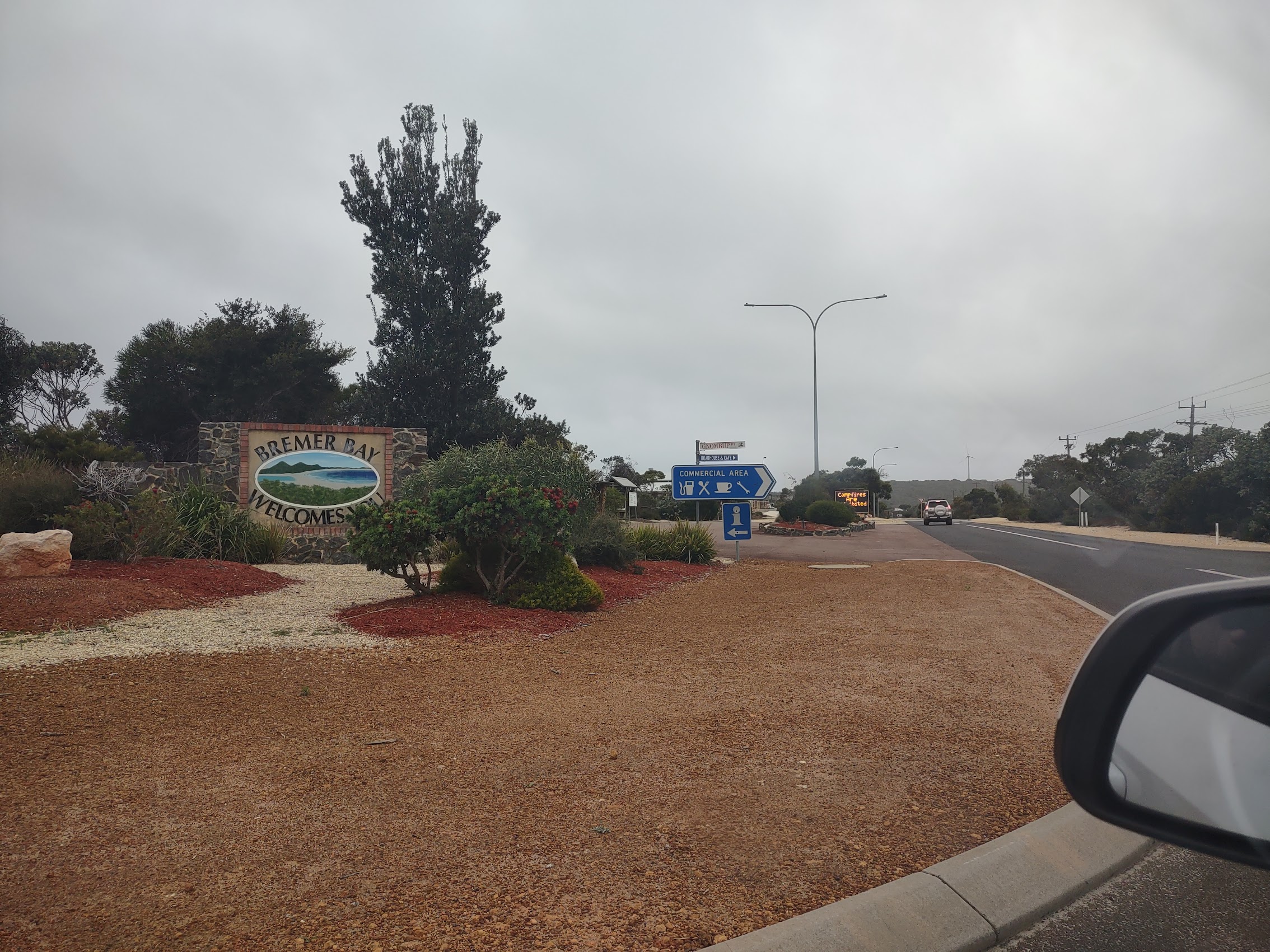
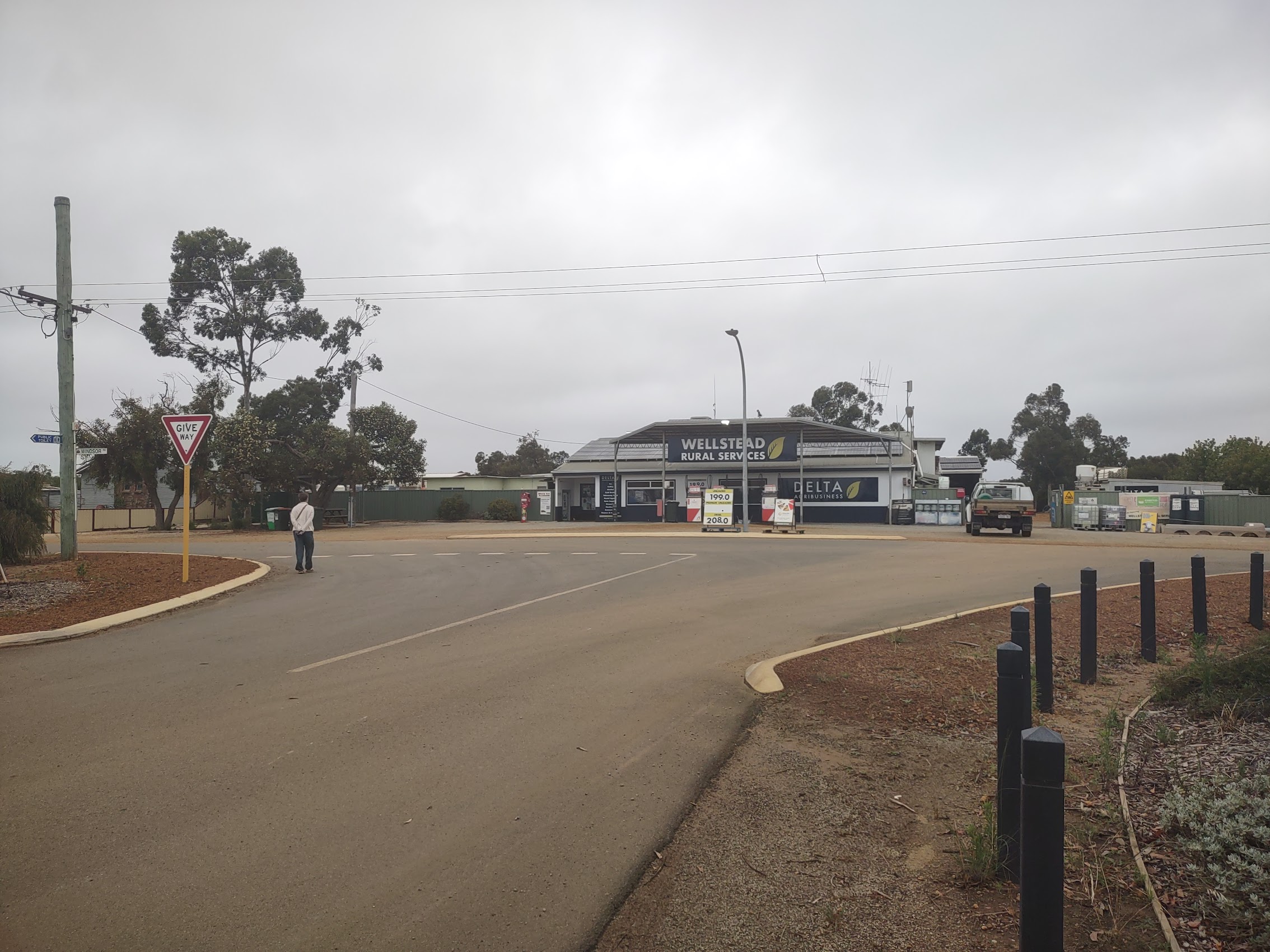
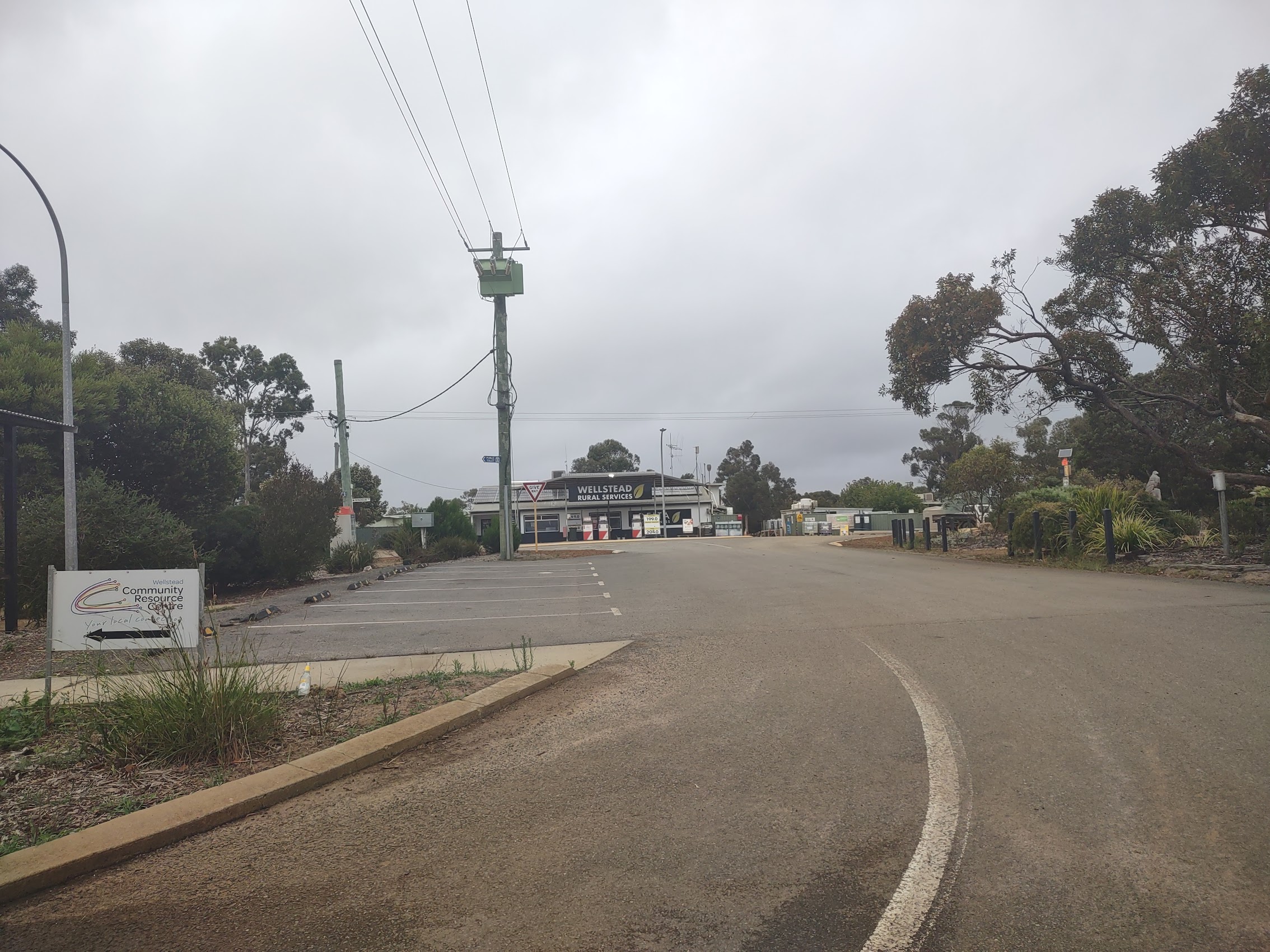
We headed into town our first evening to scout things out only to find that Bremer Bay really didn’t have much of a commercial center (again, only 250 residents), but it did have most of the basic necessities – a small general store, a coffee shop, a bottle shop, a hardware store, a couple of small gift shops and restaurants, and (praise the lord!) a brewery – mostly scattered around a small but dense residential area surrounded by farm land.
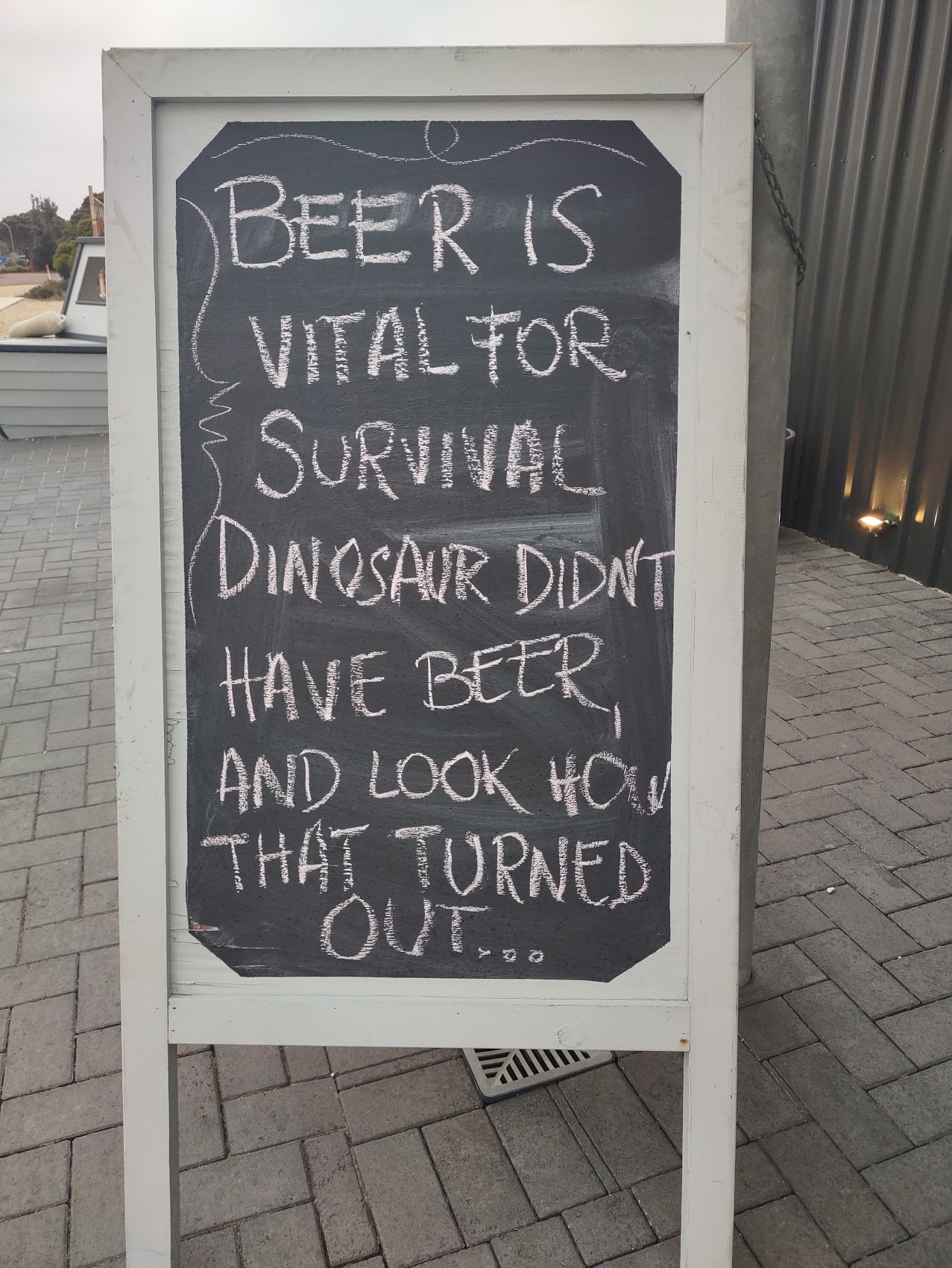
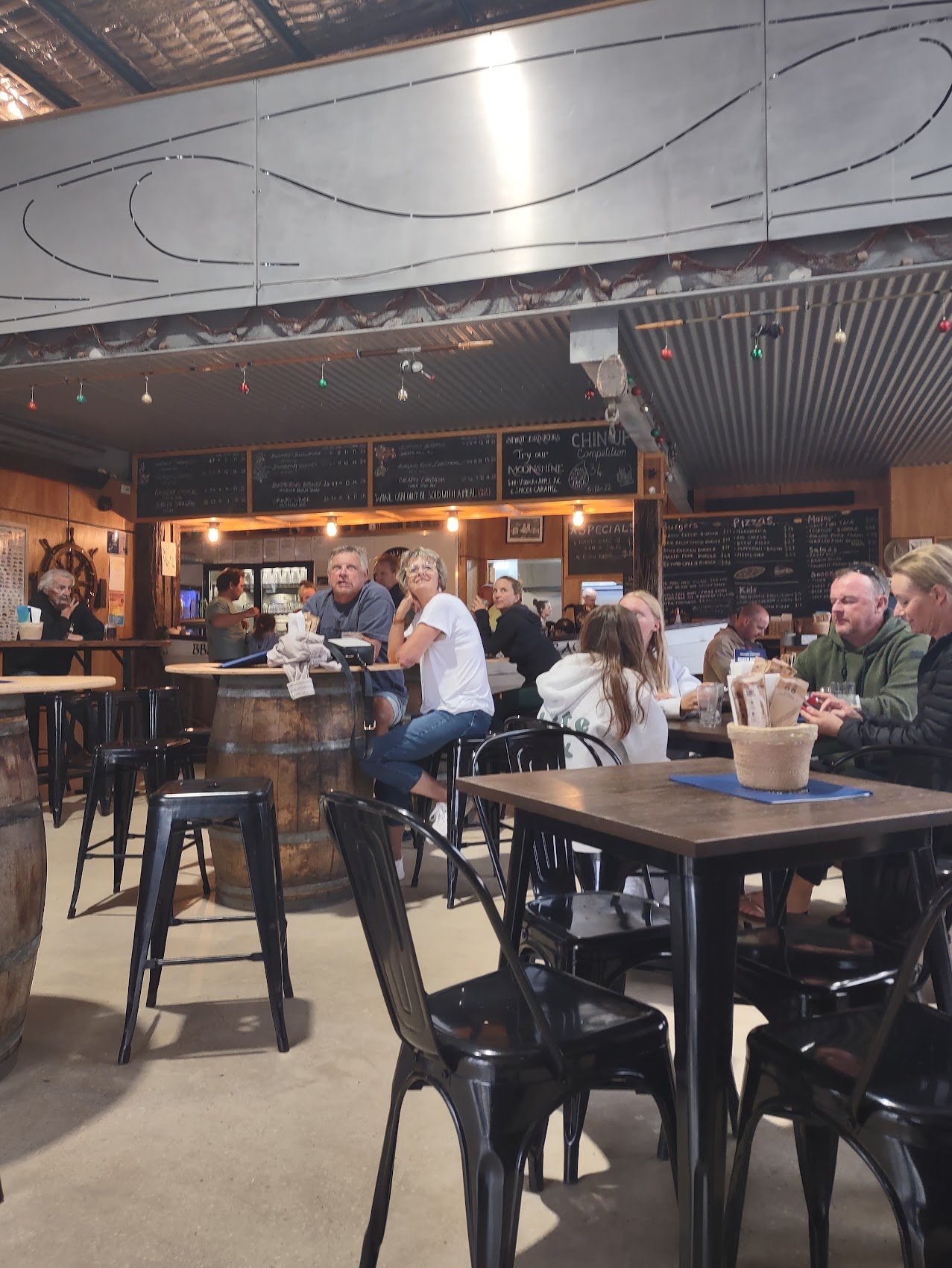
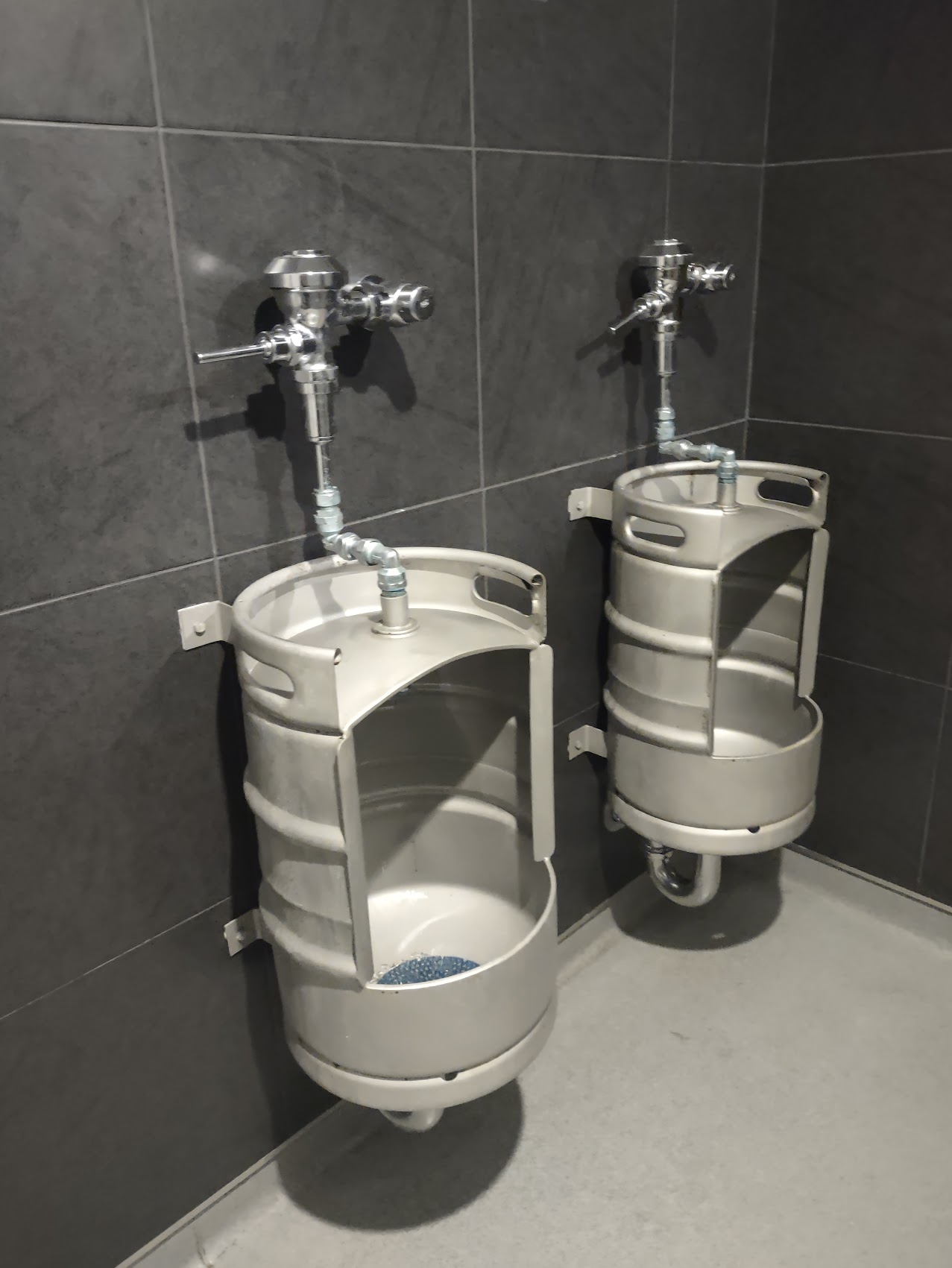
After driving around town (which didn’t take very long), we decided to check out the brewery, the Bremer Bay Brewing Company, which was surprisingly busy for a Tuesday night in a small town. The place was pretty casual (with some interesting toilet fixtures!) but the beer was quite good, as was the food, and the locals were quite friendly, so we headed home for the night feeling pretty satisfied.
The Wellstead Museum
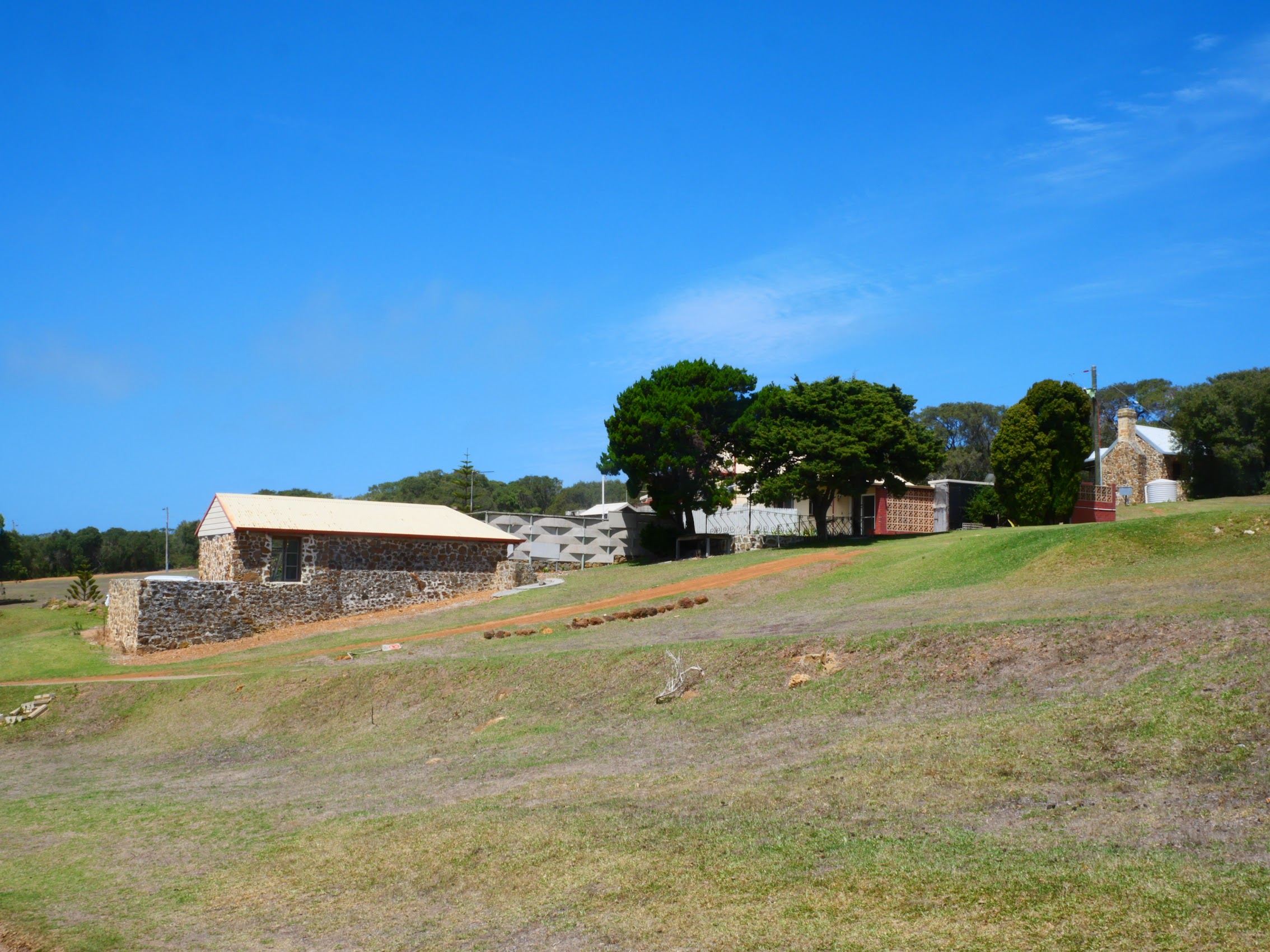
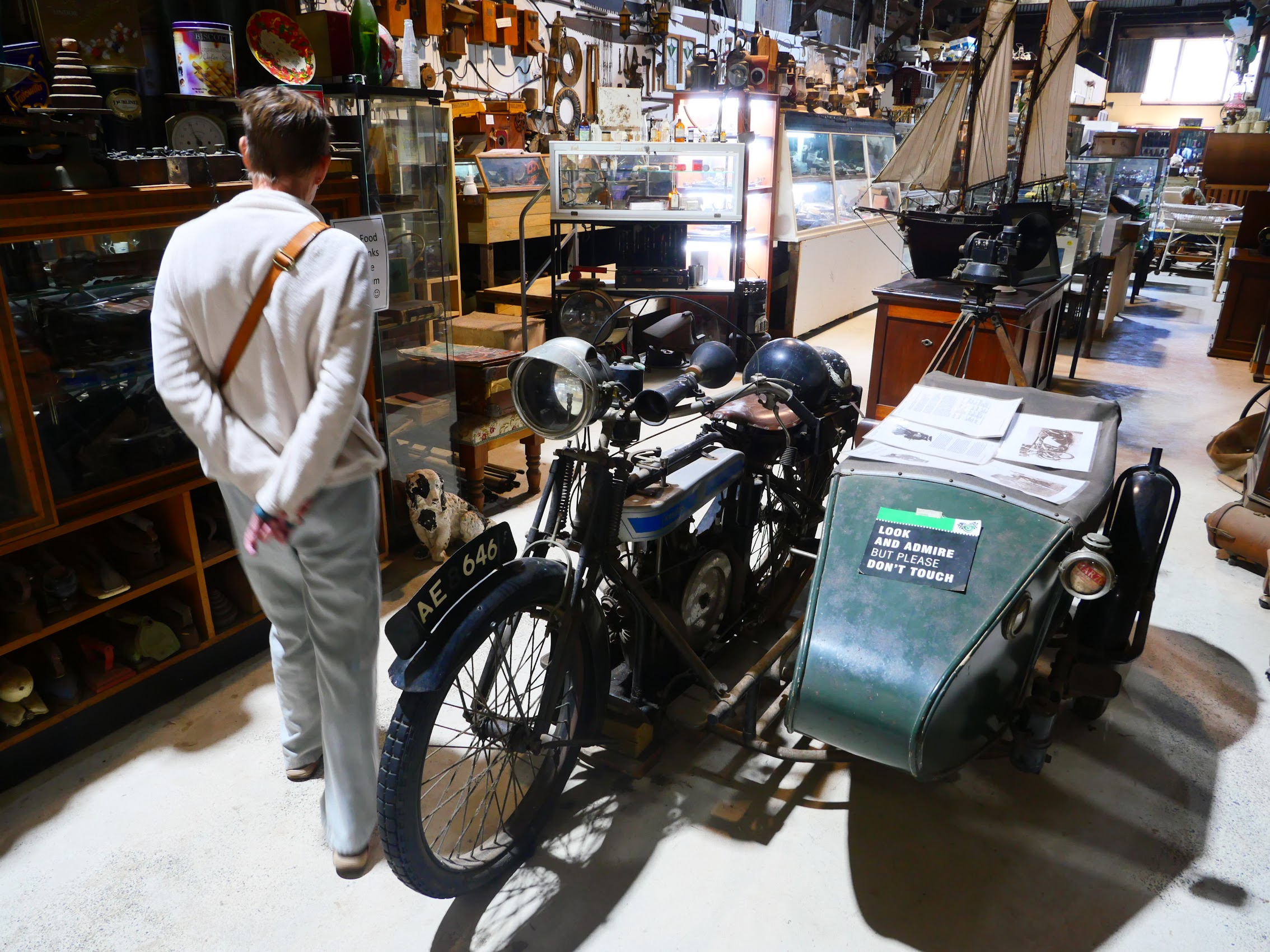
On the afternoon that we arrived we noticed that that there appeared to be a pretty steady stream (maybe more of a trickle, but steady nonetheless) of people visiting an assemblage of ramshackle looking structures just down the hill from our cottage. Recalling something about a museum of some sort in the area, we made our way down the hill, through the mob of kangaroos to investigate what exactly was going on down there and were surprised to discover what is know as the Wellstead Heritage Museum.
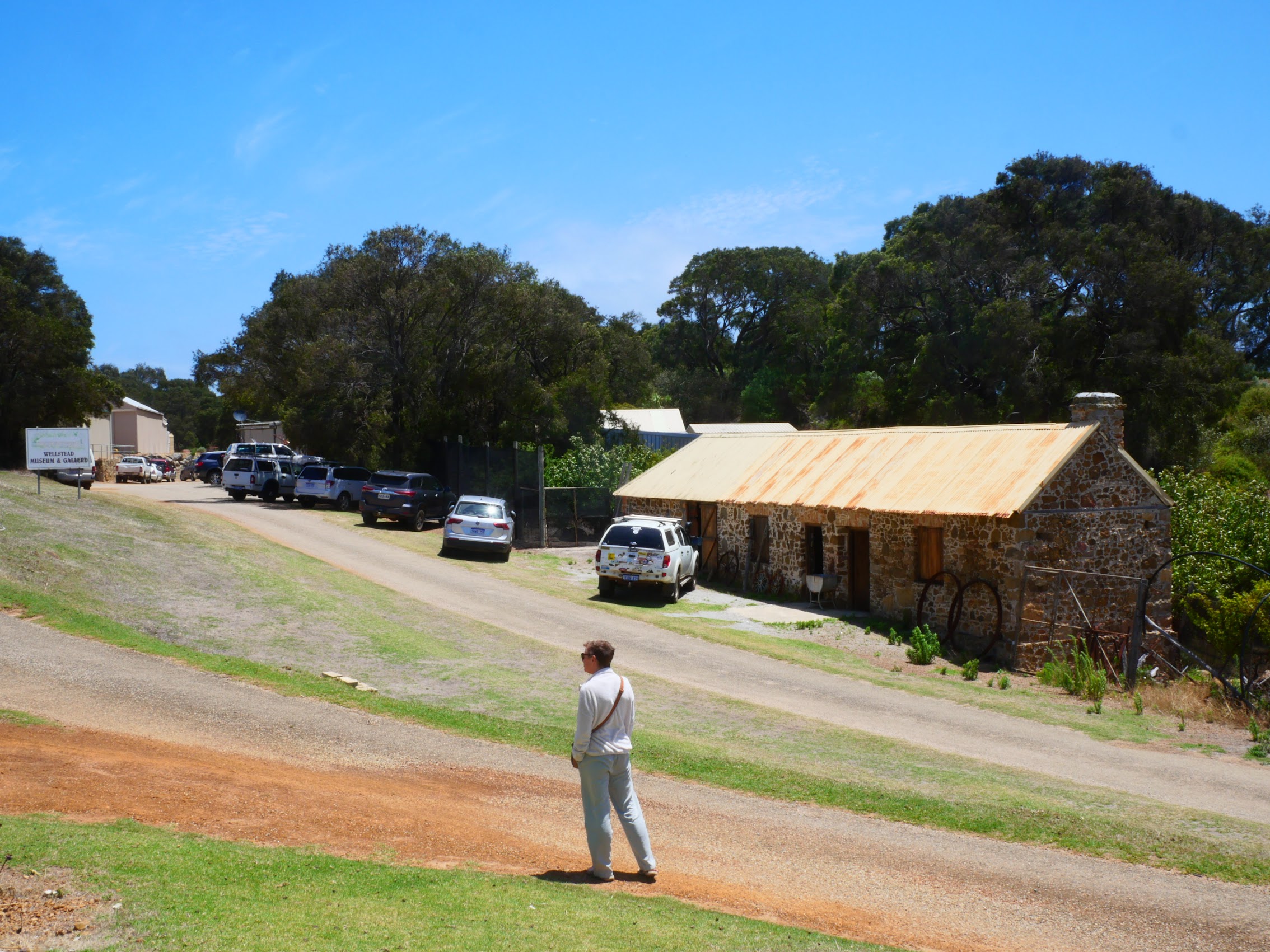
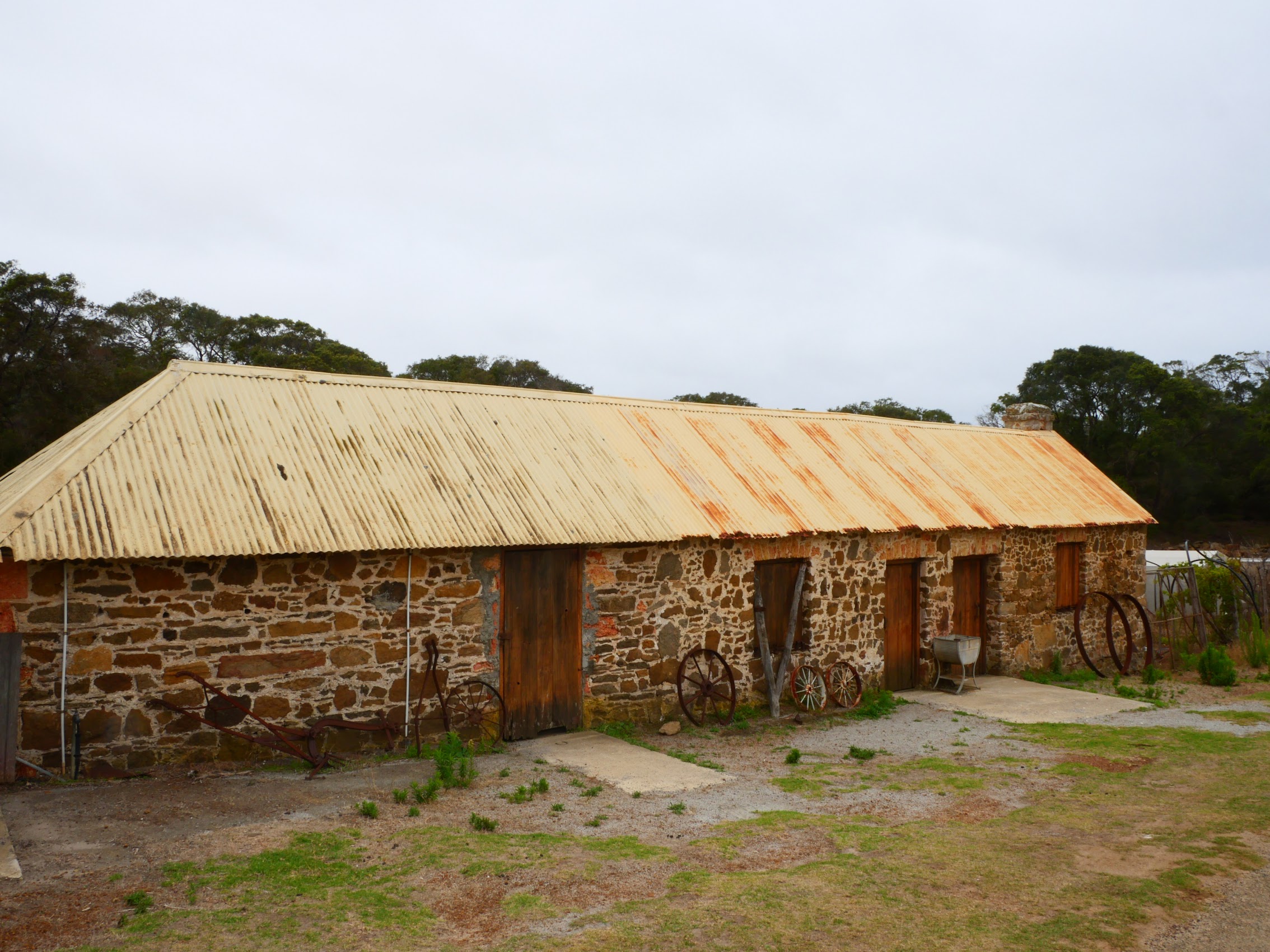
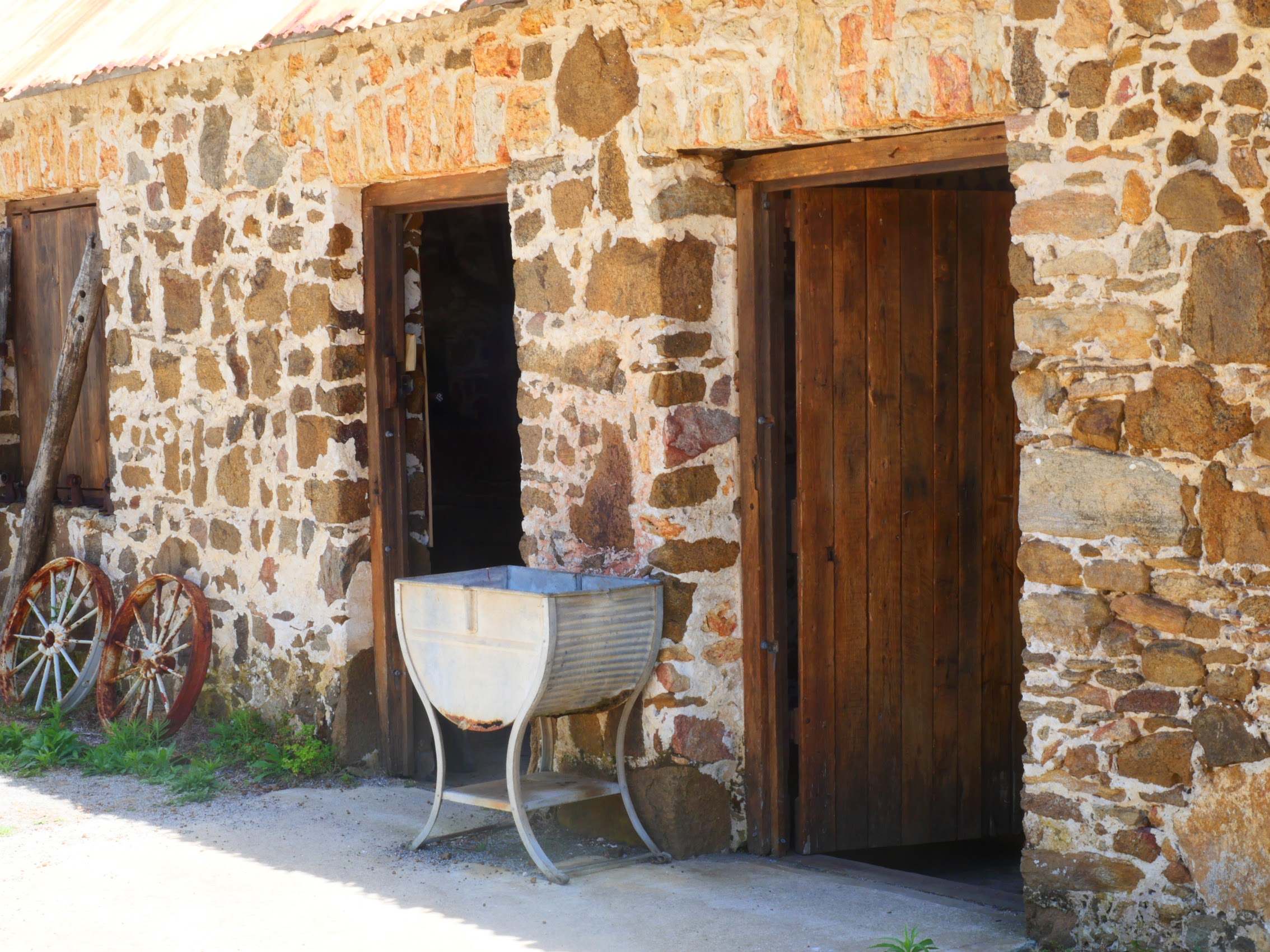
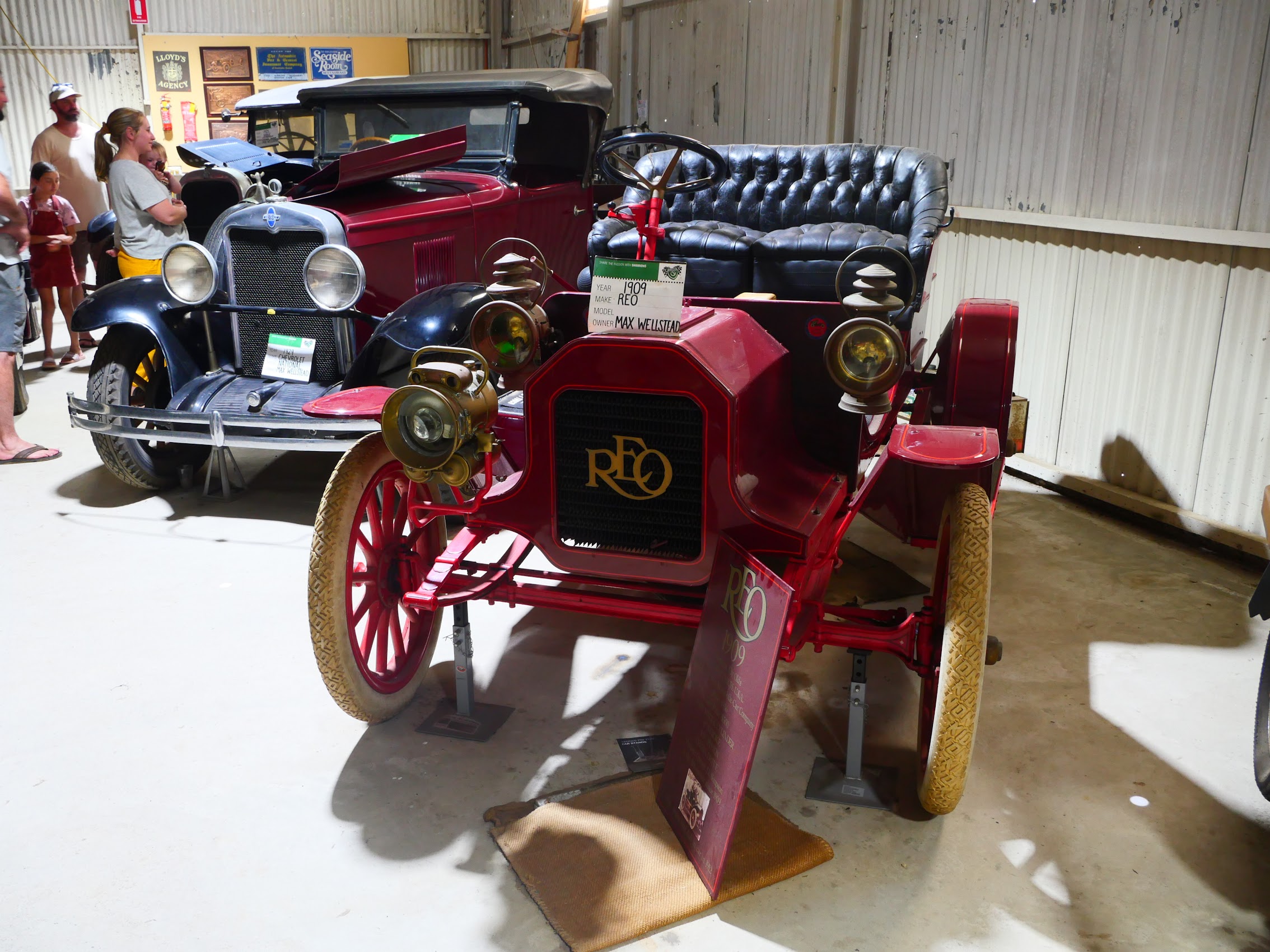
The museum is a collection of 19th century farm structures (our cottage appeared to be suspiciously of the same vintage!) which are now filled with an amazing assortment of old farm tools and implements, furnishings, and motor vehicles, along with some other interesting odds and ends. The collection was amassed by Max Wellstead whose family has worked the farm for almost 200 years. (After viewing the collection, we couldn’t help but wonder whether old Max had a little hoarding problem which he cleverly resolved by opening the museum!)

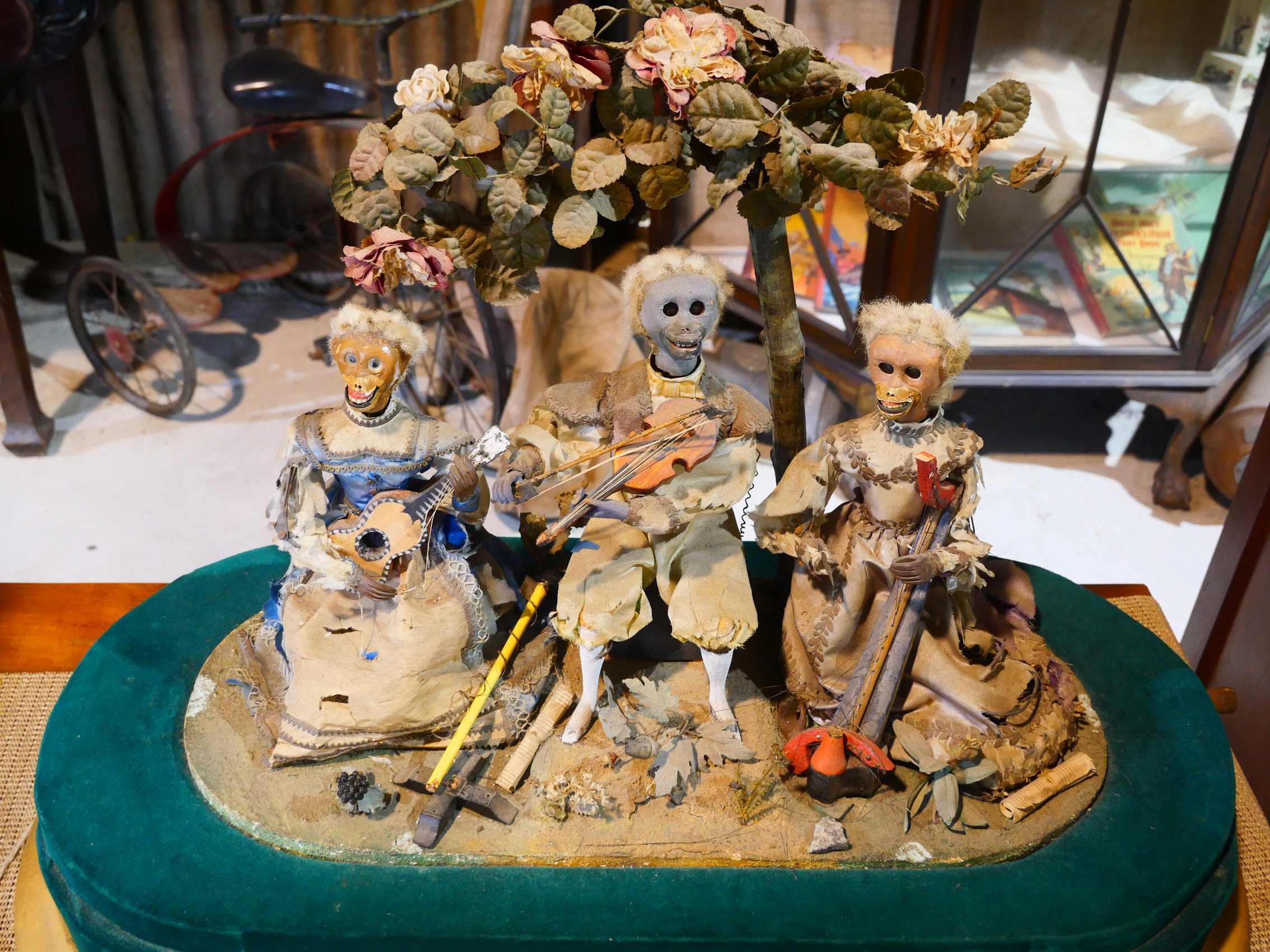
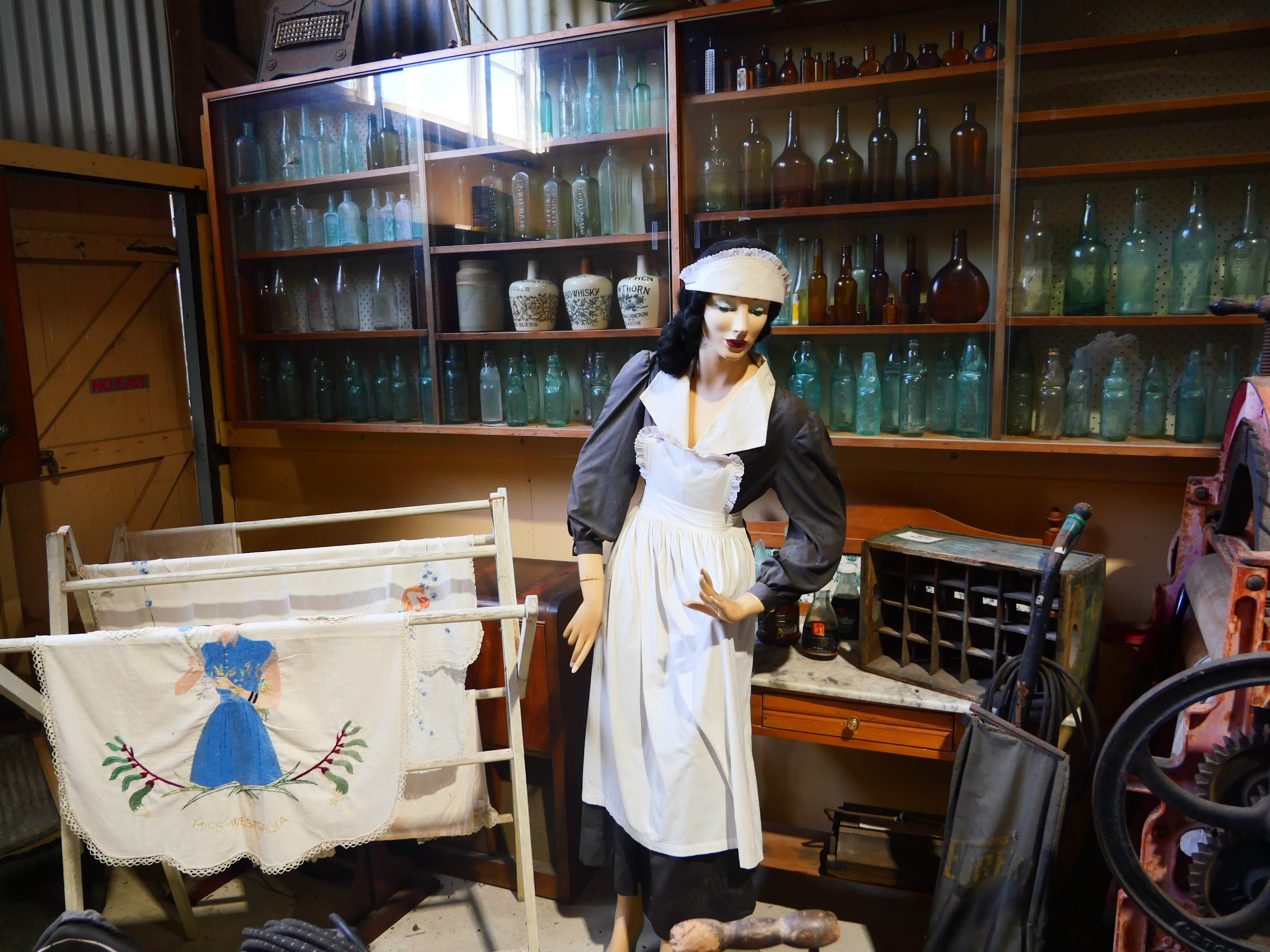
Our first response when we peeked into one of the “galleries” was “what a bunch of junk!” but, as we made our way through one barn after another, trash or treasure, you kind of had to be impressed with the sheer size of the collection, particularly the farm tools and implements (which Max appeared to have a particular thing for).
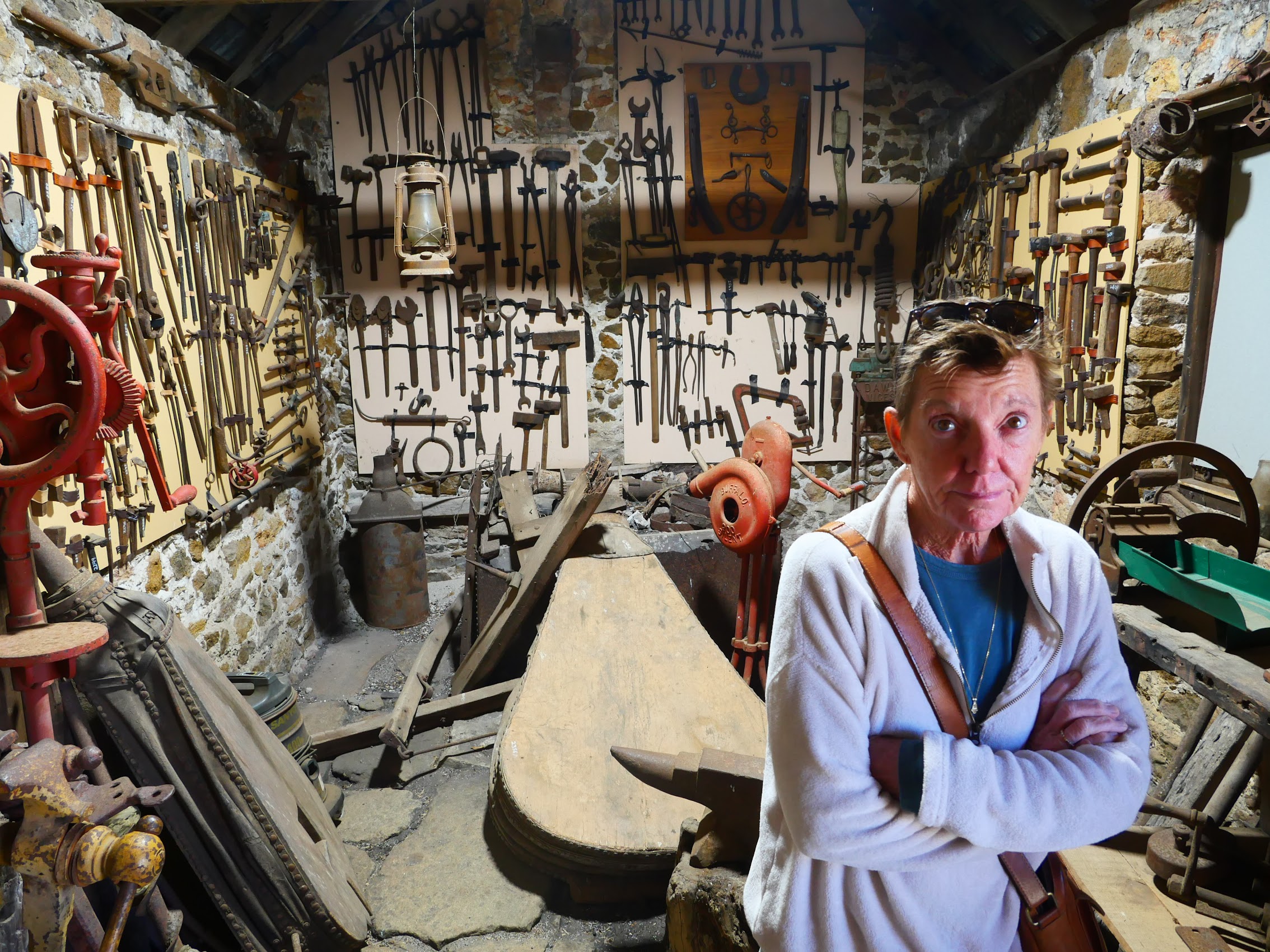
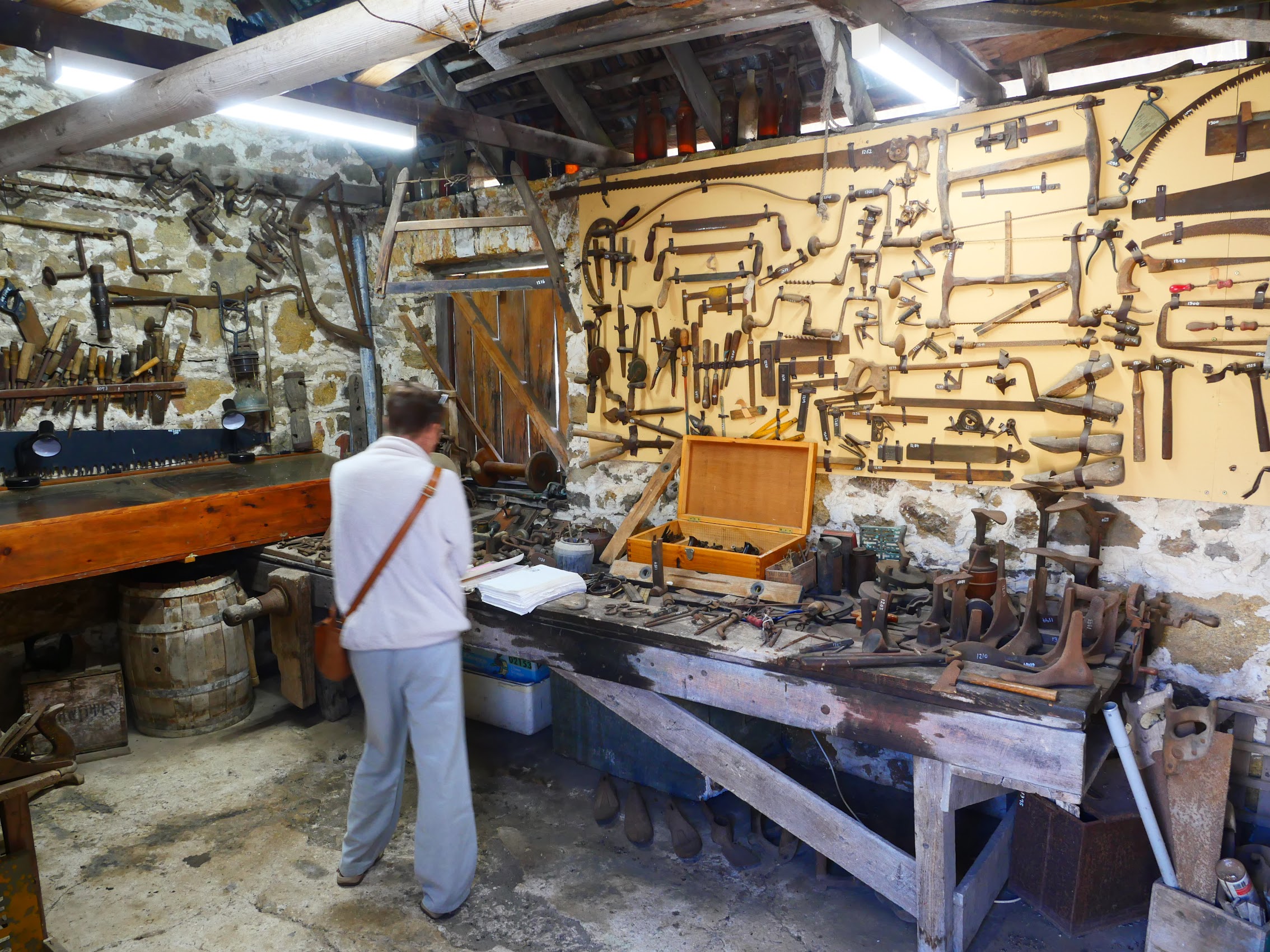
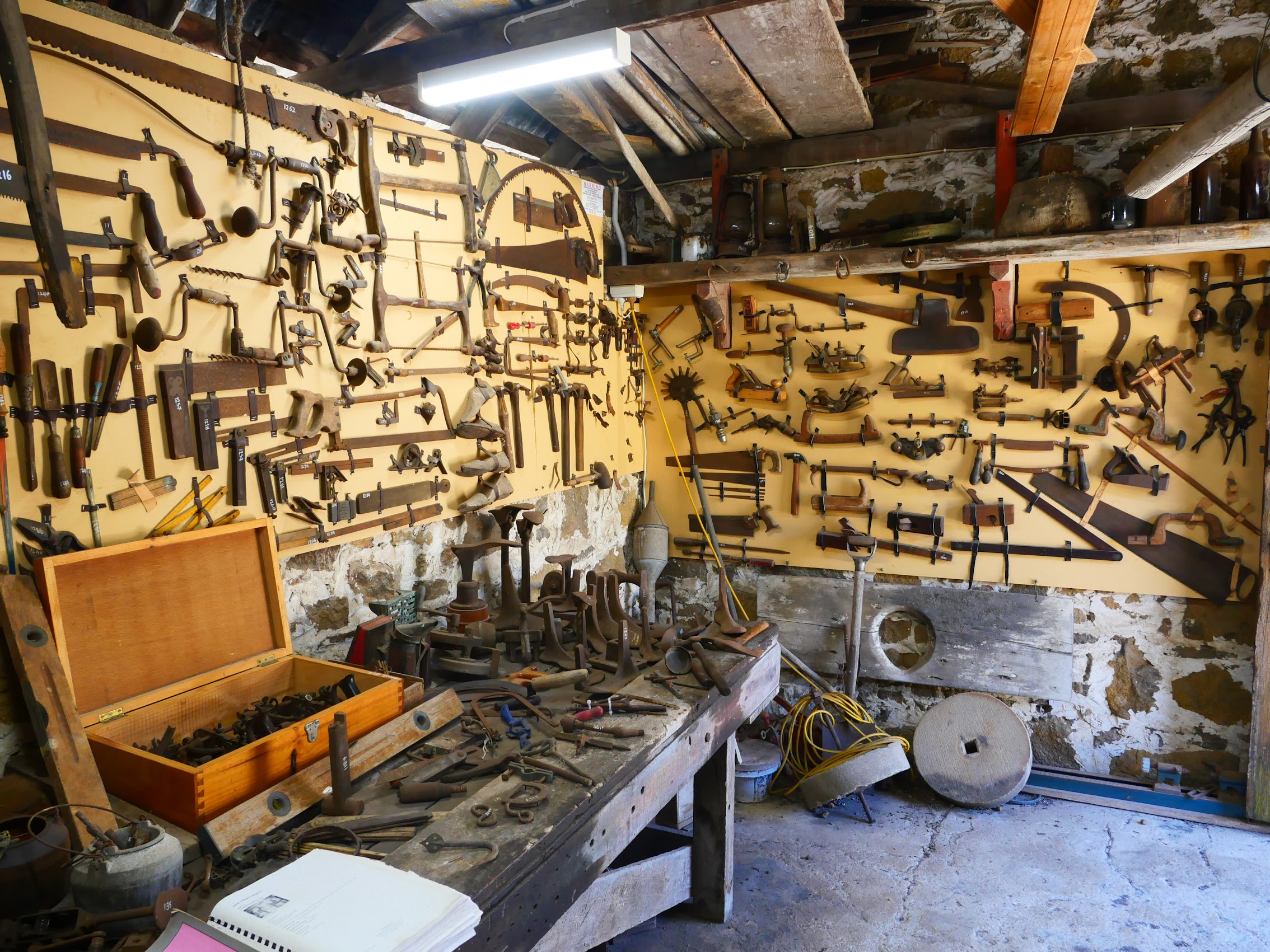
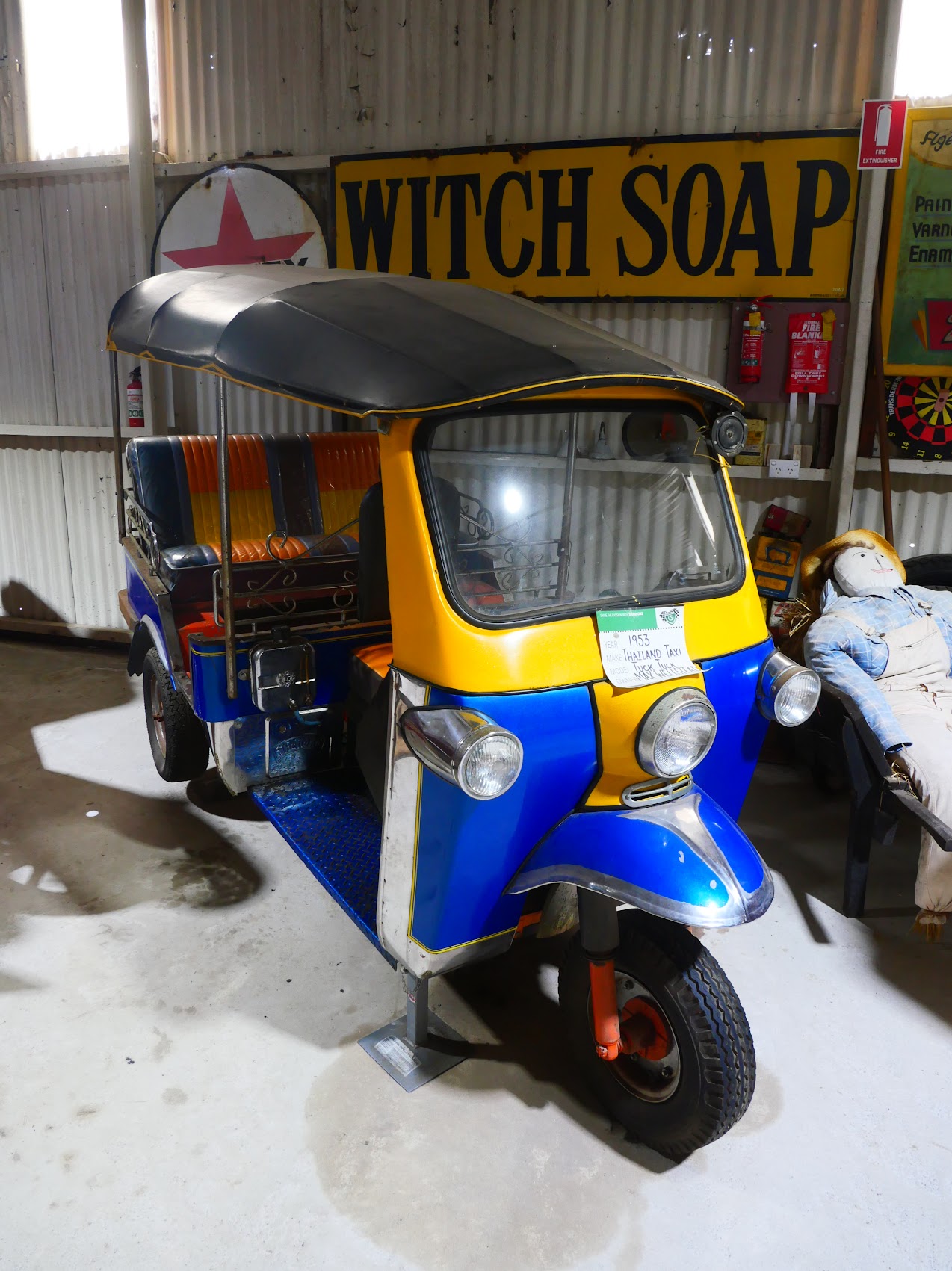
The actual arrangement and display of the collection was a bit haphazard at times, but if you looked amongst the junk, there actually were some pretty interesting pieces. (Amongst the small collection of motor vehicles was an original REO Speedwagon!).


Bremer Bay Beaches
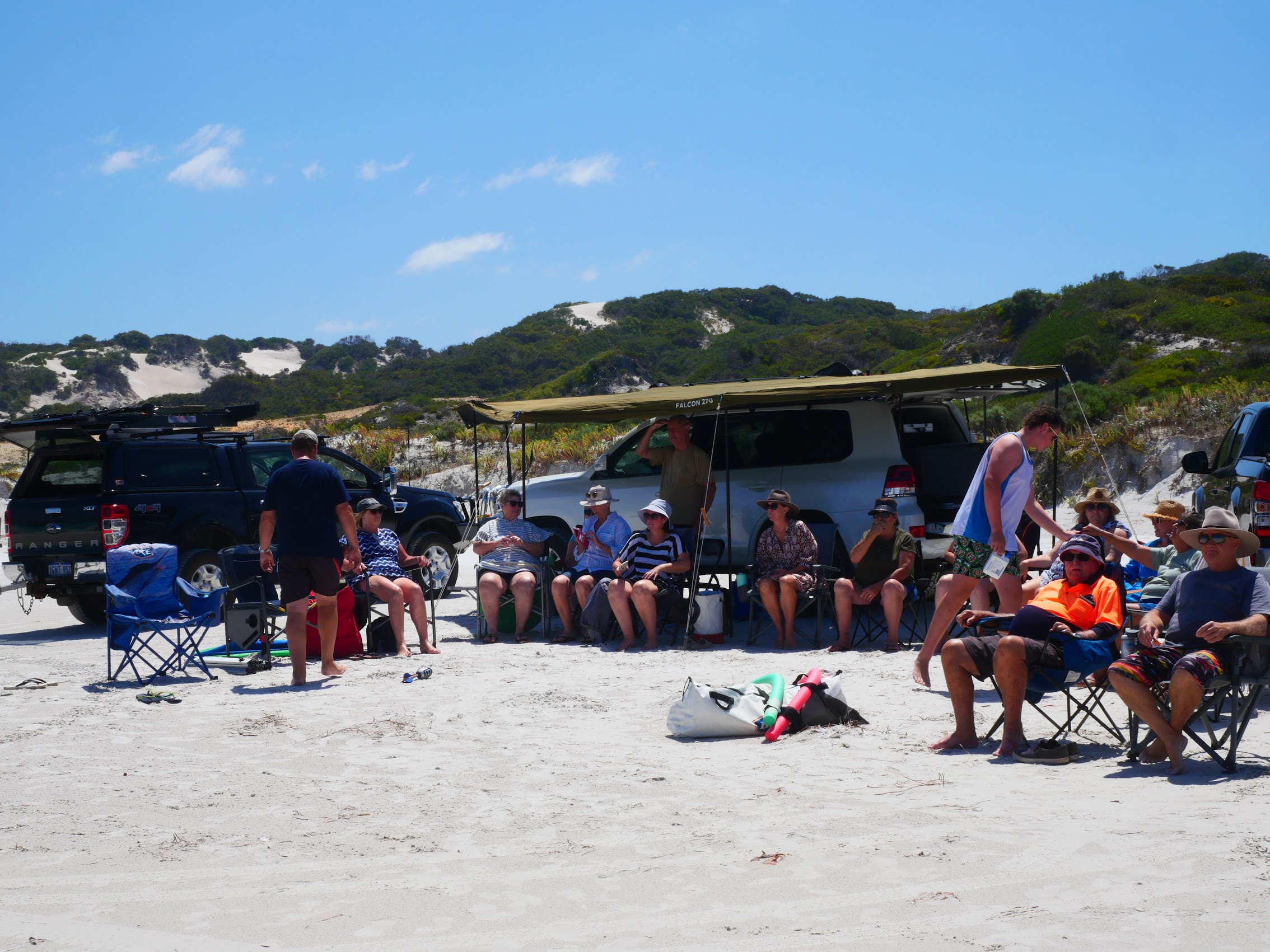
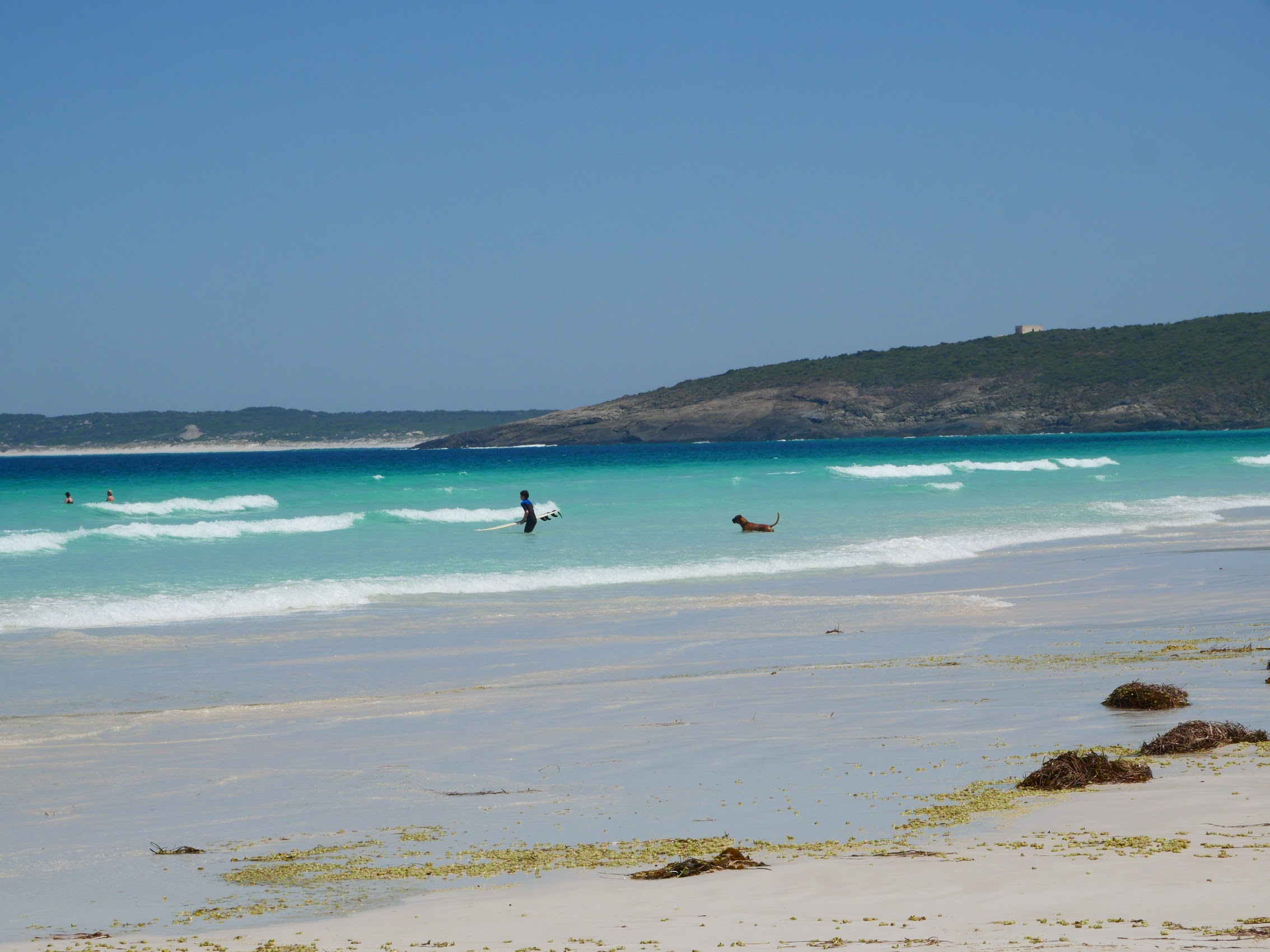
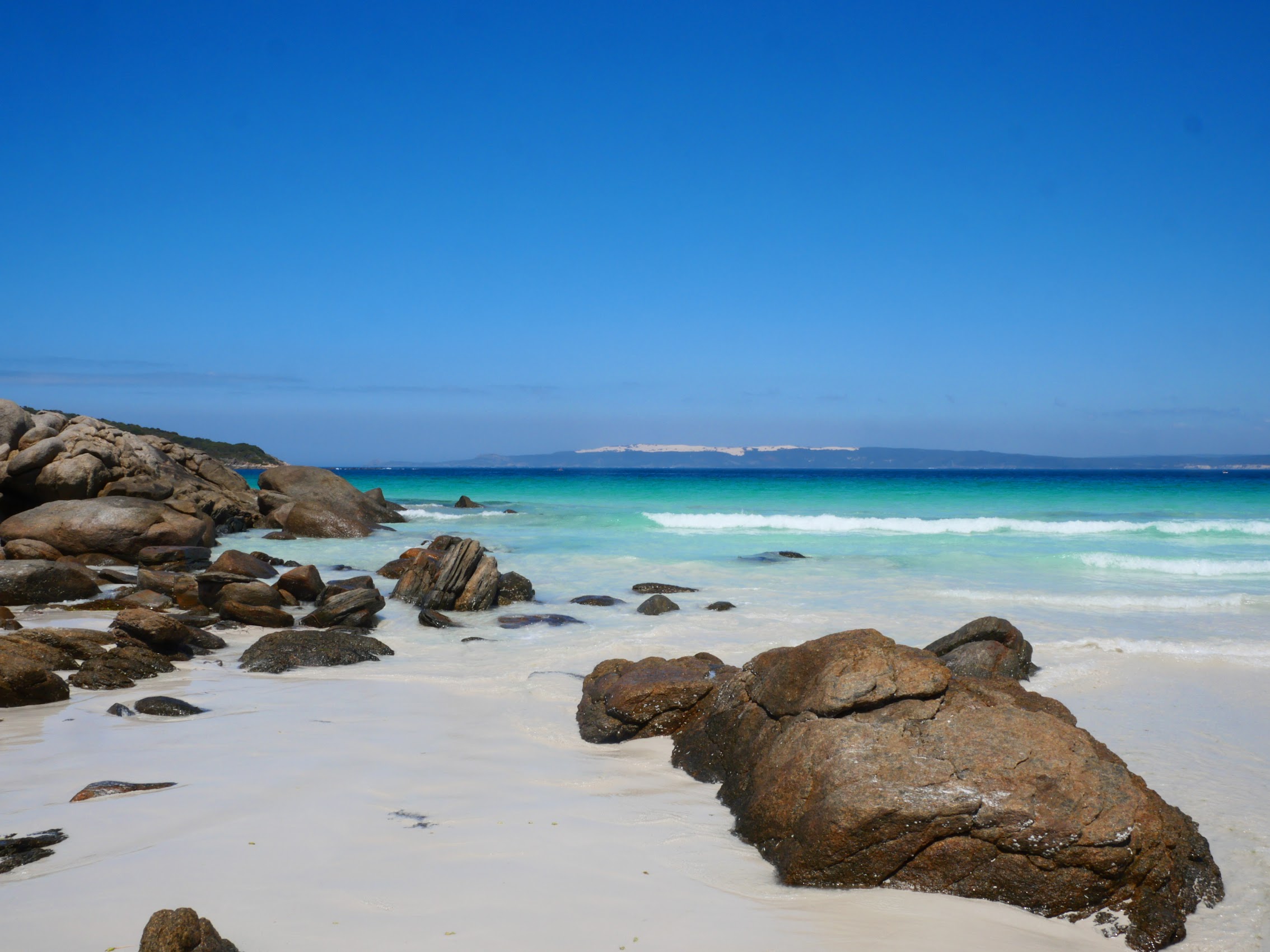
There are a number of nice beaches around Bremer Bay, but the one we decided to spend time on was Blossom Beach which, like all of the beaches in the area had fine white sand. Although Blossom Beach does have vehicular access (which we elected not to try), it is very long and so wide that it seemed uncrowded despite the number of families and groups with vehicles. We were particularly intrigued with one surfer whose dog would follow him into the waves then cheer him on from a distance.
Another amazingly beautiful Western Australian beach!



The Road to Esperance (Road Trains)
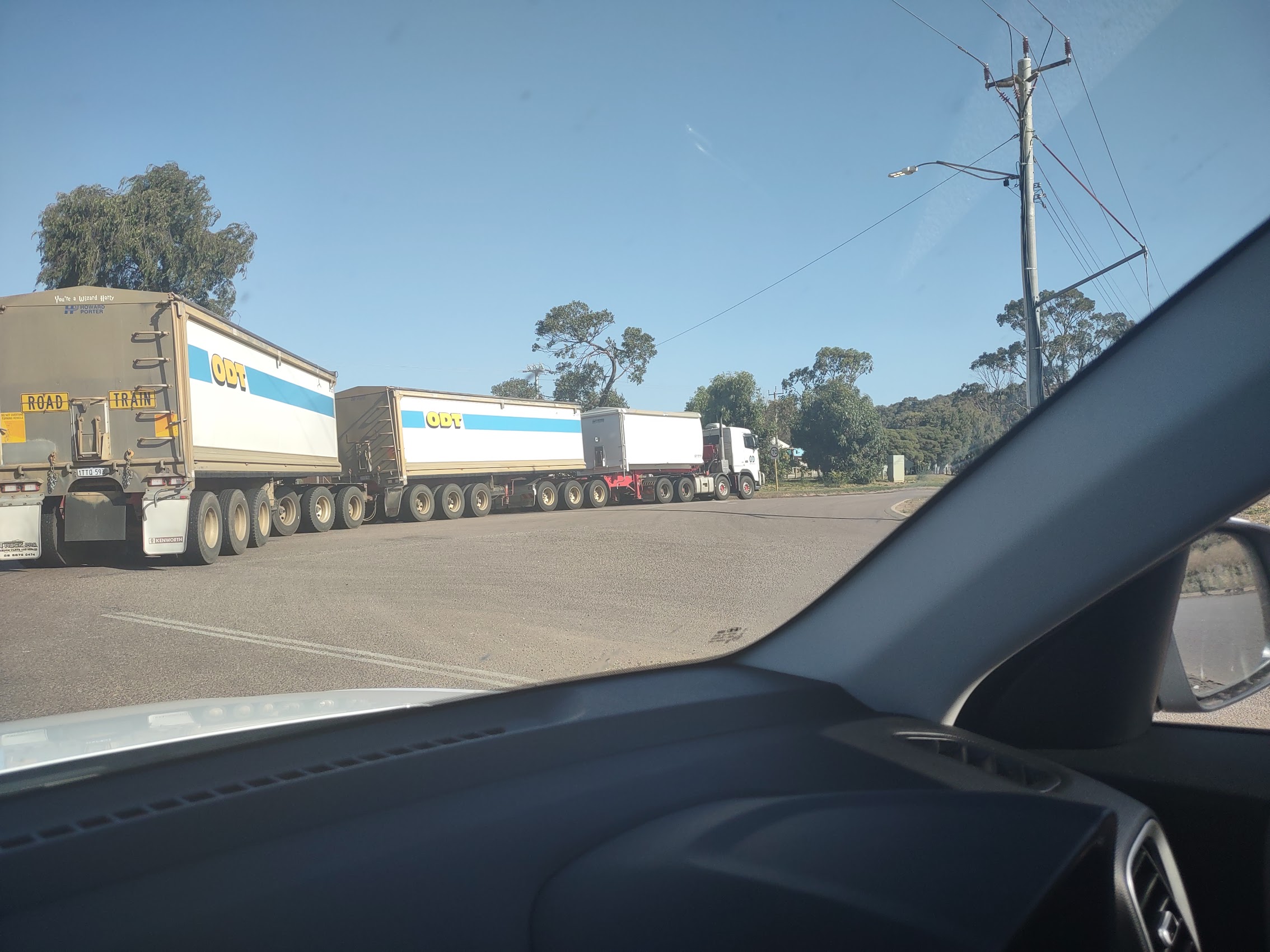
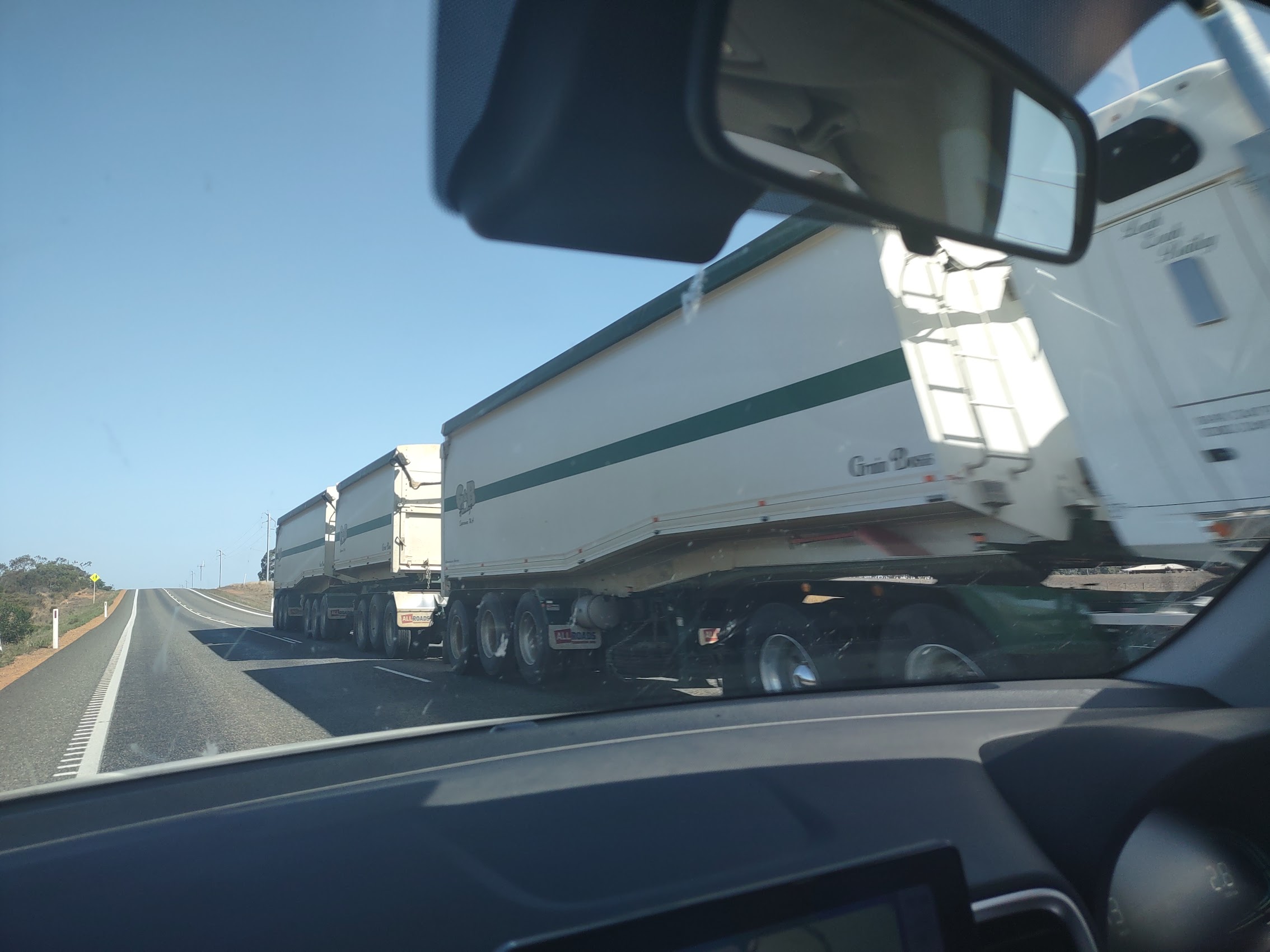
After spending the morning at Blossom Beach, we hit the road for our final stay on the Southeast coast, the town of Esperance. As we made our way back north to Highway 1, the landscape began to change from heavily wooded hills to more a more open landscape of farmland with fewer trees and the road went from windy to mostly straight. And, while the road continued to be fairly free of other cars, we began to encounter something we had been warned about, the infamous Australian road trains.
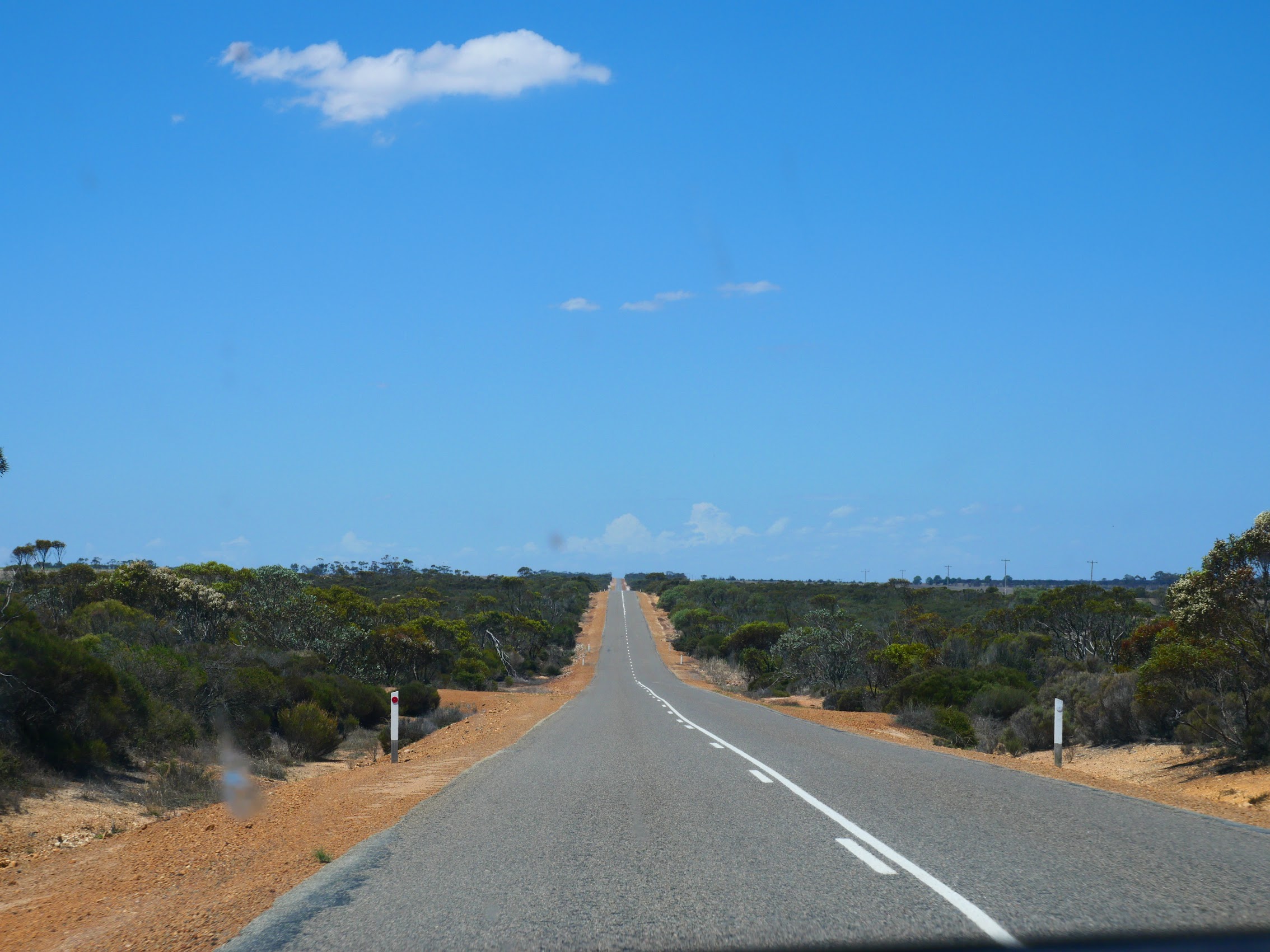
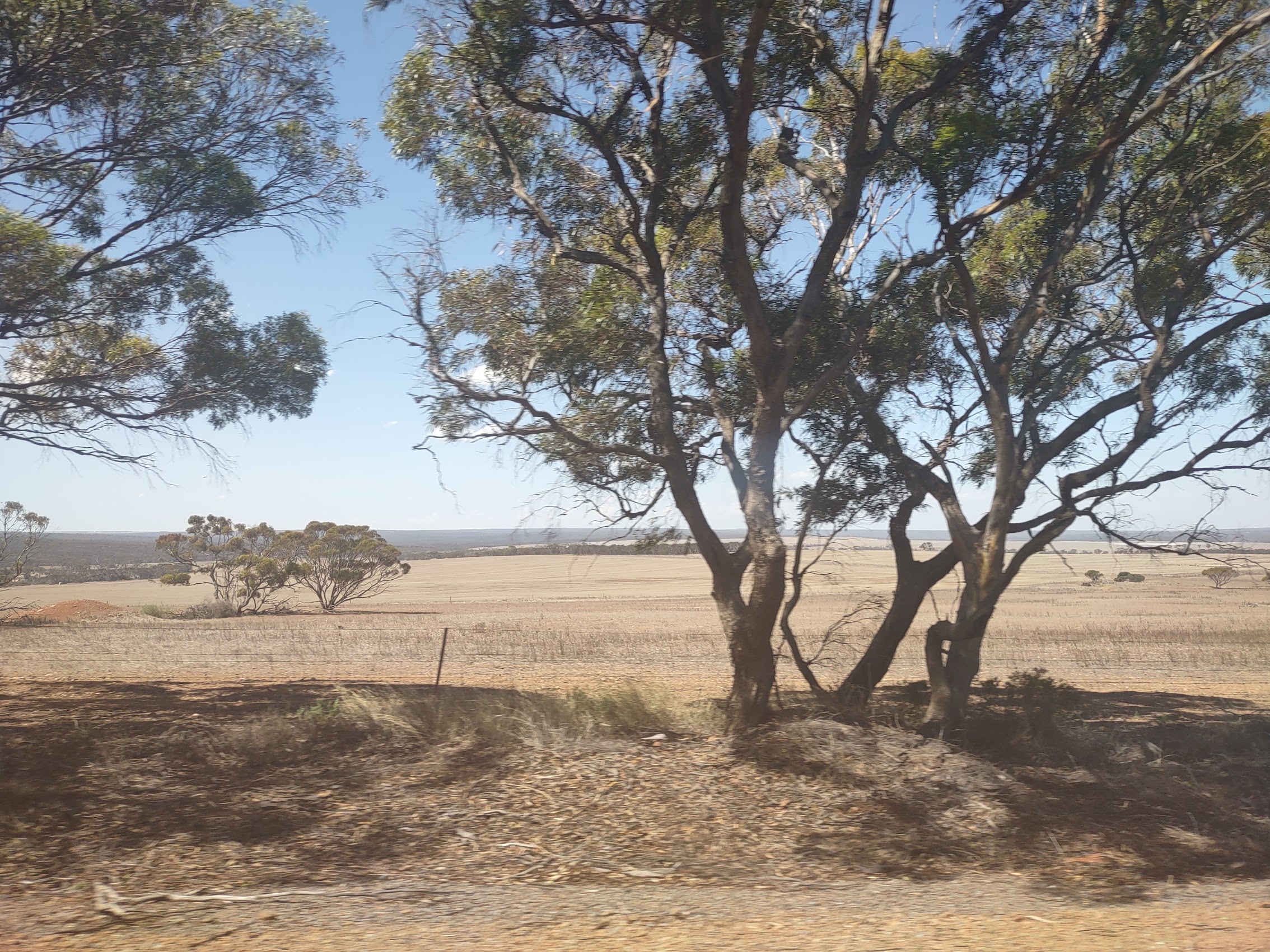
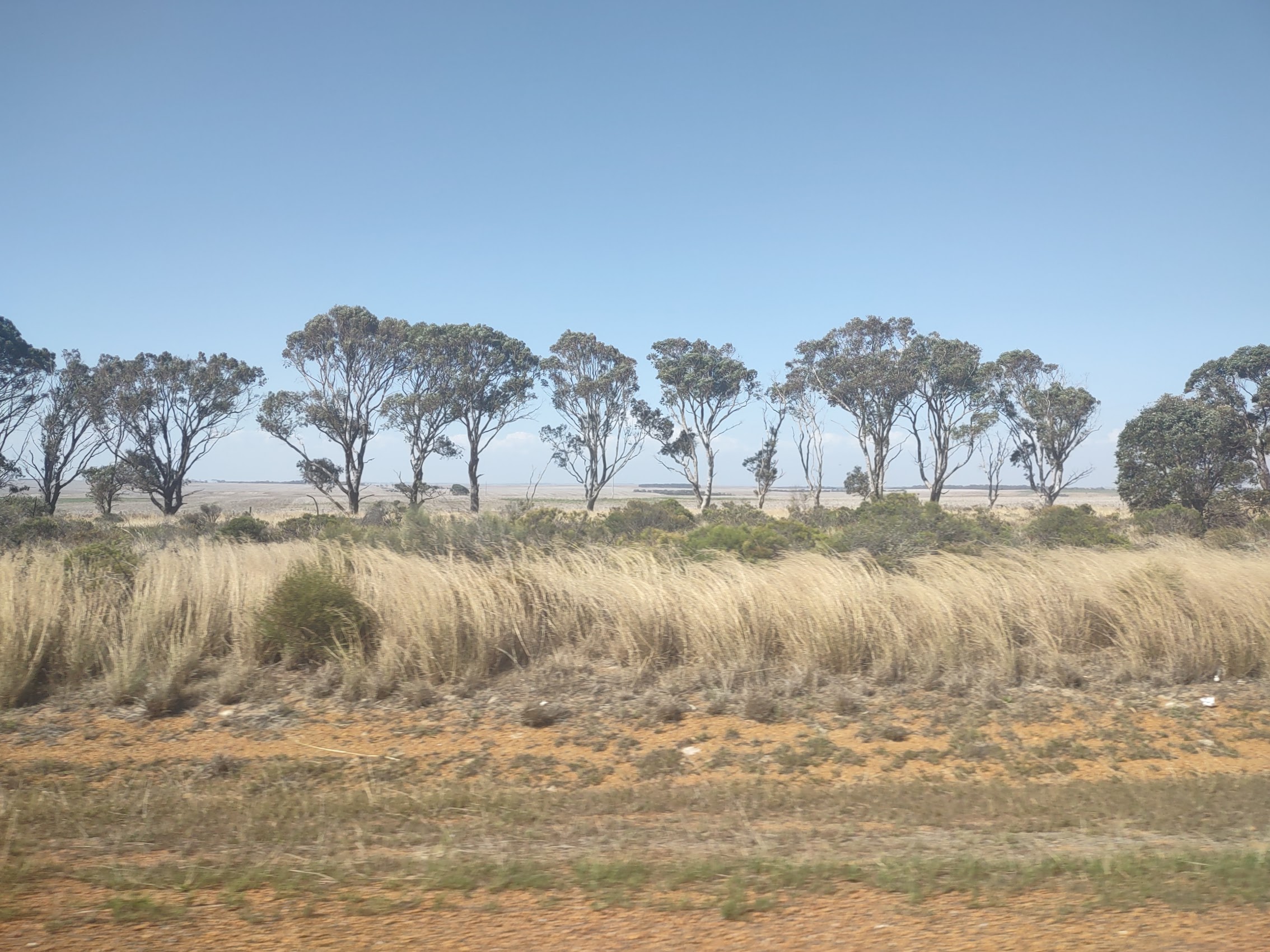
If you’ve not heard of road trains, they are tractor rigs with two and sometimes even three trailers in tow which send a pretty serious shock wave as they pass you by. Although the first couple of them caught us a bit by surprise, thanks to the open countryside and long straight stretches of roadway, you could usually see them coming from a distance and had time to brace yourself and, while we tended to hold our breath each time we were passed by one, Colleen managed them quite well.

Ravensthorpe
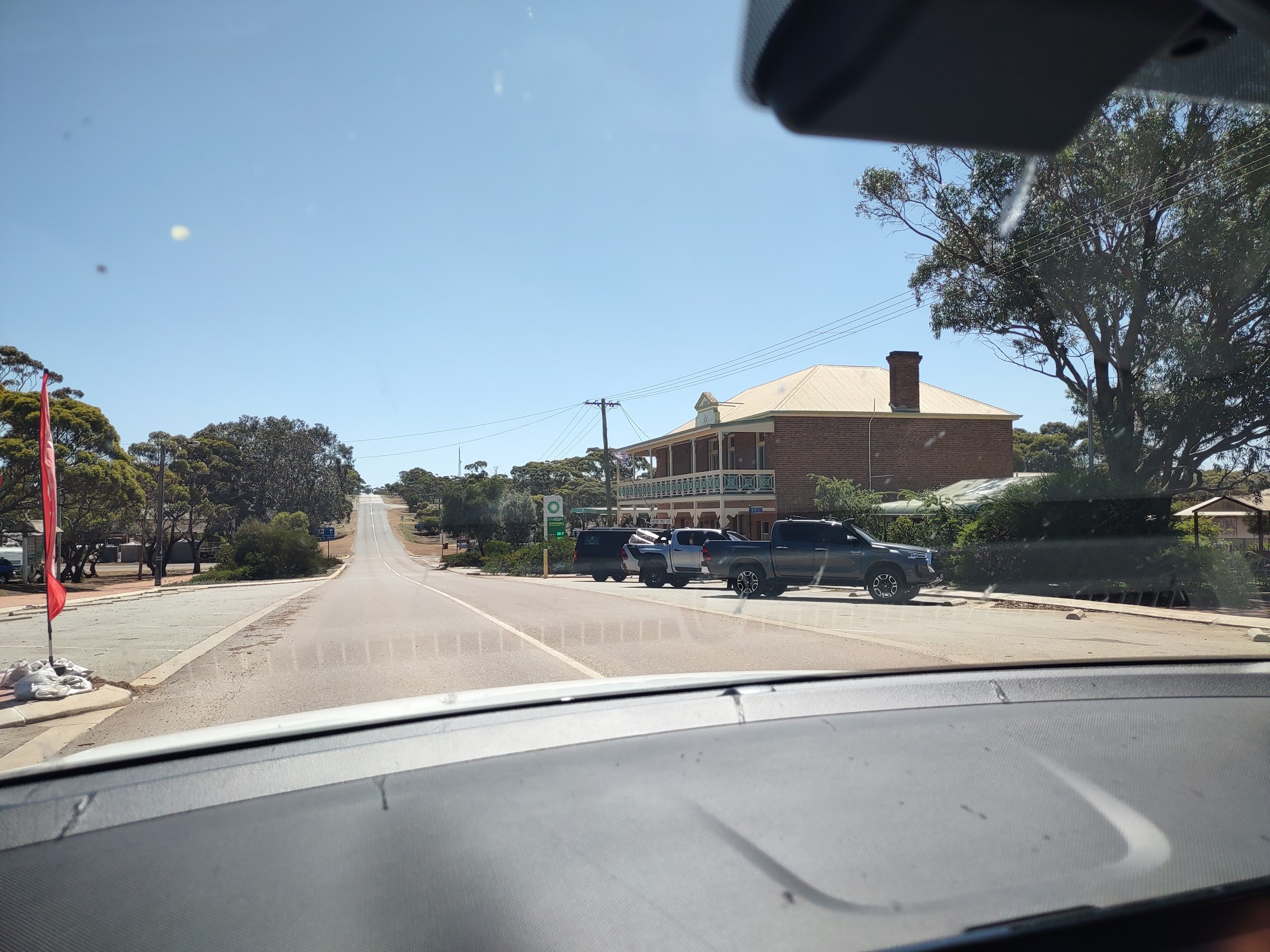
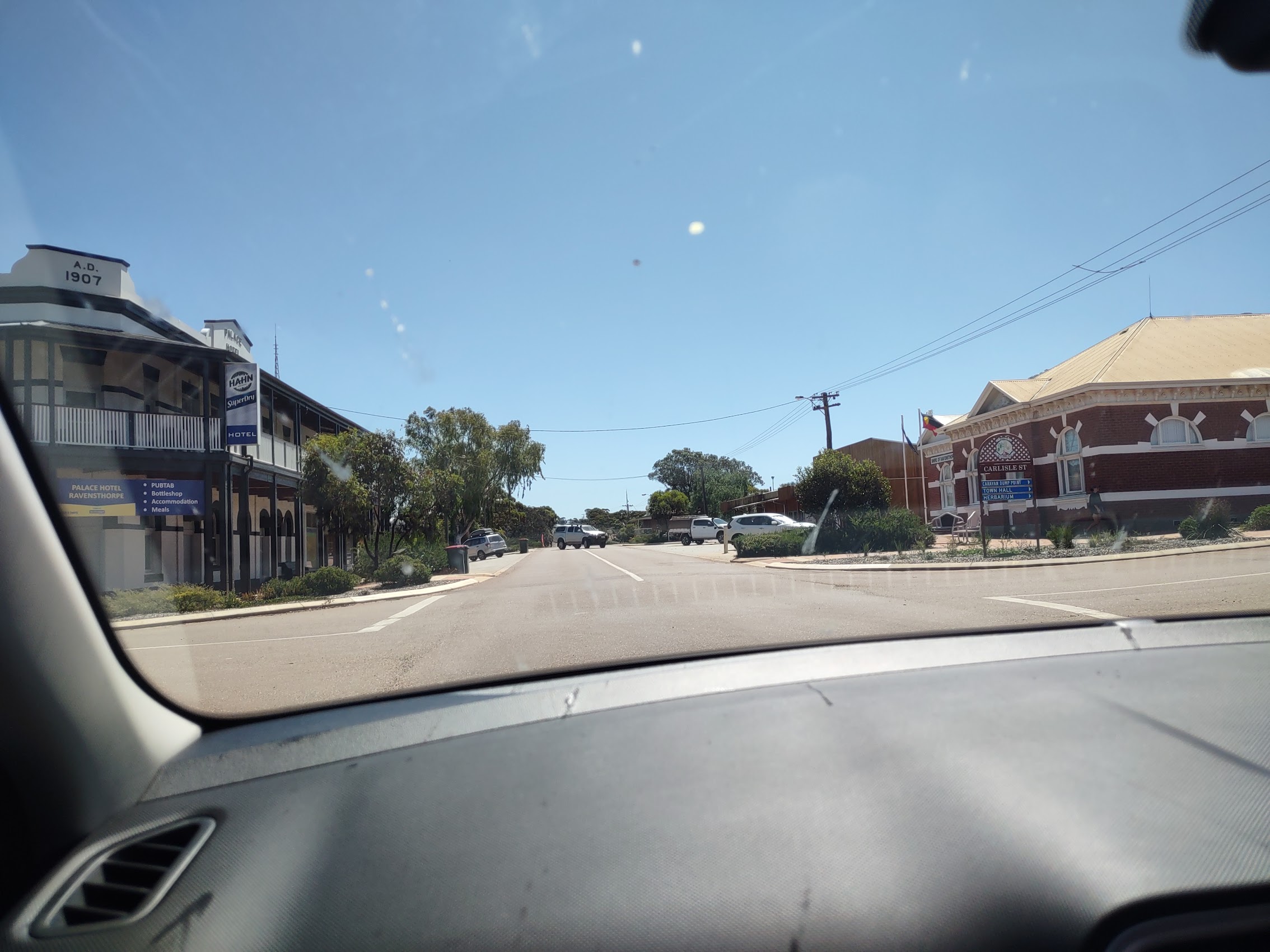
After about two hours of driving vacant open country with hardly another car on the road, we stopped in the town of Ravensthorpe which we had heard was an interesting little place. With a population of about 2,000, we had expected Ravensthorpe to be a bit more of a town, but in the end it didn’t feel much bigger than Bremer Bay. It had a pretty sparse main street about four blocks long with a hotel, a couple of shops, and three restaurants (including the food counter at the local BP petrol station) and very much had the feel of an old American wild west town (absent the tumbleweeds!).

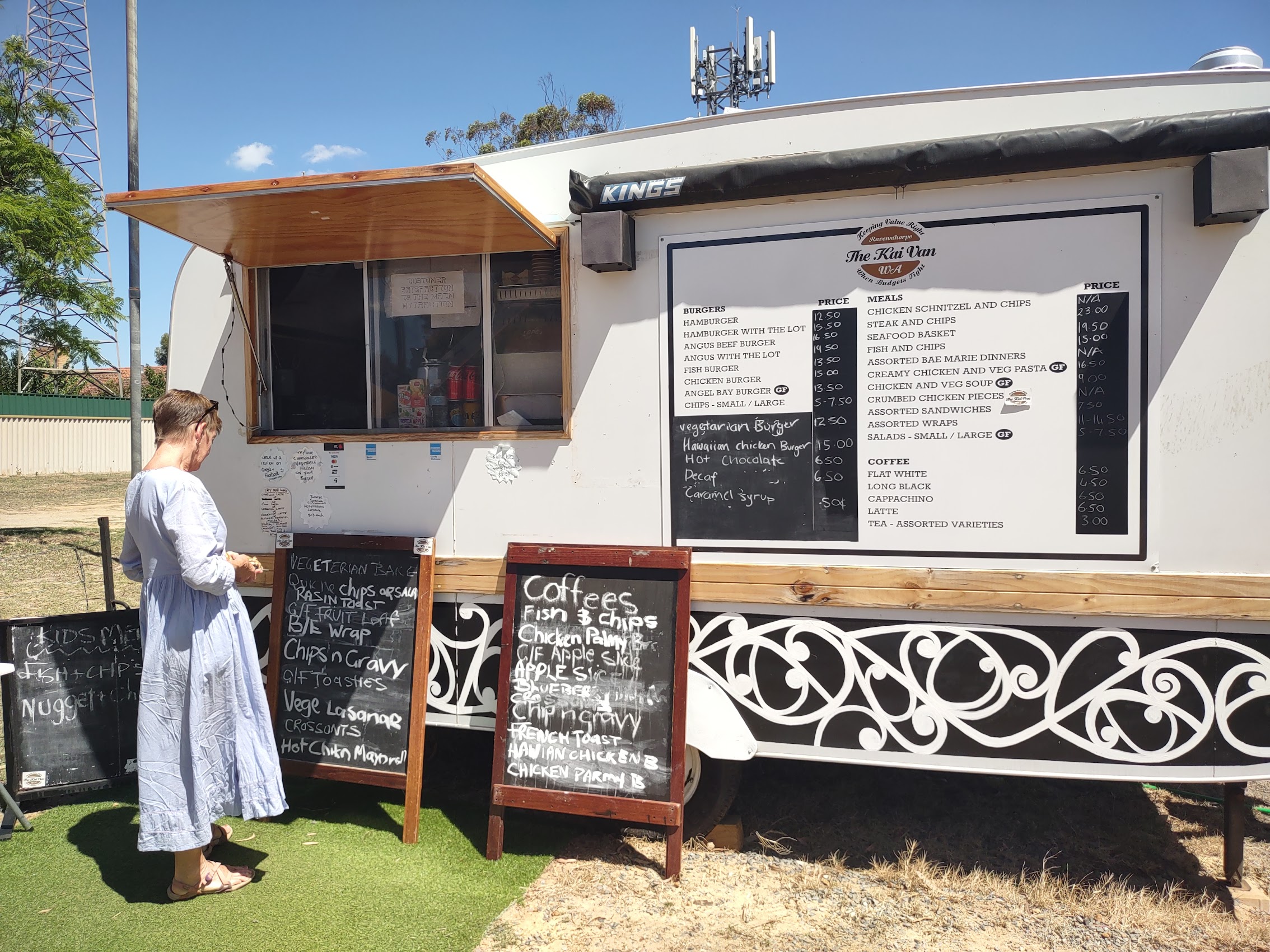
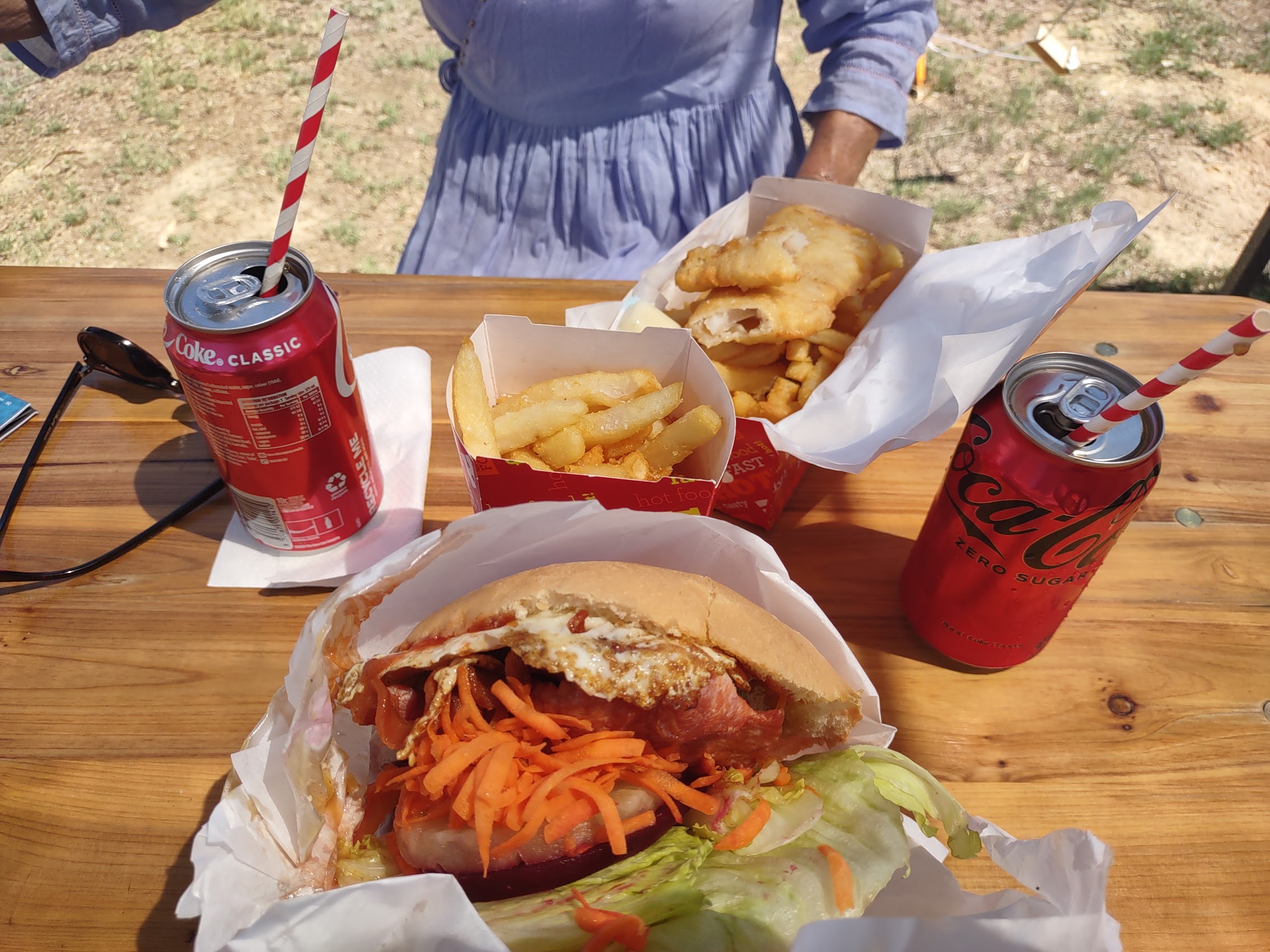
We elected to pass on the food counter at the BP and instead decided to dine al fresco at a place called the Kai Van, which was literally a small mobile home which had been converted to a food truck. Colleen ordered the fish and chips and I ordered the “hamburger with the lot” (like “the kitchen sink”, “the lot” is basically anything they have behind the counter which can be put on a burger). The food, which was relatively inexpensive (by Australian standards) was actually quite tasty and got us back on the road to Esperance fairly quickly.
Ah, Esperance
As I noted earlier in this installment, whenever we mentioned that we were going to Esperance, the response of most Western Australians was one awe and reverence (Ahhhh, Esperance…). From all we could gather, Esperance appeared to be the quintessential Western Australian beach town, and we were looking forward to it as the ultimate destination of this leg of our Western Australia tour.
Our Place In Esperance
Perhaps predictably, Esperance was also a relatively expensive place to visit and we were particularly challenged to find an affordable place to stay while there. As we were planning on staying for four nights, we wanted to find a place with a good kitchen (even more important in an expensive place) and a descent amount of space. After much searching, we came across a two-bedroom apartment (we love having an extra bed or bedroom to lay out our suitcases and packs) at the Esperance Holiday Apartments on Booking.com which appeared to be a good location and could be had at the bargain price of $175 a night (cheap for Esperance, but still twice our average budget for the trip)!

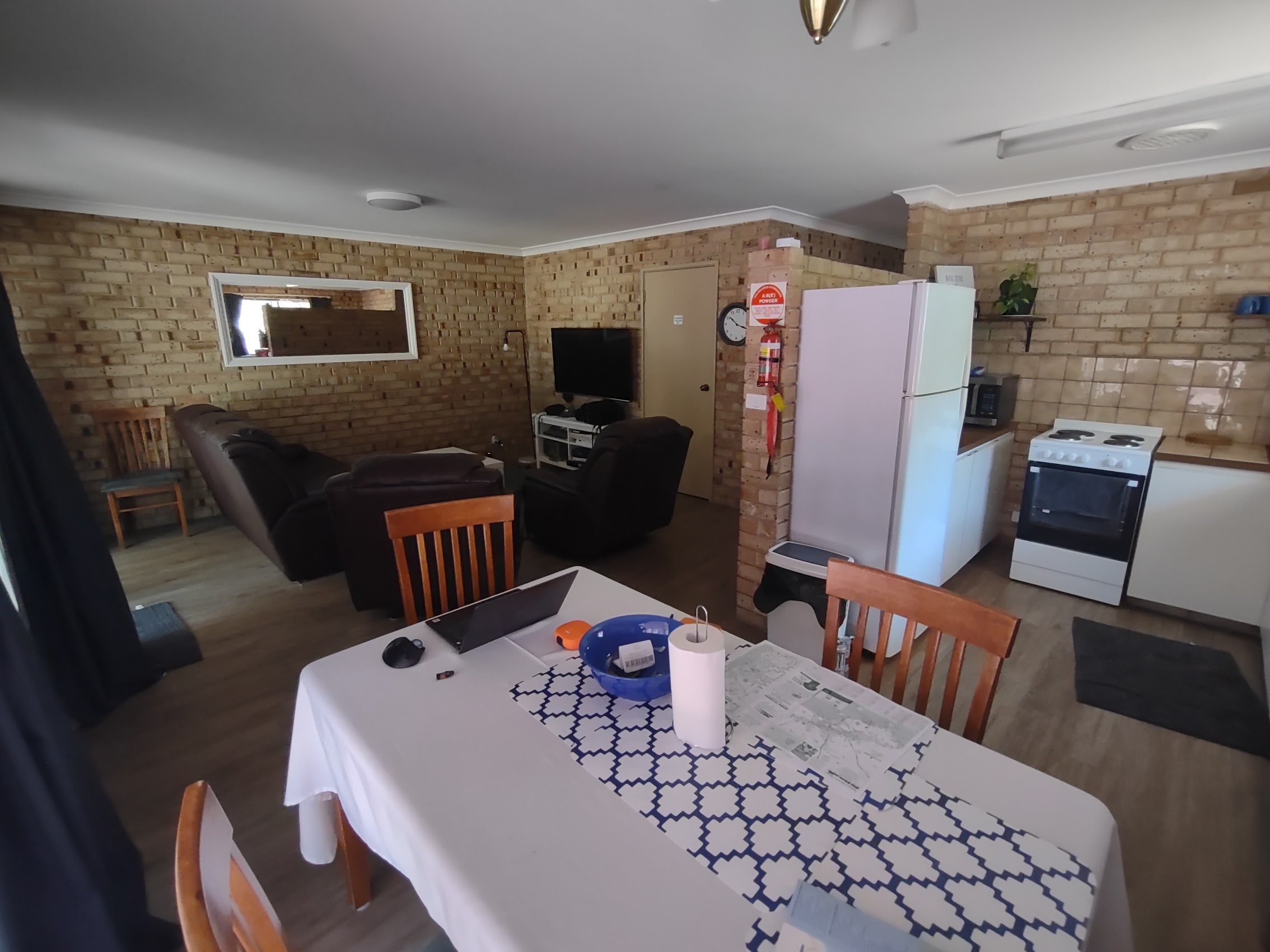
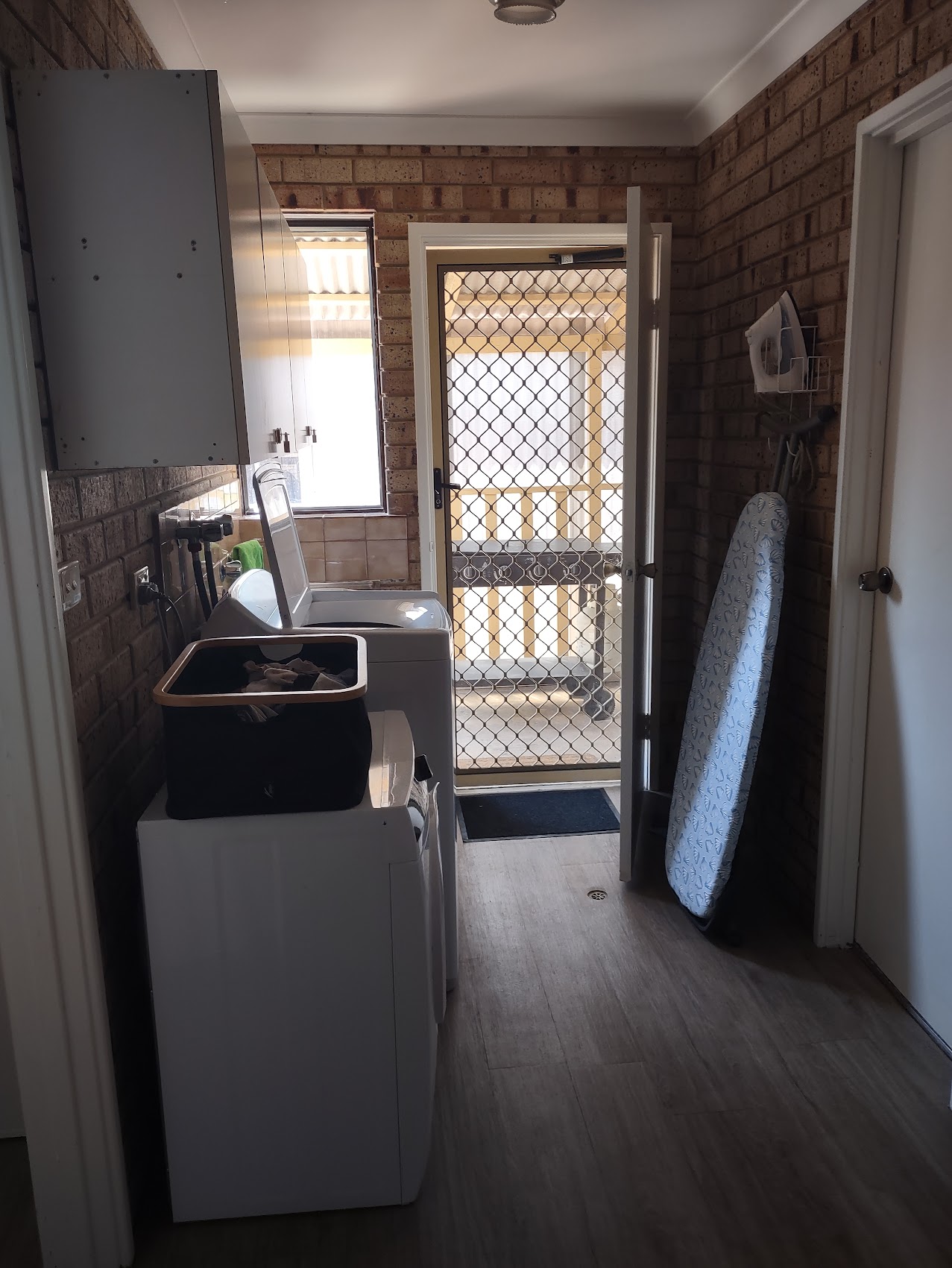
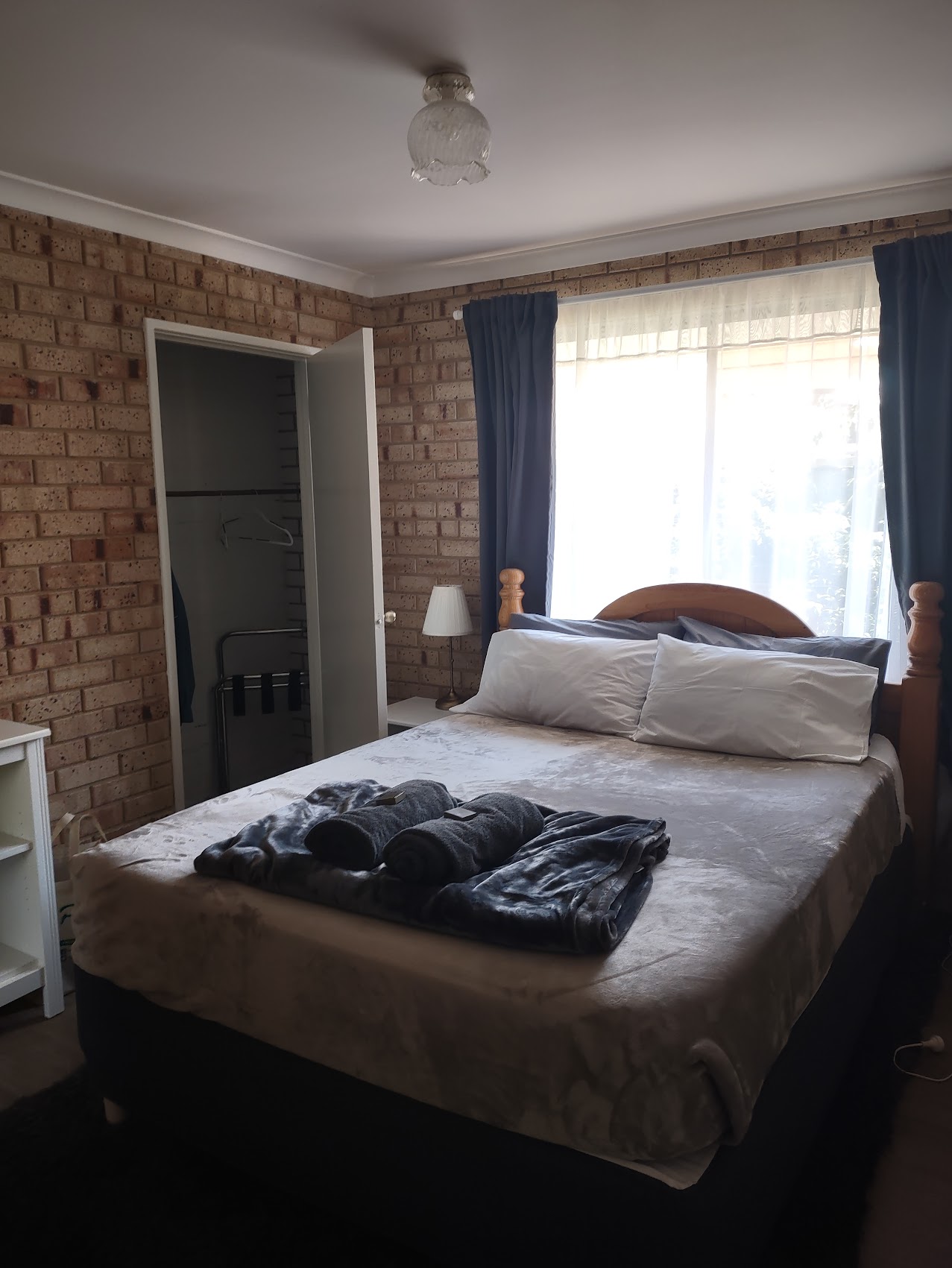
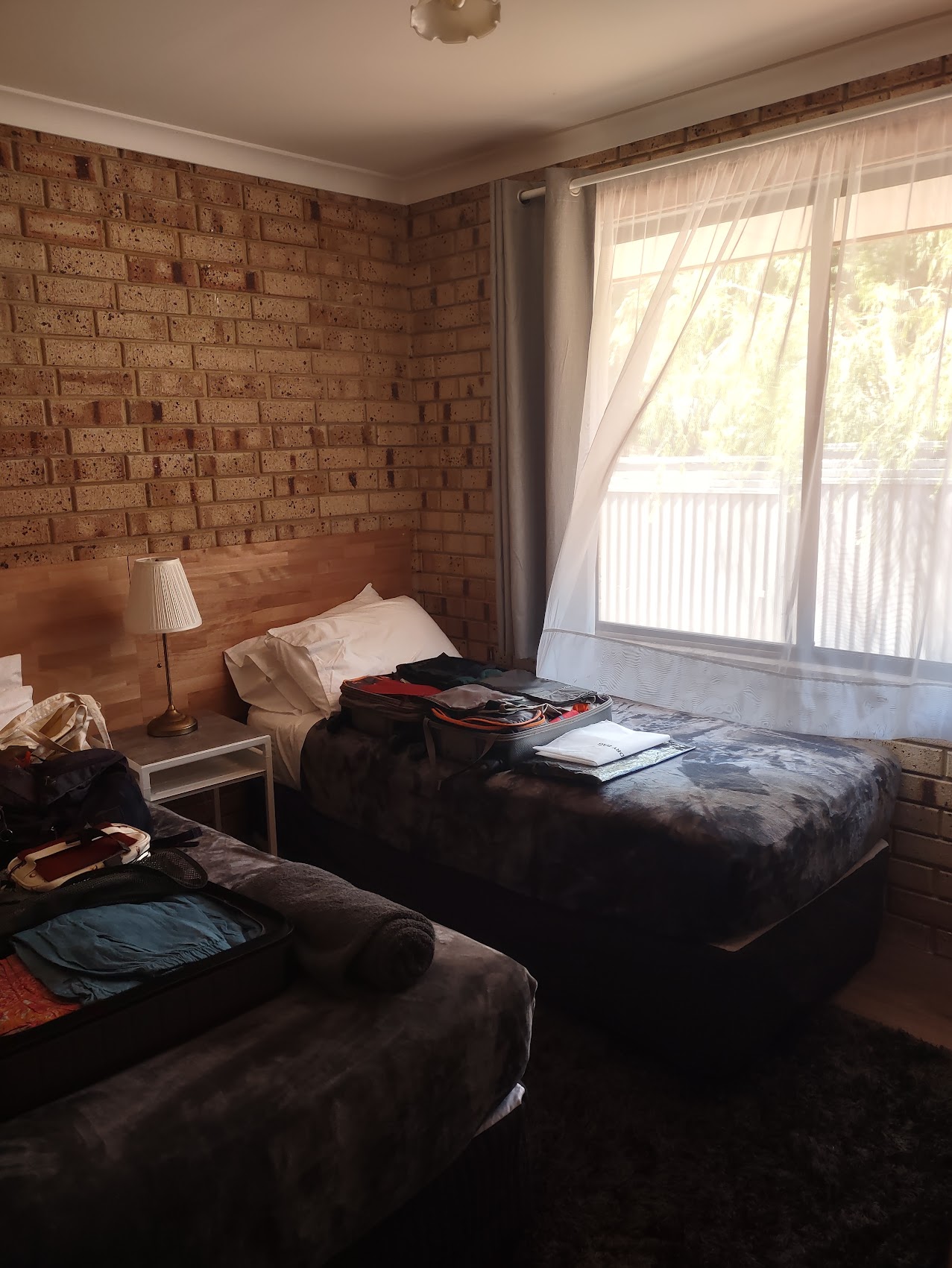
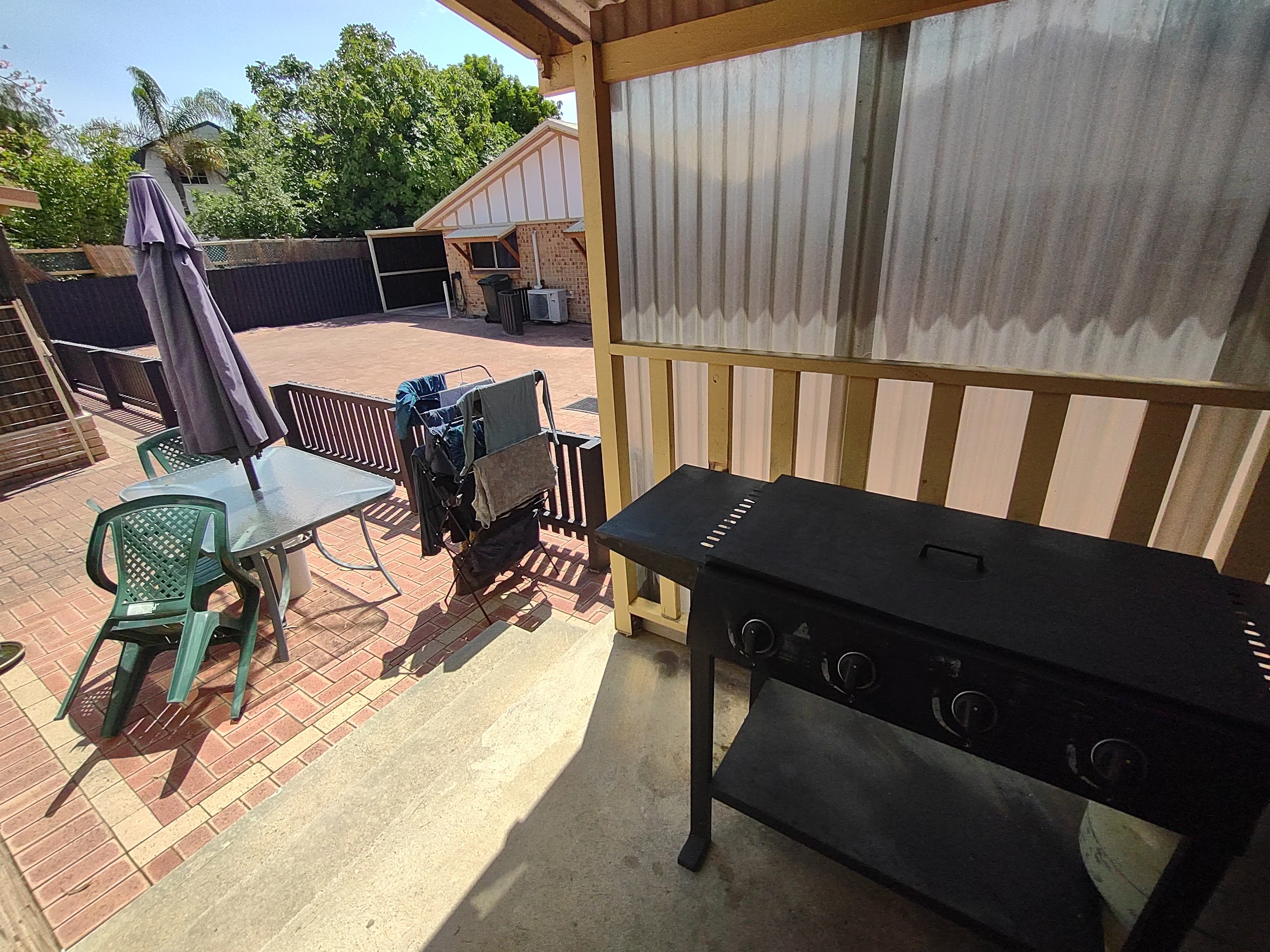
I have to say that our initial impressions when we arrived at the Esperance Holiday Apartments were not great. At first glance, it had the all the charm and curb appeal of a cheap roadside motel with a very large trailer park as its next door neighbor. However, the interior was very clean, spacious (there were actually 3 bedrooms!), and comfortable with a well-equipped kitchen, laundry facilities, and a patio area with barbie. The place turned out to be quite quiet and felt much more private than we had expected and (as we had hoped) the location was ideal – about 500 meters from a nice beach and only 2 kilometers from the center of town. (Even when we have a car, we generally prefer to walk anywhere less than a couple of miles.)
The Town of Esperance
Esperance is one of the oldest towns along the Southern Ocean coast of Western Australia and, with a population of just under 15,000, it is also the largest. There are five major national parks near Esperance, the most notable of which is the Cape Le Grand National Park (a mere 20 minutes away from the town center), which offers a picturesque coast of largely granite terrain and sheltered white sand beaches. For these reasons, Esperance is the most popular tourist destination along this coast, attracting an estimated 200,000 visitors a year. [That may sound like a lot, but for comparison it’s about the same as the average number of visitors Disney World sees over a four-day period. On the average, Esperance sees about 2,000 visitors a day and (thankfully) the summer school break had ended by the time we arrived, so we weren’t expecting it to be too crowded (and were not disappointed!).]
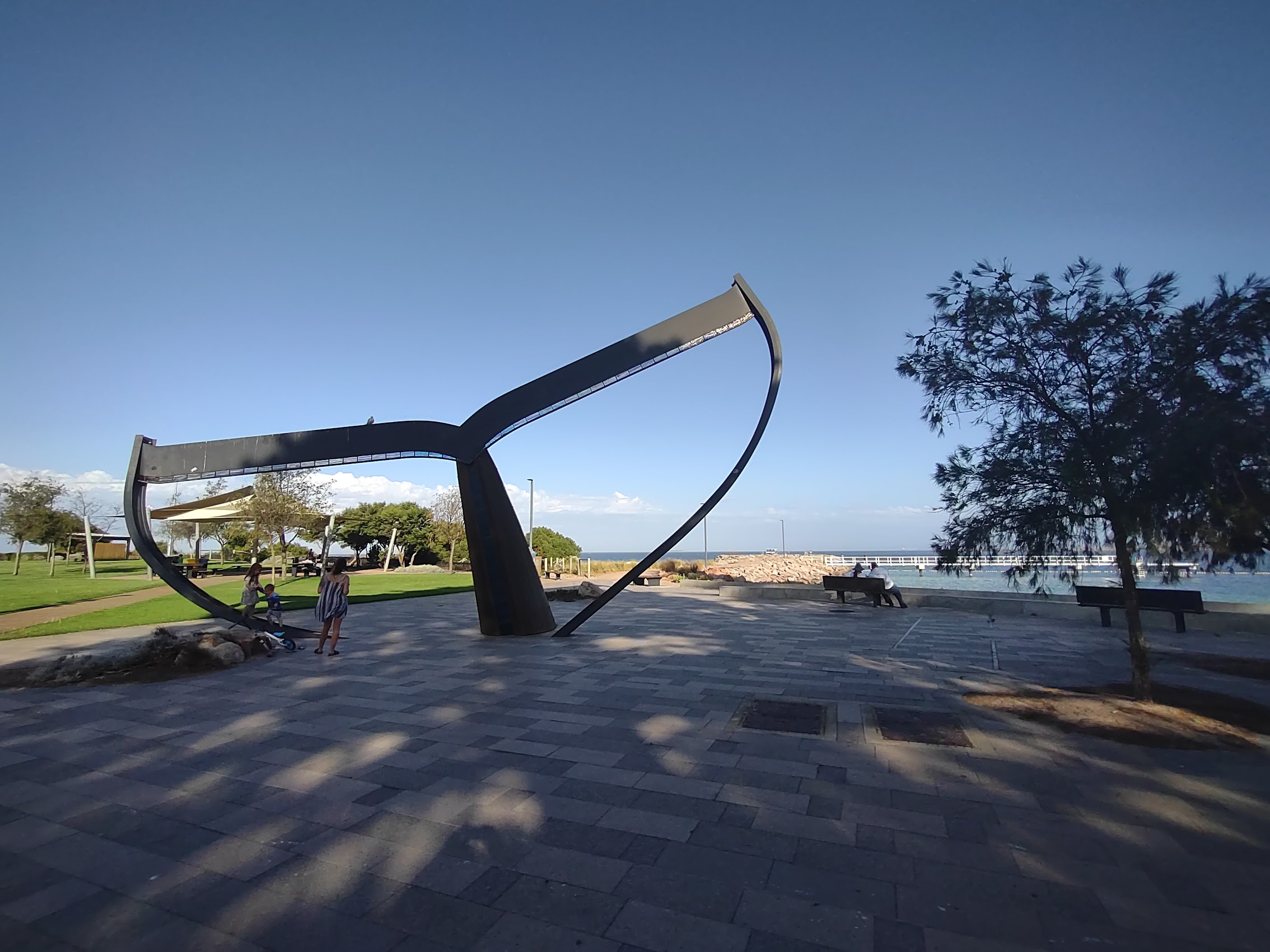
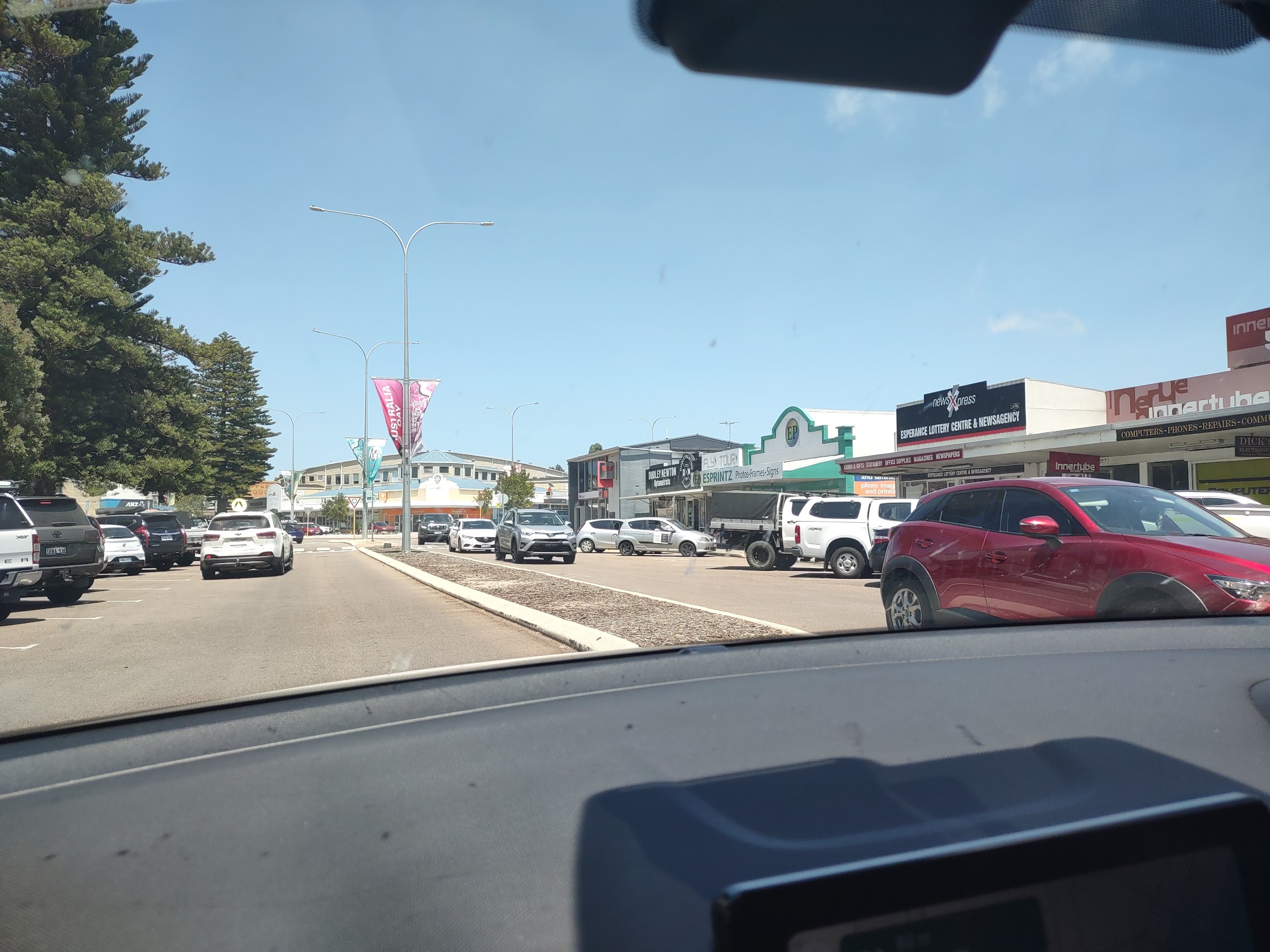
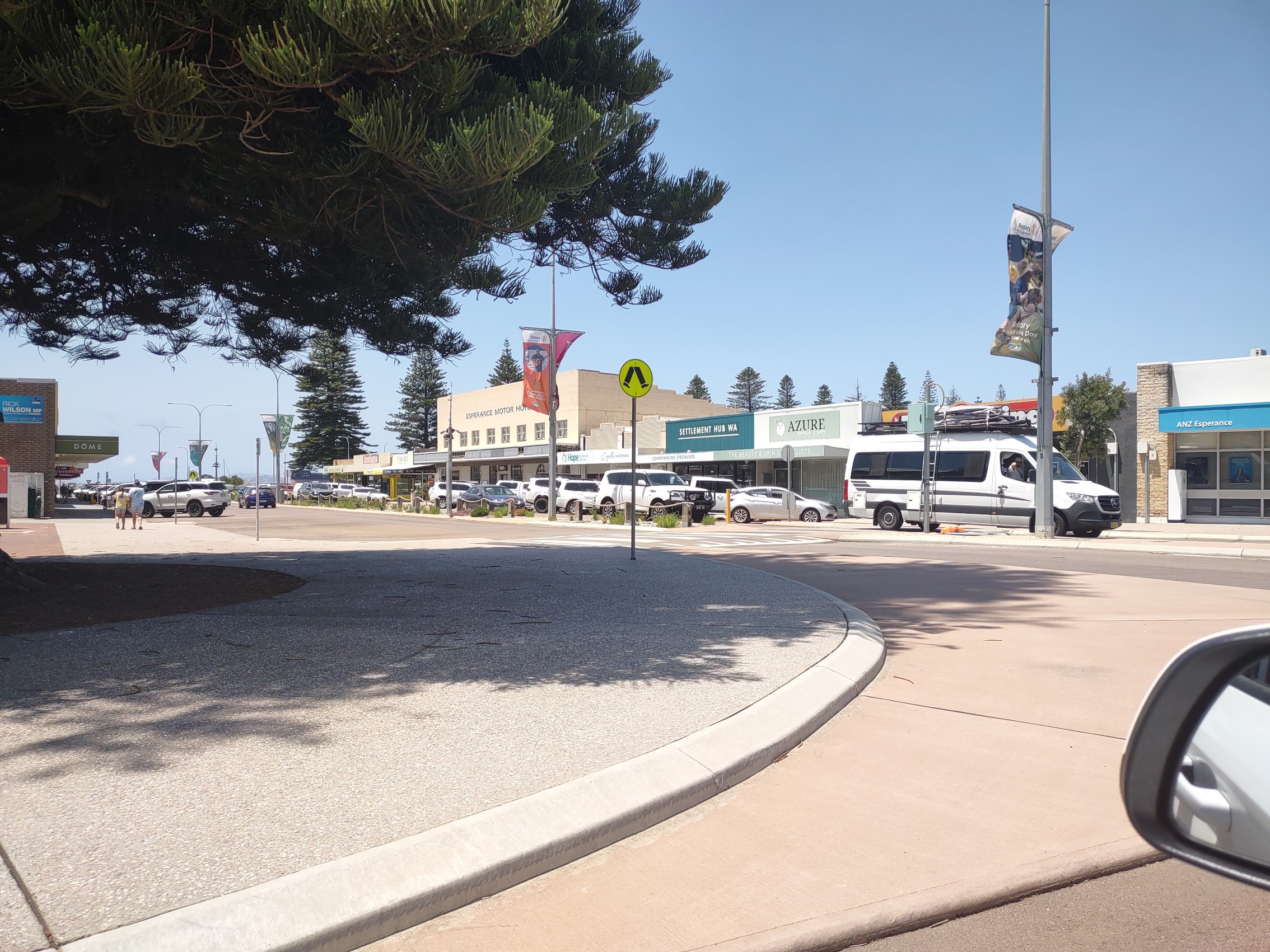
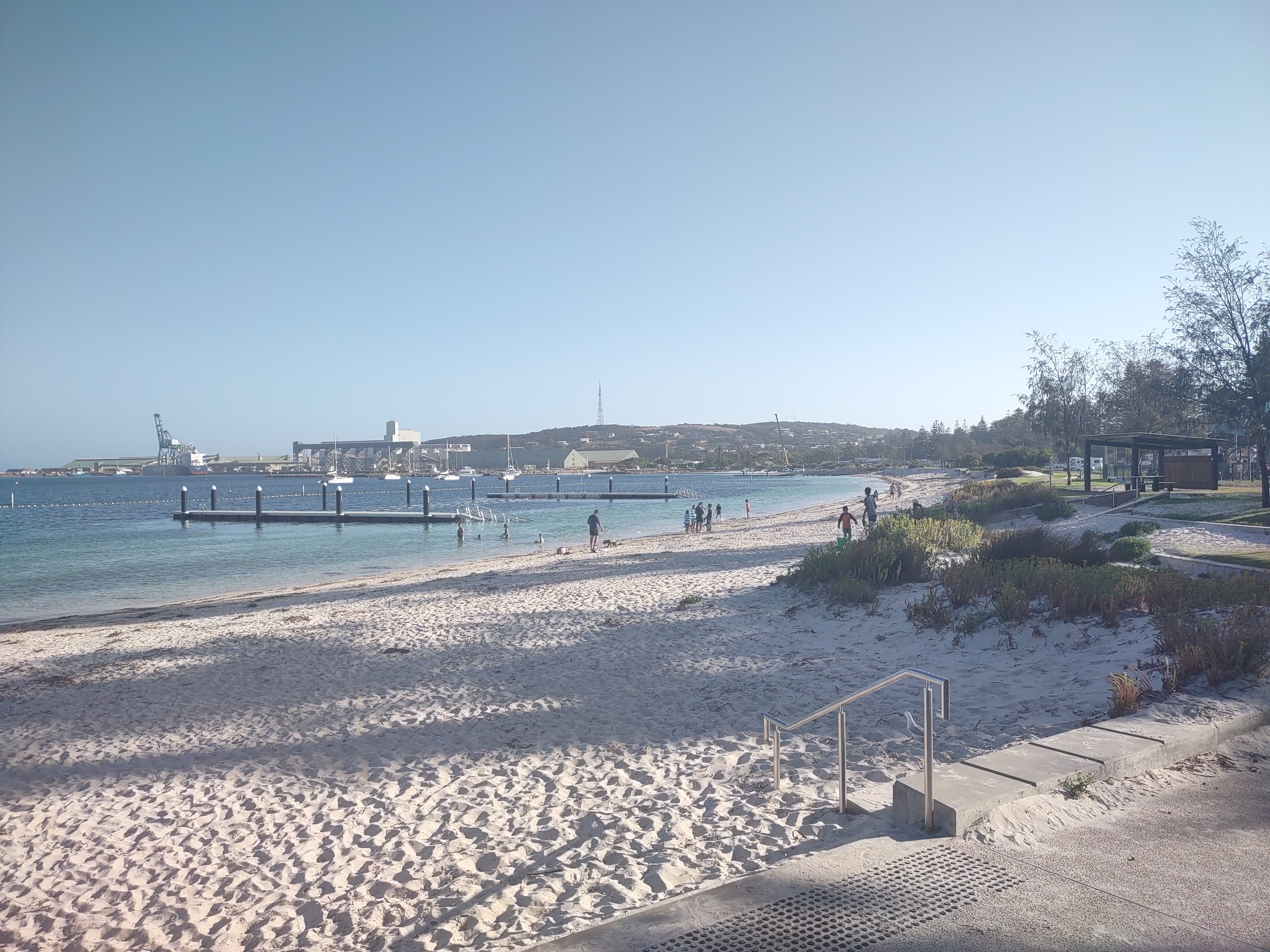
In contrast to the smaller towns we had thus far visited along the coast, Esperance was (perhaps not surprisingly given its size) much more of a real town with a central business district, lots of shops and restaurants, and even real grocery stores including a Woolies (Woolworth’s), which had become our favorite back in Fremantle. It also had a very nice esplanade which ran the length of the town along the Southern Ocean, which was dotted with beaches, parks, playgrounds, sculptures, and statues, including a large sculpture called the Whale Tail which is more or less the iconic symbol of the town.


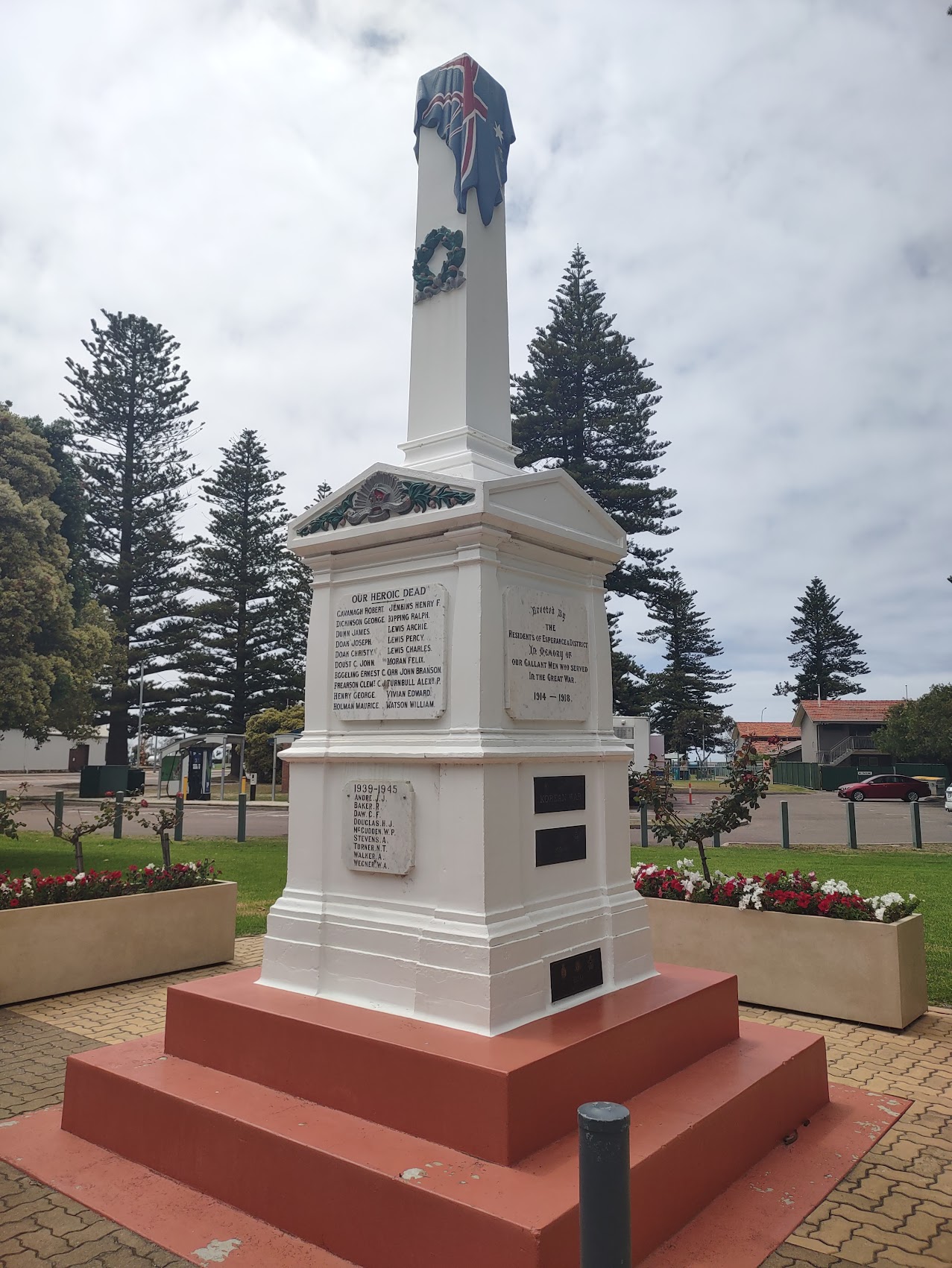
Remember Skylab? (Esperance does!)
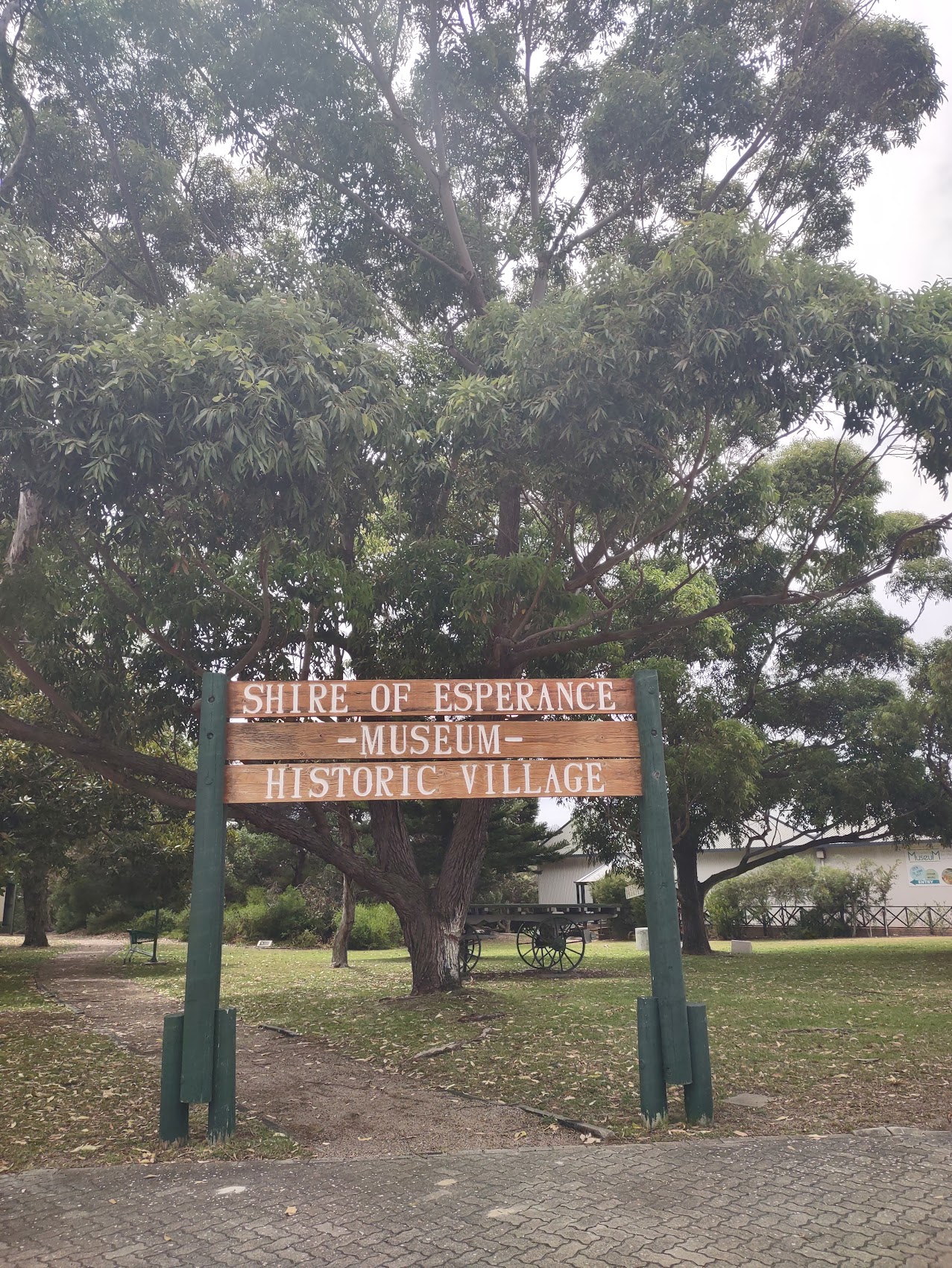
As might be expected, there were also a number of tourist attractions scattered around town including a park with a historic village and museum just north of the Whale Tail. The museum included a Skylab exhibit which confirmed an interesting story we had heard somewhere along the way (Bill Bryson’s book I think). As the story goes, in 1979, pieces of the space station Skylab crashed onto Esperance after the craft broke up over the Indian Ocean. The municipality fined the United States $400 for littering, which was the story we had heard, but, as we learned, it apparently didn’t end there.
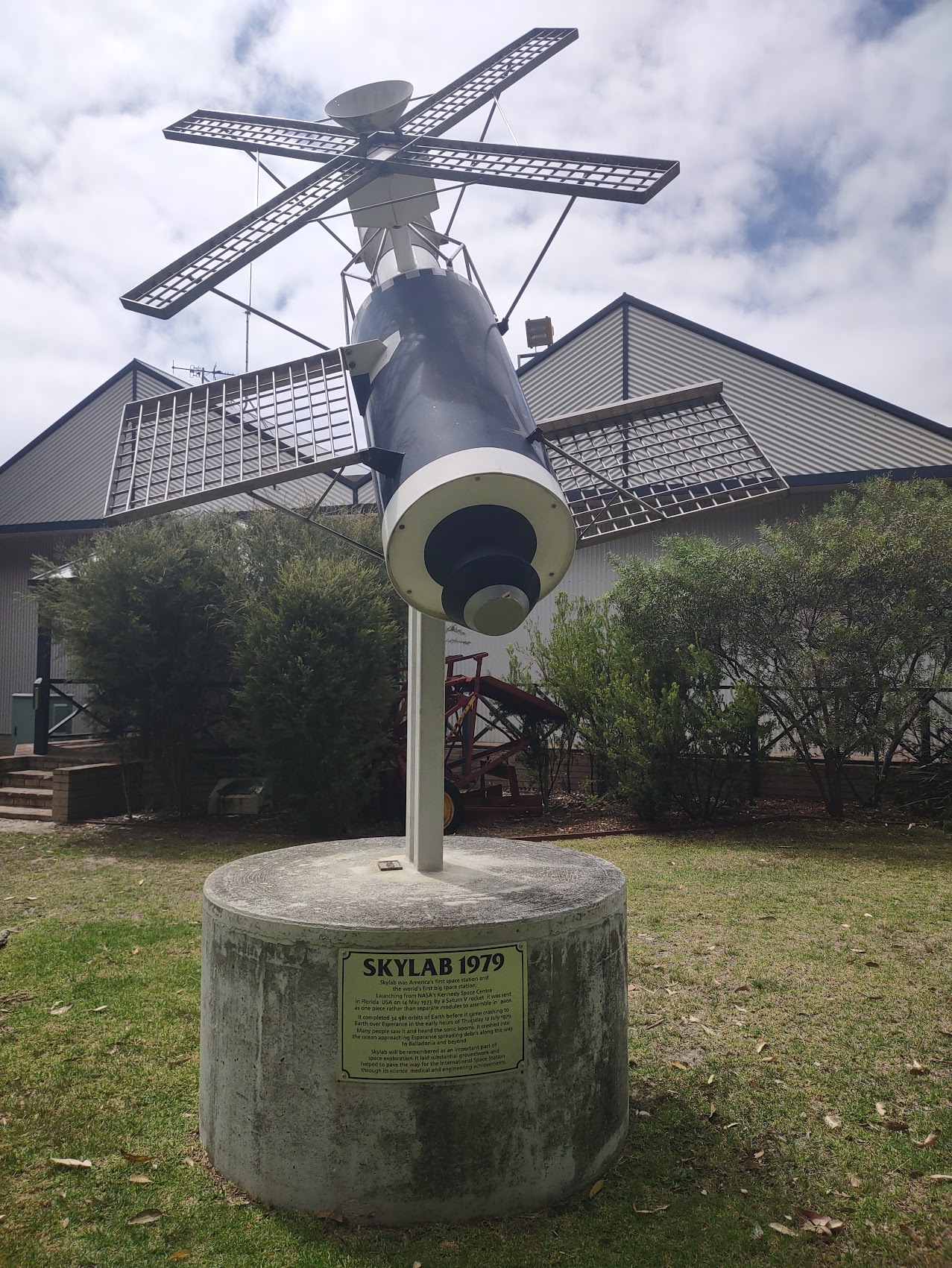
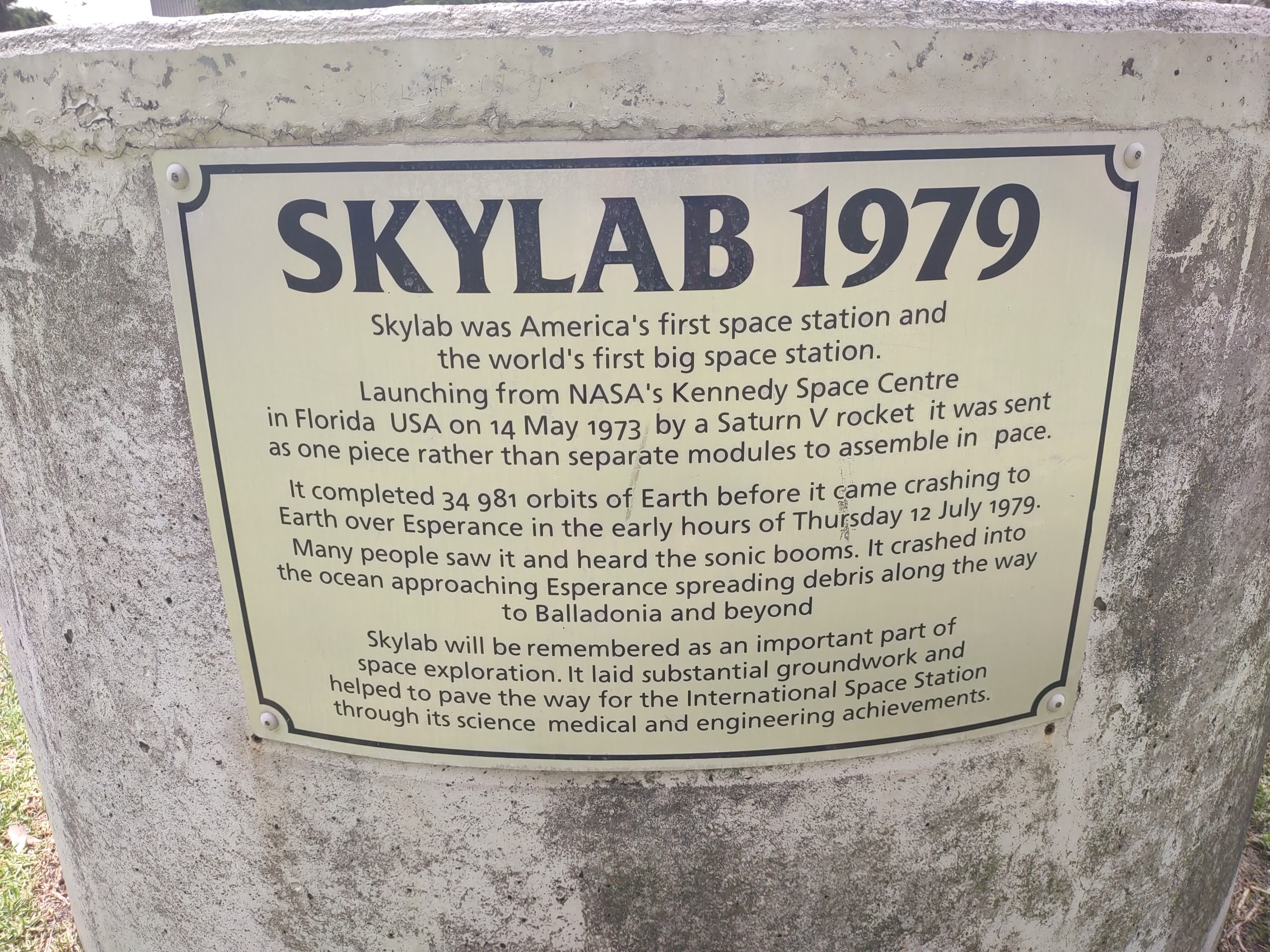
Skylab’s demise was an international media event, with merchandising, wagering on time and place of re-entry, and nightly news reports. The San Francisco Examiner offered a $10,000 prize for the first piece of Skylab to be delivered to their offices. Seventeen-year-old Stan Thornton of Esperance scooped a few pieces of Skylab off the roof of his home, caught the first flight to San Francisco, and collected the prize. Additionally, the aforementioned fine was reportedly paid in April 2009, when a local radio show host raised the funds from his morning show listeners, and paid the fine on behalf of NASA. Only in Australia!
The Great Ocean Drive
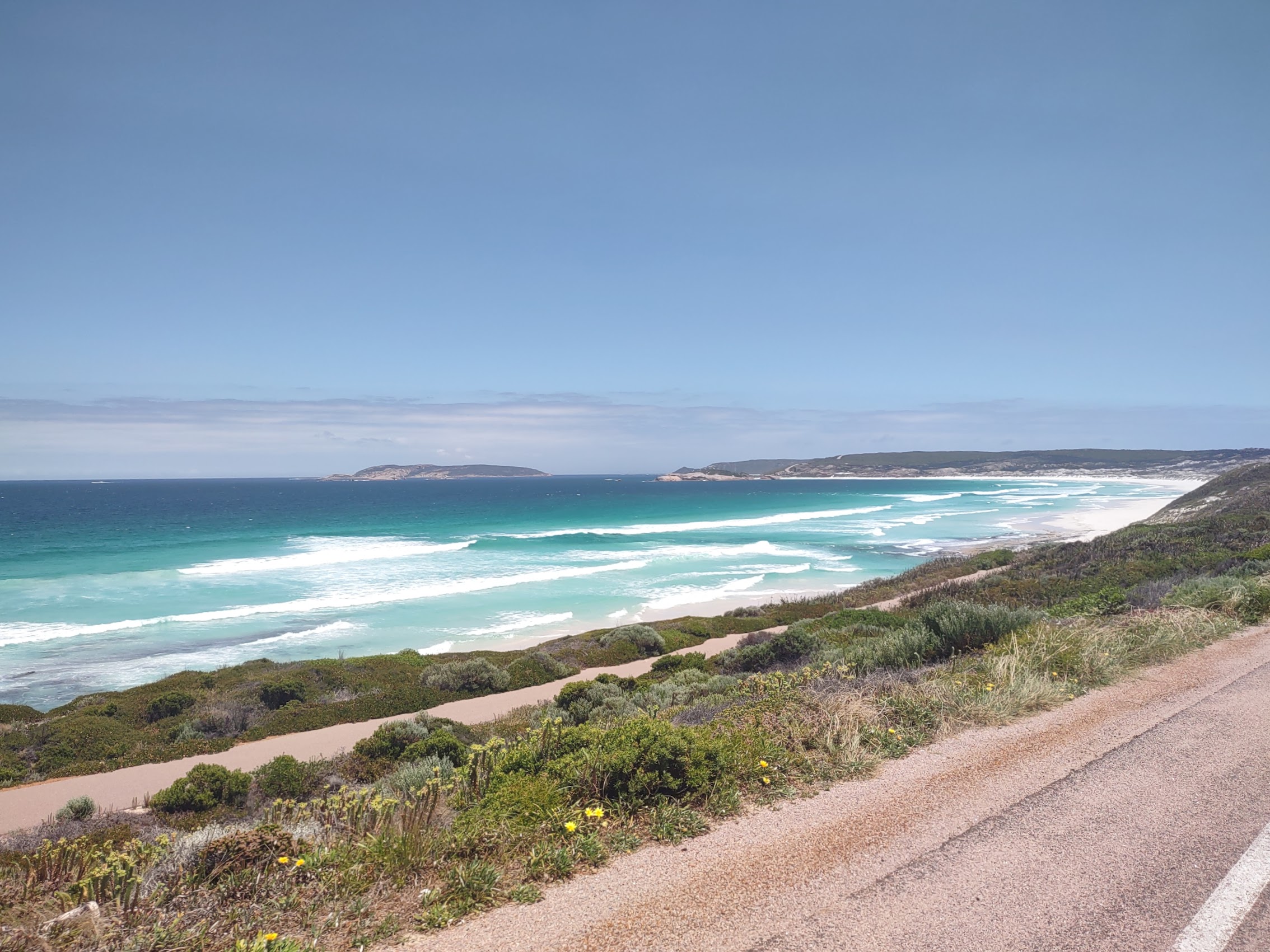
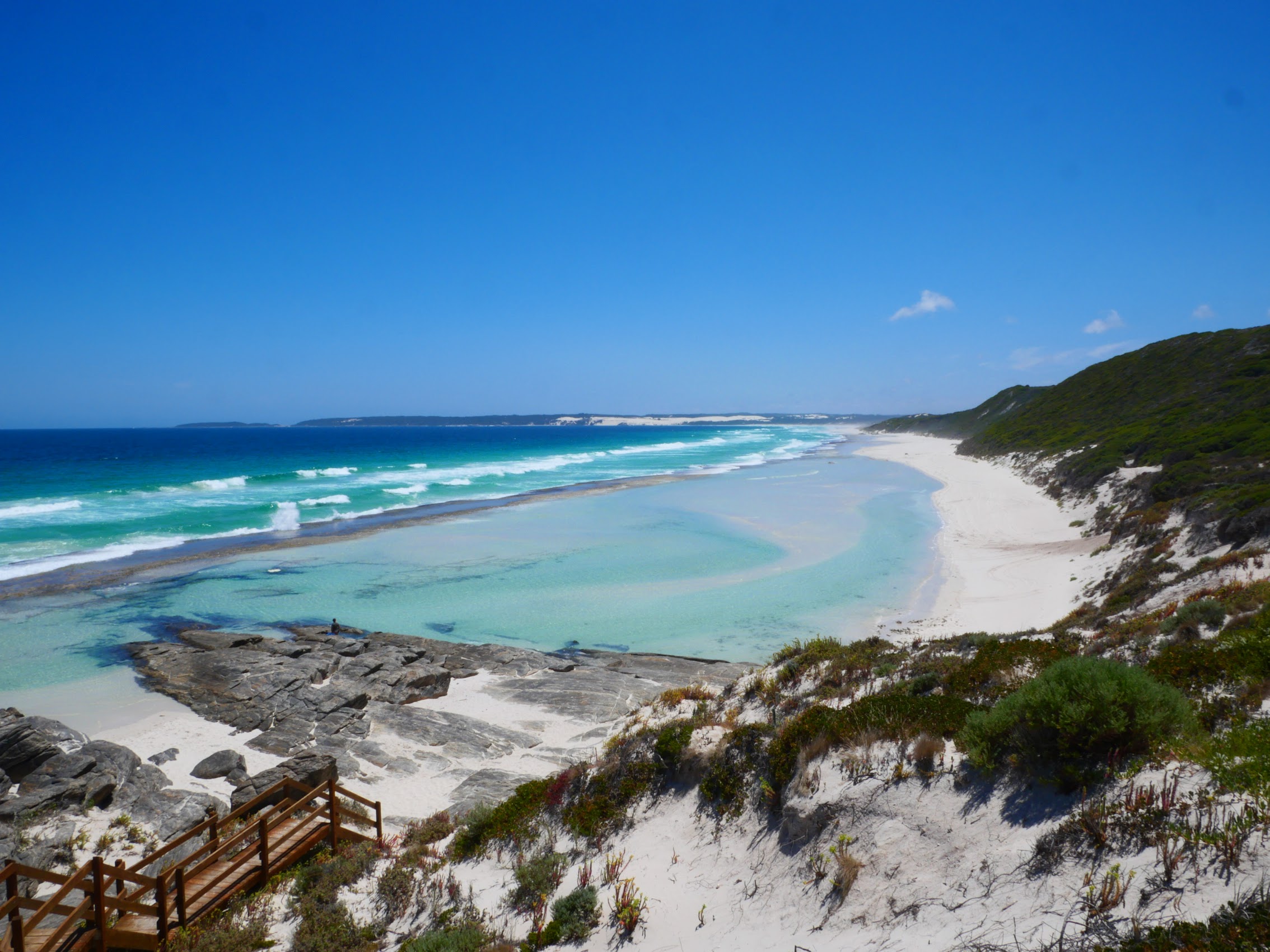
On our first full day in Esperance we headed south out of town to take what is known as the Great Ocean Drive, a 42 kilometer route which turns west along the Southern Ocean then loops back east to a place called Pink Lake then back to the northern end of town. The drive west along the coast was spectacular, with one beautiful beach after another and observation points in between. We stopped at several spots along the way, none of which were particularly crowded, but held out thinking the maybe the next beach might be even better. (We sometimes have a problem making commitments to a beach until we have seen all the options…)
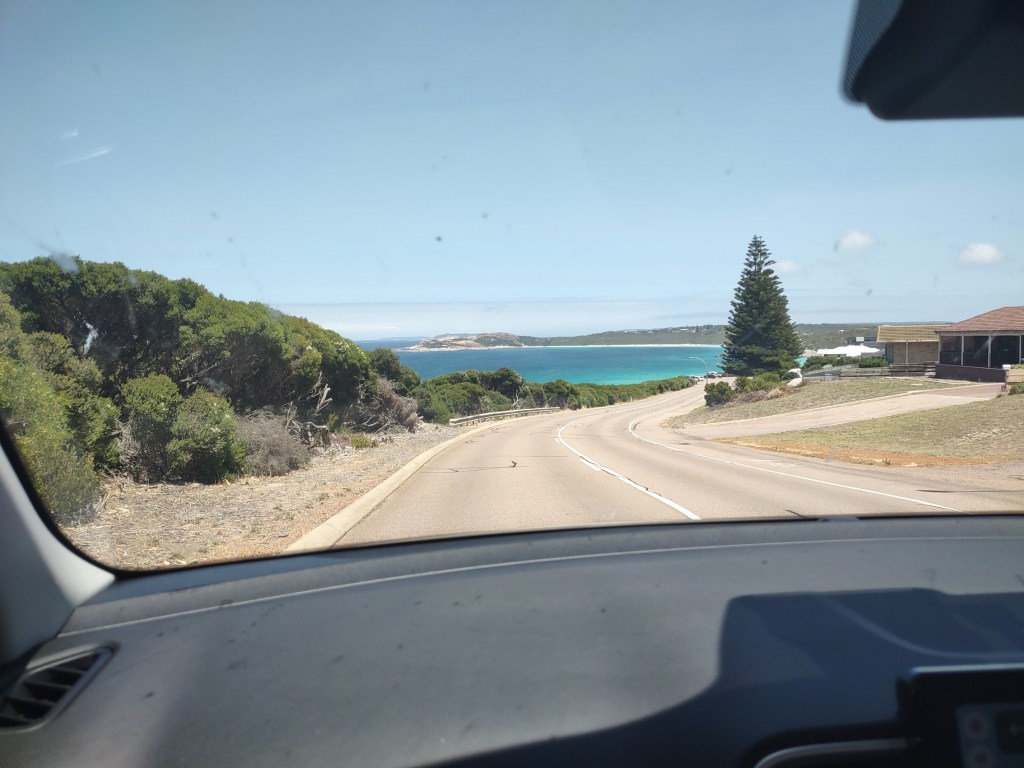
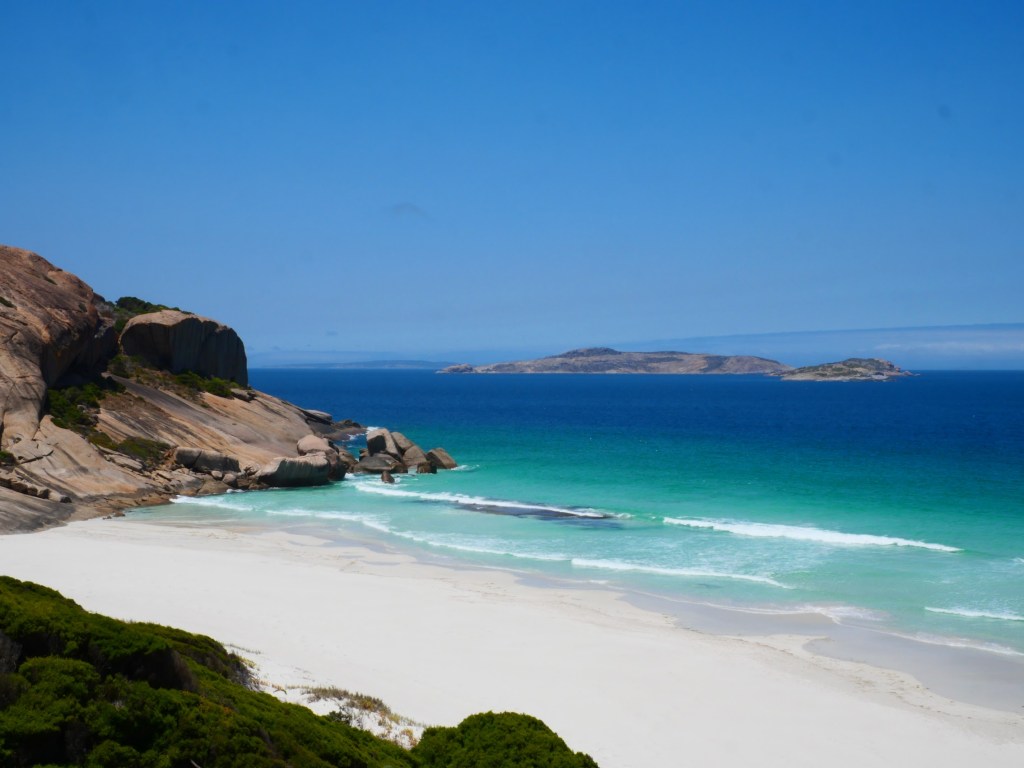


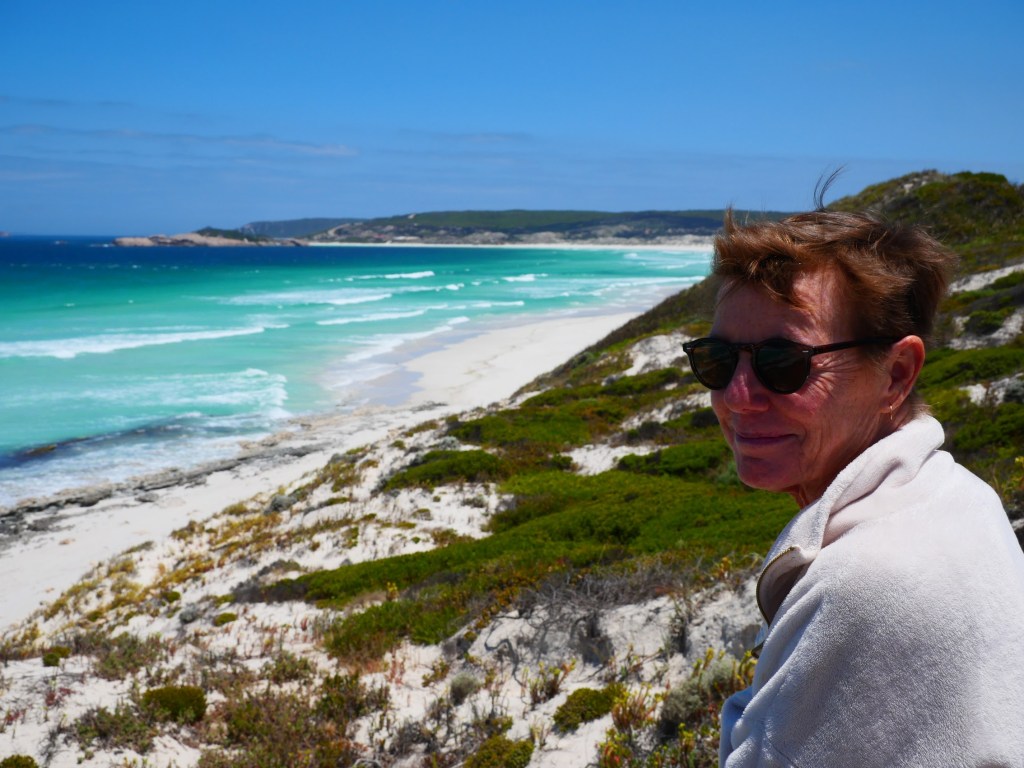
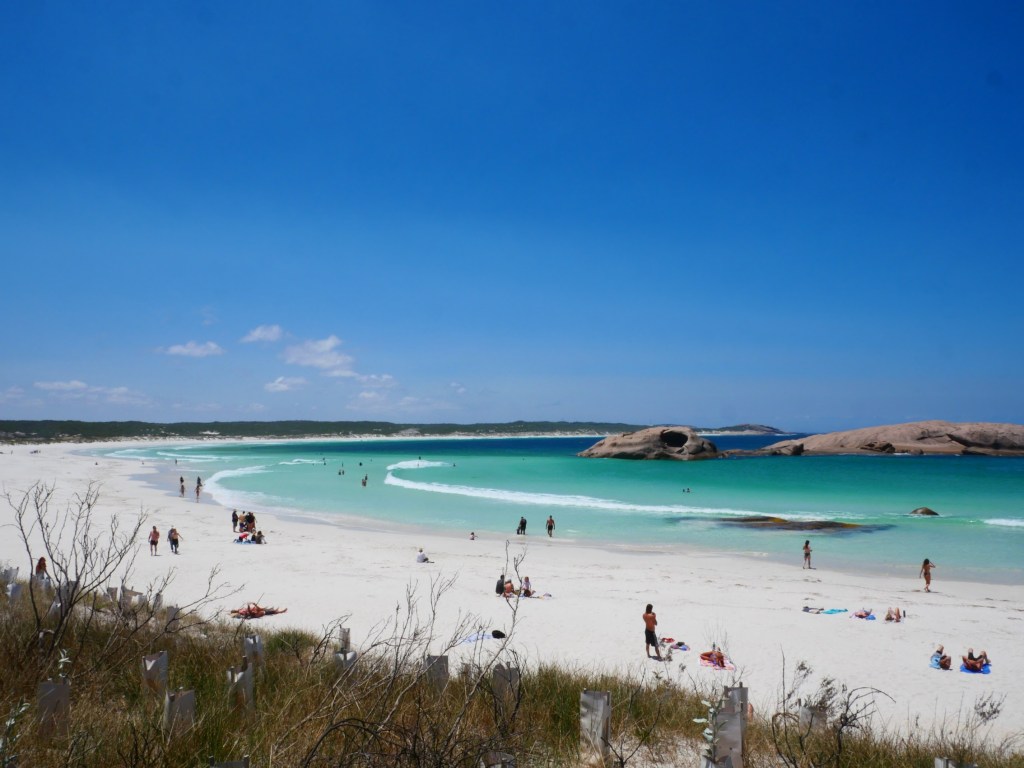
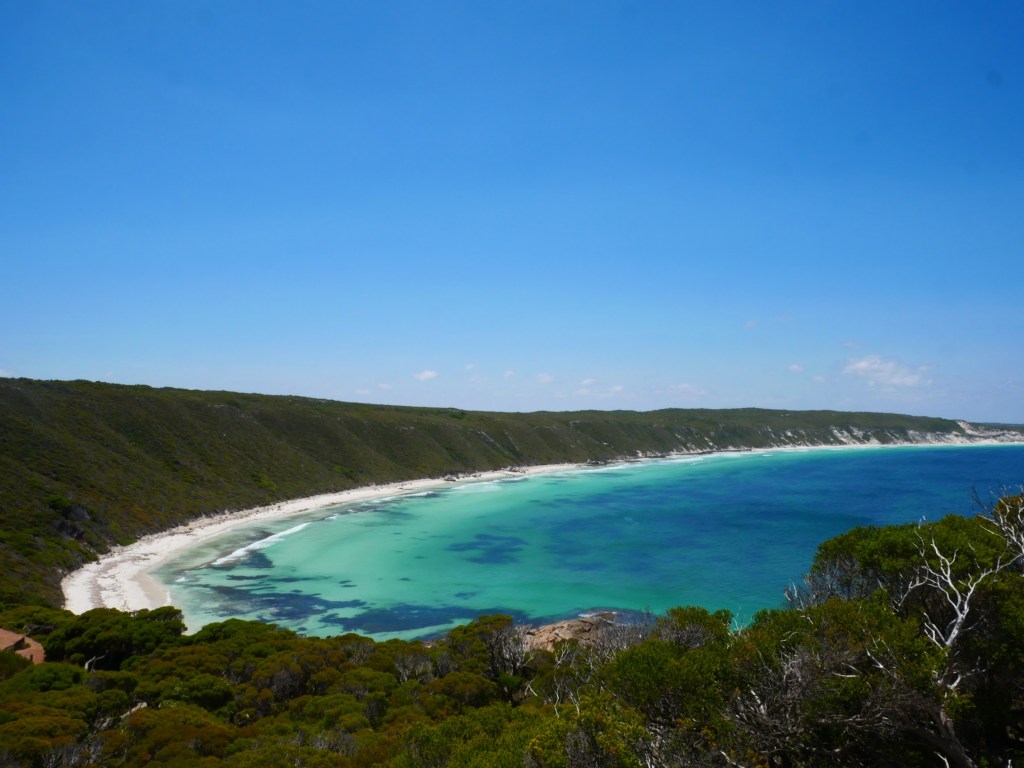
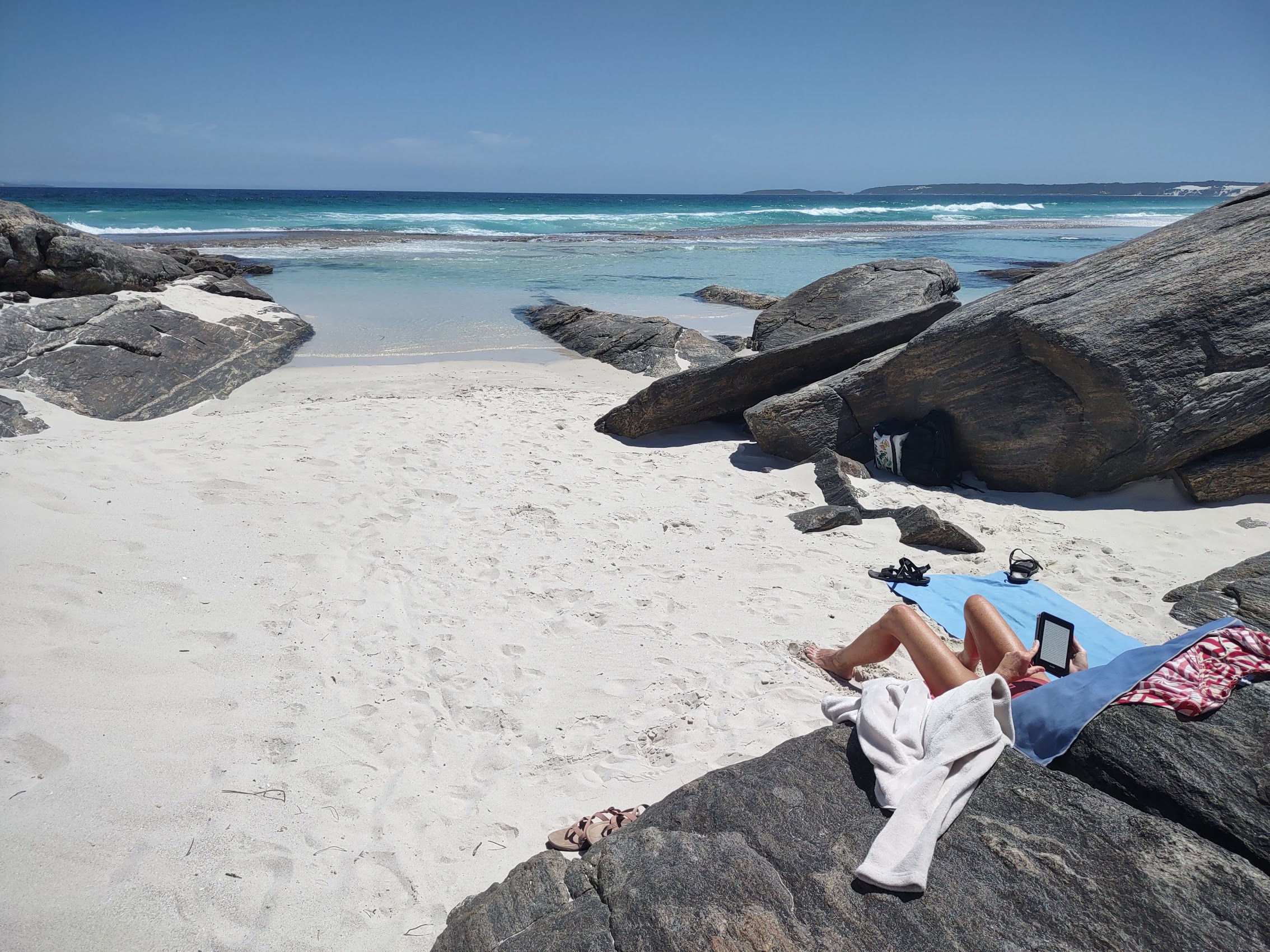
Just before the Great Ocean Drive was about to turn inland, we came upon the last beach on the loop which stretched off in both directions and appeared to be all but deserted (only one other lonely person who quickly disappeared up the beach). We made our way down and fond a small cozy patch of beach between the rocks and, for awhile, did nothing by lay in the sun, read, and take dips in the sea. Just spectacular!

The (Not) Pink Lake
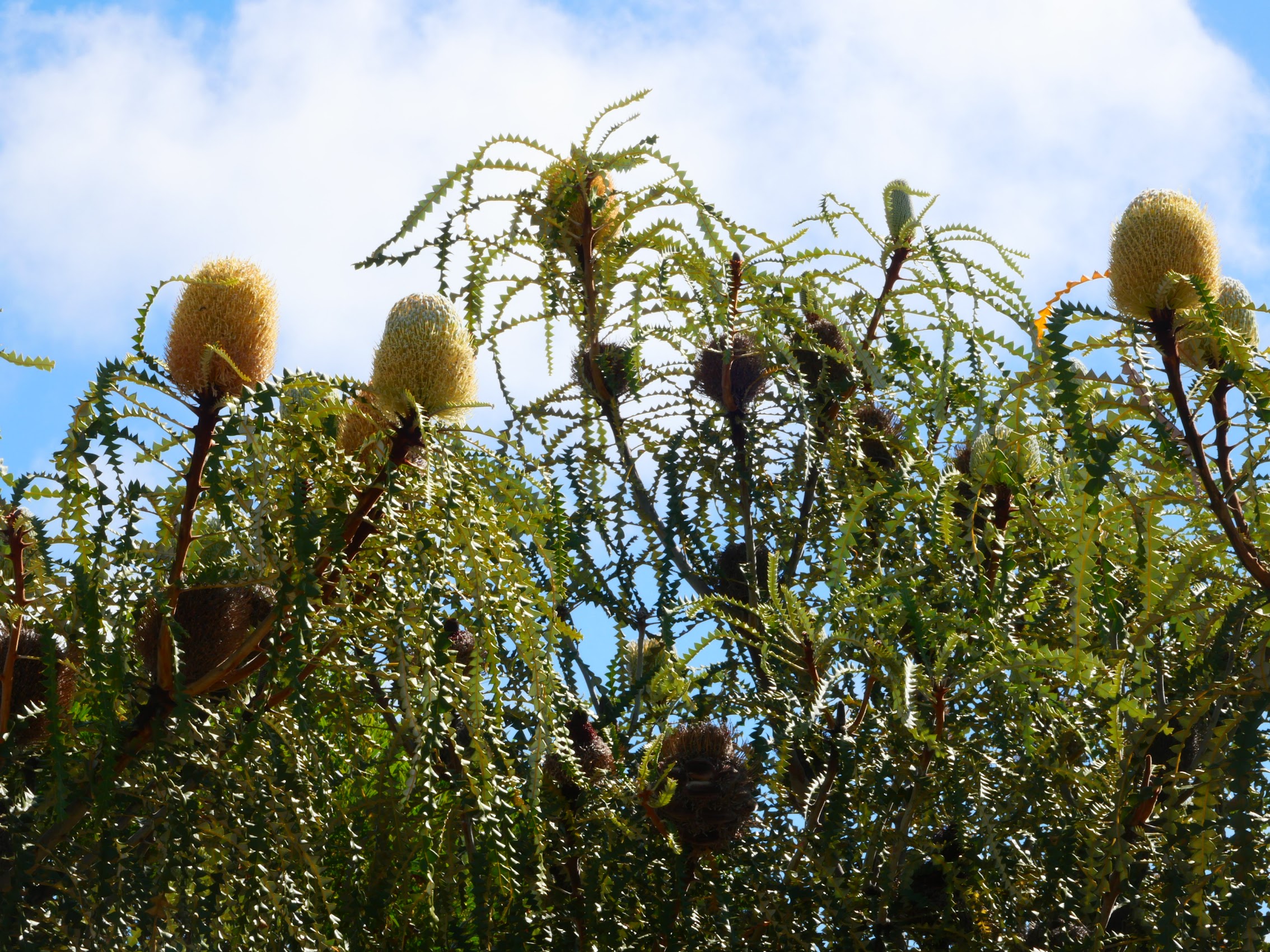
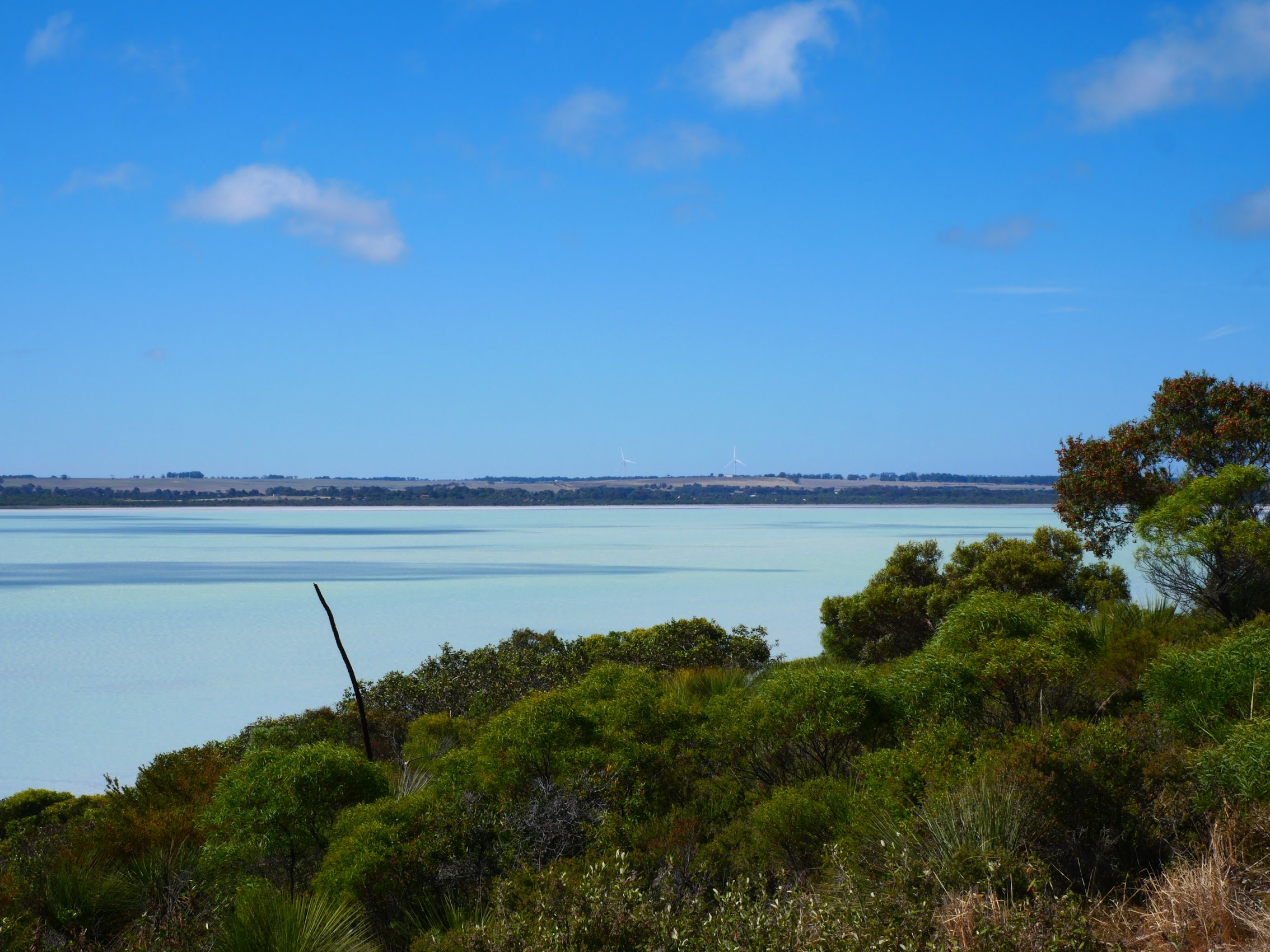
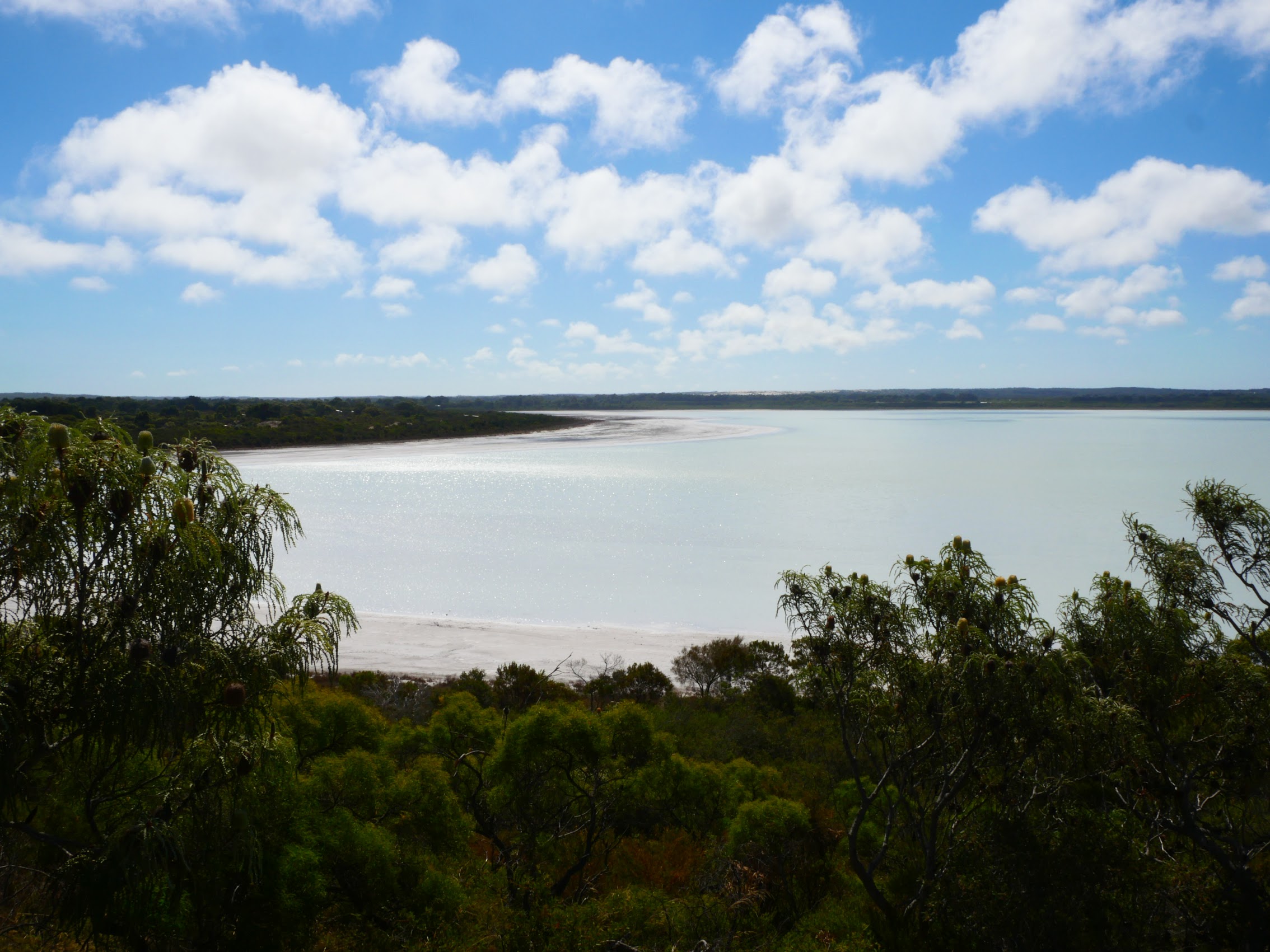
After spending a couple of wonderful hours on the beach without another human being in sight, we packed up our stuff and followed Great Ocea Drive back inland past a famous local landmark the (not!) Pink Lake. While we had seen photos of this lake when it was pink (algae) we were aware that this was no longer the case (at least it hadn’t been for awhile). Pink or not, it was a beautiful spot with lovely views of the lake surrounded by lush foliage, including some beautiful Banksia, an indigenous flowering plant which is unique to Australia and unlike anything we had seen before.


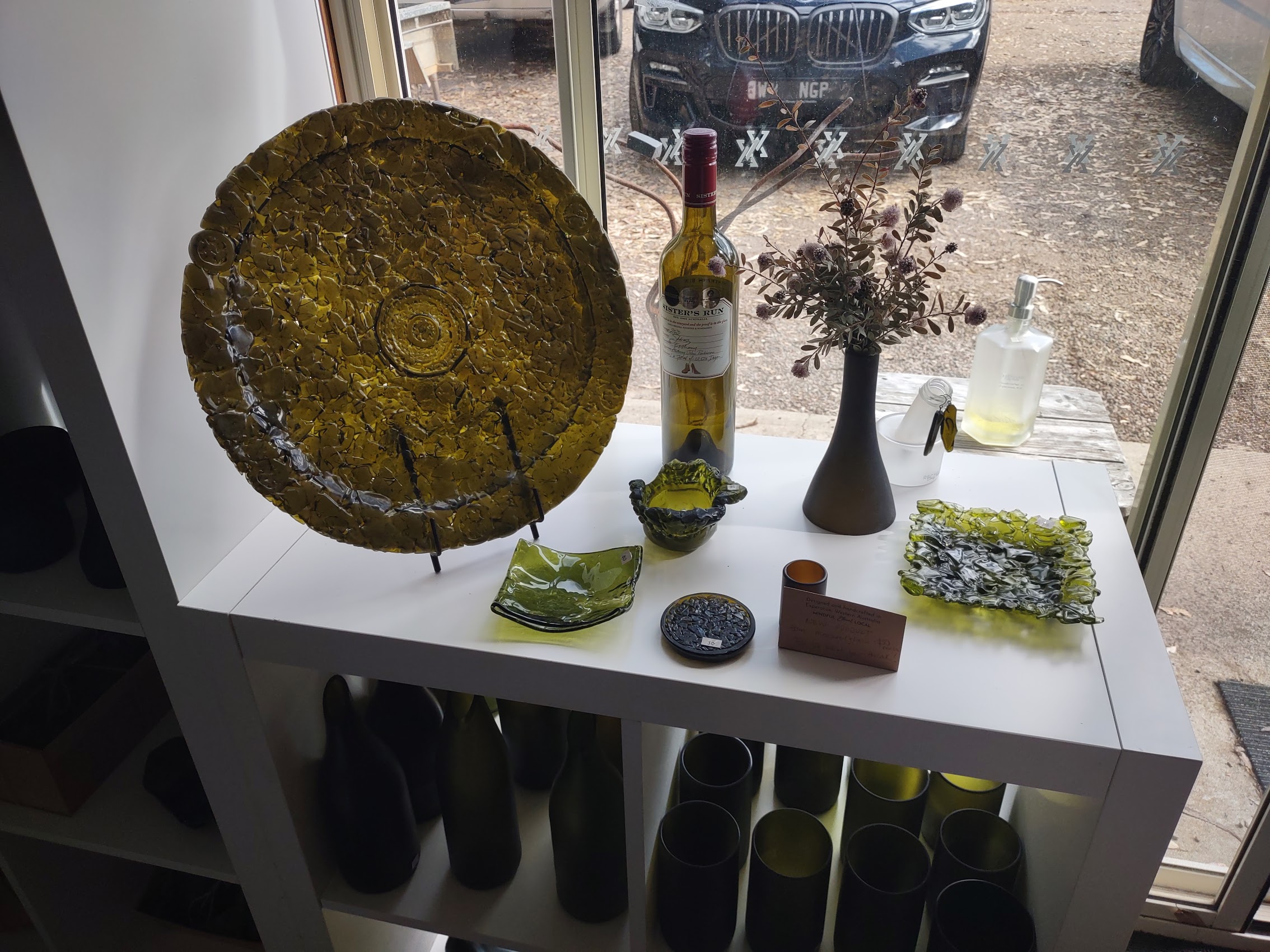
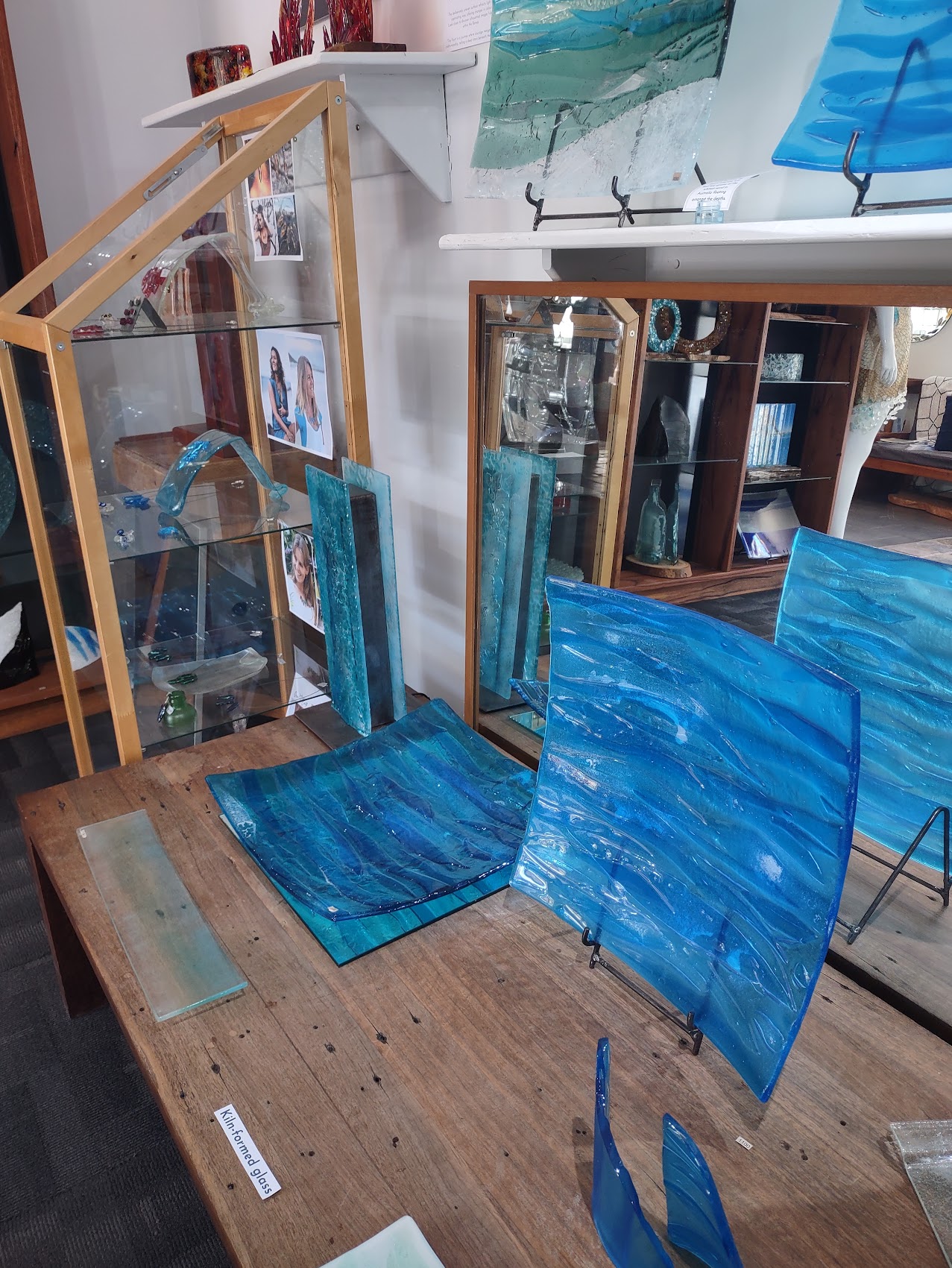
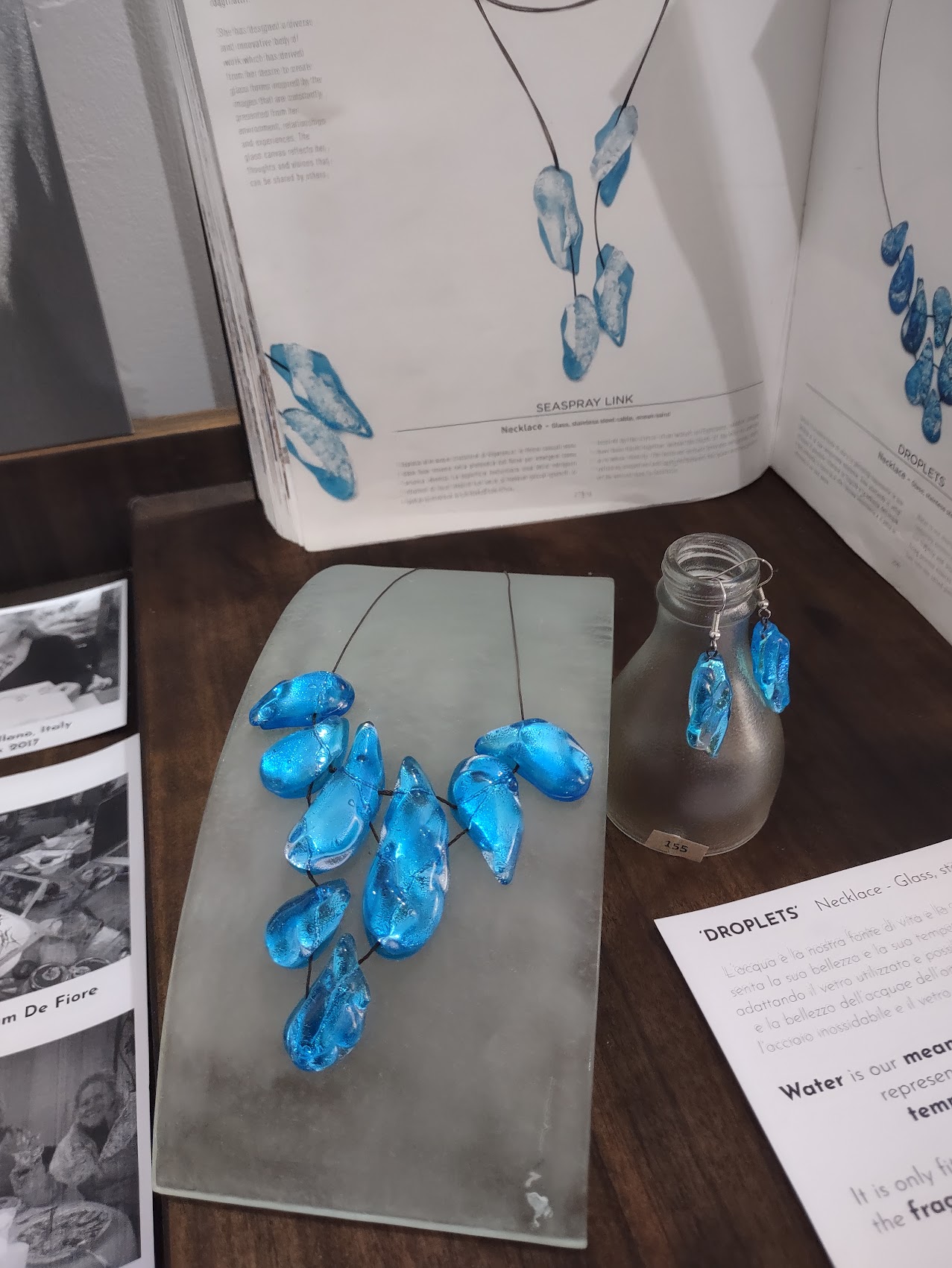
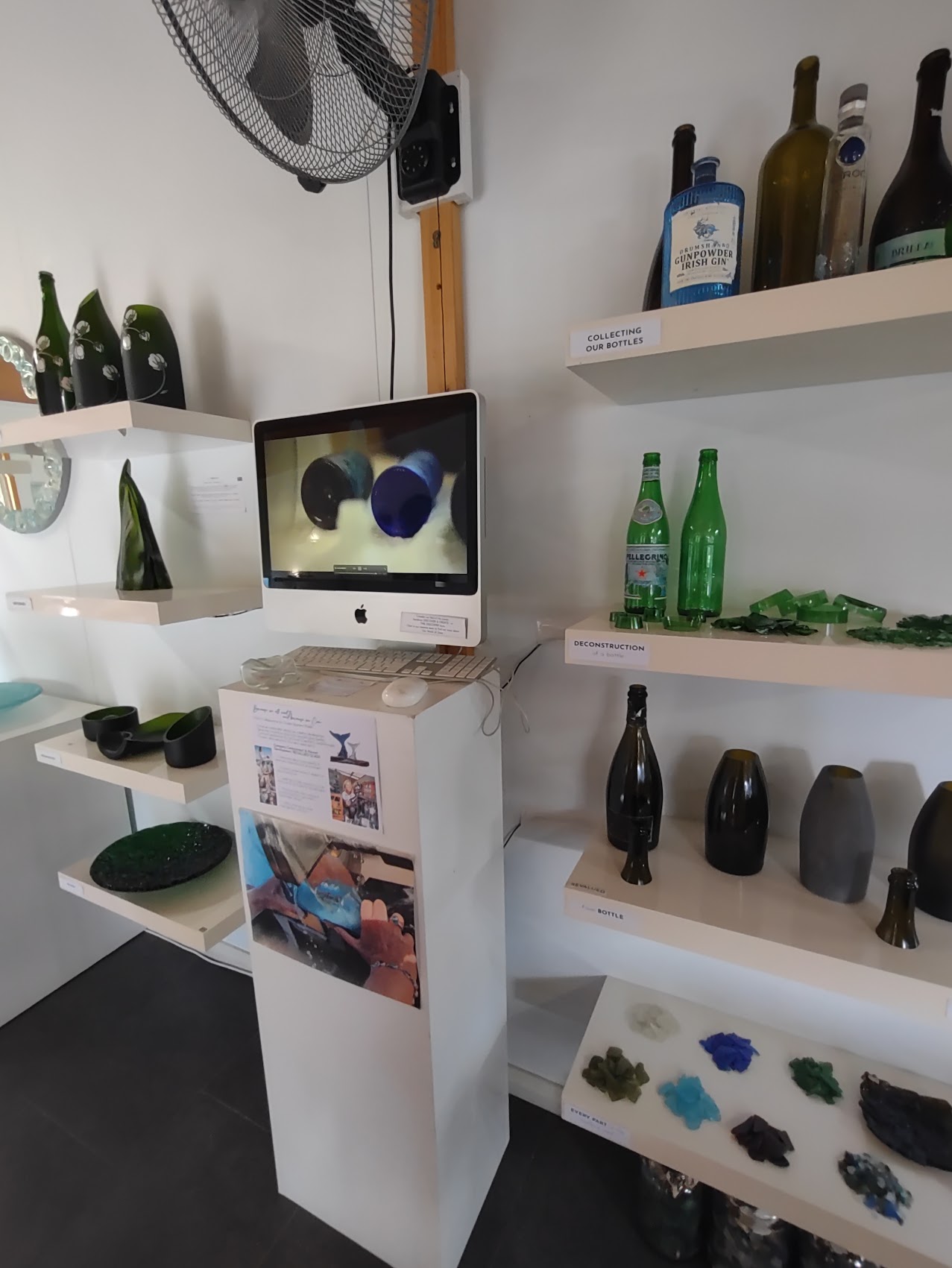
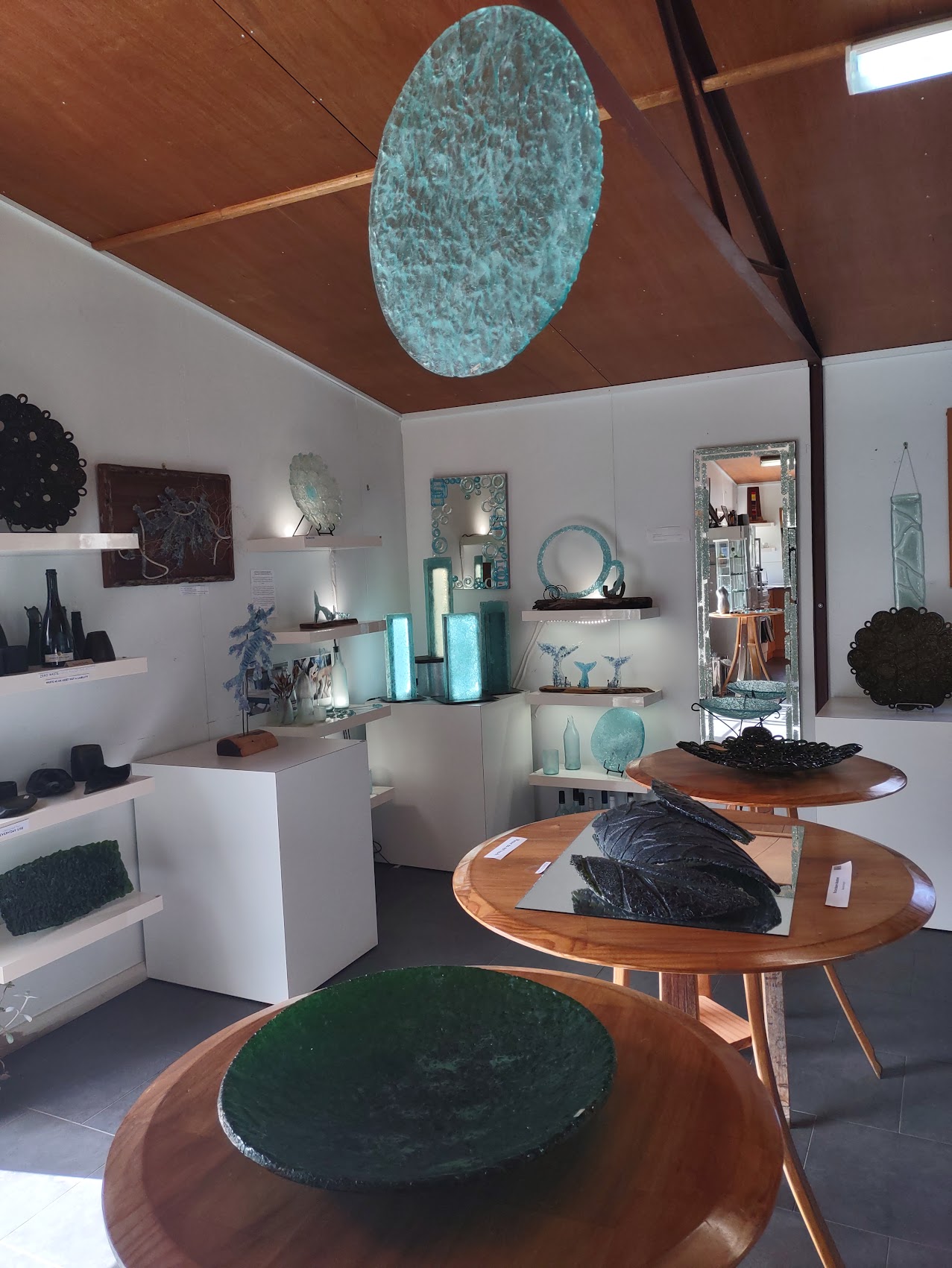
Just beyond the Pink Lake, we took a detour into the bush to check out an artist’s studio we had read about called Cindy Poole Glass. We were warmly greeted and advised that, for a small fee ($25) we could have a personal tour of the gallery with the artist Cindy Poole (who is apparently quite famous in the area). We declined the private tour but were nonetheless amazed at the collection of beautiful jewelry, sculptures, and other objects all made from recycled glass bottles (Cindy calls it ReValuing) which are artistically transformed in a kiln. (We also learned that Cindy Poole was one of the artists who collaborated on the “Whale Tail” sculpture in the center of the esplanade.) There were many beautiful pieces, but most looked to be pretty challenging in regard to ongoing transport but I did purchase a set of shot glasses as a memento.

Lucky Bay Brewing
On our next to last day in Esperance, Colleen tried to start her day with yoga which, alas, was not to be as the yoga shala she went to did not appear to actually exist. For consolation, she spent most of the day back at the beach while I (unfortunately) spent it working on the blog.
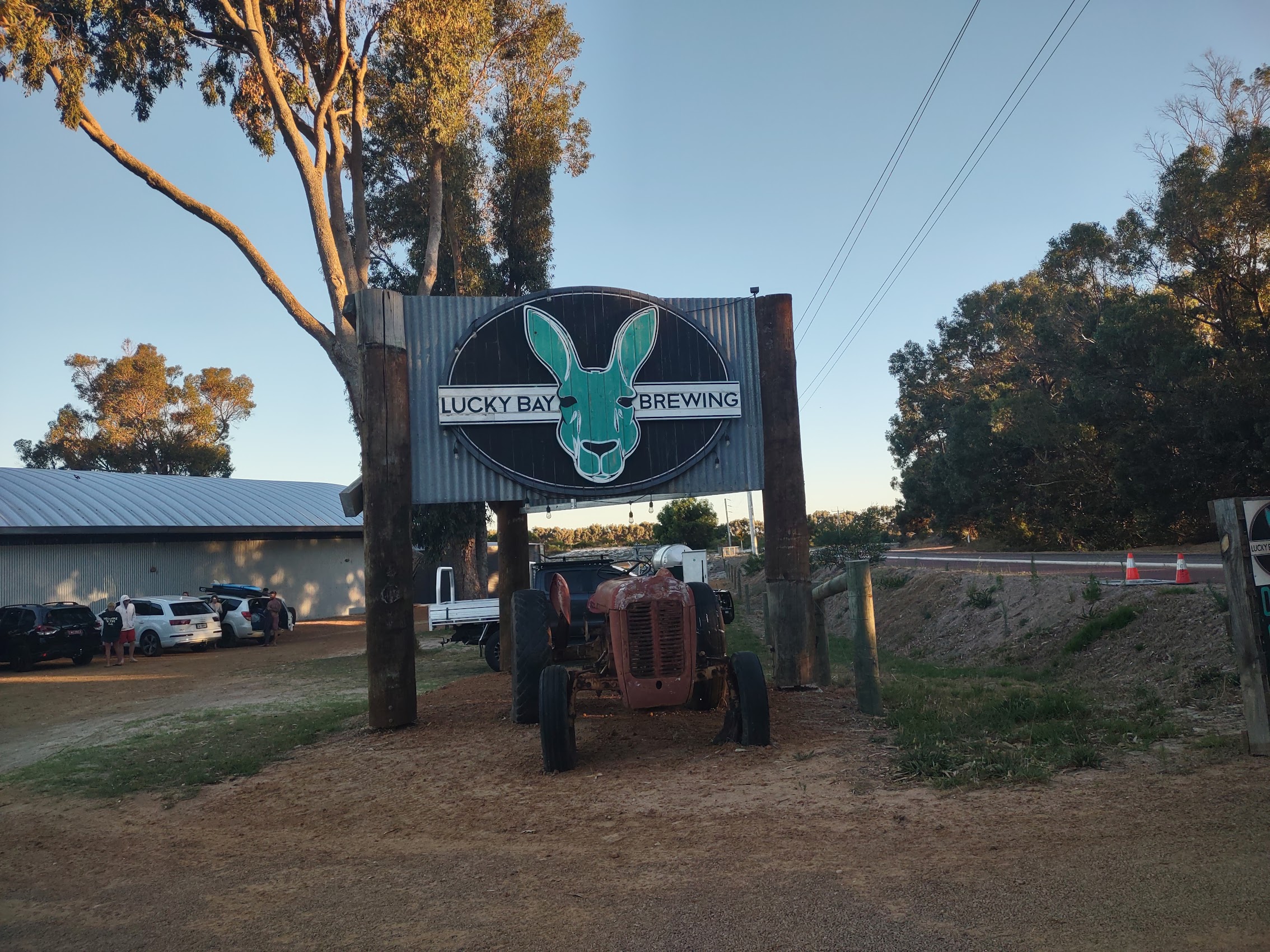
By midafternoon both of us had worked up a thirst so we decided to pay a visit to the Lucky Bay Brewing Company, just a short ten minute drive from our place. Lucky Bay Brewing was what we were quickly growing to expect in an Australian brew pub/garden: an informal family-friendly place with a casual laid-back vibe and excellent beer. I enjoyed a flight of IPAs while Colleen savored a mulberry sour.
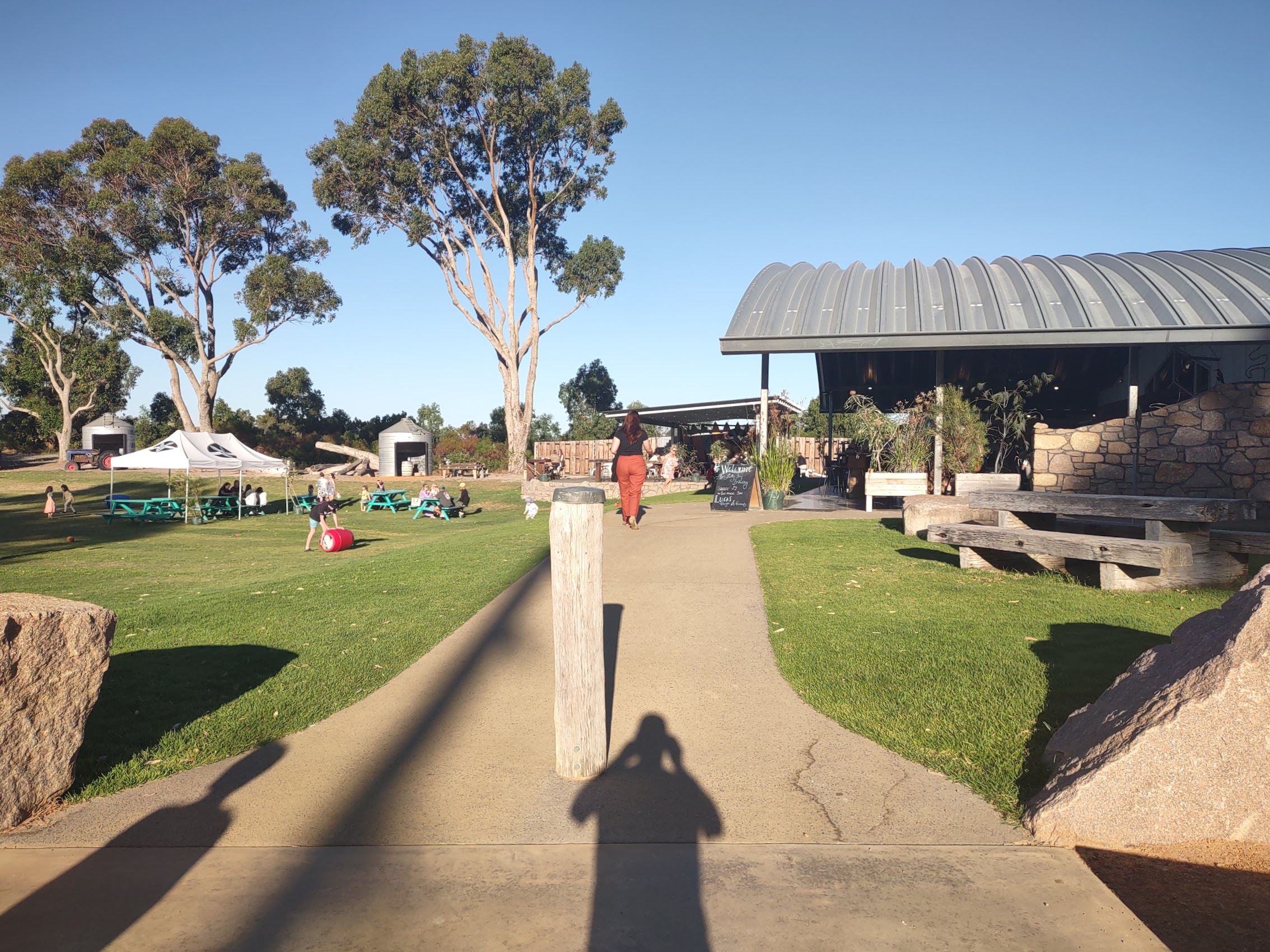

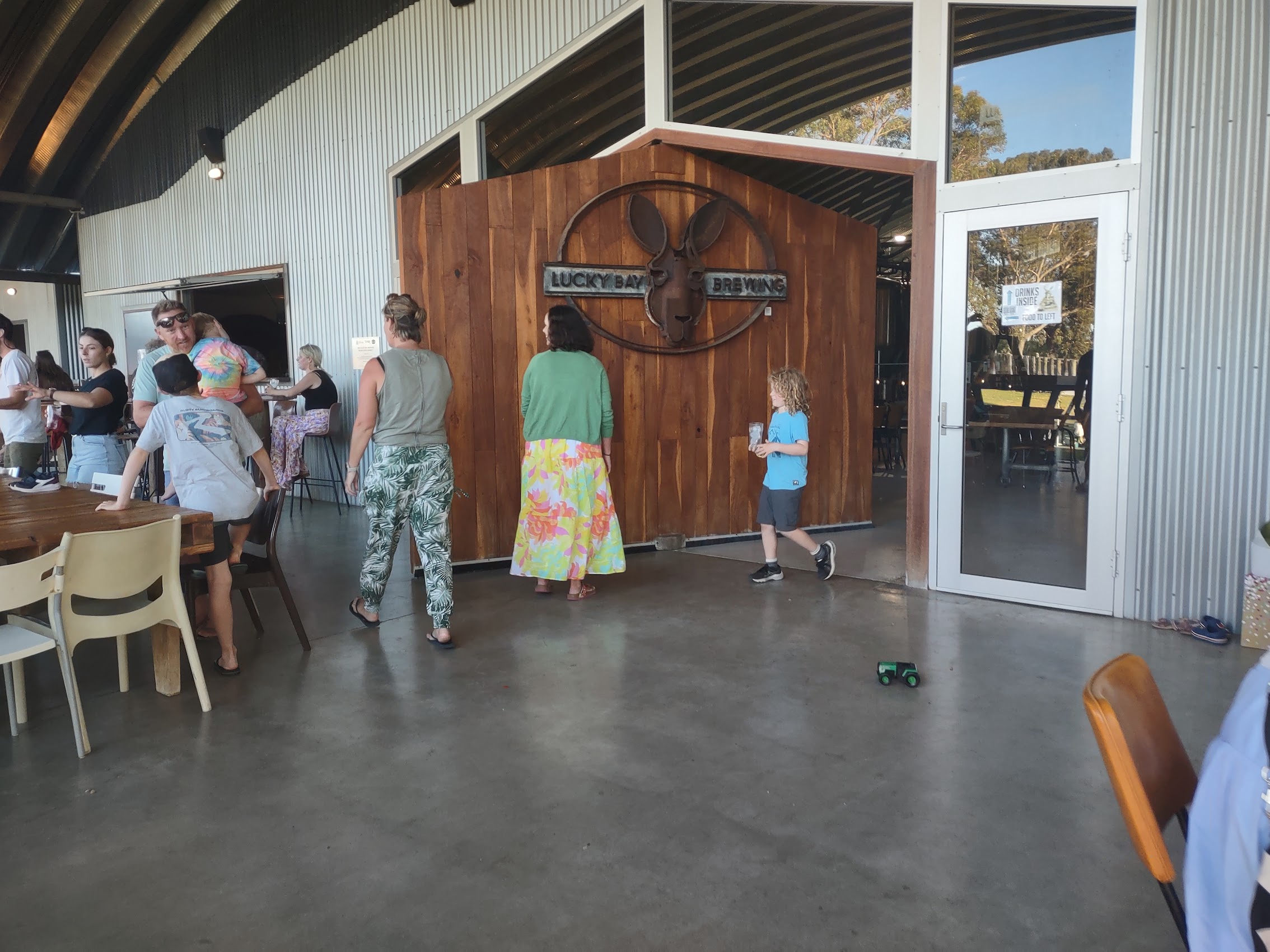
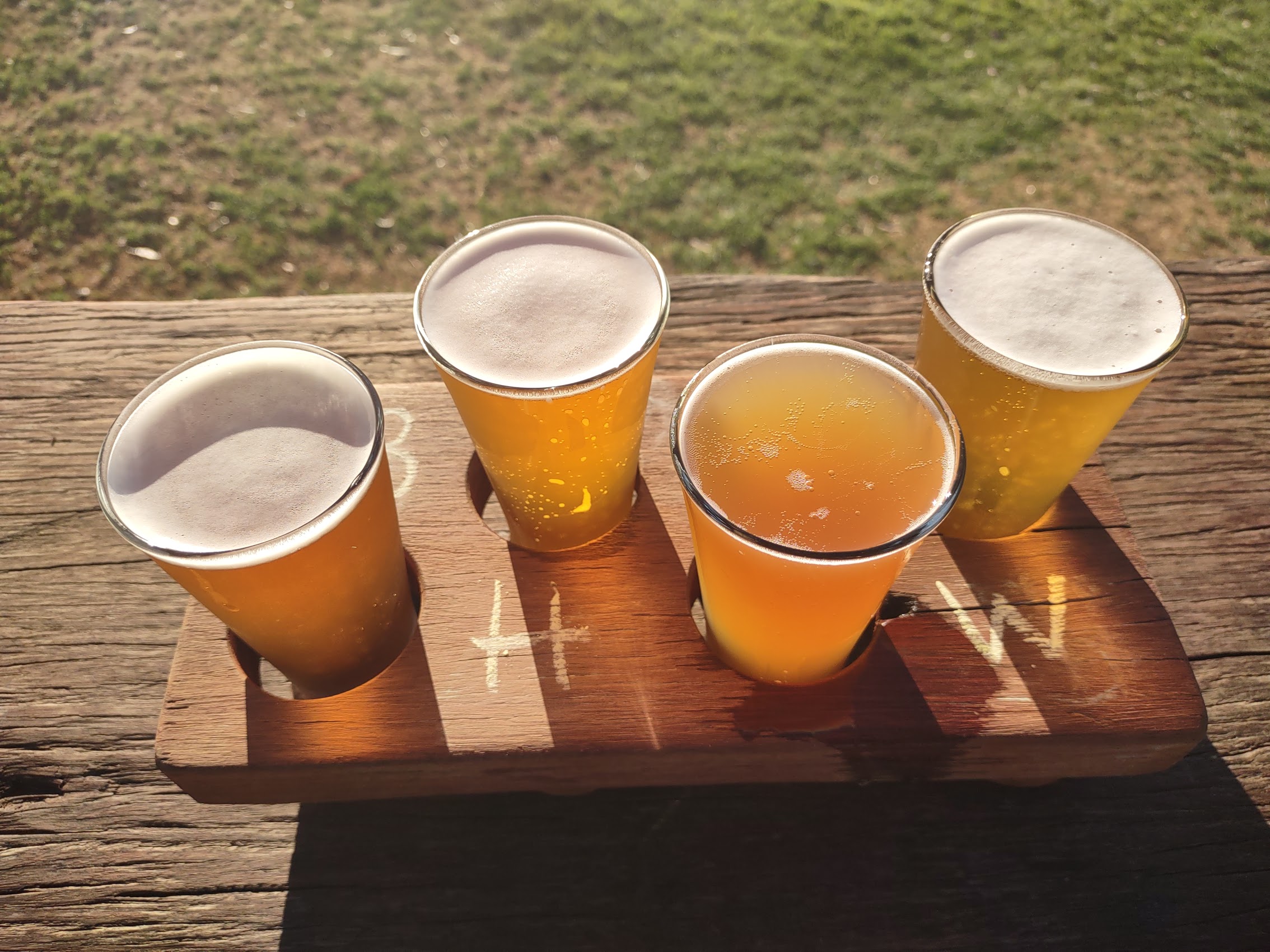
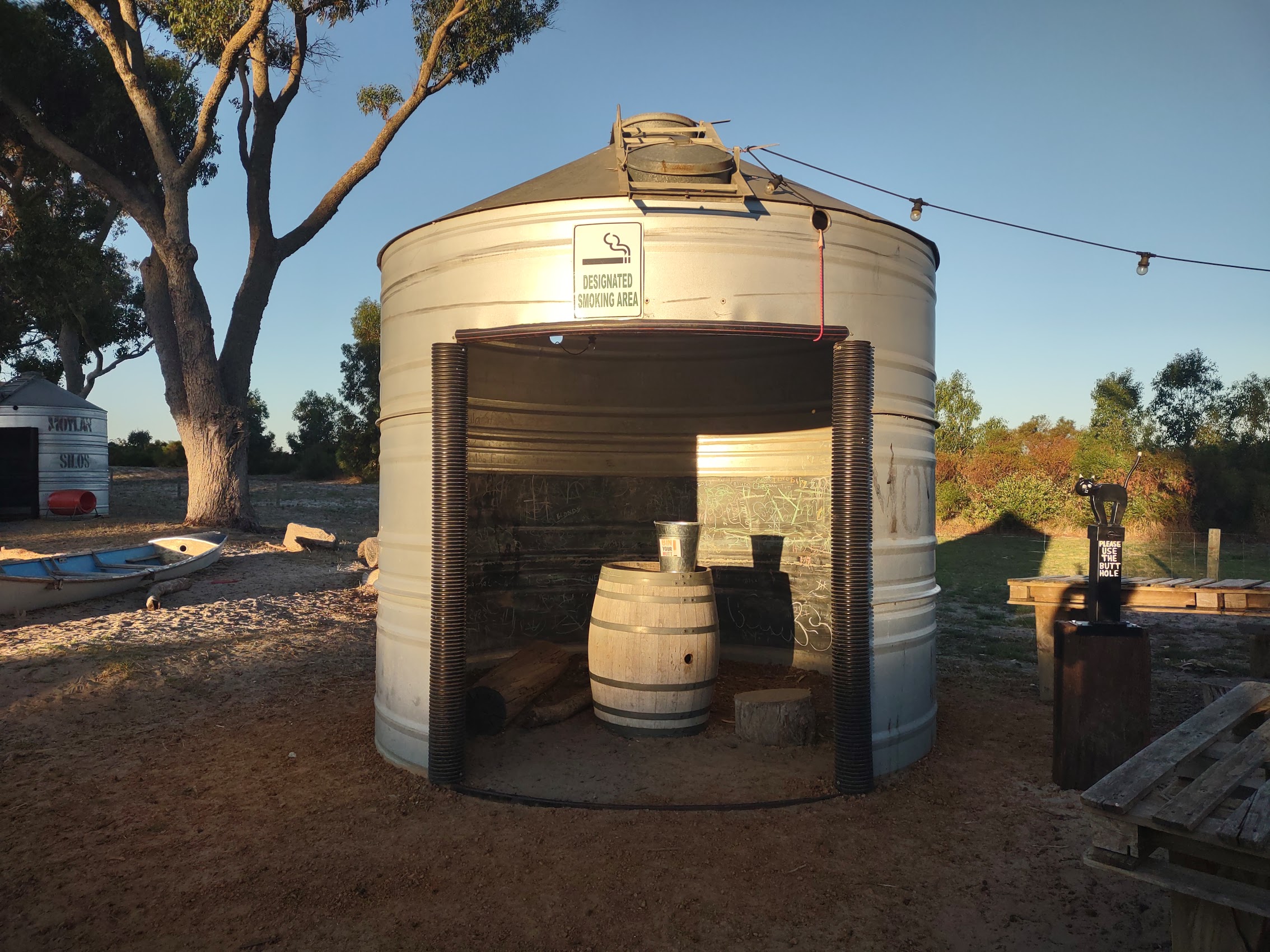
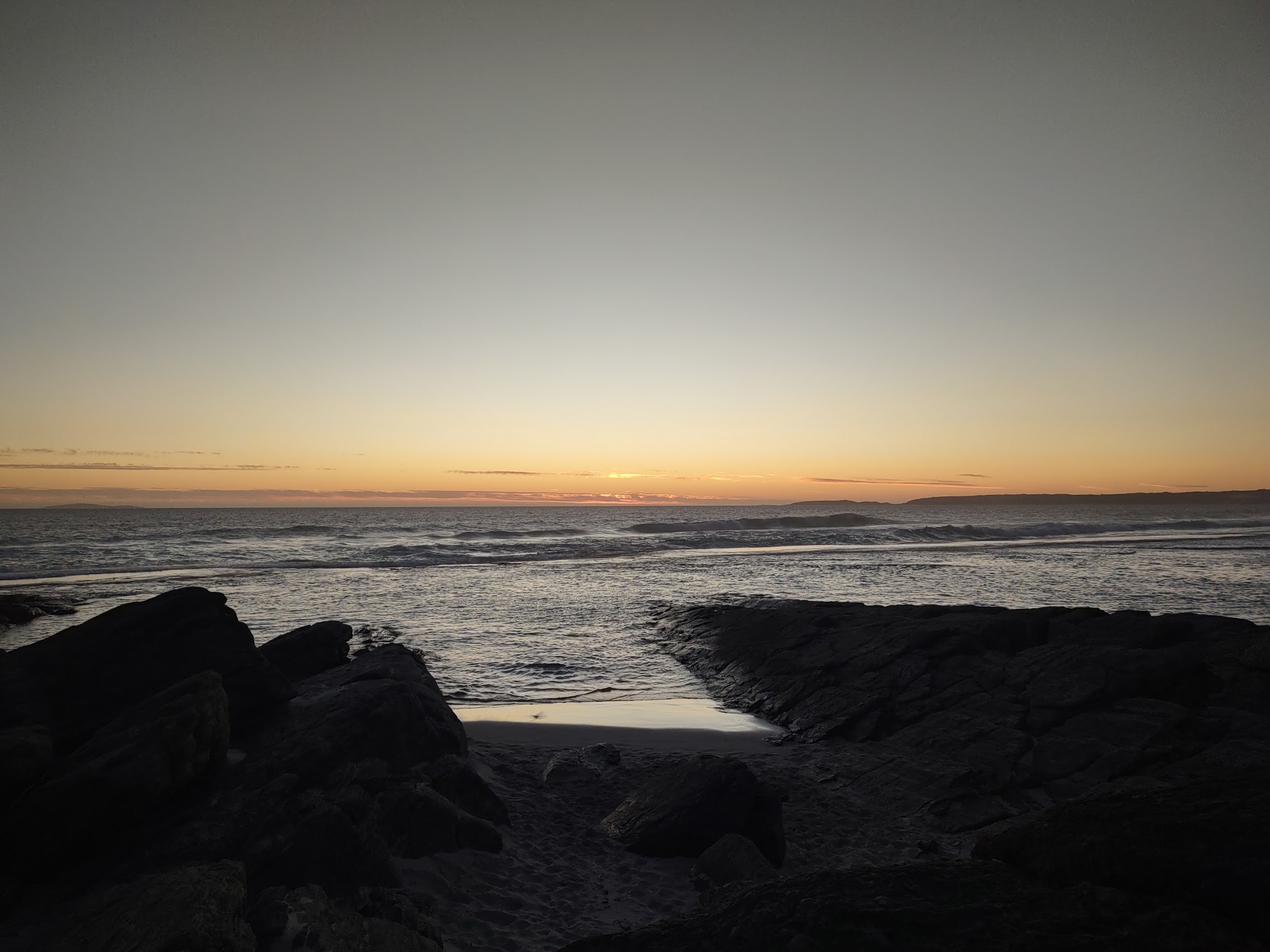
From Lucky Bay Brewing, we headed back down the coast to 11 Mile Beach to watch the sunset before heading home for dinner and a good night’s rest.
Lucky Bay
Our last full day in Esperance started with what was a bit of a treat for me – NFL playoff games! Australia was the first country we had visited since the start of the season where NFL games were broadcast on local TV and, thanks to the 12 hour difference in time zones, I was able to watch a bit of the Saturday afternoon and evening (back home) games on Sunday morning! What a treat!

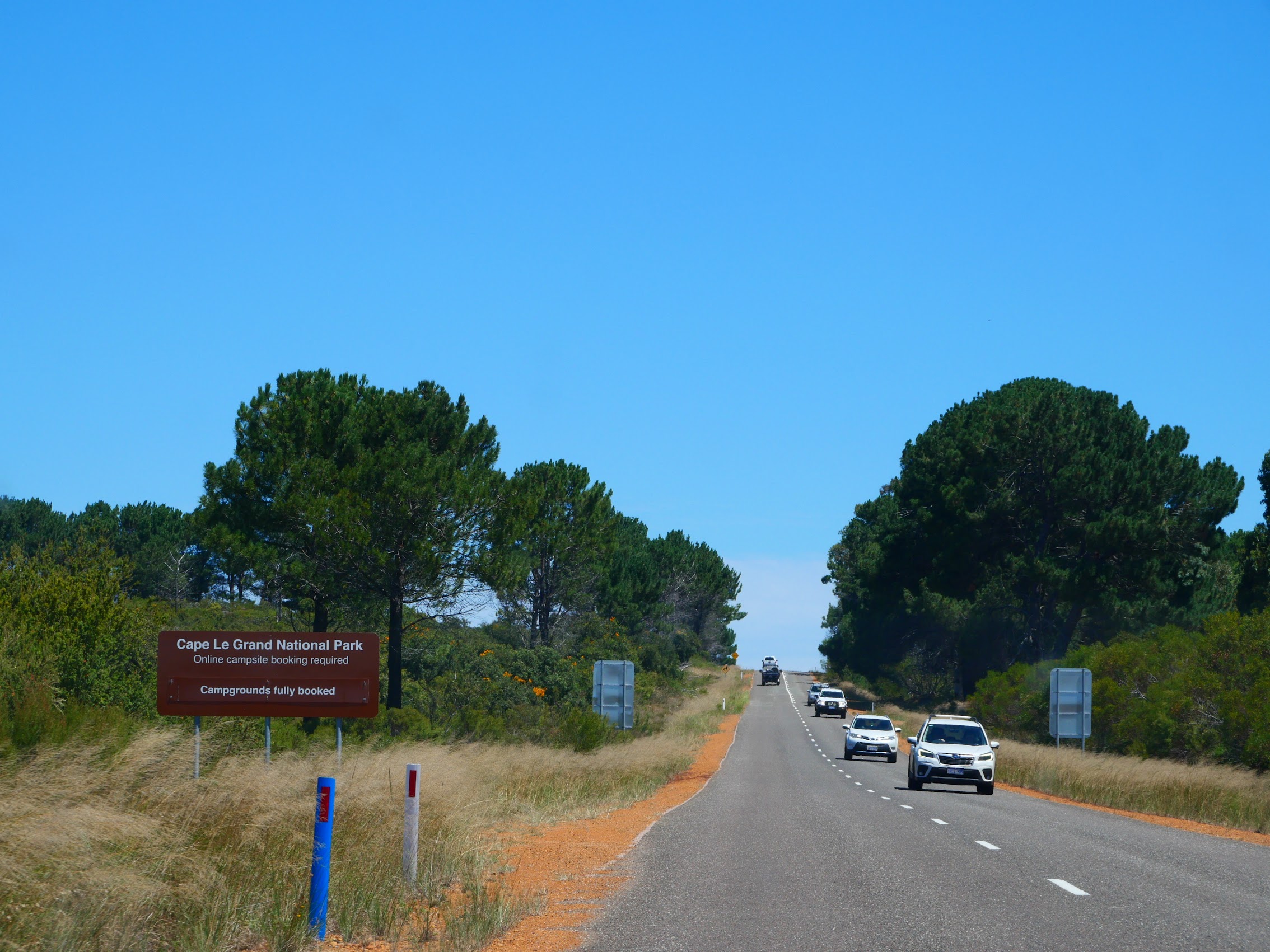
Following a bit of football, we headed out to visit Cape Legrande National Park and what we hoped would prove to be the piece de resistance of Esperance Beaches, Lucky Bay. It was only about a 45 minute drive from our place to Lucky Bay, but only about half that to the entrance of Cape Legrande National Park. From the park entrance we wound our way through low granite hills until a beautiful turquoise bay banded by an incredibly white strip of sand came into view.


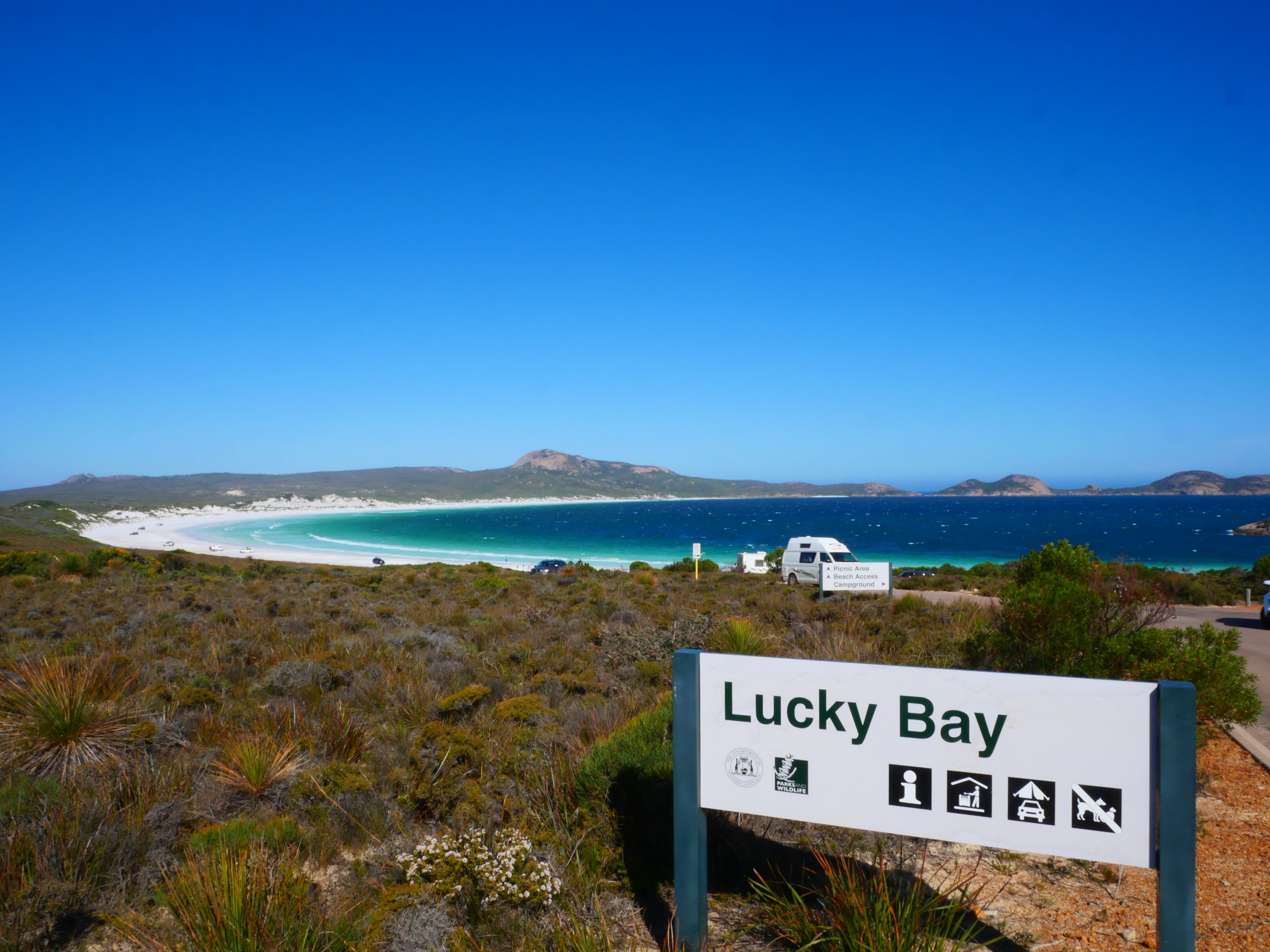
Lucky Bay claims to have the whitest sand in all of Australia (if not the world) a claim which was reportedly backed up with some sort of scientific testing when contested by the Whitsunday Islands. Over the course of many years of traveling we have visited hundreds of beaches around the world, and I have to say that (with the possible exception of Siesta Key, Florida) this was the finest whitest sand that we have ever seen.
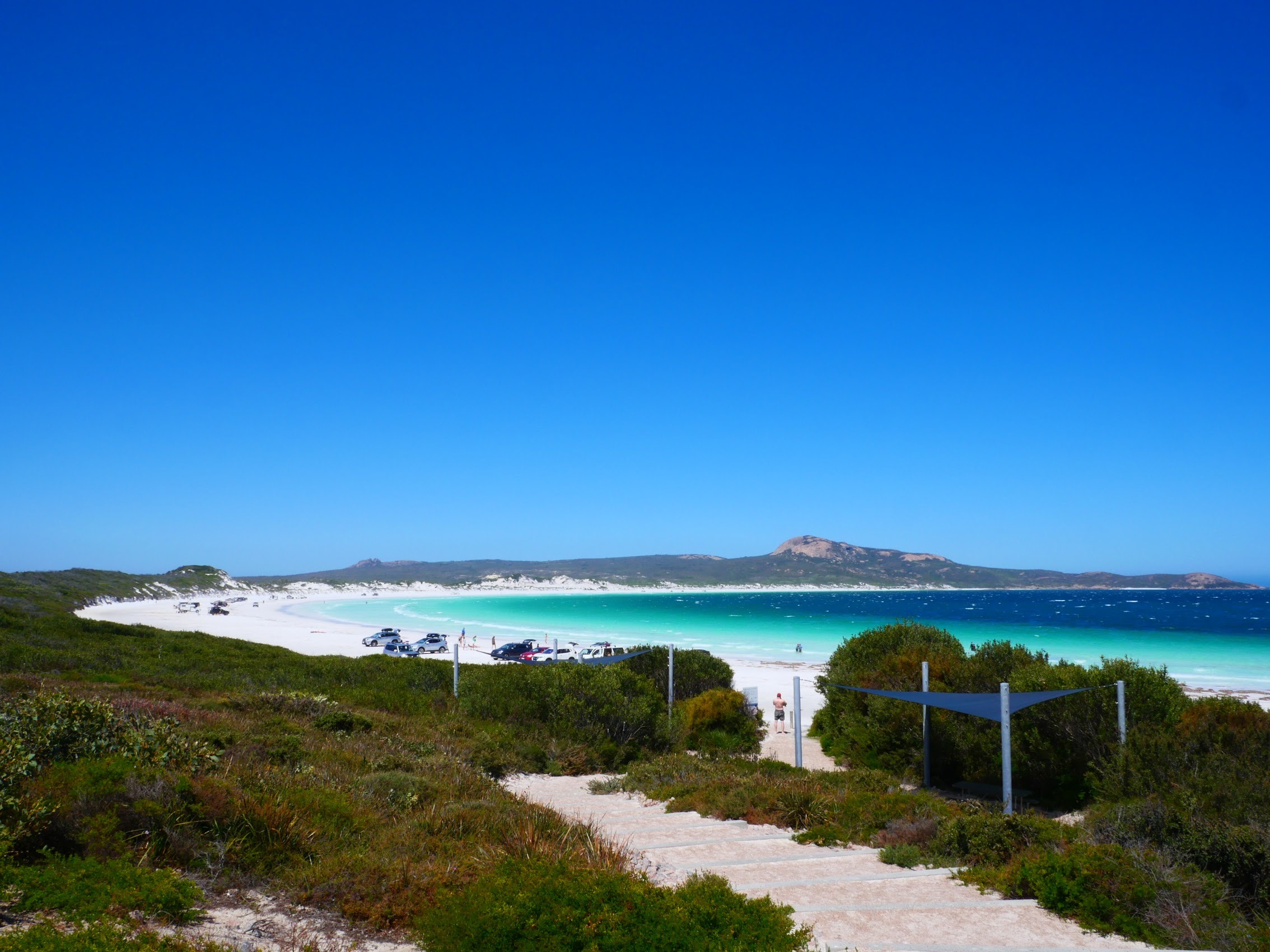
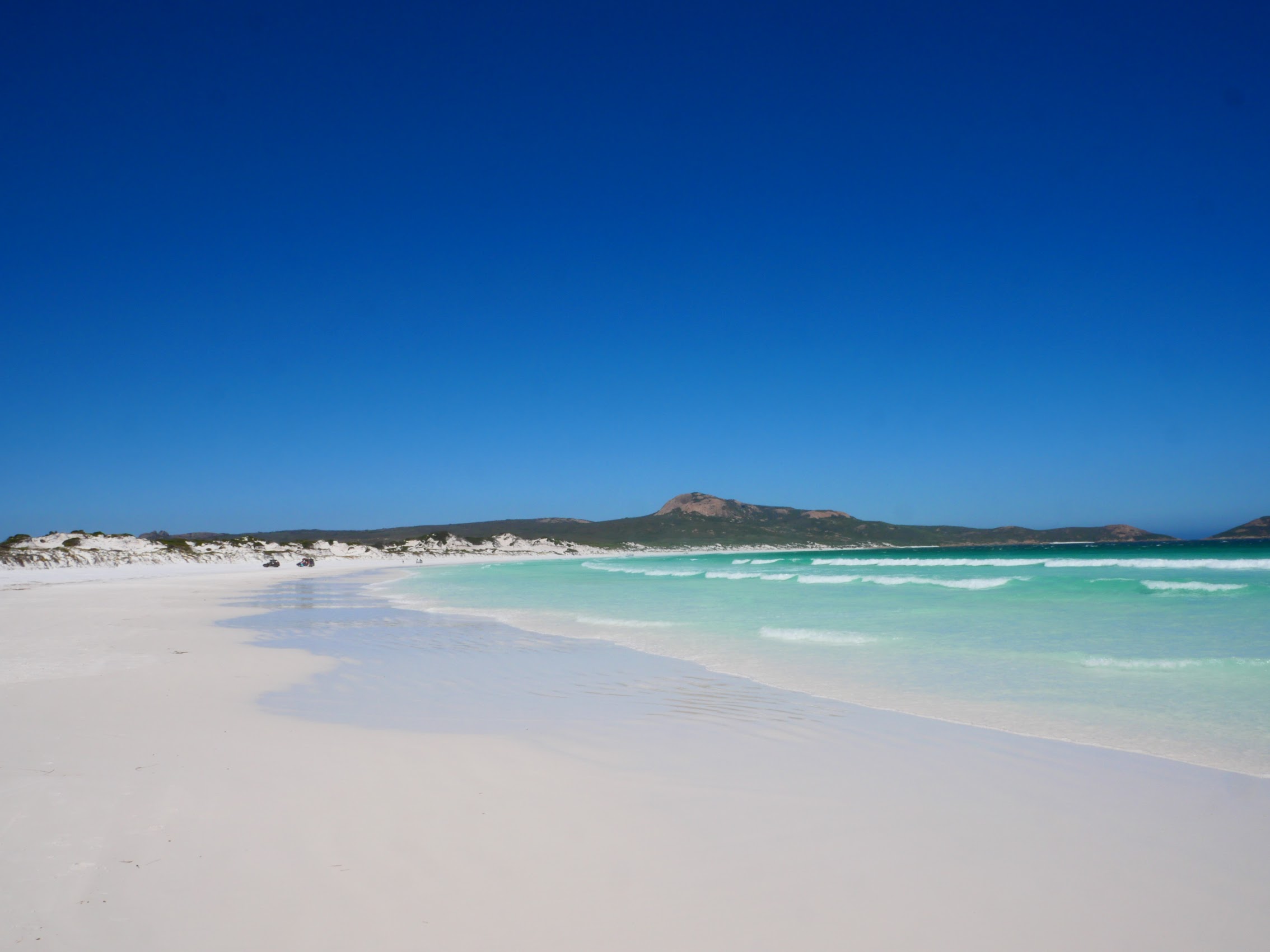
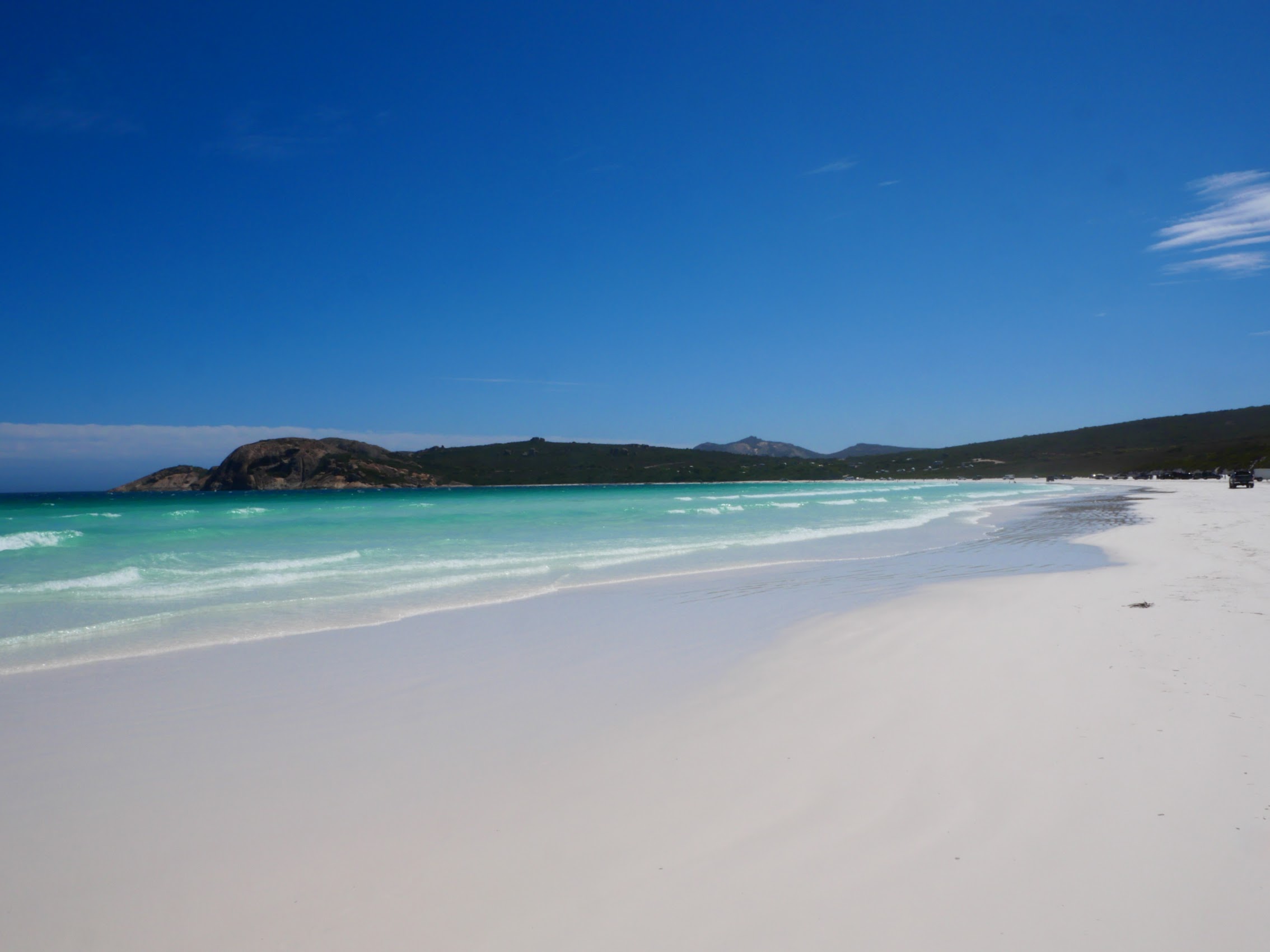
Although the beach was far from deserted – maybe one hundred people and 20 or 30 vehicles – it is so wide and long enough (5 kilometers) that it didn’t seem crowded at all. Although we didn’t see any, Luck Bay Beach is also famous for kangaroos who come out on the beach to sunbath. There was a pretty stiff breeze coming off the Southern Ocean and despite the bright sun (made more intense by the glaring white sand) it was a bit cool, so, rather than sunbath (with the kangaroos?), we were pretty content just walking the length of the beach and soaking it all in.
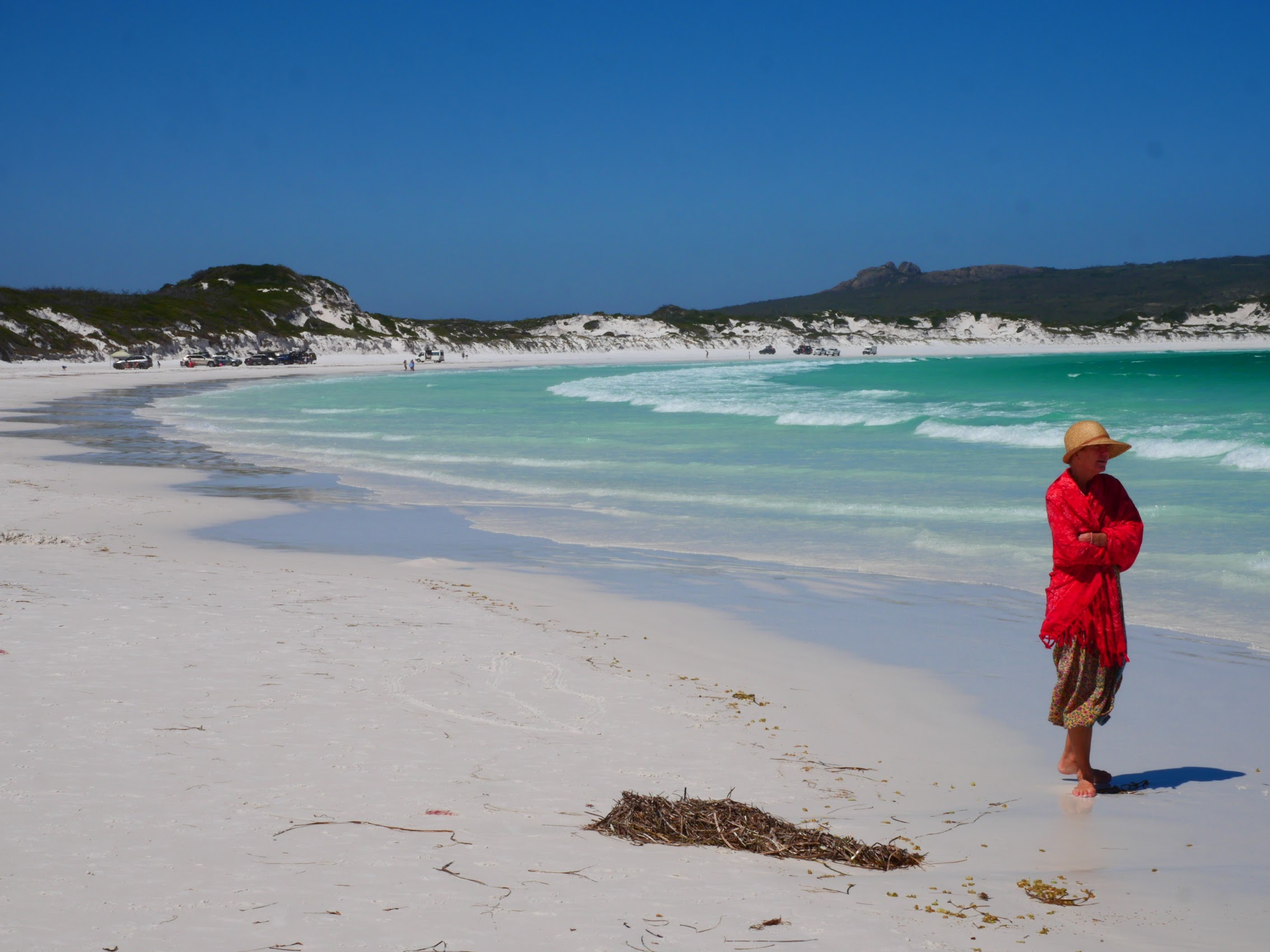
Of course, being the beach fanatics that we are, all of this led to the question of whether Lucky Bay was the best beach we had ever visited, a debate which continues. Prior to the start of this trip, Treasure Cay Beach in the Bahamas was the reigning champion, but we’ve seen (and will see) a lot of beautiful beaches since then. In any case, I was surprised on researching this a bit further to discover that in May 2023, Lucky Bay was in fact voted as the best beach in the world in a study based on the votes of over 750 travel professionals!
Hyden and Wave Rock
Now fully understanding the response we got from Western Australians when we mentioned Esperance (and now wondering whether it might in fact not be the quintessential beach of the world), we bid it farewell and began our drive back to Perth. As that looked to be about an eight hour drive, we had decided to break it into two segments and had originally planned on driving north from Esperance to the town of Kalgoorlie, home of the largest open pit gold mine in the world (the Super Pit!) which, from its tourist literature appeared to be a bit of a wild west town preserving much of the character of its gold rush days (including both saloons and brothels!).
But then we heard about Wave Rock, a unique geological formation located kind of in the middle of nowhere about midway between Esperance and Perth. Fortunately our reservations in Kalgoorlie were refundable but accommodations in the town of Hyden (the only one near Wave Rock) were pretty limited. (It’s possible this might have had something to do with the fact that Hyden has a population of less than 400. ) Nonetheless, we found another “interesting” place which was supposed to be close to Wave Rock and booked it.
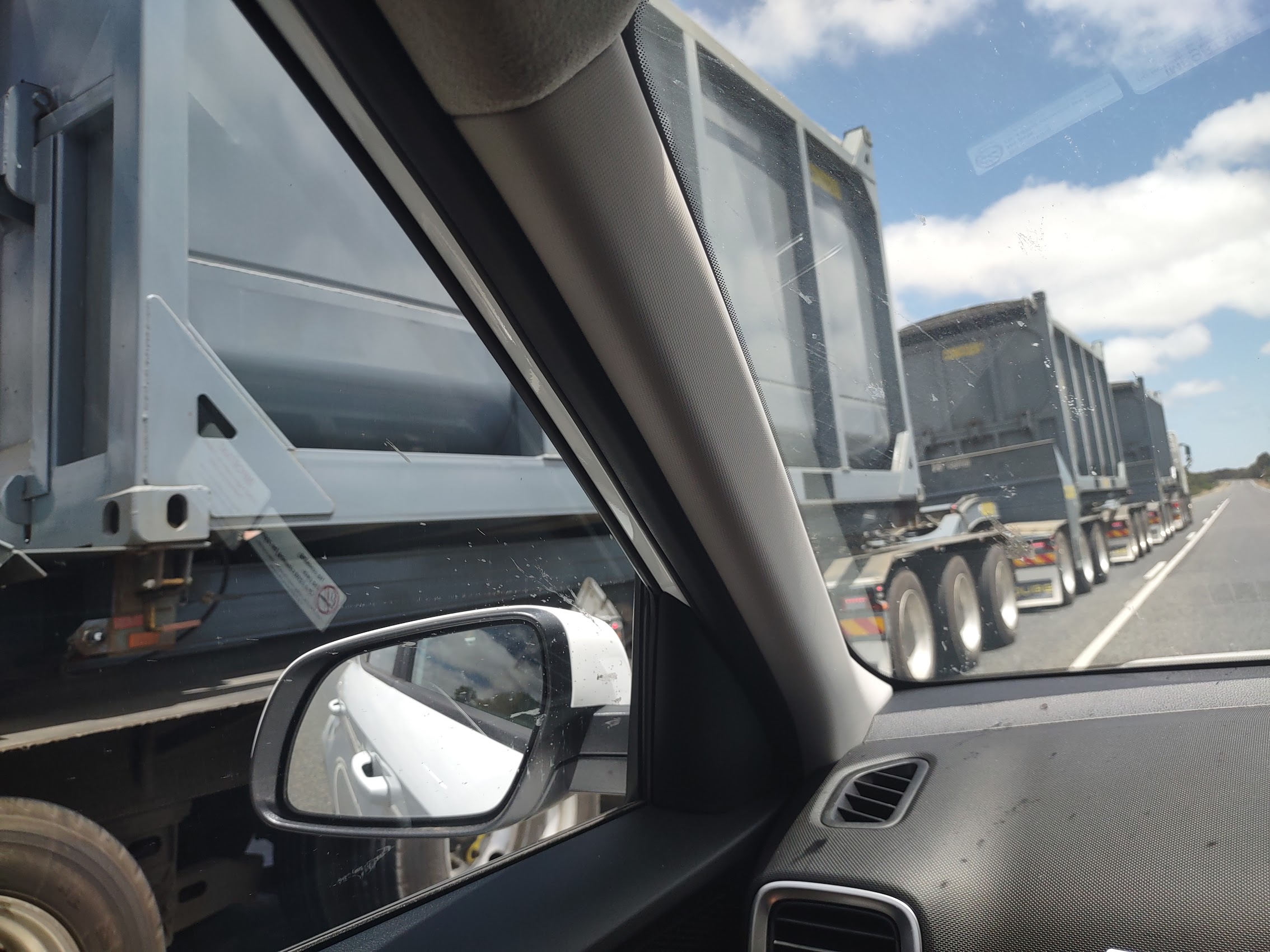
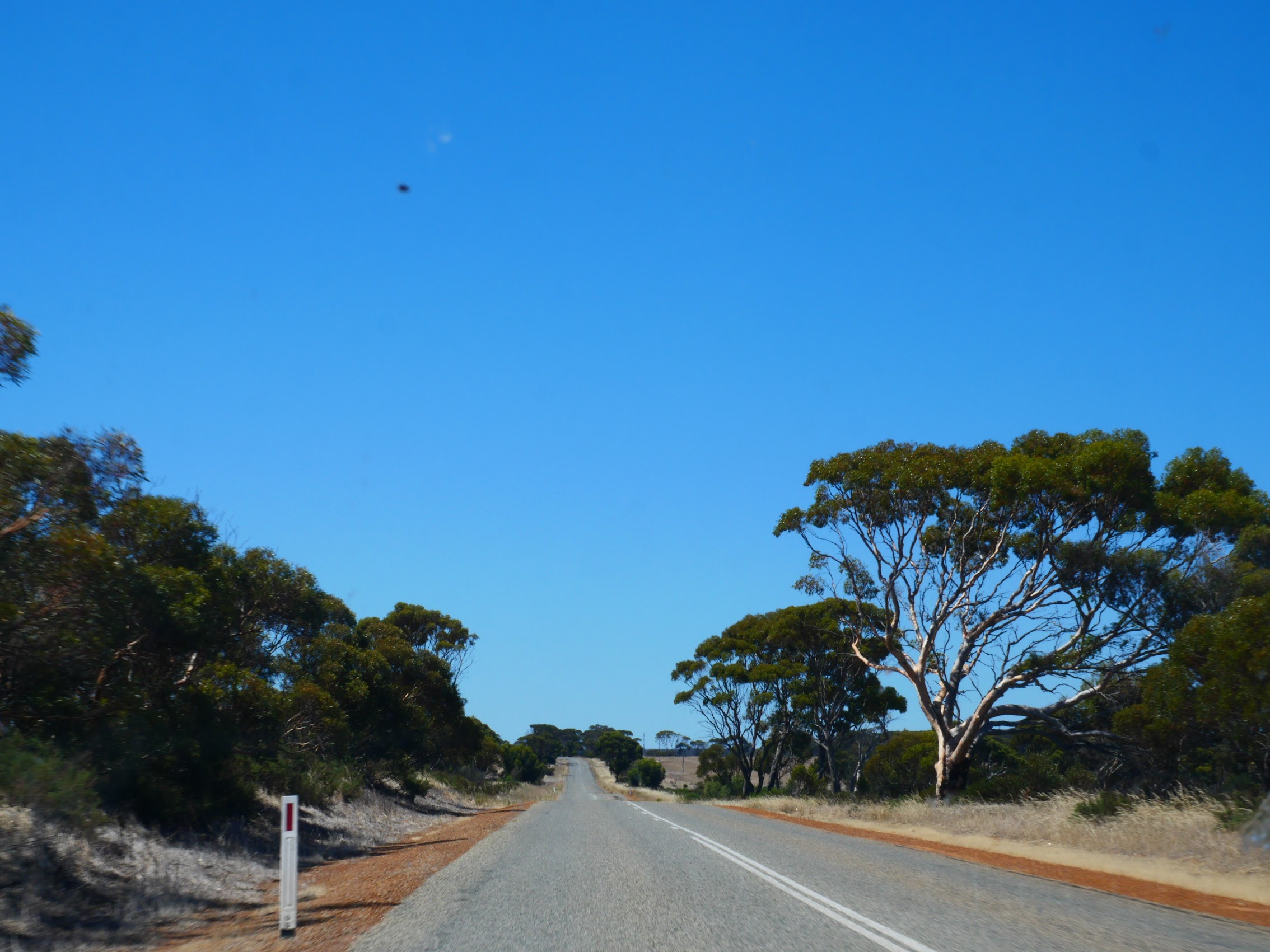

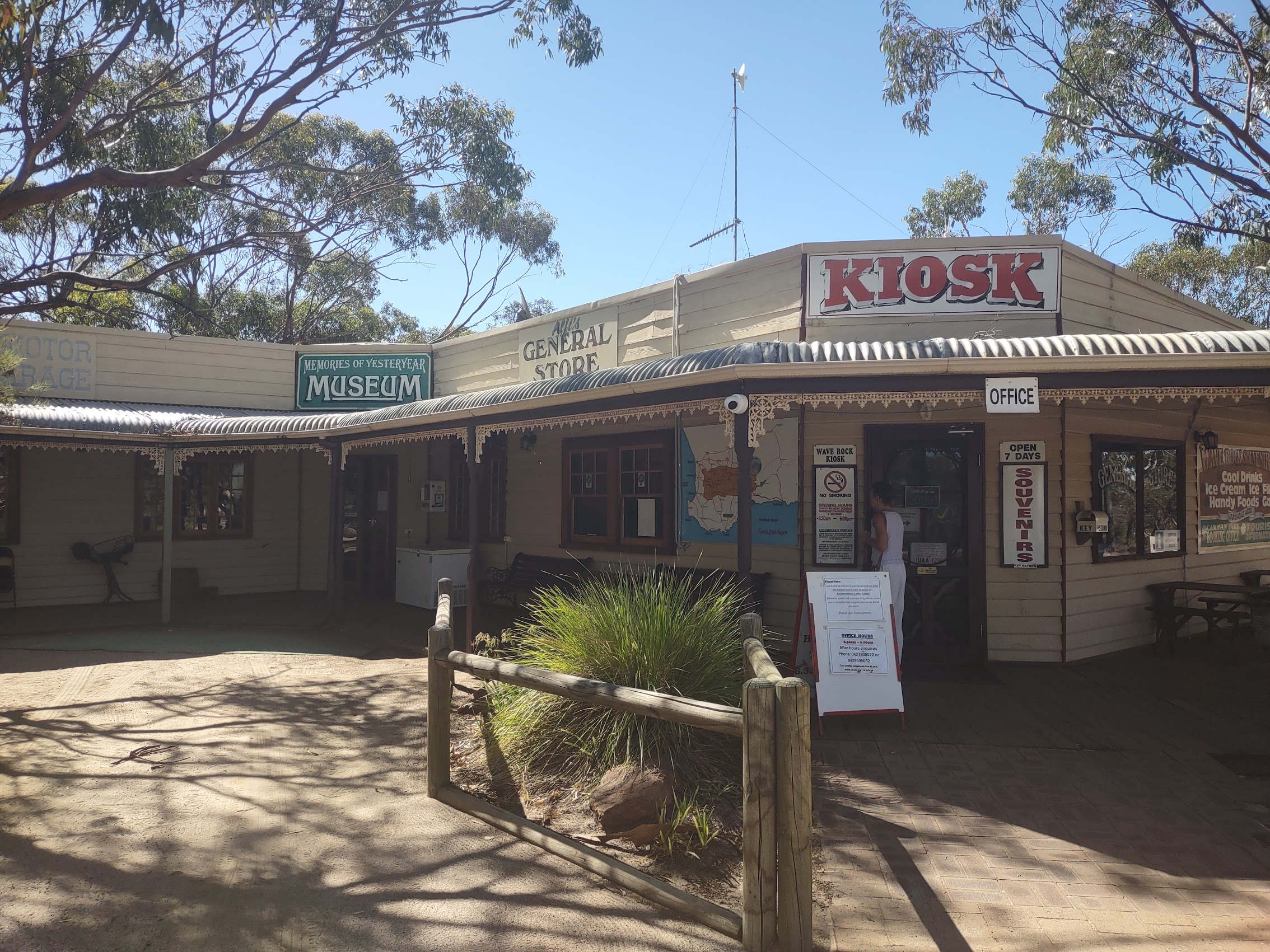
The drive to Hyden involved some backtracking on Highway 1 where we were again subjected to road trains before turning north and heading pretty much into the middle of nowhere. Eventually we saw signs of civilization (sort of) and without much trouble located the Wave Rock Caravan Park Cabins and Resort (hosted by Sue), where would be staying for the night. We checked in at the office (which was next to Alfie’s General Store and the Memories of Yesteryears Museum as well as a courtyard with swimming pool) and were directed to our stay for the night, a rustic cabin slightly removed from all the action on the perimeter of the site.
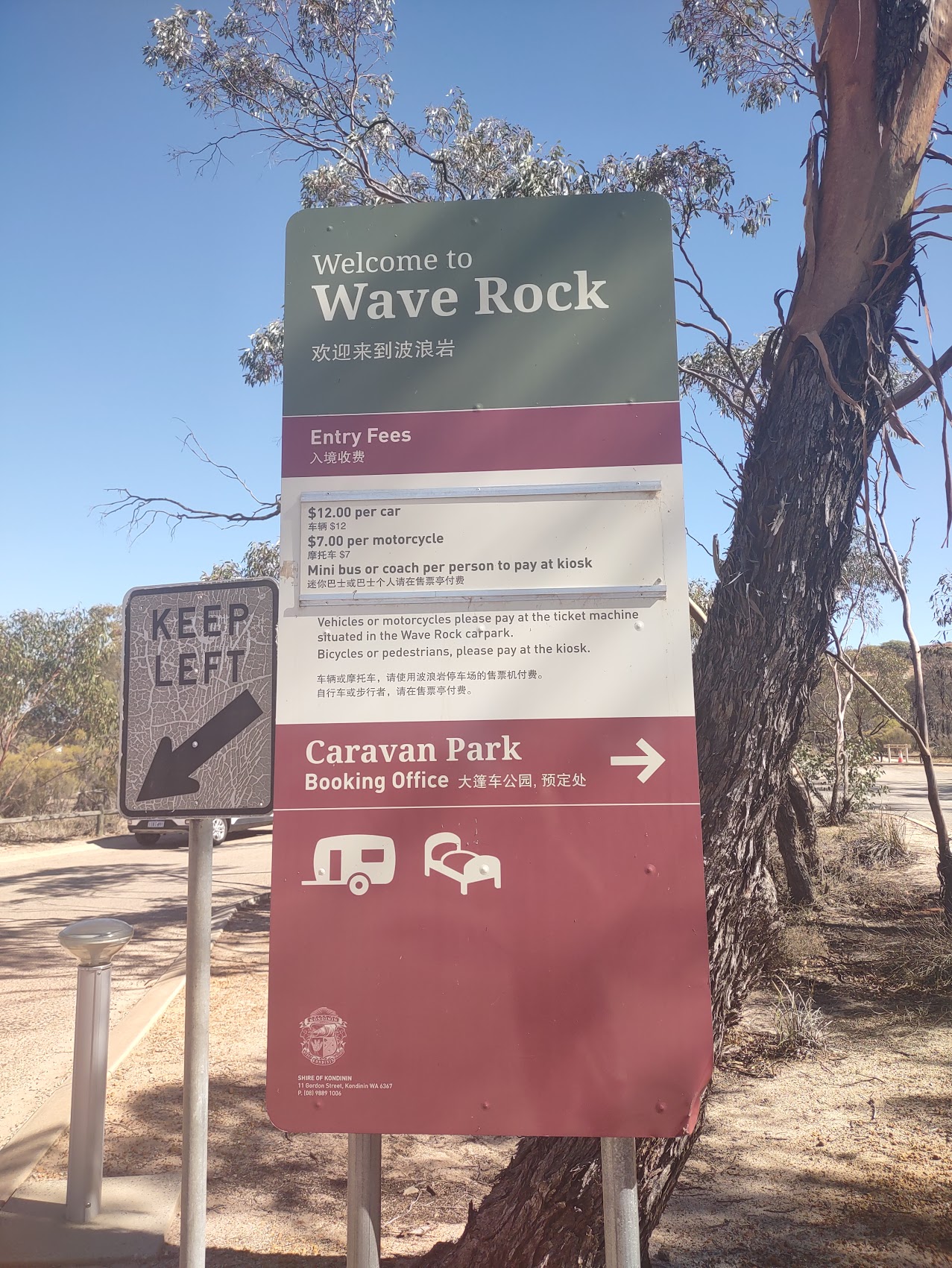
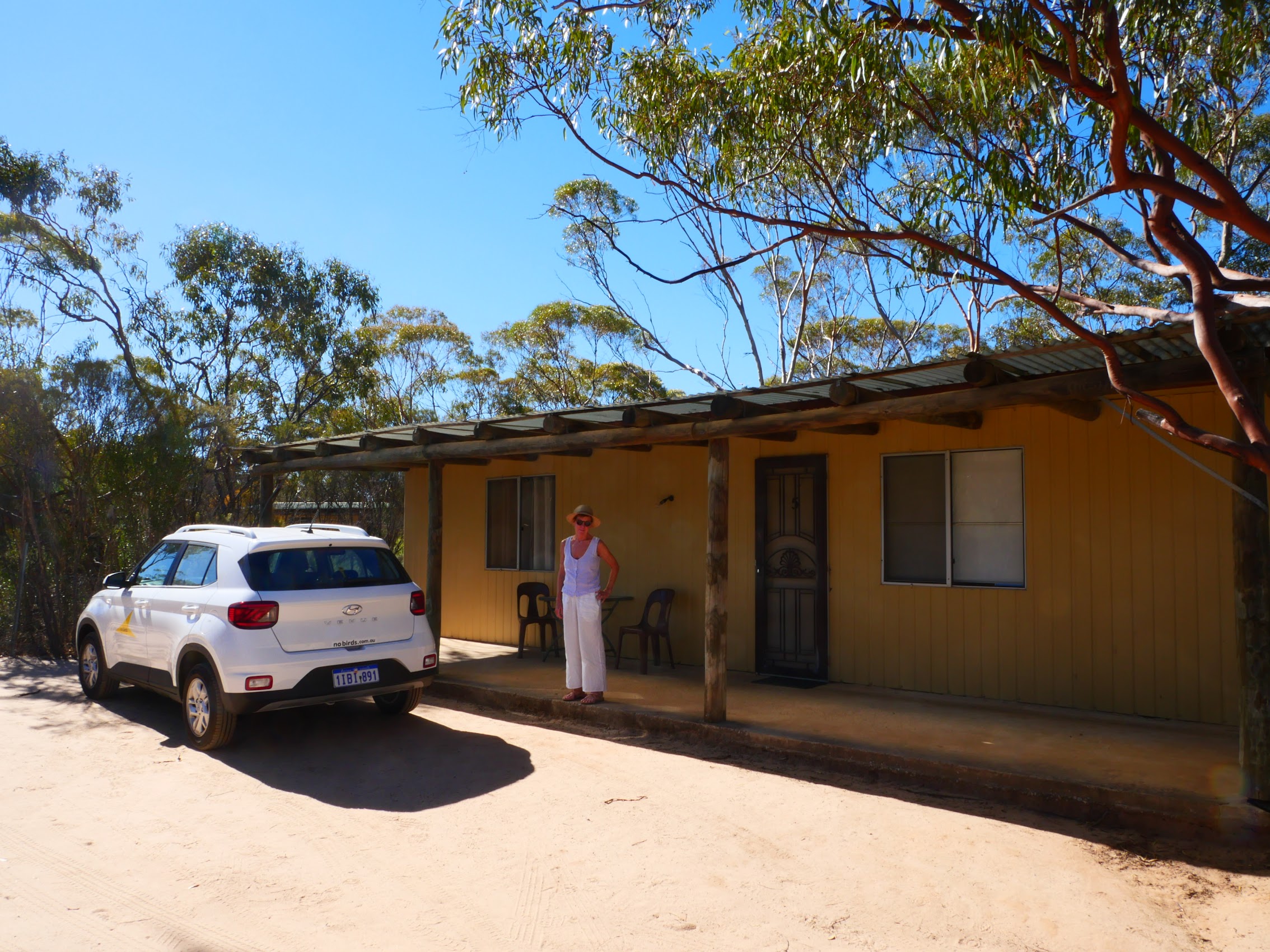
Discovering that our cabin was actually on the Wave Rock site, we unloaded the car, and then headed out on foot to see the main attraction. From our cabin, it was perhaps a one-kilometer hike along a path which wound through the countryside with interpretive signage pointing out some of the unique flora and fauna of the area. After a bit of winding about, we turned a corner and there it was.



While it was tempting to say “Gee, I thought you’d be bigger!”, (it’s about 45 feet tall and 360 feet long) it was nonetheless a pretty awesome piece of rock. The cliff, which resembles a large breaking wave, was formed by weathering and erosion over millions of years. Wave Rock is the northern face of a larger outcrop of granite named Hyden Rock, which is about 2.7 billion years old.

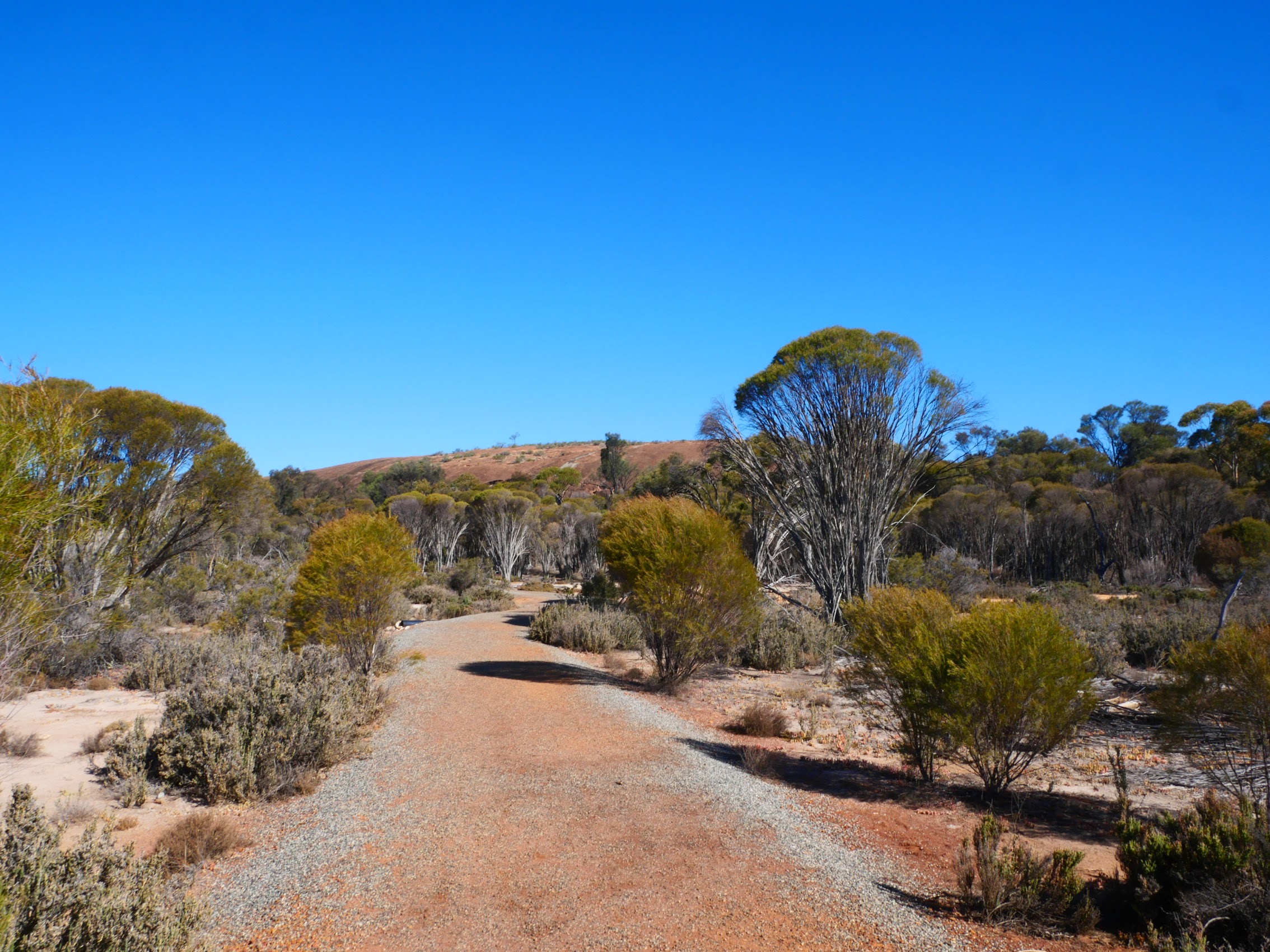
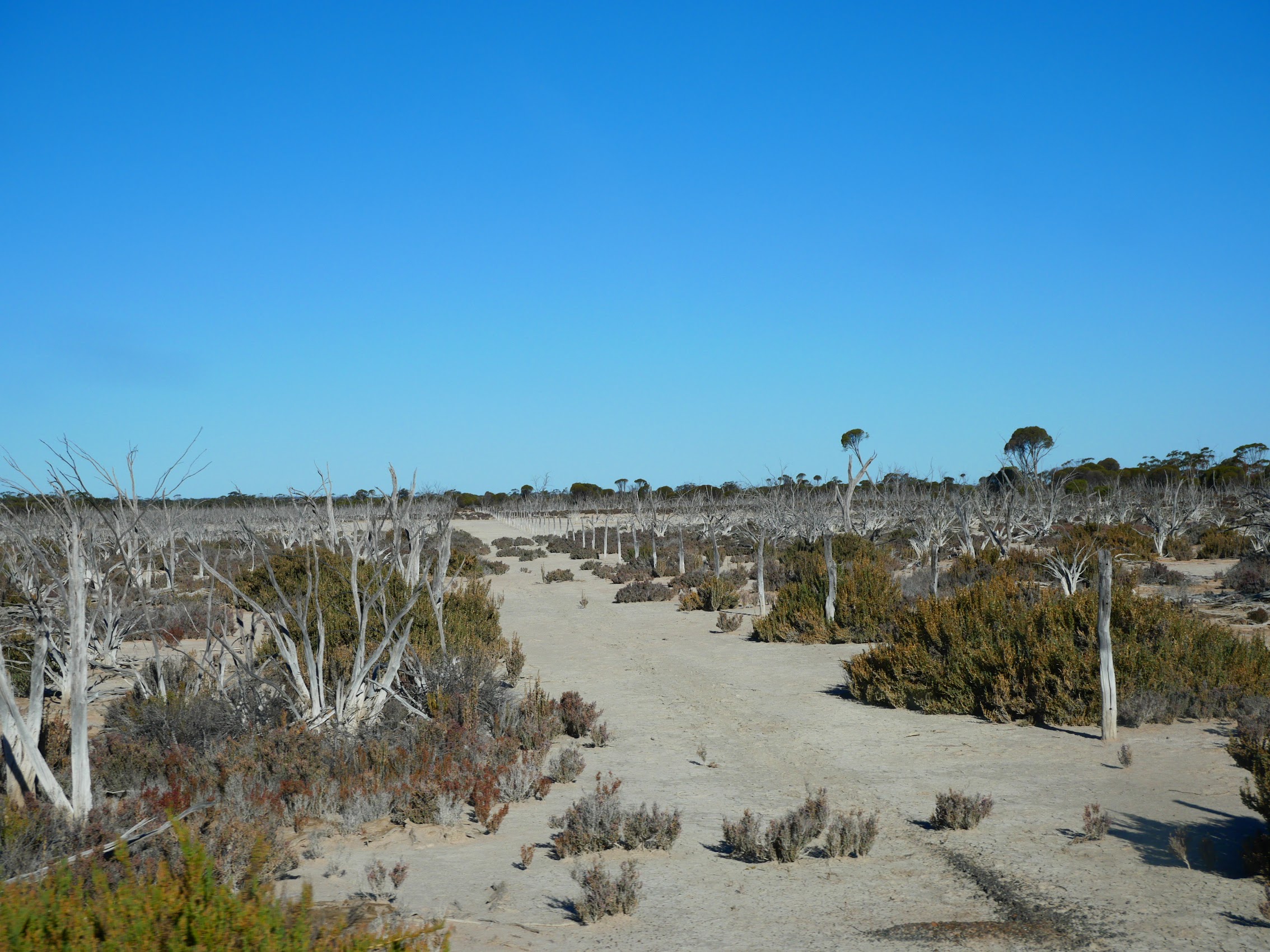
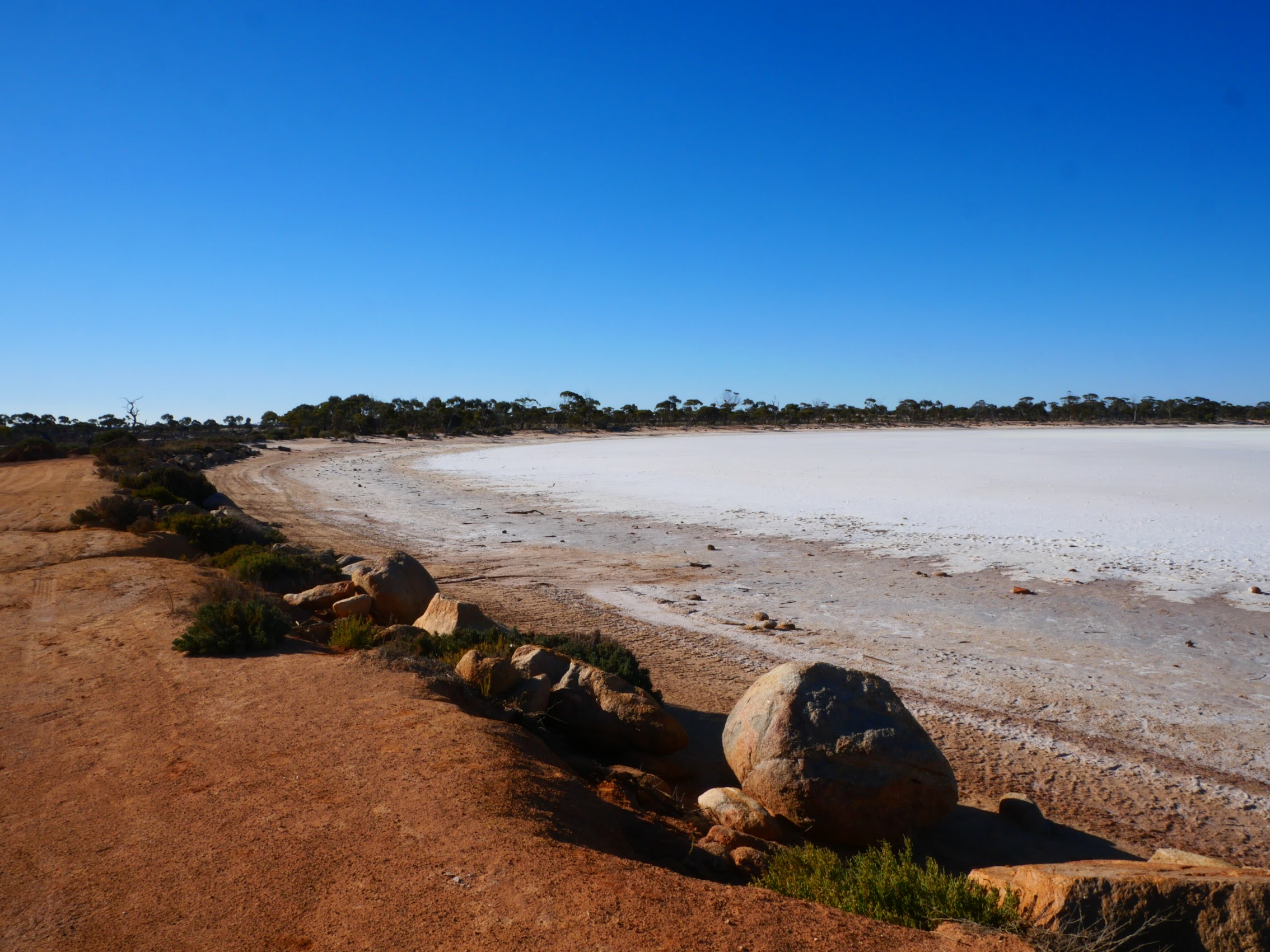
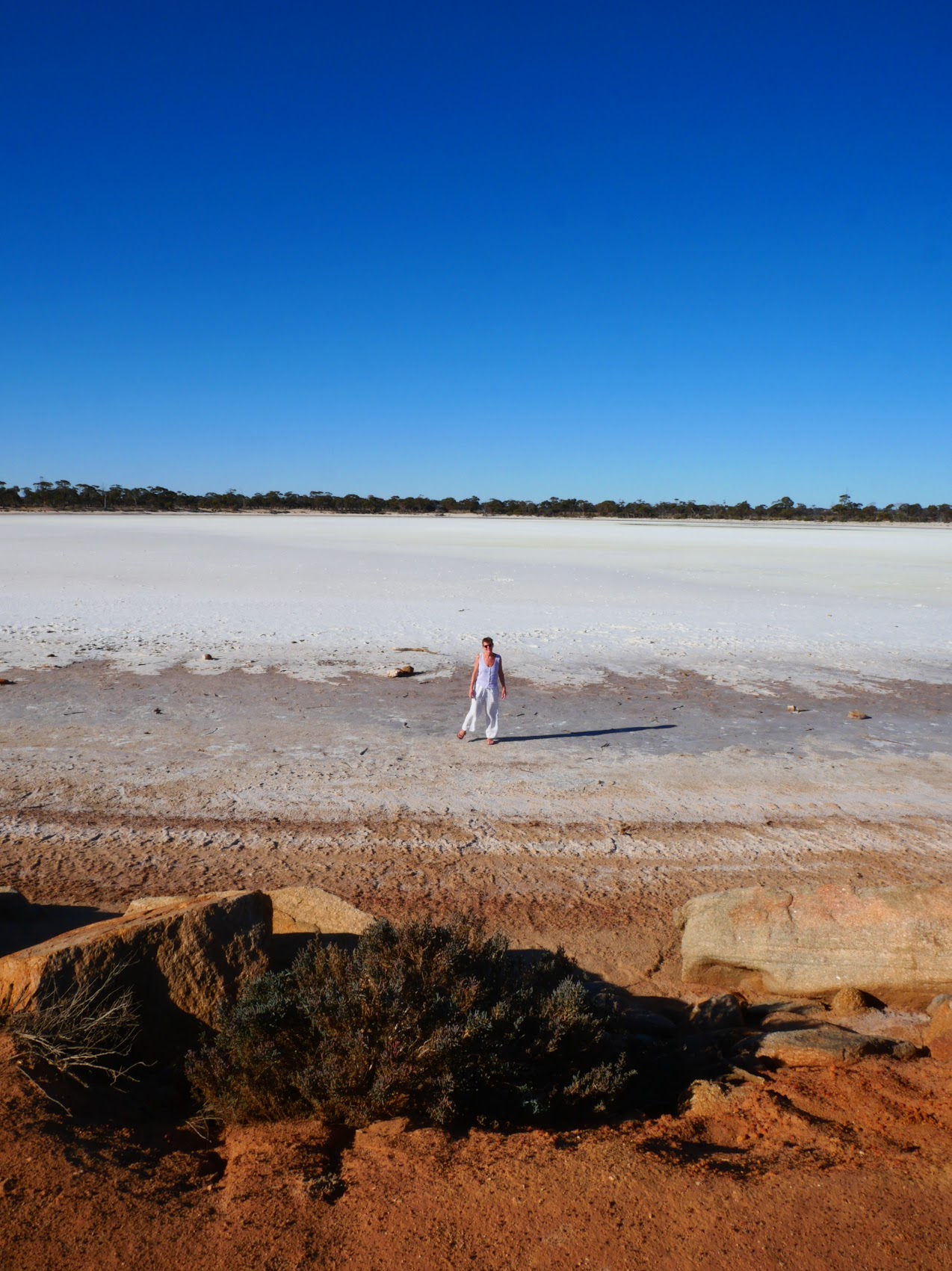
After taking the obligatory surfer photos, and realizing that it probably wasn’t worth the effort to hike around to the top (can’t really see the wave from up there), we hiked back out. Given that there was still quite a bit of daylight left, we went to check out the other sights in the area which included a salt pond and an airport museum (which turned out to not be open). Having exhausted the sights, we retired to our lovely rustic cabin to take a reprieve from what had turned out to be a pretty hot afternoon absent the Southern Ocean breezes.

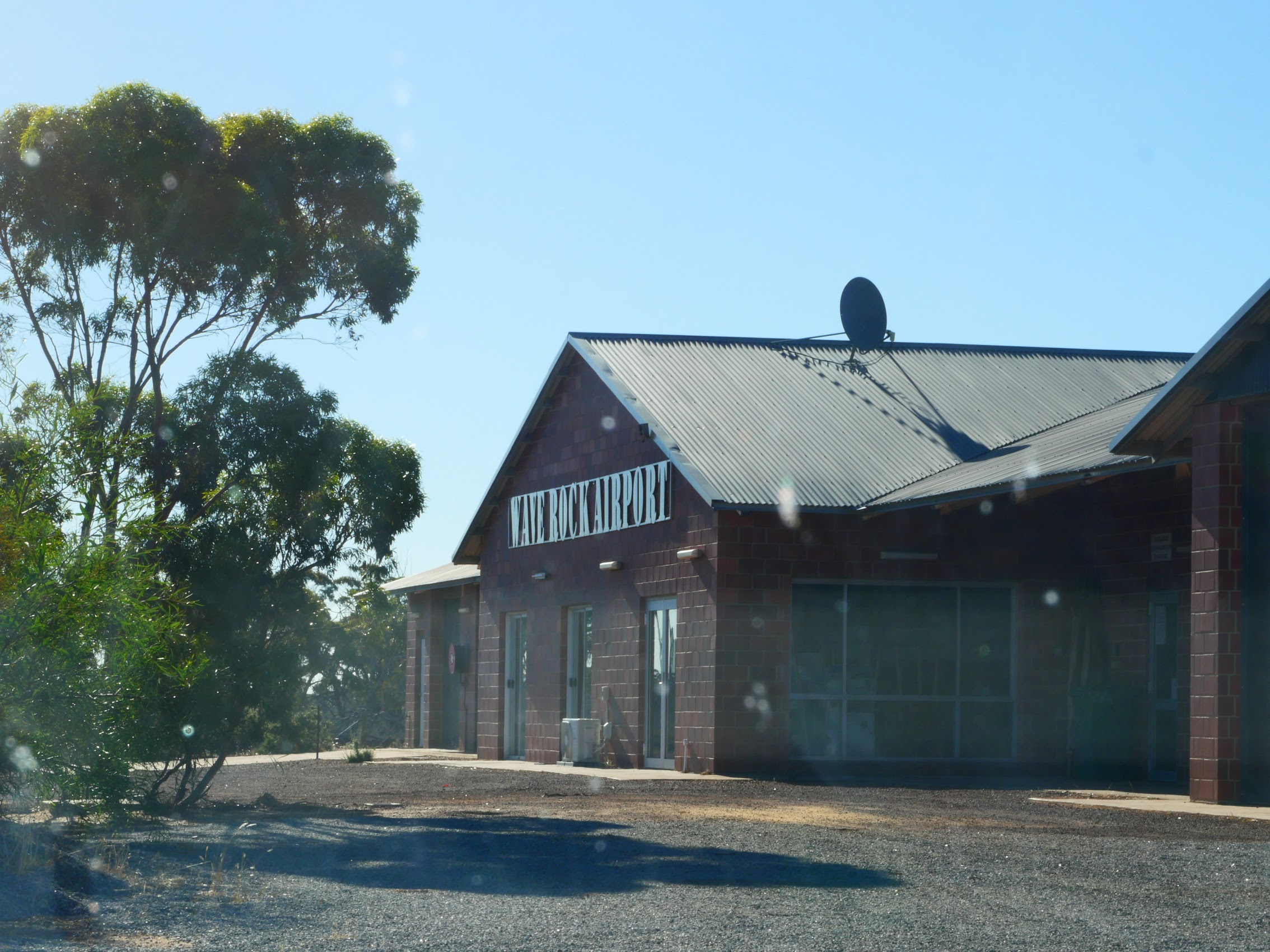
Stargazing
One of the benefits of being in the middle of nowhere is sometimes low atmospheric light which, provided that it is not overcast (which seemed unlikely given the hot arid climate we were experiencing in Hyden) can provide for some pretty nice stargazing. This turned out to be the case in Hyden with the milky way and all the stars and planets visible with shooting stars one after another. One of my hopes on this trip had been to capture some nice night sky images, but I hadn’t had much luck with it and decided we were in a good place to give it another shot.
One additional obstacle I had to night sky photography was a “waxing gibbous” moon which was about 95% full but (fortunately?) moonset was at about 2:30 AM that night so, by getting up extra early, I could get around that issue.

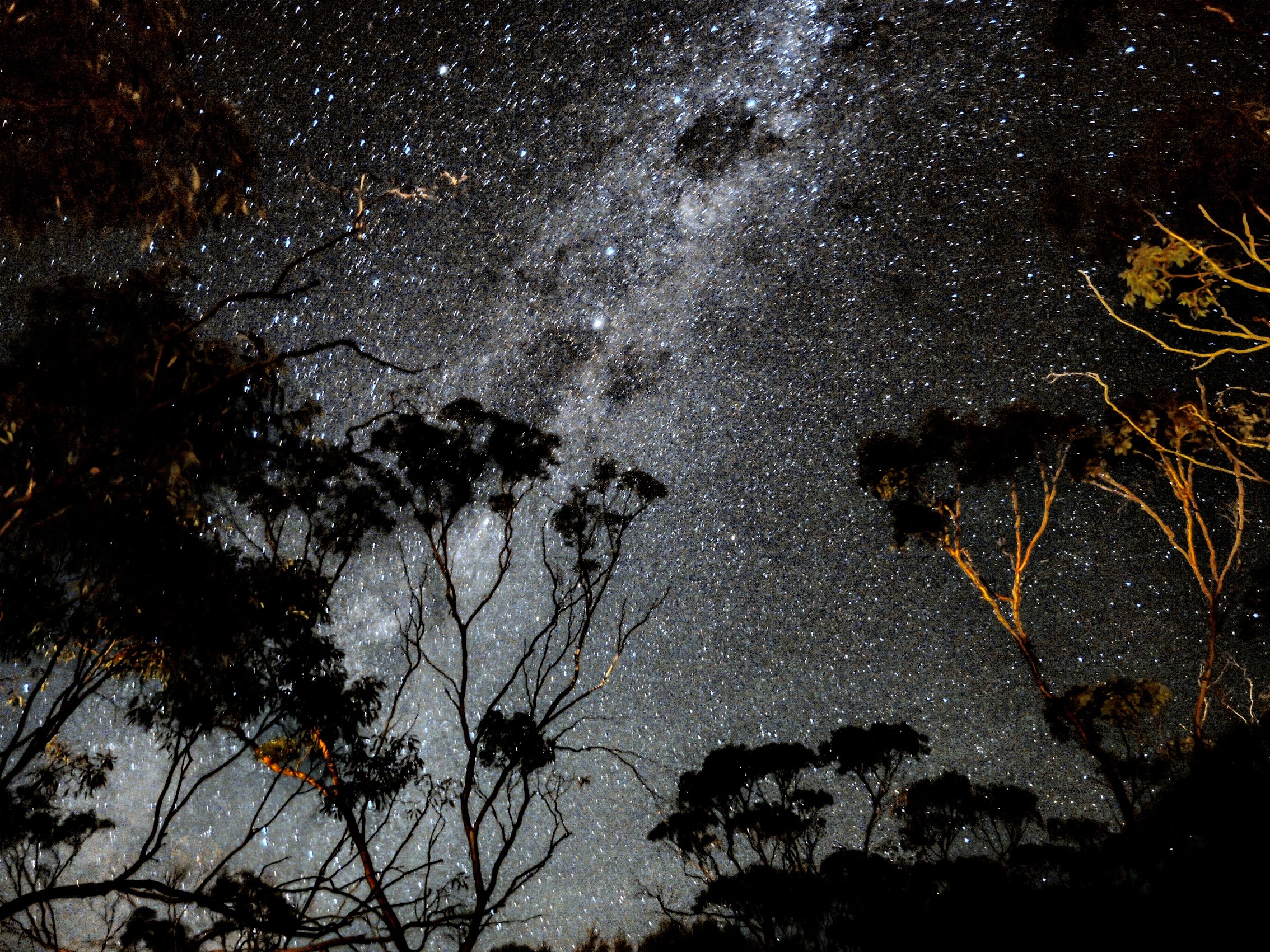
I was able to take a few shots playing around quite a bit with length of exposure and using our rental car to brace the camera. (I realized too late that the small travel tripod I carry does not allow you to face the camera much above the horizon!) While I still feel like I’m in the experimental phase with this and need a better tripod, these turned out to be the best shots I have had had thus far. I retired back to our cabin to get a couple more hours of sleep moderately happy with the results and not begrudging the lost sleep too much.
Back to Perth
The next morning we packed up and got on the road early for what we expected to be about a four-hour drive back to Perth. A couple of kilometers down the road we passed through the town of Hyden (“don’t blink” as they say) which was pretty much what we would have imagined. From there it was pretty much straight shot through what seemed to be Australia’s wheat belt and the occasional road train just to keep us on our toes.
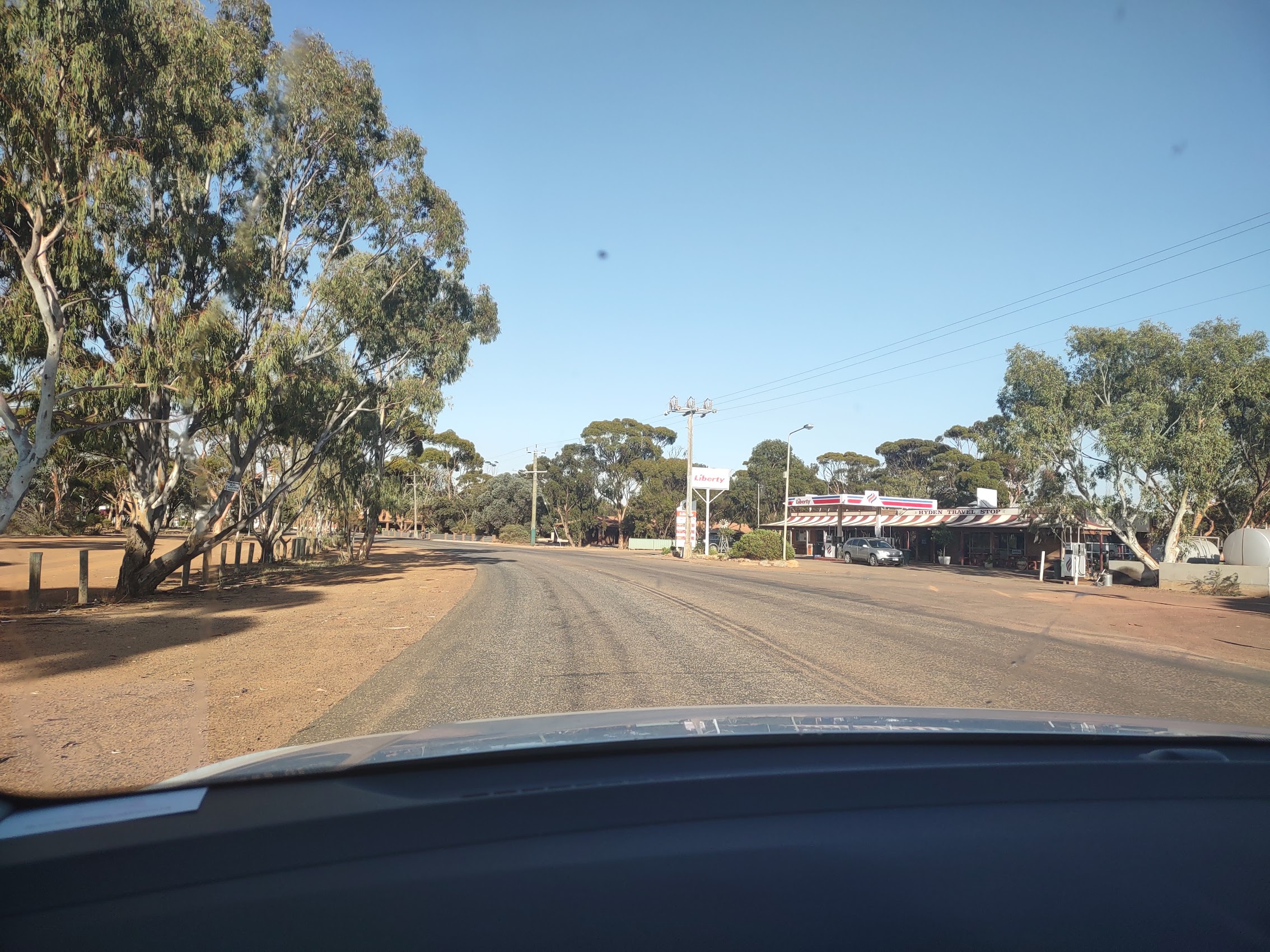
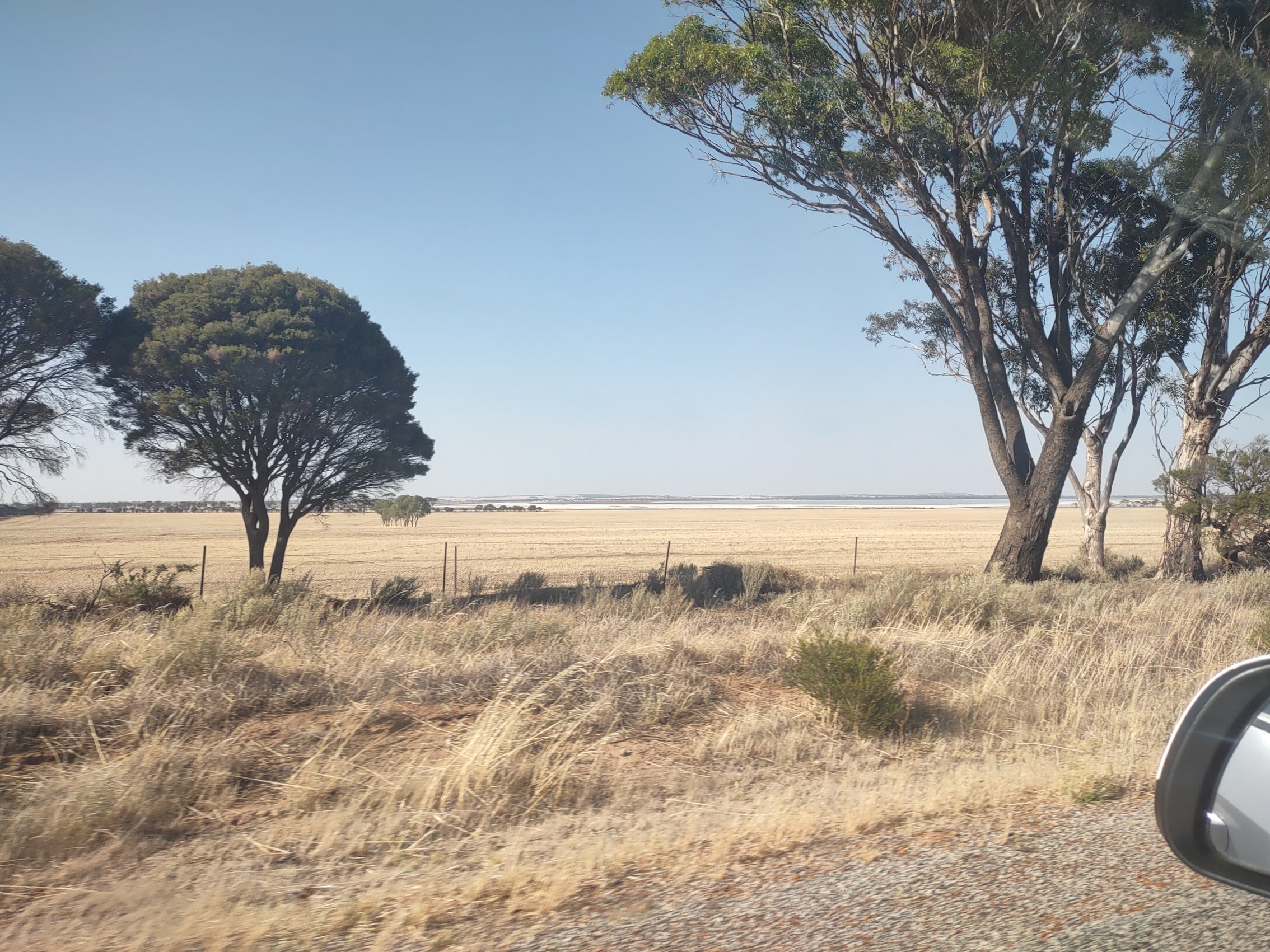
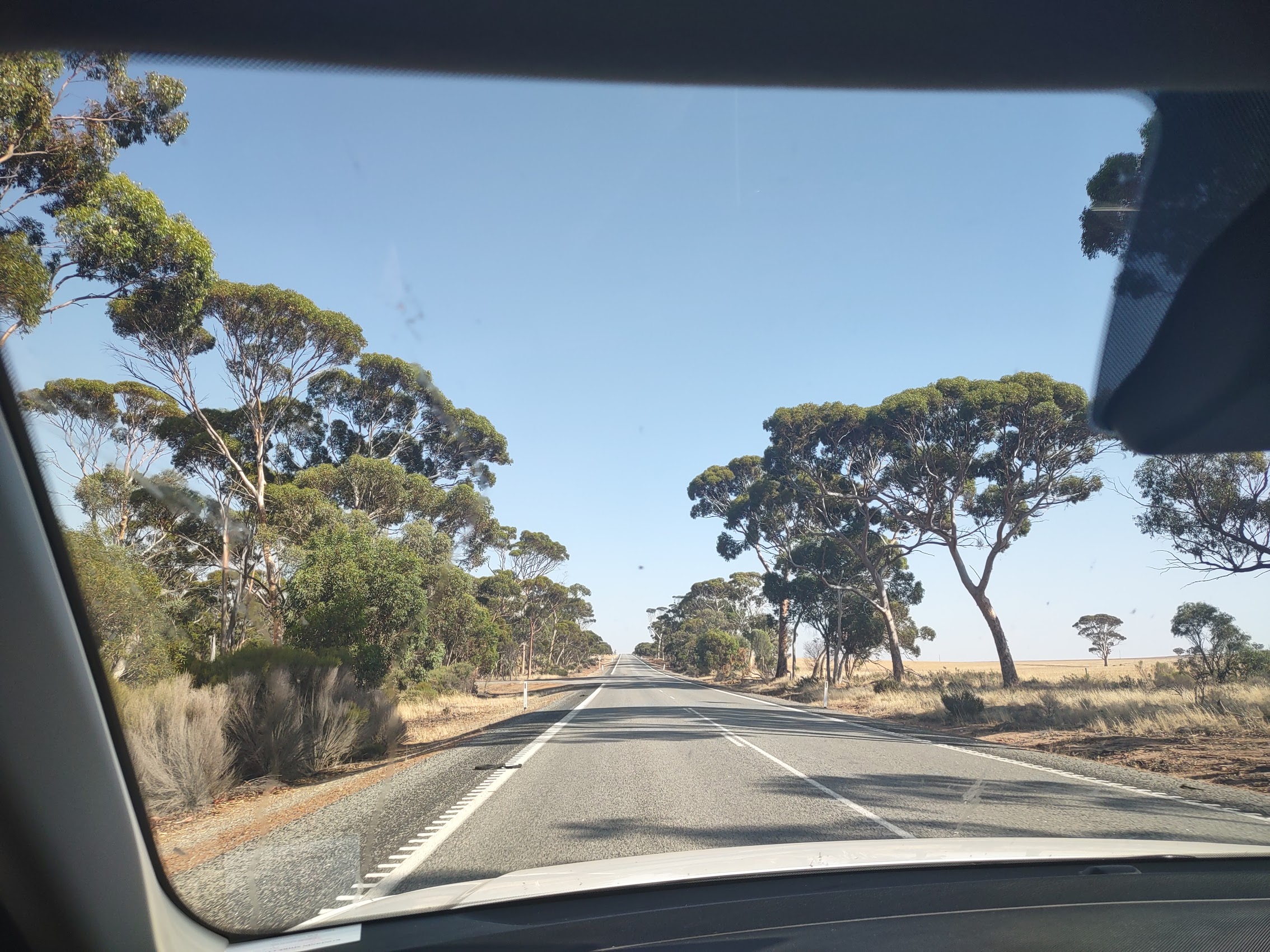
It was our intent to get back to Perth early enough to drop off the rental and run a few last-minute errands in town before jumping on the JOJO (Jump On Jump Off) bus which would carry us through the next leg of Australian adventure up the western coast to the remote town of Broome which is where we’ll pick up in the next installment.
 Burning the Inheritance
Leave a comment