
Phnom Penh, also known as Krong Chaktomuk Serimongkul (The City of the Brahma’s Faces), is the capital and most populous city in Cambodia with about 2.3 million residents. It is located along the banks of the Tonle Sap River, at the point where it and the Bassac River join the Mekong River on its way to Vietnam and the sea. (Actually, a quite beautiful location.) As someone who grew up in the seventies and the Vietnam era, the name Phnom Penh was familiar to me, but that was about all I knew about it.
While we came to Phnom Penh primarily to learn more about its recent past, it was no great surprise to find that the city has a long and rich history. It was the capital of the Khmer Empire for 63 years after the fall of Angor Thom (where we had just come from) and its destruction by the Ayutthaya Empire of Siam in 1434. Beginning in 1865, it was again the capital under French colonial rule (which brought with it some very interesting architecture and made Phnom Penh much more of an international city), and continued to serve as the capital of Cambodia when it gained its independence in 1953. And it very unfortunately became the epicenter of the dark period in the 1970’s when the Khmer Rouge seized control of the country.
As I say, lots of history, but my favorite bit of Phnom Penh’s history is the story of its founding in 1372. According to legend, Daun Penh (“Daun” means “Grandmother” or “Old Lady” but, likely out of respect, she is most often referred to as “Lady” Penh), a wealthy woman living on the outskirts of a village in the vicinity of what is now Phnom Penh, one day came upon a Koki tree washed up on the banks of the Tonle Sap. Apparently, she intended to use the tree for fire wood, but when she examined it she discovered that it was hollow and found four Buddha statues of either brass, bronze, or marble (stories vary) as well as a statue of the Hindu god Vishnu holding a staff, snail, chain, lotus blossom, or some combination of these inside it (or maybe it was a fifth Buddha statue?). (Hey, it was 750 years ago, who remembers?)
Daun Penh took this as a sign and had the local villagers build an artificial hill with a small temple at the top (possibly made from the Koki tree) to house the statues. Phnom is the Khmer word for “hill” or “mount” and so, this hill became known as Phnom Daun Penh, which was later shortened to Phnom Penh which, in turn, became the name of the city which grew around it. Over the 750 years since Lady Penh found that Koki tree, kings have added shrines, temples, stupas, and (much more recently) visitor centers to that hill, but its still there, a great reminder that you never know where a simple act may lead.
Getting There
Phnom Penh lies about 250 kilometers southeast of Siem Reap. [As a total aside, I want to note that, after having spent over a year in a world where everyone thinks of measures and distances in terms of meters and kilometers, I am officially (at least for now) abandoning my practice of converting kilometers to miles and am strongly considering the same for meters and feet. (Not sure I can manage the centimeters to inches thing, but we’ll see how it goes.) Yesterday I would have said 155 miles, but today it’s 250 kilometers!] Getting there involved another long (but not too long) bus ride of about 6 hours.
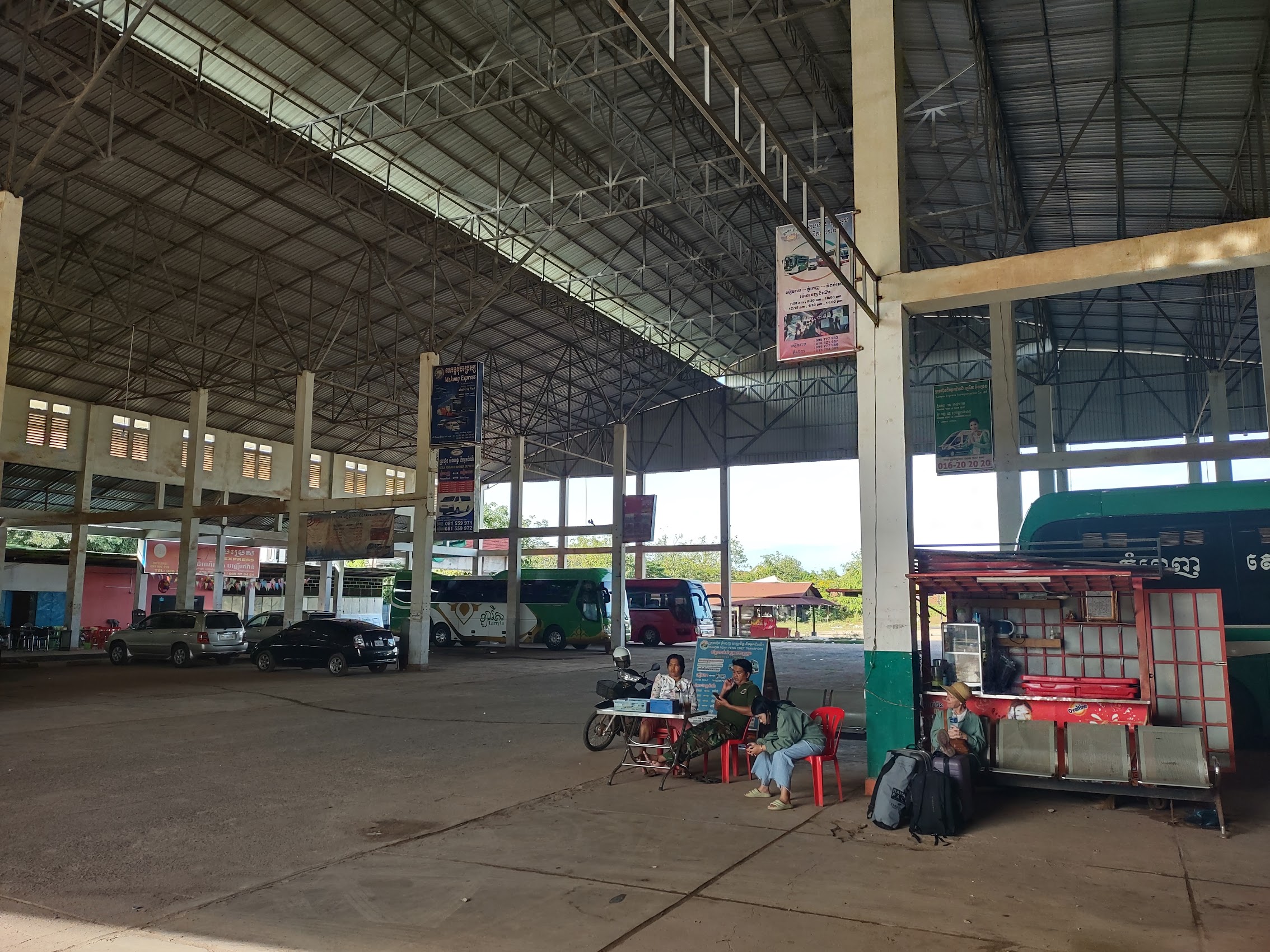
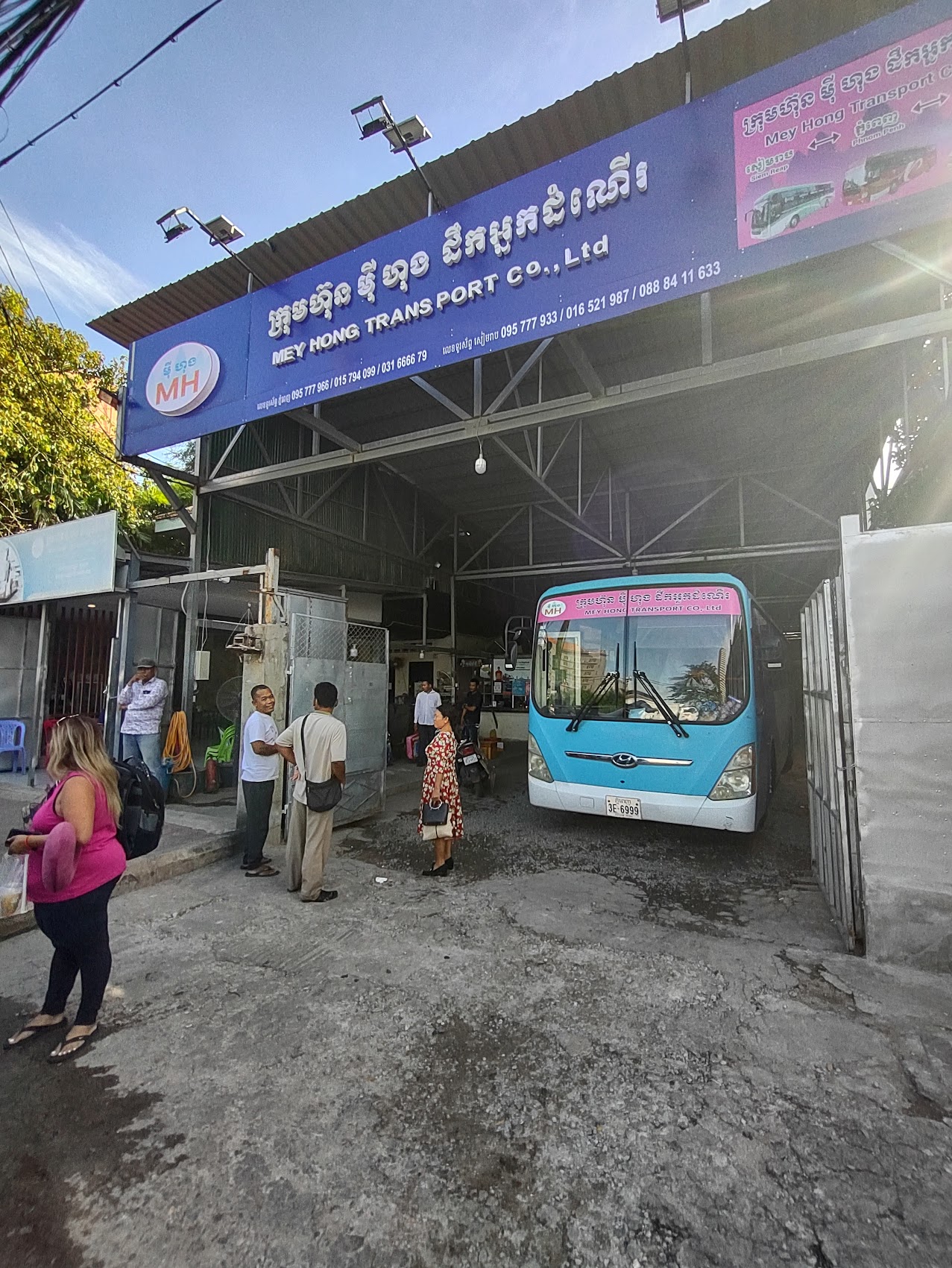
We grabbed a tuk tuk to take us to the bus but, as we tracked our progress on Google Maps we quickly became concerned that we were not going to the right destination, but decided in the end to trust our driver. As it turned out, our driver took us to the bus depot outside of town rather than the bus office in town (where we had intended to go), but we arrived there 30 minutes ahead of the bus we were to catch, so everything worked out just fine.

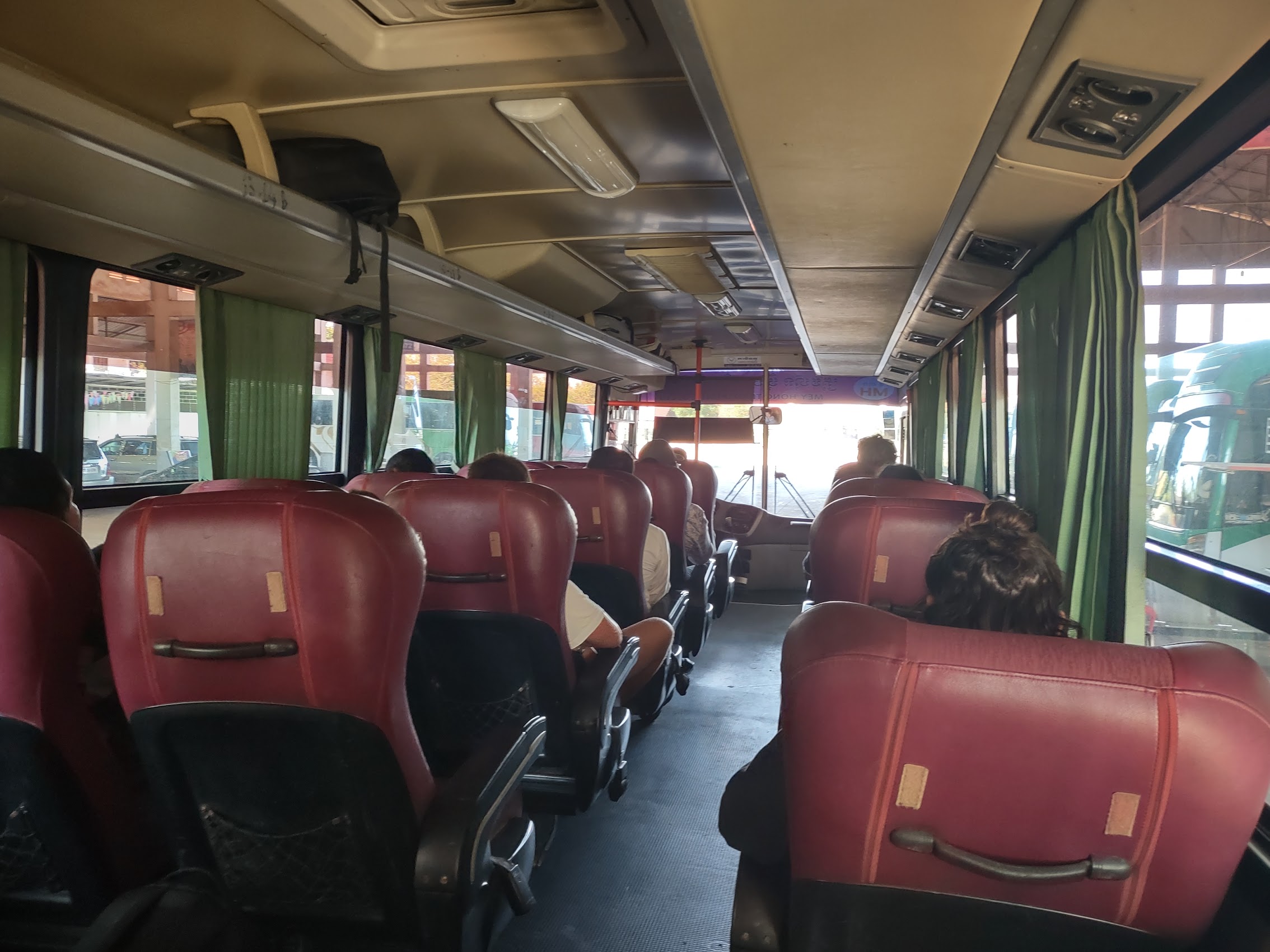
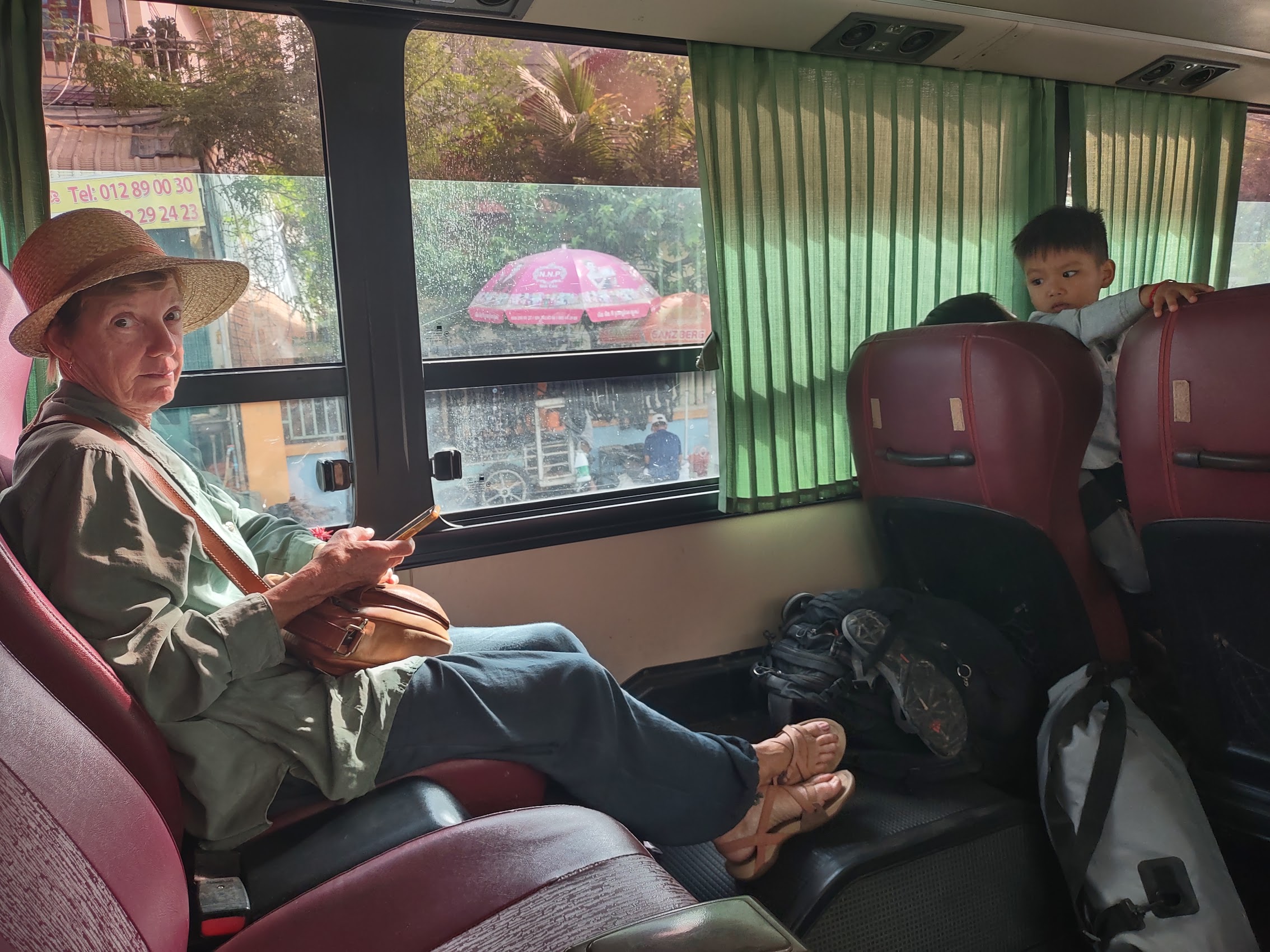
The bus was not crowded and, although not quite VIP class, it had very comfortable seats and pretty spacious seating arrangements which, combined with a couple of stops along the way, made for a reasonably pleasant trip. Once outside Siem Reap, the scenery quickly turned to farms and the occasional small village or town.


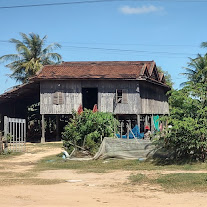
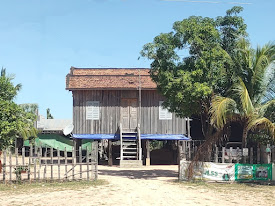
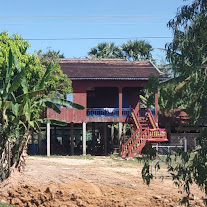
I quickly became enamored with the vernacular architecture of the farmhouses. They were very simple structure, usually a single room elevated originally with an open area beneath (likely to protect them from flooding), which had sometimes been filled in over time. They had simple pitched roofs and gabled ends and, if more rooms were needed, more were attached to the original structure with the same simple design. Over the course of our ride I saw what must have been hundreds of variations on this same basic design.
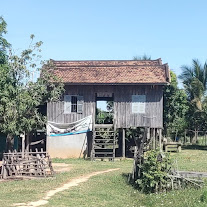

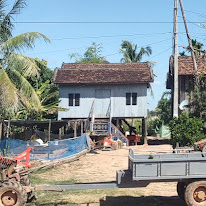

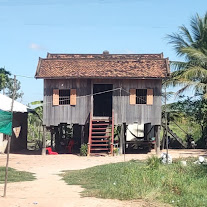
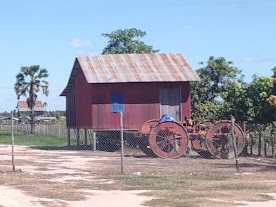
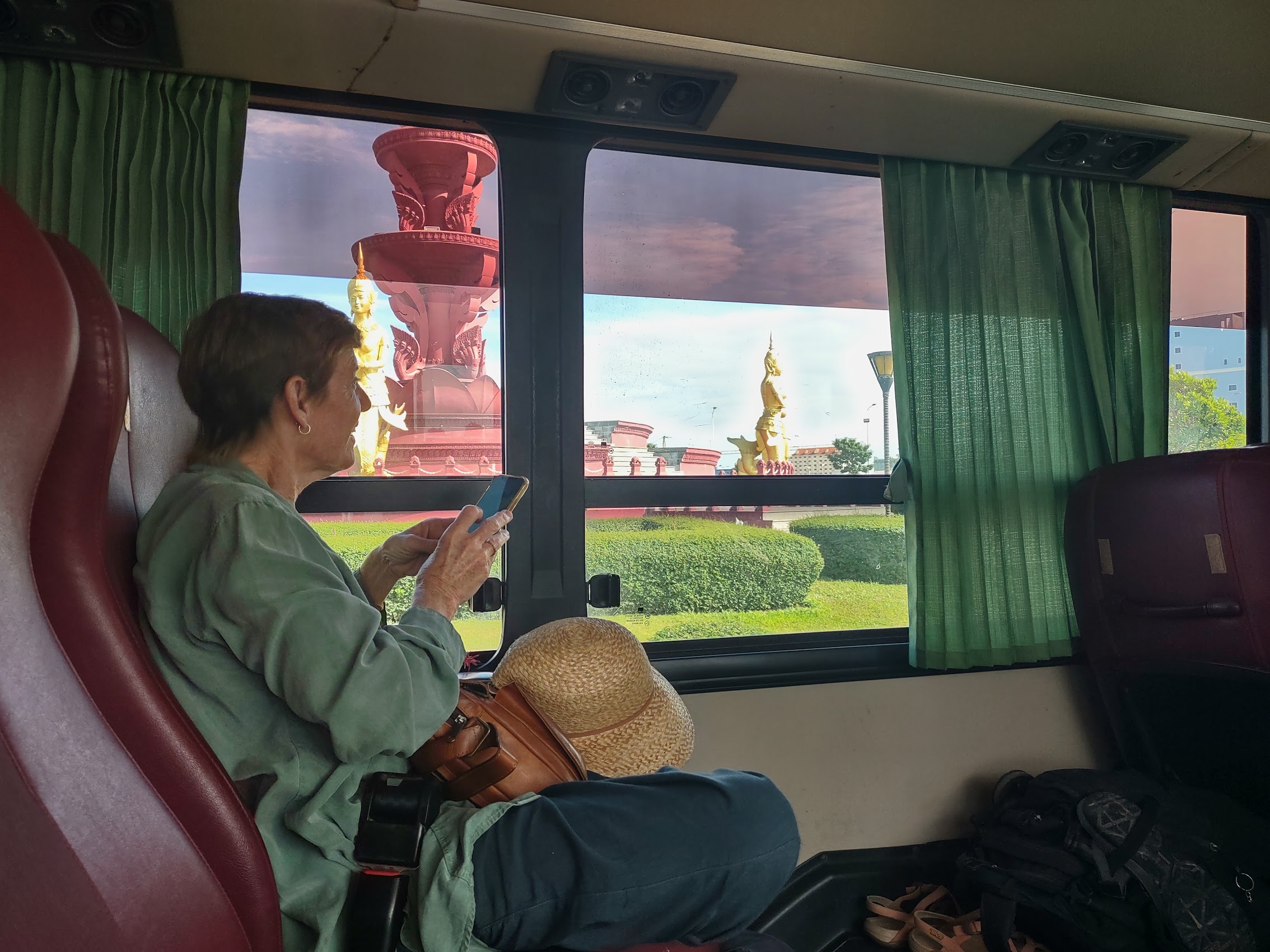
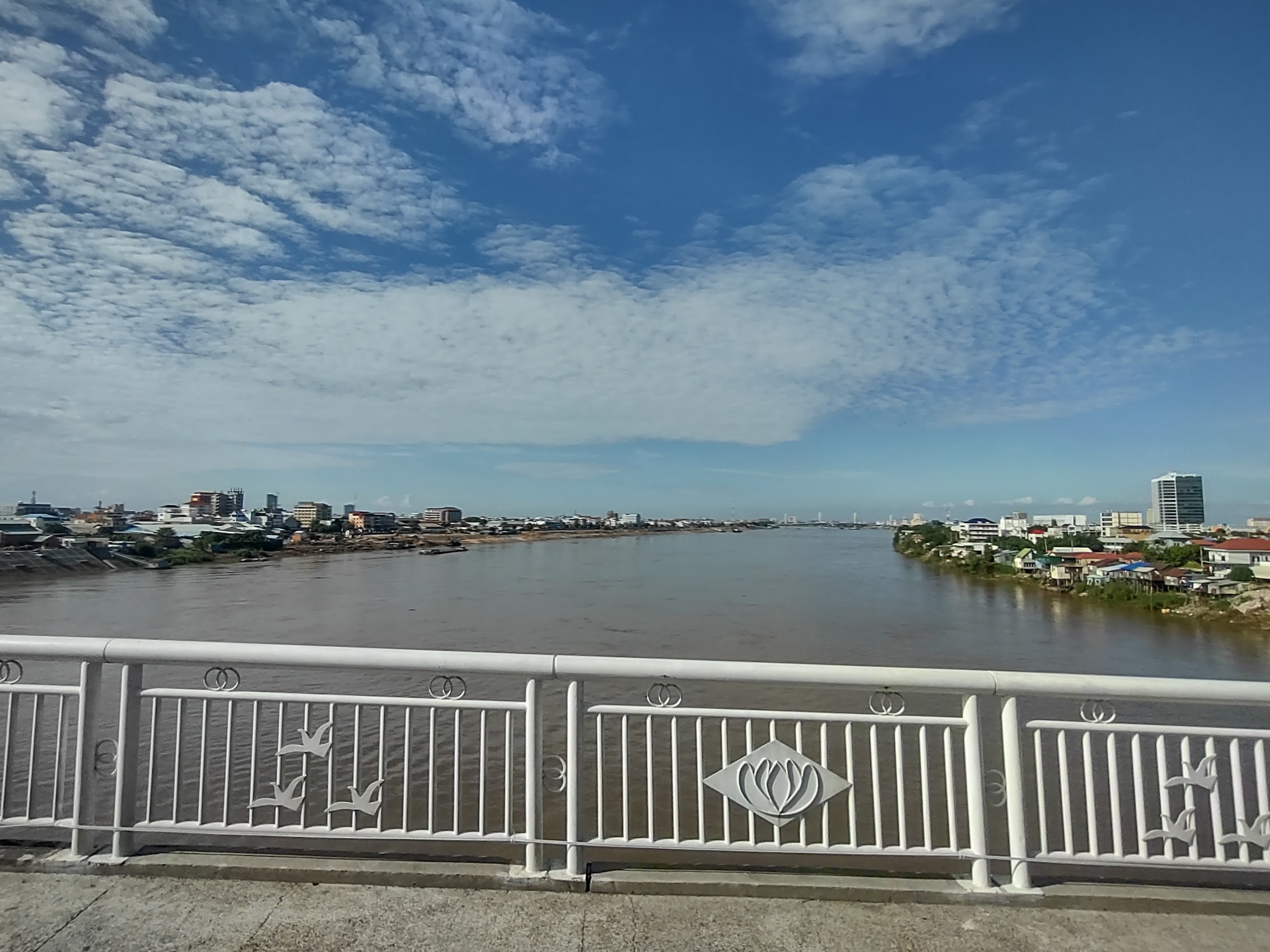
Our route brought us down Silk Island (its really a peninsula, not an island) which separates the Mekong and Tonle Sap Rivers and once we crossed the Tonle Sap, the city of Phnom Penh began to rise above and around us. From the bus station in Phnom Penh we grabbed a tuk tuk which took us to our new abode for next two days, the (soon to be infamous) La Vue Riverside.

Our Place in Phnom Penh
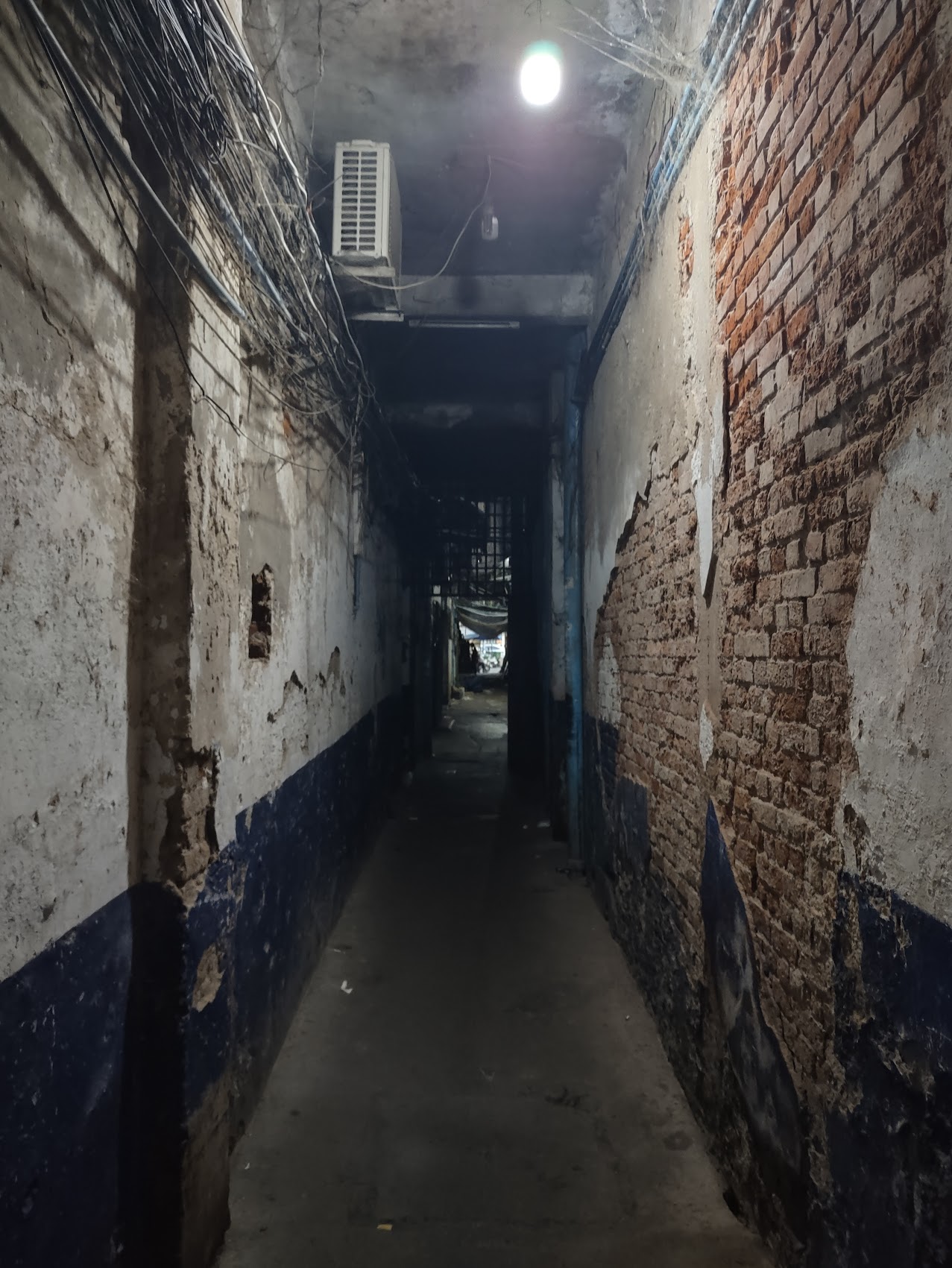
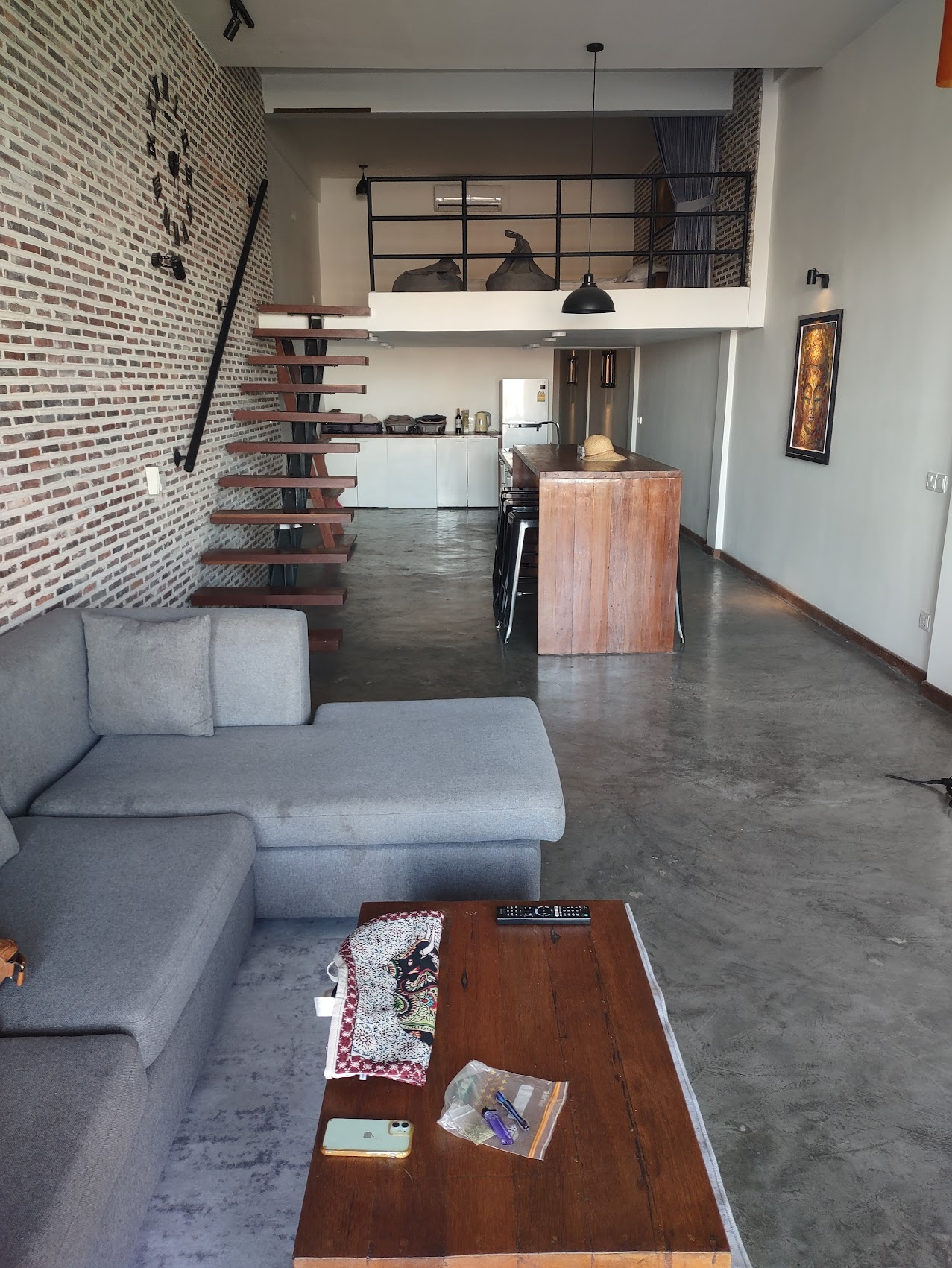
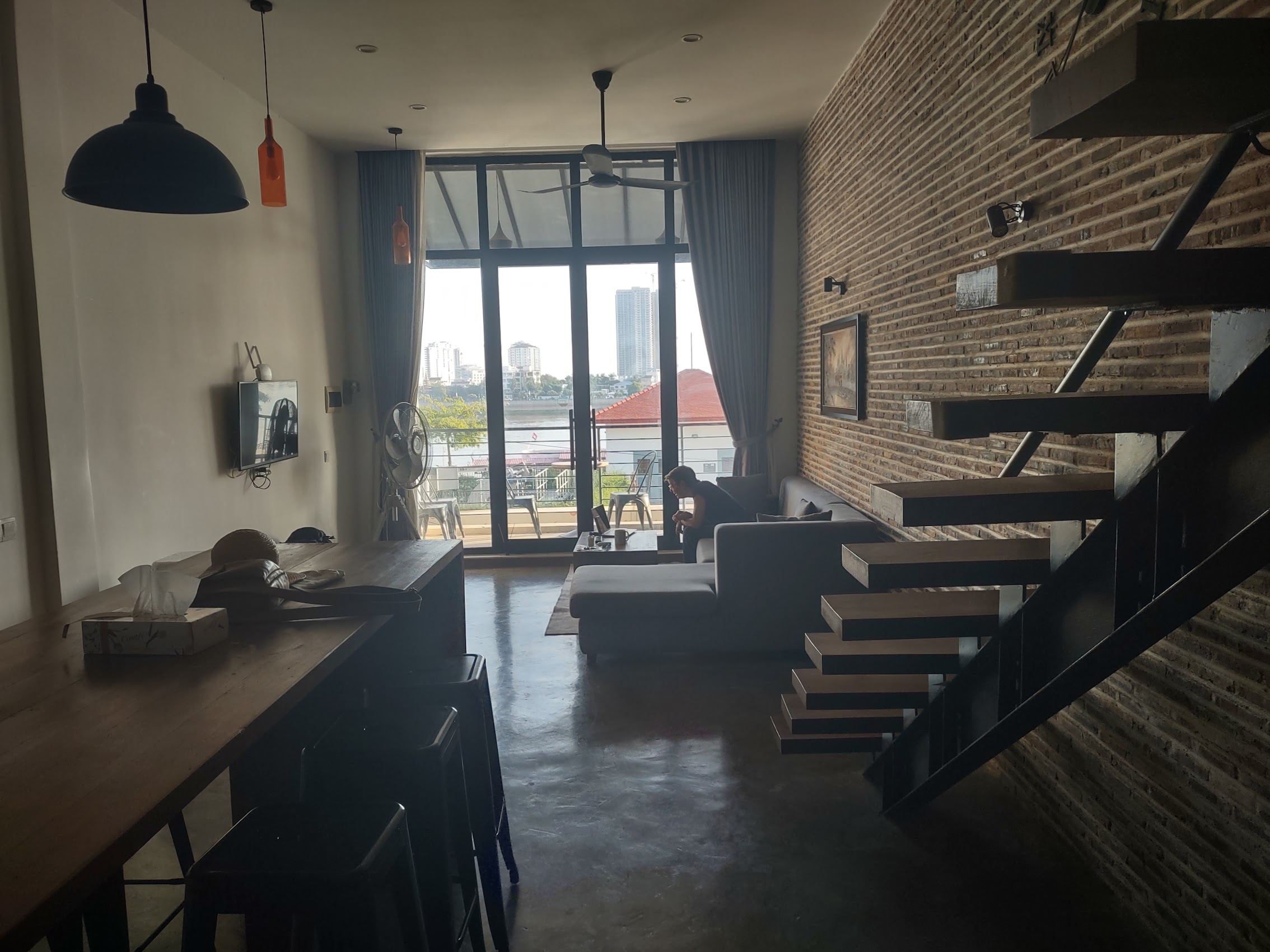
La Vue Riverside was, for a number of reasons, one of the more memorable places we have stayed in our travels. It was a second floor apartment located above a bank and, true to its name, it afforded a beautiful view across the Tonle Sap River to Silk Island. But, in order to reach the apartment, you had to pass through a dark passageway on the backside of the building which was reminiscent of some of the worst places we saw in Kolkatta. (On a trip out our first night, Colleen confirmed there were more than people living in the passageway which led to a lot of stomping, clapping, and singing or loud talking whenever we passed through it.)
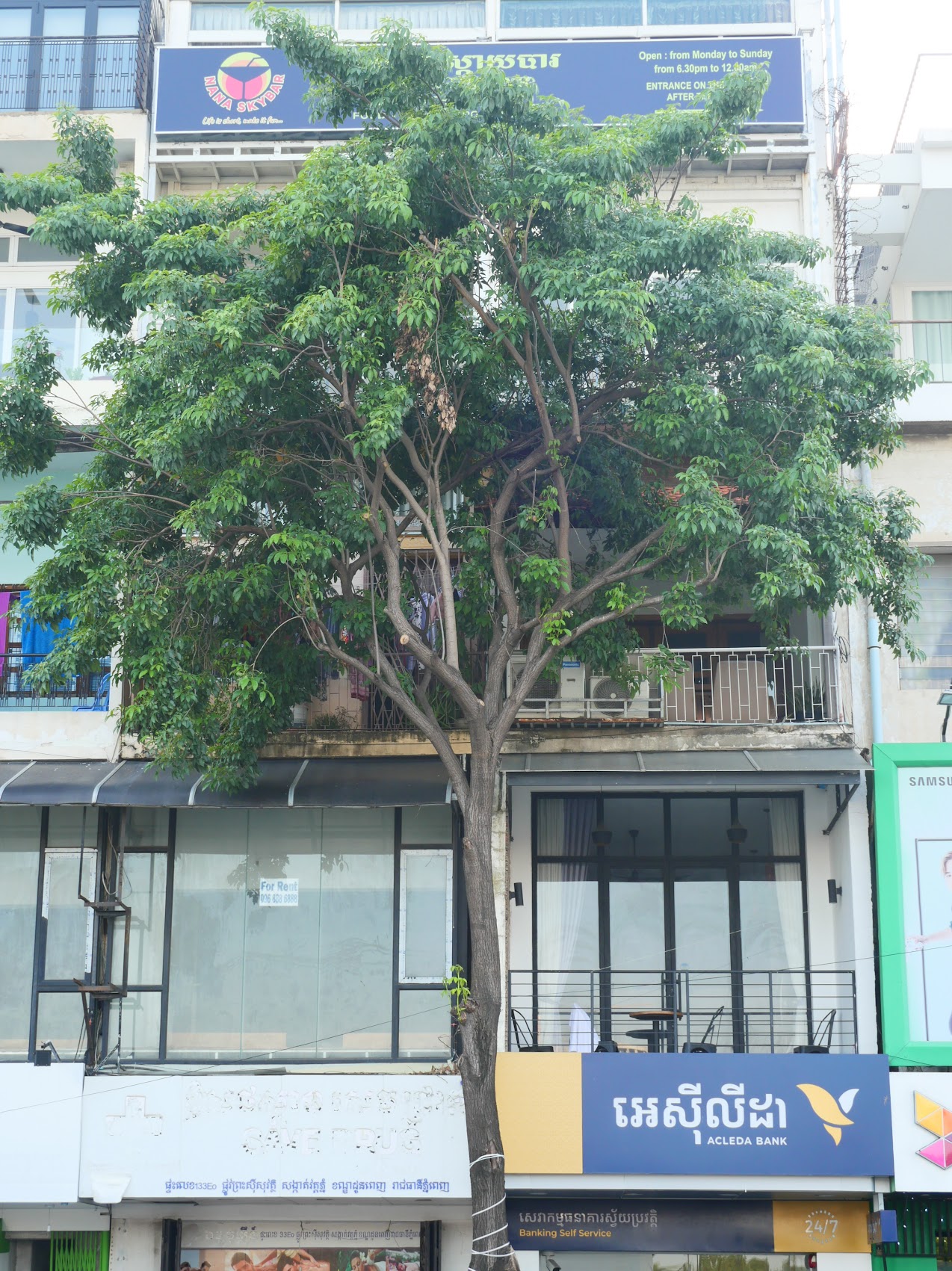


The apartment itself was actually pretty nice, with a high-ceiling living area with wall to wall and floor to ceiling glass facing the river, a nice sized balcony, and a loft bedroom with a large kitchen and dining area tucked beneath it. But although the kitchen included a cooktop, there were no pots and pans or cooking utensils to be found, nor, as we discovered, were there any cleaning products, personal hygiene products (other than a single bar of soap and a roll of toilet paper), not even the two complimentary bottles of water which are pretty standard items in this part of the world. When we contacted our host about this, he referred us back to the Airbnb listing noting that the apartment came with “no amenities”.
In fairness to our host, when we checked the listing we noted that, despite the cooktop which was clearly visible in several photos, the listing actually said there was no kitchen. On the other hand, there was good WIFI, a clothes washer (which we used), and a modern art gallery along the entrance corridor of the apartment which featured one of the creepier Buddha images we had encountered in our time in Southeast Asia (though Colleen said it grew on her with time).
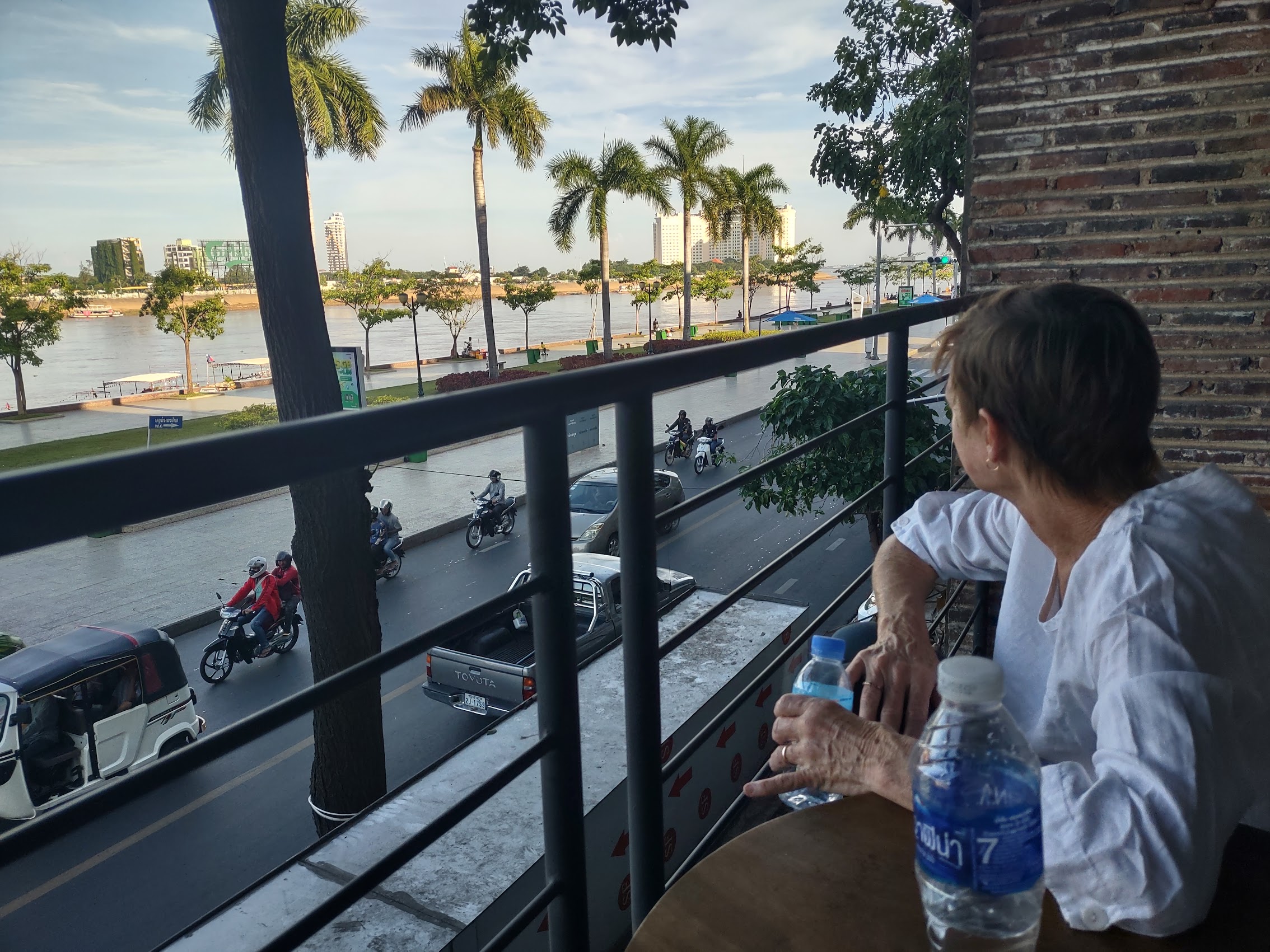

As we had arrived in the afternoon and would only be in Phnom Penh for three days, we headed out to explore the neighborhood around our place. We started south along Preah Sisowath Quay, which is a great walking street with the Tonle River and the Sisowath River Park running down one side and an eclectic assemblage of old and new buildings running down the other side, a haphazard mix of small shops, businesses, restaurants, and apartments.
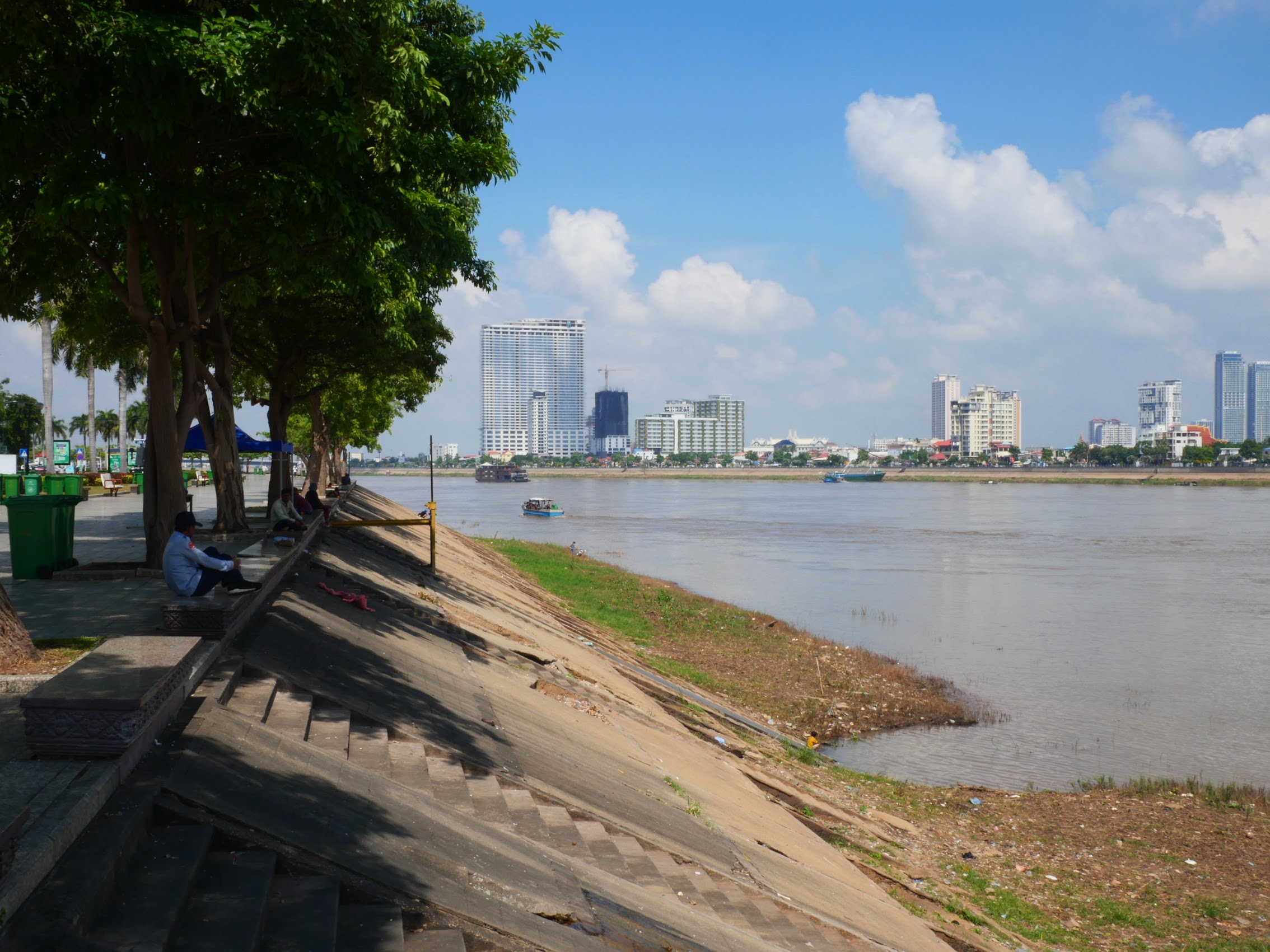
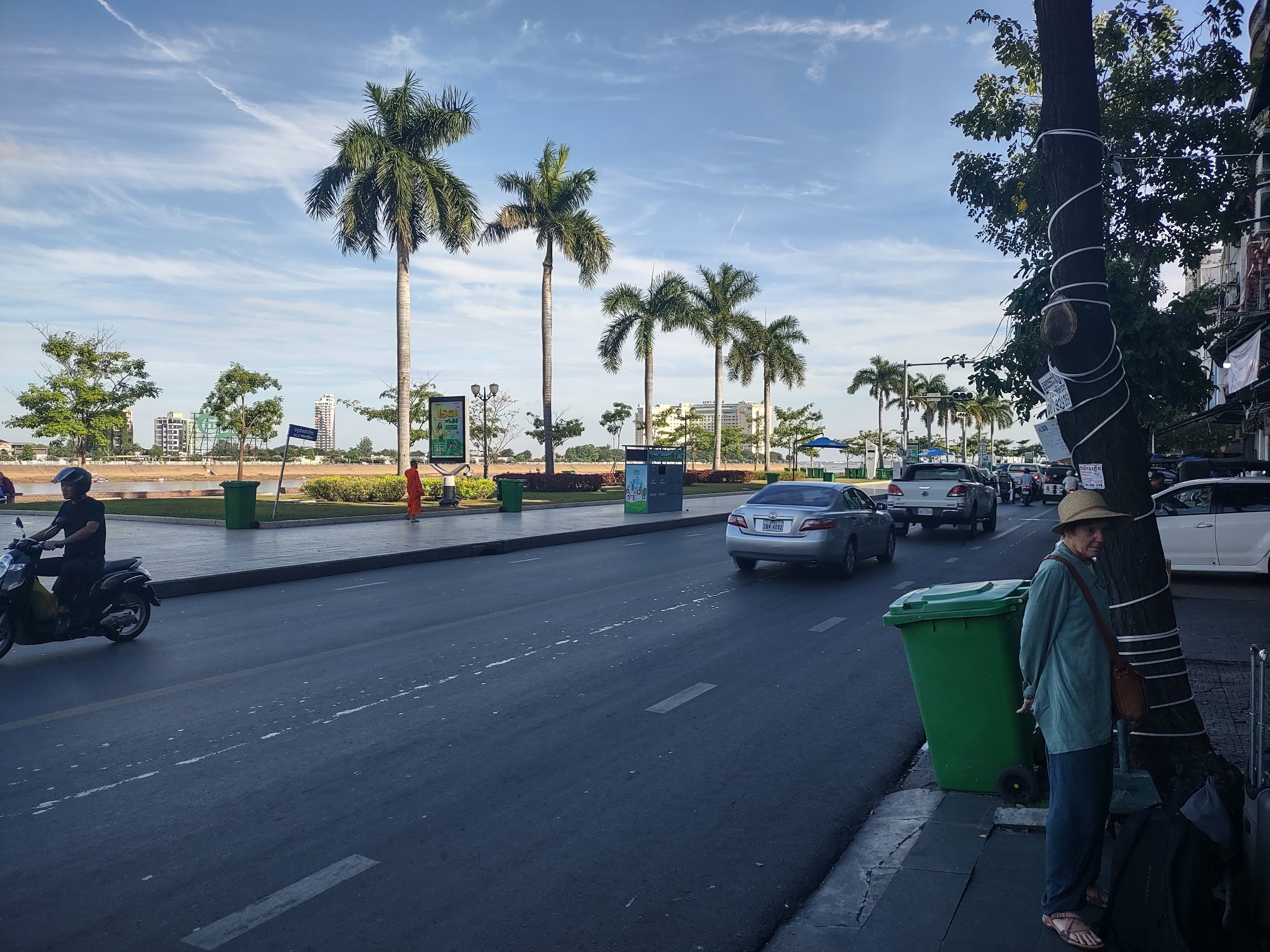
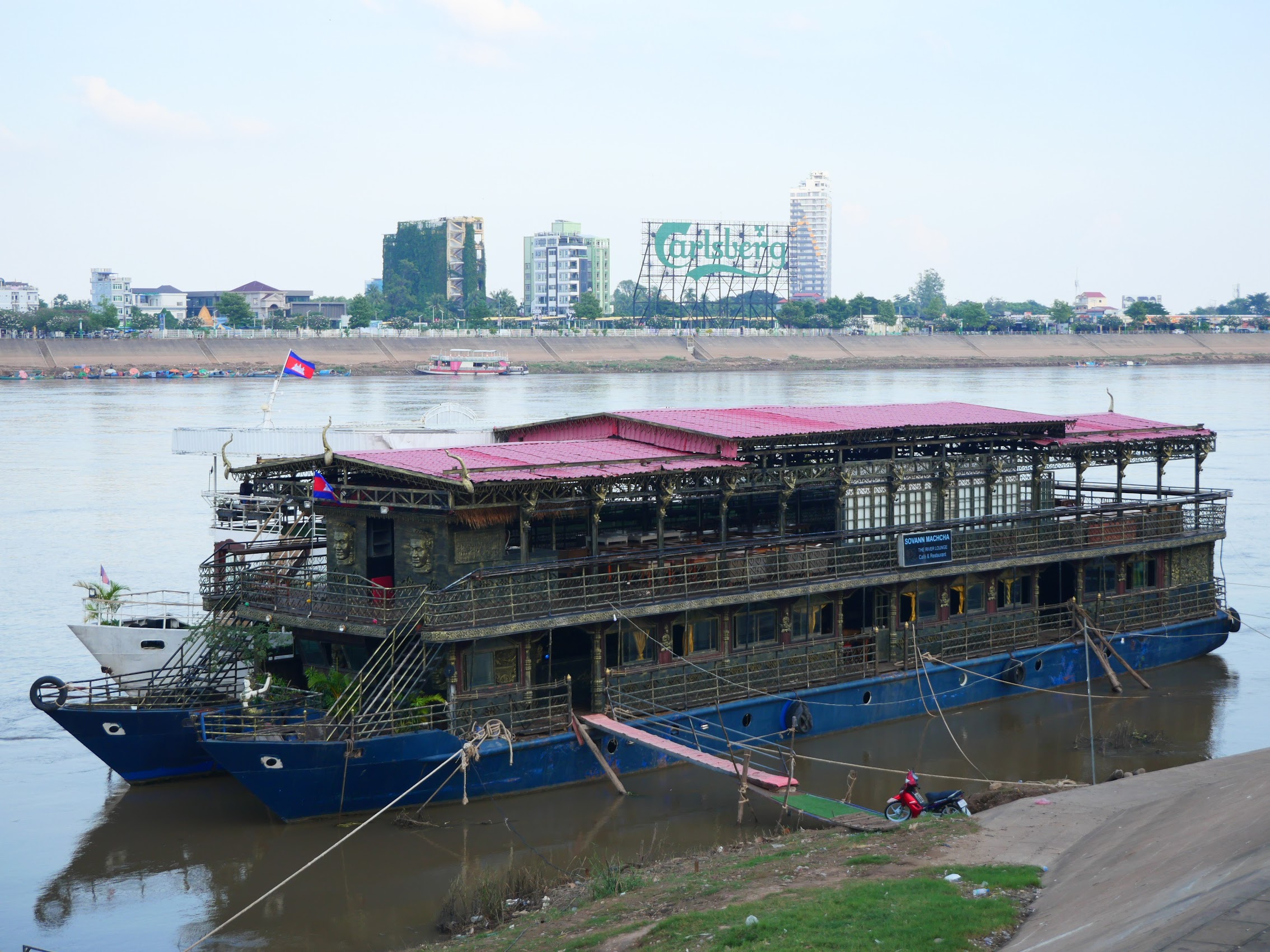
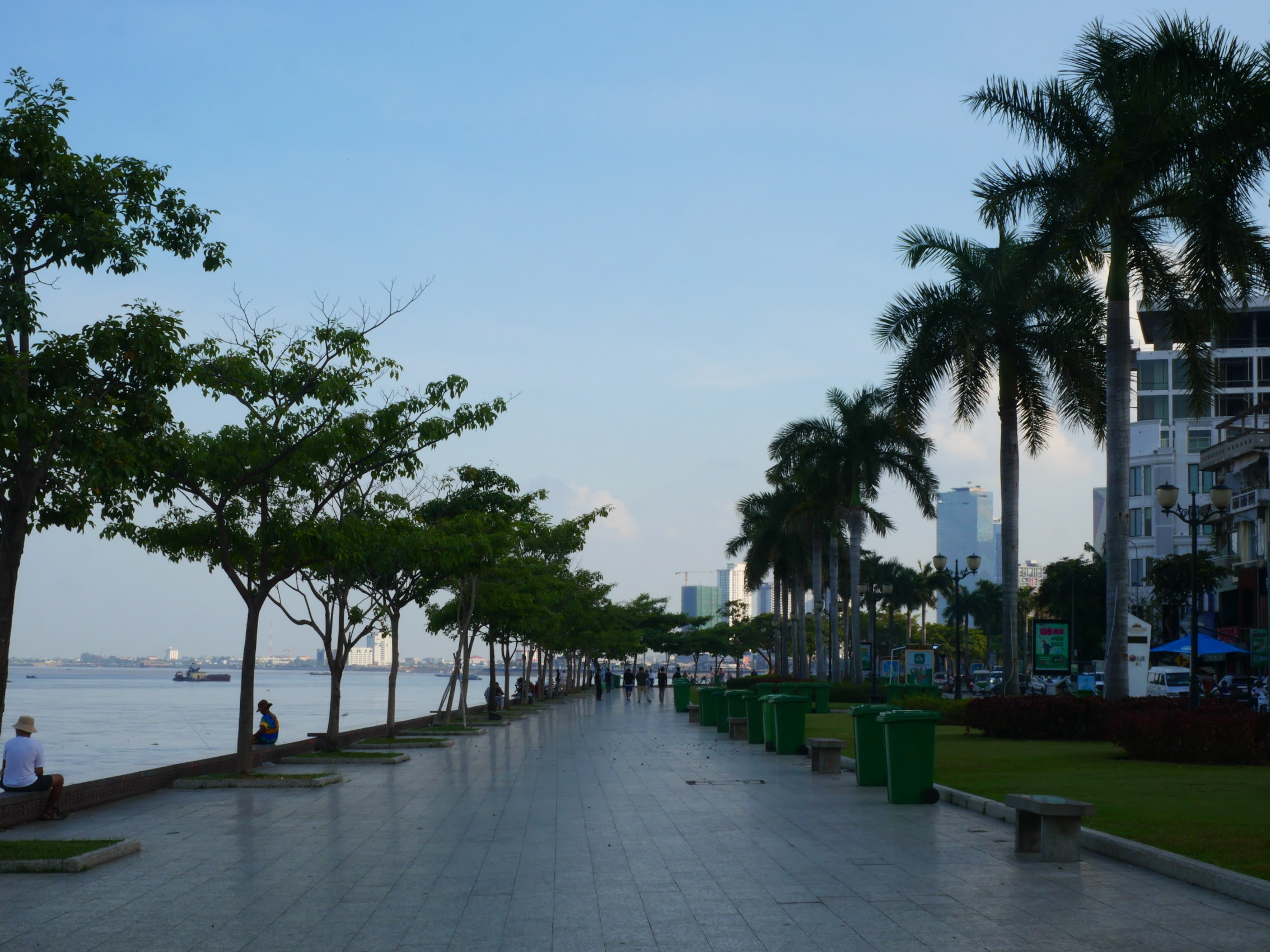
We stopped for drinks at a timeless hotel restaurant called The River Bistro with a large open-air seating area and a multi-cultural clientele which appeared to include quite a few western tourists and ex-pats (there seemed to be one of these on every corner along Preah Sisowath Quay). The place had a very post-colonial vibe to it and it was easy to imagine that it was much like this fifty years ago before all the bad things started happening.
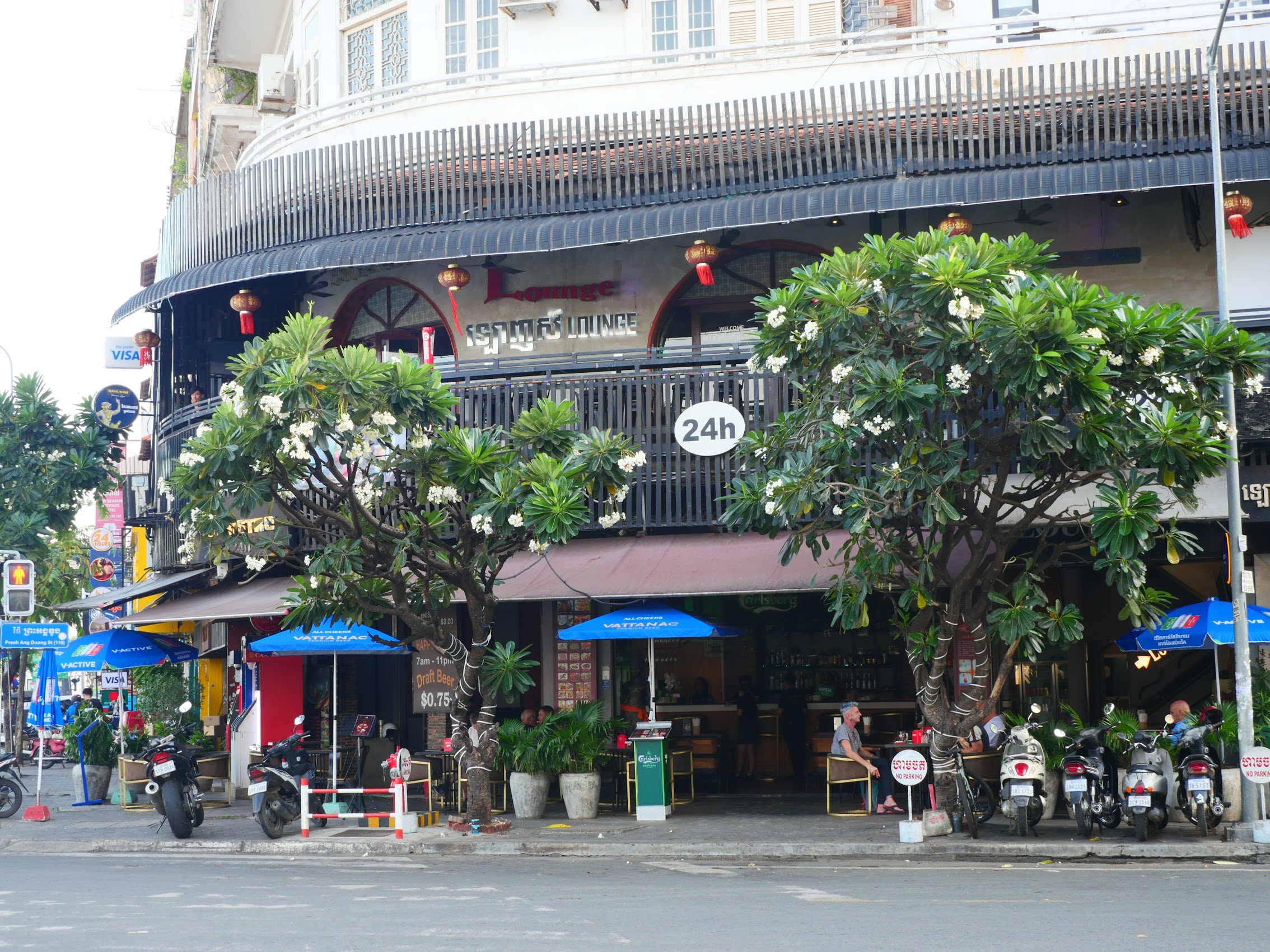

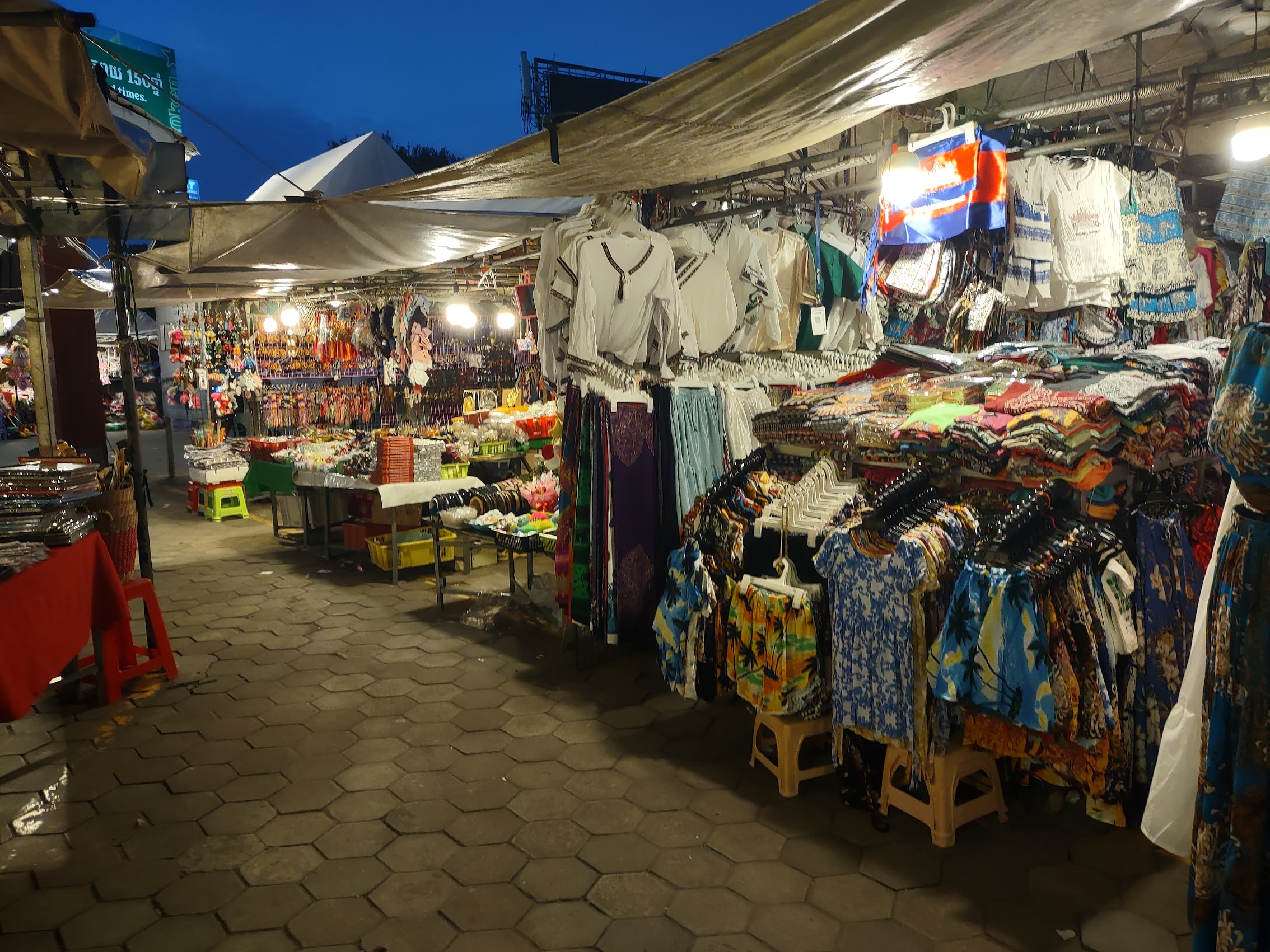
From there we found a convenience store (The Big C Mini) near our place and purchased a few necessities before proceeding to the Old Market, which was only a block west of our place. The Old Market was interesting, but more of a local place with mostly inexpensive clothing and household goods. From there we made our way to the Phnom Penh Night Market which was quite busy and interesting, but we didn’t see anything that really peaked our appetites (I think that Thailand may have turned us into Night Market Snobs.)



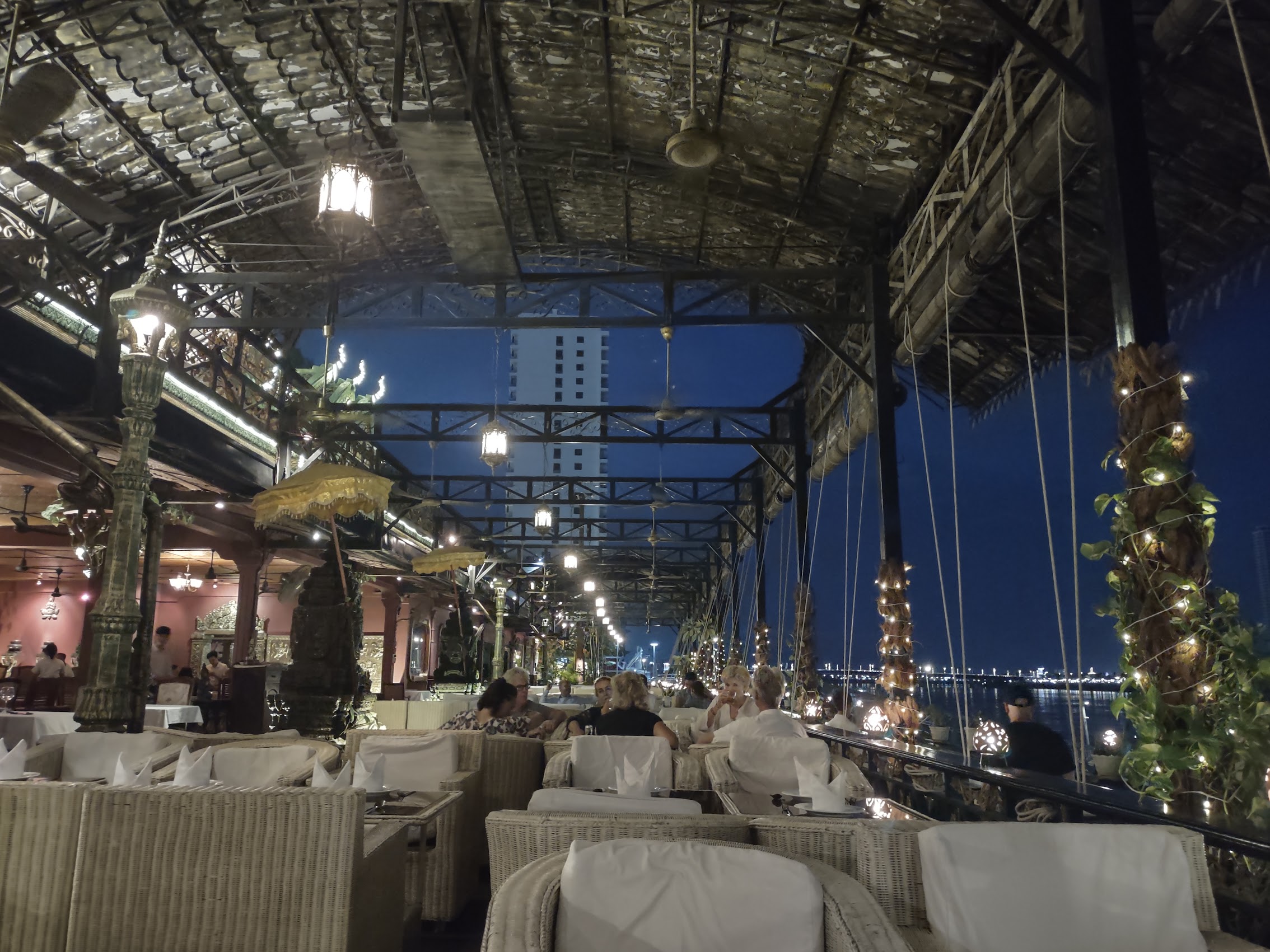
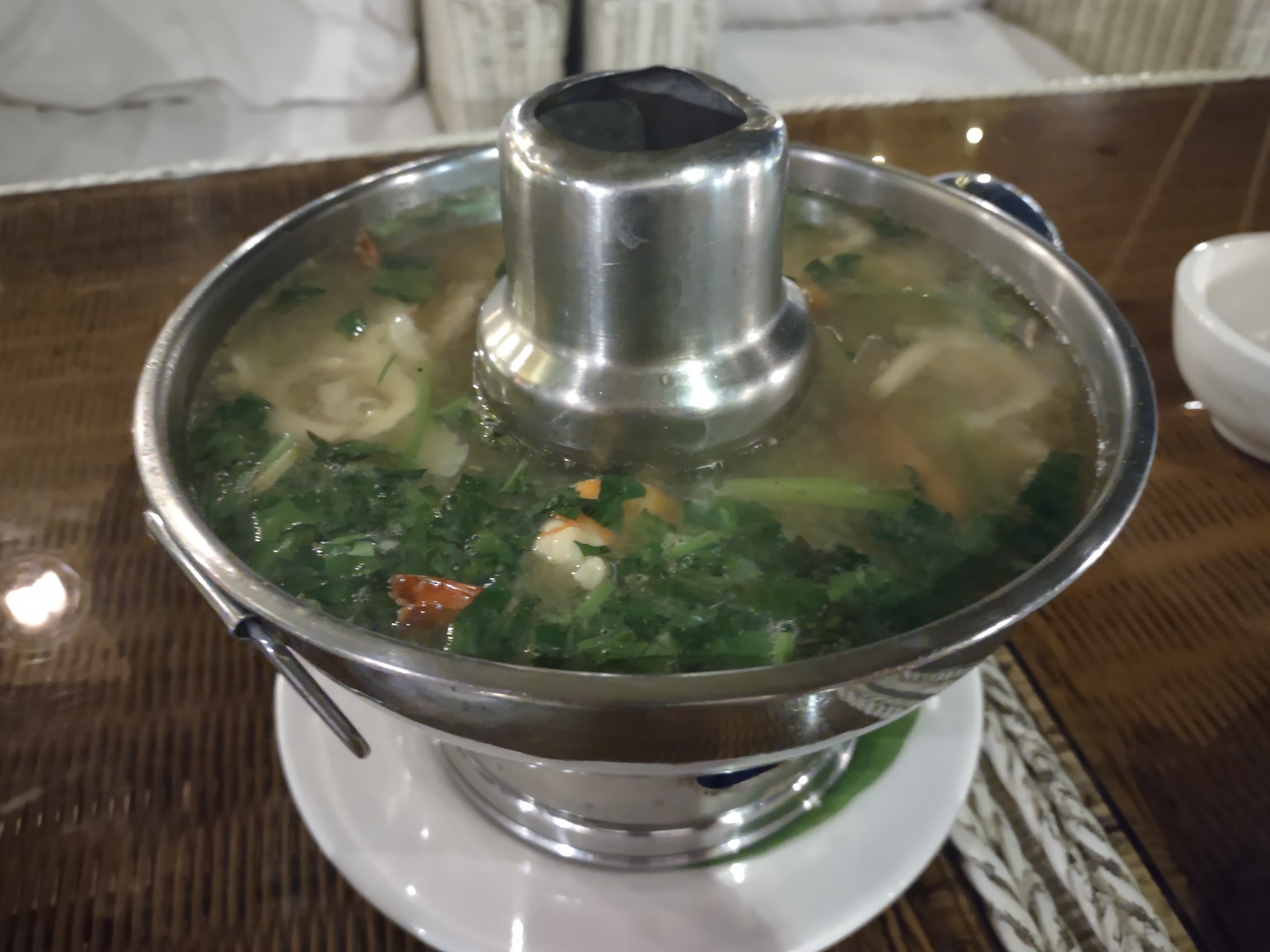
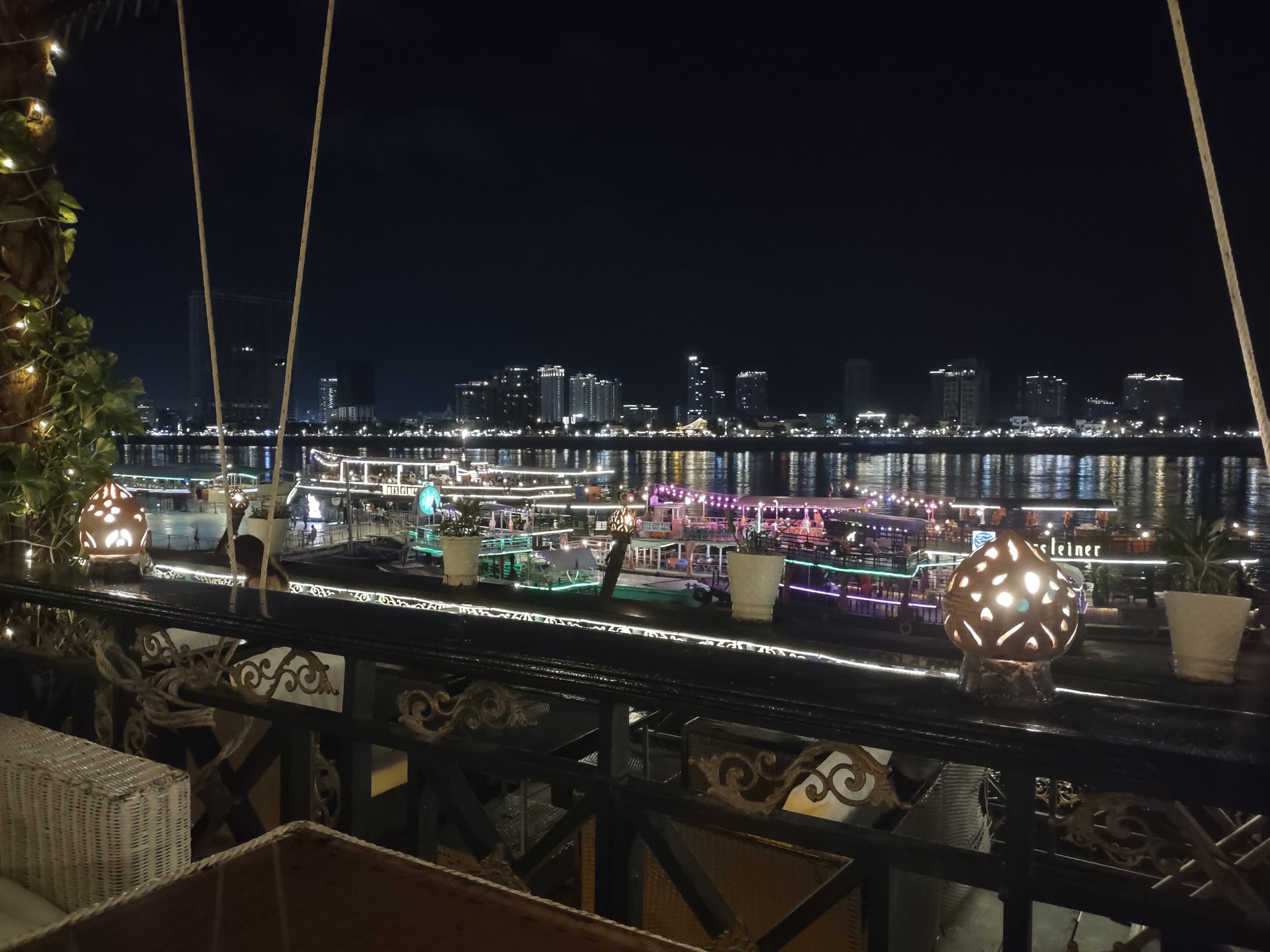
We made our way back to Preah Sissowath Quay and stumbled upon an interesting looking riverside restaurant called the Titanic where we had some cocktails and some really good pho (a popular southeast Asian soup which most believe originated in Vietnam) and enjoyed some very nice night-time views of the river before heading home. In retrospect, I found it kind of amazing that we had seen all of this on our first evening in Phnom Penh without having gone more than two blocks from our apartment!

A Day in the City
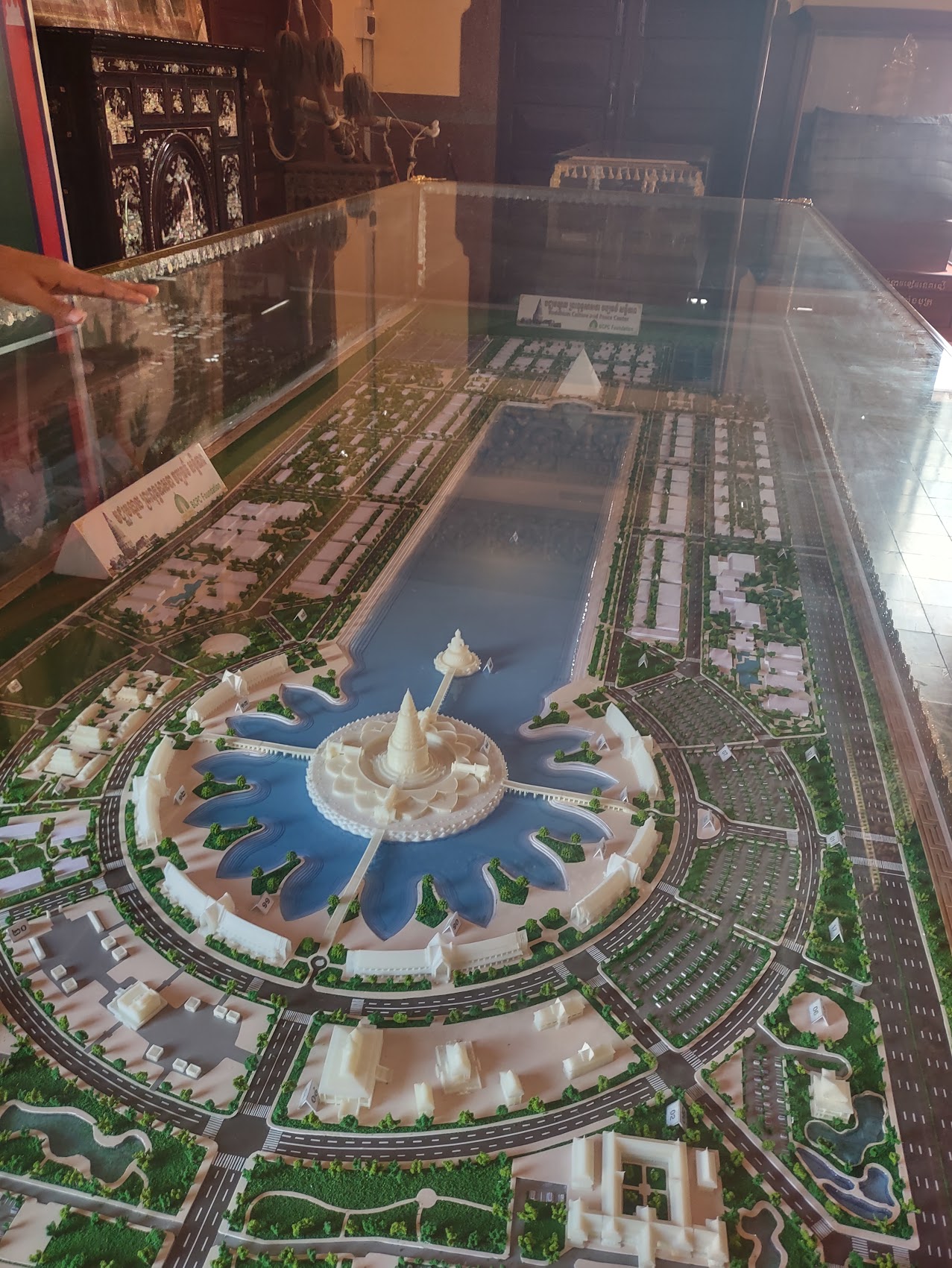
On our first full day in Phnom Penh, we had a self-guided walking tour planned, about a five-mile loop, which hit some of the key places we had identified to visit in downtown Phnom Penh and which we hoped would provide a nice cross-section of the city. From our place, we proceeded south to our first planned stop, the Royal Palace. Along the way we made an unscheduled stop at the Wat Ounalom Monastary which had a beautiful temple and where a young monk showed us drawings and model for an enormous mega-temple complex which it appeared would rival the Wat Phra Dhammakaya which we had visited in Ayutthaya. (I am quite curious to see if they are able to raise the necessary funds to actually build the place.)

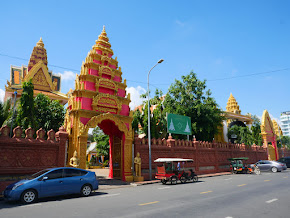
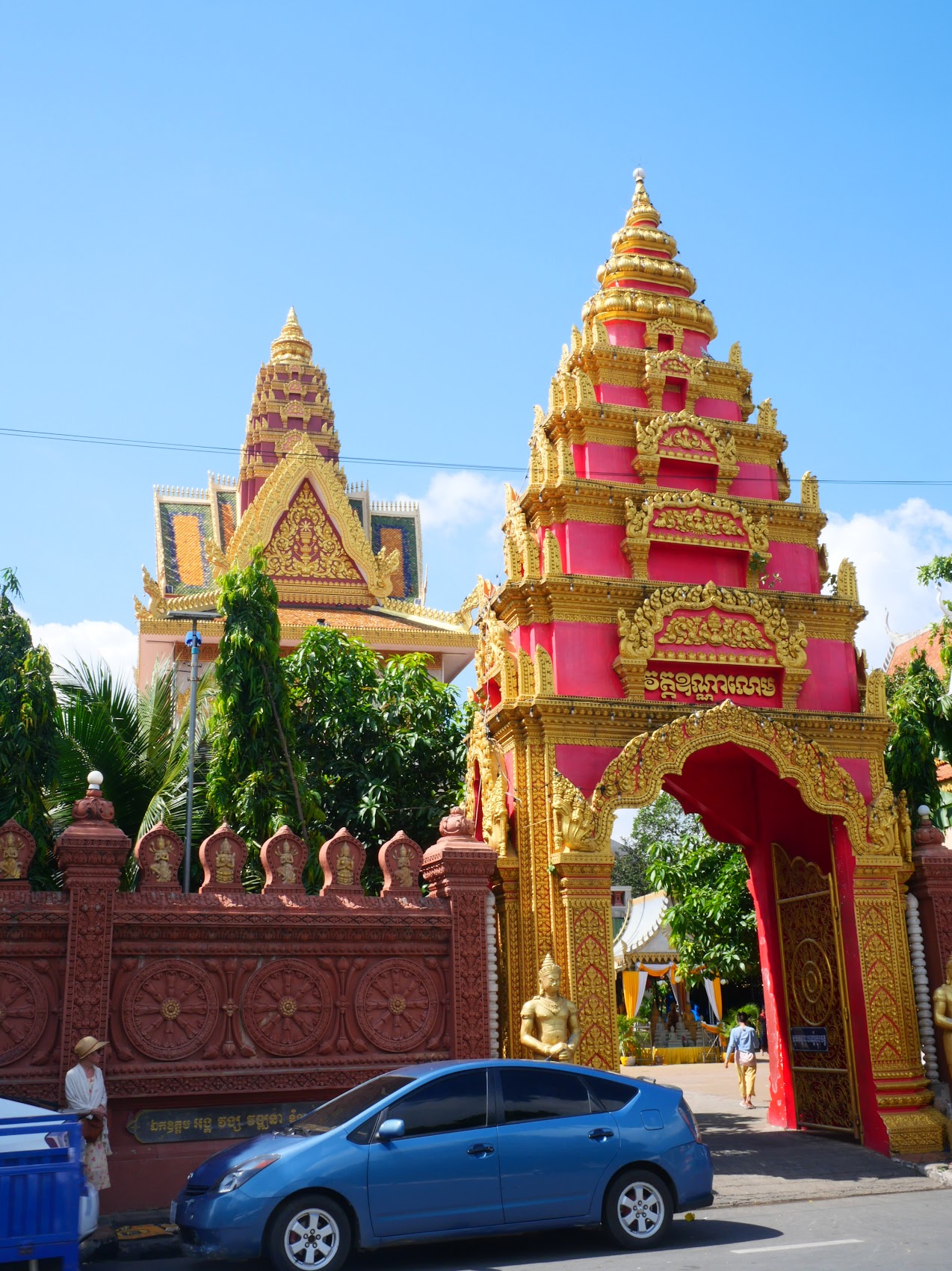

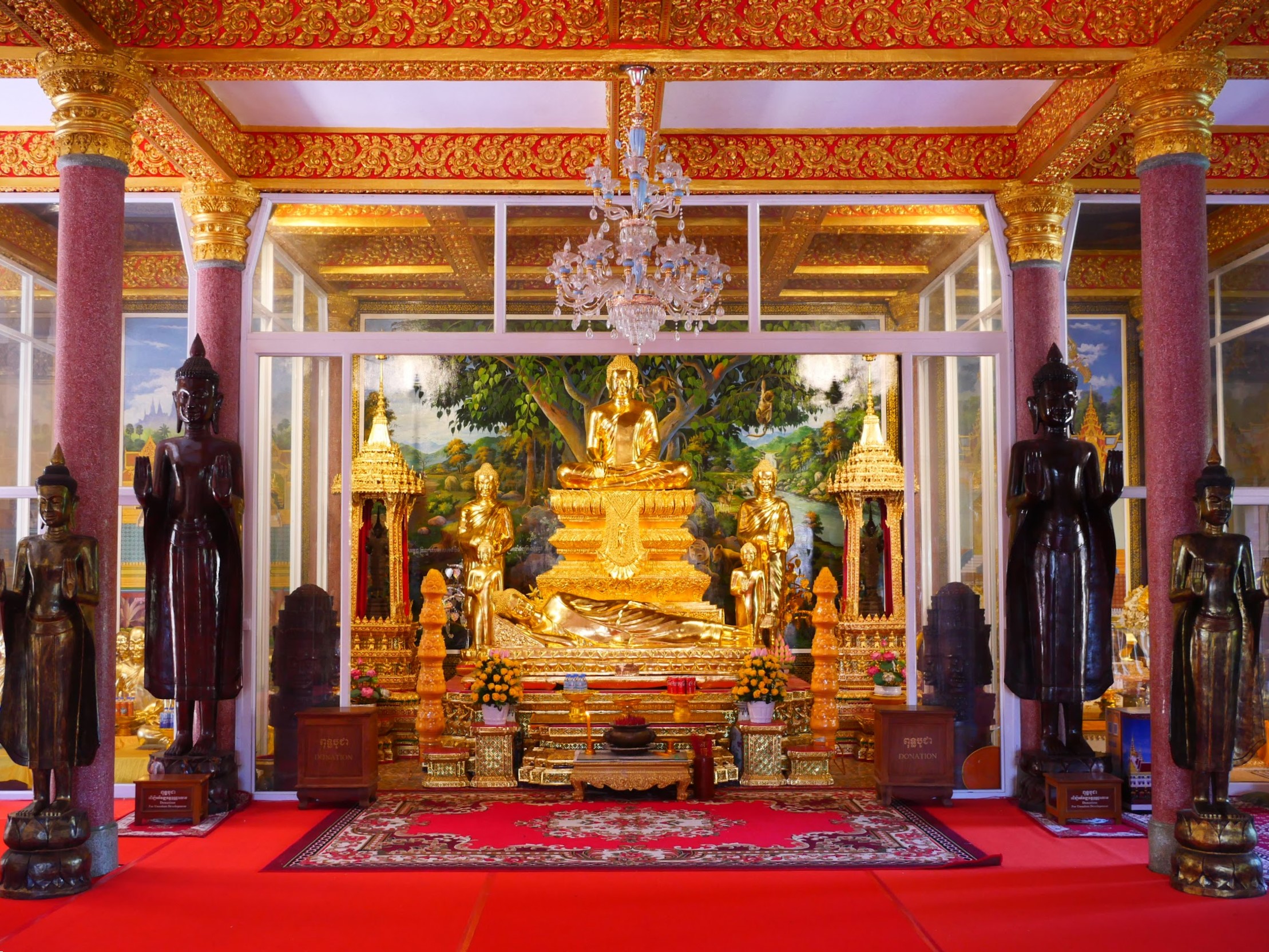
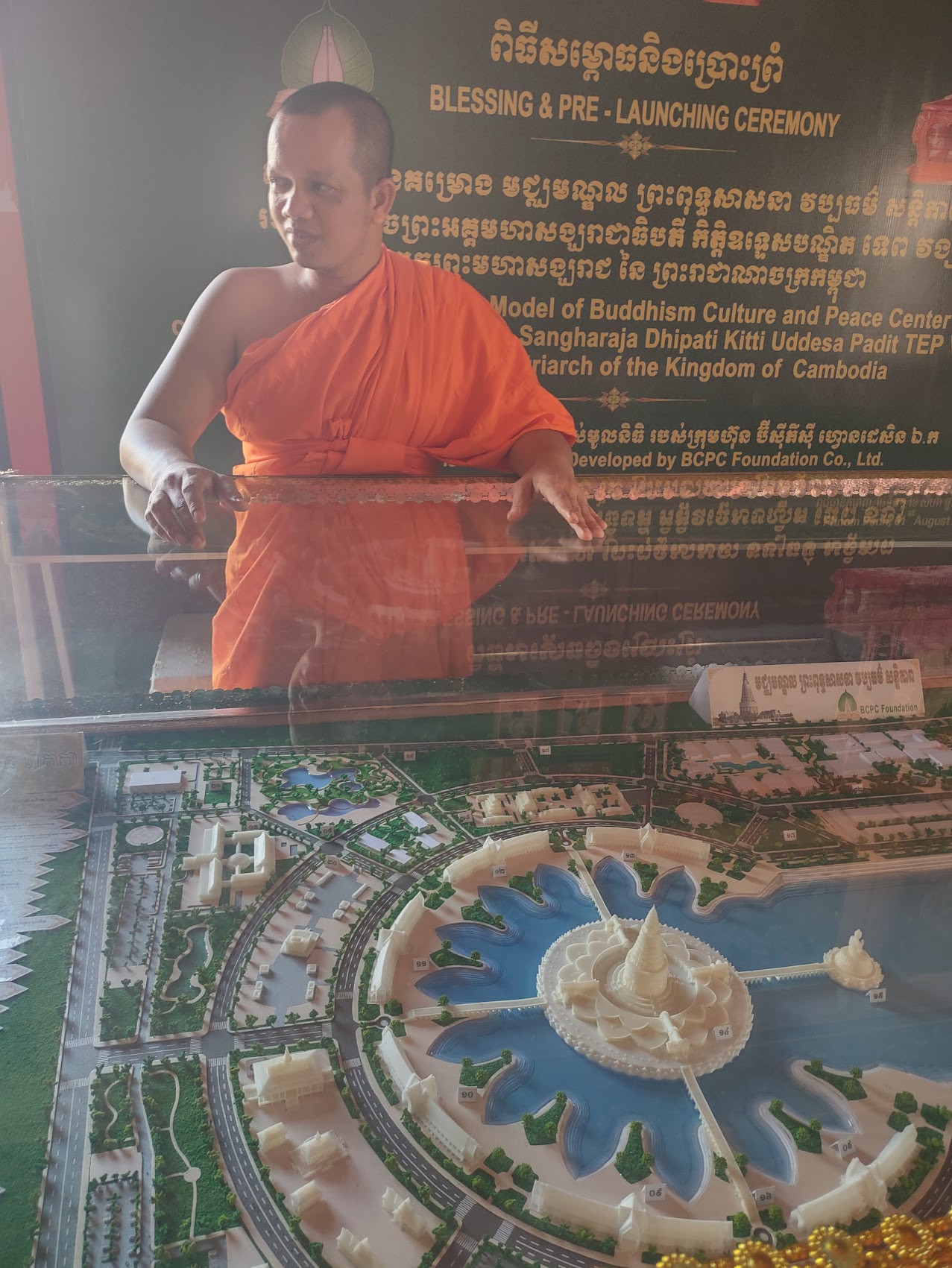
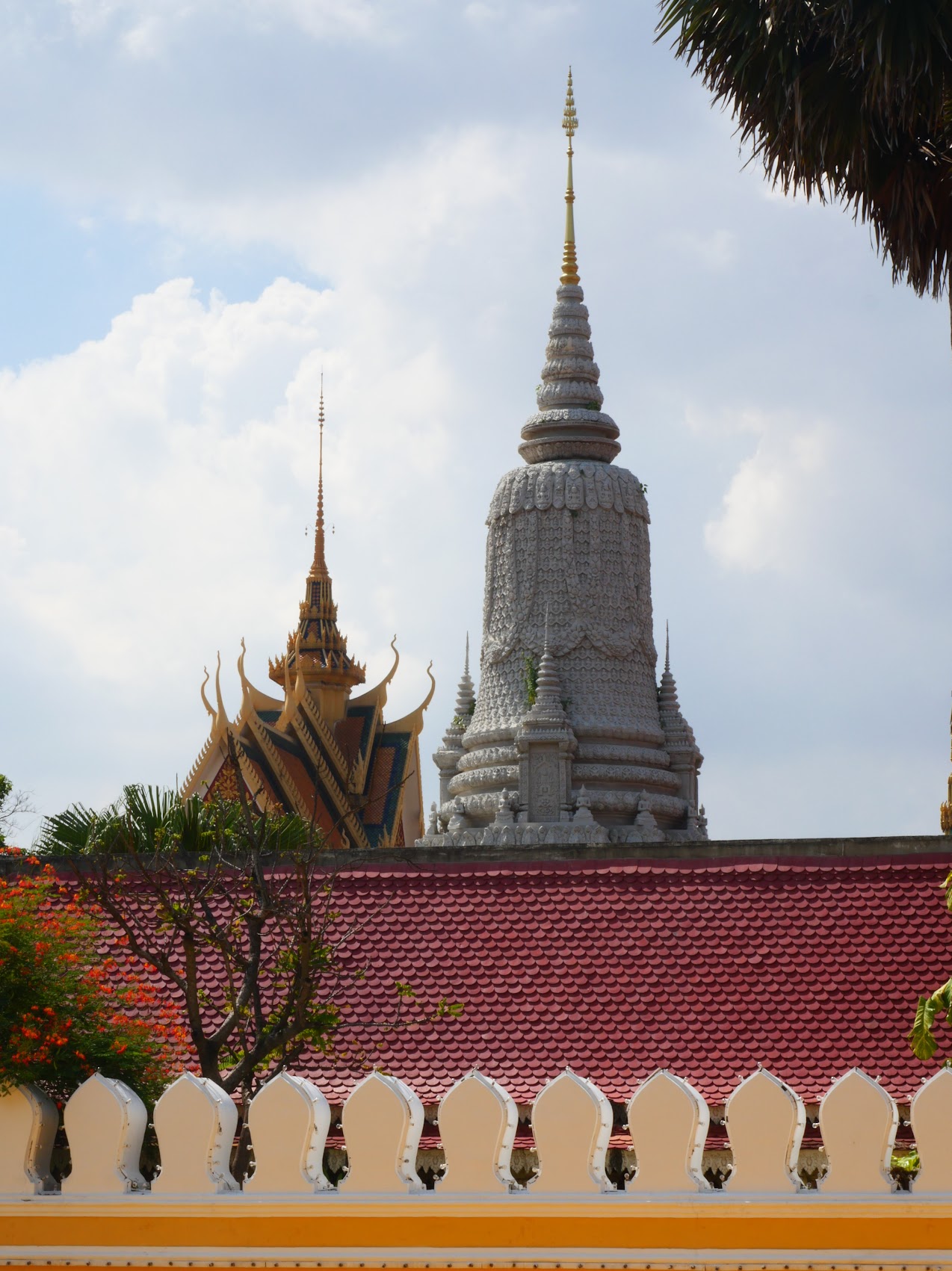
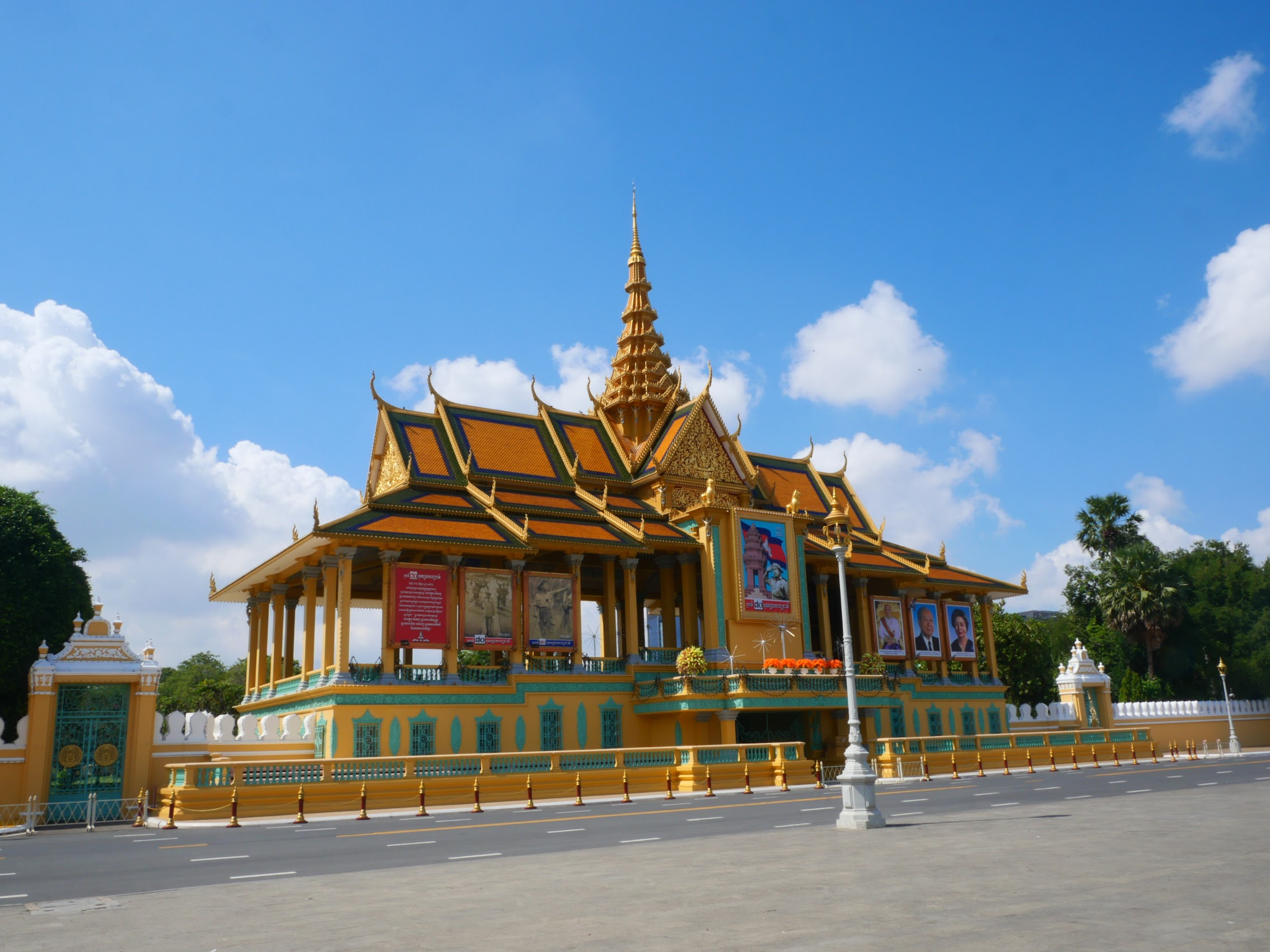
We continued south to the Royal Palace which was, unfortunately, closed, but everyone assured us that it would be open later in the day. (From various YouTube videos we have viewed, this appears to be the perennial state of the Royal Palace which is ostensibly supposed to be open to the public.) Undeterred, we saw what we could from beyond the gates and strolled through the large public events plaza and pavilions which extend from the Palace to the river.
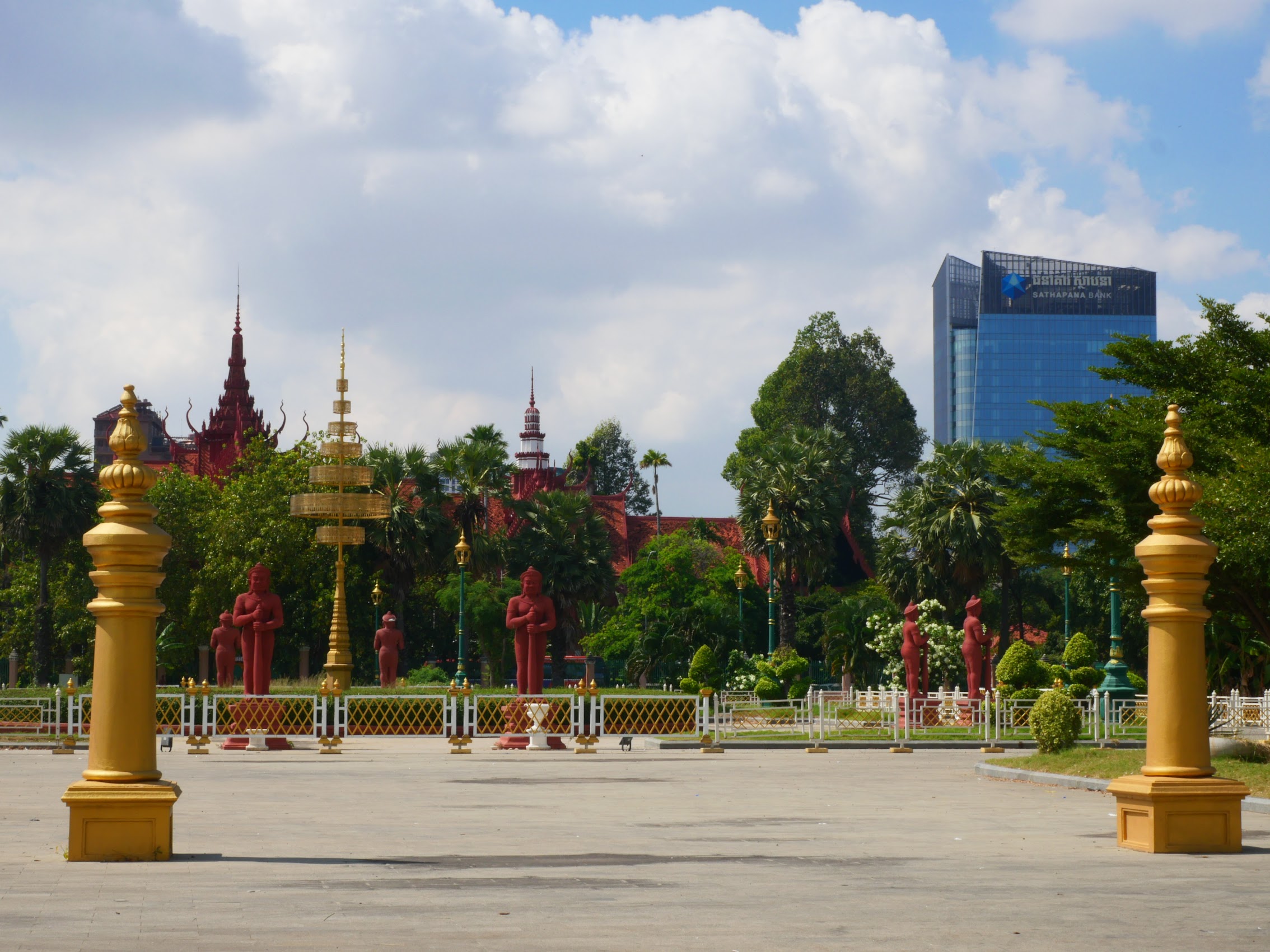
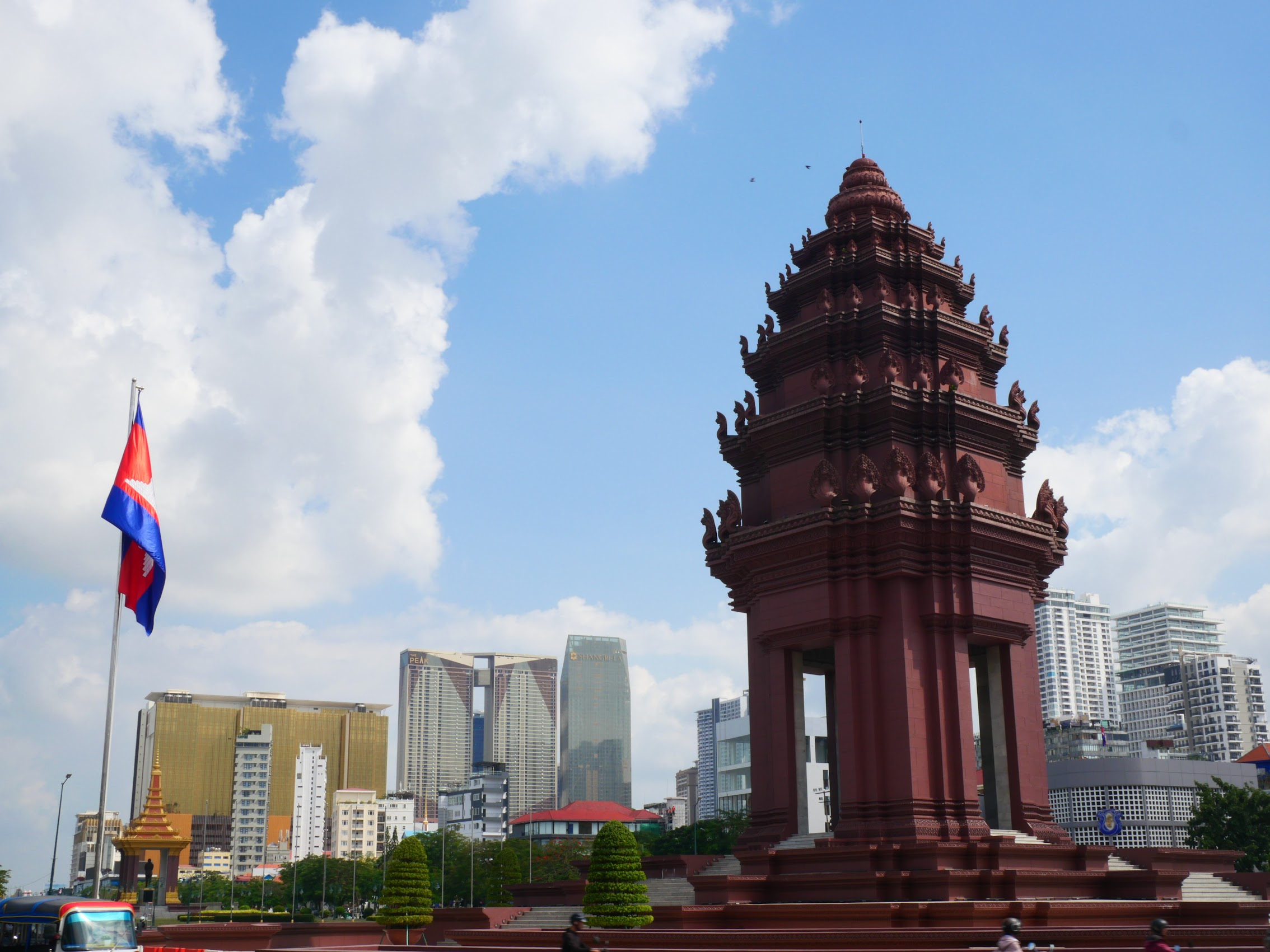
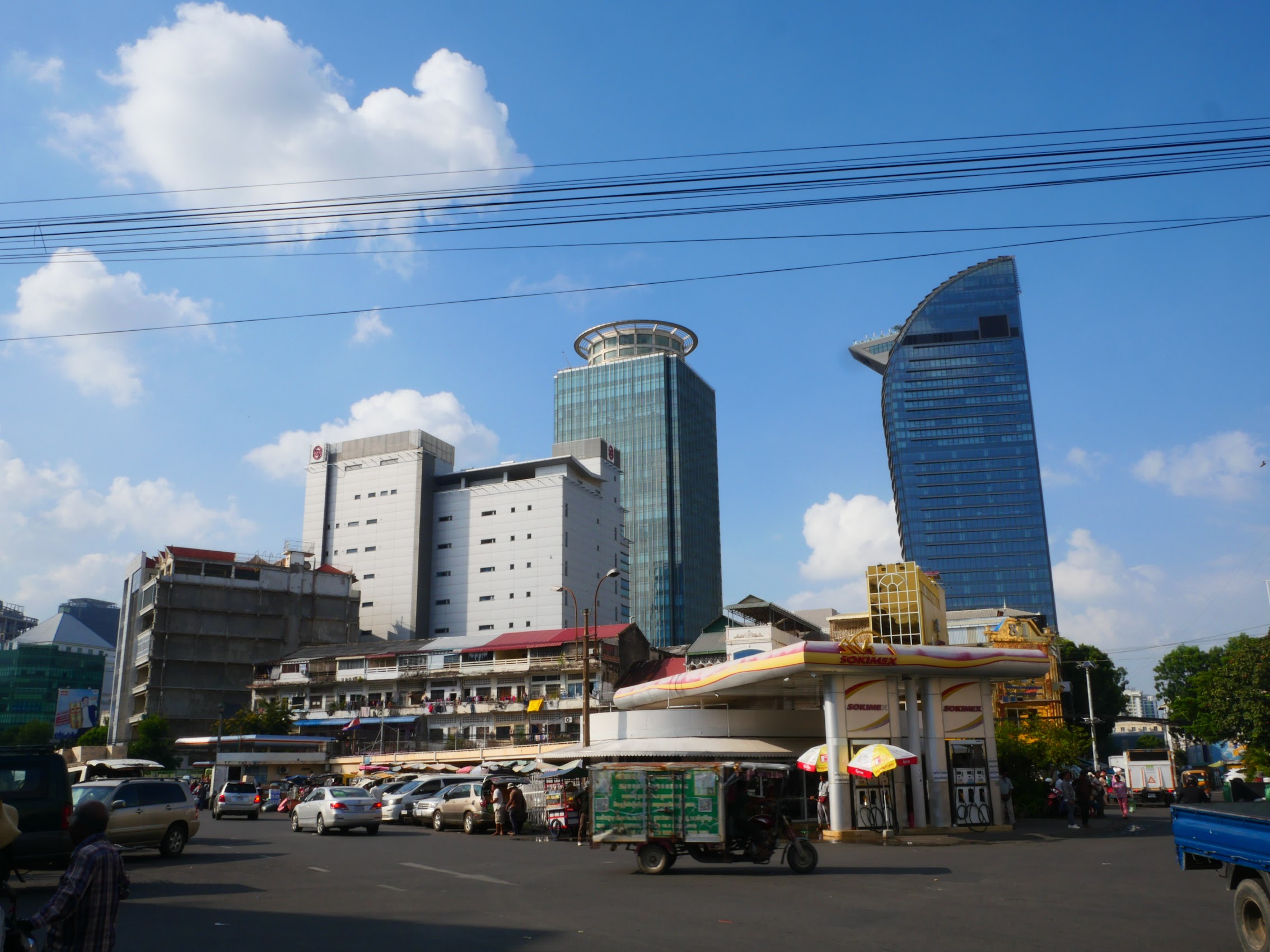
From the Royal Palace, we continued south and west to the Independence Monument, erected in 1958 to commemorate Cambodia’s independence from France in 1953. The Monument itself was a little underwhelming, but, when viewed with the modern high-rise towers of south Phnom Penh in the background, it is a pretty spectacular site.
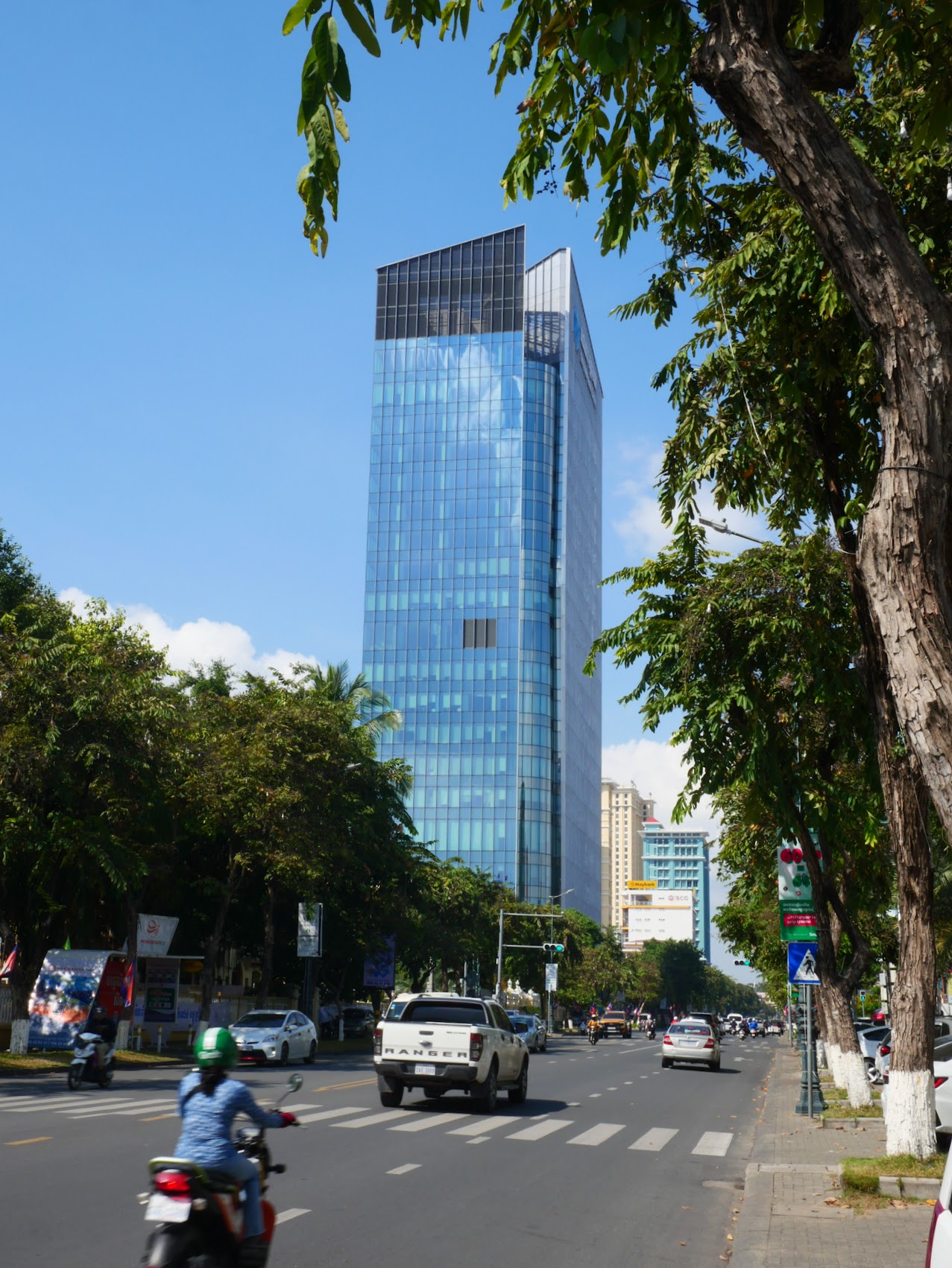
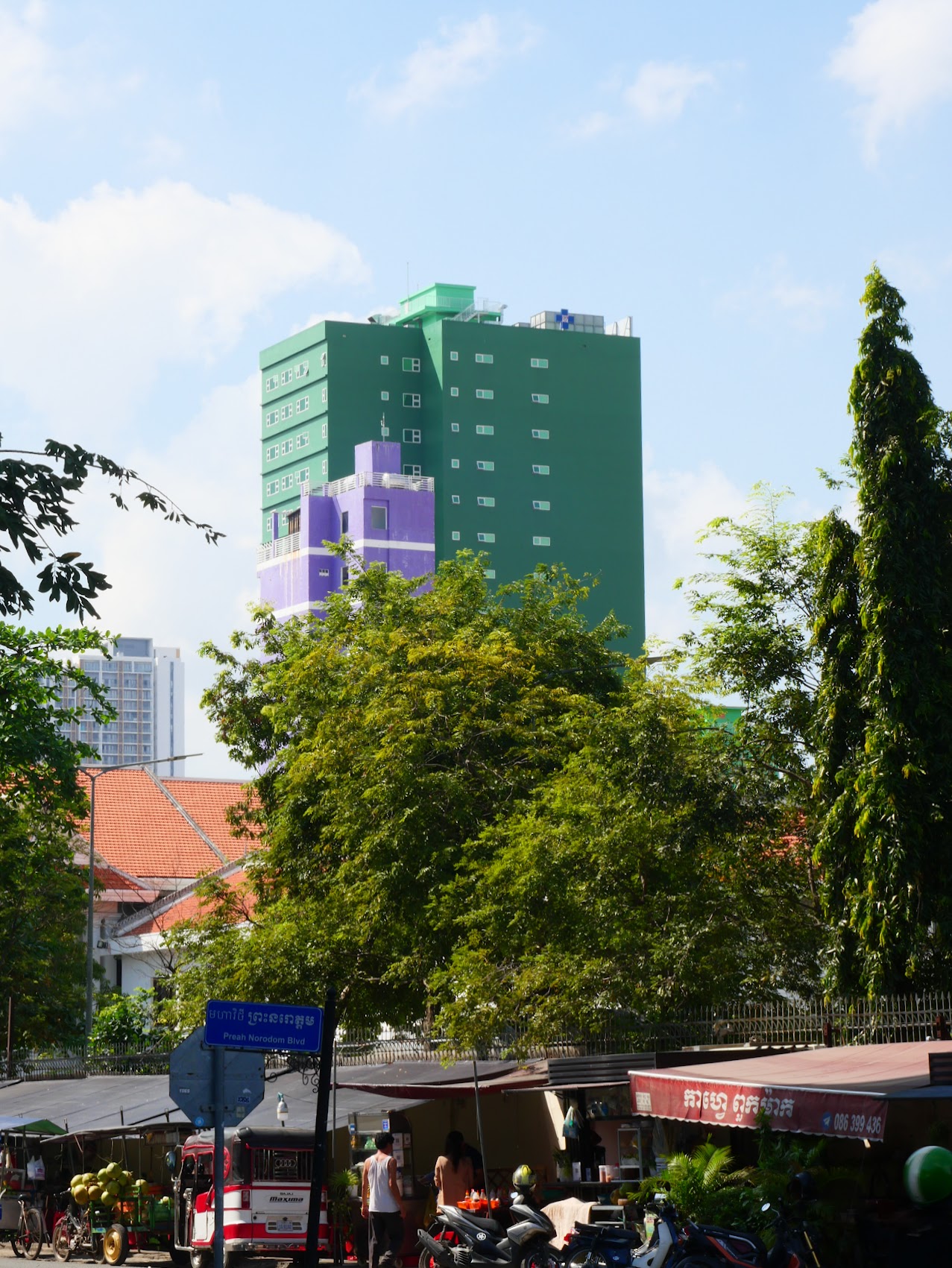
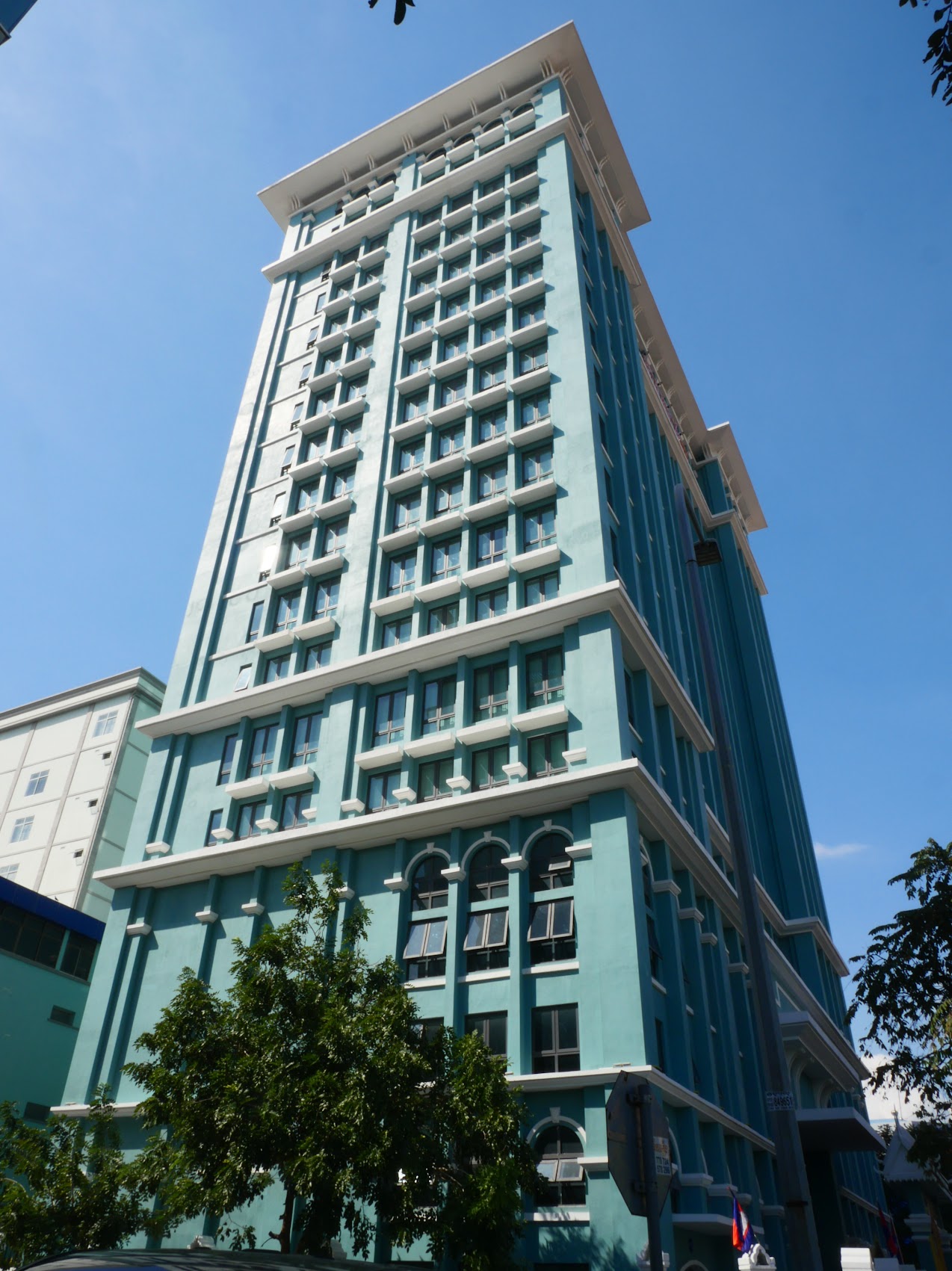
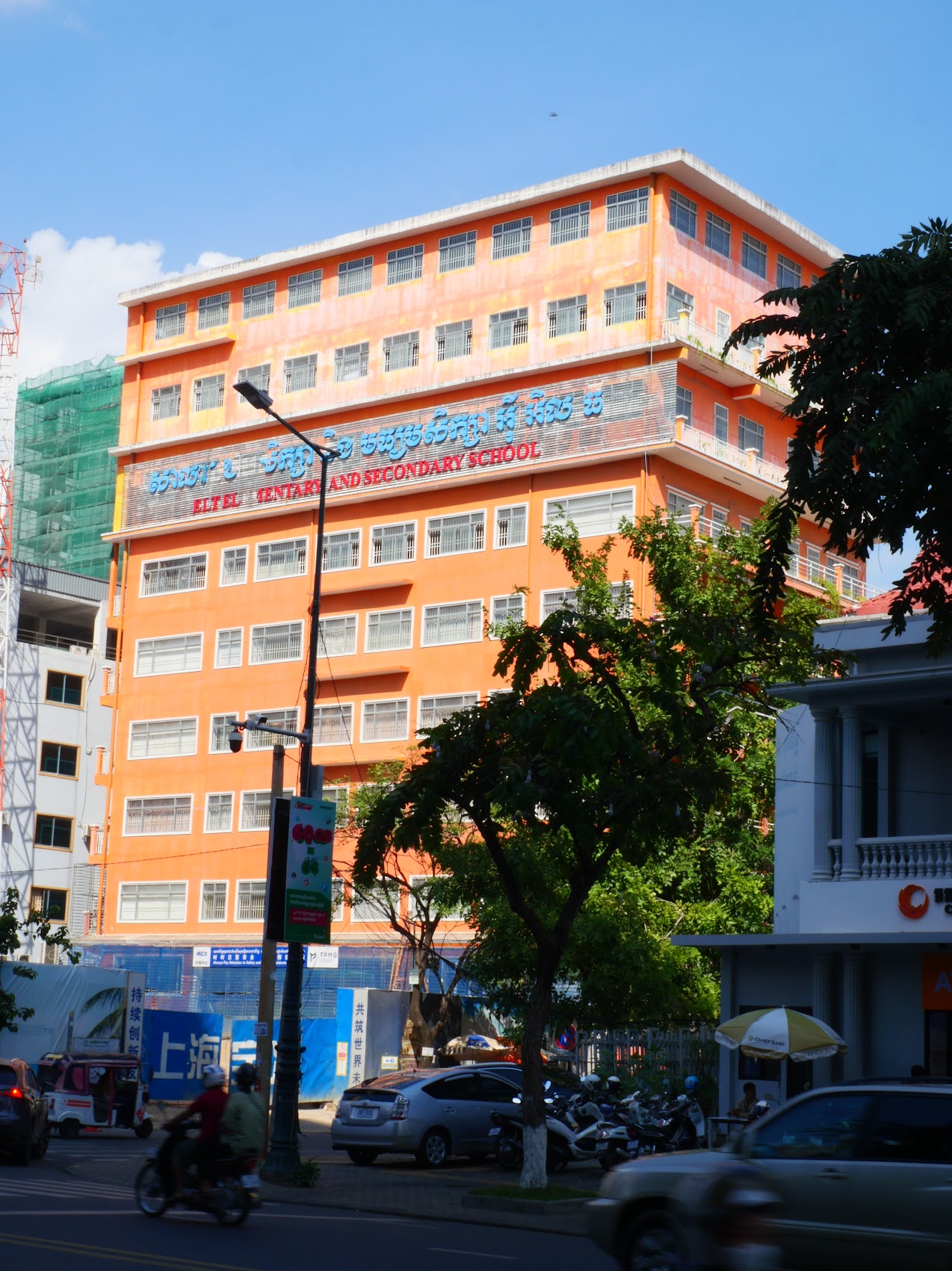
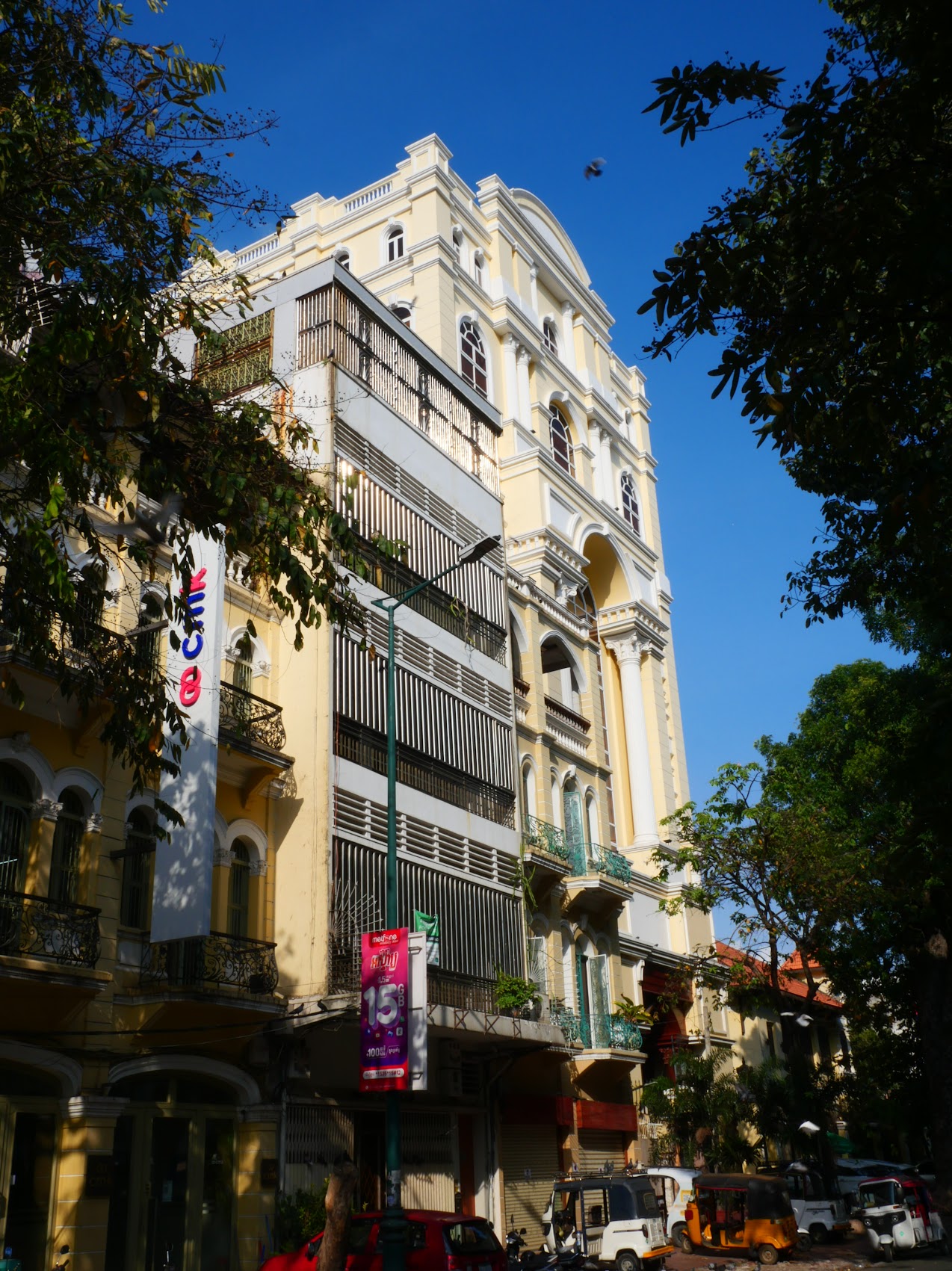
From the monument, we proceeded north on Preah Norodom, one of the Phnom Penh’s major boulevards which runs from the Independence Monument to the Wat Phnom Pagoga on the northern edge of the city center. Along the way we saw an interesting variety of buildings, new and old, large and small, beautiful and otherwise. We even saw a nine-story elementary school (one grade per floor?). For me there was something very appealing about this mélange of architecture.



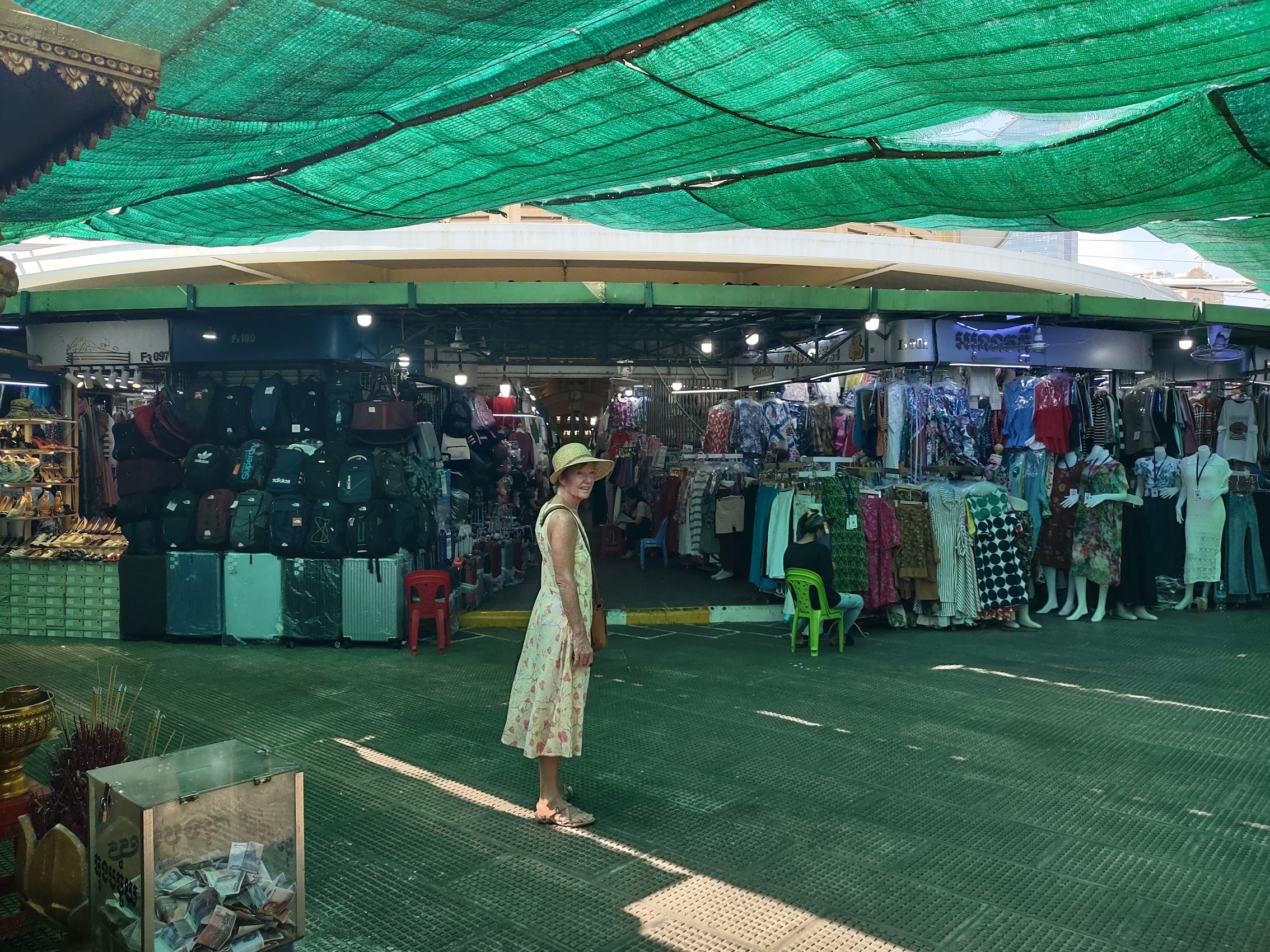
We detoured off Preah Norodom to a very interesting place we had seen and hear a lot about but were having a hard time actually imagining what it was like. It’s the Phsar Toul Tum Poung/Central Market, a 1930’s Art-Deco building (one of many in Phnom Penh thanks to the French colonial period), but unlike any Art-Deco structure I have ever seen. It’s a very large structure with four wings radiating from a central domed structure with clerestories everywhere.


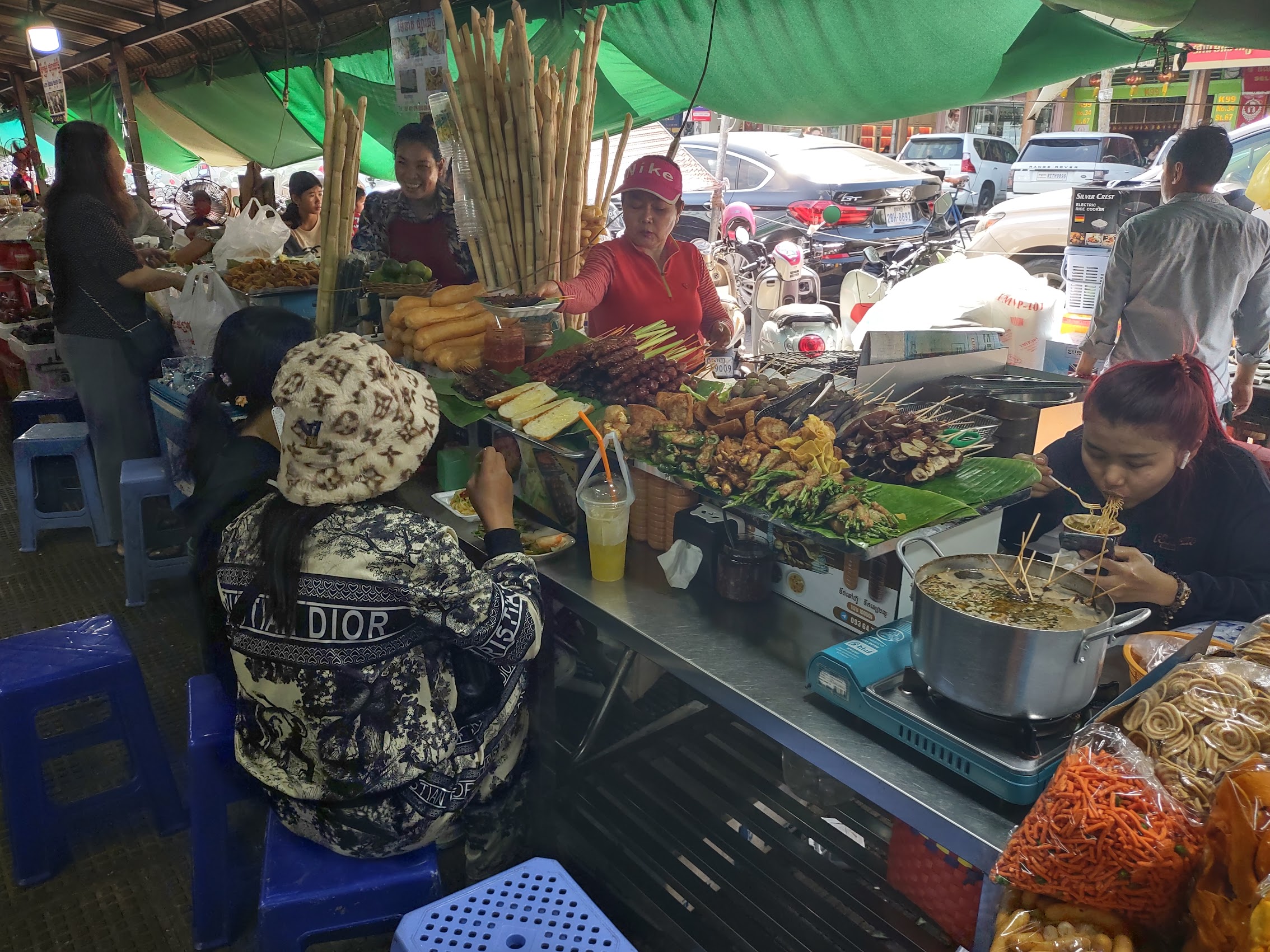
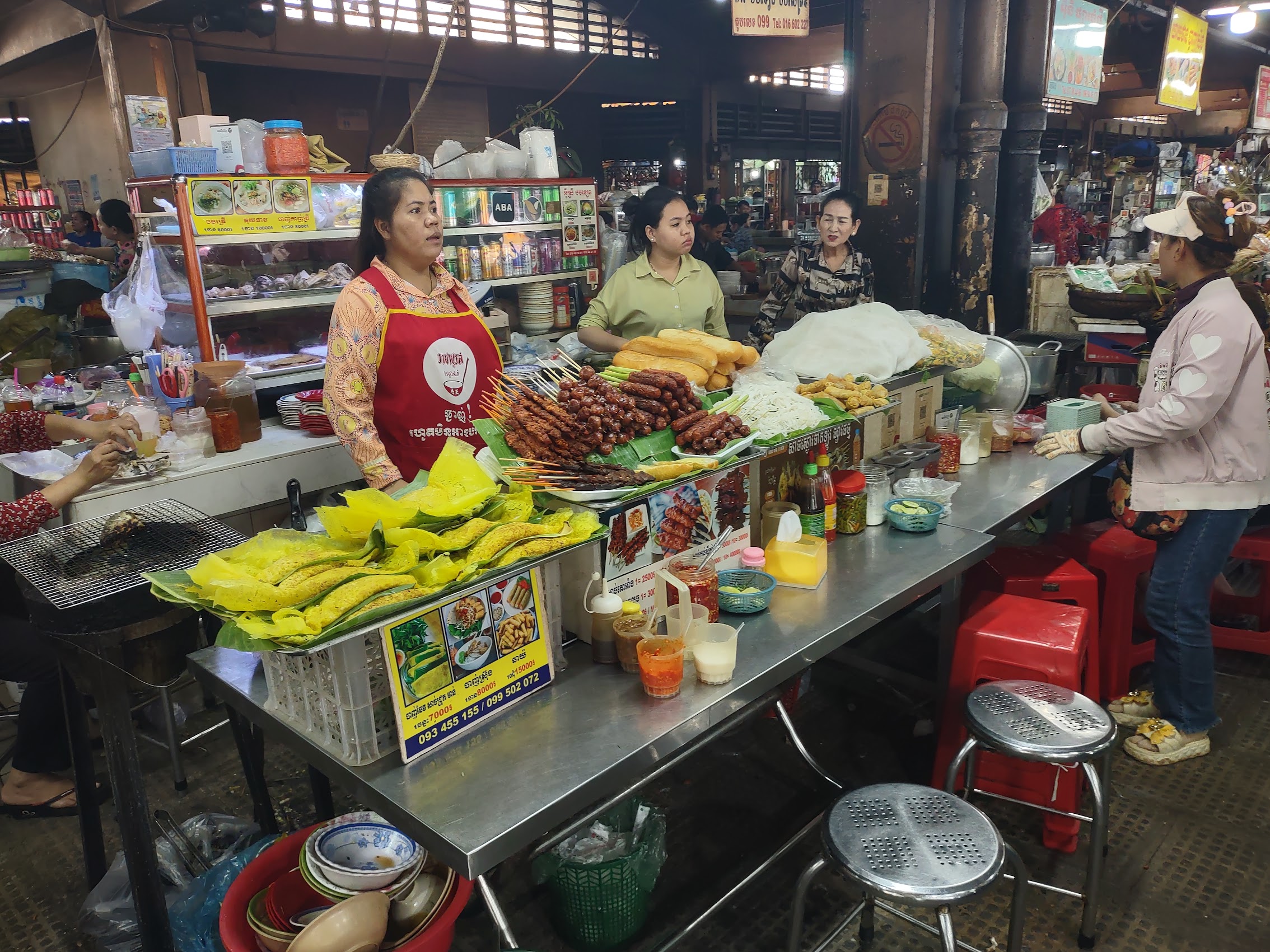
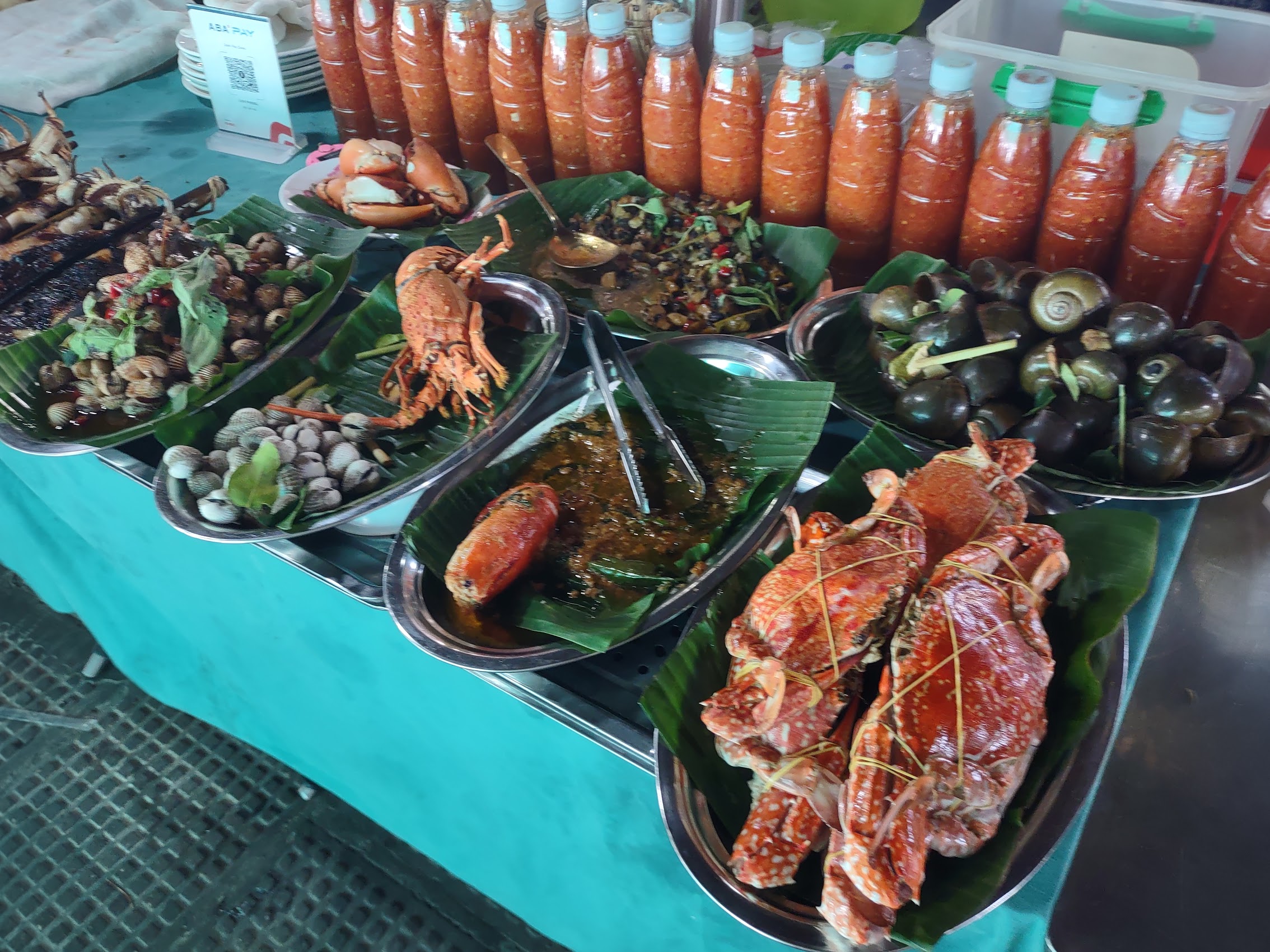
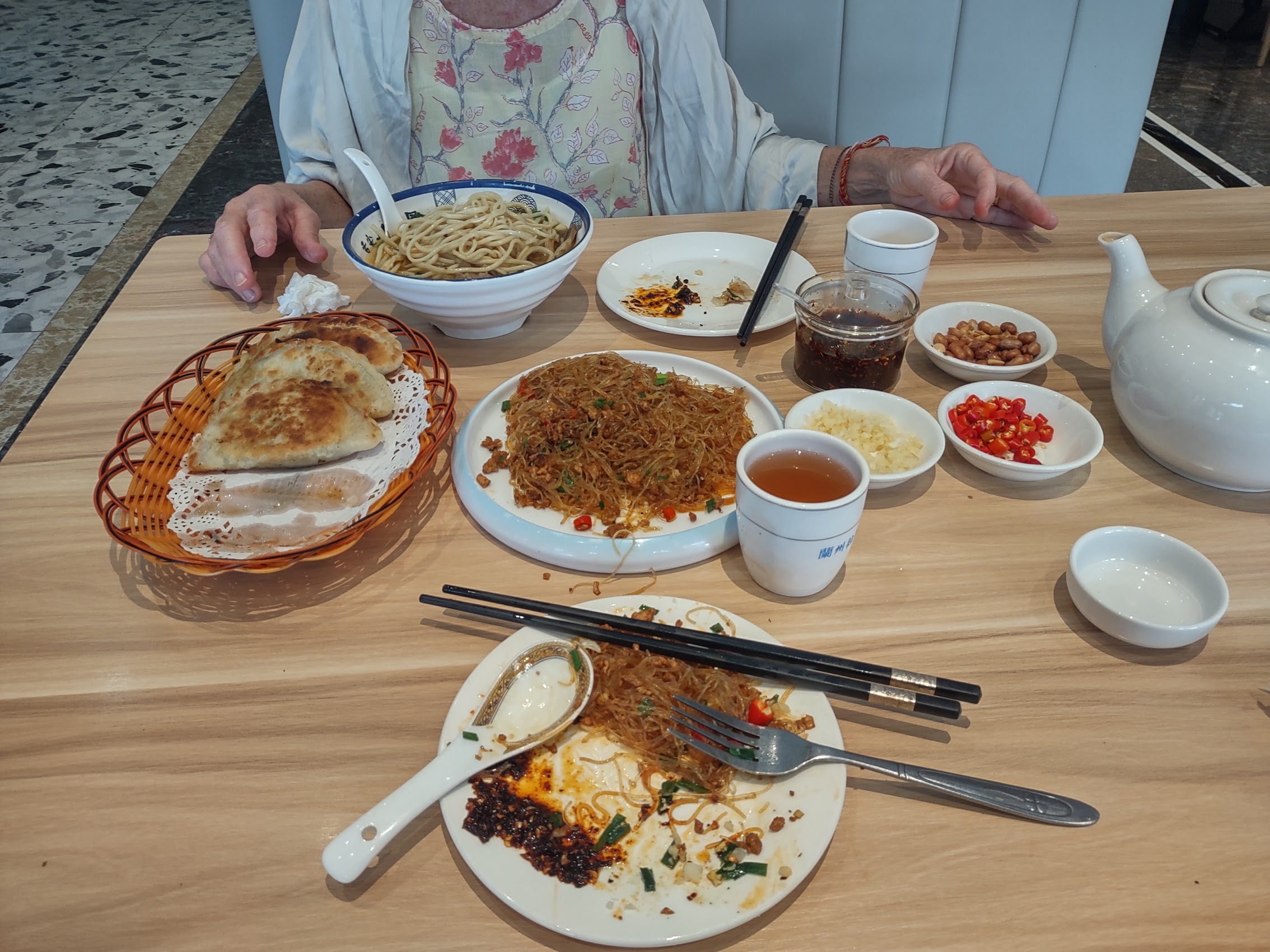
We stopped at the Central Market food court for a bite to eat which was, I believe, the first time for us since coming to Southeast Asia where, when we ordered the food “hot”, we actually got what is considered to be “hot” by the locals. Really good, but really hot (to the point that I had to cull some of the peppers out of my noodles).

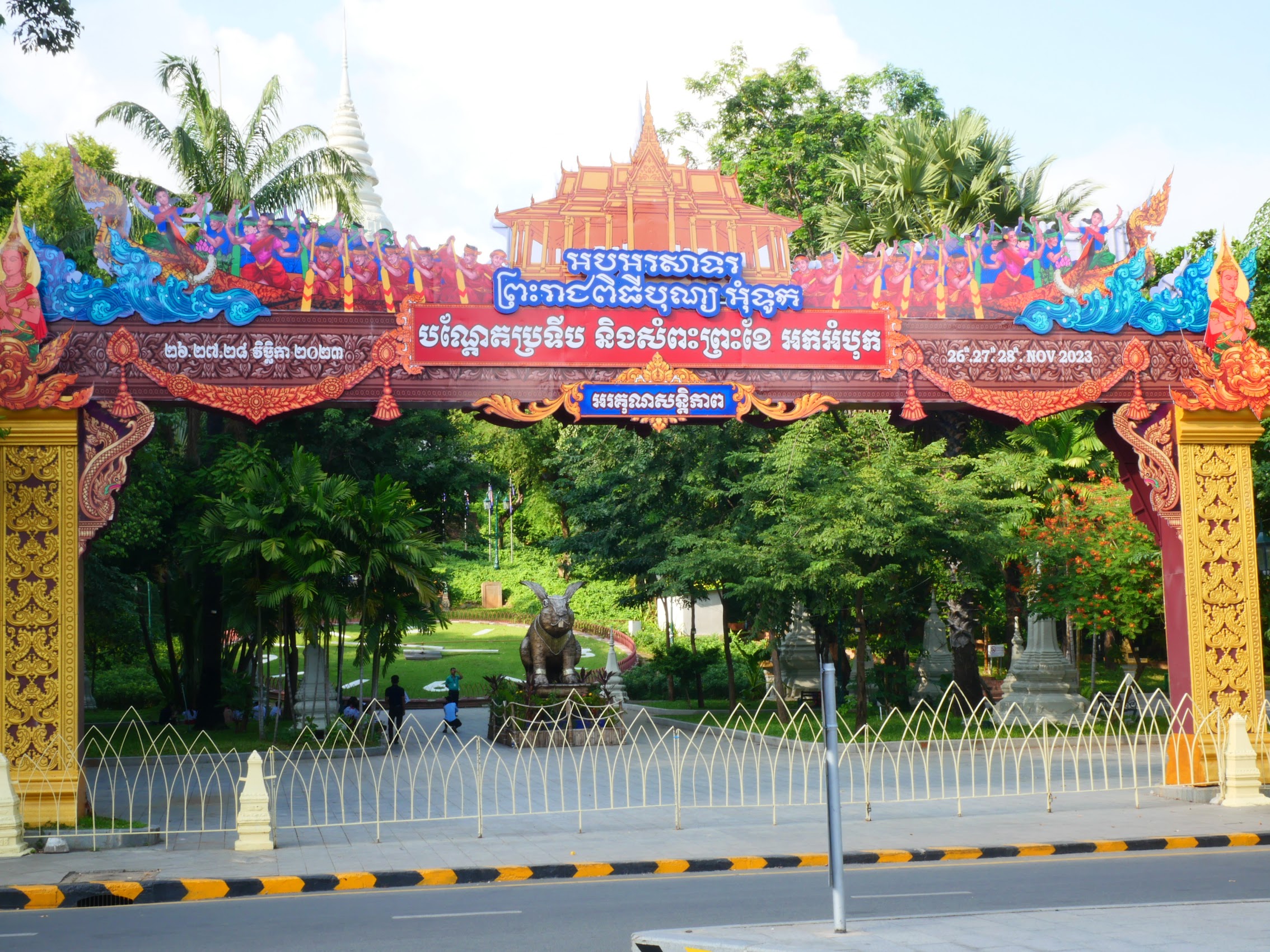
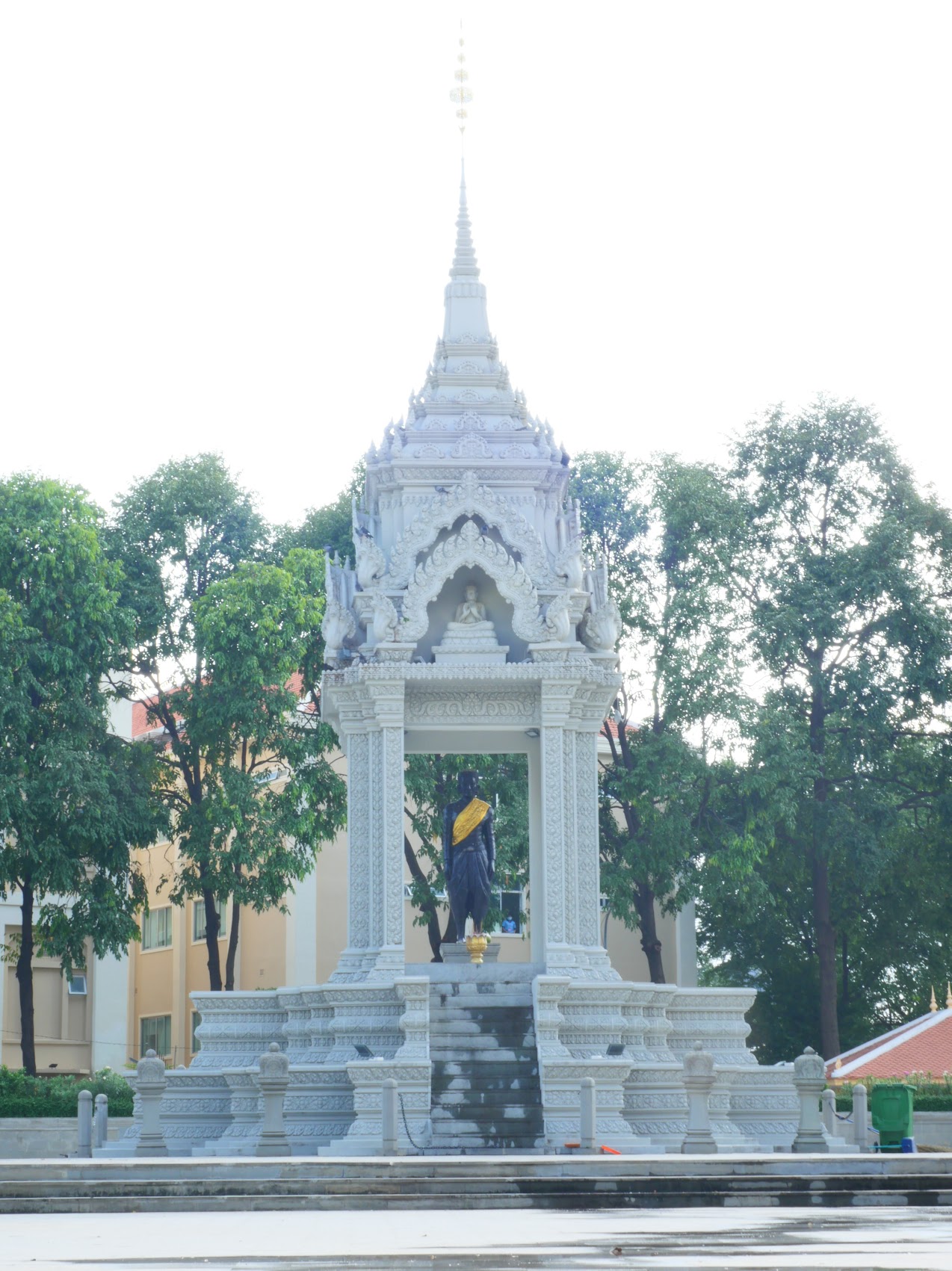
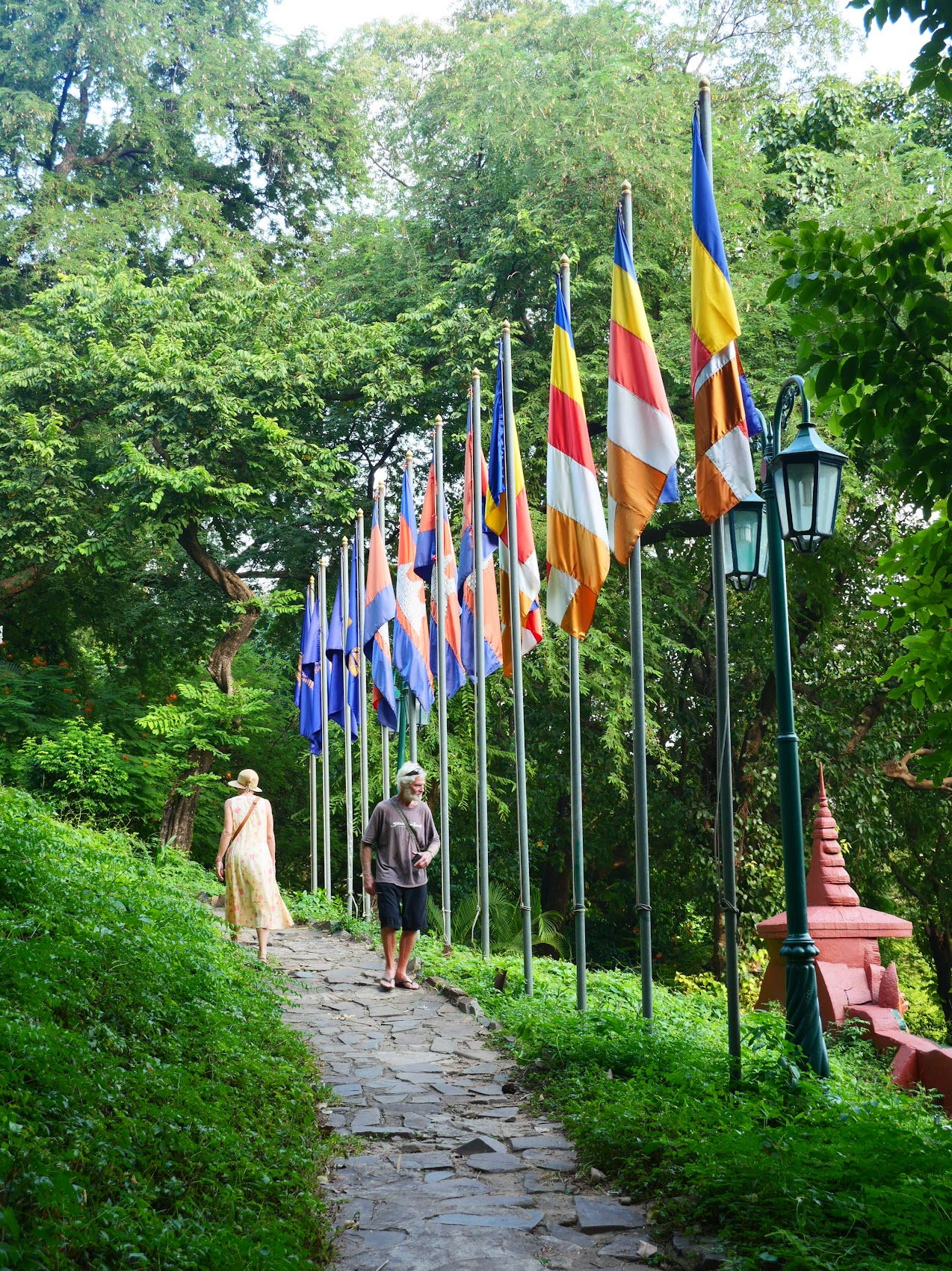
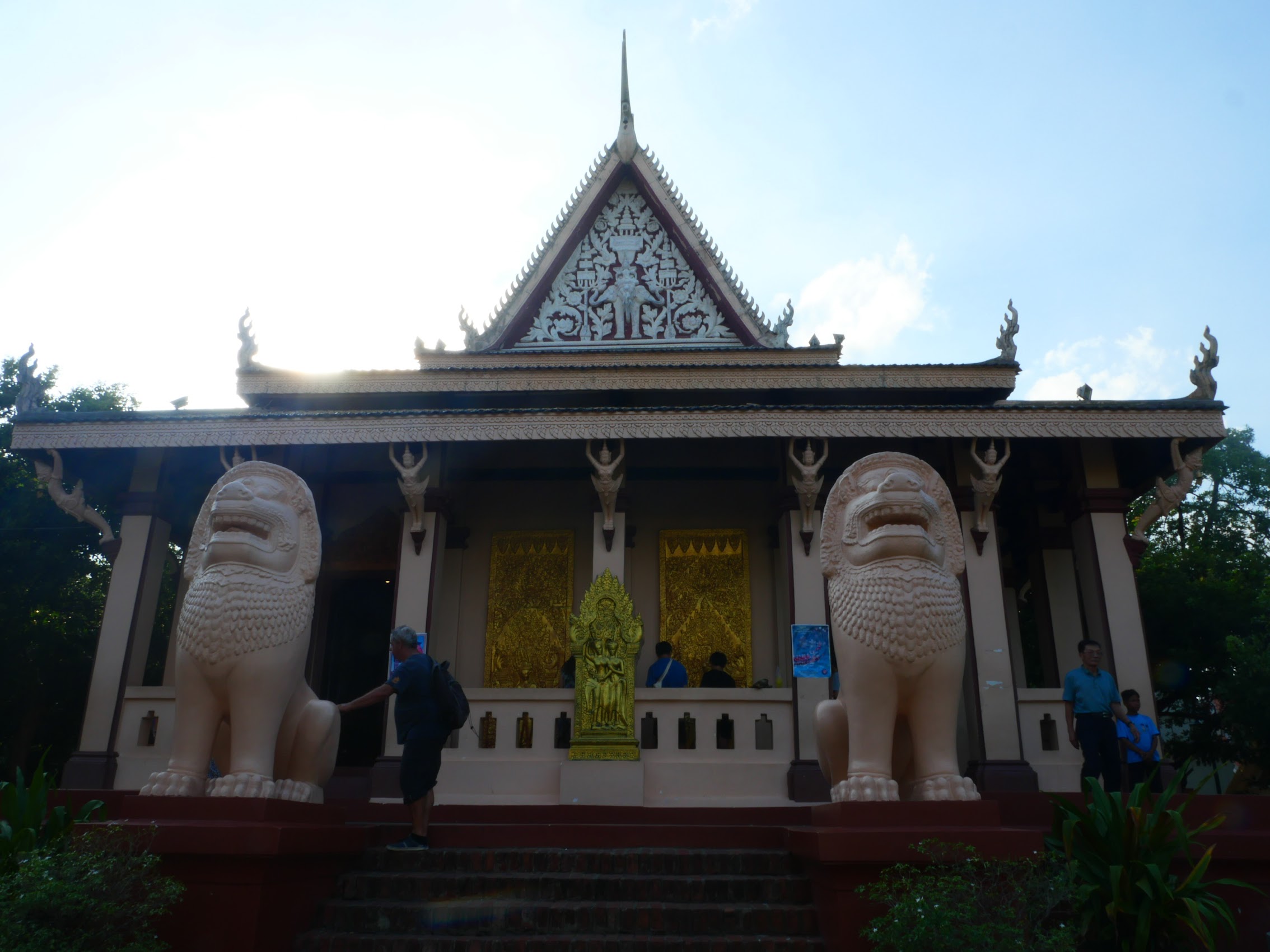
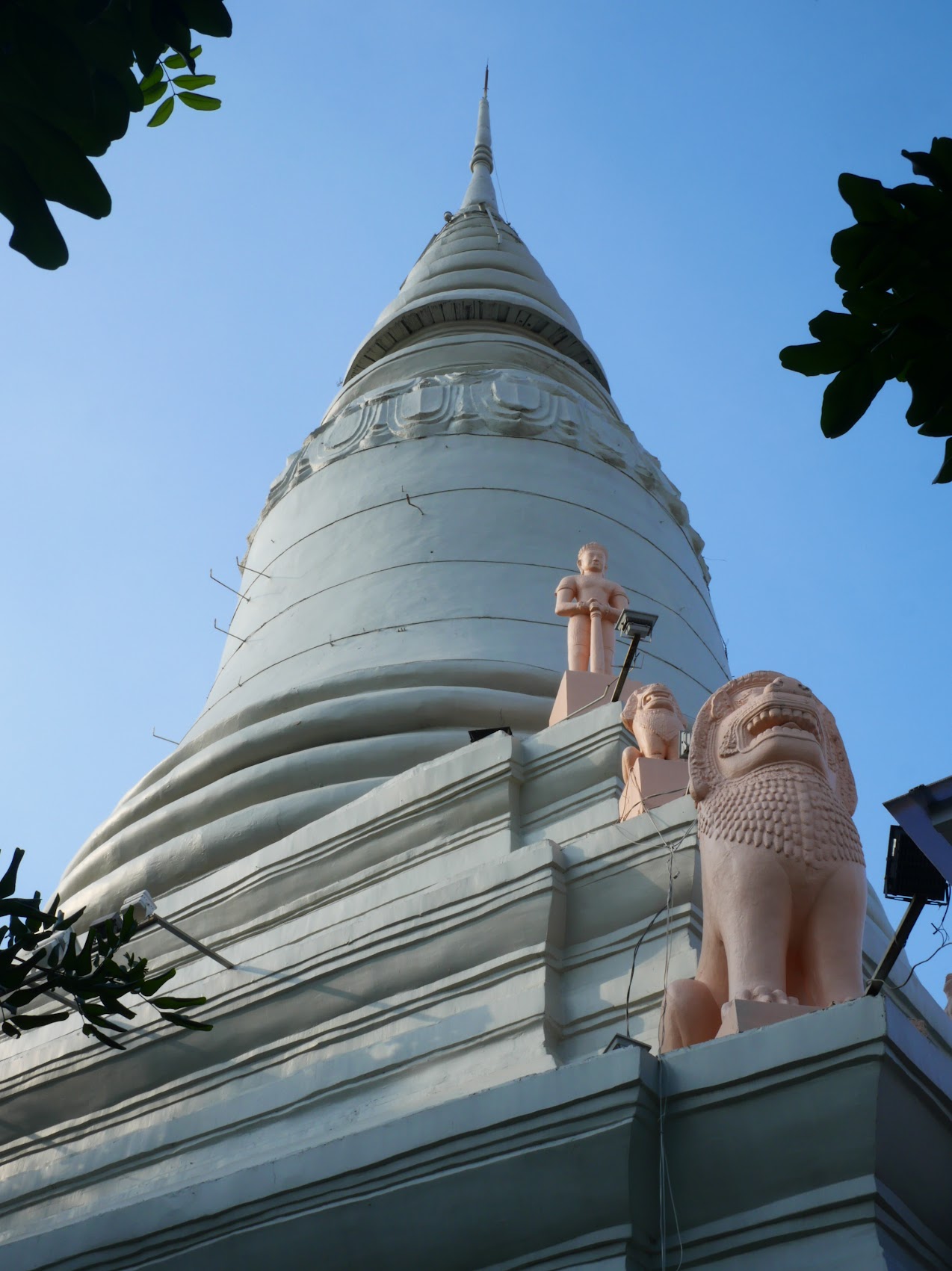
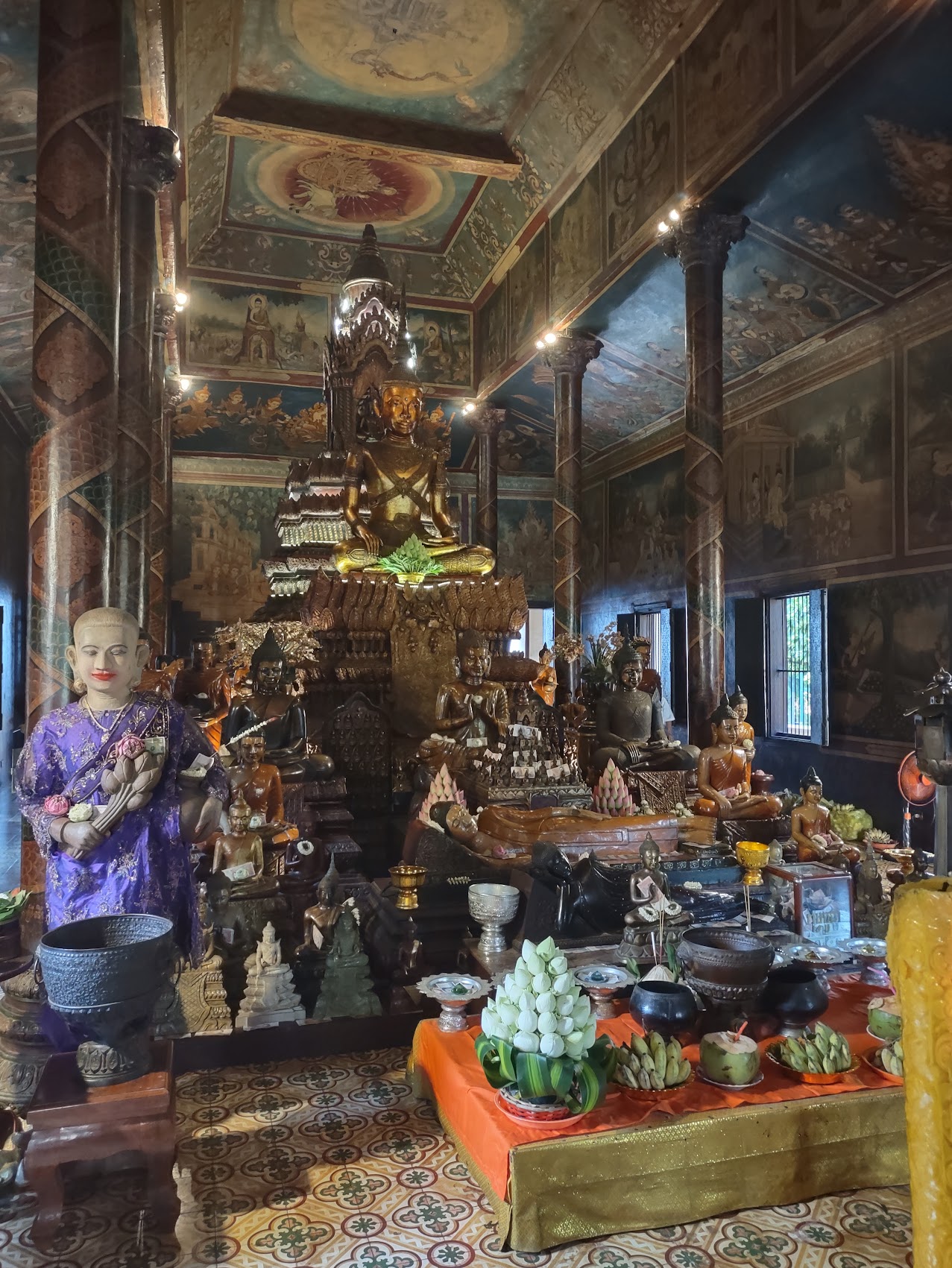
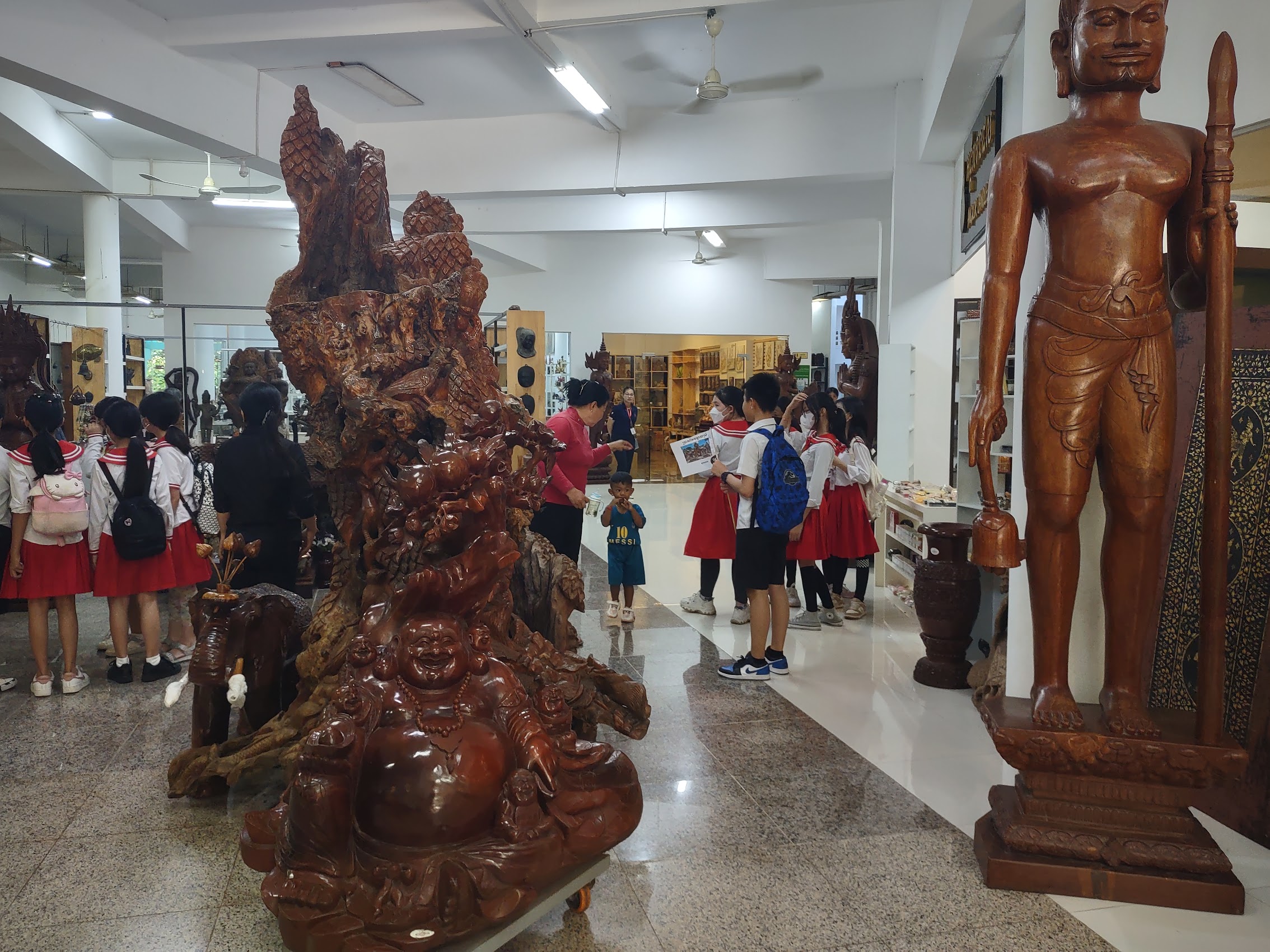
From the Central Market we headed back to Preah Norodom and continued north to our final stop for the day, Wat Phnom Dau Penh, that hill erected by Lady Penh back in 1372 which was where this city started. Today Phnom Dau Penh, which was larger than we had expected, houses a number of structures including a memorial to Lady Penh, a very large stupa, a beautiful Buddhist temple, and a visitors center with a gift shop which featured some of the most amazing art and handicrafts we had seen thus far in Phnom Penh.


A Very Chilling Day [Warning – The next two sections should be disturbing to everyone but may be a bit too graphic for some in their description of the violence undertaken by the Khmer Rouge regime on the citizens of Cambodia.]
Our plan for our second day in Phnom Penh was to immerse ourselves in the events which transpired there between the years 1975 and 1979. I have to confess that although I had heard of the Khmer Rouge and had seen the movie “The Killing Fields” (we watched it again before coming to Phnom Penh), I honestly had little idea of how horrific the events which transpired in Cambodia during that period were. I would strongly encourage you to learn more on you own if you are not aware of those events. (Over the last year I have grown to realize that human genocide has been a much more common and frequent occurrence than I (at least) was aware and that awareness of these episodes is essential if we are to prevent the same from happening again in the future.)
In the event that you, like I, are not versed in the events which transpired in Cambodia during those years, here’s the short version:
In 1975, during the tumultuous period following the Vietnam War and Cambodian Civil War, a communist political party known as the Khmer Rouge seized control of the country and, under the leadership of a man named Pol Pot, attempted to create a classless agrarian society. As a first step towards that goal, the population of Phnom Penh and other cities were forcibly evacuated to the countryside (they were initially told that this was to protect them from bombings which were anticipated from the Khmer Rouge’s enemies). Once there, they were stripped of their belongings and forced to assume the role of farmers, digging canals and tending to crops, in support of this new utopian society which Pol Pot and his followers envisioned. Perhaps predictably, lacking the requisite skills to successfully farm, this social experiment failed badly which led to shortages of food and medicine which in turn resulted in untold deaths due to disease and starvation.
Pol Pot and his followers believed that in order to accomplish their utopian goals it was necessary to “wipe the slate clean” by eradicating all elements of the old capitalist society which had existed before their revolution. In their minds this included not just the institutions and practices of that society, but also people who were perceived to be part of that old regime – lawyers, doctors, educators, students, engineers, and other educated professionals. Even people wearing eyeglasses were persecuted as this was seen as a sign of unwanted intellectualism.
What followed was one of the largest and most brutal episodes of genocide in the 20th century. It is estimated that over a 4-year period from 1975 to 1979, over two million people – the equivalent population of Phnom Penh at that time and about 25% of Cambodia’s population – were either murdered by the Khmer Rouge or died of disease and starvation which they caused. (Estimates of the number of dead range between one and one-half and three million and the size and uncertainty as to the actual number of deaths is in and of itself pretty frightening.) Religious and ethnic minorities faced particular persecution. Christian and Buddhist groups were targeted for repression, but it was the Cham Muslims who were most affected. As many as 500,000 – 70% of Cambodia’s Cham population – were exterminated during this period.
It was particularly difficult and disturbing to discover that the United States had supported Pol Pot and that, even after Vietnam had liberated Cambodia, the U.S., UK, China, and other countries continued to recognize his Khmer Rouge regime in the United Nations.
As I mentioned at the outset, neither Colleen nor I were very knowledgeable of these events and so, for our second day in Phnom Penh, we had arranged to have a tuk tuk driver take us to two key sites where we hoped to learn more.
And so it was that at 9:30 the next morning we found ourselves in front of what was once the Tual Svay Prey High School, the Tuol Sleng Genocide Museum located about 3 kilometers south of our apartment. The school was converted to a prison and interrogation center (one of about 200 such facilities established by the Khmer Rouge) but this particular facility, known as S-21, had the particular responsibility for interrogating and punishing individuals deemed “guilty” of crimes against the state. Over 12,000 people were tortured and executed at S-21 and only 12 prisoners are believed to have survived.
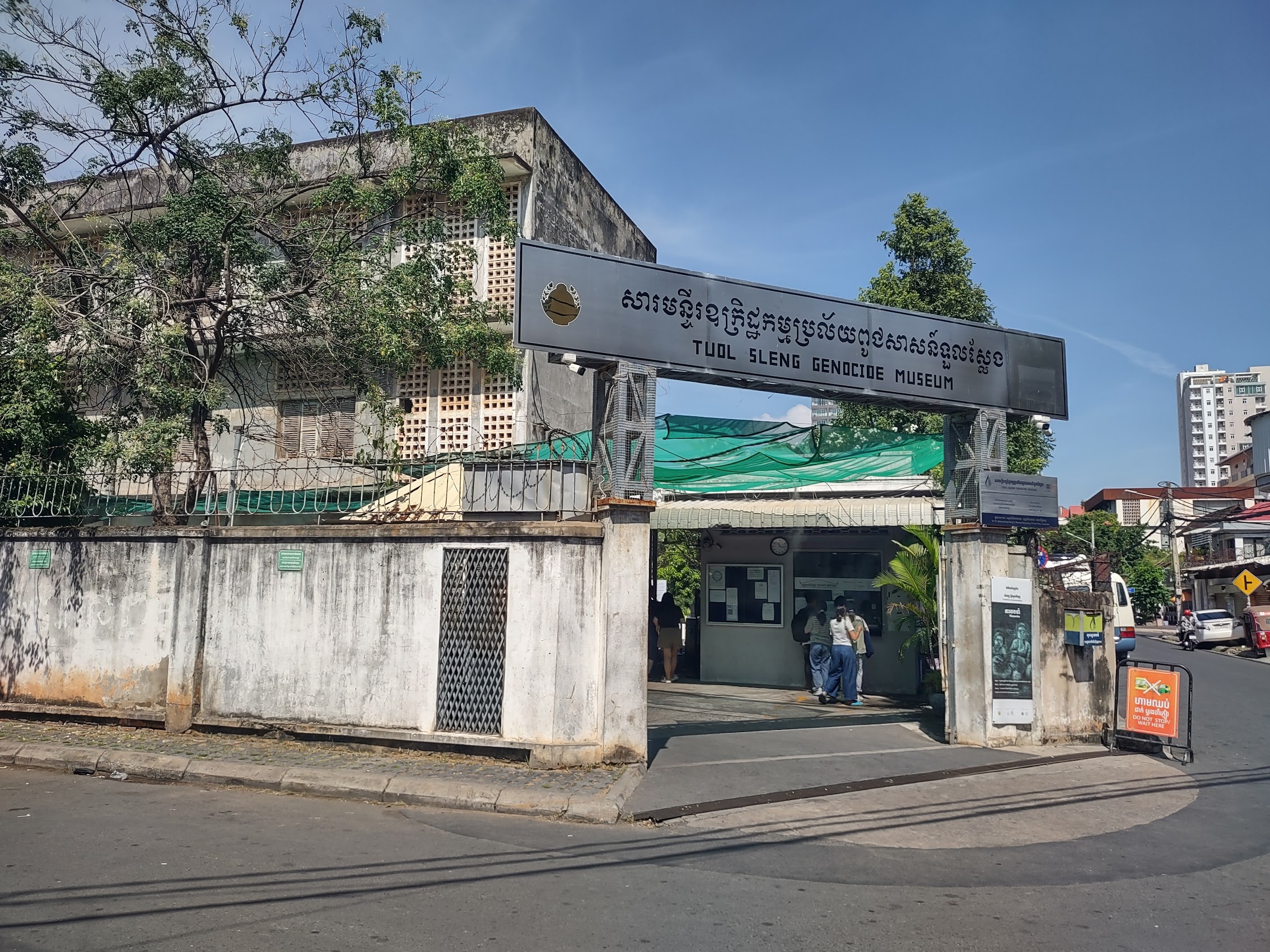
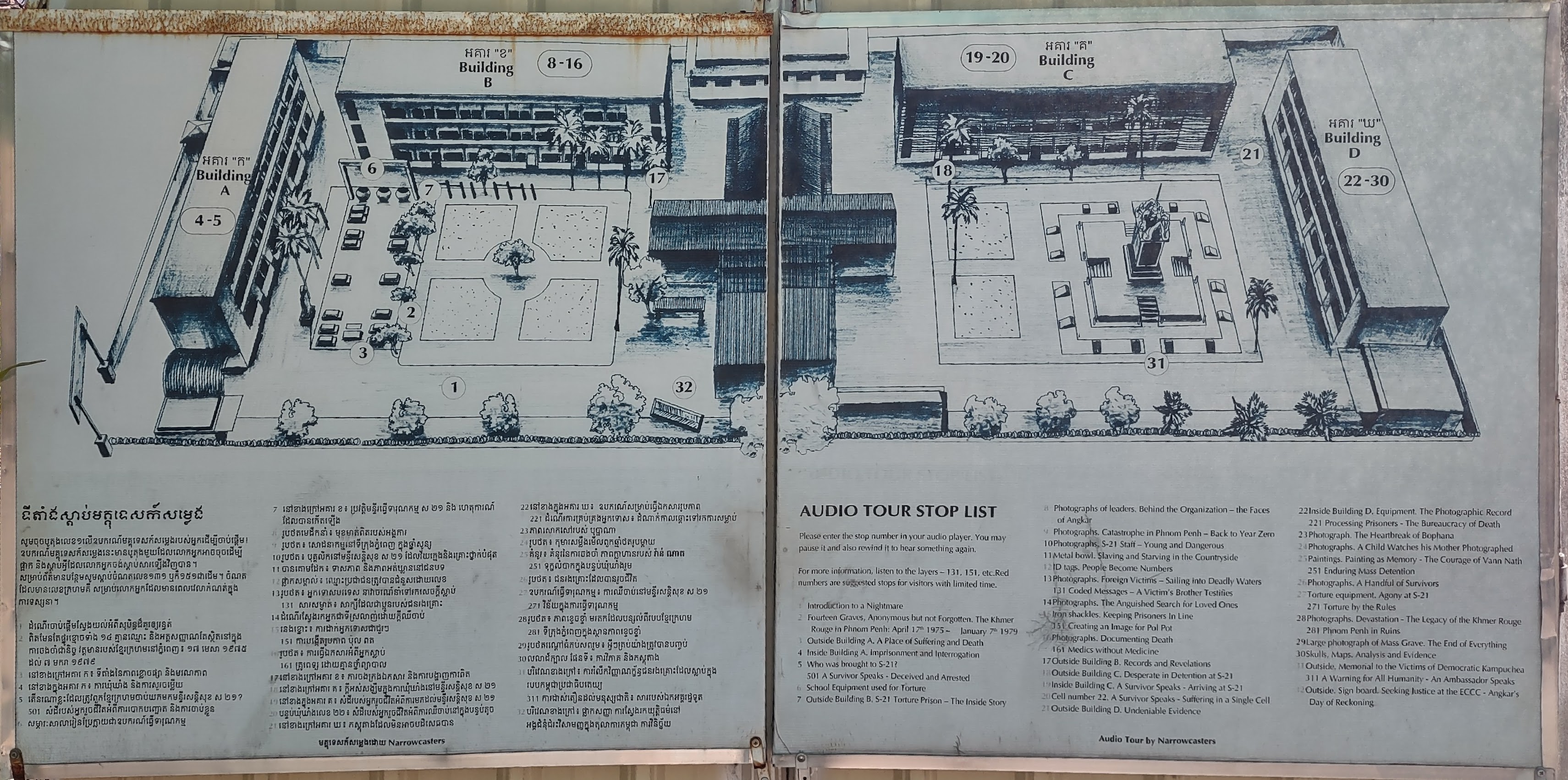
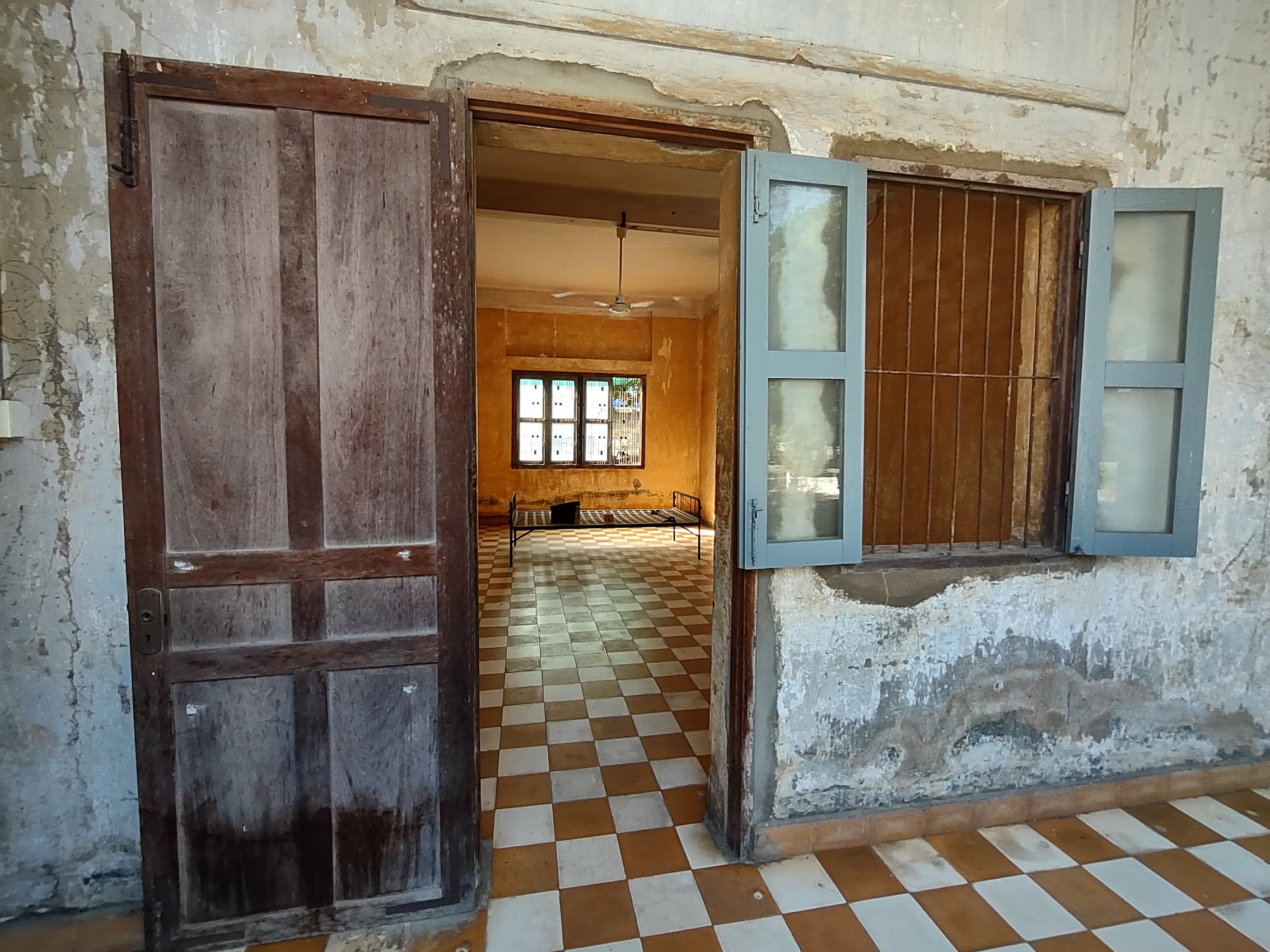
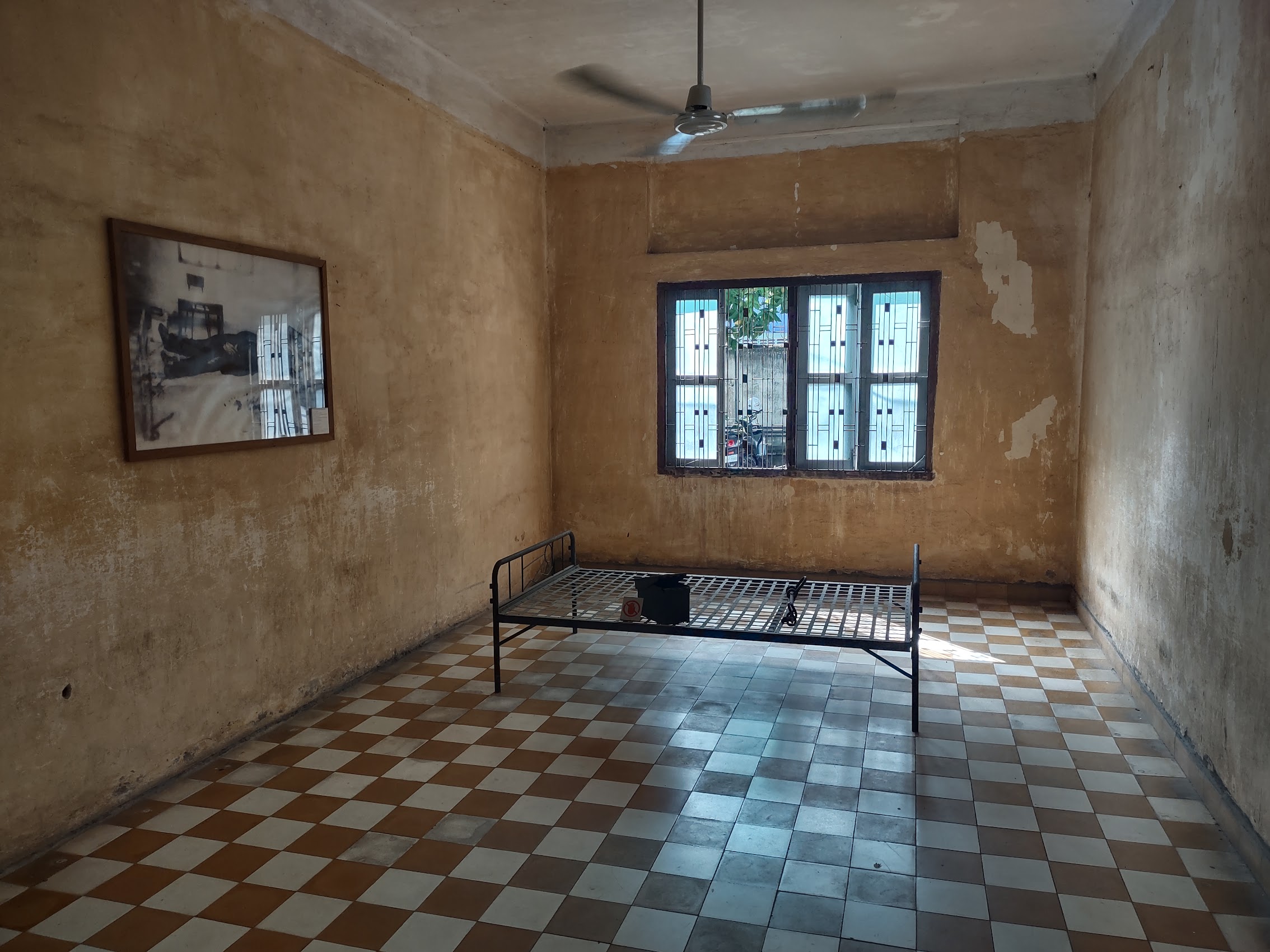
Today the former school campus, which consists of five buildings, is in much the same condition it was found in when the invading Vietnamese army discovered it in 1979. Most of the classrooms were converted to tiny prison cells with rough brick partitions but it was the classrooms which had been converted to interrogation cells, still containing their torture beds and shackles, and with photographs of the final victims as they were found by the invading Vietnamese which were most chilling to see.
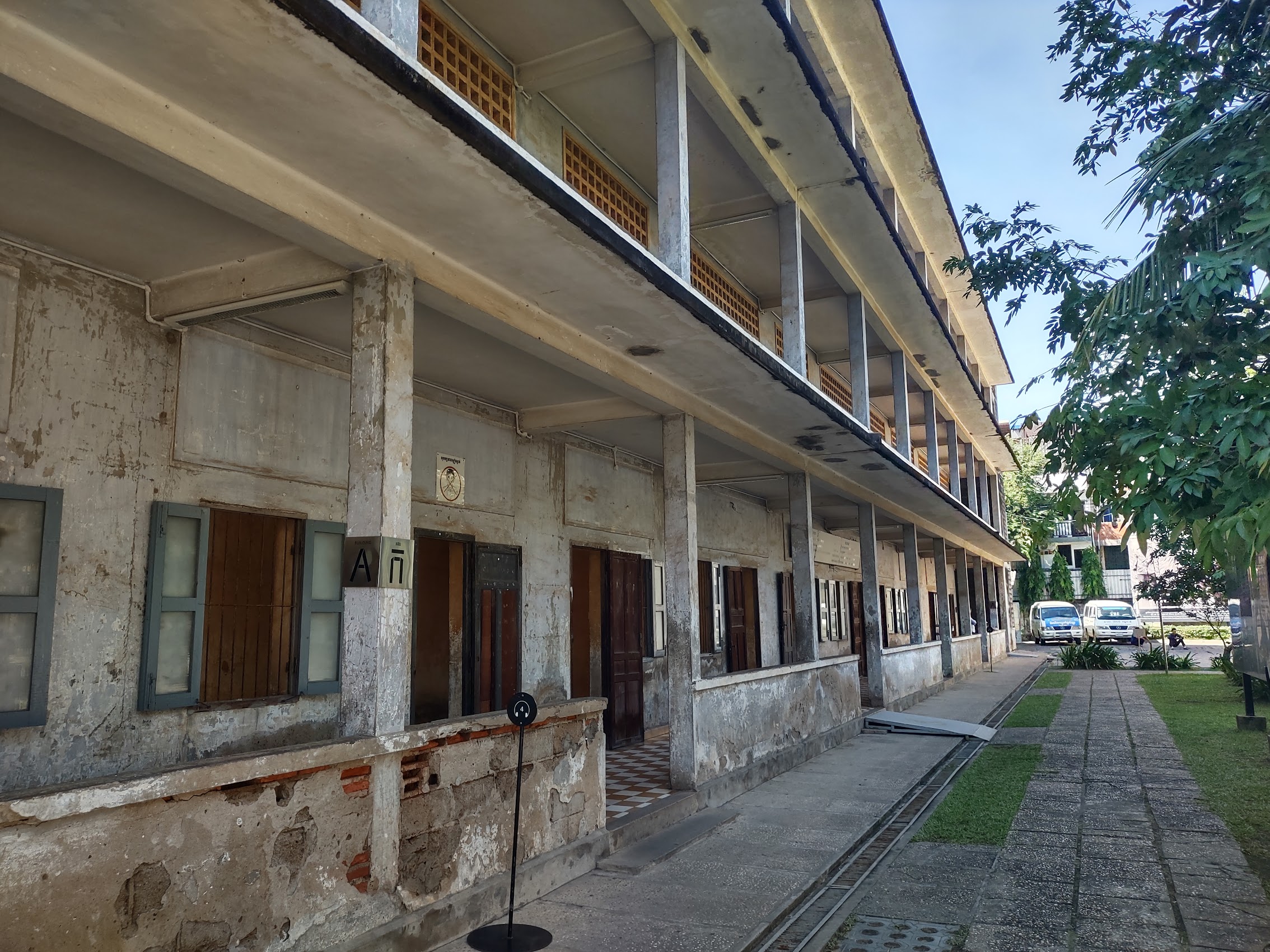
The two large courtyards between the school buildings was largely given over to various statues, plaques, and memorials, but the gallows which were used to publicly hang and torture prisoners remains.
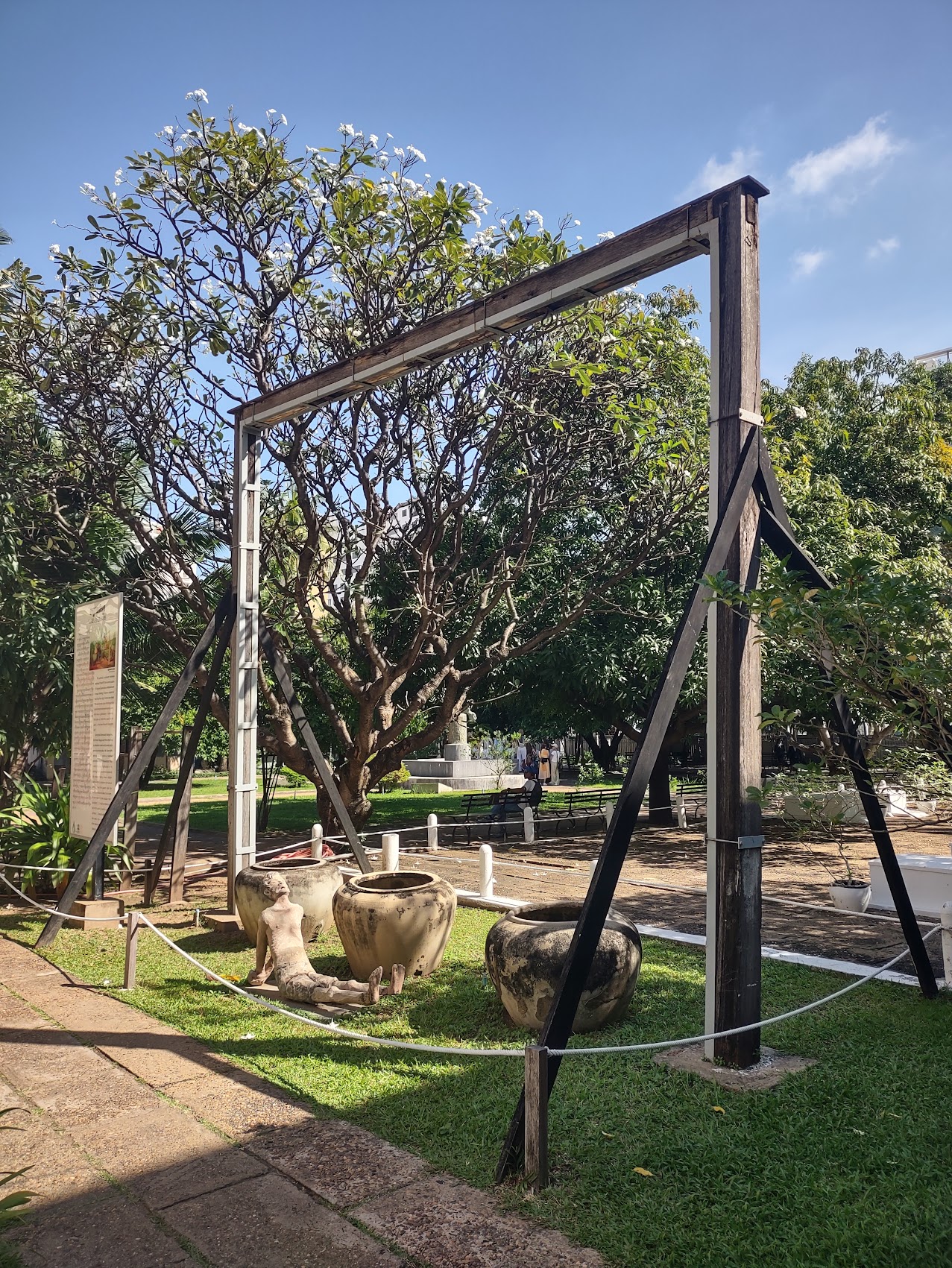
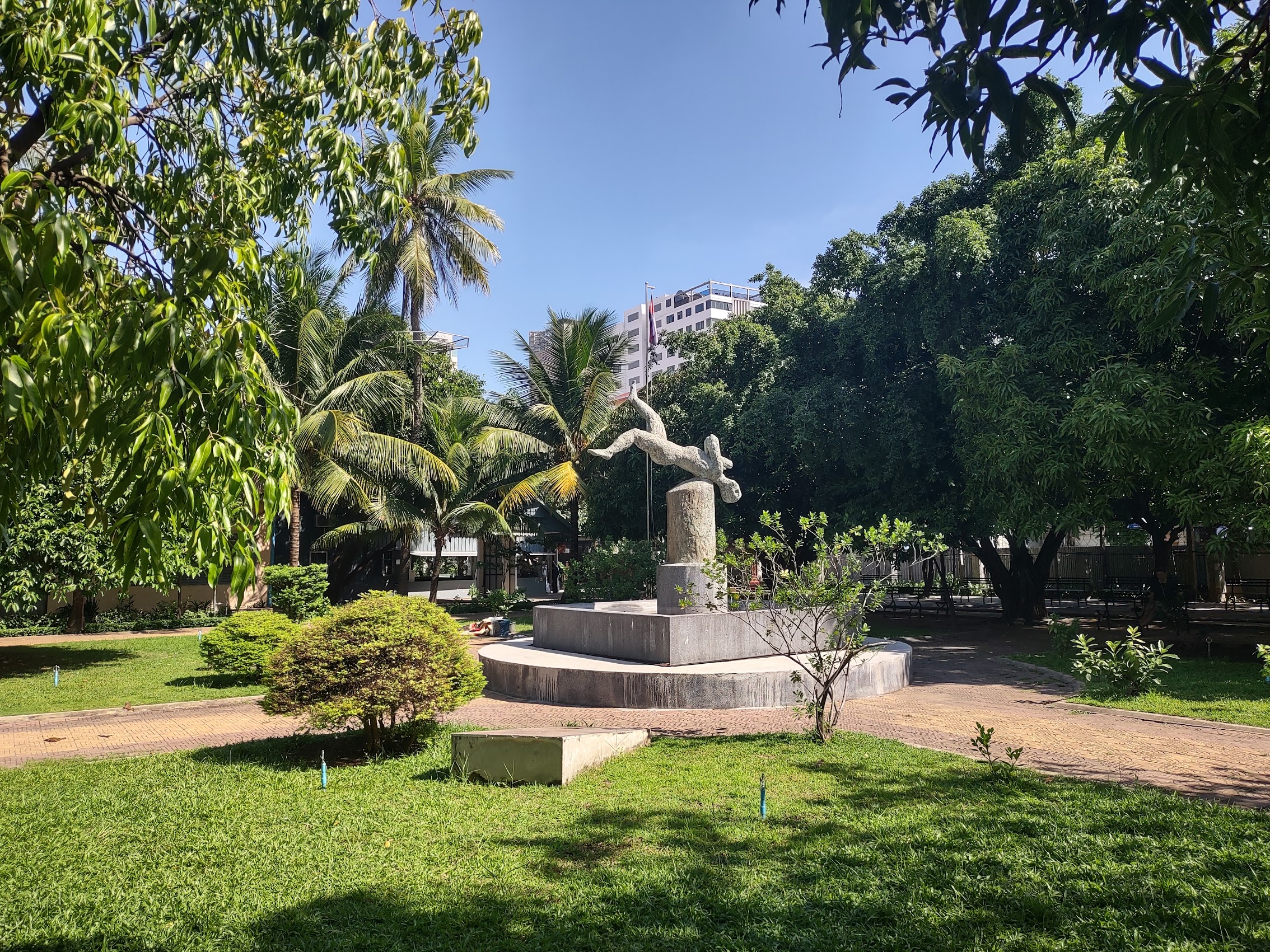
As part of the reasonable admission price to the museum, we were provided with a headset and self-guided audio tour and we spent over two hours walking through the museum learning about the atrocities which had occurred here. We tried to more or less synchronize the timing of our audio devices, but that doesn’t really work, so in the end, everyone ends up going through individually which seems appropriate for a place like this. Displays included numerous photographs of prisoners (the Khmer were apparently fastidious record keepers) as well as various other artifacts (including instruments of torture), but it was really the place that told the story.
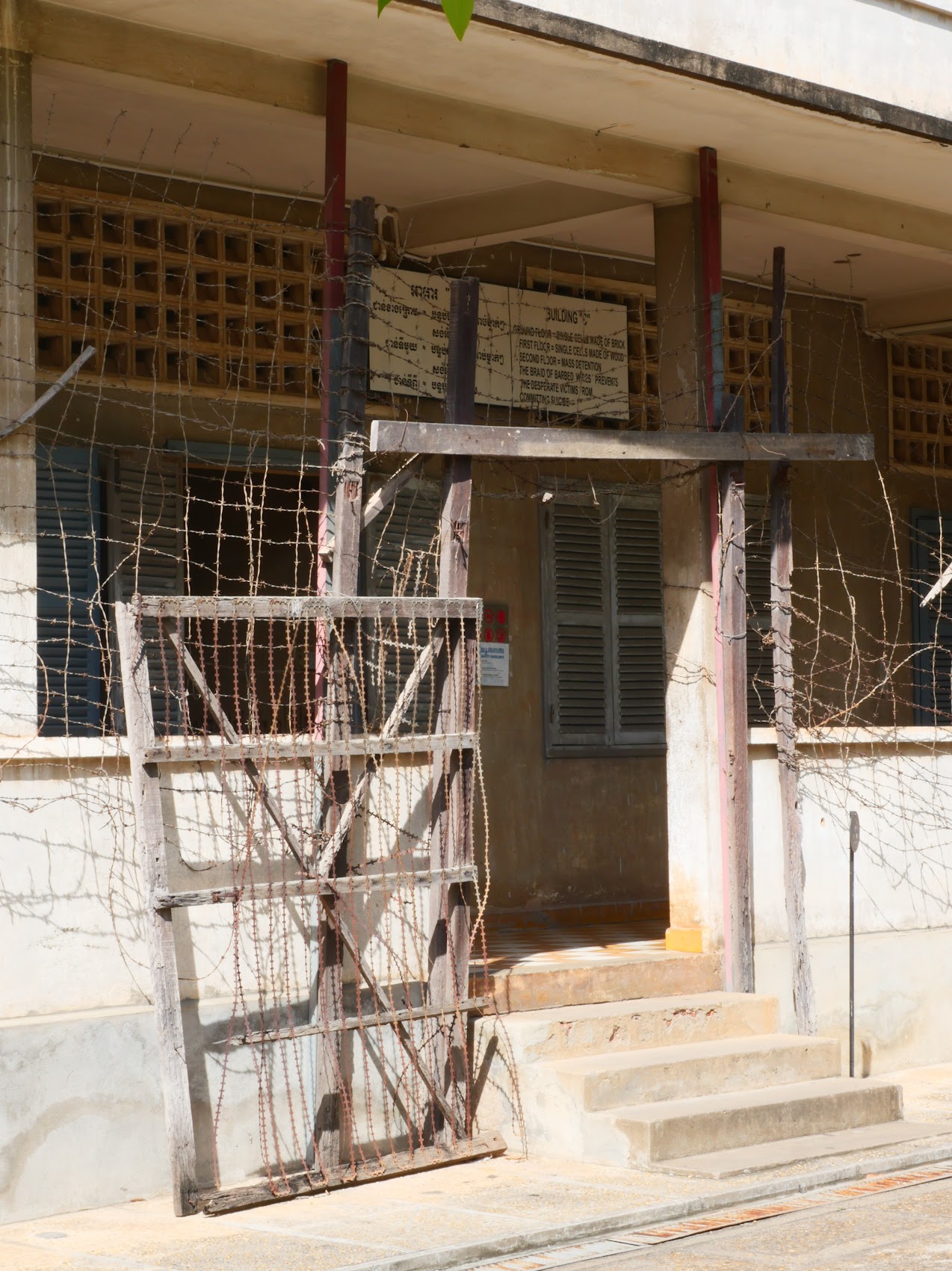


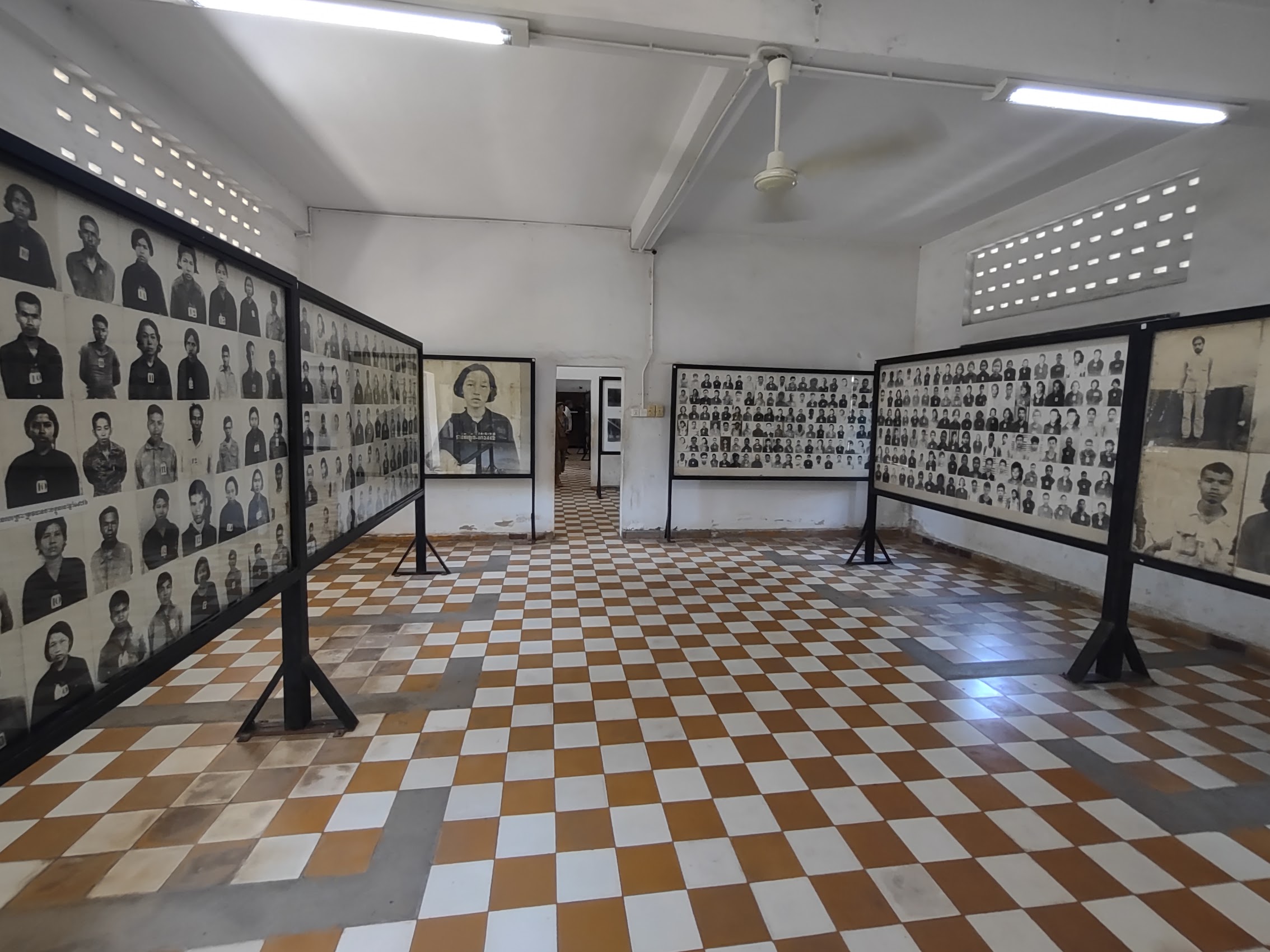
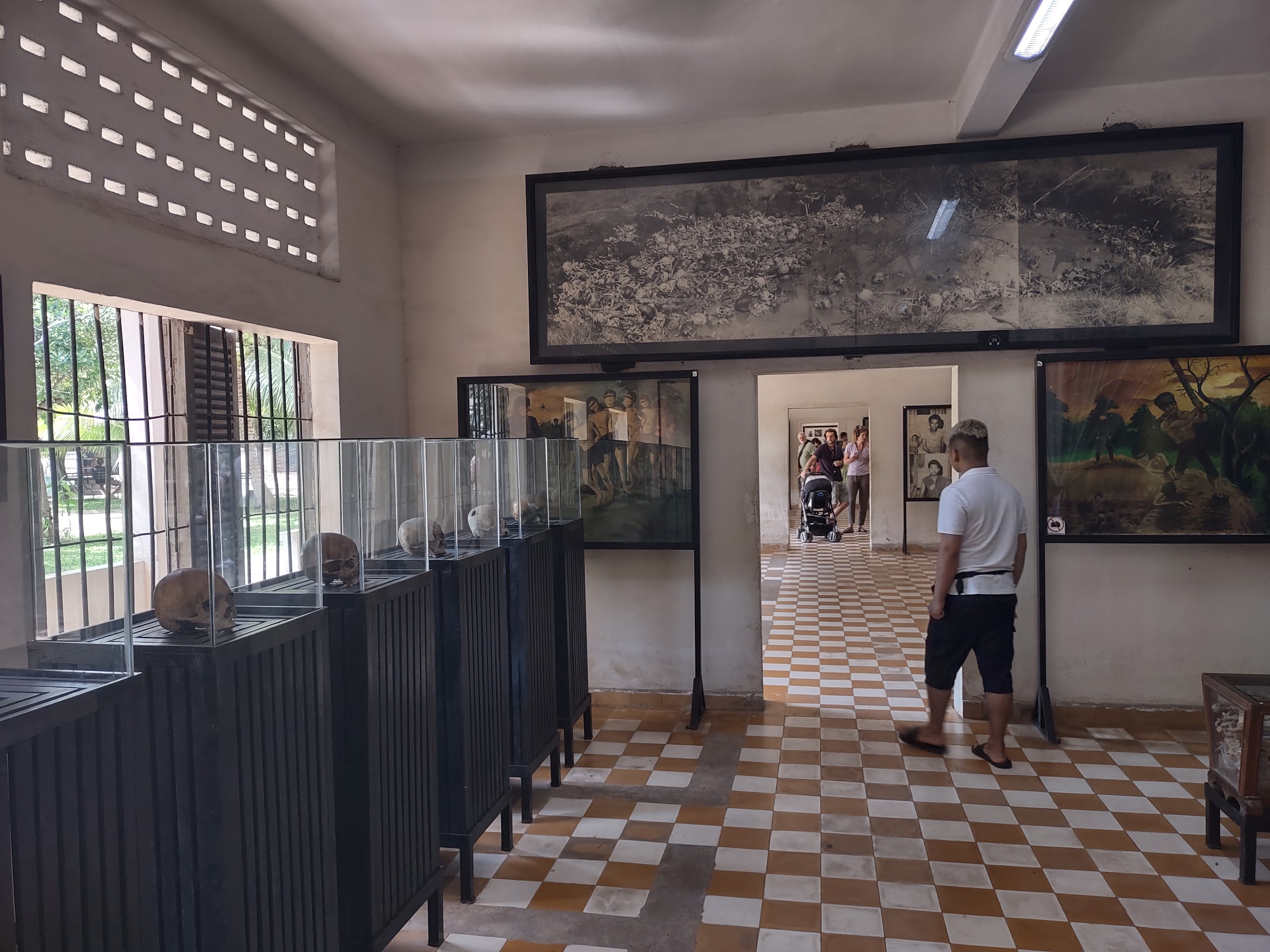

As an architect who specialized in school design for most of his career, I found the conversion of this school campus into a prison and interrogation center to be particularly bizarre and grotesque. It really is hard to believe that human beings could be so brutal and cruel to one another and this place depicted it honestly though perhaps a bit too graphically at times for some.
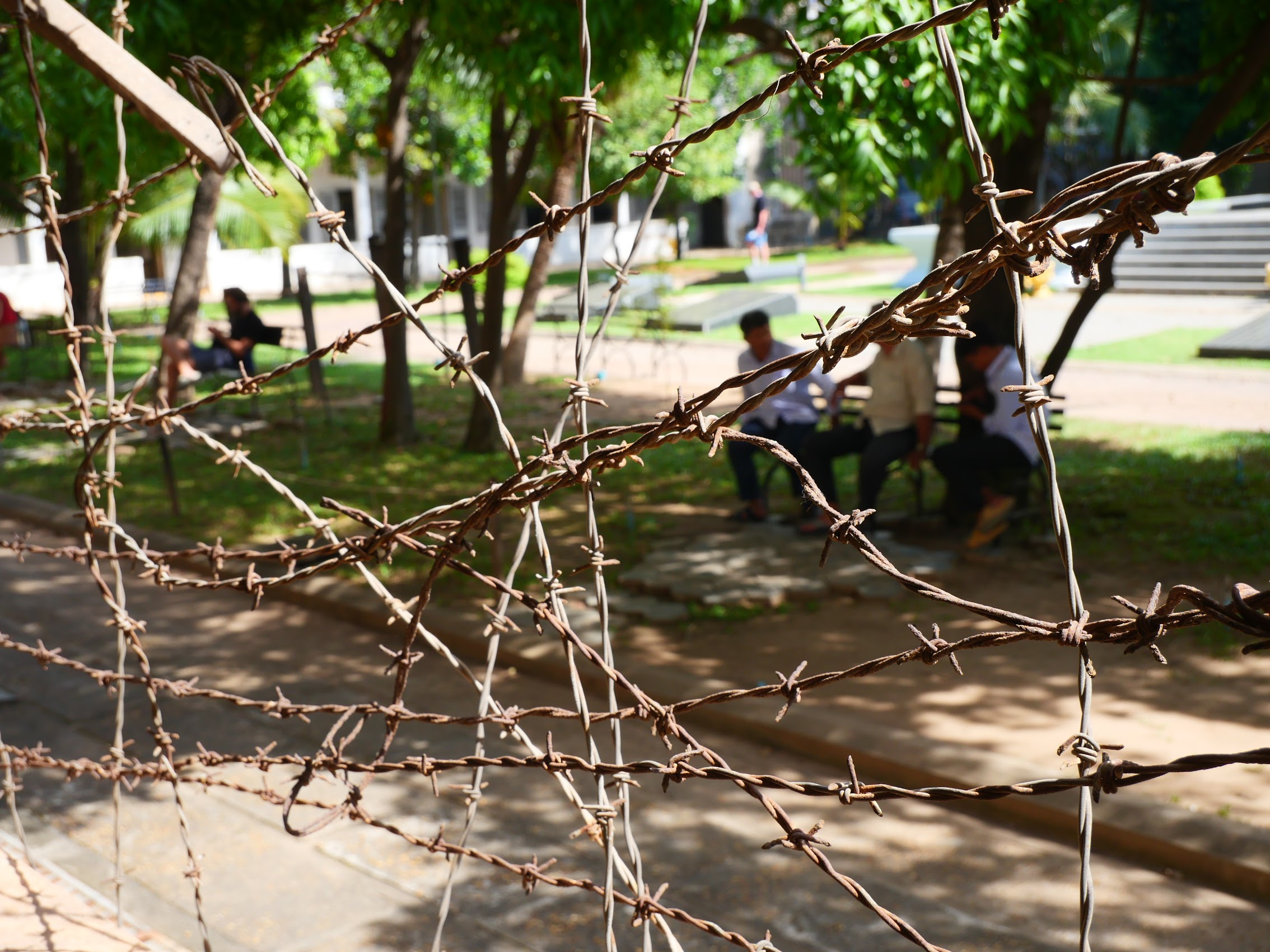
The Killing Fields
From the Genocide Museum we travelled about 10 kilometers south to the Choeung Ek Genocidal Center on the outskirts of Phnom Penh. Choeung Ek is one of about 300 sites known as killing fields, where the Khmer Rouge regime executed over one million people, including over 18,000 from the Tuol Sleng detention center who were killed at Choeung Ek. After the fall of the Khmer regime, almost 9,000 bodies were discovered at Choeung Ek but it was eventually decided to stop exhumations there and let the remaining dead, most of whom had no chance of identification, rest in peace.
Like the Genocide Museum, there was a self-guided audio tour of the site, which was again quite chilling to walk the site hearing how prisoners were transported and executed in a process which resembled sending livestock for slaughter. The original wooden structures from the former killing field were largely demolished and the materials repurposed by locals but displays depict them and explain how the various structures functioned in the systematic execution of prisoners. It was particularly disturbing to learn that, due to the expense and lack of munitions, prisoners, who were transported to the site in truck loads, were routinely beaten and chopped to death with clubs, axes, and machetes. It really was quite chilling and disturbing (I’m struggling for adjectives here) to wander between the depressions in the earth which are the mass graves of this killing field.
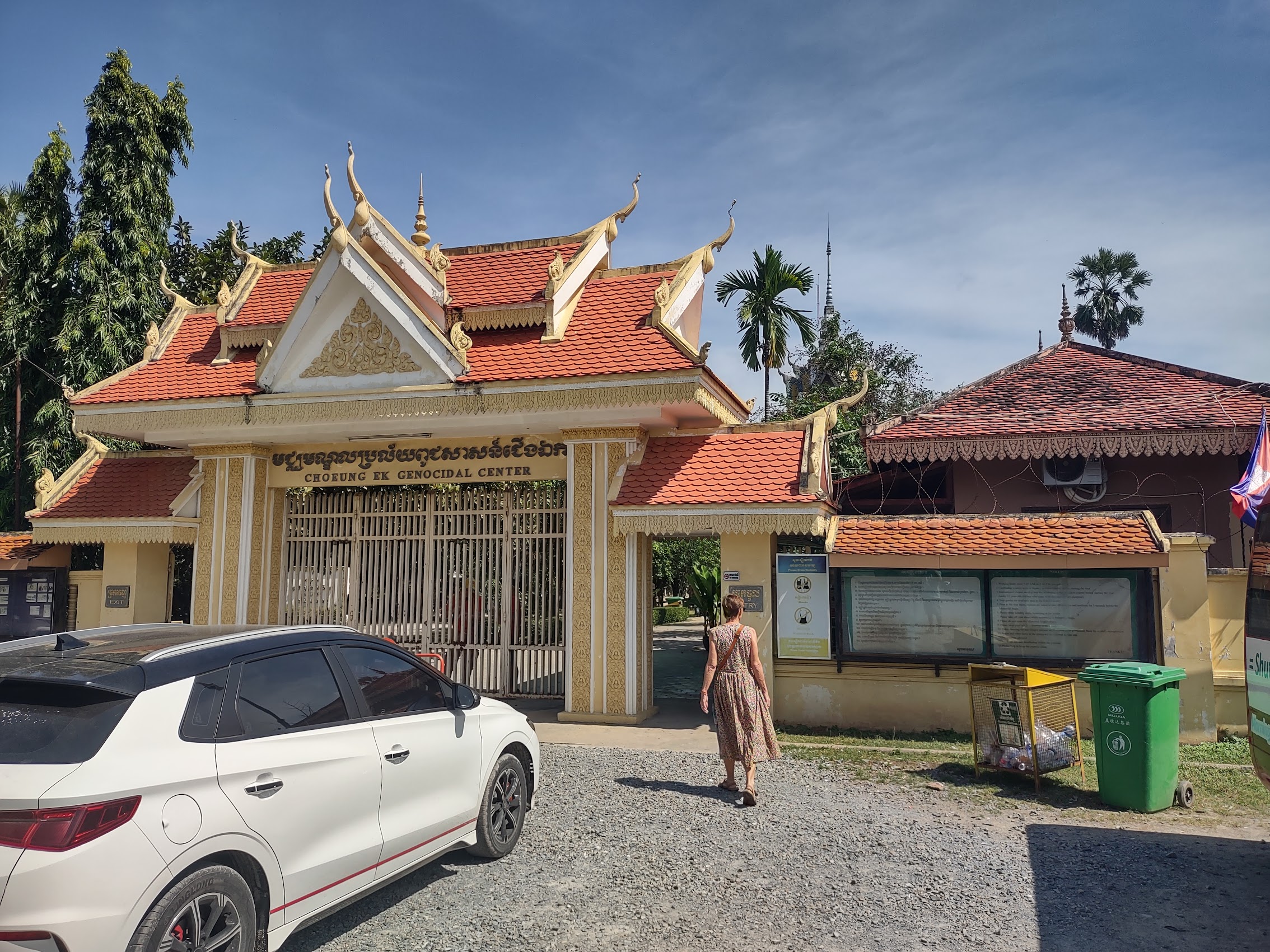
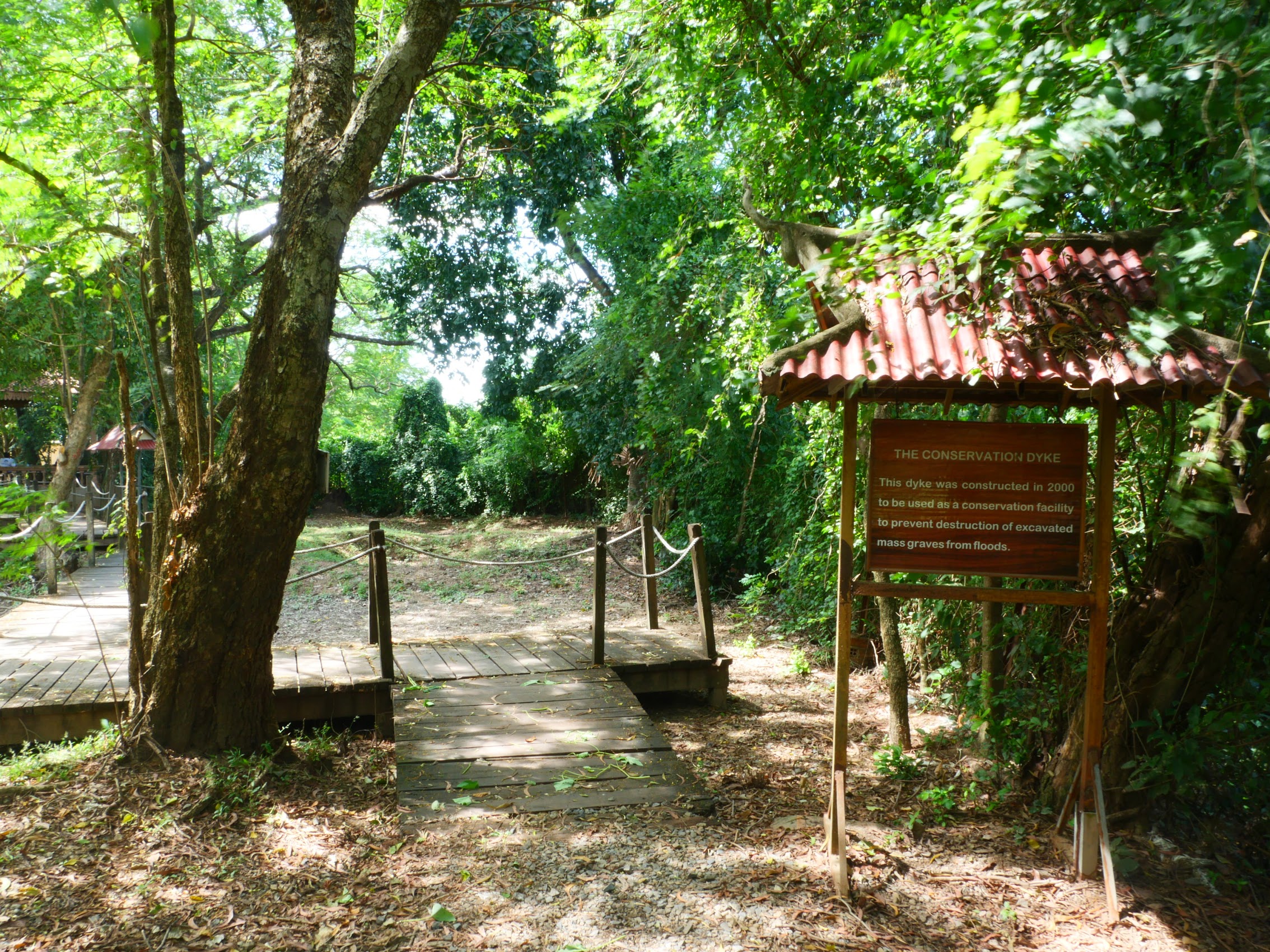
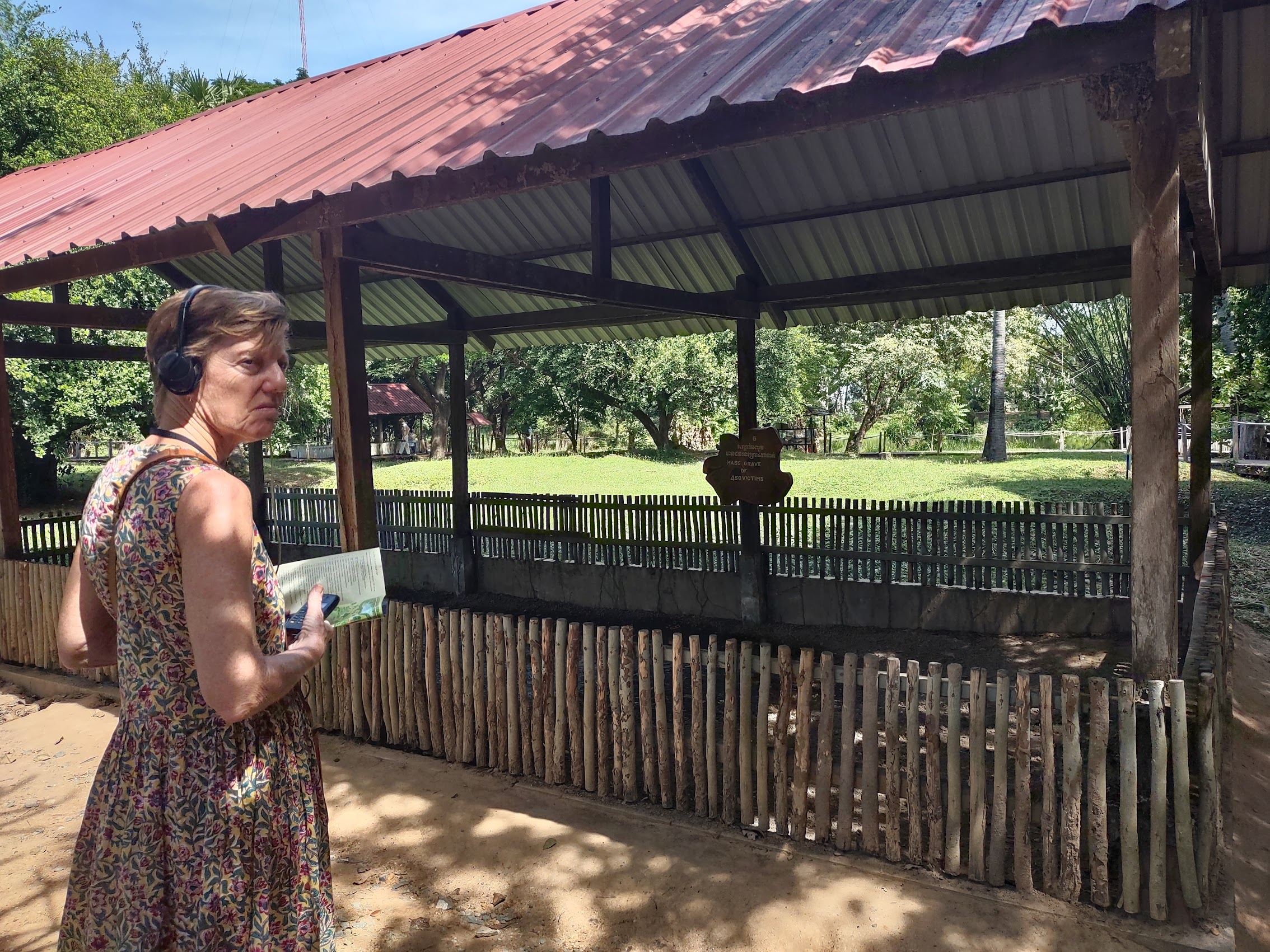

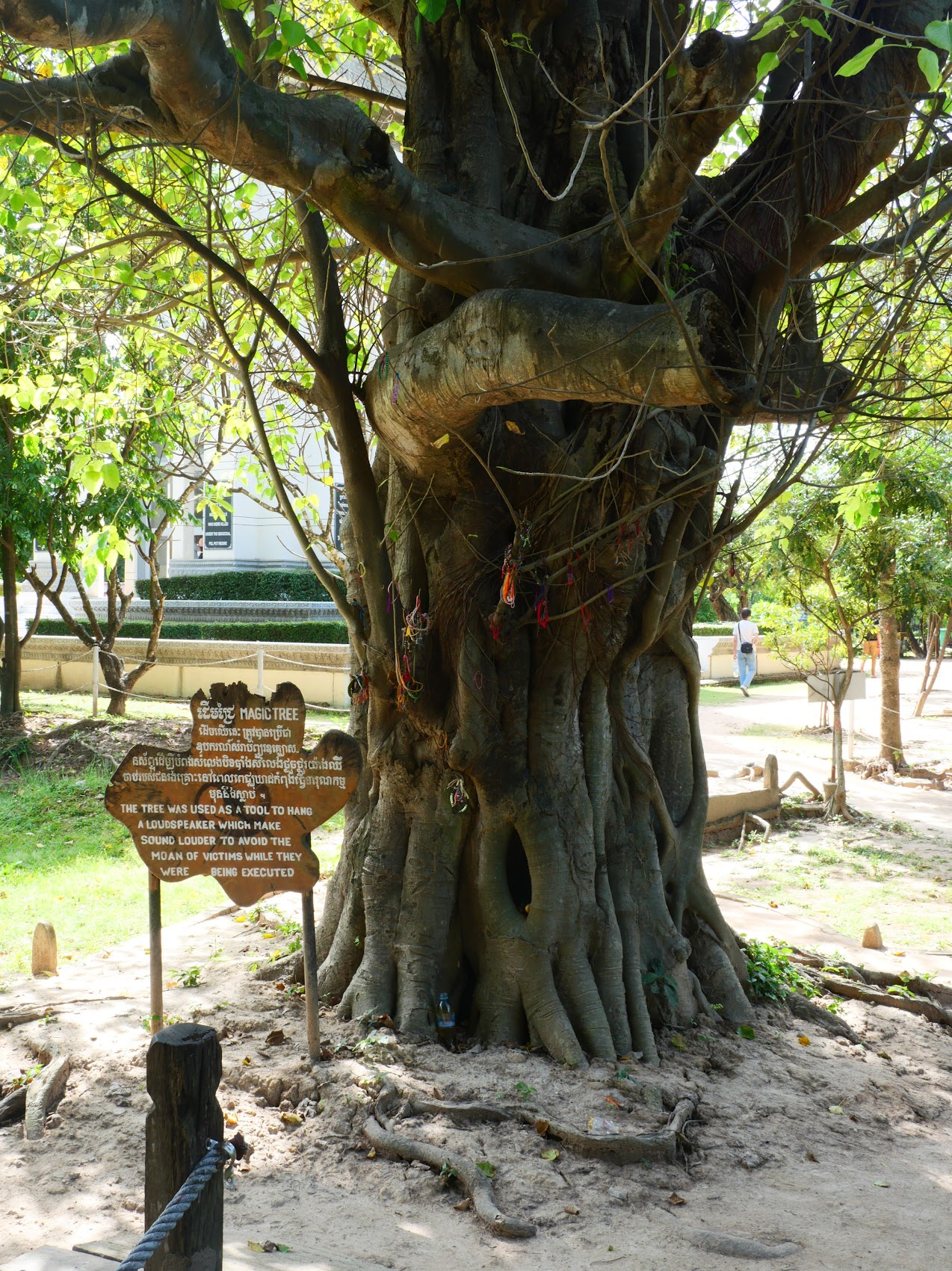
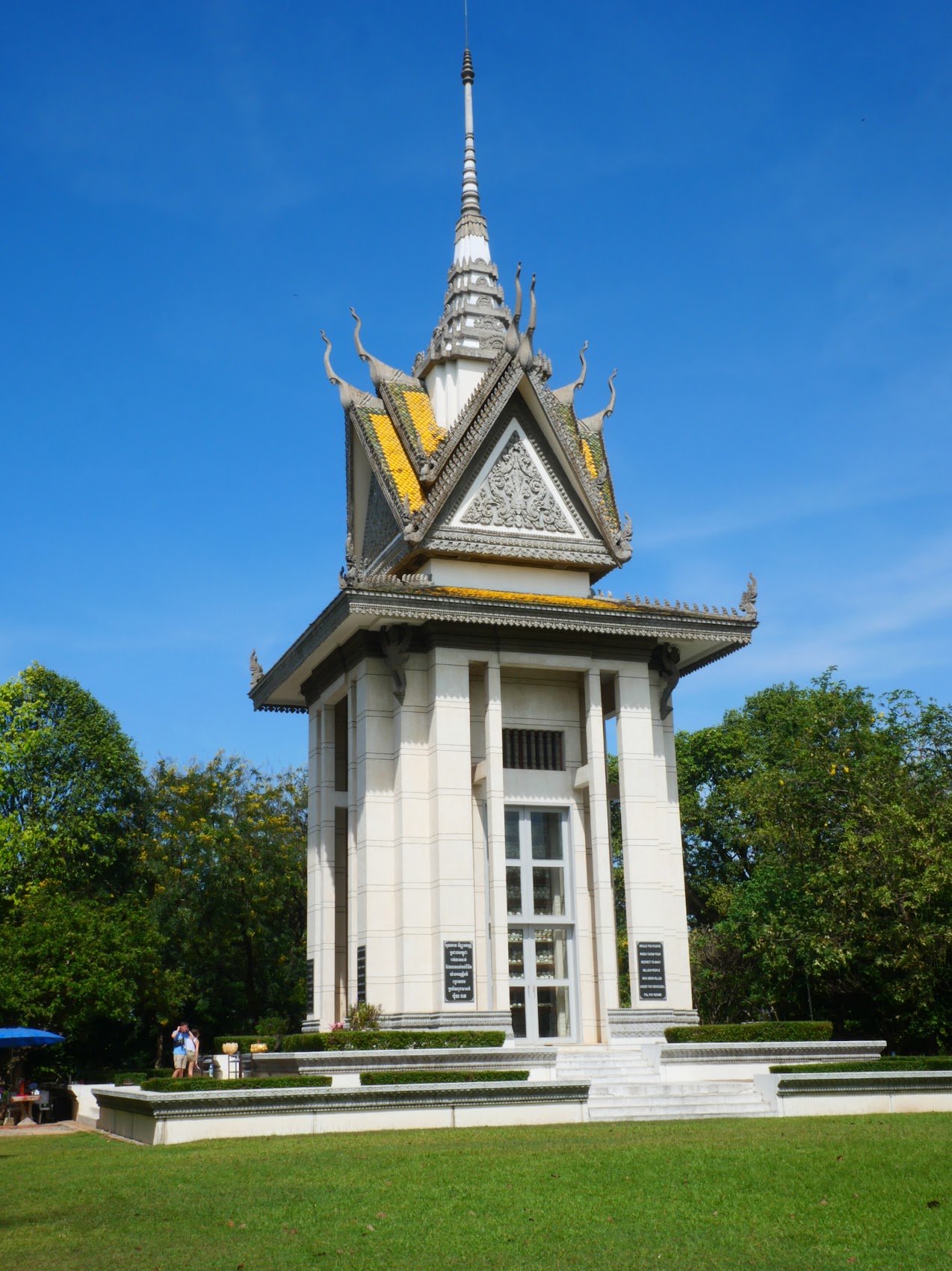
At the center of Choeung Ek is a 150 foot tall Buddhist stupa which is quite beautiful from a distance, but as you approach it you realize that is serves as the reliquary for over 8,000 human skulls which have been exhumed on the site. Again, pretty chilling.
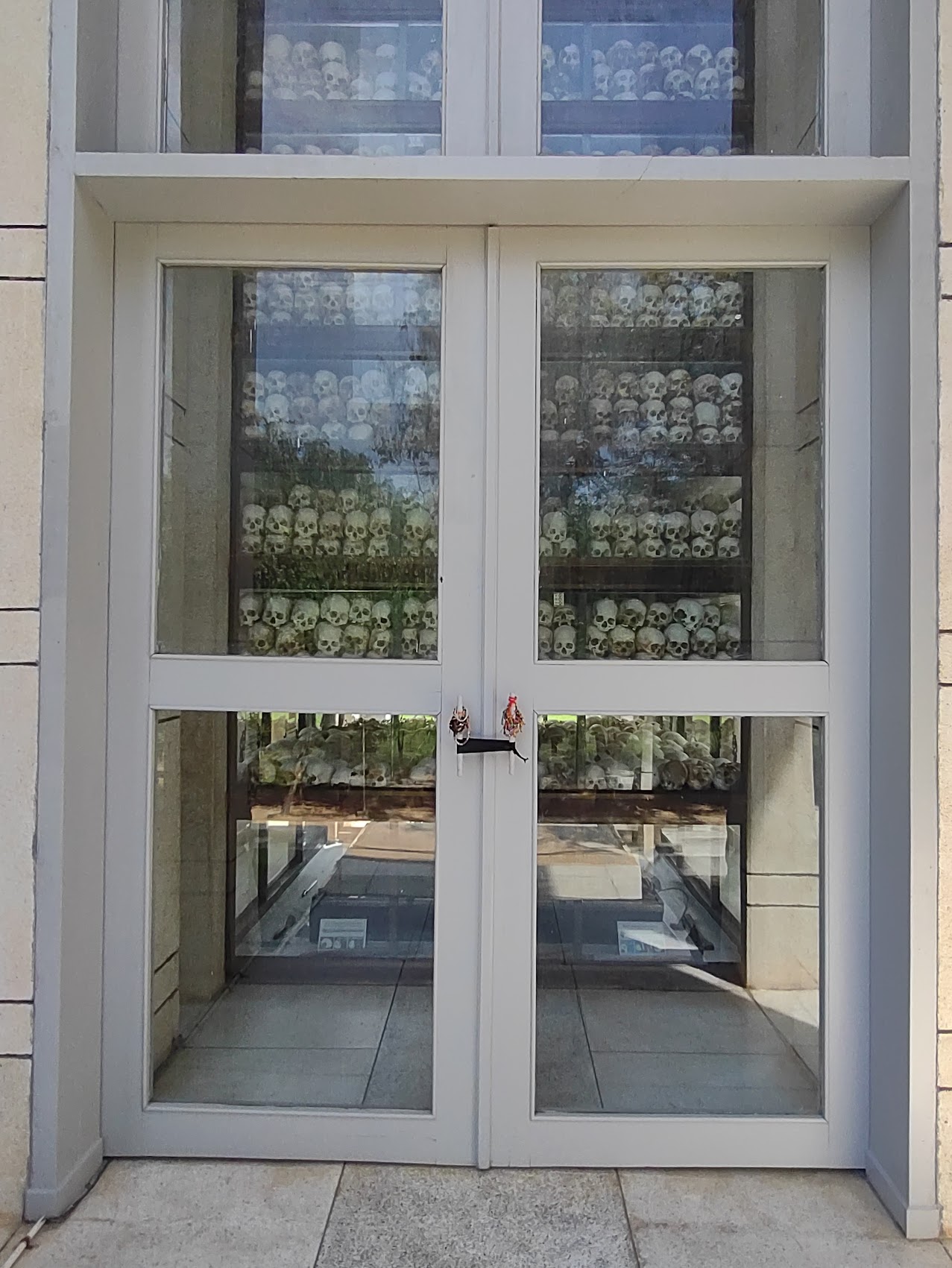

On the relatively long tuk tuk ride back to our place, we had the opportunity to reflect on what we had seen that day and consider it in the context of other similar sites we have visited over the last year which included the Genocide Museum in Santiago and various Holocaust museums and memorials in both Europe and Israel. Likely because we were visiting the actual sites where this violence was perpetrated, the Tuol Sleng Genocide Museum and Choeung Ek made these awful events feel much more real and tangible and, in doing so, made our horror that much greater.
While it seems unlikely that anyone outside of Cambodia was fully aware of what transpired there during those years, America’s complicity in it is still quite disturbing and a strong argument for why all of us must try to be aware of the events happening in the world outside the comfort of the U.S. and to be as mindful as possible about who our country decides to support.
As a final note regarding Tuol Sleng Genocide Museum and Choeung Ek, I was intrigued to learn that these two sites (along with another detention center known as M-13) are being considered for UNESCO World Heritage status. I looked at the list of the forty UNESCO World Heritage sites we have visited over the previous 11 months and was not entirely surprised to find that, while some of them may have been the sites of violence over the centuries (usually related to war) none of them are listed solely because they were the sites for this type of horrendous violence. Not really sure why that is, but it seems to me that places like Tuol Sleng and Choeung Ek may actually be more worth memorializing and remembering.
In any case, I again strongly encourage you to learn more about what happened in Cambodia during that awful period of time.
Last Evening in Cambodia
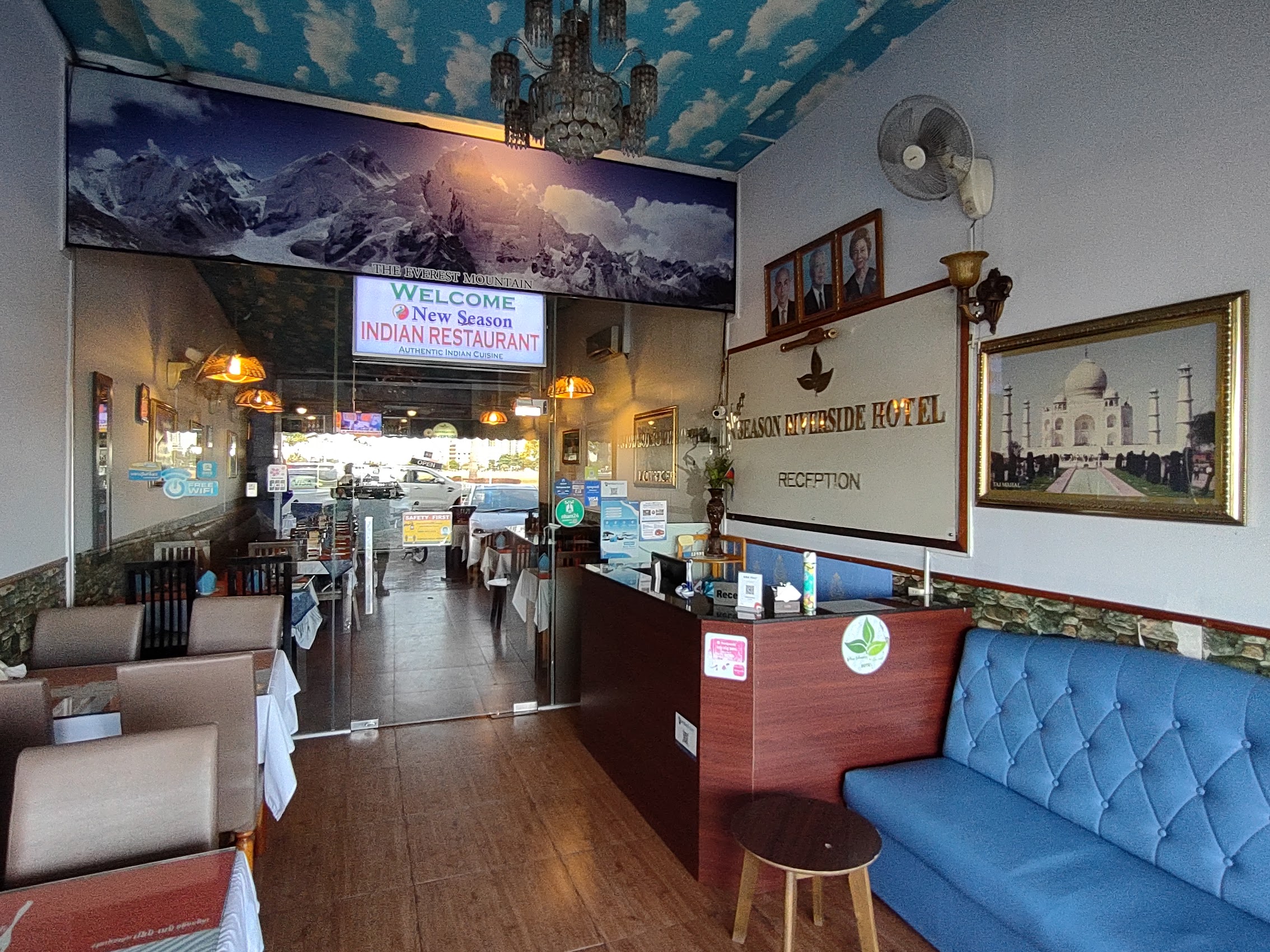
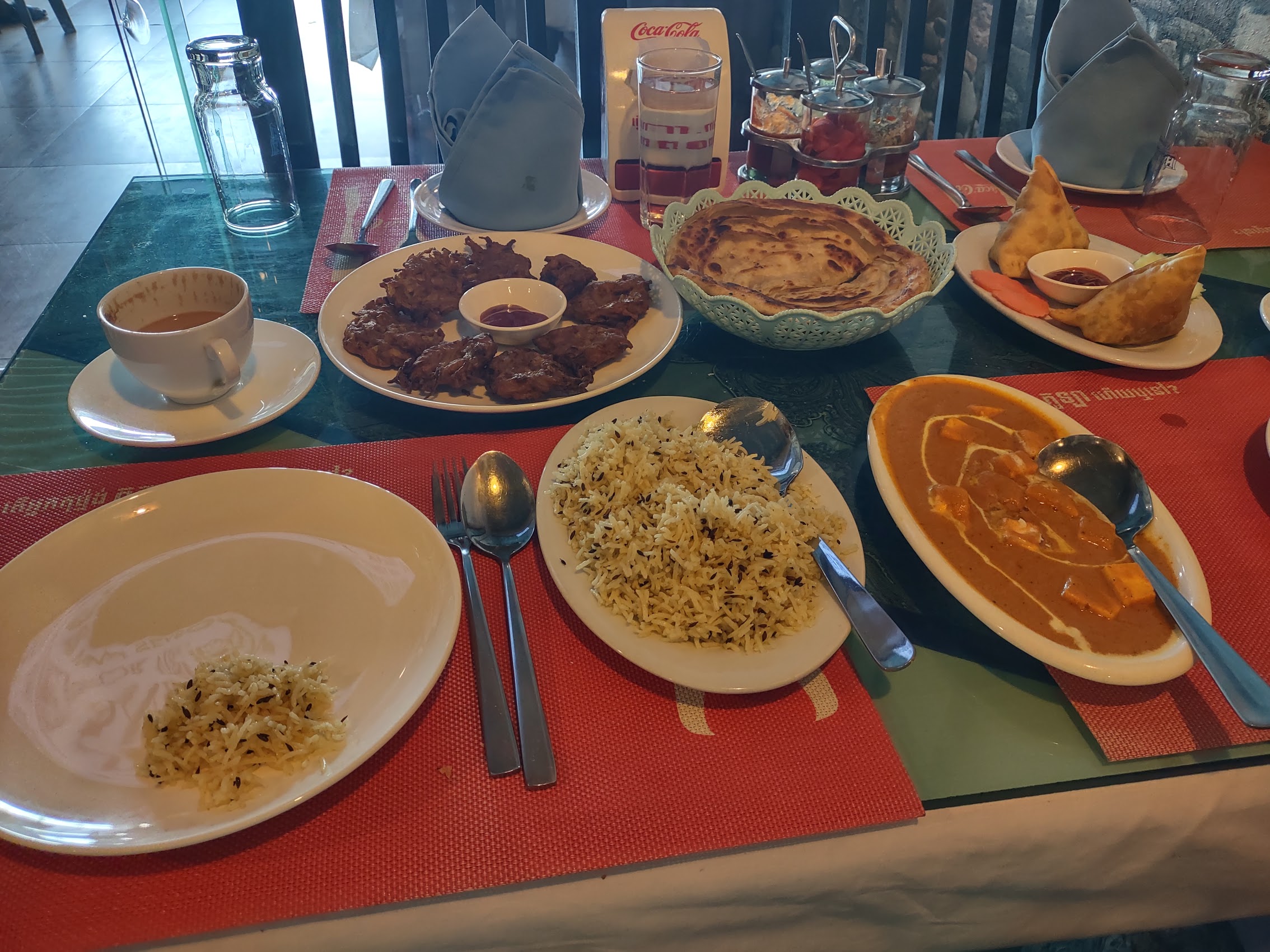
To finish what had honestly been a kind of depressing day, we had scheduled a sunset cruise of the Tonle Sap and Mekong Rivers for our last evening in Phnom Penh. On our way down Preah Sisowath Quay we stopped at a place called New Season for what turned out to be some pretty good Indian food – pakora, samosas, and paneer butter masala (my favorite) along with some very good paratha and jasmine rice.

The river cruise was billed as a small group tour and it proved to be just that (at least the “small group” part) as it was just us and a couple from Washington state (which was kind of odd as they were the first Americans we had encountered in Cambodia). There were cocktails and a live band and we had a little conversation with the other couple but, in the end, decided that we preferred to keep our own company.
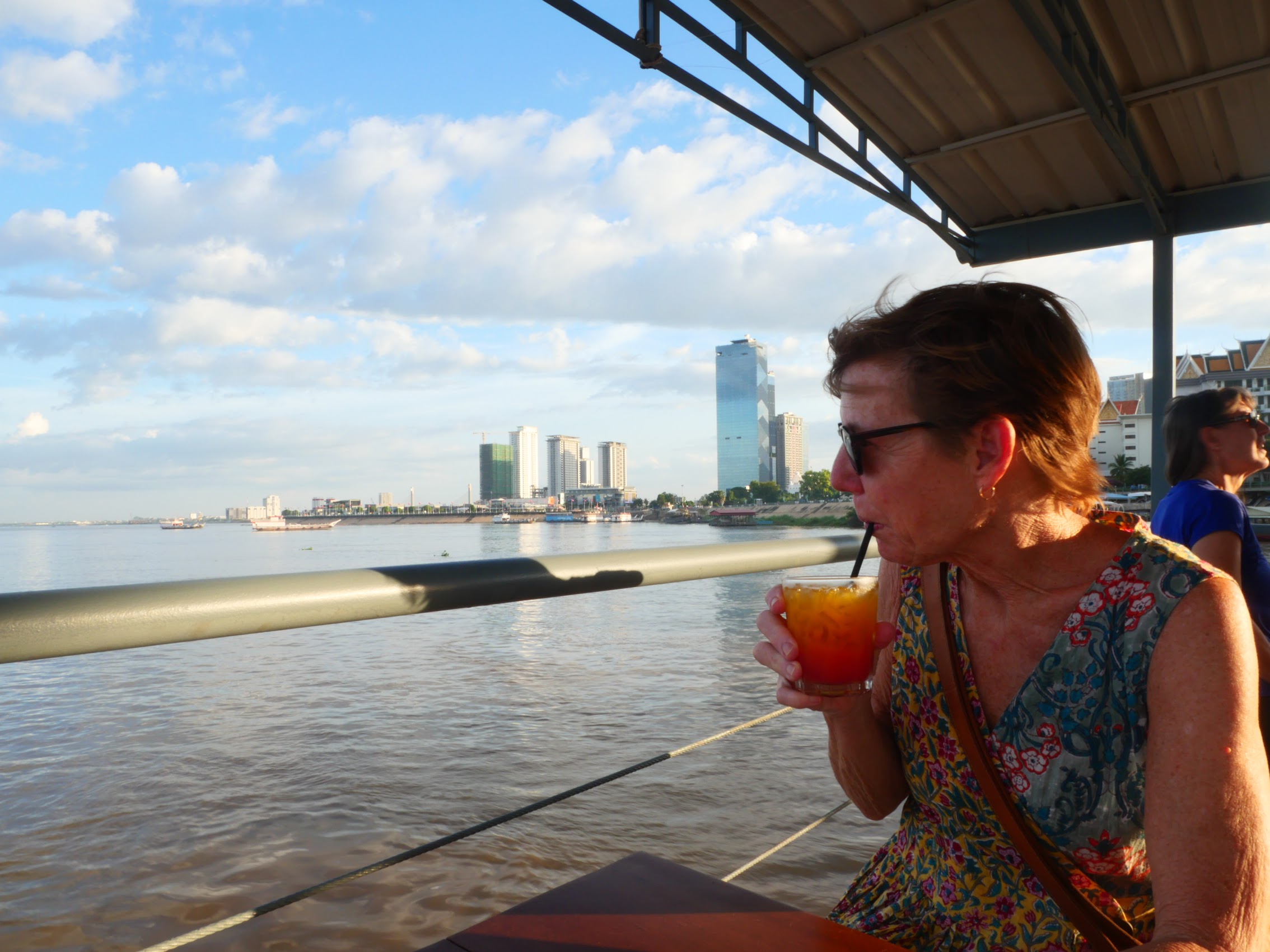
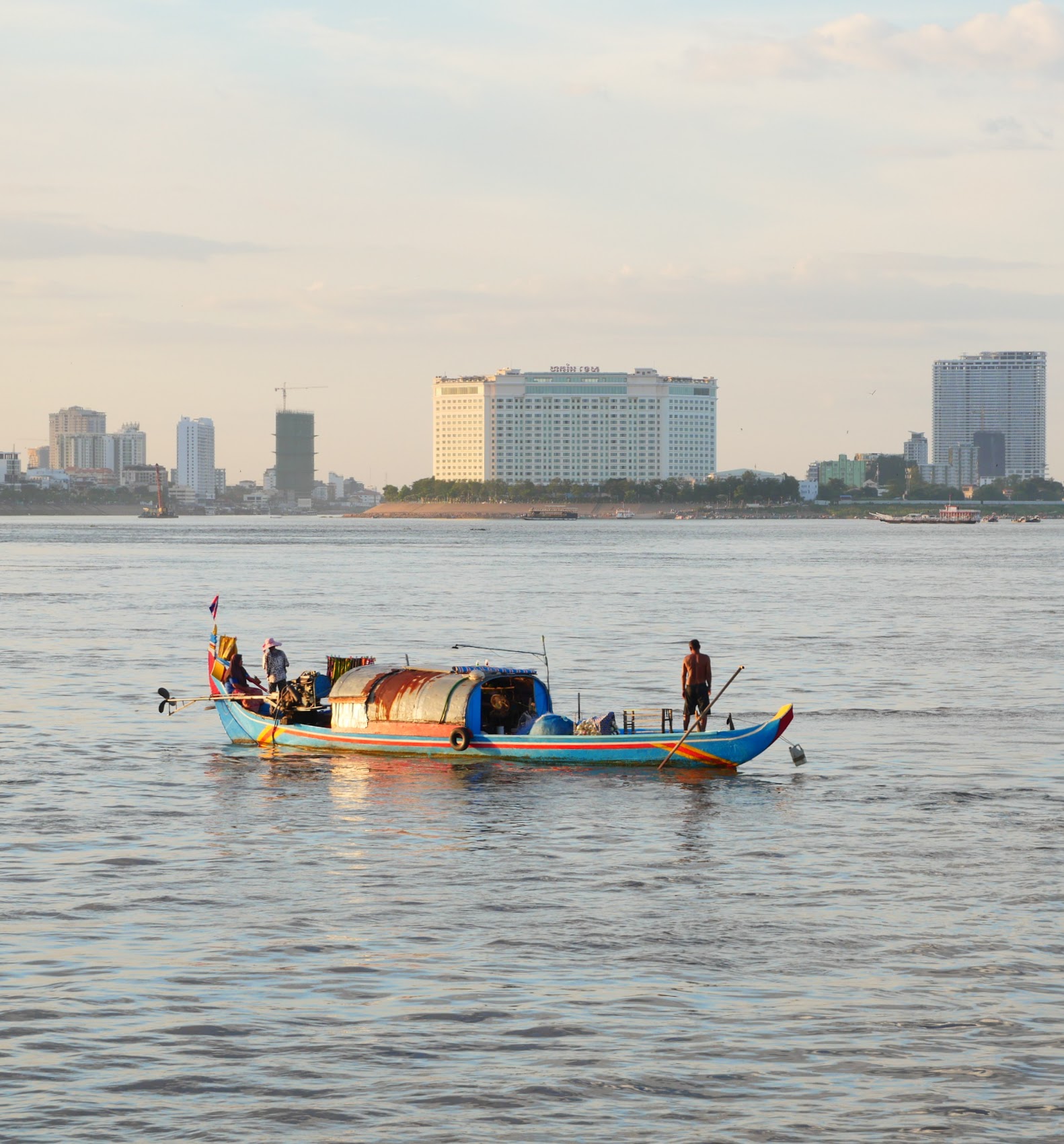
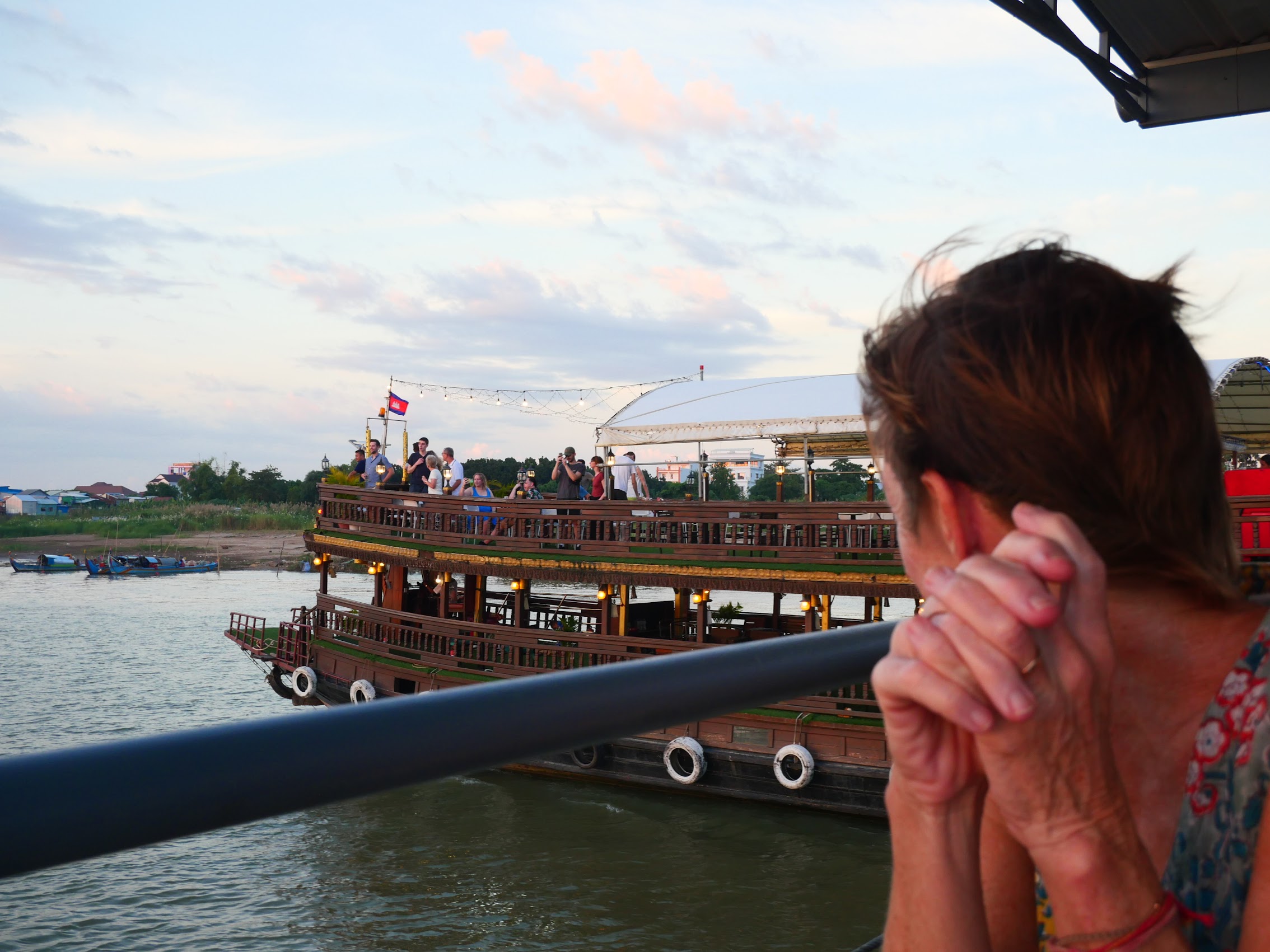
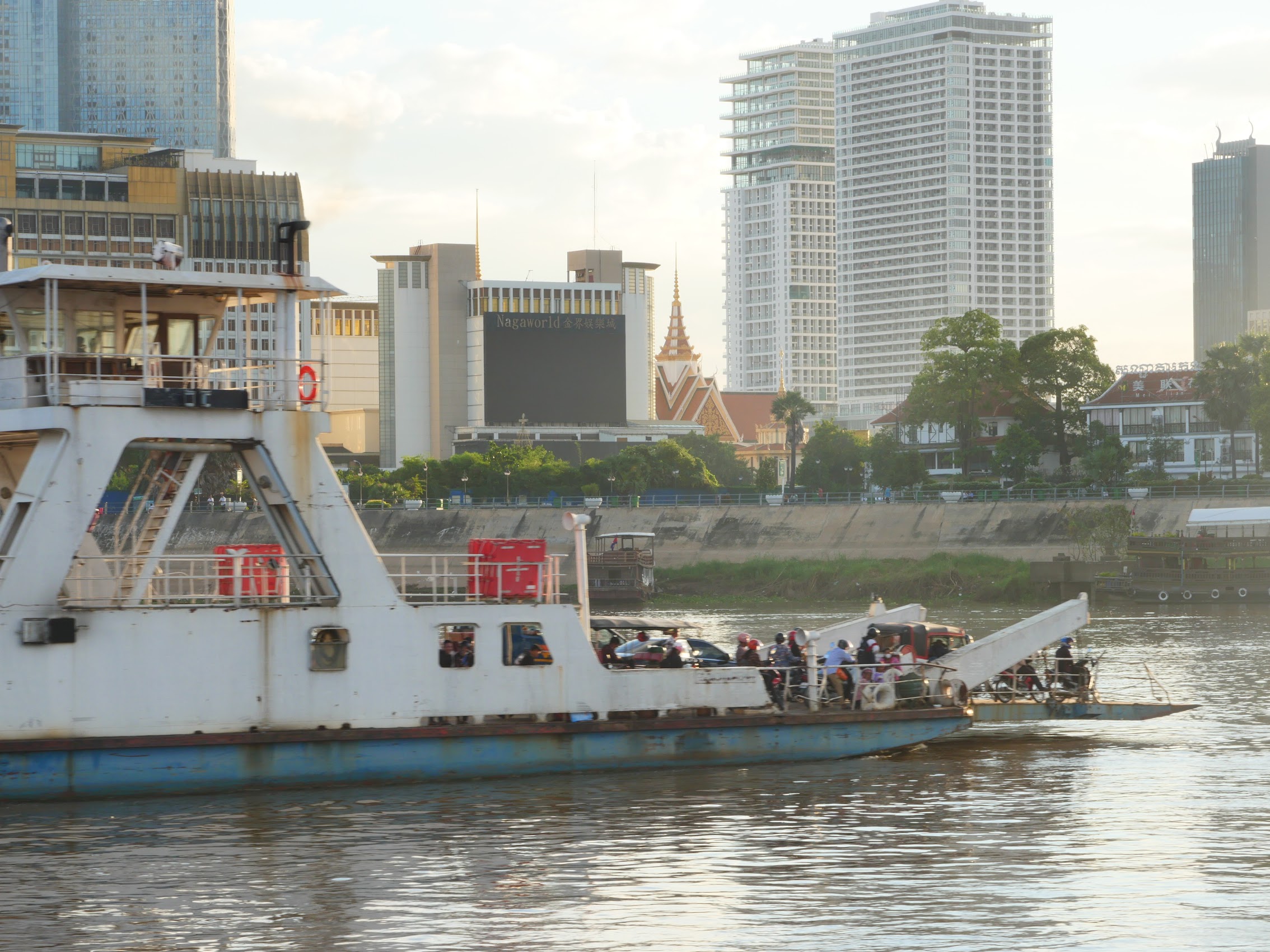

We cruised down the Tonle Sap river past Silk Island and then back up the Mekong. Along the way we saw some other river traffic which included some local fishing boars as well as other river cruise boats (all pretty crowded compared to ours). We also saw some ramshackle villages on the far bank of the Mekong which stood in sharp contrast to the city of Phnom Penh which was actually quite interesting and beautiful to see from a distance, particularly once the sun began to set behind it.
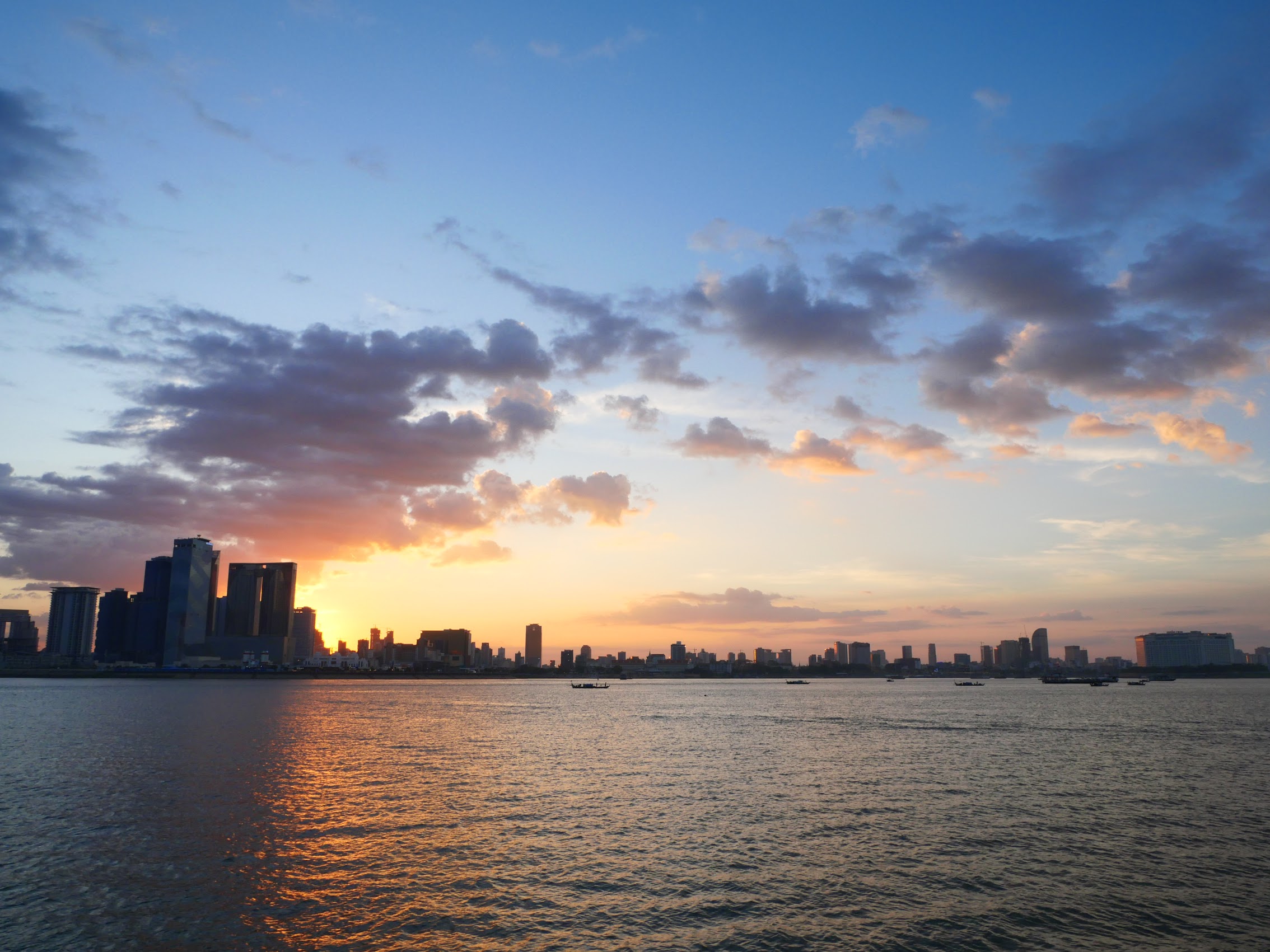

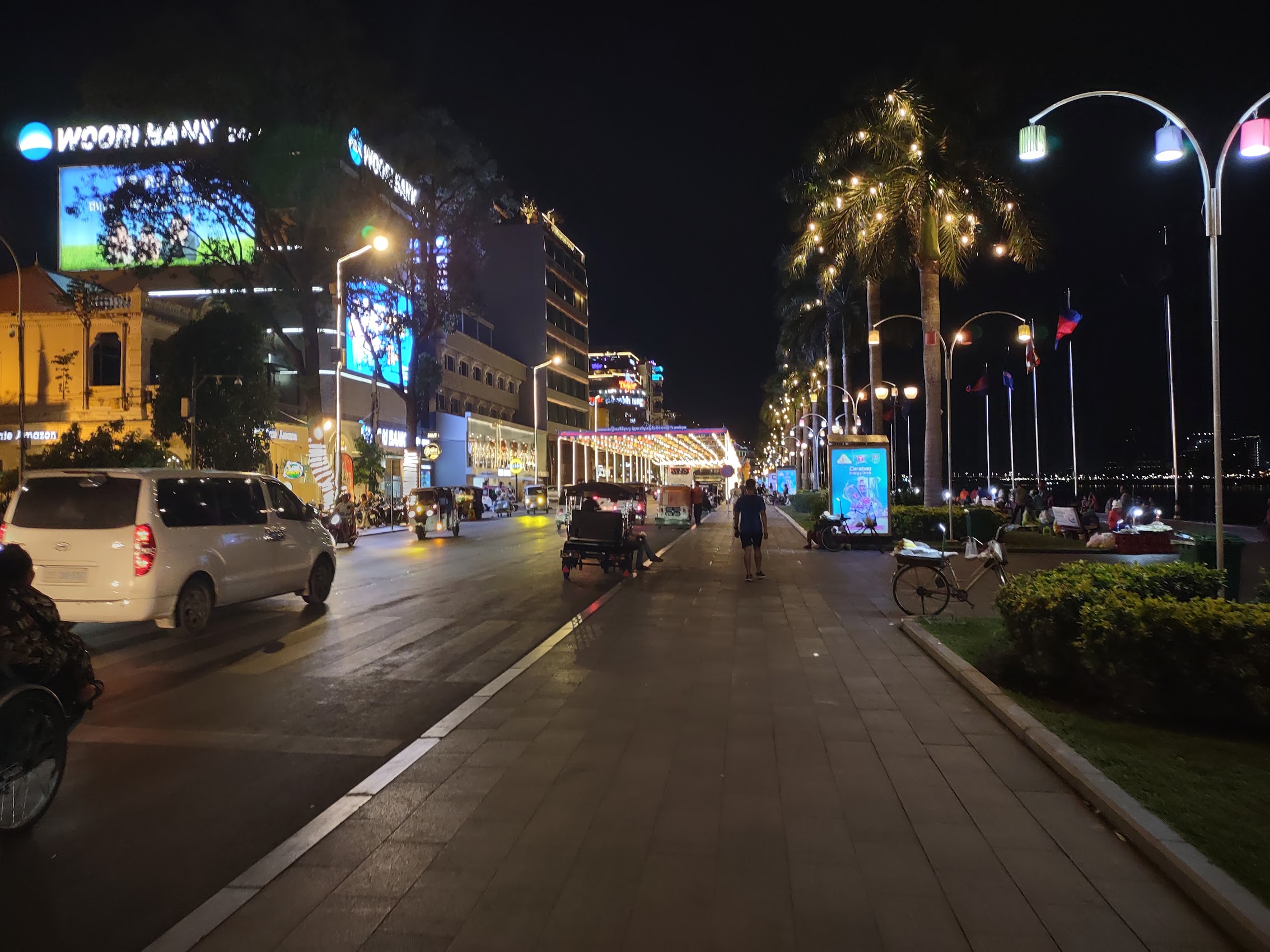
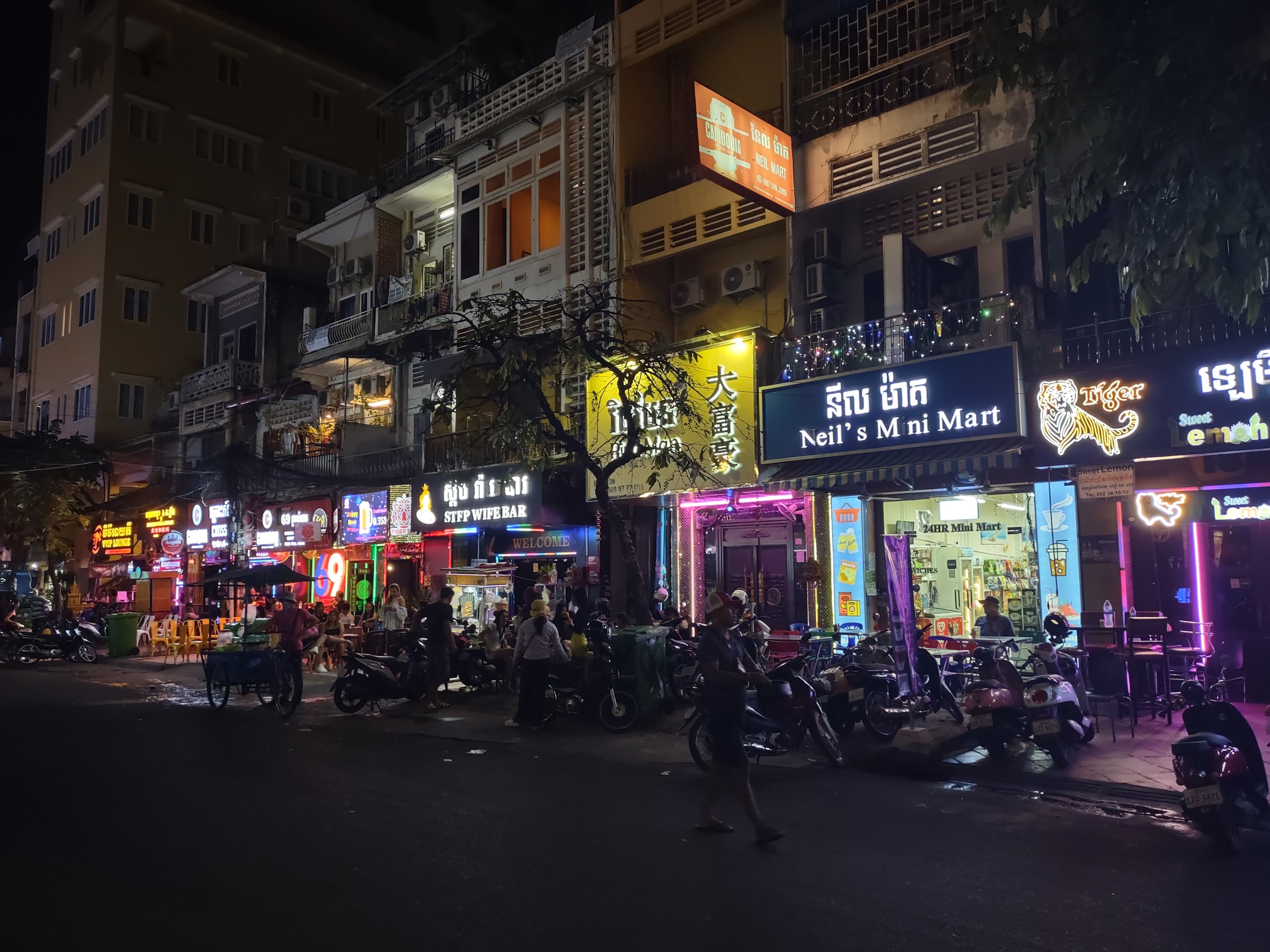
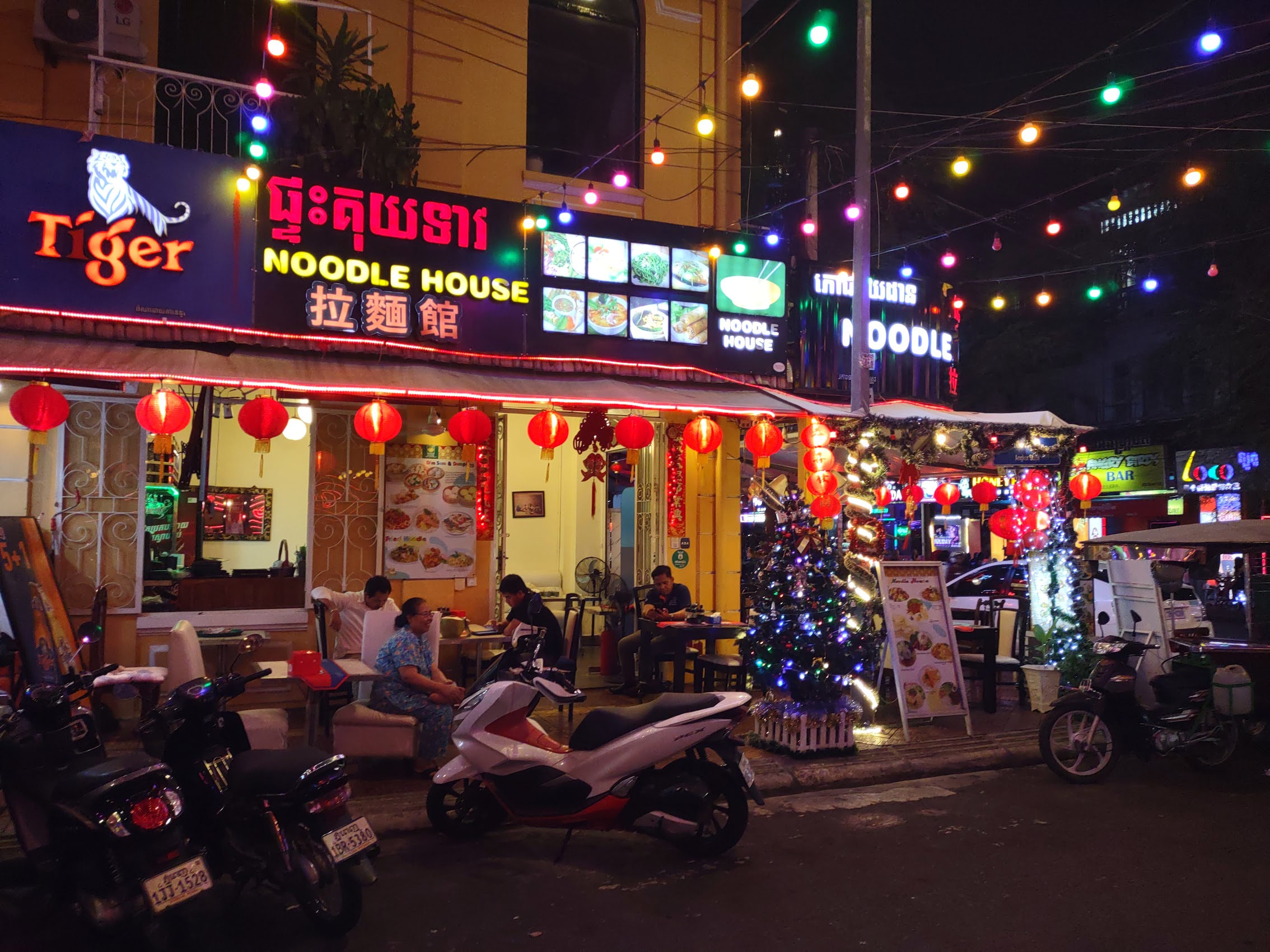
Our walk back up Sisowath Quay was pretty cool – it was the first time we had walked this section of it at night – with lots of festive lighting. Even the streets around our apartment (which were honestly kind of dumpy during the day) came alive at night in a way that seems almost unique to southeast Asia. All in all, a pretty nice way to finish our stay in Phnom Penh and Cambodia.



In contrast to Siem Reap, which seemed a bit like visiting Disney World with all of its tourist attractions and accommodations, Phnom Penh felt like a much more authentic version of modern day Cambodia. And while Phnom Penh had its own sights to see providing glimpse of its ancient history, one gained a much better sense of where this country is today, a beautiful place, but still recovering from it darker more recent past.
We were up early the next day sorting, consolidating, and packing as we were flying to our next destination and needed to get ourselves down to “flying weight” (always a bit of a challenge after having been traveling overland for any period of time). We headed out to the airport around 11 AM to catch the flight to our next destination, the city of Kuala Lumpur in Malaysia.
 Burning the Inheritance
Leave a comment