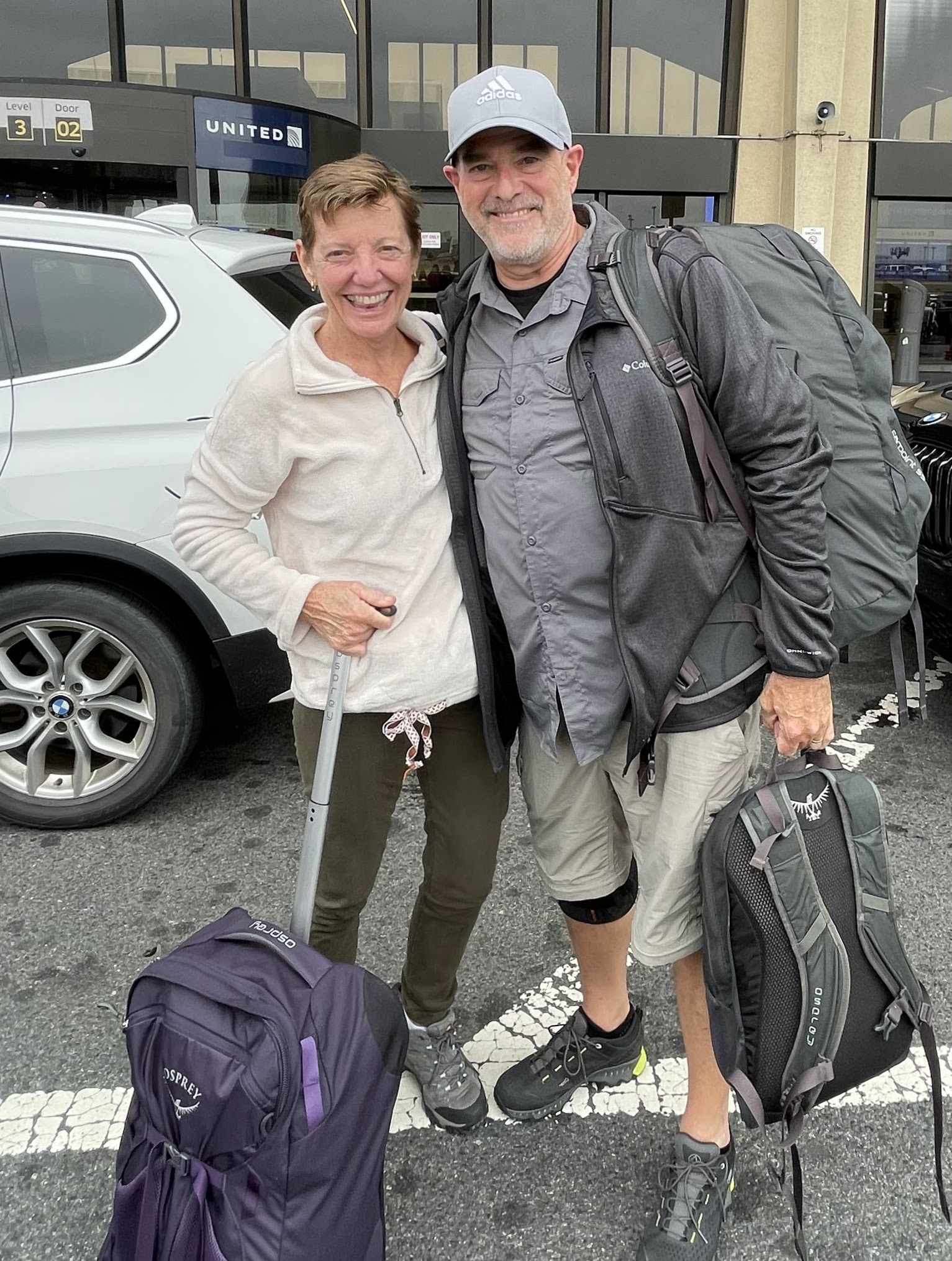
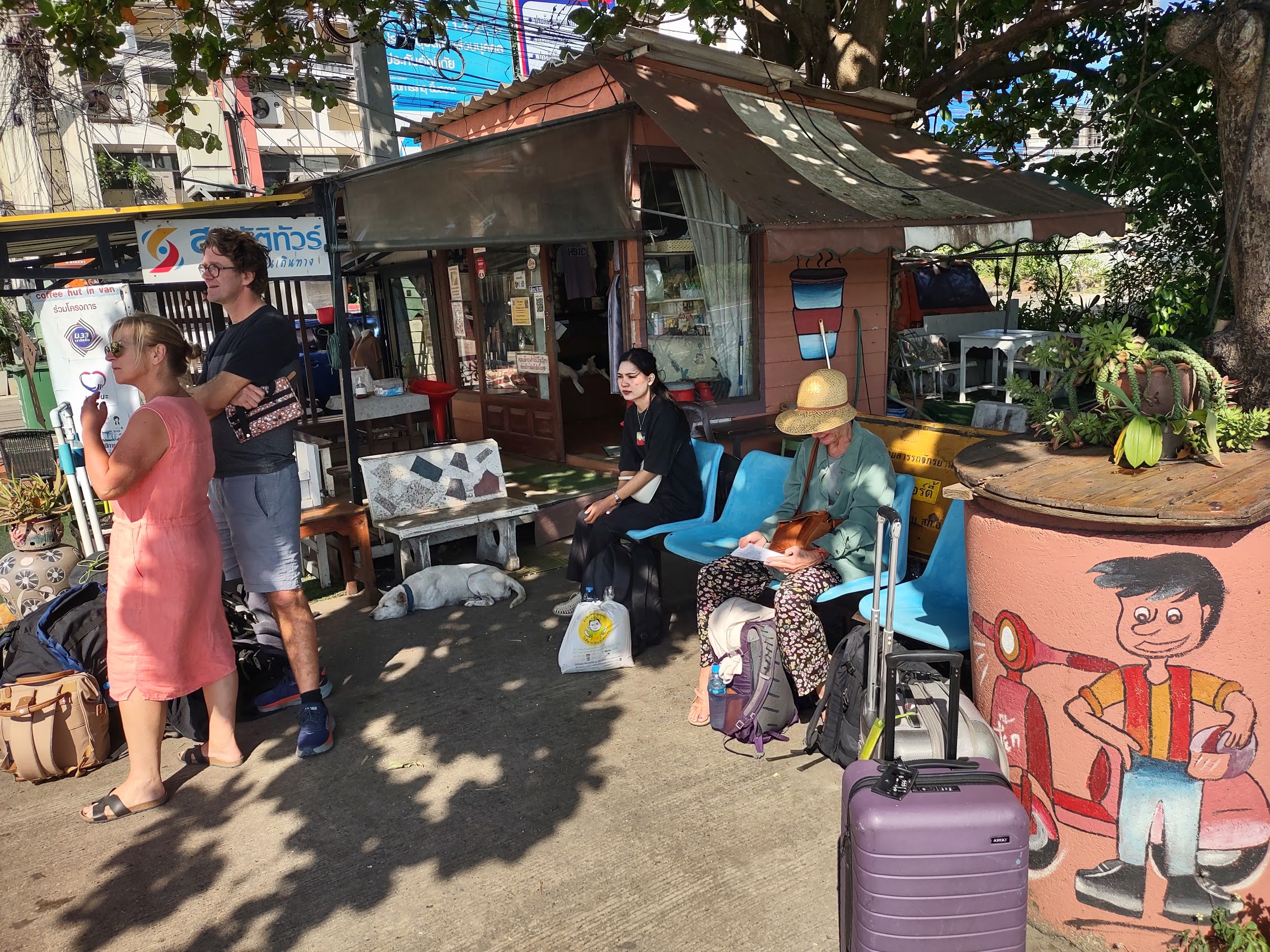
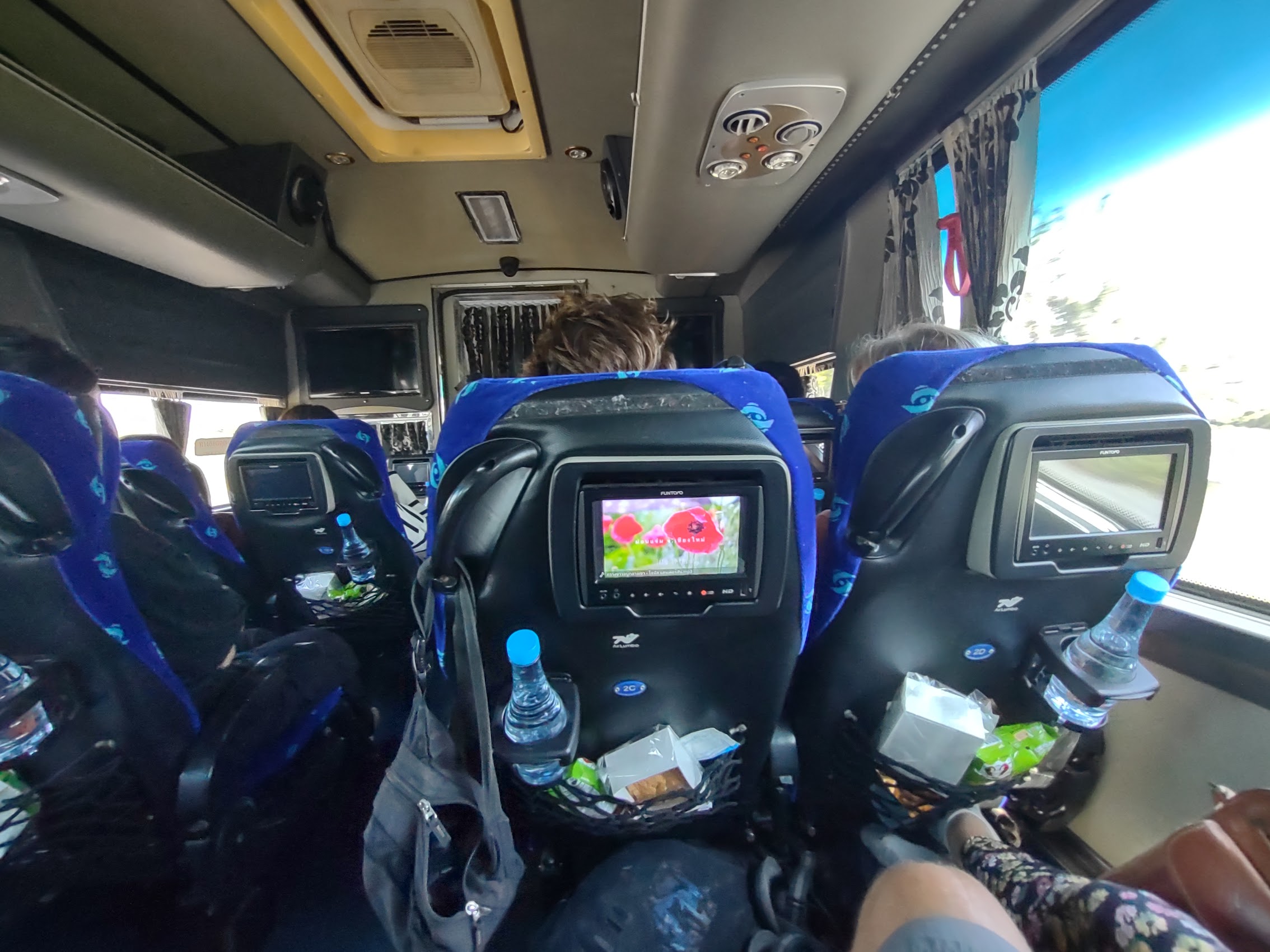
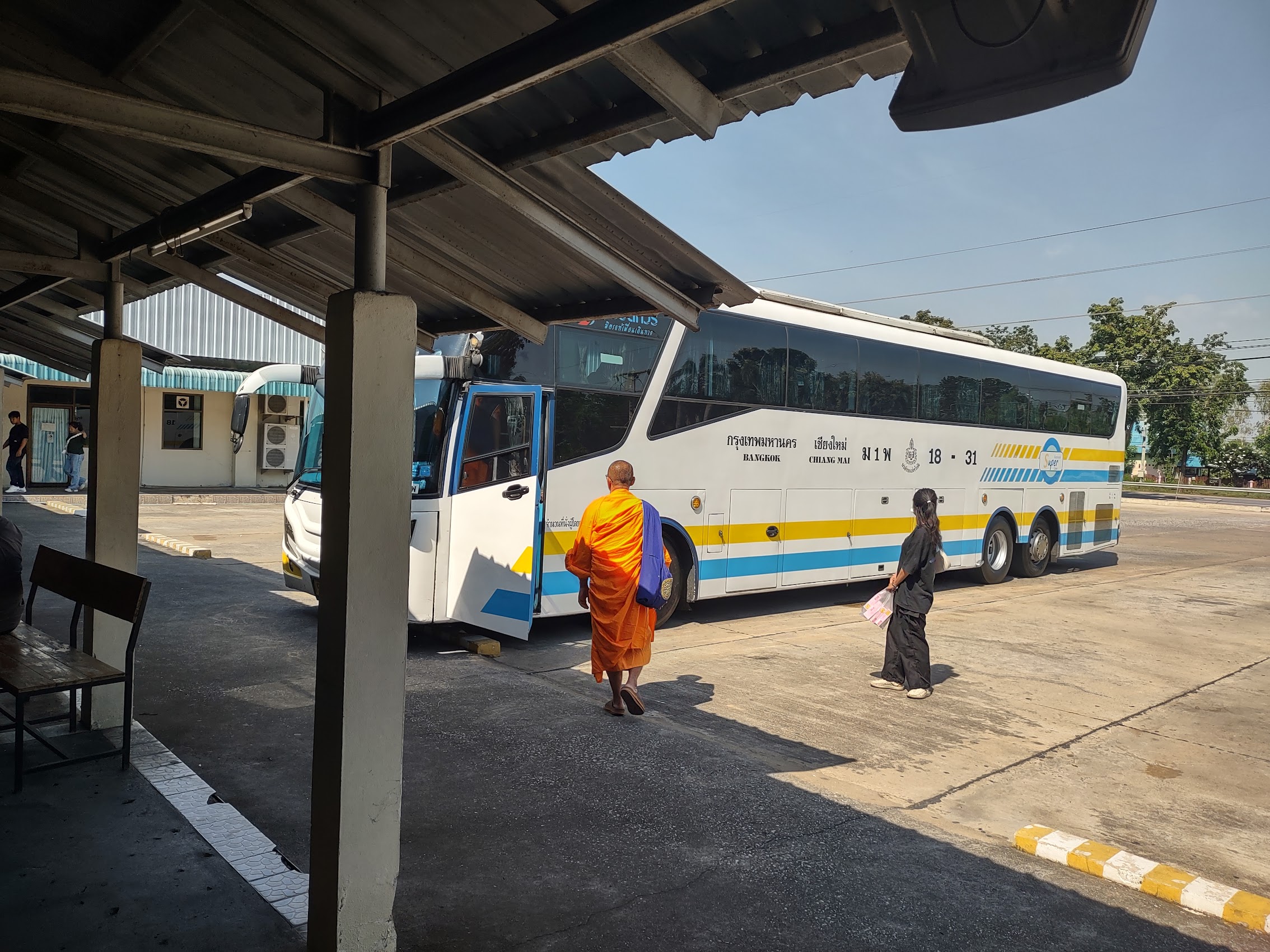
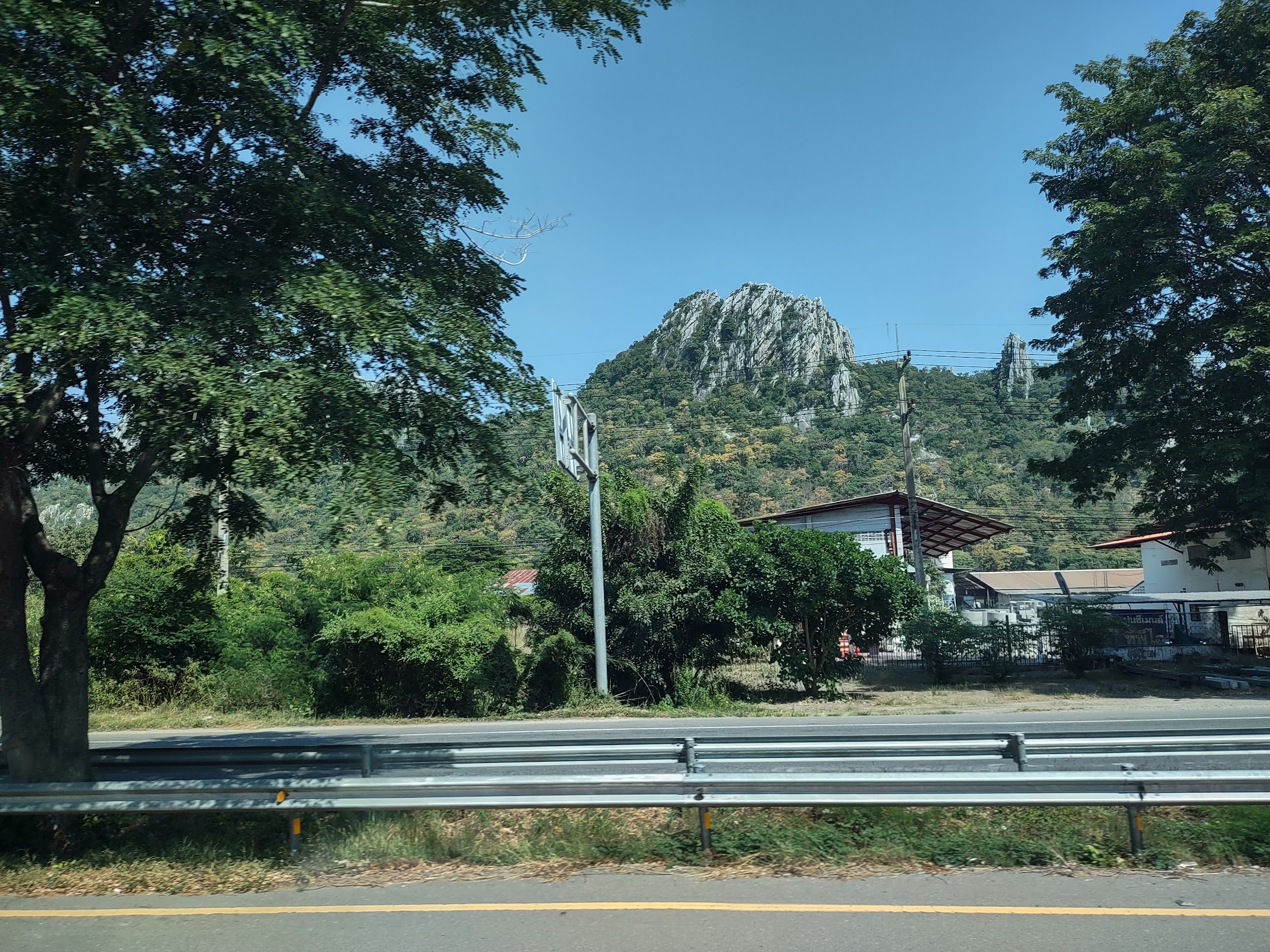
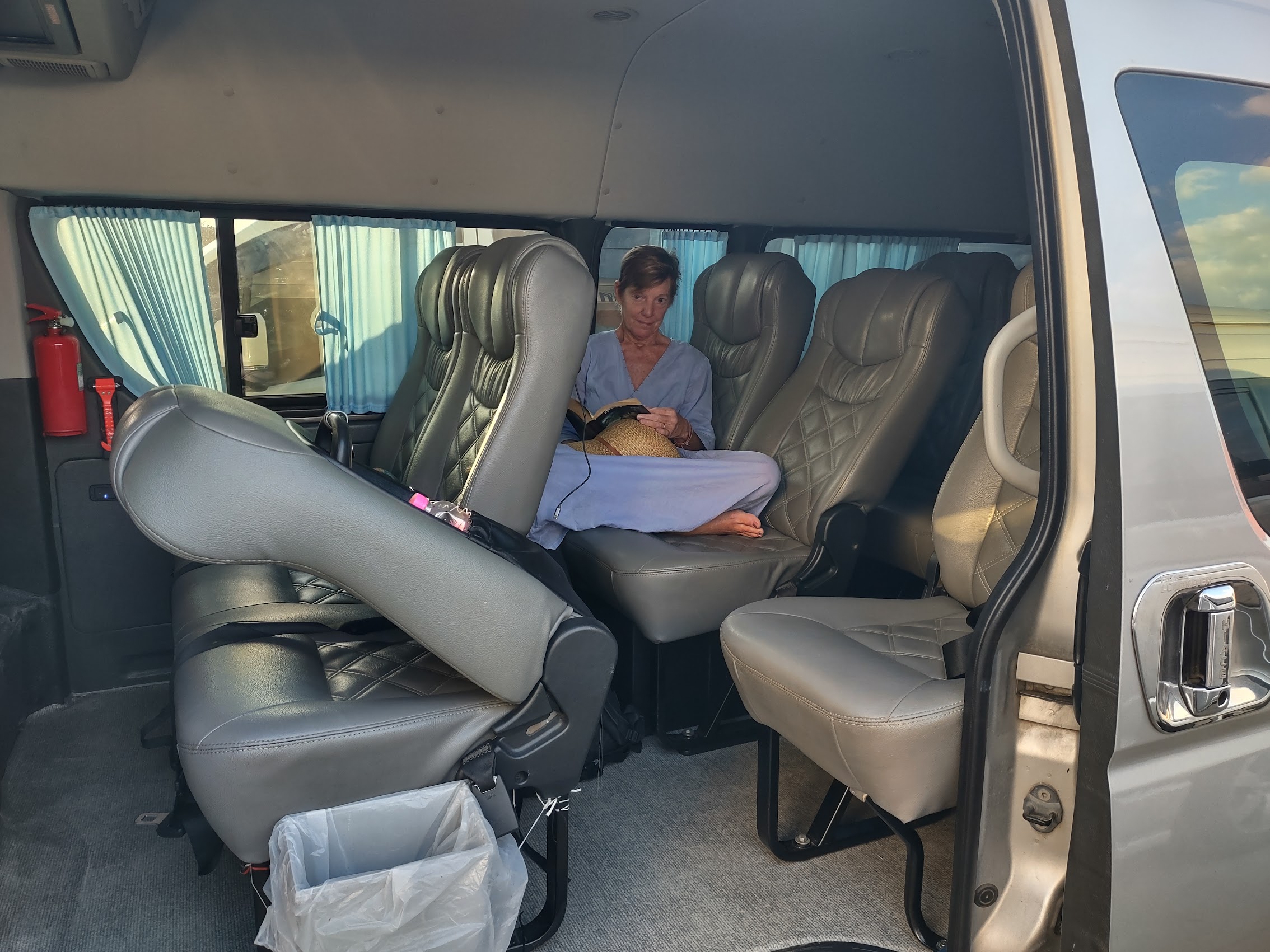
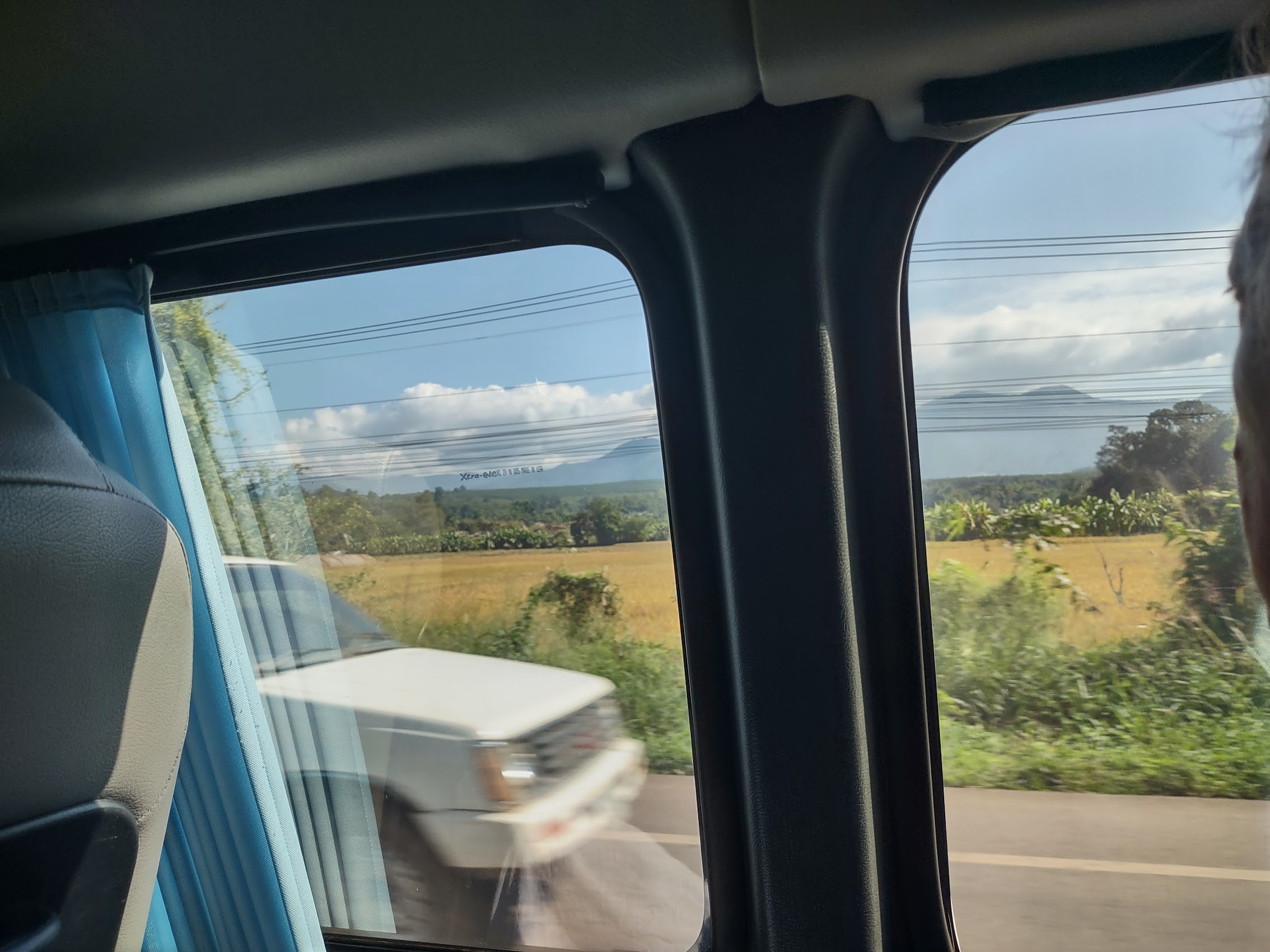
Chaing Mai was another place we had planned on visiting during our last trip to Thailand but were unable to make and was arguably the place we were most excited to finally see in Thailand. Our trip there started a little rough as there was some confusion over when we were supposed to meet the shuttle in order to get to the bus station but we resolved it by having our Grab driver take us directly to the bus station (and I use the term “station” loosely here – really more of a “stop” than a “station”). But the bus was quite comfortable (verging on luxurious) and the trip, though long (8-1/2 hours) was actually pretty pleasant and quite scenic as we began to see mountains in the distance.

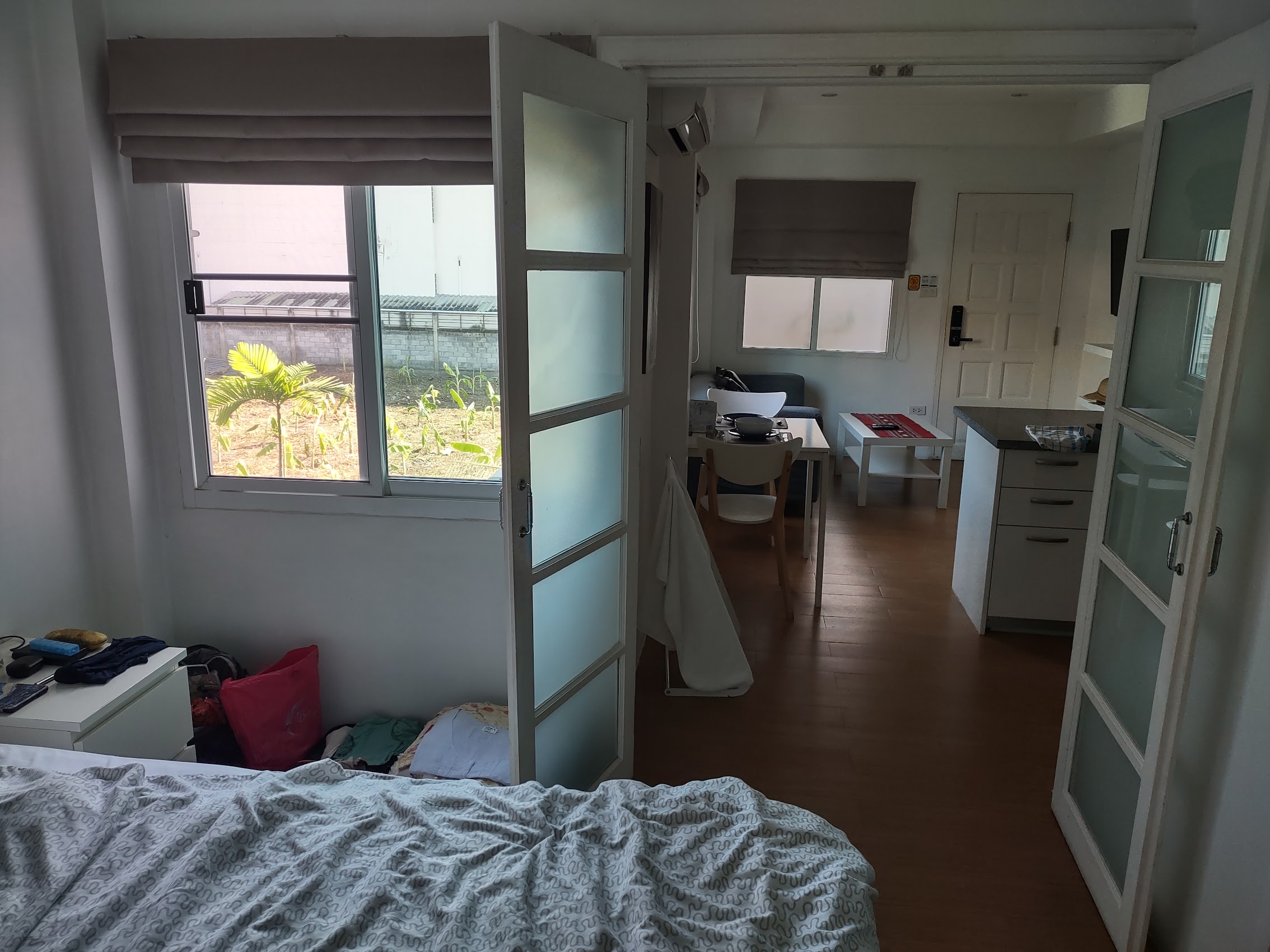
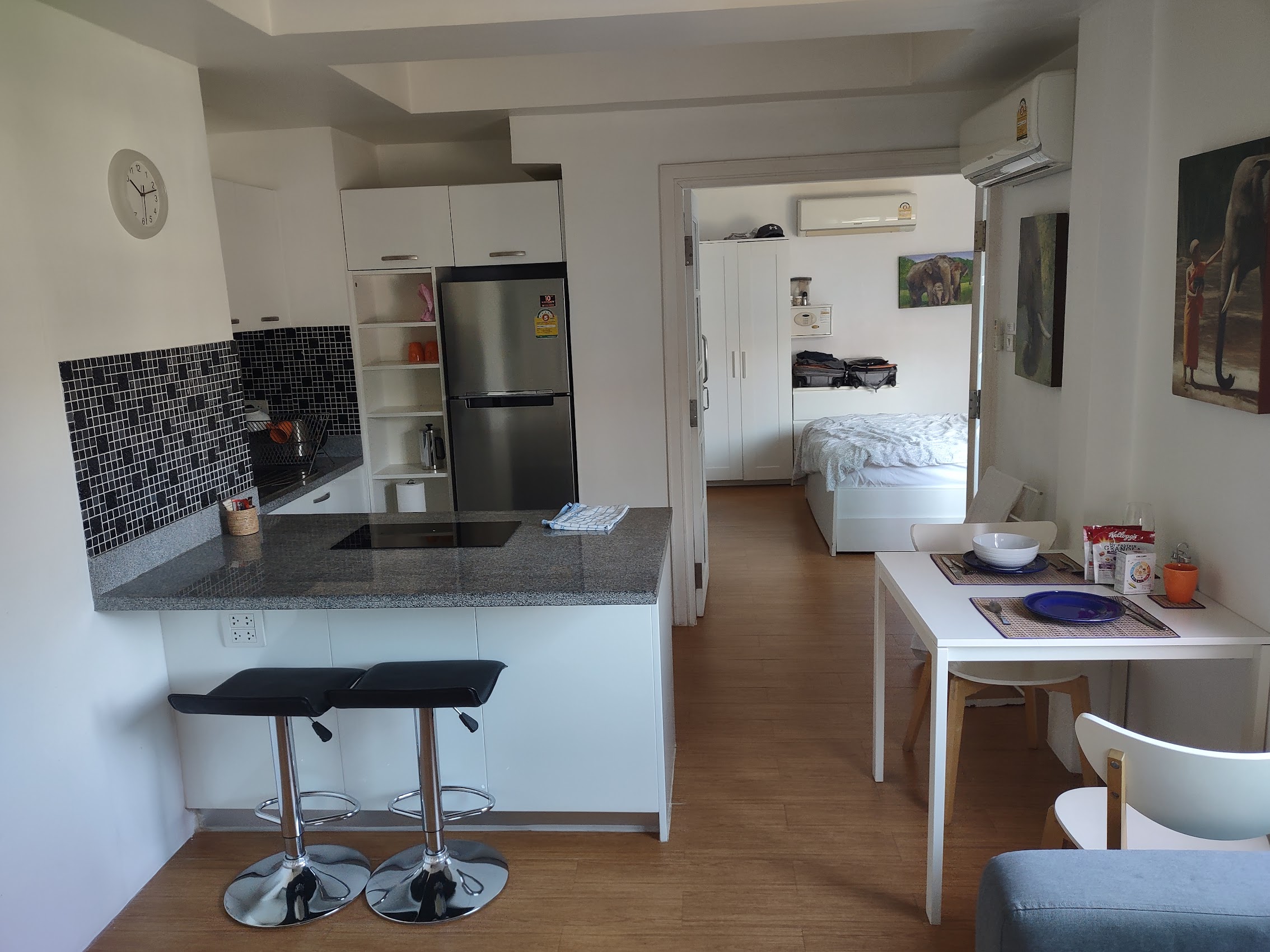
In Chiang Mai we had rented a one-bedroom apartment for the week in a small apartment building called the Sunny Suites located on the north edge of the old city, just inside the remains of the old city walls and moat which surround the old city near the old Chang Phueak Gate (North Gate). The place was small and plain, but it had pretty much everything we needed, was very affordable ($38/night!) and turned out to be a great base of operations.


The neighborhood itself was mostly residential and very quiet, It was a nice place to start and finish the day, but provided easy access to the Old City center and we could walk to anywhere in the Old City in 45 minutes or less. It’s location near the perimeter of the old city also made it easy to get to some of the surrounding neighborhoods fairly easily.
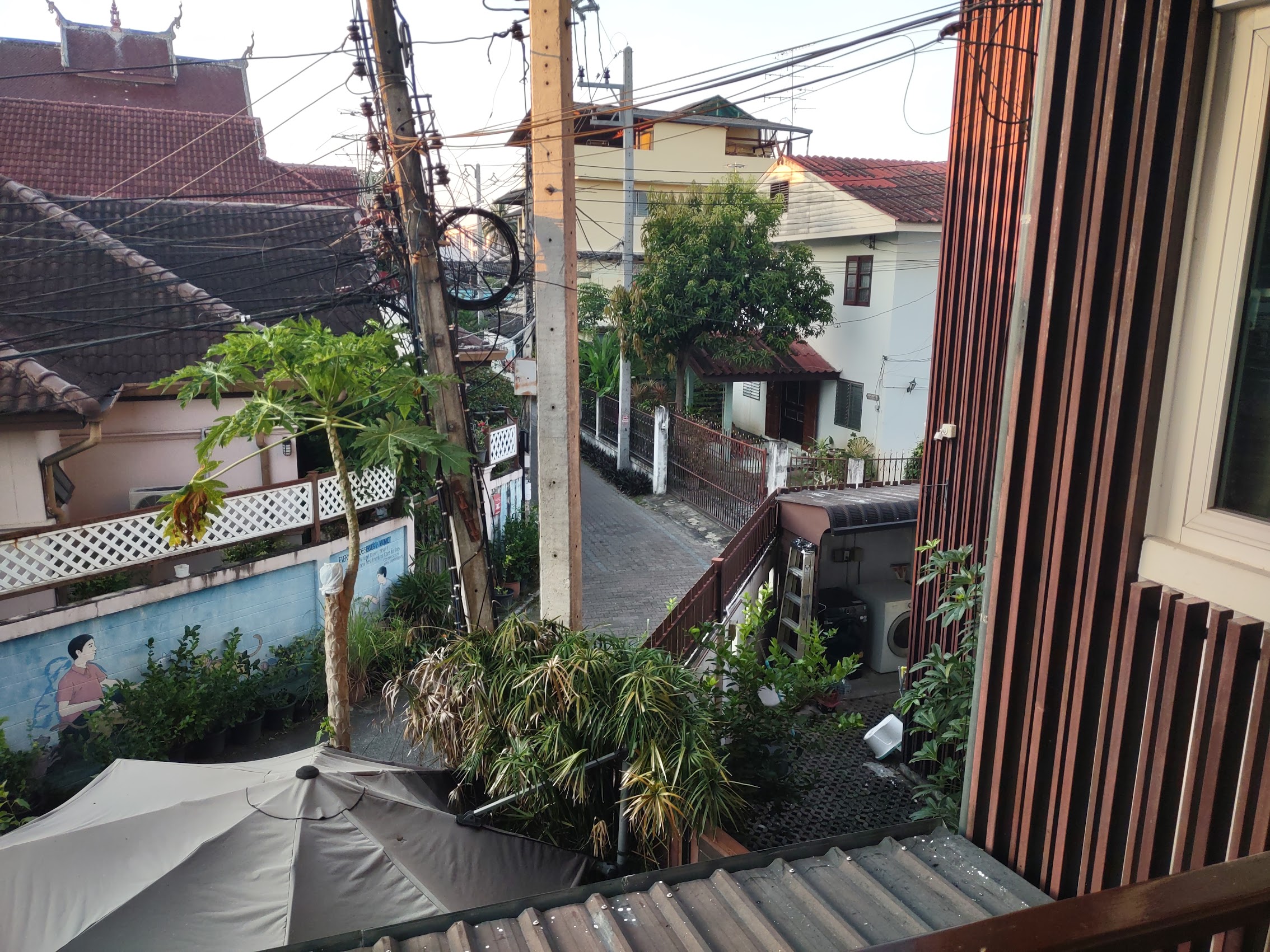
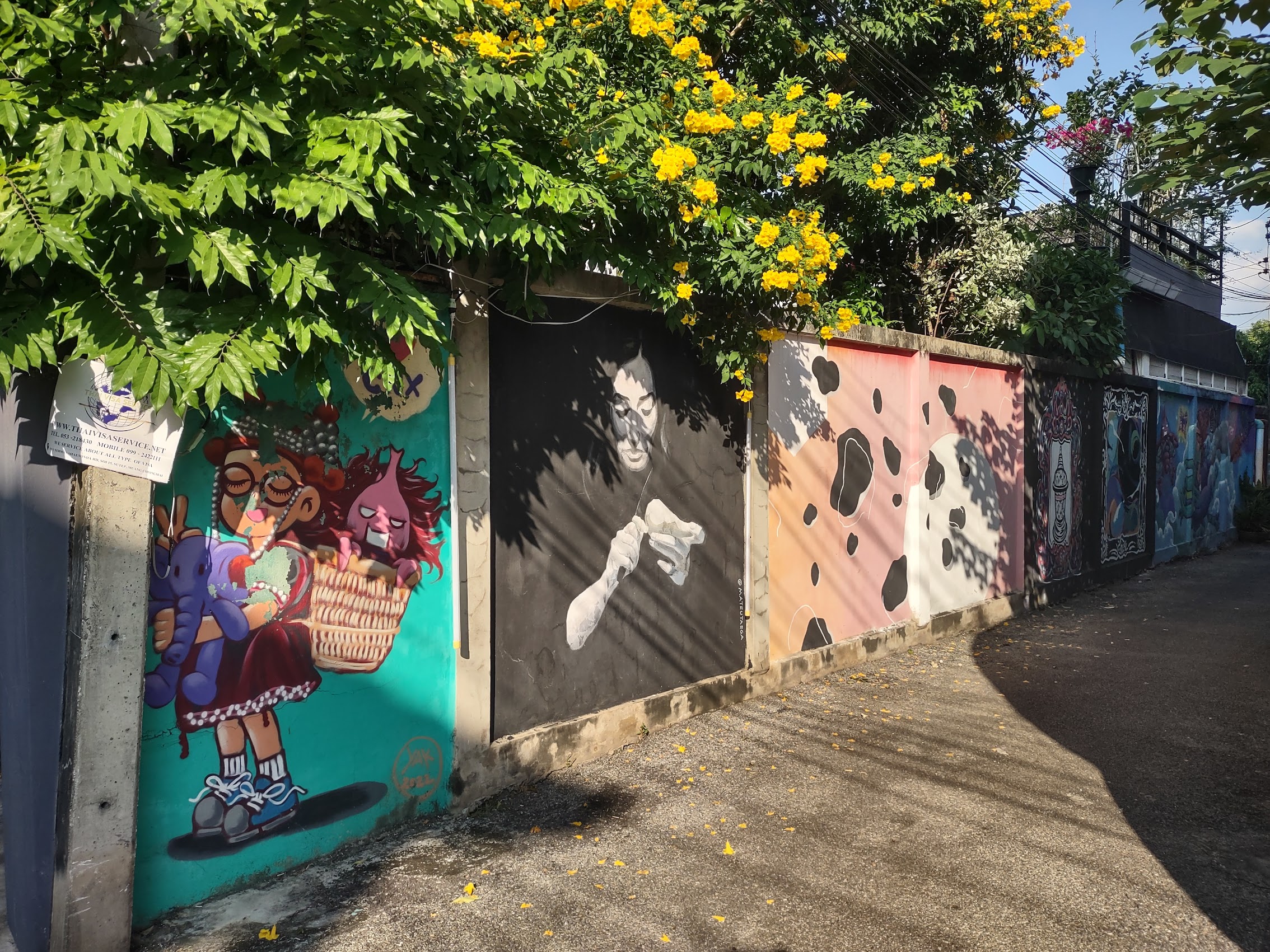
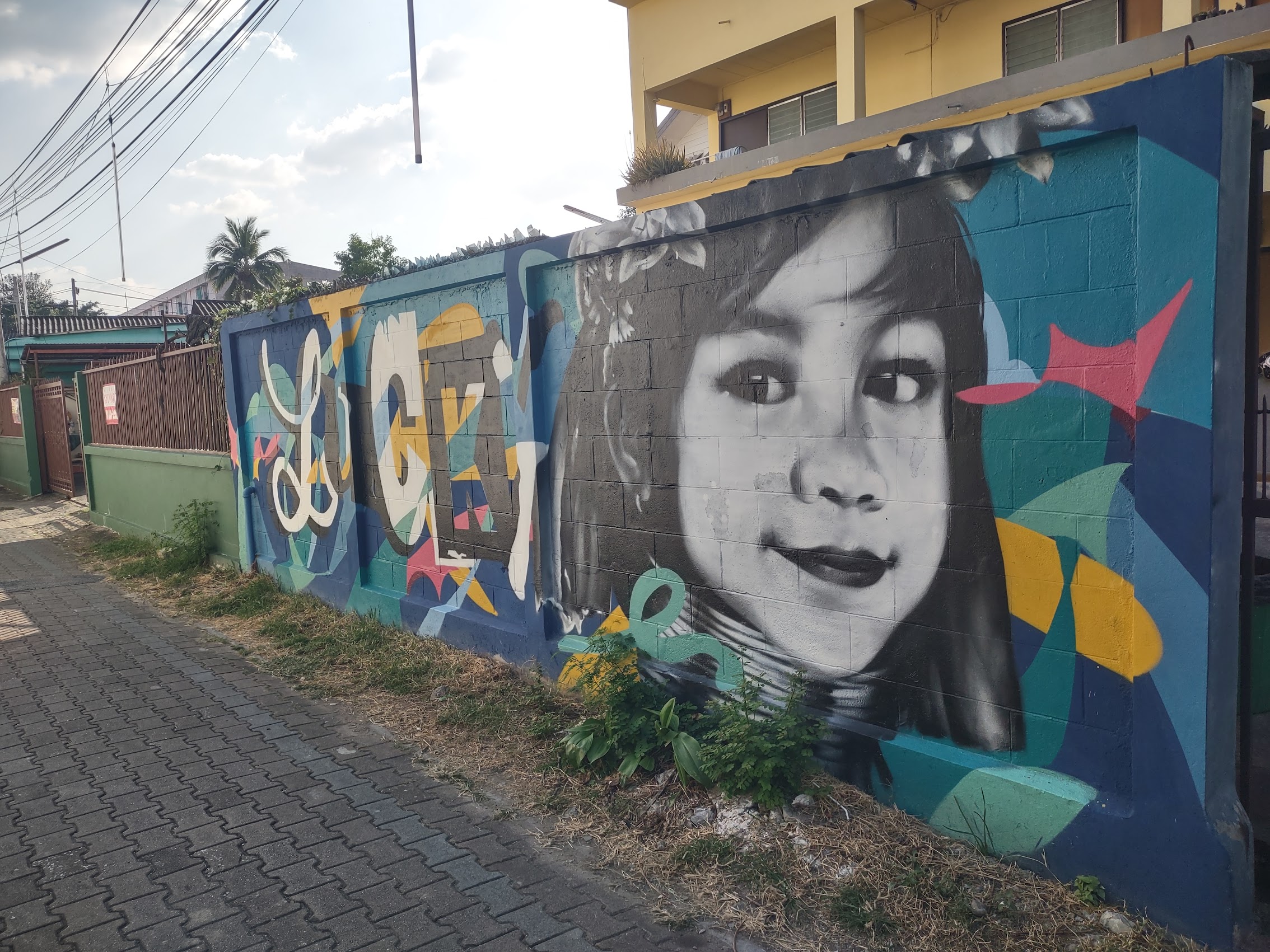
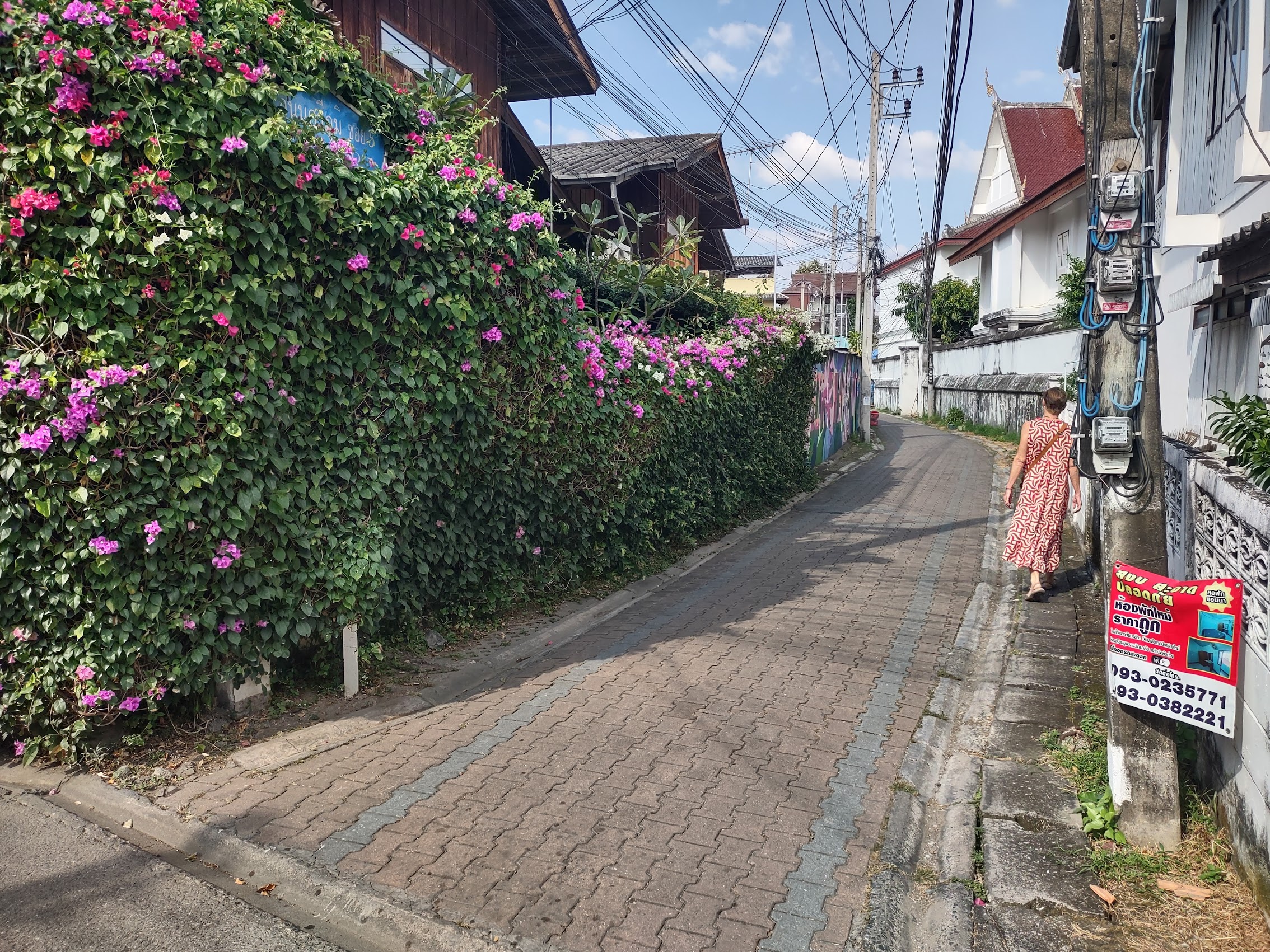

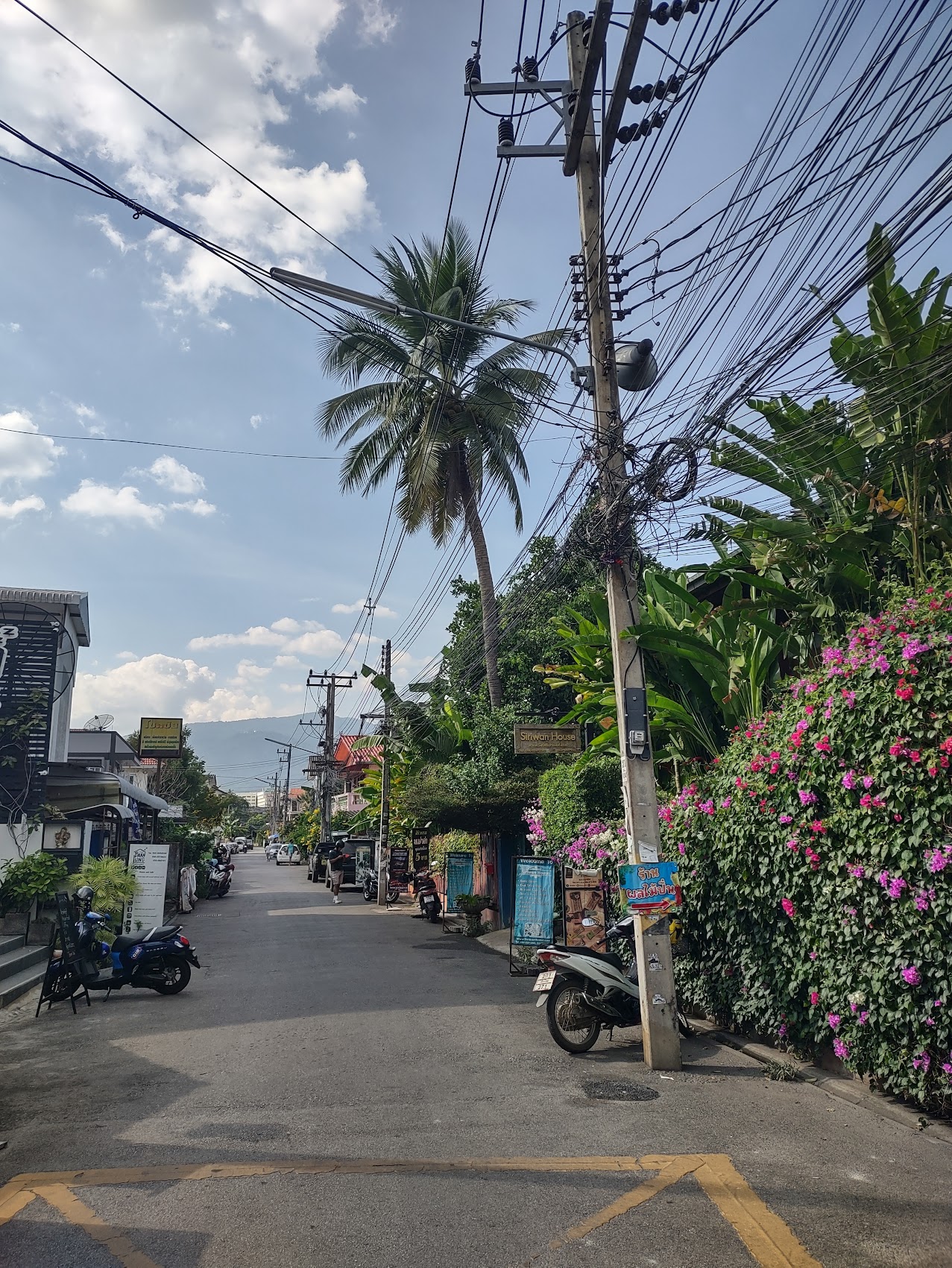
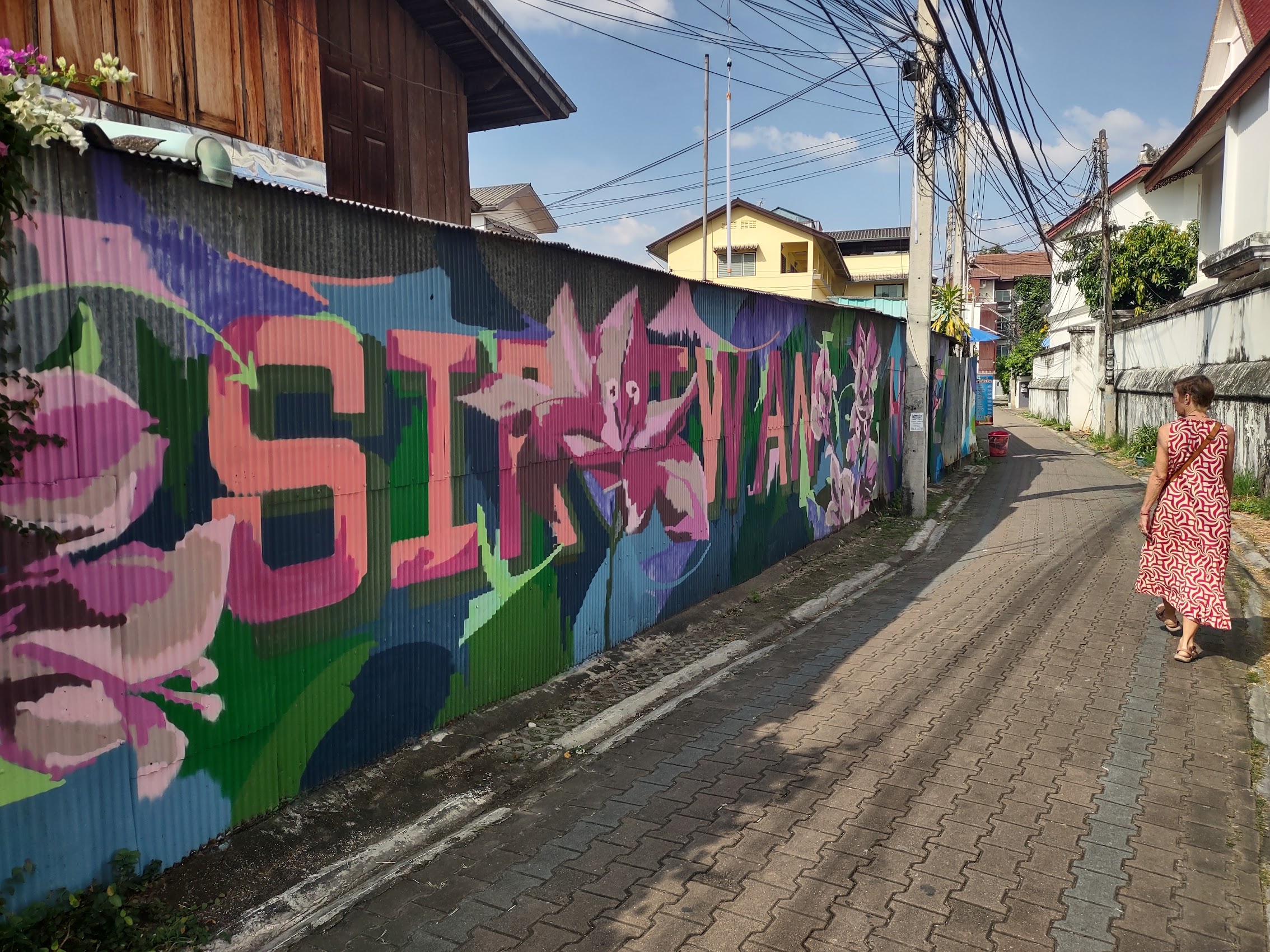

We were in Chiang Mai for one week with the sole intent of just getting into the vibe of the place. On our first night there, we took a walk around our neighborhood to grab a bite and discovered a massage parlor which, after trying some others, became a regular stop at the end of almost every day.
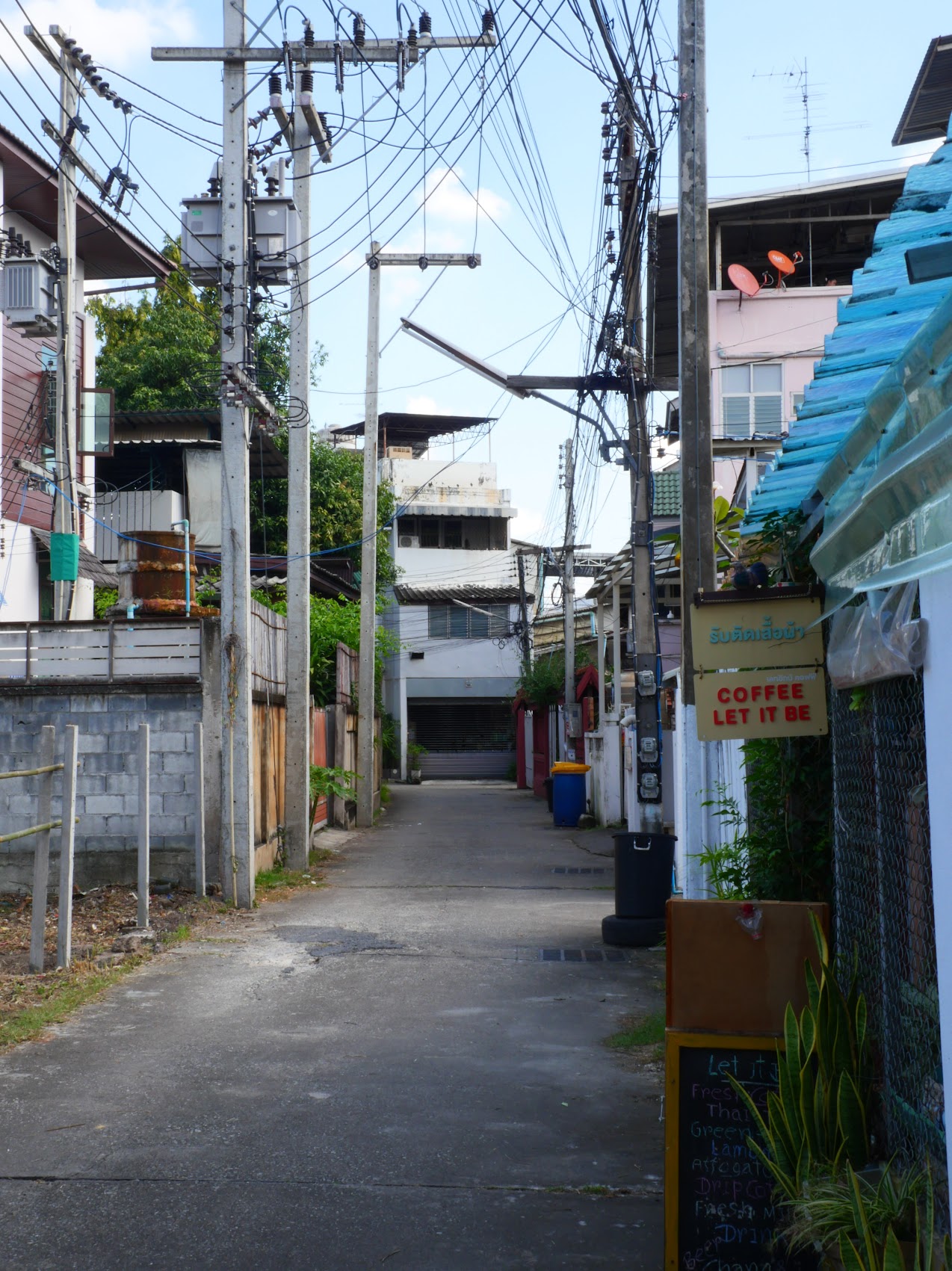
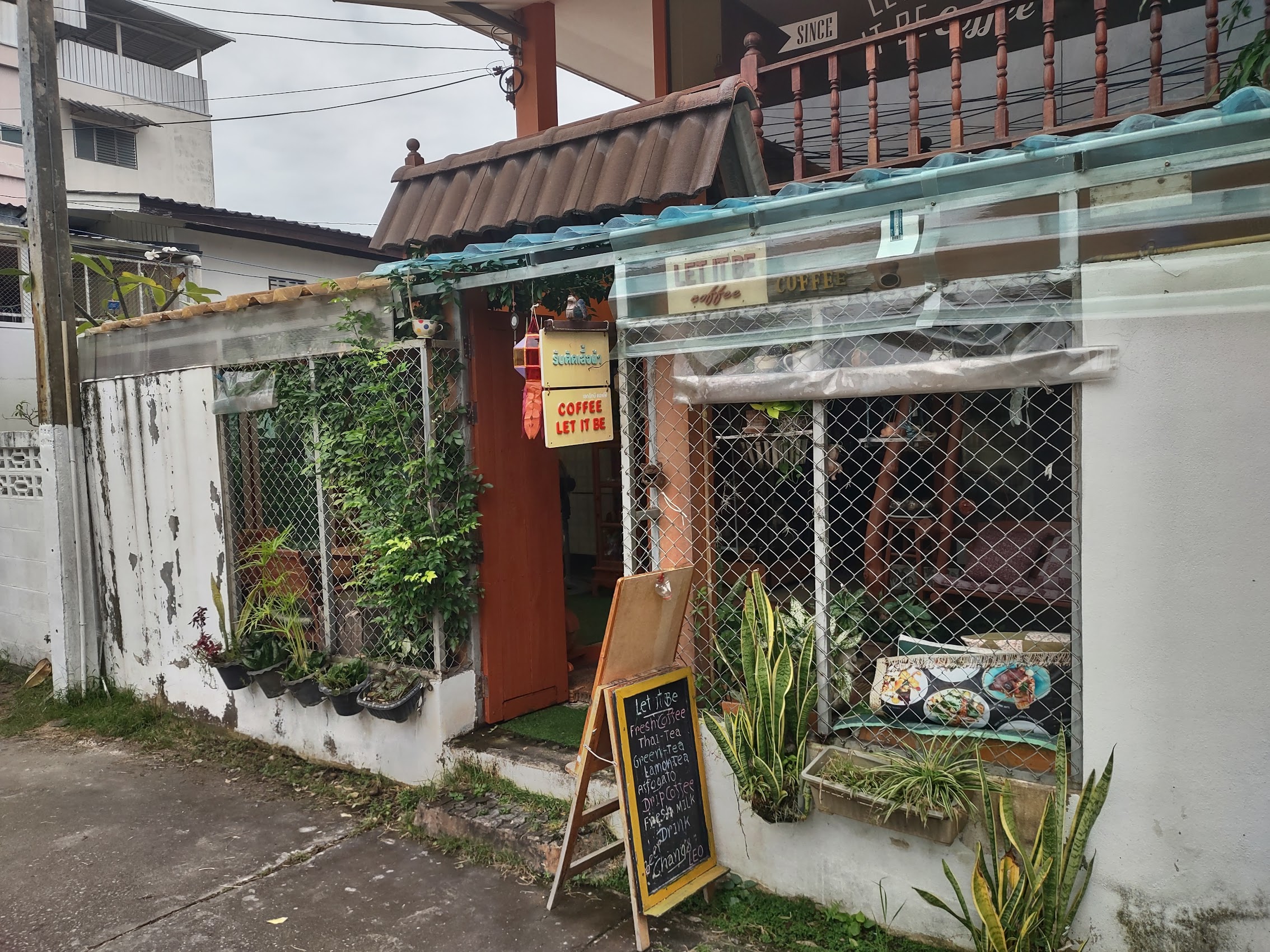
Colleen located a yoga studio near the center of town and went there the first morning and most mornings thereafter. There was a cool little coffee house (Coffee Let it Be) just a couple of doors down from our place where I would go before meeting Colleen after yoga (and where we spent our last morning before it was time to catch our bus).
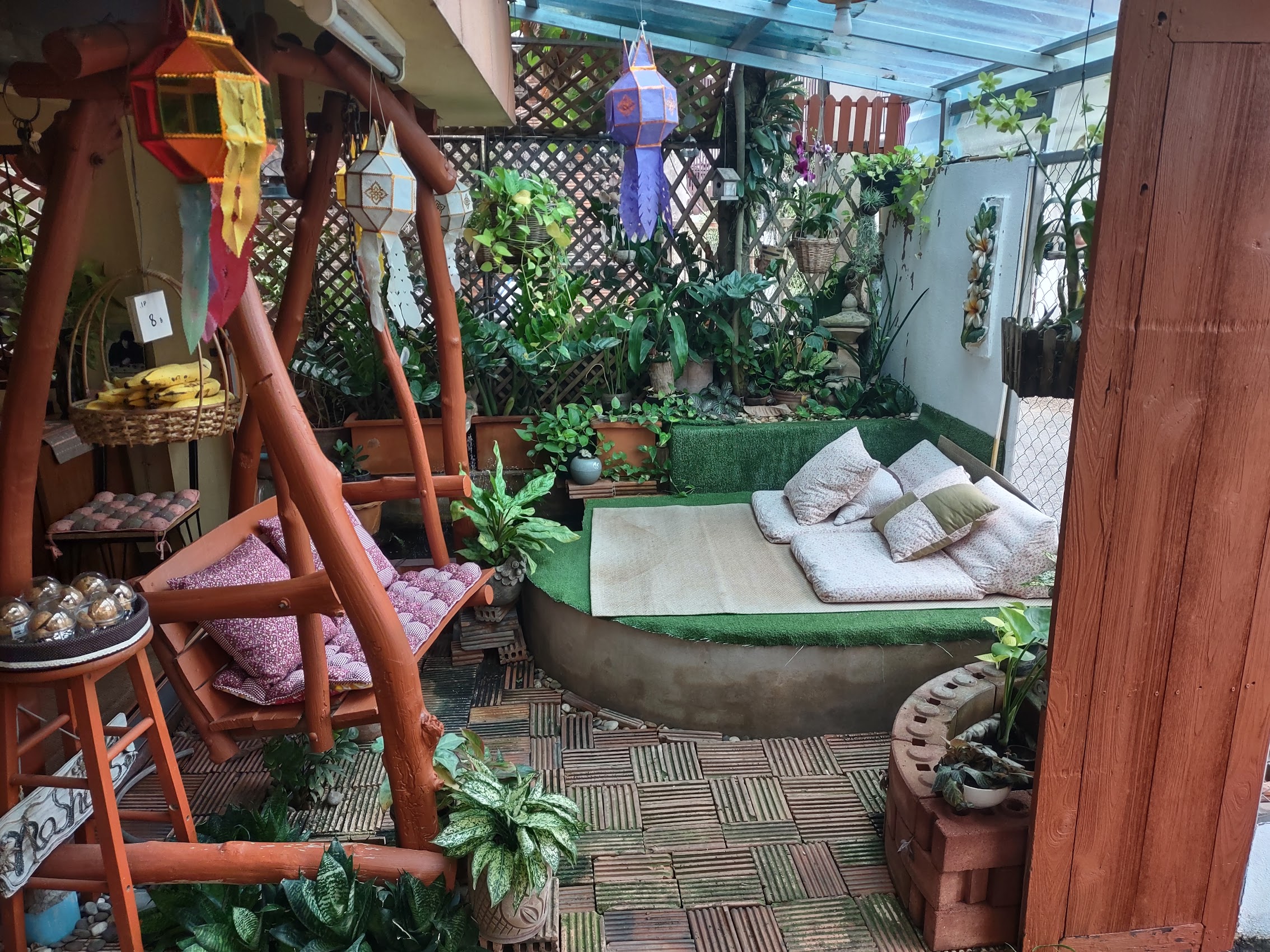
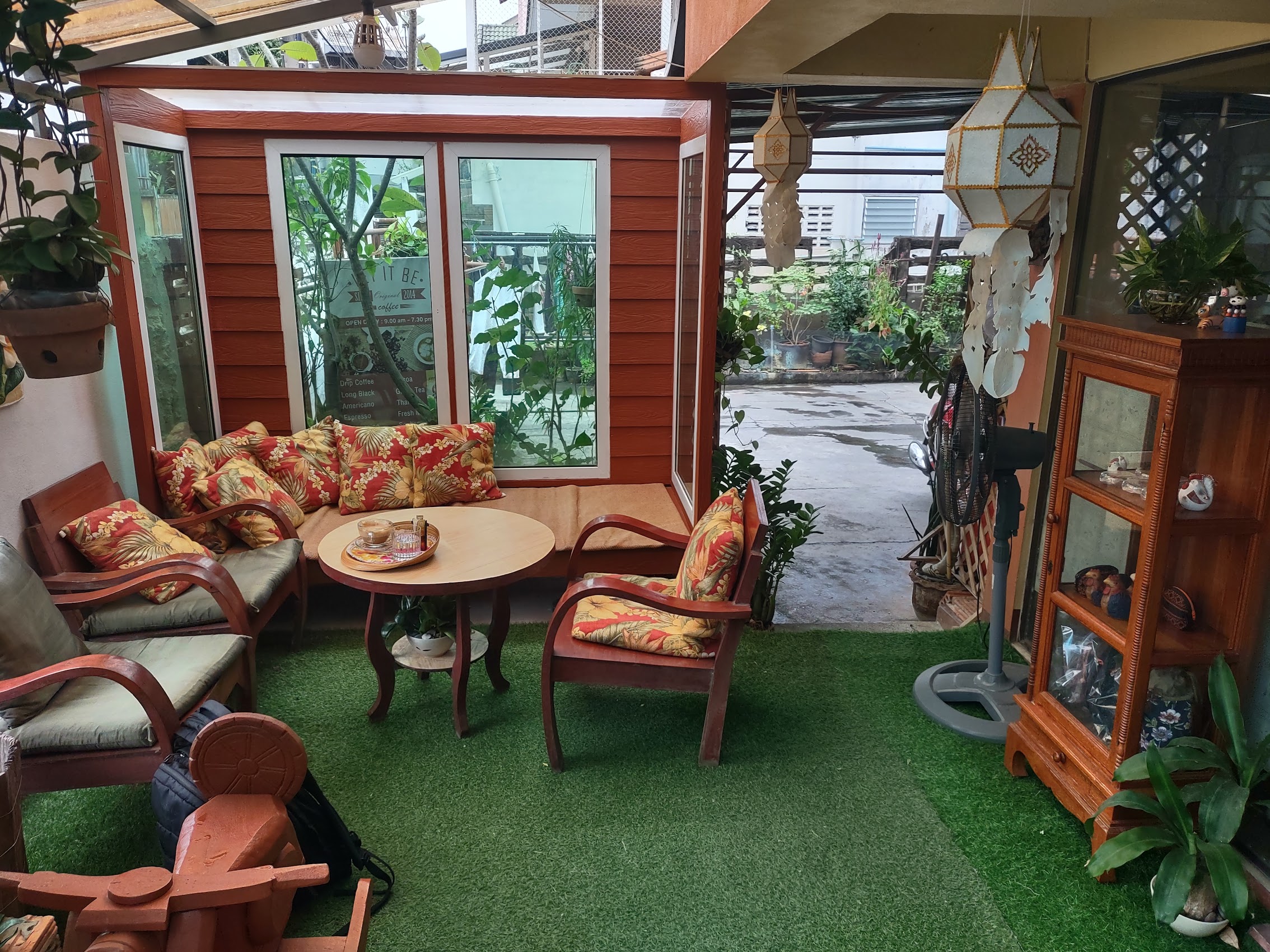
And so, we fell into a nice routine of yoga, workouts, and coffee in the morning, wandering the Old City and its surrounds during the day, and stopping for a foot massage on the way home, a routine it seemed we could maintain indefinitely.
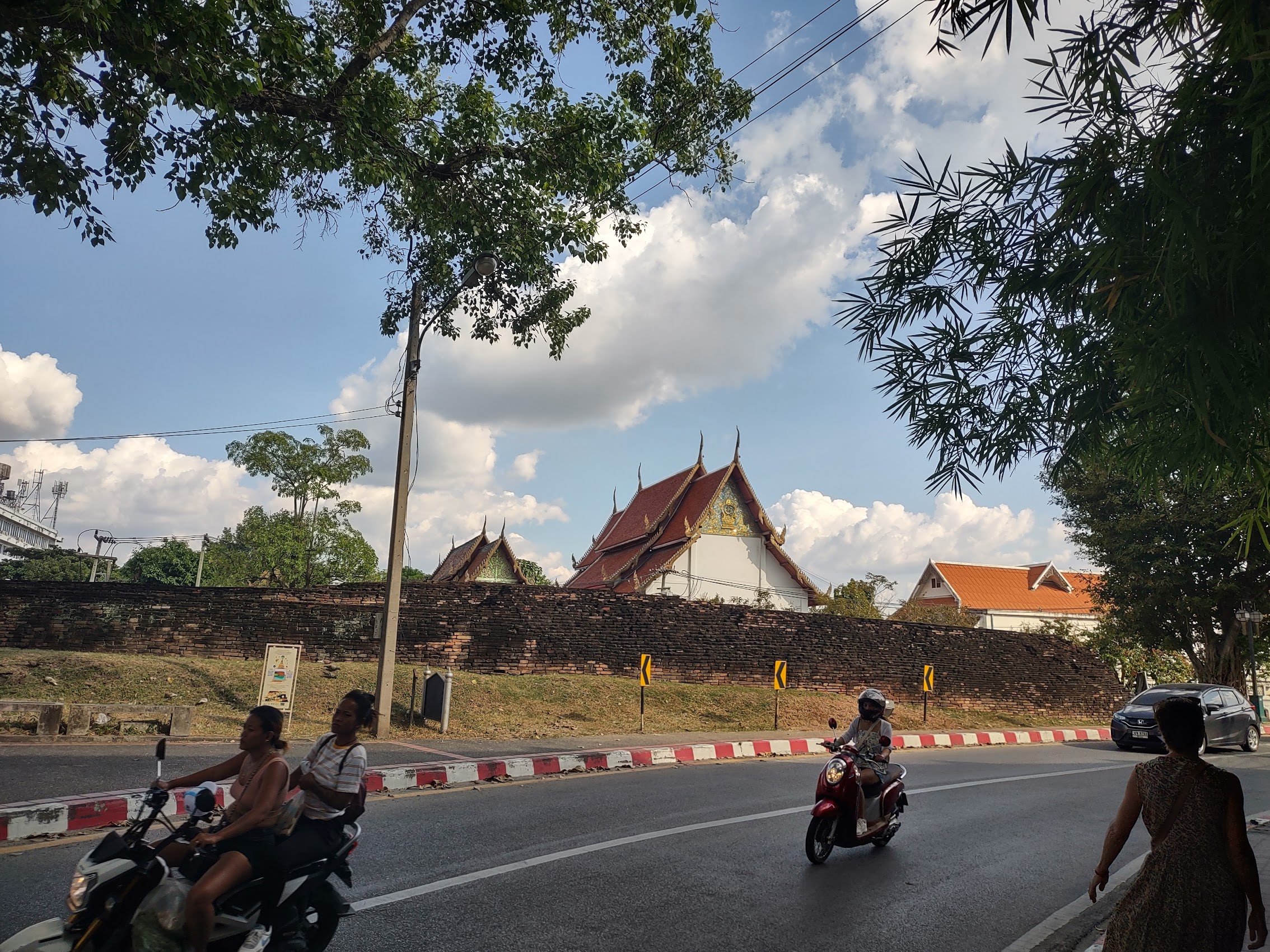
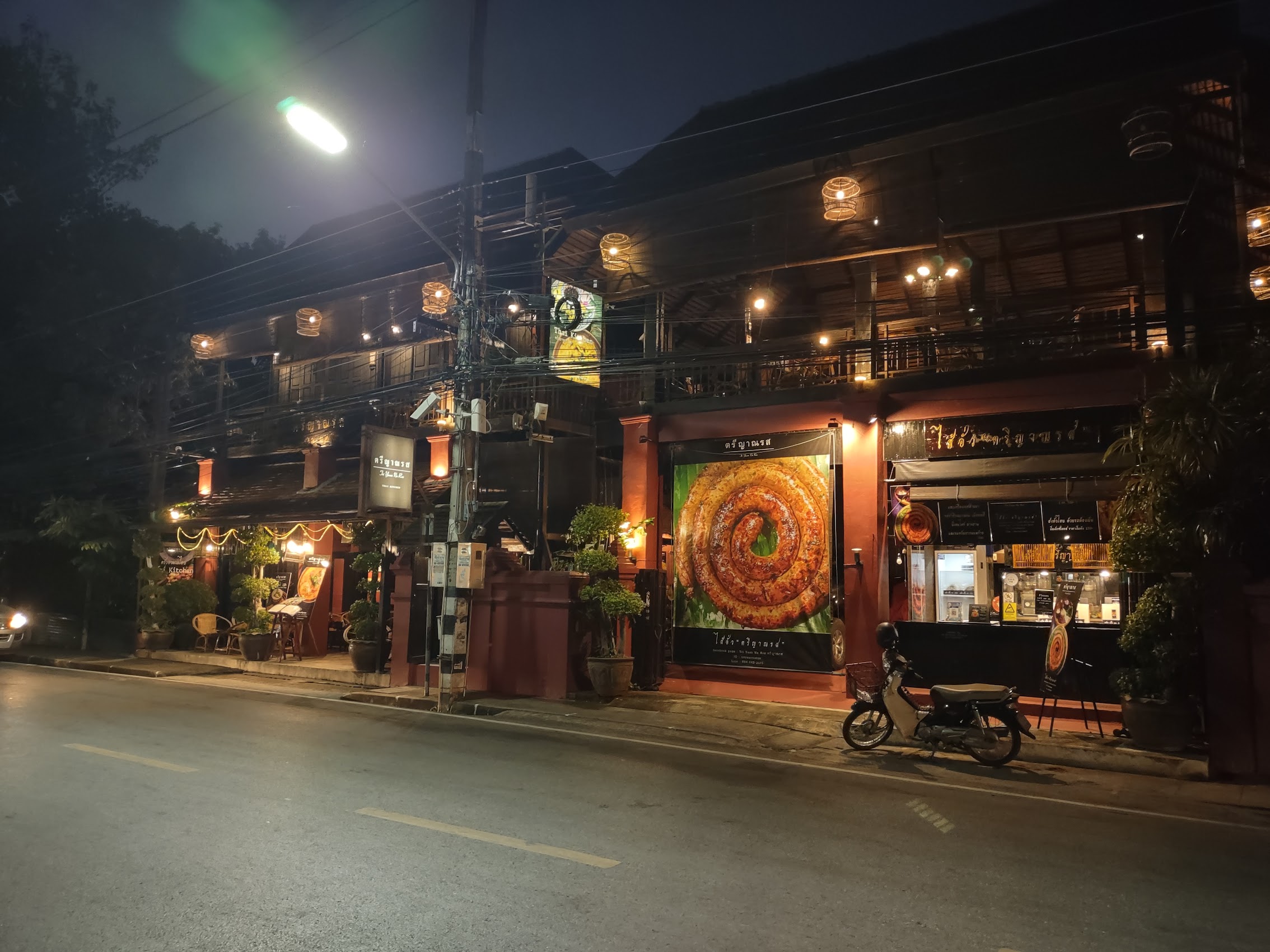
So what was Chiang Mai really like? The old city, where we spent most of our time, is small and compact – a 1-1/2 kilometer square (less than 0.9 square miles) – which was an amazing place to just walk. Once out of our quiet corner, it was bustling with activity pretty much all the time with countless cafes, restaurants, and shops, but in contrast to frenetic Bangkok, things were much more laid back and moved at a considerably more relaxed pace.

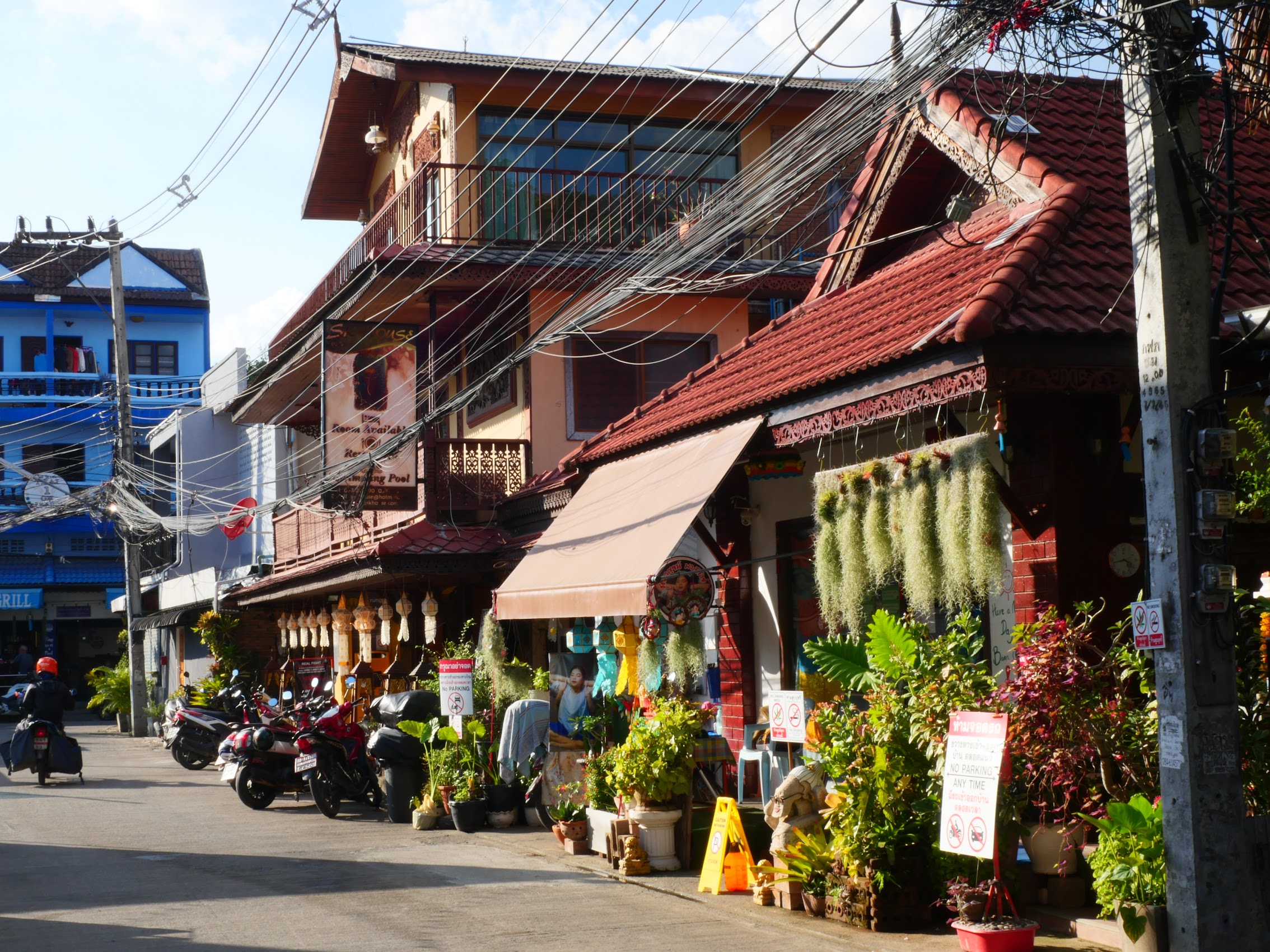

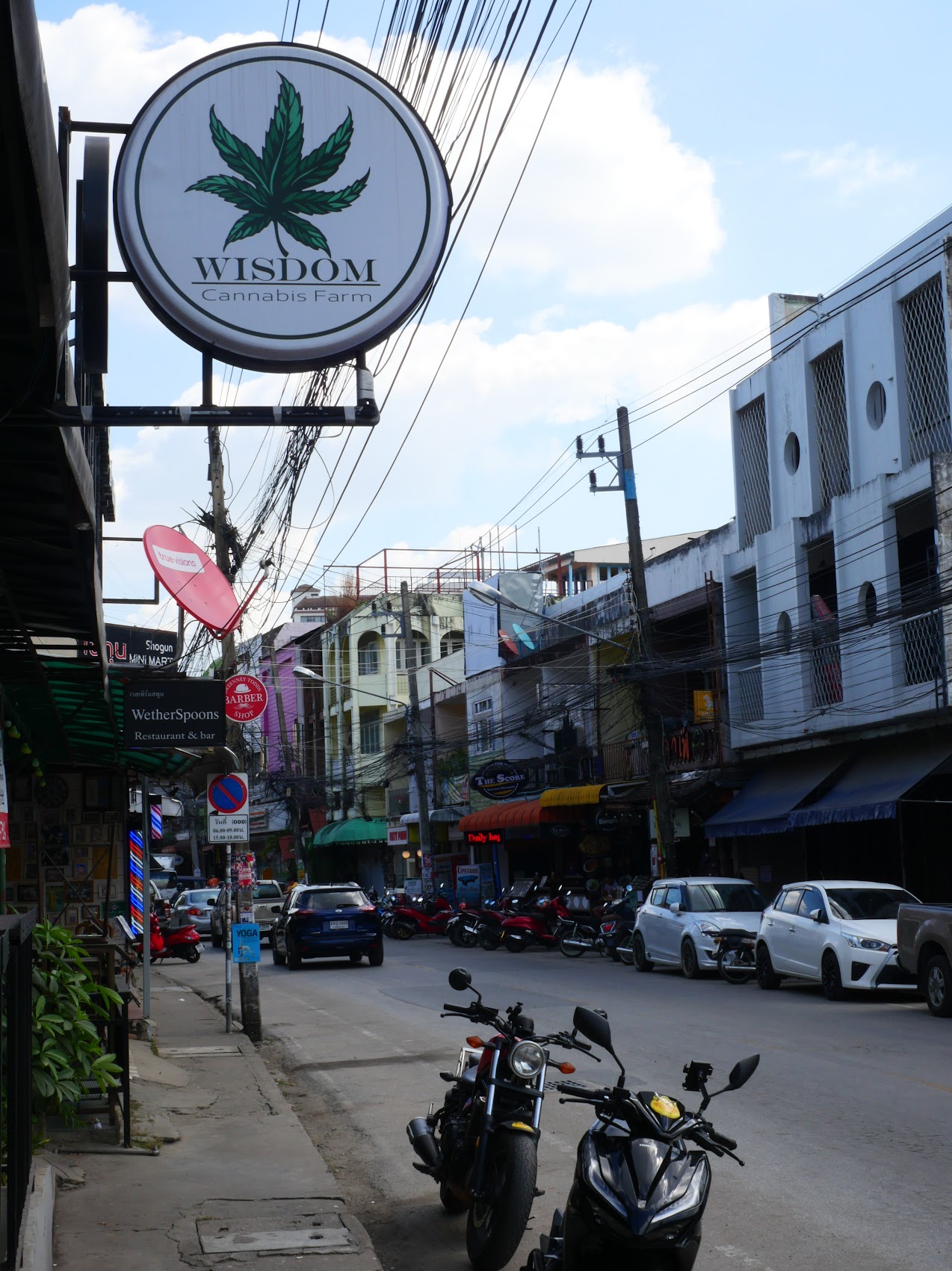
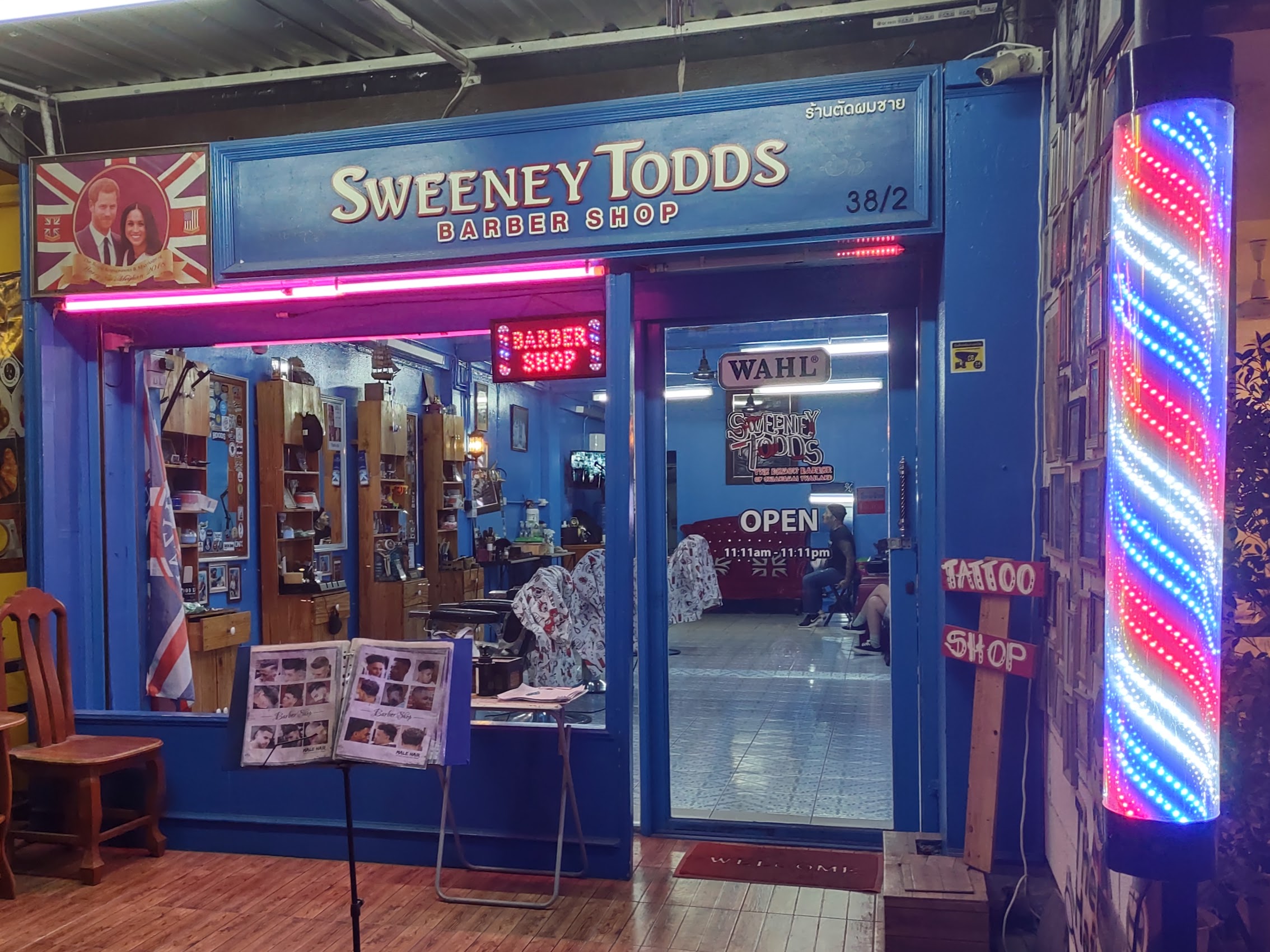
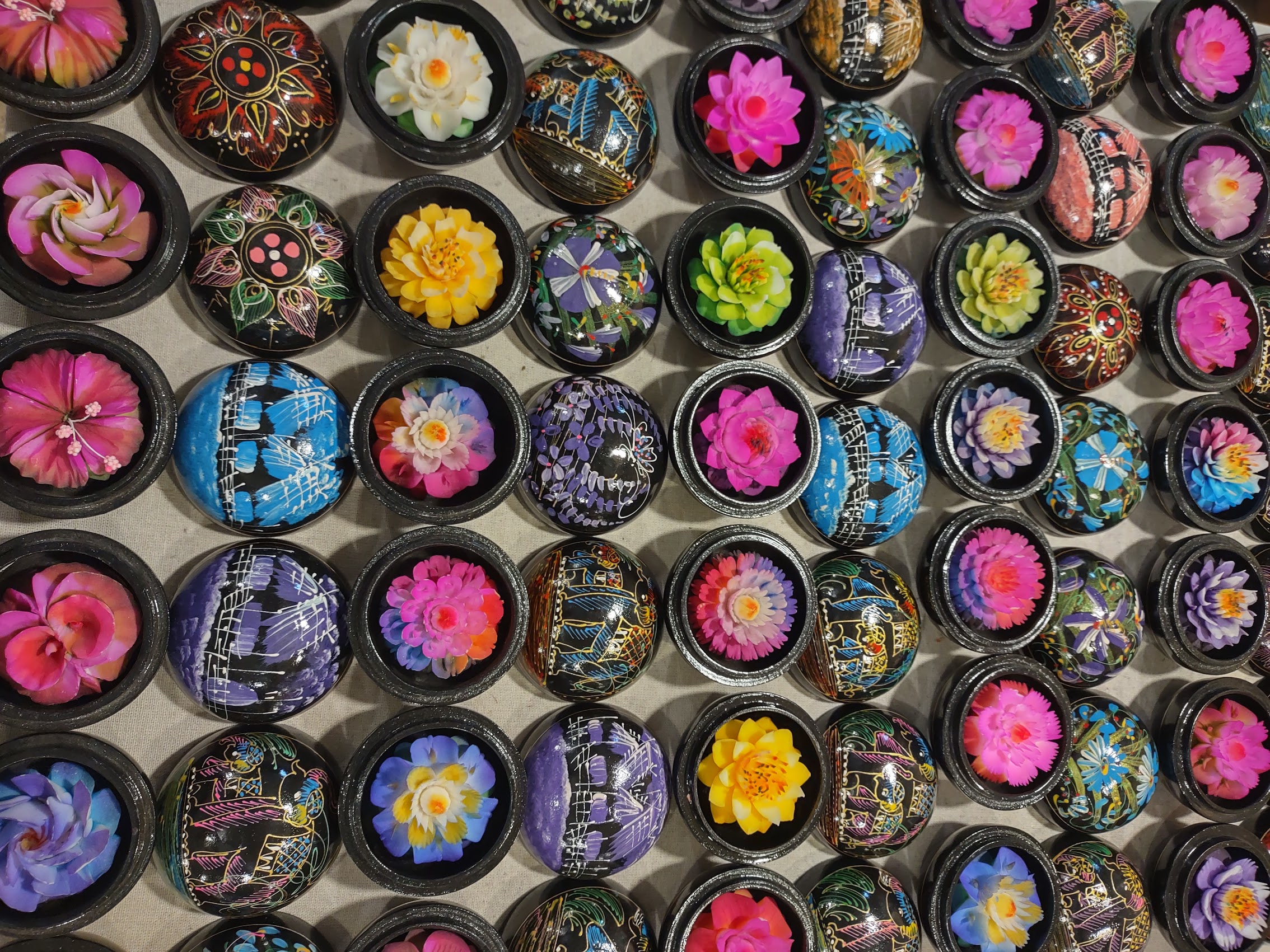
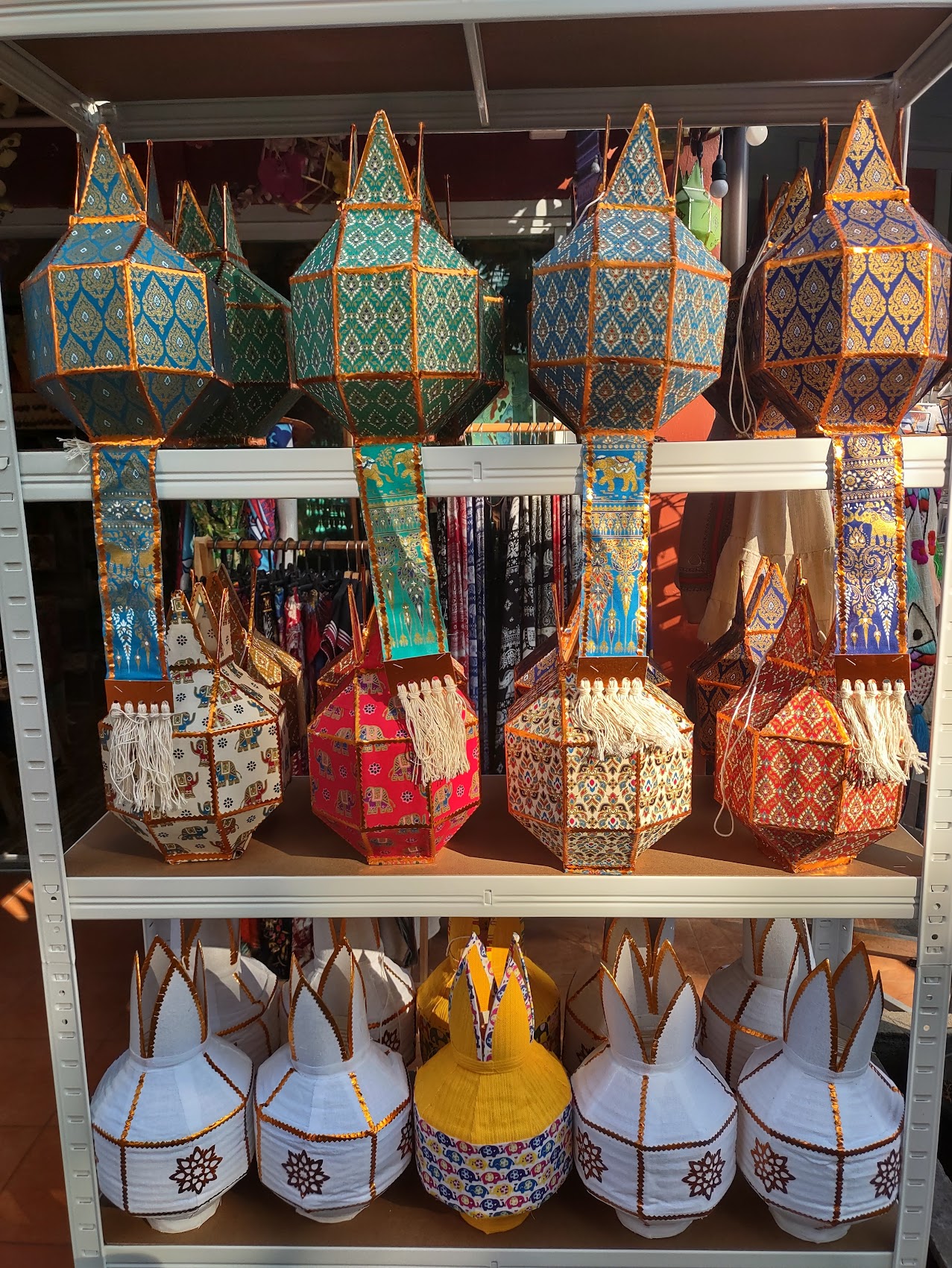
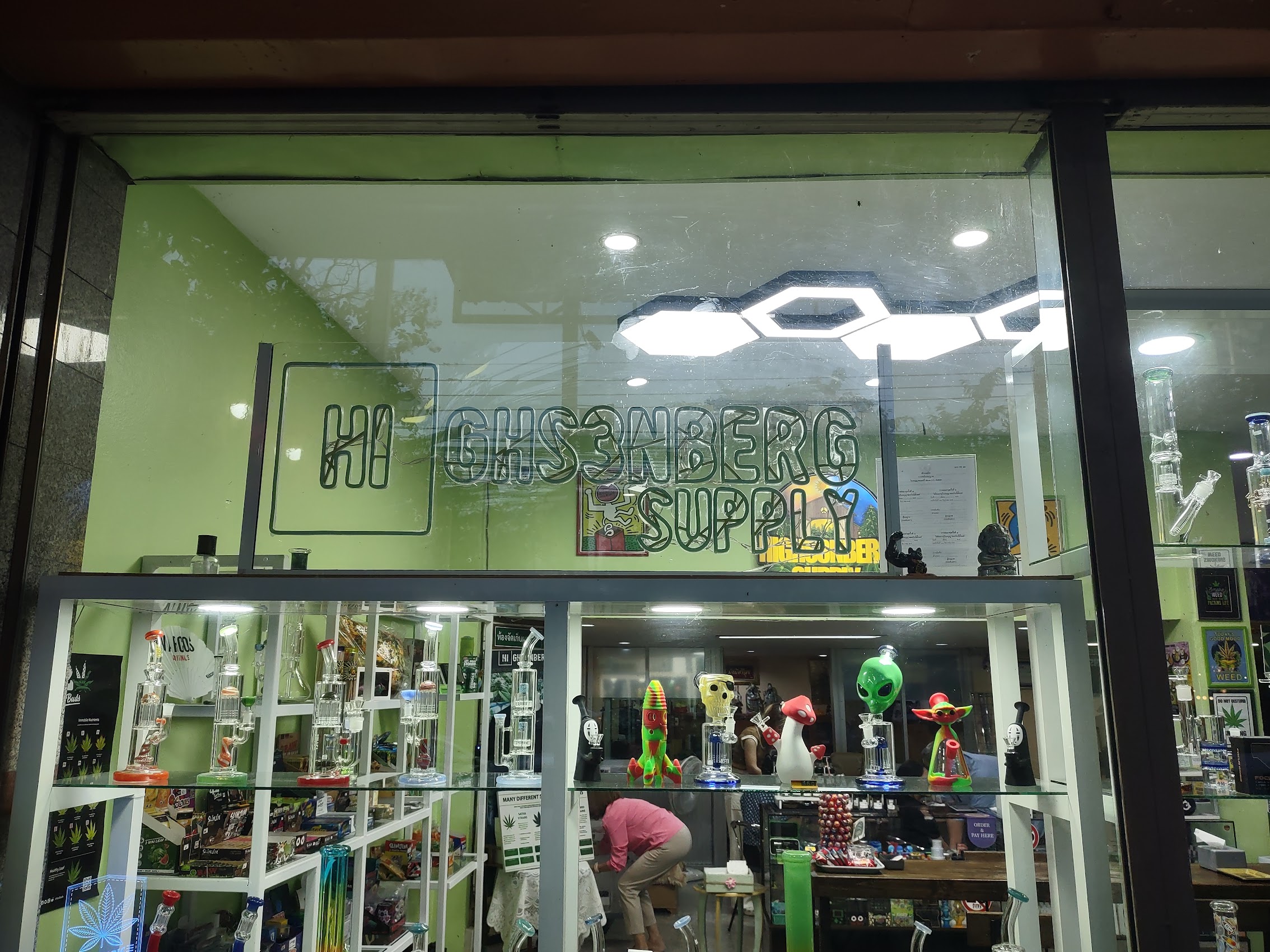
As we had seen elsewhere in Thailand, there were also a lot of marijuana shops which seemed to fit right in with the expat-bohemian-tourist vibe of the place. While some of the shops catered more toward cheap touristy items (“tchotchkes” as our friend Jirair would say), there were also a lot of shops with beautiful hand-crafted items, and we did our share of window and actual shopping. The mix of shops also included many of a more spiritual nature, many with a bent toward holistic or natural health and healing, as well as a good number of spas and yoga studios.

Chiang Mai also had something which we have come to seek out in our travels – bookstores (at this point in the trip, Colleen has pretty much exhausted the supply of e-books available from our library system at home). One place of particular note was the On the Road Bookstore which had a nice and reasonably priced selection of used books and was located around the corner from Colleen’s yoga studio, which made it a great place to meet after yoga in the morning.
Yoga in Chiang Mai (Colleen)
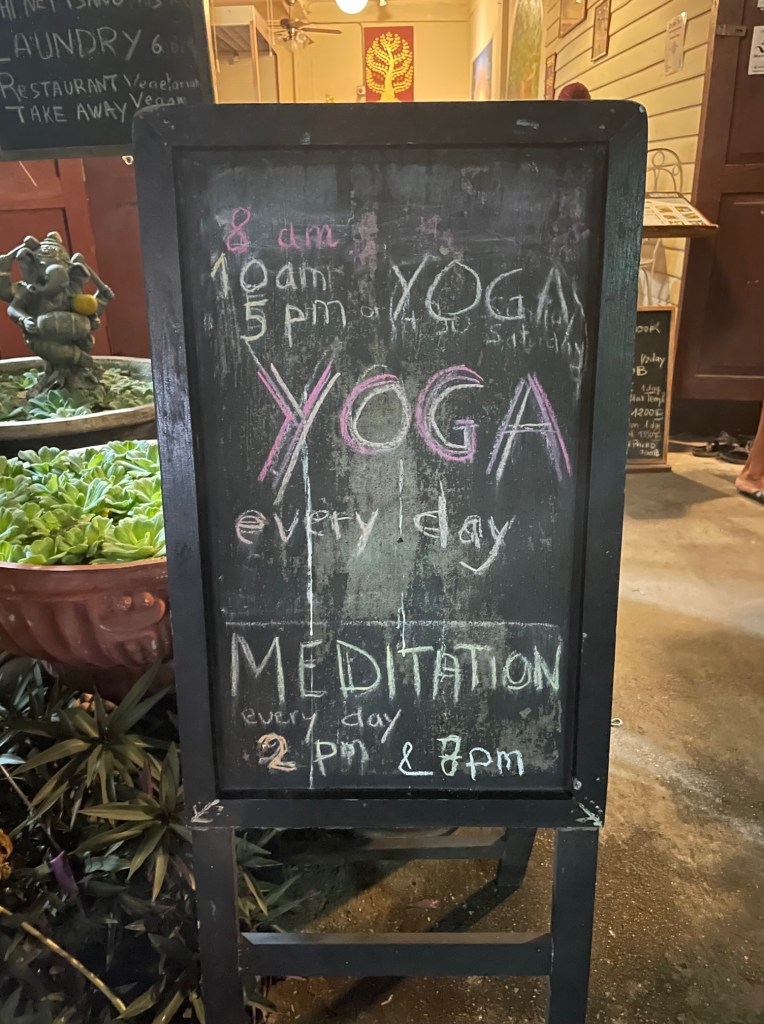
I’m discovering that it is “feast or famine” with yoga. So much has happened in the last two weeks including such a fun and interesting week with our friends from home and some time recovering from what was likely Covid, but yoga had not happened. So, upon arriving in Chiang Mai I identified at least one nearby place that advertised daily yoga classes on their rooftop. We scouted it out our first night as we walked around and I headed in for the 8am class the following morning at the Bodhi Tree.
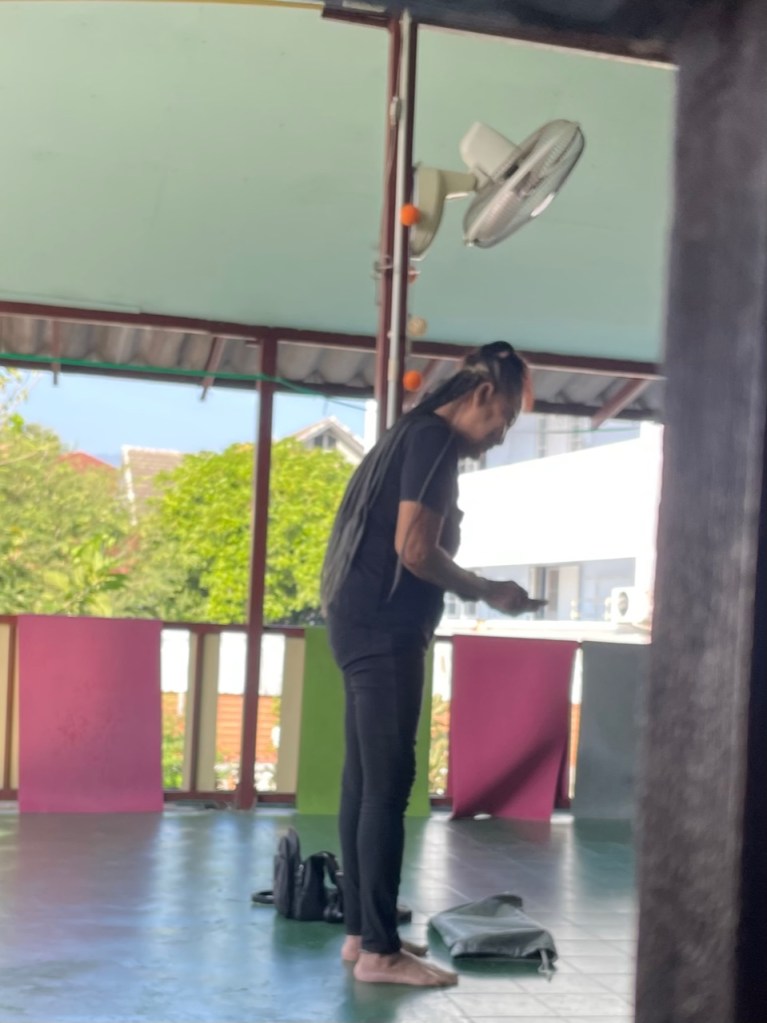
Over the next week I enjoyed classes in this small rooftop setting that could accommodate up to 6 participants, but often only had 2-3. Classes varied from an energetic Thai woman whose voice was so soothing and hypnotic, the second was also a lovely Thai woman of 75 years, she proudly shared. She moved our small group through a series of very flexible positions, some of which I have to say I have never seen or heard of. It was such an interesting class, again so hypnotic in her moving us through her practice.
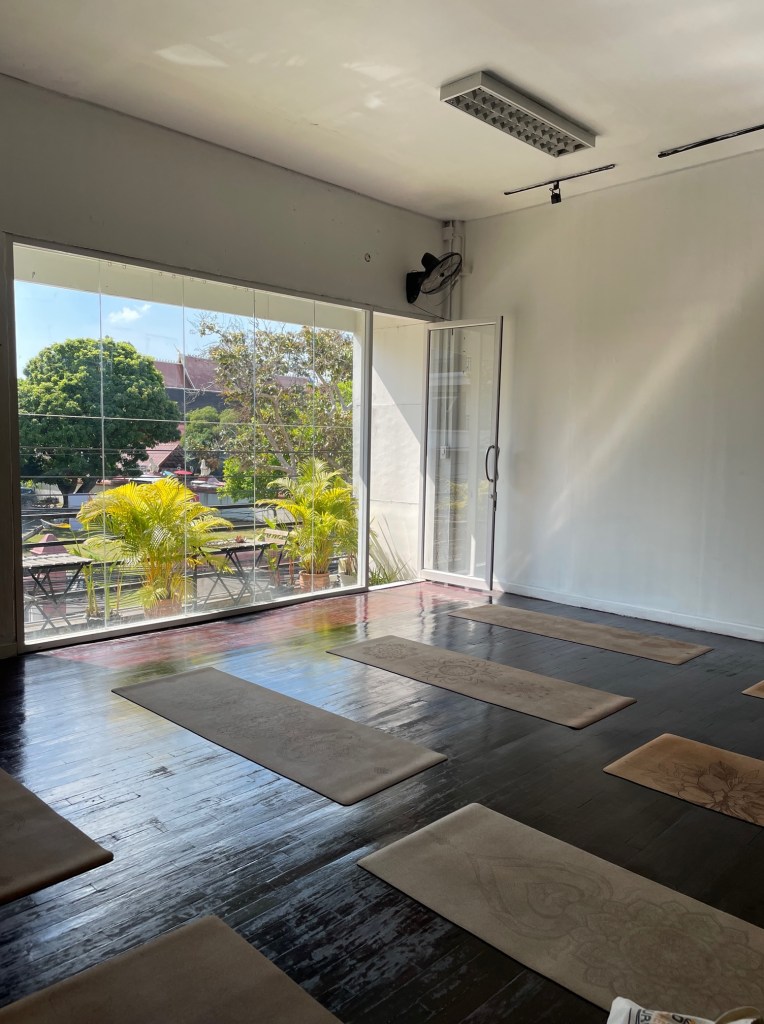
The second yoga studio I frequented was a more conventional indoor, many participants (20-25) setting with an energetic young Irish instructor. She clearly had a consistent following of people living nearby, very few tourist looking people. With both studios easily within walking distance I was able to participate daily at one or the other, which is always good for me.

Temples in Chiang Mai
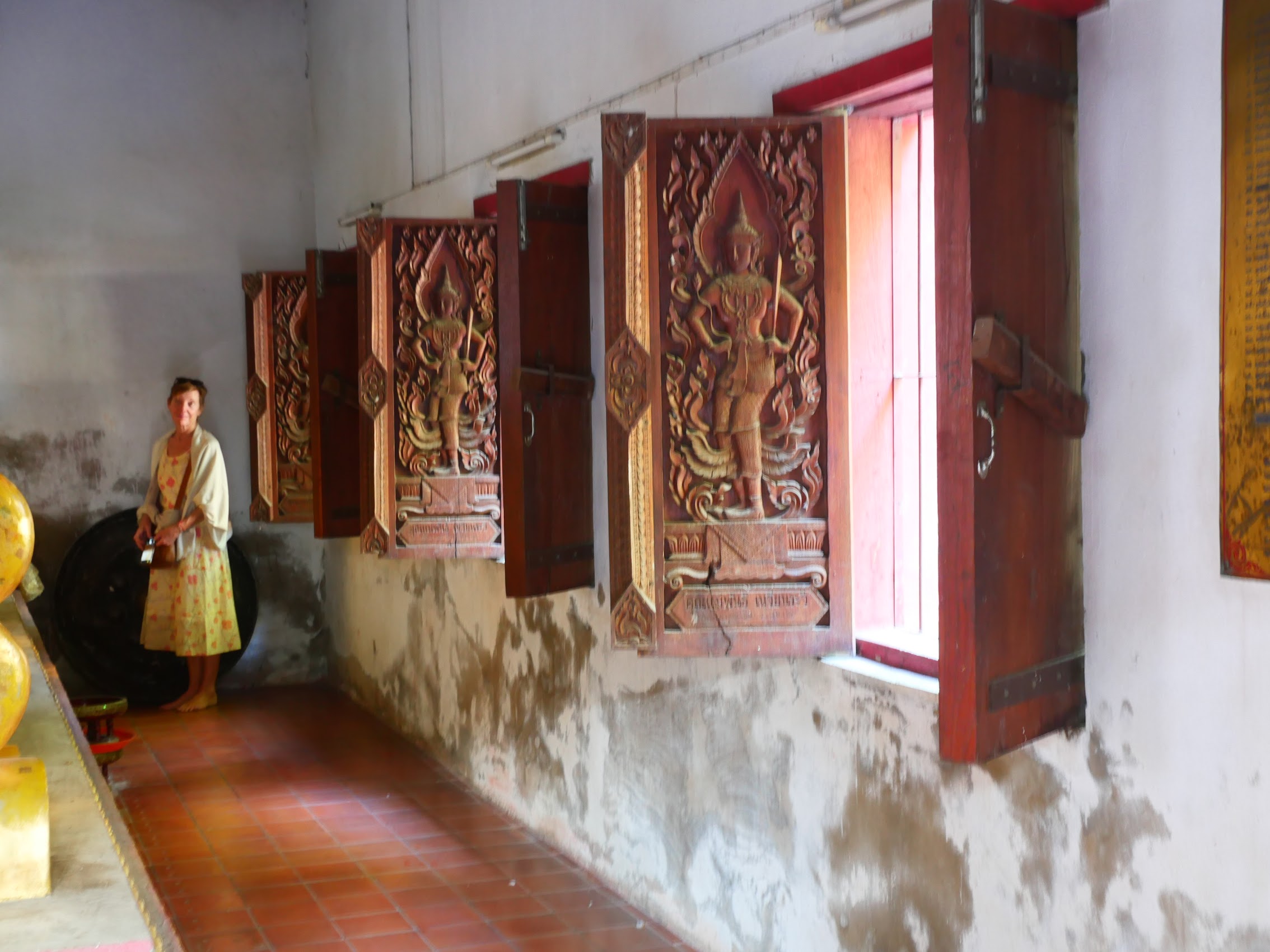
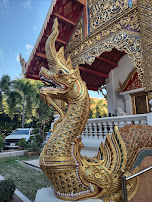
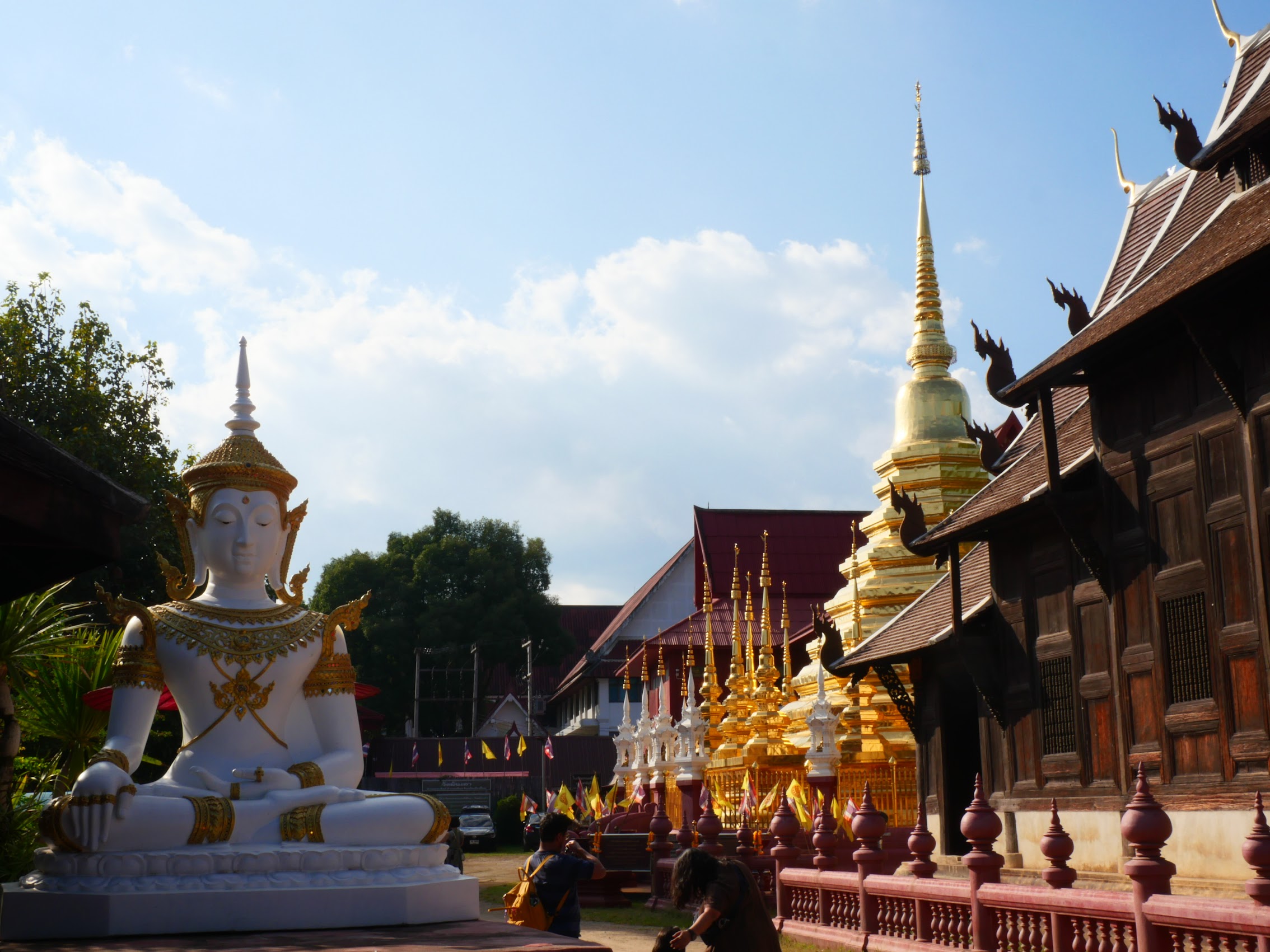
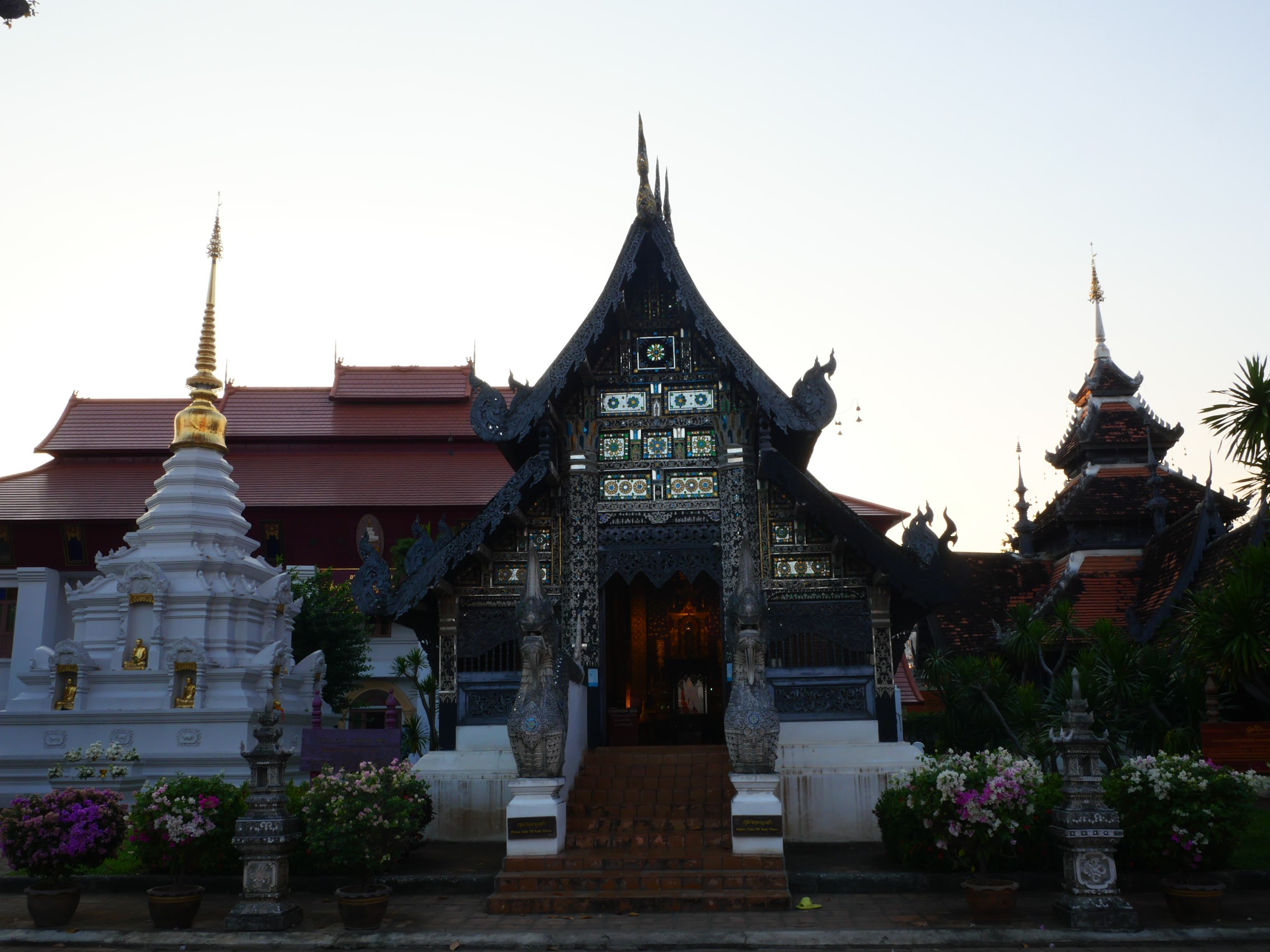
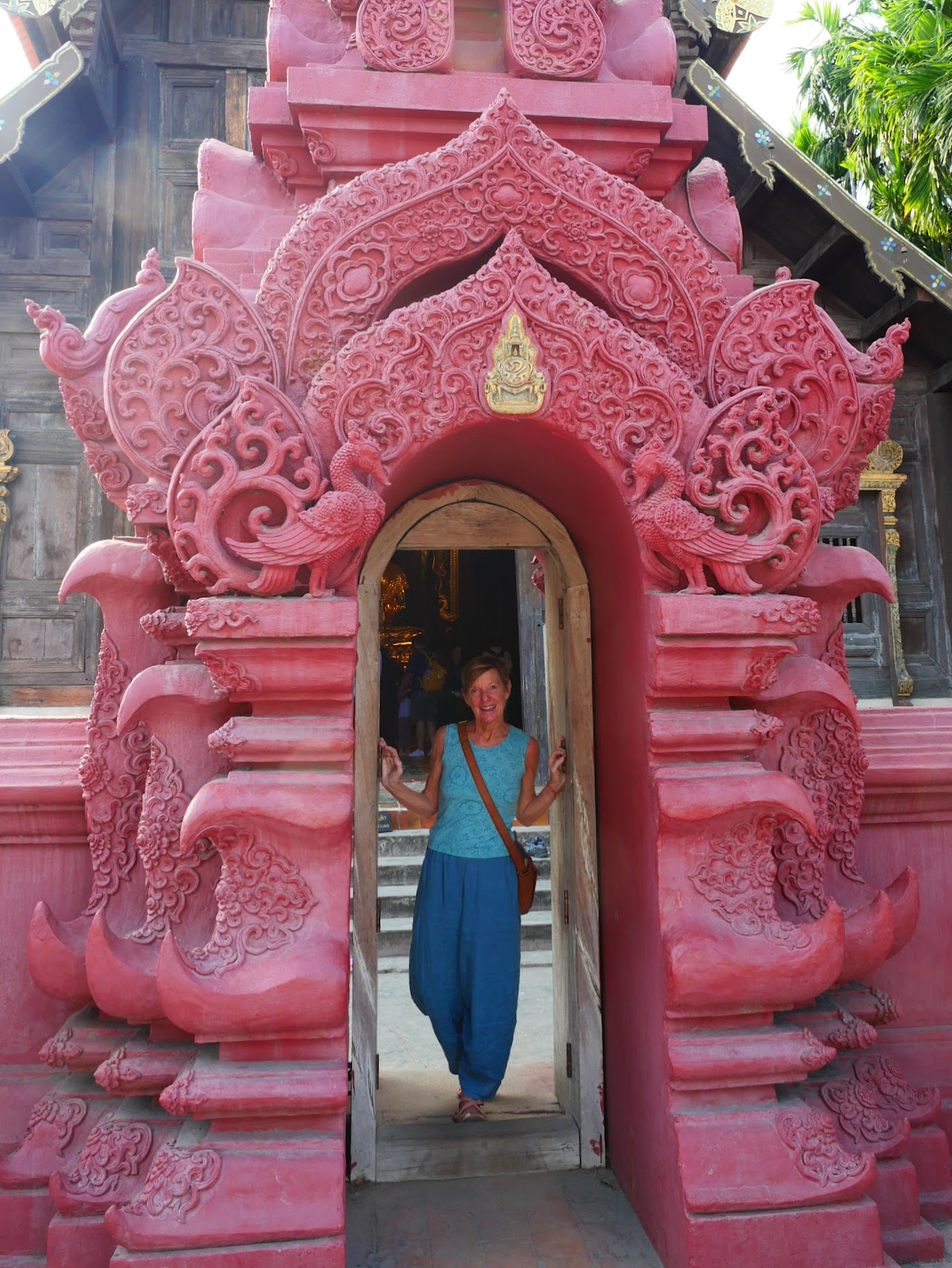
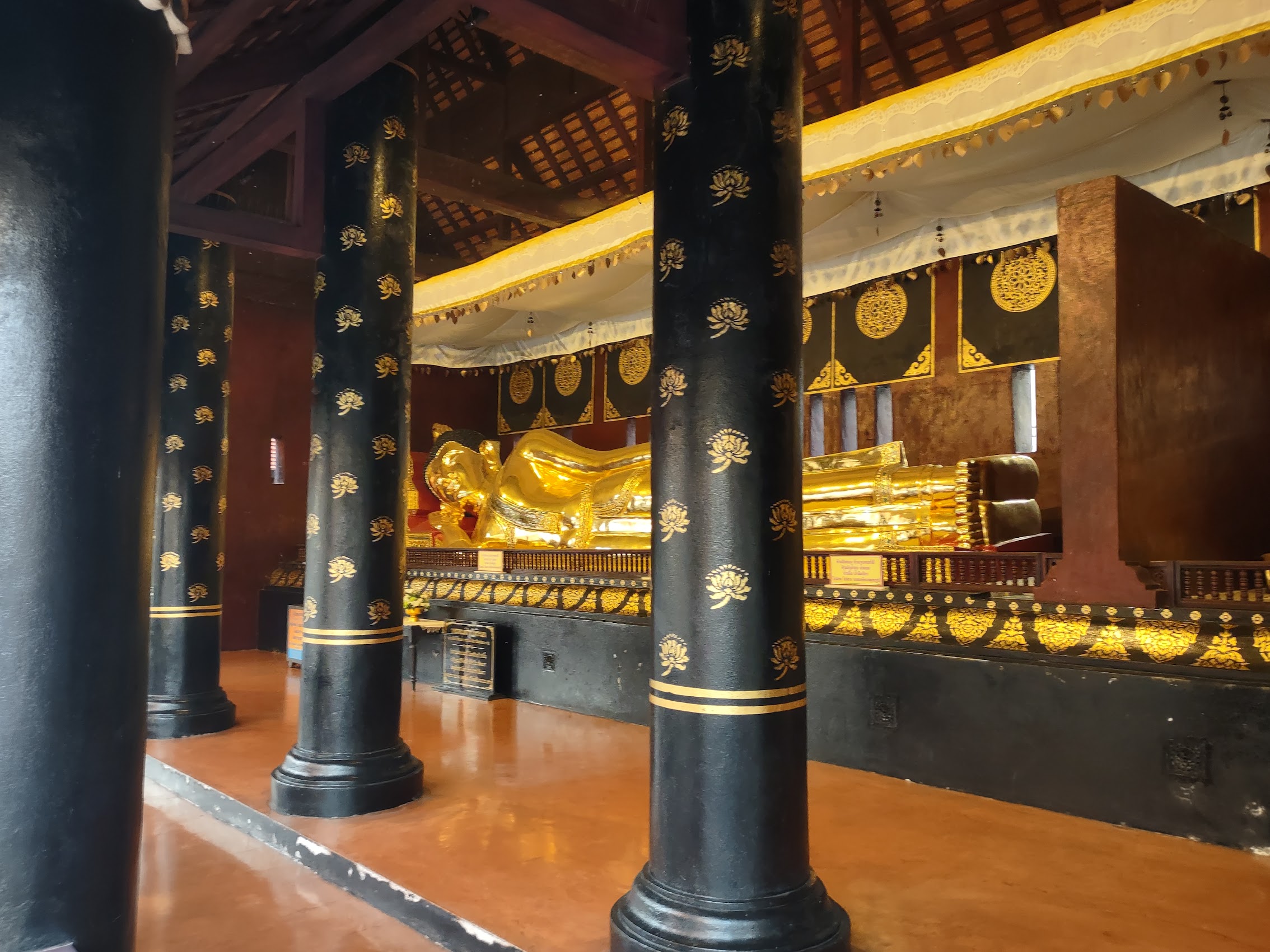
Interspersed among everything there were also an incredible number of temples, seemingly one on every block. (There are reportedly over 300 temples in the city of Chiang Mai and most of them are located in the old city.) It is impossible to go from anywhere in the old city to almost anywhere else without passing a temple, and I lost count of how many we visited in our wanderings. The temples complexes vary considerably in size and you are often surprised at how big they are once you wander in.
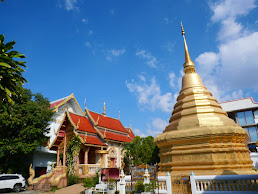
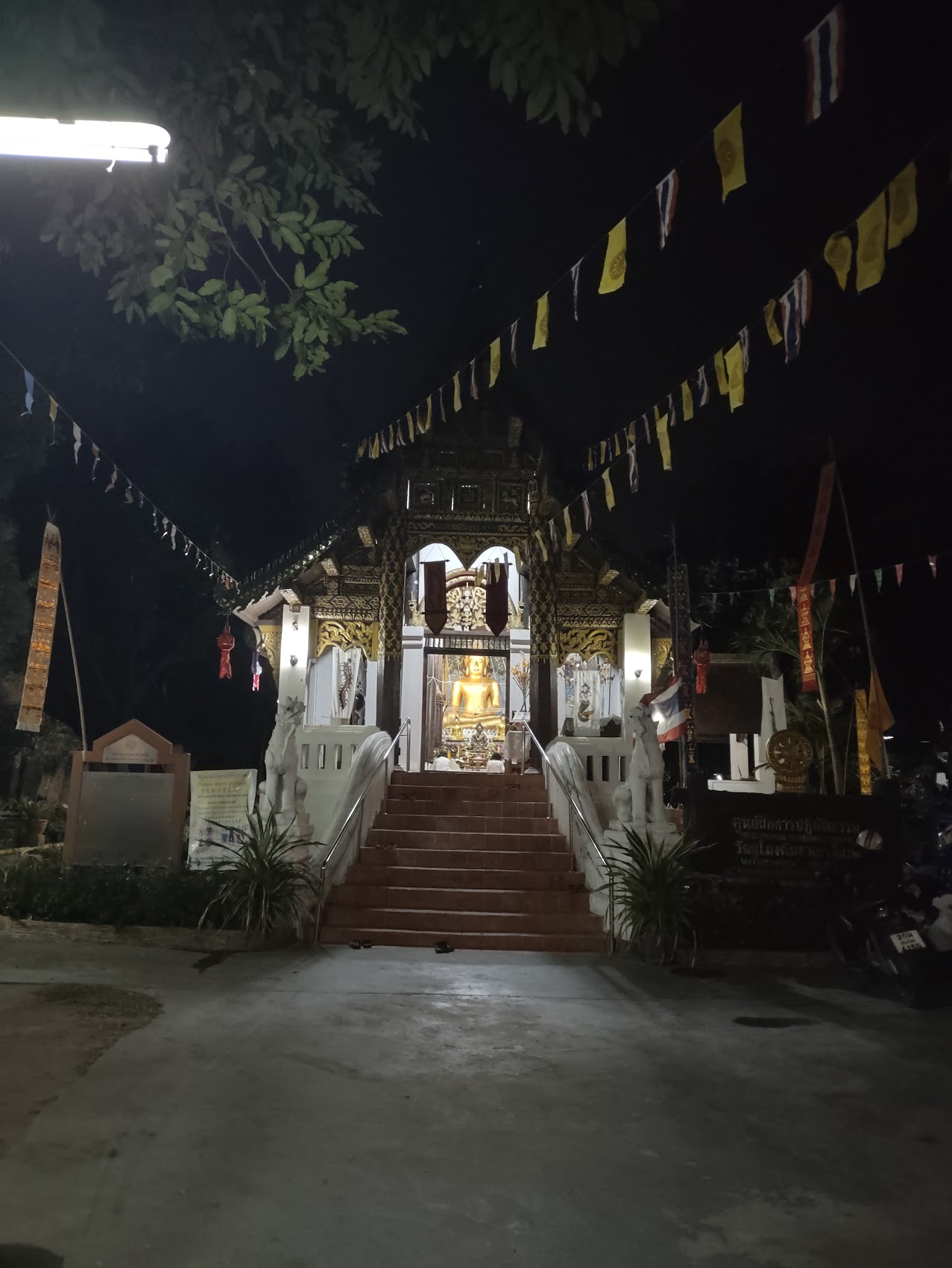


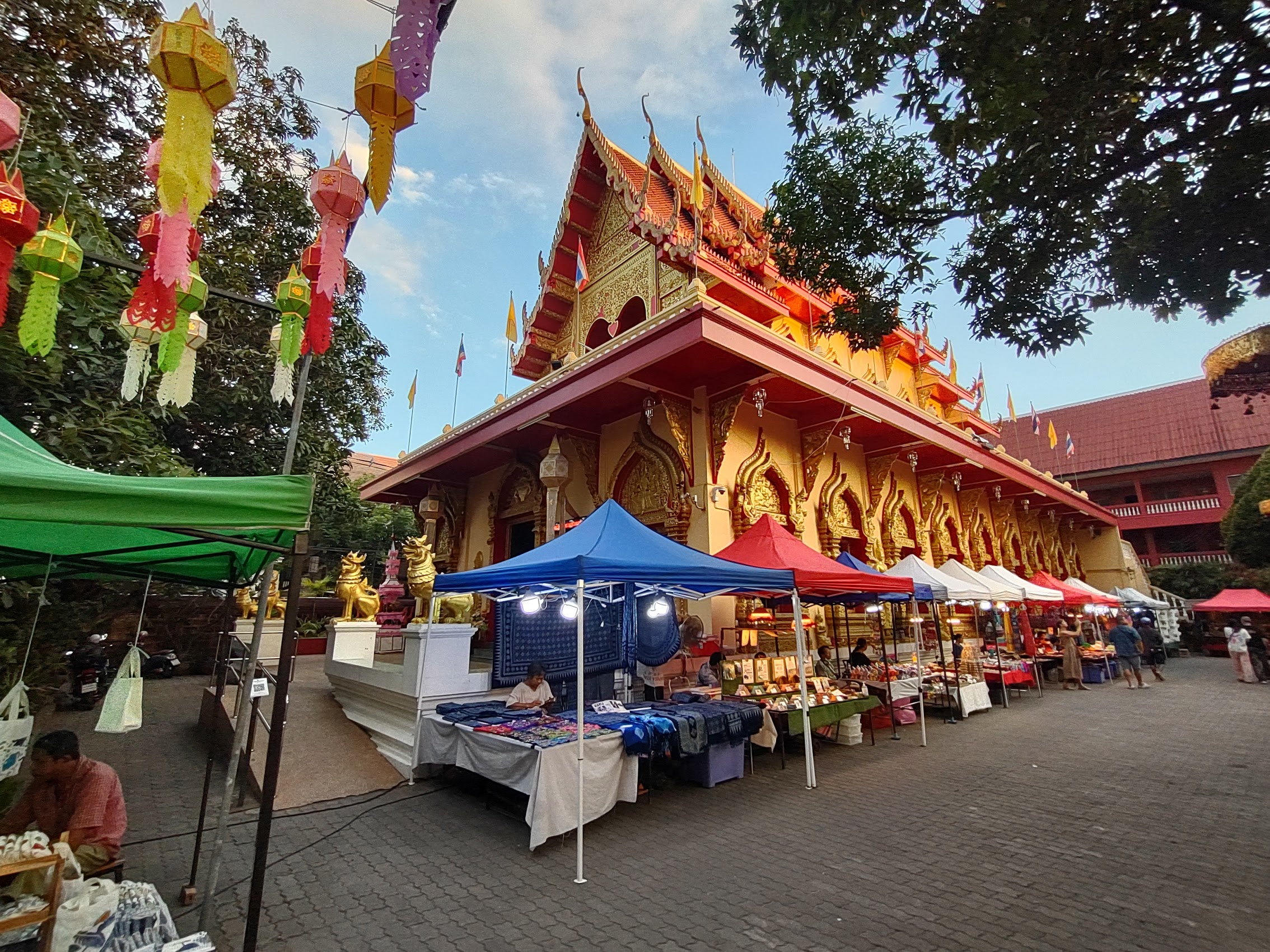
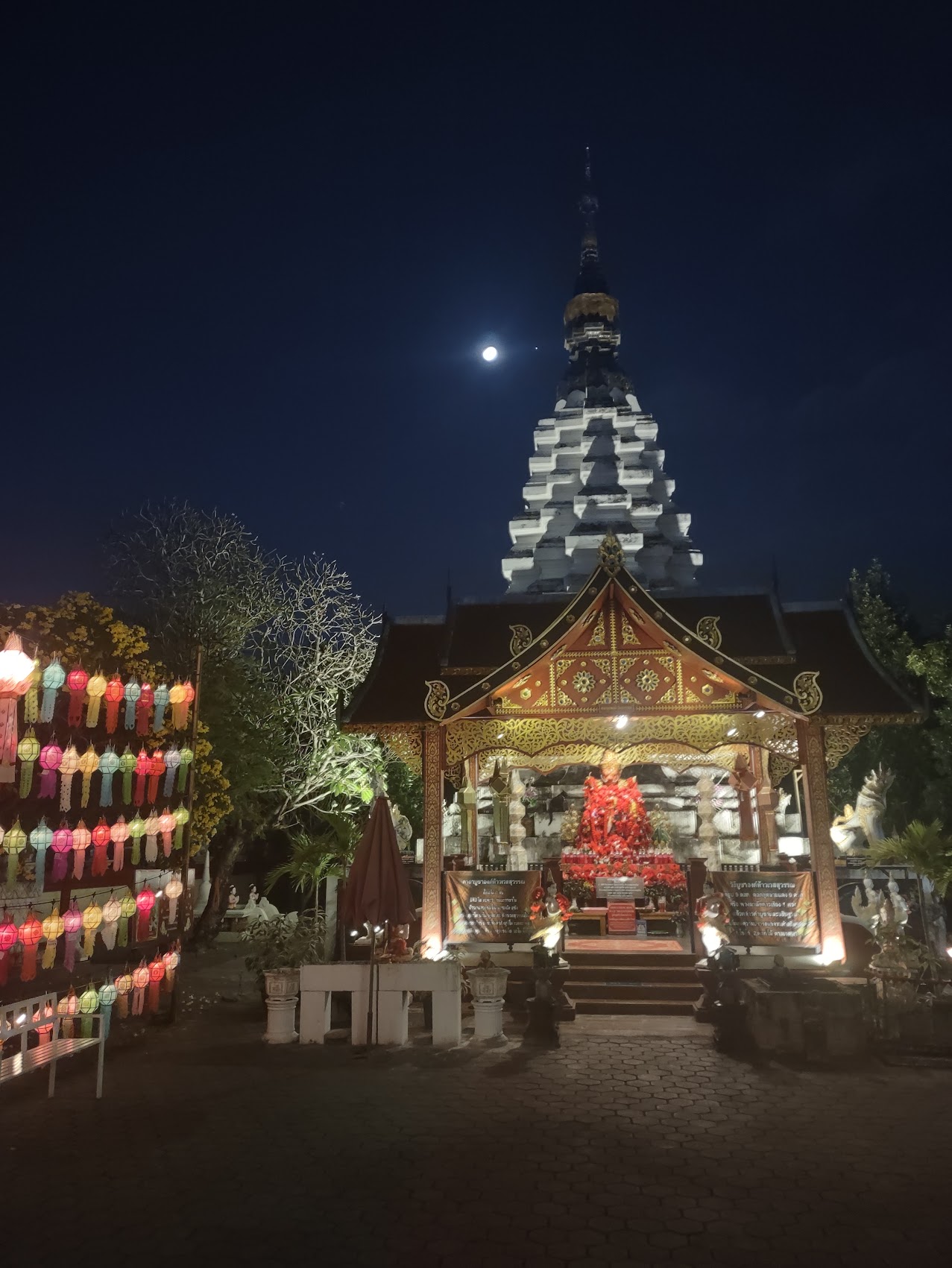
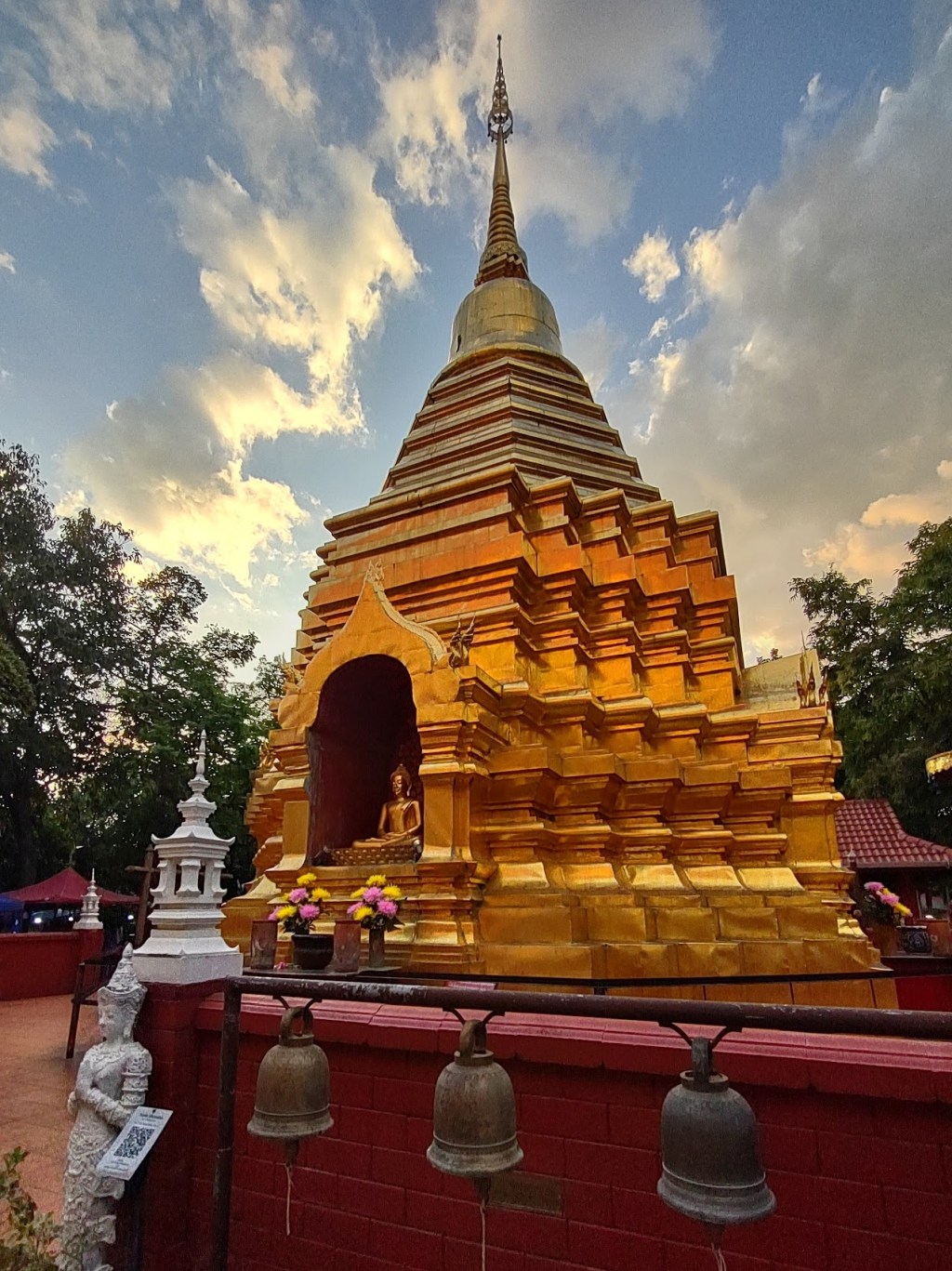
Of particular note was the Wat Phra Sing which dates back to 1345 and which featured several beautiful wats (the traditional worship halls) as well as some particularly beautiful gold stupas (or chedi) which are metaphorical representations of the Buddha.




Also noteworthy was the Wat Chedi Luang, another large temple dating to the 14th century which features an enormous 250 foot tall chedi which was never quite finished, partially collapsed in an earthquake in 1545, and was partially restored (with much controversy) in the early 1990s. It was amazing to find something this large hidden within the center of the old city (it’s not visible from the street). It was also interesting to note that, despite the condition of the temple, there were bright shiny golden Buddhas installed in each of the four niches at the top.


There were a number of other beautiful temples and shrines around Wat Chedi Luang as well as the Mahamakut Buddhist University which adjoins it. (On our way out, we came across a group of young monks who were involved in the filming of some sort of promotional video.)




Food and Drink
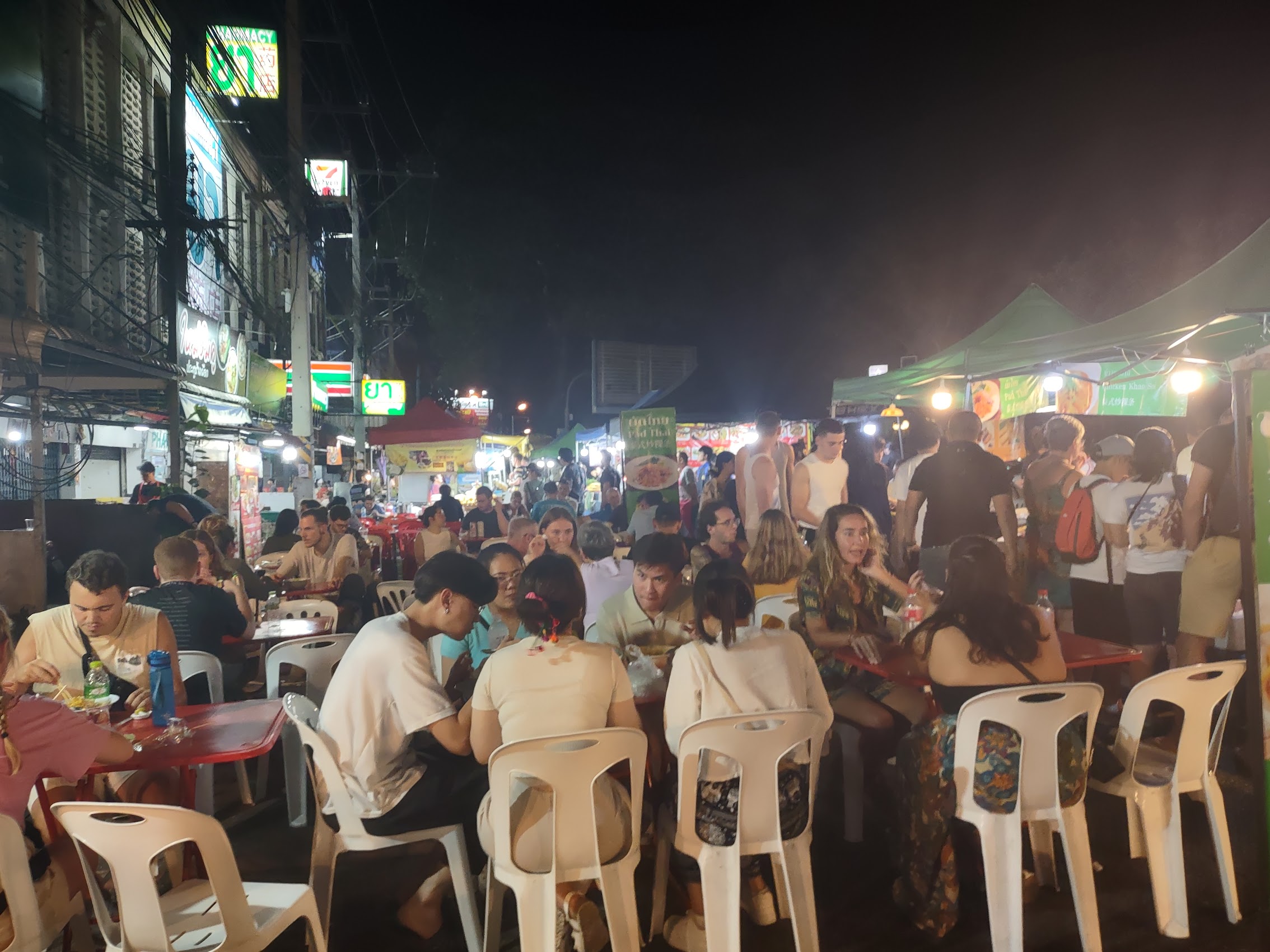
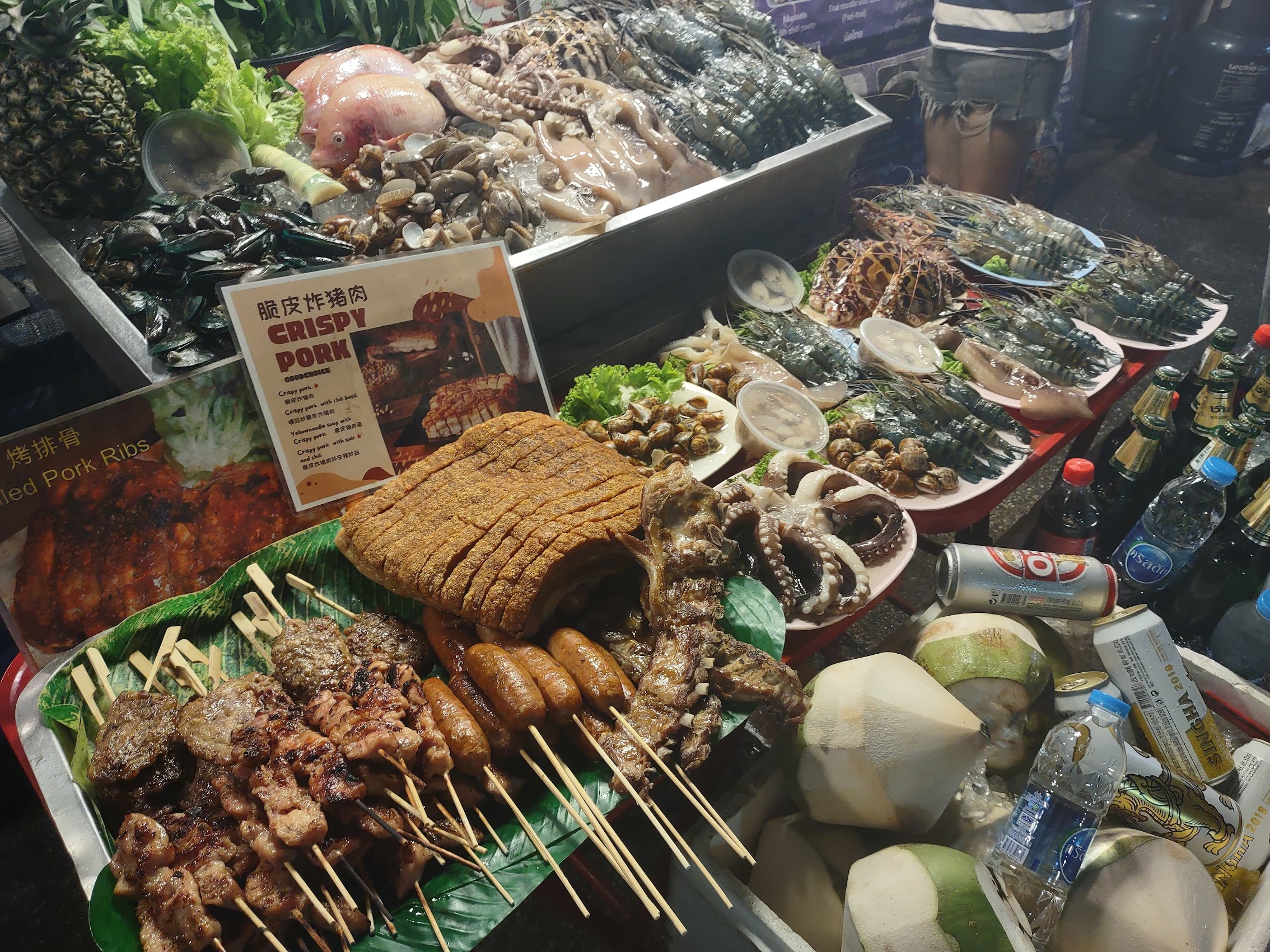
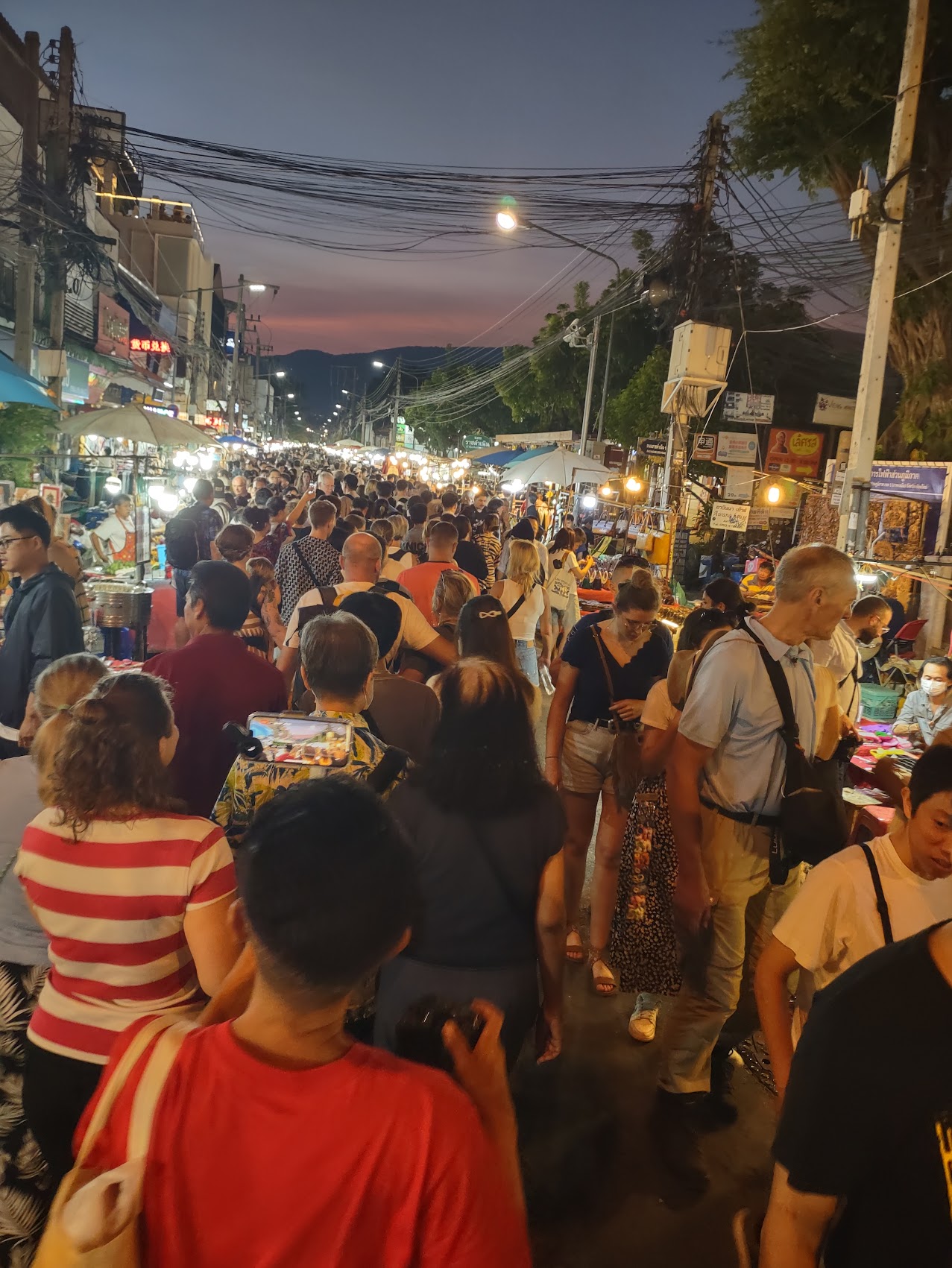
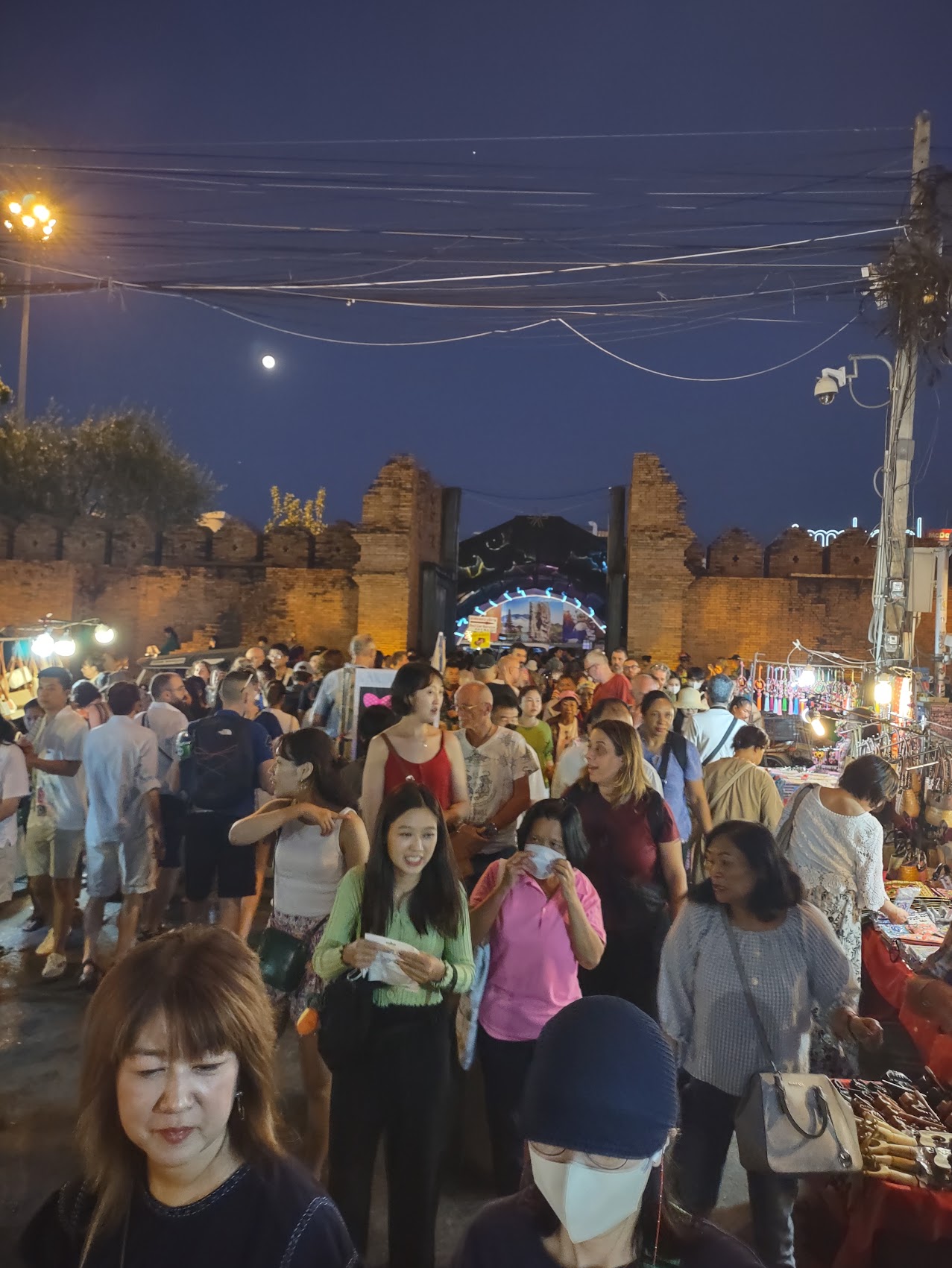
There was good food everywhere and it was generally pretty cheap, so we didn’t eat at home much except for breakfast. We tended to go for lighter fare or snacks during the day and hit the night markets whenever possible for dinner. The night markets are an incredible experience with a huge variety of street food, most of it prepared in front of you while you wait. There are usually some common dining areas, usually with some very cheap plastic tables and chairs.
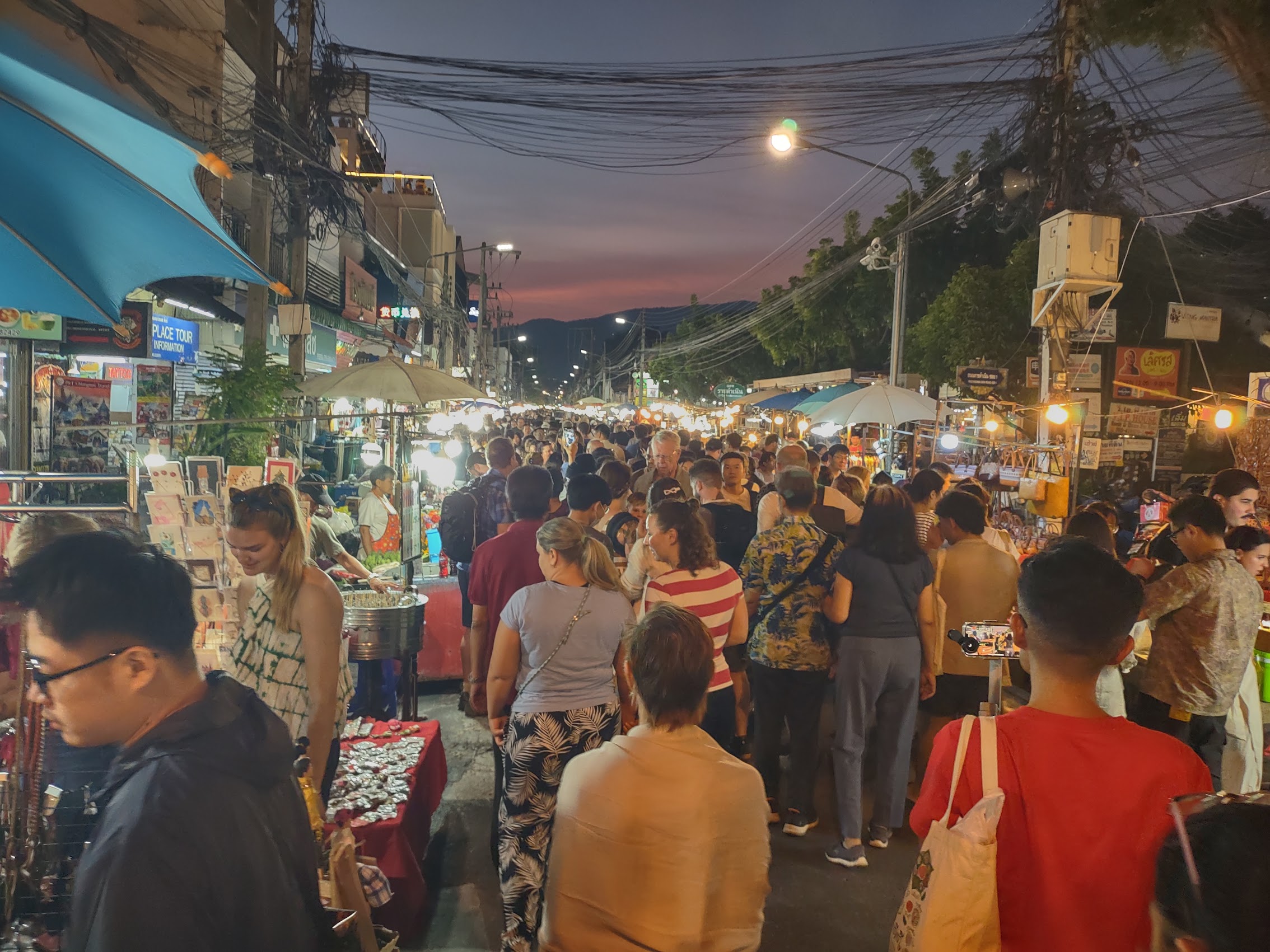
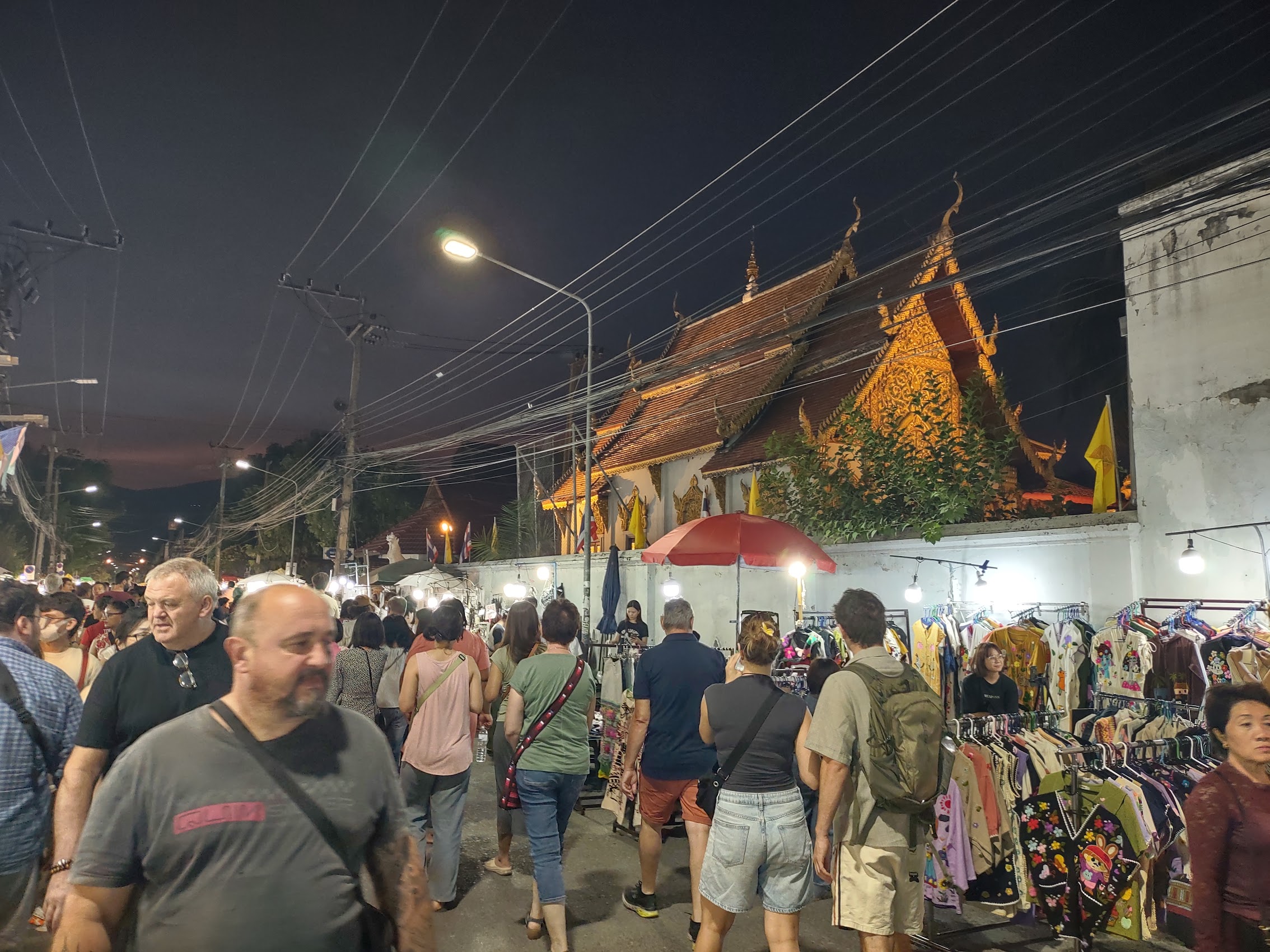
We did find a couple of noteworthy cafes and restaurants along the way. We stopped for a drink and a bite one day at an interesting place called the Writer’s Club and Wine Bar which, as the name might suggest, had the feel of an ex-pat hangout. Better yet was the Old City Inn next door to it which had a limited but nice craft beer menu (but, to Colleen’s disappointment, no sour ales). Both were located on Rachadamnoen Road, the central east-west street through the old city and proved to be excellent places to sit and people watch.
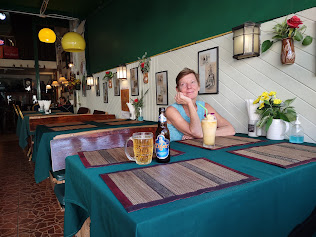
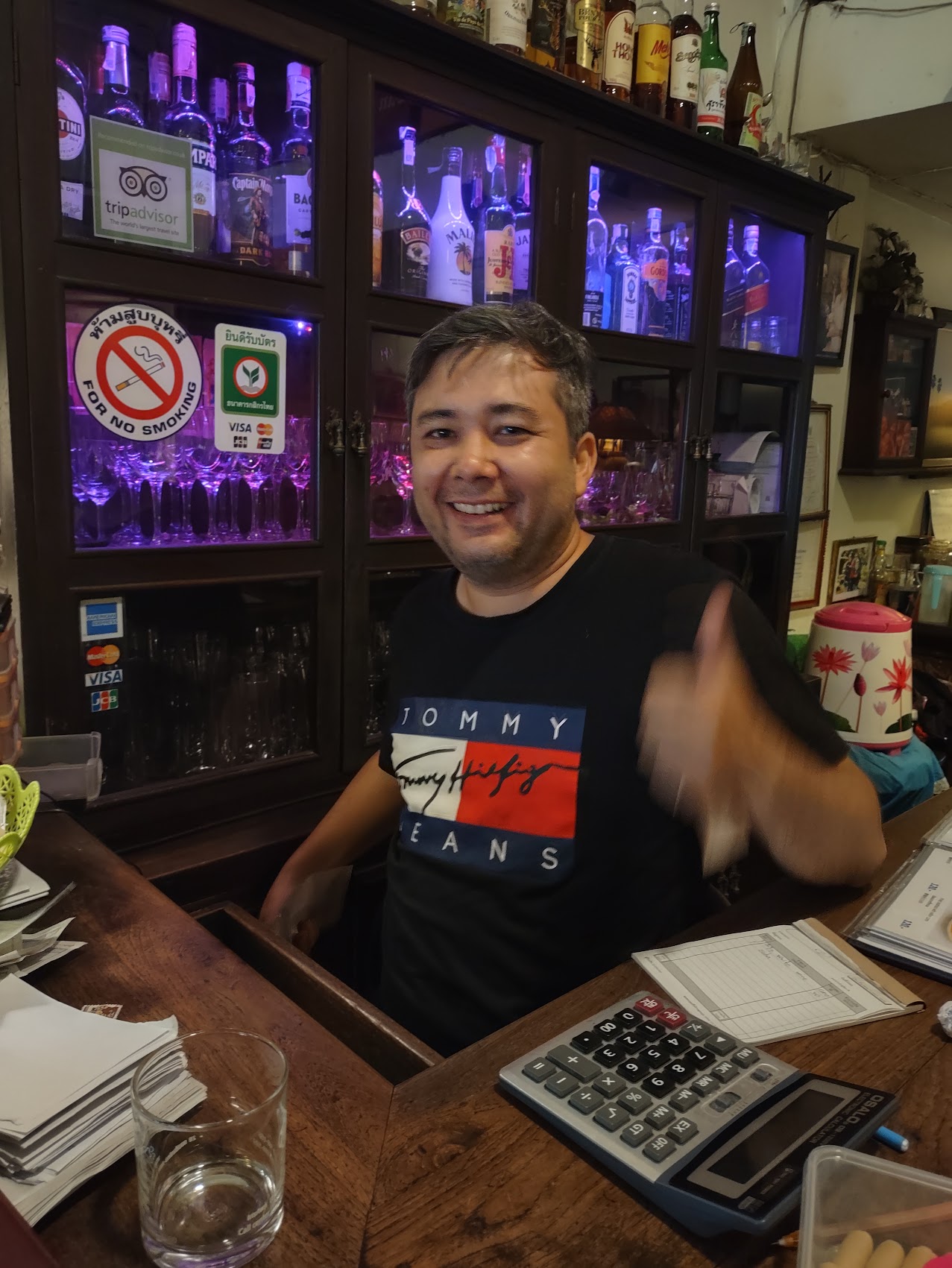
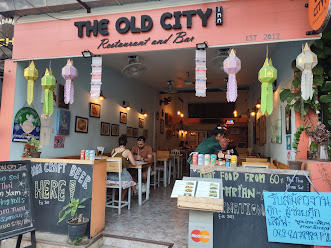
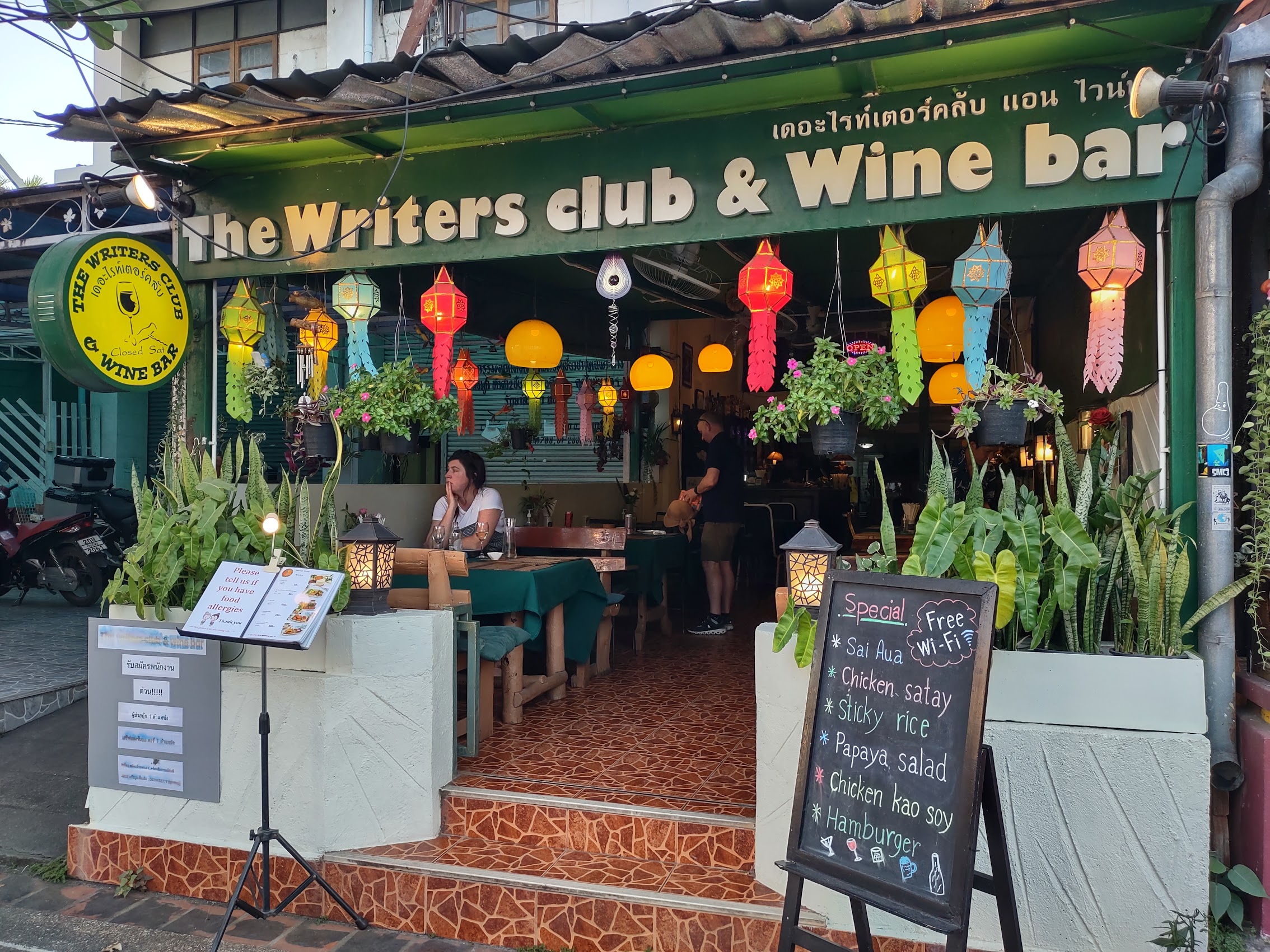
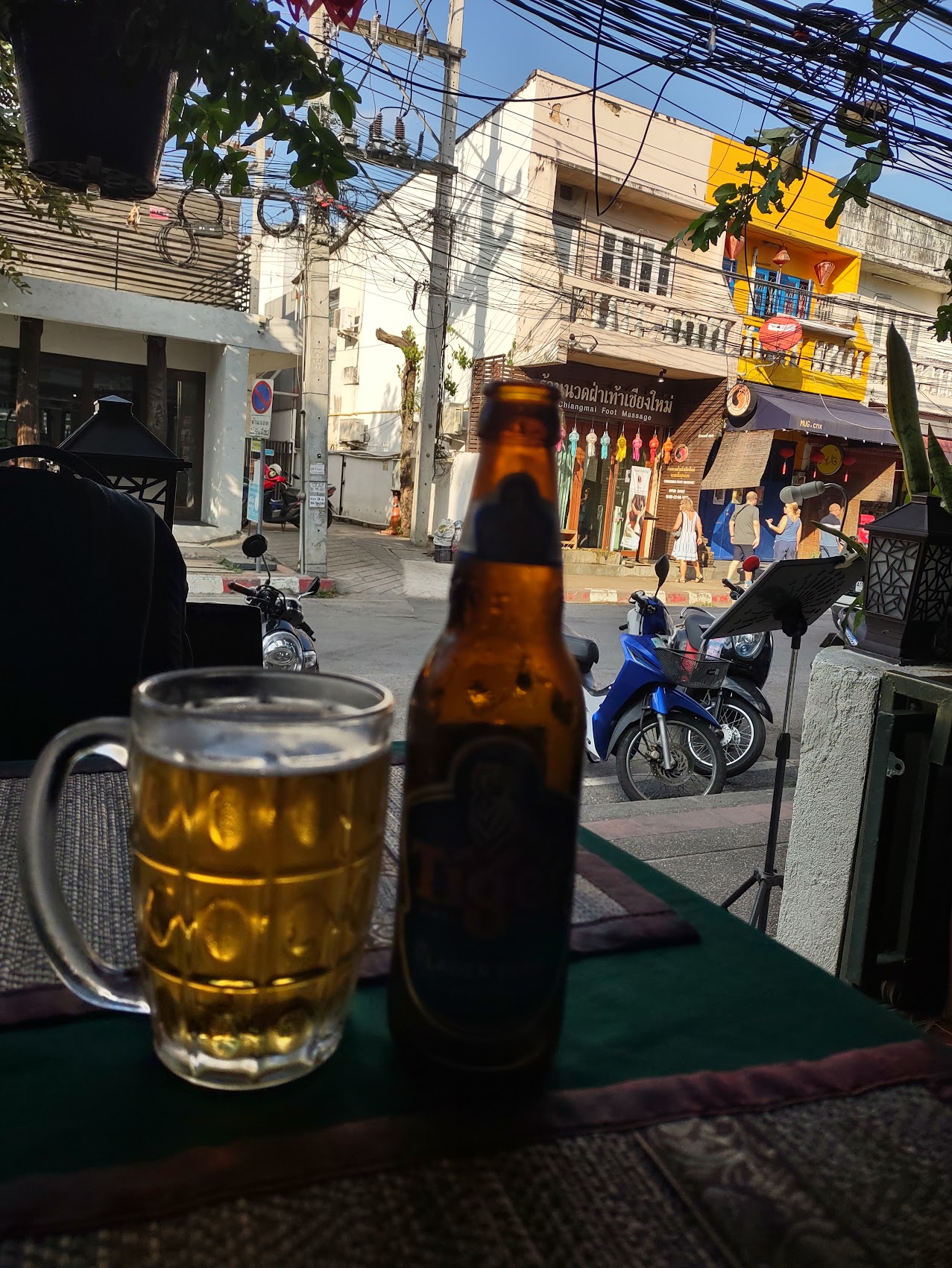
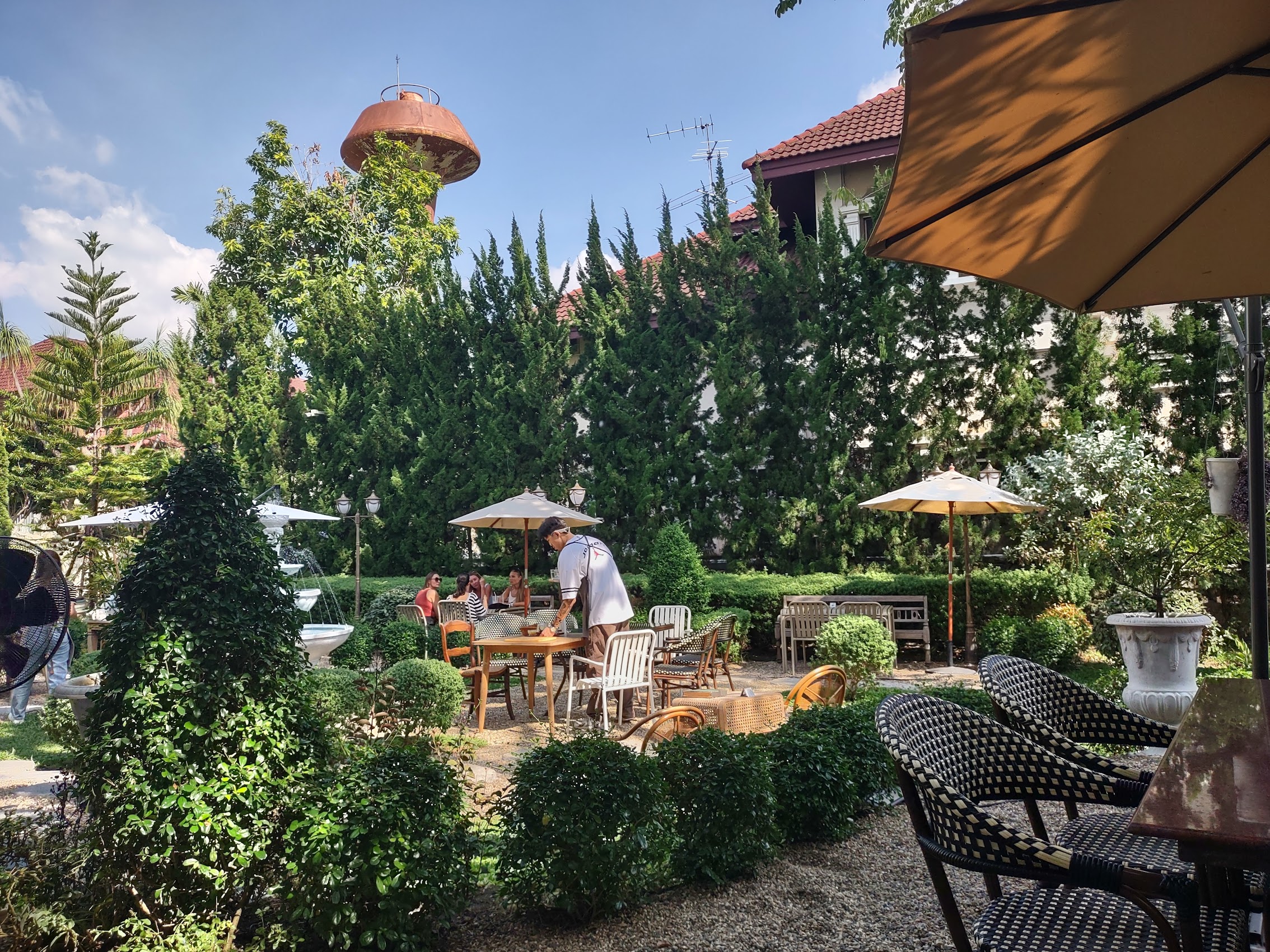
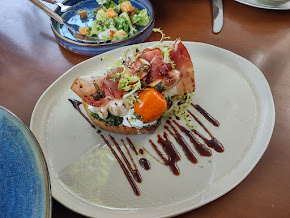
On Sunday morning, the day before we were scheduled to leave Chiang Mai, we had brunch at a place we had walked past several times called Robert Bake and Brunch. The place had a beautiful garden dining area and a fairly western brunch menu which we thoroughly enjoyed.


Yee Peng Lantern Festival
Probably our biggest disappointment in visiting Chiang Mai was the discovery that their annual Yee Peng lantern festival was scheduled for the night of Monday November 27th (the full moon) which was, unfortunately, the day we were scheduled to leave. The Yee Peng festival culminates in the release of thousands of sky lanterns to the extent that all air traffic is banned over the city of Chiang Mai on the night of the festival.
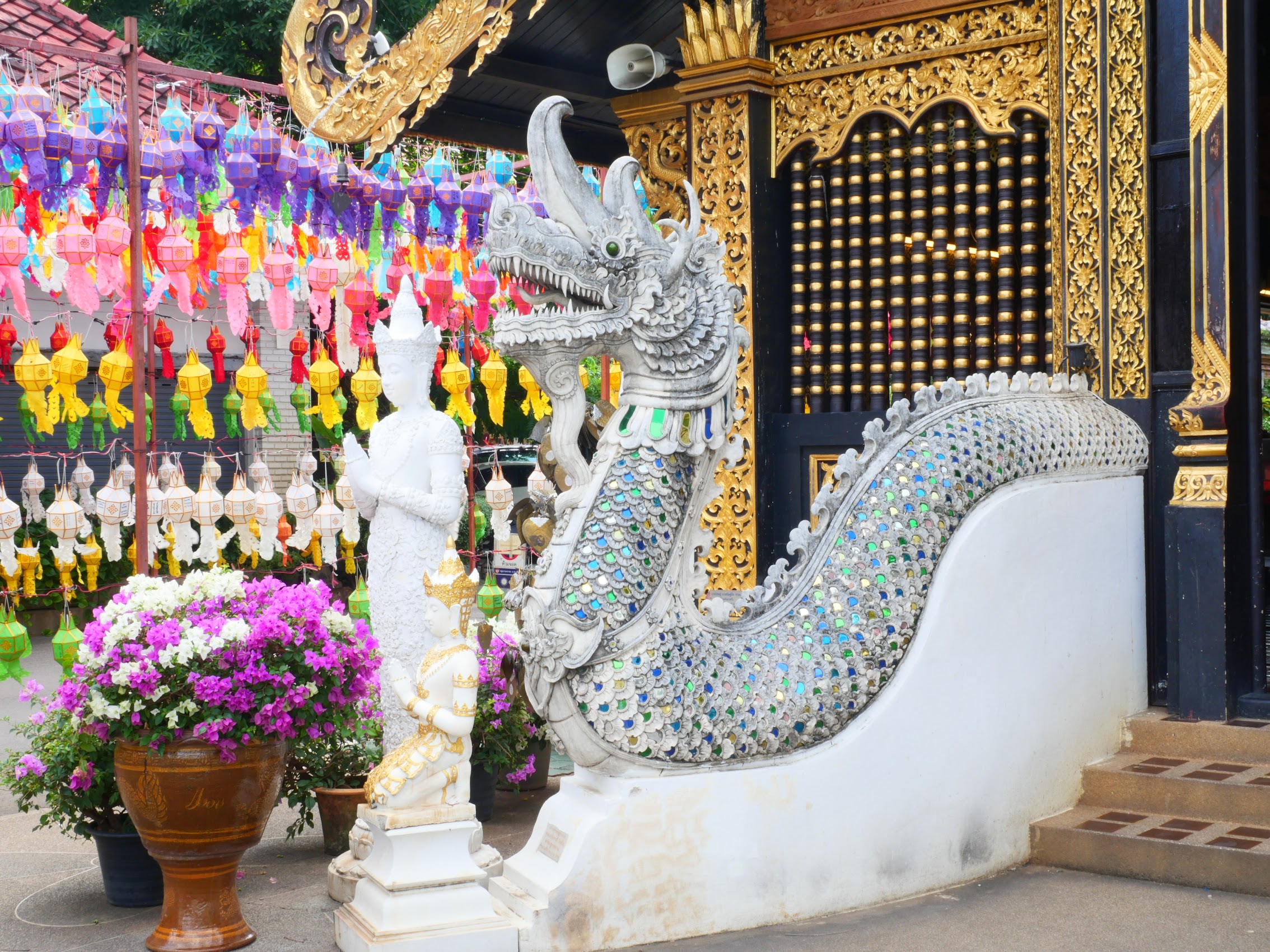

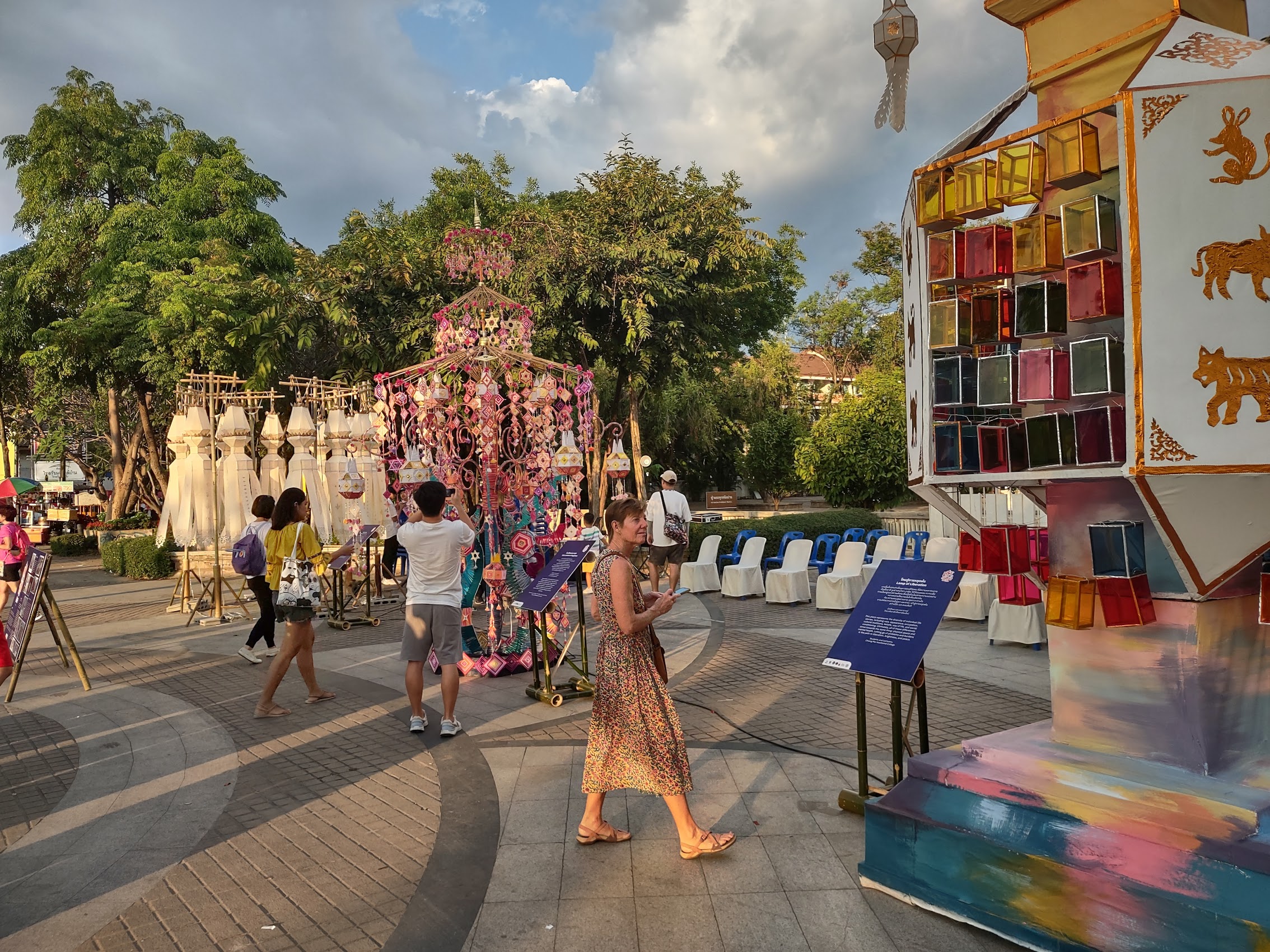
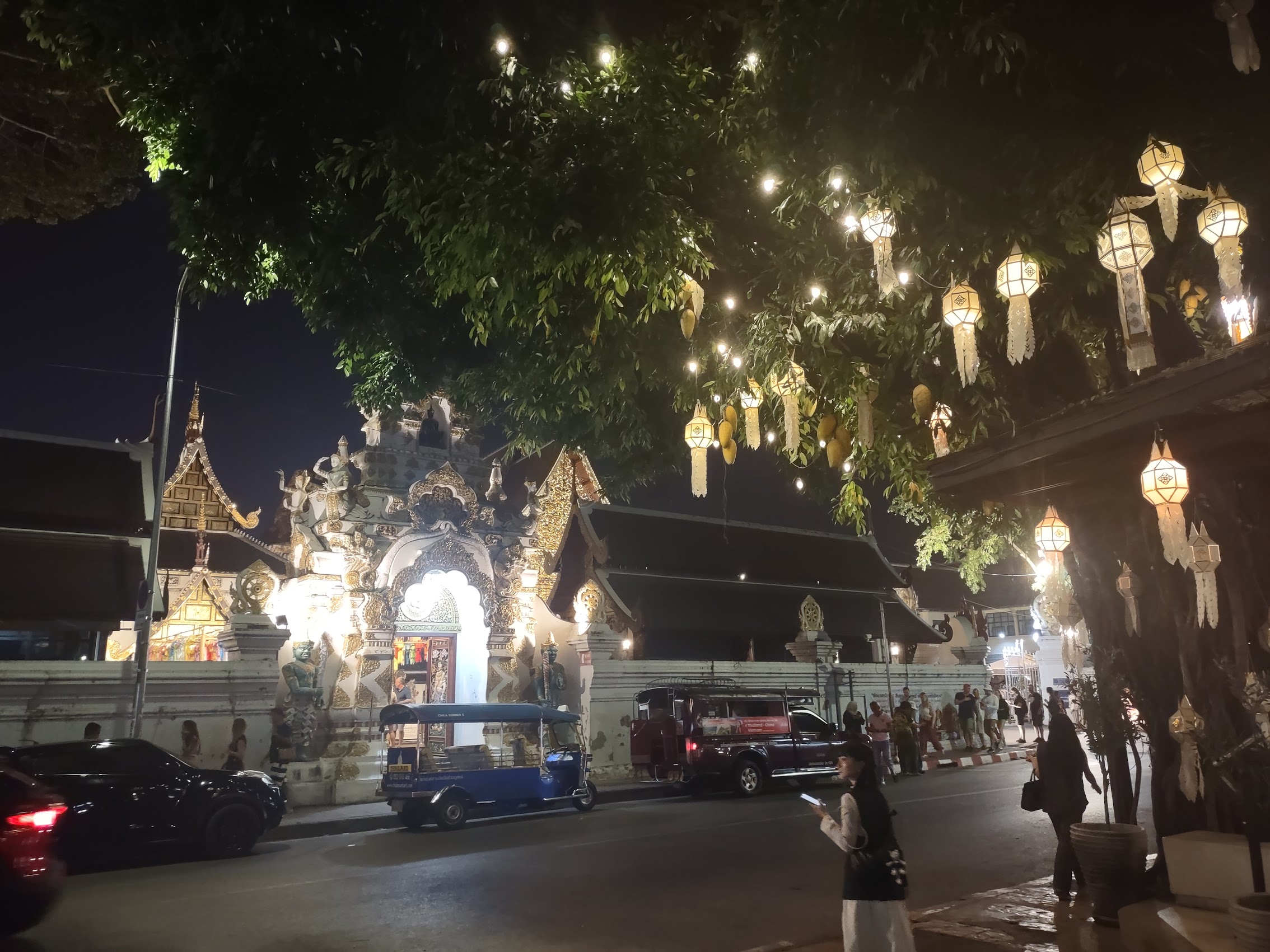
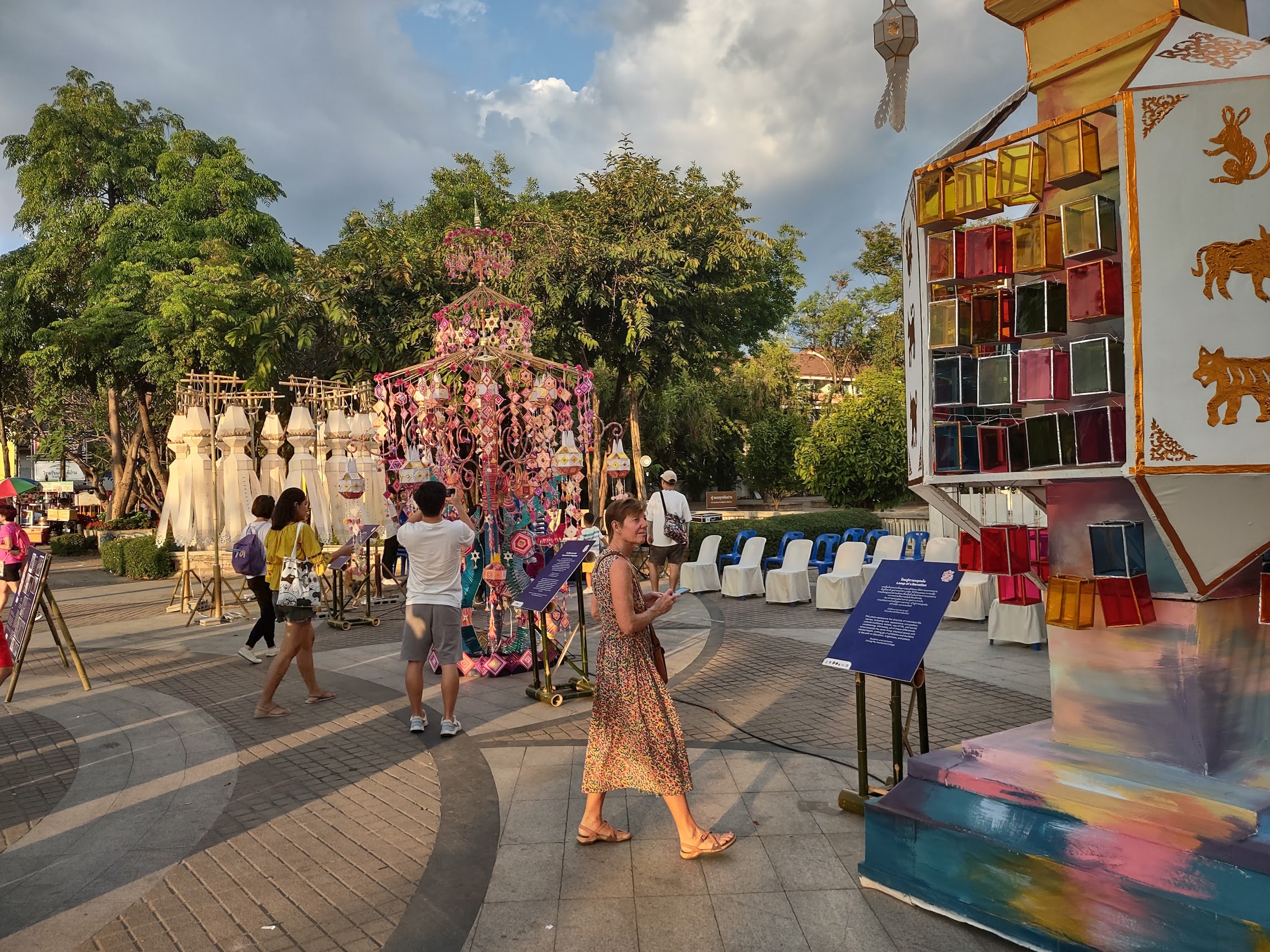
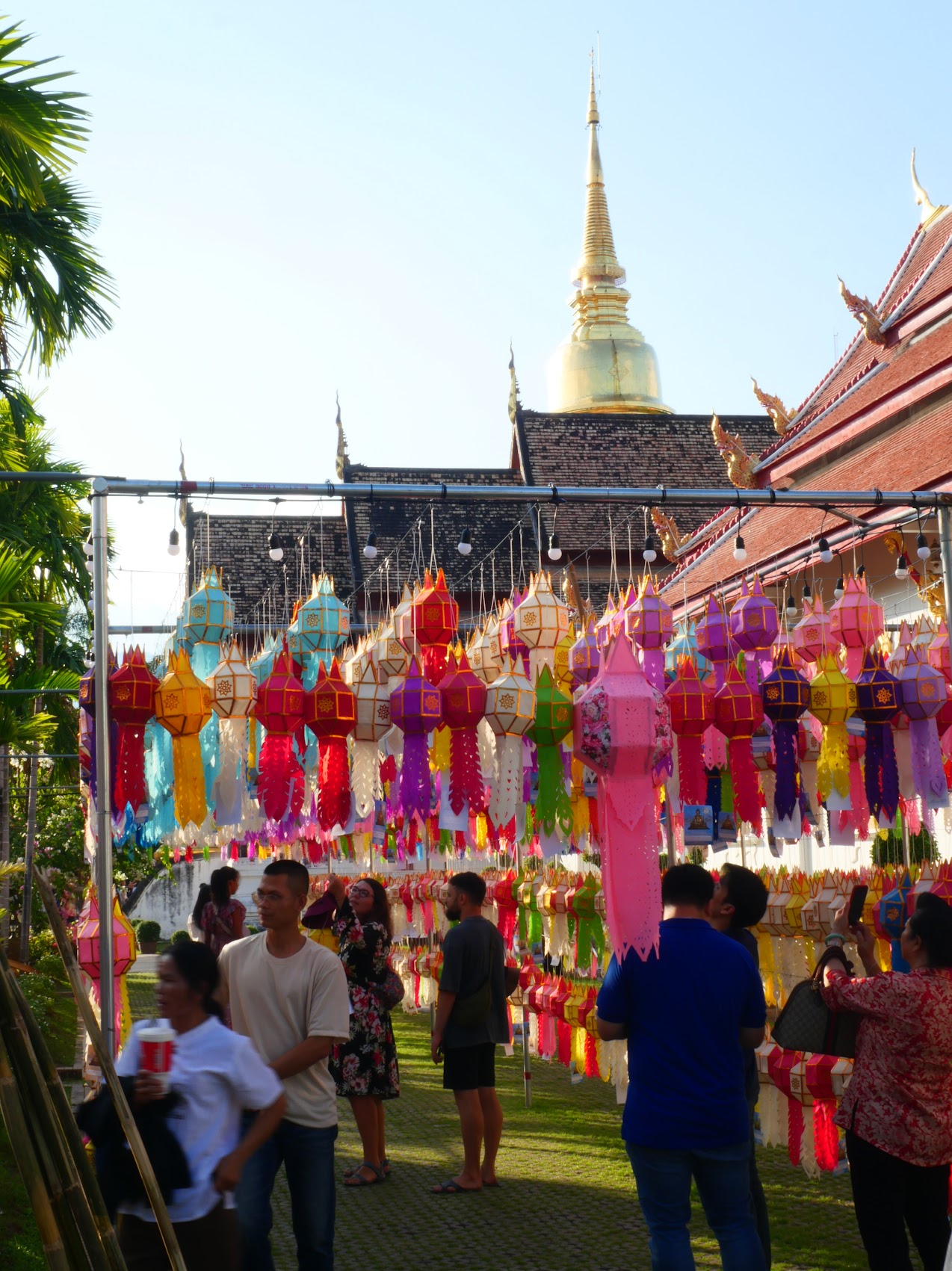
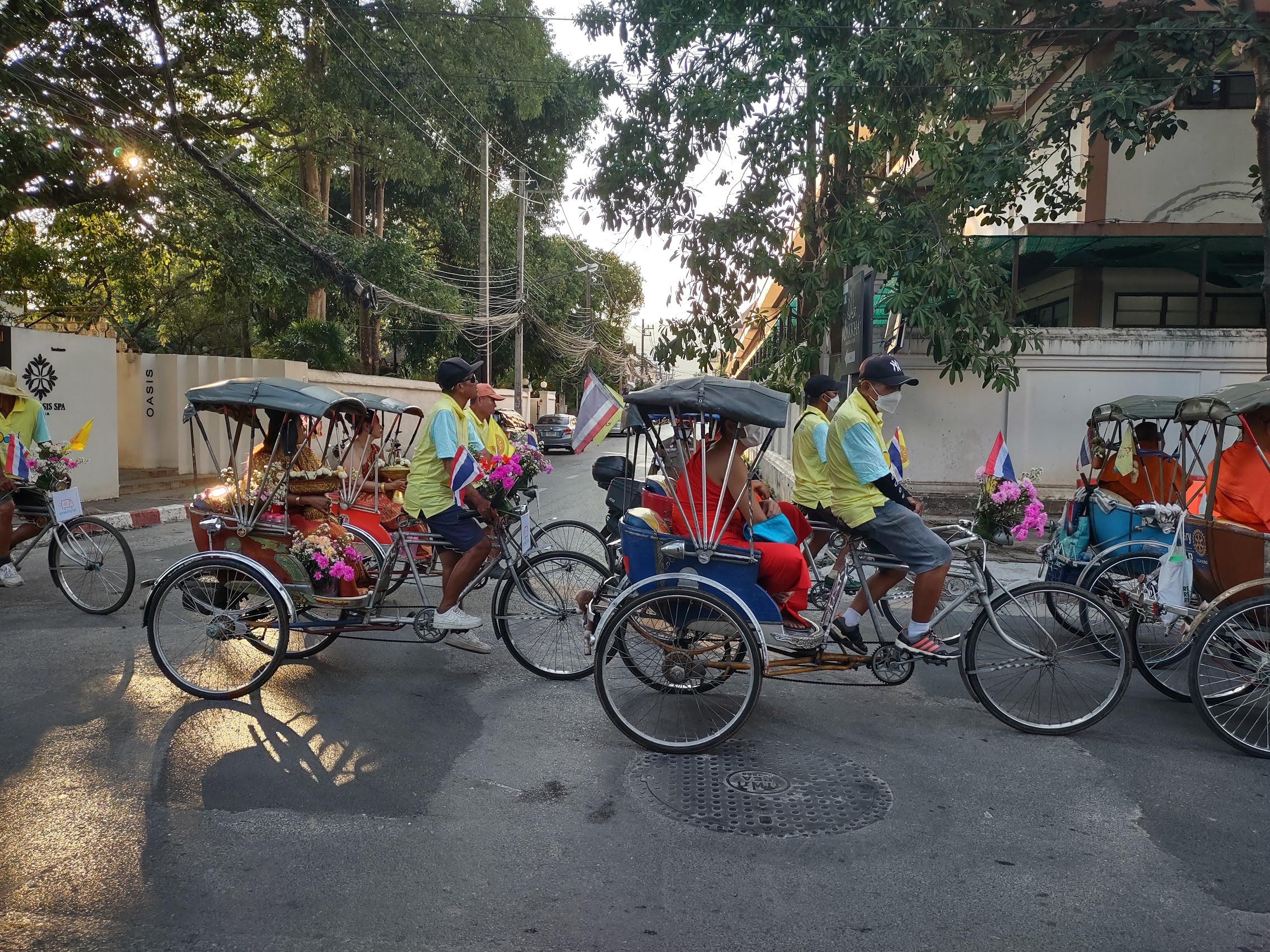
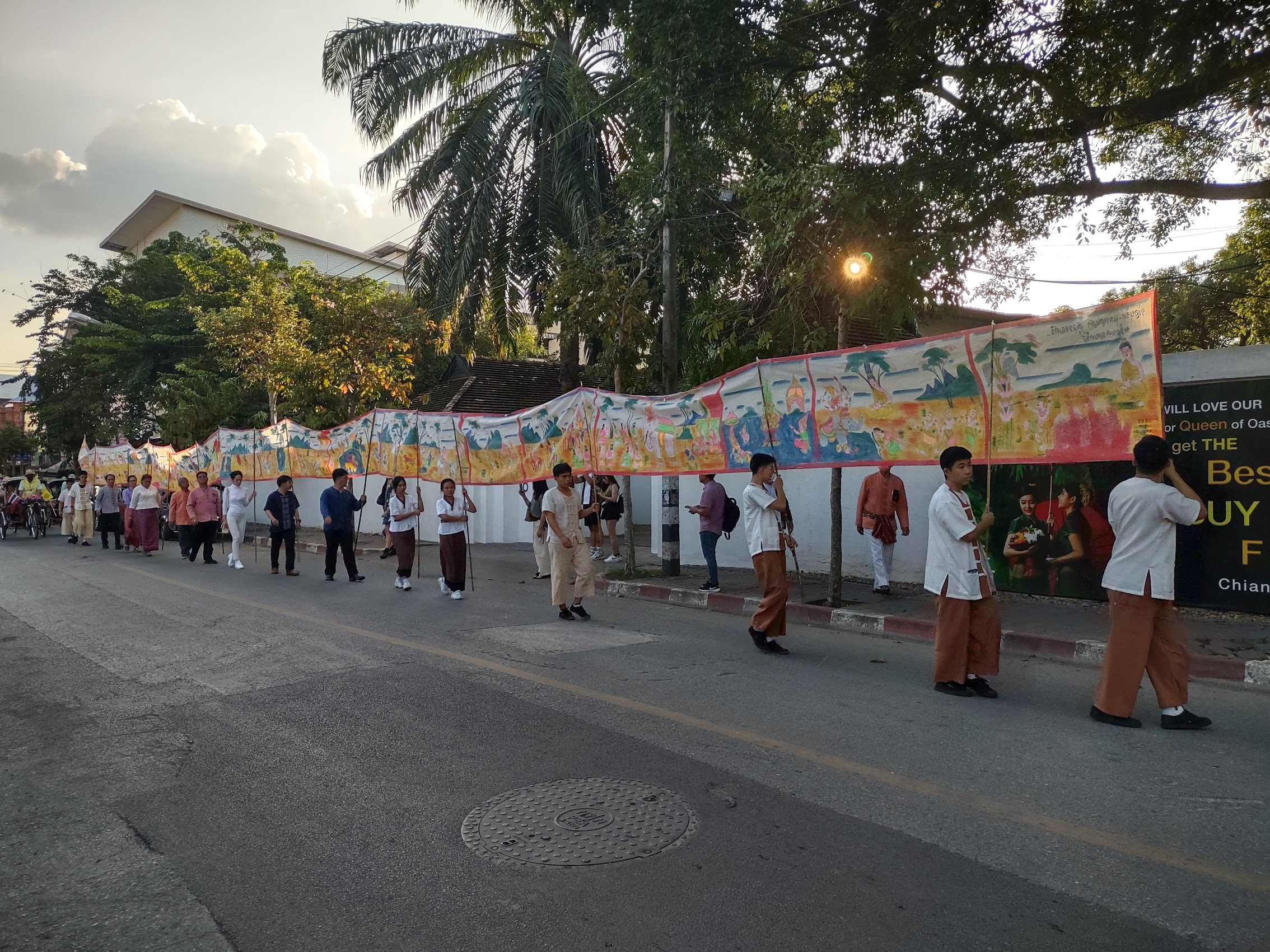
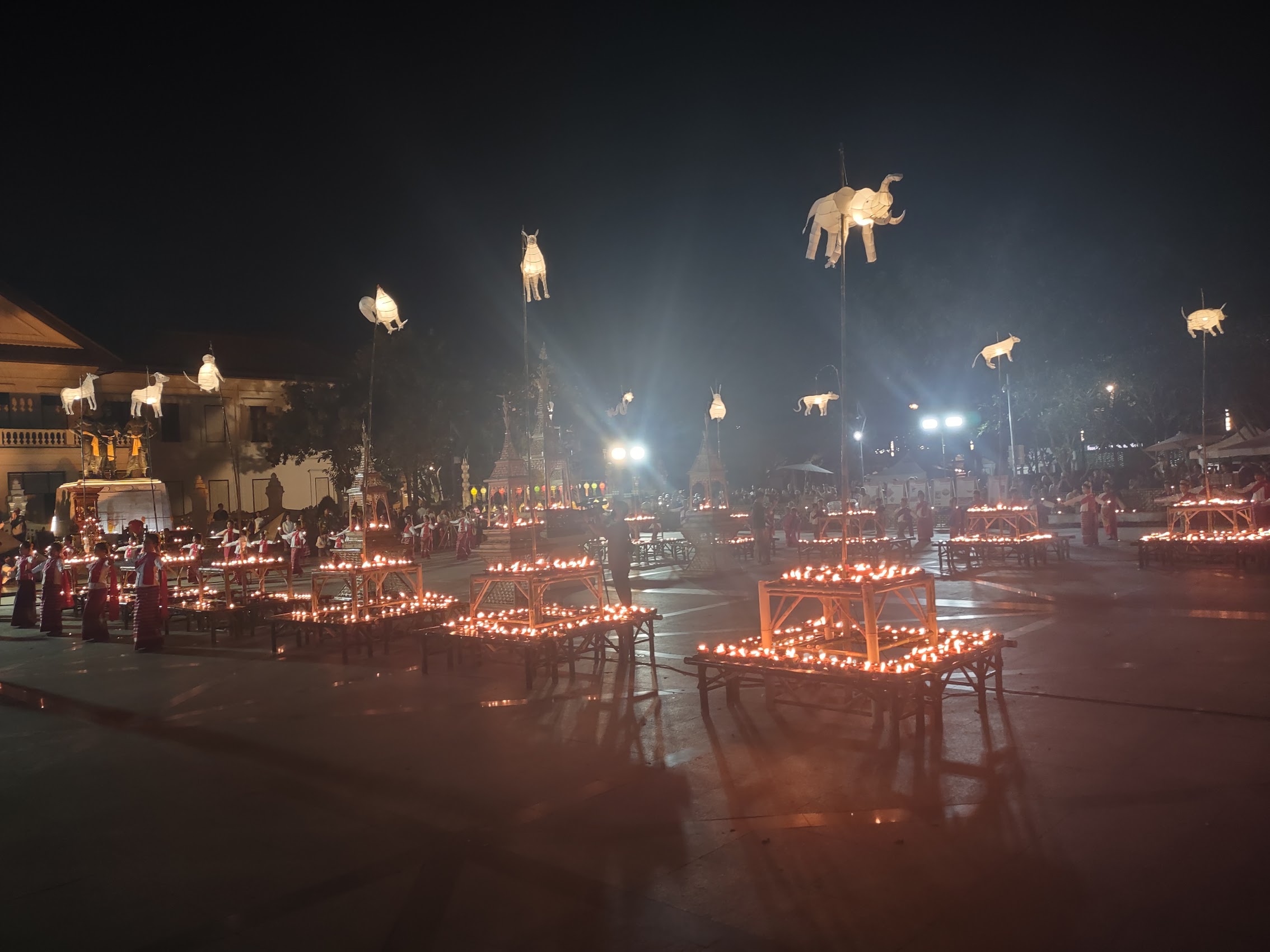
Although we would not be there for the release of the lanterns, we were able to enjoy and take part in many of the related festivities. As the final day of the festival drew near, it seemed that the entire old city was decorated with lanterns and we literally stumbled upon various parades and celebrations while wandering town. On Saturday night, there was a big ceremony in the central square of the old city (the Three Kings Monument) which featured a choreographed candle-light dance with thousands of dancers stretching for blocks in either direction.


Chiang Rai
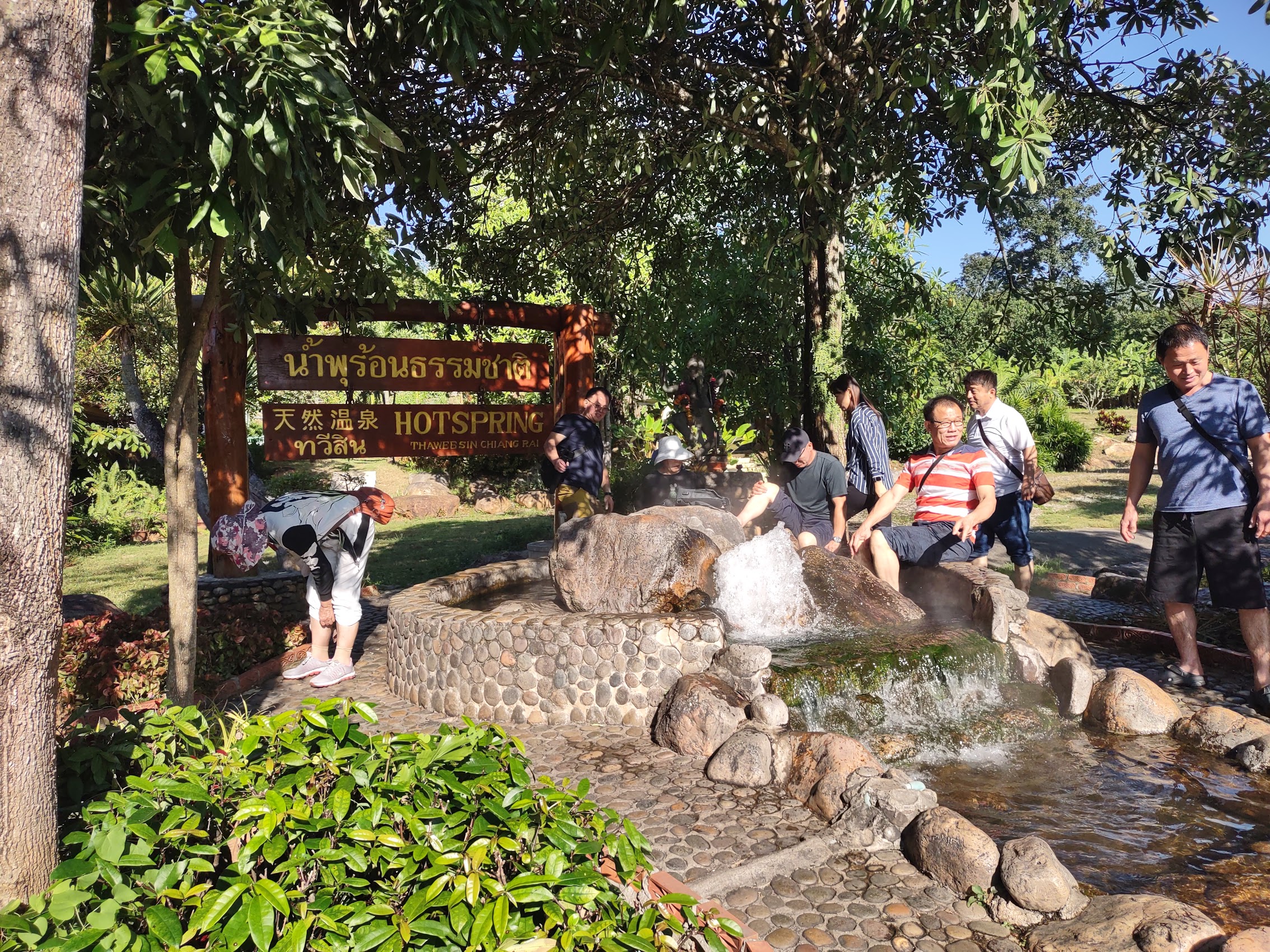
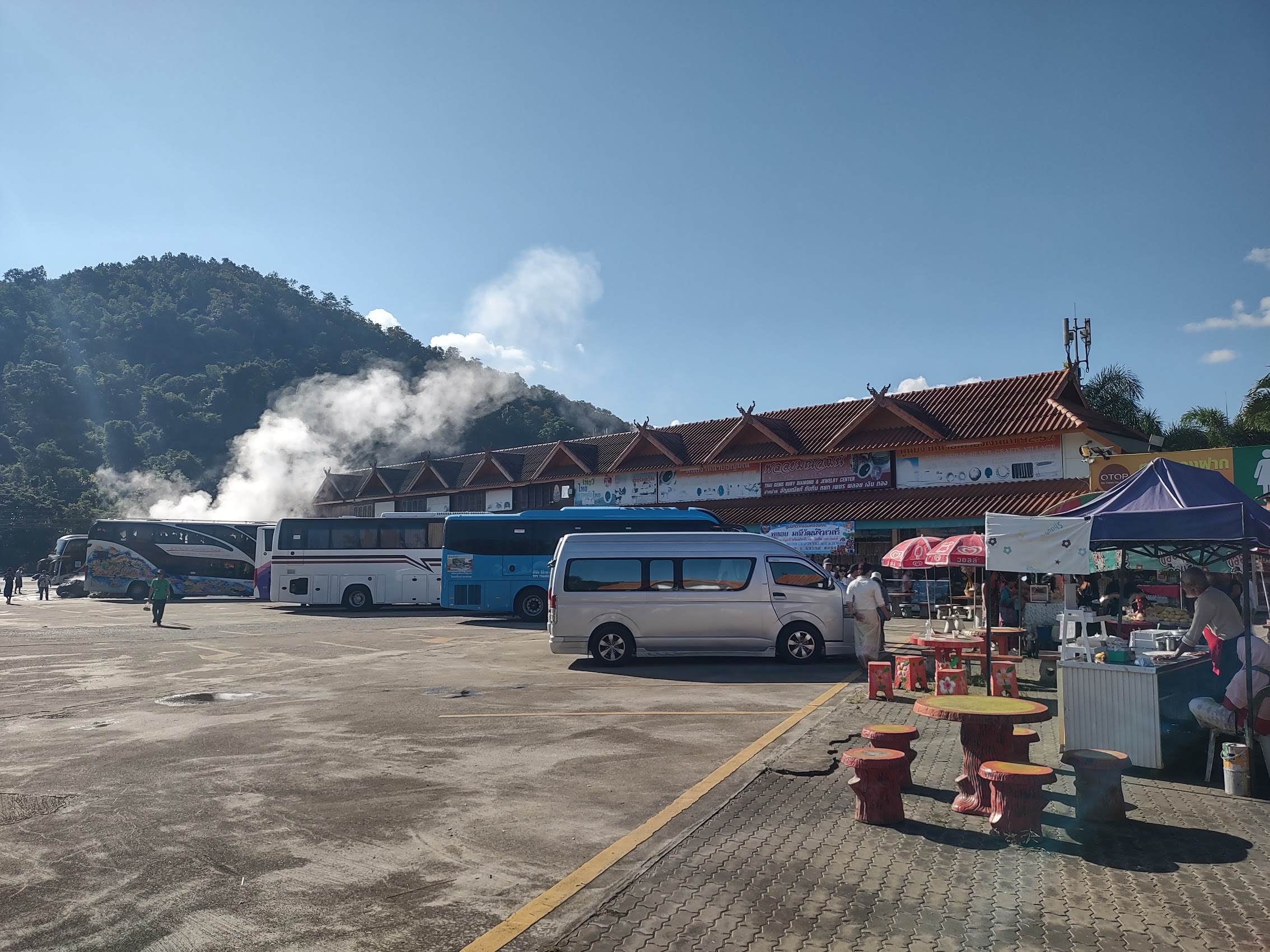
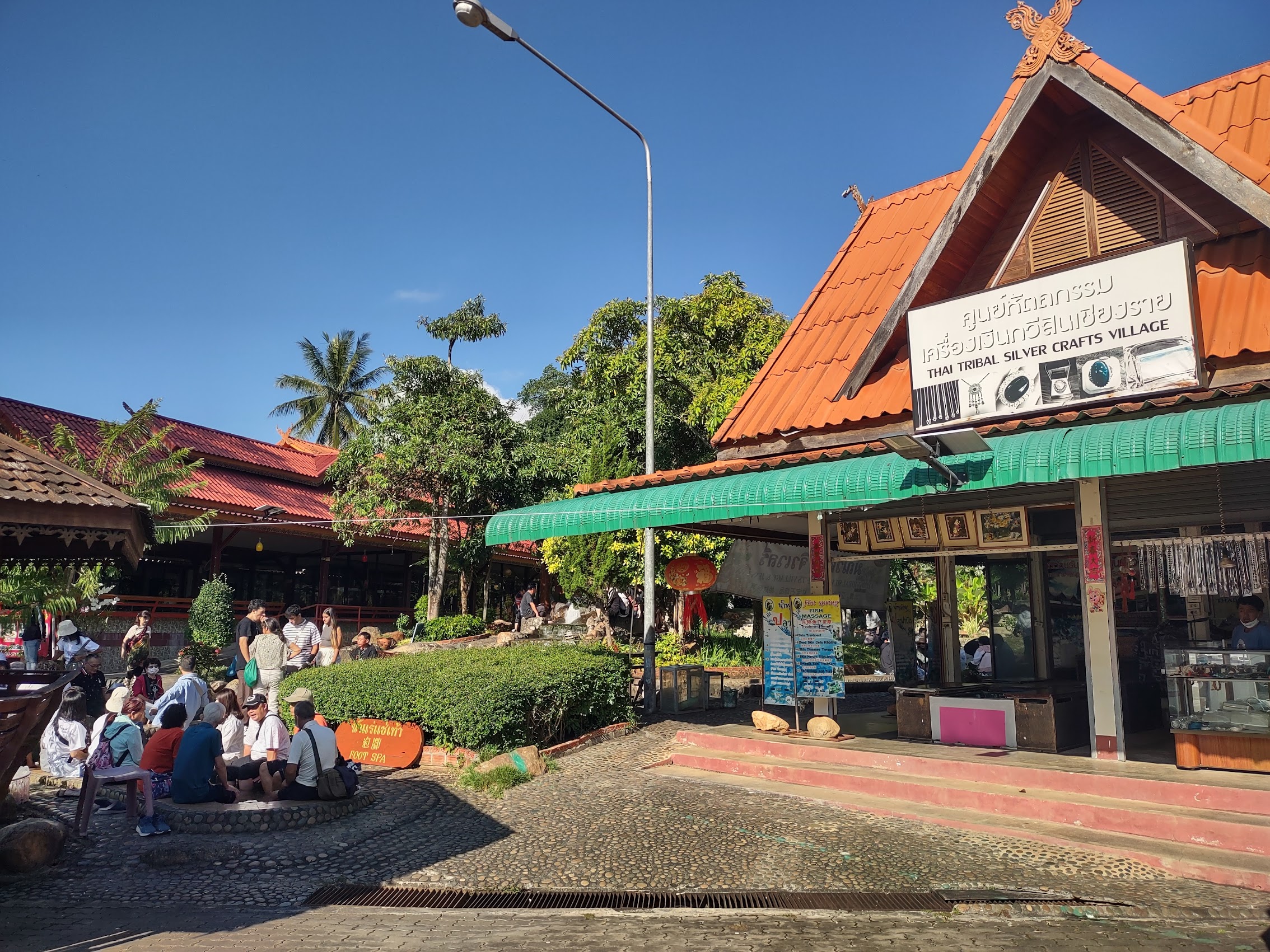
We booked a day trip to Mueang Chiang Rai, the northernmost major city in Thailand, about 3 hours northeast of Chiang Mai. Although long, the ride into the country was beautiful. Along the way we stopped at some hot springs and stopped to dip our feet in some very hot water (Tip: Go for the pools furthest away from the hot spring!)
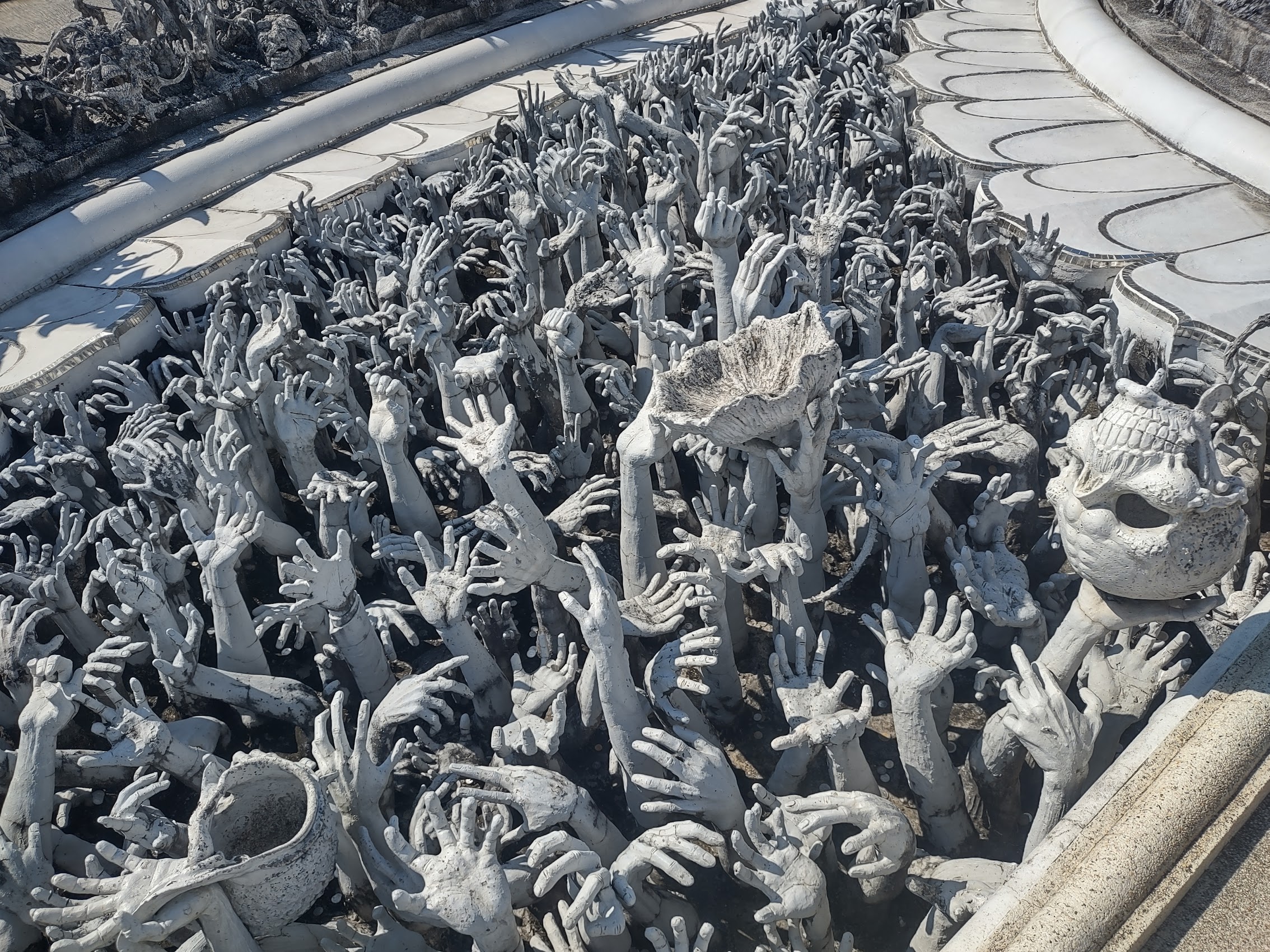
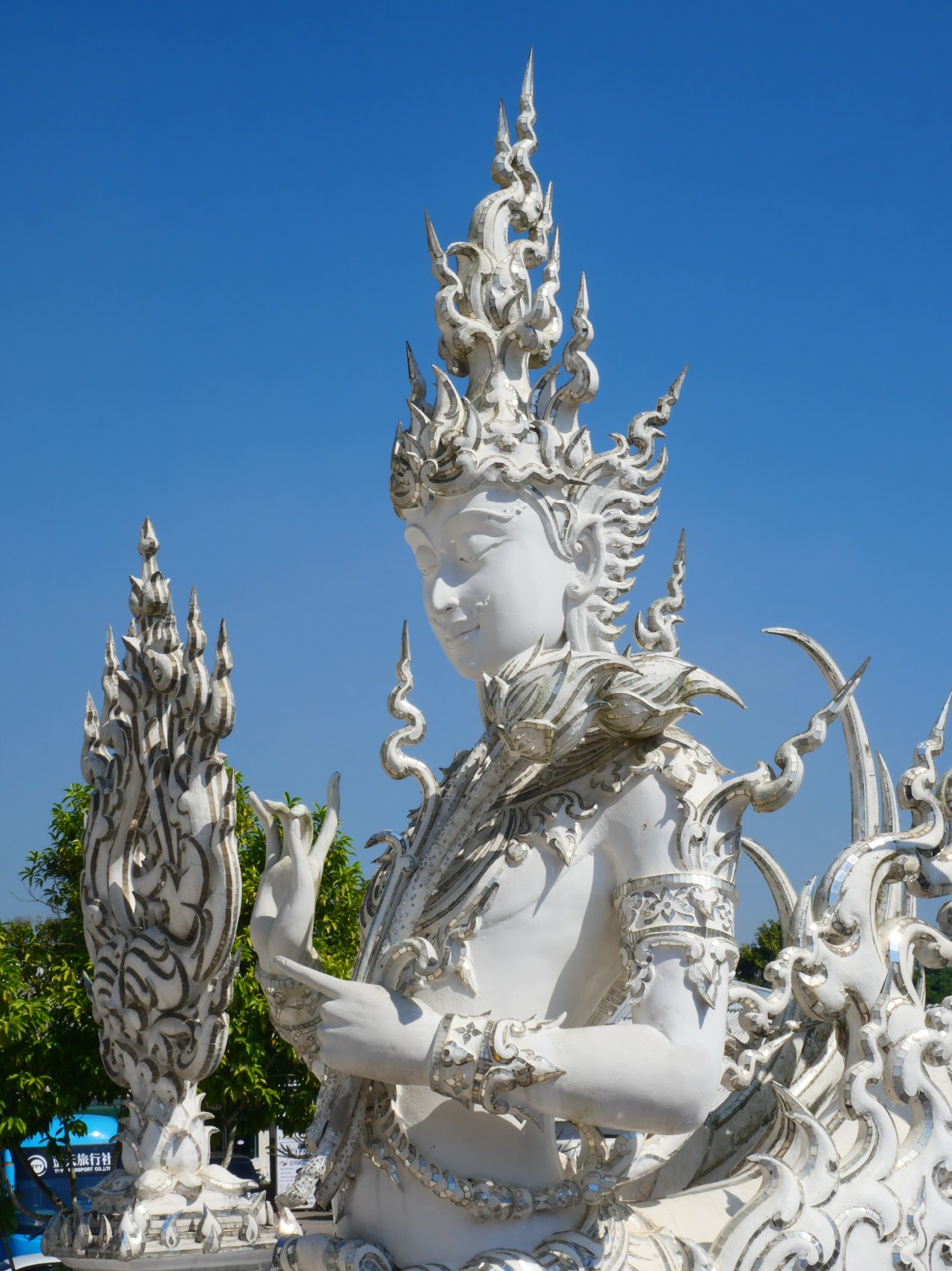
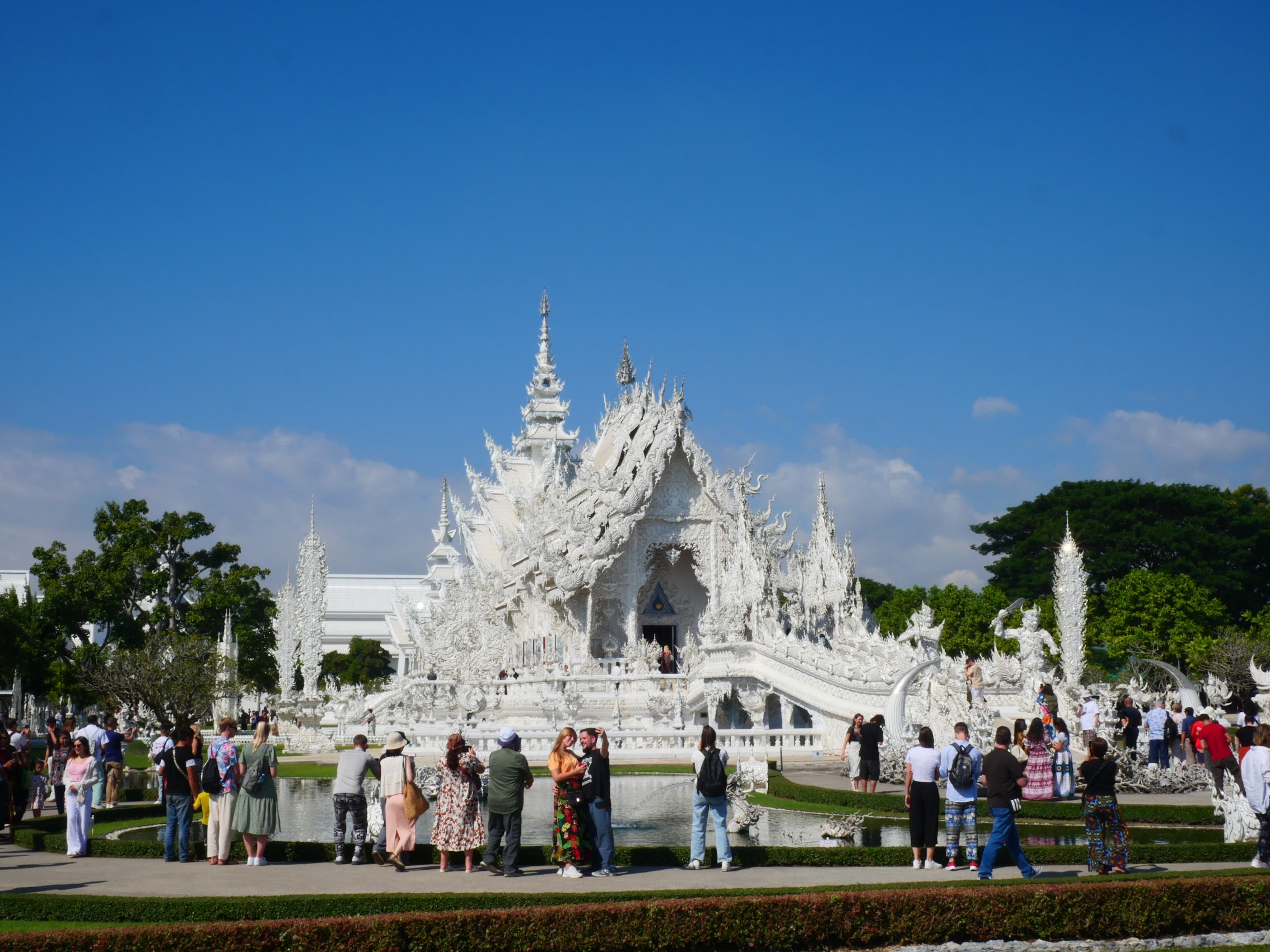
Our first stop was to Wat Rong Khun (commonly known as the White Temple) with a rather interesting and unique recent history. It seems that by the 1990s the original Wat Rong Khun had fallen into a state of extreme disrepair to the point that it was to be demolished. A local artist, Chalermchai Kositpipat proposed to rebuild the temple and fund the entire project with his own money (about $30M USD to date) and was somehow allowed to do so. The result is truly unique and a huge tourist attraction but also a bit controversial (at least for some).
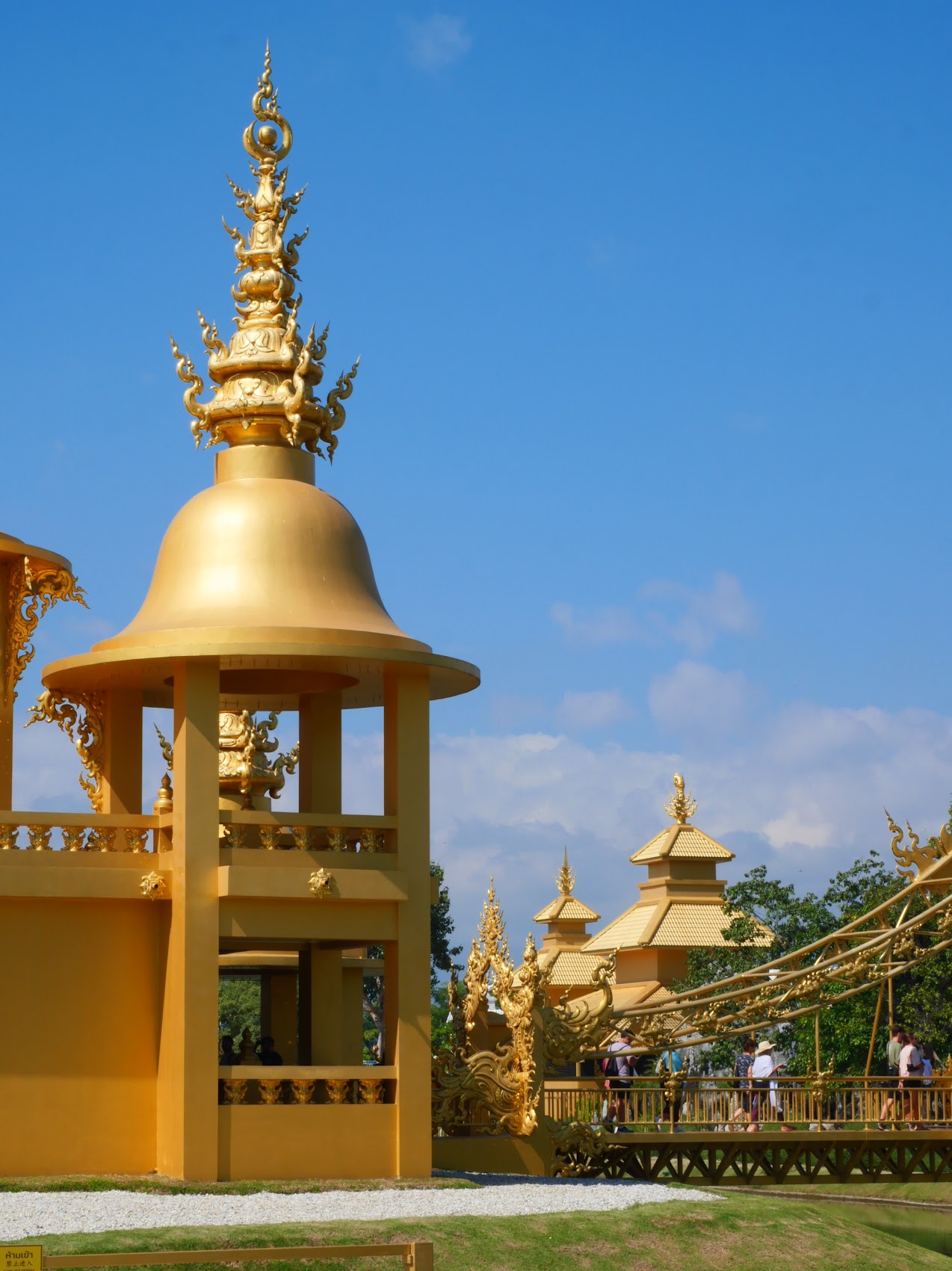
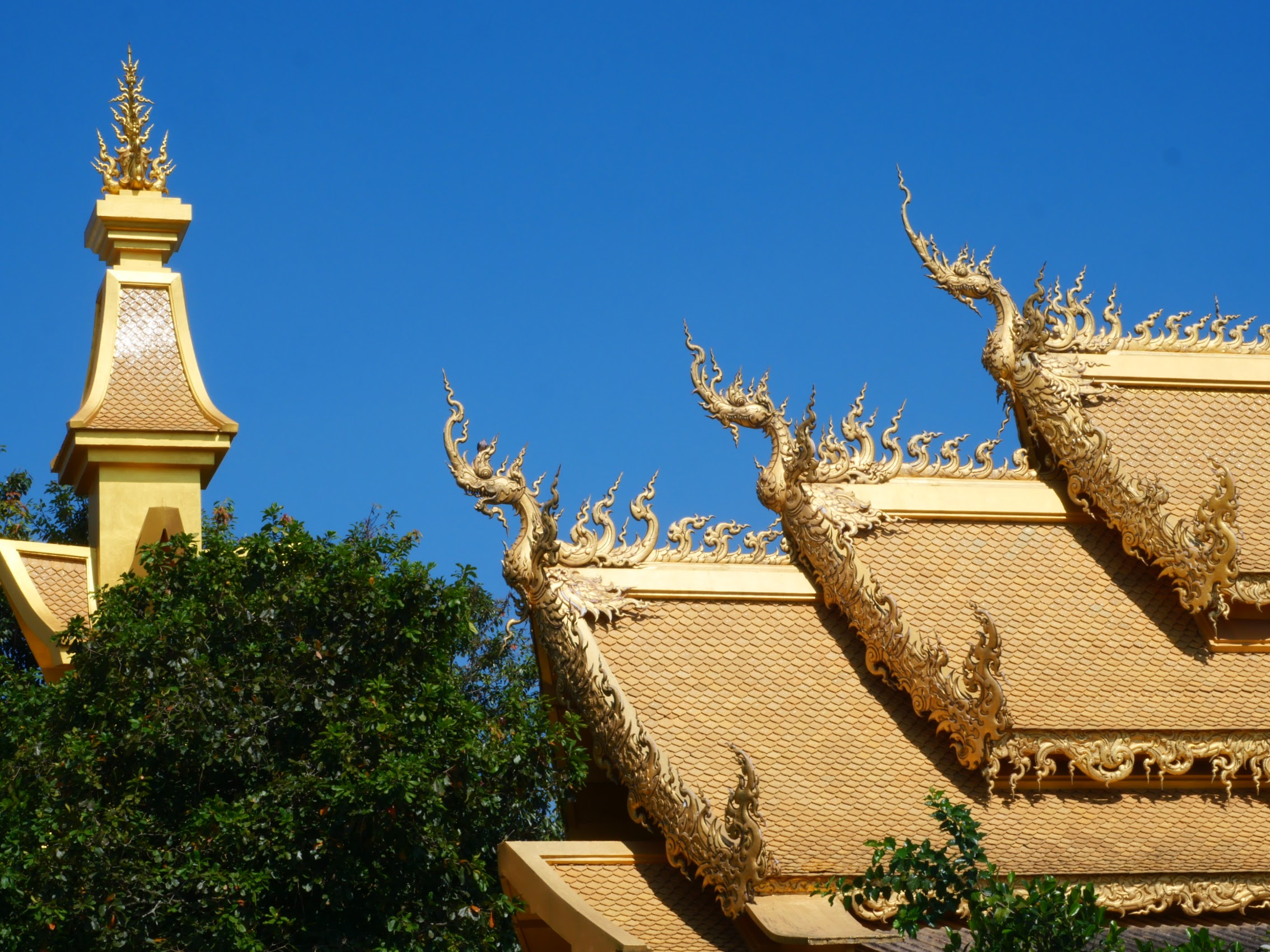
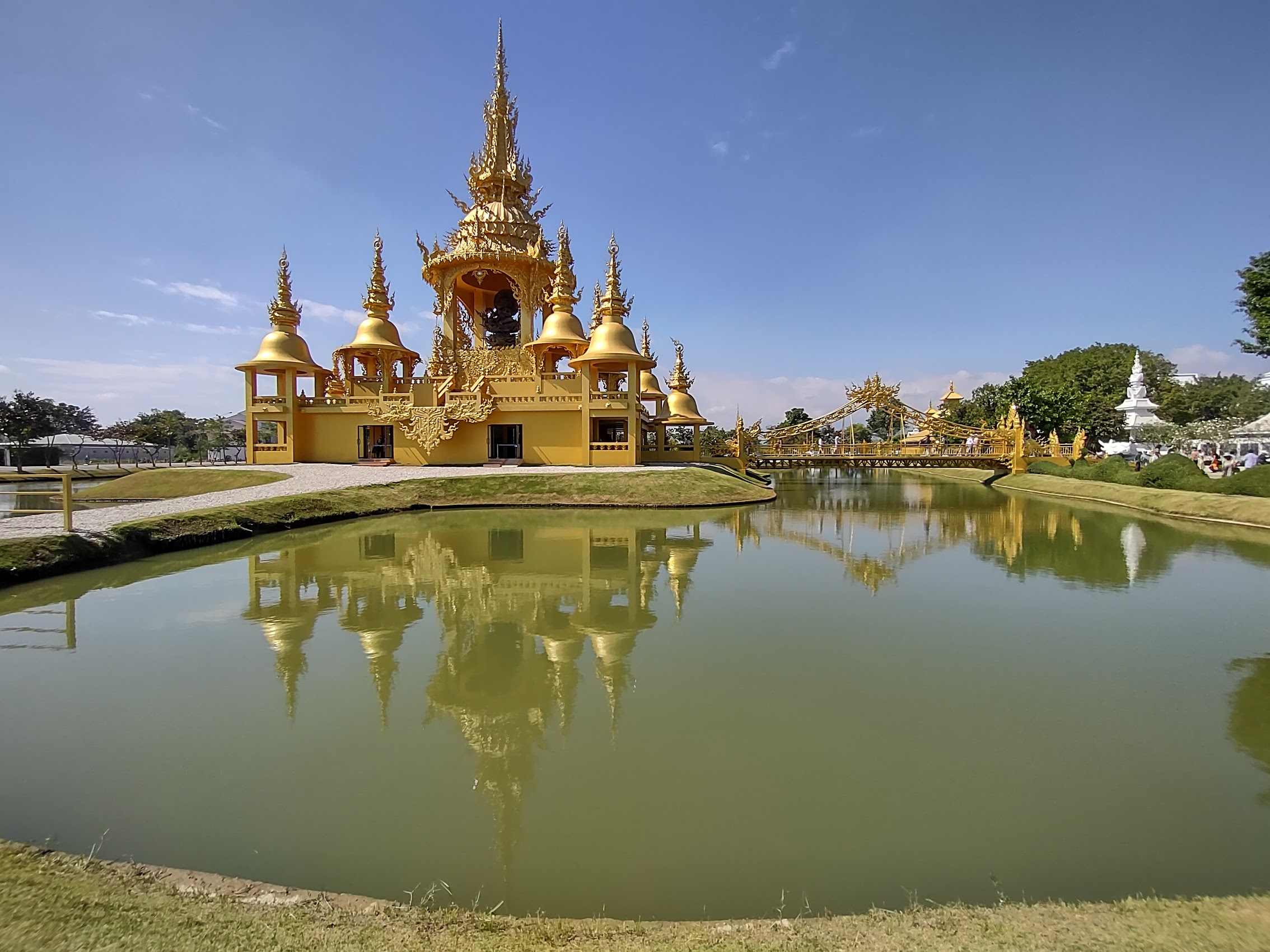
Chalermchai’s approach to the project was to create a contemporary reinterpretation of a traditional Buddhist temple and, in doing so, he has incorporated a good number of recent icons including Hello Kitty, Pinhead from Hellraiser, and the extraterrestrial from Predator. Controversy aside, the temple is incredibly beautiful, unique, and instantly recognizable in its bright sparkly white finish. There are also some other beautiful structures in the complex including an ornate gold temple for the god Gnesh.


Our second stop was to the Wat Rong Suea Ten (Blue Temple), another contemporary temple which was designed by Putha Kabkaew, a student of Chalermchai Kositpipat. Like the White Temple, the Blue Temple replaced an older abandoned temple and represents a more contemporary design which incorporates many traditional features but with a much more colorful (mostly blue) and ornate treatment.
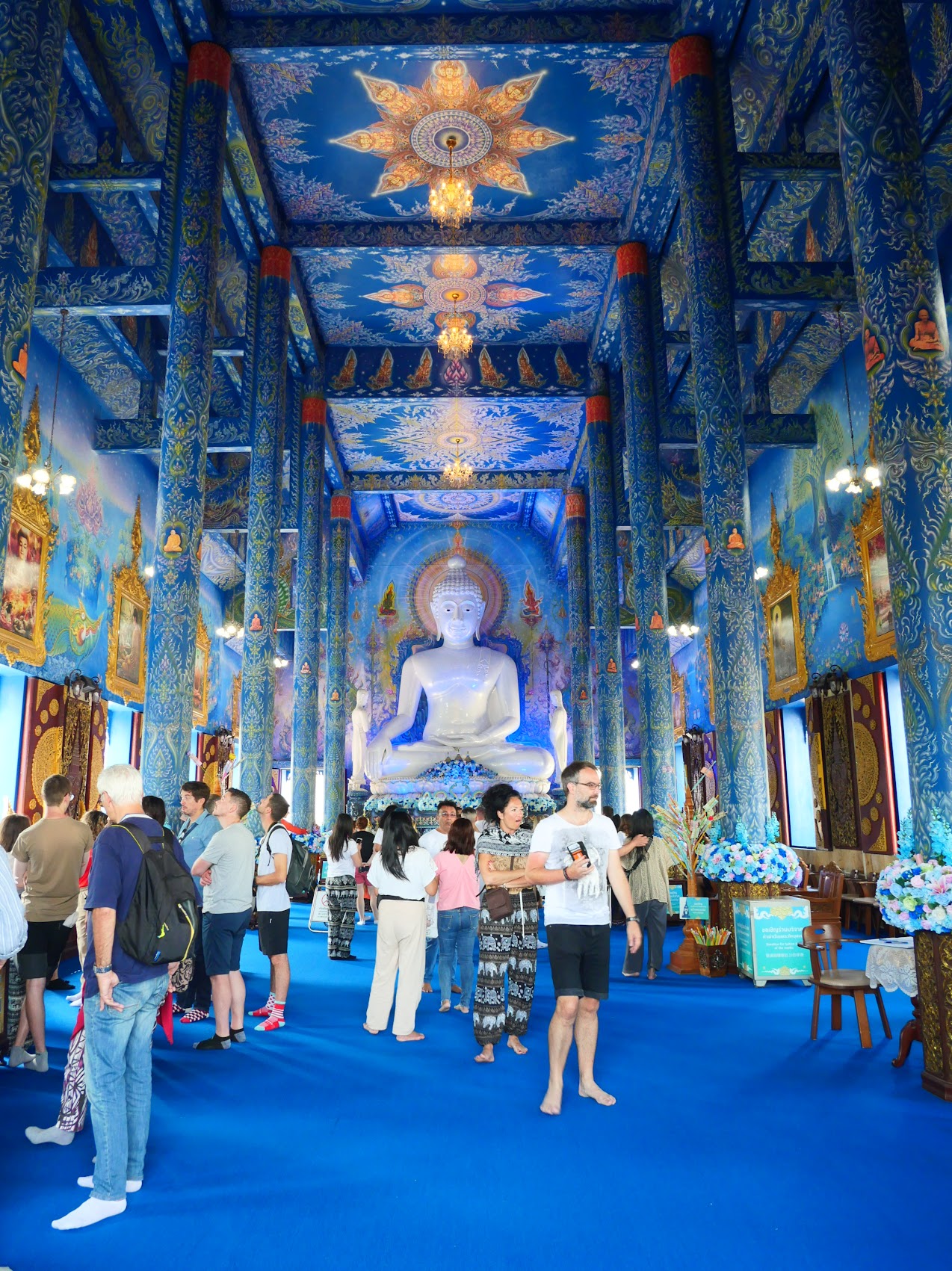

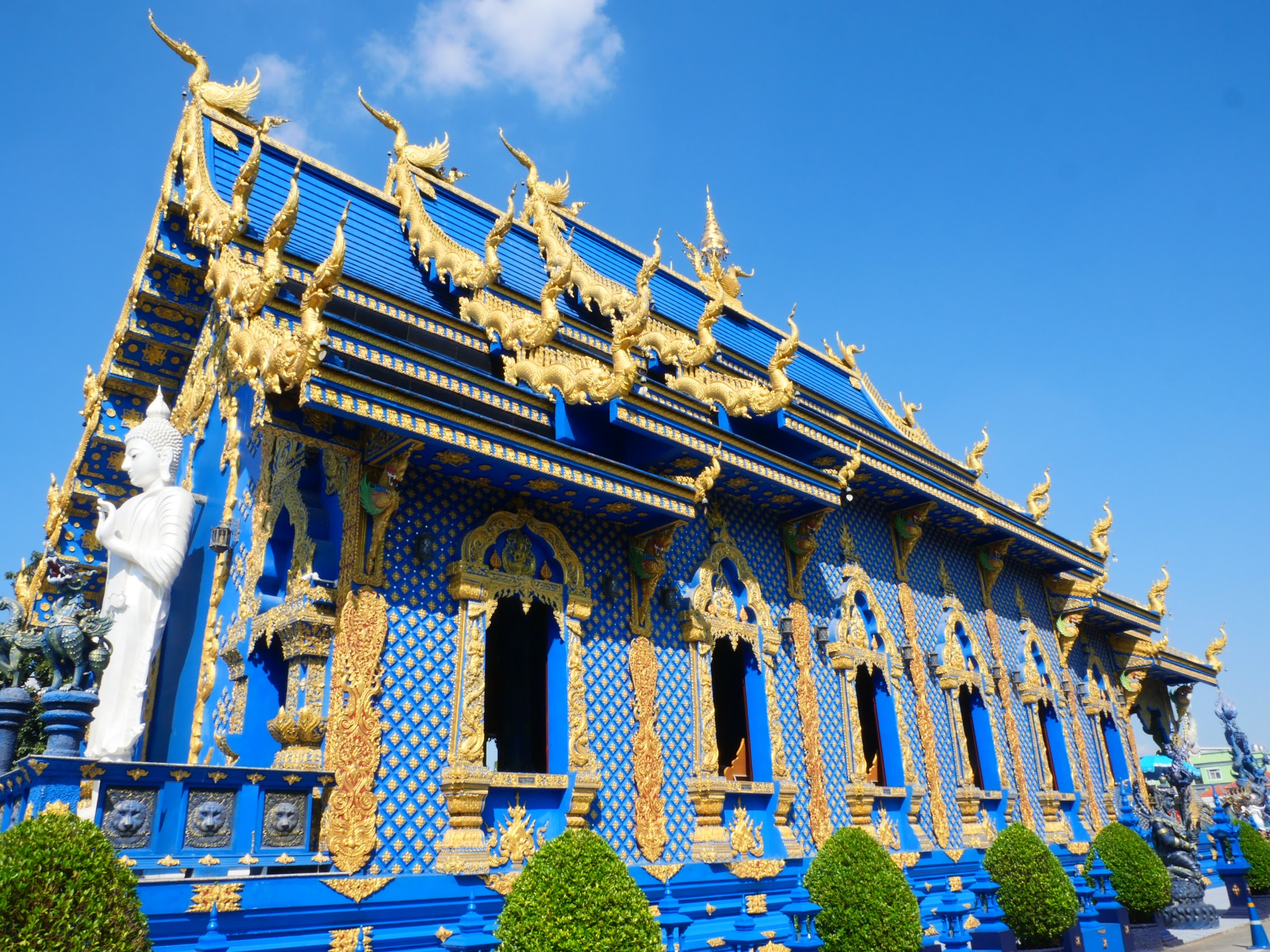
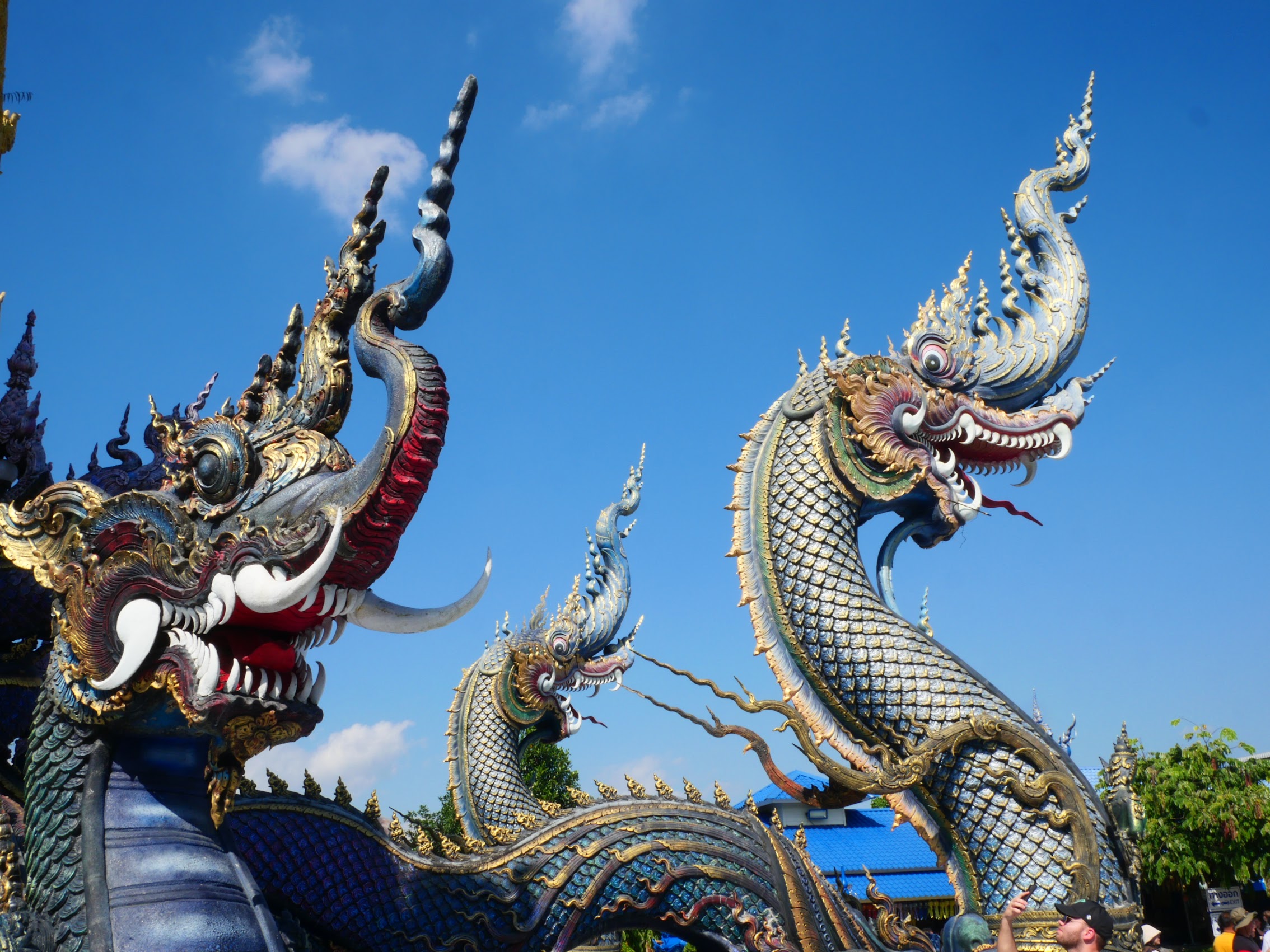

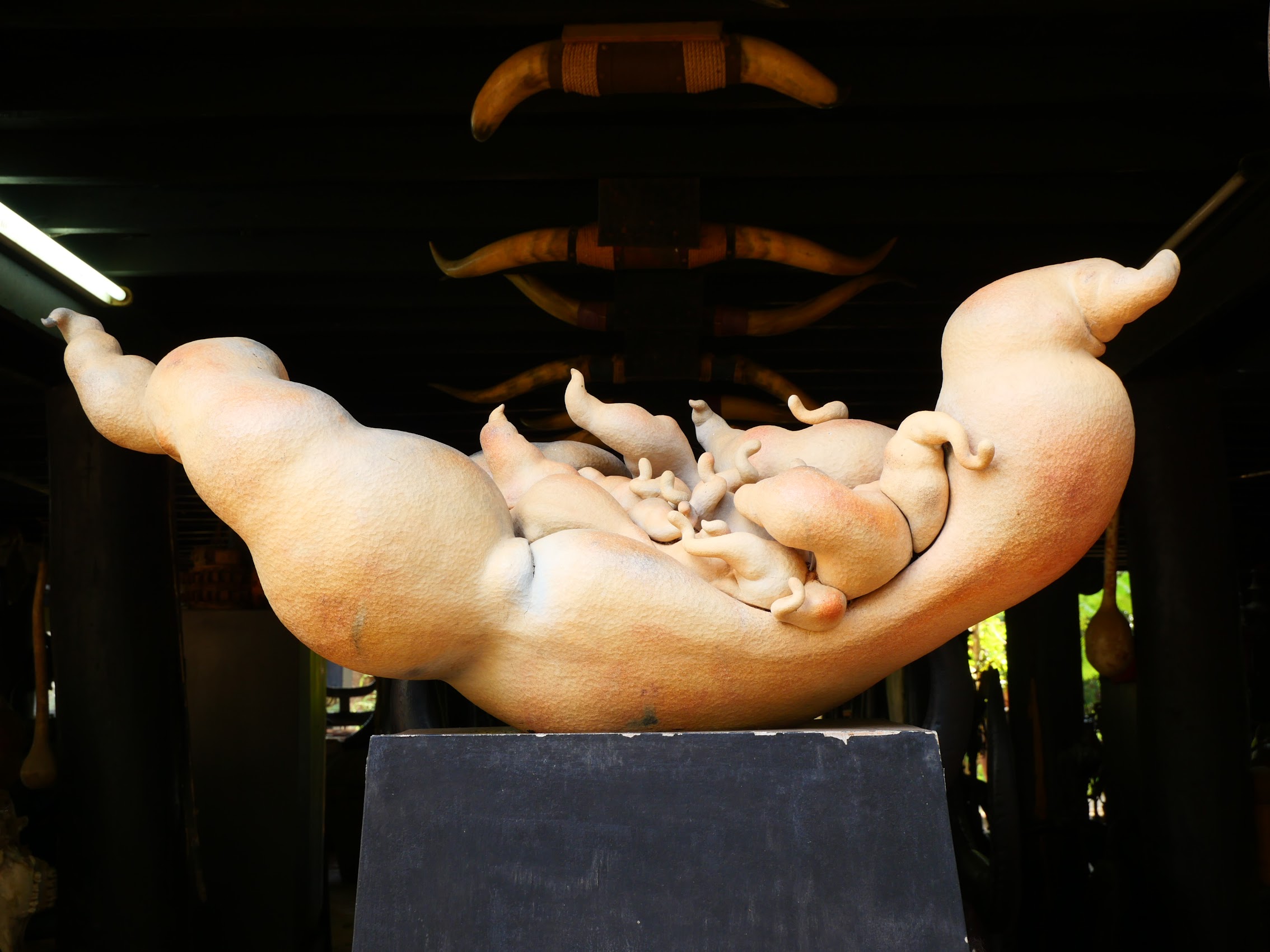
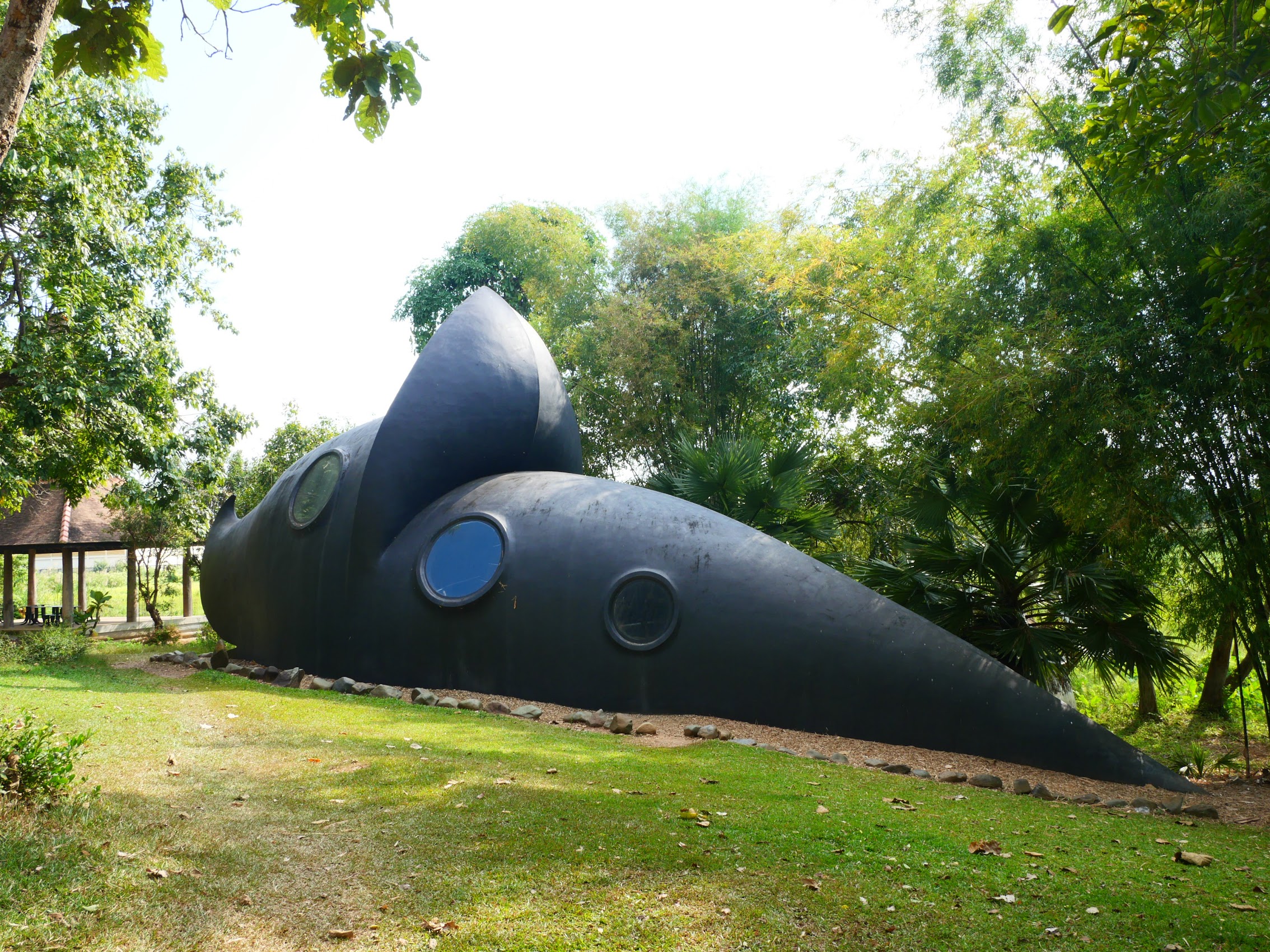
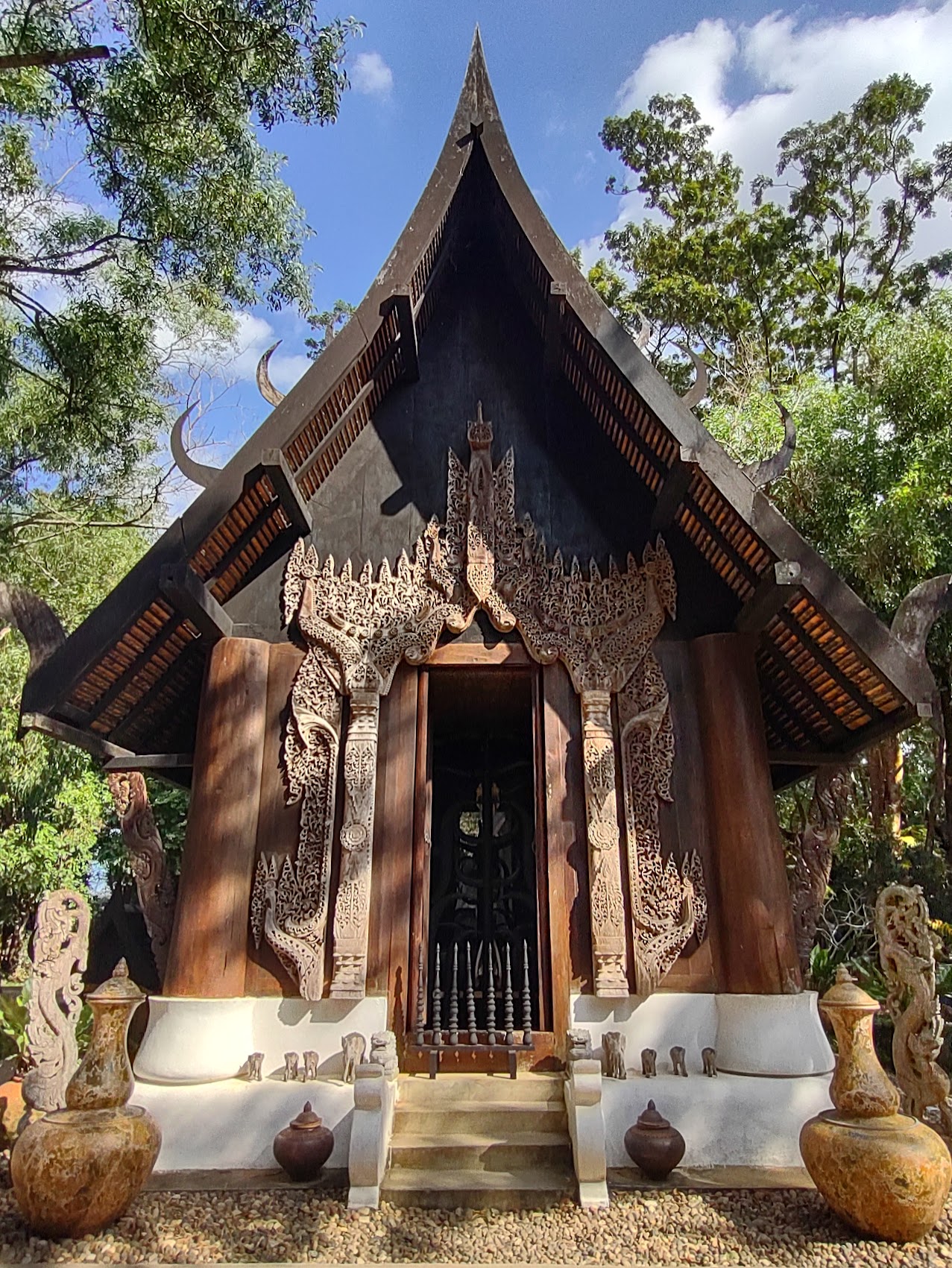
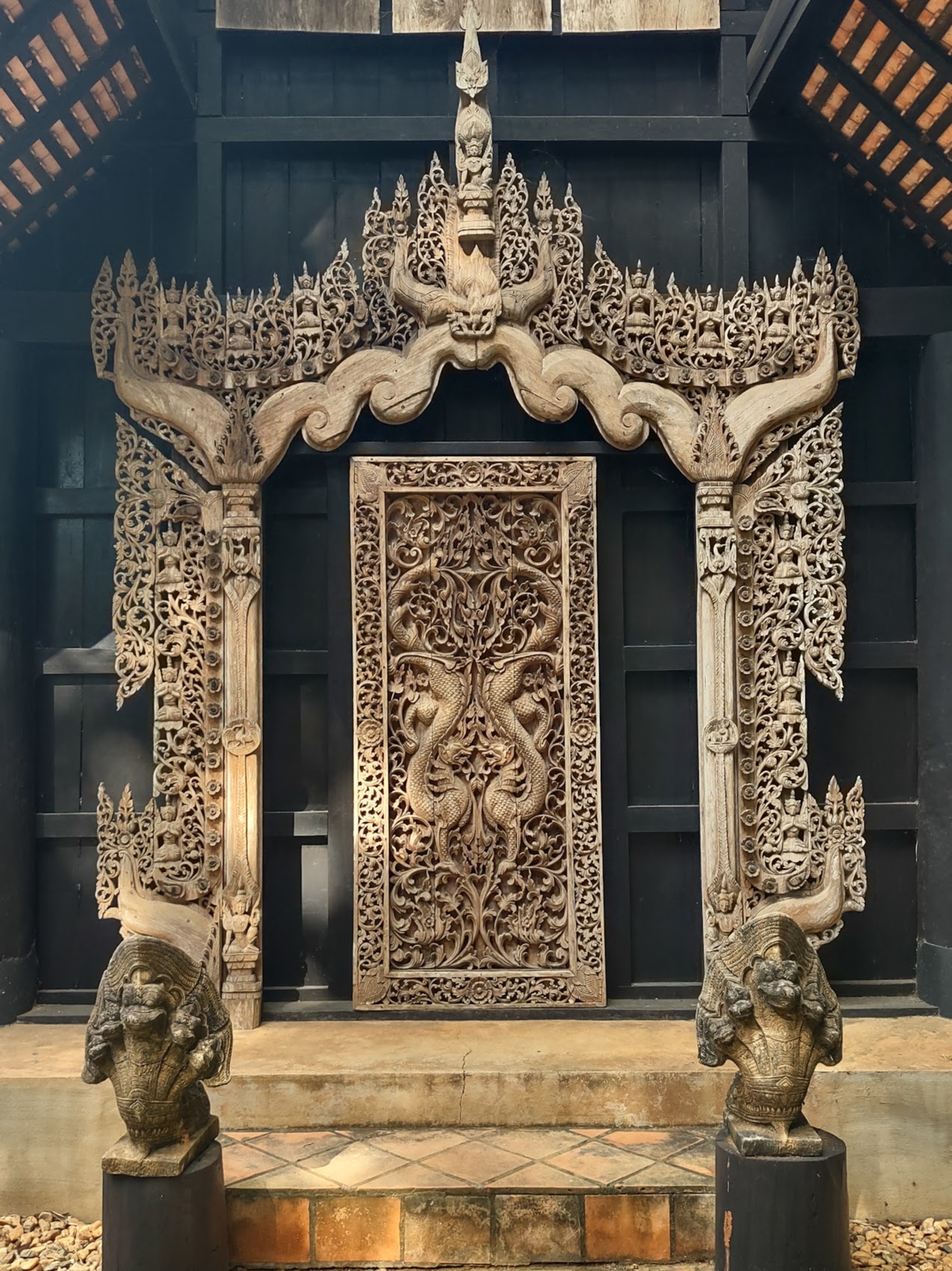
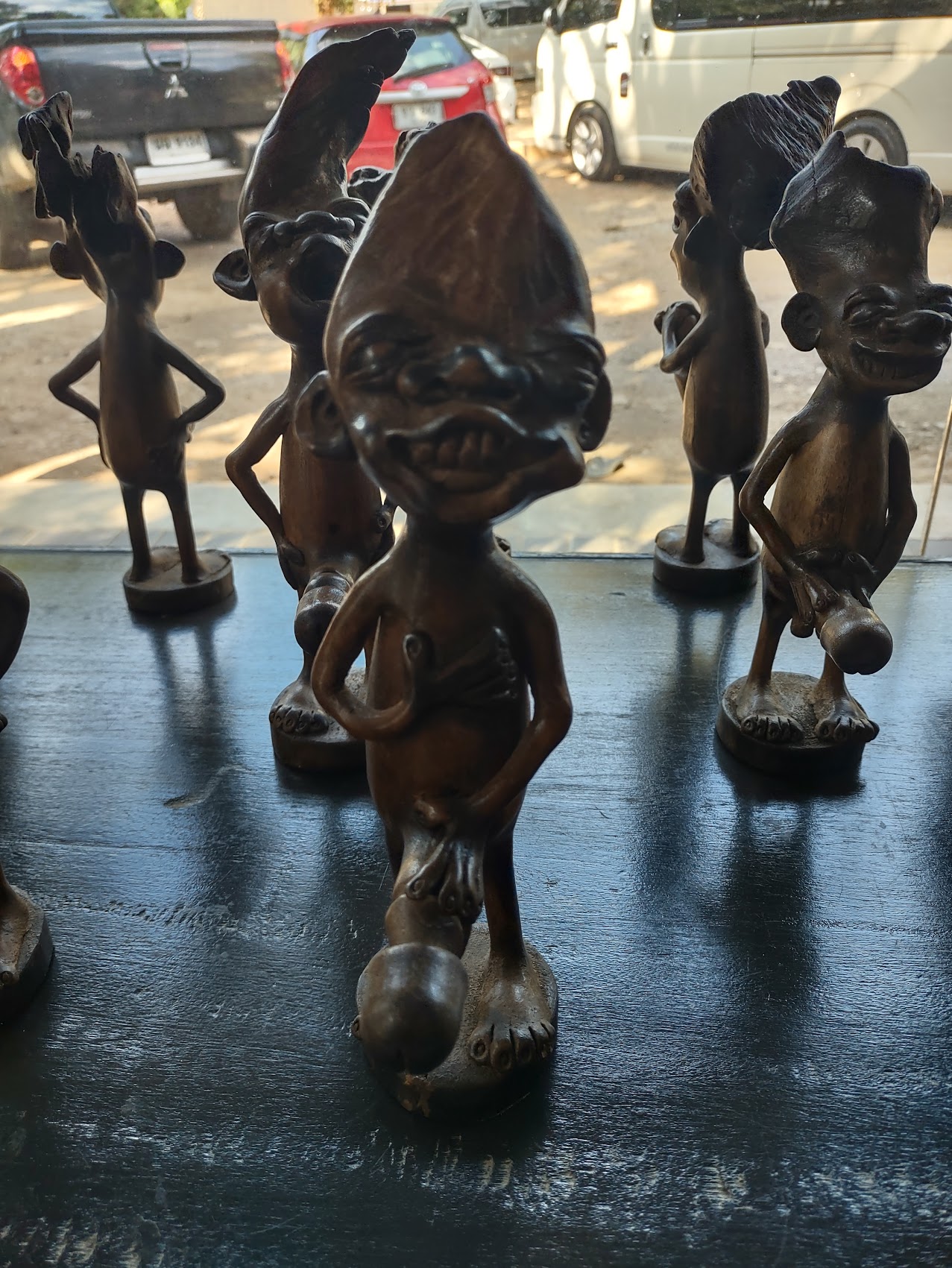
The last stop on our day trip was a place called the Ban Daam (Black House) Museum, a private art museum created by national artist Thawan Duchanee. The museum is in essence a small village of both traditional Thai and unconventional (at times verging on disturbing) structures, constructed over the last 40 years, which are furnished with and feature much of the artist’s unique wood carvings. As a body of work, pretty amazing, but also a bit bizarre (if not creepy) at times.

Thanksgiving
As we were going to be in Chiang Mai for Thanksgiving, I Googled “thanksgiving turkey dinner” when we arrived to see what turned up. As far as I could tell, there are no turkeys in Chiang Mai (if in Thailand) and it did not appear that anyone in town had much interest in providing a traditional American Thanksgiving dinner. (For years, we used to go to Mexico – Puerto Vallarta, Acapulco, or Cancun – for Thanksgiving and always chuckled over the preparations made by the resort for a “traditional” Thanksgiving dinner which included tethering live turkeys in a corral with some bales of straw on the day in question.)
Nevertheless, I felt like we needed to celebrate the holiday in some special way when I came across something called “Khantoke Dinner” at the Old Chiang Mai Cultural Center, a tourist village which promotes the artistic and cultural heritage of the Lanna (or Lan Na) culture. The Lan Na Kingdom (literally, the kingdom of a thousand rice fields) was the predecessor of what is today northern Thailand from the 13th through 18th centuries. (Chiang Mai was its last capital.)
The Khantoke Dinner is a Lanna tradition which incorporates a traditional dinner along with traditional dance and other performances and the Old Chiang Mai Cultural Center has been doing them for over 50 years. We arrived at the center and were greeted and led to a seating area in front of a stage where we were presented with welcome cocktails followed by what seemed like a never-ending stream of delicious traditional food.


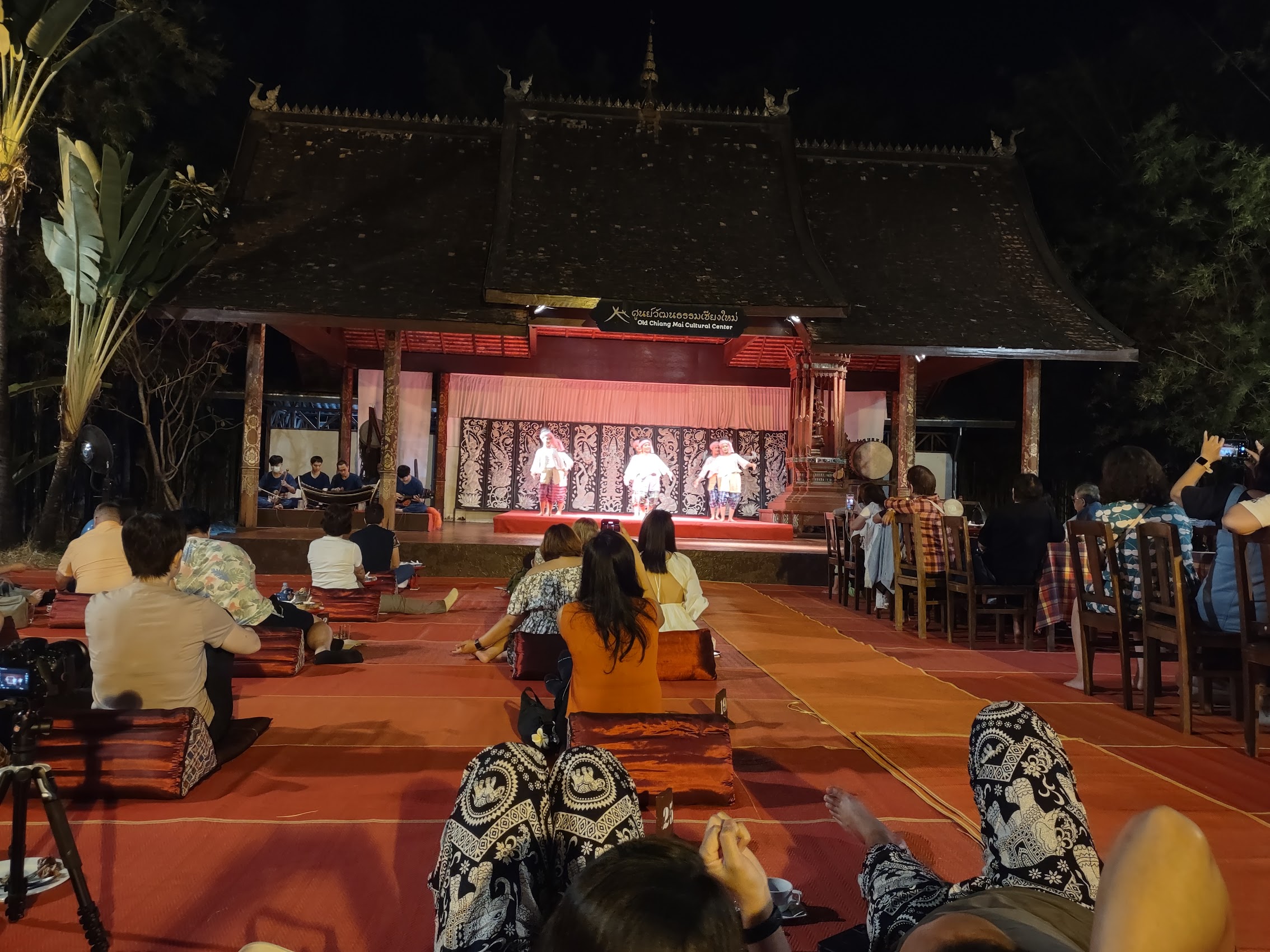
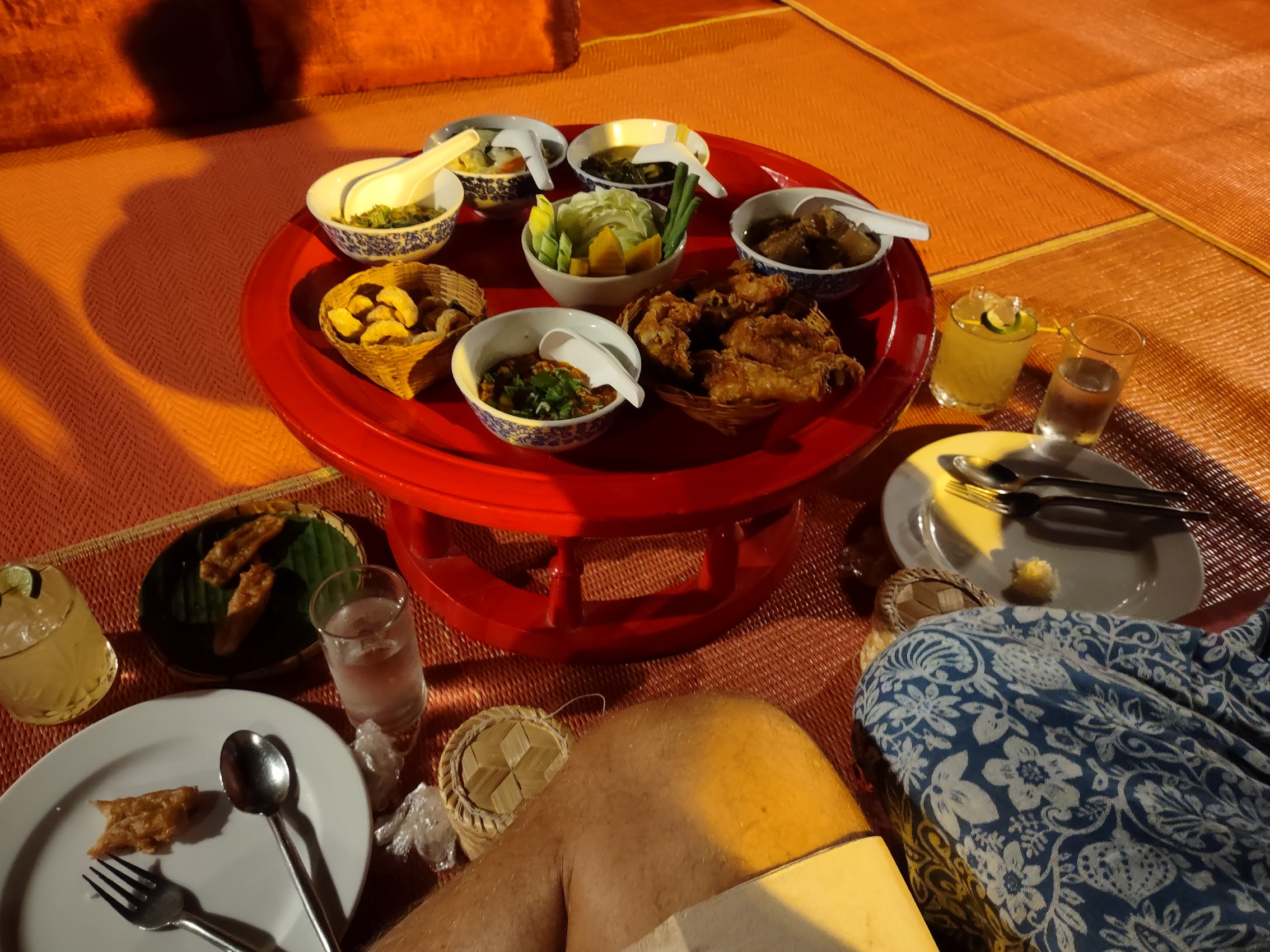
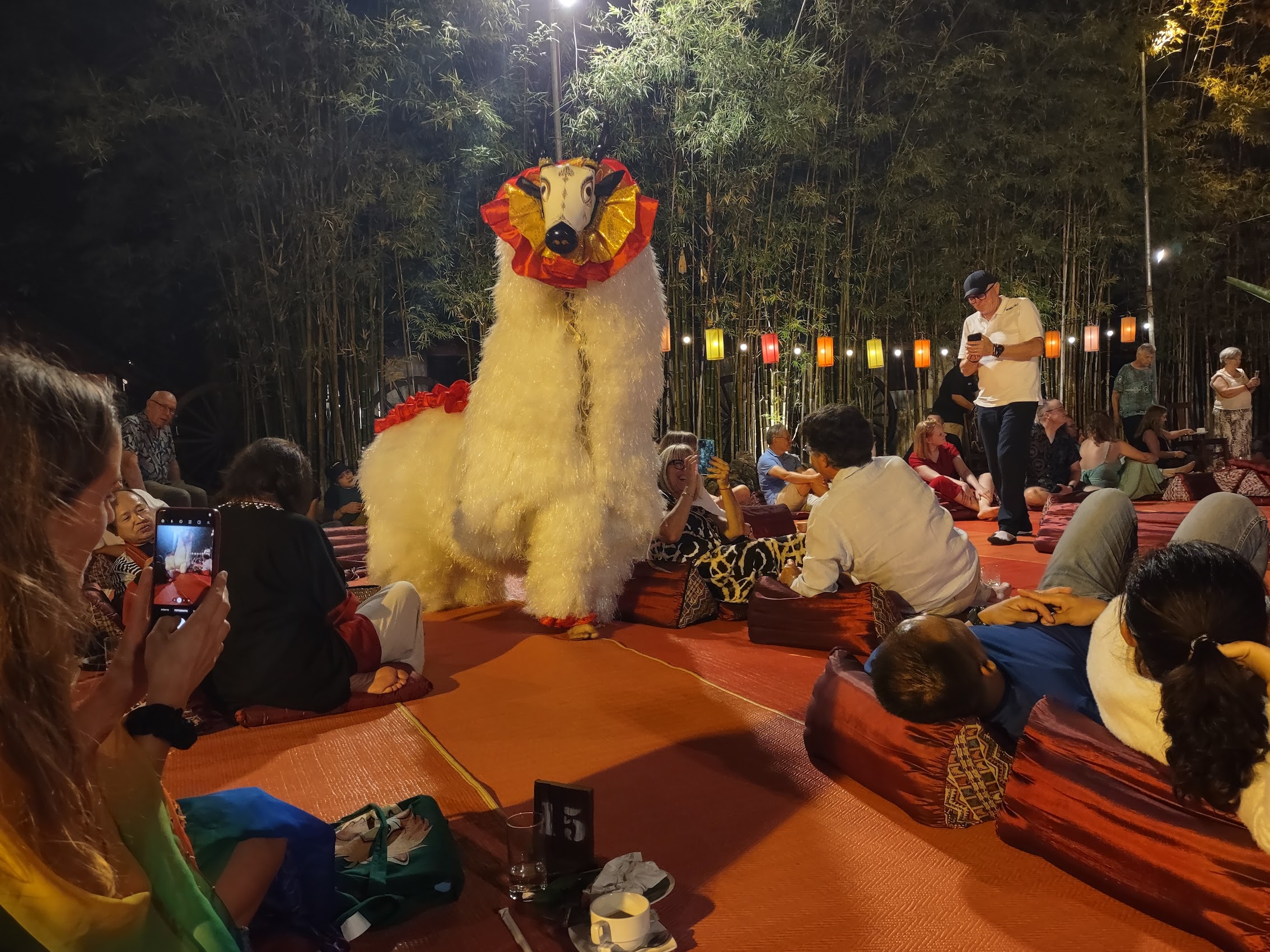

The performances were both interesting and entertaining and included a two-person dragon who trolled the seating area looking for tips and both fire and sword juggling. The hit of the show was a series of traditional dances which featured some very intricate hand and arm gestures (accentuated by finger extensions of some sort). All in all, a very enjoyable experience (though we made our way out as the “audience participation” segment was beginning) and one which I think accomplished by goal of having a memorable Thanksgiving dinner.
On our way to the Khantoke Dinner we mailed what, by my count, was our fourth package home since hitting the road. We were also happy to find that the package which we mailed from Jerusalem (mailed back in July but “returned to sender” by Customs), had finally reached our daughter in New York thanks to some assistance from our landlord there.

Moving On
Our week in Chiang Mai passed slowly, but it did pass and with some sadness (mostly over missing the Yee Peng lantern festival) on Monday November 27th, we packed up again to head on to our last destination in Thailand, the town of Chiang Dao.


 Burning the Inheritance
Leave a comment