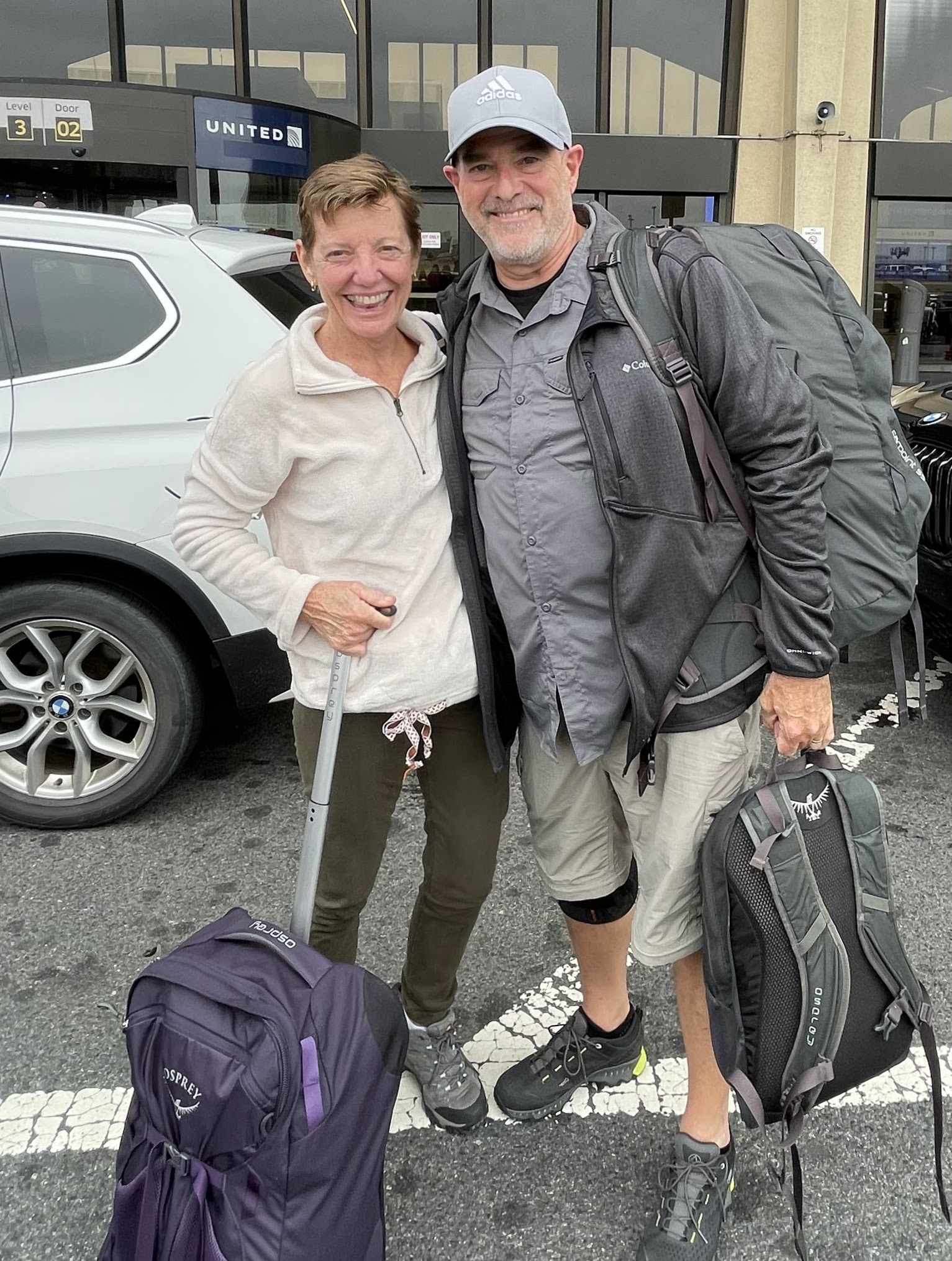
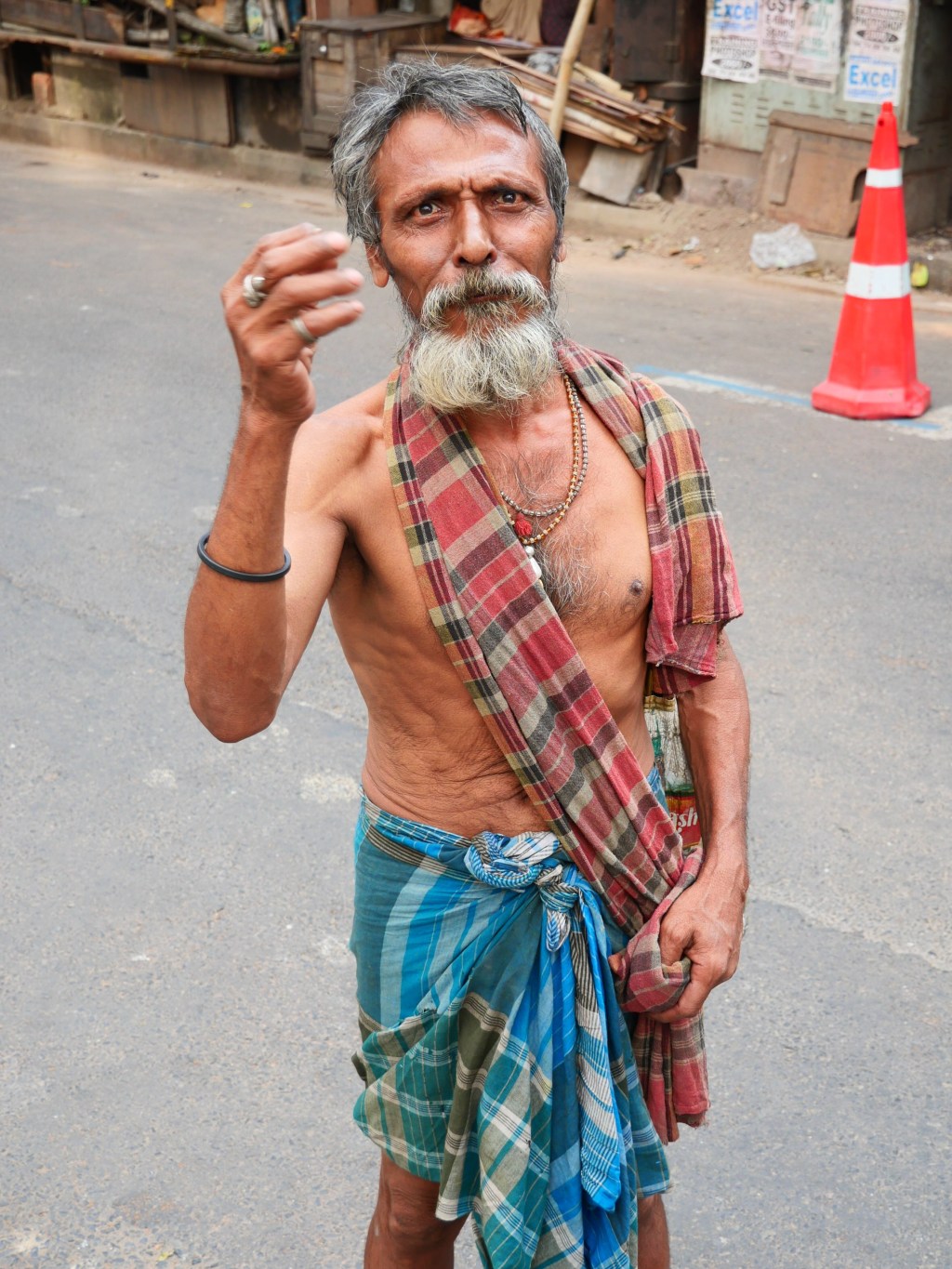
For a number of reasons, we decided to finish our month-long tour of India in the city of Kolkata. Some of these reasons included logistical considerations as Kolkata is the easternmost Indian city of any size with an international airport, and we were heading east to Thailand after India. Certainly some of our reason was to get a glimpse of Bengali culture and to see the sites of this historic city. But our biggest reason for coming to Kolkata at this particular time, was to be there for the last four days of the festival of Durga Puja (more about this in a bit).
Kolkata (or Calcutta as many of us remember it from our school days – the name was officially changed in 2001) is the capital of the Indian state of West Bengal and is (only) India’s 7th largest city with a population of about 4.5 million people, but the Kolkata Metropolitan Area has a population of about 14.5 million, making it the third largest urban area by population in India behind Delhi and Mumbai. Kolkata is also one of the poorest cities in India with about 70% of its population living below poverty level with an average household income for a family of five of about $35/month.
Kolkata is a relatively new city compared to most of what we had seen in India thus far. It consisted of three small villages prior to being settled and then developed in the 18th and 19th centuries first by the all-powerful East India Company and then by the British colonial government and it served as the British capital of India (when it wasn’t at the Indian summer capital in Shimla) until 1911. Calcutta was the center of Indian culture during this period (the so-called Bengali Renaissance) which in turn led to it becoming the center of India’s independence movement in the late nineteenth and early 20th century (watch Gandhi).
For me (and likely many others of my generation) Kolkata/Calcutta is inexorably intertwined with the ministry of Mother Theresa (actually now Saint Theresa) and I must admit that at least some of what we saw in Kolkata resonated with the mental images I had from that ministry. But, in doing some research, I discovered that there are many in Kolkata who have mixed feelings about Mother Theresa’s relationship with the city and the image of it which she and her ministry projected to the world, and who believe that Kolkata is both more and better than that (See https://www.npr.org/sections/goatsandsoda/2016/09/01/492241057/calcutta-isnt-just-the-city-of-mother-teresa).
I was a little surprised to discover that Kolkata has been declared to be the safest city in India ( for 3 years running) based on its crime rate and, despite (or because of) its poverty rate, is also considered to be one of the most affordable cities in India to live in. And, as we would discover in our time there, the people of Kolkata are exceptionally kind and extraordinarily proud of their city, the home of four of India’s five Nobel prize winners (including Mother Theresa).
Getting There
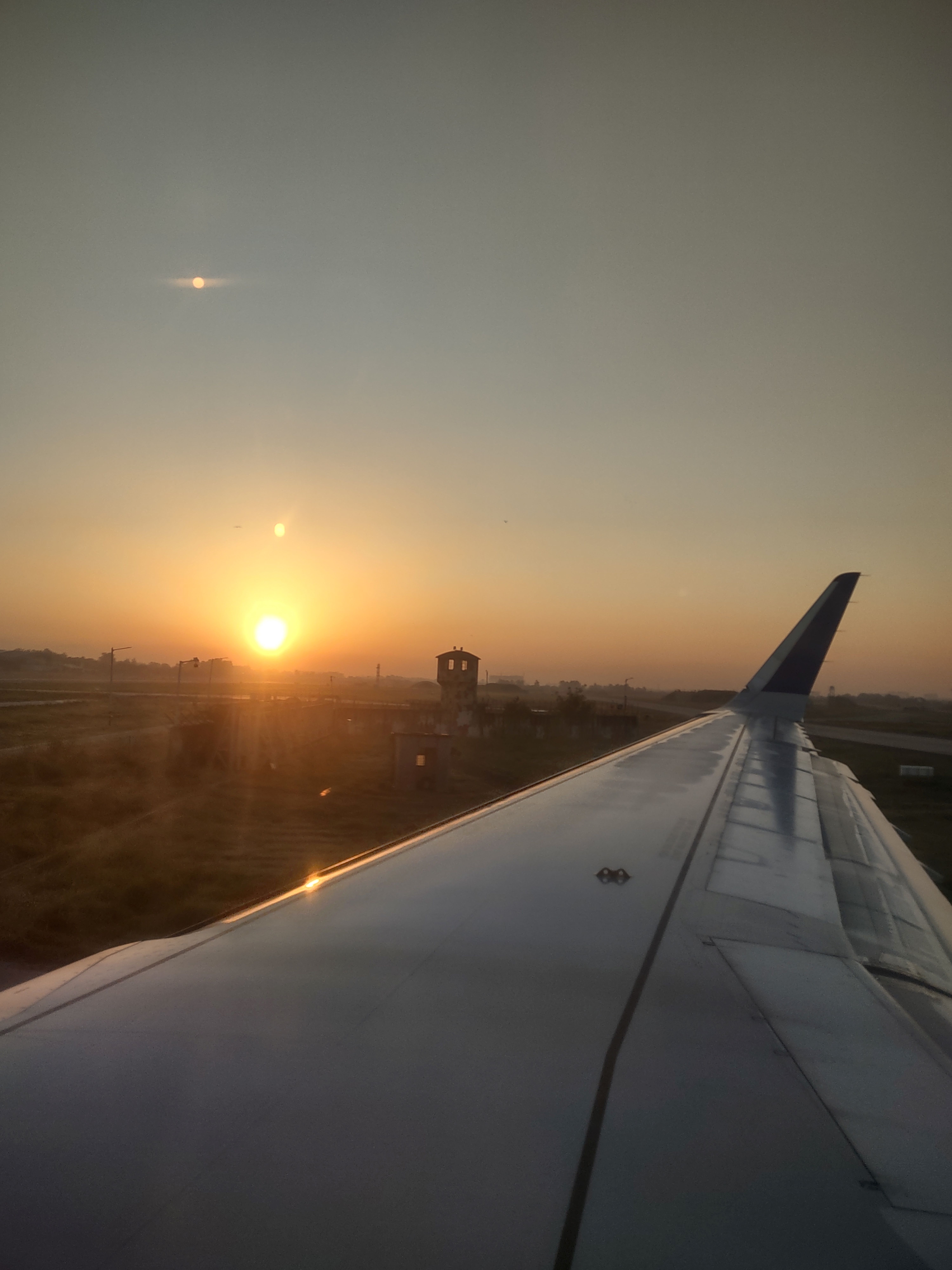
When last we spoke, Colleen and I had gone our separate ways in India for six days. She to Rishikesh for a yoga retreat and I to Chandigarh to get in touch with my inner architect. Our plan was to rendezvous at the Kolkata airport on Friday October 20th after both our flights had arrived (despite a stop and a six hour duration, my flight arrived 3 hours ahead of hers).
My day started early with my driver not showing up, but I called a Grab (turned out to be a tuk tuk) and from that point on things went off without much of a hitch (I even had a curious fellow traveler to keep me entertained on my second flight) and I was waiting for Colleen when she exited baggage claim.



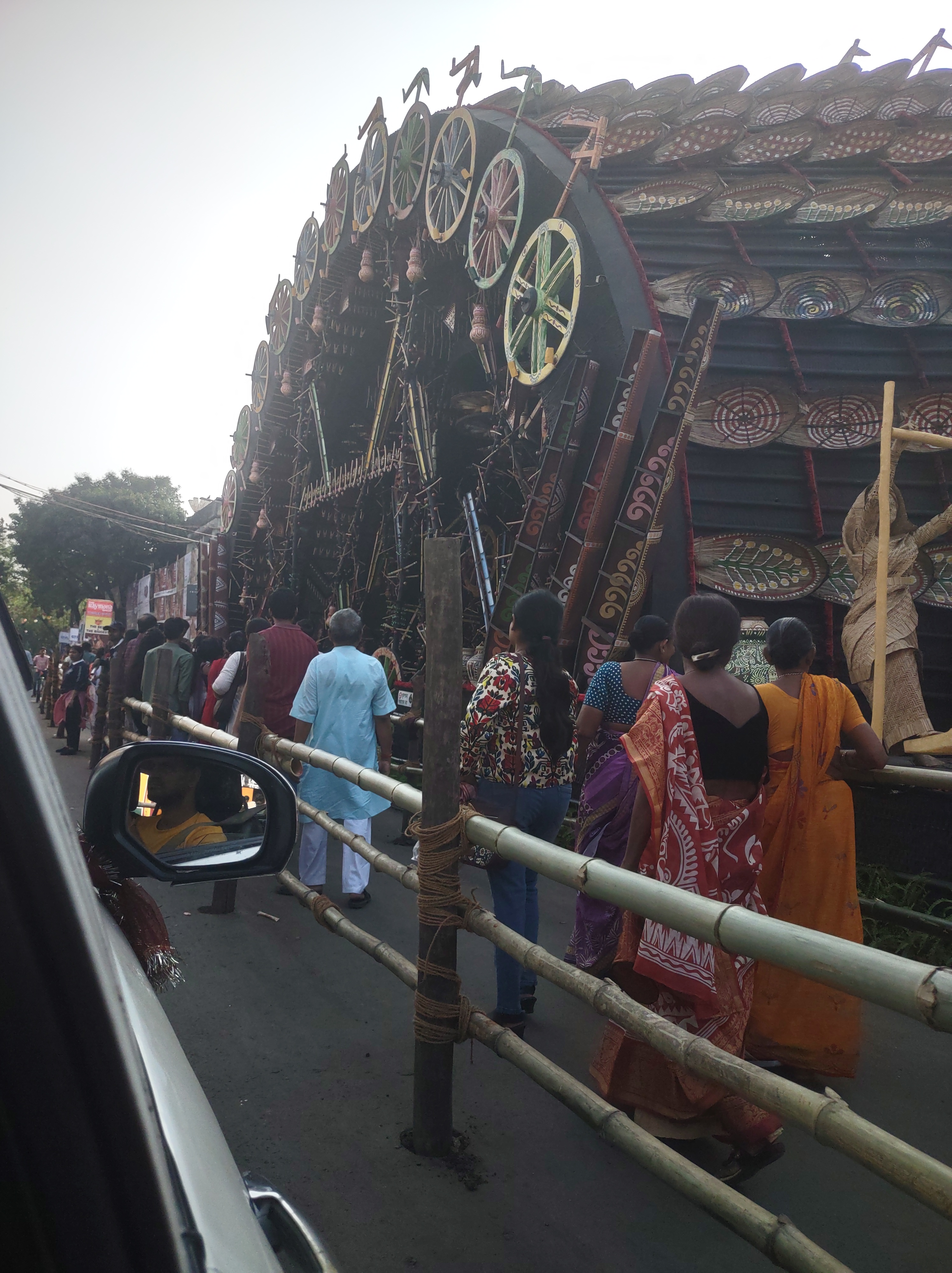
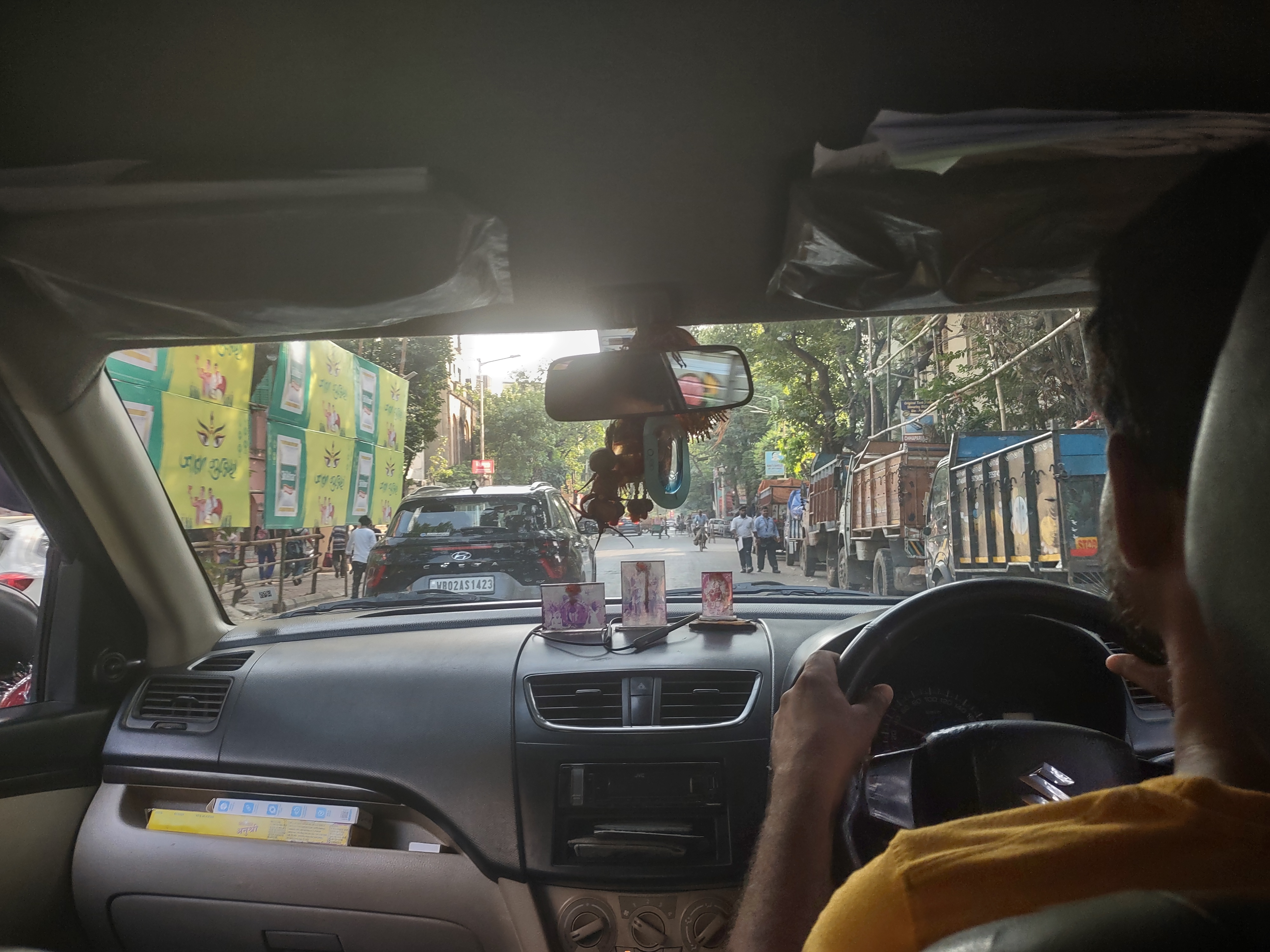
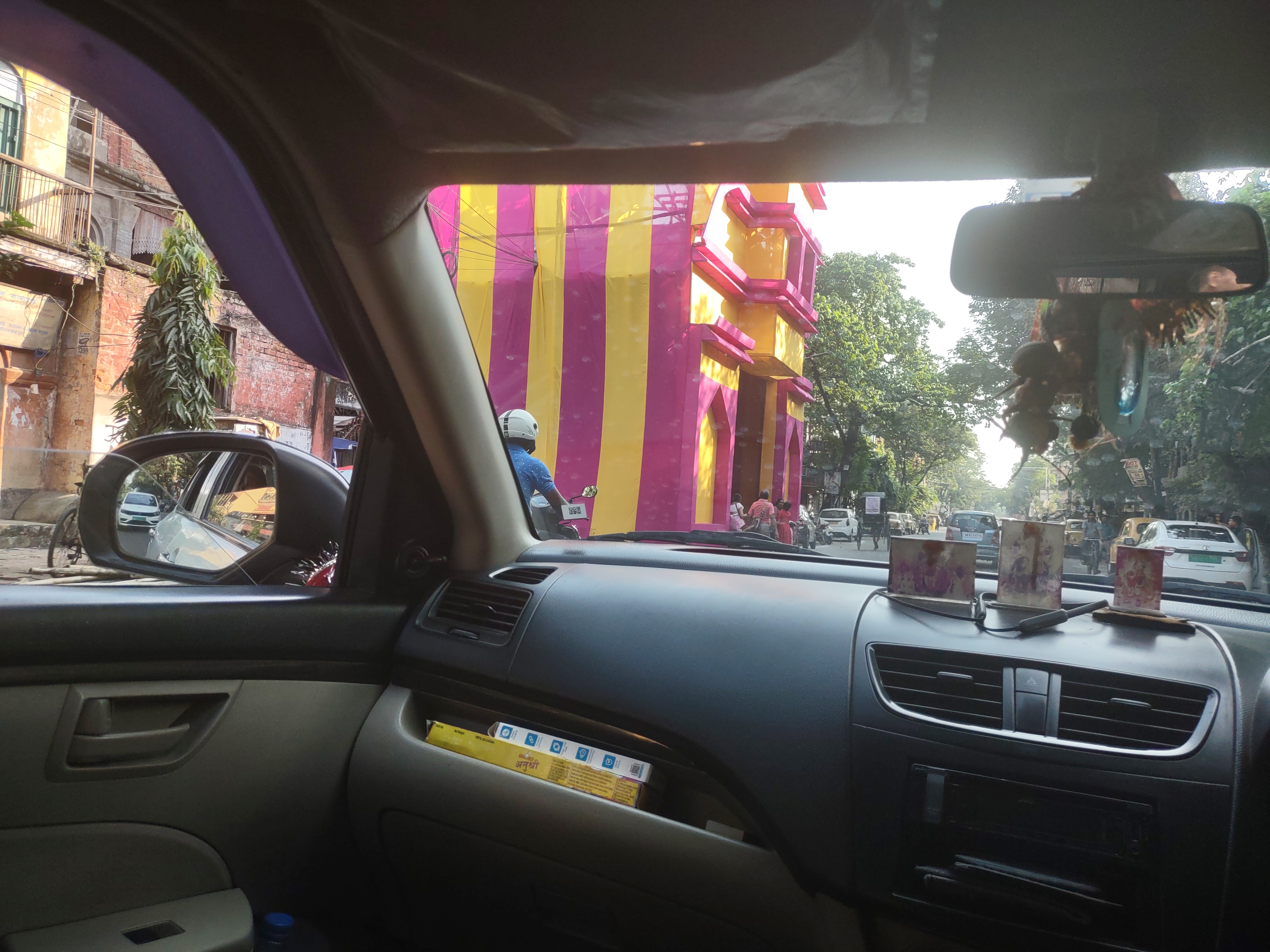
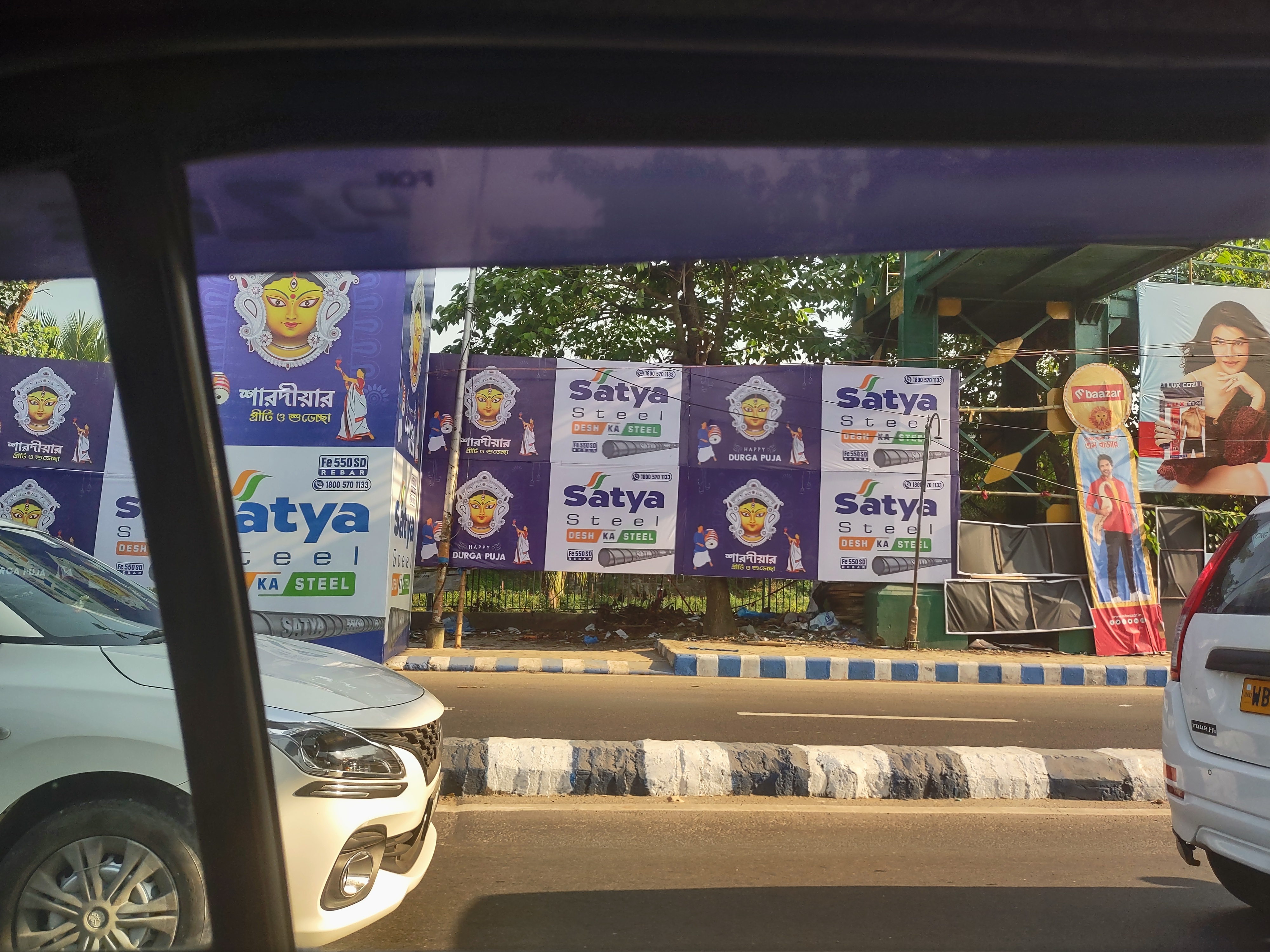
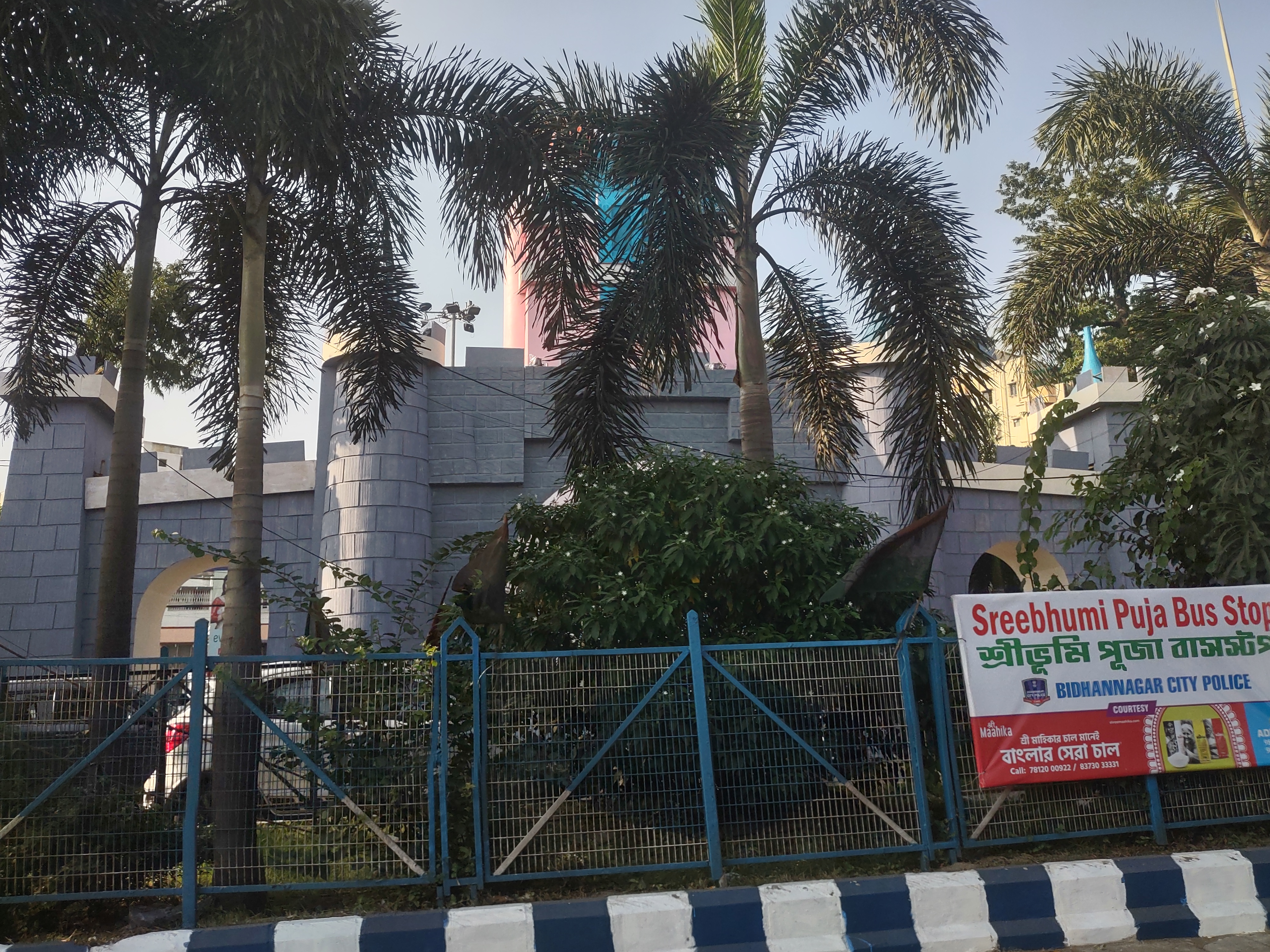
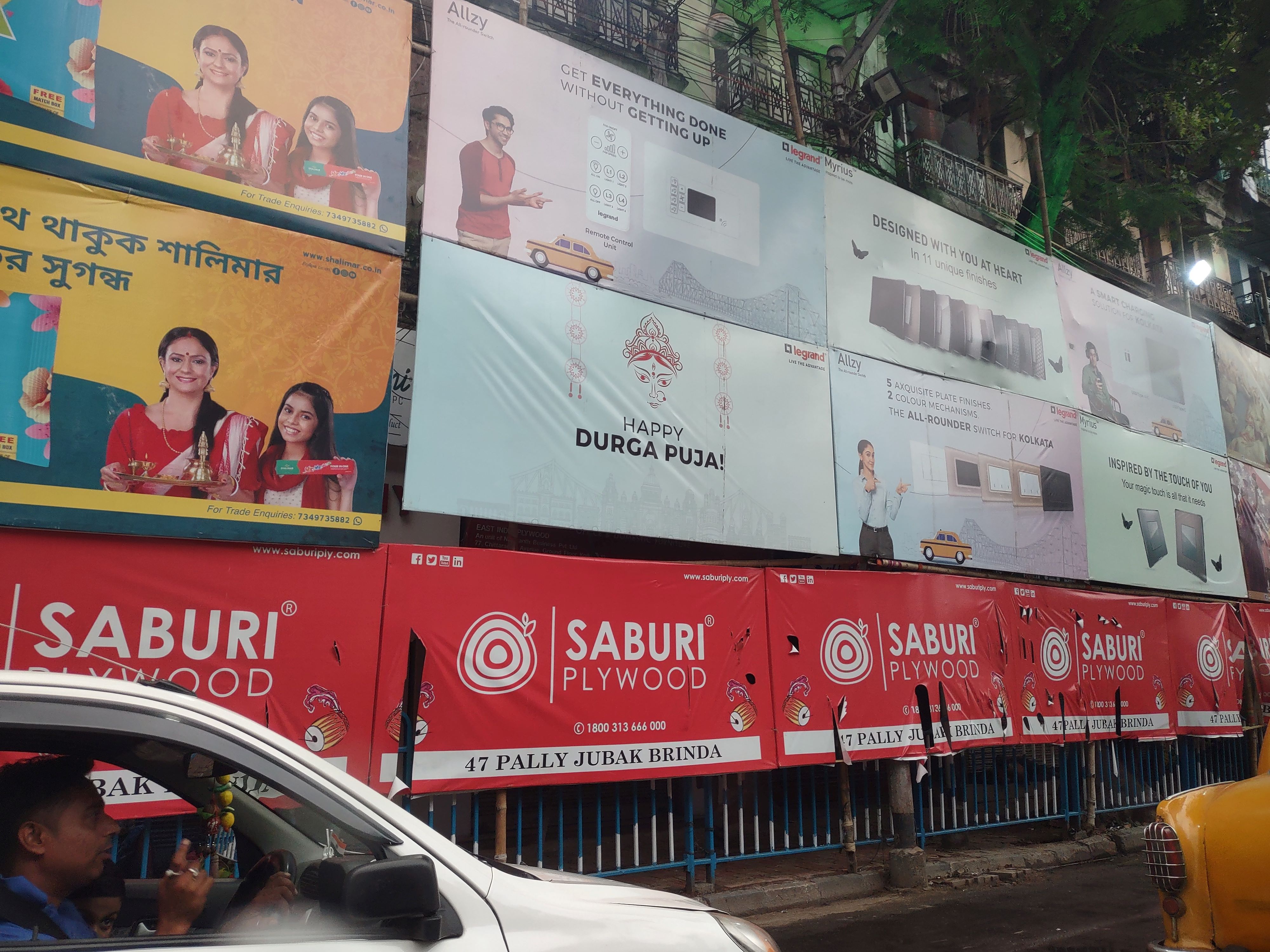

We called a Grab and began the one-hour drive to our hotel in the city. As we got into the city, we caught glimpses of Durga Puja displays here and there and, as we got closer to the city center, we began to see crowds of people on the streets and sidewalks and everything started to take on a kind of festive Mardi-gras (without alcohol) vibe. We also noted that many of the streets in downtown were lined with what appeared to be temporary billboards installed as part of the celebration.


By 4:00 we were checking into our hotel the LaLiT Great Eastern Kolkata, a grand old colonial hotel which was established in 1841 and has a pretty storied history. During its heyday, the hotel was known variously as the “Jewel of the East” and was prosaically described by Kipling in his short story City of Dreadful Night. It was said of the hotel in 1883 that “a man could walk in at one end, buy a complete outfit, a wedding present, or seeds for the garden, have an excellent meal, a burra peg (double) and if the barmaid was agreeable, walk out at the other end engaged to be married”. Over the years, the hotel has housed many famous personalities including Nikita Khrushchev and Nikolai Bulganin, Elizabeth II, Mark Twain, Dave Brubeck and possibly Ho Chi Minh. After several change of hands over the years, the hotel was acquired by LaLiT and reopened in 2013 after extensive renovations.
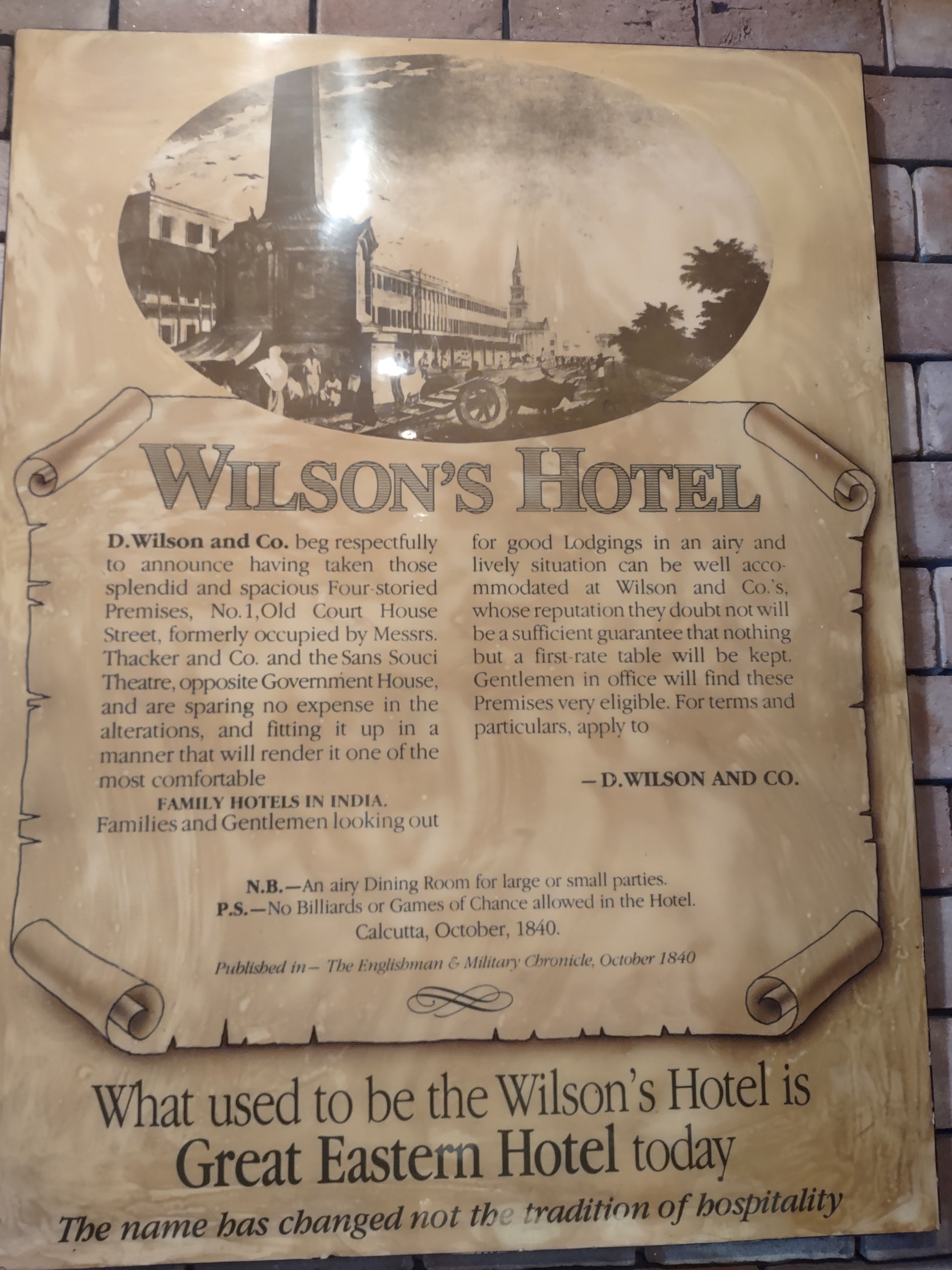
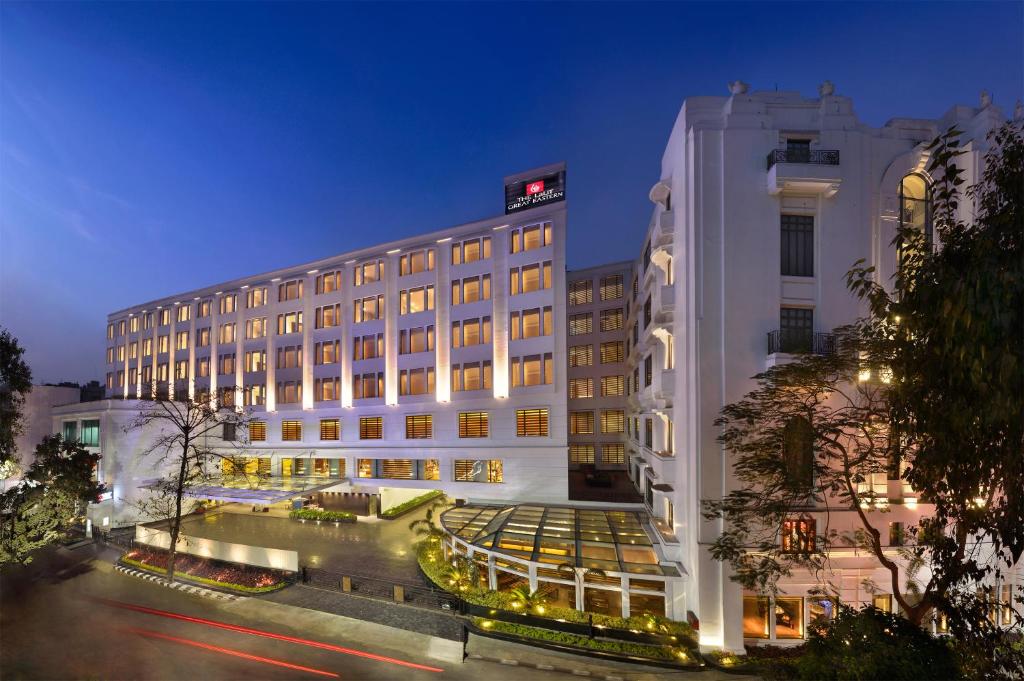
Colleen had heard about the LaLiT Great Eastern on a podcast about visiting Kolkata for Duga Purga but (full disclosure) I had objected to how much over our budget it was with the intention of cancelling it and booking something more affordable. Thank God that I didn’t as it turned out to be a great refuge from what turned out to be a pretty gritty city. (Beautiful, but pretty gritty nonetheless.) And, our room had the best shower we have seen since we started this trip – really interesting gutter design with two drains and an awsome rainshower head and actual hot water! (Sorry, too many months on the road…)
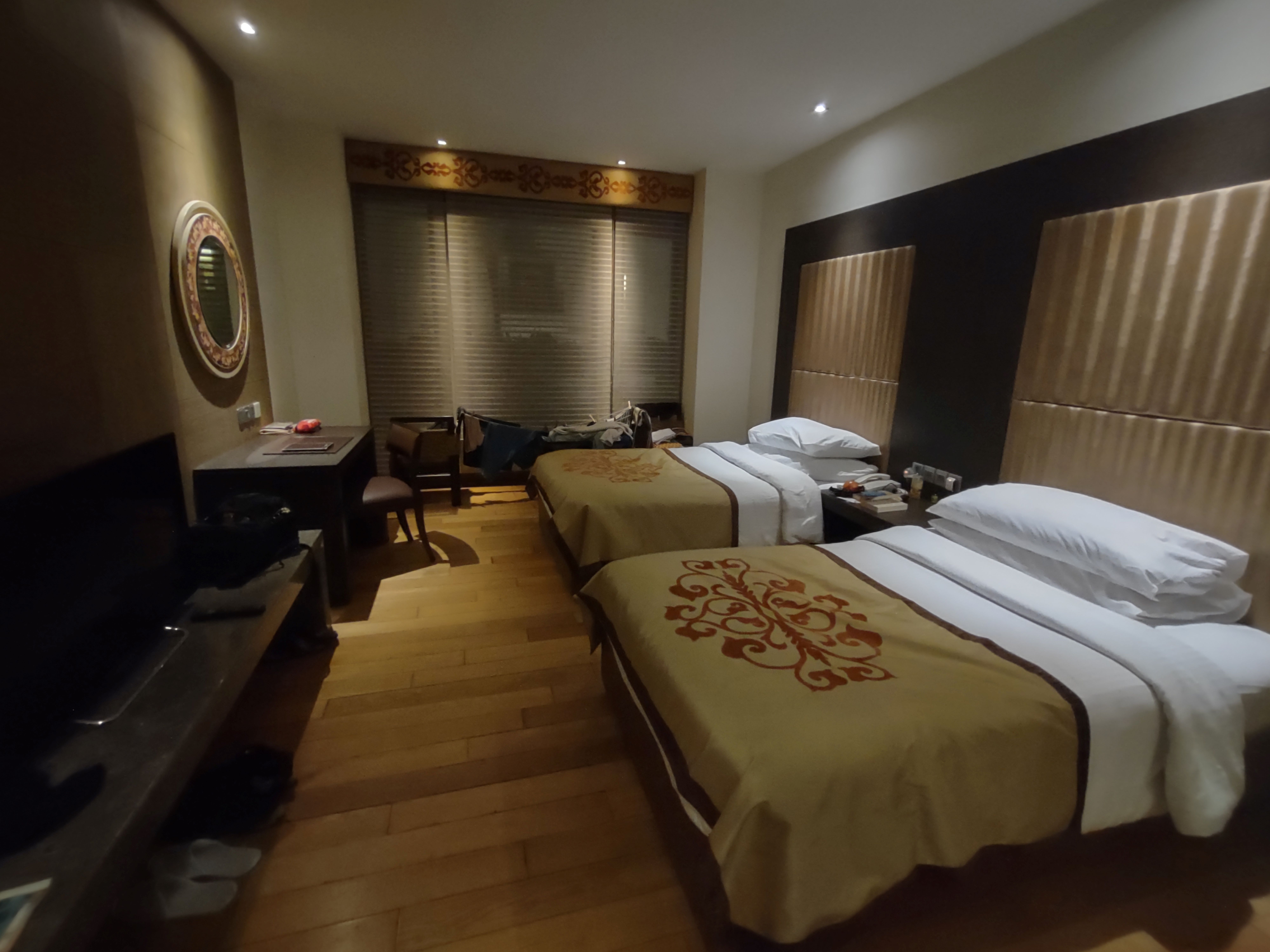
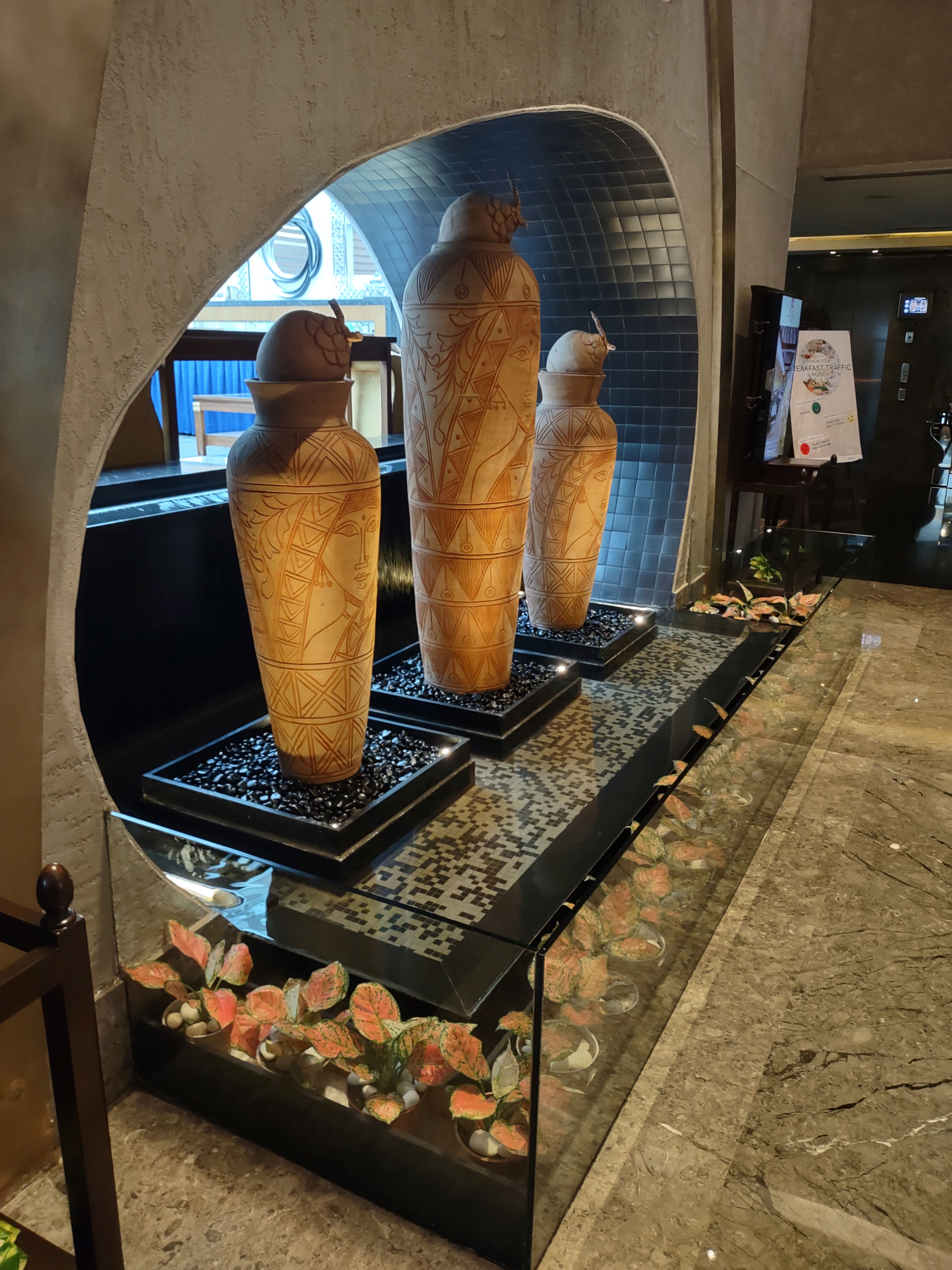
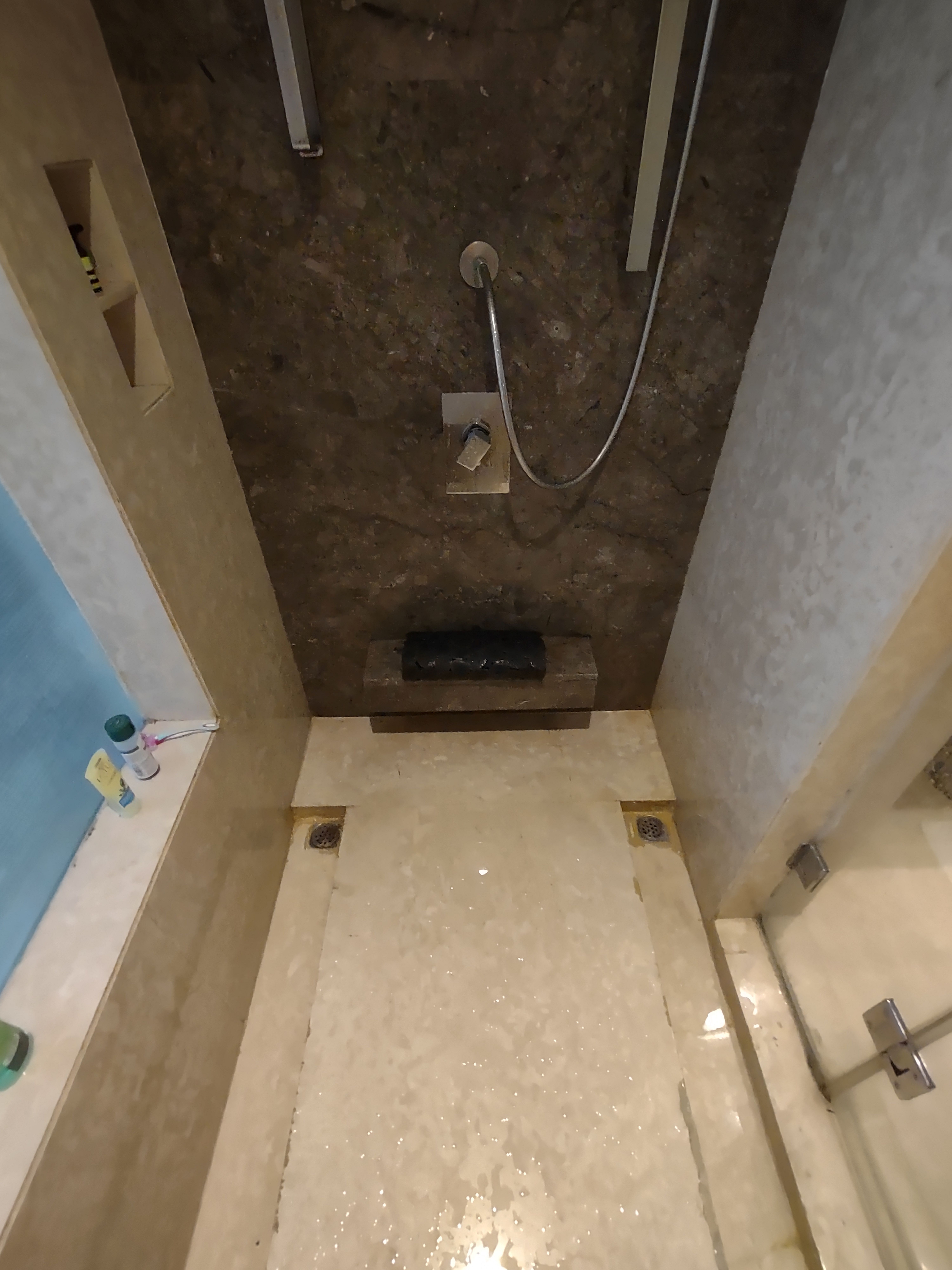
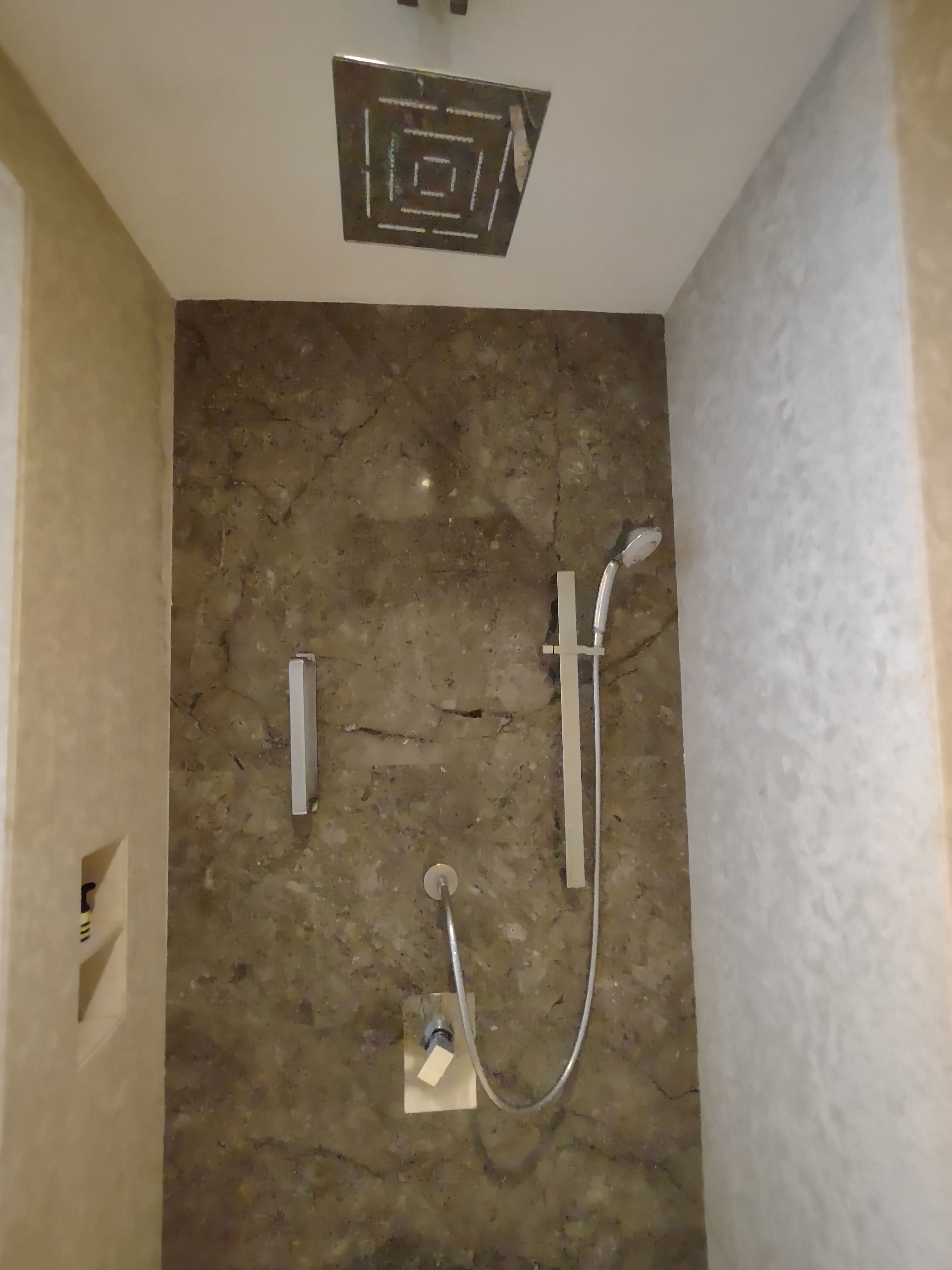
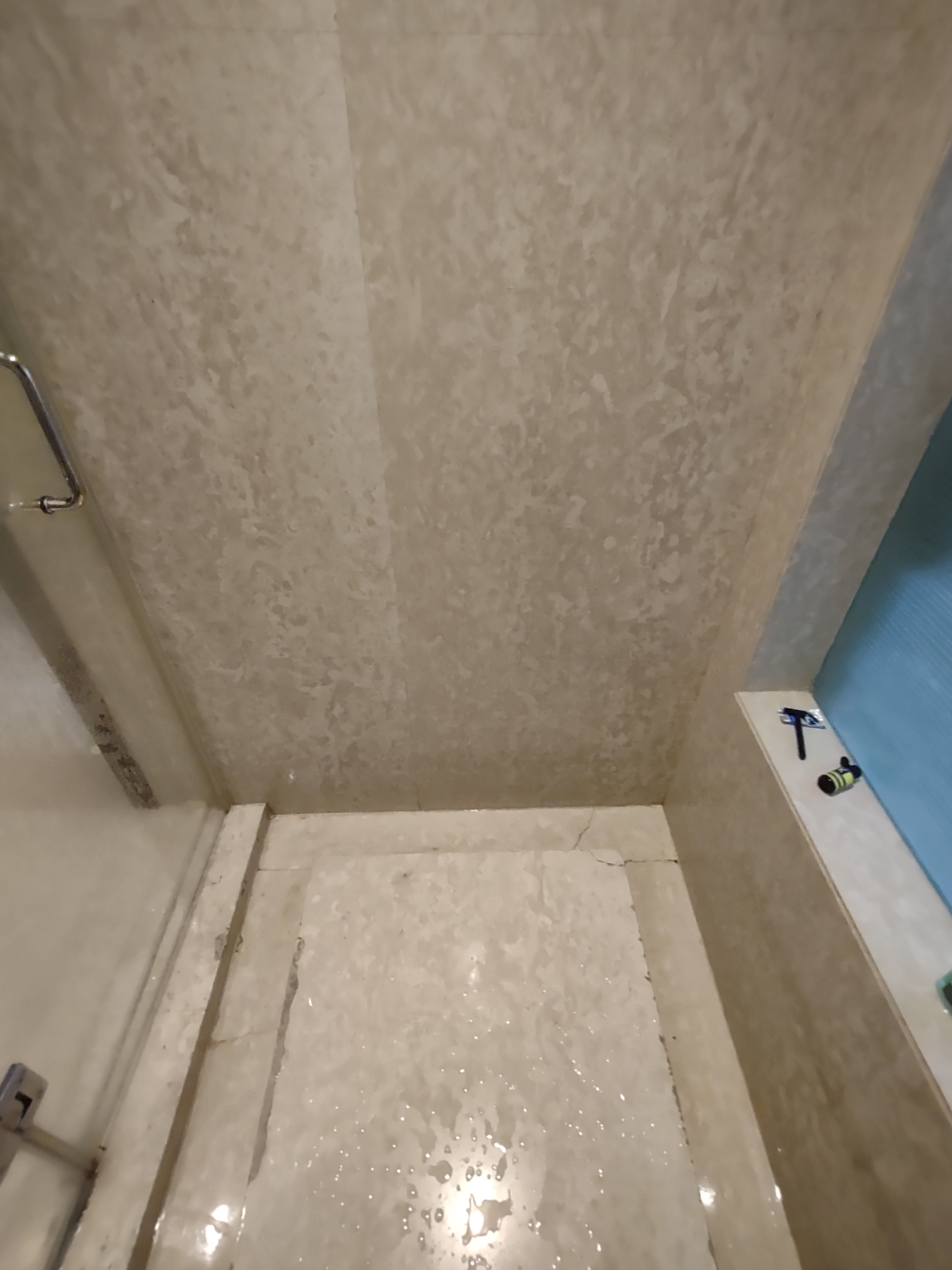
The Great Eastern was clean, comfortable, and spacious and had a great staff. It also had an amazing breakfast buffet from which we gathered that there were a lot of visitors (mostly Indians) in town for the festival of Durga Puja. The LaLiT also had the first of many pandals (see below) we would see in its lobby (not a big one, but nice nonetheless, and you always remember your first!).

Durga Puja
As I mentioned in the introduction, the primary reason we had come to Kolkata was to be there for the last four days of the festival of Durga Puja. Durga Puja is an annual 10-day Hindu festival celebrated throughout India which reveres and pays homage to the Hindu goddess Durga and her victory over the shape-shifting asura (demon), Mahishasura. The festival is considered by many to symbolize the triumph of good over evil but has, in more recent times, also been seen as a celebration of feminine power.
The puja is performed in homes and public, the latter featuring a temporary stage and structural decorations (known as pandals) depicting Durga and her victory over Mahishasura. The festival is also marked by scripture recitations, performance arts, revelry, gift-giving, family visits, feasting, and public processions. Durga Puja in Kolkata has been inscribed on the intangible cultural heritage list of UNESCO in December 2021.
So, if you want to celebrate Durga Puja, then Kolkata, with an estimated 3,000 pandals, is THE place to do it. As we had first noted at the breakfast buffet at our hotel, there were a lot of people from out of town here to do just that, but we were surprised that we were among a very few westerners doing so, and it presented us with a unique opportunity to meet and interact with lots of locals. Almost every conversation we had with both locals and other visitors eventually gravitated to the festival and which pandals you had seen or not seen and which pandals you should see.
And so, on our first evening in Kolkata we left our hotel just after sundown and headed out toward our intended destination of Muhammad Ali Park, where we understood there was a very large and elaborate pandal. We started east from our hotel and then took the first street north and were almost immediately immersed in my worst visions and imaginings of what Kolkata might be like.
[I should interject here that, as we had seen on our way into town, many of the streets in downtown Kolkata had wood and fabric barriers between the street and sidewalks (essentially billboards) which may have been intended for safety purposes but which prevented you from entering or leaving the sidewalks except at intersections at the end of each block.]
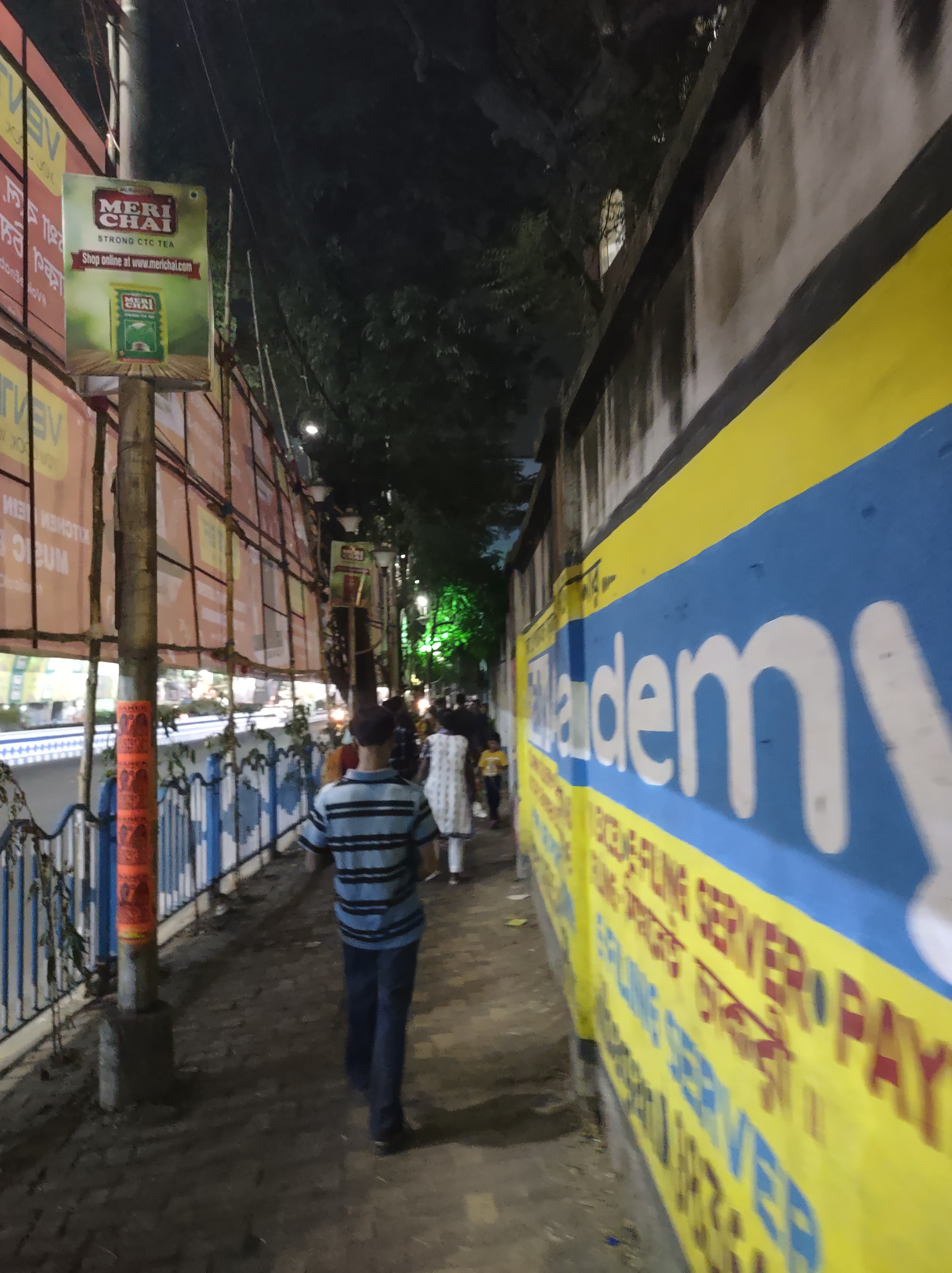

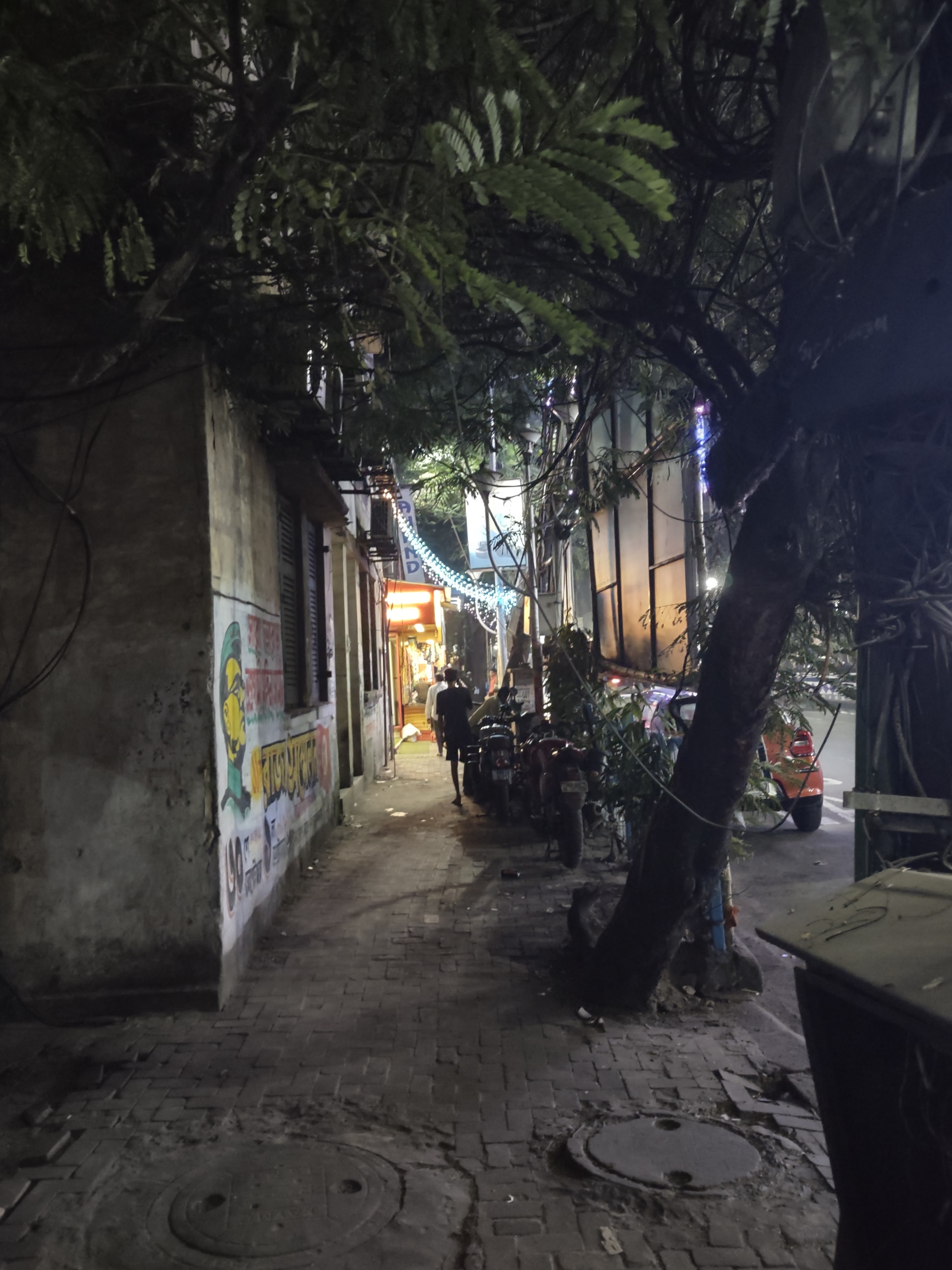
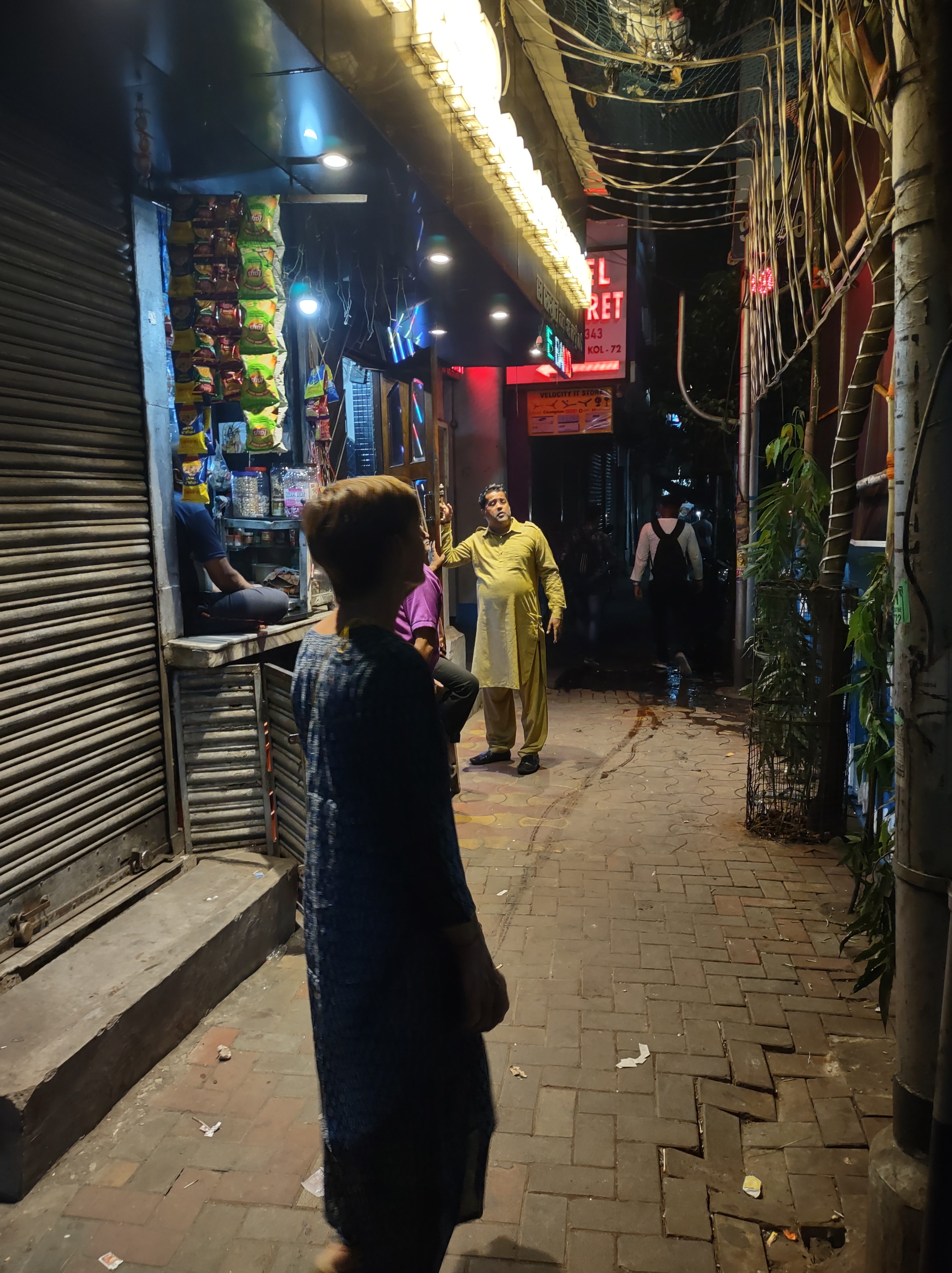
When we turned the first corner from our hotel street, we suddenly found ourselves in a dark tunnel which at night became a home for the neighborhood homeless (including families with children) who were settling in for the night as well as a haven for some drug addicts. While I don’t know that we exactly felt threatened or in danger, it was a pretty dark and depressing moment which was drawn out by the fact that we had to make our way through to the end of the first block before we could return to the street (where we discovered that most pedestrians like us walked at night).

We eventually made our way to a larger street (Central Avenue) and stopped in at a couple of smaller pandals. We began to see more or less organized groups of people moving in one direction or the other and fell into a queue which became increasingly lively and boisterous as we neared Mohammad Ali Park. As we approached the entrance to the pandal the queue grew more dense and we were quickly swallowed up by it like an undertow current which was impossible to resist and had to be swum into in order to escape.
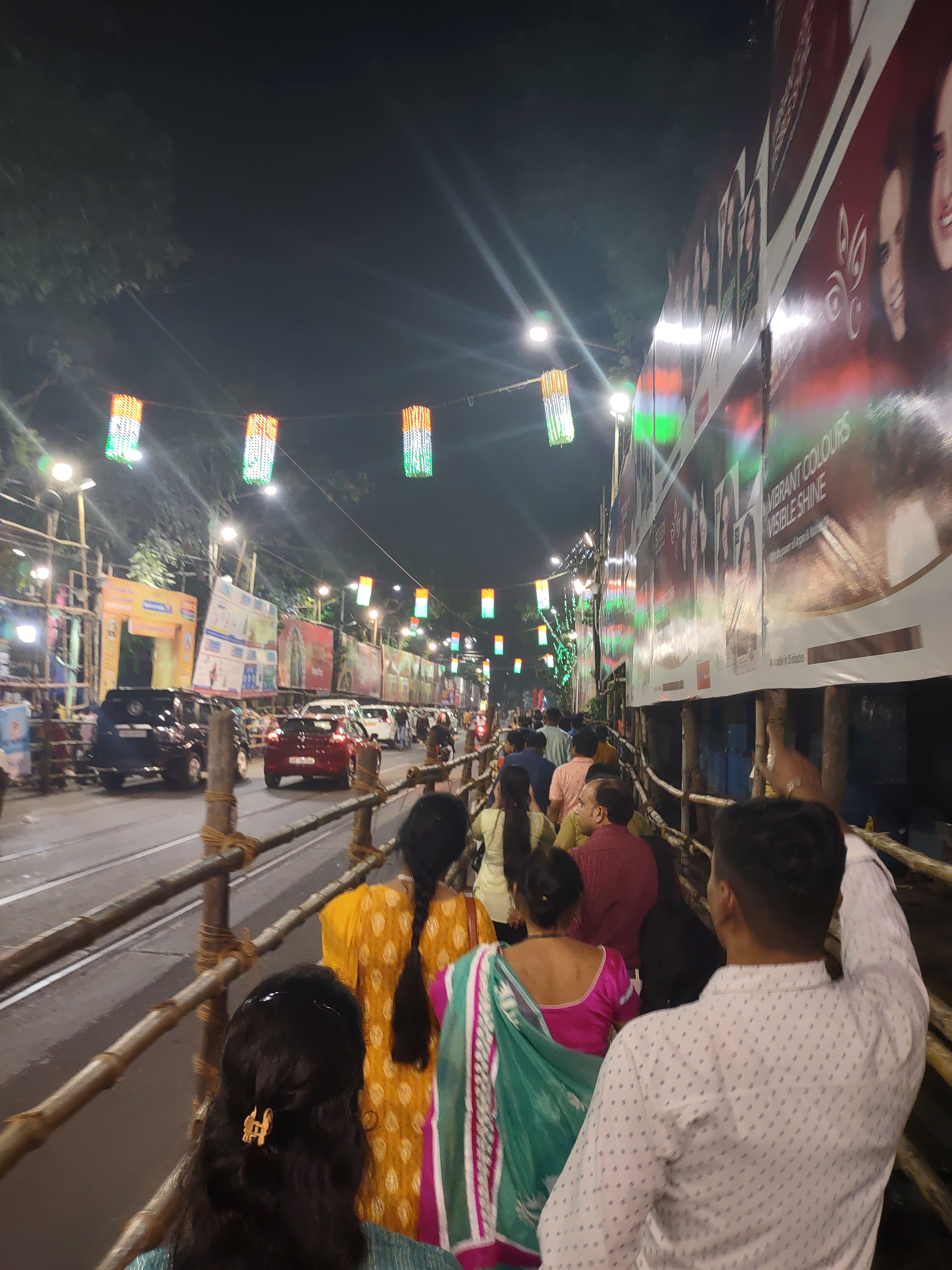
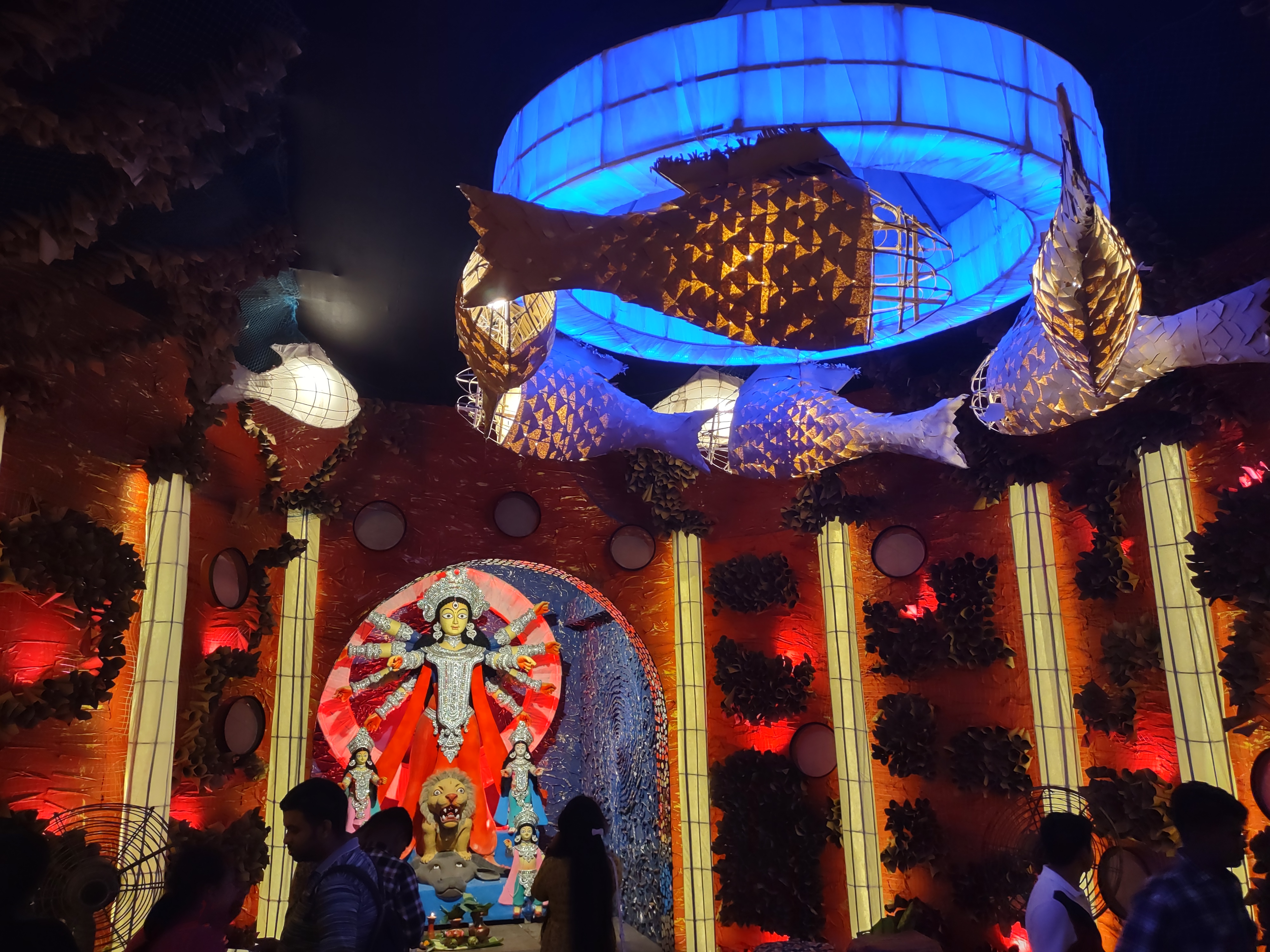
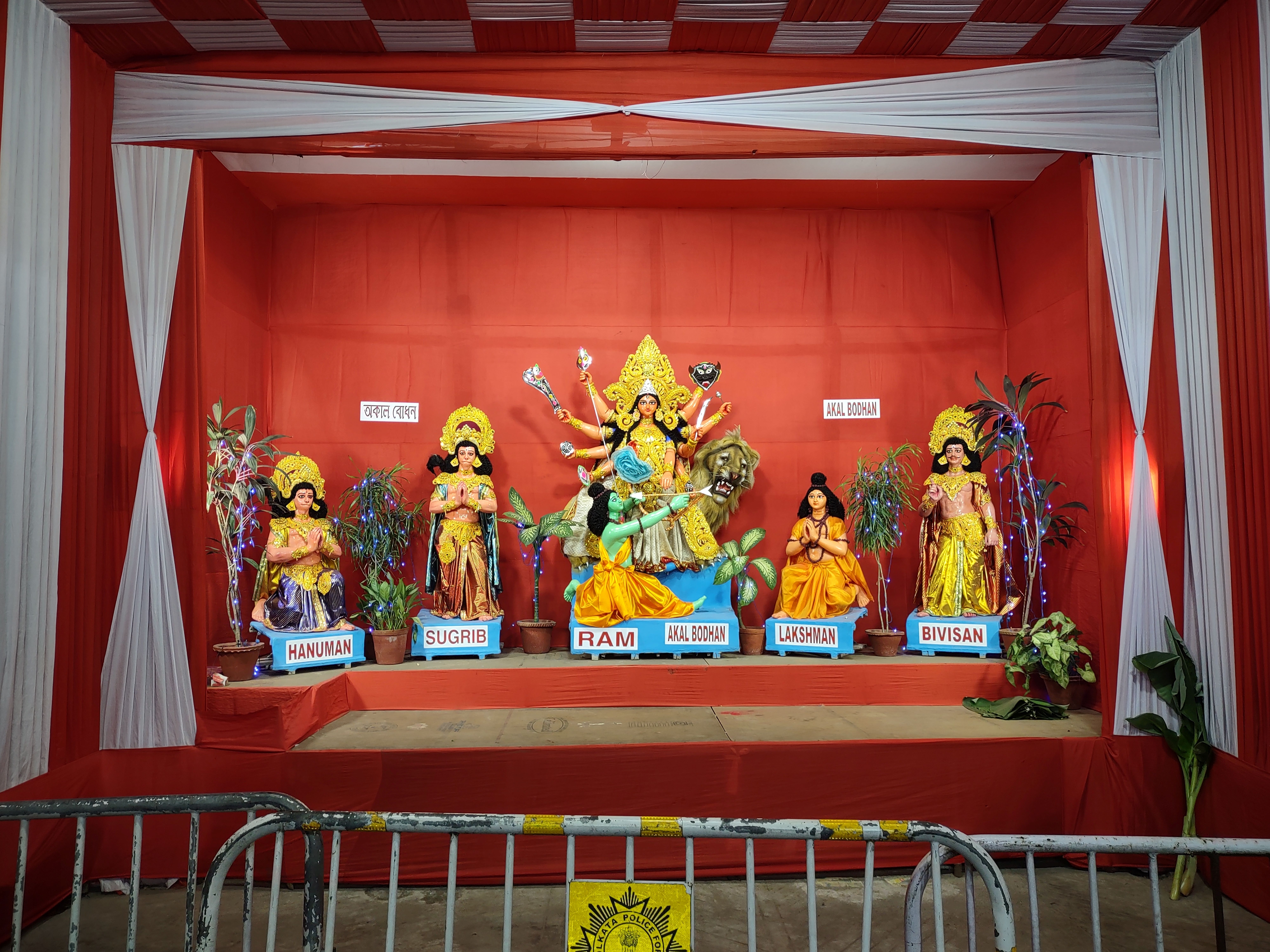
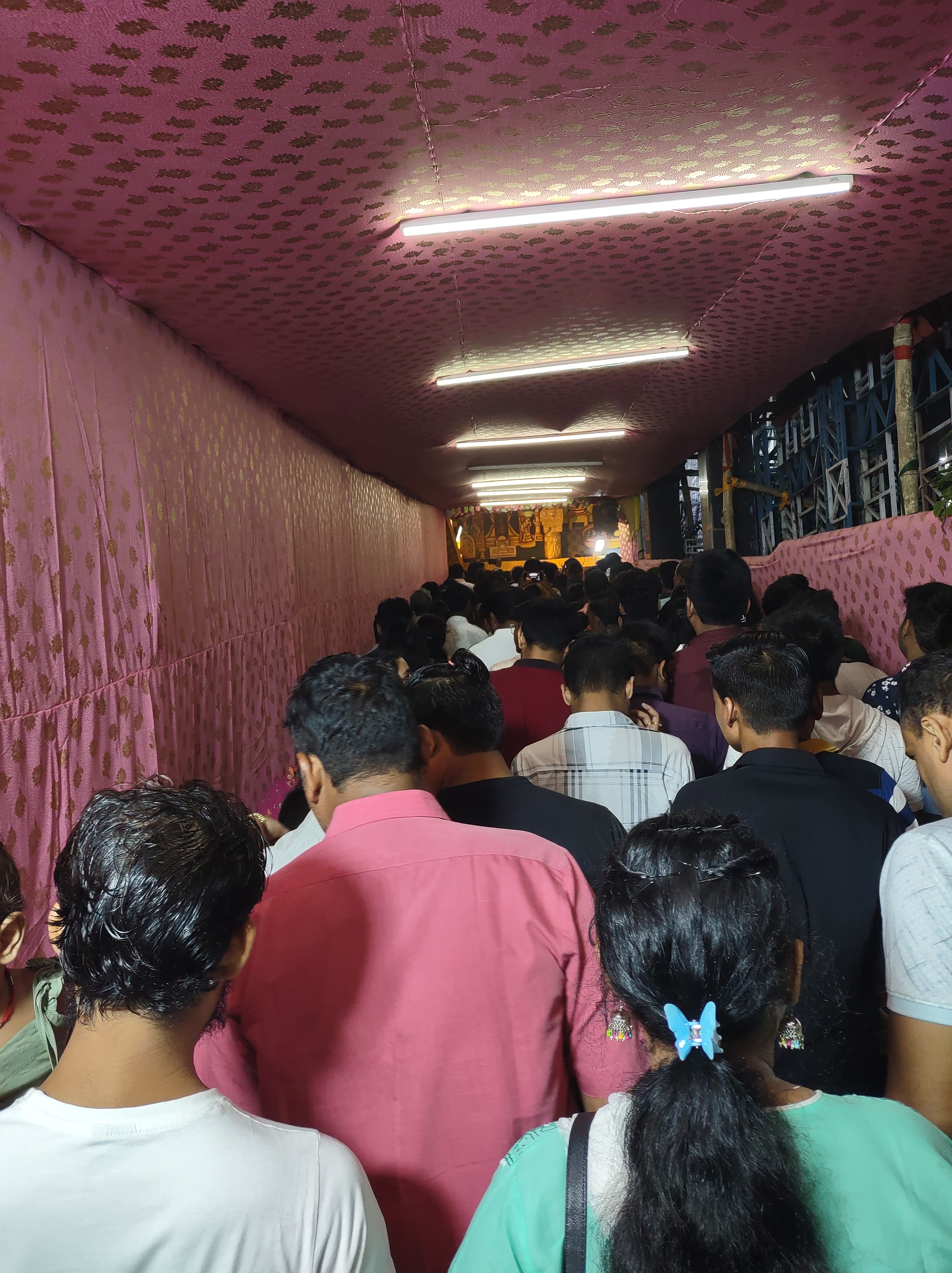
We were swept into another sidewalk tunnel (this one in utero pink) which spilled us into the interior of the pandal to find it erupting in a frenzy of chanting, singing, and praying (not enough room for dancing!) accompanied by countless selfies and Instagram photo-taking, and more or less being managed by a couple of guys in matching jackets shouting something which I’m pretty sure was the Hindi equivalent of “Move it along!”.
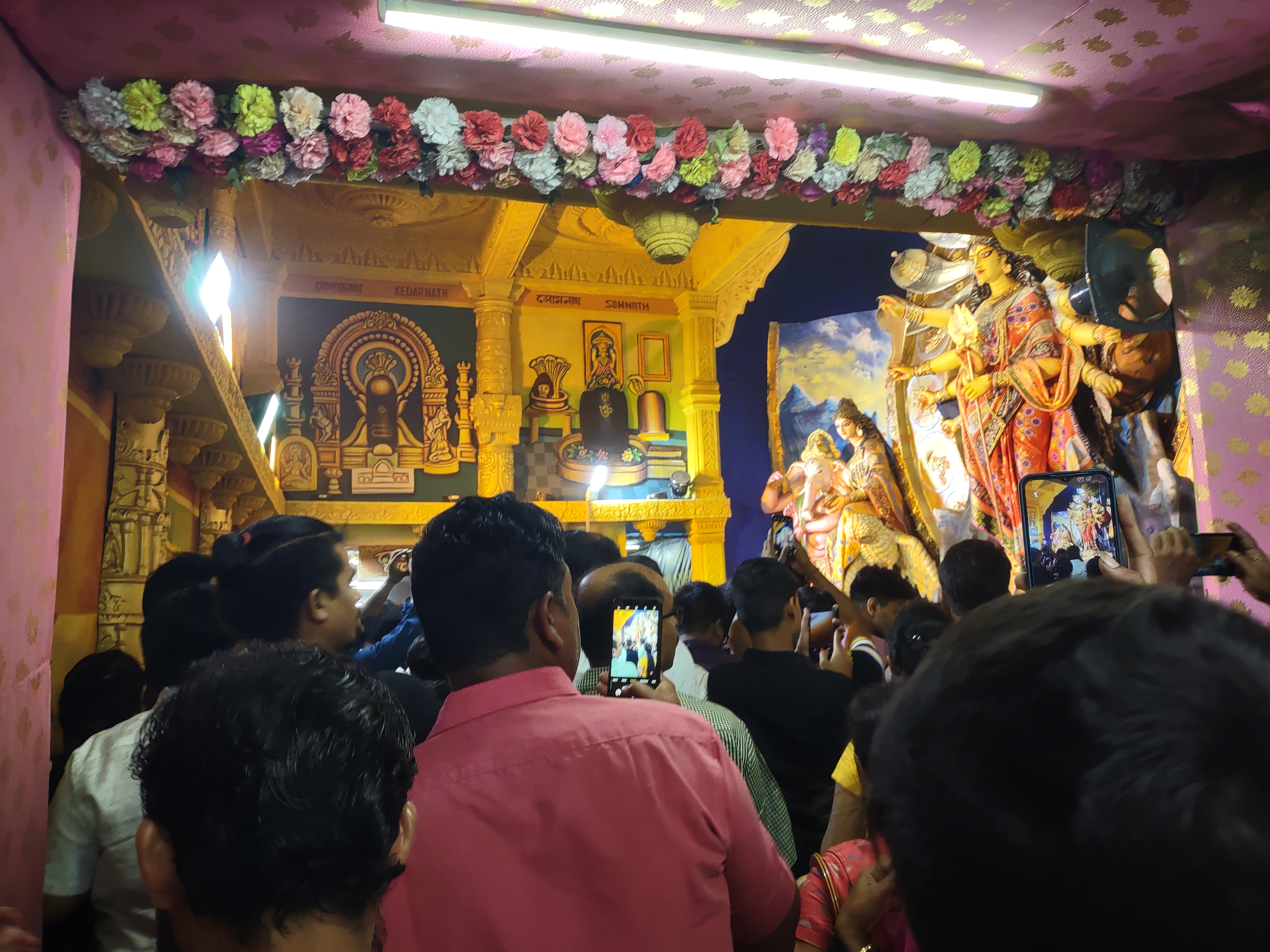

The actual pandal was amazing – a super realistic life-sized tableau depicting Durga standing over the body of the vanquished Mahishasura, surrounded by her court of female alter egos and Shiva overseeing it all in the background.

Having survived all of this, we continued to more or less follow the crowd past another small pandal or two and then entering the University of Calcutta campus to what I later discovered was the College Square pandal, where a very large palace-like puja is temporarily constructed every year. (It really was amazing to see how large and elaborate some of these “temporary” structures were.)
The queue led to what was essentially a large cattle chute, about twenty fee wide, between a chain link fence and a wall which wound its away around two sides of the College Square. Despite its width, the queue quickly condensed to standing room only and because of its width there was a huge bottleneck at the entrance to the pandal which meant that the queue moved at a snail’s pace.
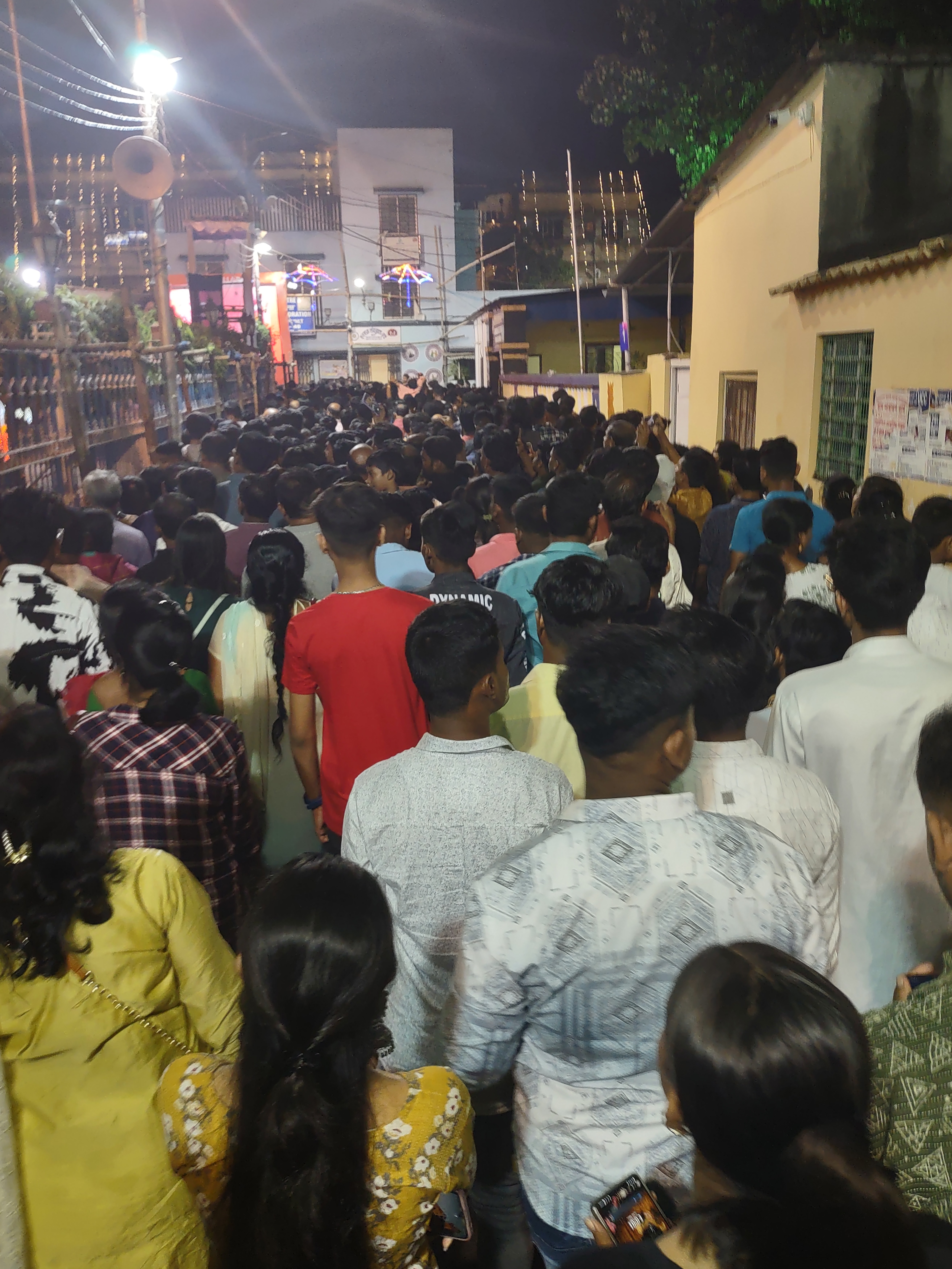
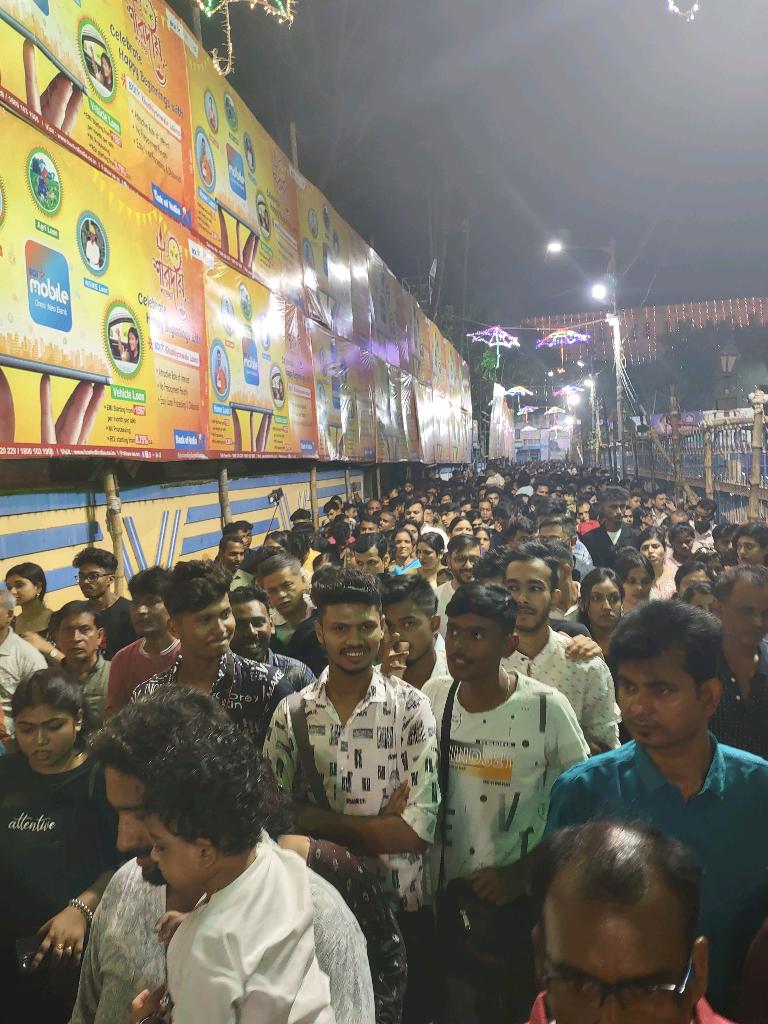
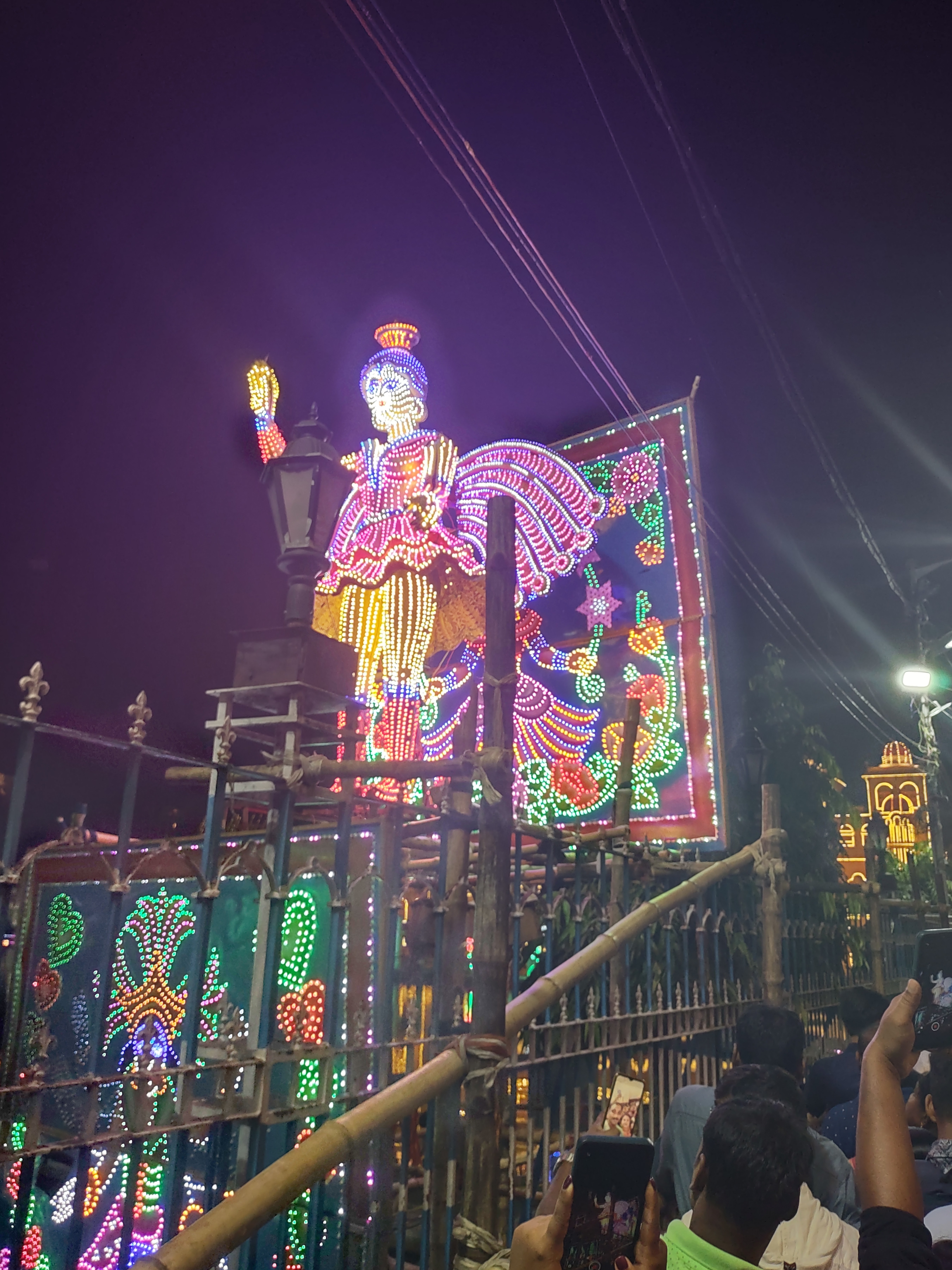

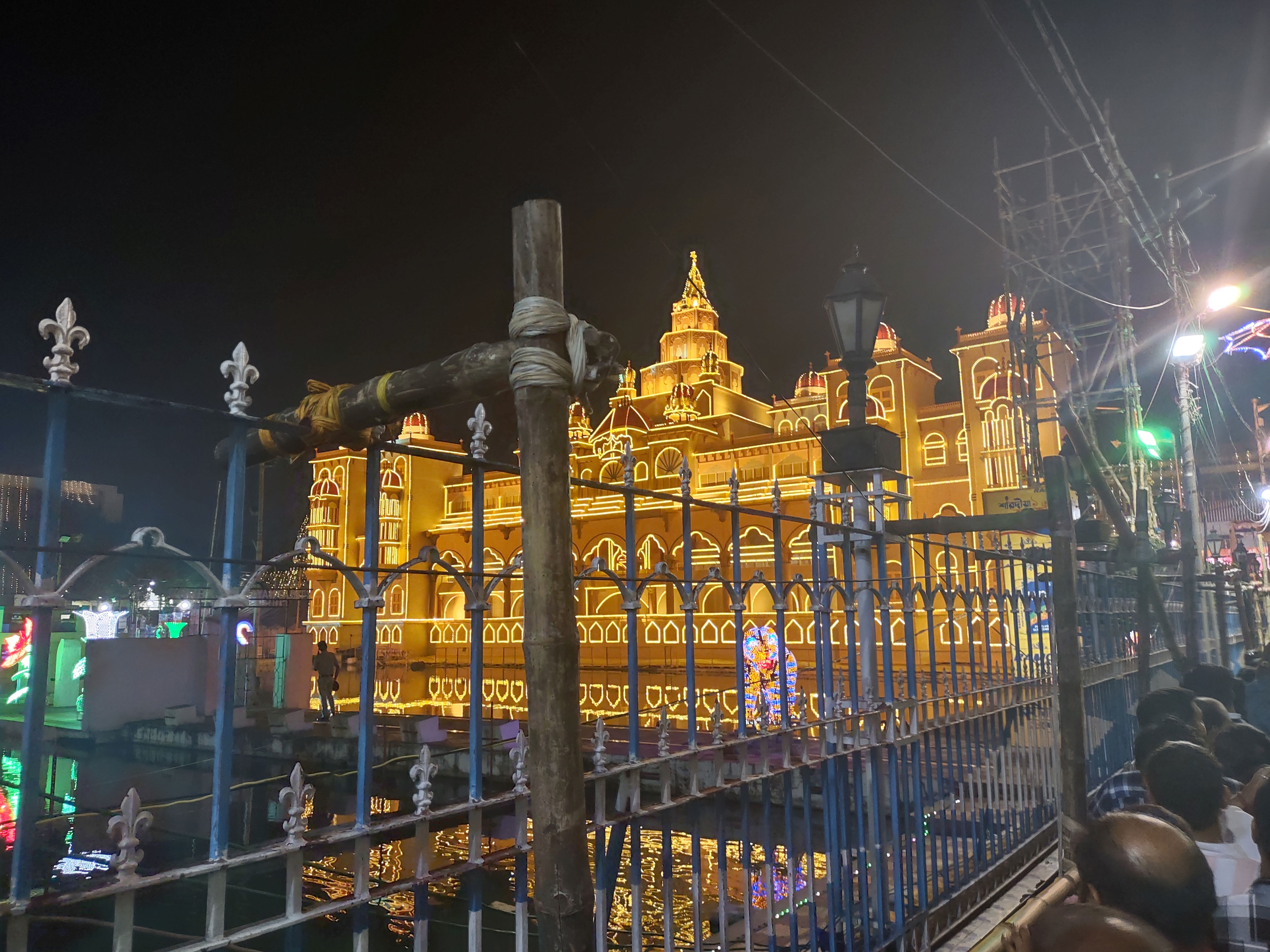
I’ve since gone back and checked the time stamps on photos to confirm that we were actually in the College Square que for only about 30 minutes, but due to the density of the crowd and slow progress, it felt like an eternity. The College Square pandal was similar to the scale of the one at Mohammed Ali Park with some variations (Durga has a lion in this one and her court is joined by my favorite Hindu god, Ganesh), but the structure with the pandal was much larger and more elaborate with an enormous crystal chandelier at its center.
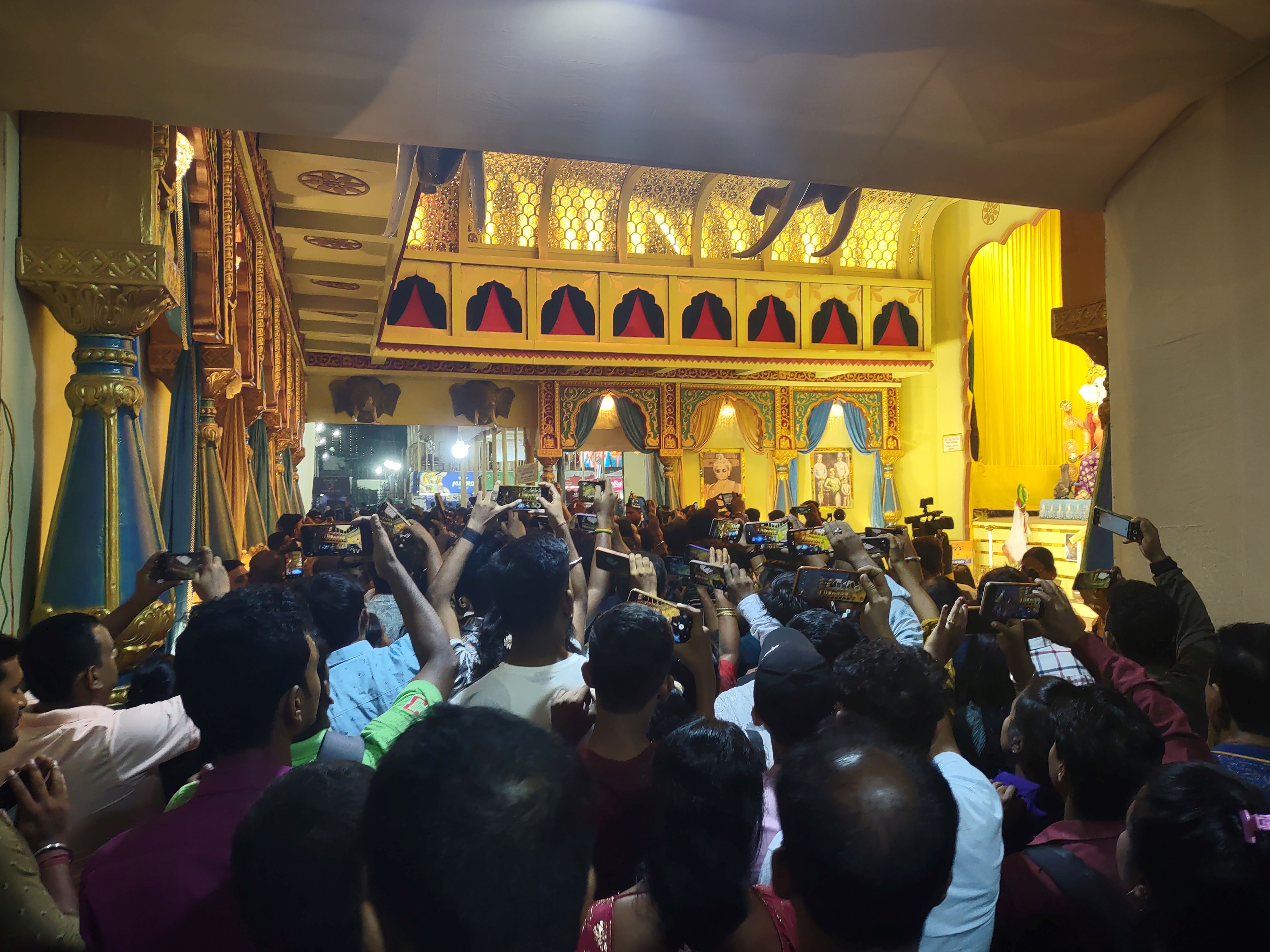
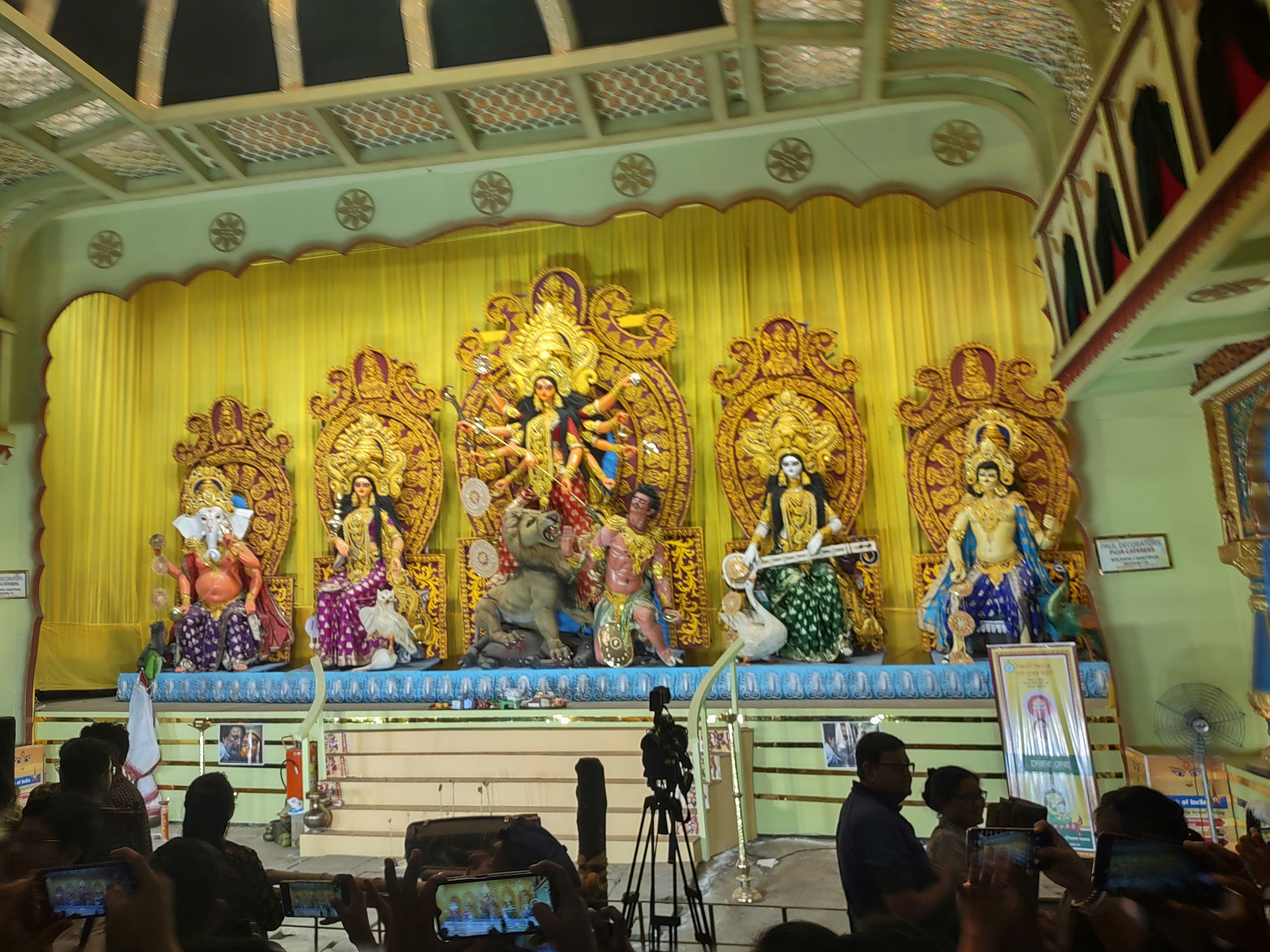

Having had our fill of large crowds in confined spaces, we did our best to work through the crowd and make our way back to our hotel, stopping at another pandal or two as we wandered.

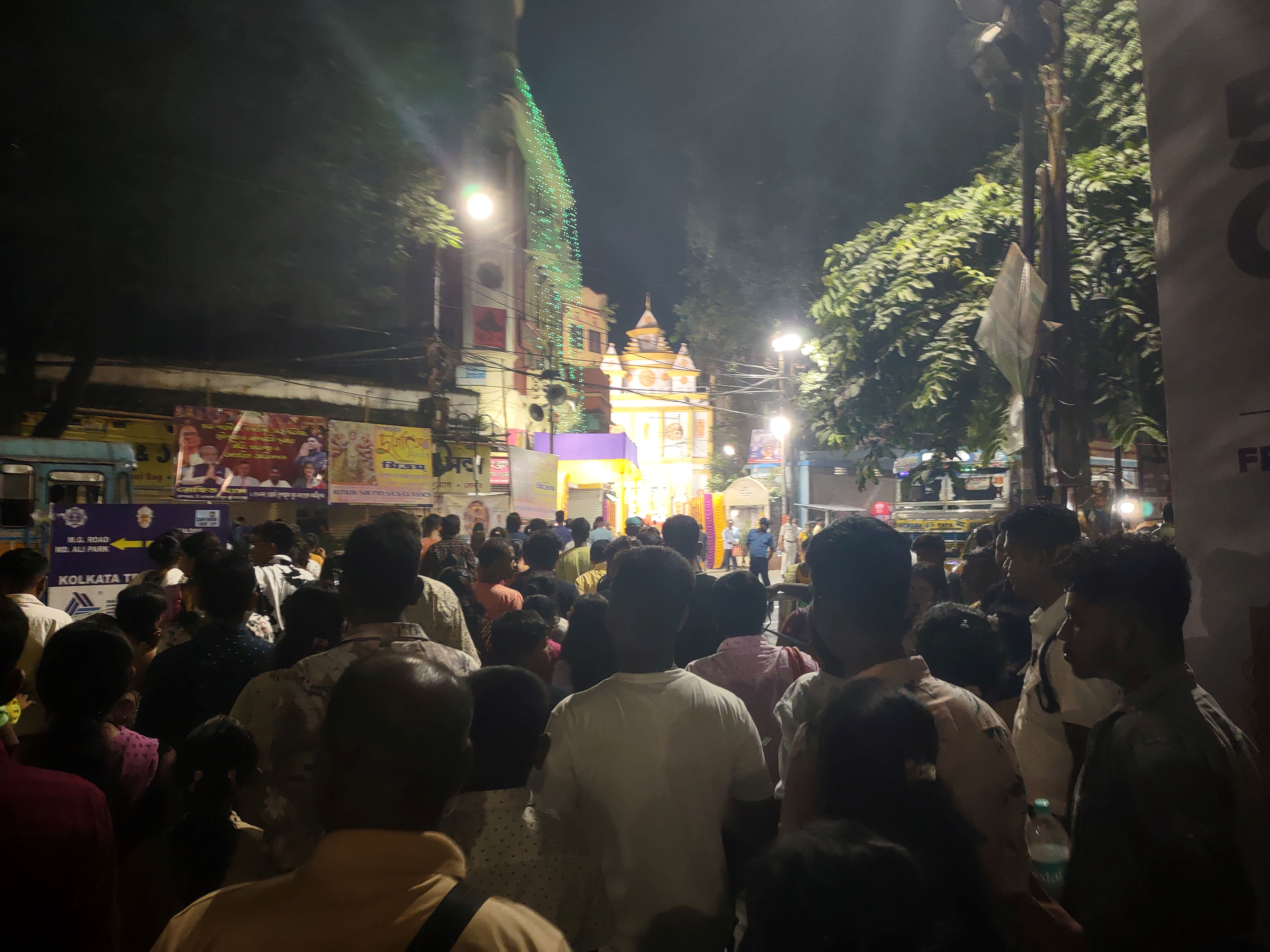

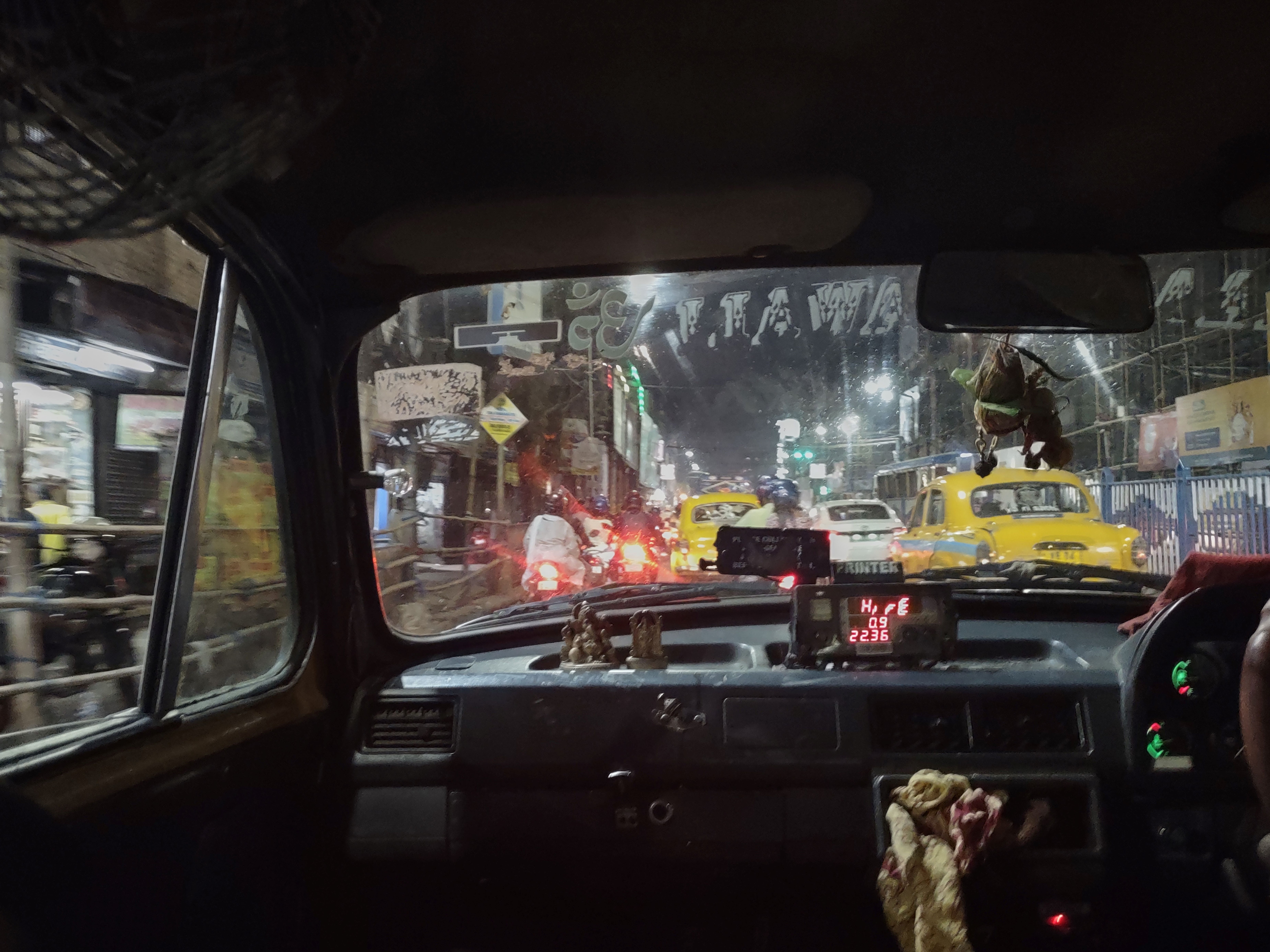
At this point in the night (10:30, pretty late for us old folks!) the streets were packed with people and traffic was approaching grid lock. We managed to flag down a taxi driver who spent some time debating whether or not he really wanted to take the fare and, while at a standstill at one point, we thought that he had given up and abandoned us (turned out he had gone to consult with another driver about a better route). Somehow he managed to avoid the worst of the traffic and, with some final directions from us, deposited us back at our hotel safe and sound and well before midnight.
While we did enjoy our first night of Durga Puja for the most part, the experience (particularly the now infamous “College Square” incident) was pretty overwhelming. Happy to have had the opportunity to see Durga Puja celebrated to such an extreme, we were content with mostly daytime pandal visits for the rest of our stay in Kolkata.

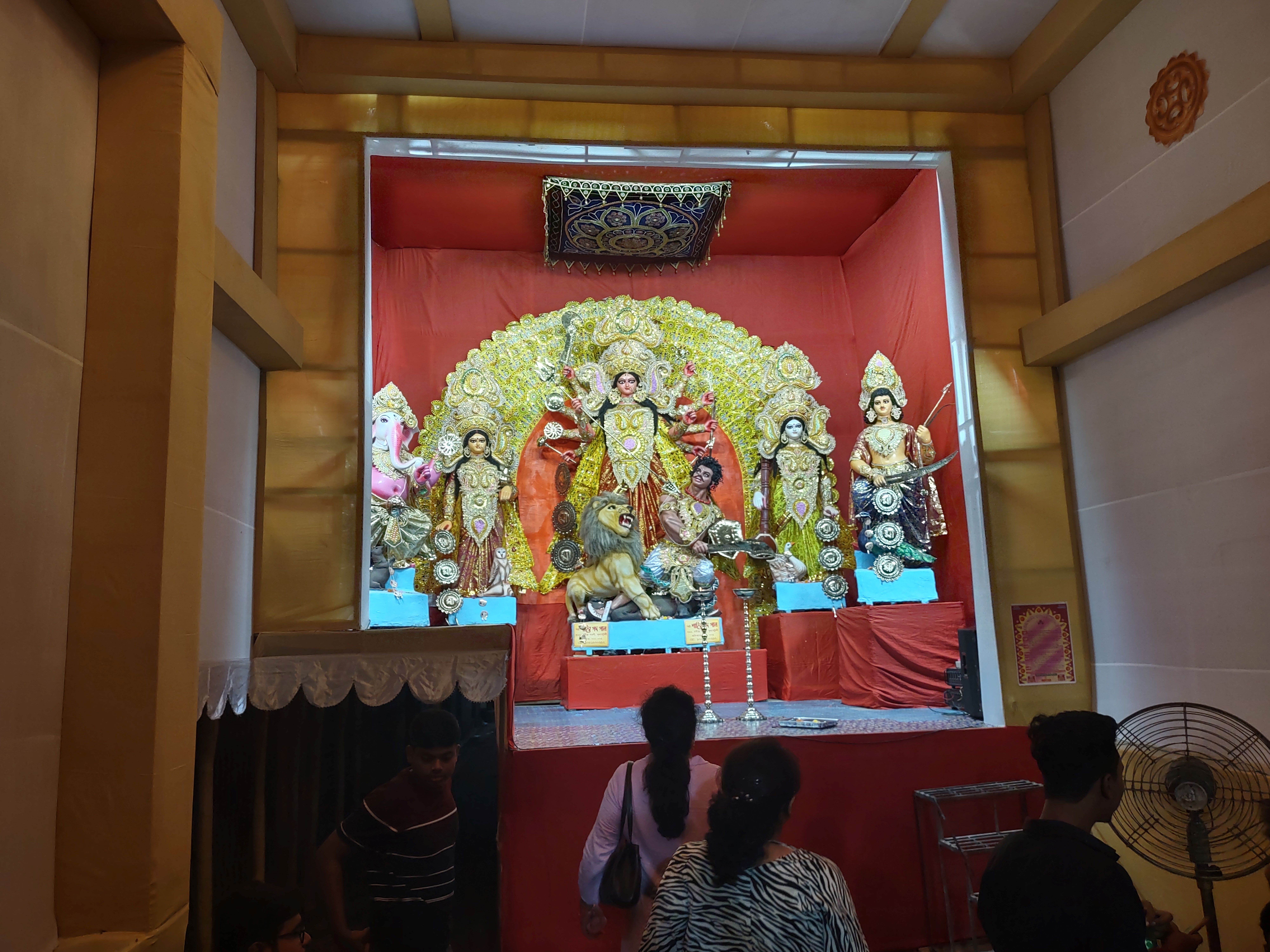
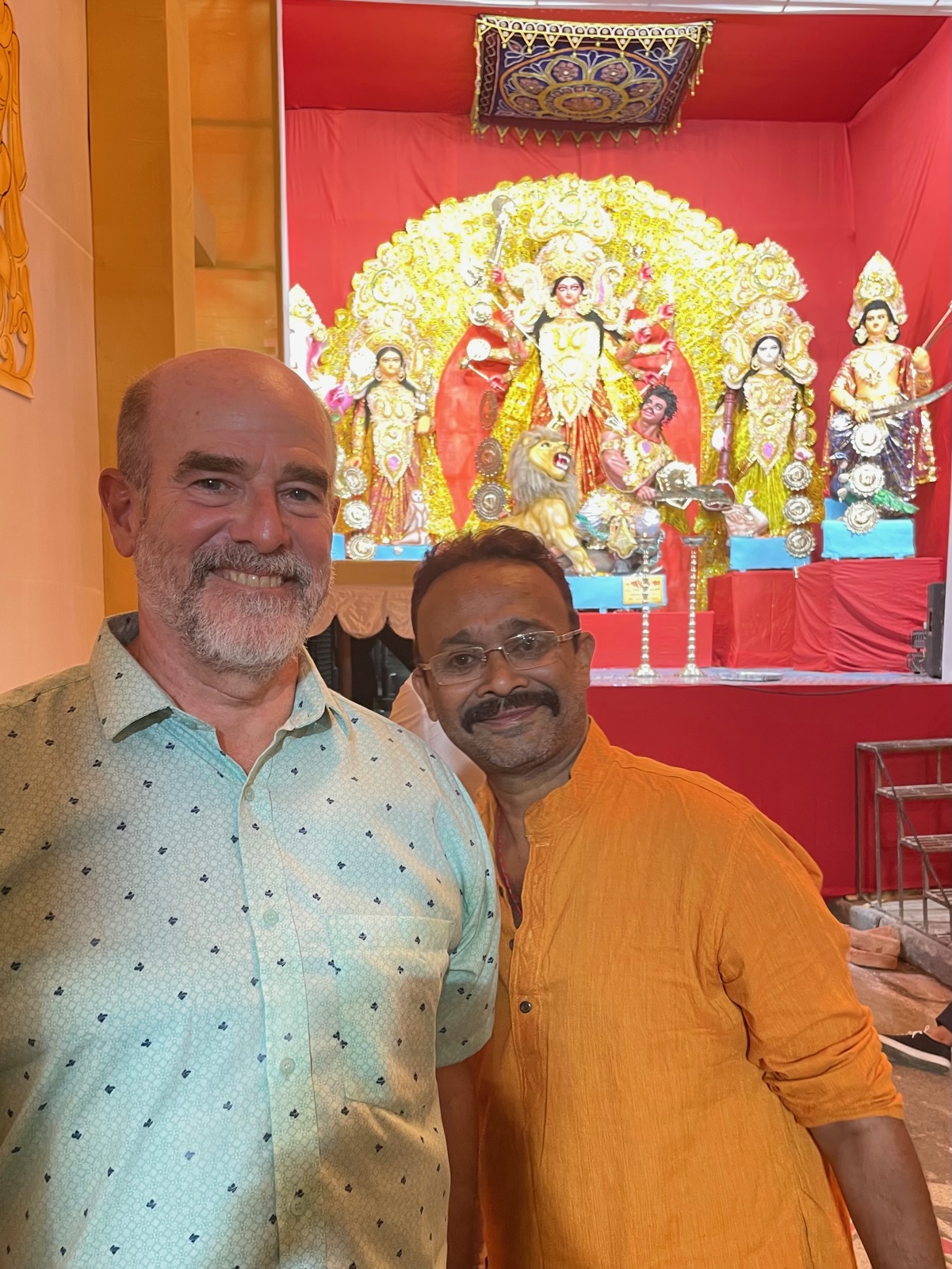
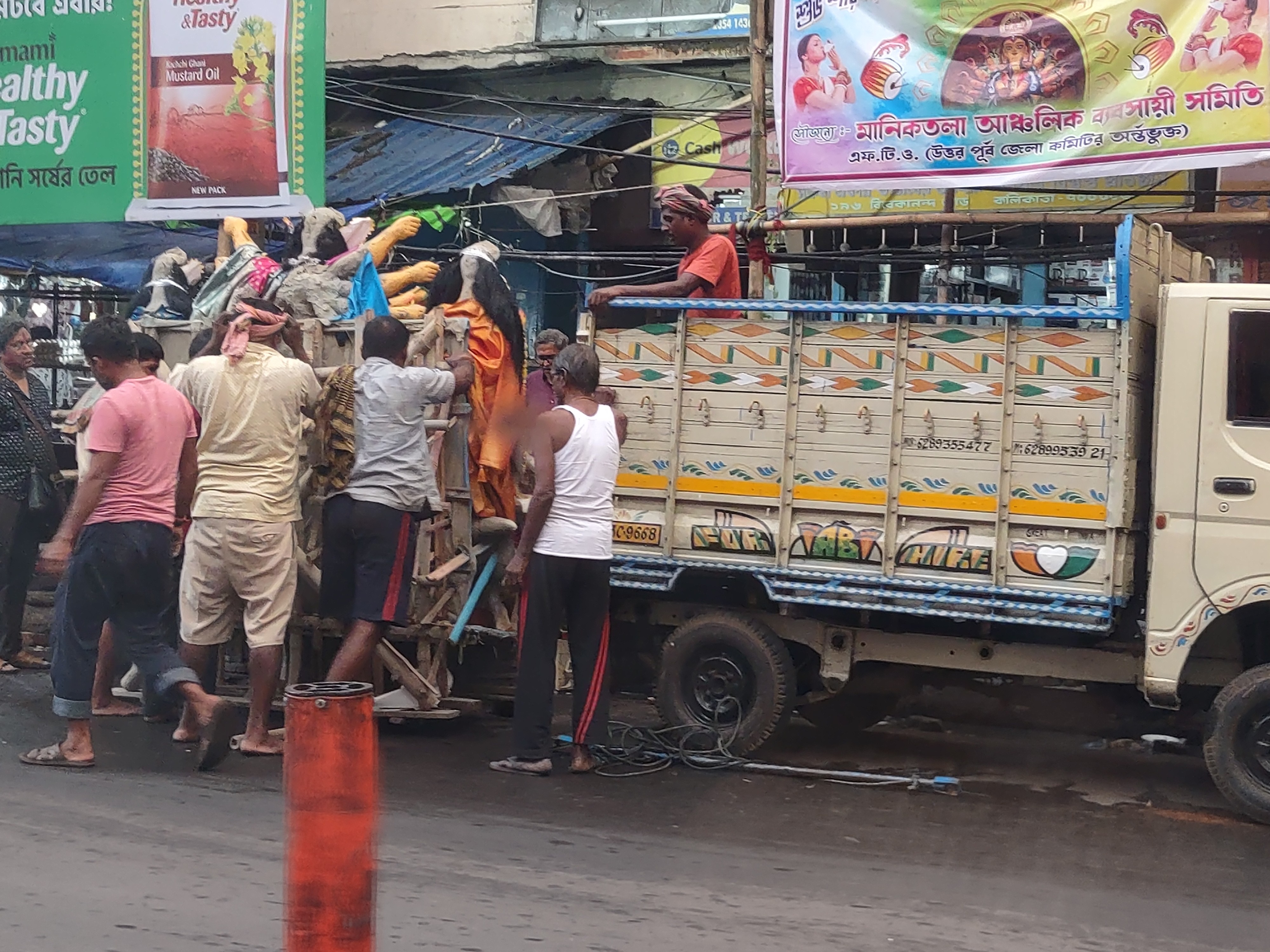
From visiting various pandals we learned that most of them are constructed by neighborhood clubs and organizations who take extraordinary pride in their work. And, although the festival lasts 10 days, the planning and construction of the pandals takes place over the course of the year and concludes with the dismantling of the pandal and transporting the figure of Durga to the river for internment. (We actually saw several versions of Durga being loaded into the back of trucks and being transported to the river as we drove to the airport on our final day in Kolkata.)
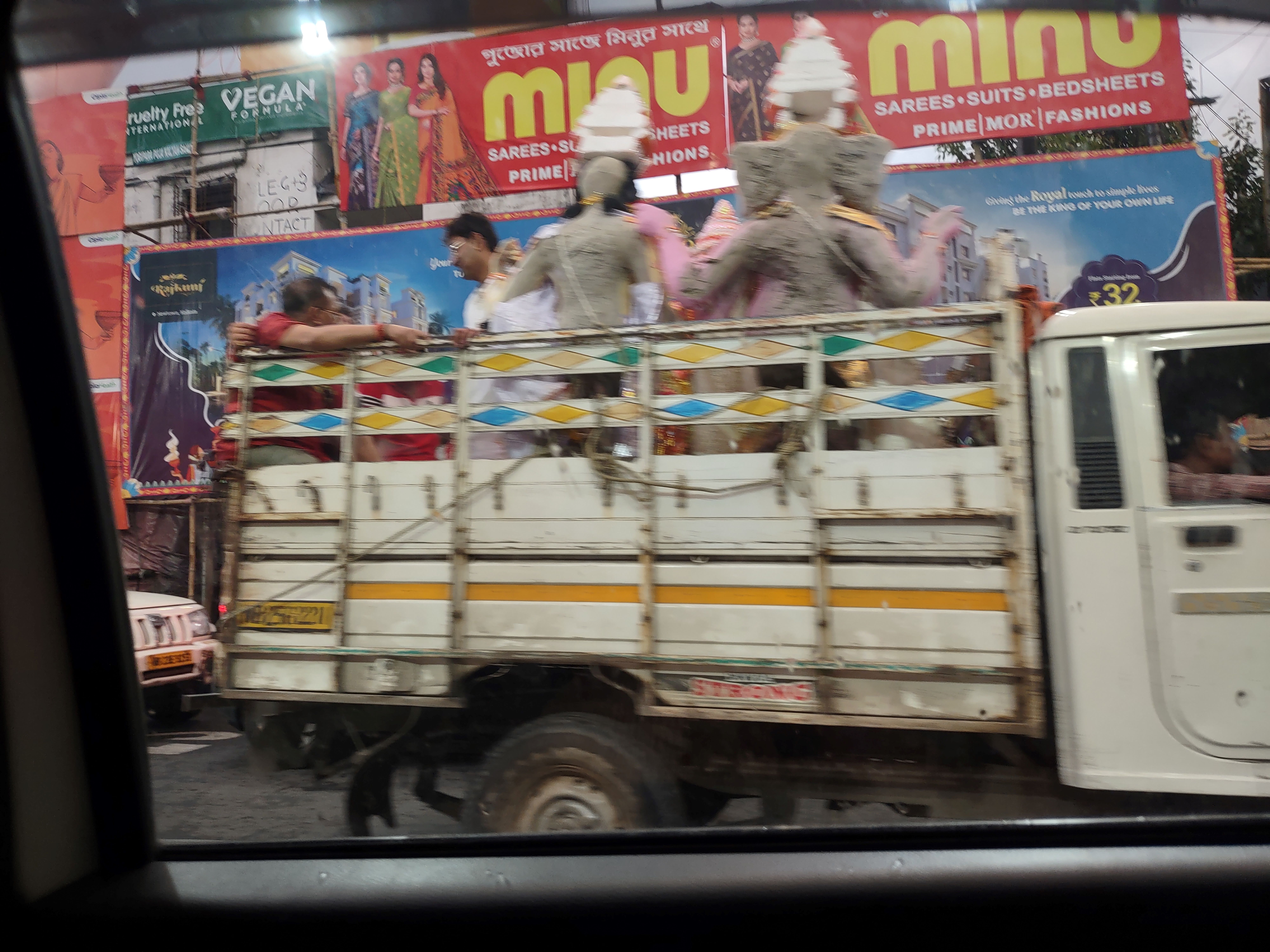

Truly one of those once-in-a-lifetime experiences and its pretty easy to understand how Durga Puja in Kolkata is on UNESCO’s intangible cultural heritage list.
A Walk in the Park
We spent our four days in Kolkata wandering the streets of the old city, returning to luxuriate in our hotel when it became too hot. We spent one very hot morning walking the length of the Maidan, a large urban area south of the city center containing vast urban green space, parks, playgrounds and several public venues and vast stretch of field that includes numerous sporting grounds, including the famous cricketing venue Eden Gardens, several football stadiums and the Kolkata Race Course.
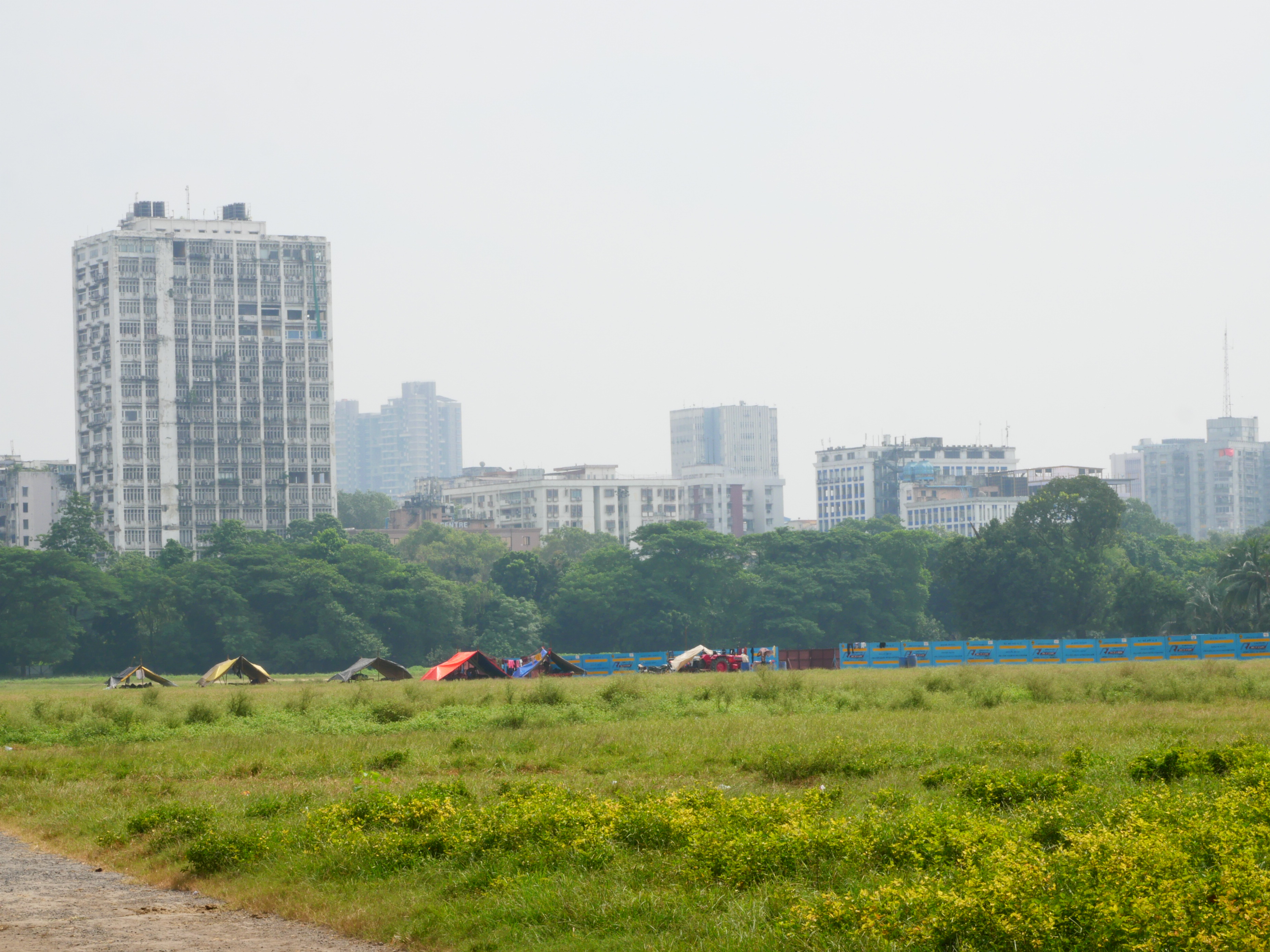
Coincidentally, the green space of the Maidan is 400 acres in size, the same as Leisure Valley another urban park in Chandigarh which I had very recently visited, so it was quite difficult not to compare the two. Unfortunately, the Maidan comes up a bit short in that comparison. Where Leisure Valley in Chandigarh was alive with human activity, most of what we saw in the Maidan was the sort of vast empty largely ceremonial urban space which is really the antithesis of Leisure Valley (see Chandigarh installment).
On the other hand, the Maidan did have some rather unique features (how often do you see horses grazing un pastures in the shadow of city office towers?), but the amount of open unused land in the heart of a city was kind of odd.
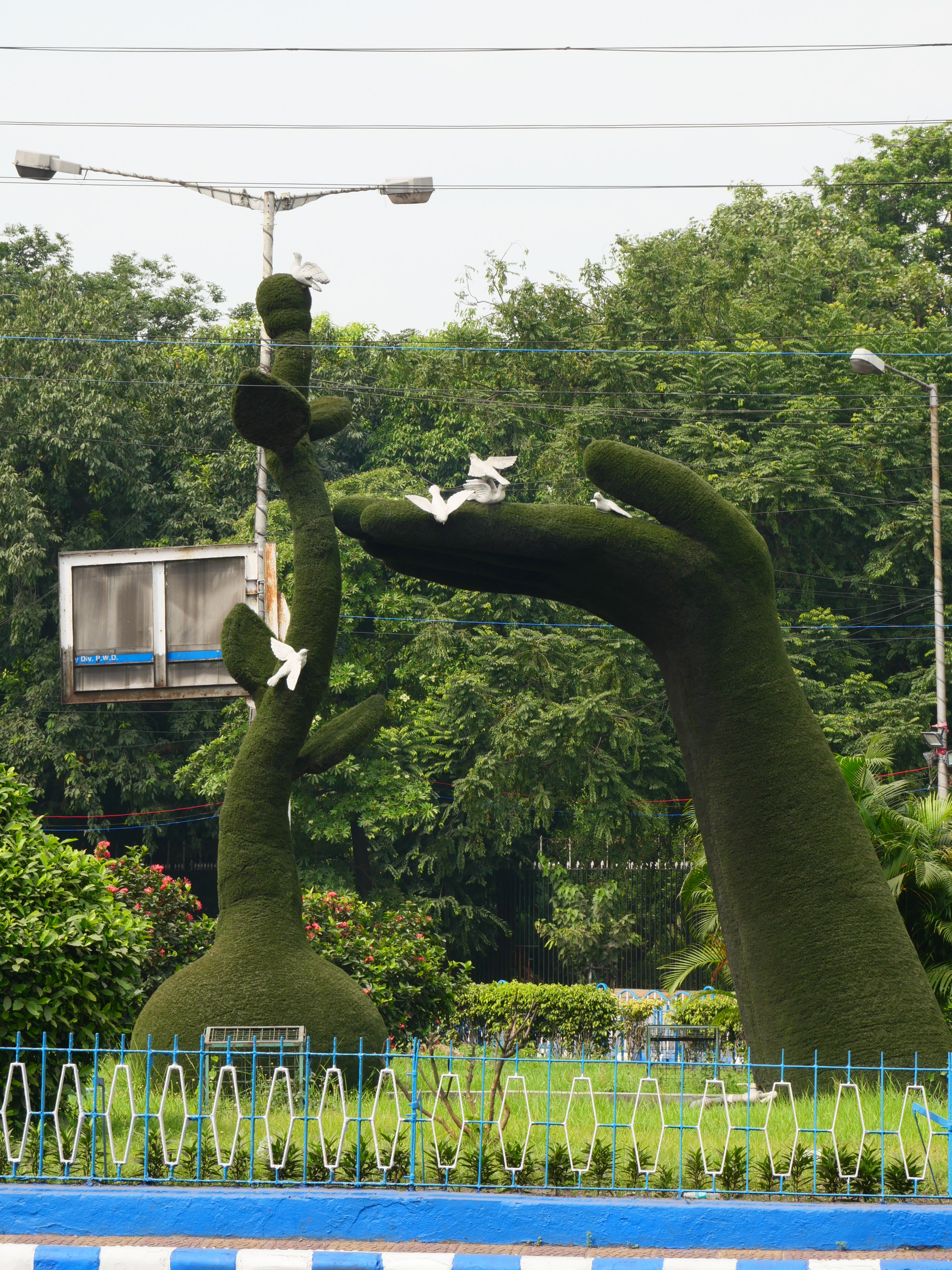
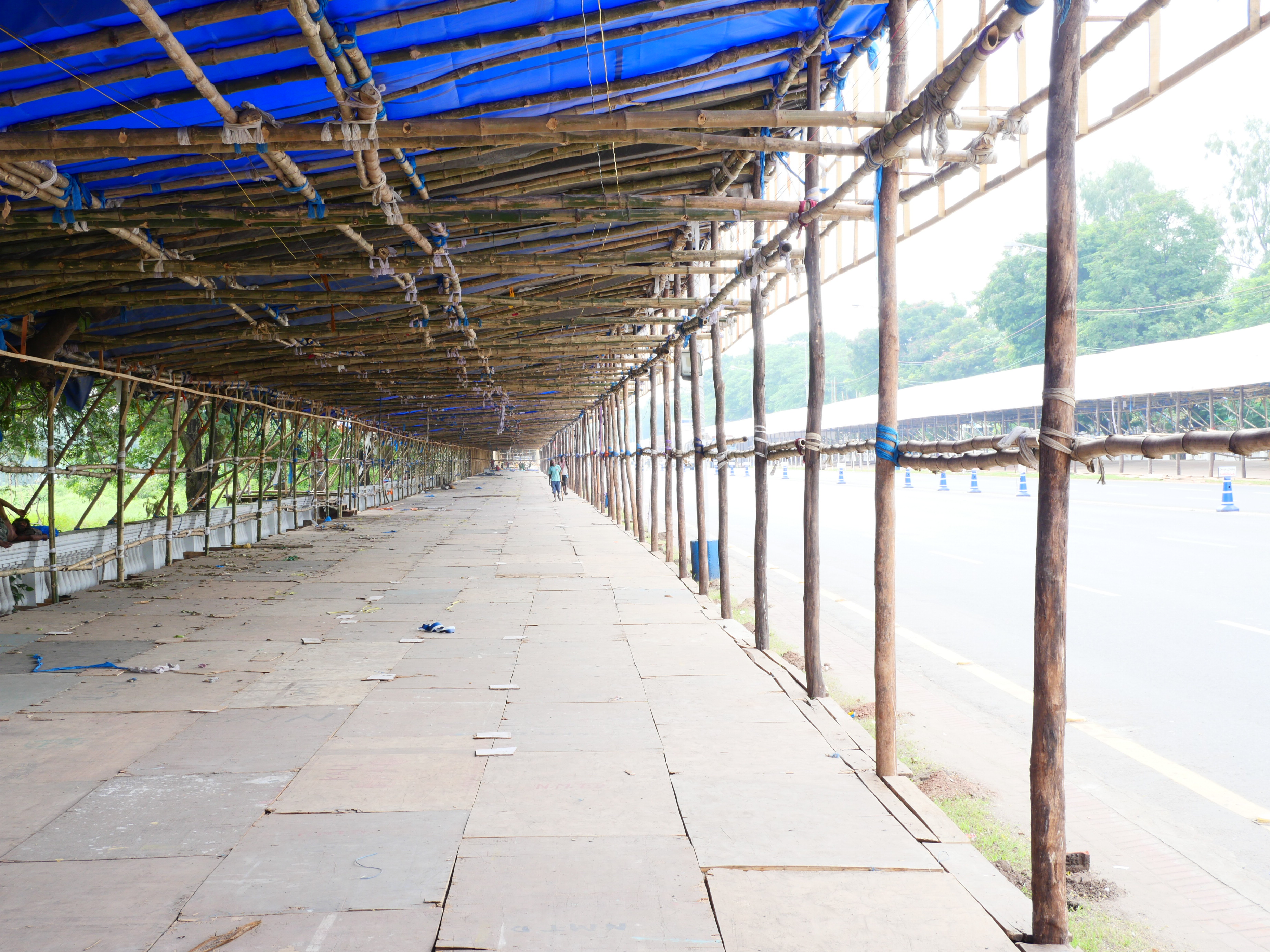
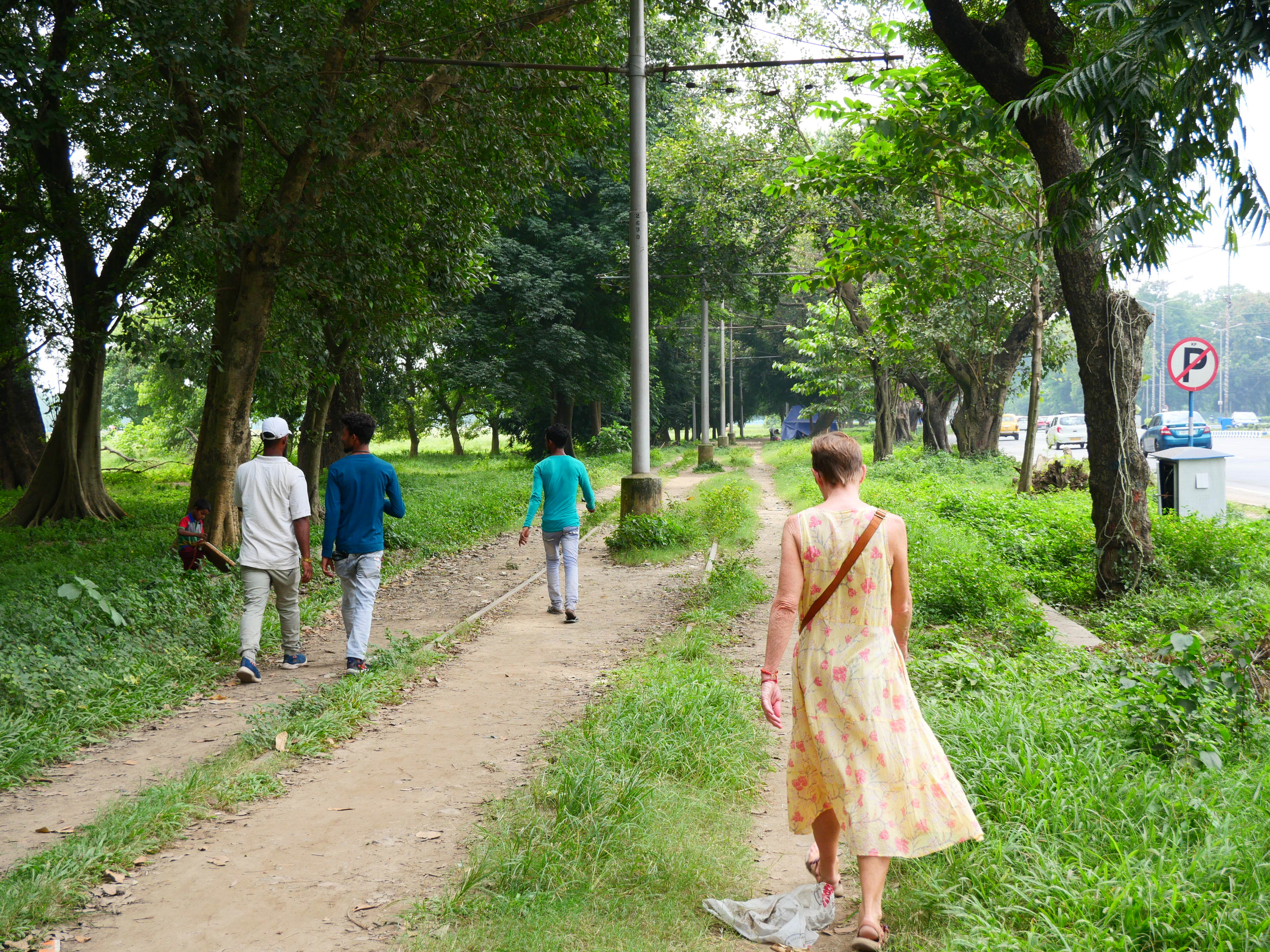


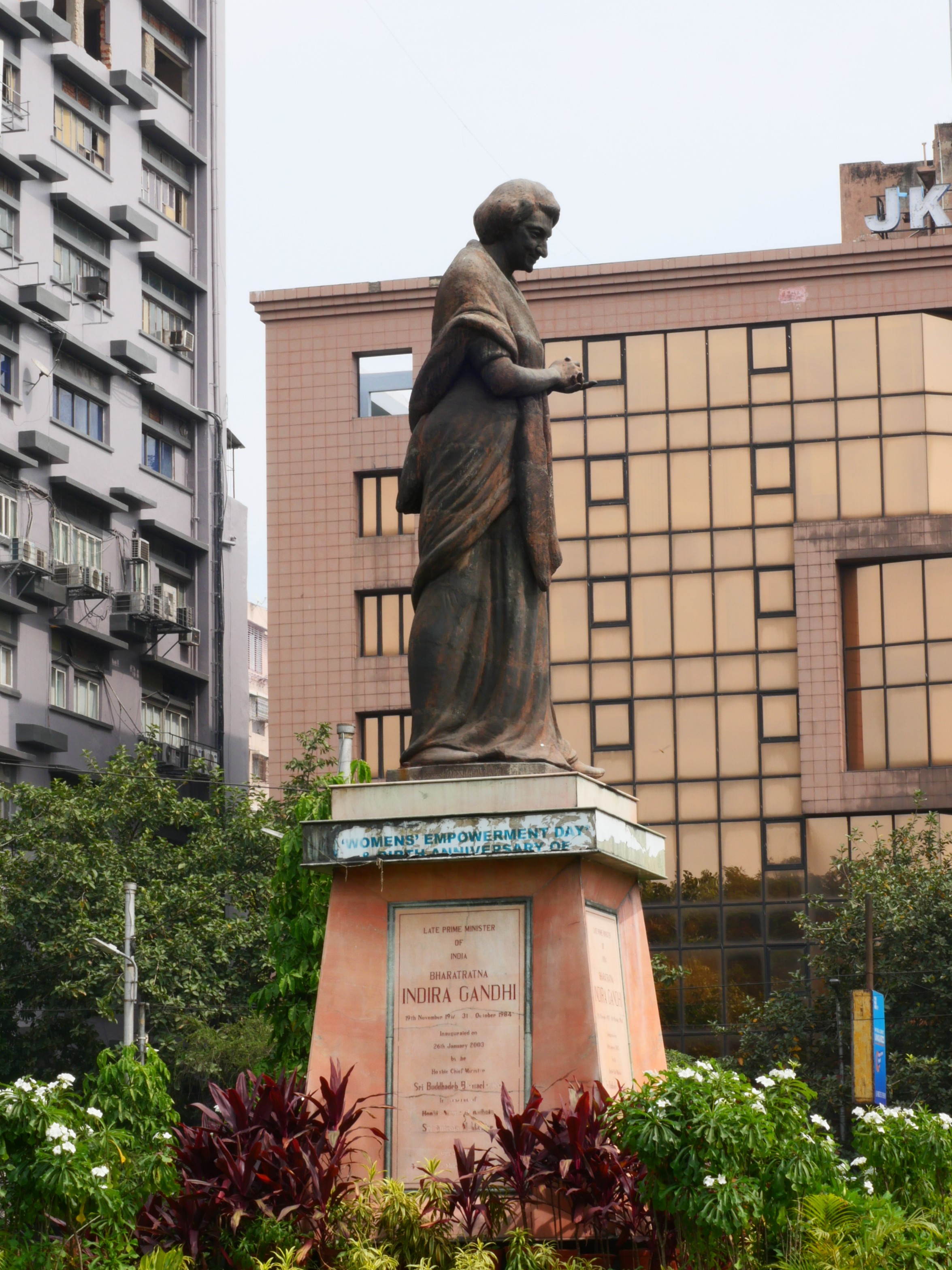
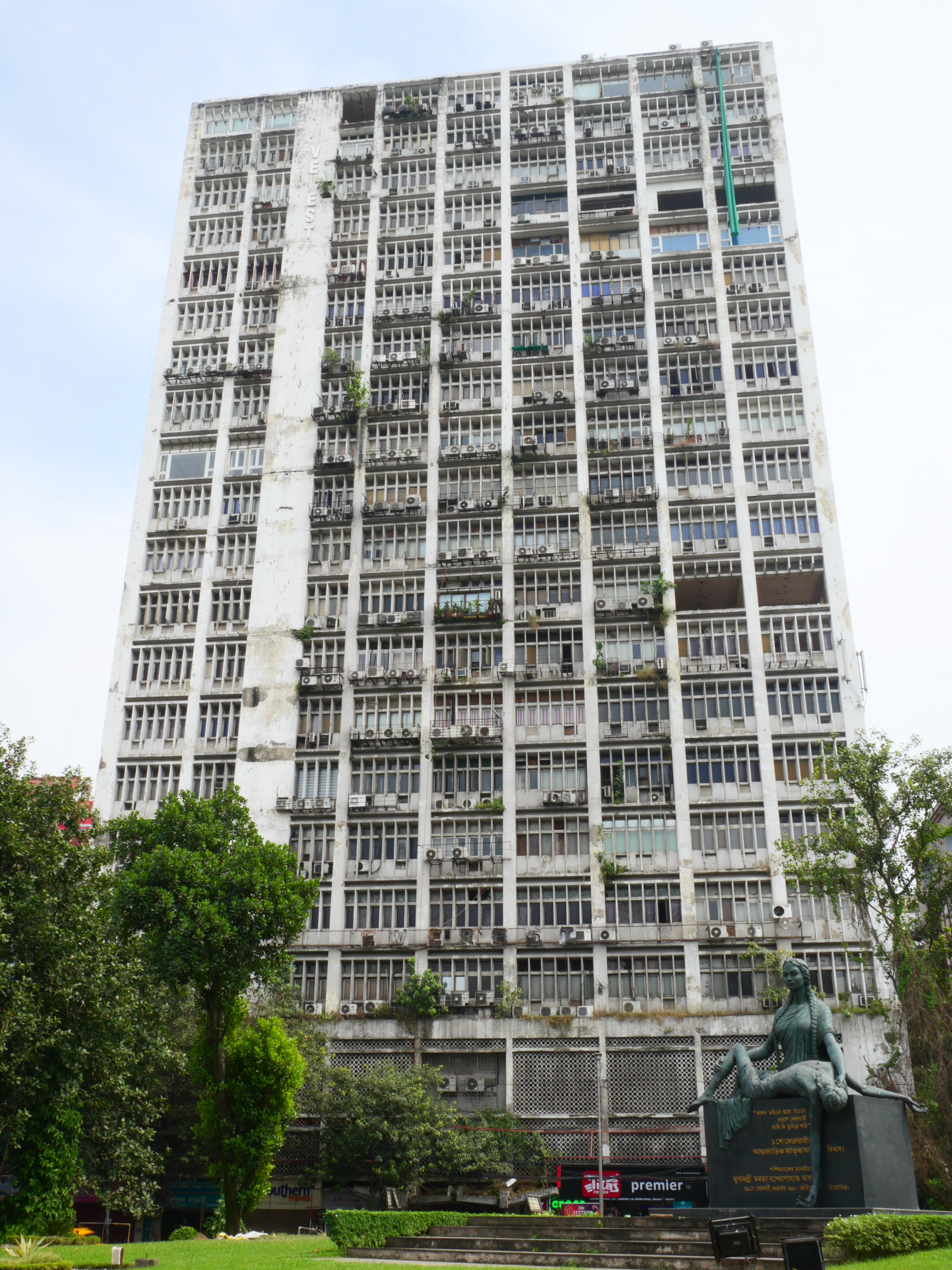
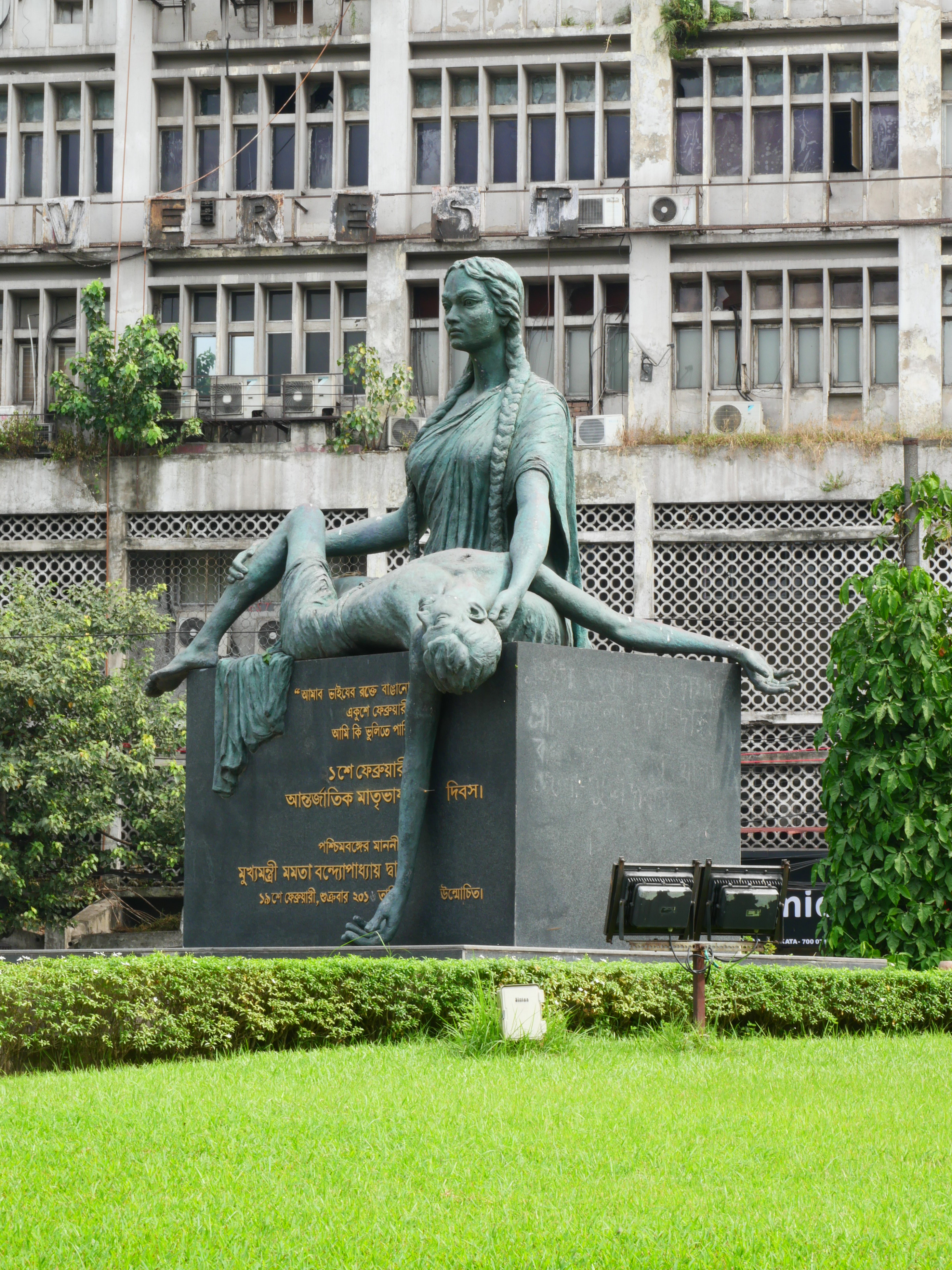
As we approached the southern end of the park’s almost empty promenade we did encounter quite of bit of activity near the Victoria Memorial at the southern end of the park which included street food vendors and some of the most elaborate horse-drawn carriages I believe I have ever seen.
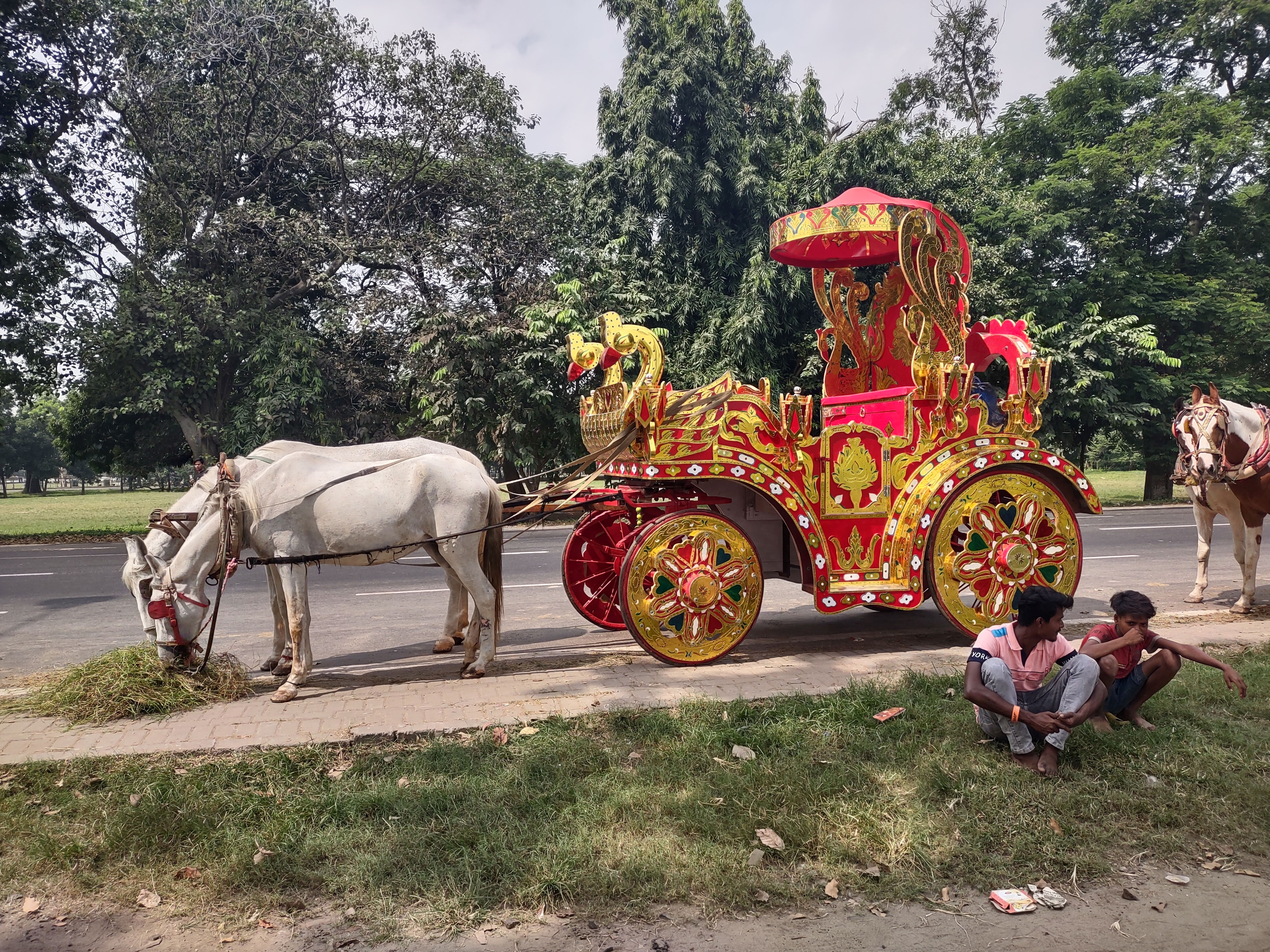
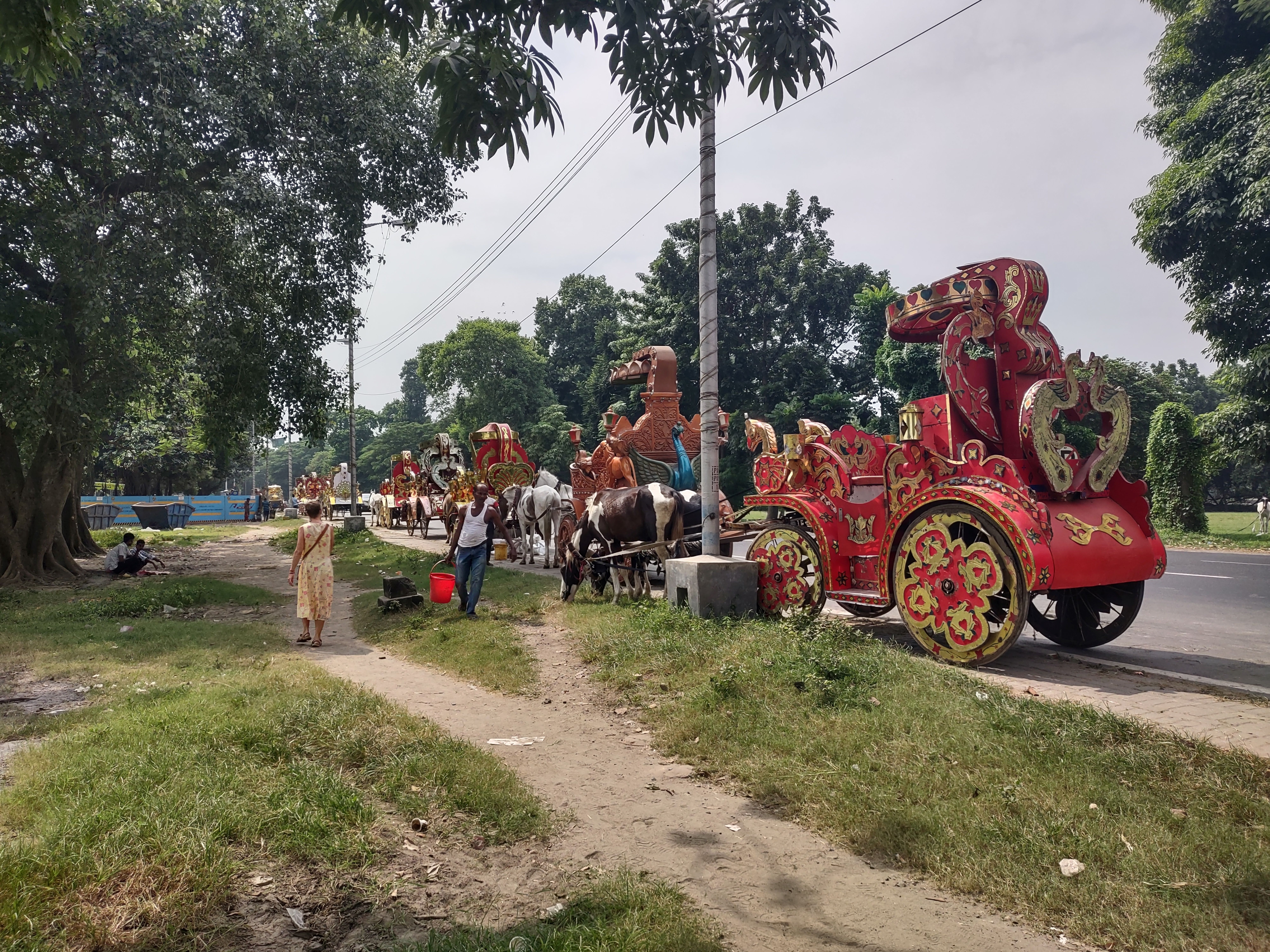
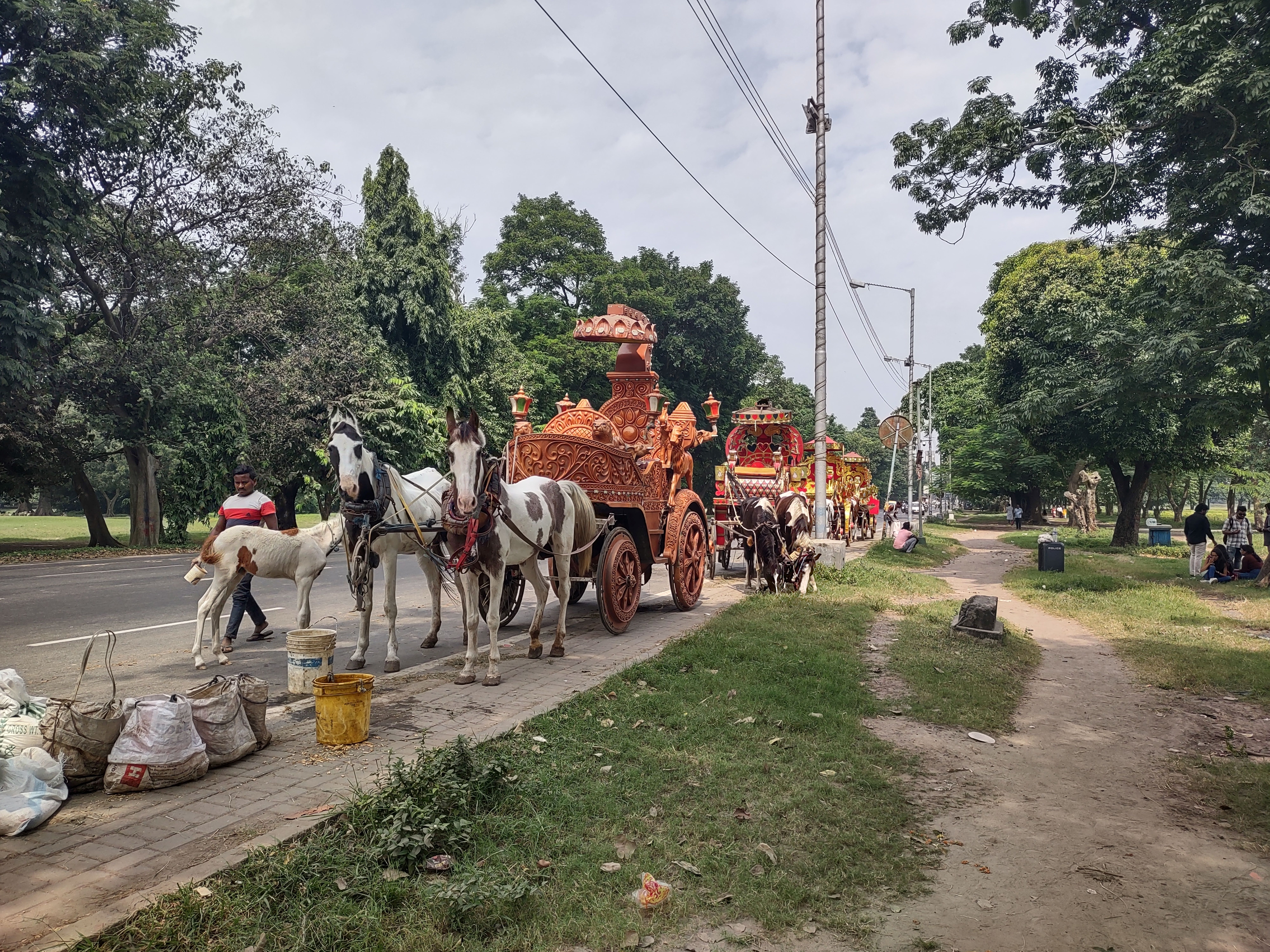
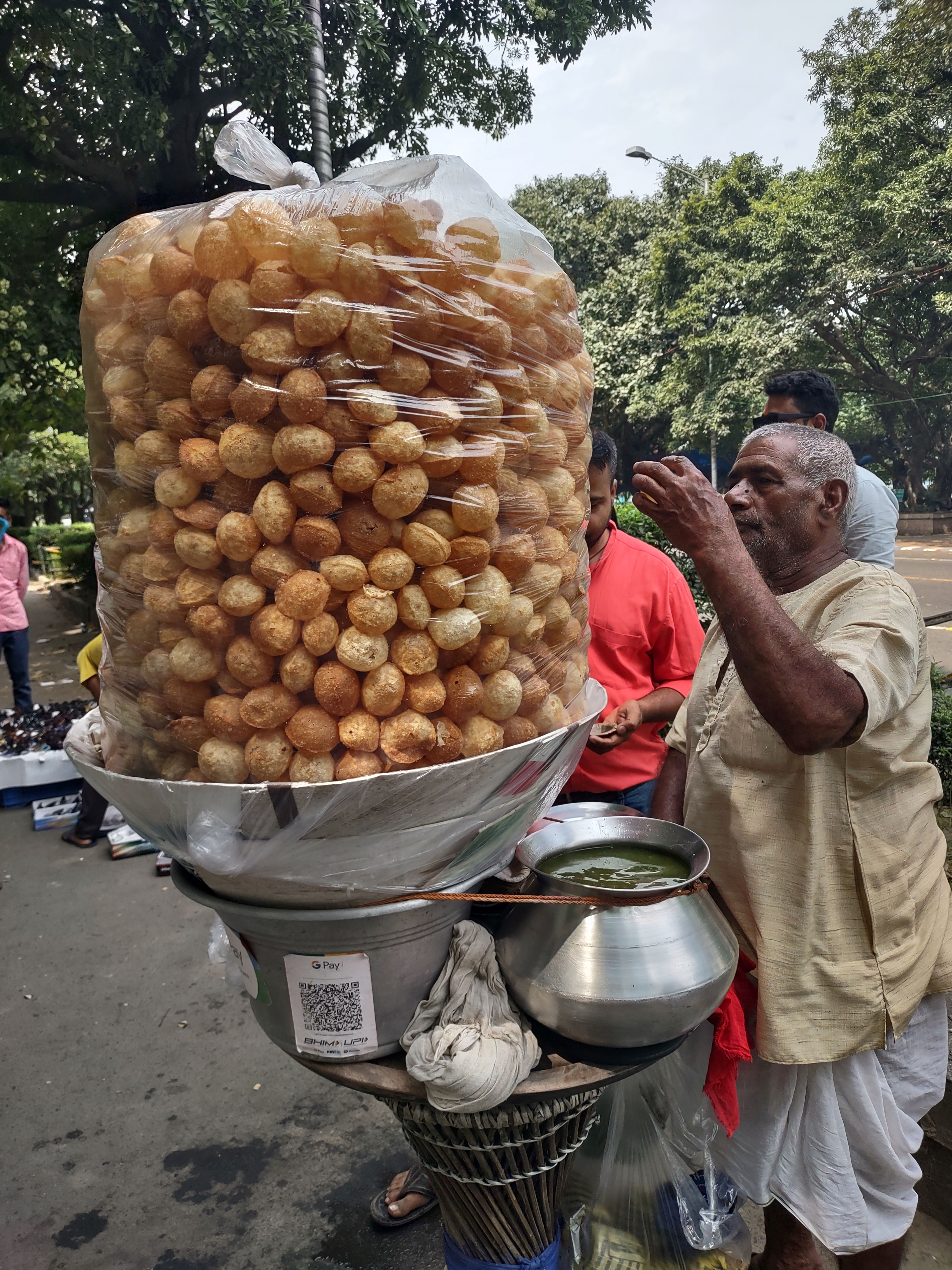
We wandered the area around the Victoria Monument a bit, visiting the various statues and monuments, and trying our first pani puris (very light dough shells filled with whatever the vendor has on hand).

A Walk in the Old City
On Sunday afternoon, while Colleen luxuriated in the AC at our hotel, I took a walking photo tour of the old city north of our hotel. Colleen and I had ventured in the day before to visit an electrical market where we thought we might find some interesting light fixtures (but didn’t). I wanted to come back and see more of this older part of the city particularly some of the monumental colonial buildings in the area.
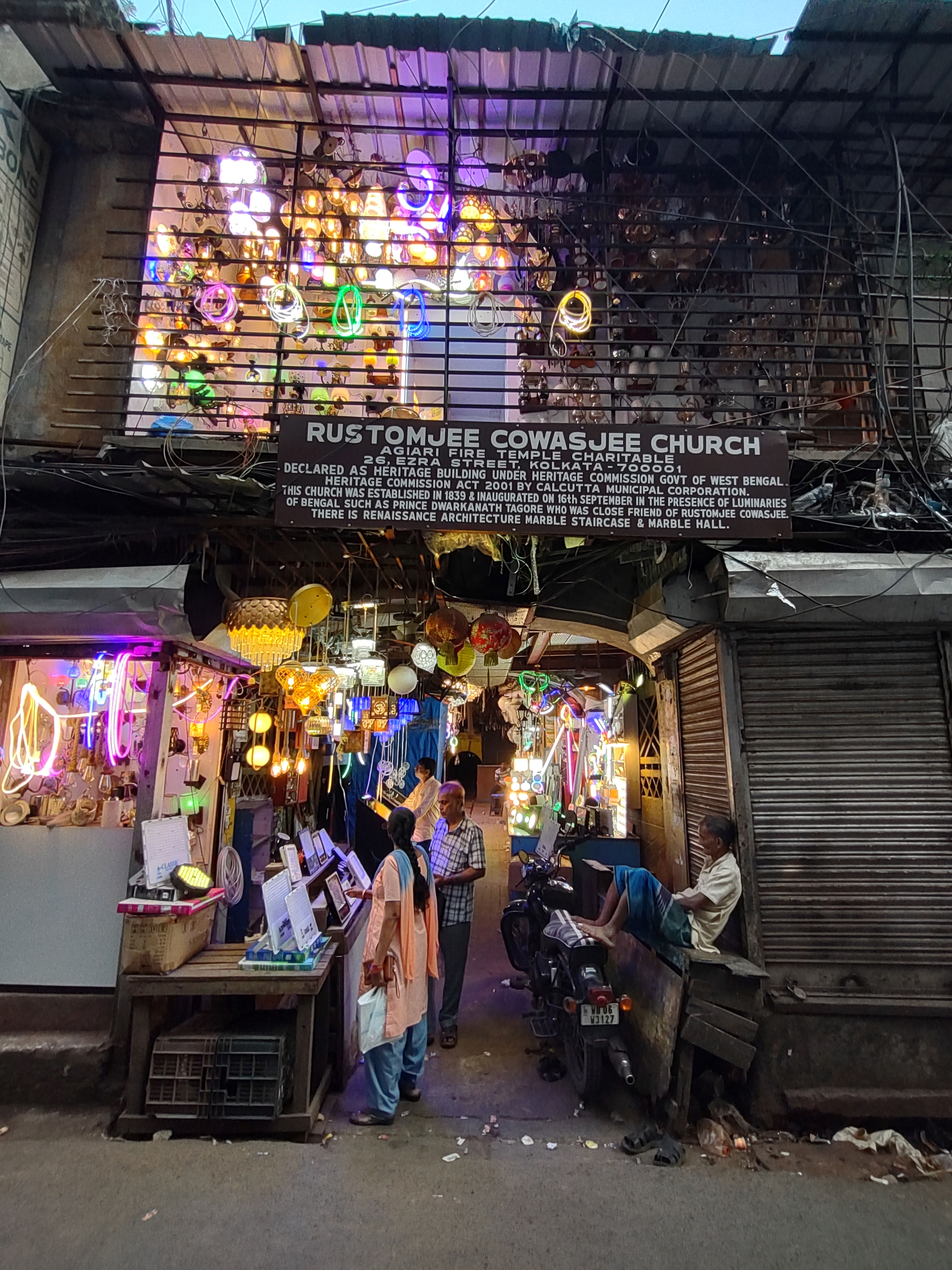


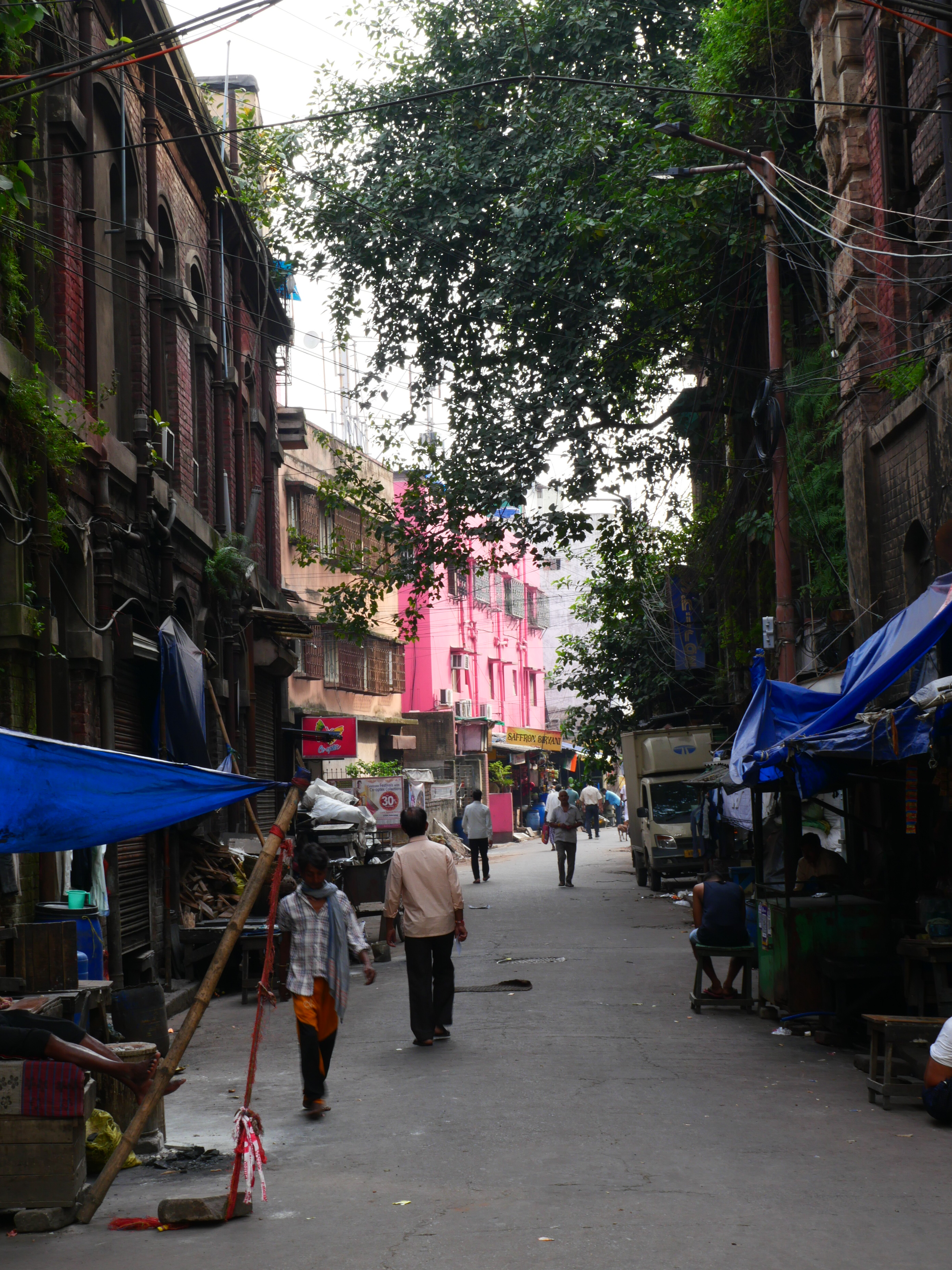
I headed north from our hotel and was pretty quickly swept up in the large crowds out doing their Sunday shopping and marketing and just enjoyed watching people going about their normal business.


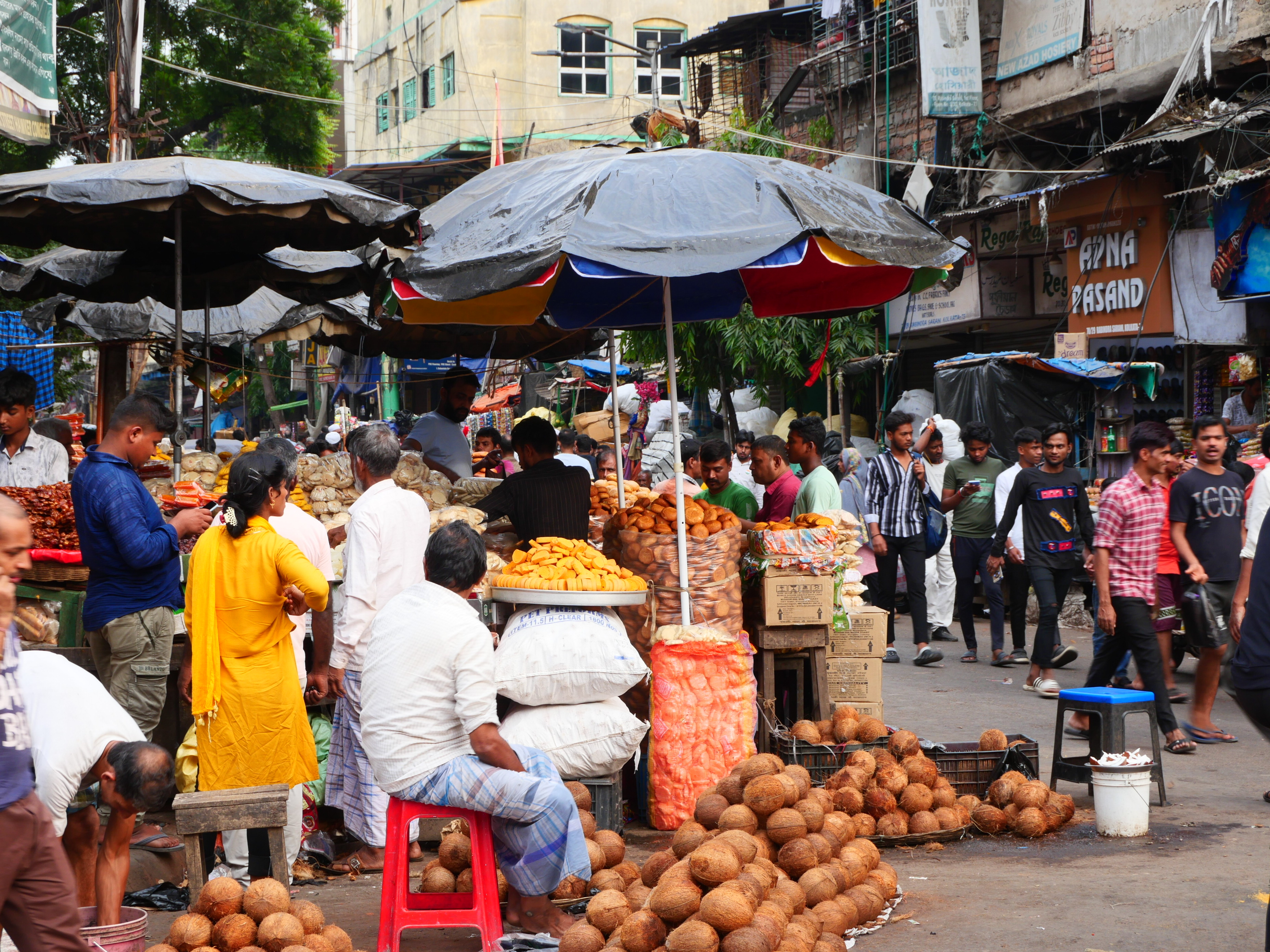
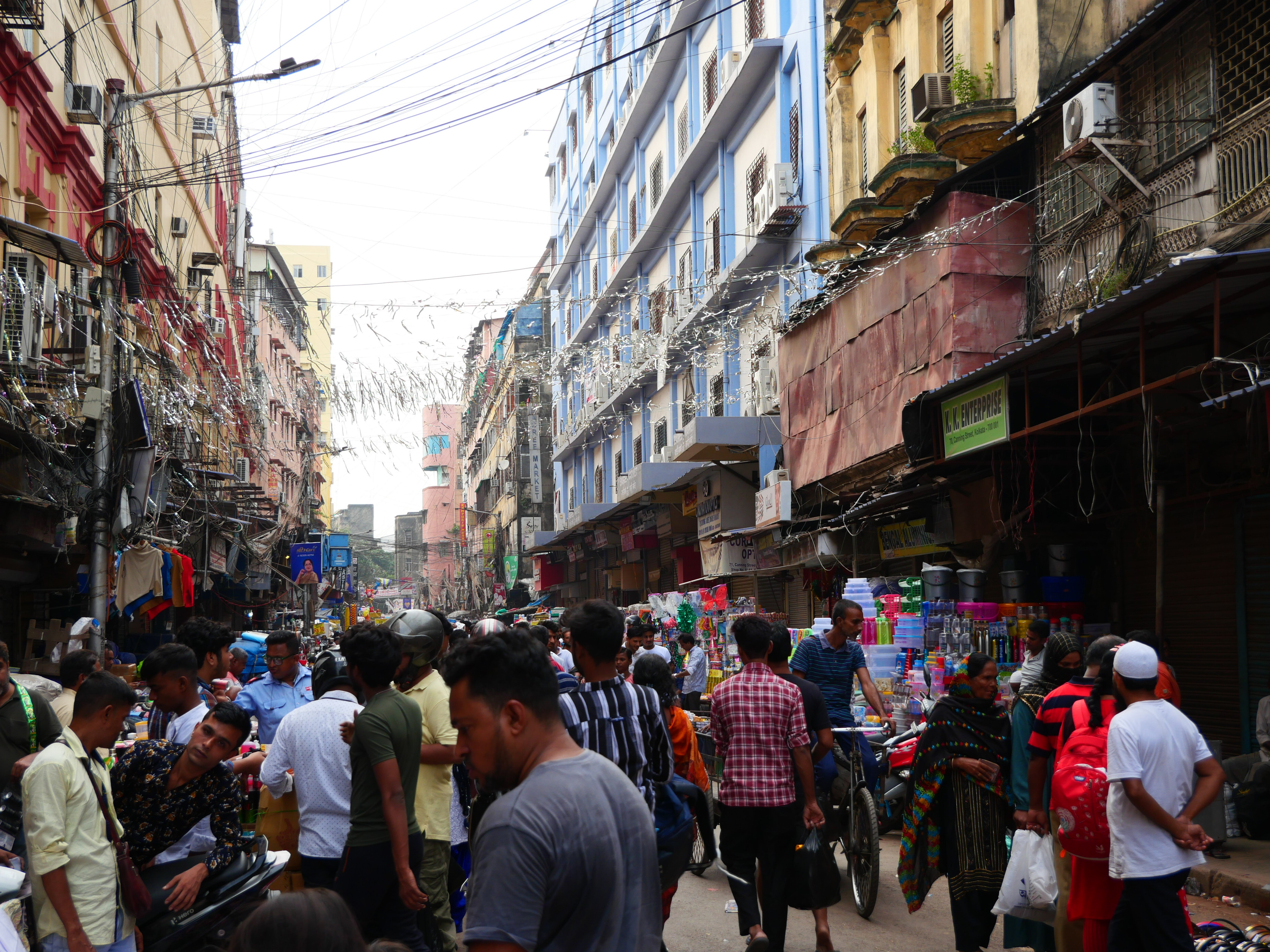
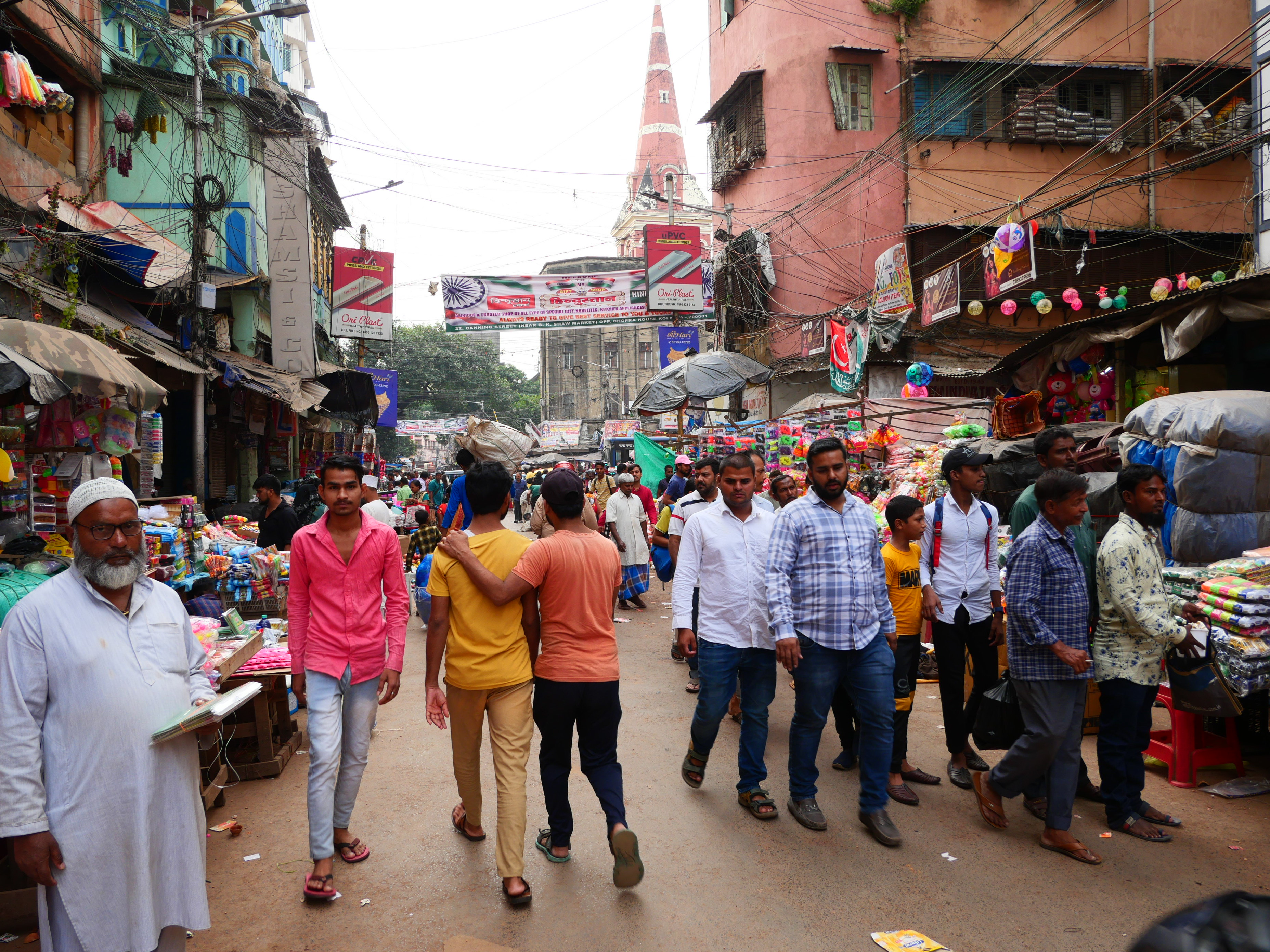

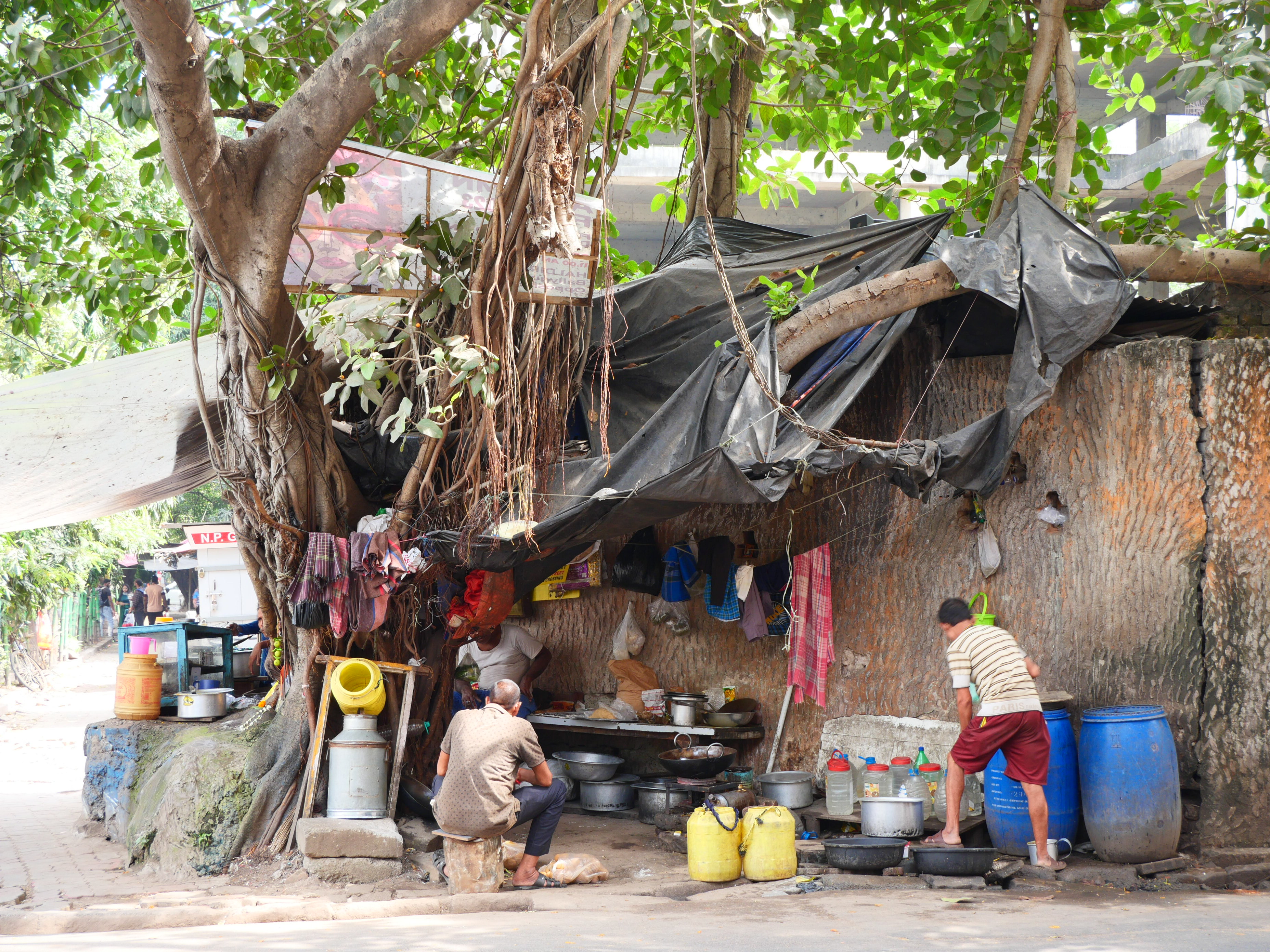
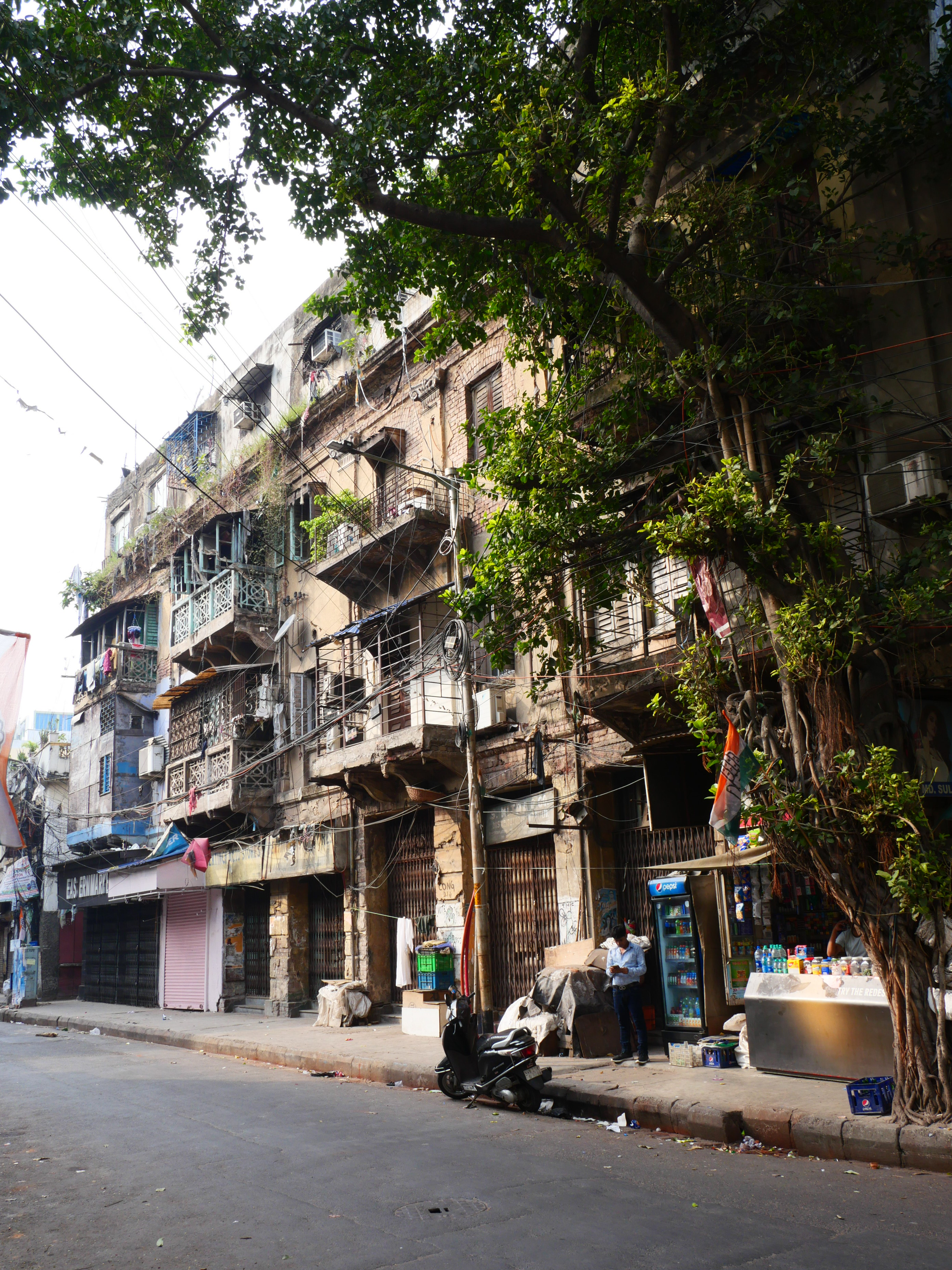
I must say that above and beyond all the beautiful buildings I saw, there was something about old Kolkata that I found oddly pleasing aesthetically. Dark and a bit dirty, with the jungle lurking all around, very much the way I had imagined old Calcutta would be, but teeming with life and energy.

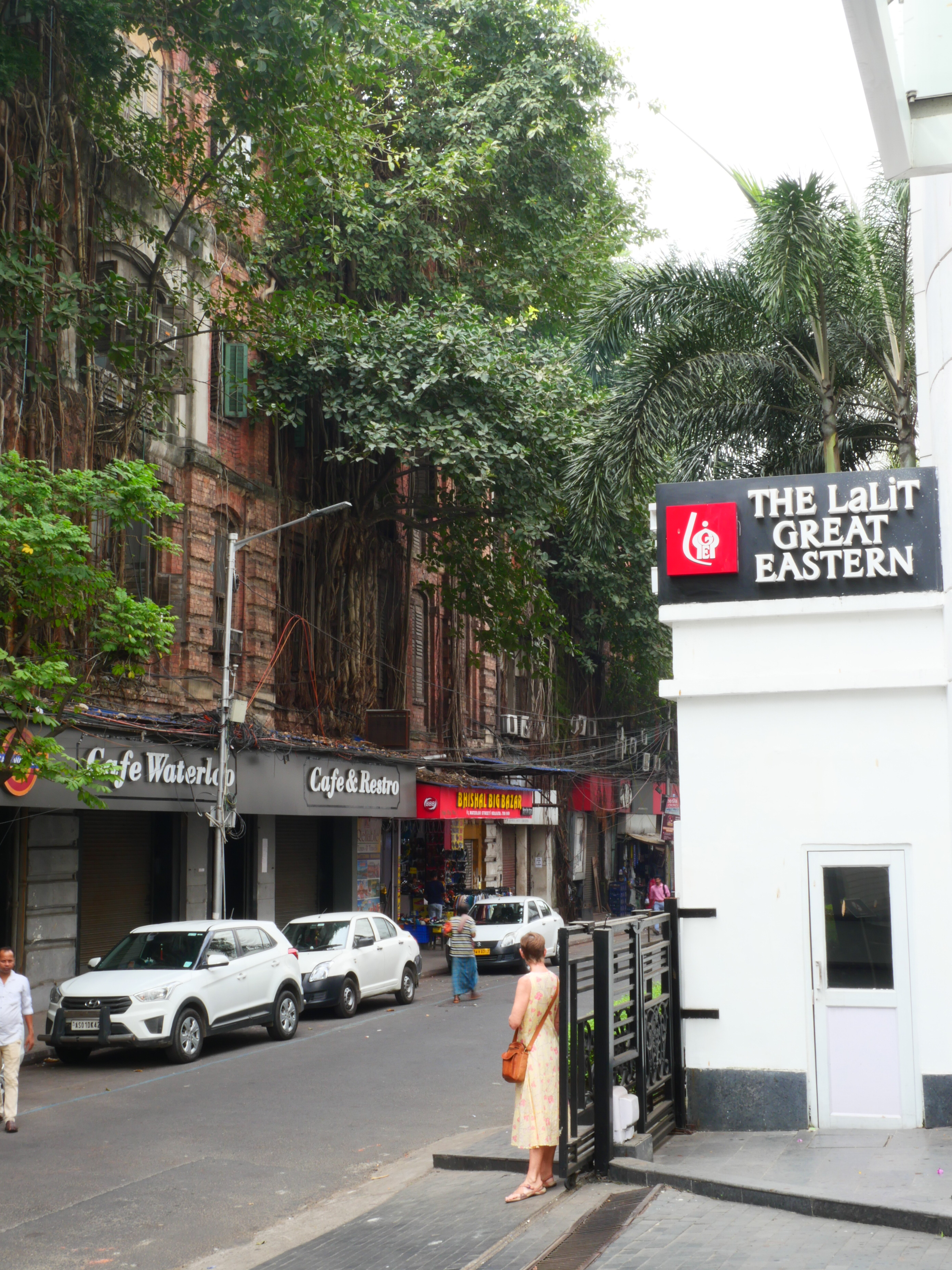


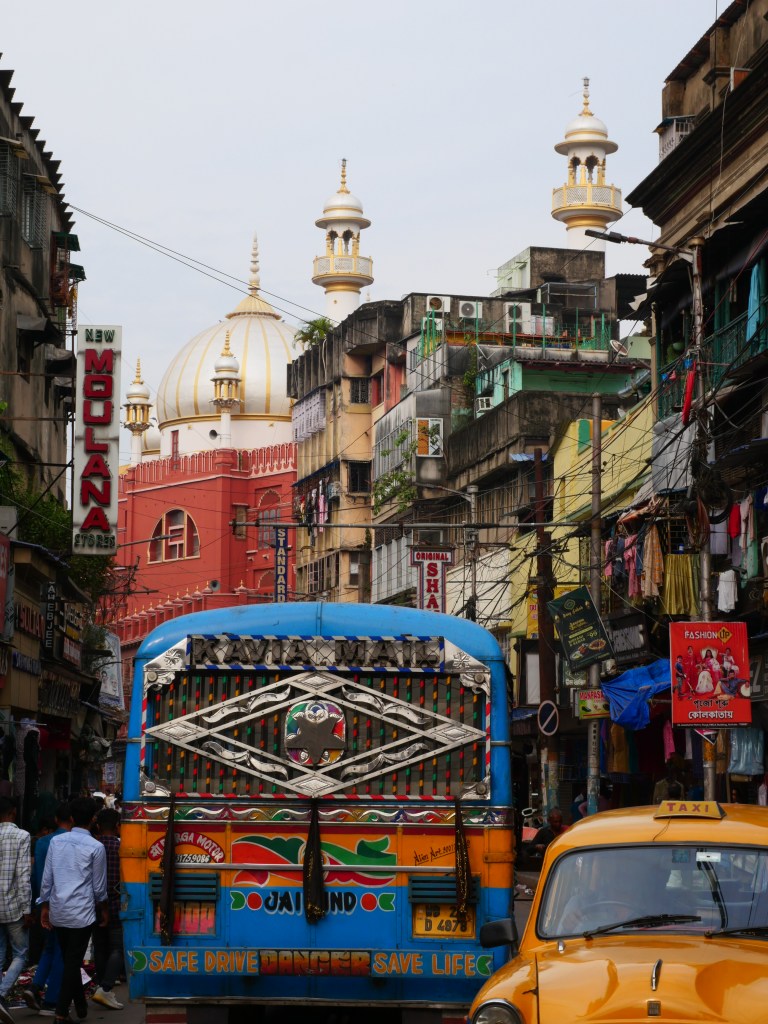
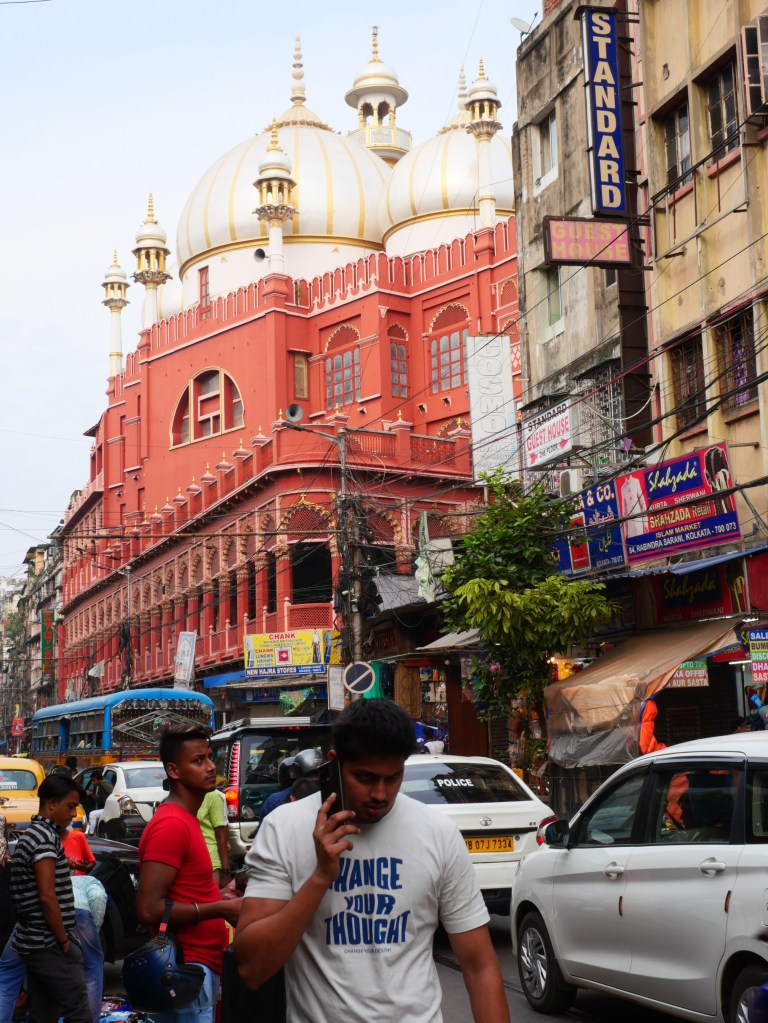
My first stop was the Nakhoda Musjid, the largest Muslim mosque in West Bengal and eastern India which was constructed in 1926. The Musjid has three domes and two minarets which are 151 feet high, with an additional 25 smaller minarets which range from 100 feet to 117 feet high and, despite being hemmed in by surrounding buildings has an amazing presence. It’s incredible to see the mosque appear far down the street and then continue to get larger and larger as you approach it and it was, beyond doubt, one of the most impressive mosques I have ever seen.


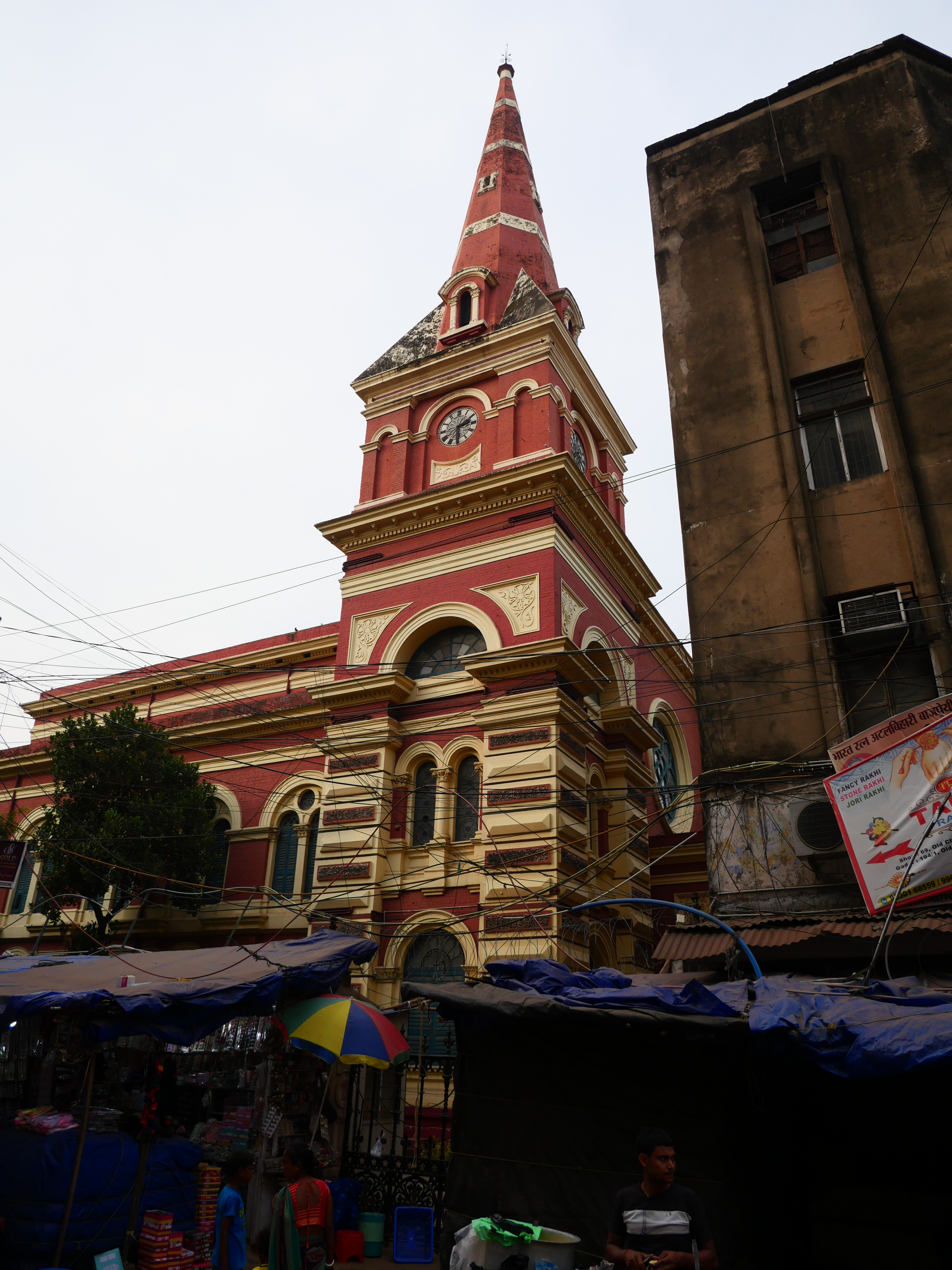
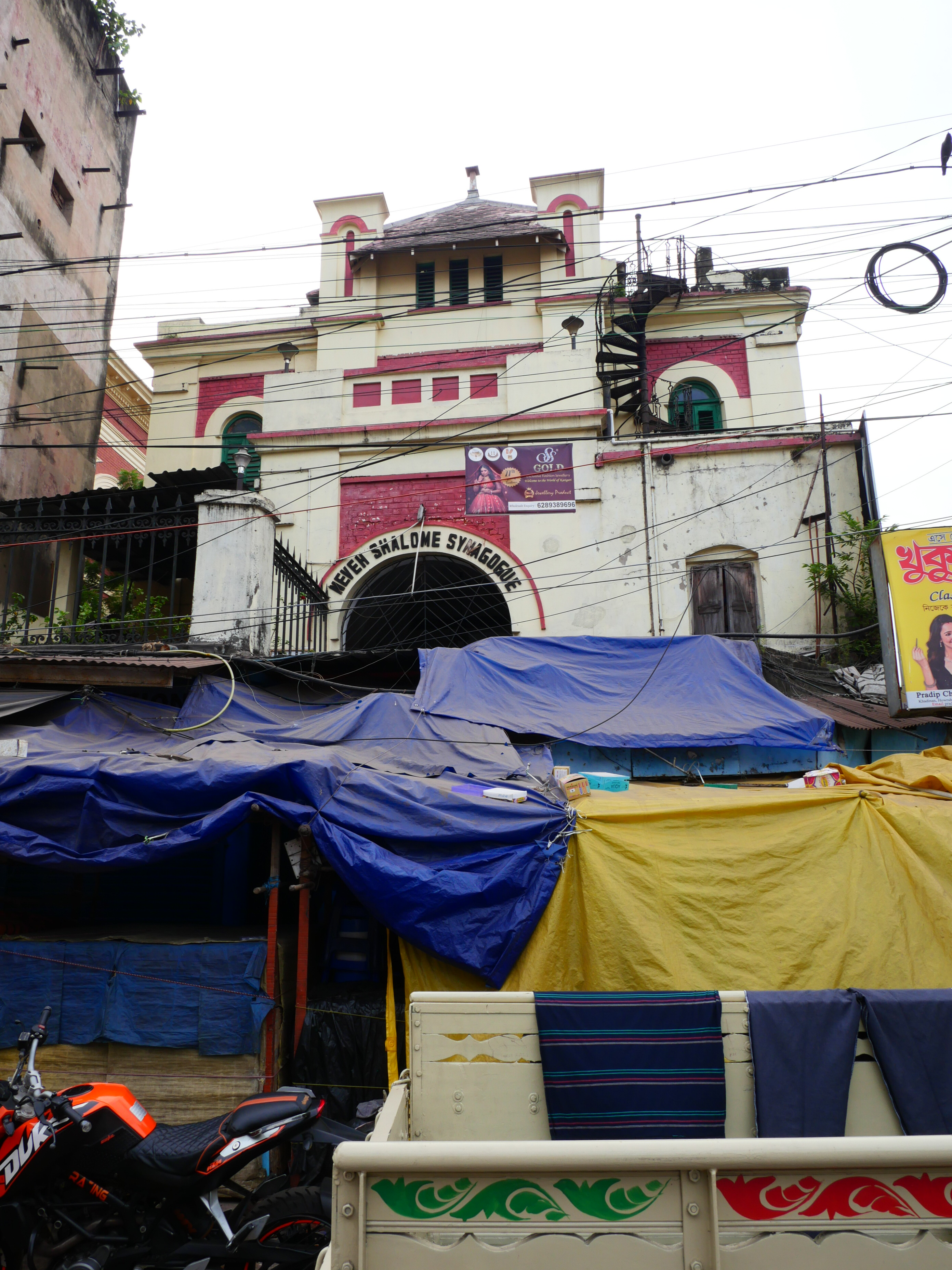
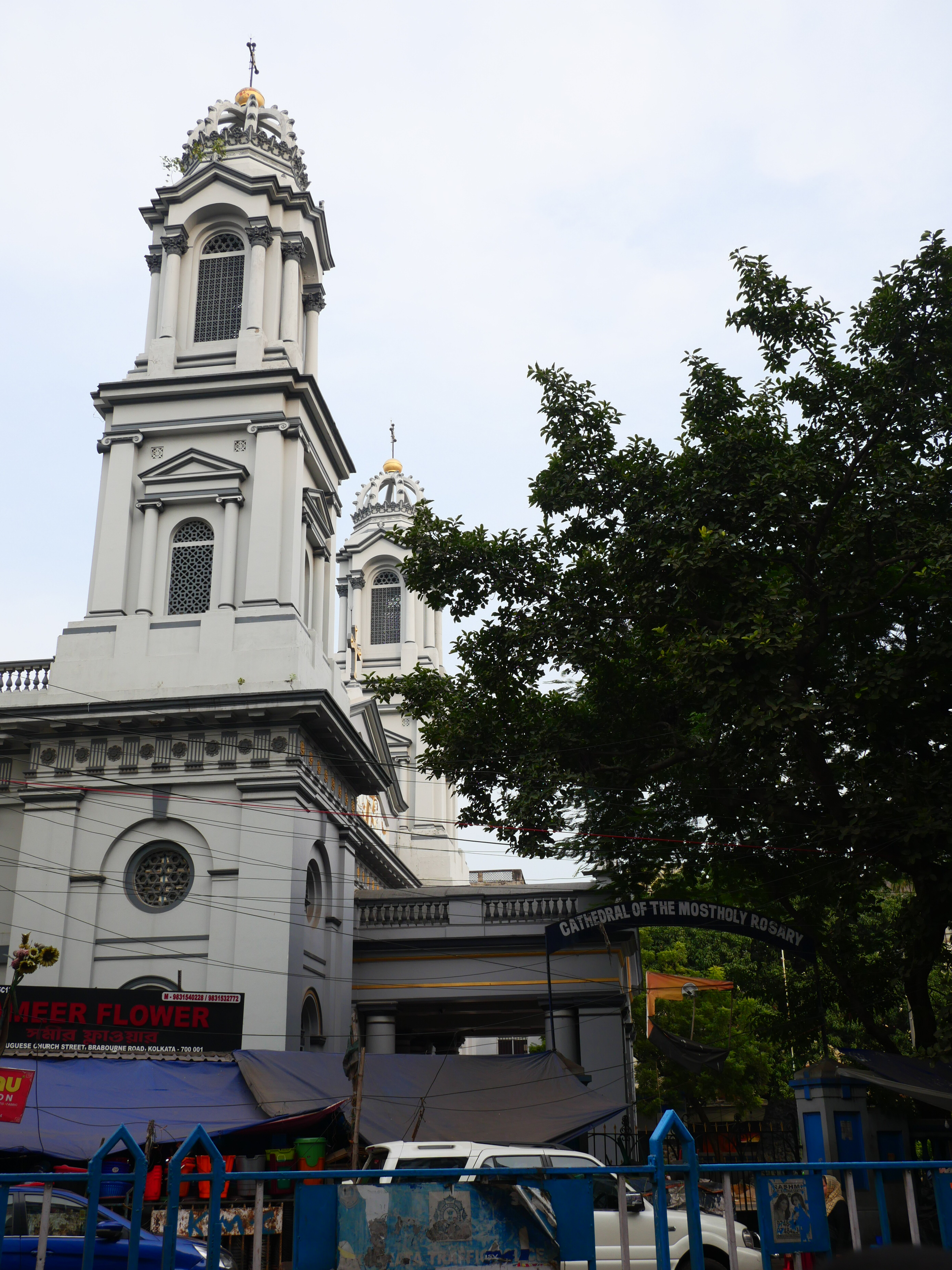
From there I proceeded west to the Maghen David Synagogue built in 1884 which I found fairly well hidden among other buildings. I was surprised to find that the Maghen David Synagogue had a clock tower and honestly looked more like a Christian church than a synagogue (but was a beautiful building nonetheless) and, after a bit of searching, located the Neveh Shalome Synagogue, Kolkata’a oldest synagogue, established in 1831, tucked behind it. I also had a quick peek at the Cathedral of the Holy Rosary, a beautiful Romanesque Catholic church constructed and consecrated in the 1790’s.
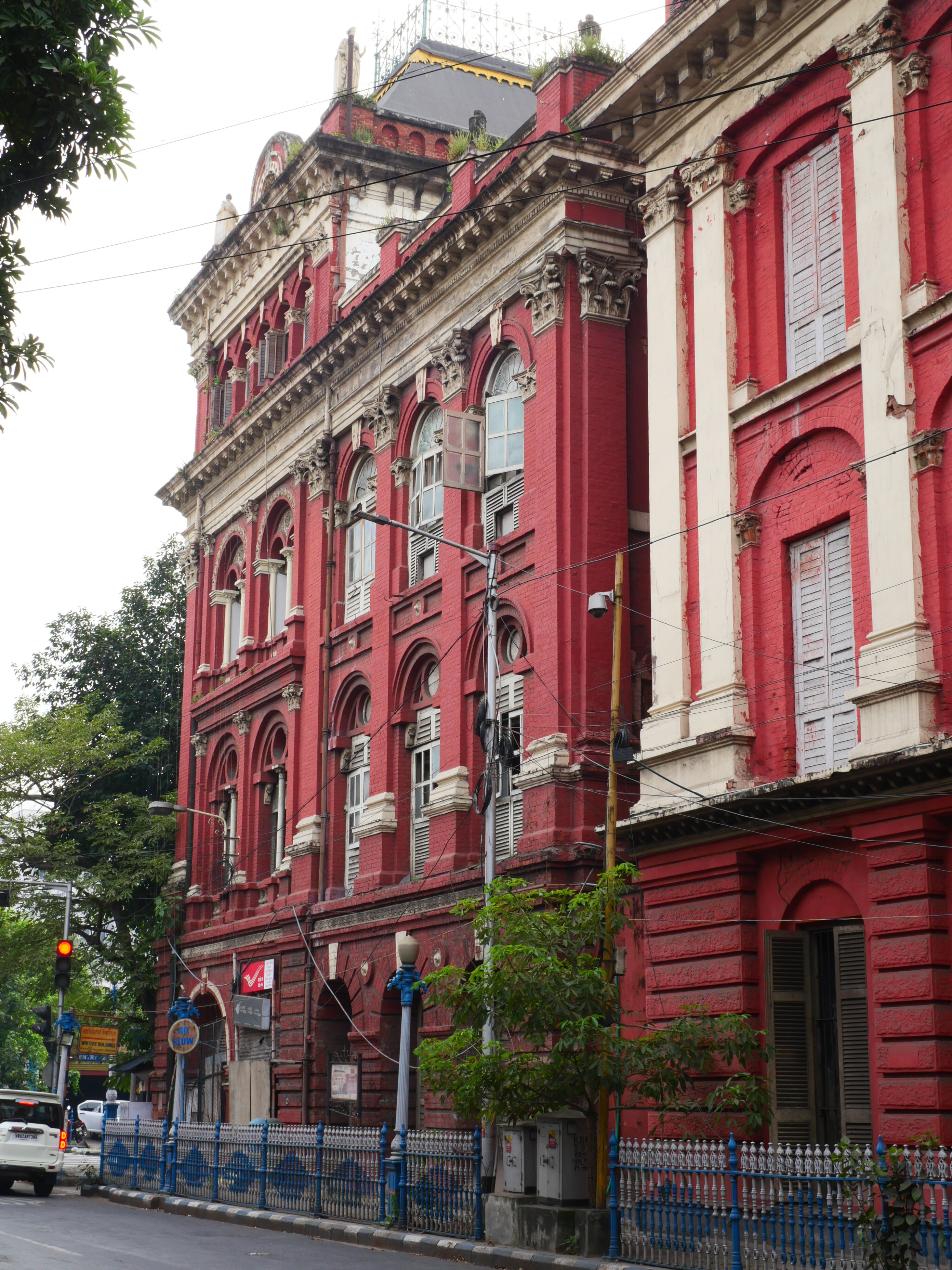
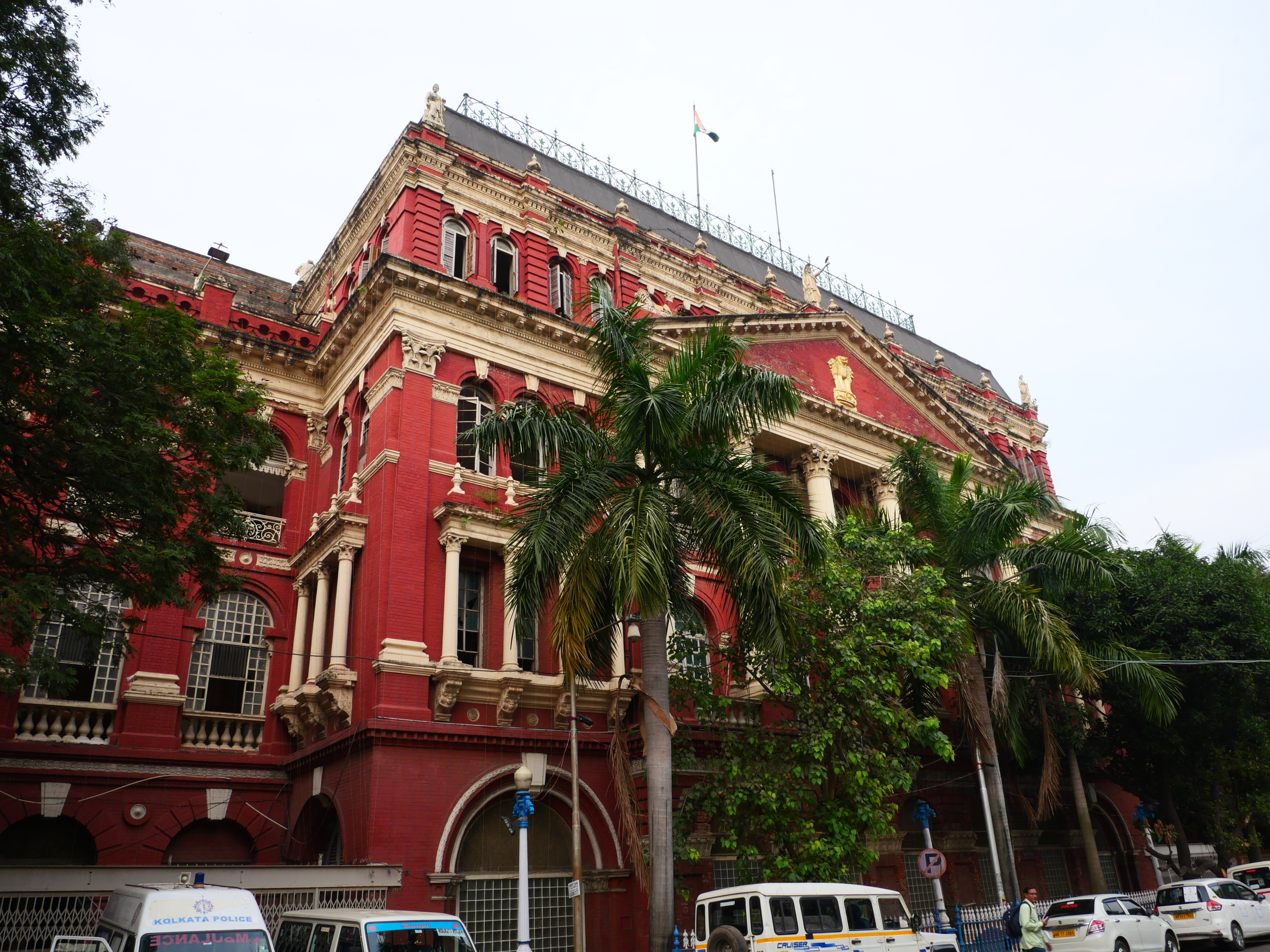
From there I proceeded south and then west again through what once was (and still is) the center of the old city of Kolkata with its many beautiful old colonial buildings which include the so-called Writer’s Building, which originally served as the principal administrative office for writers (junior clerks) of the British East India Company and is now the official secretariat building of the state government of West Bengal.


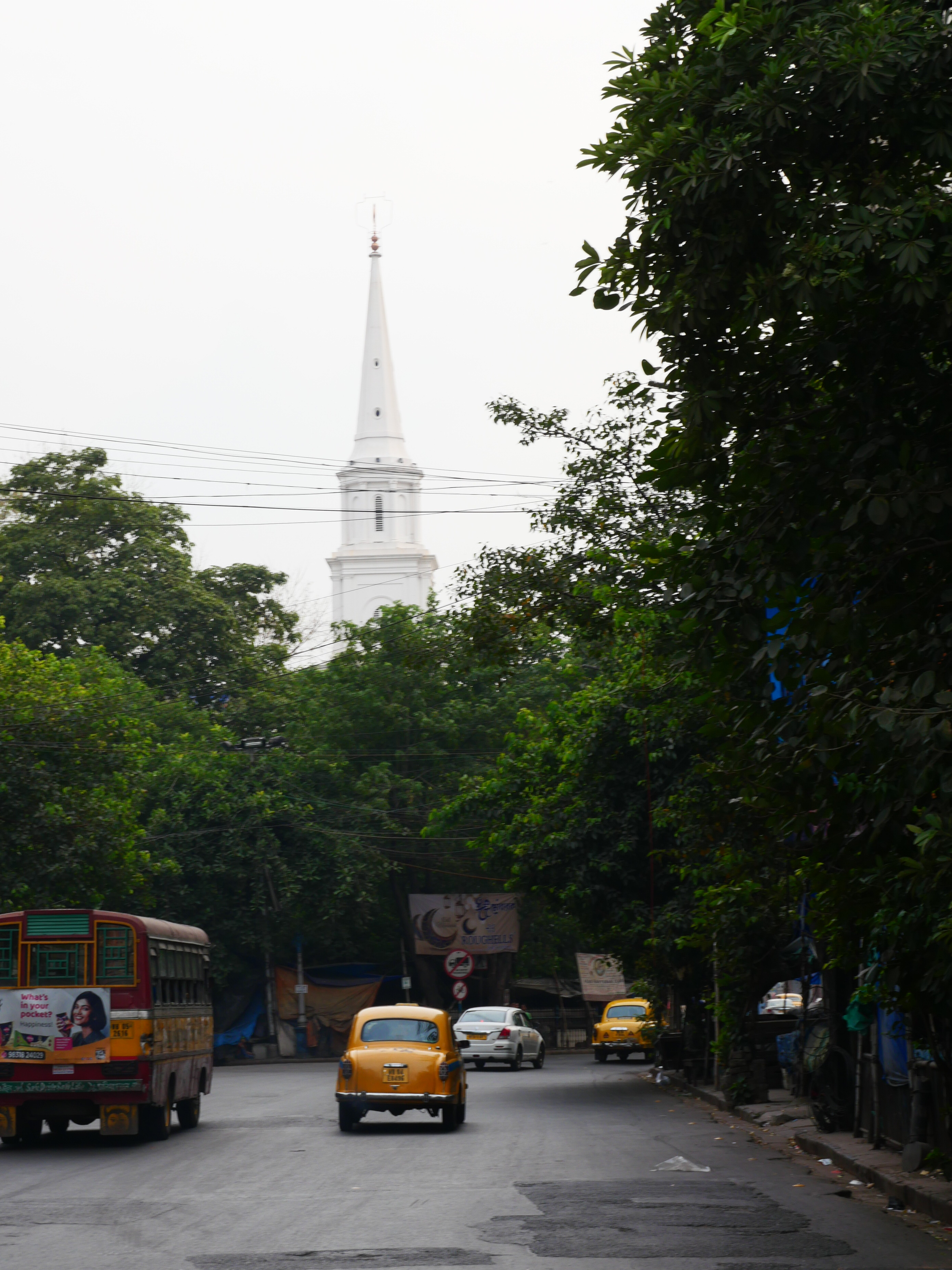
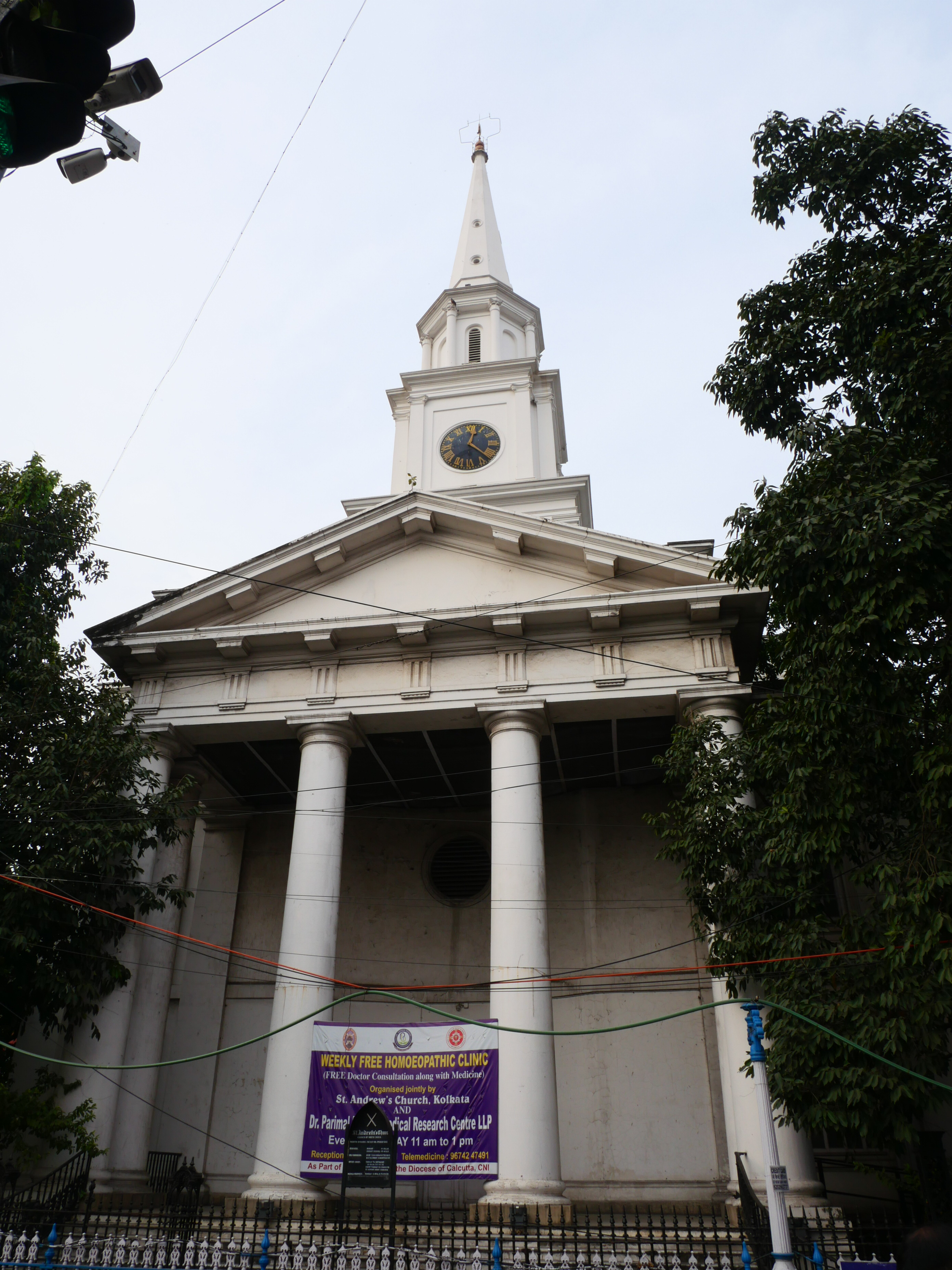

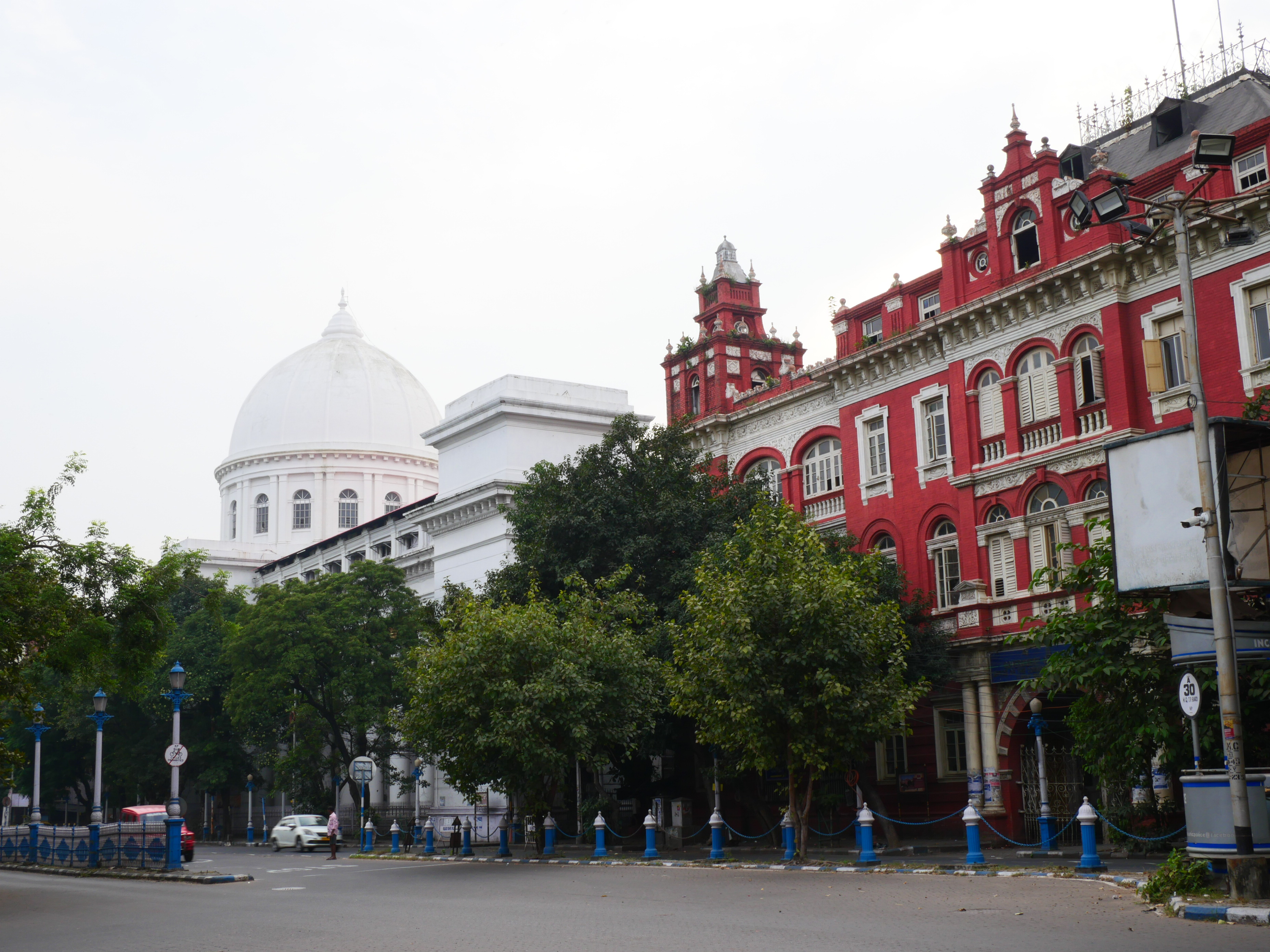
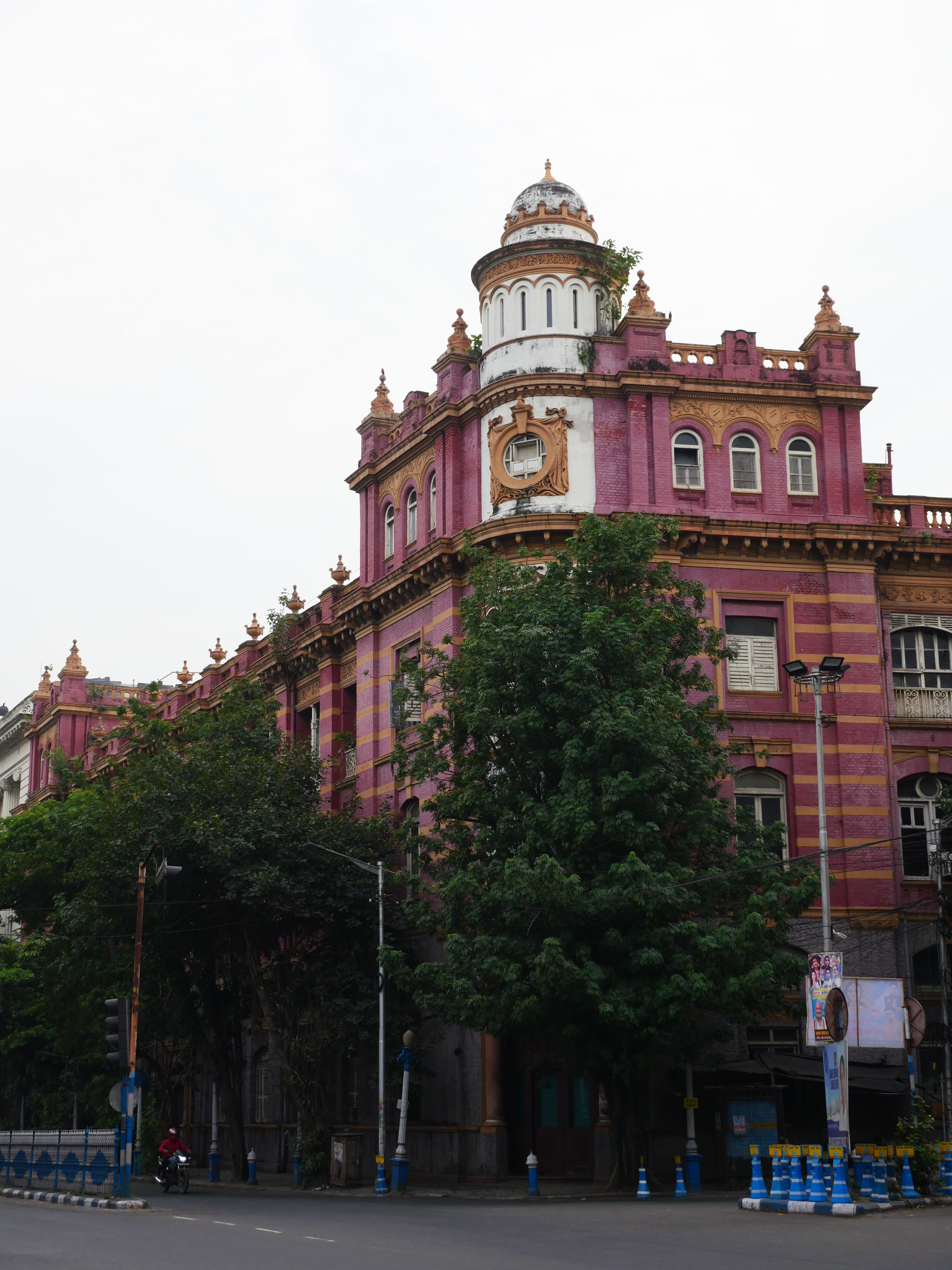
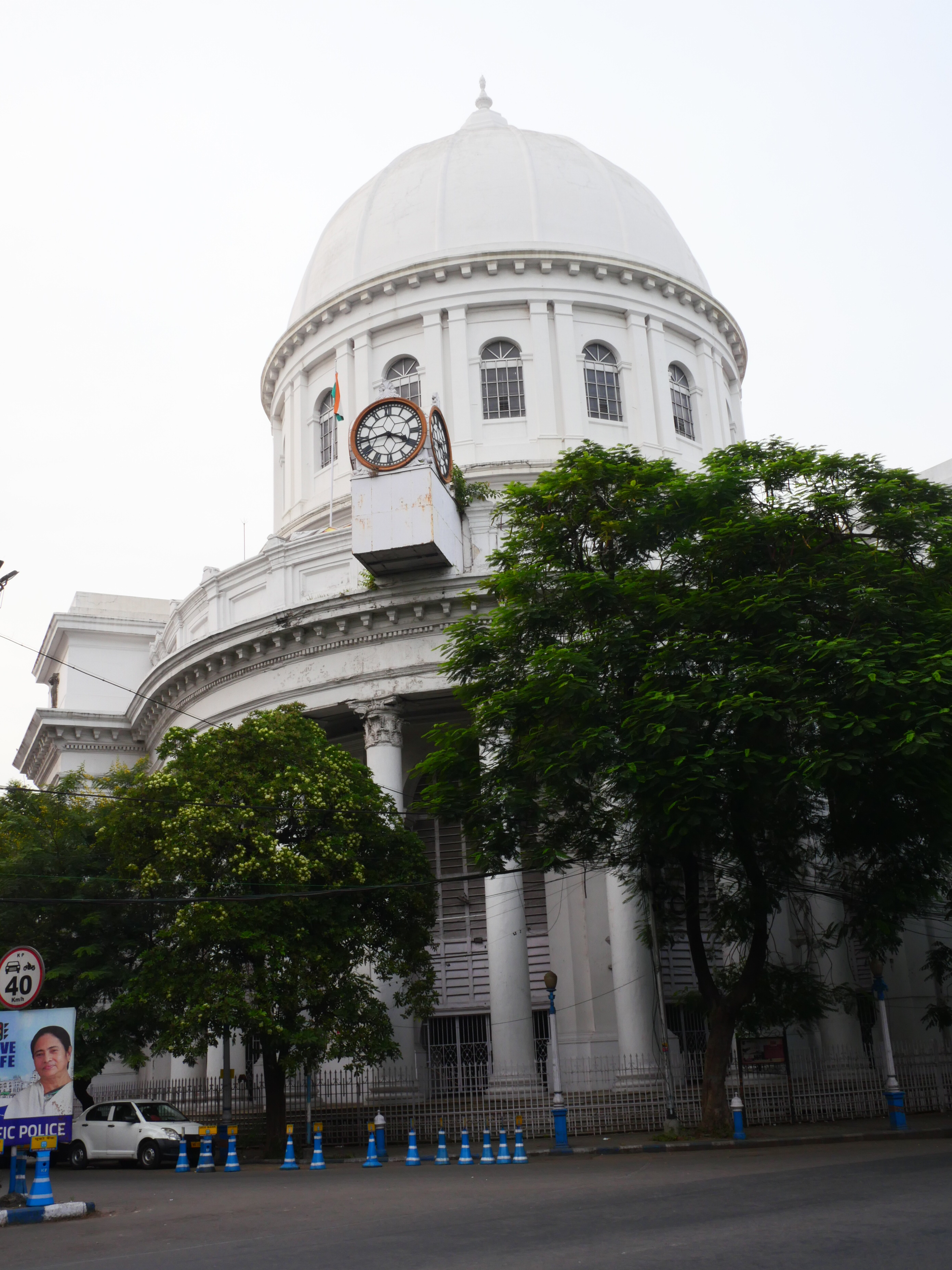
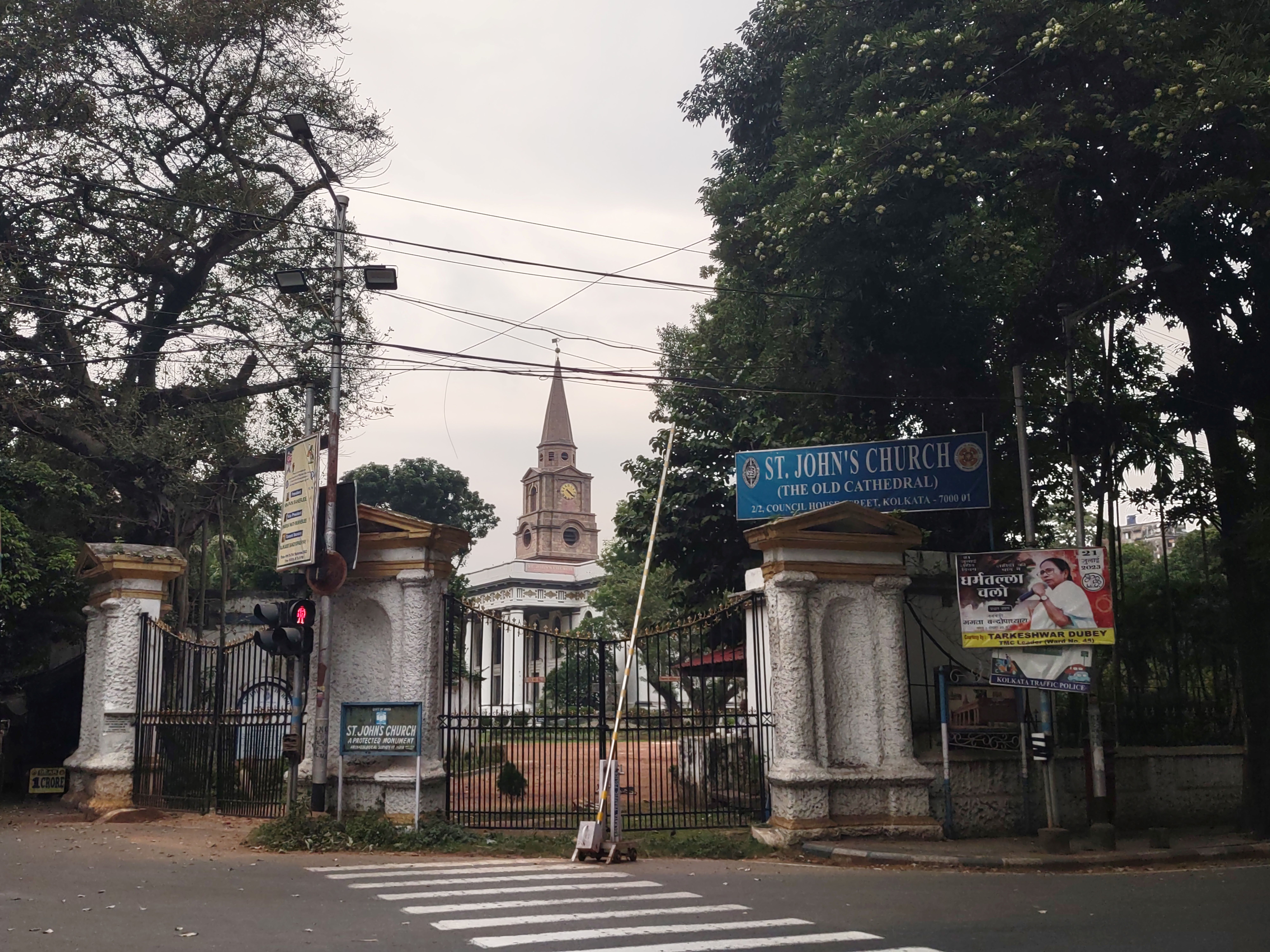
Along the way, I passed a number of other beautiful old colonial buildings and more religious structures including St. Andrew’s and St. John’s Churches, both of which were among the first public buildings erected by the East India Company in the 1780’s after Kolkata (Calcutta) became the effective capital of British India. I was pleasantly surprised that there were some newer buildings in the mix including some particularly nice art deco and international style buildings.
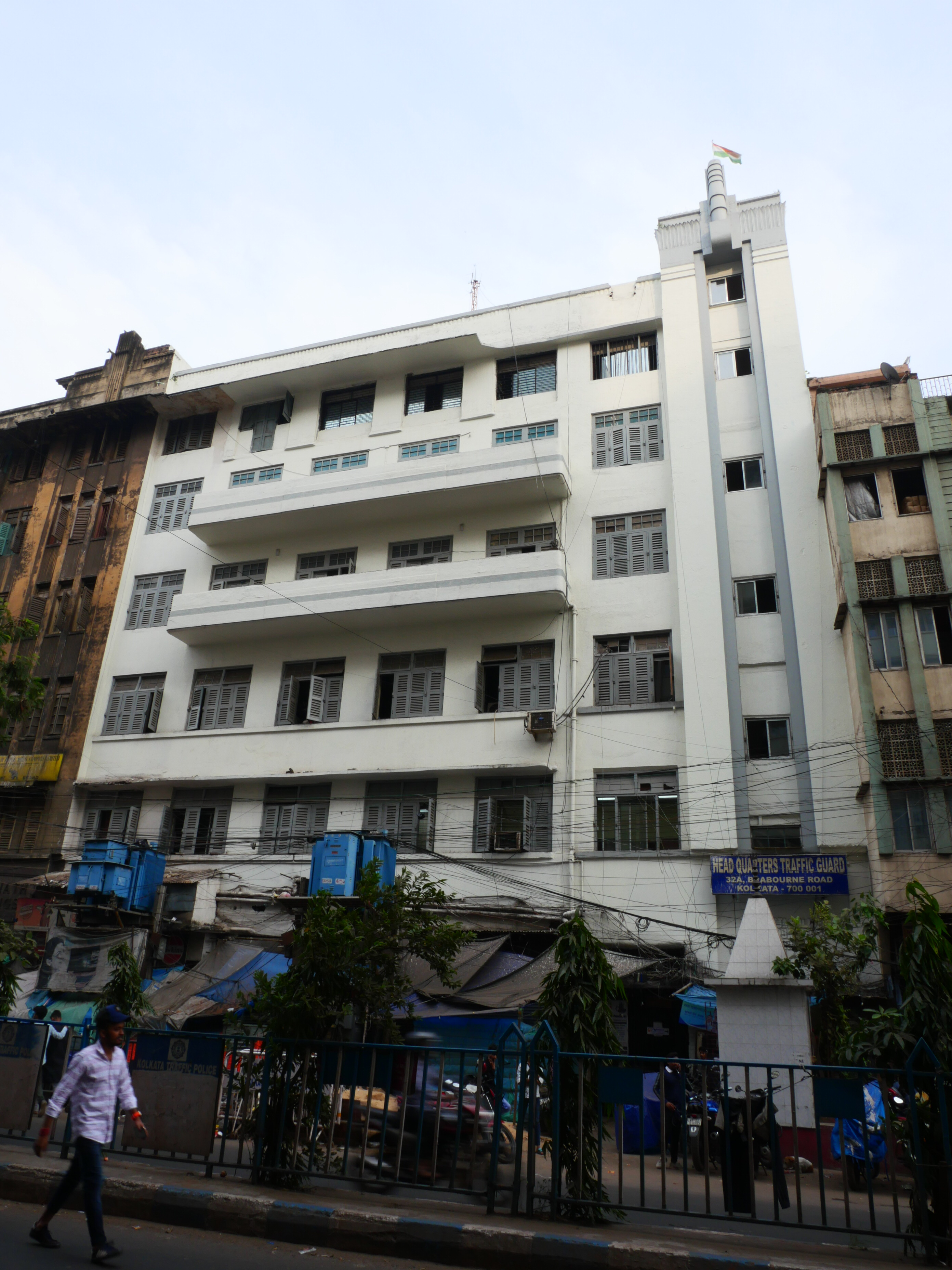
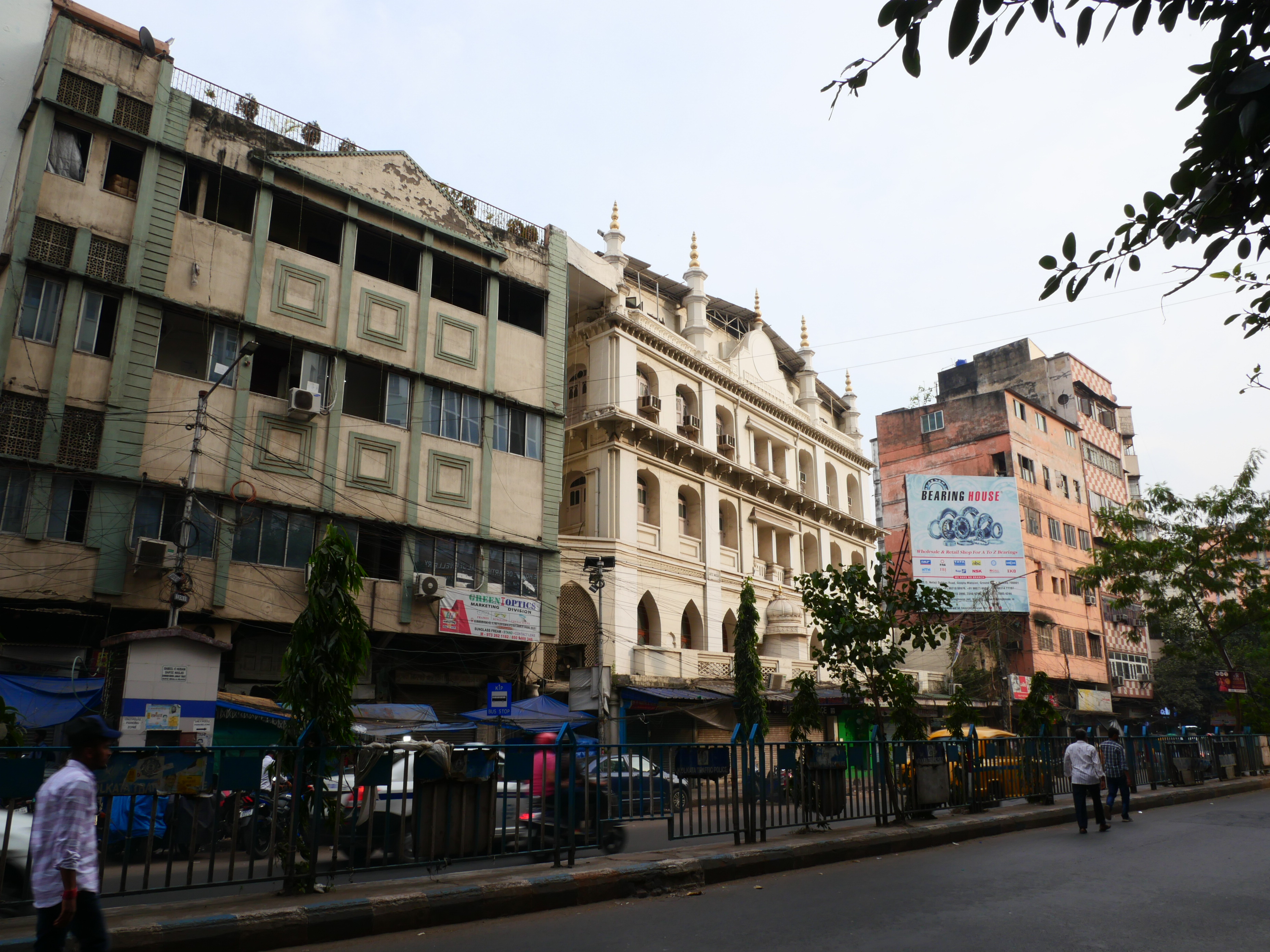
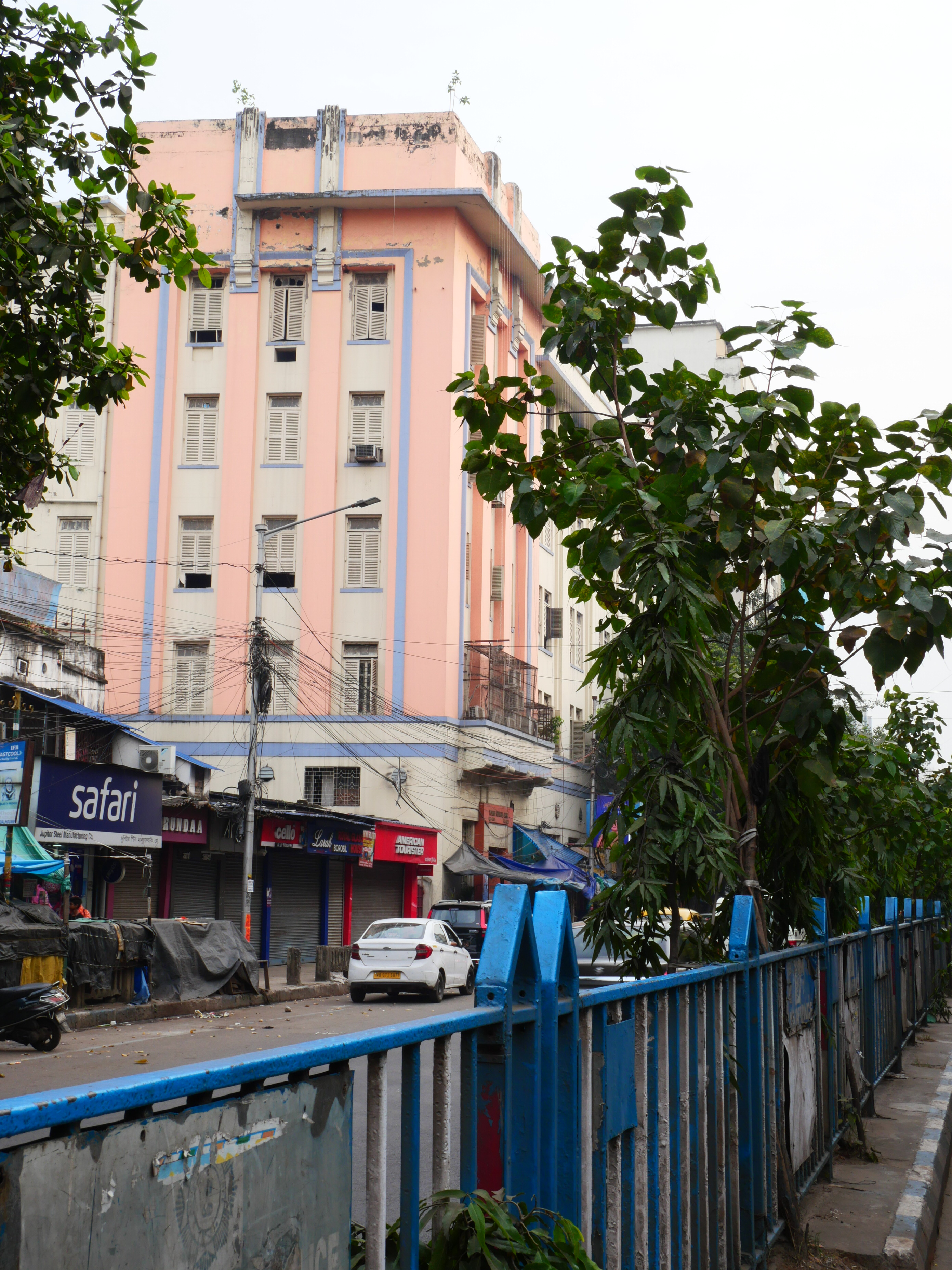

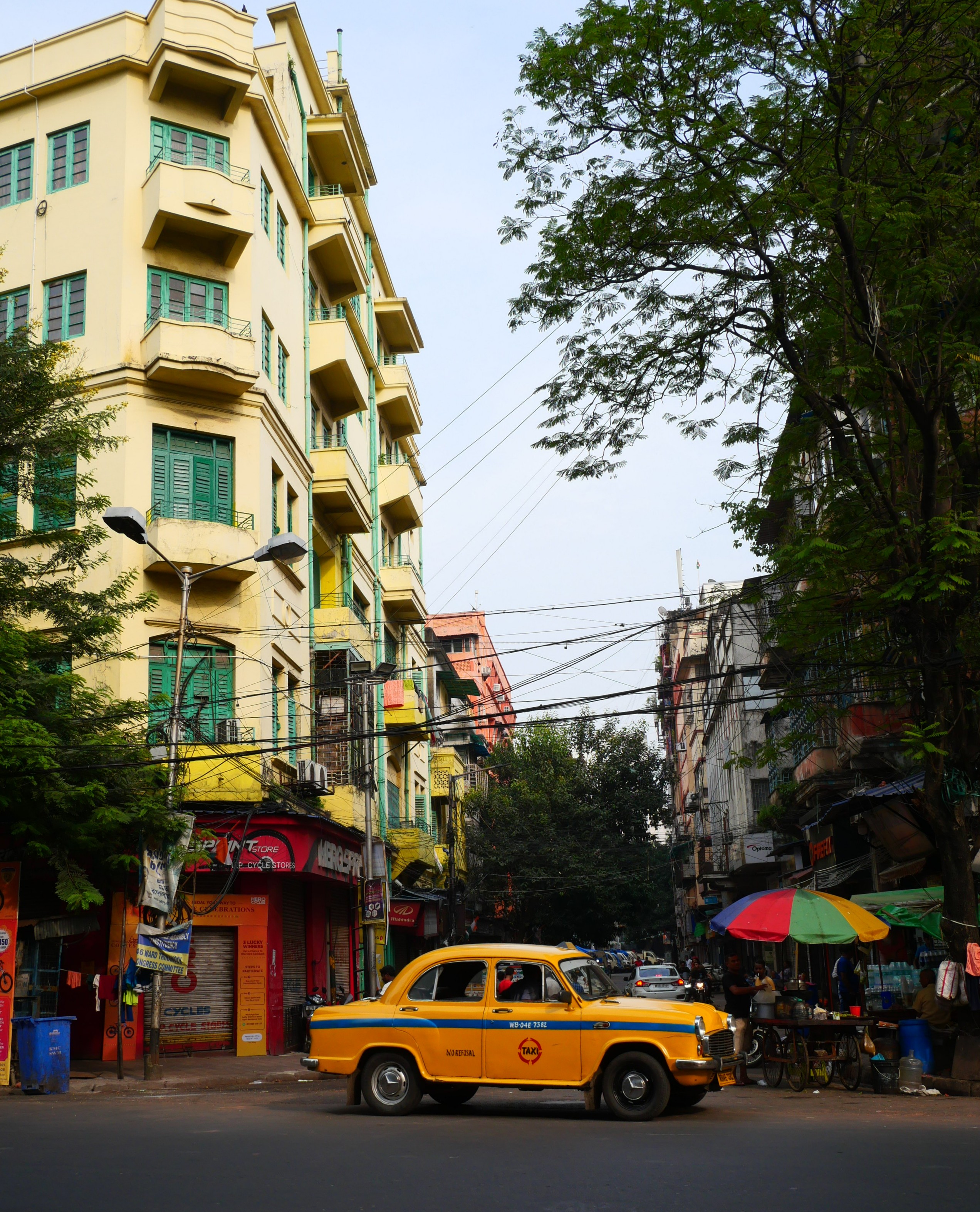
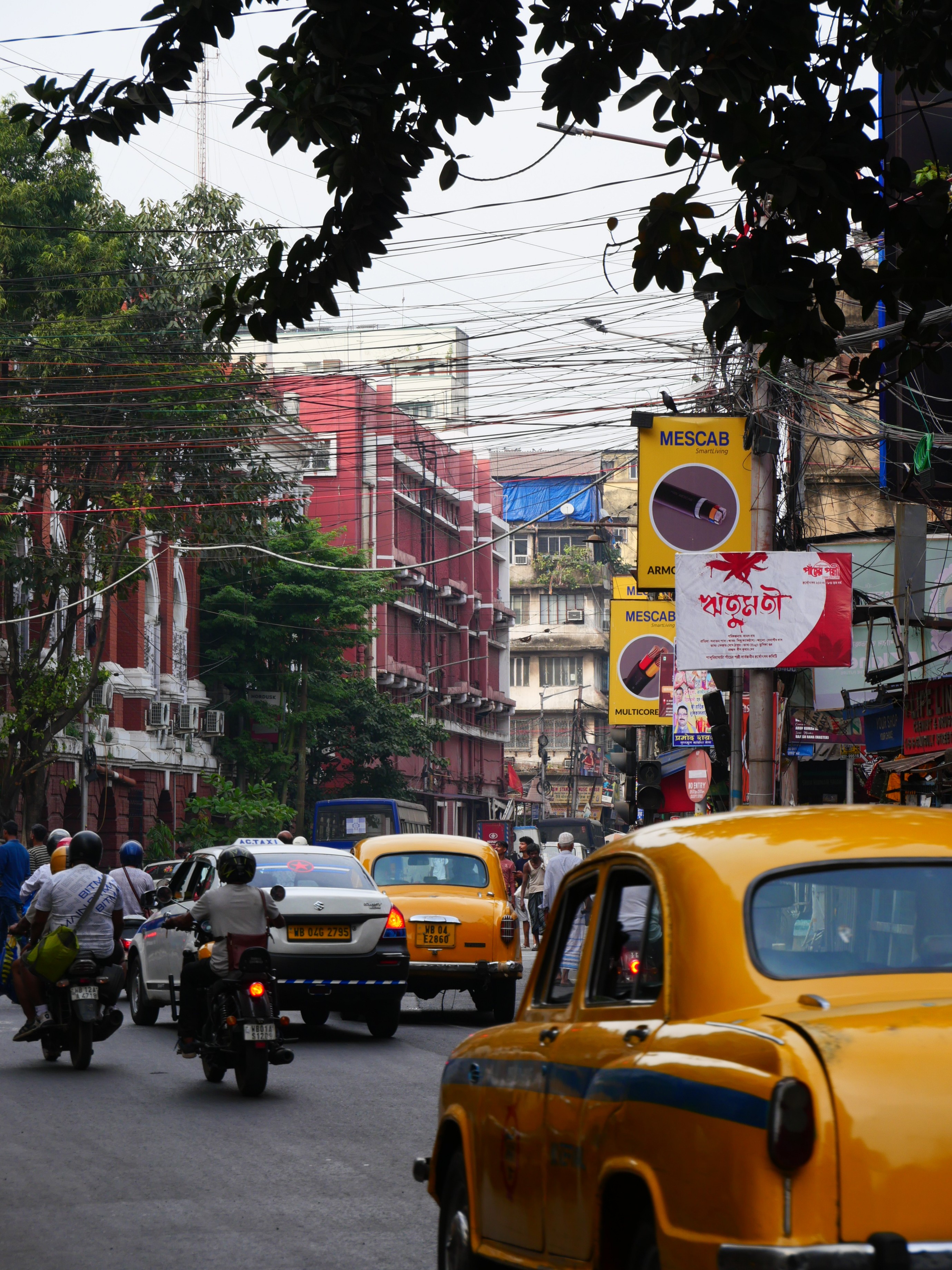
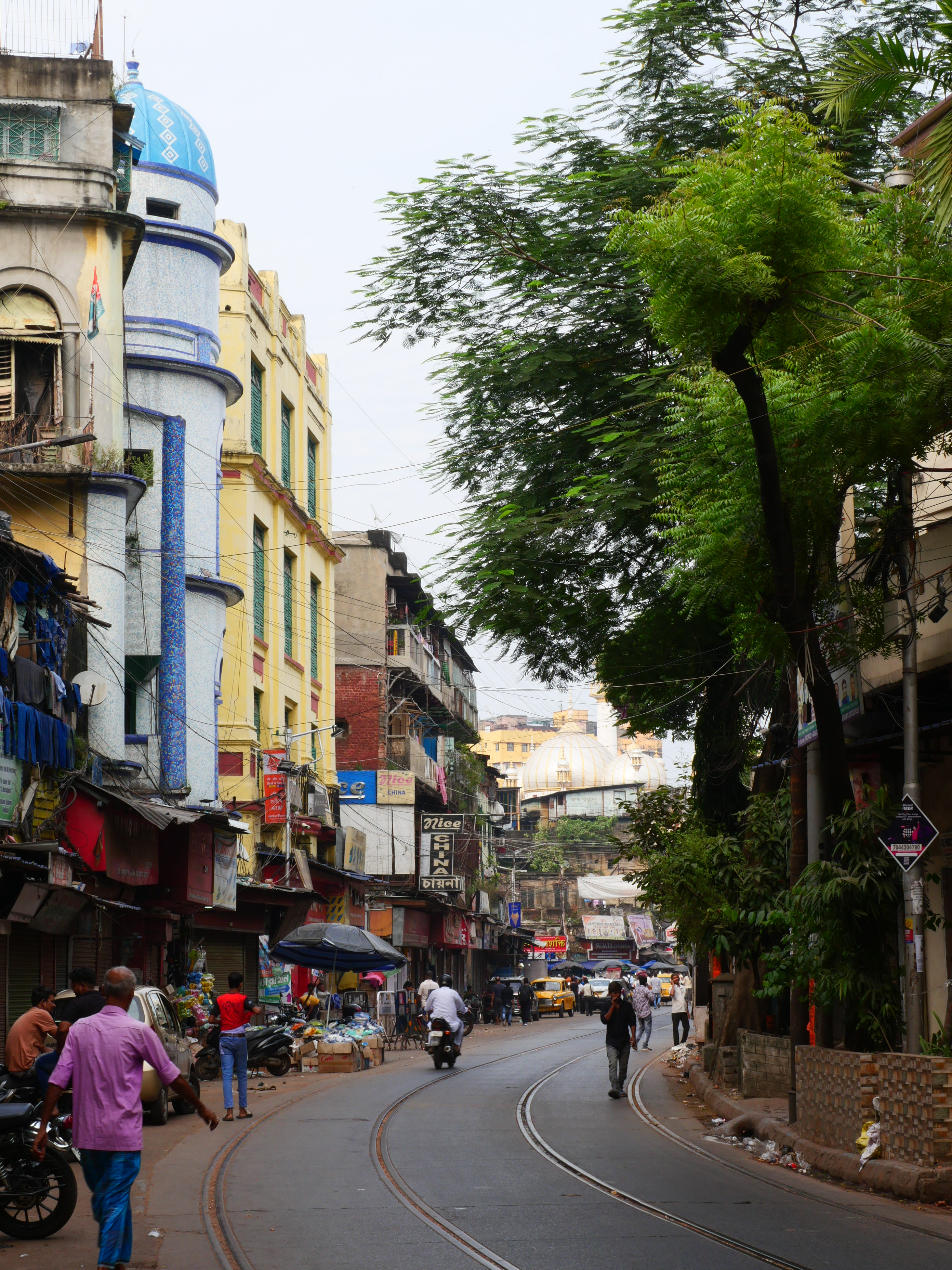
All in all, a very pleasant architectural tour and I finished it amazed at the number of beautiful old buildings which make up the center of Kolkata.
A Day in the Life
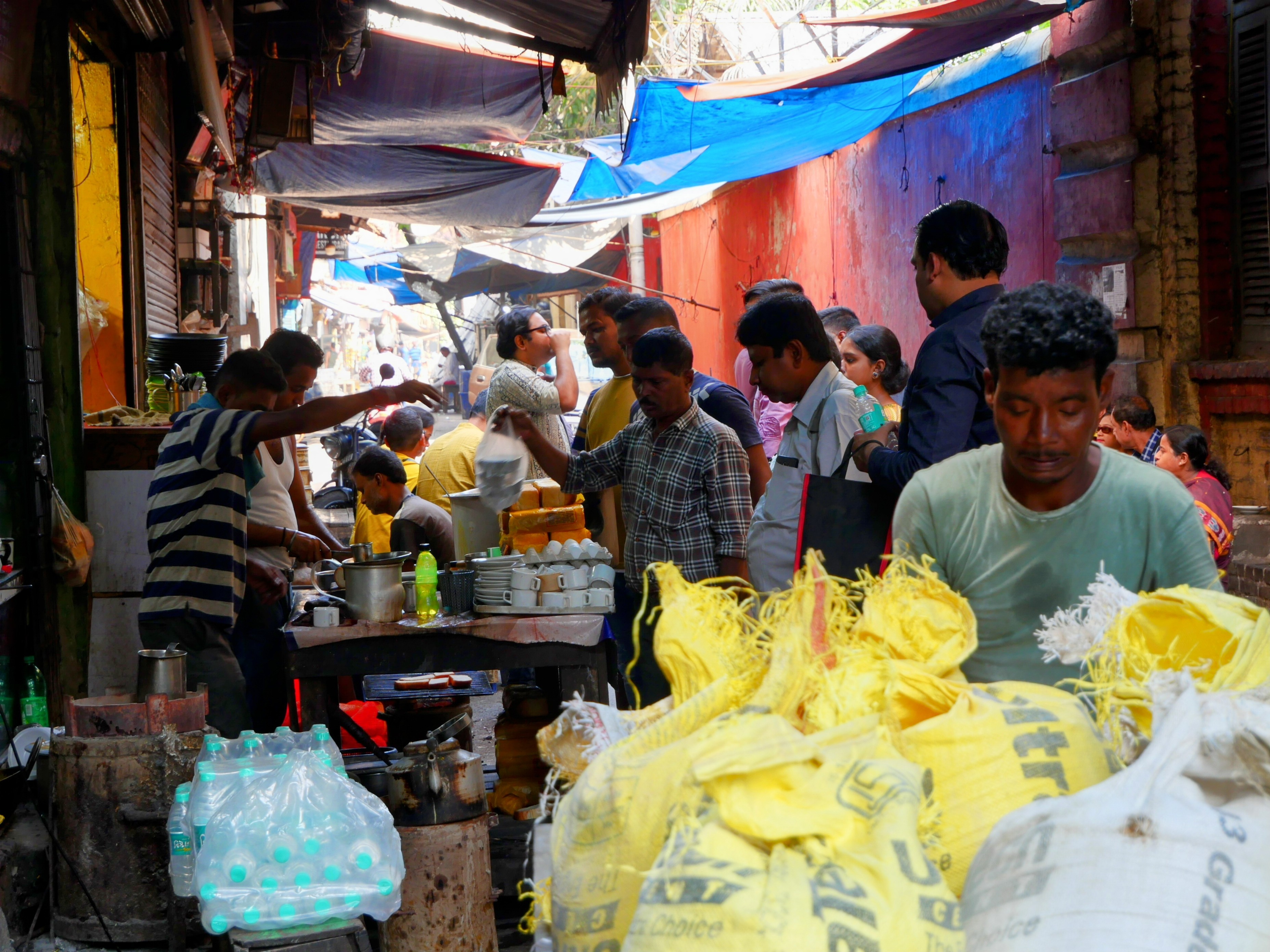
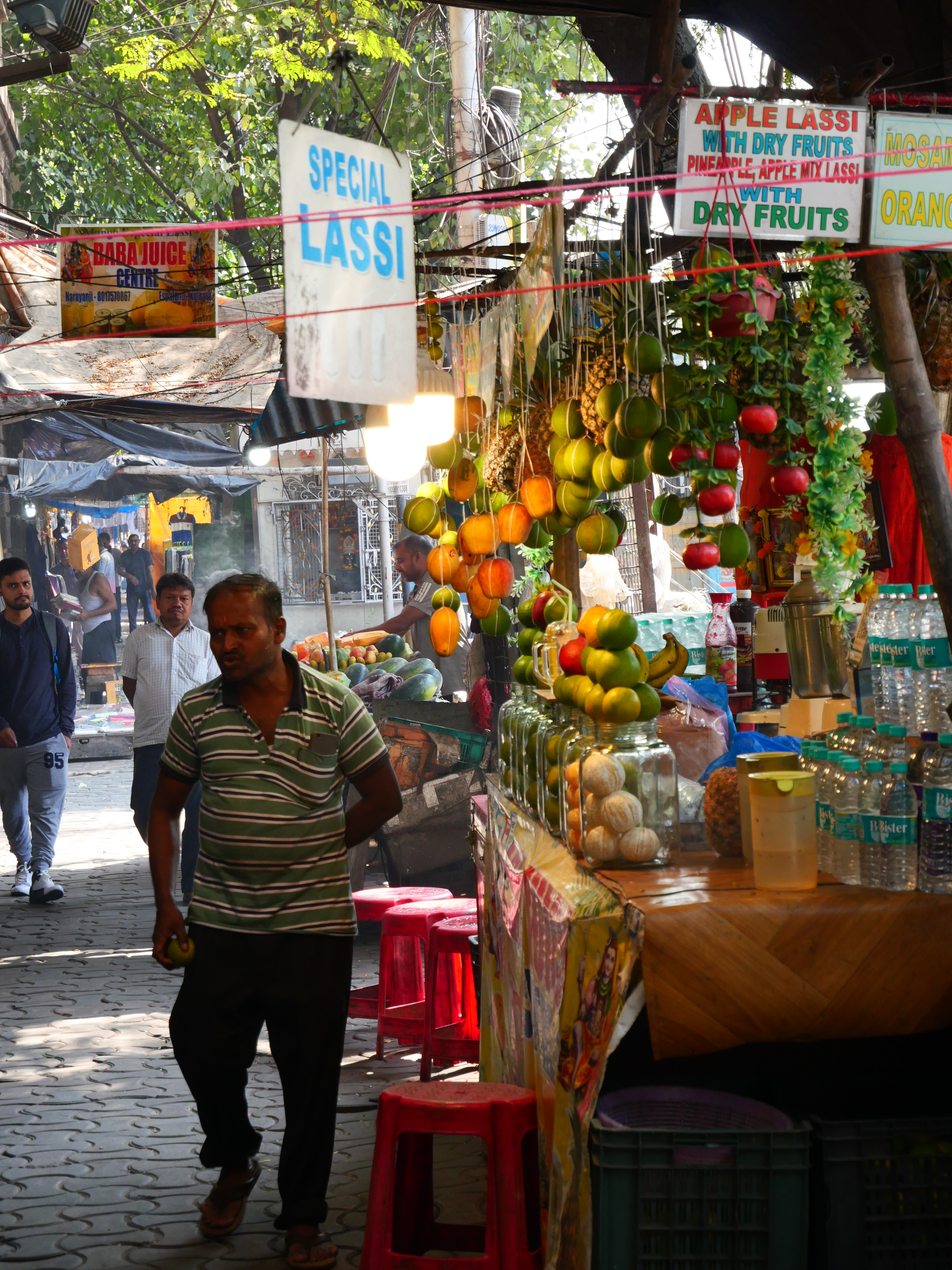
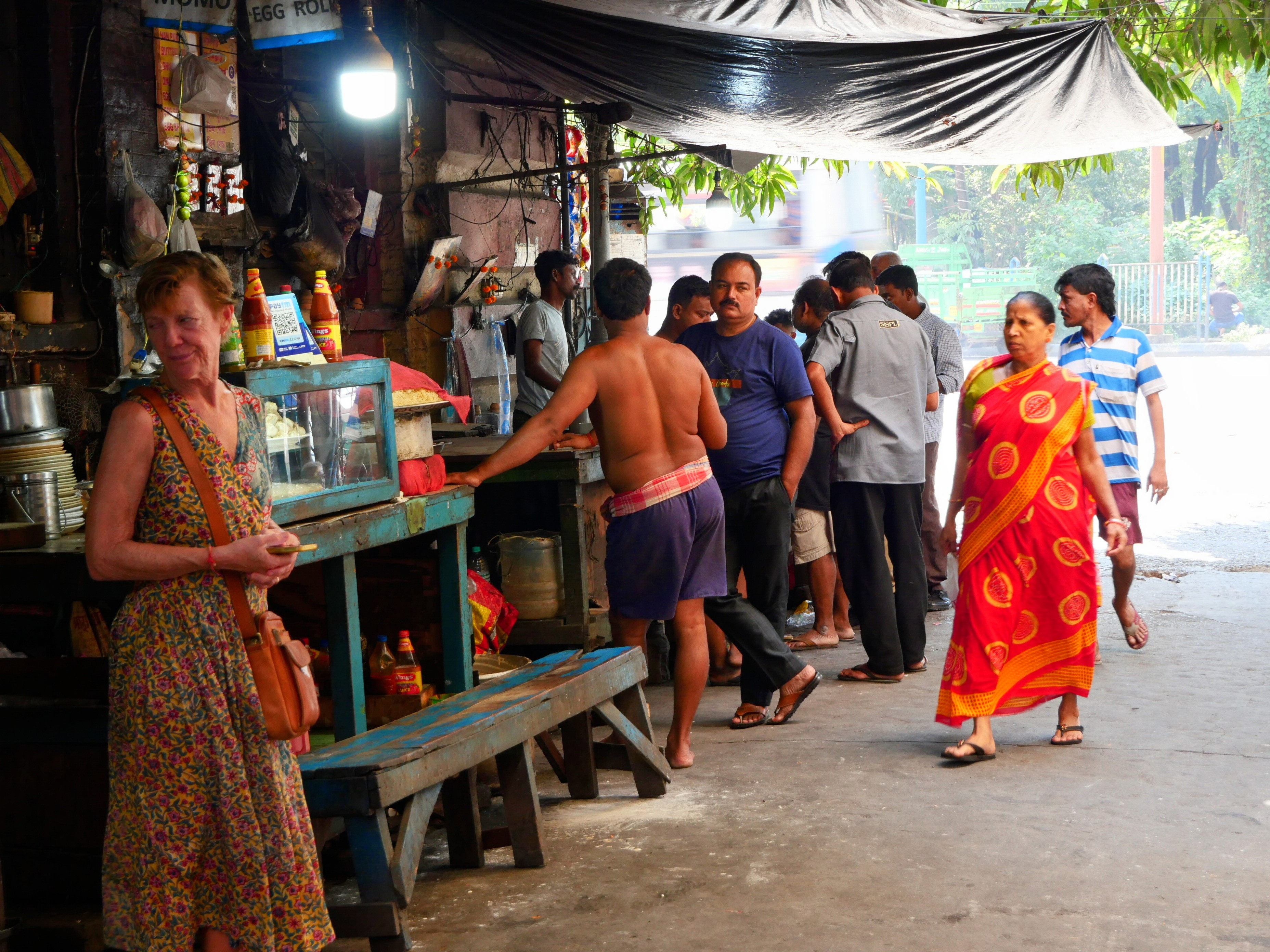
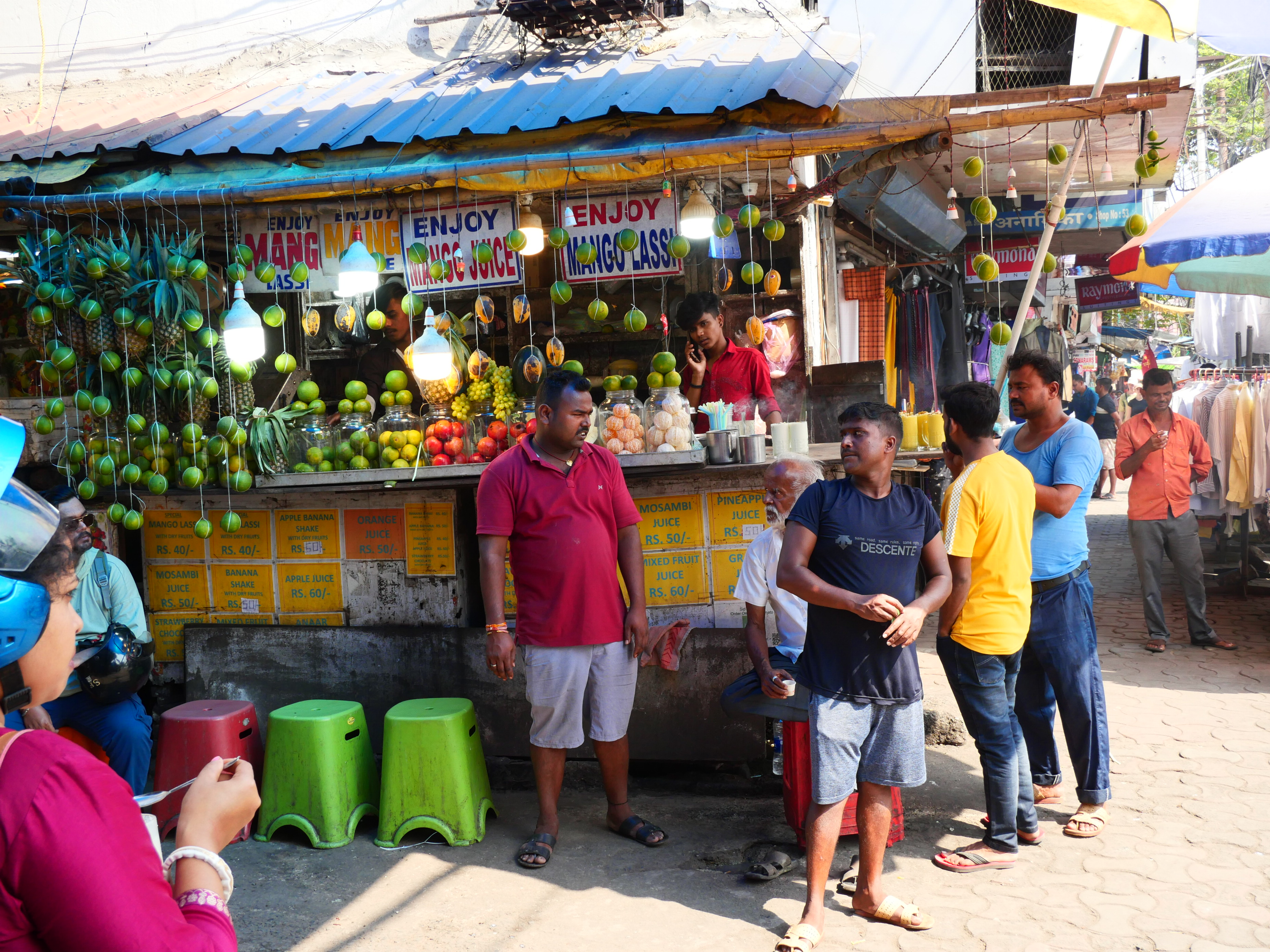
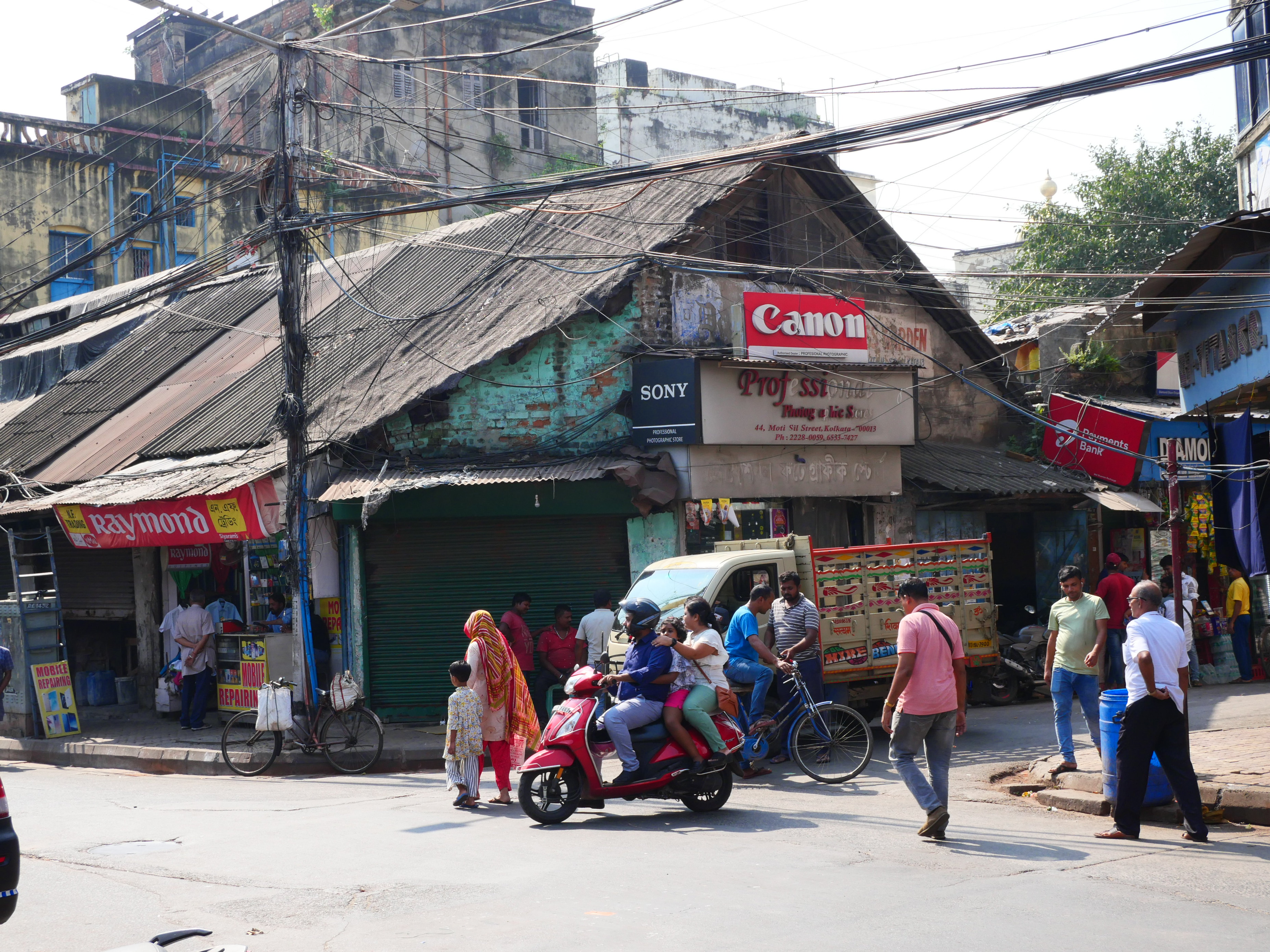
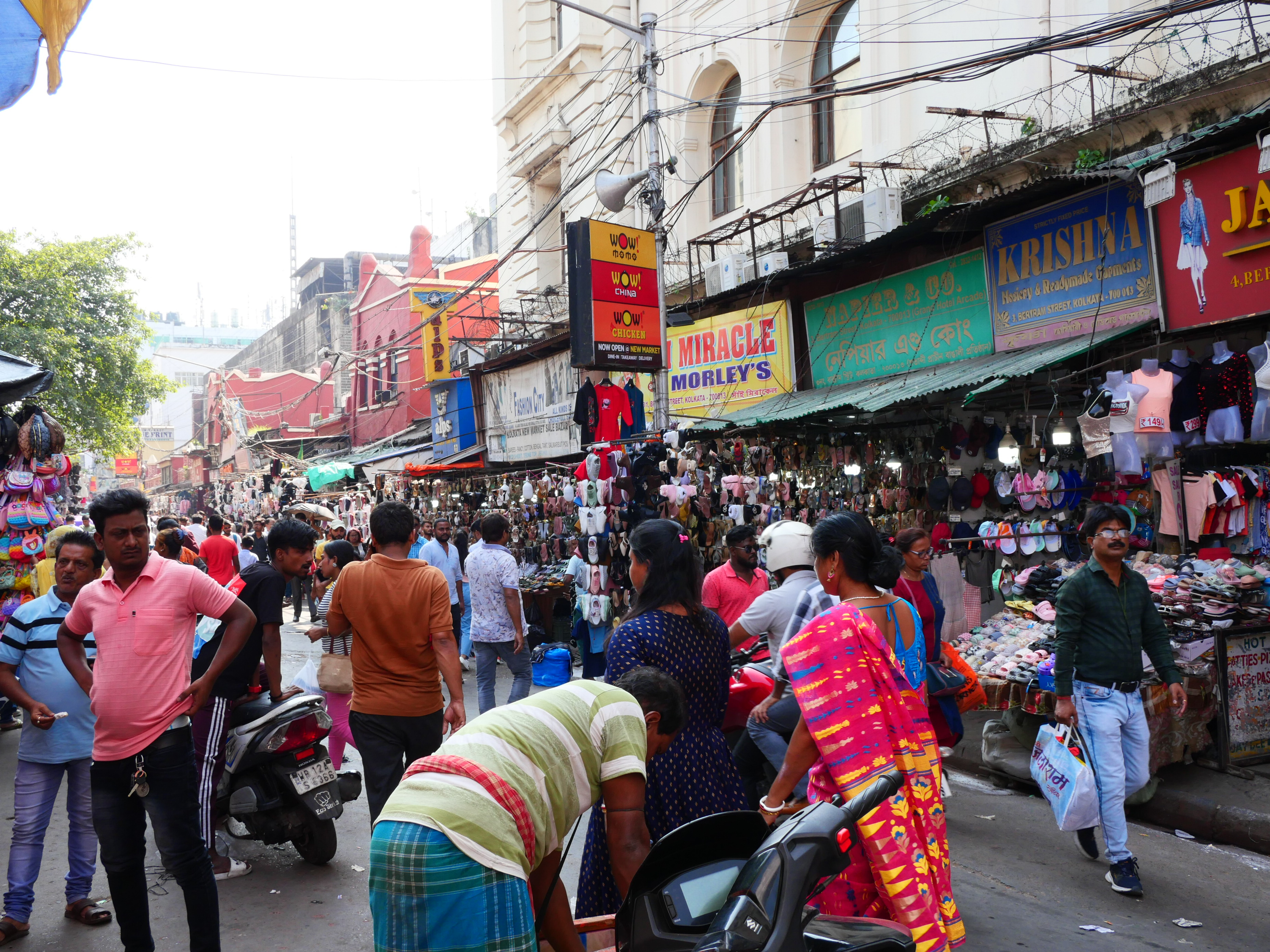
In between these more purposeful sojourns into the old city of Kolkata, there were some more mundane activities which included replacing a pair of sandals which had inexplicably and utterly failed on the rough streets of Kolkata (there’s a whole ‘nother story there) and, of course, just shopping. Durga Puja aside, Kolkata didn’t seem to be as much of a tourist destination as the other Indian cities we had visited and so we found ourselves shopping in what was, for the most part, local markets offering more common everyday goods for sale and little in the way of tourist trinkets and junk.
While (again) a bit dirty and gritty at times, our wanderings in the local streets and markets were a way to really feel and be part of the machinations of this incredibly urban city and its daily life. The people we met and interacted with were very kind and helpful and, despite standing out more than a bit in the crowd, we really enjoyed this very immersive way of knowing a city.


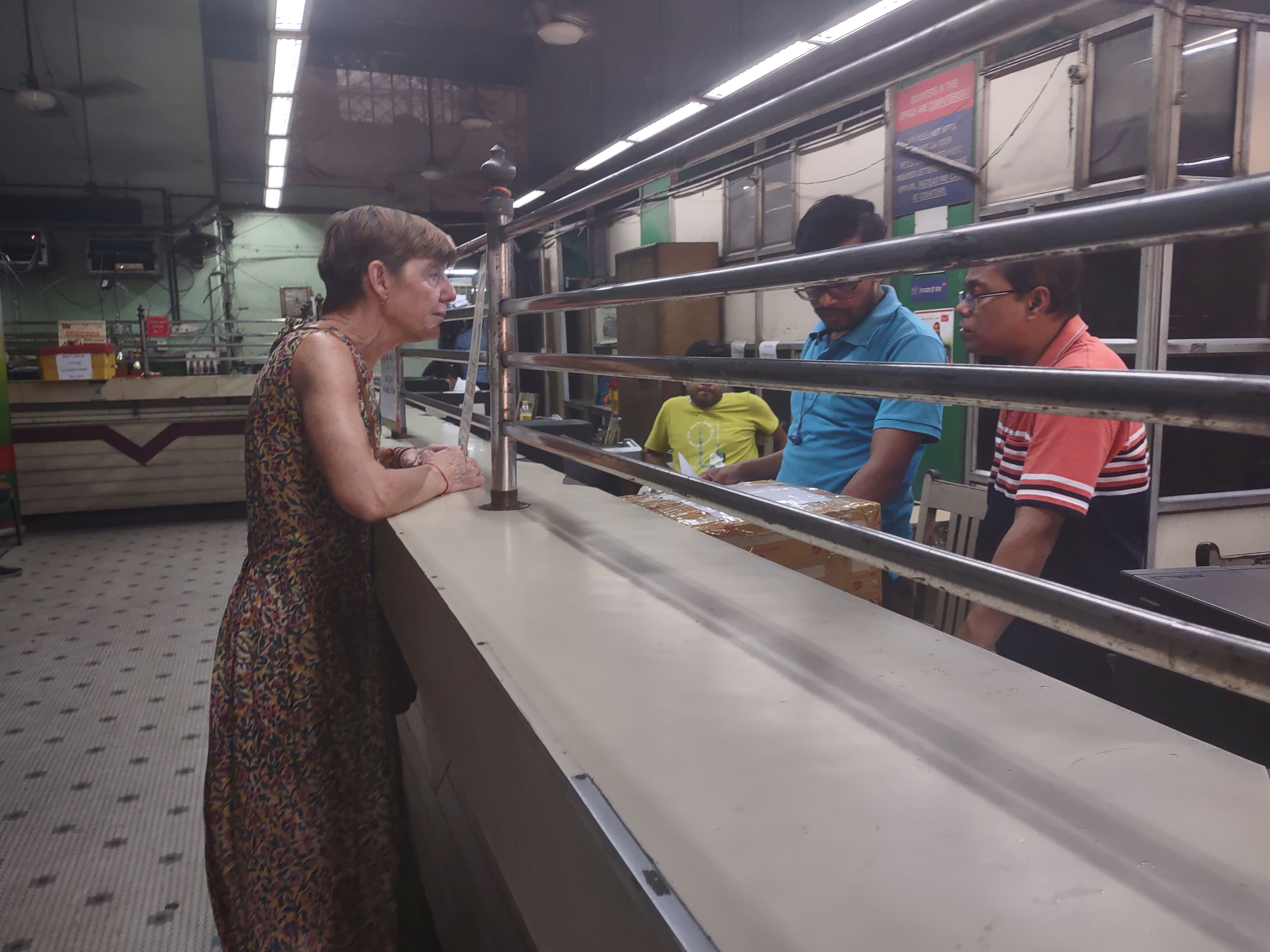
Predictably, the shopping which had occurred since we mailed our last parcel home back in Jaipur meant another trip to the post office to ship home another parcel full of treasures. Having at this point learned our lessons regarding post offices and often generous but unpredictable hours, we (thankfully) checked in at the local post office on Saturday morning and discovered that they would be closing that afternoon for the remainder of Durga Puja and would not be reopening until after the next Wednesday (we were scheduled to fly out on Tuesday).
And so we returned to our hotel and quickly pulled together a pile of items to ship home (necessary in order to get down to two bags for flying). We headed back to our local post office which, according to online information was also supposed to have a packing materials and services (which seemed as much of a surprise to them as to us). Once there, Colleen marshalled the postal troops and, with the assistance of a guy who was the doppelganger of Nestor Asuncion, an architect I worked with at the SDA (we have seen a lot of doppelgangers on this trip – probably worth an installment). She got everything boxed and packaged securely, and worked through all the necessary paperwork and before you knew it, our package was on its way to Emily, our daughter on City Island, New York.
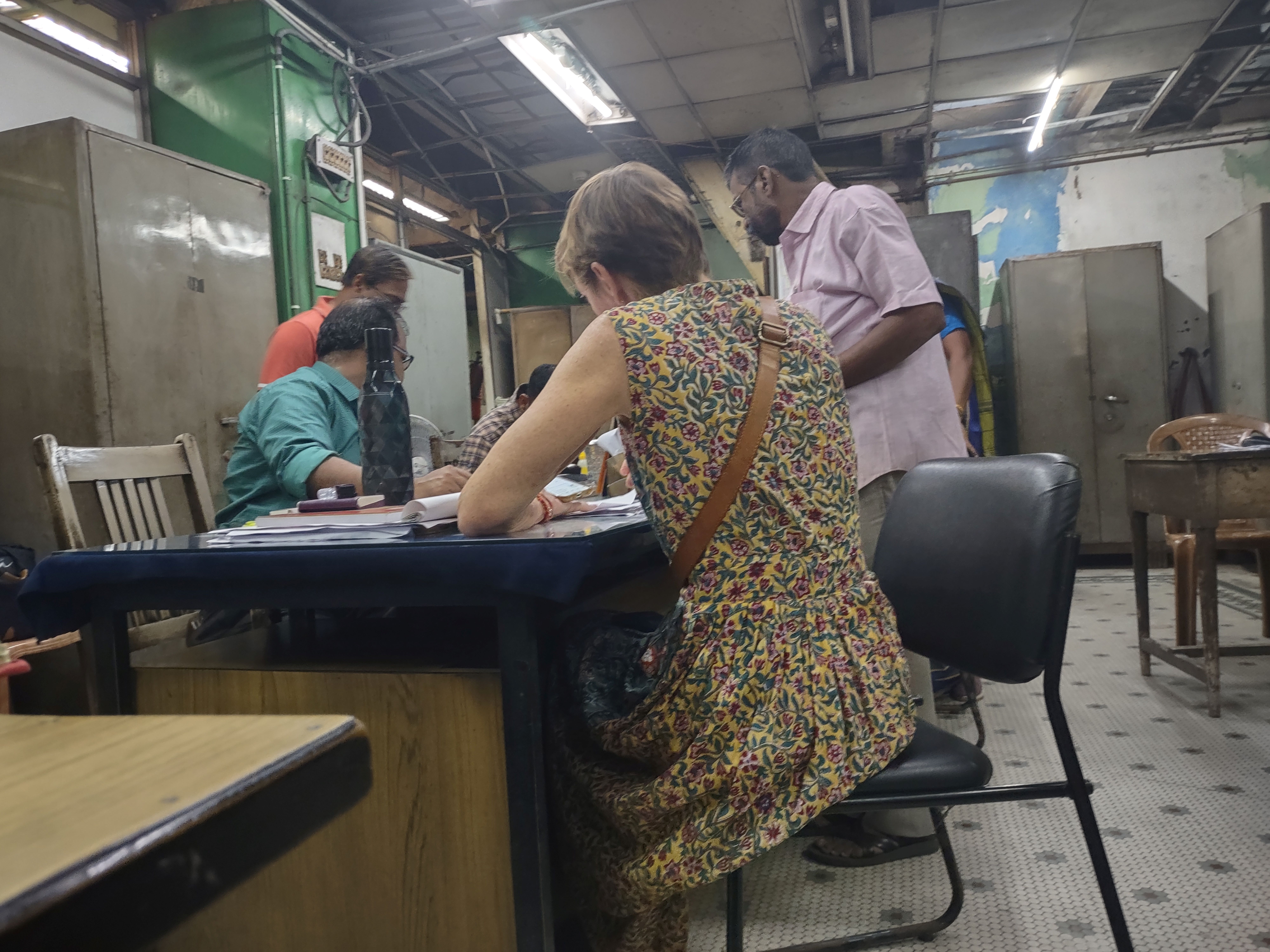
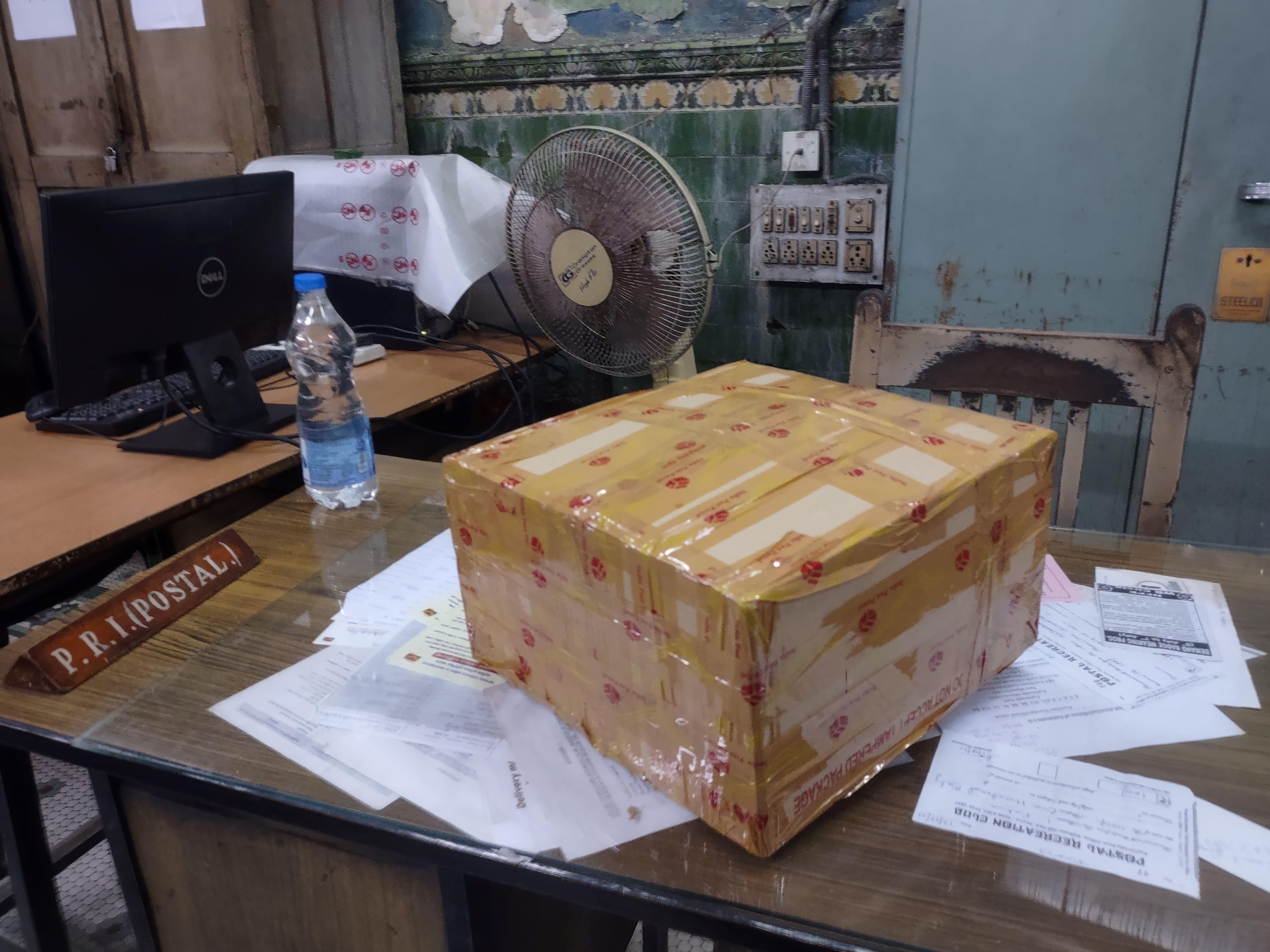
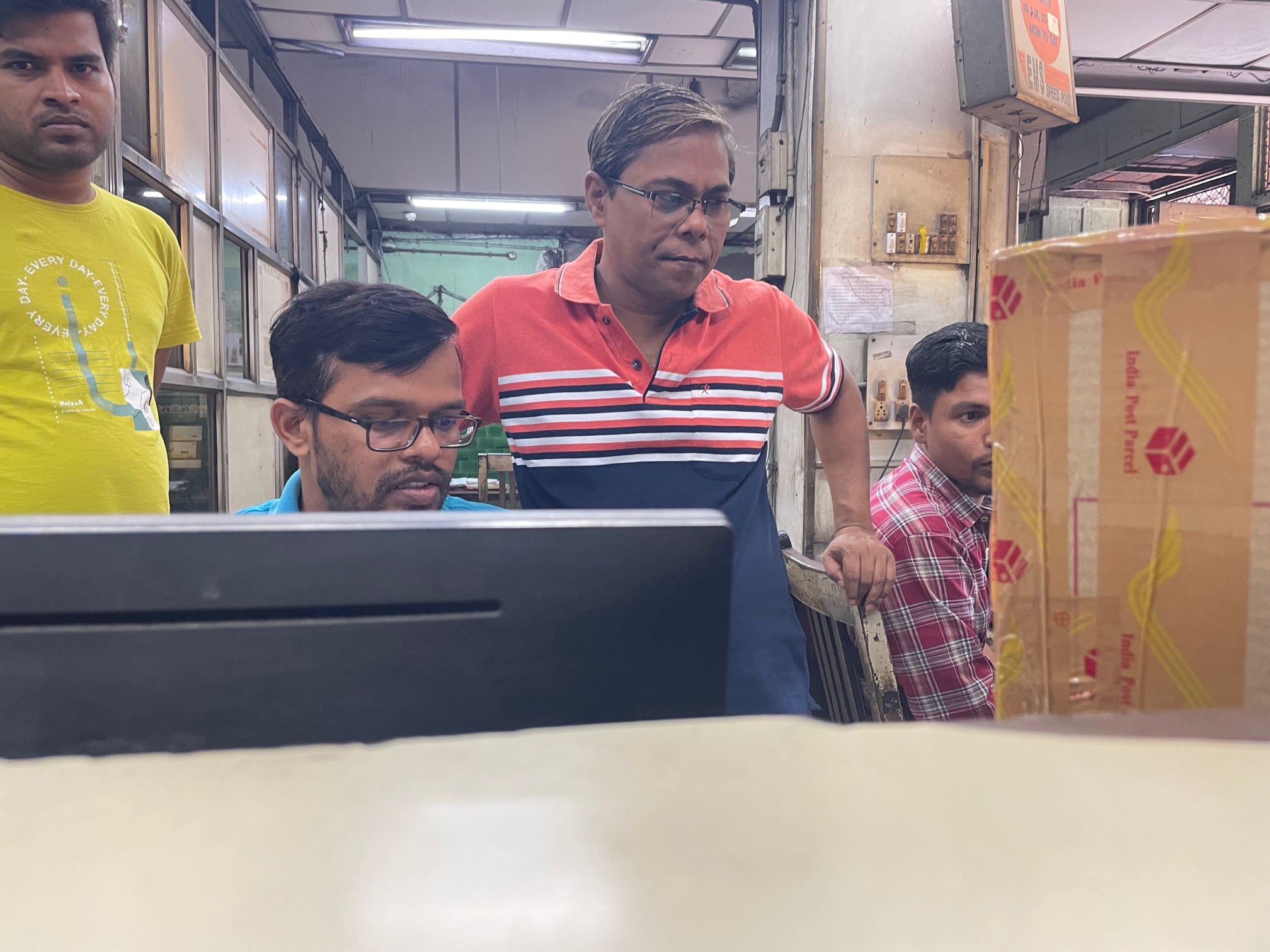
By my count, this was the fifth package we have sent home since January (still fact checking that). Going to be fun eventually getting to open them all whenever we get back to the U.S. and remembering all the items we forgot we bought!
Take Me to the River (Food and Drink)
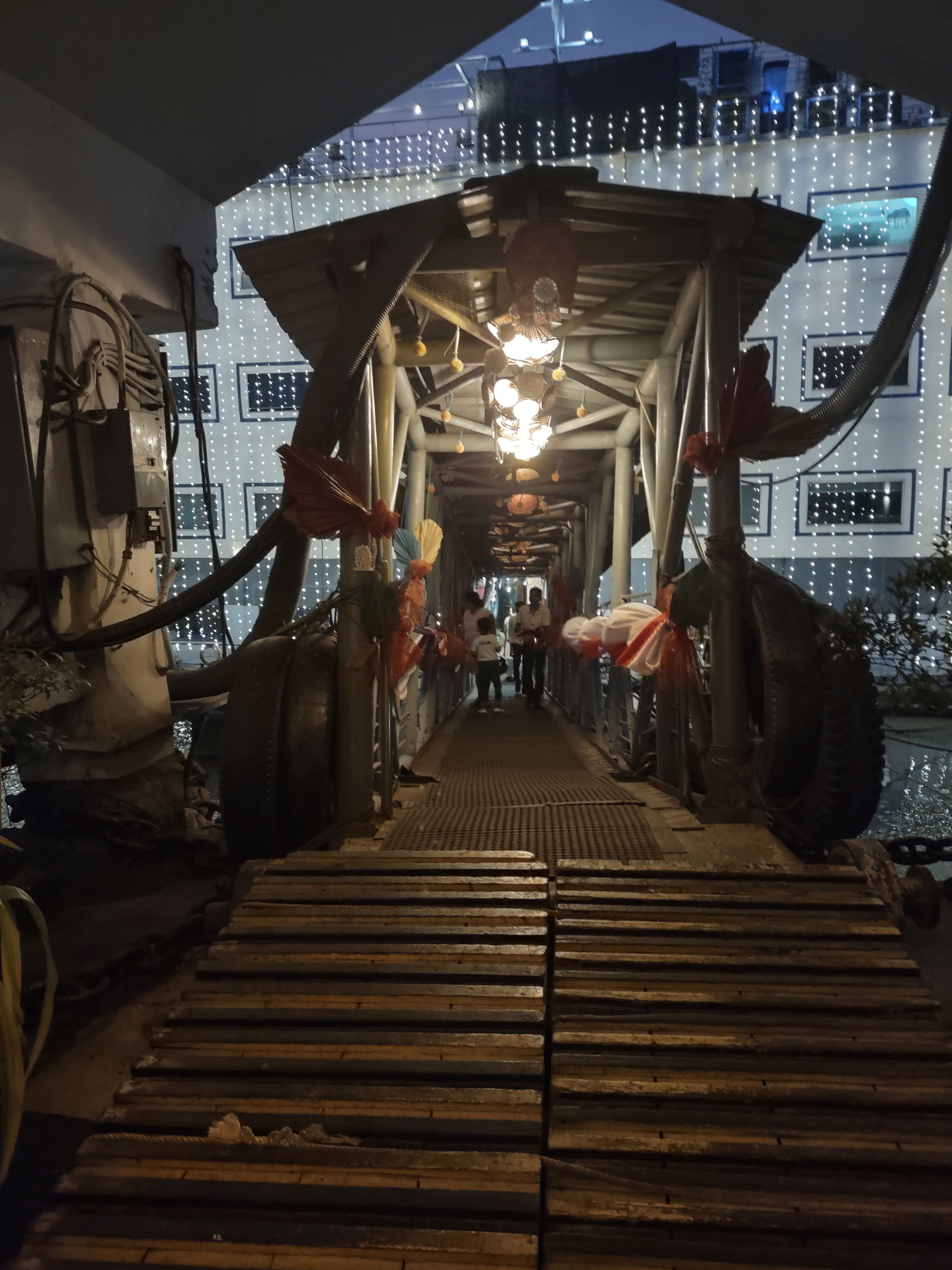
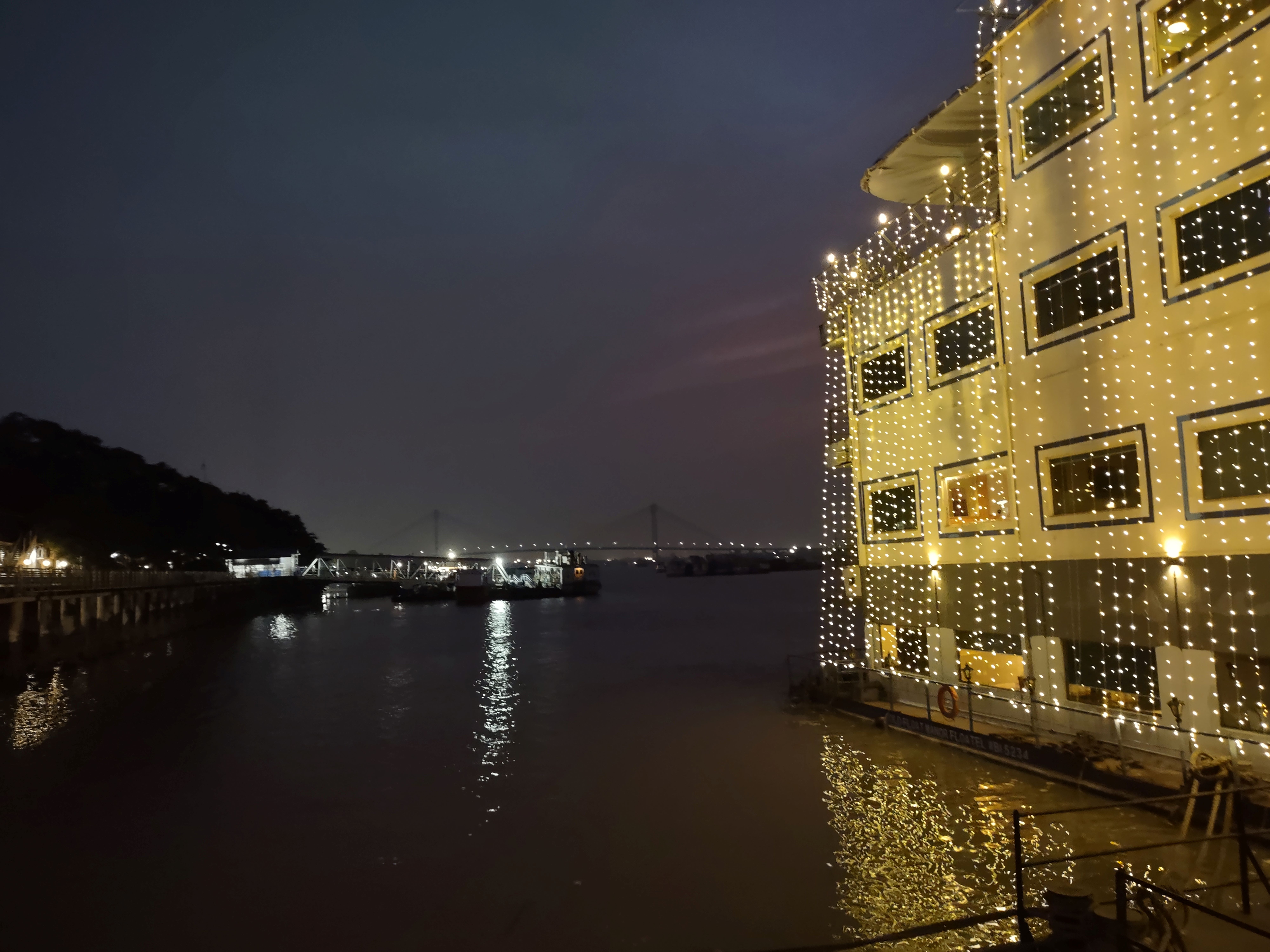
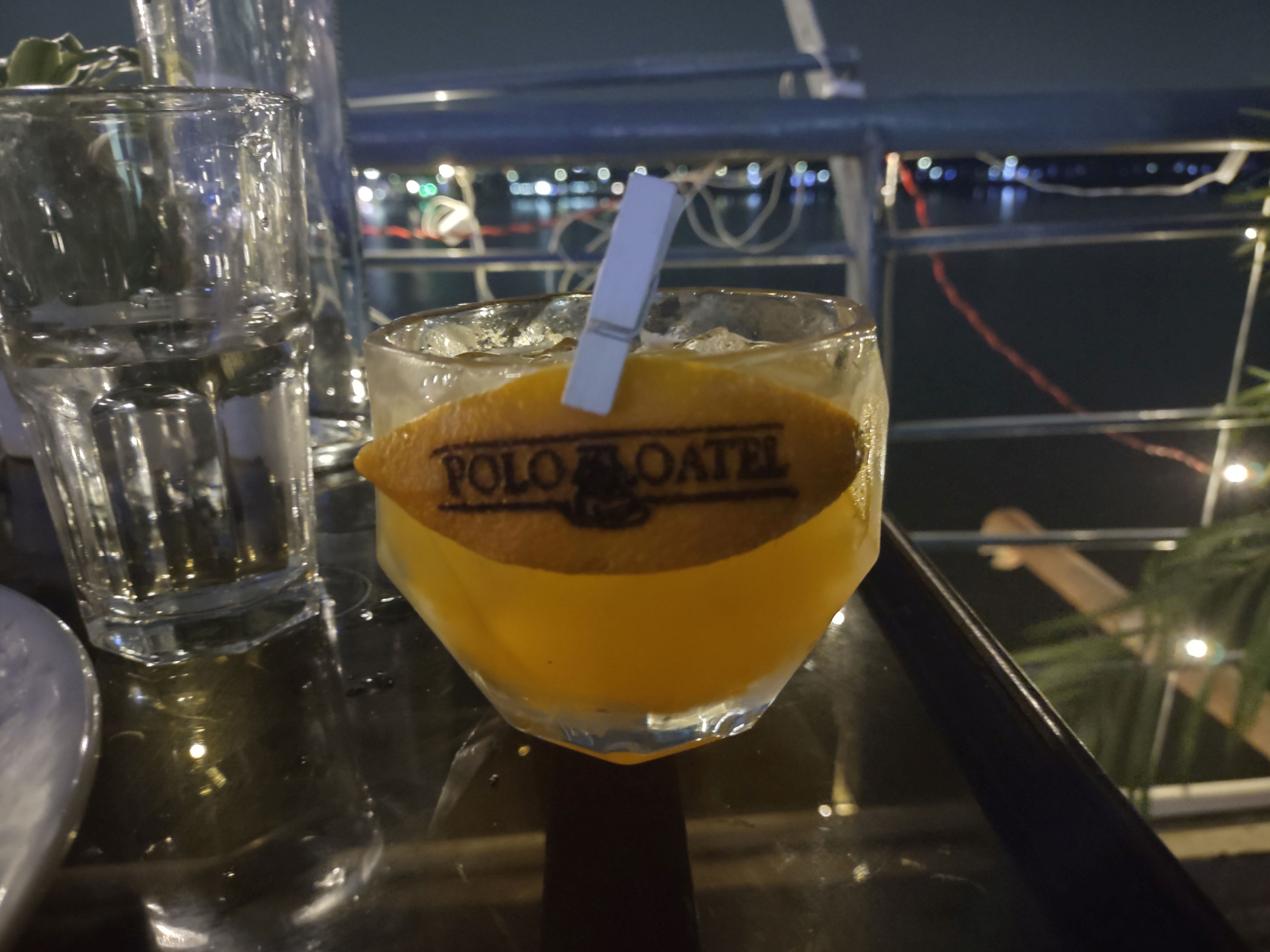
Kolkata is built on the eastern bank of the Hooghly River (popularly known as the Ganga) which is connected to the Ganges River via a canal, but mid-way through our stay, while we had seen some bridges in the distance, we had yet to actually see the riverfront. To rectify this situation we went out for dinner on Sunday evening to a place called the Polo Floatel Kolkata which turned out to be a riverfront resort with a floating restaurant on the Hooghly. The restaurant was pretty upscale with a very nautical theme and wonderful views up and down the river and, as it turned out, very good food and drinks.
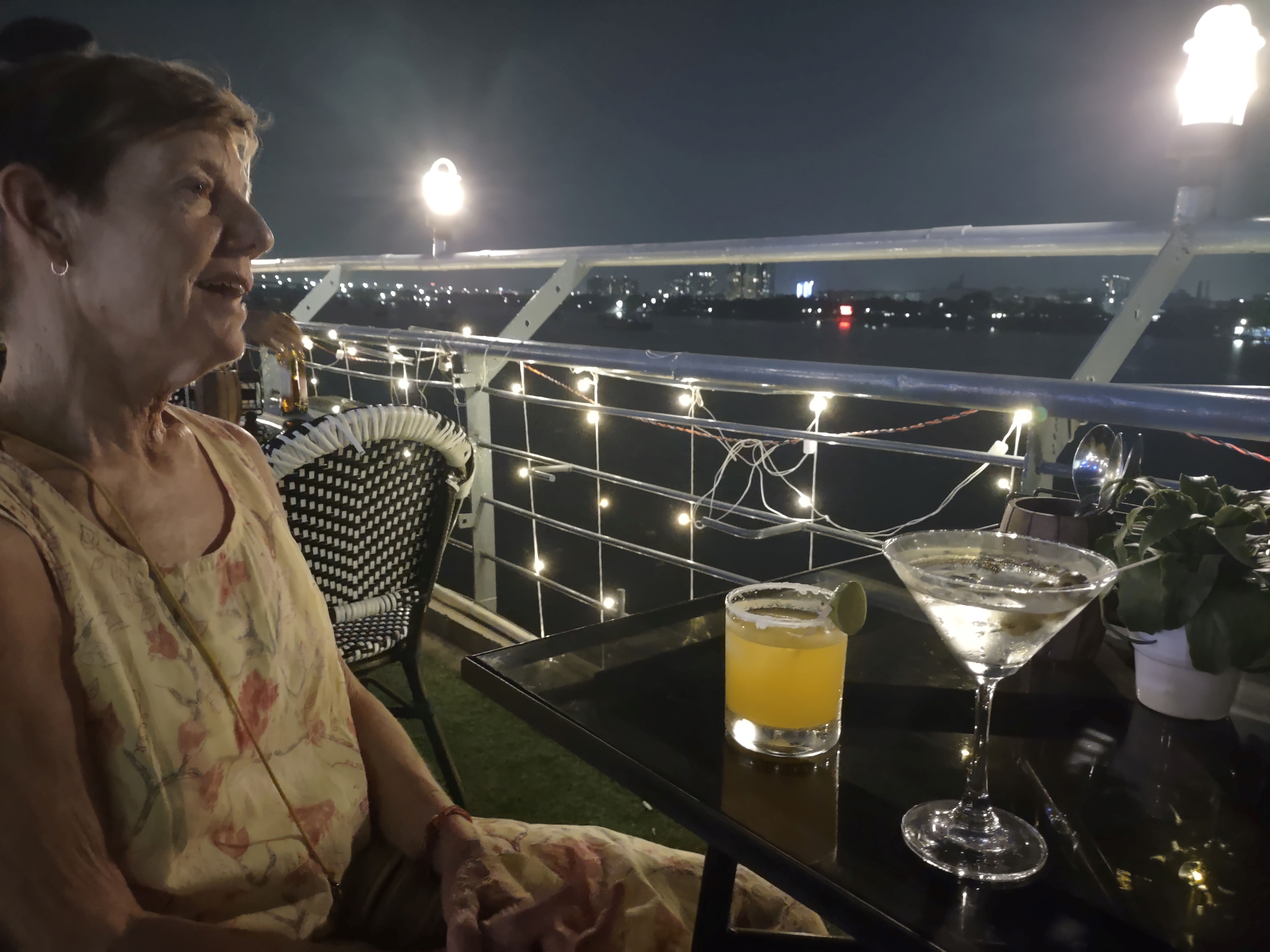
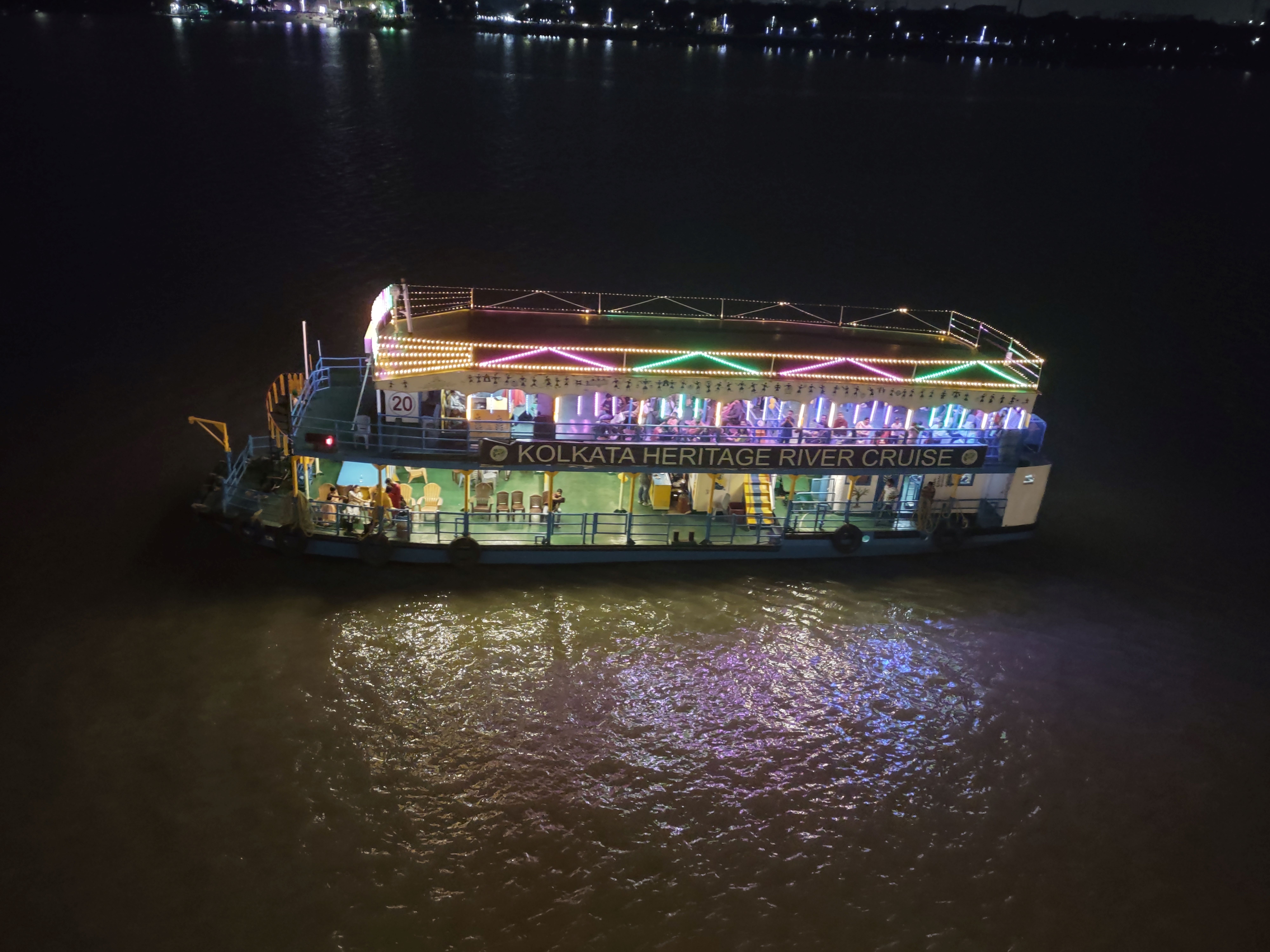
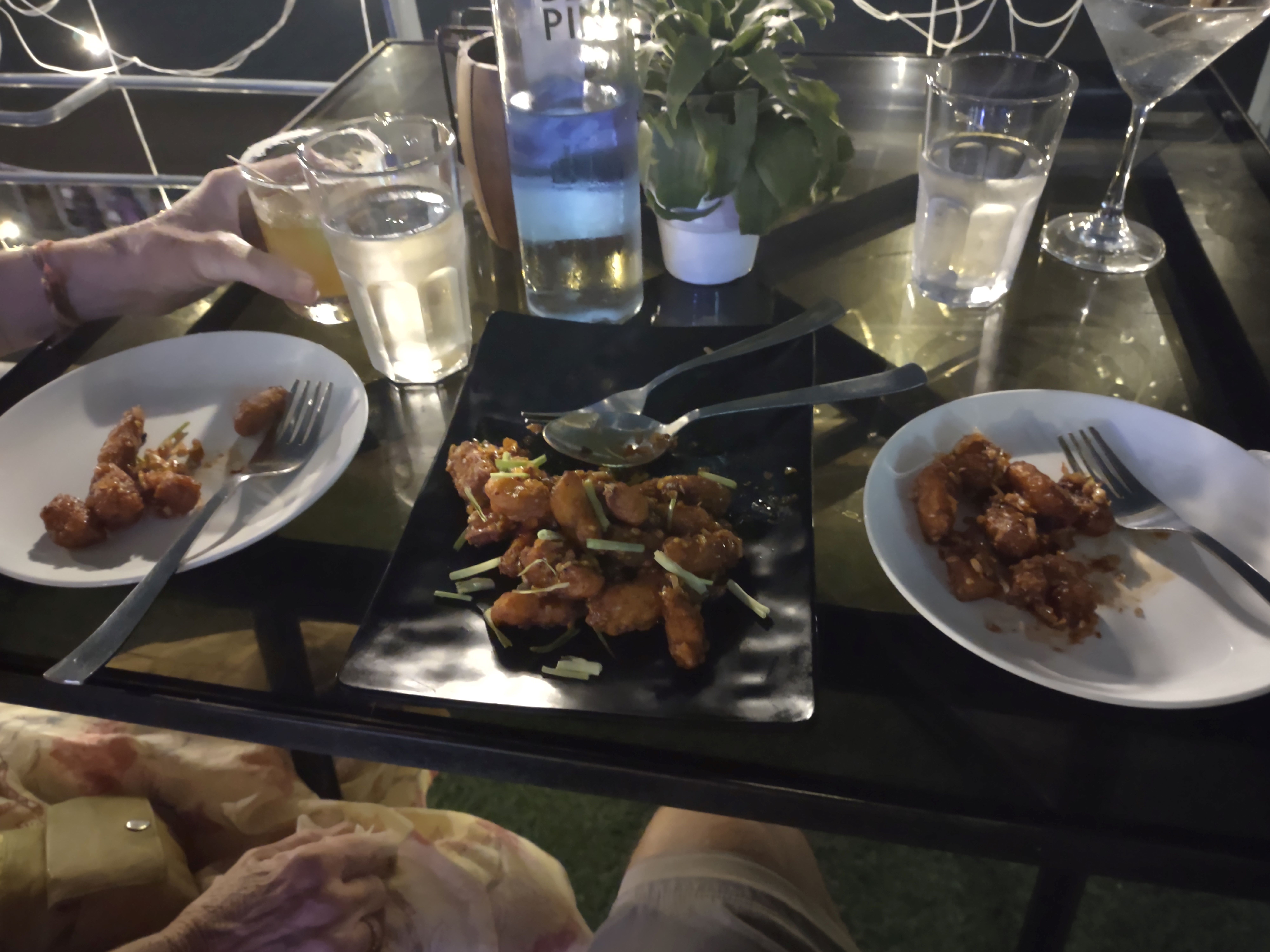
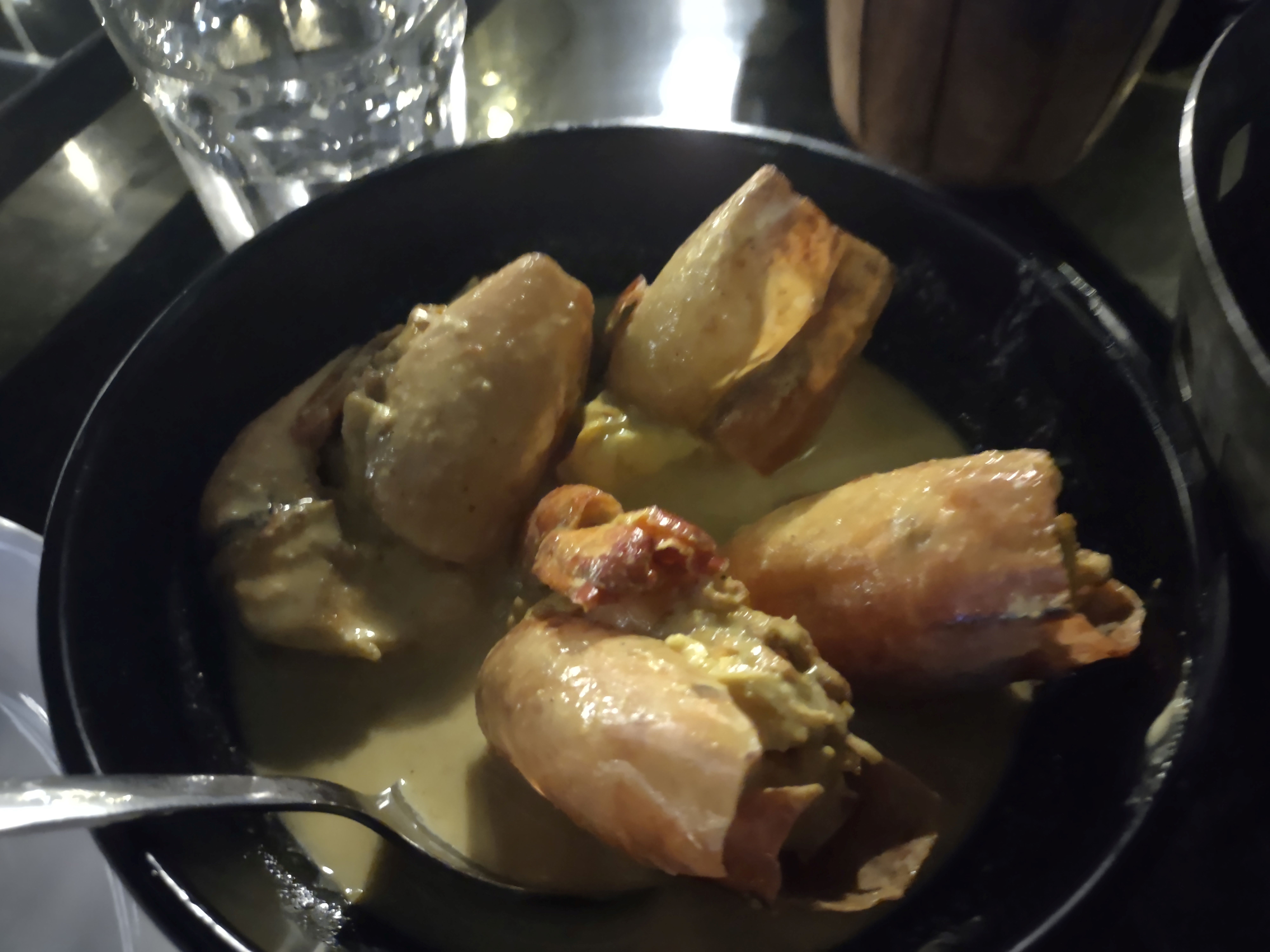

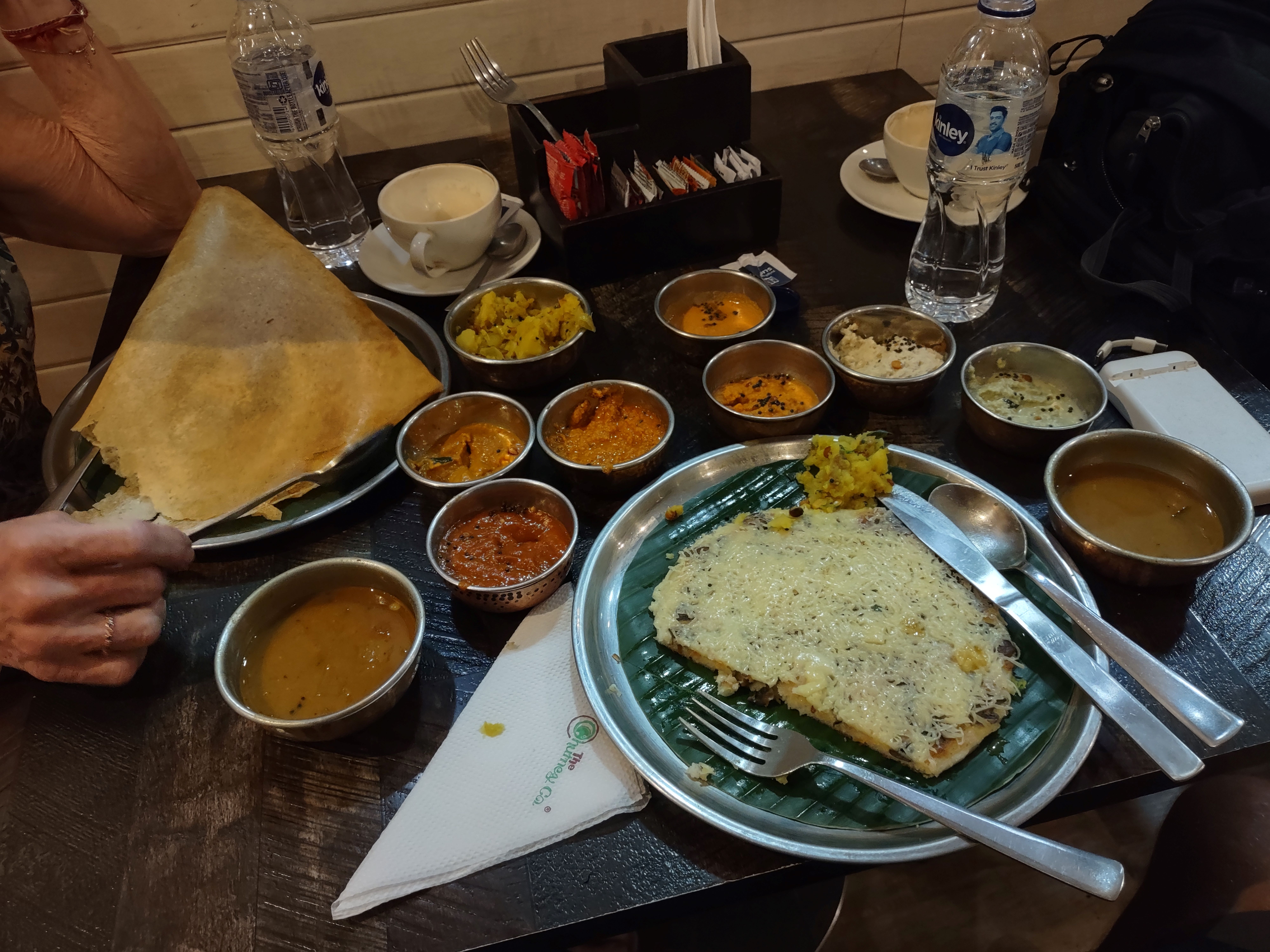
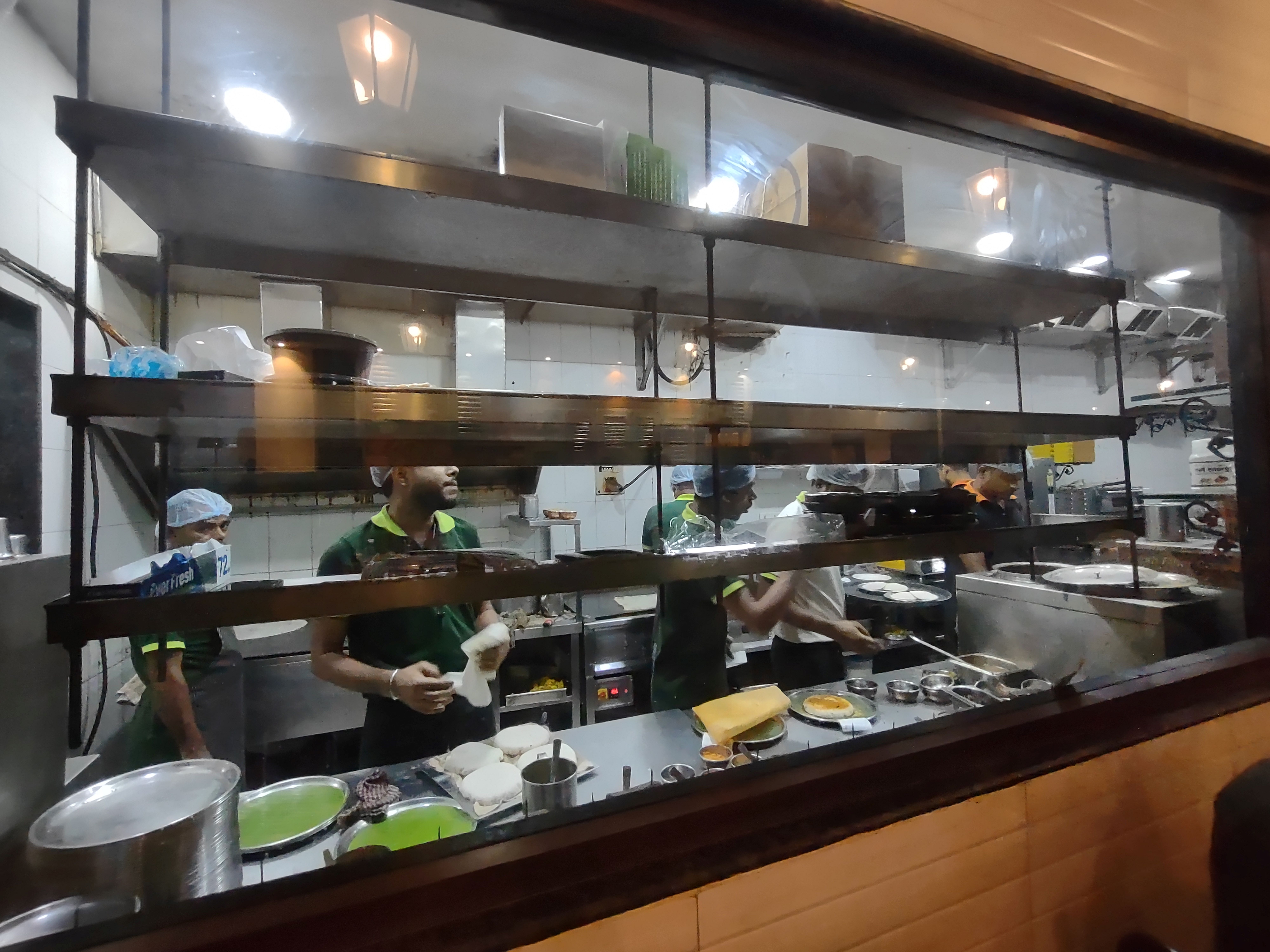
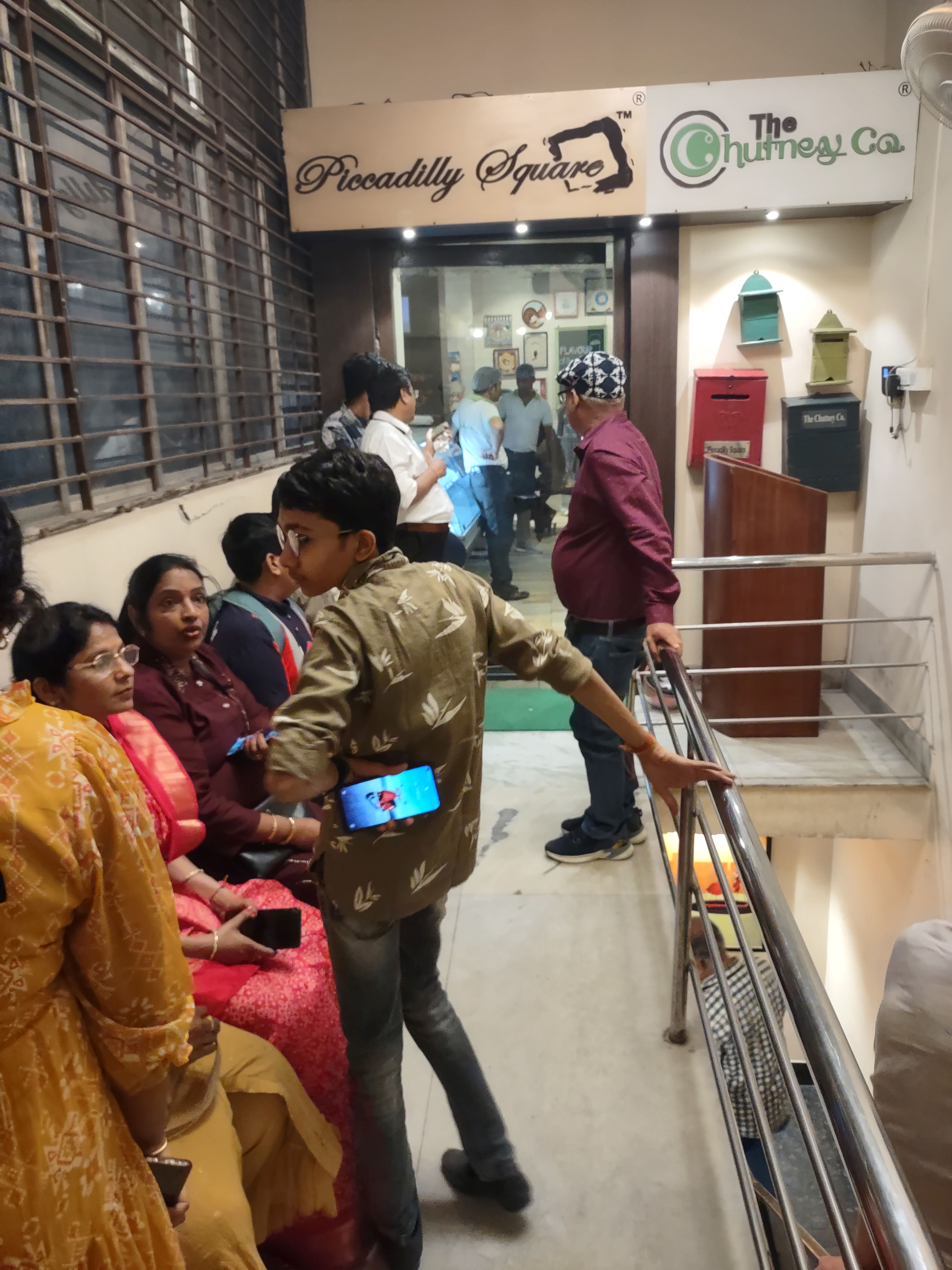
While we had a number of good meals in Kolkata, most of them were in small local places we just stumbled upon, but we did have one other memorable meal at a place I had spotted on my walk called the Chutney Company. Chutney Company’s specialty was dosas, a kind of crepe which is crisp fried in a interesting shapes and filled with any number of ingrediants
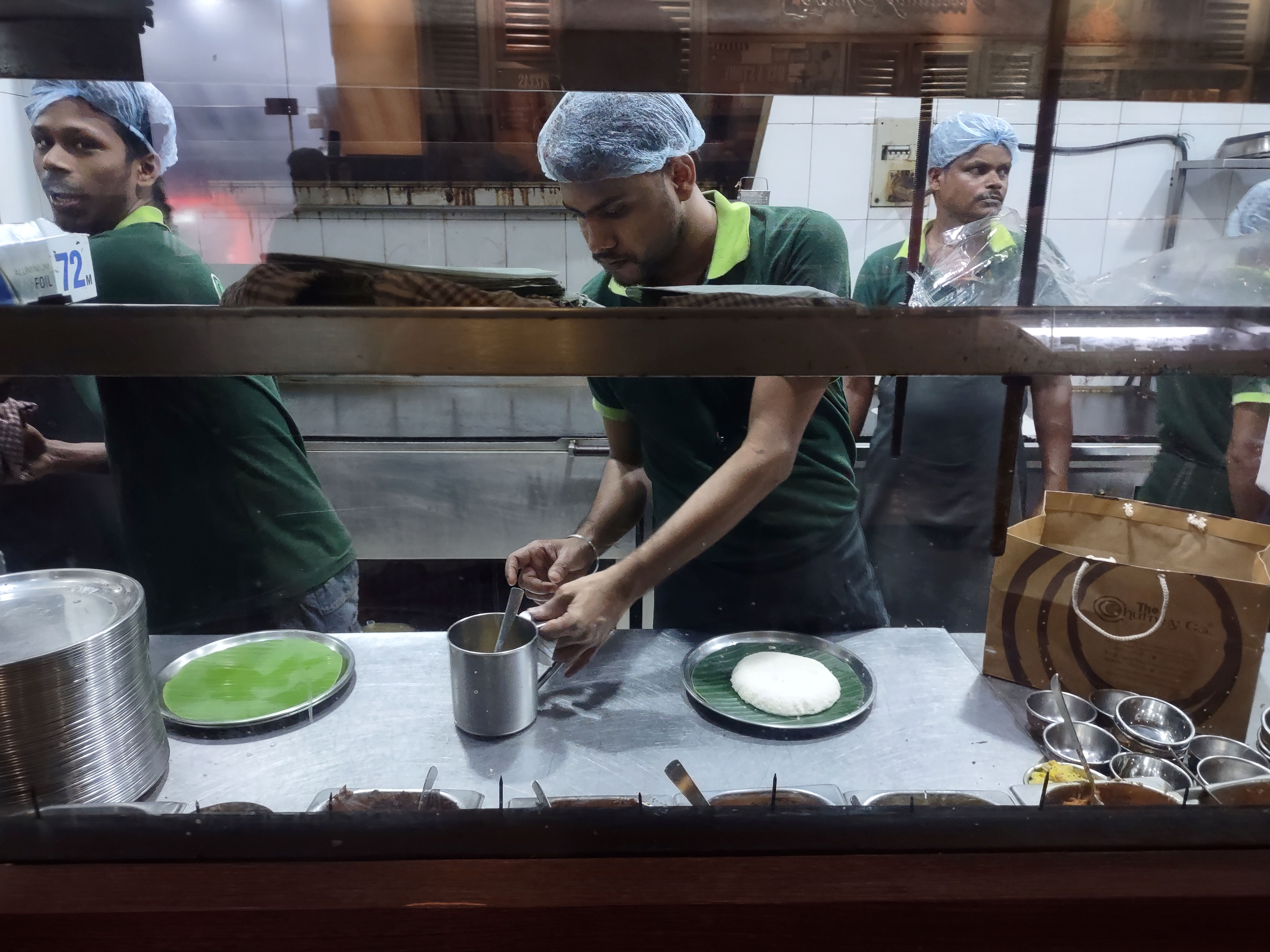
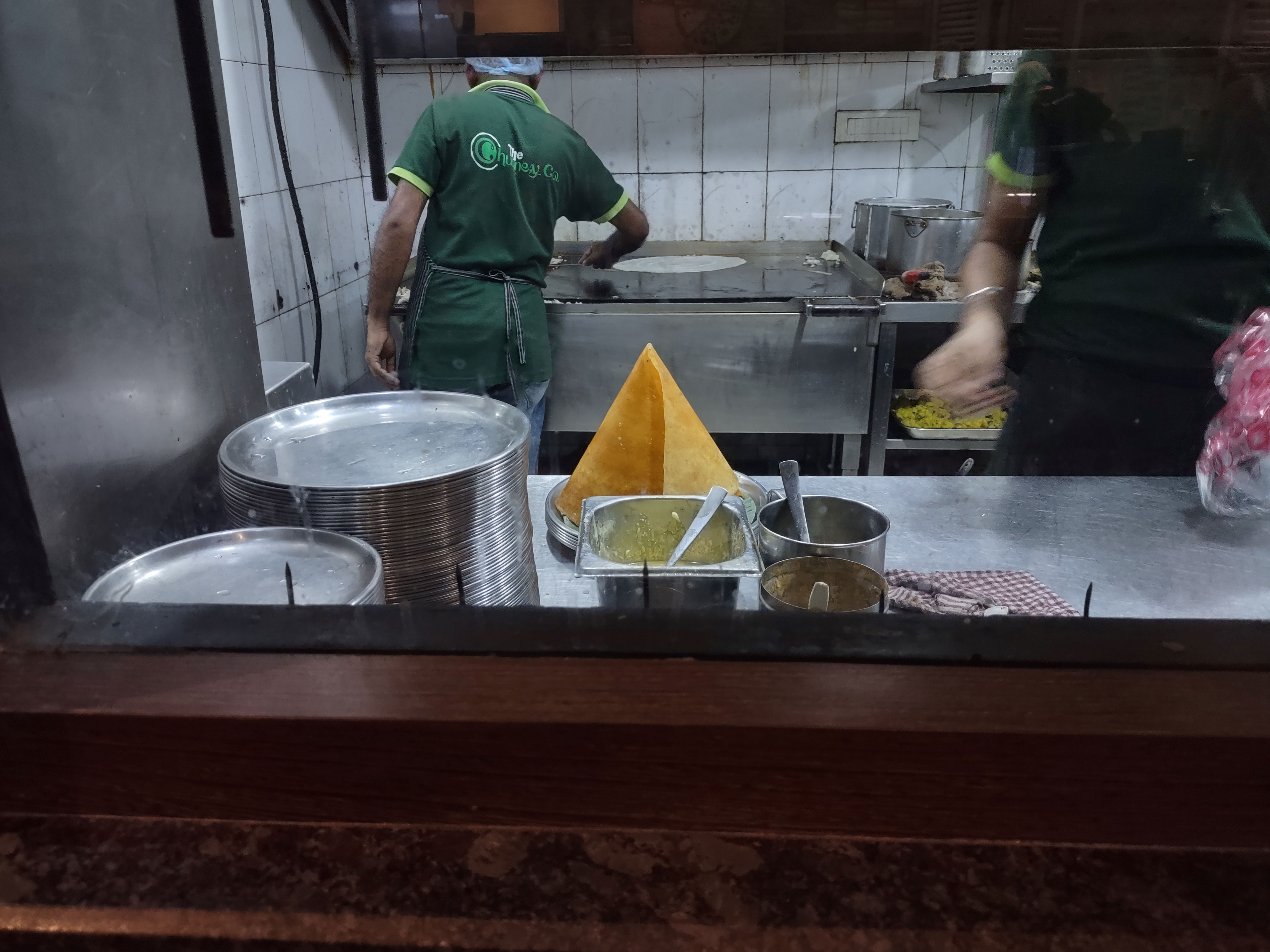
We arrived there just before a mad rush and were seated near a window into the kitchen which turned out to be great as we were able to see how the variously shaped dosas were created. At some point the kitchen staff took note of our interest and started to play things up a bit for our benefit and so we had a great meal with some great live entertainment and, as it turned out, our timing was great as the place had a line waiting as we made our way out.
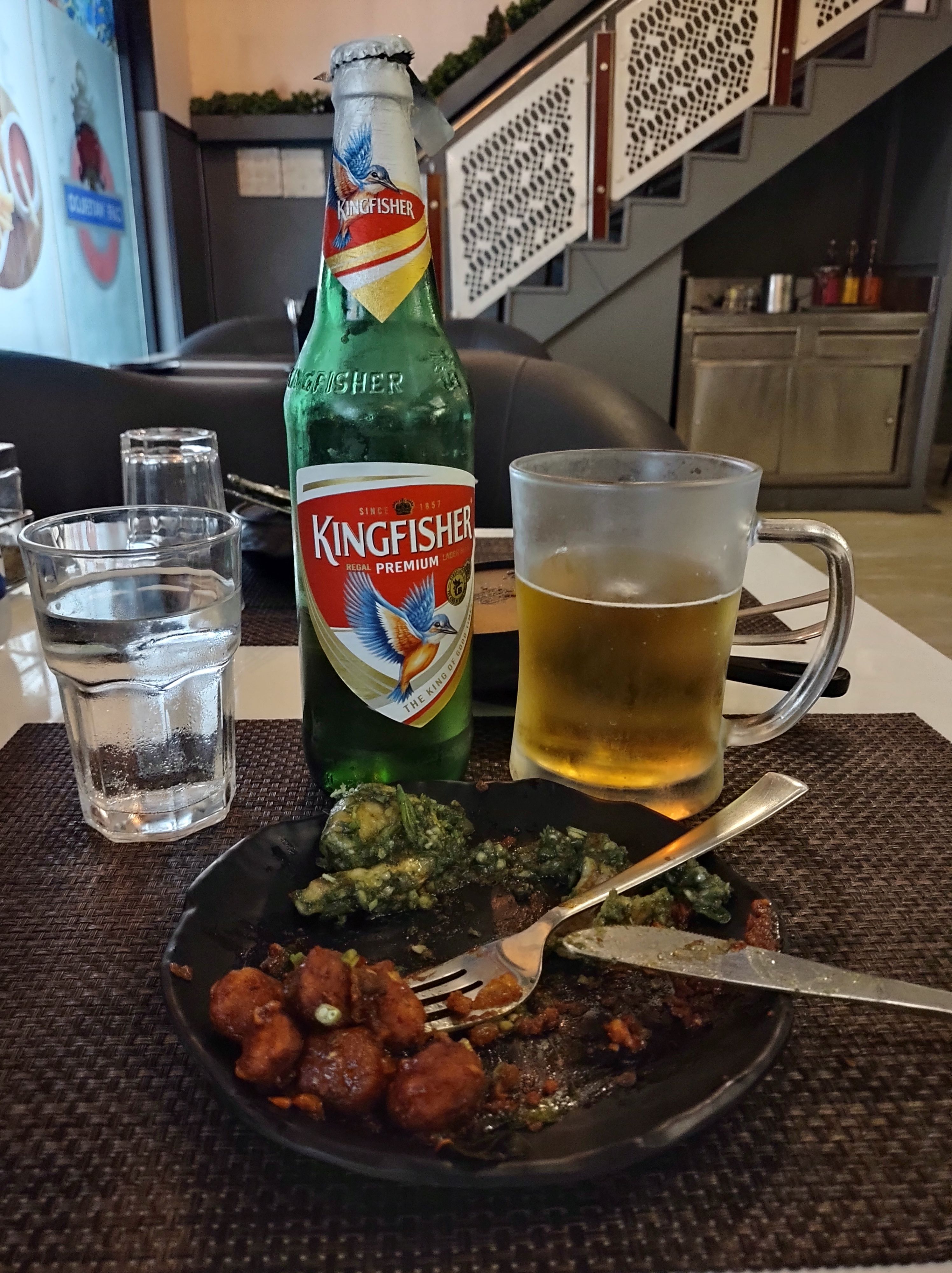
We had one other memorable meal on the afternoon before we departed Kolkata. Due to intermittent downpours, we were sticking close to our hotel and didn’t need to leave for the airport until about 6:00 PM. We eventually got hungry and, still threatened by downpours, we grabbed lunch at a little place directly across from our hotel called the Cafe Waterloo. We’d walked past it on several occasions, but were not drawn in until now. We were surprised to find that they had some great drinks pub food (particularly some sort of corn fritter whose ingredients we were unable to determine but which were quite tasty) and did our best to drink away our remaining Indian rupees.

Moving On
As always seems to be the case, our days in Kolkata flew by quickly and before we knew it we were again packing up and preparing to move on to our next destination (in this case, Thailand). While Kolkata was probably the least comfortable place we visited in India (other than when we were at the LaLiT Great Eastern of course), I was happy that we had made it there and appreciated that it had provided us with a different picture of what daily life is like for many Indians. In many regards, it was the perfect conclusion to our month-long journey through India with the Durga Puja celebration being an exclamation point to it all.
And so we again found ourselves sad to see one chapter of our journey coming to a conclusion and excited about the start of the next.
 Burning the Inheritance
Leave a comment