
Located in the northwest of India on the Pakistan border, Rajasthan is the largest state in India by area (132K sq. mi., comprising over 10% of India’s total geographic area) and the 7th largest state in India by population with over 83 million people. Rajasthan’s economy, which accounts for about 5% of India’s GDP, is largely agricultural and pastoral with cotton and tobacco (ironic as very few Indians smoke) being its major cash crops. Among other claims to fame, Rajasthan is home to the Bhadia Solar Park in the Thar Desert, the largest facility of its kind in the world which covers over 20 square miles and has the capacity to generate 2,225 megawatts, reducing India’s greenhouse gas emissions by an estimated 4 million tons per year.
Rajasthan is one of India’s major tourist destinations. Together with Delhi and Agra, Rajasthan’s capital Jaipur makes up what is known as the “Golden Triangle”, the Indian equivalent of the “Gringo Trail” in Central America. The State of Rajasthan hosts something in excess of 100 million tourists a year (the estimate for 2023 is 120 million plus) with over 95% of them being domestic tourists. Some fuzzy math suggests that on a given day there might be 2 million or more tourists in Rajasthan. Granted, that is across the entire state but tourism in Rajasthan is concentrated around five cities (four of which we would be visiting) and virtually all visitors to Rajasthan visit Jaipur. (I found a recent report of 2.5 million visitors in Jaipur – a city of about 4 million – over one six-day period!)
So, if visiting Kerala was a way of getting our feet wet in India, then Rajasthan seemed like a dive into the deep end of the pool. Had we approached this segment of our trip the way we normally do, the logistics of getting from place to place (which Colleen normally manages) would have been quite challenging. Travelling between cities in India by public transport (train or bus) seems to be more of an art than a science (an inexact one in either case) and there are plenty of related horror stories out there. (My favorite is the traveler who bought a ticket for what they thought was Seat 49 only to discover when they got to the station that they were actually 49th on the waiting list for a seat.) And, in any case, had we taken our normal approach, it seemed likely that due to the frequencies (or, rather, infrequencies) of bus schedules, we would have sacrificed at least a few days of our time in Rajasthan just getting from place to place. (Don’t get me wrong, we’ve found that hanging out in bus and train stations can often be interesting, but everything has its limits.)
With all this in mind, we did something we have never done before: we booked a multi-day tour through a travel agency of sorts. We knew that there were multi-city bus tours available, but (no offense to anyone) just couldn’t imagine being that locked-in to an itinerary and schedule (though we did briefly consider whether it would be possible to join one of these trips and just go rogue, telling the guide we would see them at dinner!). Instead, Colleen found an agency called “Drivers-India” who provide you with a private car and driver and arrange an itinerary which they put together based on your preferences. After a bit of back and forth between Colleen and Hasina at Drivers-India, we settled on an eleven-day itinerary which would start in Delhi and make a loop through Rajasthan, with stays in the cities of Jaisalmer, Jodhpur, Udaipur, Pushkar, and Jaipur, and then end in Agra at the Taj Mahal.
Our new-found approach to Rajasthan had the immediate benefit of relieving us of a lot of research regarding accommodations as well as some potentially stressful travel bookings, but that did come with some expense. Factoring out what we had previously budgeted for accommodations, the cost of the service for the car, driver (including his meals and accommodations), tolls, fuel, and all the cold water you could drink, was less than $90 per day which didn’t seem unreasonable. While that did not cover the cost of local tour guides and admission fees to sites (generally pretty low anyway), this arrangement meant that we would have no local transportation expense (buses, taxis, tuk tuks, etc.) for which we budget $20 per day. And, while there were a couple of days where we would be driving for five or six hours, we were able to stop and see some sights along the way which we wouldn’t have (at least not so easily) were we travelling by bus.
It was our hope that travelling this way would give us a bit of flexibility in regard to what we saw and how we spent our time, including seemingly simple things like when we wanted to have breakfast or lunch or when we were tired and just wanted to go home. But beyond these benefits, our real hope was that this approach would result in much less stress during our time in Rajasthan. As MasterCard would say “Breakfast twelve dollars, museum tickets five dollars, car and driver seventy dollars, peace of mind – priceless!” (Or, at least, that was the theory.)
Oh, our tour fees also included the fare for an overnight train from Delhi to Jaisalmer, which we’ll get to shortly, but first a bit about the organization of this installment of the blog. Given the unique approach we were taking to this segment of our trip, we thought it might be interesting (and perhaps expeditious?) to share the Itinerary prepared by the Agency (which reads very much like a multi-city bus tour itinerary absent any scheduled lunch and dinner stops) and to supplement it with our own photos and comments as a way of seeing how flexible the itinerary turned out to be and how much variance might occur between the planned and the actual. So, following the “Getting There” section (which is actually a pretty good story of how quickly things can go sideways when travelling), we’ll pick up with the Itinerary.
Getting There
We began what promised to be a long day of travel from Fort Kochi to Rajasthan on Tuesday October 3rd with a final breakfast at Coriander (the hotel restaurant) followed by about a one hour taxi ride to the airport.

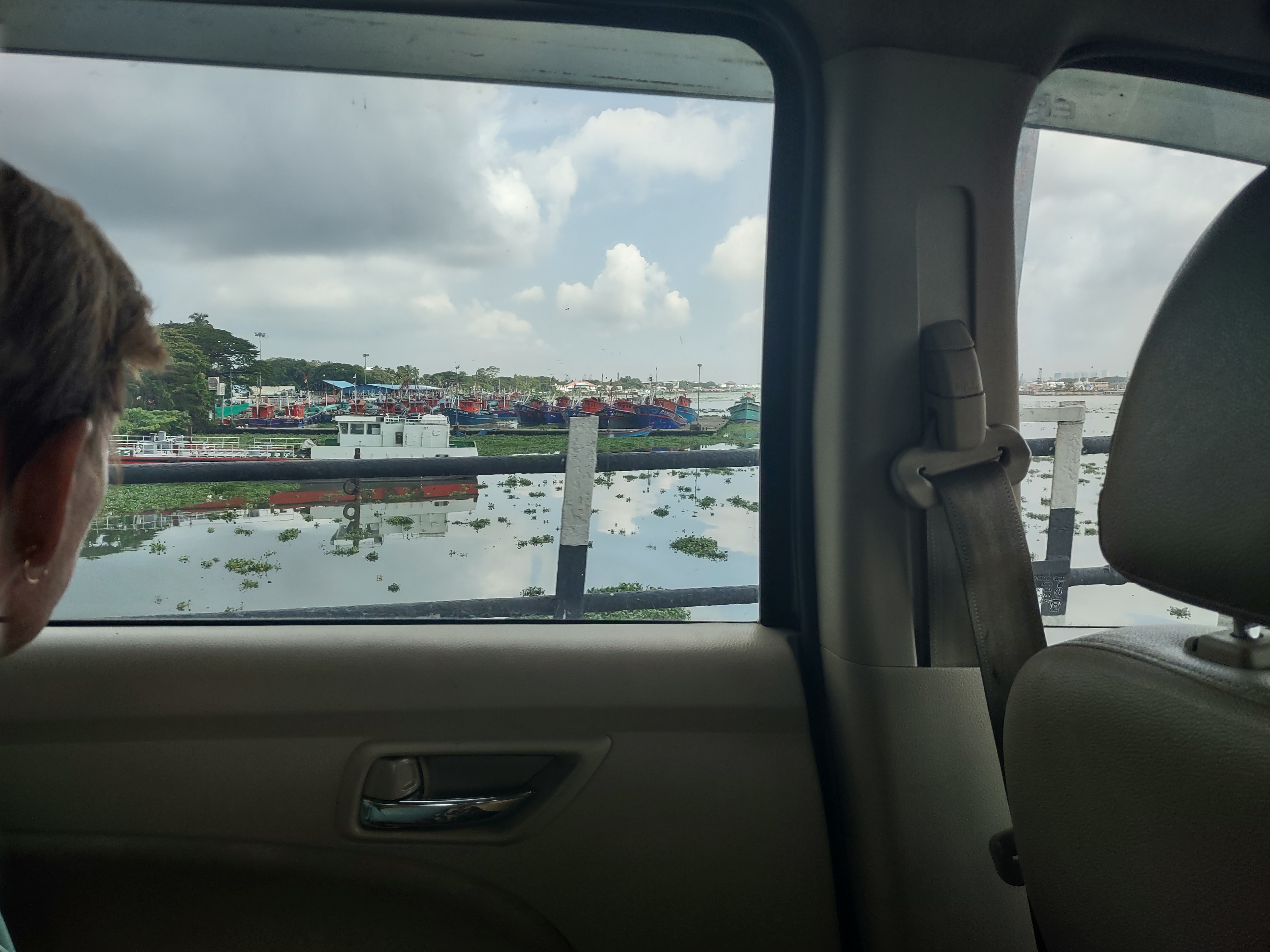
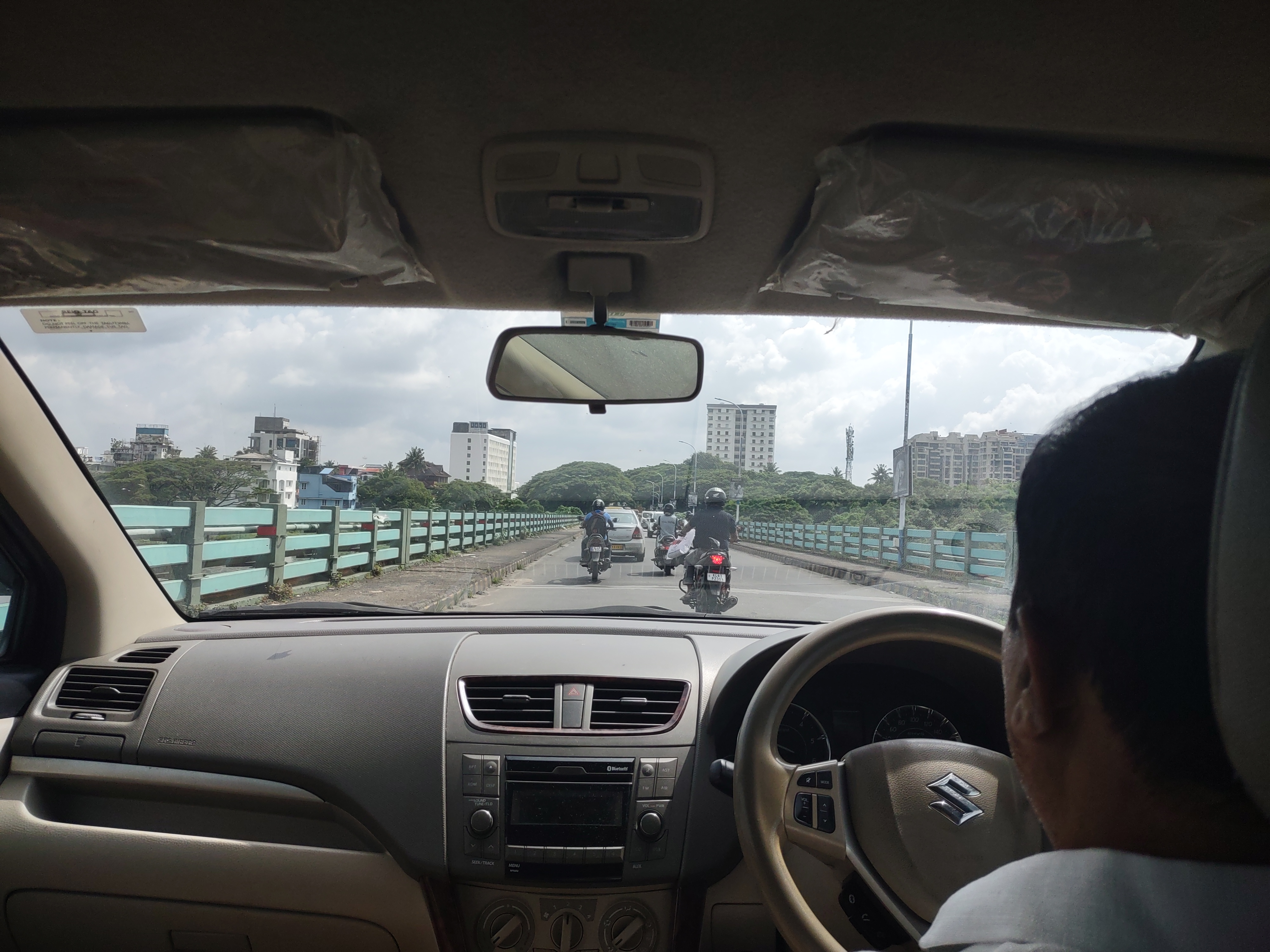
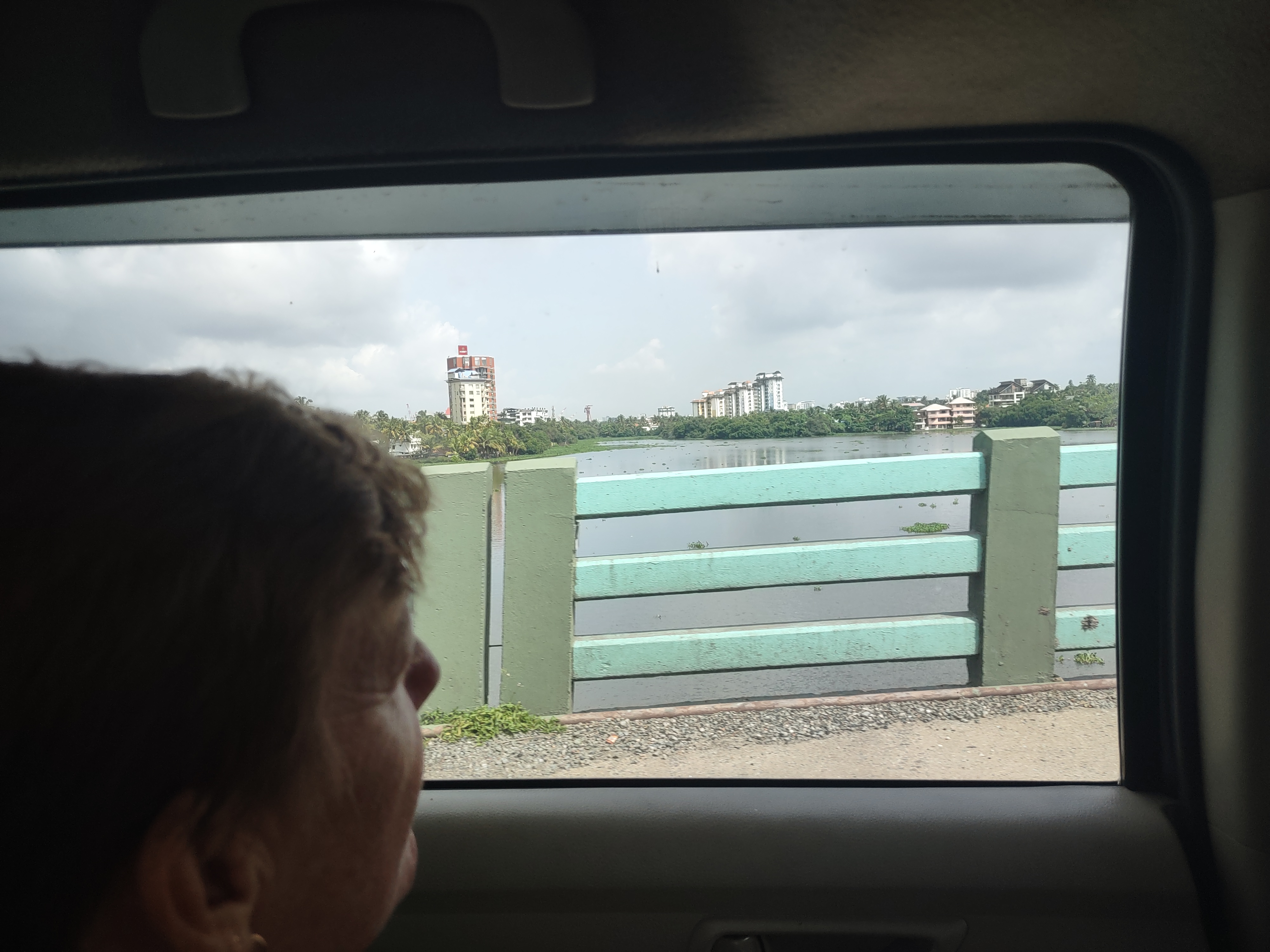
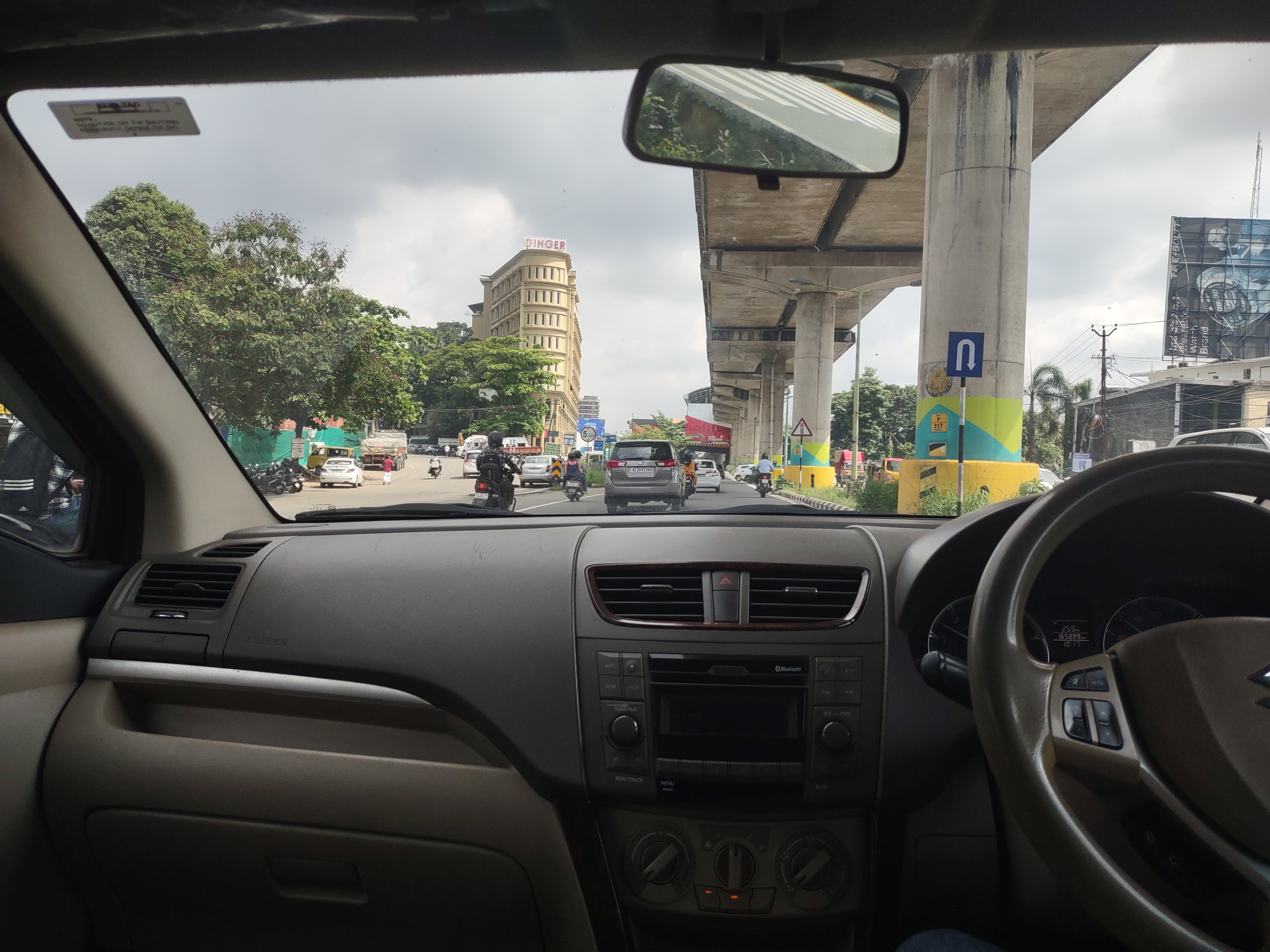
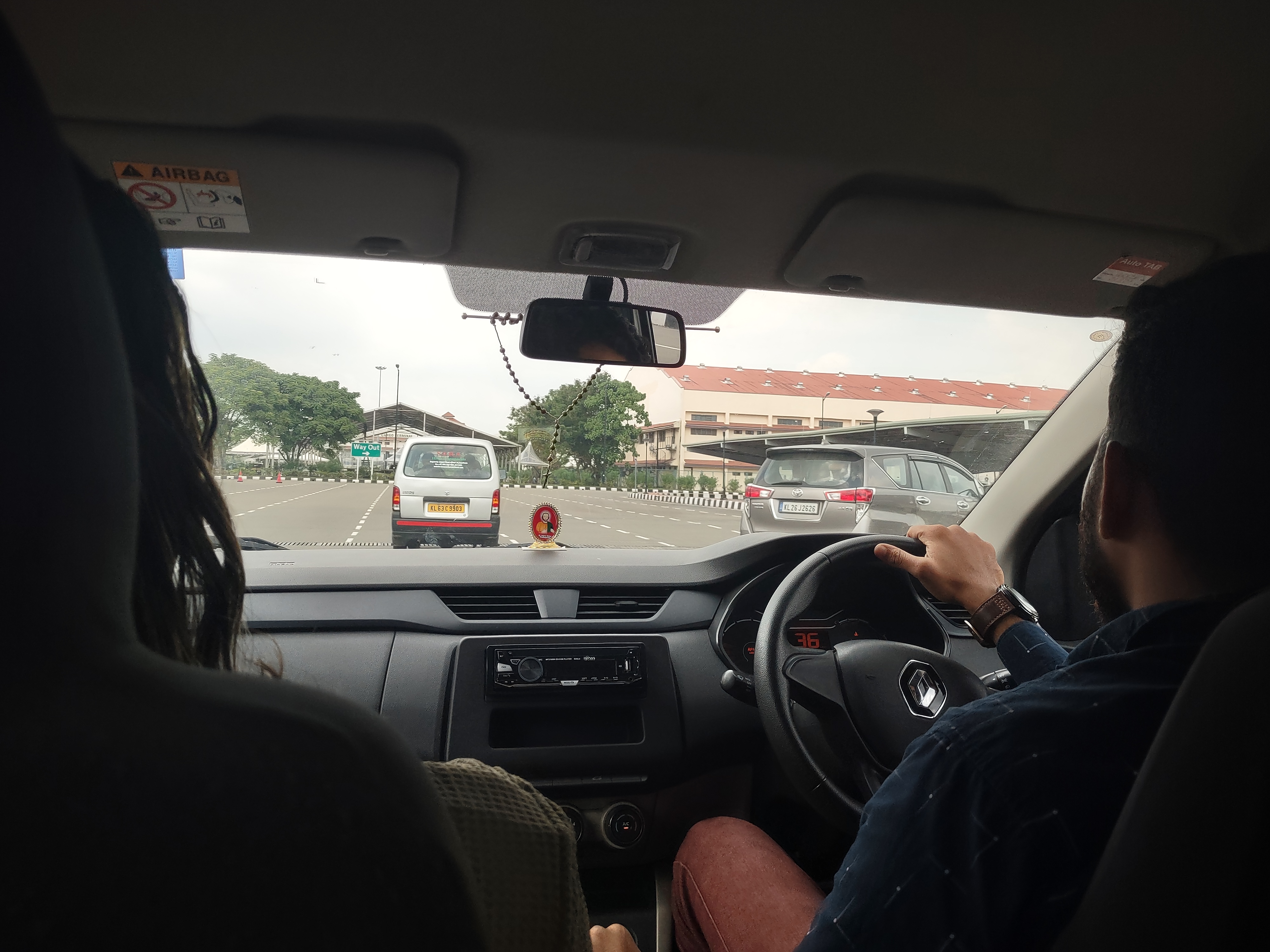
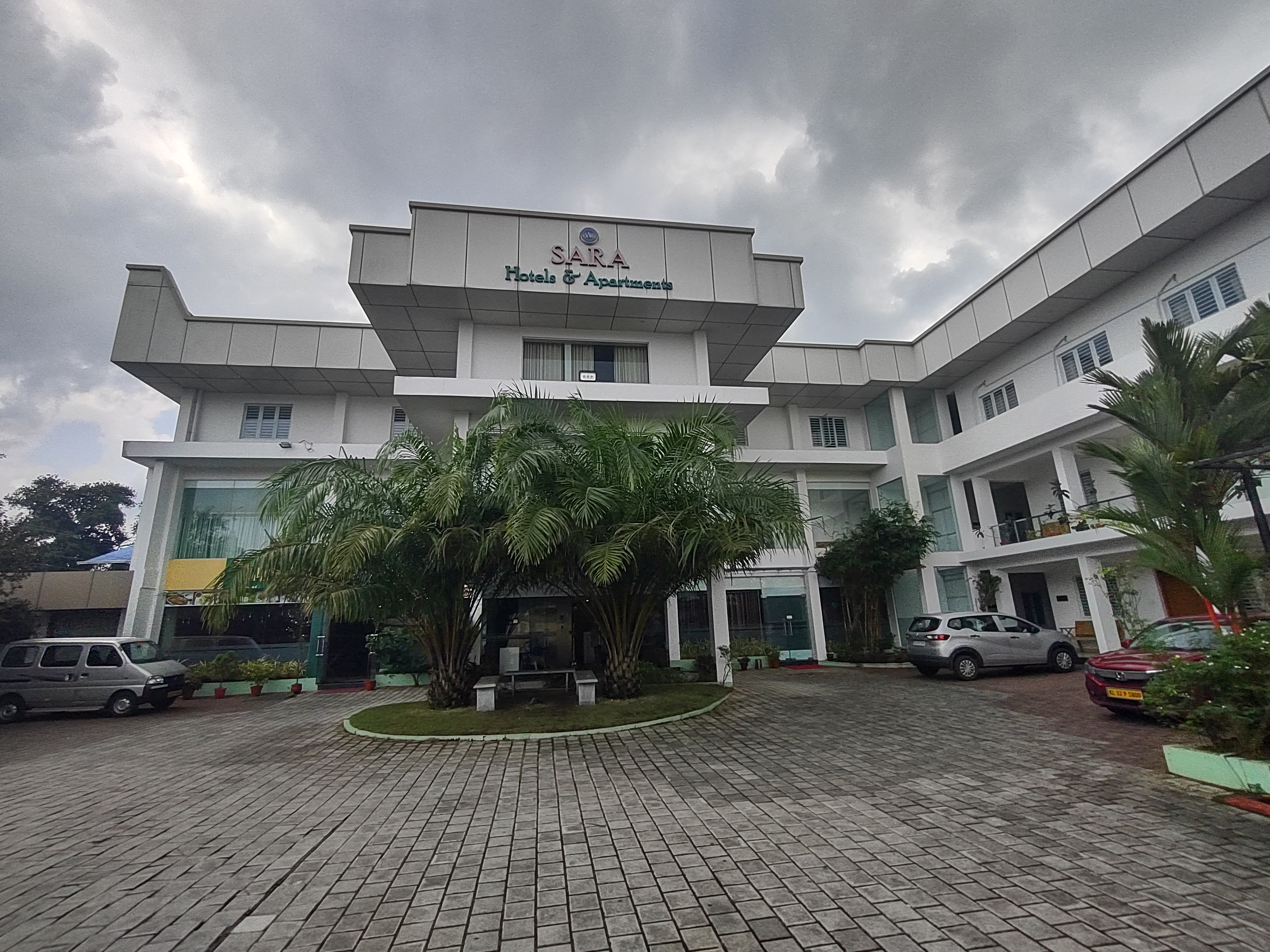
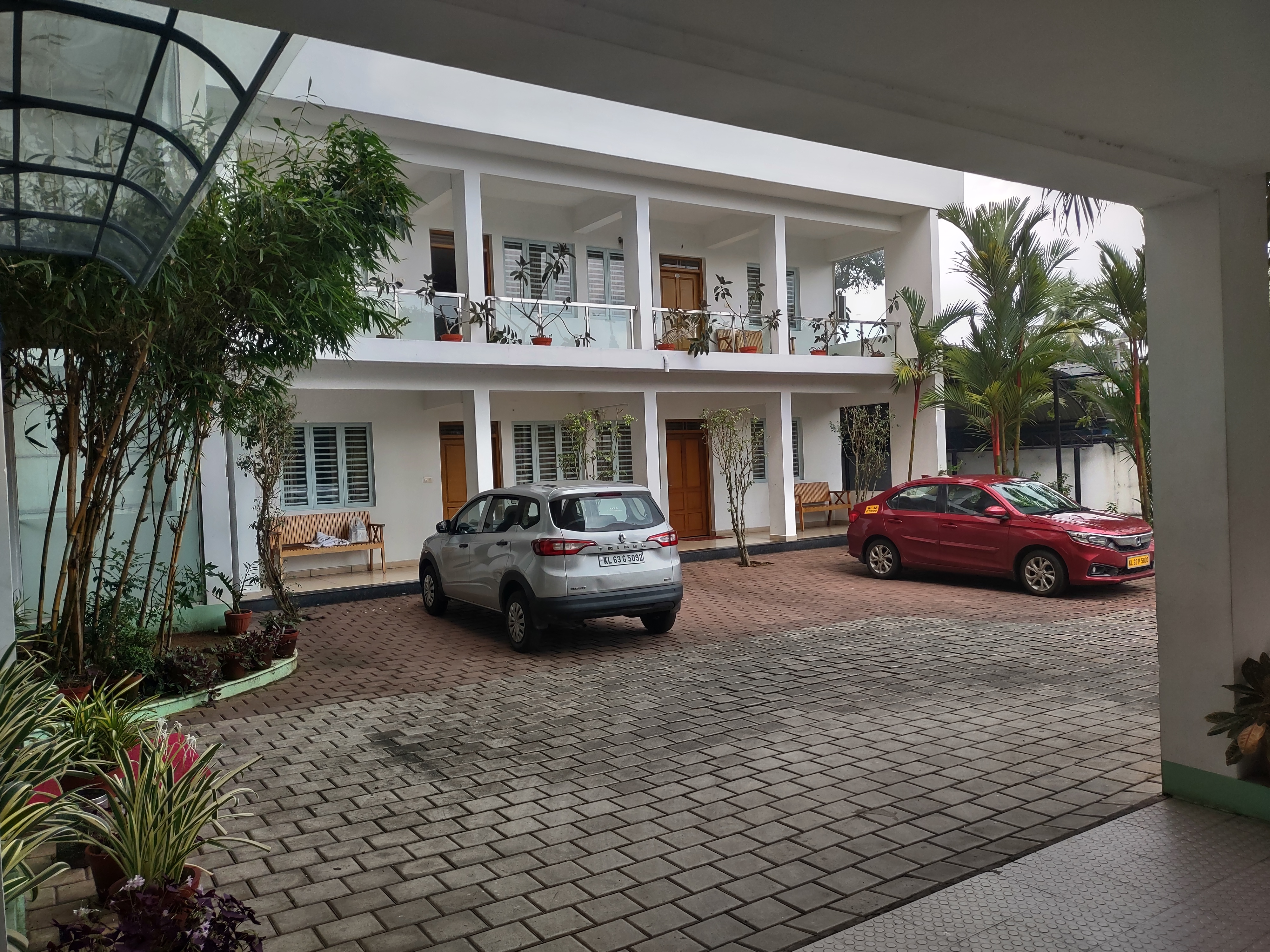
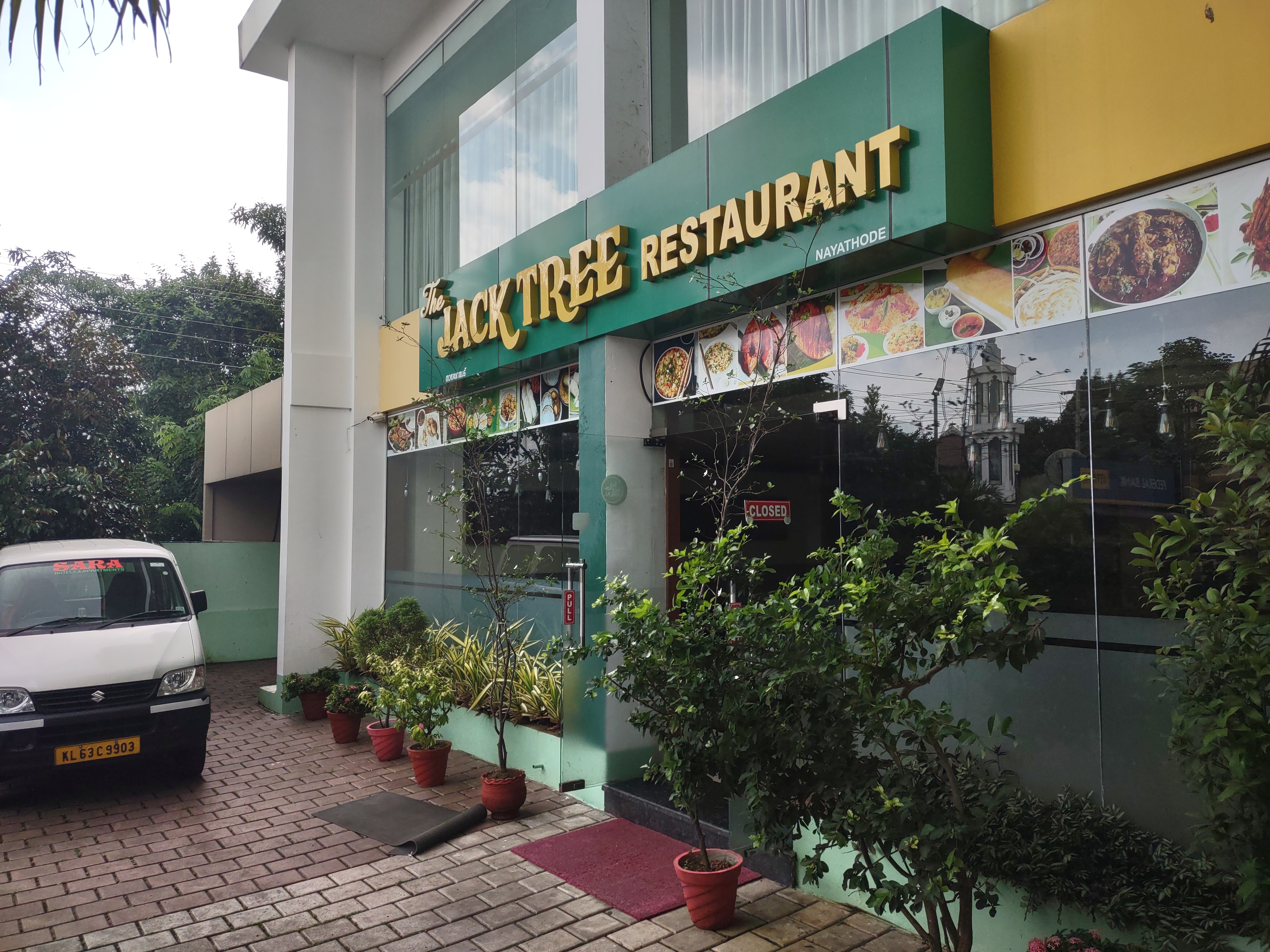
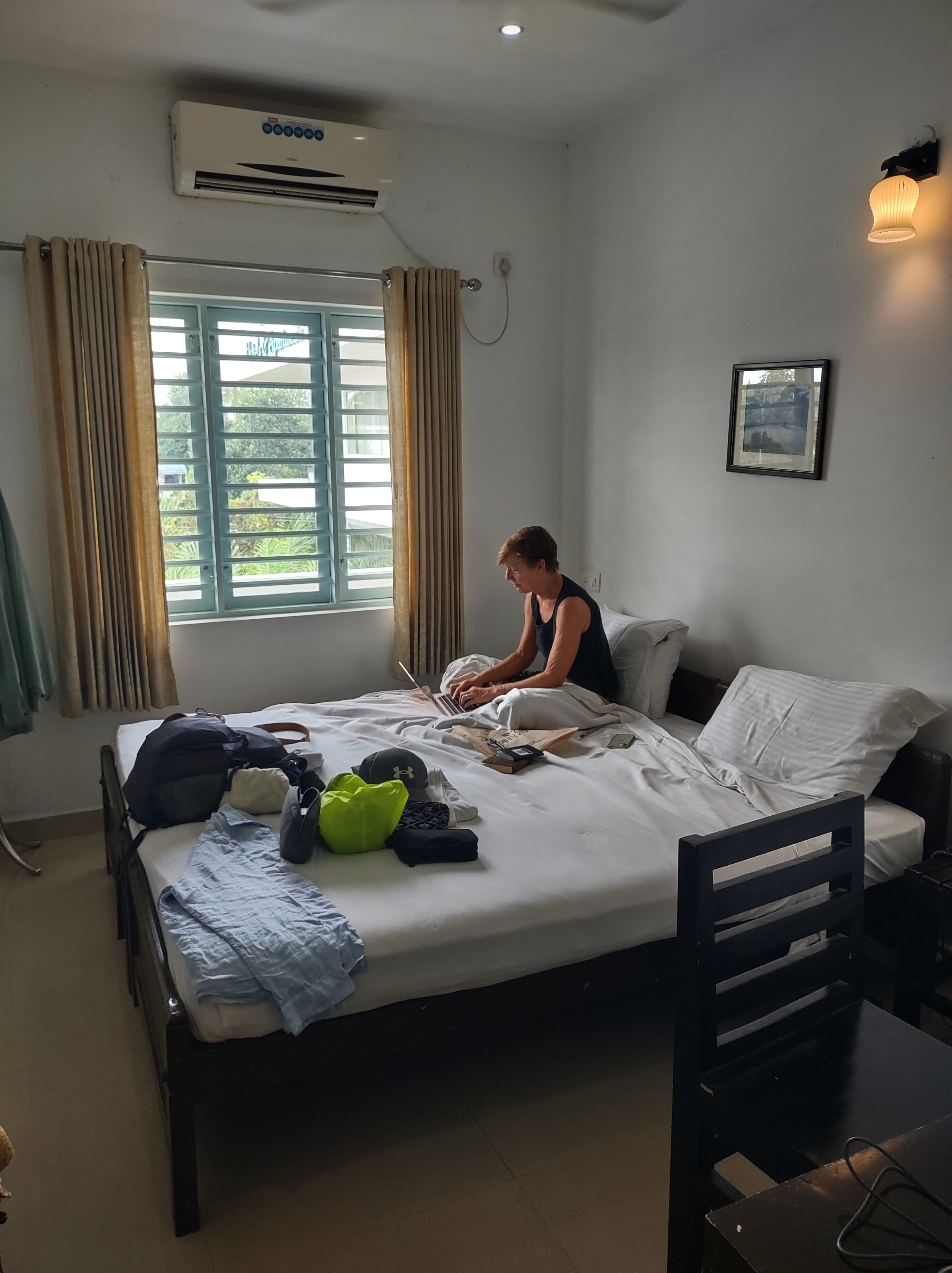
On the way to the airport, Colleen received a flight rescheduling notice and once there we were unfortunately able to confirm that our flight to Delhi, which had originally been scheduled to depart at 12:30 pm had been “rescheduled” to depart at 9:30 PM (pretty sure there was already another flight at that time). But, in compensation, the airline agreed to put us up in a nearby hotel, the lovely Sara Hotels & Apartments, where we were treated to the lunch buffet at the adjoining Jack Tree Restaurant and made use of the free Wi-Fi until it was time to head back to the airport. If there was a silver lining to any of this, it was that the only empty seat on the plane was in our row and Colleen was able to stretch out just a bit and get some sleep. (I can pretty much sleep on demand in almost any situation.)
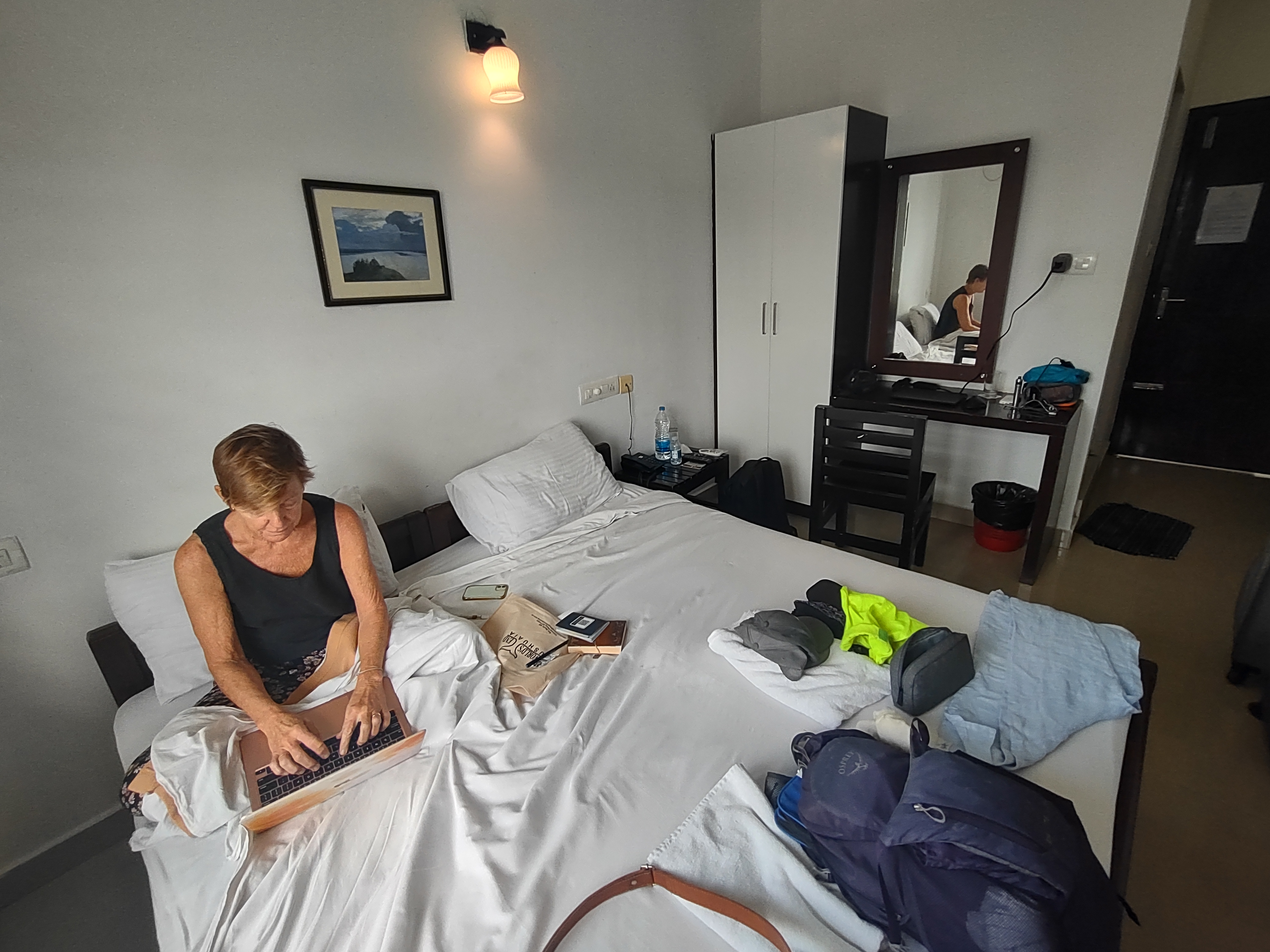

Once at the airport we made the unfortunate discovery that India is arguably the most regulated, restricted, and arbitrary country in the world when it comes to what you can and cannot carry on to flight. I could go on quite a bit on this particular episode but will limit it to three observations which kind of sum up the whole experience for me: (1) save time by taking anything remotely electrical out of your bag including all cords and chargers (2) vape devices are illegal in the country of India (news to me) and (3) don’t even think about trying to fly anywhere in India with a piece of bungie in your bag! ‘Nuff said.
The unfortunate outcome of our flight “rescheduling” was, of course, that instead of arriving in Delhi at 3:30 PM as originally anticipated, our flight would be arriving at 1:30 AM. And so, beginning with our first deviation from plan, on with the Itinerary!
RAJASTAN ITINERARY: YOUR ITINERARY AND TOUR DETAILS
Discover all the beauty of India with your dedicated driver that will become your friend and helper
DAY 1: 3-Oct-2023
From Delhi airport to Delhi (1h drive)
Your driver will pick you up upon your arrival at Delhi airport at 15:15 on October 3, 2023, flight AI419 & escort you to your car. Then he will take you to your hotel. There proceed to check-in before he briefs you to the rest of the tour and answer any questions you may have. According to your arrival time, we will take you for a first tour of Delhi’s highlights: such as the Akshardham temple (and its unimaginable architecture – closed on Mondays), Humayun’s Tomb (built in the 1500s), the Lotus temple (notable for its flowerlike shape, it has won several architectural awards – closed on Mondays), the Birla Mandir (also know as Laxminarayan Temple, is a Hindu temple dedicated to Vishnu), the Monkey temple… Overnight in Delhi.
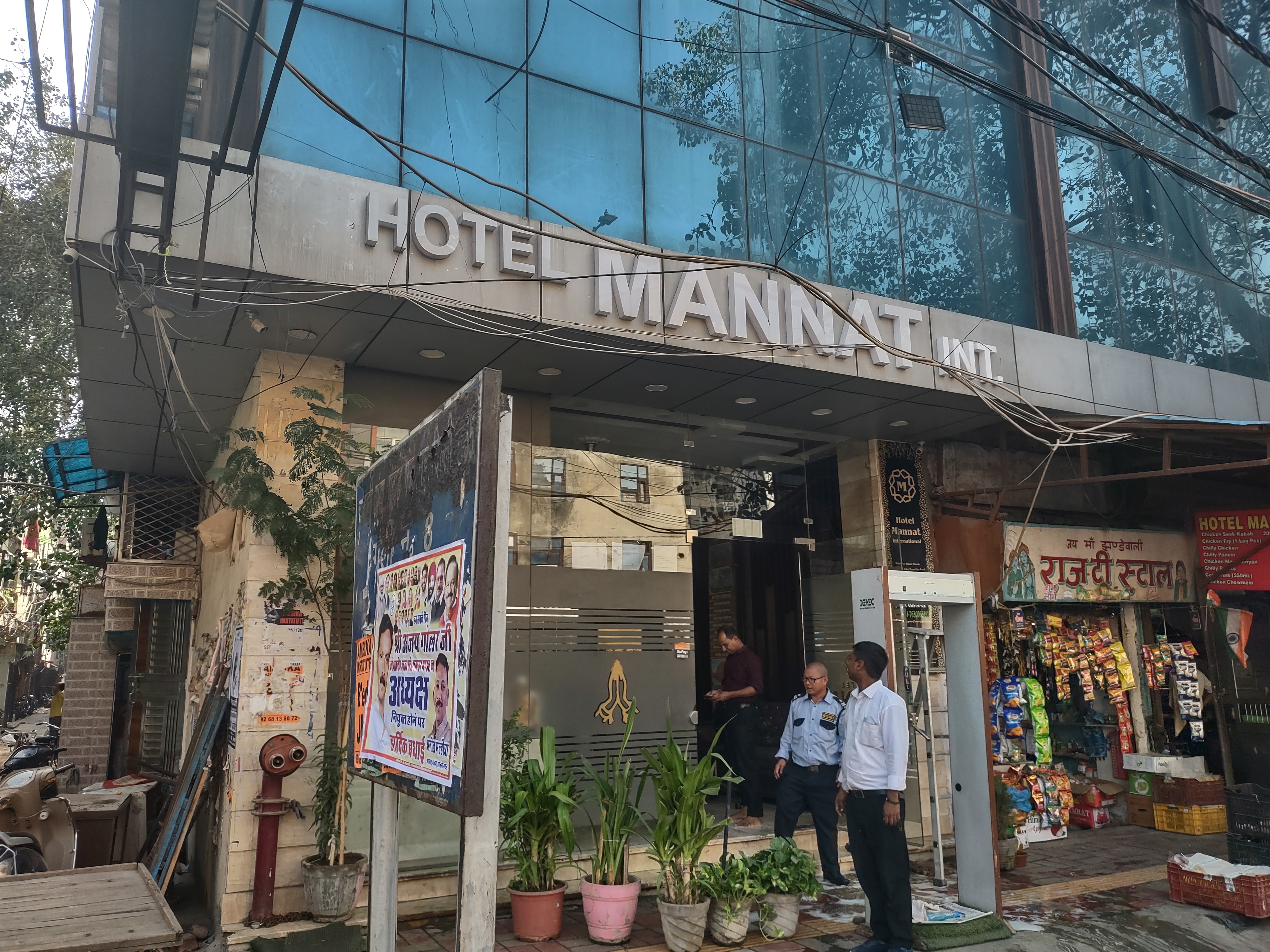
Your hotel: Hotel Mannat international
Due to the “rescheduling” of our flight from Fort Kochi, the only sightseeing we did was during the drive from the airport to our hotel, where we arrived around 2:30 AM. The staff at the Hotel Mannat seemed sort of surprised to see us but woke quickly and after a phone conversation with someone at Drivers-India (presumably Hasina) they got us settled into our room and one of the staff even went out to get us some cold beers!
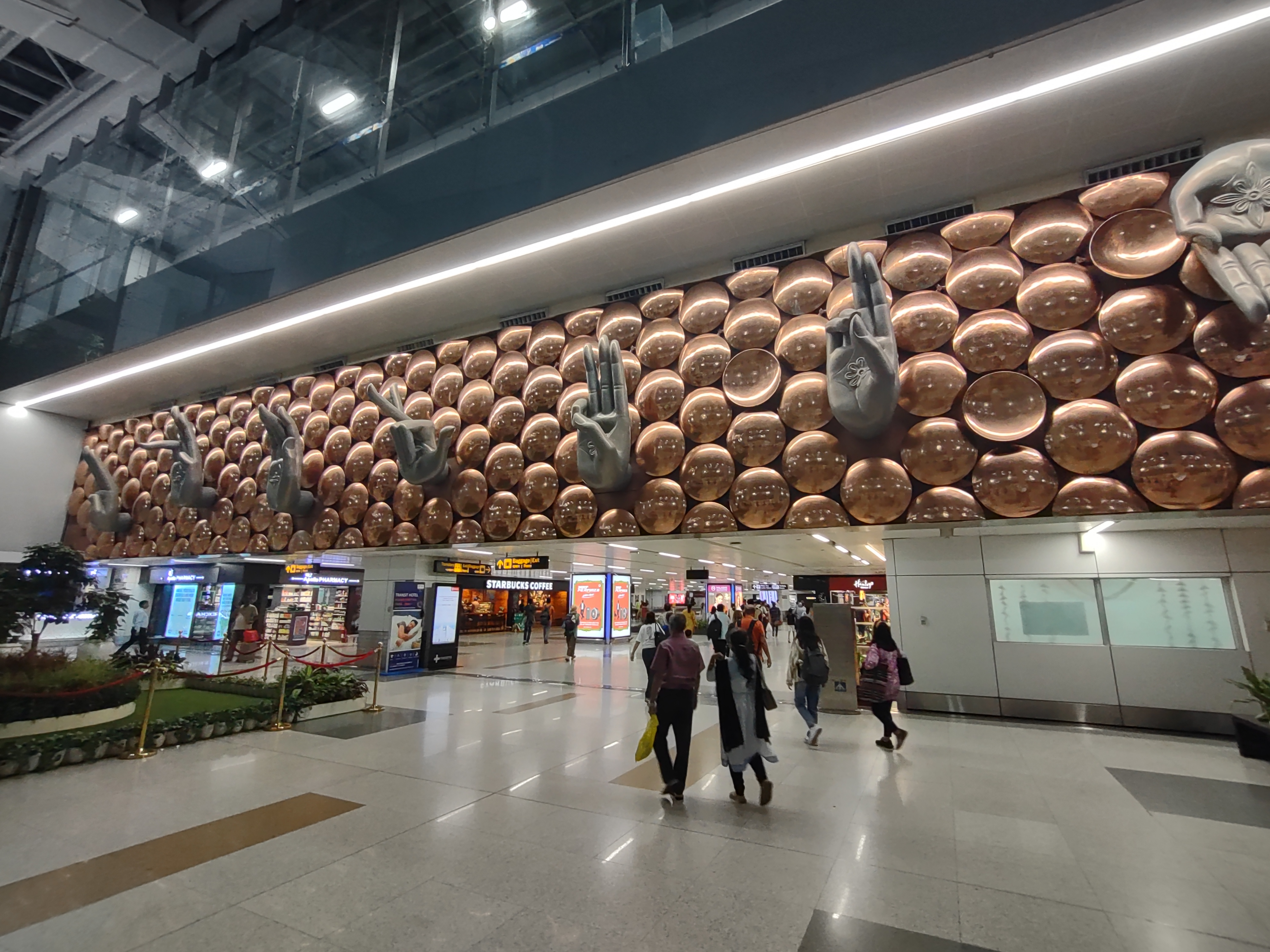
One of the Itinerary events which did not occur was the part after “There proceed to check-in before…” Due to the very late hour and confusion at check-in, rather than briefing us on the rest of the tour and answering our questions, our driver* disappeared into the night advising that he would be back at 8:30 AM to collect us and take us to the train station. All a bit of a blur!
[* – One thing which wasn’t entirely clear to us when we started the tour was whether the driver who picked us up in Delhi would be the same driver we would have once in Rajasthan. We were eventually able to confirm that this would not be the case and we were able to dismiss visions of our driver dropping us off in Delhi then racing through the night (while we slept and he didn’t) in order to meet us at the station in Jaisalmer the next day.]
DAY 2: 4-Oct-2023
From Delhi to Jaisalmer by train
Today we will take you for a Delhi sightseeing tour. Discover the Red Fort (the large red-colored fort was the residence of the Mughal emperors for nearly 2 centuries, and offers several structures that you will visit inside the main building – closed on Mondays), the nearby great Jama Masjid Mosque (built by Mughal emperor Shah Jahan between 1644 and 1656, it is one of the largest Mosques in India), the Chandni Chowk market (one of the oldest and busiest markets in old Delhi), QutbMinar (the 72-meter-high monument). In the evening, your driver will take you to the railway station to board the night train to Jaisalmer.
Overnight in the train (in a sleeper cabin with beds)
So, while we never really got an explanation for the change, our train was actually scheduled to depart at 11:30 AM and because of unpredictable traffic, which was pretty crazy (tons of tuk tuks, a million motorbikes, and cows going wherever they pleased), we left our hotel at 8:30 AM and proceeded directly to the train station. (So much for any sightseeing in Delhi!)

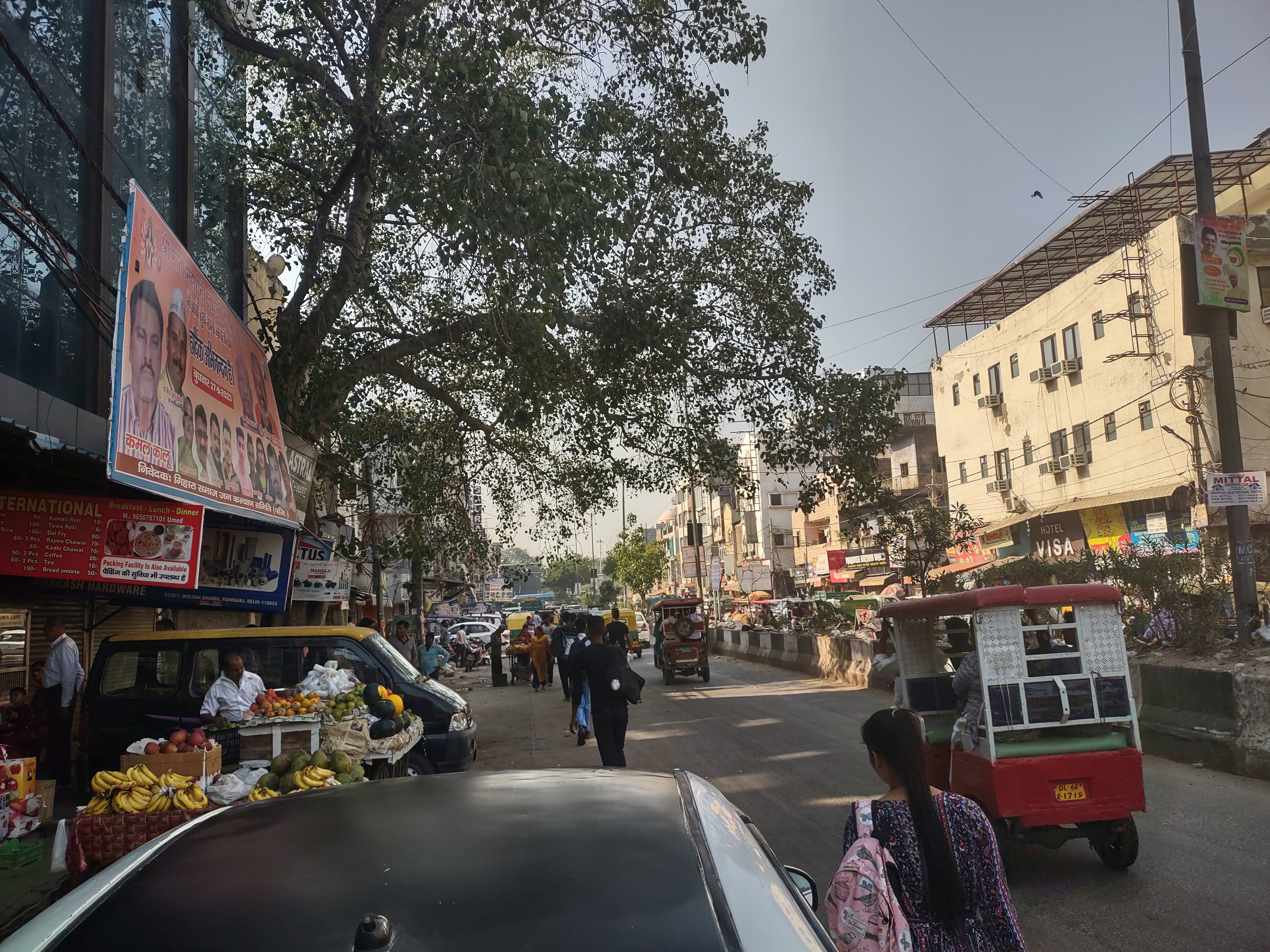
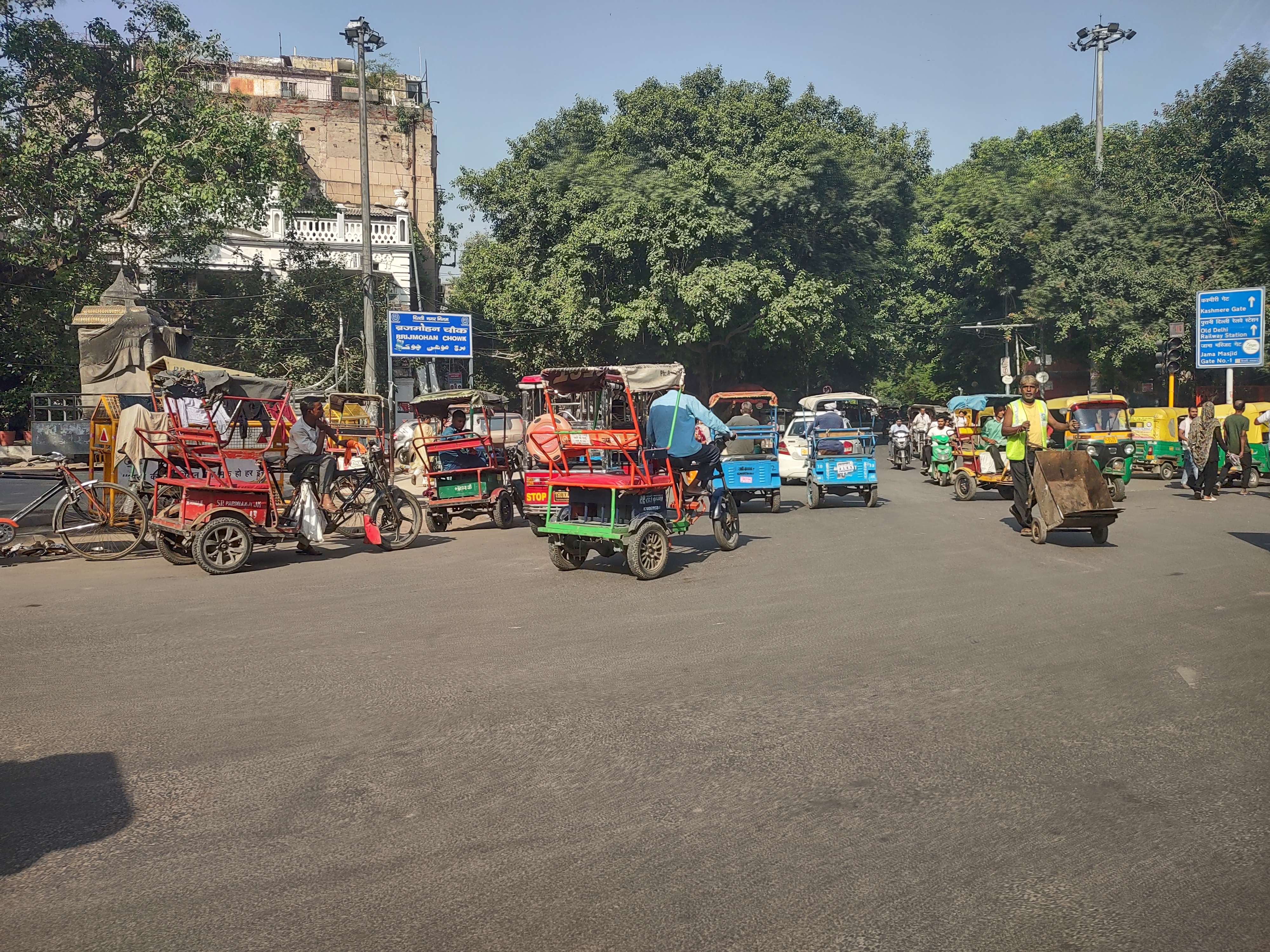
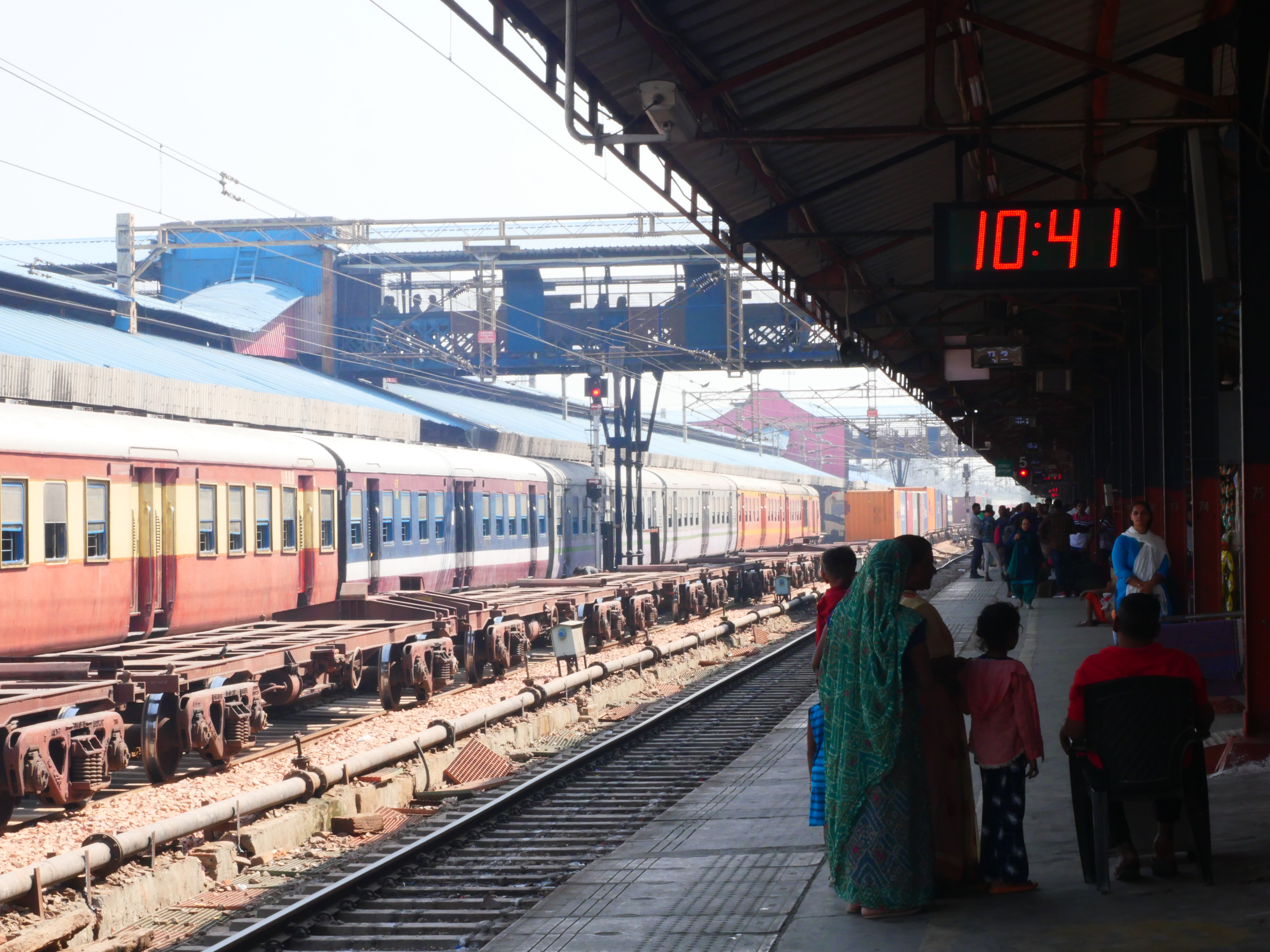
The Delhi railway station was actually a pretty interesting place to hang out as it gave a pretty good glimpse into daily Indian life in Delhi (arguably a better glimpse than one might get at a tourist attraction). We found a place to sit and observe and struck up a conversation with two cricket coaches on their way to a tournament and, at their request (the first of many similar requests to come), took some photos together.
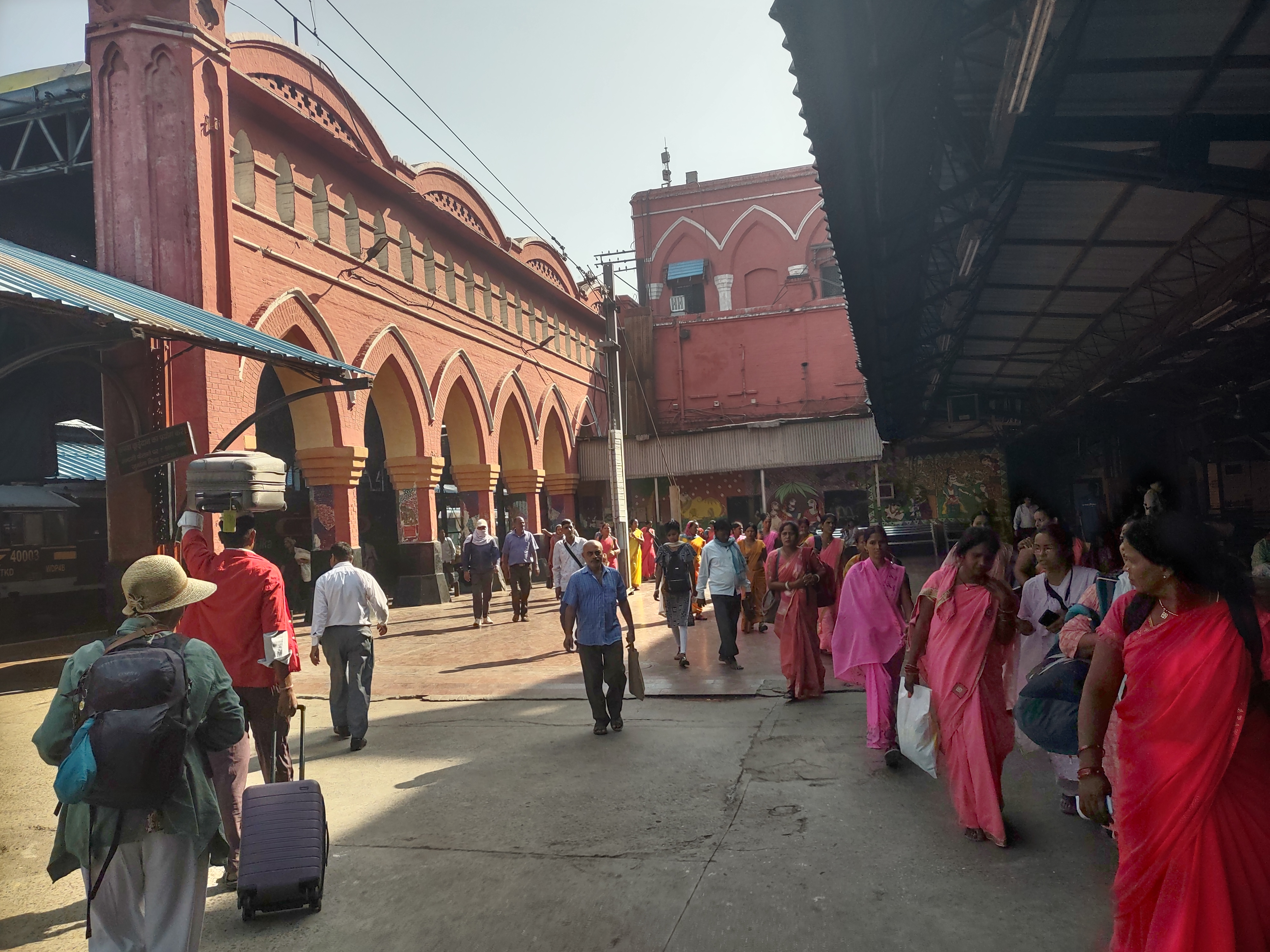

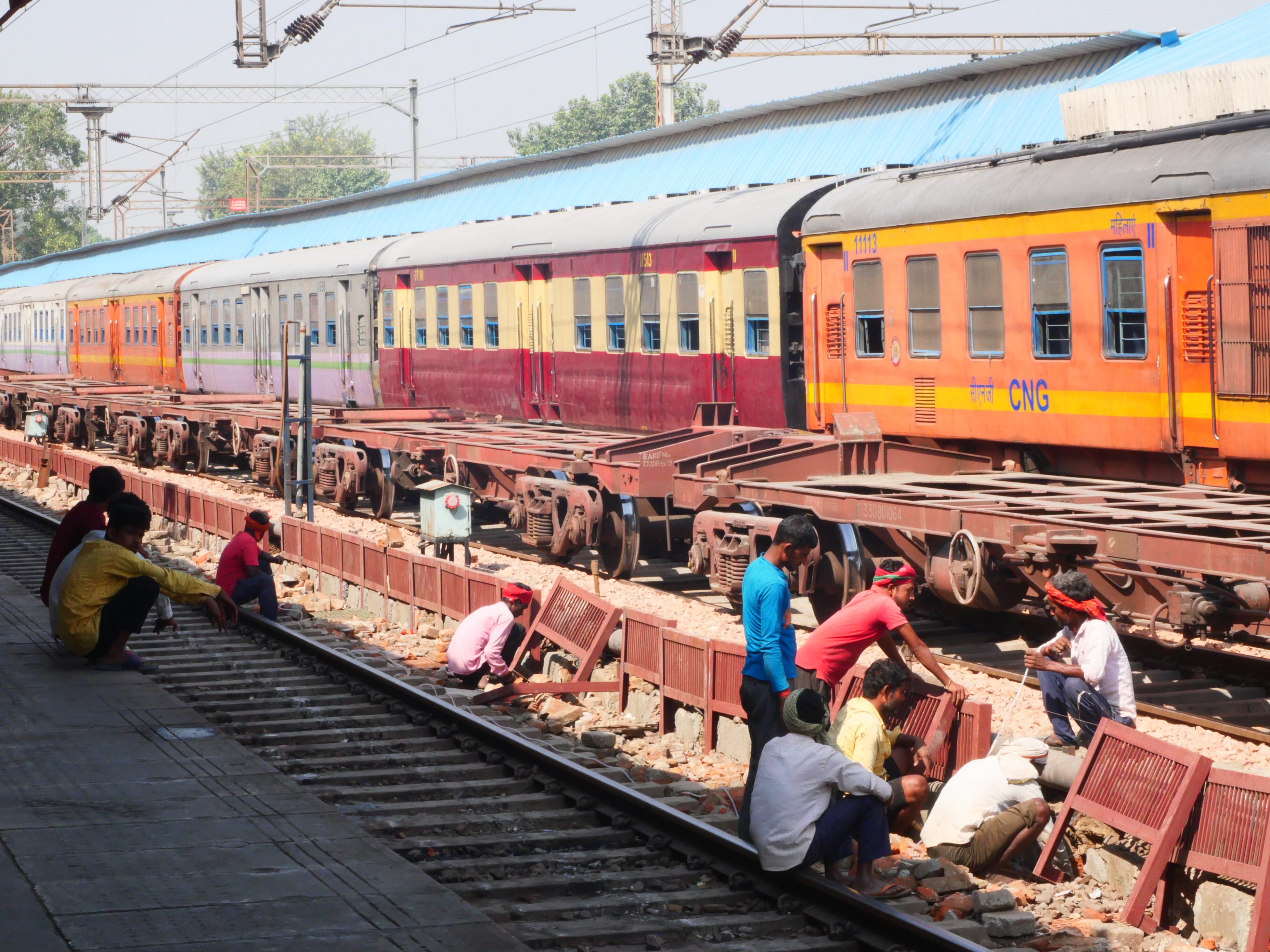
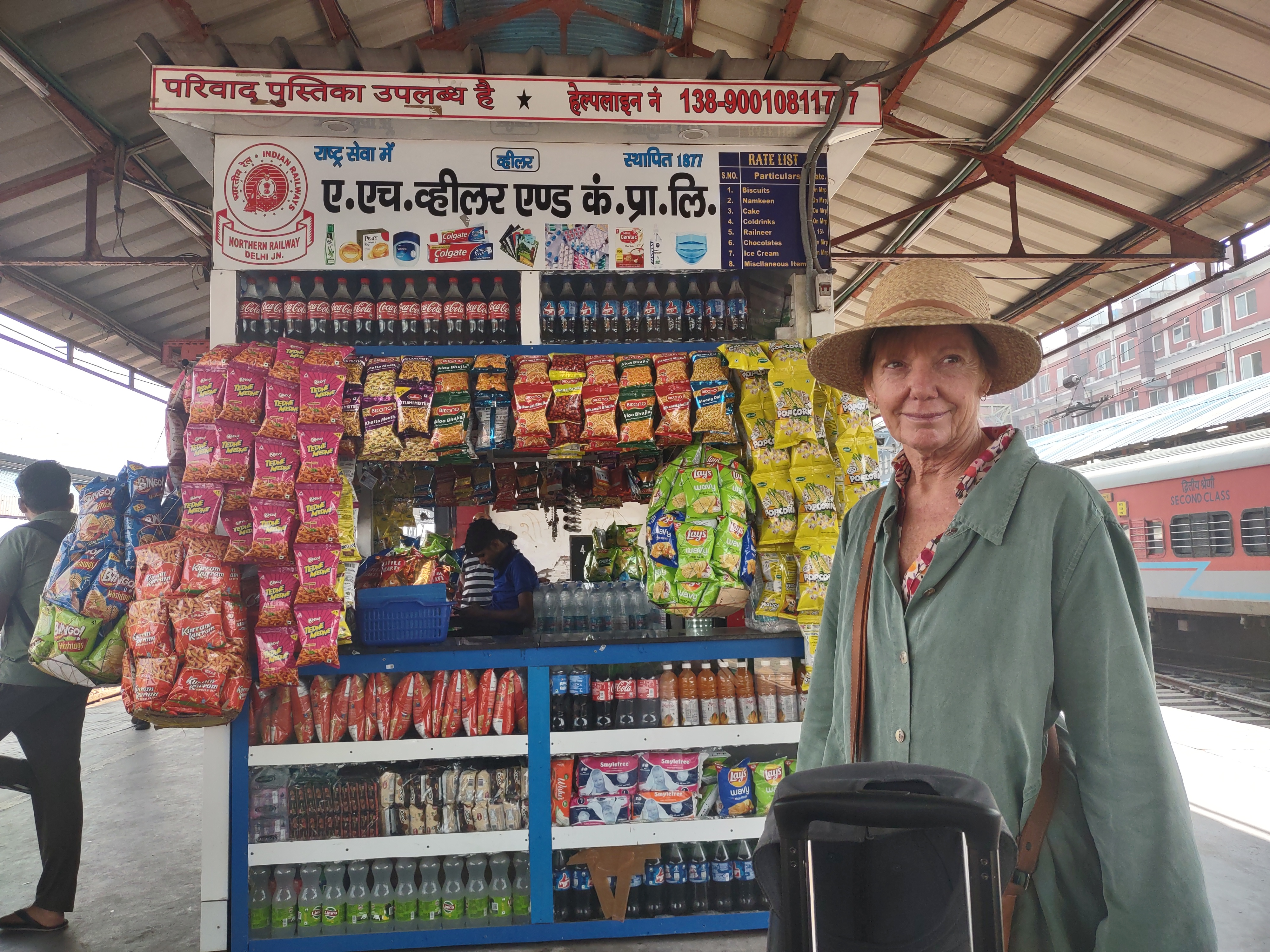
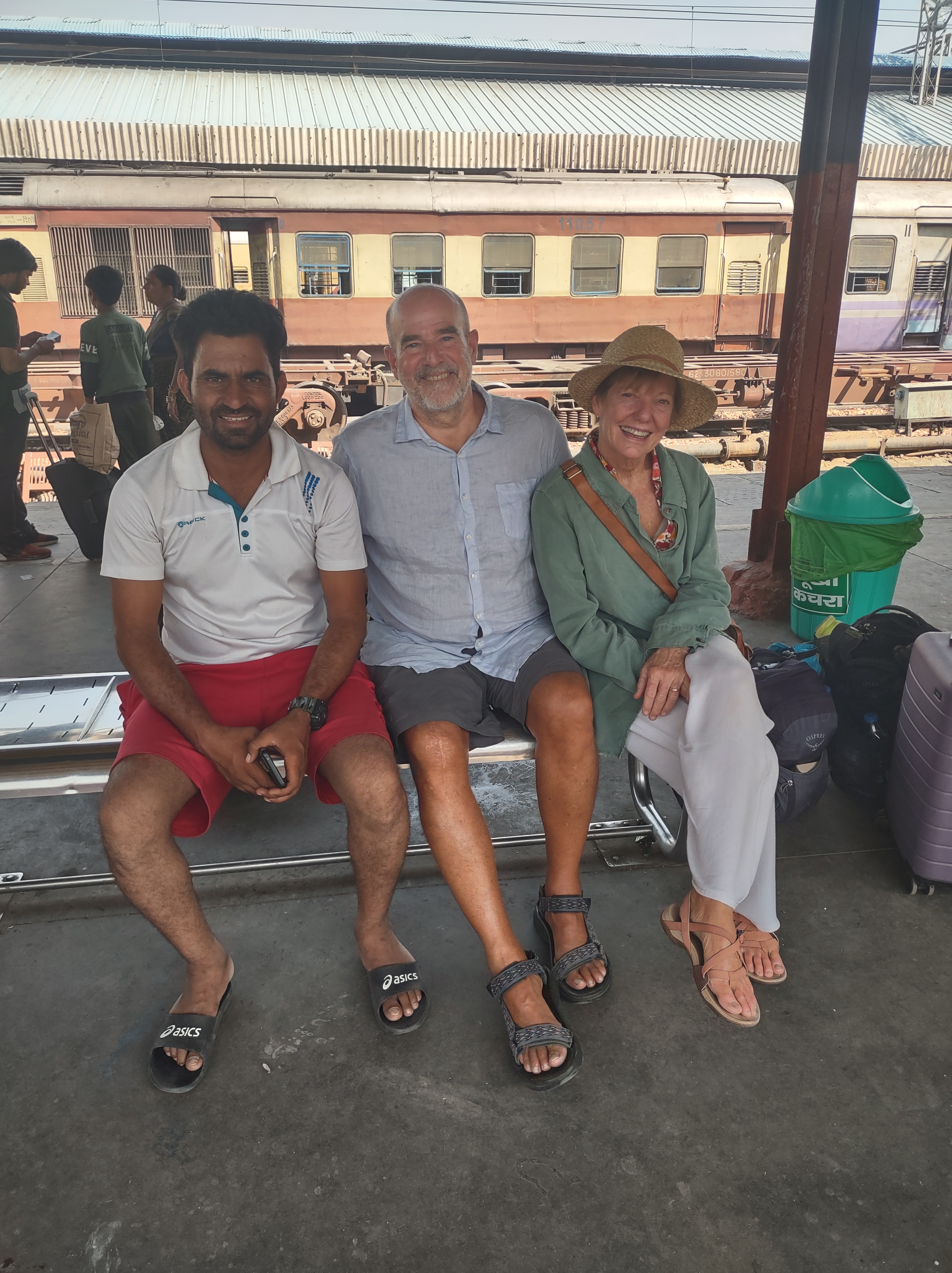
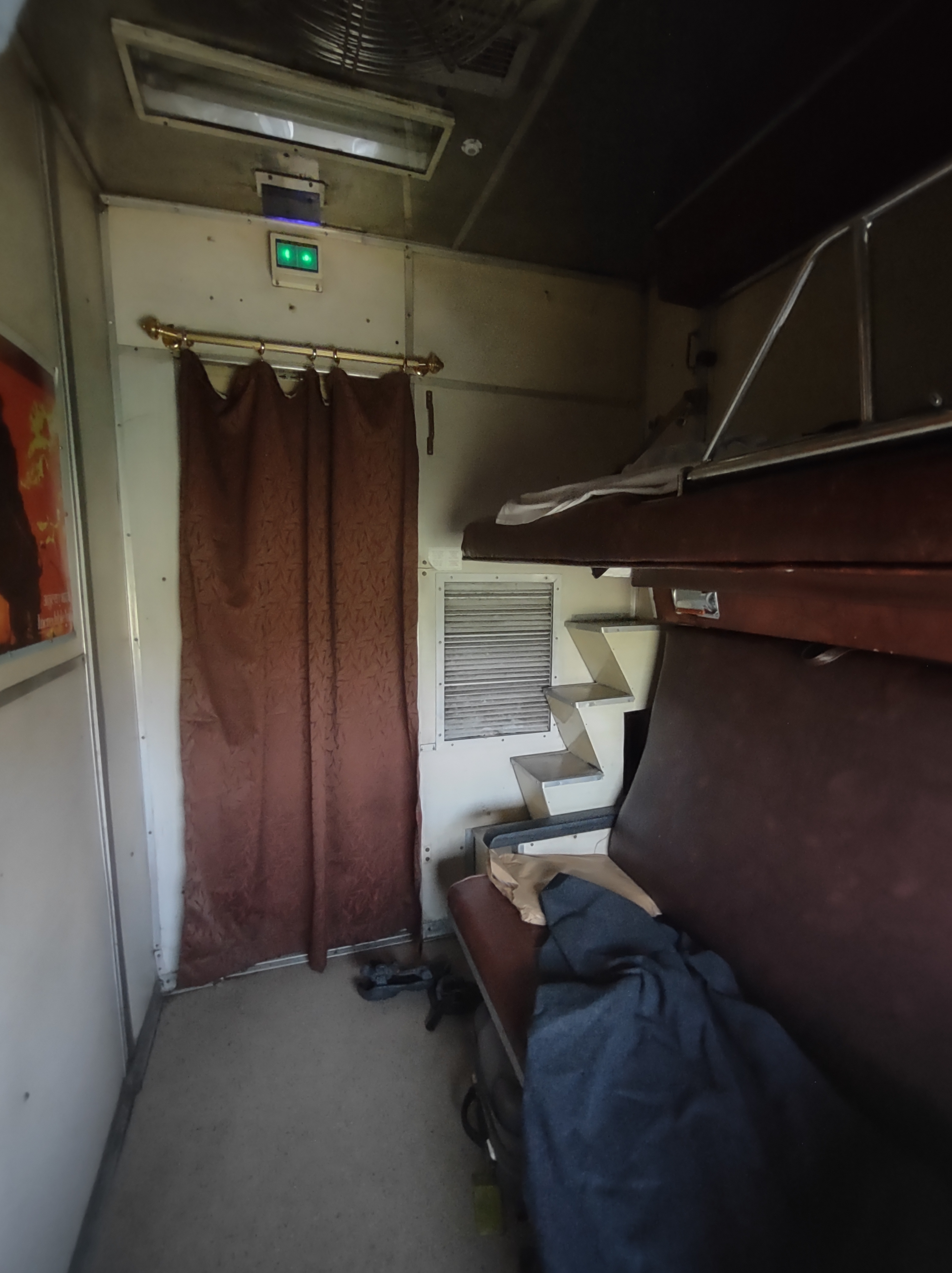
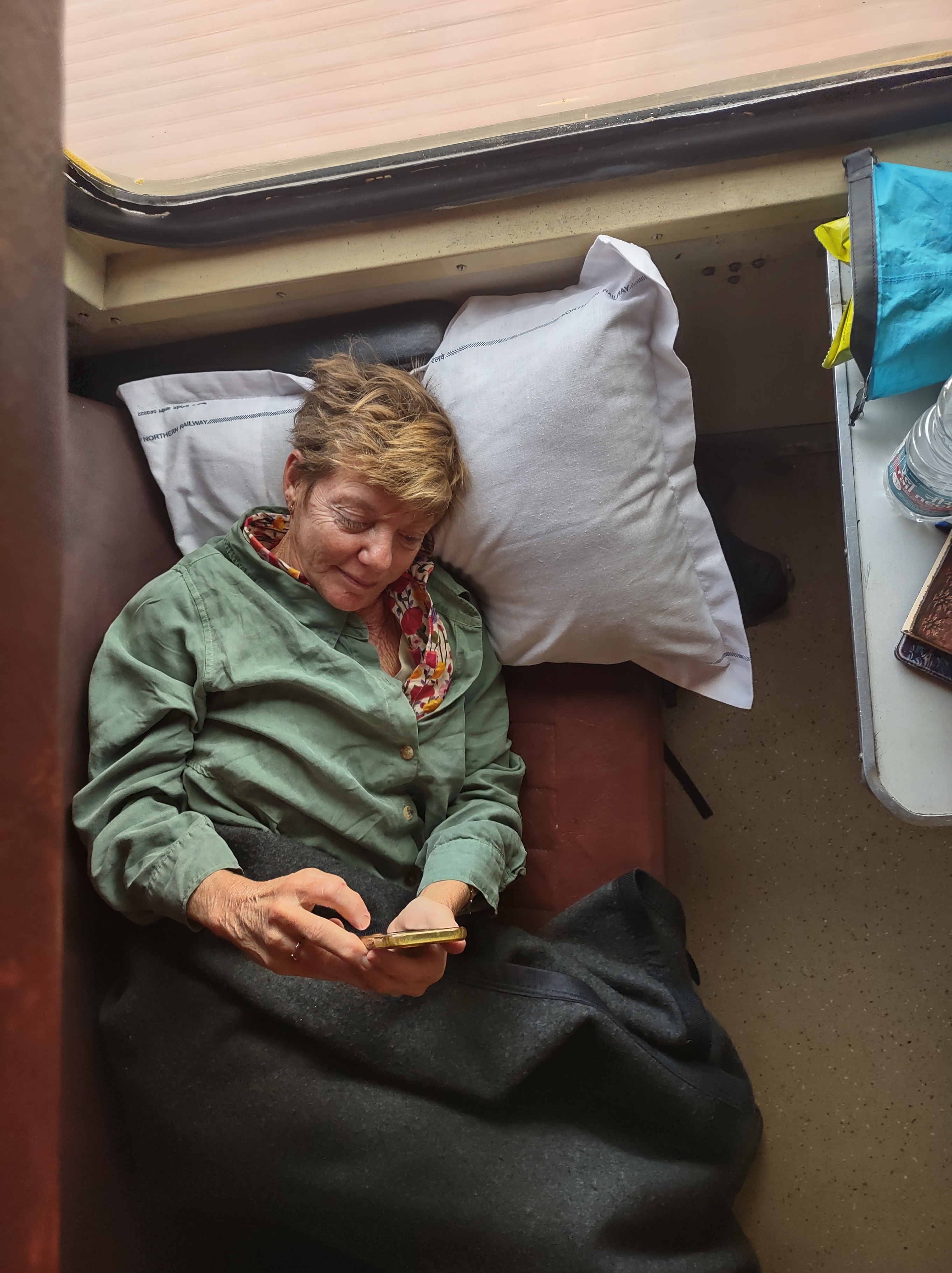
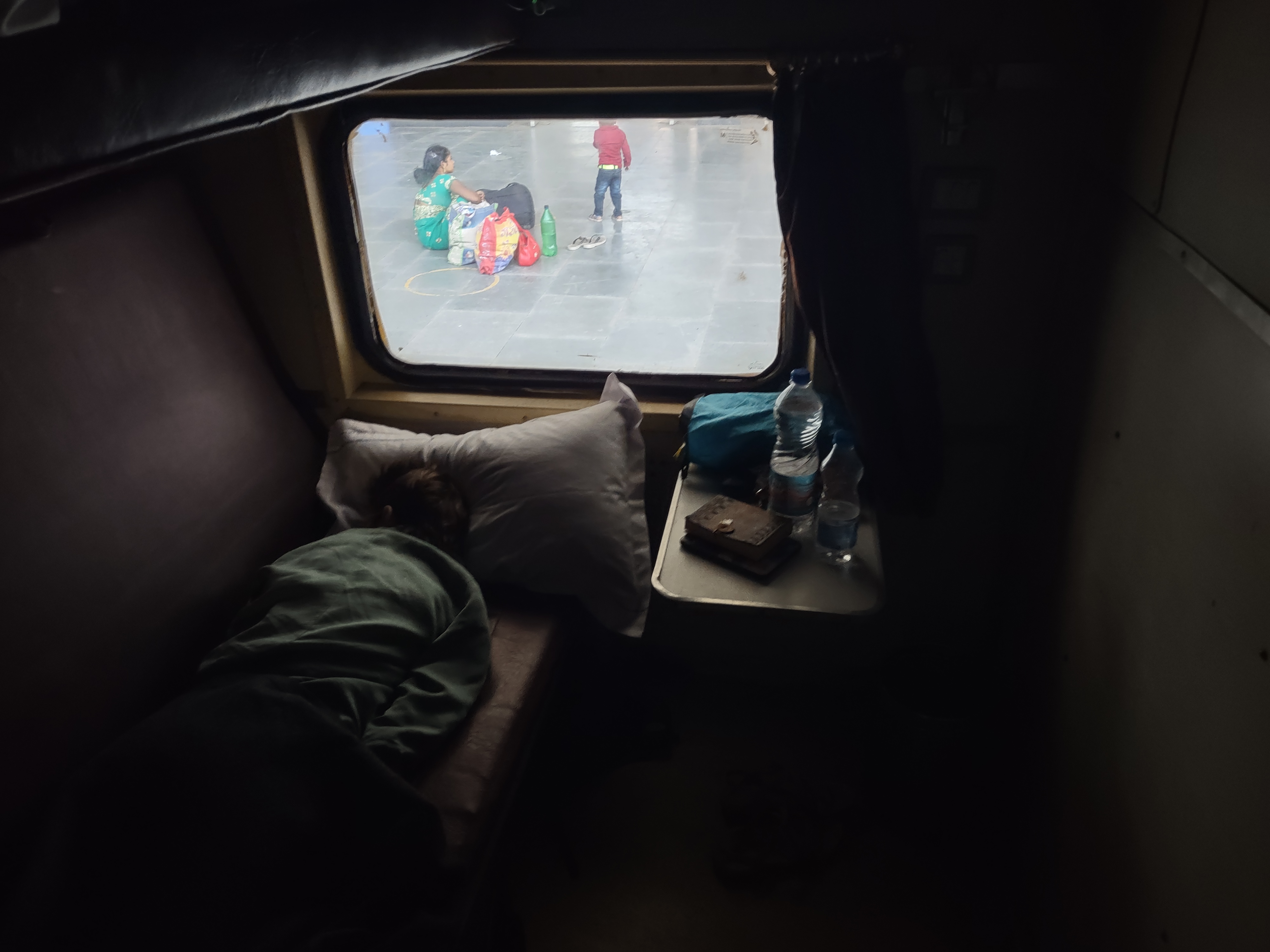
Our sleeper cabin on the train was very cozy (meaning small) and very comfy (meaning not uncomfortable), but it did have the benefit of being private (something we were not entirely certain of until the train pulled out). It was equipped with an upper and lower berth (with a very narrow very steep set of stairs going up to it), AC, and a fan as well. The best feature of our cabin was the window which was quite large in comparison to the dimensions of the cabin itself.
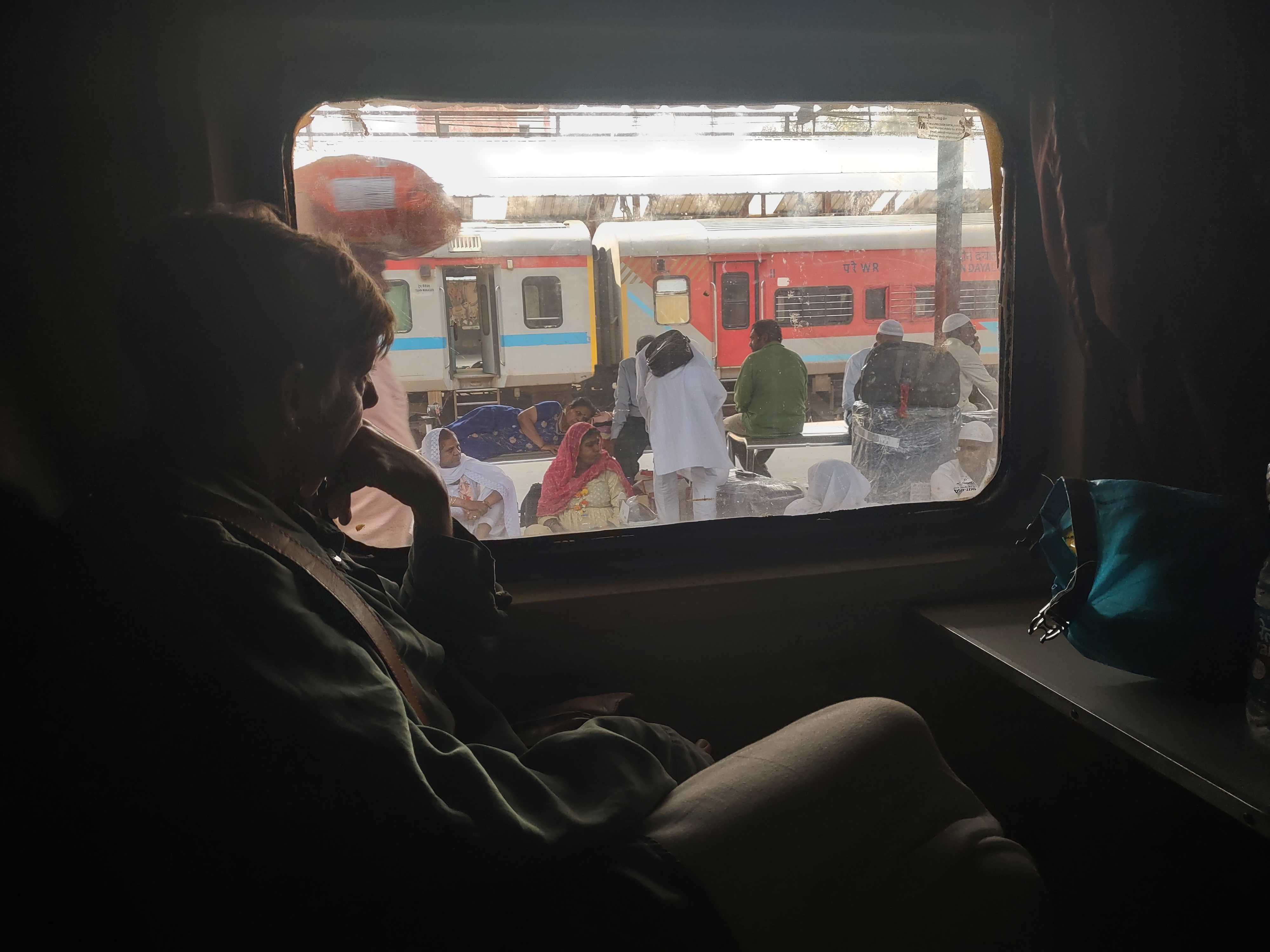

Our cabin was located near the entrance to the car and so not far from the shared toilet facilities which I used begrudgingly, and Colleen avoided using entirely. Our earlier-than-expected departure did have the benefit of us being able to actually see the Indian countryside roll slowly by gradually transitioning from urban neighborhoods to suburbs to farms with occasional stops at cities and towns along the way.
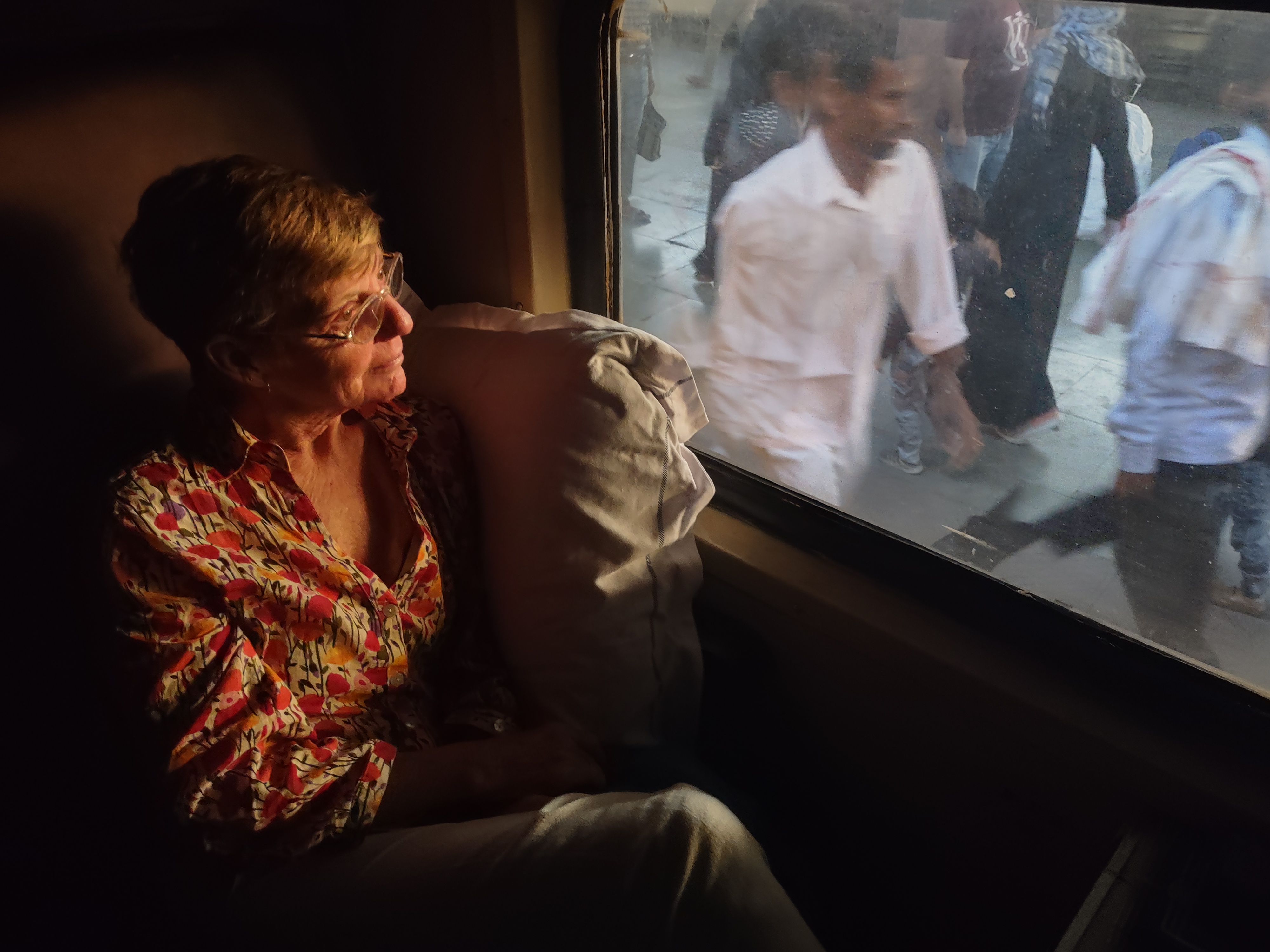


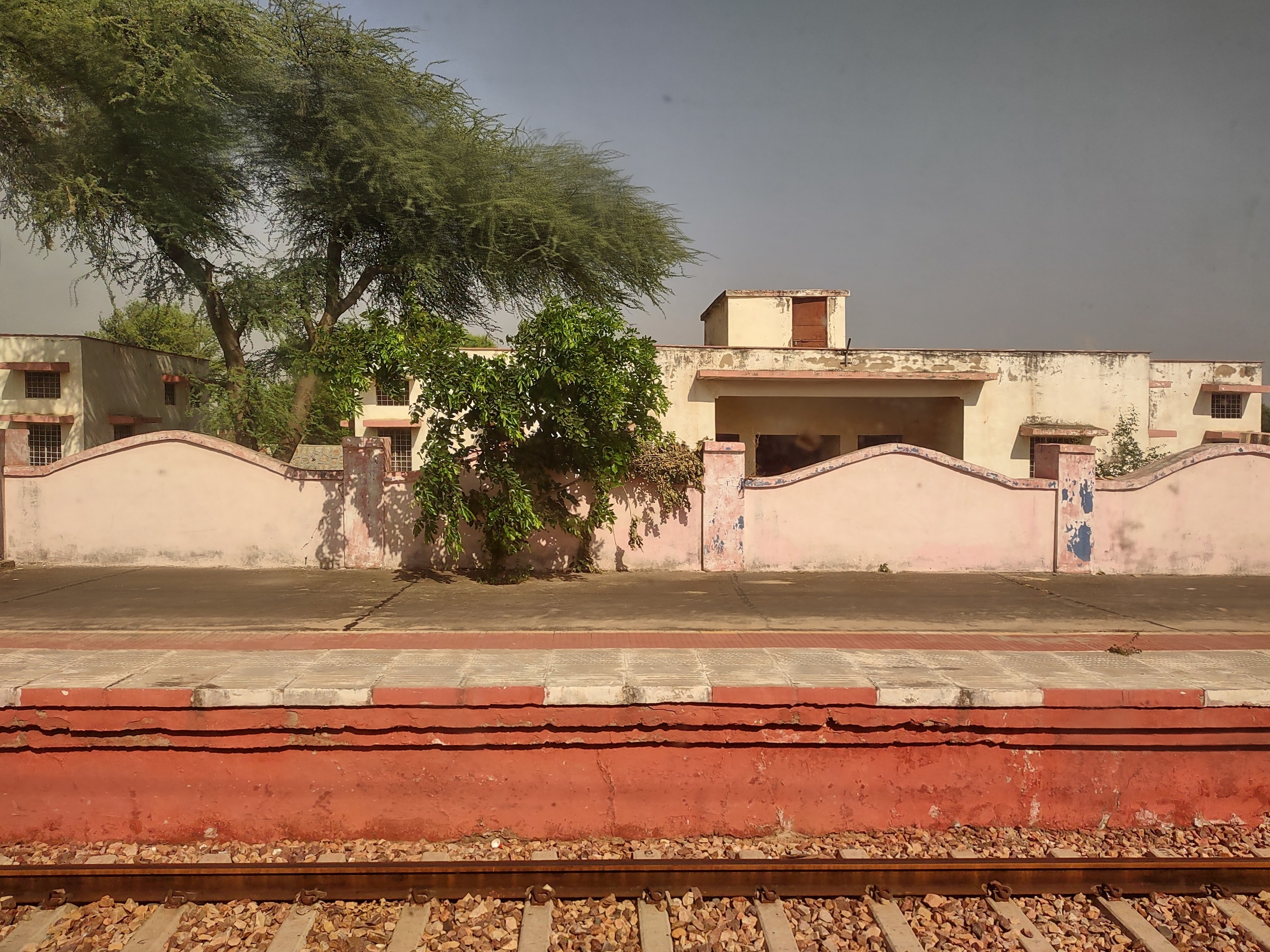

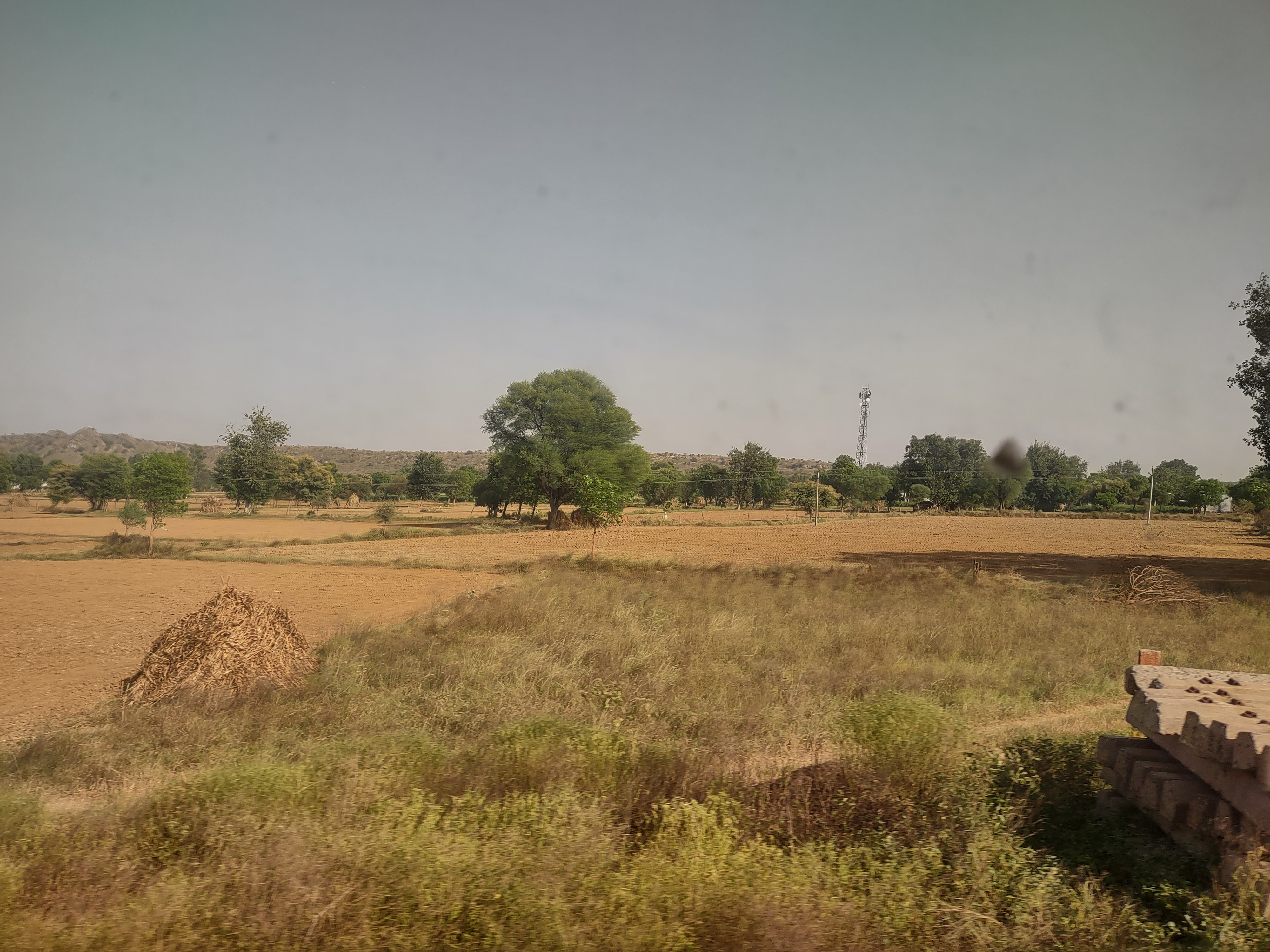
We spent the day watching the scenery roll by, reading, and napping (neither of us had gotten enough sleep the night before). At stops, you were able to get off briefly and stretch your legs and vendors came on board selling water (which we had), chai masala and snacks (of which we partook), and (as we would eventually experience) entire preprepared meals of Thali, a selection of various dishes served as a platter with flat bread and rice. Not really my favorite and, in any case, not the best kind of meal for eating with your fingers on a moving train, but beggars can’t be choosers.

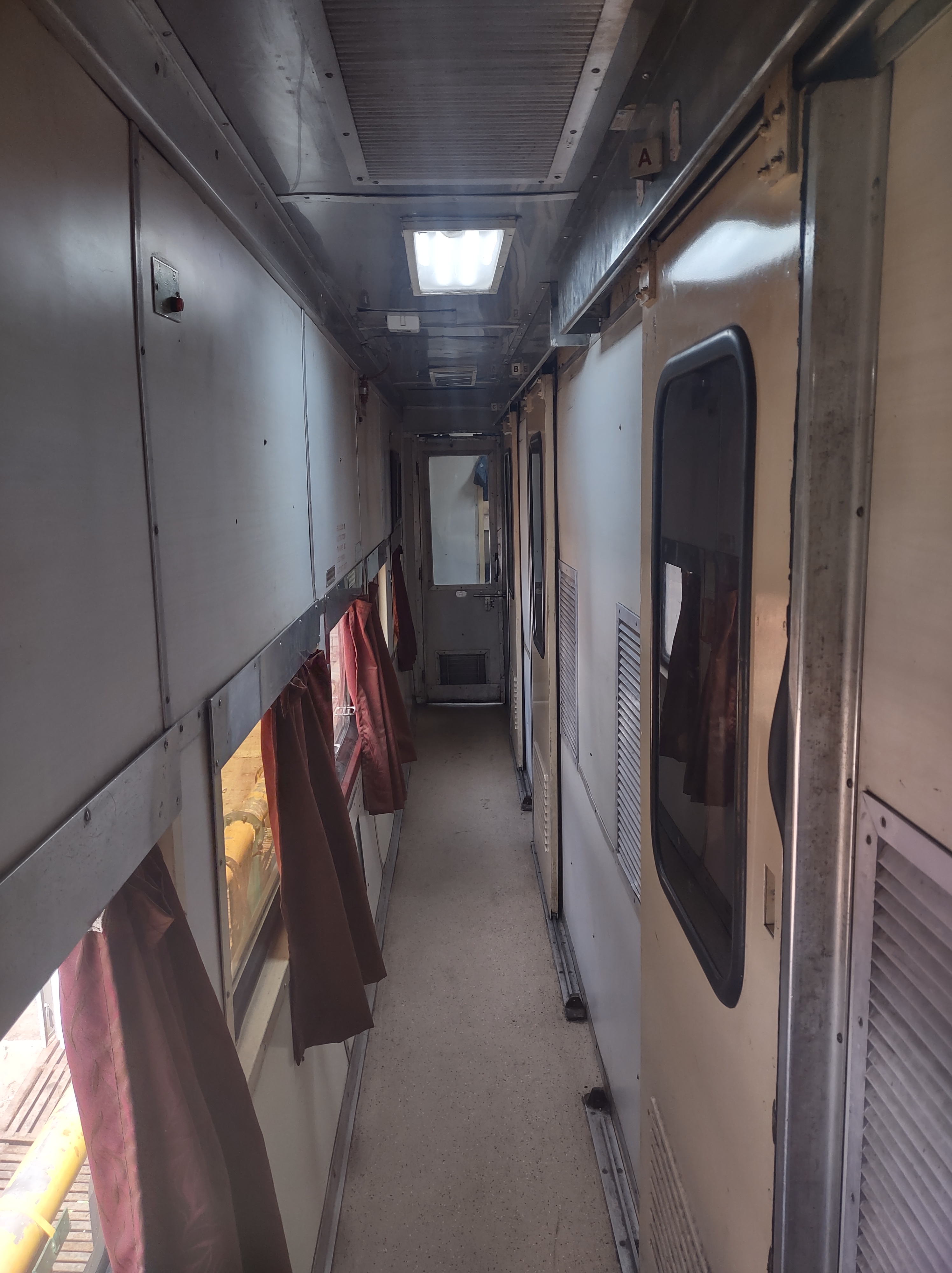
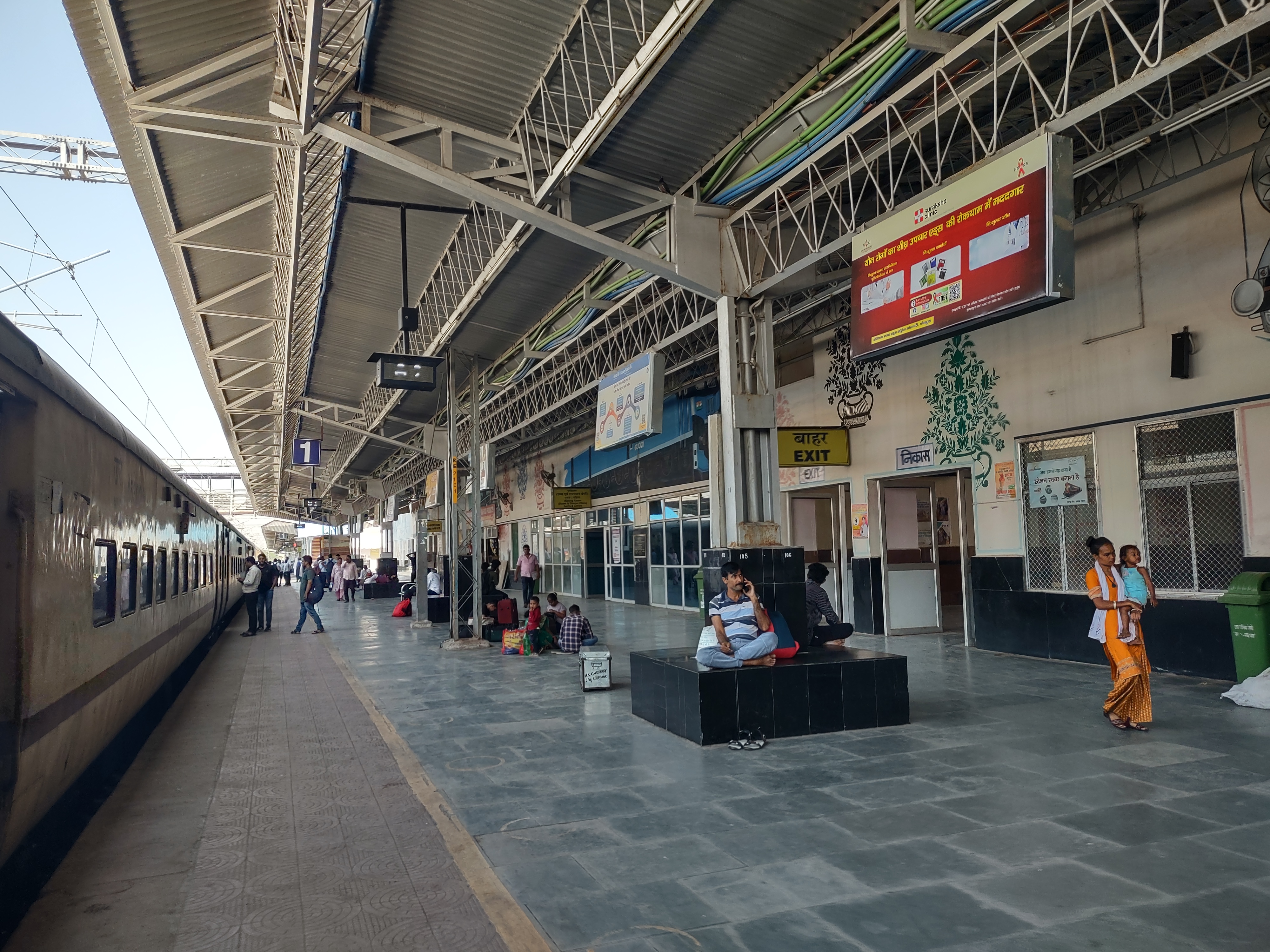

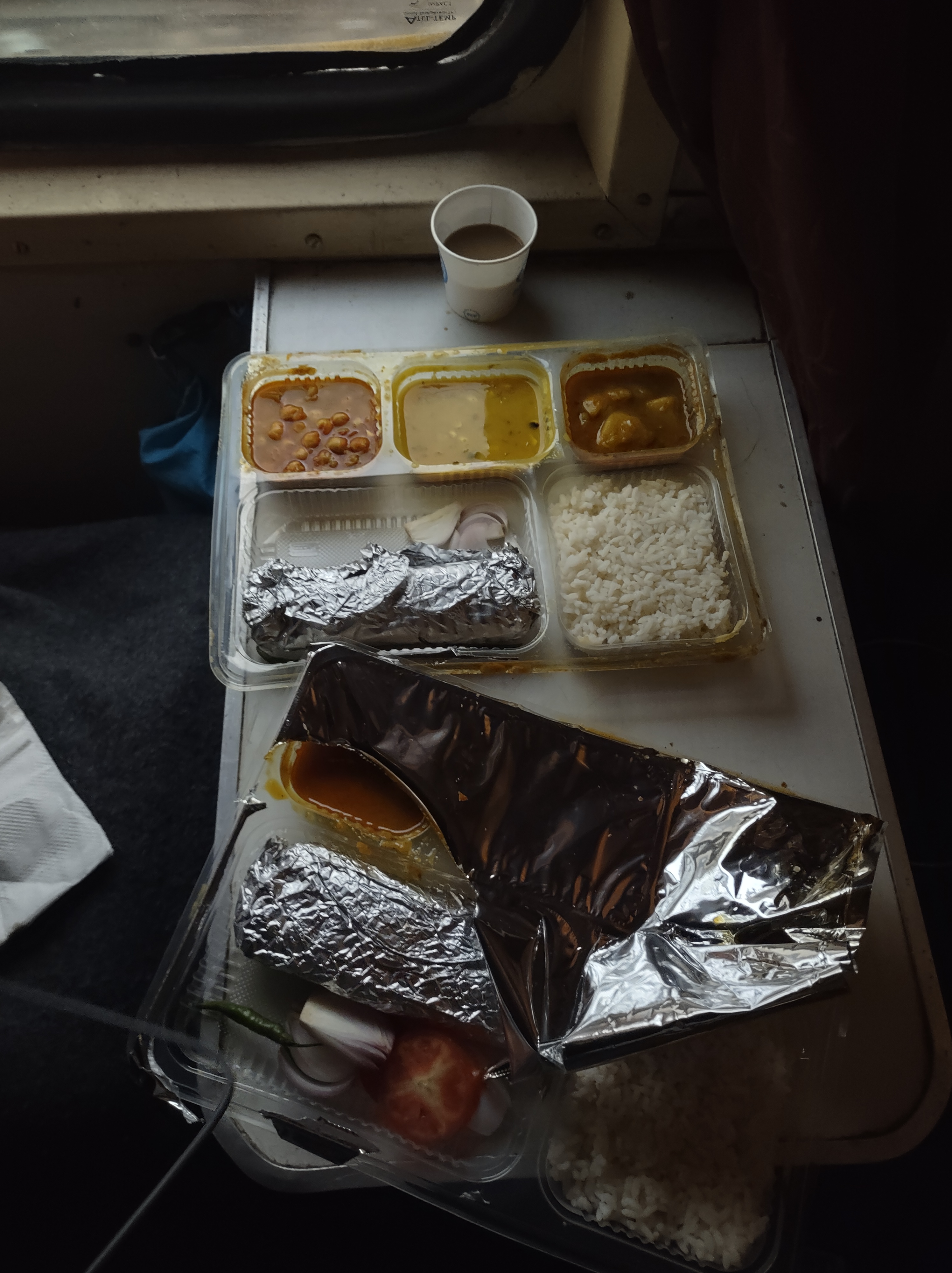
We settled into our bunks and once the sun went down slept pretty well despite just a little bit of nervousness over missing our stop at Jaisalmer, which was scheduled for 5:30 AM.

DAY 3: 5-Oct-2023
Jaisalmer sightseeing
Today you will visit the Jaisalmer Fort (also known as Sonar Quila), housing a fourth of the city’s residents. The amazing UNESCO World Heritage Site was built in 1156 AD by Rawal Jaisal, from where the city is taking its name. Inside the fort you will discover Patwon Ki Haveli (one of the most exquisite havelis with a beautifully latticed facade) Salim Singh Ki Haveli (over three centuries old and still being lived in), Nathmalji Ki Haveli (which was built by two architect brothers). In the afternoon your driver will take you to Bada Bagh. There you will enjoy the sunset while visiting the set of royal cenotaphs in the beautiful desert landscape. After sunset, return to your hotel and enjoy some free time. Overnight in Jaisalmer.
Your hotel: Jasmin Home (www.jasminhome.com)
We arrived in Jaisalmer at 5:30 AM and were met by our driver Mr. Sunder (more about him later), who found us quickly and whisked us off to our hotel, the Jasmin Home, to freshen up a bit and have breakfast before picking us back up at 9:00 AM. Our first stop of the day was the Jaisalmer Fort which is unique in India as one of the few such forts in the world which is occupied by people, with one quarter of the old city’s inhabitants still living within the Fort.
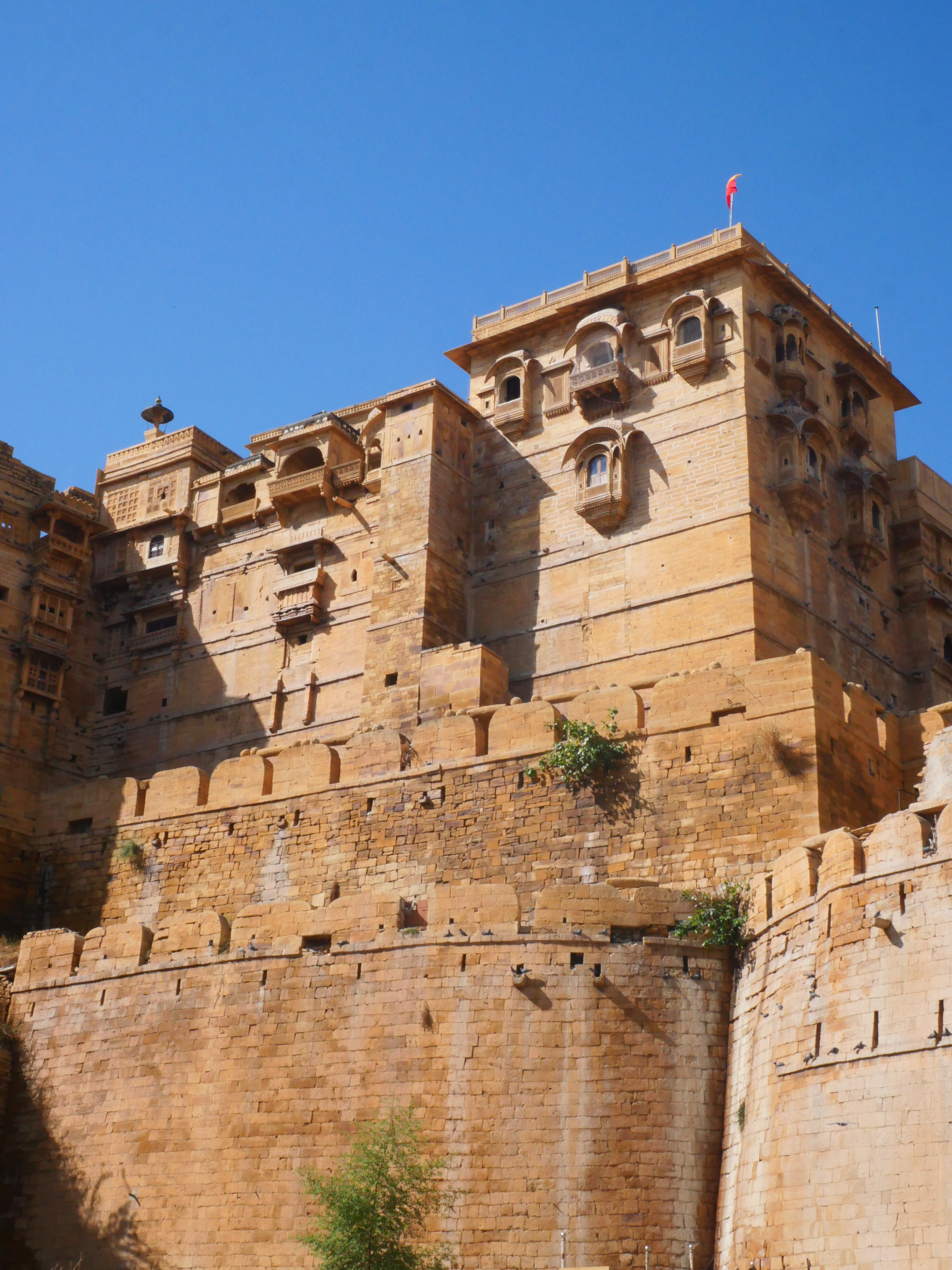
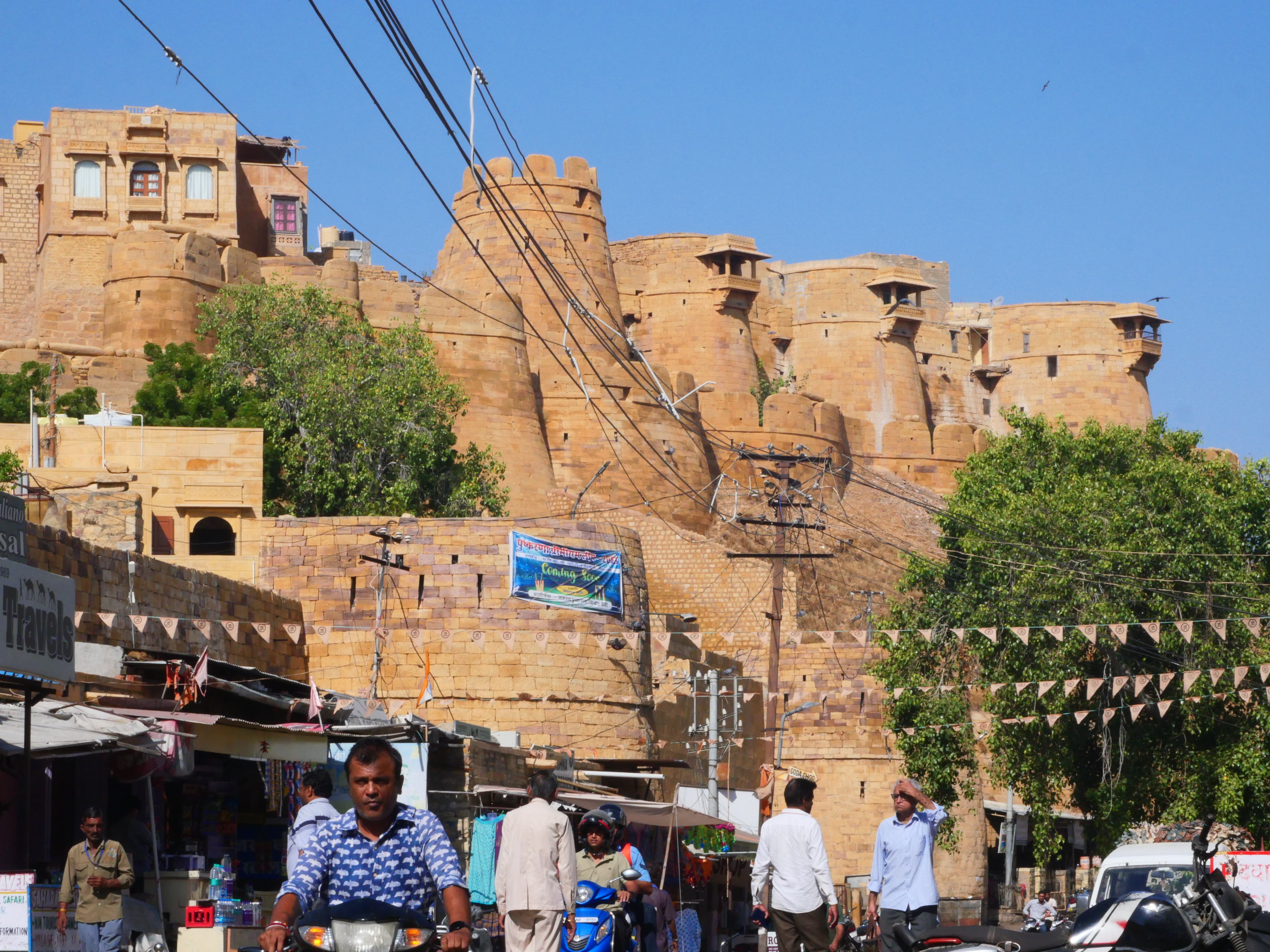
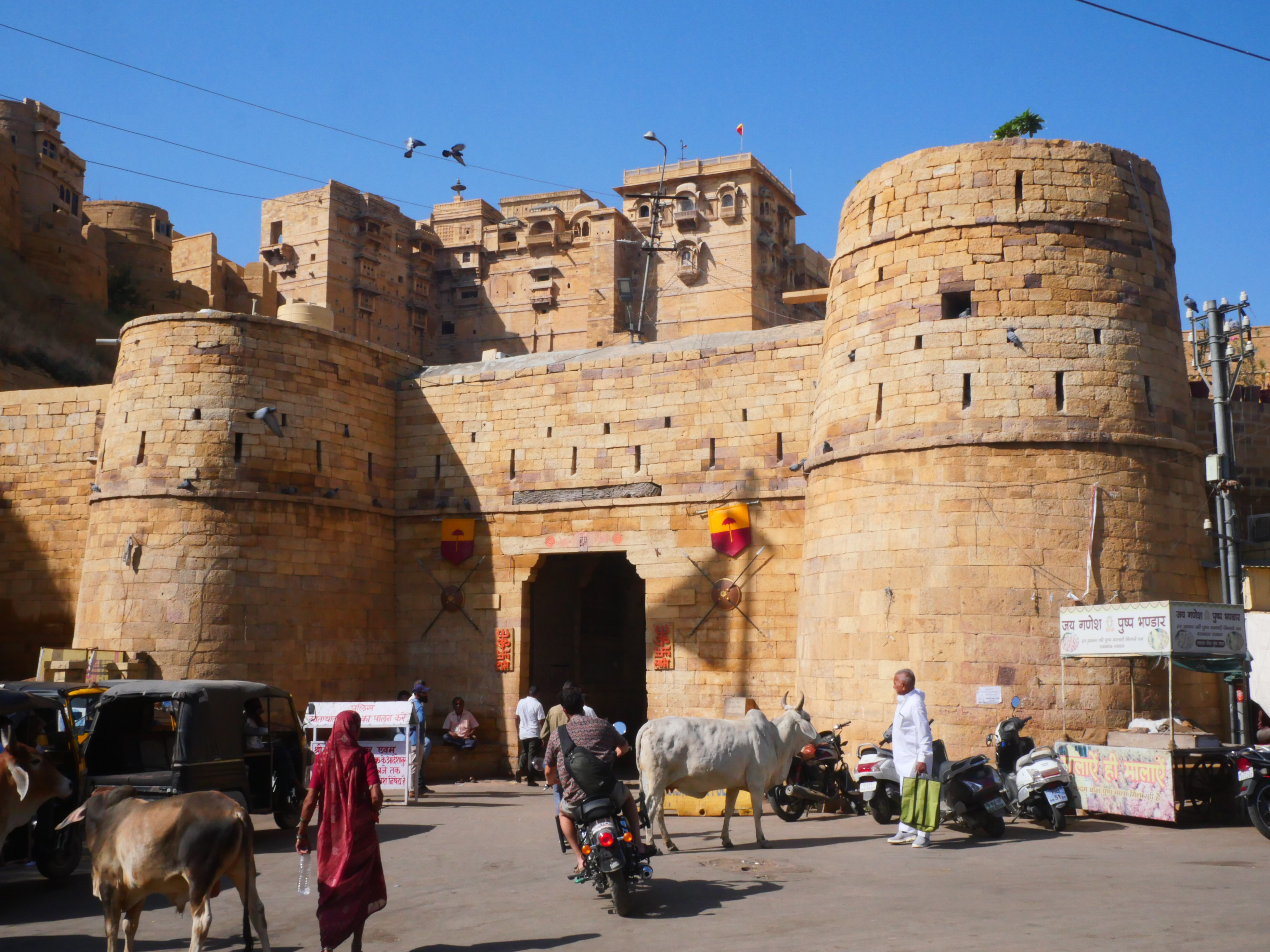
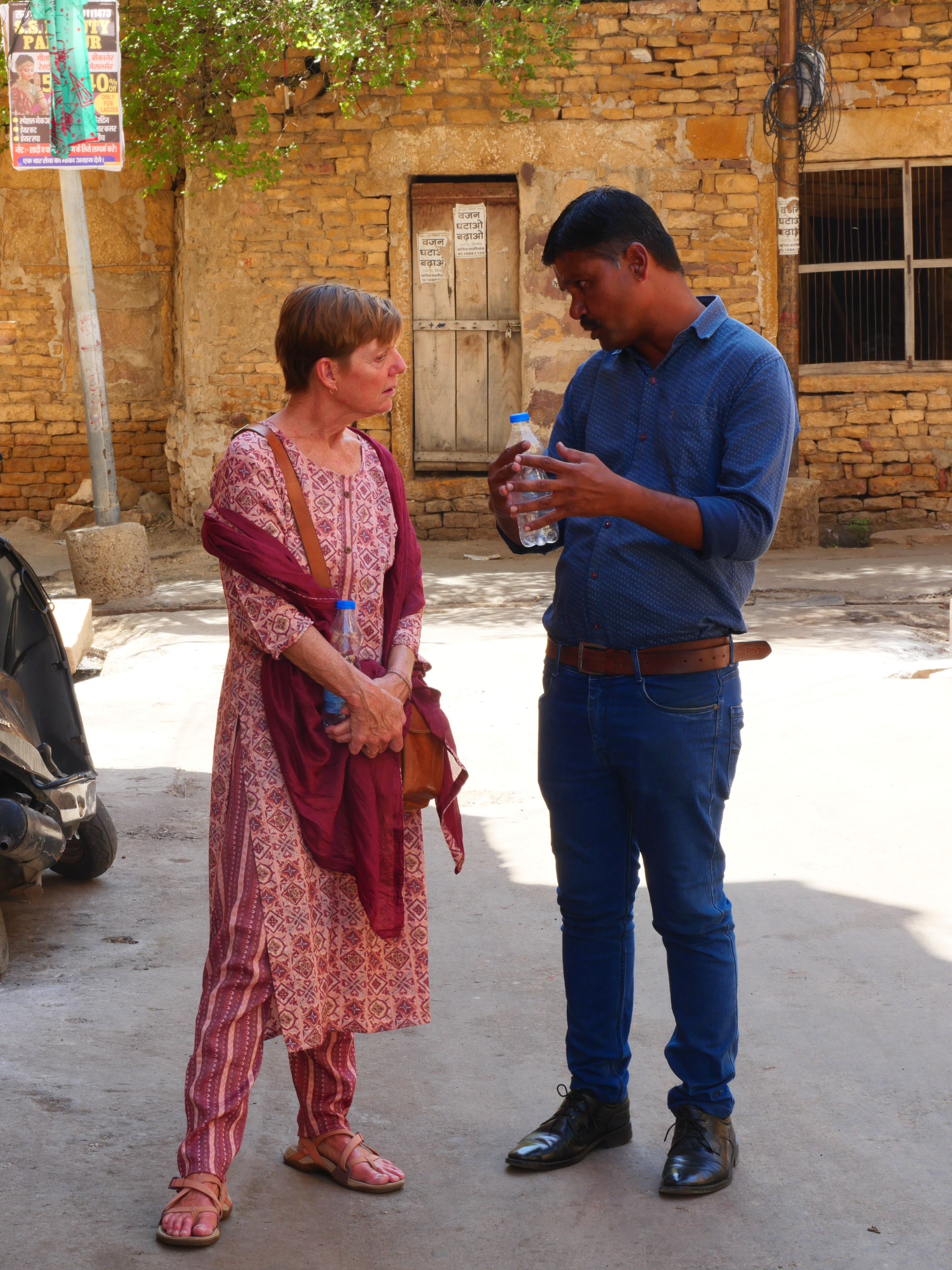
We drove to the Jaisalmer Fort where we met our guide, Neses, who was probably one of the best guides we had during our entire stay in India. (One of the benefits of working with a tour agency is their ability to connect you with good local guides.) Neses took us to the top of one of the hotels in the Fort which overlooks both the Fort and the surrounding town and countryside and shared the history of the place over tea. He also noted that there is a growing movement to evict the people living in the Fort as their presence there is at odds with the desire to protect it – a very controversial issue.

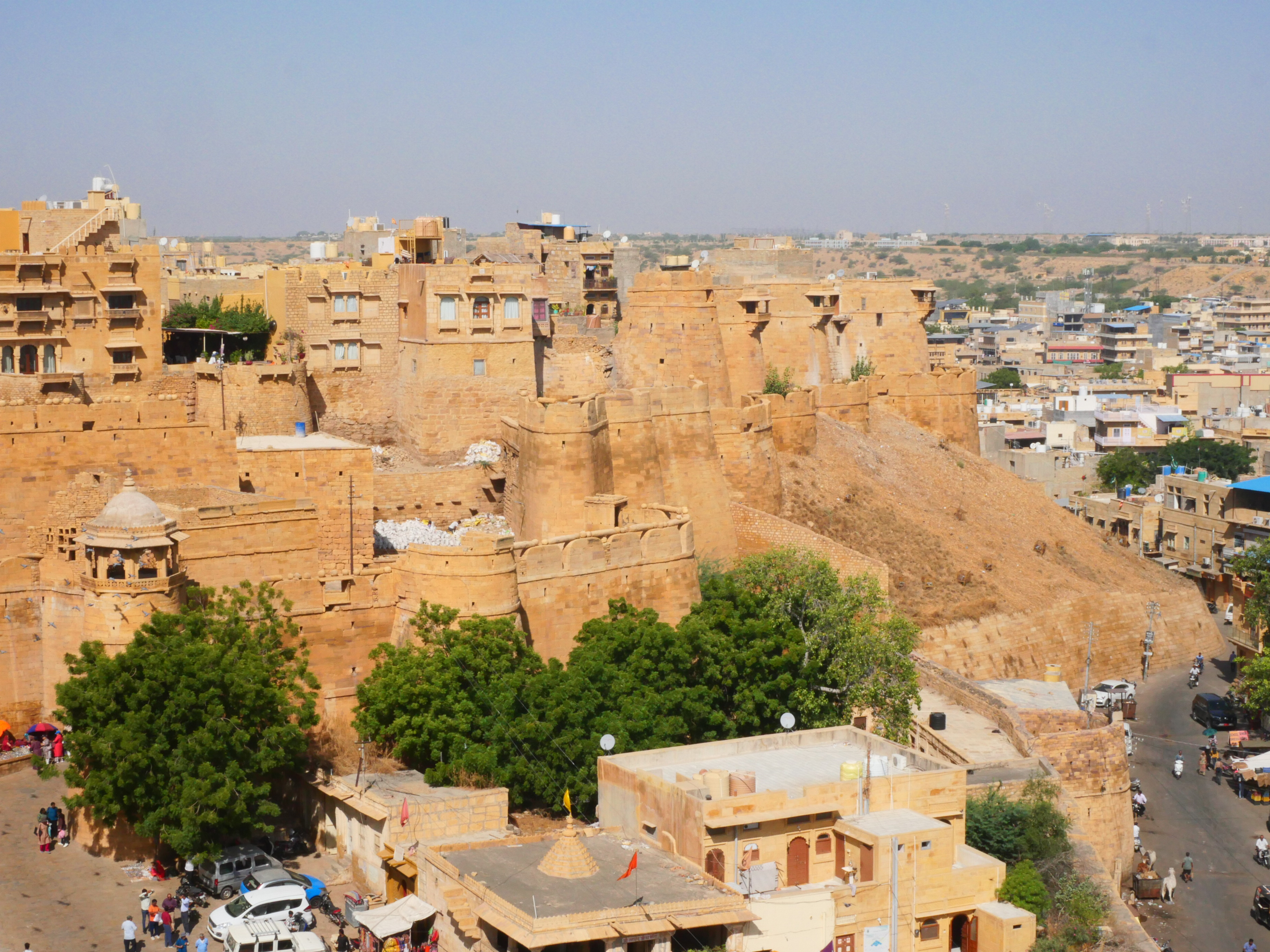
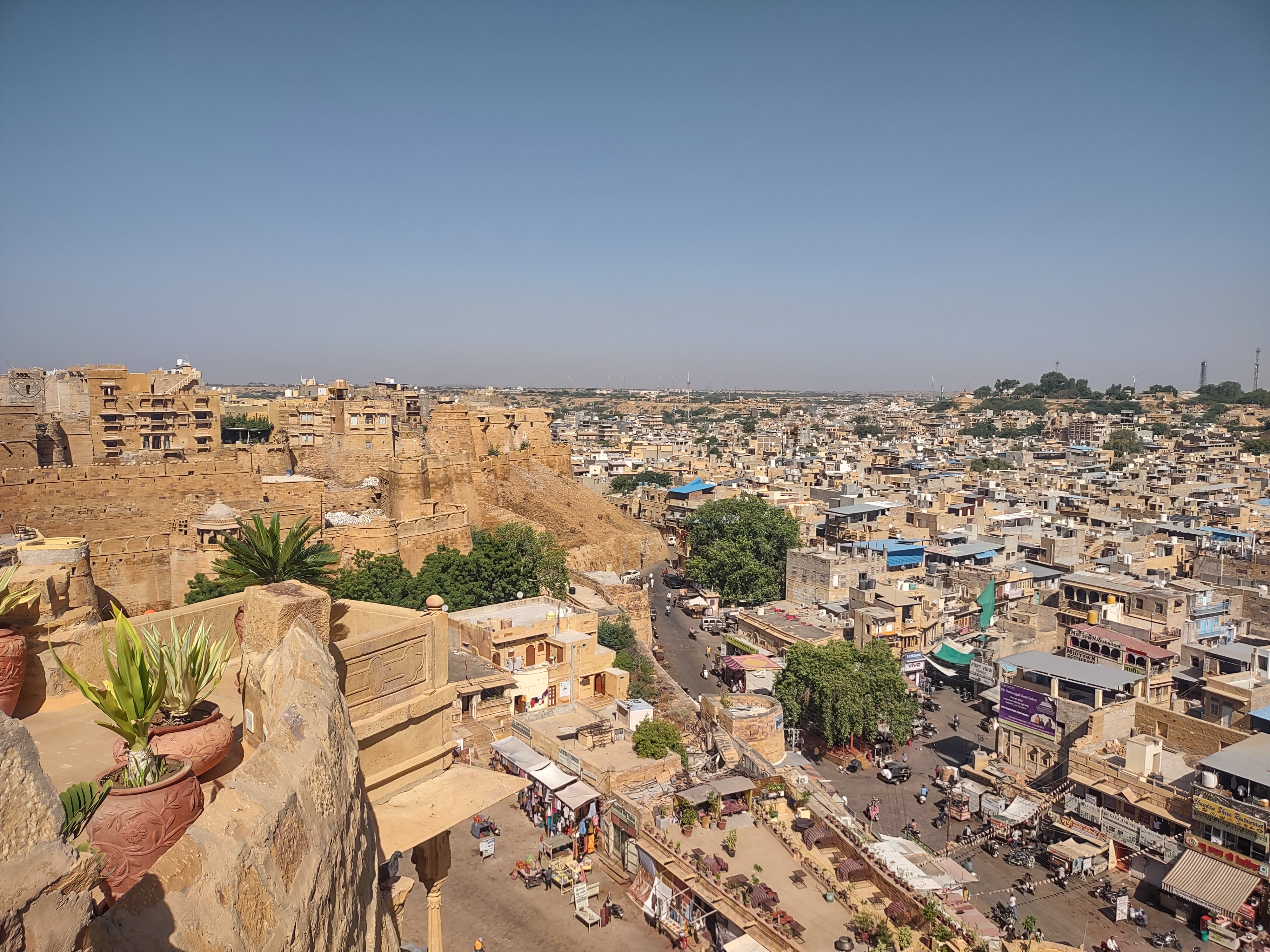
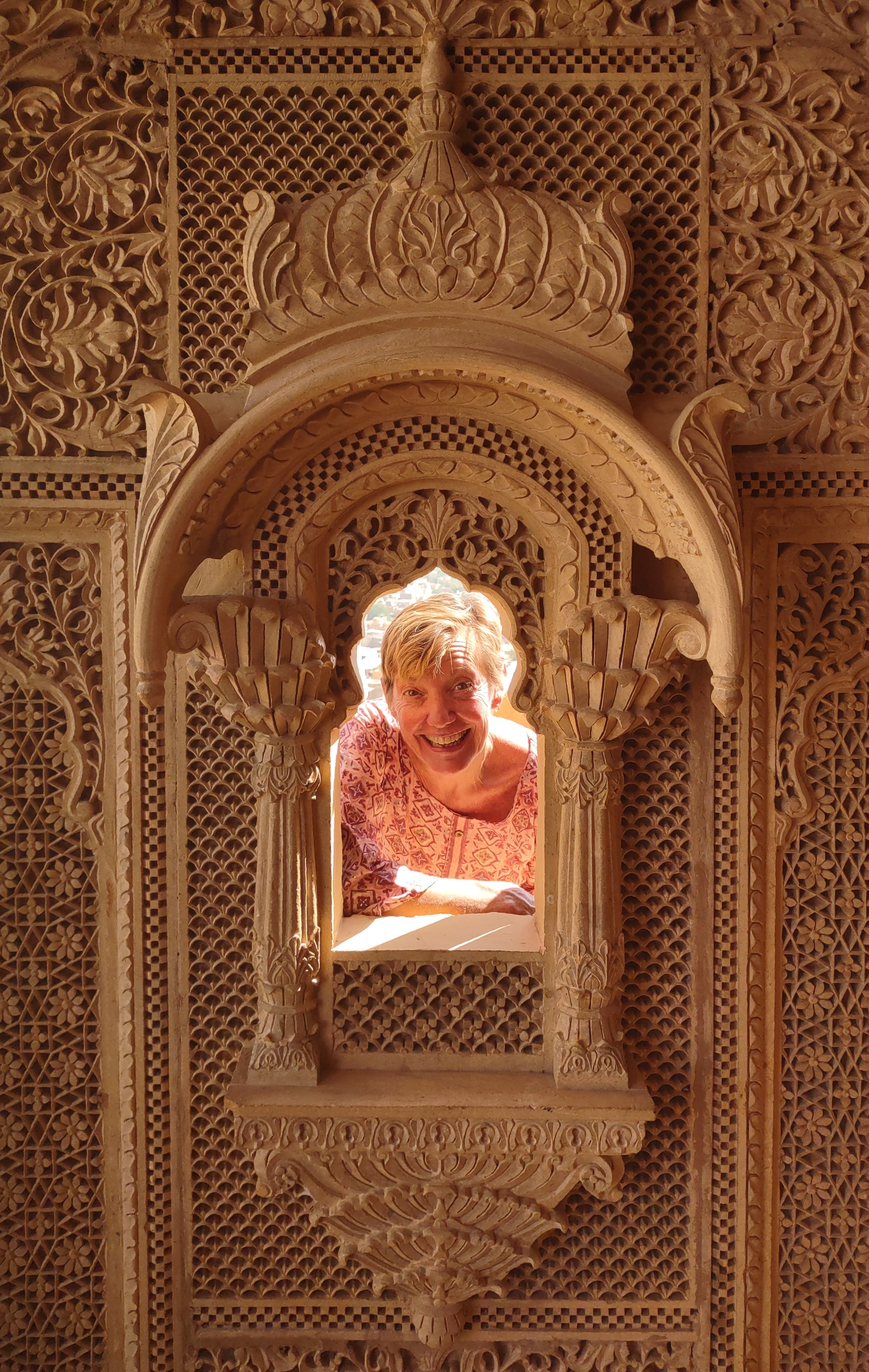
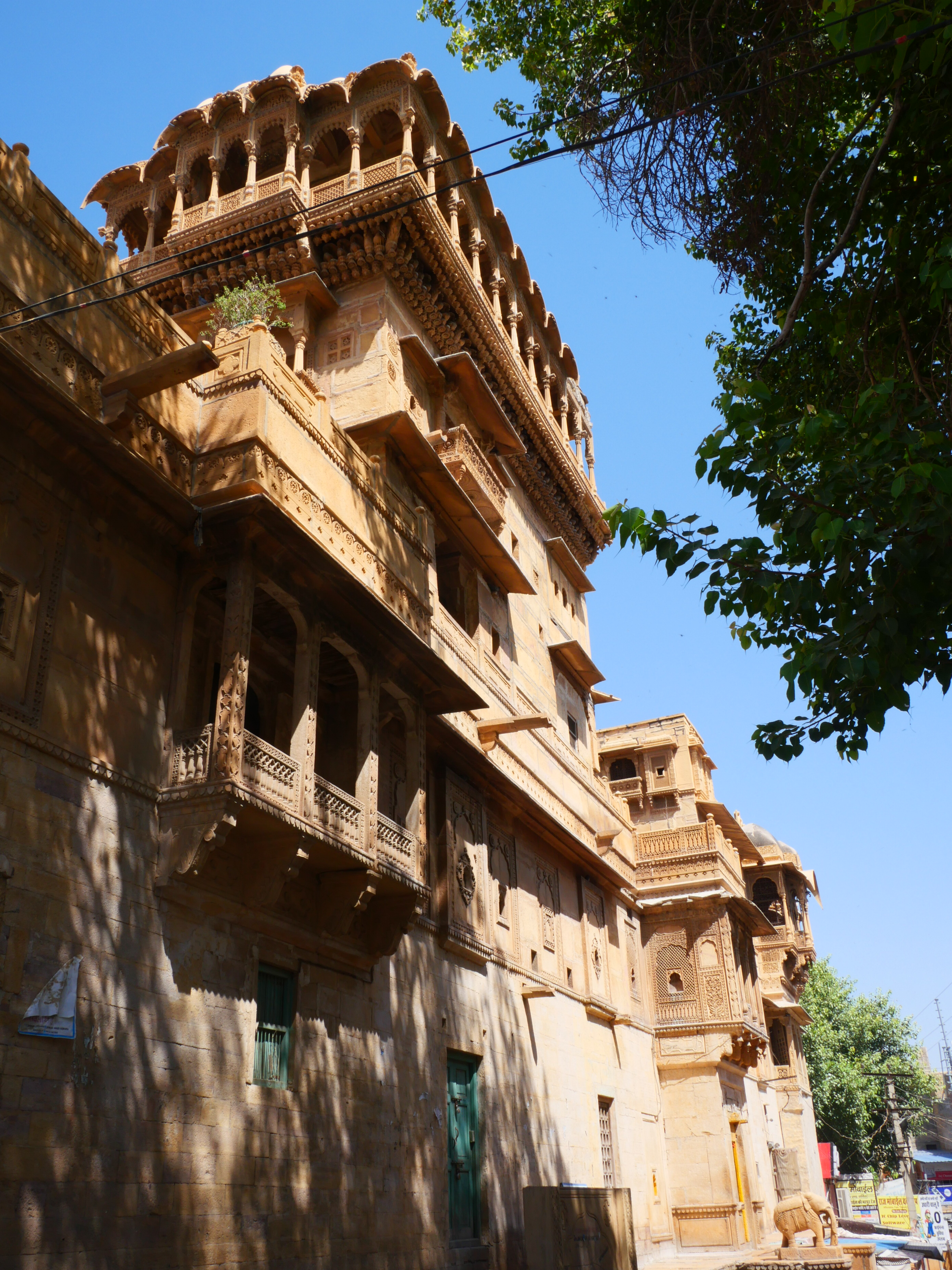
Within the Fort, we saw the Royal Palaces, which are not occupied, but also many occupied buildings which included shops, restaurants, hotels, and residences. There were also plenty of street vendors along with more than a few motorbikes and a tuk tuk or two.
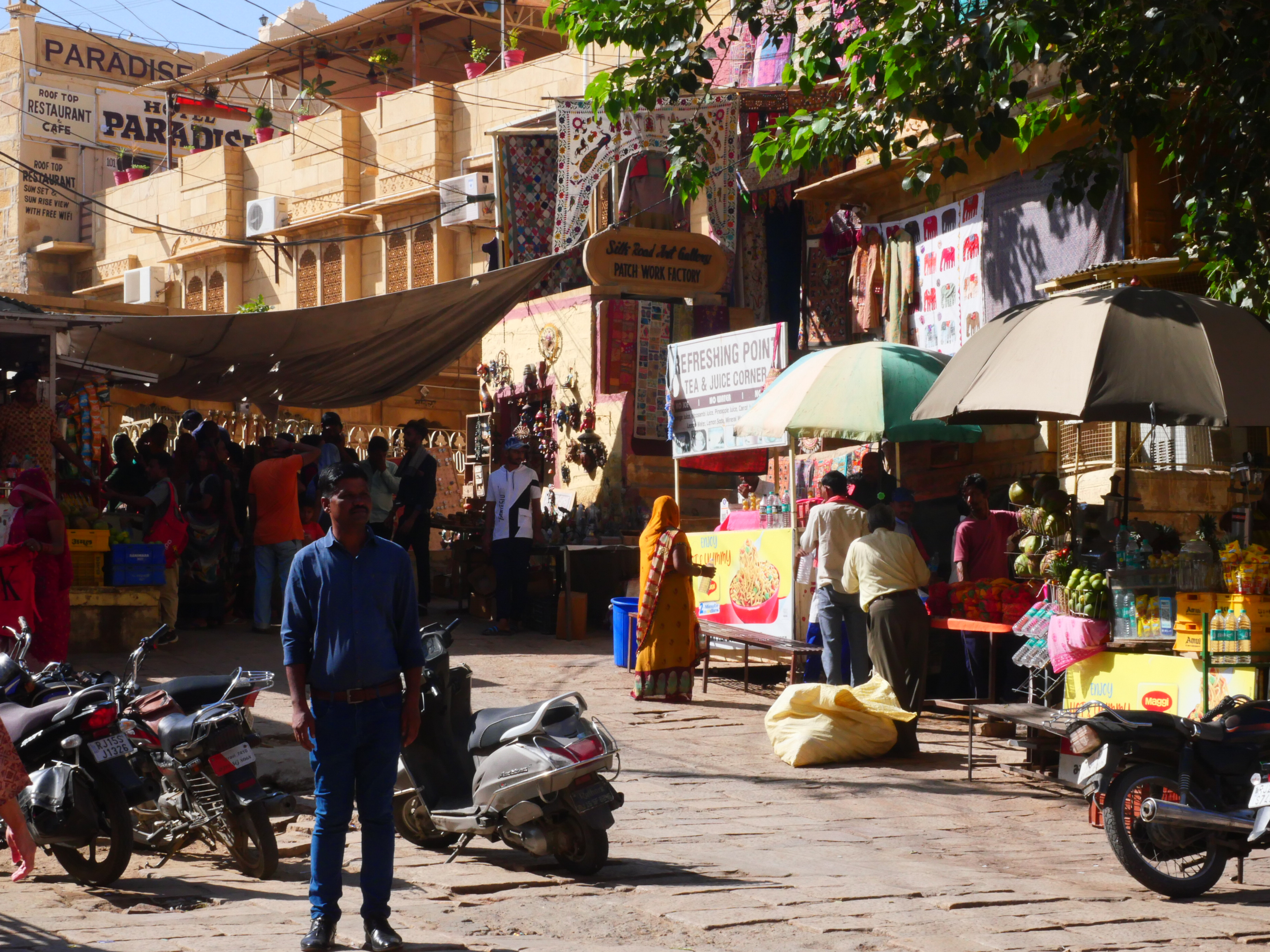
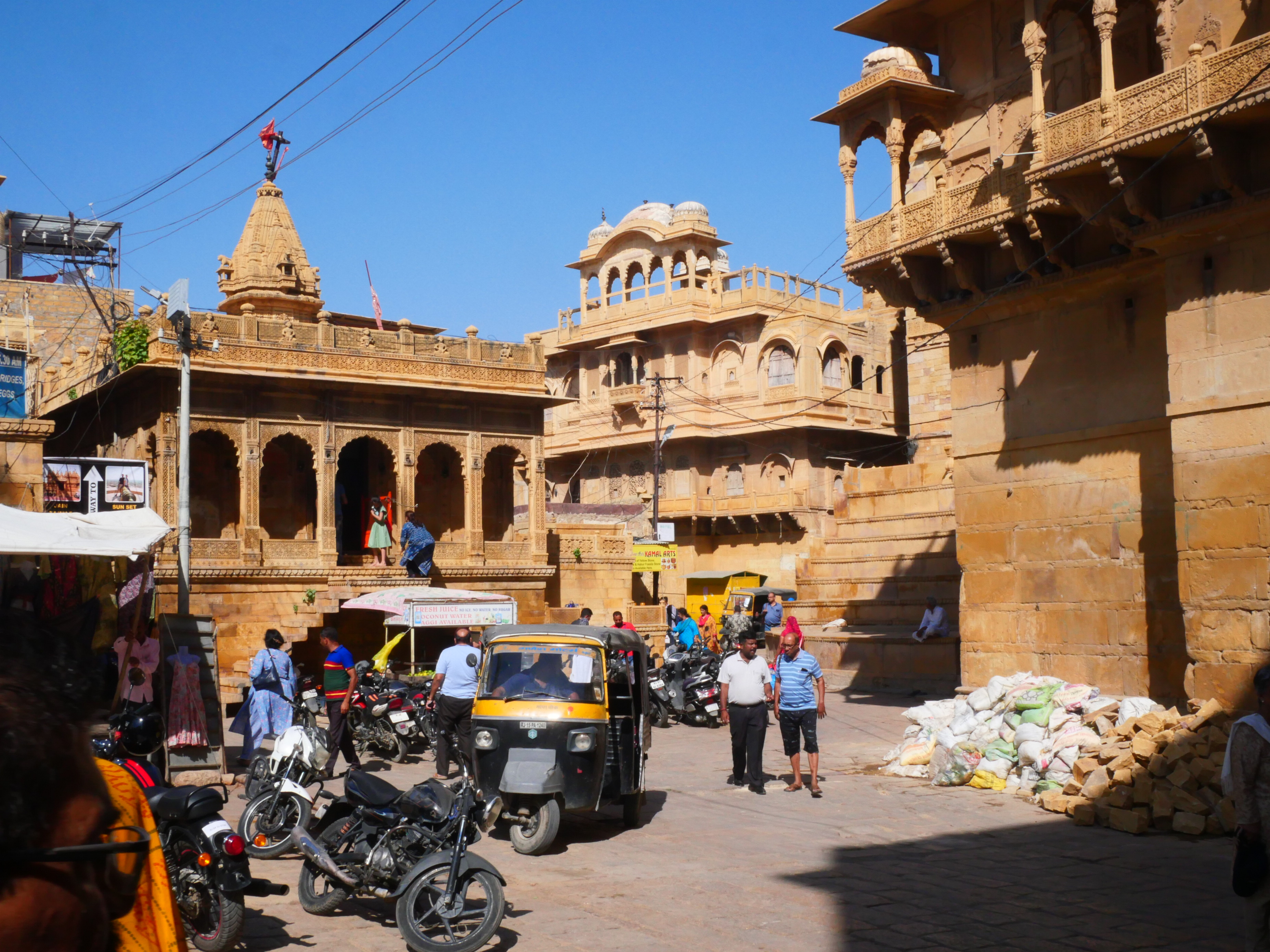

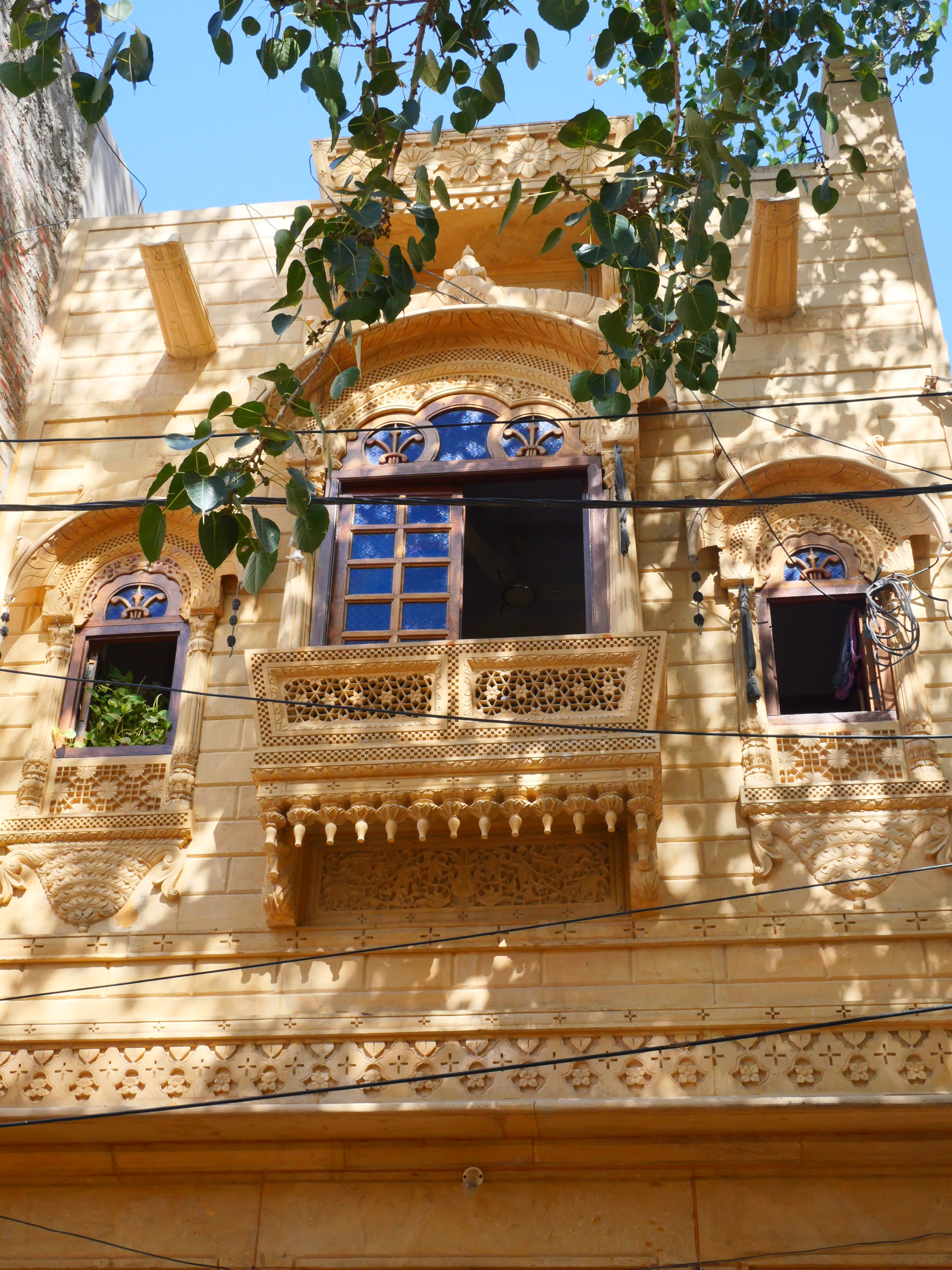
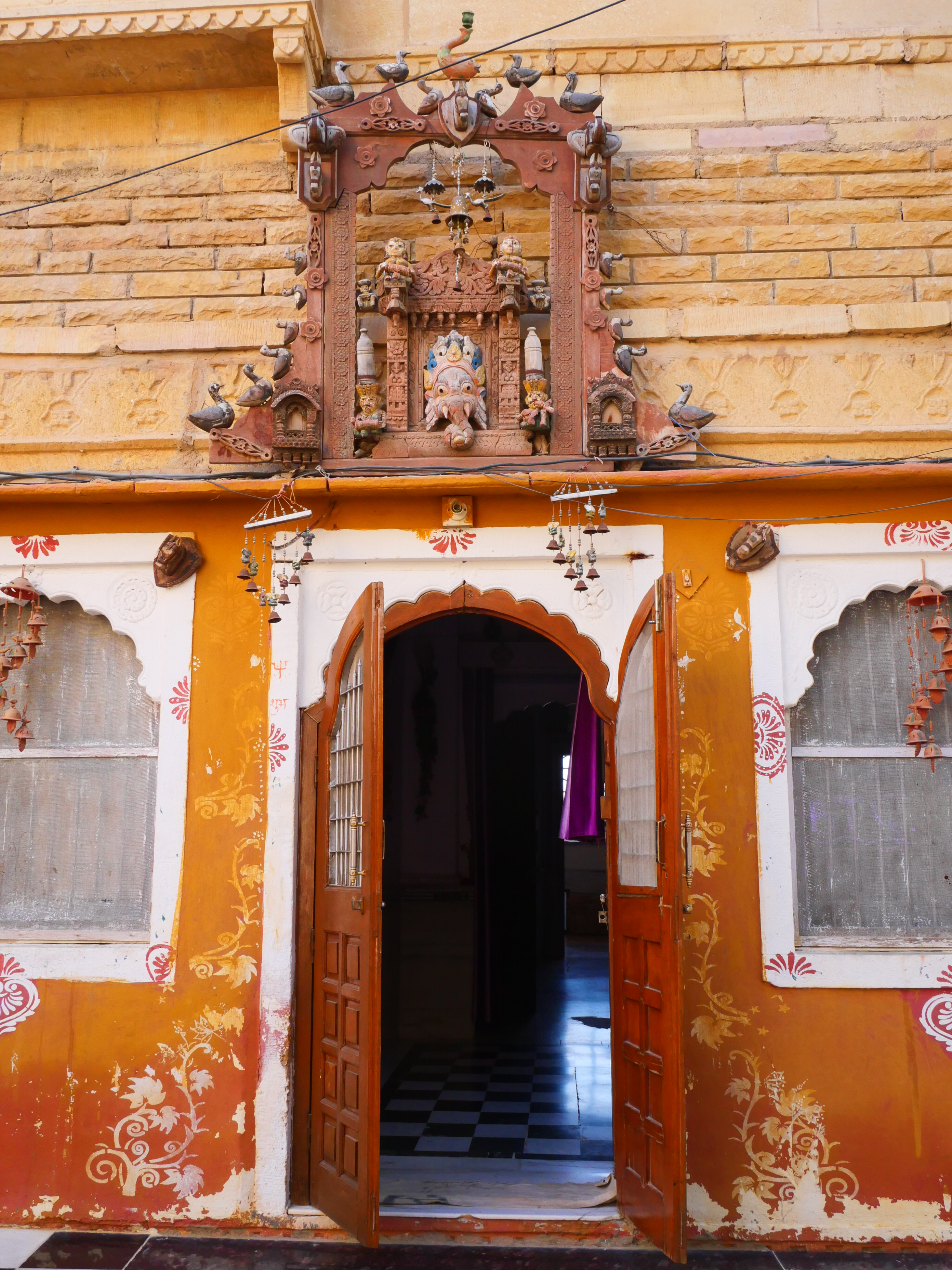
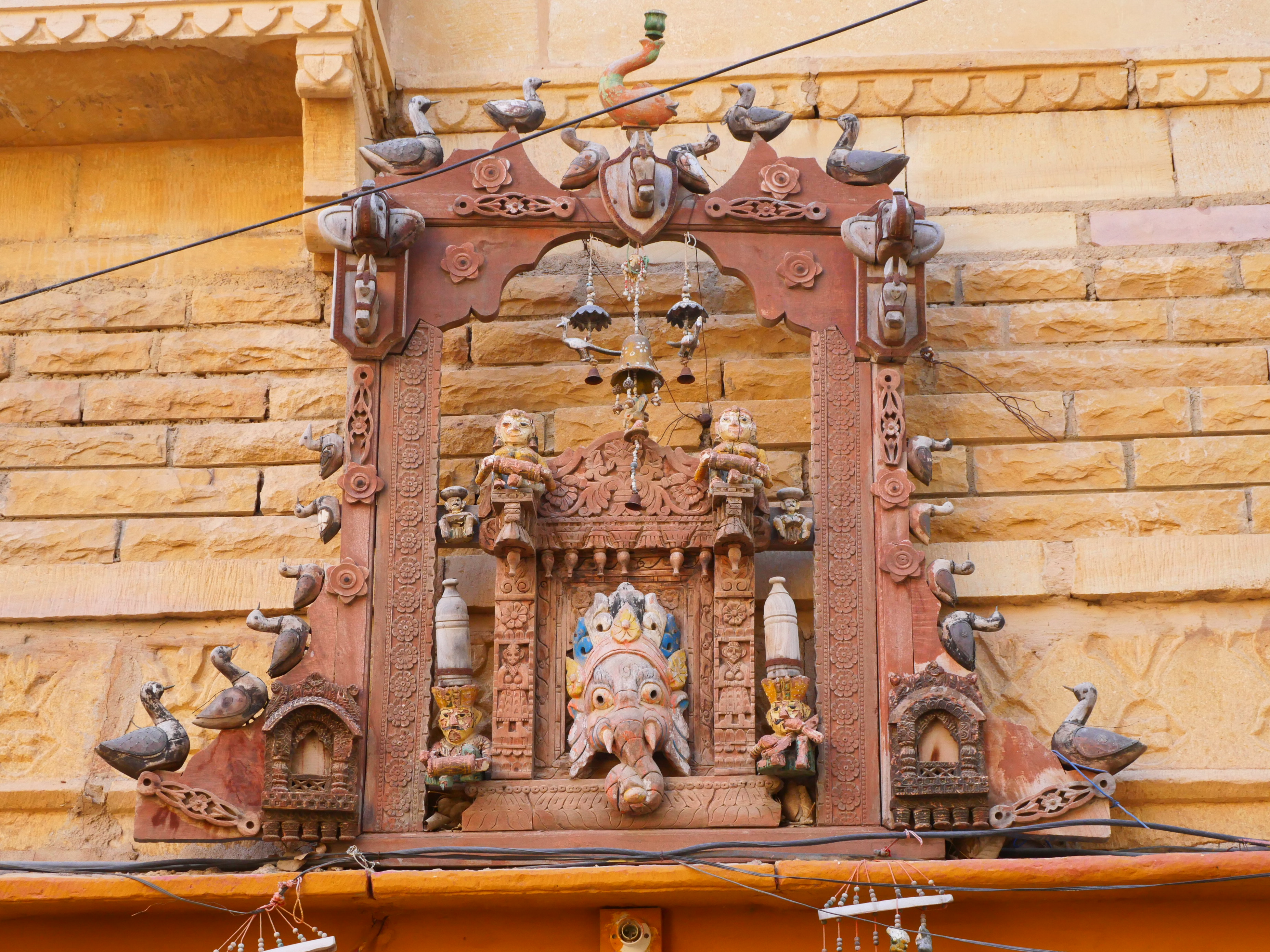
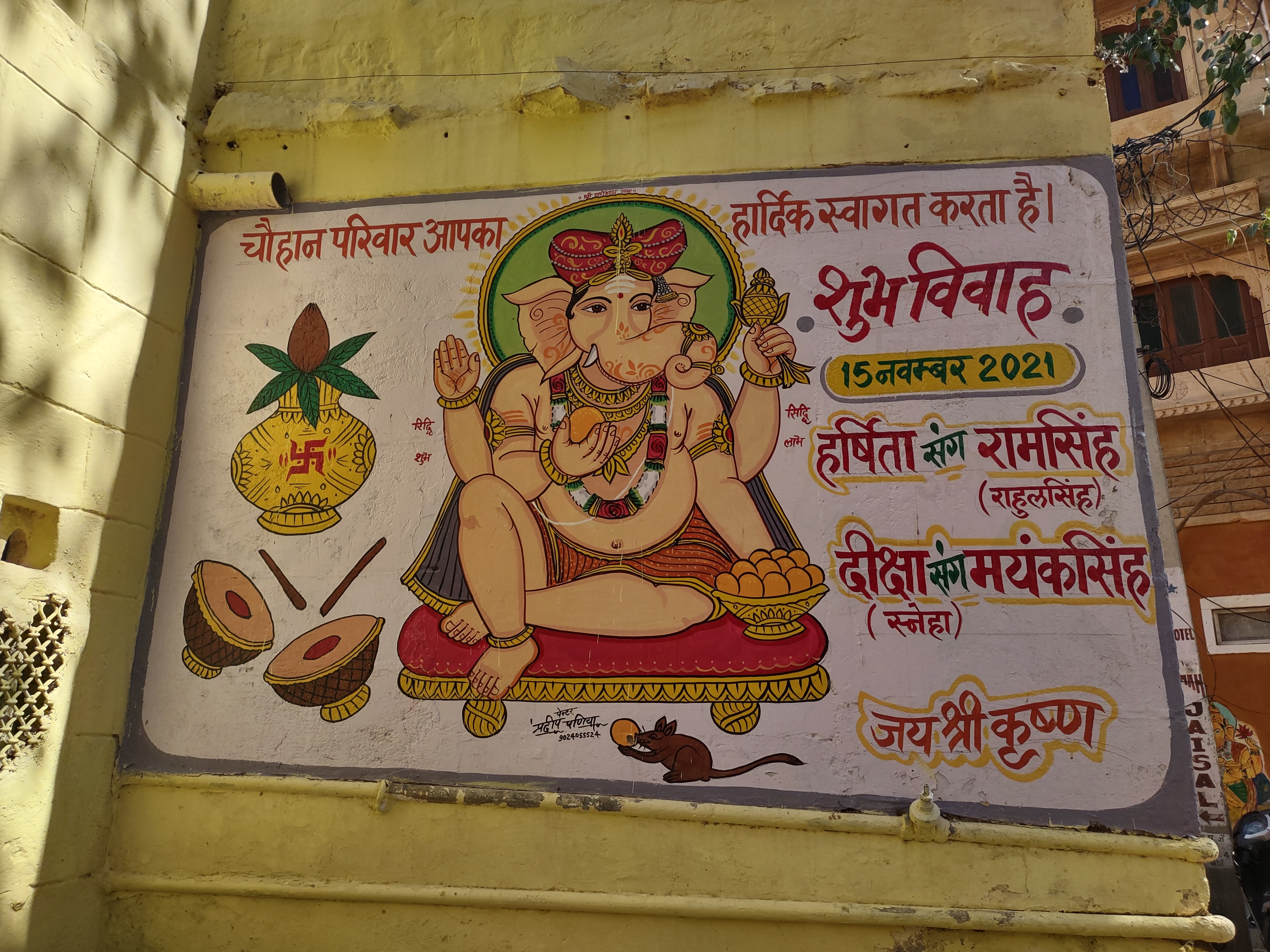
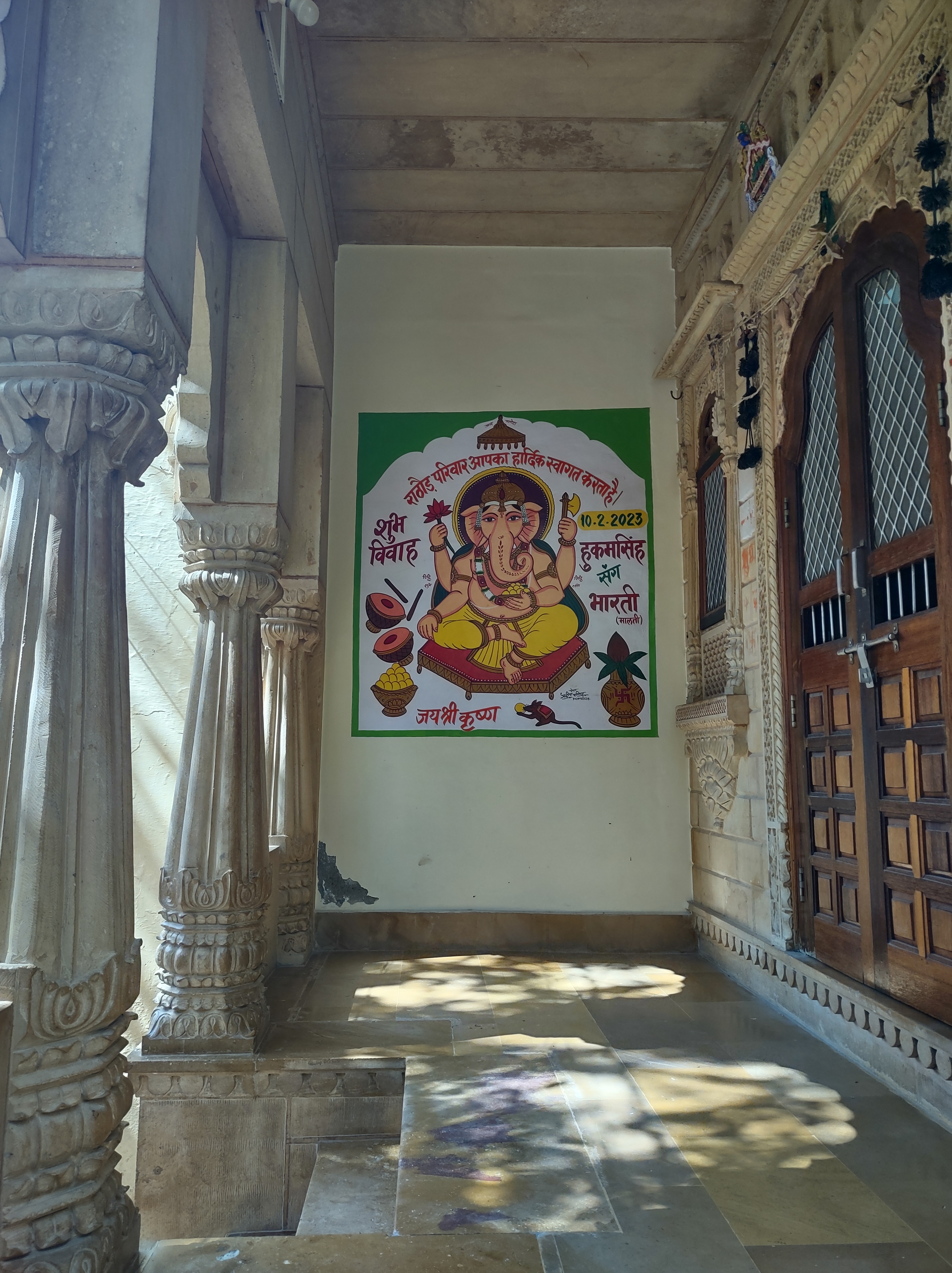
One interesting thing which we noted was that weddings are commemorated by an elaborate painting of Ganesh, the good of prosperity (among other things), at the entrance to the house, along with the wedding date which are intended to bring good luck and prosperity to the marriage. We saw a lot of these – a sure indication that the Fort is occupied. We also saw some interesting ornaments over the entrances to residences which are similarly intended to bring good fortune and to ward off evil spirits.

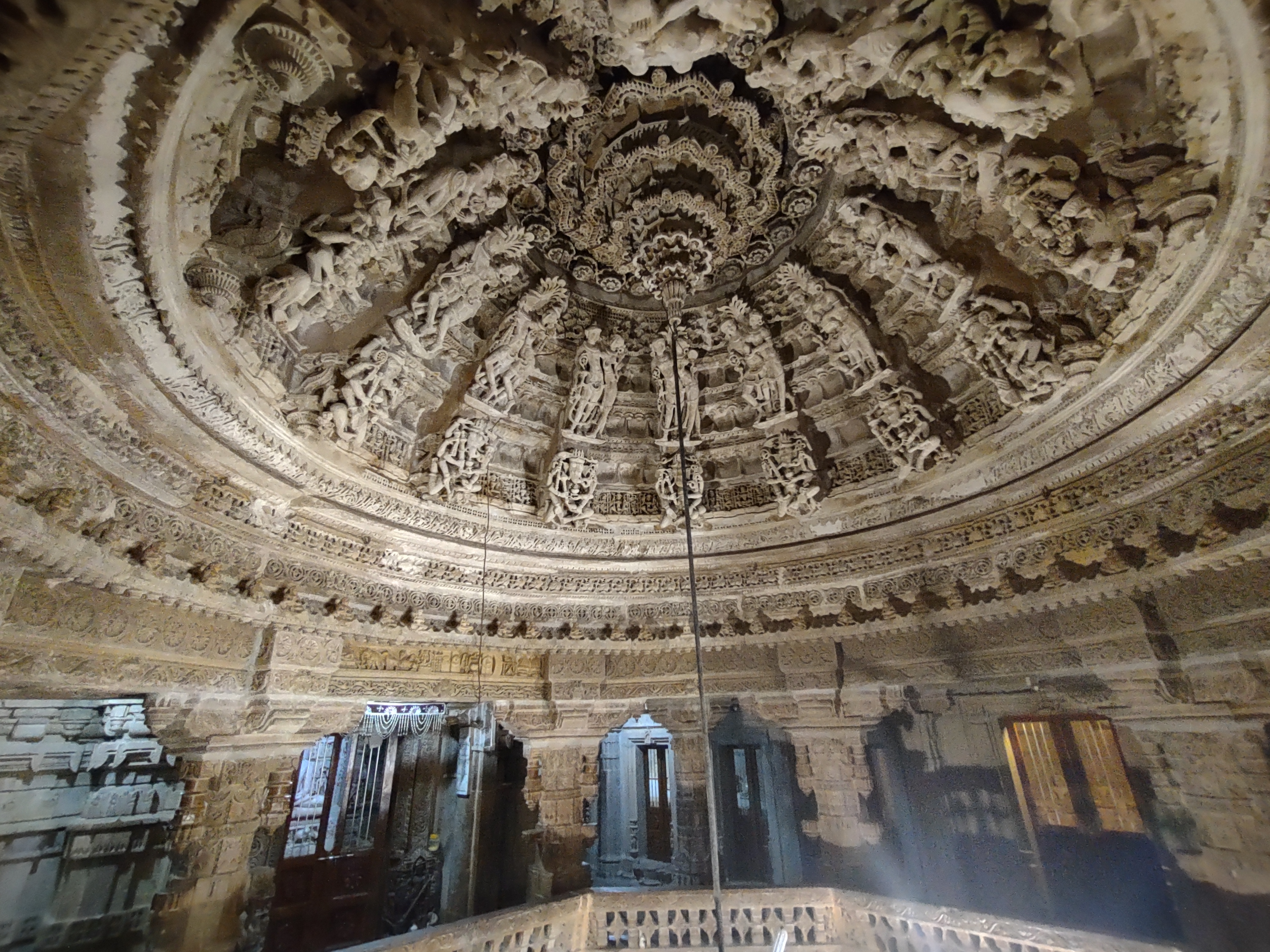
We also saw a whole series of temples within the fort including one which was said to have 1,000 deity statues. (They were numbered, but we didn’t check the count.) The intricacy of the carving in these temples was quite amazing and the overall effect when surrounded by them was a palpable sense of calm.

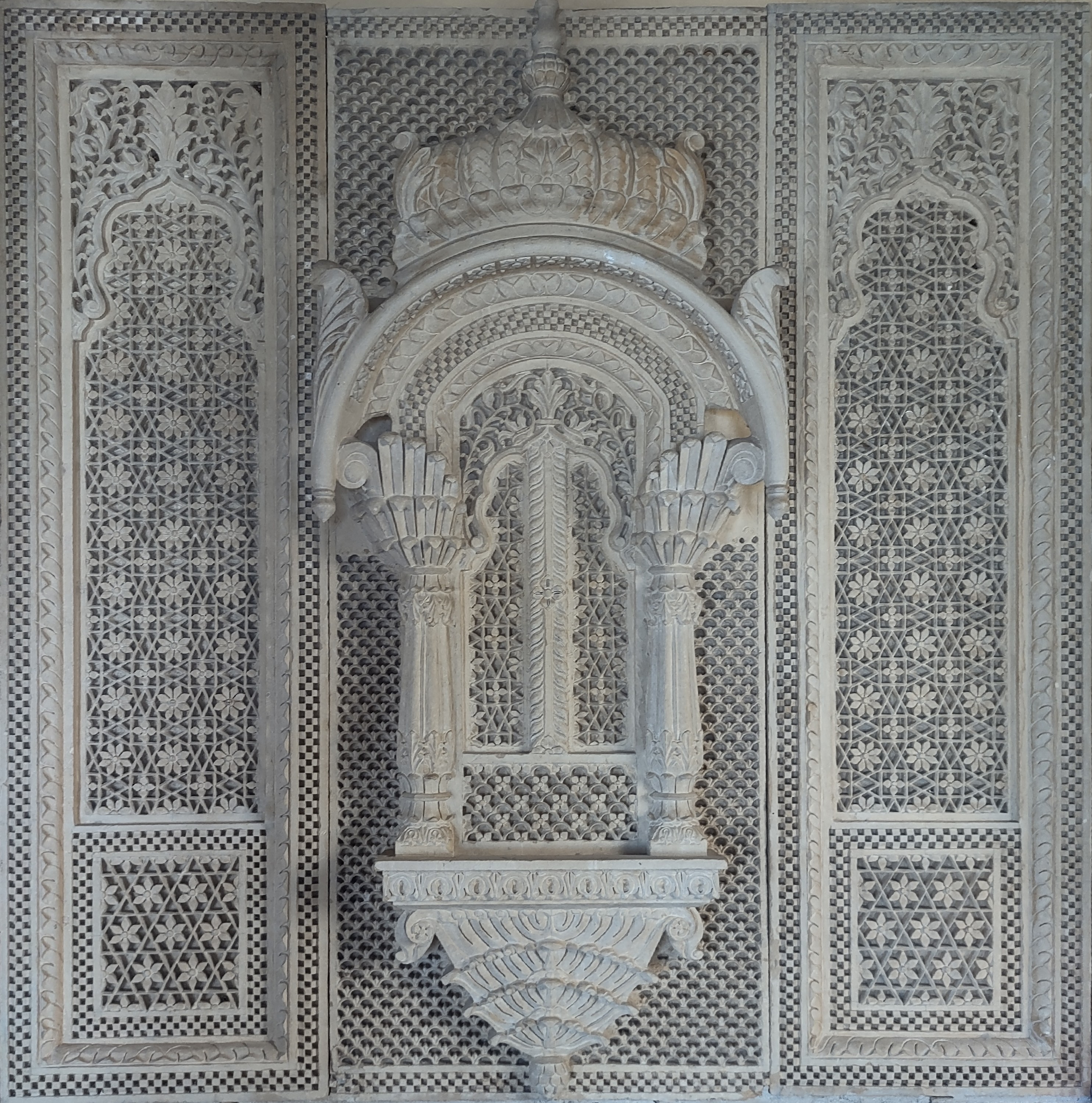
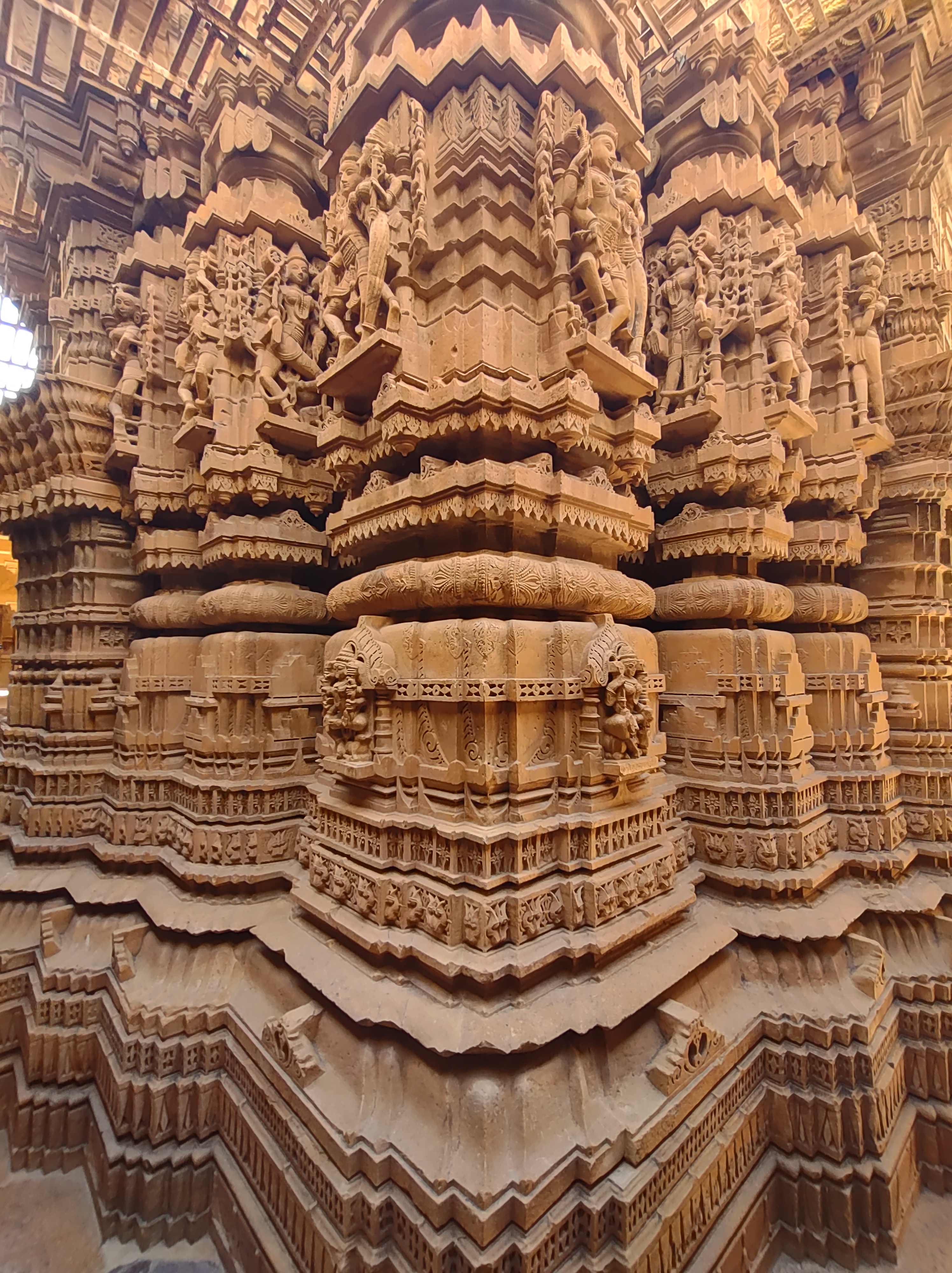
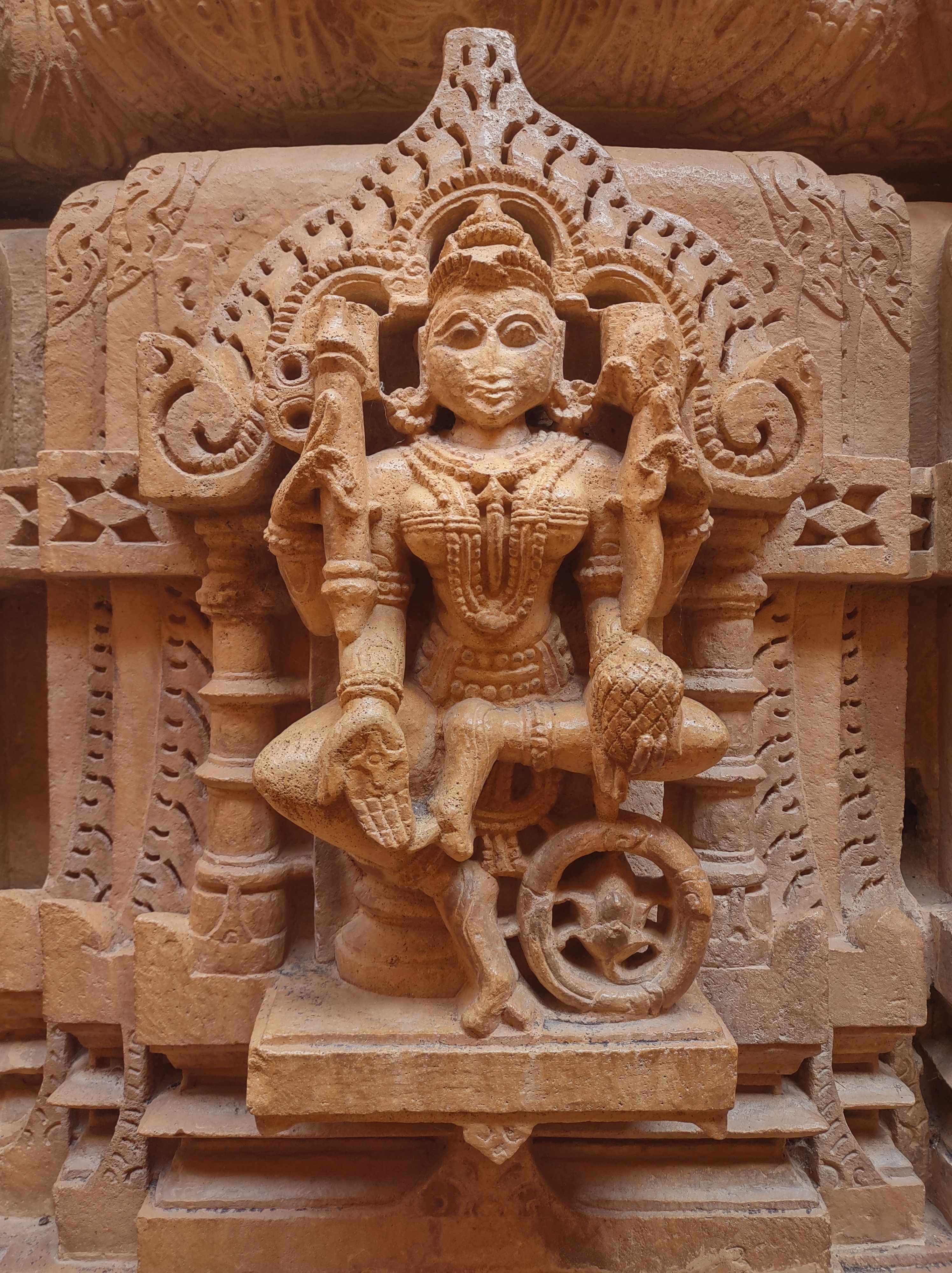
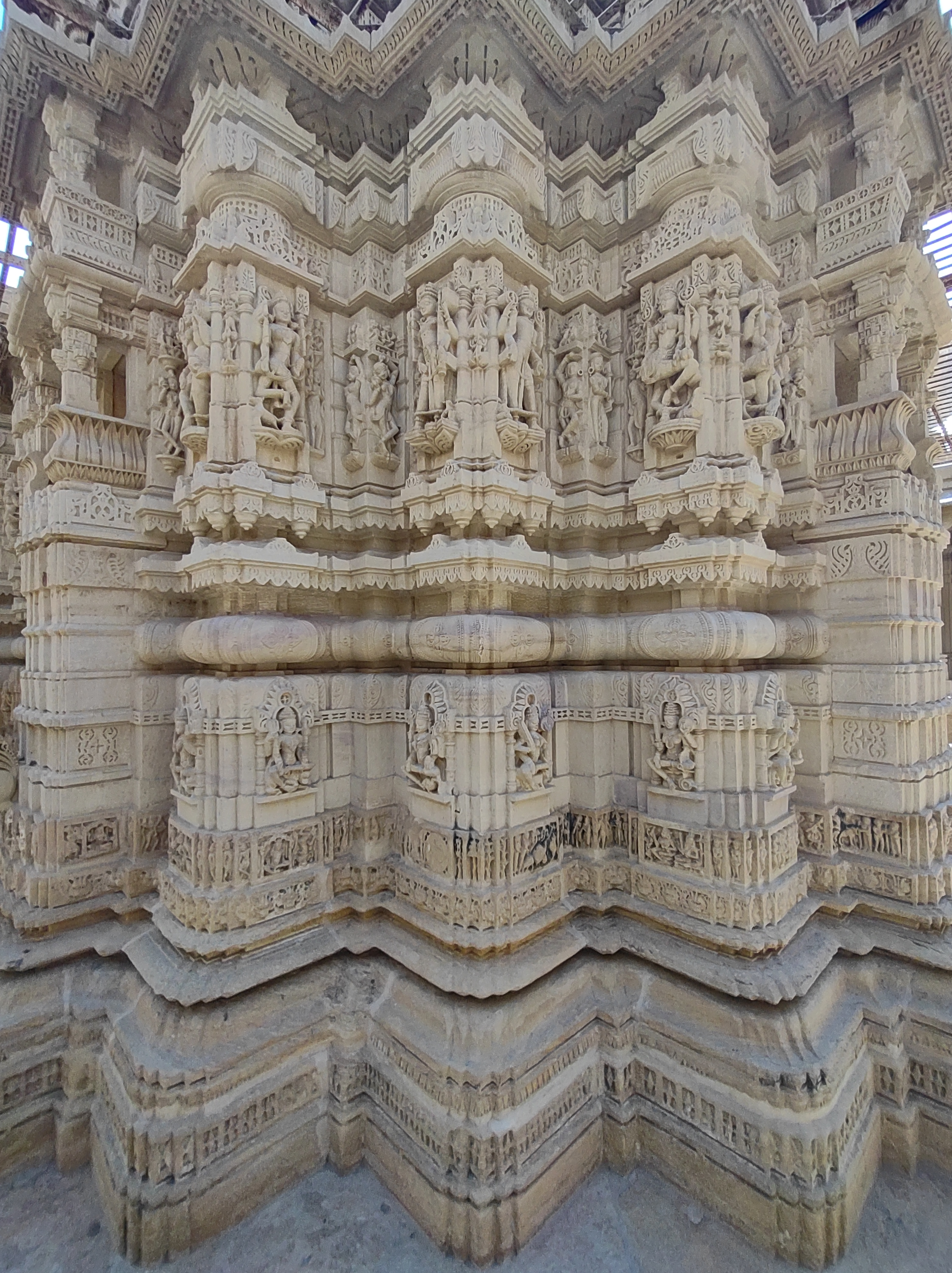
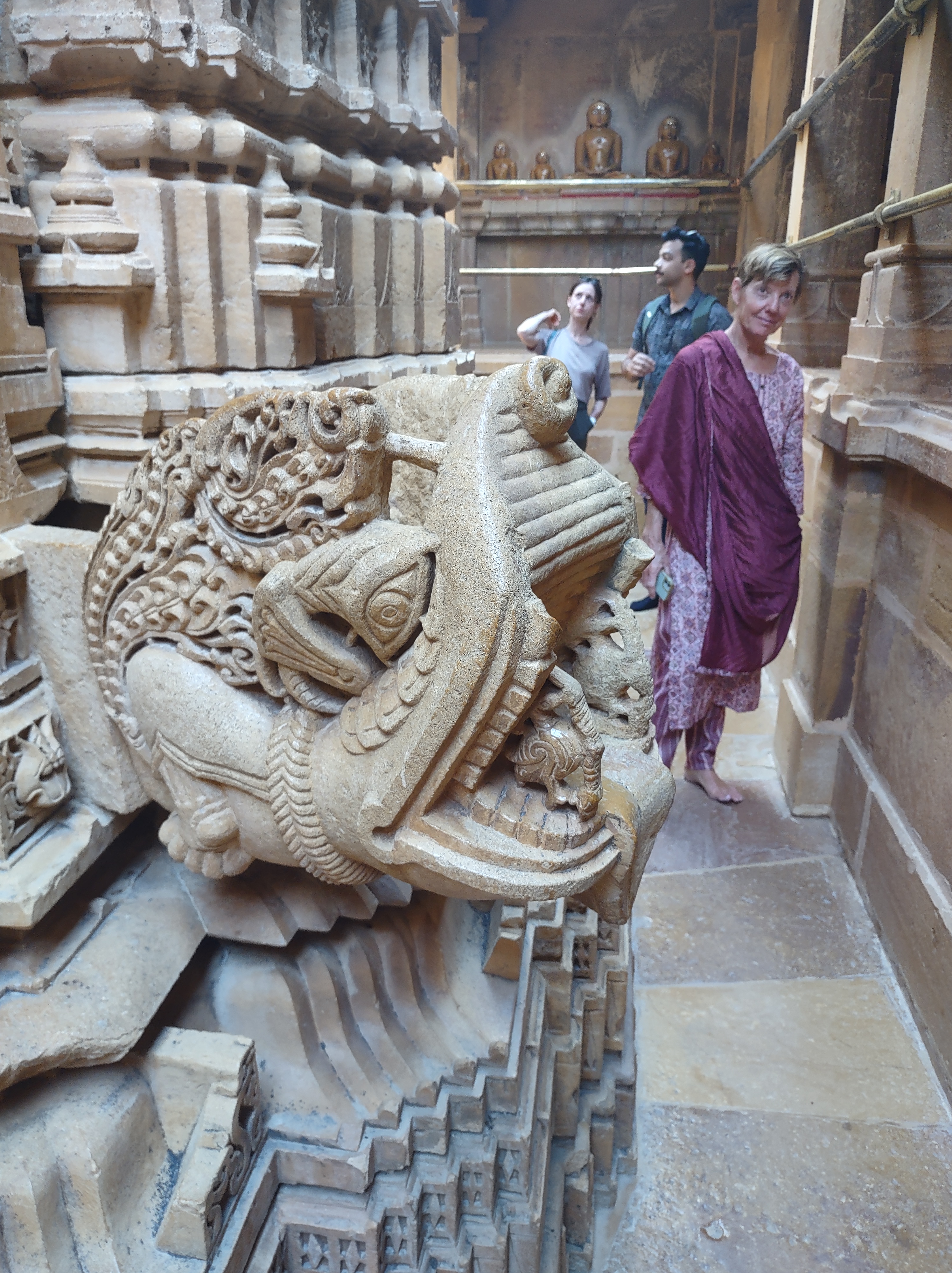
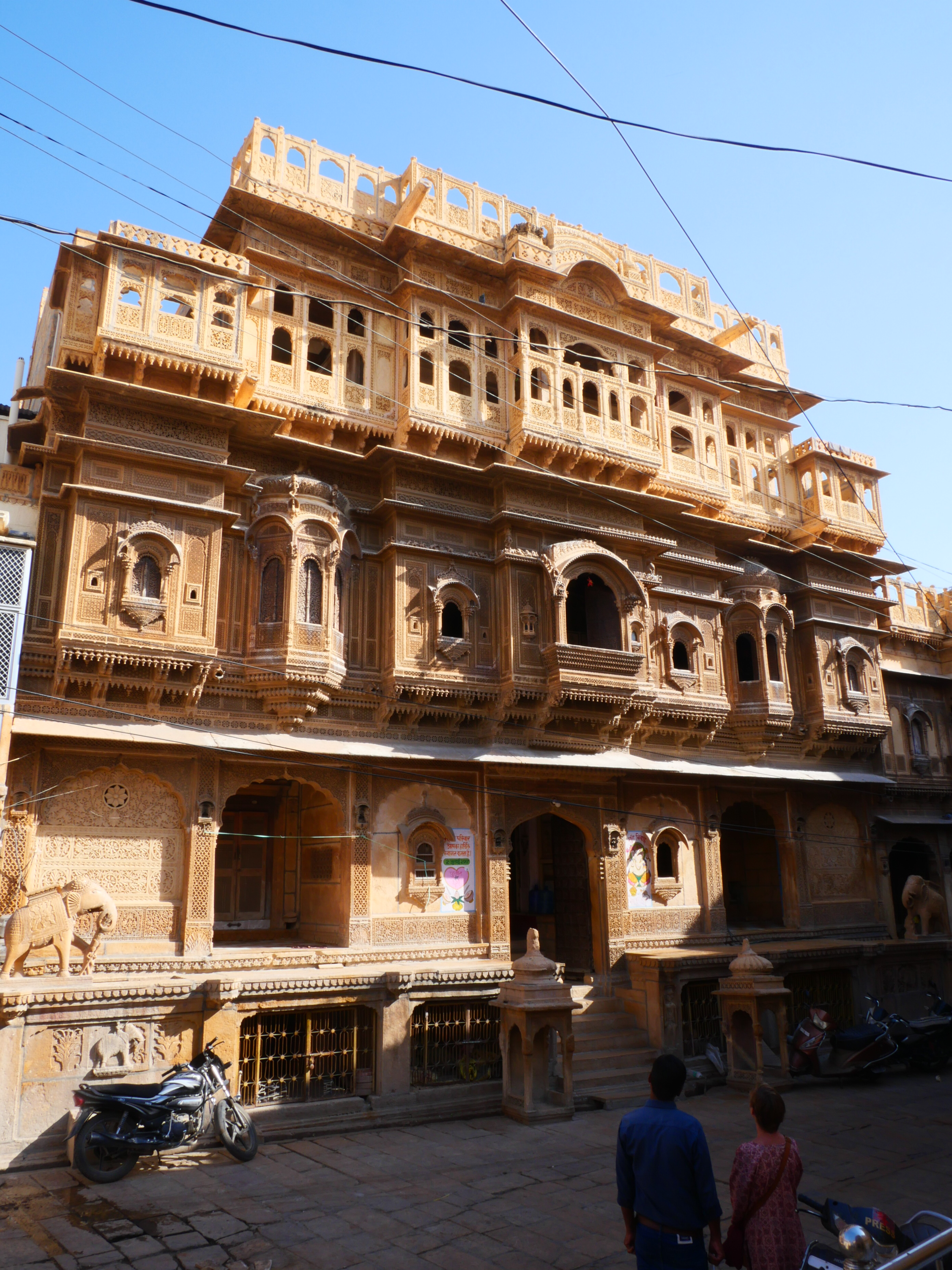
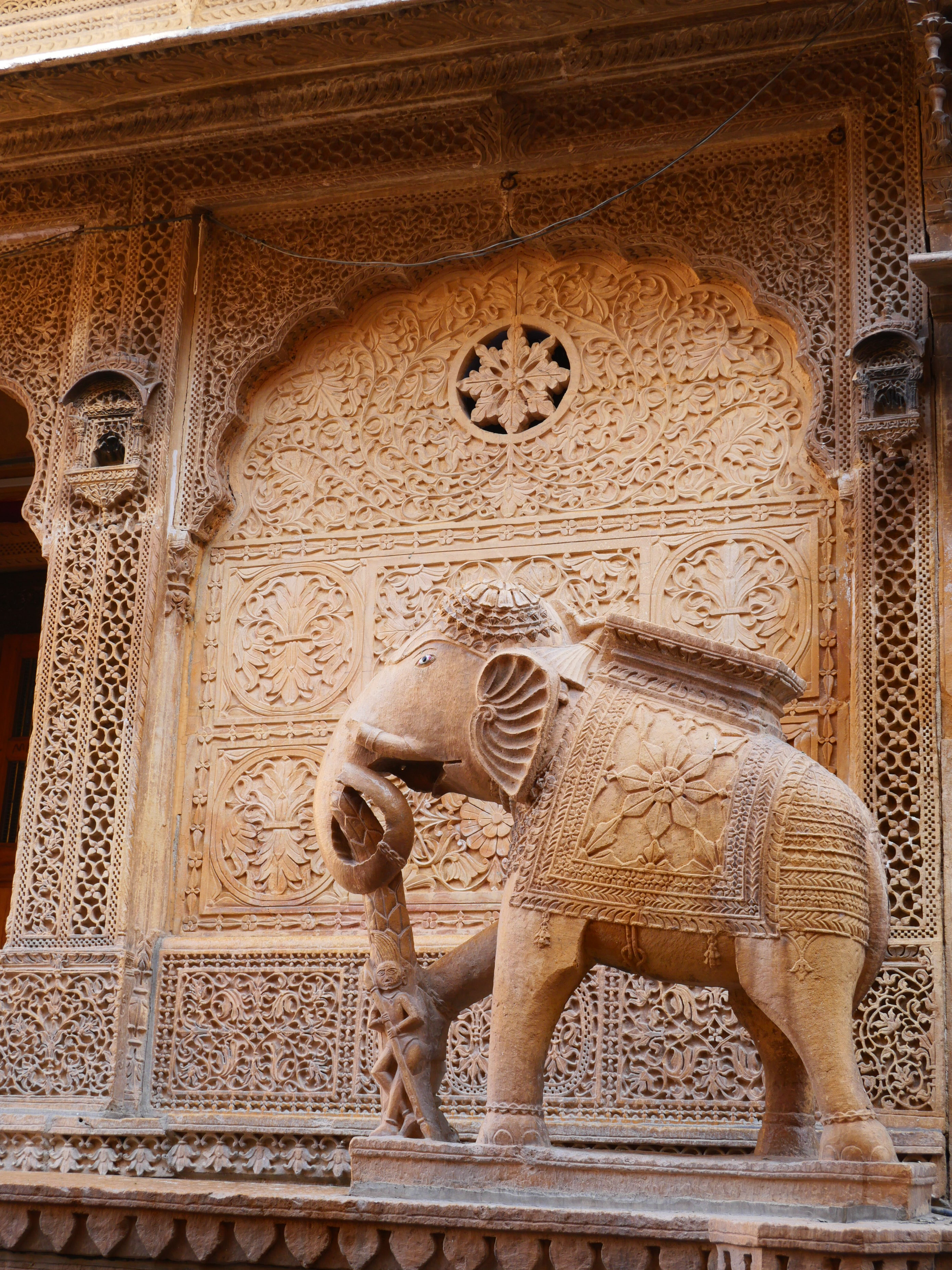
We saw and visited various havelis (palaces) both within and outside the Fort which featured the intricate yellow sandstone screens and carving for which Jaisalmer is renowned. We also had our first close encounter with cows on the streets there (Neses literally threw himself between Colleen and a charging cow).
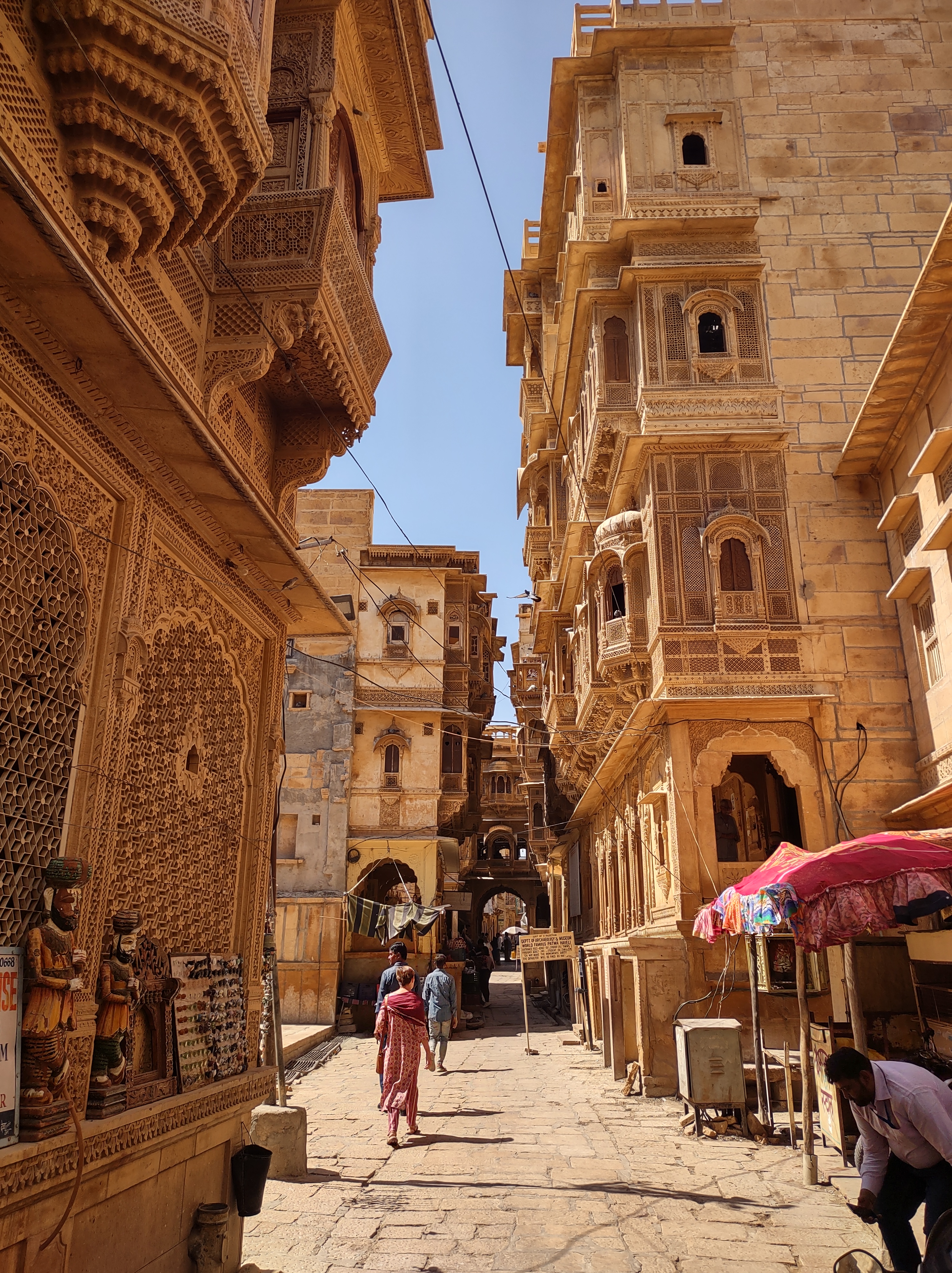

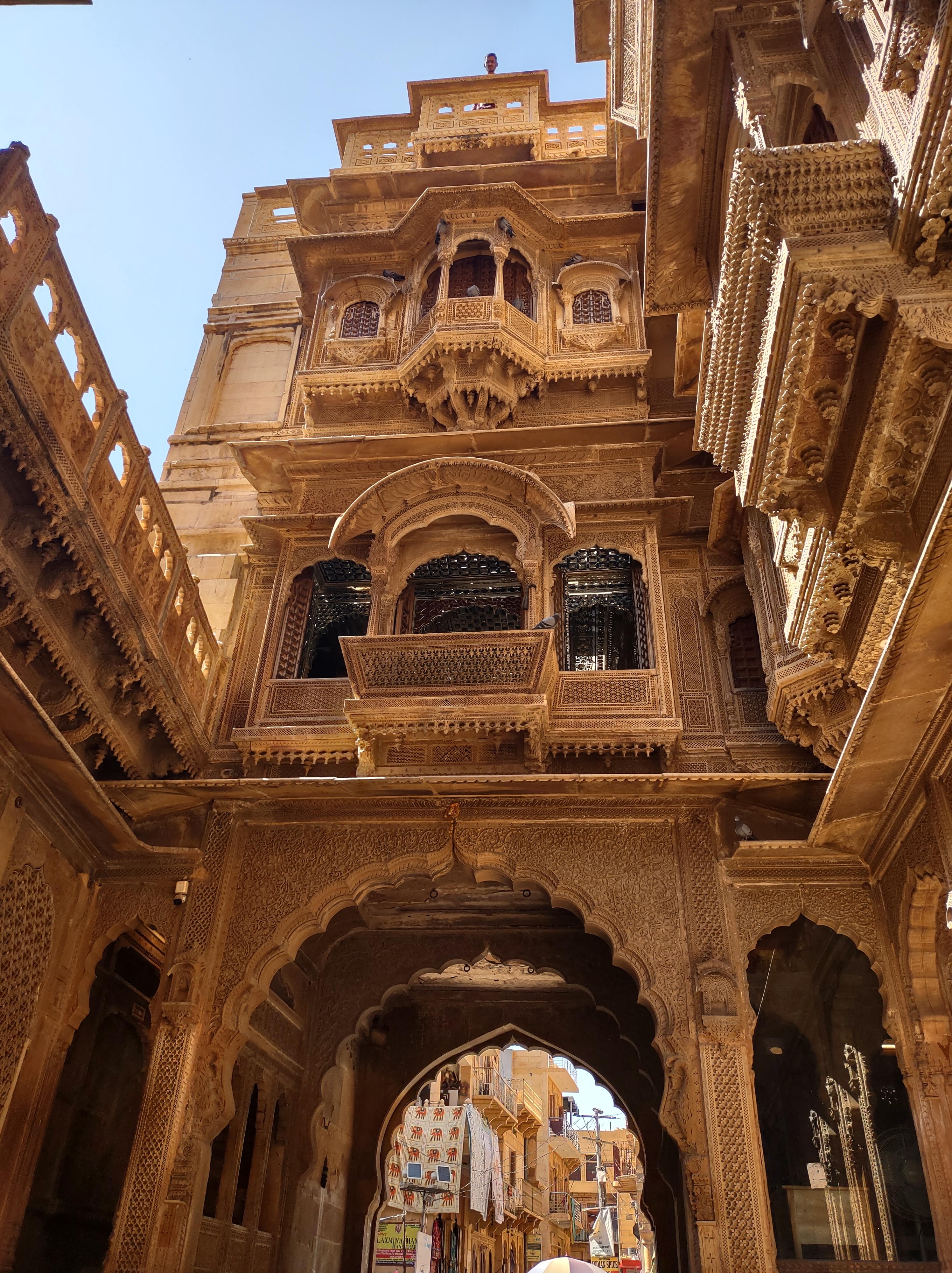
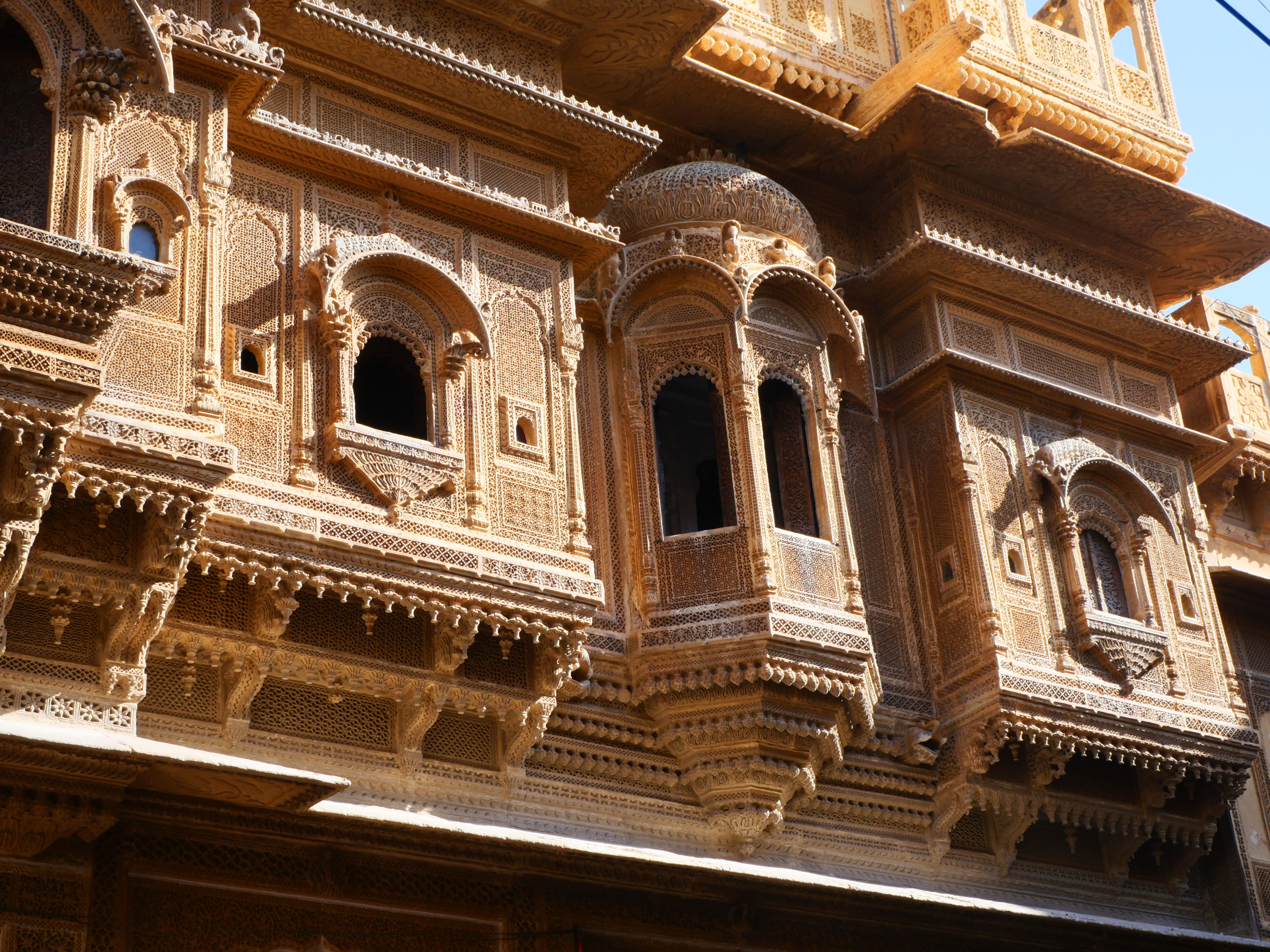
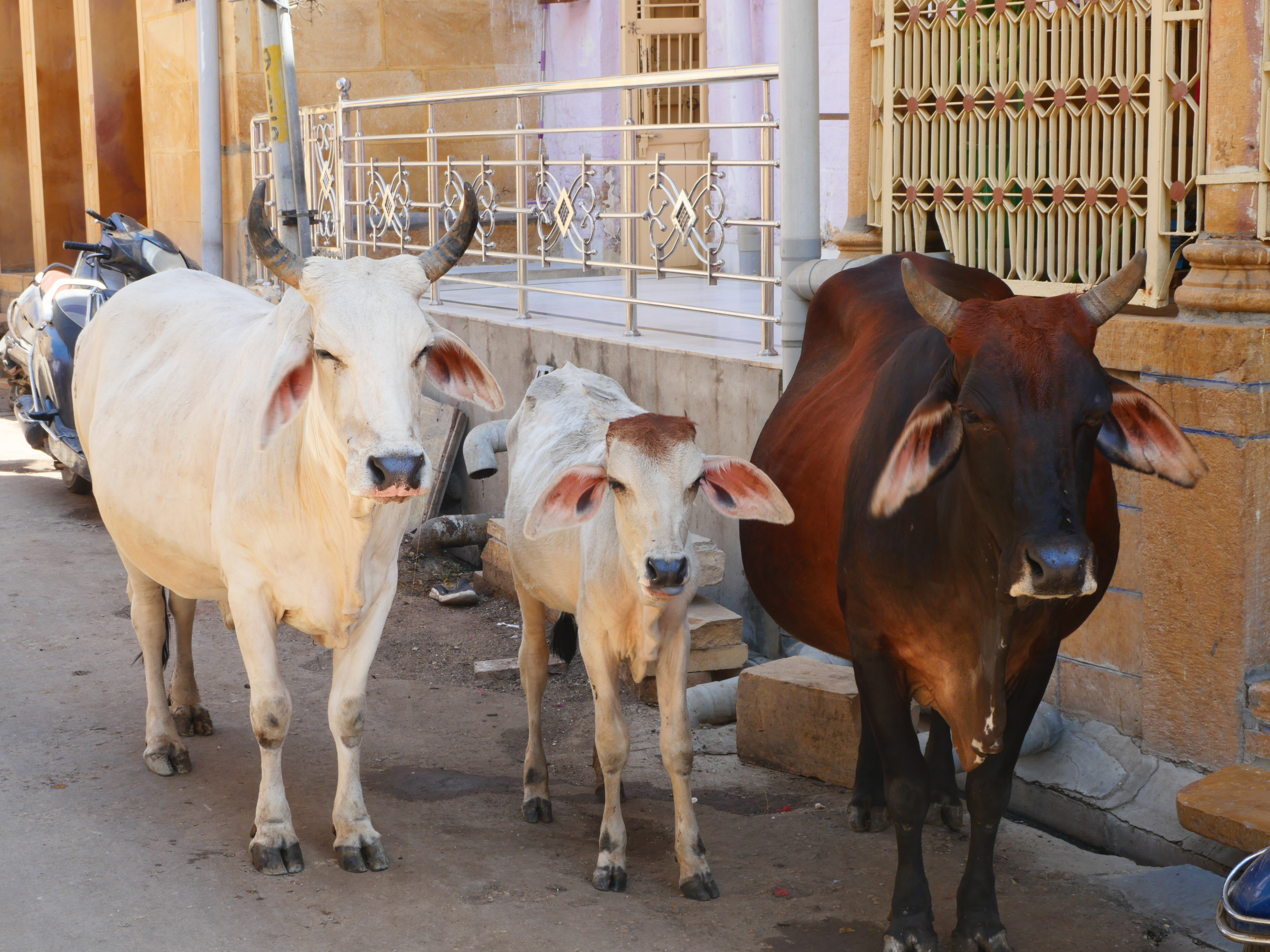

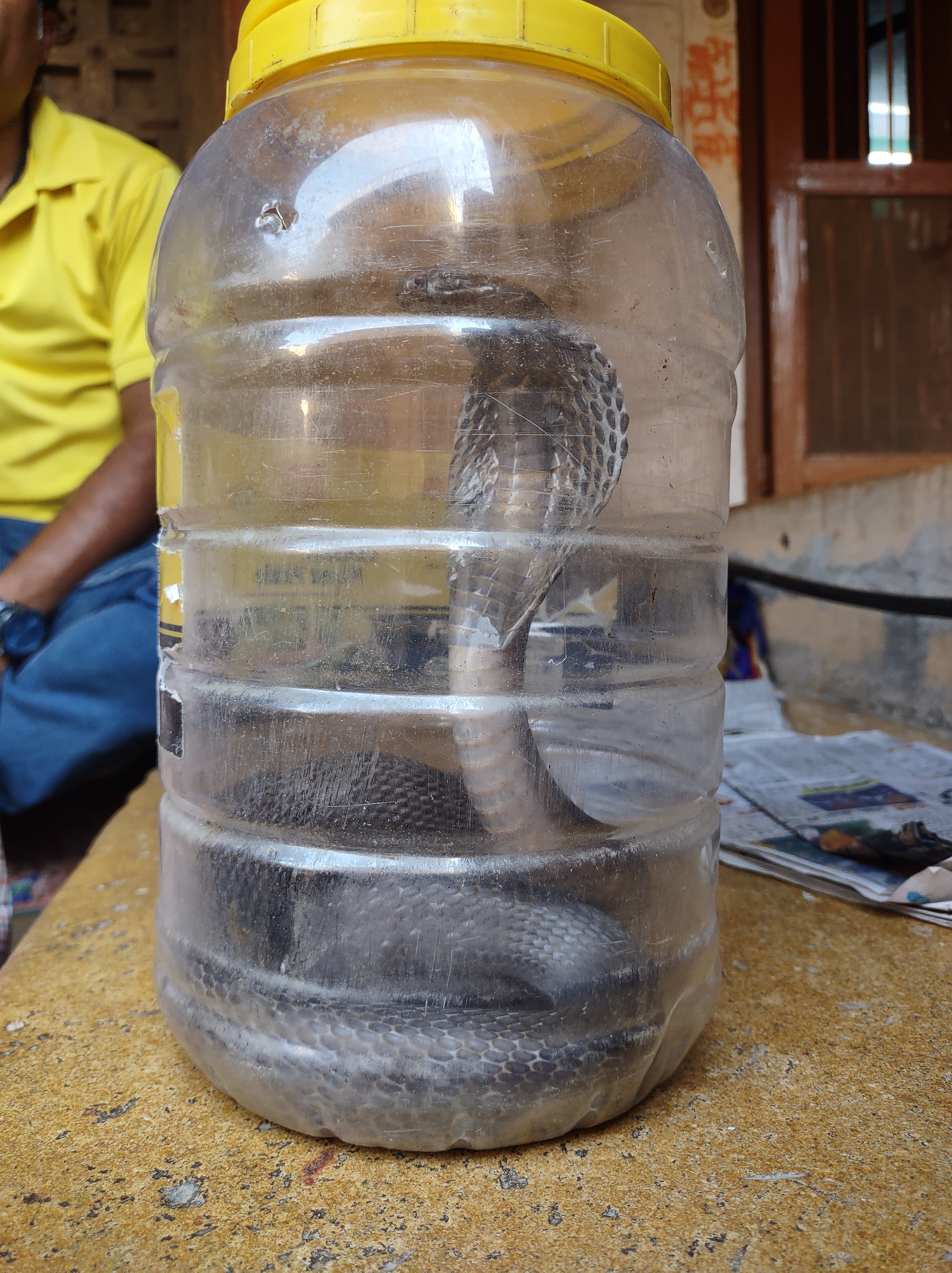
The Nathmalji Ki Haveli which is identified in the Itinerary as being designed by two architect brothers was sort of interesting. The overall design of the structure was set, but each designed one side of the main facade with their own embellishment of certain pieces, but the differences were almost too subtle for most to notice. Along the way Colleen met some girls looking for selfies and I met a group of boys who were insistent that we come see a captured cobra (which I did but Colleen declined).


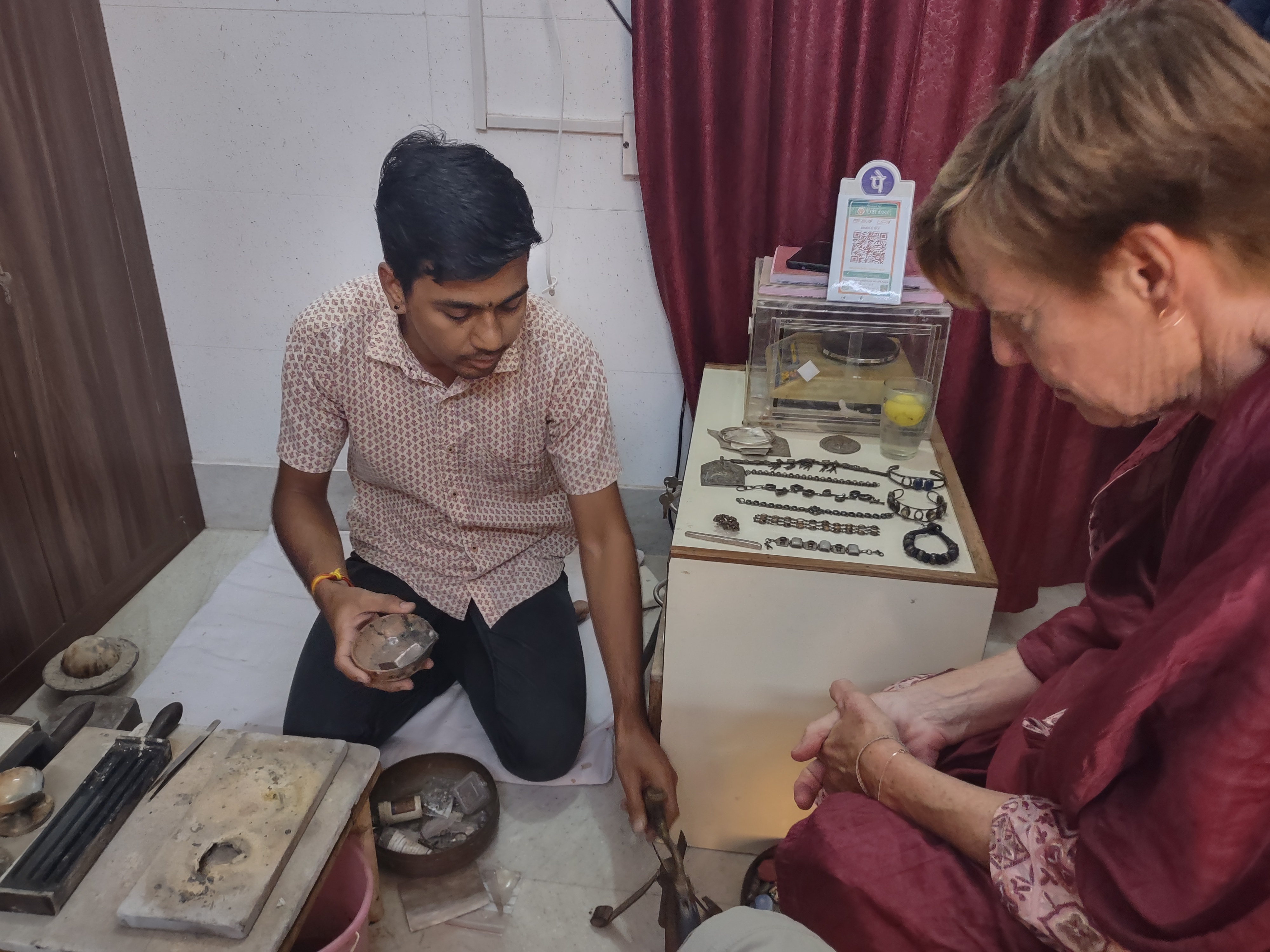
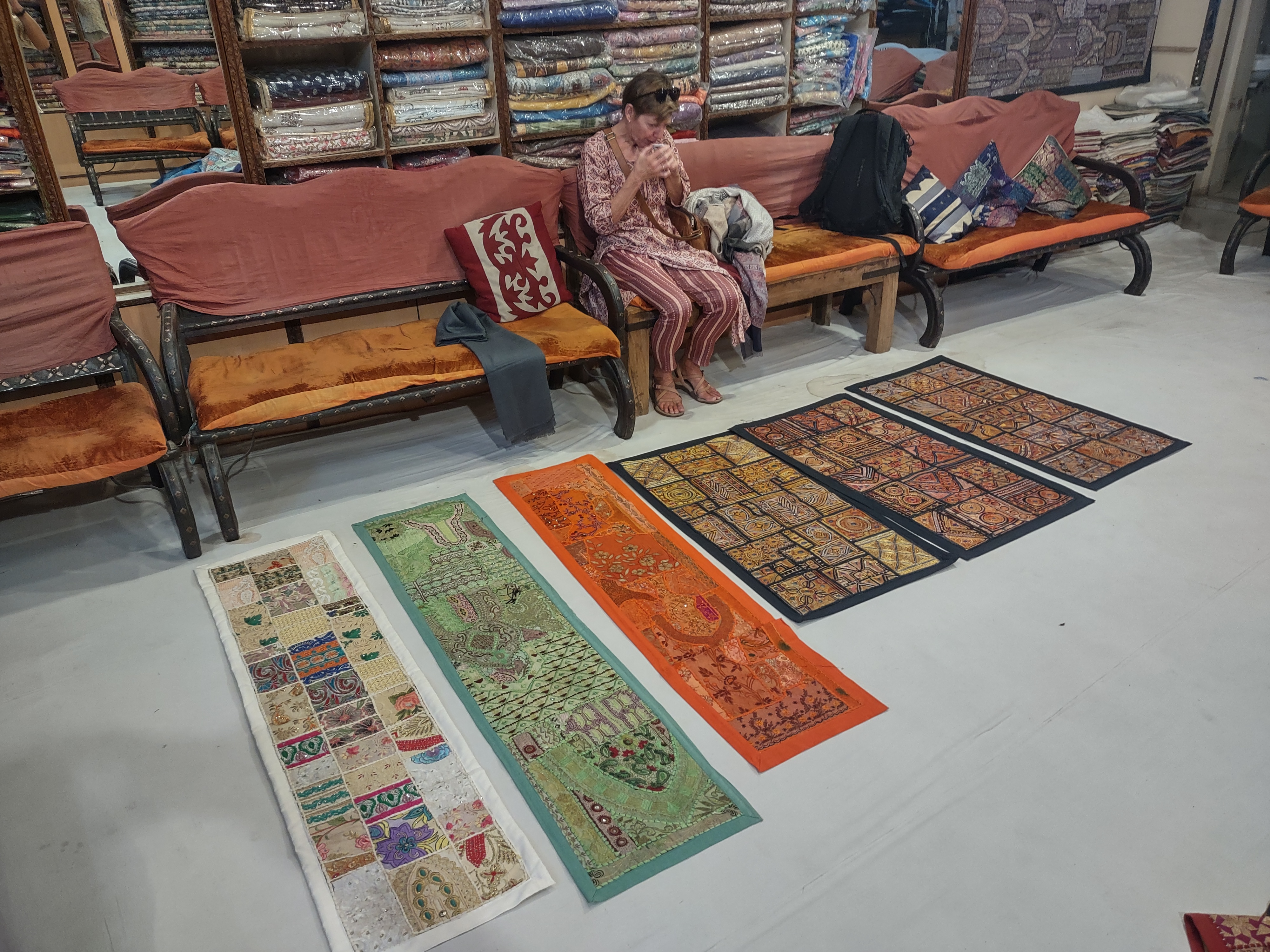
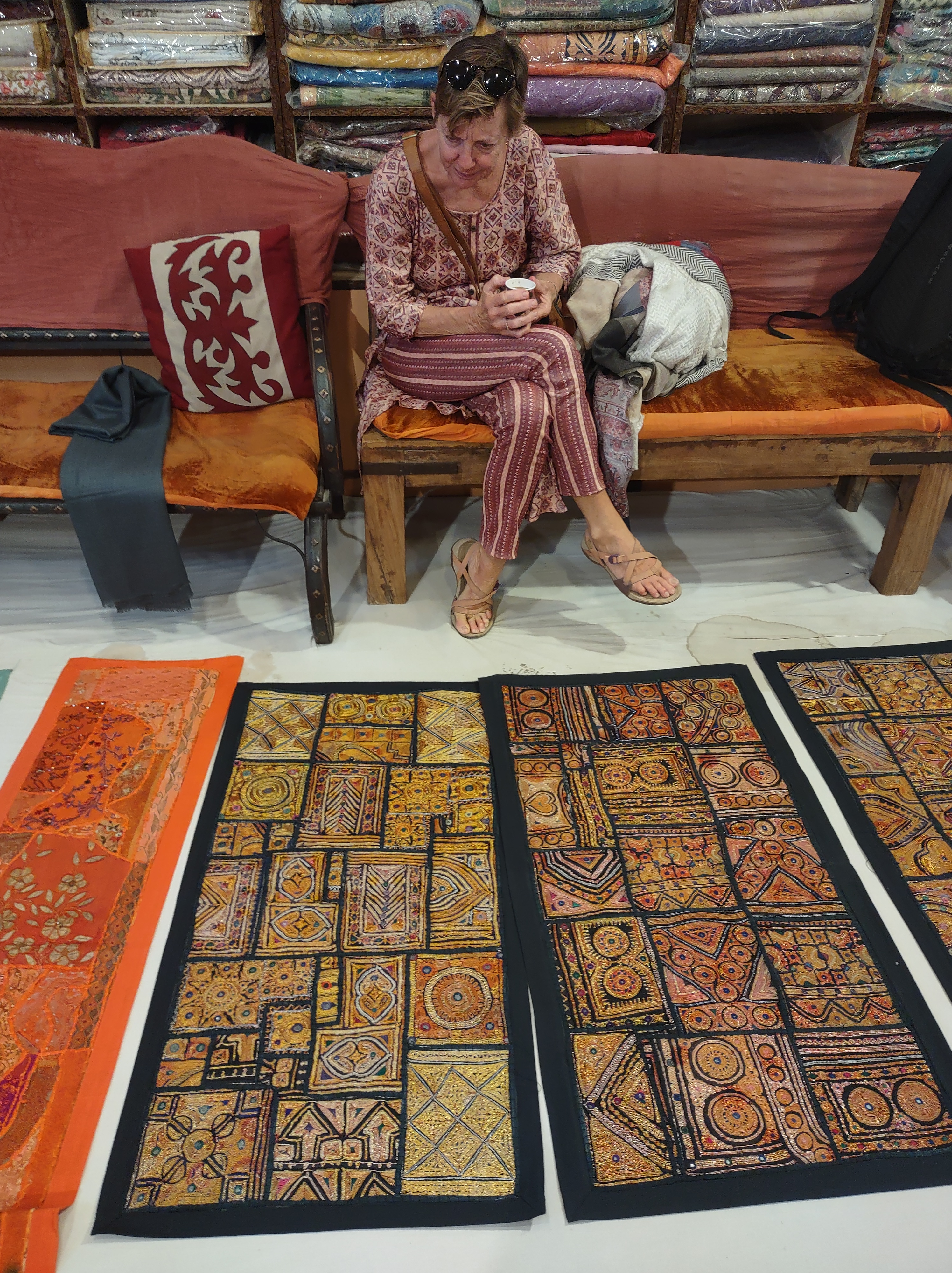
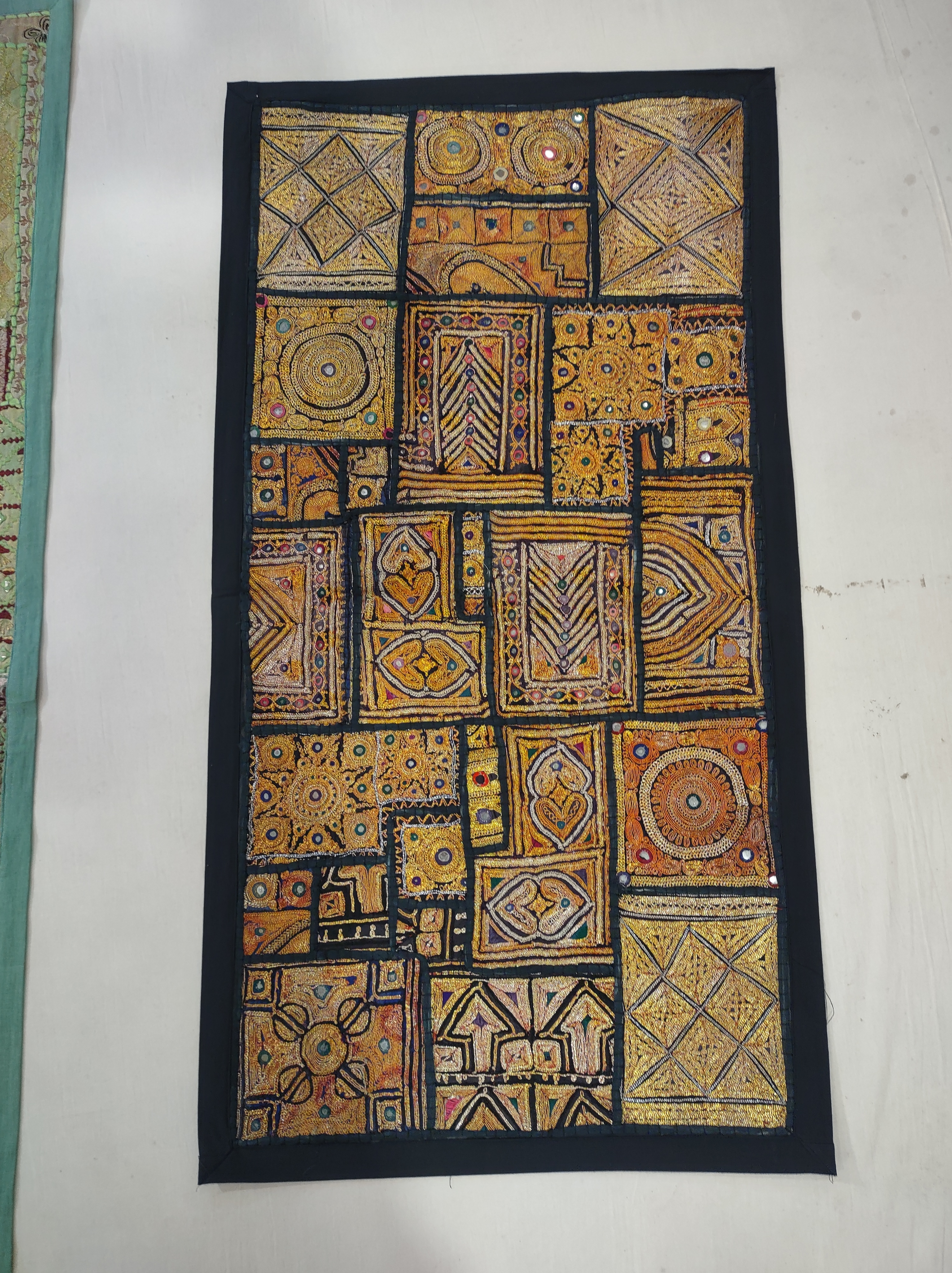
We visited a silver smith and a tapestry shop where our Indian shopping extravaganza continued. (We bought a beautiful tapestry which is a patchwork of fancy old gowns which are sewn together and embroidered by a cooperative of village women.) Having been a pretty busy and exhausting day we decided to pass on the sunset tour of the cenotaphs and returned to our hotel for an early dinner and bed.

DAY 4: 6-Oct-2023
From Jaisalmer to Jodhpur (5h drive)
Enjoy your breakfast and a last view of the Jaisalmer fort. Then your driver will pick you up at your hotel to take you to the blue city of Jodhpur. On the way you will visit the charming village of Osian. Osian is known for its many Jain temples: the most interesting are the Dugha temple and Mahavir temple. Then continue your trip and discover how the old city of Jodhpur circles the Mehrangarh fort and is bounded by a wall with several gates. Start exploring the city by the “Ghanta Ghar” (the Clock Tower) and the surroundings. In 2013 Jodhpur was elected the most amazing place to see in the world, according to the Lonely Planet. Overnight in Jodhpur.
Your hotel: Mandore Guest house (www.mandore.com)
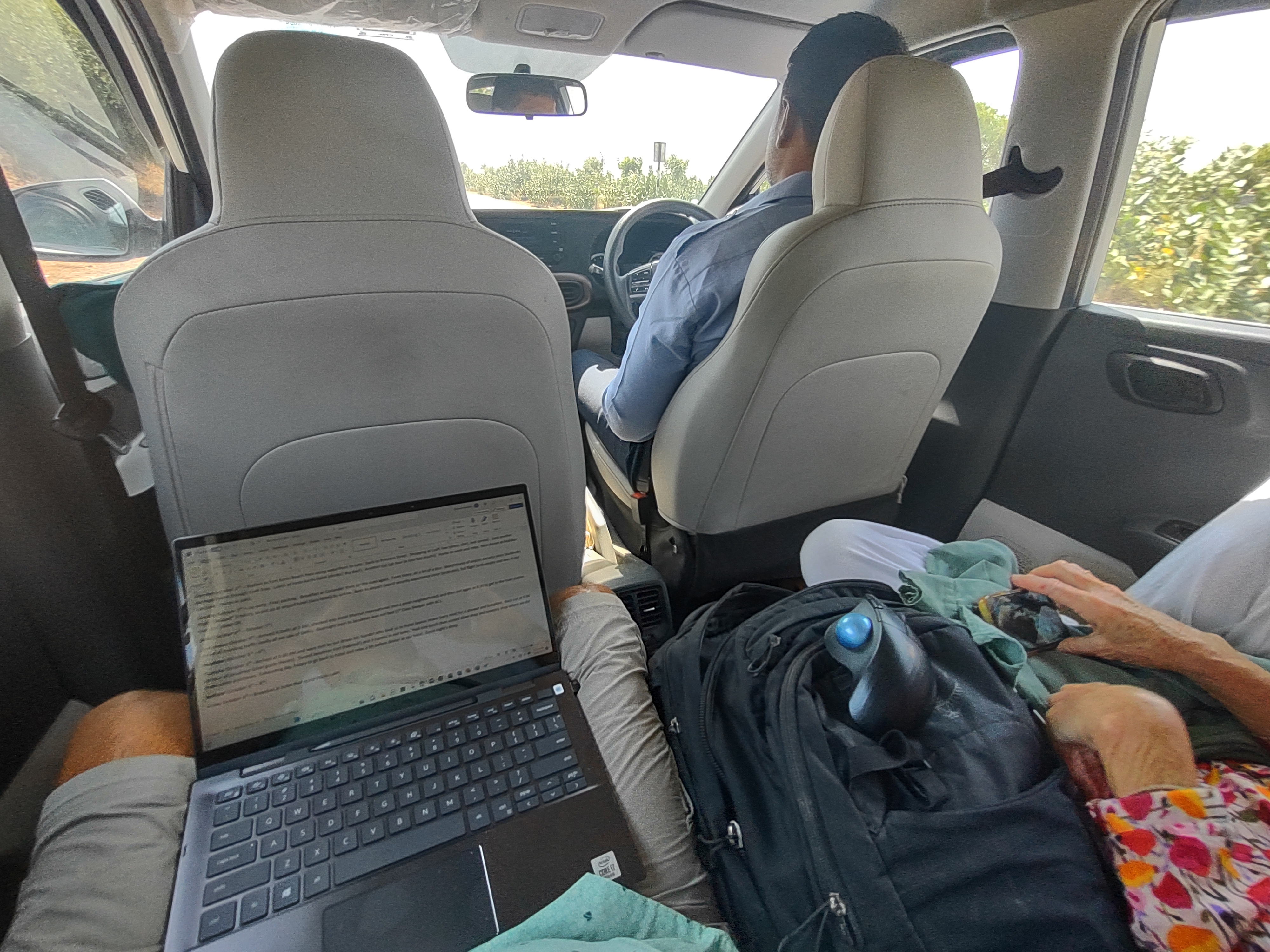
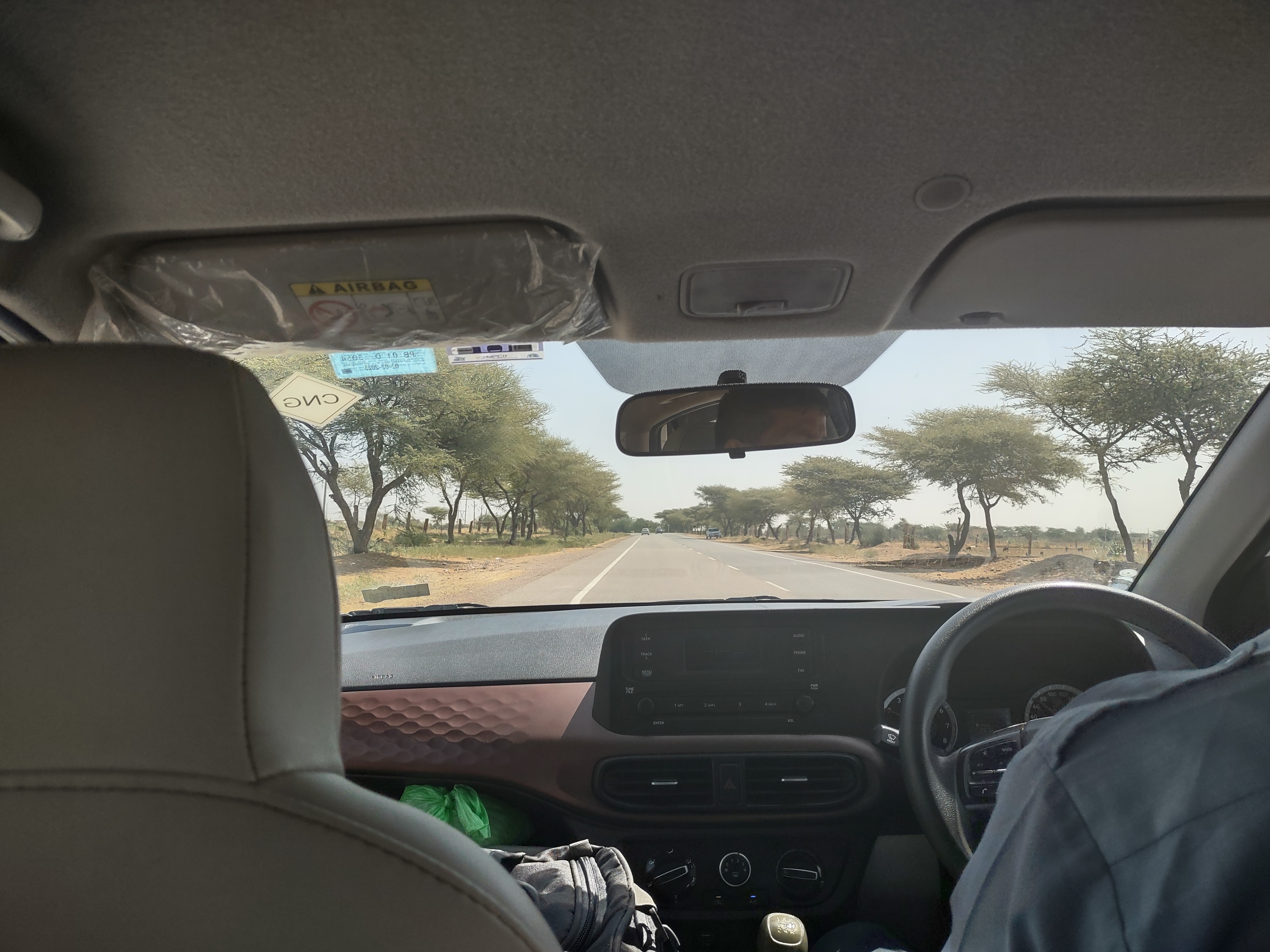
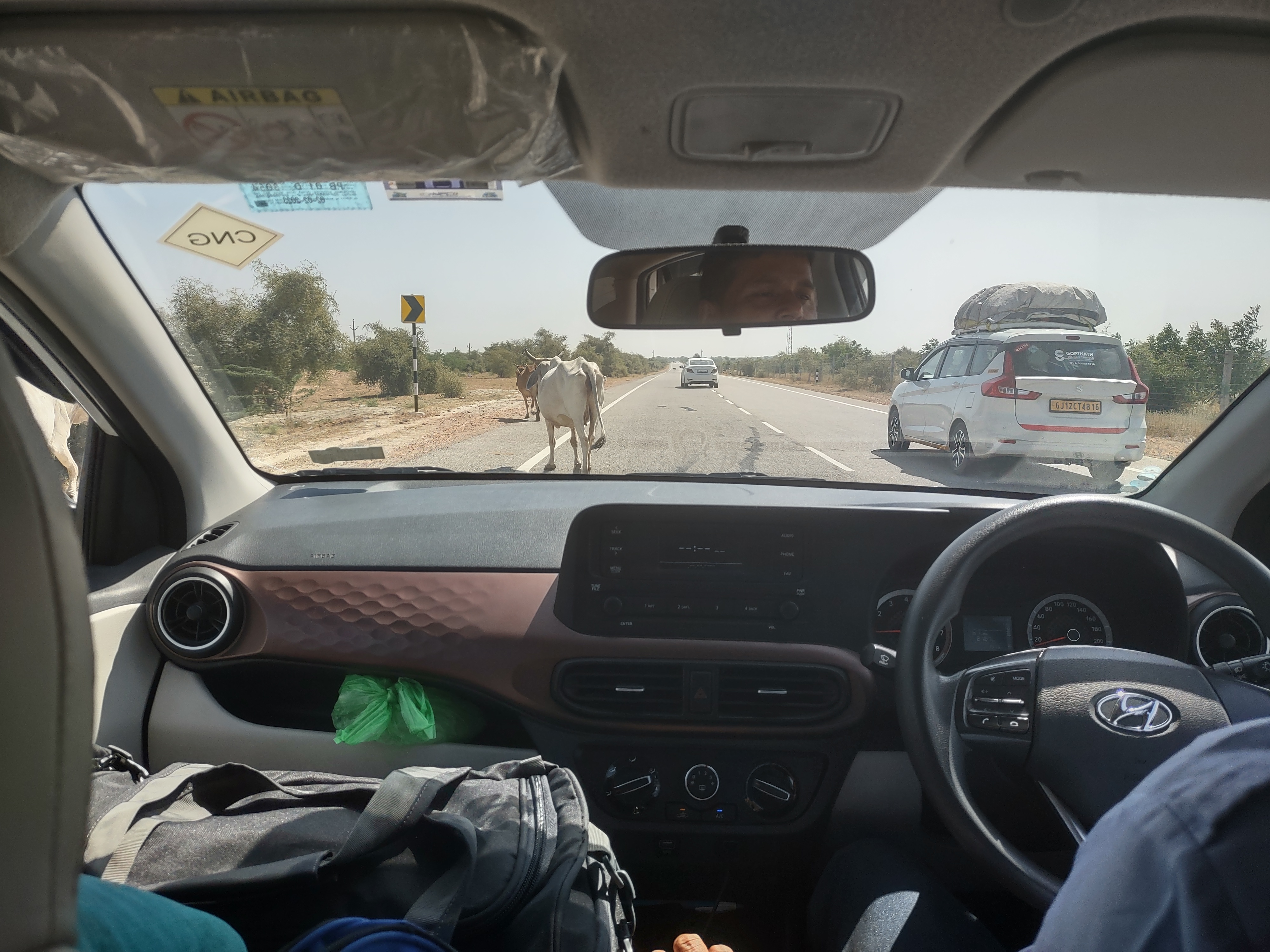
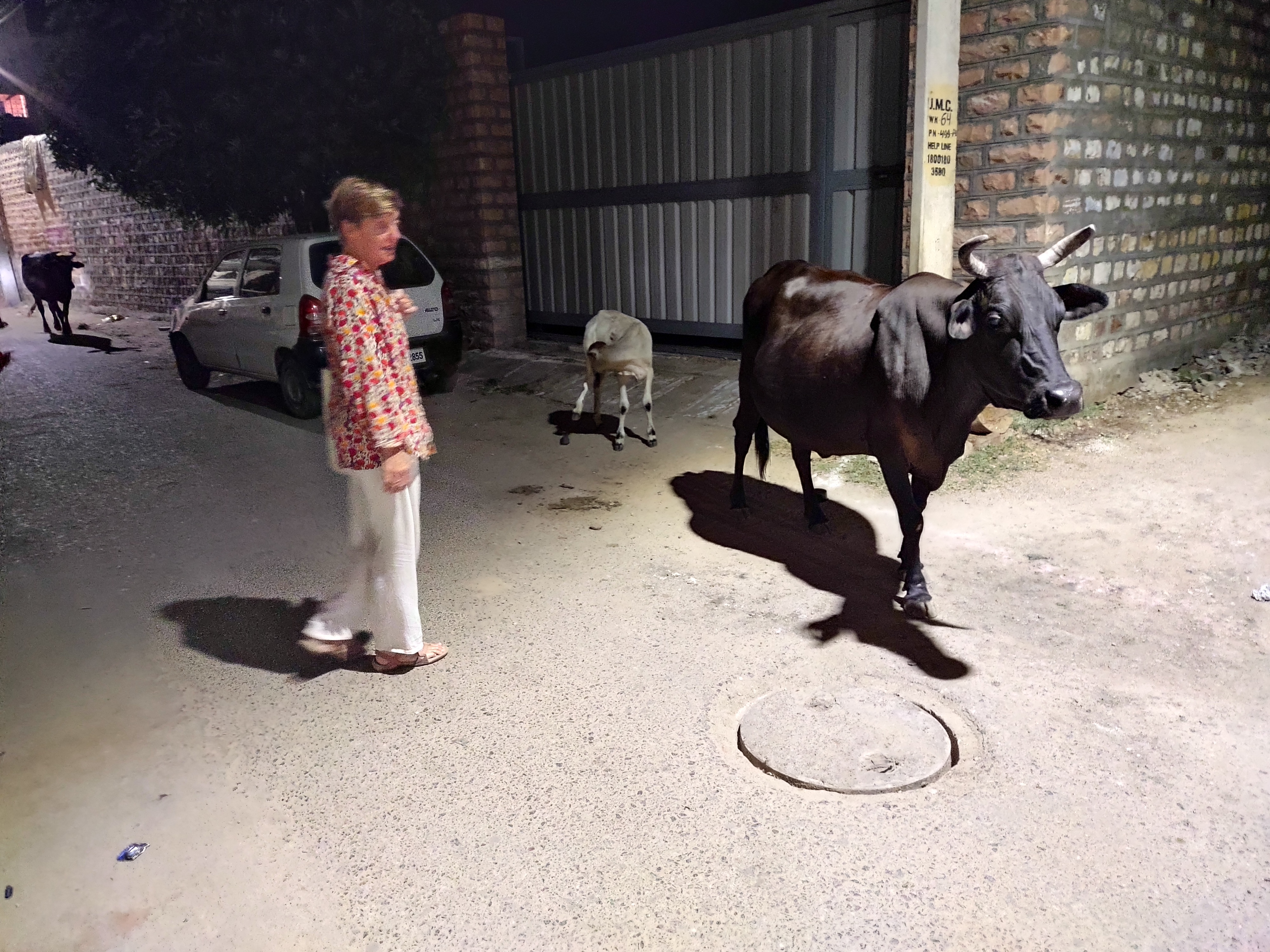
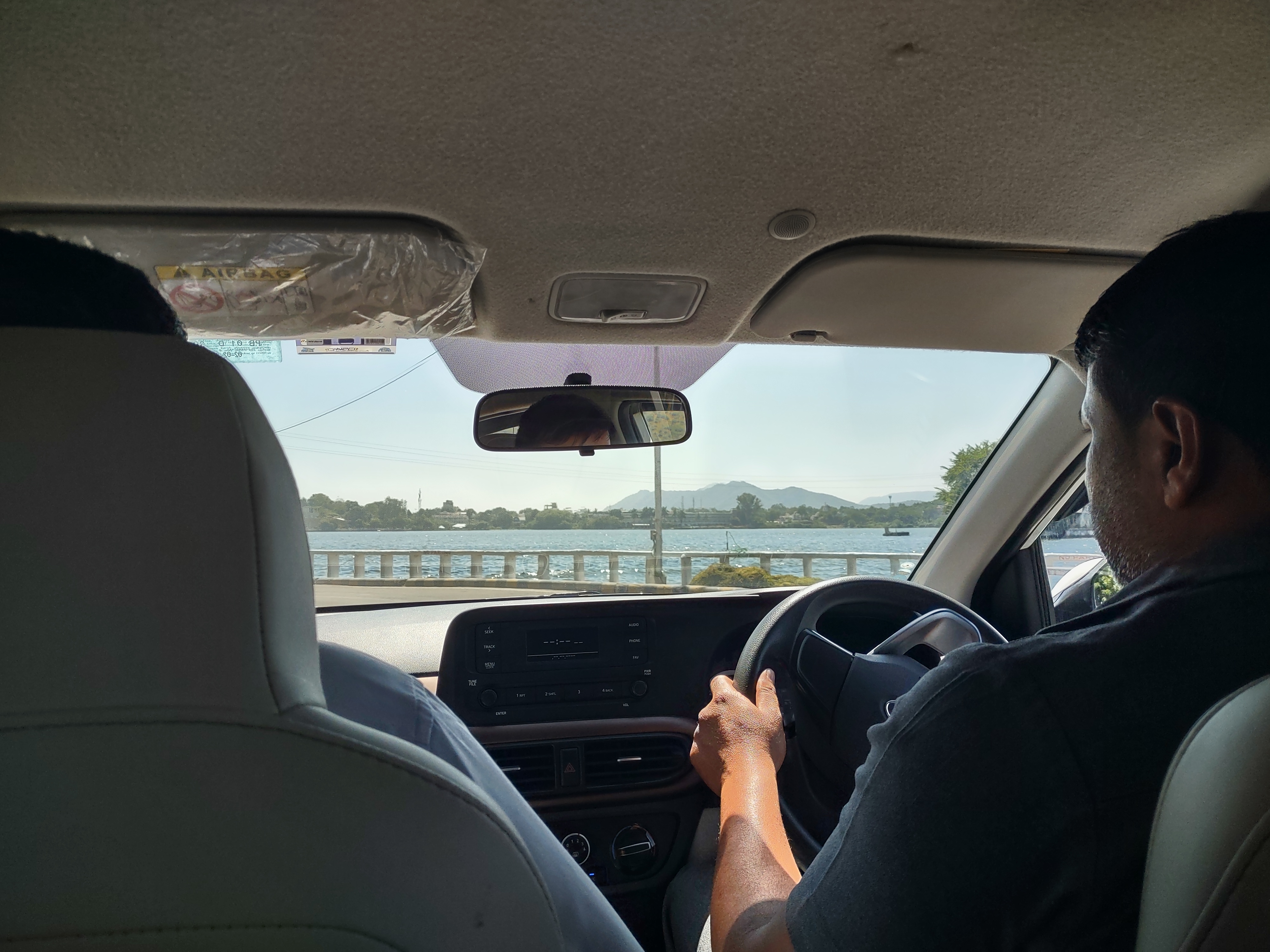
Before hitting the road for Jodhpur, at Mr. Sunder’s suggestion, we made a stop at nearby Gadisar Lake, a particularly picturesque spot and grabbed a couple of coffees and photos. On our way to Jodhpur we started settling into our new mobile office and got to know Mr. Sunder a bit better. His English was pretty good and Colleen loved having someone to ask the million questions she has about Indian life (particularly marriage rituals). Along the way we were amused to see how many cows wander the roads and highways and that they are always given the right of way. At this point, Mr. Sunder had picked up on all this as was, I think, himself amused at how easily we were amused. Lots of amusement to go around!



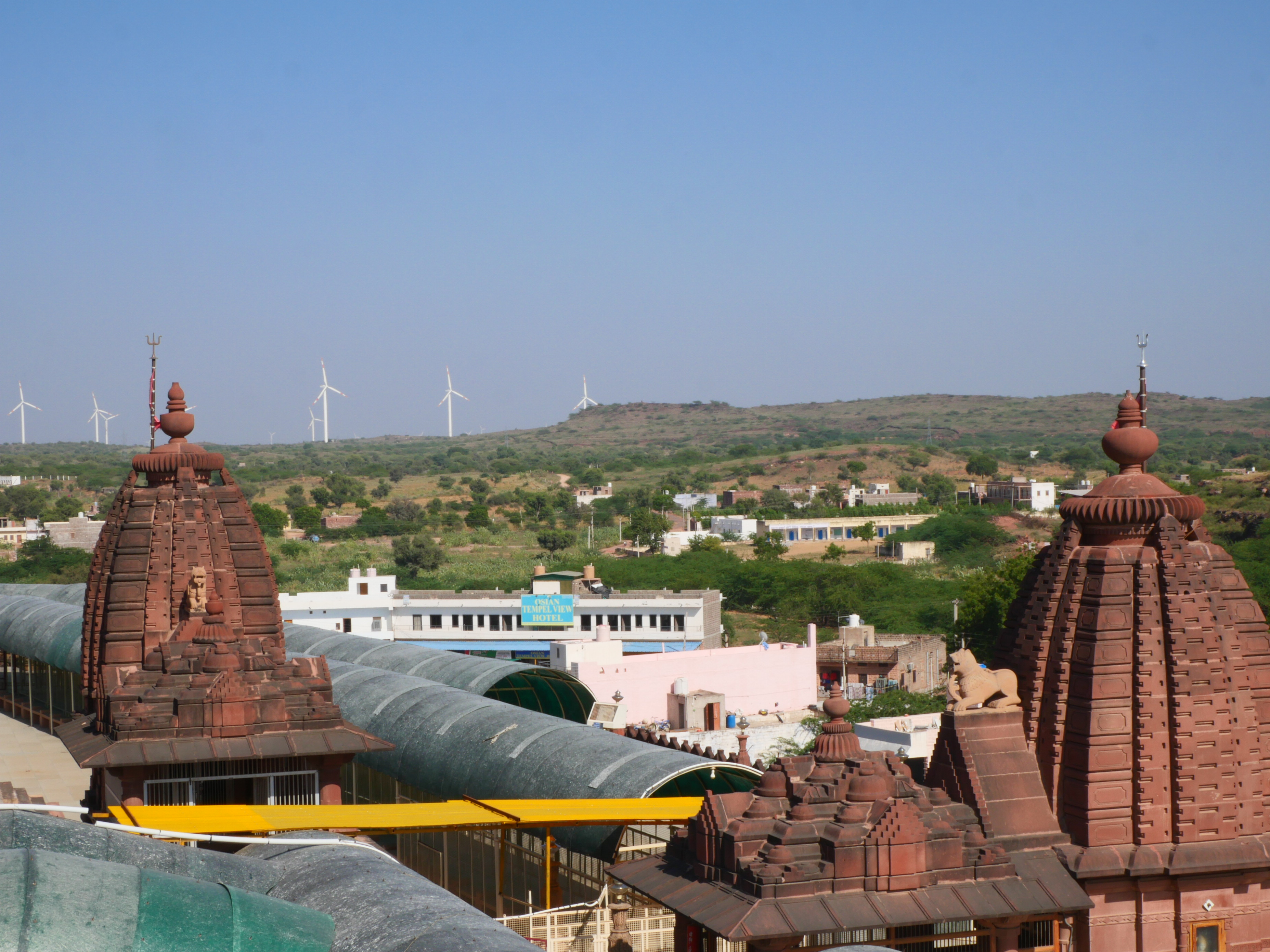
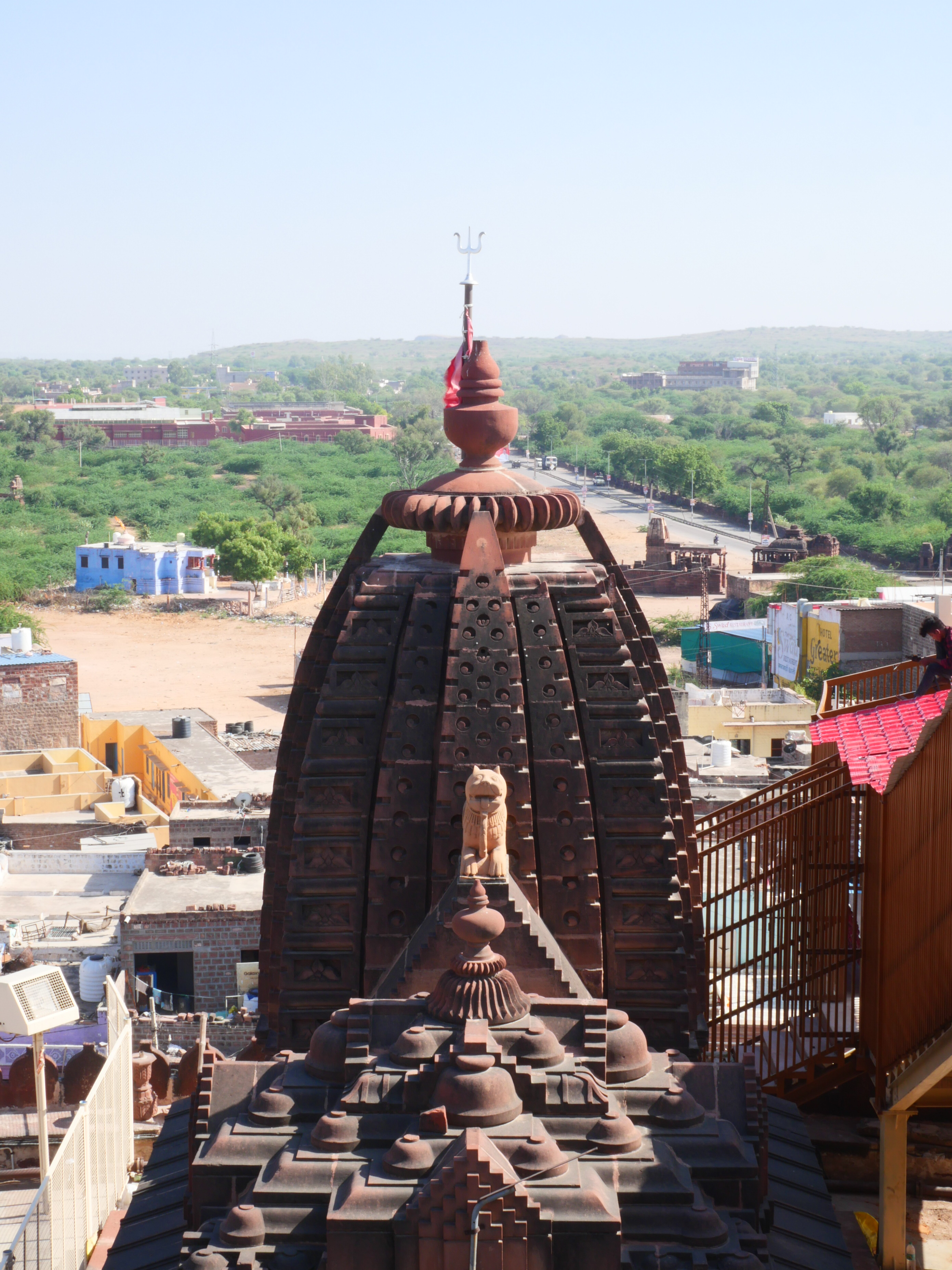
The Jain temples in Osian were interesting, but not extraordinary, but it was good to be able to break up the drive and get out and walk for a bit. I do have to say that I had begun to observe and interesting contrast between the temples we visited in Indian (particularly the Jain temples) and forts and palaces we had visited and, for that matter, many of the old churches we have seen in our travels. With the latter group of structures, there is always an extraordinary effort made to preserve them in their “original” form.
On the other hand, Indian temples are apparently more than willing to “modernize” their facilities to make them more comfortable for visitors. The Mahavira Temple in Osian (which is about 1,500 years old!) had a makeshift roof and chromed railings along its main entrance stair which some might feel undermines its architectural integrity. Good or bad, not sure, but it certainly makes them feel more alive and lived in (which they are) than the empty forts and palaces, and many of the churches we have seen.


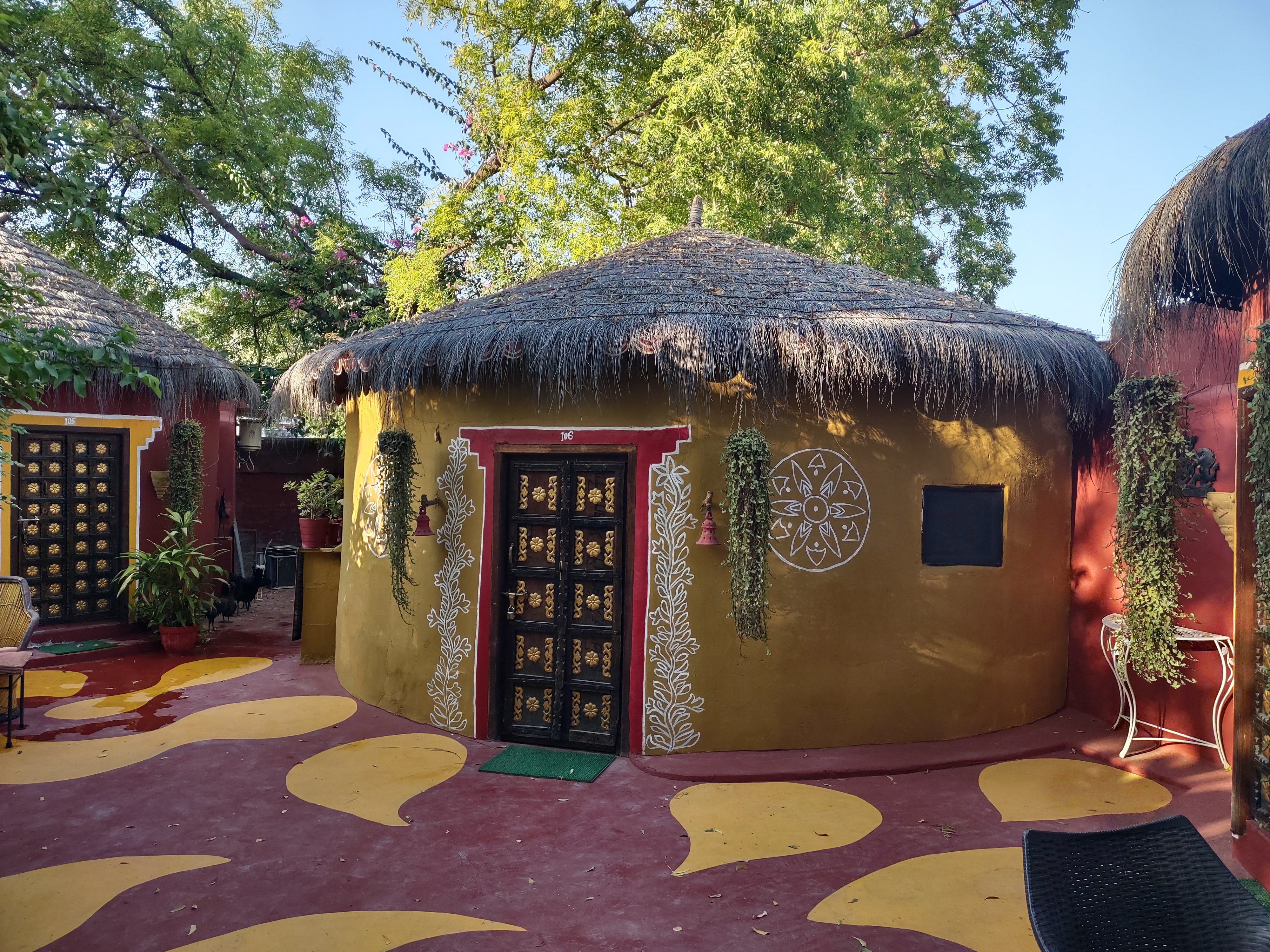
The accommodations at the Mandore Guest House were very interesting to say the least. Our room, which resembled a grass hut, was spacious and comfortable and was set in a beautiful garden which included a swimming pool and, with that in mind, we decided to defer any additional tour events until the next day and went back to the hotel to relax by the pool.
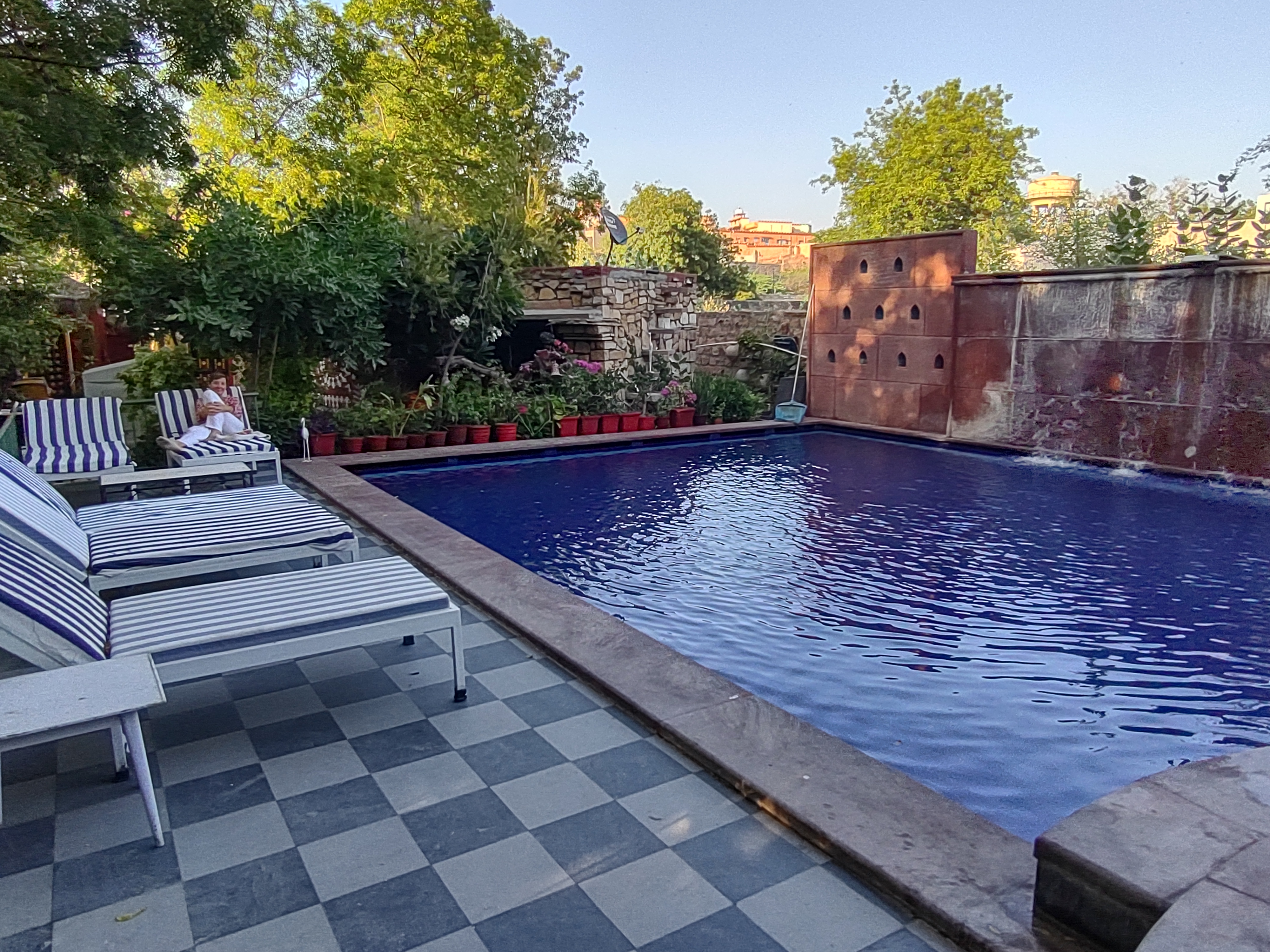
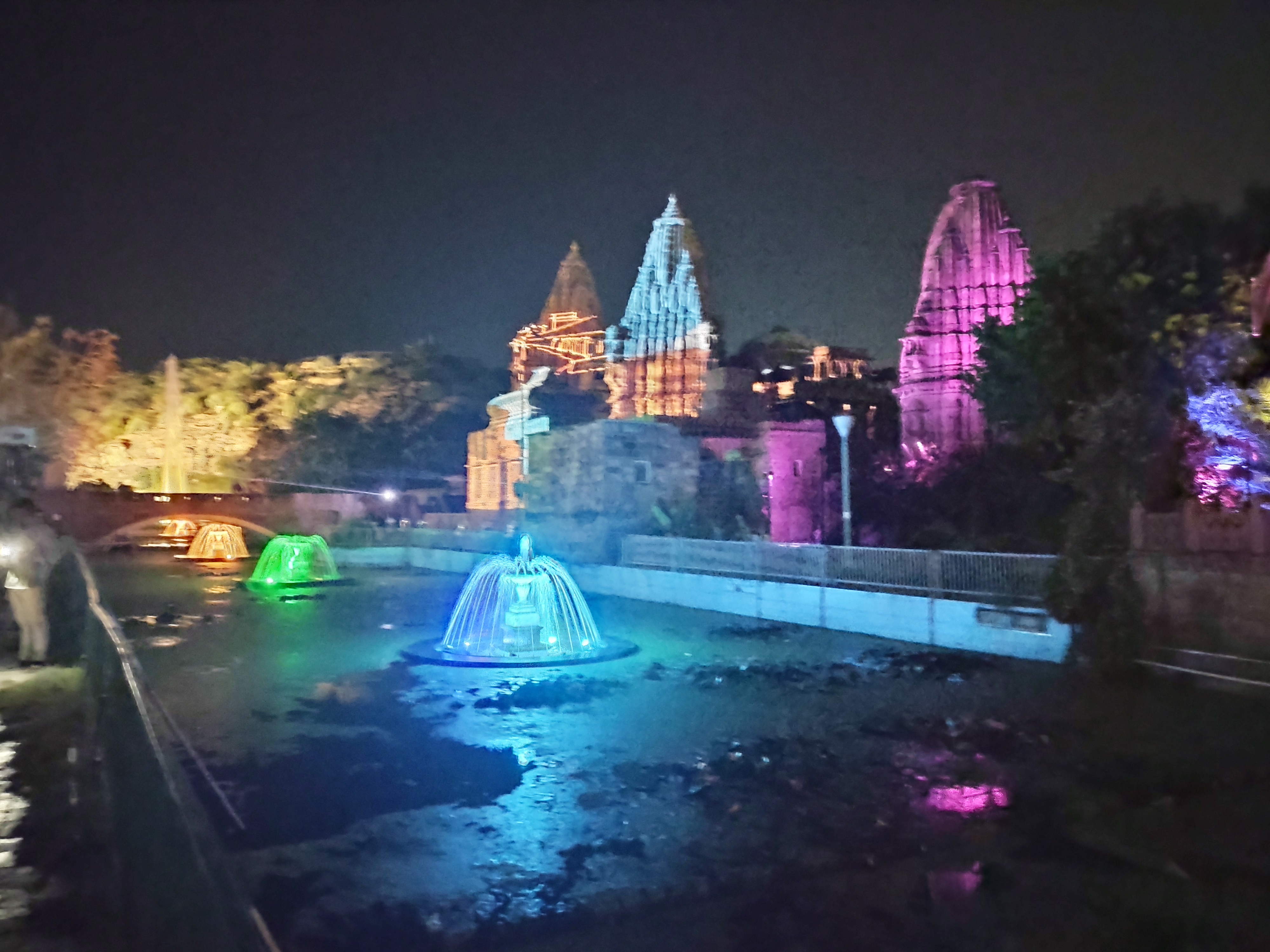
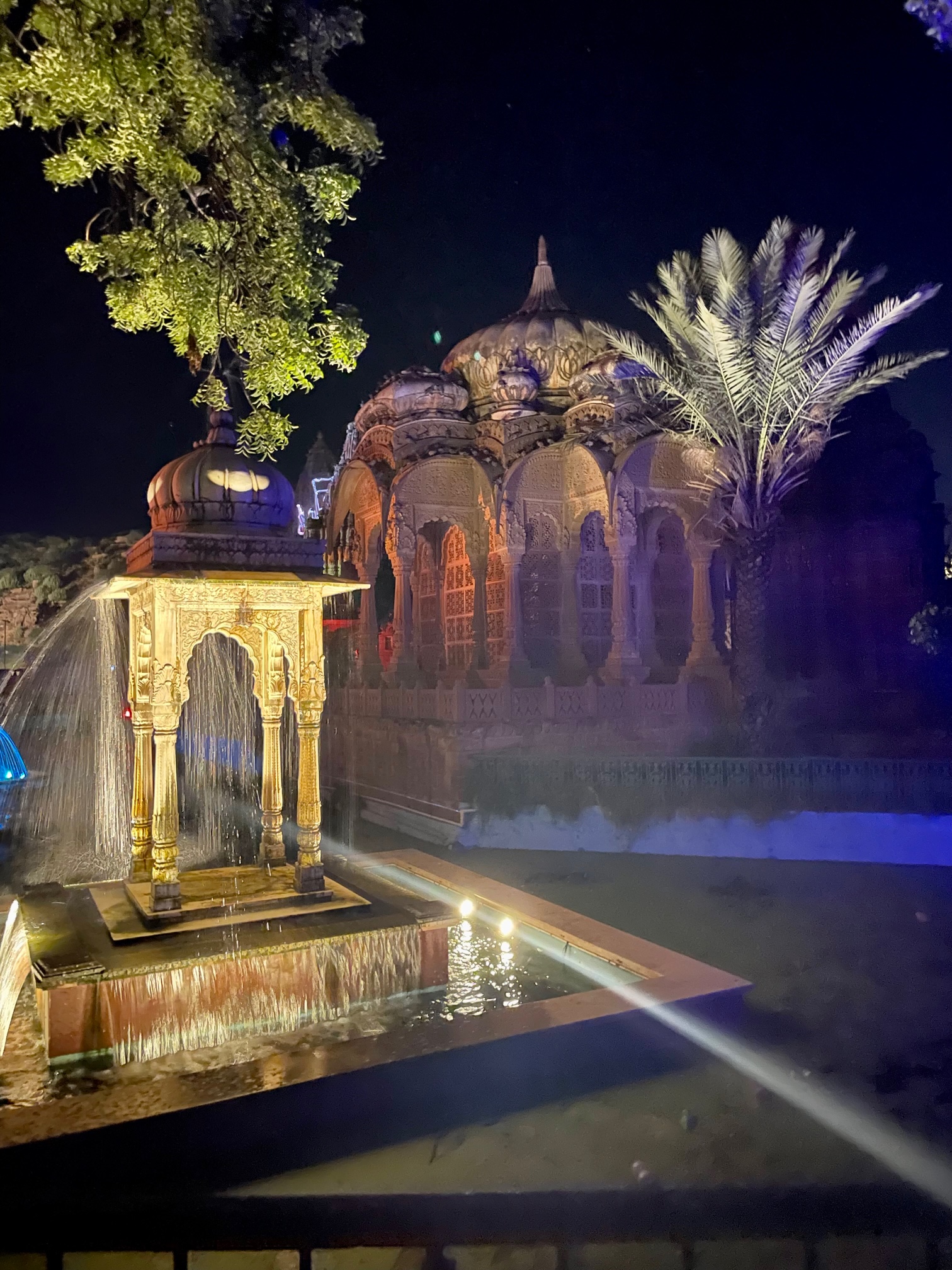
After a bit of that, we got cleaned up and then wandered back through the neighborhood to a place which Mr. Sunder had pointed out on our way in, the Madore Gardens, which houses temples and royal cenotaphs and which has an interpretive light show every evening. The light show was OK, but the gardens looked pretty amazing and we vowed to come back the next day while there was still daylight. We walked past a few stray cows back to our hotel where we had a fairly romantic candle-lit dinner at a table in front of our hut.
DAY 5: 7-Oct-2023
Jodhpur sightseeing
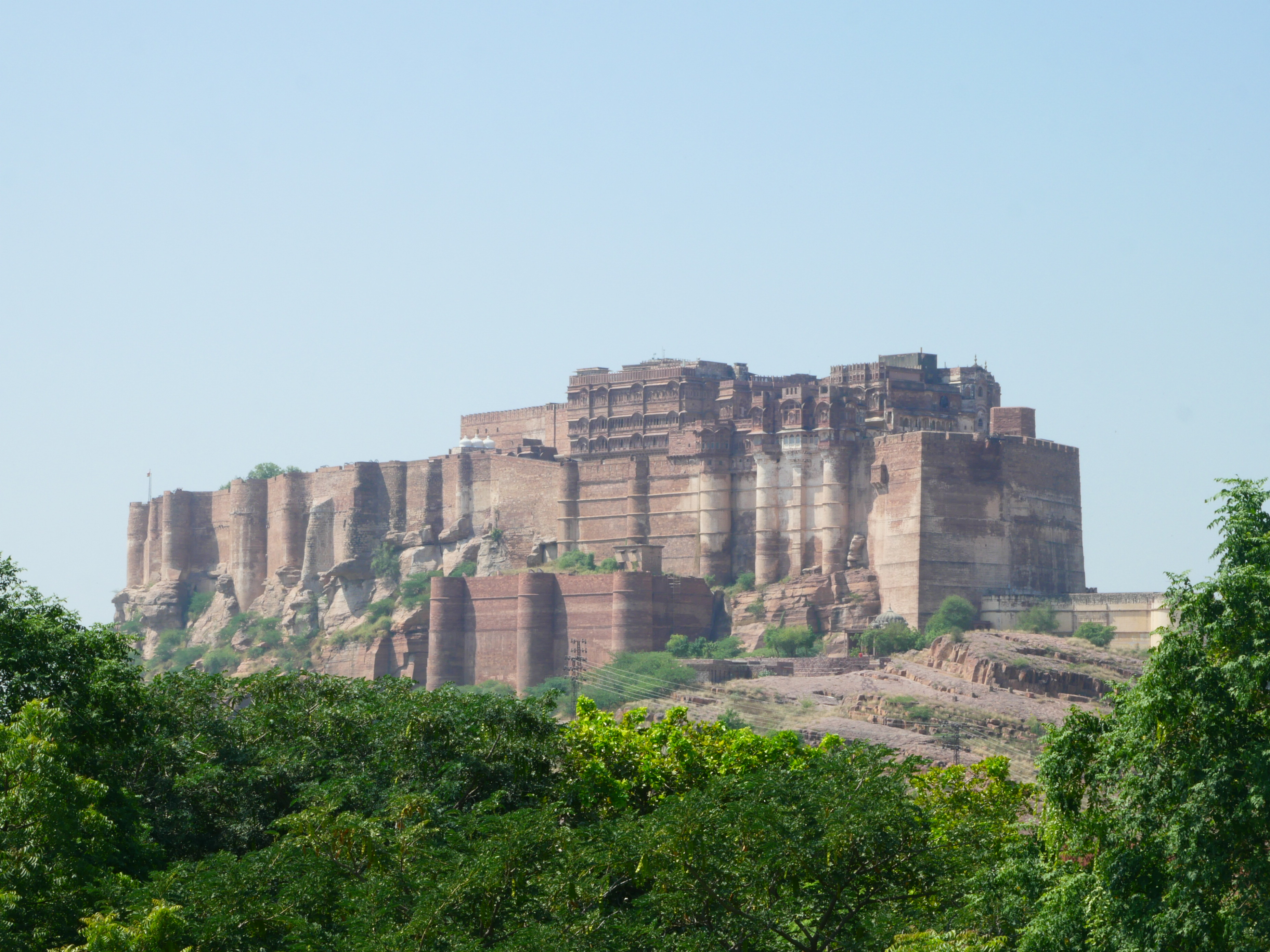
This morning you will be taken to and visit the Mehrangarh Fort situated on a low sandstone hill, more than 125 meters high, impressively watching over the entire city. The Mehrangarh Fort is one of the largest forts in India and was built in 1460 by Rao Jodha. Inside the fort visit the many Palaces, beautifully decorated by impressive carvings, such as the Moti-Mahal (the pearl palace) and the Phool Maha (the flower palace). Also visit Jaswant Thada, an imposing marble cenotaph built in memory of indian Maharaja Jaswant Singh in 1899, located close to the Meharangarh Fort. Next your driver will take you to the Umaid public museum. Part of this huge recent palace is today a Luxury hotel belonging to the Maharaja of Jodhpur. Overnight in Jodhpur.
Your hotel: Mandore Guest house (www.mandore.com)
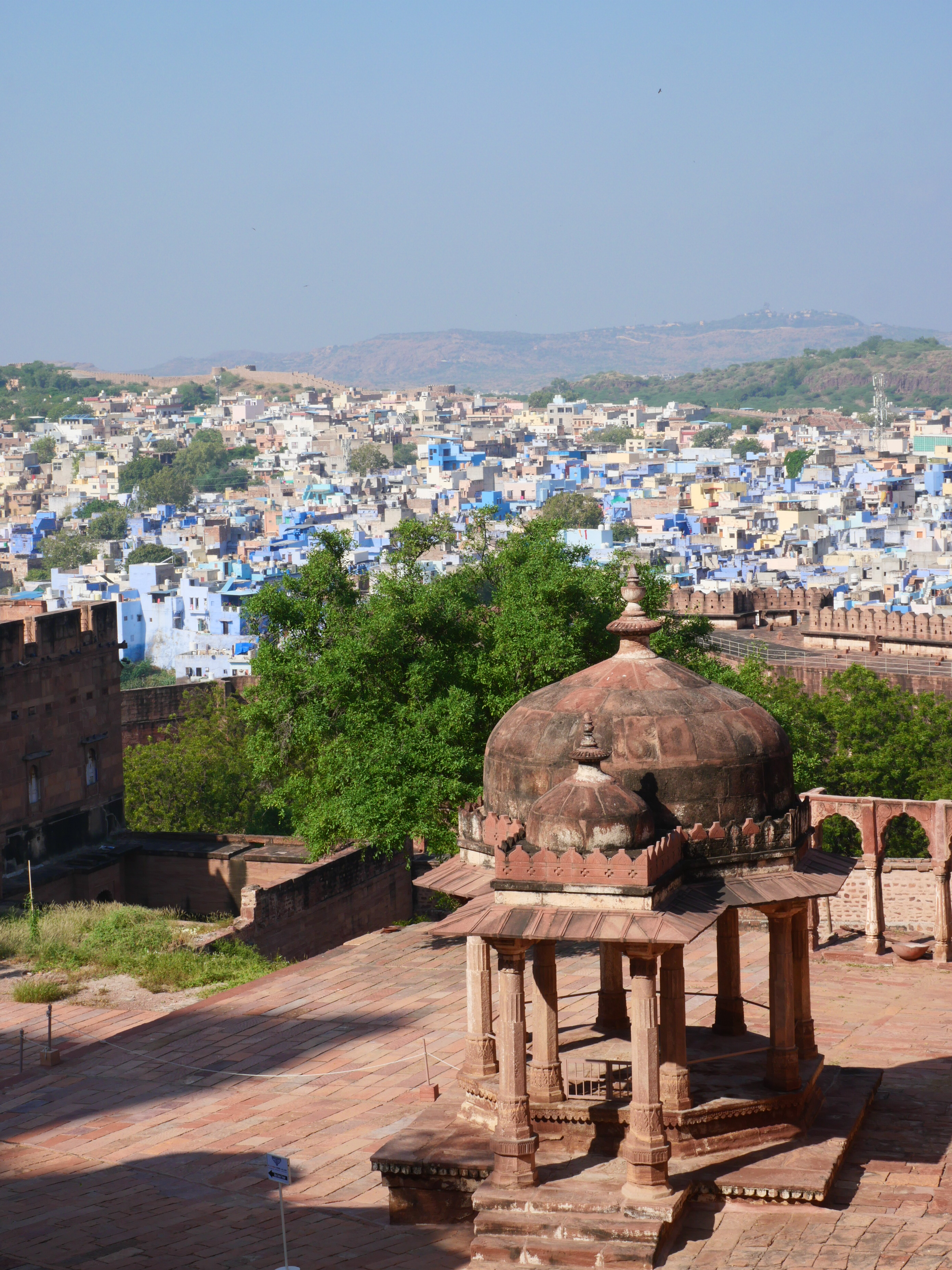
The Mehrangarh Fort is a very impressive structure which dominates the landscape and would presumably give any invader at least a moment of pause. The Palace was beautiful, with more intricately carved stone work (this time red, not yellow sandstone) and the museum was full of interesting objects. (At Mr. Sunder’s recommendation, we did not engage a guide which worked out just fine.) The Fort had a commanding view of the valley and city below it and we discovered why Jodhpur is sometimes referred to as “the Blue City of India”.
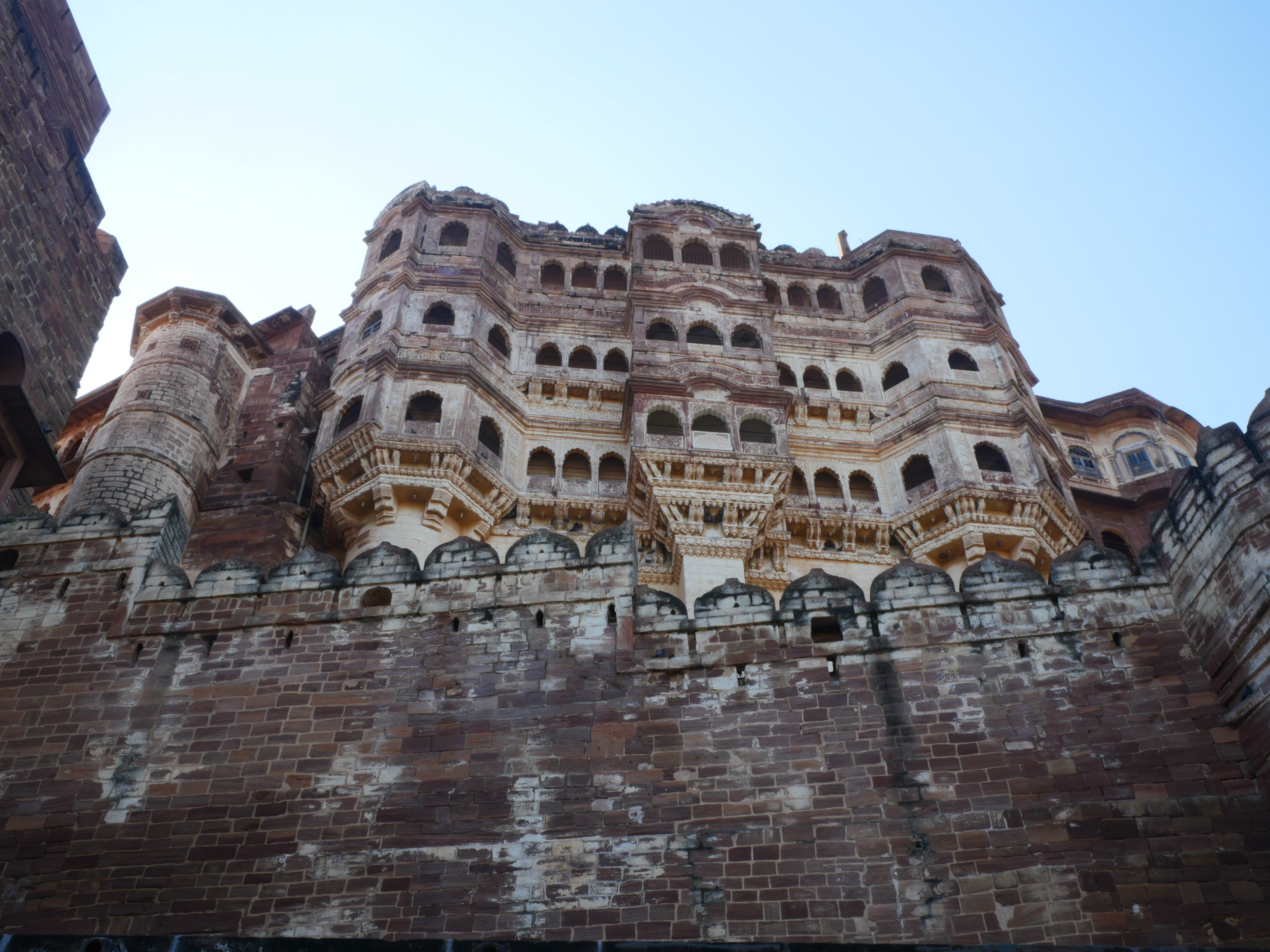
The old palace within the Fort has been converted to a museum which includes numerous artifacts as well as completely finished and furnished rooms with provide a great sense of what palace life must have been like.
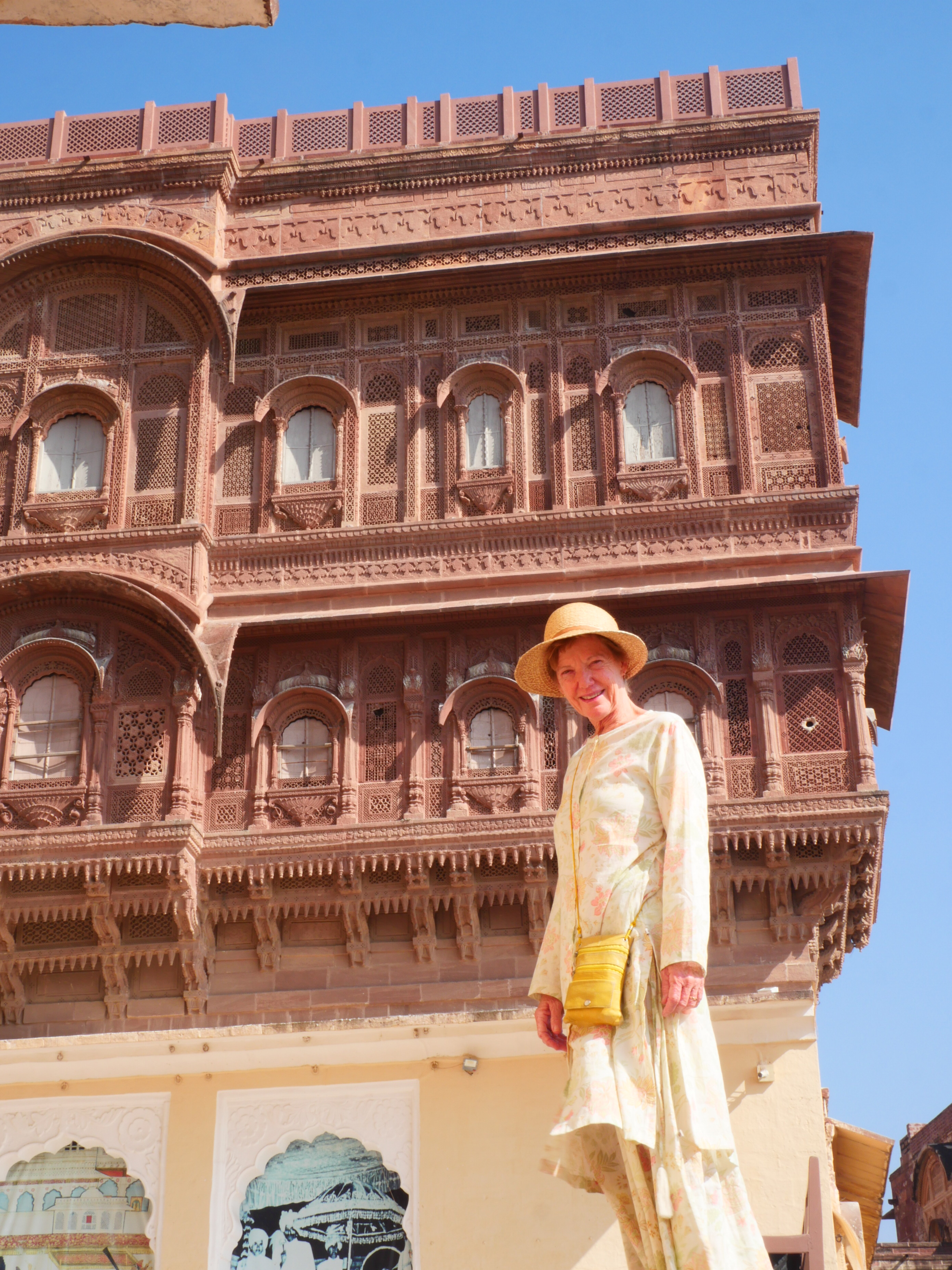

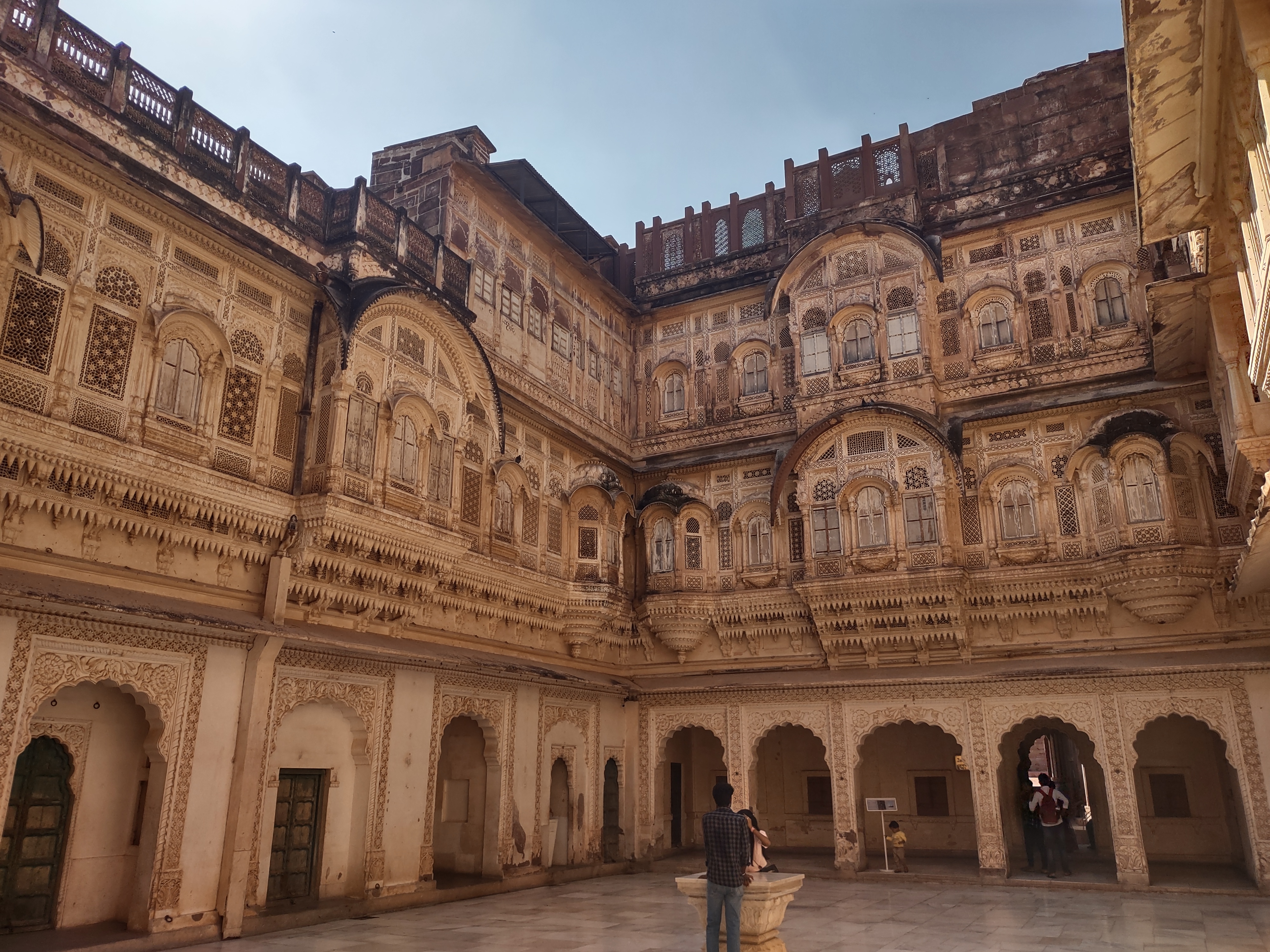
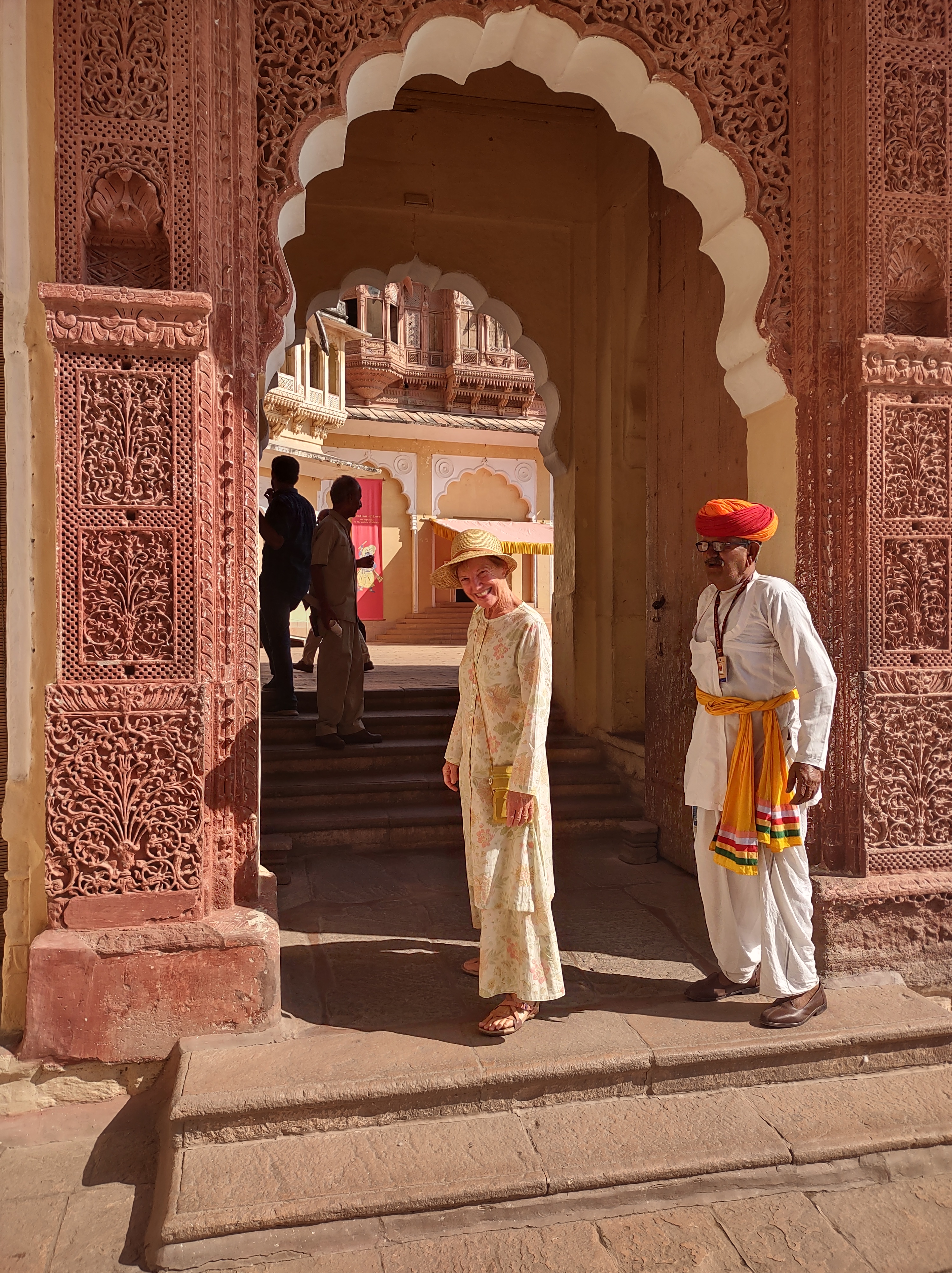
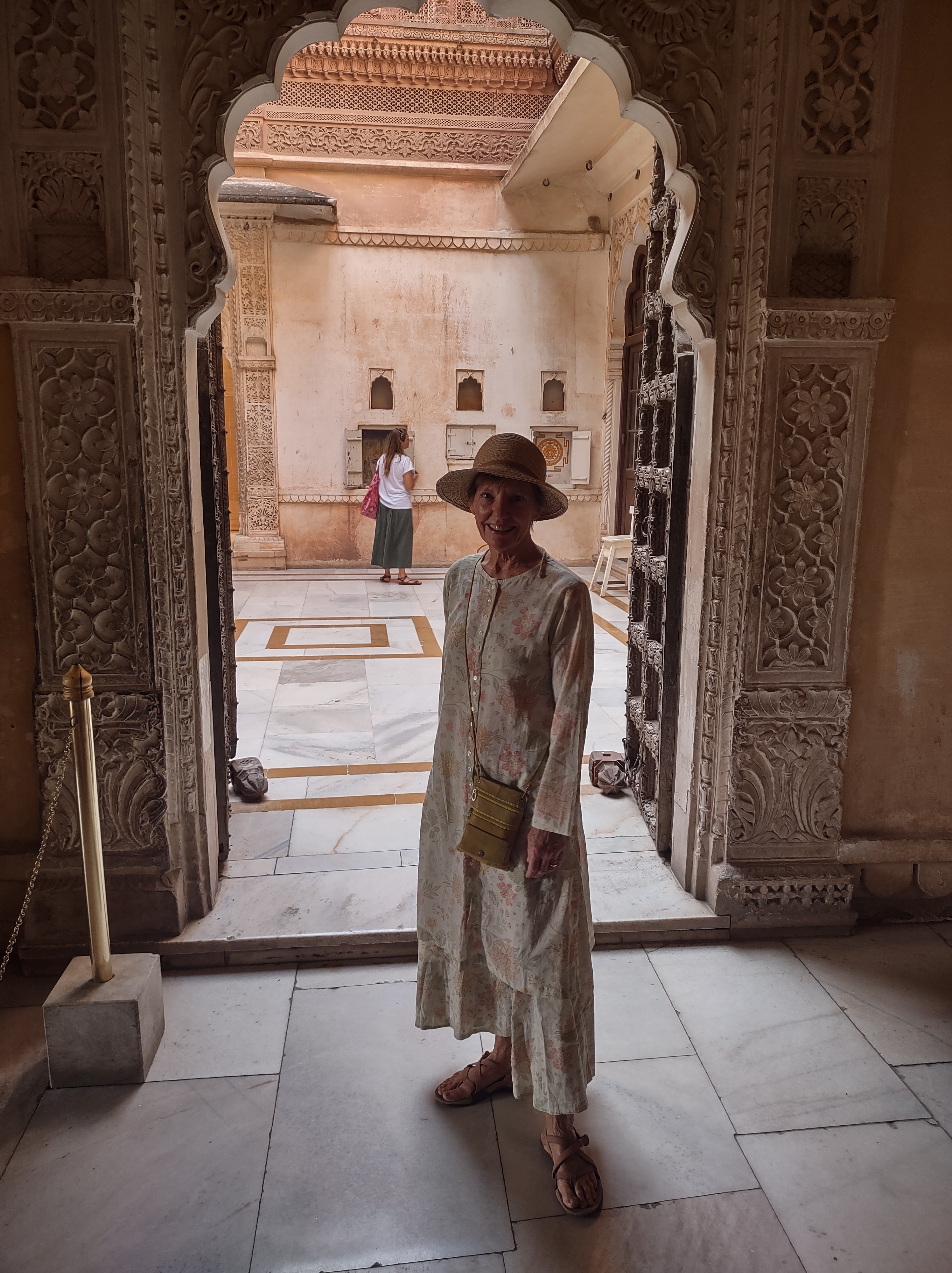
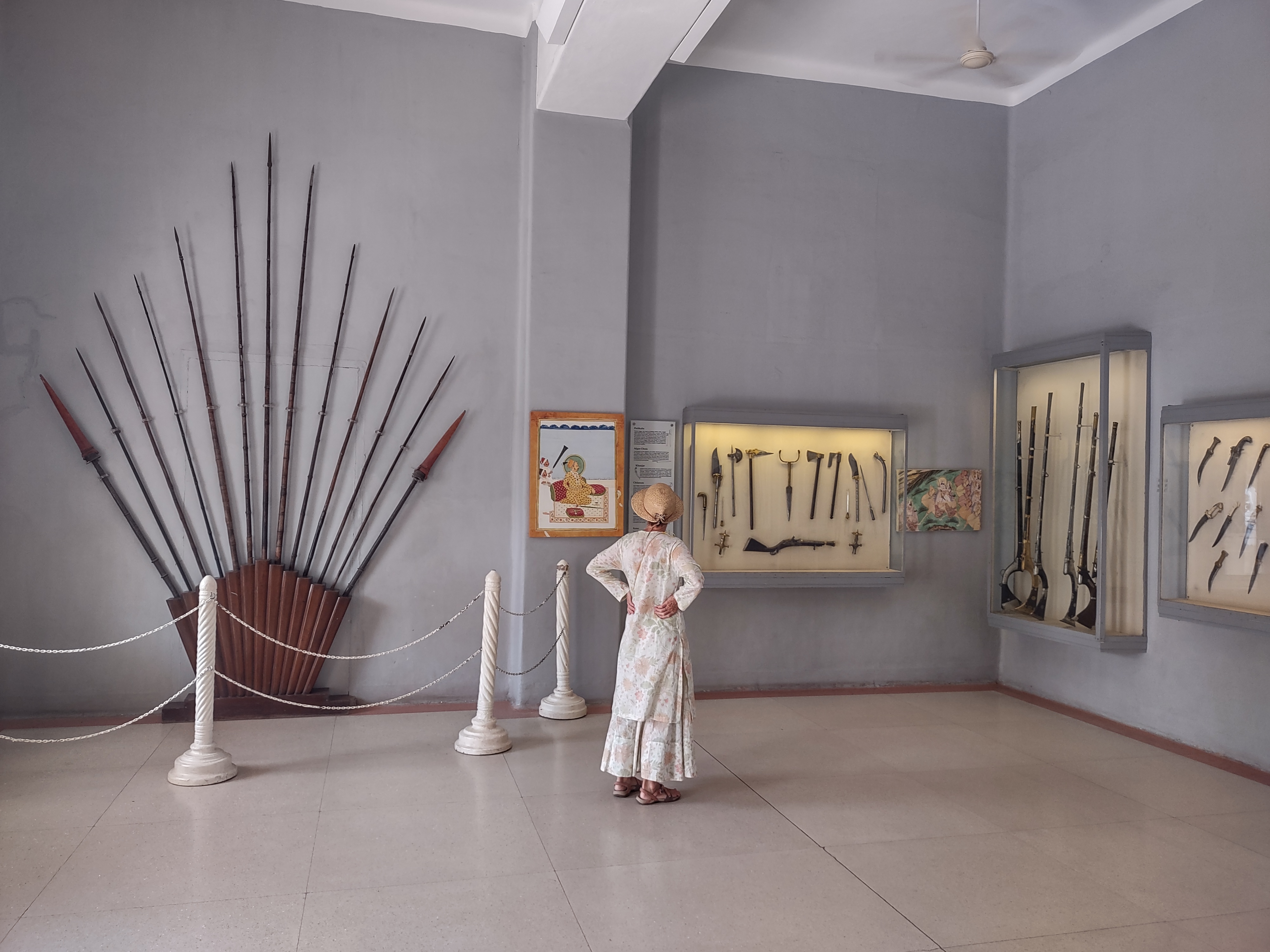
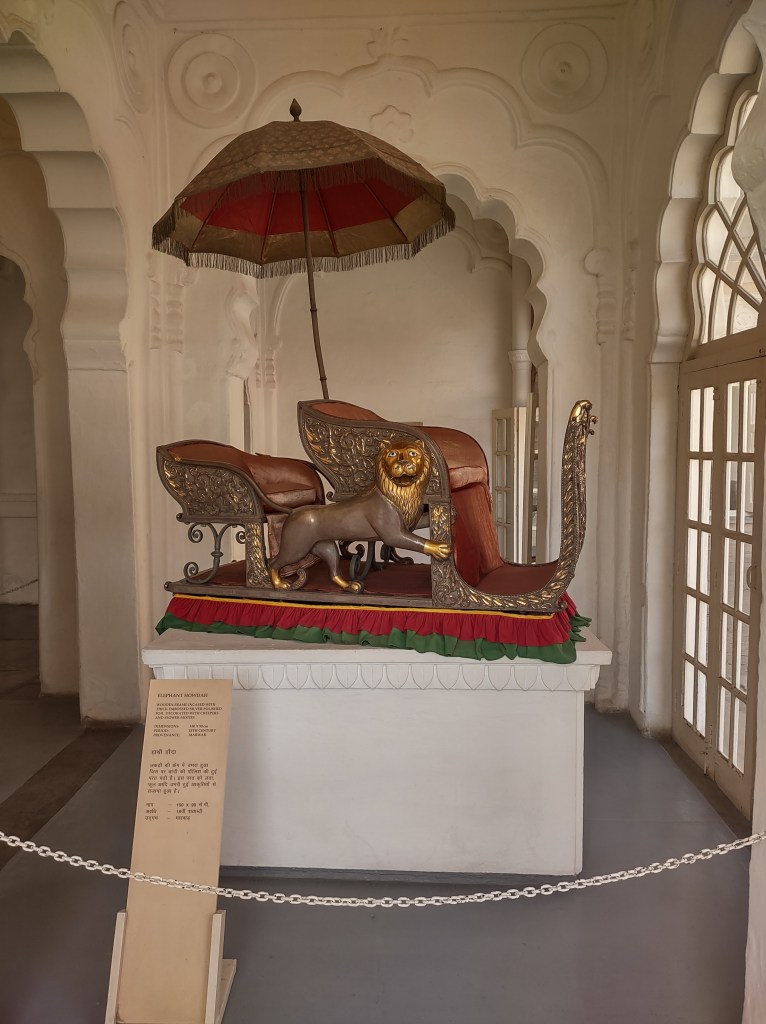
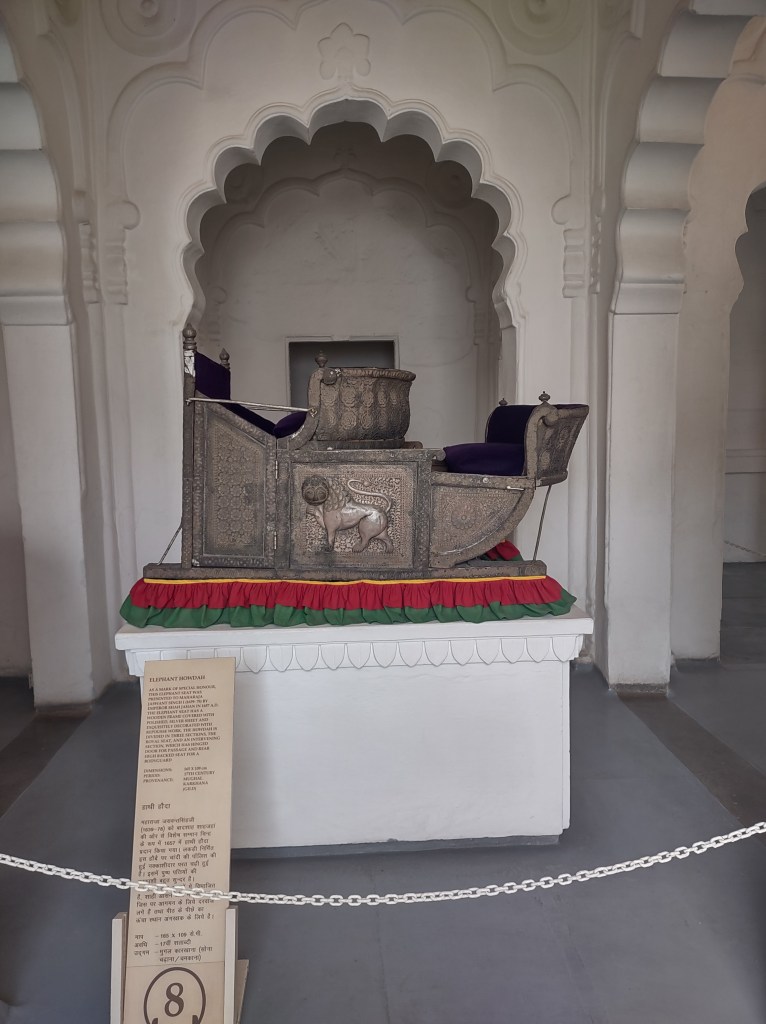
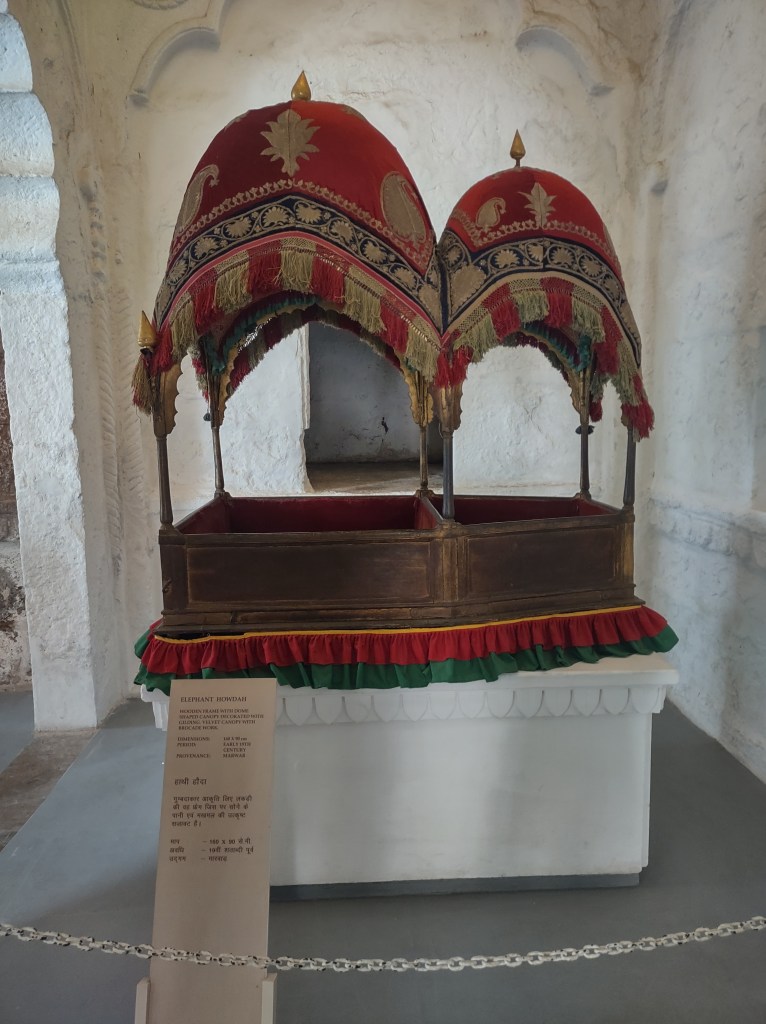
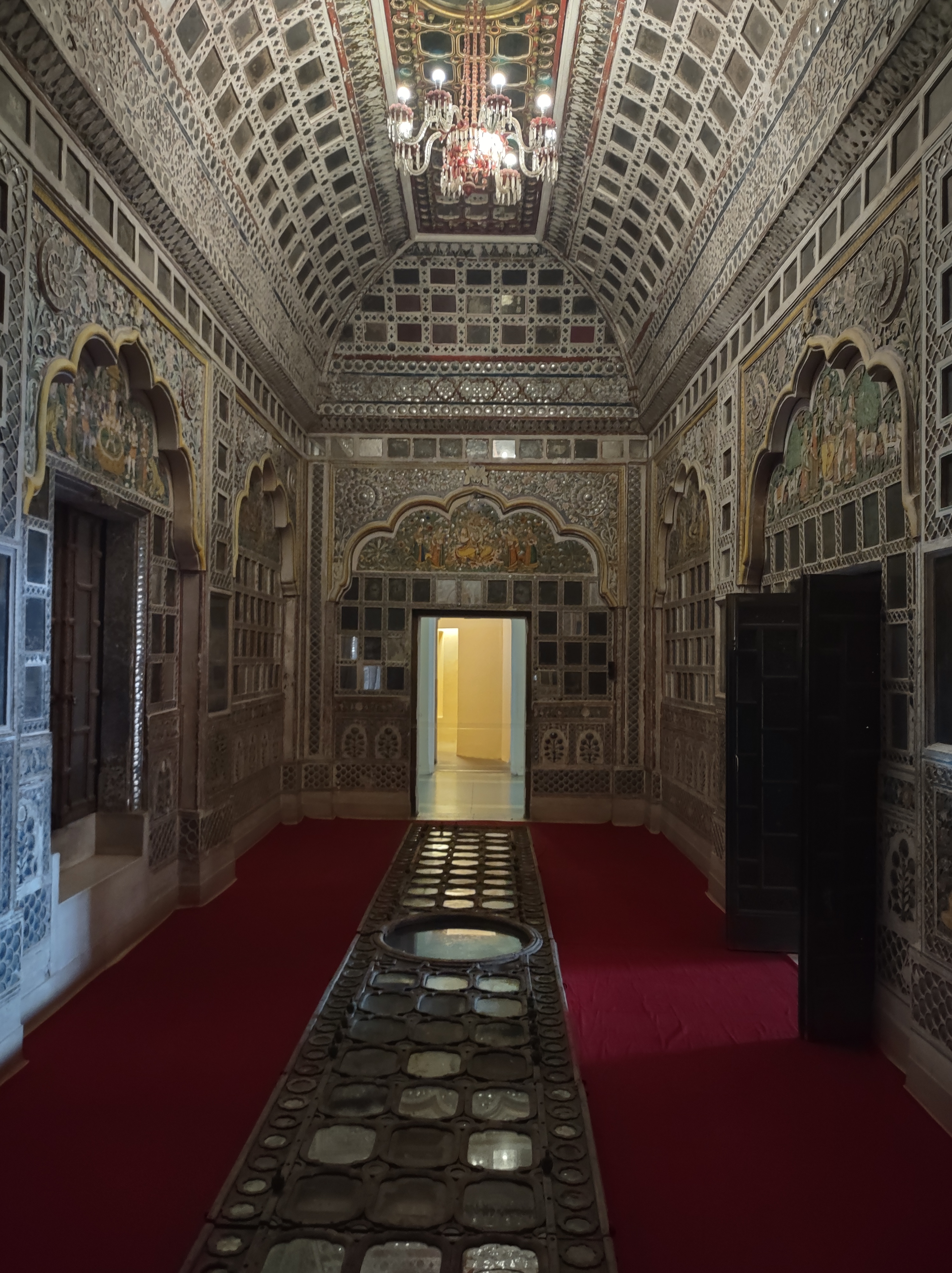
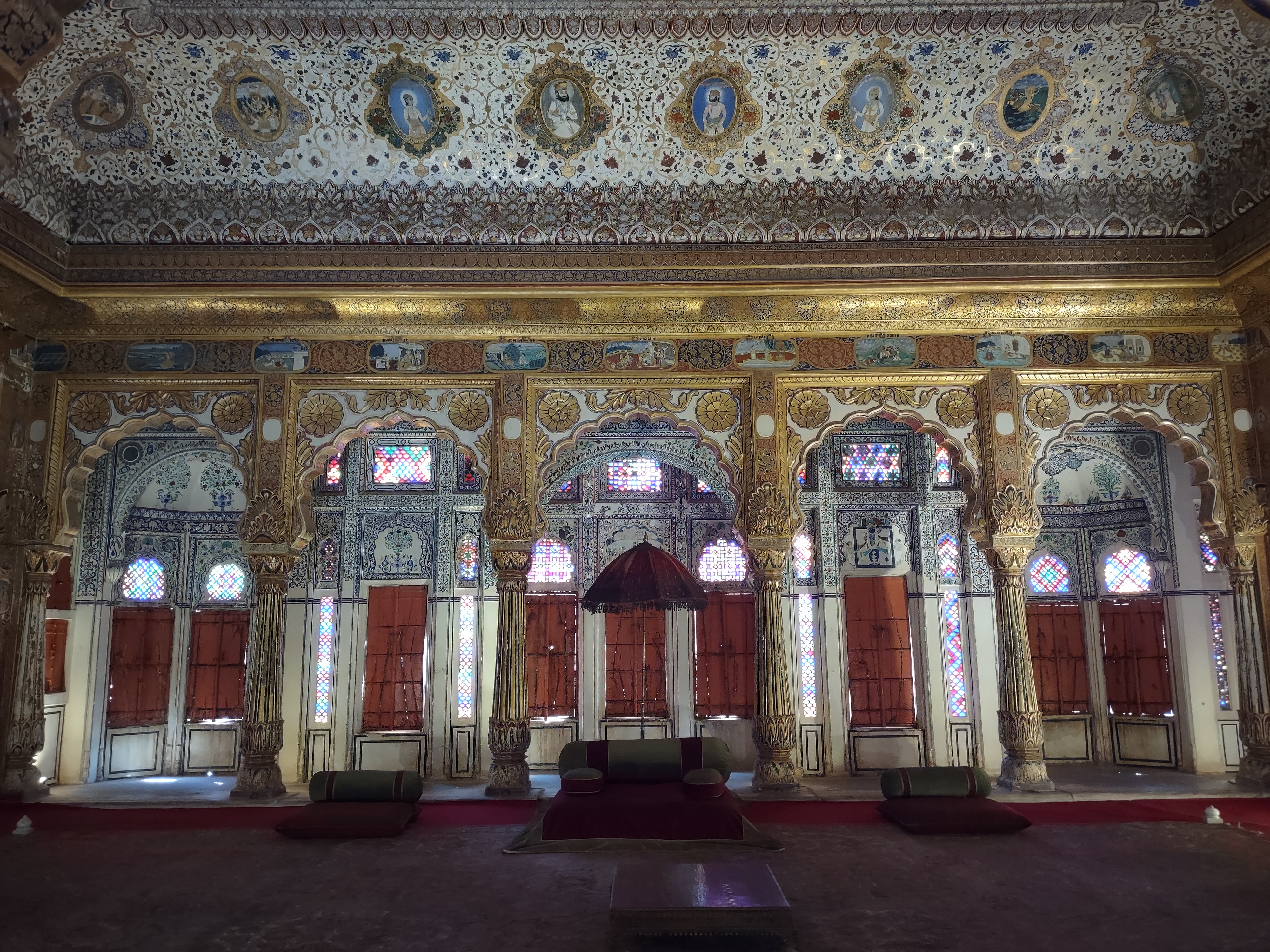
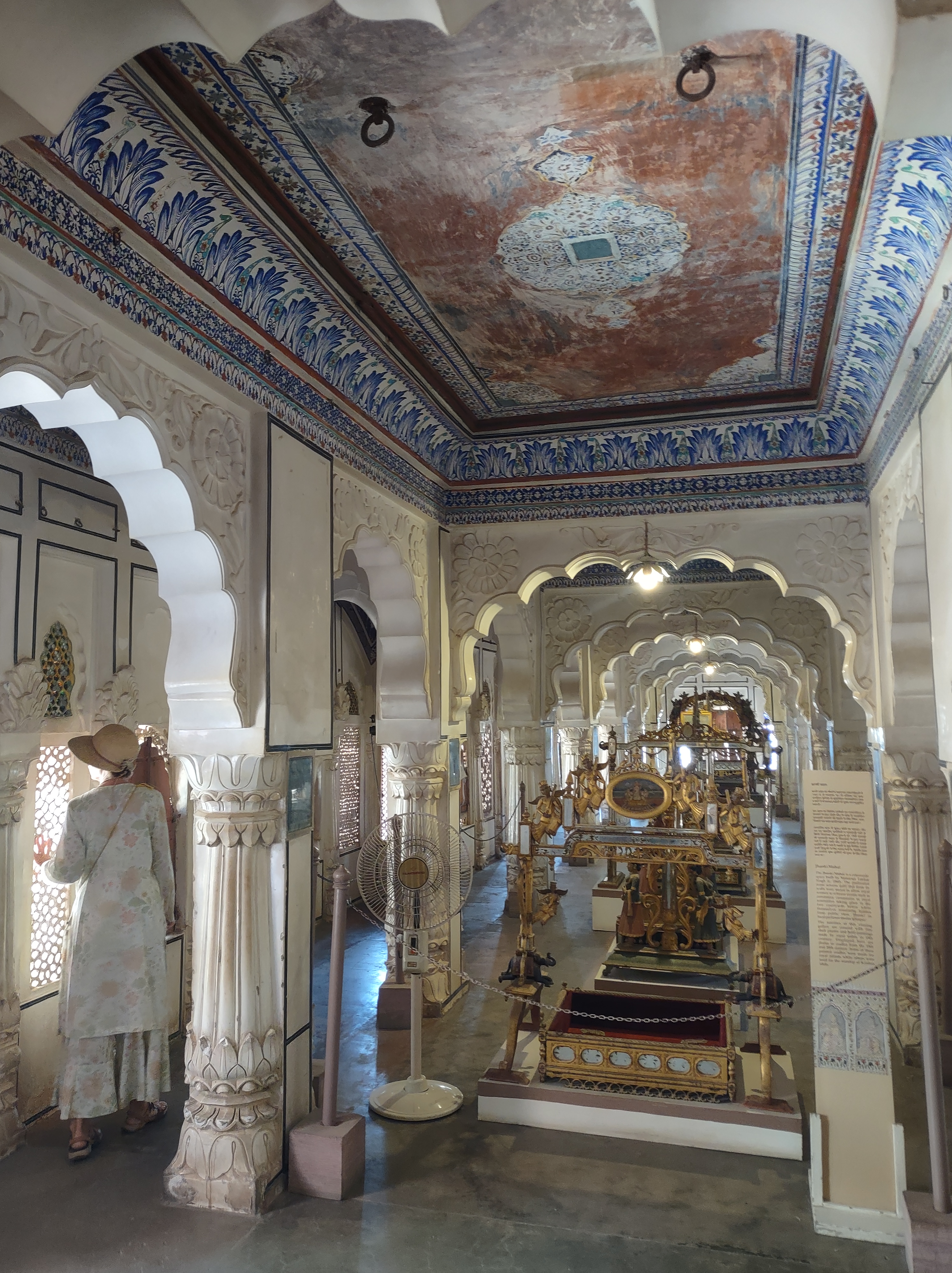
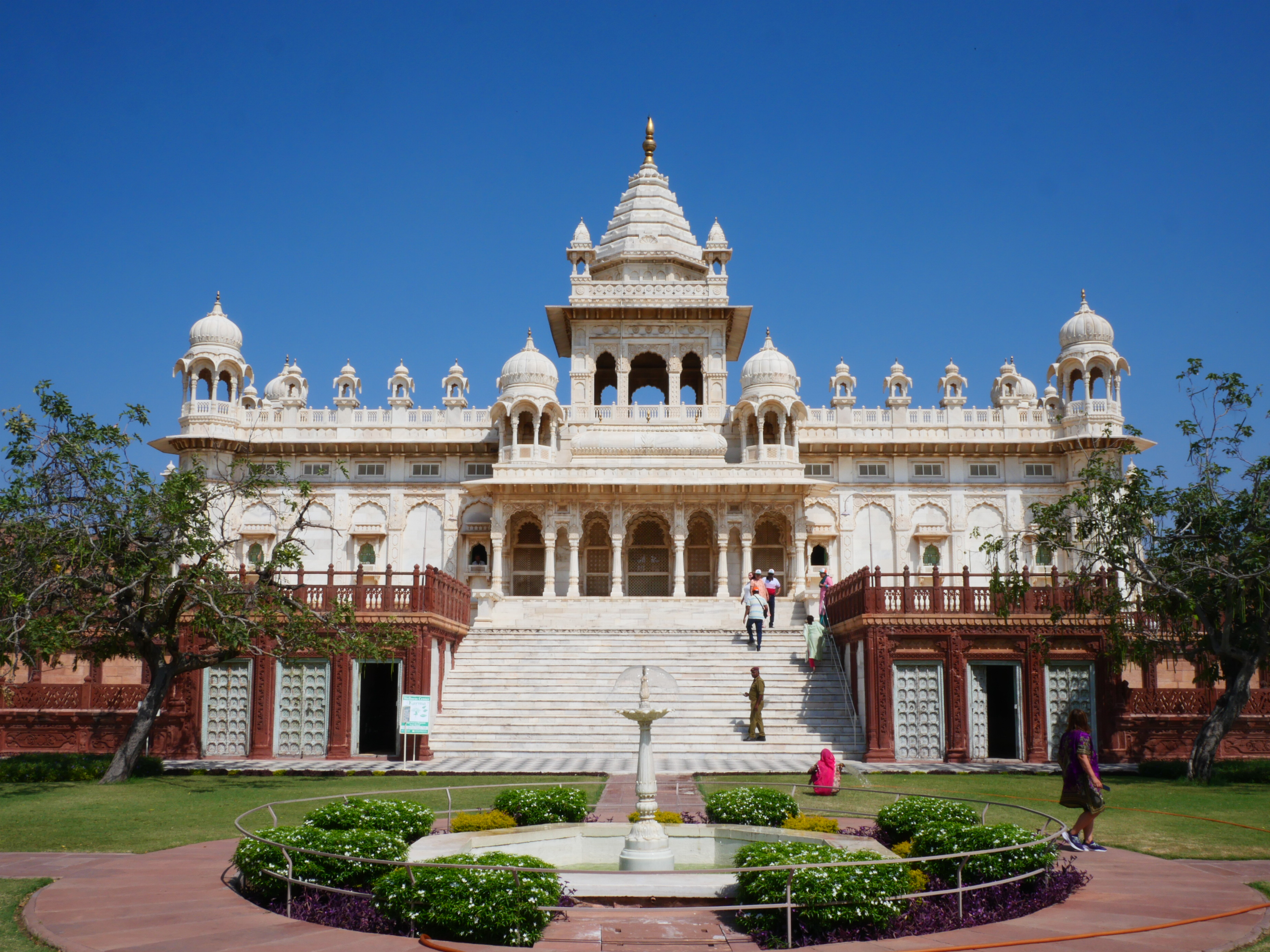
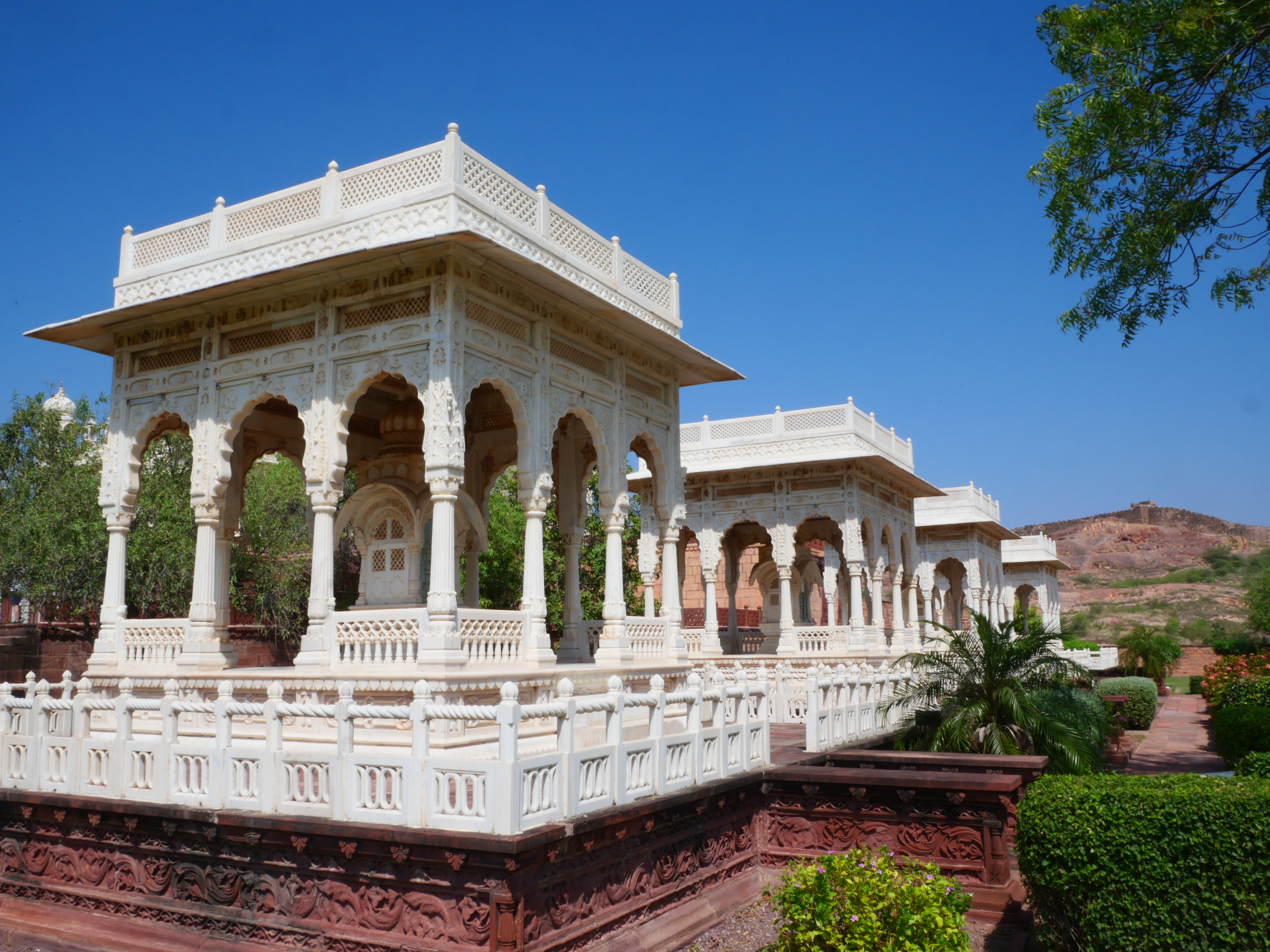
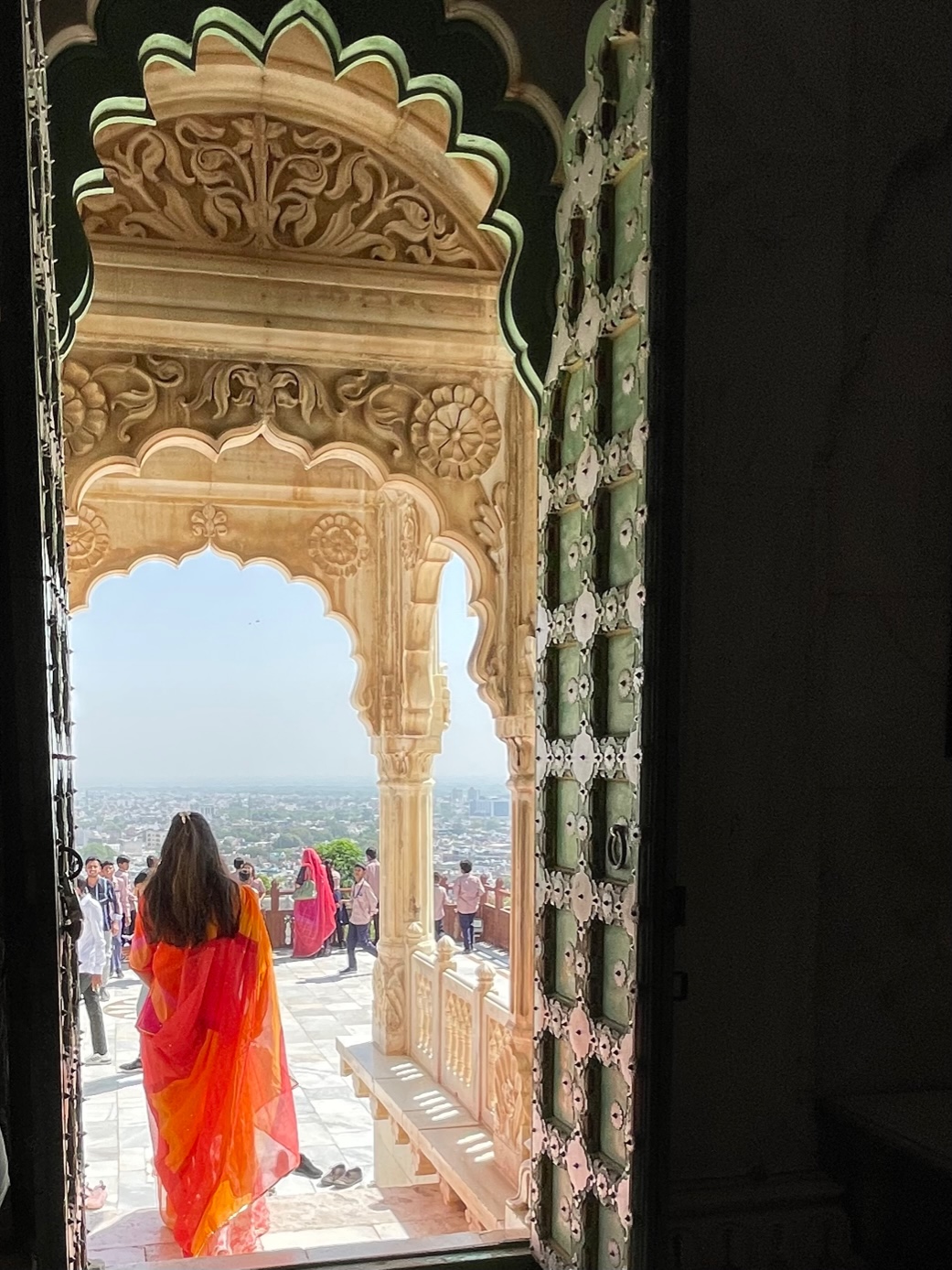
The nearby Jaswant Thada is made of intricately carved white marble and provides an interesting counterpoint to the dark massiveness of the Fort.

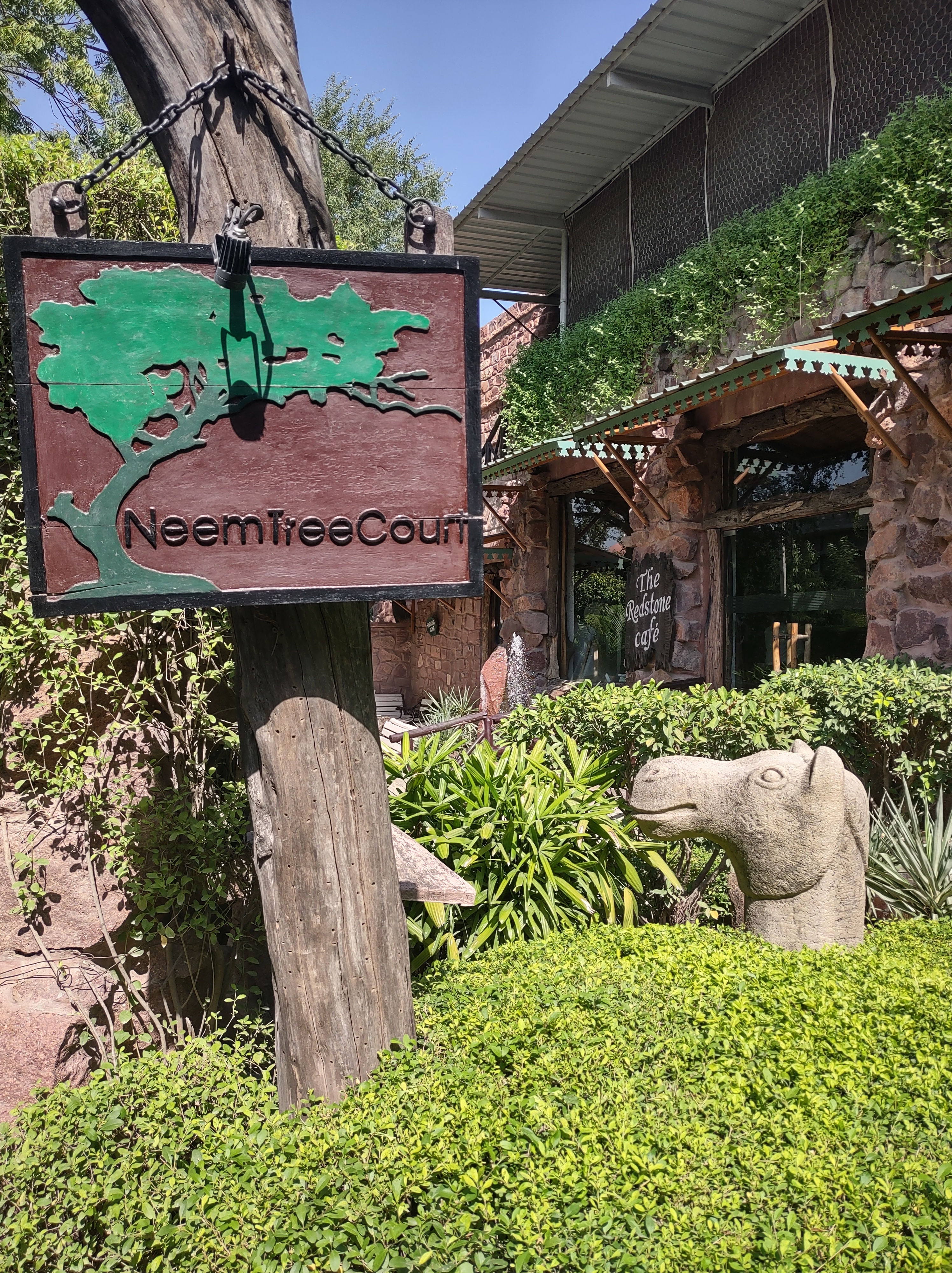
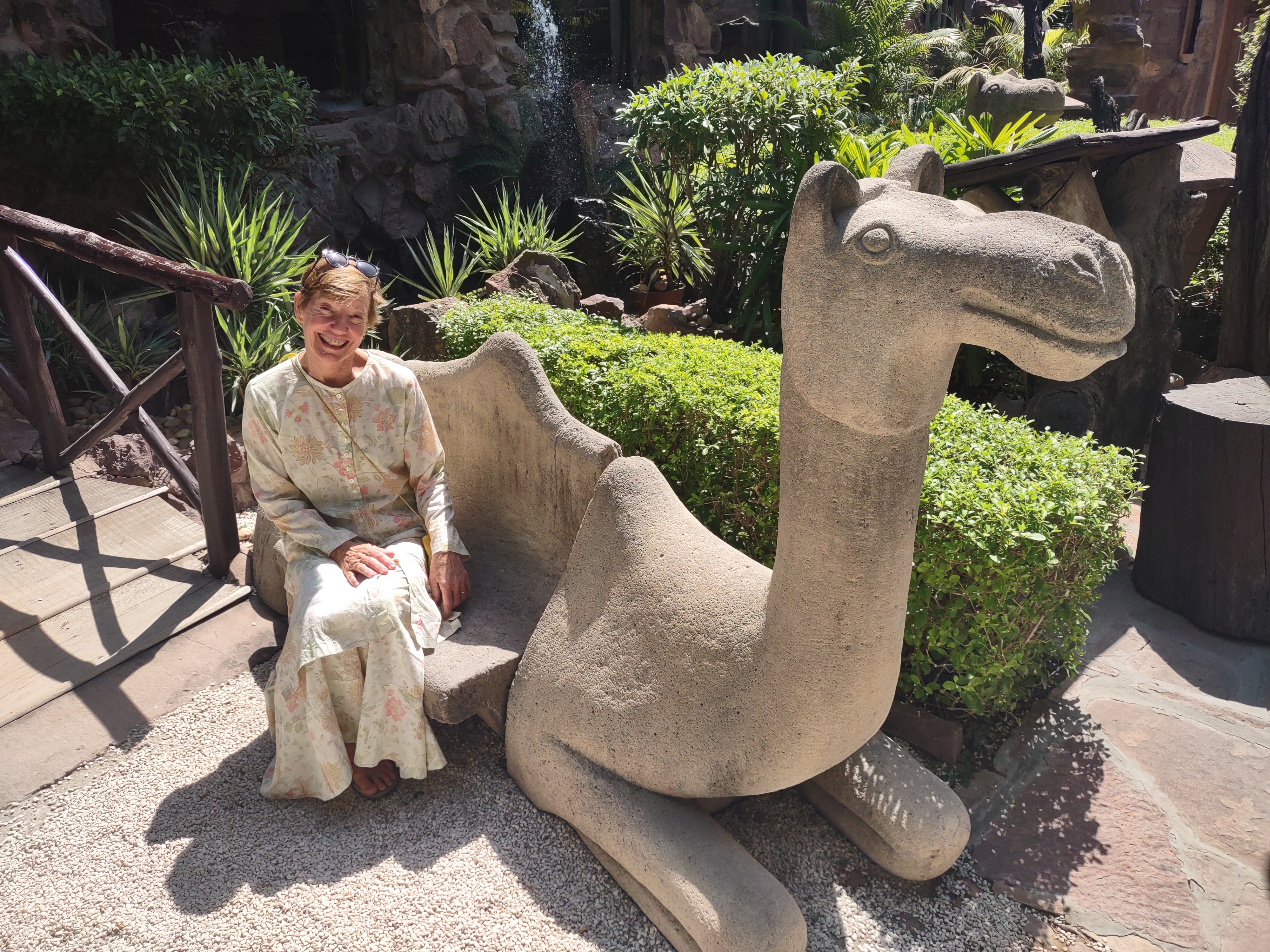
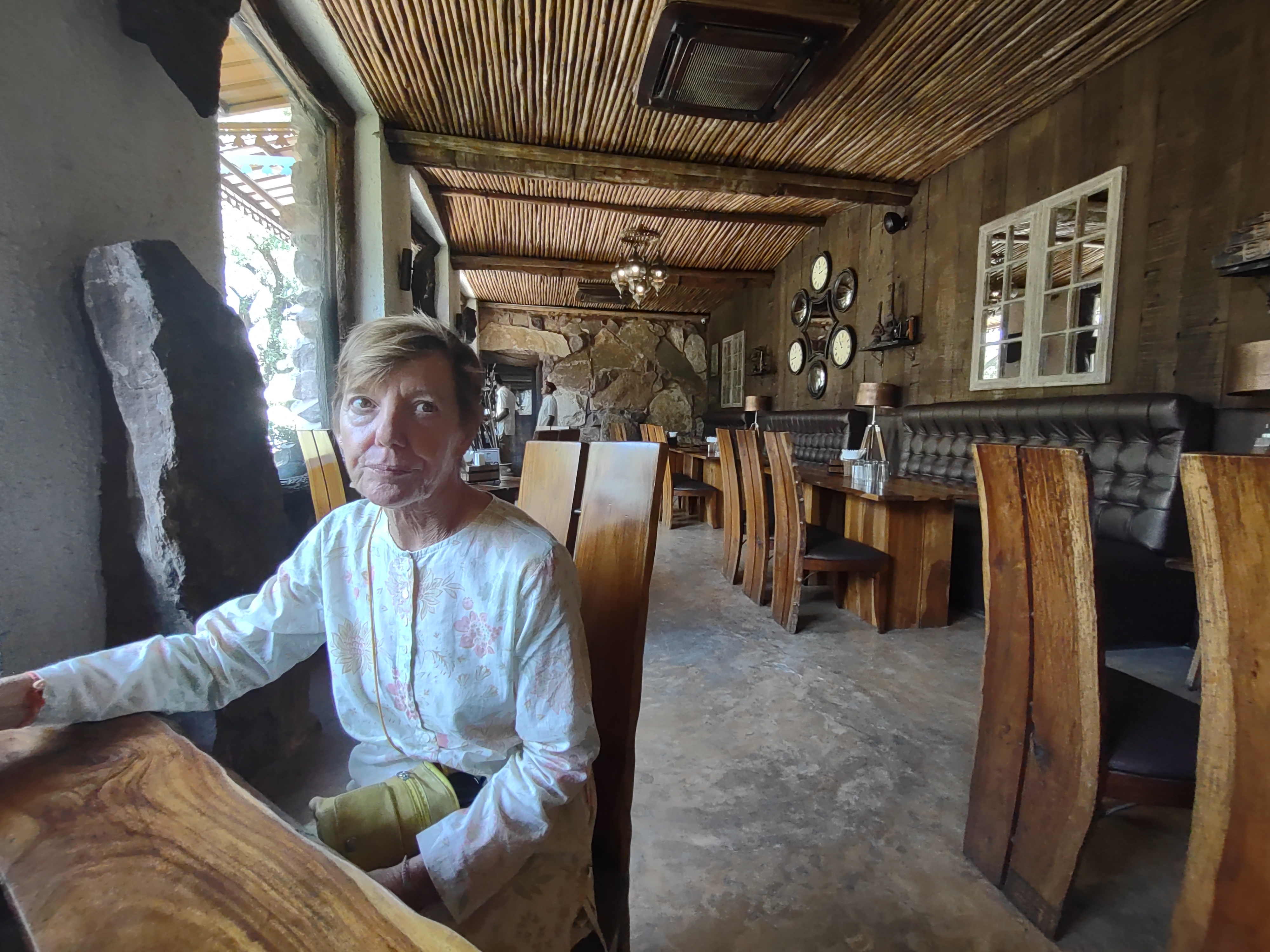
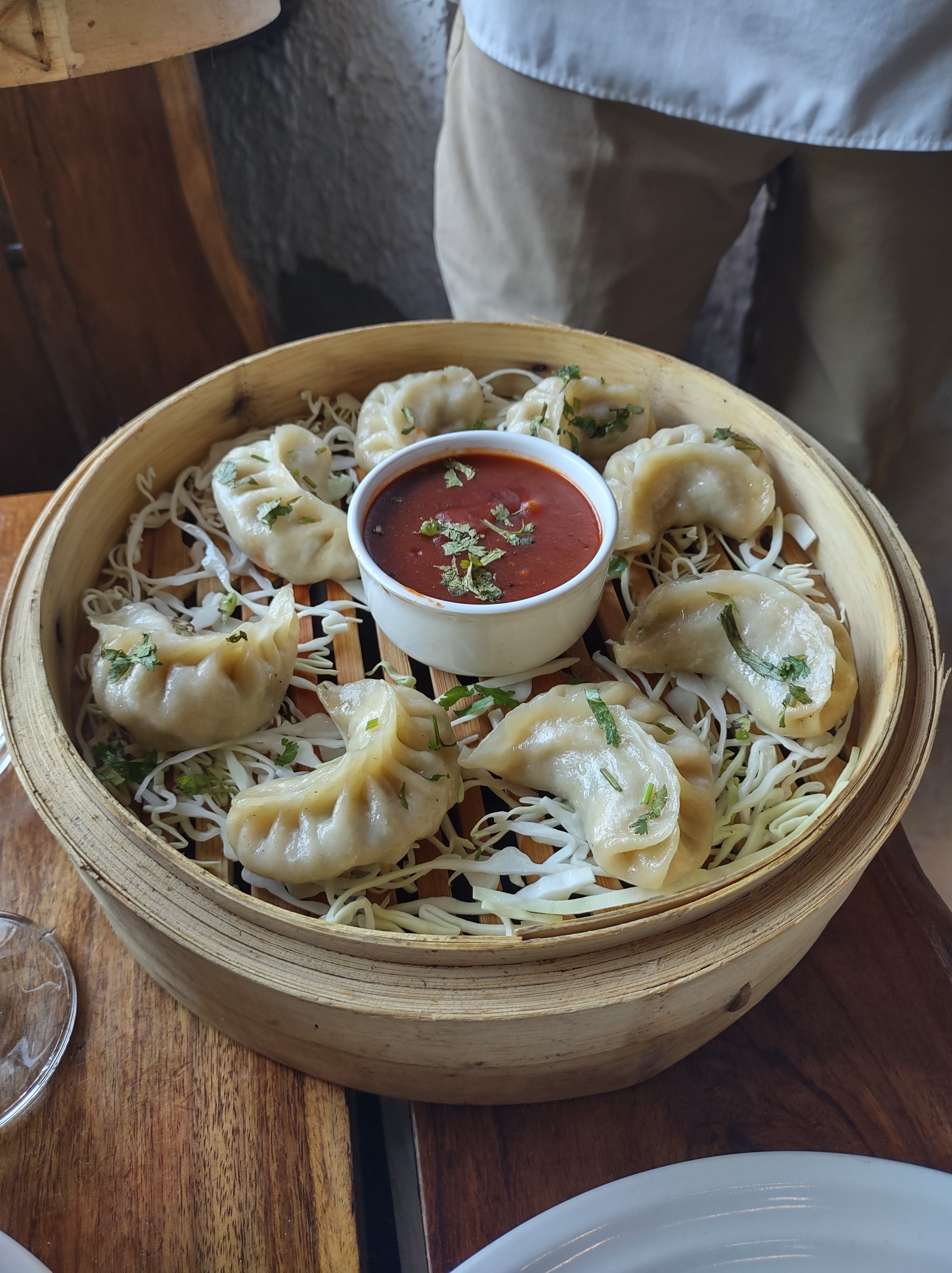
From there we travelled out of the old city and took a lunch break at a pricy but very nice Mr. Sunder recommended called “On the Rocks” located in very cool little shopping center called “Neem Tree Court.

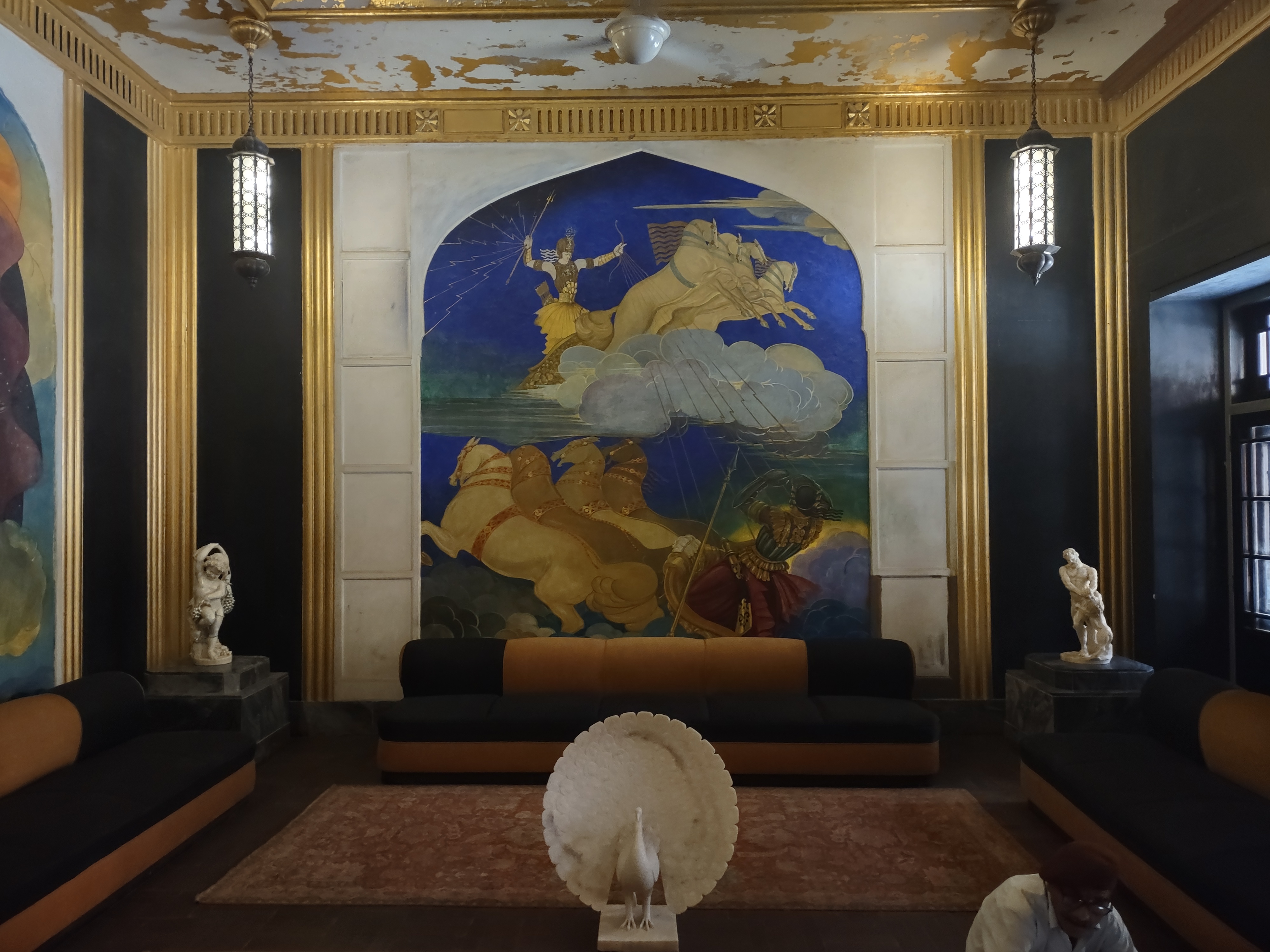
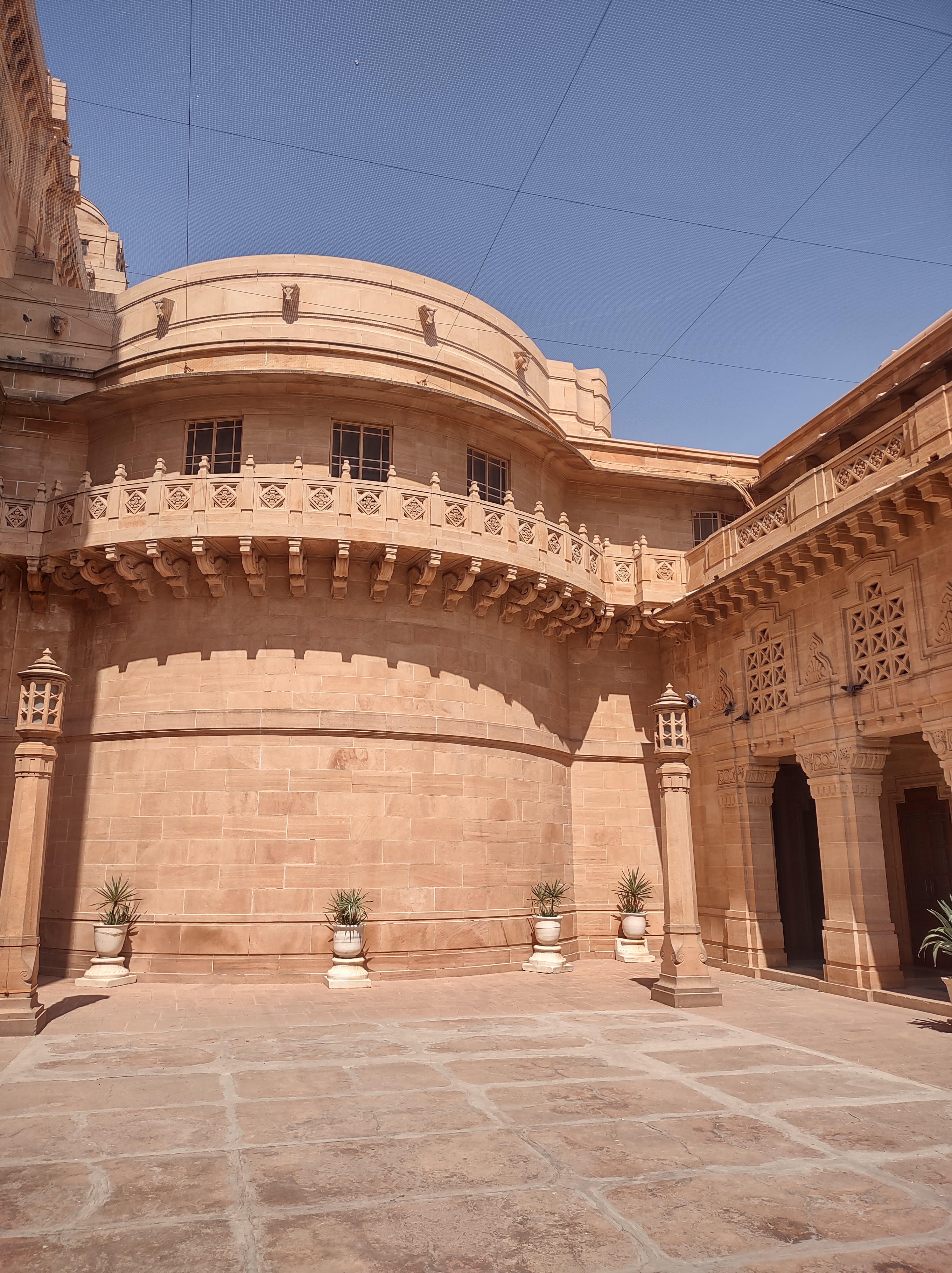
After a very good lunch we proceeded to what appeared to be a wealthier part of town to visit a public museum which is located in the Umaid Bhawan Palace. The Palace is an enormous structure (347 rooms) with an interesting history. It was conceived of by the then Maharaja, Unmaid Singh, as a way to provide employment to the many farmers of the region who were without work due to an extended drought. Construction began in 1929 and took almost 15 years to complete. European designers were commissioned to design the palace which is an interesting blend of a traditional Indian features and the then popular Beaux Arts style which is referred to by some as Indo-Deco.


From the Palace we returned to the center of the old city to visit the Clock Tower which was a pretty chaotic scene. The market place around it was swarming with people including more than a few very aggressive vendors and beggars, but Mr. Sunder got us in and out safely, and it was good to know he was with Colleen as I wandered off to take photos.
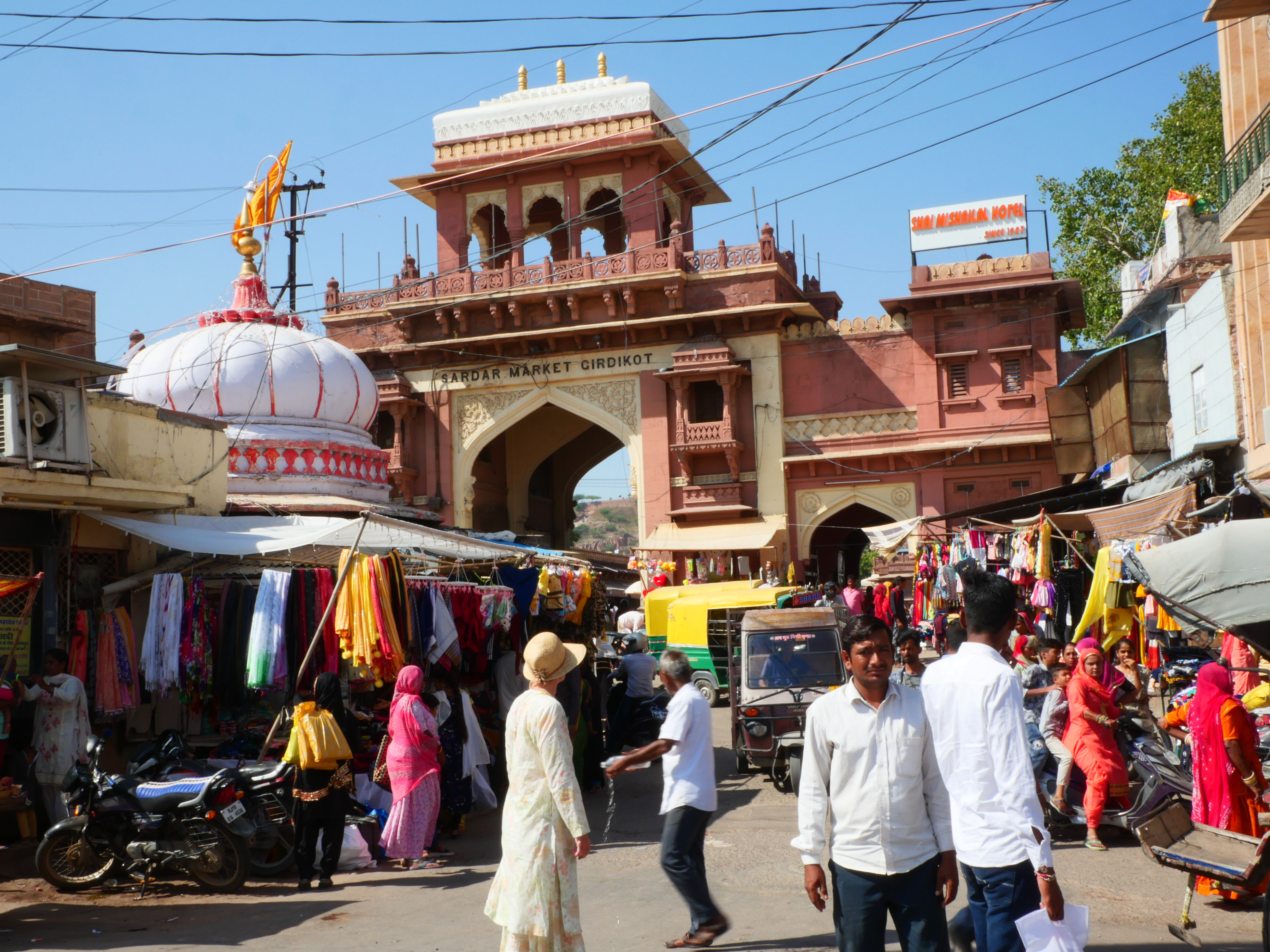
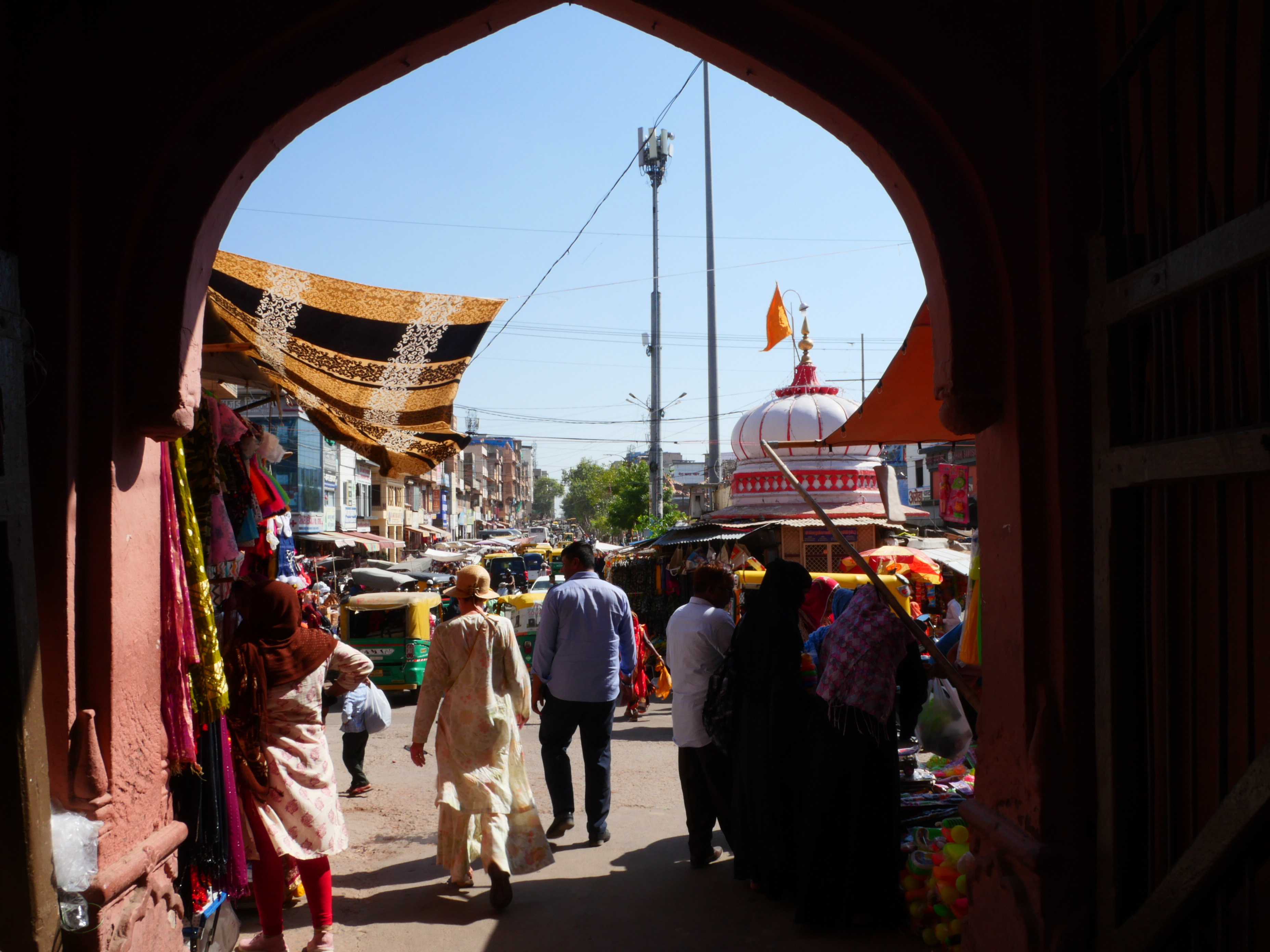
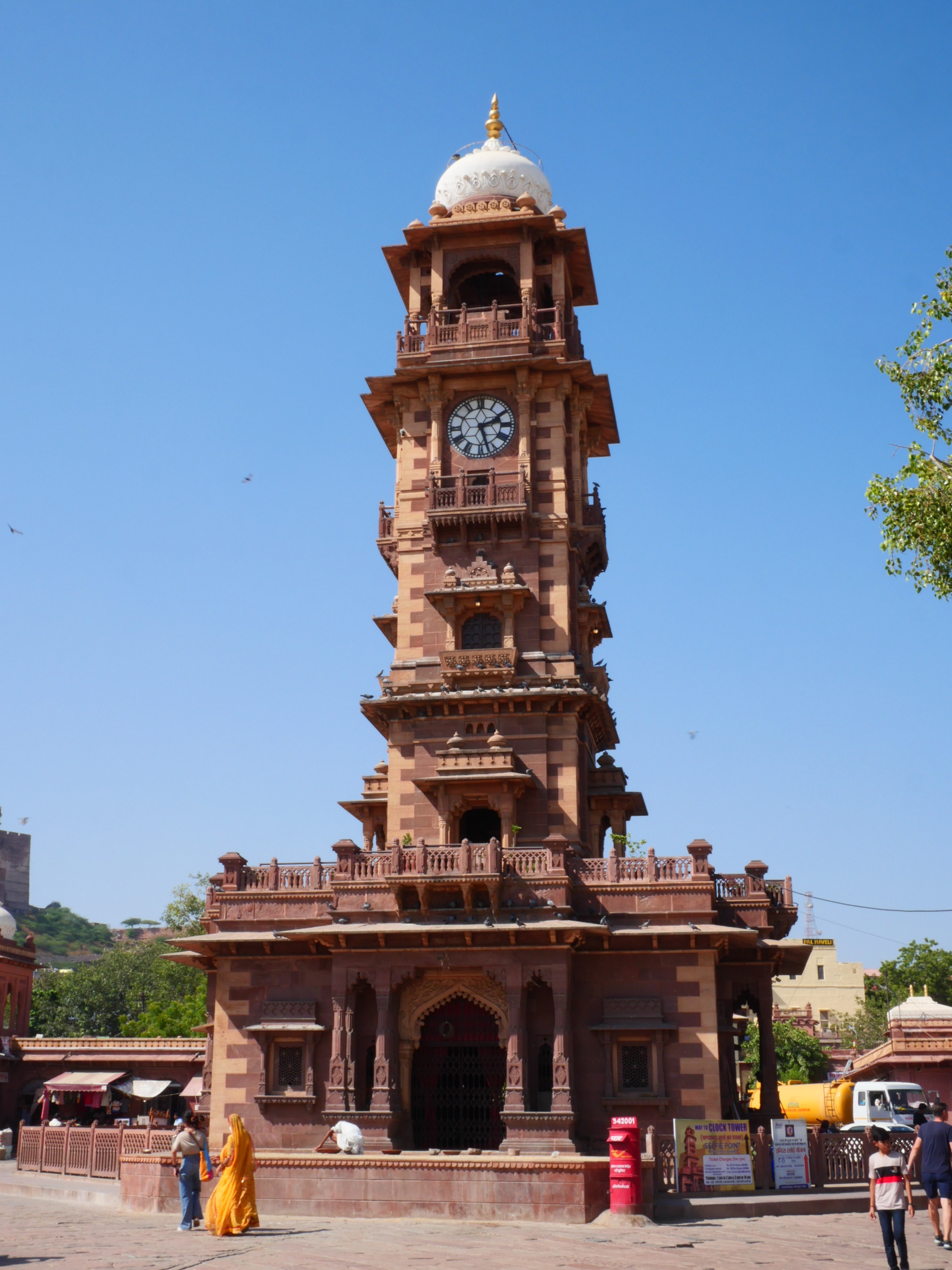
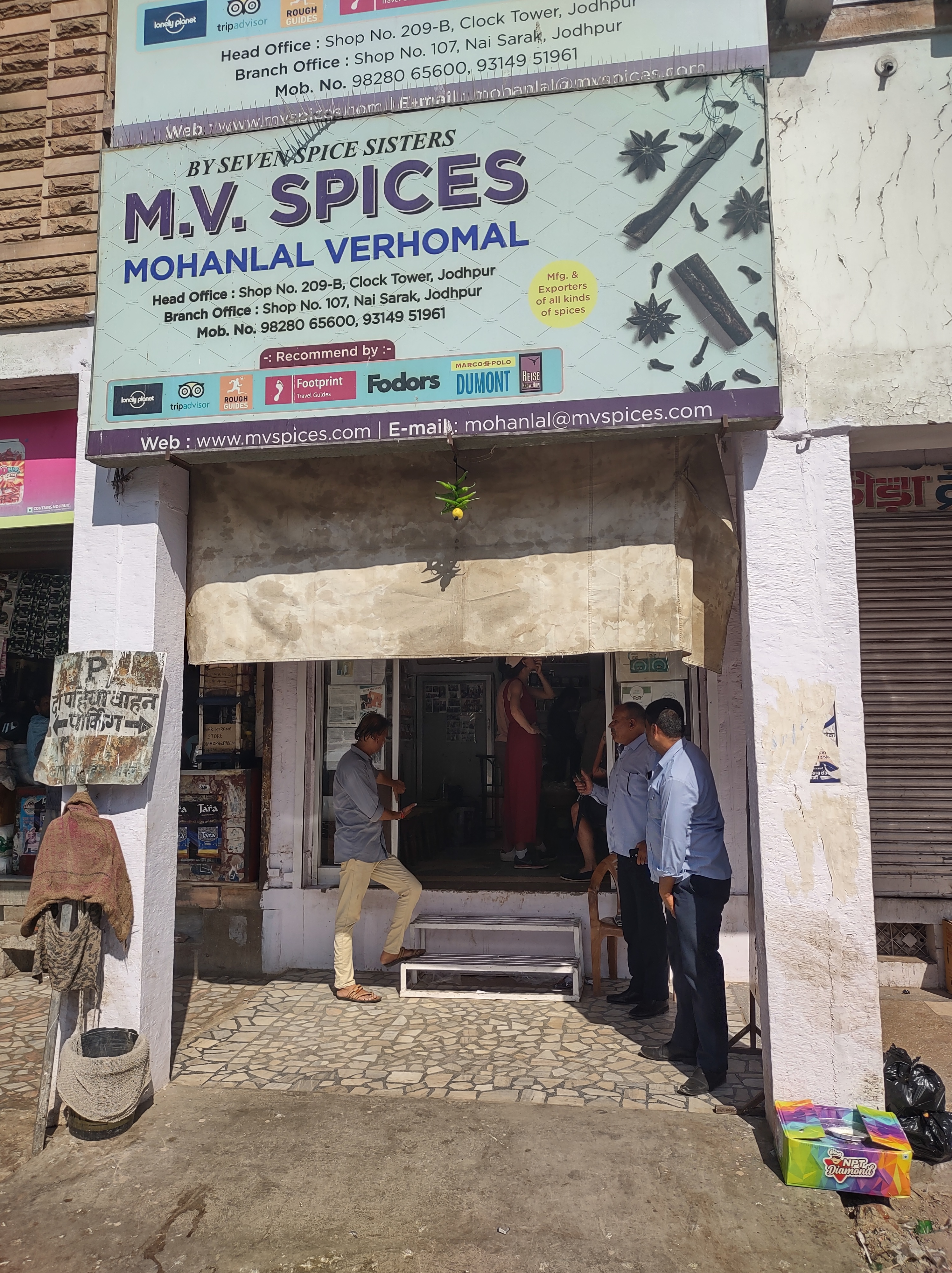
At Colleen’s request, Mr. Sunder then led us from there to an interesting spice shop called MV run by five sisters whose father was a spice merchant (yes, they refer to themselves as the Spice Girls) where we were schooled in the wide range of spices used in the preparation of food and drink as well as home remedies.
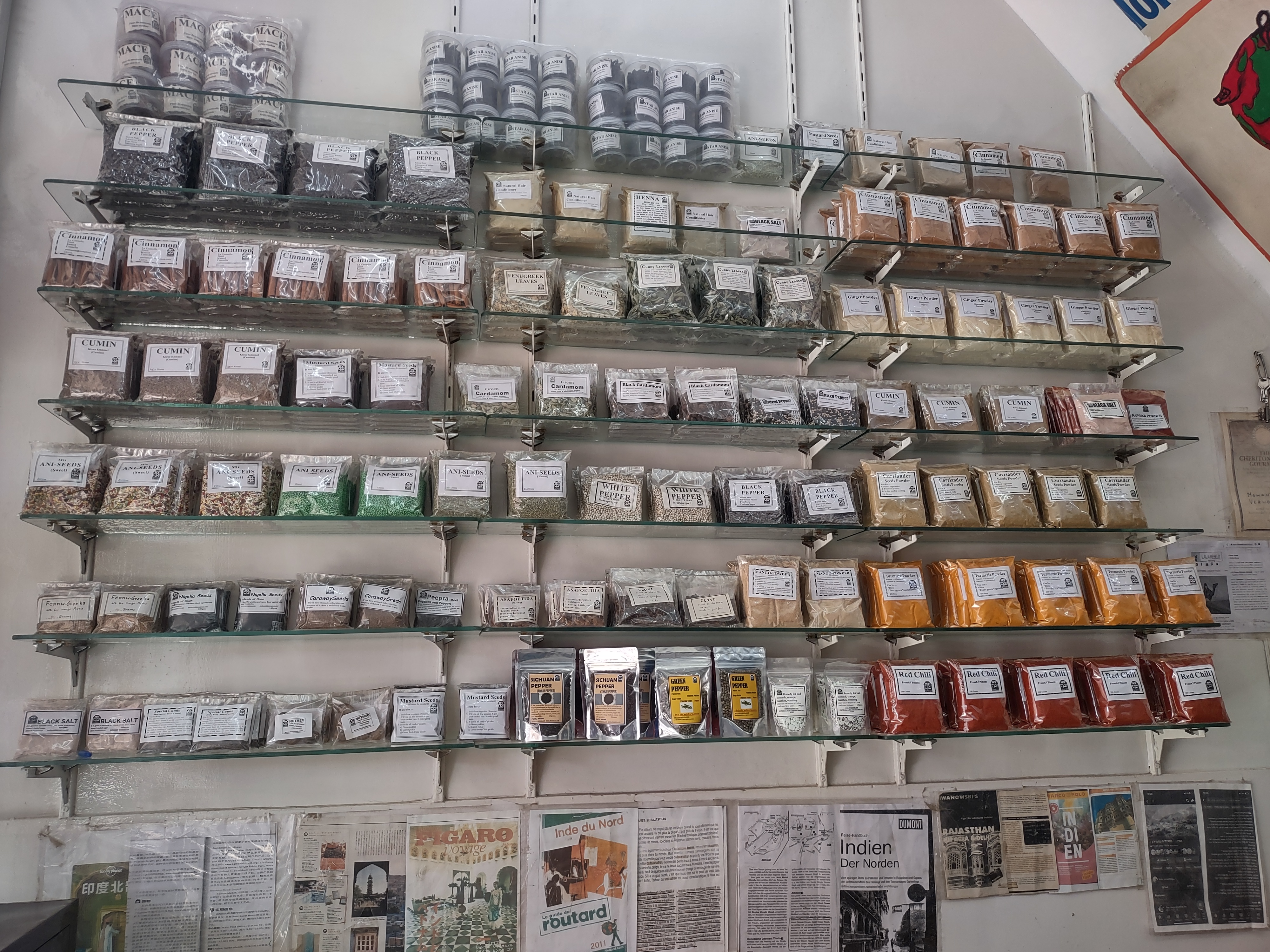
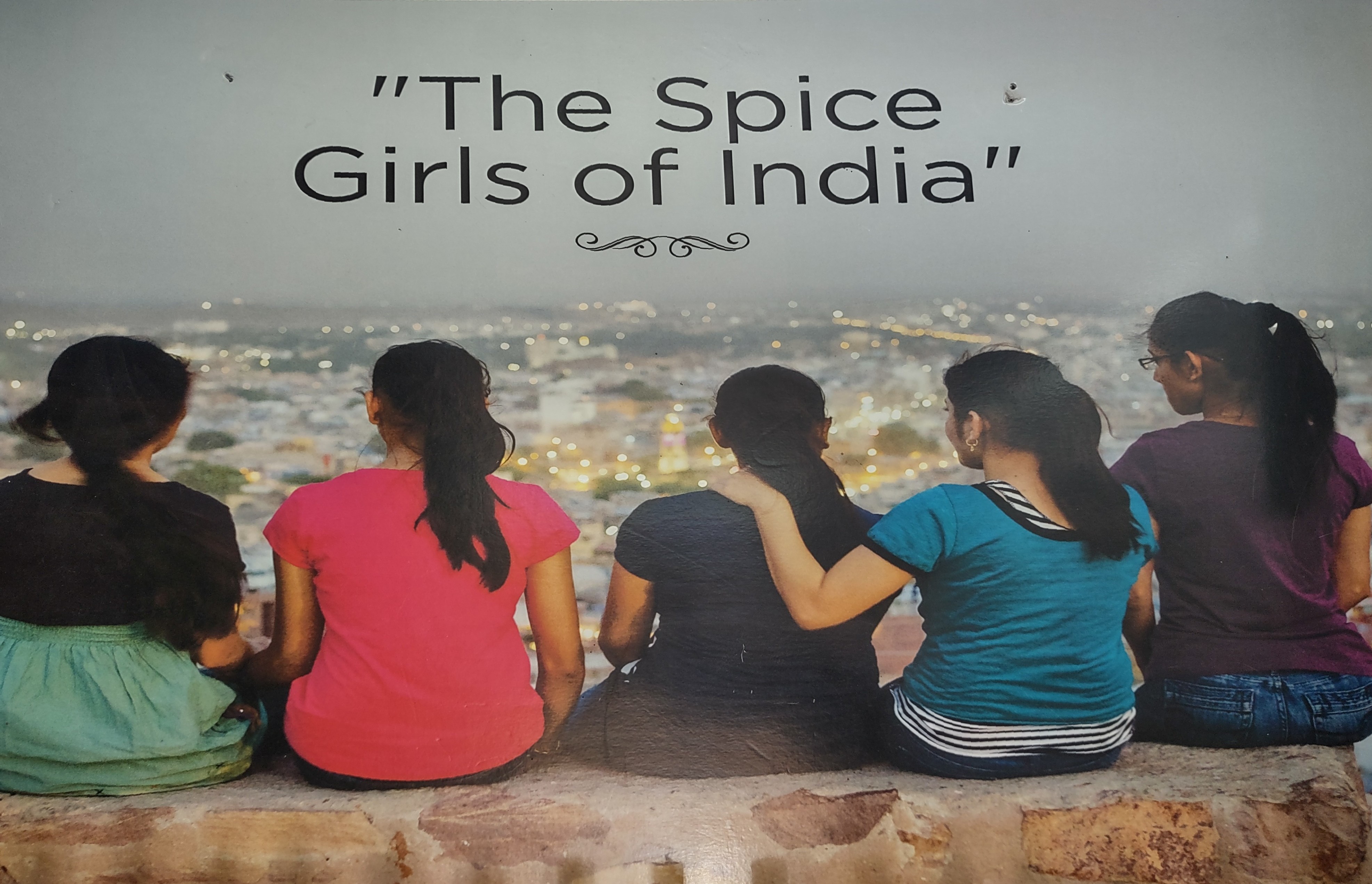
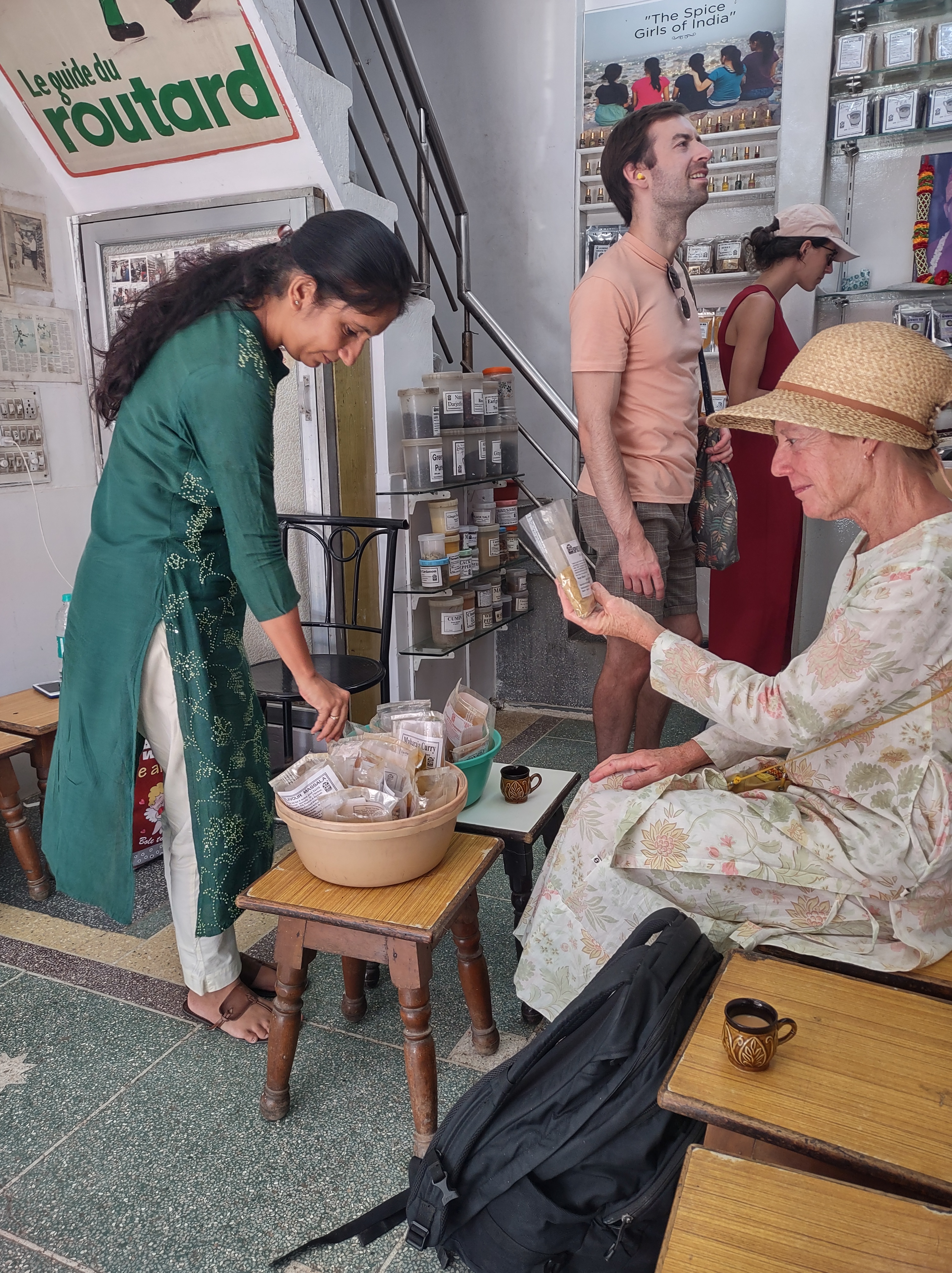
We returned to Mandore Guest House and did a bit more relaxing by the pool before heading back to the Mandore Gardens where, as we had hoped, the cenotaphs were beautiful to see in the soft light of the descending sun. It seemed to be a very popular spot for strolling, but we were surprised to see how many monkeys there were in the park (neither of us is a big fan of monkeys) and were actually a little disturbed when they started migrating in groups towards the center of the park (maybe just looking for good seats to watch the light show?).


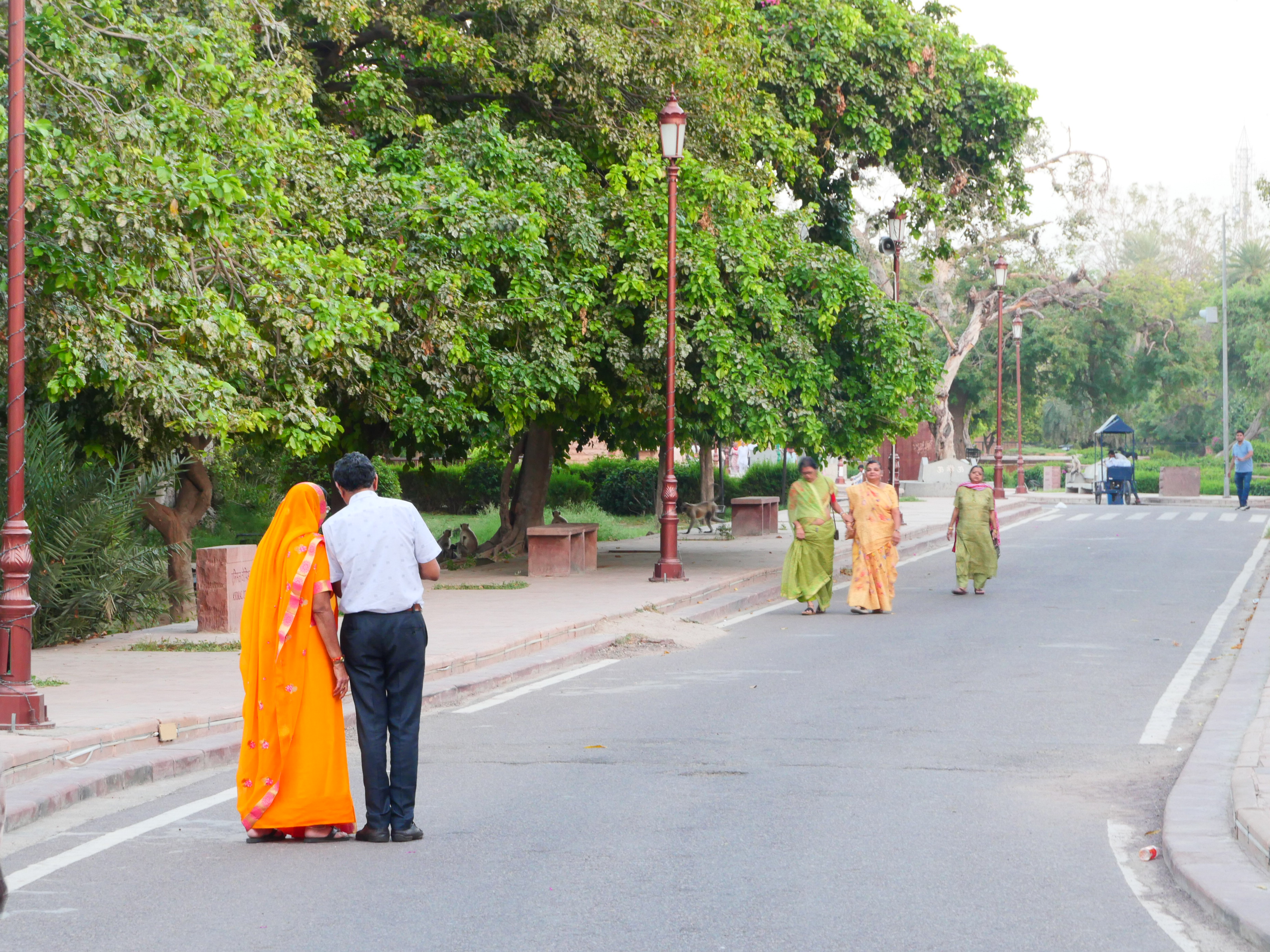


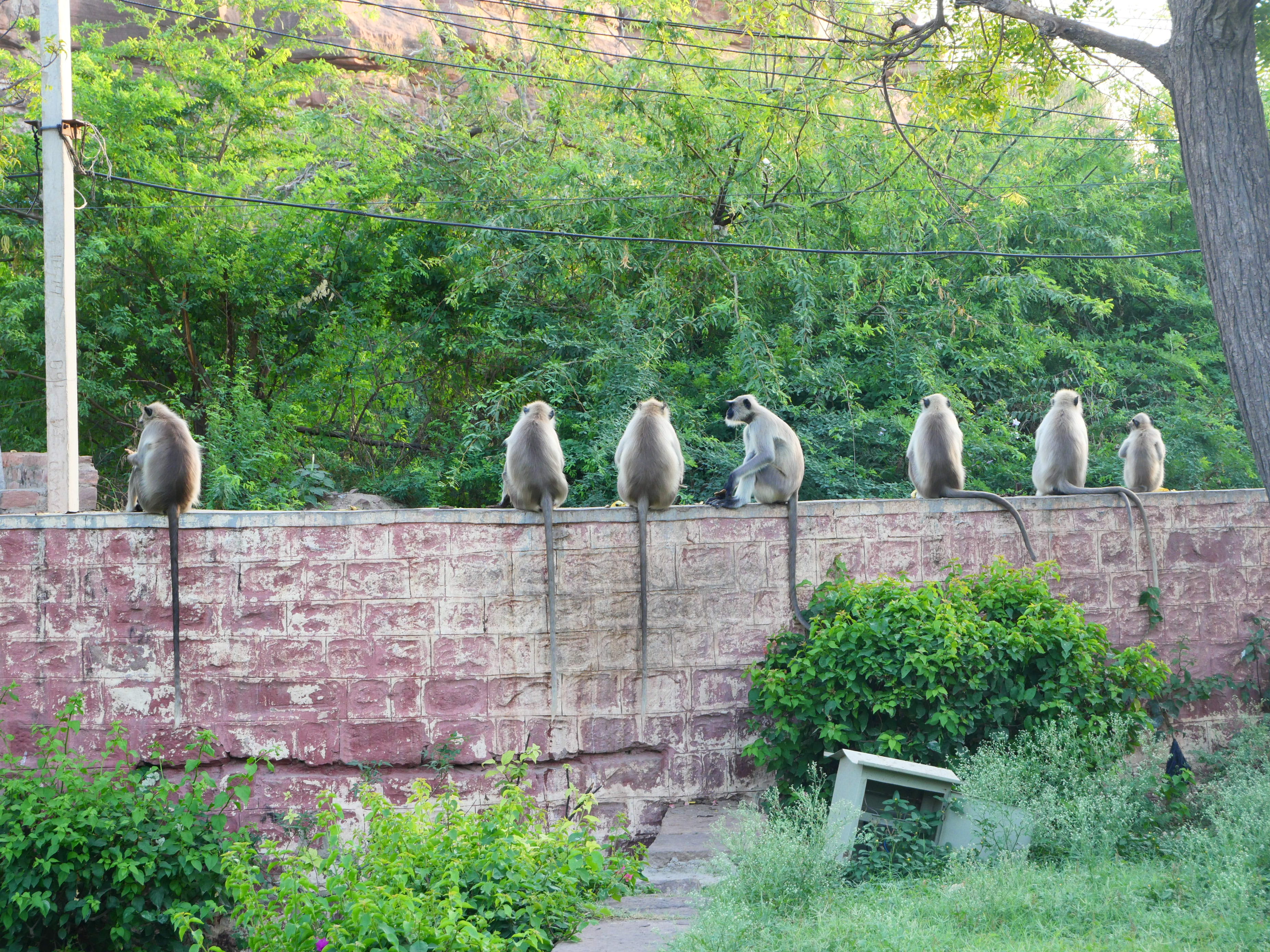

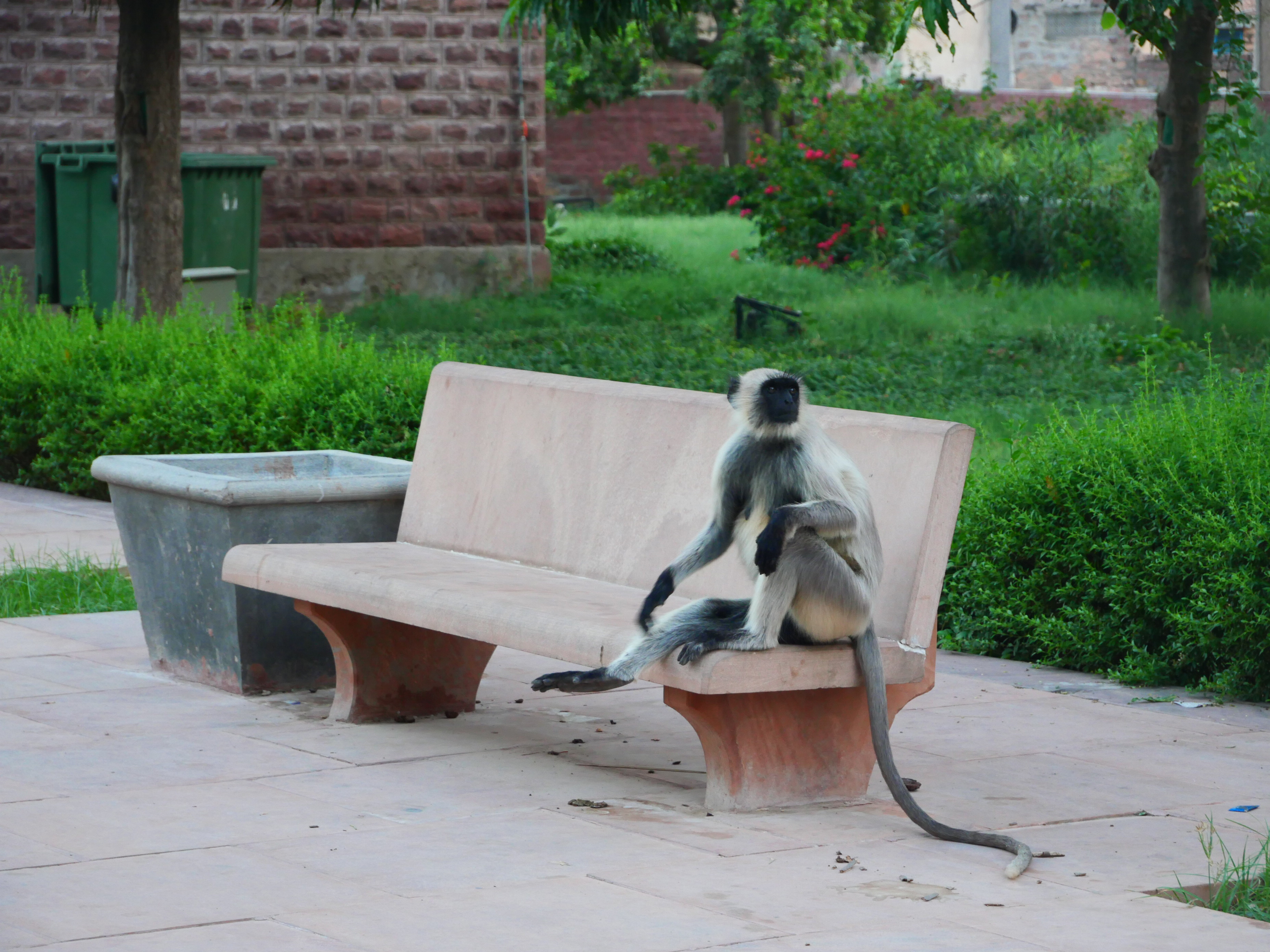
Despite the monkeys, we had a great stroll around the park and then wandered back to the hotel for another romantic al fresco dinner.
DAY 6: 8-Oct-2023
From Jodhpur to Udaipur (6h drive)
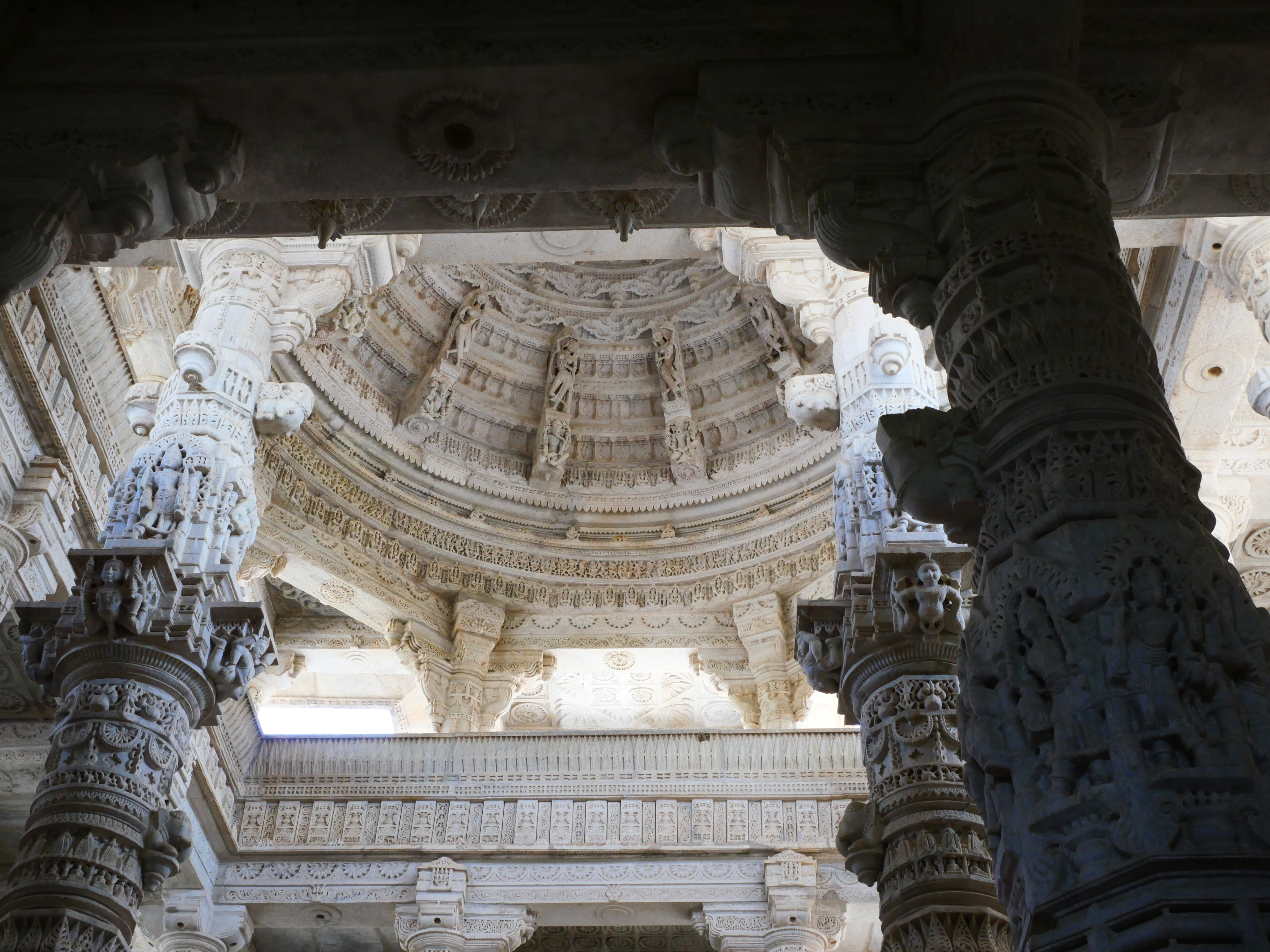
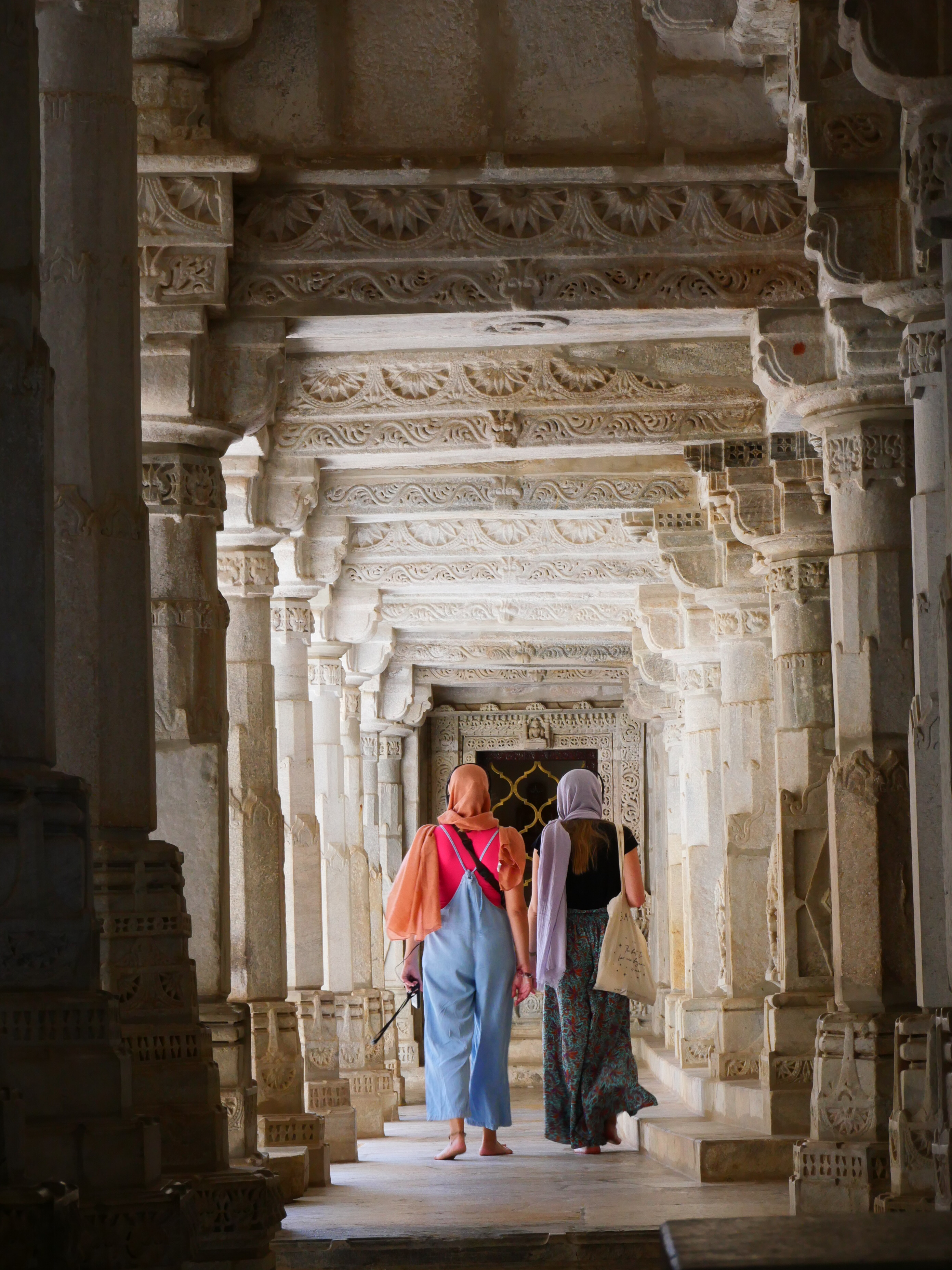
This morning your driver will transfer you by road to Udaipur. On the way, we will stop at Ranakpur. There you will visit the famous Jain Temple, dedicated to Adinatha. Built in the 15th century, the temple made of white marble offers many beautiful carvings. Then we will arrive in the ‘Lake City’, where you will have a free afternoon to explore the narrow lanes and back streets of Udaipur leading to the Washing Ghats at the lake Pichola. Visit one of the fine downtown restaurants for a dinner in one of the most romantic cities of Rajasthan. Overnight in Udaipur.
Your hotel: Mahendra Prakash (www.hotelmahendraprakash.com)
Our longest day of driving. The Jain Temple was very large and very beautiful with lots of intricate carved stone. Compared to the smaller temples we have seen thus far, it was almost overwhelming but again, the interior of the temple had a very calm and serene feel.

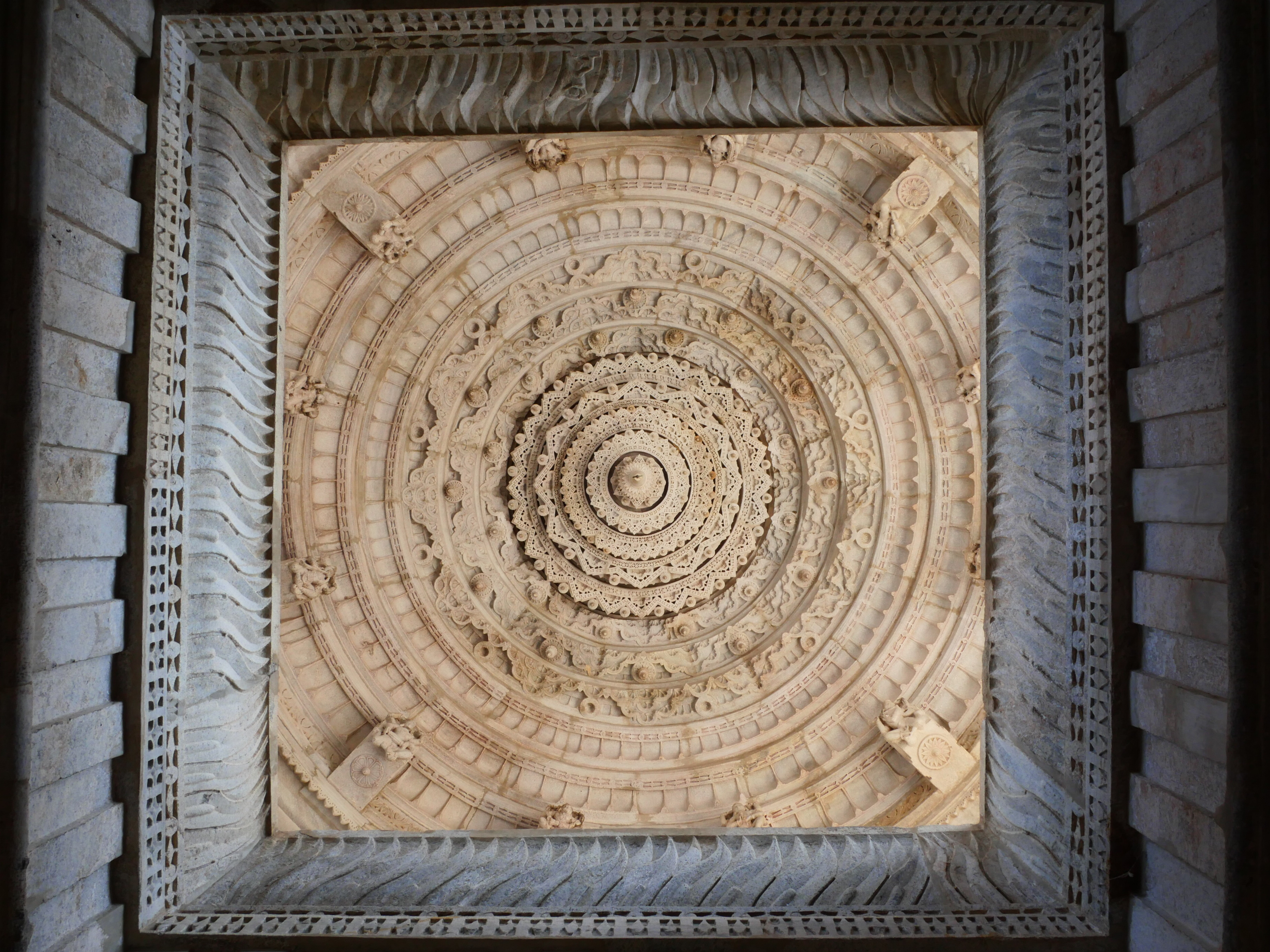
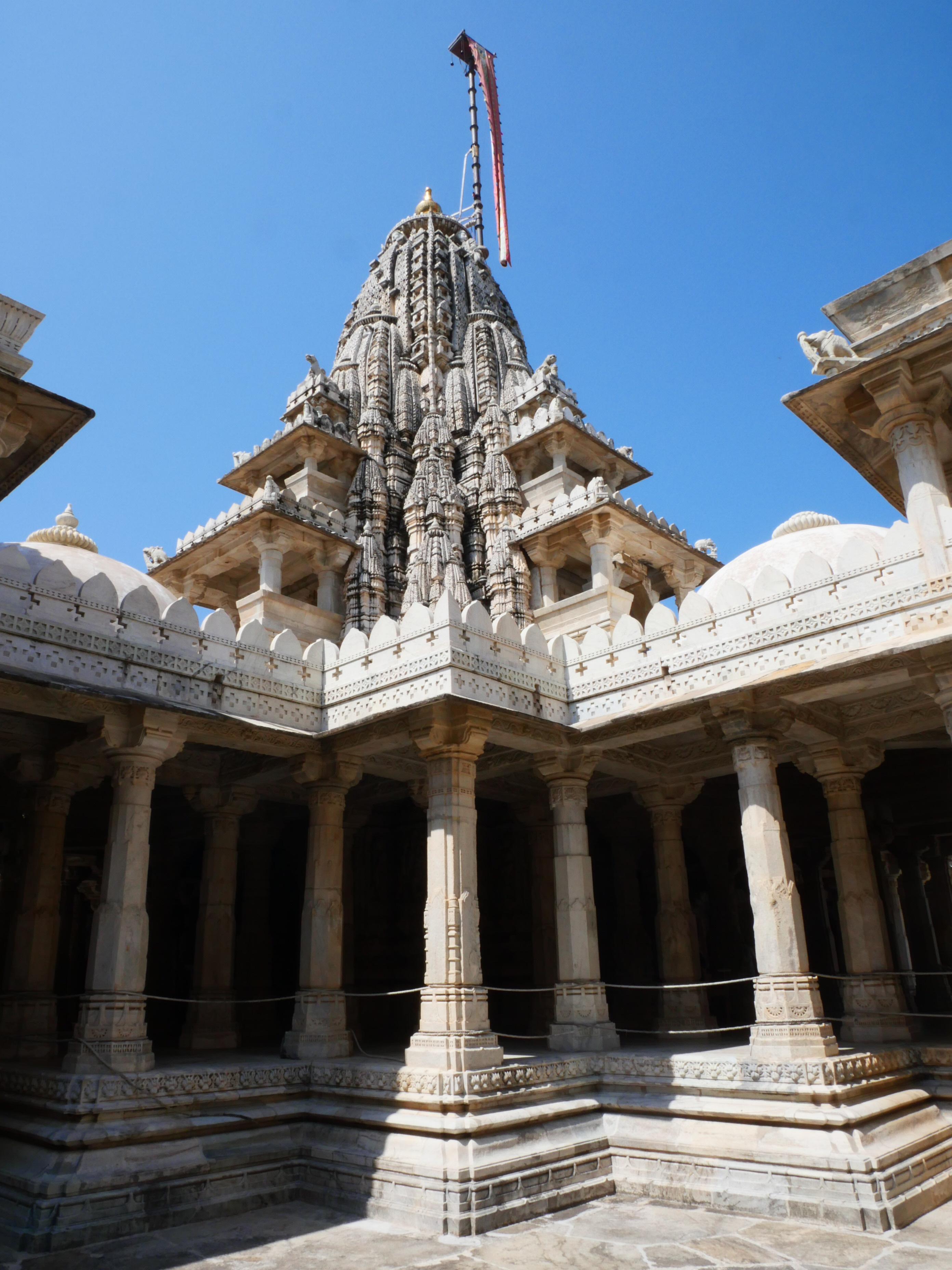
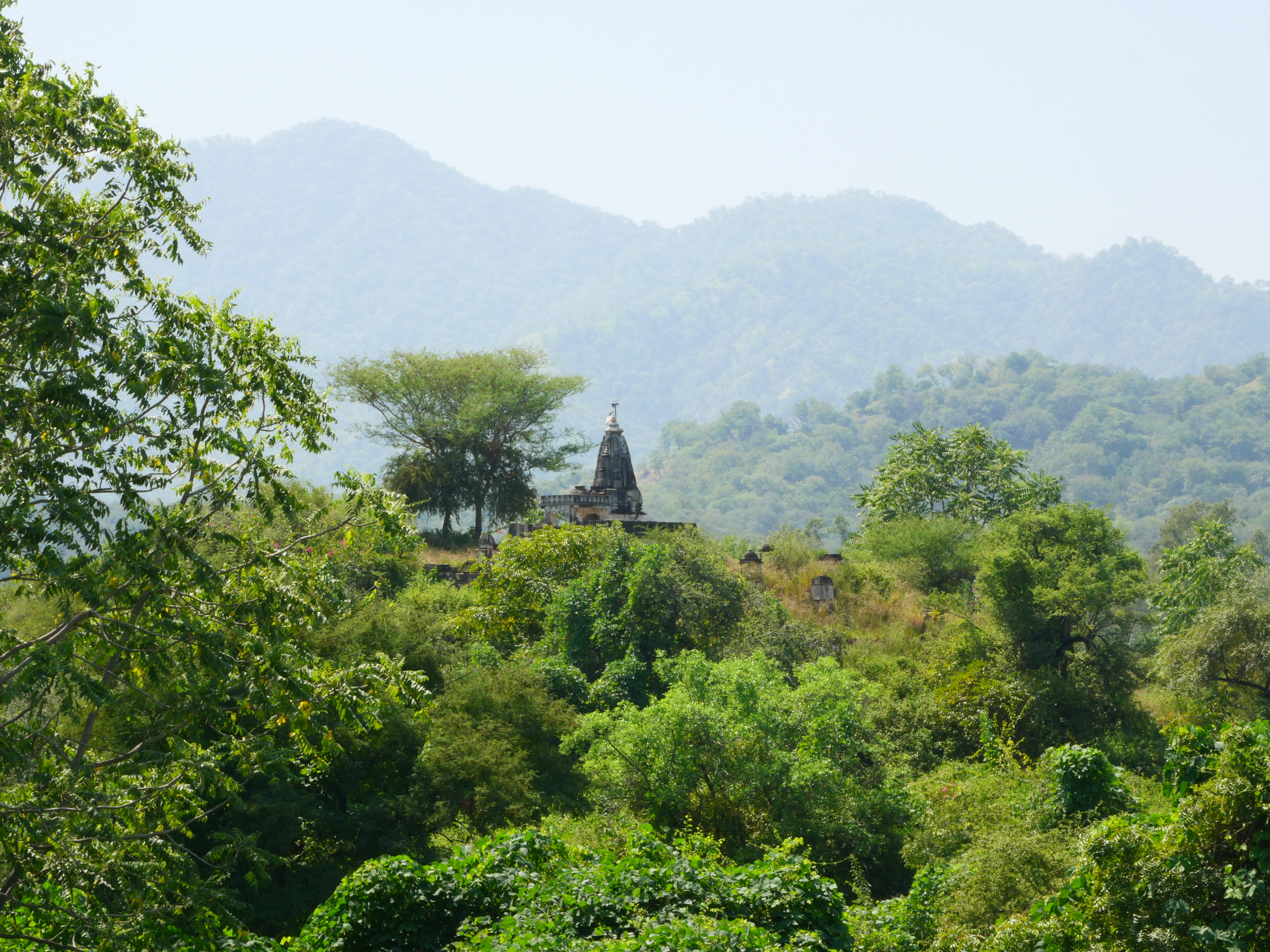

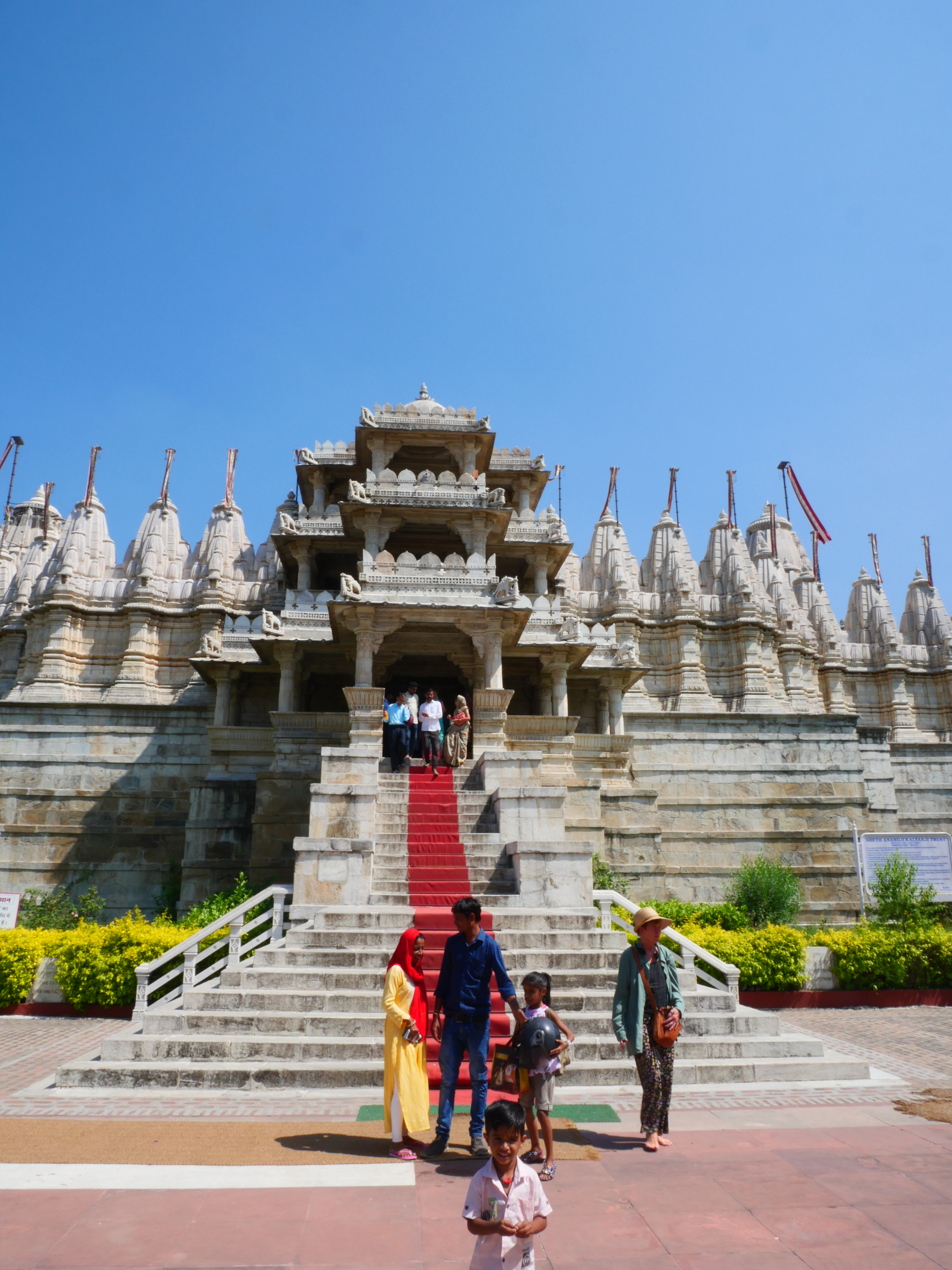
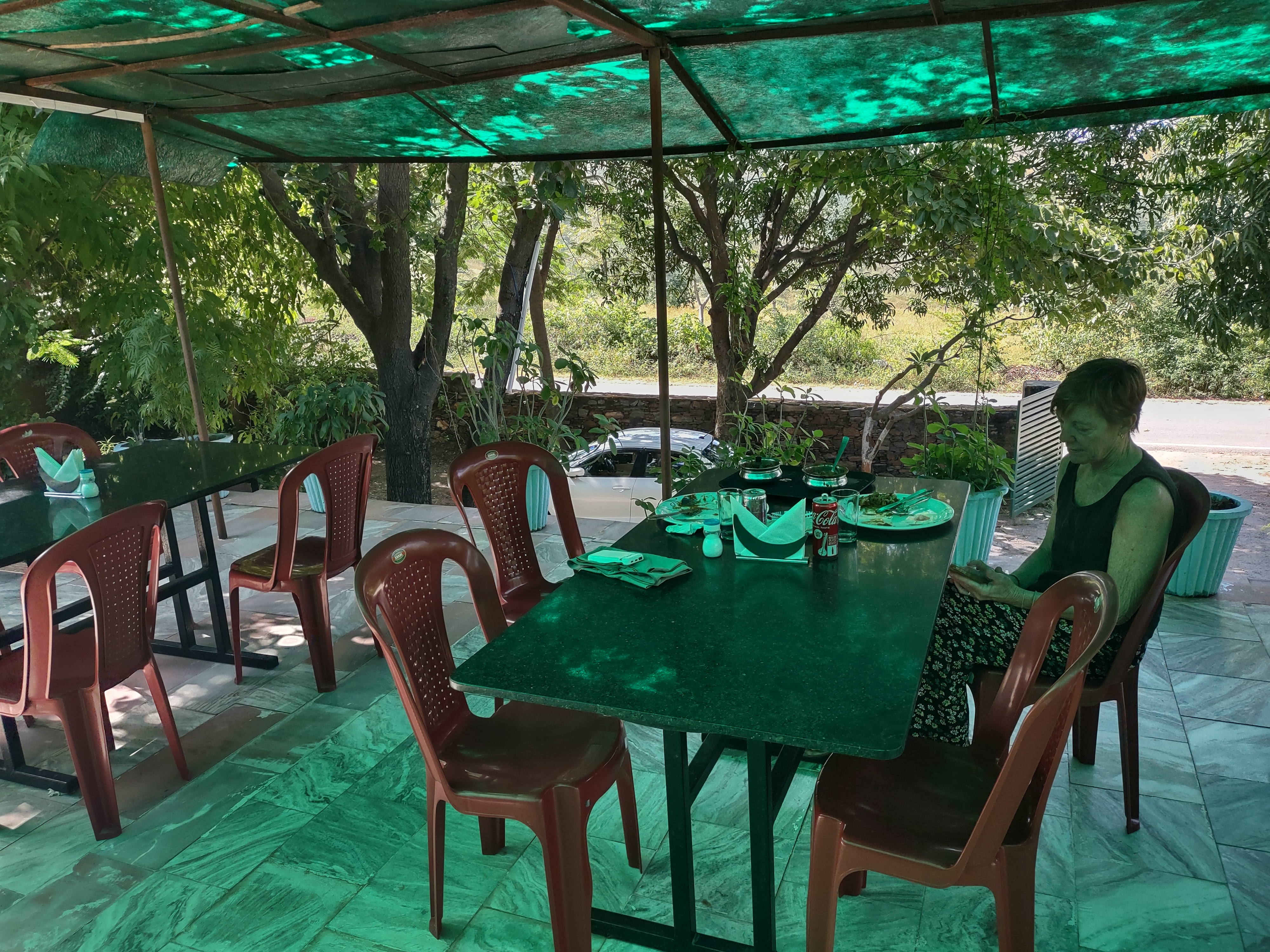
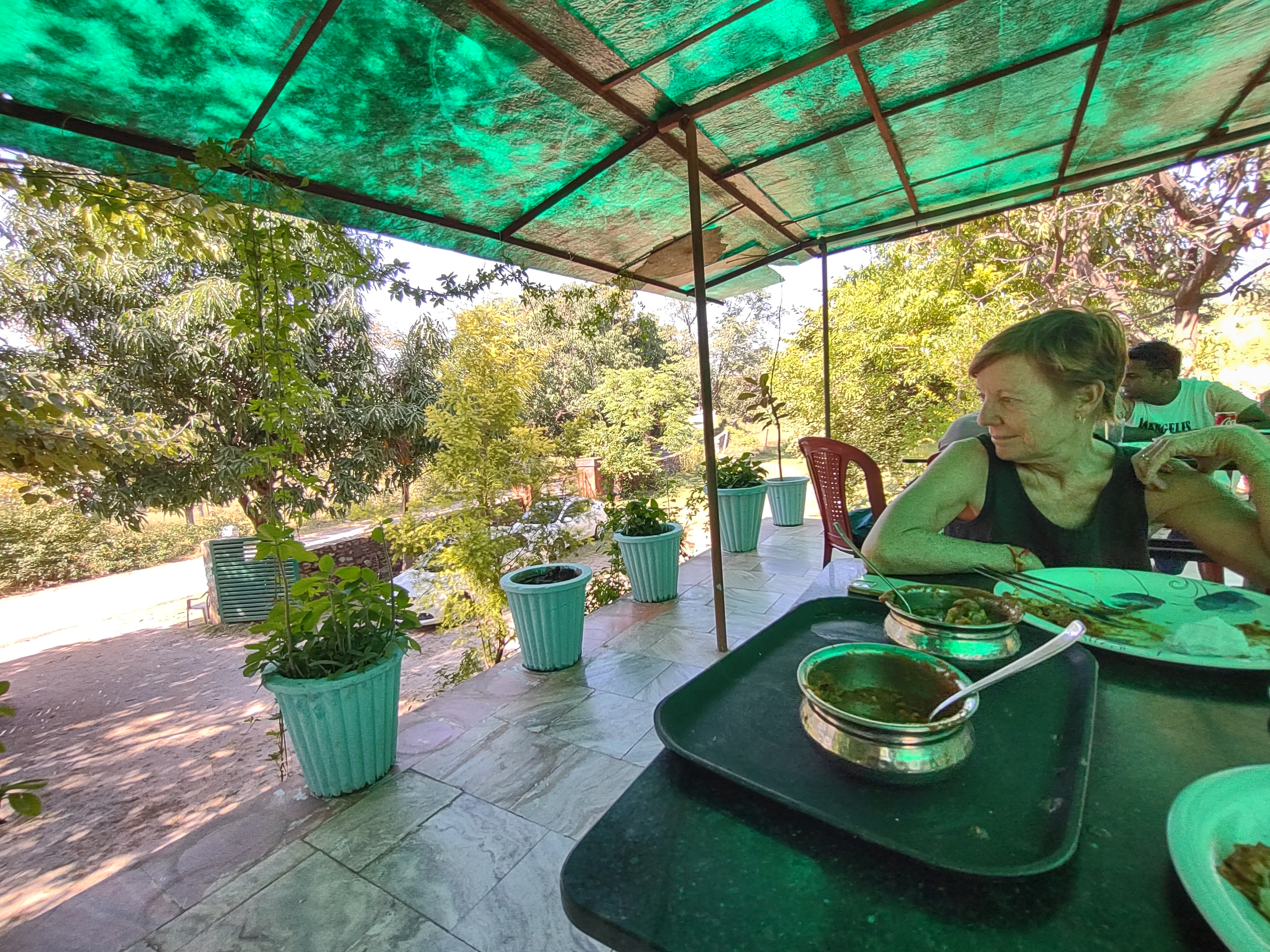
We had a very pleasant lunch in a small and simple restaurant which Mr. Sunder knew about (never go the name if they had one) which wasn’t much more than a shady spot with a breeze . It appeared to be a popular spot among the drivers, as there were two or three other couples who seemed to be traveling as we were (but, thankfully, no buses!). The food was simple and very good and it was a wonderfully relaxing stop.

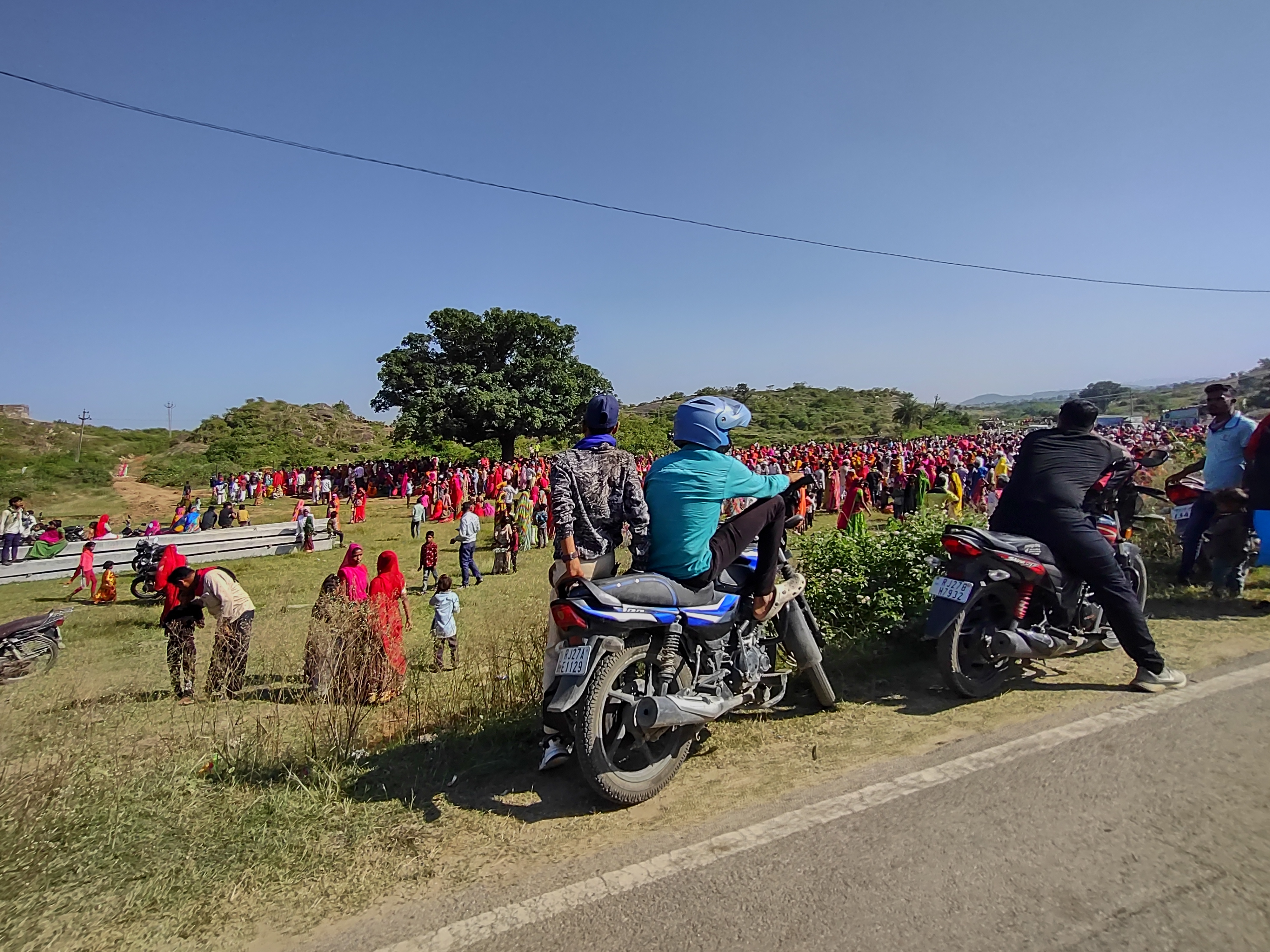
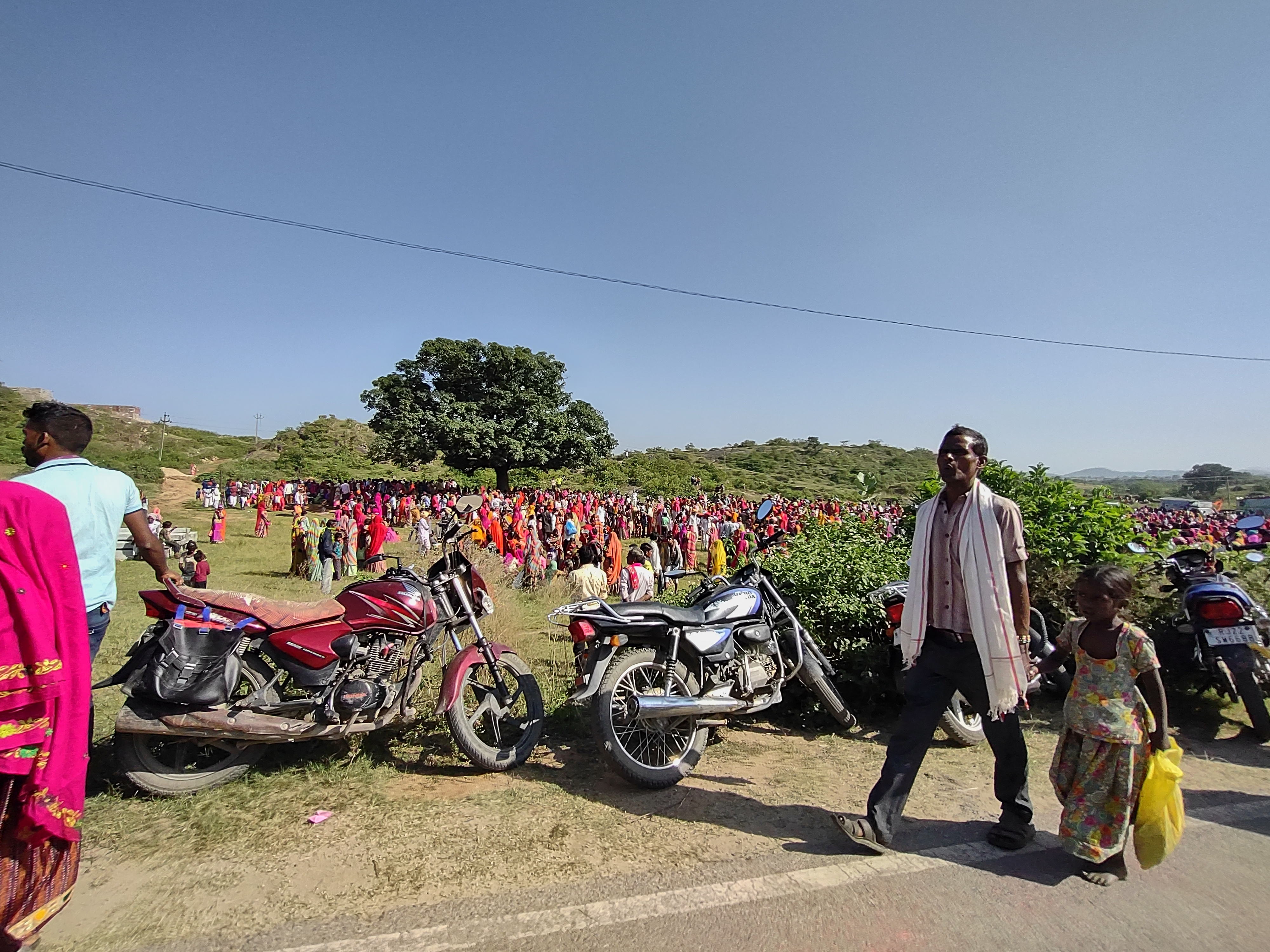
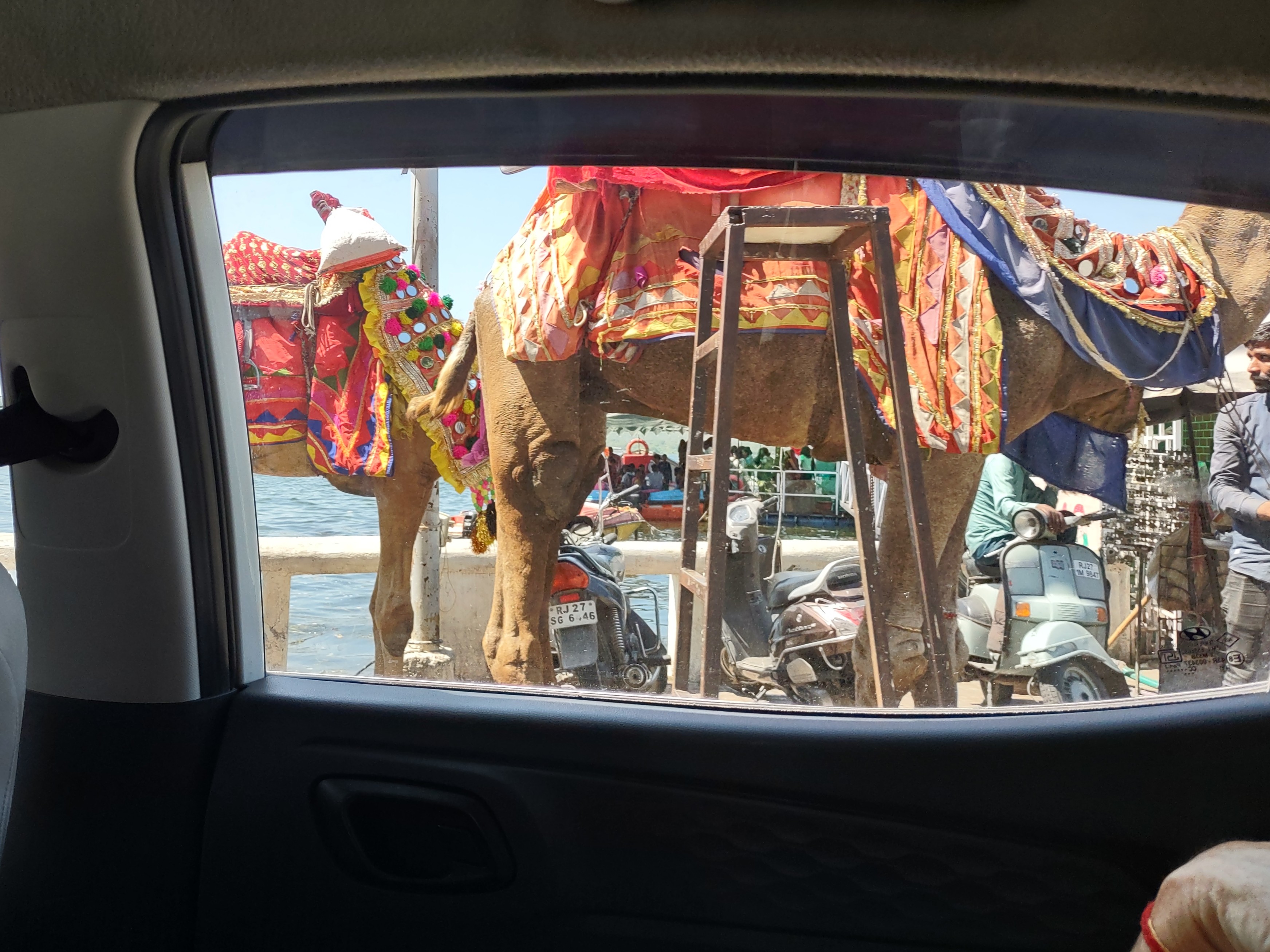
The scenery during our drive was getting increasingly interesting, even entertaining at times. We continued to be amused at the sight of cows walking down the highway and were passed by a herd of goats while refueling. We also passed through a congregation of mostly Indian women in traditional garb gathering in an open road-side area, but were never able to figure out what it was all about.


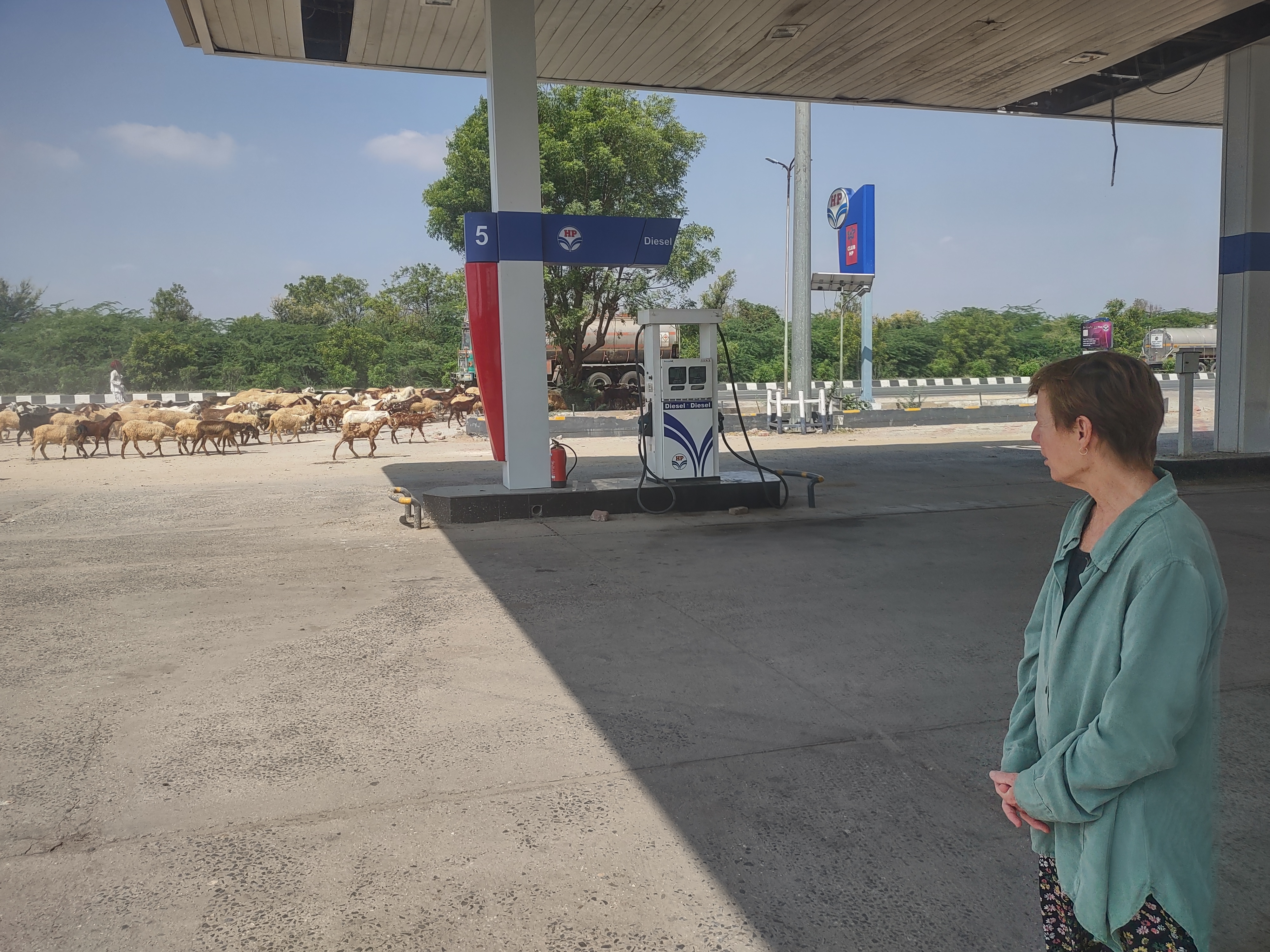
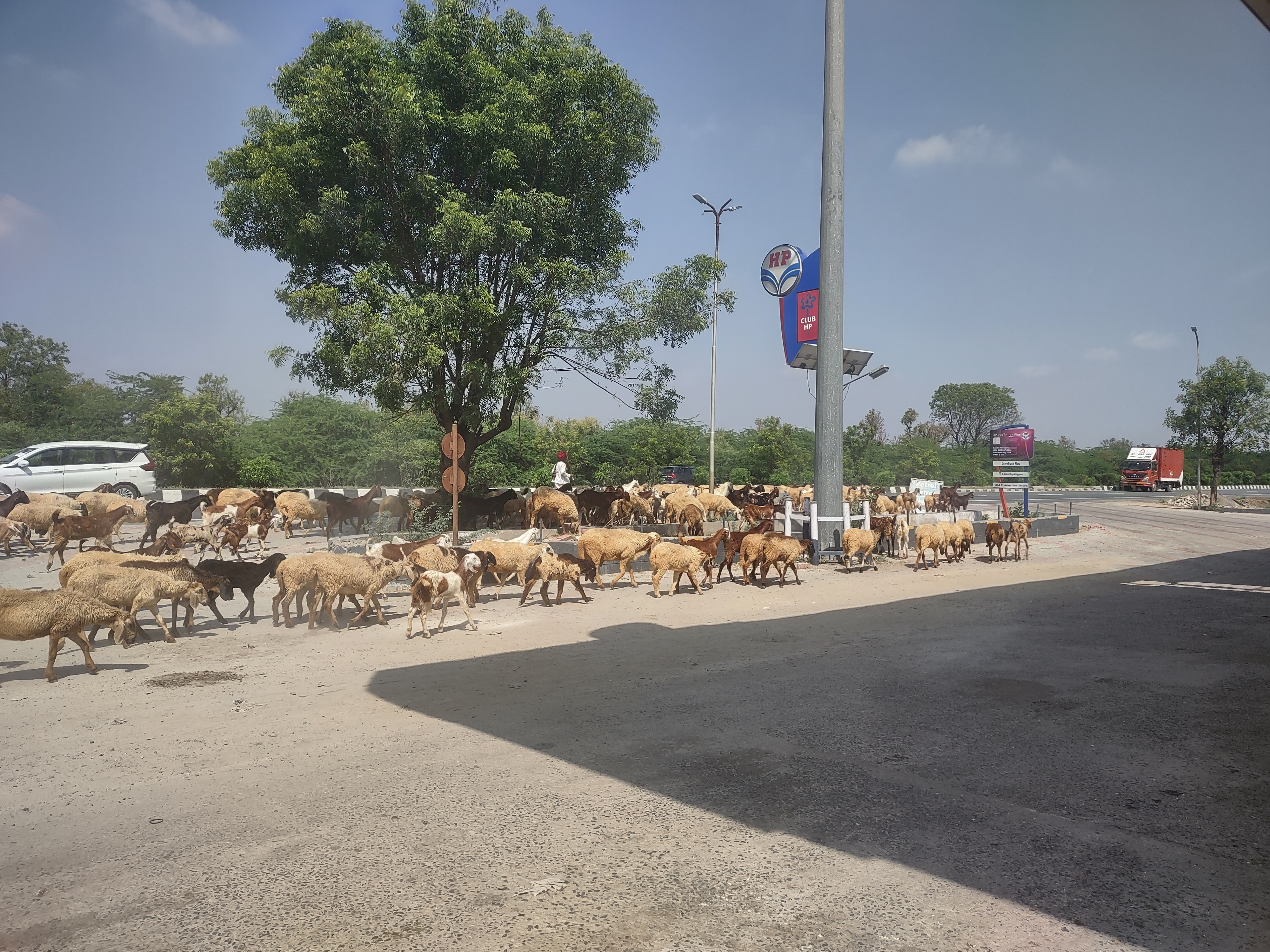
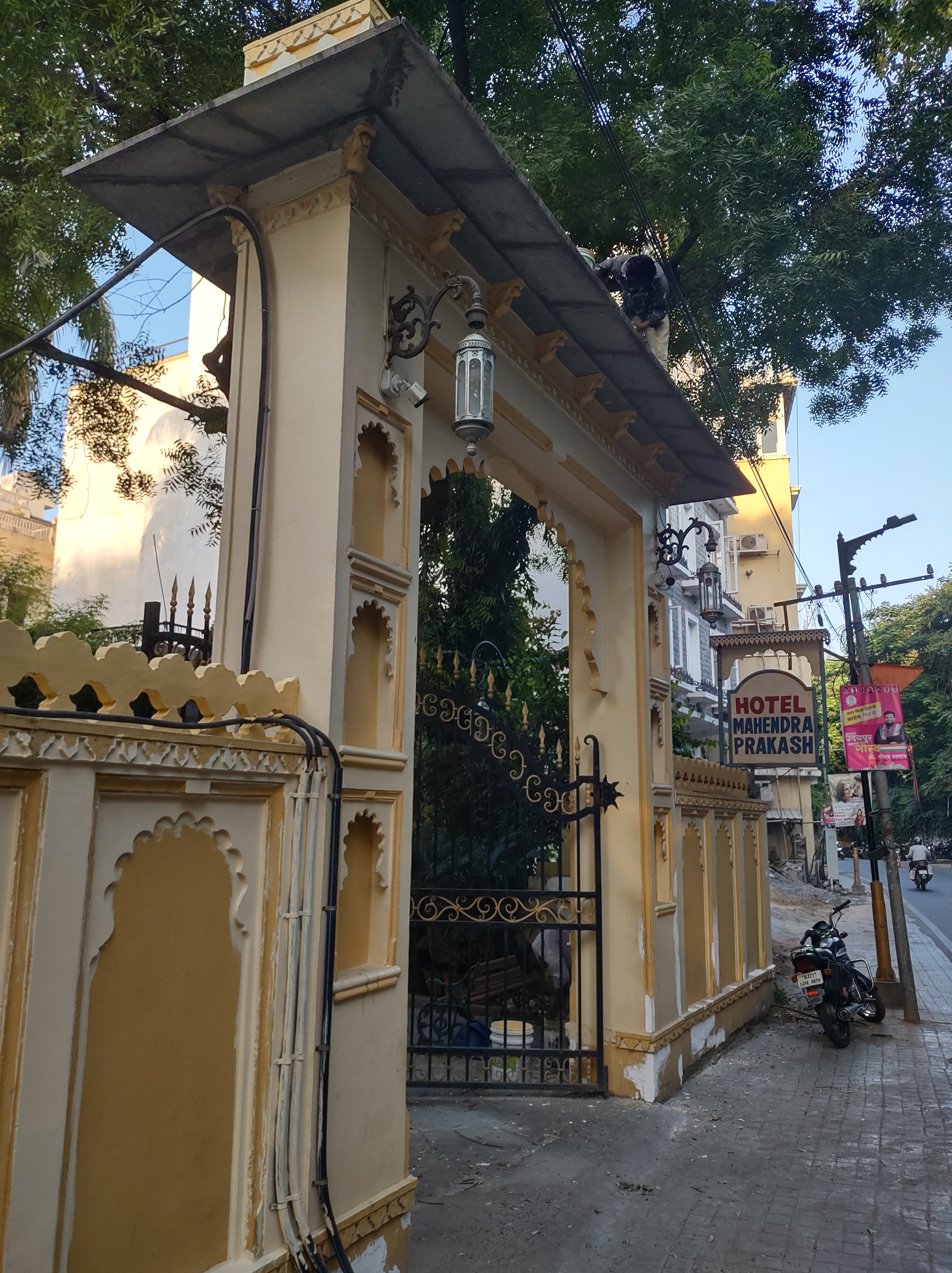
We checked into our hotel, the Mahendra Prakash, which turned out to be a very nice and quiet retreat within a pretty busy urban area. We wandered into town to get a look at the lake and then had dinner at a roof-top restaurant called the “Sky Bar Lounge” with some amazing views across the lake.

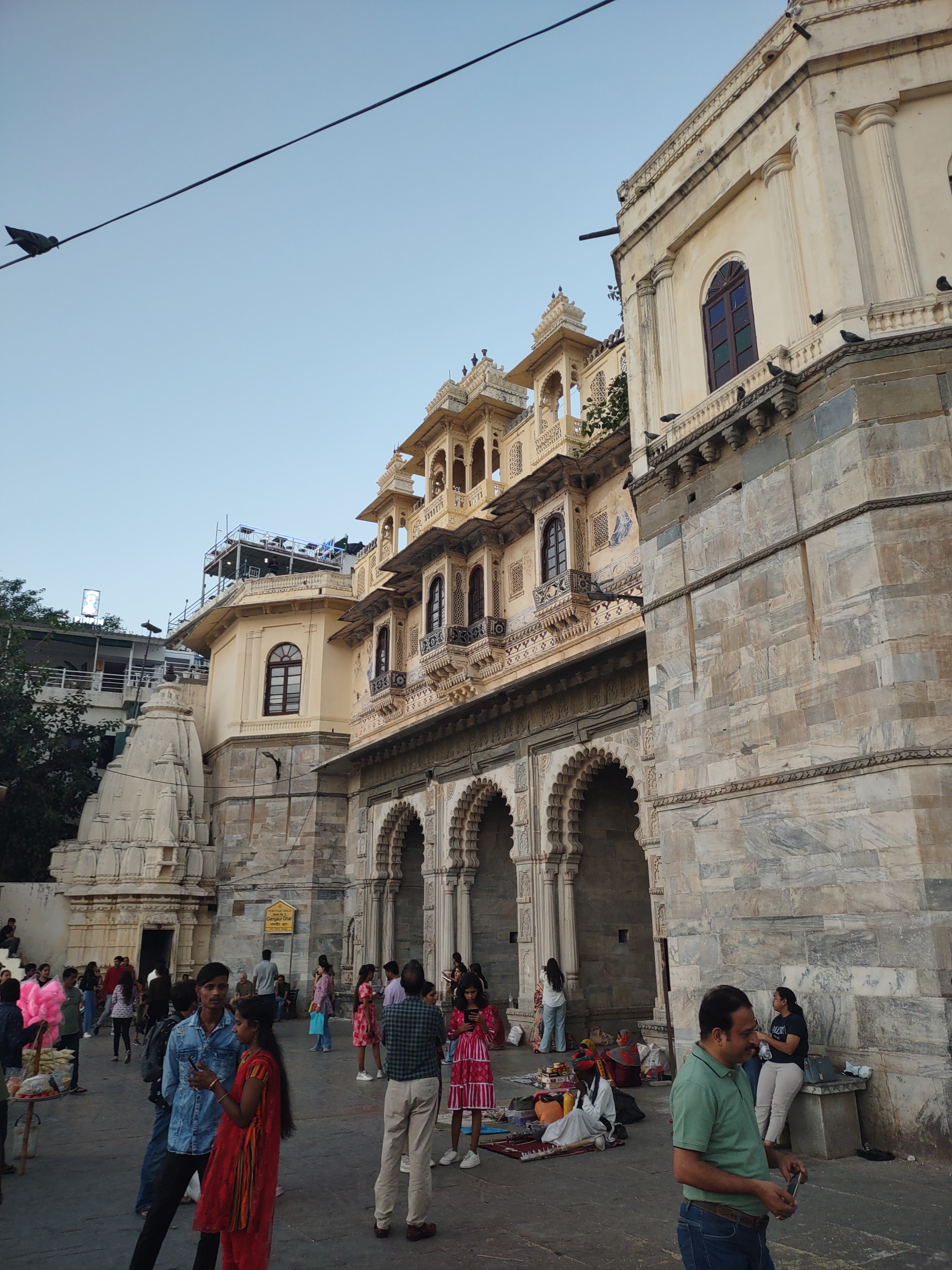
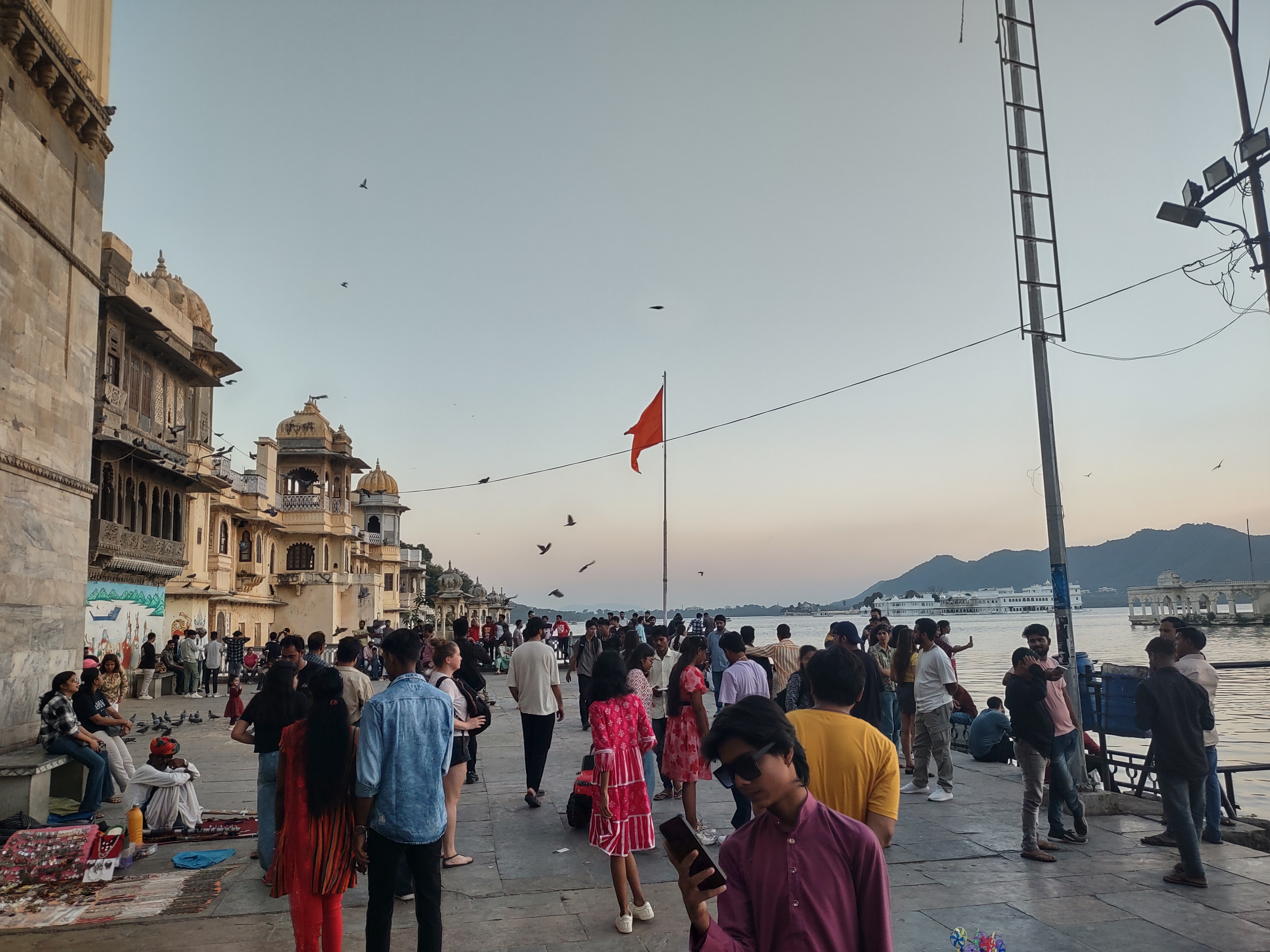
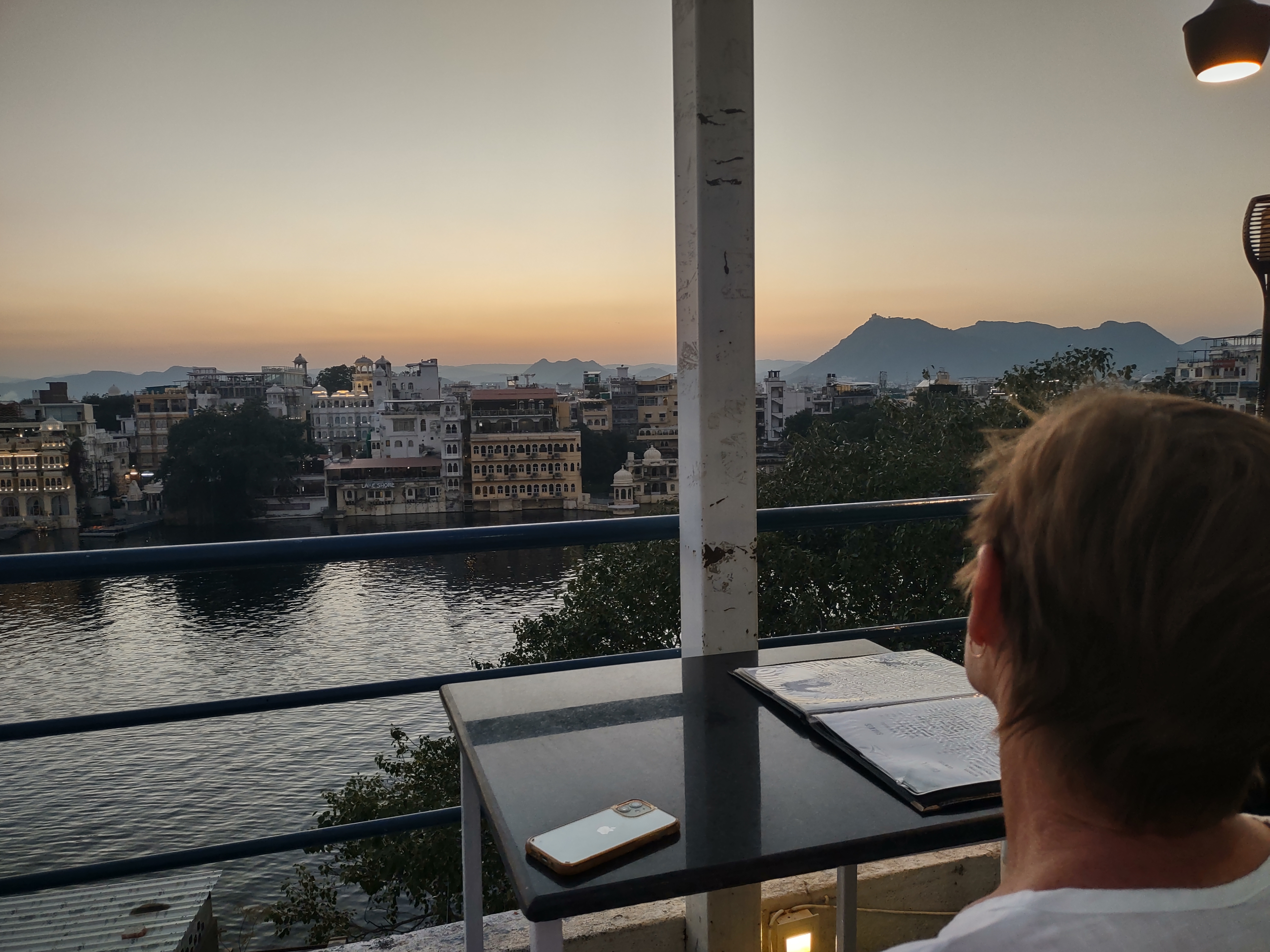
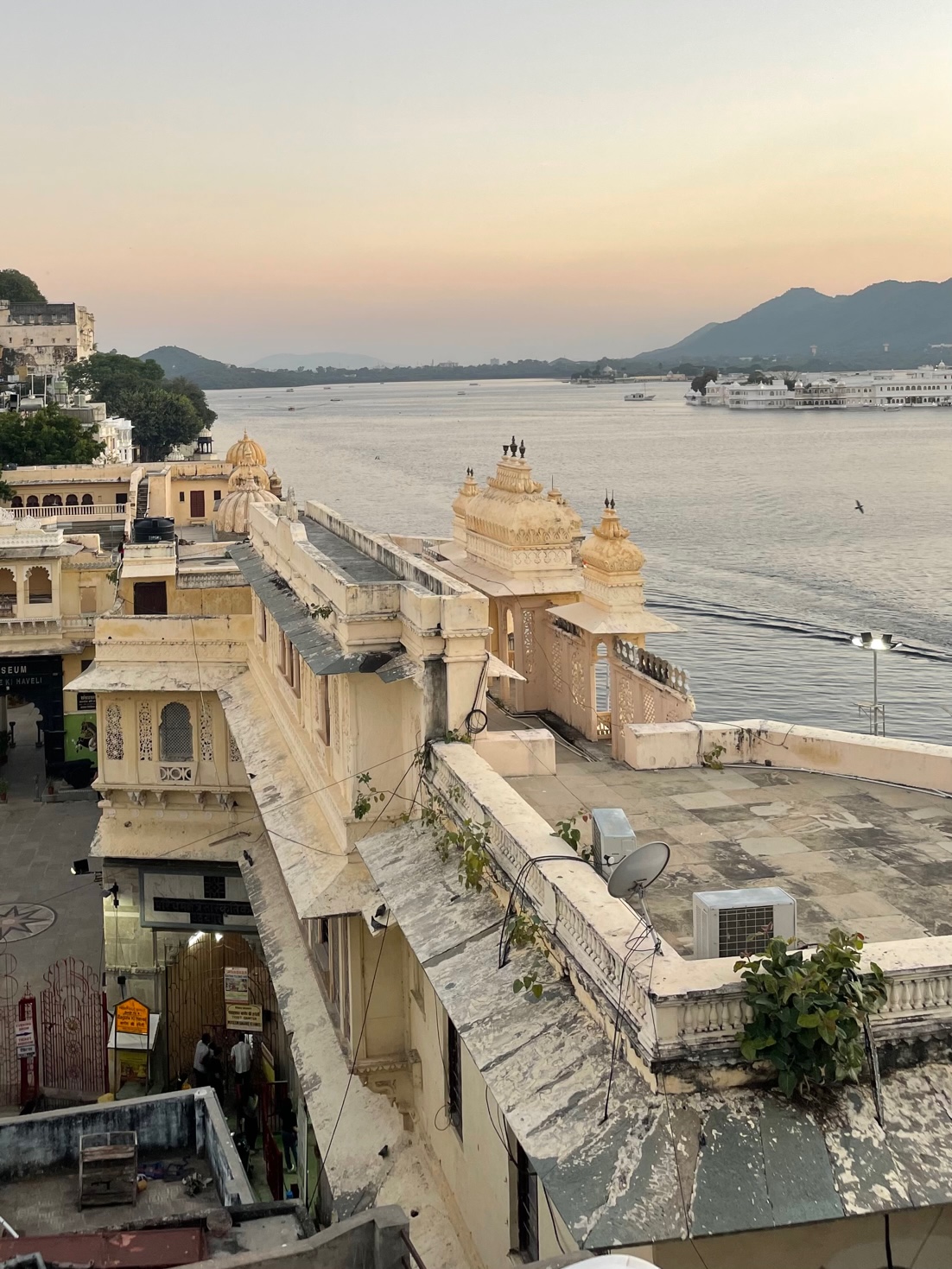
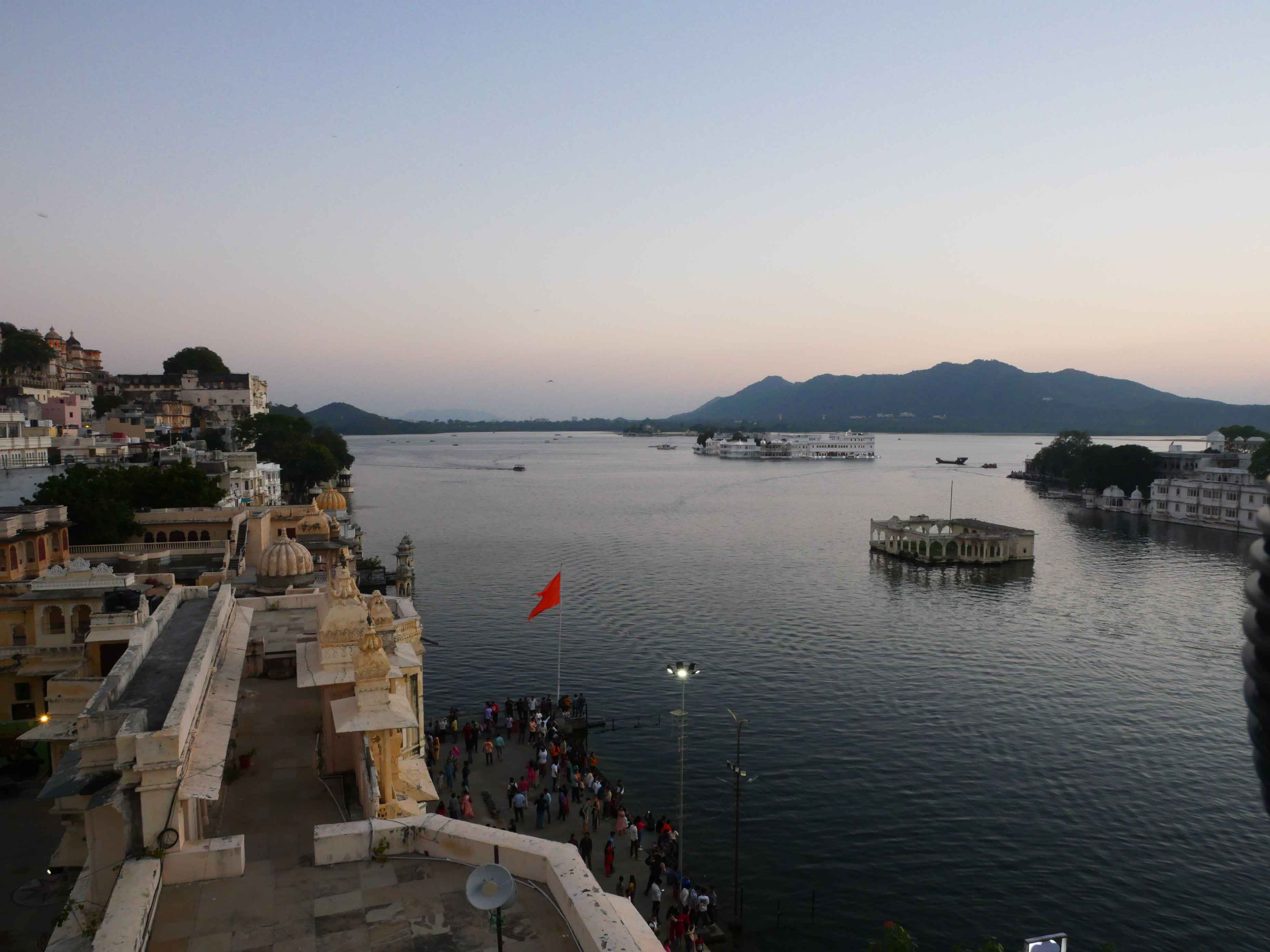
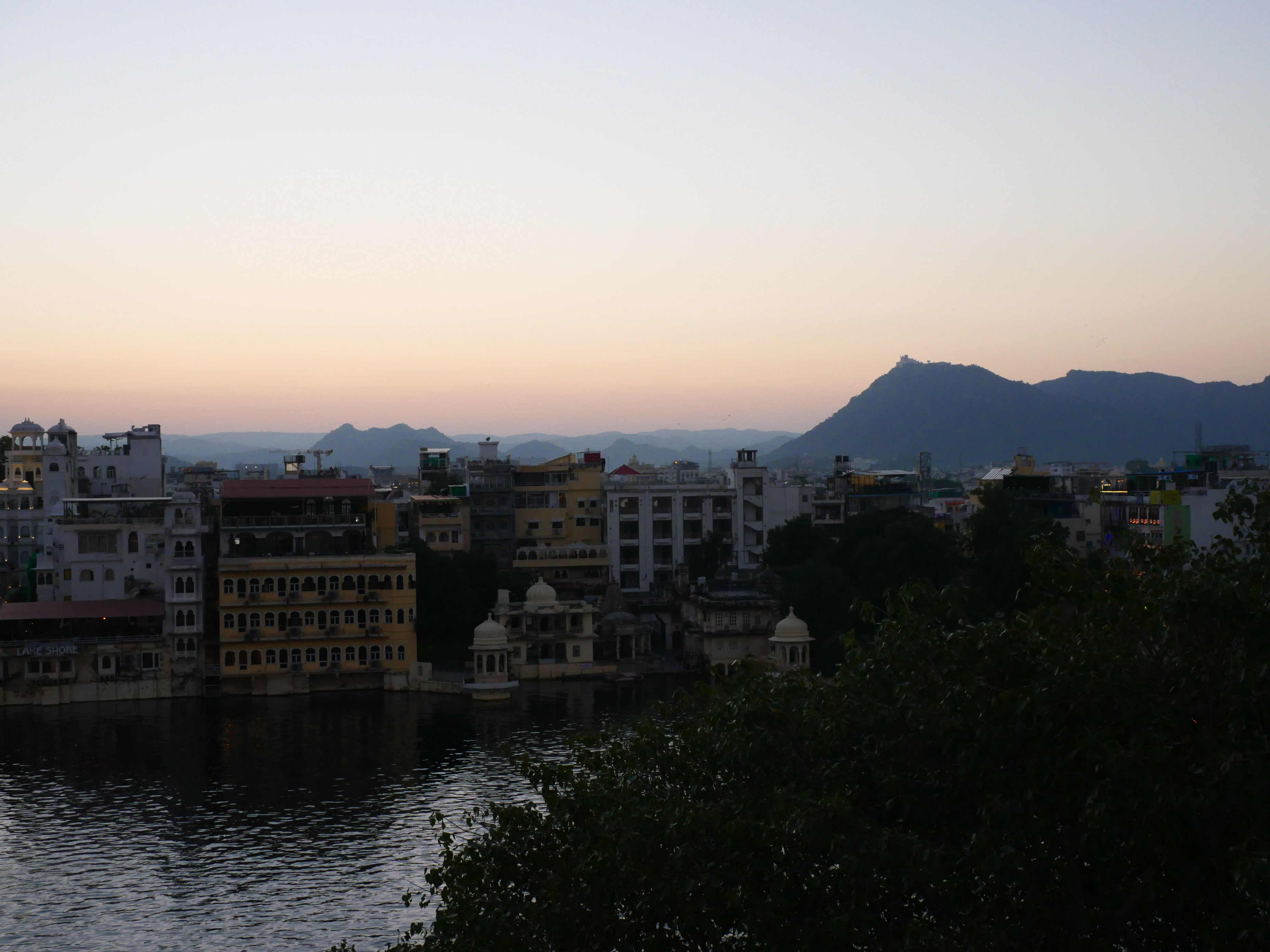
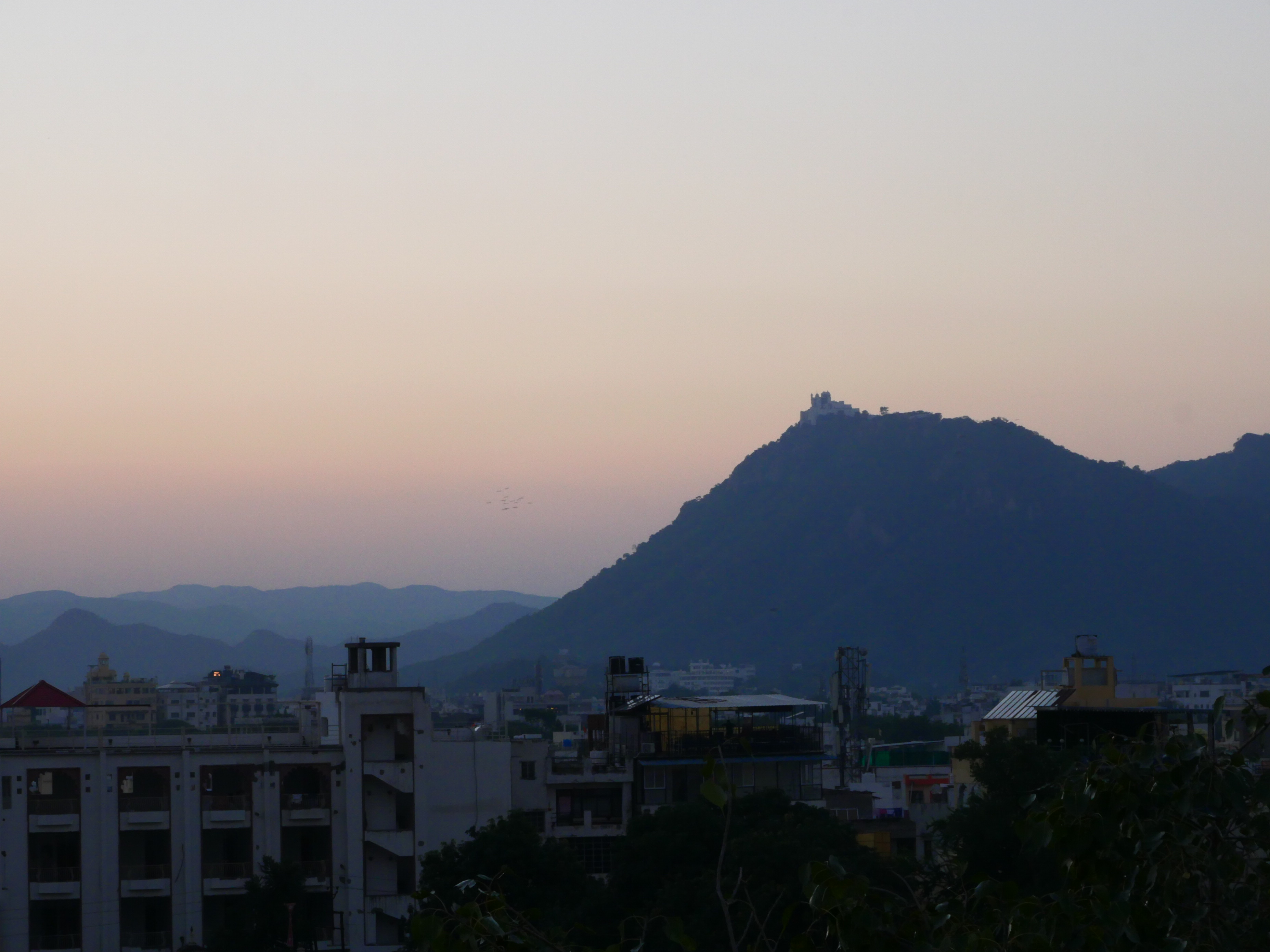
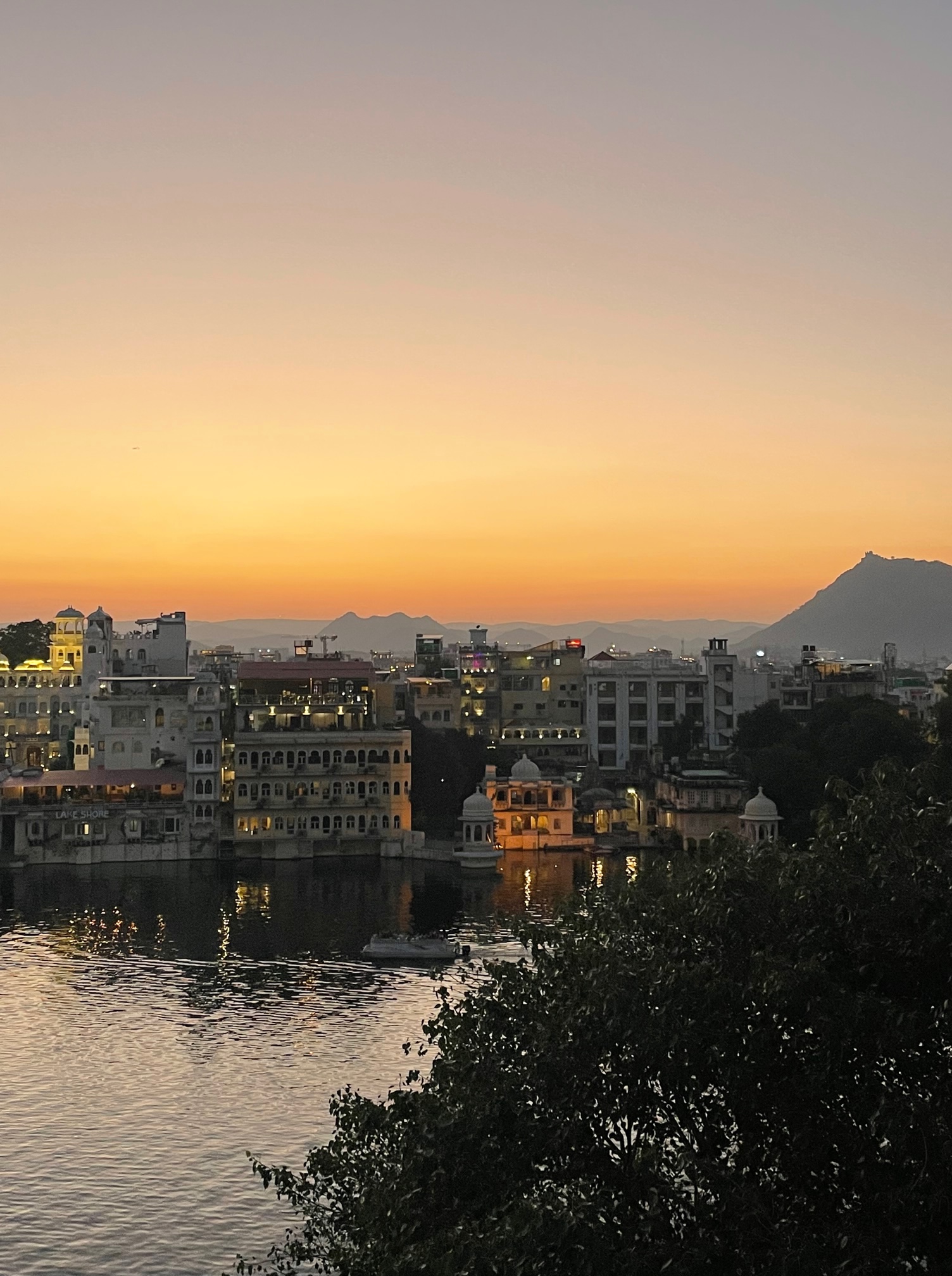
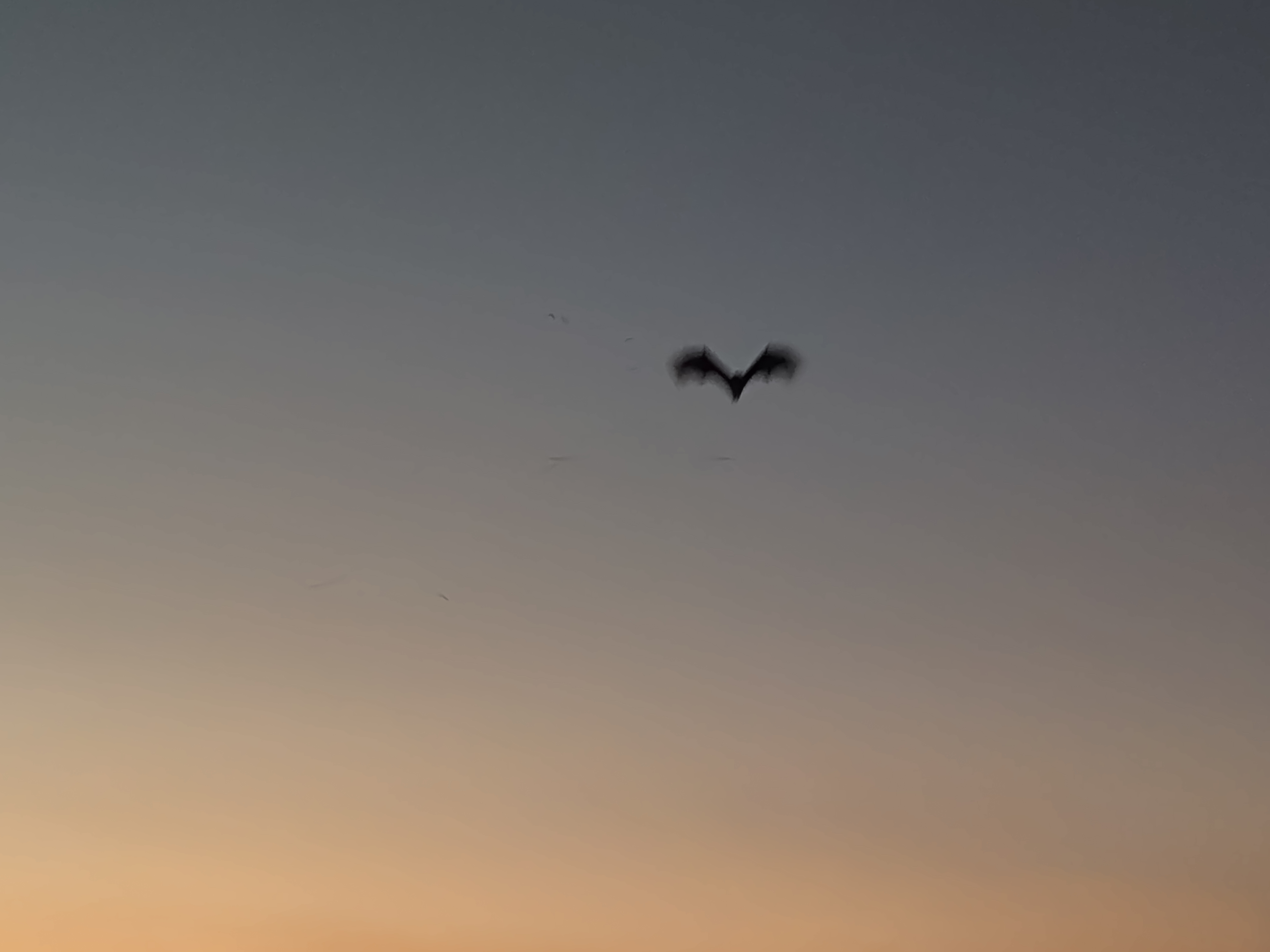
As the sun began to set, I realized that the large birds which were wheeling overhead were actually bats (the largest ones I have ever seen) and made me do a double-take to confirm that the name of the place wasn’t the “Sky Bat Lounge”. We saw quite a few more on our walk home and later learned that they were fruit bats which spend the days in the forest but come out at night.

We did a little pre-emptive window shopping on the way back to the hotel and then called it a night.
DAY 7: 9-Oct-2023
Udaipur sightseeing
Start the day by having your breakfast on the rooftop of your hotel if possible, to enjoy a beautiful view over the lake Pichola. Today you enjoy a city tour of Udaipur on your own (as the city is best visited by walking through the narrow streets). Start with the City Palace and Museum that is considered as the largest palace complex in Rajasthan. The Pratap Memorial home of the bronze statue of Maharana Pratap, the legendary warrior king of Udaipur. Jagdish Temple, which was built in 1651 AD. The small ornamental garden of Saheliyon Ki Bari. In the afternoon enjoy a boat-ride on Lake Pichola, visiting many Ghats (lake banks) – where many Indians wash and bath – and enjoy the stunning view of the Lake Palace and City Palace. In the evening you can enjoy a romantic dinner or witness a traditional dancing performance. Overnight in Udaipur.
Your hotel: Mahendra Prakash (www.hotelmahendraprakash.com)
While breakfast was good, but it wasn’t possible to enjoy the beautiful view as our hotel did not have a roof-top with a beautiful view of Lake Pichola, but luckily, we had seen it the night before. On Mr. Sunder’s recommendation, we engaged a tour guide for the morning to guide us but also to keep the street urchins (of whom of whom he anticipated there to be many) at bay. Our guide Mr. Singh took us through the appointed sites (the Palace Museum was pretty amazing!) and then showed us where to go to book a boat ride that evening.
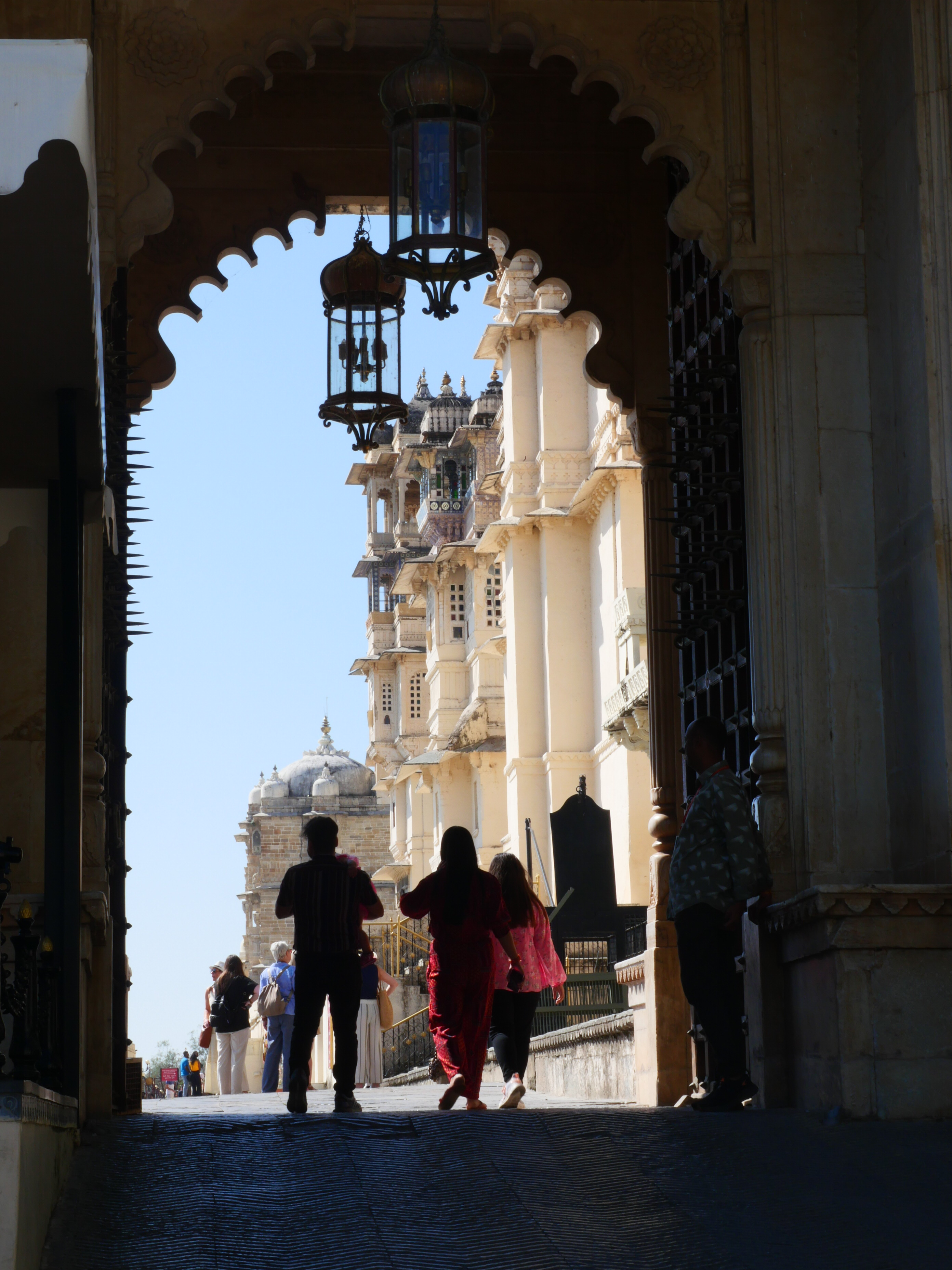
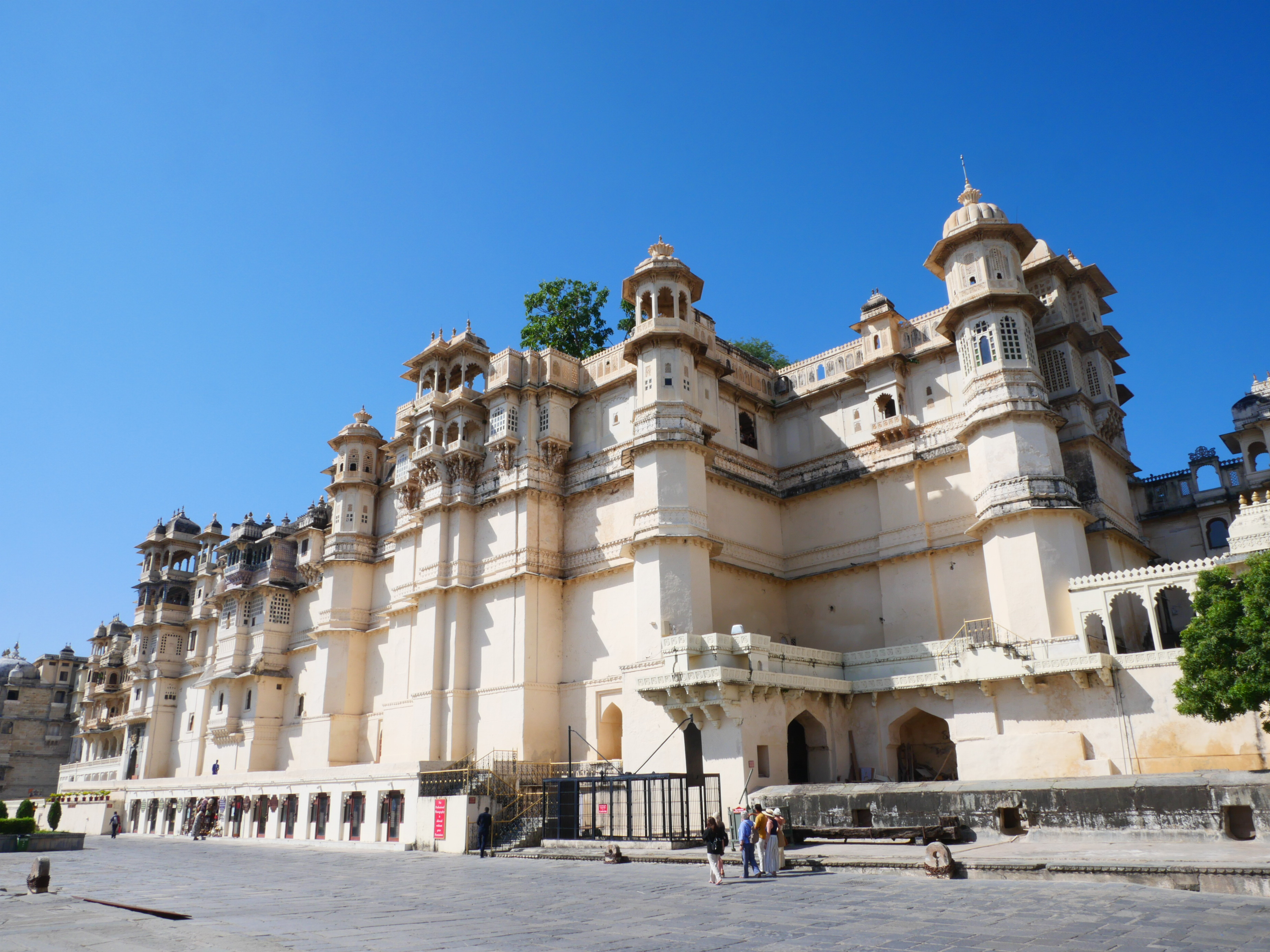
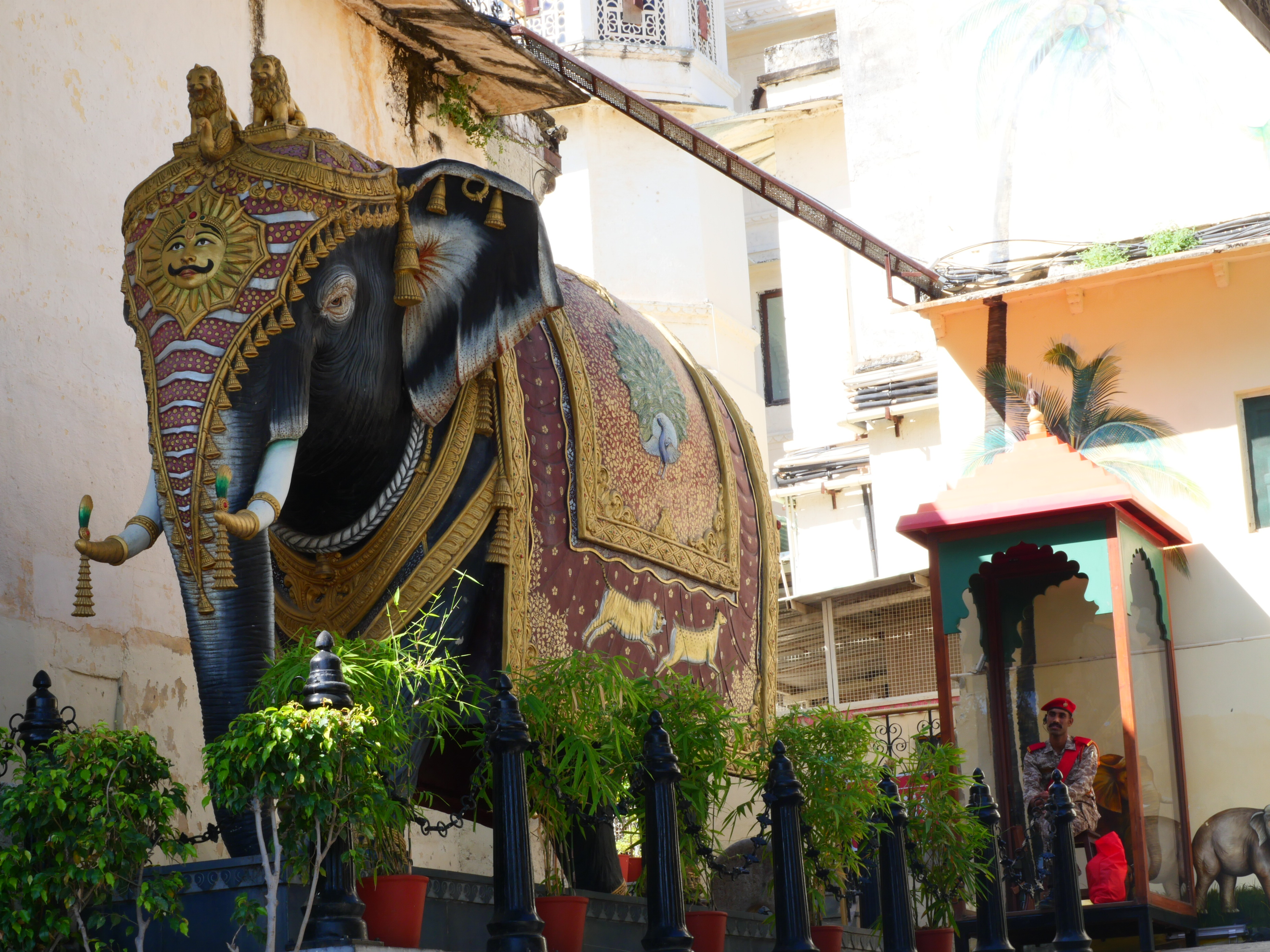
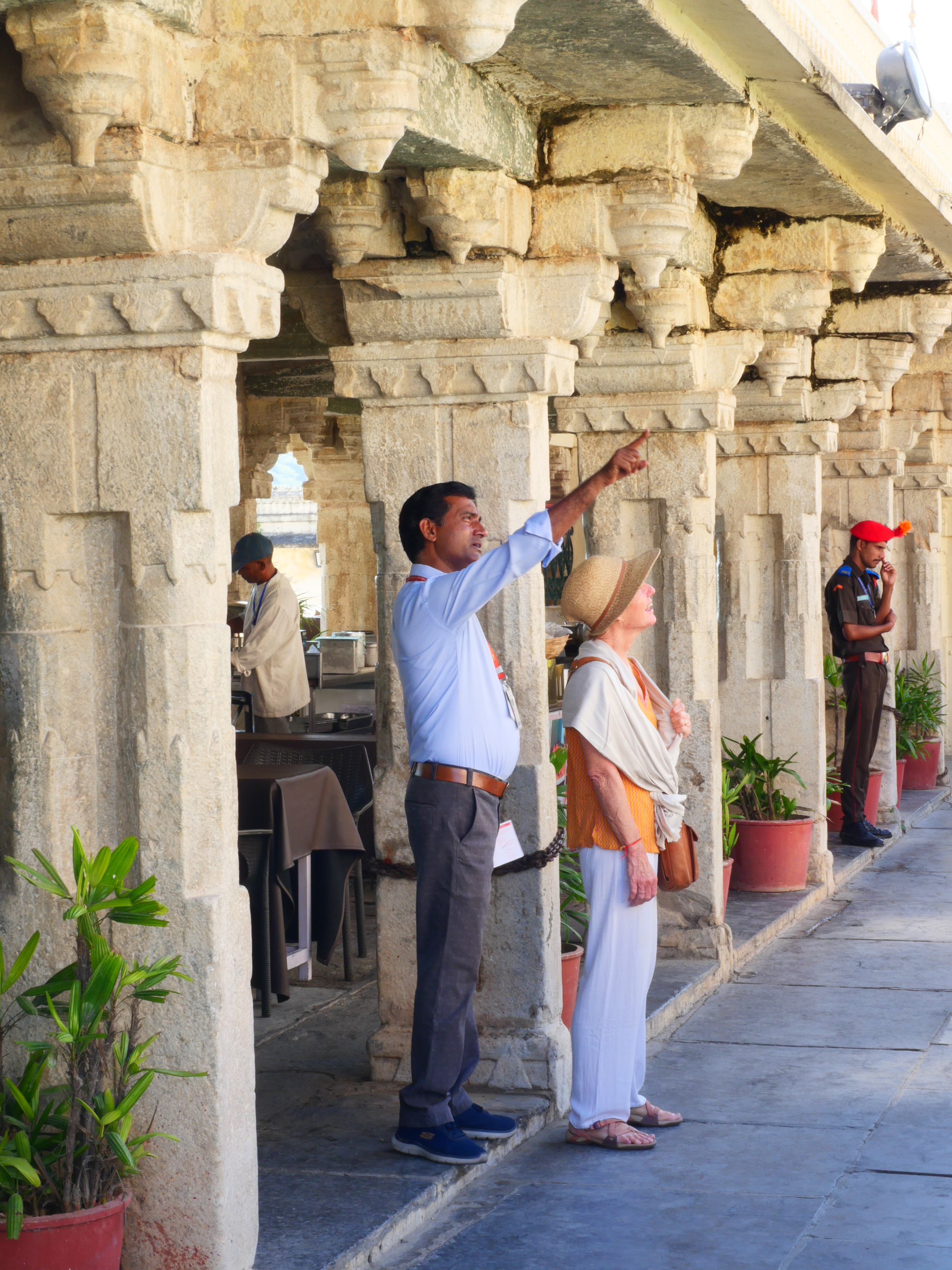

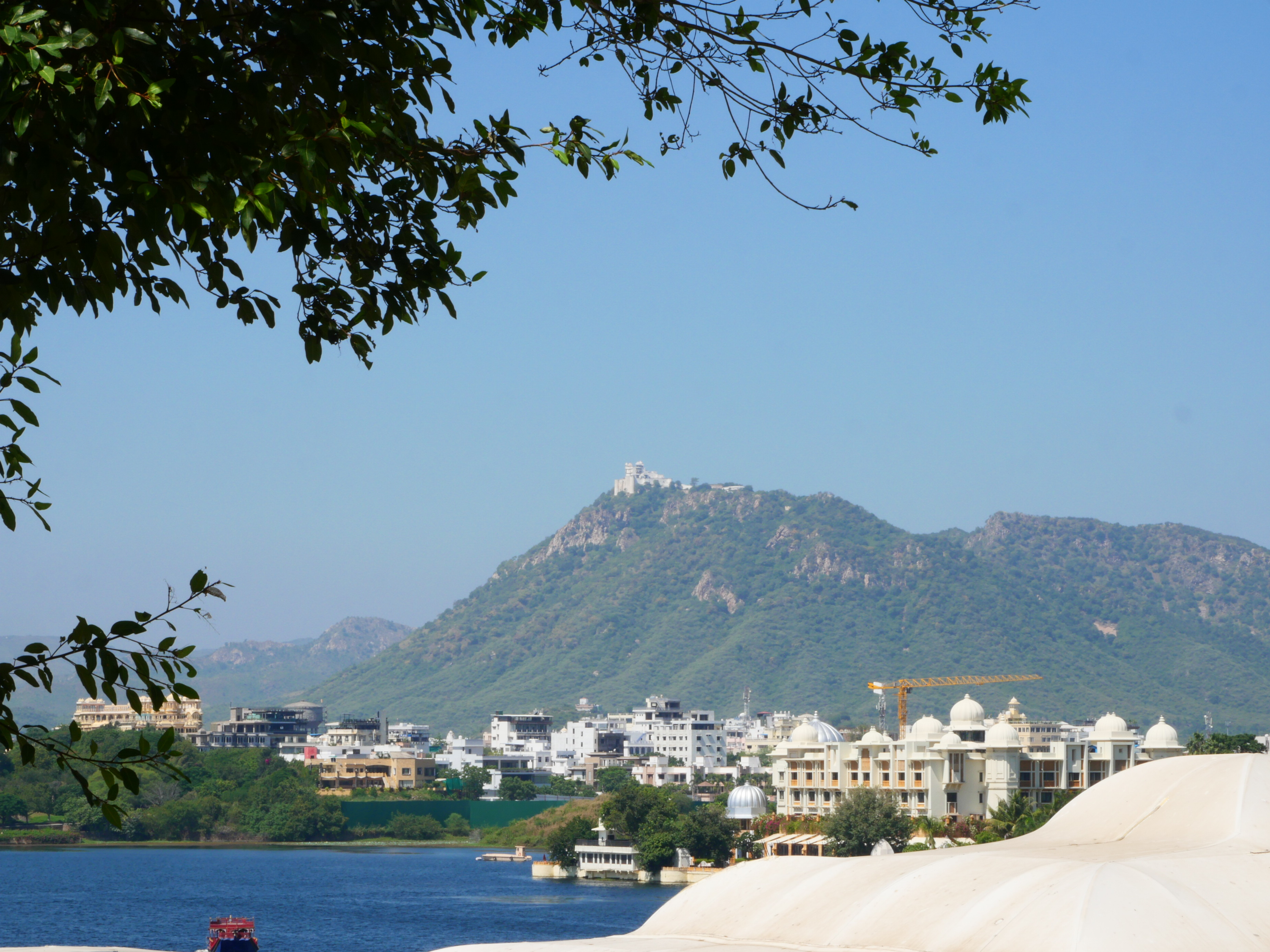
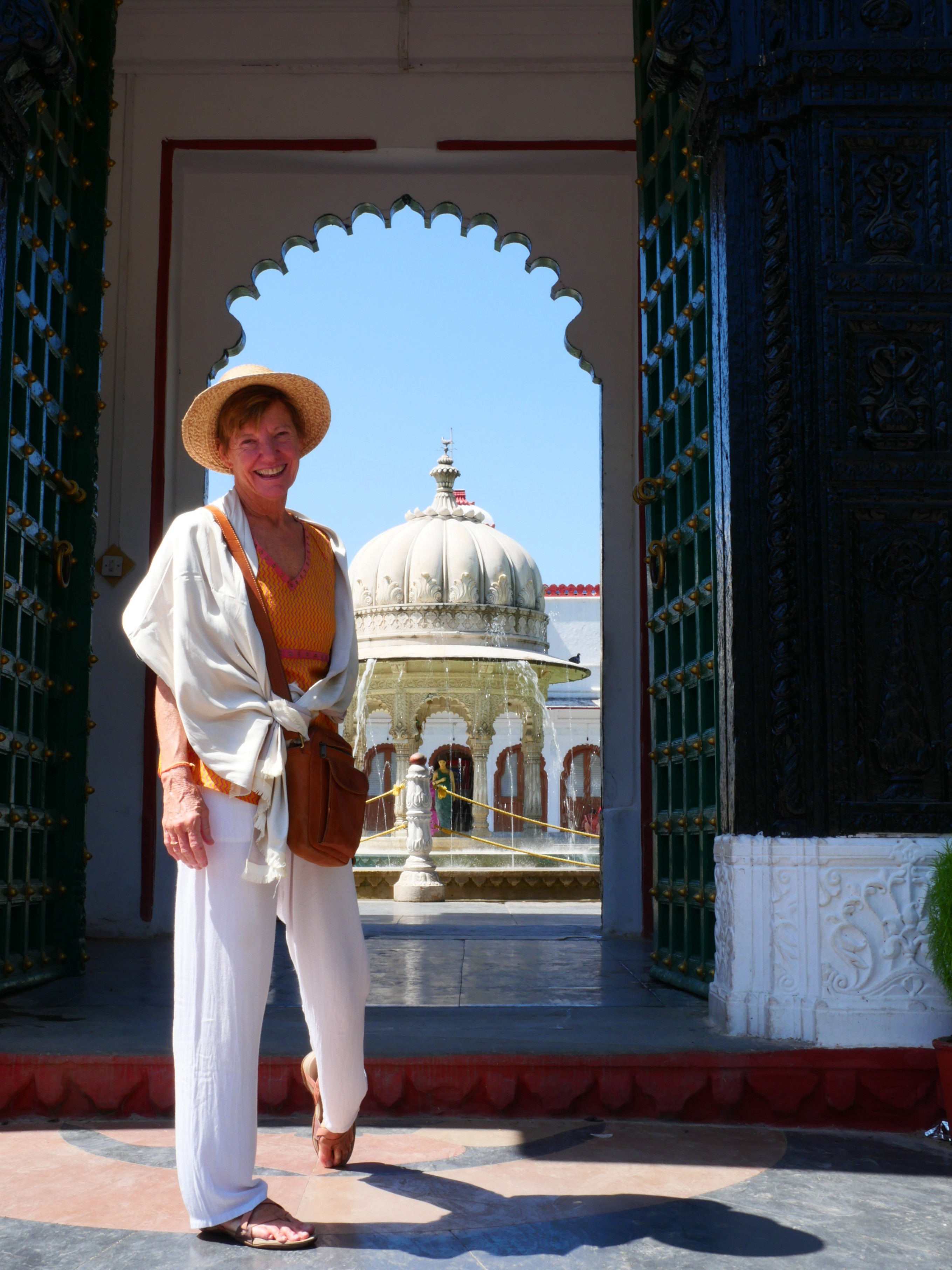
We drove around the lake and then stopped at a the small garden which turned out to have been designed for the use of the queen and other women in the royal court.


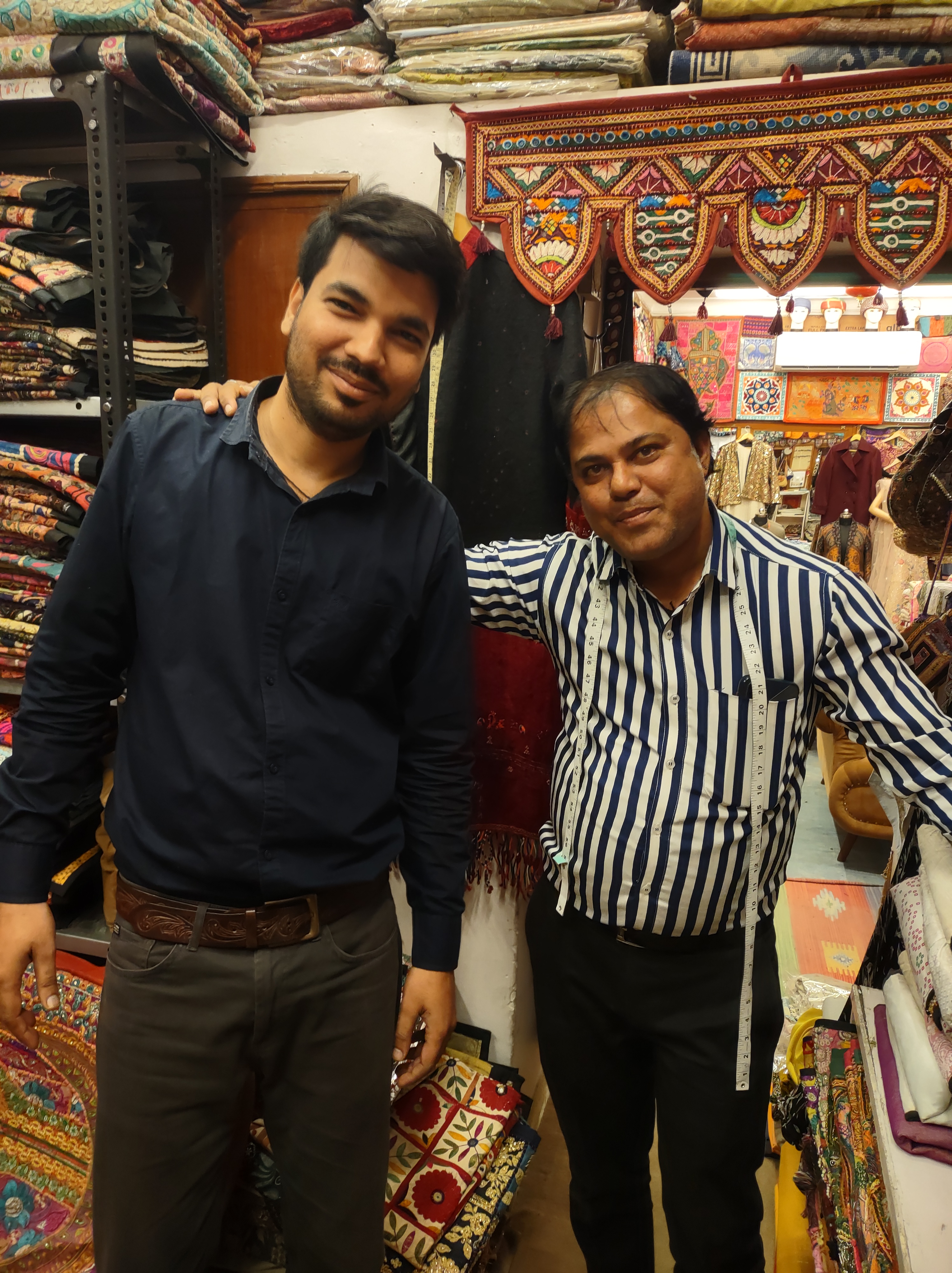
We visited a textile store which had provided wardrobe for Judie Dench and Richard Gear for the Marigold Hotel movies. I ordered a custom-made shirt and Colleen ordered a custom Indian “outfit”, both of which were delivered to our hotel later that evening. (I had heard about this in Vietnam, but had not expected it in India nor ever imagined we would be doing it.)
One interesting thing we discovered in Udaipur was a rare breed of horse from this region called the Marwari or Malani which has unusual inward-curving ears which look almost like horns. We first saw them in displays at the Palace Museum but later saw living examples here and on the road to Pushkar.
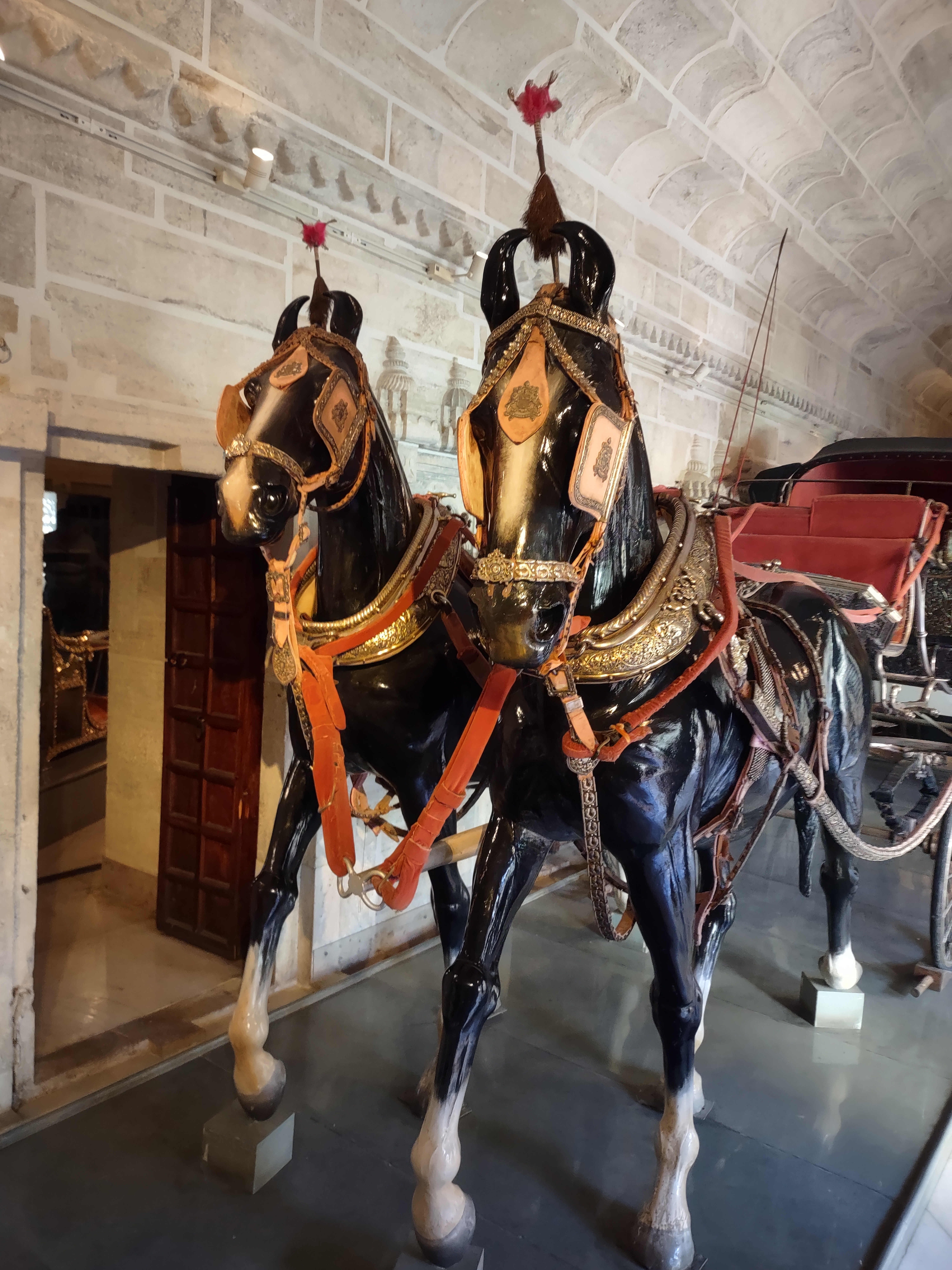
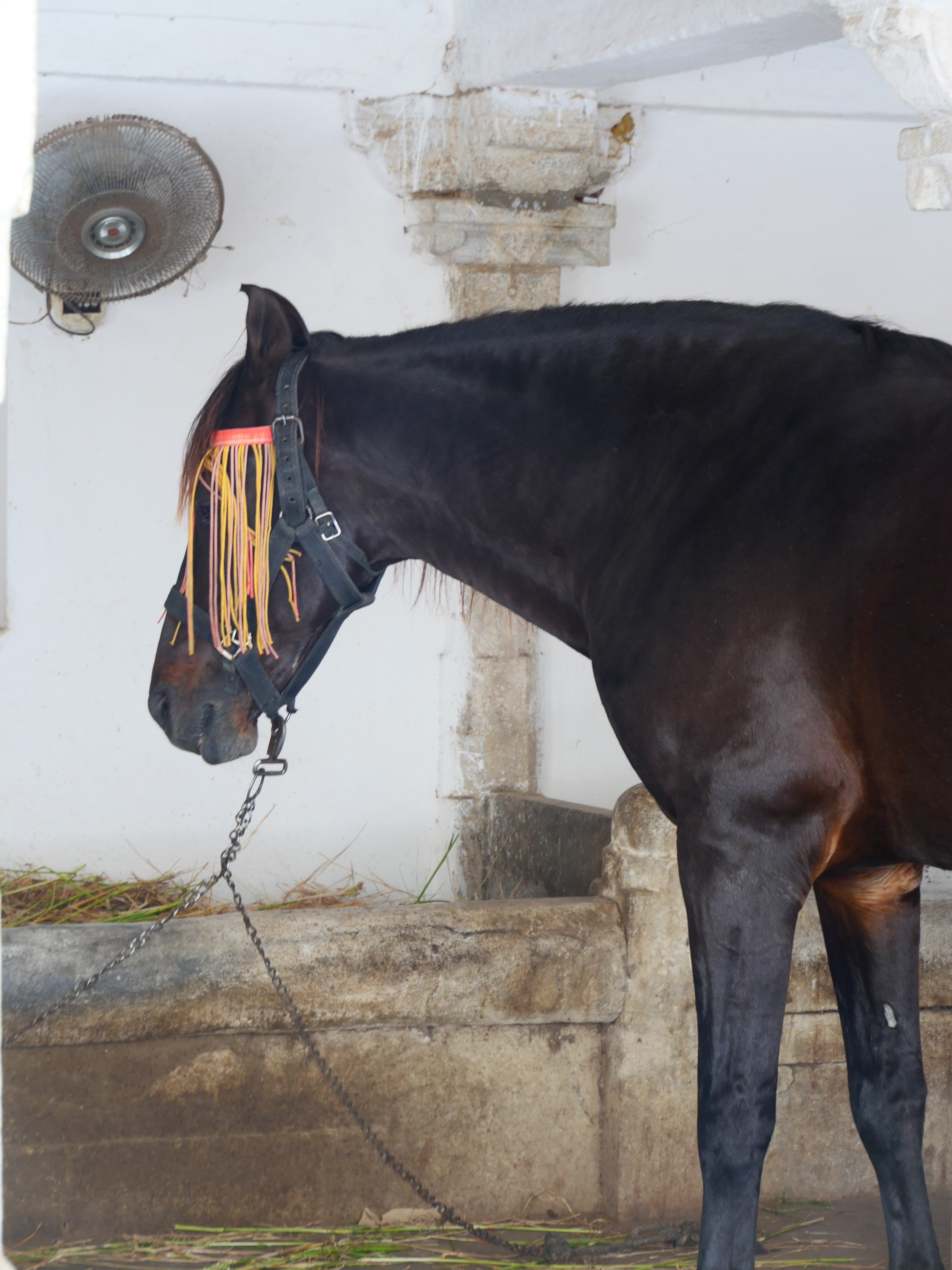
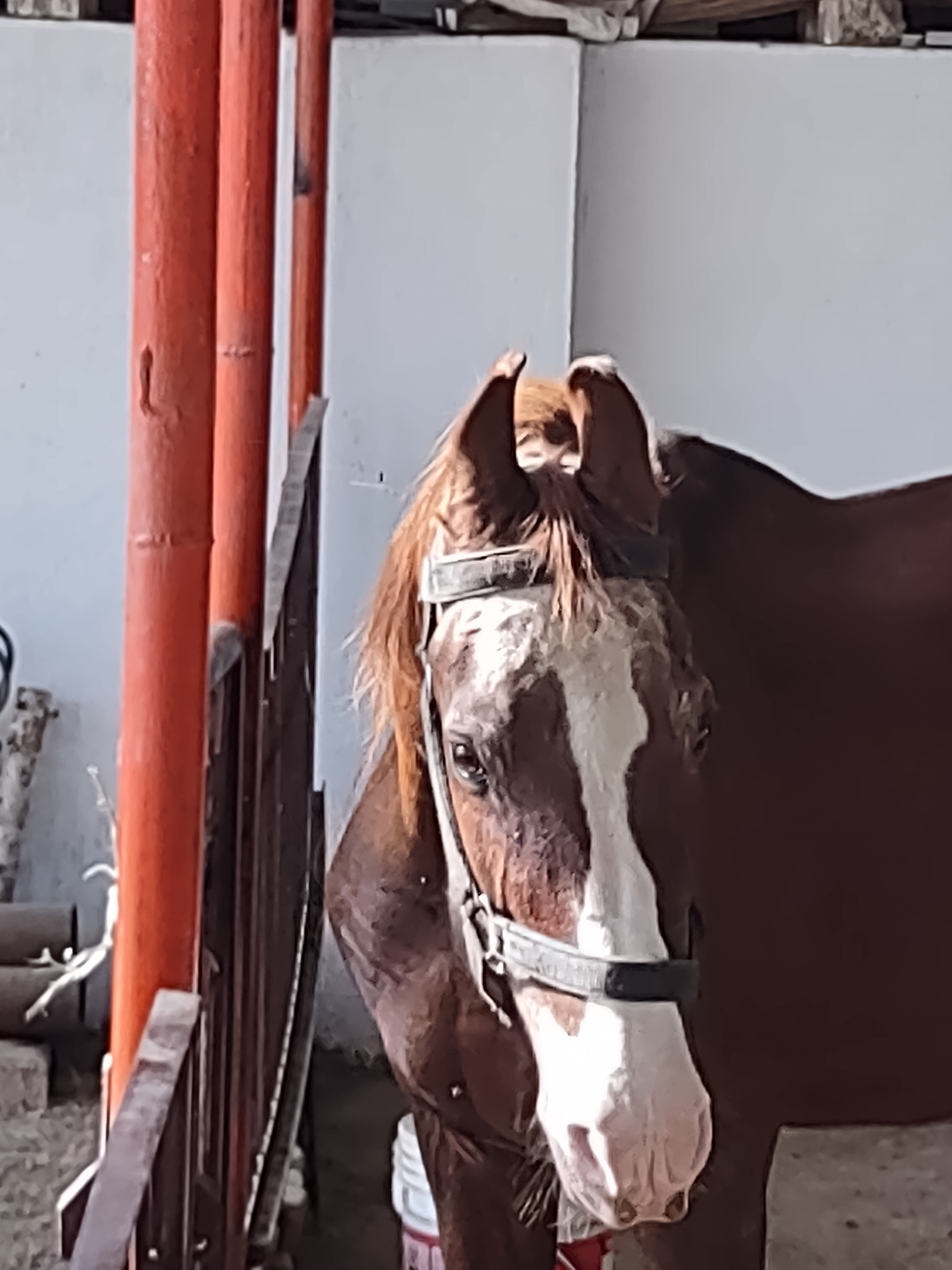
Following another very busy day, we went back to the hotel to relax at the pool for a bit before heading out for a very scenic lake boat ride which took us to Jagmandir, a 17th century island palace which now houses an upscale hotel, spa, and restaurant and seemed like the ideal spot for a destination wedding. After wandering the island a bit and watching the sun set, we caught a boat back to the pier and made our way back to our hotel, doing a little more shopping along the way.
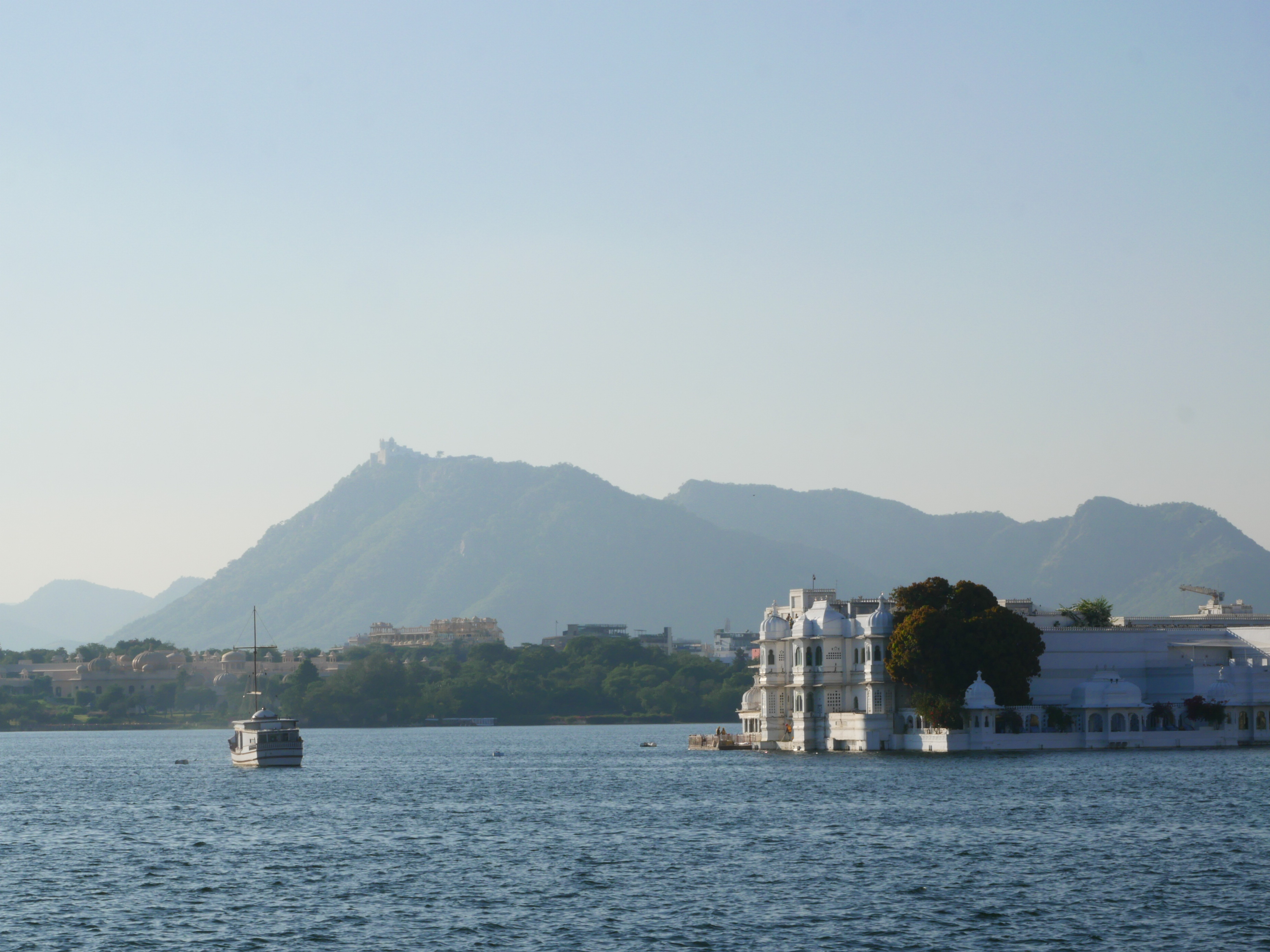
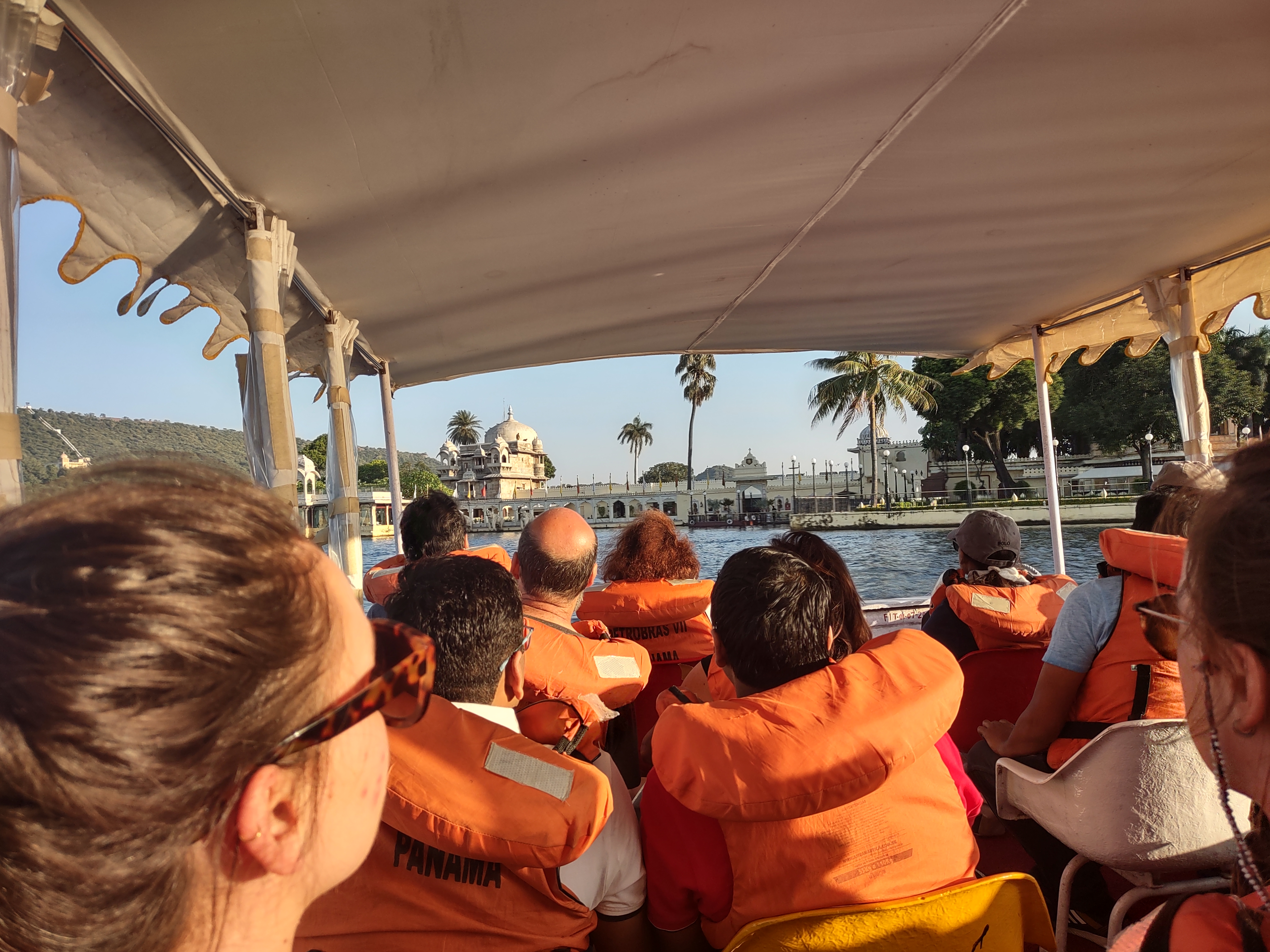

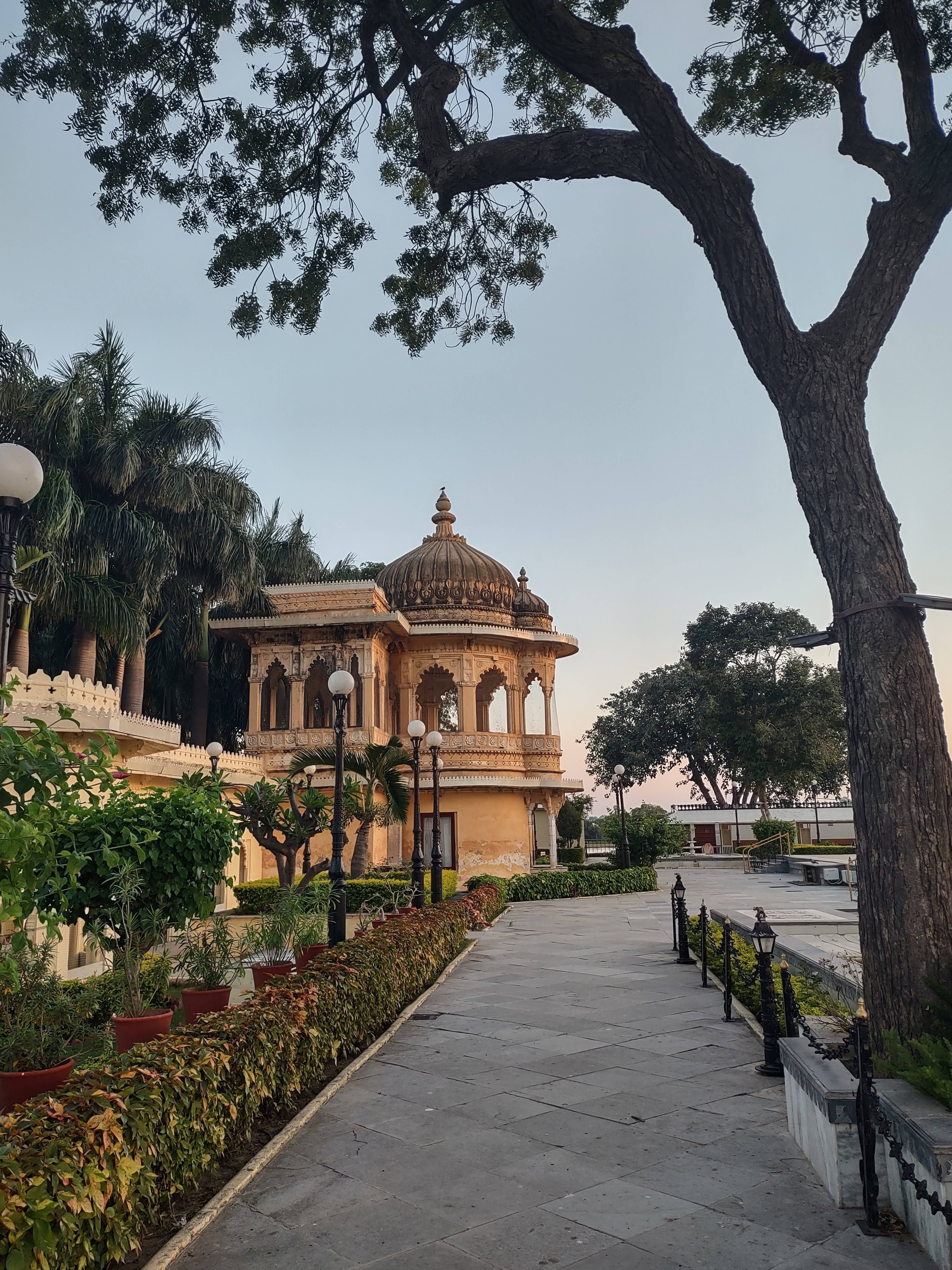
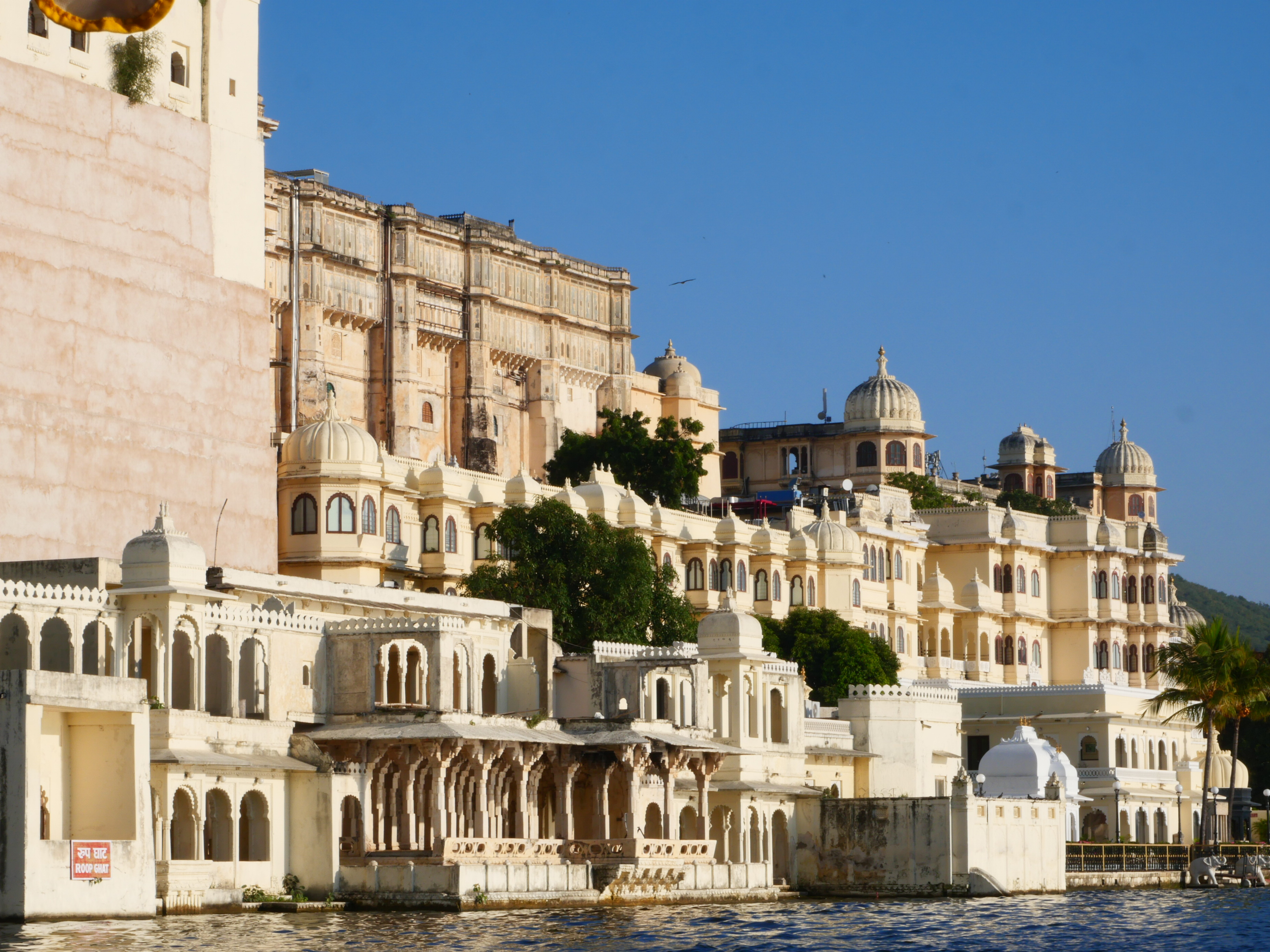
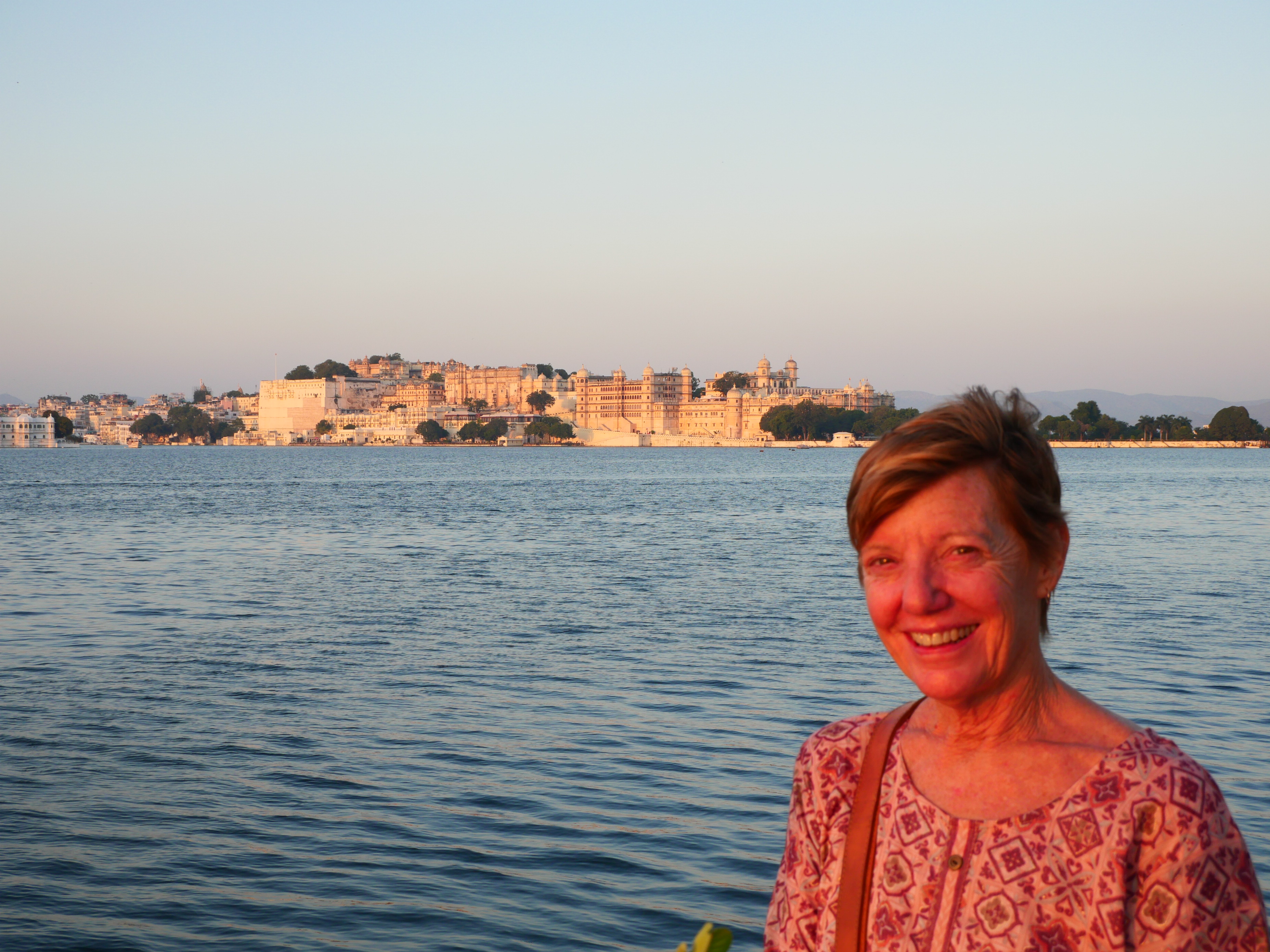
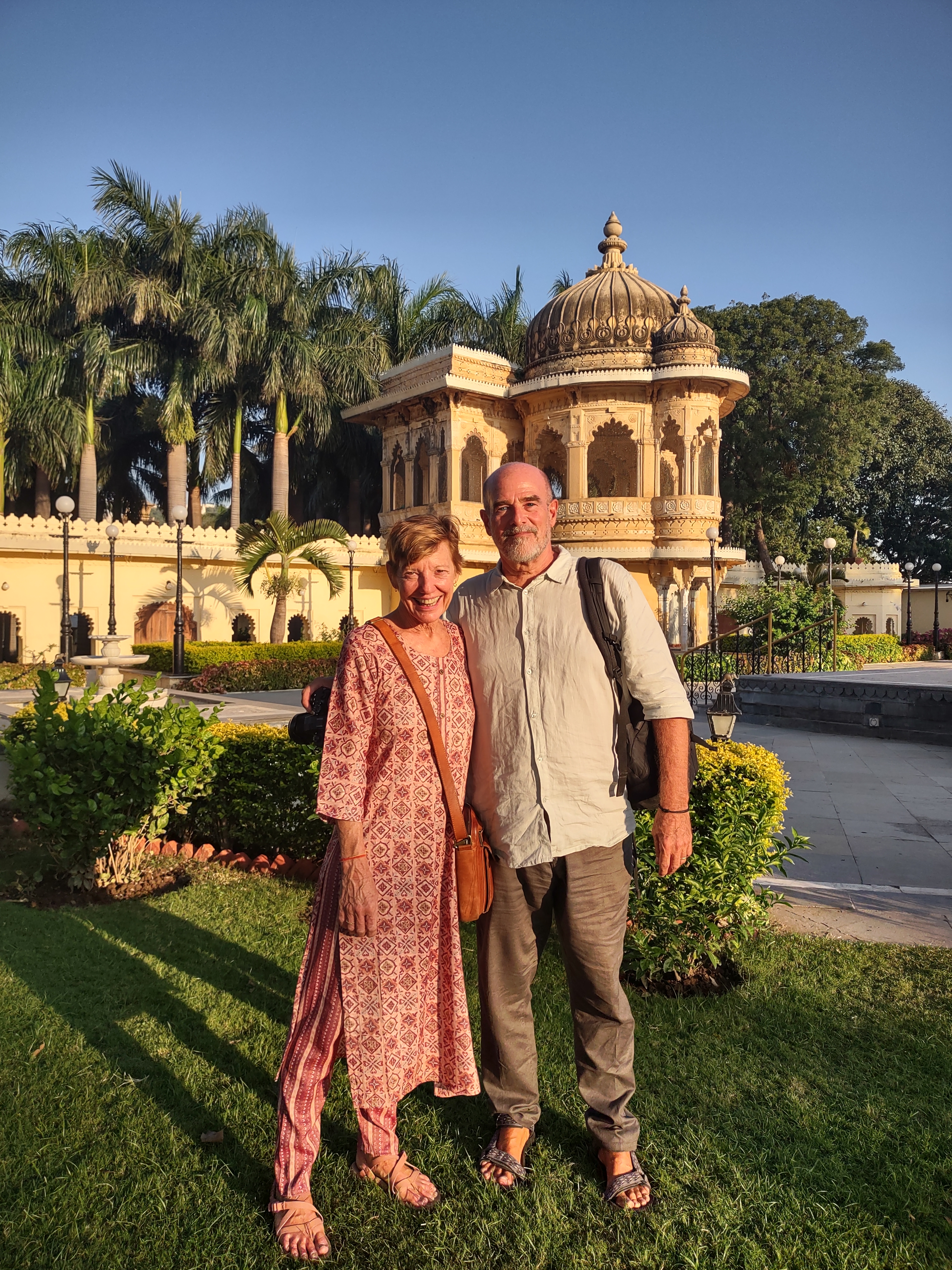
I feel compelled to interject in the travelogue that we were unprepared for how beautiful a city Udaipur was. While, like all of the cities we saw in India, it has its gritty side, the views of the city around and across the lake were incredible.
DAY 8: 10-Oct-2023
From Udaipur to Pushkar (5h drive)
Today you will leave the lake city of Udaipur and continue your tour towards Pushkar. On the road to the holy city of Pushkar, you will visit the very nice Eklingji temple (a Hindu temple which construction was started in 971, in honor of Lord Shiva). Once arrived in Pushkar, the rest of the day will be free for you to explore the holy city of Pushkar, where you can have a first look at the palace, the holy lake and its Ghats. Pushkar being a holy city, no alcohol, nor meat is served in the town. Overnight in Pushkar.
Your hotel: Inn Seventh Heaven (www.inn-seventh-heaven.com)
In the interest of time, we skipped the Eklingji Temple but did stop for lunch at another nice “touristic” restaurant and then made a stop at monument which had a panoramic view of the city of Ajmer which is just before Pushkar.


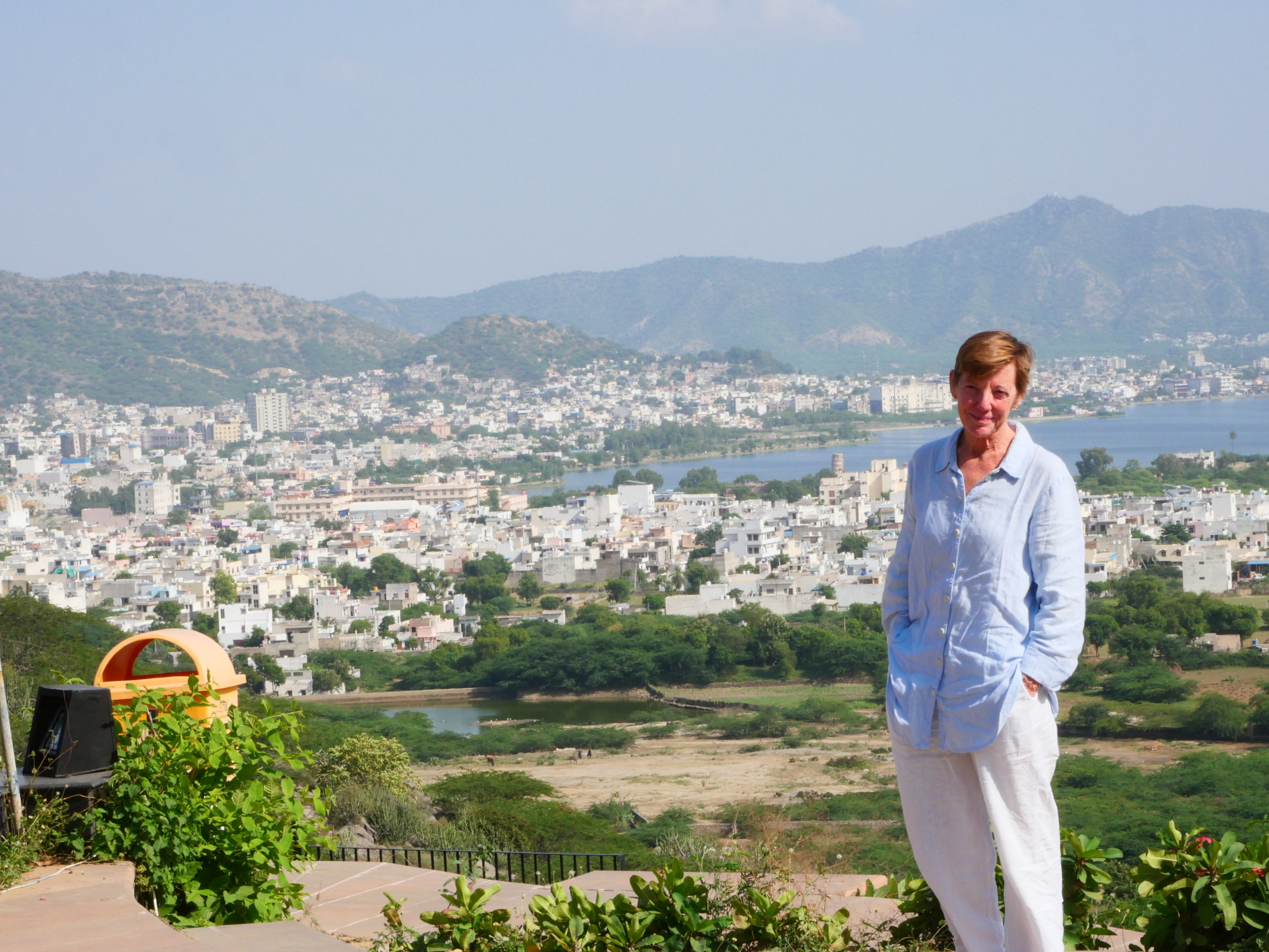
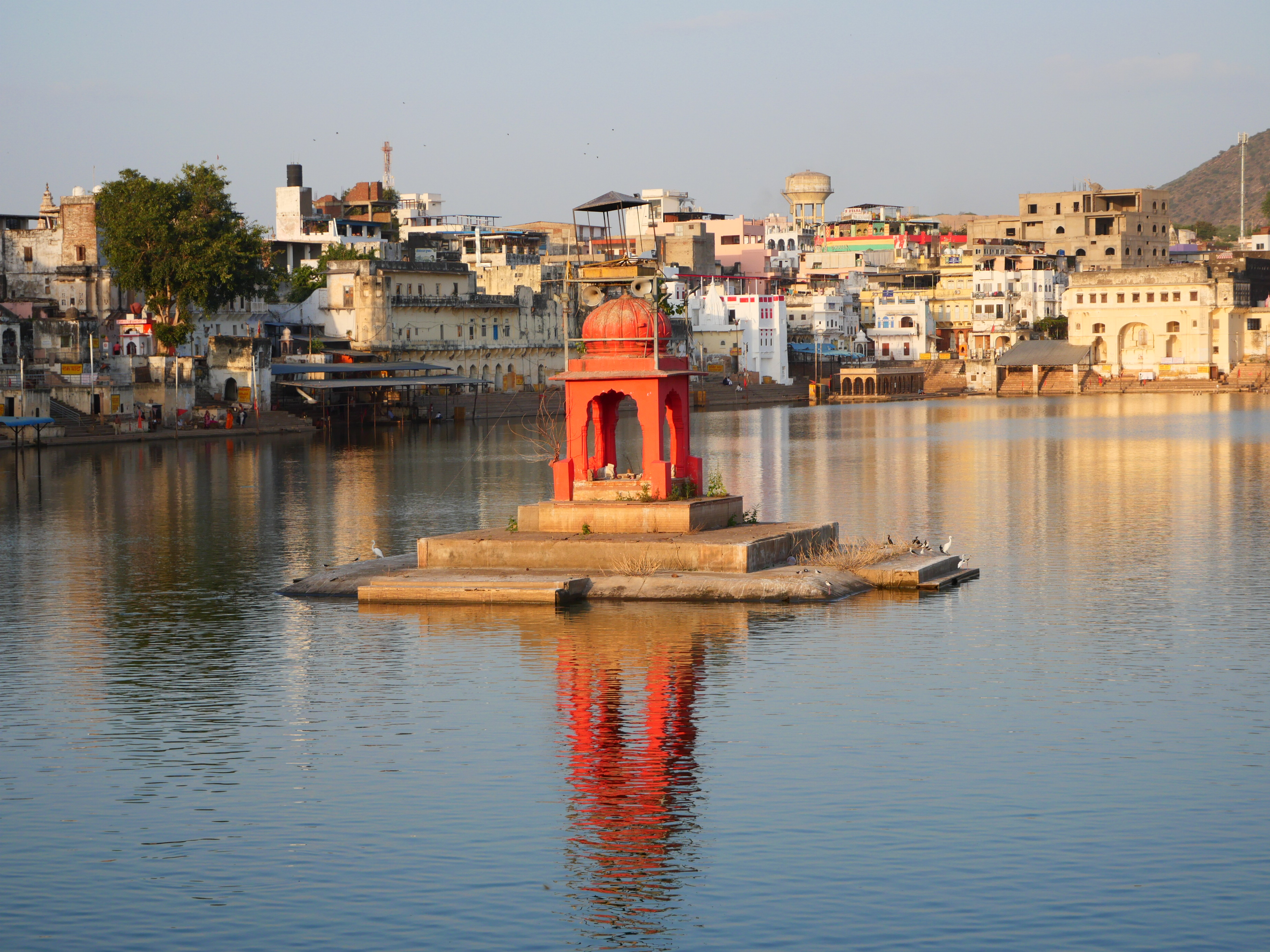
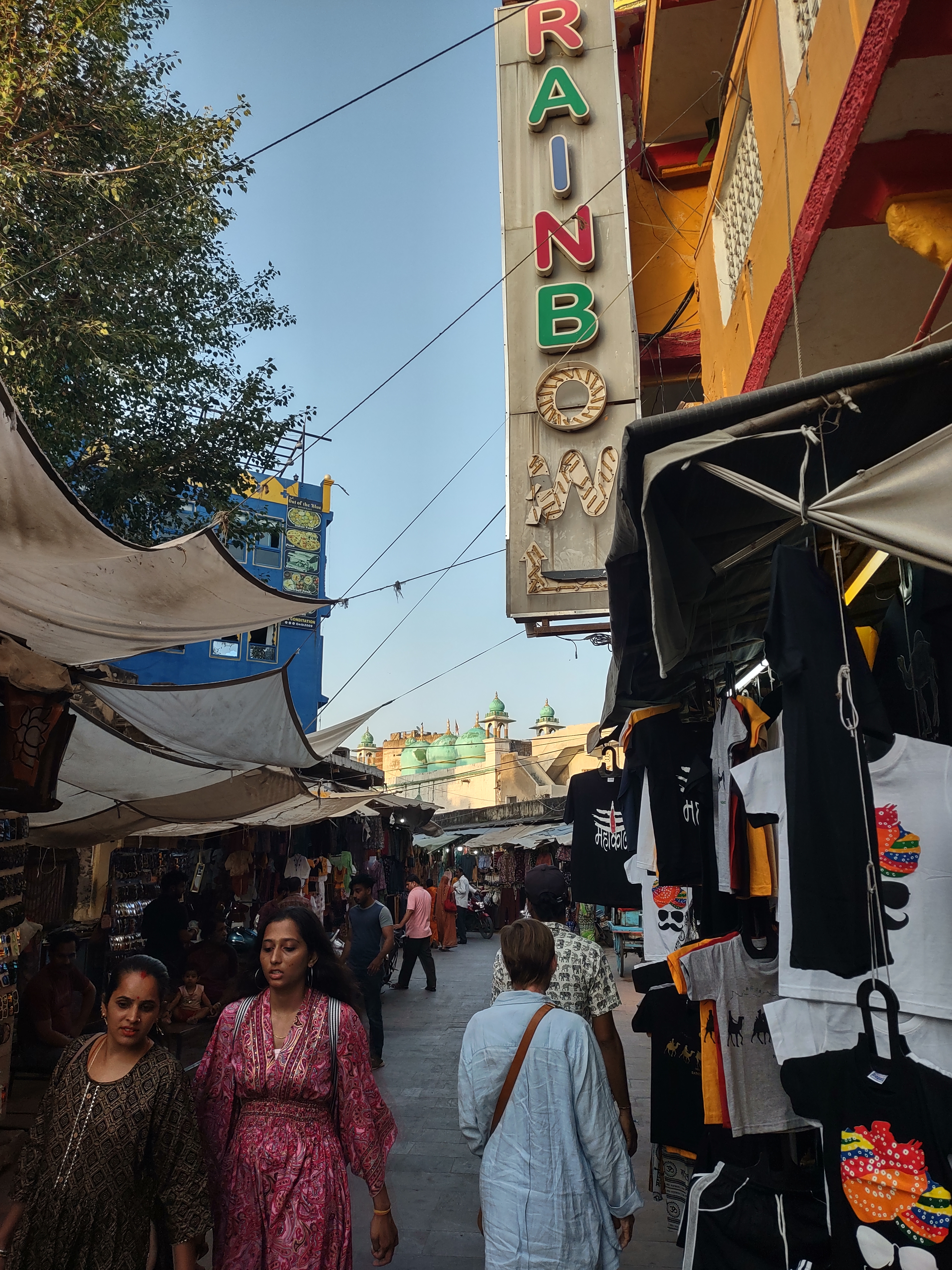
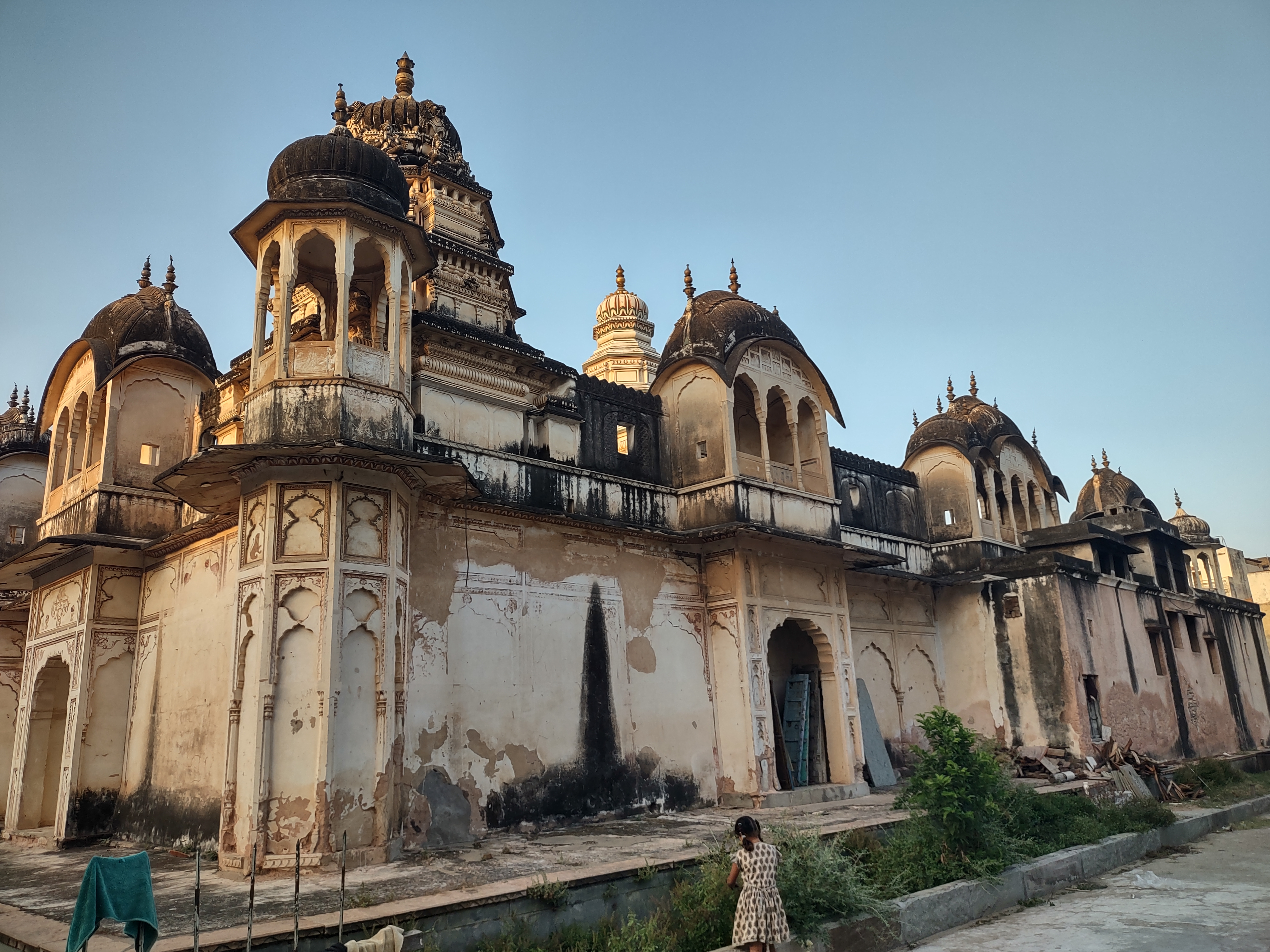
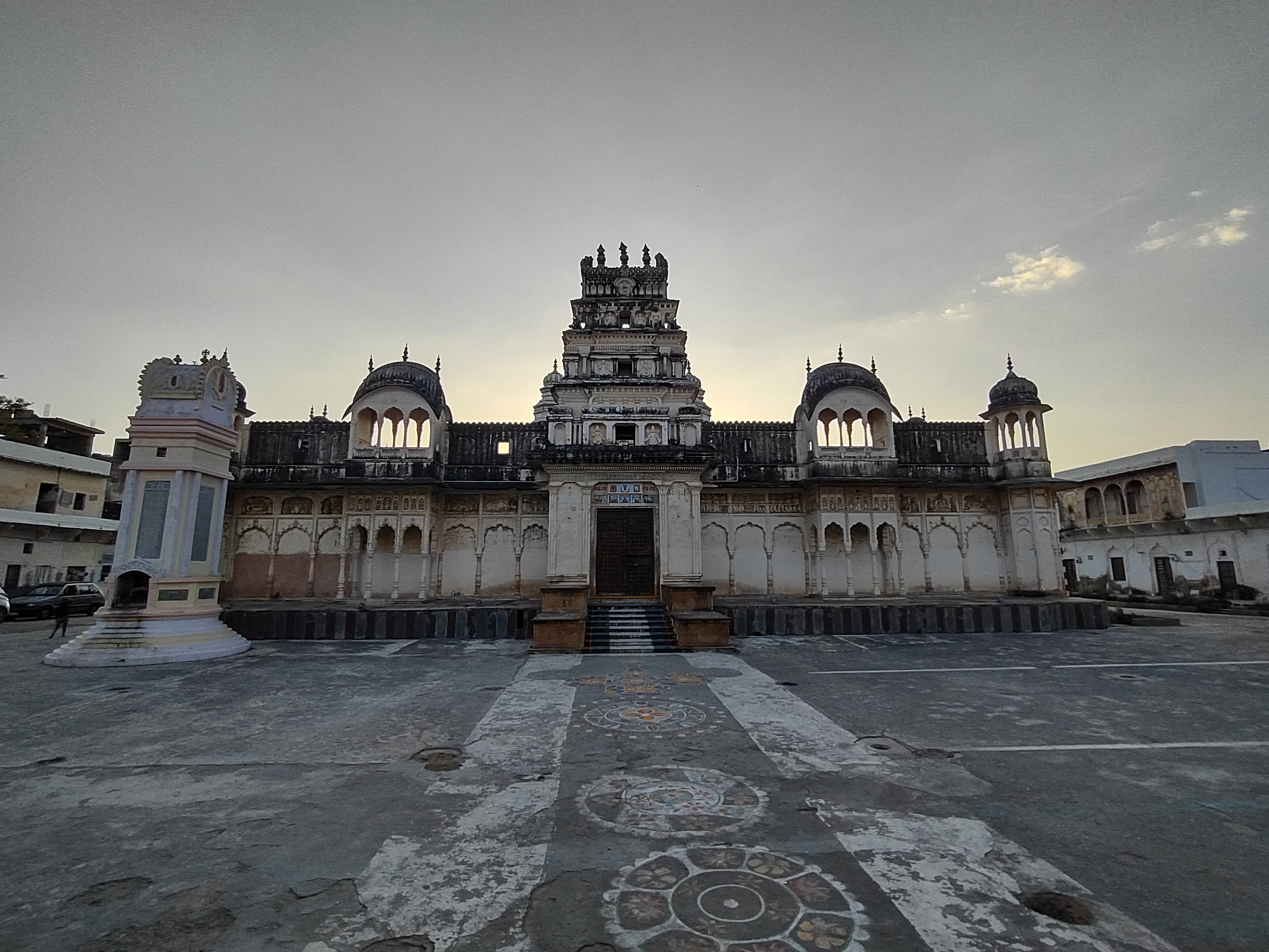
Once in Pushkar we checked into our hotel The Seventh Heaven and, rather than explore freely, we met our guide Manush (recommended by Mr. Sunder), who took us on a walking tour of the old city, eventually arriving at the only temple in the world dedicated to the father god Brahma, where we heard an interesting story about Brahma’s first wife (Saraswati) whose temple (for reasons not fully explained) is located on a mountain top on the other side of the lake and his second wife (Savitri), who resides with him in his own temple.

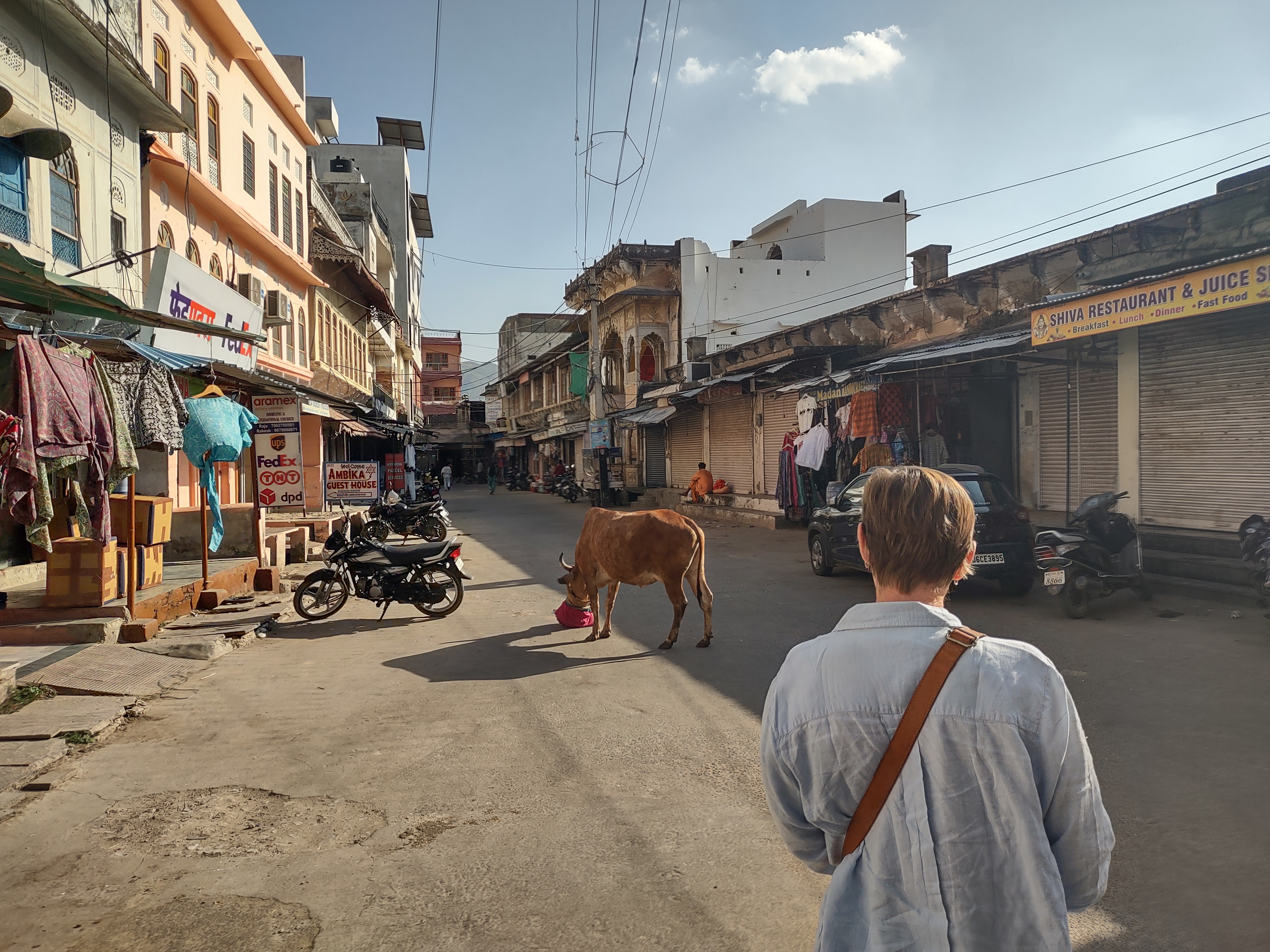
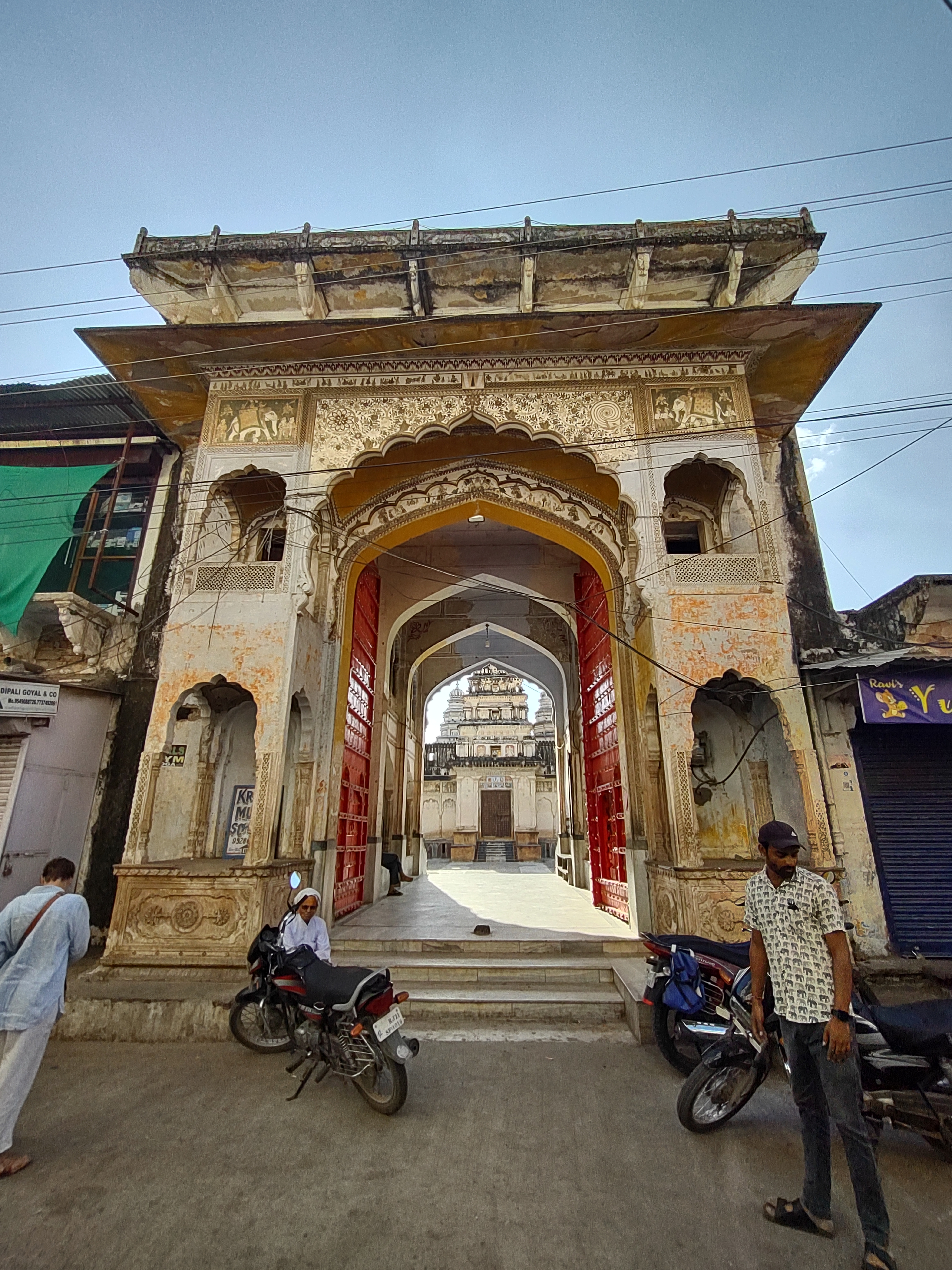
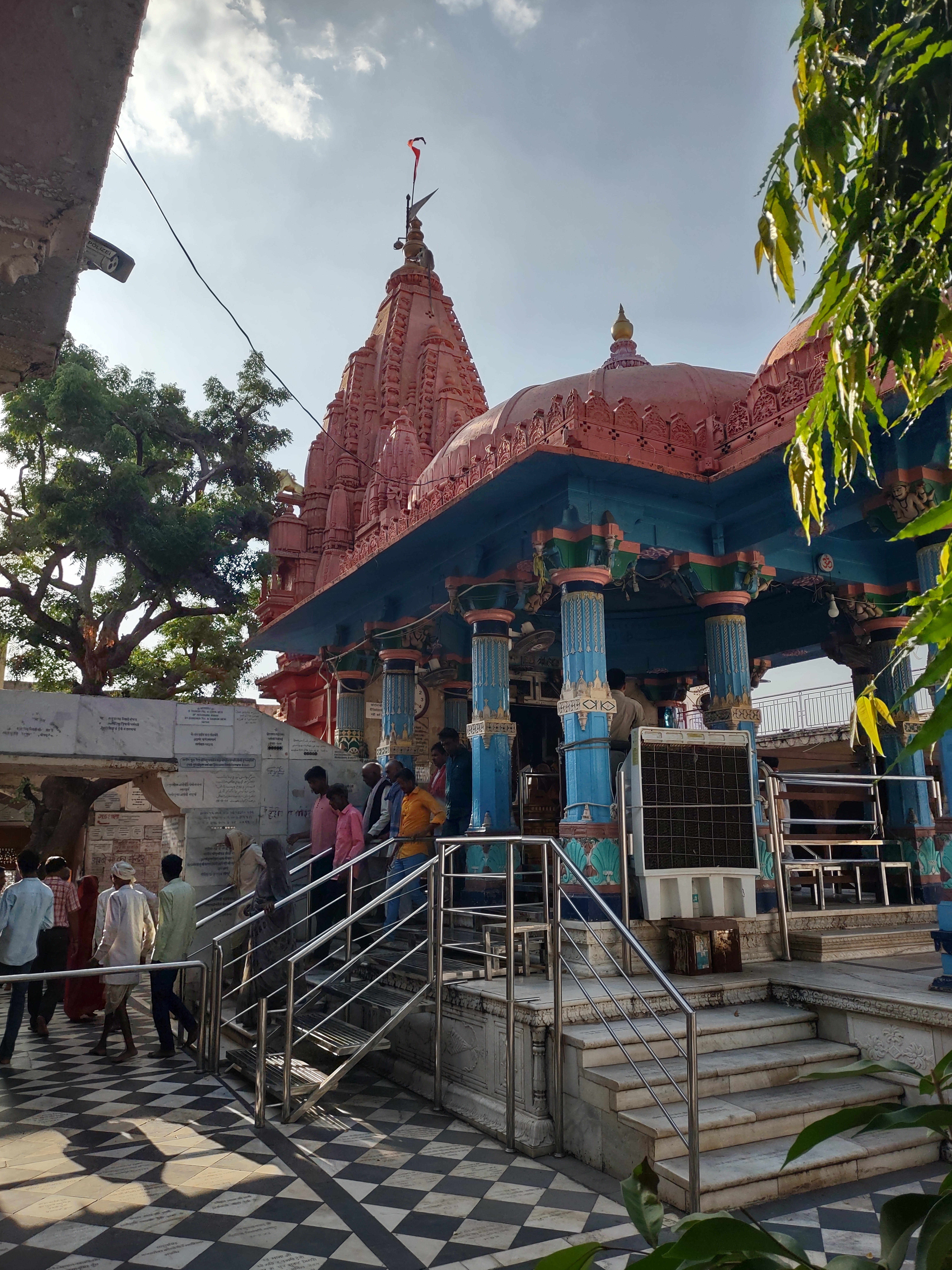
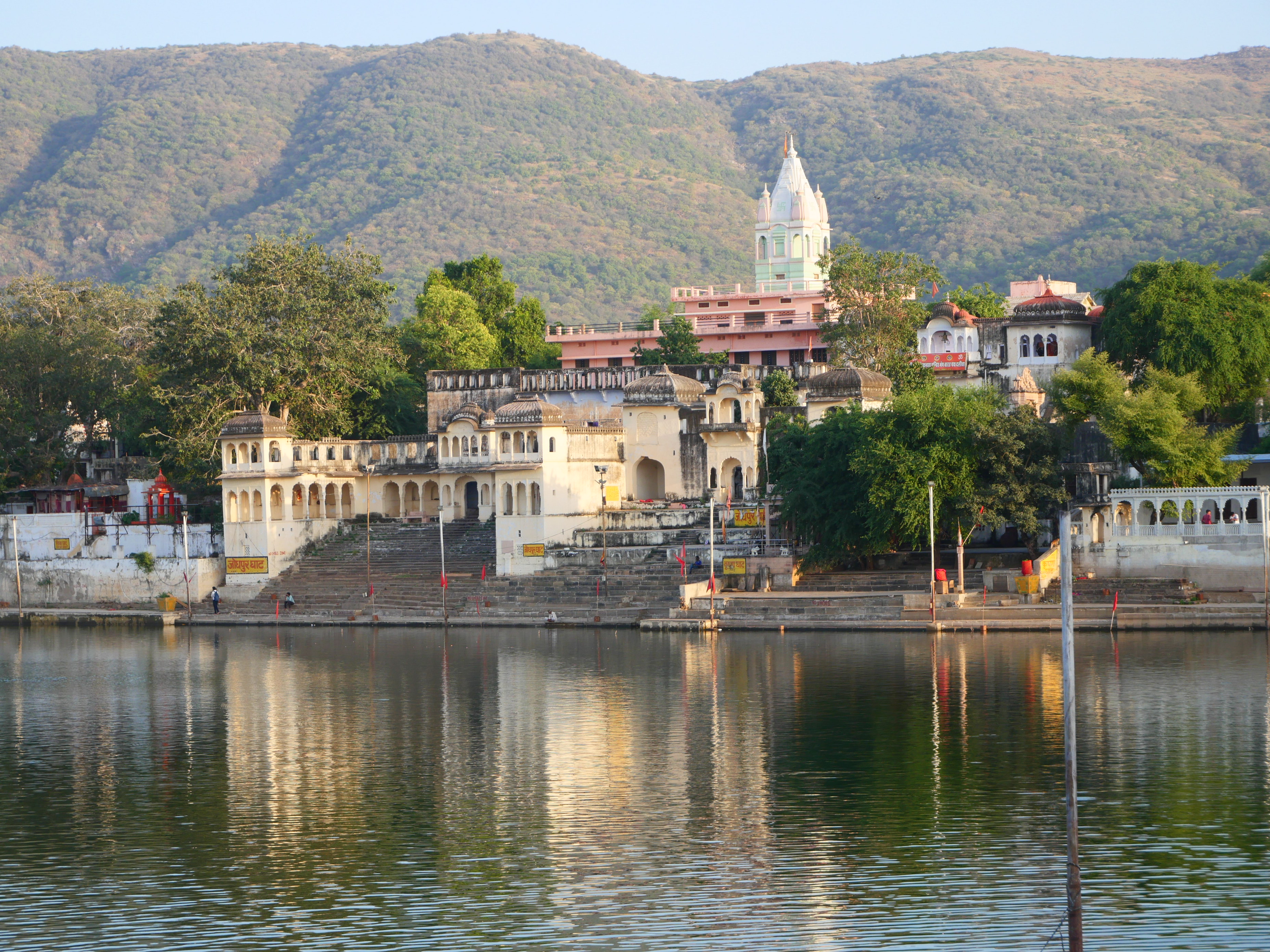
From there Manush took us to the nearby Brahma “ghat” on the lake where, with the assistance of a monk, we received Brahma’s blessings through a ritual which included repeating certain mantras, gifts which were presented to the lake, and the application of bracelets to our writsts and bindis (those red dots) to our foreheads.

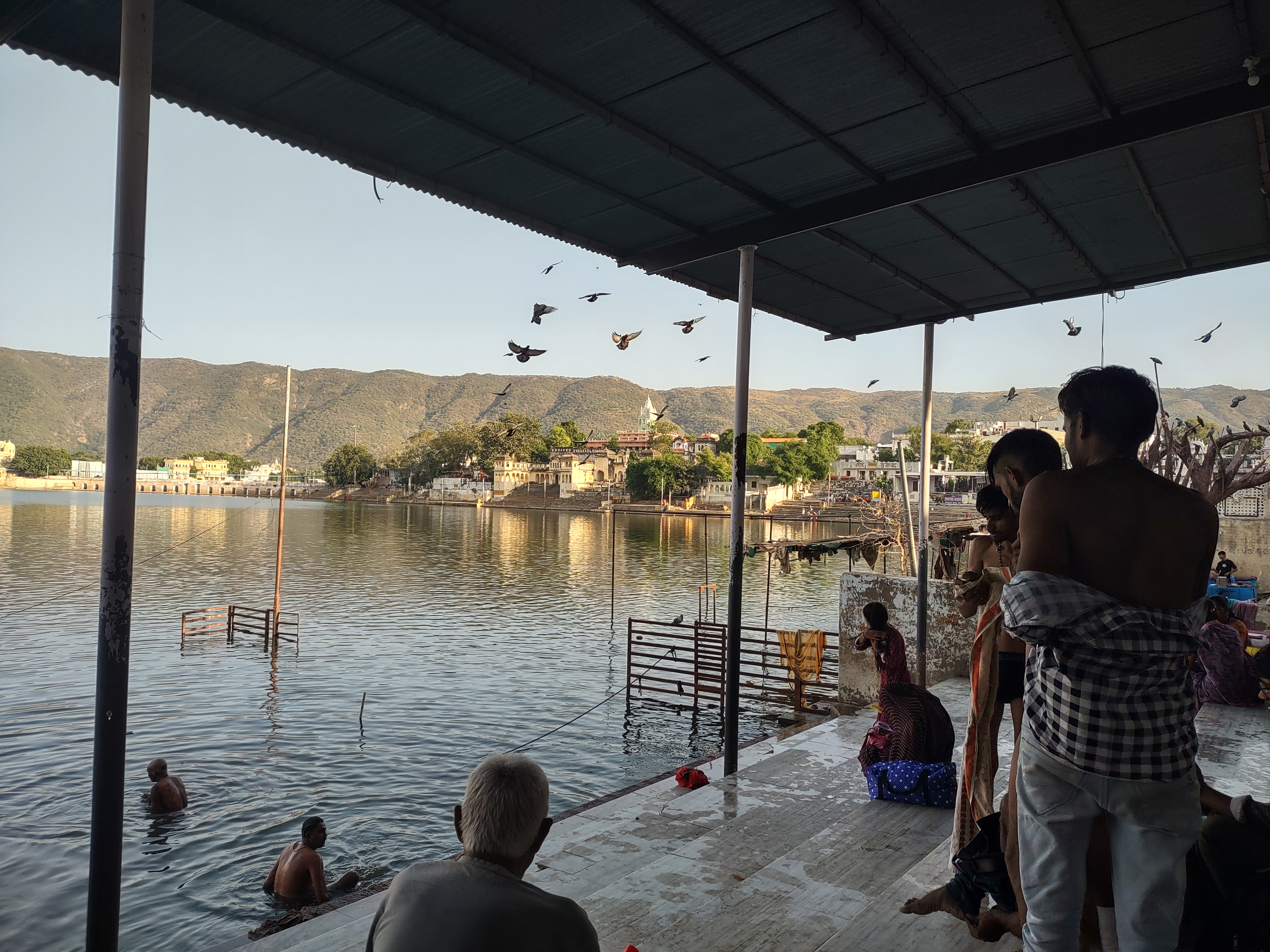
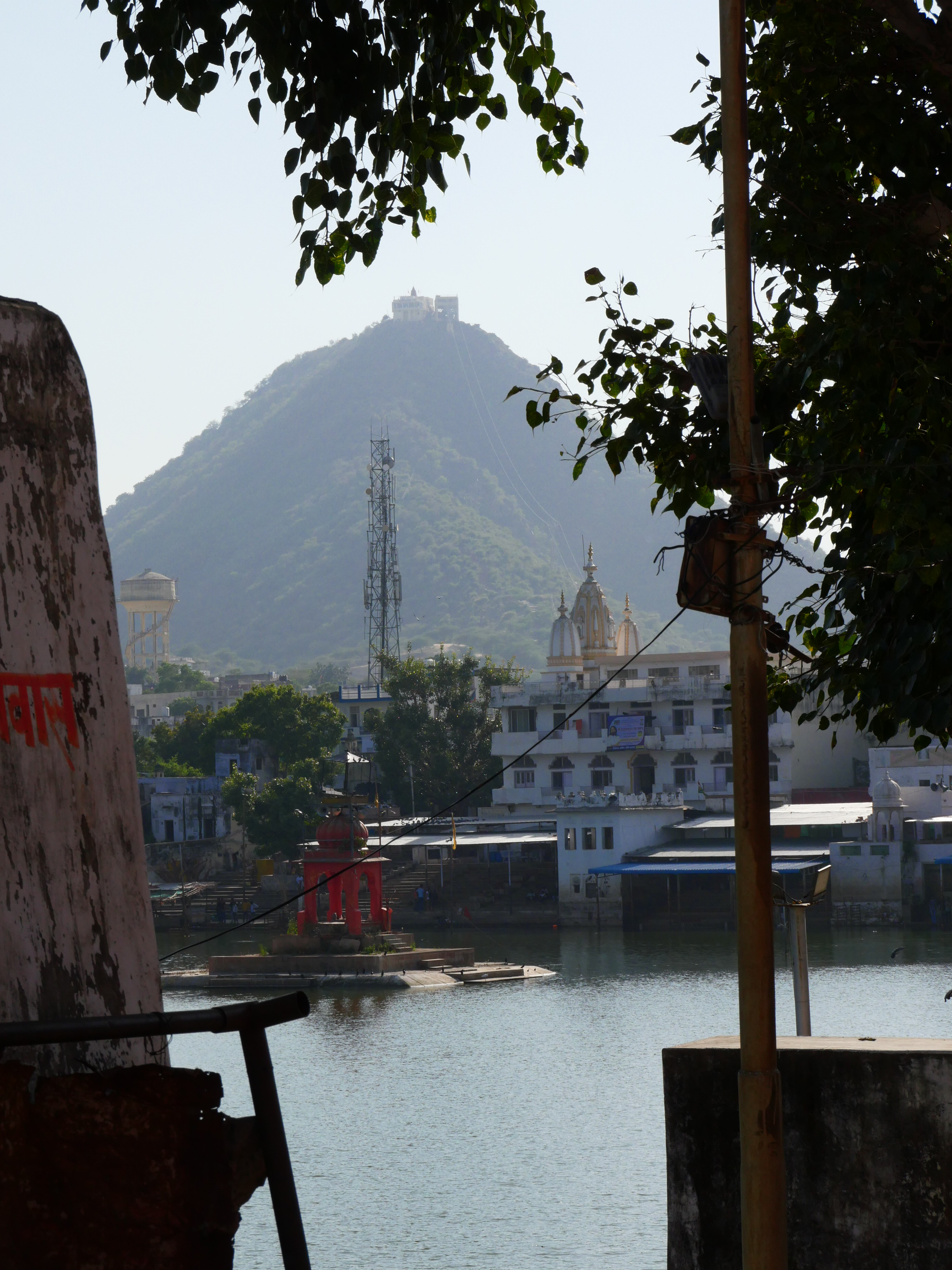
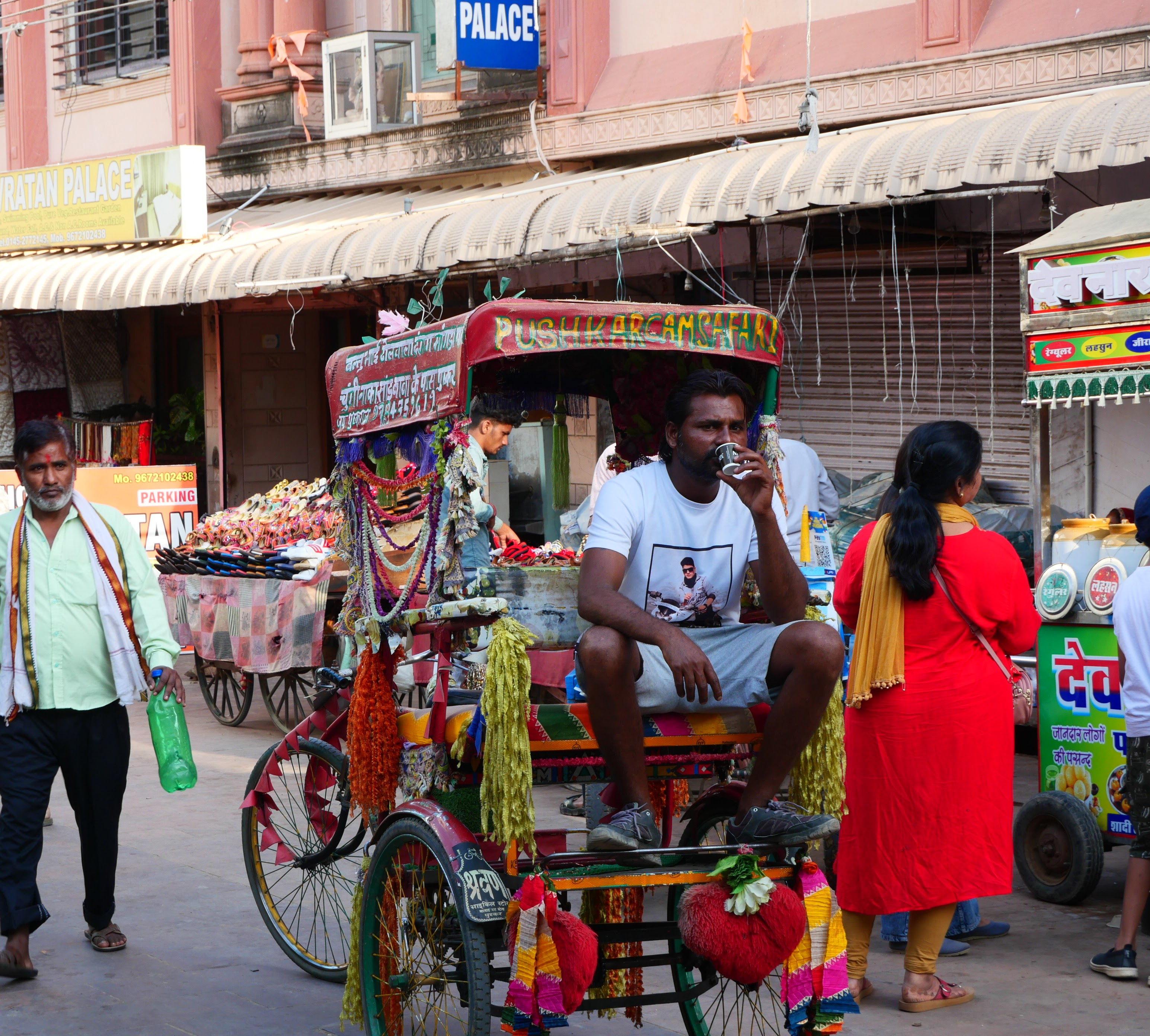
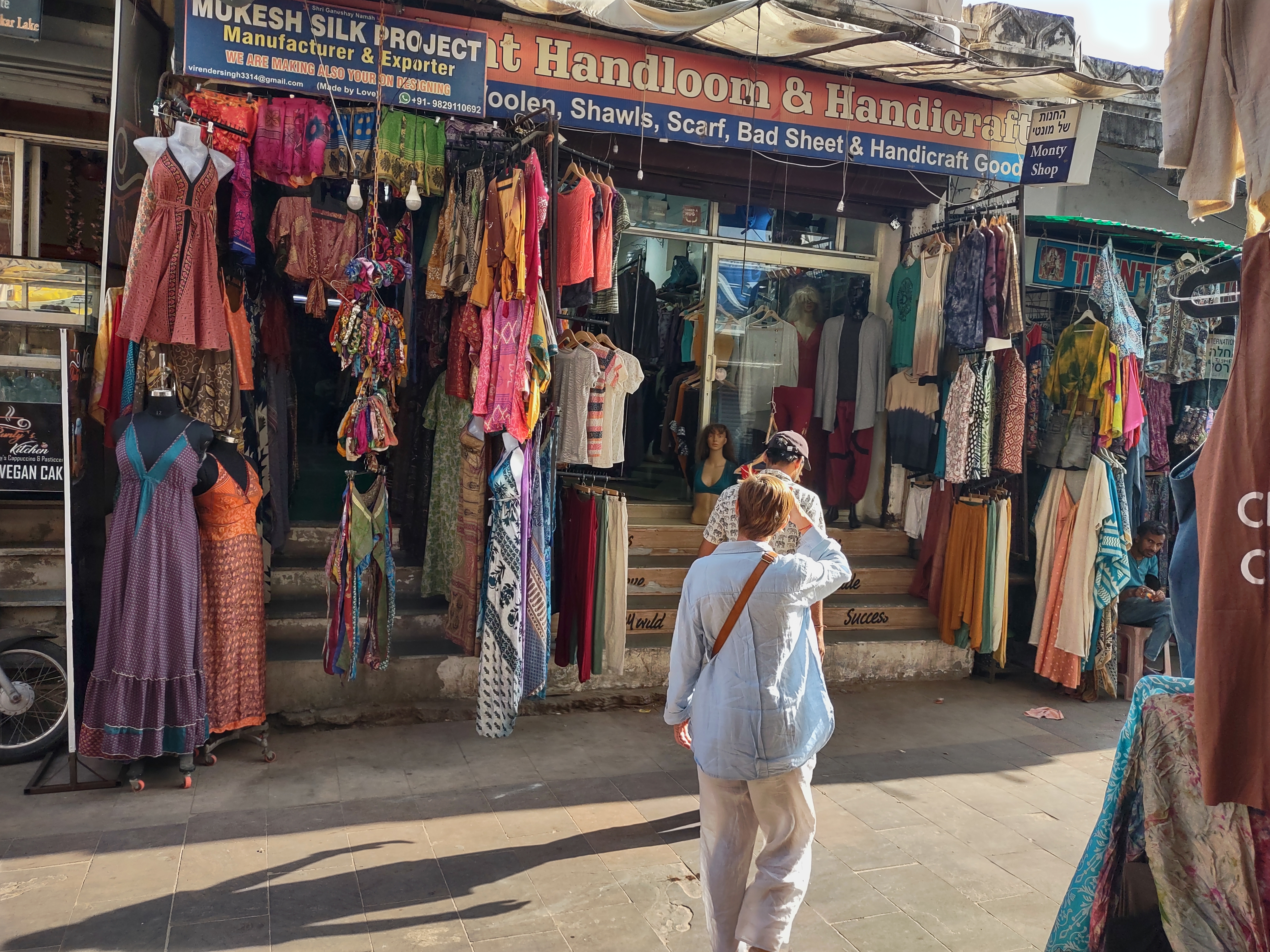
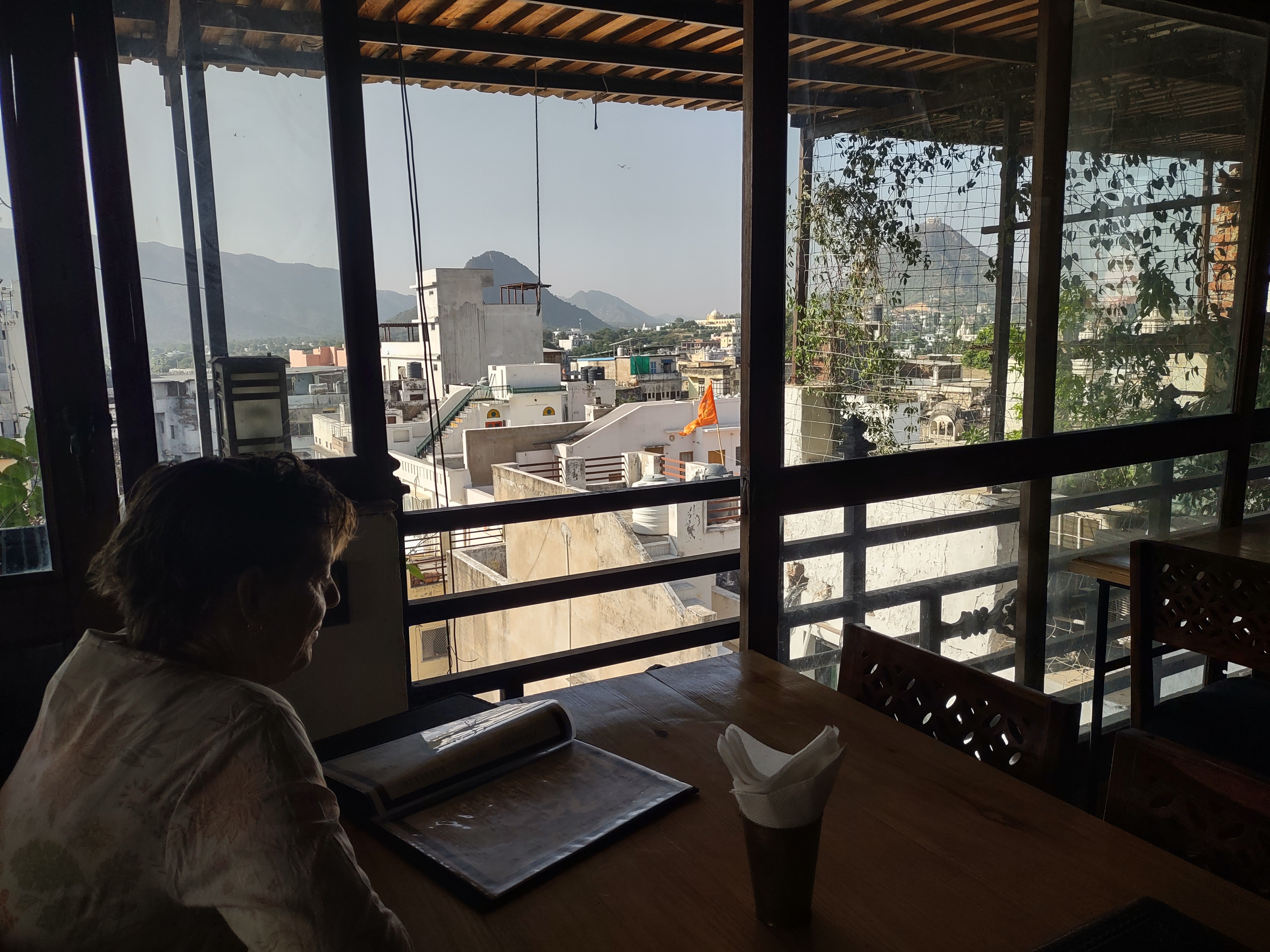
We spent the afternoon wandering the city’s markets and seeing more temples before returning to the Seventh Heaven where we had a nice dinner in their almost roof-top restaurant (which did have a nice view of the mountain temple of Saraswati) before retiring for the night.

DAY 9: 11-Oct-2023
From Pushkar to Jaipur (3h drive)
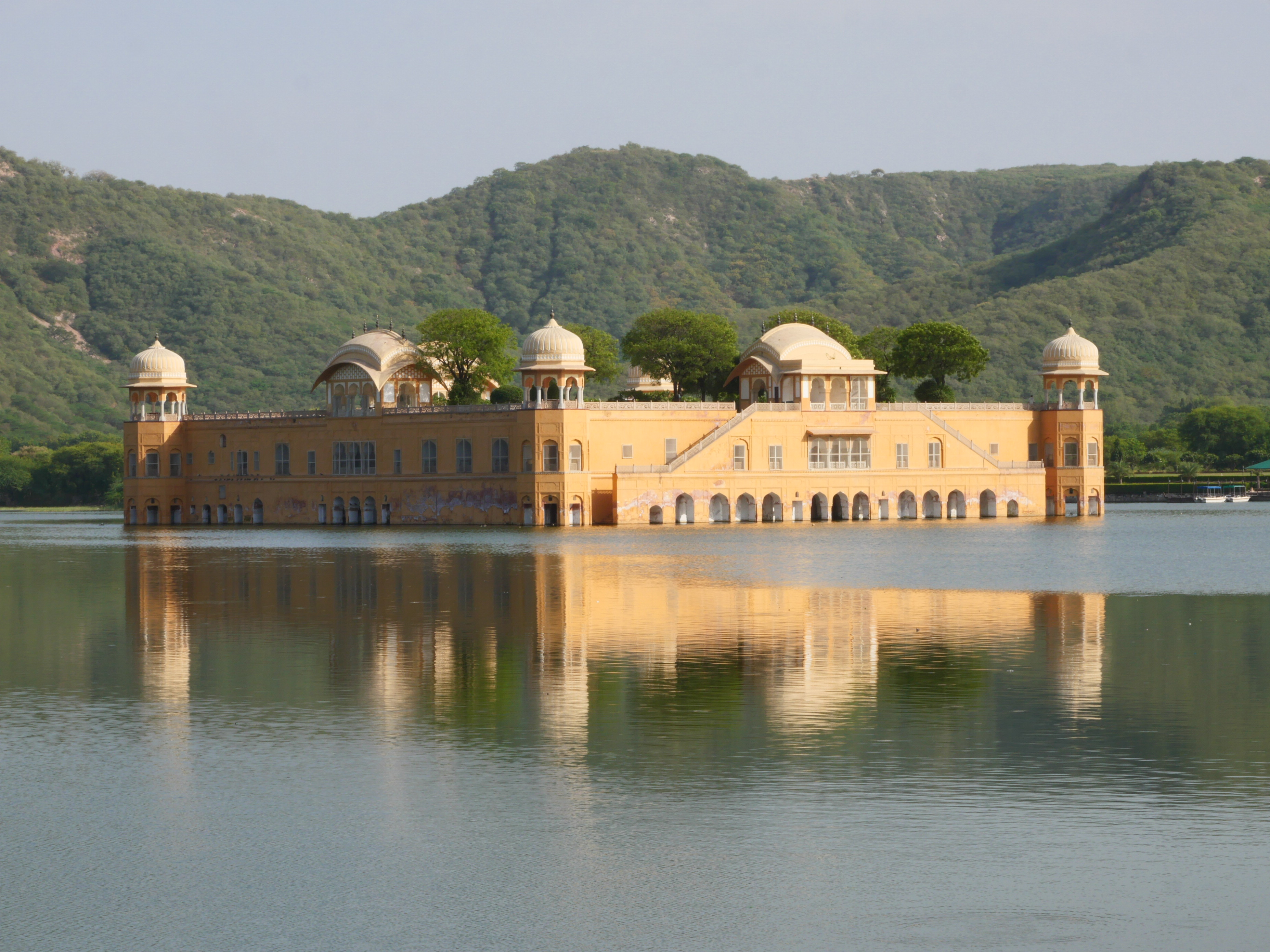
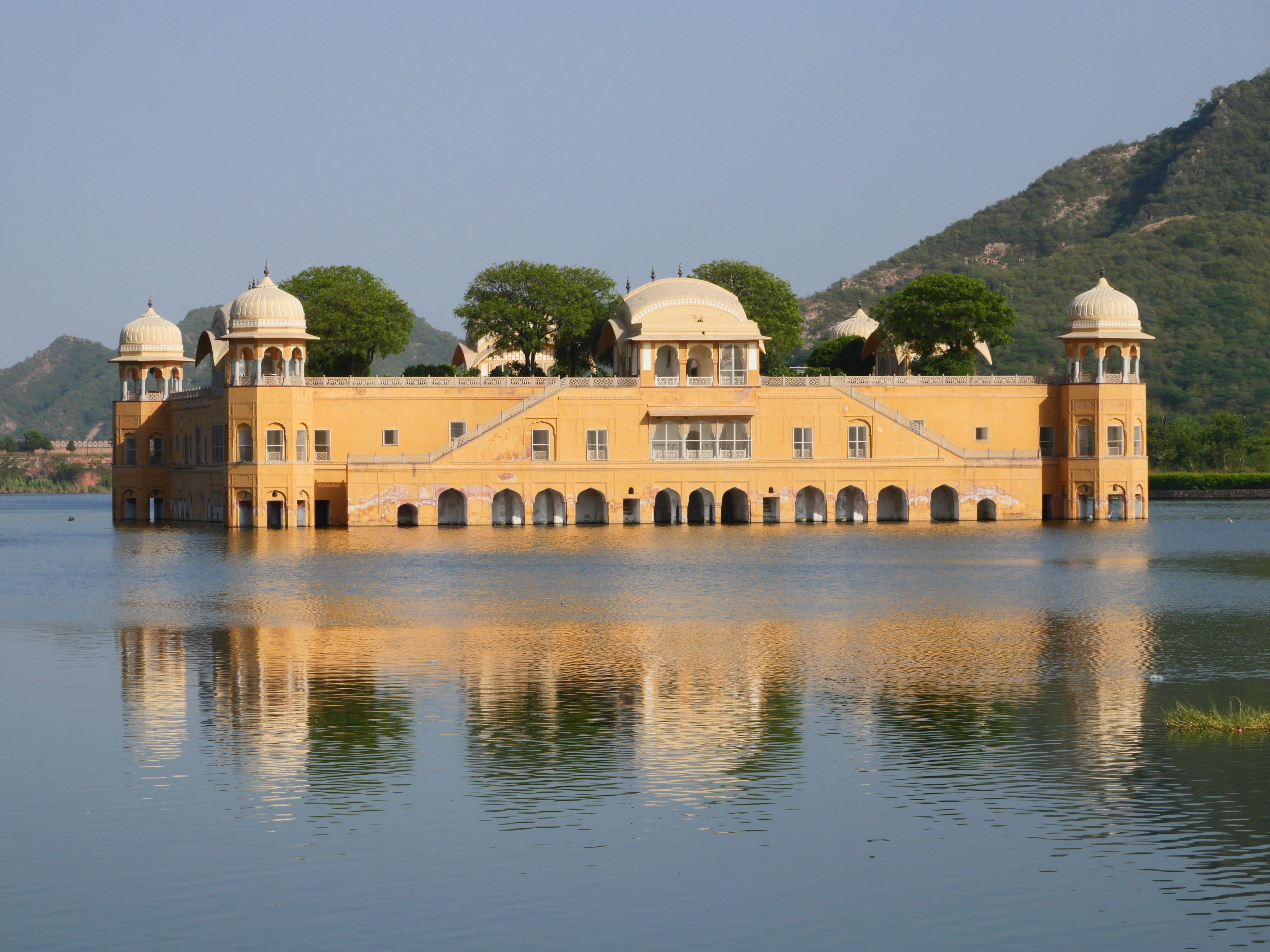
This morning you will be transferred to the pink city Jaipur, the capital city of Rajasthan. Named after Maharaja Sawai Jai Singh II, the city was founded in the 18th century. In the afternoon you will visit Jaigarth Fort. Also discover the beautiful Jal Mahal. The palace (literally ‘Water Palace’) is located in the middle of the Man Sagar Lake. The postcard view becomes particularly romantic at sunset, when the Palace lights up and seems to float in the air. In the evening you can enjoy a unique cinema experience or a world famous Indian ayurvedic massage. Overnight in Jaipur.
Your hotel: Anuraag Villa (www.anuraagvilla.com)
We arrived in Jaipur fairly early (passed an elephant along the way!) and checked into our hotel, after lunch at the Rainbow Family Restaurant, Mr. Sunder gave us an introductory driving tour of the old city, also known as the “pink city” for reasons which became obvious to us as almost all the buildings are faced in a terra cotta colored plaster.
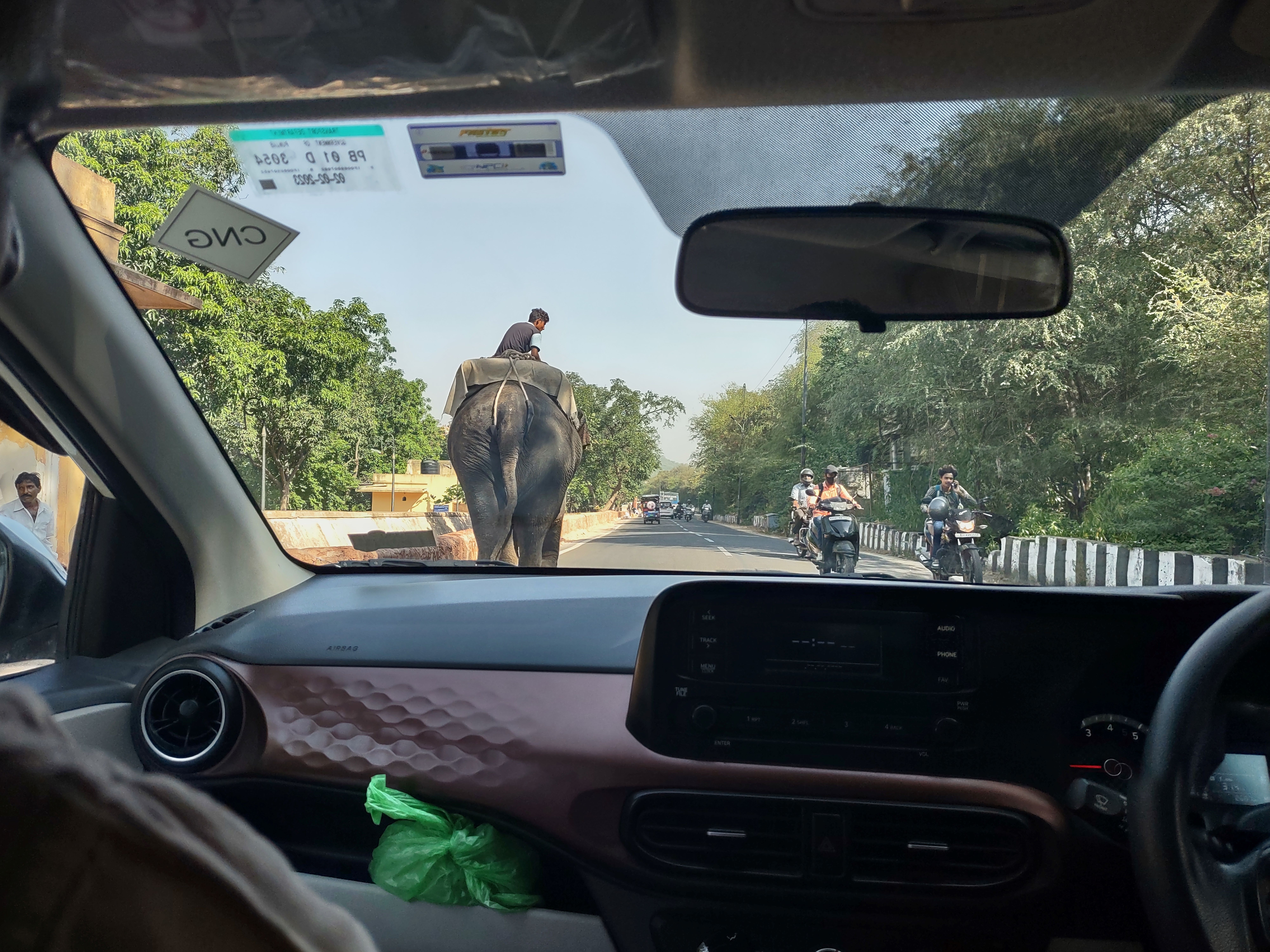
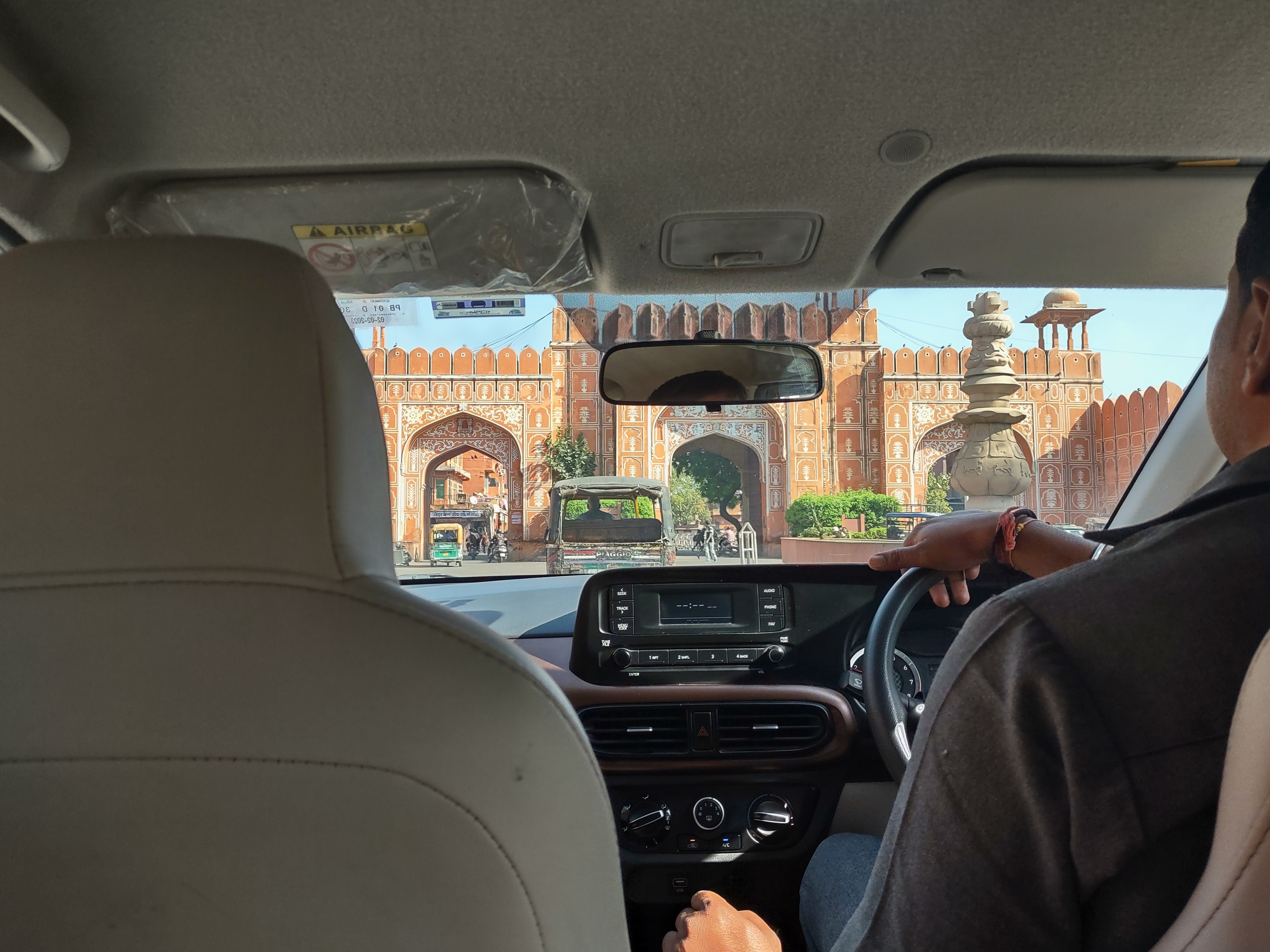
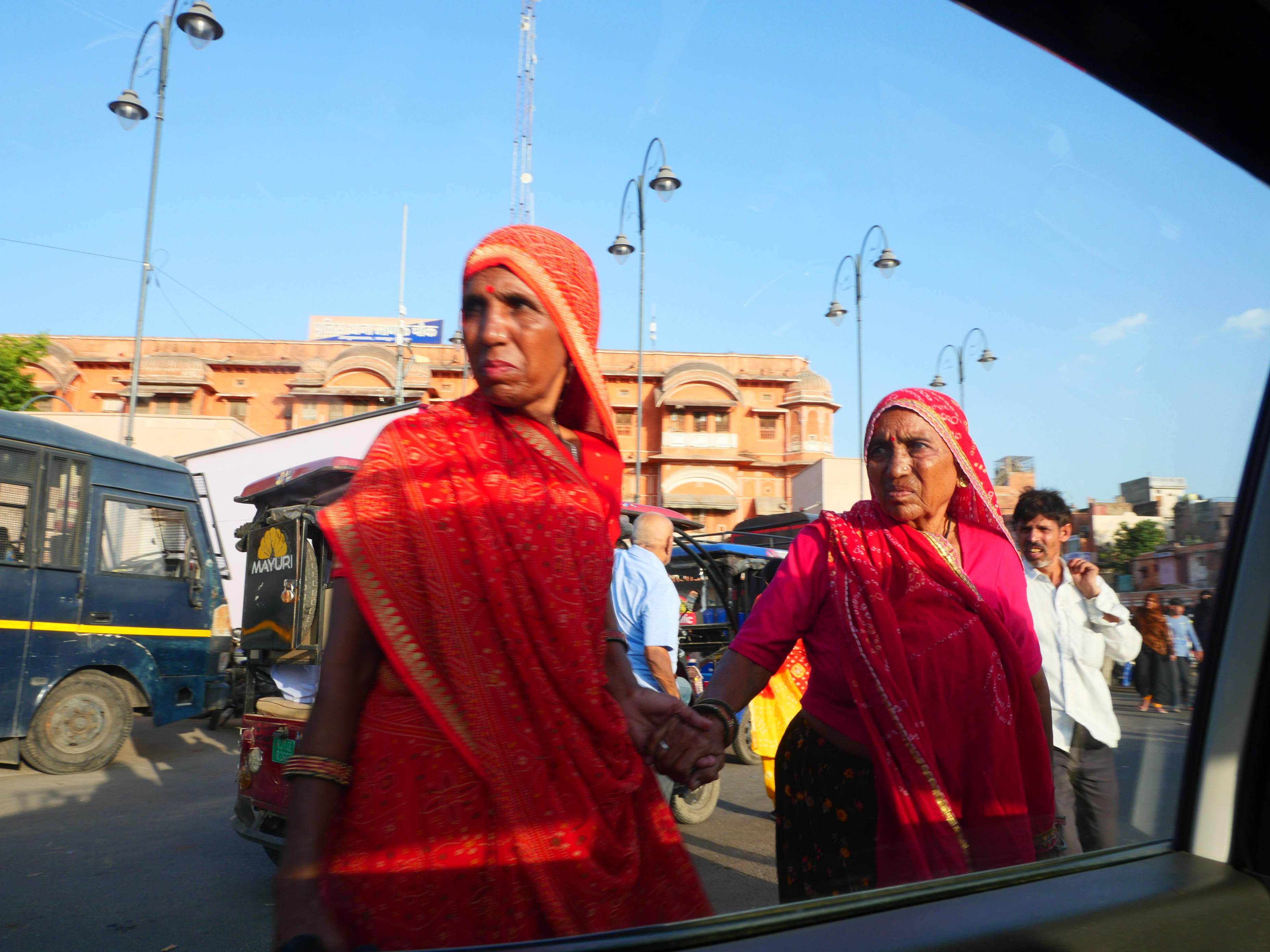
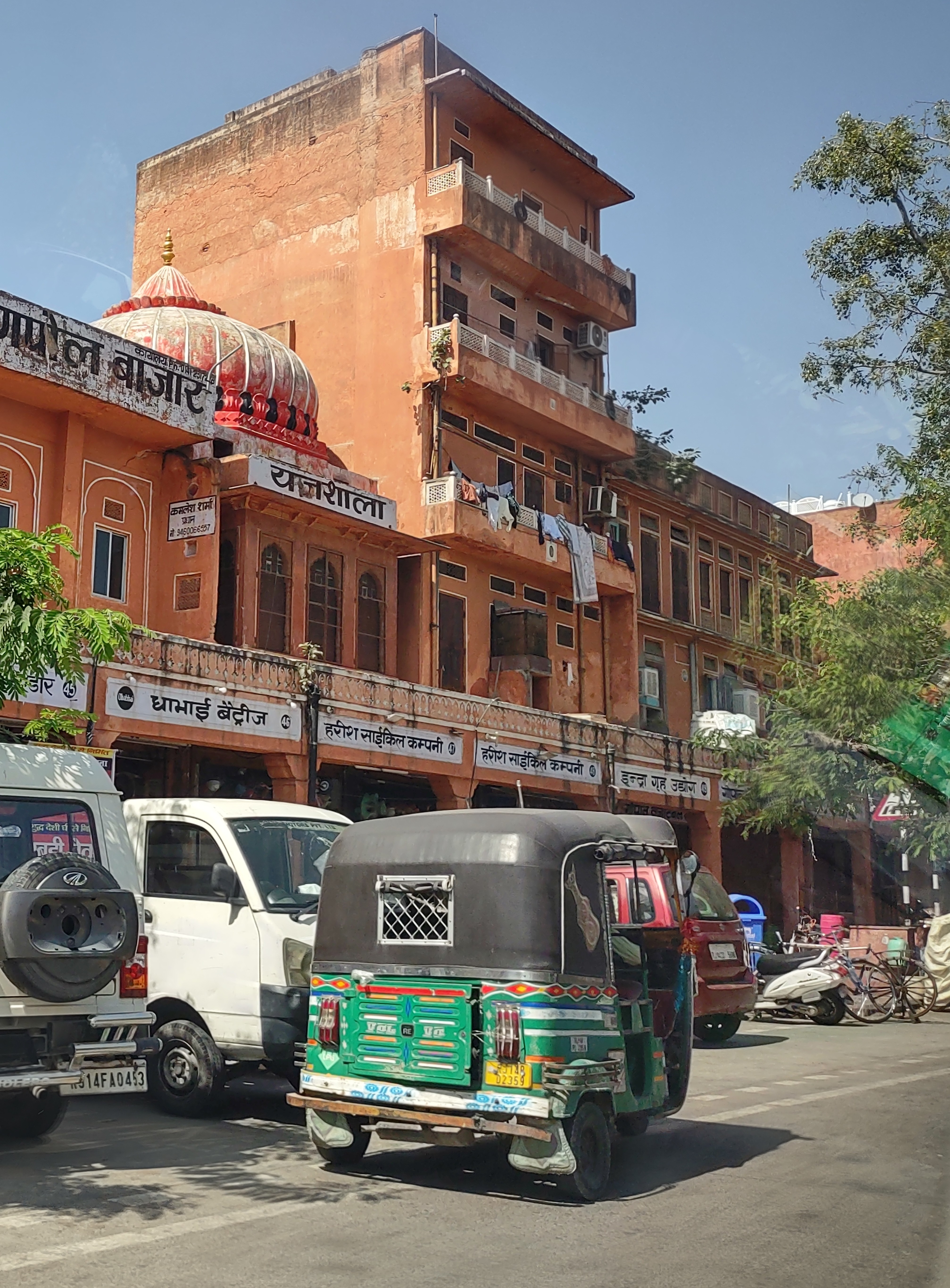
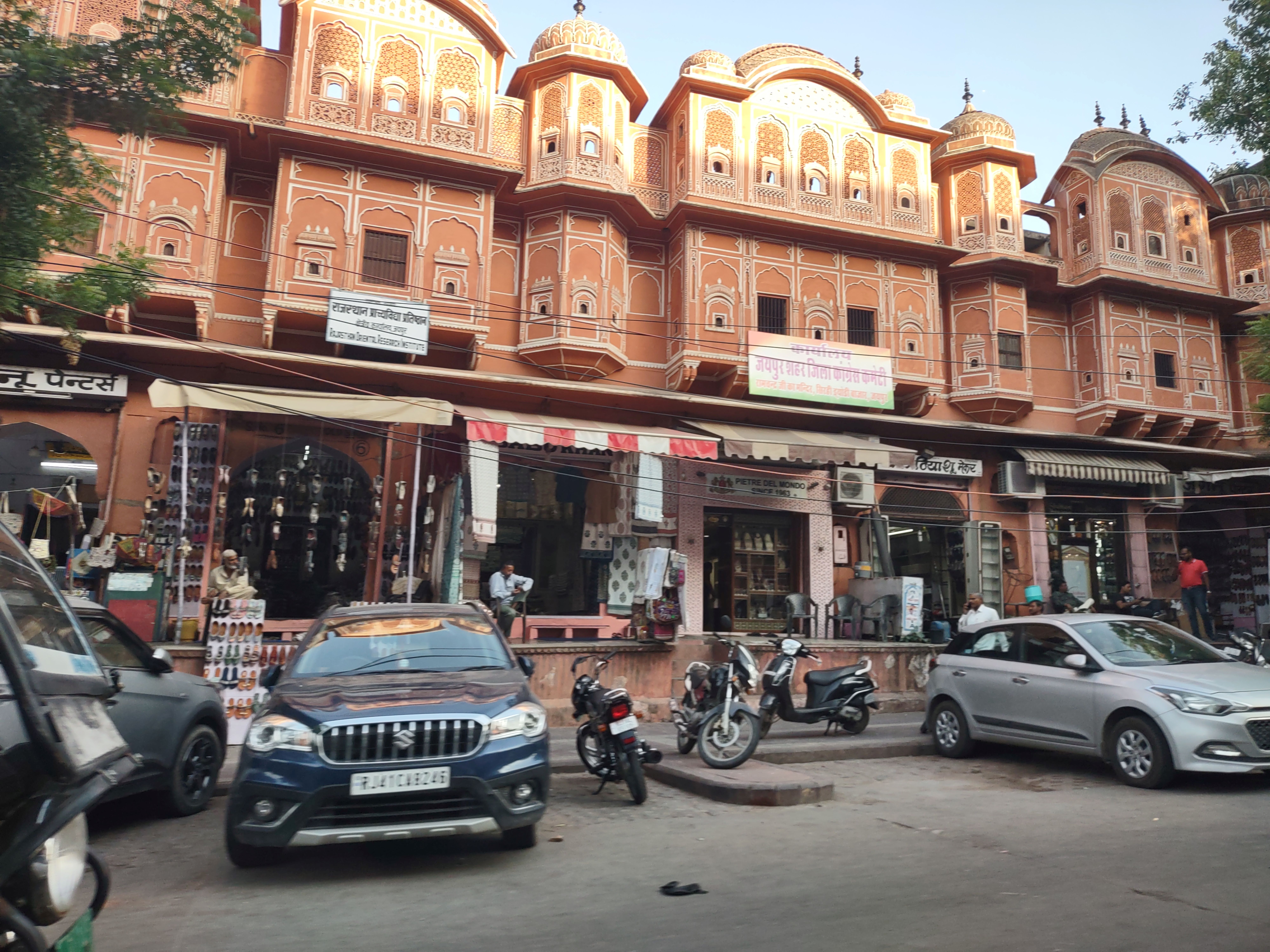
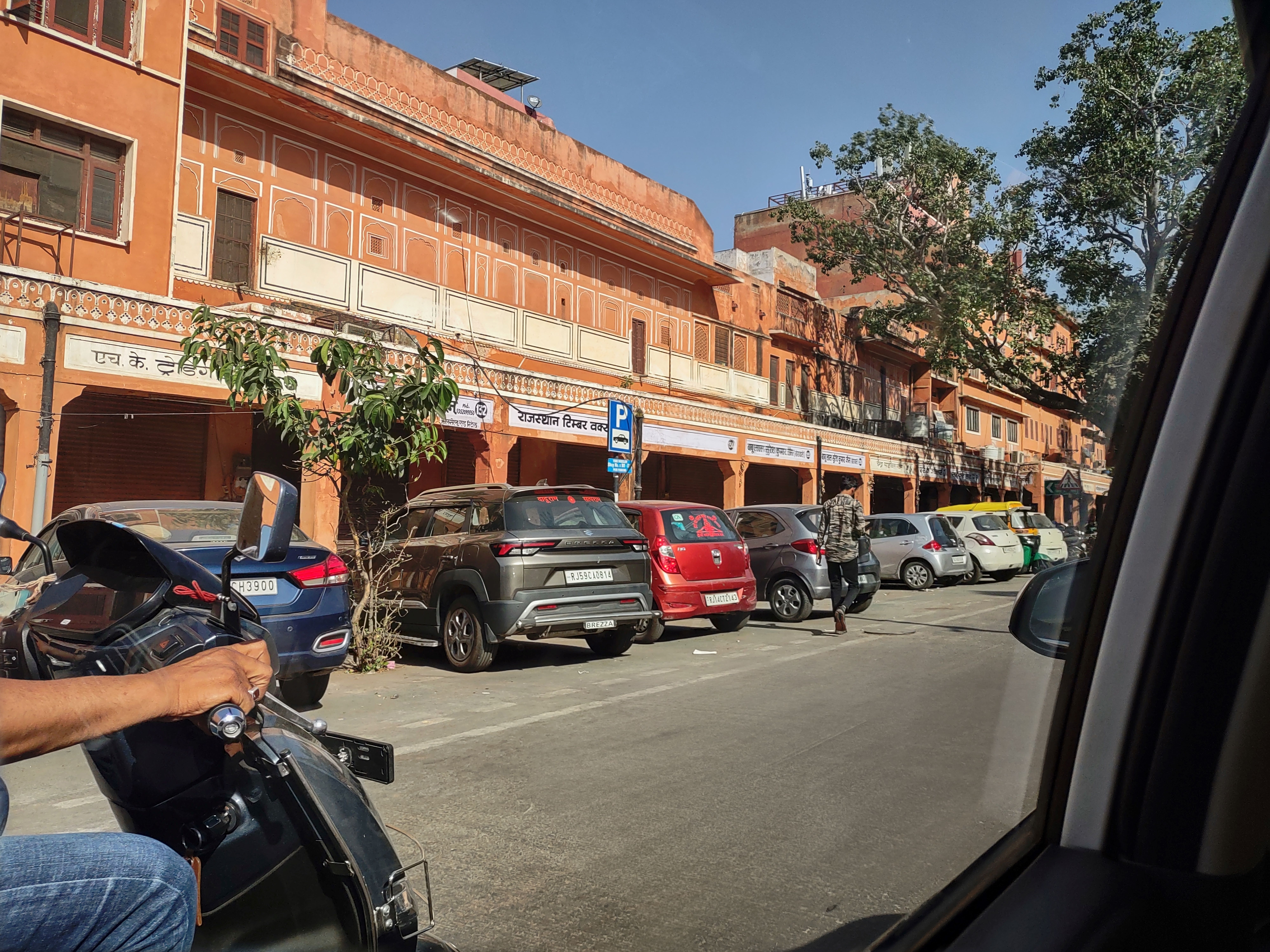
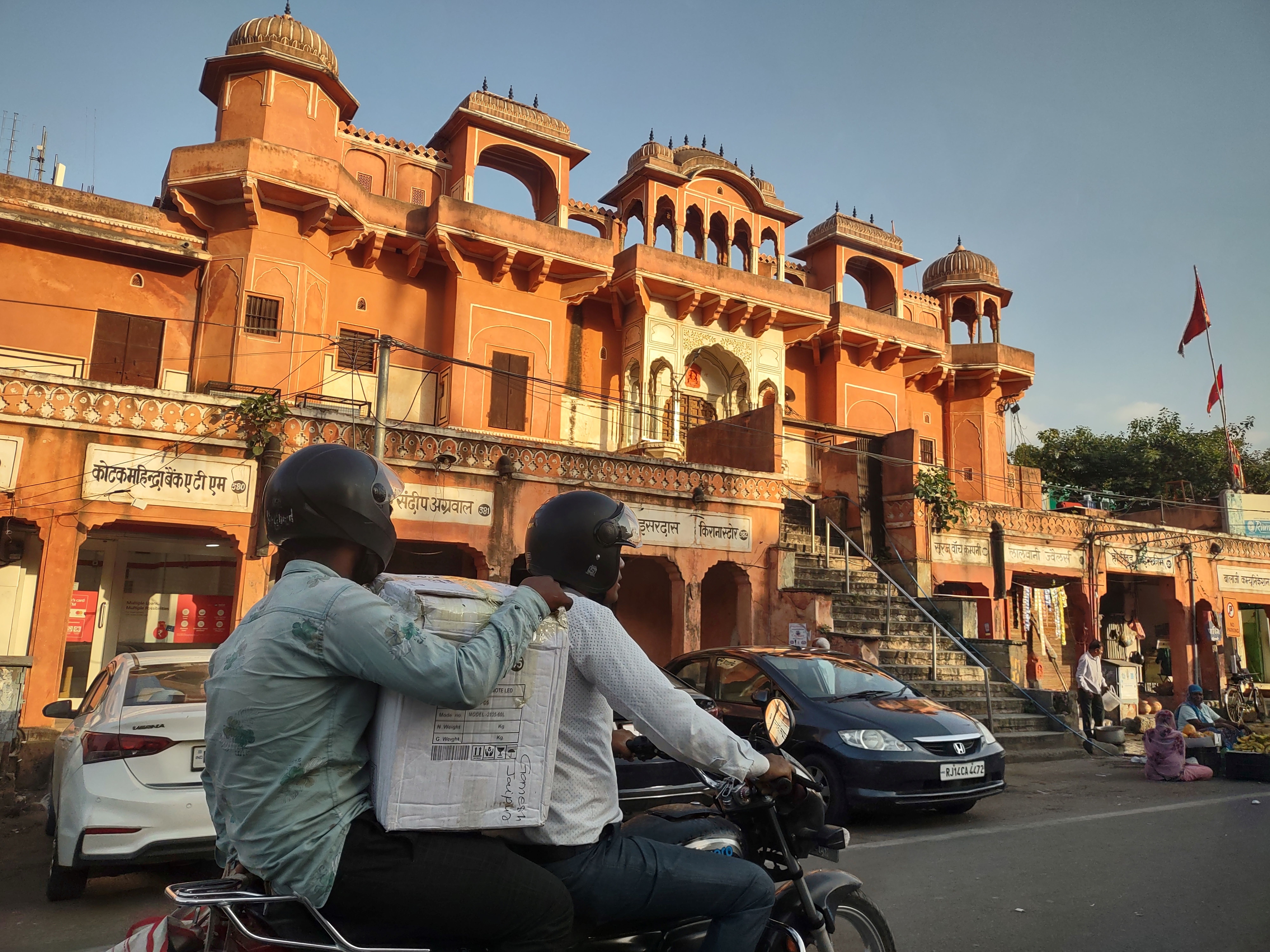
At Mr. Sunder’s recommendation, we did a self-guided tour of the Mubarak Mahal City Palace. It was a very ornate and quite enormous place with several large courtyards which we somehow did manage to find our way back out of again.

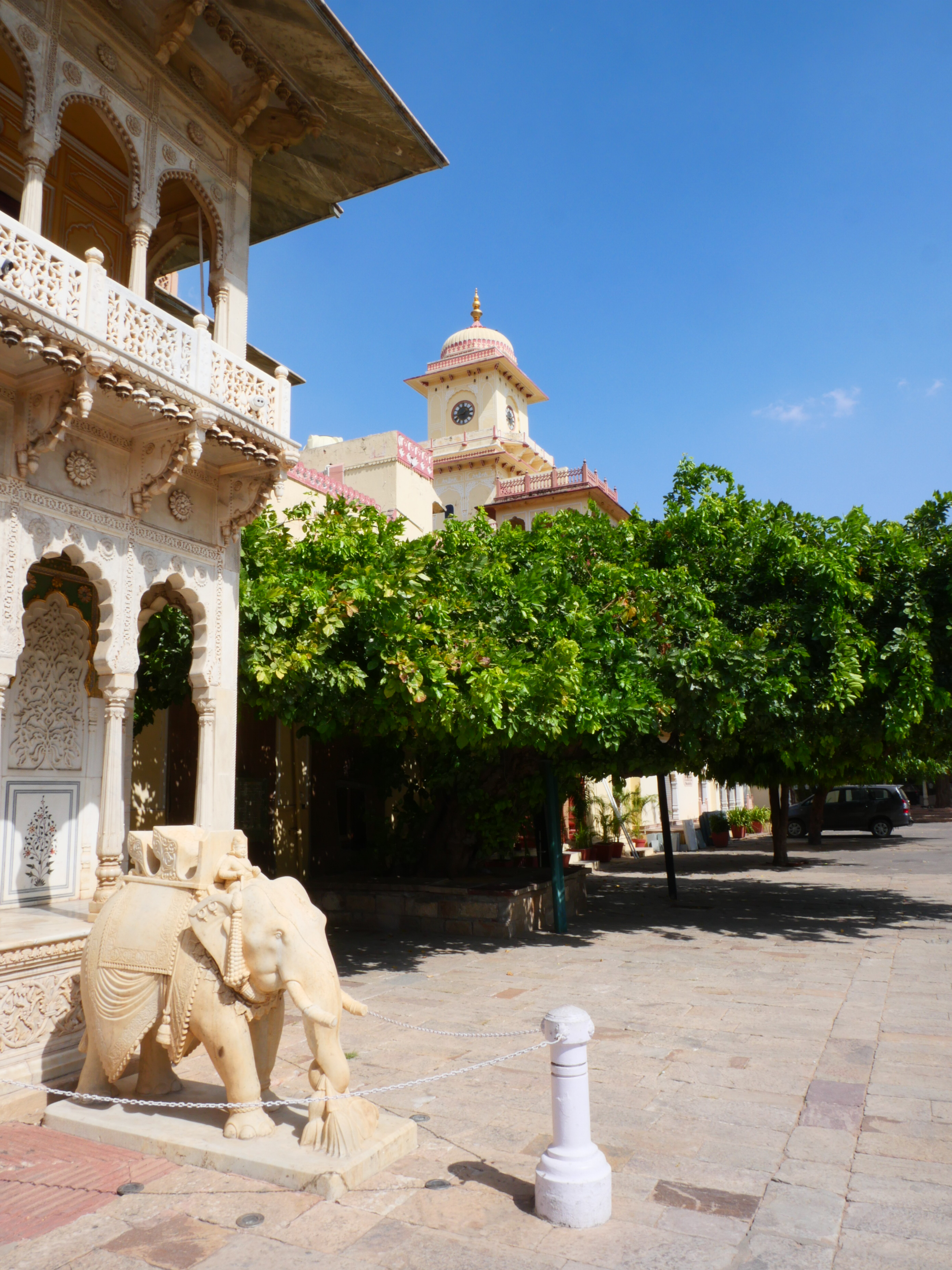
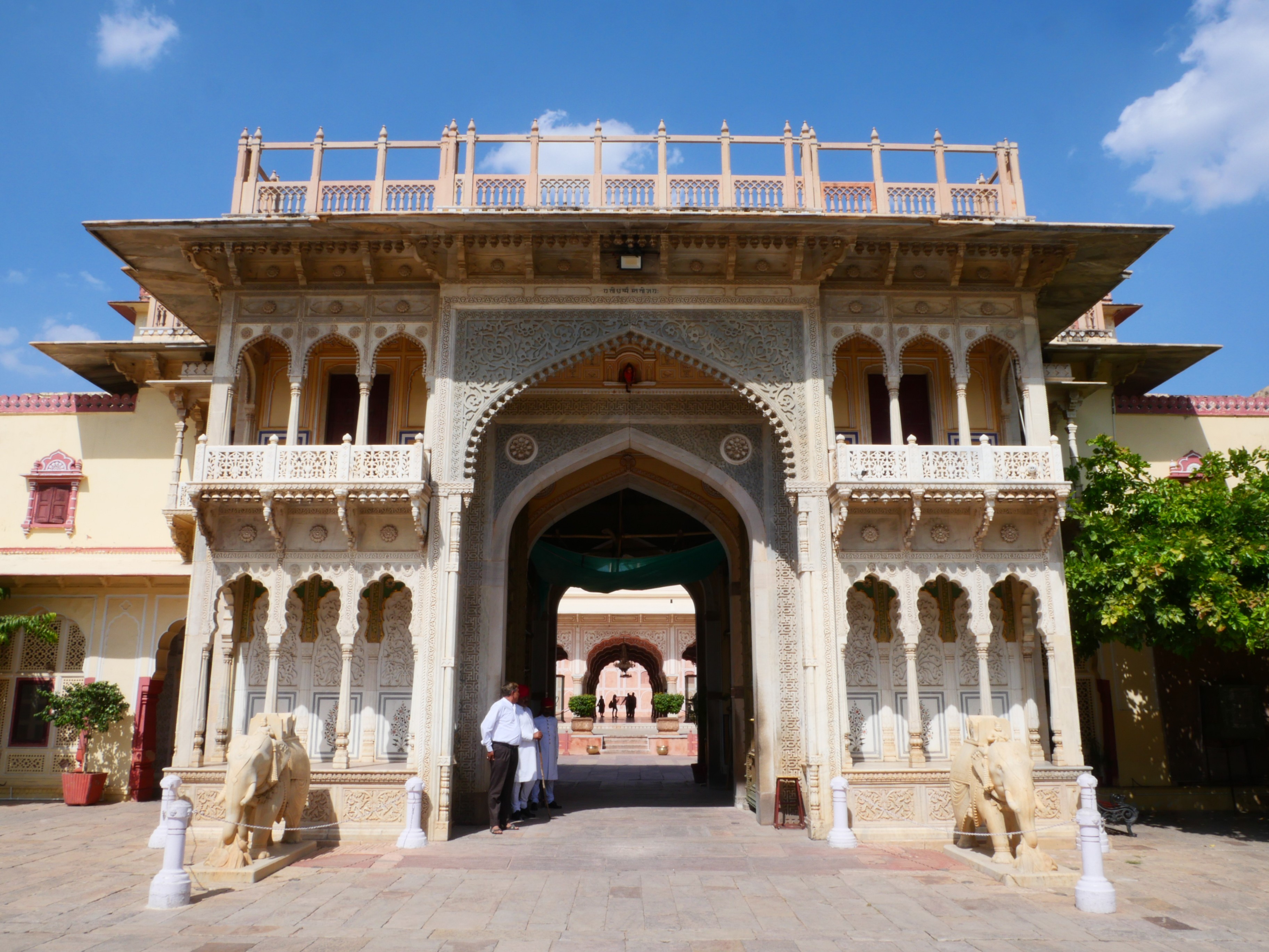
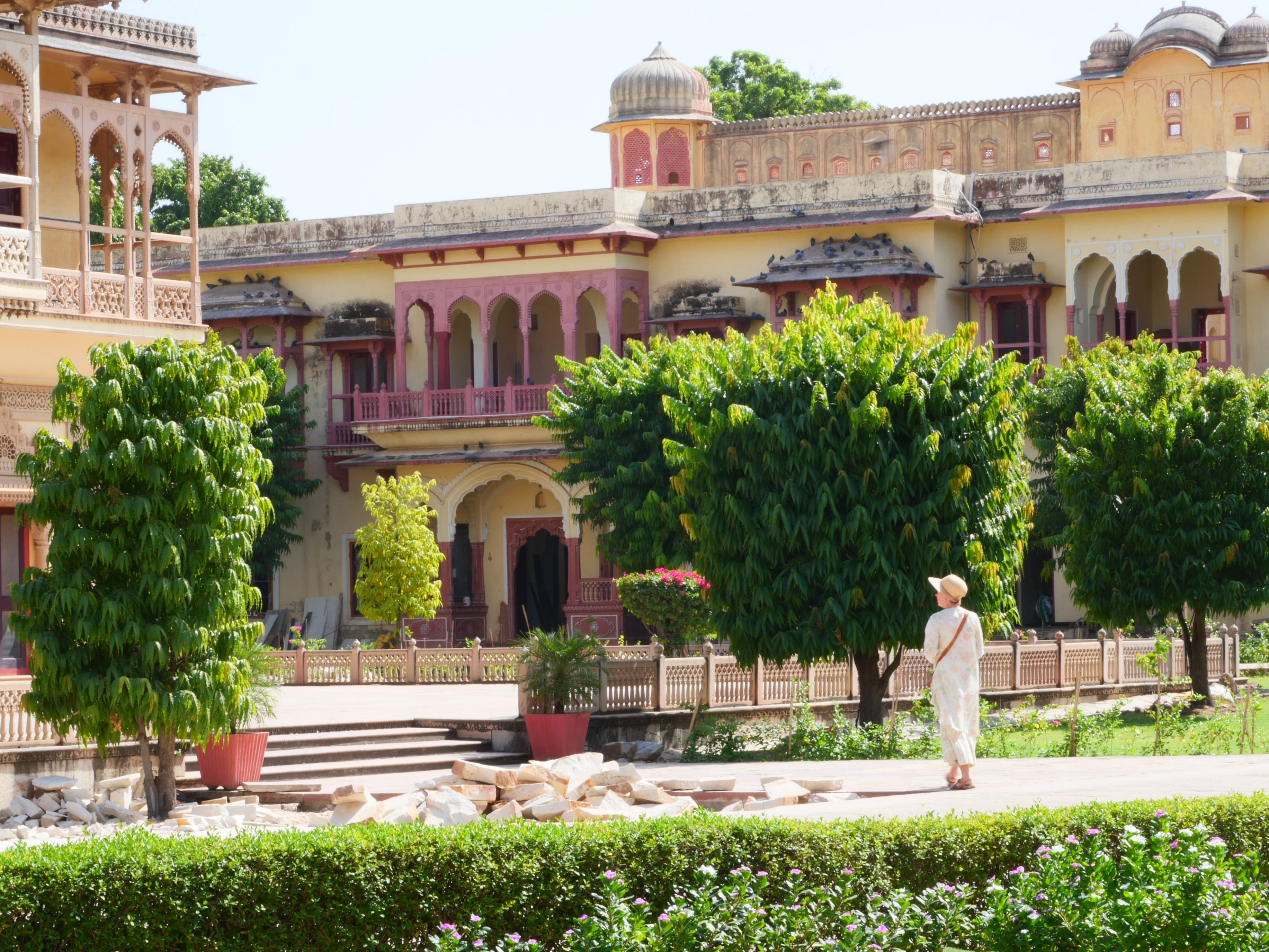
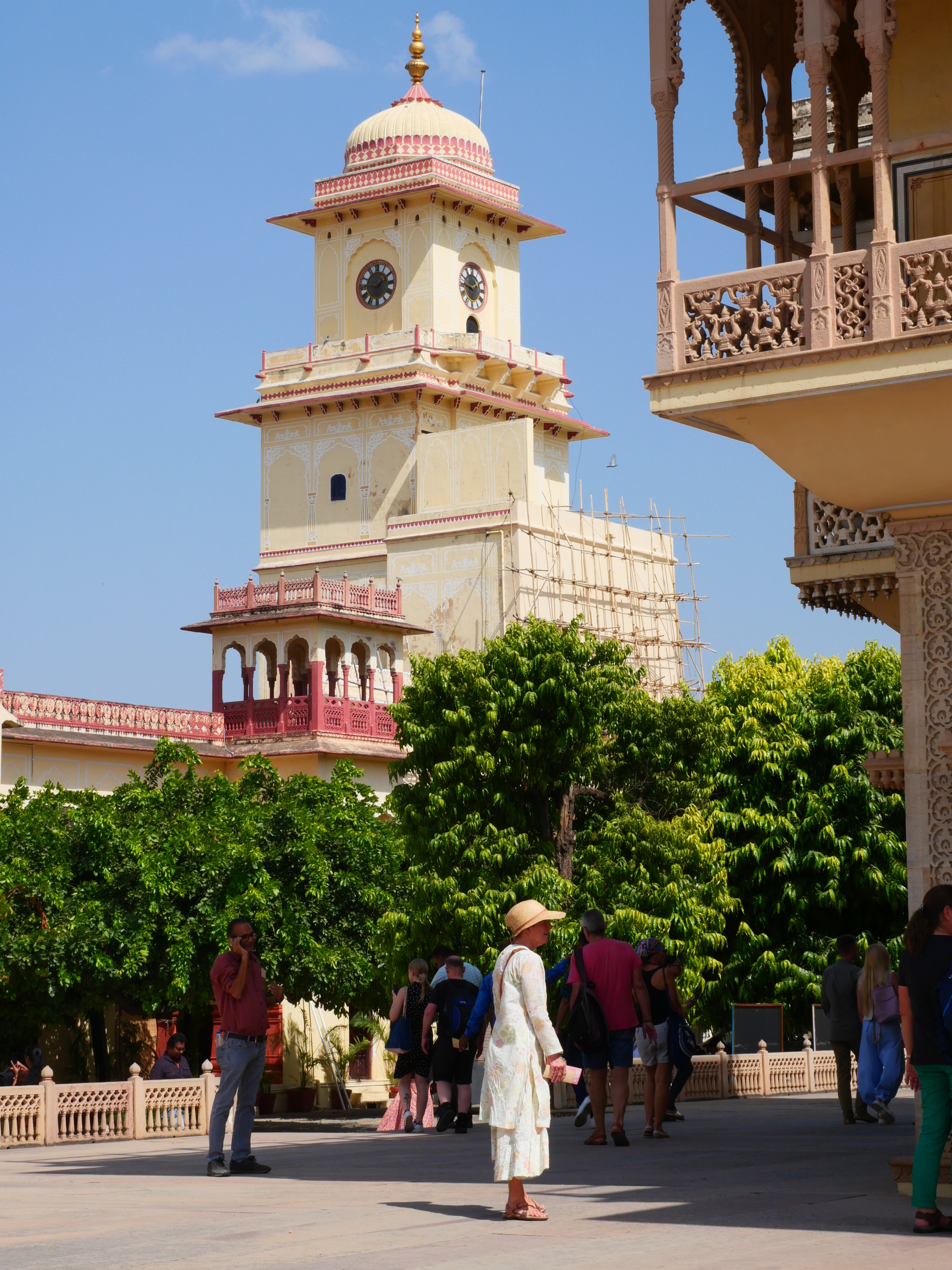
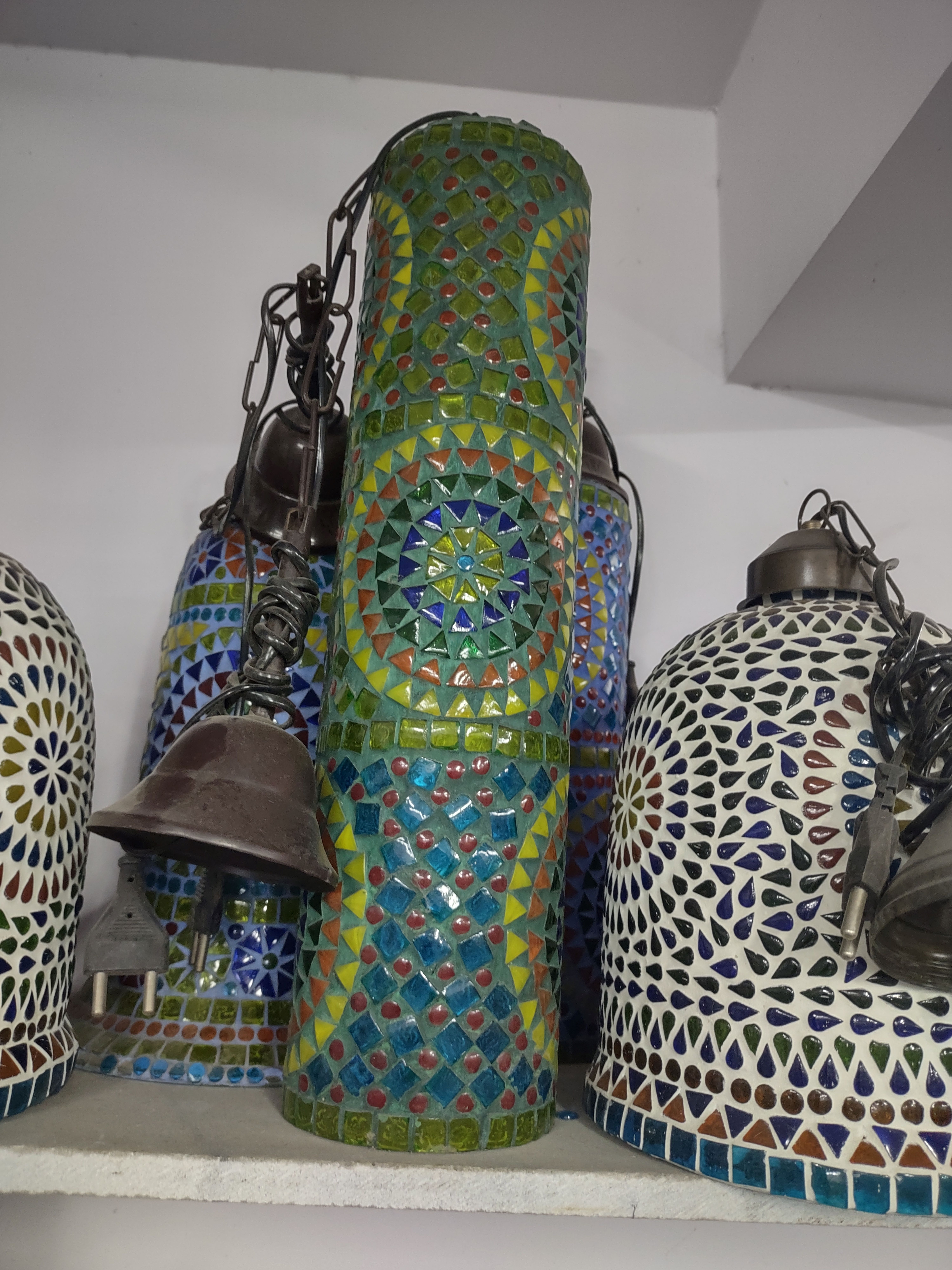
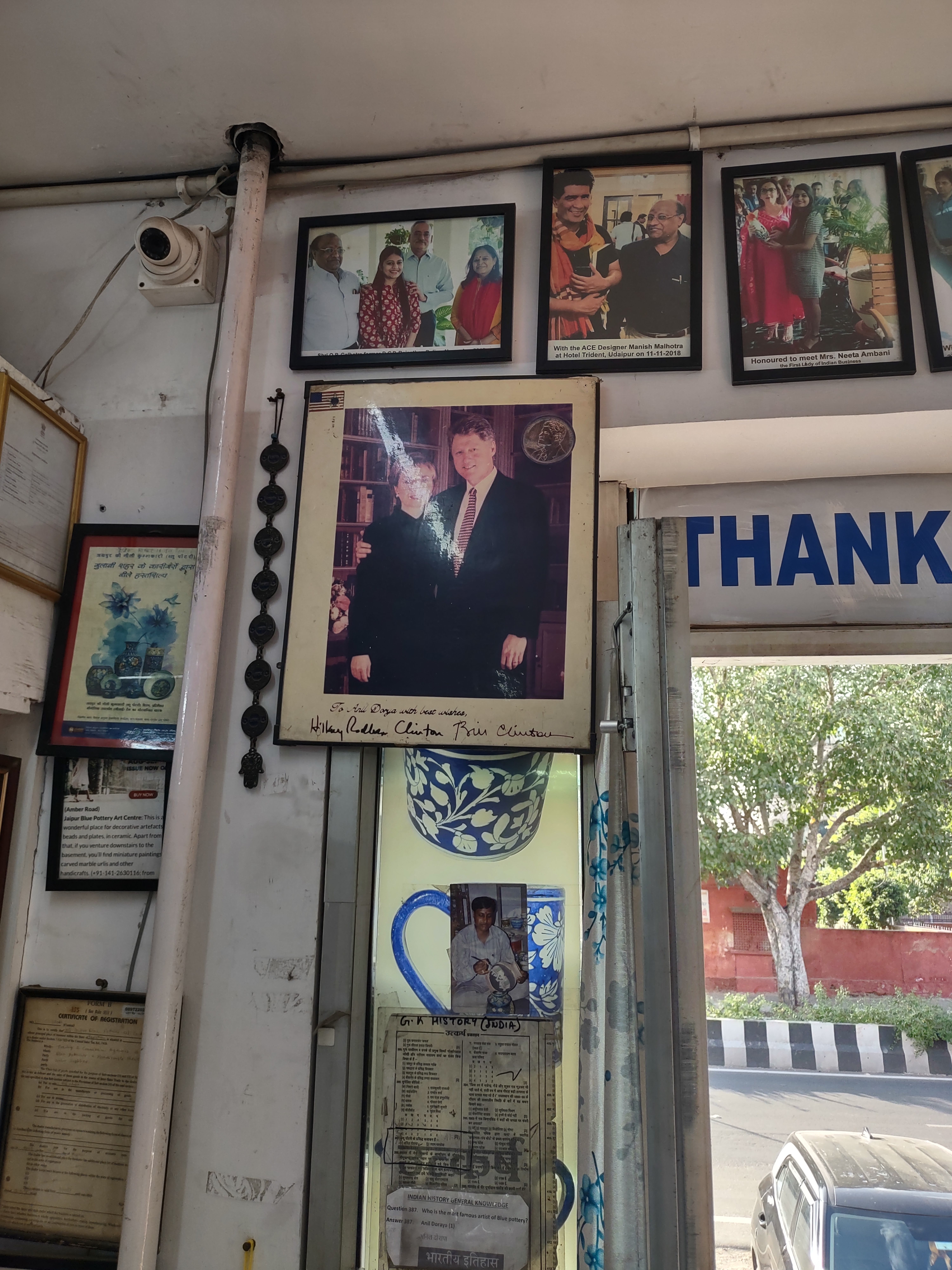
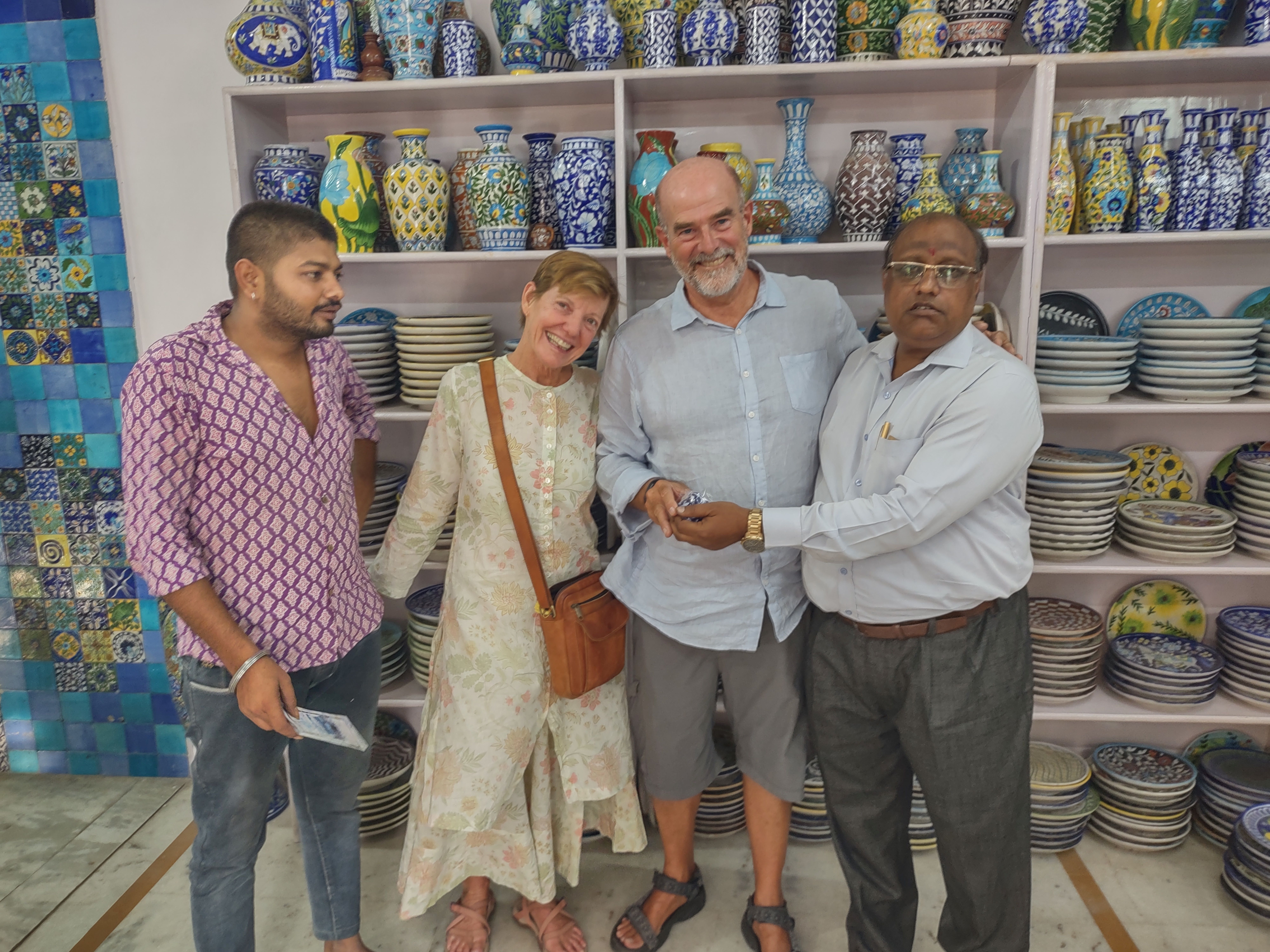
We saw a number of handicraft stores advertising blue pottery and so Mr. Sunder took us to one where we ended up purchasing no pottery but did acquire two beautiful glass pendent lamps (really working on that next package home) and I think were adopted by the shop’s Owner because we bought something from his son.


Back at our hotel we enjoyed a nice dinner in their beautiful courtyard and watched a bit of the Cricket World Cup on a large screen which appeared to have been set up primarily for the benefit of the hotel restaurant wait staff.


DAY 10: 12-Oct-2023
Jaipur sightseeing
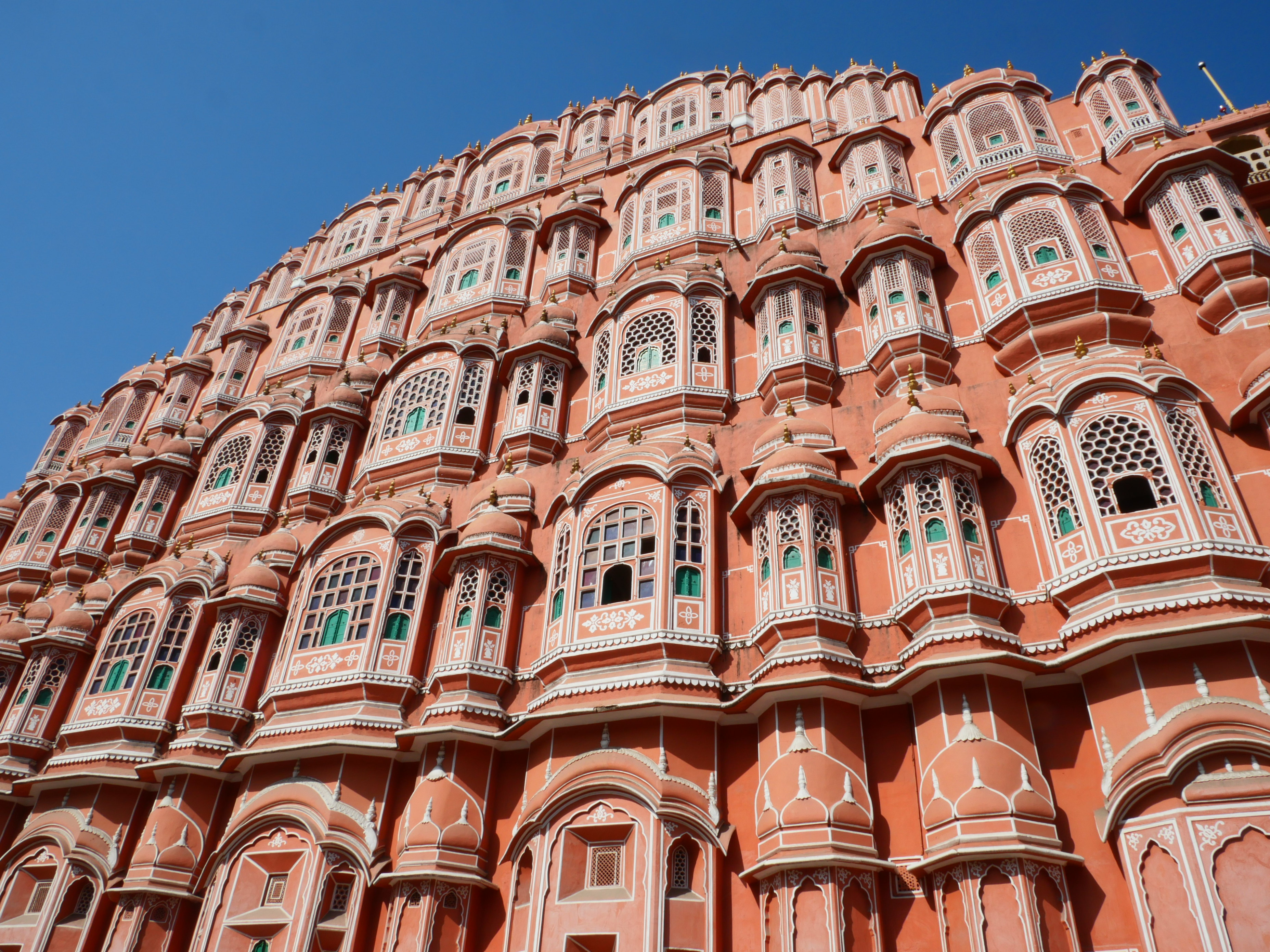
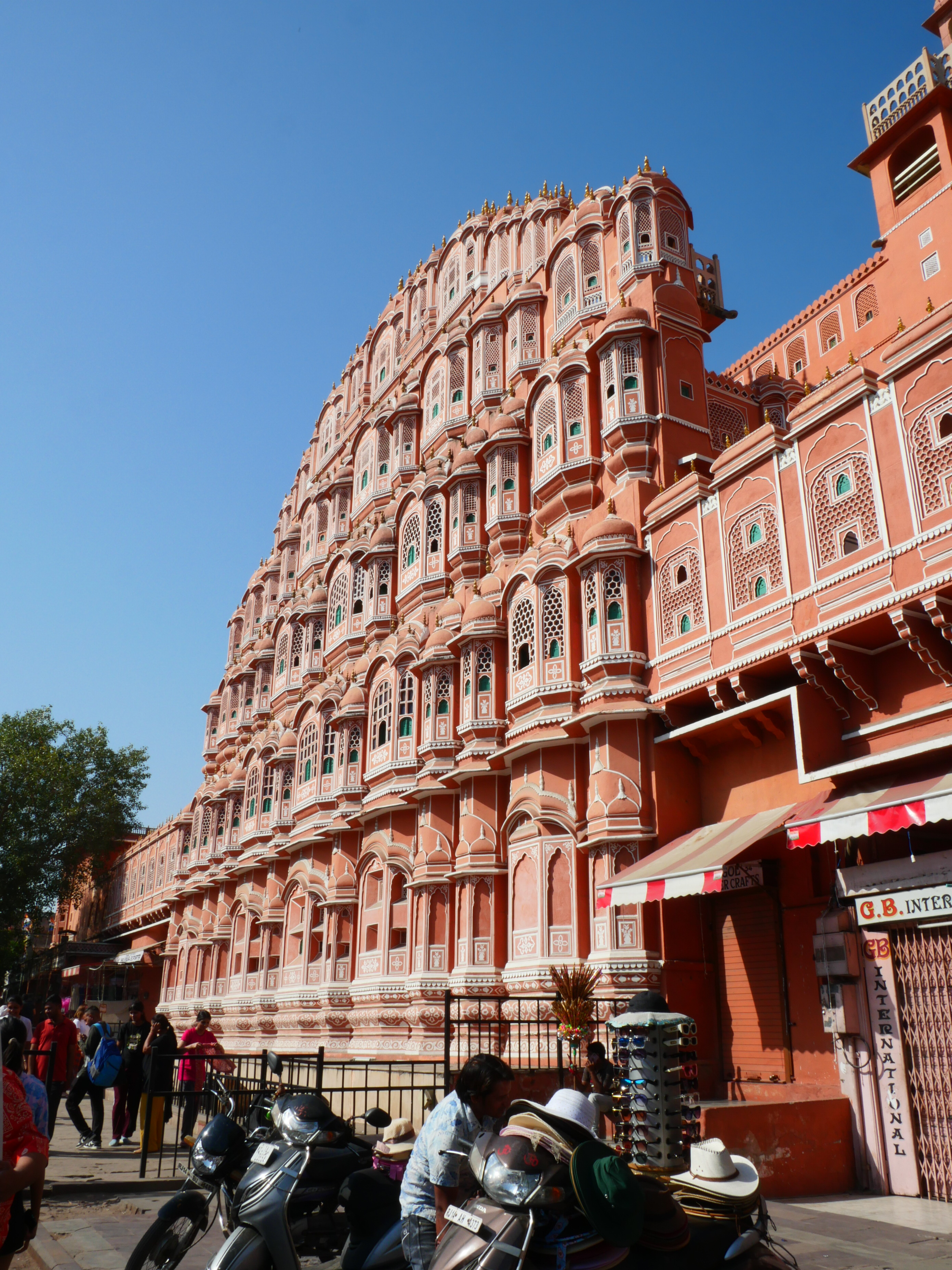
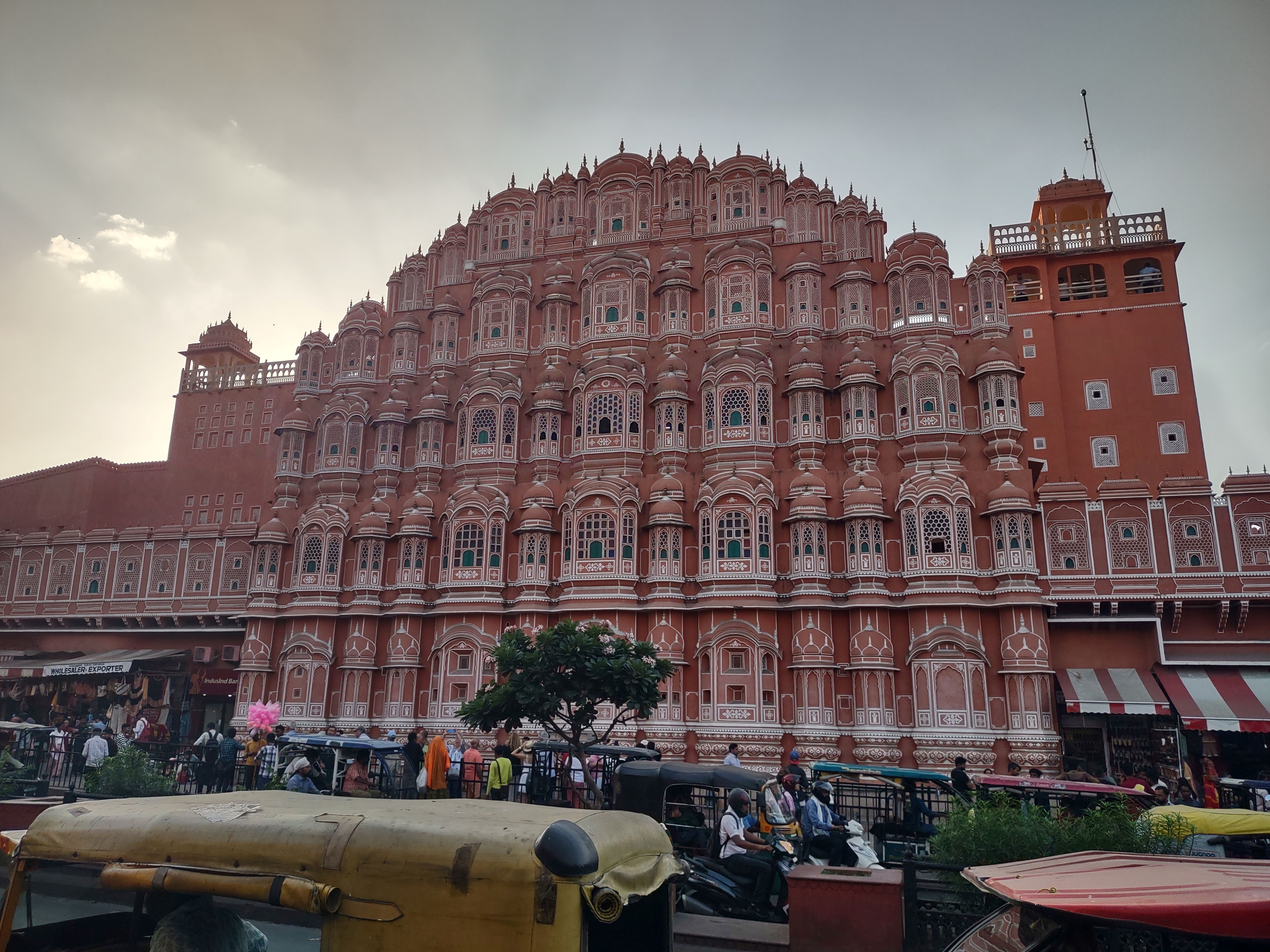
The entire day will be dedicated to visiting the pink city of Jaipur, the jewel of Rajasthan. Thus you will explore the Amber fort that was built by Raja Man Singh I, the old town and its monuments, Birla Mandir (a Hindu temple located at the foot of Moti Dungri fort), the Palace of Winds (in the shape of the crown of Krishna, which 953 small windows allowed women to watch everyday life and processions without being seen), the City Palace (the palace complex that includes the Chandra Mahal and Mubarak Mahal palaces and other buildings, was built in 1732)… In the afternoon, you will visit Galtaji. The ancient Hindu pilgrimage site consists in a series of temples built on the hills that surround Jaipur. Overnight in Jaipur.
Your hotel: Anuraag Villa (www.anuraagvilla.com)
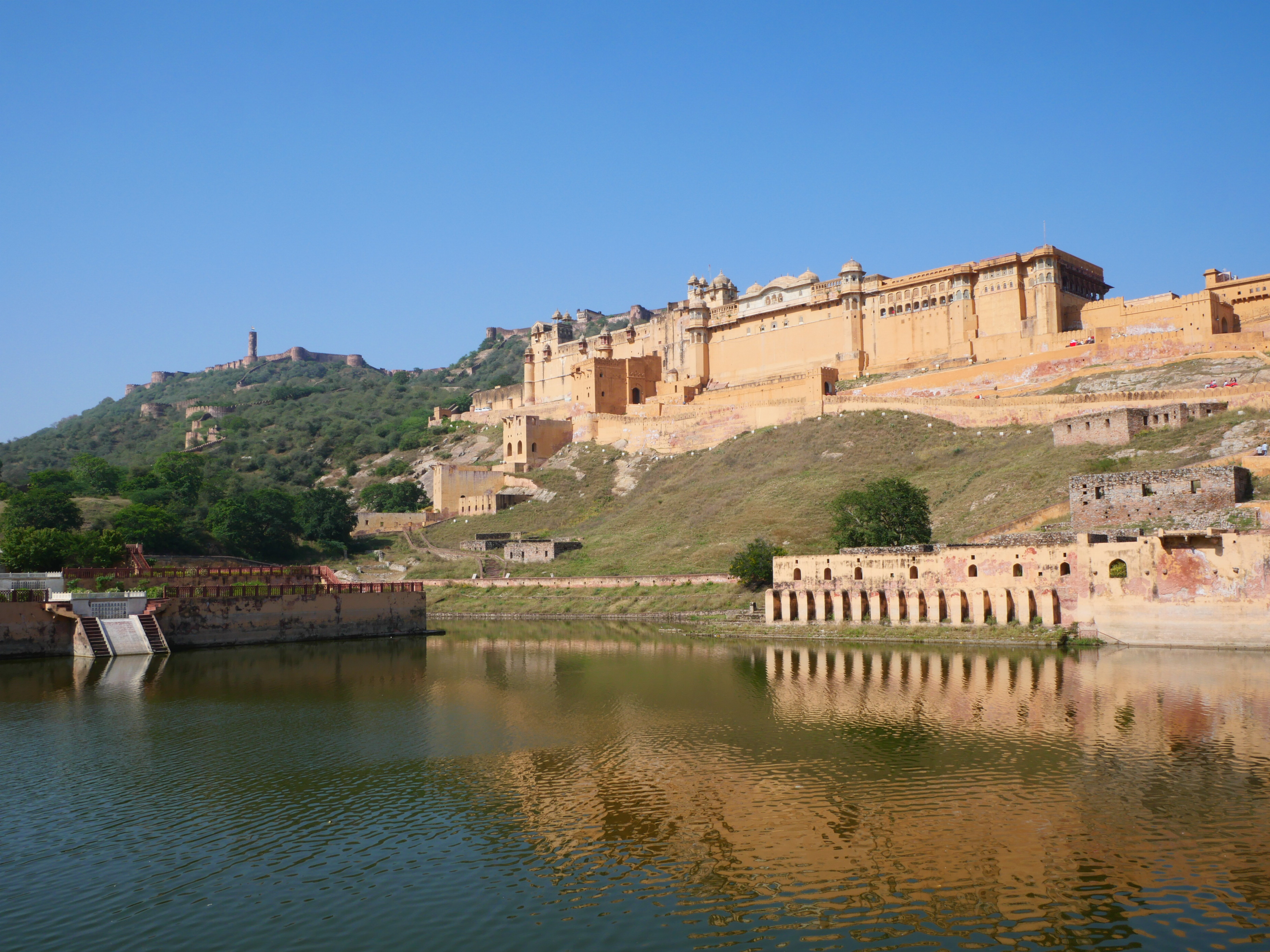
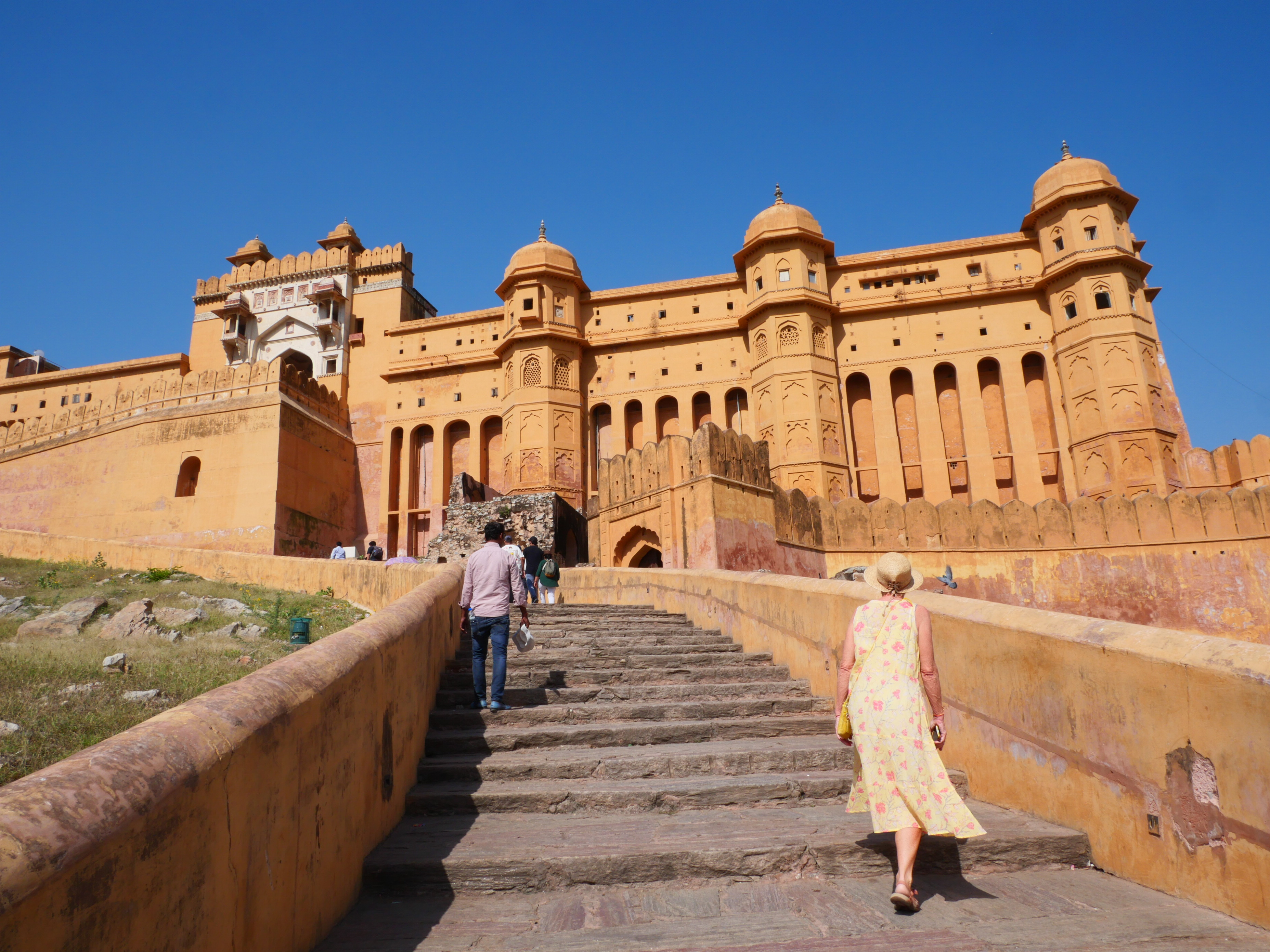
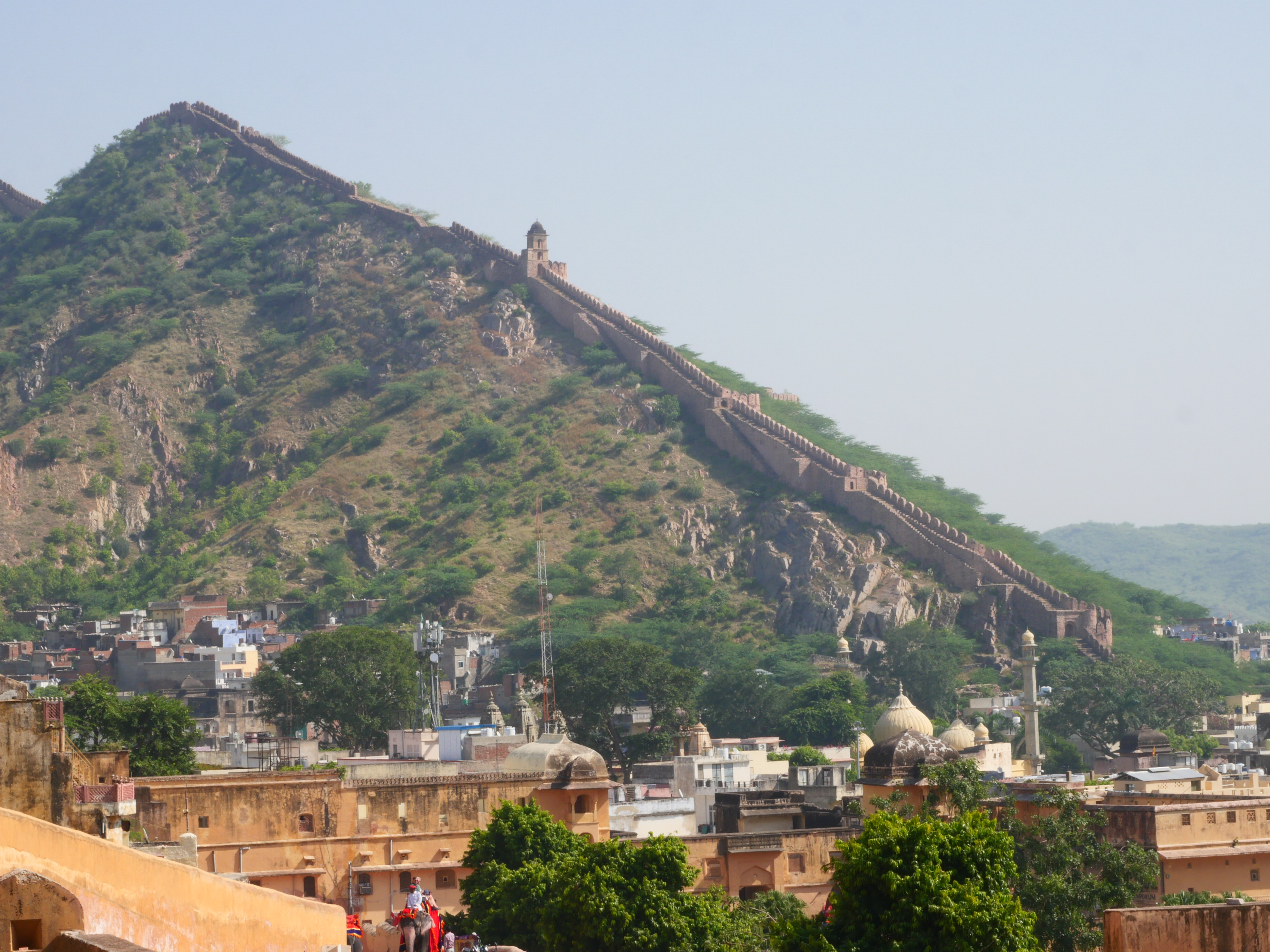
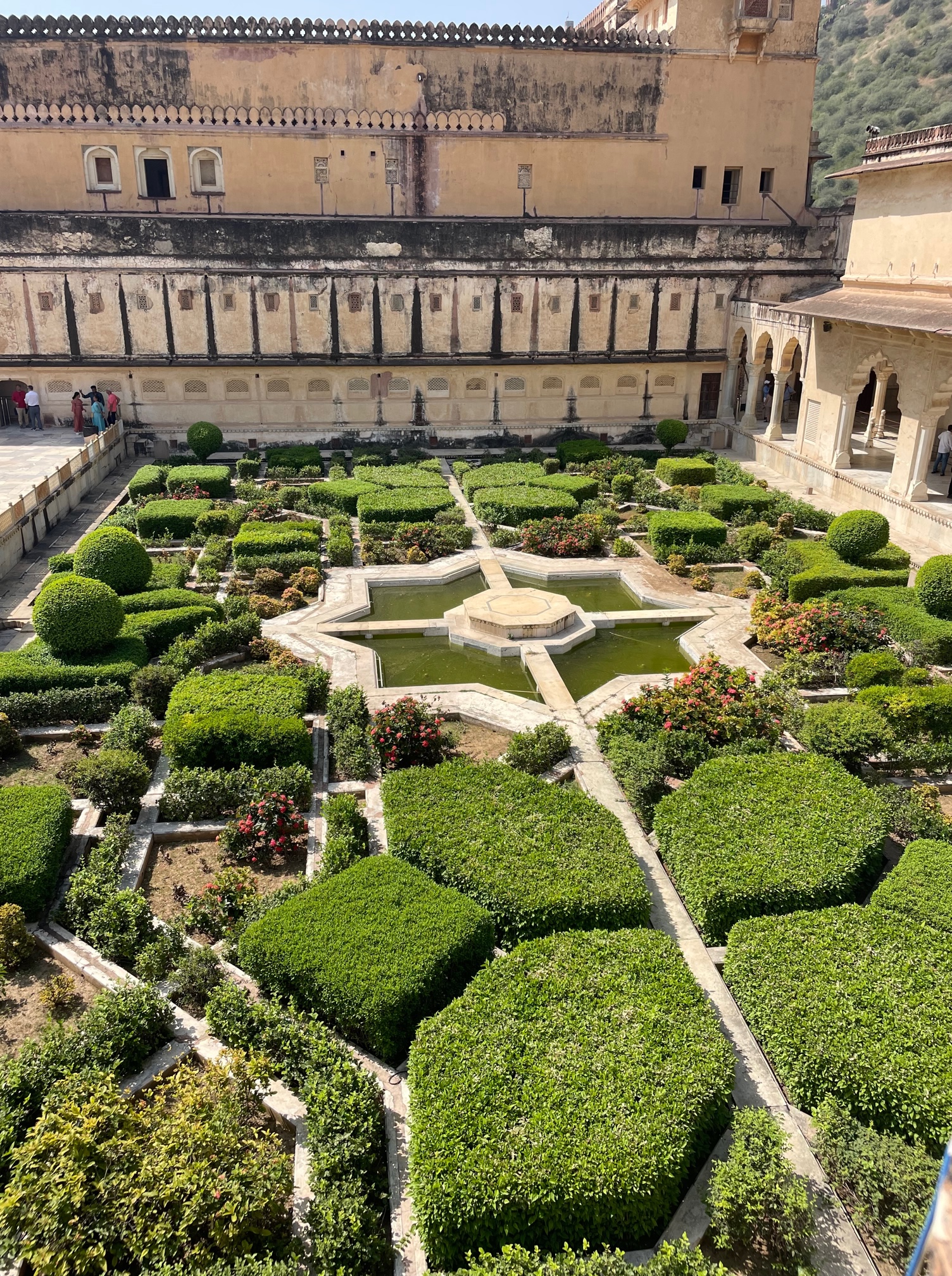
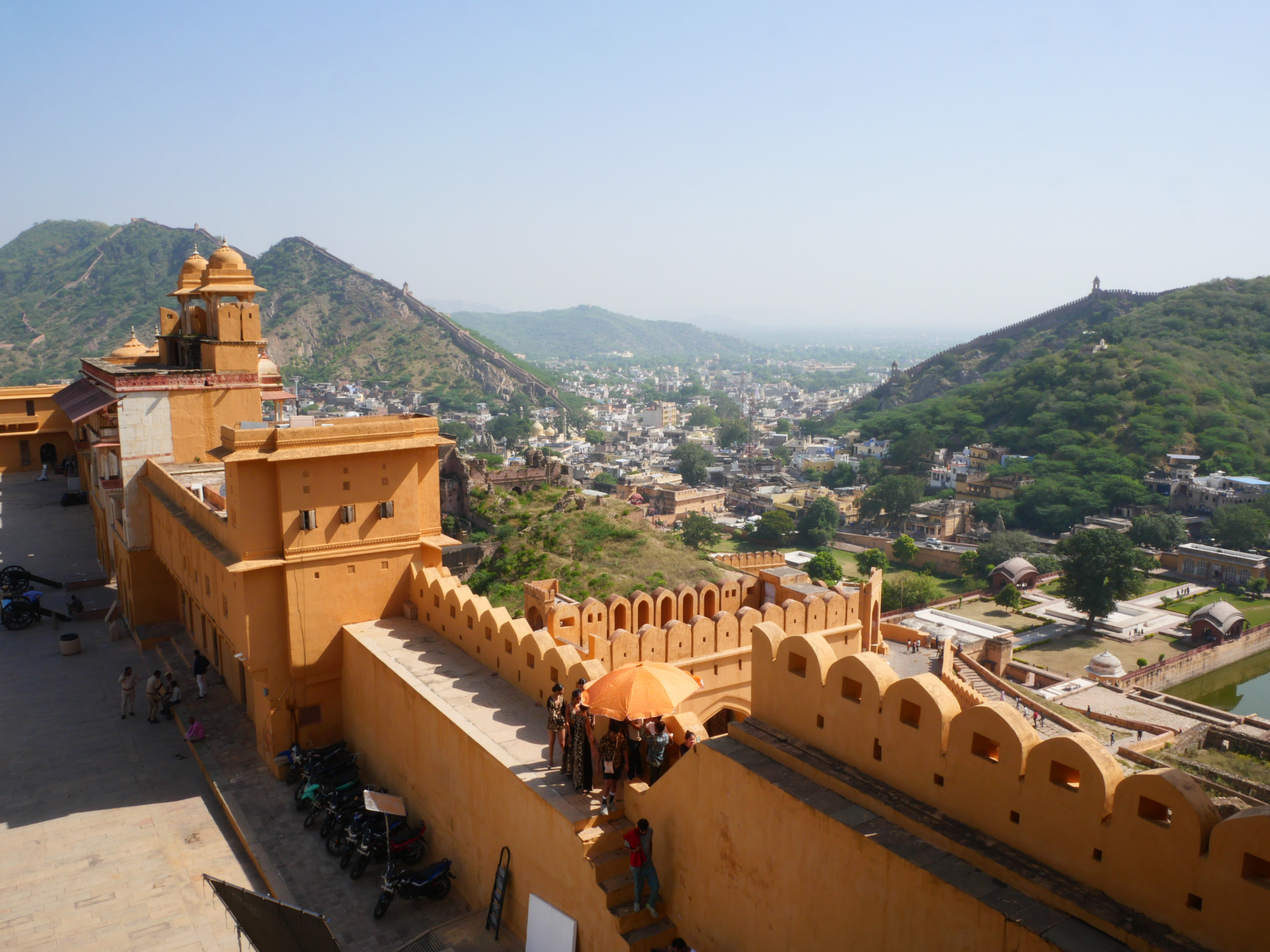
After breakfast at the hotel, we met our guide Sony and toured the various sites. The site of the Amber Fort was pretty amazing, perched on the top of a steep ridge and surrounding by much of the old city walls which appeared like the Indian equivalent of the Great Wall of China.


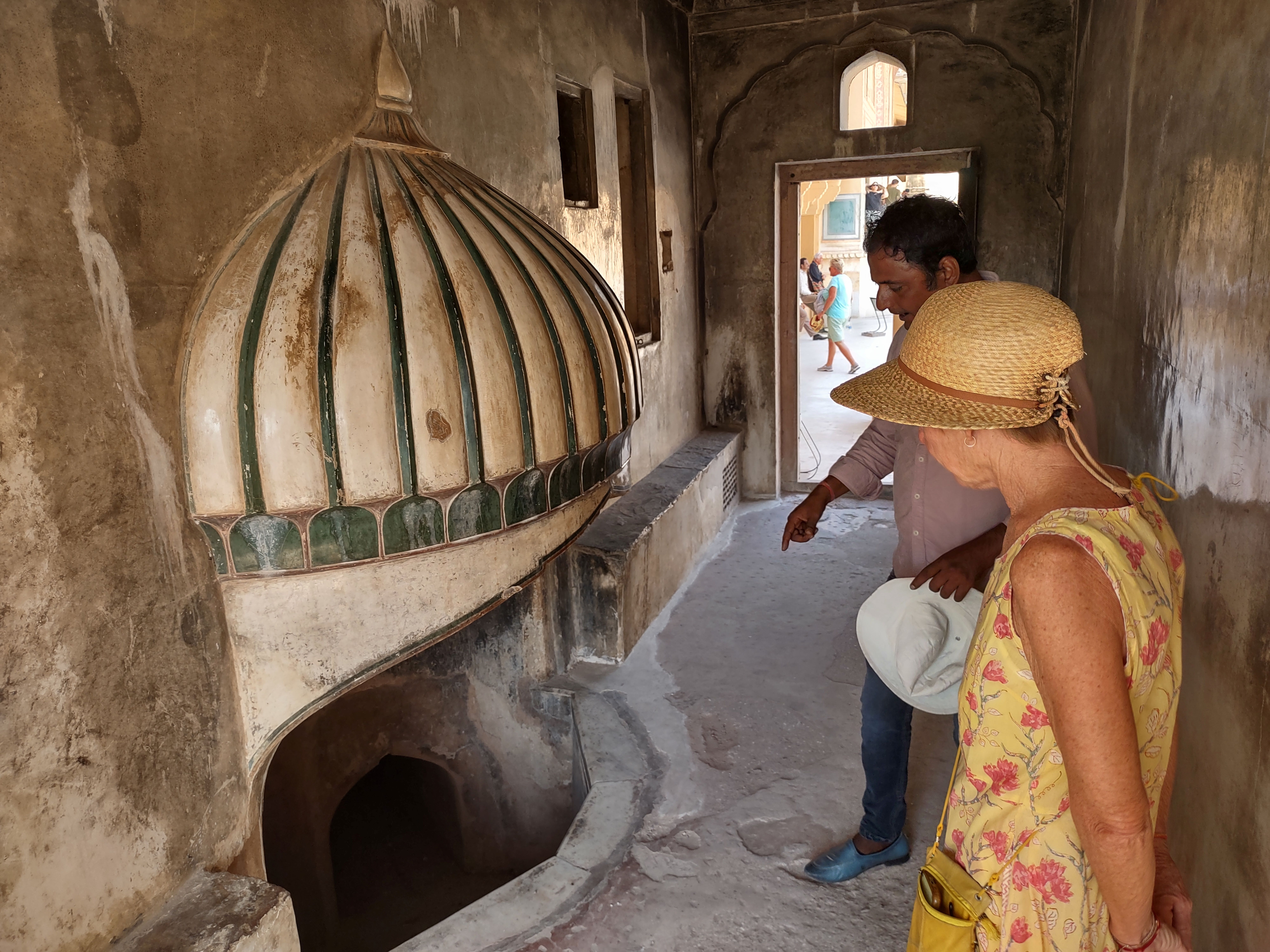
Sony was extremely knowledgeable and provided lots of insights into the design of the palaces including their system for delivering hot bath water as well as natural cooling.
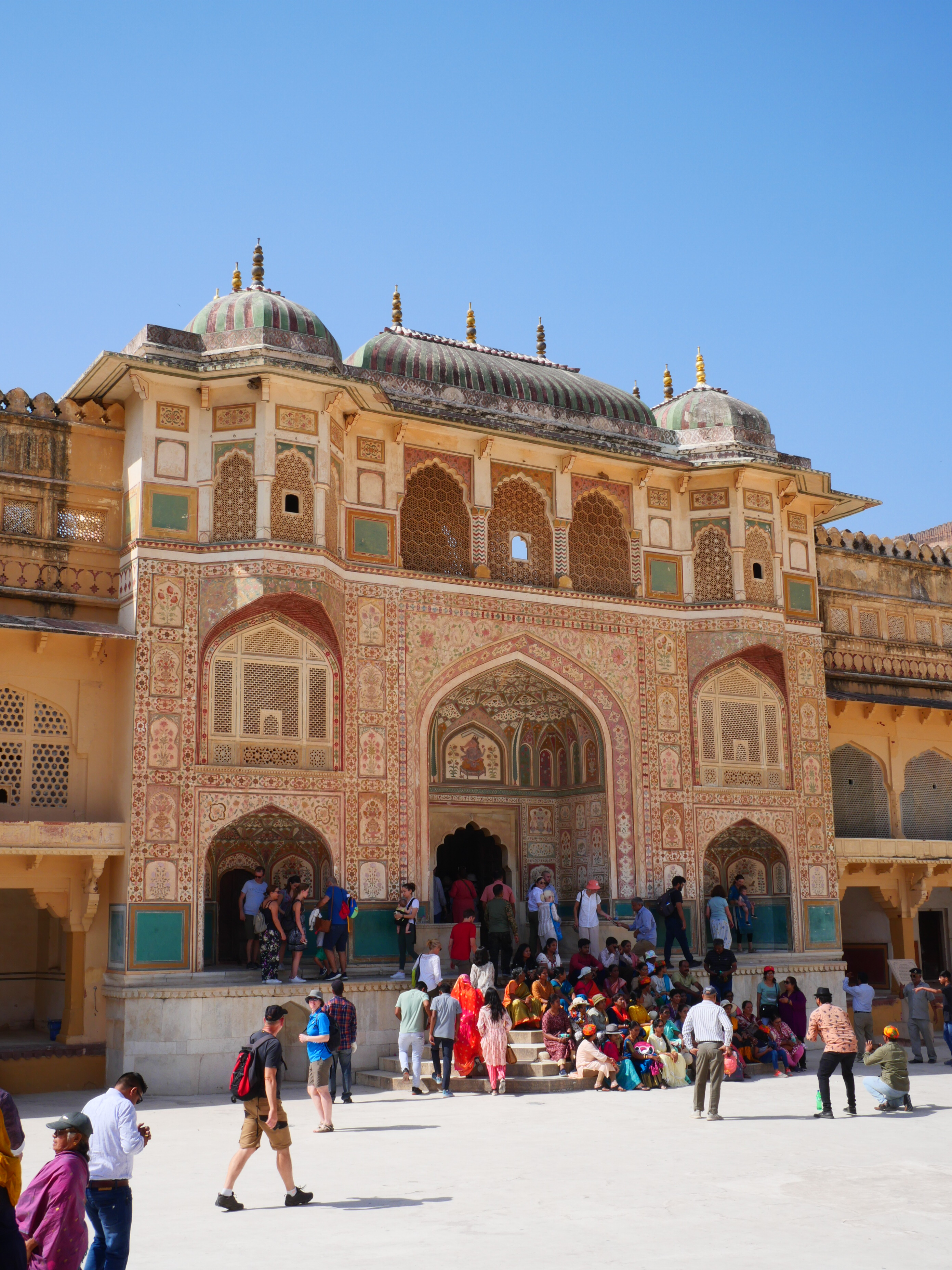
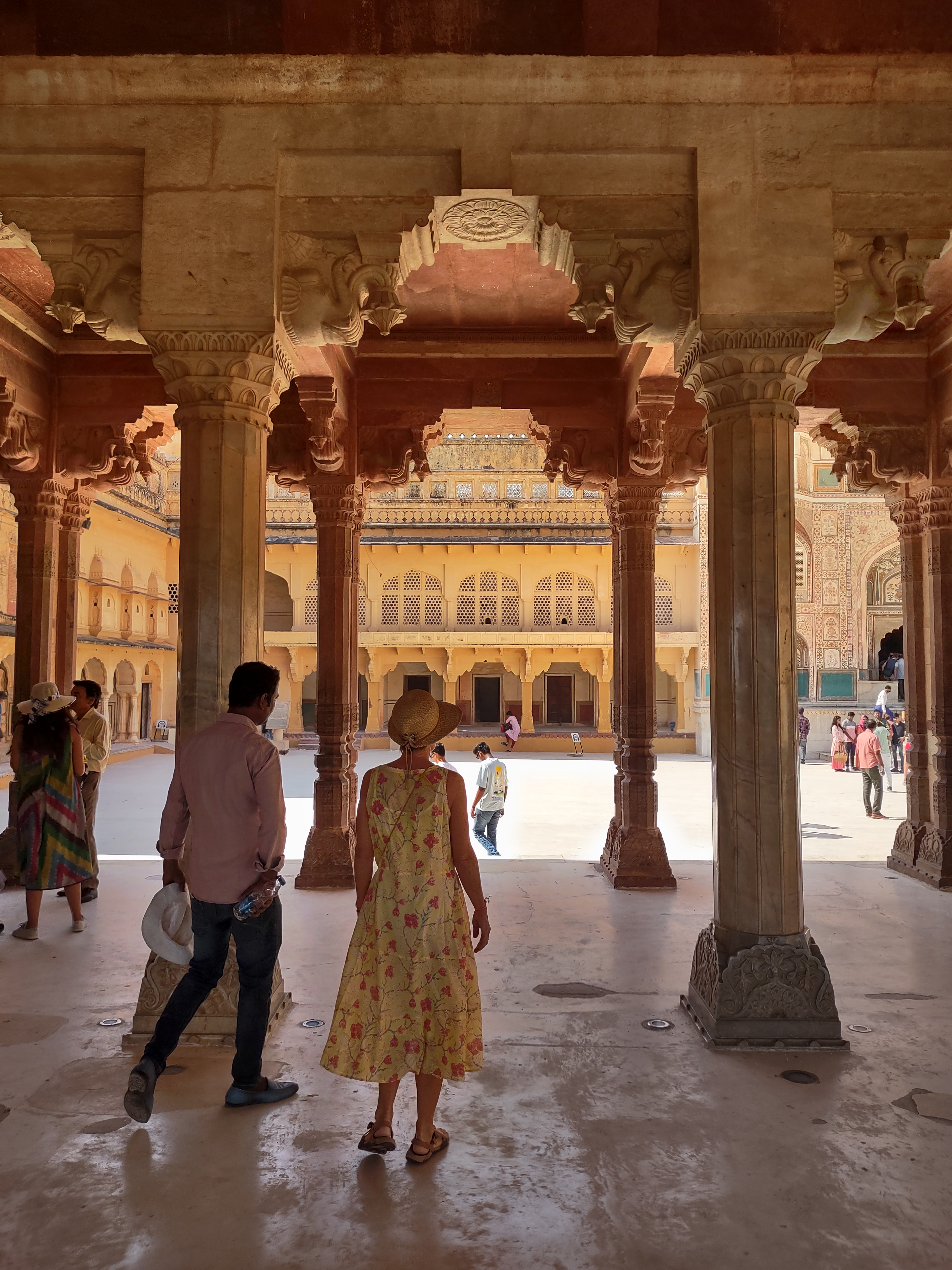


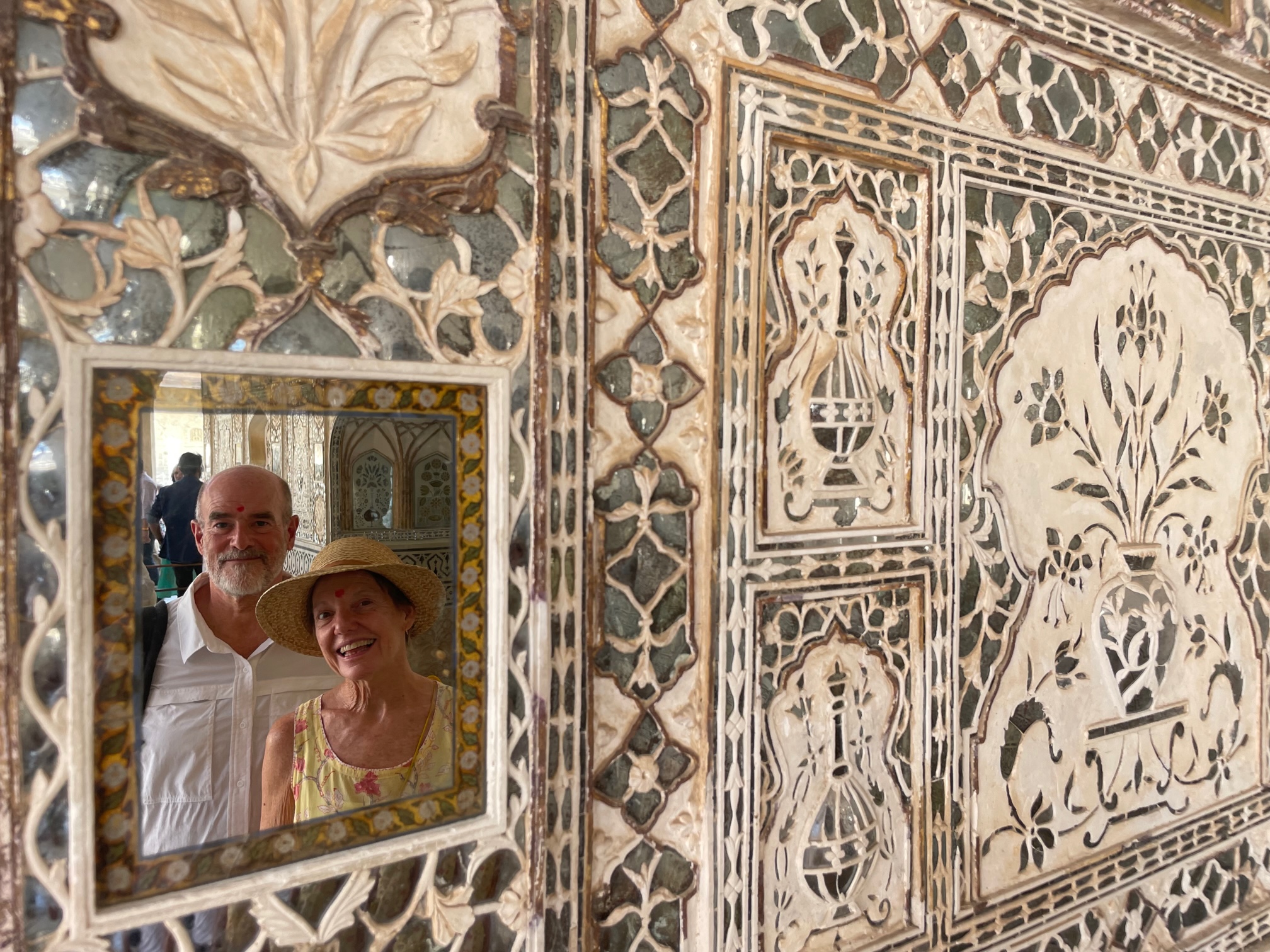
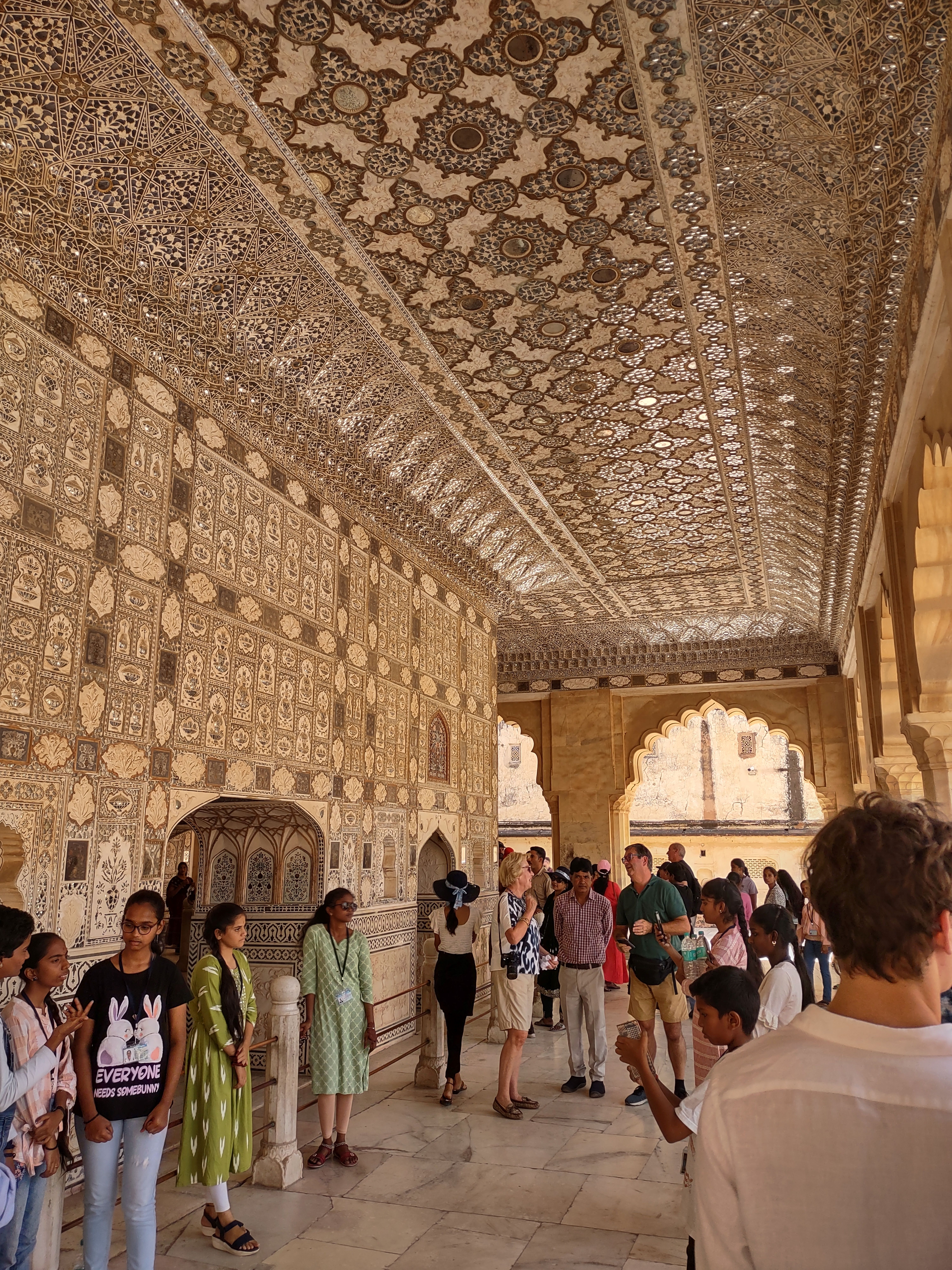
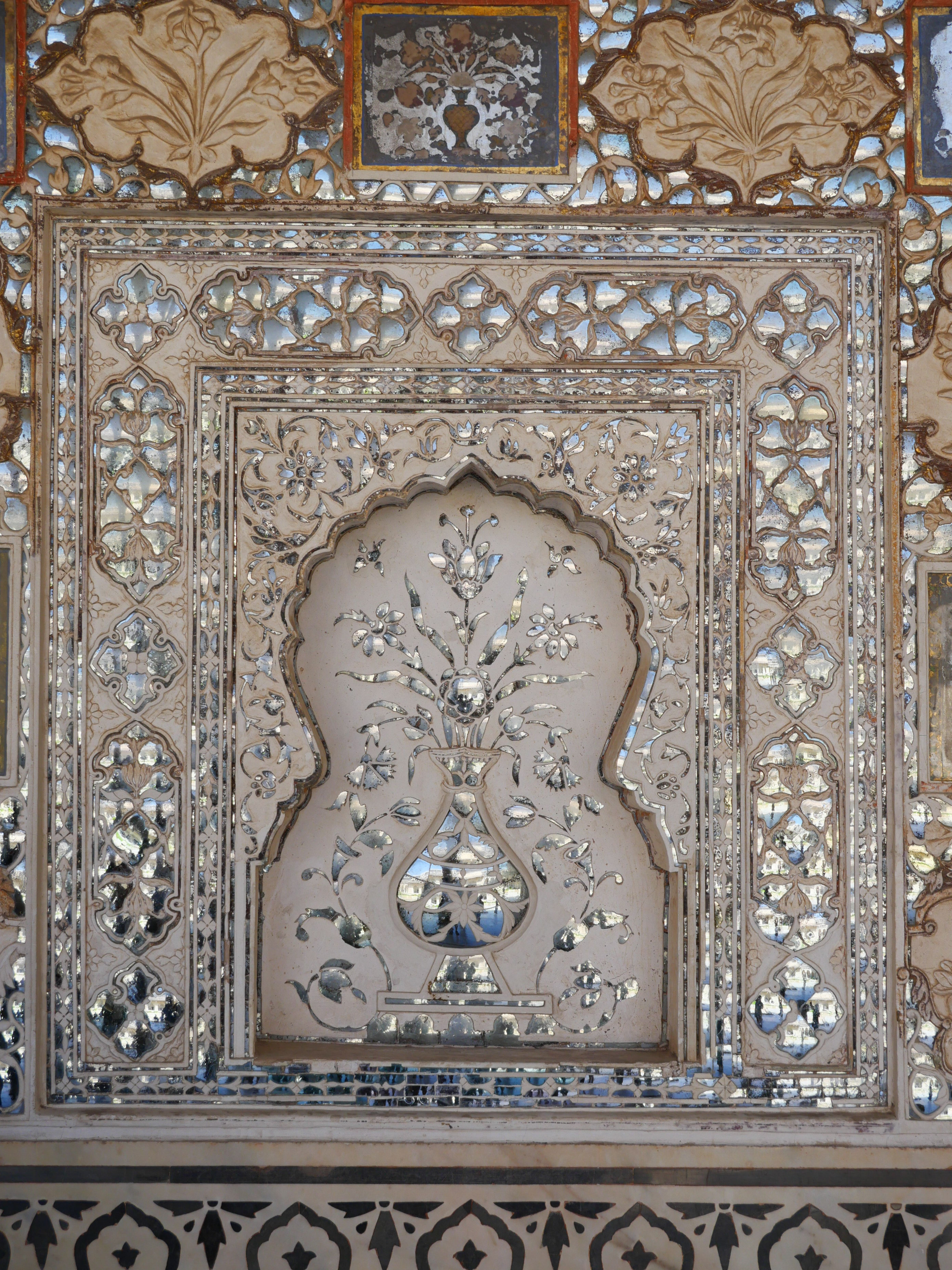
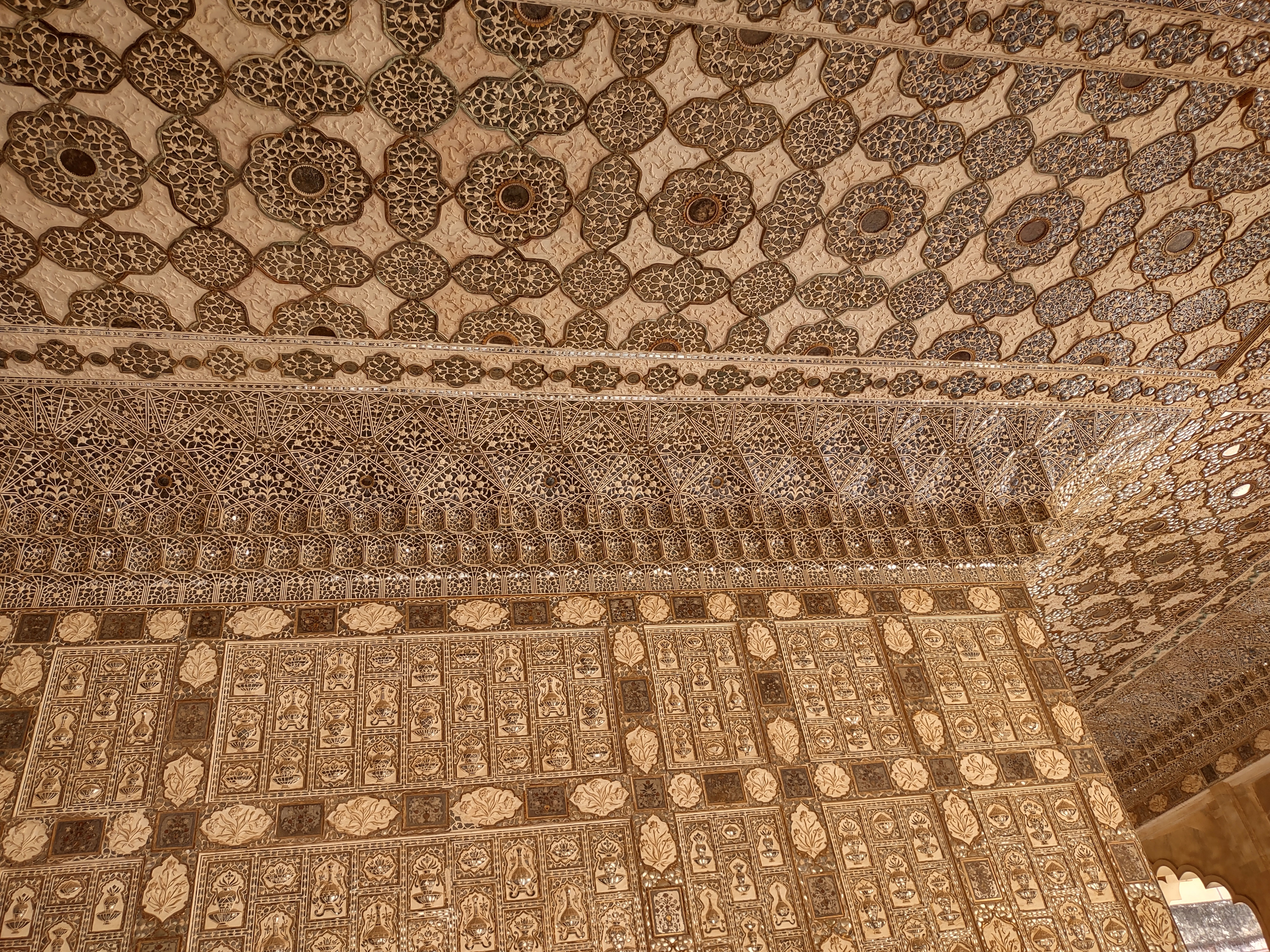
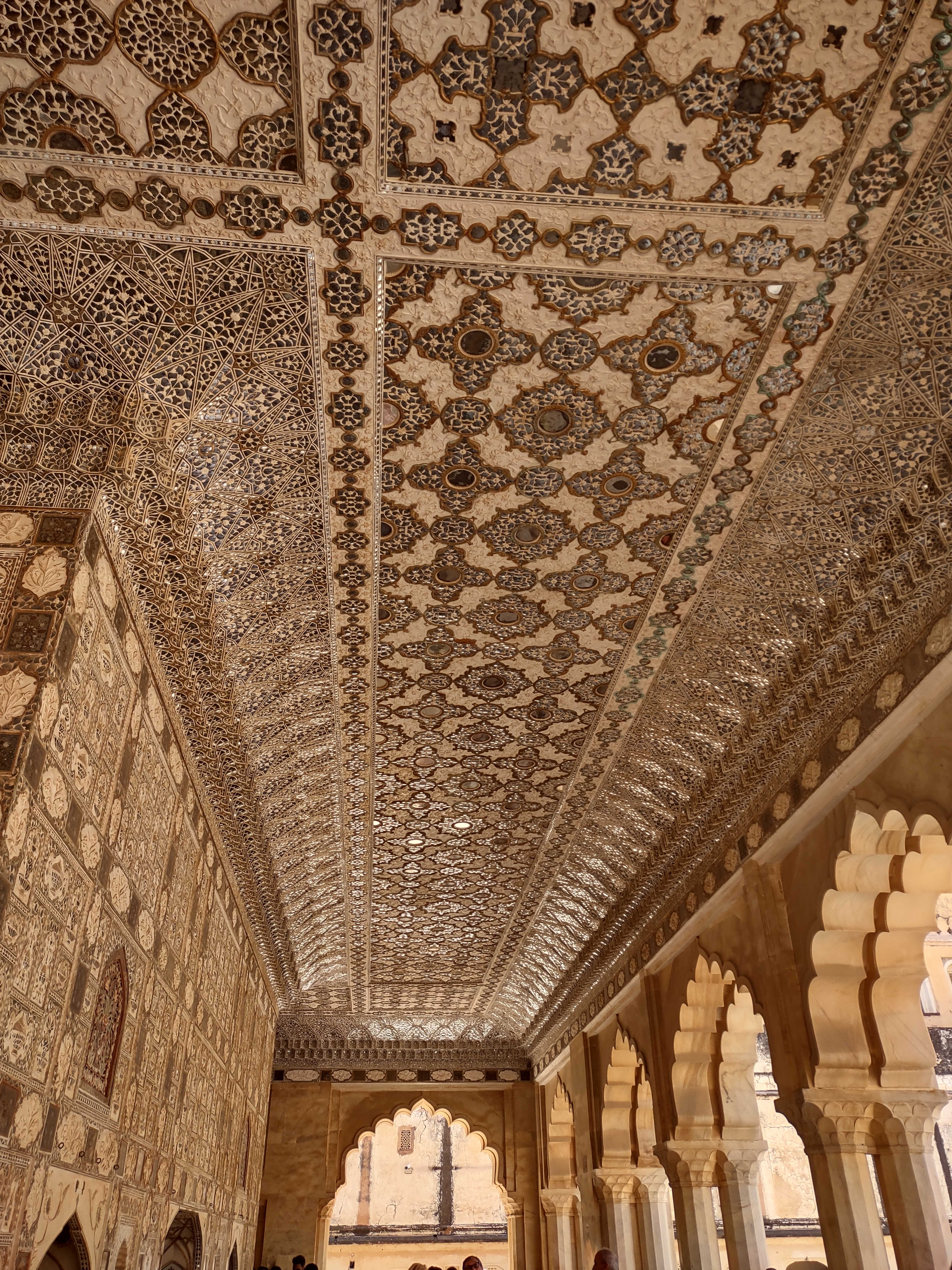
While there were many beautiful buildings and rooms, the Vivek Kushwaha, a meeting hall covered with reflective glass mosaics was particularly extraordinary.

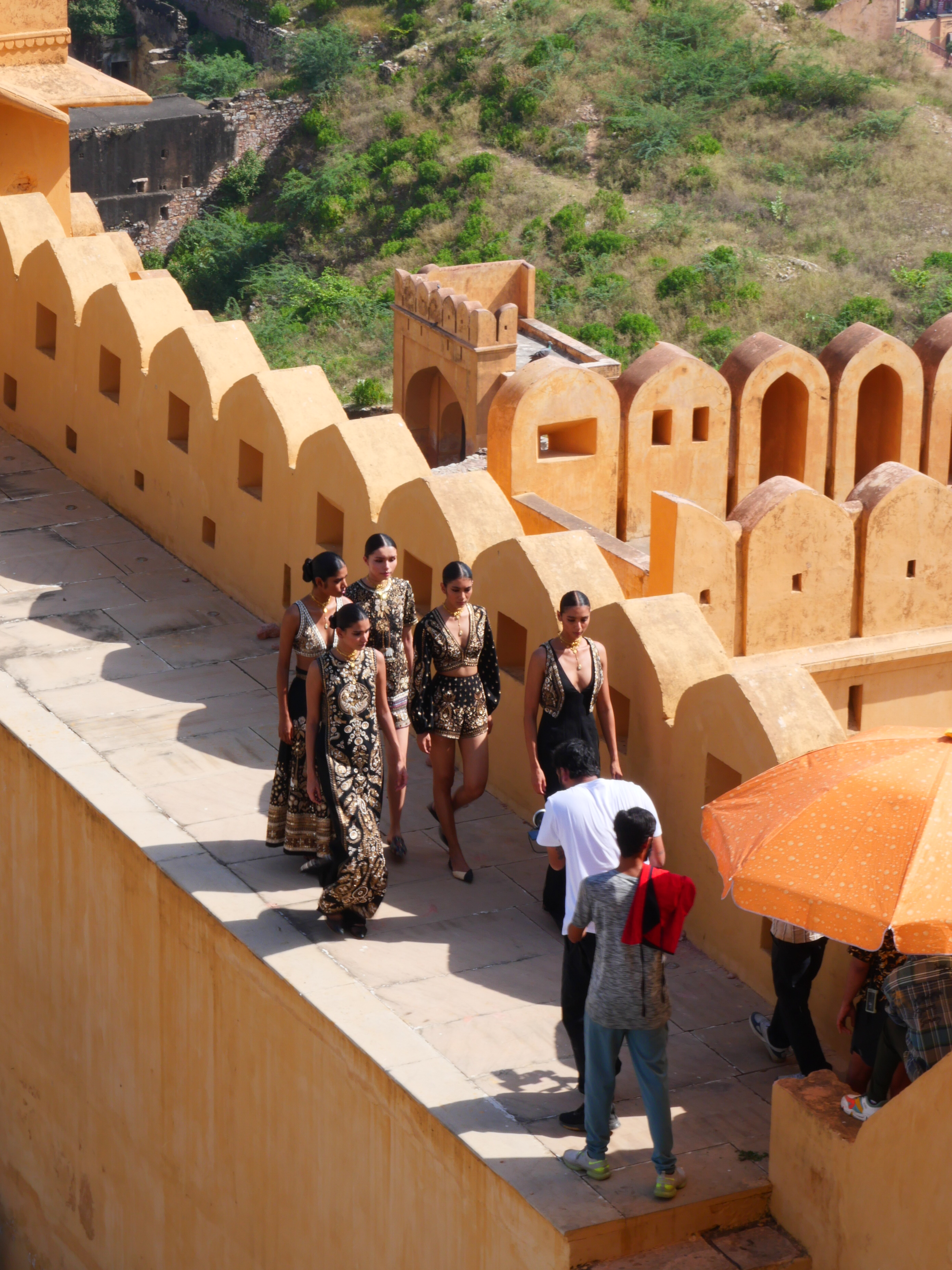
As a testament to how beautiful and picturesque the Amber Fort is, we happened to notice that there was a fashion shoot going on while we were touring.
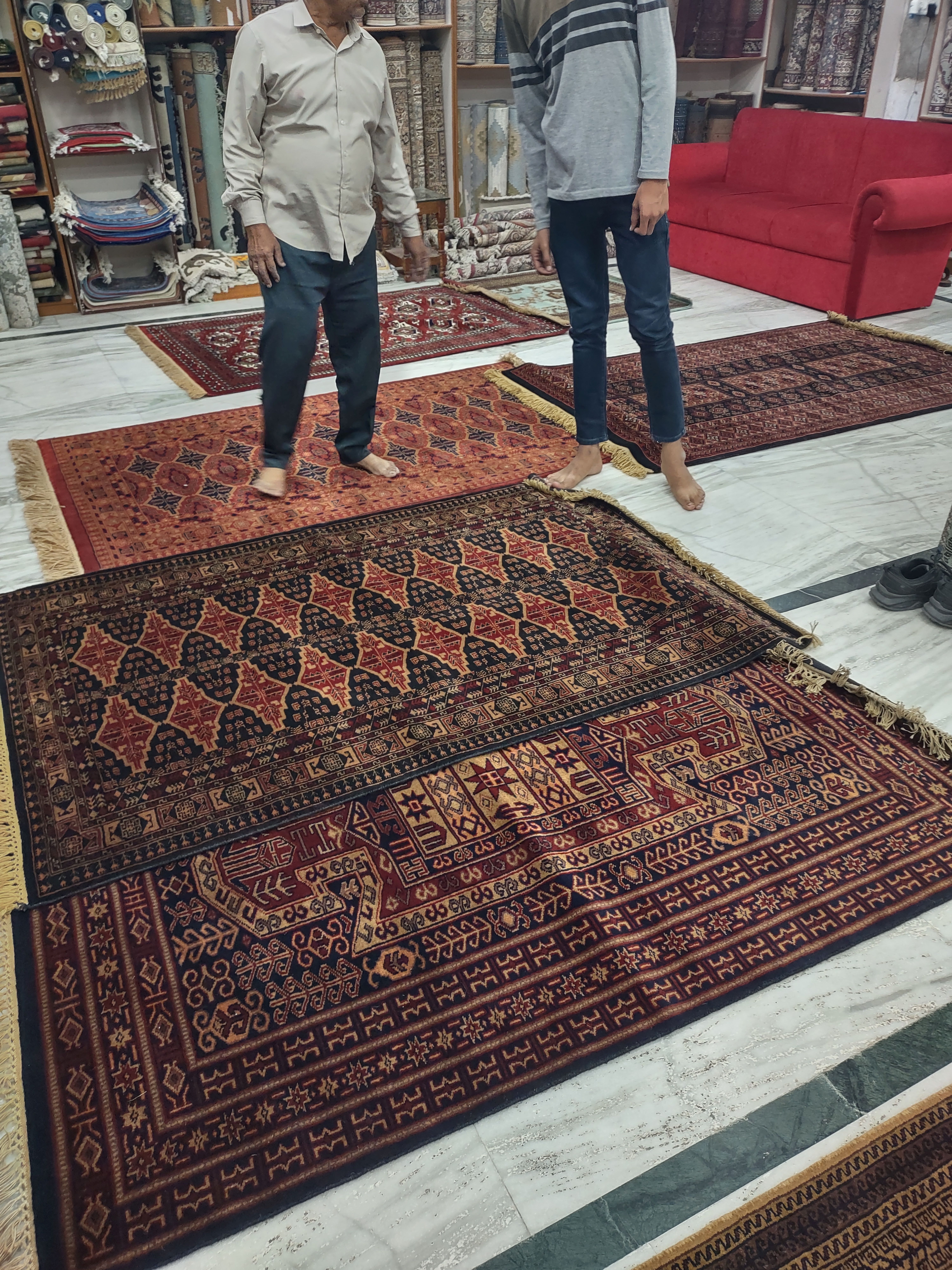
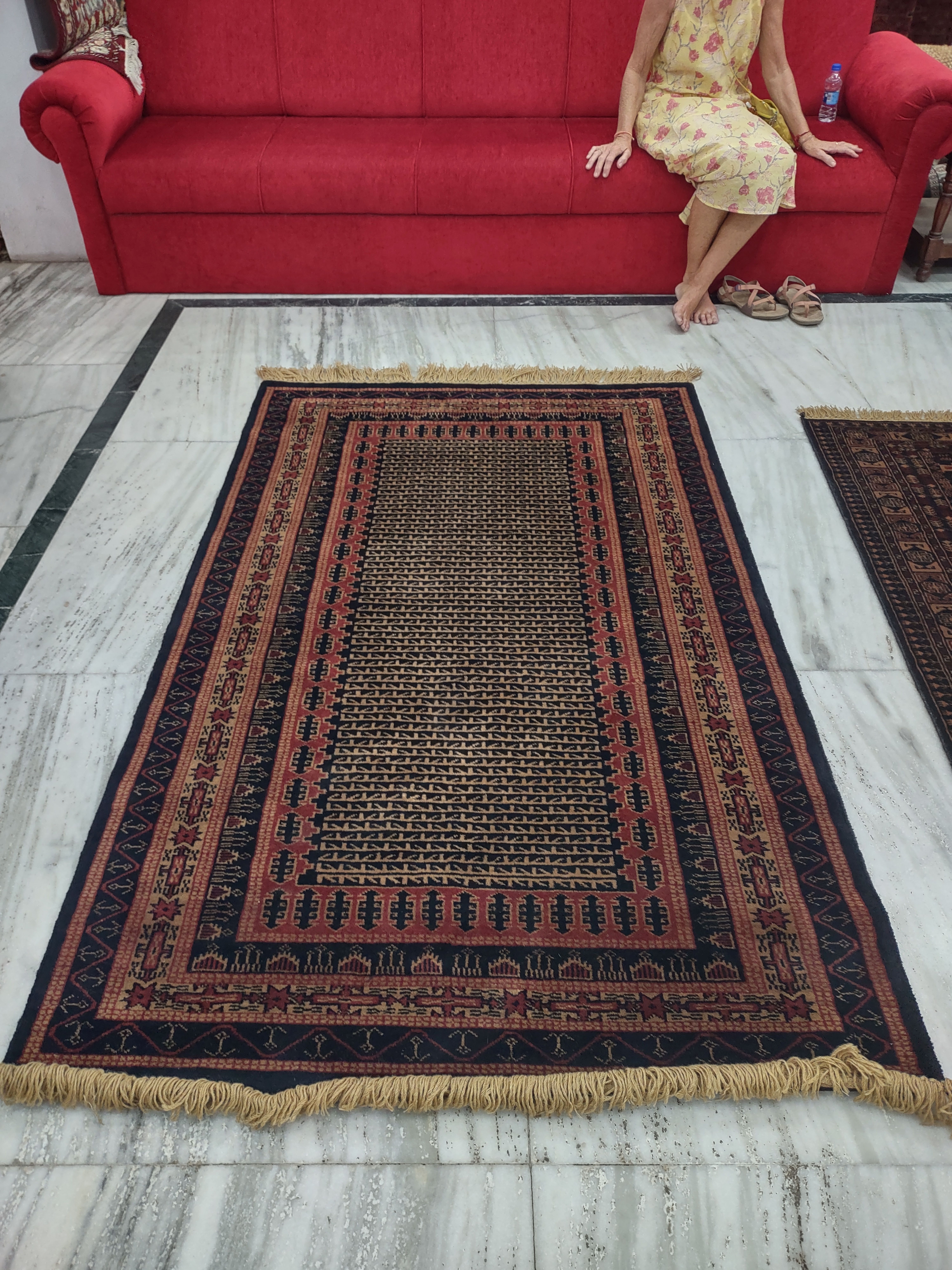
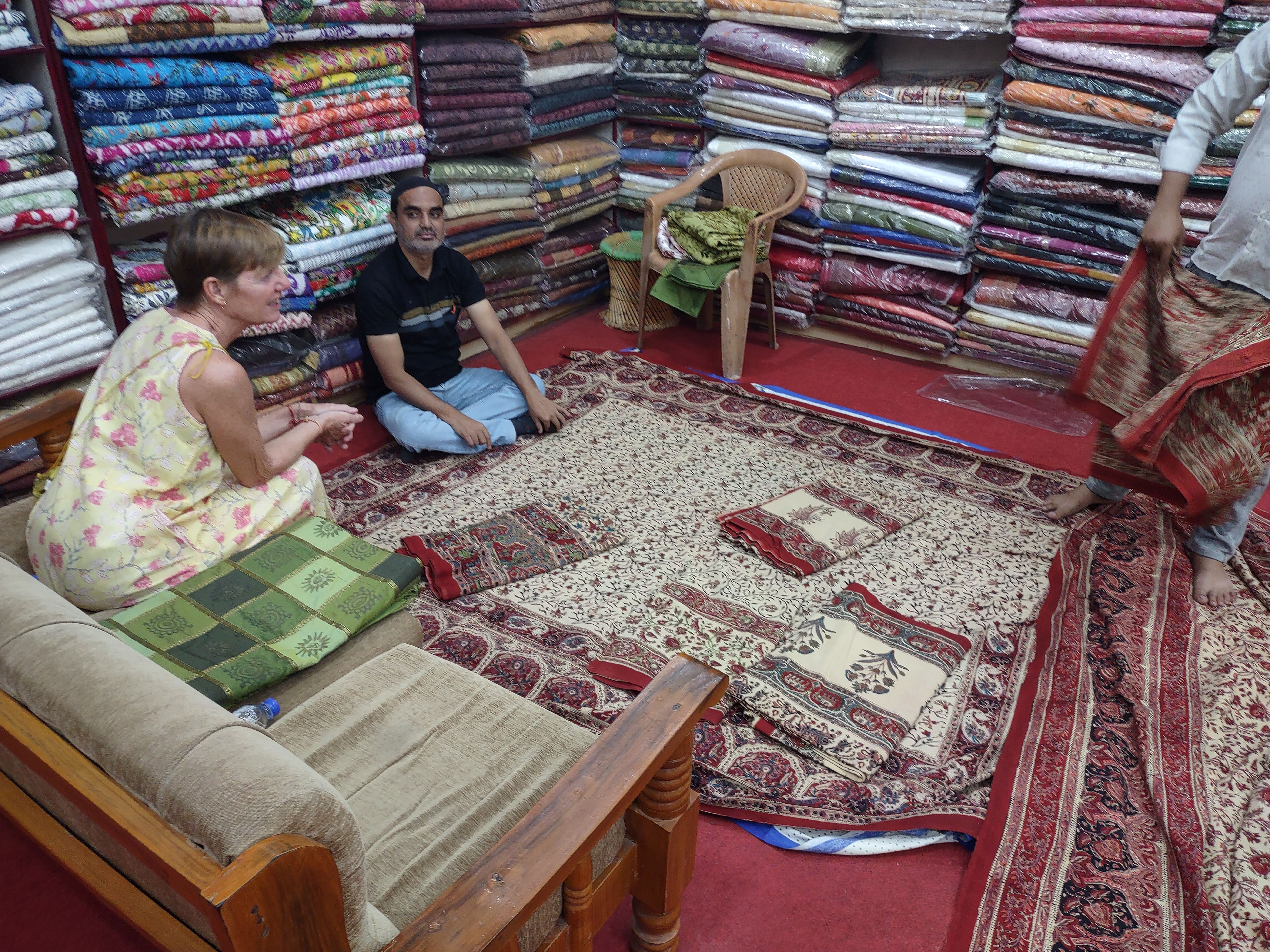
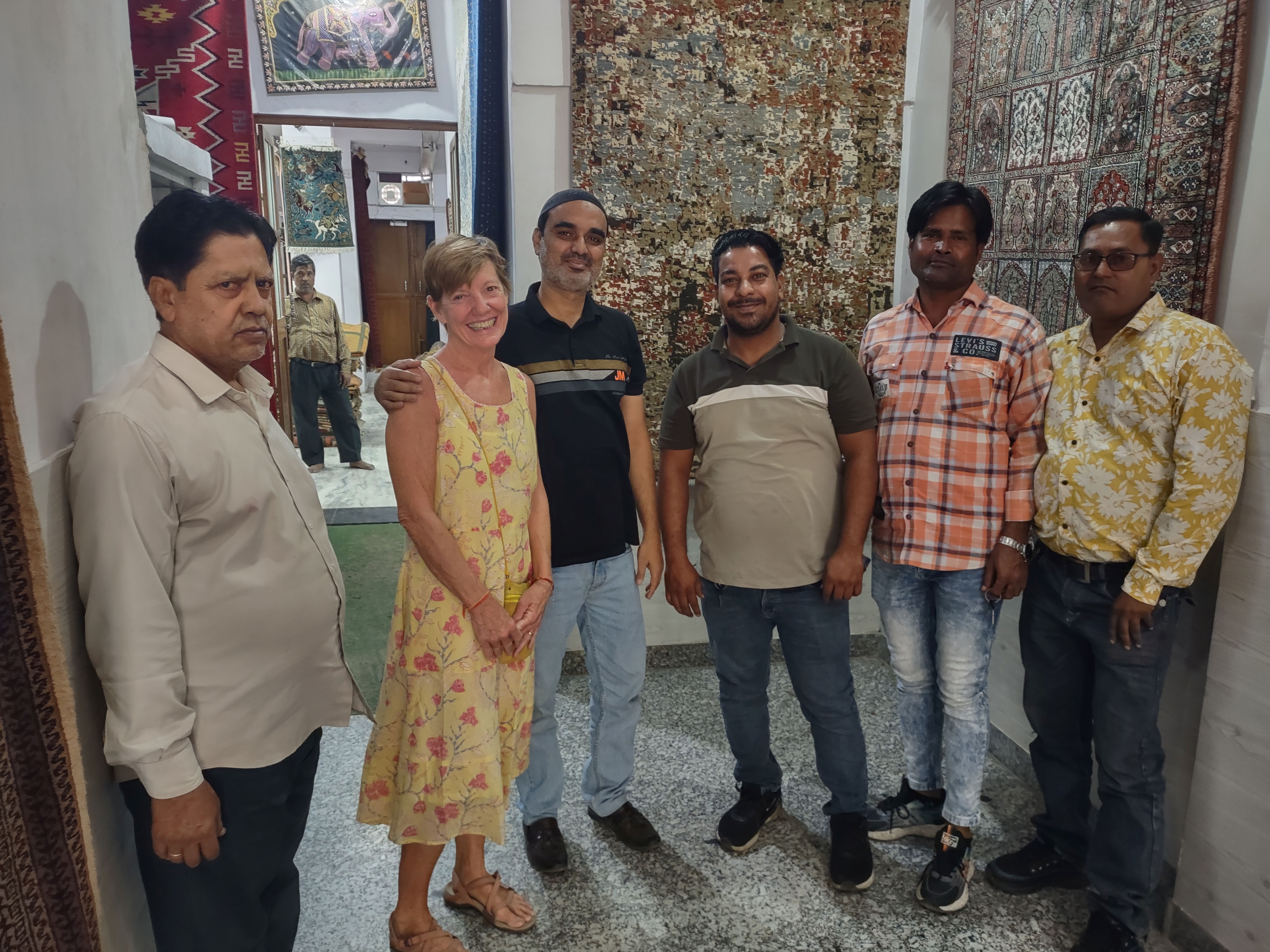
At our request, we stopped at another textile shop (Mogul Indian Crafts and Textiles) where we saw a block printing demonstration and ended up buying another custom tailored shirt and another bed spread. We also saw a demonstration of carpet weaving and bought a beautiful hand-woven rug for my office at home (wherever that ends up being).

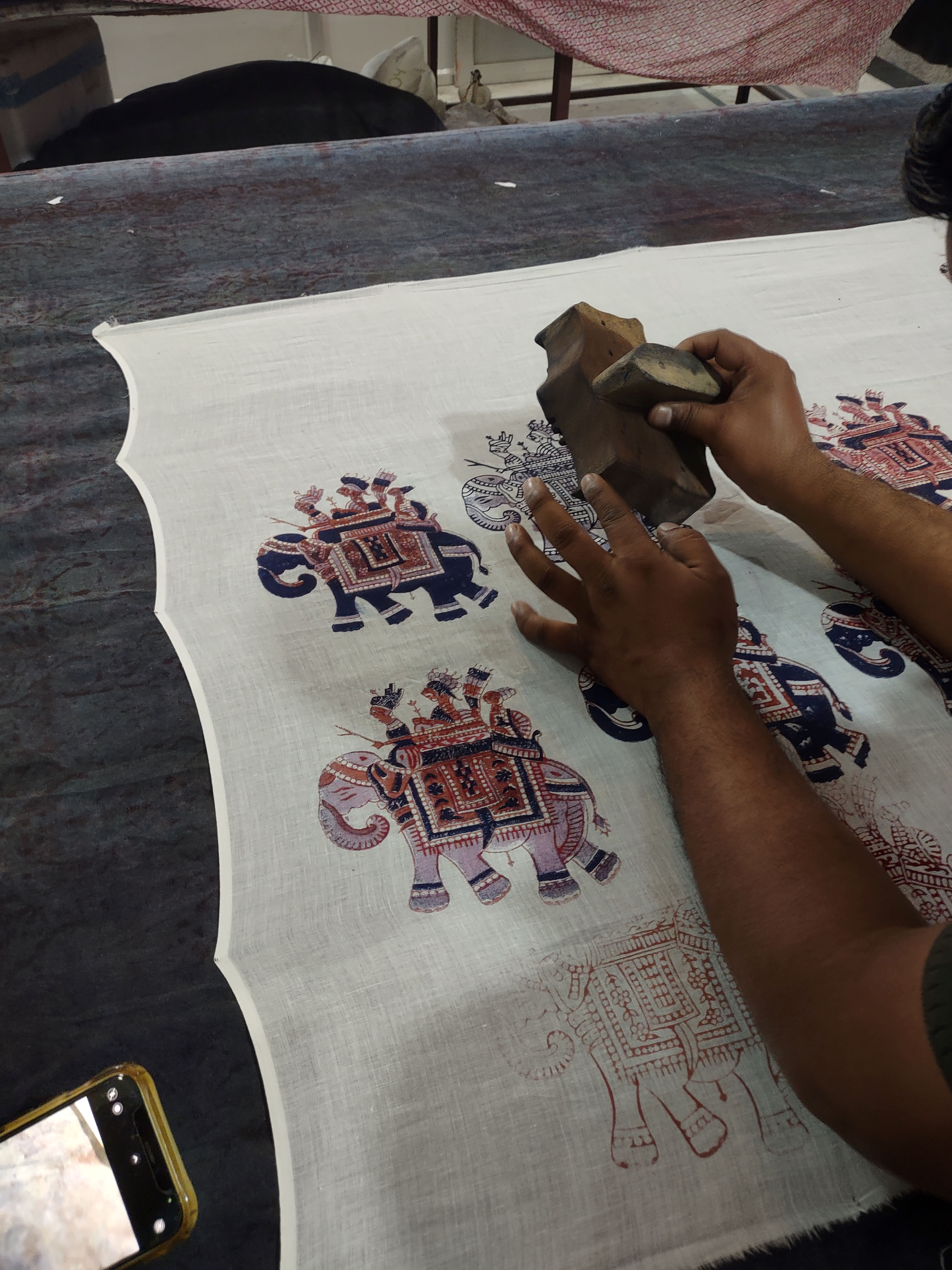

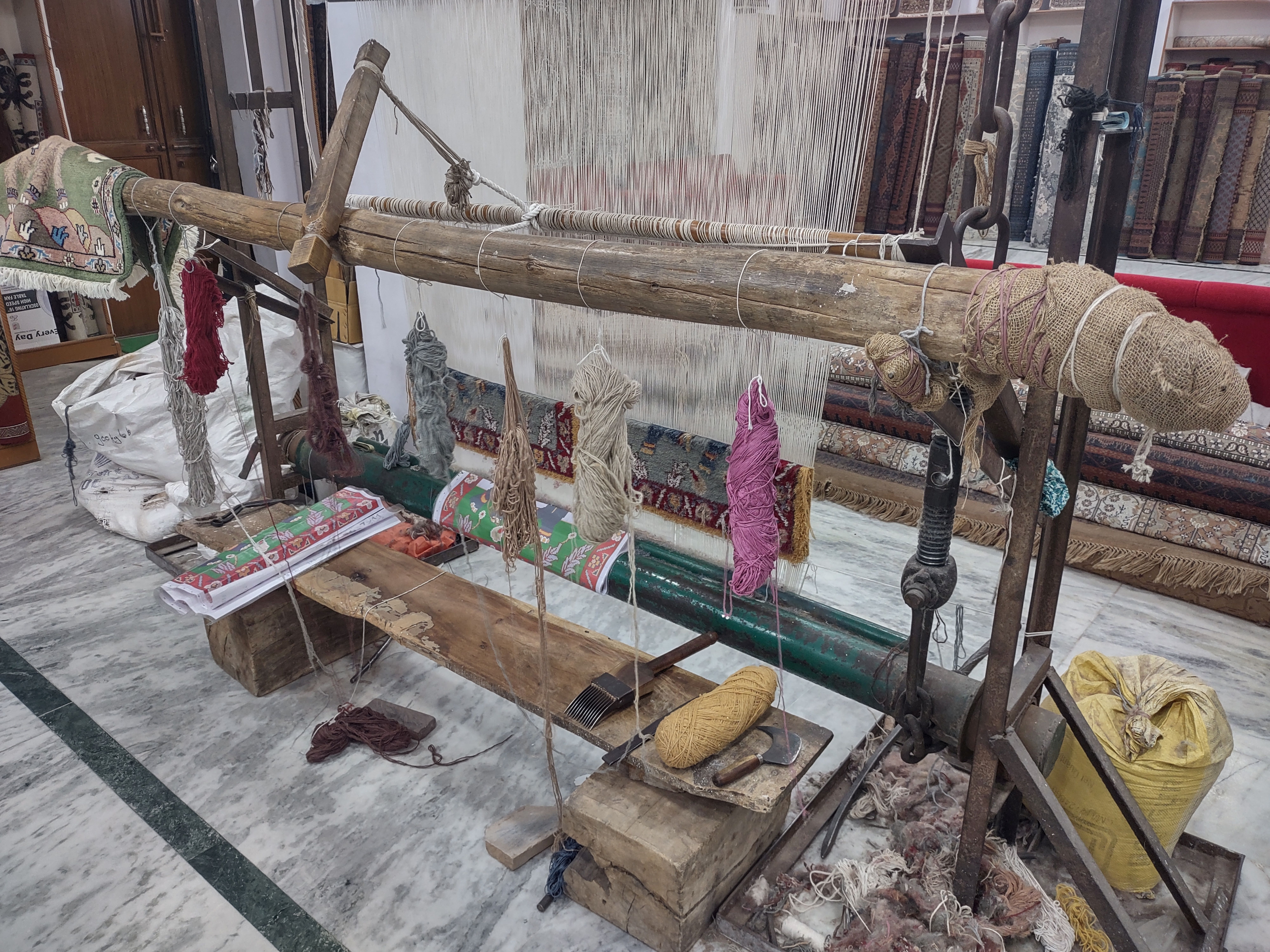


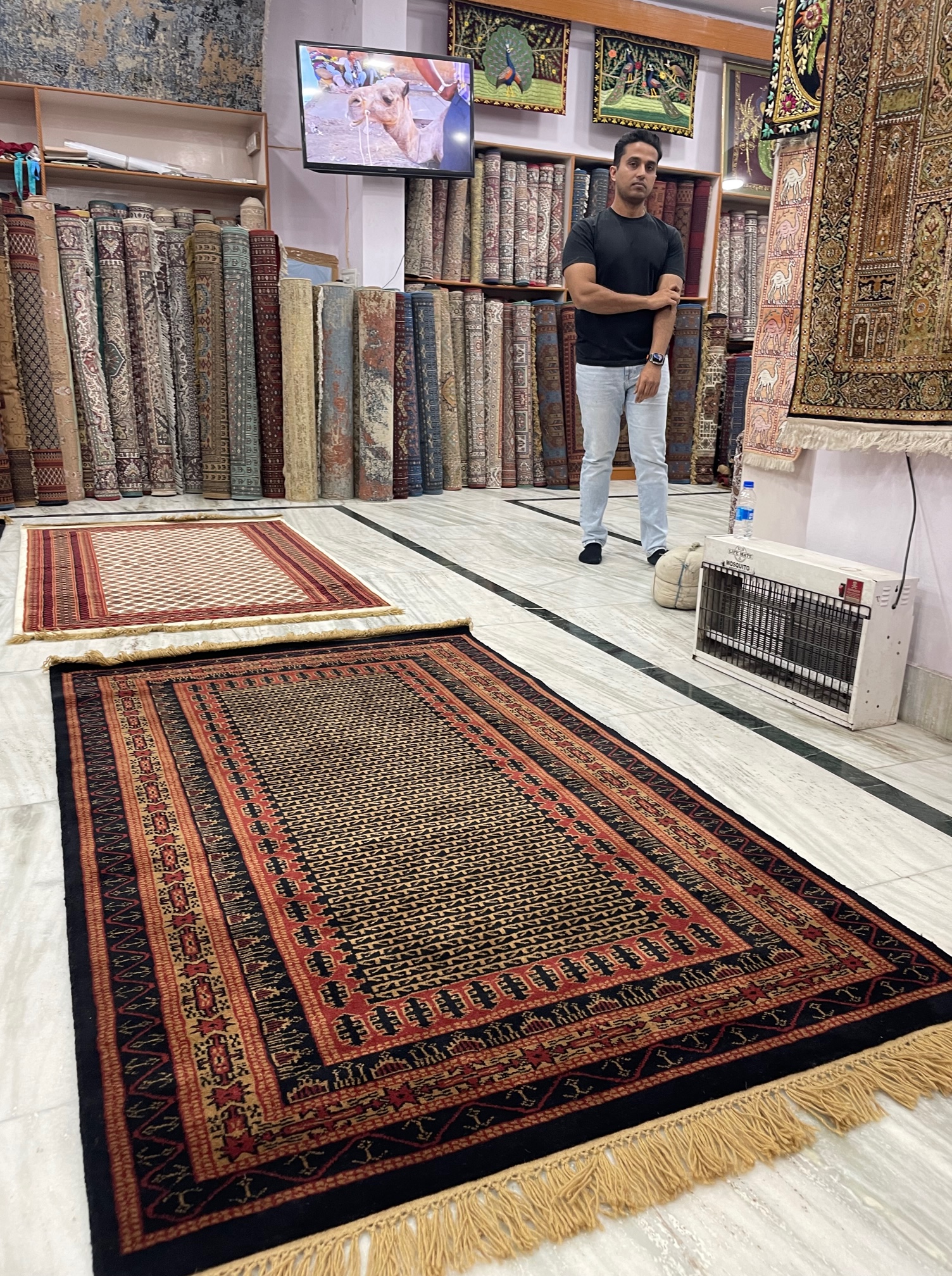
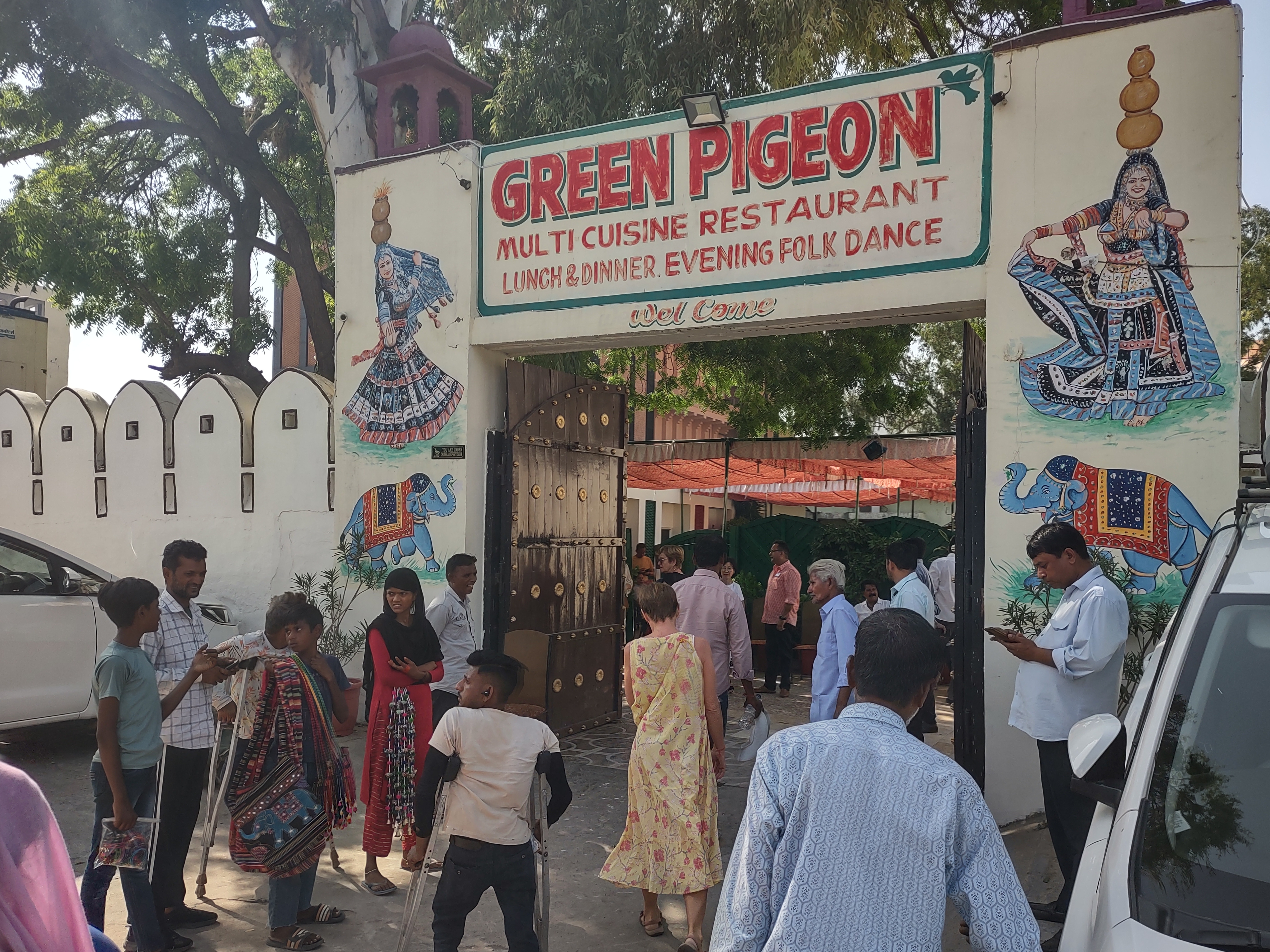
Following lunch at a place with the rather dubious name of The Green Pigeon (fairly certain that we didn’t eat any, but who knows?).
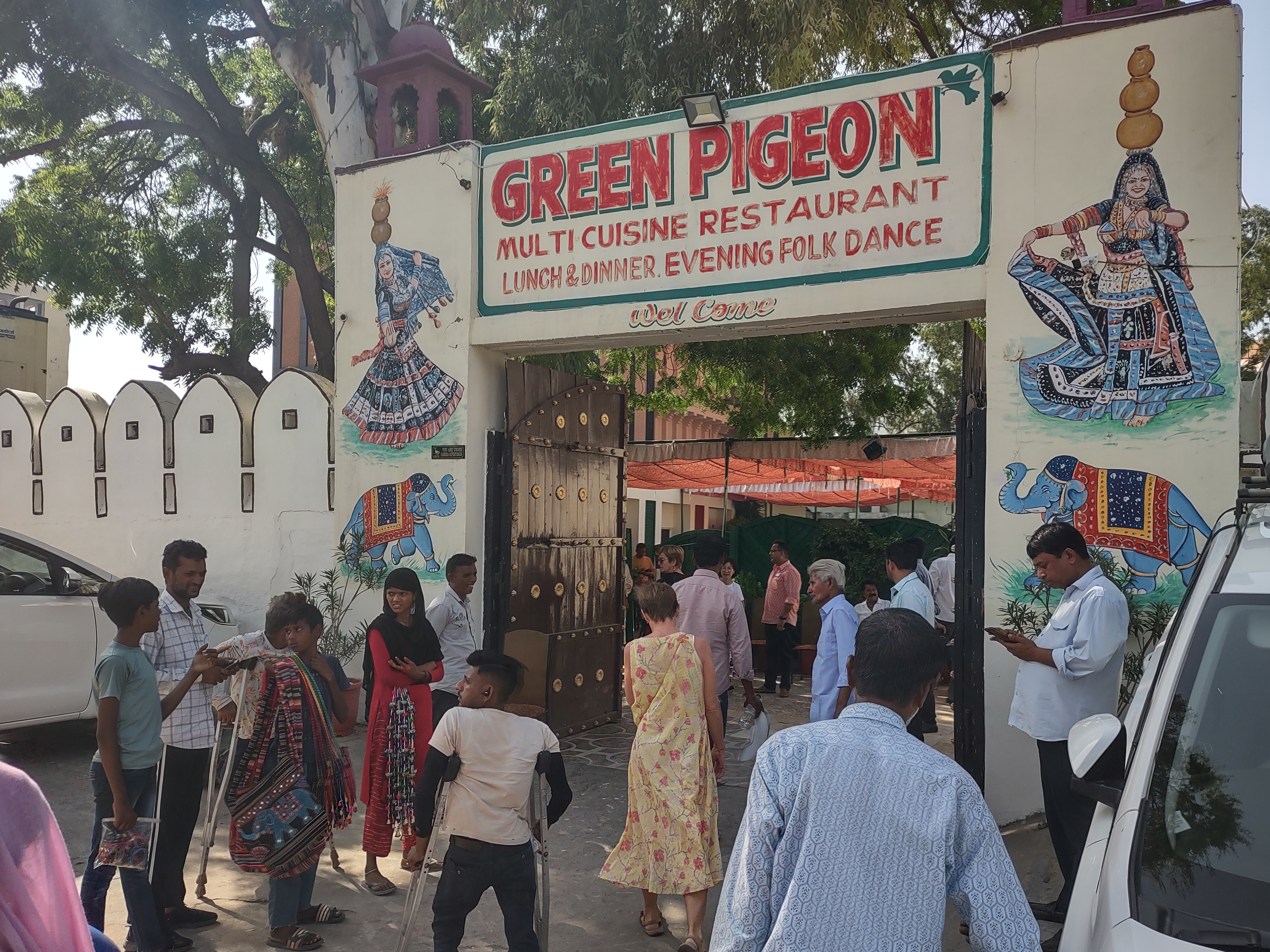
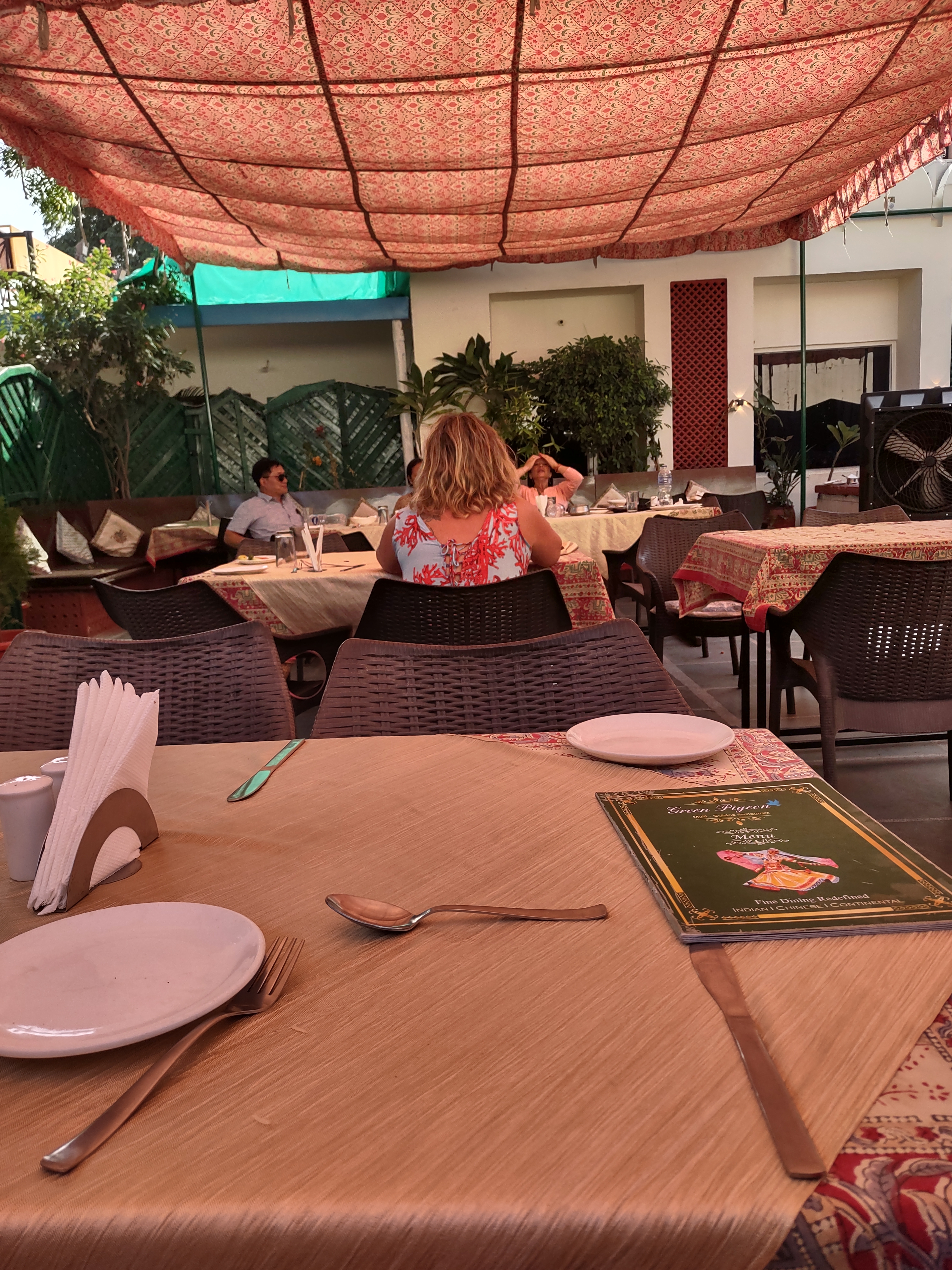
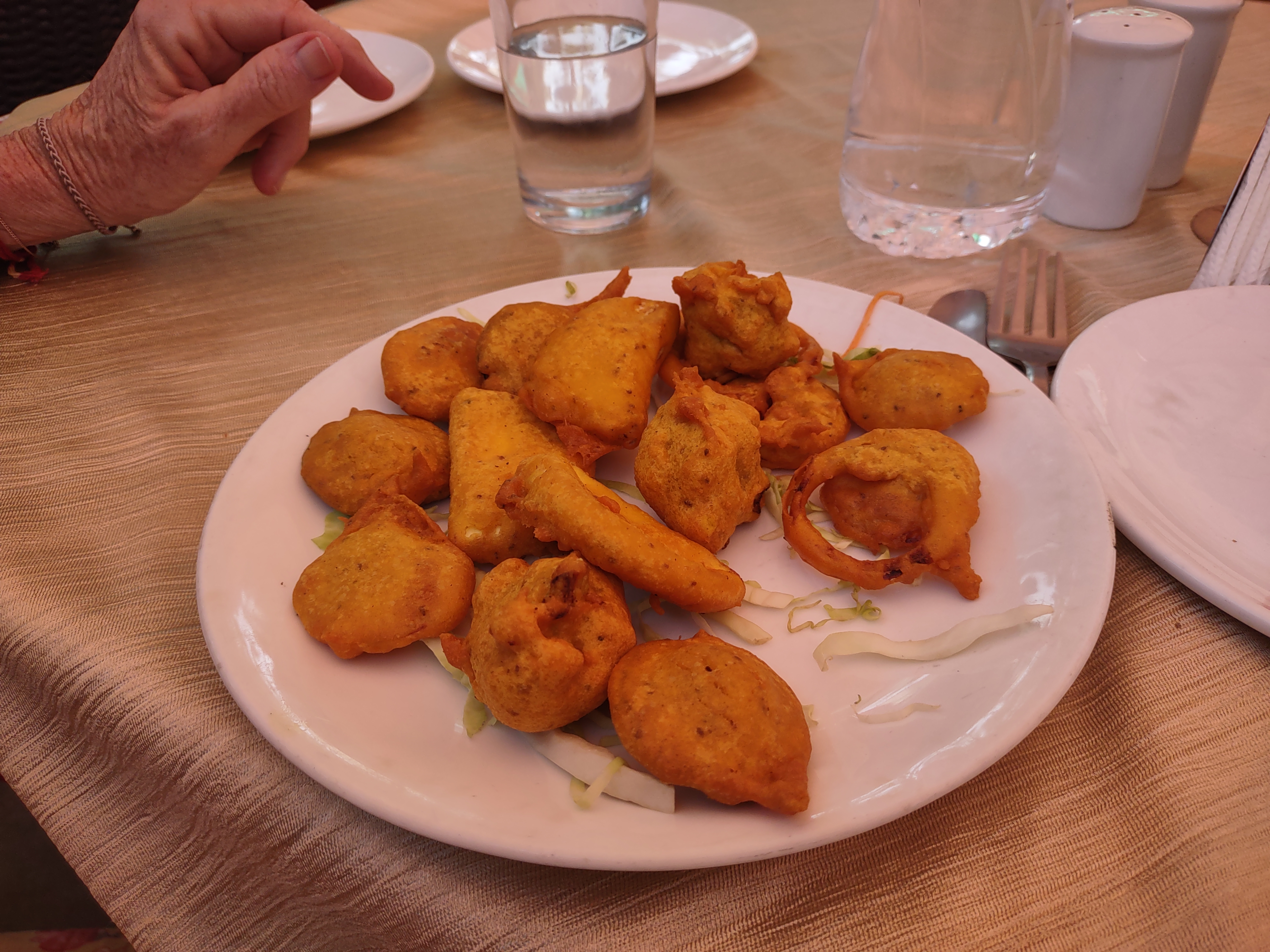
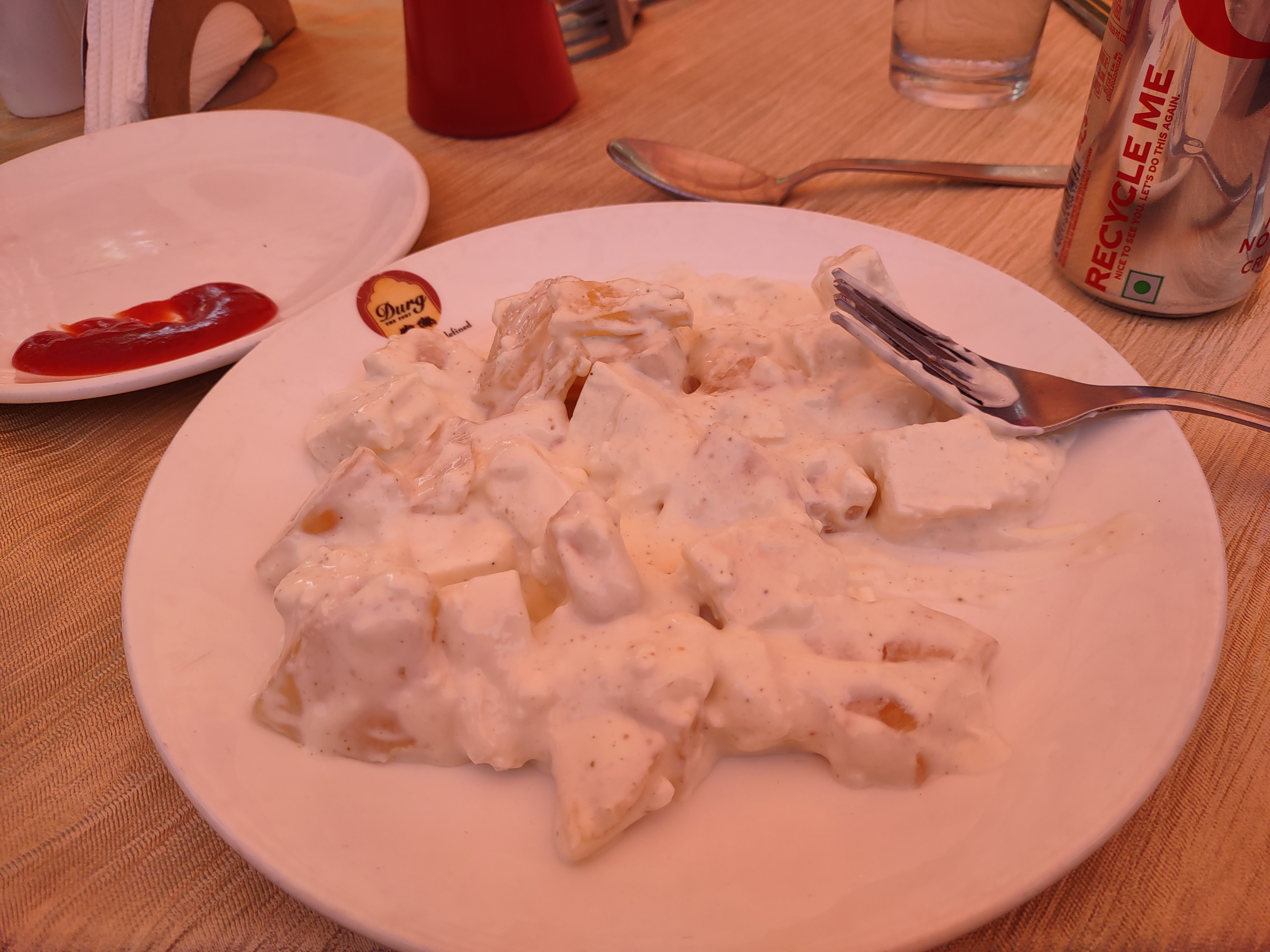

After lunch we made brief stops at the Palace of Water and the Palace of Winds, both beautiful sites but also both sites, neither of which you can really tour. The Palace of Winds was designed with almost 1,000 ornate louvered windows which allowed the women of the royal court to observe public events without being seen.

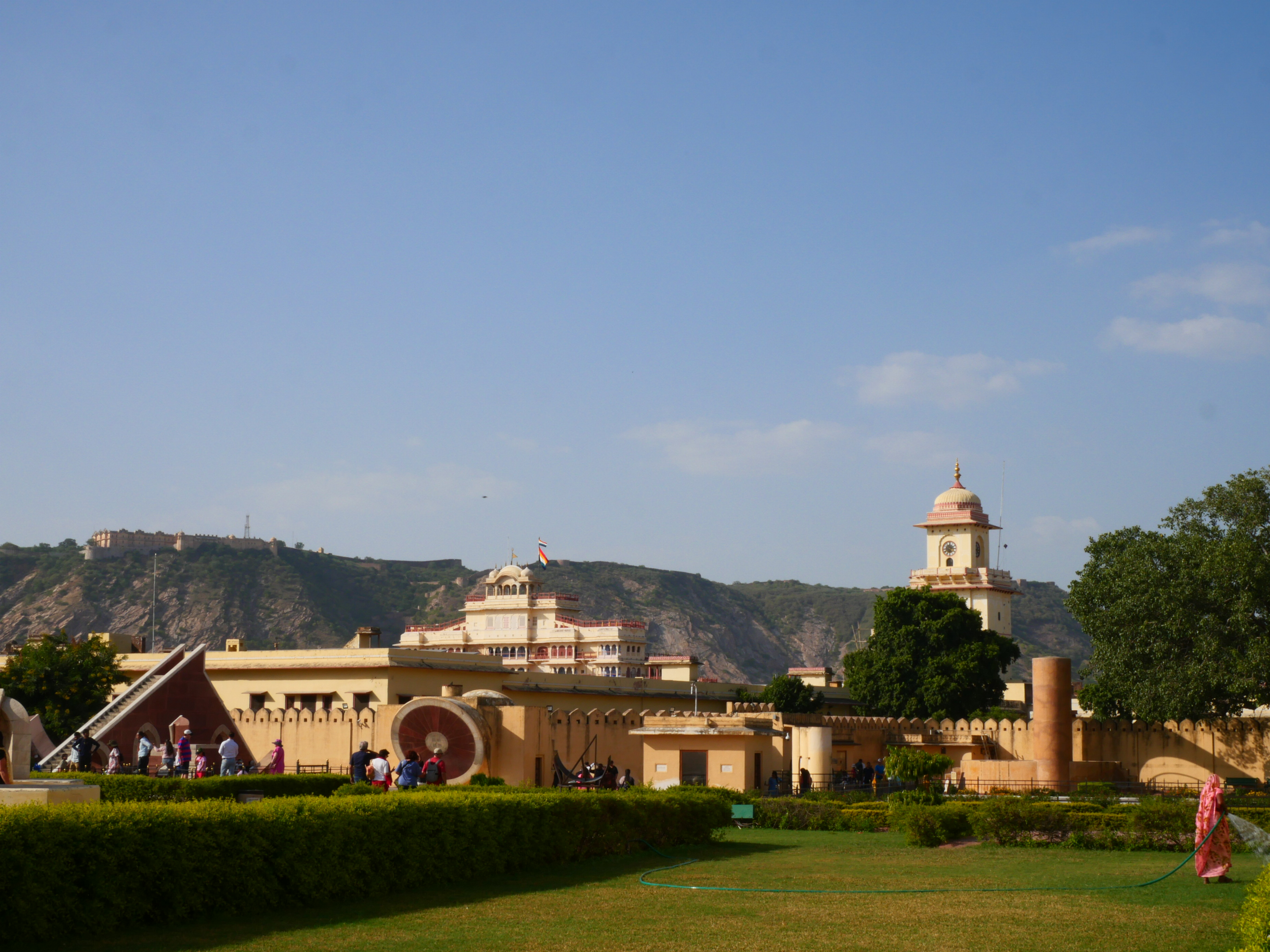
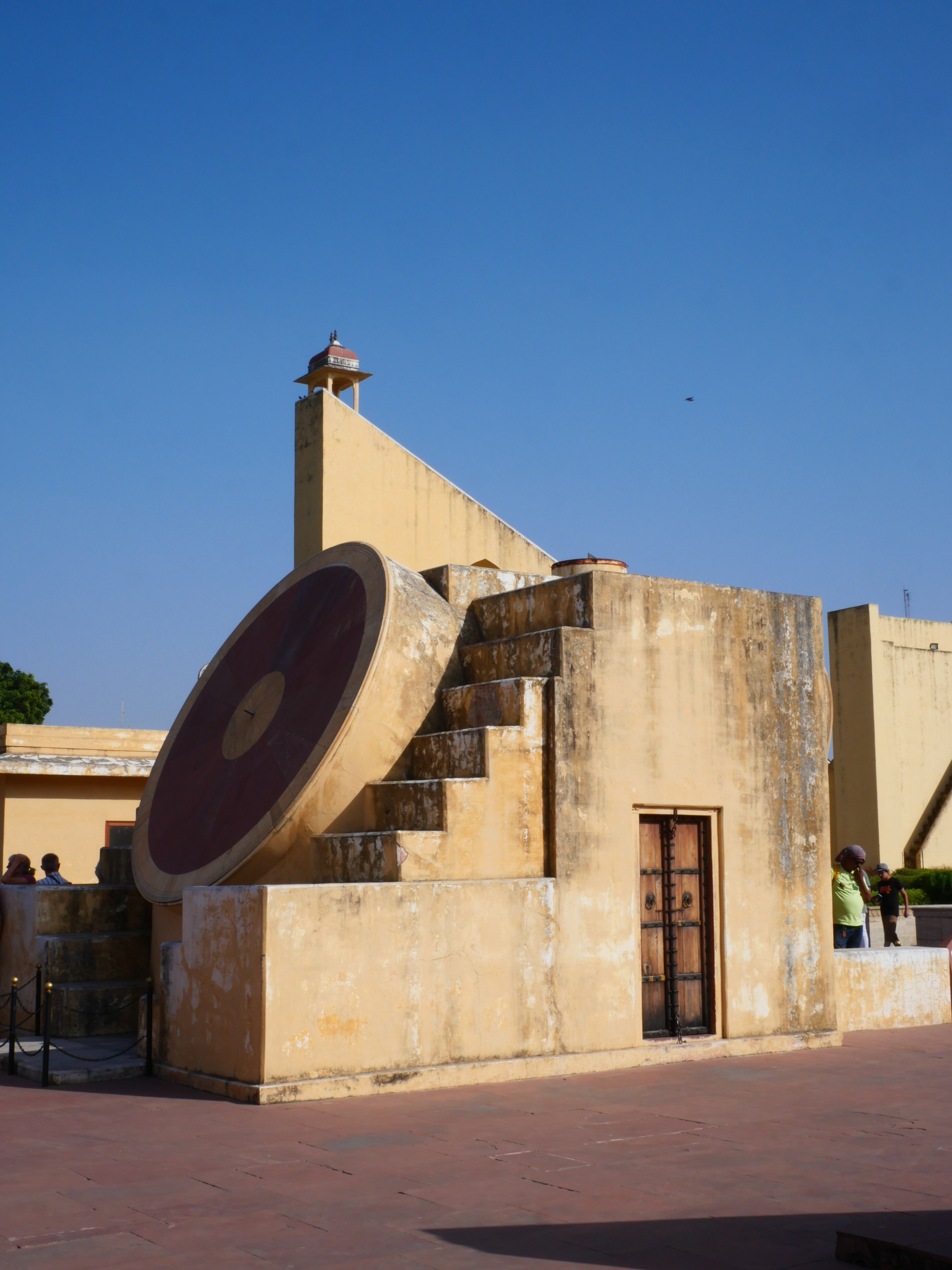
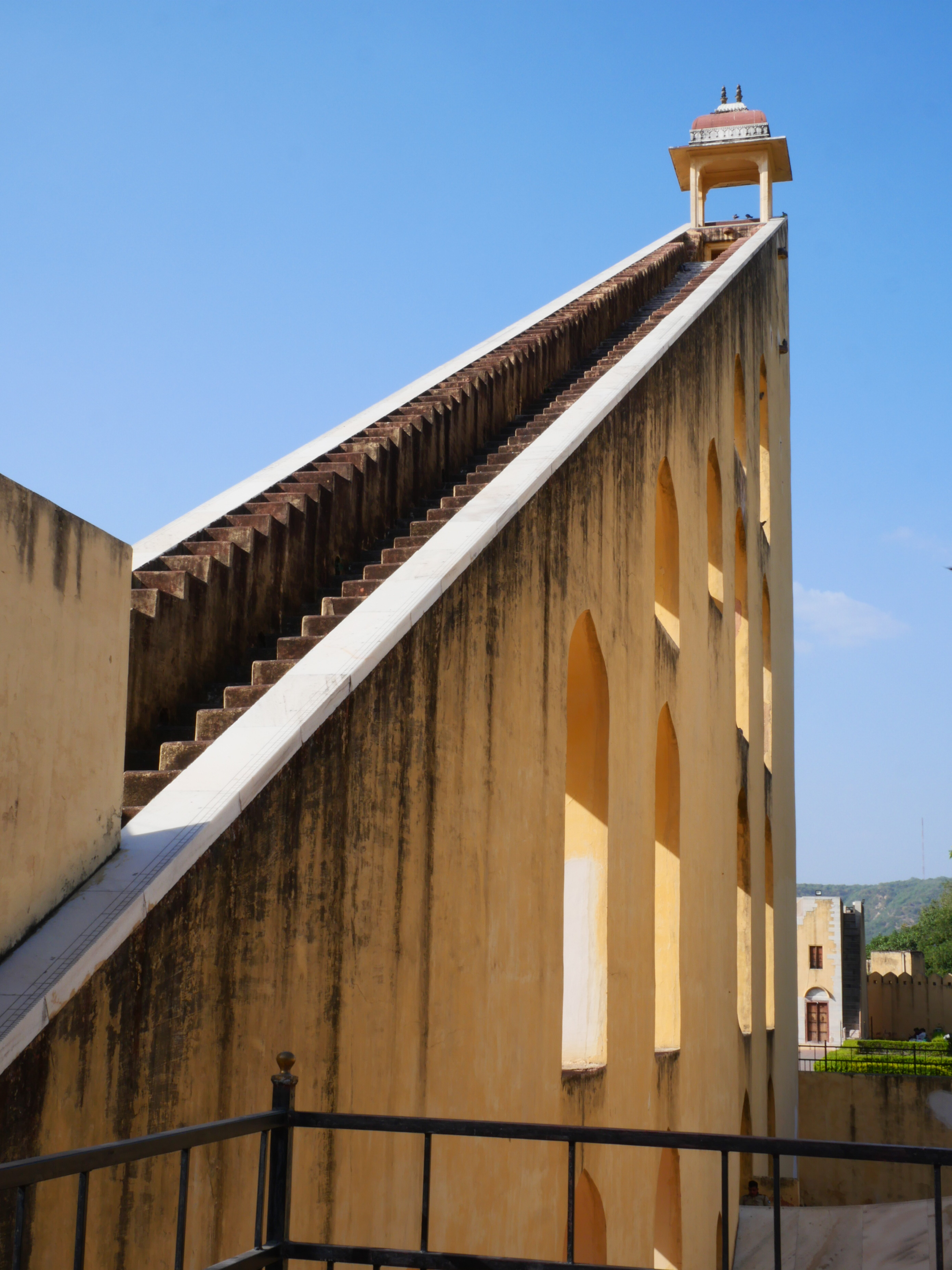
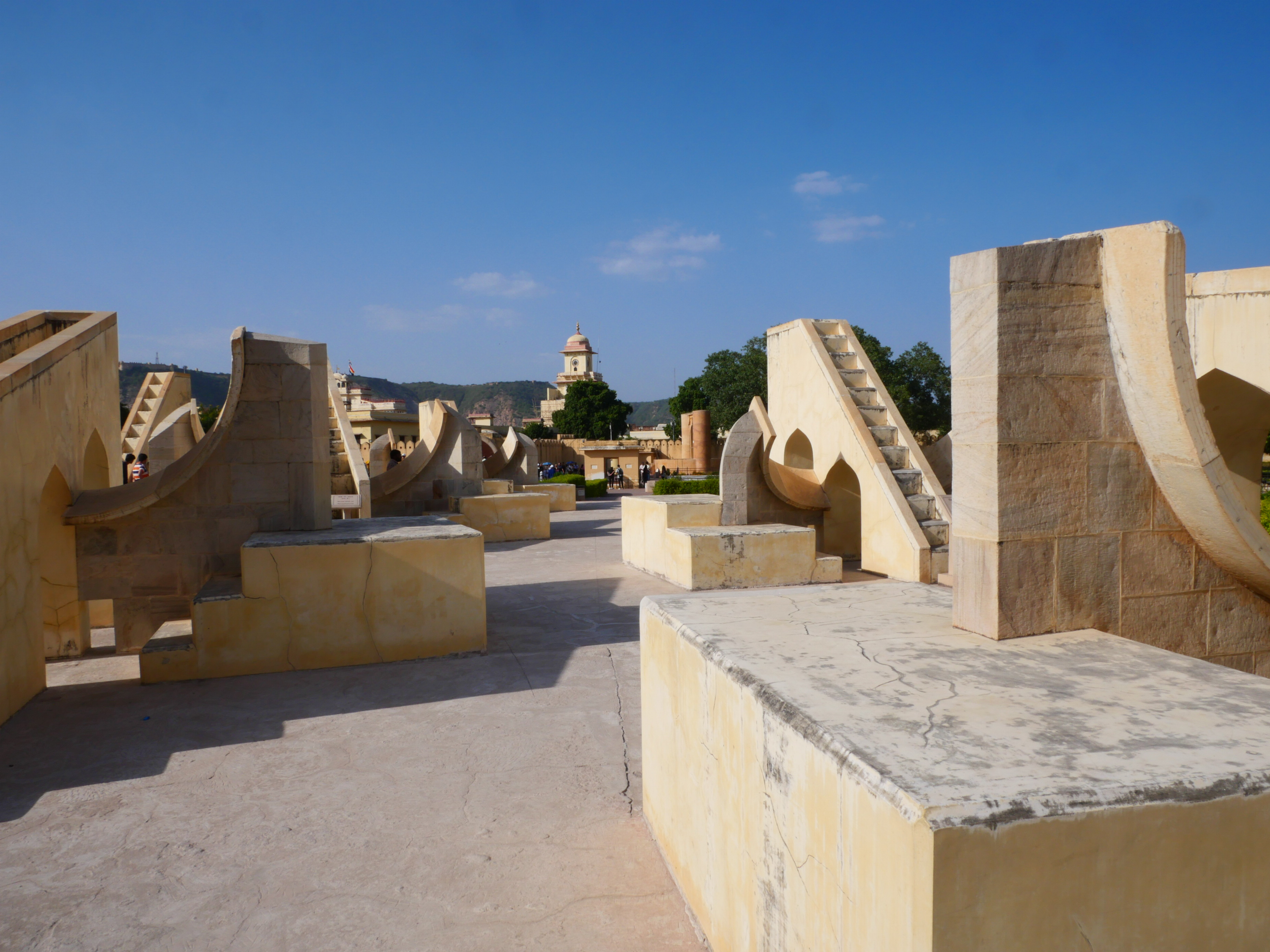
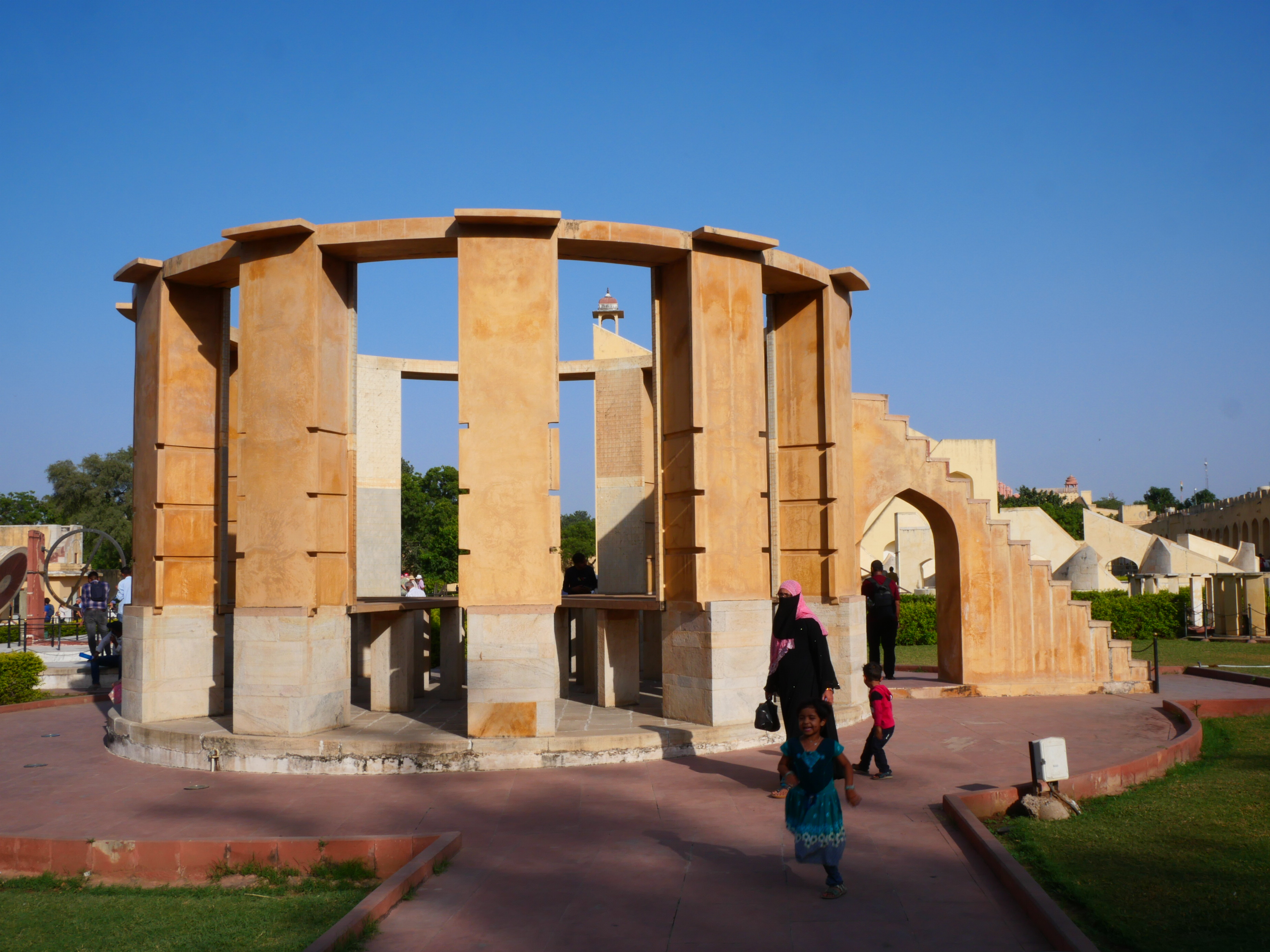
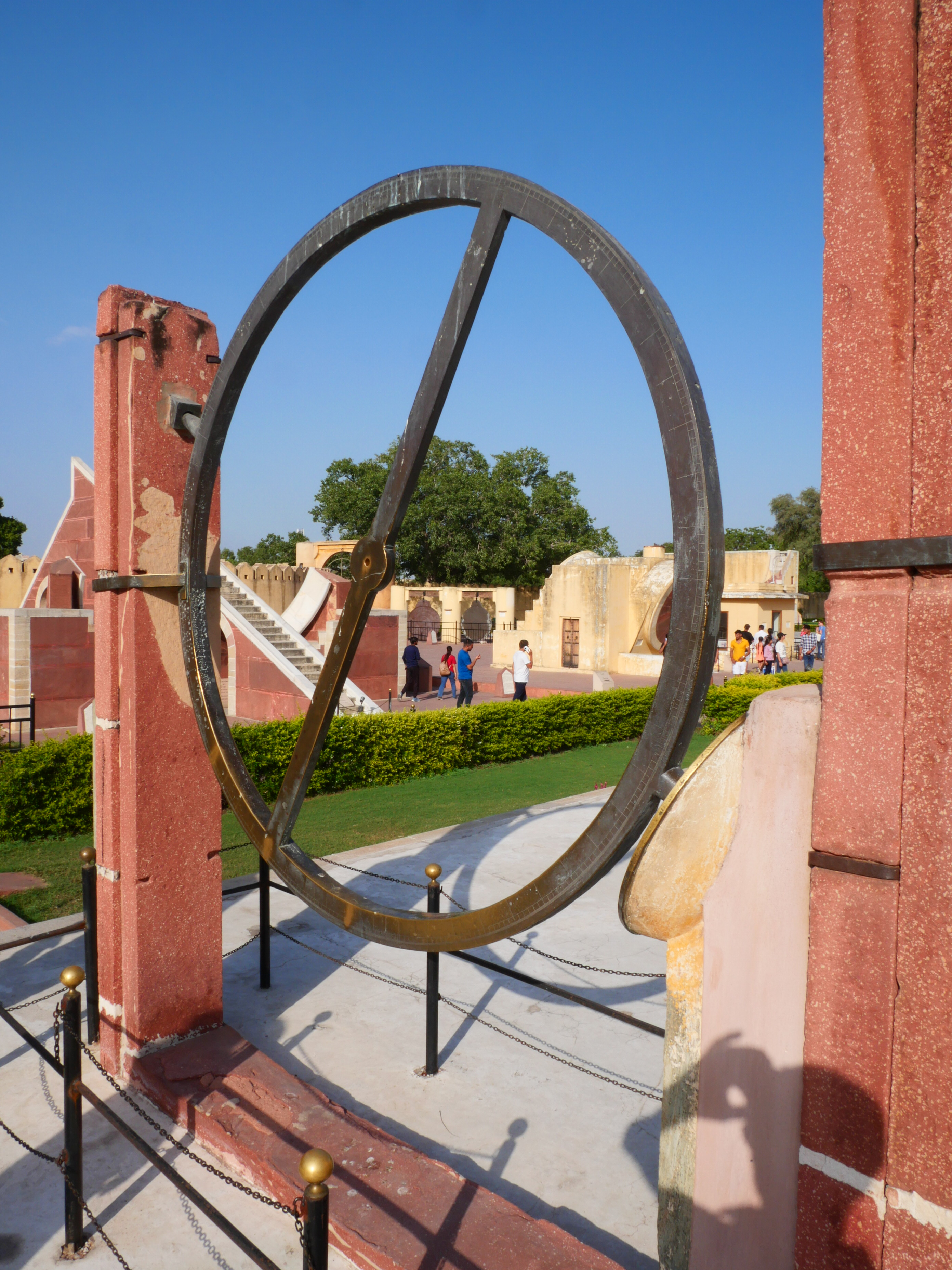
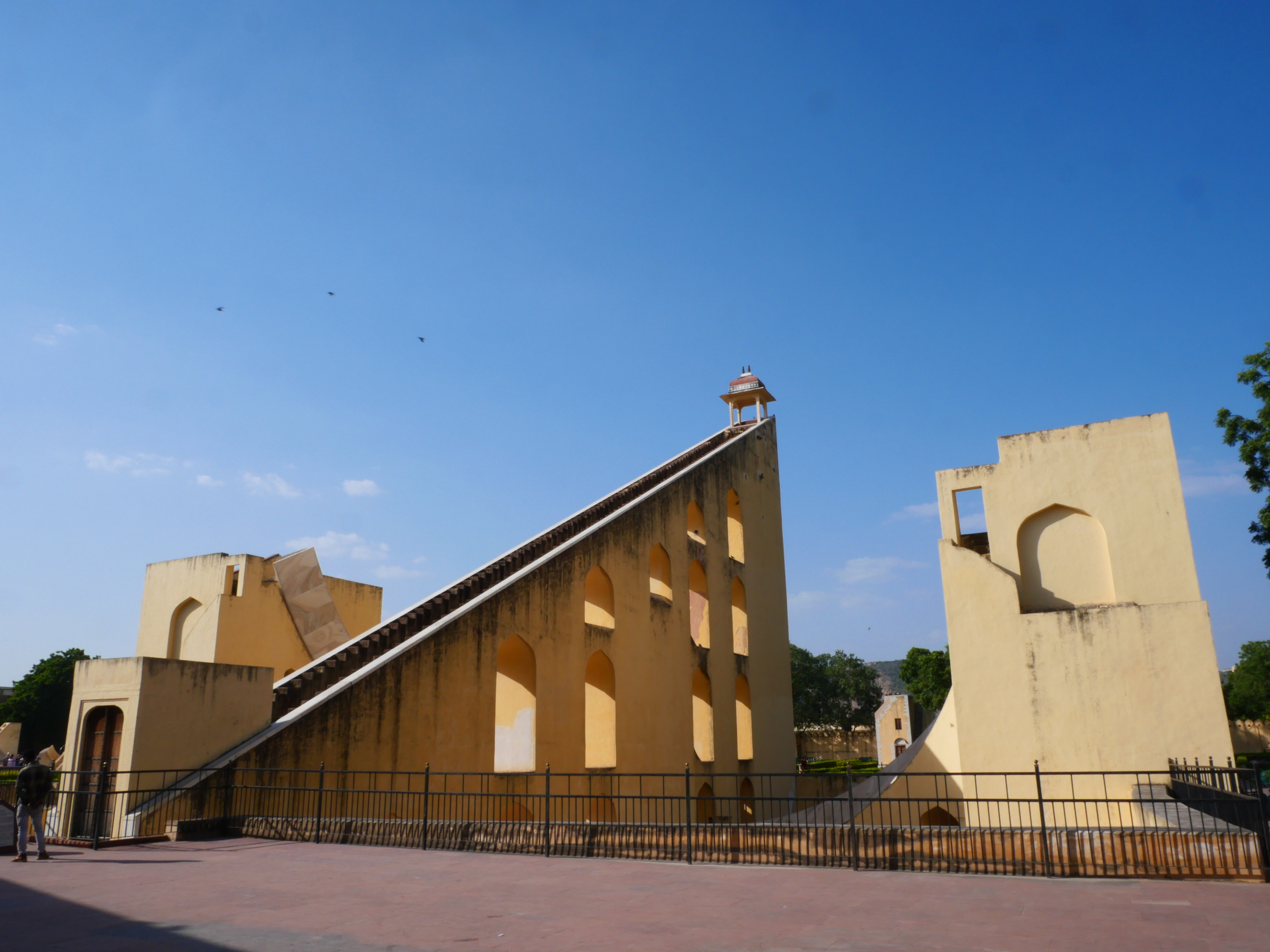
Our last stop of the day was at the Jaipur Jantar Mantar, an astronomical observatory, the best-known of several constructed in the early 18th century by Maharaja Jai Singh II, the founder of Jaipur. The various instruments at the observatory (all of which Sony was able to explain the workings of) were used to take observations and compile various astronomical tables and to predict the times and movements of the sun, moon, and planets. Combined with what we had learned early about Maharaja Jai Singh II’s passion for the arts, architecture, and literature, he seemed to me to the be a sort of Indian Thomas Jefferson.

With our heads overflowing with everything we had seen that day, we retired back to our hotel for another very nice dinner and then retired to our room for a little work and to watch Taj Mahal videos.
DAY 11: 13-Oct-2023
From Jaipur to Agra (4.5h drive)
This morning, proceed to check out & you will take the road to go to Agra. On the way, you will stop first at the stepwells in Abhaneri. Although the village is nearly abandoned, the location is famous for its ‘Baoris’ (step wells which were invented by the natives to collect rain water). You will visit Chand Baori, one of the largest and deepest wells in India. Then you will visit Fatehpur Sikri, the deserted red sandstone city built by the Mughal Emperor Akbar. Fatehpur Sikri was the capital of the Mughal empire from 1571 to 1585. It was abandoned shortly after its completion, due to lack of water and the proximity with enemies. Then continue your journey to Agra. You can visit the famous Taj Mahal by either sunrise or sunset. It is an immense mausoleum of white marble, built in Agra between 1631 and 1648 by order of the Mughal emperor Shah Jahan in memory of his favorite wife. The Taj Mahal is the jewel of art in India and one of the universally admired masterpieces of the world’s heritage (Please note that Taj Mahal is closed on Fridays).
End of our service.
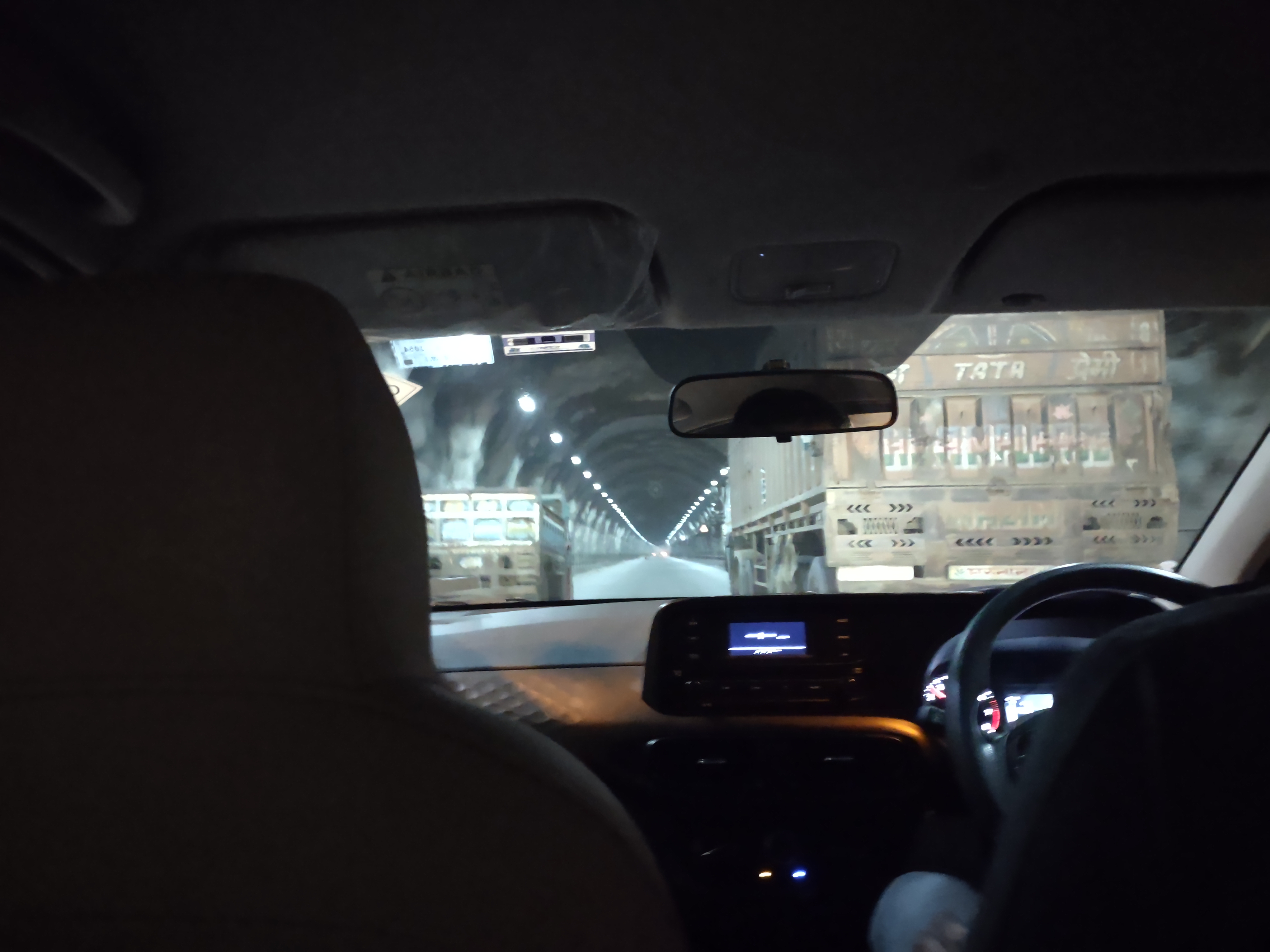
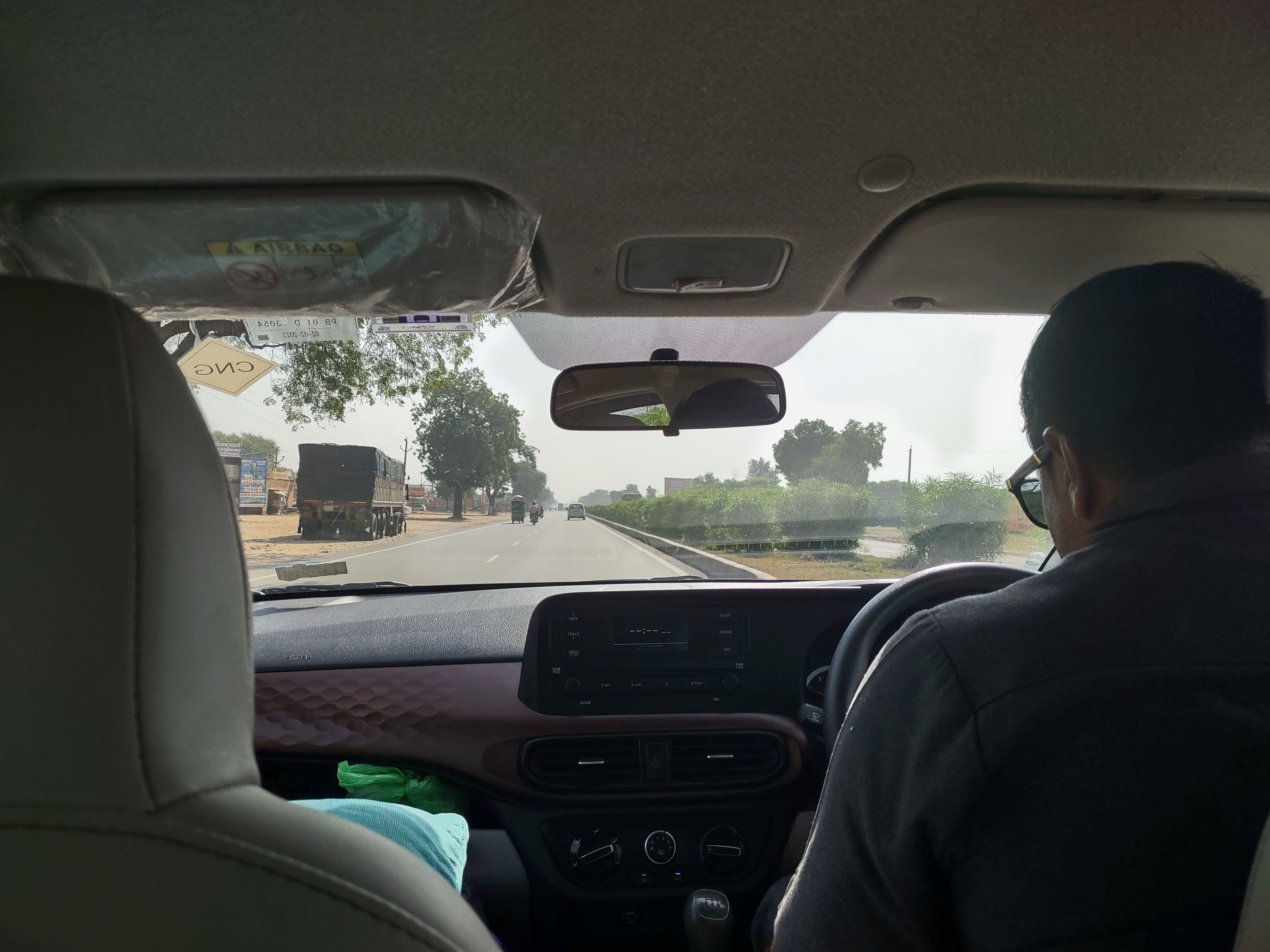
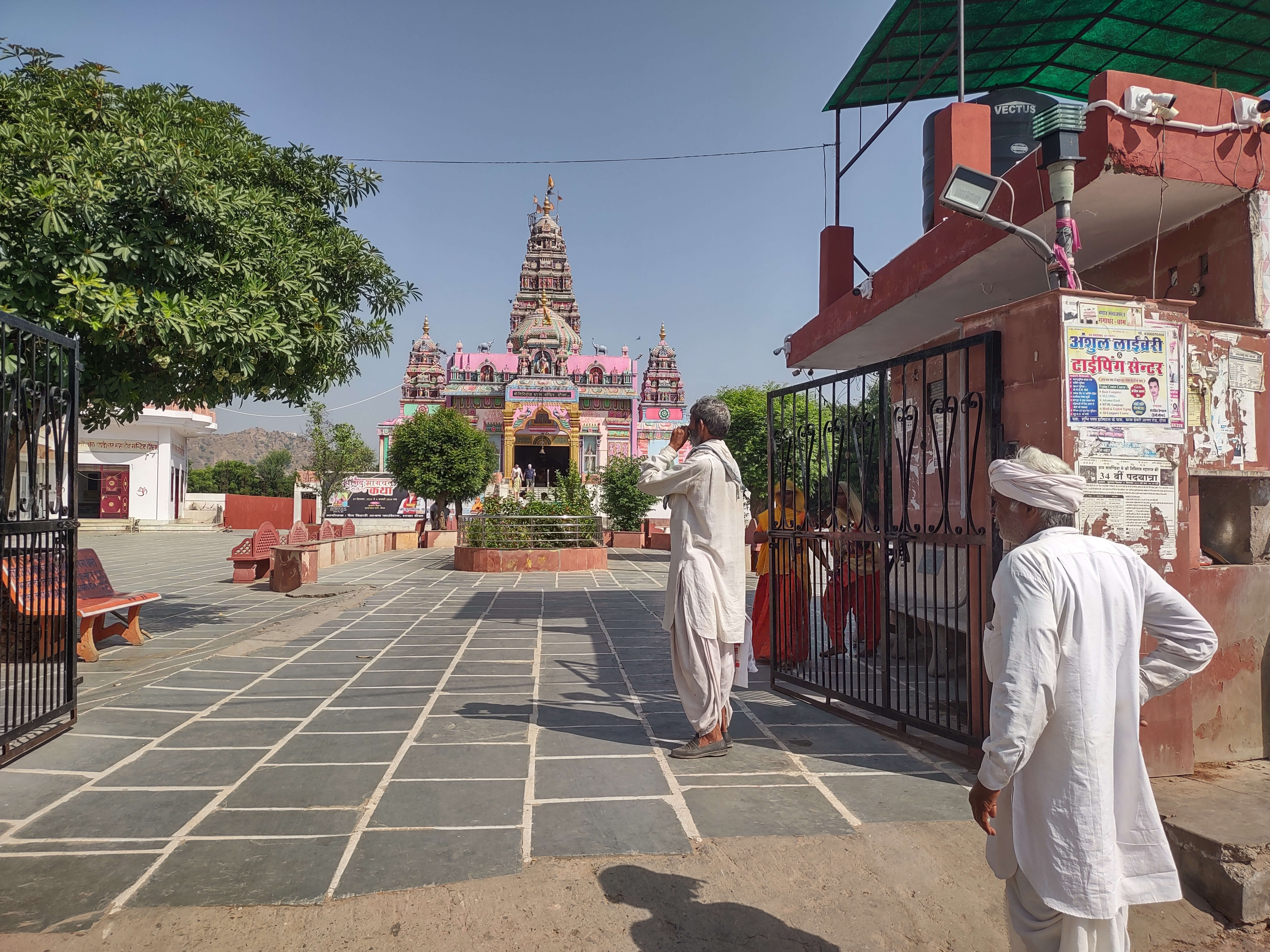
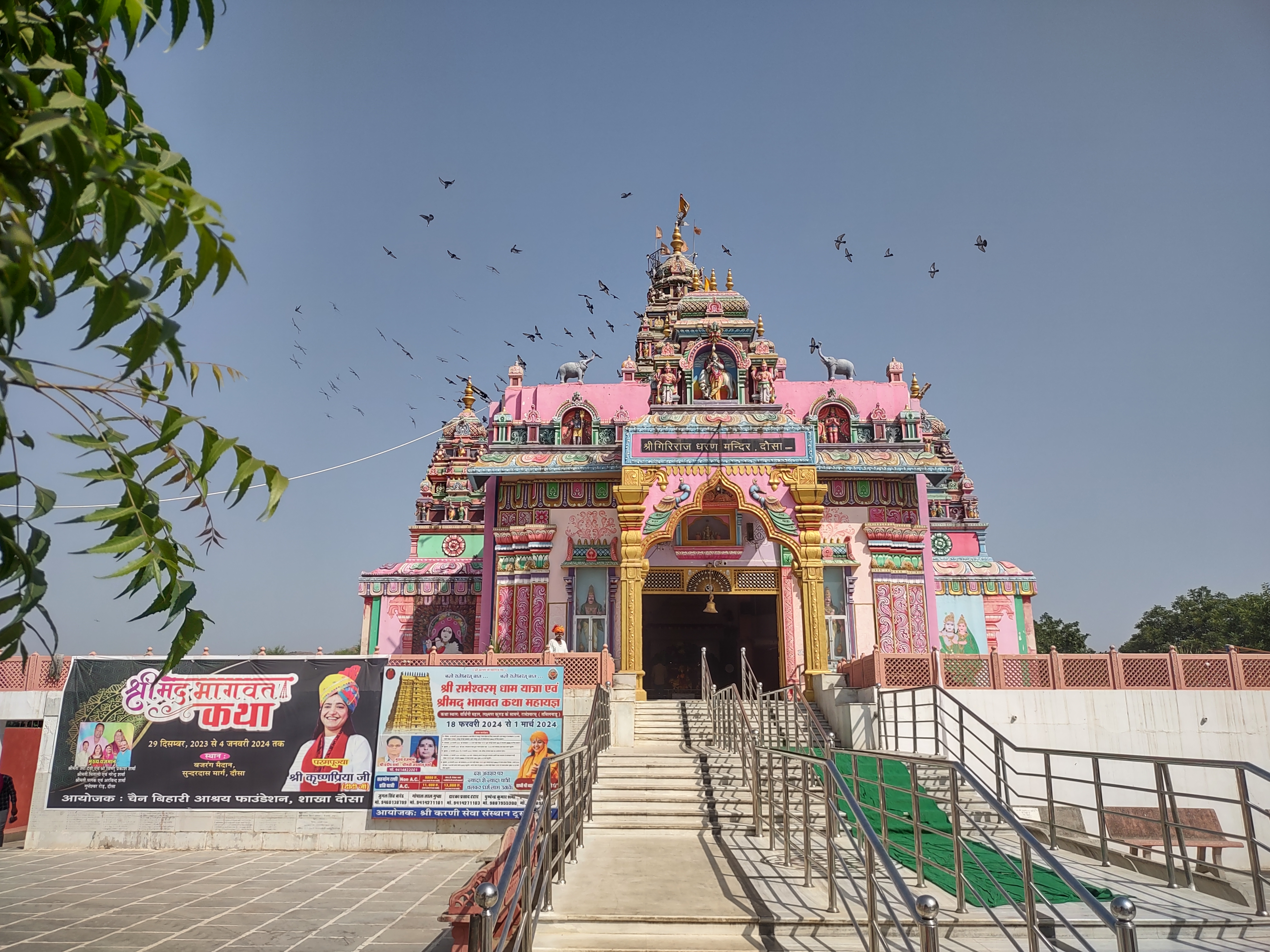
While we had imagined this last day of the tour to be mostly driving, it turned out to be one of the most busy and interesting days of the entire tour. We had breakfast in the hotel garden and then hit the road for what we anticipated to be about a two-hour drive. We made our way through the mountains east of Jaipur and then made a brief stop along the way at the Giriraj Dharan Mandir, which was one of the most colorful Hindu temple we had seen.

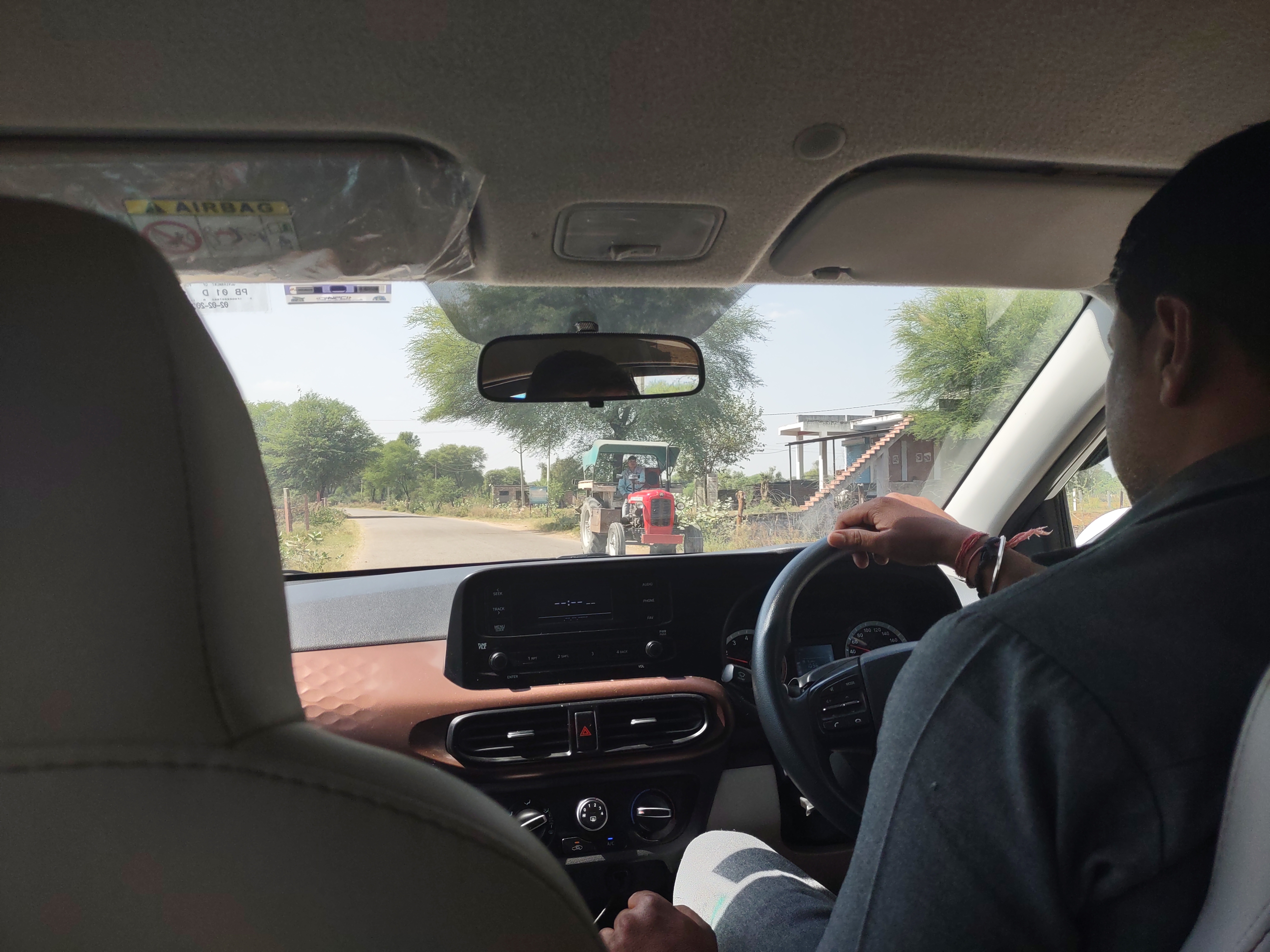
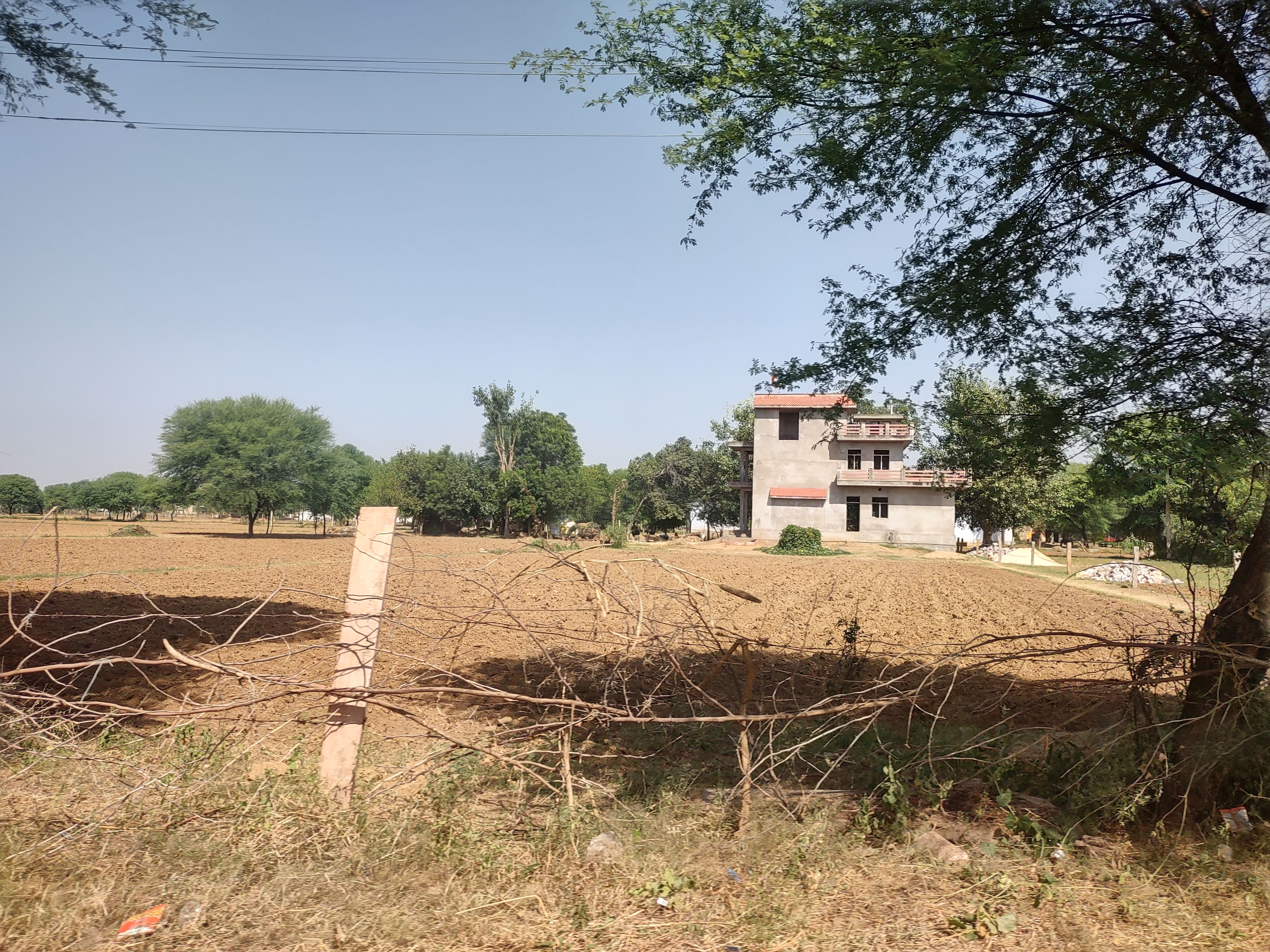
From there we continued east to Abhaneri which is in the middle of a pretty verdant agricultural area with lots of tractors on the road and fields vanishing toward the horizon.


We had seen photos of the Chand Baori Step Wells (there are a lot of them on Instagram and elsewhere) but were still pretty blown away by the real thing.
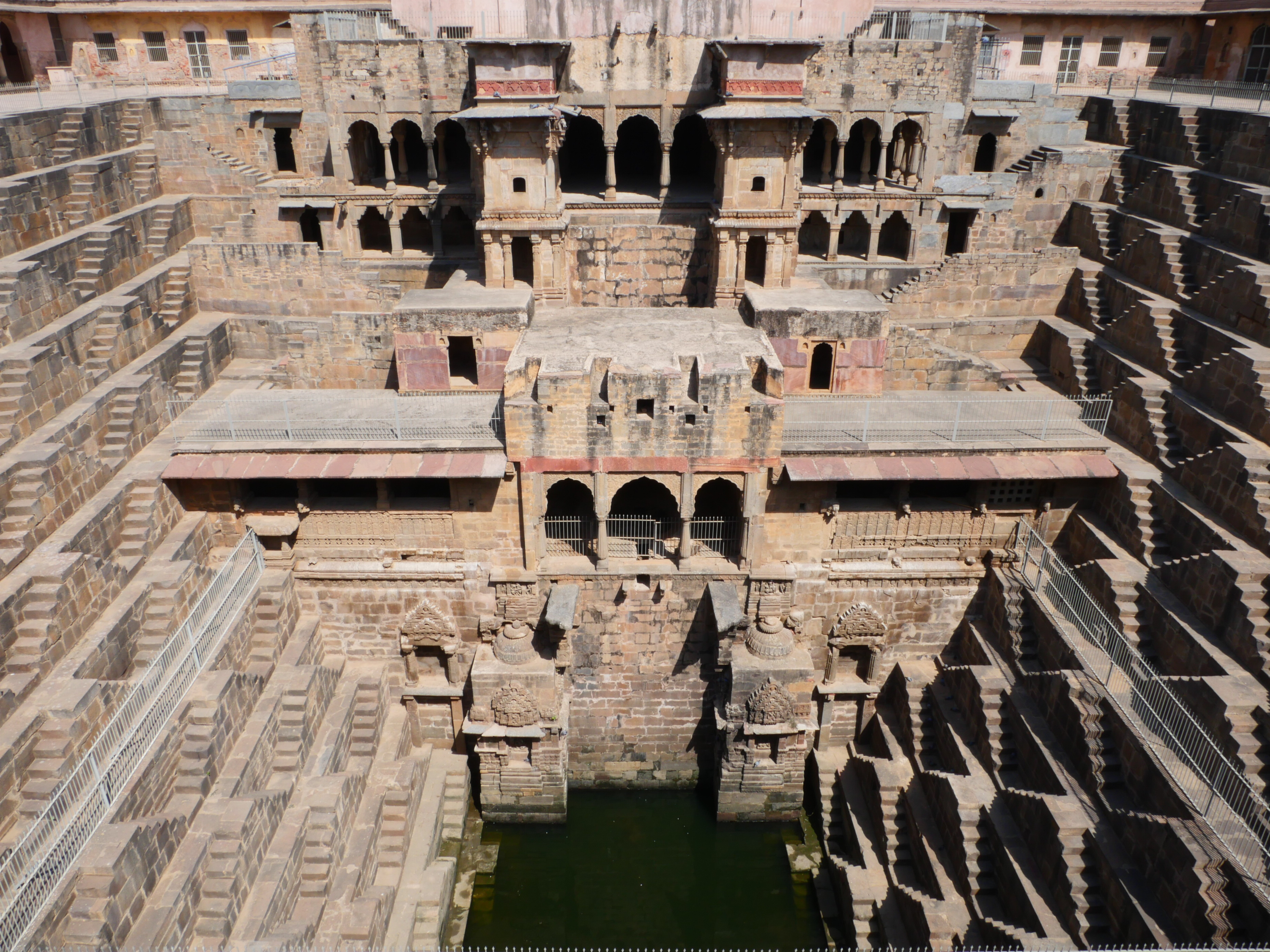
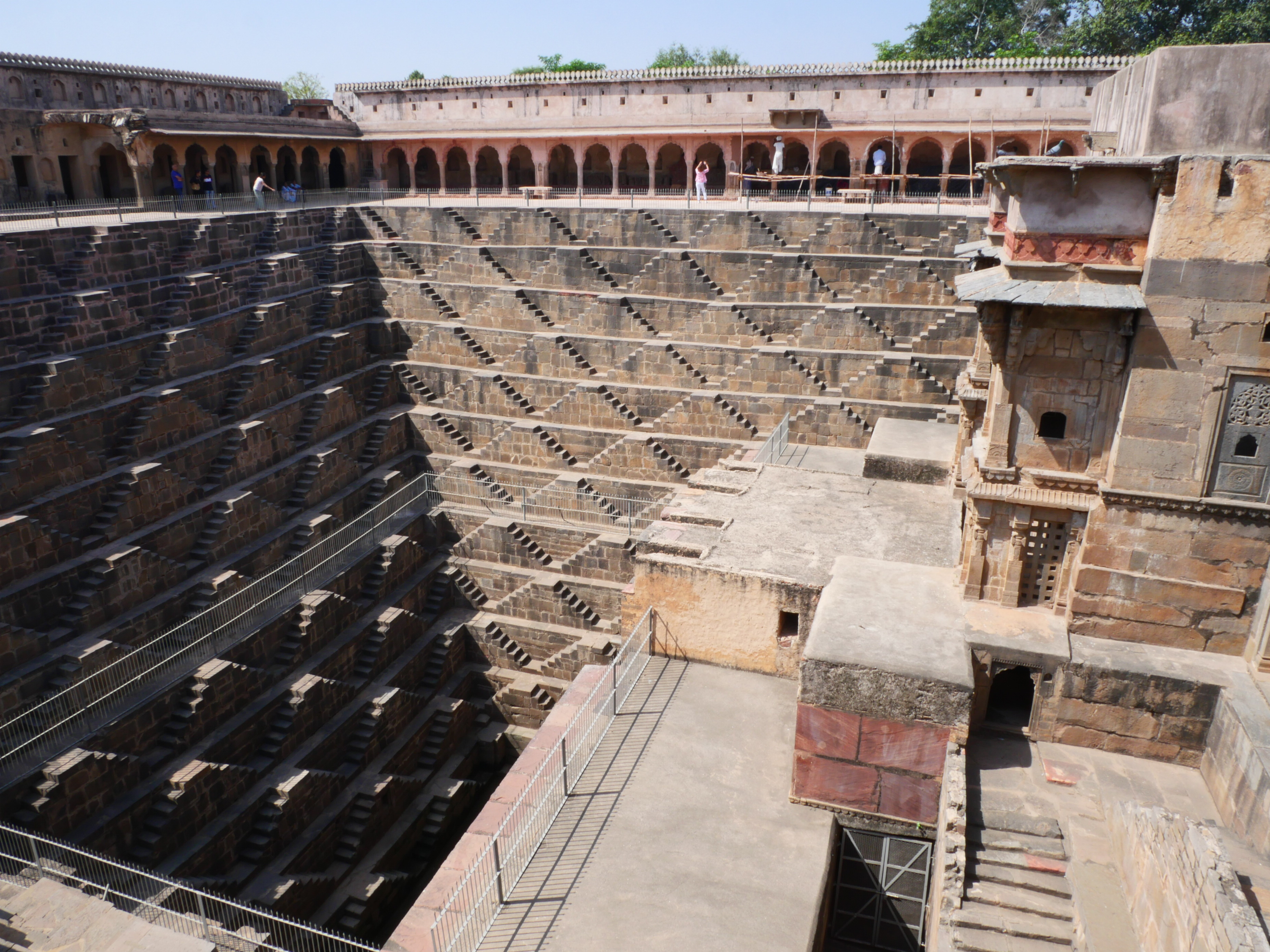
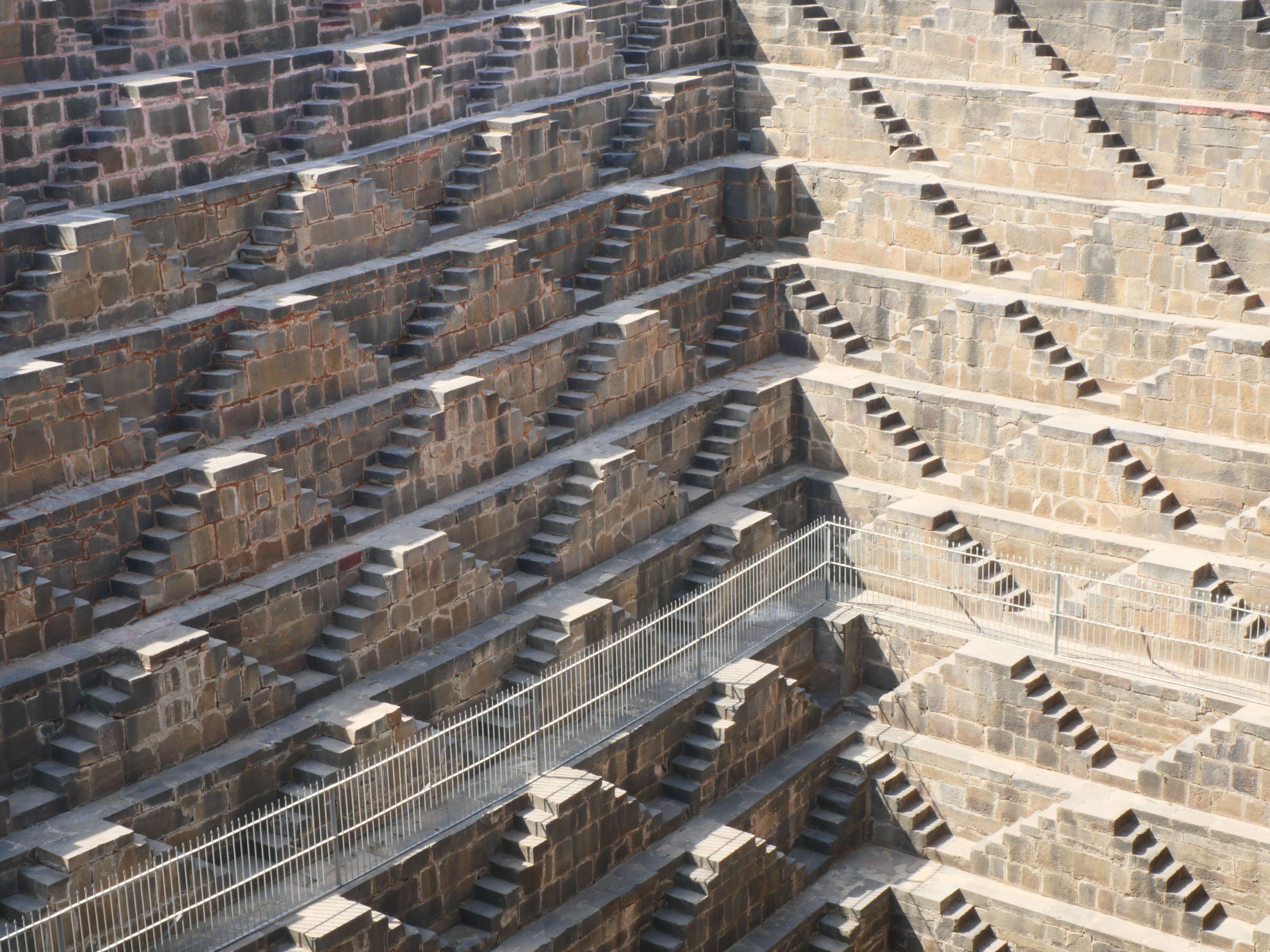
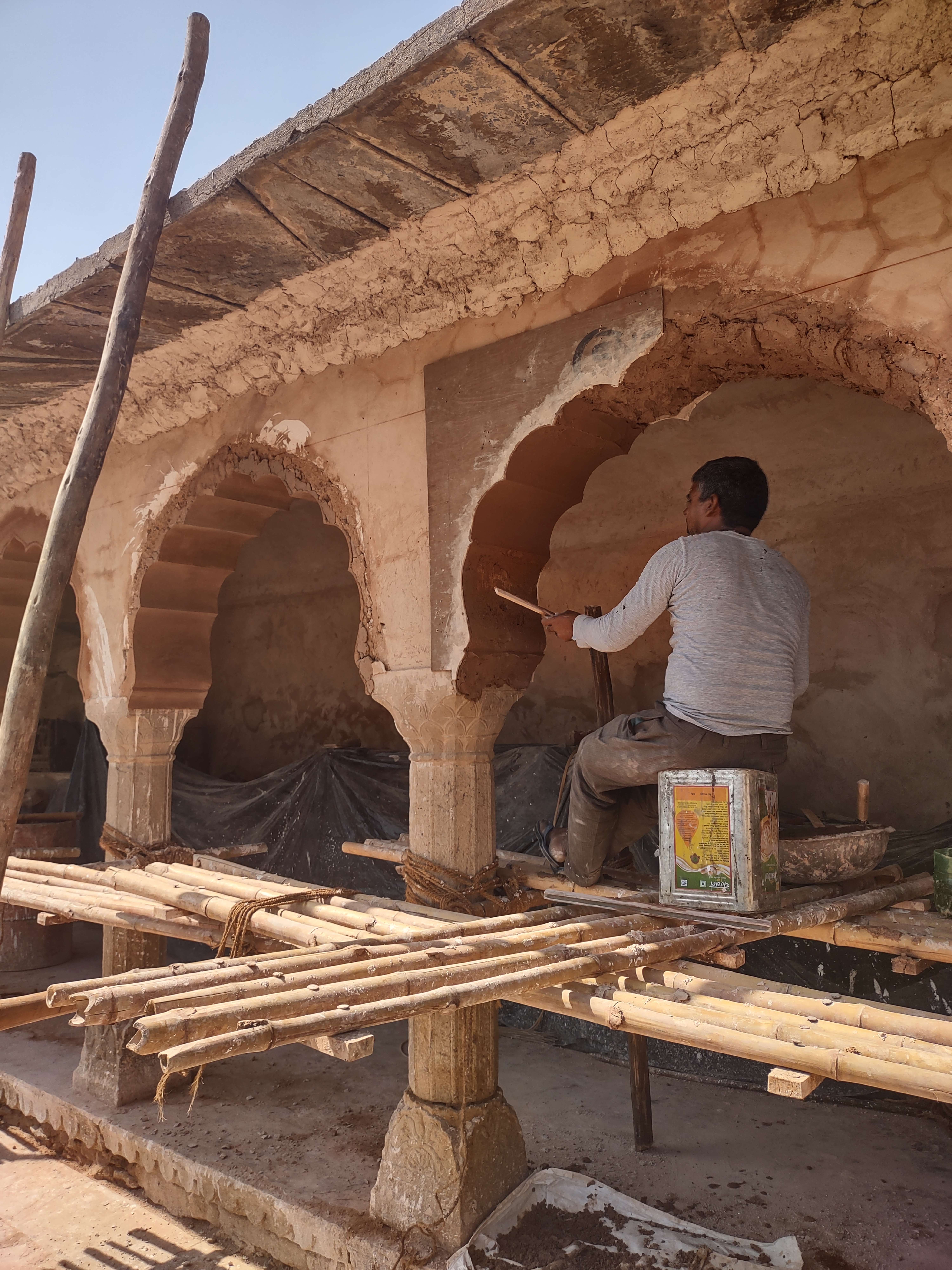
We had the opportunity to see some traditional craftsmanship at work in the Step Wells where some local craftsmen were in the process of restoring the scalloped arches of the surrounding arcade. I couldn’t help but think of all the permits and approvals something like this would probably require back in the States.) From what we could see, there appeared to be an apprentice doing the rough work followed by a Master doing the exquisite detail work. (Really encouraging to see that this type of craftsmanship still exists somewhere in the world!)
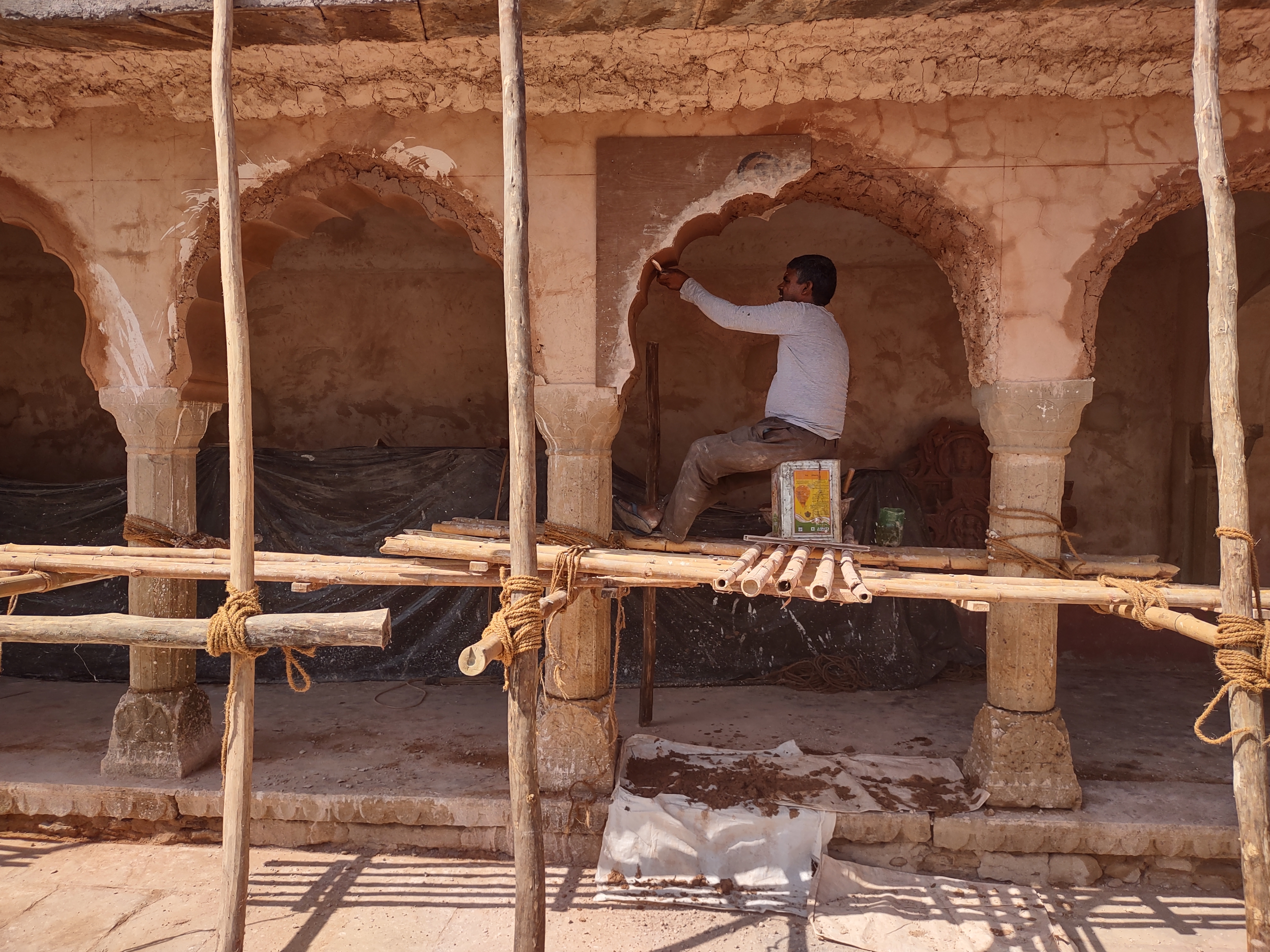
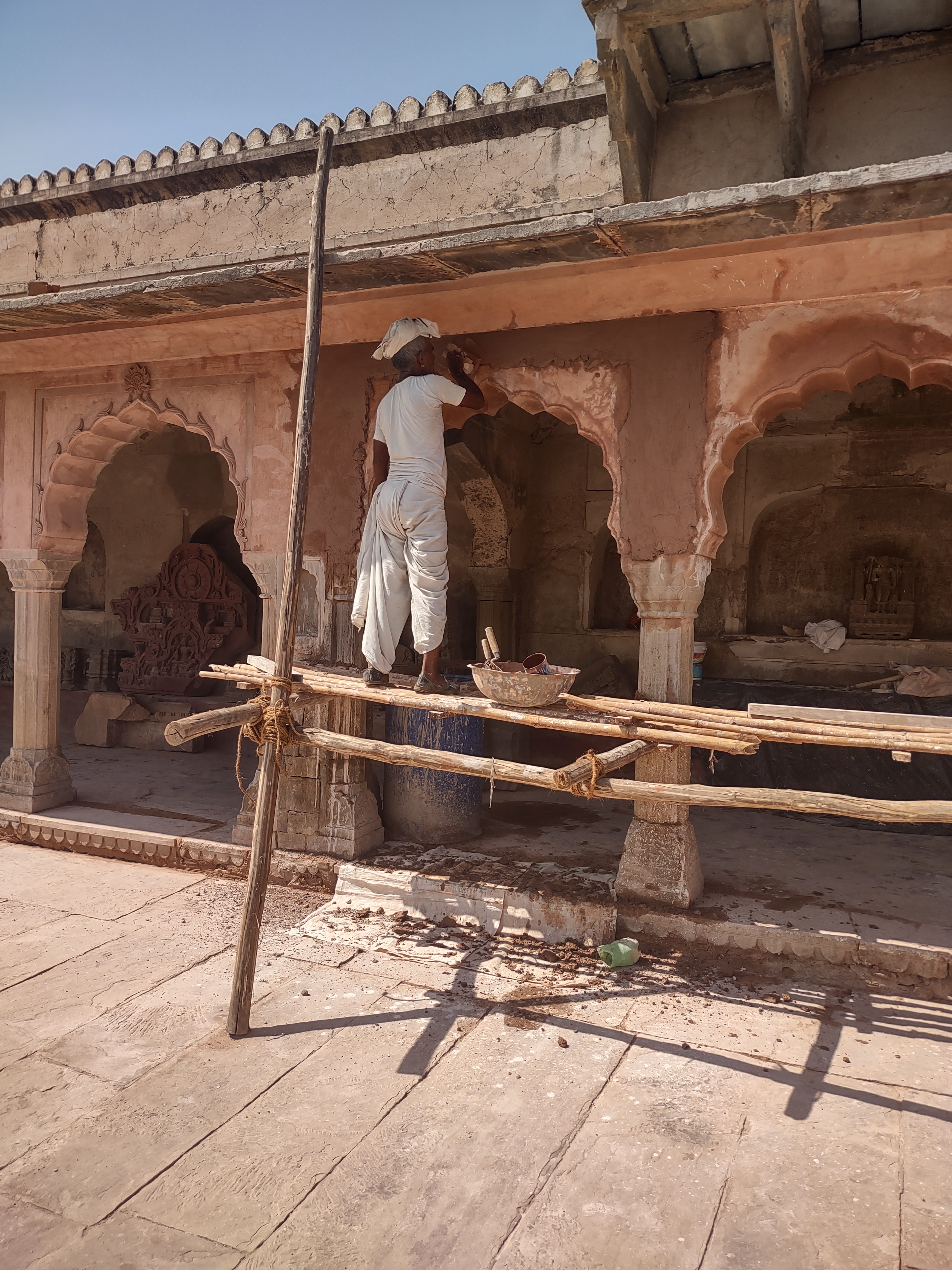
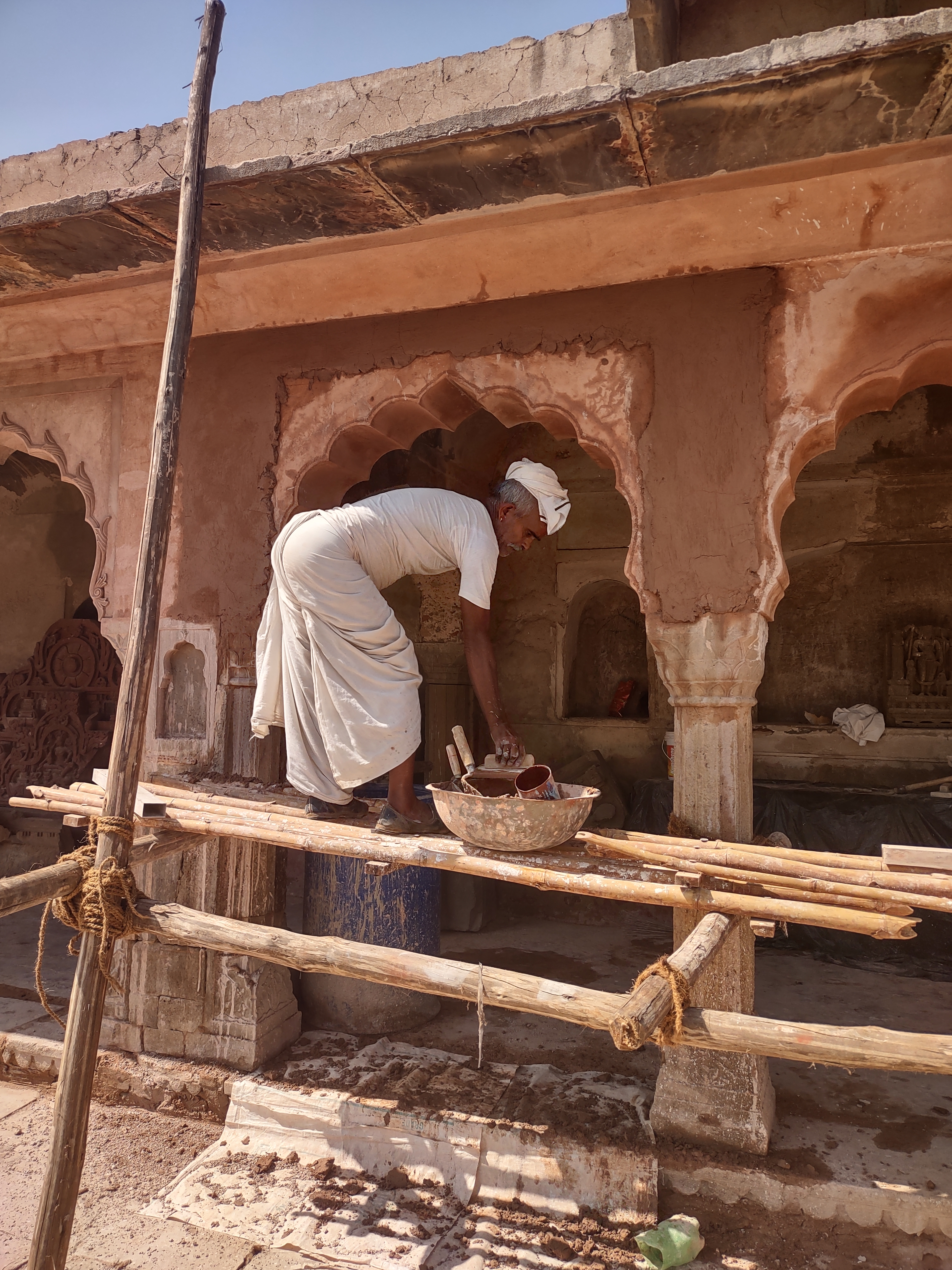
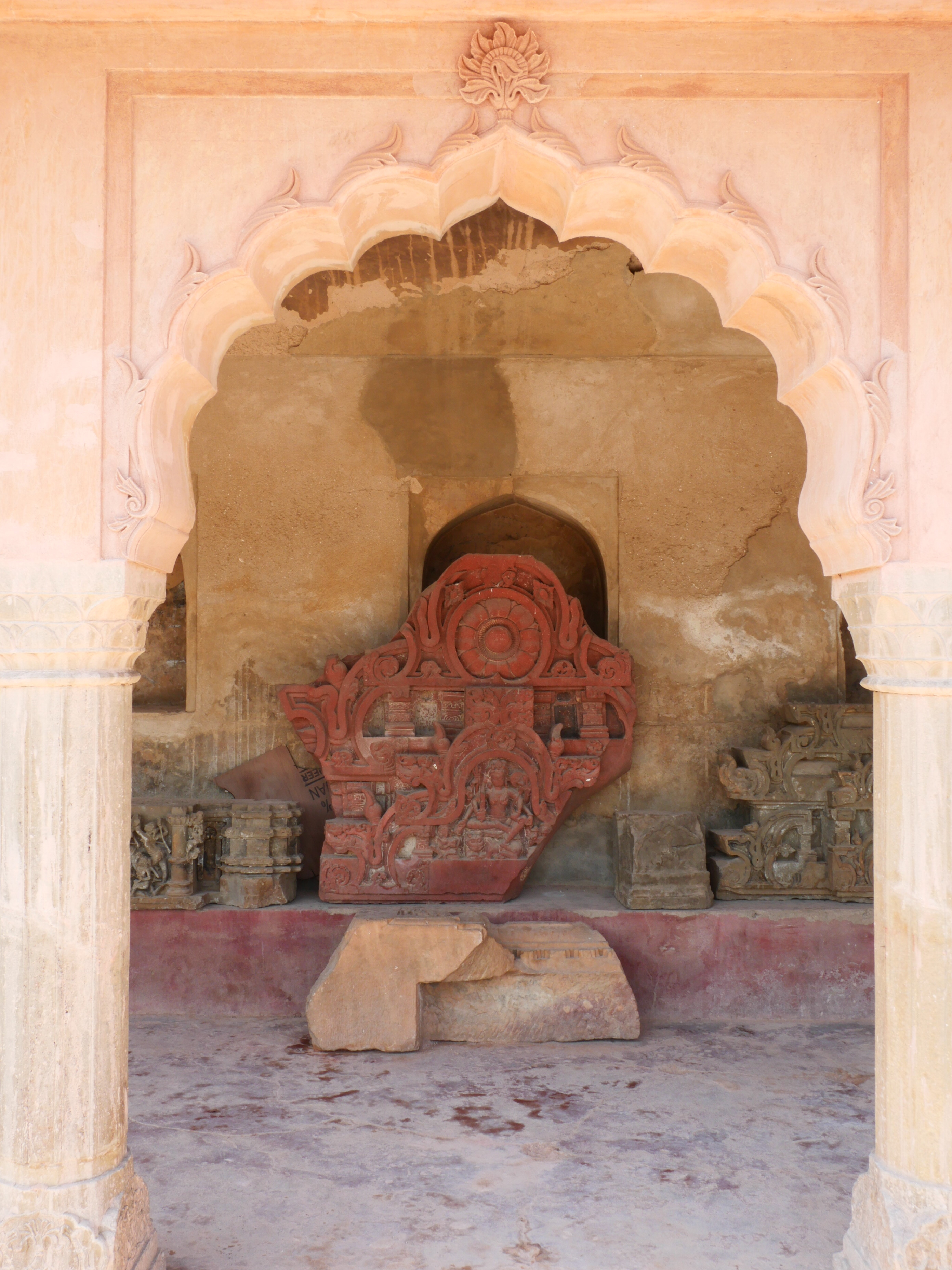
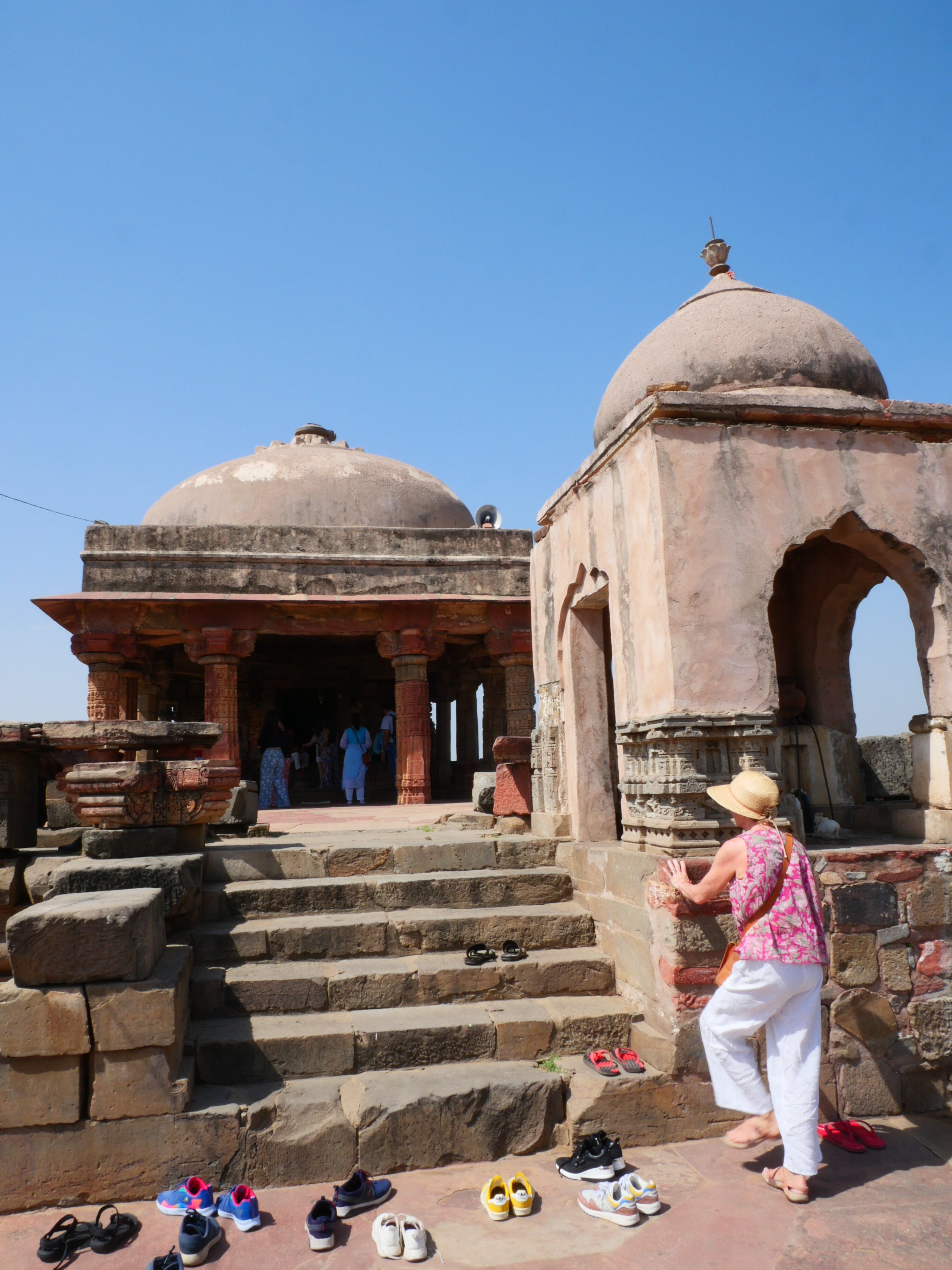
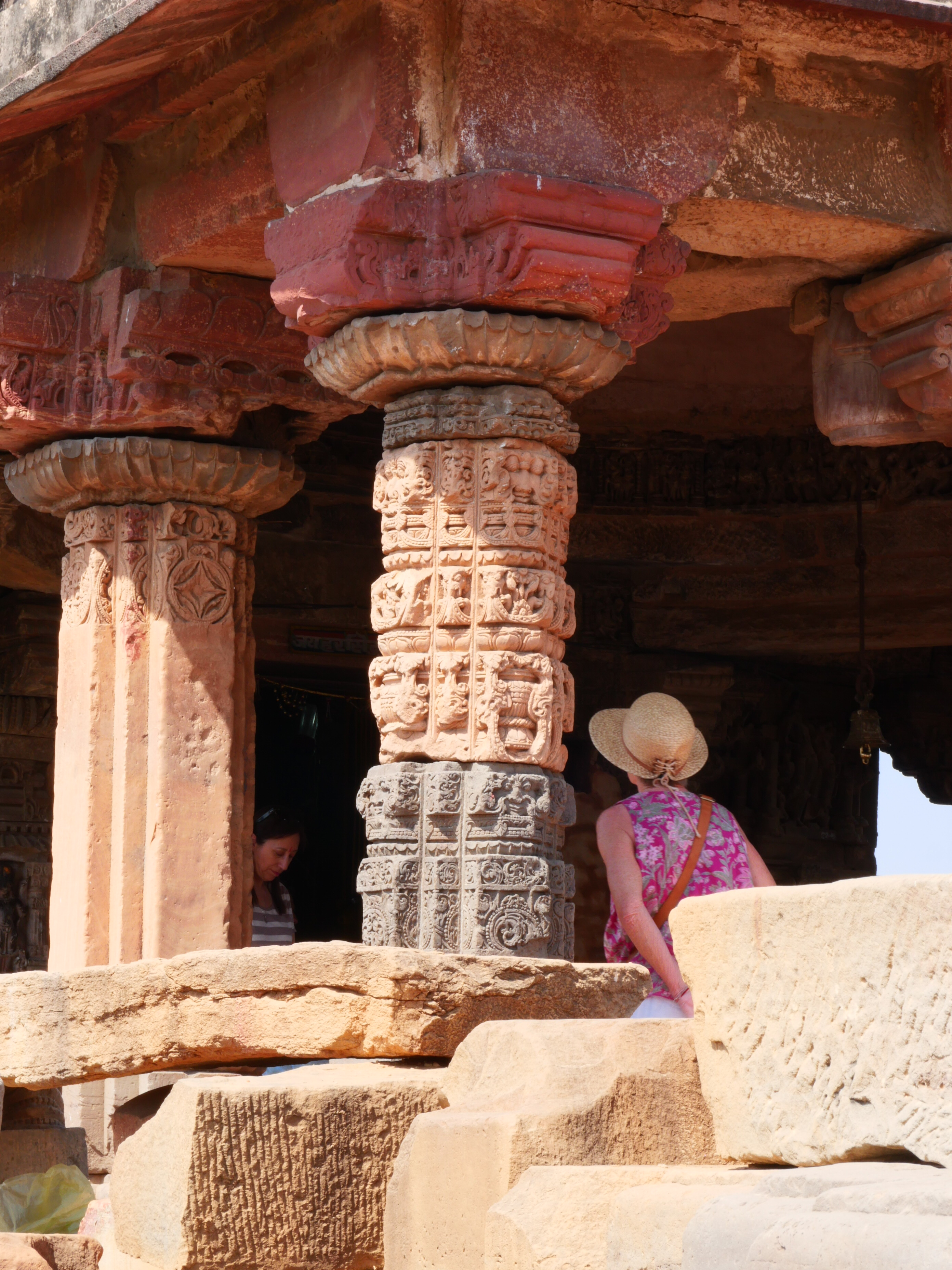
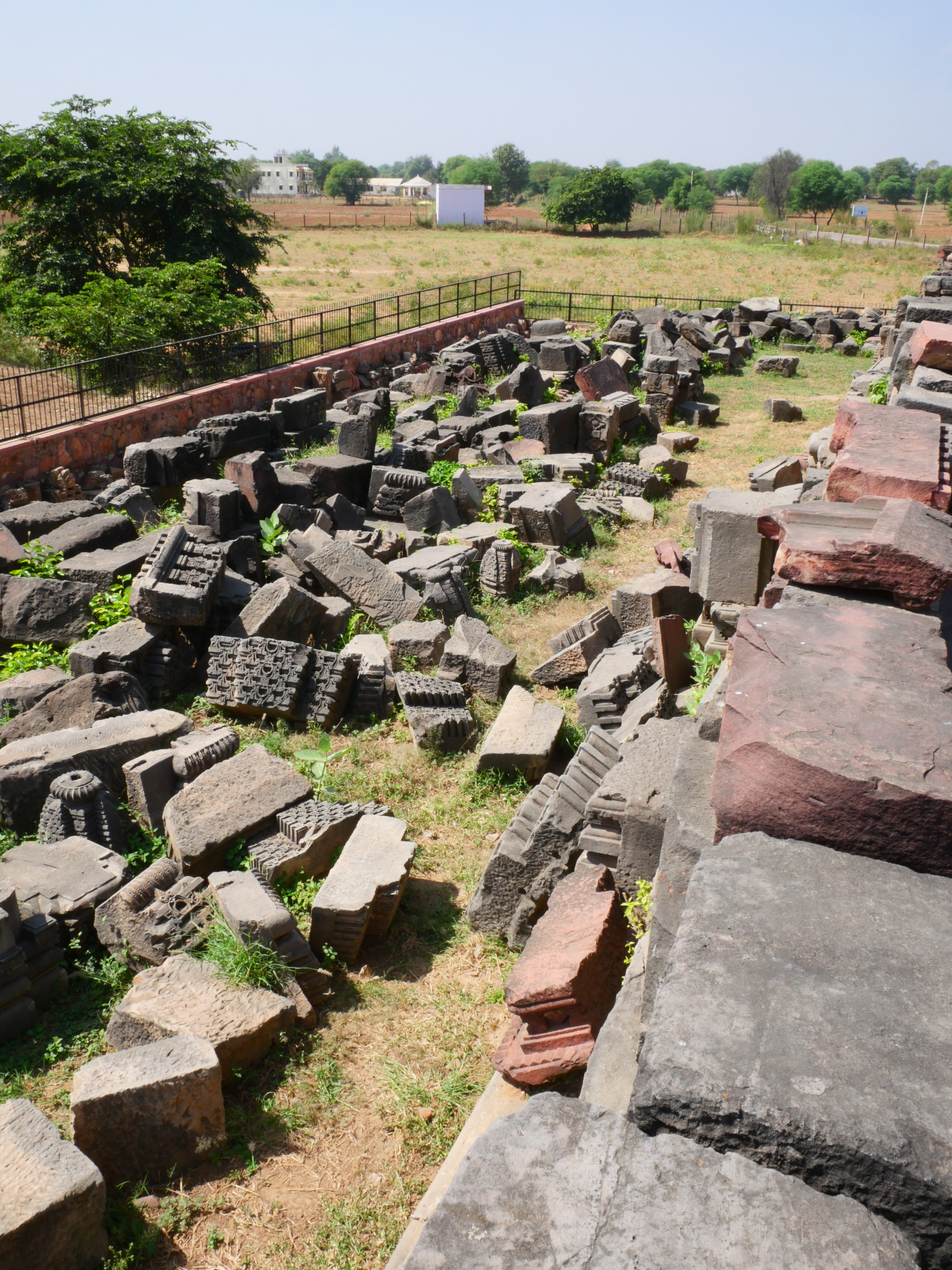
The temple, which was literally next door, originally dates back to the 8th or 9th century, but has been ruined, modified, and restored over the centuries and what exists today is an odd assemblage of parts and pieces. Some of the intricate carvings of the original temple base survive but most of the sculptures have been taken to museums in Amber and Jaipur. It appeared that there were a lot of parts left over after the last reassembly…

We stopped for lunch at a roadside restaurant with a buffet and, as we were about to leave, a group of about 40 tourists on one of “those” bus tours flooded into the place confirming our suspicions that we were now on the Gringo Trail and making us thankful that we had not gone that route.
At Fatehpur Sikri we engaged a guide through Mr. Sunder which proved to be helpful as the logistics of getting to the fort (which involved shuttle buses) as well as finding one’s way around and through the various buildings and courtyards were a bit challenging. Even after all the forts and palaces we had already seen, we were pretty blown away by both the scale and the beautiful detail of Fatehpur Sikri.
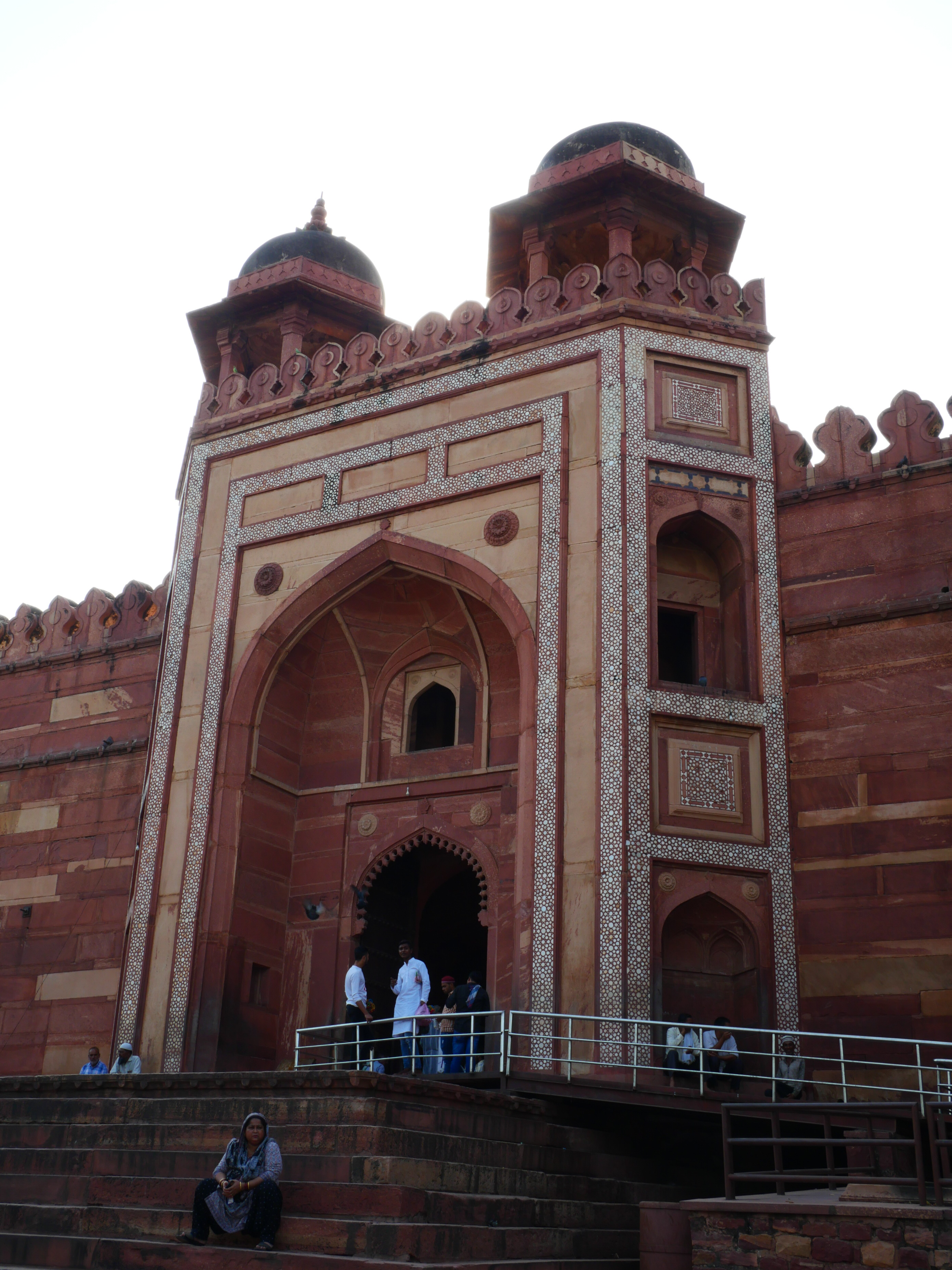
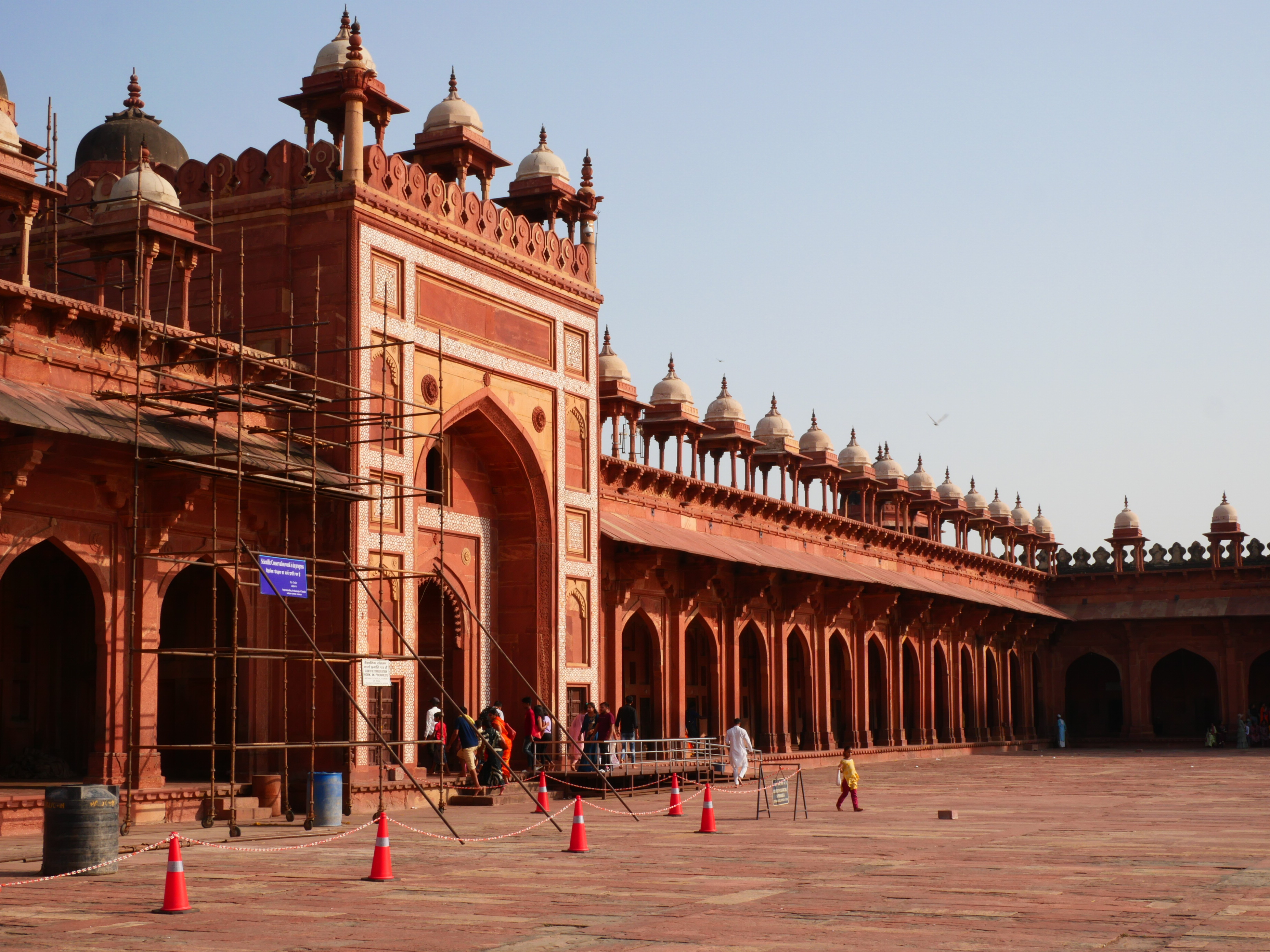
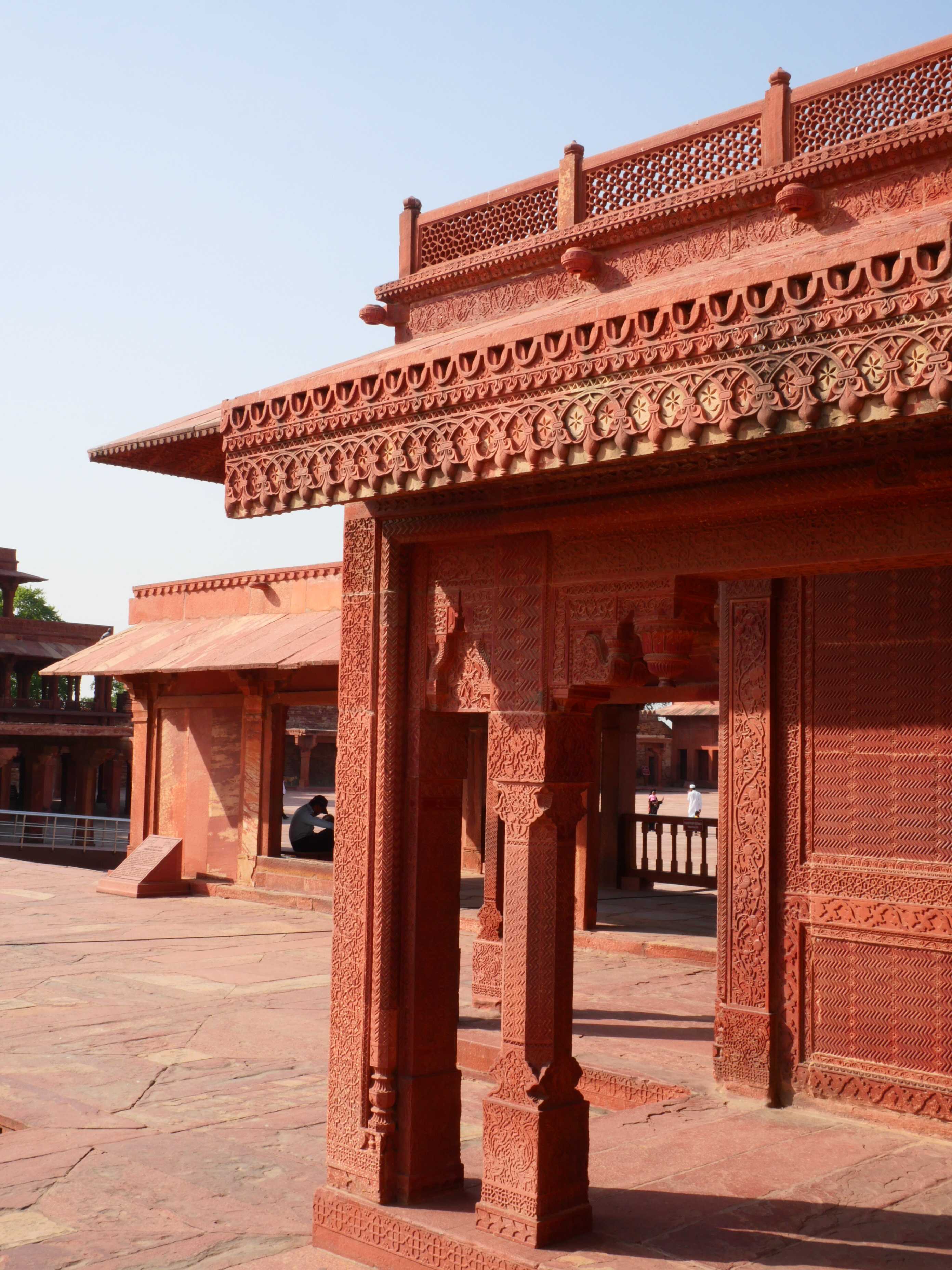
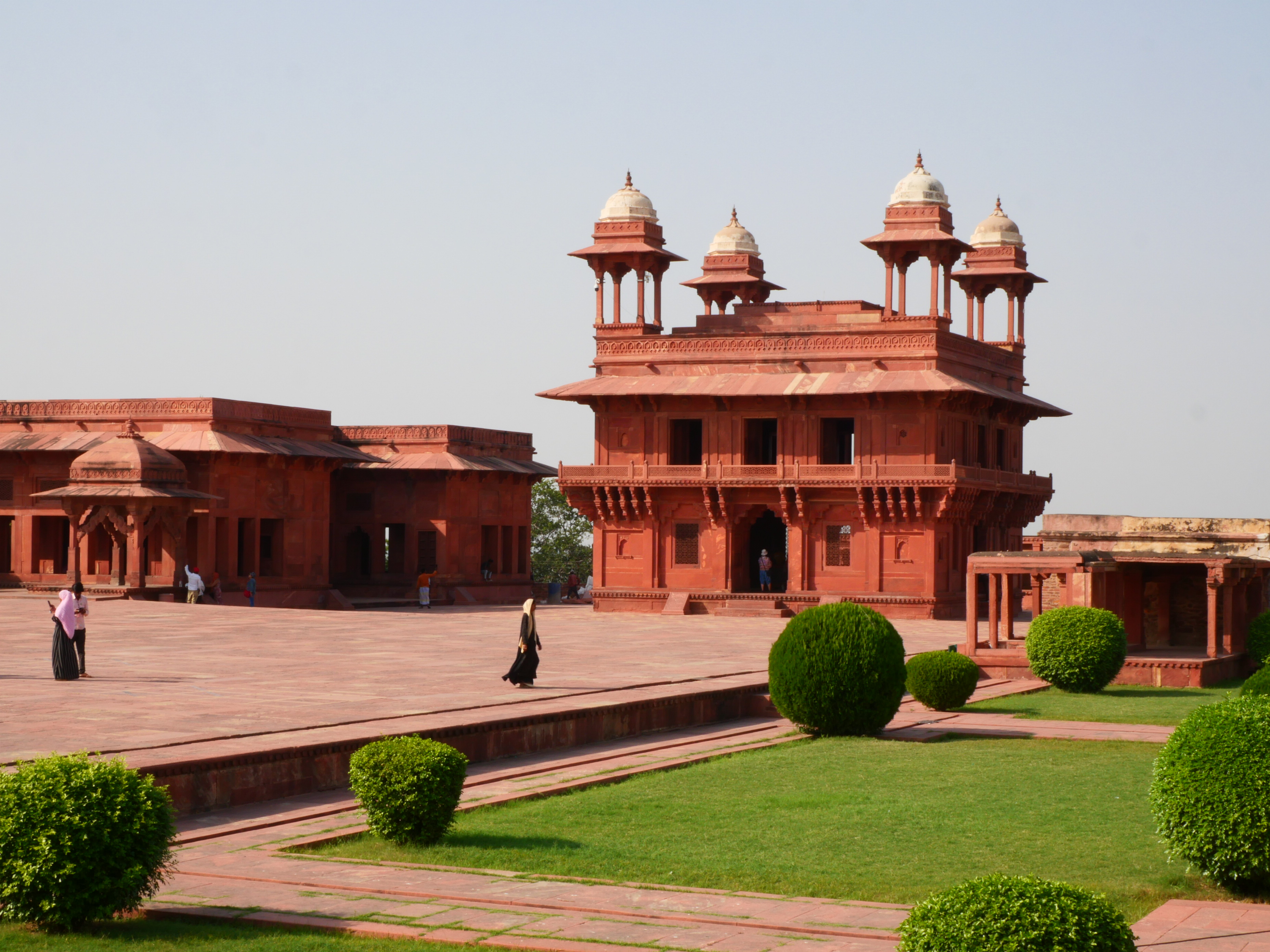
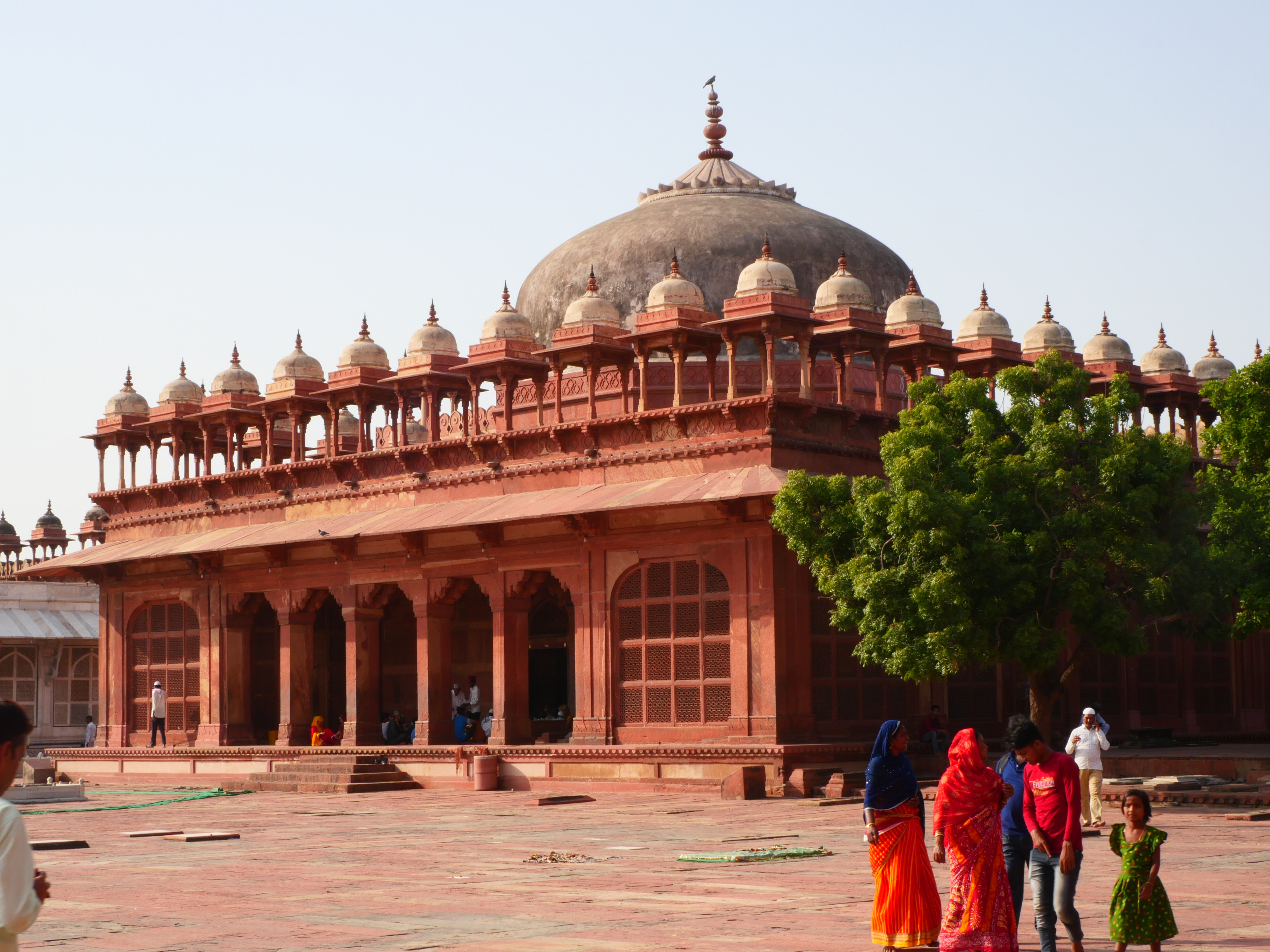
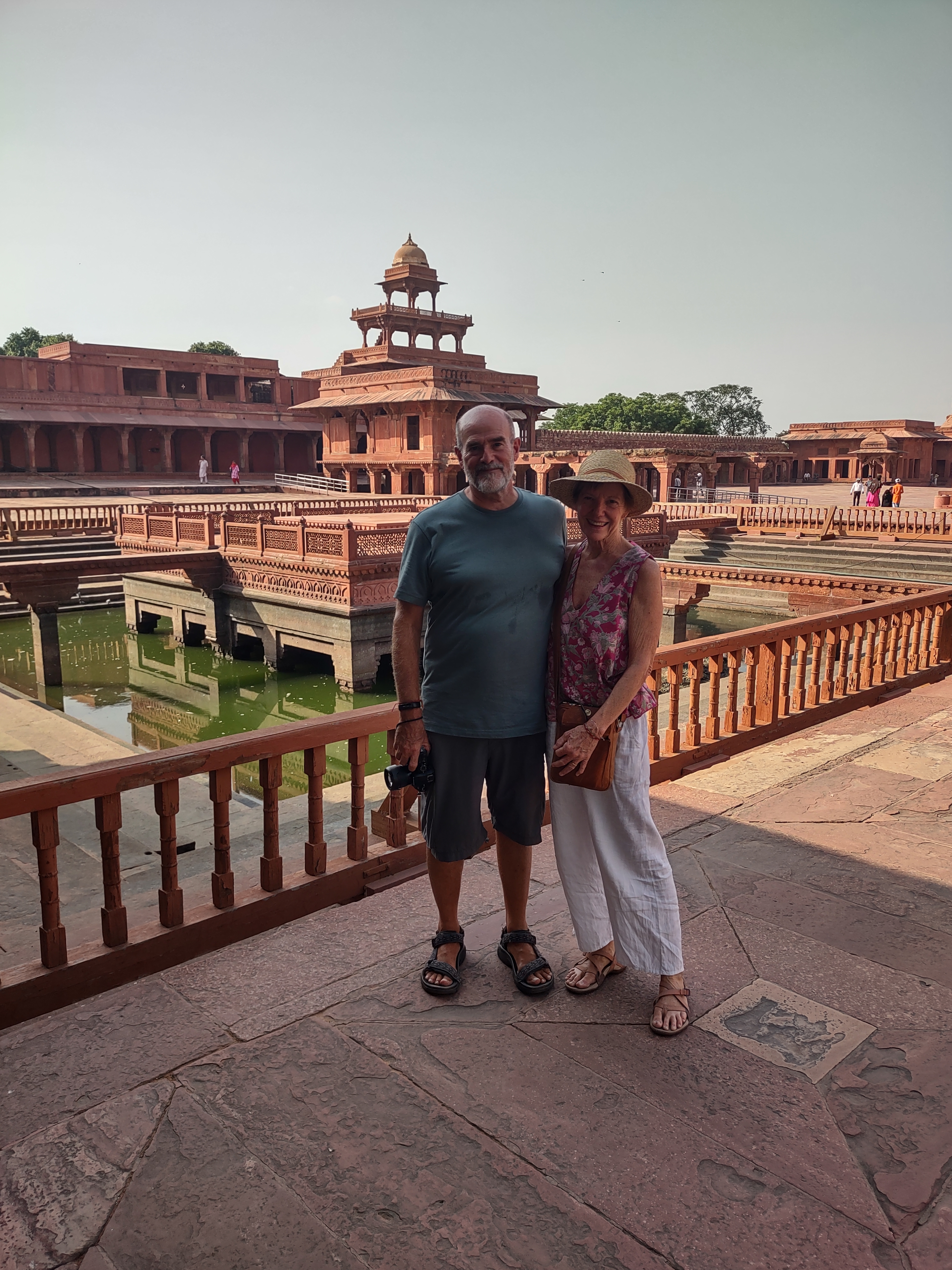
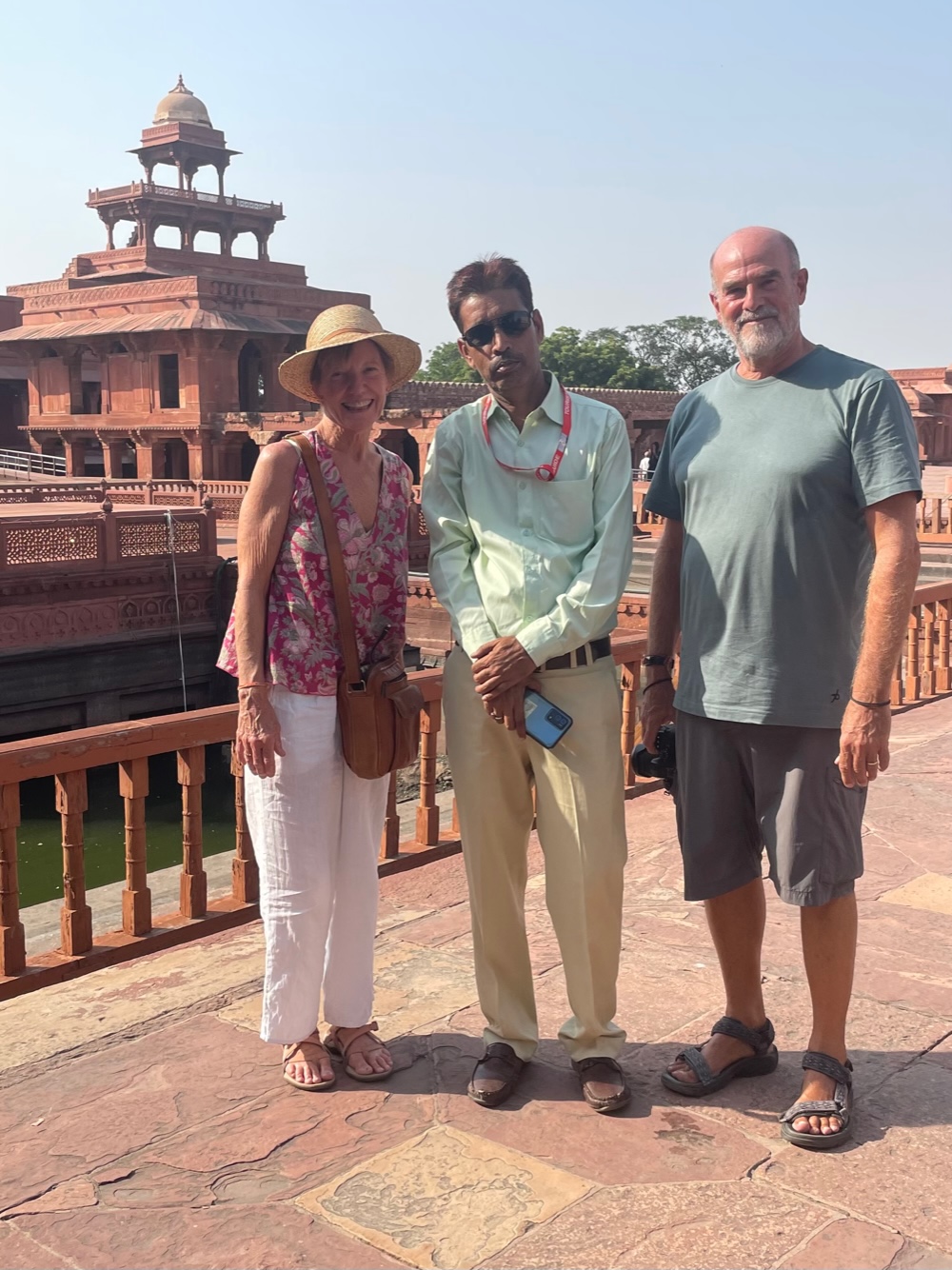

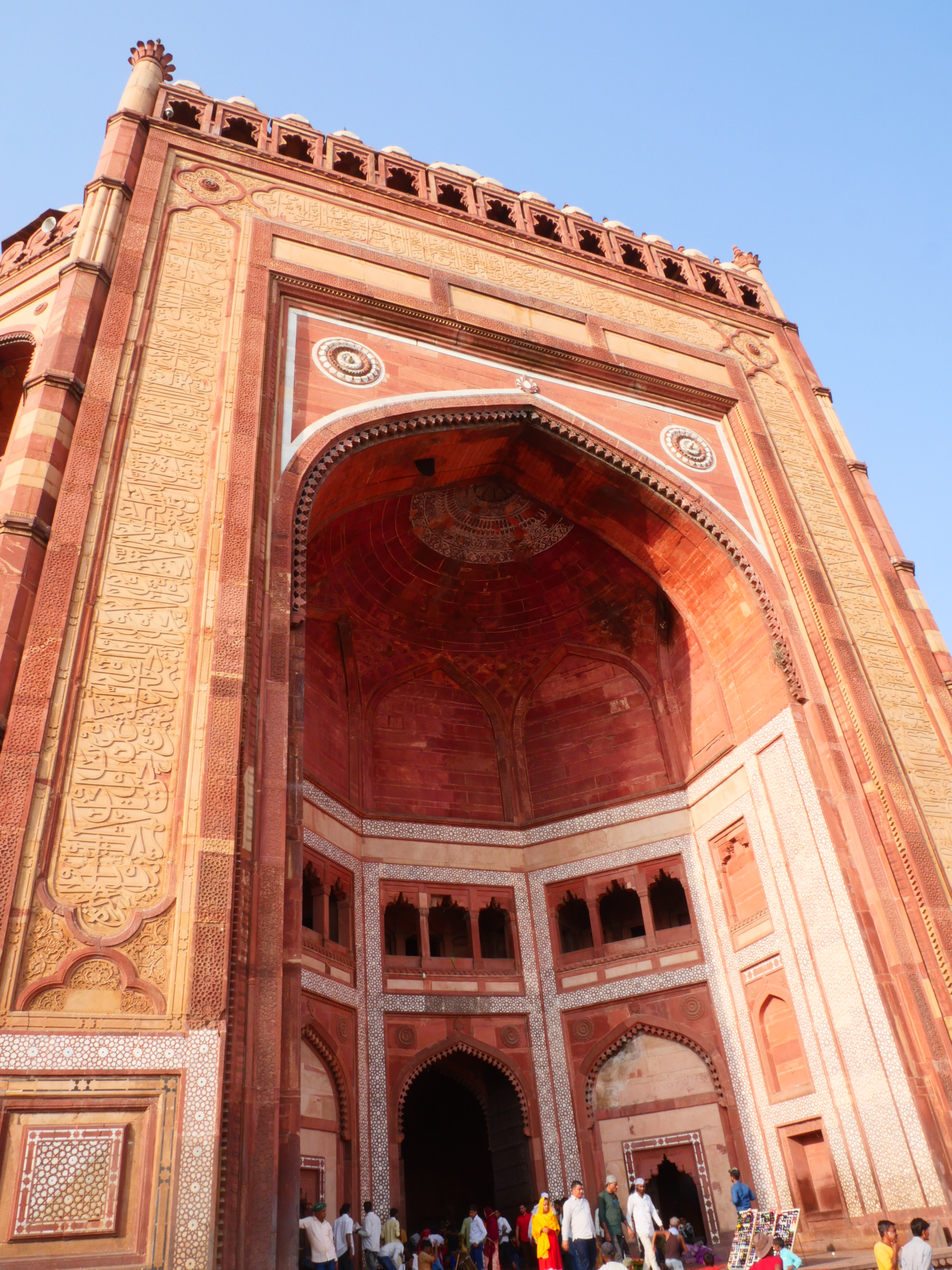


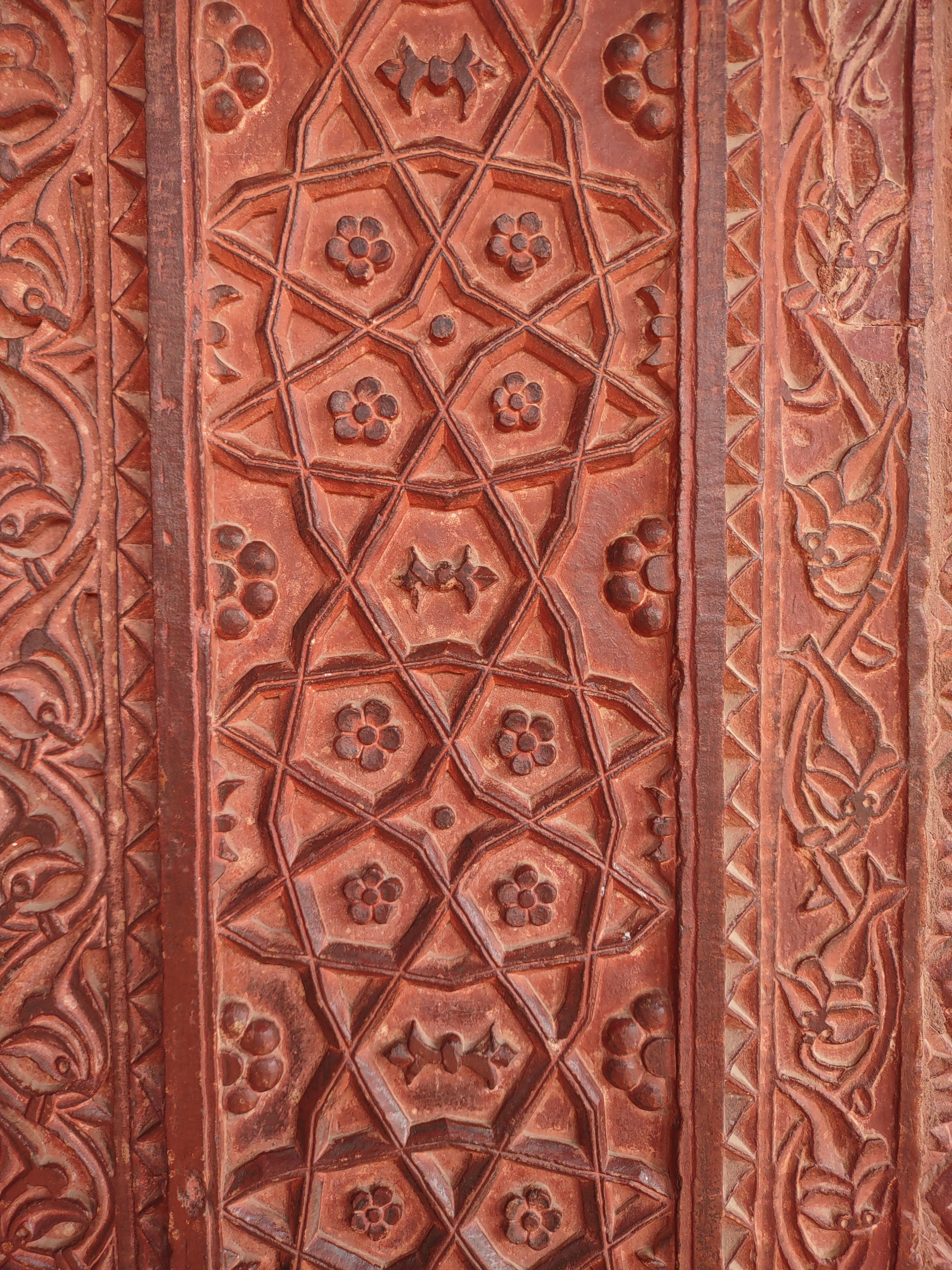

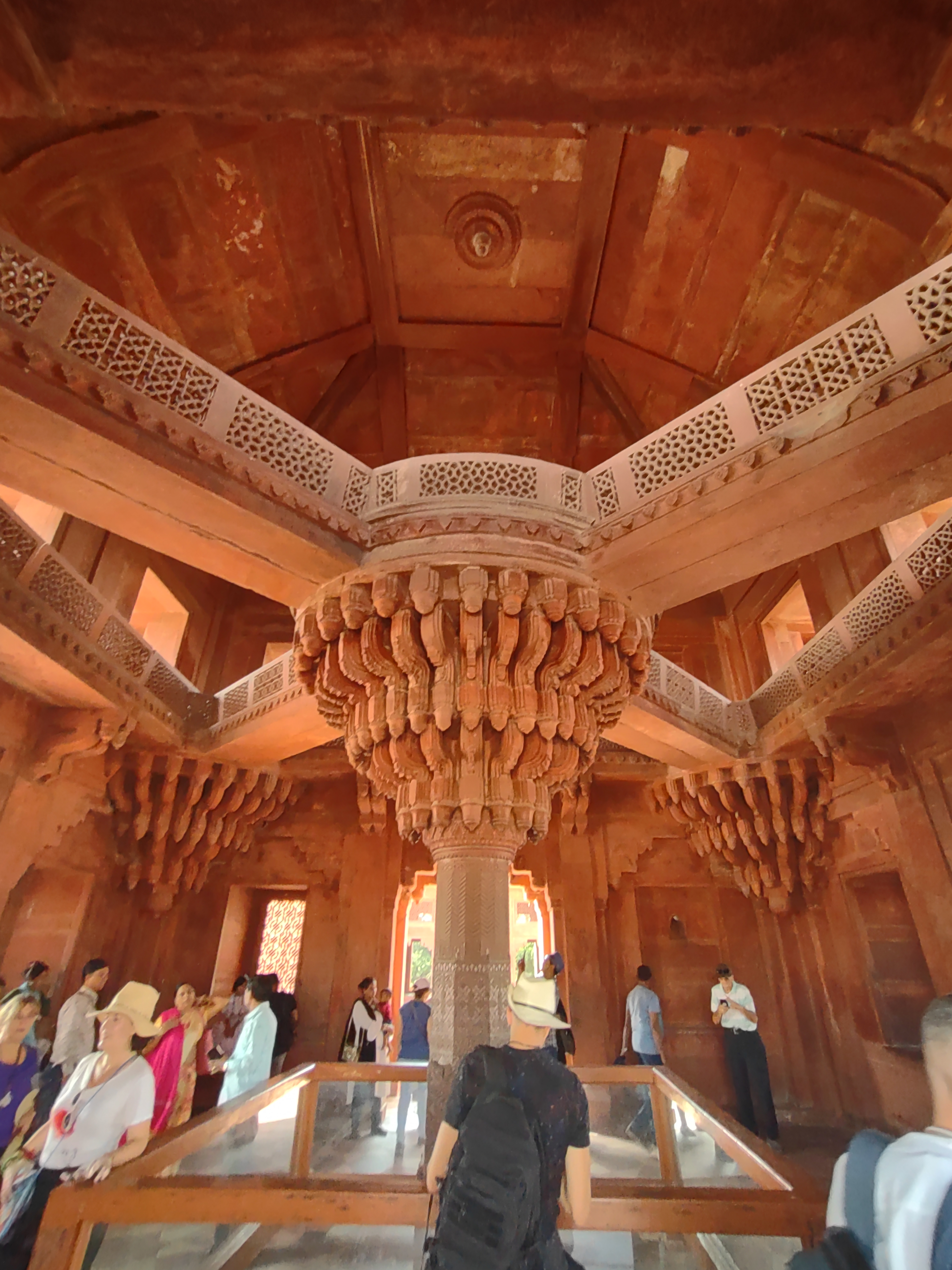

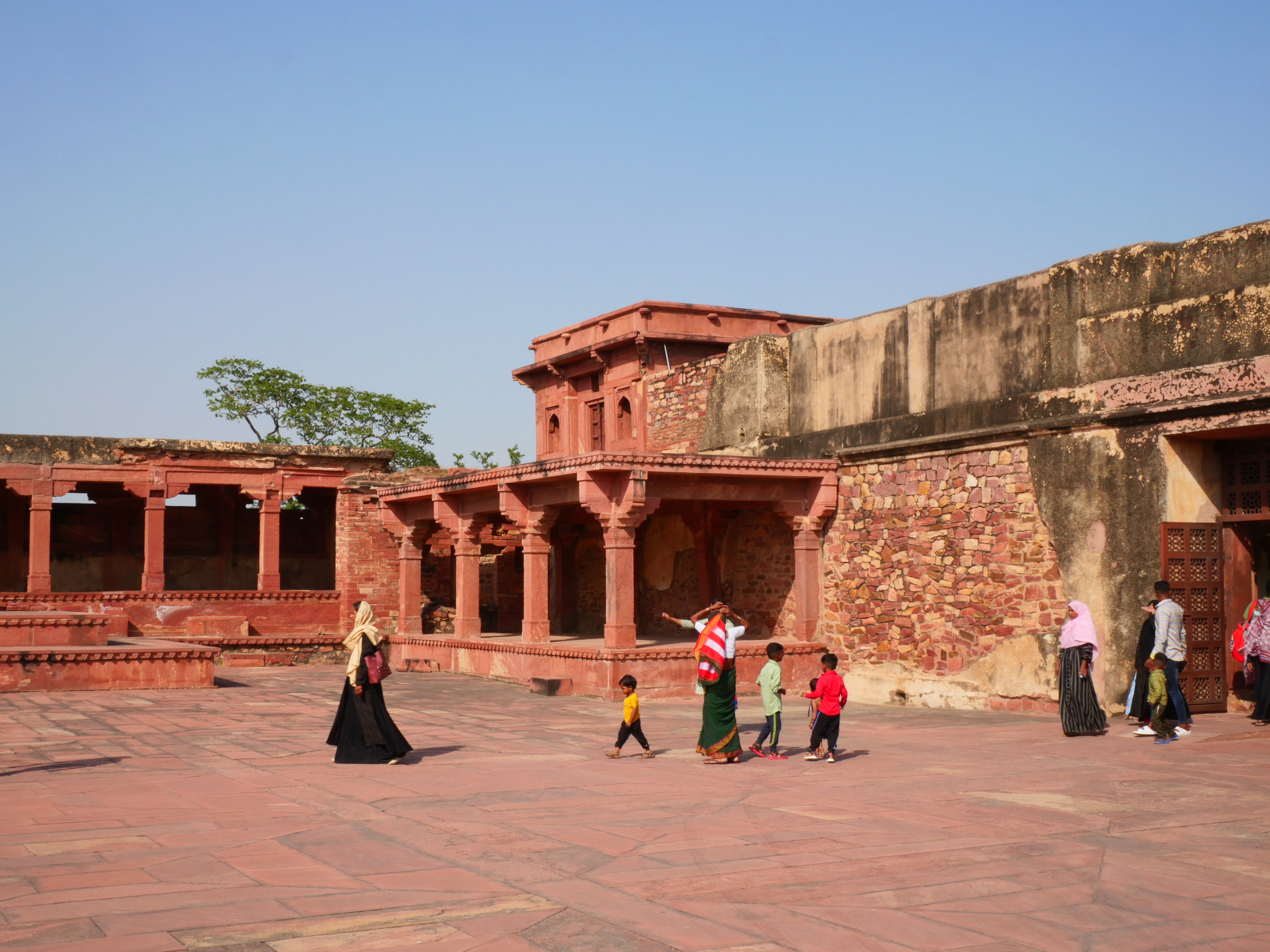
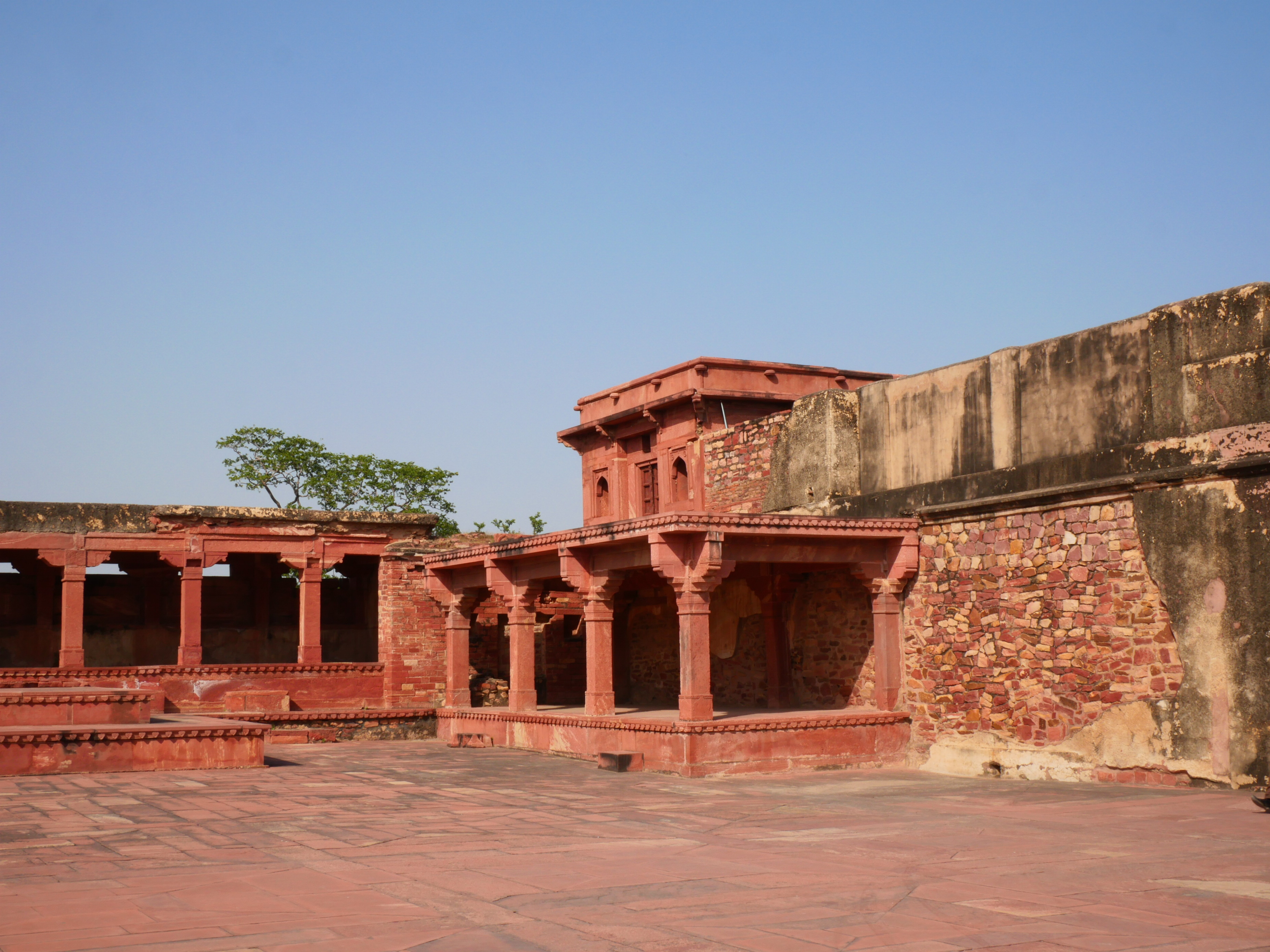
But, there was something just a little creepy and sinister about this beautiful well-maintained city that no one actually lives in. The place really felt a like it could be haunted (were those really other tourists we saw or were they ghosts?)
We arrived in Agra in the early evening (thoroughly exhausted) and checked into the hotel which we had booked at which point our Drivers-India Tour Itinerary officially ended and our own restarted.
We’ll pick up in Agra and our visit to the most anticipated place of our India itinerary, the Taj Majal, in our next blog installment. To finish this one, a few closing observations and reflections on our Rajasthan experience including the Tour itself.
A Matter of Preferences
As I noted at the start of this segment, Drivers-India arranged the Itinerary based on our personal preferences, but it was only in compiling this blog that Colleen explained (and then demonstrated to me) exactly how that sausage was made. I learned that our preferences were expressed by selecting from certain choices provided on Drivers-India’s website. In addition to selecting which cities you wished to visit, these choices included the size of vehicle (4, 6, or 10 seater – we chose 4 which translated to a Suzuki Dezire), the type of accommodations (Budget, Comfort, or Luxury – another story (see Accommodations below), and (interestingly to me at least) your travel “style” from which list Colleen selected “Adventurous”.
On discovering this I was (of course) curious as to what the other choices were and discovered that they included “Romantic”, “Family,” “Cultural”, and “Gastronomic”, as well as our “Adventurous” travel style. Based on the outcome, I have to say that Colleen chose well but couldn’t help but wonder how the trip might have been different had we selected “Romantic” or maybe “Gastronomic”. (We’ll never know…)
Food and Drink in India
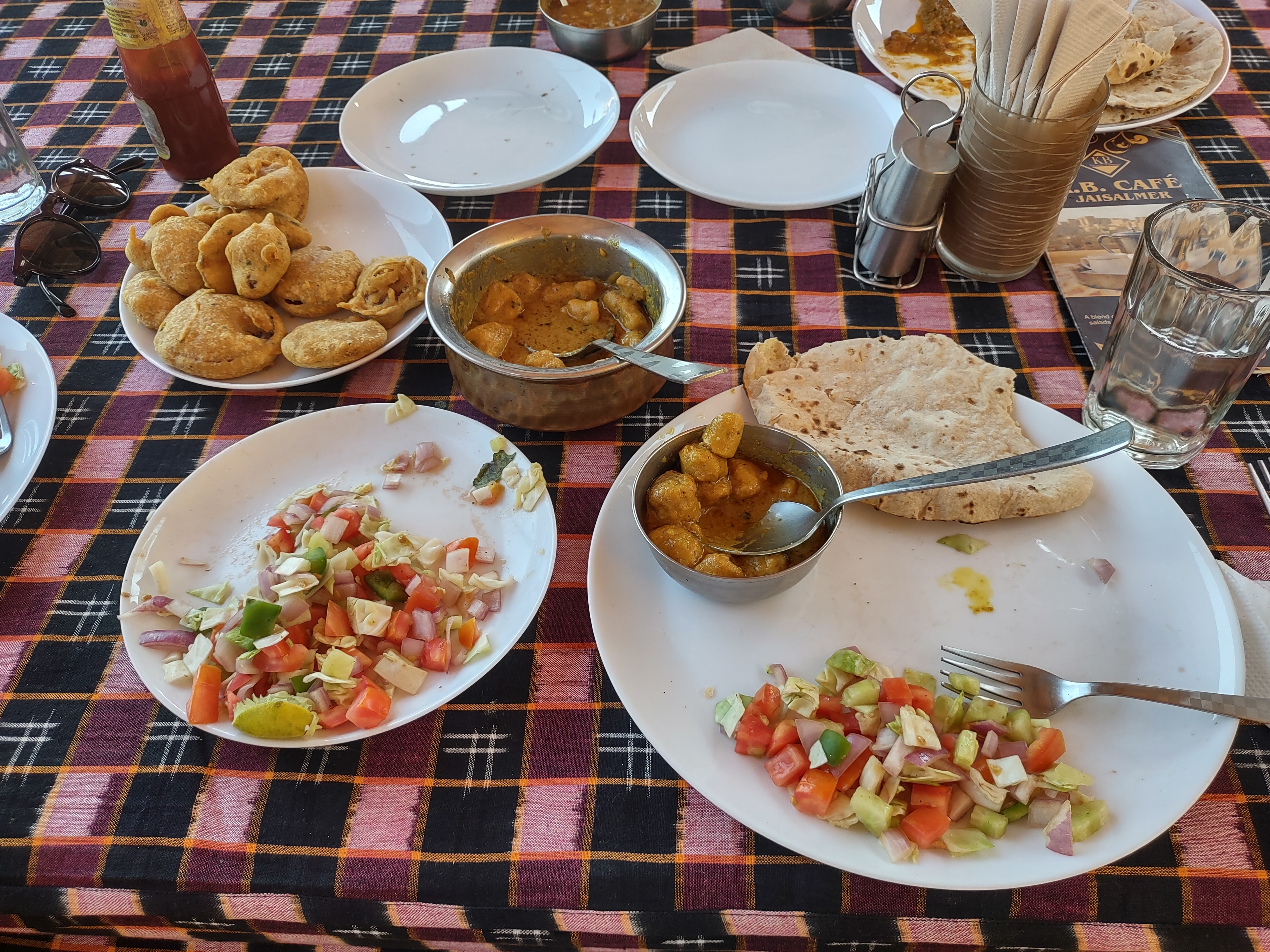
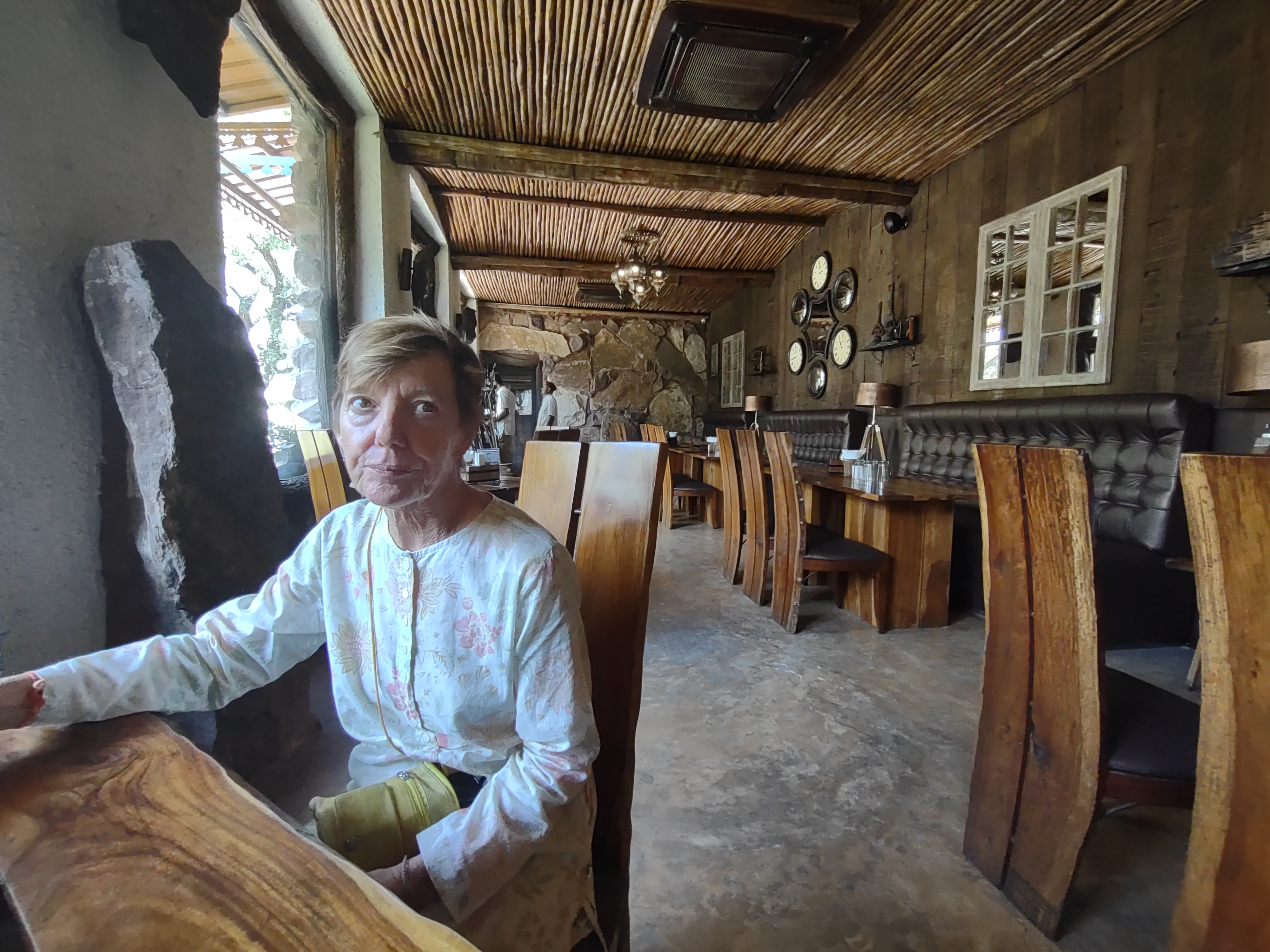
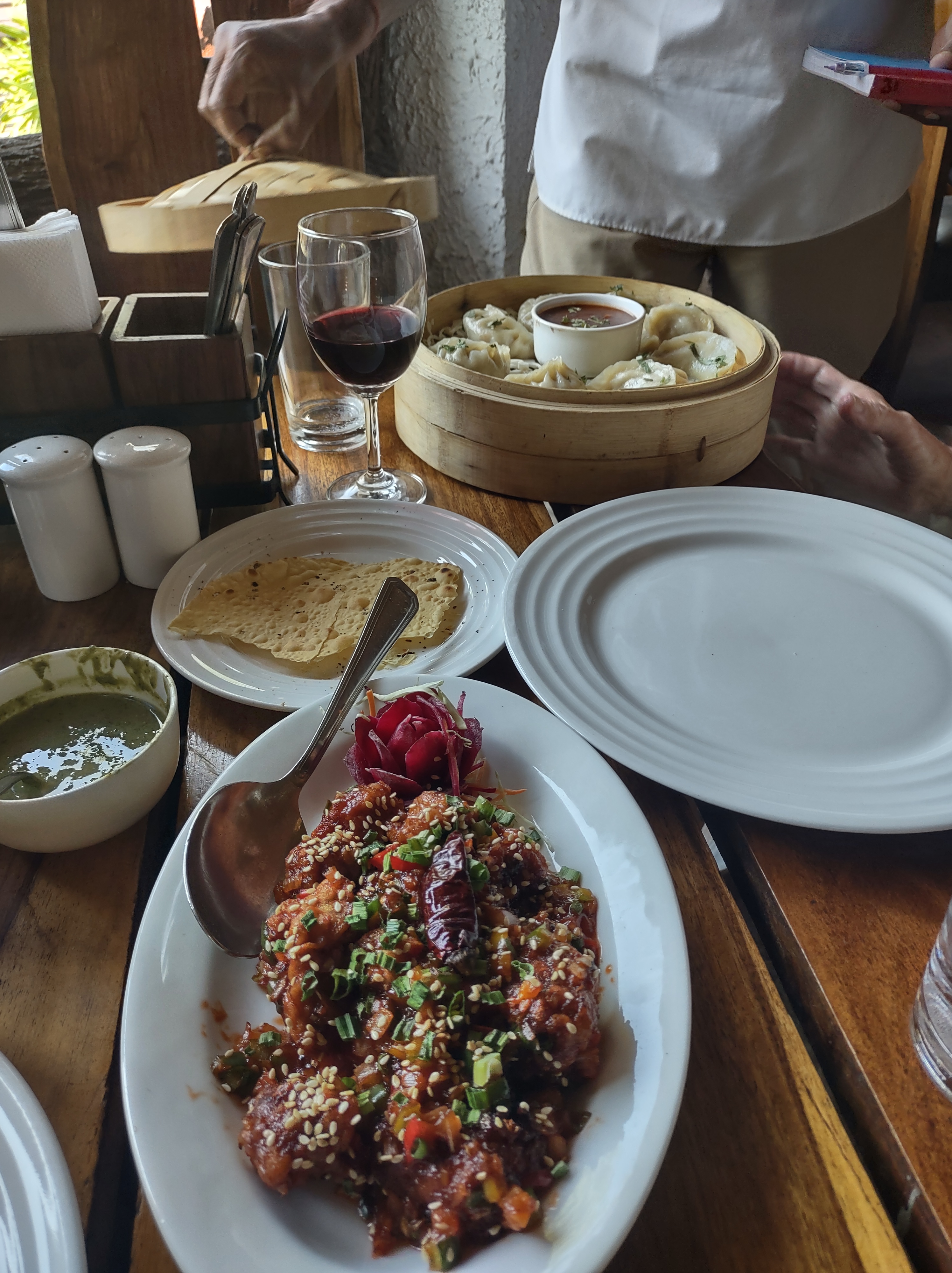
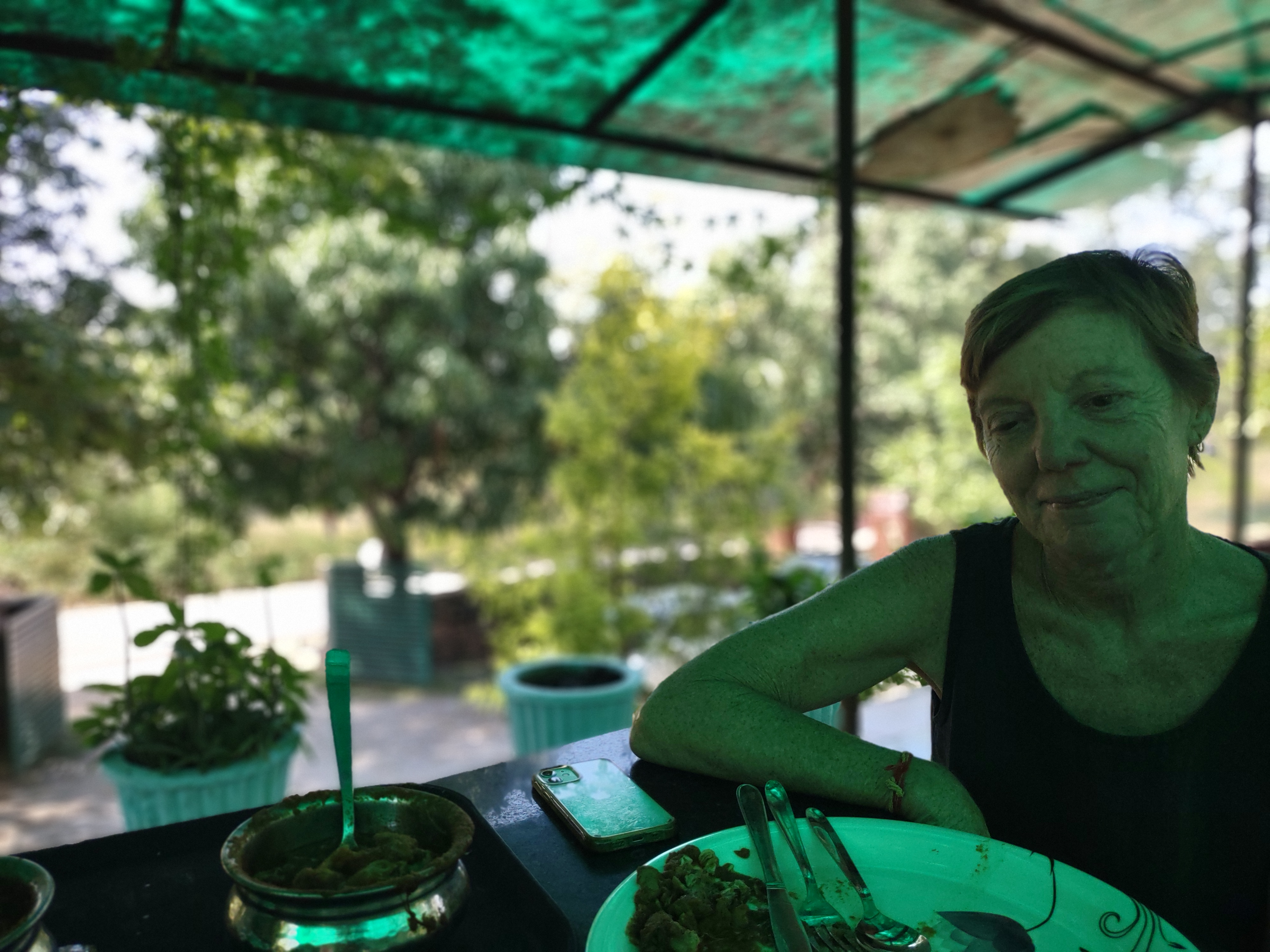
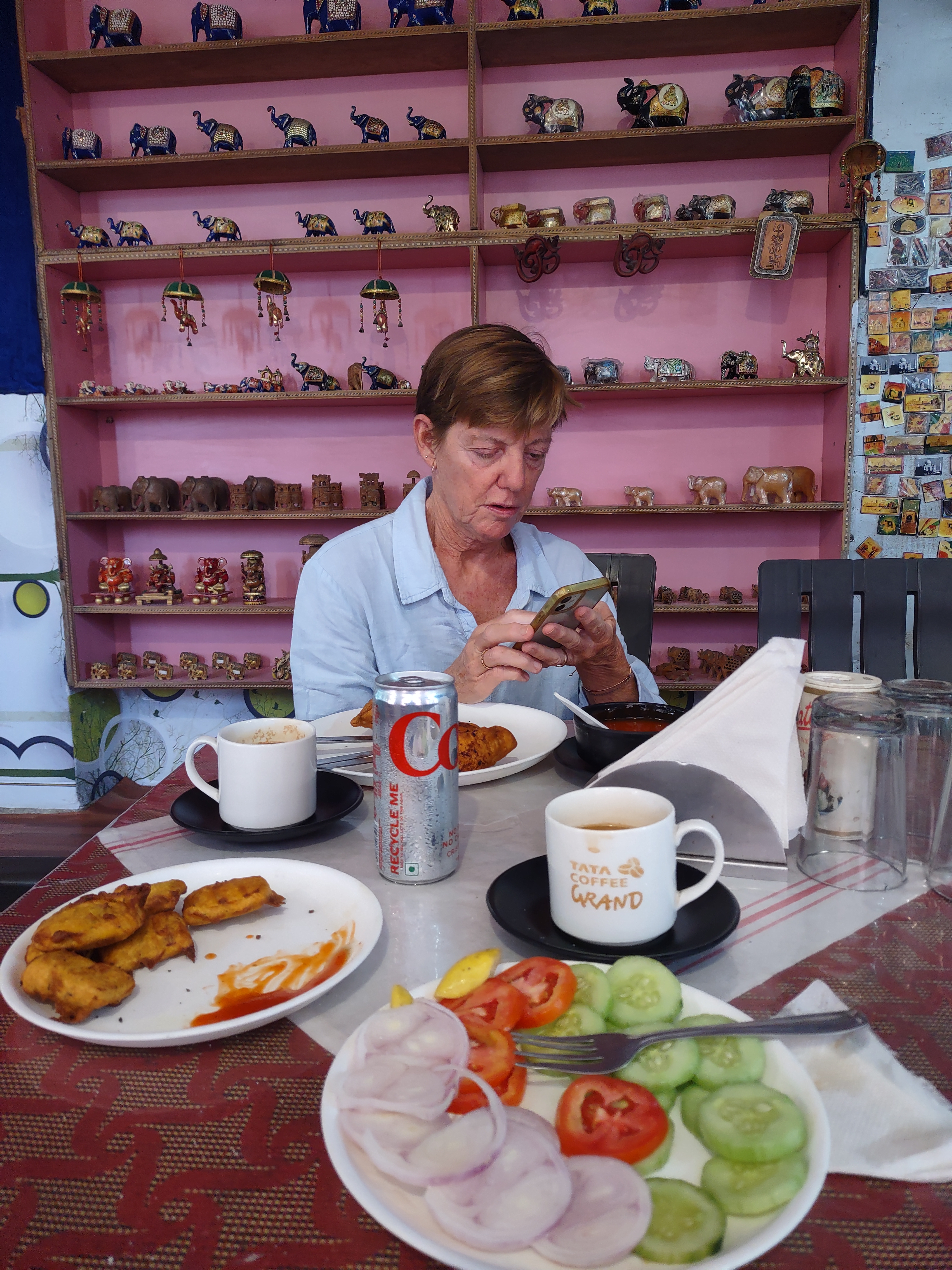
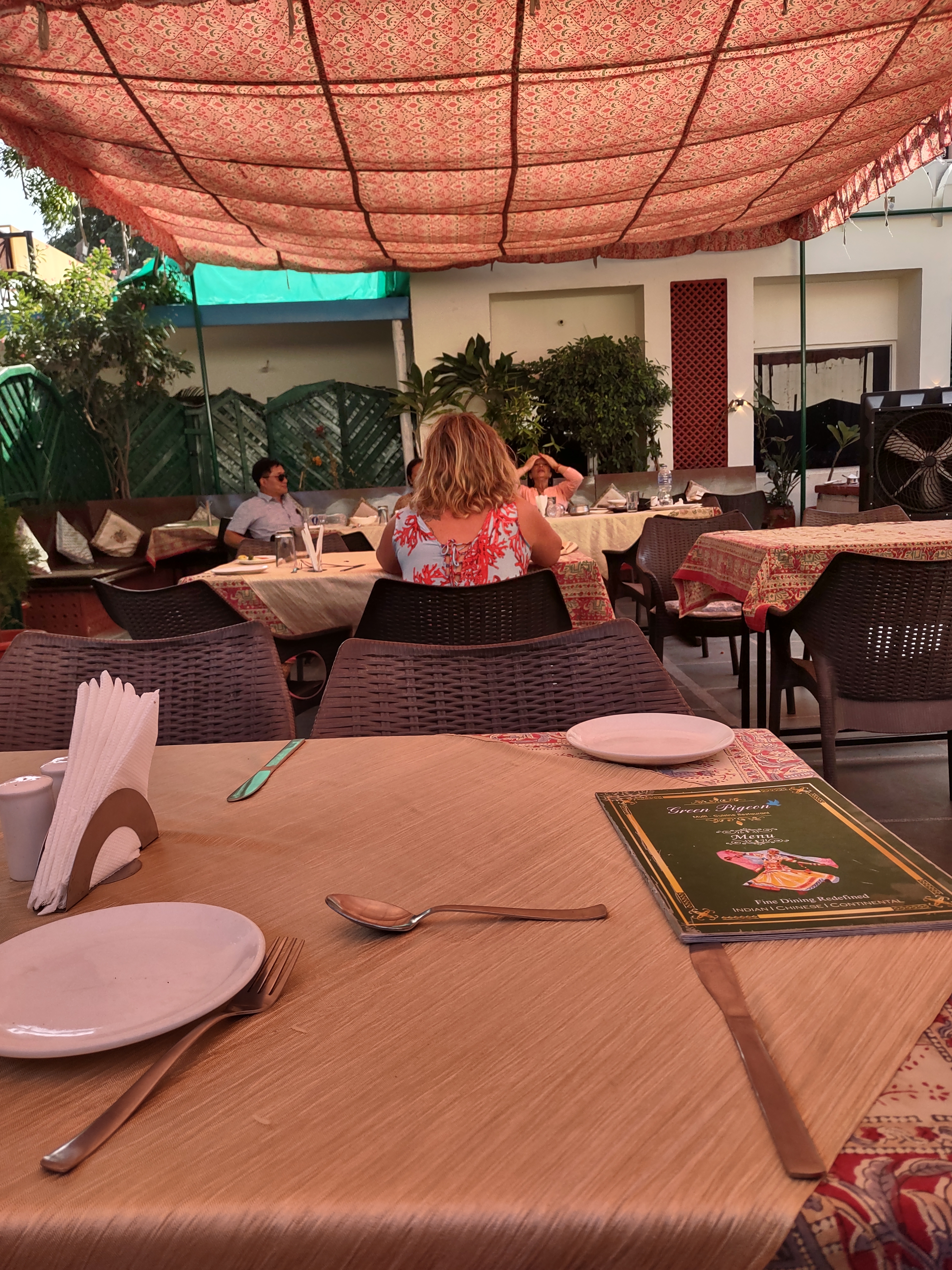
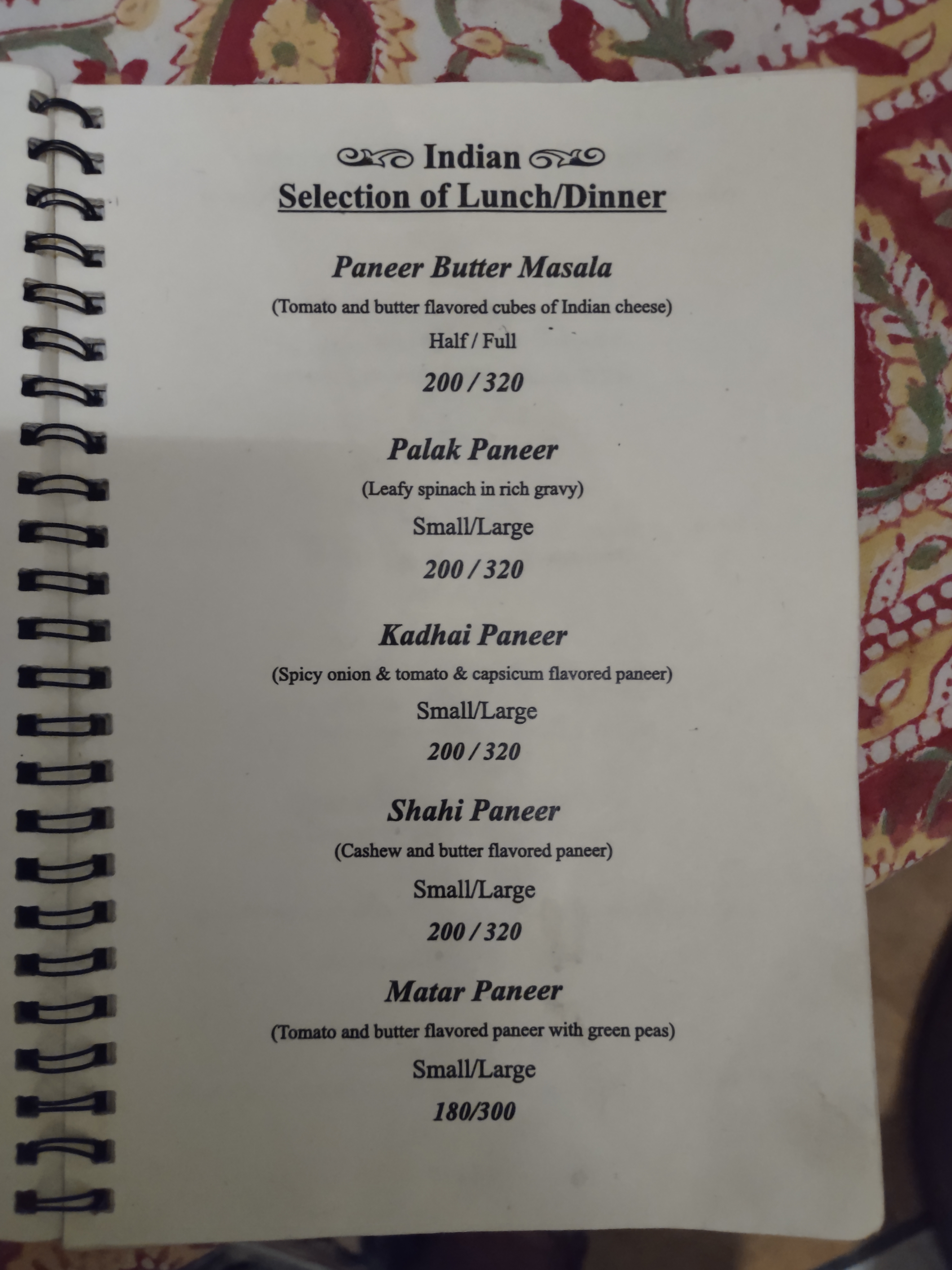
As I noted in the travelogue above, we ate all of our breakfasts at our hotels which were consistently good and hearty – eggs, toast and jam, fruit, juice, and coffee (occasionally pancakes!) – perfect for starting busy days. Due to those busy days, we also ate a few of our dinners at our hotel restaurants and were surprised at how good they generally were, all with a nice variety of traditional Indian dishes, which we were growing to love, along with some western options (Italian food seems to be universal!) which we were not inclined to partake of as the Indian food was so good.
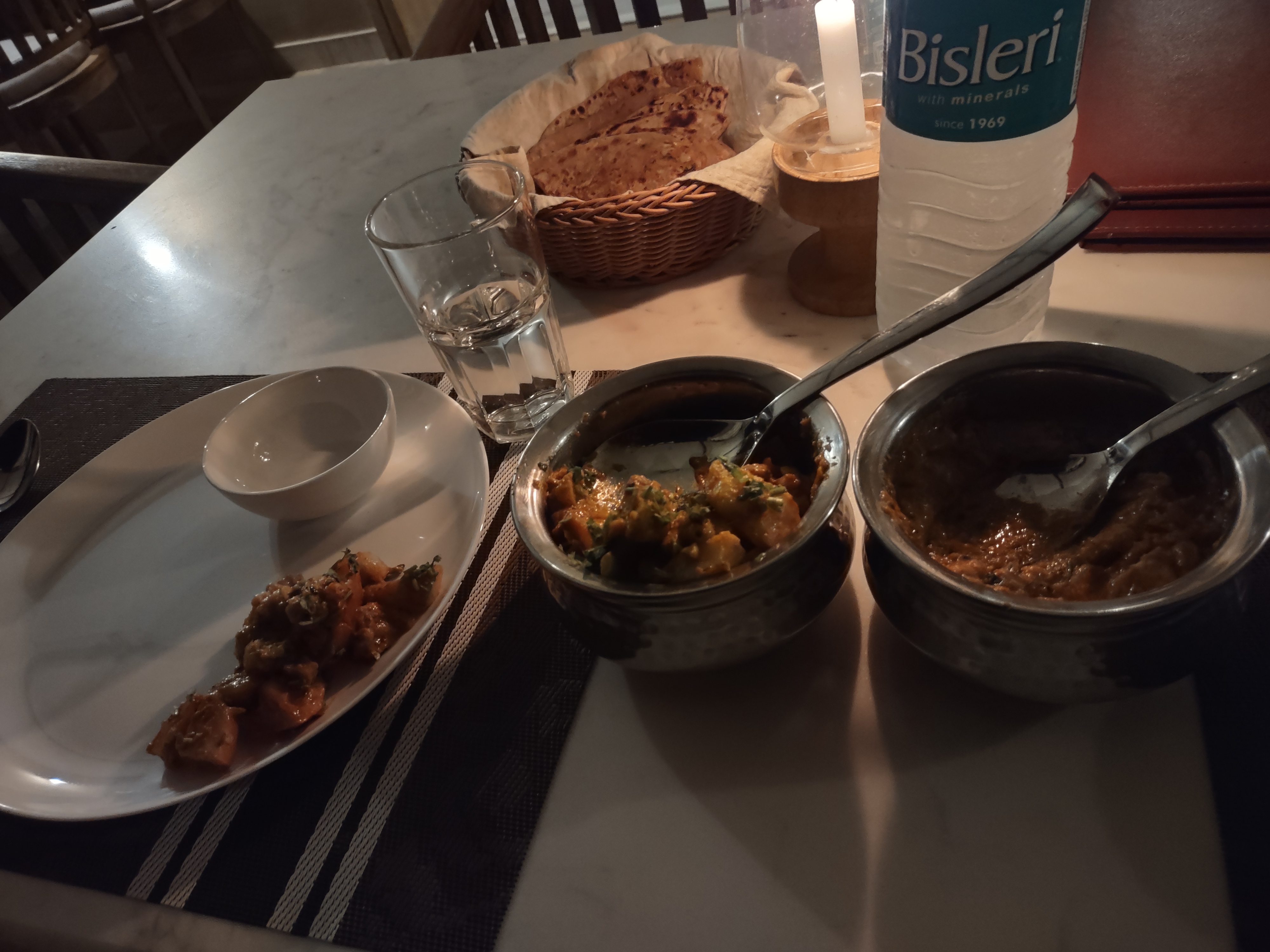
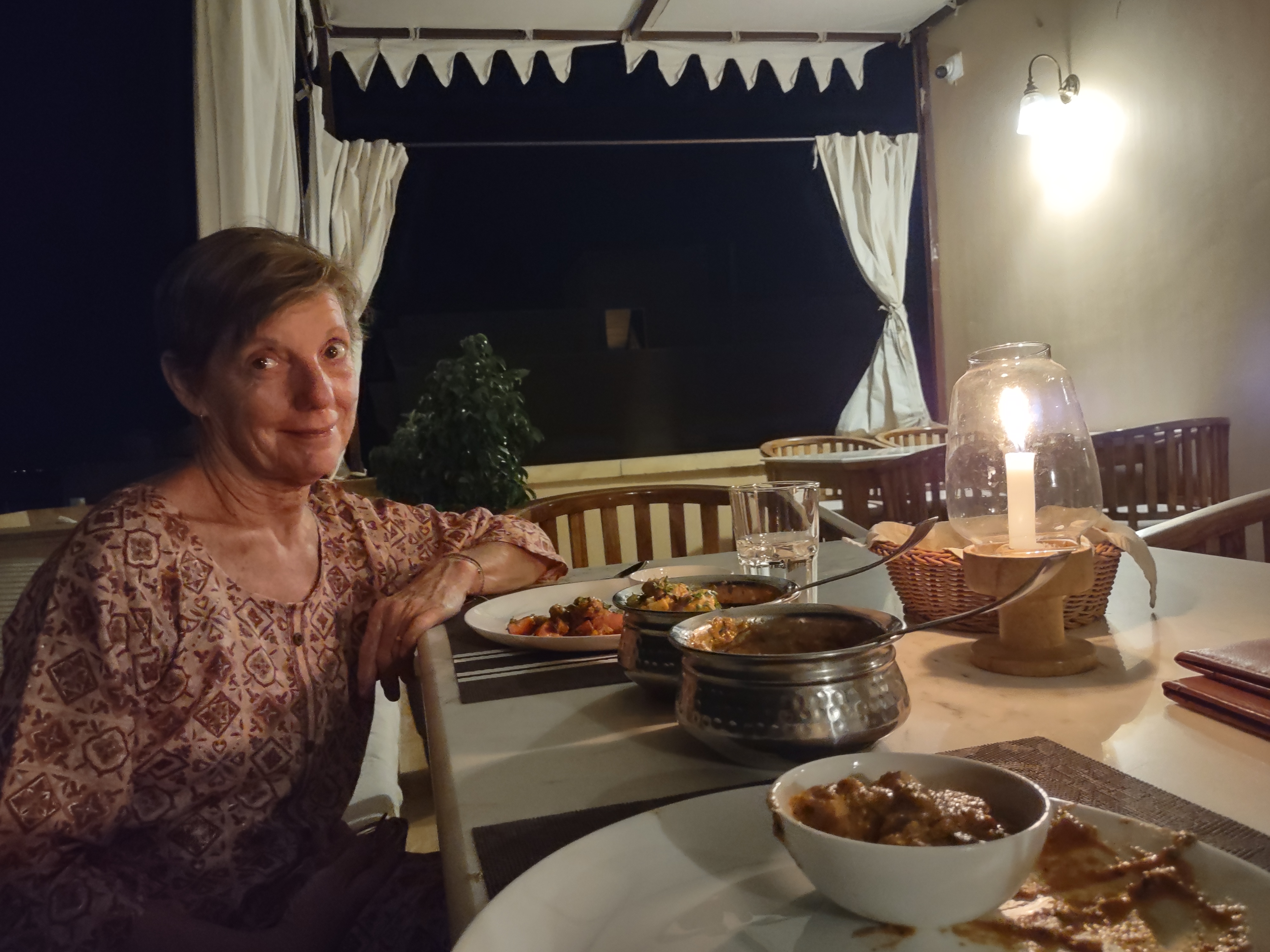
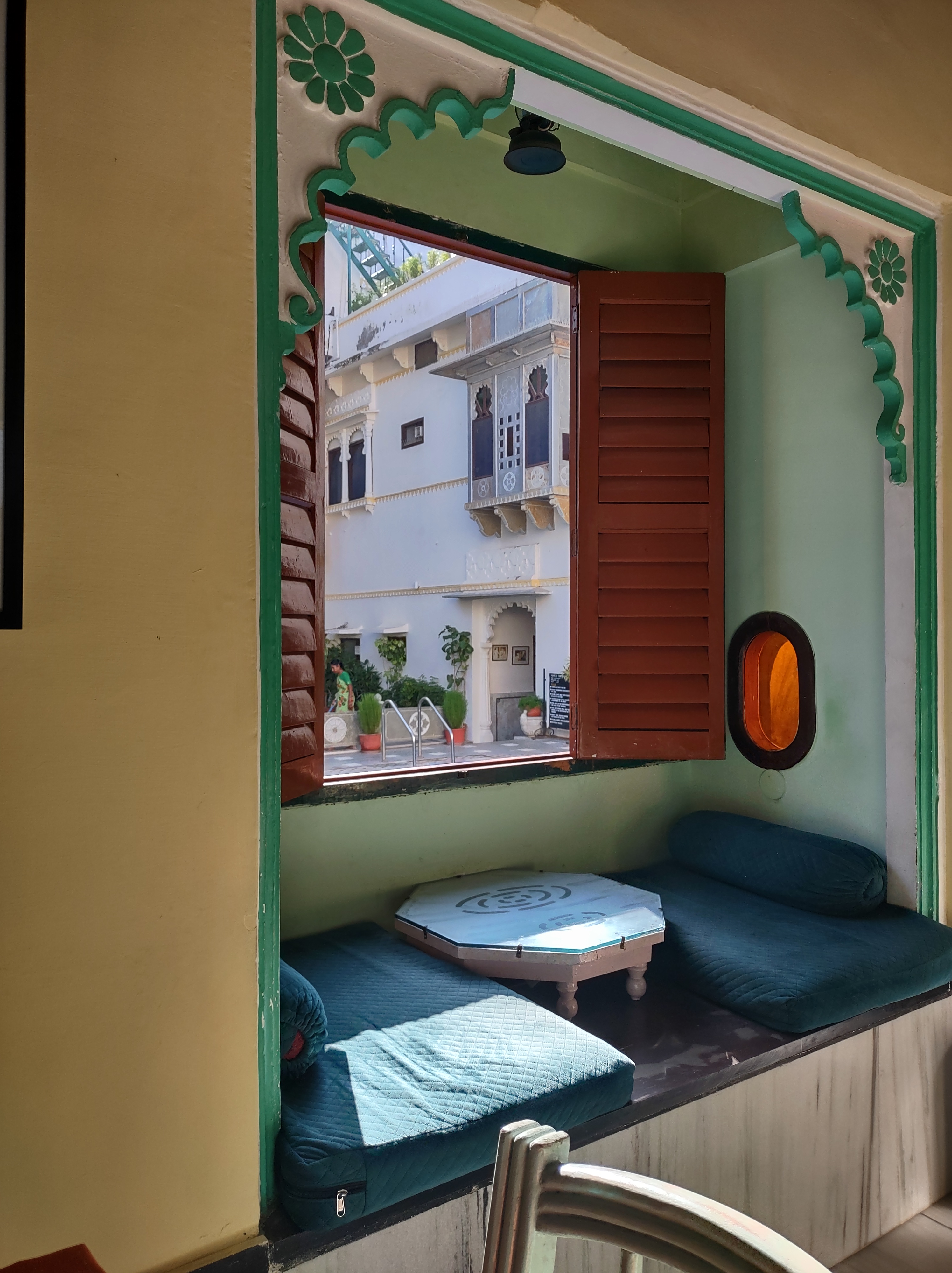

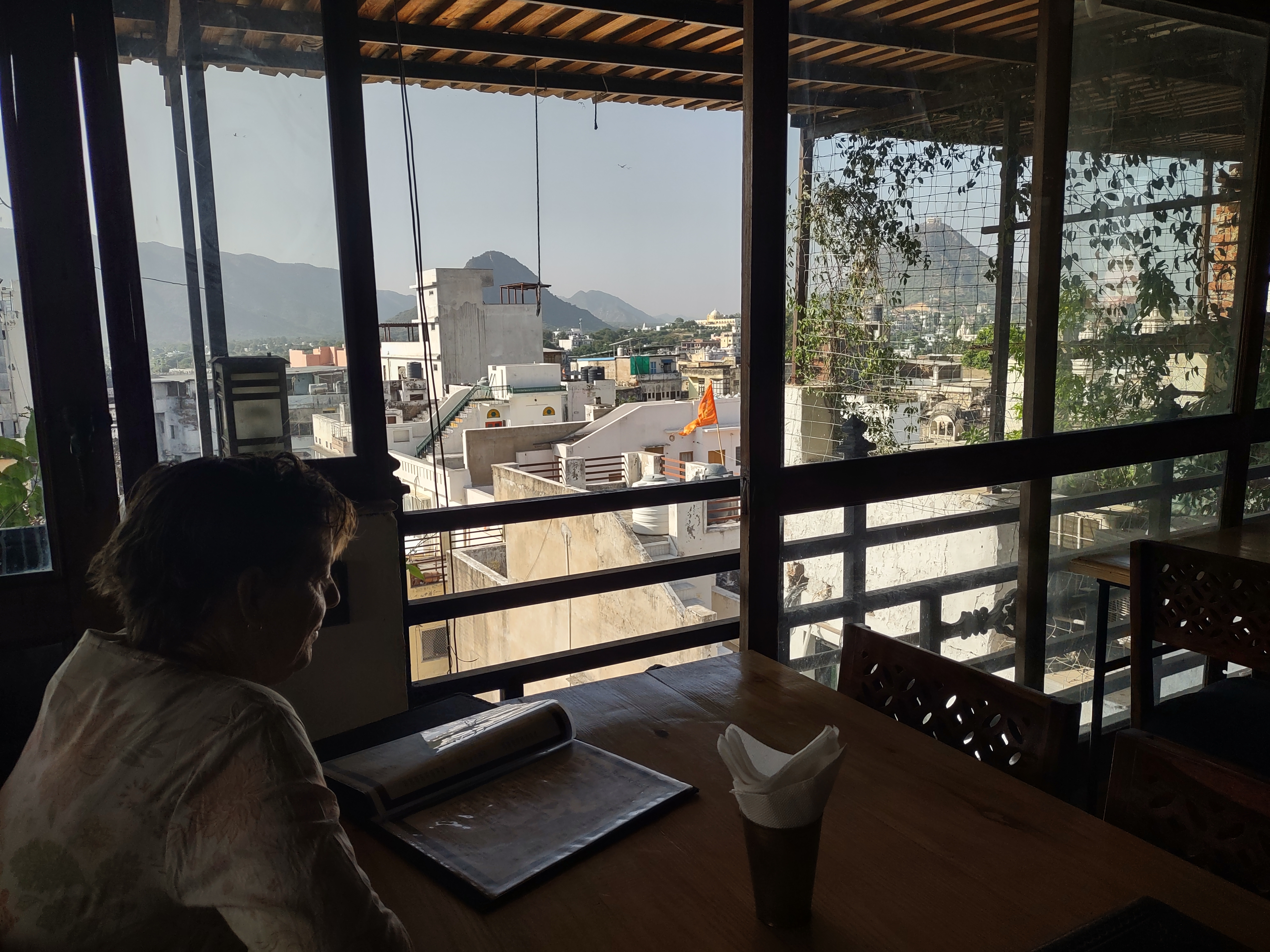
When we were not between cities, Mr. Sunder or our guide usually recommended a place, which gave us the opportunity to eat in some traditional local places. When we were travelling between cities, Mr. Sunder took us to some interesting places, which were clean and safe but also mostly tourist stops, but some of those turned out to be very quaint and not crowded.



Accommodations
As part of the tour package that Drivers-India put together, they made arrangements for all of our overnight accommodations, which saved us quite a bit of time and effort but did mean that we were leaving the actual selection of places (one of the things which we actually enjoy doing) in someone else’s hands. Based on our preferences (some confusion on this point as Colleen believes she requested “Budget” but our final Itinerary specified “Comfort”), Drivers-India booked accommodations for us in each city we stayed in. In any case, we were pretty happy with our accommodations in general.
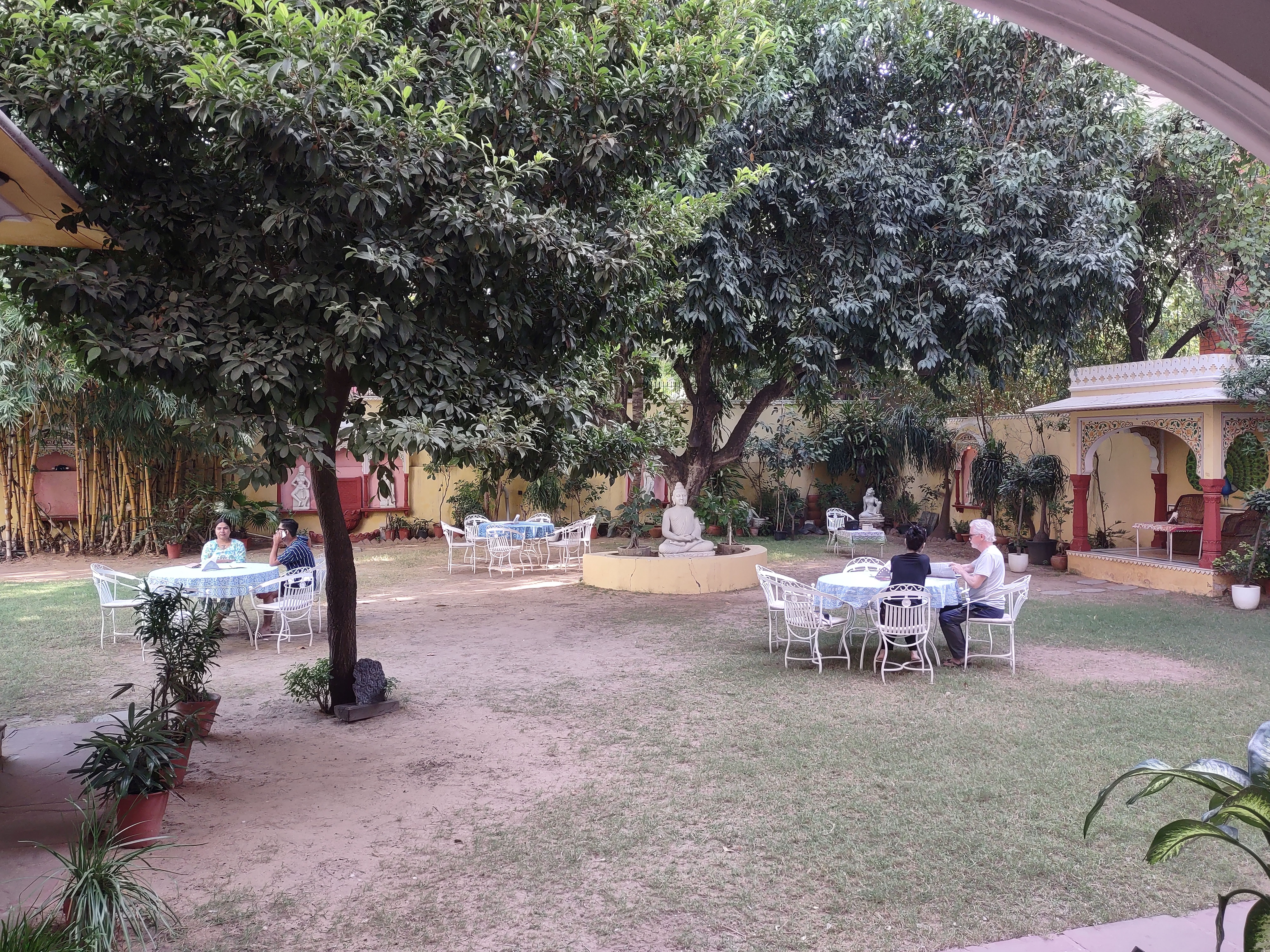

To start with, all were clean and all (with the possible exception of Delhi, which we hardly saw) were in nice neighborhoods (often the most difficult thing to predict when booking online). All of them had on-site restaurants (not something we necessarily look for) which turned out to be more than a convenience given how packed our days were. While none of the places we stayed really had the sort of amazing views we always look for, a couple did have swimming pools (something we have begun to value more in these hotter climes) and gardens or courtyards to retreat to and relax. All of them were definitely comfortable (verging on luxurious) and it was interesting to find that each of them had its own unique feel and character often tied to the city in which it was located.
The Hotel Mannat international in Delhi remains a bit of a blur.
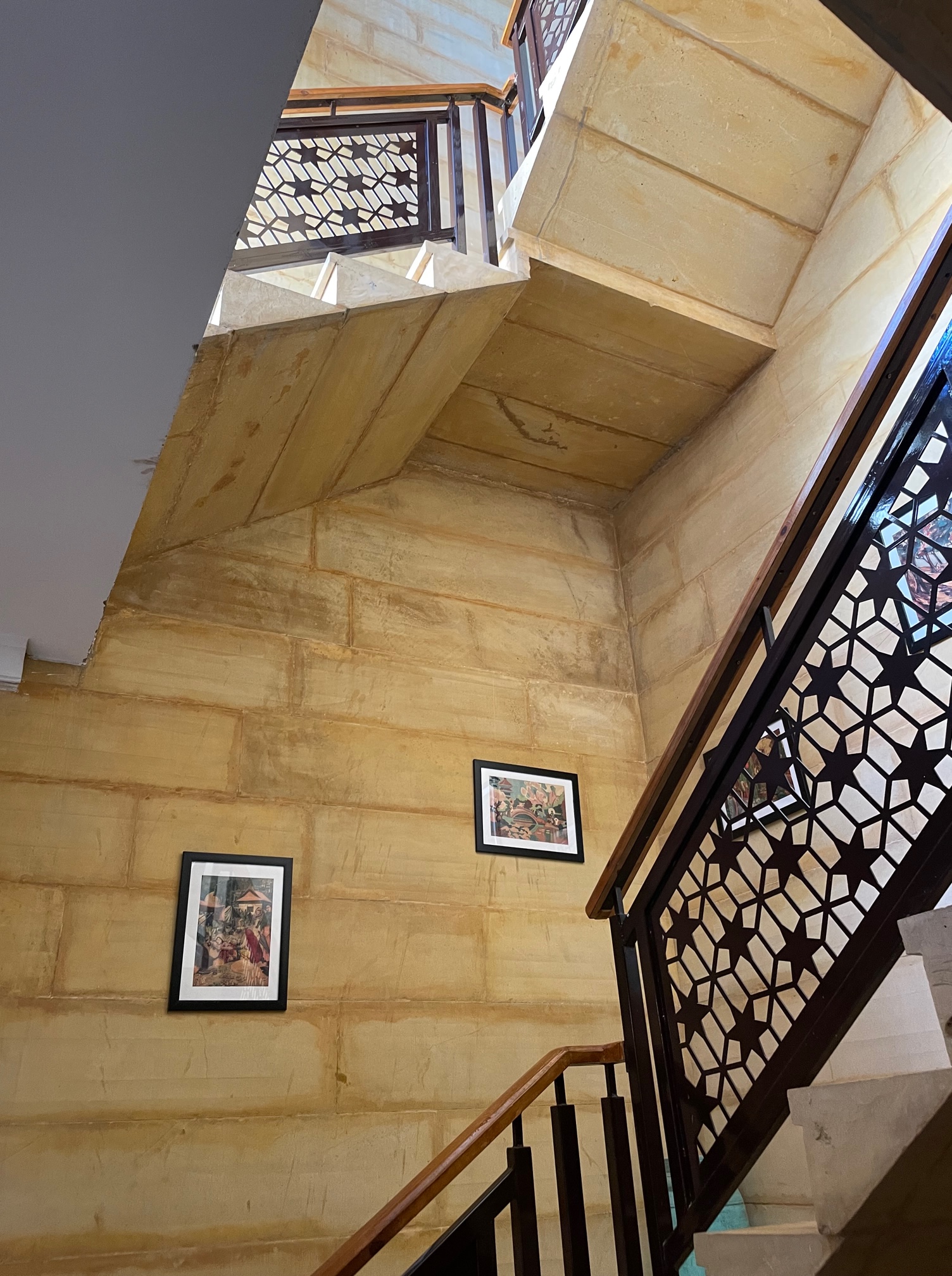
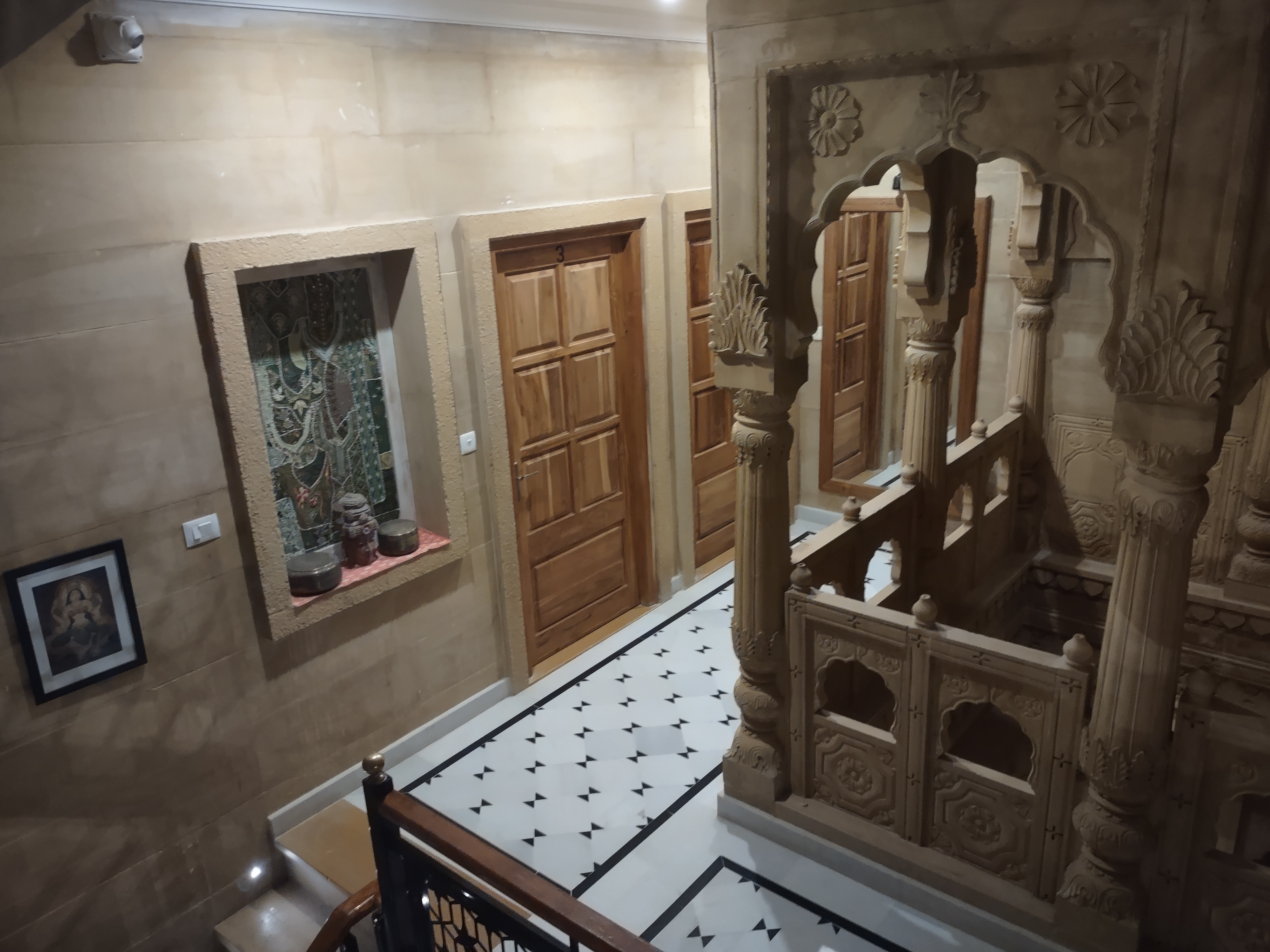
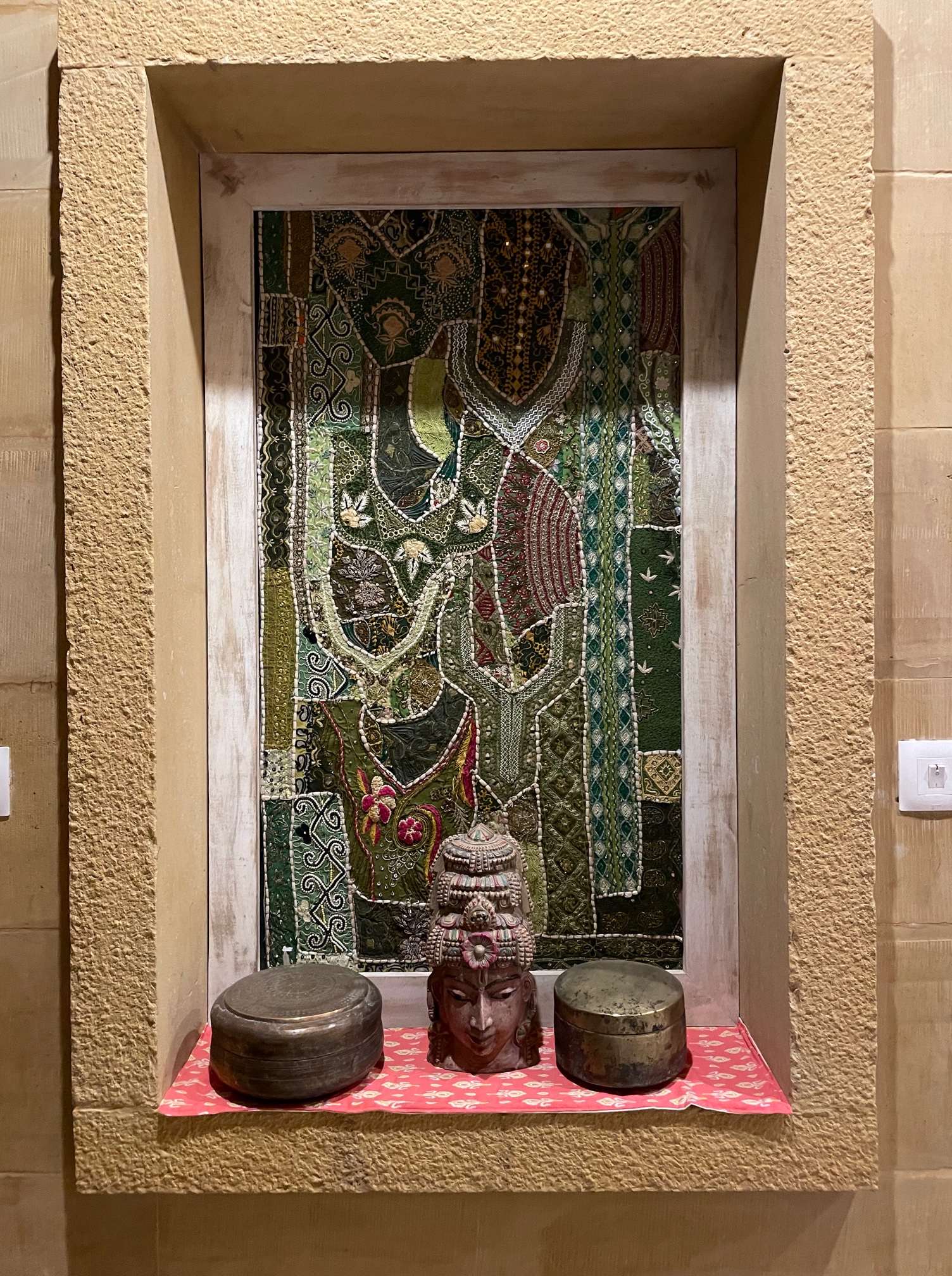
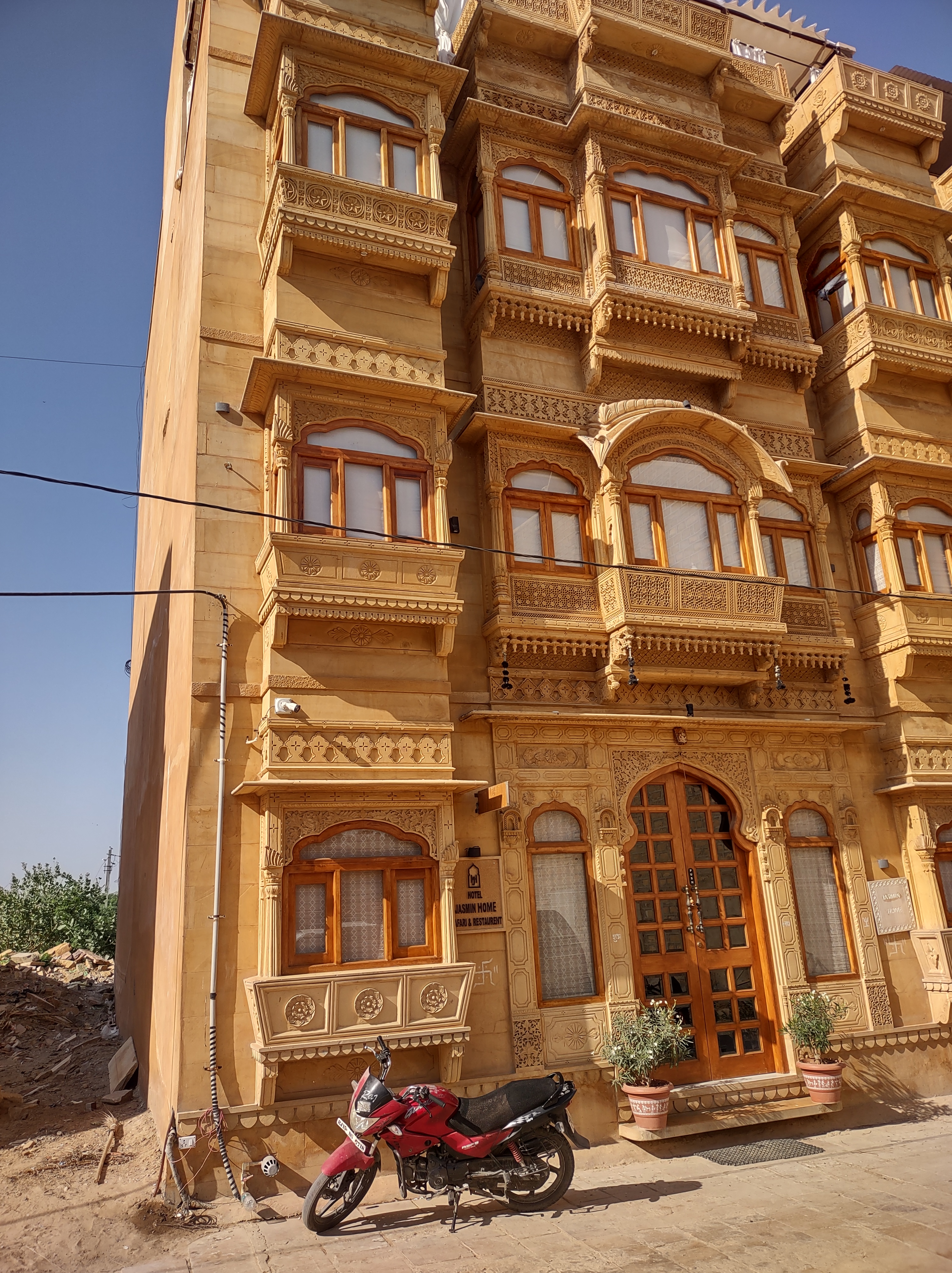
Our hotel in Jaisalmer, the Jasmine Home, though newer, was constructed of the same beautifully carved yellow sandstone as the fort and palaces we visited there. The location was a little remote and the neighborhood wasn’t particularly interesting, but the hotel itself, which did have a great roof-top restaurant, was both beautiful and comfortable.

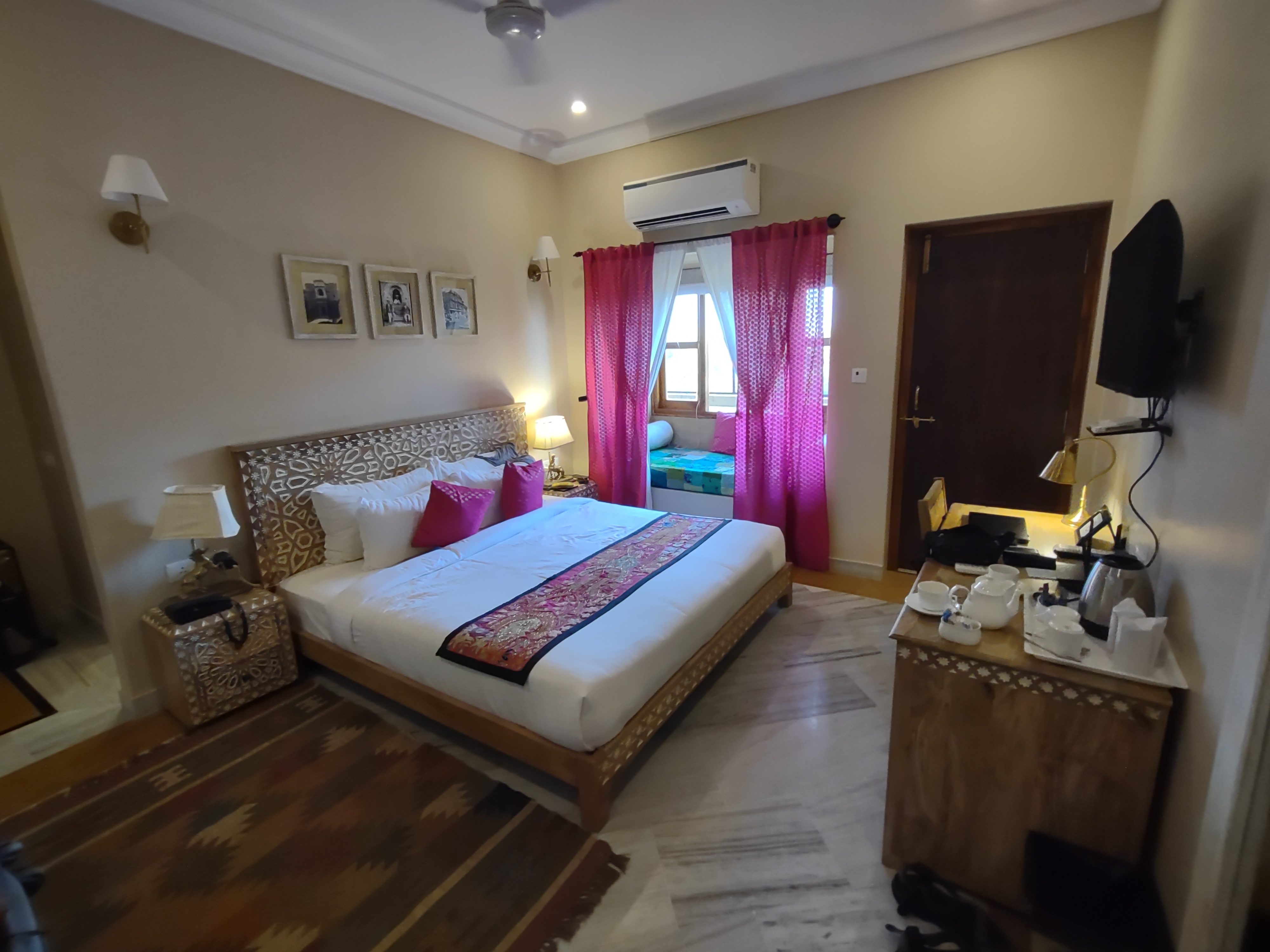
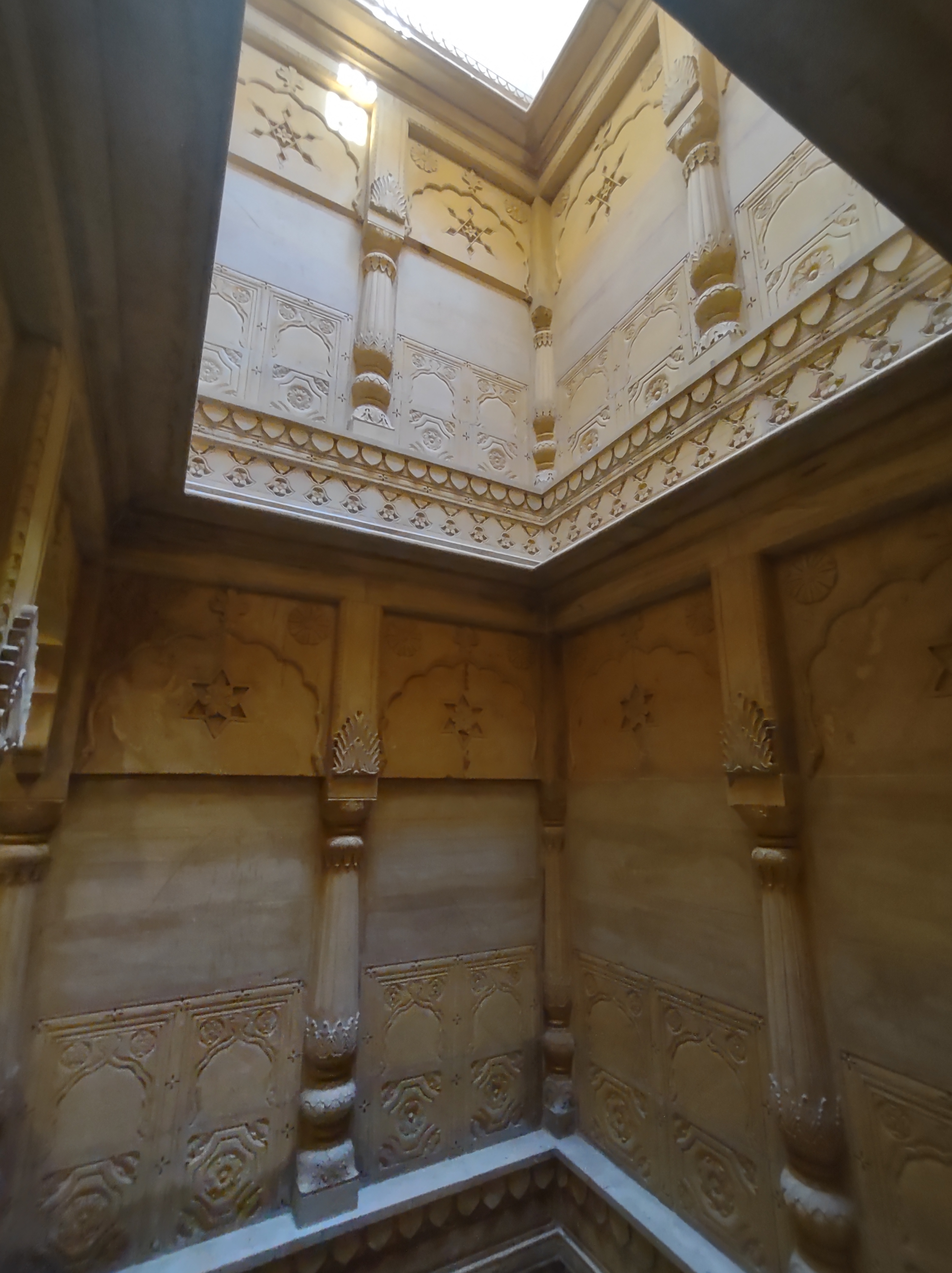
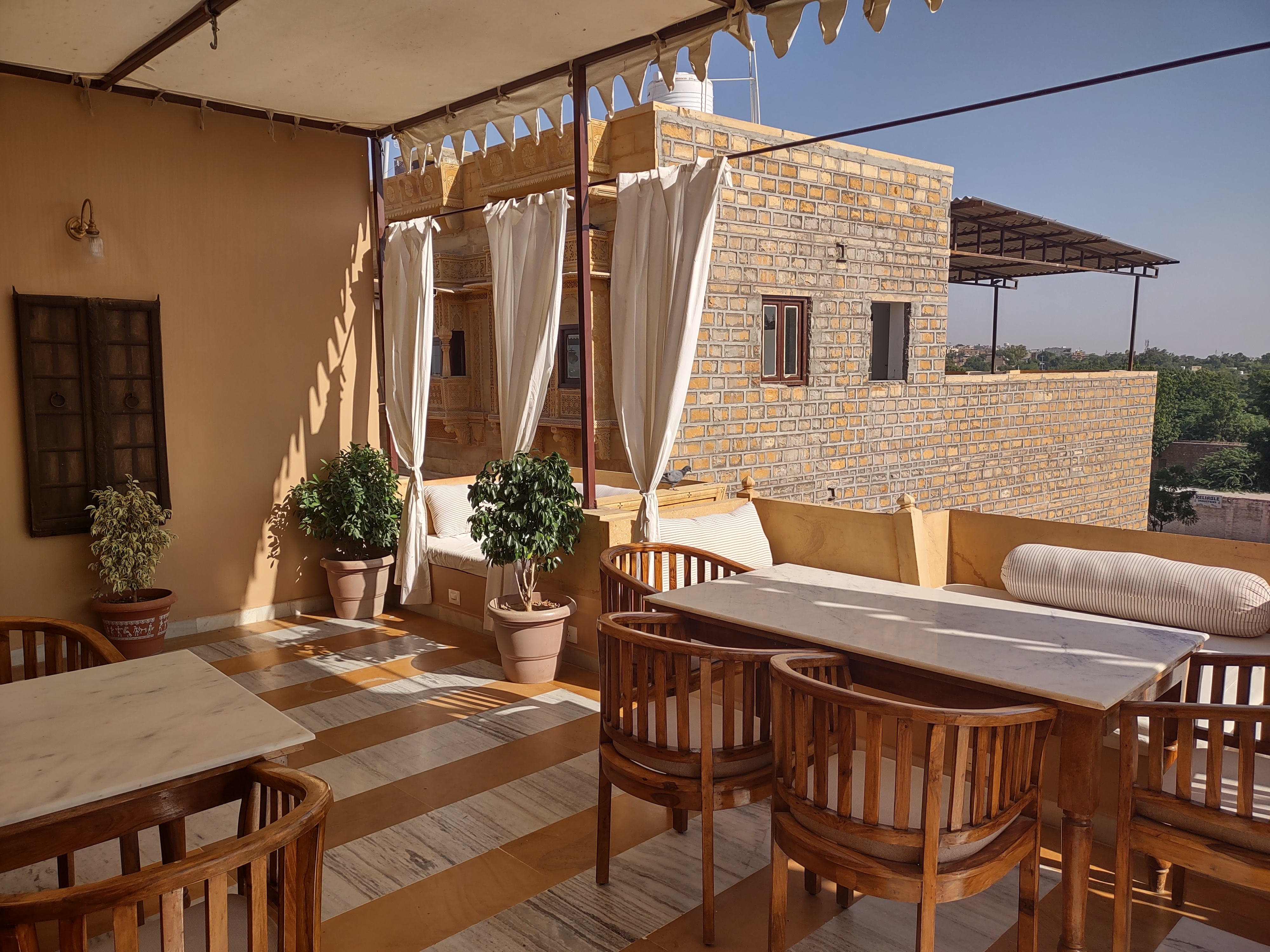
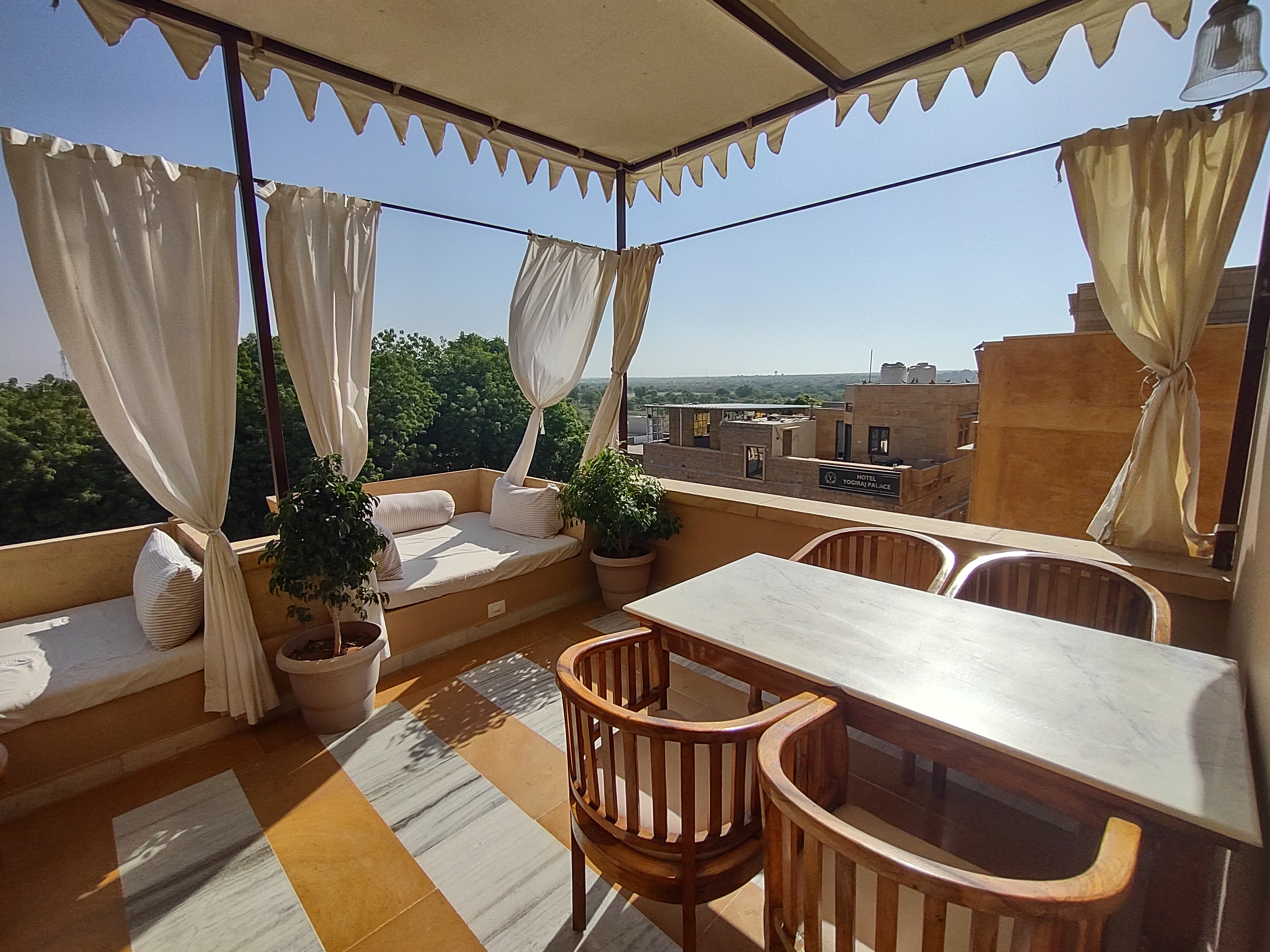
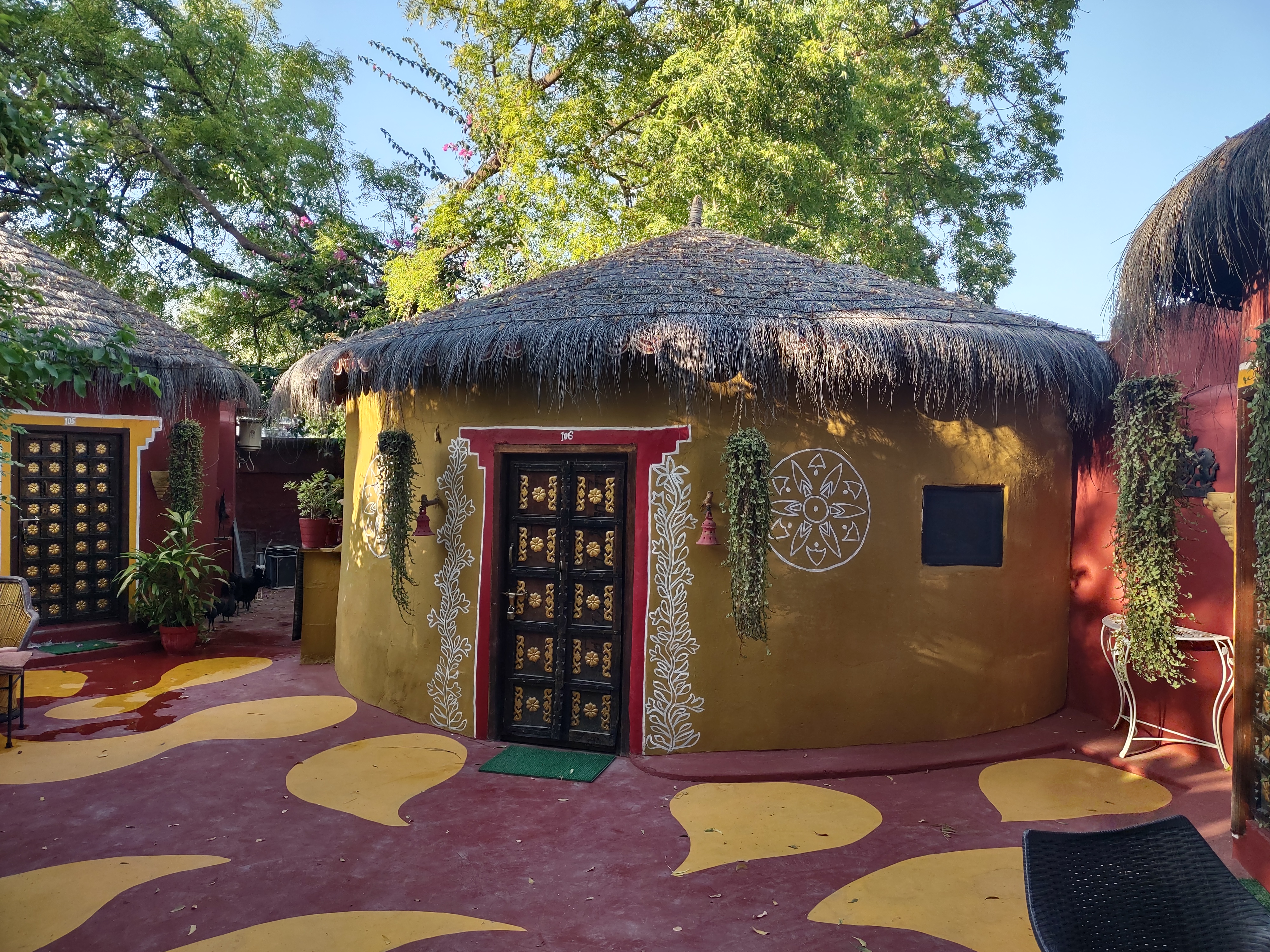
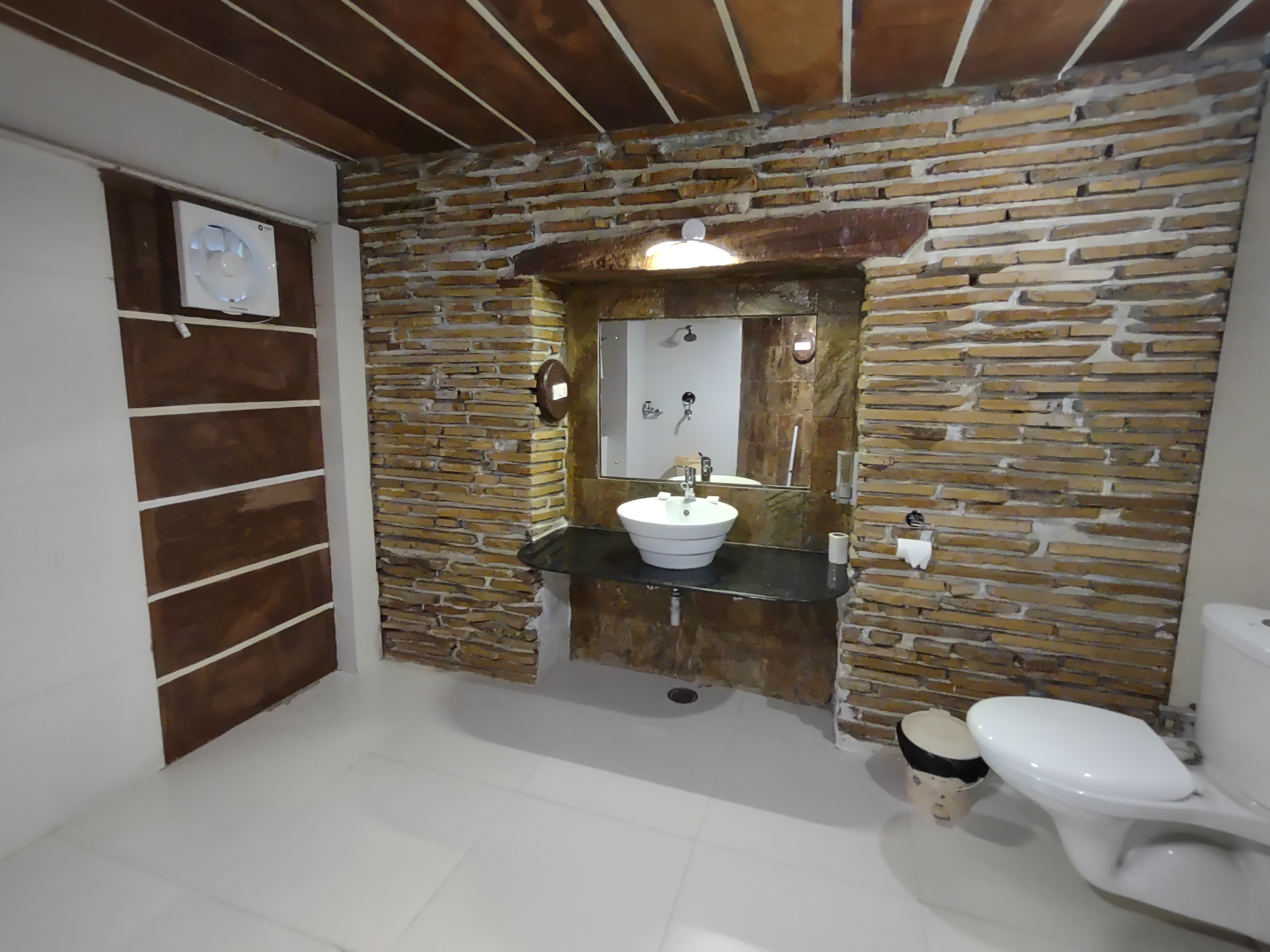
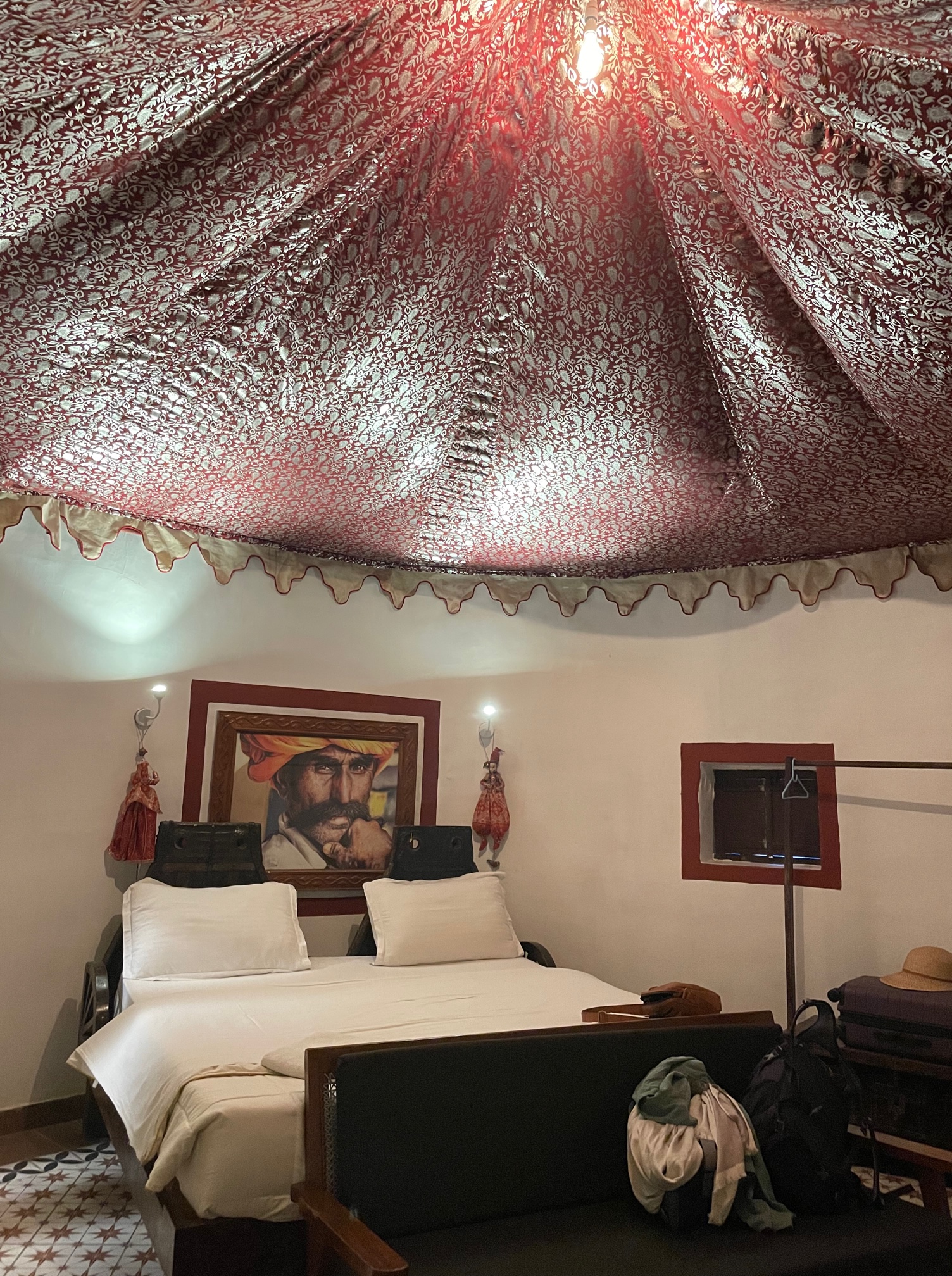
While its architectural lineage is unclear, our little hut set in the beautiful garden of the at the Mandore Guest House in Jodhpur was certainly a unique stay and our first (but not last) introduction to the use of padlocks on Indian hotel rooms.

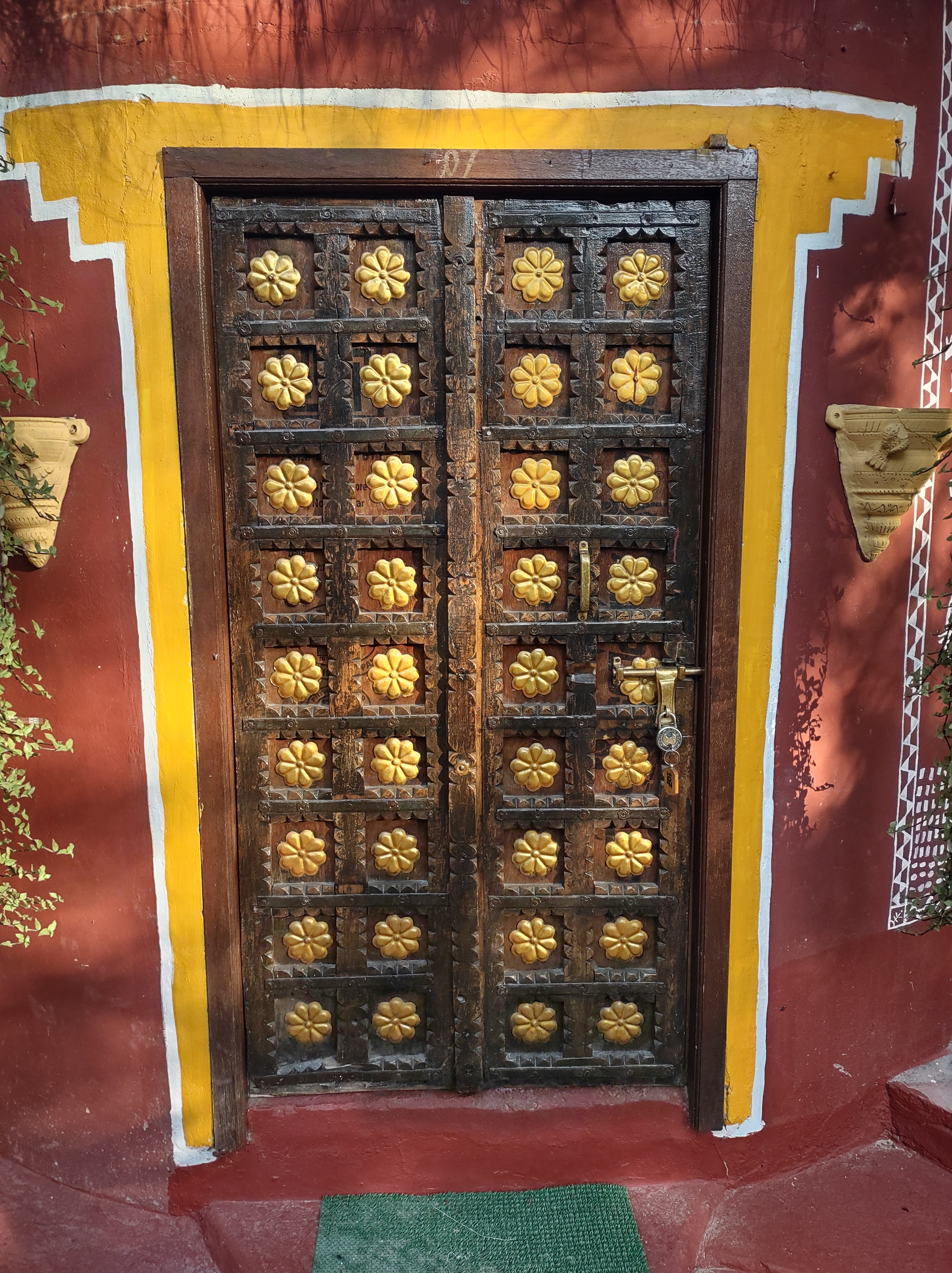

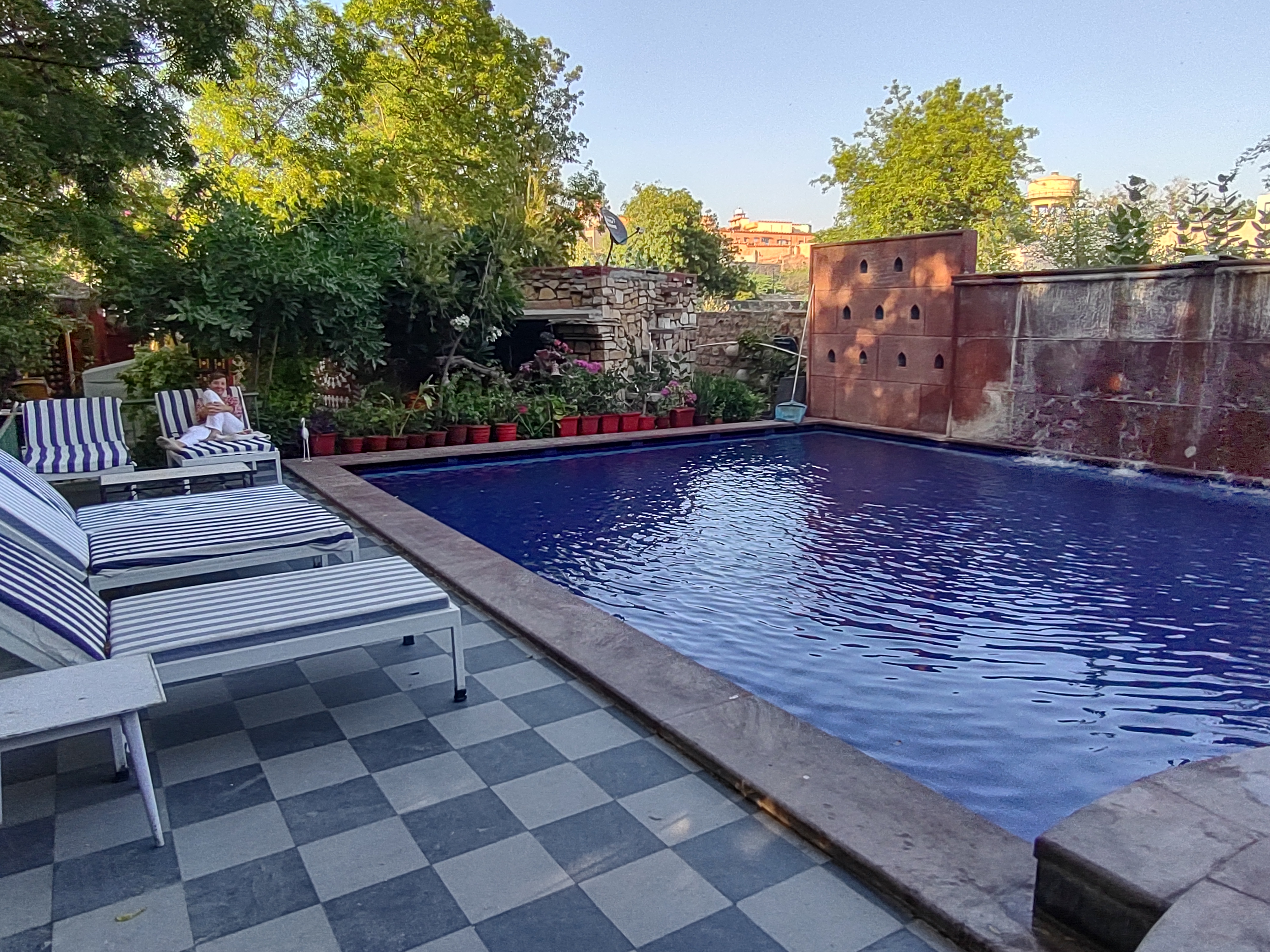
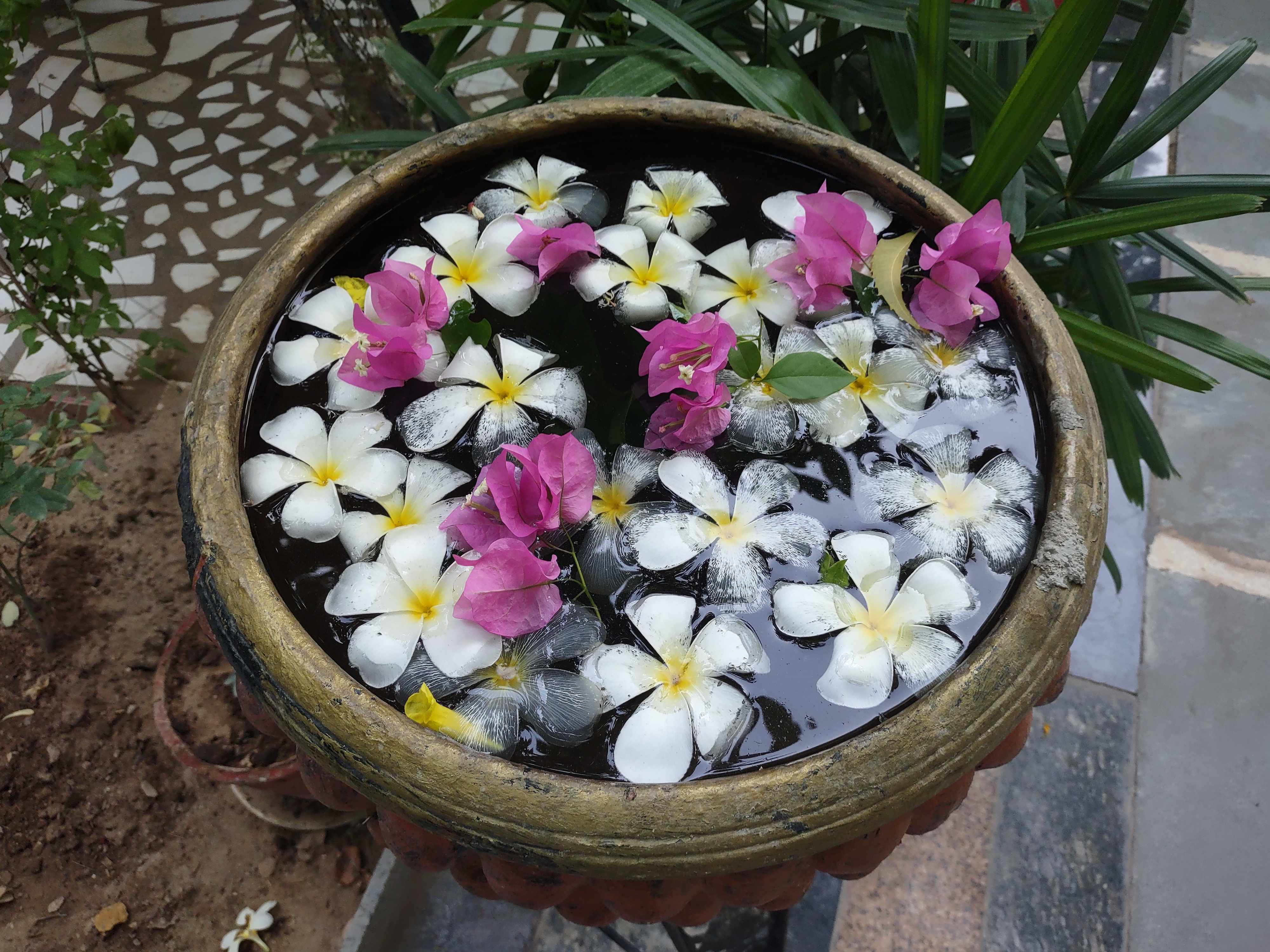
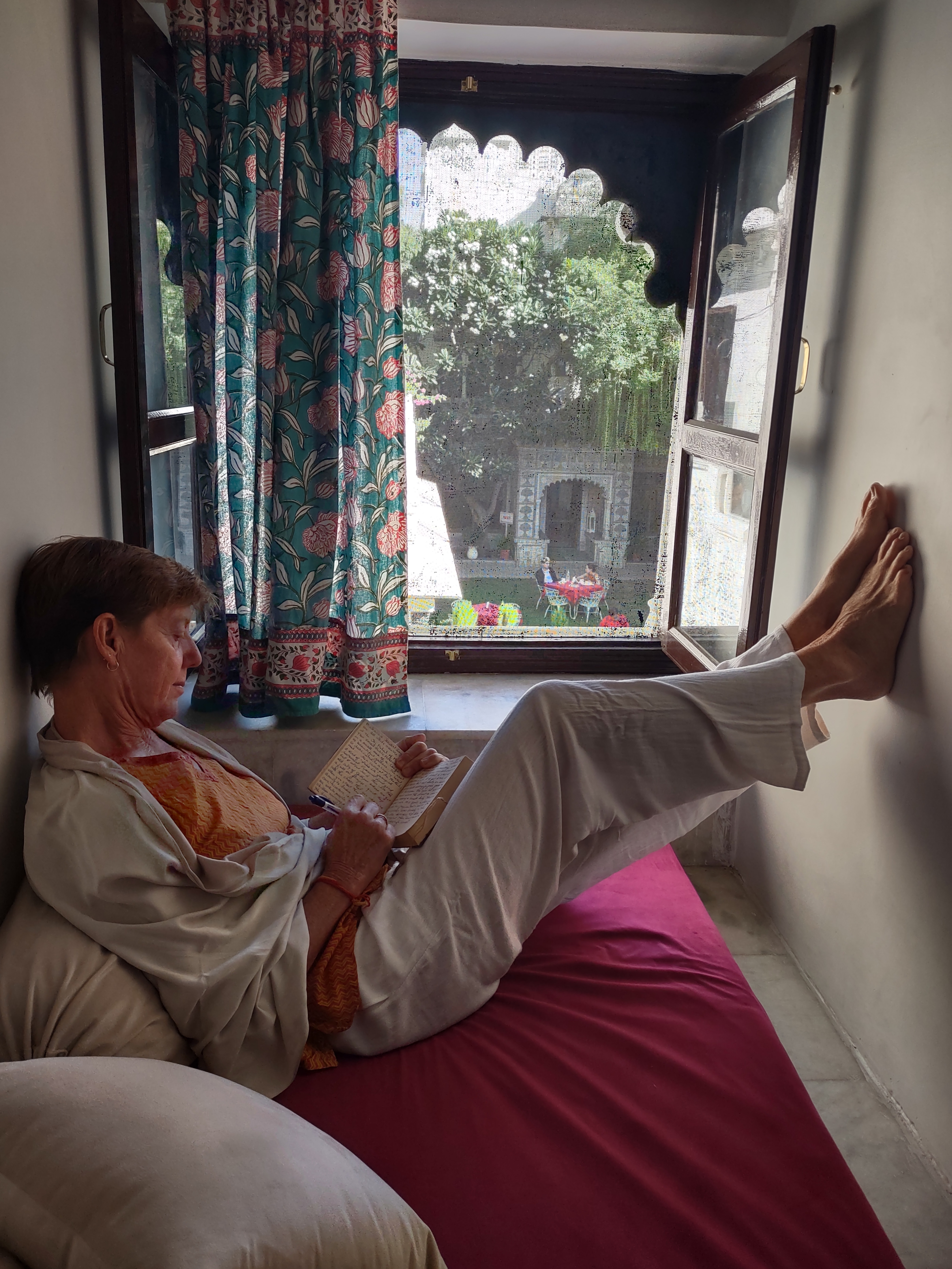
The Hotel Mahendra Prakash in Udaipur had a wonderful window seat for Colleen overlooking a nice courtyard and pool.
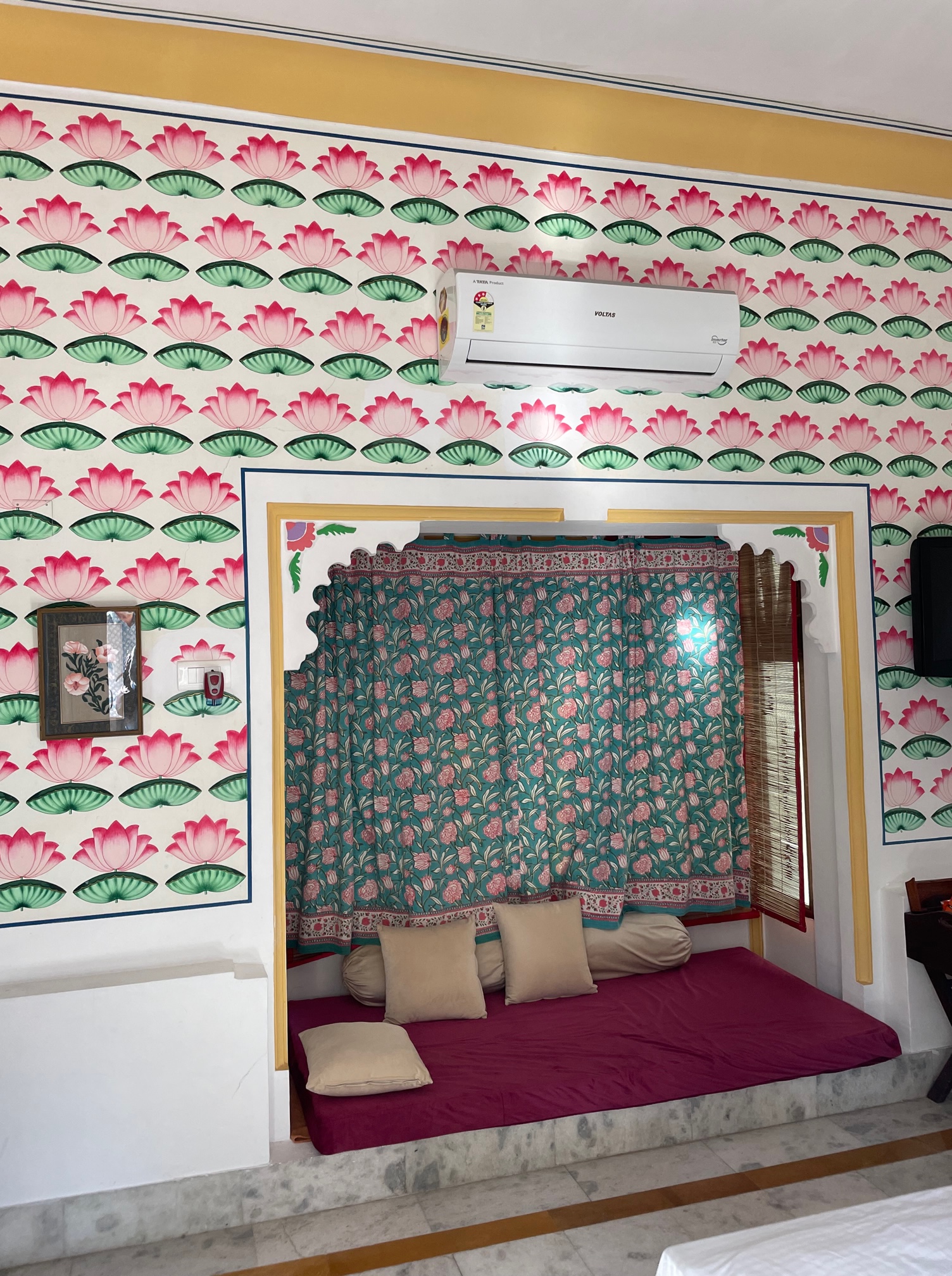
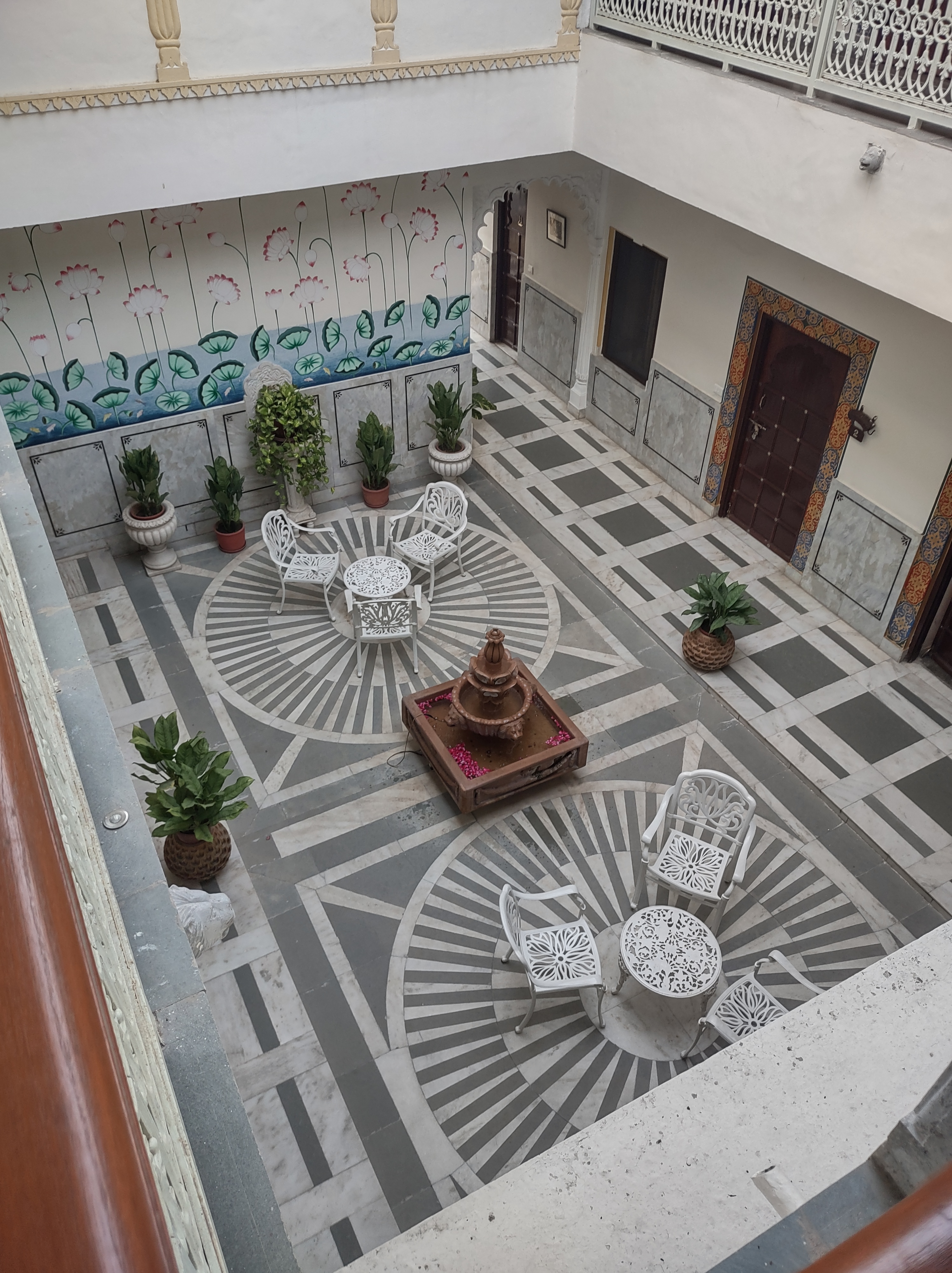
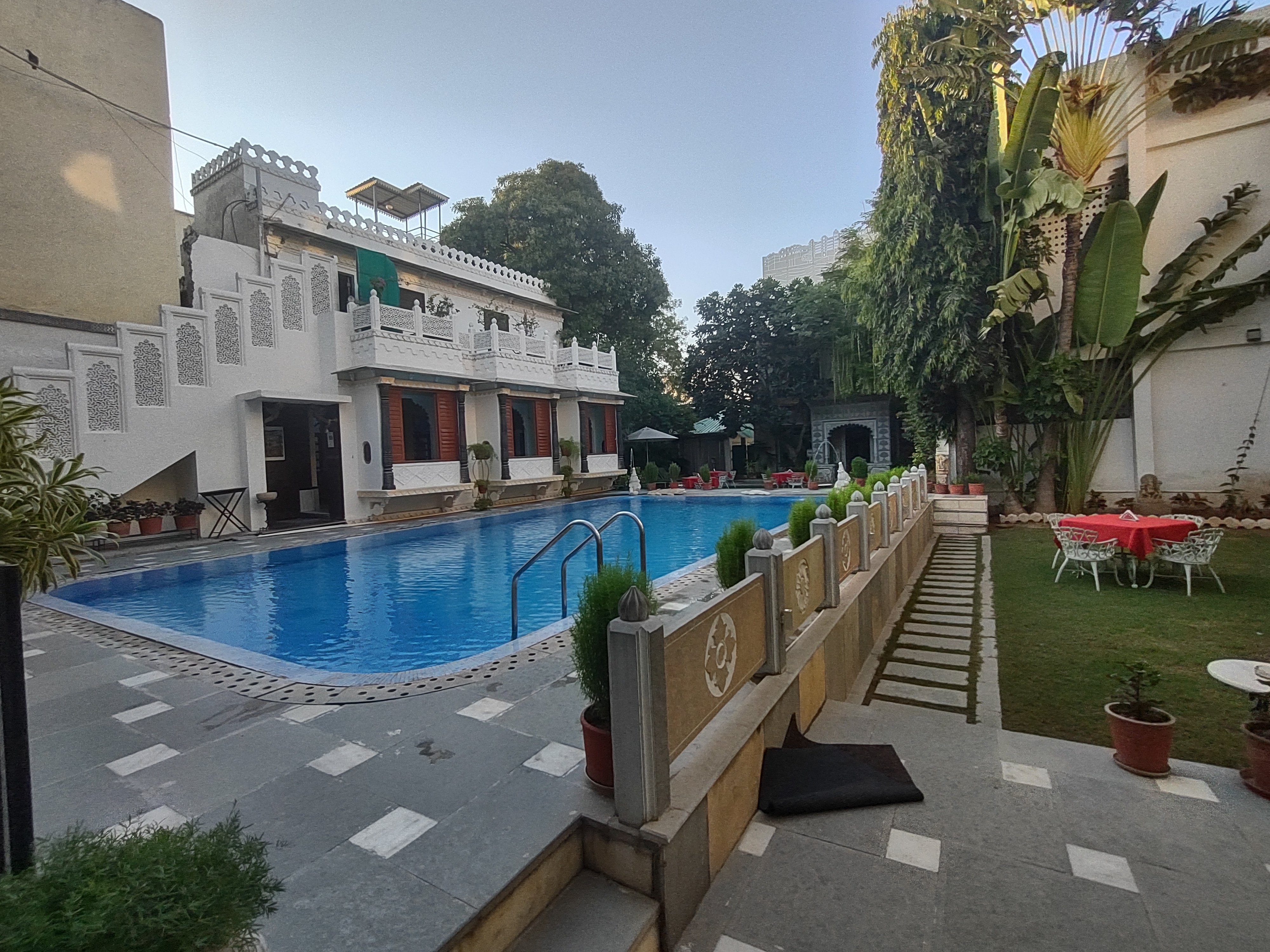
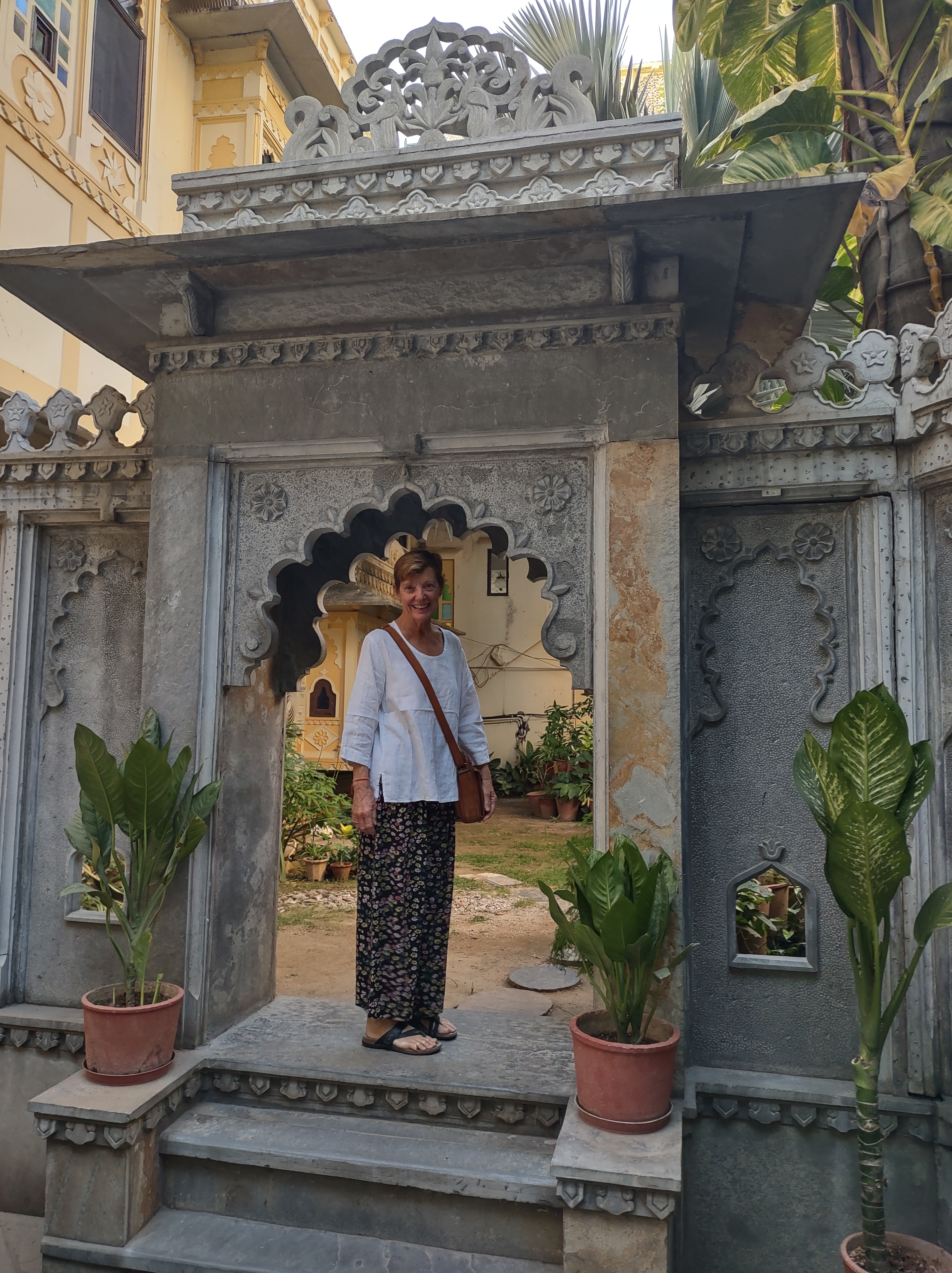
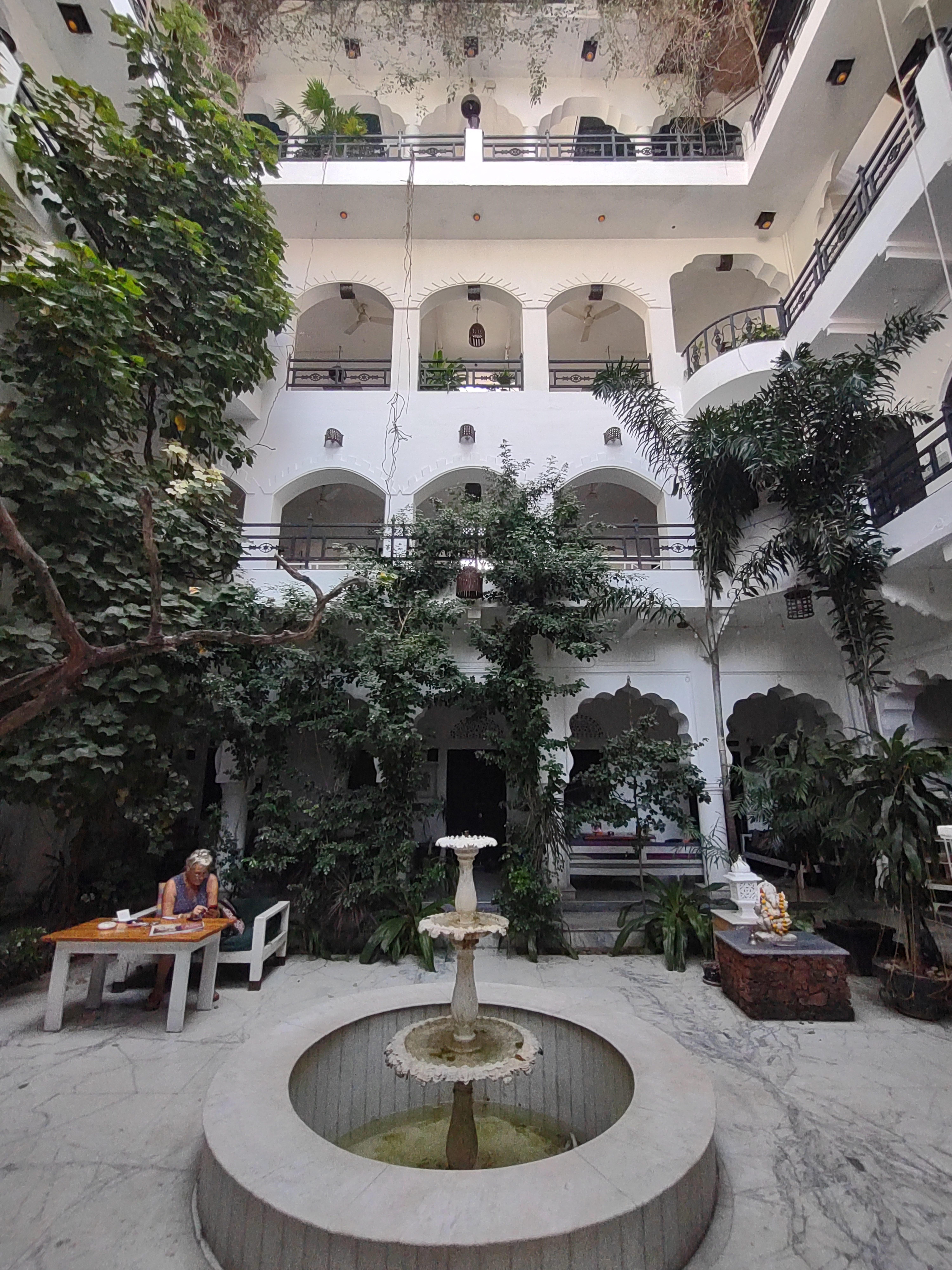
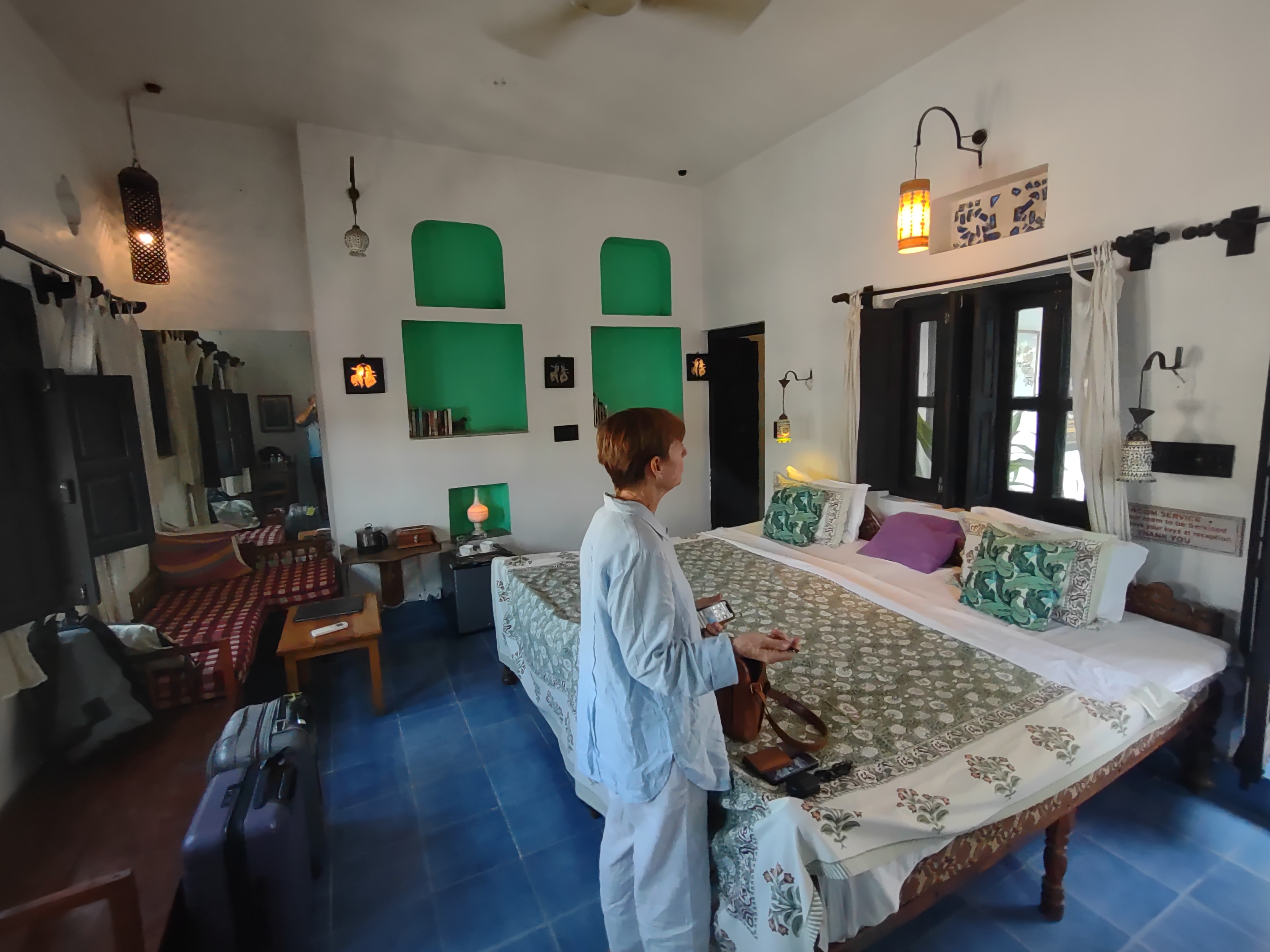
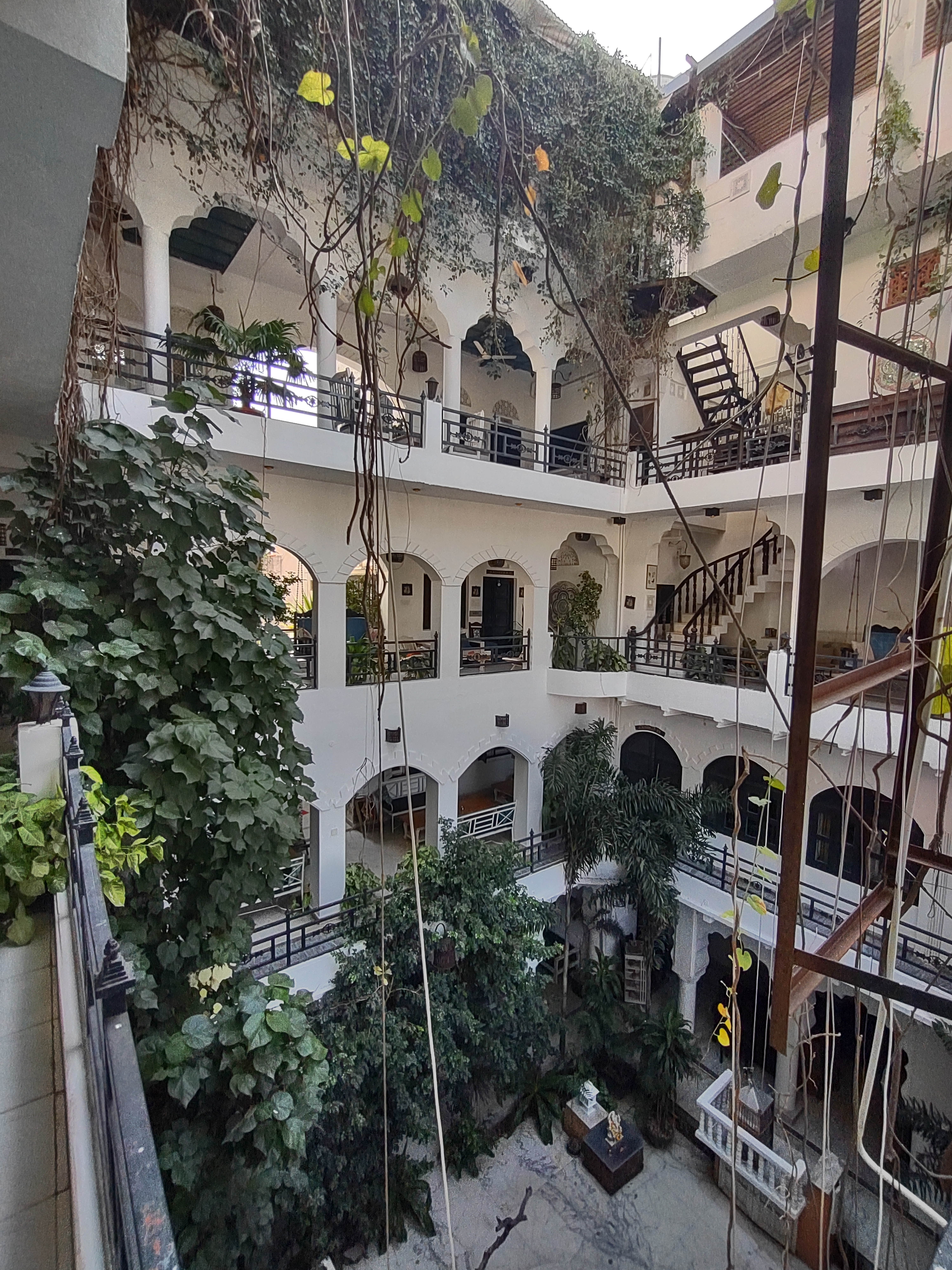
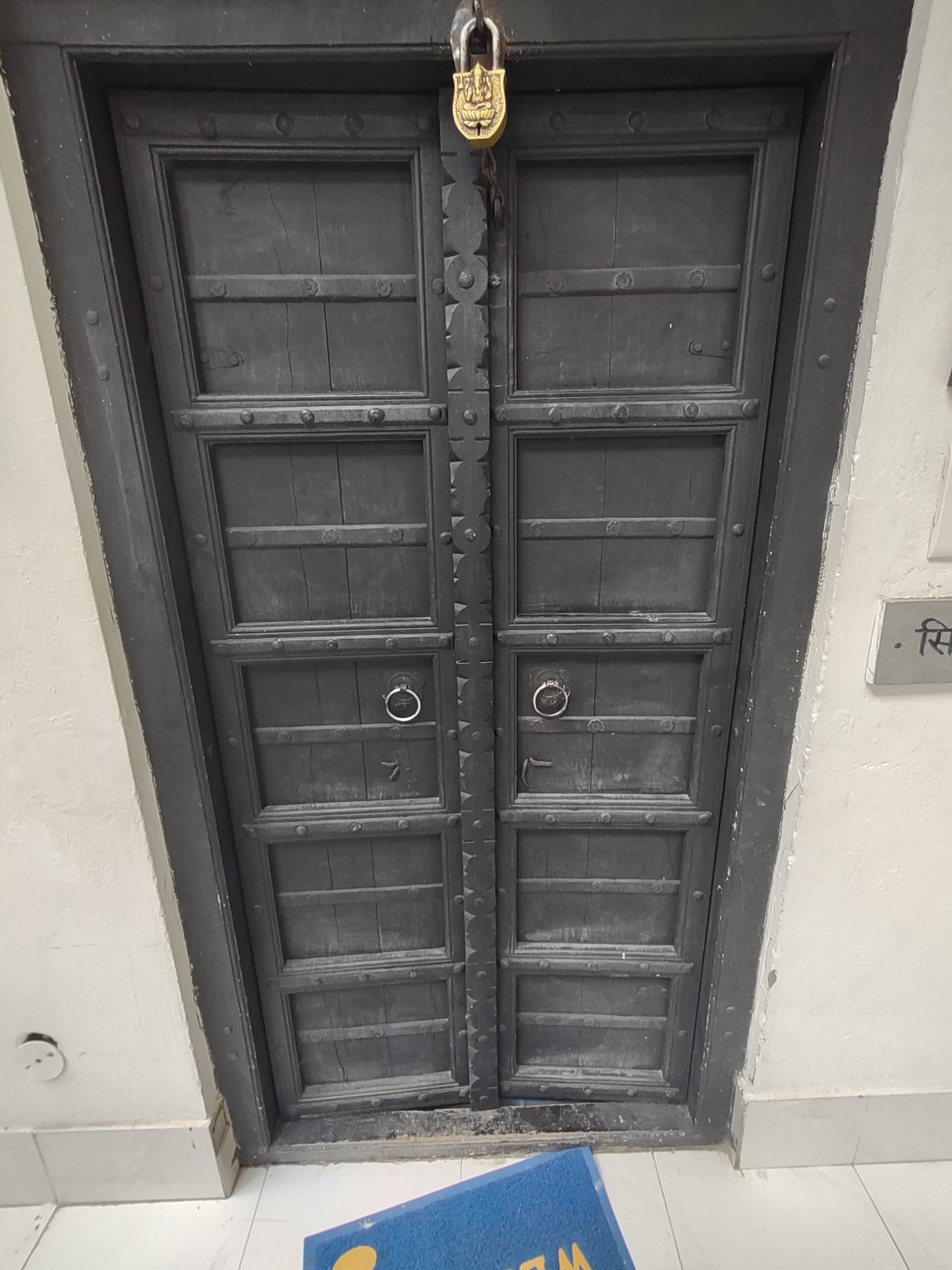
The Inn of Seventh Heaven in Pushkar was a wonderful old rambling haveli (palace) with a large central courtyard with lots of cozy niches. We were especially happy to see the image of Ganesh (the god of good fortune) adorning the room’s padlock.
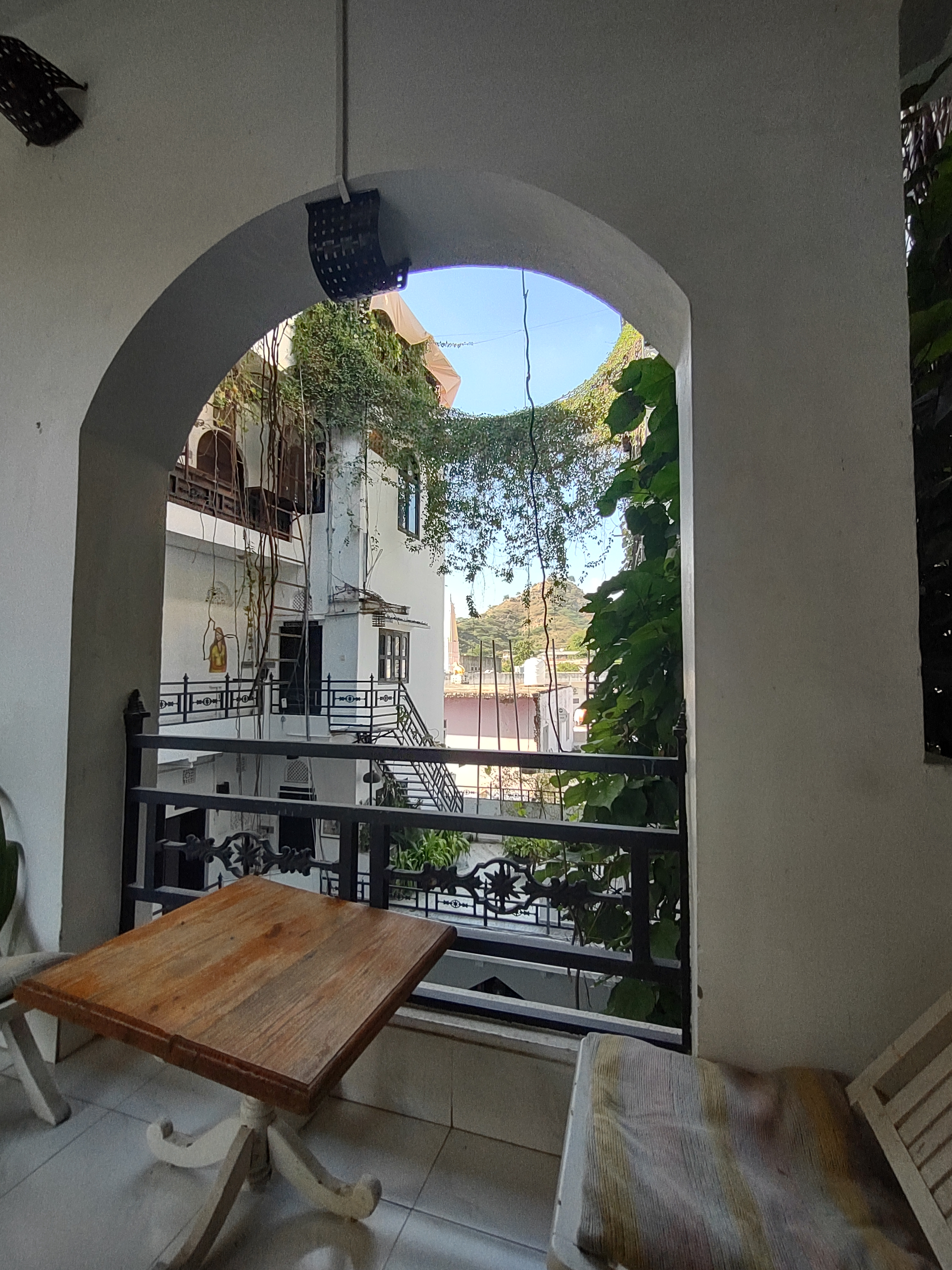
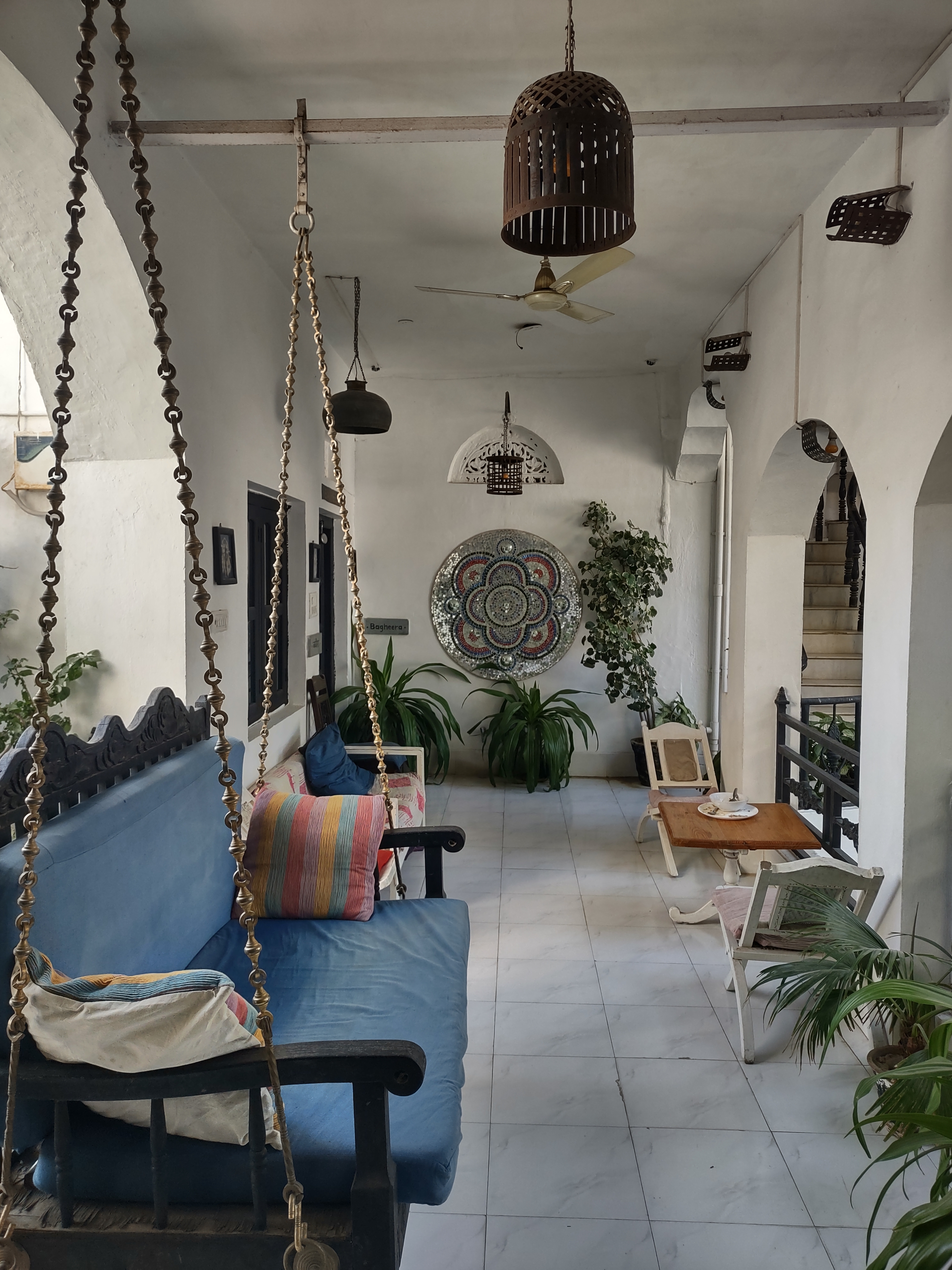


The Anuraag Villa in Jaipur was more of a traditional (“proper”?) colonial hotel with a large garden which was particularly nice at night and some of the most beautiful hand-painted ceilings we had ever seen.
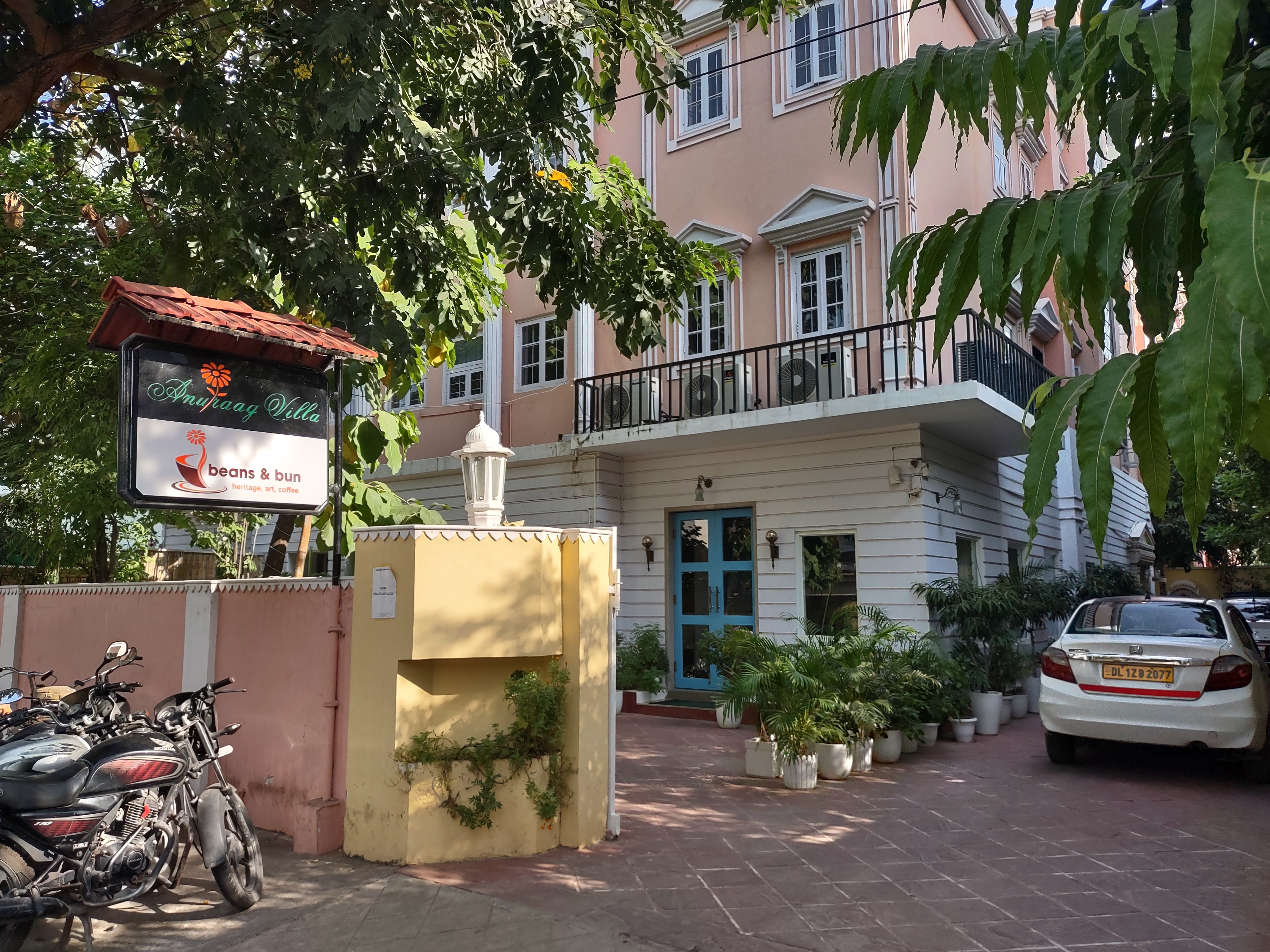
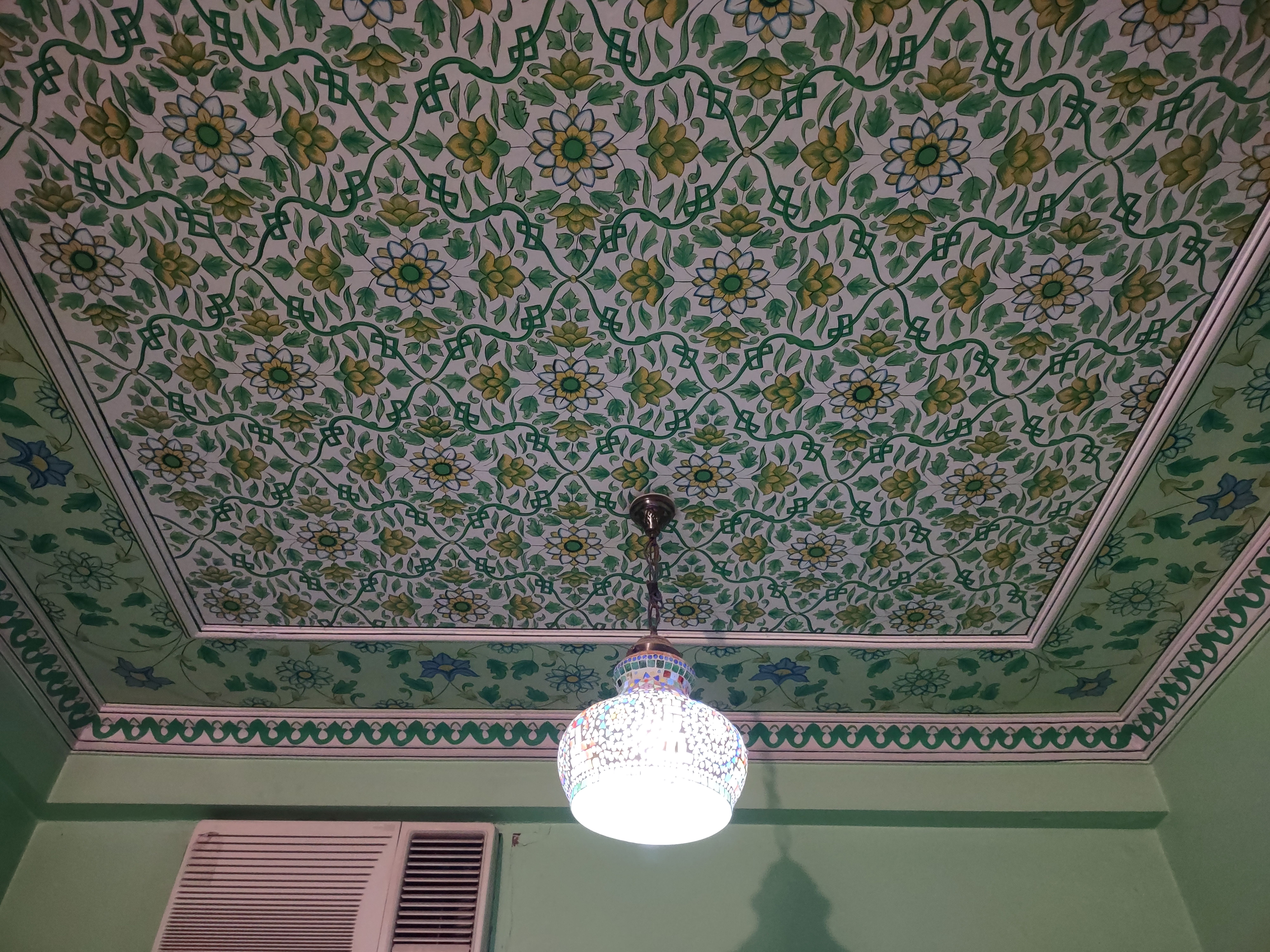
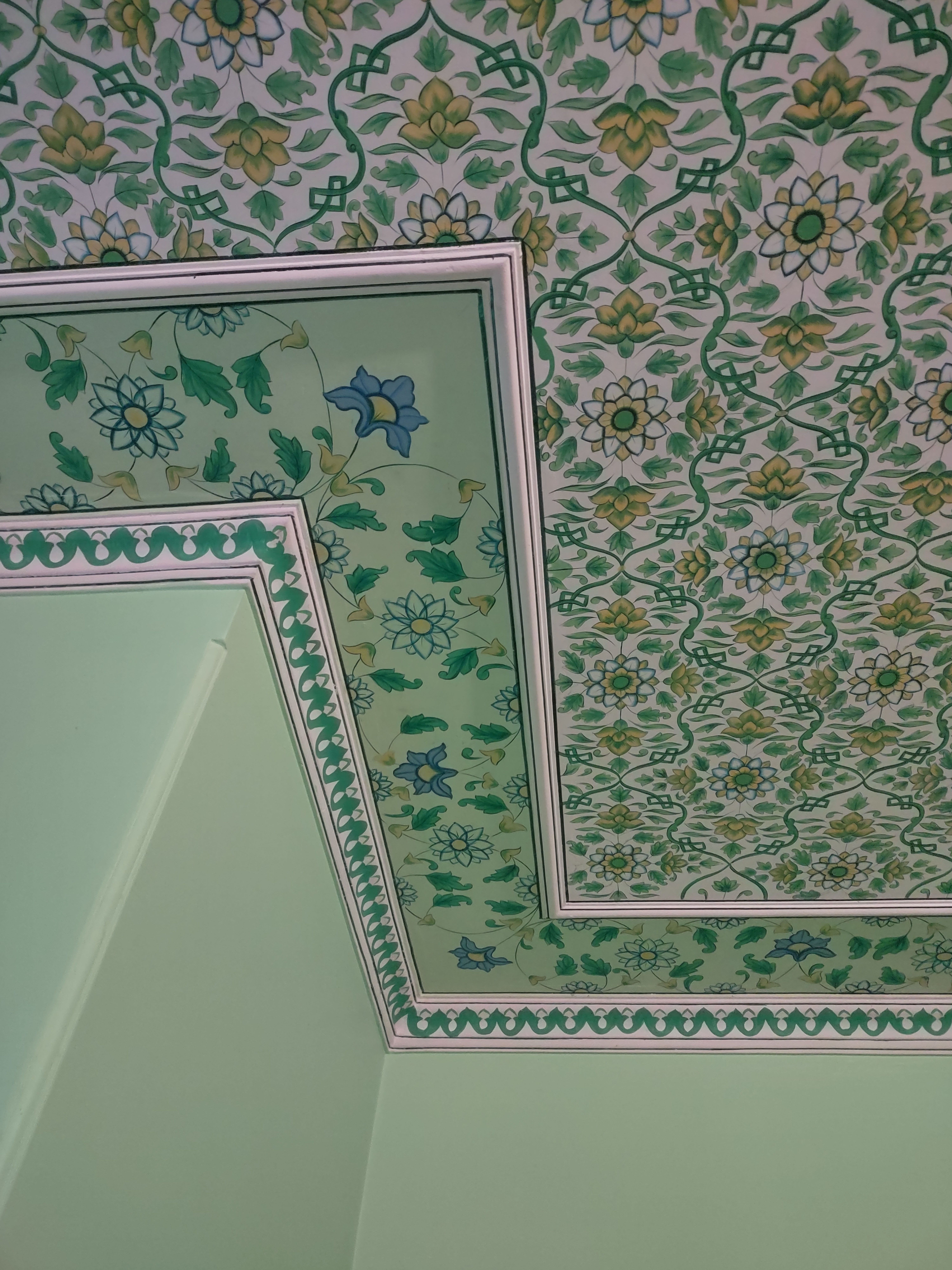

As a closing note on accommodations, I should add that one other thing which all of these hotels had in common was staff who were incredibly attentive and accommodating (except maybe when India was playing in the World Cup of Cricket). While it may be that this is due in part to their desire to maintain a good relationship with Drivers-India, it certainly seemed to go above and beyond that and added greatly to our comfort. So, all in all, top marks to Drivers-India for accommodations.
Our Driver Mr. Sunder
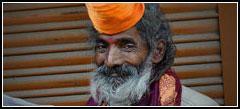
The Itinerary which Drivers-India provided started with the statement “Discover all the beauty of India with your dedicated driver that will become your friend and helper” along with the photograph of the gentleman above, whom both Colleen and I independently assumed must be our assigned driver. While we were not entirely certain on this point (how else to explain this photo?) and were, as it turned out wrong, what we were fairly certain about was that the success of our tour was likely to be largely dependent upon the character of our driver. On this second account, we could not have been more correct nor could we have been more fortunate in the driver we were assigned.
While this was our first experience having a driver like this, in retrospect I think that Mr. Sunder turned out to be the model of what a driver should be (at least for us). He was, first of all, extremely professional in all that he did (while, at our request he called us Ritch and Colleen, he asked that we call him Mr. Sunder which we attributed to his professionalism). He was also extremely polite and courteous and his English was quite good. While we hadn’t really considered it, having an interpreter readily available also proved extremely helpful at times (like when you’re at the post office trying to figure out how to get a package mailed home!).
It really was surprising how quickly we became comfortable with Mr. Sunder (we just hit it off, pretty much from the start) and we quickly grew to rely on his judgement and recommendations. Although Drivers-India was very clear that Mr. Sunder was our driver, not our tour guide (which is why we sometimes hired local guides) he was in fact quite knowledgeable about Rajasthan and its major sights and once he got to know us a bit (which also seemed to happen pretty quickly) his recommendations regarding local guides, restaurants, and things we might want to see were spot on.
Fortunately, he had a sense of humor not unlike my own and, as I mentioned above, was pretty amused with our reaction to cows on the streets and highways. One of my lasting memories of this trip will be coming out one morning to find him taking selfies with a cow in front of our hotel!
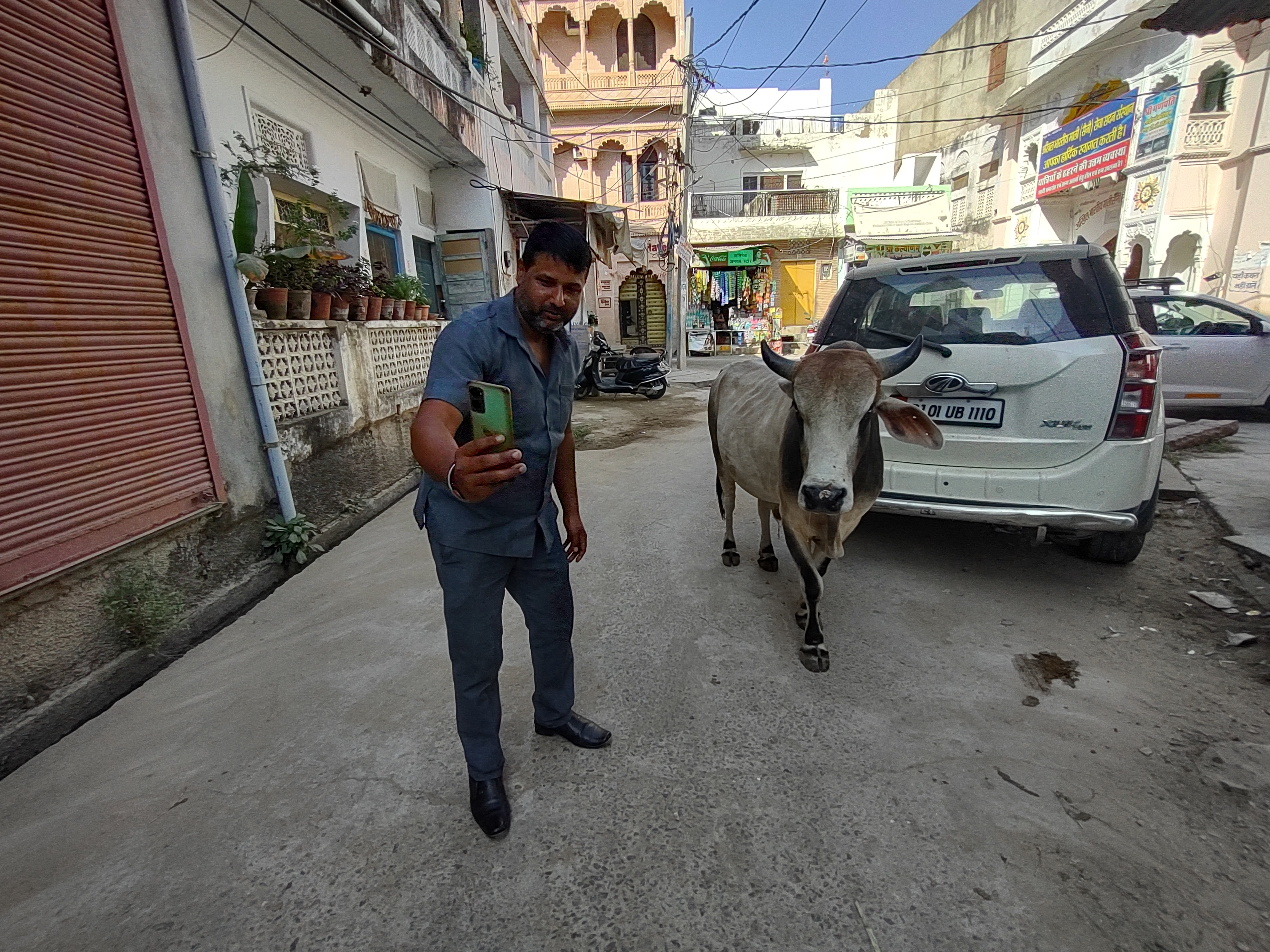
Above all else, he made us feel very comfortable and safe at all times and, while he always maintained his professionalism, we did become friends in a “Driving Miss Daisy” kind of way.

One of the rituals of our tour was that I would get a text from Mr. Sunder every day at breakfast saying “Good Morning Ritch” which was really just a prompt to see if we were running on time (sometimes we weren’t). And so, the day after we had parted ways with Mr. Sunder (I was in Chandigarh at that point) I was pleasantly surprised to receive one of his “Good Morning” texts and we now periodically exchange greetings to see where each other is that day.
Would we do it again?
Much like I have to wonder what the tour would have been like had Colleen selected “Romantic” as our travel style, I have to wonder what our tour would have been like had we been assigned a driver other than Mr. Sunder. While the answer to that question is “probably not as good”, I suspect that we would nonetheless have accomplished our goal of being comfortable in a challenging travel situation. And so I would say that not only would we do it this way again in Rajasthan, but we have added another option to our travel arsenal and am happy to say that when we come back to India, we know who our driver will be.
 Burning the Inheritance
Leave a comment