
While both Colleen and I were very interested in visiting India, I have to say that we did have some reservations about it. Of all the countries we have considered and researched, India stood out as one of the most challenging for travelers with great potential for it to become overwhelming or for us to just get lost. (There are some real horror stories out there about visitors trying to catch busses and trains…)
But there was never really any question as to whether we would go to India. The real question, given how big and diverse a place it is, was where we would go and for how long we would stay. Our original concept was to spend a week or two in southern India and another week or two in northern India with a side trip to Nepal, but the more we researched, the more difficult it became to come up with an India itinerary of less than a month, even after whittling it down as much as possible and eliminating Nepal (due to logistical challenges, difficult and expensive visa process, and just not enough time, but still painful to eliminate it).
The itinerary we settled upon included four parts. Our Indian adventure would begin with 9 days in Kerala to the south (which we hoped would ease us into Indian life), 10 days in Rajasthan in the northwest, 6 days in separate locations (Ritchard to Chandigarh for architecture and Colleen to Rishikesh for yoga), and then back together in Kolkata for the last four days of the festival of Durga Purga. Between Rajasthan and Chandigarh/Rishikesh, we had booked 1 day in Agra to visit the Taj Majal which brought us to a total of 30 days in India. Along the way, we planned on staying in 11 different cities, with several daytrips and stops between, so we braced ourselves for what we expected to be an amazing but exhausting adventure.
We have learned a little bit about Indian culture from our Indian friends, acquaintances, and co-workers in the U.S. (One of our daughters recently attended a traditional Indian wedding – amazing!) But, while we may know a bit more about India than some of the other countries we have visited, we nonetheless came into this thing acknowledging that there was a lot we didn’t know about the country of India and its culture and anxious to learn more. One thing that become increasingly apparent from our trip research was that India is not only big, but it is incredibly diverse not only in regard to topography and climate, but also in regard to culture, something which seems to be rooted in it’s long history.
A Very Brief (But Still Too Long) History of the Country of India (Optional reading, but may be helpful for future context)
The cultural diversity of India is deeply rooted in its past, which dates back to between 50,000 and 75,000 years ago and gradually evolved into the Indus Valley Civilization, which developed and flourished during the bronze age (between 3300 and 1200 BCE) in present-day Pakistan and northwestern India. The varna (caste) system, which persists today in India, was introduced during the later part of this period. This civilization was contemporaneous with the civilizations of ancient Egypt and Mesopotamia and, like them, evolved well in advance of the Greek and Roman civilizations which formed the foundation for our Western culture.
For much of this time, the Indus Valley Civilization existed as mostly small villages ruled by local chieftains, but around 600 BCE a new interregional culture arose under which the small chieftaincies (janapadas) were consolidated into larger states called mahajanapadas ruled by (yup) a maharaja (which means “great king”). During this period Jainism and Buddhism religious movements arose, the latter being assimilated into the preexisting religious cultures of the subcontinent and evolving into Hinduism.
This arrangement persisted through a series of ruling dynasties and empires which included the Gupta Empire in the 4th through the 6th centuries CE, a period of Hindu religious and intellectual resurgence, which is known as the Golden or Classical Age of India. During this time the standards for Indian art, architecture, literature and philosophy were established, along with contributions to the sciences of astronomy, mathematics, and metallurgy. The Gupta Dynasty eventually fell to demise but things continued along with various interlopers coming in to rule the empire but allowing local rule to more or less continue. These included the Persians, Bengalis, and, most notably, the Mughals (or Moghul or Mogul) who were said to be descended from the Mongol tribes of Central Asia.
The Mughal Empire was founded in the early 16th century and ruled for almost 200 years before declining and finally being formally dissolved by the British. Although the Mughals were Muslims who created and maintained their Empire through military force, they generally allowed existing cultural and religious practices to continue. Their rulers were both wealthy and conspicuous consumers resulting in great patronage of painting, literary forms, textiles, and architecture, particularly during the rein of Shah Jahan, who constructed the amazing Taj Mahal. The Mughals were followed by the Marathas, then the Sikhs, with the empire breaking up into smaller kingdoms.
As was the case in many places in this part of the world, things began to change (for the worse?) with the arrival of Europeans at the end of the 15th century, beginning with the Portuguese in Goa and Bombay and leading to the eventual annexation and rule of vast areas of what is today India by the all-powerful East India Company by the early 19th century. Unlike the Mughals and other past rulers, the East India Company apparently had little regard for Indian tradition and it all came to a head in the Indian rebellion of 1857 after which all power was transferred from the East India Company to the British Crown. By the early 20th century, Indians had had enough of this and, after decades of mostly peaceful resistance, India became an independent nation in 1947. (Watch the movie Ghandi, with Ben Kingsley for this bit. We did.)
As we would ourselves discover, perhaps, in retrospect, one of the most unfortunate aspects of Indian independence was the decision to separate the territory into two separate countries, one Hindu (India) and the other Muslim (Pakistan), the so-called “Partition of India”. This decision led to the displacement of over 10 million people forcefully relocated across the new Pakistani border and the loss of about 1 million lives, and, the violent nature of the partition led to hostilities between the two new countries which are still felt today.
In 1950 India adopted a constitution making it a democratic republic with a Westminster parliamentary system at both the national and regional levels.
India Today
Since the time of its independence, India has grown and prospered (although perhaps more the former than the latter). It is the 7th largest country in the world with an area 1.27 million square miles (about a third the size of the U.S.) and, with a population of over 1.4 billion people, India is now the most populous country in the world. While India is ranked 30th in population density with about 1,100 people per square mile, most of the countries listed ahead of it are much smaller and it really is the most densely populated country of any size. (By comparison China has 390 people per square mile, the U.S. has 91, and the world average (excluding Antarctica) is 160 people per square mile.)
India also has the fifth largest economy in the world behind only the U.S., China, Japan, and Germany. It was a bit surprising for me to discover that over 50% of India’s economy is agriculture and similar industries like fishing, animal husbandry, and forestry. Manufacturing (which I would have expected to be on the top) accounts for about 28% of India’s economy and the rest is the service sector which includes call centers (bursting a common misconception about Indian industry, the Philippines overtook India as the call-center capital of the world about ten years ago), and tourism, which accounts for about 5% of India’s economy. (From our visit, I was also a little surprised that tourism was this low but, of course, much of what we saw in India was in the areas that tourists frequent.)
Thanks to its economic growth, personal income has also grown in India in recent years with the average monthly salary in India now a little less than $400 USD per month. This seems extremely low by American standards because it is (the average salary in the U.S. is about $5,000 per month), but the cost of living in India is also dramatically lower. About 15% of India’s population is below its poverty line of $180 per year (compared to about 12% in the U.S., where the poverty line is about $15,000 for an individual and about $30,000 for a family of four) which represents a huge drop in the poverty level in India of about 10% over the last ten years or so. That said, it is important to remember that this still leaves India with about 214 million people living in poverty (about two-thirds of the U.S.’s population) which means it has far and away the highest number of poor in the world.
So, India is big, it’s both populous and densely populated, and it has a large growing economy. And, while India has an appreciably lower standard of living than most of its counterparts in the G20, it’s level of poverty as a percentage of population is comparable to and even better than some of them. But, in the end, there are still a lot of poor people living in India of which got some very up close glimpses during our travels there.
As I mentioned earlier, India is also a very diverse country. It has a total of 28 states (and 8 “union territories”) which vary considerably in regard to terrain and climate with an incredible amount of cultural diversity between them. This diversity is no better exemplified than by the hundreds (if not thousands, depending upon your source) of languages and dialects which have been spoken there, including 22 official languages which are spoken in India today. There are reportedly 700 different tribes in India and, as we were about to discover, each Indian state has its own history and heritage (not unlike the U.S. states) which are expressed in its traditional clothing, art, and music. And (as we would also discover), India is probably also the most religious and religiously diverse country in the world.
I would add that, based on our experiences there, that India is also a very proud country. Proud of its history and traditions, but also very proud of its place in the world today as was often evident to us in people’s attitudes in the wake of the G20 gathering, but let’s not get ahead of ourselves here.
Movies About India
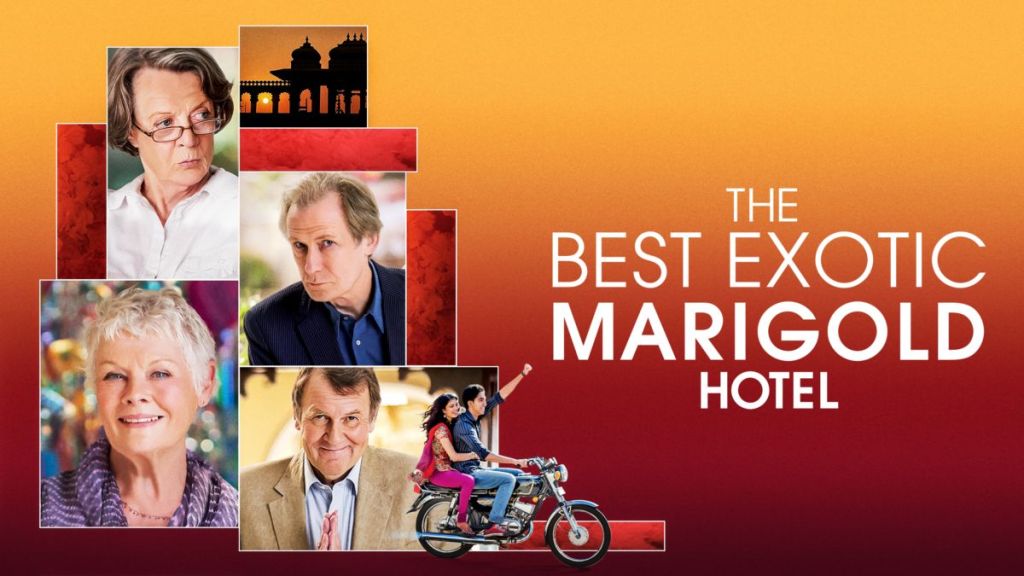
As has been our habit, as our arrival date grew nearer, we sought out movies about and made in India in preparation for our trip to India. Like much else about India, this proved to be a bit daunting task as there are so many Indian movies. We sorted through them and identified quite a few we wanted to see, including The Best Exotic Marigold Motel, The Second-Best Exotic Marigold Hotel, Hotel Mumbai (Colleen has kind of a thing for Dev Patel and hotels), The Darjeeling Limited, A Passage to India, Eat Pray Love (Colleen also has a thing for Javier Bardem), The White Tiger, Midnight’s Children, and Gandhi.
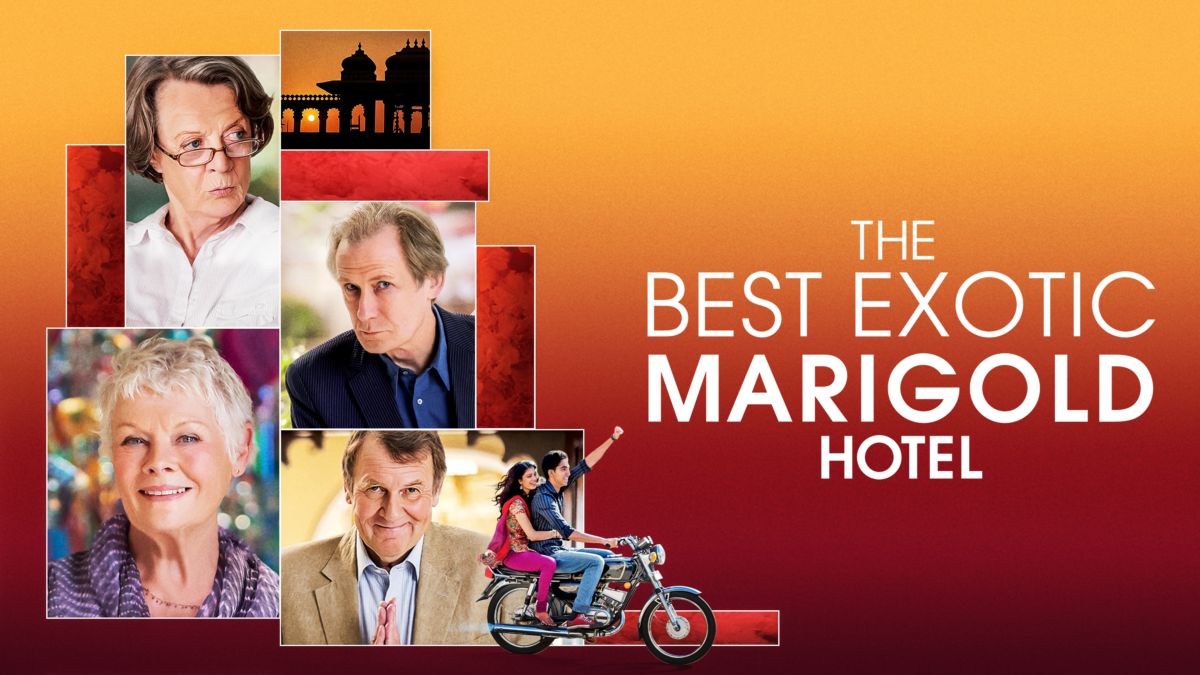


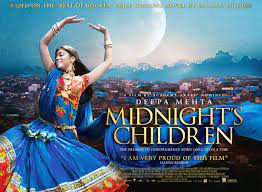

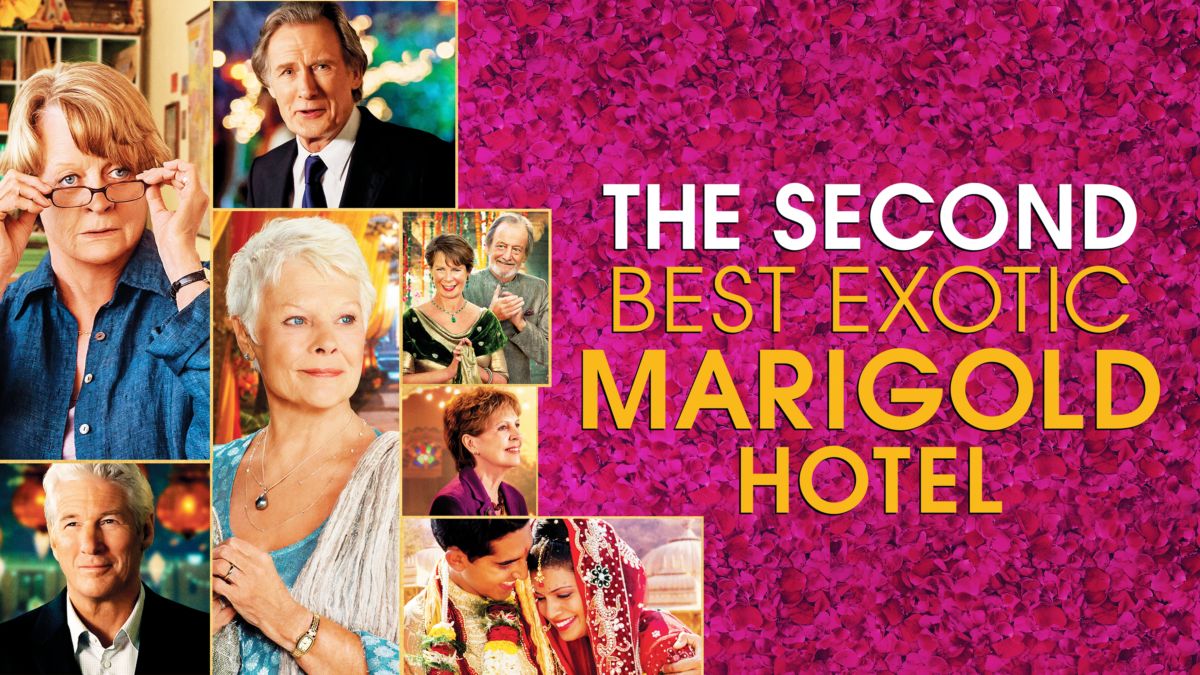
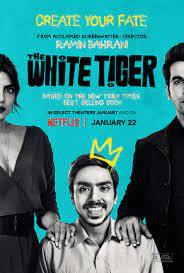
While some of these were comedies perhaps made more for entertainment, but some of them offered a more sober viewpoint and highlighted gaps in our knowledge and understanding of India and its history. Midnight’s Children (highly recommended) although a bit fantastic (literally), depicted an interesting perspective on what a tragedy it was at the human level when India and Pakistan split (something we and, I suspect, most Americans have little knowledge of or appreciation for). In any case, they did help put us “in the mood” for India and left us with many things about its history and culture that we wanted to learn more about.
So there’s a little intro to what promises to be one of the most interesting and adventurous legs of our travels to date. So, in the words of our Mr. Sunder, our driver in Rajasthan (you’ll hear more about him later), “Let’s Go!”
 Burning the Inheritance
Leave a comment