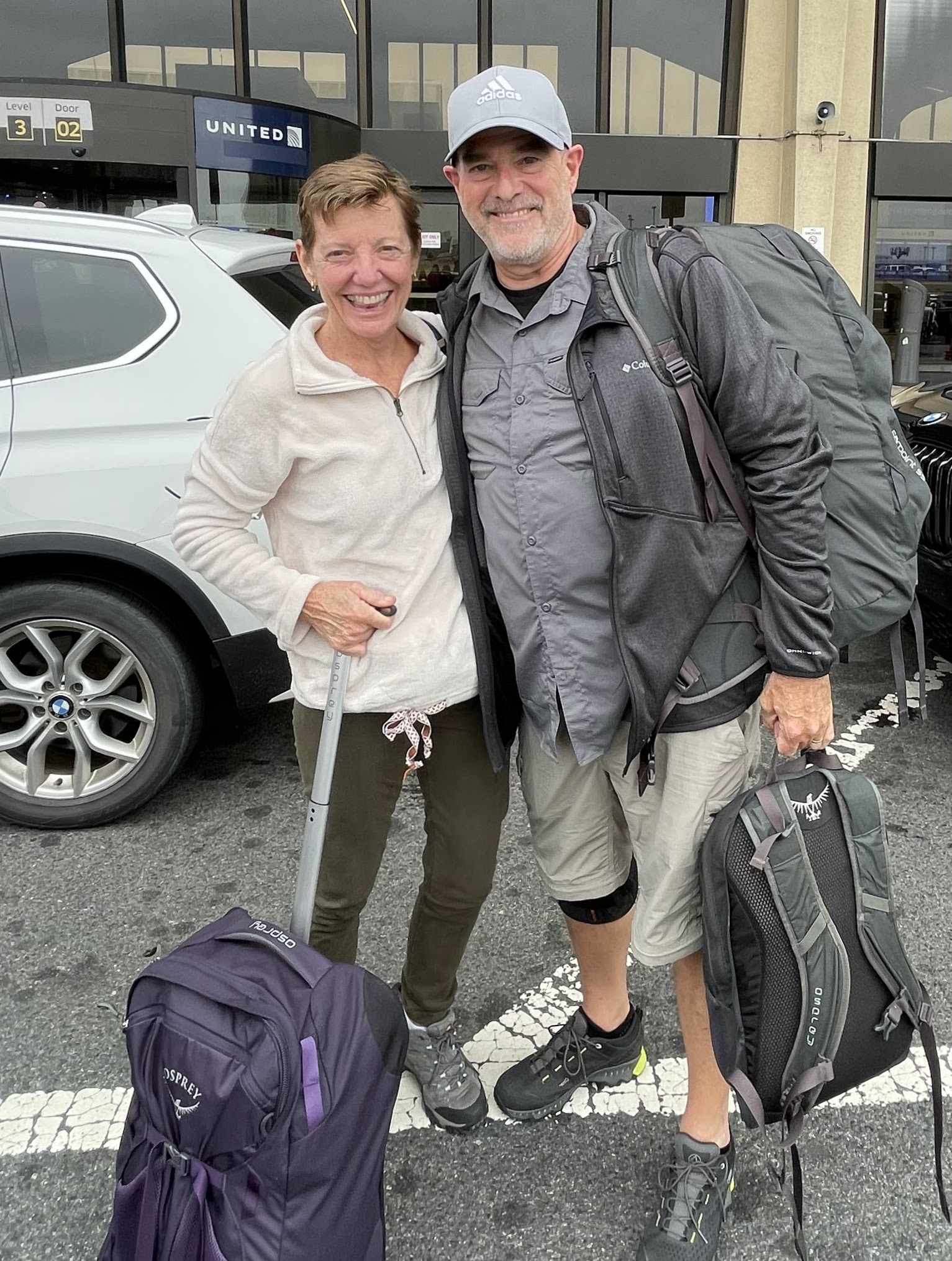

Cairo was a late addition to our itinerary which we added once Colleen determined that the best option (meaning least expensive option) for getting from Dahab, Egypt to Zanzibar, Tanzania was to take a very long bus ride (10 hours) to Cairo and then fly to Zanzibar from there. Unfortunately (or maybe fortunately?) our bus would arrive in Cairo too late for us to make the flight to Tanzania, so we would need to stay overnight in Cairo and catch the flight the next evening. And so, we would be doing our first true “layover”. (I was a big fan of Anthony Bourdain’s show The Layover, which was more or less about getting to know a city in a day or so through its food (it and was more lighthearted and fun than some of his other series), so I was pretty excited at the prospect of planning our one day layover in Cairo.
The City of Cairo
Located below the Nile Delta near the ancient cities of Heliopolis and Memphis (the capital of ancient Egypt) as well as the famous Pyramids of Giza, Cairo is, by comparison, a relatively new city being only a little over 1,000 years old. For some time Cairo has been a center of the region’s political and cultural life and is titled the “City of a Thousand Minarets” for its preponderance of Islamic architecture and mosques. Cairo is the largest city in Egypt with a population of about 10 million people and the metropolitan area is the largest urban agglomeration in both Africa and the Middle East, and Cairo’s historic center is a UNESCO World Heritage Site.
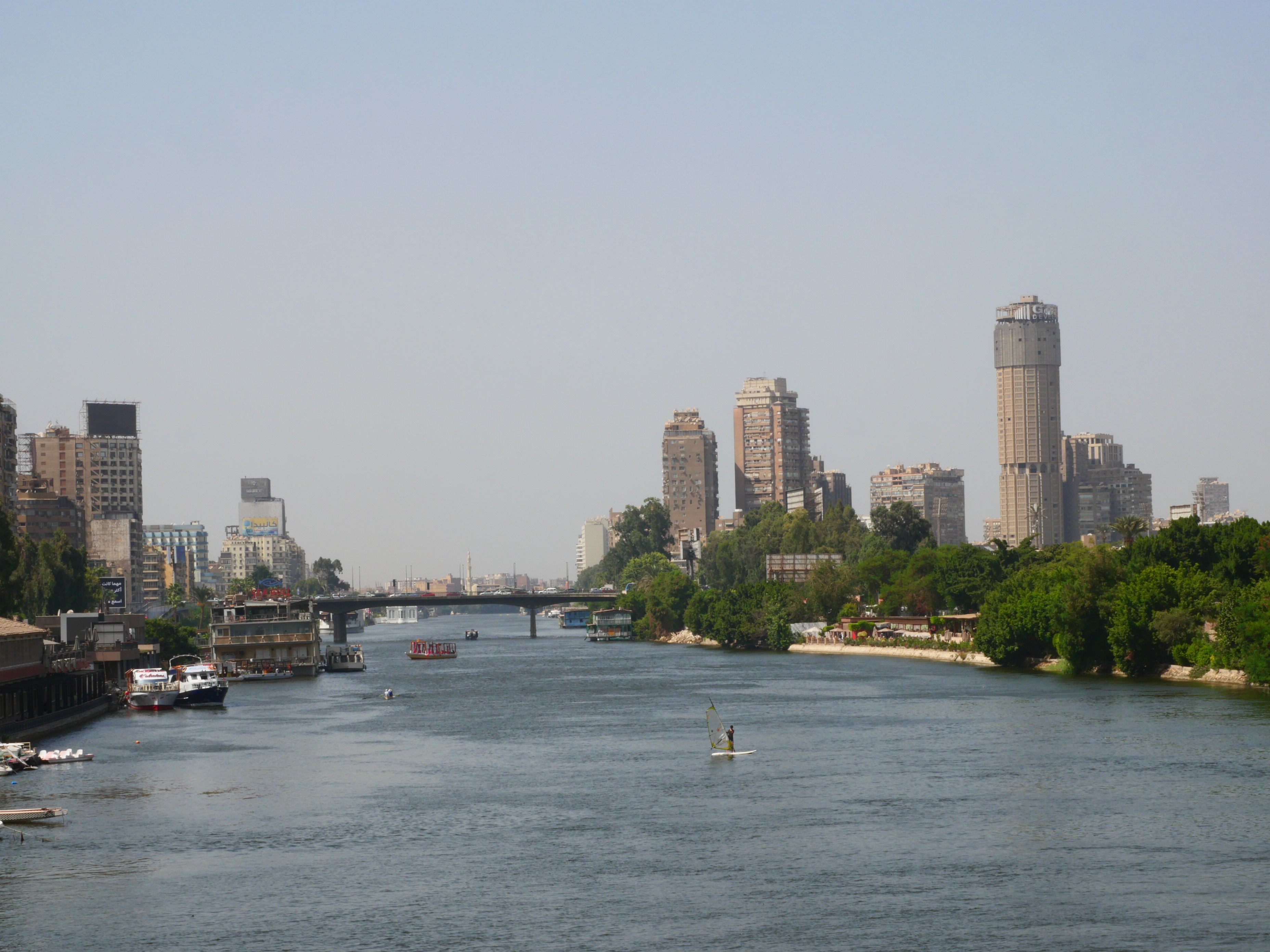
Given all this, we were a bit intimidated and struggling with what to do and what to see with only one day available.
Getting There
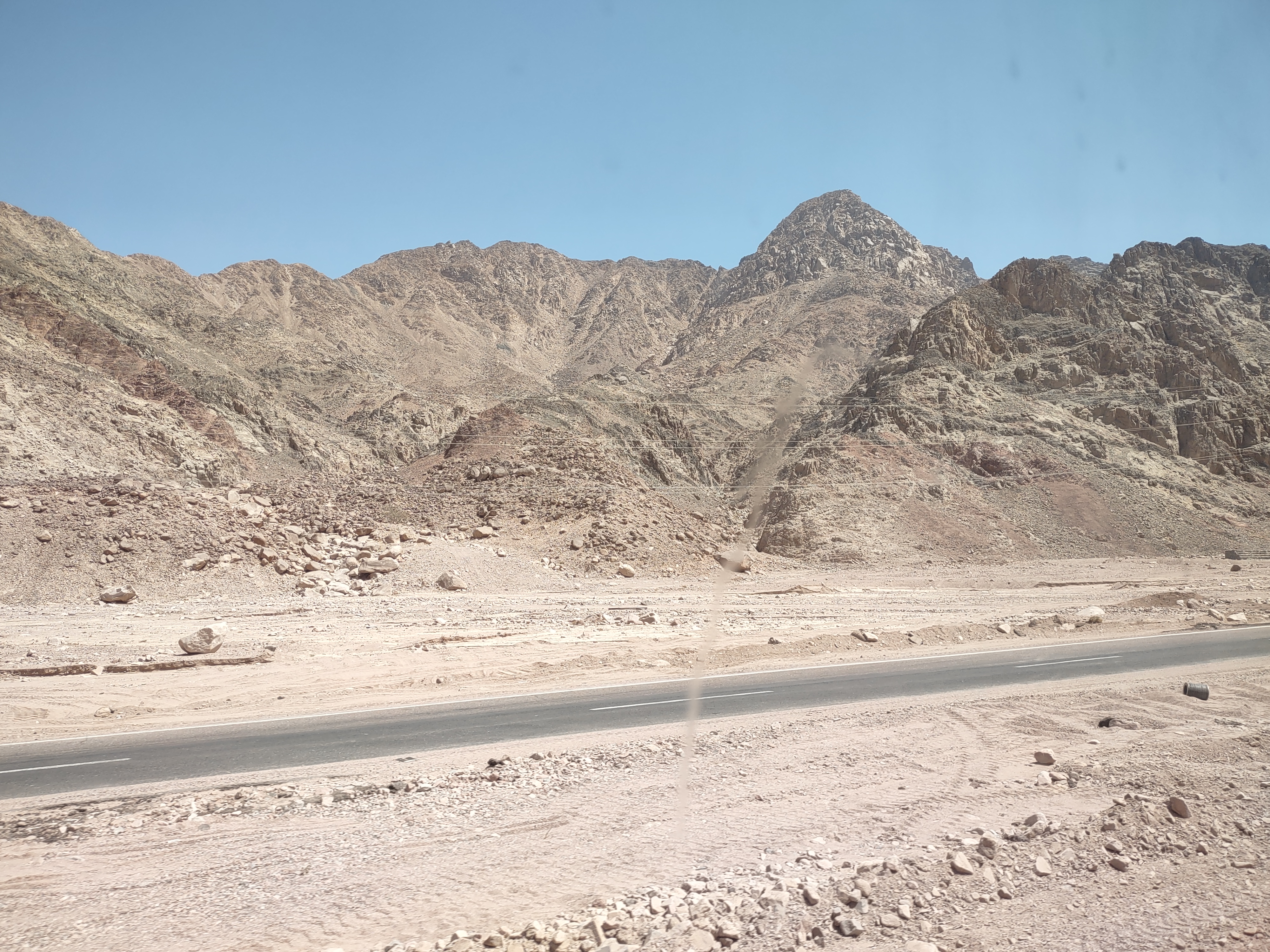
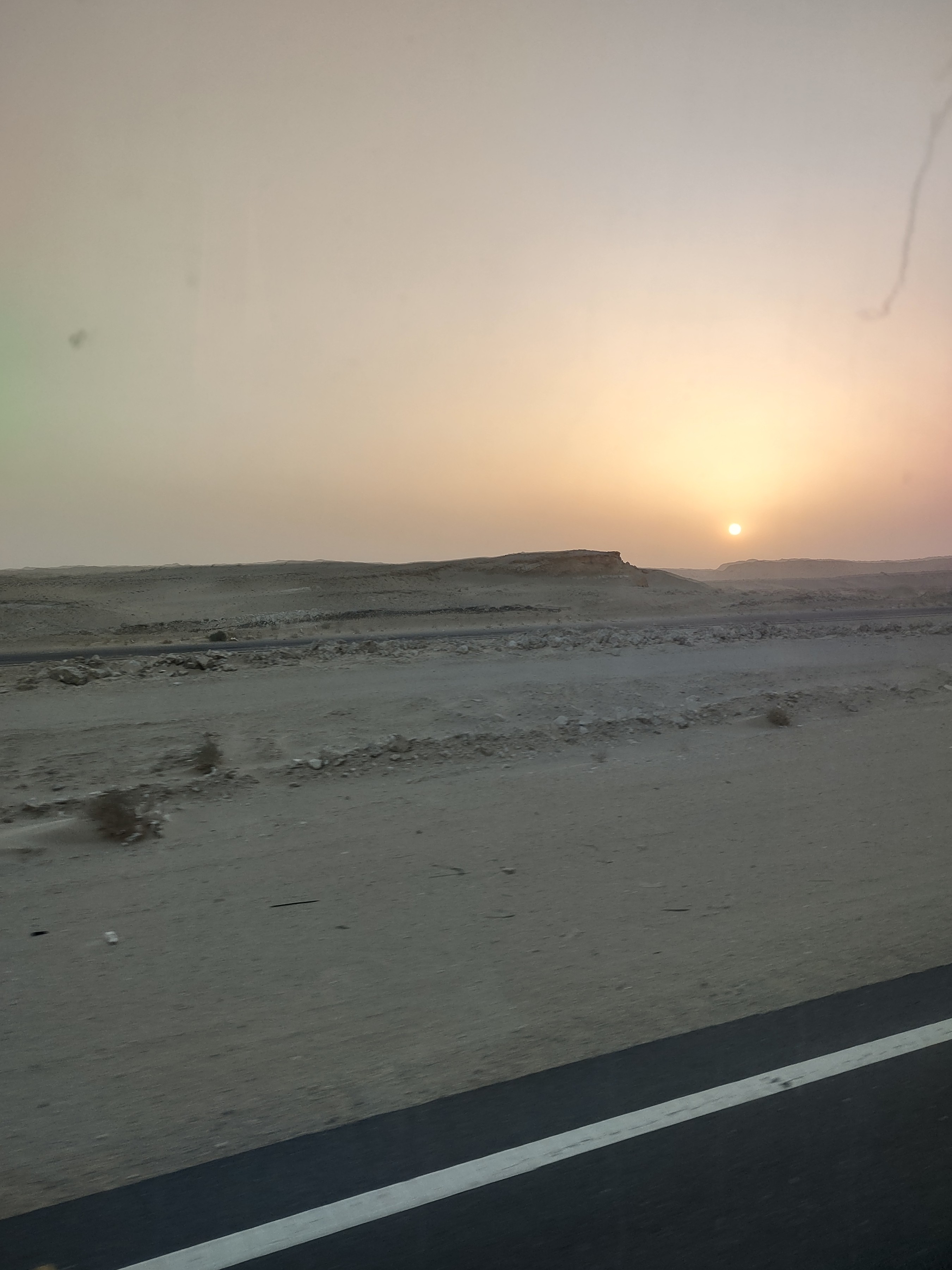
We left Dahab, Egypt, on the morning of Friday September 1st with some sadness as Dahab had been our home for the last month. The bus ride was long but not unpleasant, and there was lots of beautiful scenery as we made our way around the Sinai Peninsula, including a bit of a sandstorm which blew through at one of the scheduled stops.
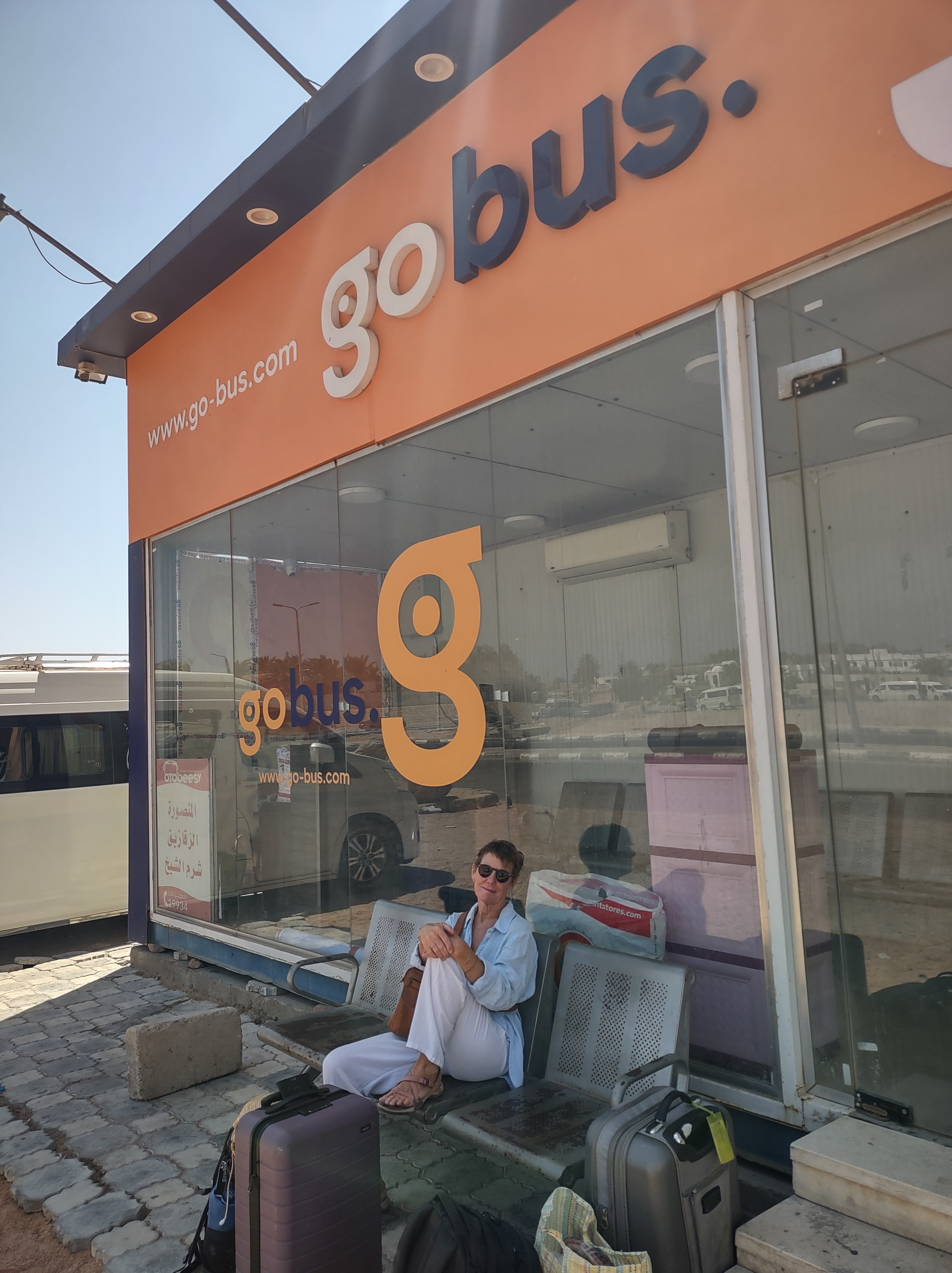
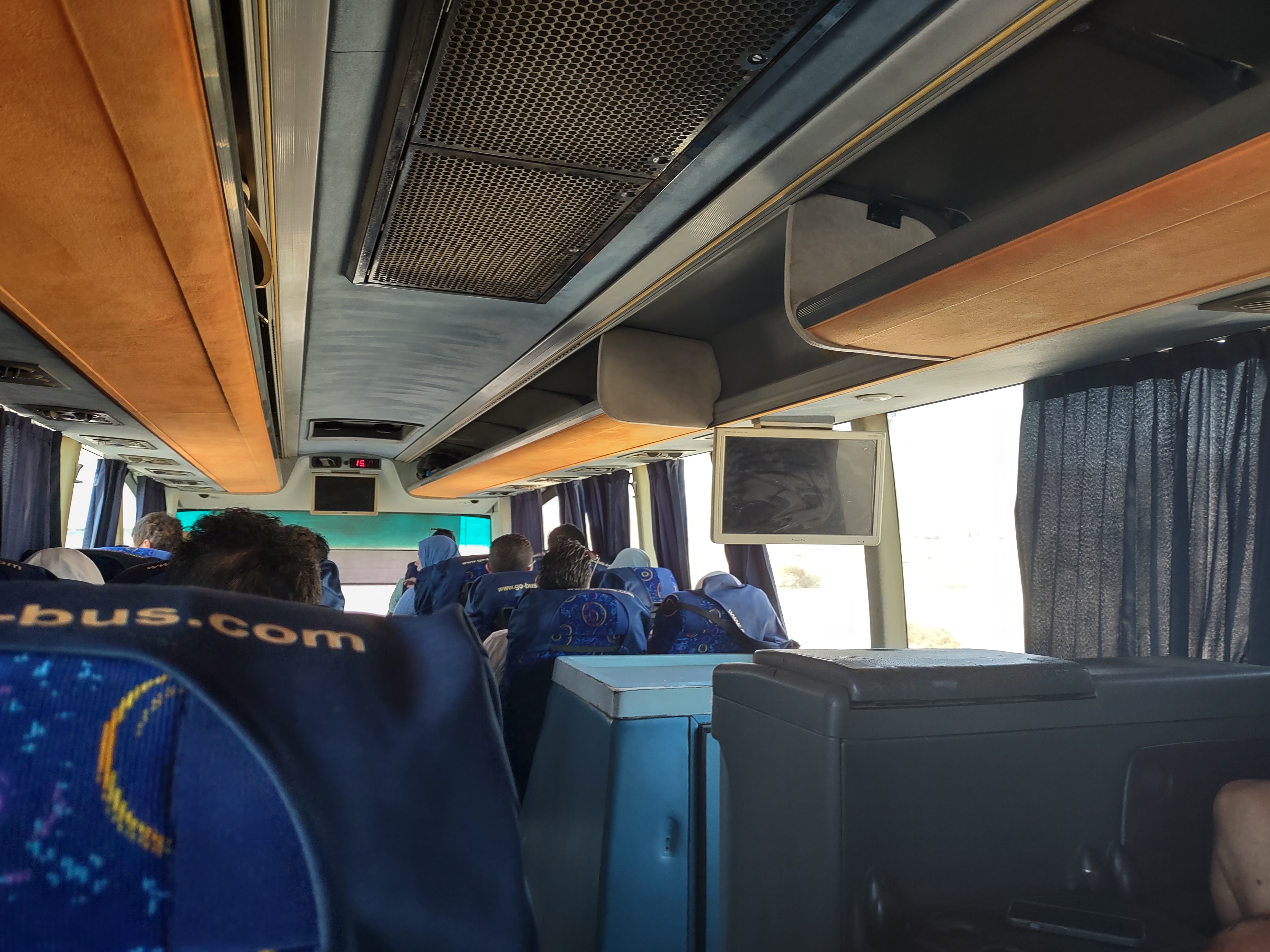


Unfortunately, there were also a few unscheduled stops as there seemed to be some mechanical issues which required regular stops on the roadside to attend to things. Despite these issues, we appeared to be on schedule for our arrival in Cairo and we decided that the schedule must be designed to account for such things.
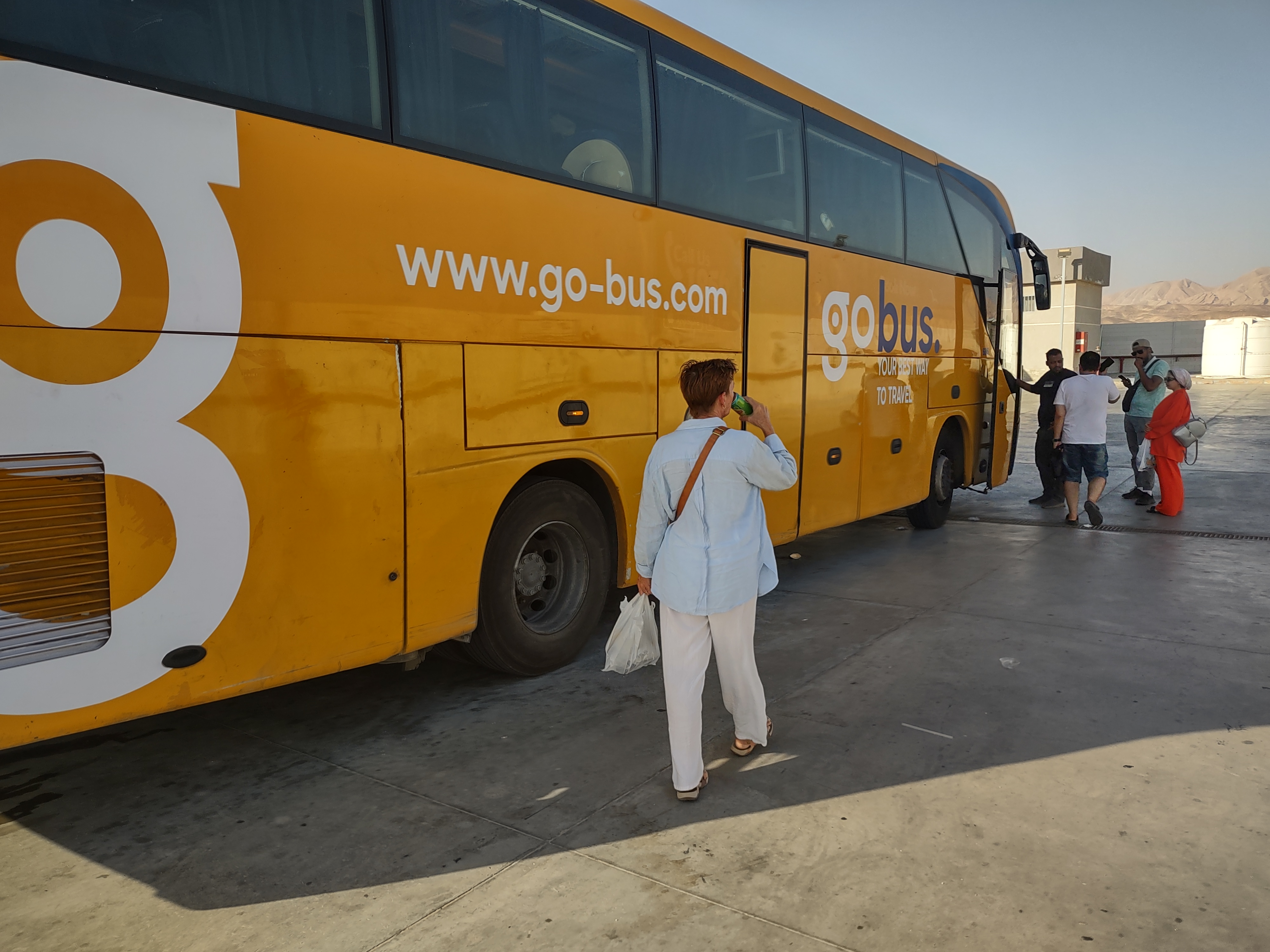
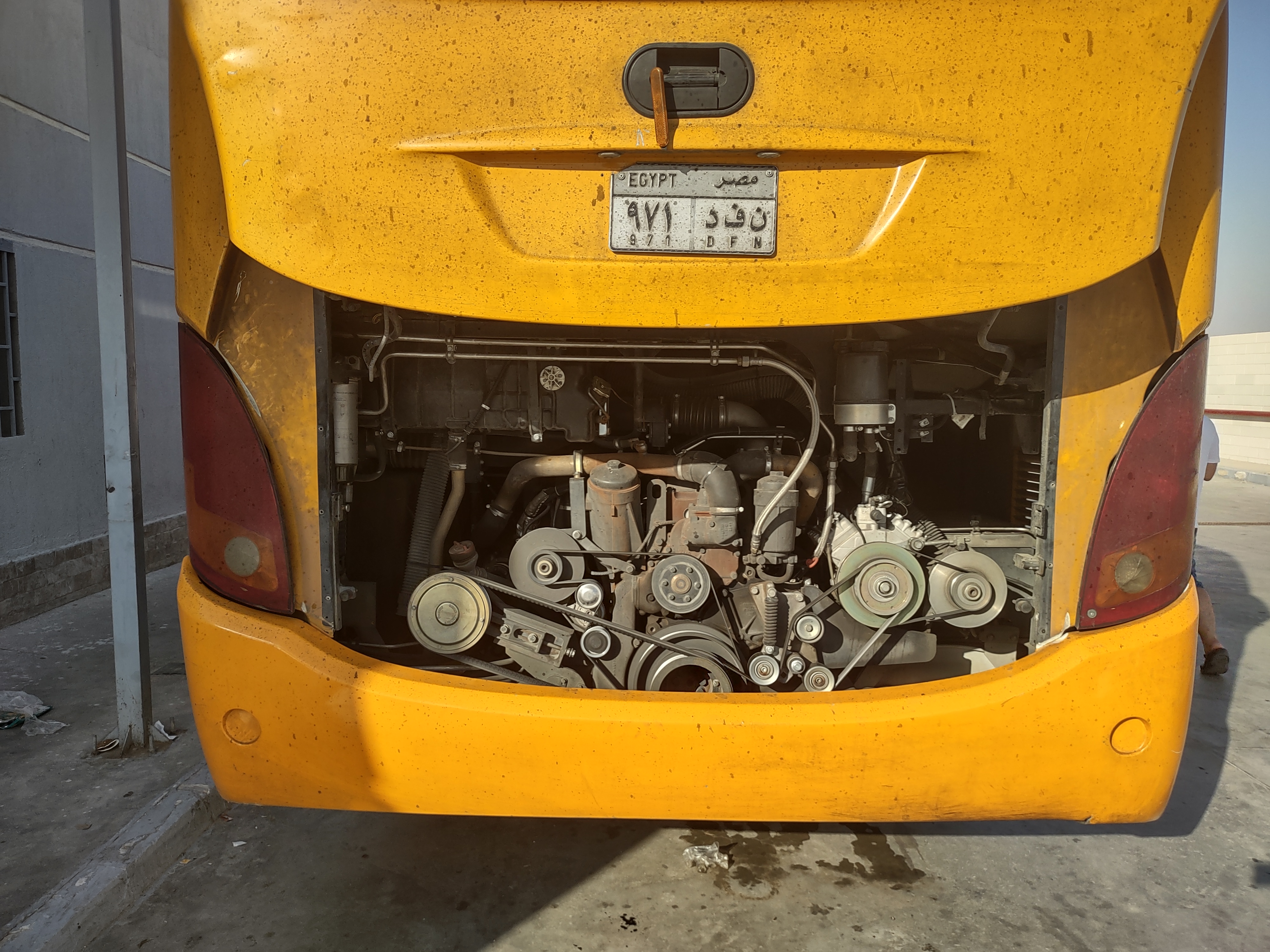
The ride was going fine right up to the time that we saw on Google Maps (always fun to track your progress, right?) that we were passing by without stopping at the station where our prescheduled taxi was waiting. (Apparently the scheduled stops had been revised since we purchased our tickets two weeks prior and no one thought it was necessary to advise us of this.) I tracked the bus’s progress on Google Maps while Colleen texted with our taxi driver, advising him of our dilemma. We were just about to cross the Nile into Giza when the bus exited the highway and made one last stop in Cairo which was, ironically, only a few blocks from our hotel.
While we probably could have walked to our hotel, we thought we should honor our agreement with the taxi driver who had been waiting for us at another bus station and so waited about twenty minutes for him to pick us up and deposit us at our hotel. We had booked a very inexpensive room at a hotel in the heart of the city, the Museum Plaza Hotel, which was, not surprisingly, just across the street from the Egyptian Museum. We entered an open lobby which we assumed to be the hotel’s reception area, but it seemed a bit rough with exposed concrete floors, walls, and ceiling, so we were happy when the man behind the plywood table told us the hotel lobby was on the second floor.
Room Service
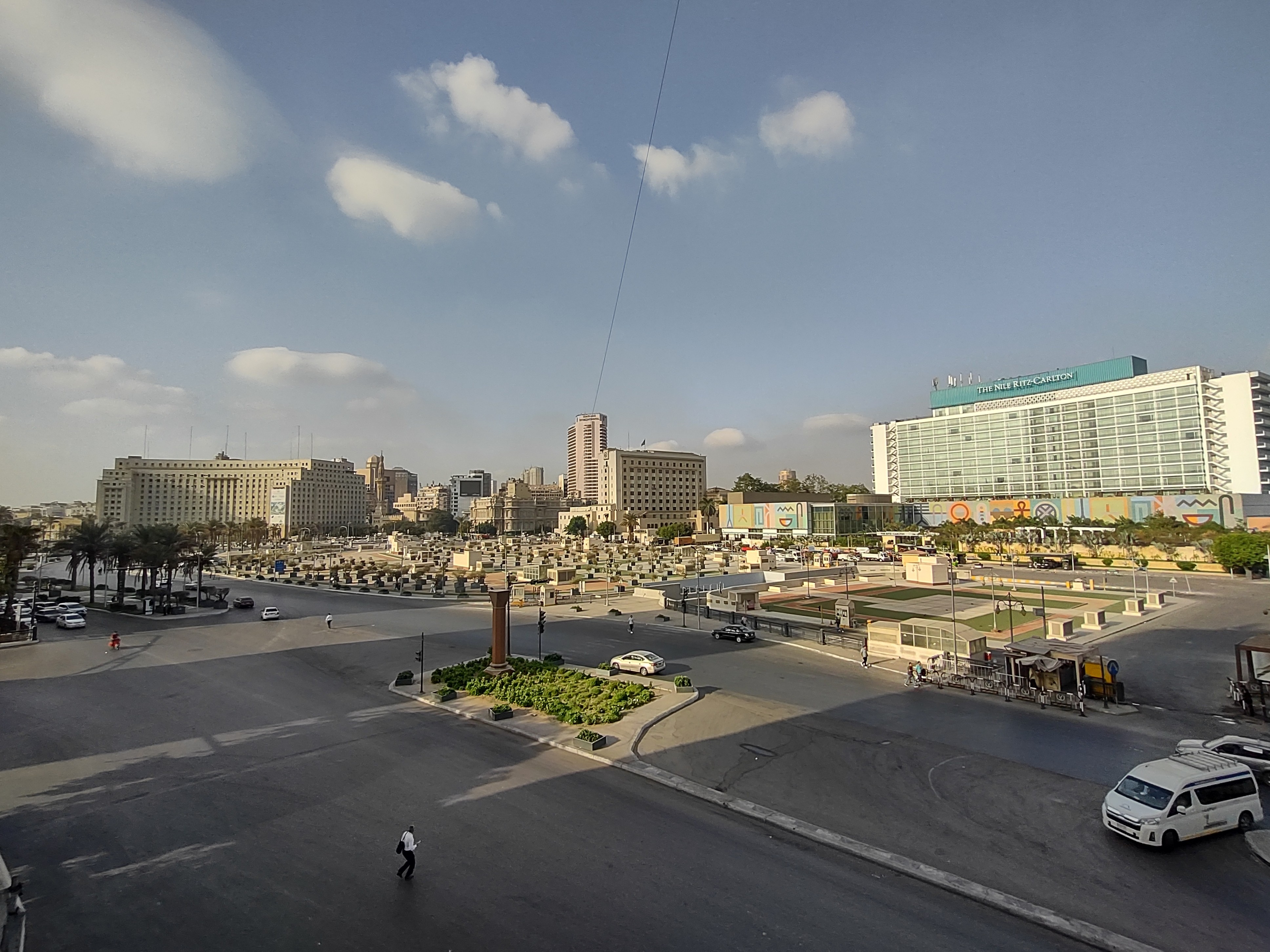
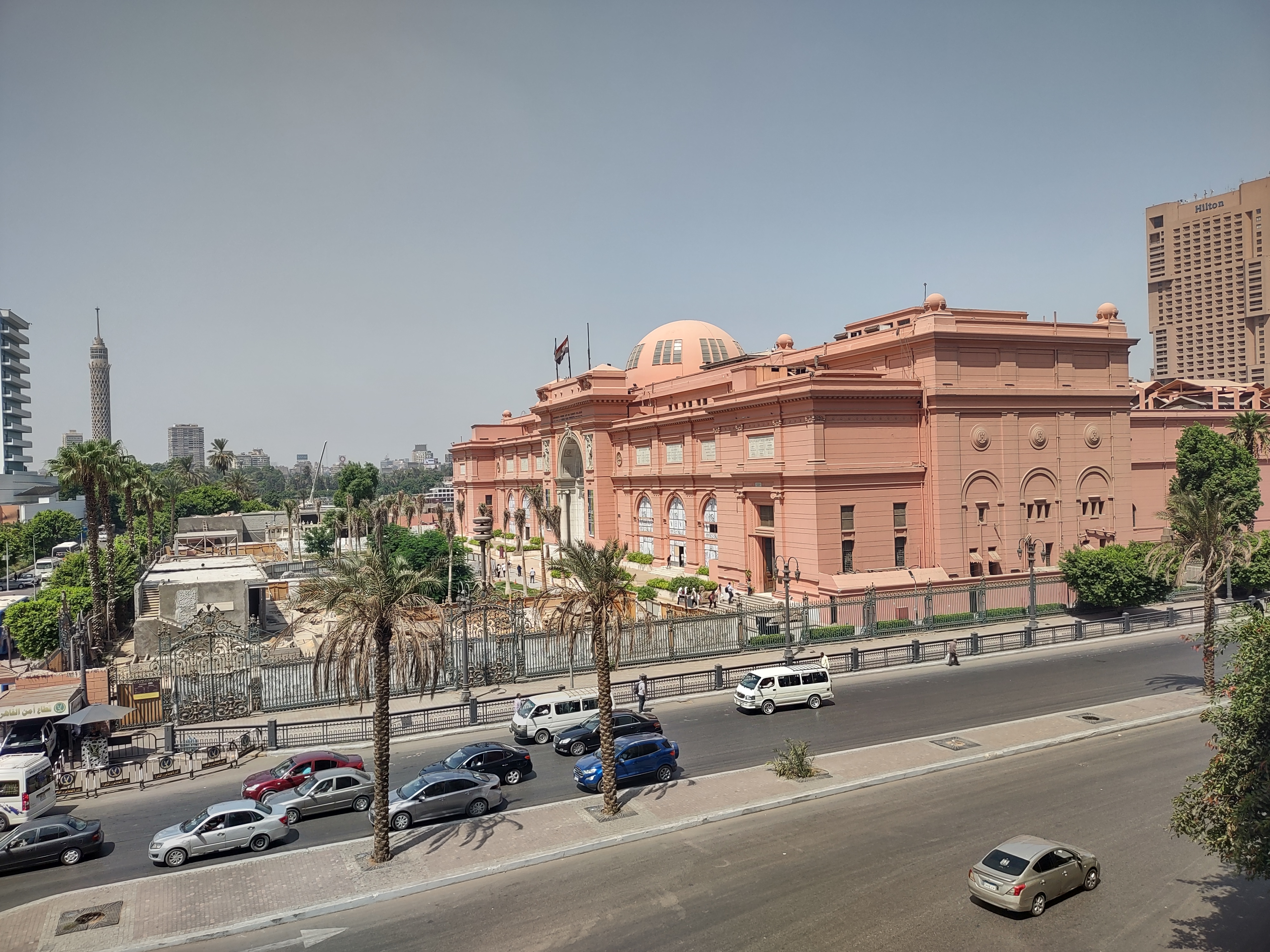
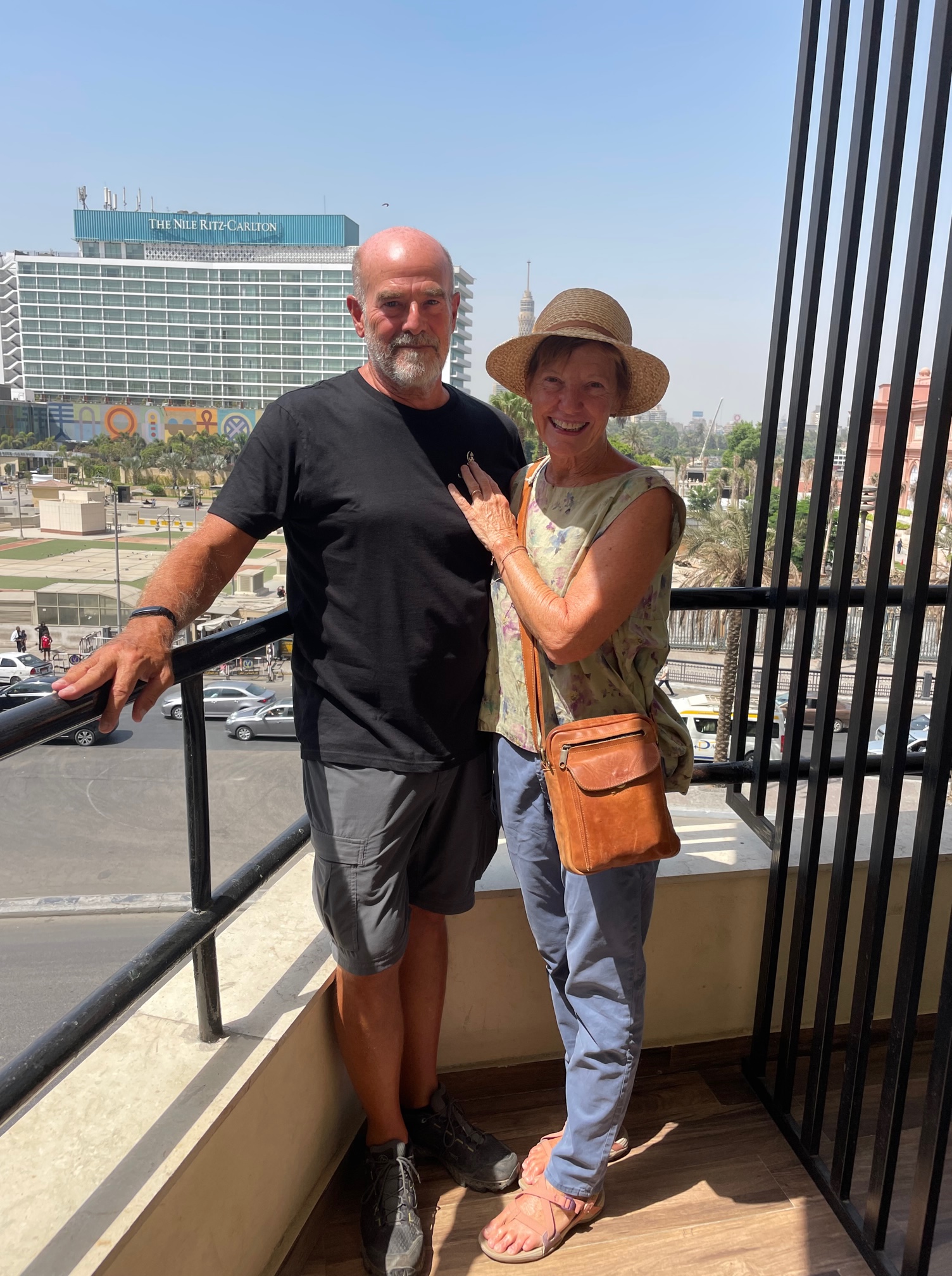
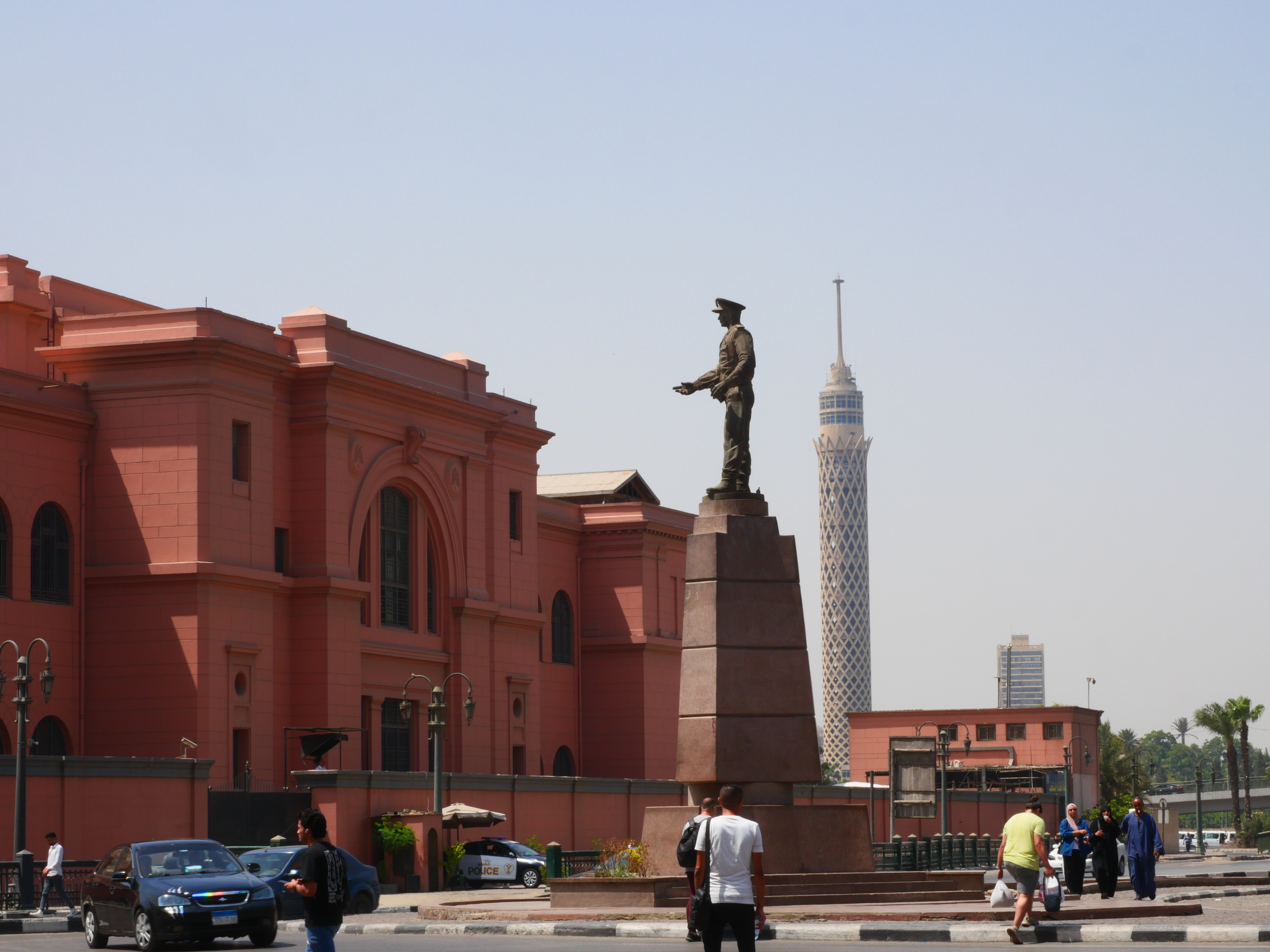
By the time we had sorted out the bus station confusion and made it to the hotel, it was after midnight, so we were happy to see that lights were on in the lobby and that there was someone behind the reception desk. The young man gave us a quick orientation, including instructions for the breakfast included in our room rate, then showed us to a nice clean room with air conditioning and a view down Merit Basha Boulevard to Tahir Square, the Nile Ritz-Carlton, and the Egyptian Museum directly across Merit Basha. By this time, we were pretty exhausted and did some minimal unpacking before falling into bed.
We woke early the next morning to take in the views in the sunshine and had some time to luxuriate with hot showers and bath robes before our breakfast arrived (room service was one of the available breakfast options). Breakfast included eggs, yoghurt, salad, a variety of breads, and more fruit than we could ever eat and we enjoyed it as we reviewed our plans for the day.
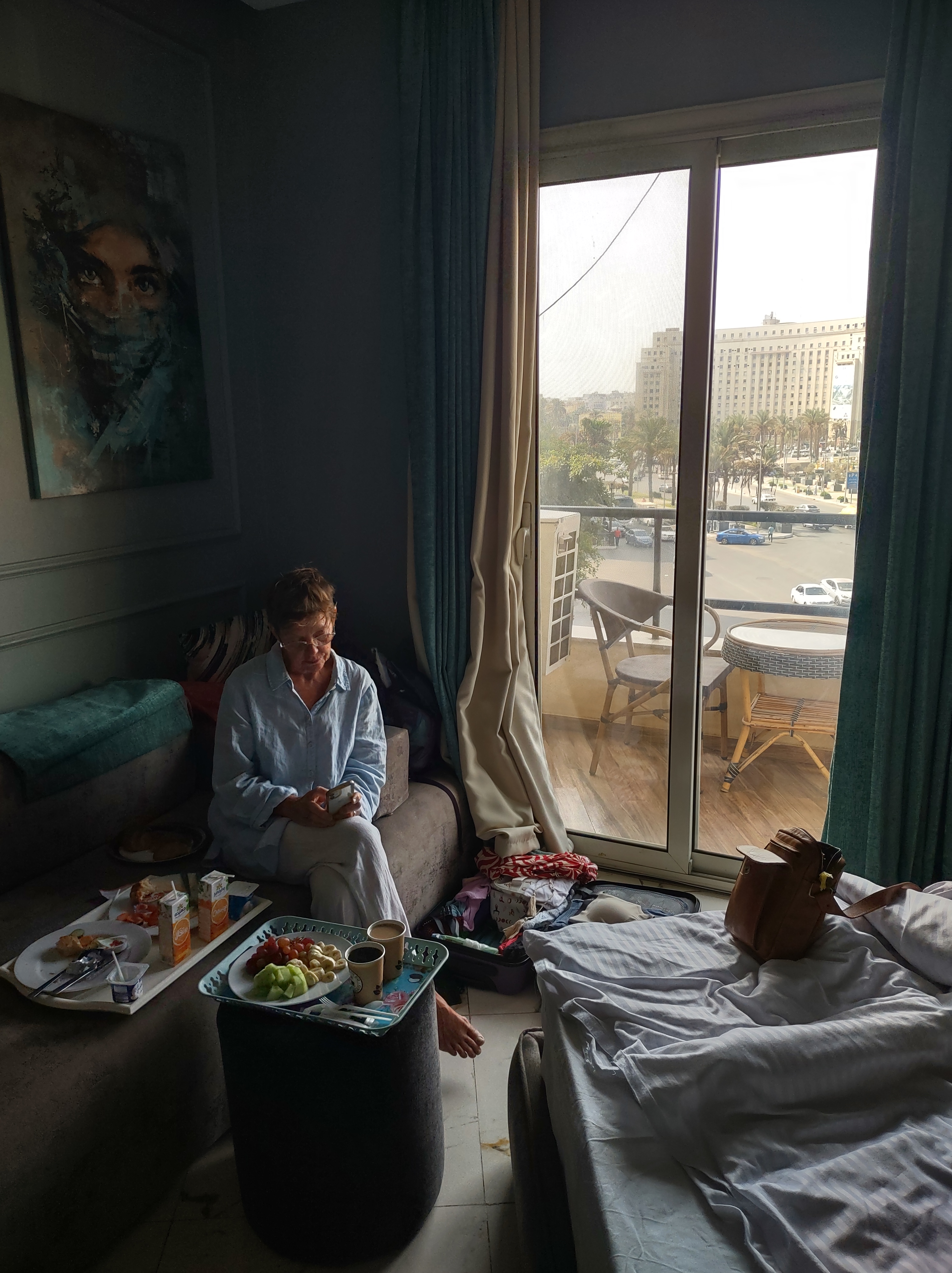
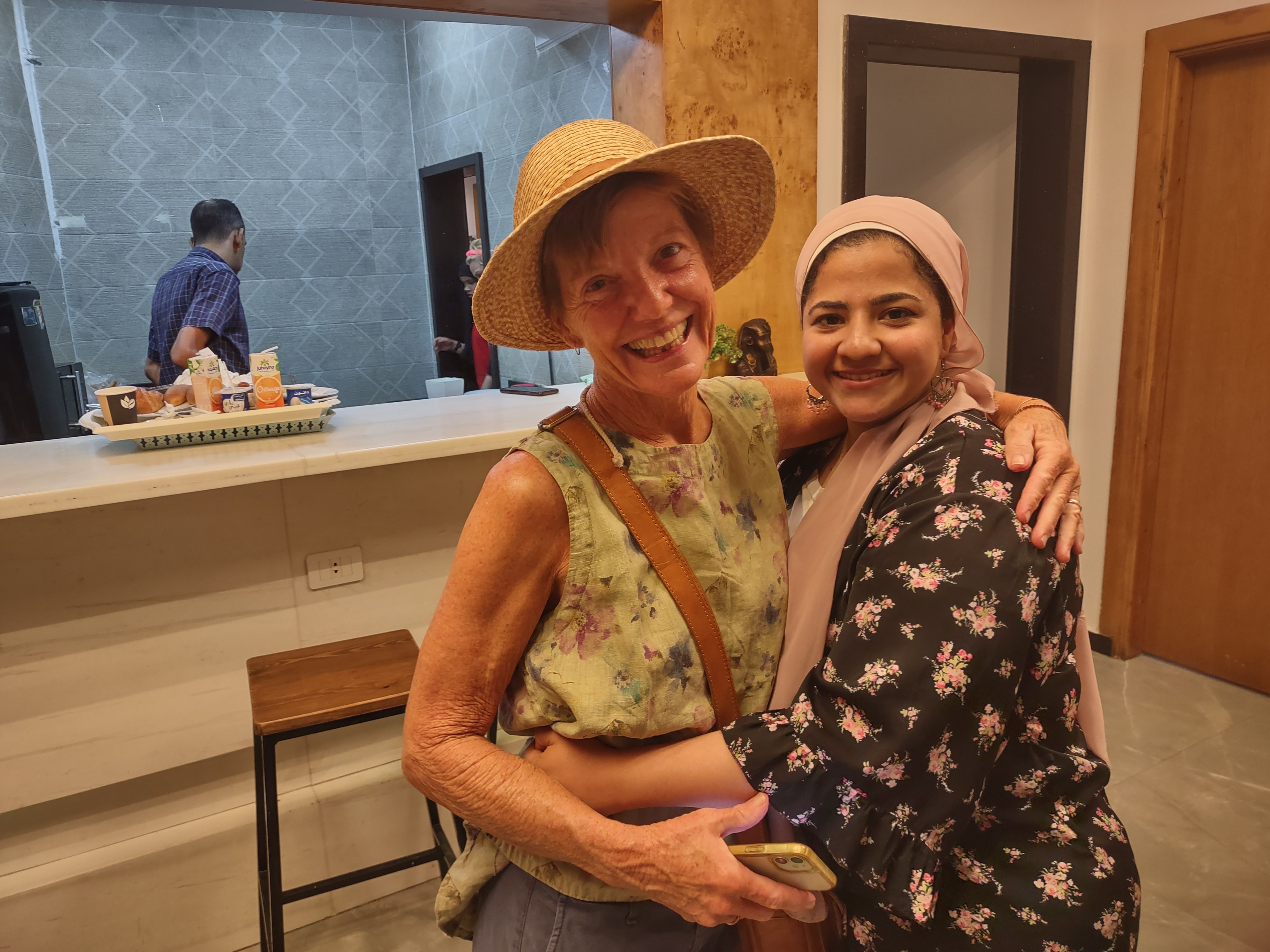
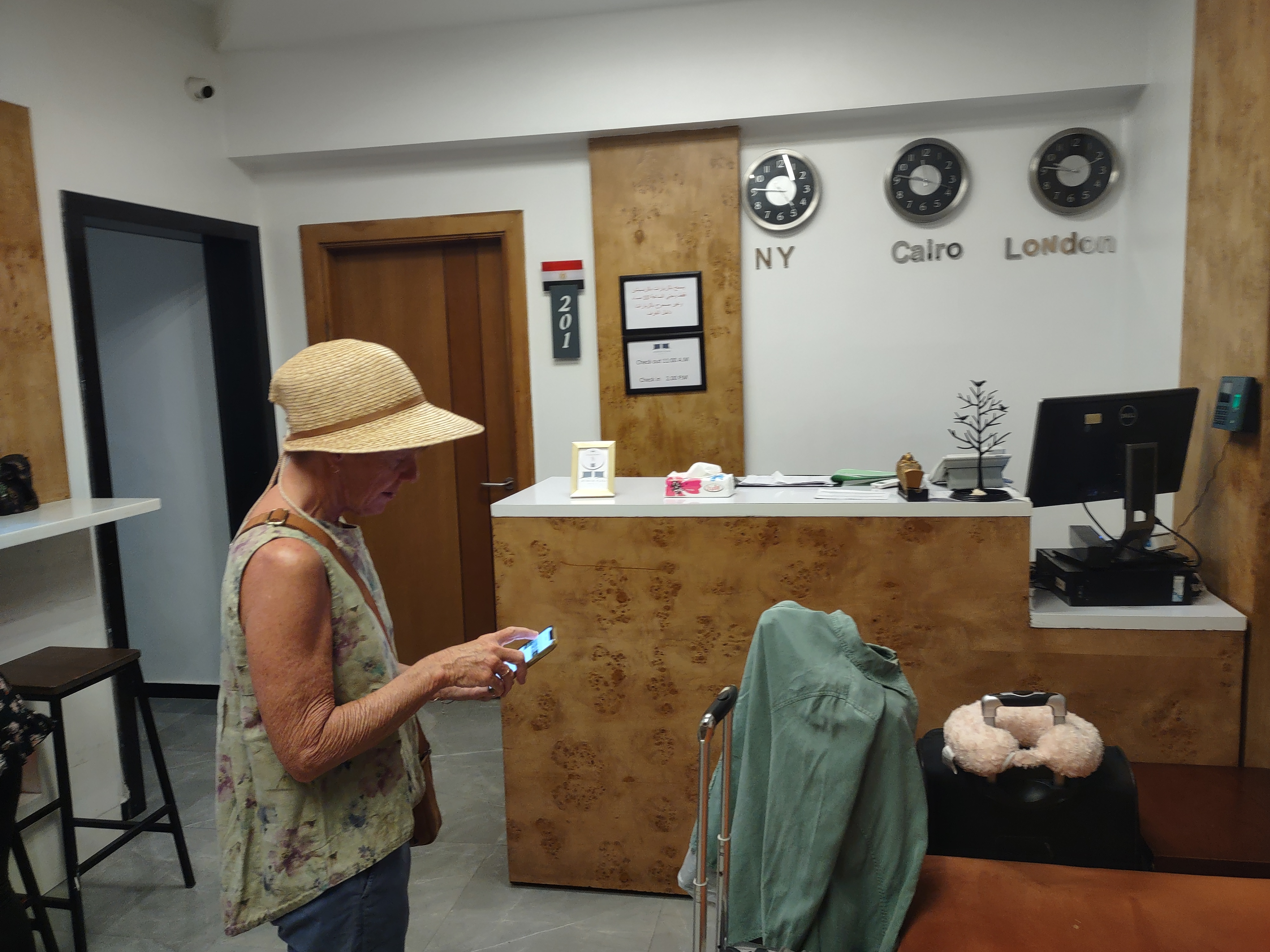
Before heading out, we stopped in the Hotel reception area to drop our luggage for them to hold and Colleen was immediately adopted as a BFF by Hala, the ombudsperson for the hotel. We made arrangements to store our bags and get hard copies of our Tanzania visas printed (we had electronic versions but were advised that it is good to have a hard copy as well) and then, at Hala’s insistence, went back up to our room (where it appeared the next tenants were waiting for an early check-in) to do a photo shoot before sending us on our way. We also made arrangements to have a taxi driver waiting for us when we returned to the hotel at the end of the day (stay tuned) and then headed out into the city.
Scout Camp
In researching what to do during our day in Cairo, we were able to confirm that a day trip to Giza to see the Great Pyramid and Sphynx is possible – Giza is across the Nile river from Cairo and the necropolis was only about a 45 minute drive from our hotel). But we got some pretty mixed reviews of what the scene was like out there (absent paying for a private guide and tour) and, as much as we would have liked to check off those Wonders on our bucket lists, we thought that it would not have given us much time to actually see and experience the city. So we decided to run errands instead. Seriously.
The working theory here was that the best way to experience a city like a local is to do normal mundane things that locals would do (like running errands) and, as there were a few purchases we needed to make before departing for Zanzibar, we hoped that necessity would lead us to some interesting places and things we might not see otherwise. So, we began the day by looking for a pharmacy where we needed to purchase more sunscreen, body lotion, and insect repellant. We scoped out a couple near our hotel, not really finding what we wanted, but if we had we would have come back at the end of the day in any case rather than carry that stuff around all day. We agreed to resume our search near the end of the day, walked around the immediate neighborhood a bit more, and then proceeded with the big errand of the day.
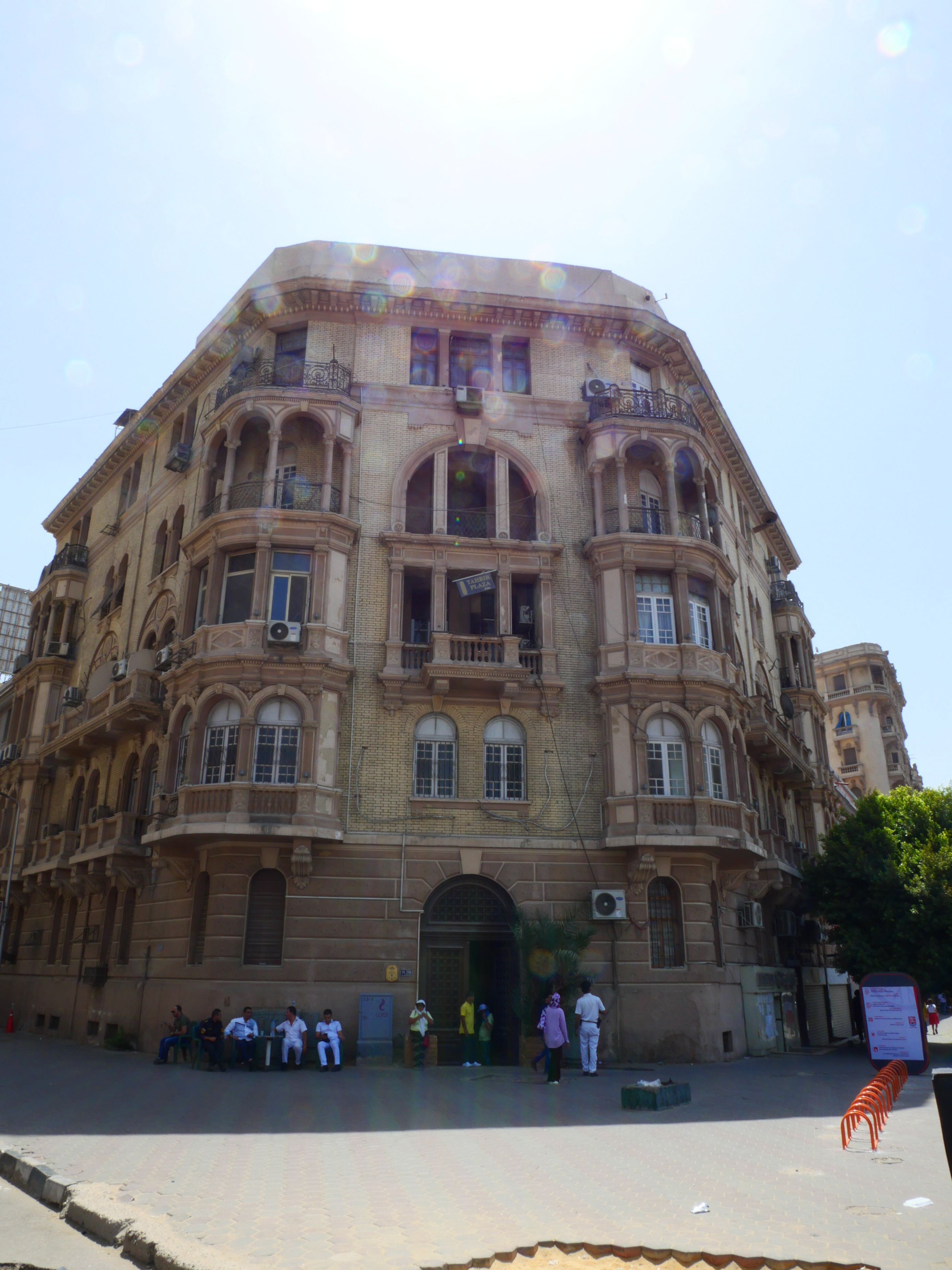
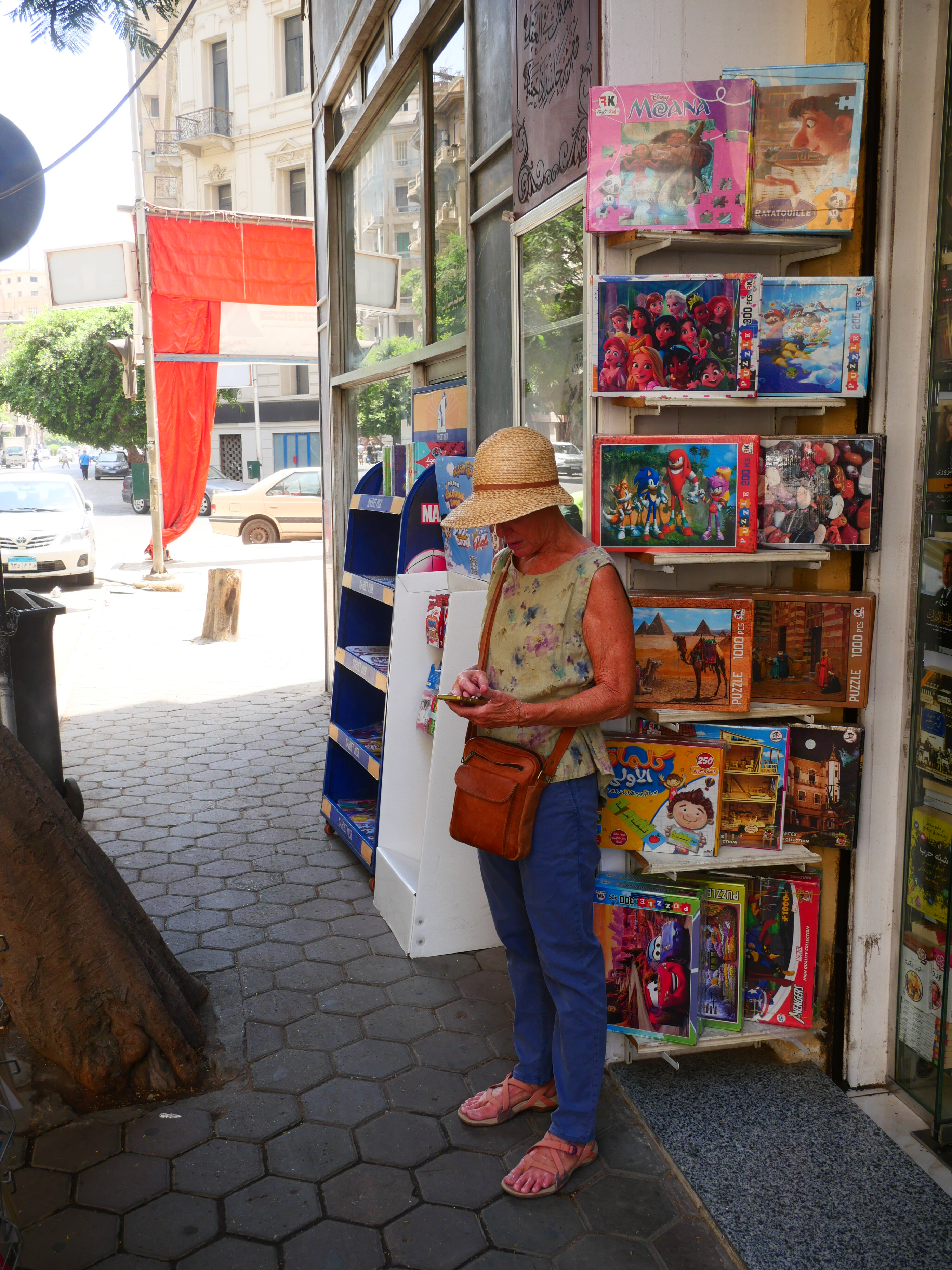
In Dahab I became aware that somewhere along the way my rechargeable headlamp got misplaced and left behind. (We’re thinking that it’s still hanging over the kitchen counter in Paris which had terrible lighting.) Expecting power outages in Zanzibar and possibly night-time rides or walks in the dark jungle, we decided it was time to replace my headlamp and started looking for a place to purchase one.
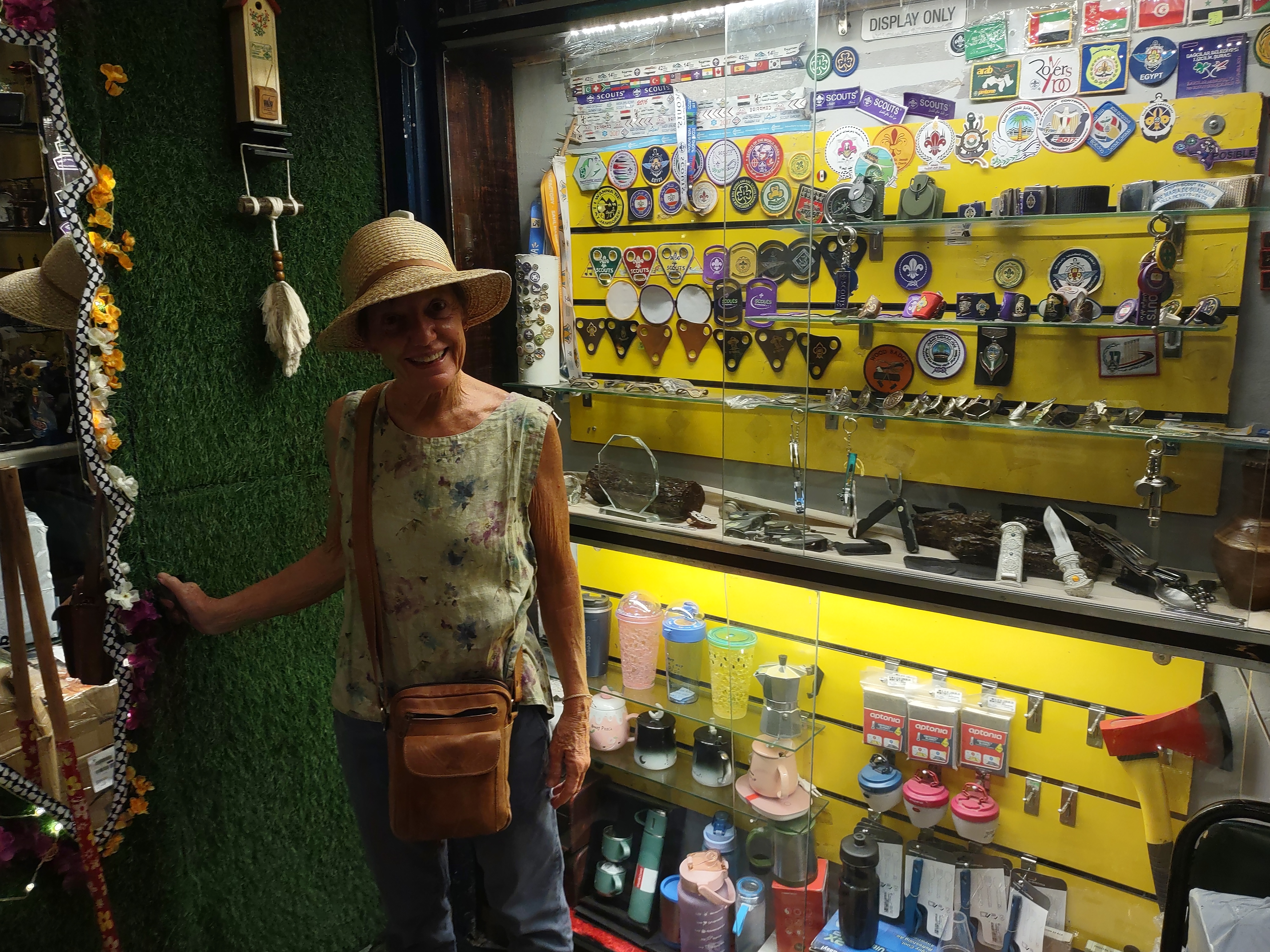
In the U.S., we could just pop over to Dick’s Sporting Goods or REI and pick one up or we might just order one on Amazon (but Amazon doesn’t really work when you are as itinerant as we are), but for some reason, the sports stores in Cairo did not seem to be big on hiking and backpacking gear. The most promising place we could find was the Egyptian Scout Shop which was located about ten kilometers south in the middle of what looked to be a residential area in Giza. From what we could see online, it appeared to be exactly what you would expect a Scout Shop to be. In addition to merit badges and neckerchiefs, it appeared that they carried a variety of small camping tools like knives, compasses, lanterns, and flashlights and it seemed like as good a place as any to find a headlamp.
The route to the shop passed west over the Nile through the Island of Gezira and then south through Giza. Our plan was to take an Uber to the Scout Shop and then another to some point on the Giza side of the Nile from where we would make our way north then back to our hotel on foot. We called an Uber and made our way to a neighborhood I am fairly certain we would have never found our way into were the Egyptian Scout Store not there. It was nothing special, just a place where normal everyday people live, (understanding that the standard of living in Egypt, as in most places outside it, is noticeably less than that in the U.S.) but we spent quite a bit of time meandering through narrow back streets before reaching our destination.
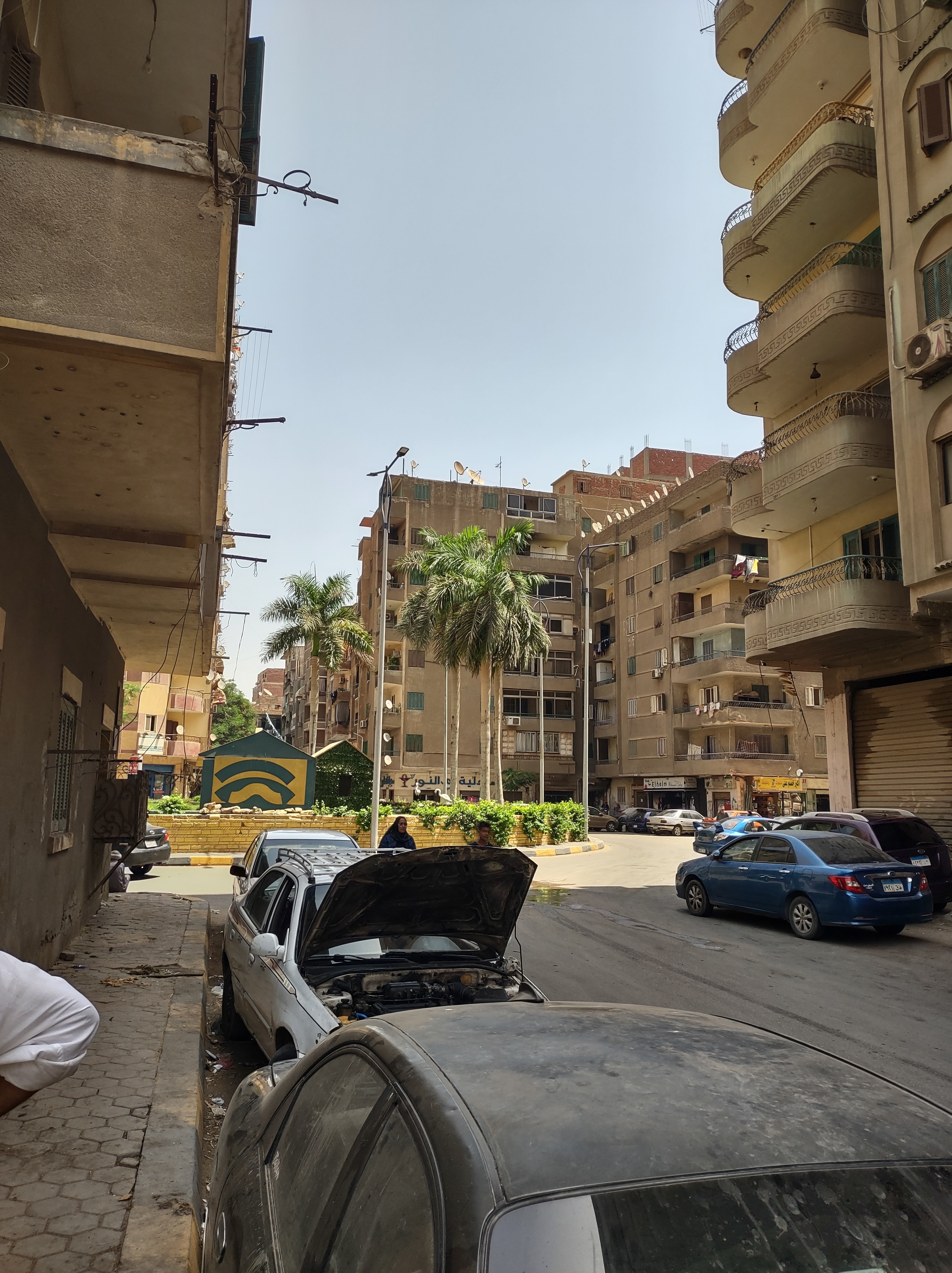
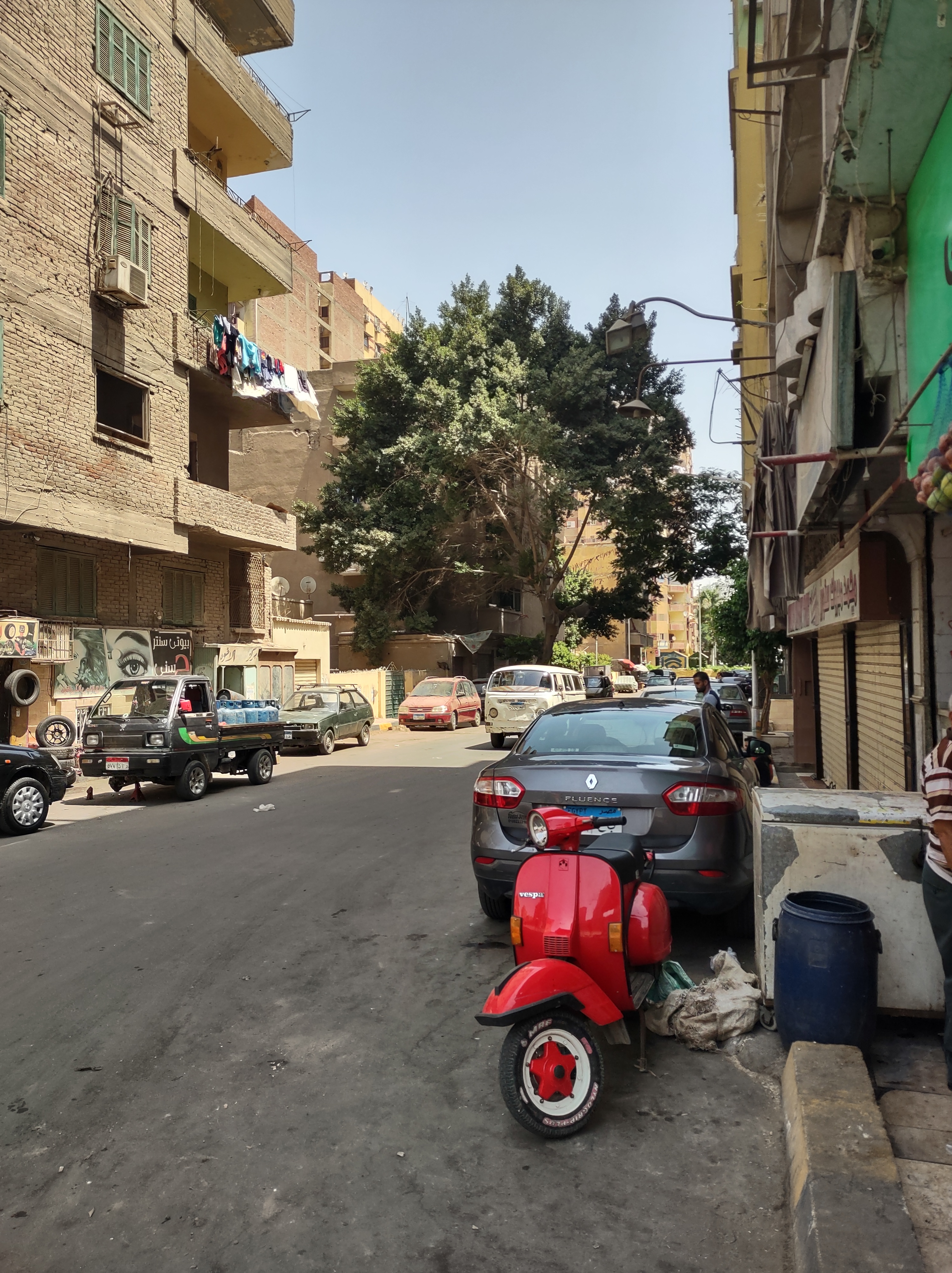
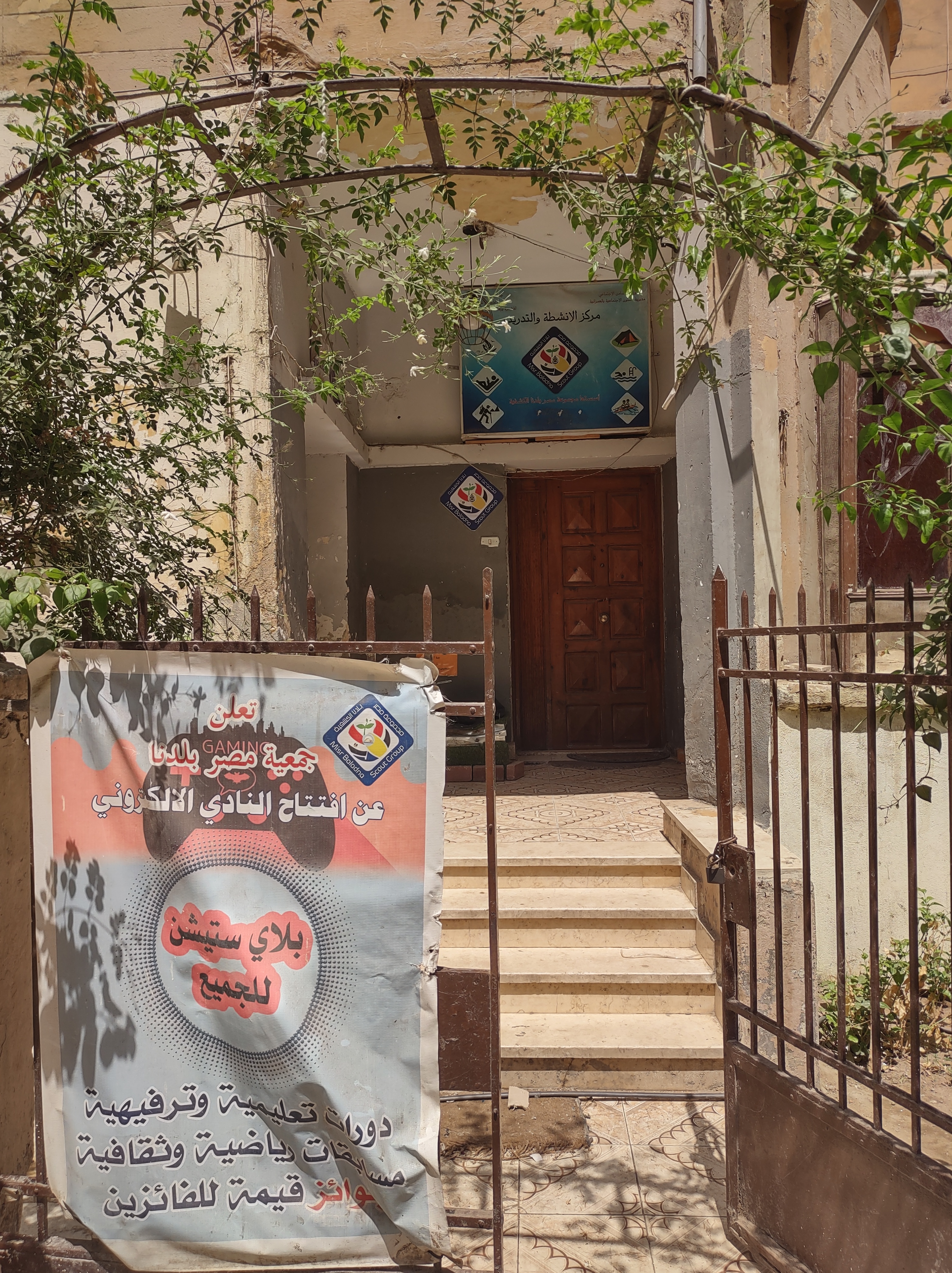
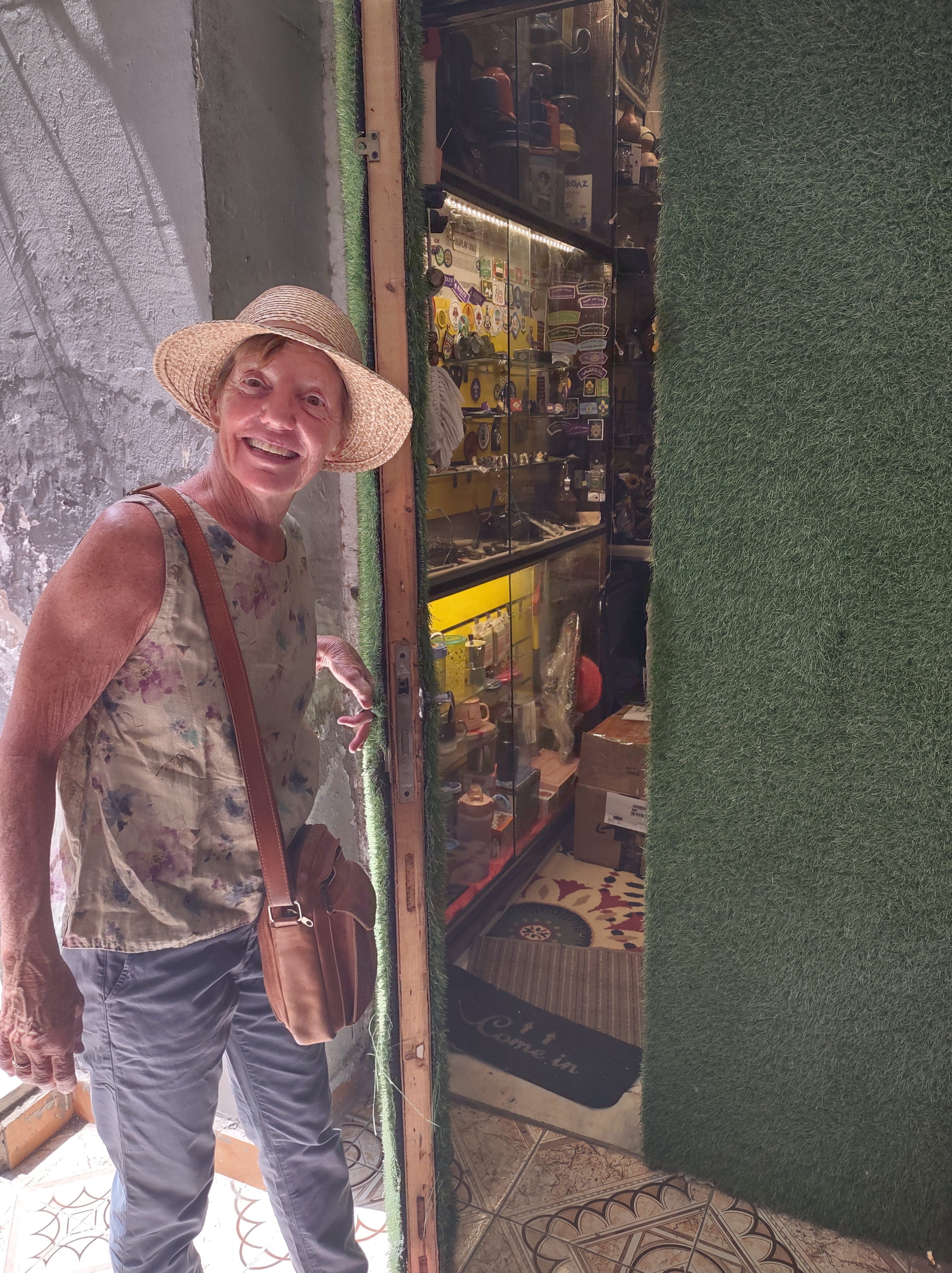
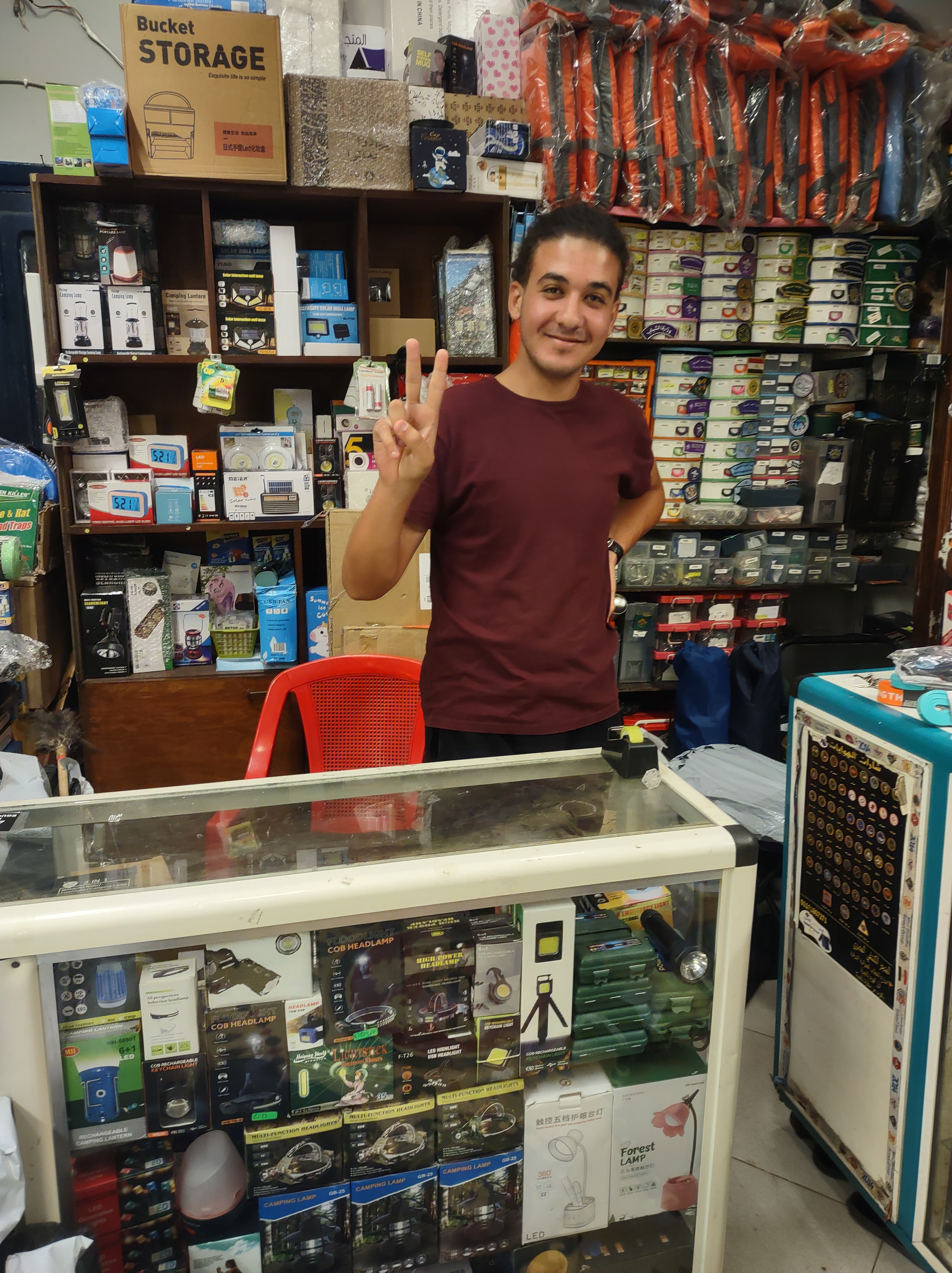
The Egyptian Scout Store was tucked into the first floor of a small apartment building, a pretty unassuming place with an astroturf door. There were two young men and a woman behind the counter (a mother and her sons we discovered) who were pretty clearly wondering where in the world we had come from and why were we there (we got similar looks from the people in the neighborhood outside and I strongly suspect that this was the first time that an American had entered the shop). After getting over their initial surprise, they were very nice and helpful, even with limited English. We were very happy to find that they had a nice selection of headlamps and I found one which was even better than the one I lost for about $10 (likely half or less of what it would have cost in the U.S.).
Perhaps tellingly, the older son came out of the store behind us to see if we needed any help getting out of the neighborhood (I had a vision of his mom shooshing him out saying “Go see if they need help!”) We assured him that we would be fine and proceeded to look for an Uber driver, but to do so, we needed to identify a drop-off point. We didn’t have a specific destination selected for our next stop but were looking for somewhere along the Giza side of the Nile which was a reasonably walkable distance from our hotel. Coincidence or karma, we came across a spot on the map in the area we were looking called the Giza Sea Scout and knew that this was the place for us to go.
After looking at the availability of Uber drivers in the area (none nearby) and considering our current location, we decided to walk a few blocks to a major road and not only had success calling an Uber but had to turn away several taxi and tuk tuk drivers while we waited. One of them insisted on having his picture taken before he would leave, but he was jovial, friendly, and welcoming, as were most of the people we encountered in Cairo. We had one false start when a car stopped and tried to pick us up, but our Uber arrived almost immediately and corrected the situation for us.

A Walk Along the Nile
After about a five minute drive, our Uber driver arrived and took us to Giza Sea Scout (if you’re curious, it was, in fact, a sea scout camp where young people are taught to sail) and from there we proceeded to walk north along Nile Street. We were surprised to find that virtually every riverside property north of the Sea Scout camp was a private social club and so we had to content ourselves with the views which were available from the promenade above those properties. The far side of Nile Street was lined with an mix of buildings which included some public institutions, a good number of mid- to high-rise hotels, and an assortment of foreign embassies. Apparently because of the last there were security stations on almost every block, some with heavily armed personnel and vehicles presumably ready to respond to any emergency and, apparently because we were carrying cameras, we were advised on a couple of occasions that taking photos (of anything?) was prohibited.
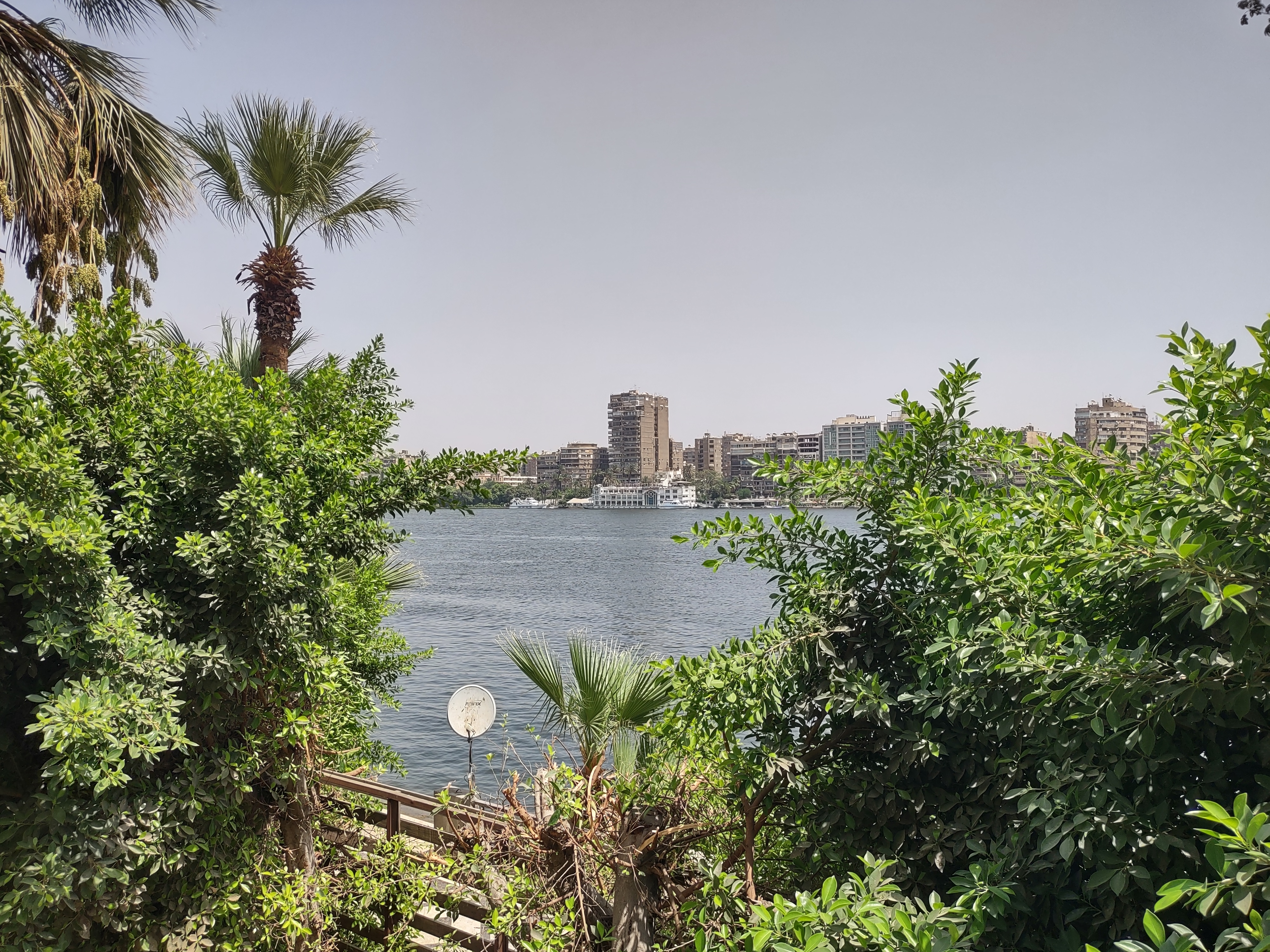
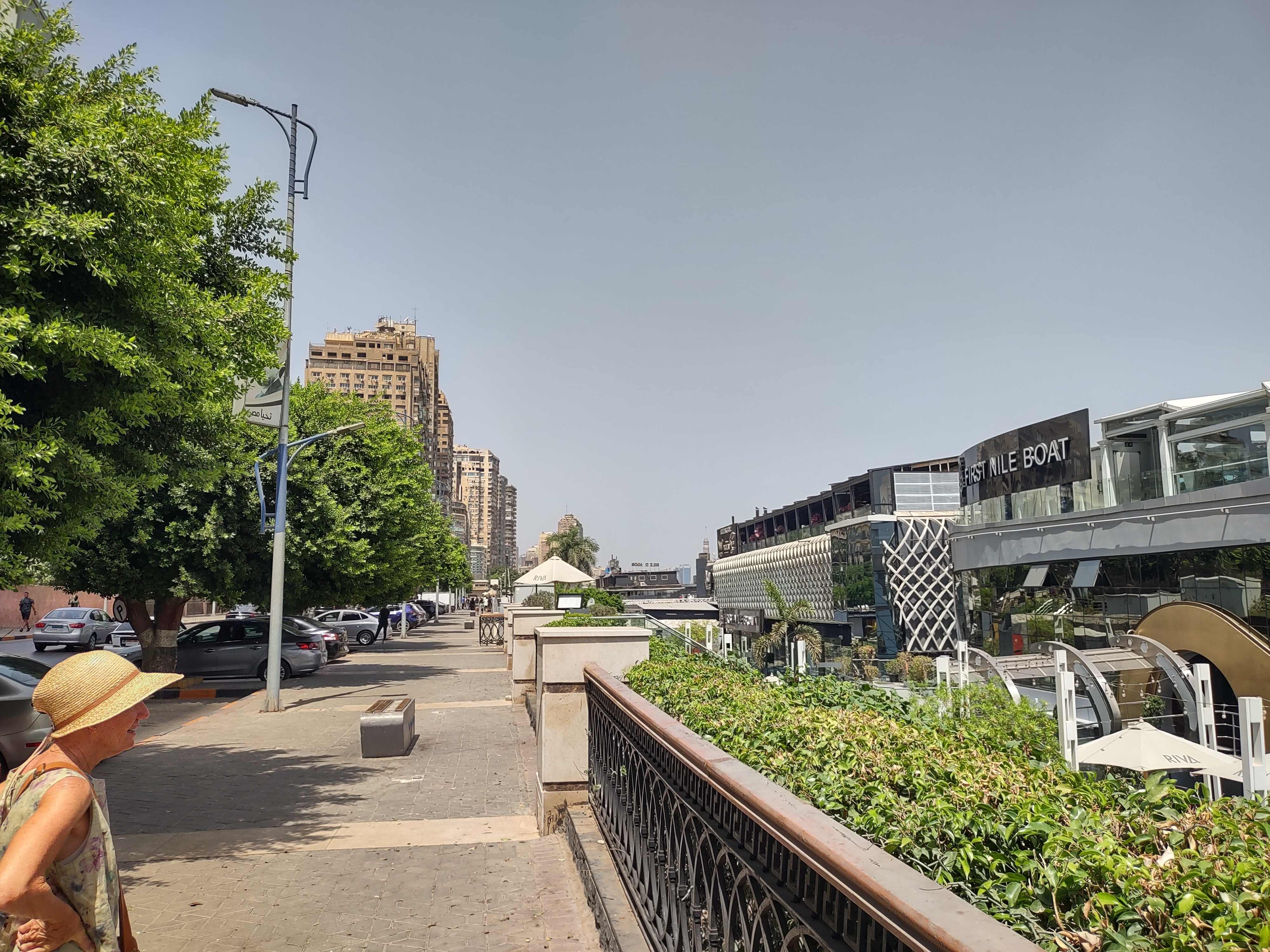
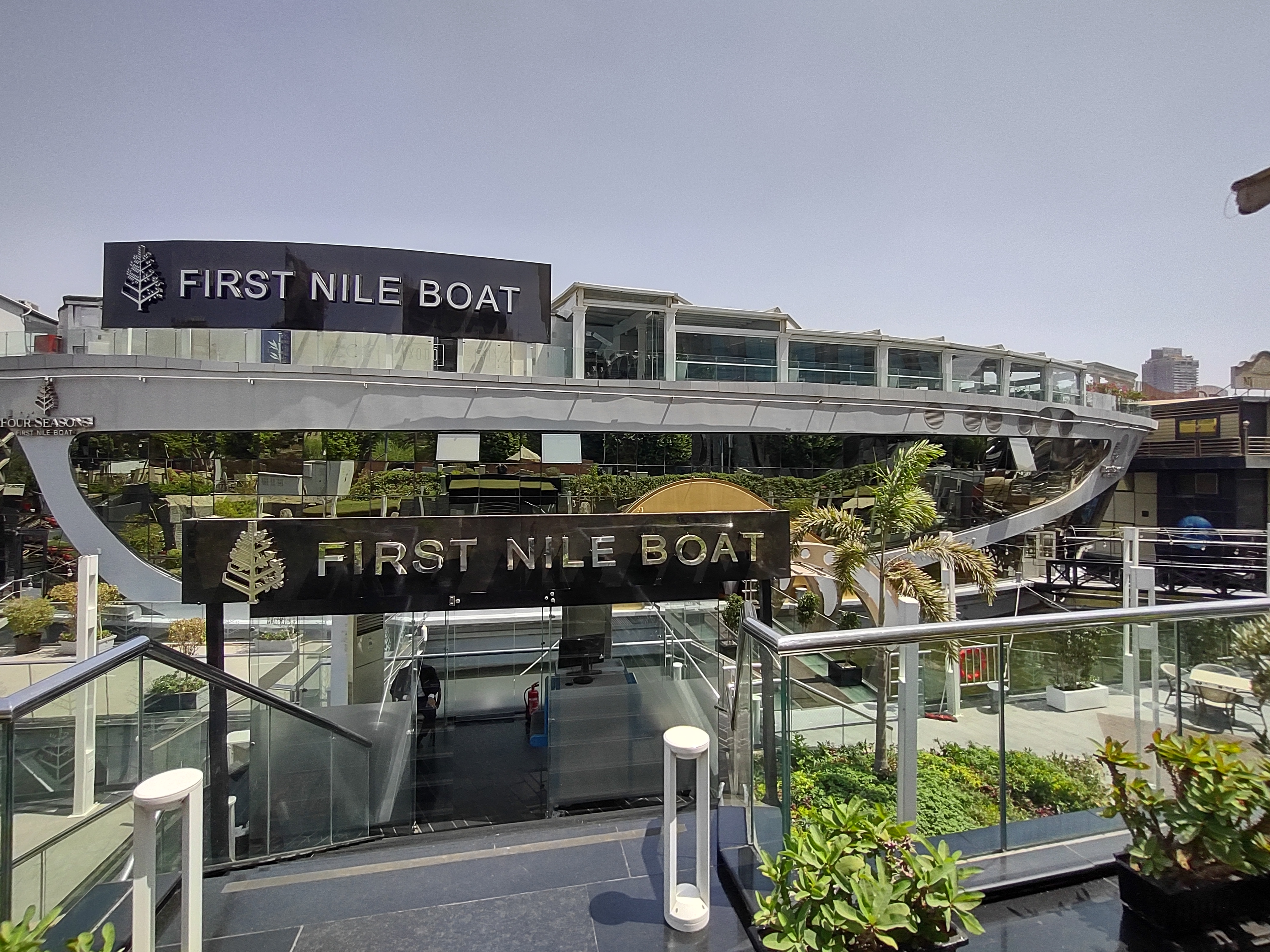
The police presence in Giza and Cairo, which its residents seem to hardly be aware of, surpassed anything we had seen thus far, including that in Jerusalem. As a result, I became increasingly paranoid about taking pictures and quickly got into the habit of doing a 360 scan for police before taking any. (In retrospect, it probably had much to do with the particular parts of Giza and Cairo that we walked through.) In contrast to or perhaps contradiction of all this, everyone we met in Giza and Cairo was amazingly friendly and, if they discovered we were from America, many of them insisted on taking selfies.
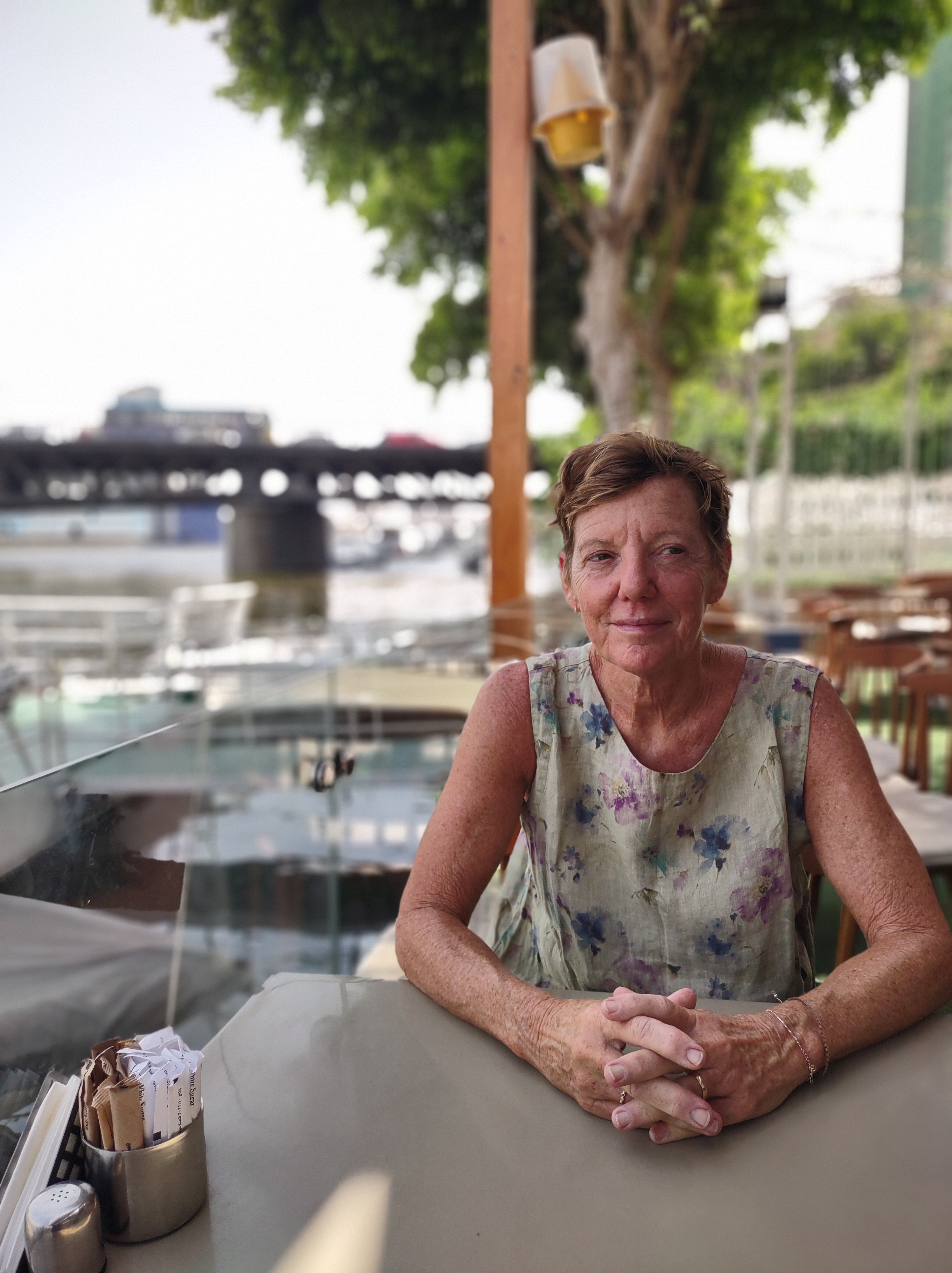
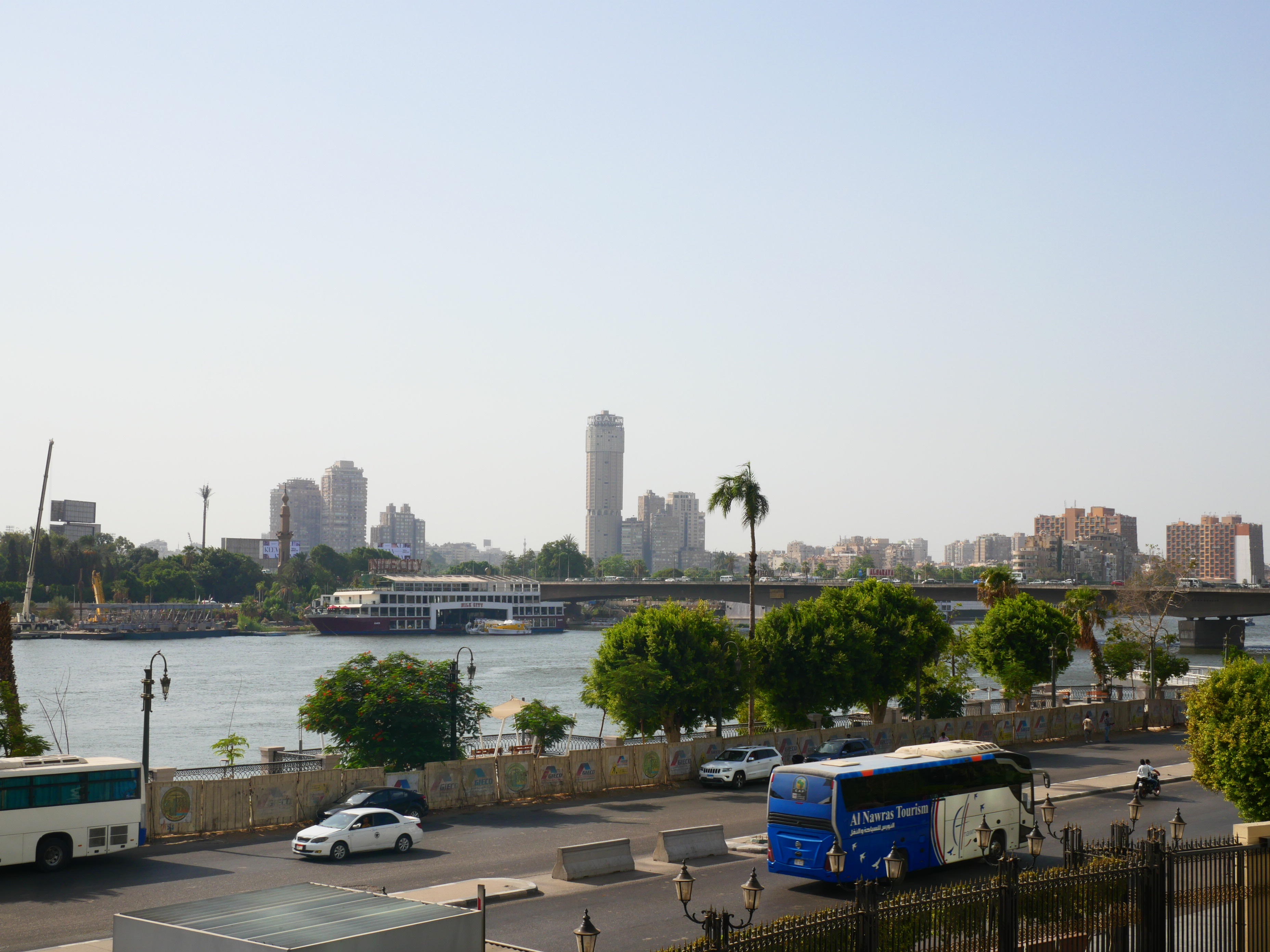
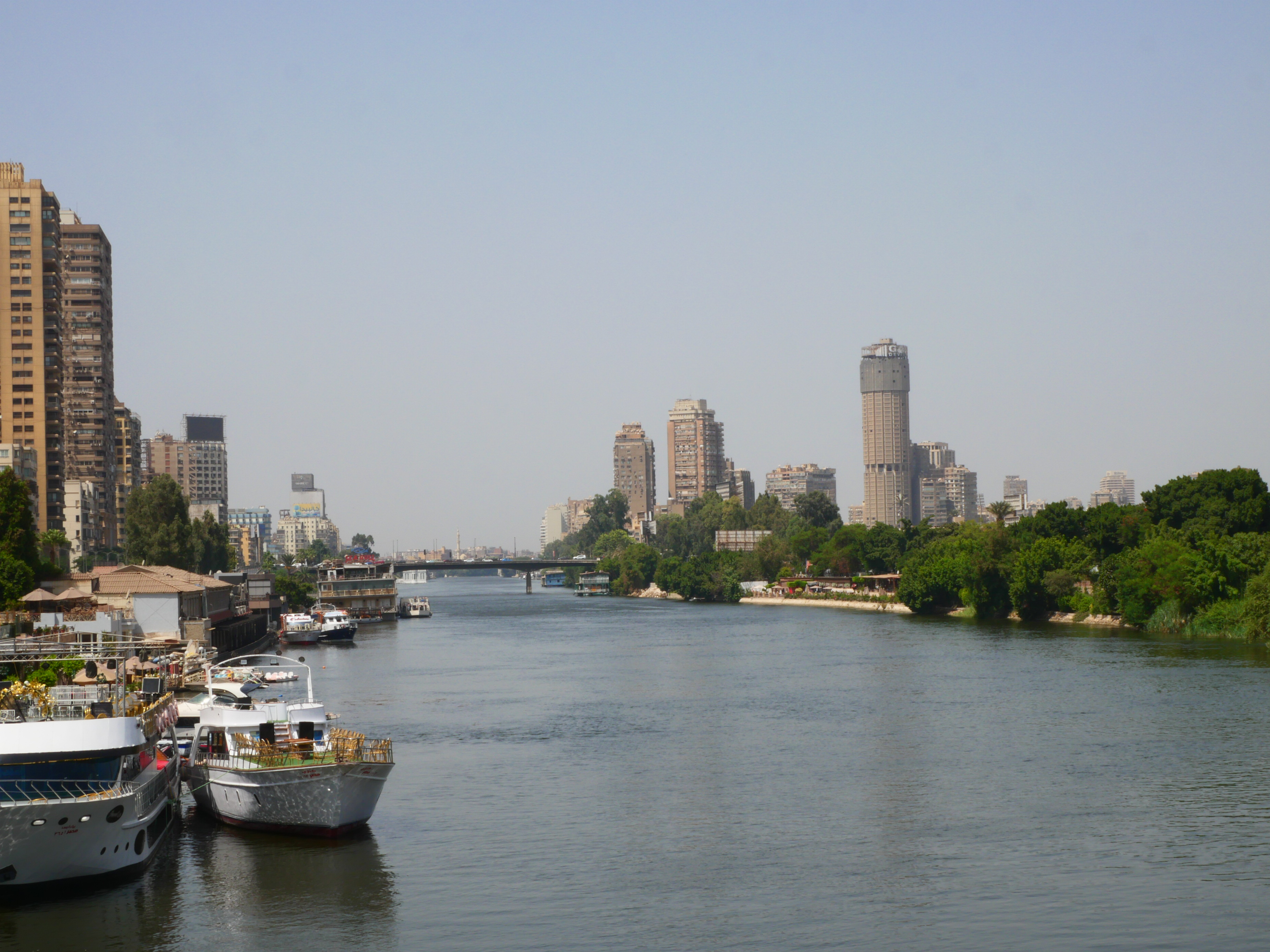
As we reached the El Tahir Bridge, where we intended to cross the Nile, we finally found a café called Stage El Nile which was open to the public and stopped for some refreshment. It was nice to see what the Nile valley looked like from the level of the river and we enjoyed our drinks and relaxed for a bit before turning east across the El Tahir Bridge (with some spectacular views up and down the Nile) to Gezira Island, which sits in the middle of the Nile between Cairo and Giza, the home to a lot of Egyptian cultural institutions.
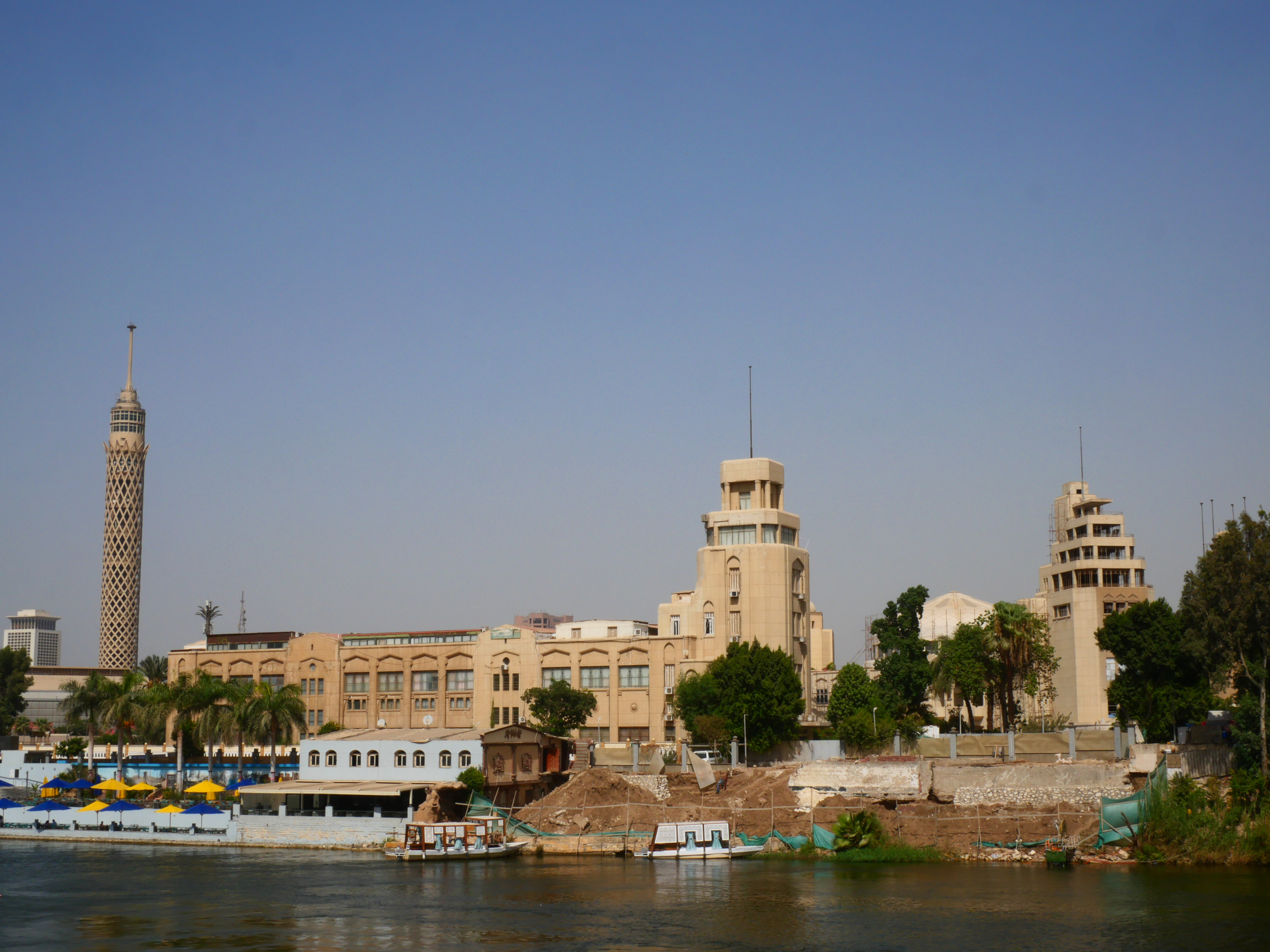
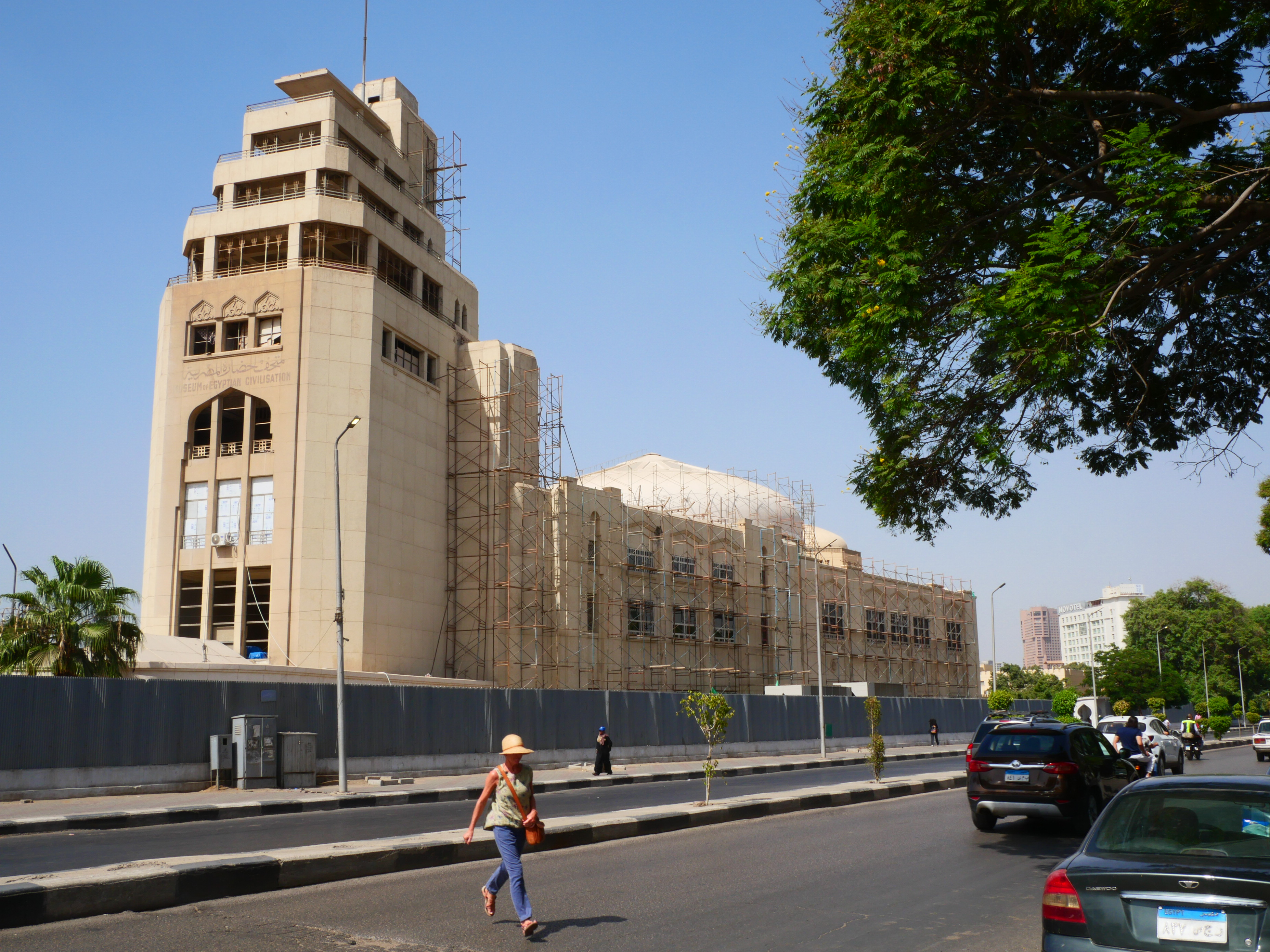
Our stroll across the island took us past a beautiful collection of old Art Deco buildings (with a bit of an Egyptian flavor) including the Historical Places Museum which was unfortunately closed for renovations. Across from these is the Mahmoud Muktar Museum, a beautiful little Neo-Egyptian Modernist building which adjoins a large park which was teeming with activity.
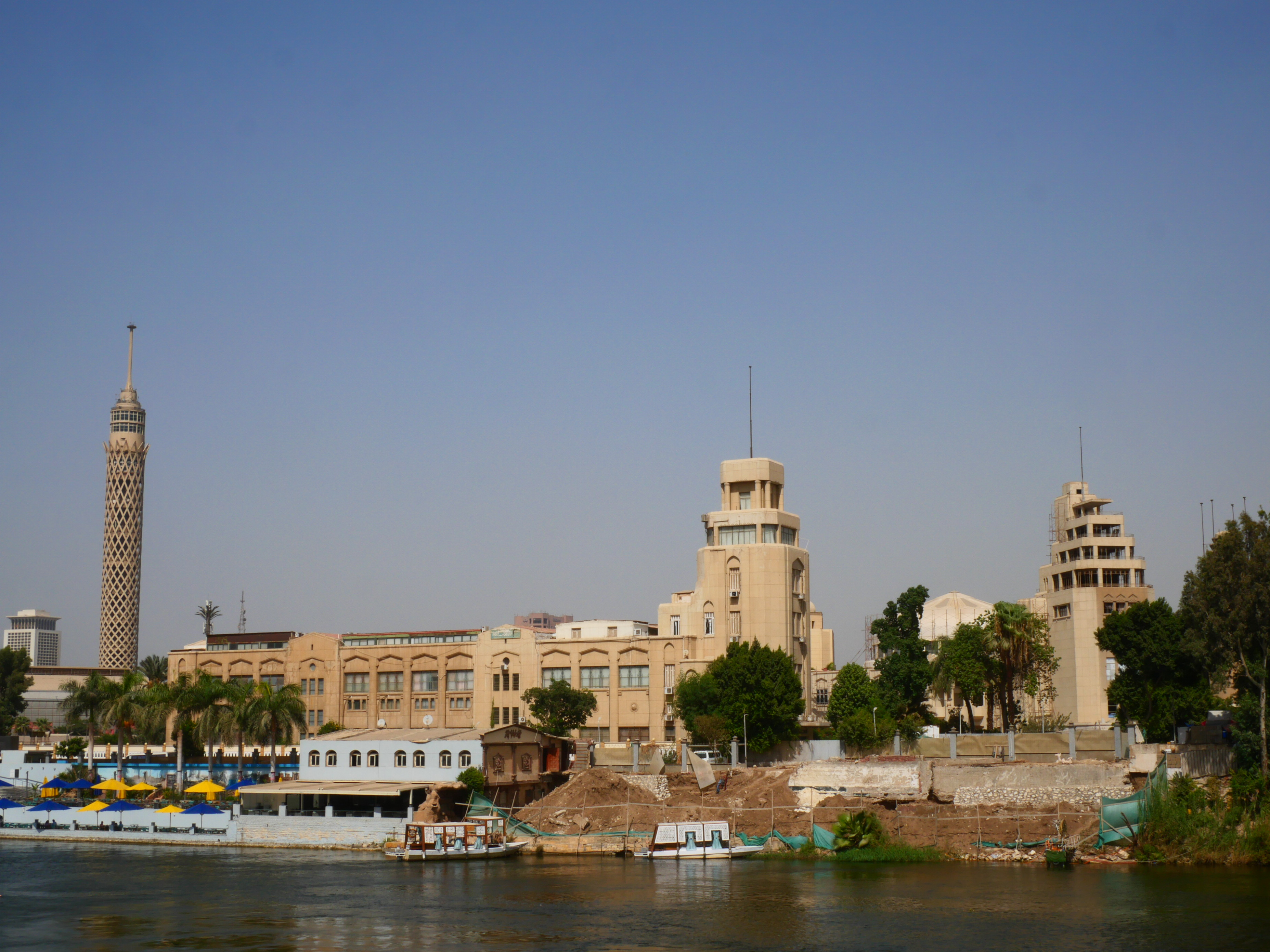
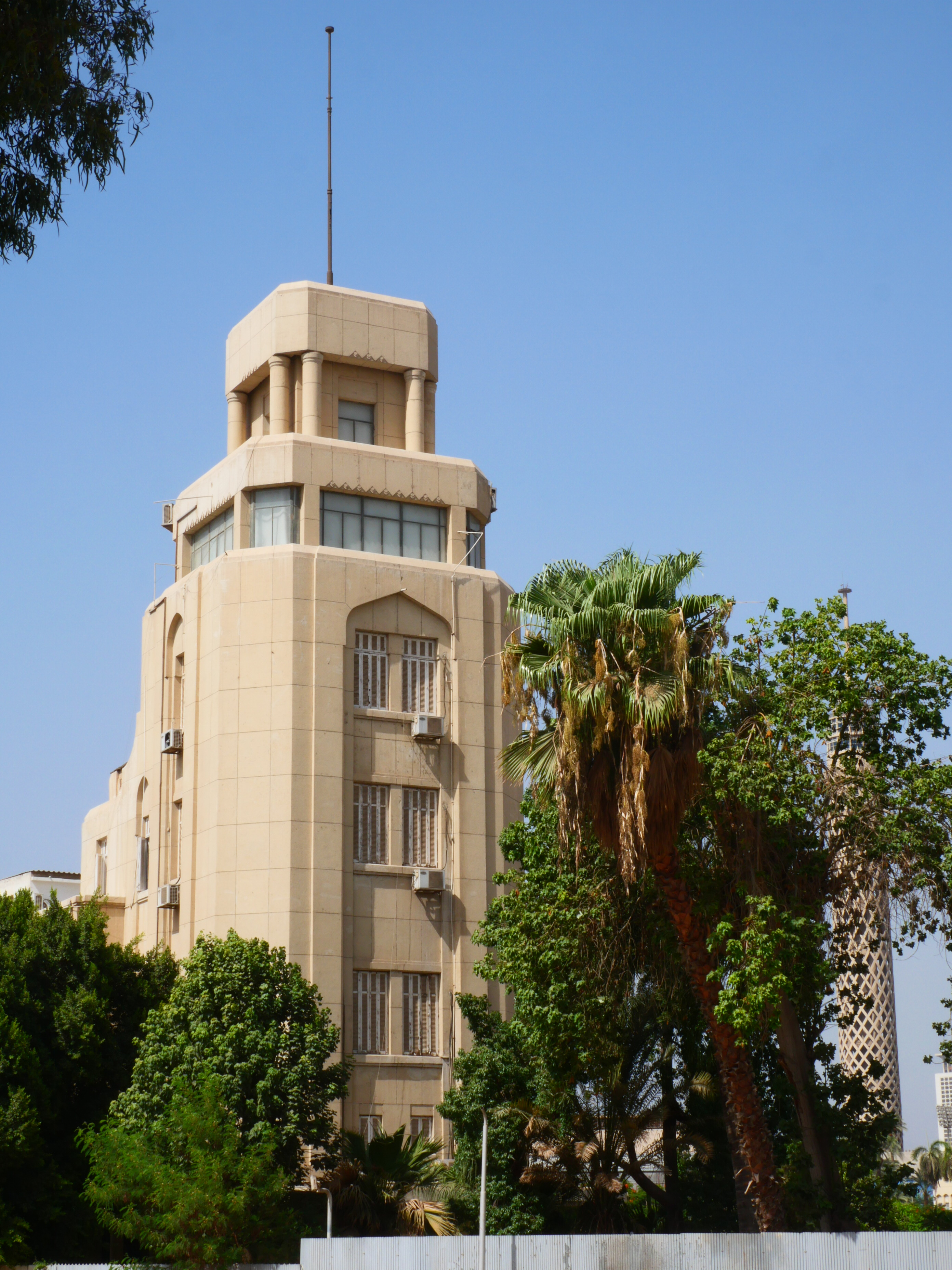
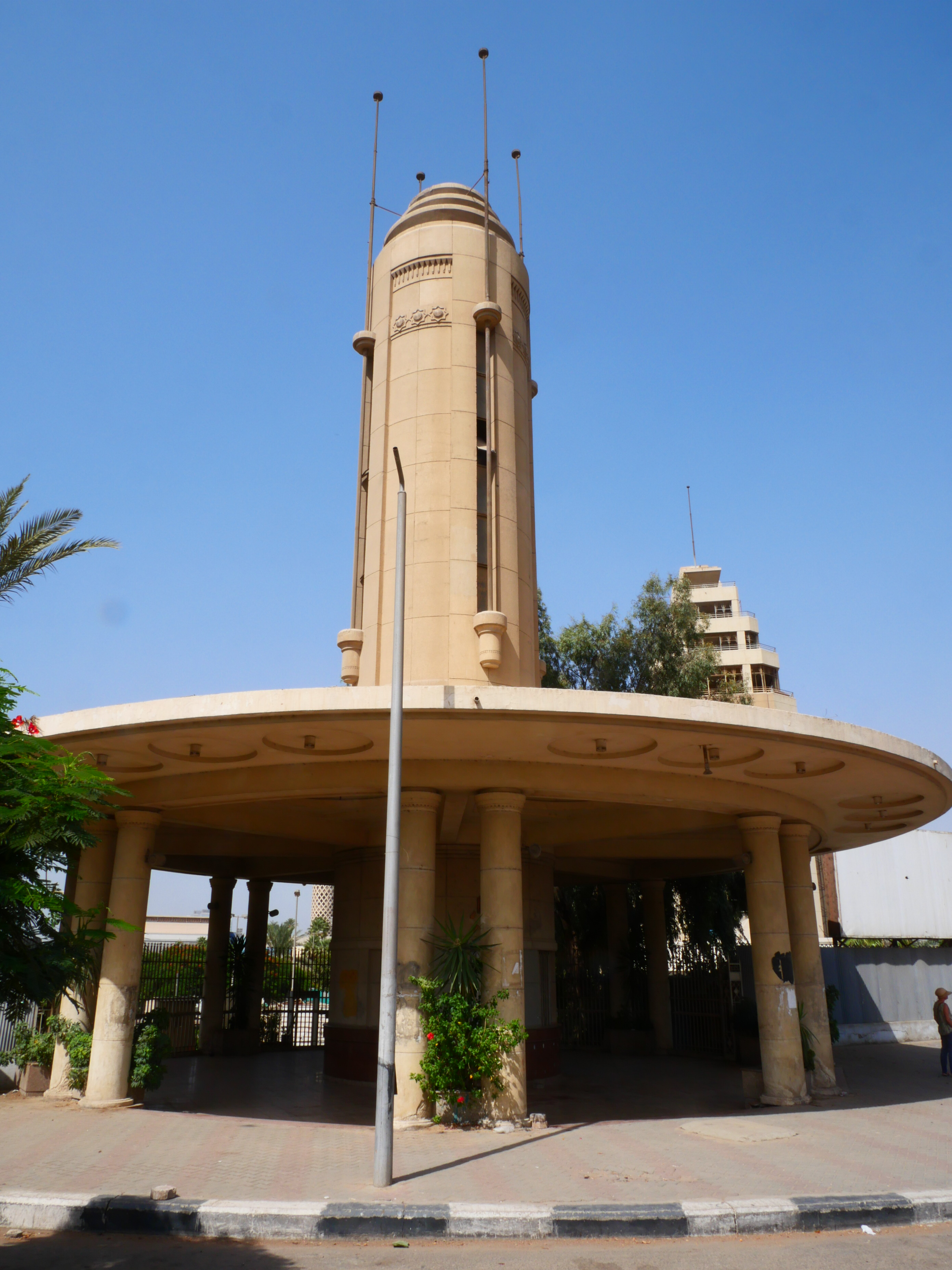
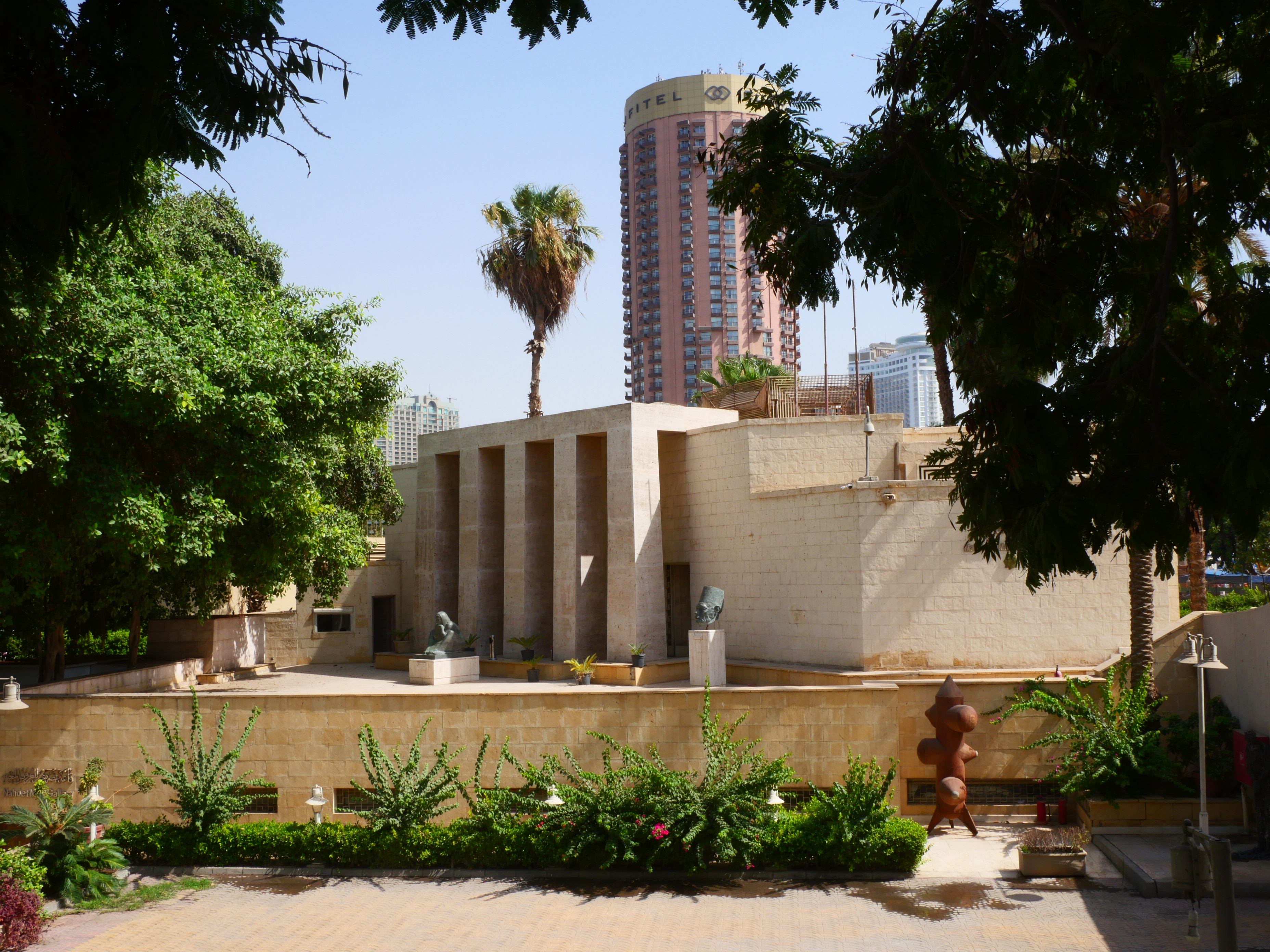
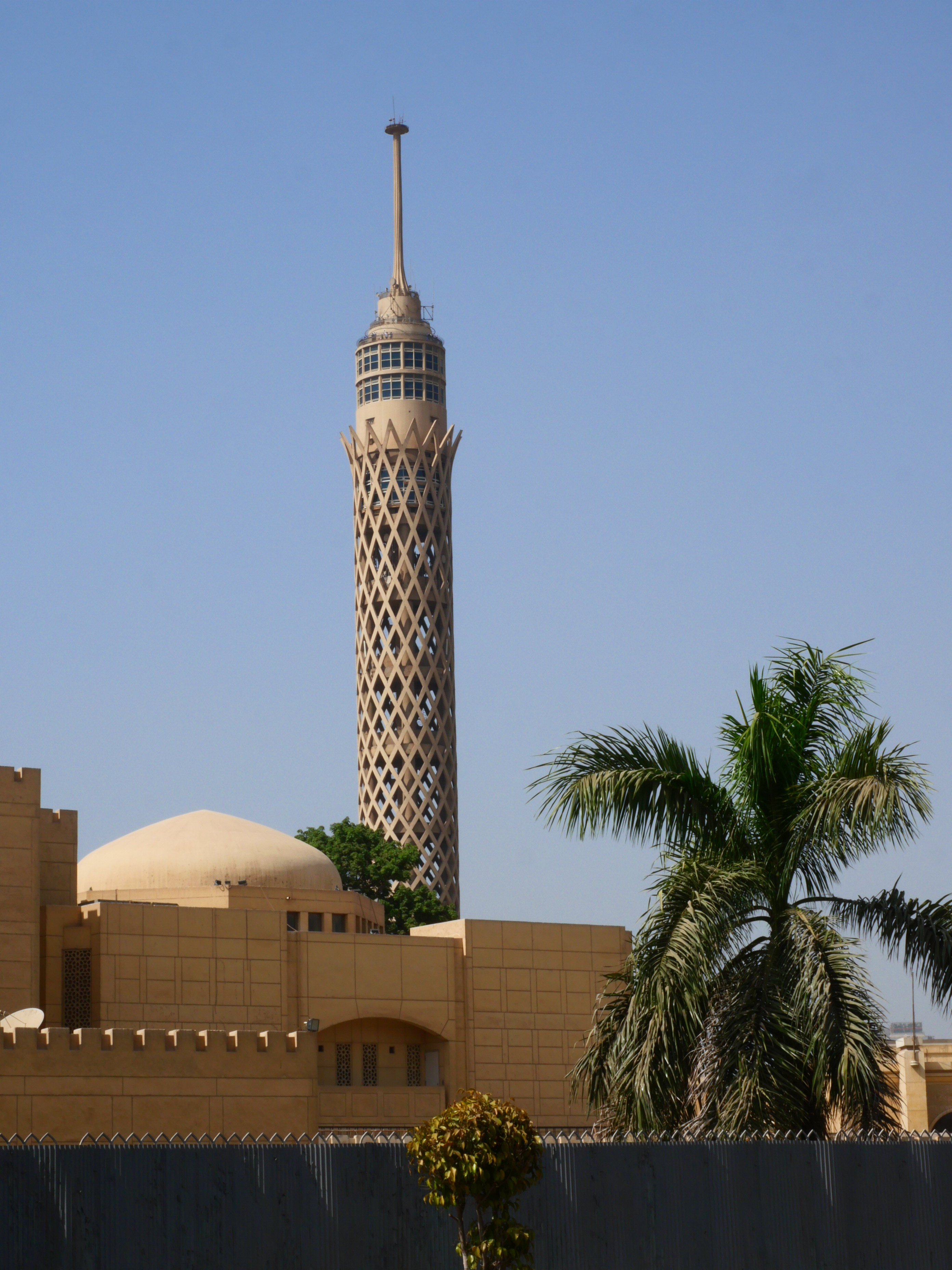
Beyond these buildings we passed the Cairo Opera House, a very large structure also in the Neo-Egyptian Modernist style and, behind it, the Cairo Tower, a 600 foot tall concrete monument considered to be Egypt’s most iconic modern monument. The design of the Cairo Tower, which was constructed from 1956 to 1961, is intended to evoke a pharaonic lotus plant. It was the tallest structure in Egypt until 1998 when it was surpassed by the Suez Canal overhead powerline crossing. (Which we were apparently not allowed to see!) Word is that the Cairo Tower was funded by the CIA as a personal gift to President Nasser in exchange for his stopping support of an Algerian revolution and other African independence movements.

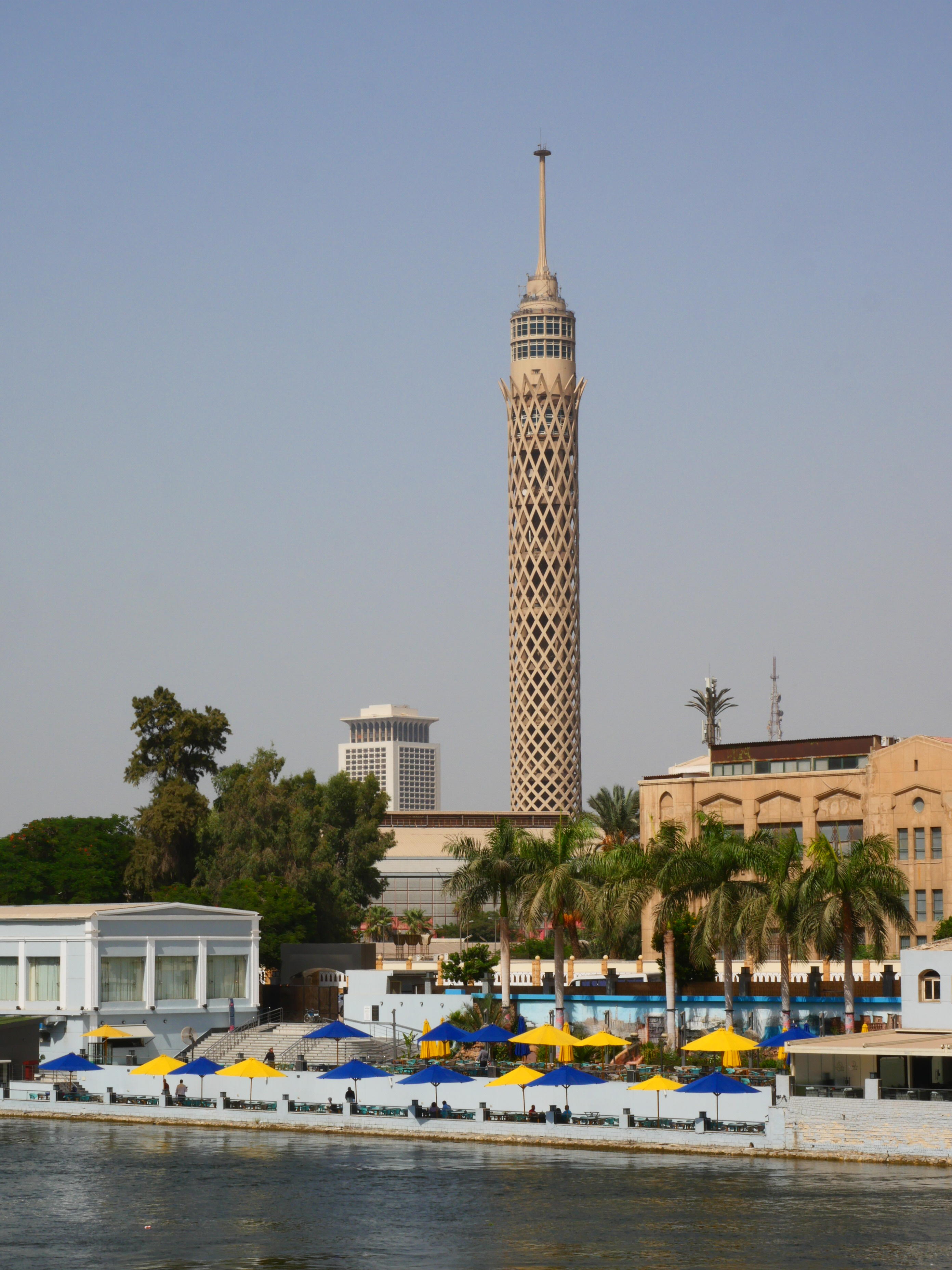
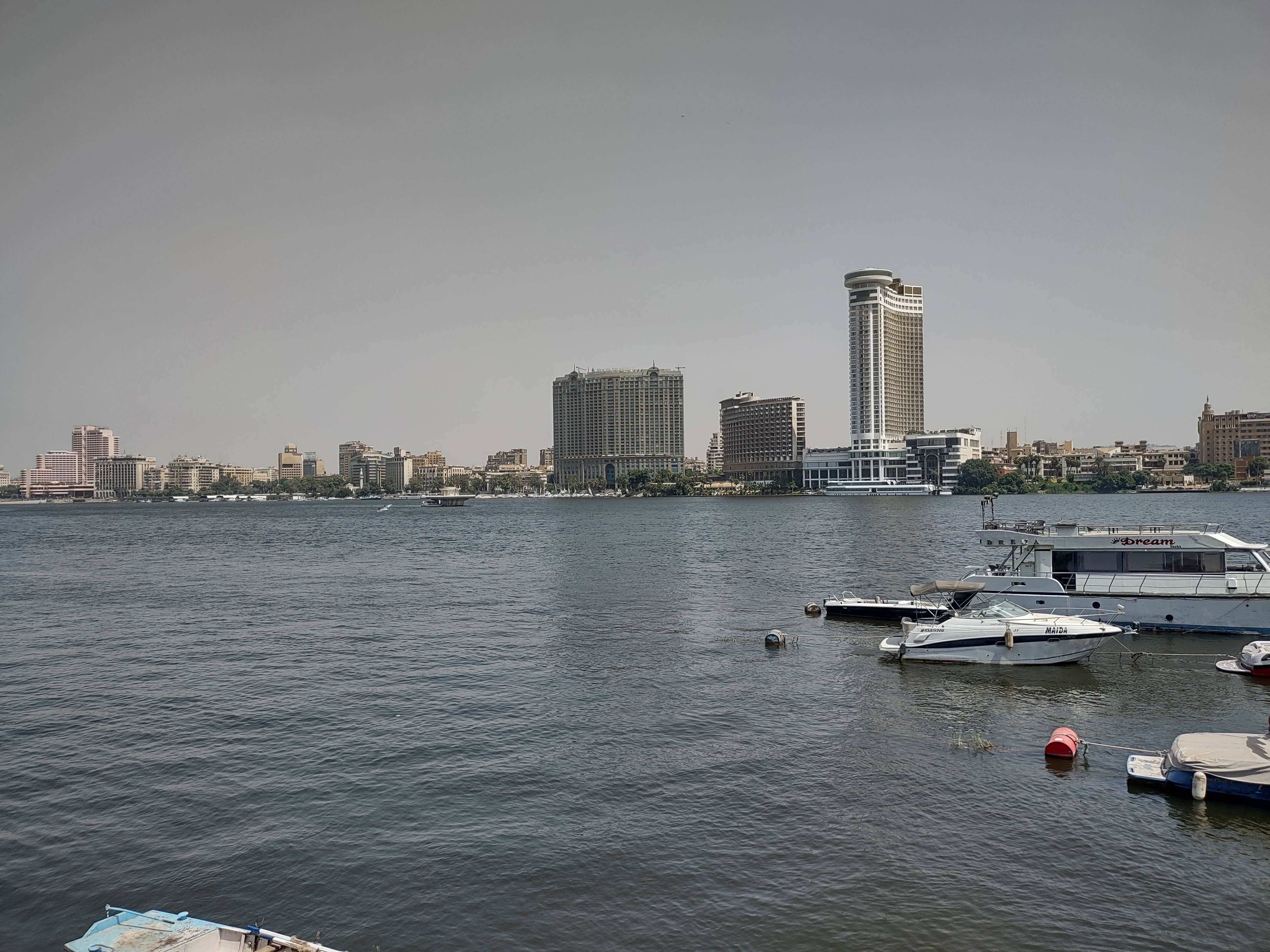
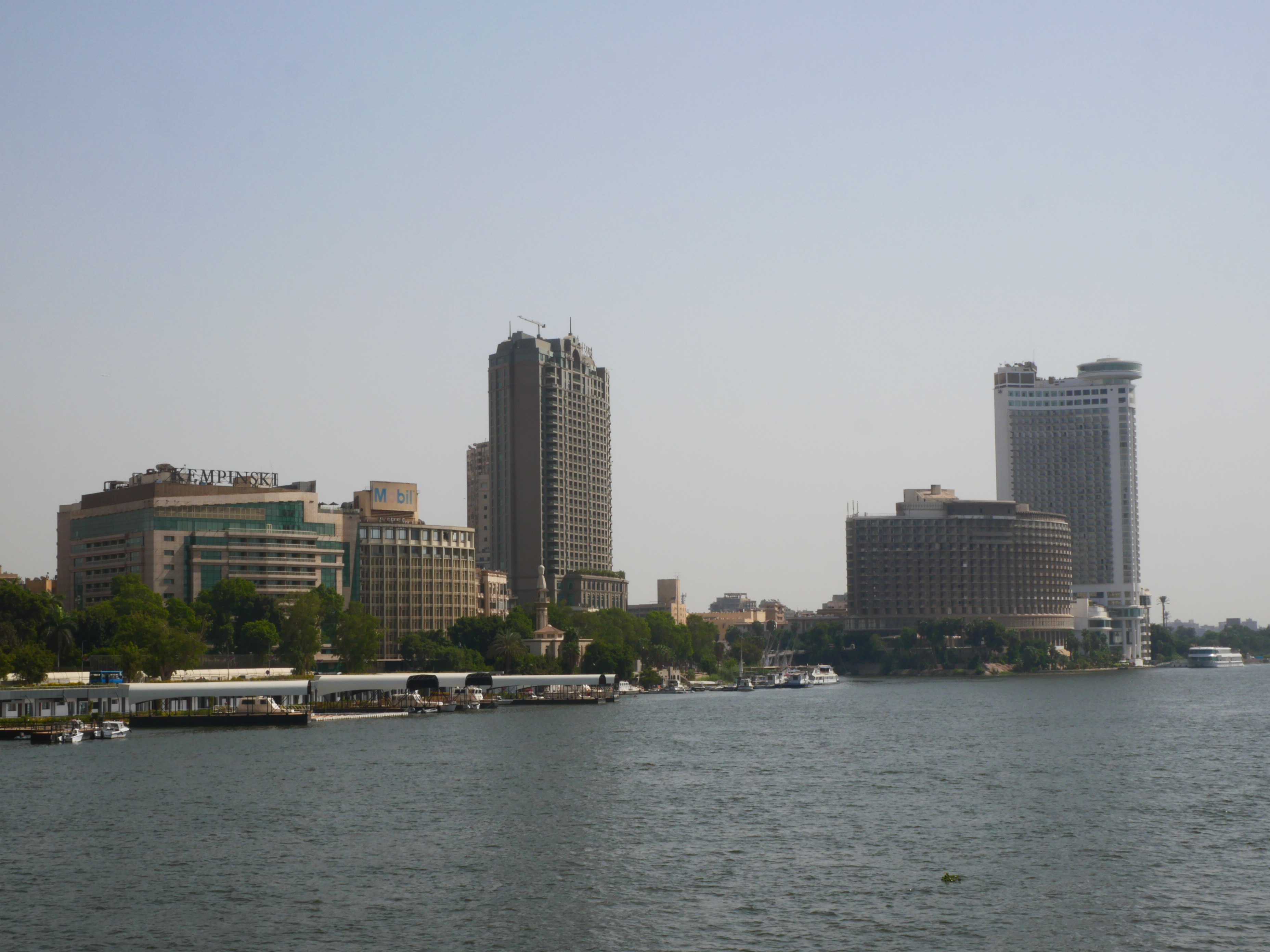
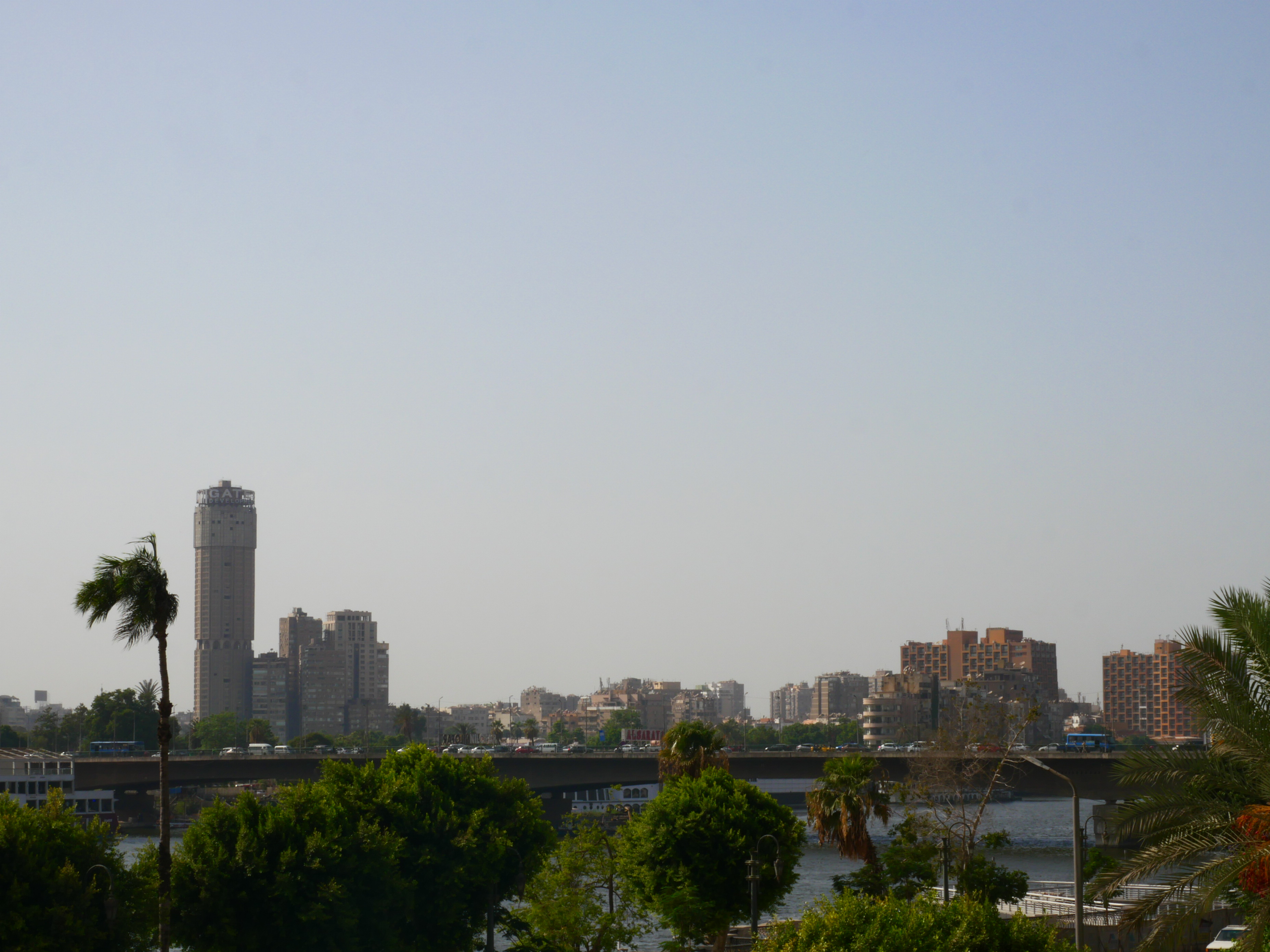
From the Island of Gezira we continued east over the Qasar Al Nile Bridge, which offers some fine views up and down the eastern branch of the Nile. Near the center of Cairo, both sides of the Nile are lined by corporate headquarters buildings and an assemblage of some of the largest hotels I have ever seen. (I think Cairo is one of those cities, like London or New York, where, if you are a real international hotel chain, then you need to have a flagship facility there.)
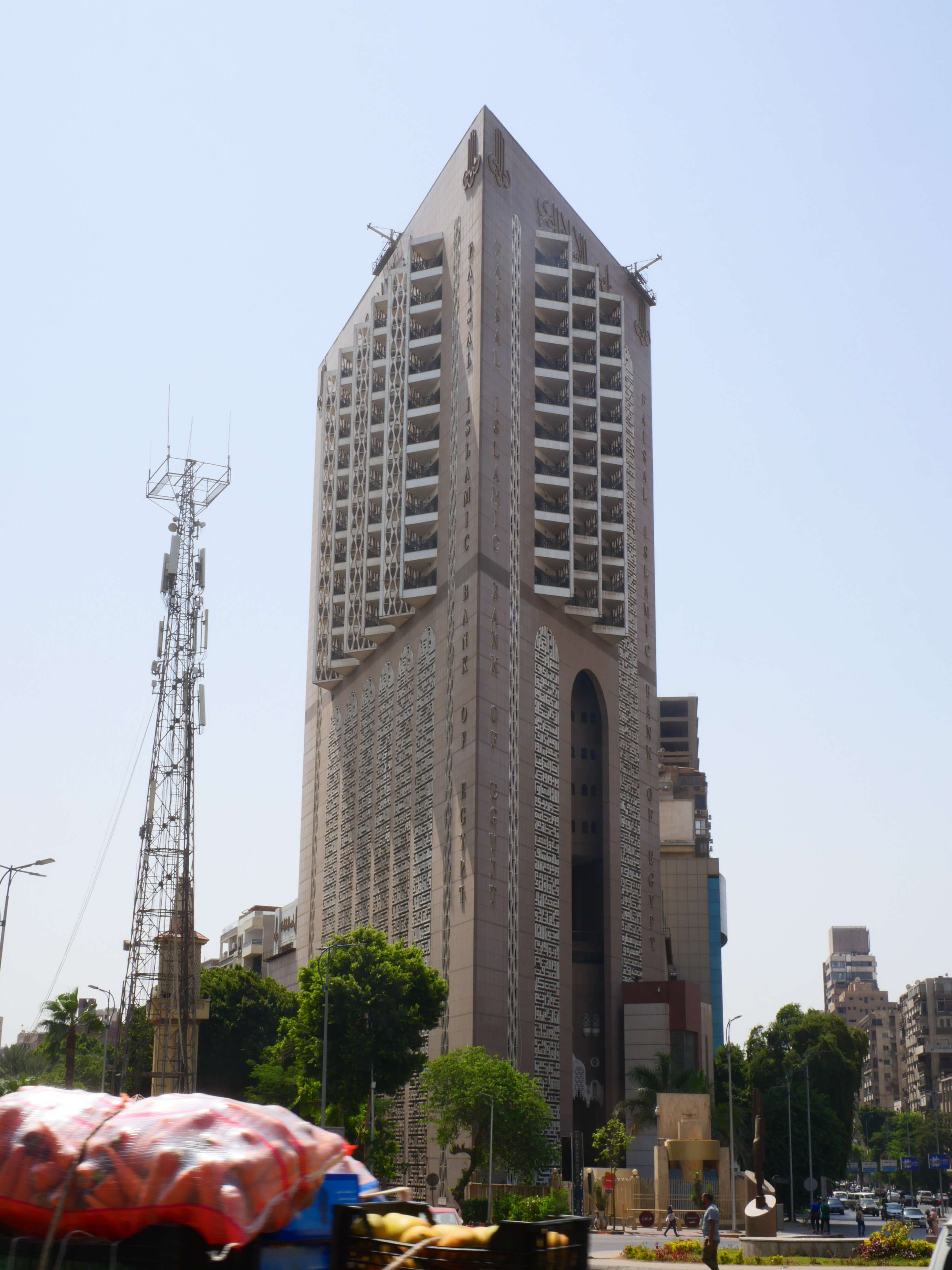
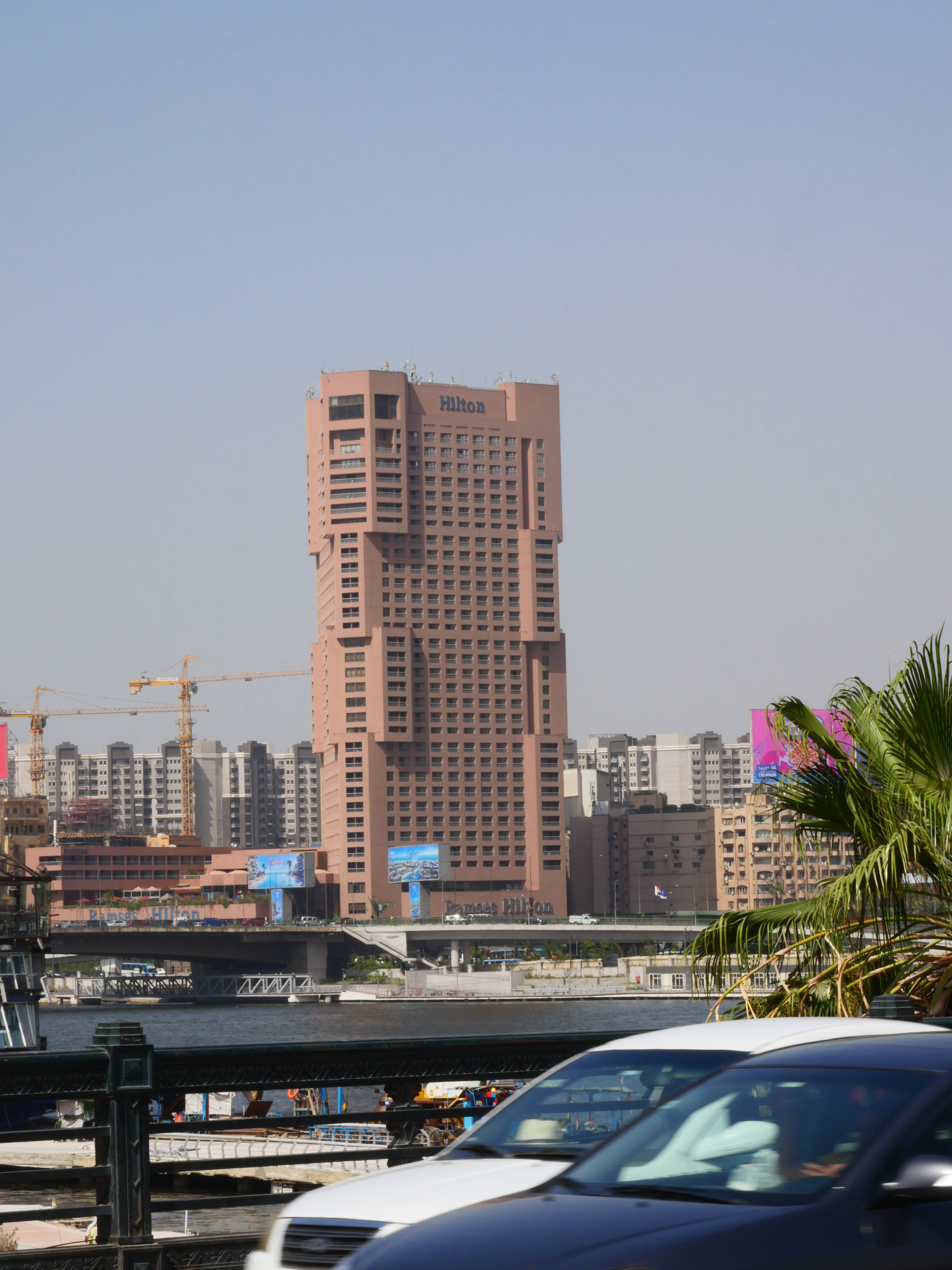
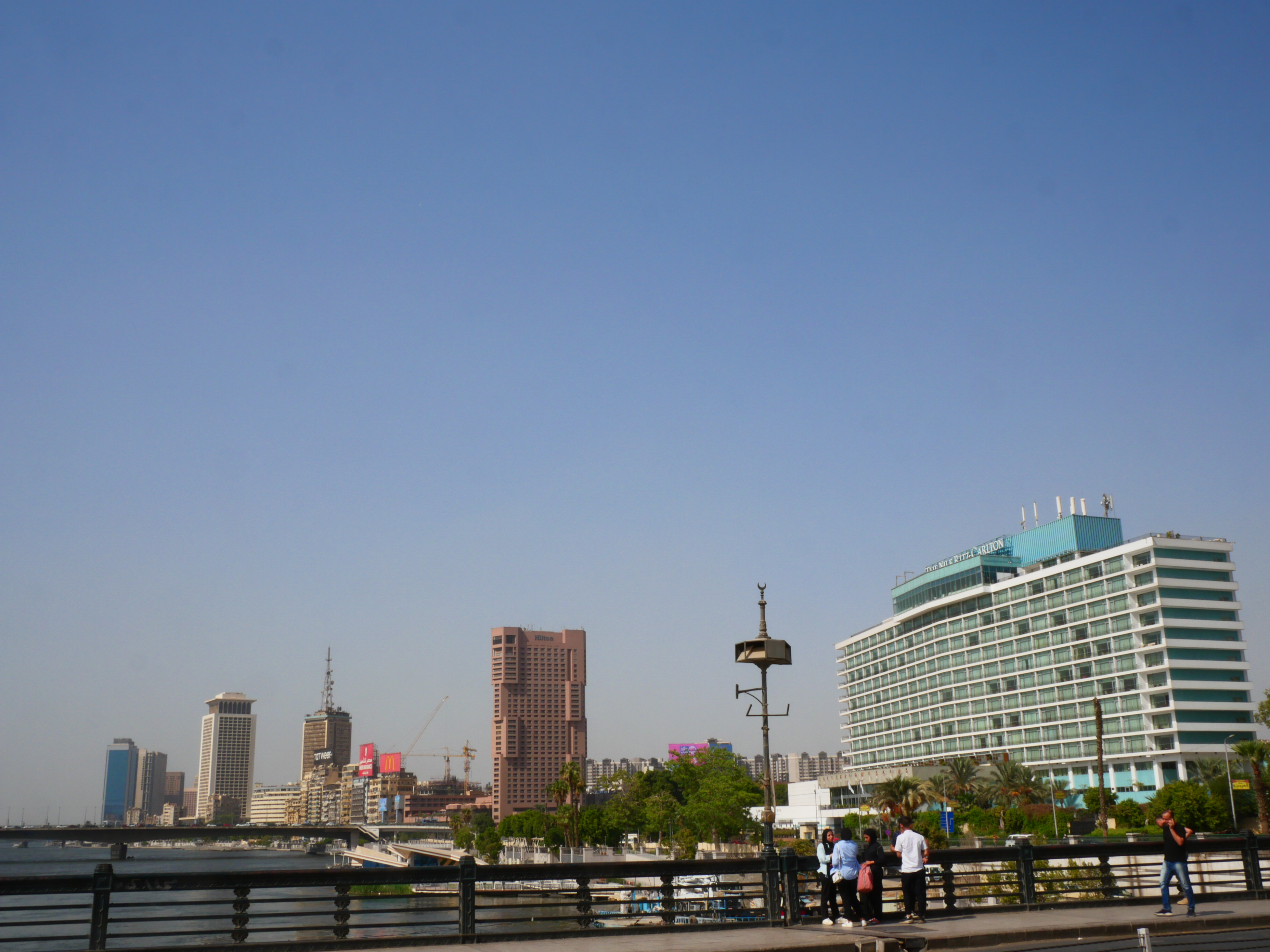
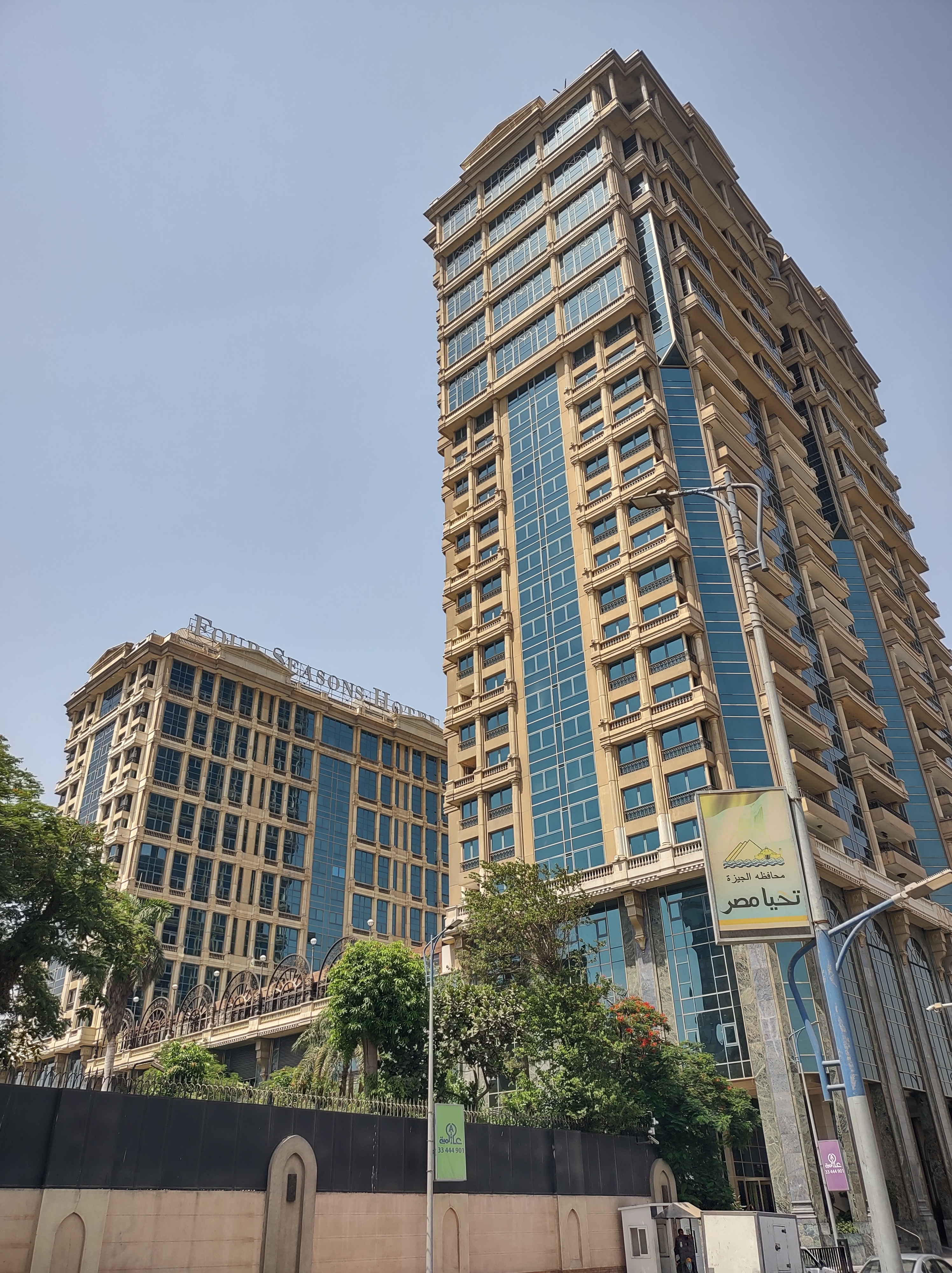
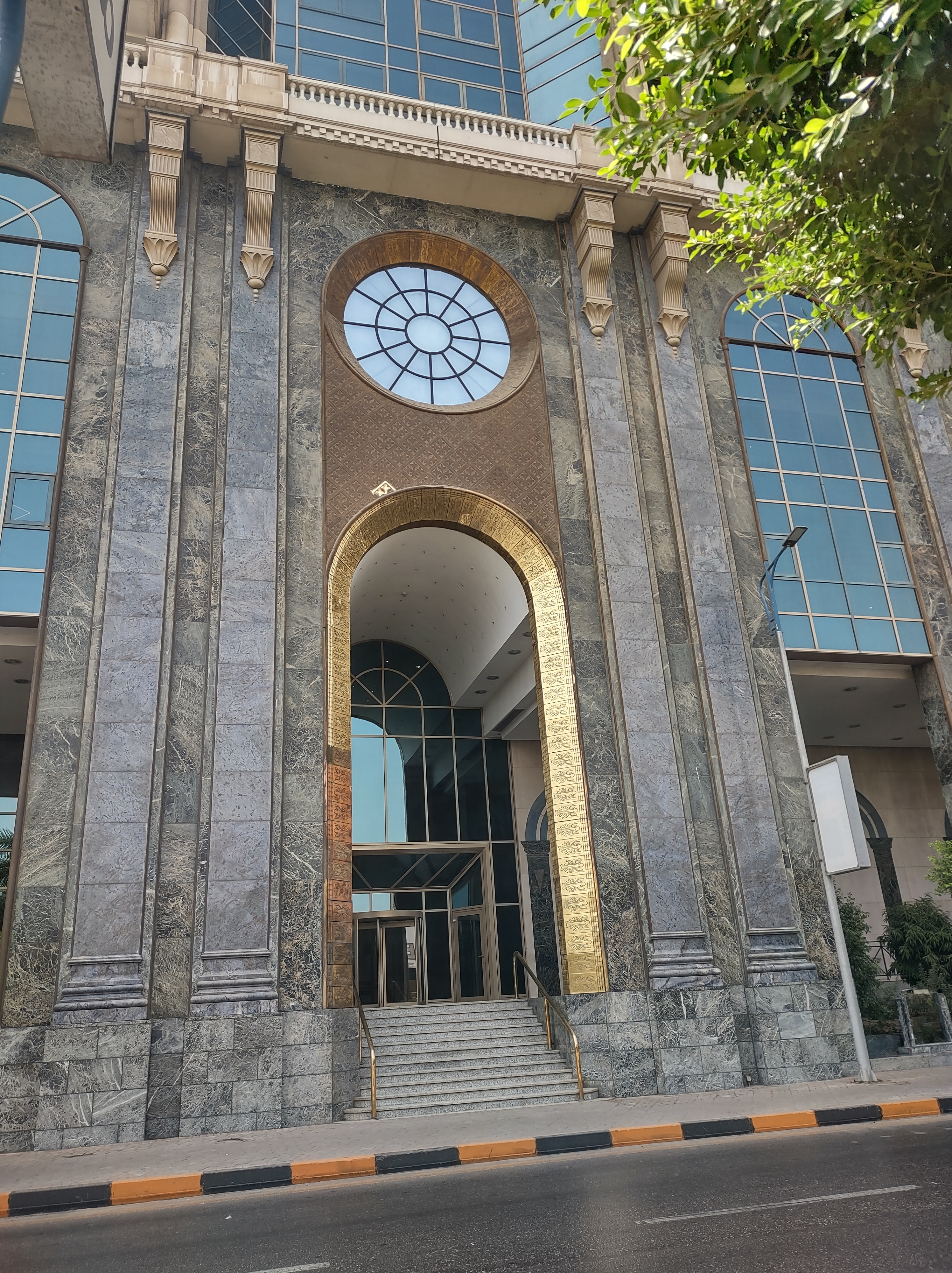
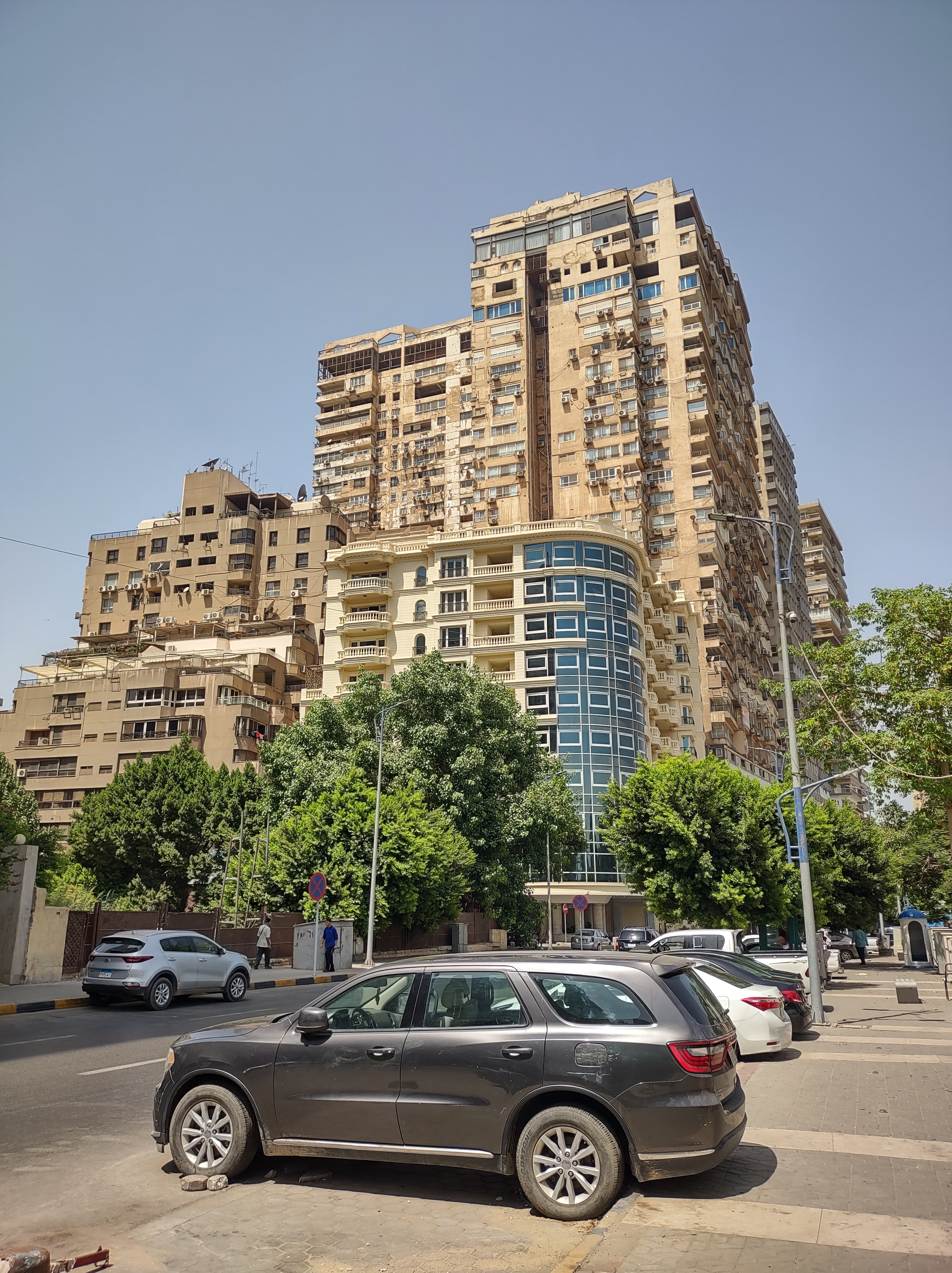

Due to their size, many of them verge on the grotesque, but as a group they are actually kind of beautiful with a strange organic feel (probably because their varying ages and styles) and they do provide an interesting counterpoint to the utter flatness of the river, almost like mountains in the distance.
Once across the Qasar Al Nile Bridge, we approached El Tahrir Square, which is the center of the City of Cairo and one of the more storied places in Cairo. The square was commissioned in the early 19th century by Ismail Pasha the Khedive (ruler) at that time as part of his efforts to make Cairo the Paris of the Nile and was originally named Ismaillia Square after the Khedevi Ismail. After the Egyptian Revolution of 1919, it became widely known as Tahrir (Liberation) Square. In the 1930’s, Khedevi Ismail’s son created a roundabout with a garden at the center of the square. His successor King Forouk constructed a pedestal at the center of the square to support a statue of Khedevi, but the statue never materialized.
The square was officially renamed “Tahrir Square” after the Egyptian Revolution of 1952 which changed Egypt from a constitutional monarchy into a republic. One week after the assassination of Egyptian President Sadat in 1981, the square was renamed the Anwar El Sadat Square and a statue was planned to be erected on the empty pedestal. The new name never took hold and, after decades with no statue, the pedestal was removed in 1987 during construction of the Sadat metro station underneath the square.
Tahrir square became know world-wide the focal point of the Egyptian Revolution of 2011 when protestors occupied it for 18 days which led to the resignation of Egyptian President Mubarak. This major event, part of the Arab Spring of 2011, has particular significance for us as our son was in Cairo at the time. I still remember having a conversation with him one evening when he said he’d heard something about protests at Tahrir Square and they were planning on going down to check it out. A couple of days later, as things continued to heat up in Cairo, he and his travelling buddy headed to Malta.
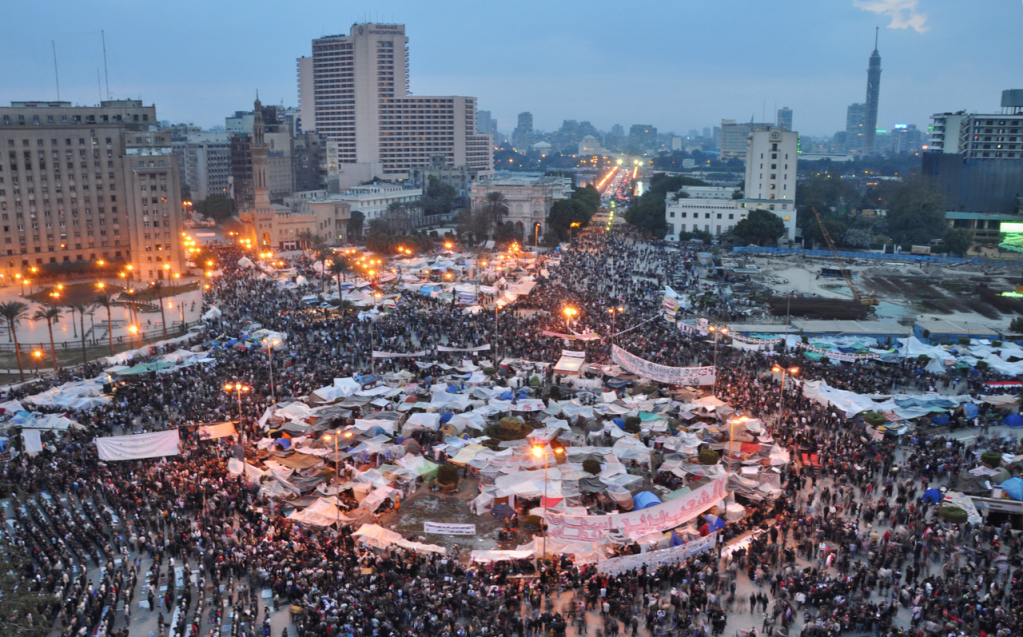
Tahrir Square was again the site of protests in 2013 which led to the overthrow of President Morsi. It’s interesting to note that less than a day after its inauguration, a memorial erected by the interim government to honor protestors killed during demonstrations was destroyed by protestors and activists who saw the memorial as an effort by the government to whitewash recent history. In 2015 President el-Sisi erected a large flagpole flying the Egyptian flag at the center of the square seeing this as a more neutral less controversial monument.
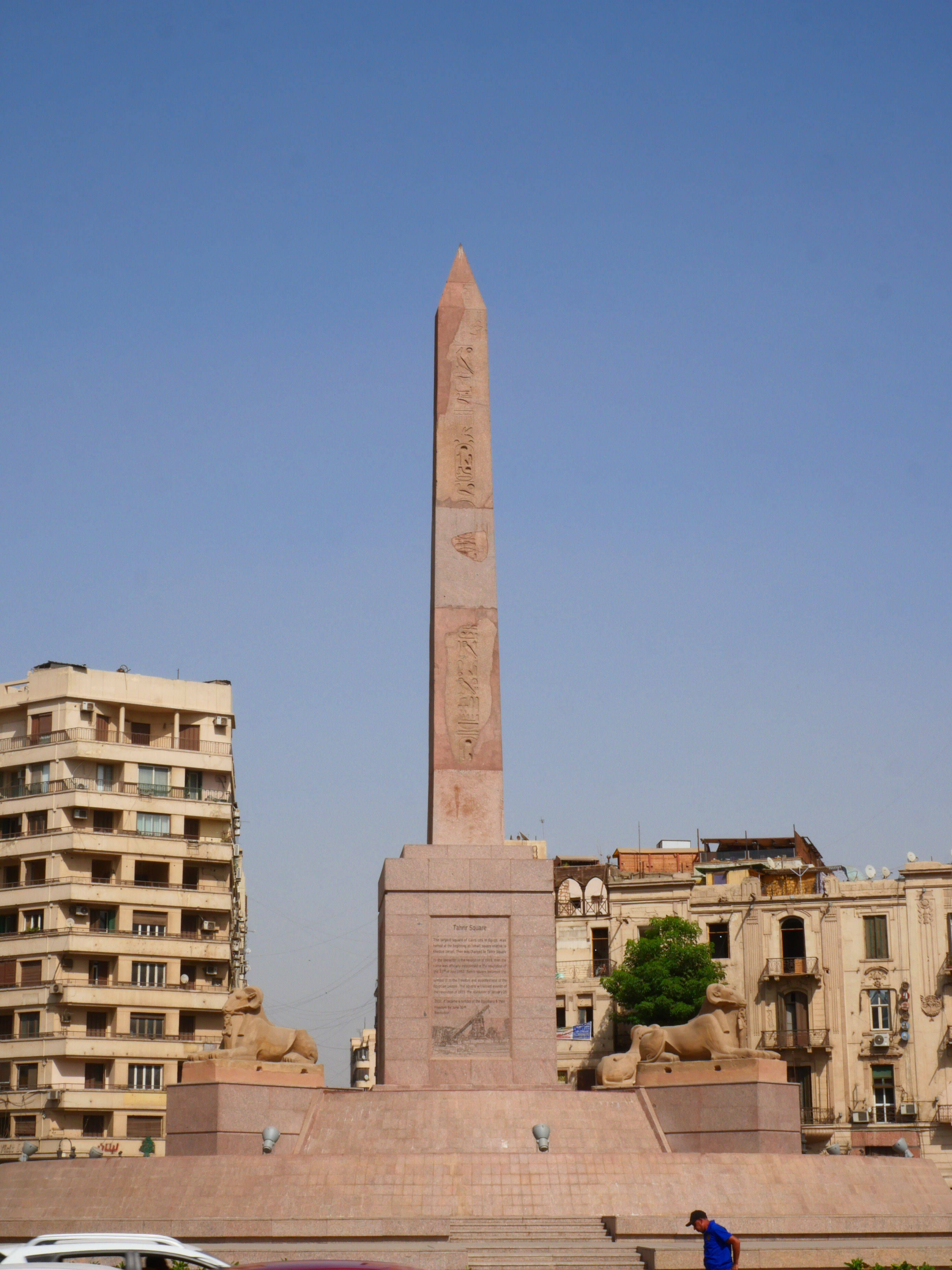
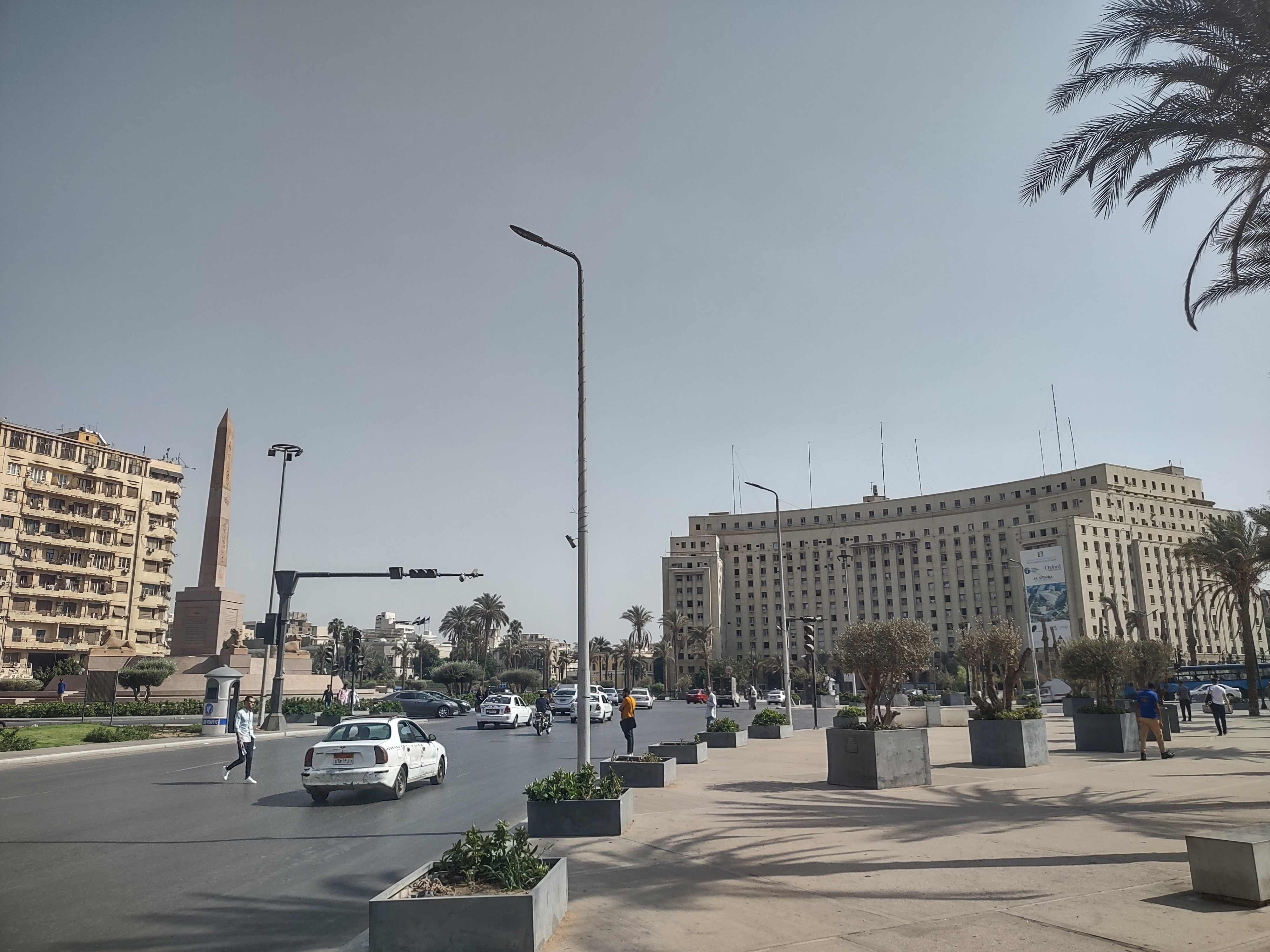
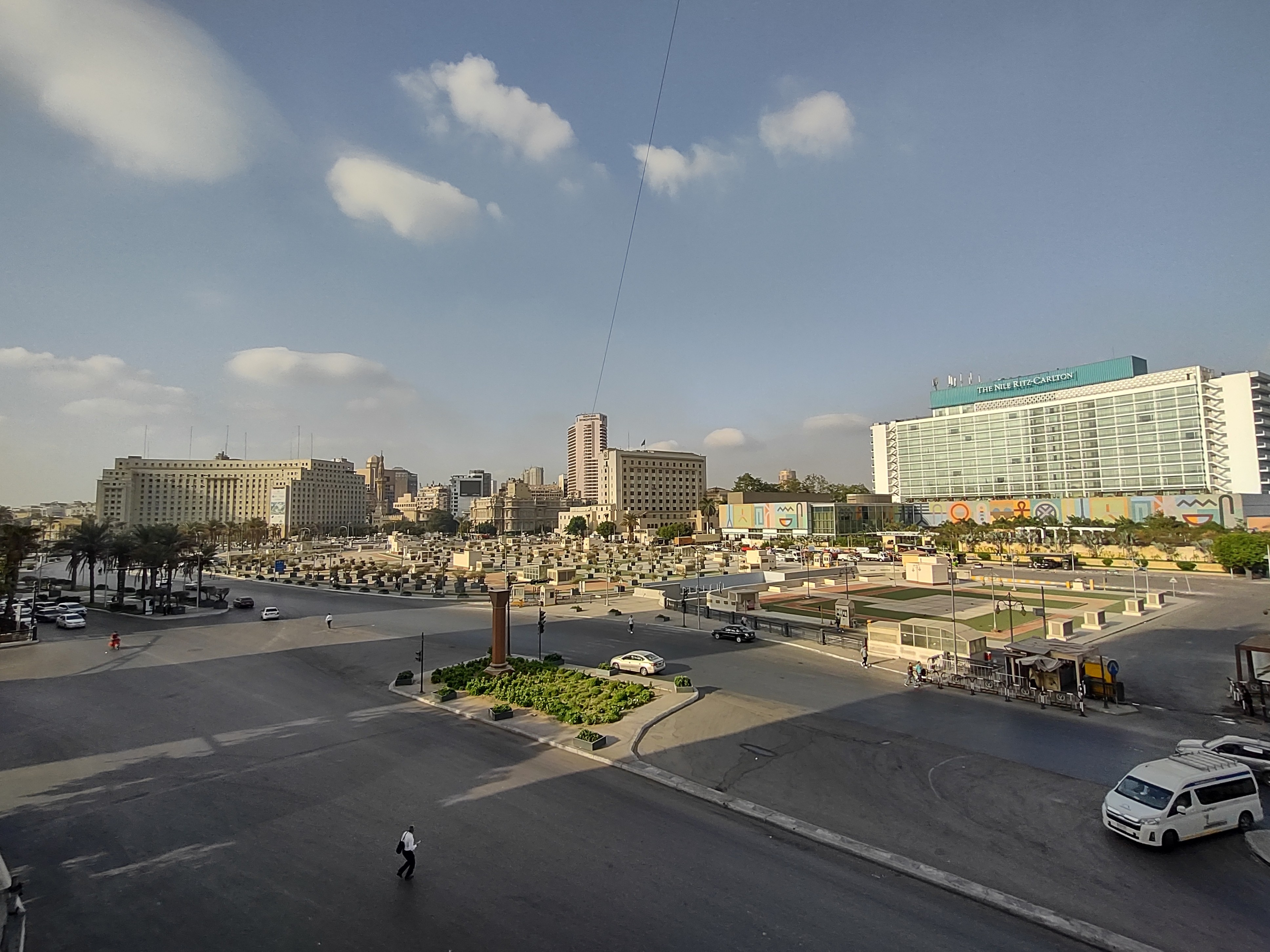
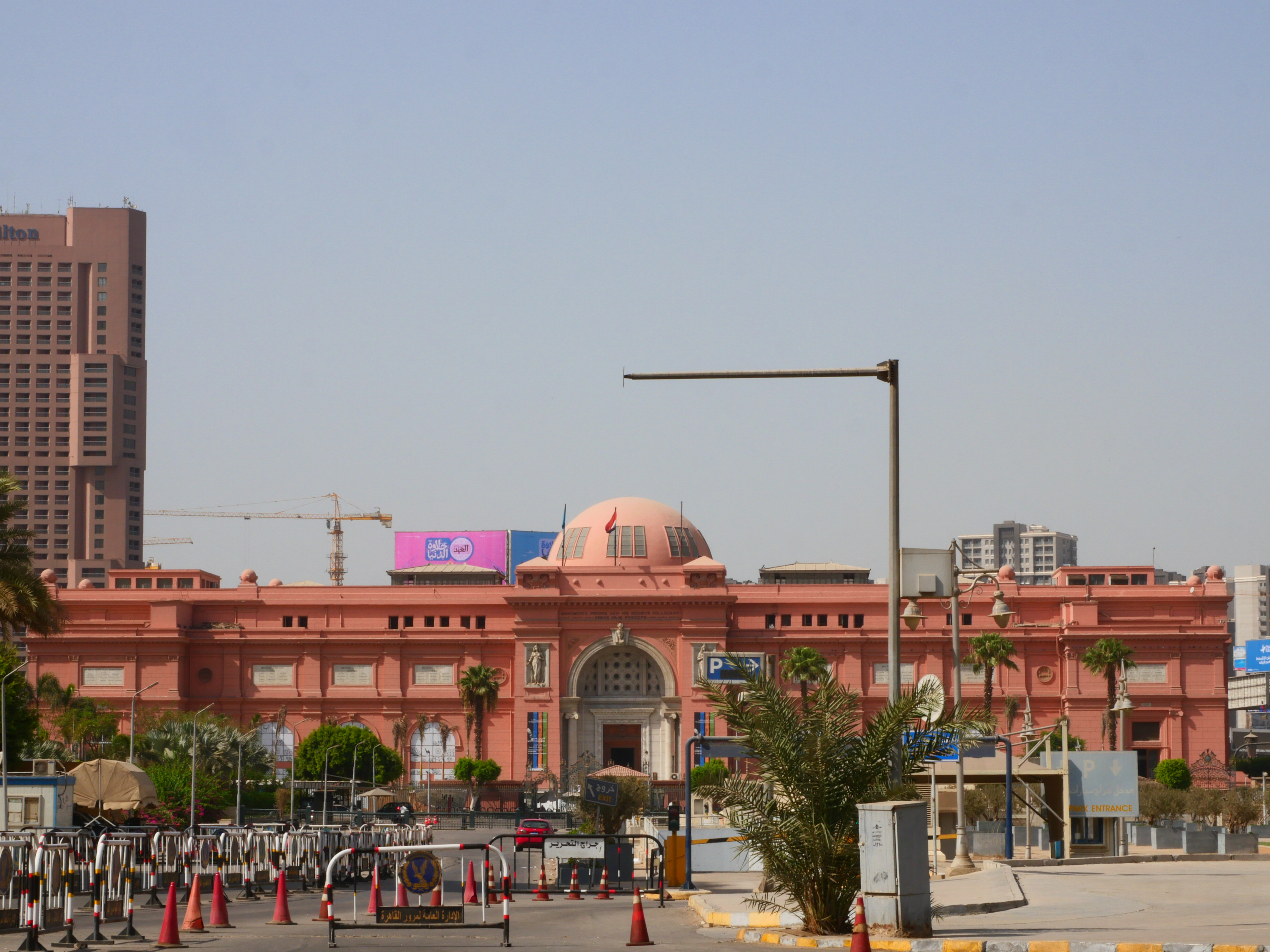
In 2020, the government erected a new memorial which includes a 3,500 year old obelisk from the reign of Rameses the Great at the square’s center with four ram-headed sphynx statues from Karnak. While some critics contend that the memorial is an effort by the government to control use of the space and a continued effort to obscure the memory of the 2011 revolution, it is still standing today, which is an improvement upon its predecessor. While the scale of the memorial seems on the small side for what is a pretty monumentally scale open urban space, it provides a focus to the space which it would otherwise lack and makes an interesting visual connection with the Egyptian Museum in Cairo 300 meters to the north up the grand avenue of Meret Basha.
Puttin On the Ritz (Carlton)
By the time we finally reached it was about 2:00 PM and we had a decision to make. To the north was the Egyptian Museum in Cairo (commonly known as just The Egyptian Museum) which, not surprisingly, houses the largest collection of Egyptian antiquities in the world, including the contents of the tomb of Pharoah Tutankhamun (King Tut). To the west lay the Nile Ritz-Carlton of Cairo, an amazing luxury hotel from days gone by which, when the day started, we had hoped to visit for drinks and lunch. Unfortunately, the Egyptian Museum closed at 4:00 PM, so there really wasn’t the option of visiting it after lunch so in this instance more basic human needs (food and drink) won out over higher aspirations (see Maslov’s Hierarchy of Needs).
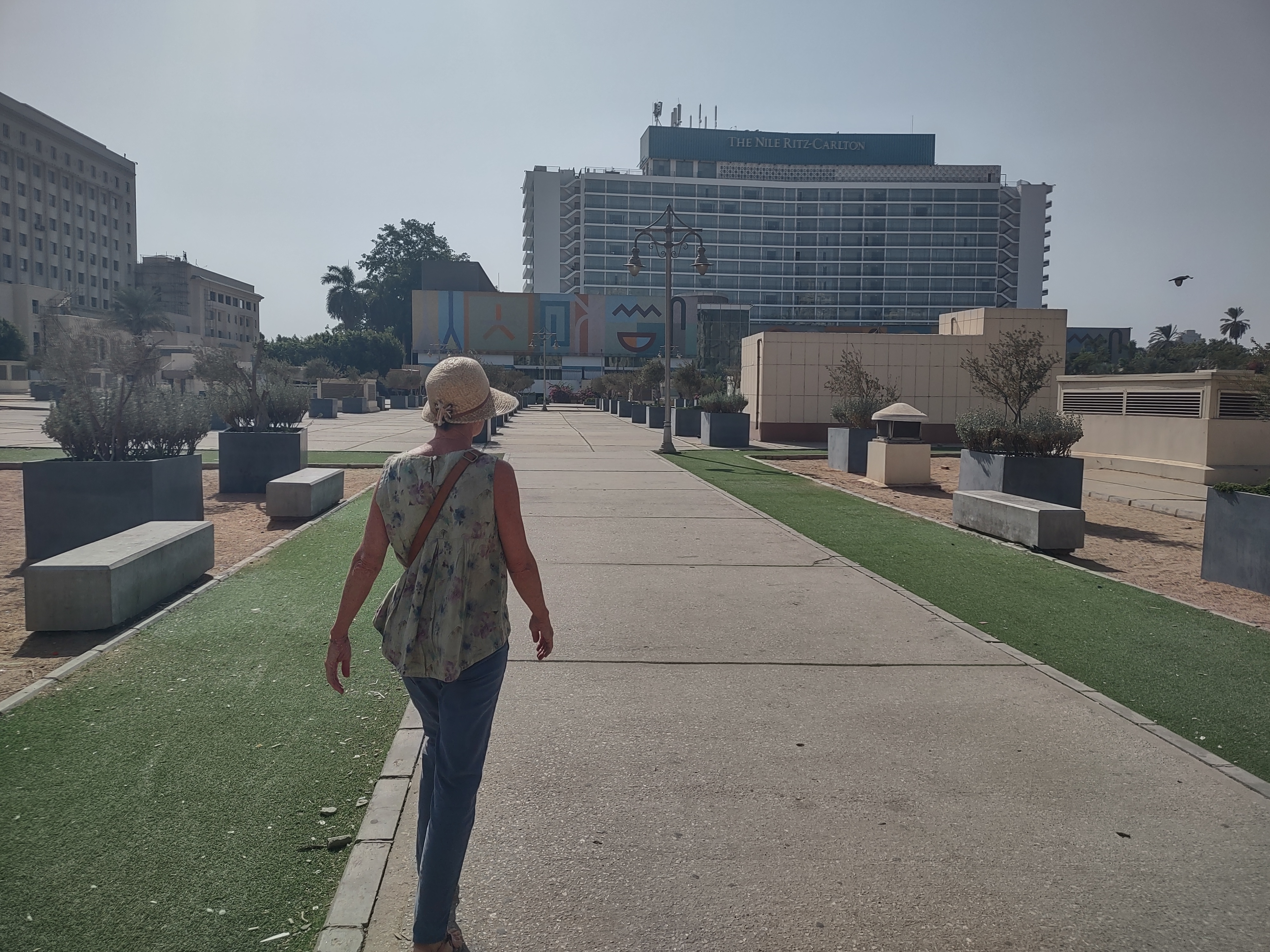


While we most of our stays over the last nine months have been in small houses and apartments, we have occasionally stayed in an actual hotel our current stay in the Museum Plaza Motel which, at $60/night was pretty representative of our hotel stays. It probably goes without saying that there was absolutely no resemblance between any of those places and the Nile Ritz-Carlton (where rooms start at about $1,000 per night). From an architect’s point of view, the Nile Ritz-Carlton is actually a pretty interesting place as it was the first luxury hotel in Cairo, which was constructed in 1959 and then re-discovered and reopened by Ritz-Carlton Hotels in 2015. While it still retains much of its original then cutting-edge 60’s modernism on the Nile River side, an interesting addition has been made to the Tahrir Square side. From a layperson’s perspective, the public areas are incredibly spacious and airy and everything is very posh including their outdoor pool area and gardens. We wandered a bit and ended up having drinks and nice leisurely lunch in the bar which overlooks the Nile River.
Back on the Road
On the way back to the Museum Plaza Hotel, we detoured to check out a couple of other pharmacies and finally found what we were looking for just a block from our hotel. When we arrived back at our hotel, our taxi driver was waiting so we went in to retrieve our luggage and the Tansania visa’s which they were printing for us only to discover that they had printed two copies of my visa and none of Colleen’s. The hotel was unable to print one but made arrangements for our taxi driver to stop at a Stationer’s (it’s a thing in the Middle East, not a chain, a copy place that also sells all sorts of stationary and office supplies).
After a couple of failed attempts to do so and our flight time starting to work against us, we told our driver to just head to the airport and we would make do with the electronic versions of our visas. But, as we passed through the eastern suburbs of Cairo, he pulled over and a young woman appeared out of the dark with a printed version of Colleen’s visa! Apparently our driver had emailed the document to a friend who lived along the way who printed and delivered it to us. The kindness of strangers! Along the route to the airport we saw what seemed like hundreds of mosques, certainly enough to justify Cairo’s nickname of the City with a Thousand Minarets.
Our day in Cairo had been short but sweet but with the way we approached it, I think we got about as much of a feel for the city as was possible in a single day, but we left with a little regret that we had not found a way to spend at least a couple of more days there. Definitely another place to add to the Come Back Soon list. We arrived at the airport on time but a bit frazzled and ready to get on a plane and catch some shuteye on the way to one of the most exotic destinations of our trip, the island of Zanzibar. More about that in our next installment. See you then, inshallah.
 Burning the Inheritance
Leave a comment