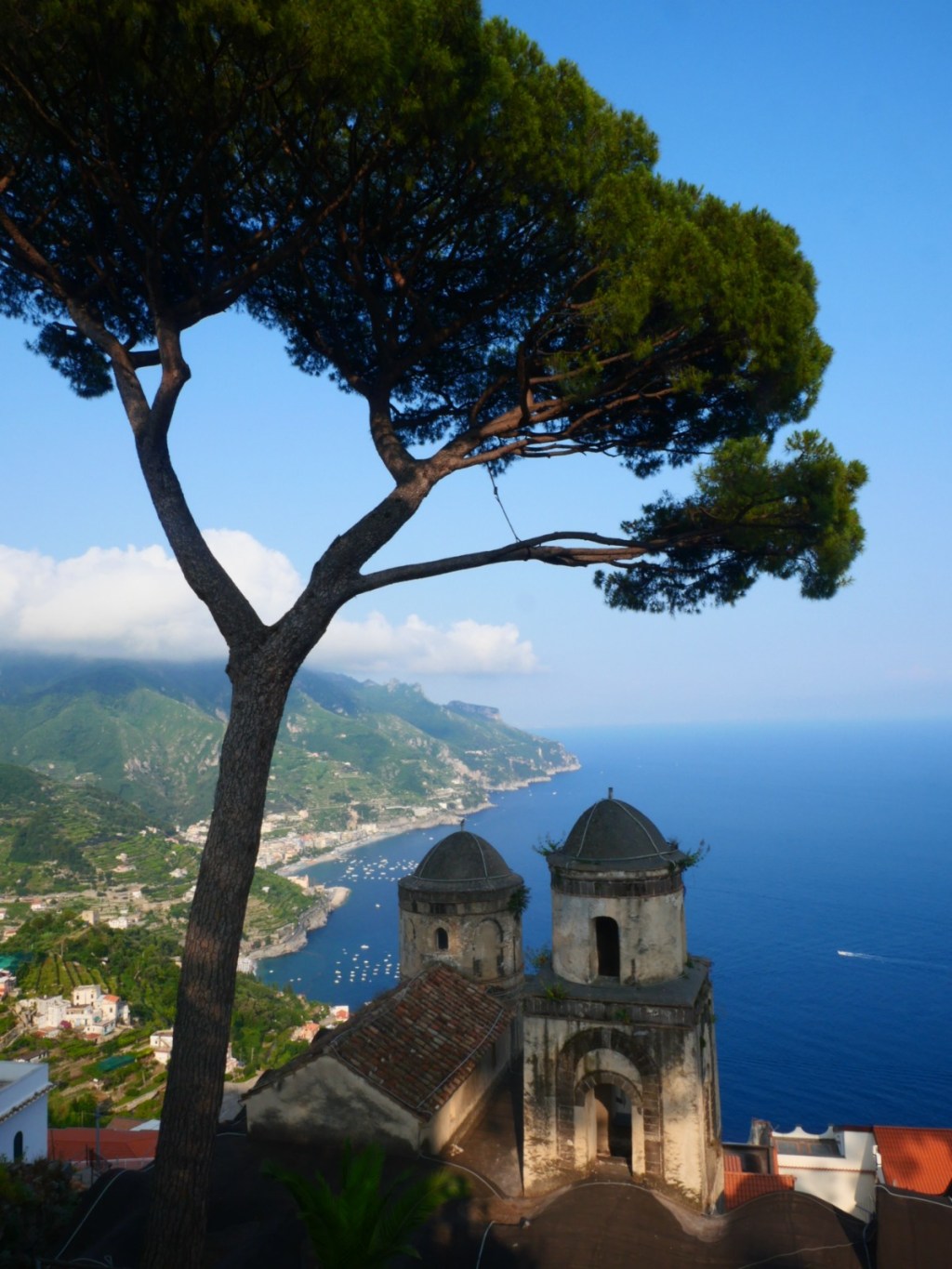
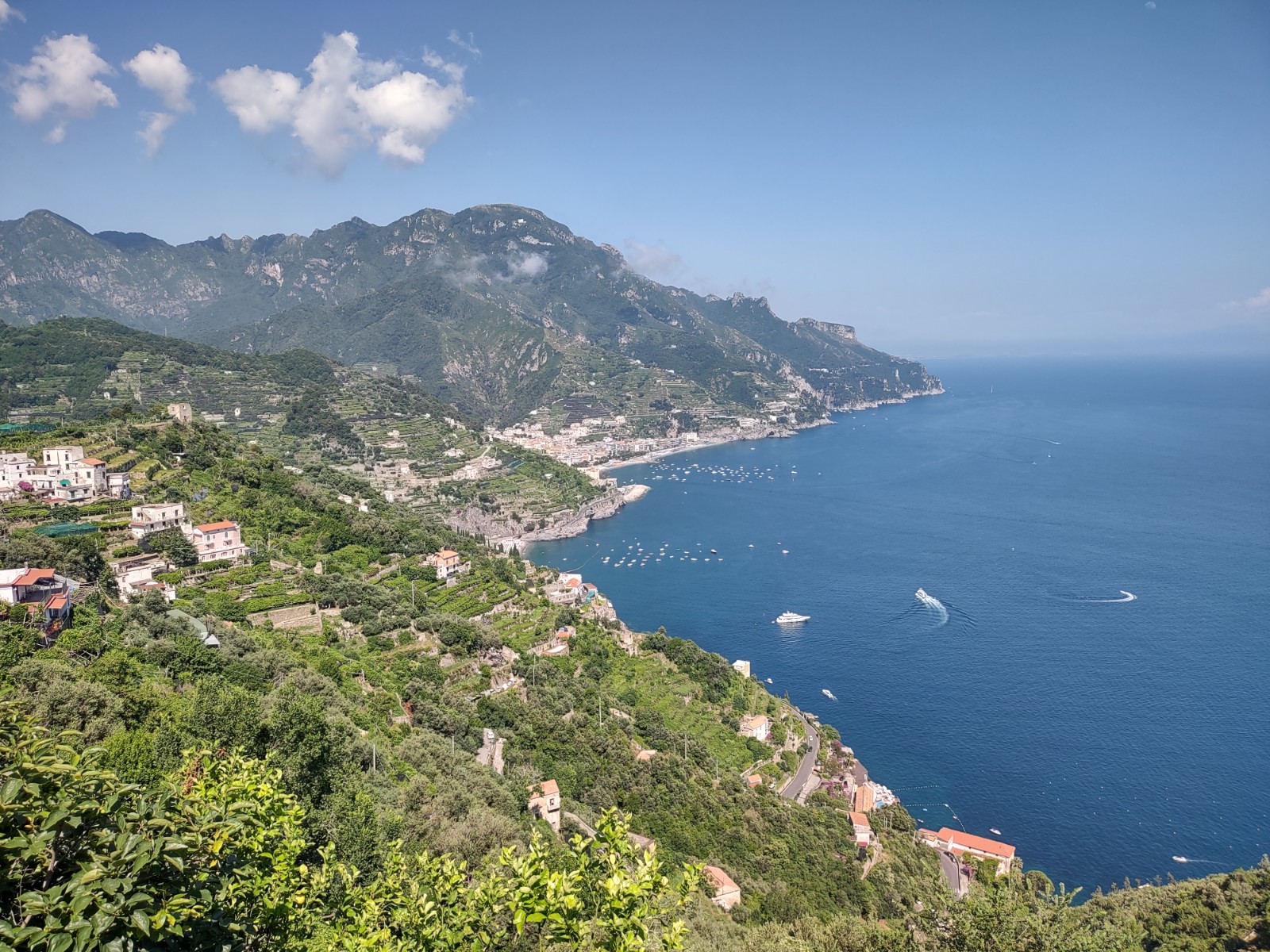
There is a peninsula south of Naples which stretches from Palermo to Sorrento with the Isle of Capri just off its tip. A narrow road runs along this coast through a number of small sea-side towns including the well-known Italian beach towns of Positano and Amalfi. This stretch, commonly known as the Amalfi Coast, is more or less the Italian Riviera with multi-million dollar yachts cruising up and down the coast and Lifestyles of the Rich and Famous definitely playing out in some places. Crowded and expensive or not, it was a part of Italy we really wanted to see and, in researching the area, we came across what appeared to be a reasonably priced house with an amazing view in the town of Ravello, which sits on a high plateau overlooking a stretch of this coastline which extends from Amalfi east toward Palermo. We came to Ravello hoping to find it less crowded than Amalfi or Positano, which it was, but we discovered that there were reasons for the uncrowdedness and that it came with a bit of a price (or at least some trade-offs).
The town of Ravello was founded in the 5th century when it served as a refuge from barbarian attacks at the end of the Western Roman Empire. It grew as a center for wool dying and trading and, as part of the Duchy of Amalfi, grew to have a population of about 25,000 by the 12th century. After the Duchy was destroyed by the Republic of Pisa, economic decline set in and most of the population moved to Naples and its surrounding areas. Today Ravello, which has a population of about 2,500, has, for a number of reasons, become a popular stop for tourists (mostly day trippers) visiting the Amalfi coast and, in 1997 it was named as a UNESCO World Heritage Site.
Getting There
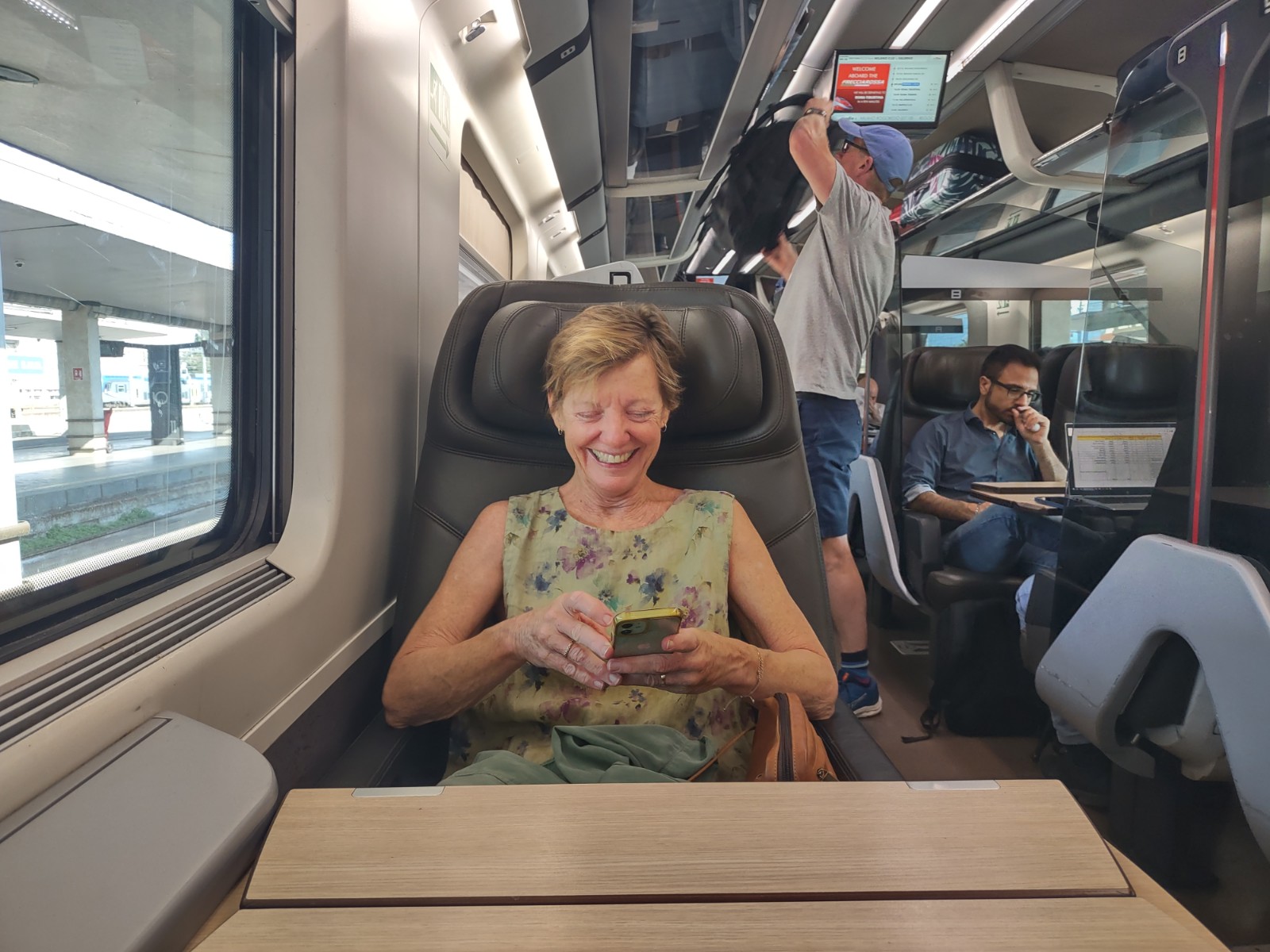
We left our apartment in Florence on Tuesday morning, June 27th, and schlepped our bags the 25 minutes it takes to reach the Santa Maria Novella train station where we arrived early enough for coffees and pastries. When we boarded the train we realized, after having to walk its full length, that Colleen had booked us reserved seats in Business Class which she willingly acknowledged she would not have paid extra for had she known. (This is an area where I feel she is sometimes a bit too frugal – I can’t even get her to spring for the extra seven or eight bucks it costs to get reserved seats on Ryan Air!) Intentional or not, she seemed pretty happy with both the seating accommodations and the complimentary breakfast and drinks which came with them!
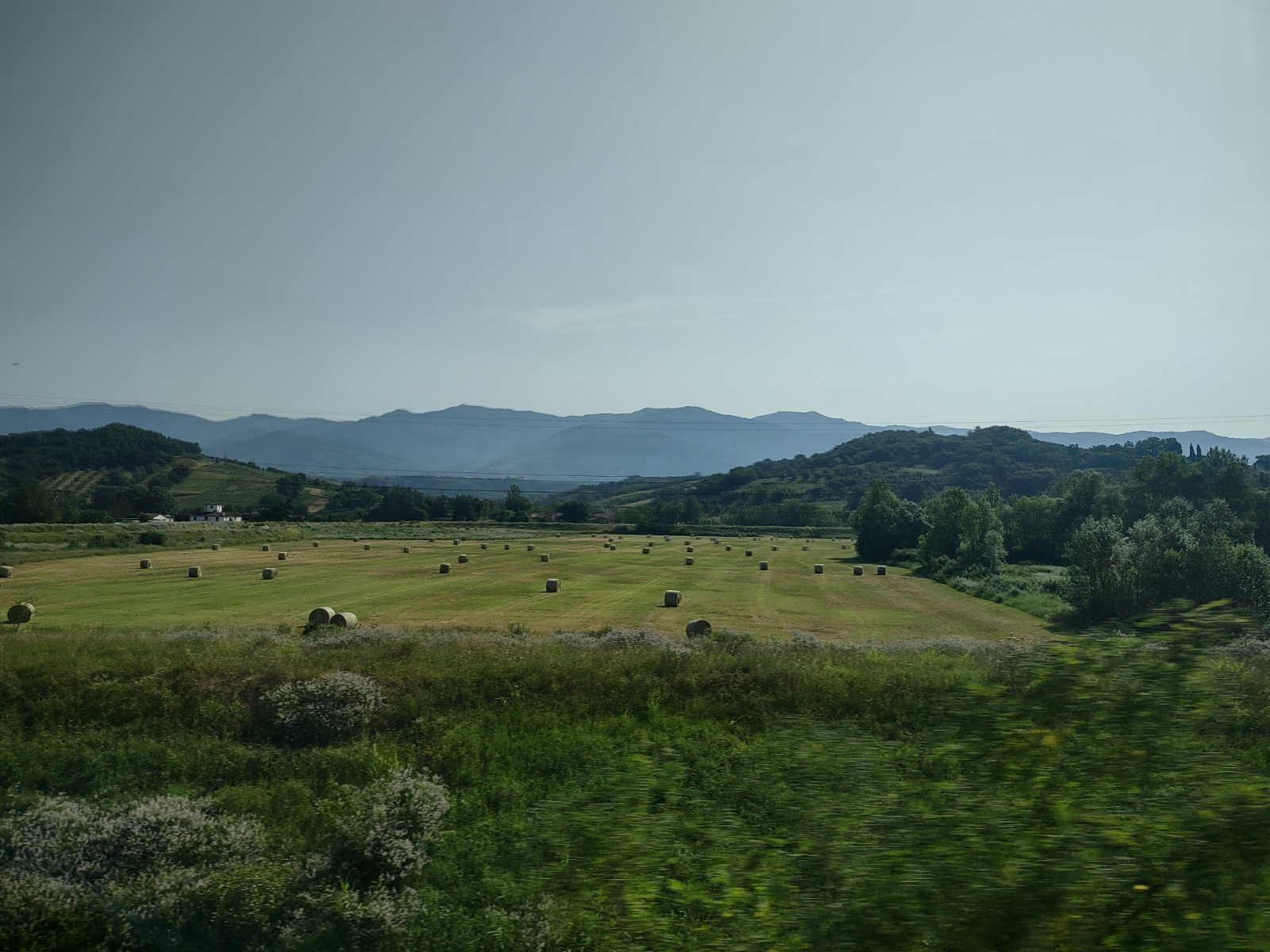
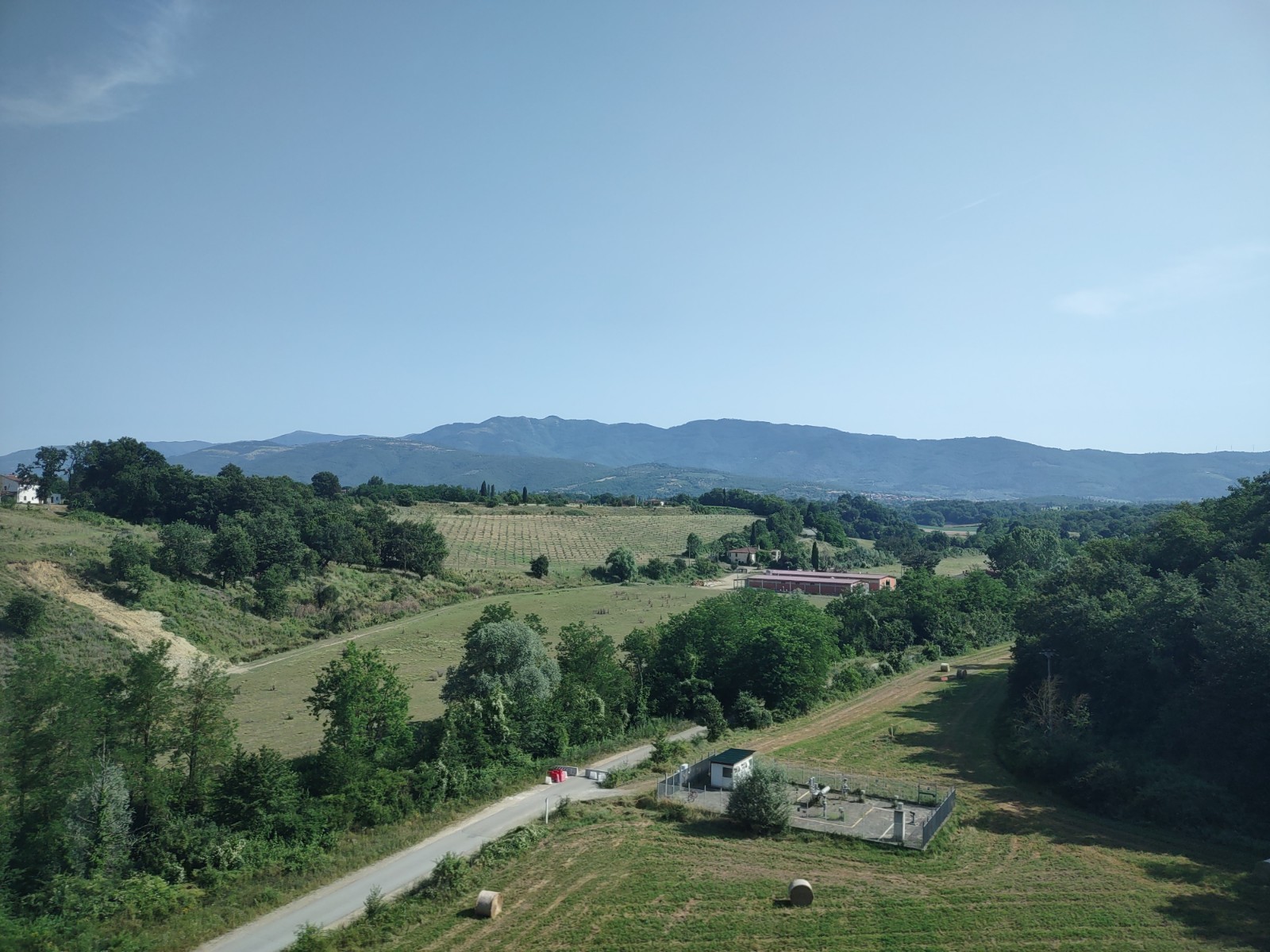
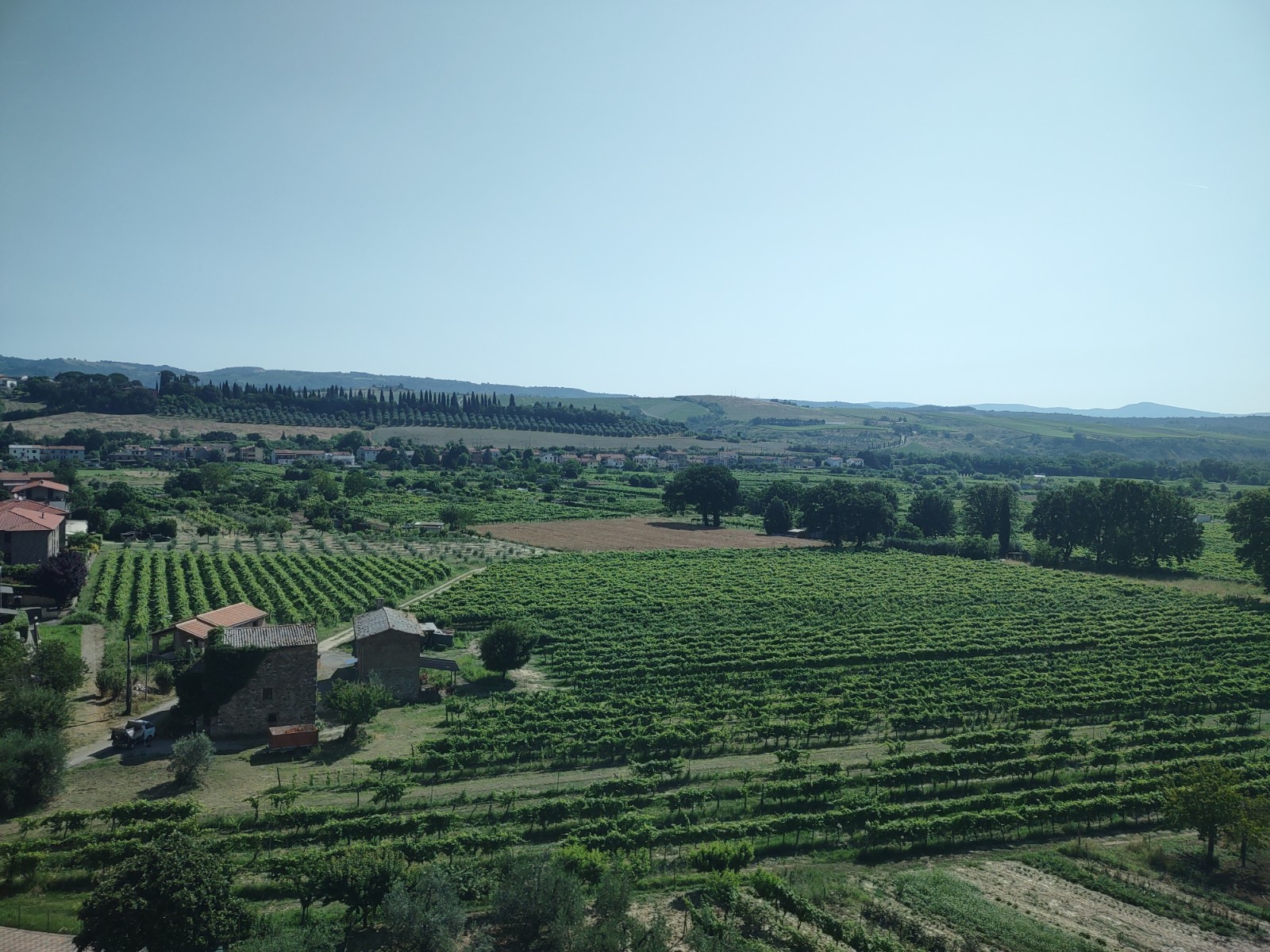
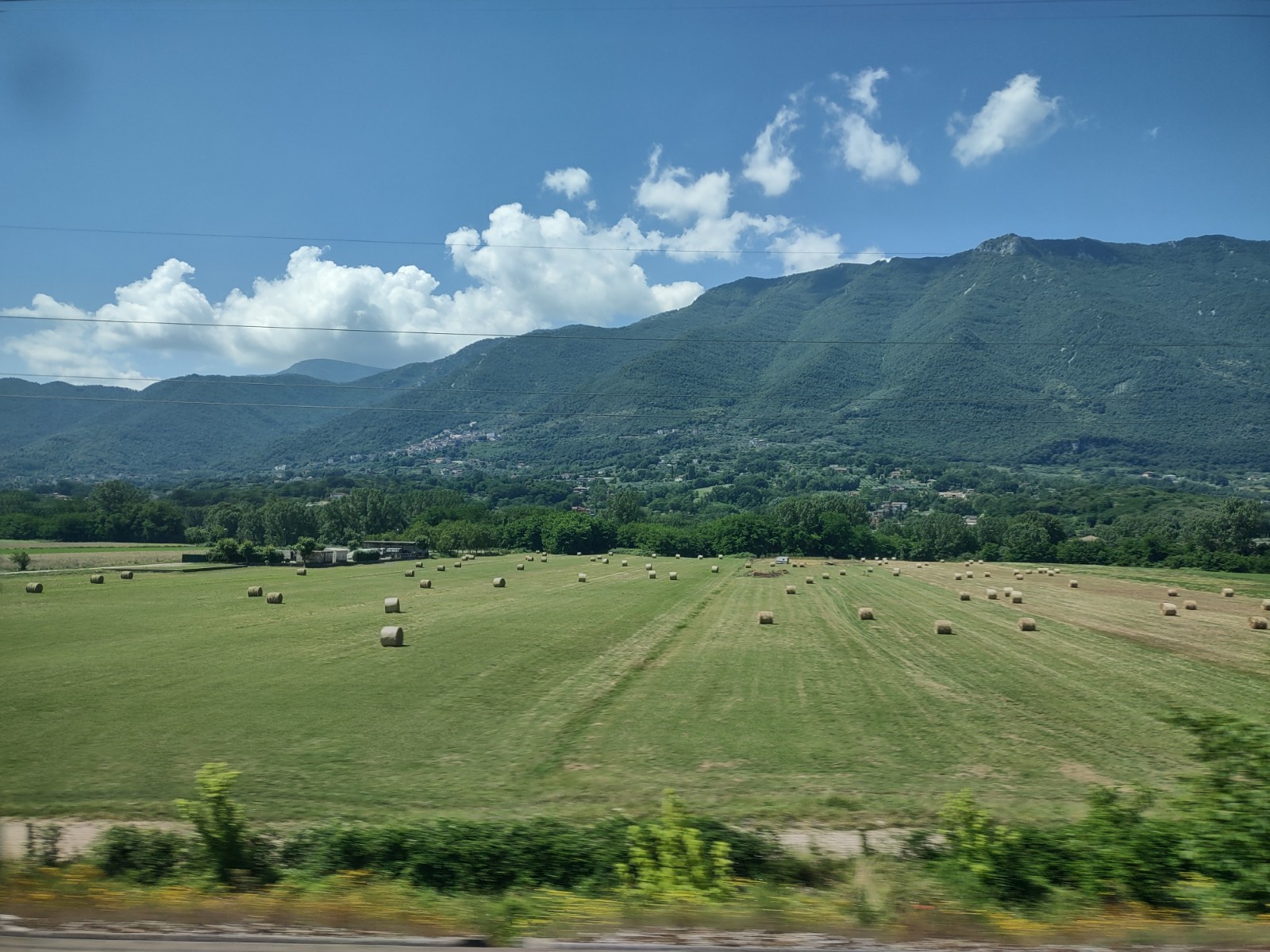
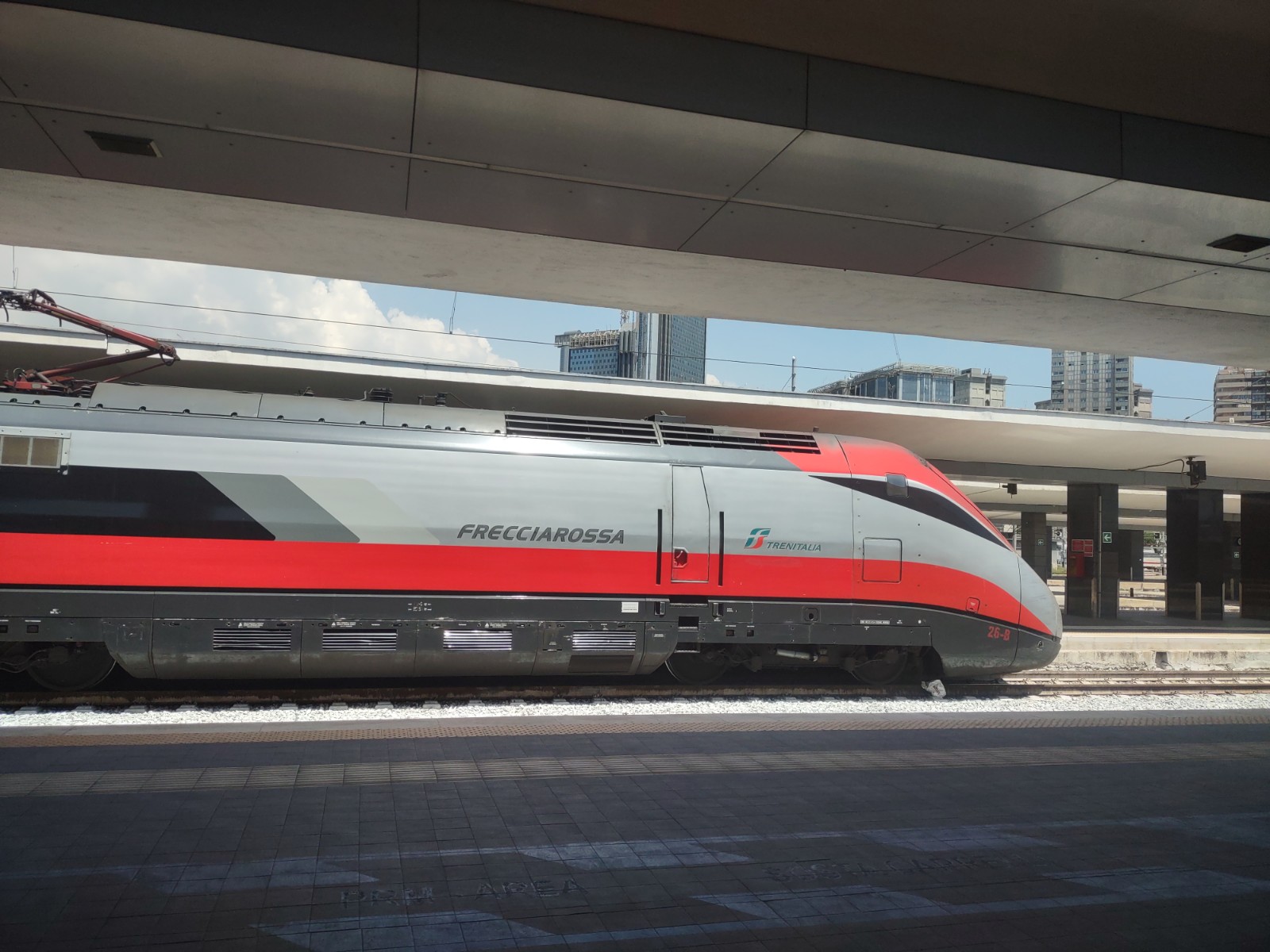
The train ride was great with wonderful views of the Italian countryside, but our issues started in Palermo where we discovered that, despite information to the contrary, there is apparently no direct bus from Palermo to Ravello. And so, we boarded a bus for Amalfi where (maybe?) we could catch a bus to Ravello which (of course) was not the case. What followed was a very memorable bus ride from Palermo to Amalfi with amazing views of the towns and coastline sliding past us as the bus flew around hairpin turns on a narrow road which was, for the most part, high above the water hugging the sides of steep cliffs. (Colleen later confirmed that this ride was definitely in the top five of the list of near-death experiences.)
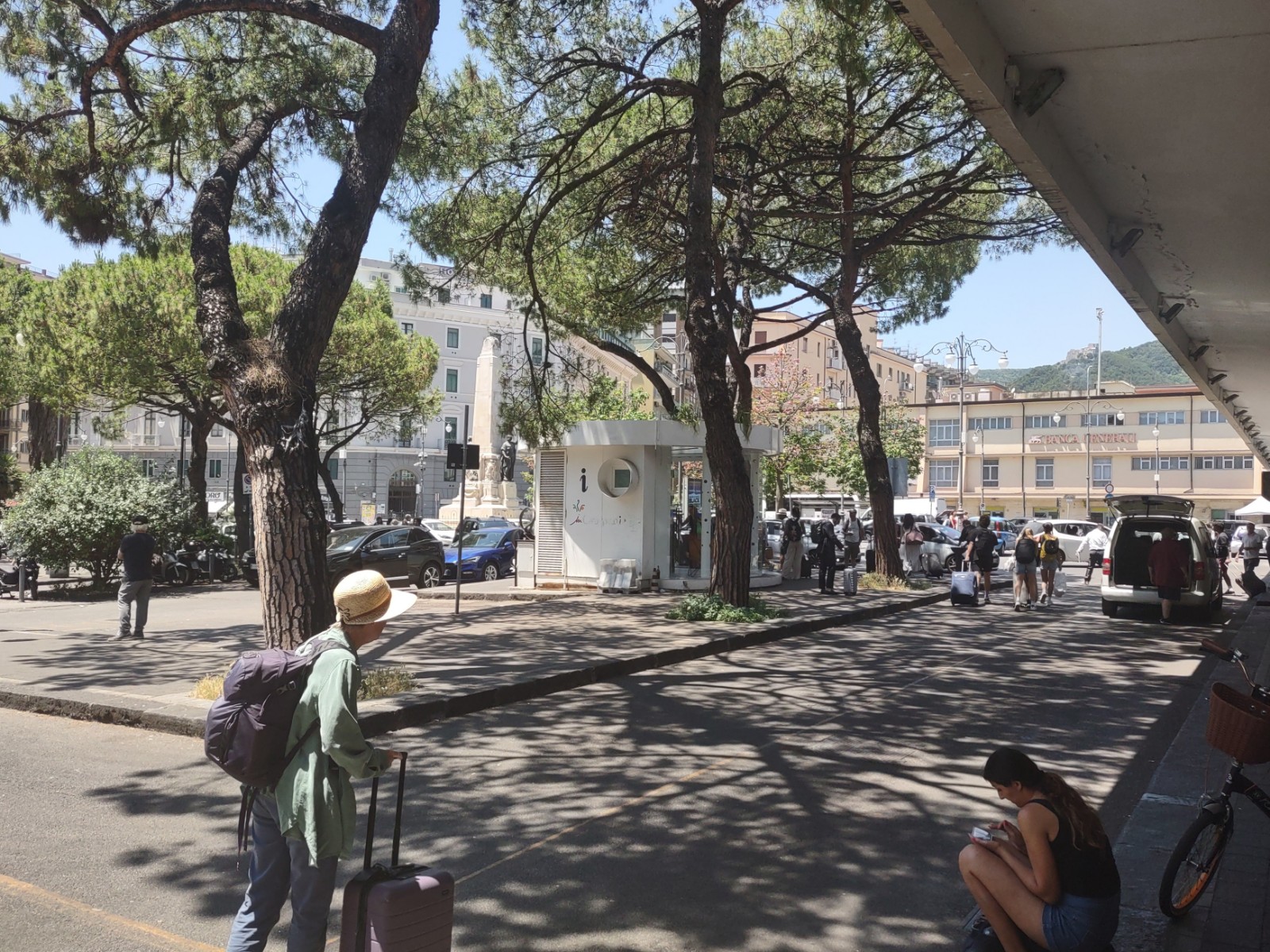
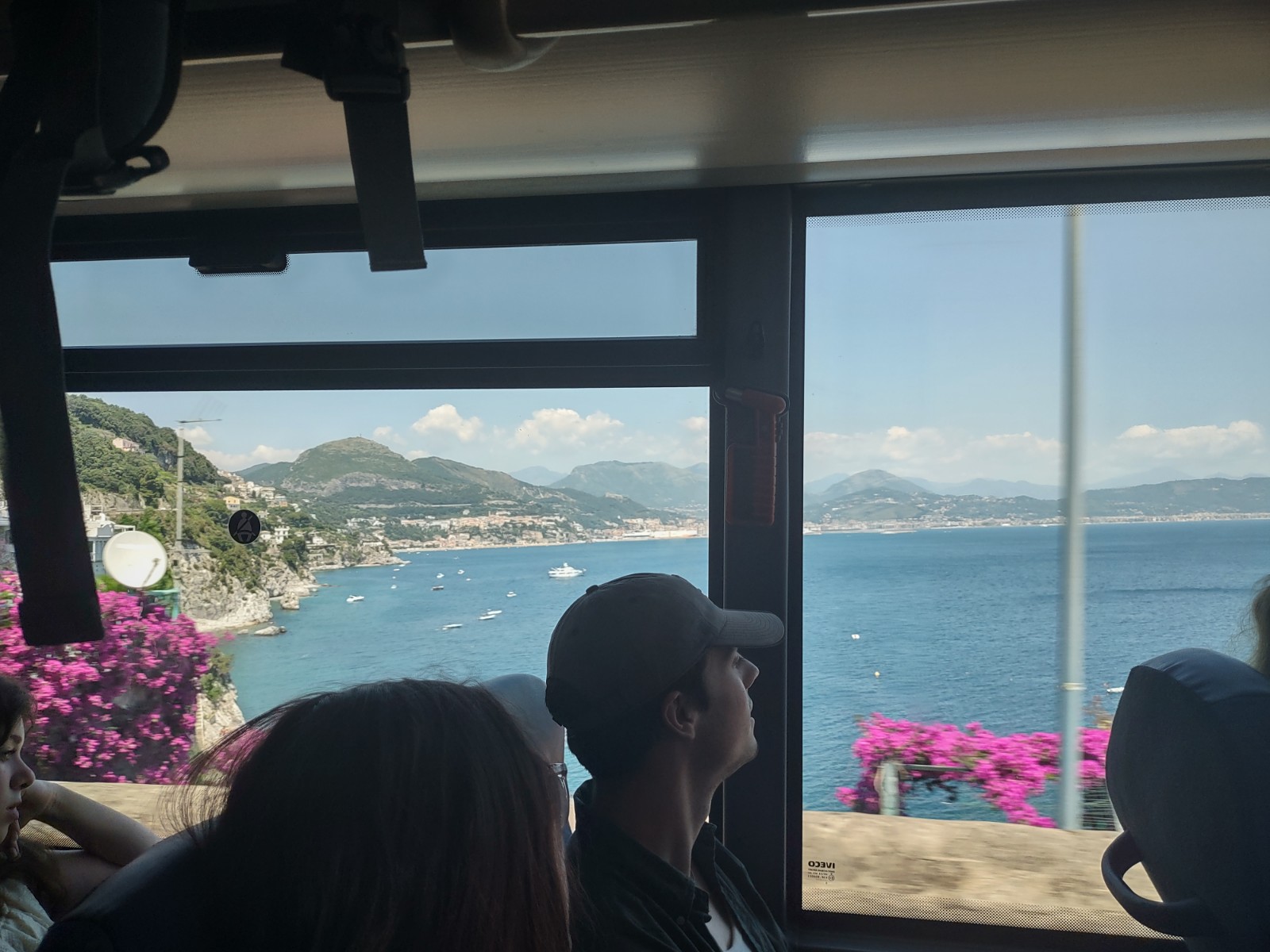

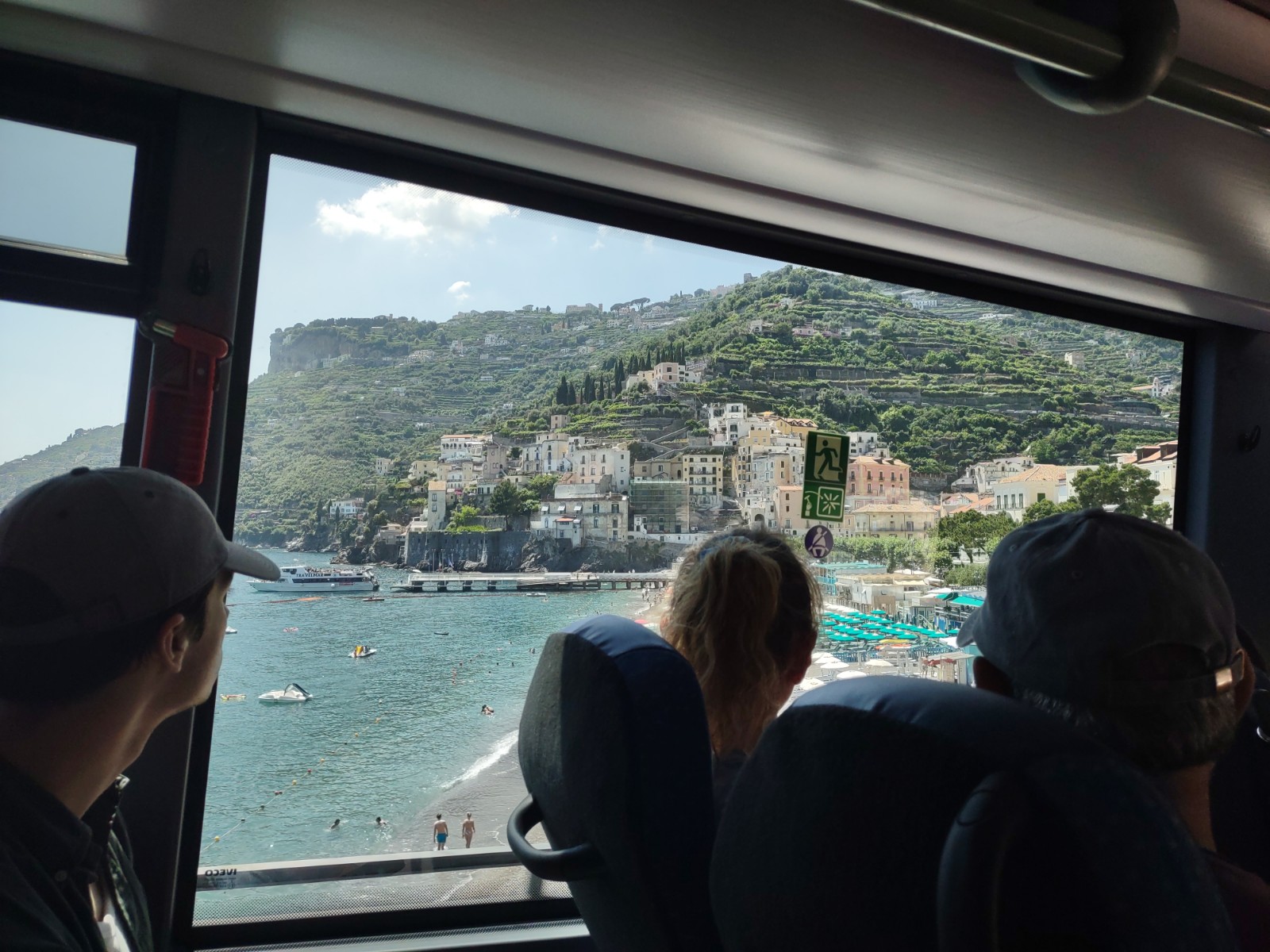
After about an hour of this, we arrived in the crowded chaotic center of Amalfi at around 3:00 PM with the sun blazing, the humidity steaming, and people everywhere. Pretty much our absolute worse fantasy of what Amalfi might be like this time of year come to life! (Which I think means we were actually kind of expecting and therefore mentally prepared for this.) We found a shady spot to park our luggage and, after a little investigation, confirmed that there was no bus to Ravello but that we could get a taxi there for the bargain price of only 80 Euros (for about a 20-minute ride).
With a little more investigation and negotiation, Colleen found a driver who would take us to Ravello for 30 Euros but we would need to wait until he had a few more riders. We sat in the shade, sipped water, and watched the chaos ebb and flow around us, and eventually our driver announced it was time to go. As we climbed into the taxi van, a fellow traveler in the front passenger seat turned and announced “Welcome to the get me the hell out of here express!” which I think pretty closely echoed our sentiments at that point.
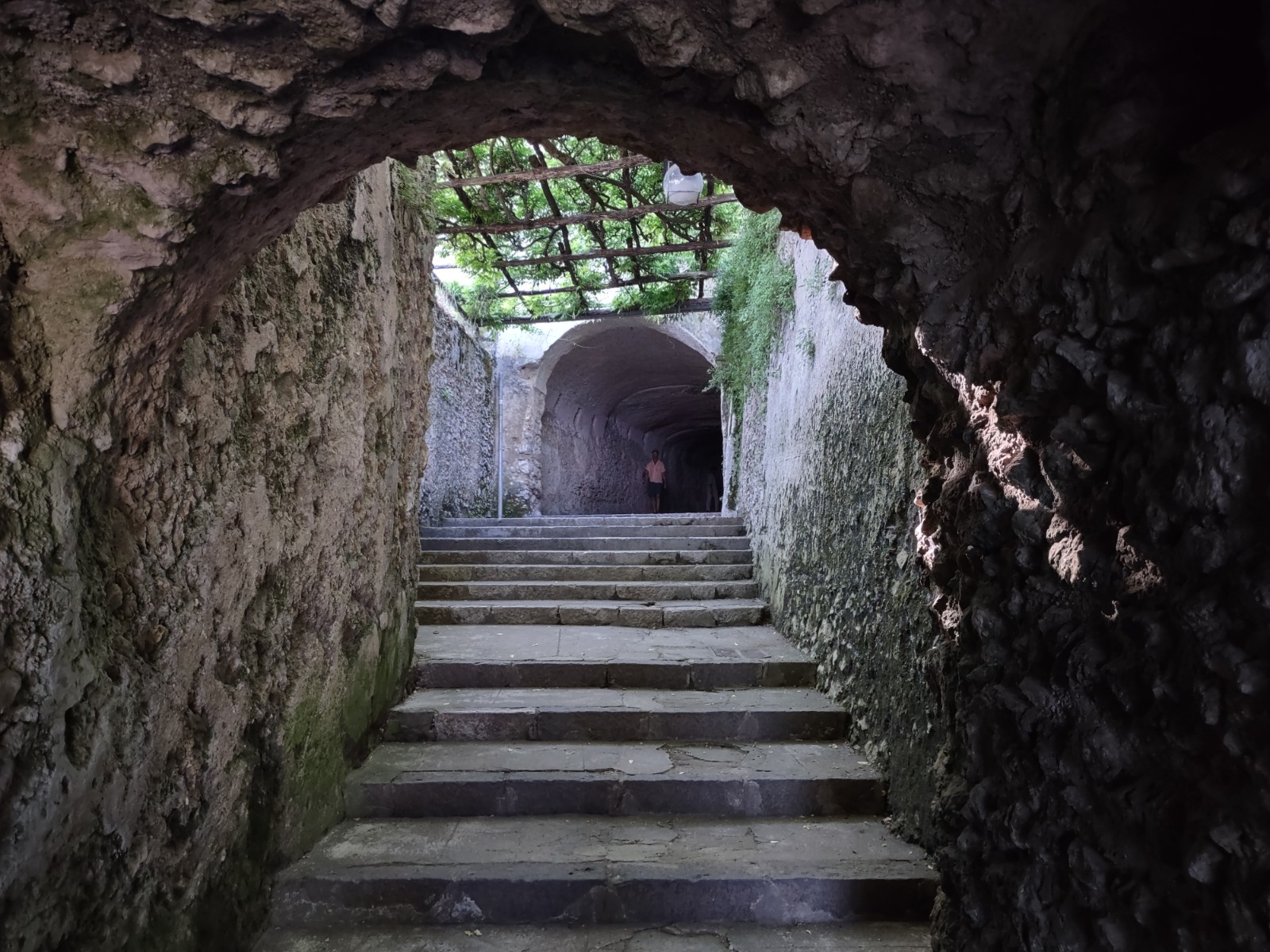
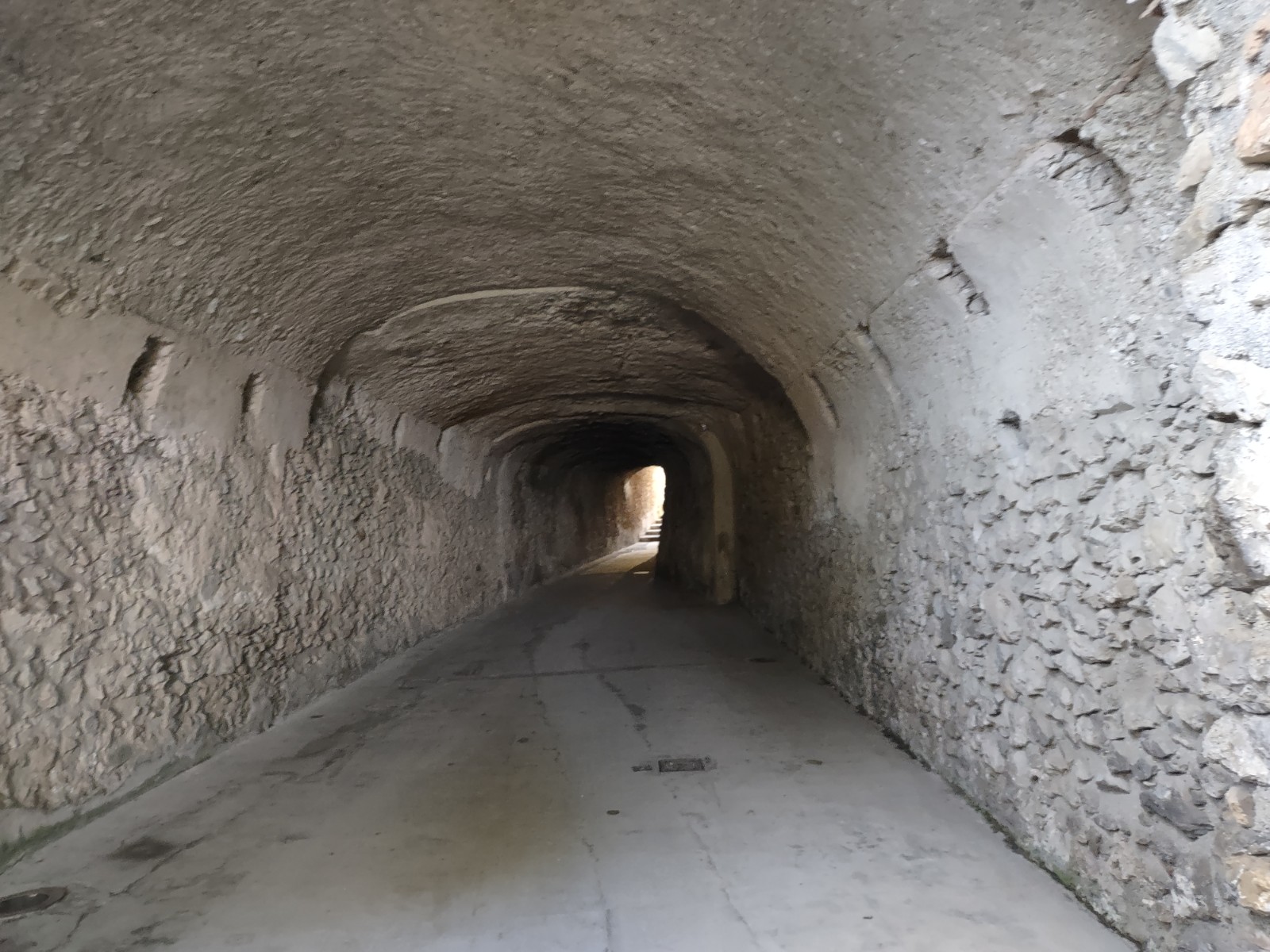
The taxi ride up the mountain was fine and, because we had to backtrack up the coast before heading into the mountains, we got to see some of the lovely views which had flown past us about an hour earlier. (It was much more of an “oooh” and “aaah” experience this time versus the prior “we’re all going to die!” experience.) Because it was a group taxi, the driver deposited us all at a point where vehicular traffic ends near the center of town, but actually on the other side of a mountain ridge which is crossed by a pedestrian tunnel. (Tunnels seem to be a pretty common and popular thing on the Italian western coast!)
So, this was the point in our visit to Ravello where theory about what the place would be like met reality in a very physical way. While we could see the distances between places (like the town center and our house) on Google Maps, even with the terrain layer on, it’s very difficult to judge how much change in elevation there is. (We later discovered the way to determine this is to plot the route by bicycle which will give you the total vertical distance travelled up, down, and net.) So, while the walk between the Ravello town center and our house was between a half and about a full kilometer in distance (depending upon which of several routes you took), it was important to realize that there was also over 115 meters of vertical difference between the two. (Once this clicked for us, we began thinking about the route between places in terms of the number of stair steps – standard 8 inch risers – it equated to.)
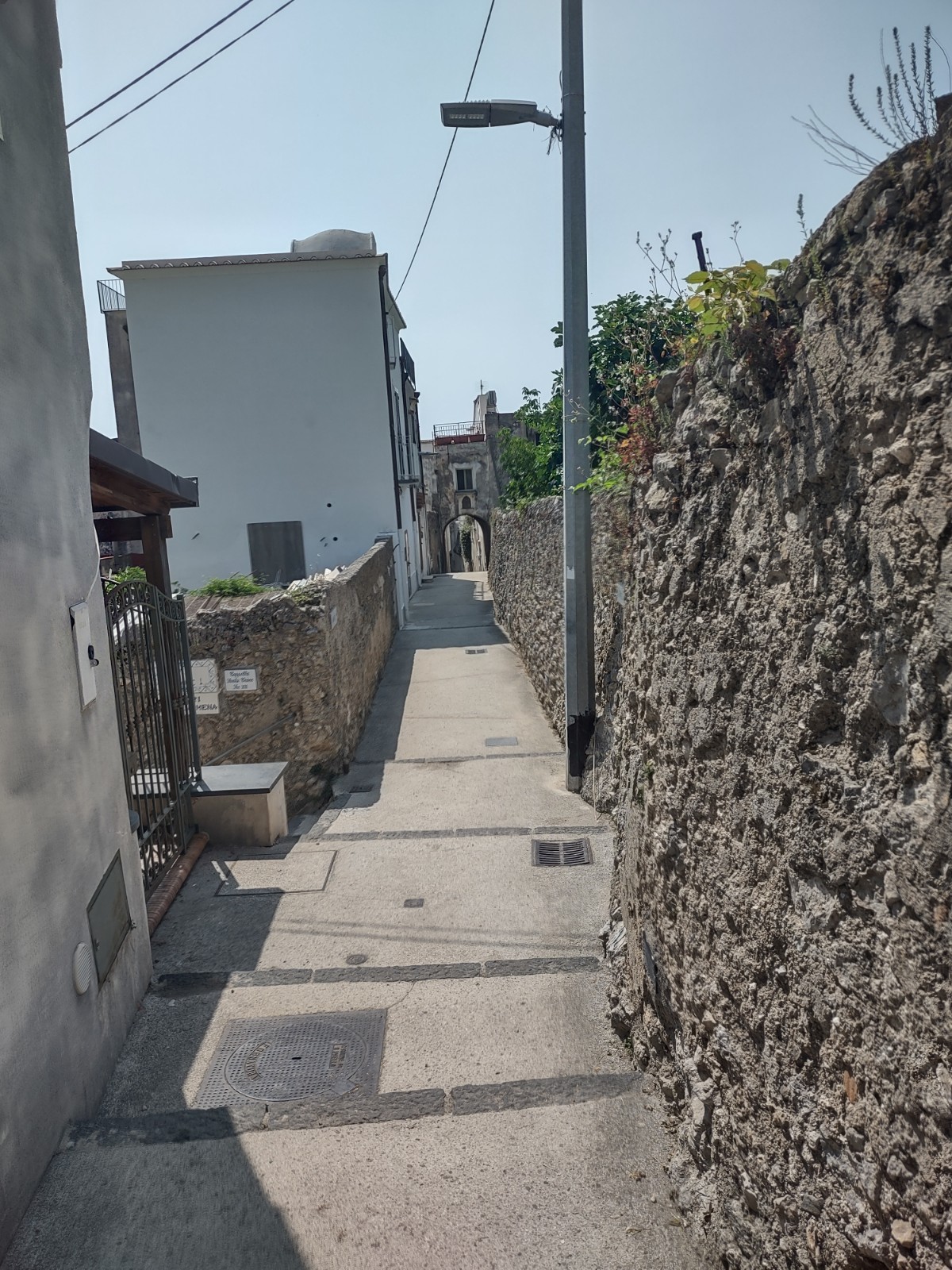
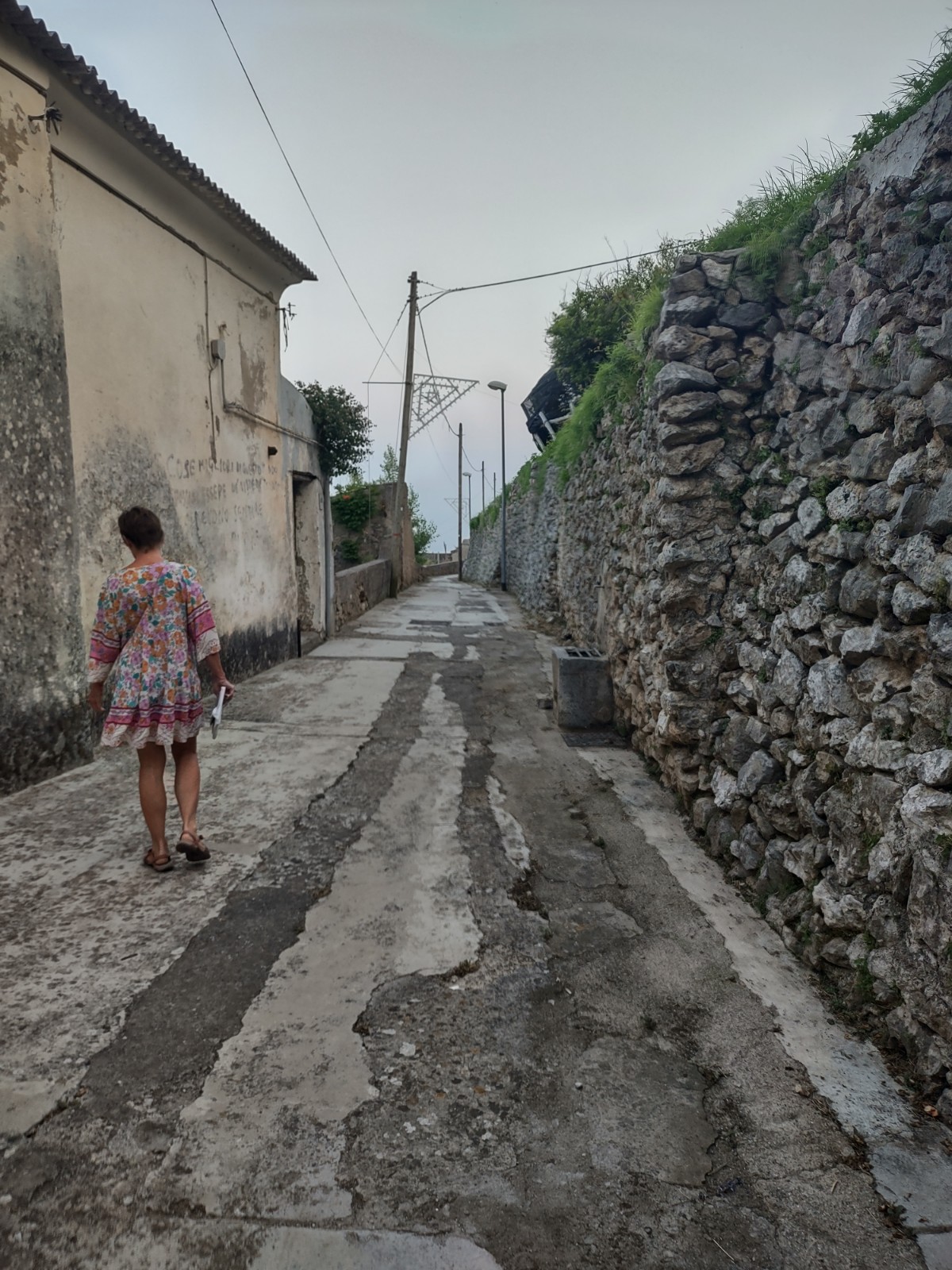
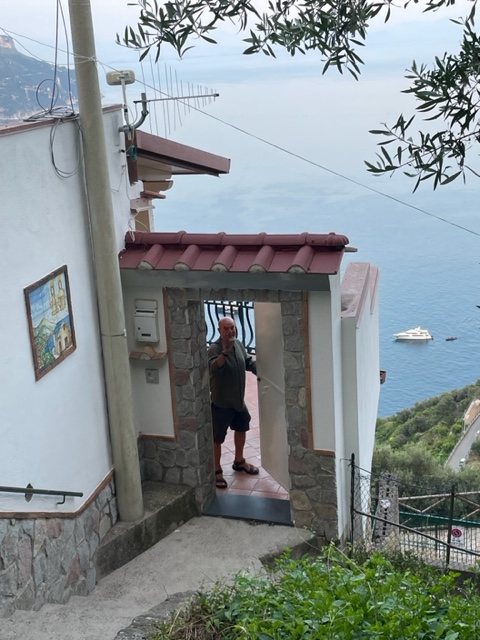
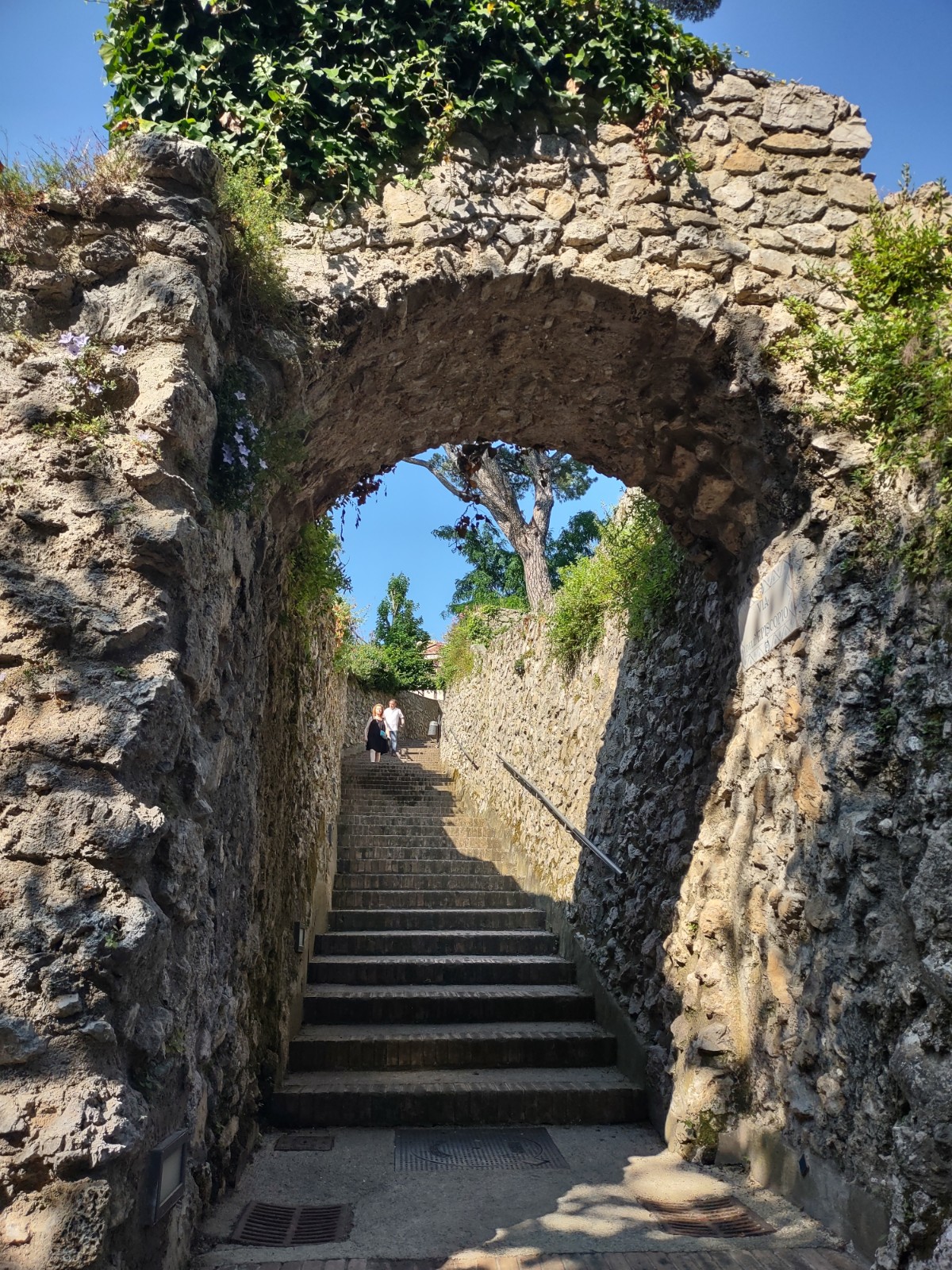
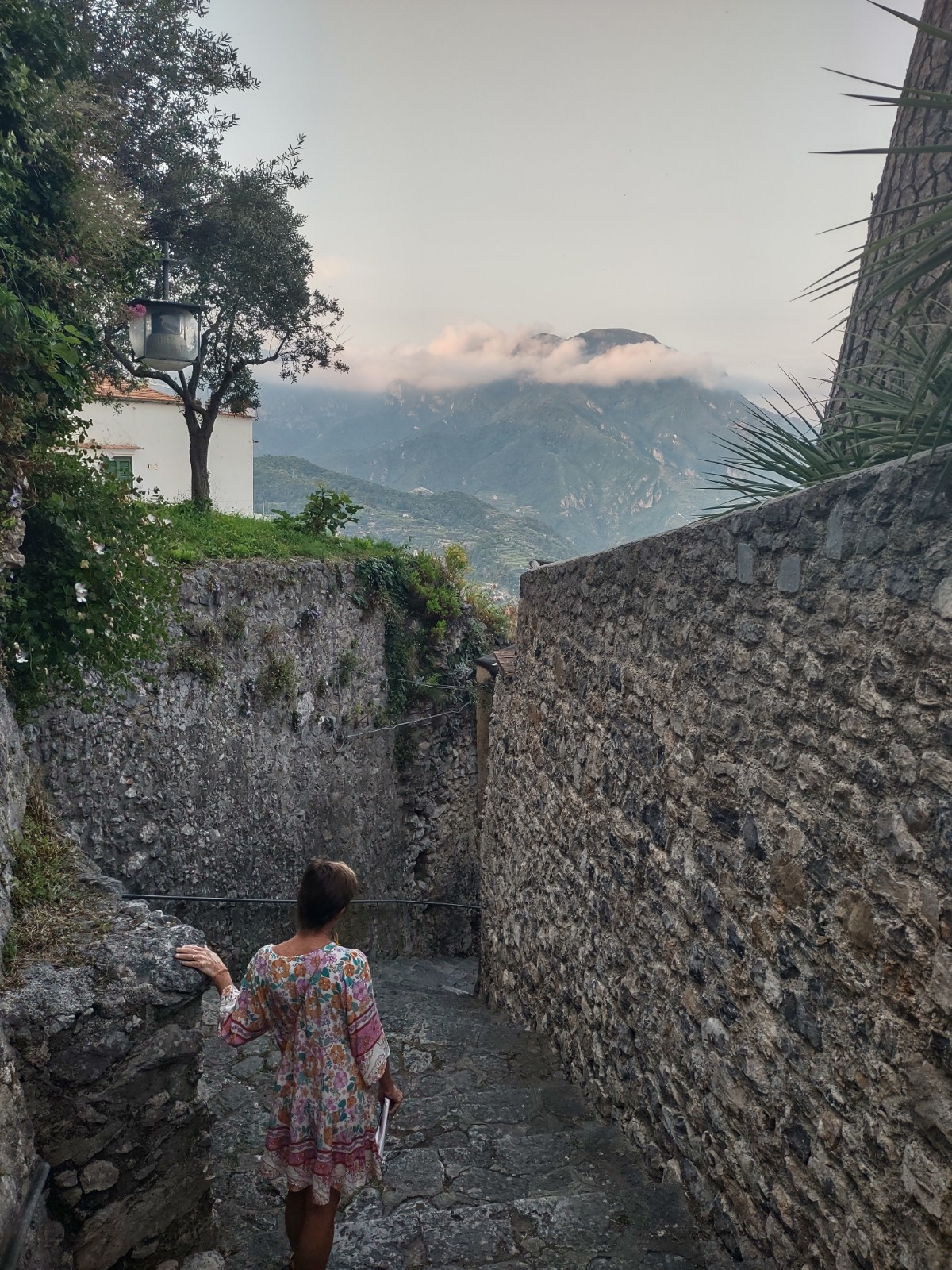
Because we were carrying luggage, we opted for the longest (and apparently least steep) of the available options which followed Via della Republica, the road we had arrived on, back down the mountain where it joined Via Loggetta, the street our house was on. At this point we realized that not everything identified as a “Via” is a road, at least not in the way we understand it. Via Loggetta, was more of a pathway than a road, was too narrow for cars (not necessarily a bad thing), and, when necessary, included steps. Shortly before reaching our apartment, at the intersection with another “not a road” Via which led back up to town, Via Logetta passed through the portico of the local parish church, which was actually kind of cool. Despite it being very hot and our being very tired the walk to our house was not bad and gave us a pretty good taste of the views and scenery (as well as terrain) we would be enjoying over the next few days.
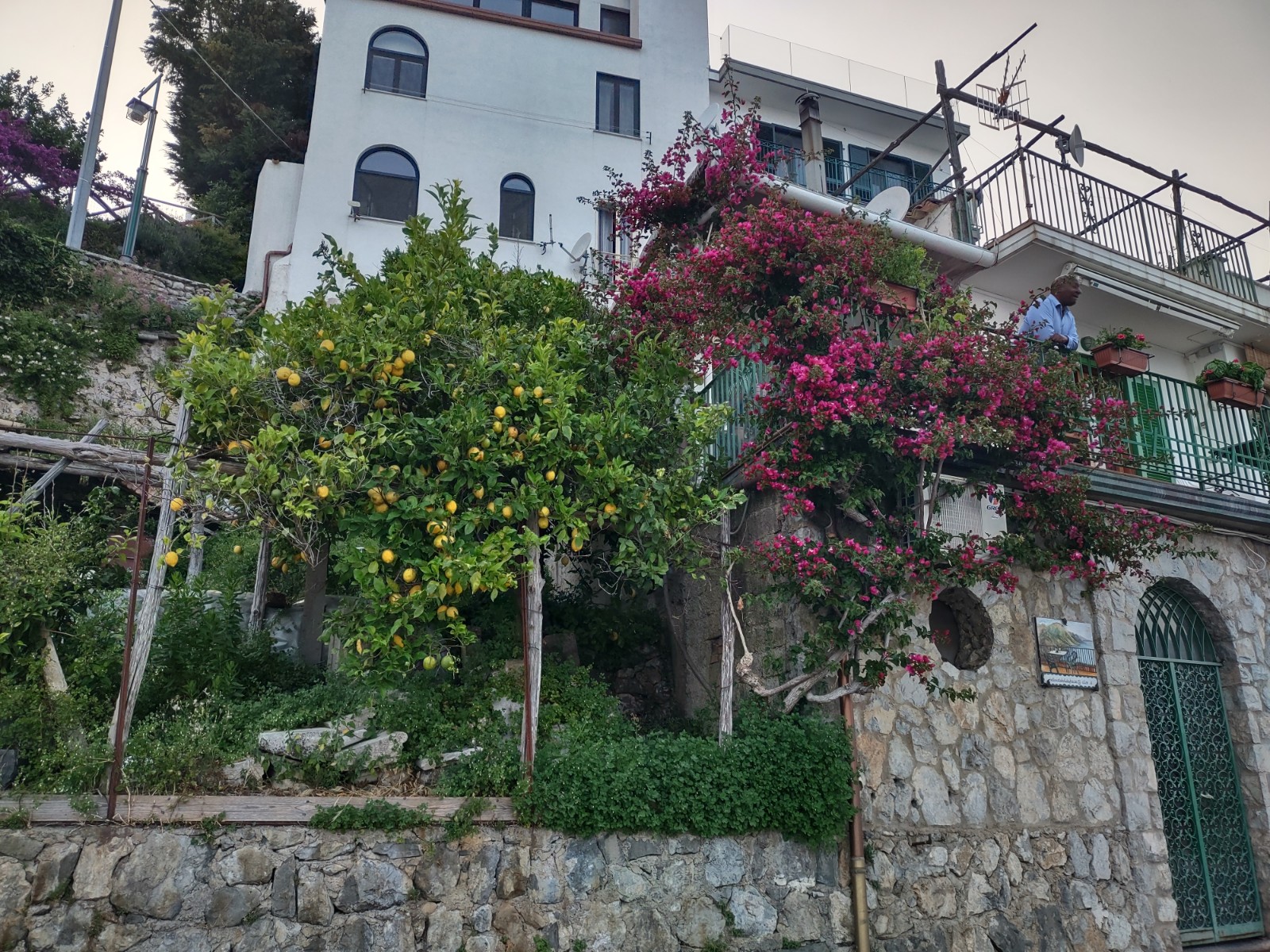
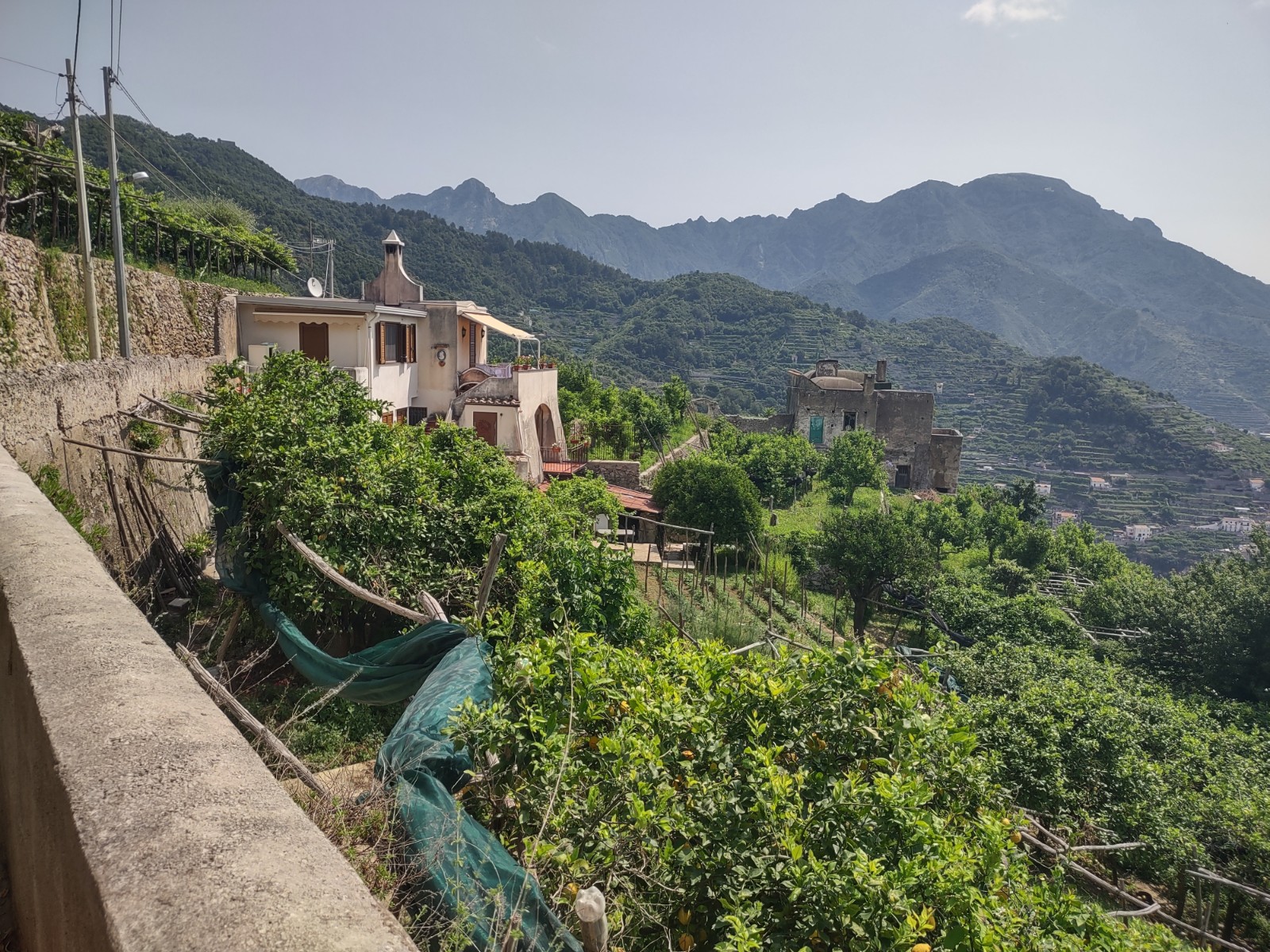

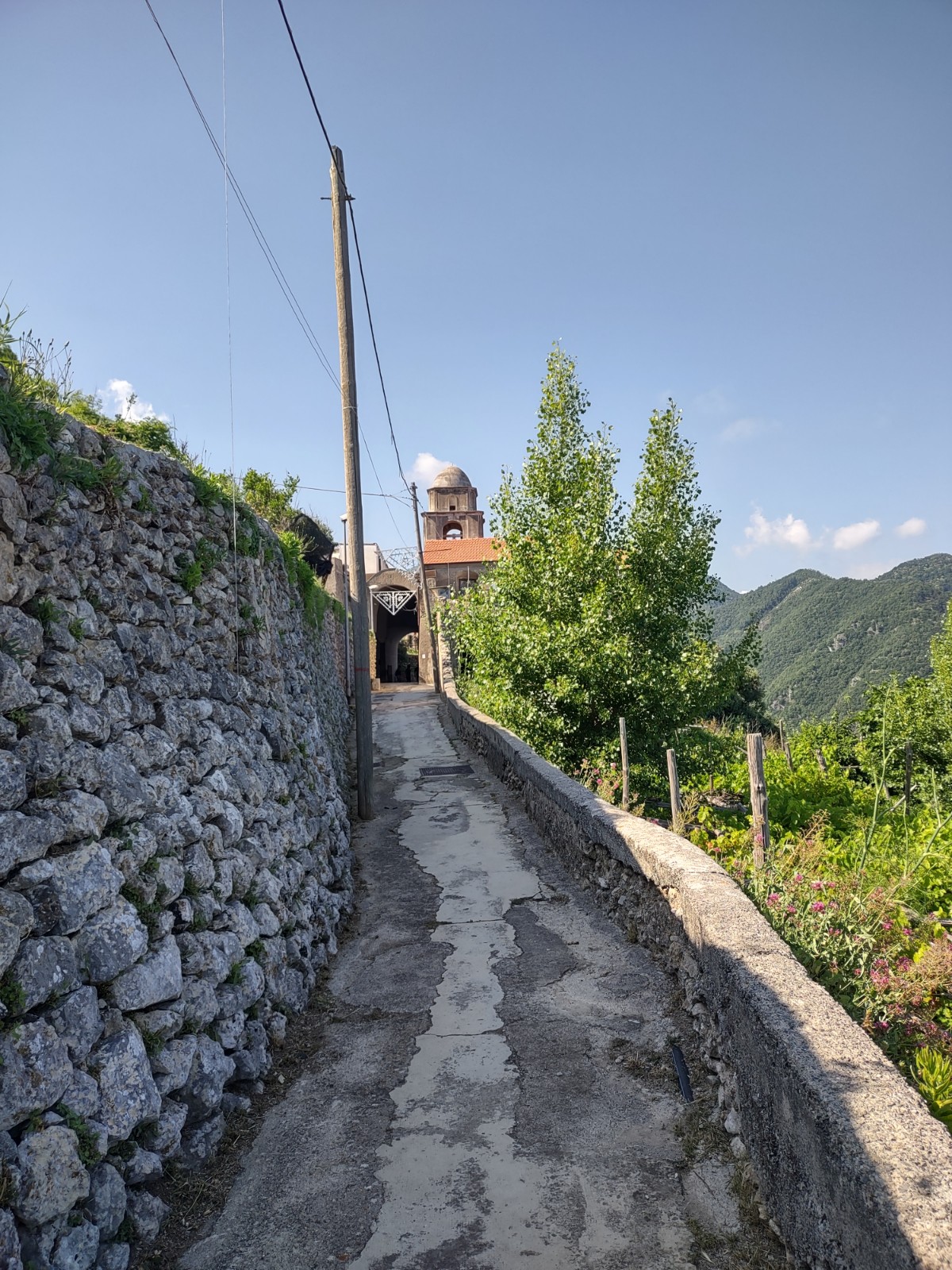
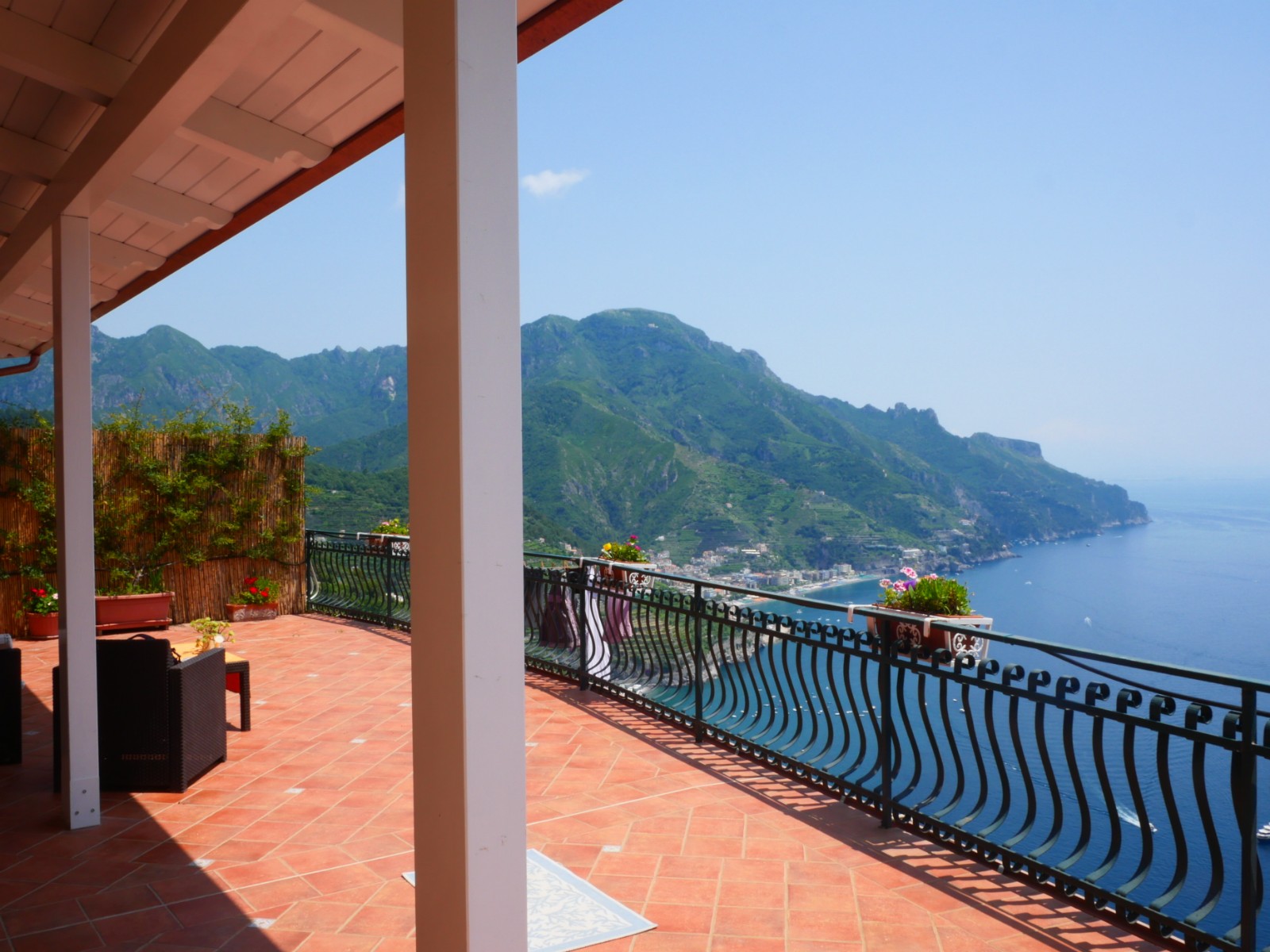
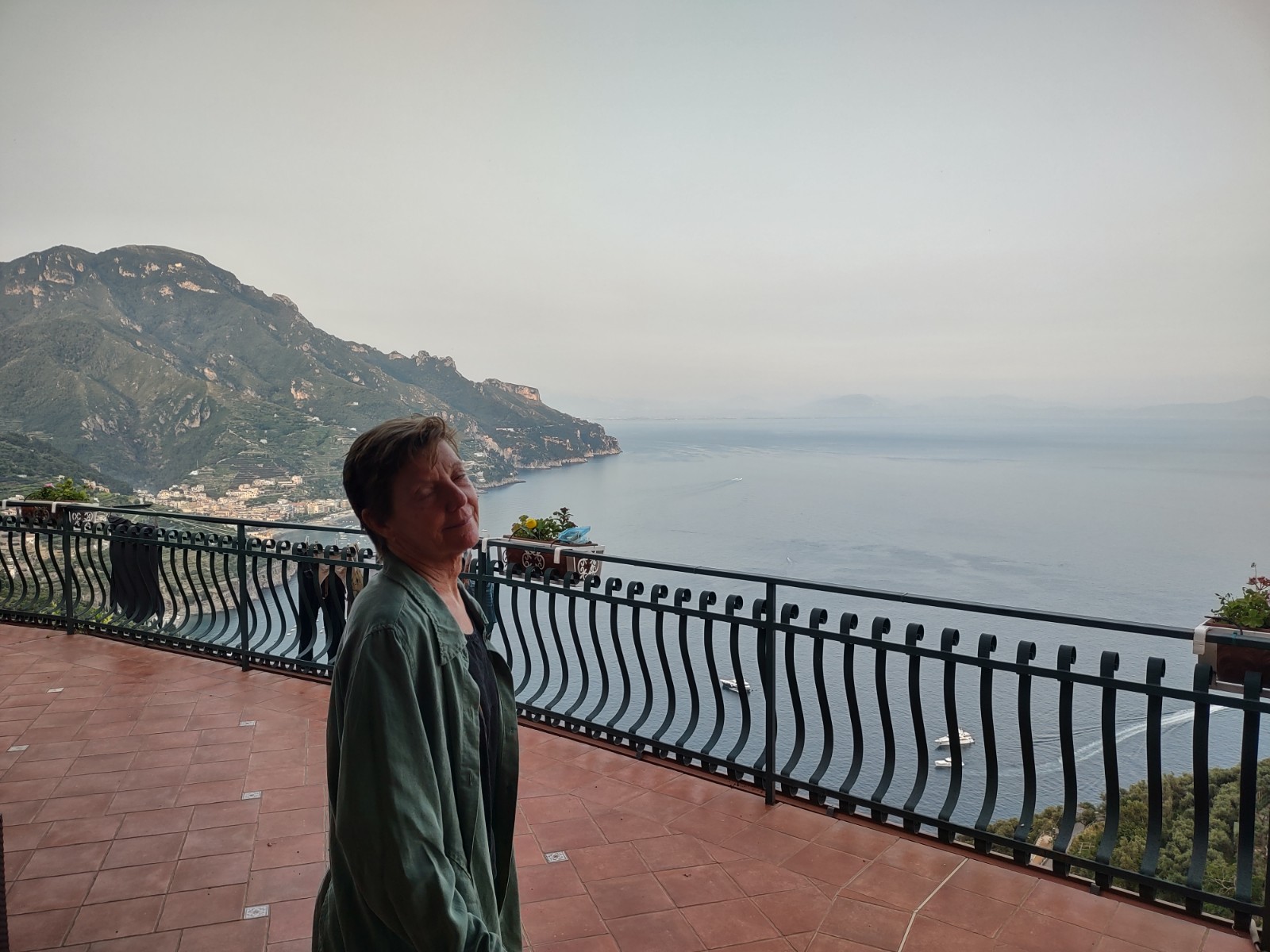
After a bit more walking, we arrived at our house and entered through a door in a garden wall which opened onto the large patio behind the house where we finally got our first complete unobstructed and undistracted view of the coast and remembered why we picked this place. Really amazing view and, as we would learn over the next few days, always changing.
Our Place in Ravello
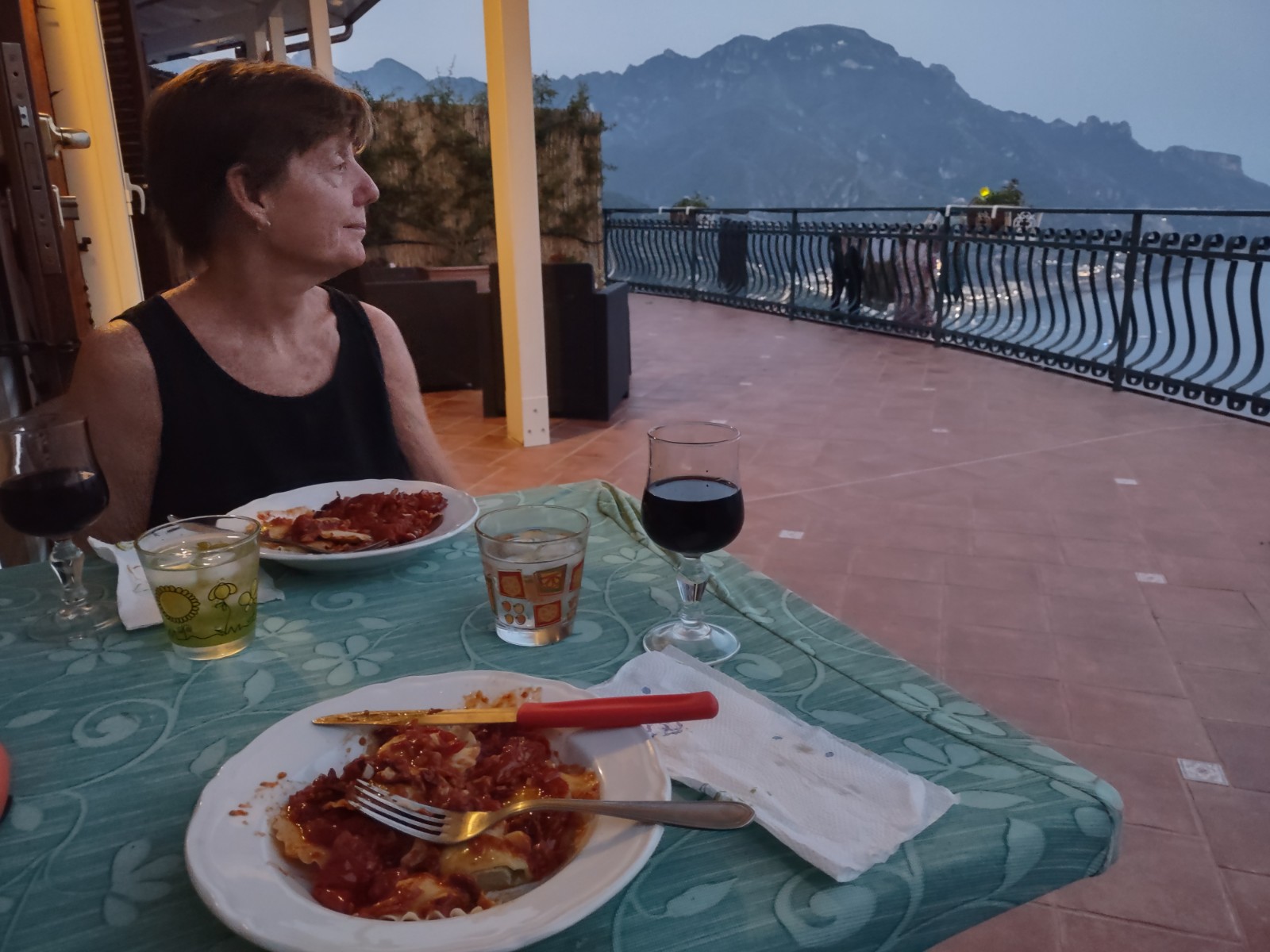
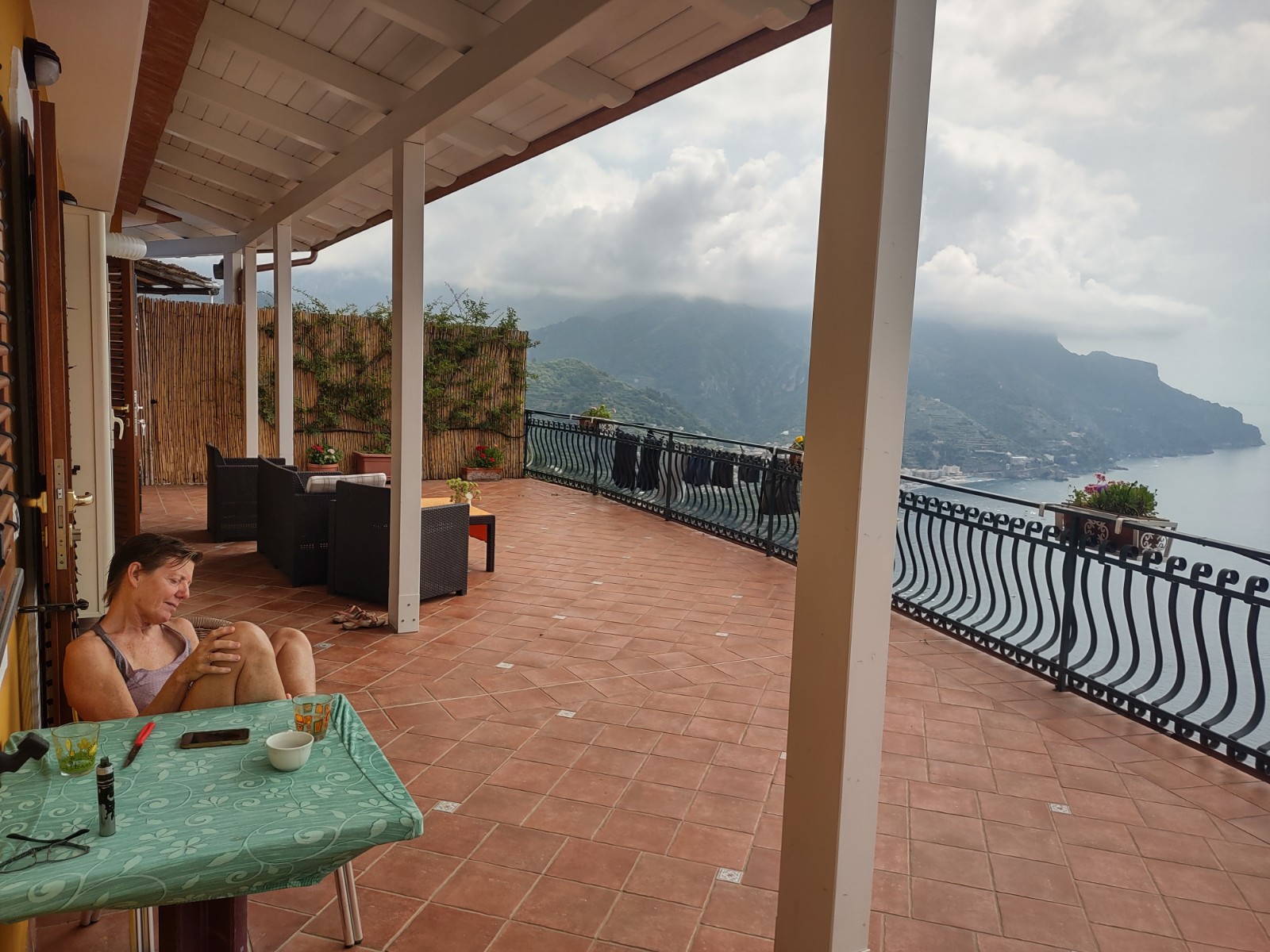
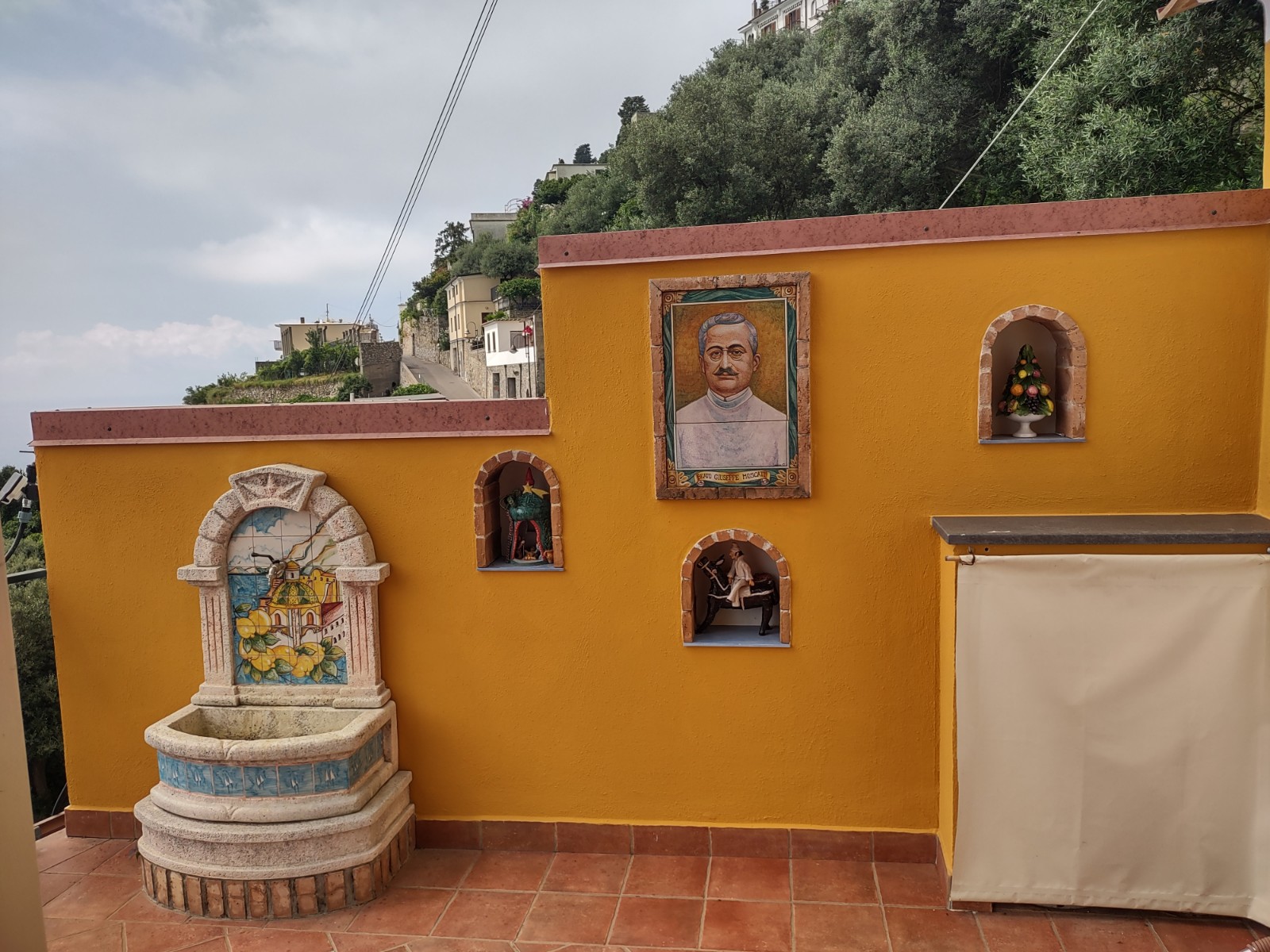
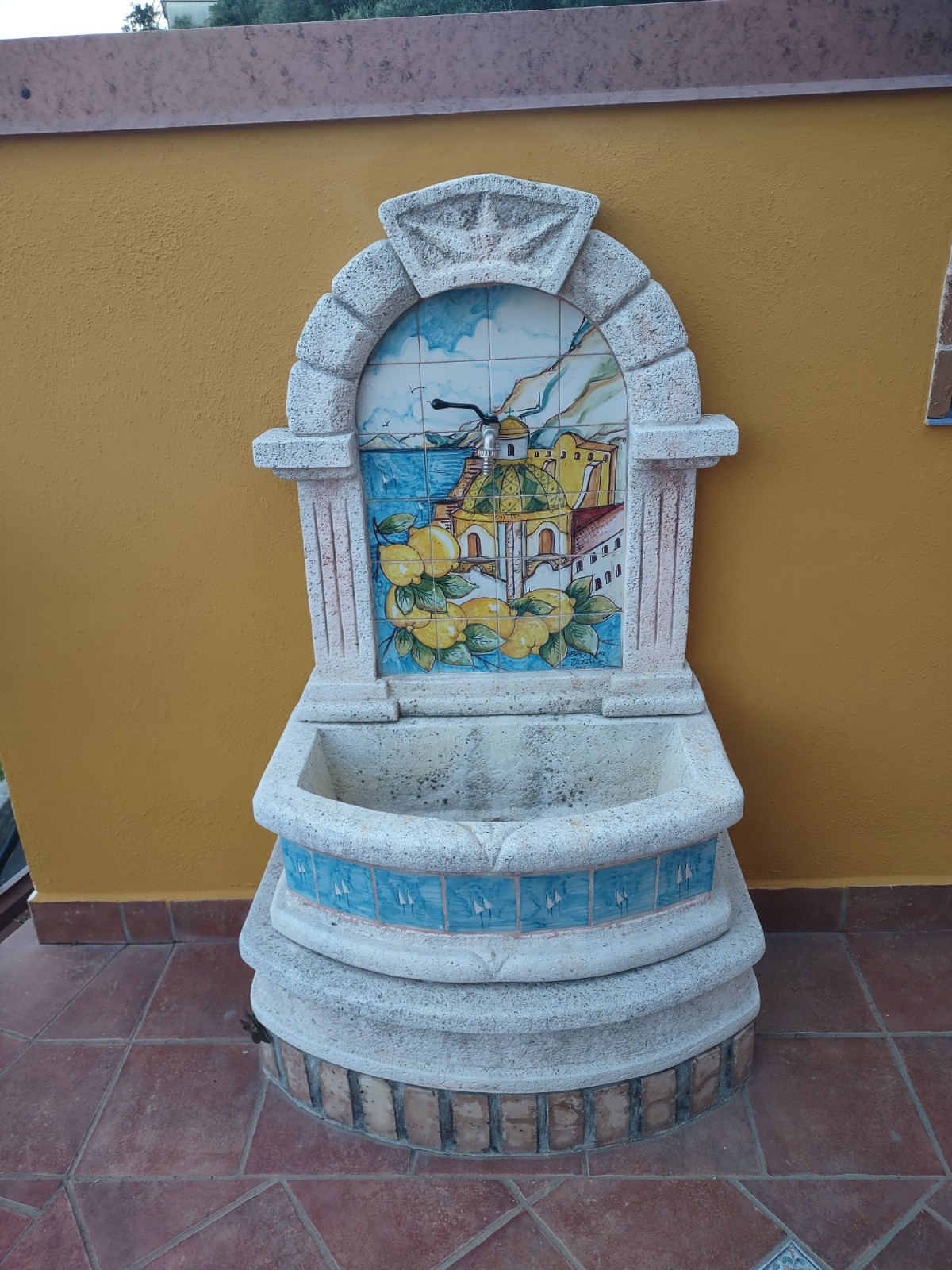
We had no misconceptions over the fact that what we were renting (and paying a bit of a premium over our normal budget for) was a view with a house attached and so were happy to find a large patio with both sun and shade and equipped for anything from sunbathing (which we did a little of) to dining (which we did a lot of here) or even doing laundry. There was a great clothes line at one end and a fountain at the other end which was perfect for rinsing before hanging.
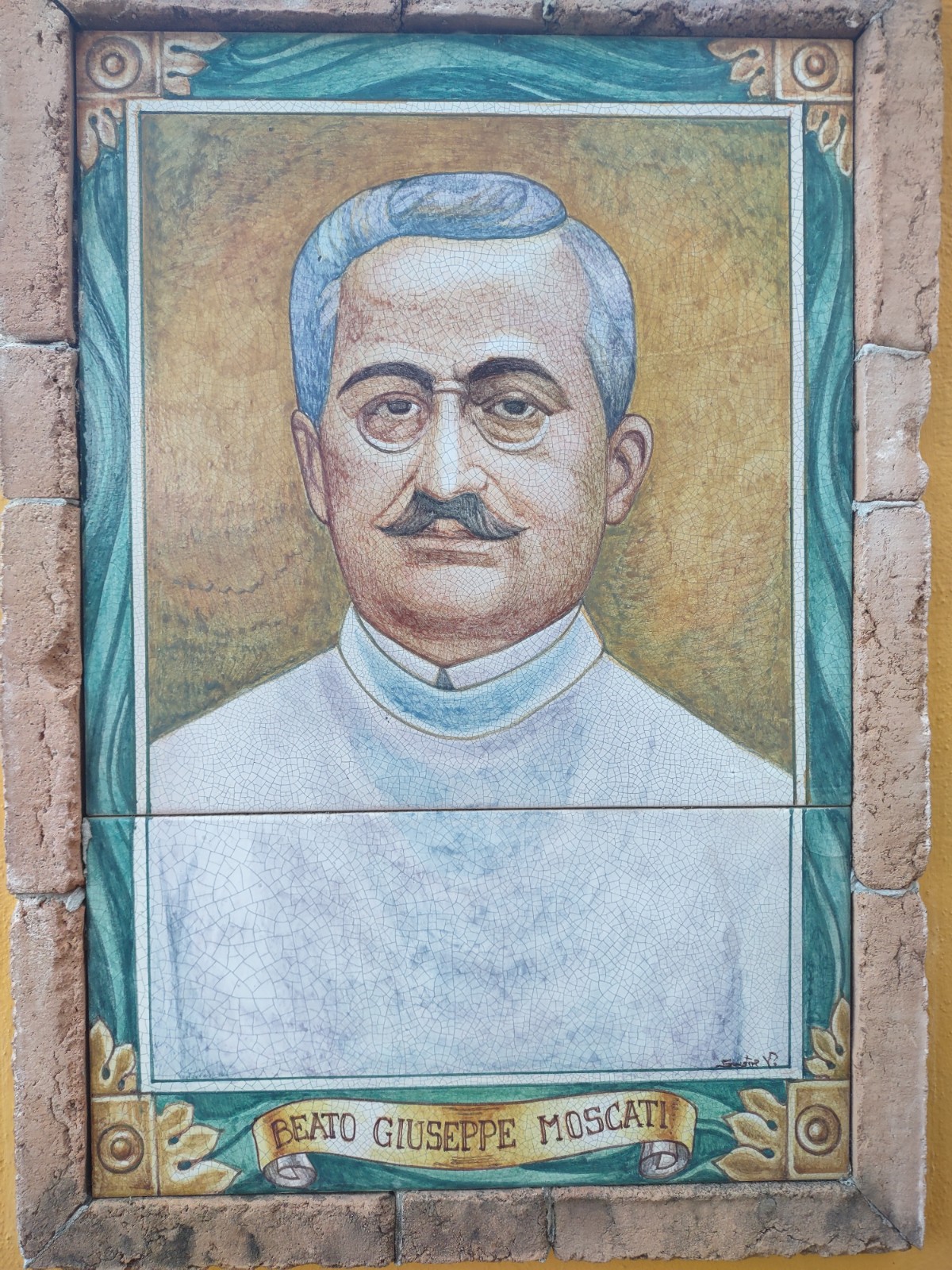
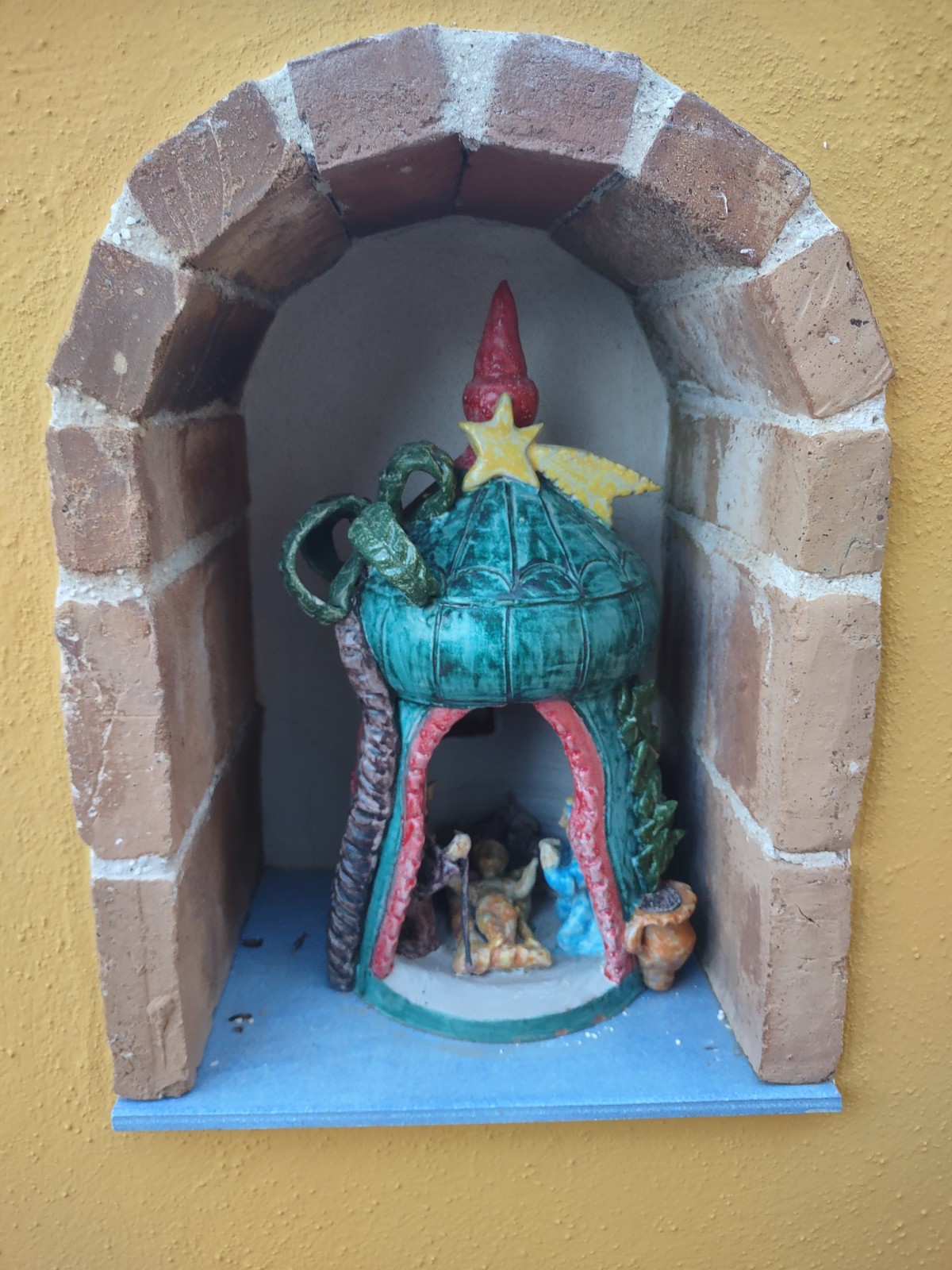
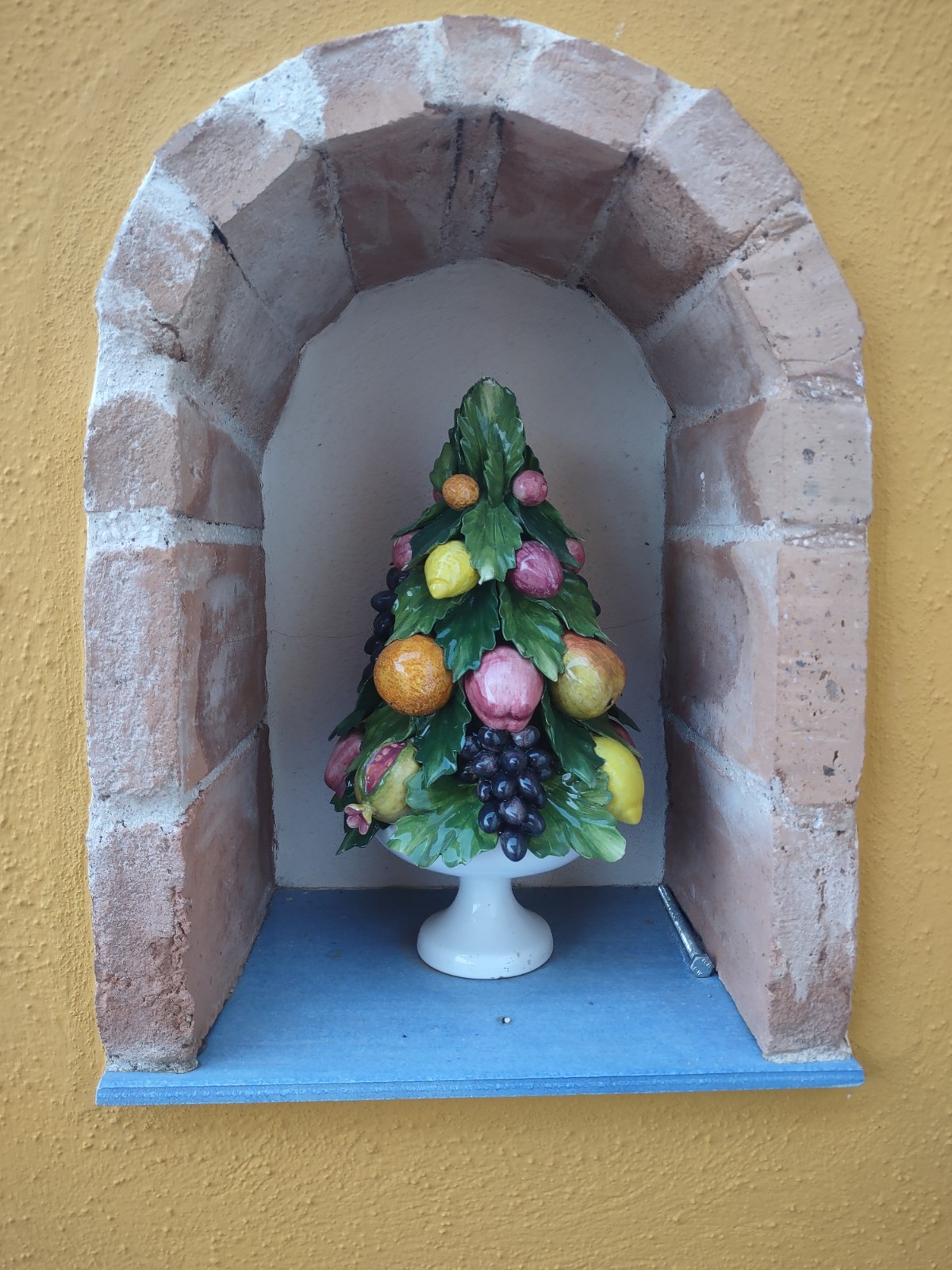
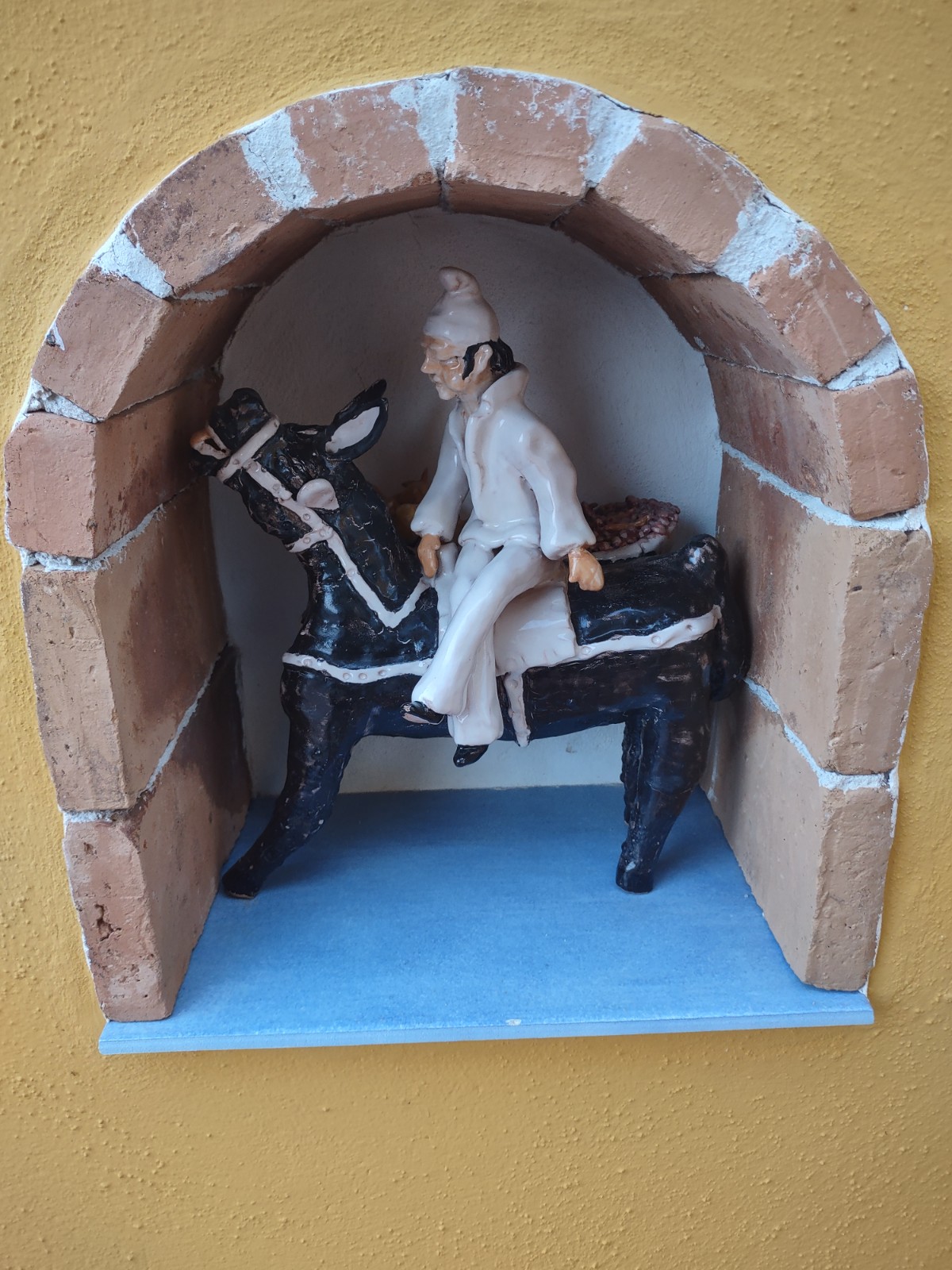
On the wall adjacent to the fountain was a fresco portrait of Saint Giuseppe Moscati surrounded by three niches which contained some interesting but somewhat inexplicable objects (a nativity scene, a Christmas tree decorated with fruit, and a man in white riding a donkey). We later learned that Moscati (1880-1927) was a doctor and early biochemist who was canonized by the Roman Catholic Church in 1987 but were unable to come up with any relationship to the inexplicable objects (although, if you look closely at the guy on the donkey, he looks an awful lot like Elvis).
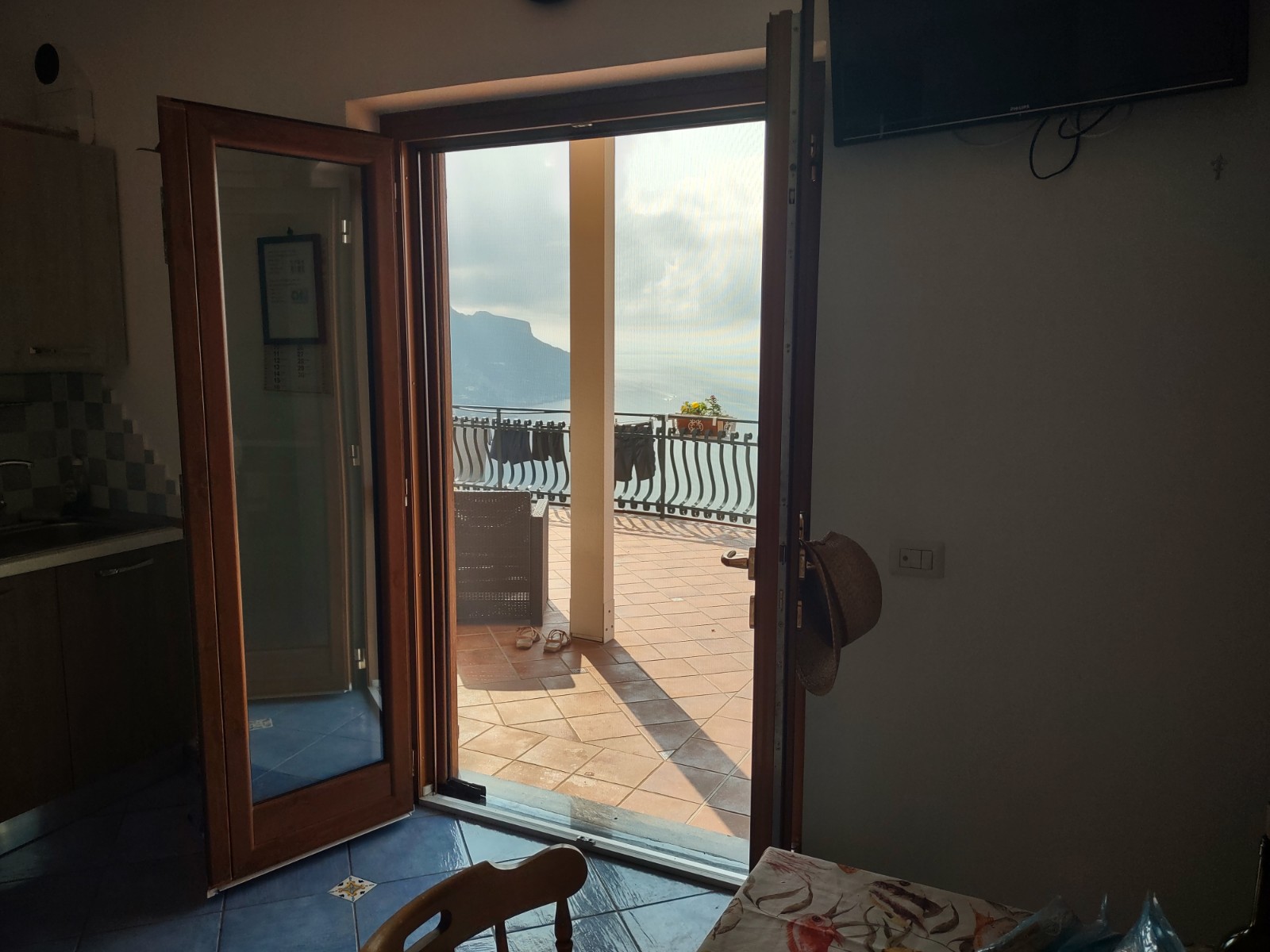
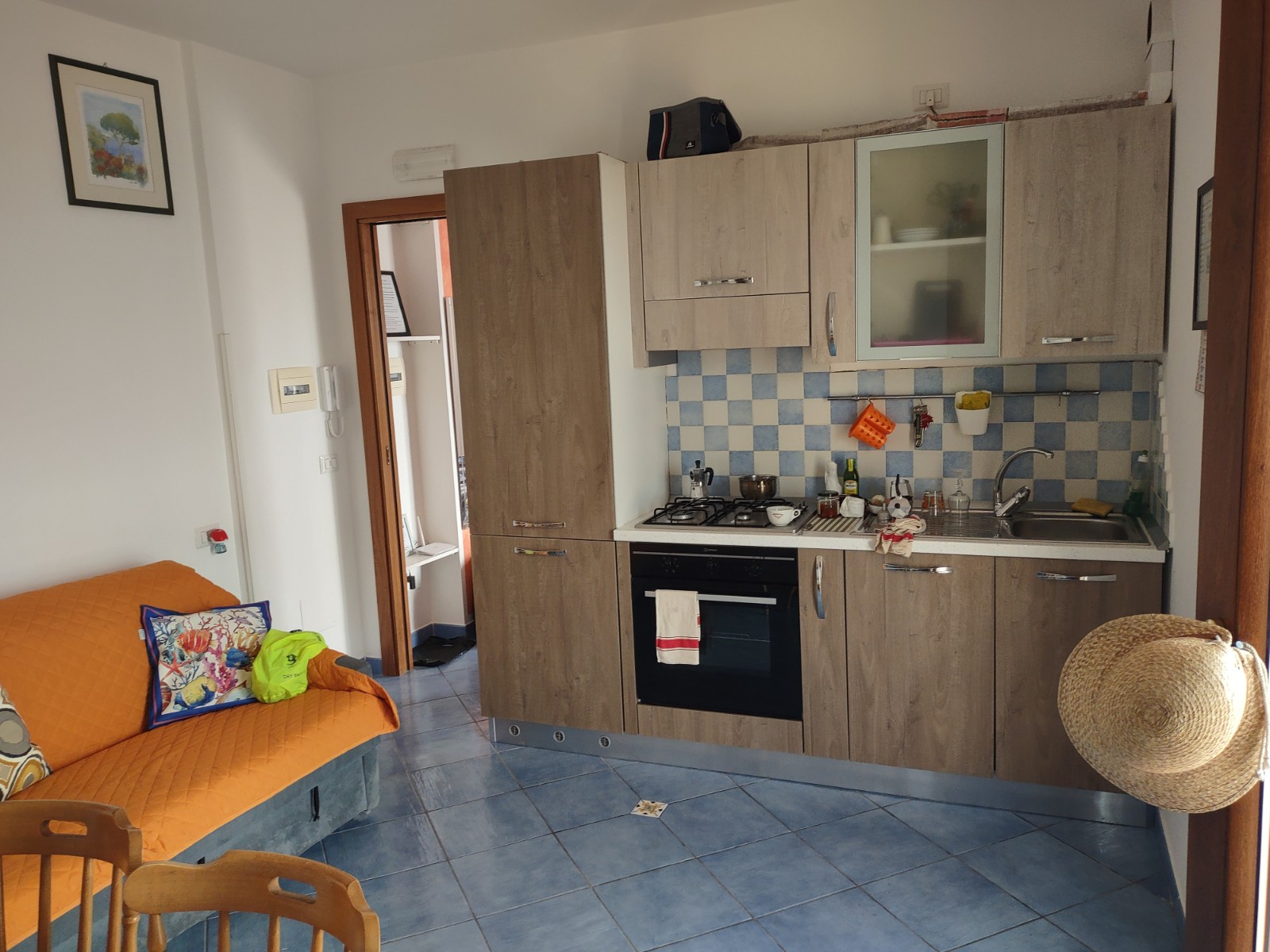
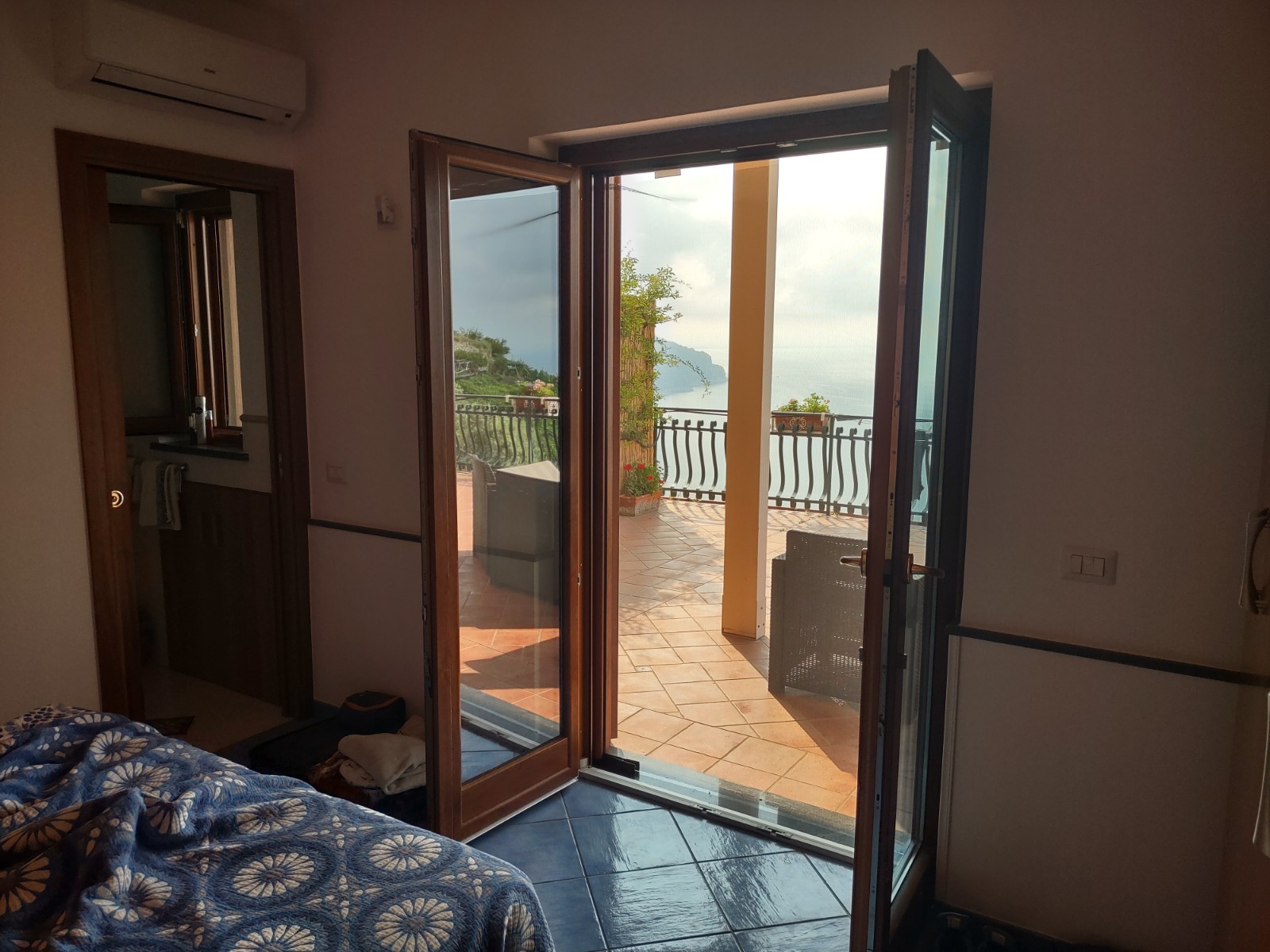
Beyond the patio and the view, the house we were renting was pretty basic: a living/dining/cooking area and a bedroom, both reasonably sized with French doors, shutters, and retractable insect screens which gave way to the patio. The kitchen was pretty well equipped (although it turned out that the challenge for cooking at home would be finding things to cook.) The house had one other nice feature was full Jack and Jill bathrooms – one off the bedroom and one off the living area at opposite ends of the house. (Not a feature we look for, but I think Colleen loves having a private bath when she can.)
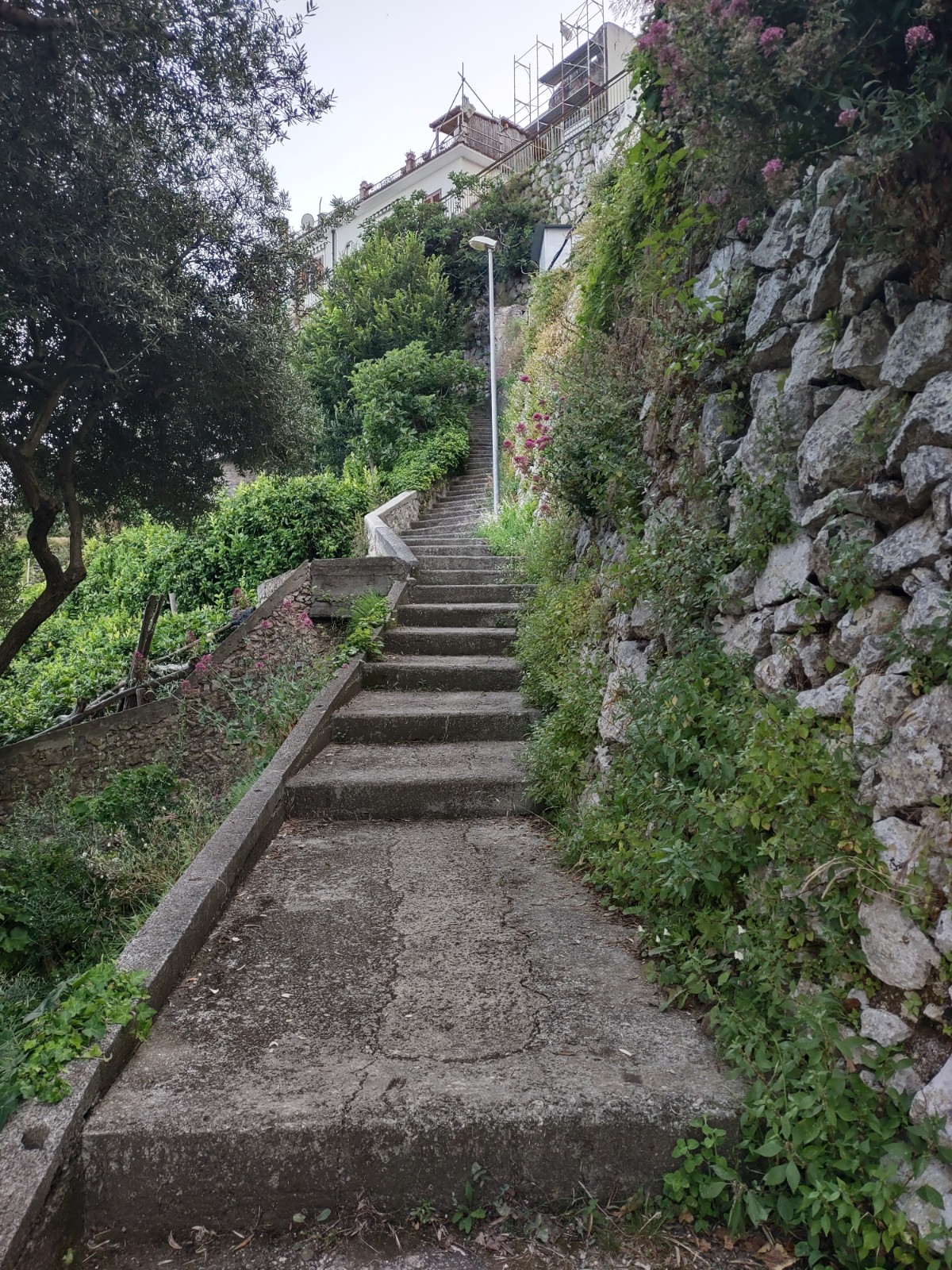
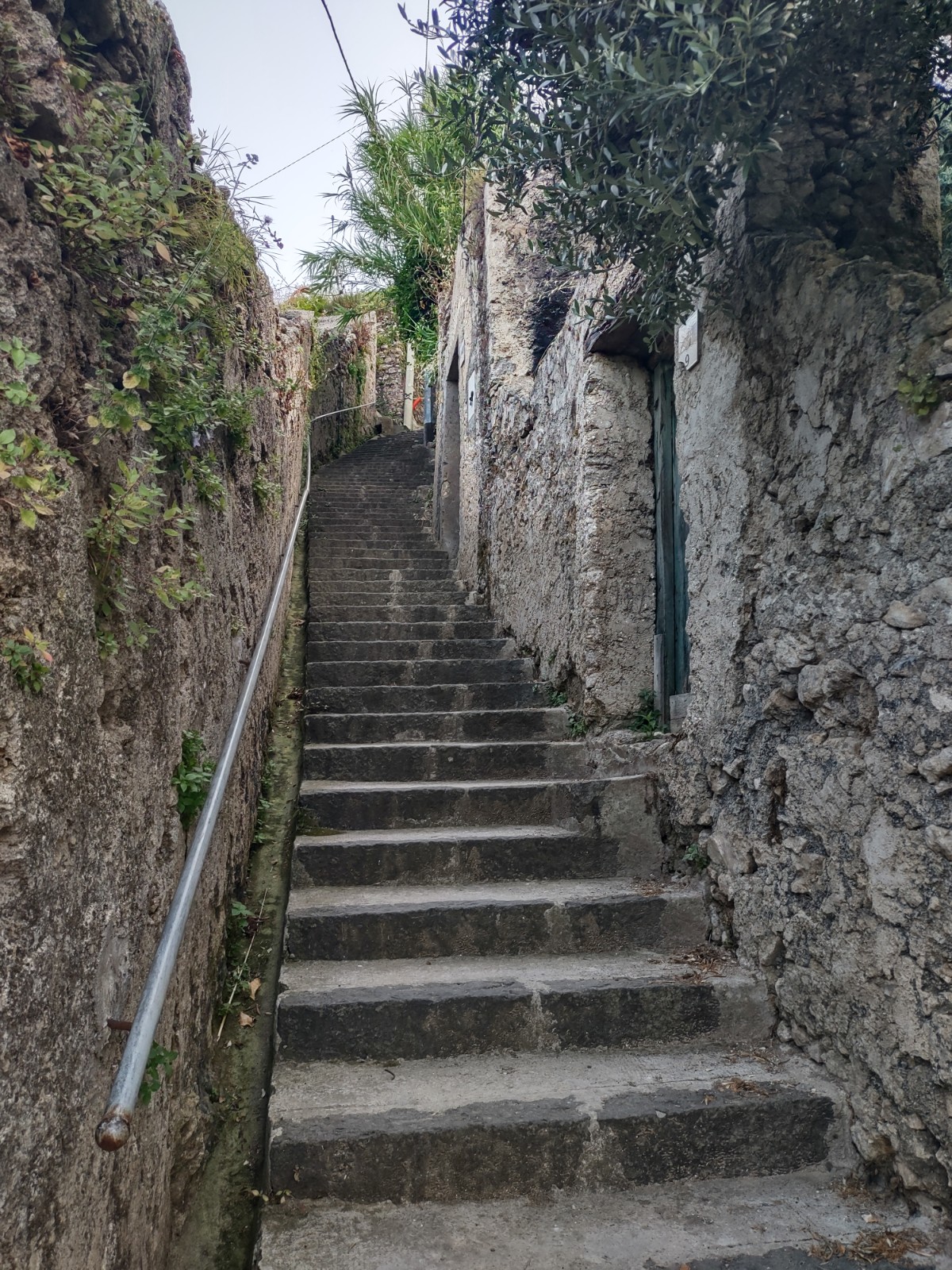
We settled in a bit and did some much-needed laundry but knew that a trip to the grocery store was necessary, so we eventually headed back up the mountain. This time we opted for one of the shorter and quicker routes which included a lot more steps. (The 116 vertical meters from our house to the town square, over a distance of only about ½ kilometer, was the equivalent of climbing about 175 stairs!) Feeling a bit freshened, we tried to enjoy the climb, which was incredibly picturesque, , but the stairs were nonetheless pretty relentless. Just about the time we were starting to wonder what we had gotten ourselves into, the stairs ended at a series of tunnels and passageways which lead almost directly to the town square, the Piazza Duomo.

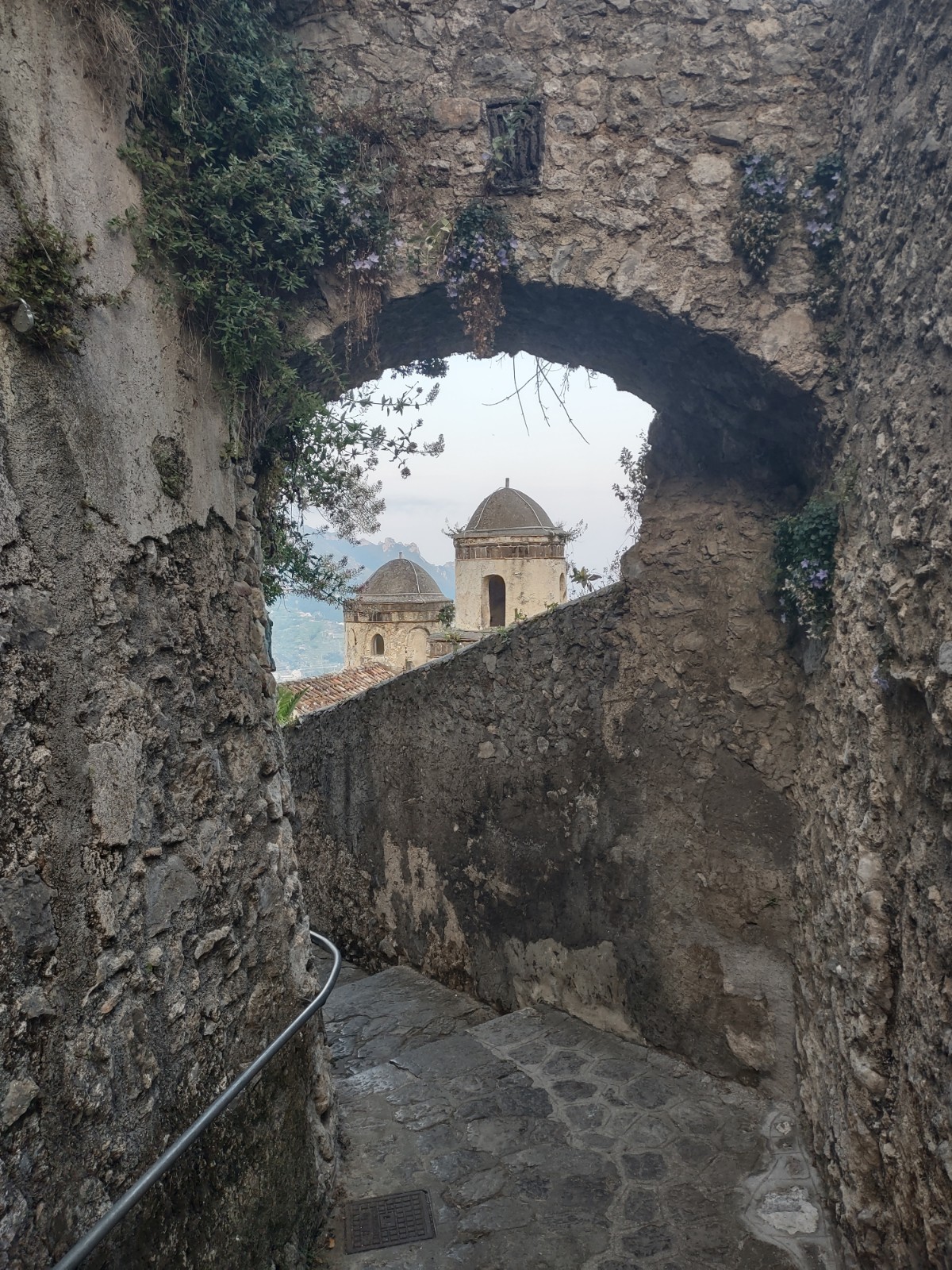
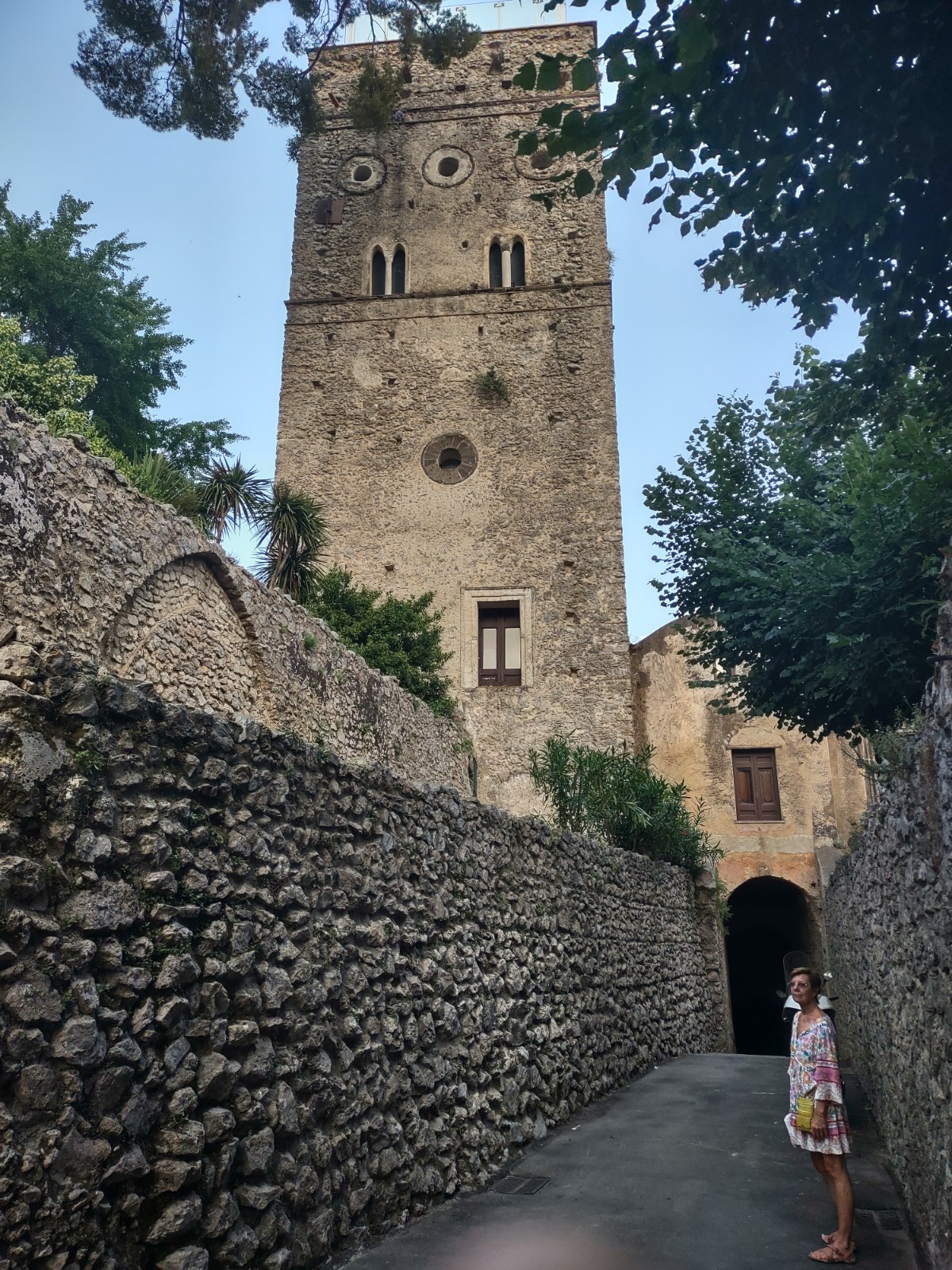
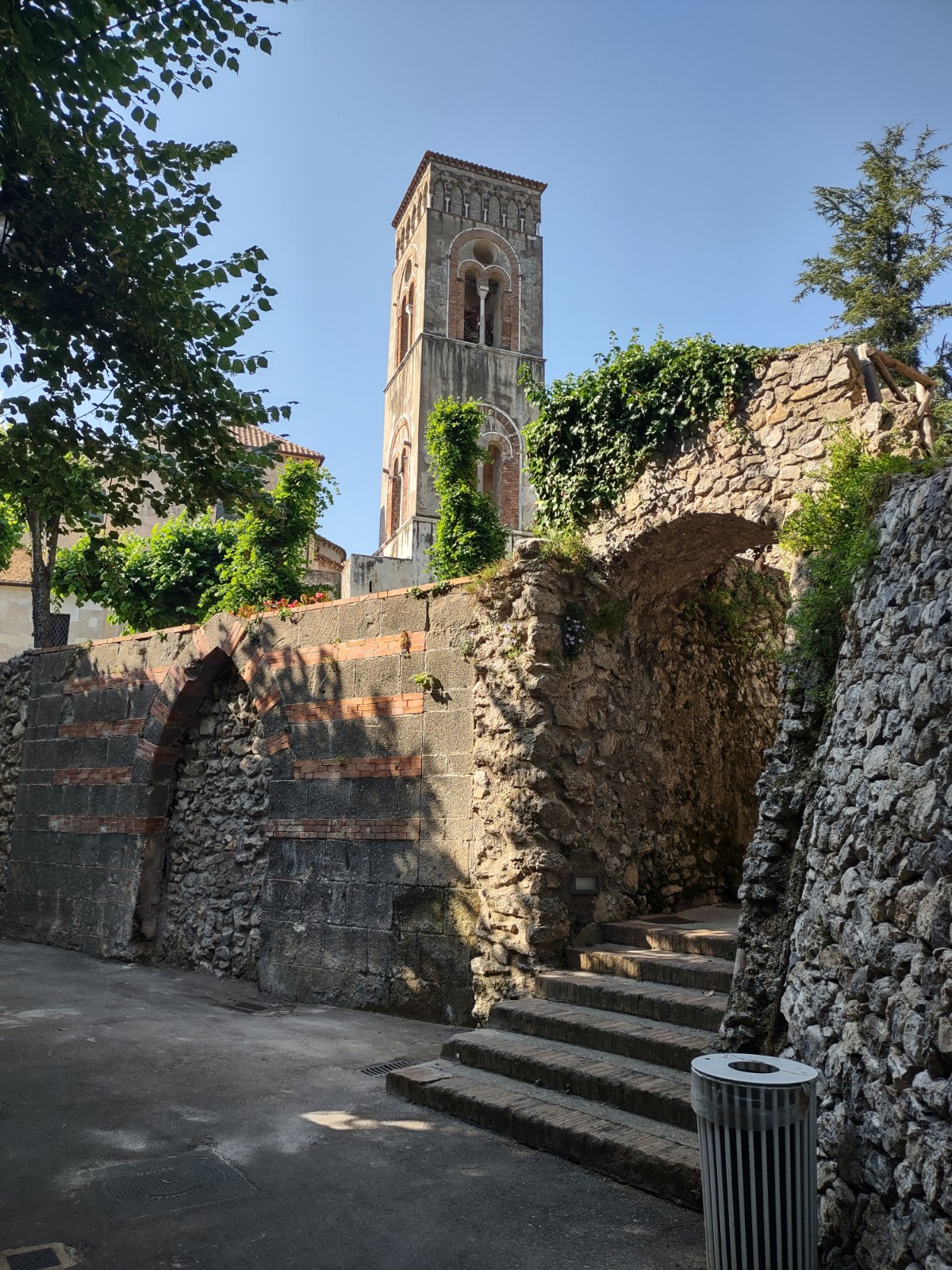
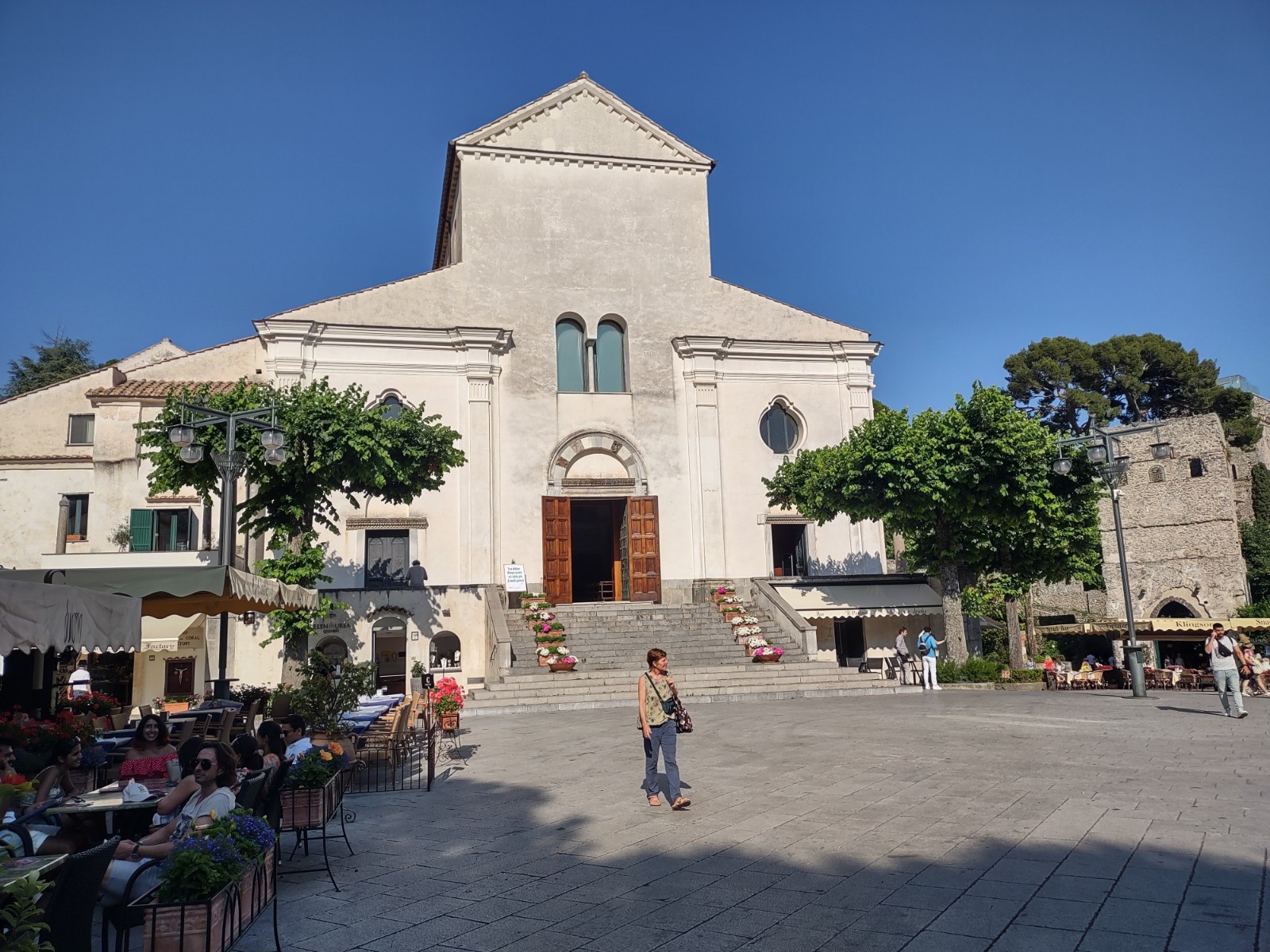
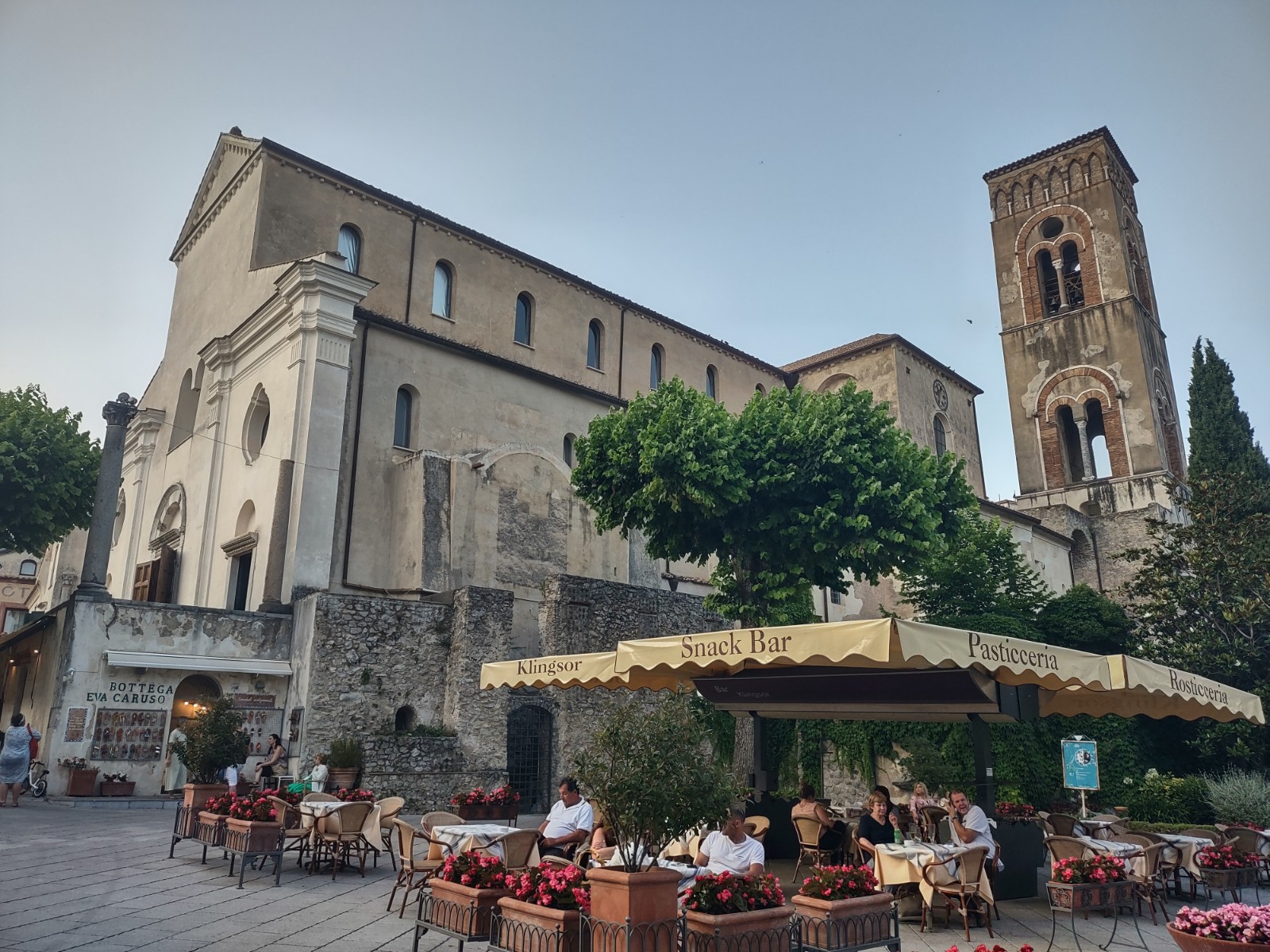
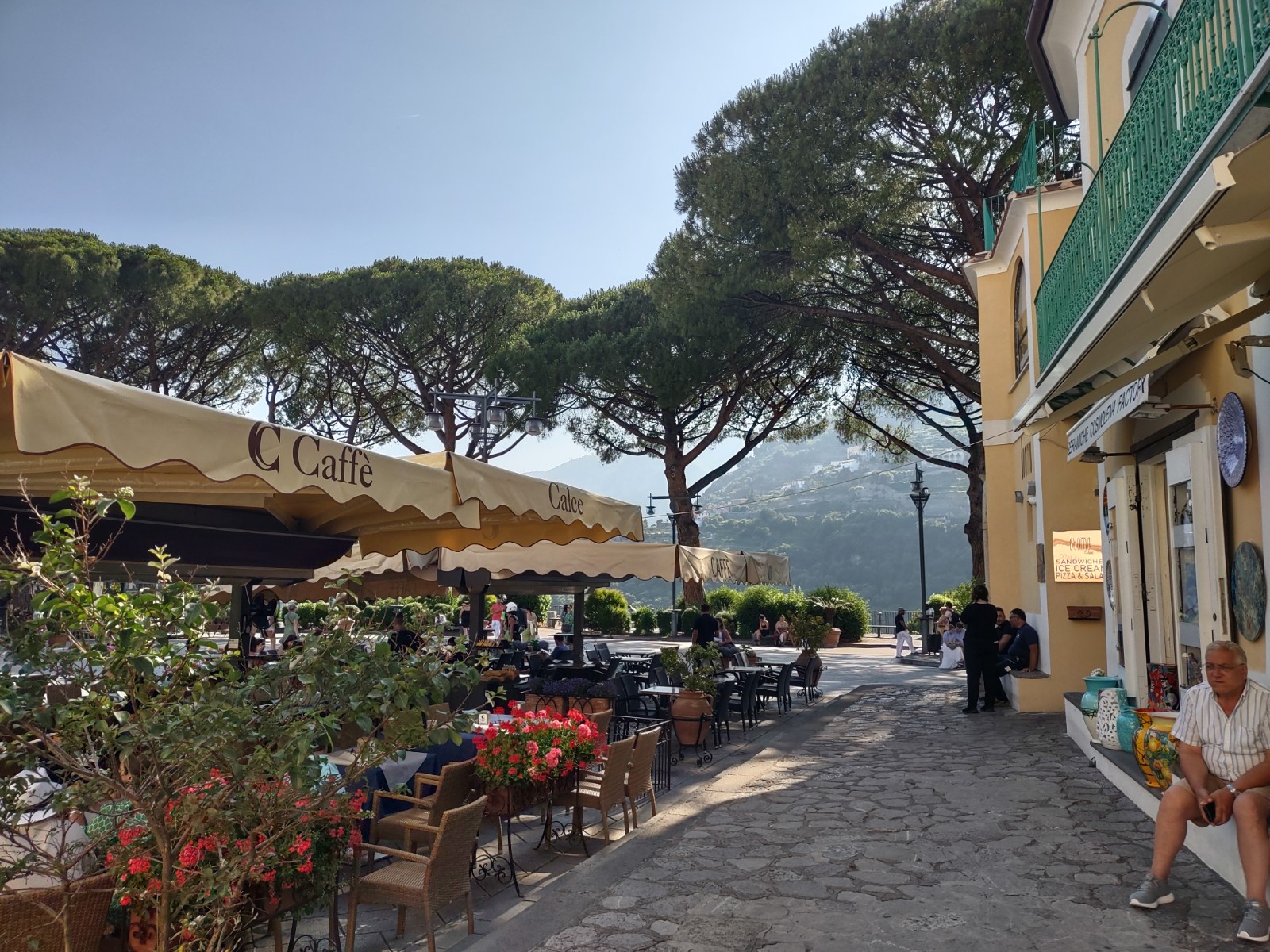
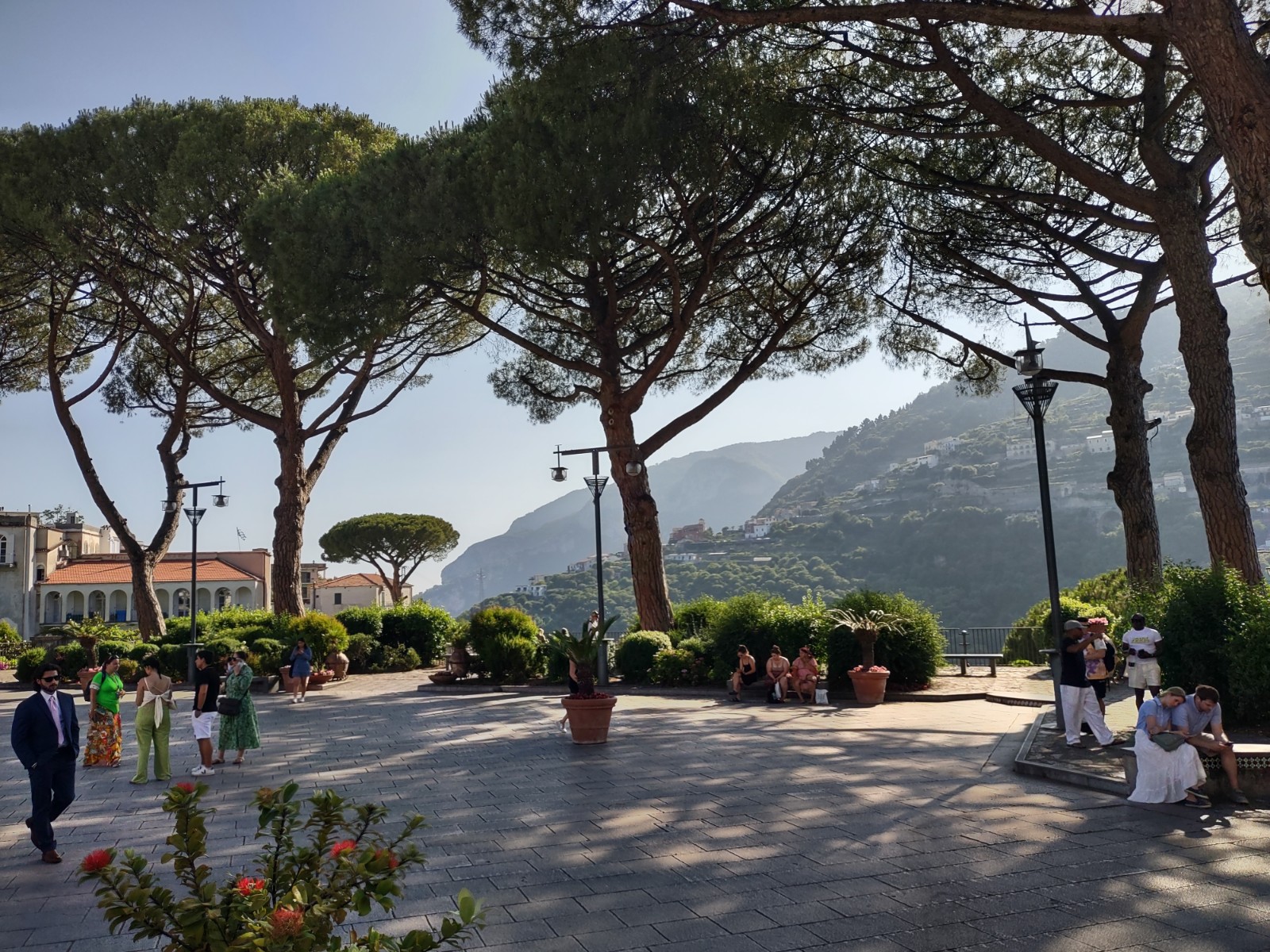
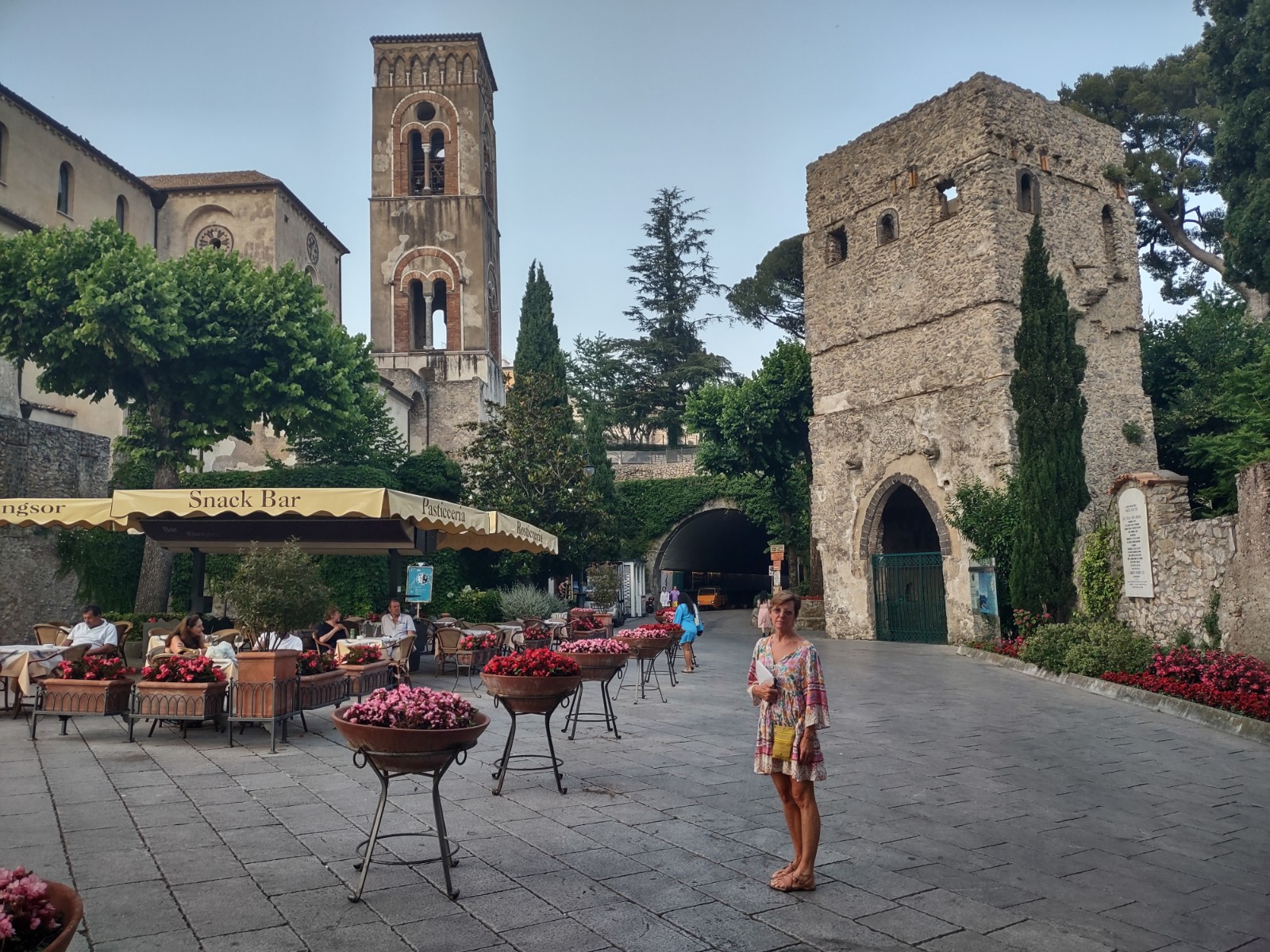
Let me say at this point that the town of Ravello is without question one of the most beautiful and picturesque places we have visited. The town square (the Piazza Vescovado or Piazza del Duomo), is like something out of a story book with the elevated Duomo at one end, open-air cafes and some shops on the sides, framing a very large plaza which is open at the opposite end with beautiful views of old villas and houses across the valley which drops to the sea far below. We first arrived in the evening (with the day trippers gone) so the Piazza was not crowded, but there was a lot of activity with people (in much fancier attire than what we were used to) dining, drinking and strolling around the plaza, and in and out of the small streets and alleyways which led off in all directions to an assortment of shops and boutiques.
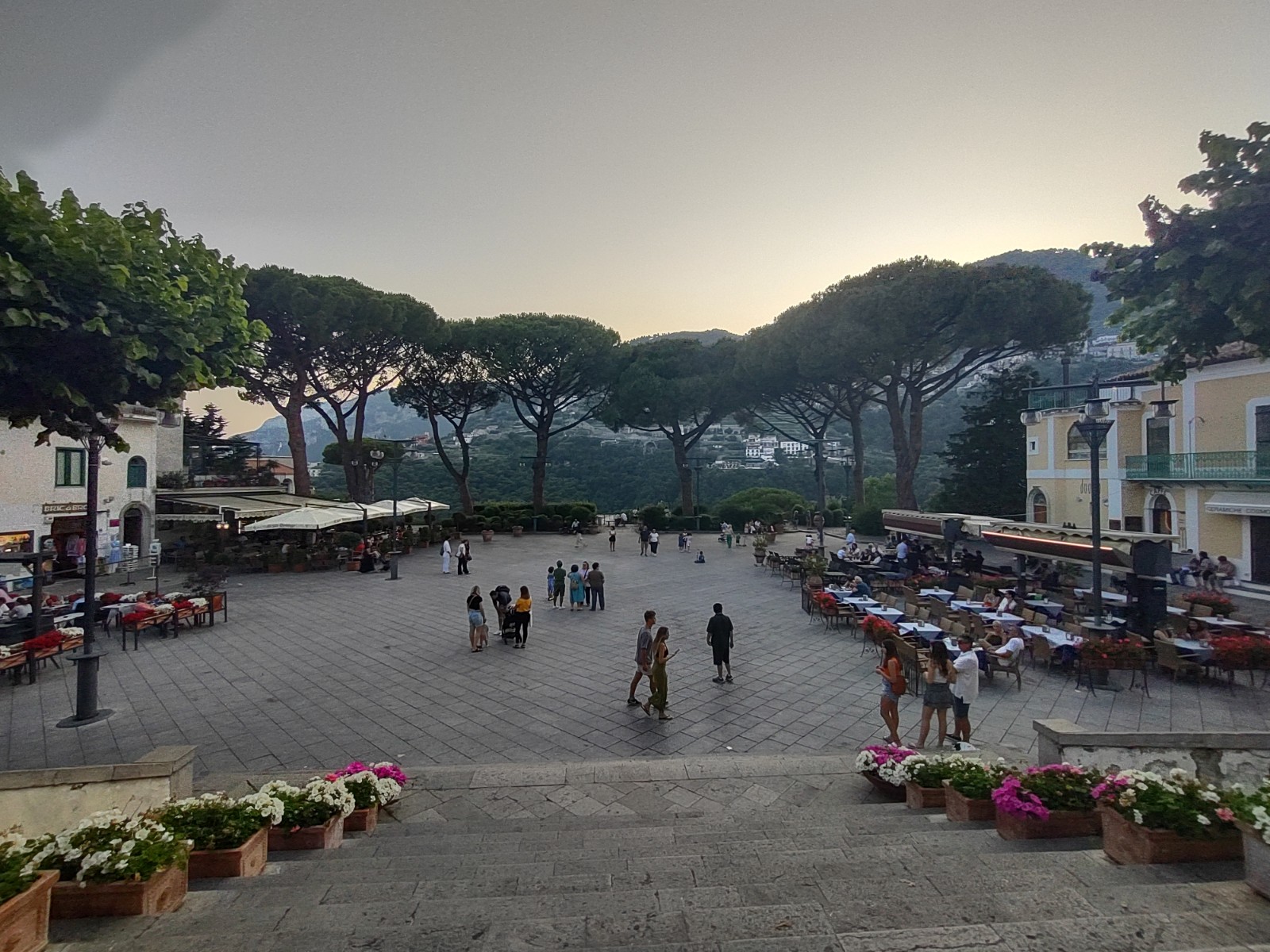
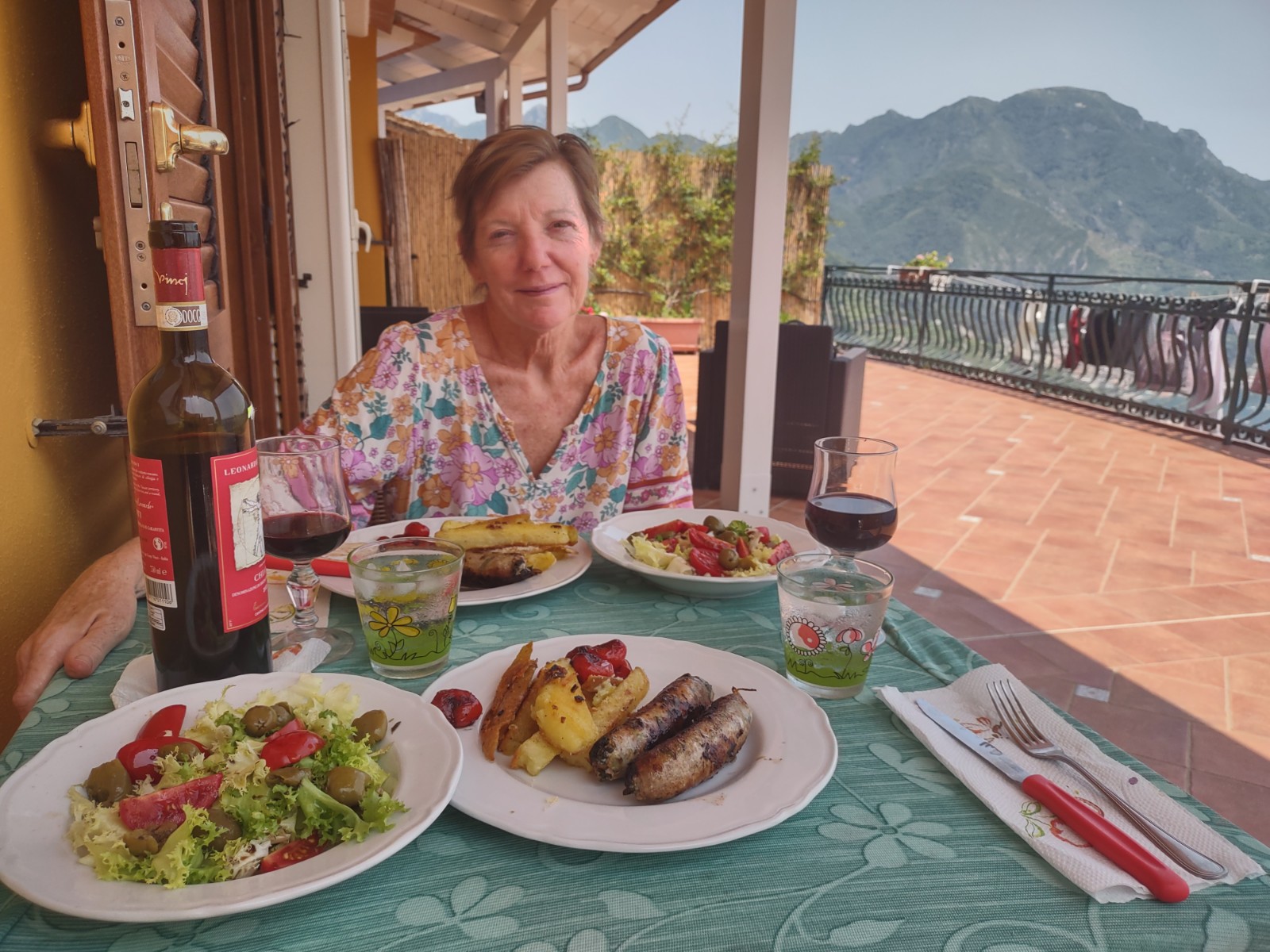
We stopped at 2 or 3 of the places identified as grocery stores in Google Maps and came to the conclusion that people who come to Ravello don’t cook at home. We picked up what we could as well as the most expensive bottle of wine we have purchased in quite a while (despite the fact that it was the least expensive bottle in the shop!). We did a little bit of exploring and, not anxious to start the trek back down the mountain, we decided to grab dinner at one of the restaurants on the Piazza.
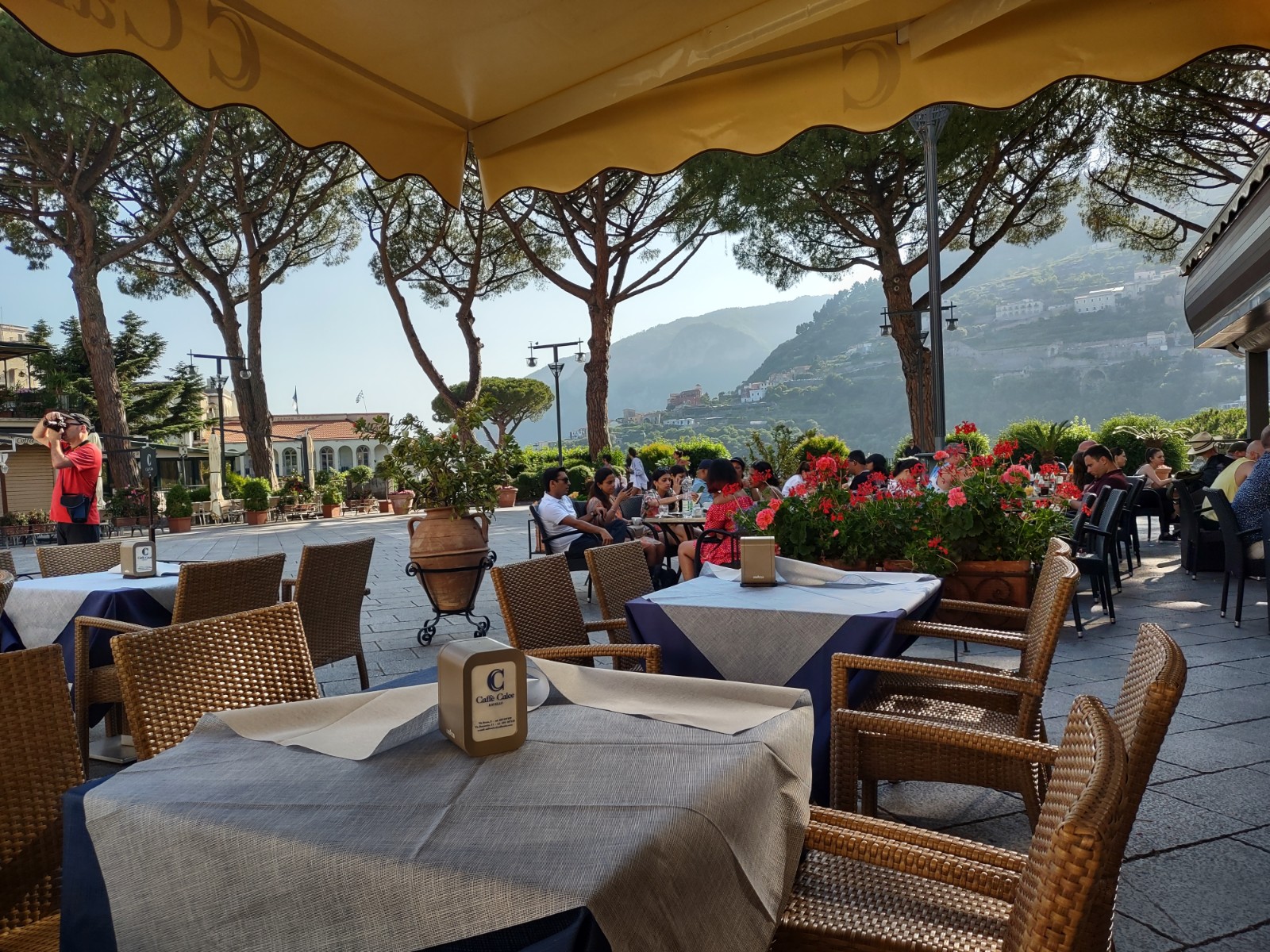

We had a very pleasant dinner and watched people strolling the Piazza in their finery. (For whatever reason – it appeared that there was some sort of wedding anniversary celebration going on in the Duomo – people were much more dressed up on Tuesday evening than they were on the other nights we visited the square.) We strolled a bit more ourselves, and then took our time making our way back down the mountain to home where we unpacked and settled into our place.
Day Trip to Minori
Mostly because of the view but, OK, also because of the incline, we were pretty content to laze about our new place just enjoying the view and were pretty selective in regard to our ventures out. Before arriving, we had committed to making our way to a local beach one day but, after having already seen what a zoo it was in Amalfi, we decided to hike down the mountain to a much smaller town called Minori. In addition to wanting some beach time, we were in need of a better grocery store, which we hoped to find in Minori, and we were also on the hunt for a special local pastry we had heard about.
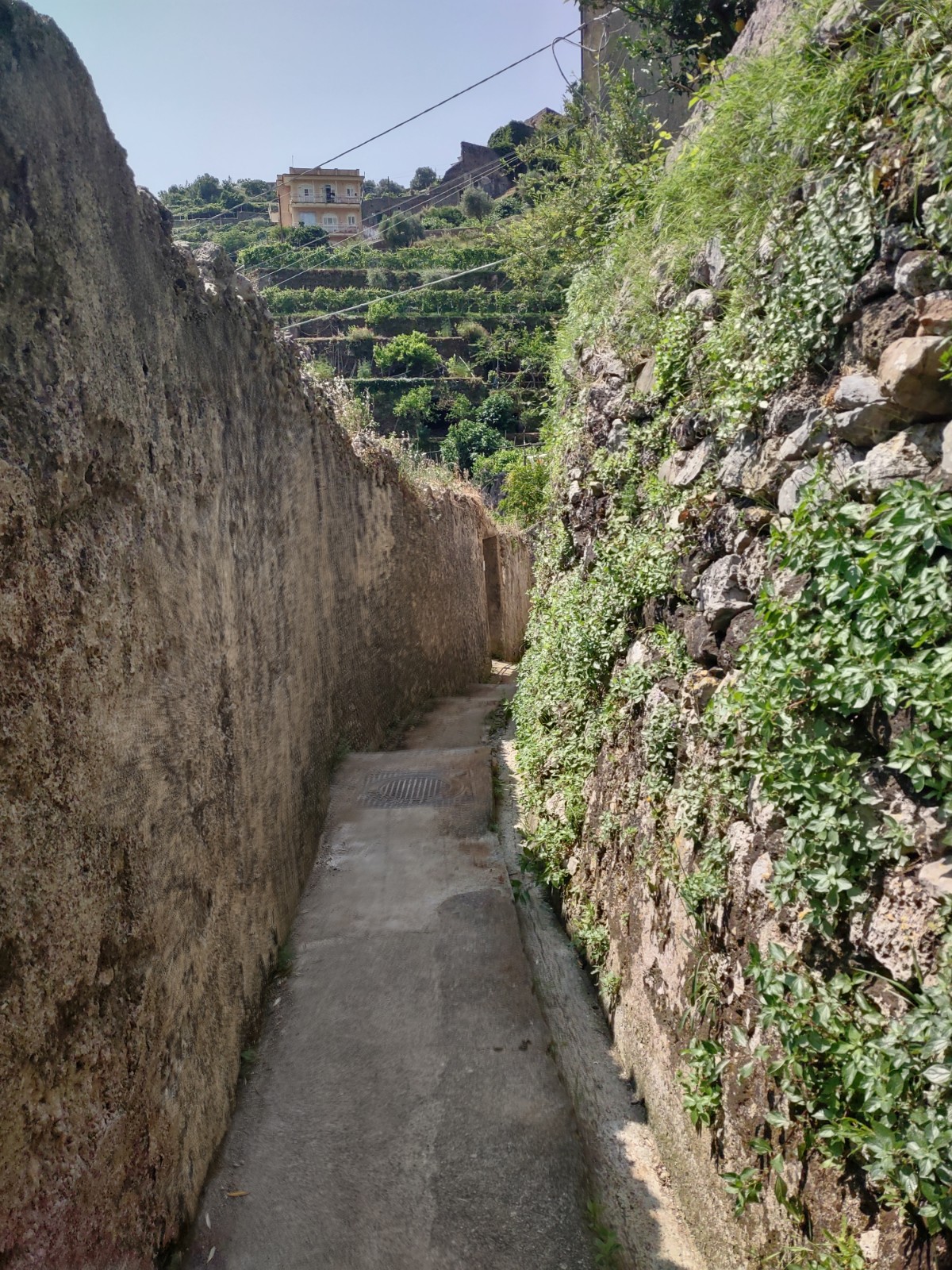
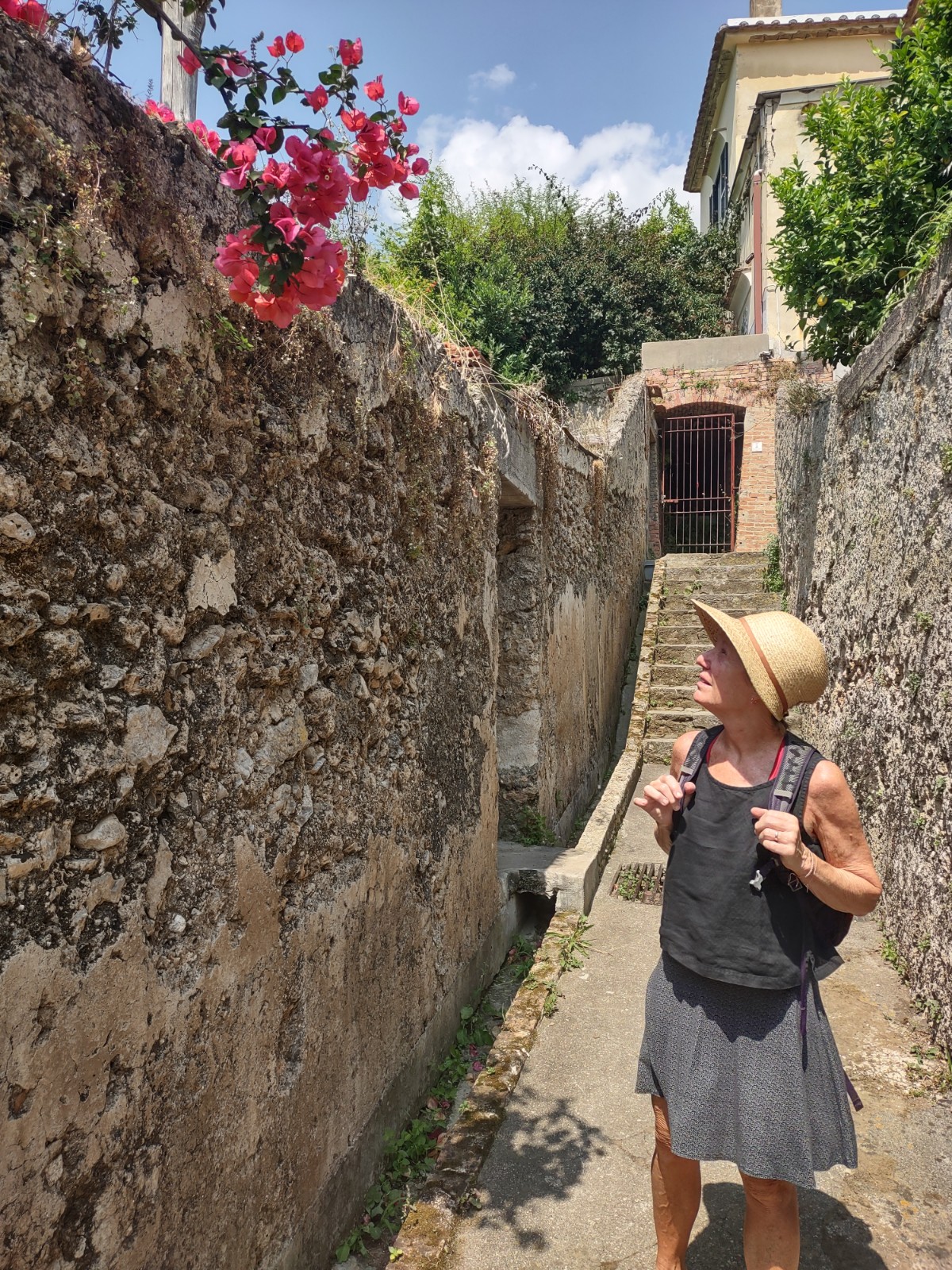
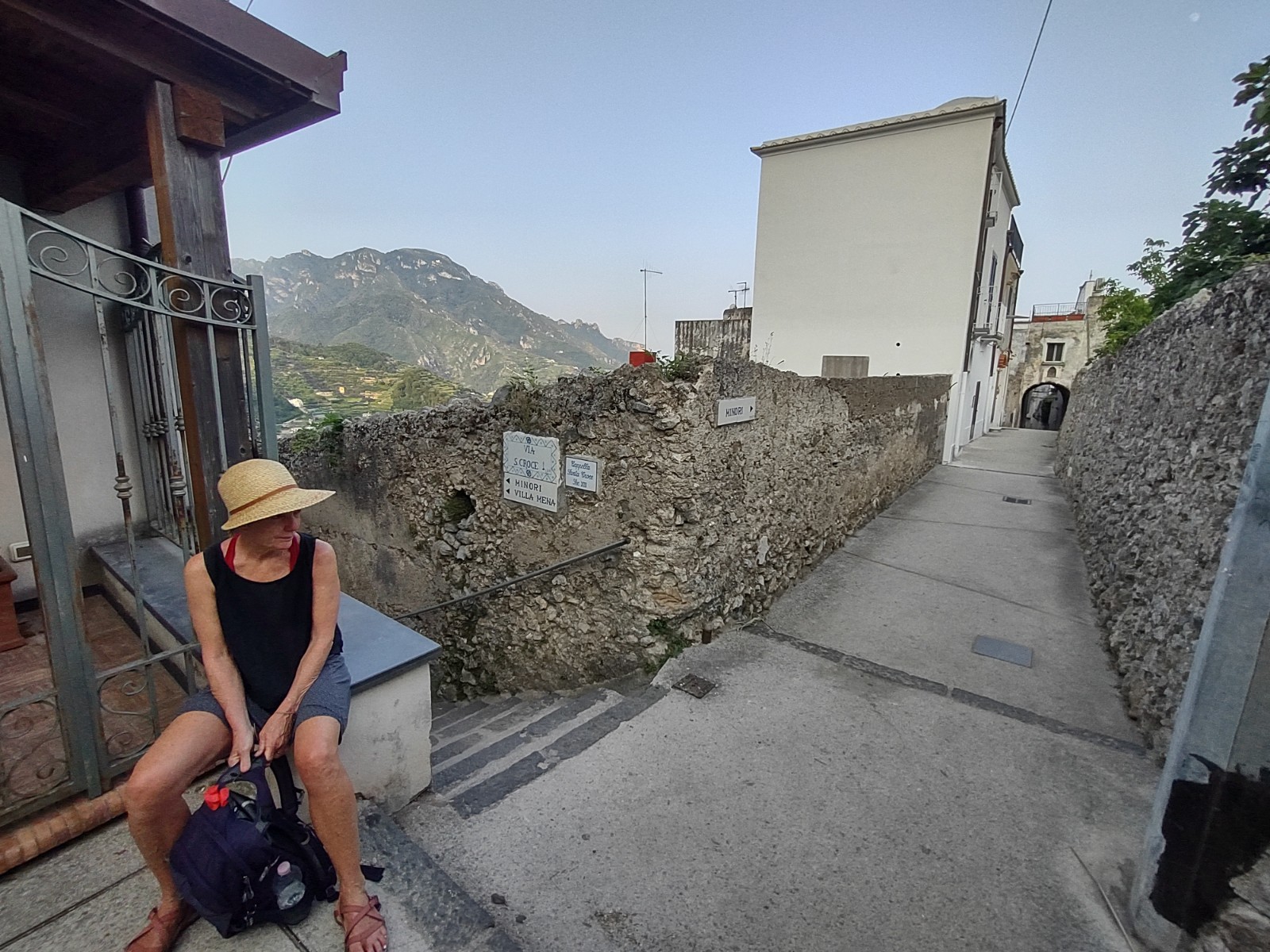
We got a fairly early start, hoping to take advantage of the cooler morning (at least for the way down) and began the descent to Minori beach located 305 vertical meters (1,000 feet – the equivalent of 1,500 stairs) below our house. As we were not carrying luggage, opted for the most direct (and steepest) route which avoided the coast road which seemed pretty unsafe for pedestrians. The path itself was quite interesting, a combination of narrow walkways and stairs (mostly stairs) with stone walls on one side or the other (sometimes both) which wound their way through old farmhouses, lemon groves, and the occasional church, chapel, or shrine. Every now and then, the path would open to a beautiful view of the coast below us but, as beautiful as the descent was, it was difficult not to occasionally think about what the climb back up would be like.
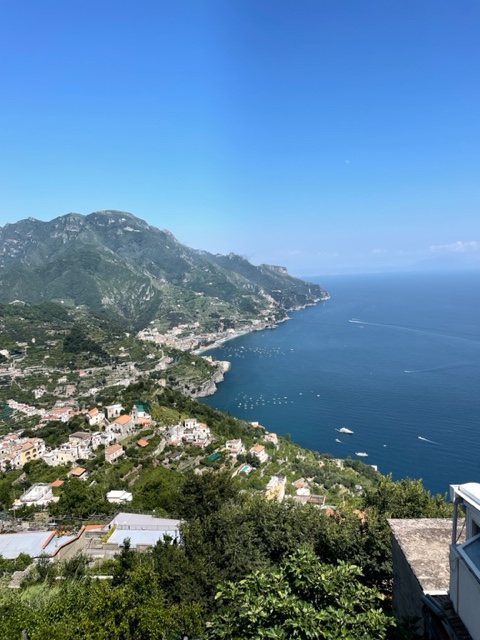

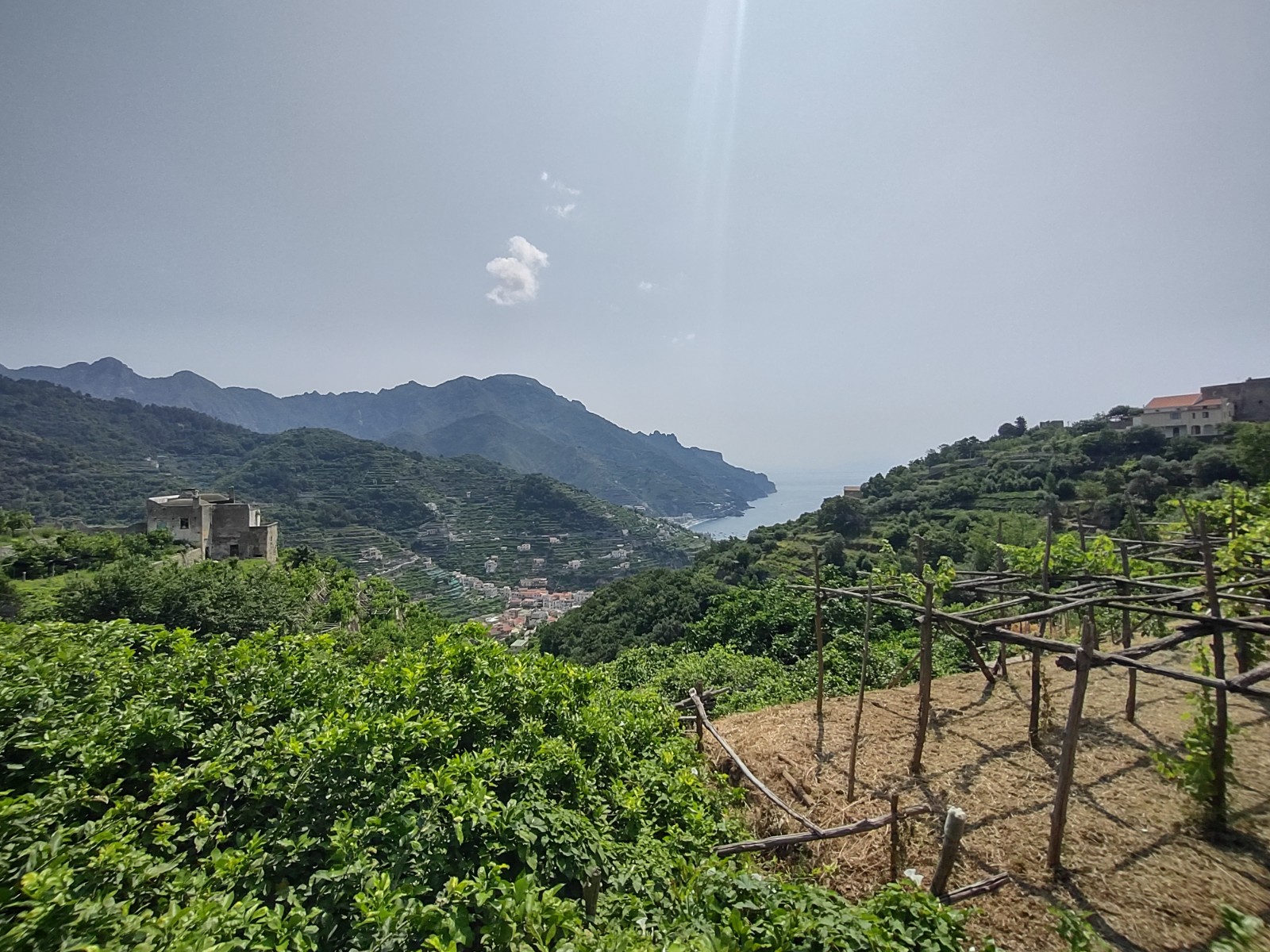


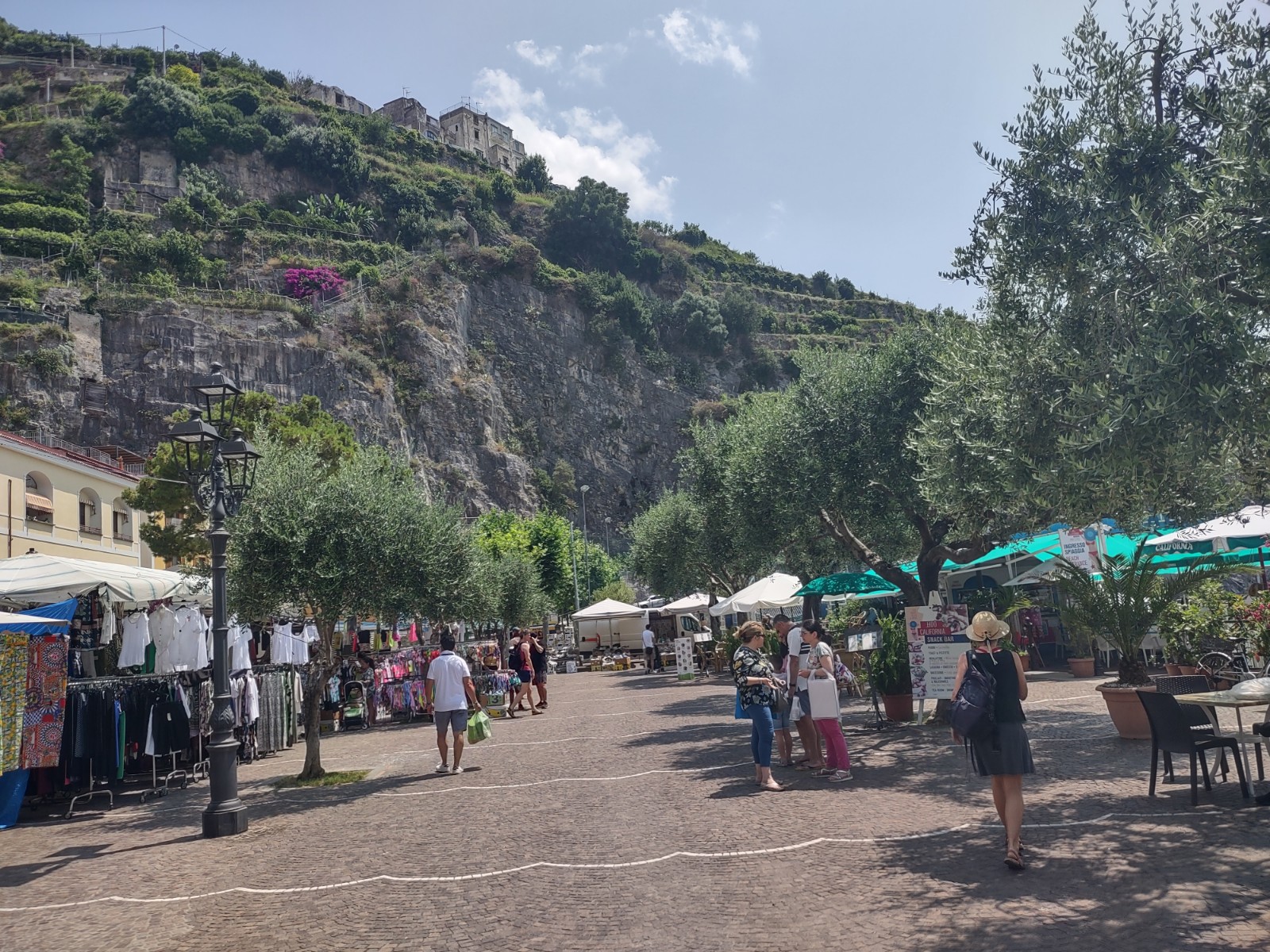
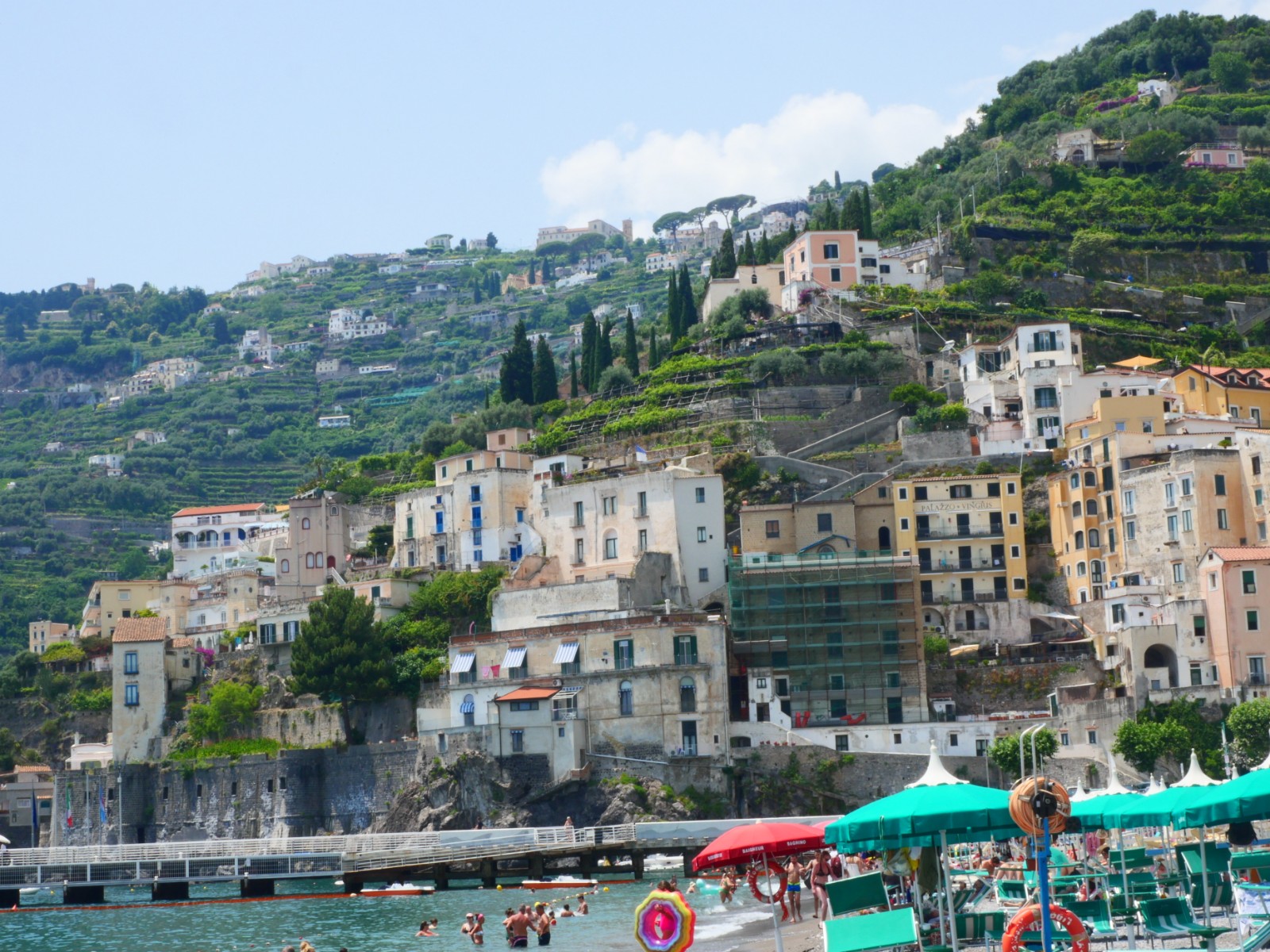
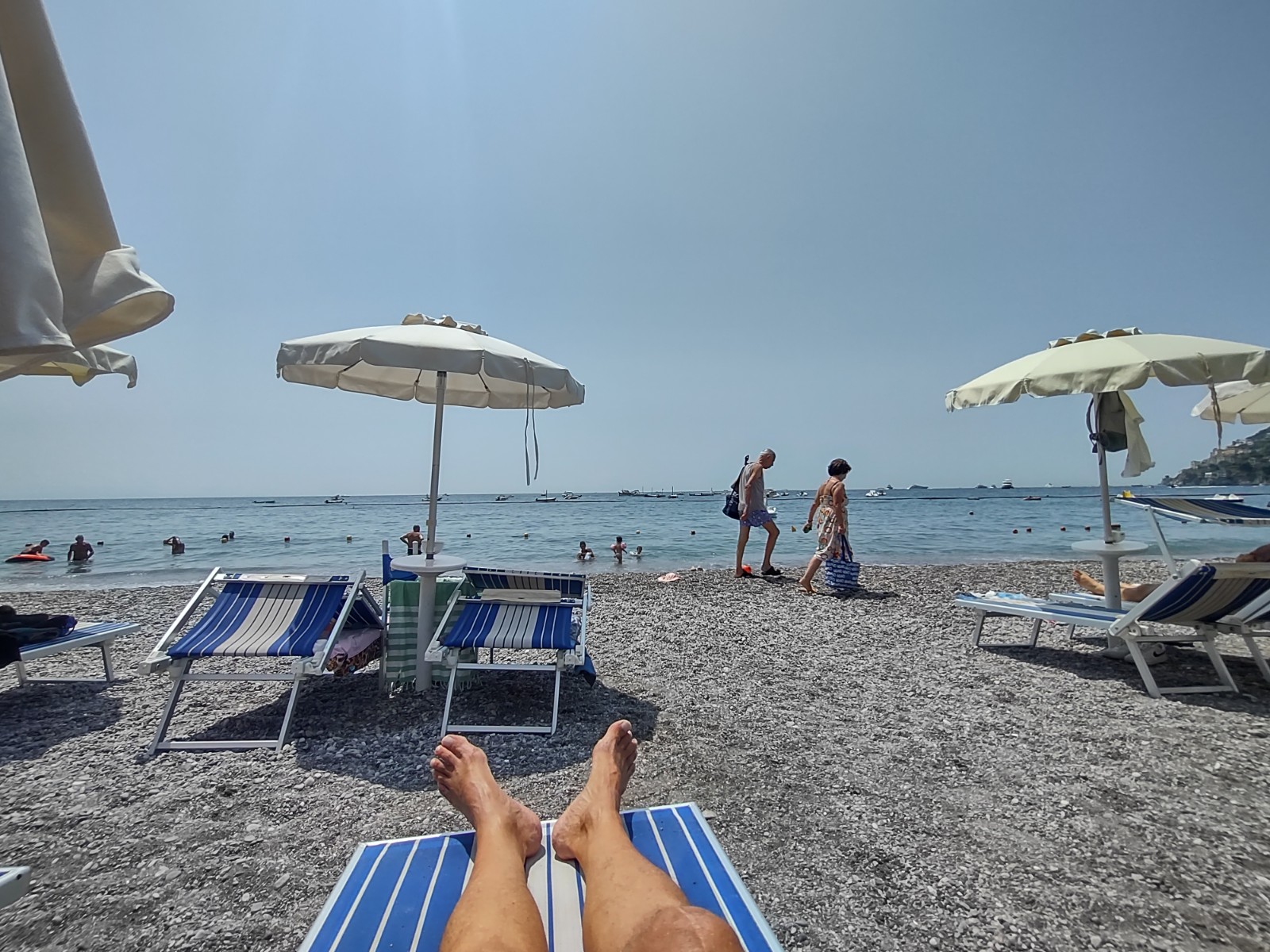
We entered Minori from the hill behind and made our way through the town toward the seafront and were quite surprised at how uncrowded it seemed. We found the beach beyond a nice little day market and did what we had decided one does at an Italian beach – rented two beach chairs and an umbrella. Like the town, the beach was not very crowded and we had a great morning basking in the sun and taking an occasional dip in the just cold enough water. We took a break for lunch and had some great fresh seafood at a place called La Locanda Del Pescatore.
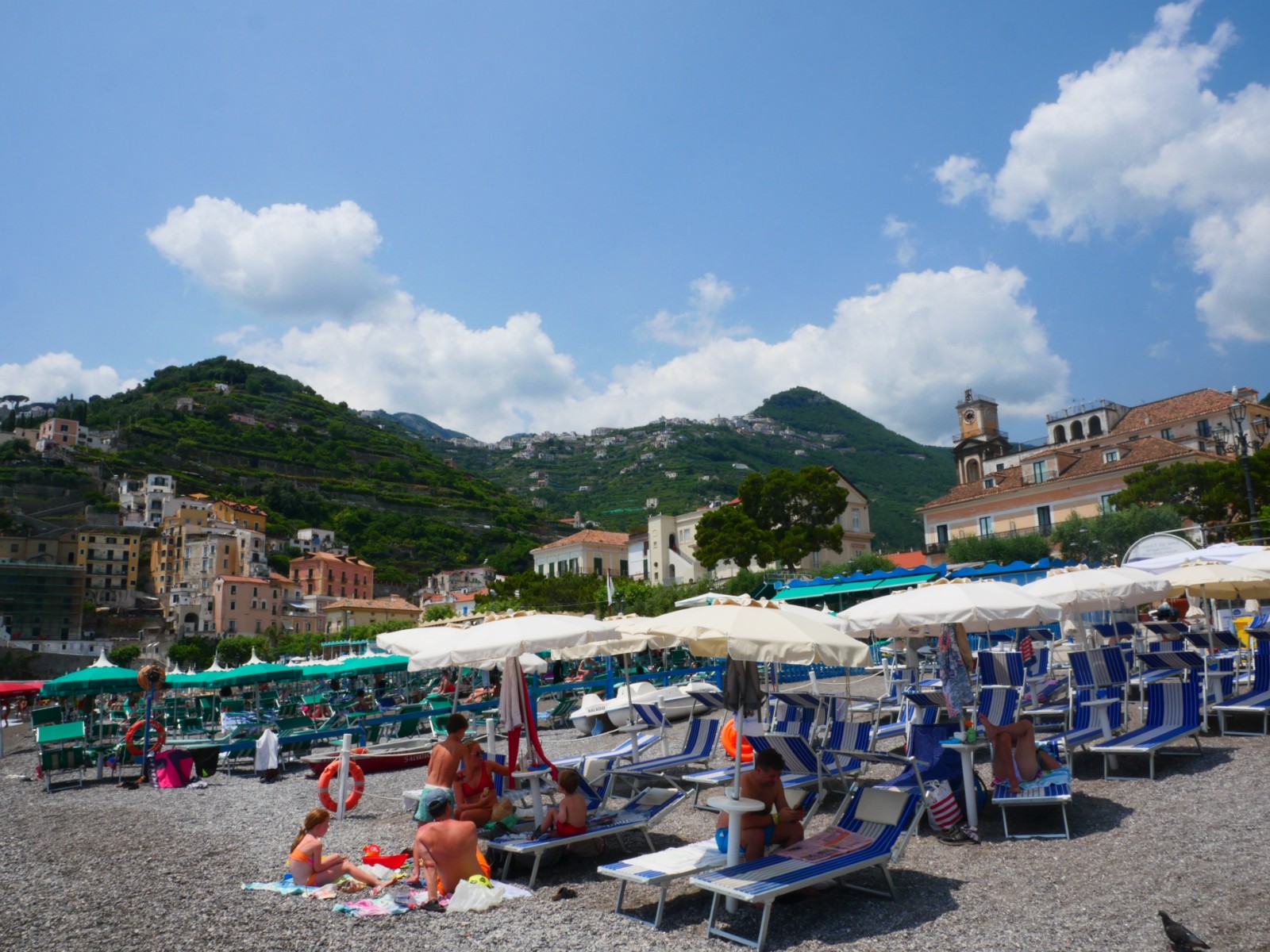
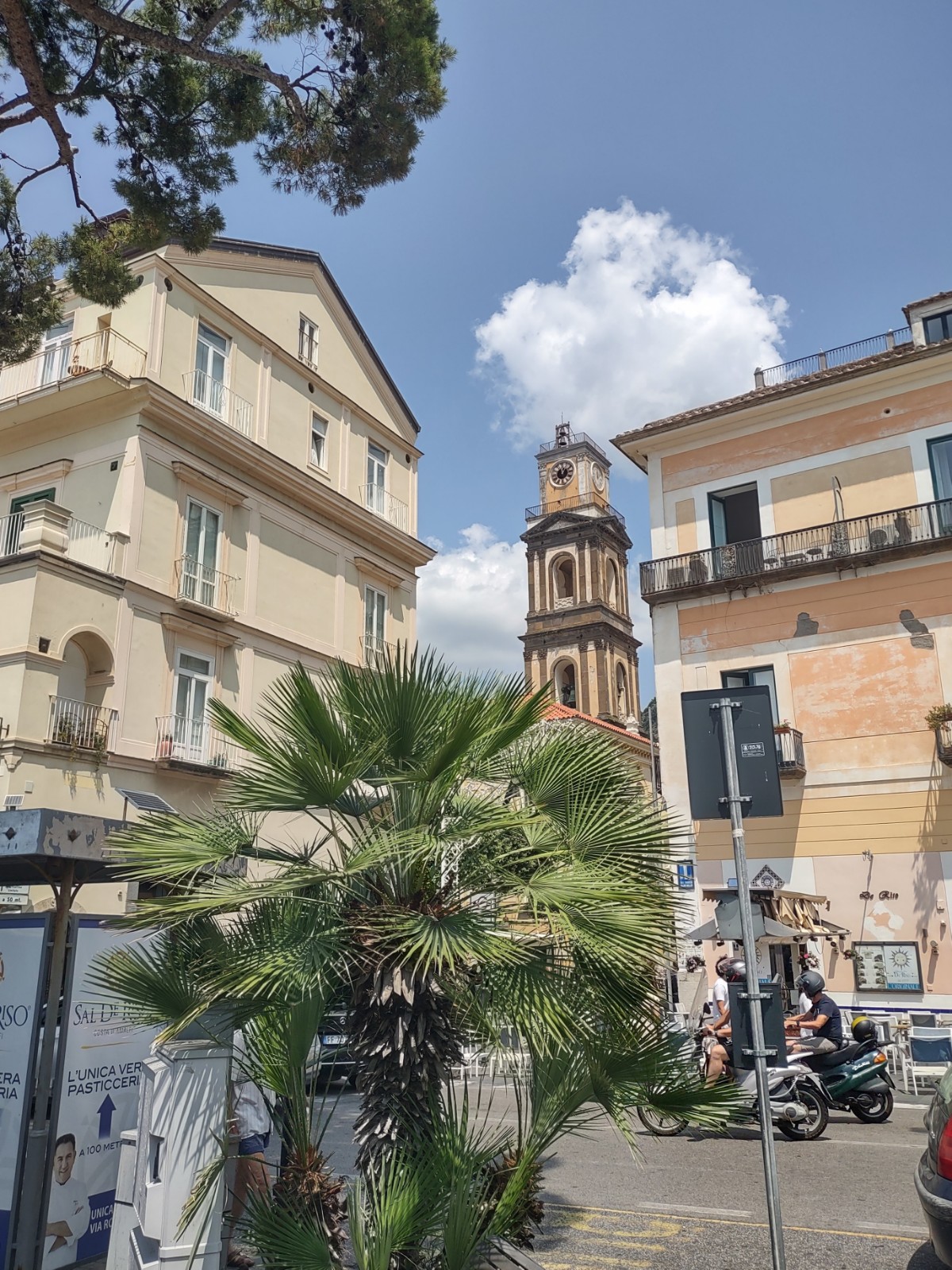
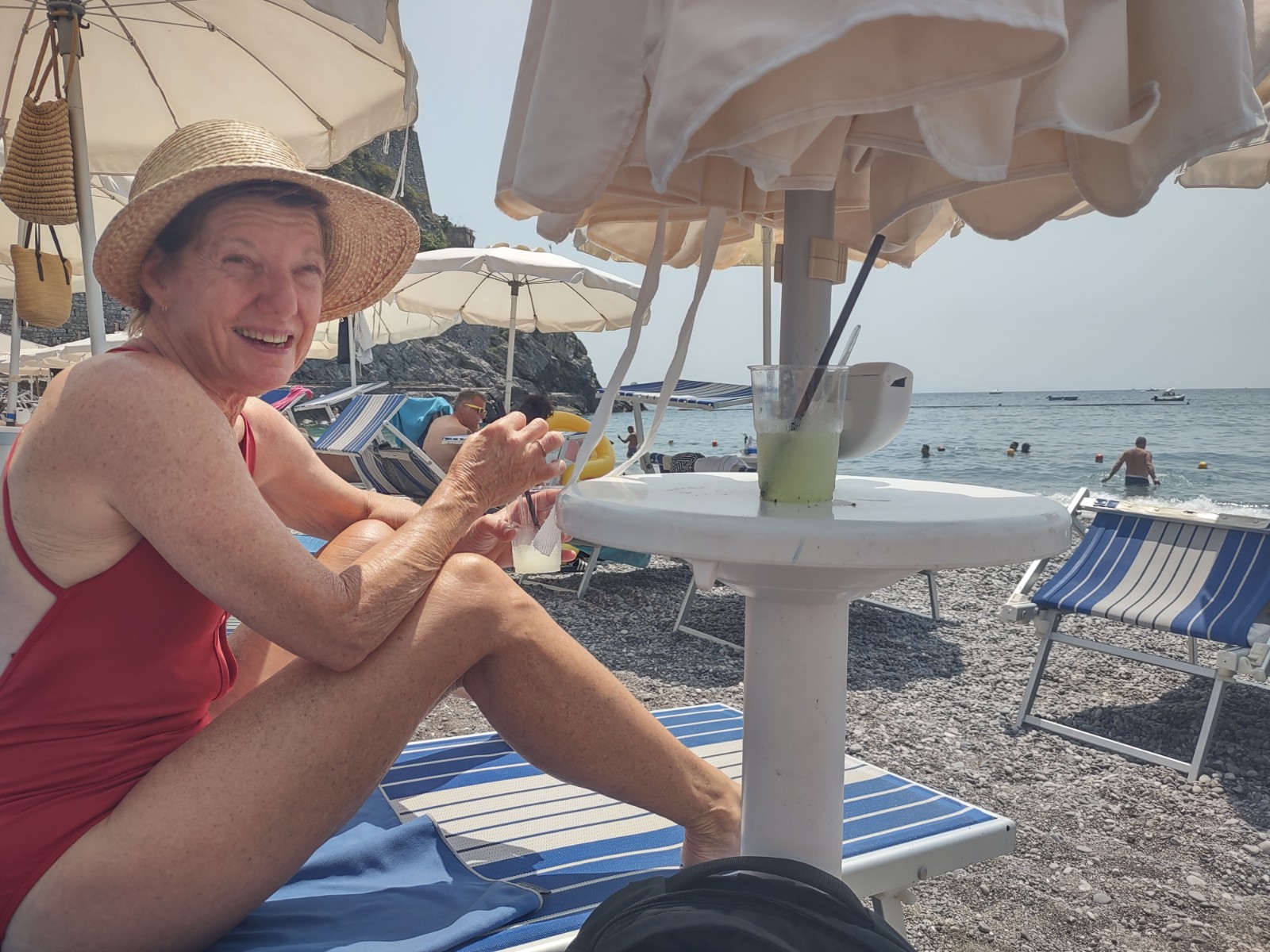
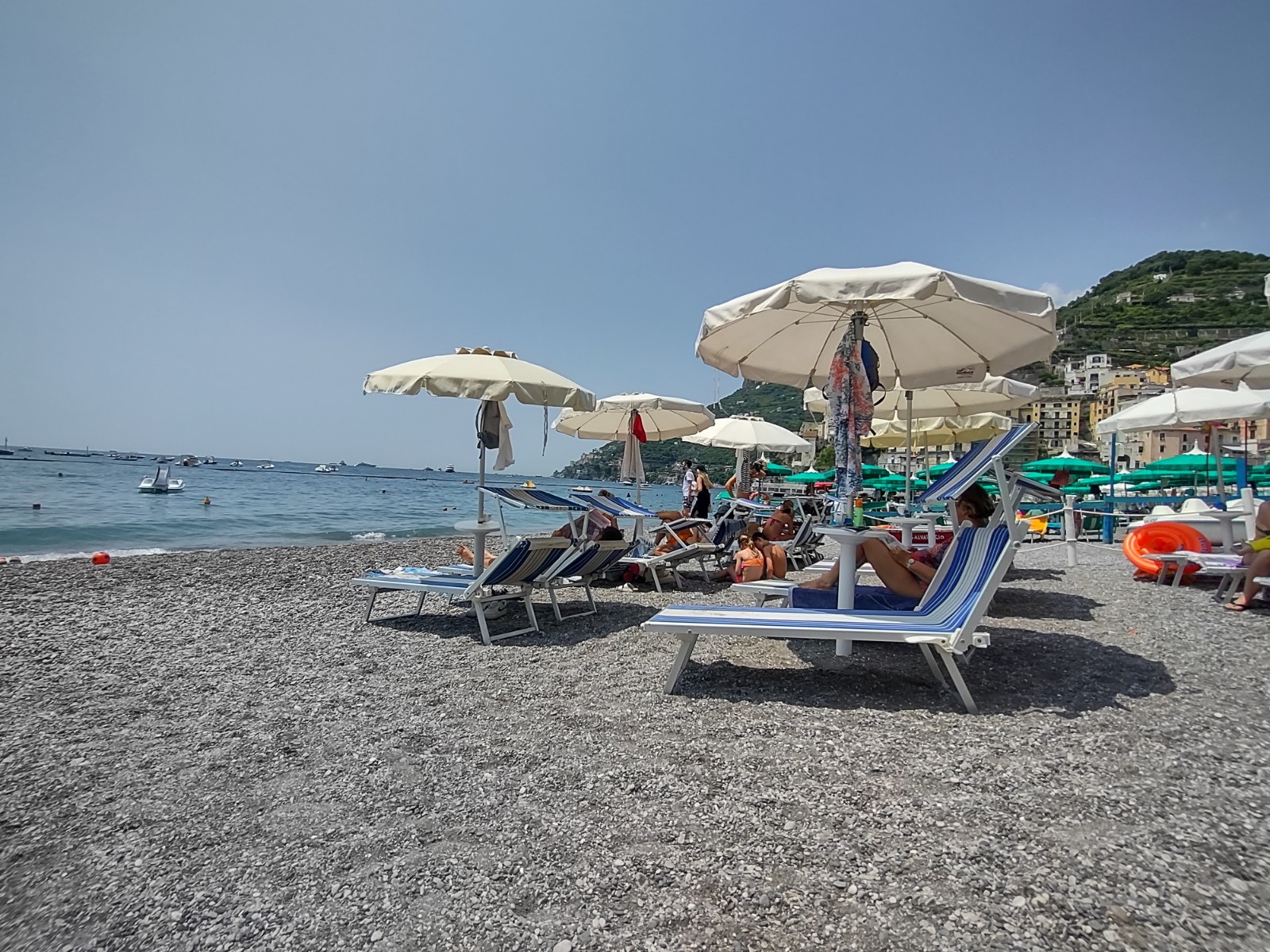


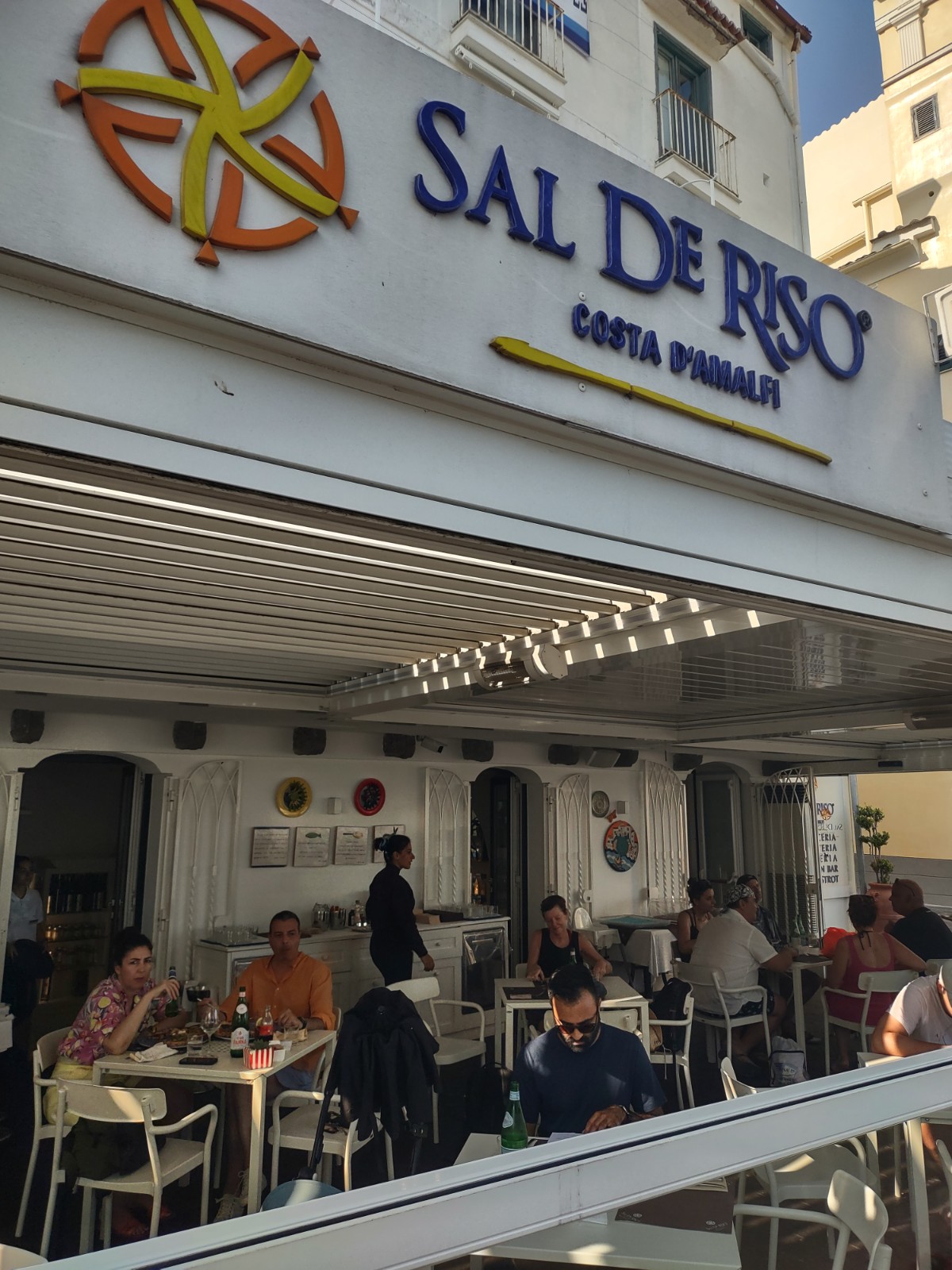
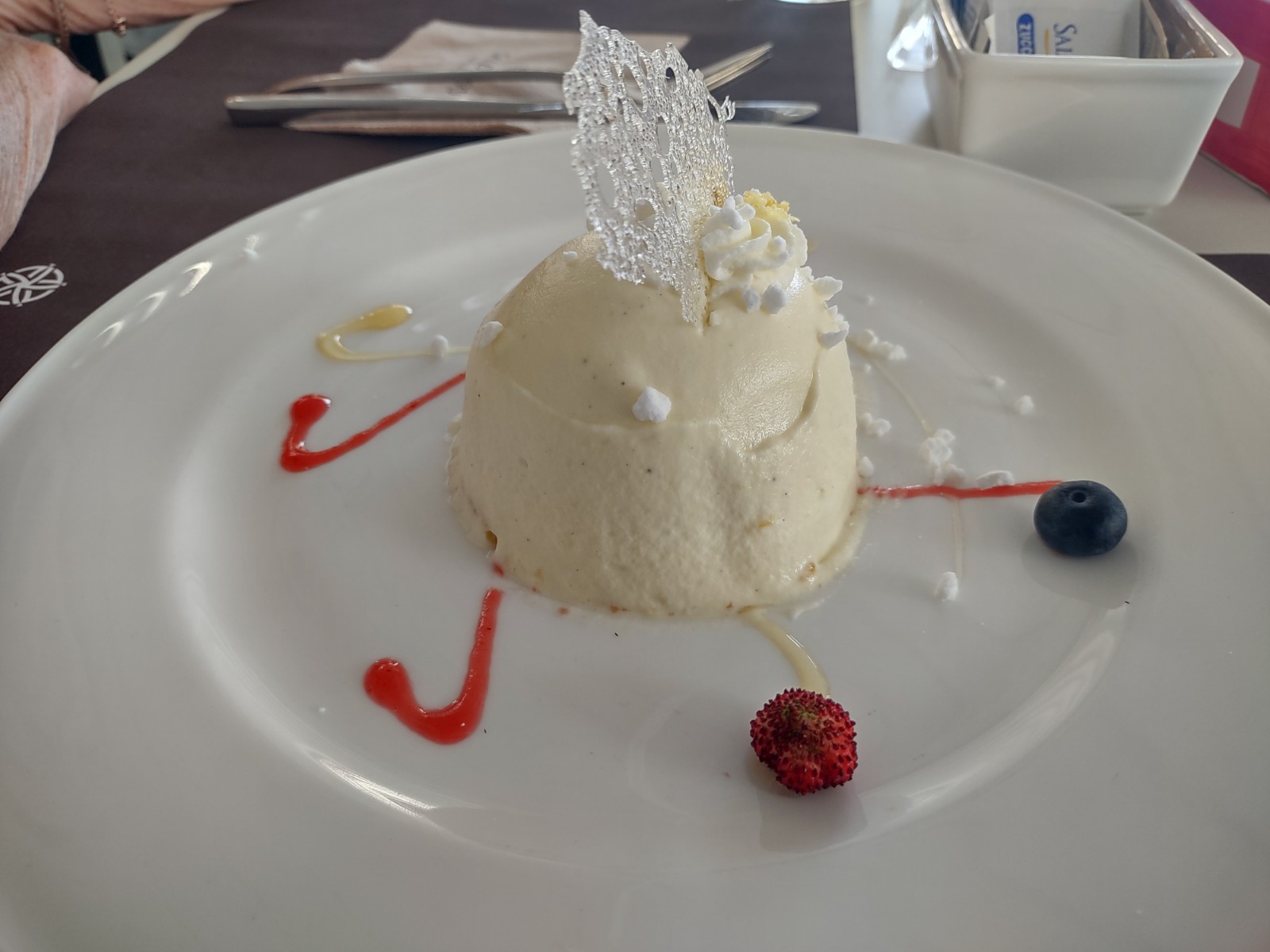
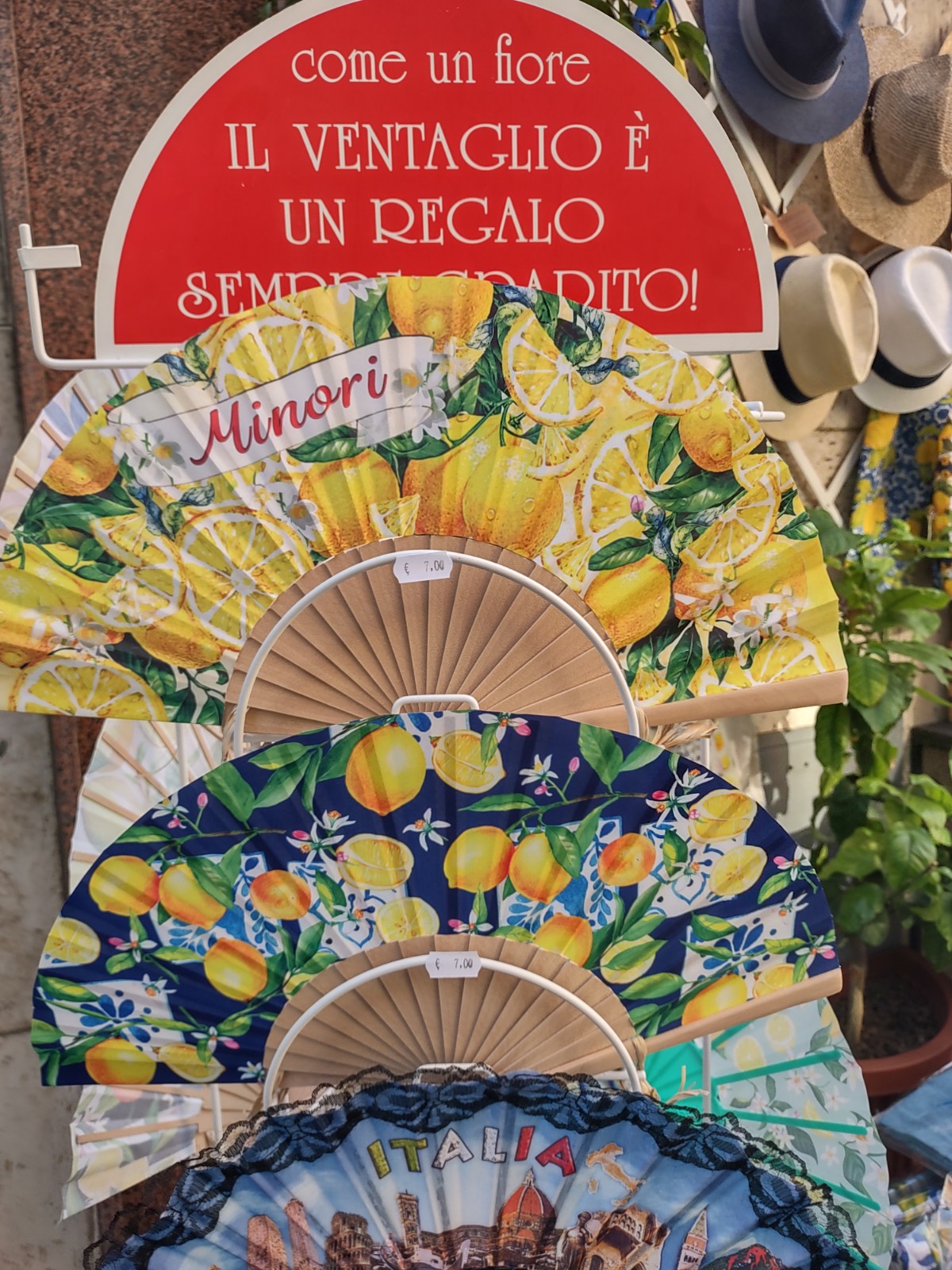
After lunch we headed for our ultimate destination in Minori, a place called Pasticceria Sal De Riso, which, as we learned of from an episode of Stanley Tucci’s Searching for Italy, is the place where a special local pastry known as a “Lemon Delight” originated. It consists of a lemon sponge cake which is filled with lemon cream, then dipped in lemon frosting and then topped with more lemon crème, lemon zest, and some spun sugar. Lemons are everywhere on the Amalfi coast – in the trees, on pottery, lemonade and clothing – but this is without doubt the most delicious and decadent way to enjoy them.

After a little more time on the beach, we resigned ourselves to the inevitable and packed our stuff up. On the way back through town we found that the grocery store was out of business but did find a good butcher shop where we picked up some nice sausages and meatballs for pasta. Having done everything we could to delay it, we made our way out of town and began our ascent home.


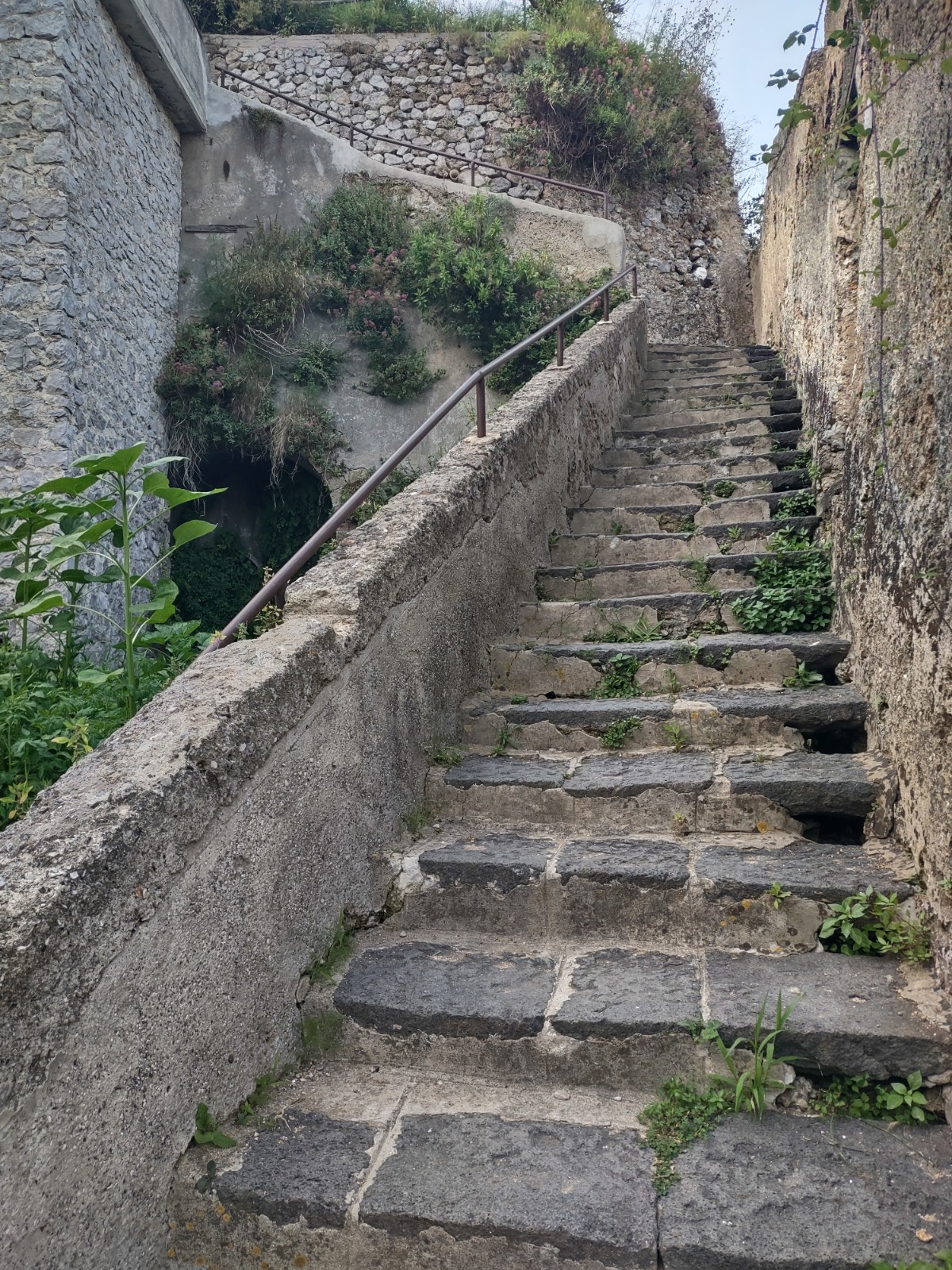
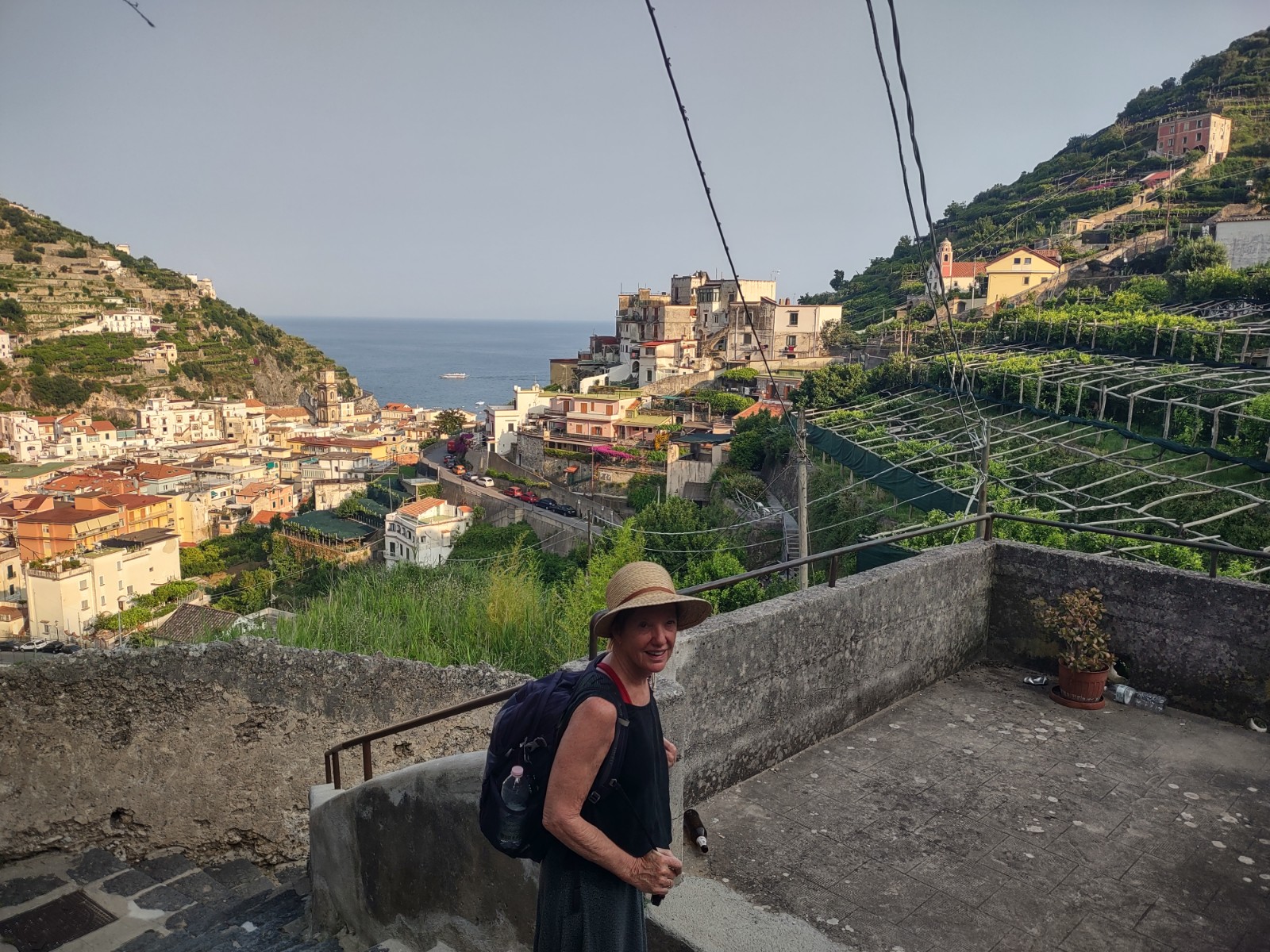
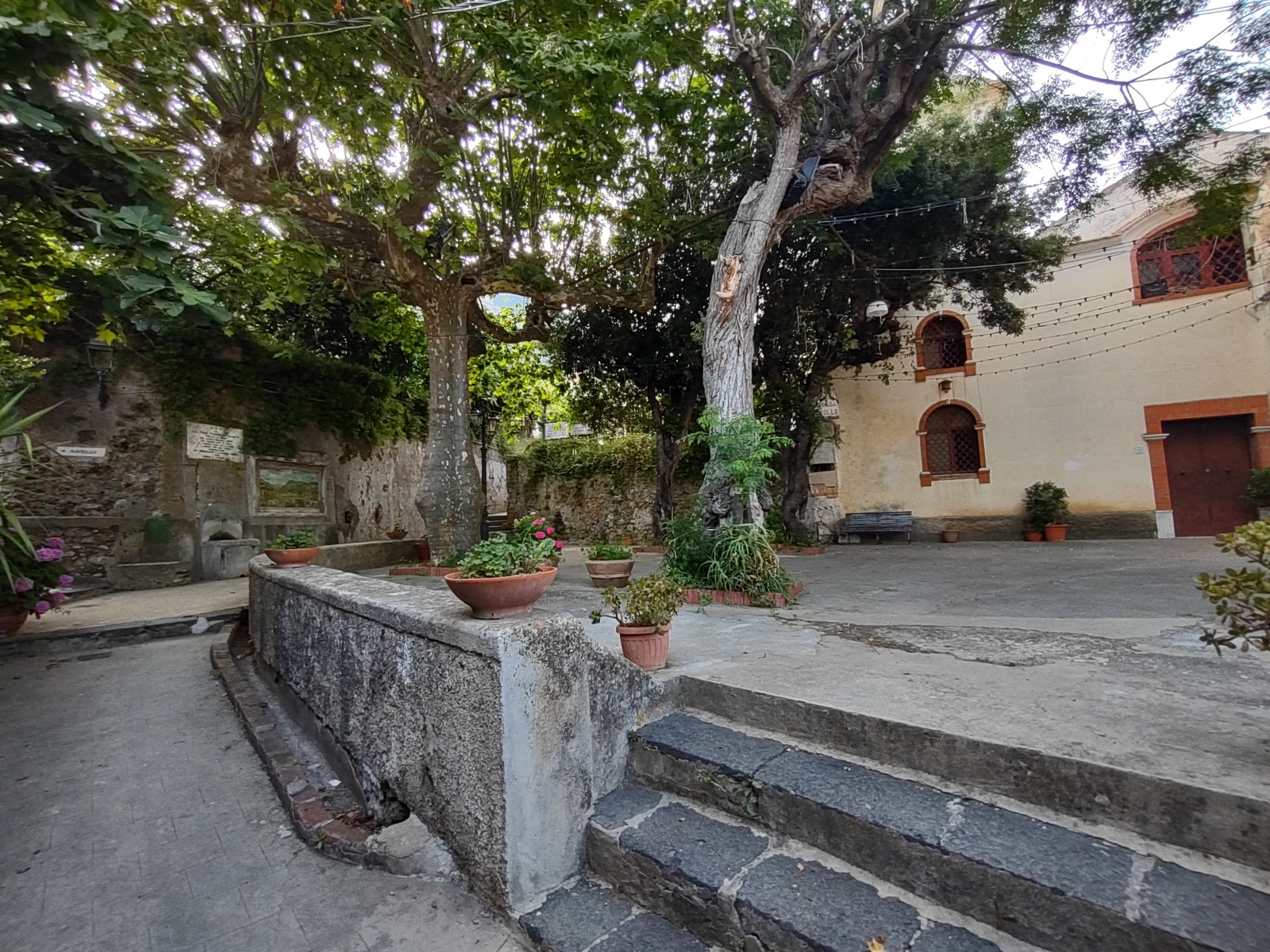
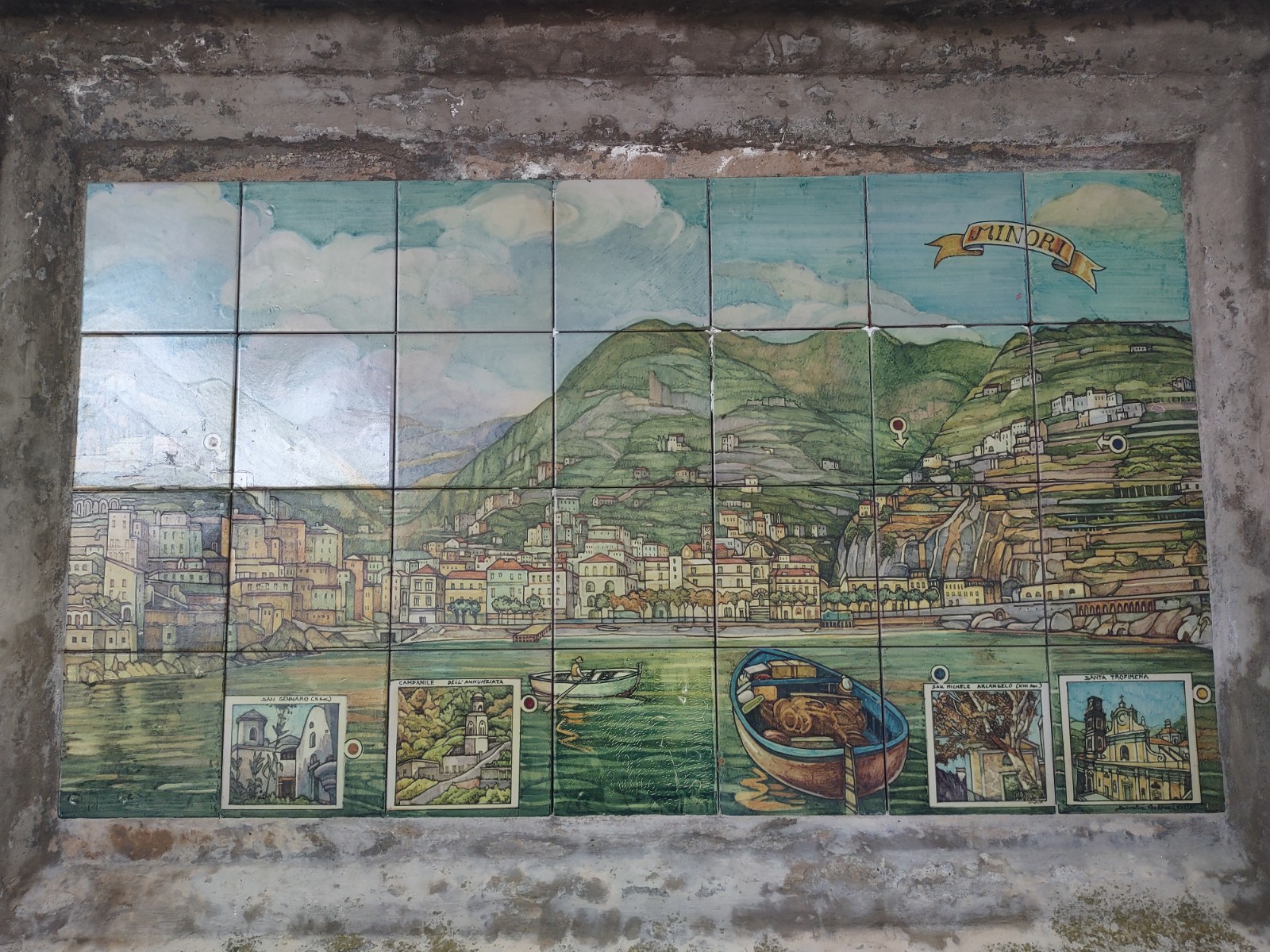
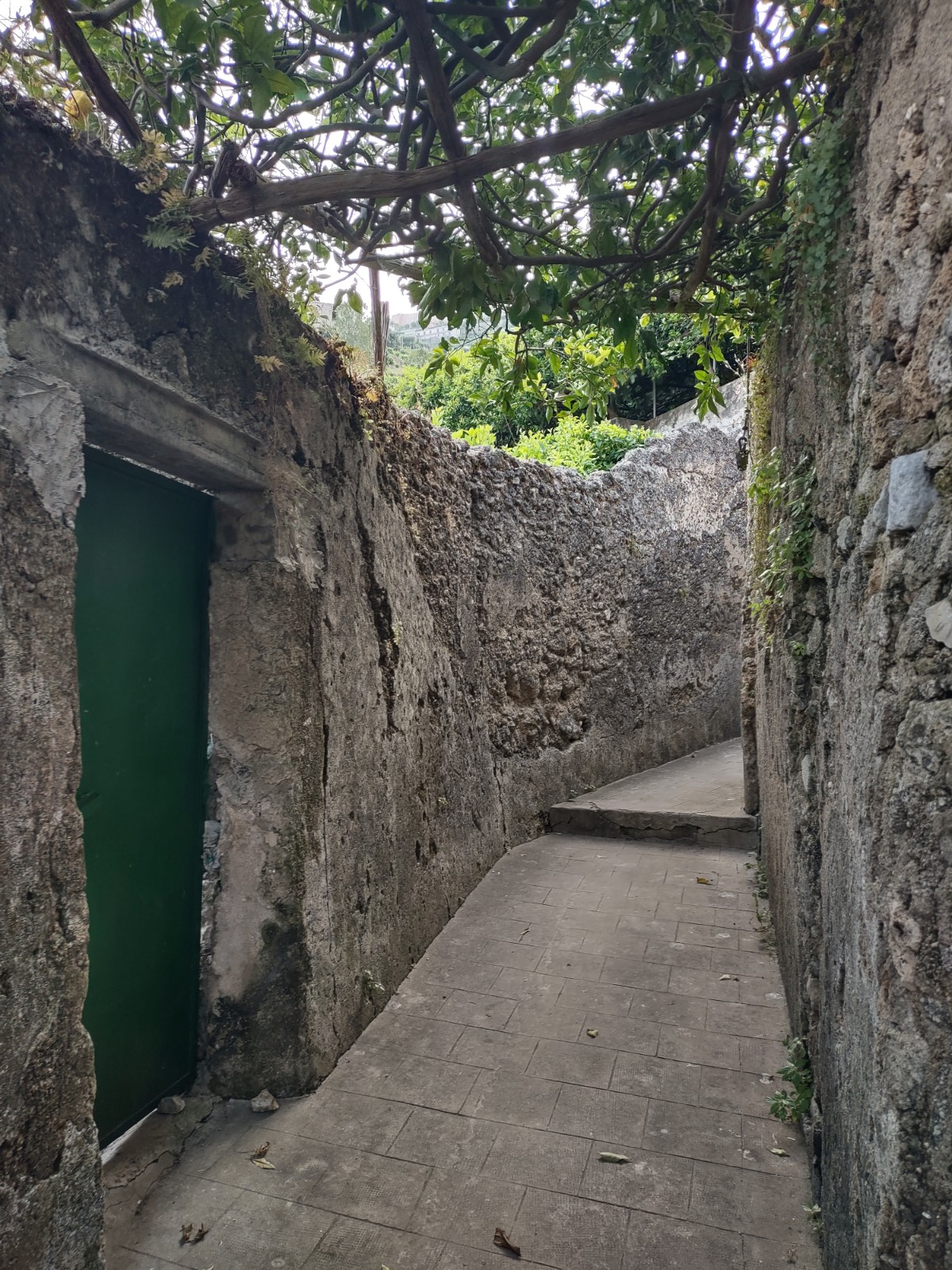

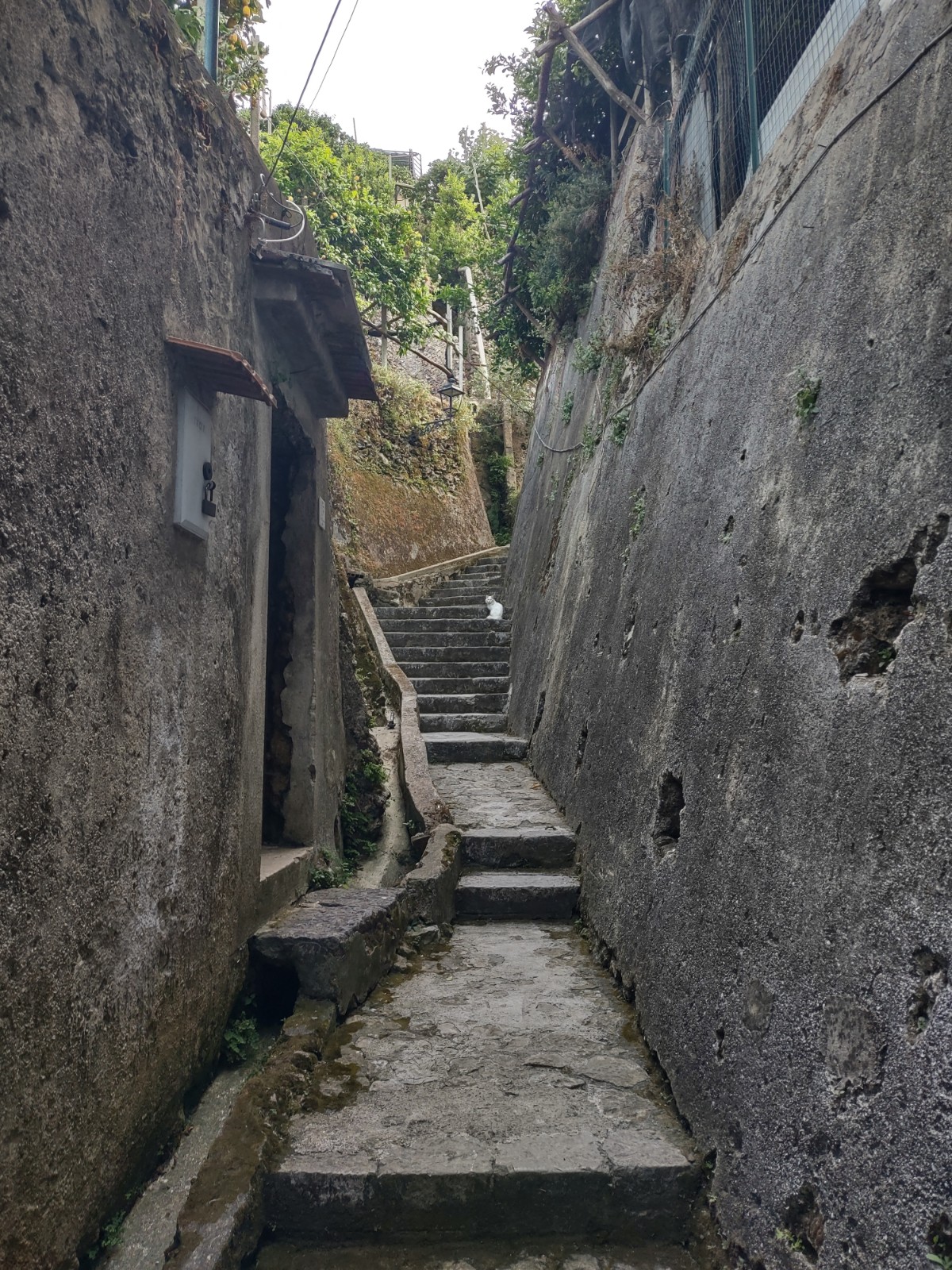
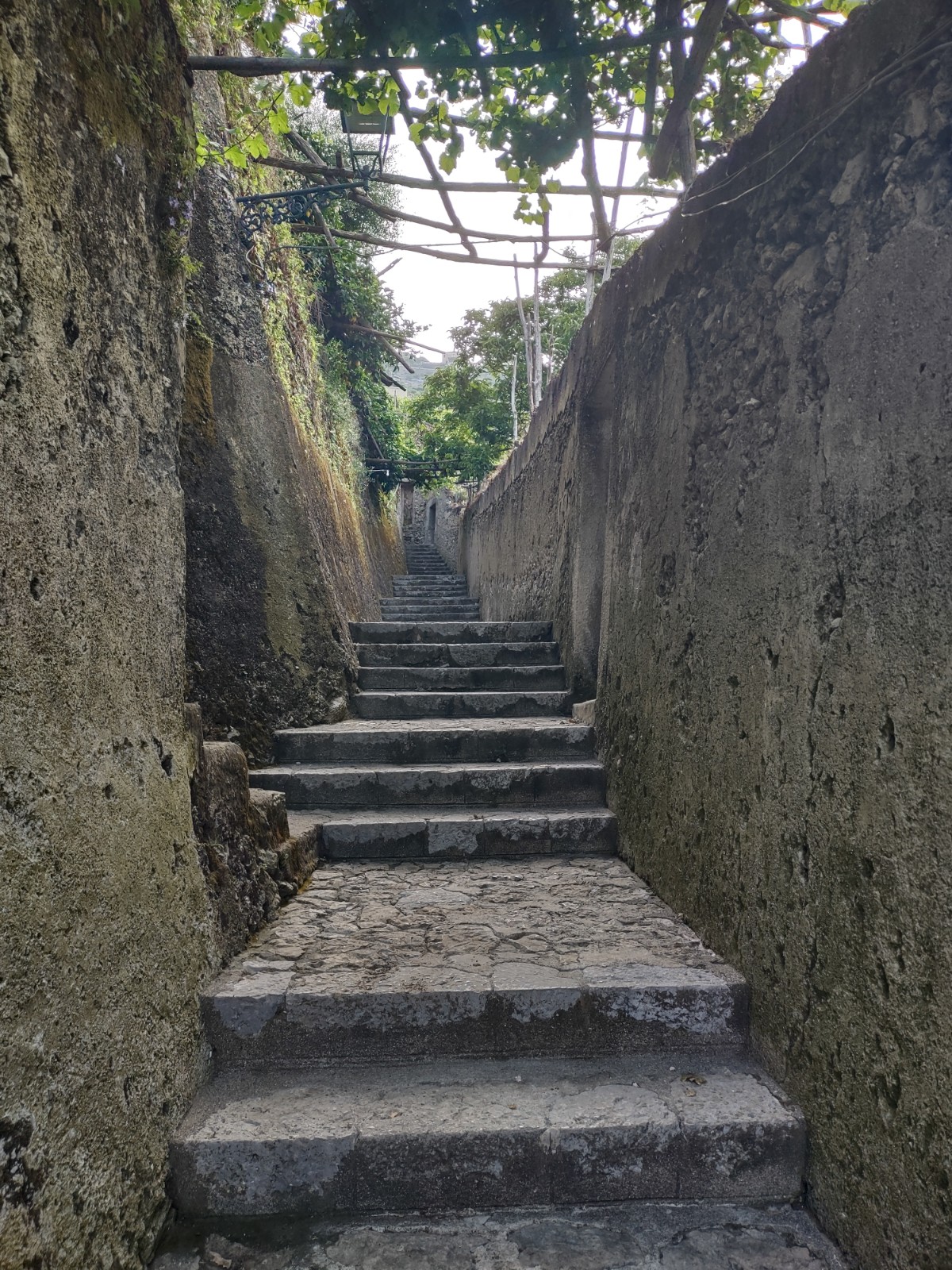
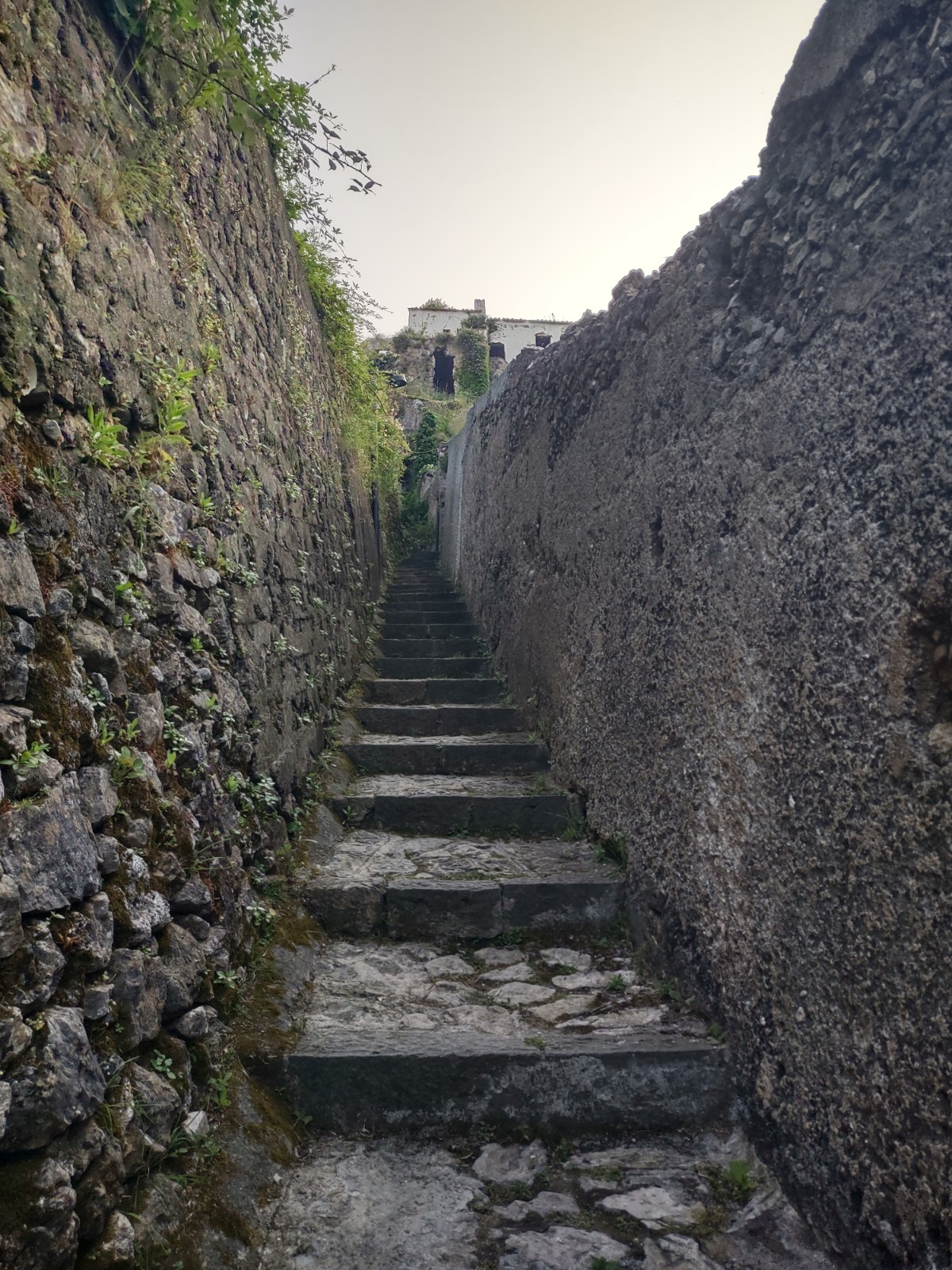

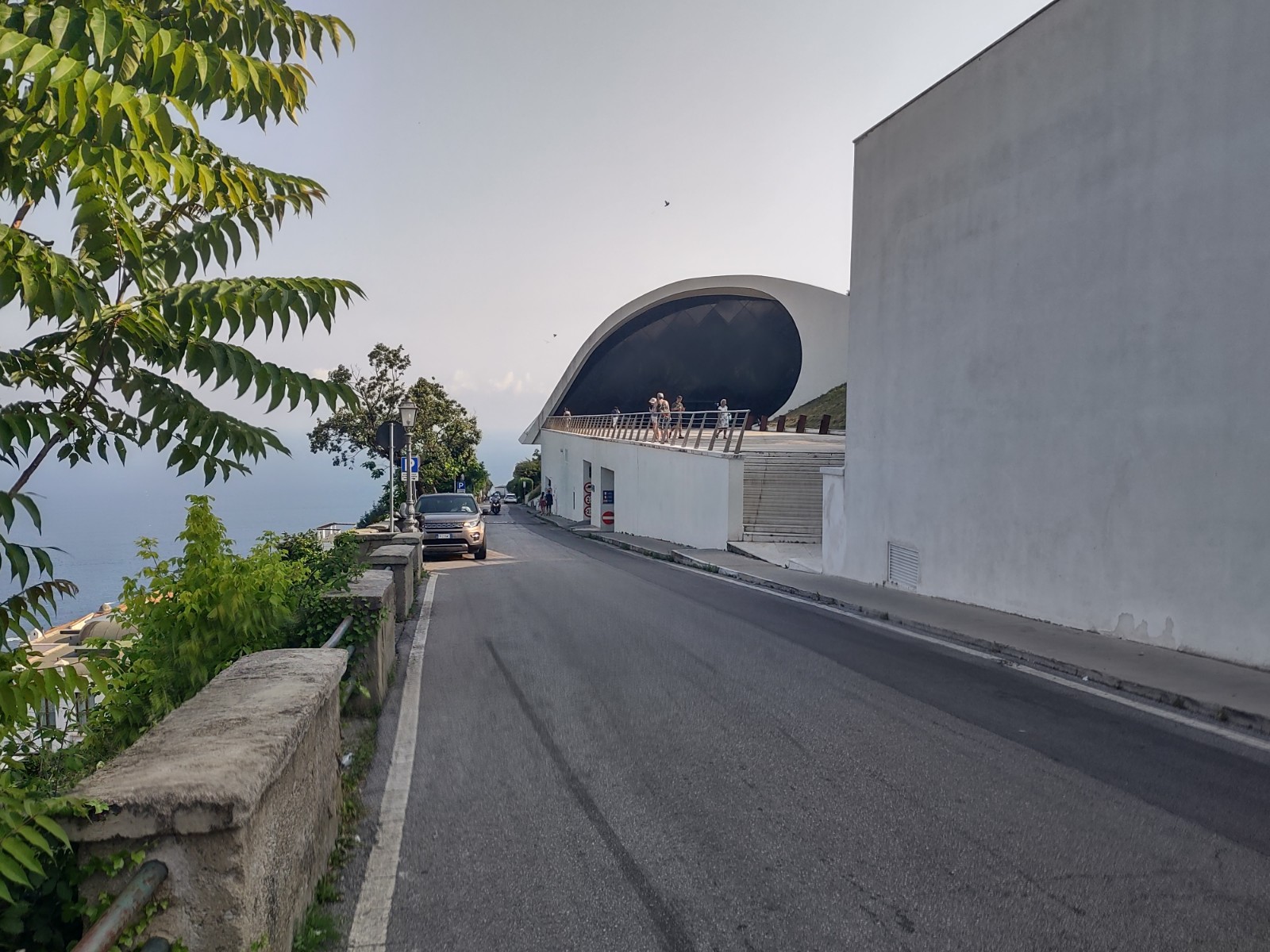
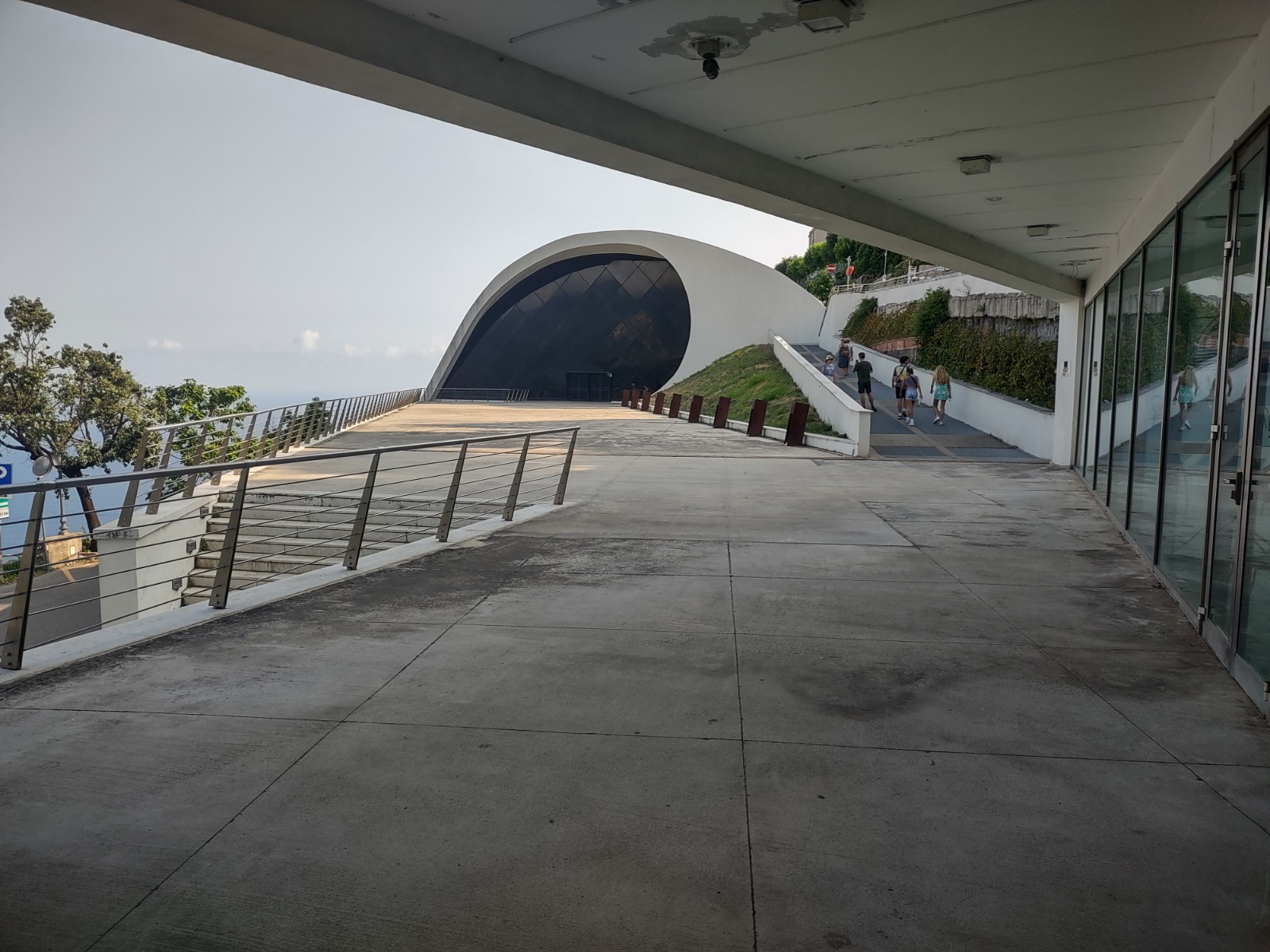
The climb was beautiful but long and hot with the only thing to be done to take our time along with frequent breaks to hydrate and enjoy the views. Just before the turn for our street, we came across the Oscar Niemeyer Center which we had glimpsed on the way up the mountain. The Niemeyer center is a modern concrete and glass structure which serves as one of the venues for Ravello’s annual music festival.
Eventually, we found our way home where we had a great dinner and, to our surprise, also enjoyed a fireworks display in Maiori, one of the towns below us. (No idea why the fireworks on Tuesday June 29th, but we enjoyed them all the same.)

Villa Rufolo
Our other venture out in Ravello was a visit to the Villa Rufolo, an incredible place (really, a palace) built by a wealthy merchant family of the same name in the 12th century. The Villa Rufolo overlooks the Piazza Vescovado to the north and steps down the mountainside to the south with expansive views of the coast and sea far below. The building, which is an eclectic assemblage of Roman, Norman, and Arabic architecture was said to boast “more rooms than the days in the year” (apparently so many that some were lost and then rediscovered centuries later). With the economic decline of Ravello and the Duchy of Amalfi, the Villa feel into disrepair but was purchased by a Scottish aristocrat Francis Neville Reid who set about restoring and rebuilding it. Today it serves as the headquarters for the Foundazione Ravello and some other local cultural organizations including the Ravello Festival which it serves as a venue for.
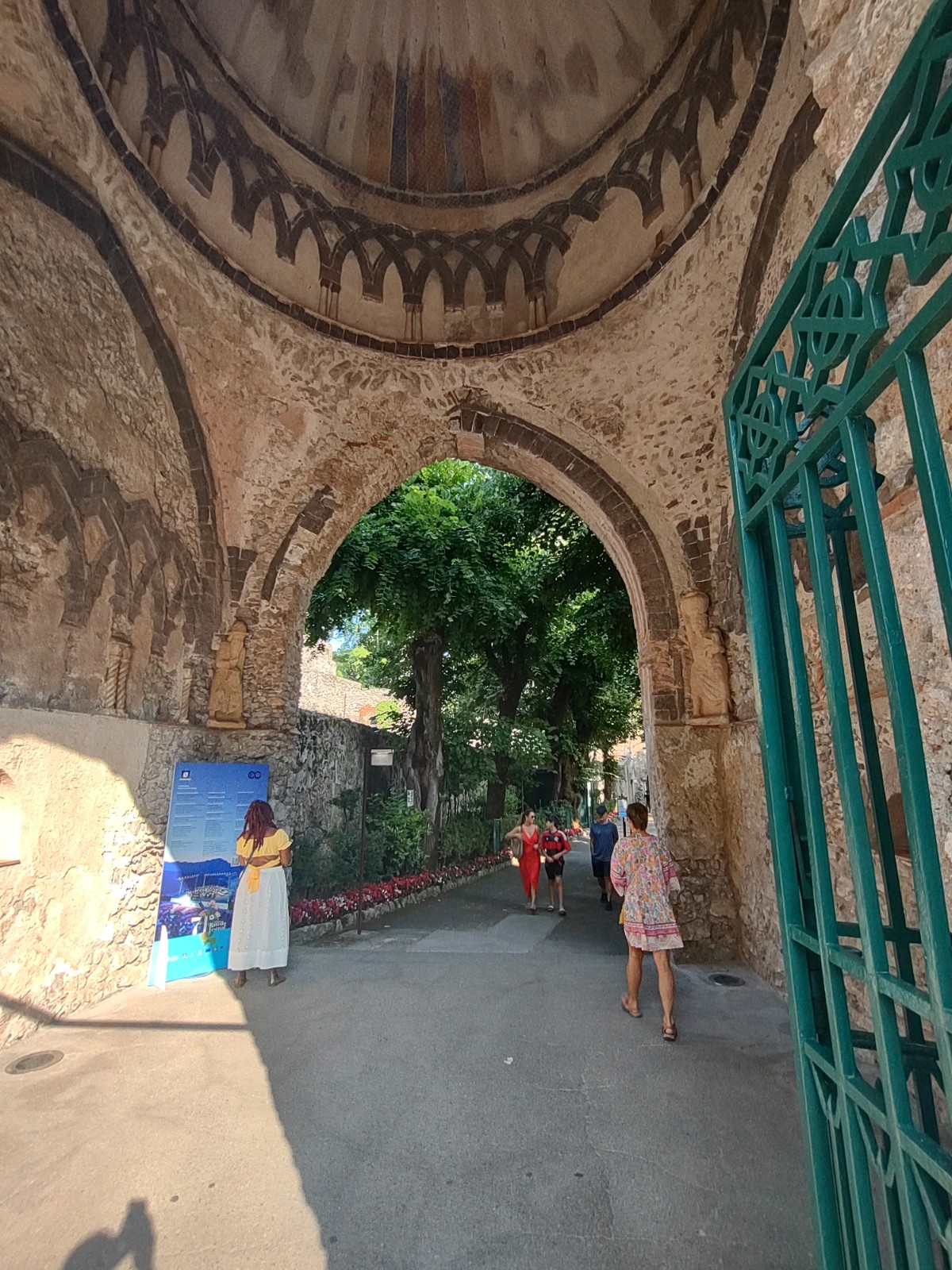
You enter the estate through a tower (La Torre d’Ingresso) just off the Piazza which, like much of the Villa, has by and large been left in its deteriorated condition, but enough of the original plaster and tile finish work remains to gain a sense of how beautiful it must once have been. There is even a section of the interior dome of the entrance tower where the original paint colors have been restored, which I really loved as the bright rainbow striped colors challenge our tendency to imagine classical buildings to be a monochromatic white like the ruins of the Acropolis or the U.S. Capital Building. This approach (preservation, not restoration), which may well have been undertaken because of funding limitations, to me seems far more authentic (and more romantic?) than a poorly executed restoration (which we have seen our fair share of on this trip).
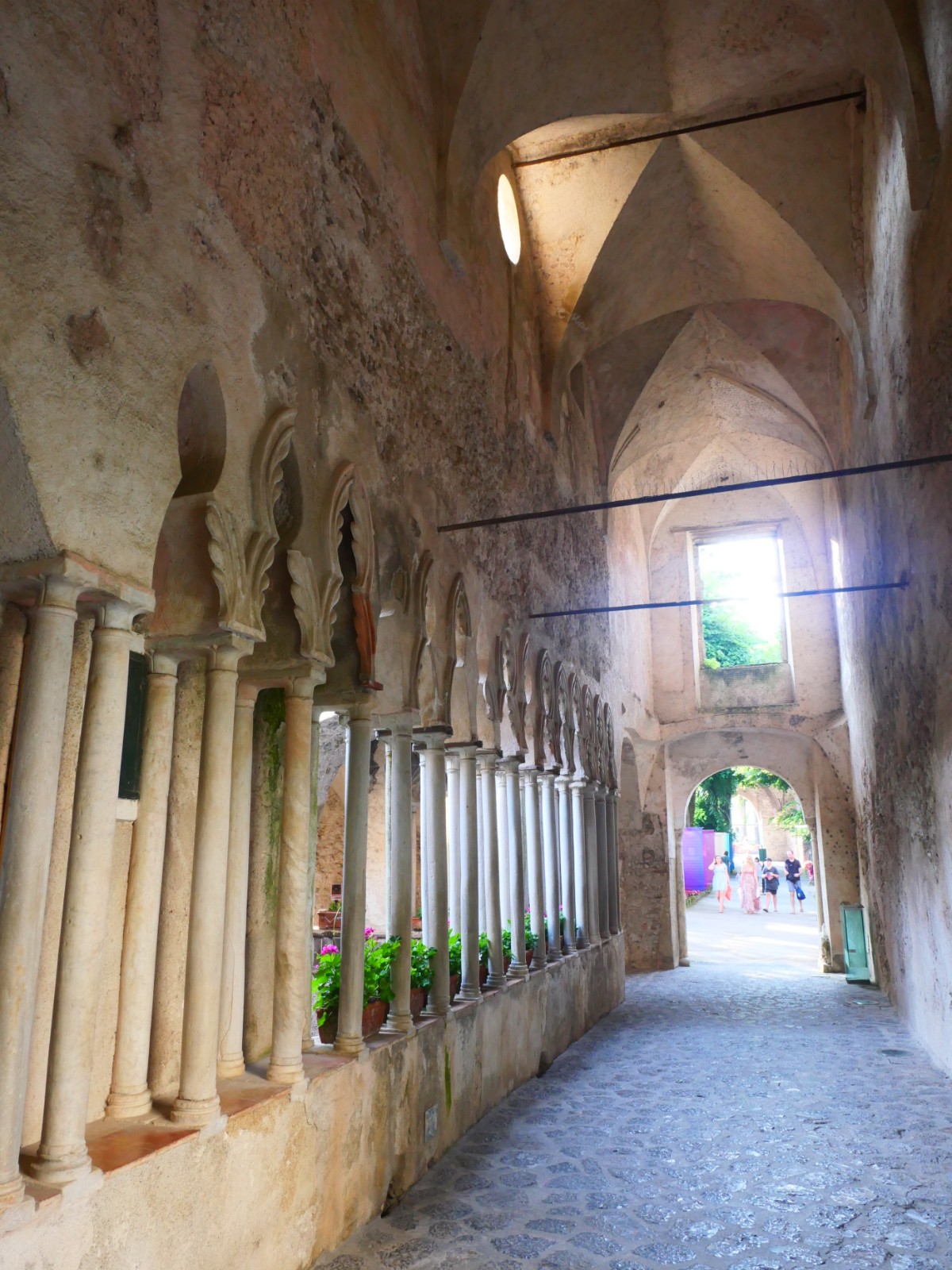
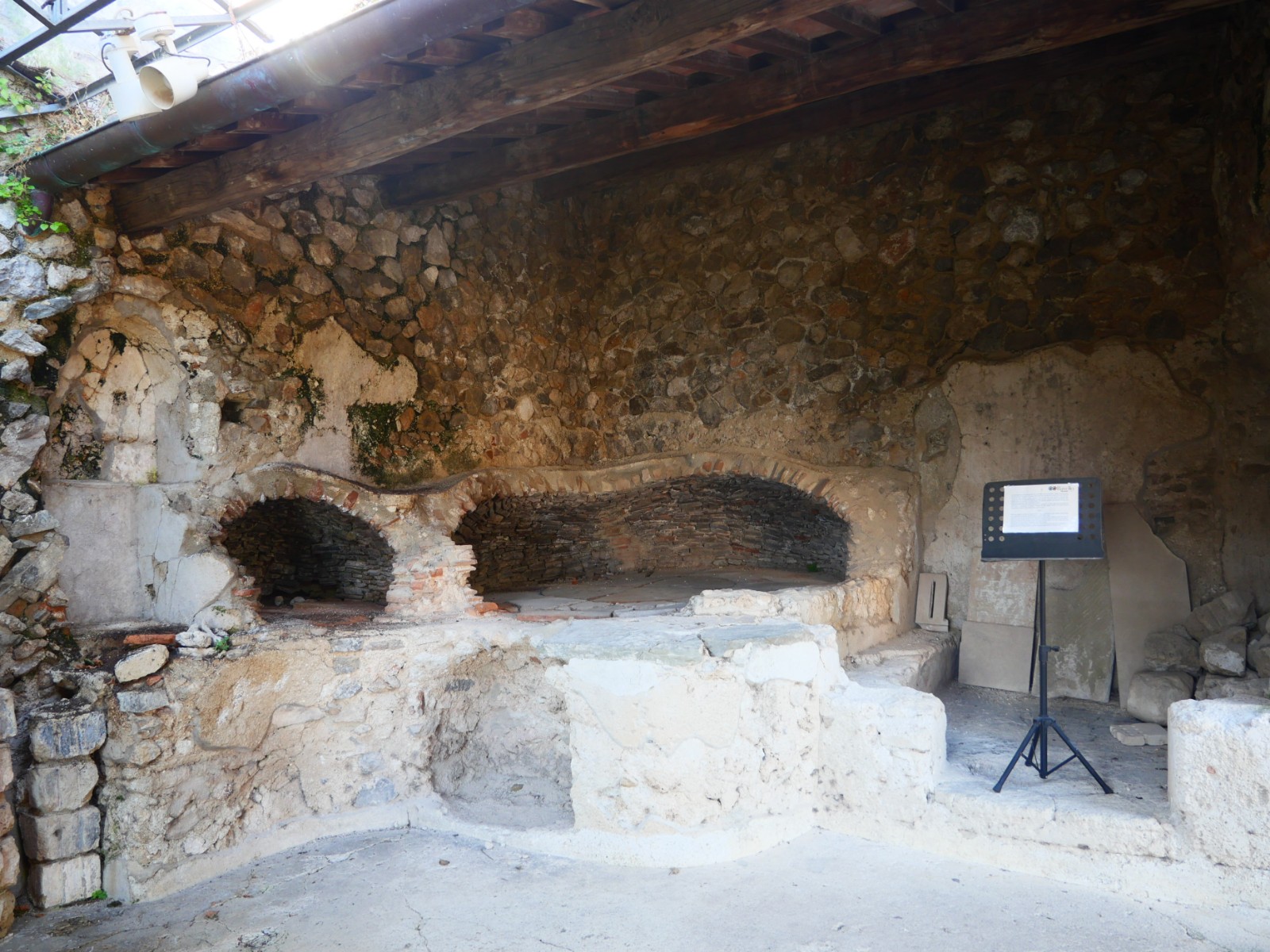
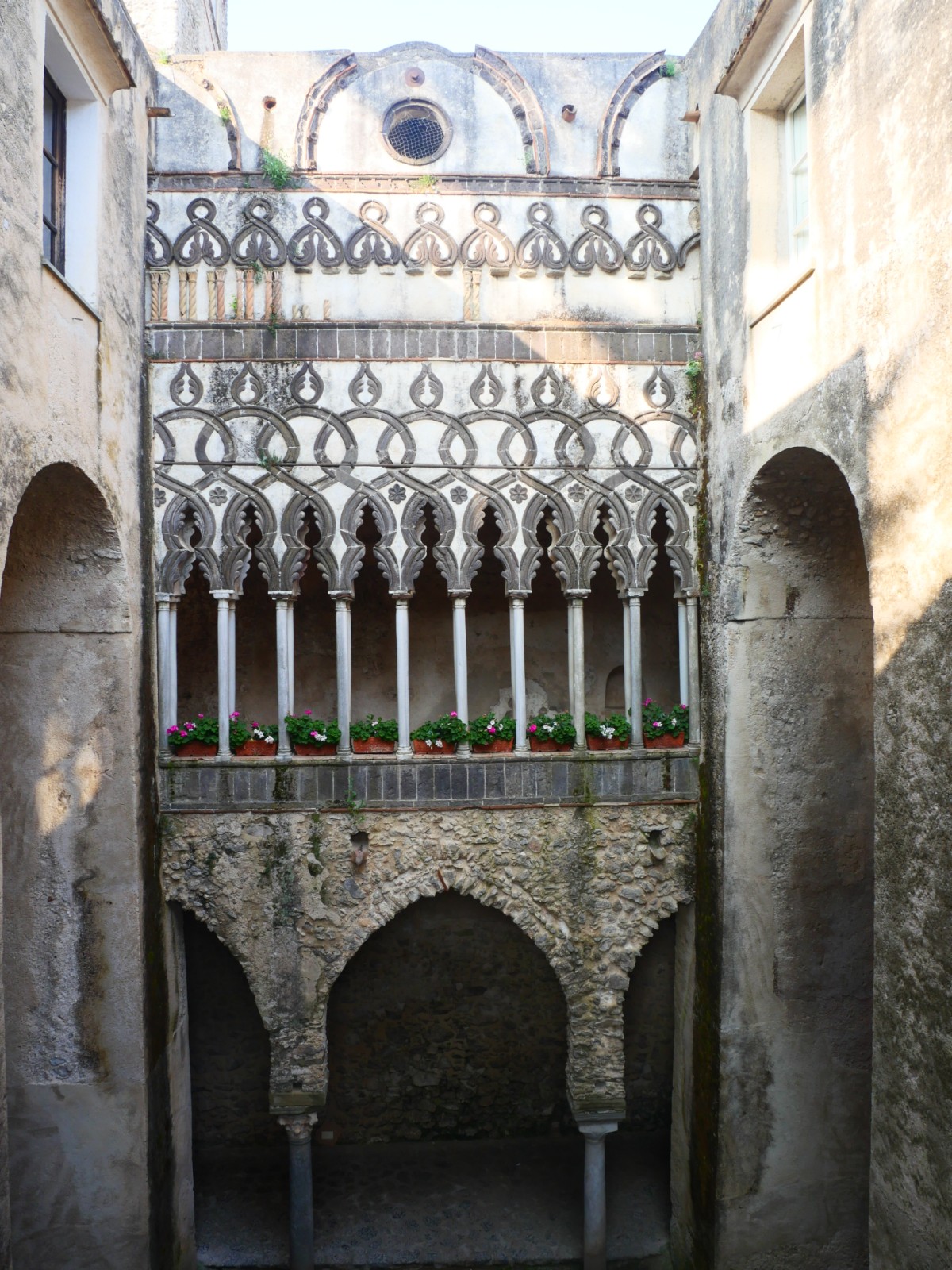
Beyond the entrance tower, you pass down a driveway lined with cypress and lime trees and a border of flowers which hints at the amazing planting and landscaping to come. The Villa is entered through a foyer which leads to what is called the Moorish Courtyard – a three-storied chiostro (cloister) with a beautifully arcaded interior façade in the Moorish style. The lower level of the cloister leads to an outbuilding called il Forni (the ovens) which is just that. This space, which was discovered during restoration work in the 19th century, contains the remains of two ovens with fire resistant vaults and refractory lava bases. It is believed that this space served as the original kitchen for the Villa.

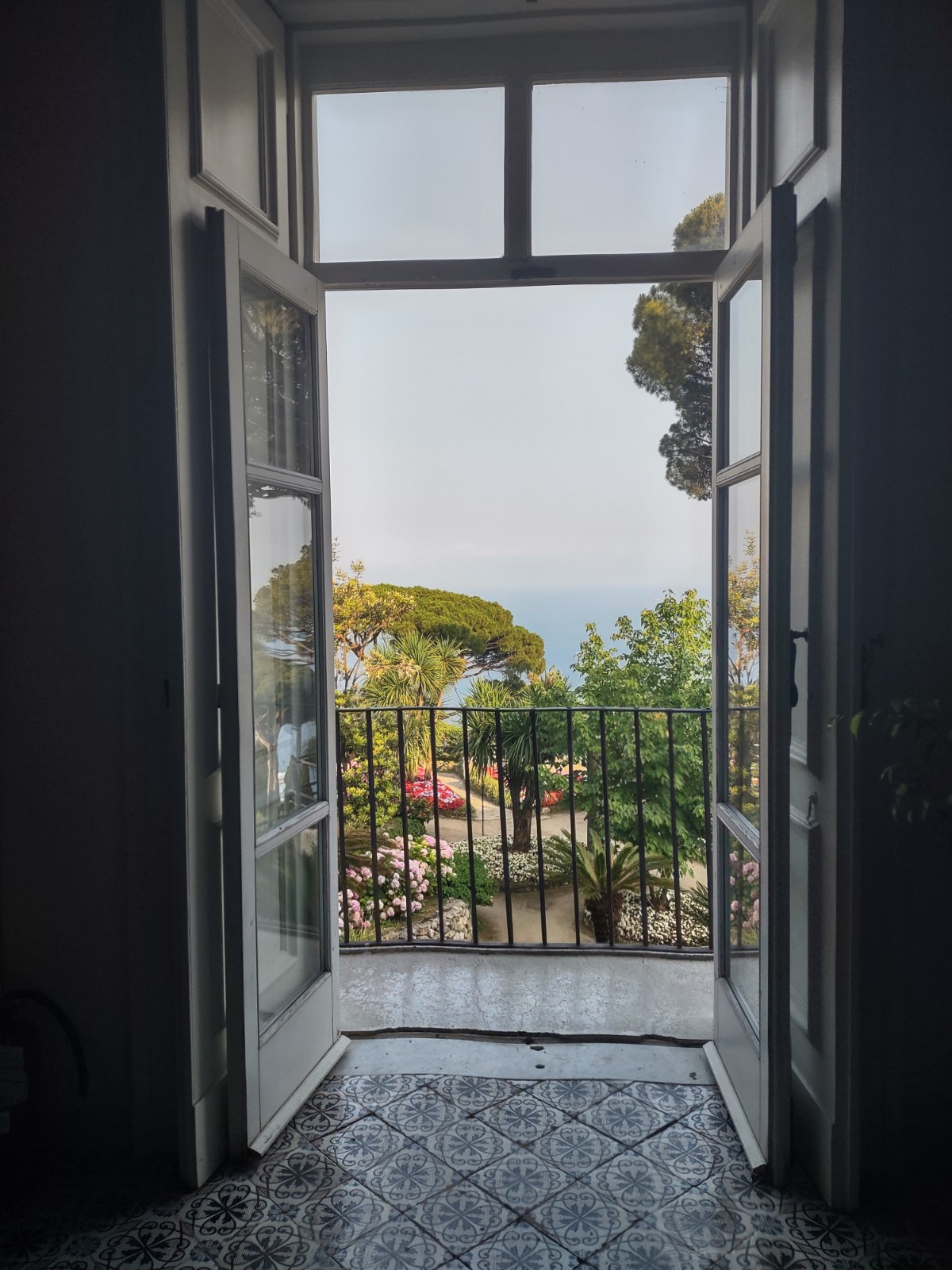
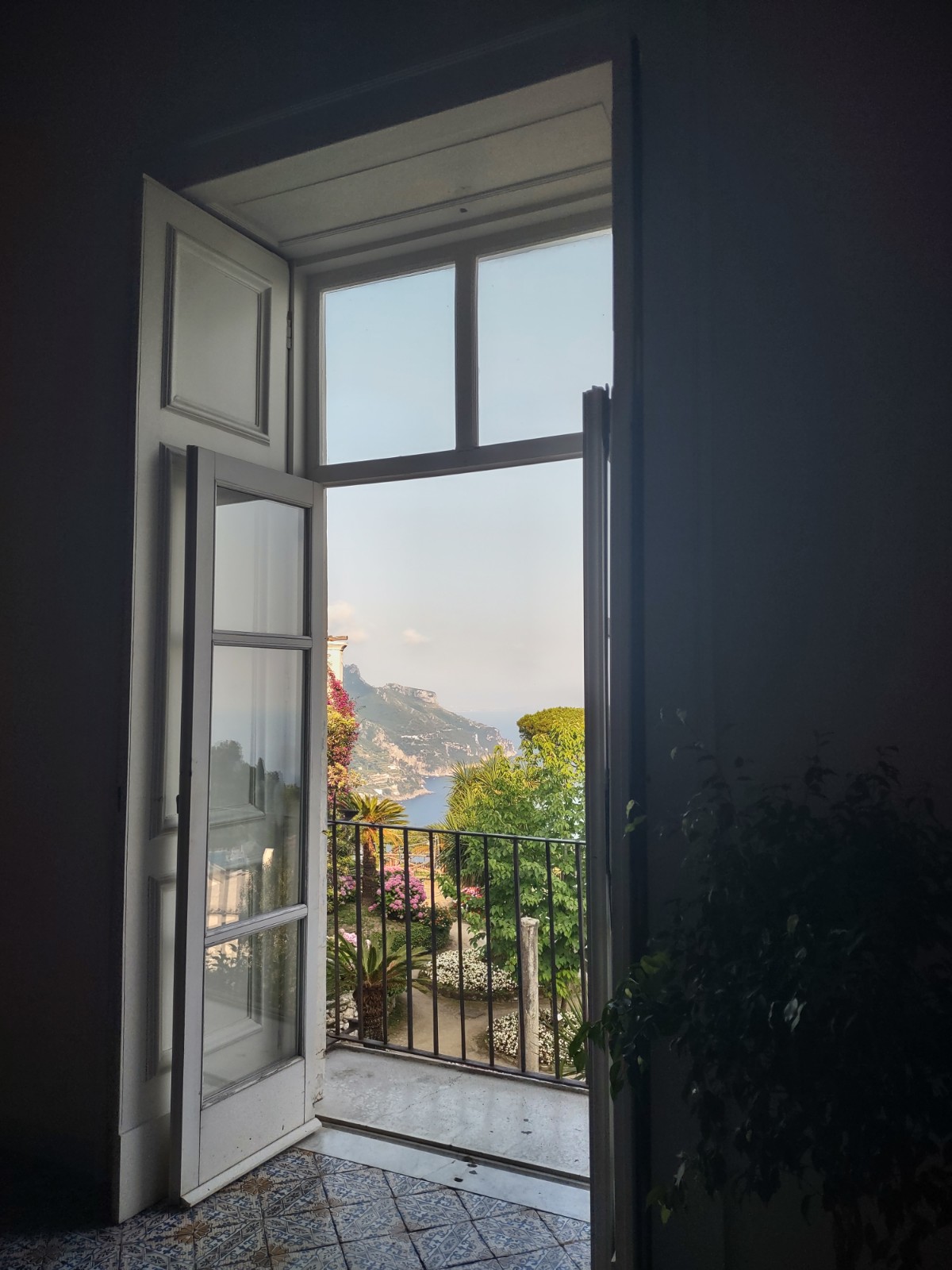
One interesting but also odd feature of the Villa is what is referred to as le Sale Superiori, a series of eight living rooms which run the length of the main level of the house which were part of the 19th century renovations undertaken by Francis Neville Reid. The rooms are lined up, one after another, each with its own balcony with French doors looking toward the sea, each connected to the next by a series of blue and white rococo door frames. One can only imagine the parties you could throw in this place!

The large tower (il Torre Maggiore) has been converted into a museum of sorts with exhibits covering the history of the area, town, and Villa as well as some videos promoting the annual music festival. Here again, the tower has been left in its state of disrepair and a new stair and landings, which climb the 100 feet to the roof of the tower, have been constructed of steel and glass and configured in such a way (more than a little Escher-esque) that there is no question as to what is original and what is new.


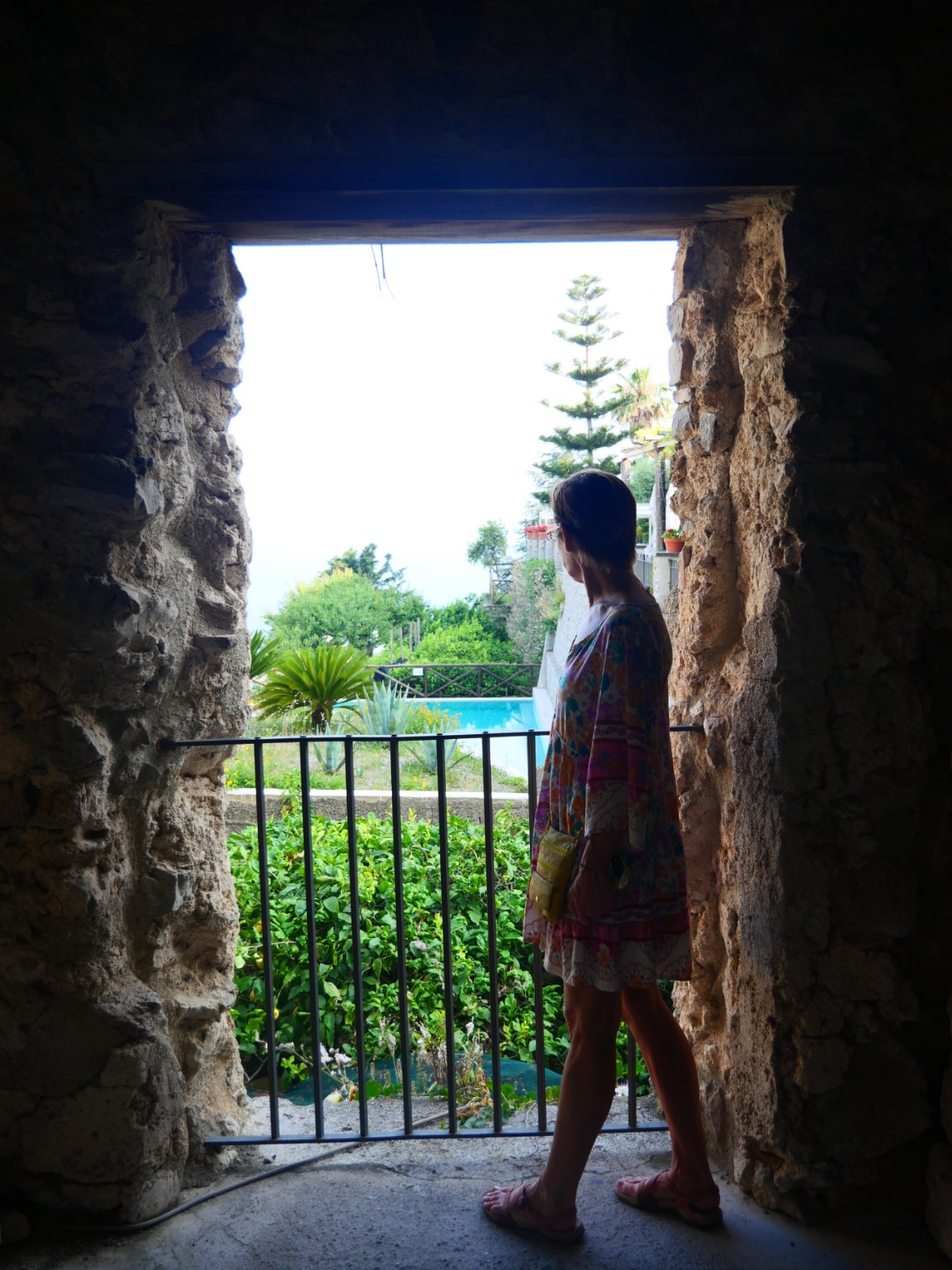
But the real stars of the show here are the gardens that wind their way up and down around the Villa with a wide variety of trees, plantings, and lots of bright colorful flowers. Together with some other deteriorated and ruined structures (which include the old kennels and a Turkish bath house which is believed to predate the Villa), the gardens provide one beautifully framed view after another of the Villa, the adjoining valleys, and the coastline and sea below.
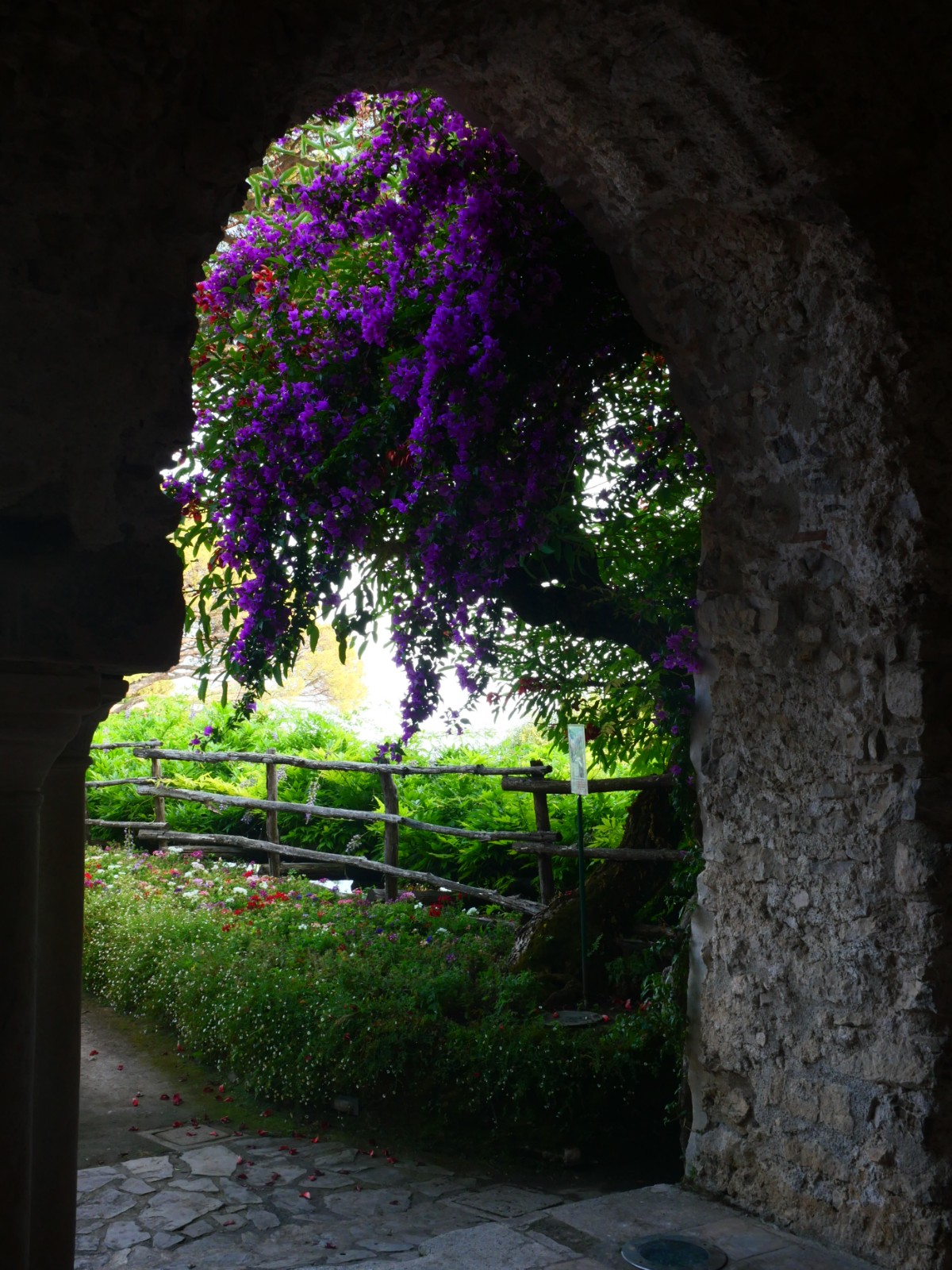
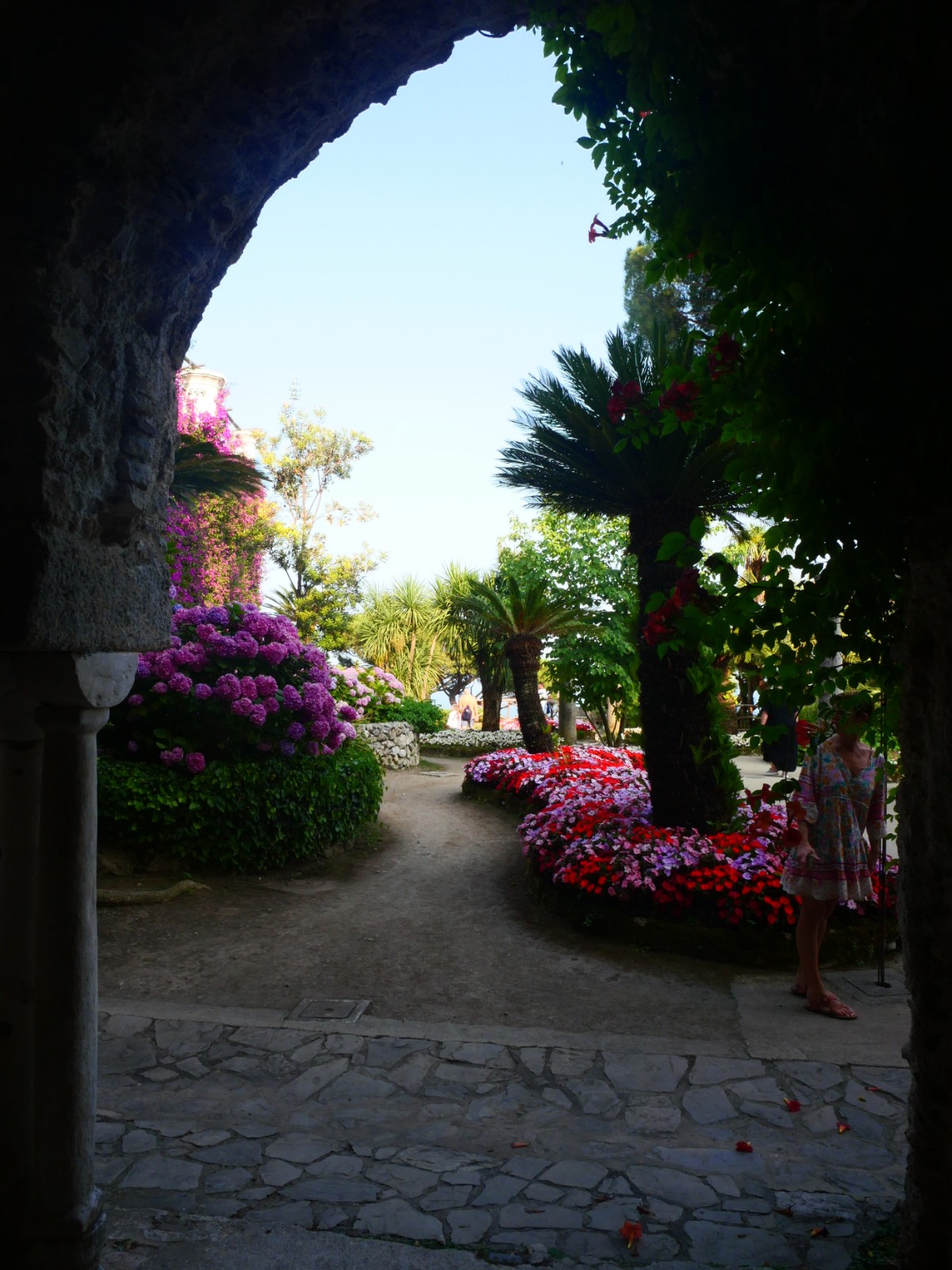
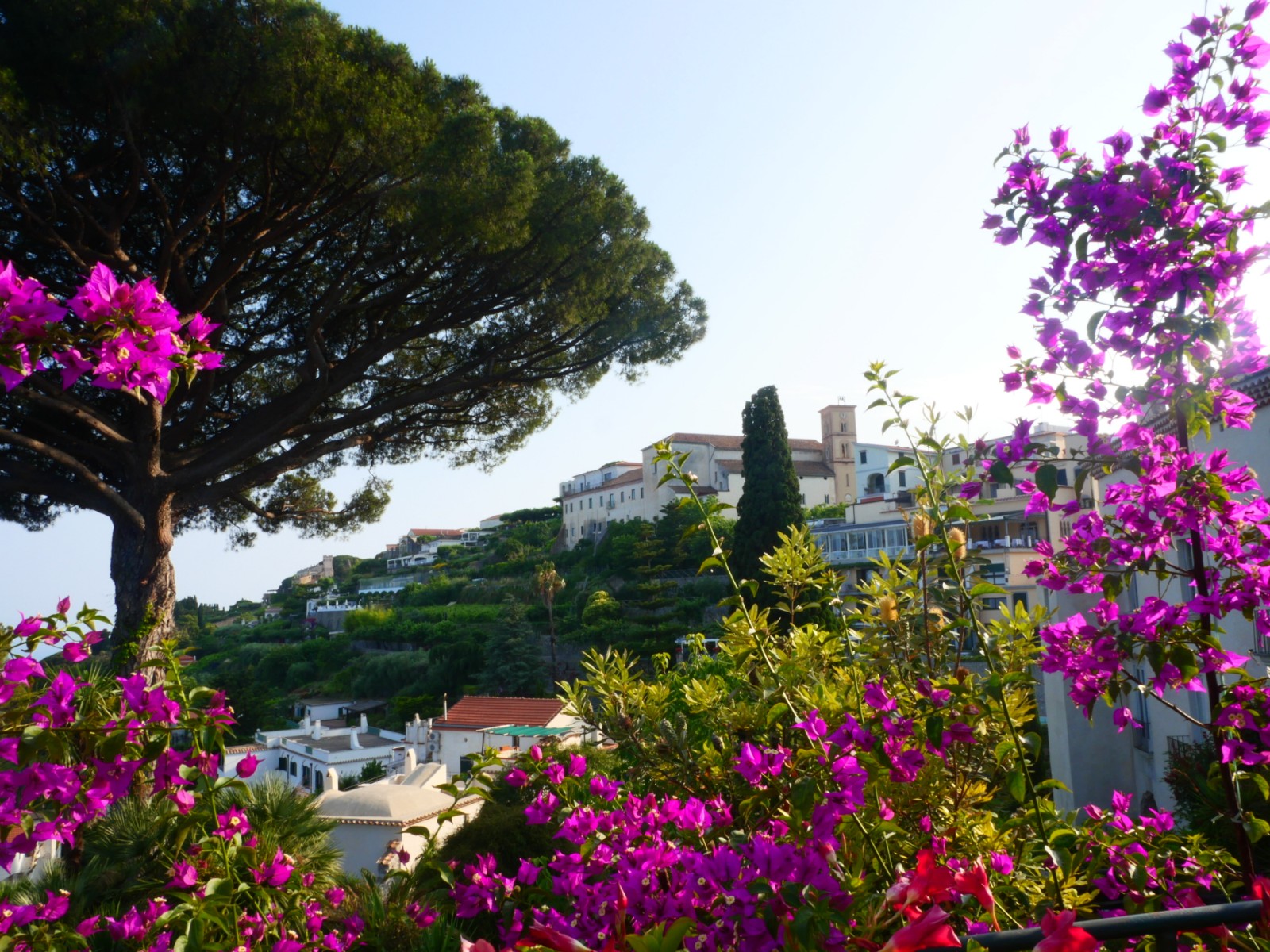

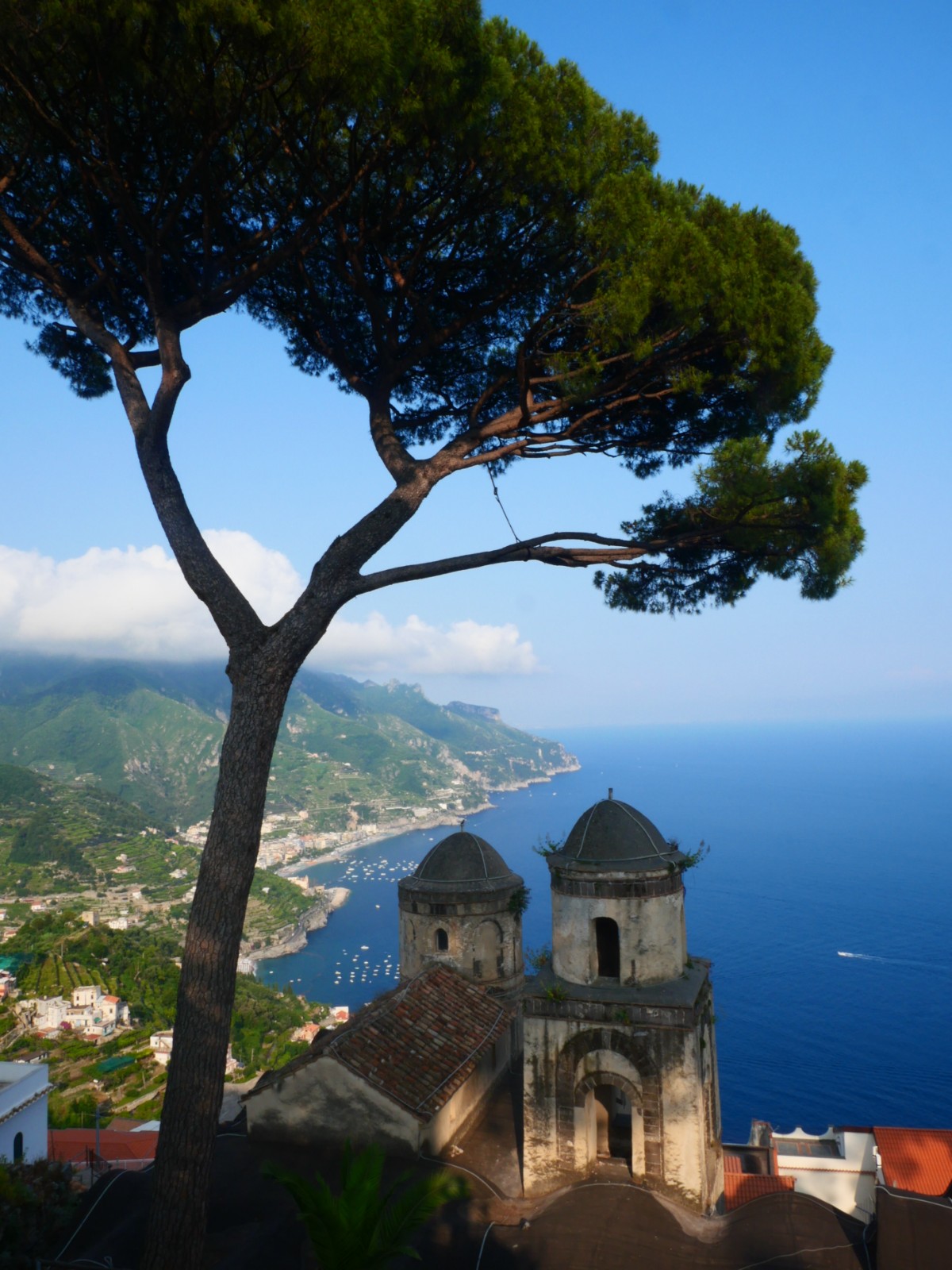

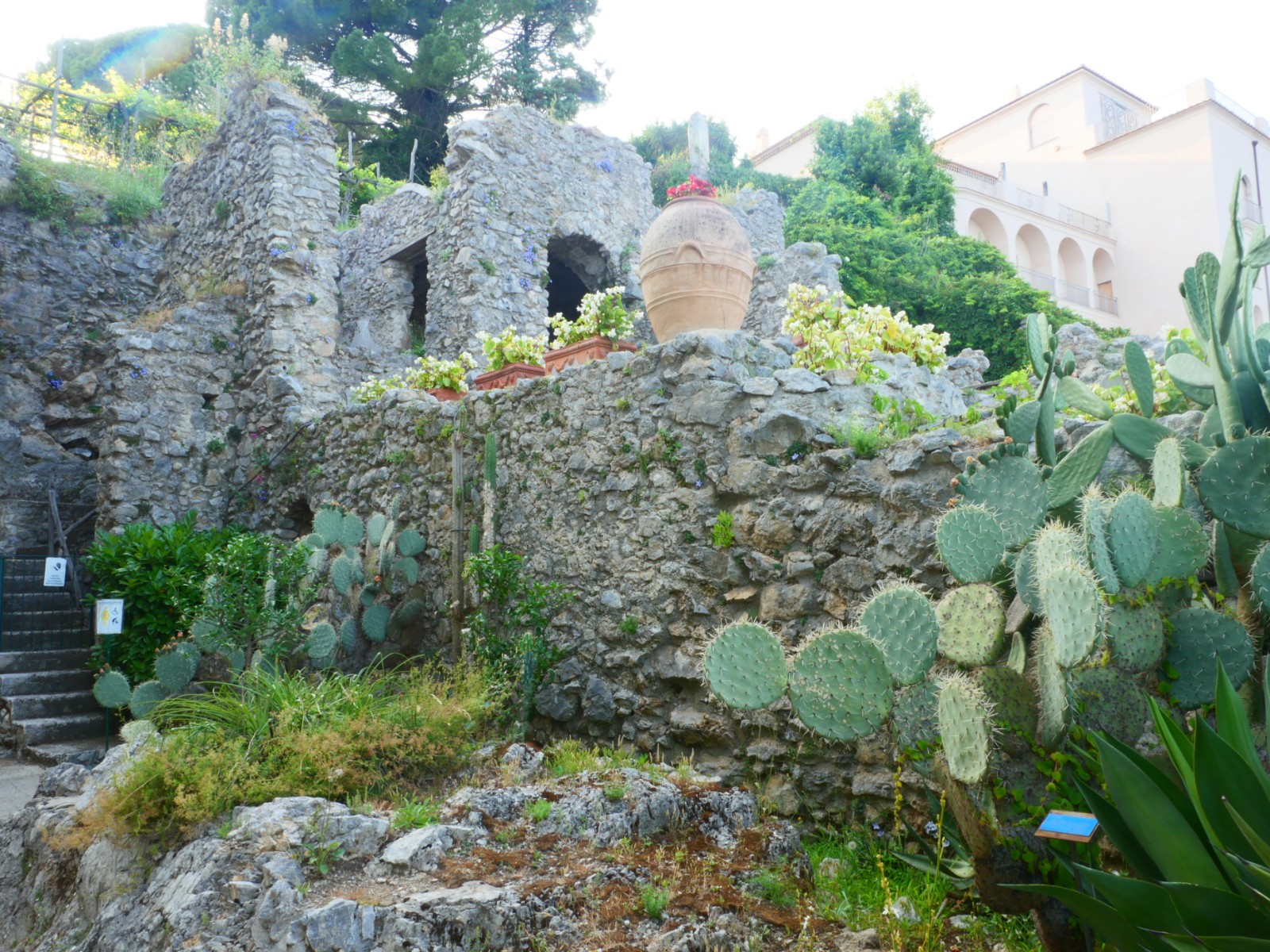
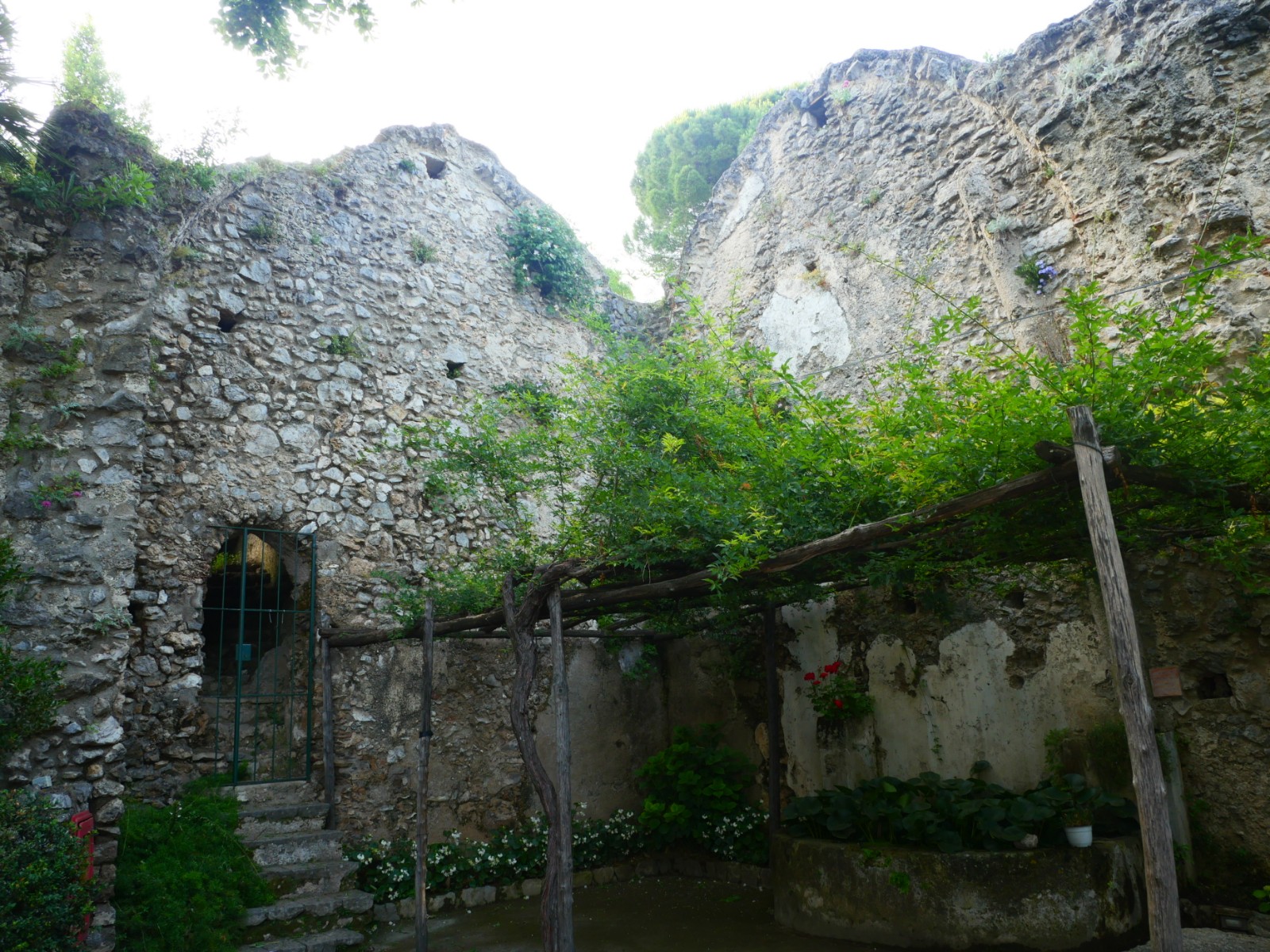
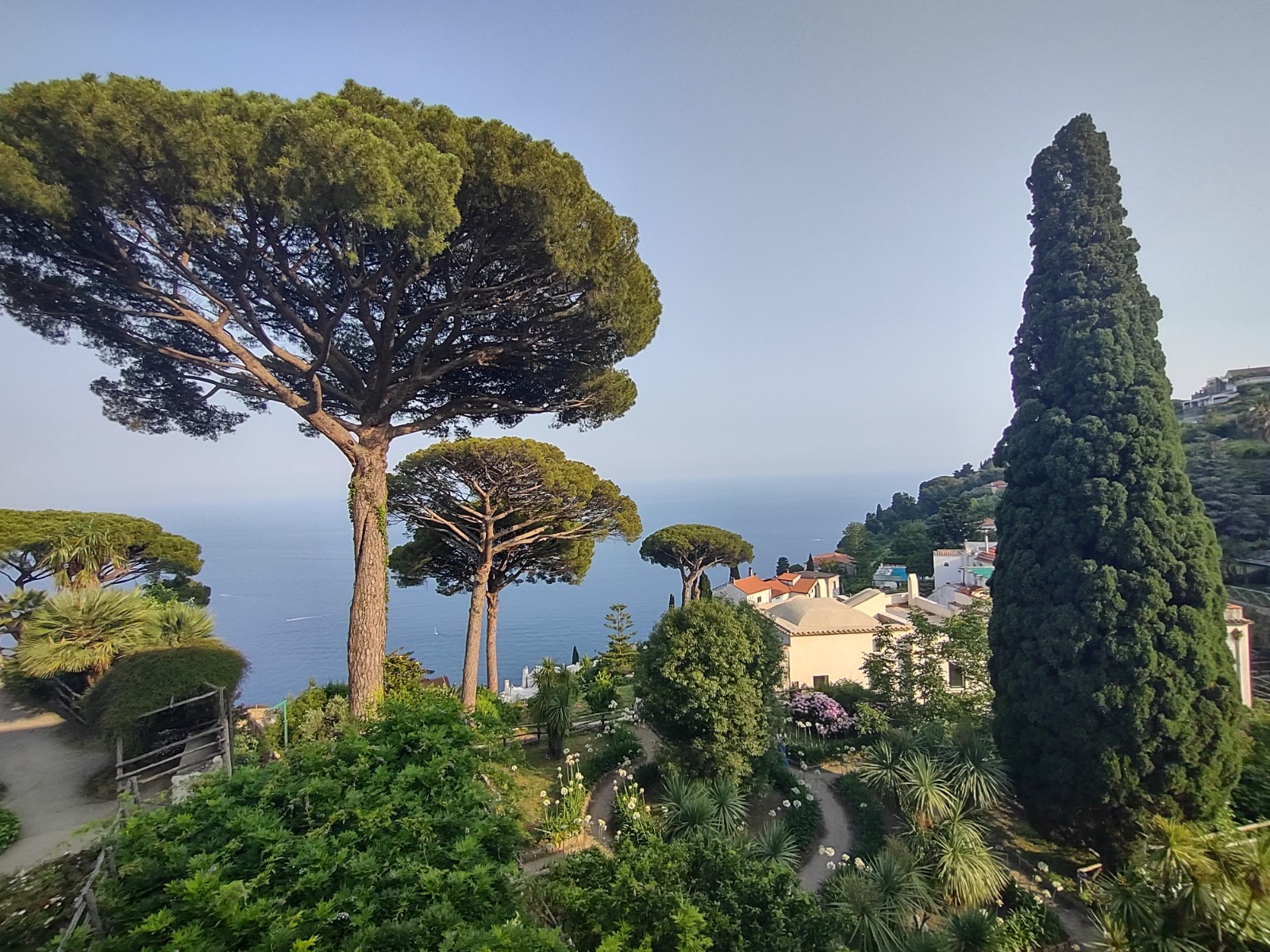
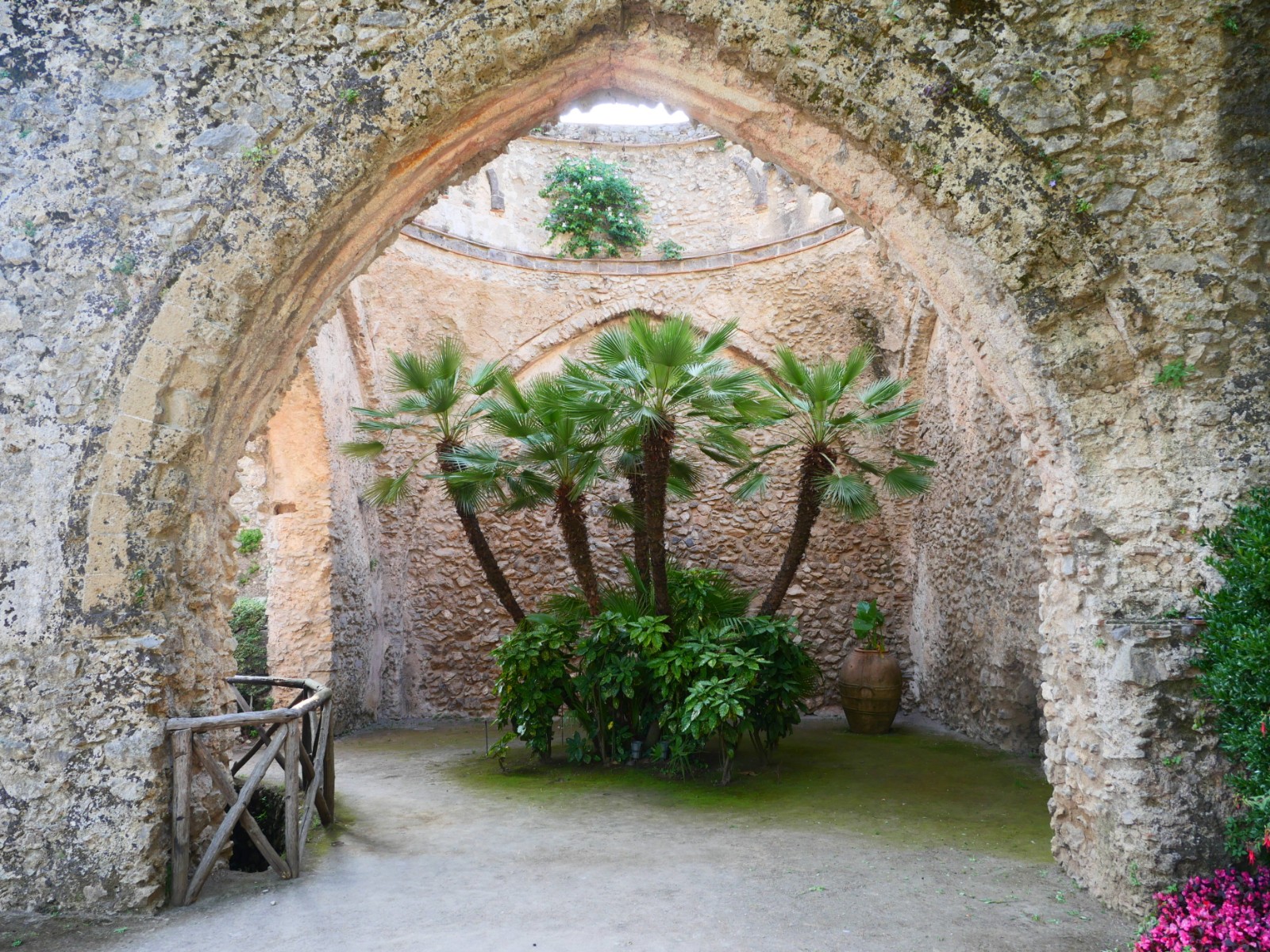
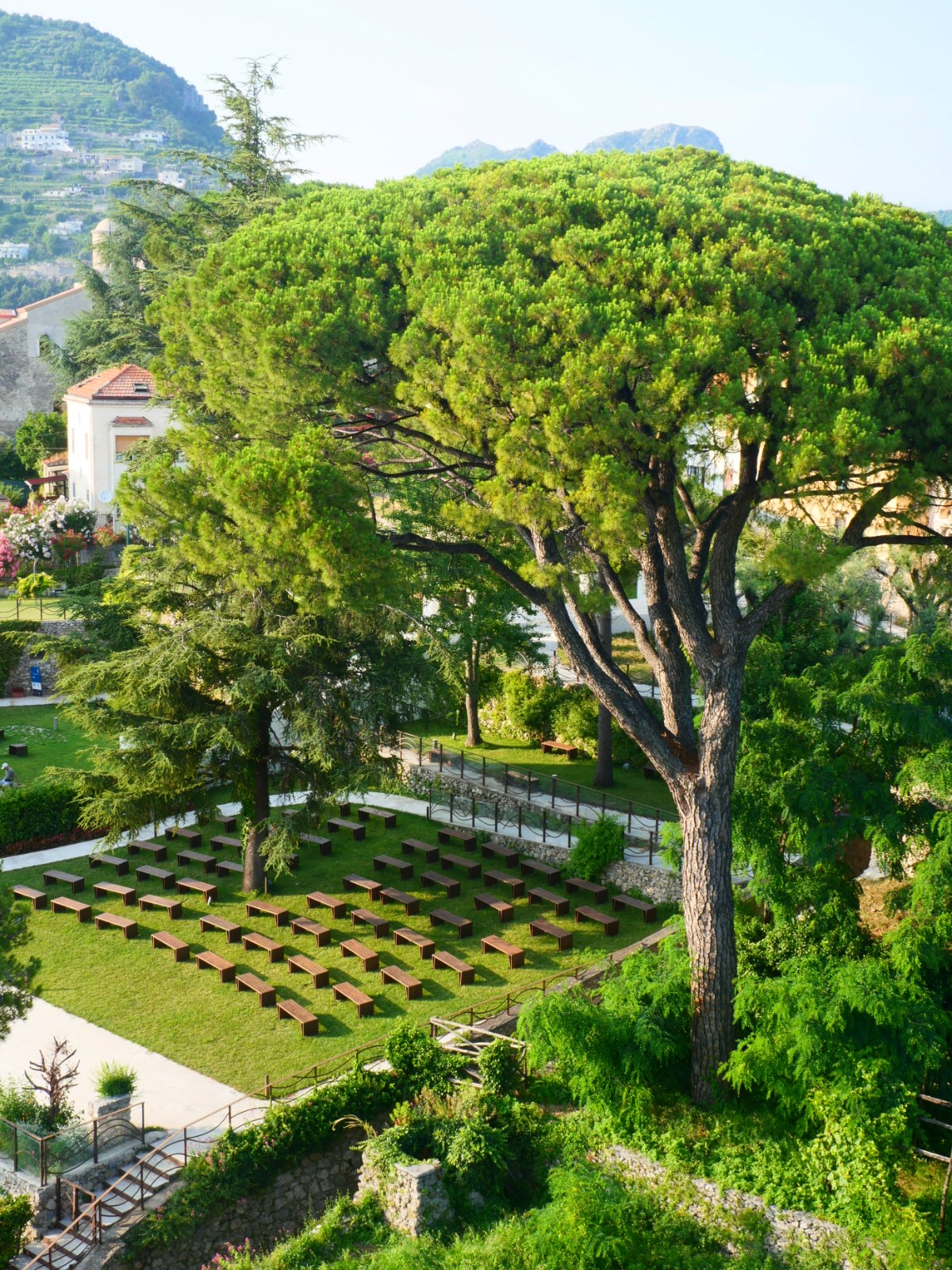
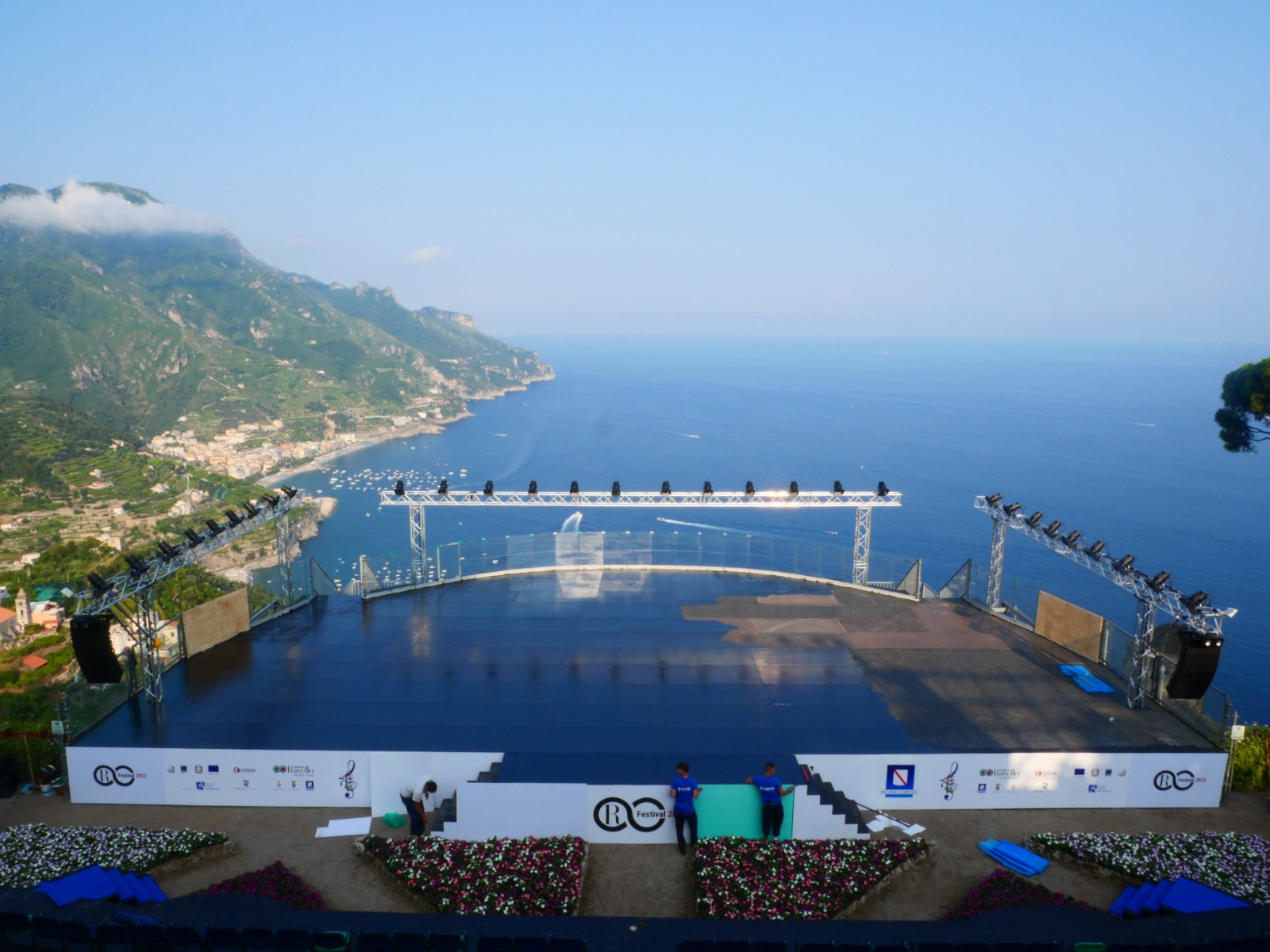
In contrast to these more picturesque gardens is il Belvedere, a formal garden which stretches over a single large terrace overlooking the sea. Unfortunately for us, work had begun on the temporary outdoor arena and stage which are constructed over il Belvedere to be used would be used for concert performances during the annual Wagner Music Festival the following week. Looking at this setting, we could only imagine what an incredible venue this must be for that!
Better Than Television
I mentioned at the start of this installment that one of the great things about the view from our house in Ravello, which we have learned from staying in other places with views of the ocean like this, was that it always changed over time. It really is amazing how the position of the sun, shade, clouds (or none), rain, and fog can change exactly the same view over the course of minutes, hours, and days. On our last night we were even treated to a summer storm with hail and some very loud thunder and lightning over the ocean. I was reminded of a house in Bequia in St. Vincent, where we stayed some years ago with some friends, with similar views of the ocean which we all ultimately agreed was better than television because there were never any re-runs.
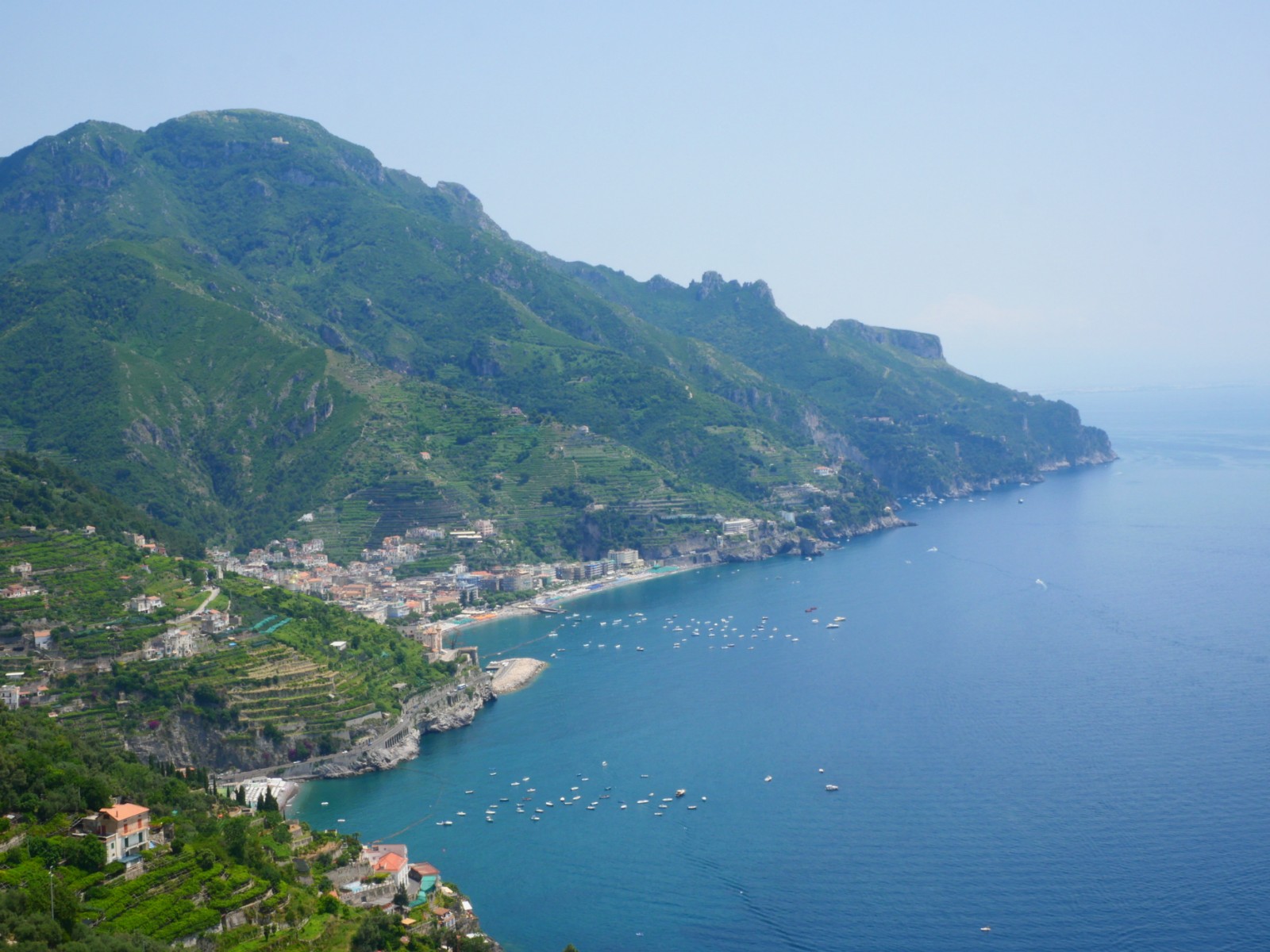
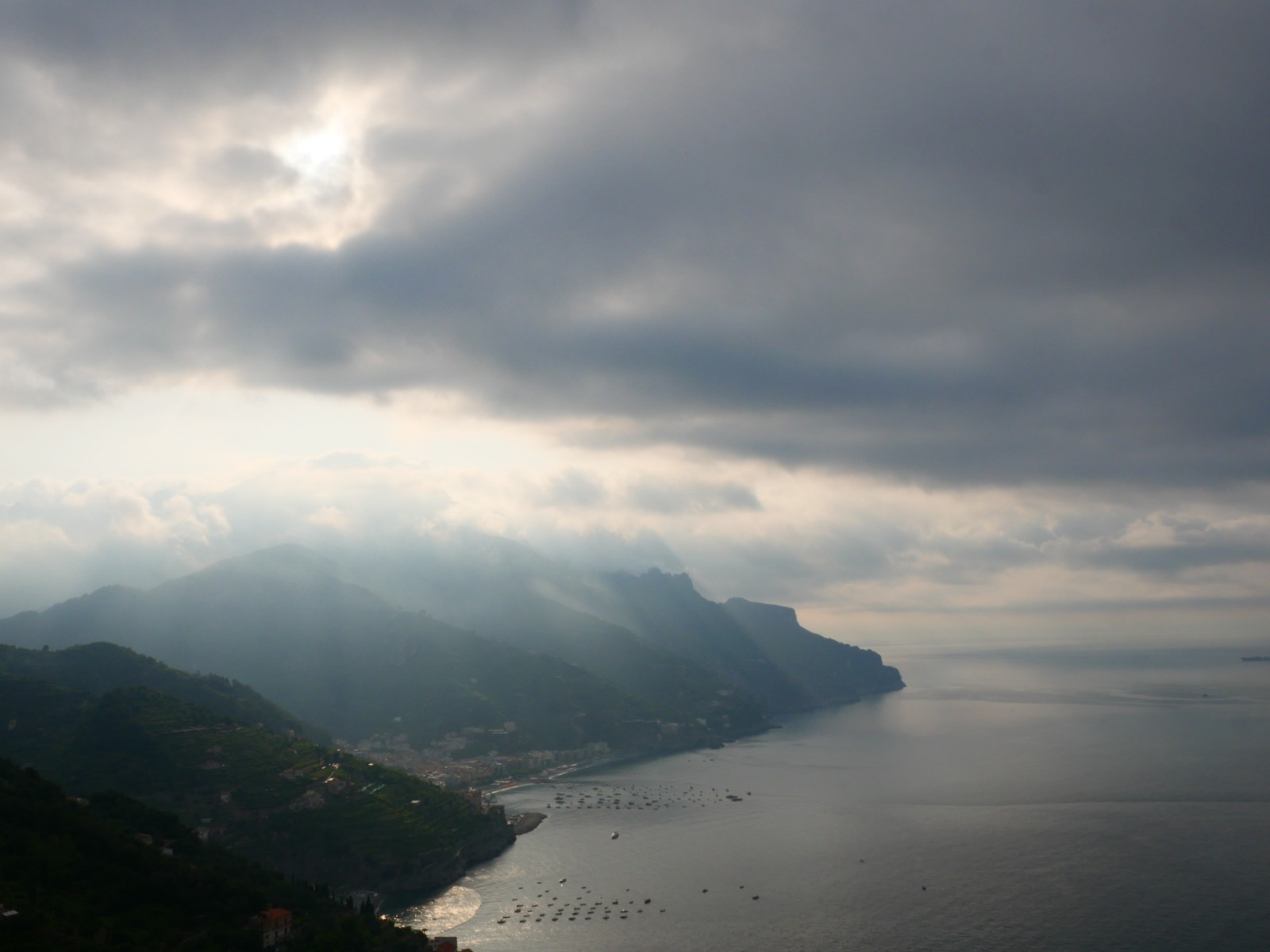
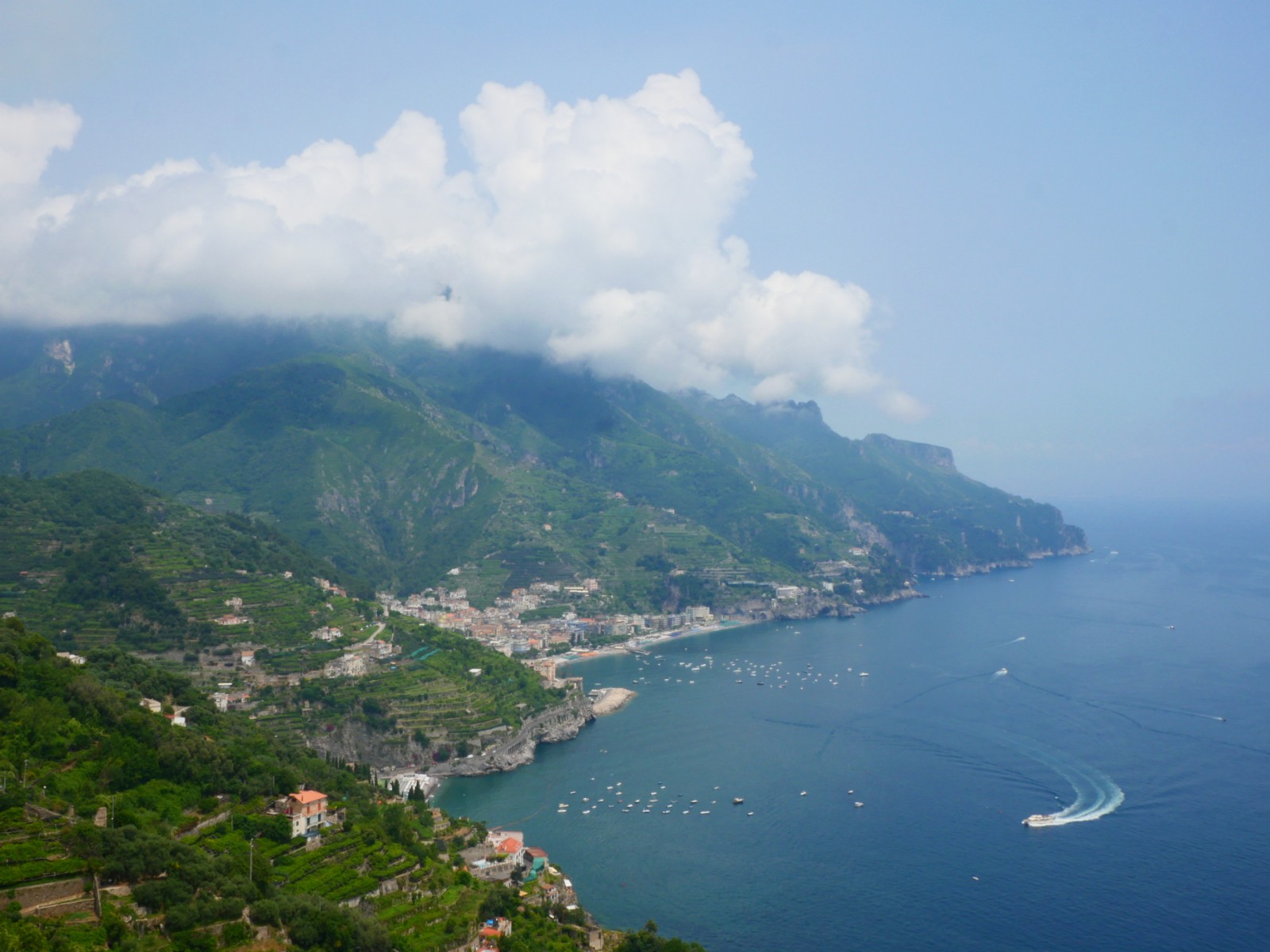

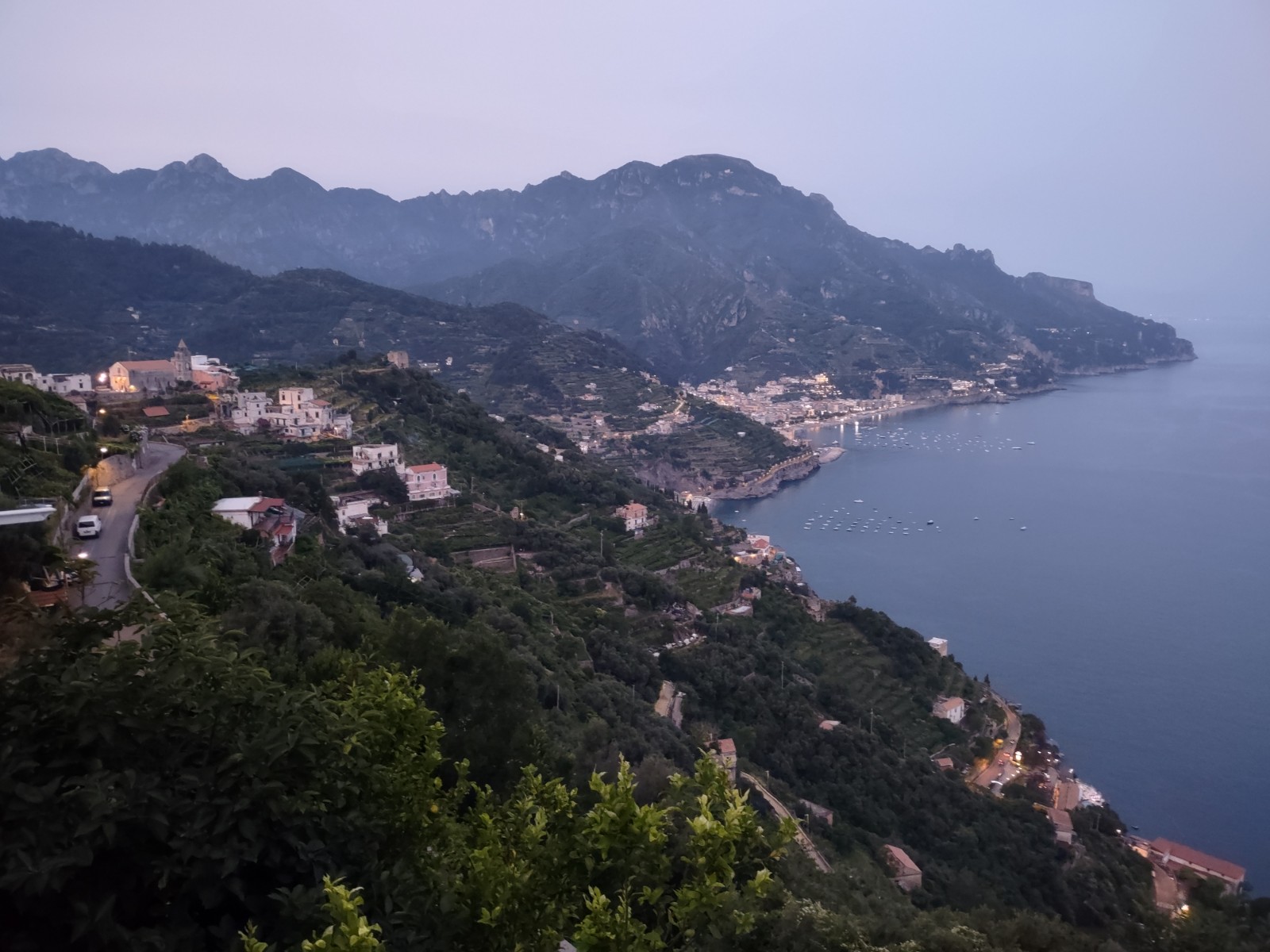
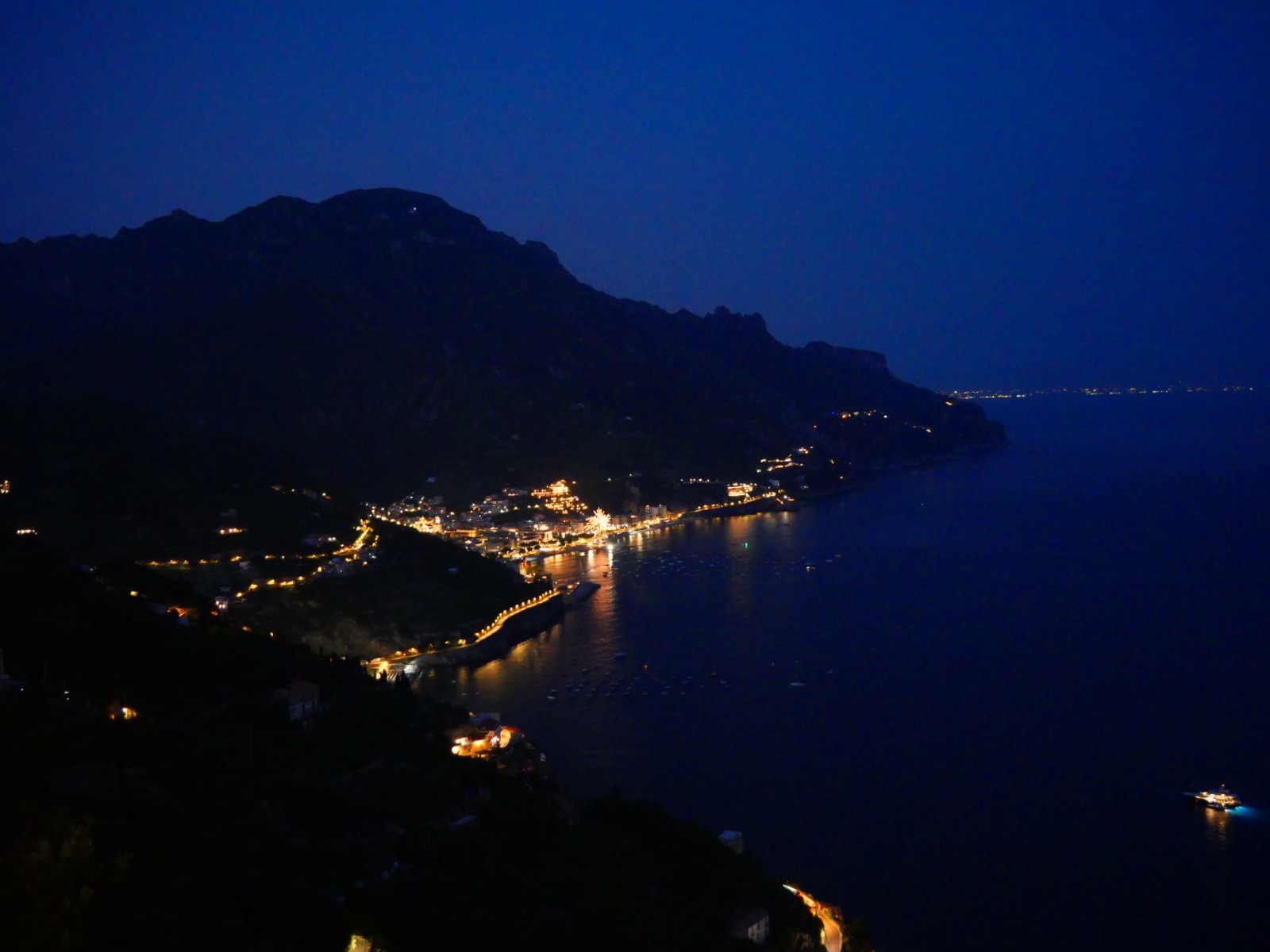
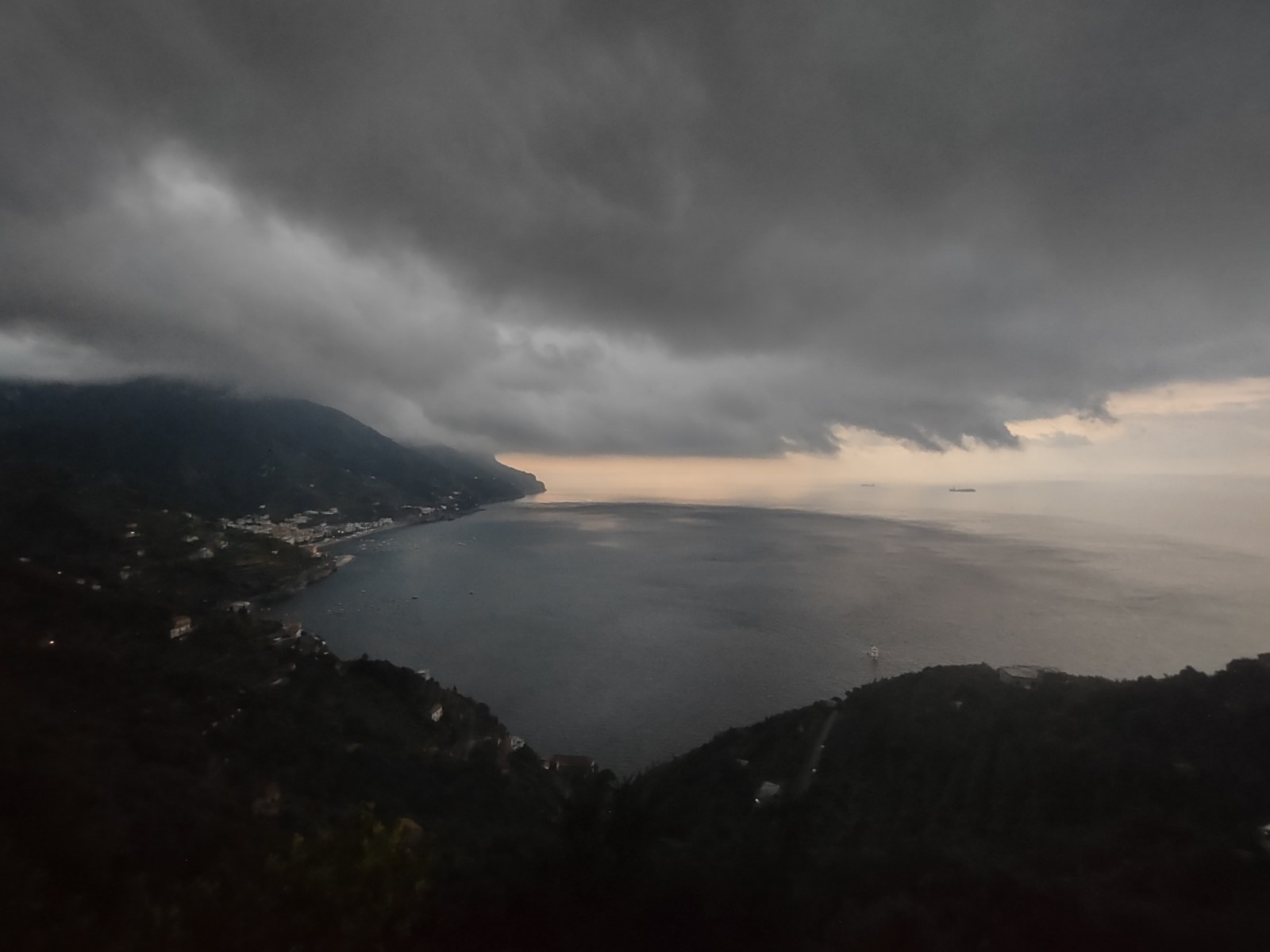

While we have yet to rank the near-death experience of our bus ride from Palermo to Amalfi, I think we have agreed that Ravello was one of the most beautiful places we have visited thus far and, despite all the climbing (or maybe because of it?), were particularly happy that we were able to avoid the crowds we saw while getting here. While very relaxing, our four days in Ravello flew by and before long it was time to pack up and head out for our final stop in Italy (for a while at least), Giovinazzo in Puglia.
 Burning the Inheritance
Leave a comment