Italy Revisited
While our original itinerary anticipated a single 34-day sweep south to north through Italy following Morocco, some necessary changes had allowed us to pass through Northern Italy just about three months earlier on the road from Vienna to Paris, stopping in Venice, South Tyrol, and Milano over the course of two weeks. This left us with some difficult decisions to make regarding where we would and wouldn’t be going in Italy within a remaining 18-day window before flying to Israel. Based on our experiences to date, we agreed that visiting more than 3 or 4 places in that time would mean rushing through some – not the experience we were looking for at this point. After a bit of debate and serious consideration that we were heading back to Italy at the start of its heaviest tourist season, we settled on Florence, Ravello (which sits high above the Amalfi coast), and a small town in Puglia (the heel of the boot) named Giovinazzo.
Florence was a shoe-in as it had always been at the top of our Italy list for various reasons. We ended up selecting Ravello because we really did want to see the Amalfi Coast and hoped to find it a bit less crowded than the other possible destinations in that area. (As we used to say to our kids when they were much younger “We’ll just see about that.”) We settled on Giovinazzo after some research and discussions with friends which suggested that Puglia was an up and comer which still isn’t seeing the crowds that the other big name places in Italy do and that, within Puglia, Giovinazzo is in a similar place right now.
To whittle our long list down to these places meant eliminating some very tempting big-name destinations including Naples, Cinque Terre, Sicily, and, of course, Rome, all of which were difficult to take off the itinerary. The decision was driven by what we most wanted to see tempered by out-and-out fear of what the summer crowds would probably be like in some of these places (Cinque Terre and Rome in particular). Some would probably say that coming to Italy and not visiting Rome is sacrilege, but we talked to some travelers who had come from there and their stories seemed to bear out our worst fears regarding the crowds there this time of year. As it turned out, we did end up at least passing through Rome and Naples and actually did visit Cinque Terre (more about that later). We might have gone to Sicily if we had been able to coordinate our dates with some friends in the States, but it didn’t work out, perhaps for the best as it would have been a really tough decision what to replace with it.
No doubt, this is not our last trip to Italy.
Tangier to Florence (via Rome)
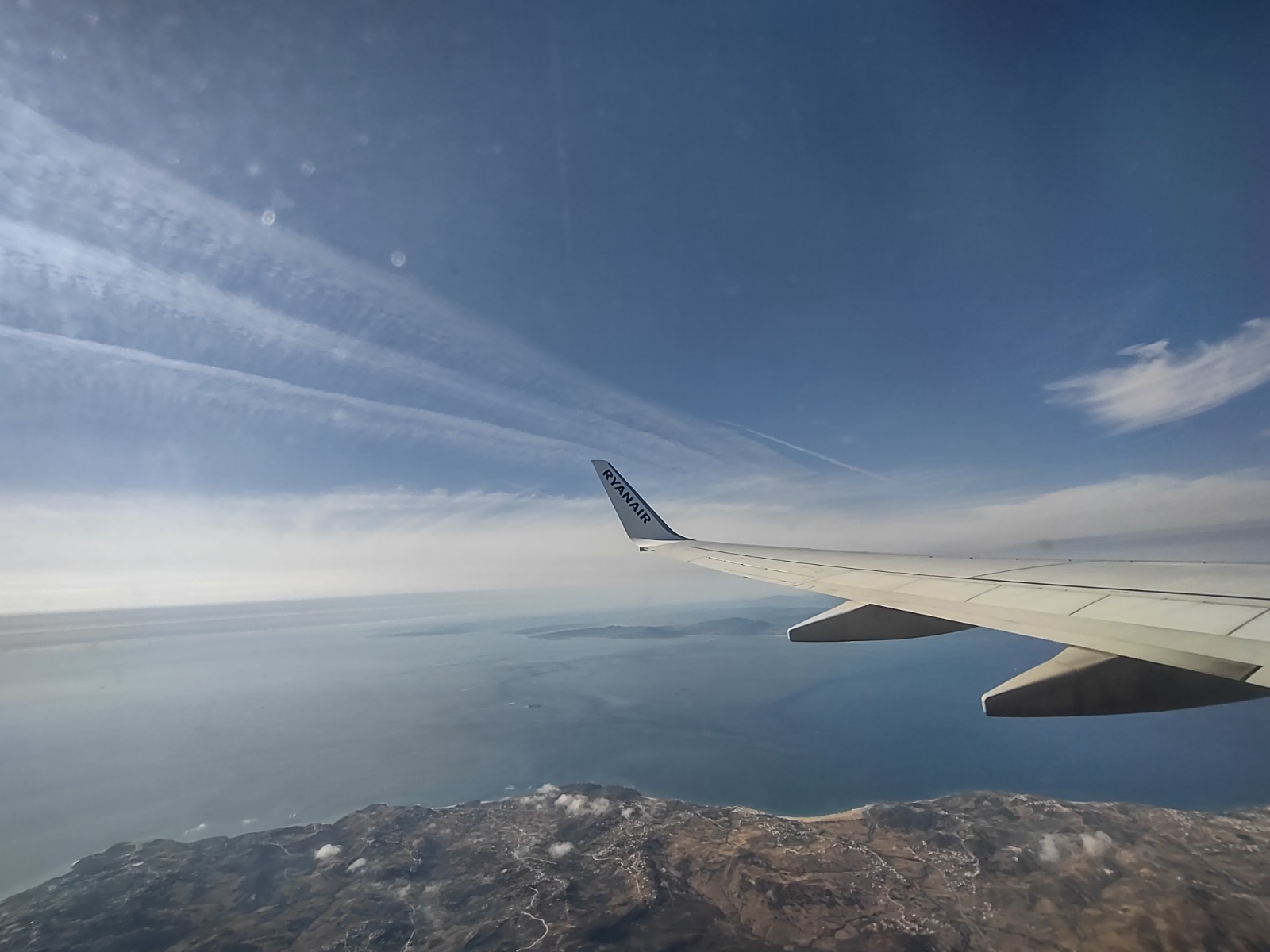
So, on Monday June 19th, we boarded a taxi in Tangier, Morocco and headed to the airport to catch a flight to Rome, Italy, where we would have a very brief overnight before continuing on to Florence. The drive to the airport in Tangier, if anything, reinforced for us that there is still a lot of that city to see. The flight was actually kind of pleasant (first time we had flown anywhere after a long month of trains, buses, taxis, and rental cars in Morocco) as it was so under booked that virtually everyone on board had a row to themselves. Before we rose above the clouds, the scenery was pretty magnificent, particularly seeing Gibraltar from the air! We reached the coast of Italy as the clouds cleared and the sun was disappearing below the horizon, landed without event, and grabbed a cab to the Interuno Deluxe Hotel where we would be spending the night.

We chose the Interuno Deluxe (what a name!) primarily because it was conveniently located just up the street from the Rome central bus station and, at $118 USD per night, was actually pretty cheap by Rome standards. It was self-check-in (always a plus) and actually kind of nice, with a private outdoor terrace and a fridge, not that we were there long enough for it to really matter. While we may have at some time had aspirations of seeing a sight or two in our one evening in Rome, we arrived at the hotel well after dark and really wanted nothing more than a good meal and bed.
We were fortunate to find a nice restaurant just around the corner from our hotel, the Al Tinello D’Abruzzo, a family-run place where we were served by a young man whom we eventually figured out, from the photos behind the register, was the Owner’s son. Good pasta and focaccia and a great house red! We were one of a few small groups of diners as the restaurant’s entire outdoor seating area had been taken over by an end of school-year party for a group of middle-school aged kids and some of their parents. (A not-so-subtle reminder that vacation season had started in Italy!)
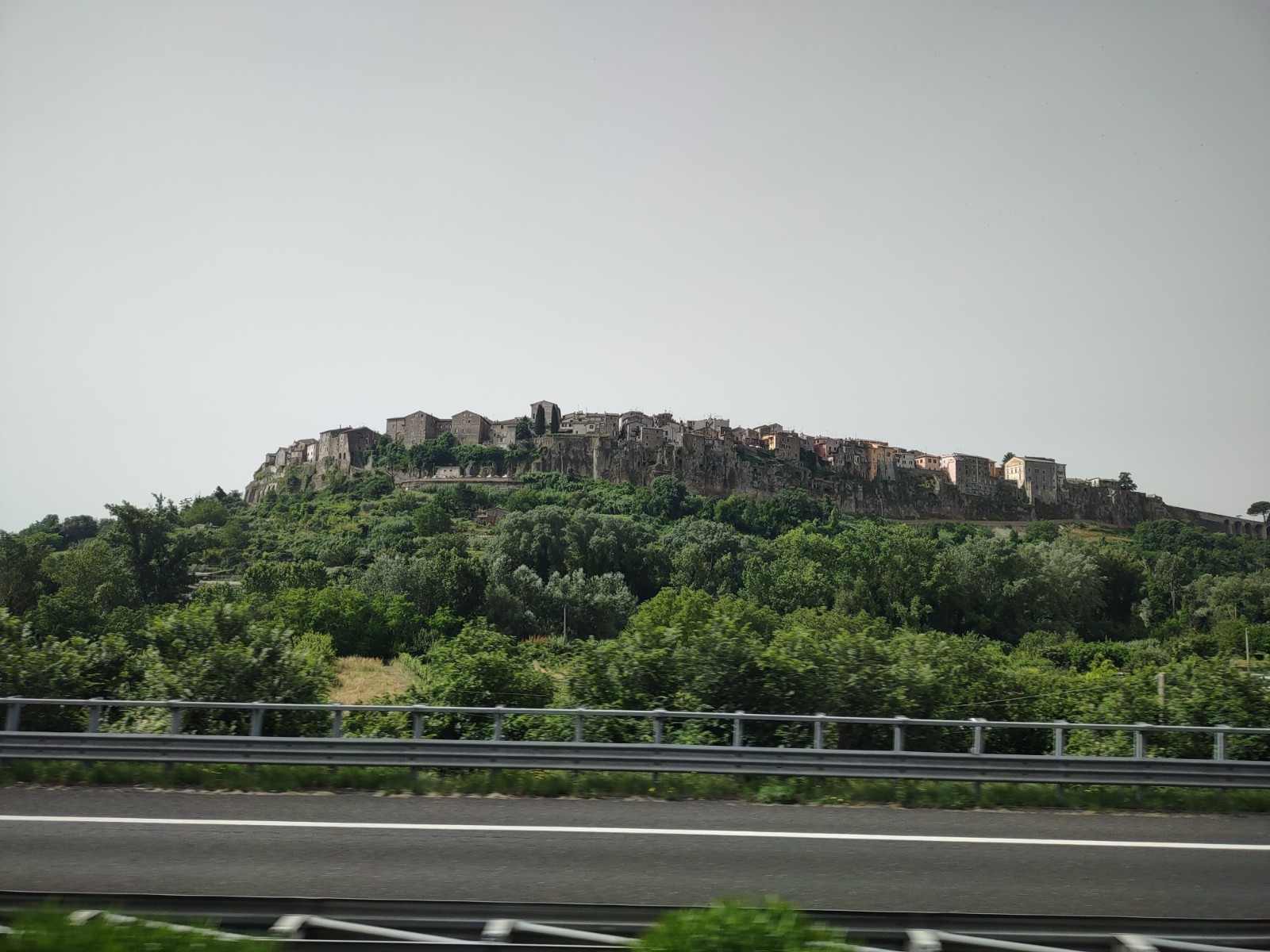
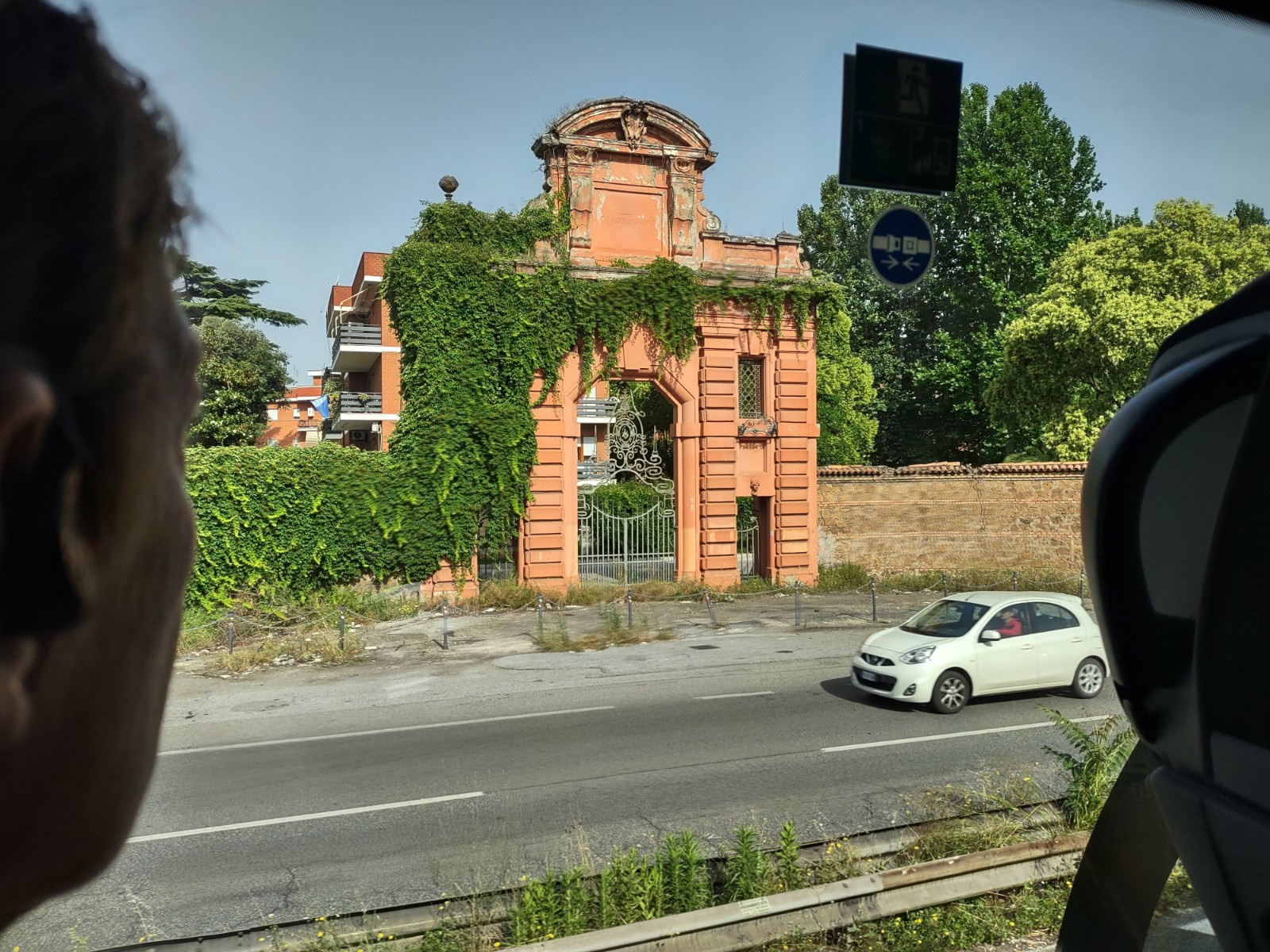
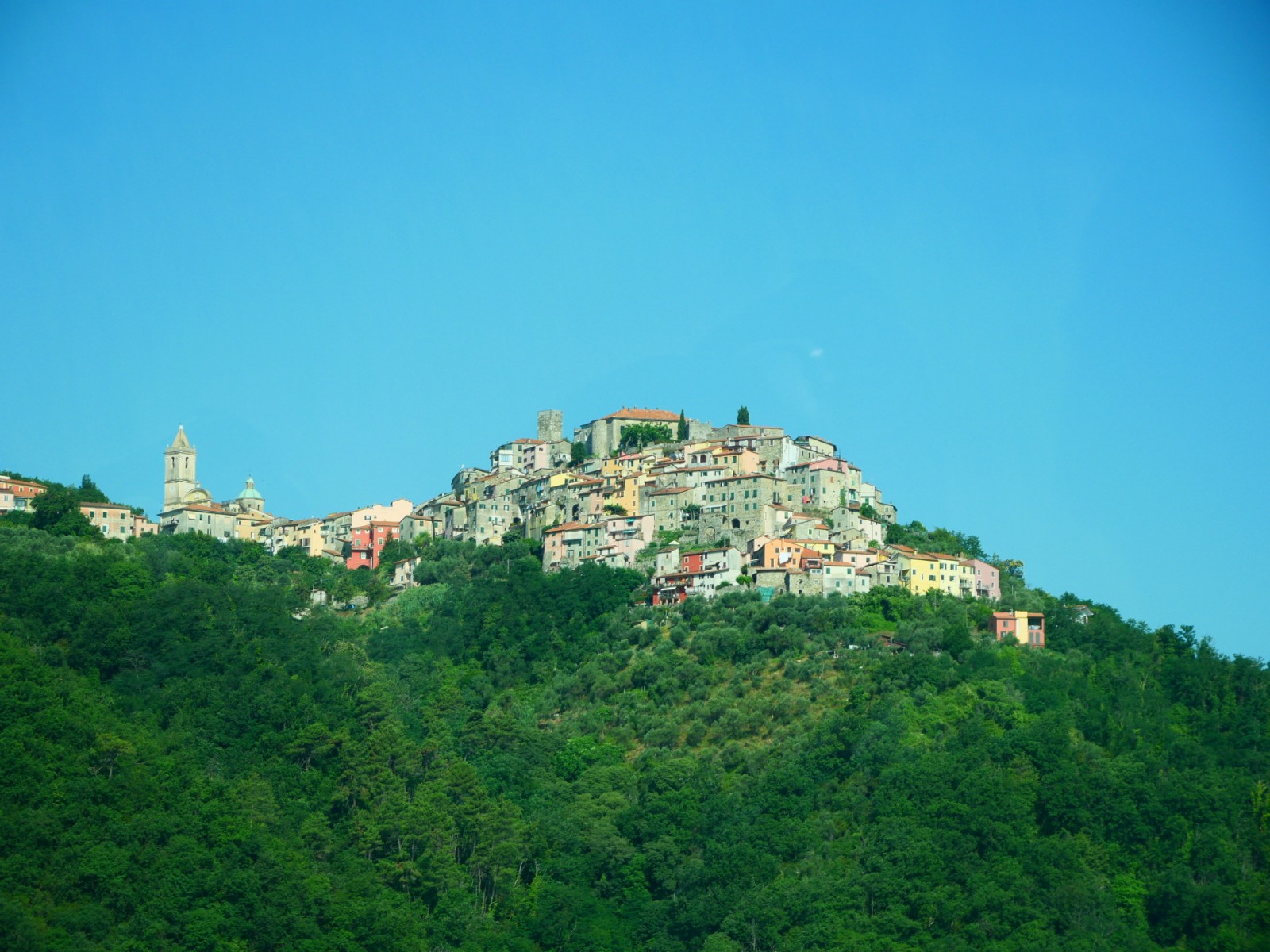
We caught an early bus the next morning (Tuesday June 20th), without too much confusion about which of the stations (it turned out that there were a couple nearby) and platforms our bus was departing from, and were happy we had stayed nearby. Once we cleared the Rome metropolitan area the terrain became more rugged, and we passed through one valley after another with the occasional villa, castle, or town perched high above.

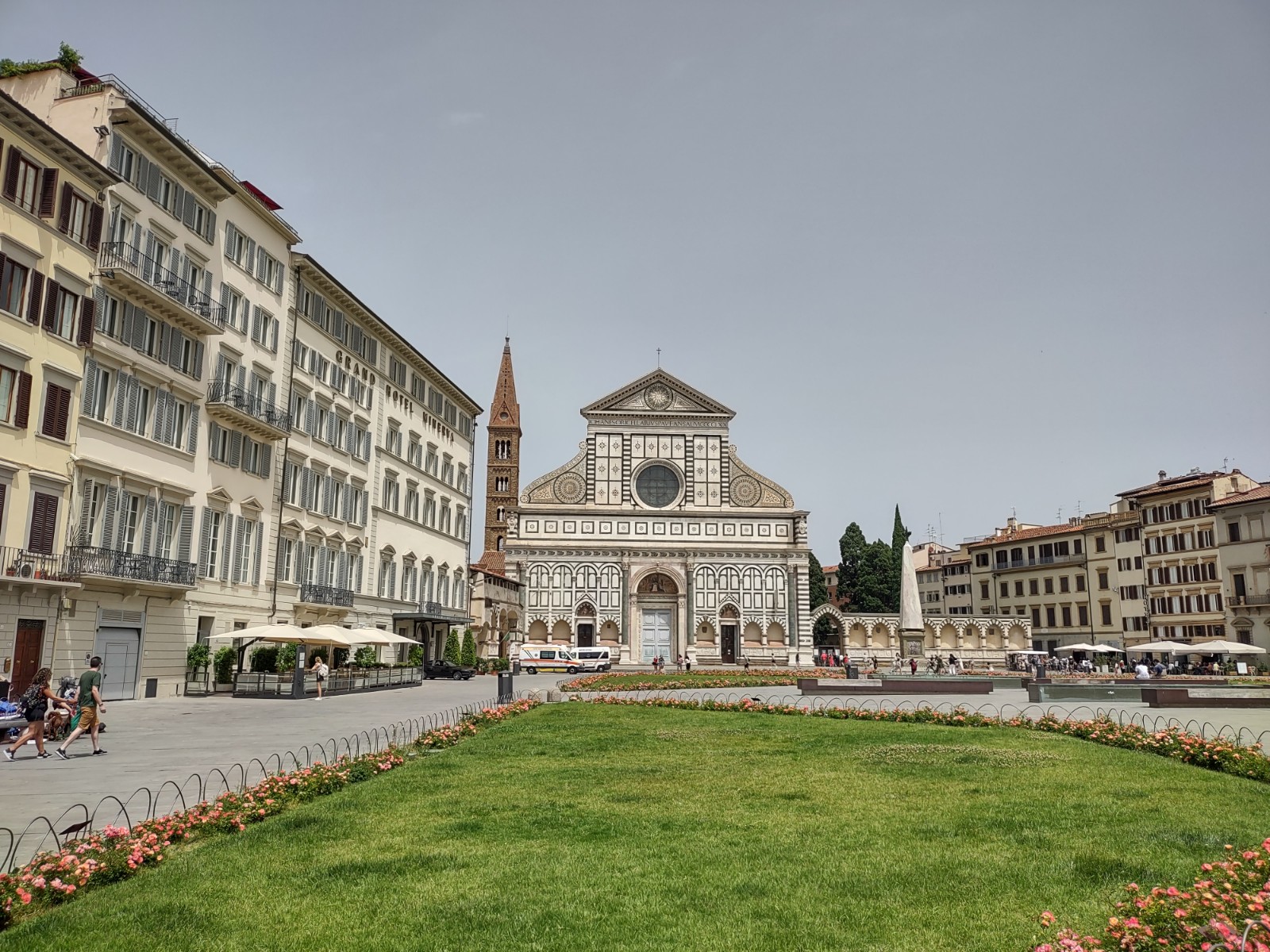
We arrived at the regional train station, which is located outside of Florence (they call it Firenze here) near the airport, and caught a tram which took us to the Firenze Santa Maria Novella train station in the center of the Centro Storico (Old Town). From there we had about a 25 minute walk, past the station’s namesake cathedral, through the Centro Storico, and over the River Arno to the apartment in the Santo Spirito neighborhood where we would be staying for the next six days.

Florence
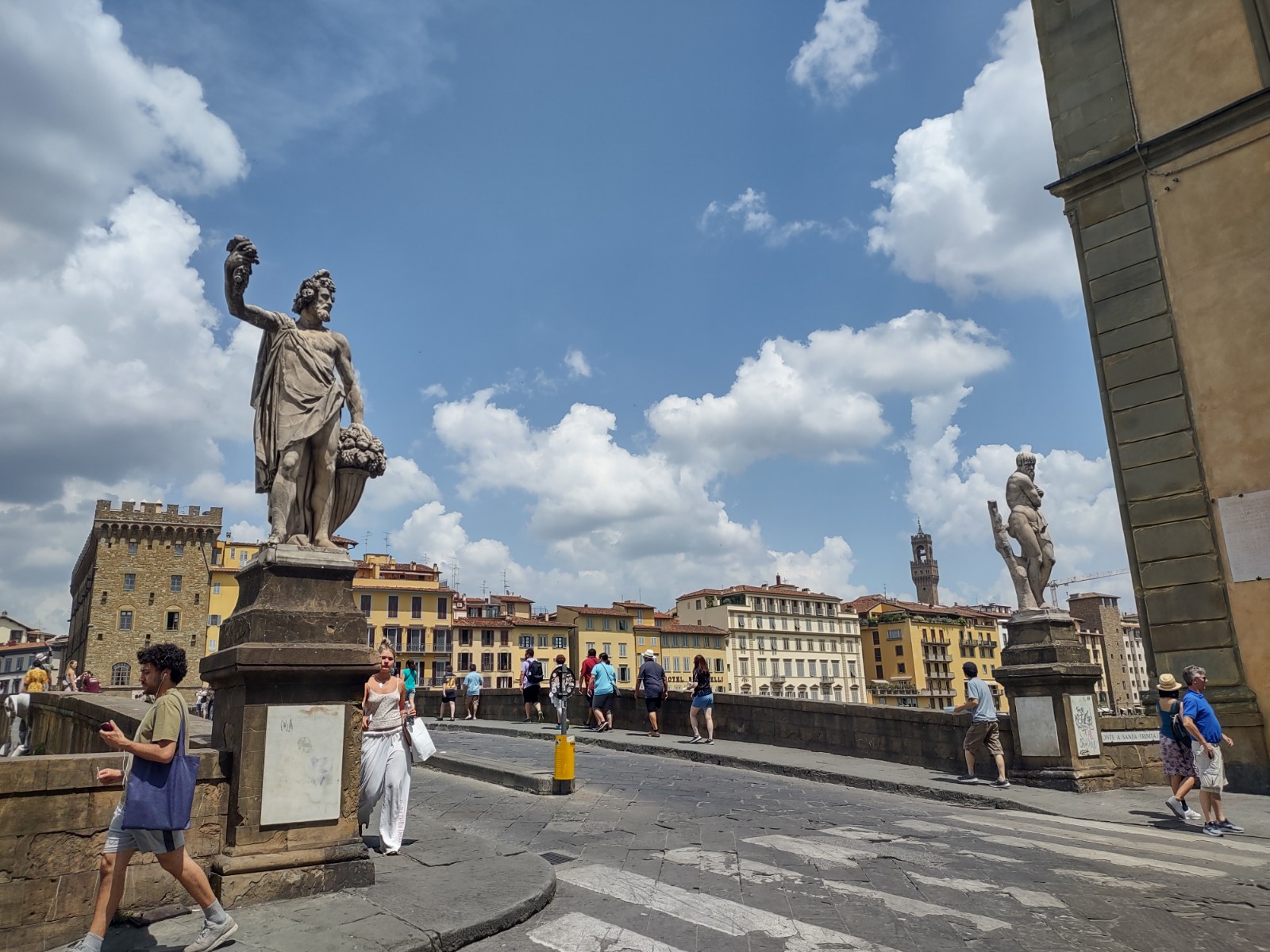
While it has quite a bit of history predating this, Florence is probably most recognized as the center for the Italian Renaissance thanks, in great measure, to the efforts of the Medici family (whom we would learn quite a bit about during our time here) and so, not surprisingly, has an abundance of beautiful art and architecture. Beyond tourism, Florence has a strong manufacturing base and is known world-wide for its wine (chianti) and automotive products (Vespa). While there are about 1.5 million people in the metropolitan area, Florence itself is not a huge city, with a population of less than 400,000, and we found that the Centro Storico of Florence, which is a UNESCO World Heritage Site, is compact and fairly easy to navigate and get around on foot. You can walk from pretty much anywhere to anywhere in the Centro Storico in 30 minutes or less.
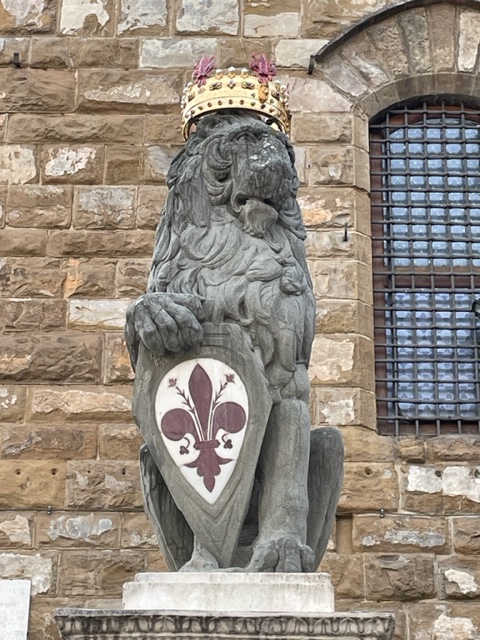
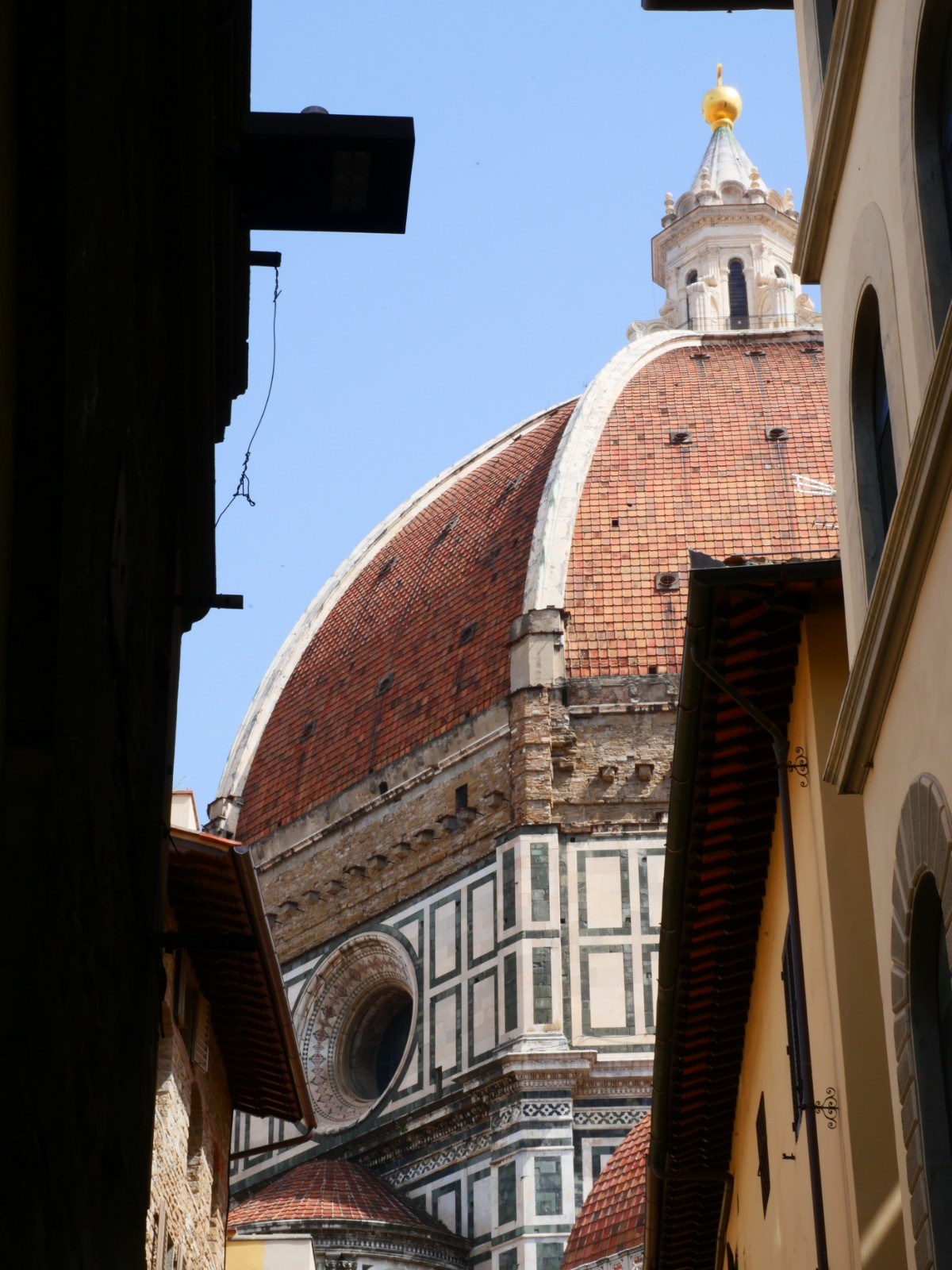
The Santo Spirito neighborhood where we stayed is within the old walls which define the Centro Storico, lying along the south bank of the River Arno across from the city center. While most of the major tourist attractions are north of the Arno, there are a couple of noteworthy ones in Santo Spirito including the Pitti Palace (one of the Medici residences in Florence) and the adjoining Boboli Gardens. Santo Spirito is a pretty lively neighborhood with lots of good shops and restaurants, most of which are located on three or four main streets with most of the rest of the neighborhood still being residential.
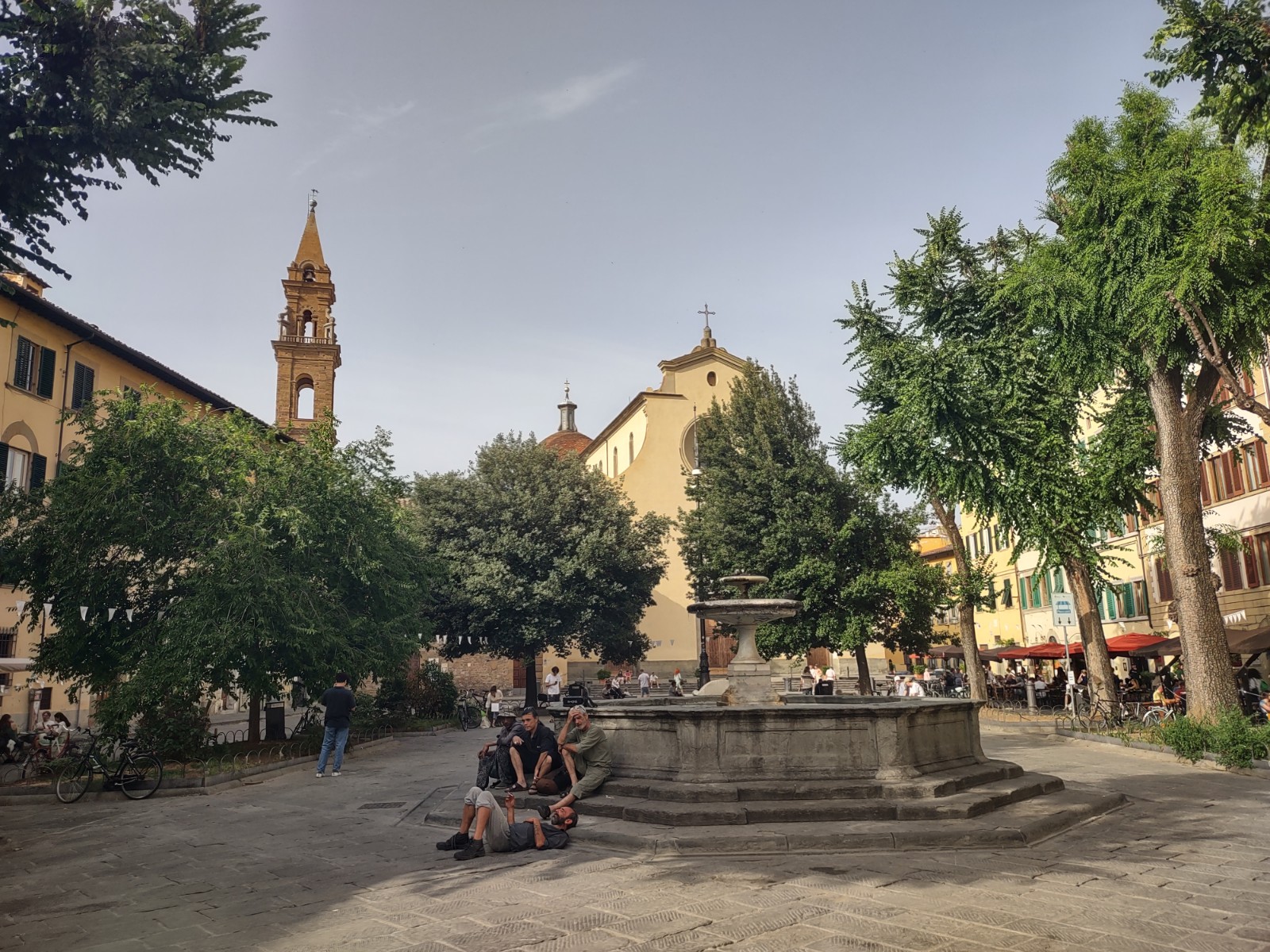
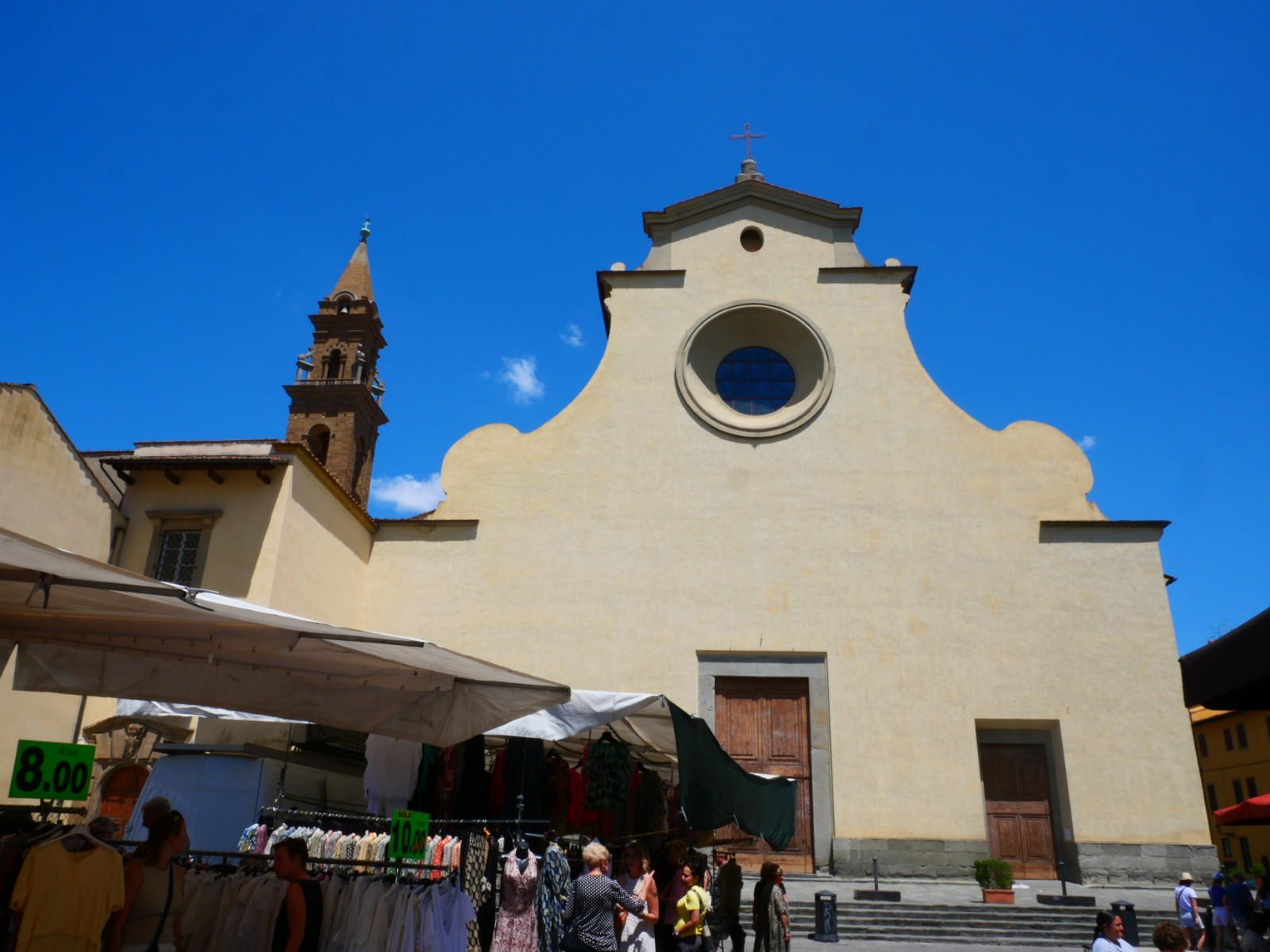
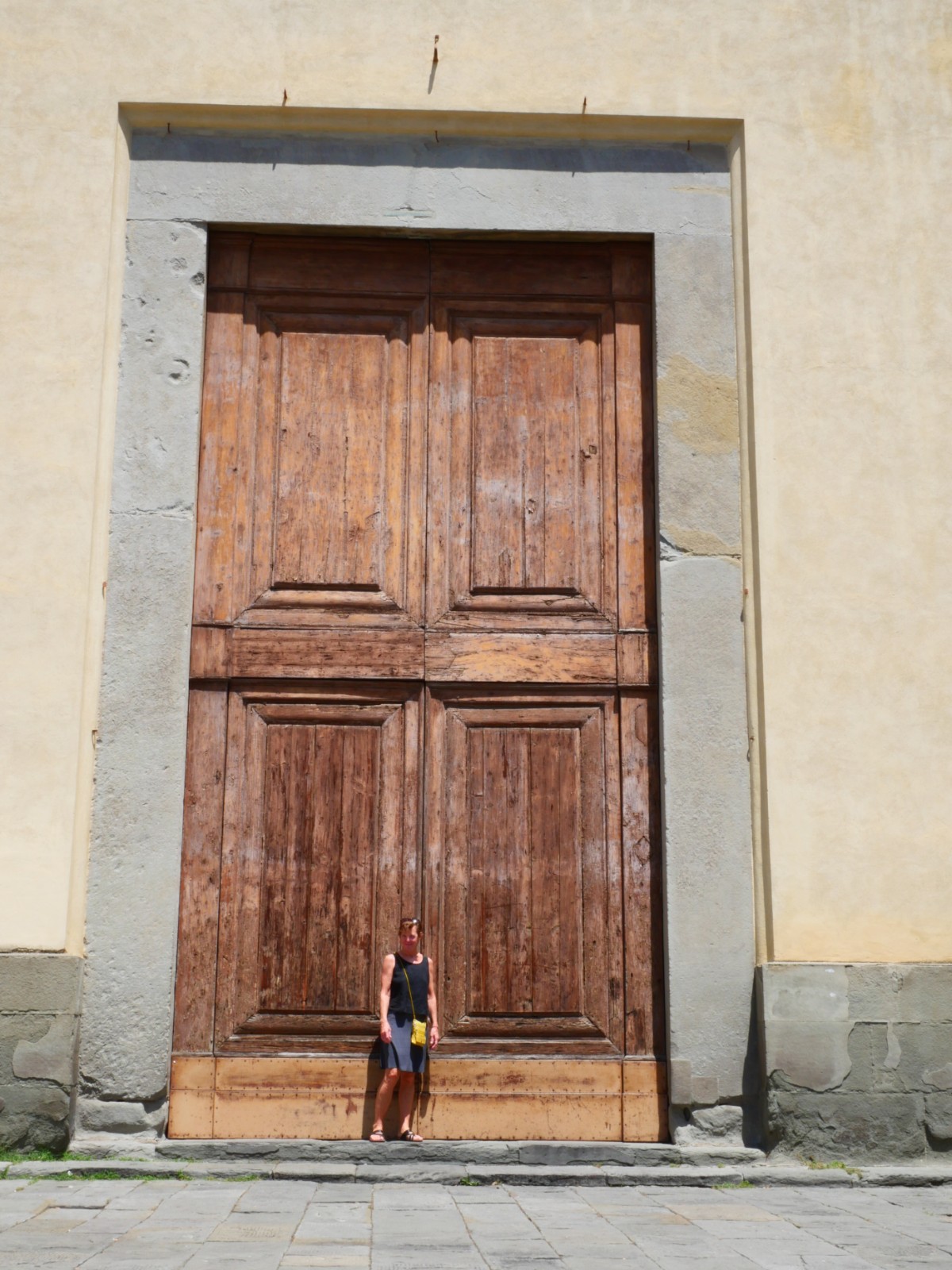
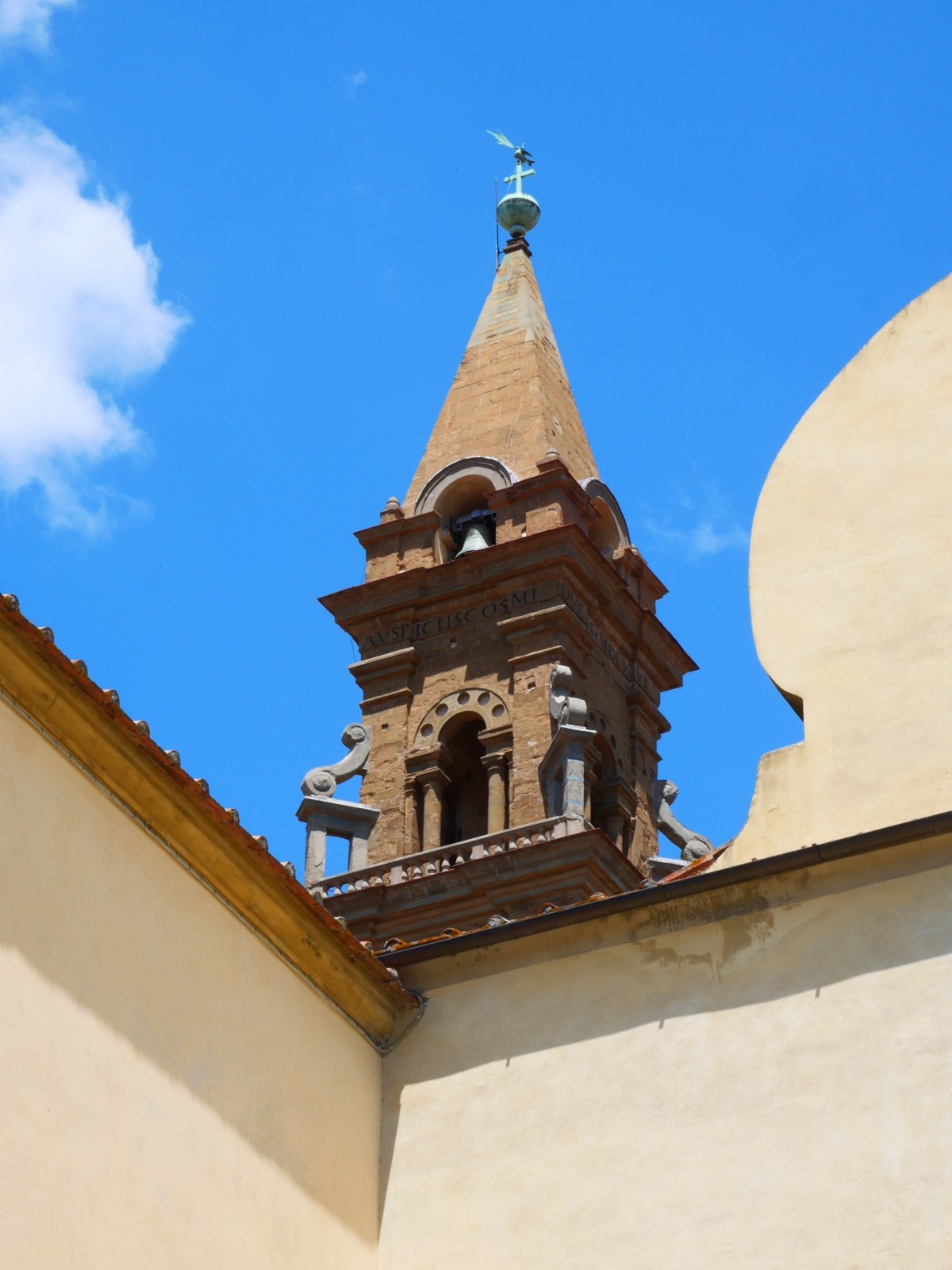
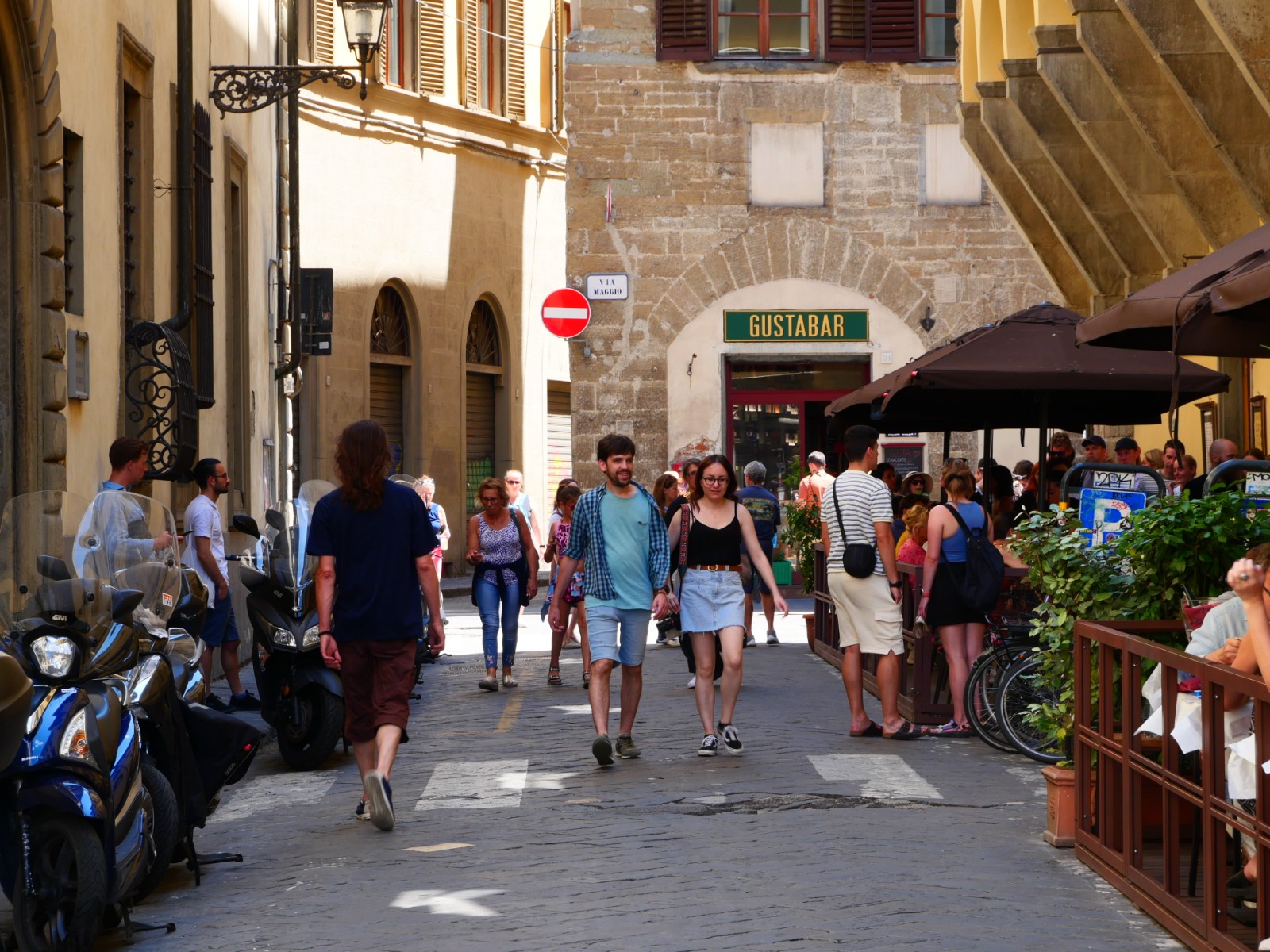
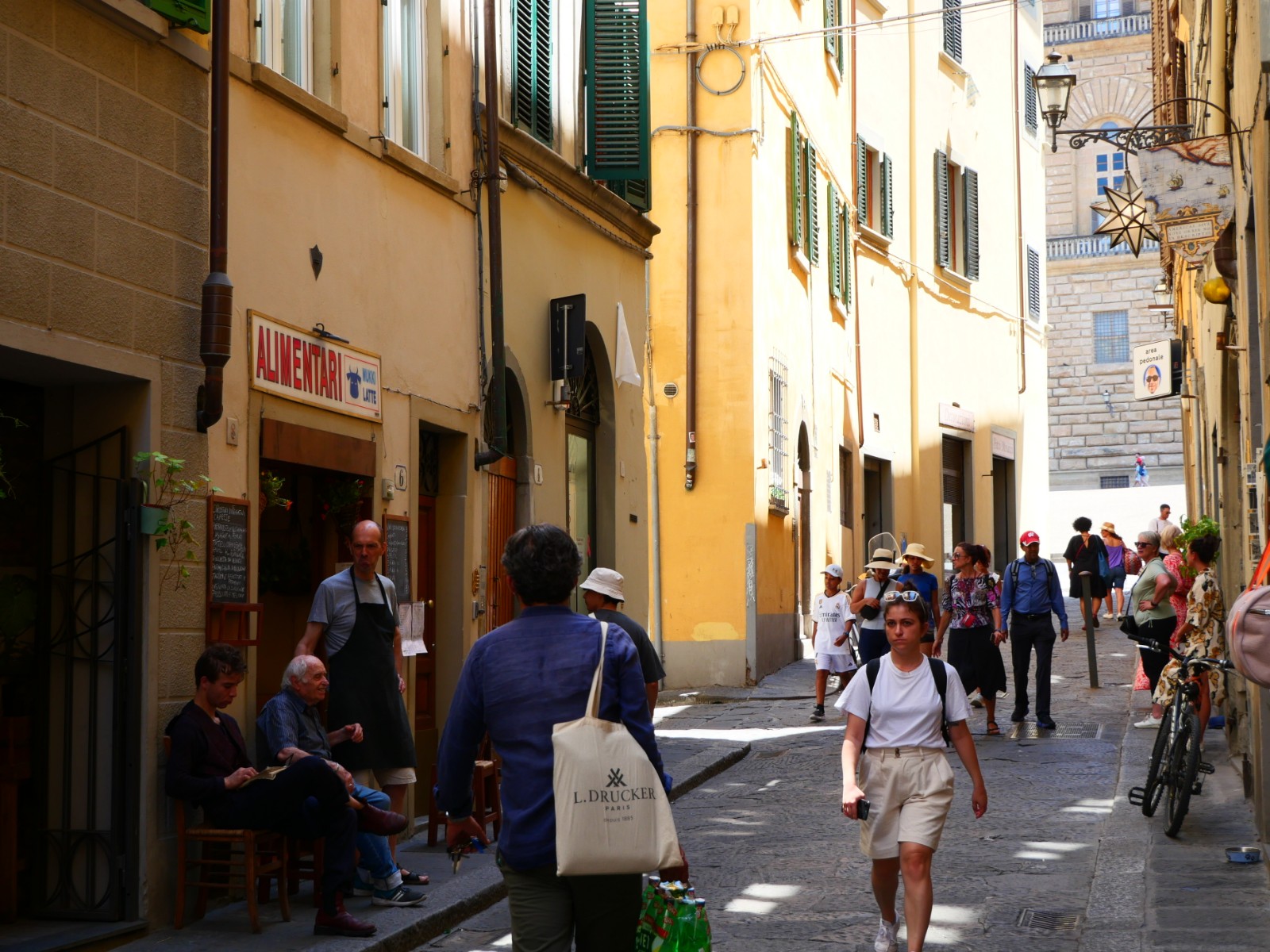
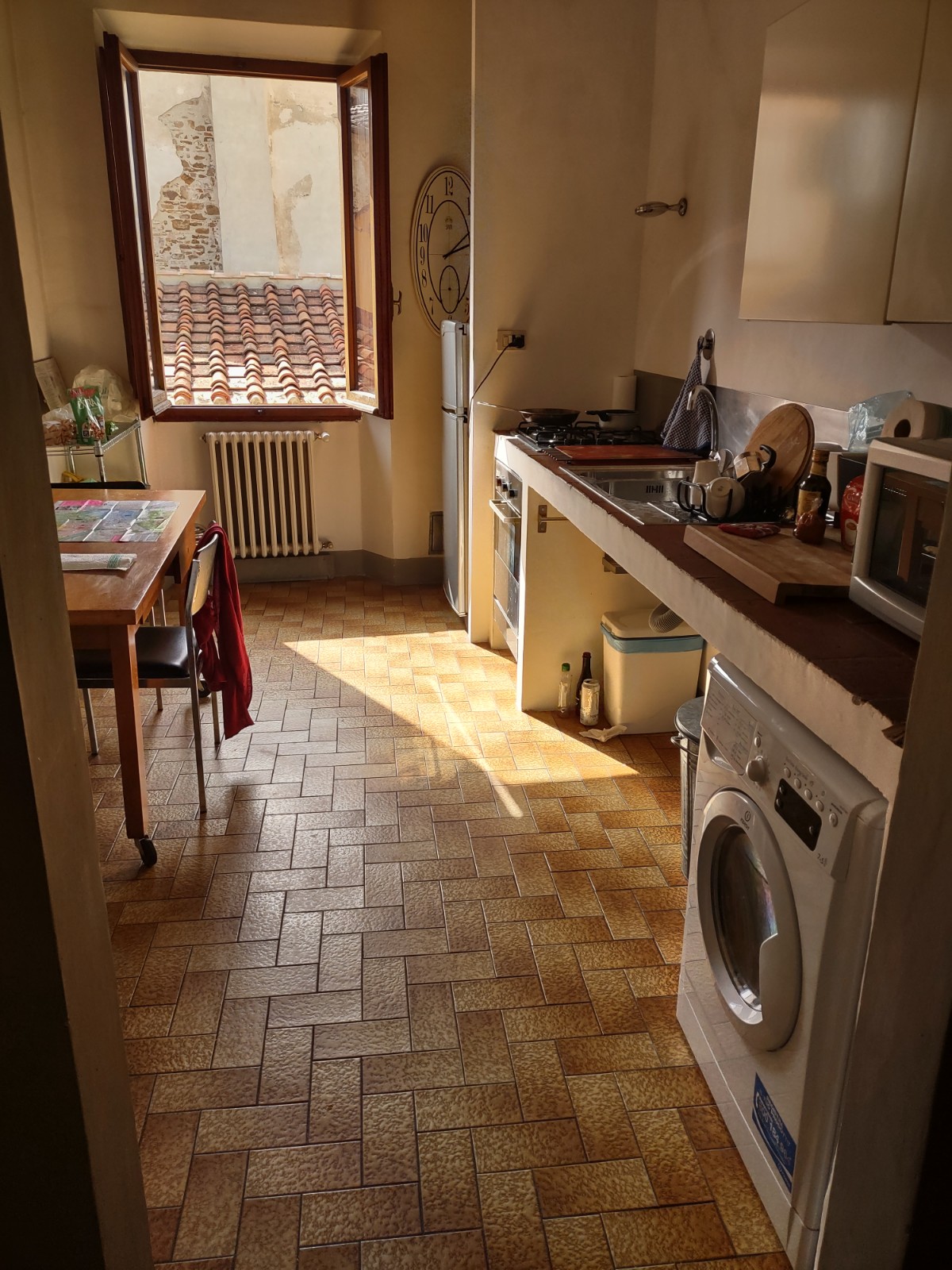
Our apartment was located in an old building of indeterminate age (probably 18th or 19th century) on a fairly quiet street just around the corner from the Basilica of Santo Spirito (sadly, one of a couple of churches by Brunelleschi whose facades were never finished) and its square which are the center around which this neighborhood grew. We found it to be a great place to stroll around in the evening and were happy to find that, although there were a lot of visitors during the day, most eventually left and, for the most part, things quieted down at night.
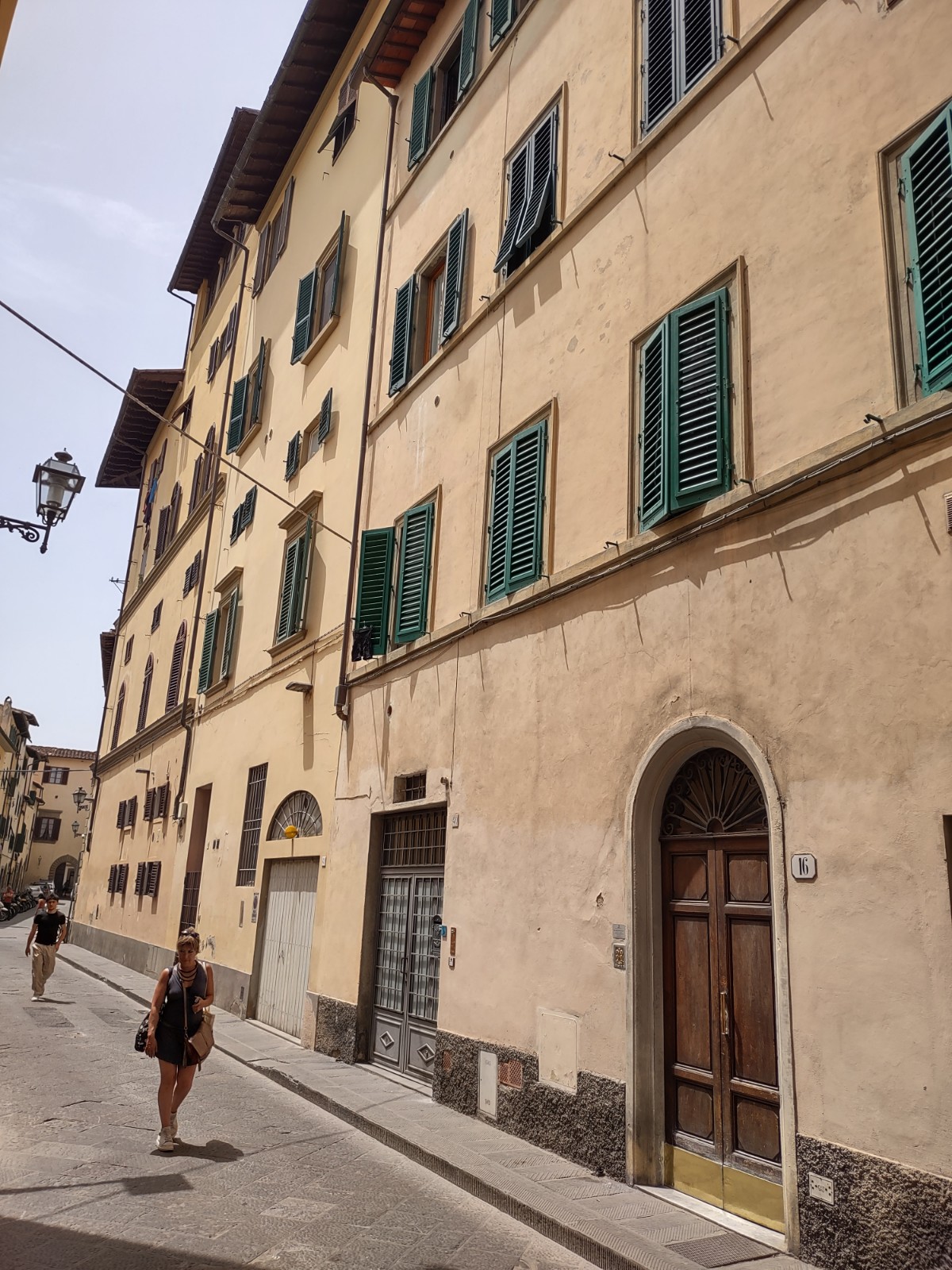
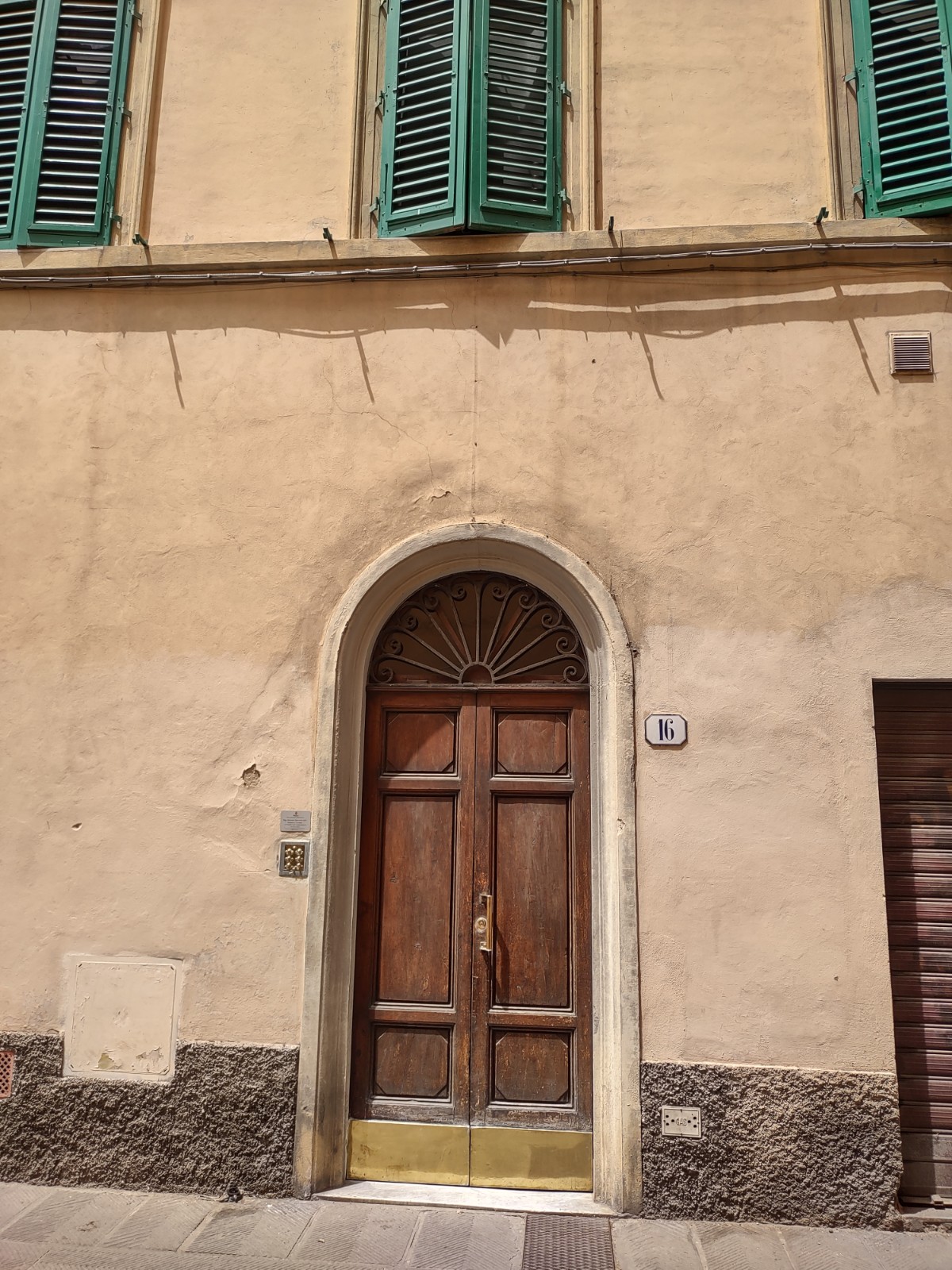
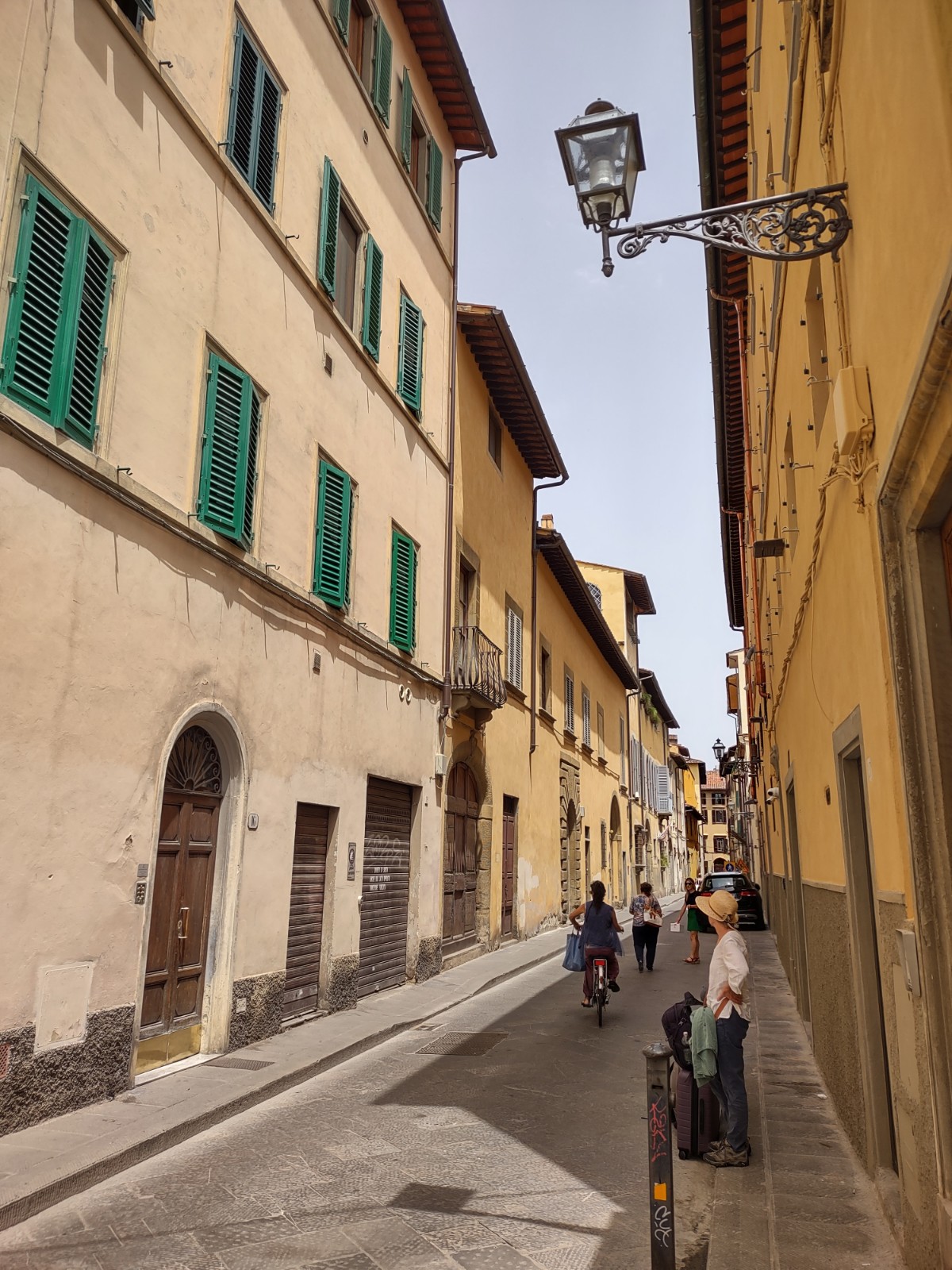
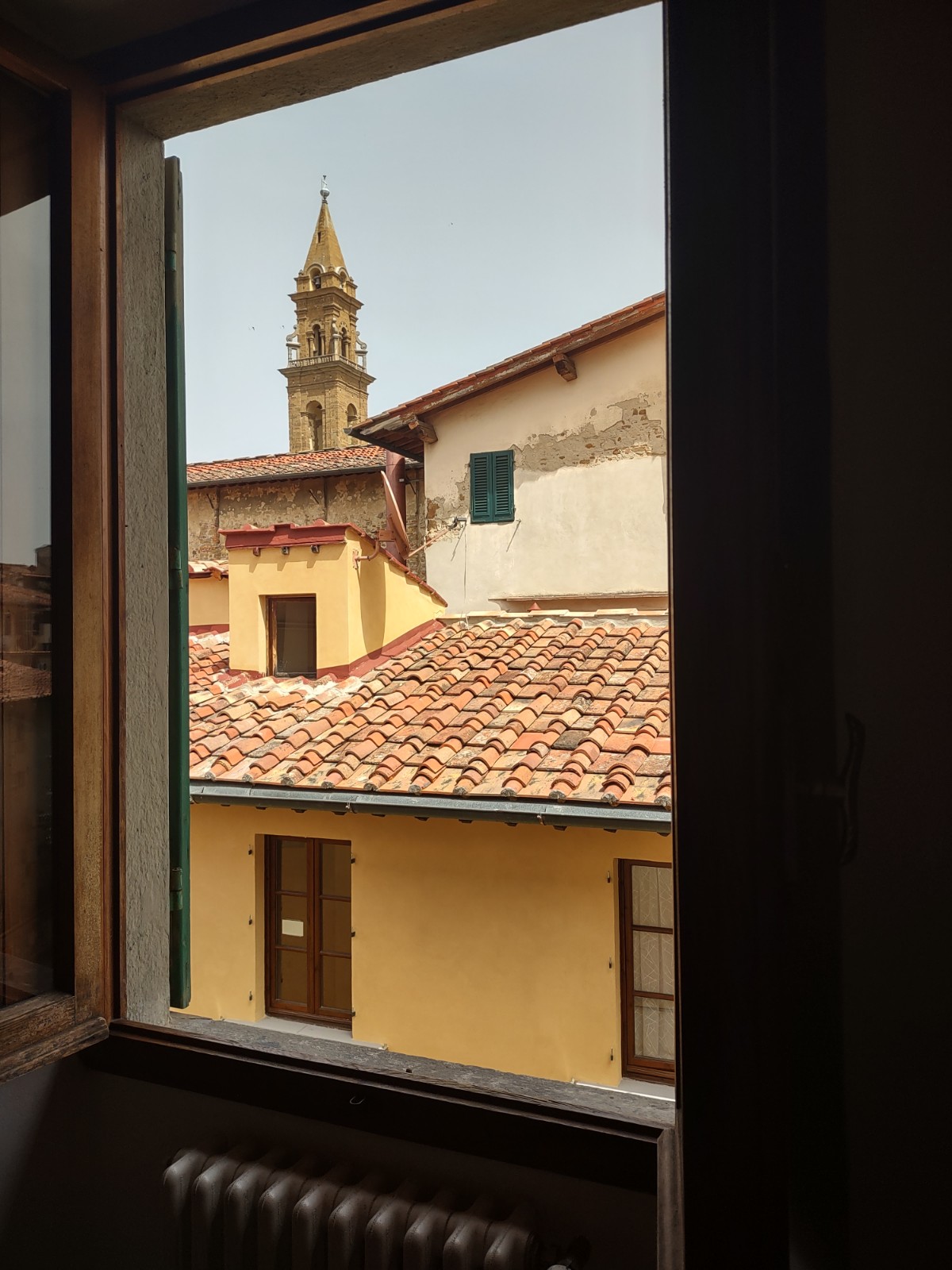
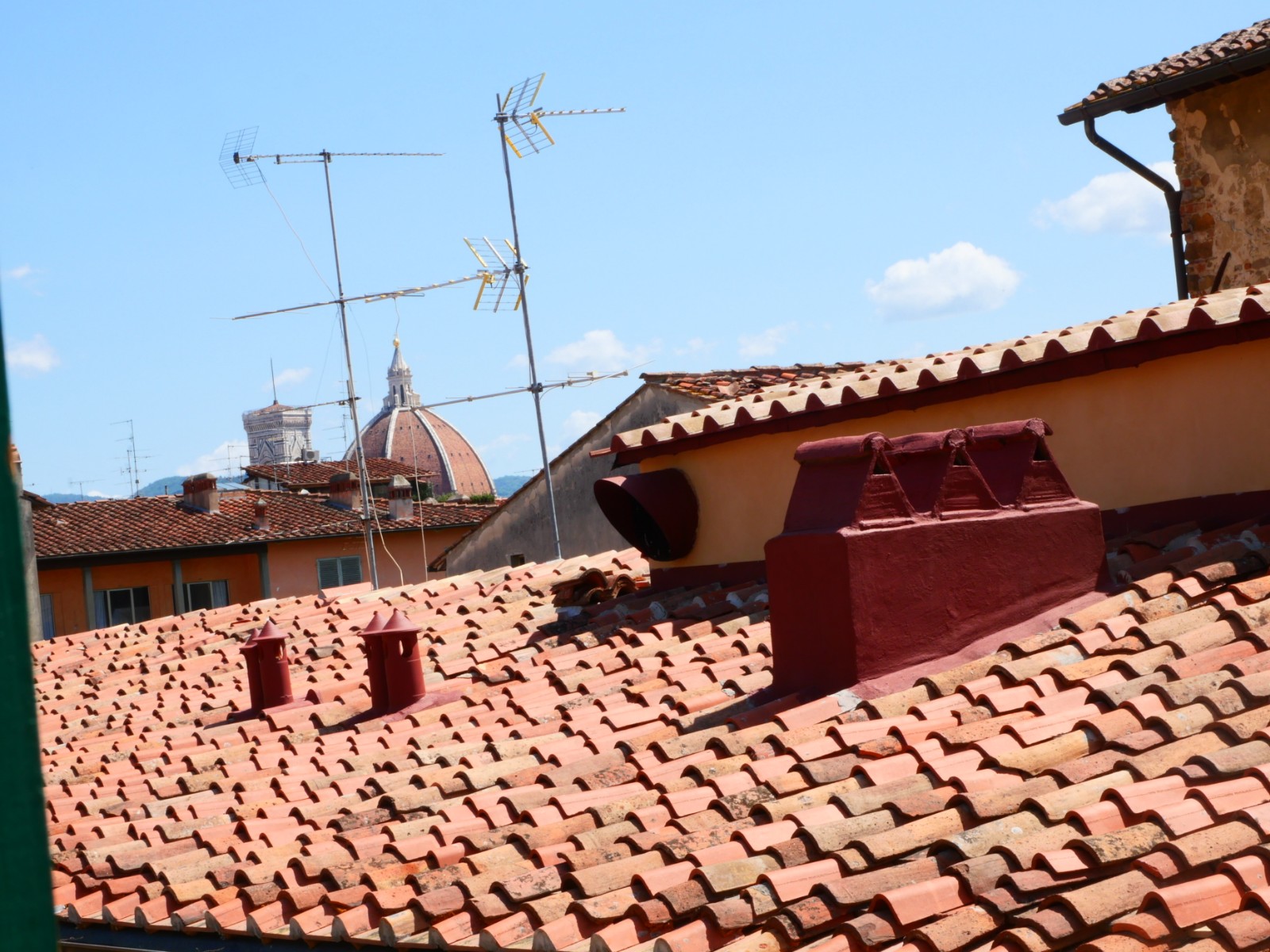
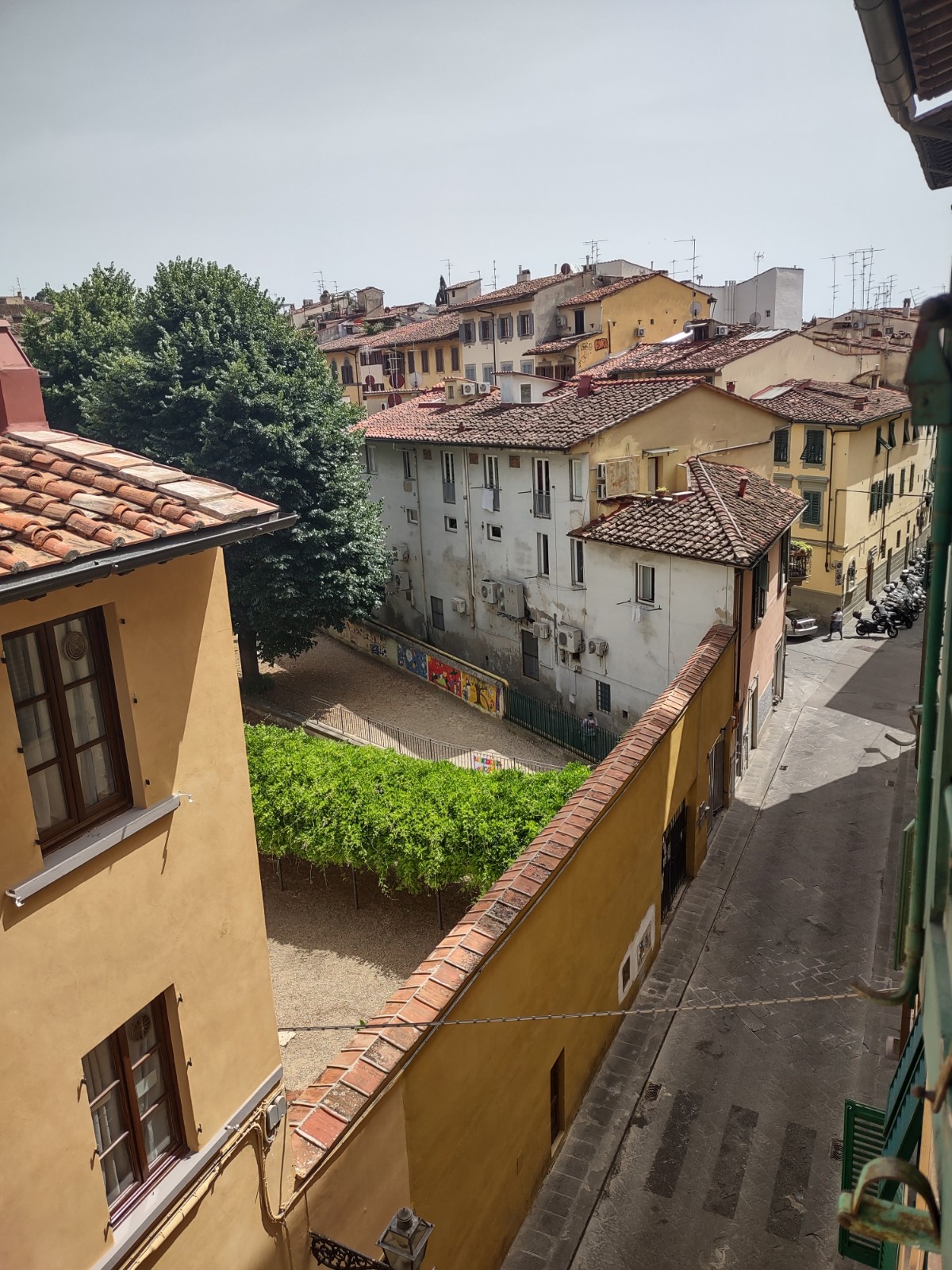
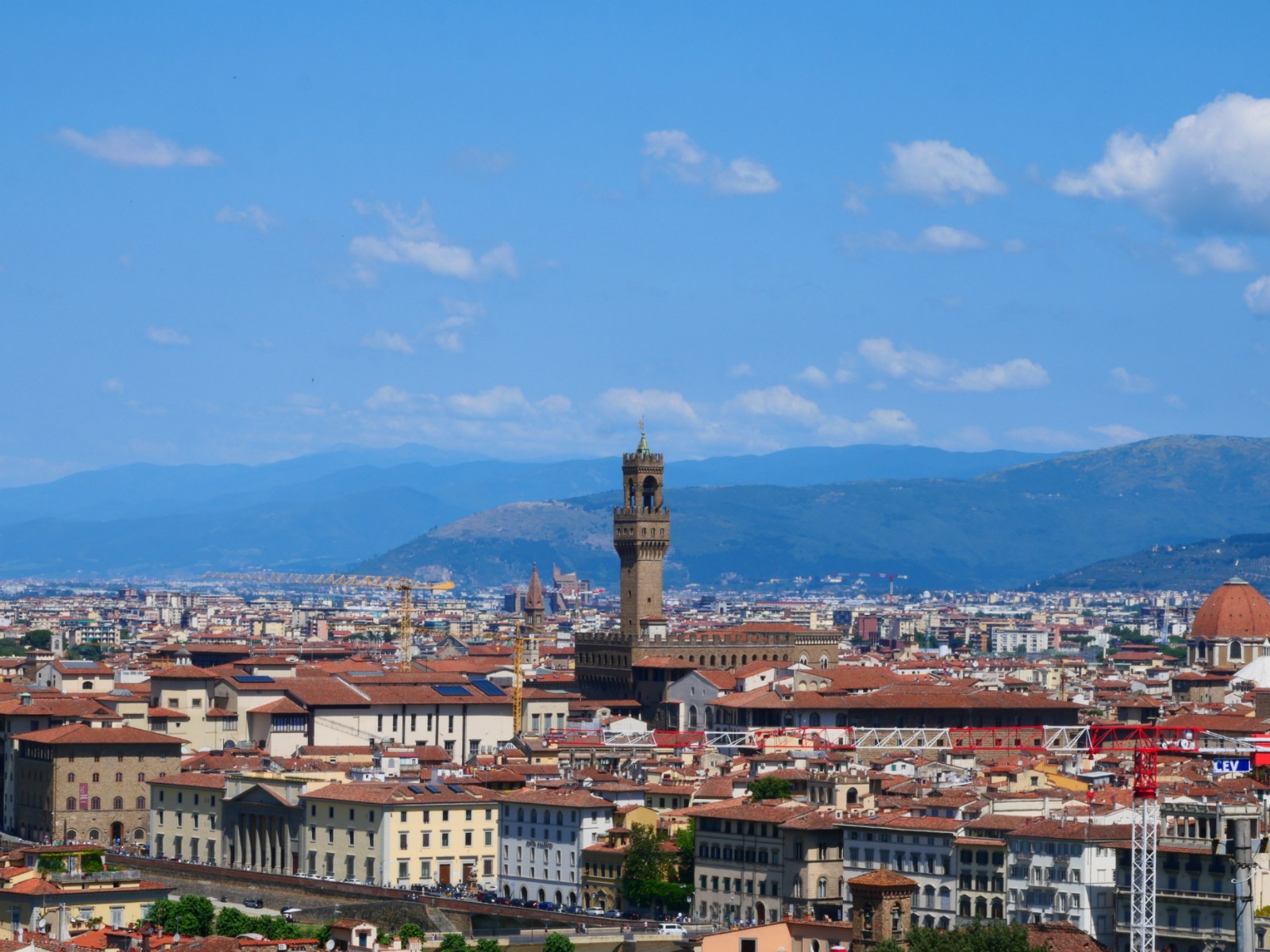
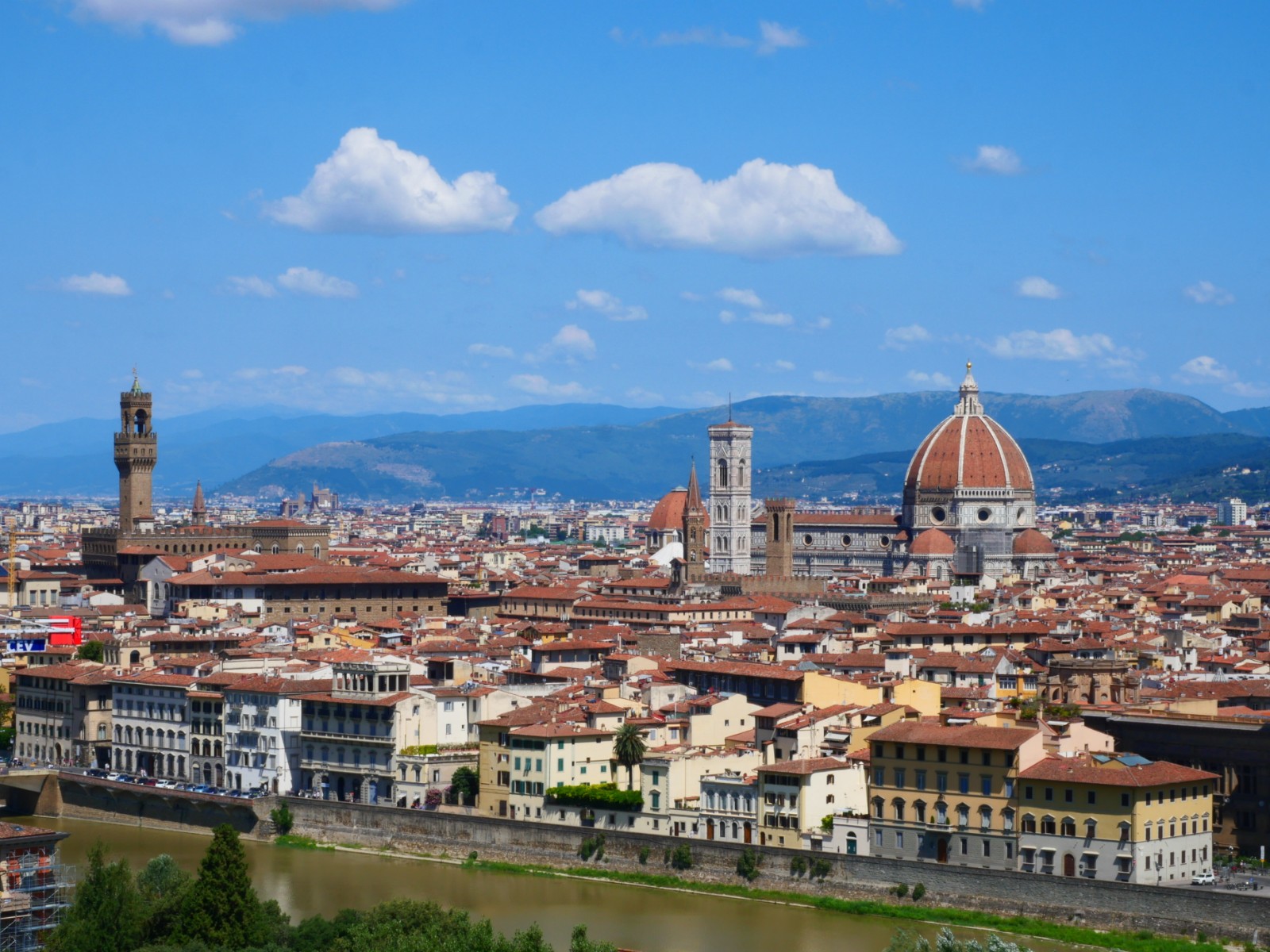
Our apartment was on the top floor (third here, fourth floor in U.S.) which, except for all the stairs, was kind of nice as it provided us with some decent breezes and also some pretty good views over the rooftops to the east, of the Basilica bell tower and the Pitti Palace with the Duomo of Florence in the distance across the river to the north.
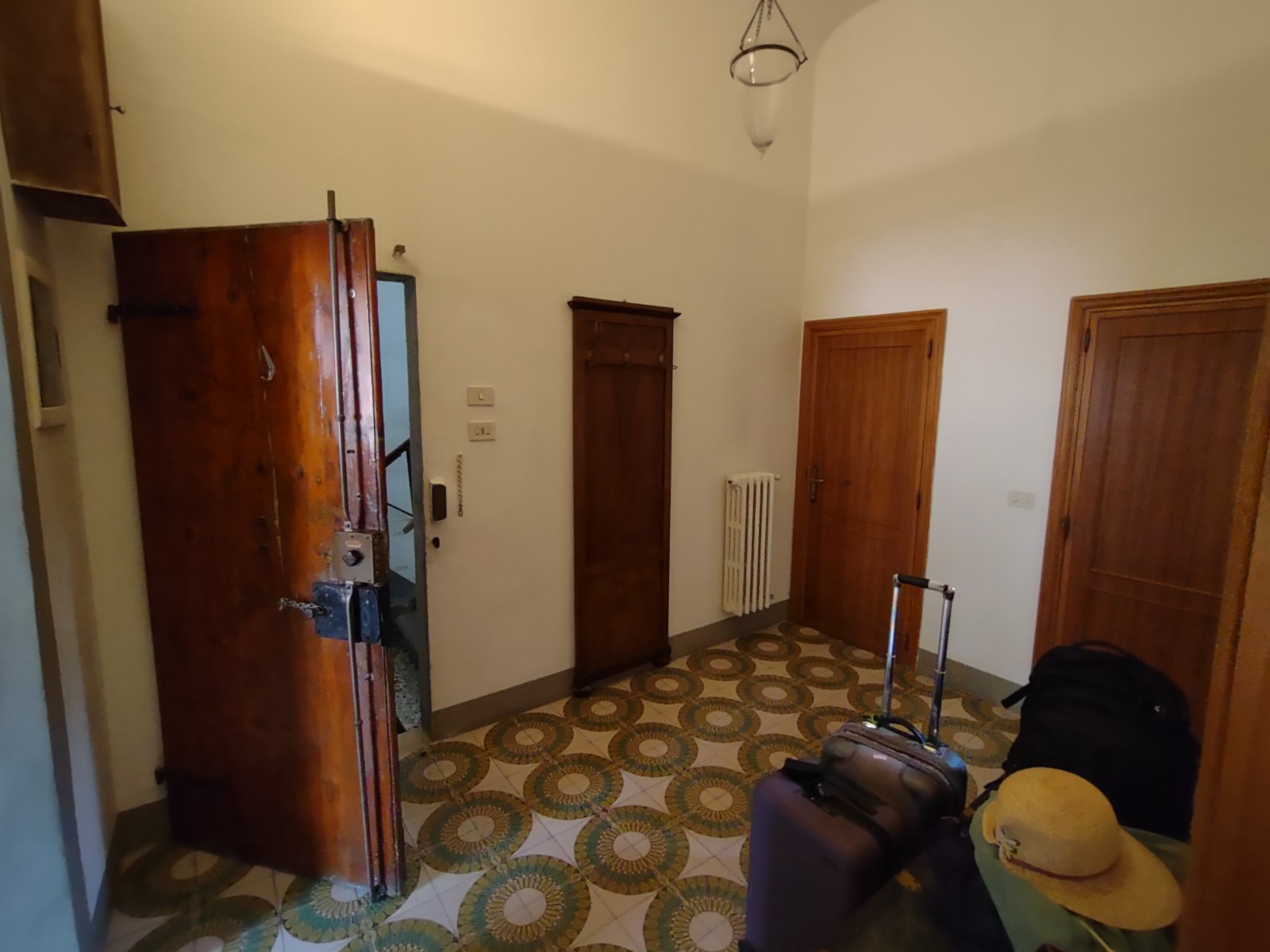
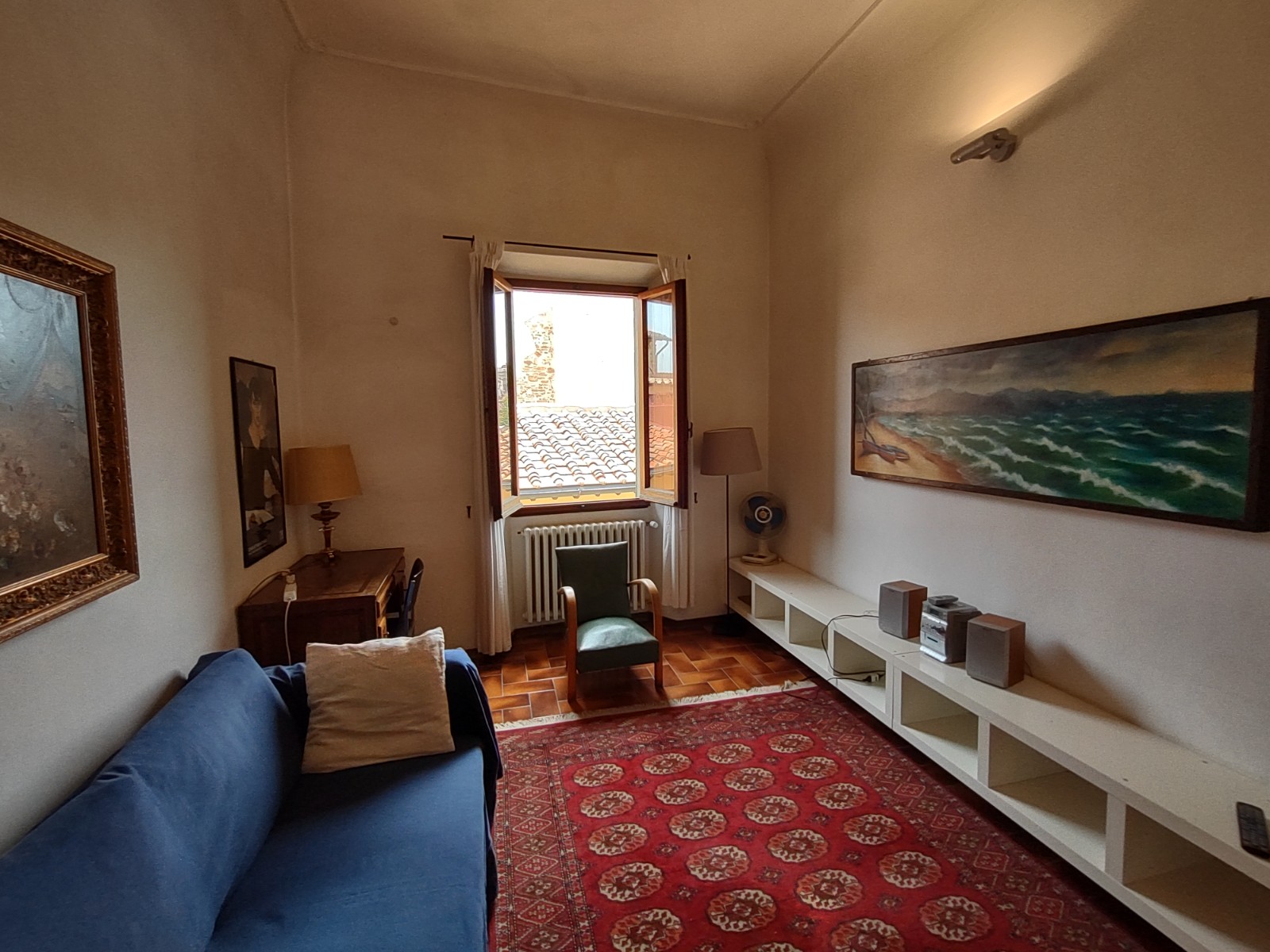
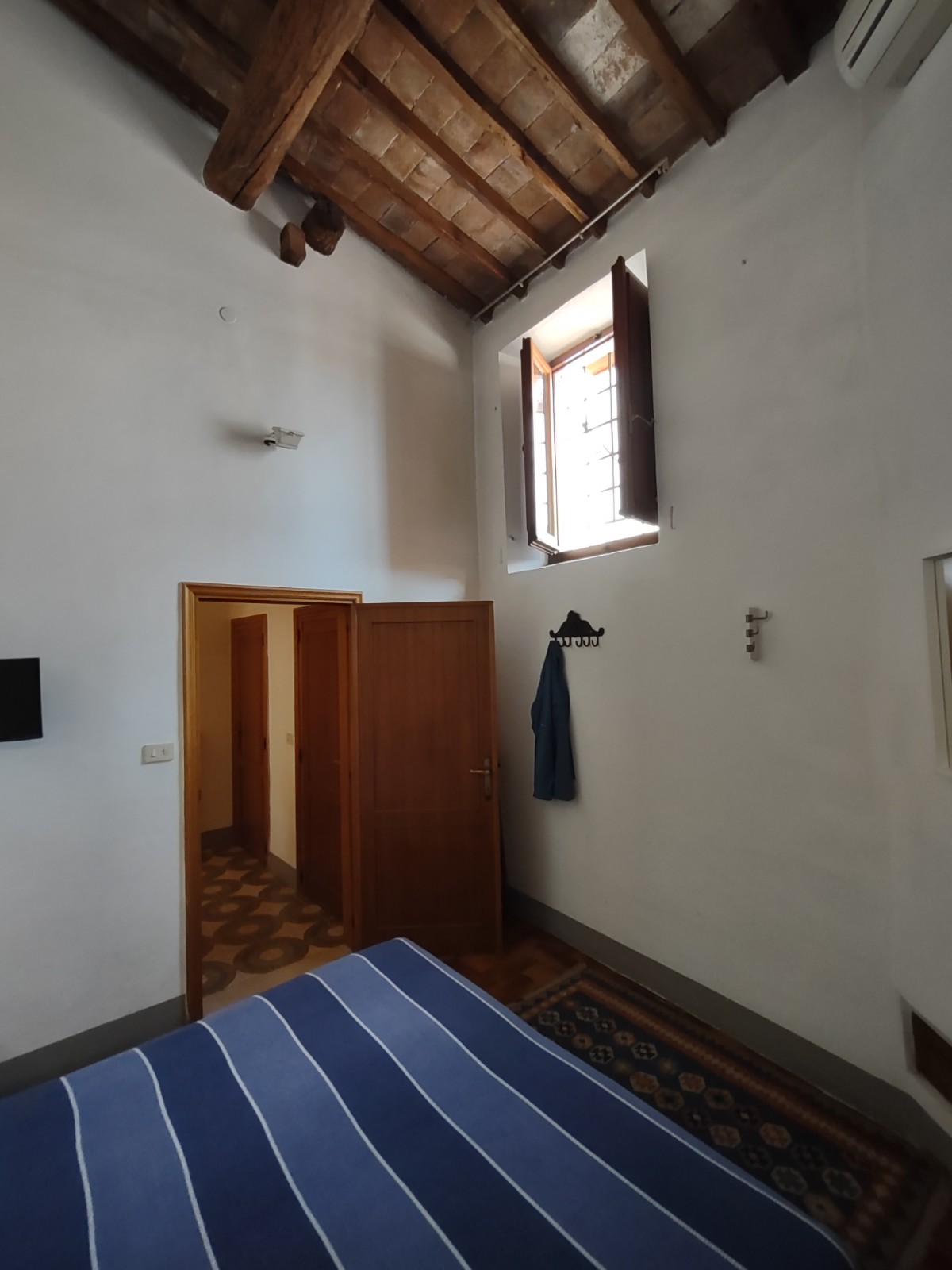
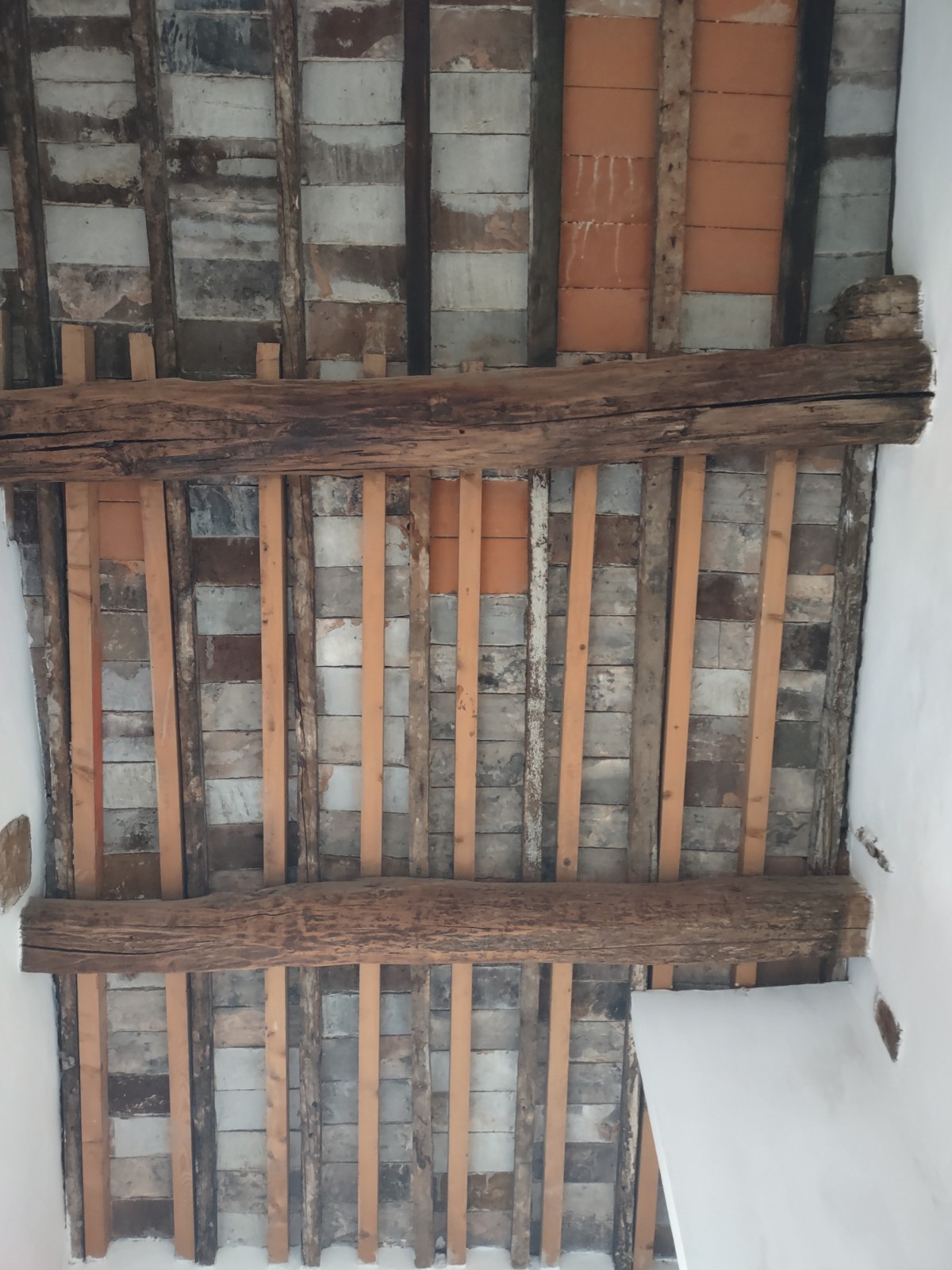
The apartment, one of eight in the building, was pretty spacious with a large entrance hall and separate living, kitchen/dining, and bedroom, all of which were generously sized but, beyond that, it was fairly spartan with the only real luxuries being a larger fridge and freezer and AC in the bedroom (which we actually used because it got so hot). The original plaster ceilings in the kitchen, bedroom, and bath had been removed for repairs and not replaced and we found the exposed structure to actually be more visually interesting than the original plaster ceilings in the other rooms, with exposed rough-hewn beams and clay tile roof decking.

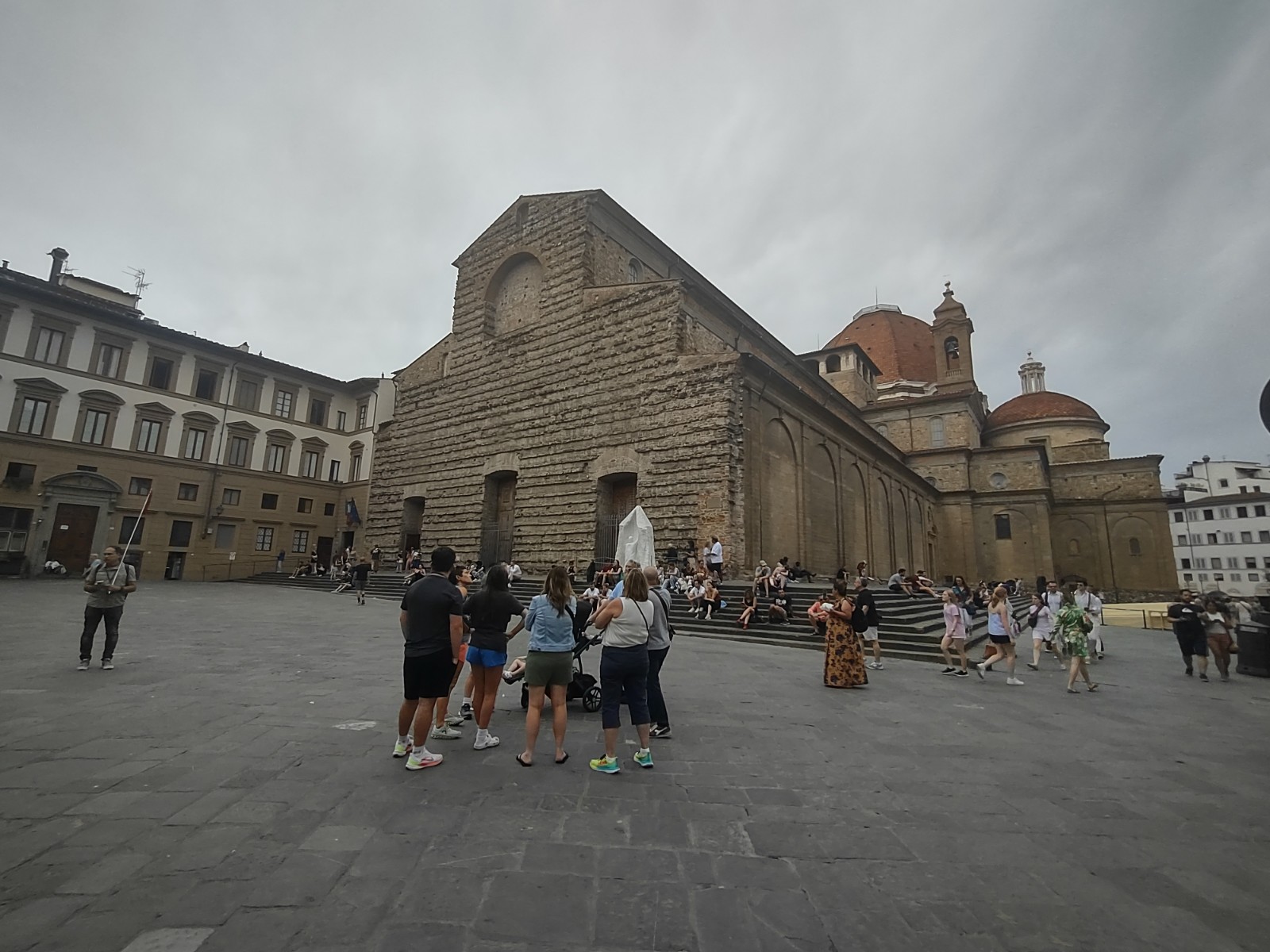
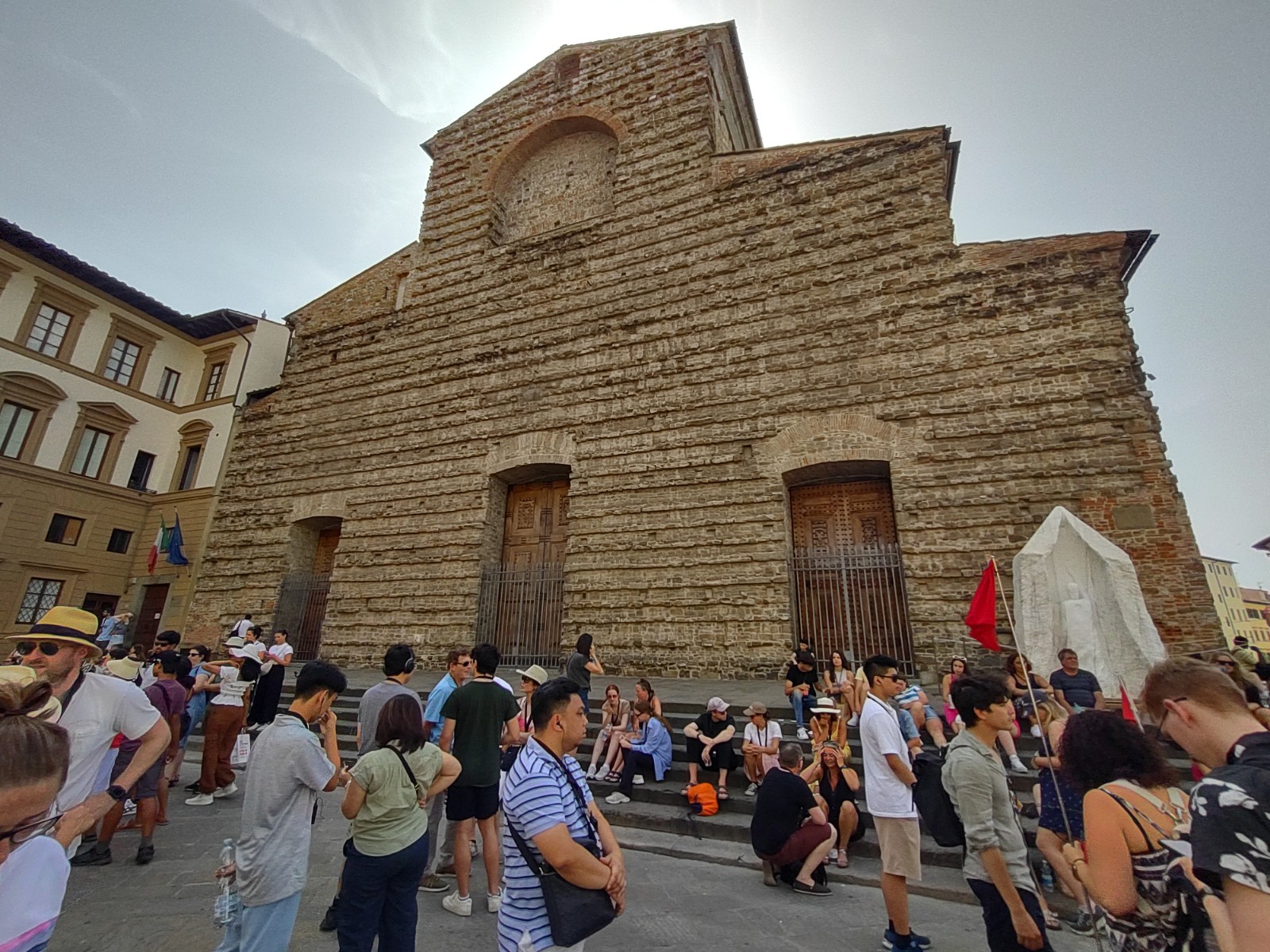
On our first full day in Florence, Wednesday June 21st, after a special lunch which Colleen had made reservations for some weeks earlier (more about that later), we took a guided walking tour of the historic center of Florence. The tour, which focused on the development of Florence from Medieval times through the Renaissance and the role of the Medici family played in all it, started in the plaza of the Basilica of San Lorenzo, dating to the 4th century, which was the original family church of the Medici and the burial place for its members. In the early 15th century, now famous Italian architect Filippo Brunelleschi was engaged by the Medici to undertake a major expansion and reconstruction of the Basilica. Due to a lack of funding, the project was modified and the façade was left in its original rough form with no limestone or marble cladding.
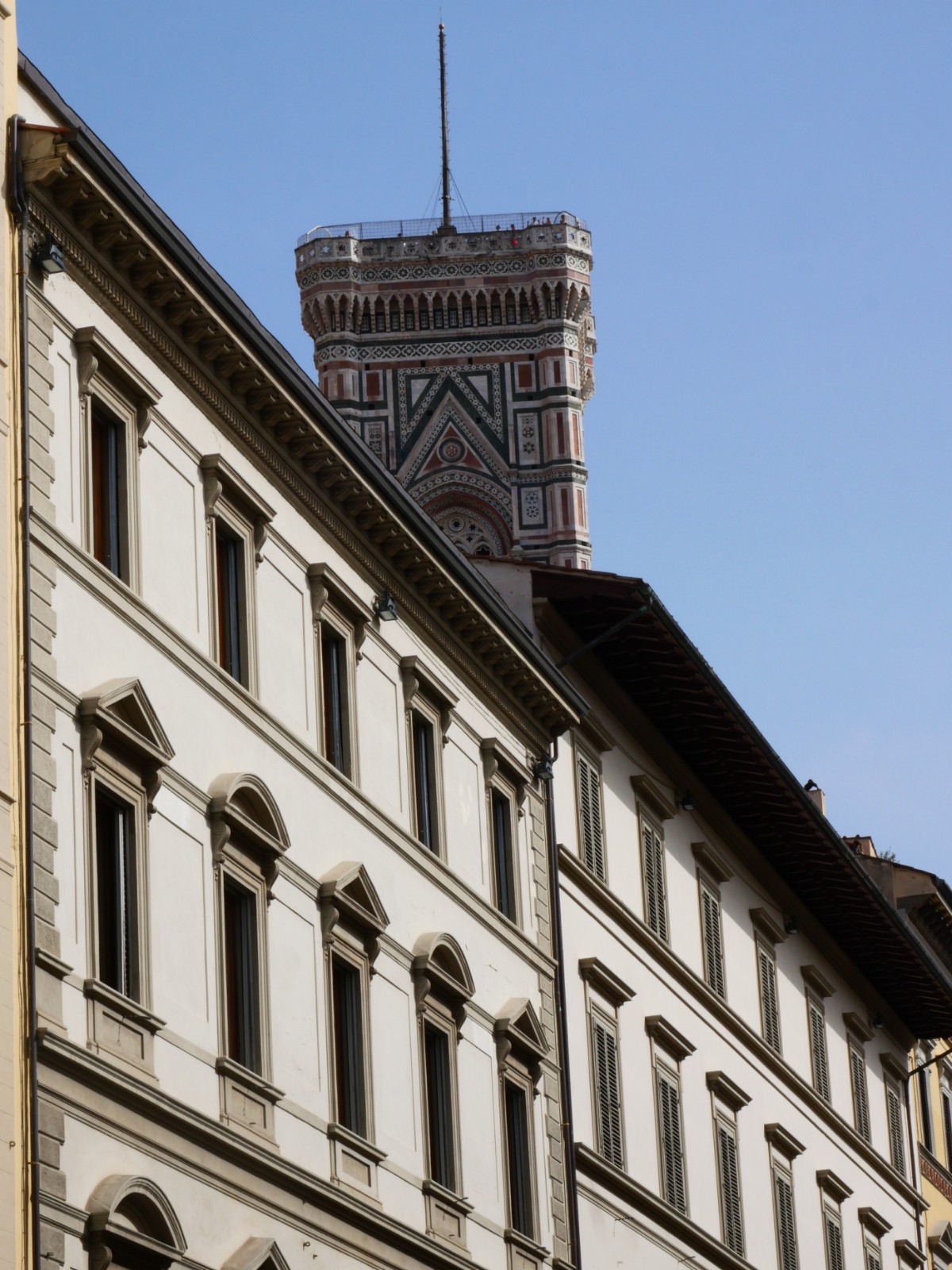
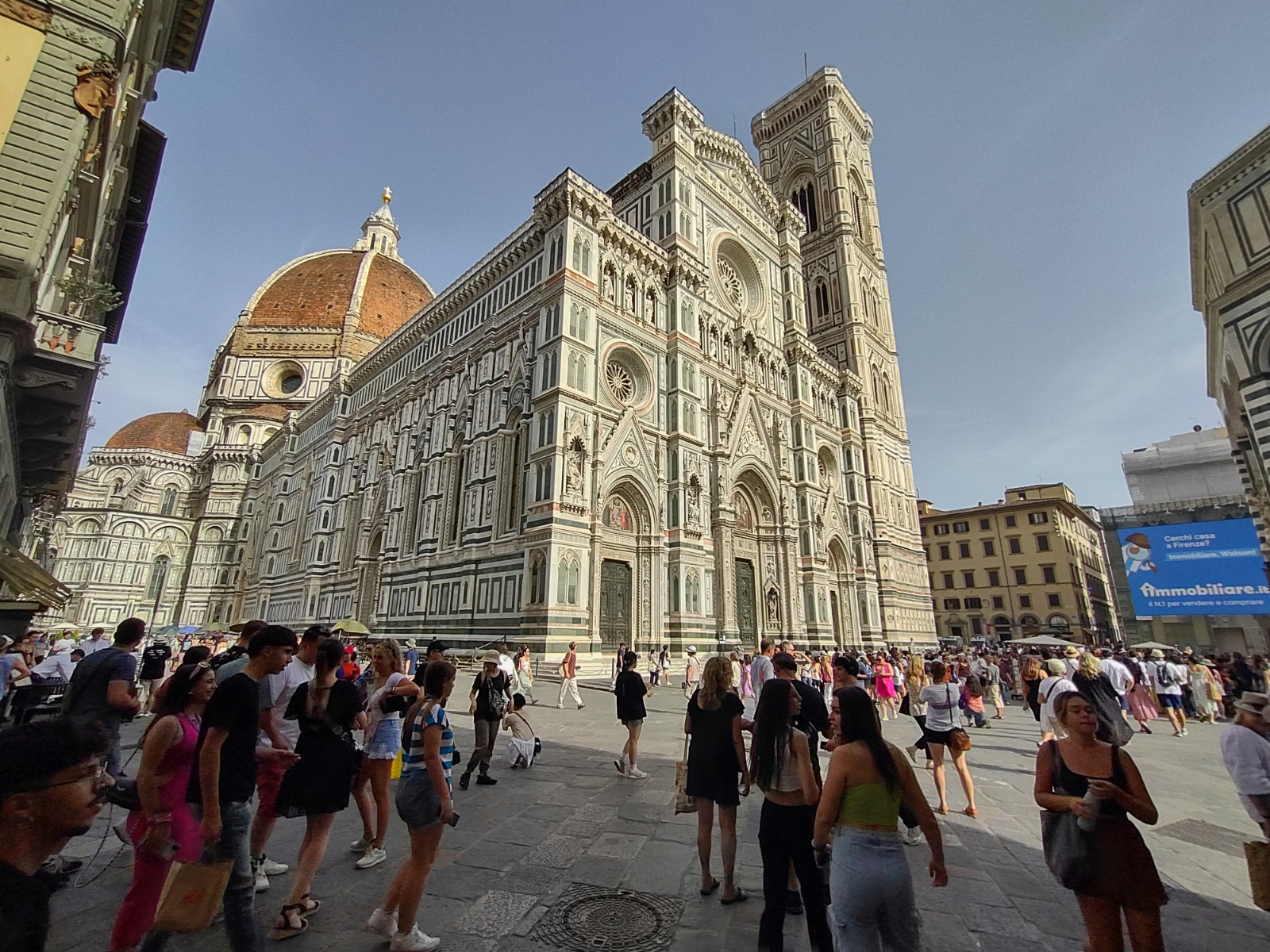
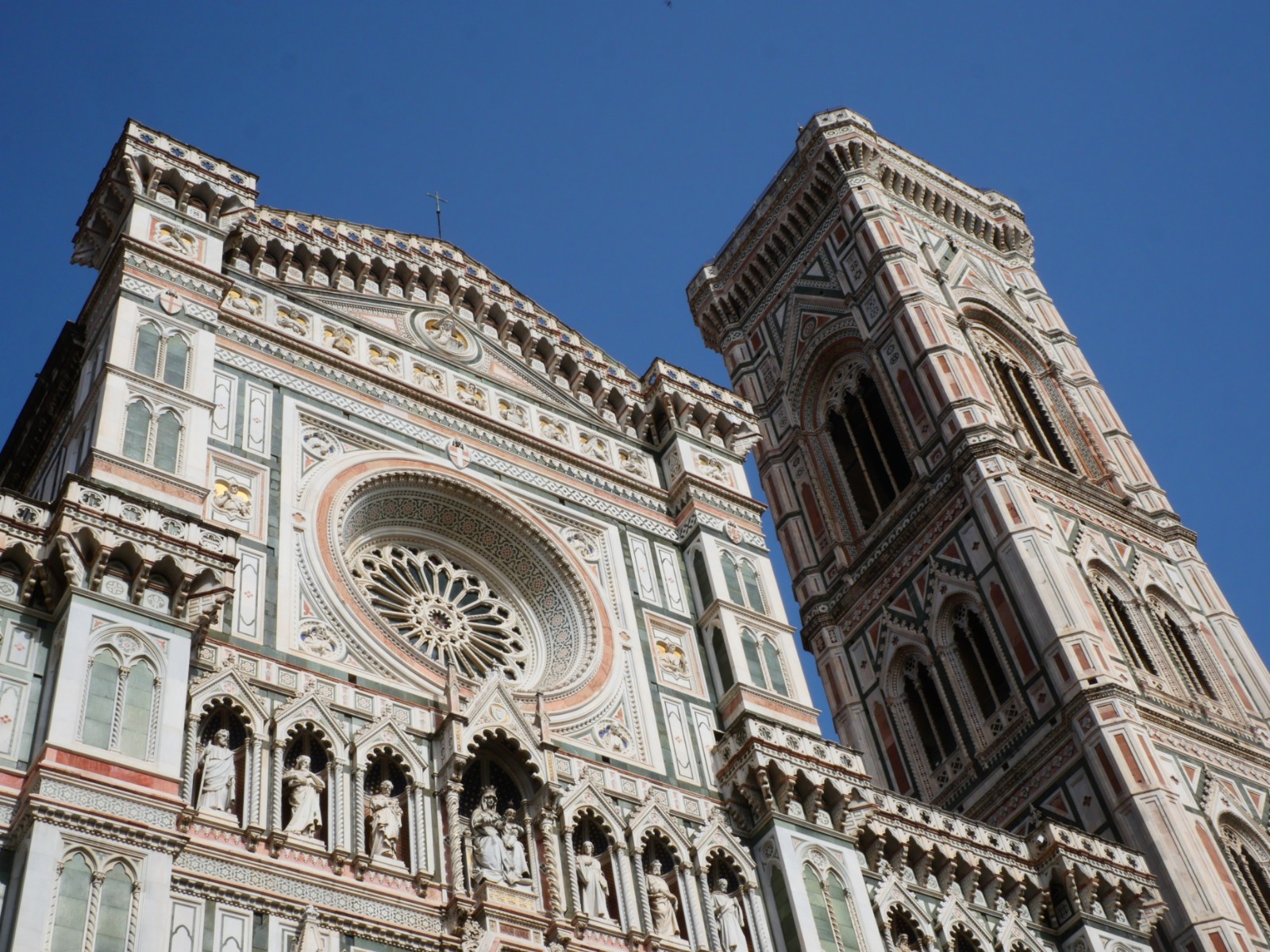
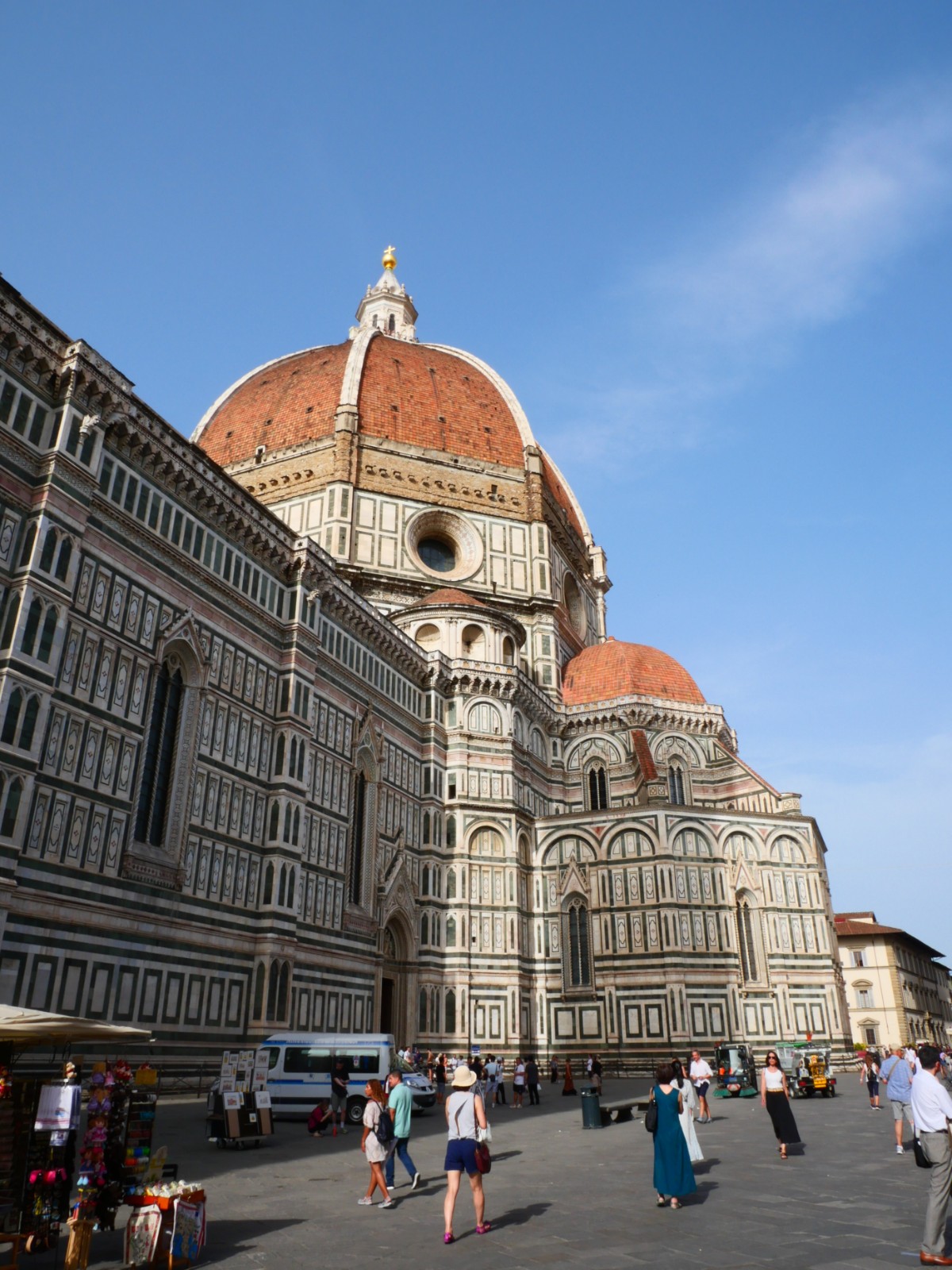
From San Lorenzo, our tour continued through the city center, past various historic places which played a role in the development of Florence during the Renaissance, including the Medici Palace and the Cathedral of Santa Maria del Fiore (the Duomo). Construction of the Duomo began in 1296 and was substantially completed in 1436 with construction of the famous dome which was engineered by Brunelleschi after winning a design competition sponsored by the Medici. There seems to have been a fair amount of drama involved in all this and the dome today still has an uncompleted drum section, the result of Michealangelo criticizing the design for the drum by another architect, with only one section of it having been completed. The ornately patterned three-color exterior of the Cathedral, which dates from the much later 18th century and was apparently not well received at that time, stands in interesting contrast to the pure white but highly sculpted exterior of the Duomo of Milan, Florence’s traditional arch-rival to the north.
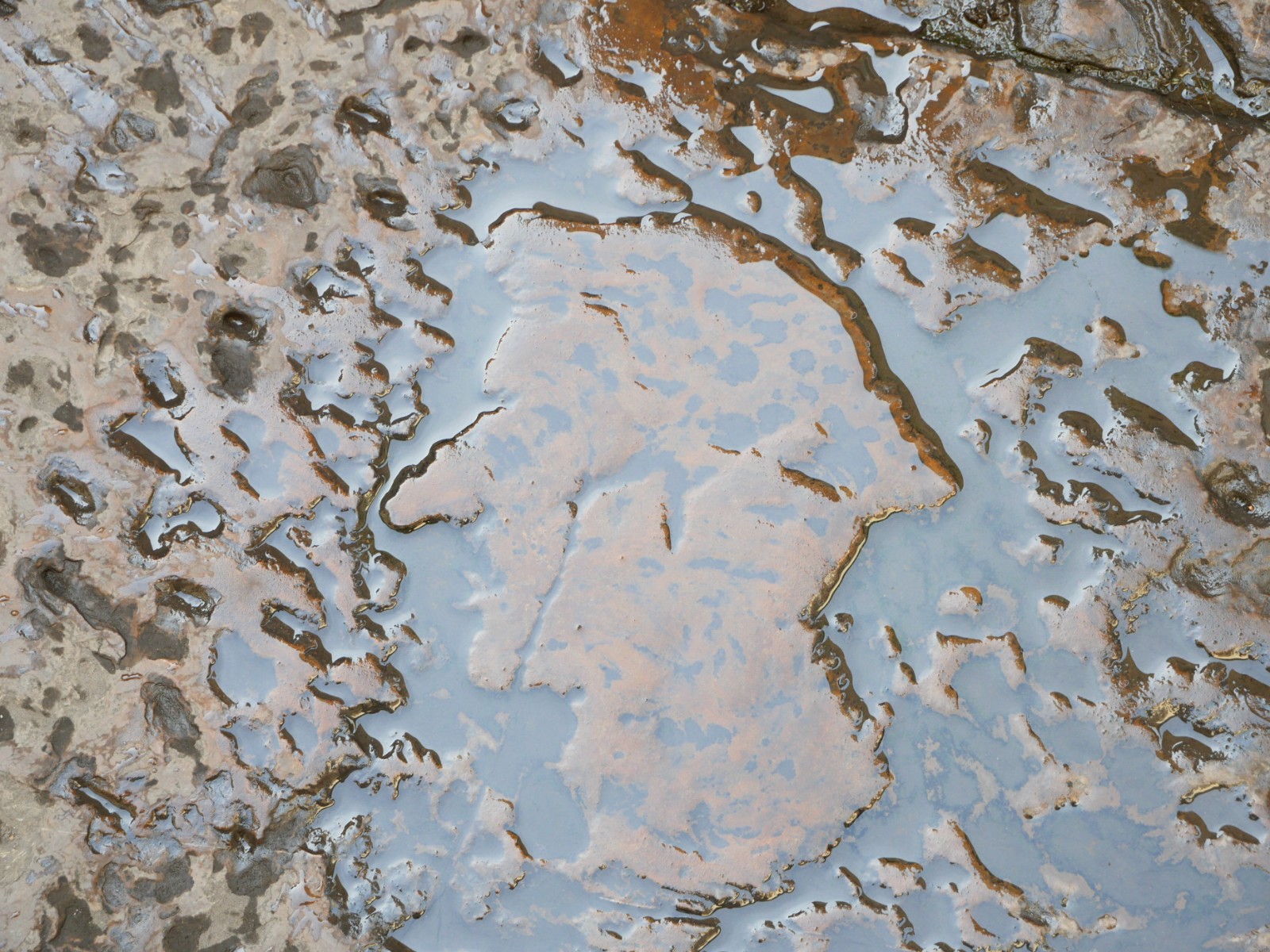
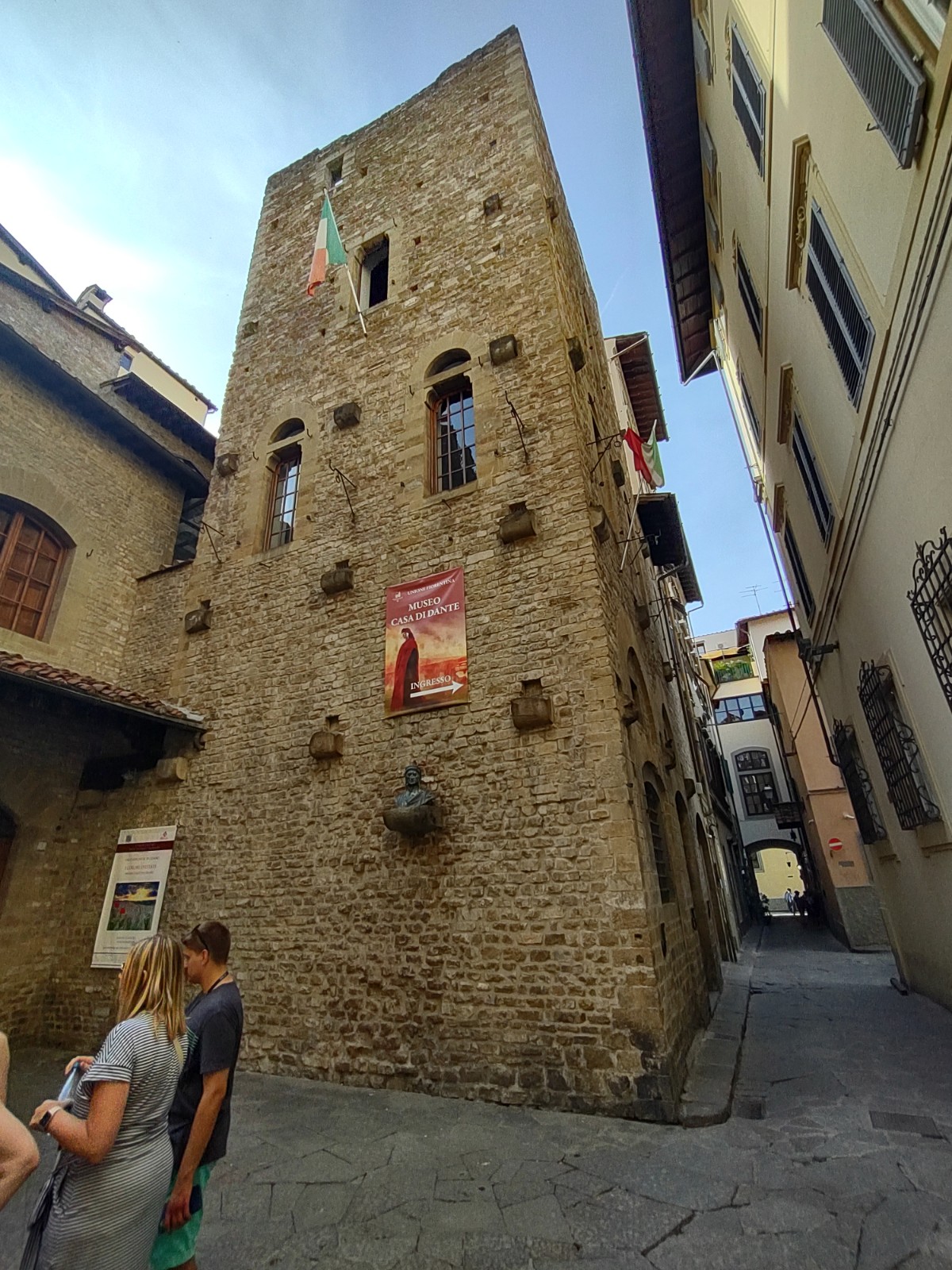
One of the more interesting things we saw during this tour was one of the remaining towers which served as strongholds for the sometimes-feudal families in pre-Renaissance Florence when much of what is now the city center was wooded or open land. These tall structures had no door or window openings at the first floor and were entered by way of a ladder which was pulled up when one feuding family decided to attack another. Nearby we passed what is purported to have been the home of the Alighieri family and the author Dante, another colorful figure from Florence’s historic past and our tour guide showed us a “magic” trick where Dante’s profile shows up when water is poured in a particular area of the paved square.
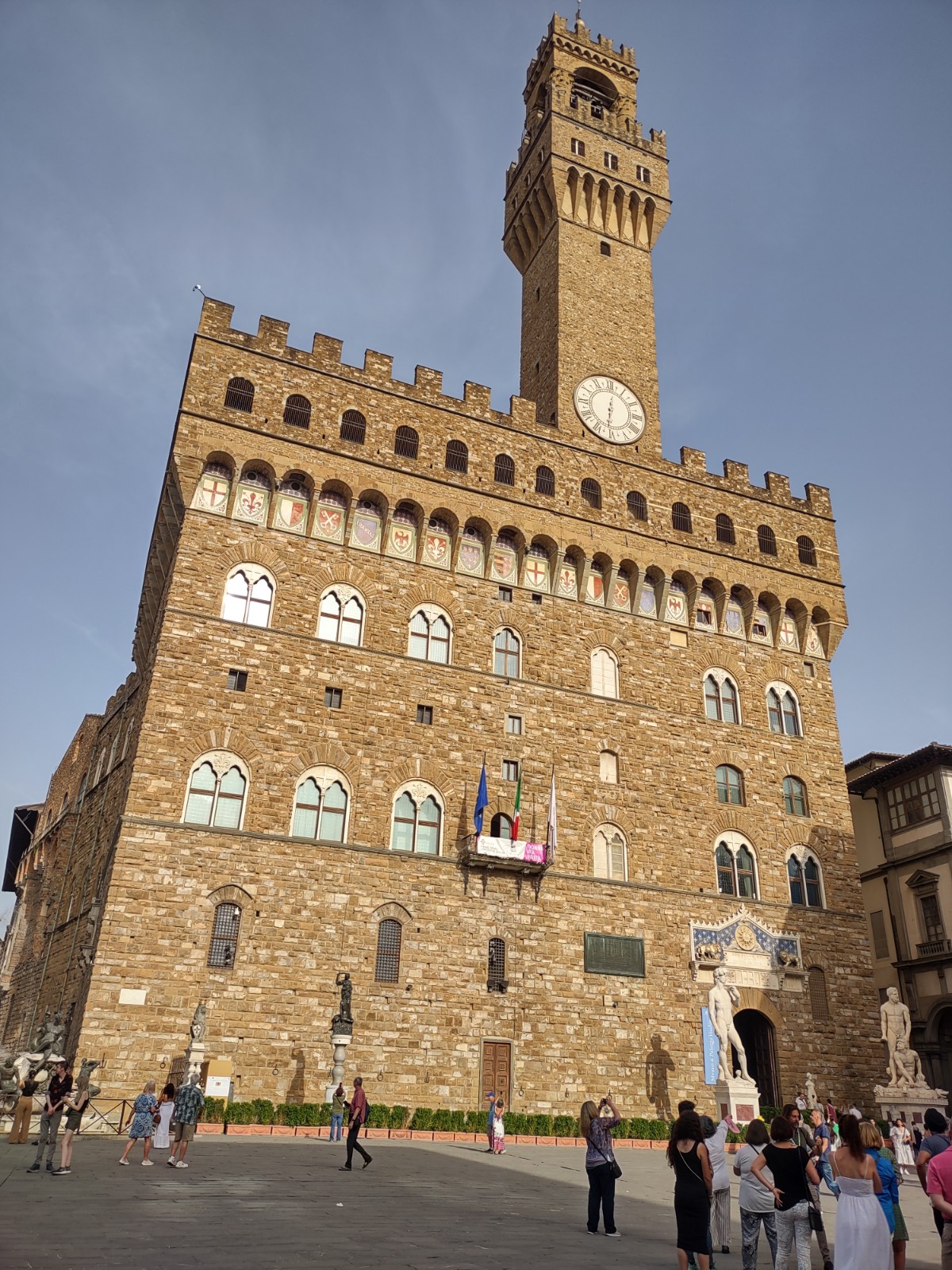
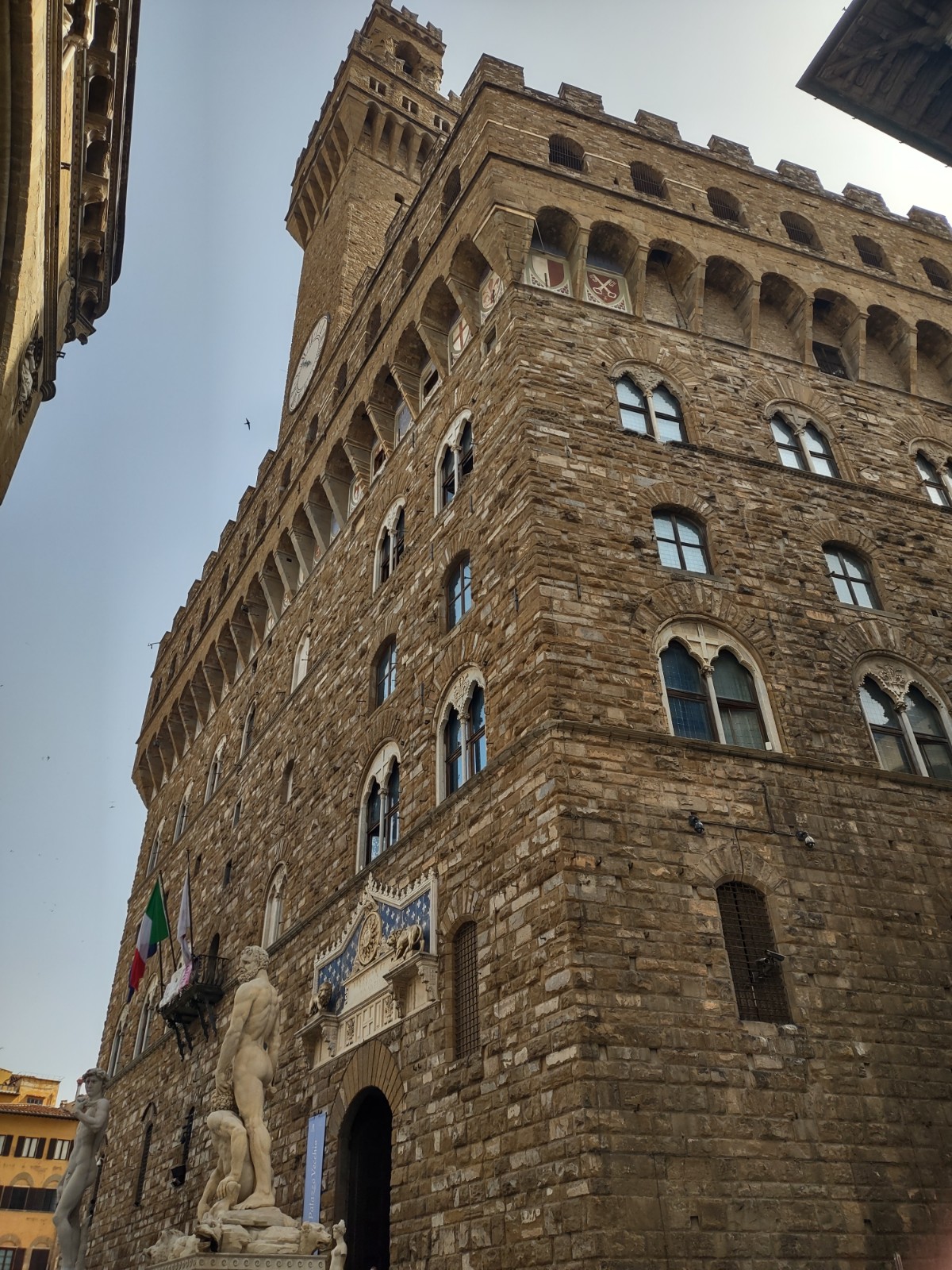
The tour finished in the Piazza della Signoria in front of the Palazzo Vecchio, meeting place for the Signoria, which ruled Florence during the Renaissance years, with its signature façade and tower which can be seen from high points across the city. The Piazza contains a number of historic sculptures, including a David by Michelangelo, two pieces by Donatello, and an equestrian monument of Cosimo I de’ Medici. This plaza is sort of infamous for being the site for various executions over the years including the hanging of some Pazzi family members and over 75 others after their failed attempt to murder Lorenzo and Giuliano Medici (Giuliano actually did die) and seize control of Florence away from the Medici in 1478.


So (guilty confession), we were so taken by all of these stories of intrigue, deception, and murder (without even bringing Machiavelli into it), that while we were in Florence we tracked down and watched the first season of the Medici TV series (originally an Italian production by since syndicated) which, due to so many of the same characters, at times felt kind of like a spaghetti western Game of Thrones. Production value aside, it was actually pretty cool to be in Florence, watching a series where we had walked through many of the location scenes, and it really did add something to the historic flavor of it, dramatized or not. We have yet to watch seasons 2 or 3, but who knows, maybe we’ll get bored enough at some point…
Uffizi Gallery
Other than a lunch reservation we’ll talk about in a bit, the only other event which Colleen had booked in advance of our arrival in Florence was a visit to the Uffizi Gallery, which is probably the hottest ticket in town, with the possible exception of the Academia Gallery (where Michelangelo’s best-known David resides). Tough call but, in the end, Botticelli won out over Michelangelo (who does have other pieces at the Uffizi) and we decided to at least start with that.
As with so many of the places in Florence, the building which houses the Uffizi Gallery has an interesting history of its own. Located across from the Palazzo Vecchio and adjoining the Piazza Signoria, the Uffizi complex was commissioned by none other than Cosimo I de’ Medici in order to consolidate the offices of the various guilds, agencies, and committees he controlled (thus the name Uffizi which means “offices”) and was completed in 1581 by Francesco de’ Medici then the Grand Duke of Tuscany and officially opened to the public in 1769. Over the centuries it has been expanded and modified, including the construction of a bridge to the Palazzo Vecchio and private passageway (the Vasari Corridor) which extends over the Ponte Vecchio connecting the Palazzo Vecchio with the Piti Palace so that the Medici could travel back and forth between the two without ever having to set foot on the ground.

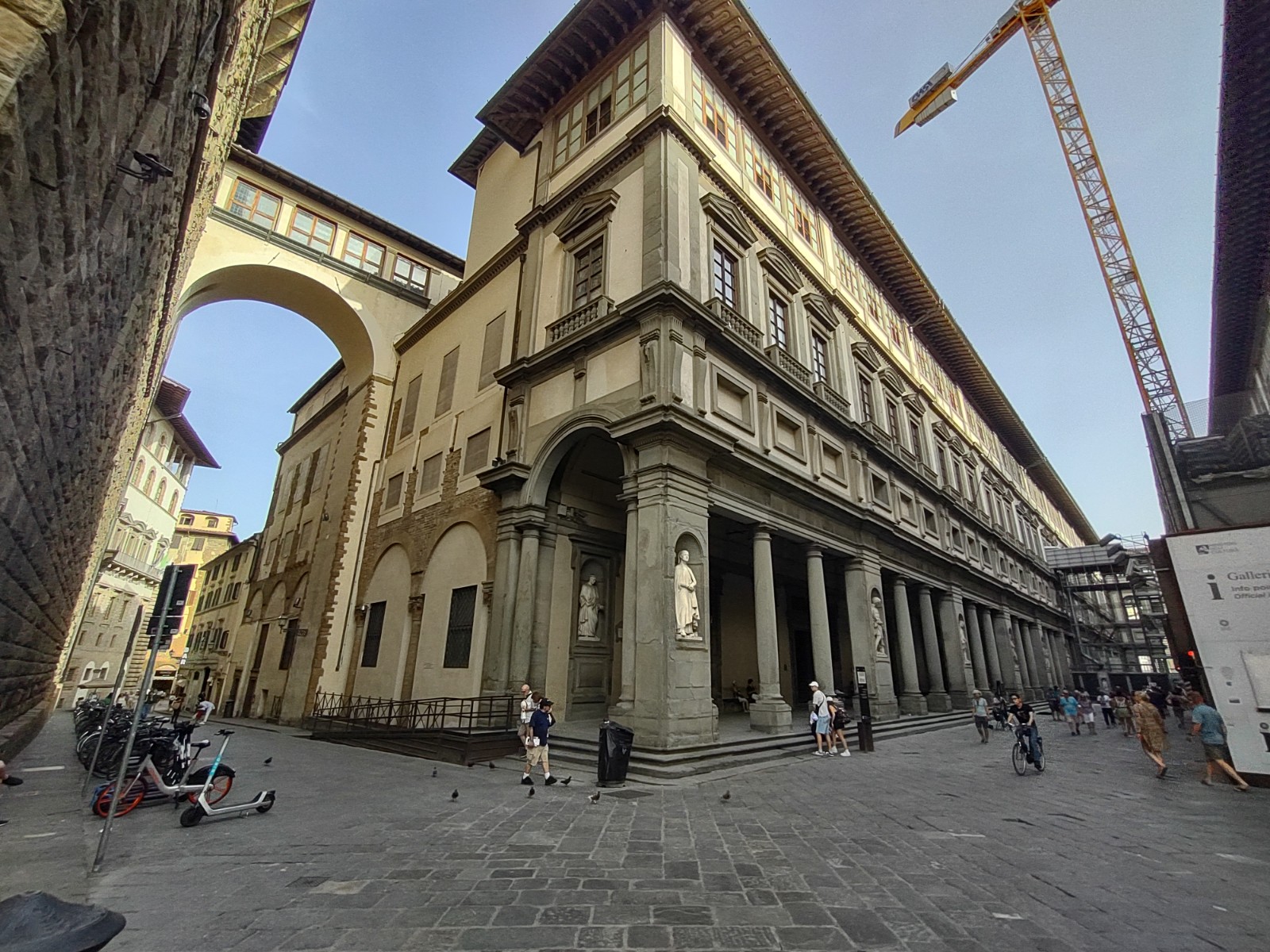
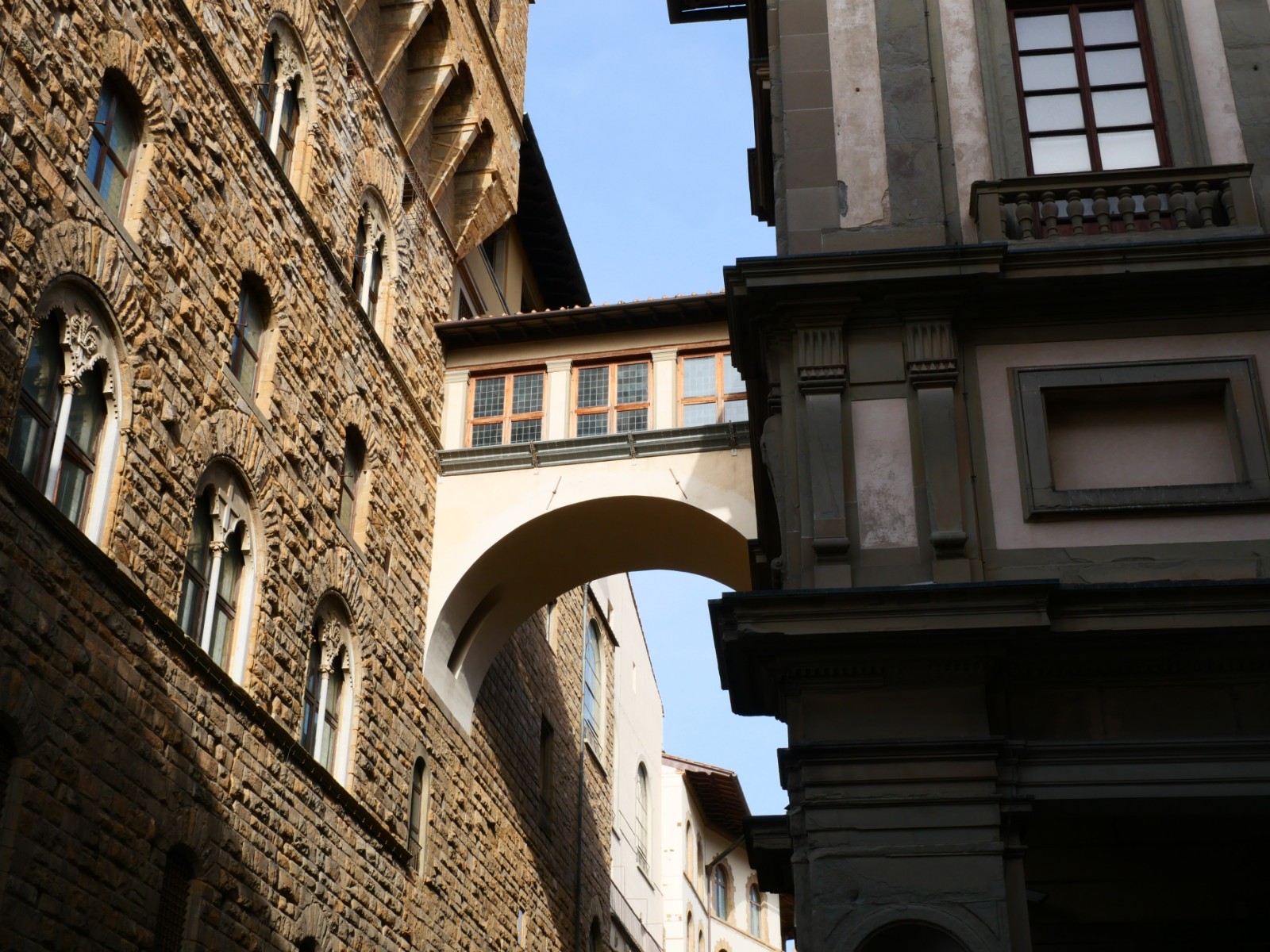

The building was originally designed with office space on the ground floor and exhibition space for some of the Medici art work on the first floor and, over time, as the collection grew, more space was added and renovated to display the collection of art. The museum is large, but pretty well organized with two very long corridor-galleries, joined at one end to form a “U”, with side galleries and exhibition halls on either side most of which are well decorated with beautiful tile and plaster work and some amazing hand-painted ceilings in the style of the time. The corridor-gallery which forms the bottom of the “U” has huge windows providing fantastic views south across the Arno past the Ponte Vecchio to the Piti Palace, Boboli Gardens, and Pizzetta de Michelangelo.
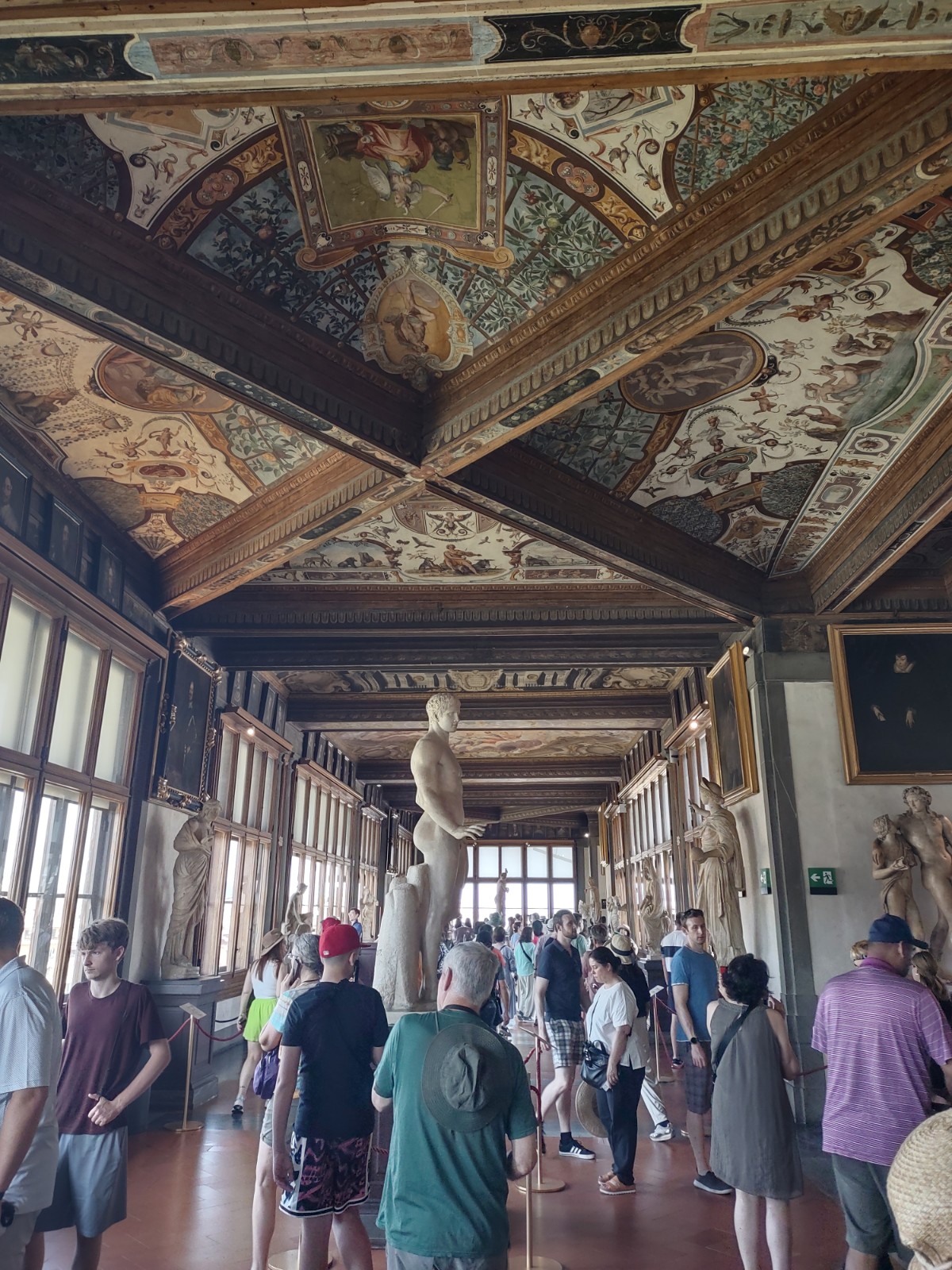

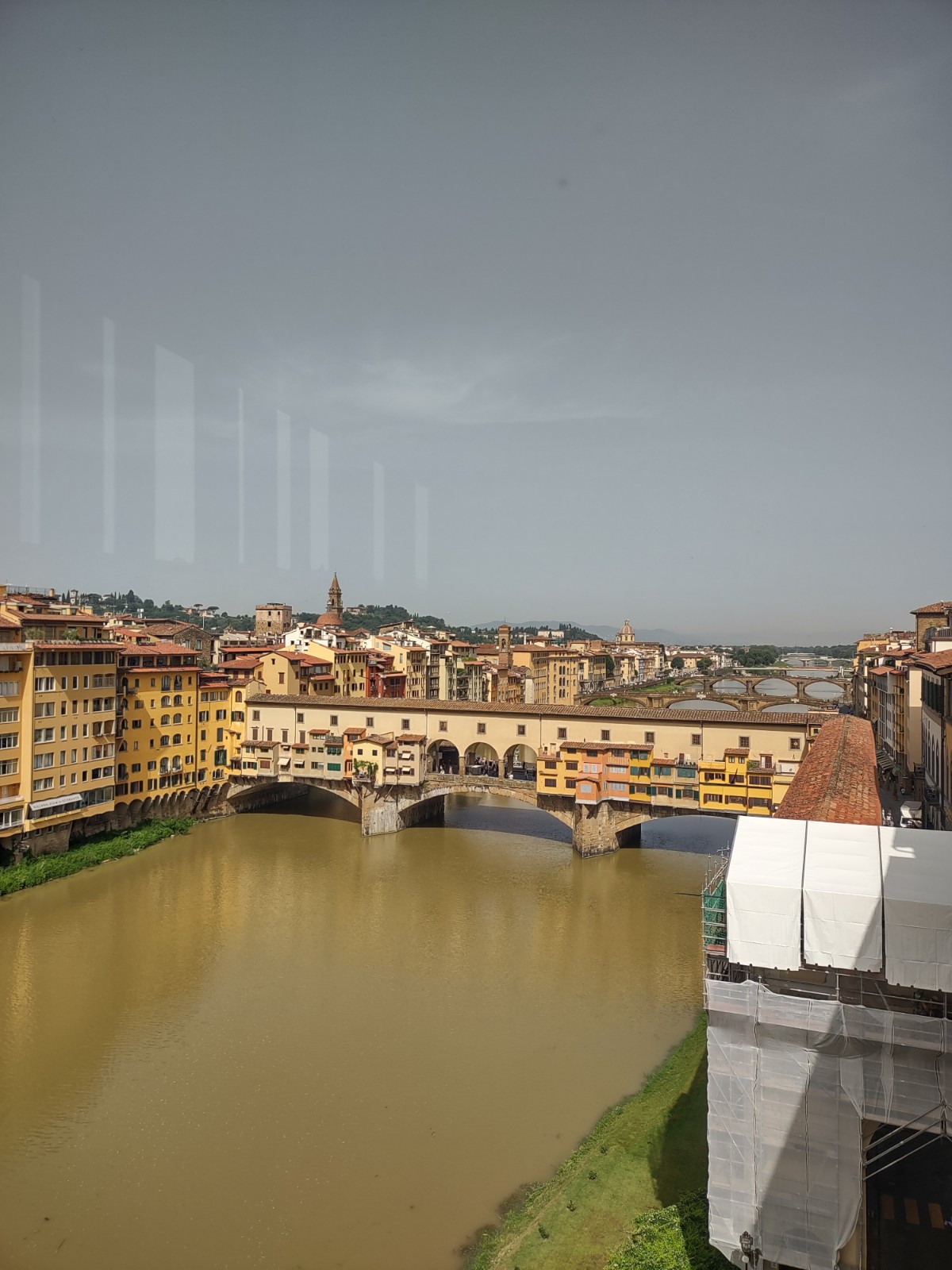
For the most part, the corridor-galleries house statuary and sculpture while the side galleries display paintings, but the building itself is a work of art with decorative plasterwork beautiful painted ceilings throughout.

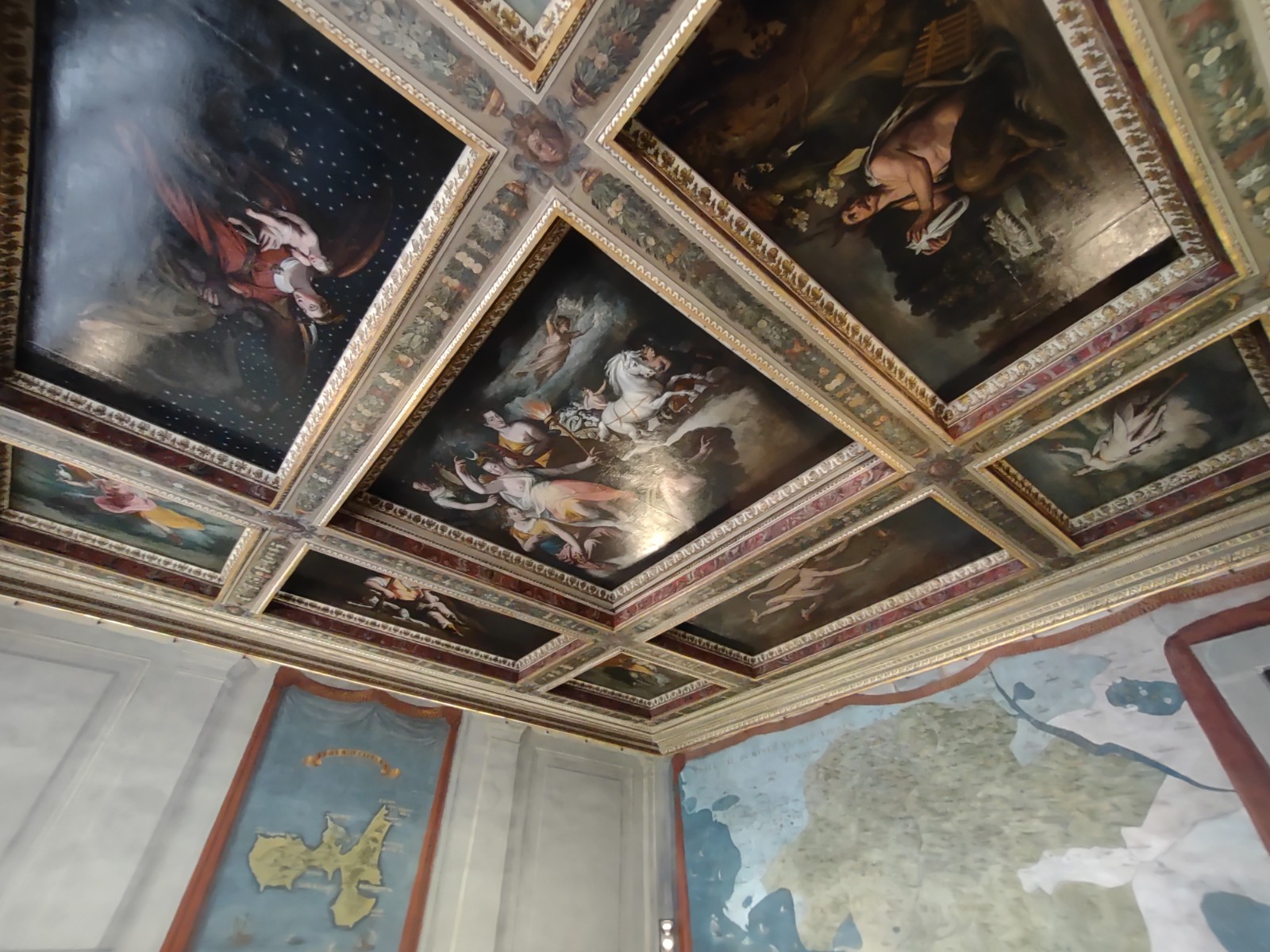
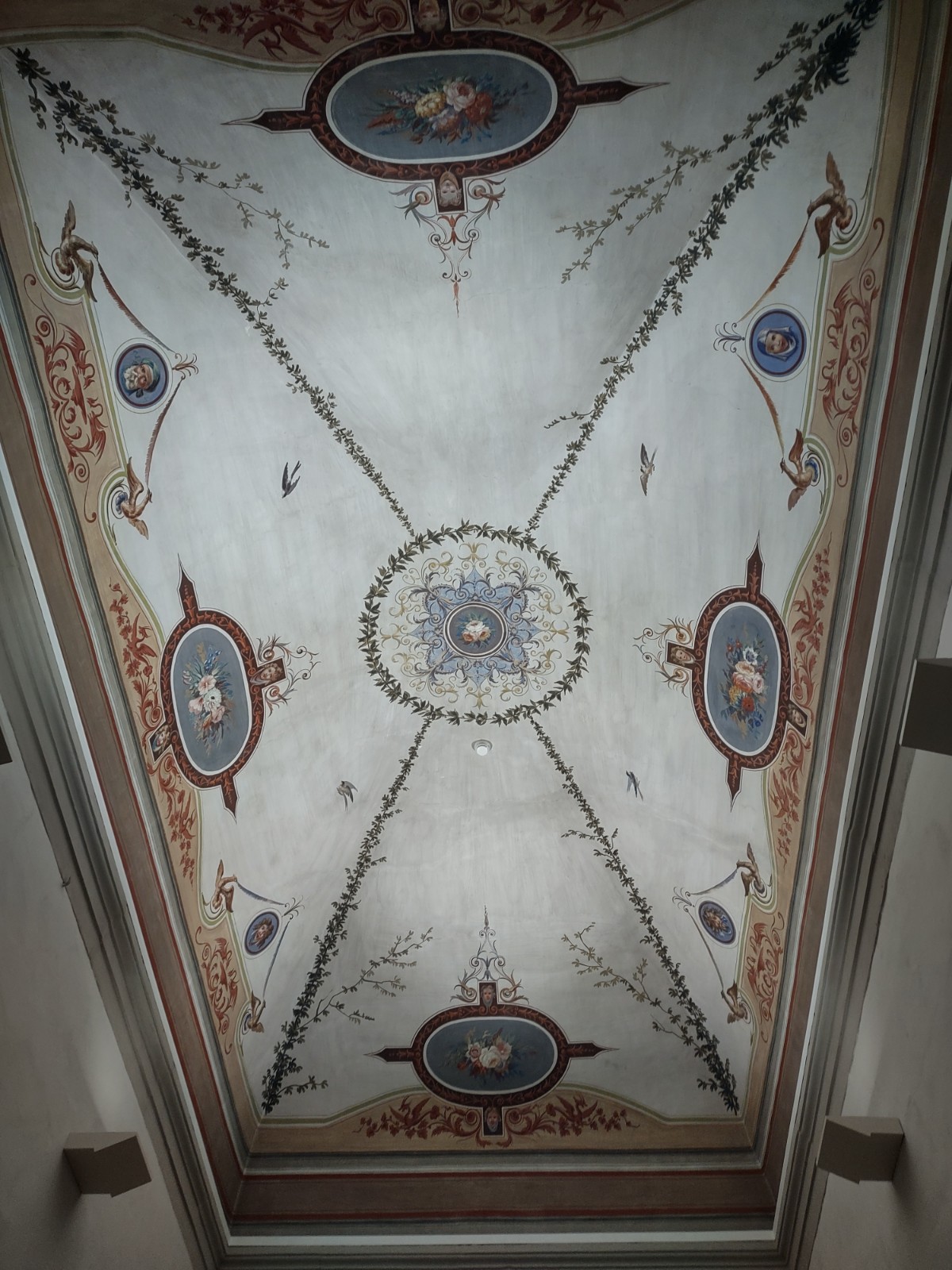


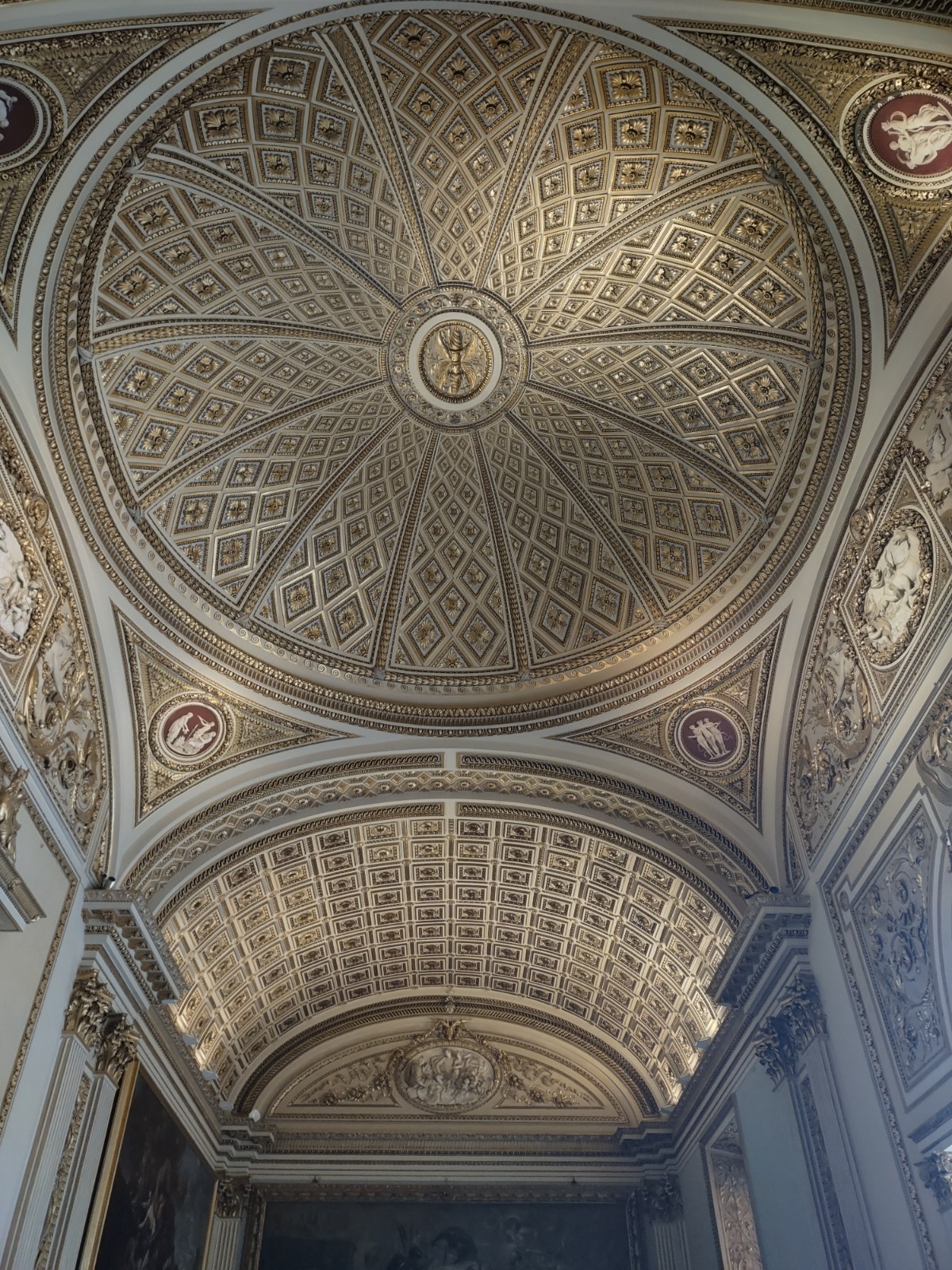
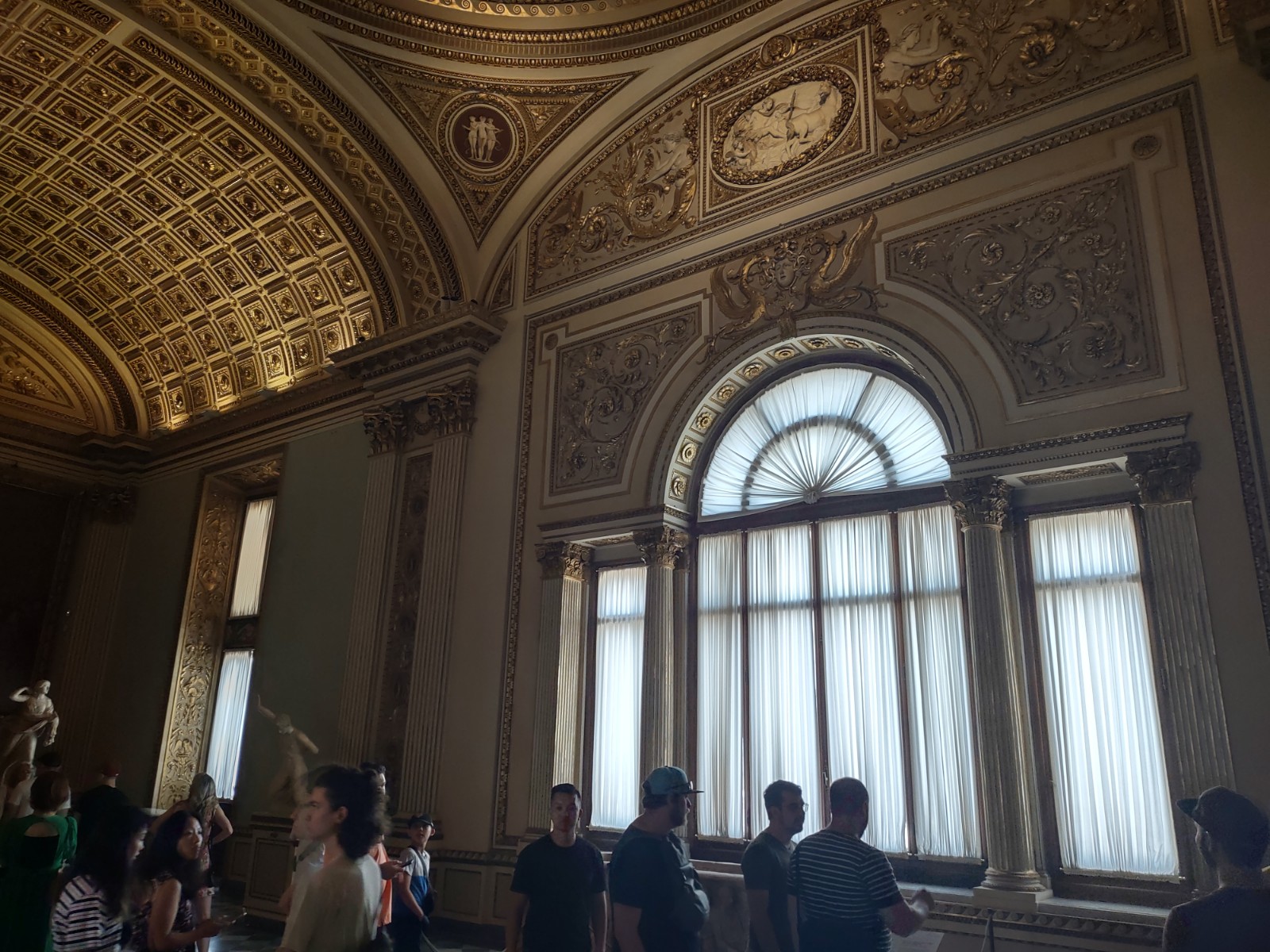
We had booked the first time slot of the day but it was already getting crowded as we made our way through the most extensive collection of Roman statuary we had ever seen. (As someone told us, “Now thatsa lotta butts!) We wove in an out of the side galleries which held a huge number of beautiful paintings, including works by Michelangelo, Da Vinci, Caravaggio, and Boticcelli (which was what we were most interested in seeing) as well as a large collection of renaissance portraits (largest in the world?) which featured quite a few Medici.
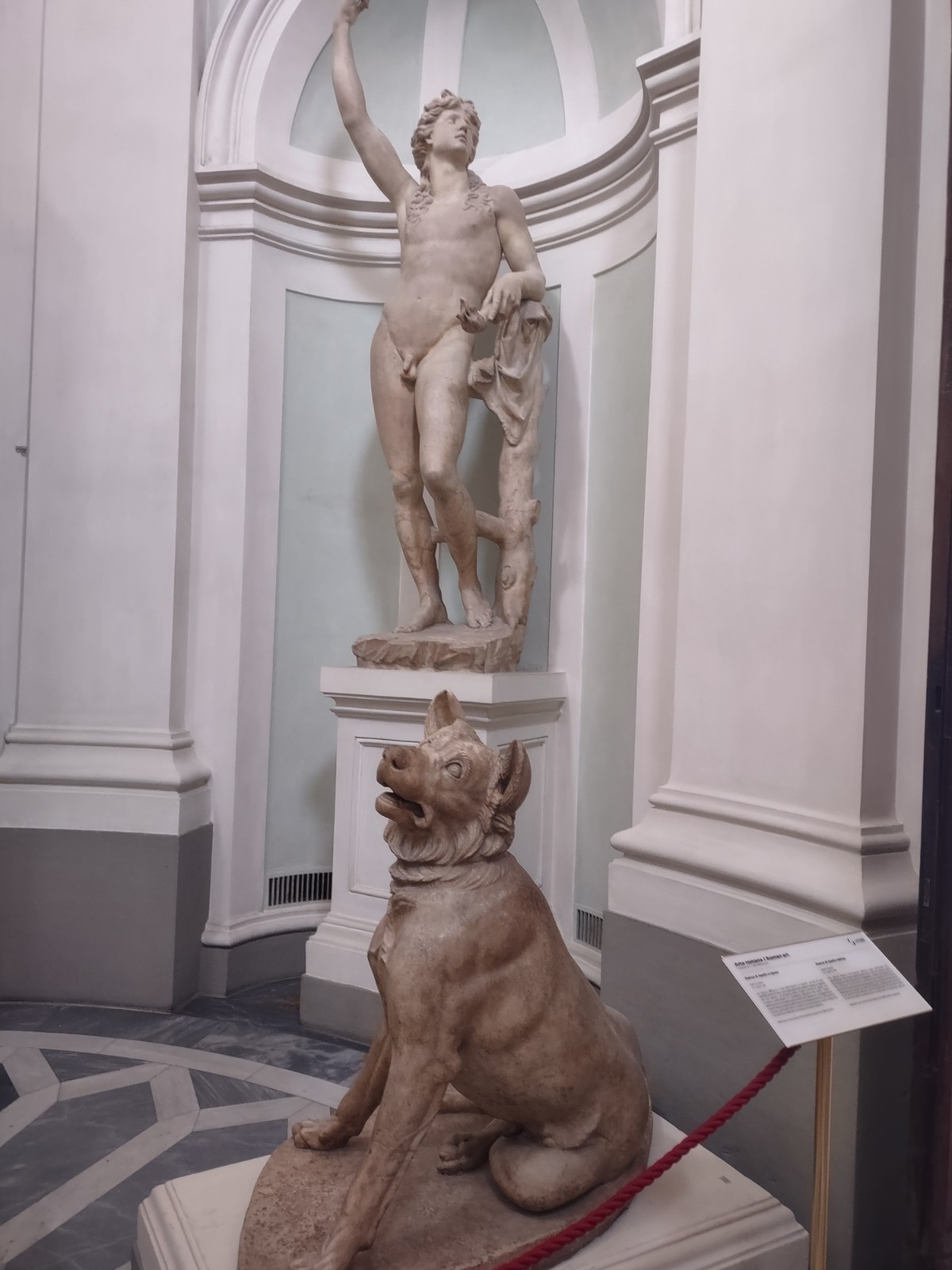

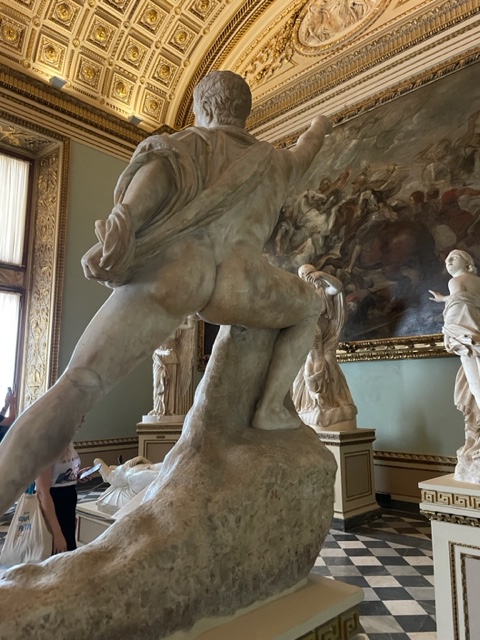
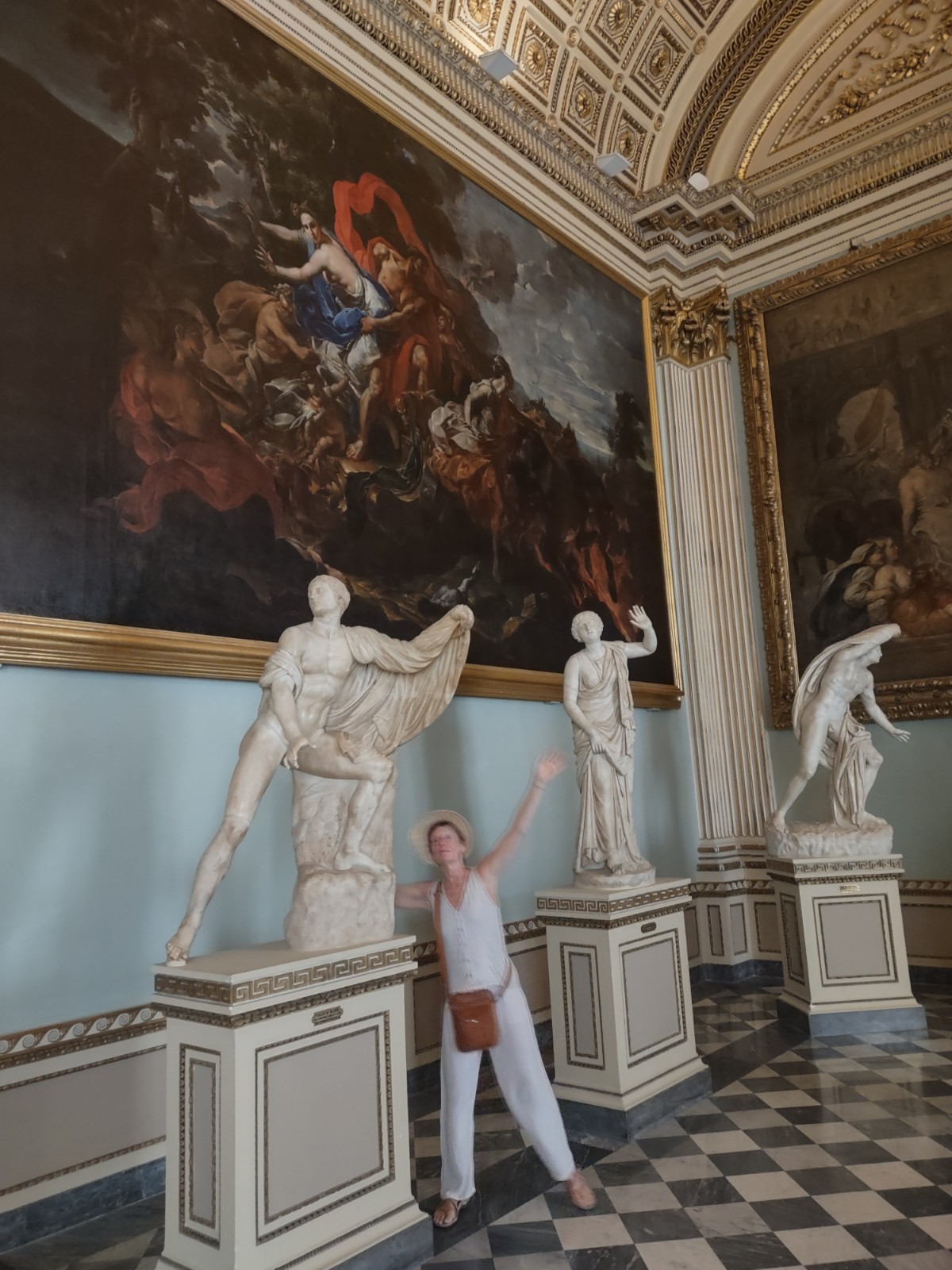
Every now and then, we would turn a corner and find ourselves in front of an amazing piece by one of these Masters of the Renaissance. It’s surprising how sometimes seeing the actual painting can have such a dramatically greater effect than a photo, perhaps because you can actually interact with the painting moving in and out and around it, being able to see the brush work, appreciate its actual size, all that. There’s something particularly intriguing for me about these Renaissance paintings which were done at a time when techniques like foreshortening and perspective were just coming into practice. Compared to the super realism possible with imaging technology today, these paintings might seem crude in some ways, but their use of light and highlight, shadow and shade, to create dramatic effect and evoke emotion is pretty amazing to me and I found this to be particularly the case in the work of Botticelli, which features prominently in the Uffizi’s collection.
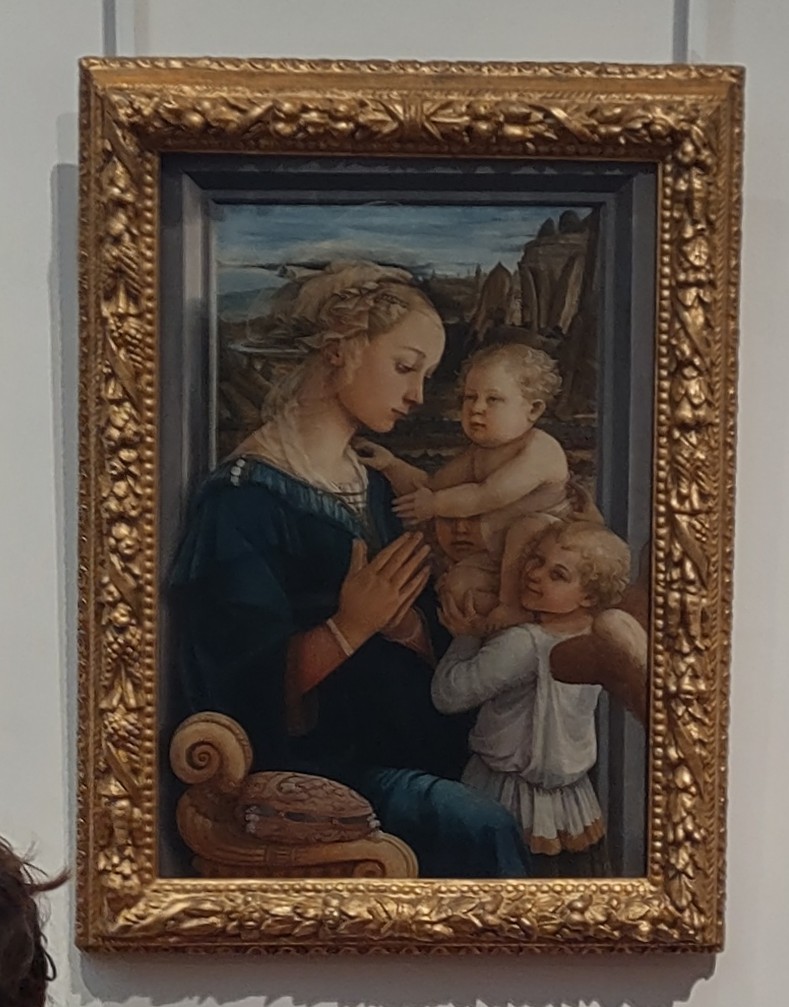
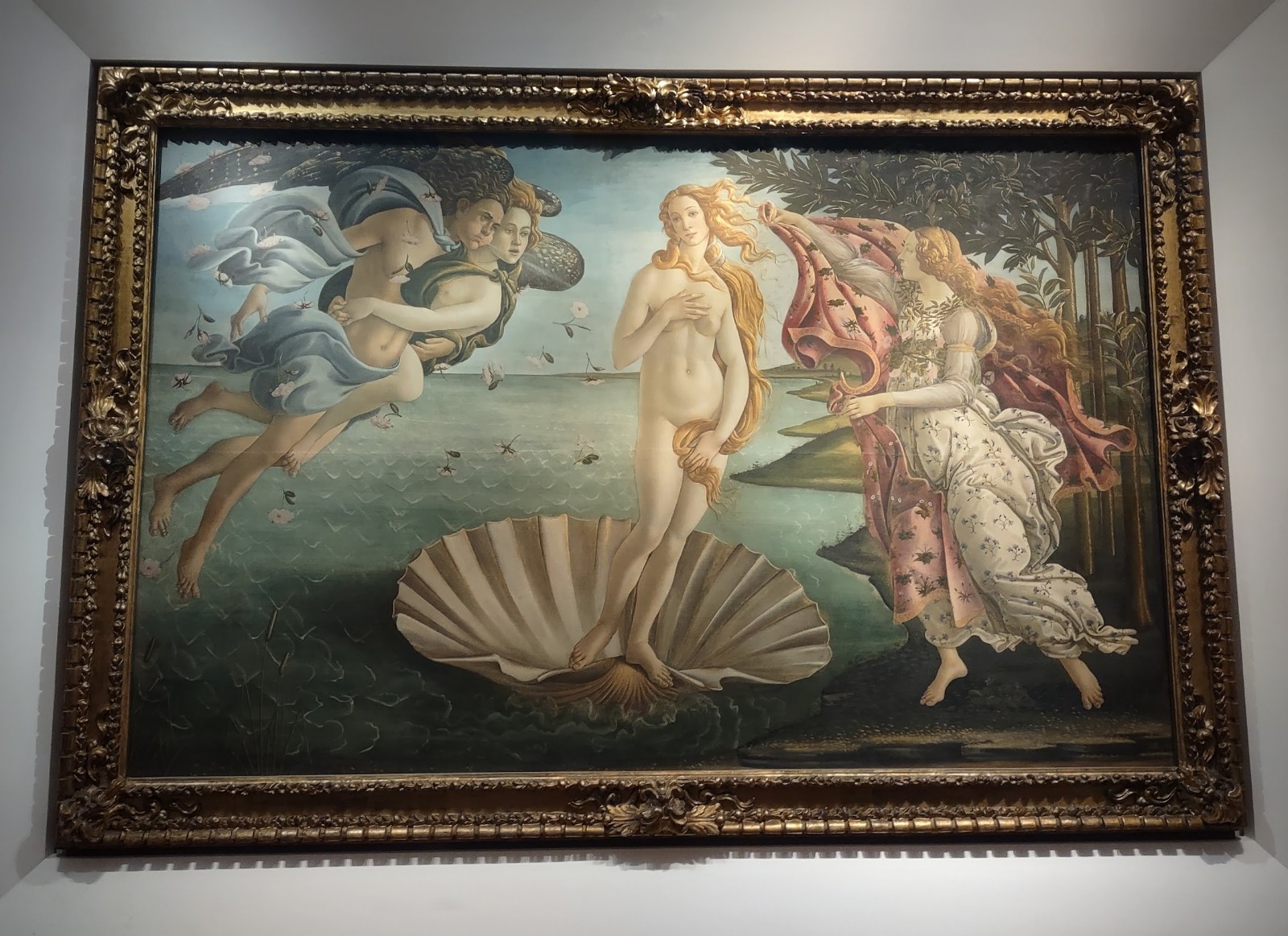
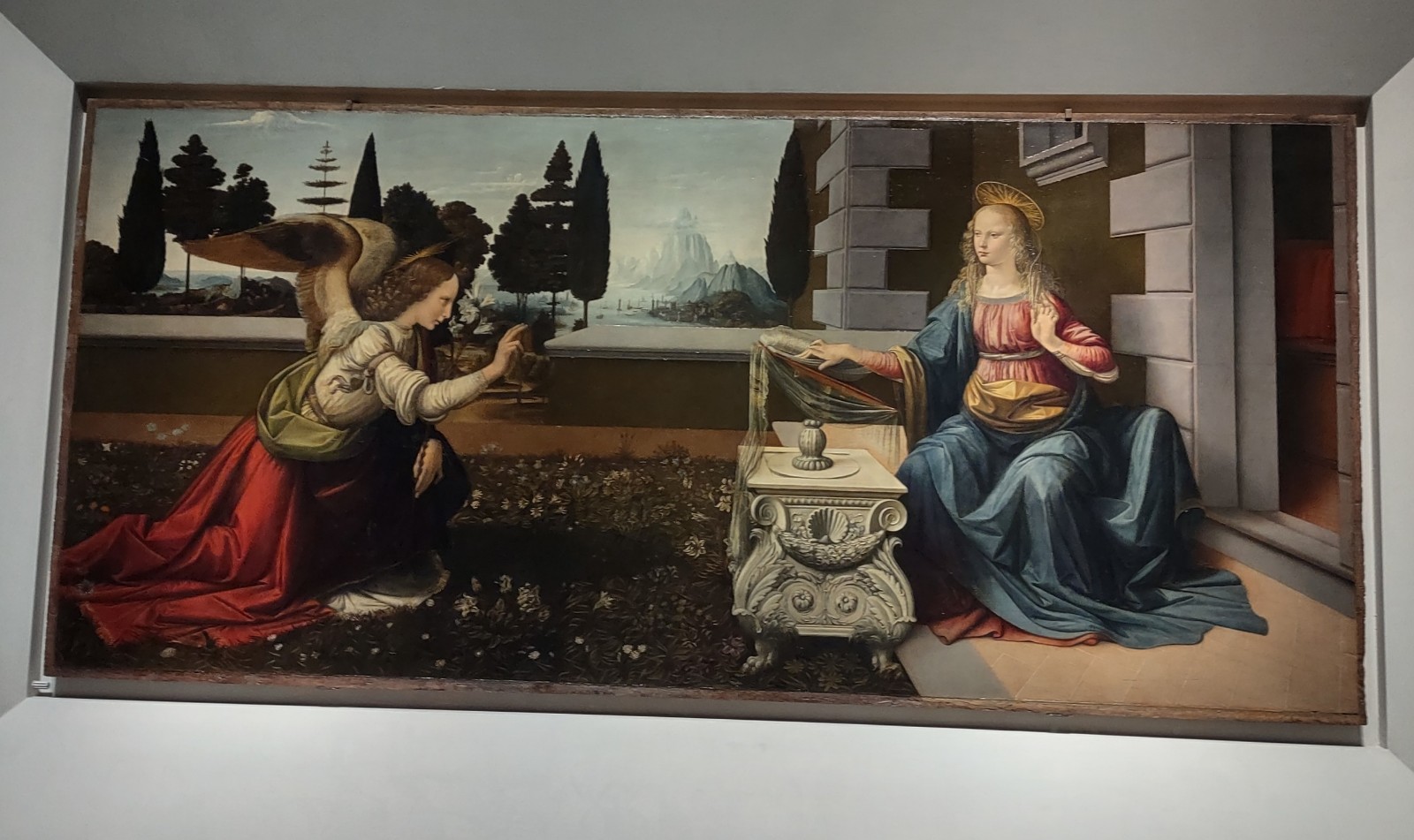
It’s a large museum with a very large, very beautiful collection, but it is well organized and manageable. We made it around, saw what we really wanted to see, and even stopped to admire the view across the River Arno, in well under 4 hours feeling pretty artistically sated.
Shopping in Florence
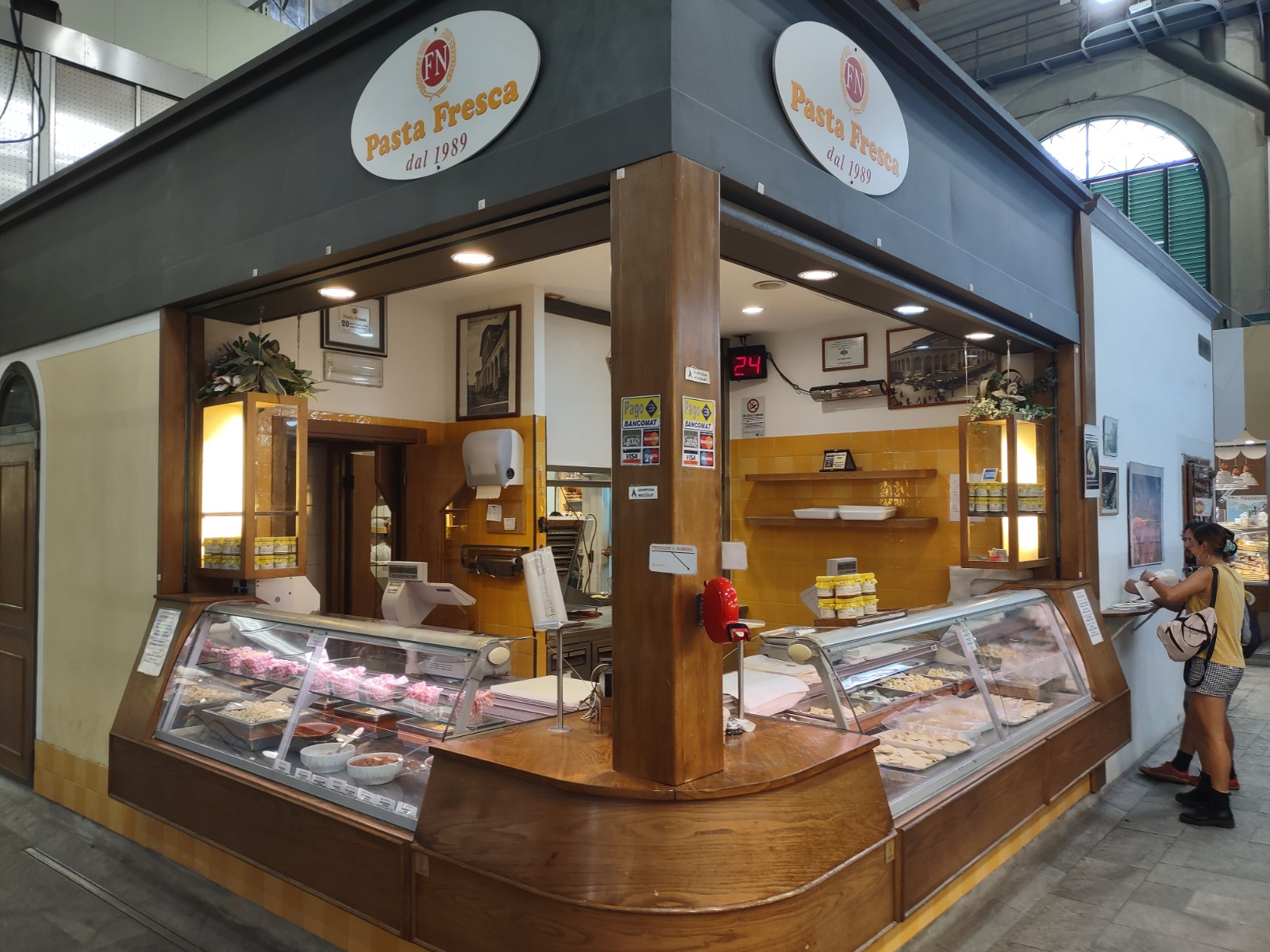
Feeling like we had been reasonably well versed both historically and artistically at this point, we planned on balancing our karma with something a bit more materialistic and followed our tour of the Uffizi Gallery with what became a bit of a Market Marathon with visits to several of Florence’s traditional market places. Our first stop was at the Mercato di Sant’Ambrogio, Florence’s oldest market, which is located east of the center in Santa Croce and has been selling fresh fruits, vegetables and specialty foods (like fresh pasta, which was what we came for) since 1873.
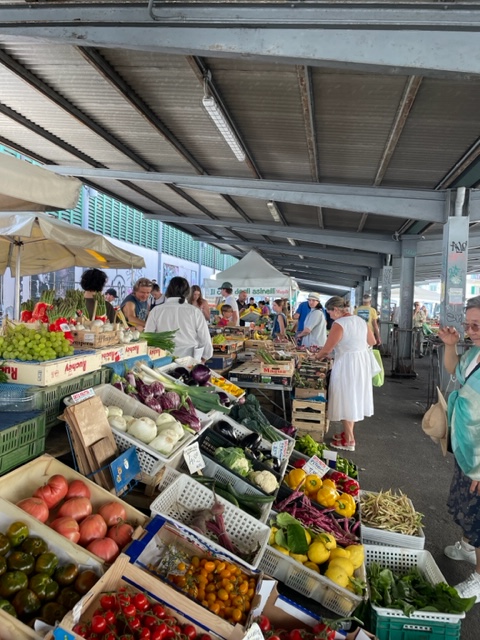

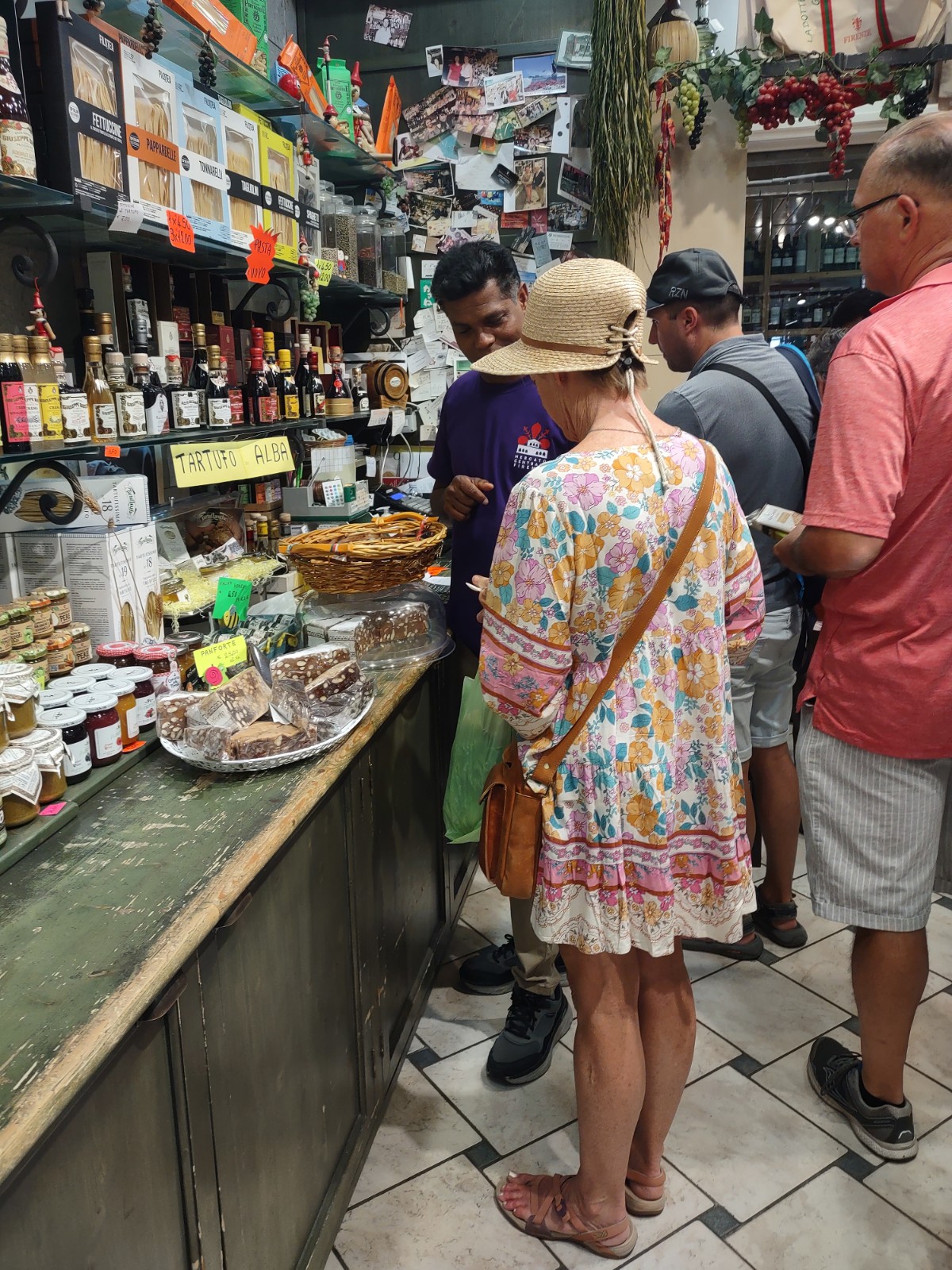
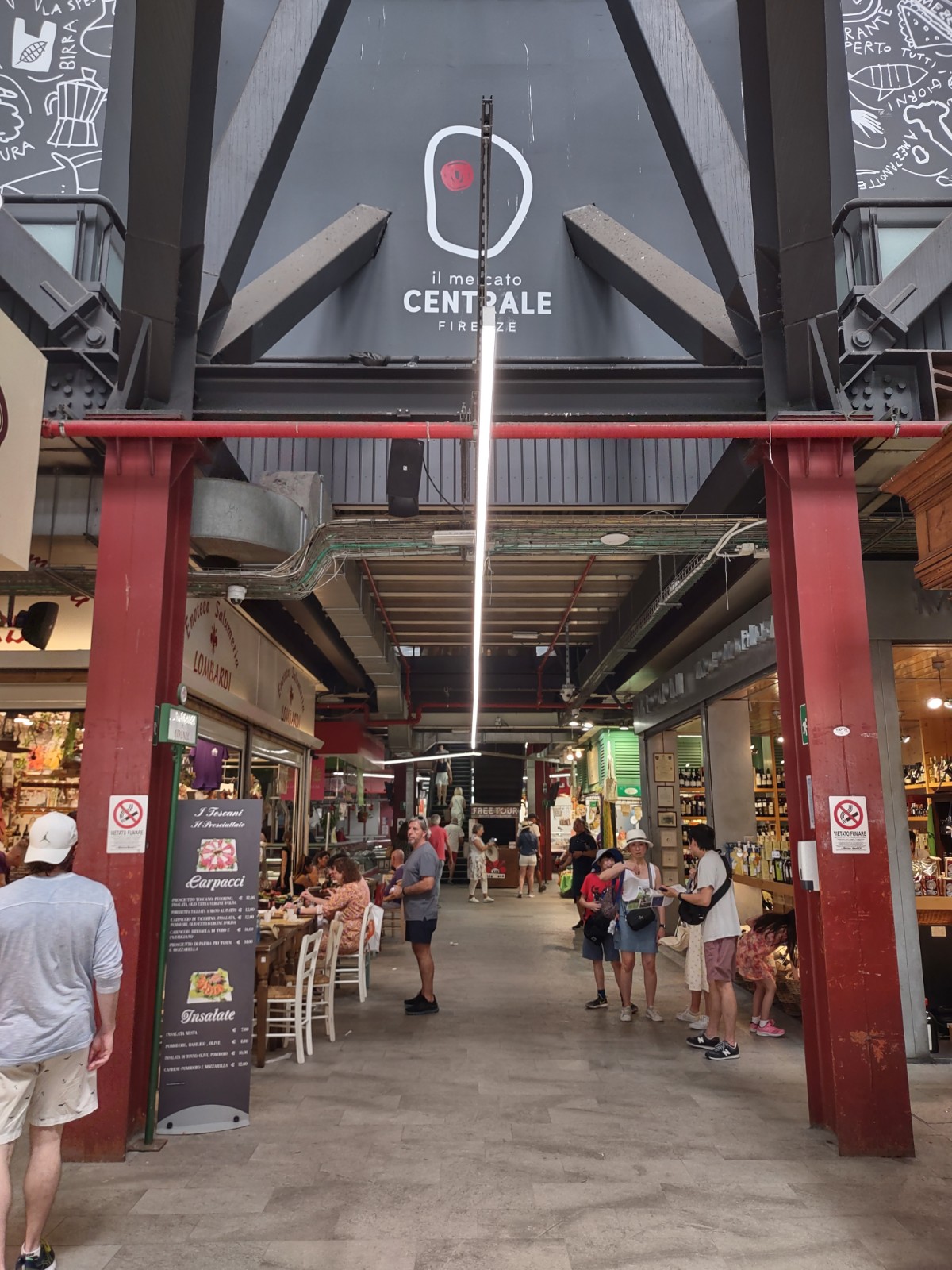
From there, we went to the Mercato Centrale, which is located just a couple of blocks north of San Lorenzo, a large indoor market and food court where we learned quite a bit more about Italian honey than we thought possible from a very knowledgeable vendor. The piazza and streets surrounding the Mercato Centrale, which were quite crowded, are lined with vendor stalls selling leather and linen goods as well as a variety of more touristic items. We considered stopping for lunch but decided to move on in the hope of finding somewhere a bit quieter (which we later did where we met and had a nice conversation with a couple from Australia – see Food and Drink).

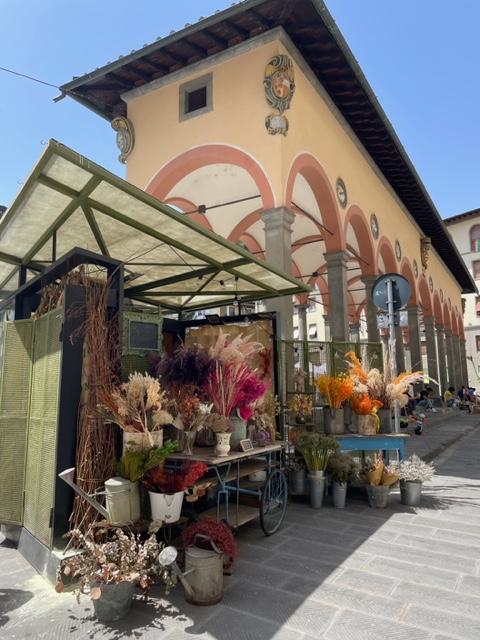
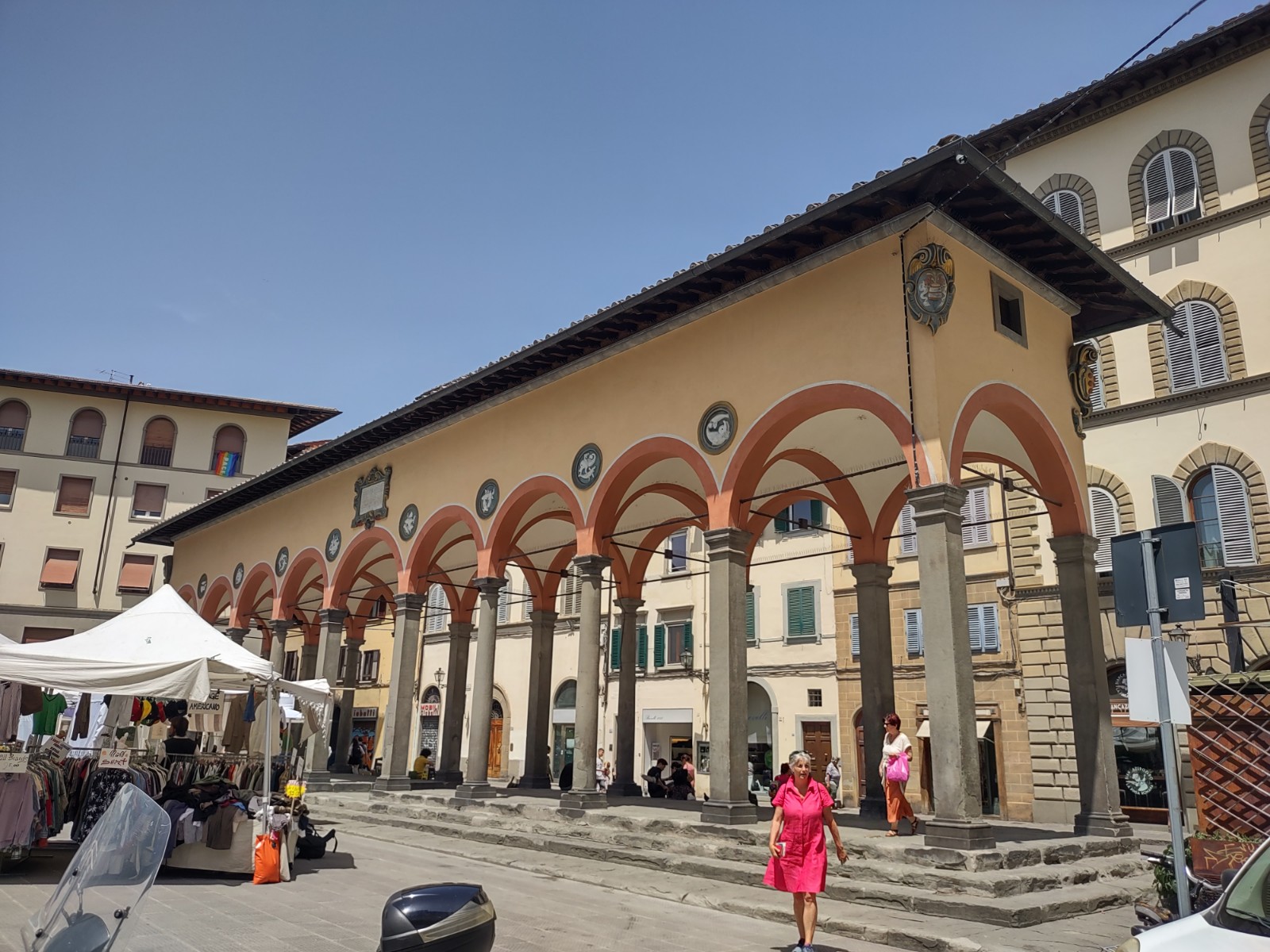
Along our meander between the two, we stumbled across the Loggia del Pesce and the adjoining Piazza dei Chiompi, a structure which was commissioned by (you guessed it!) Cosimo I de’ Medici, to replace the original fish market near the Ponte Vecchio, which was displaced by construction of the Vasari Corridor. Oddly enough, the Loggia was dismantled and put into storage during a major urban renovation of Florence in the late 19th century and only fairly recently reconstructed (1956) in the Piazza dei Chiompi, mostly from original materials. The Loggio provides a nice backdrop and shade for the small craft market in the Piazza which was a bit more Etsy than the one at the Mercato Centrale.
After a lunch break, the final stop in our Market Marathon was the Mercato del Porcellino, a small market Ritchard had selected which happened to be on the way back to our place in Santo Spirito. Ritchard’s interest in this particular market was less about its goods and more about a particular fountain located there from which the market derives its name (literally, the Market of the Little Pig). The little pig in question is actually a bronze boar, a 17th century copy of a Roman era work which now resides in the Uffizi Gallery. Ritchard’s knowledge of and interest in this fountain is based on a scene from the 2001 Hannibal Lector movie set in Florence where Giancarlo Giannini, who plays a surviving Pazzi family member, washes blood from his hands and seals his fate. The market sits under a beautiful 16th century loggia and was originally intended to sell silk and other precious objects. Today there are some very nice leather shops there and, after a reasonable amount of window shopping, Colleen purchased a beautiful celery green shoulder bag.
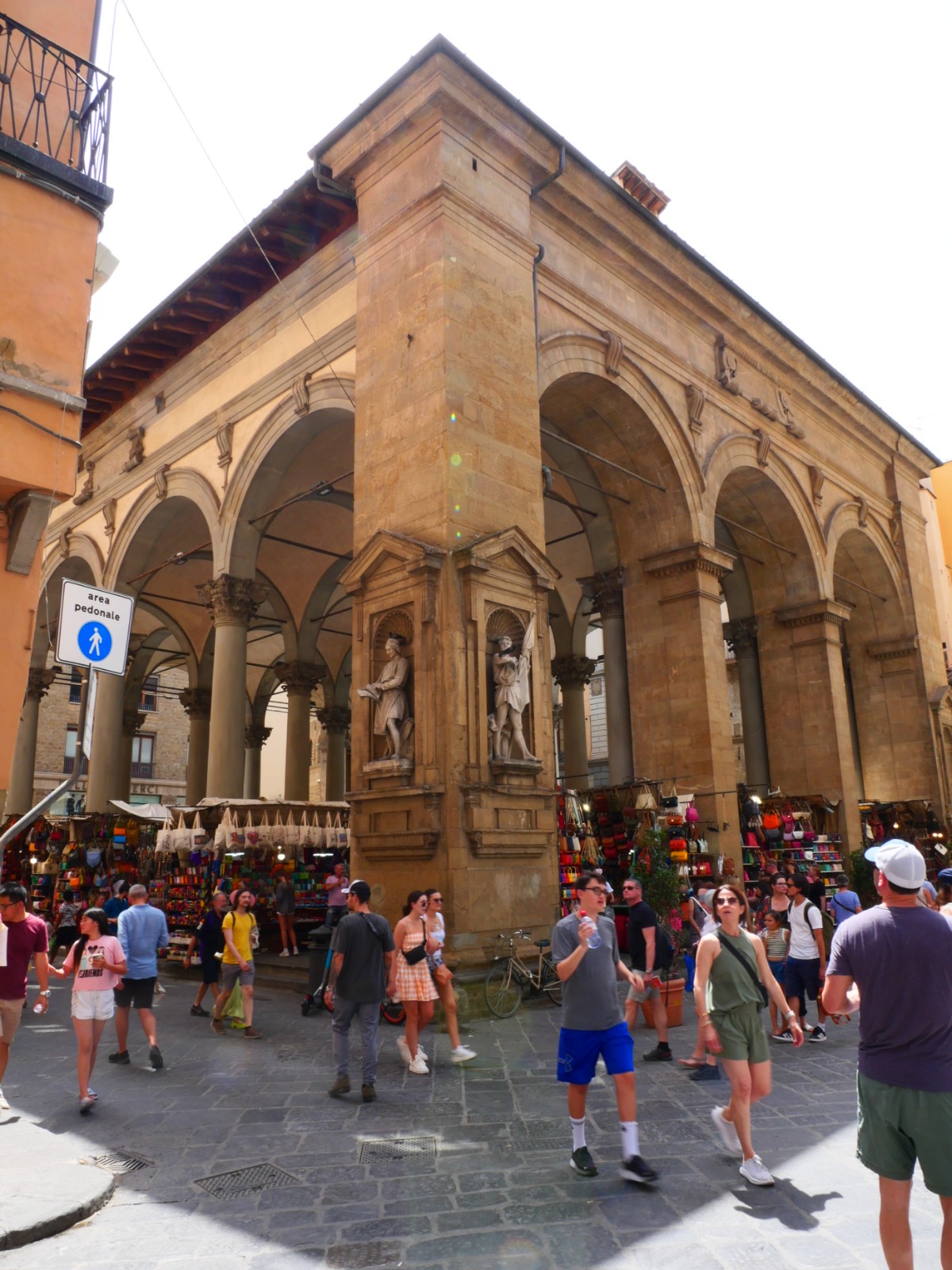
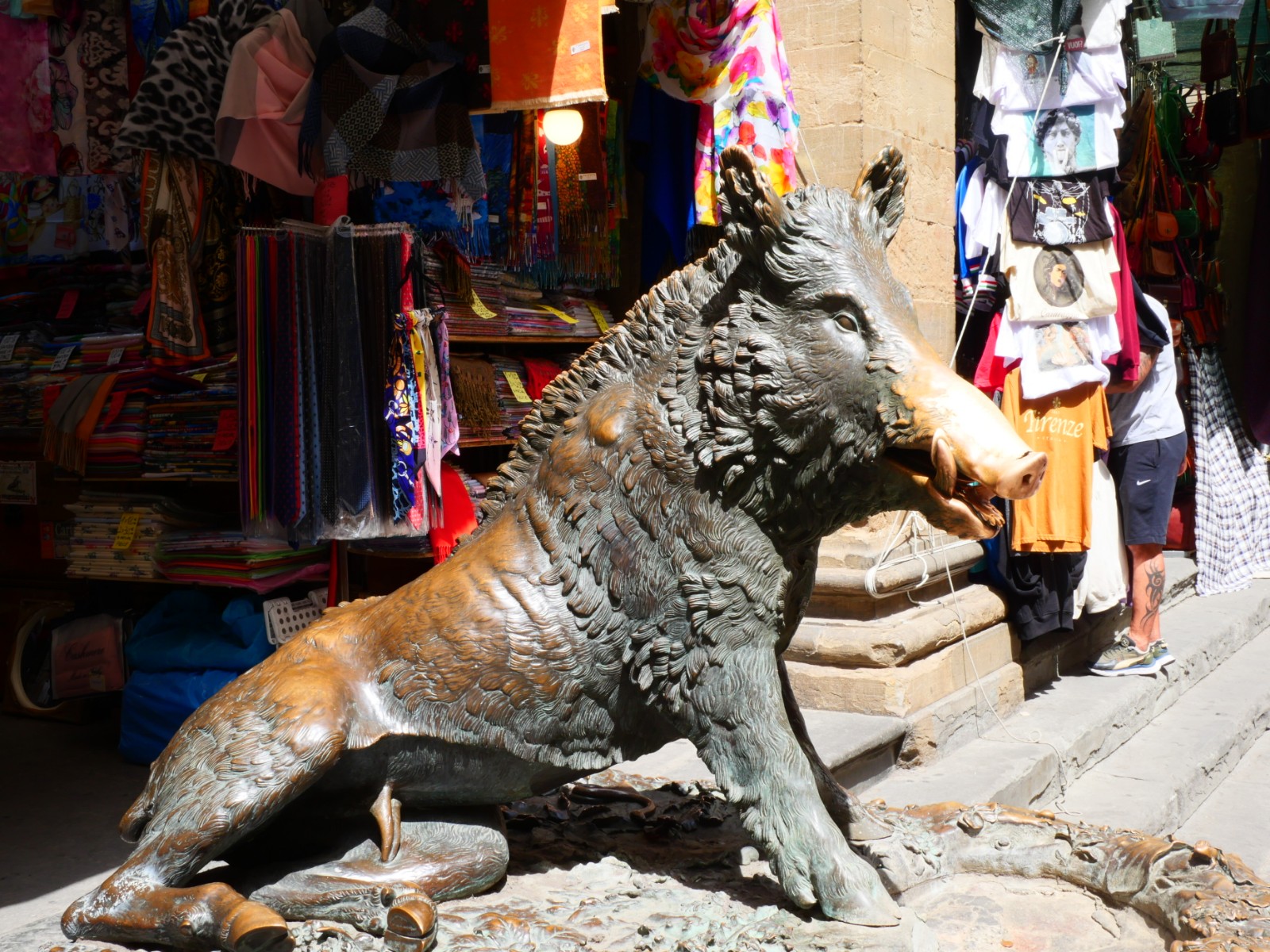
Beyond this one day Market Marathon, we did a lot of window shopping on the way from one place to the other, but remained gun shy about buying anything non-consumable with a flight to Israel looming in the not-to-distant future. As far as consumables go, Florence was a nice change from Morocco with real grocery stores and markets, great produce for cooking, and, maybe most especially, recognizable name brands.
Food and Drink in Florence
As we noted in a previous installment, while eating Moroccan food for a month was an interesting experience, we were really looking forward to getting back to Italy and its cuisine, and what better place to start than Florence? Although the kitchen in our apartment was a bit underequipped, we again committed to having breakfast and dinner at home as often as possible. Colleen did have some great ingredients to work with and prepared some great dinners which allowed us to splurge just a little bit on lunch and maybe a coffee or cocktail in the afternoon and we found some pretty good places to do this.
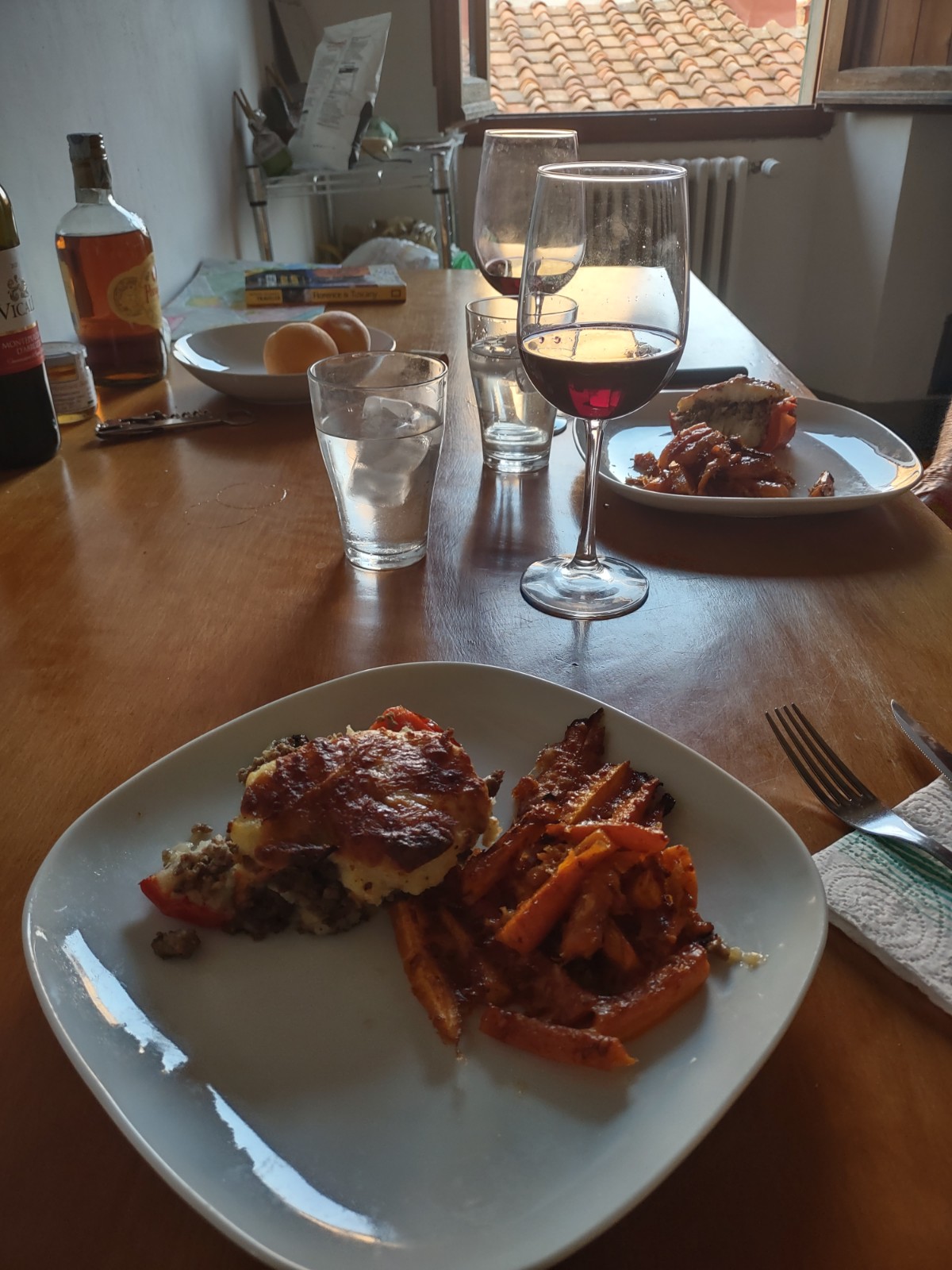

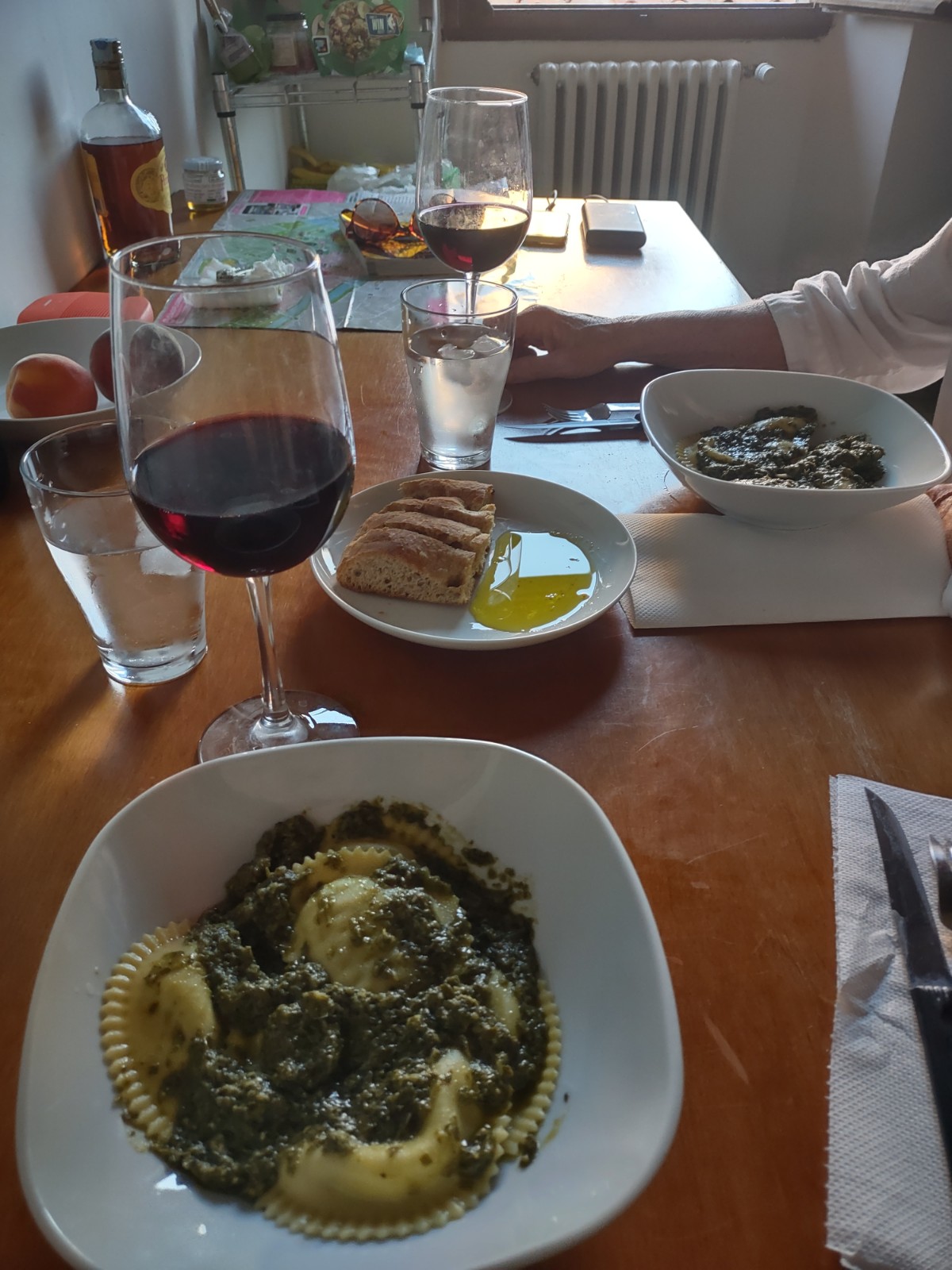
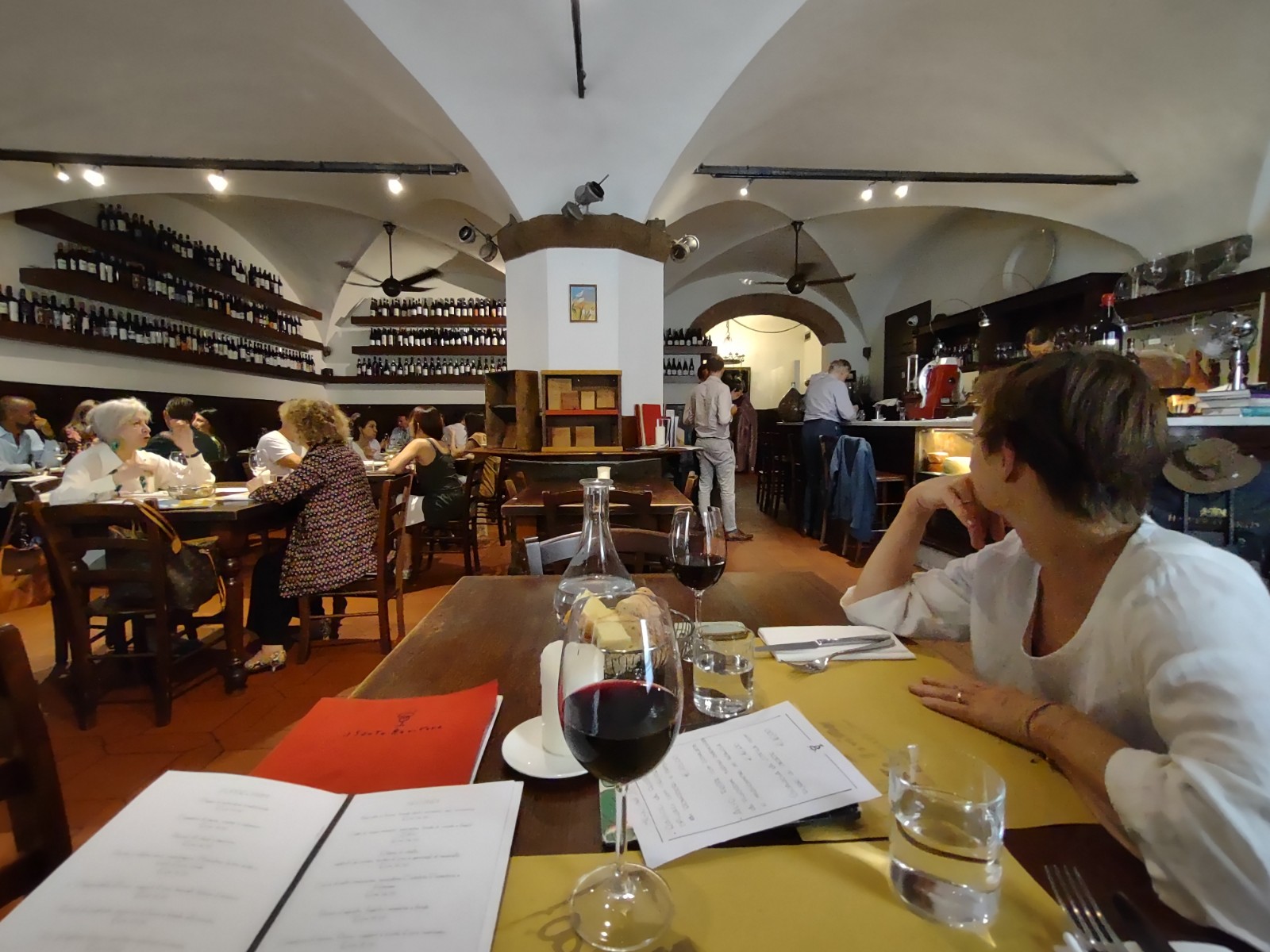
Our first meal in Florence was at a place in San Spirito called Il Santo Bevatore which we had passed on our way to our apartment from the train station. We have learned that after a day of travel it is even more important not to go grocery shopping (which we were on our way to do) on an empty stomach. In one of those happy semi-random coincidence of events, Il Santo Bevatore was on our route, looked pretty good, and we were very hungry, so we went with it and were pretty happy with the results. The food – Colleen had freshly made pasta and I had a charcuterie plate – was very good but it was (honestly) also very nice to have a selection of good affordable wines by the glass! The first of many great lunches we had in Florence.

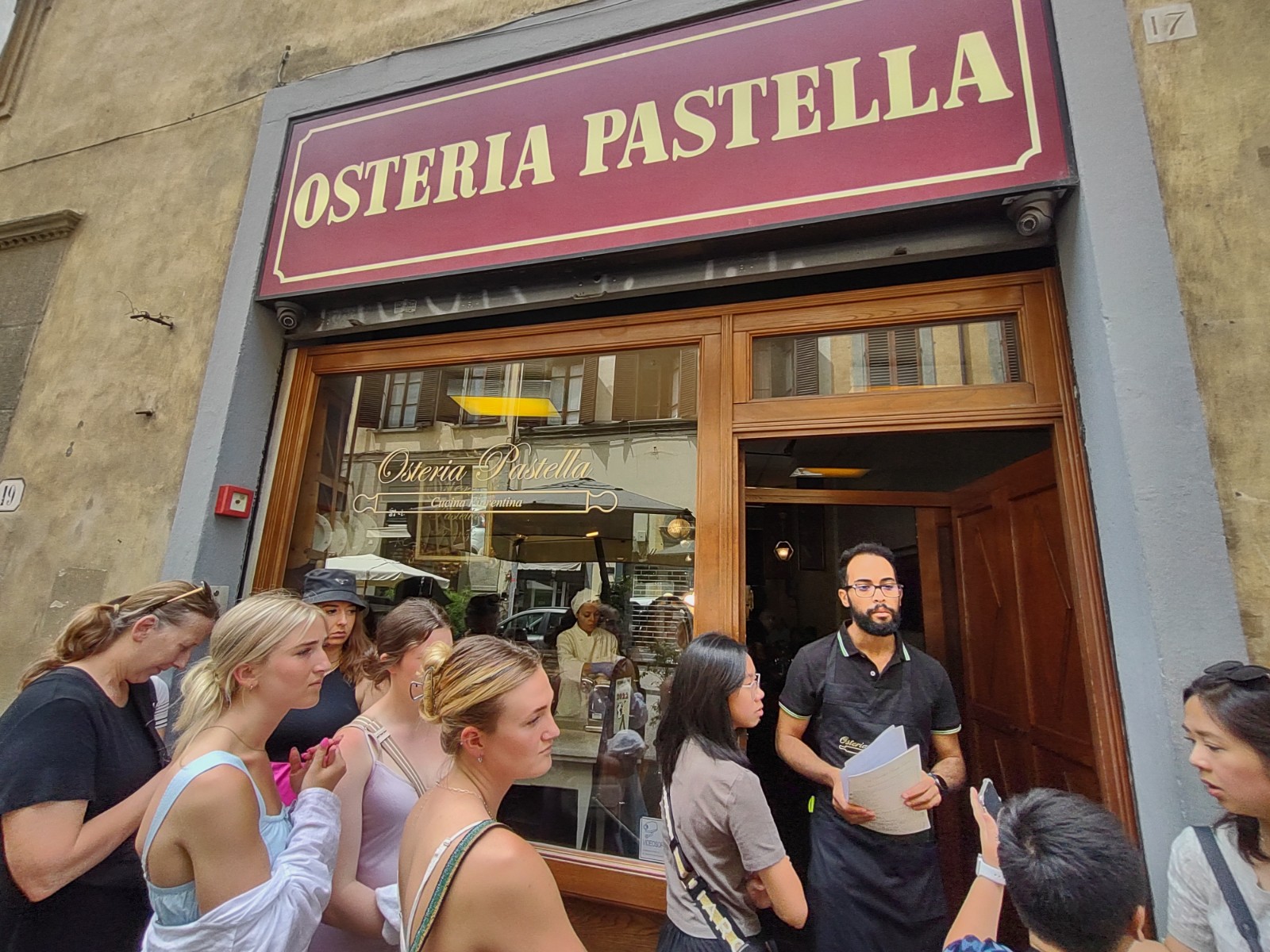
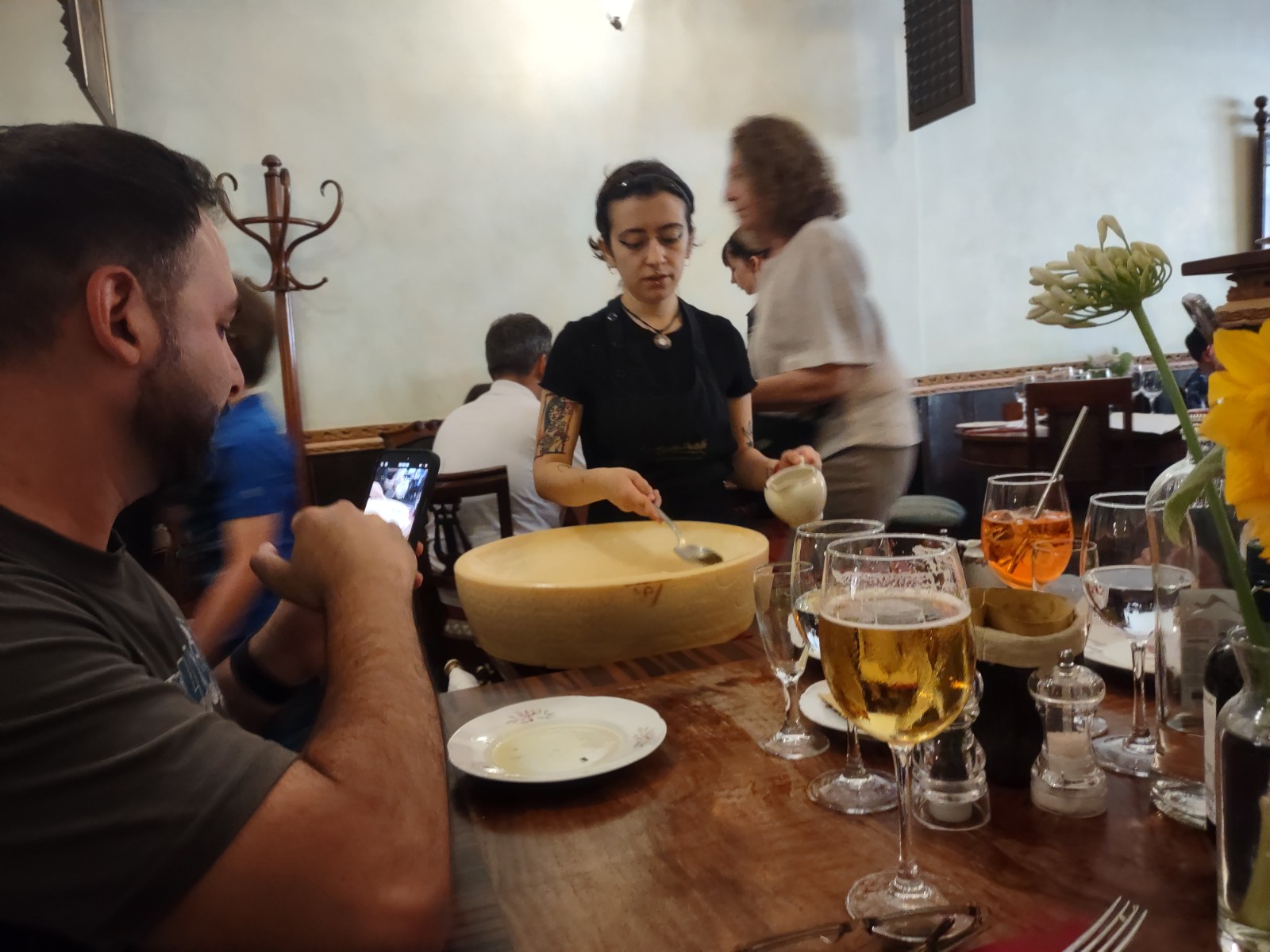
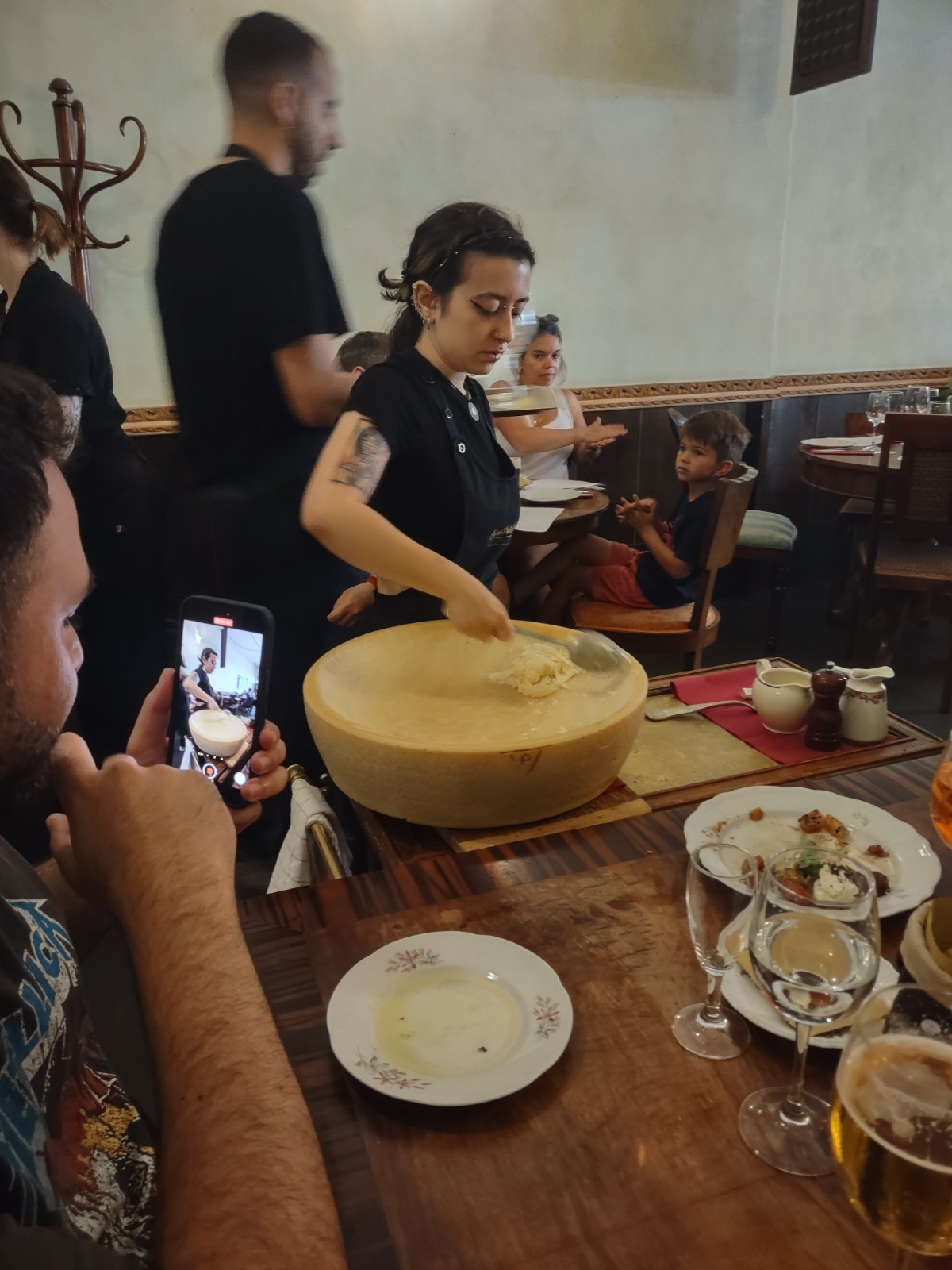
Colleen had planned a special lunch event for our first full day in Florence at a place called Osteria Pastella which she had somehow come across on the web. They have what is a pretty simple dish – Tagliatelle with cheese sauce and truffles – which is prepared in a very unique way. I have to admit that, when Colleen explained it to me, I had visions of the now infamous Raclette event at Les Mormottes in Paris (see Paris Part 3), but I put aside my reservations and off we went. So, what makes this dish particularly interesting is that they bring a half wheel of parmesan cheese to your table on a cart, flambe the cheese with cognac, roll your freshly made tagliatelle in the molten cheese, and then plate it with some very thinly sliced truffles on top. The whole production was quite entertaining, and the end result was simple and tasty (in a very cheesy, trufflely, way), much better than the Raclette!

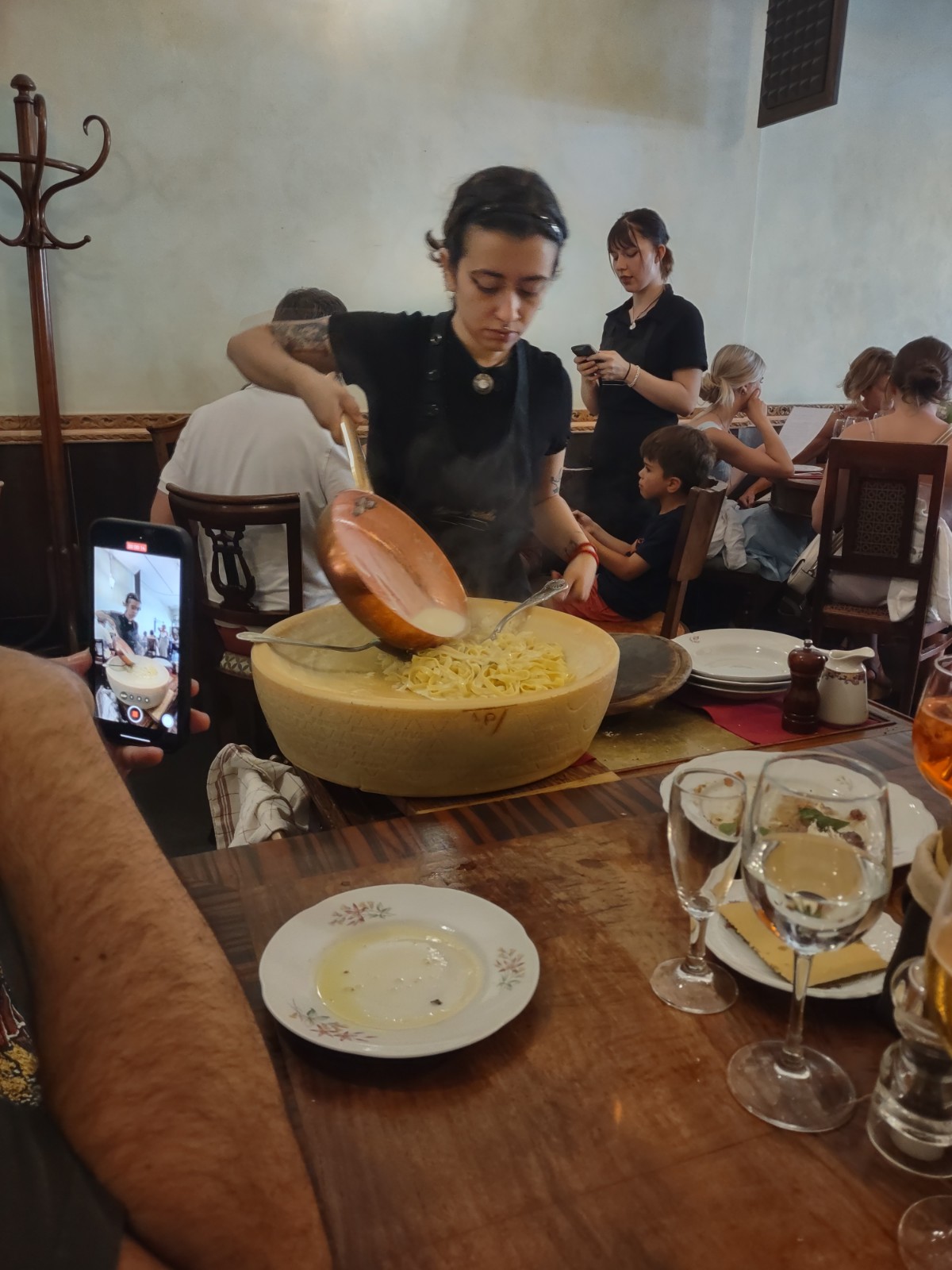
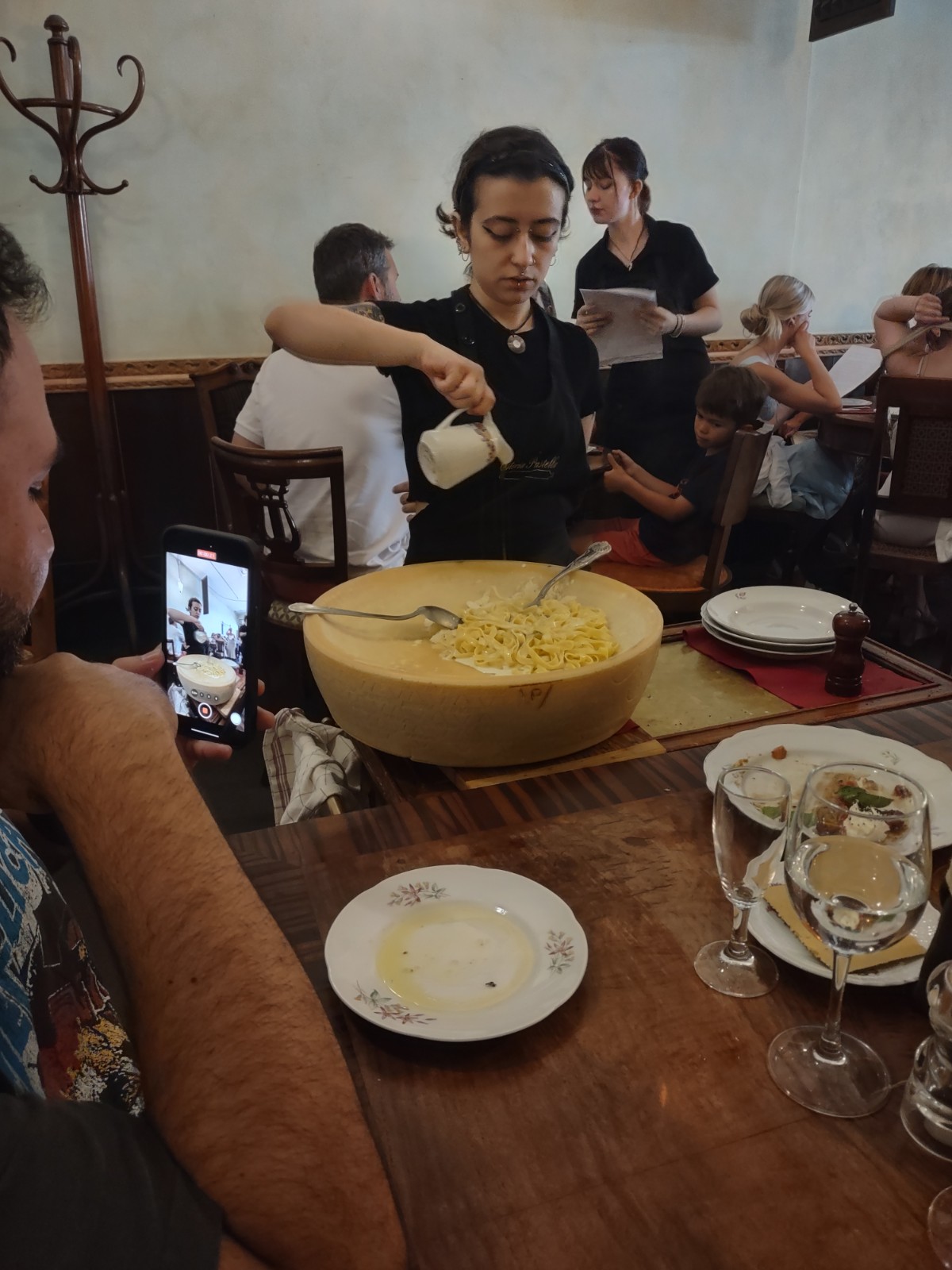
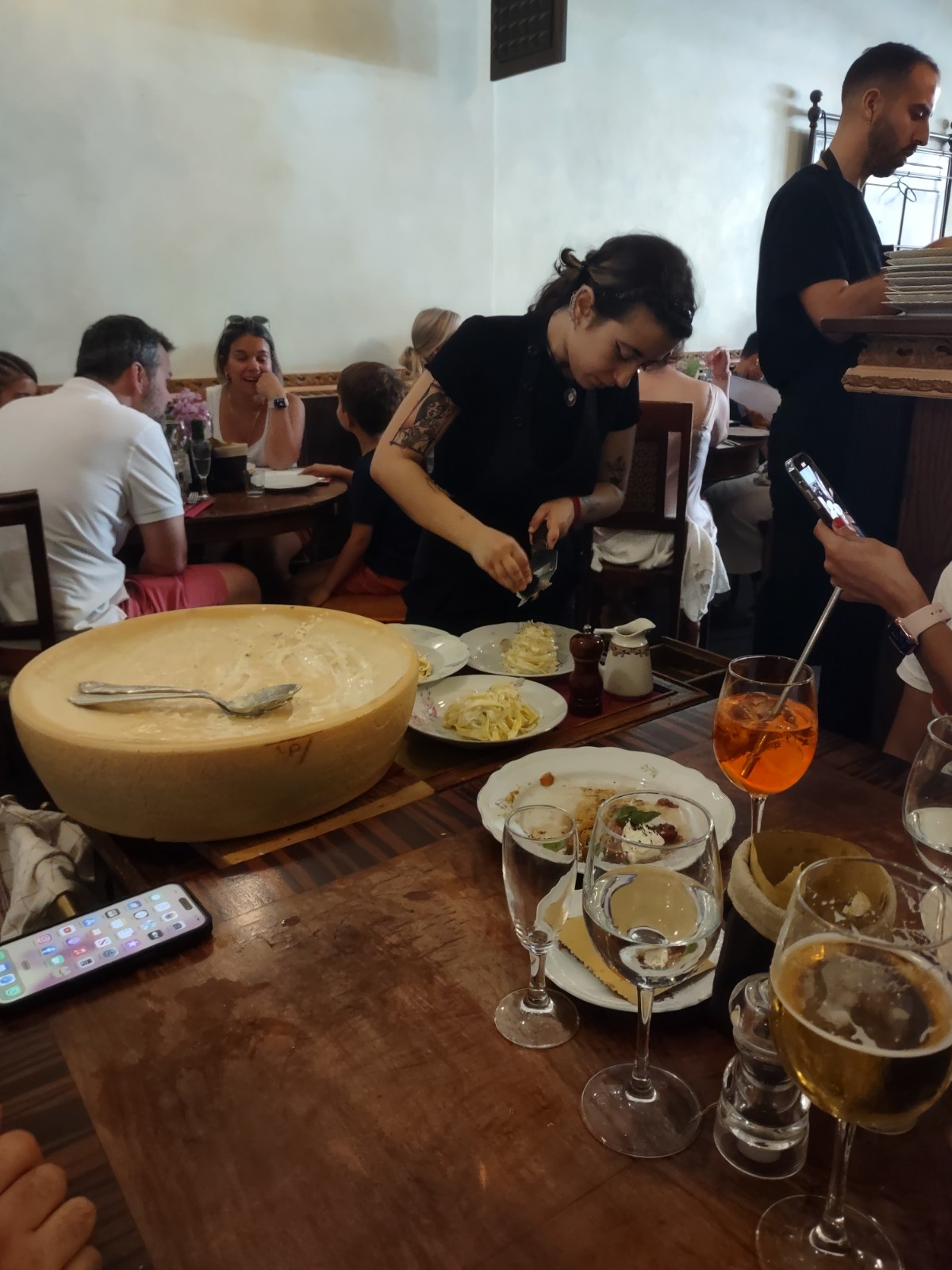

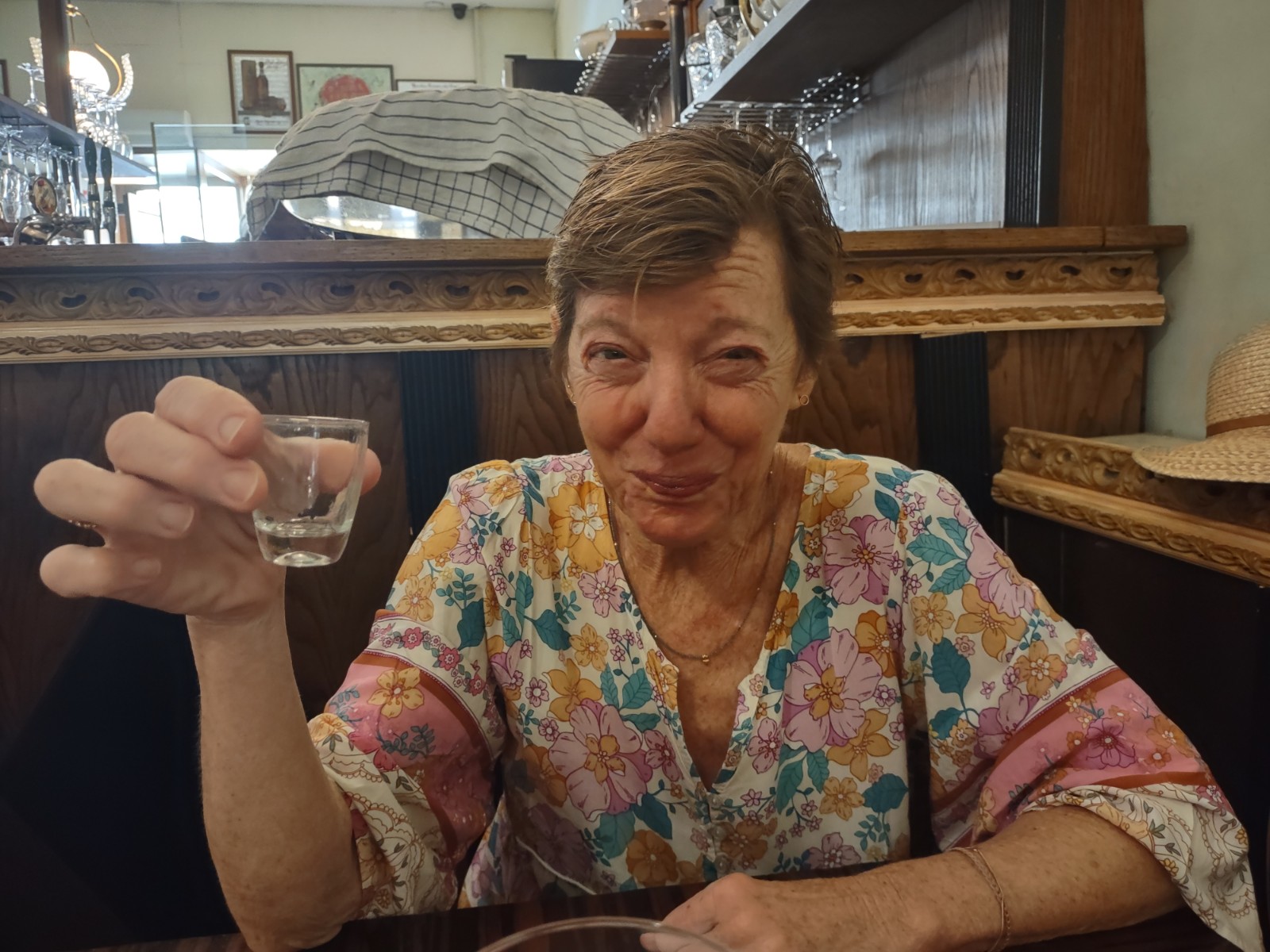
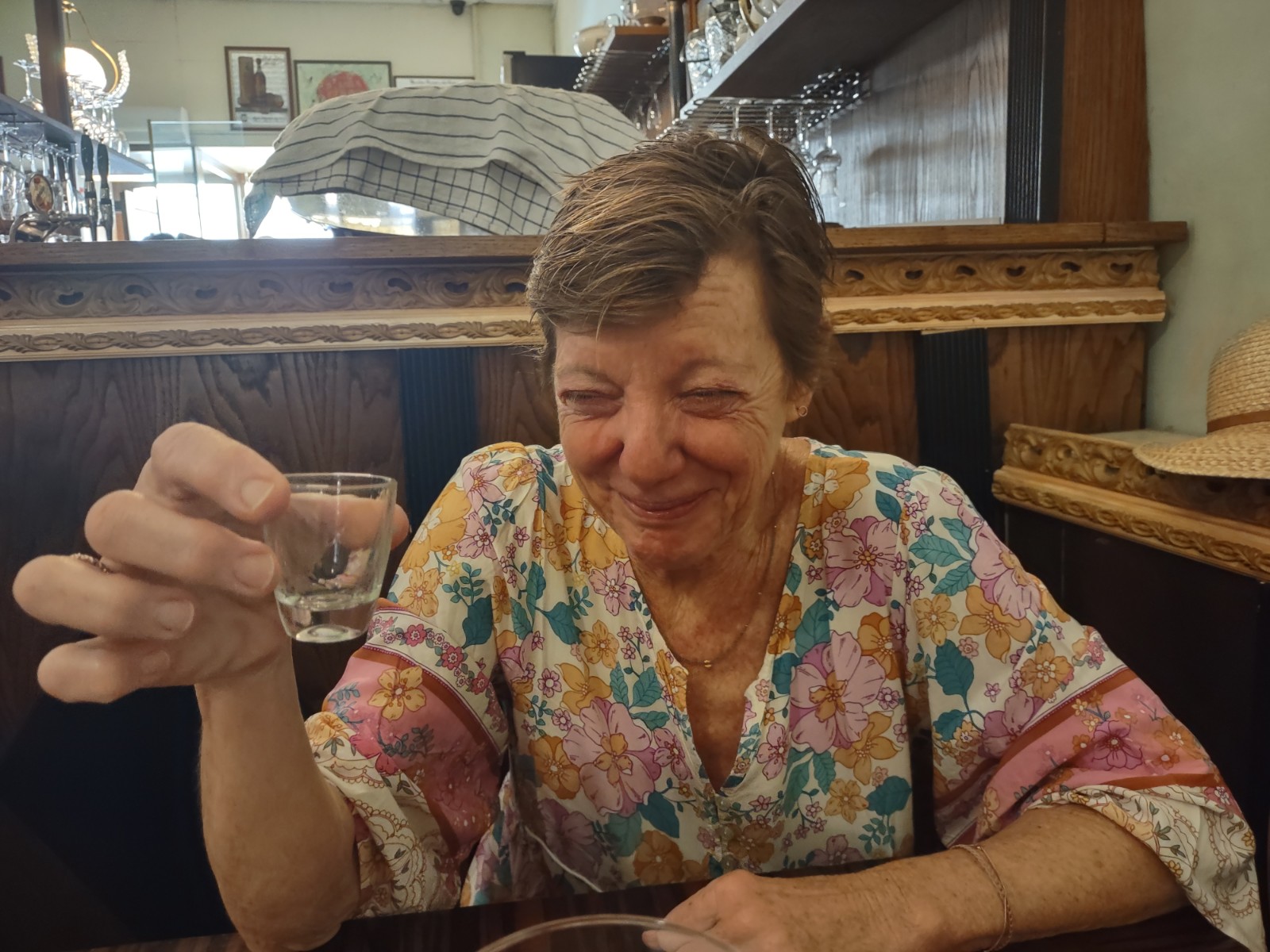
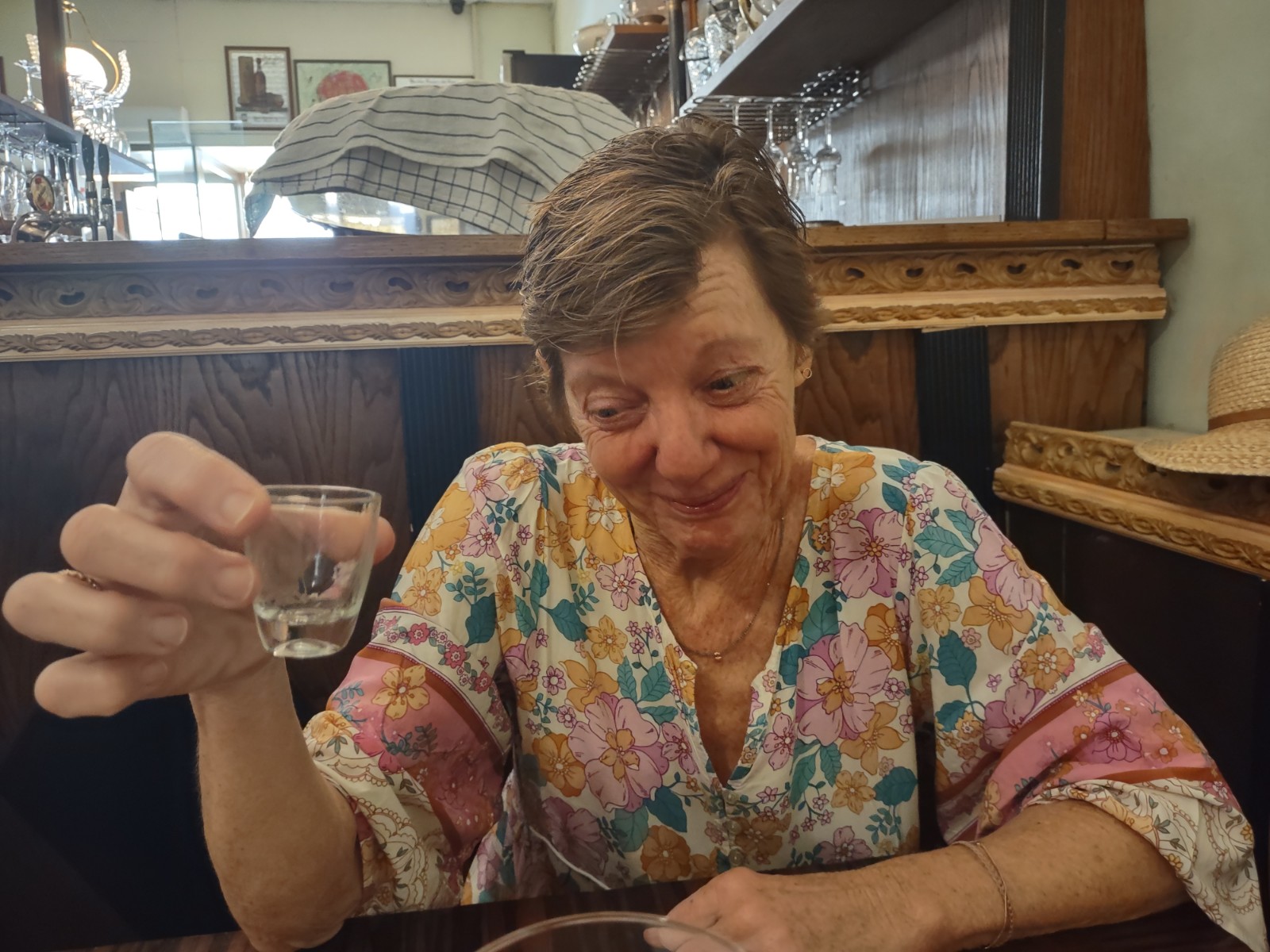
And, oh yeah, after lunch we were treated to limoncello, which Colleen had never tried before (and probably won’t try again, at least for a while).
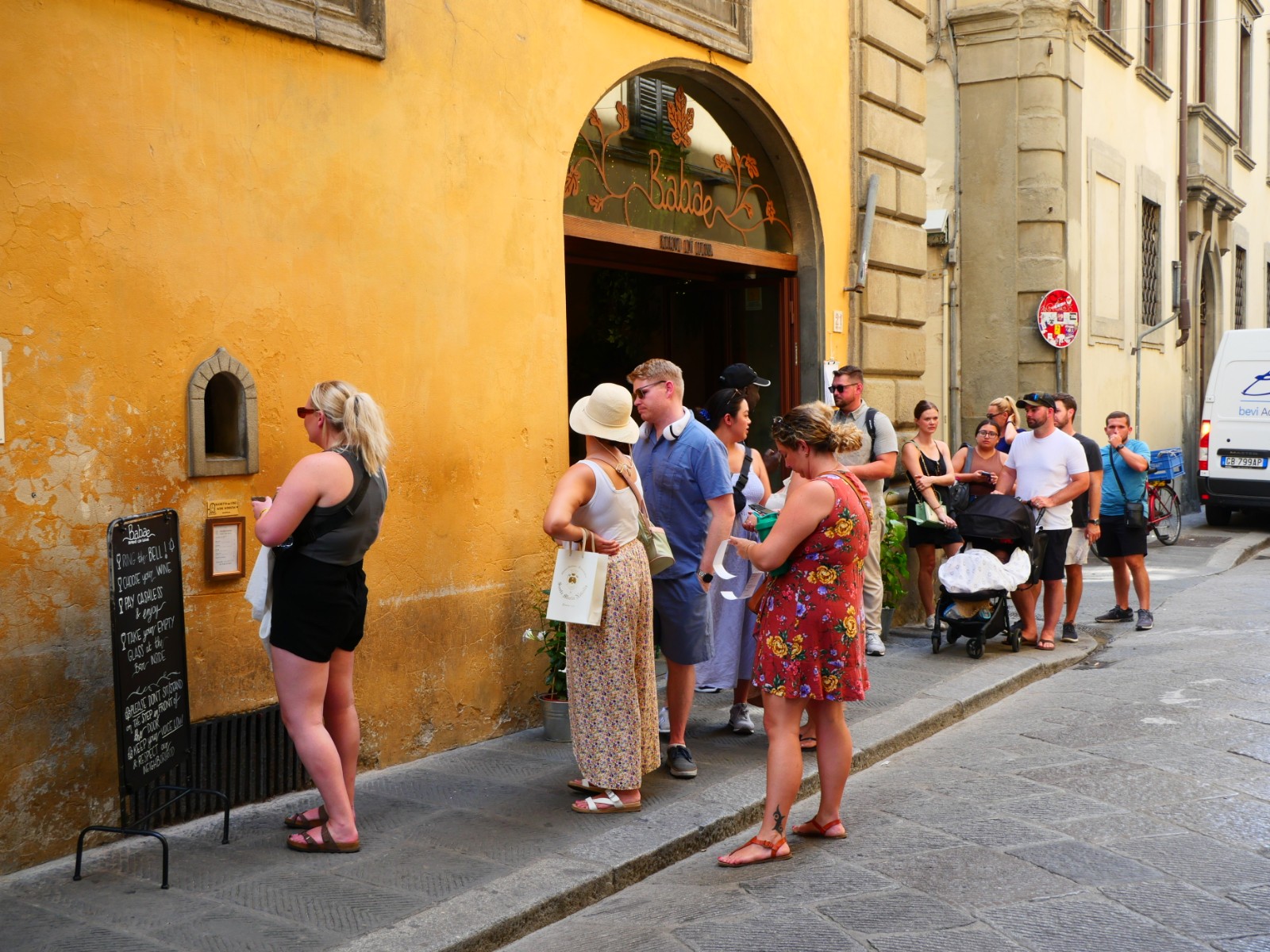
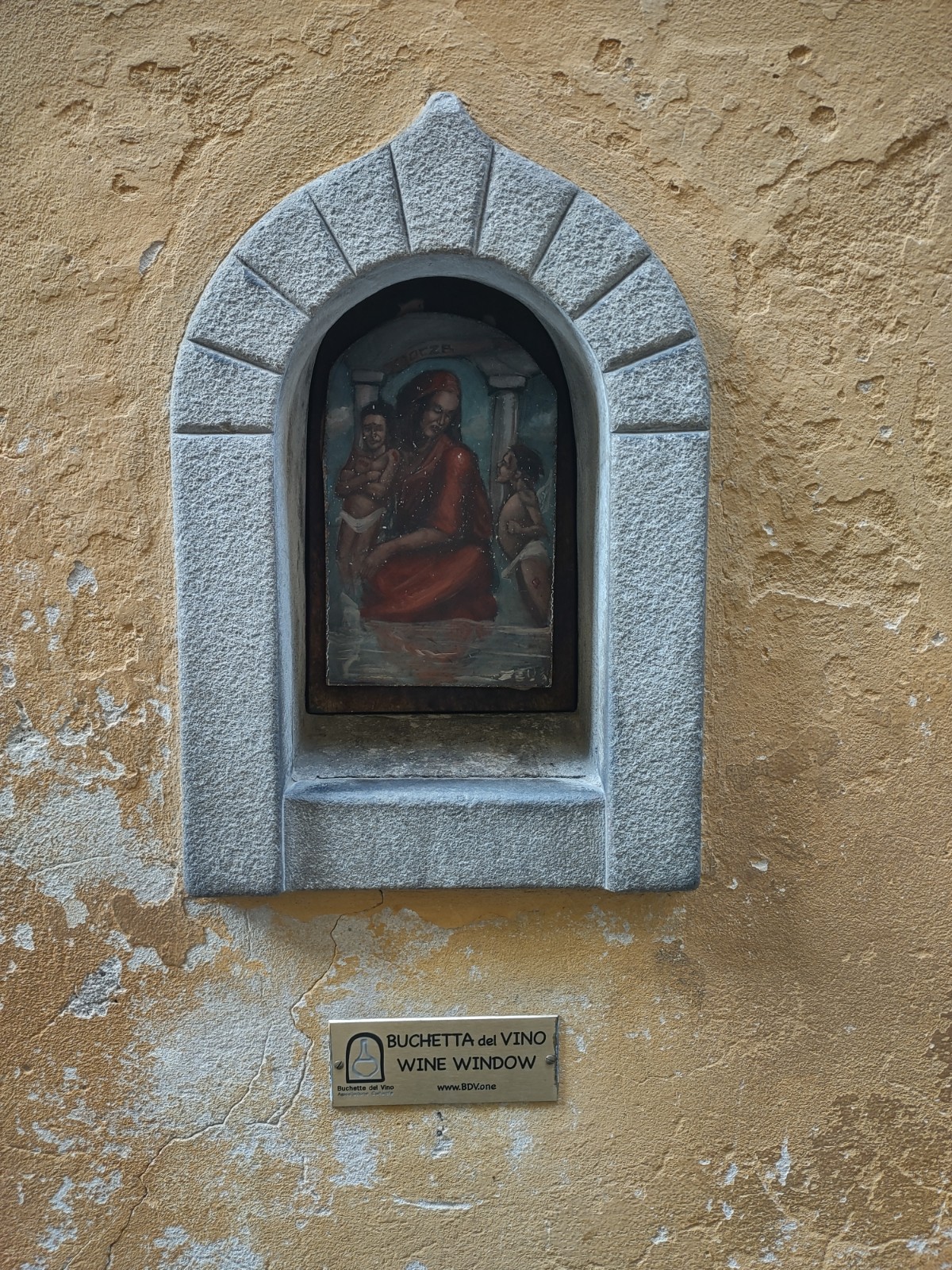
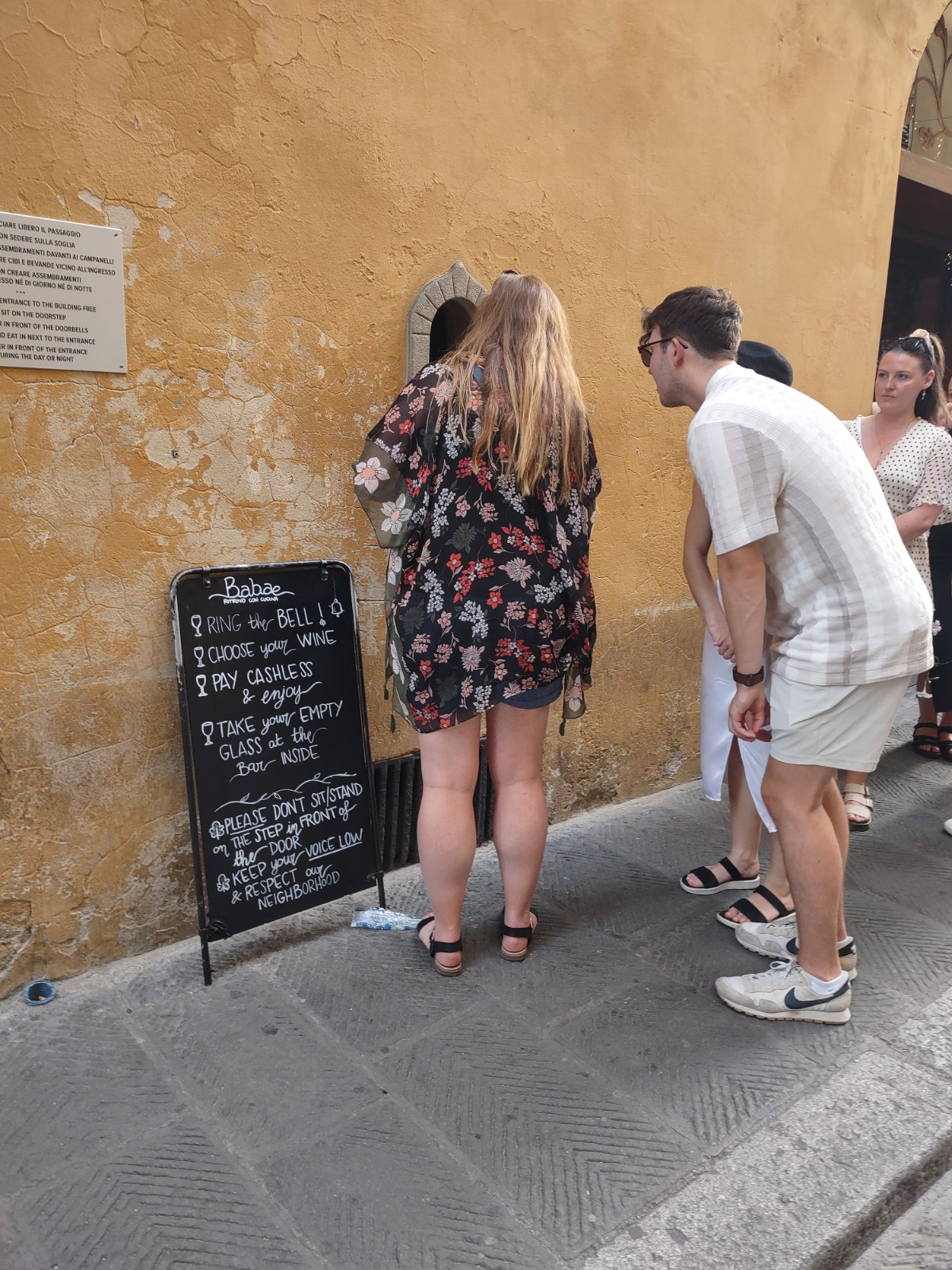
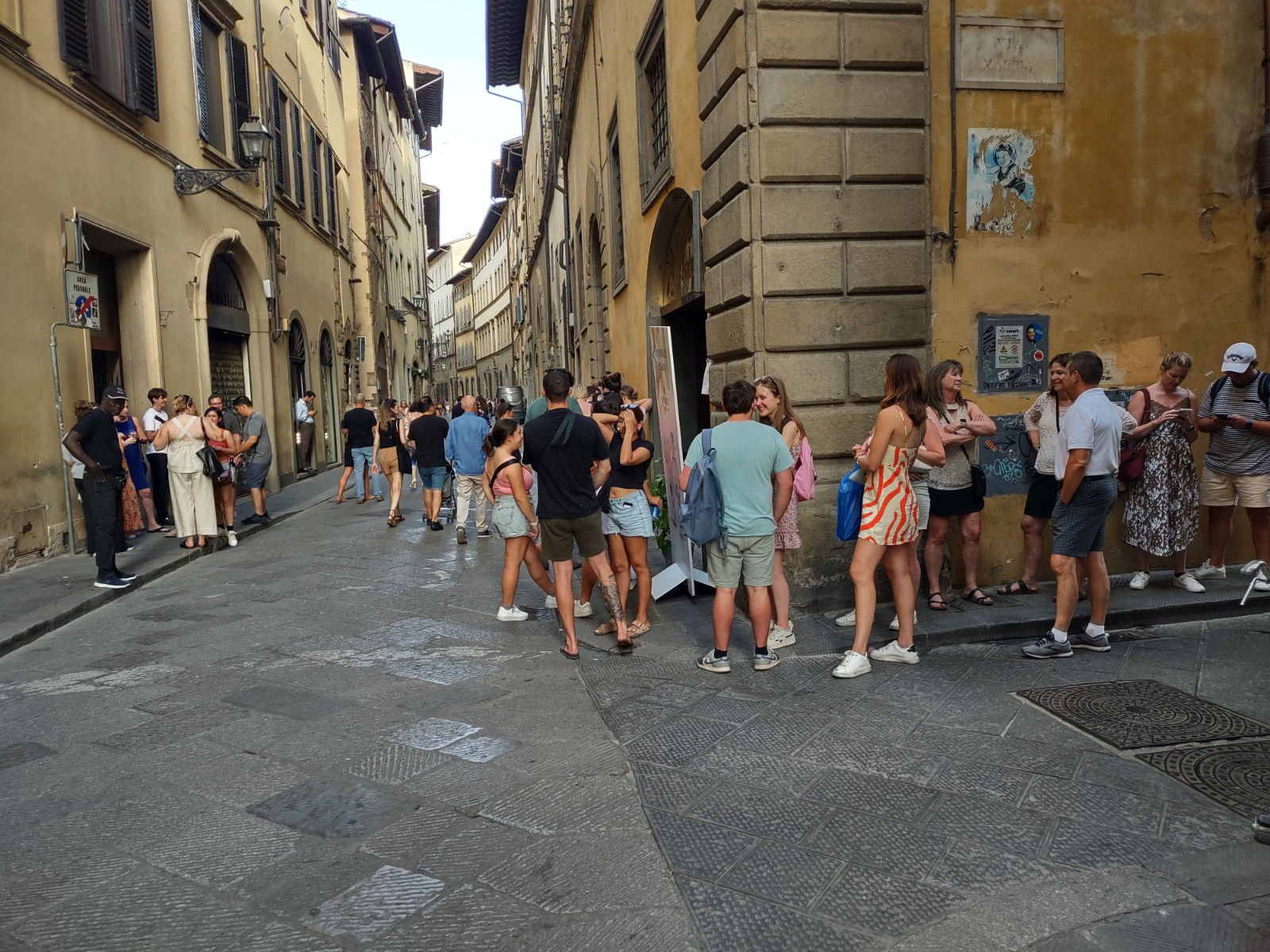
On another day, we had a great lunch at a place called Babae, which was at the end of our block on Via Santo Spirito. We had noticed Babae on our first day in Florence due to the large crowd in front of it but later discovered that what actually attracts the crowd is not the restaurant’s food (although it was very good), but its wine window. If you’re not familiar with the concept of the wine window, let me educate you. A wine window is an opening in the exterior wall of a bar or restaurant (preferably arched) facing the sidewalk with a bell you can ring which, when answered, allows you to order wine by the glass. There are apparently something like 30 of these in Florence, but most are no longer active. We had actually seen the one at Babae on an episode of Stanley Tucci’s Searching for Italy but did not realize how close it was to our apartment until we arrived. Over the course of the week, whenever we passed Babae (at least after 10 AM when they opened) we always saw a crowd in front drinking wine by the glass with a line at the wine window which stretched around the corner and down our street in the evenings.

At a random lunch stop one on our Market Marathon day, we struck up a conversation with an Australian couple (the Websters) at the next table who were in Italy for five weeks to, among other things, hook up with their daughter who studied there and meet the family she lived with at that time. During the course of our conversation we learned that, while they are not quite ready for retirement they had, when their kids were much younger, sold their business, rented their house, and hit the road for nine months travelling around the coast of Australia. Amazing what you can do if you put your mind to it. I’m not sure who was more awed by the other’s travels (but I think we were).
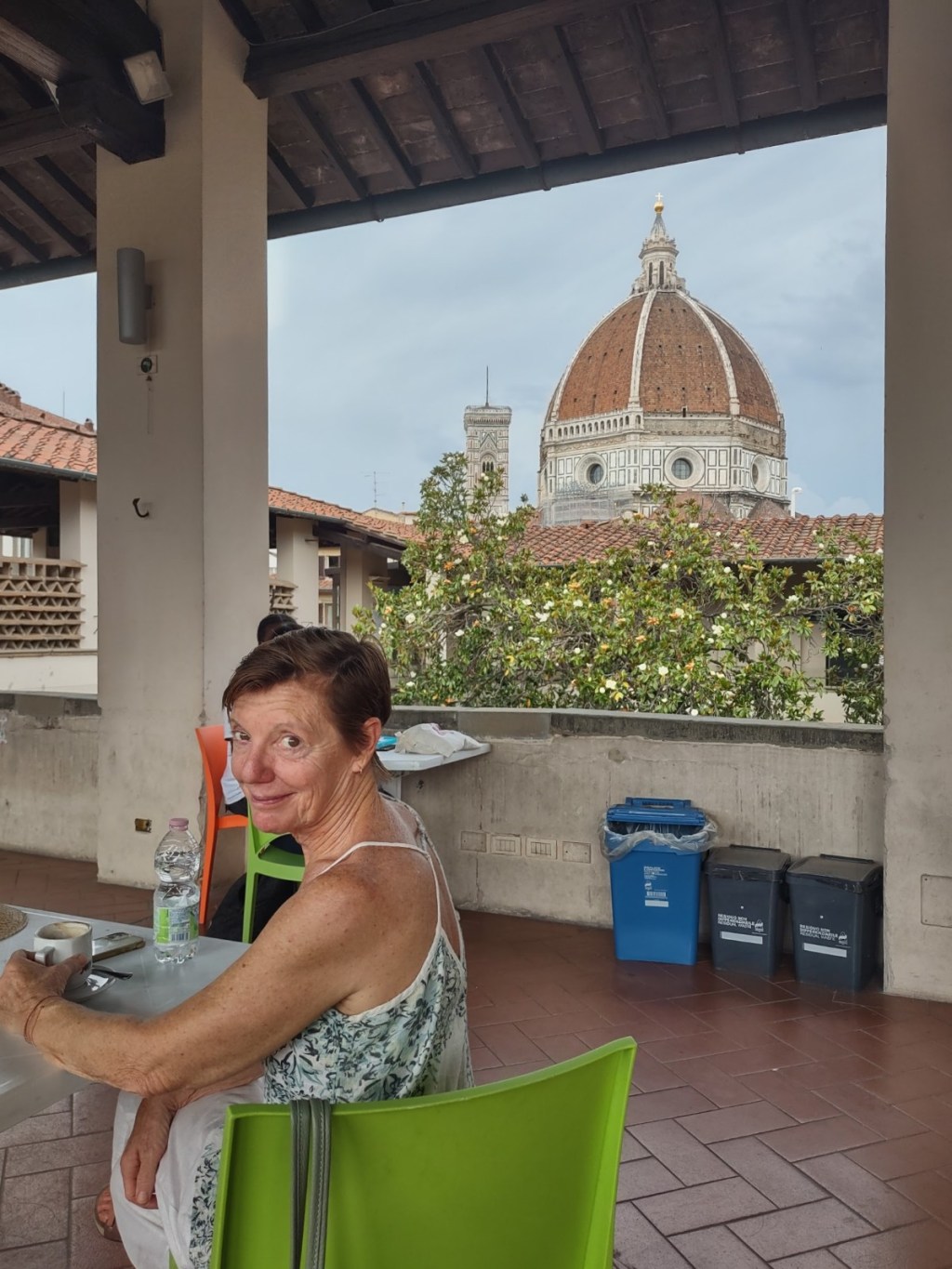
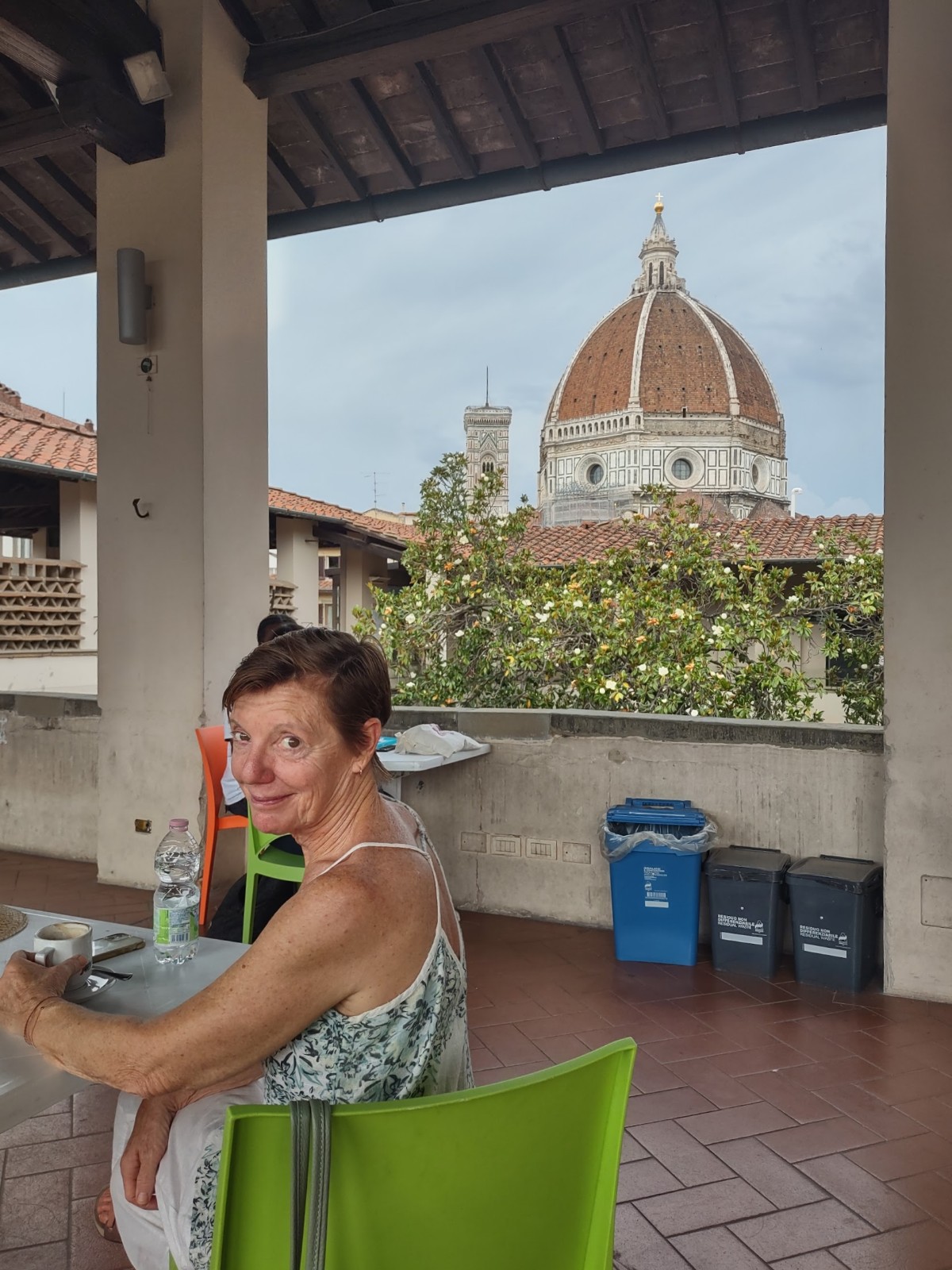
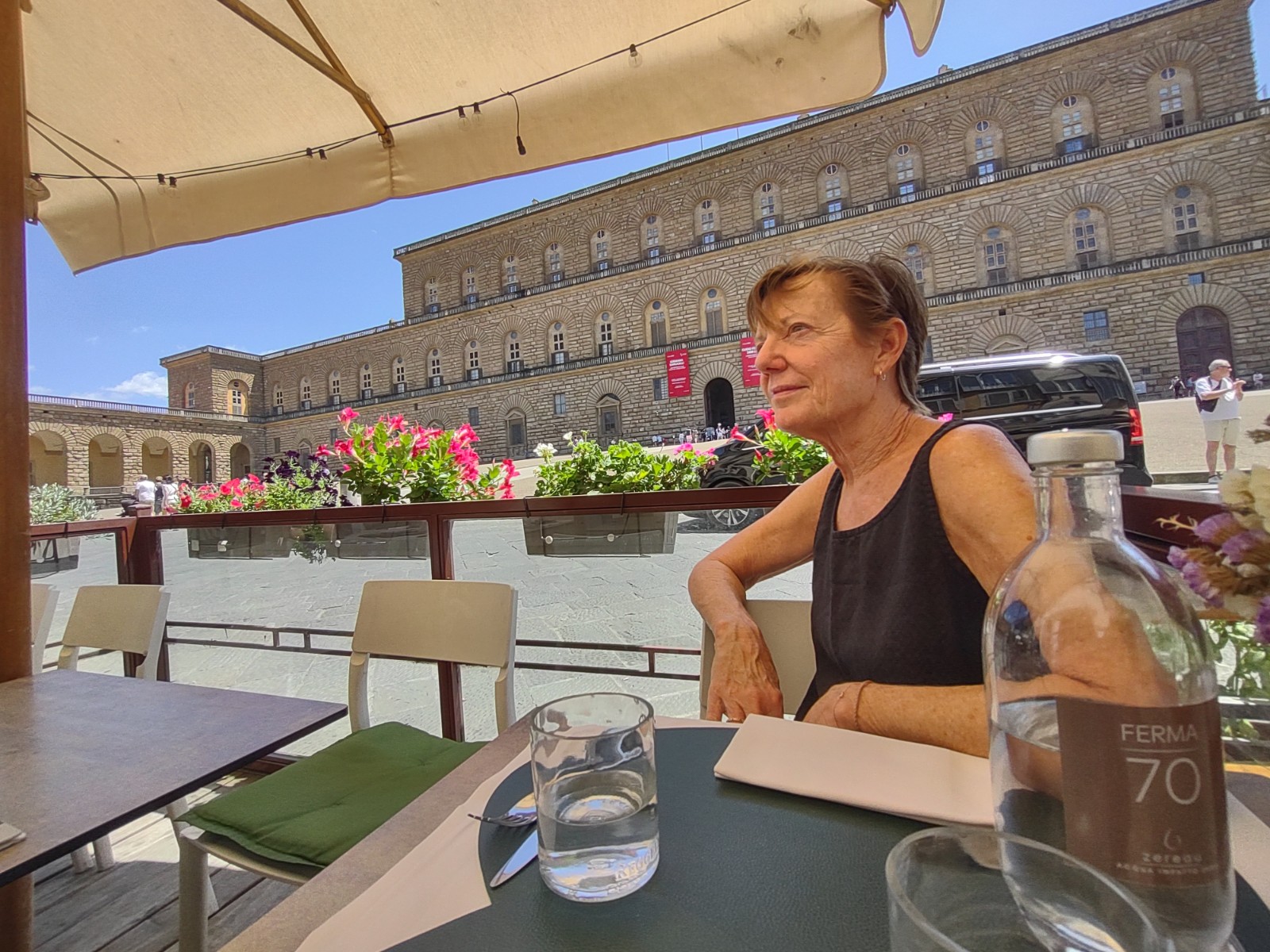
One of the things we were always looking for in Florence was a place with a view and, while almost any place with sidewalk seating offered this, some views are better than others and there were a couple of places which were particularly memorable. After a bit of shopping and wandering in Santo Spirito one day, we grabbed lunch at one of the cafes which face the front of the Pitti Palace, a nice spot, and we found an amazing view of the city from a café at the Piazzale de Michelangelo on the hill east of Santo Spirito. But, probably the best of these places was the Biblioteca della Oblate a public library with a rooftop café featuring one of the best views of the Duomo dome in the city. I have absolutely no idea how Colleen ever found about this place( but was happy that she did) and we were amazed to find it uncrowded, mostly being used by students.


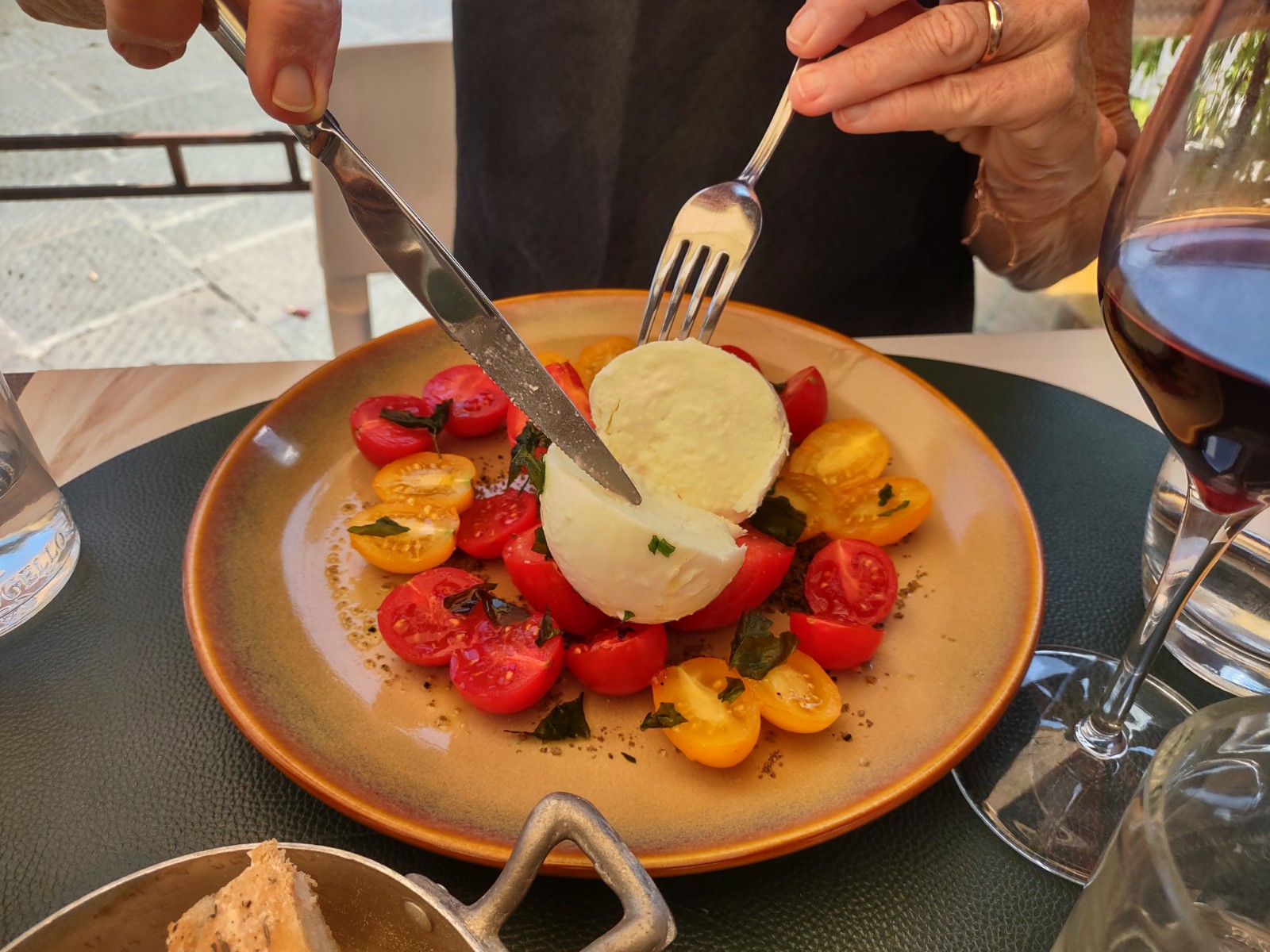
While we drank mostly wine, we did have a beer or two along the way. We located a great craft beer store in Santo Spirito not far from our place, just down the hill from the Piti Palace called Tuscan Taste. We purchased a couple of nice IPAs, a really salty gose, and a sour ale that Colleen really liked. We also had a really good spontaneously fermented wild ale which was brewed with dragon’s blood (some medieval plum concoction?) which Colleen loved – it is naturally sour – but it was pretty dear at 15 euros for a 375 ml bottle! We also found a great brew pub near San Lorenzo called (gotta love it!) the Alibi, which I was able to get Colleen to agree to visit with the promise of sour ales on tap (which they indeed did have). Nice spot with a variety of beers on tap.


Predictably, the other thing we sampled a lot of in Florence was gelato but, unlike previous gelato ventures, our approach here was less methodical and more spontaneous. I didn’t keep track of every place we stopped but do remember that walking the streets with gelato cones in our hands became an increasingly common occurrence. (Maybe it was just because it was very hot and sunny during our entire stay here?) In any case, we had some very good gelato in a lot of interesting combinations – salty caramel with Nutella became my favorite while Colleen’s go-to was coconut with some kind of chocolate. (Sorry, no good gelato photos as our hands were always too sticky!)
La Festa di San Giovanni
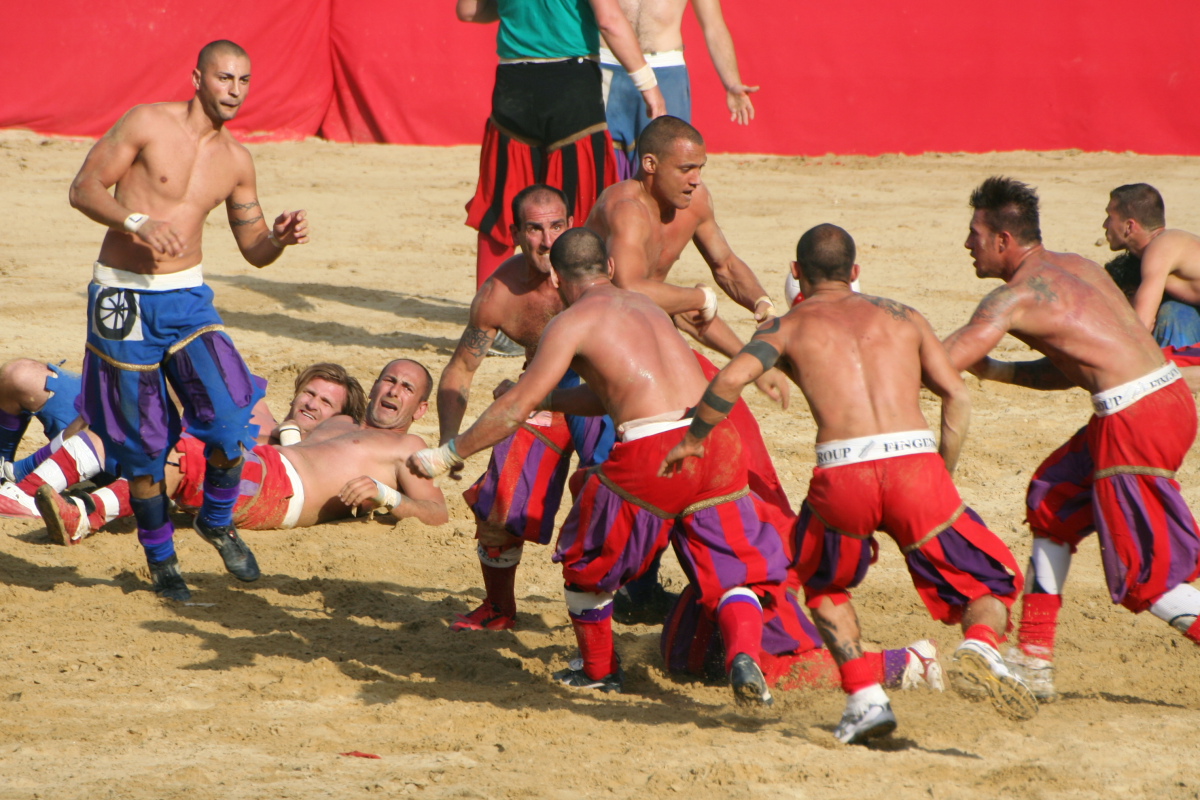
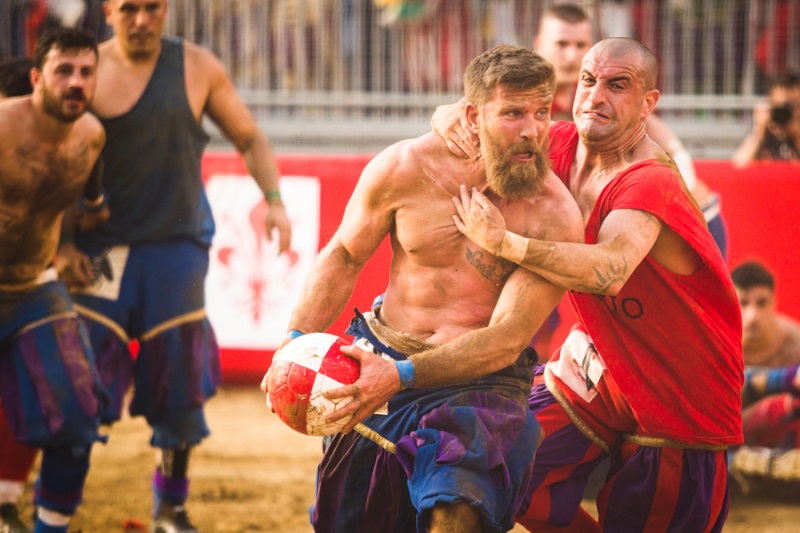
Although we had not planned on it, we were pleased to find out that we would be in Florence for its annual Festa di San Giovanni (Feast of St. John the Baptist), the patron saint of Florence, which was celebrated on Saturday June 24th. Festivities for the feast included a morning religious procession through the old city center which concluded with presentation of the cross of St. John and mass at the Duomo. Activities during the day culminated with the Florence Calcio Storico championship game. Calcio Storico is an ancient sport said to be rooted in a game played for amusement and fitness by Roman legionnaires who established a stronghold in Florence 2,000 years ago. A historic game played on February 17, 1530 by the residents of Florence in a dismissive gesture towards the troops of Charles V (who were besieging the city at that time) has become symbolic of the toughness of Florence and its people and is ceremonially re-enacted every February 17th.
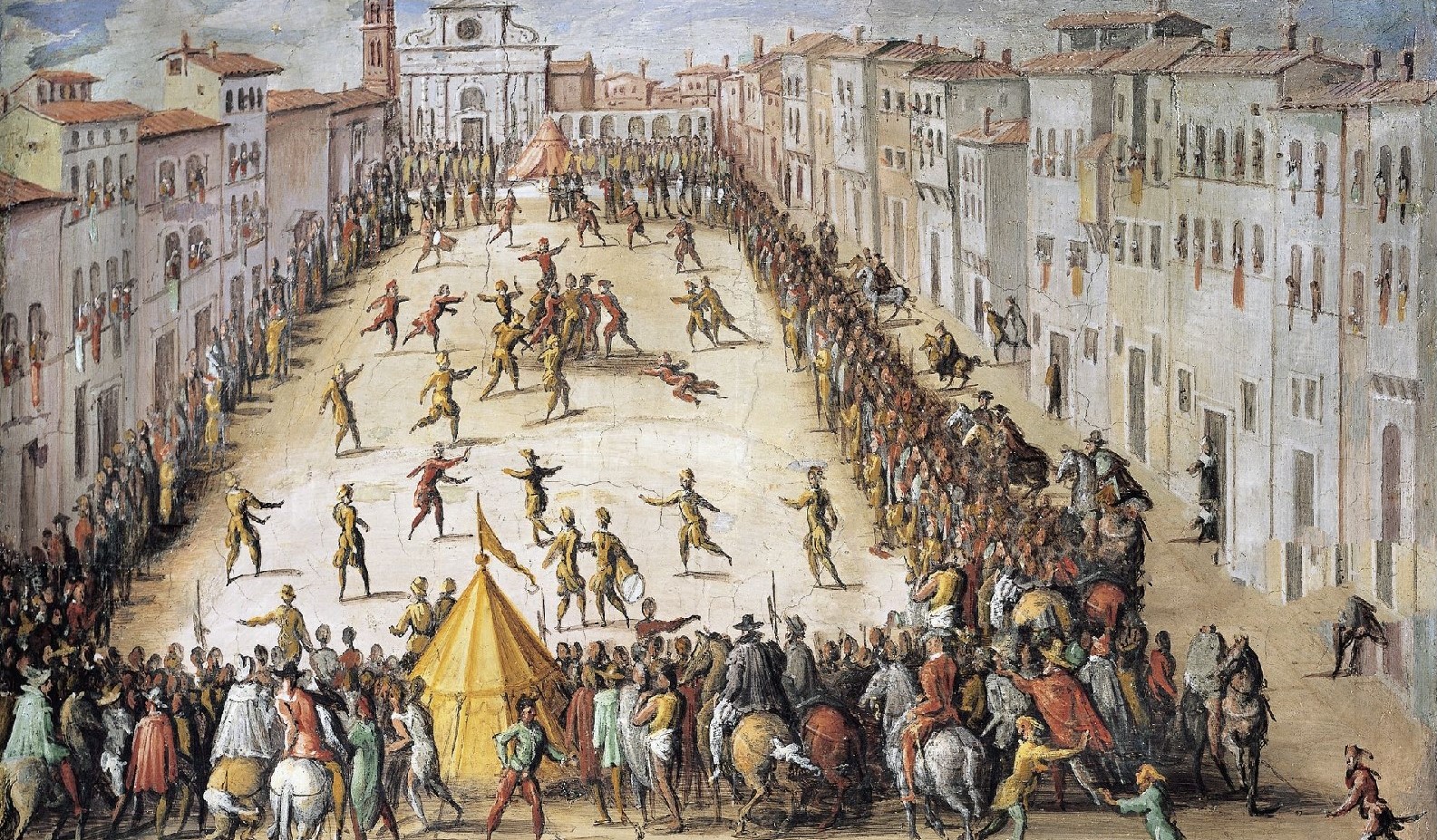
Calcio Storico (or Calcio Fiorentino), which is today only played in Florence, combines elements of soccer, rugby, boxing, and maybe a little MMA, and pretty much anything is allowed except for sucker punches, kicks to the head, and doubling up on someone already engaged (no blind side blocking). There are 27 players per side and players may not be replaced should they be ejected or become incapacitated during the course of the 50-minute match. The object of the game is to put a soccer sized leather ball in an elevated net which runs the width of the field, which is 50 meters by 100 meters. Goals are worth 1 point, but a shot which goes high of the net gives a half point to the opposing team.

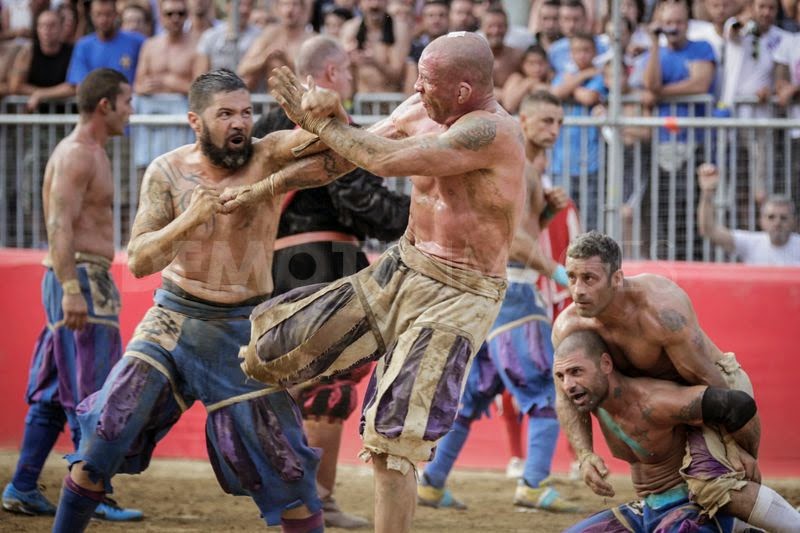
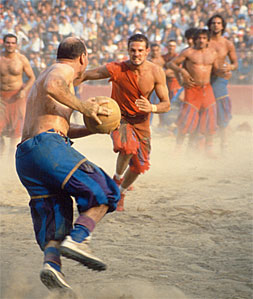
The Calcio Fiorentino league is comprised of four teams, each representing an ancient Florentine neighborhood and characterized by color – the Rossi (red) from Santa Maria Novella, the Azzurri (blue) from Santa Croce, the Verdi (green) from San Giovanni, and the Bianchi (white) from Santo Spirito. For reasons which become pretty obvious once you see the sport being played (Netflix has an episode in its series “Home Game” if you’re really interested), the season is very short, with a round of semi-finals (pairings are randomly made on Easter Sunday) played in mid June, and the championship match which is always played on June 24th. So, at most, your season lasts two games and fielding a reasonably full and healthy team for a second game is probably the biggest challenge of the season. The athletes who compete are not paid (the winners used to get a cow, now they get a free championship dinner) but they train rigorously, and it was pretty clear that the championship is the subject and source of a lot of neighborhood honor and pride.
The championship match, which was between Rossi and Azzuri this year (we were a bit disappointed that our home team, Santo Spirito had not made it to the championship), was played in the Piazza Santa Croce, which is filled with sand for the event. While we were unable to acquire tickets, we were able to follow the progress of the match in almost real time on the local media. Not to be disappointed, we tuned in to learn that there had been a brawl involving the two teams before the match even began and that Rossi had withdrawn from the field of play and was refusing to recommence until some terms of agreement or other were met. After about an hour or so of delay, Rossi returned to the field of play and eventually emerged as the 2023 Calcio Fiorentino champions.
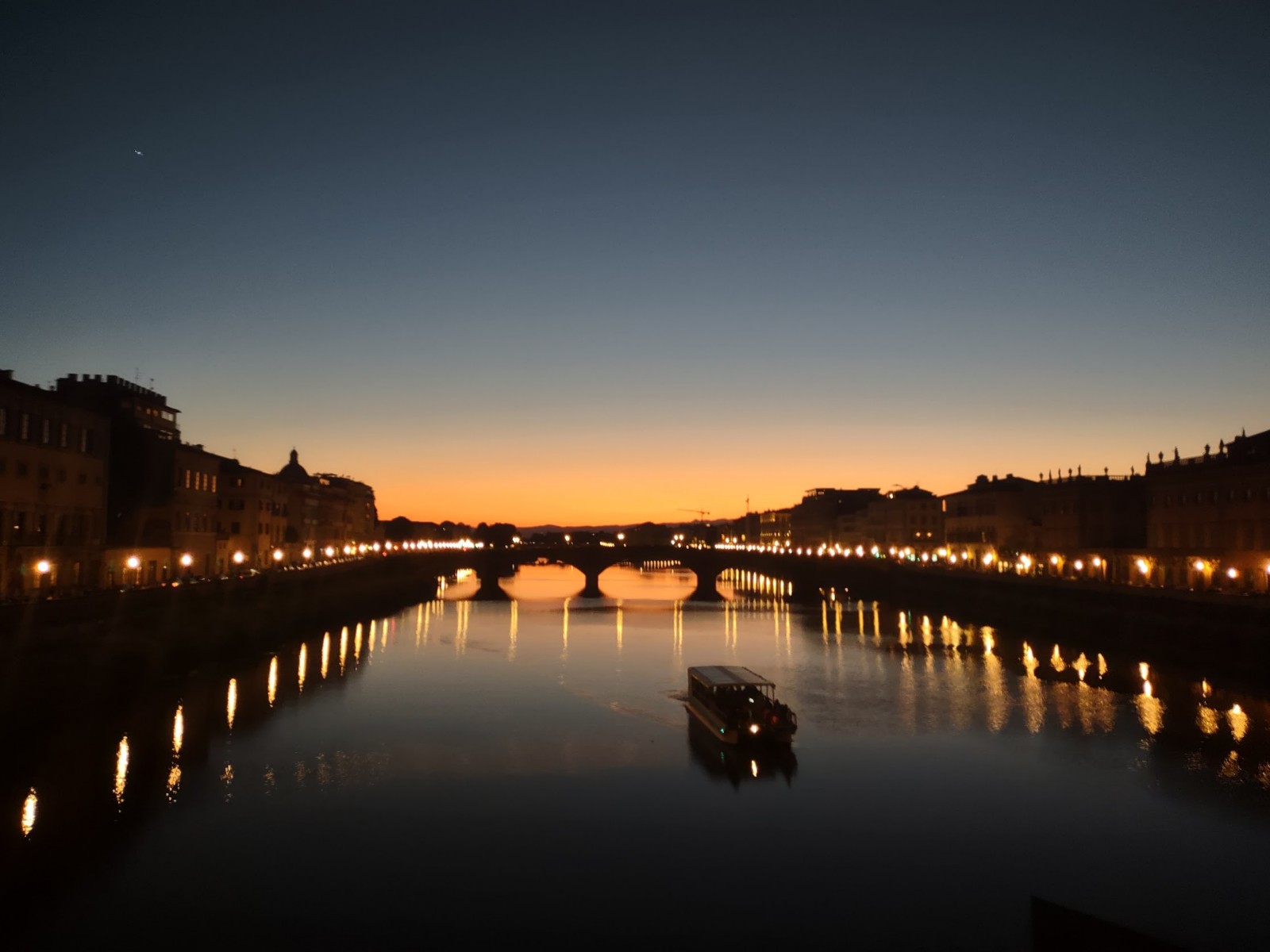
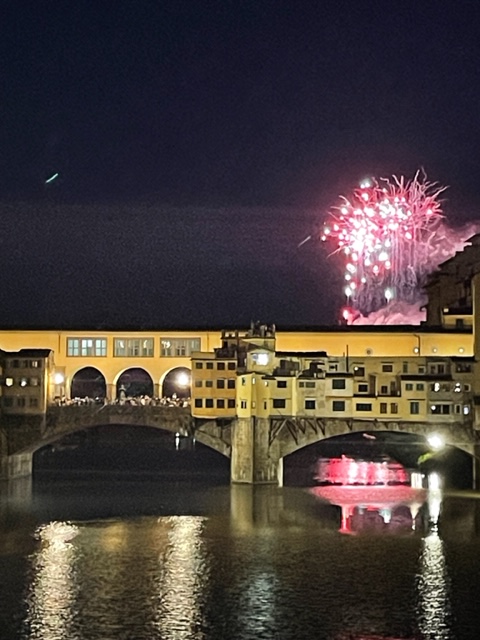
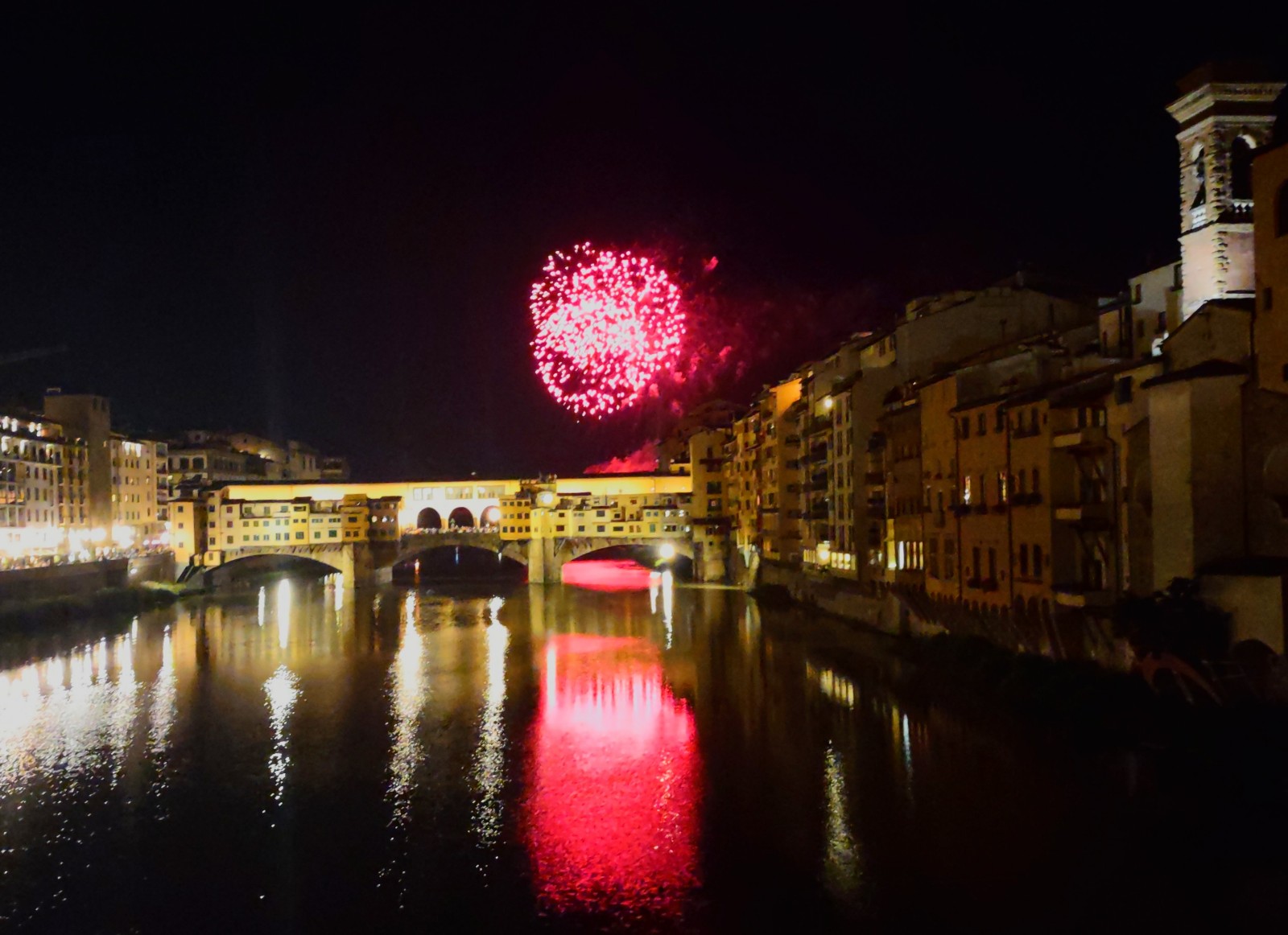
The icing on the cake for La Festa di San Giovanni was a fireworks display over the River Arno. We had scouted things out earlier in the day and decided that the Ponte all Carraia, the bridge closest to our apartment, would be a good spot to see the fireworks which were being launched from the Piazzale de Michelangelo at the east end of Santo Spirito.
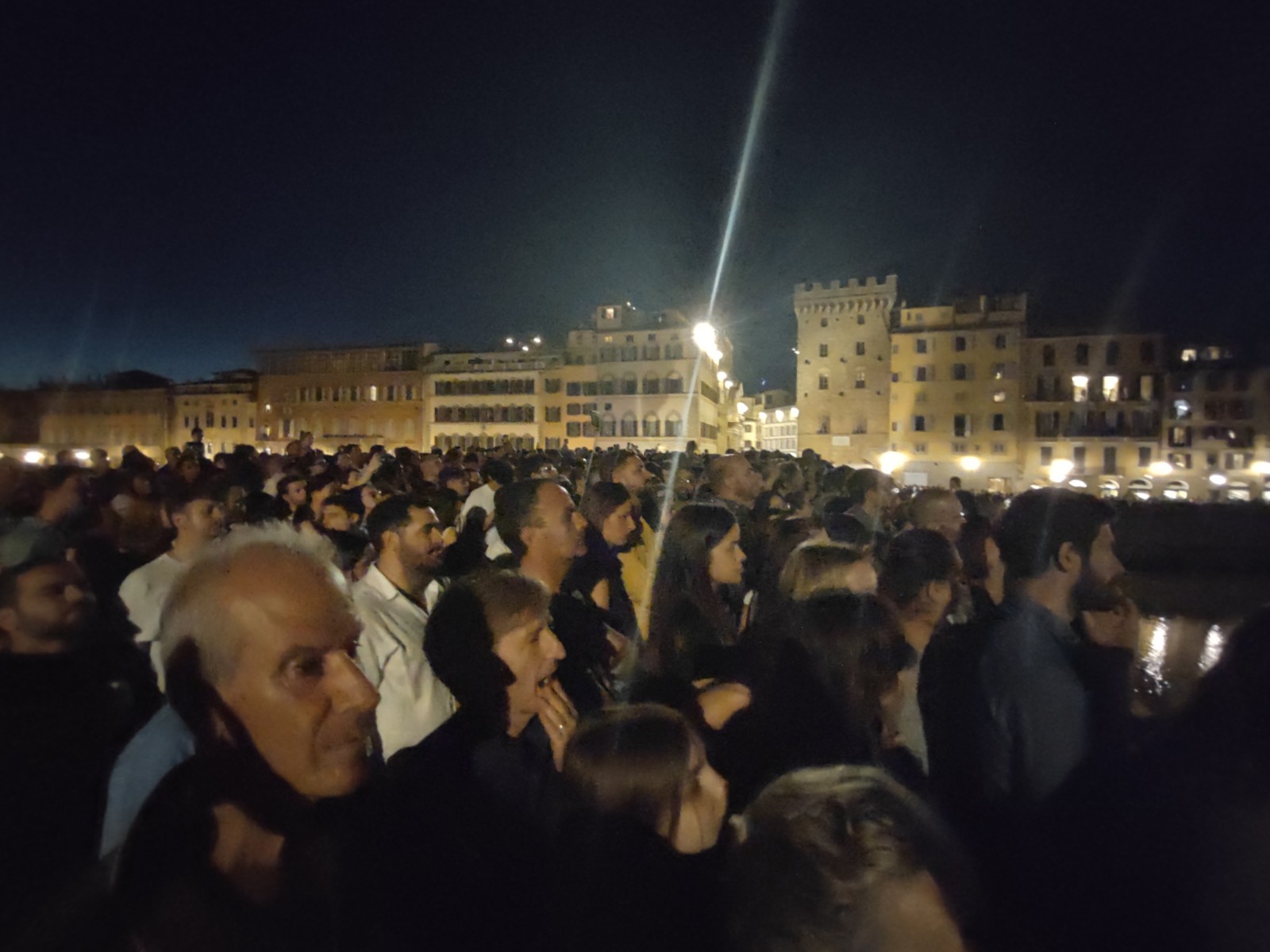
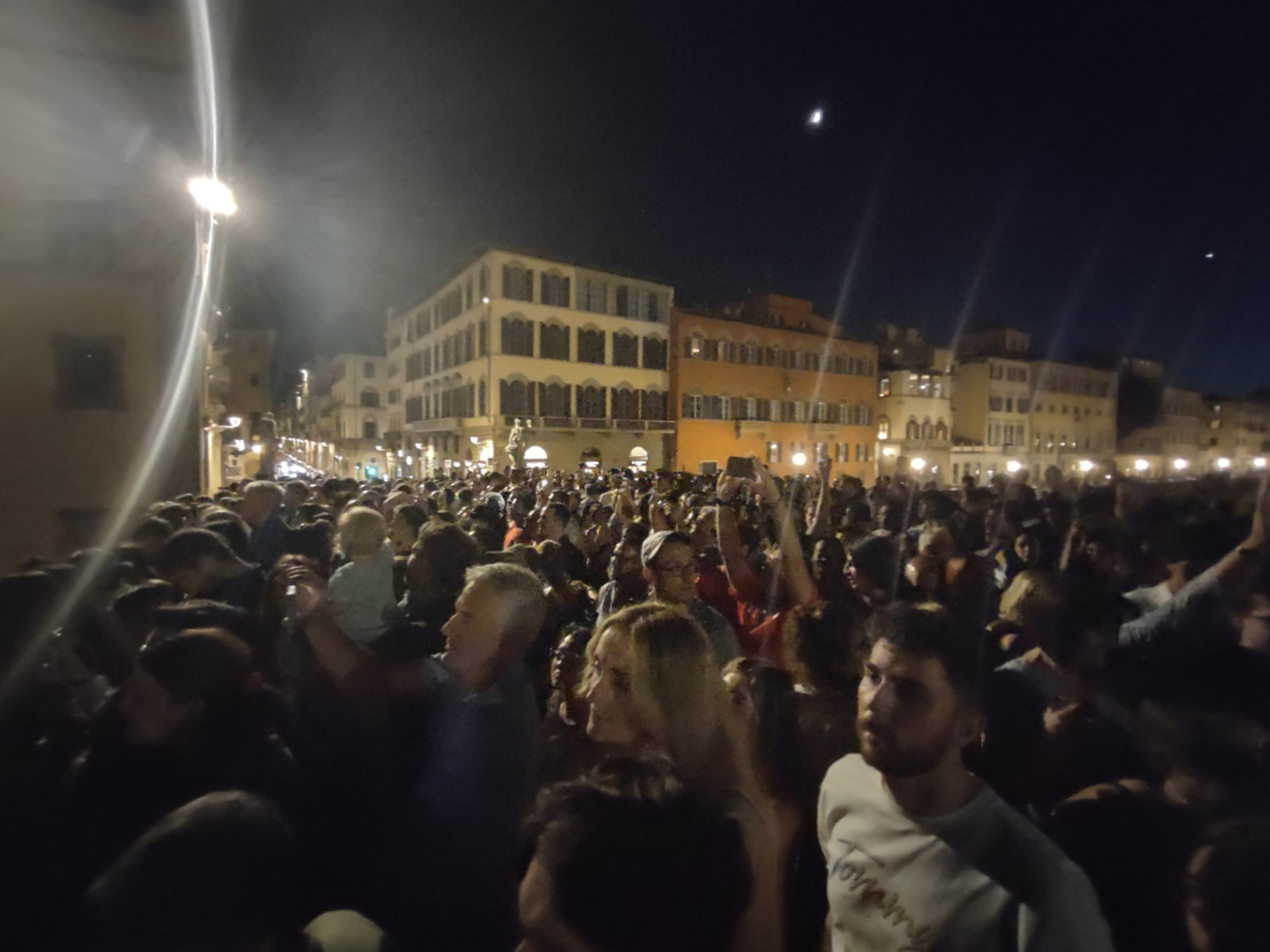
We went out early enough to snag a gelato before staking out a spot on the bridge around 9 PM and then waited for the sun to set as the crowd around us grew, eventually pretty much cutting off vehicular traffic across the bridge. The fireworks were vaguely scheduled to start sometime between 10 and 11 PM, so we were pretty happy to see them begin just after 10. While our spot was probably not as close as we would have liked, it was nonetheless very crowded at this point and one could only wonder what it was like closer to the fireworks. In any case, it was a beautiful show with the Ponte Vecchio in the foreground from our vantage point and the fireworks behind as well as reflected in the river.

The outlook for a Fourth of July celebration is a little unclear for us this year, so we kind of viewed this as our alternative celebration, at least as far as fireworks are likely concerned (but we’ll just see about that).
Sunday Morning
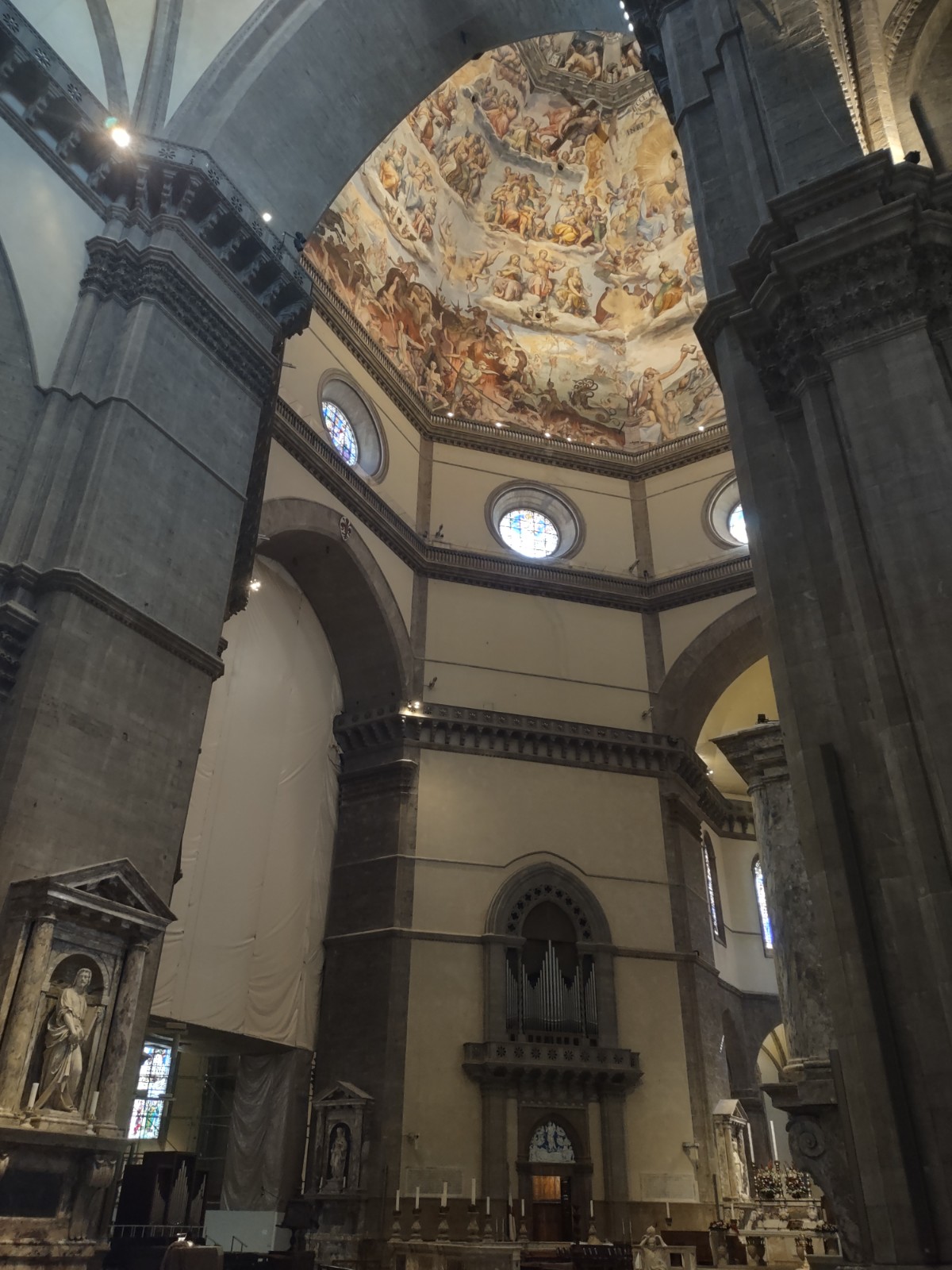
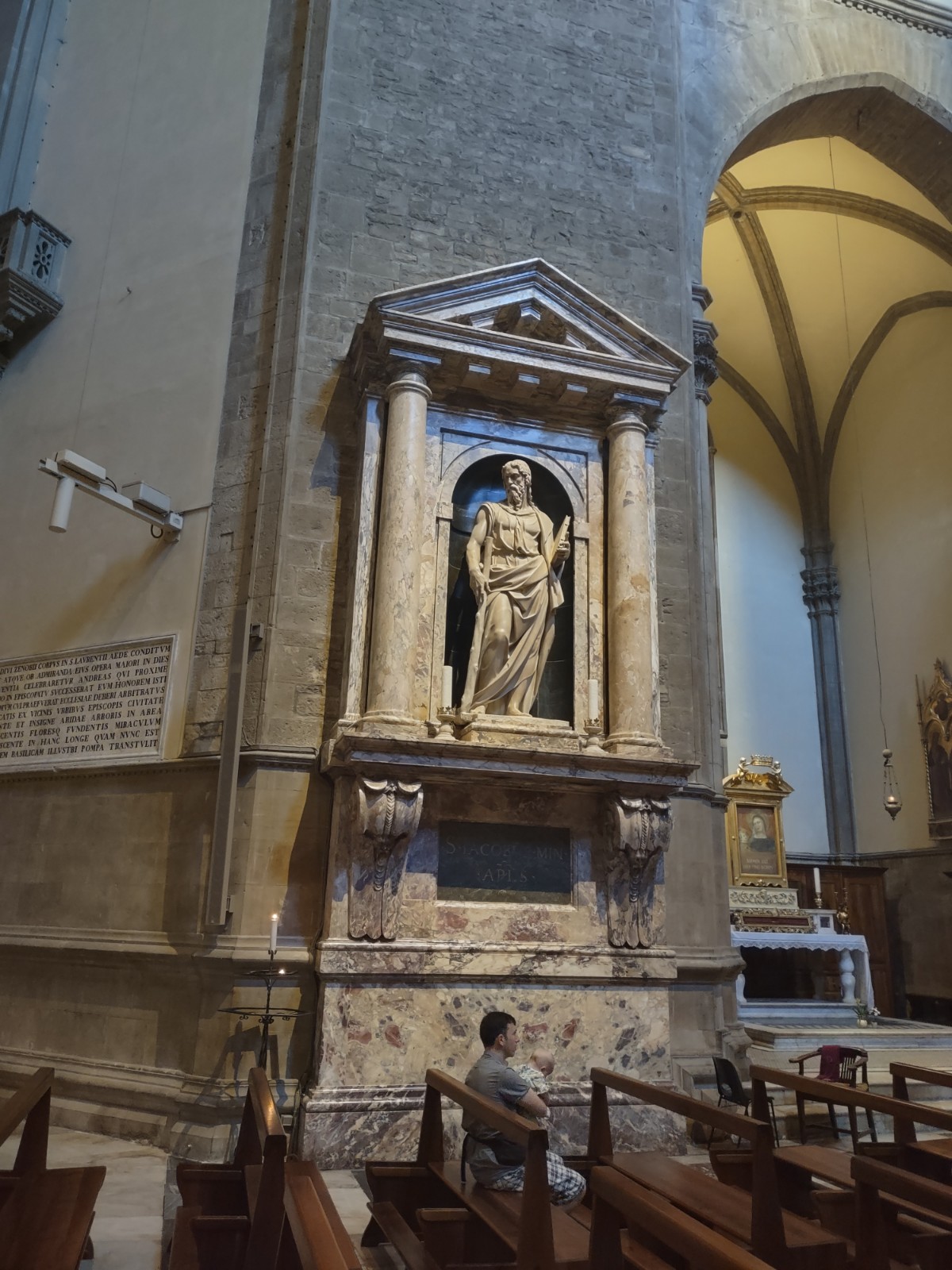
The next morning, Sunday June 26th, we got going early and attended mass at the Duomo. Given its rather extravagant exterior, the interior of the seemed a bit understated (a reminder that they were constructed at different points in time) but we were a bit taken by the underside of the Brunellesci’s dome, a piece by artist Giorgio Vasari entitled Judgement Day. It’s an enormous work with hundreds figures which include both angels and demons helping and hindering people who are presumably trying to make their way to heaven through concentric layers not unlike Dante’s circles of hell. Colleen was particularly captivated by the use of foreshortening and perspective in this piece and noted that you could see the underside of the feet of the people climbing to the oculus at the center.



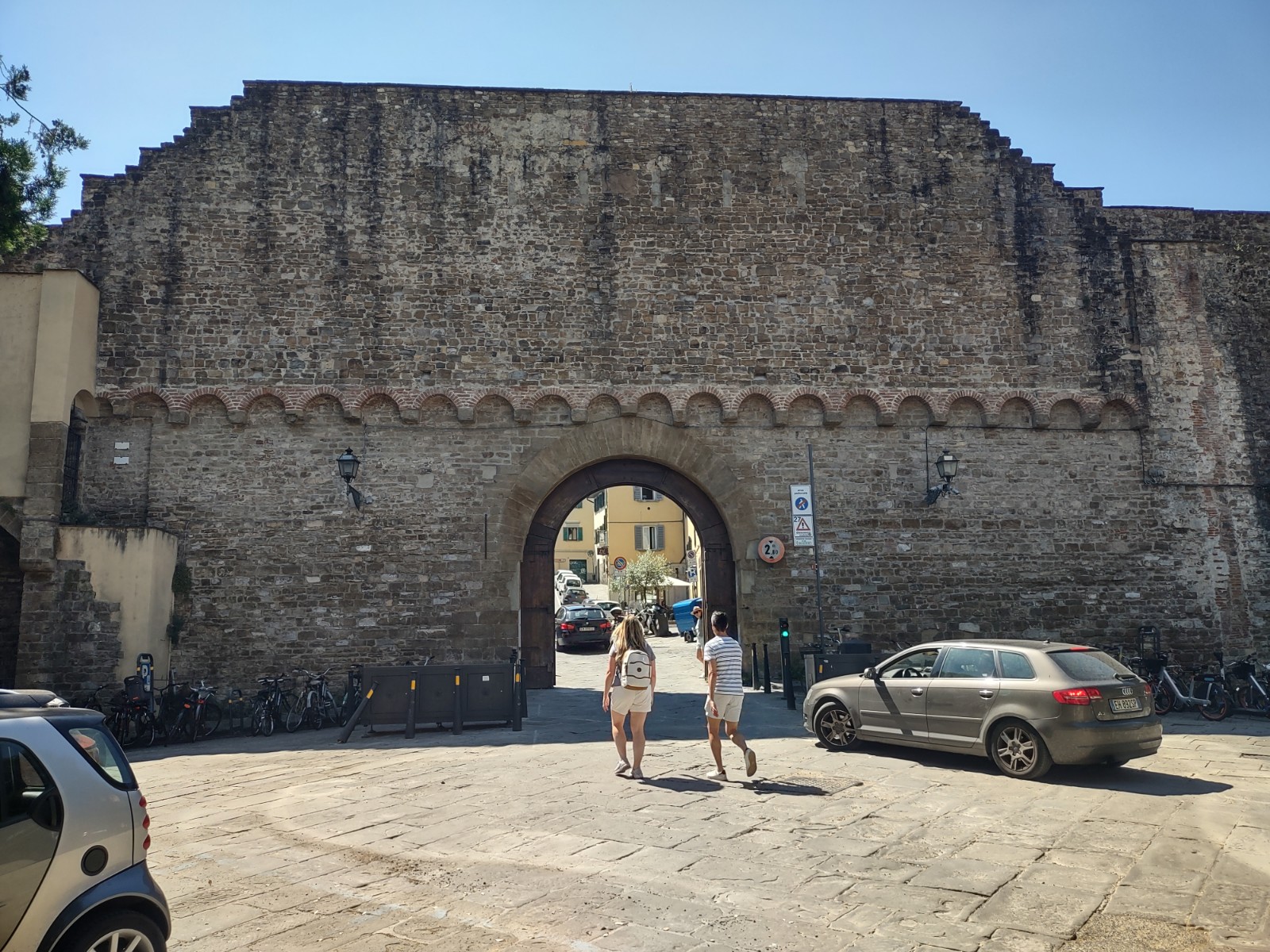
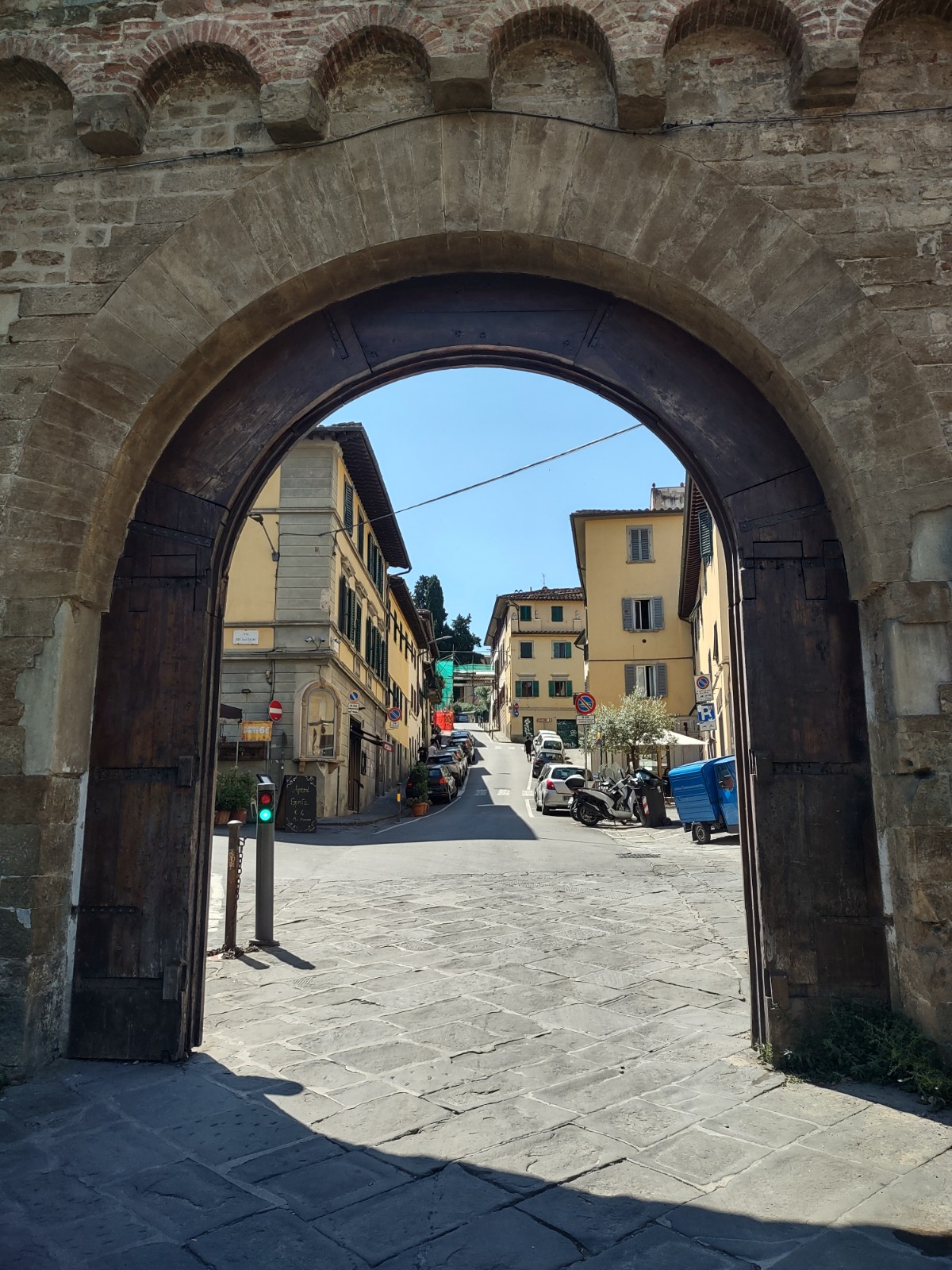
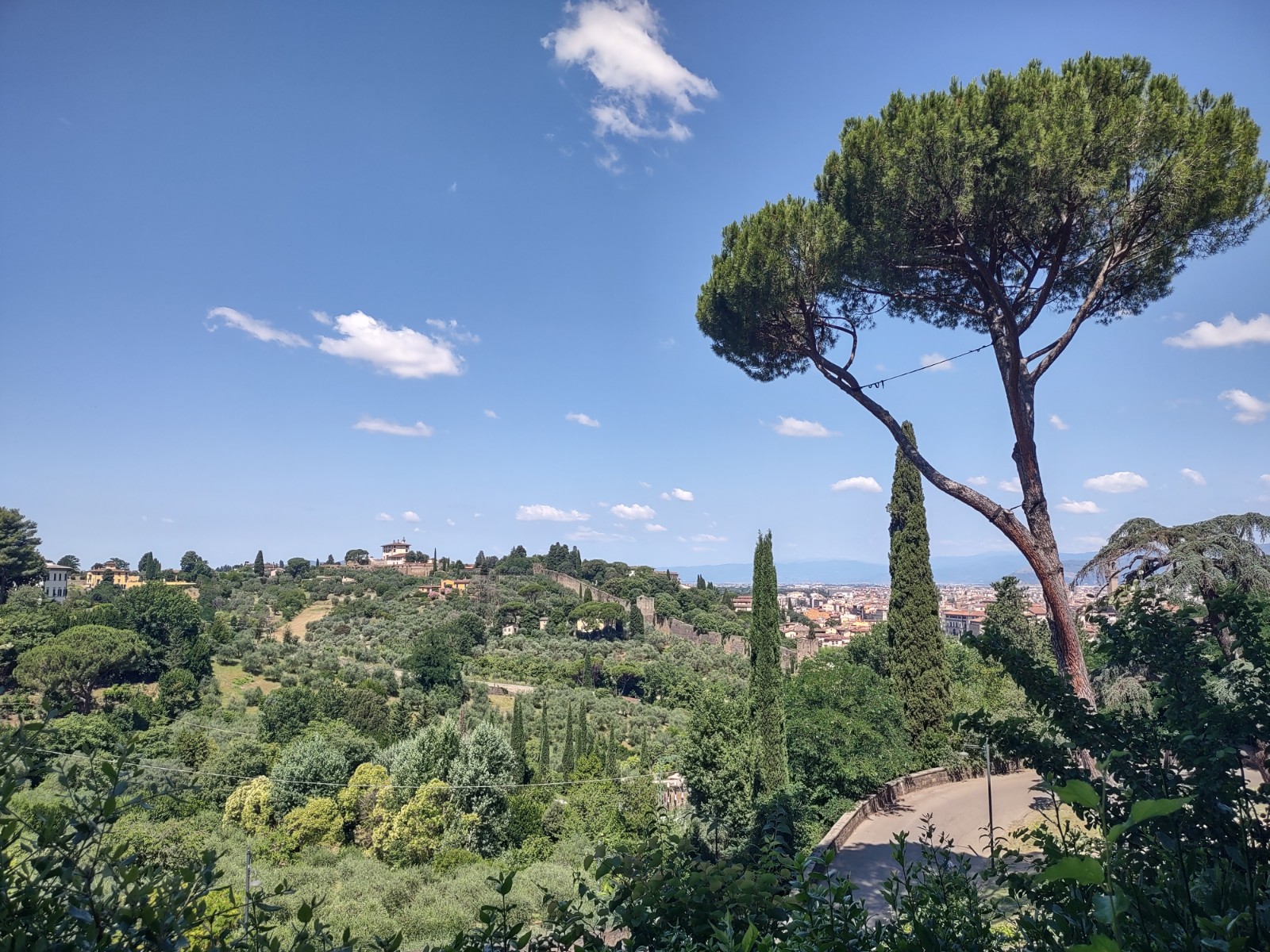
After mass, we walked up the hill south of Santo Spirito to the Piazzale of Michelangelo, an open plaza with a spectacular view across the Centro Storico. As we had been up pretty late for a full day excursion planned for Monday and we’re back on the road on Tuesday, we decided to get home early and do some laundry, then relax, have dinner, and get ourselves packed and organized.


Remote Yoga in Florence
I’m happy to report that when yoga is challenging to find in person I have been returning to my home studio via zoom. One of the silver linings from the pandemic has been the ease with which instructors can share their classes online. So, even though their early morning classes occur in our afternoons, it has been really nice to see and participate in class with some of my favorite yogis at Ohm Grown in Collingswood.
Cinque Terre
Knowing that we had seven days in Florence, we began looking at options for a half- or full-day excursion out of the city and found several which mostly offered a wine and/or cheese tasting experiences in the Tuscan countryside. But then we came across a tour which promised to (more or less) cover the string of towns known as Cinque Terre in a single (albeit very long) day. As I alluded to at the start of this installment, our original itinerary for Italy included Cinque Terre and imagined five or more days, romantically strolling from town to town on foot, by train, or by boat, and staying in quaint inns with amazing views sipping good wine. But, after hearing about the crowds that were likely to be there in July, we scratched it in favor of some hopefully less-crowded places.
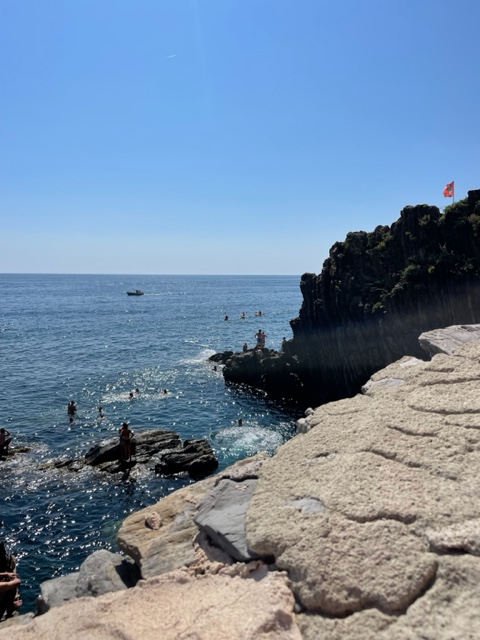
If you’re not familiar with the Cinque Terre (Five Lands), it is a group of five small fishing villages, all with a population less than 1,500 (two less than 400) strung along a short stretch of the Ligurian coast between Genoa and Pisa, which are similarly picturesque with brightly painted houses climbing from the sea up the mountains and cliffs. The tour we found promised to visit four of the five towns, by either train or boat, in one 12-1/2 hour day which, accounting for bus travel to and from Florence, translated to something approaching 2 hours per village, including travel in between. With some skepticism about how much you could really see and still concerned about how crowded it might be, we figured it was worth the risk and booked the lunch on your own option which gave us more time at the second stop to maybe even hit the beach. Similar to the day tour we took from Paris to Mont Michel a couple of months earlier, the price of the tour included the cost of all transport and a guide who would get you from one place to the next and then you were on your own until the next departure time and place.
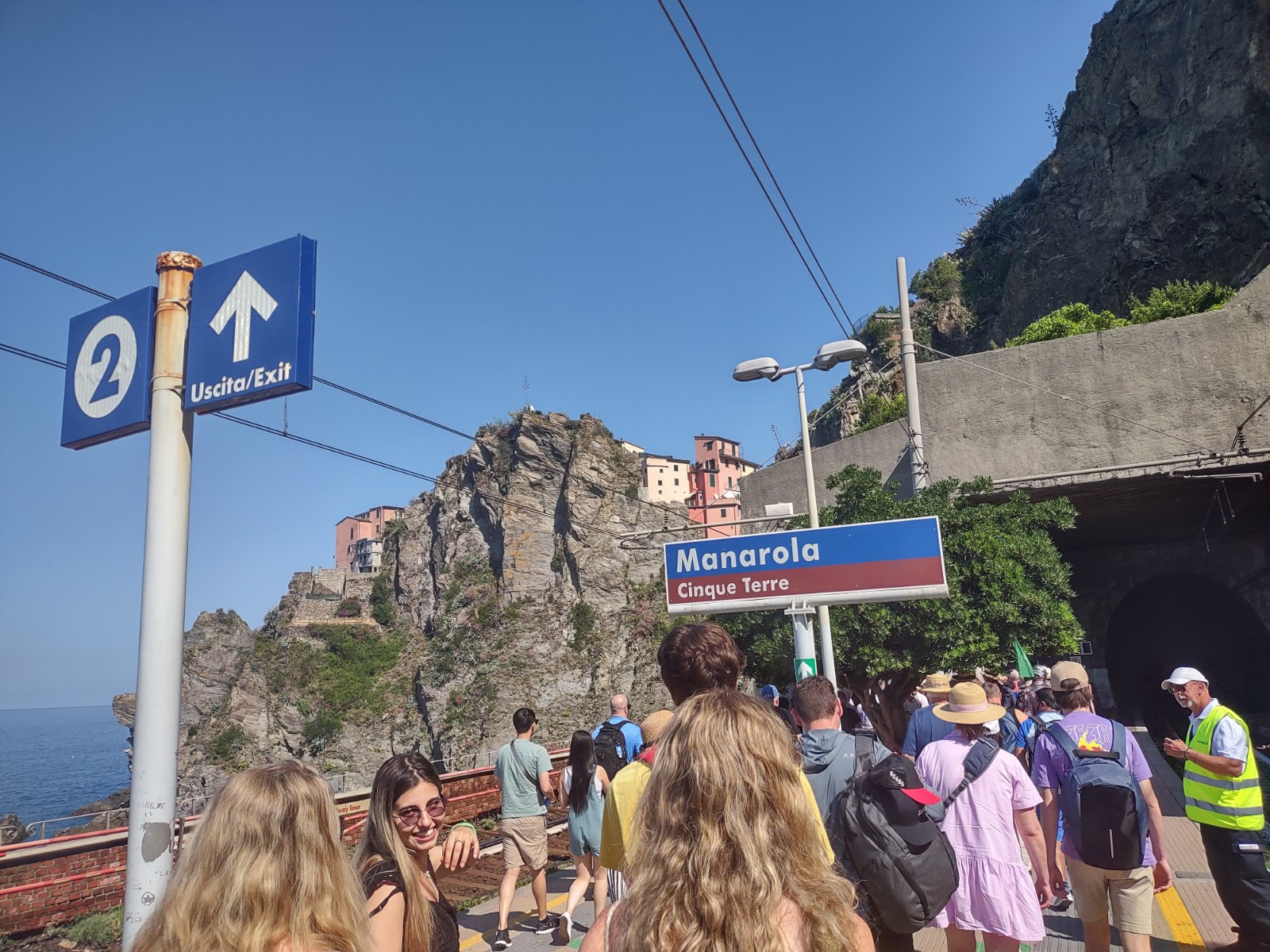
The tour started pretty well, beginning with a 7:00 AM bus ride from Florence to La Spezia, a port city of about 90,000 which is more or less the southern gateway to La Cinque Terre. From La Speiza we had a very short tram ride to Manarola the first and smallest of the villages we would be visiting, with a resident population of about 350.

We arrived in Manarola around 9:30 AM and, after some brief instructions about walking and hiking options and confirmation of the next meet-up point and time Juliano, our guide, sent us on our way. We went with one of his walking options which started in the upper village and involved stairs up the mountain and hiking paths through patches of lemon trees, eventually dipping back down to the north side of the harbor. Manarola was an amazingly quaint and beautiful village and the views from the hiking path and harbor were spectacular, and, it was surprisingly uncrowded (as we later learned, only because it was still pretty early).
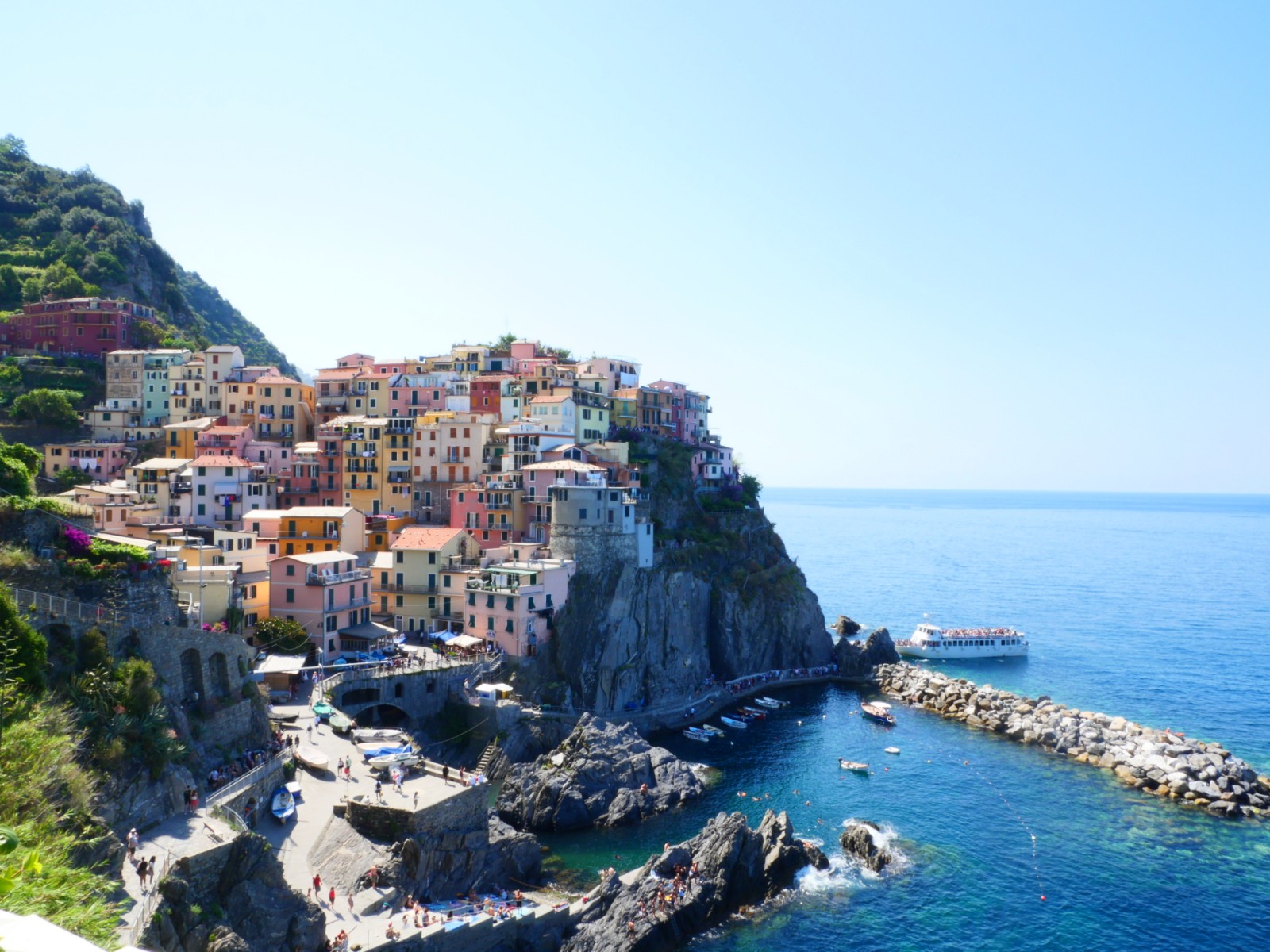
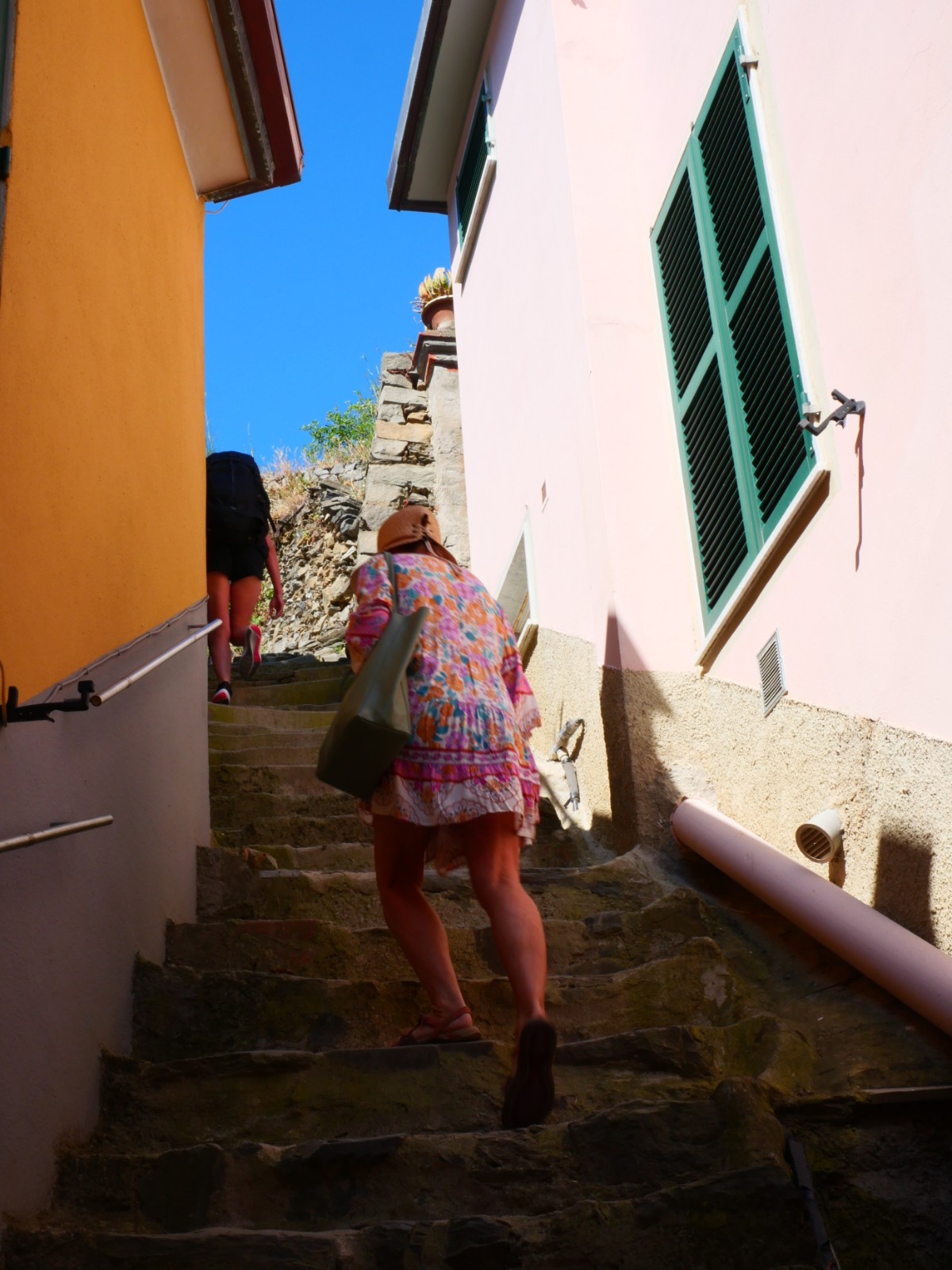
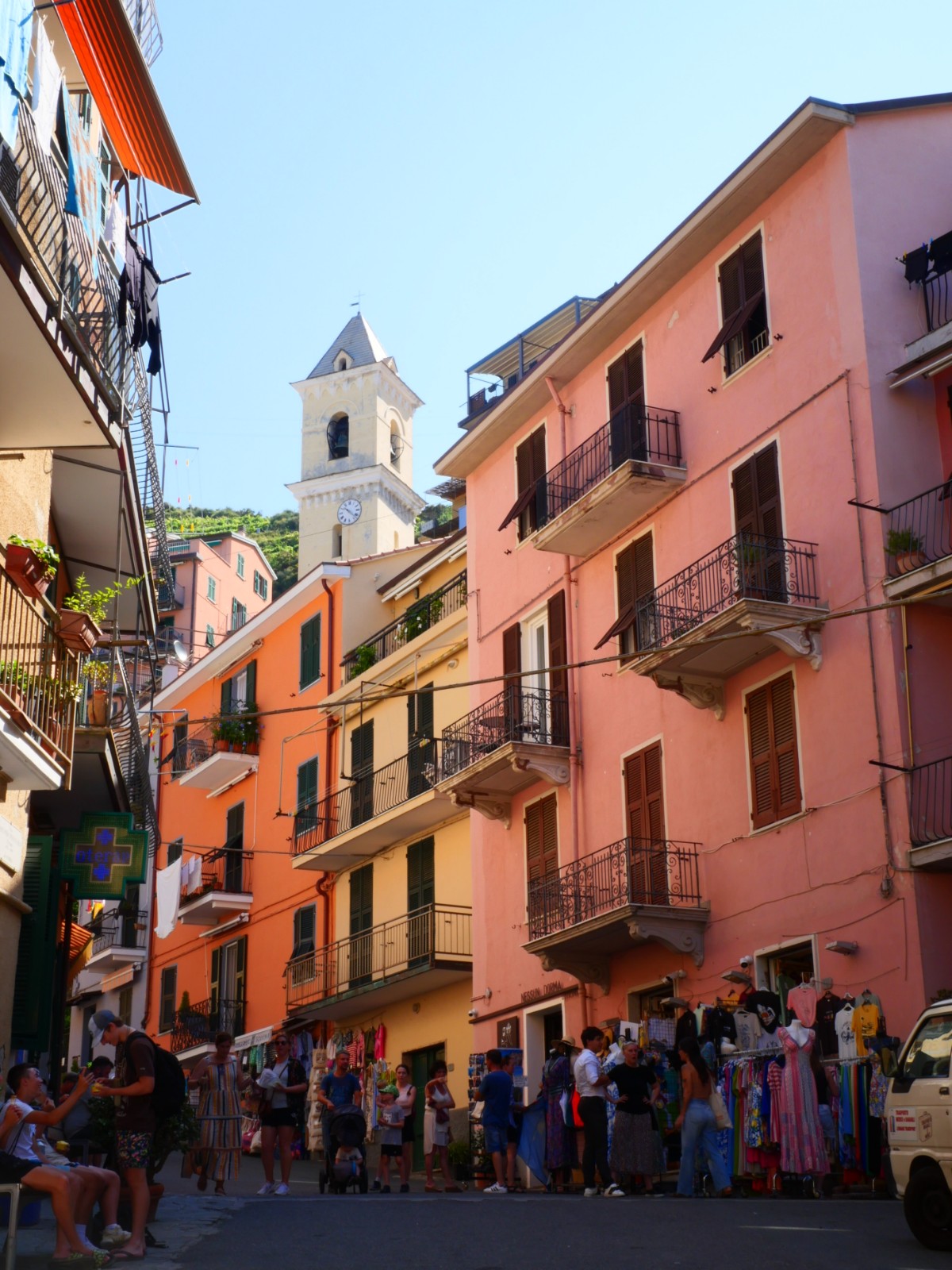
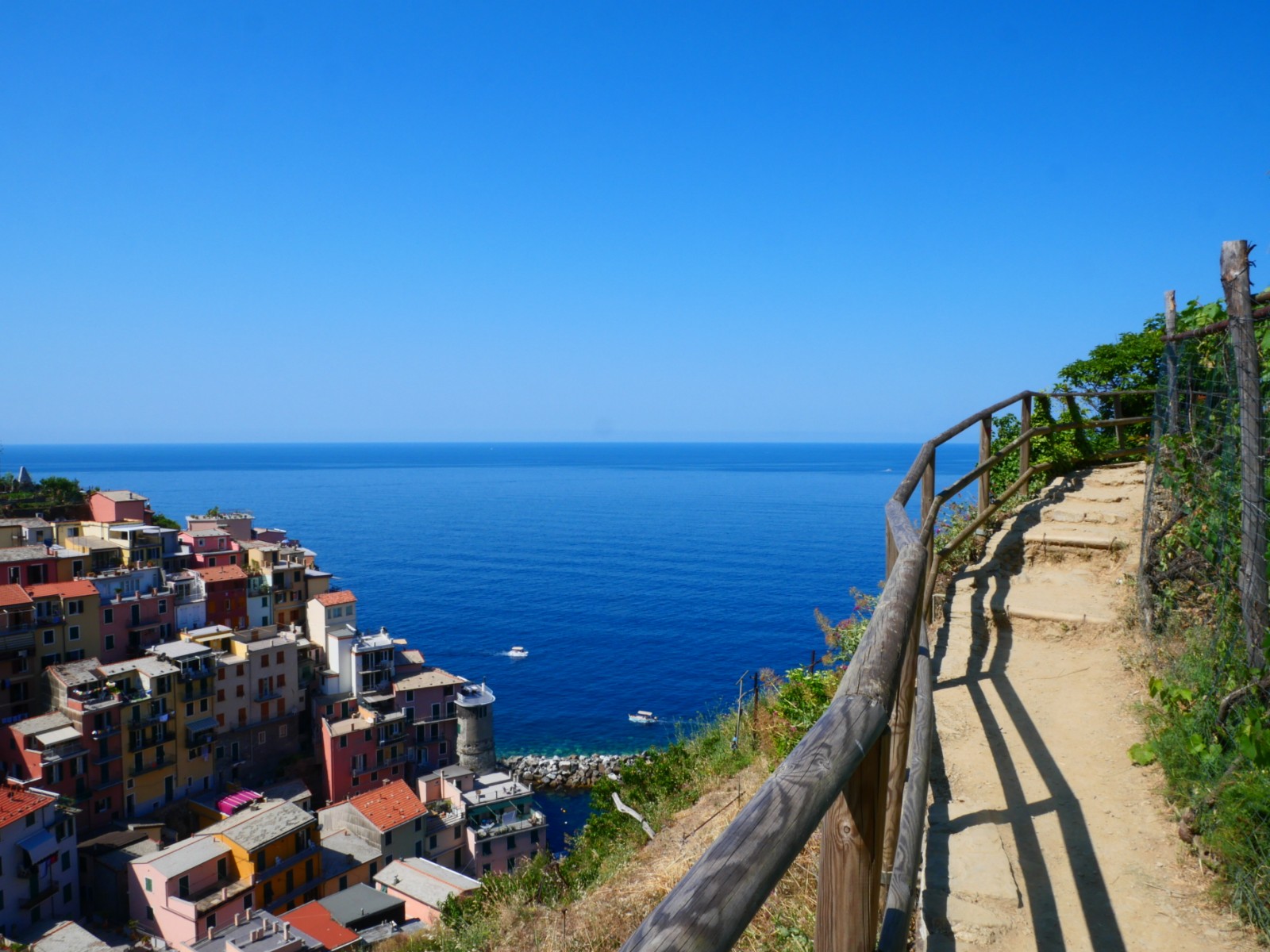
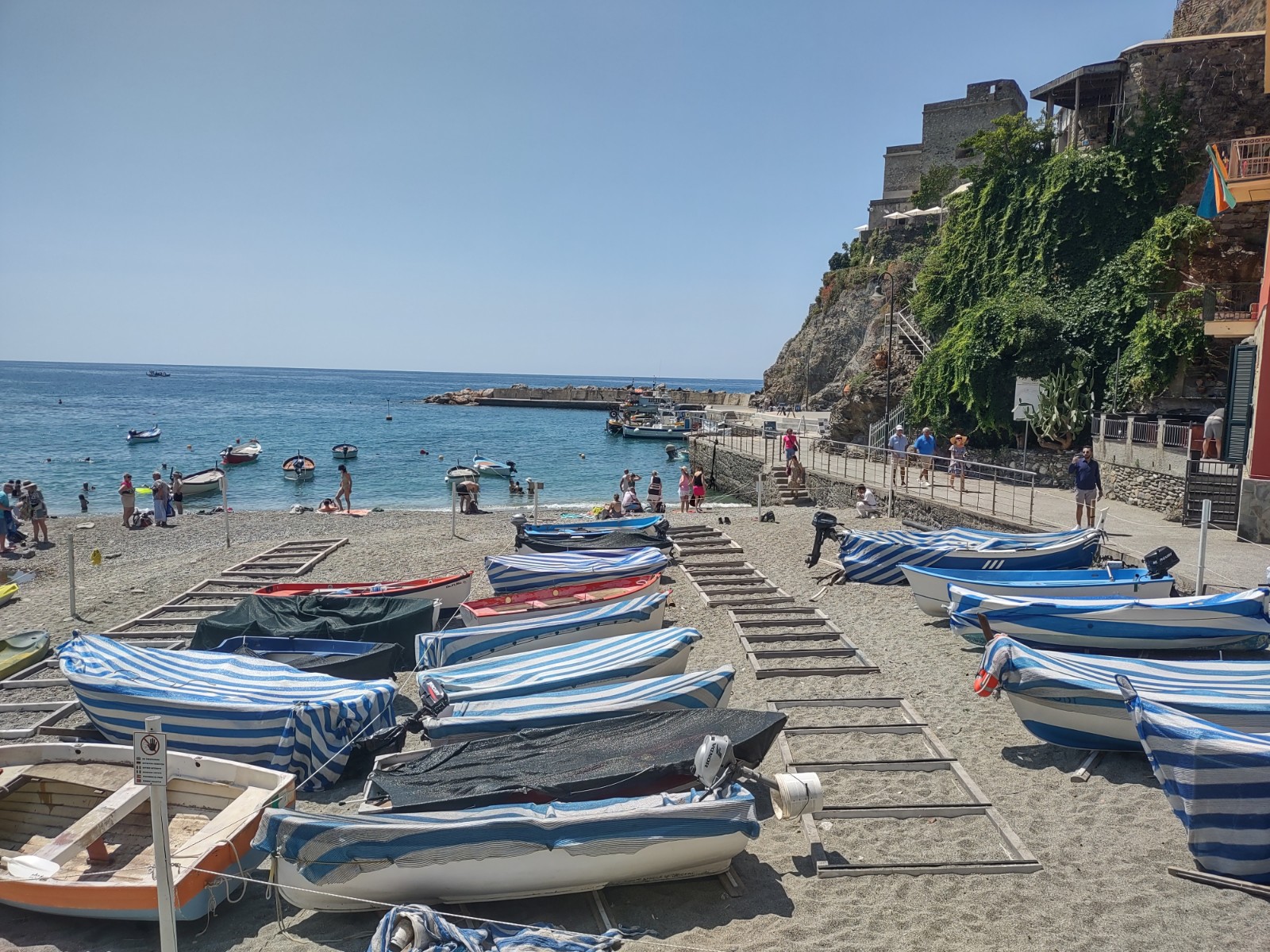
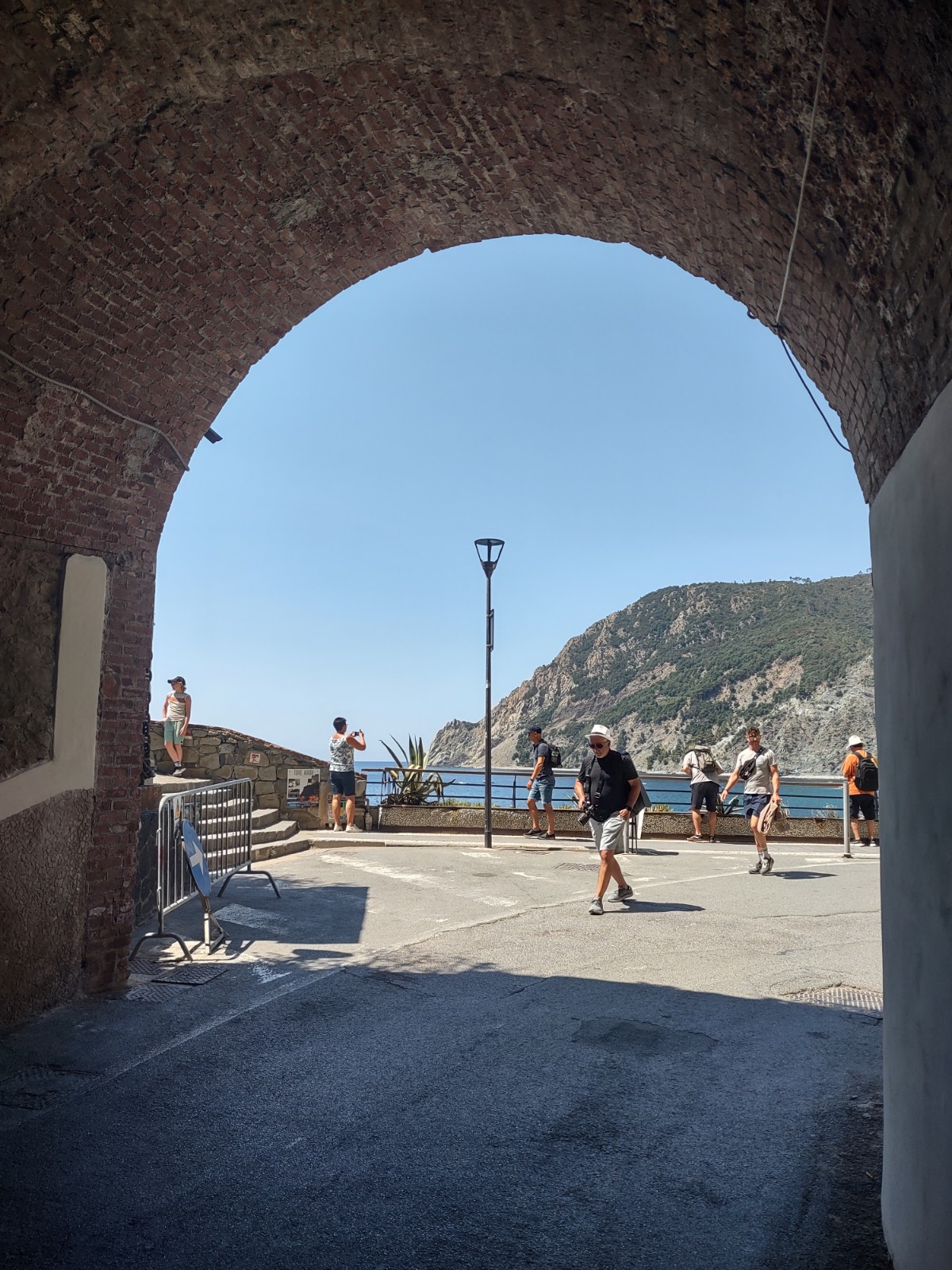
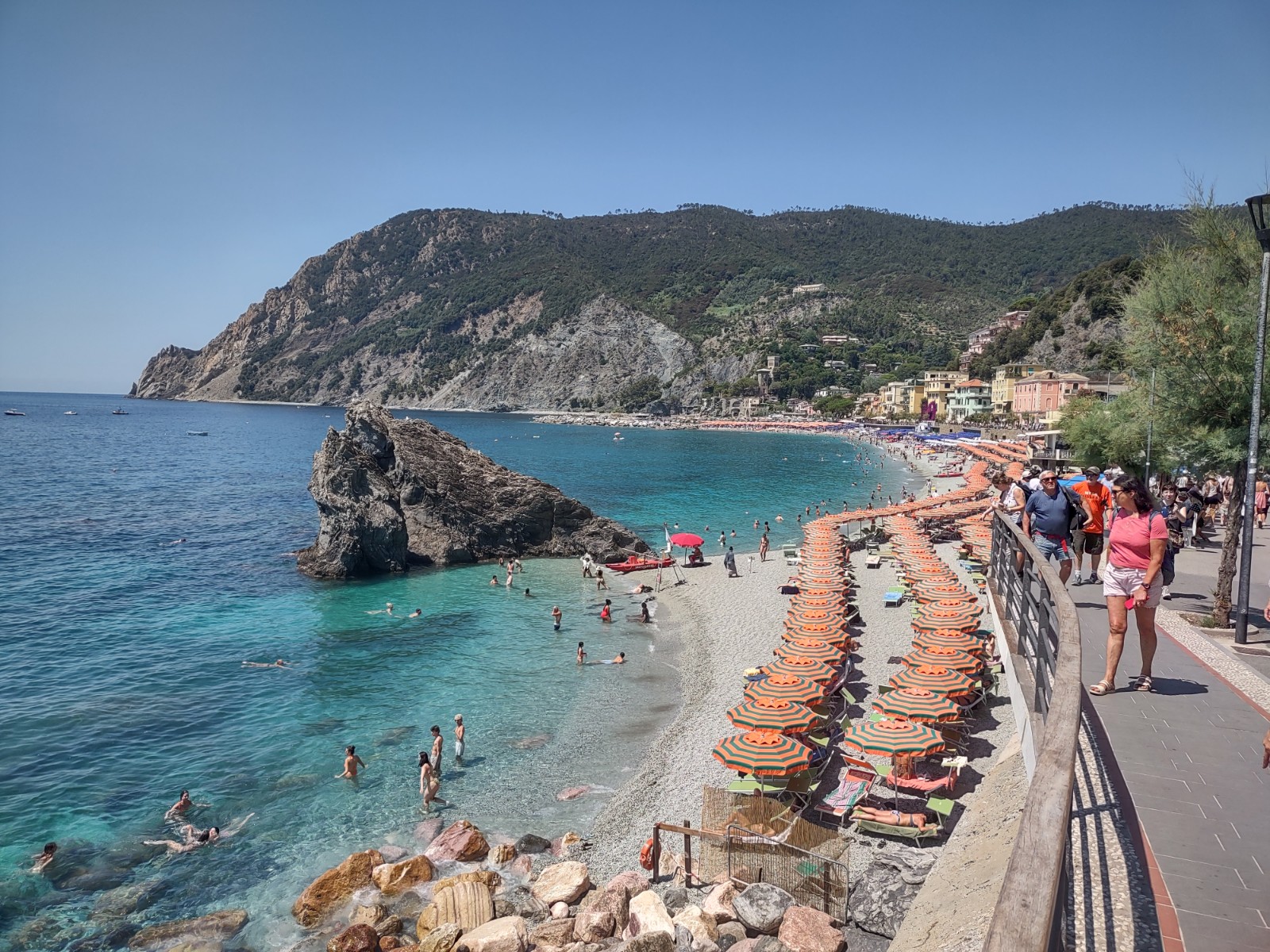
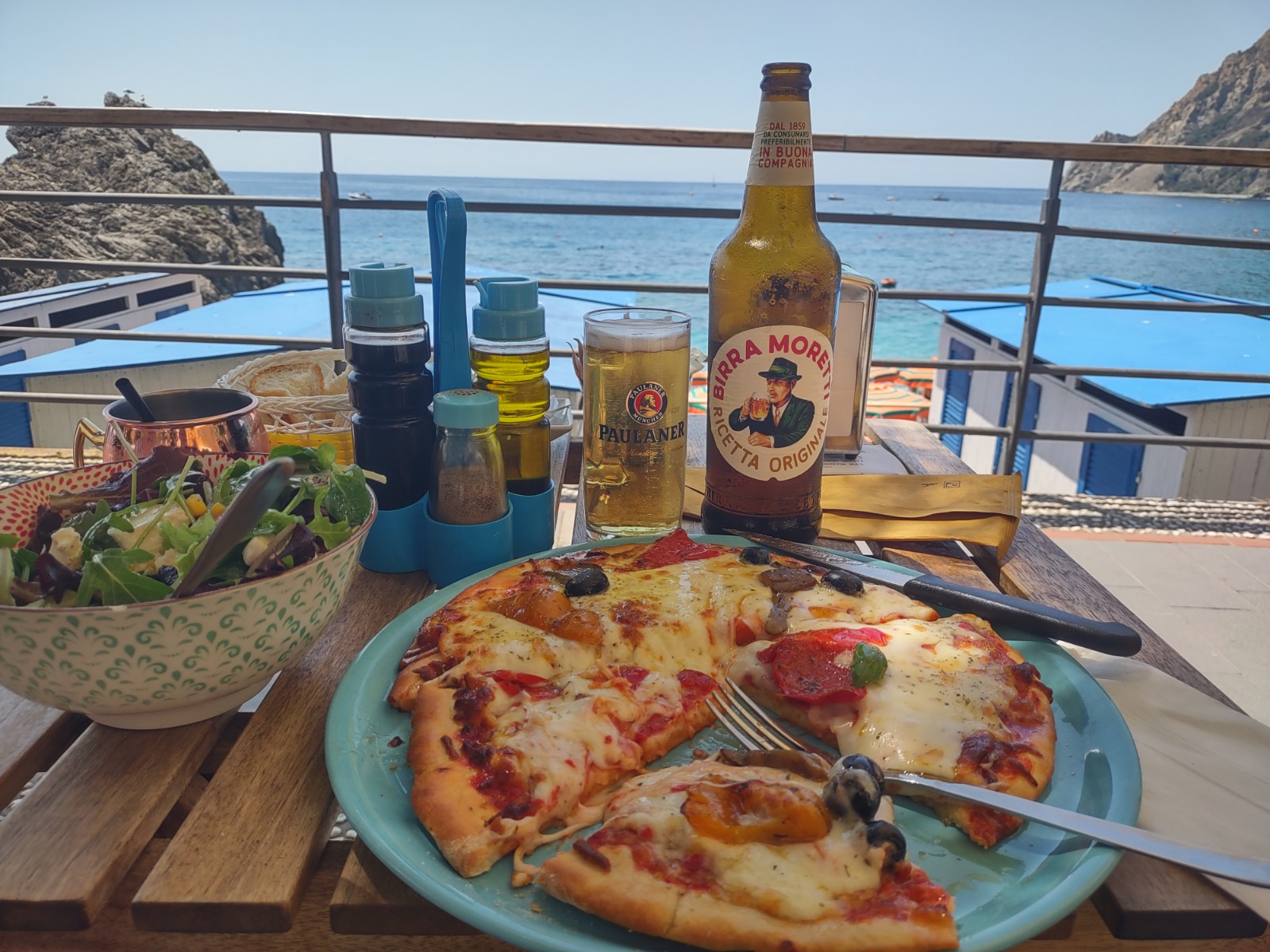
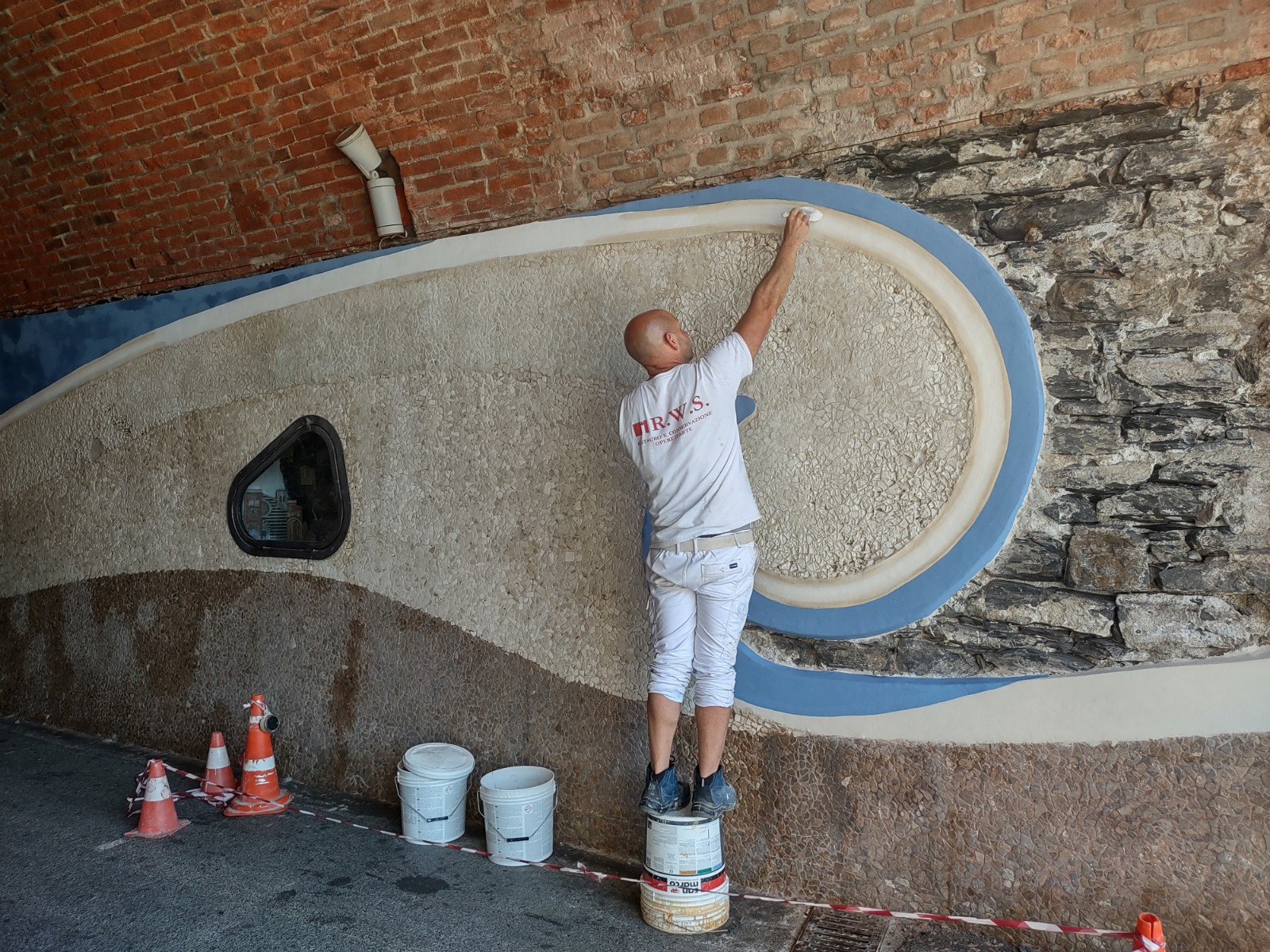
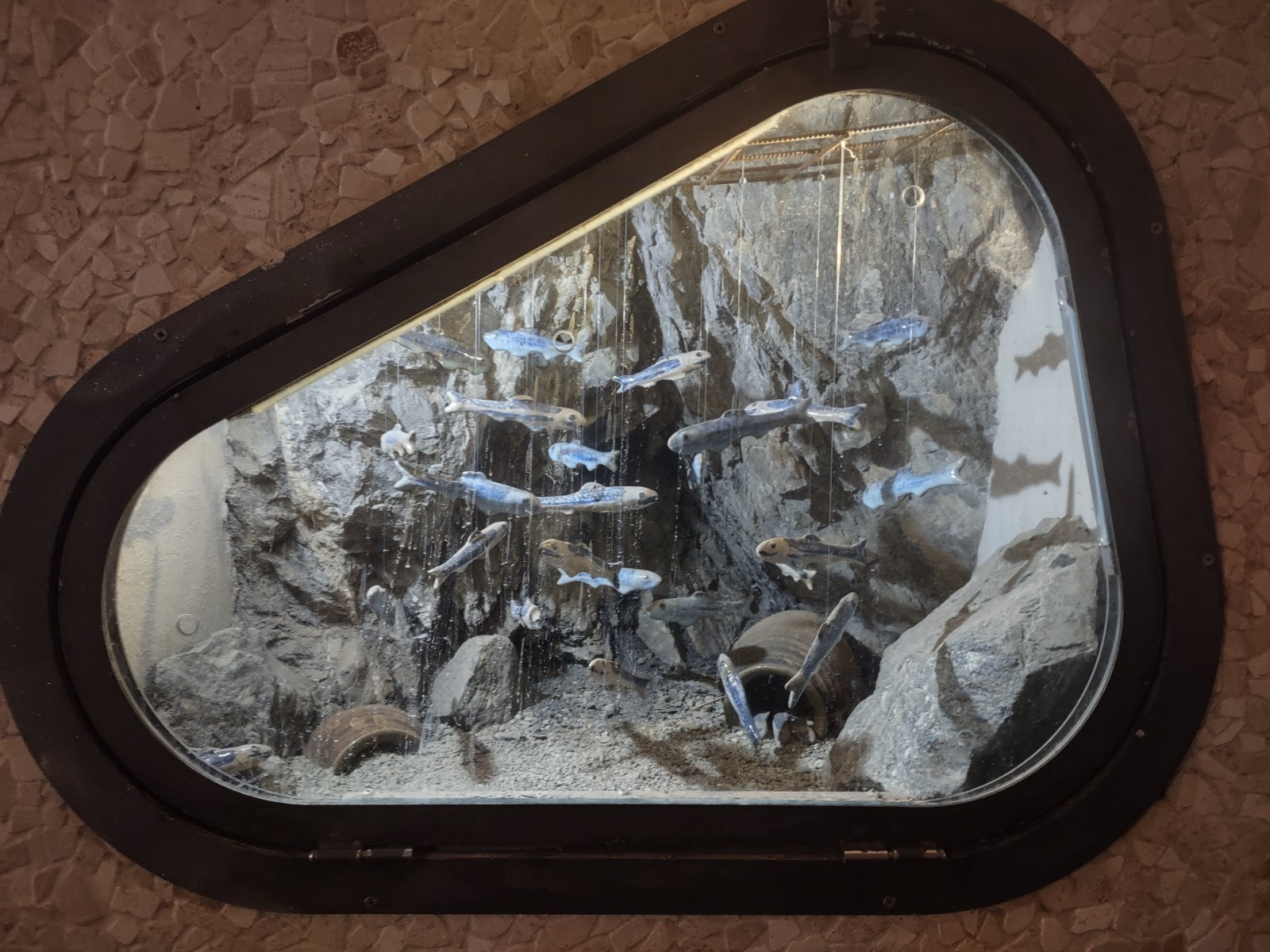
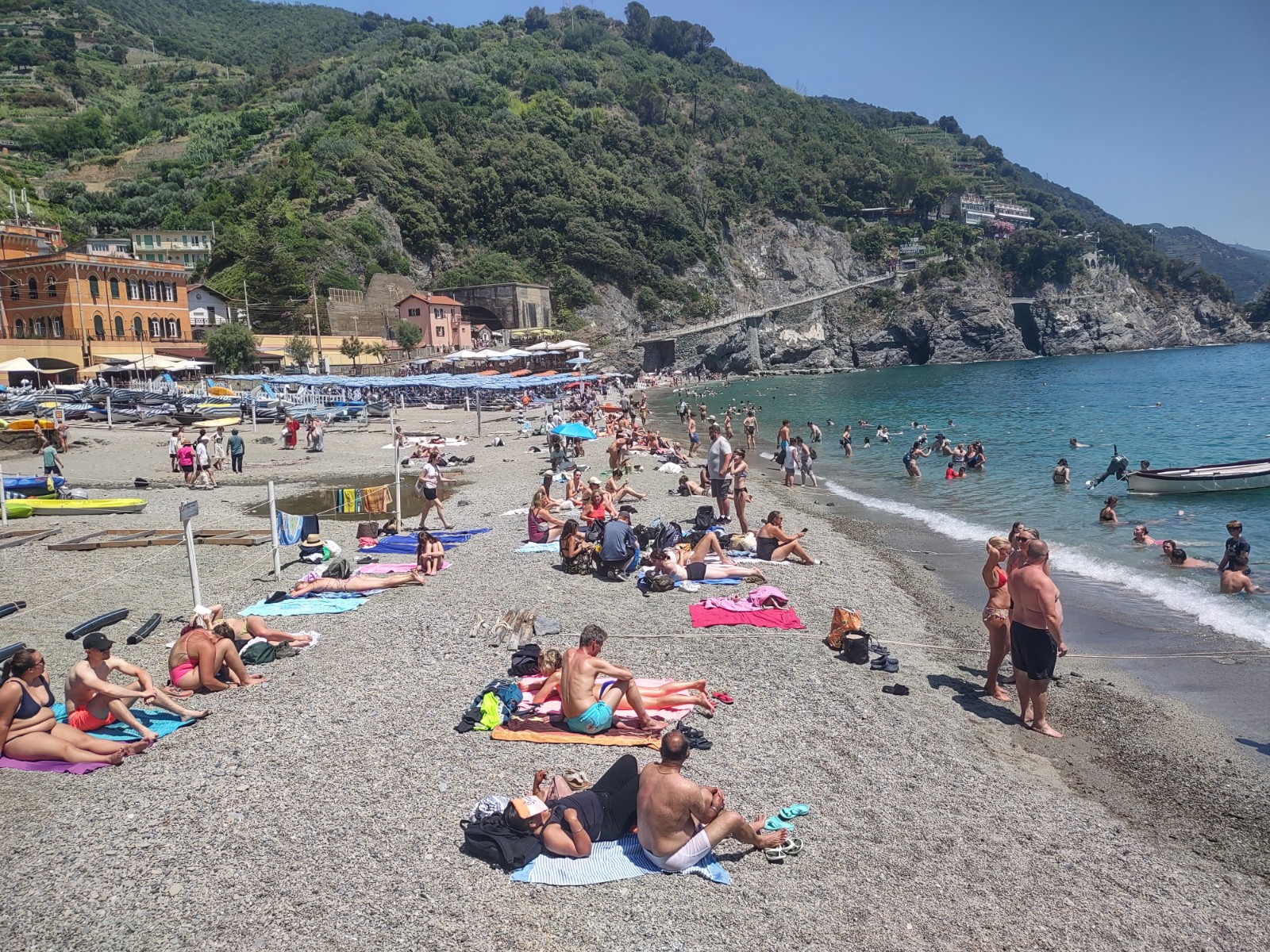
About an hour and a half later, we rejoined our group and boarded a train for our next stop, the village of Monterosso (the only one of the Cinque Terre with a sand beach) where we were hoping to have enough time for both lunch and maybe a little beach. Monterosso was also very beautiful and interesting in that it is made up of an older and a newer part which are separated by a spur of mountain and connected by both a path around the mountain and a tunnel (with some art work in progress) through it. By this time, the number of tourists had risen noticeably, and we were lucky to find a table for lunch overlooking the beach in the newer part of town. After some pizza and drinks, we decided that the beach in the older part of town had seemed less crowded and went back there and actually found a spot for a little time in the sand and surf before meeting our group at the next rendezvous point, the harbor, which was nearby.

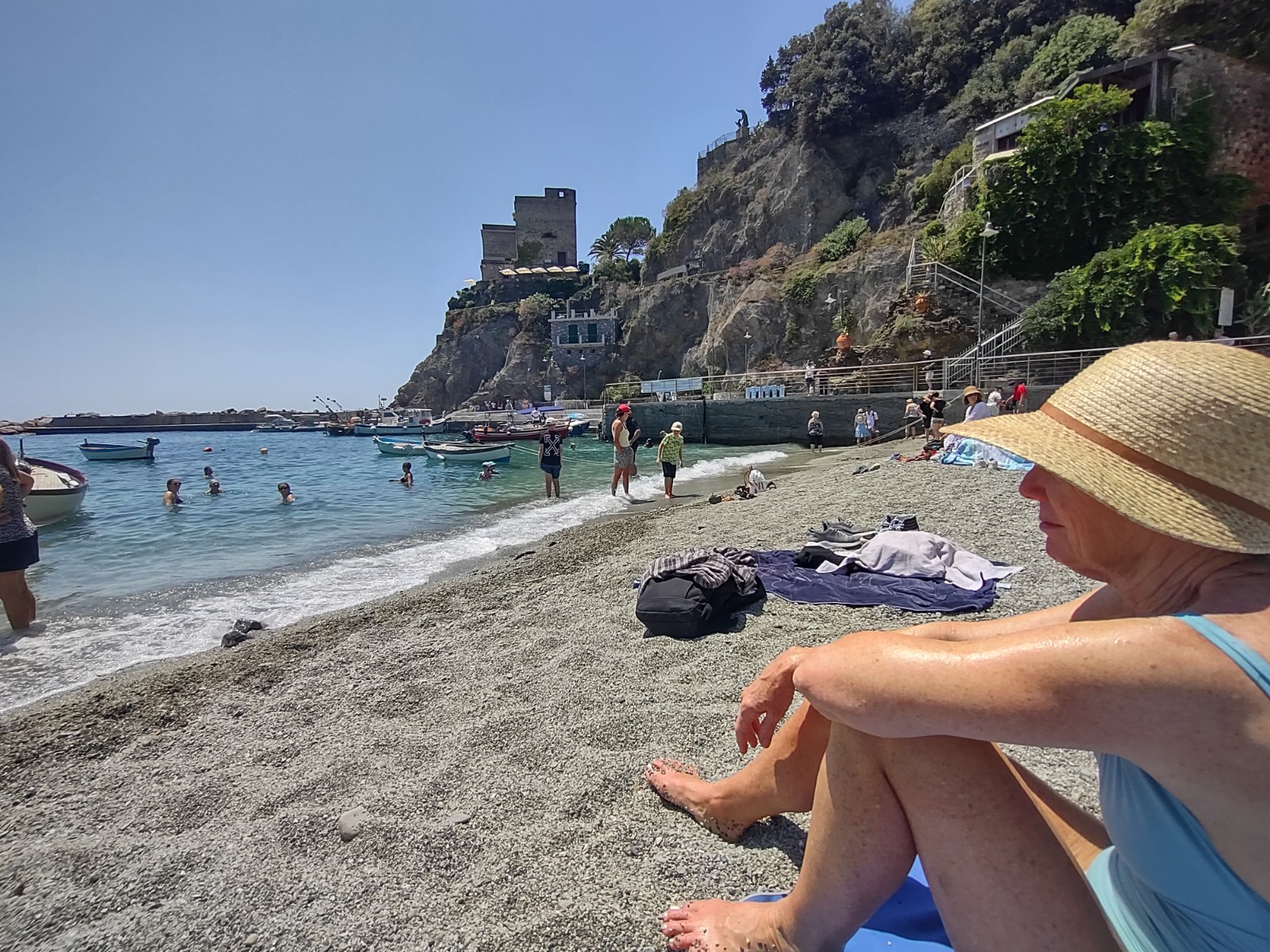
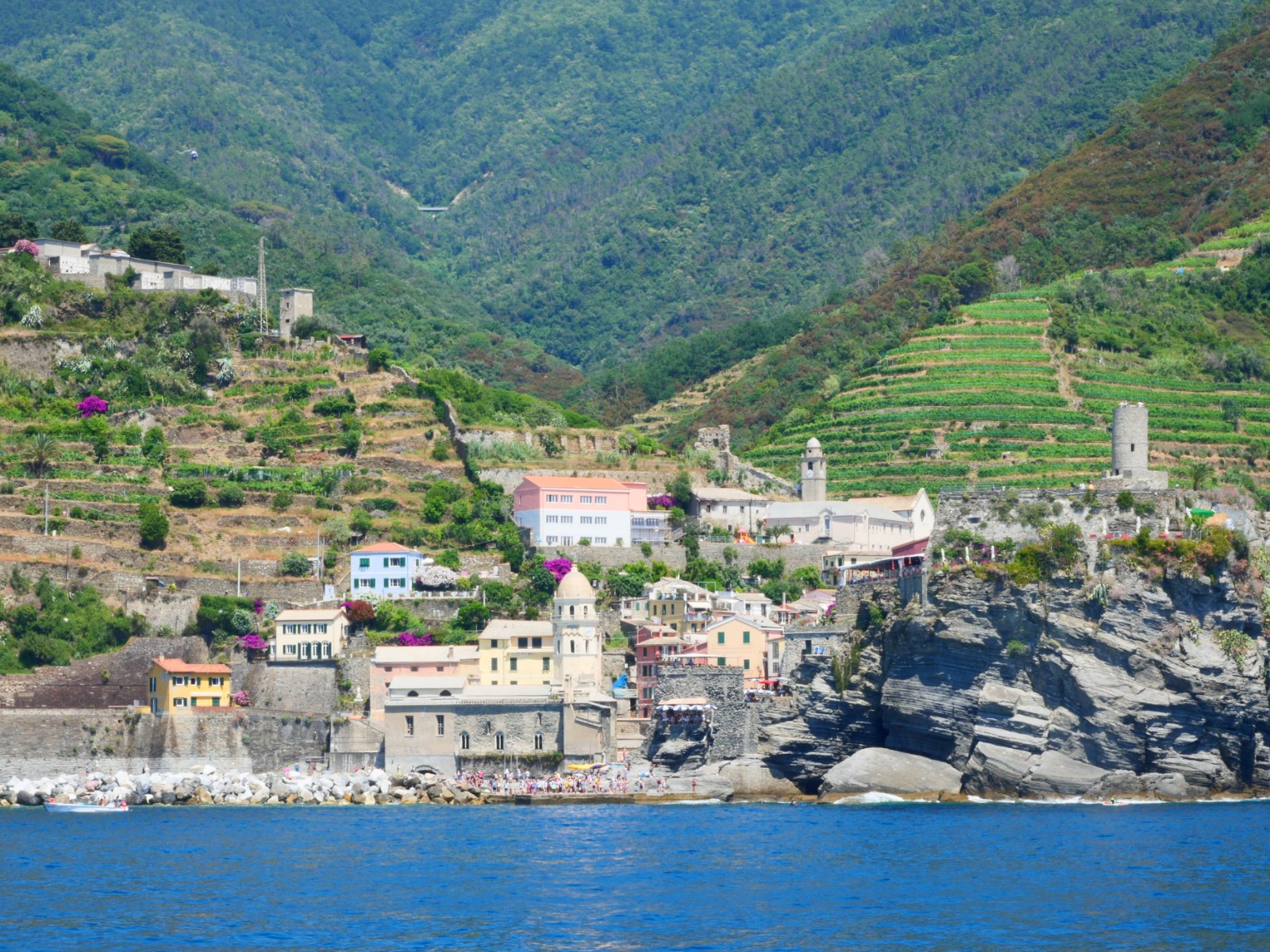
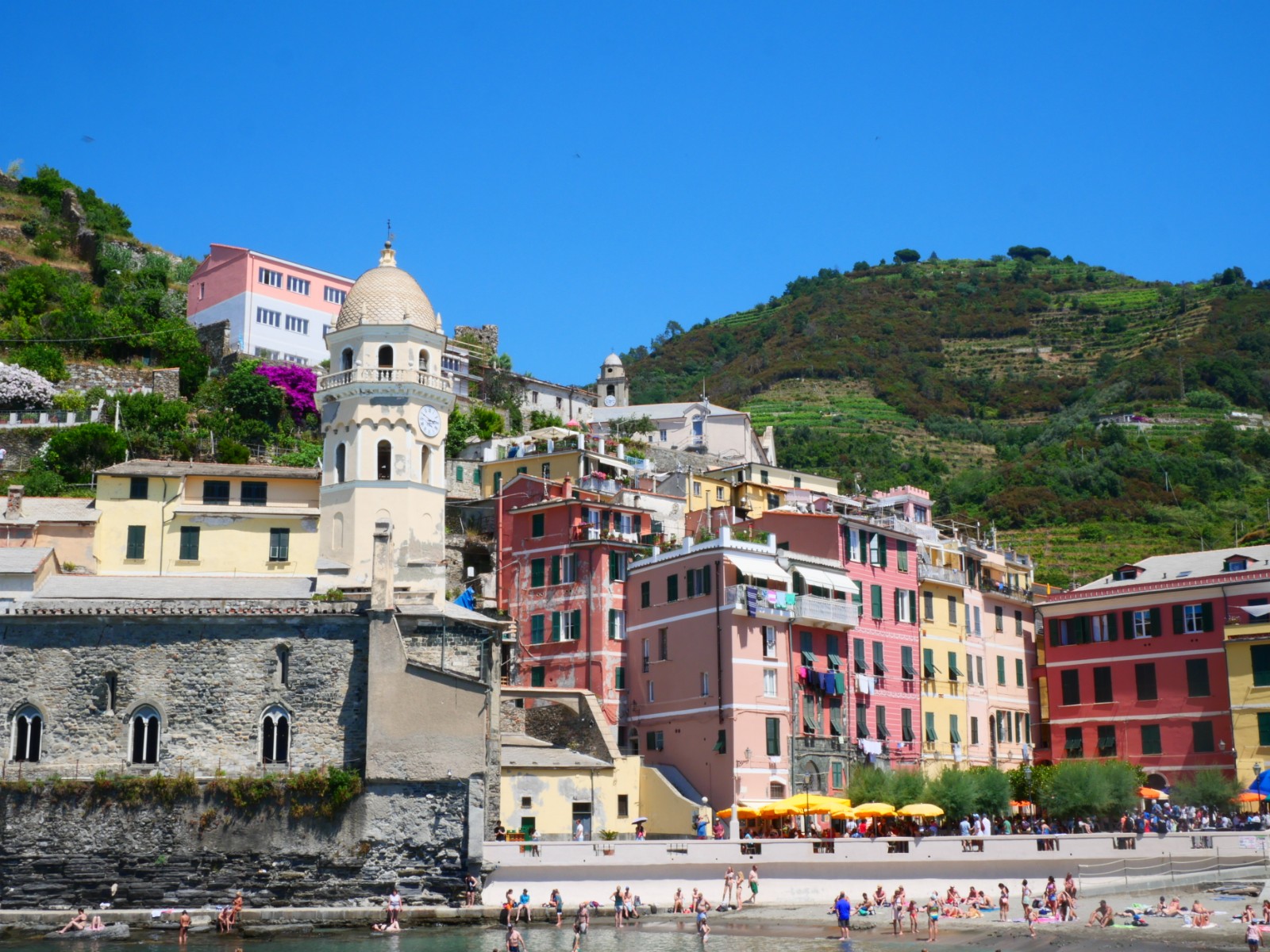
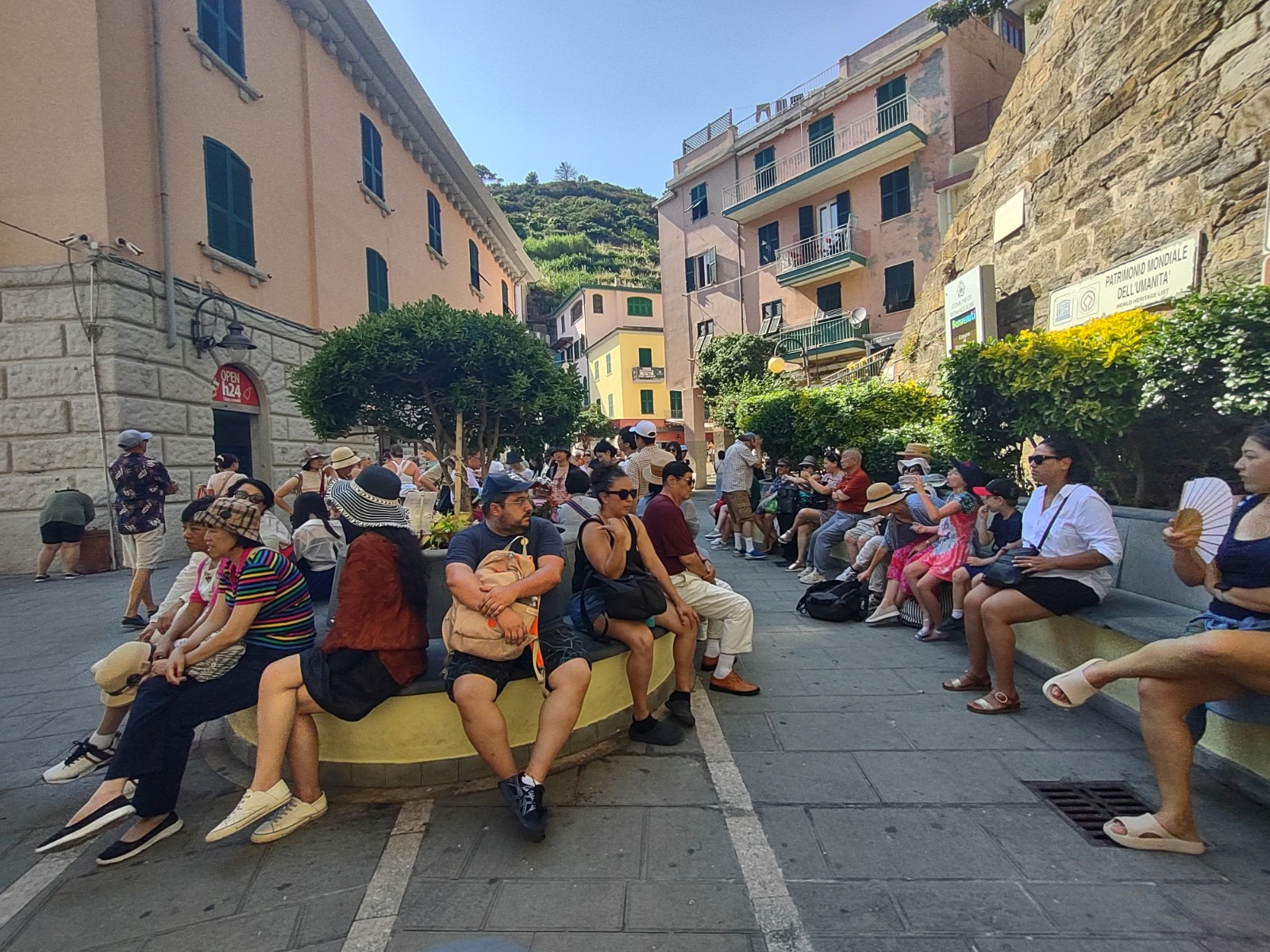
By the time we boarded the ferry which was to take us to our next destination, Vernazza, things had pretty much deteriorated into chaos. Trains and ferries were regularly cycling through at what seemed like 15-minute intervals and it appeared that 30 to 40 or more people were added to the crowds each time one did. Vernazza was also quite beautiful, particularly seen from the sea as we approached it on the ferry, but once on land, we were swallowed by the crowds. We did our best to stroll and enjoy the town, but eventually retreated from the crowds and blazing sun to a shady corner where we had a gelato before heading back through the tunnel to the crowded train station for our next rendezvous.

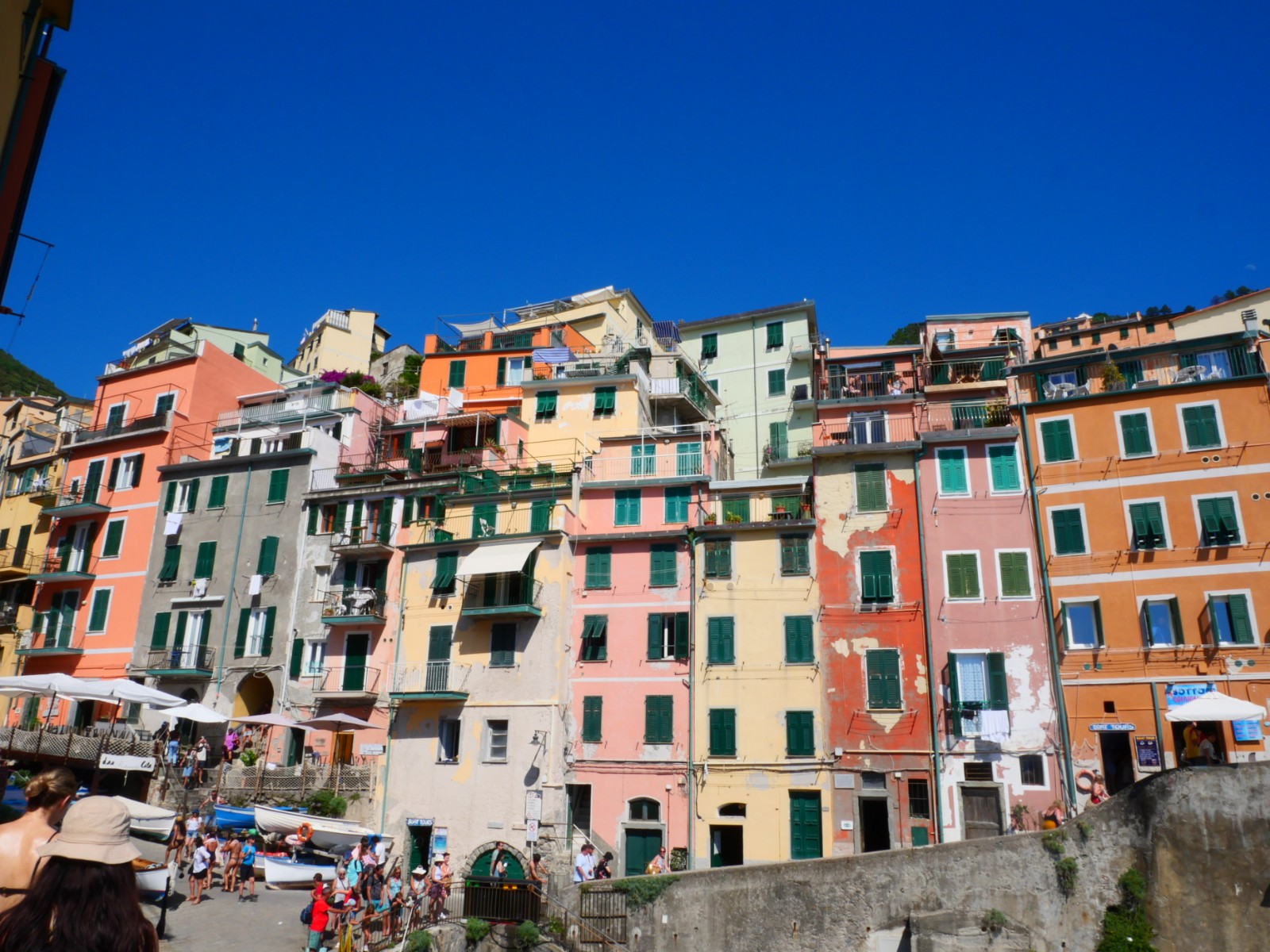

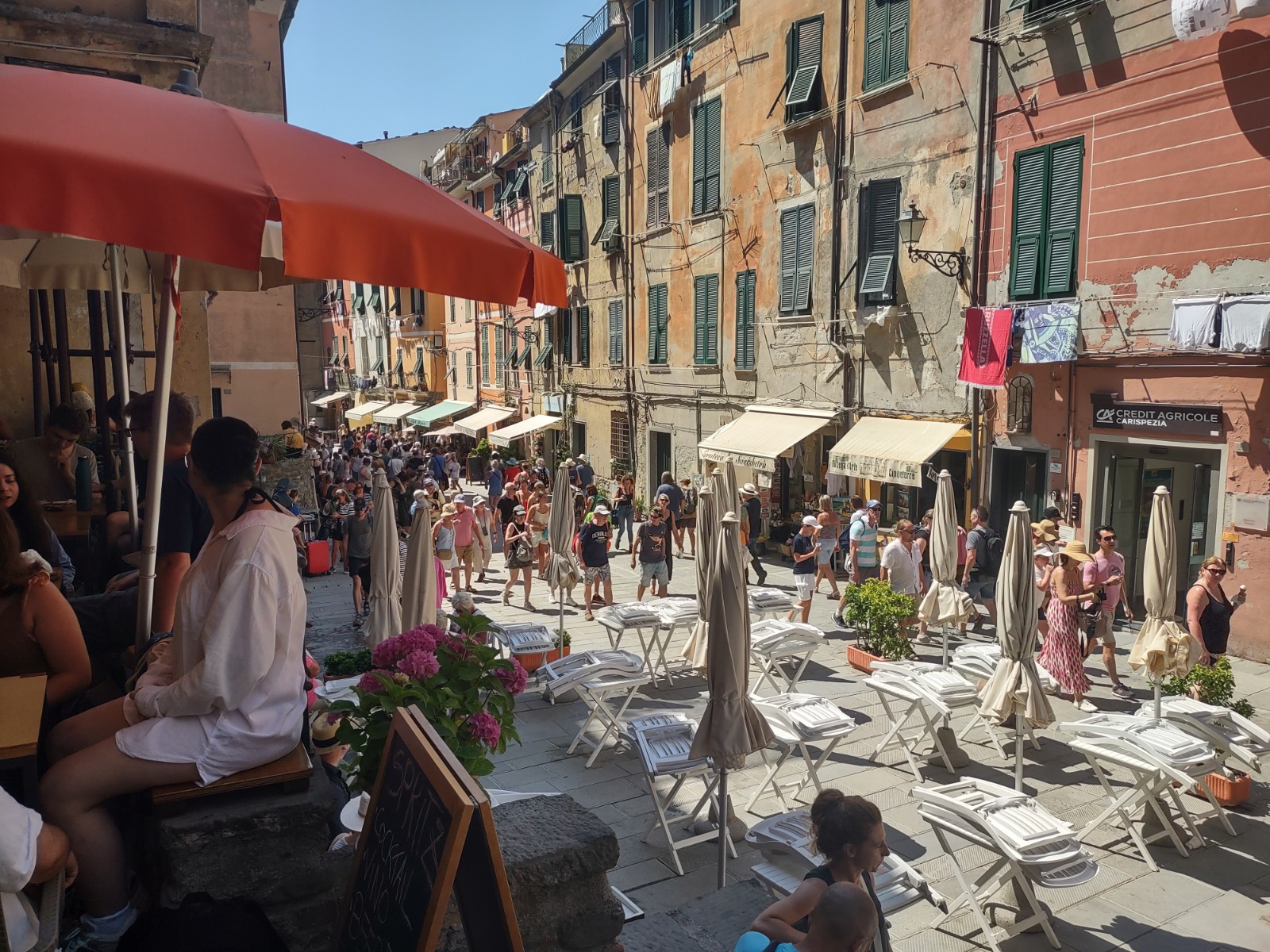
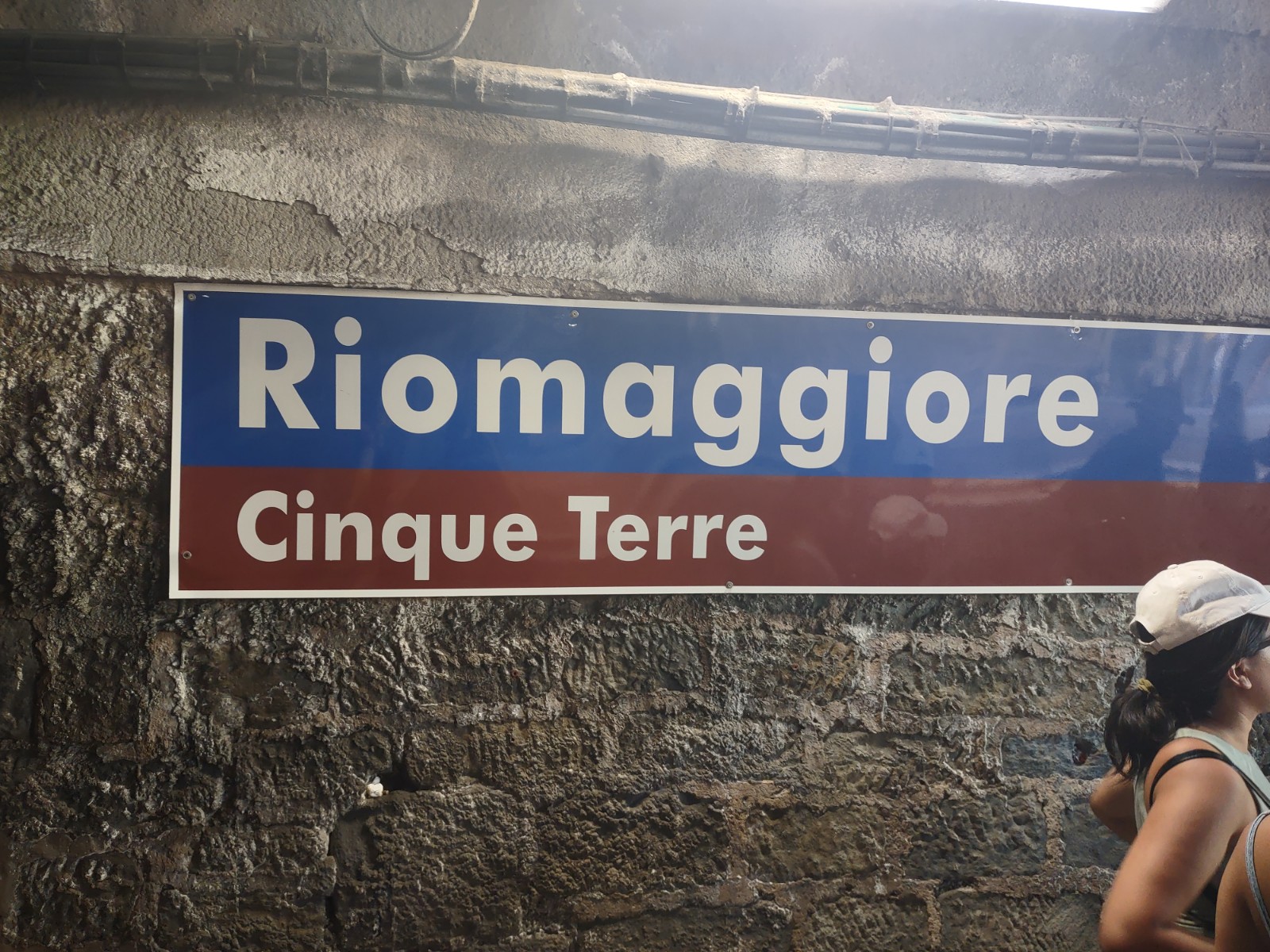
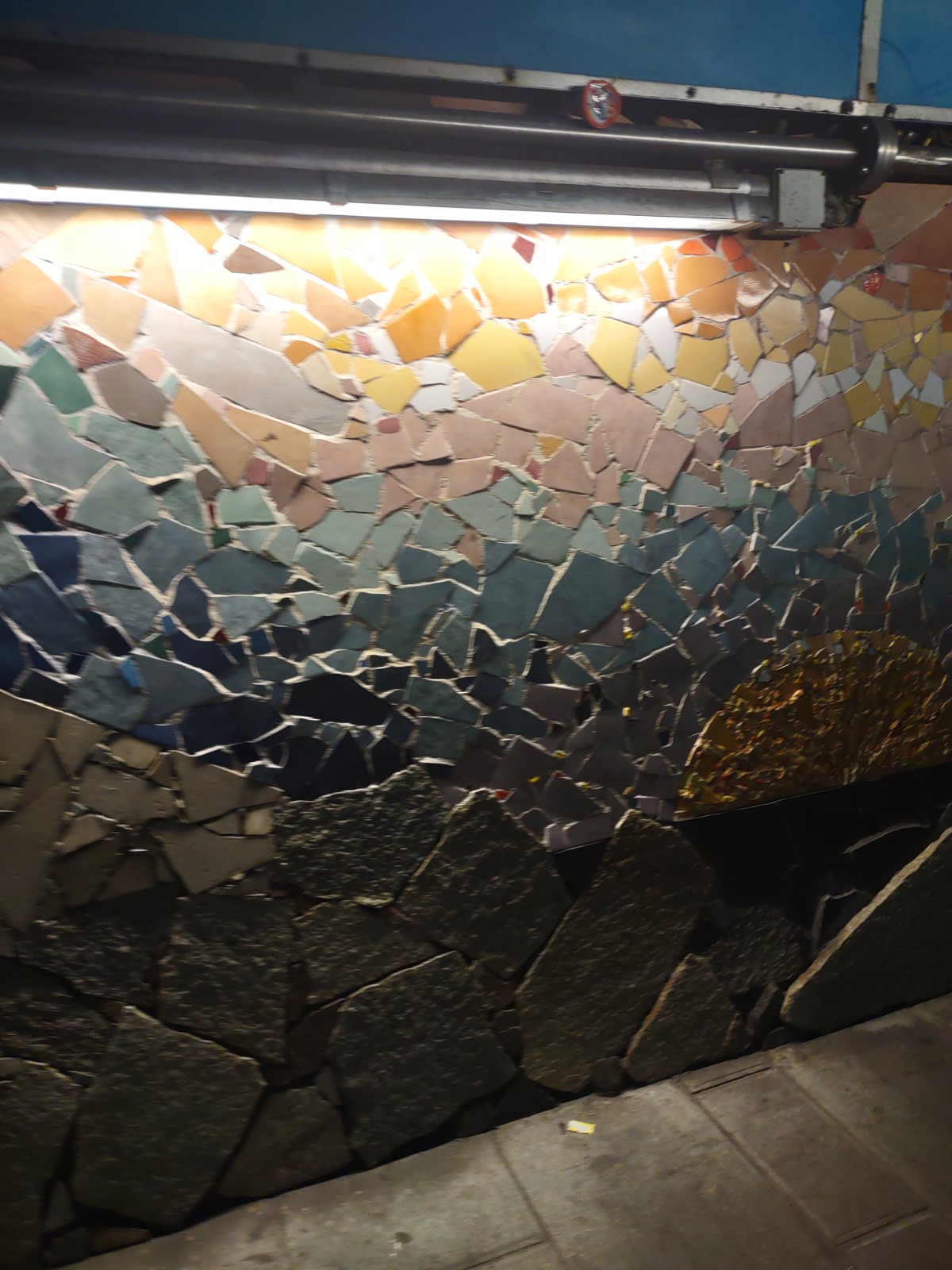
Our last stop on the tour was Riomaggiore which was just as beautiful as all the rest but, at this point, it was also just as crowded, we were hot and tired, and weren’t really able to give it its due. Riomaggiore also had a long tunnel to the train station which had some pretty interesting decorative tile work in it. (Based on the number of these we have seen in our travels, it seems like making pedestrian tunnels into art galleries is kind of a thing.)
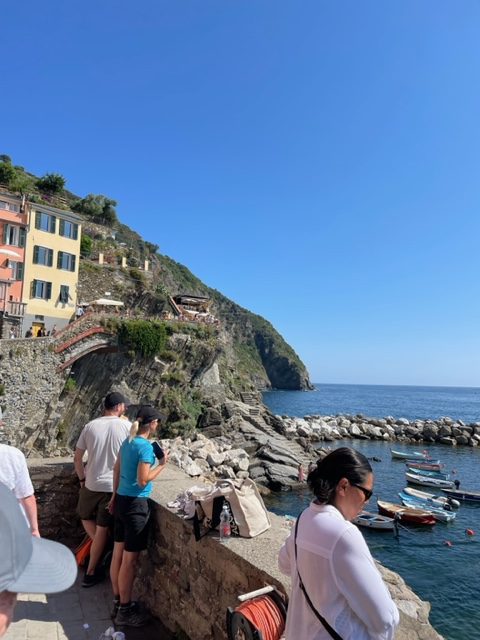
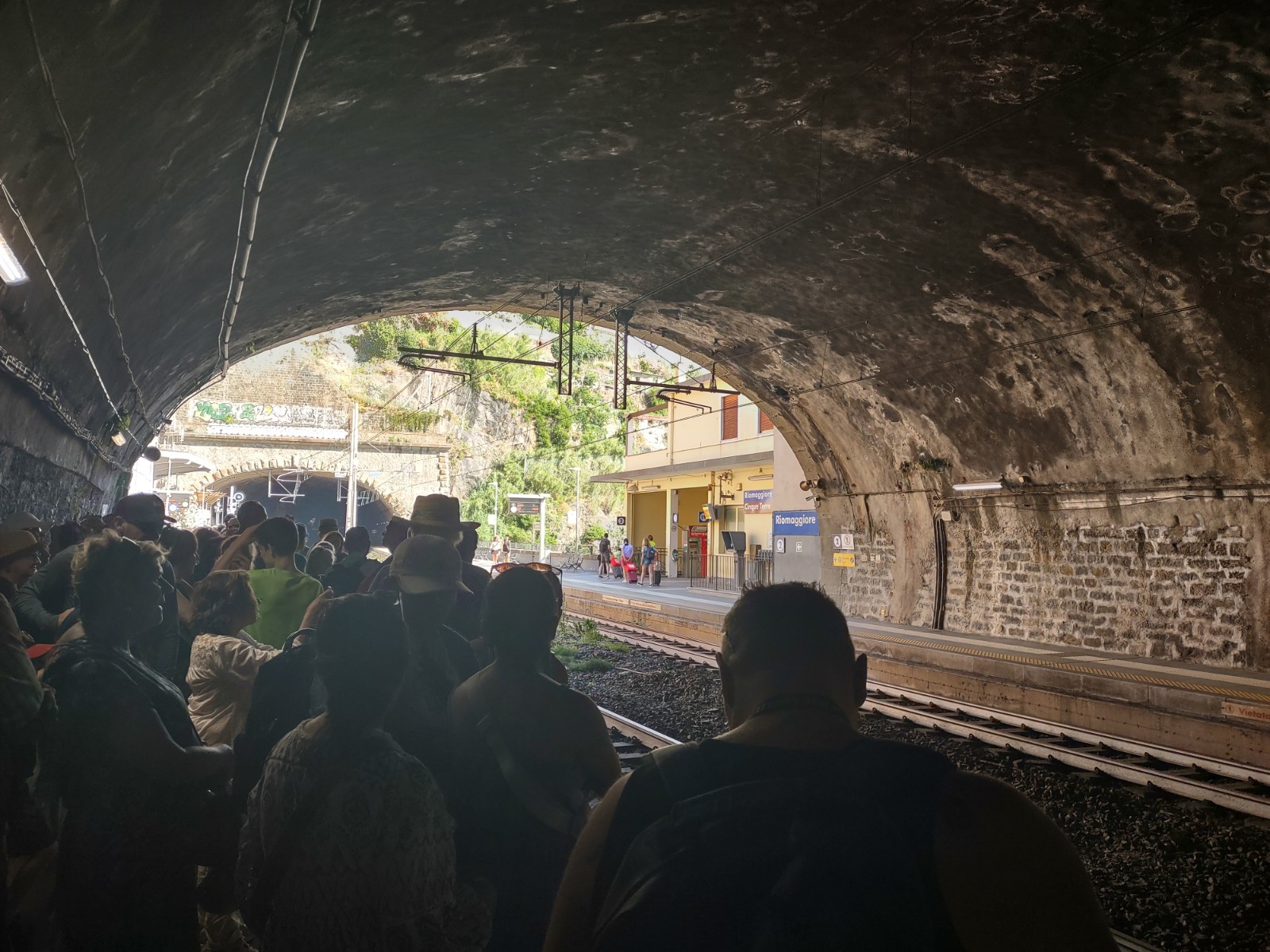
There were a couple of side events which added a bit of levity and entertainment to the day. The first of these was one of those things you can’t help but wonder about (if not stress over) when you sign up for one of these tours – what happens if someone misses one of the connecting trains? This actually happened between our first and second stops (no, it was not us) but neither we nor (we think) our guide were aware of it until we had arrived in the Monterosso station short a few passengers. Our guide was in obvious distress for a while, but we did eventually spot the missing travelers in town and were happy to see them at the dock before the ferry to Vernazza departed. The other event occurred when we arrived at our bus pick-up point in La Spezia to discover not only no bus, but police who were apparently in the process of writing up another tour bus for violating a a very recently passed city ordinance prohibiting bus drop-off and pick-up in the area. After several conversations between our guide and the police and several phone calls from him to the tour office our bus suddenly appeared out of thin air and we hopped on and sped away for a uneventful trip back to Florence.
Was it worth the 115 Euros each and a day of our lives to see the Cliff Notes version of la Cinque Terre? I think I would have to say yes. Our first stop in Manarola was great and gave us at least a taste of what these villages are like without huge crowds (which, of course made the rest of the day a bit sadder), and, despite the crowds, actually seeing these places was still pretty spectacular. I do have to say that we could not help but speculate on how badly it would suck to be staying (or maybe living?) in one of these villages this time of the year and have to see the hoards descend upon it as each day unfolded. In any case, happy to have done it, this visit also gave us pause in regard to coming back. Acknowledging that we probably experienced it at its near worst, they say that the tourist season starts on April 1st and goes to the end of October, so you almost have to choose between fewer tourists and favorable weather. I guess we’ll see about that.
So, after a pretty packed week which seemed to fly by, we prepared to leave Florence and head to the Amalfi coast.
 Burning the Inheritance
Leave a comment