
On Thursday June 1st, after breakfast and a morning yoga session for Colleen, we climbed back into our rented Kia Picanto and headed south from Taghazout Morocco bound for a small town called Sidi Ifni, the final stop on our trip down the Moroccan Atlantic coast. We first heard about Sidi Ifni from our son because it was one of the places he really wanted to see when he was in Morocco in 2011, but didn’t make it there. I had researched it a bit since and, as a result, it was one of the first places I identified to visit when we did our original trip planning session back in October 2019 (one of my top ten that stayed on the list). We came here thinking that it might be the crescendo of our exploration of the Moroccan coast but with some mixed expectations of what we would find there.
Sidi Ifni and the surrounding region have long been inhabited by Berbers who worked in animal husbandry and traded with Europeans and Northern Moroccans. Once a center for slave trading, since the 15th century Sidi Ifni was a Spanish ruled province and, surprisingly, remained a Spanish colony until 1969. Today, Sidi Ifni is a relatively small town, with a population of about 20,000, almost all of them Berbers, and the economic base of the city is fishing. We came here because, despite some beautiful beaches in the area, it is not a popular tourist destination due, in part at least, to the fact that it is not an easy place to get to, and we hoped to get a more authentic look at what life is like in a Moroccan town where tourism is not the primary industry.
Sidi Ifni is located about 350 kilometers south of Essaouira (about 200 kilometers south of Taghazout) and it is most definitely off the beaten path. Travelling here from Essaouira by public transport would have required us to backtrack through Marrakesh (which is why we rented a car) and getting here requires taking a pretty big detour off the main road (good old National Highway No. 1) which goes south into this part of the country.
The drive south from Taghazout through Agadir, the largest city on this part of the Moroccan coast, was particularly bad, with tons of traffic, road construction, and lots of roundabouts (apparently all of the ones which were eliminated in New Jersey were exported to Morocco). Once we were clear of Agadir, we followed National Highway No. 1 inland through rolling hills for about two hours before exiting it at a town called Tiznit and heading west, eventually emerging on the coast again near another very small town called Merlift.
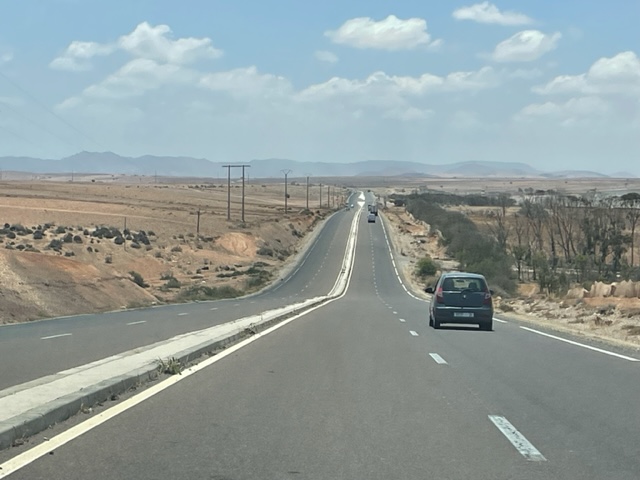

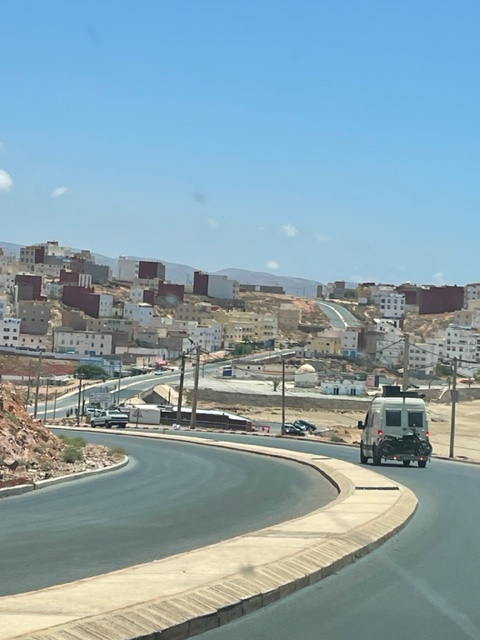
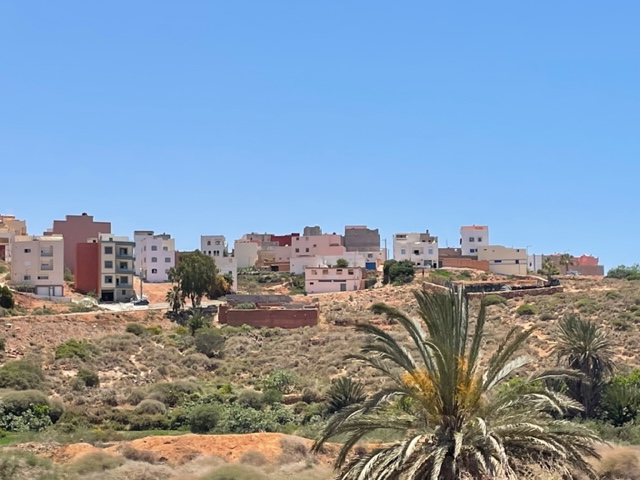
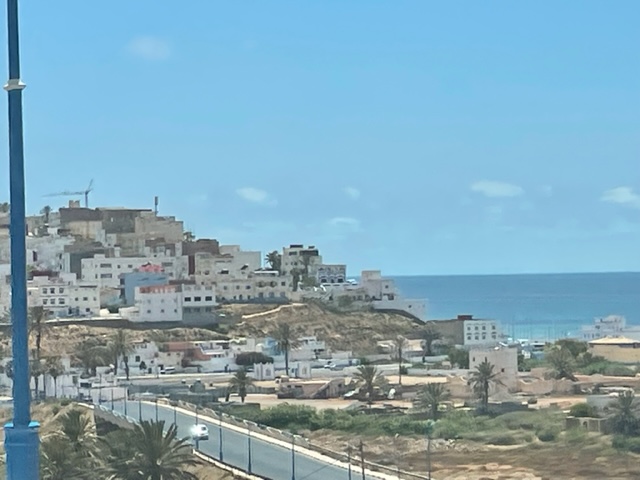


From Merlift the road wound along oceanside cliffs for about 35 kilometers with dramatic views around every turn and, every so often, glimpses of empty beaches below the cliffs (kind of a Moroccan Big Sur?). As we neared Sidi Ifni, we passed through some newer neighborhoods on the outskirts of the city and then the road dipped down to the city beach with the old town of Sidi Ifni perched on the hill above. We drove up the hill and, as we had a bit of time before we could get into the place where we were staying, we parked and, after a quick peek at the ocean below, took a stroll around town to get our bearings and to try to do a little grocery shopping.
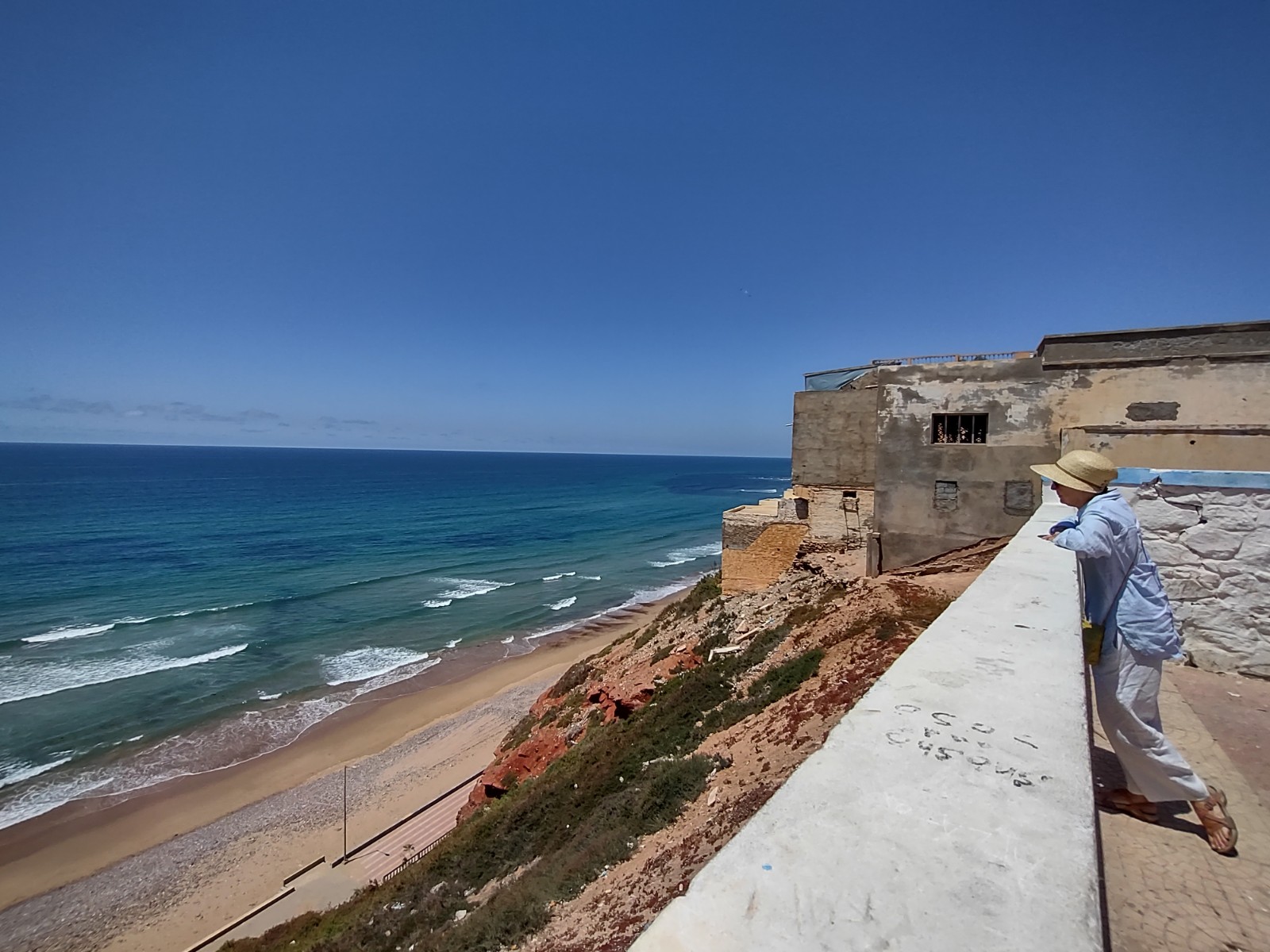
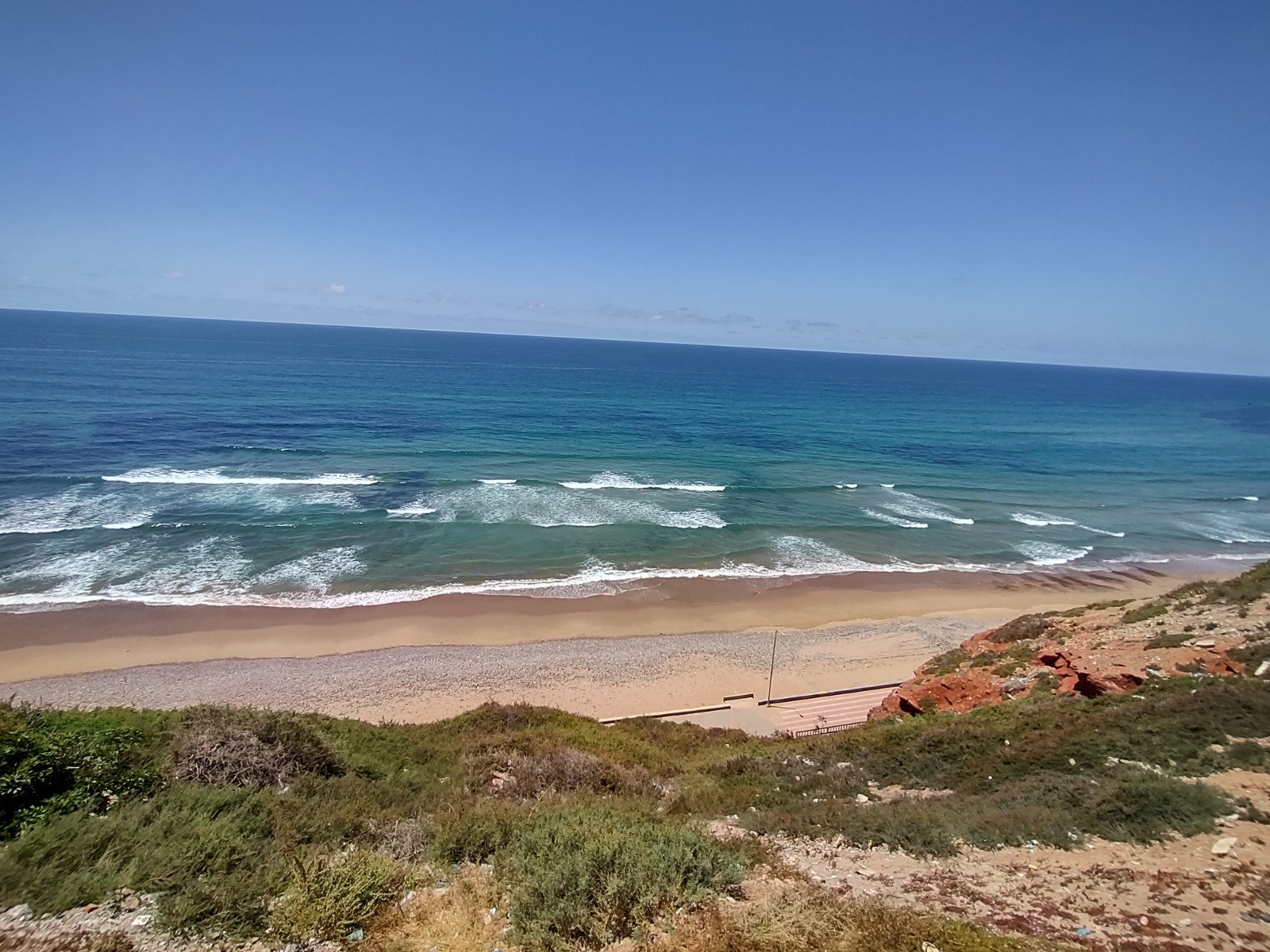
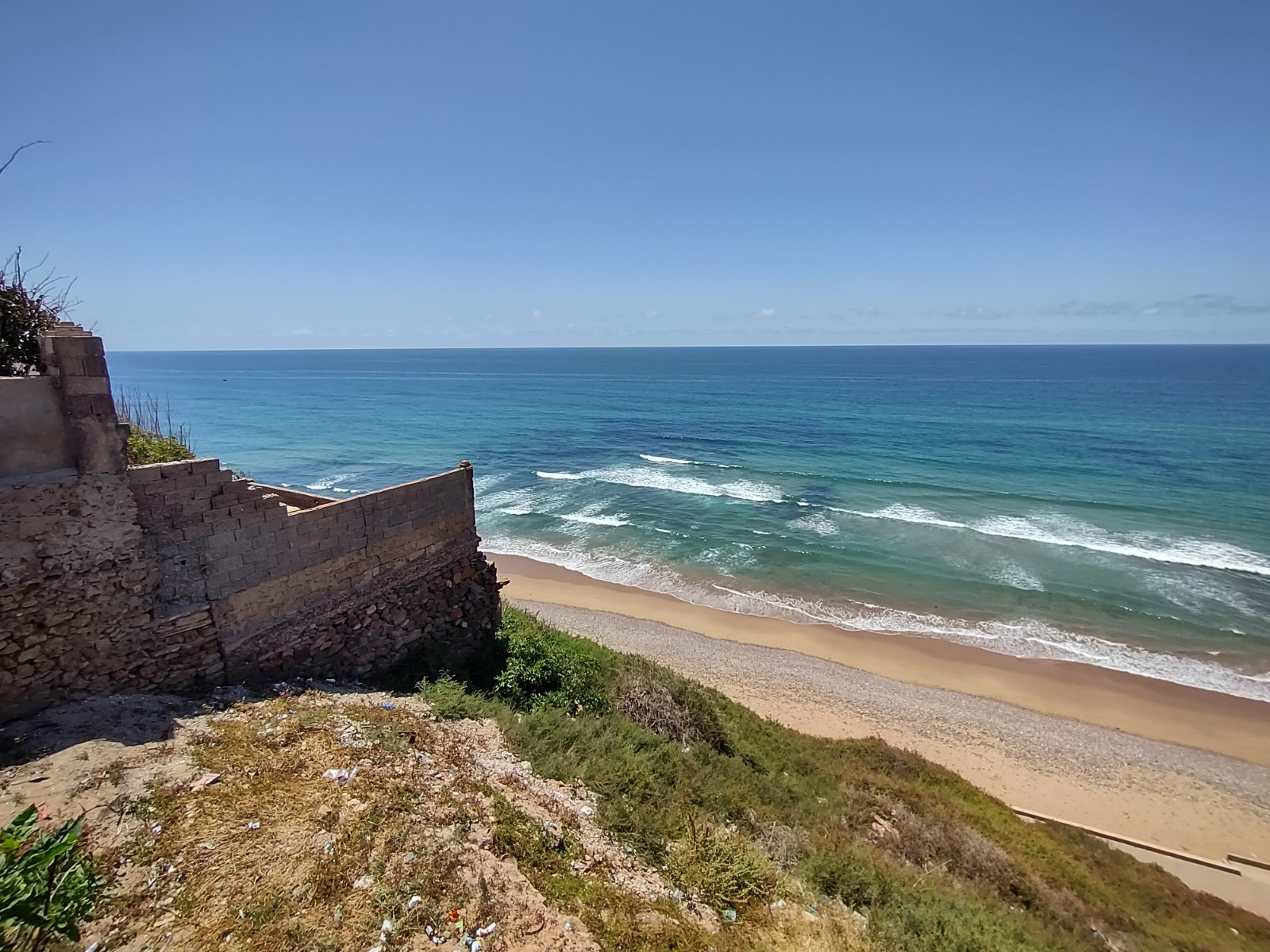
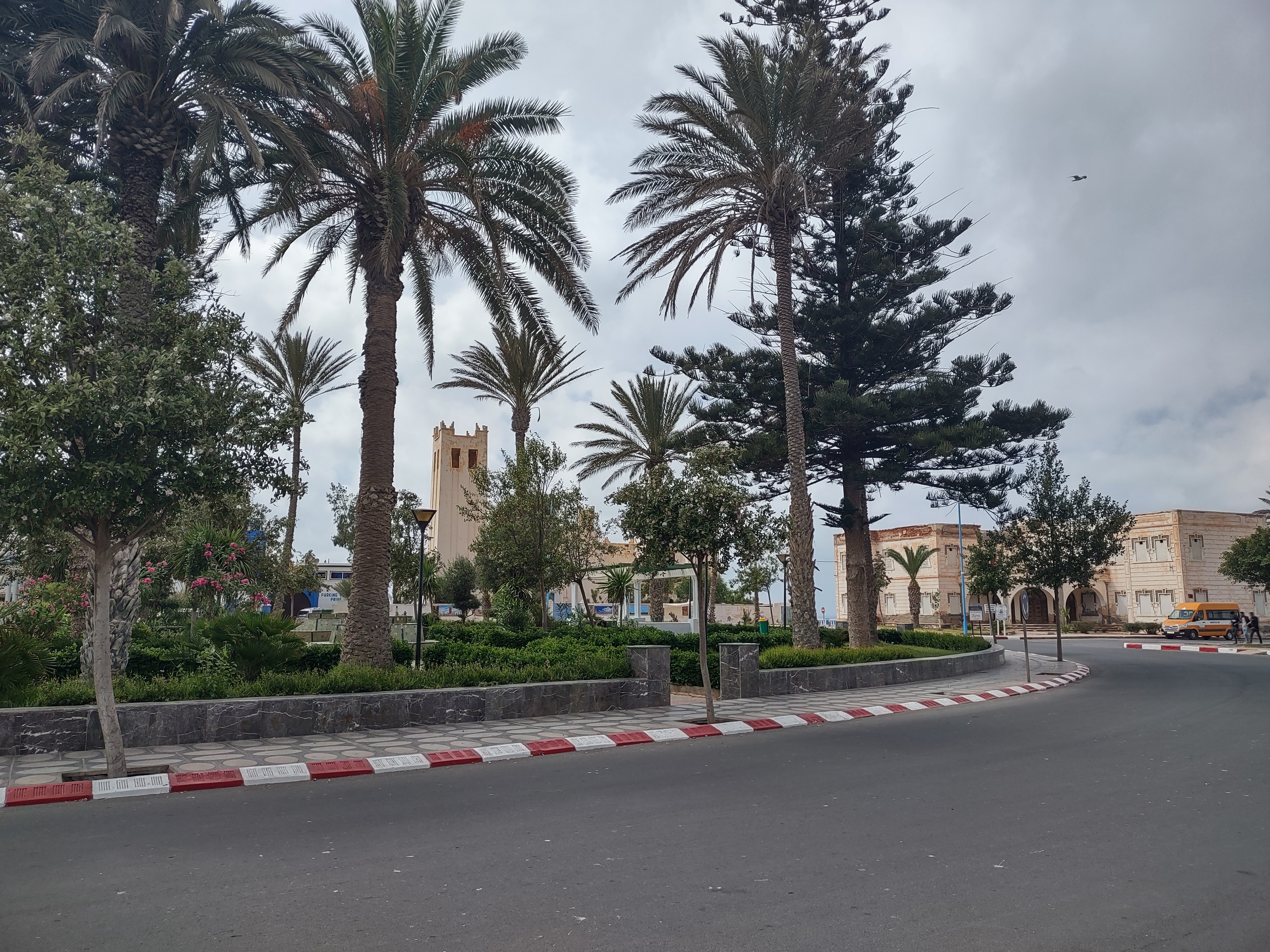
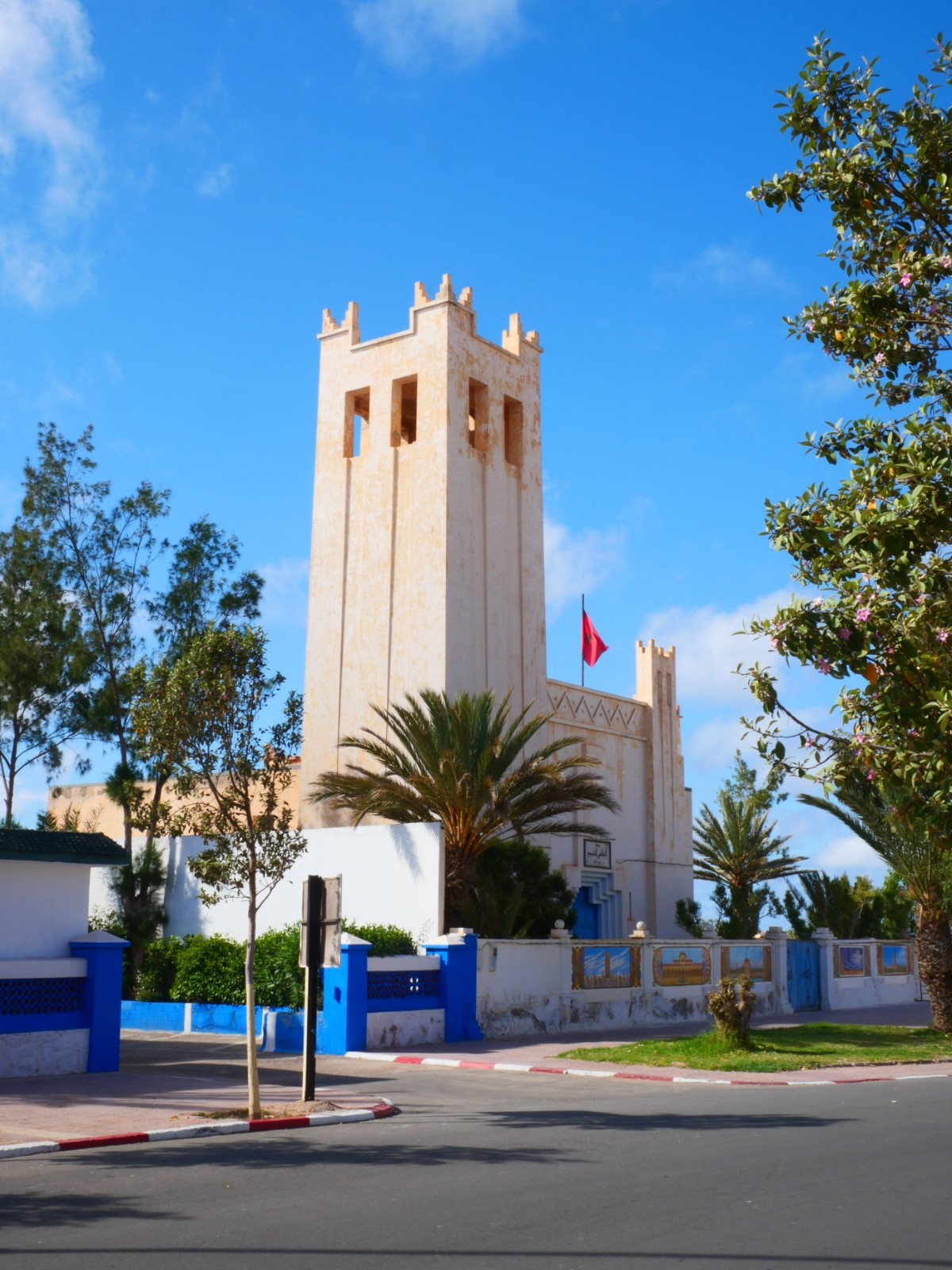
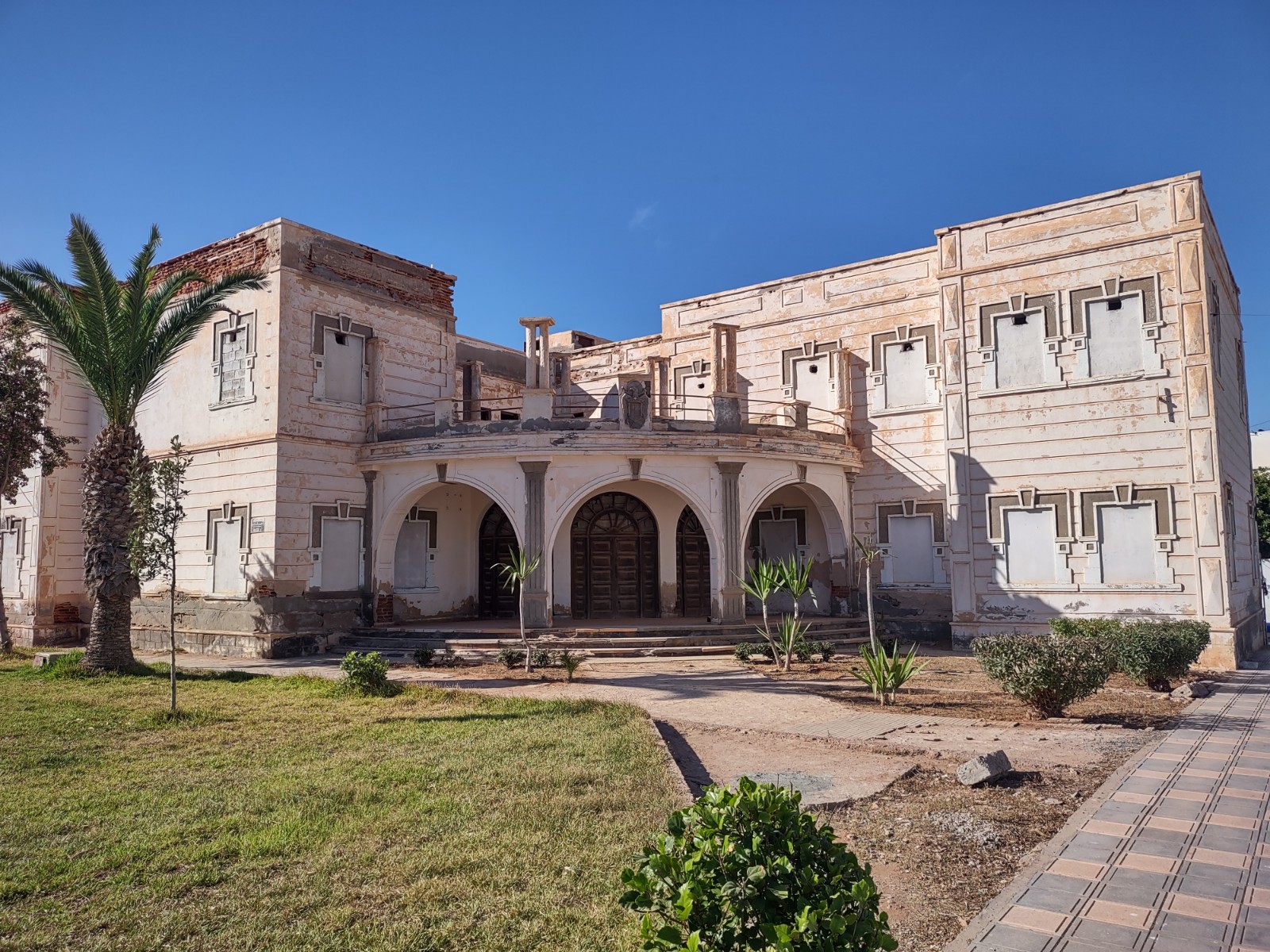
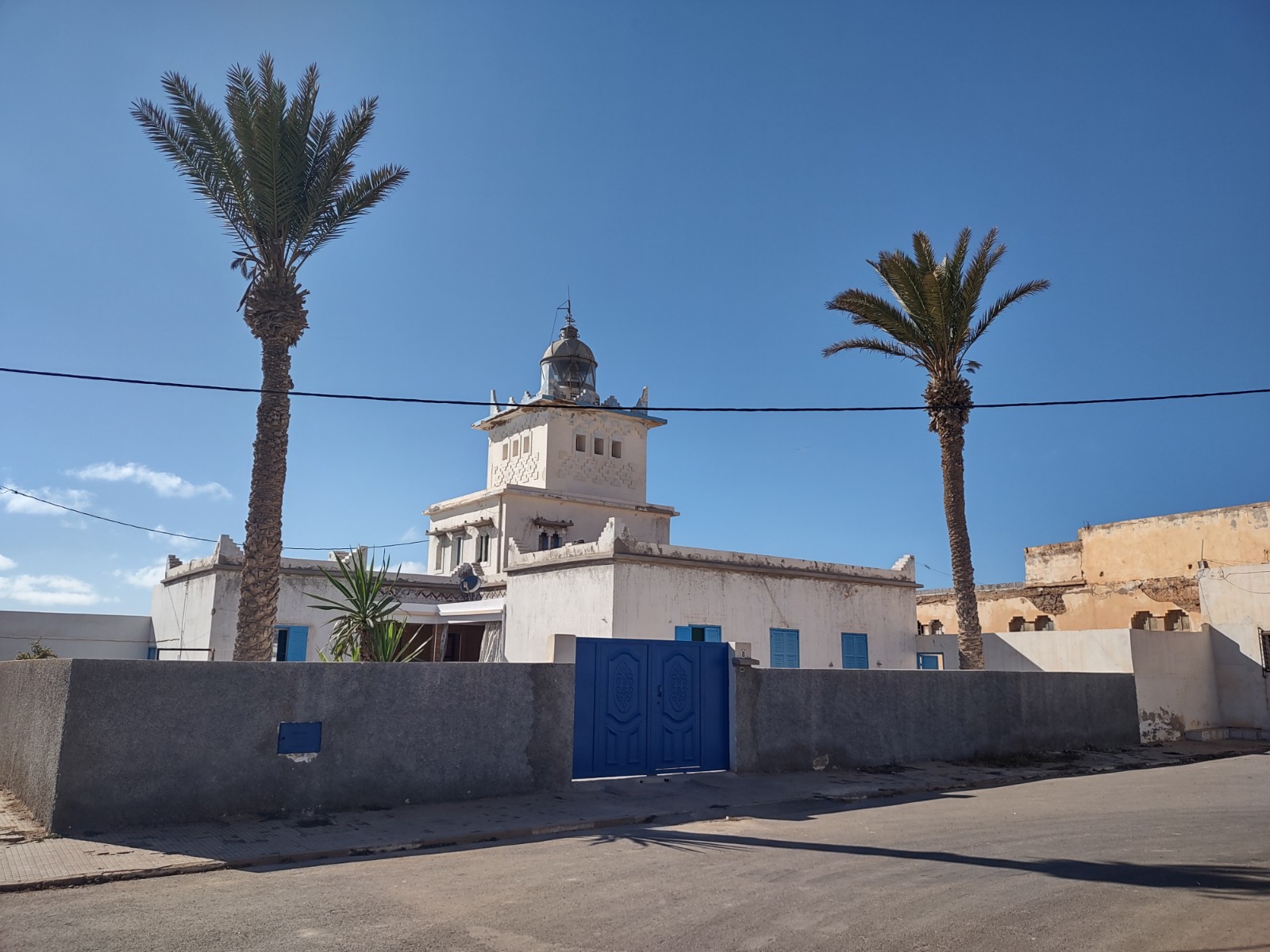
Sidi Ifni is arranged around a central square, the Place Hassan II, which sits at the high point of a rocky outcropping which extends west from the surrounding hillside. The square is surrounded by a number of (allegedly) art deco style and colonial style buildings which were constructed by the Spanish when it was their local seat of power. These include a garrison (now a Royal Palace), the old Town Hall, the former Spanish Consulate (now abandoned), and an old Spanish cathedral (now used as a court of law). There is also a beautiful old lighthouse on the cliffs just off the square. Beyond the square, the old town spills into the surrounding valleys and nestles against the hills to the east with a small port to the south.
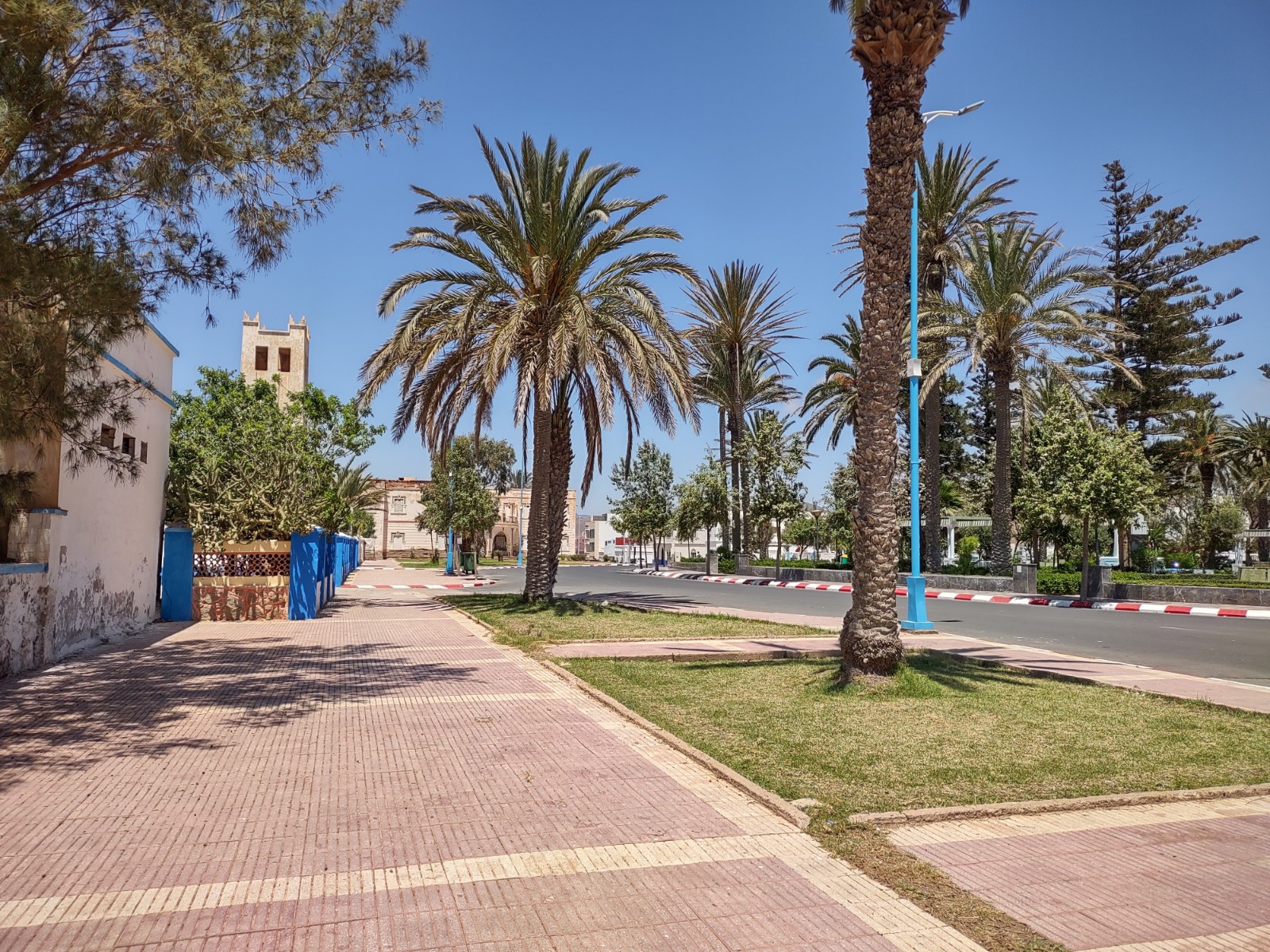
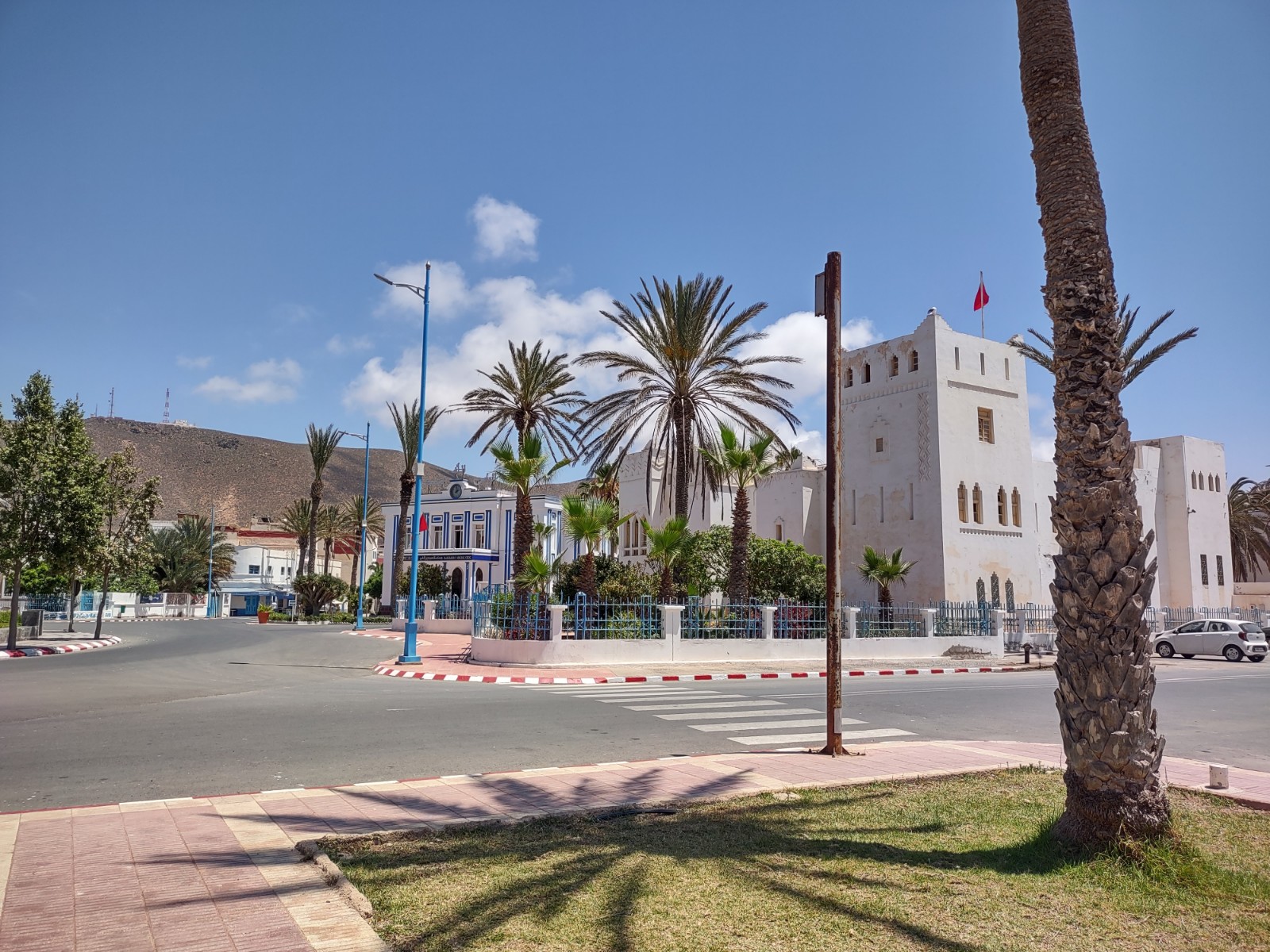


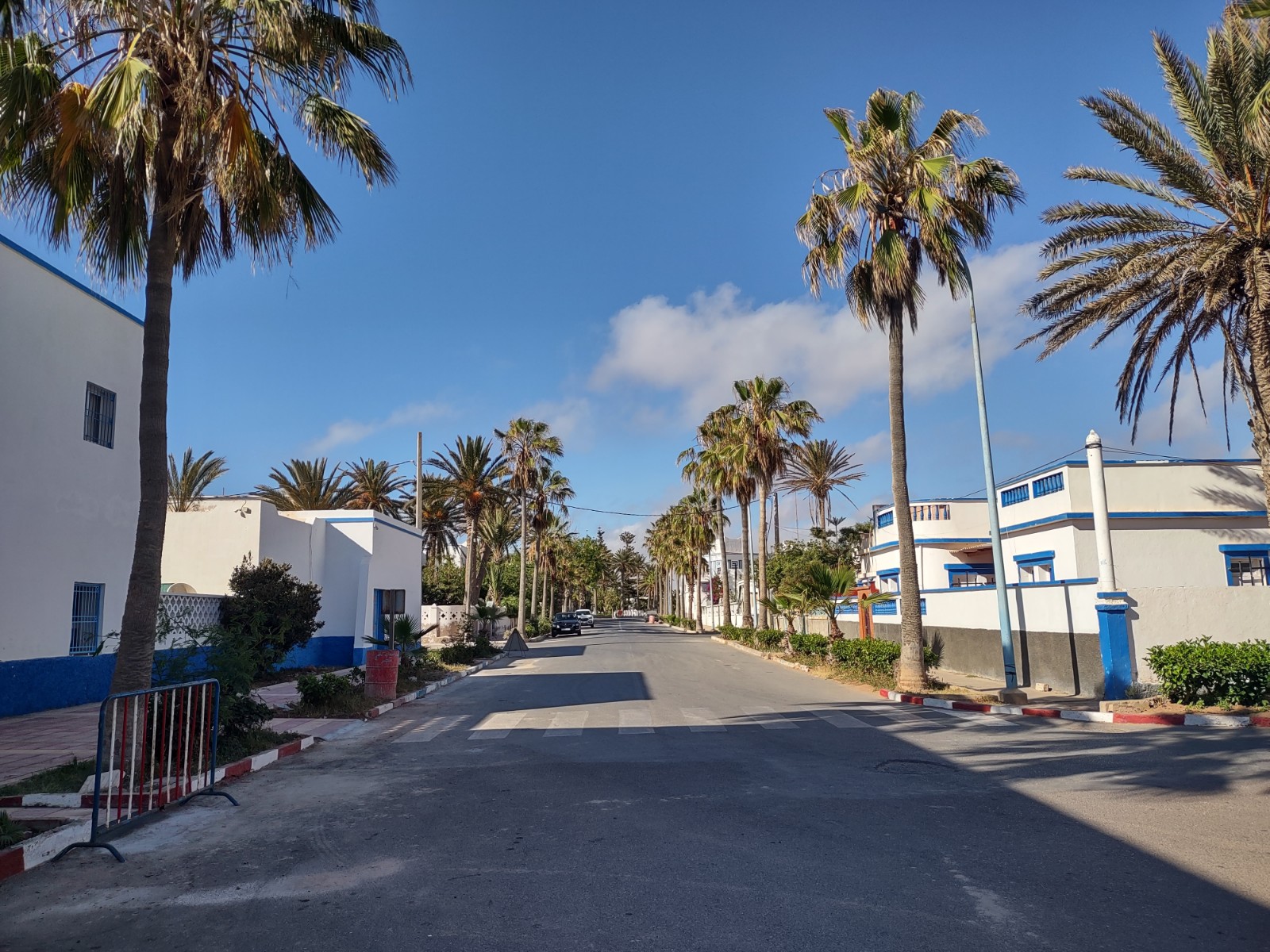
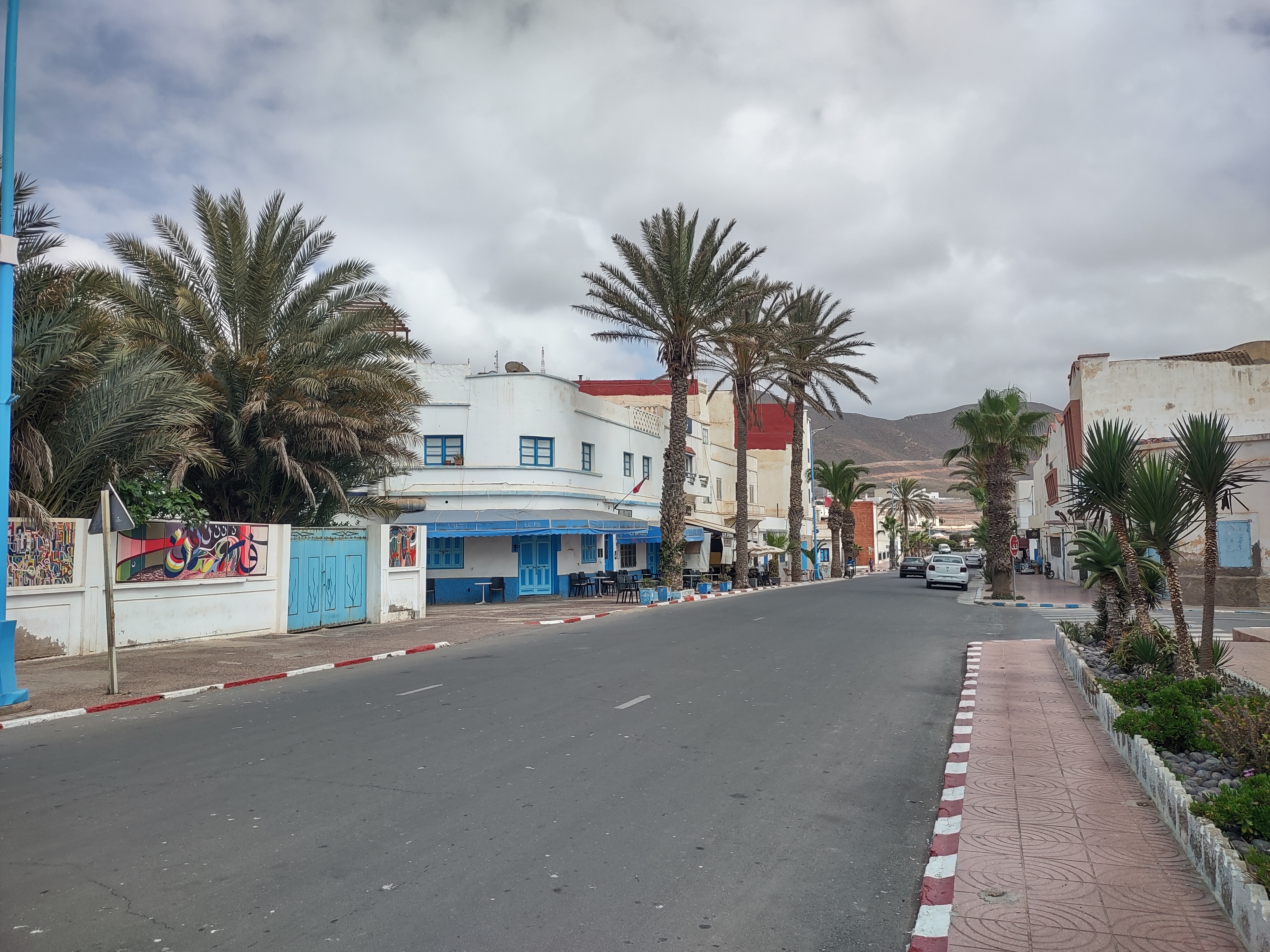


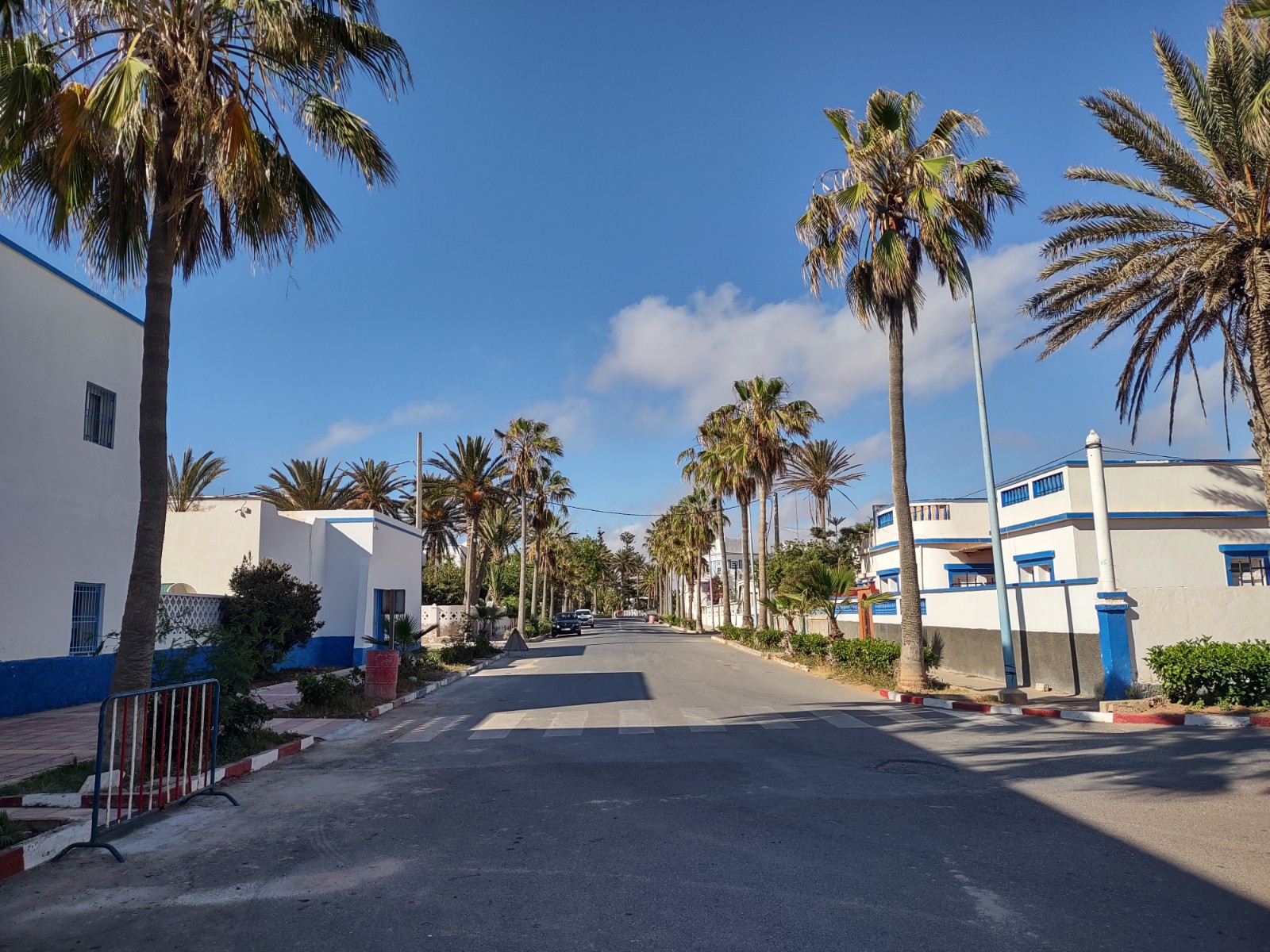
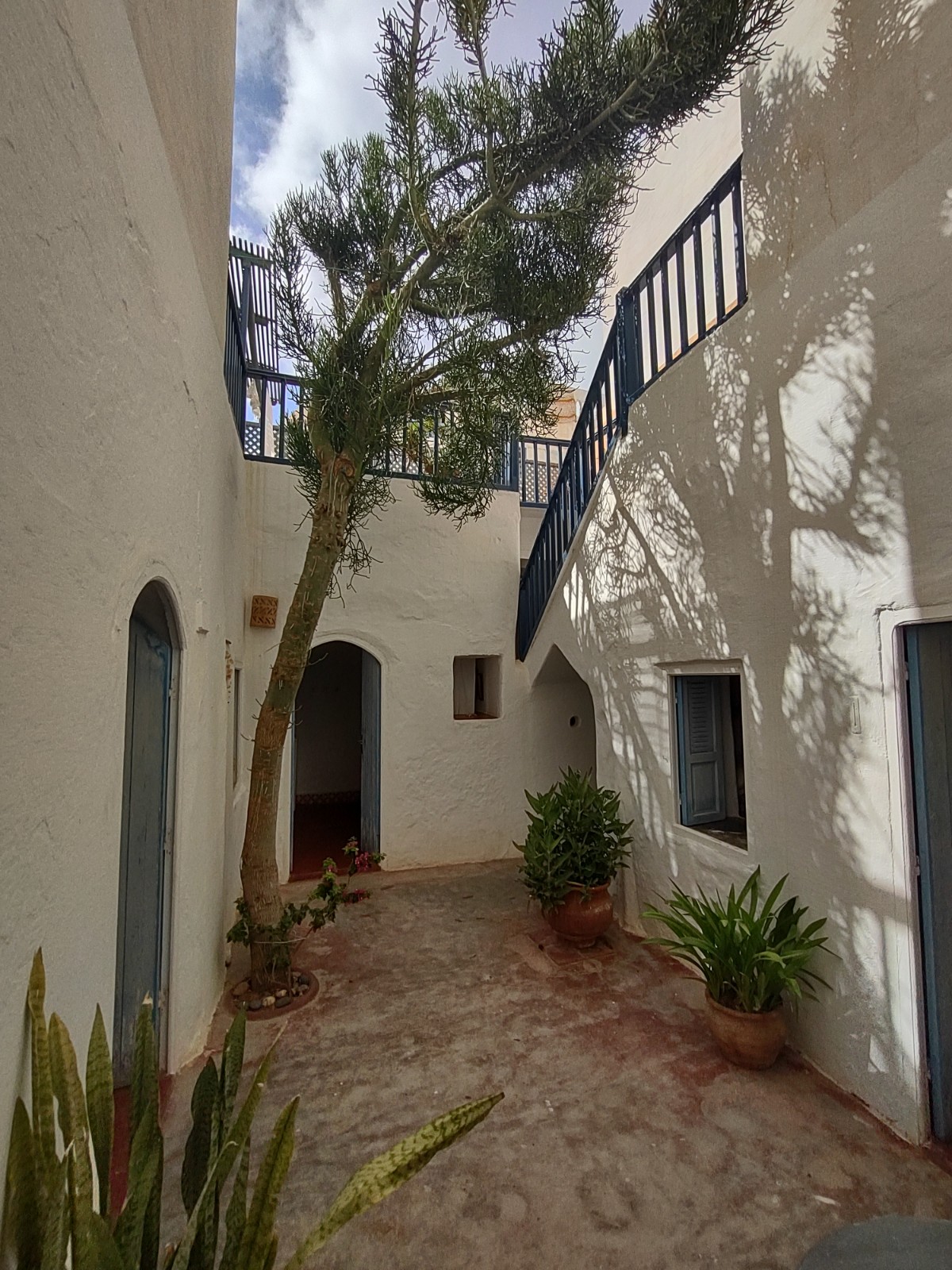
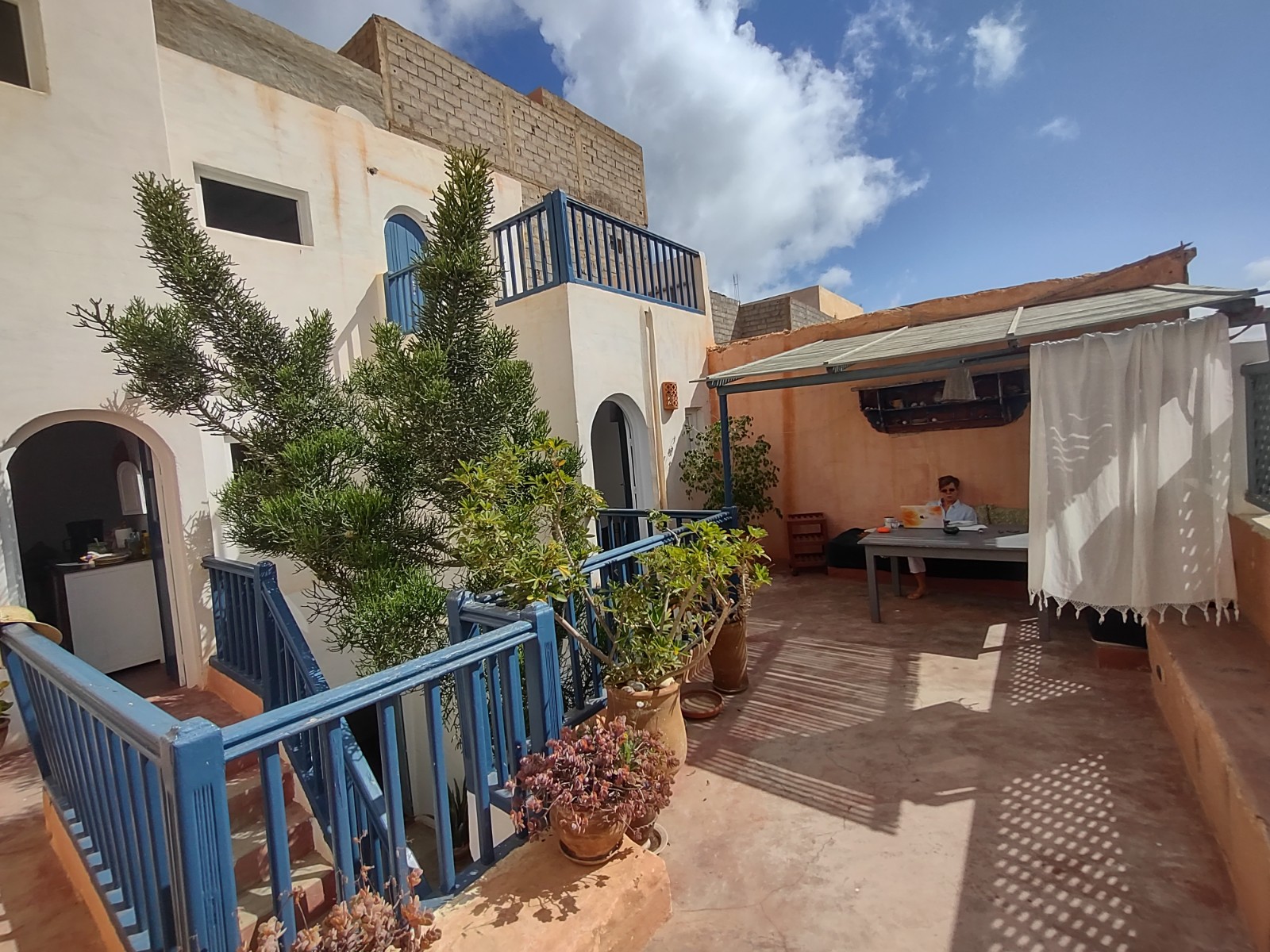
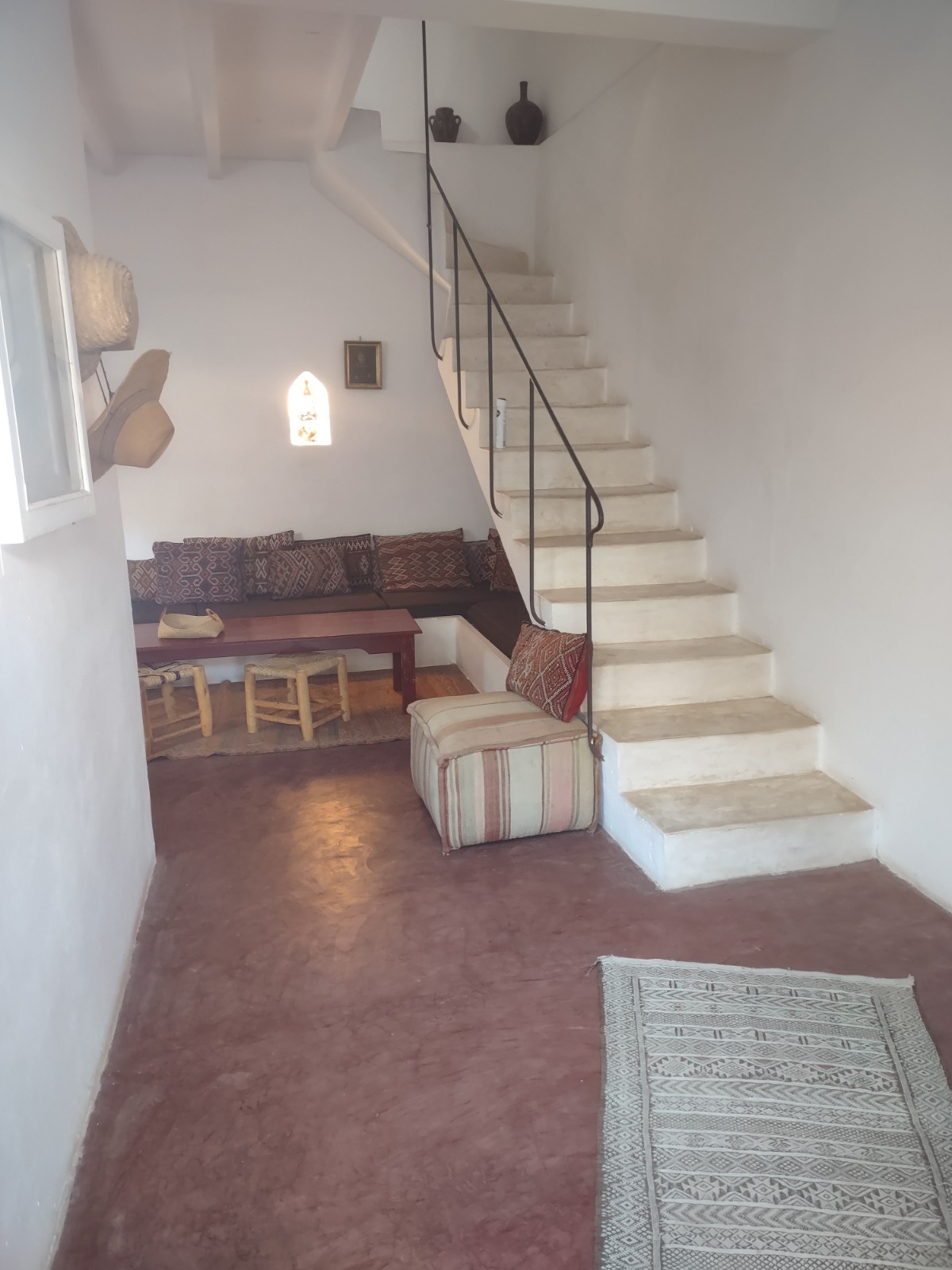
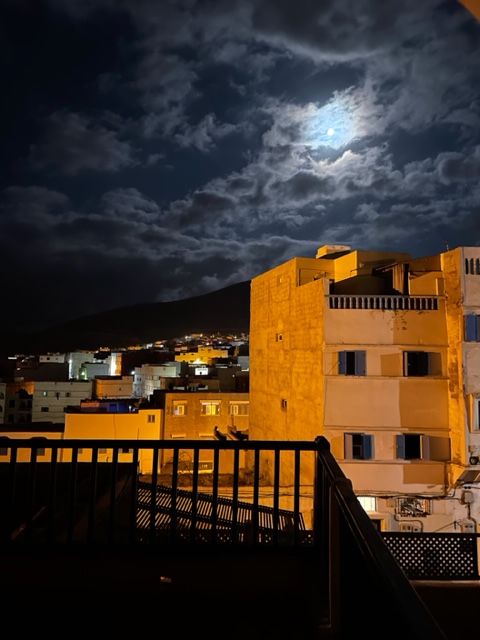
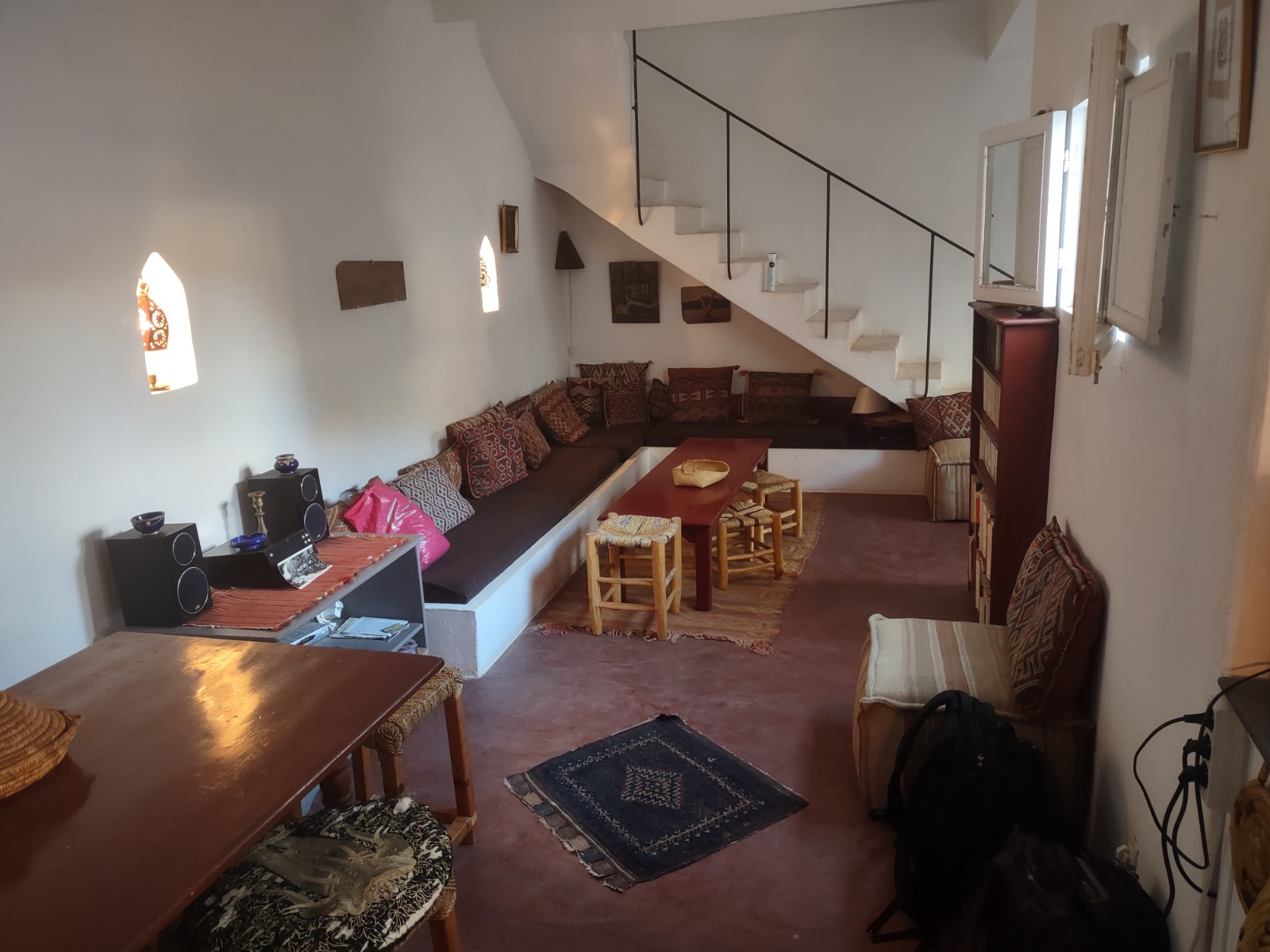
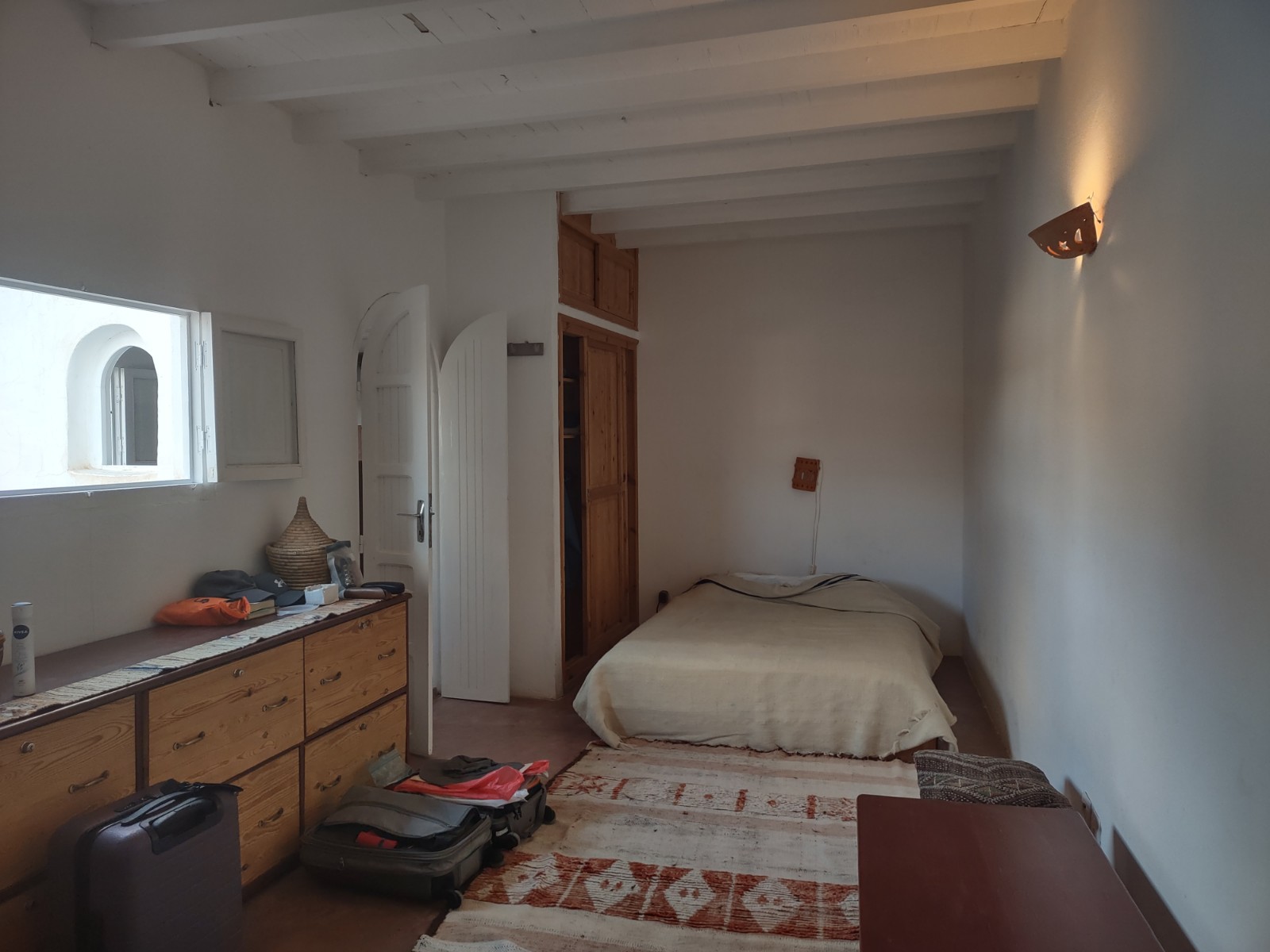
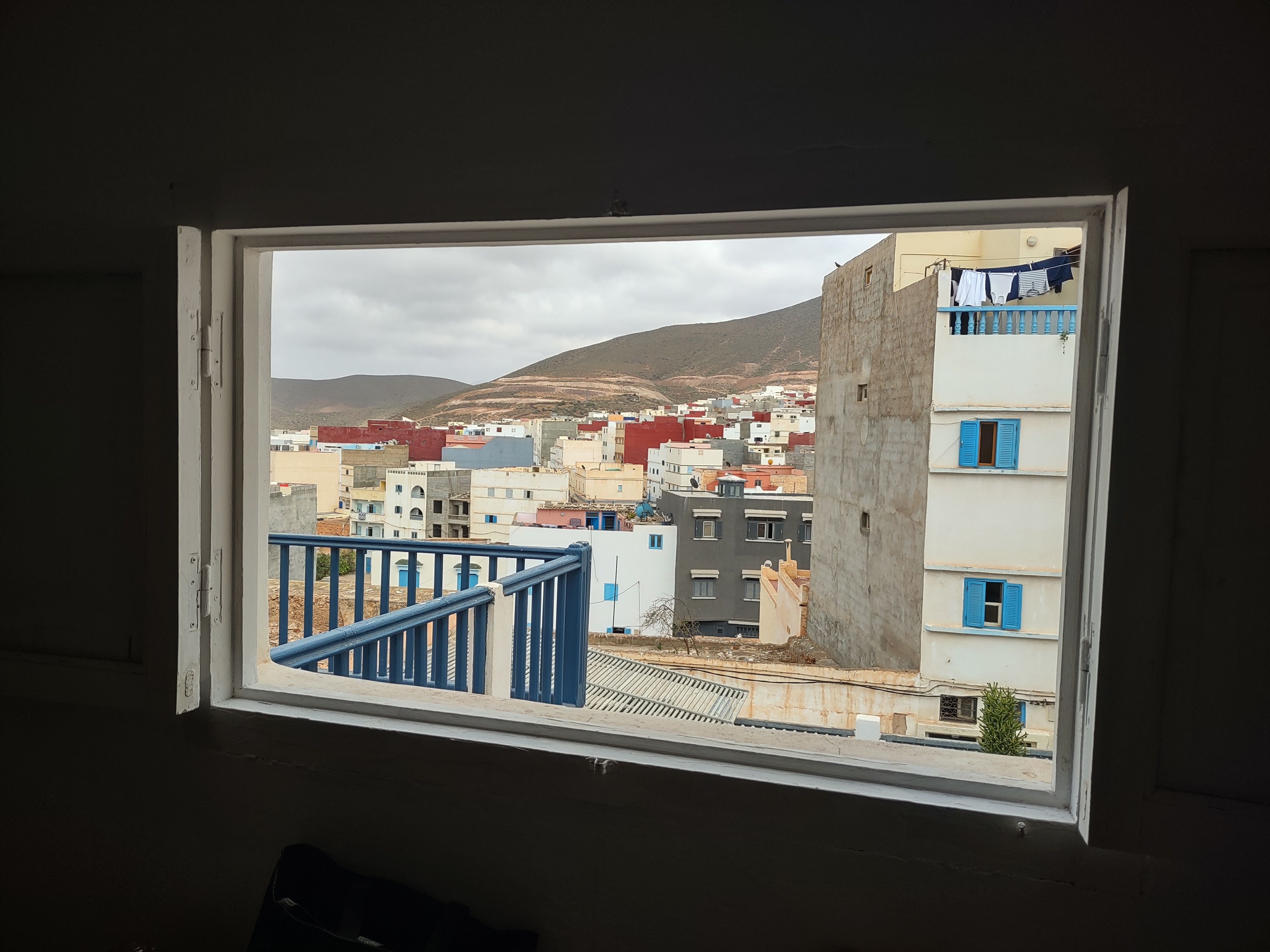
We stayed in an old riad style house a couple of blocks down the hill from the Place Hasson II in a residential neighborhood with a small shop or business here and there. The décor of the house was just a little more shabby than chic, but it was clean and its arrangement suited us well. On the ground floor there was a courtyard surrounded by three bedrooms (none of which we used) a laundry room (hazah!), and a toilet and shower for washing off the sand from the beach. On the first floor (second level) there was a kitchen which was open to a large dining and living area overlooking the courtyard with a covered terrace and sundeck on the other three sides. On the second floor (third level) was a large master bedroom and bath with its own deck overlooking the courtyard and views of the mountains to the east where we saw the full moon rise over the city on June 3rd.
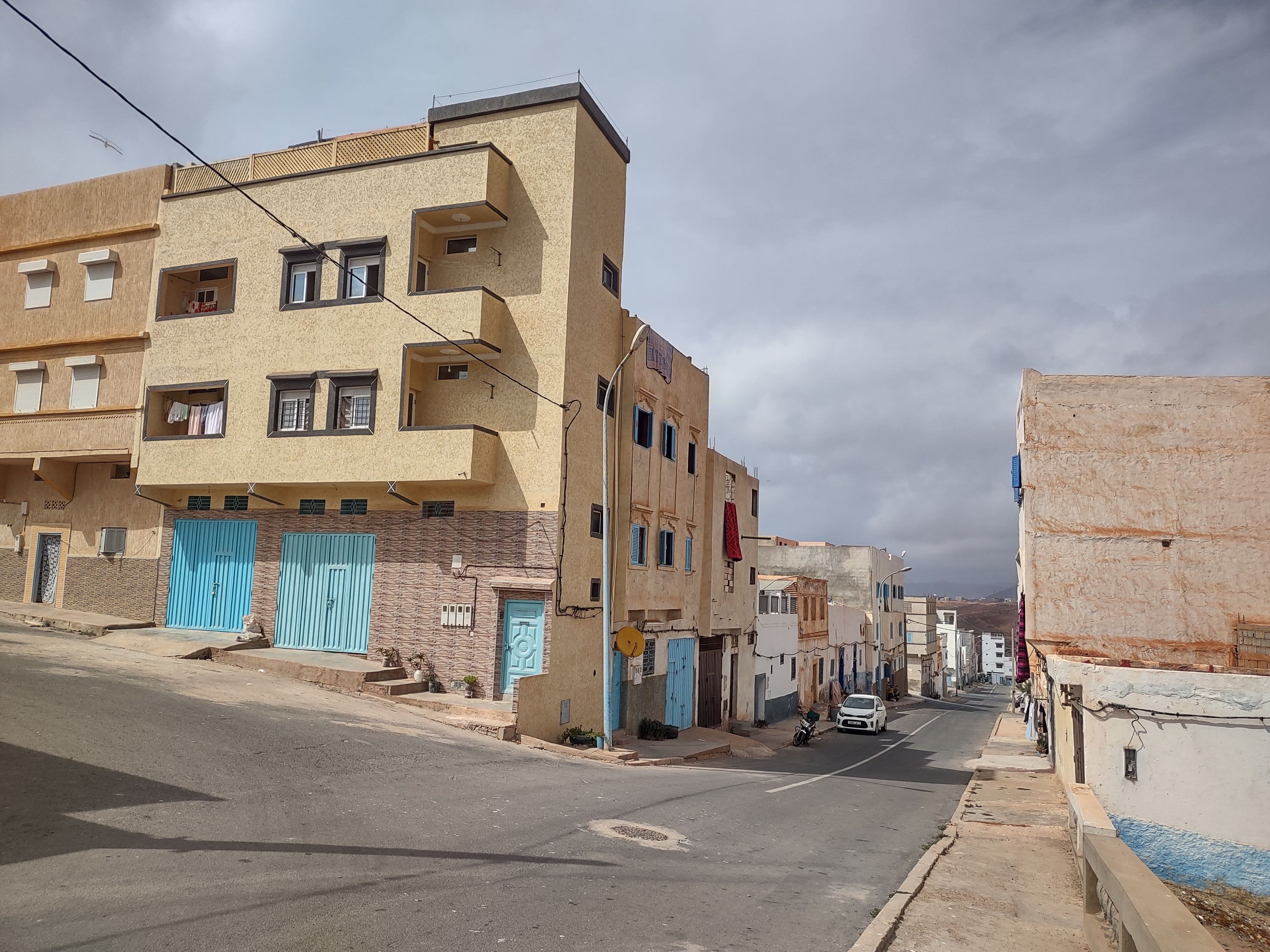
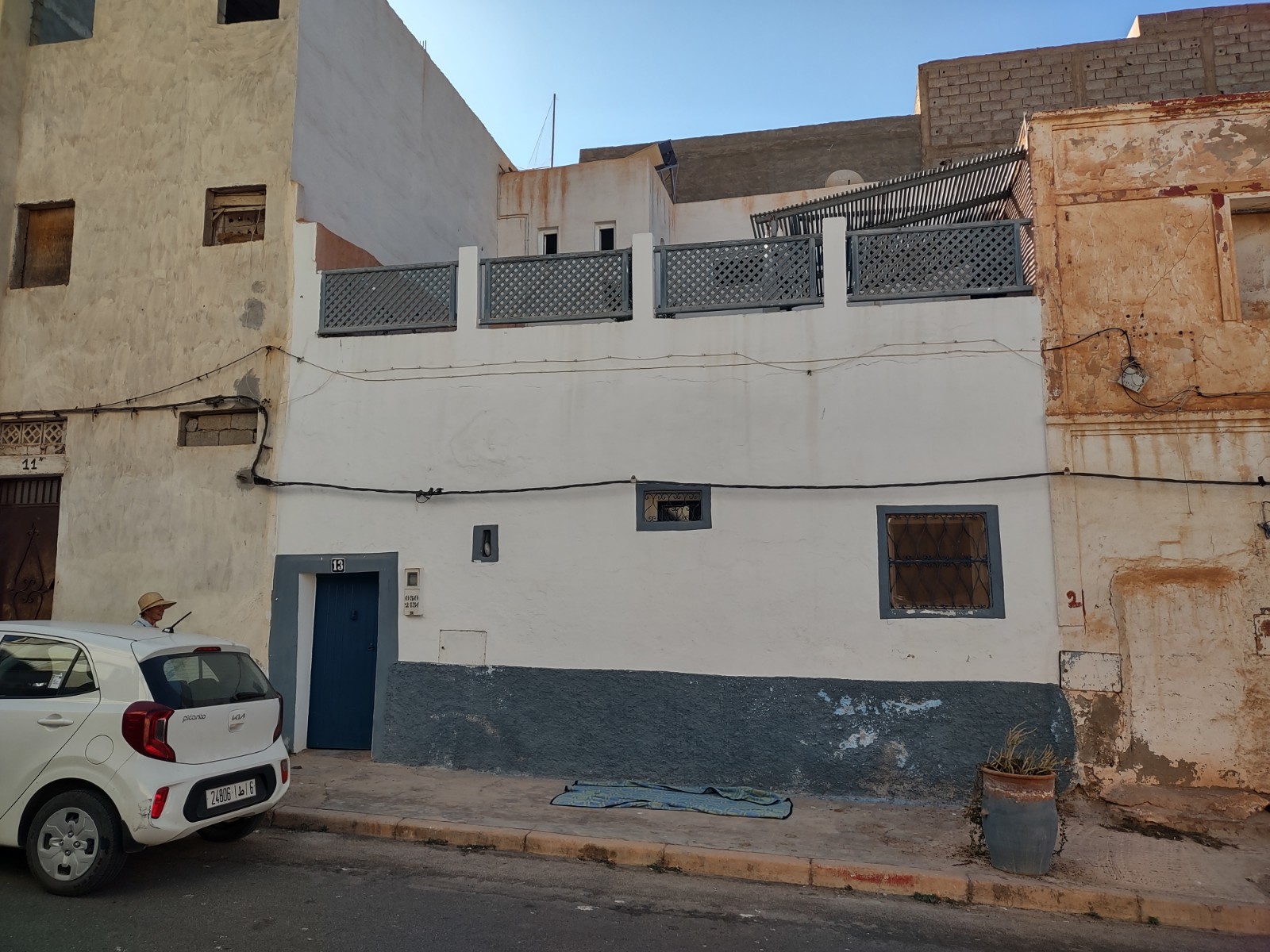


One of the things which we did not expect to find was how different our neighborhood sounded from the other places we have stayed in Morocco. Other than the sounds of children playing, we heard and saw very little of our neighbors. What was surprising was the sound of wildlife during the night and at odd times during the day. In addition to the screech of cats and seagulls, we heard the cooing of doves and pigeons, roosters crowing throughout the day, and the screeching sound of what, from seeing and hearing them elsewhere, we eventually determined were peacocks. Other than the seagulls and cats, we never saw any of these animals but it still seemed odd to hear them in what is essentially the city center. (You can take the Berber out of the country, but you can’t take the country out of the Berber?)
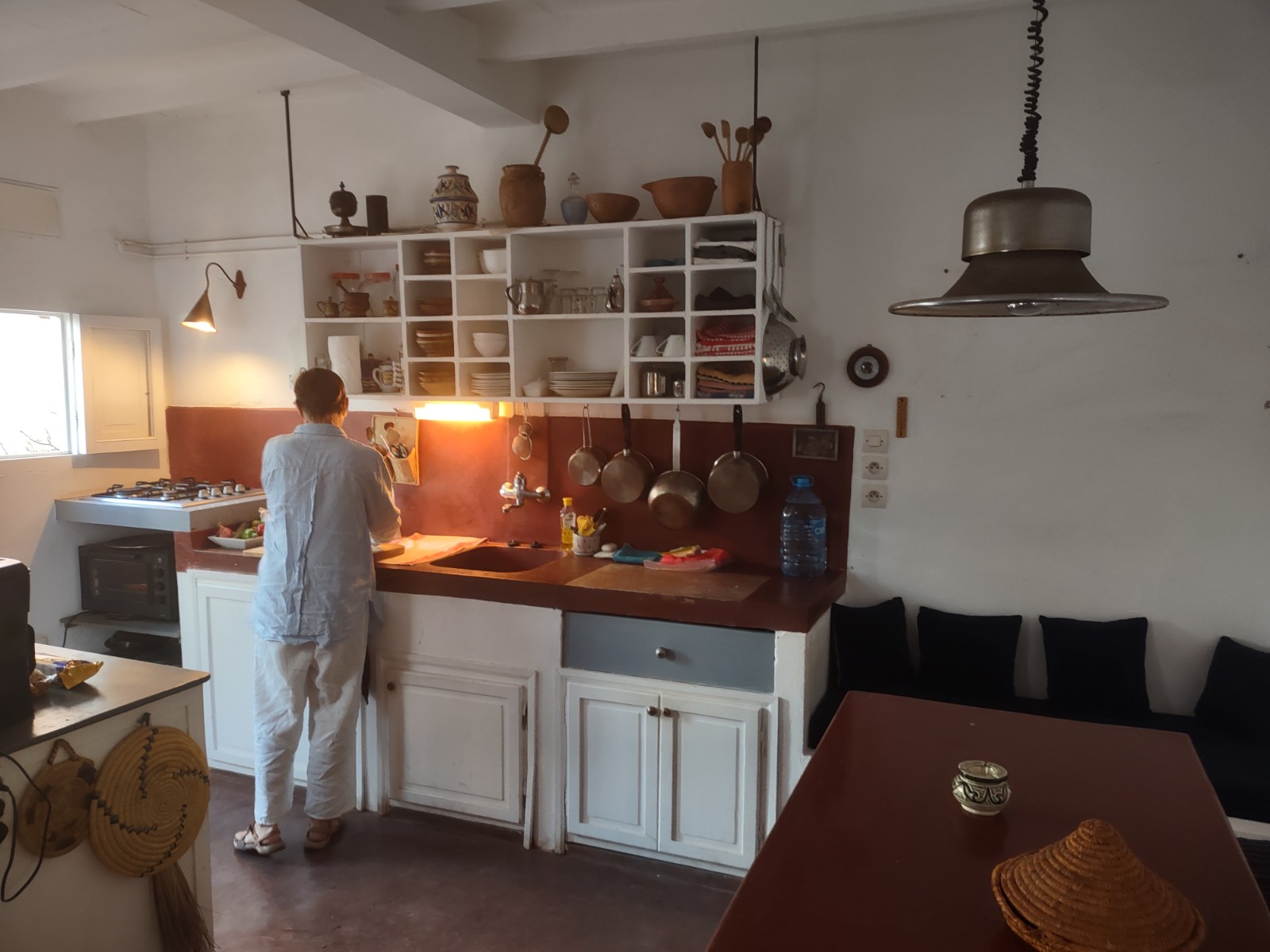
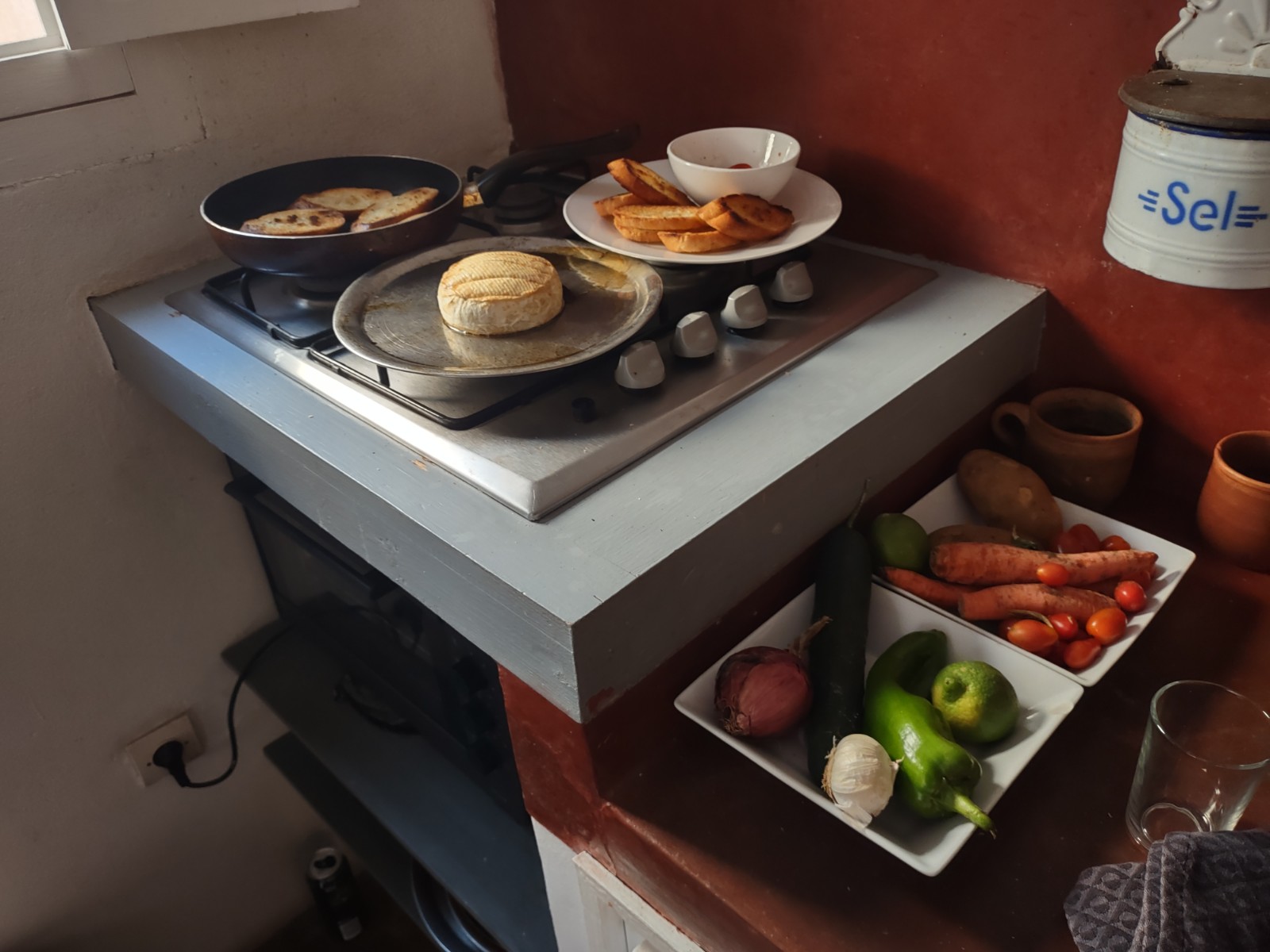
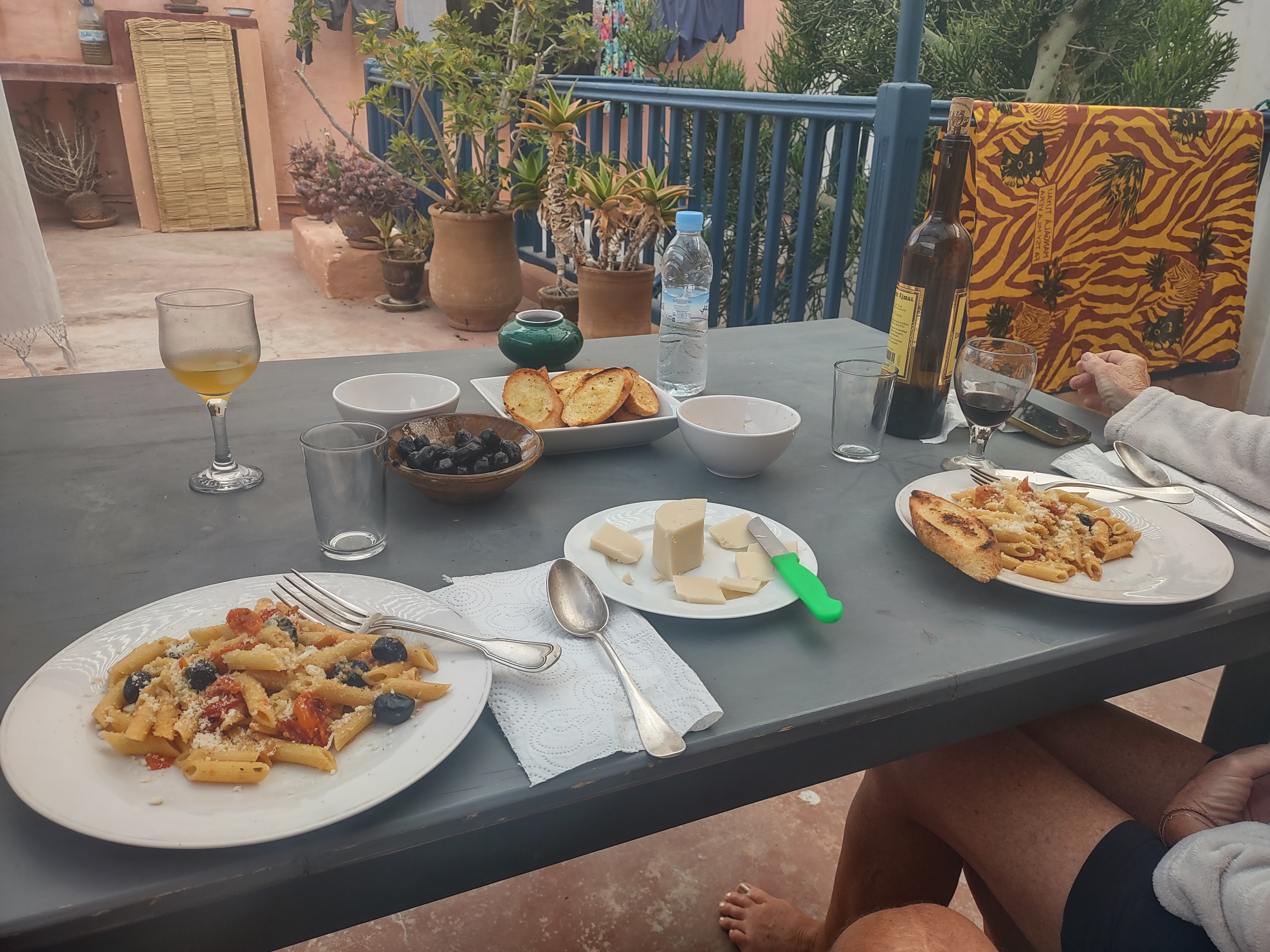
For the four days we were there, we had no bigger plans than finding a nice beach each day and then someplace for lunch. As we continued our practice (when we have a kitchen) of having breakfast and dinner at home we did have to get out to do some grocery shopping. We discovered that to be a bit more challenging in such a small town where there is no Lidl, Aldi, or Carrefour, and ended up needing to go to three or four different places to find everything we needed and, because the stores cater to locals, not tourists, there were some things we couldn’t find at all. Despite these challenges, Colleen prepared some great dinners which, because we never went to the butcher shop, were all meatless but quite tasty nonetheless!

We also noticed some differences when it came to restaurants, the majority of which (surprise, surprise!) also catered to the local clientele. Most of them had an outdoor seating area in front which, whenever they were open, was full of men drinking tea or coffee, smoking, talking, and scrutinizing the surrounding streets and sidewalks. Just walking by them was a little intimidating, and entering even more so, particularly for Colleen who was typically the only woman in sight. But, once we were seated, the host or waiter (who were always men) generally did their best to make us feel welcome and comfortable.
There were a couple of exceptions to this. One was a cafe not far from our house which had an outdoor seating area overlooking the beach where we had some pizza one afternoon. The other exception was the Belle View Hotel located on the Place Hassan III, where we had a beer while we waited for our Airbnb host. Although it was pretty deserted when we were there, it did seem like the only place in town which actually catered to tourists. I should note that during the four days we were in Sidi Ifni (again with only two exceptions, one of them being our Airbnb host Patrick, a French ex-pat), we never interacted with anyone who was not a local. But, there were a couple of unconfirmed sightings of fellow travelers in the vicinity of the Belle View Hotel.
Insofar as beaches go, happy to have a rental car, we drove about 10 kilometers north on our first morning (Friday June 2nd) to a place called Legzira Beach which was one of the reasons we came here in the first place. From R104, the coastal road, you drive about 1 kilometer west, past a small settlement, to a parking area, restaurant, and hotel at the end of the plateau over the ocean. From there you walk to the top of the cliff and get your first glimpse of the beach below and begin your descent down 199 steps.
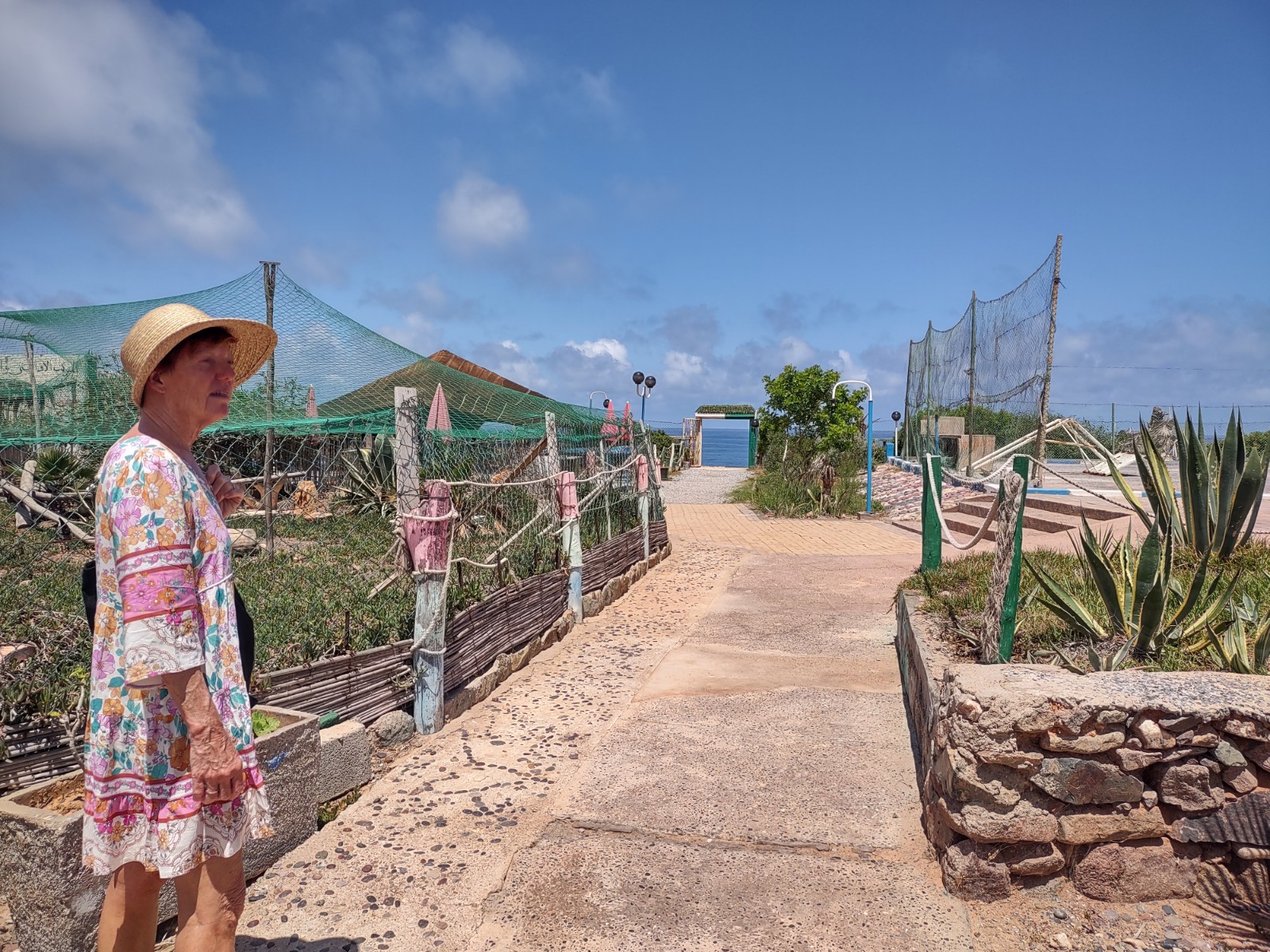
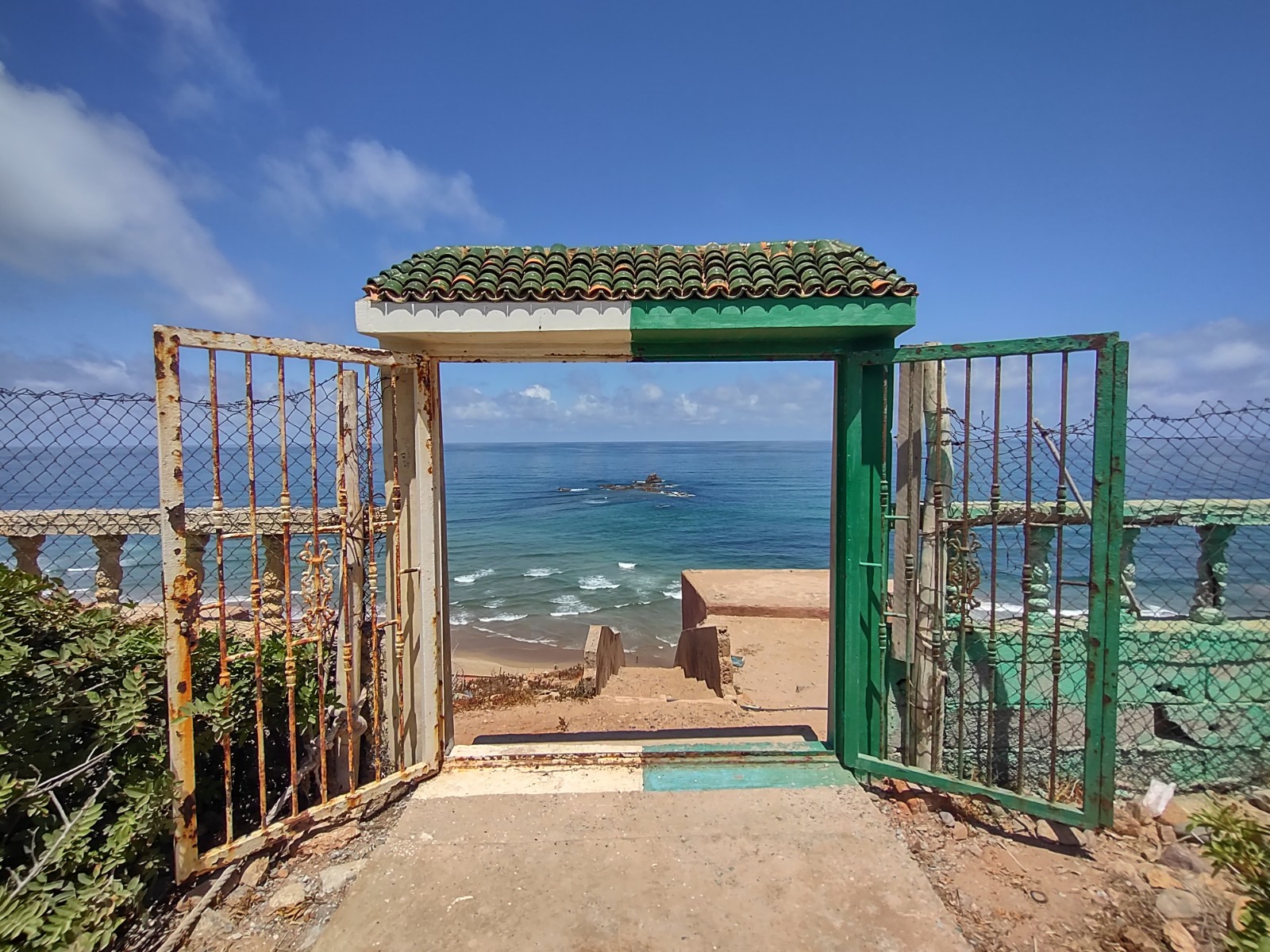

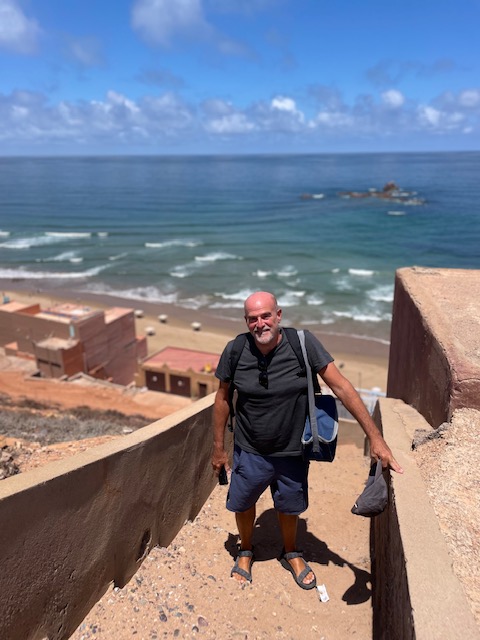
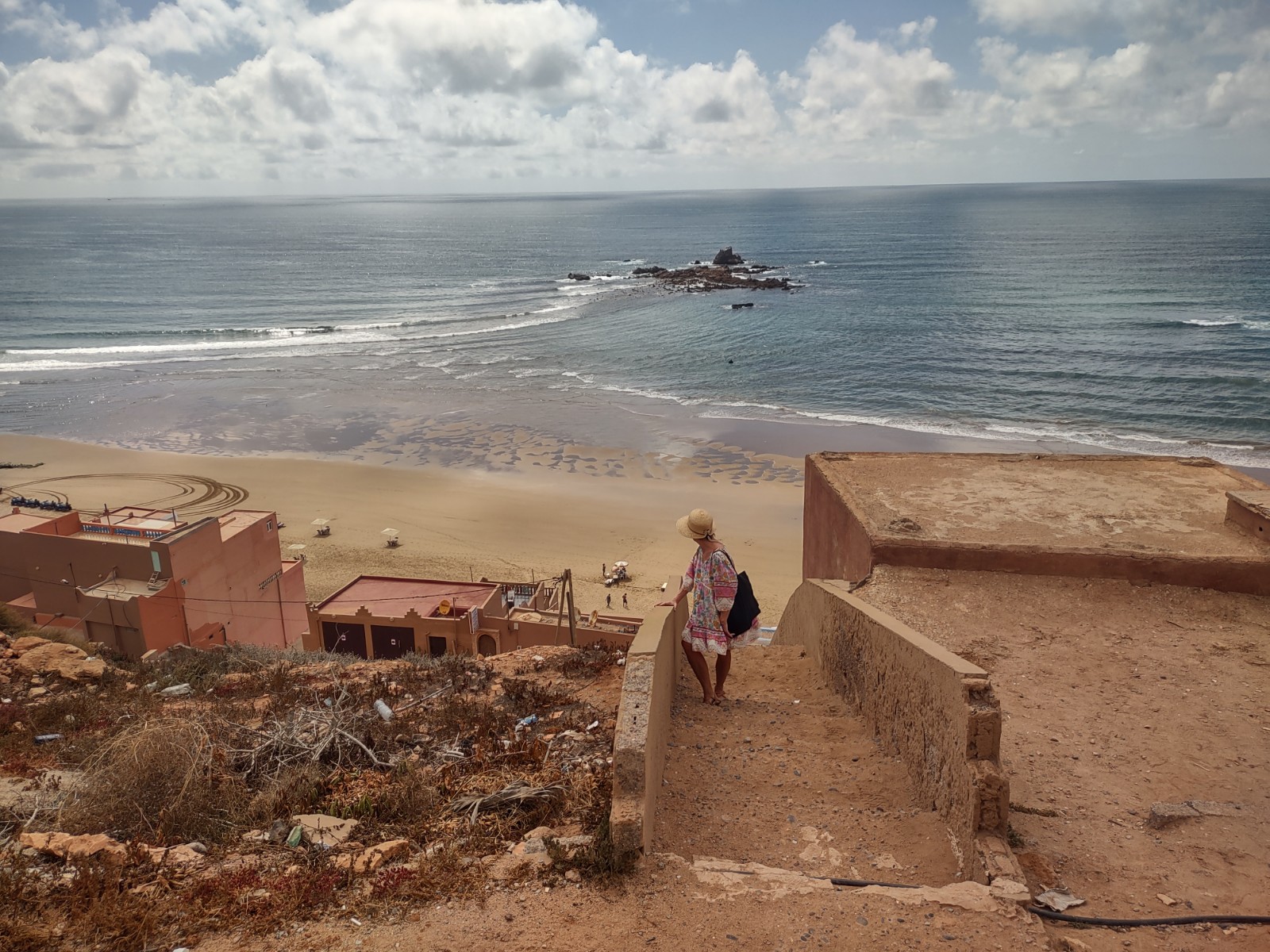
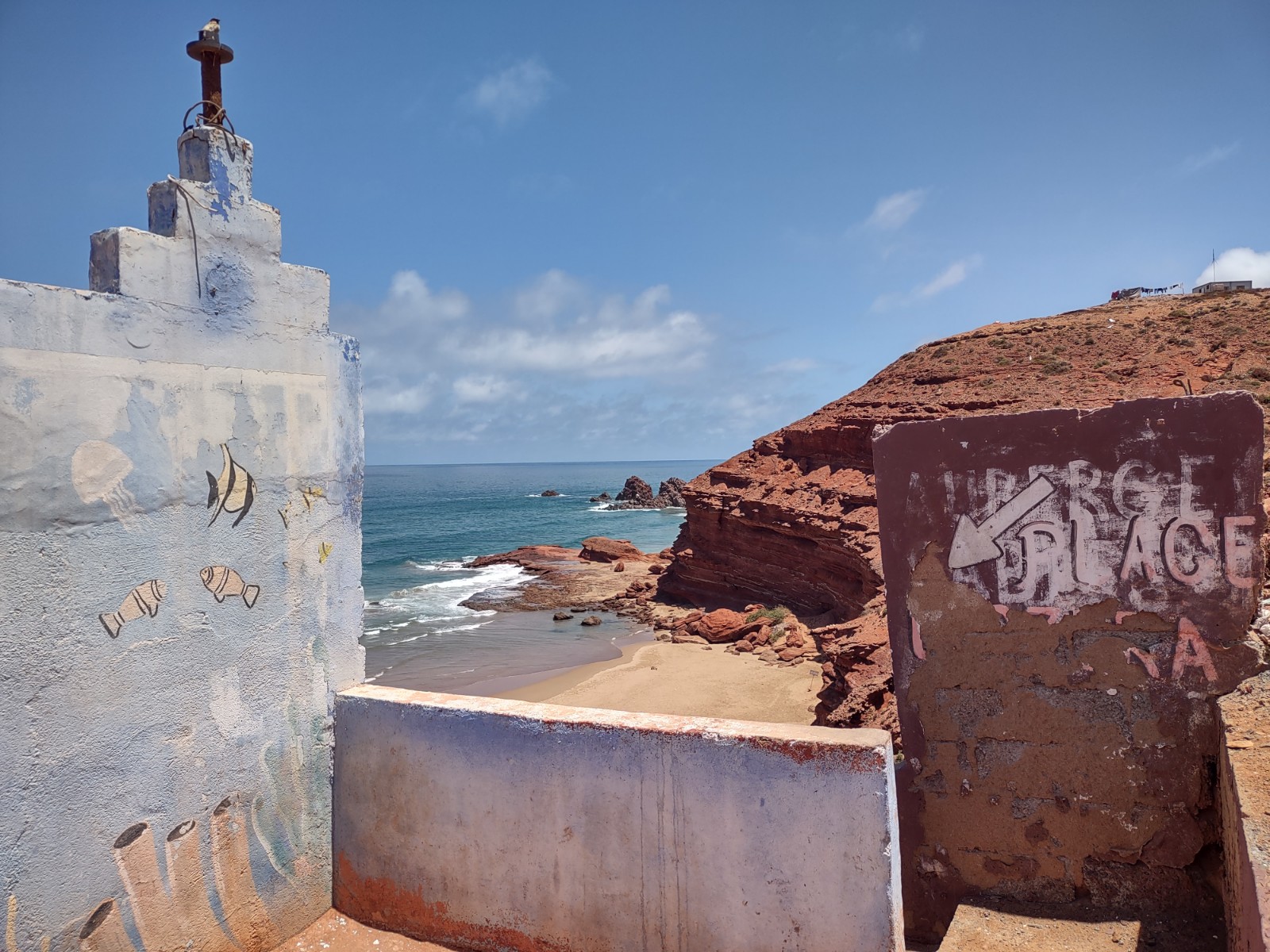
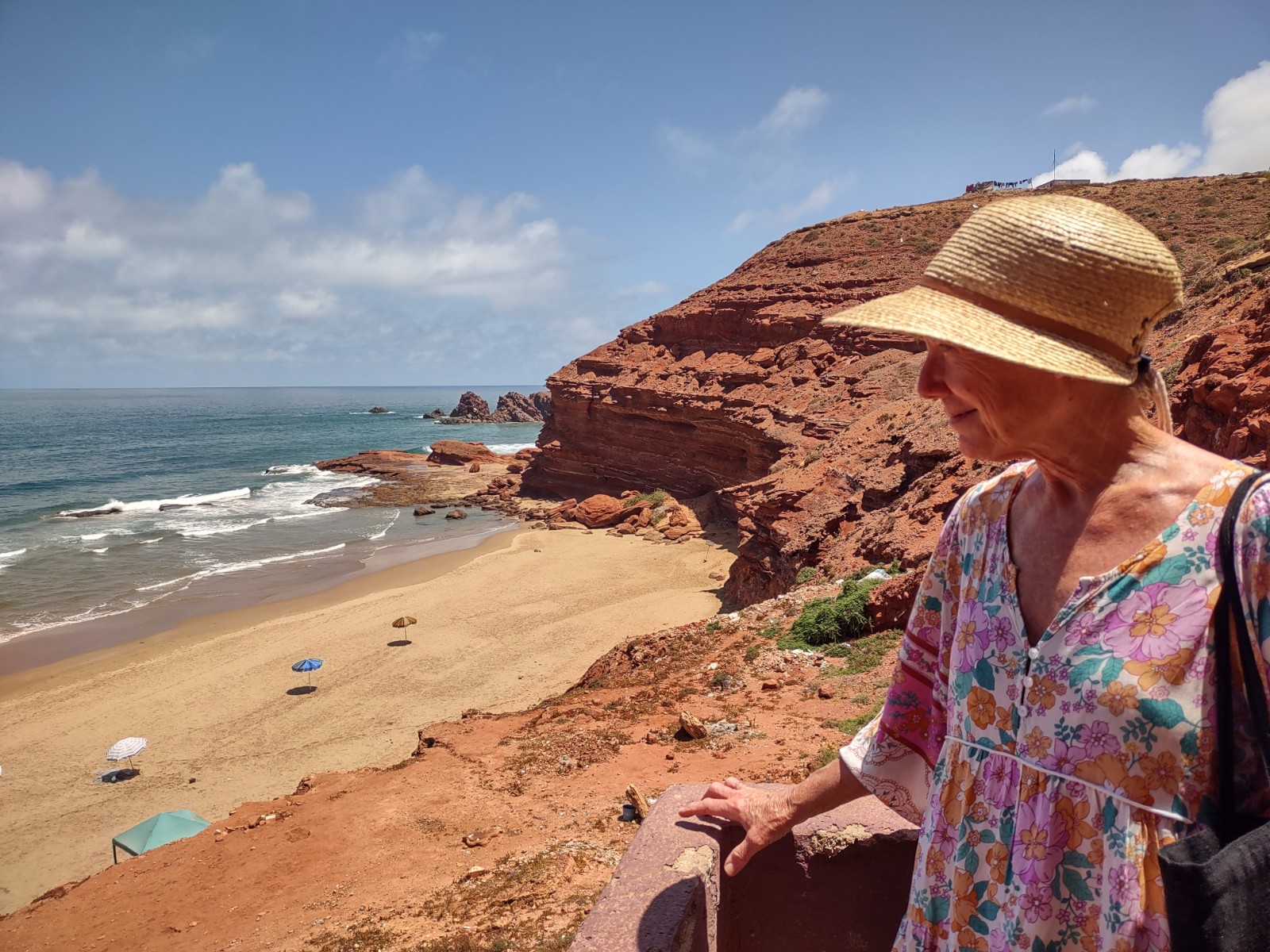
Legzira beach is one of those places which looks awesome in photos but the photos just don’t capture the reality of the place. It is a beautiful broad beach several kilometers long with fine golden sand, but what makes it particularly unique and special is an enormous red sandstone rock outcropping which bridges over the beach. The rock bridge (there used to be two of them, but the other collapsed in 2016) is about a kilometer south of where you enter the beach and, as you make your way towards it, you just can’t believe that it keeps getting bigger and bigger and, once you finally pass under it, the view from the other side is, if anything, even more dramatic. The photos honestly don’t come close to capturing what it is really like.
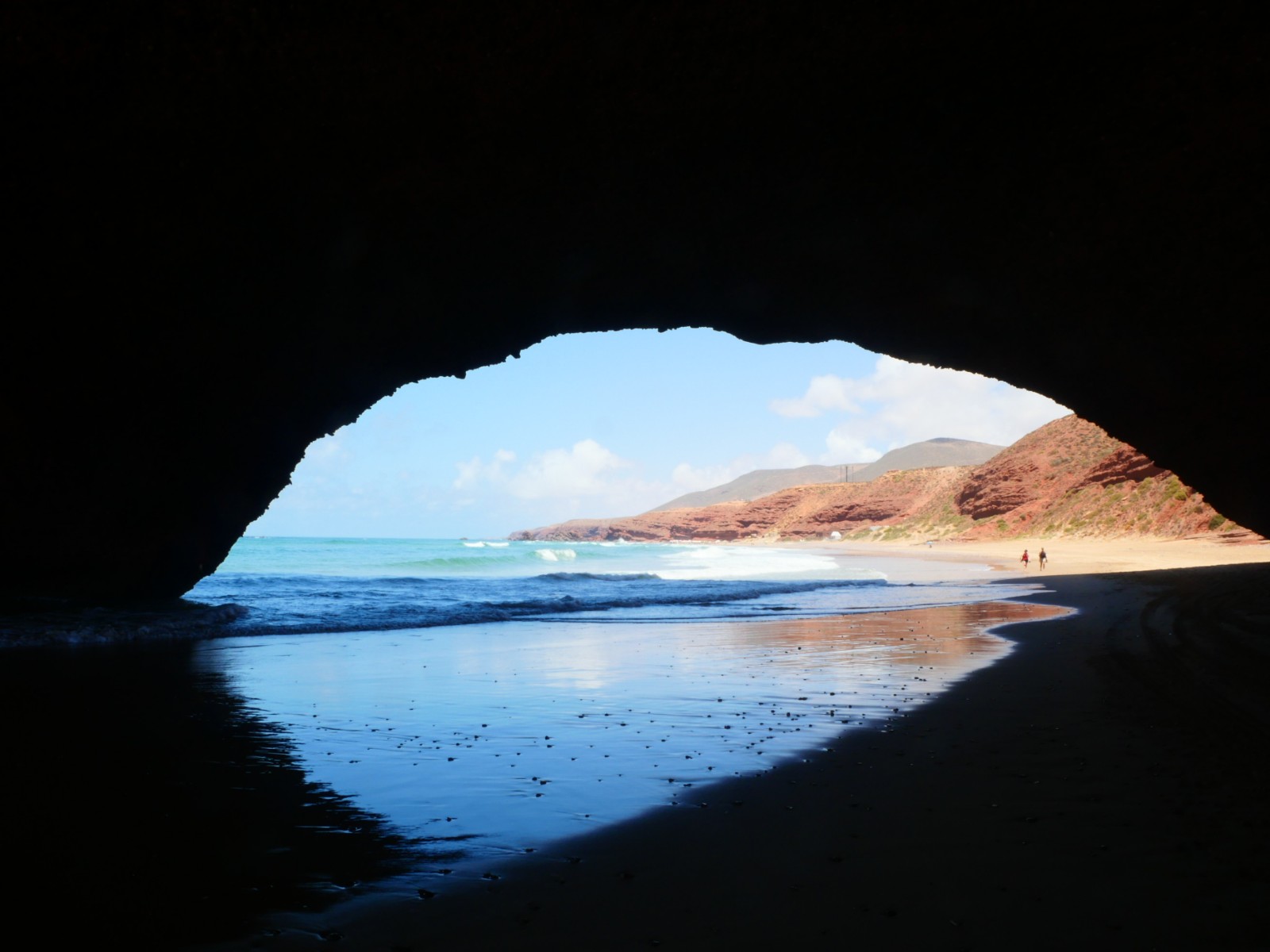

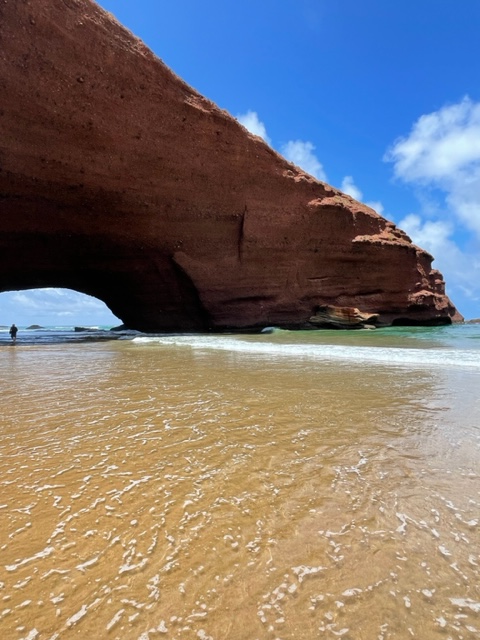
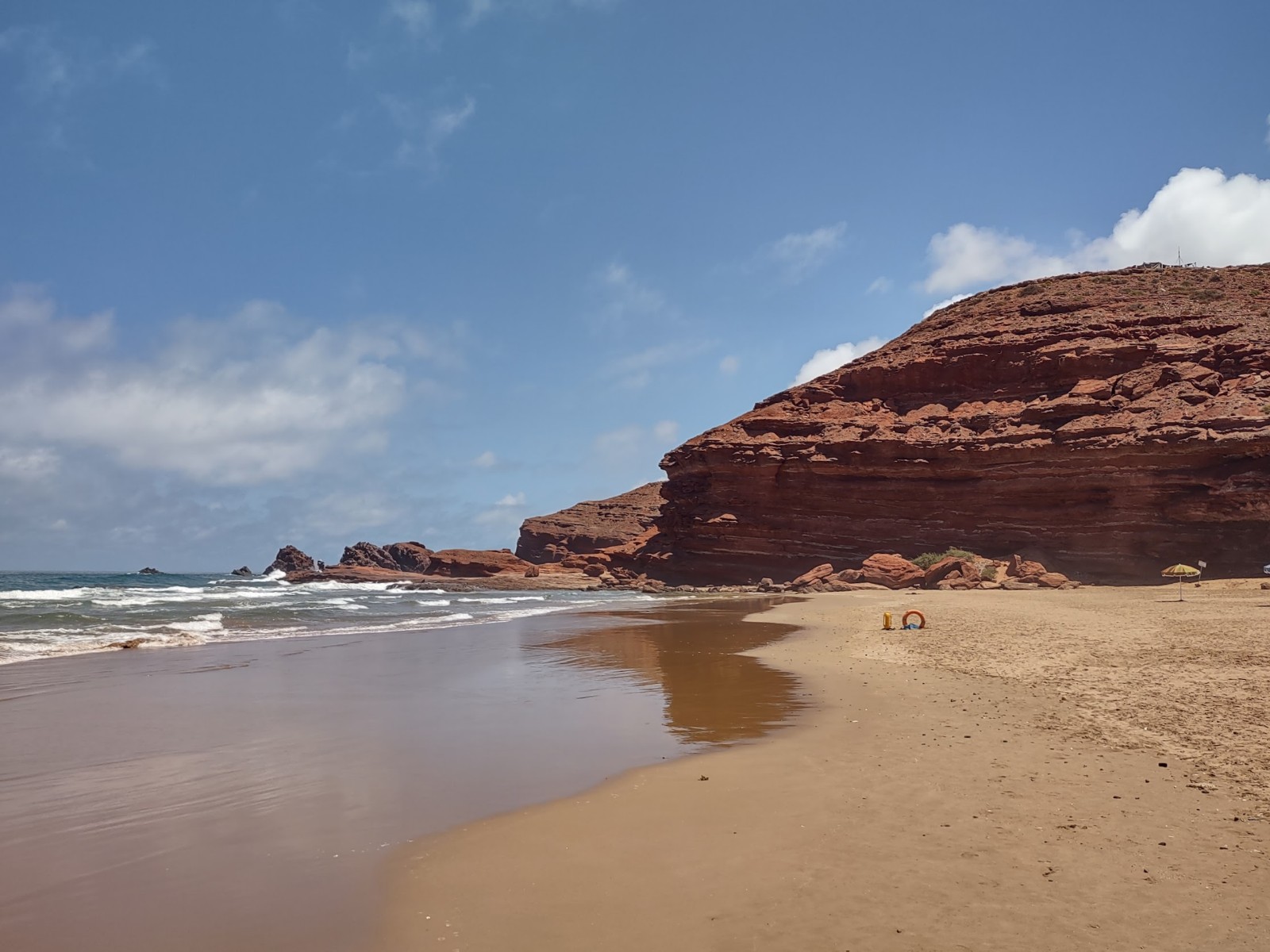
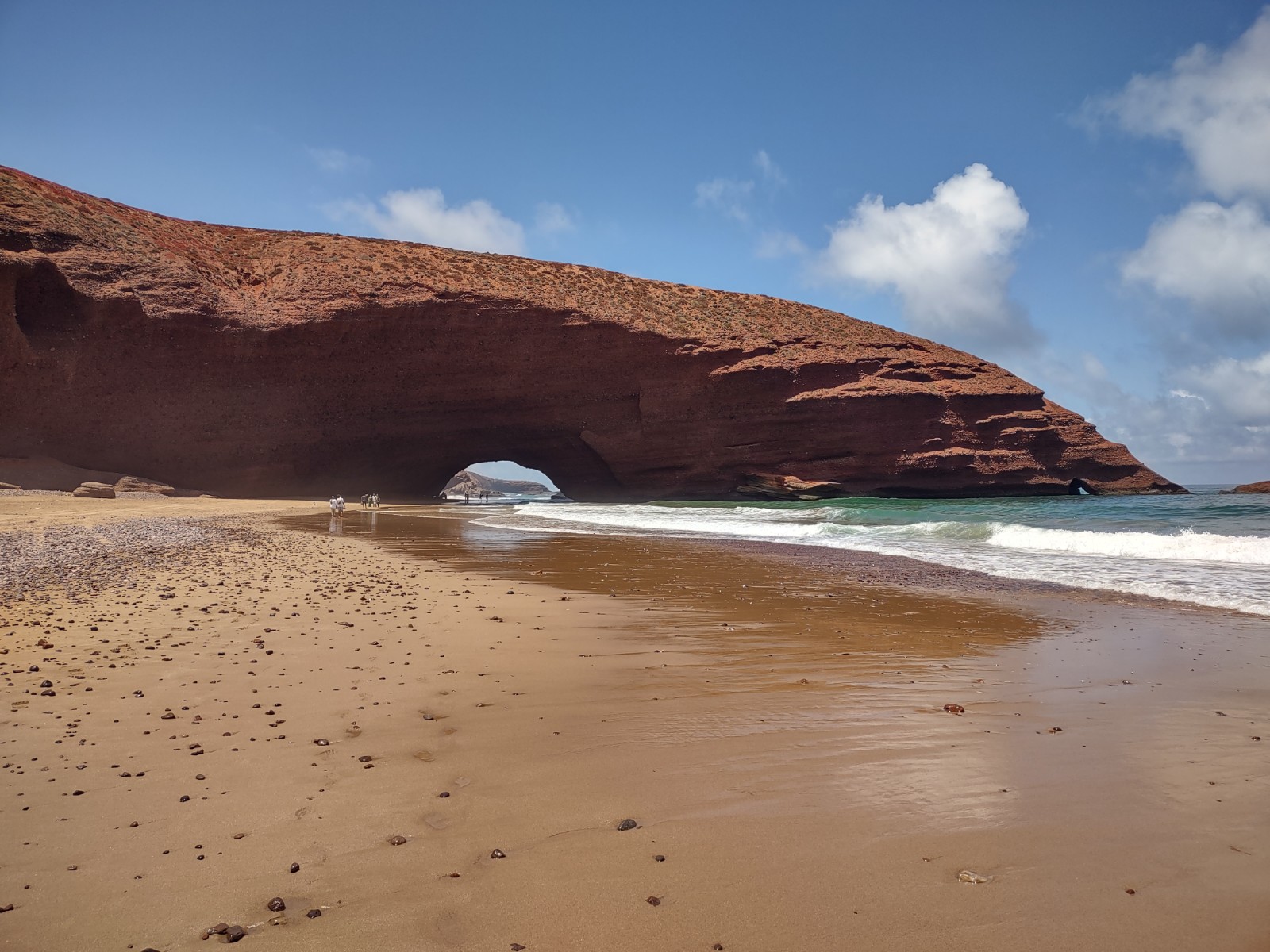
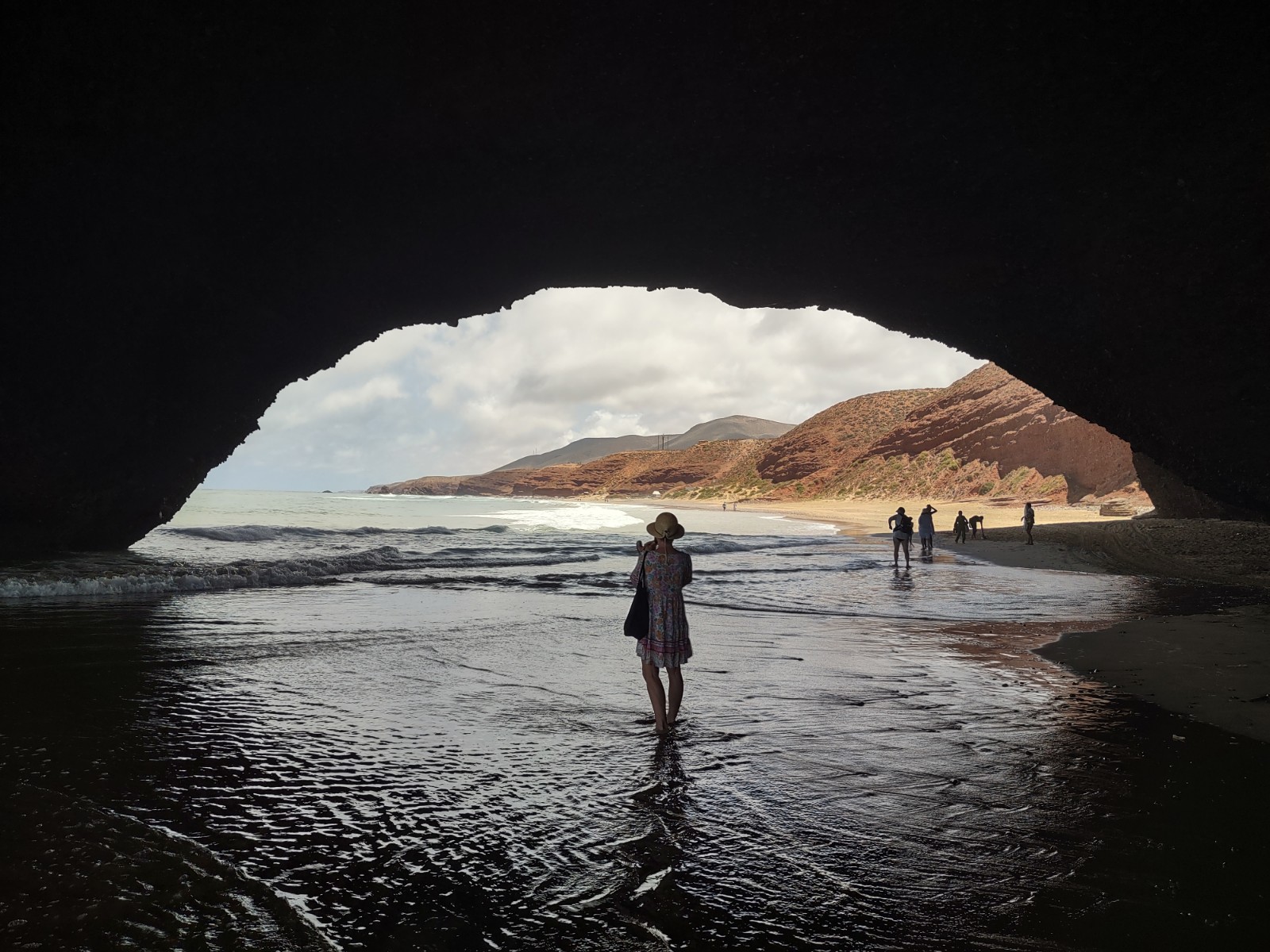

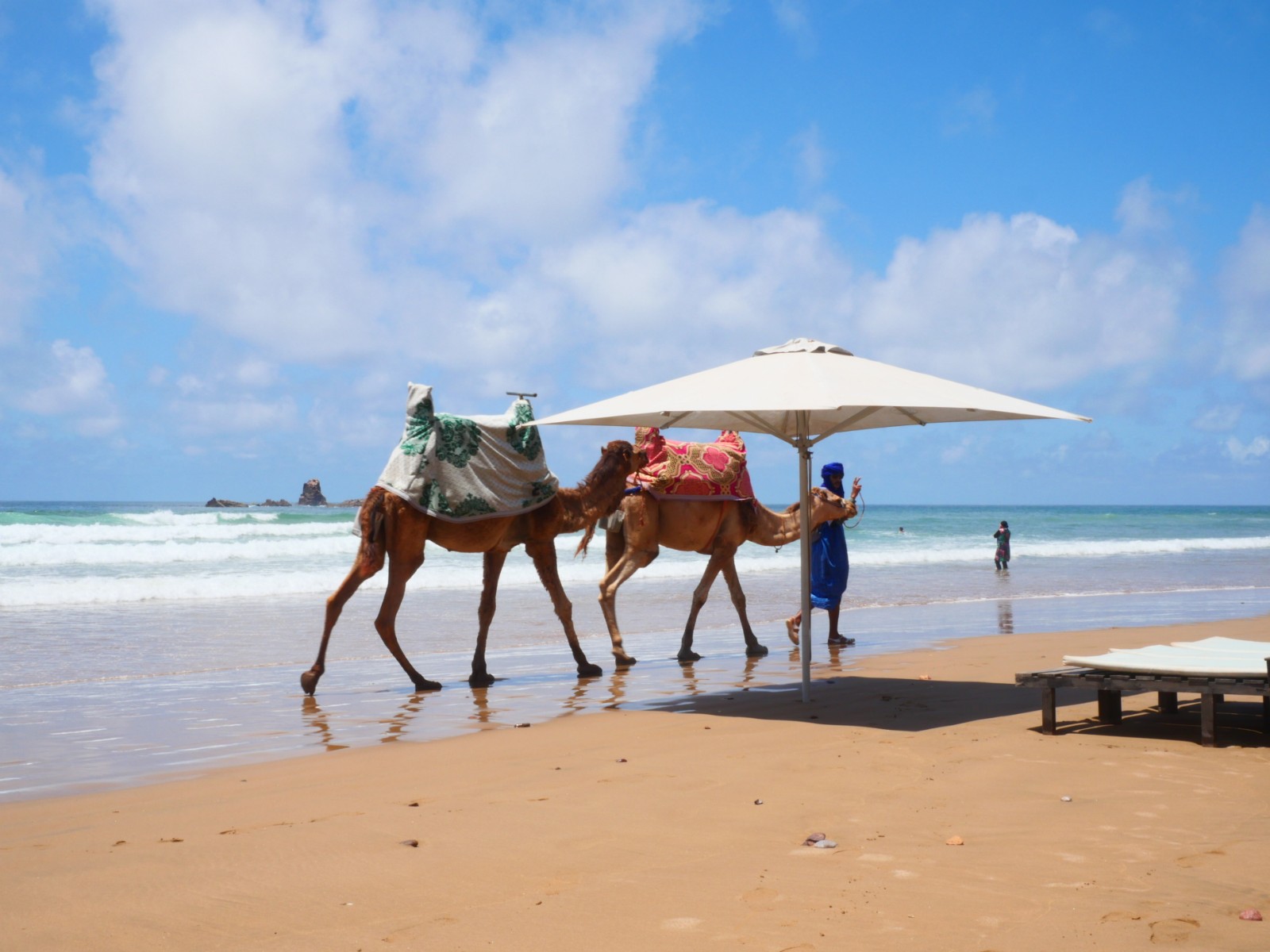
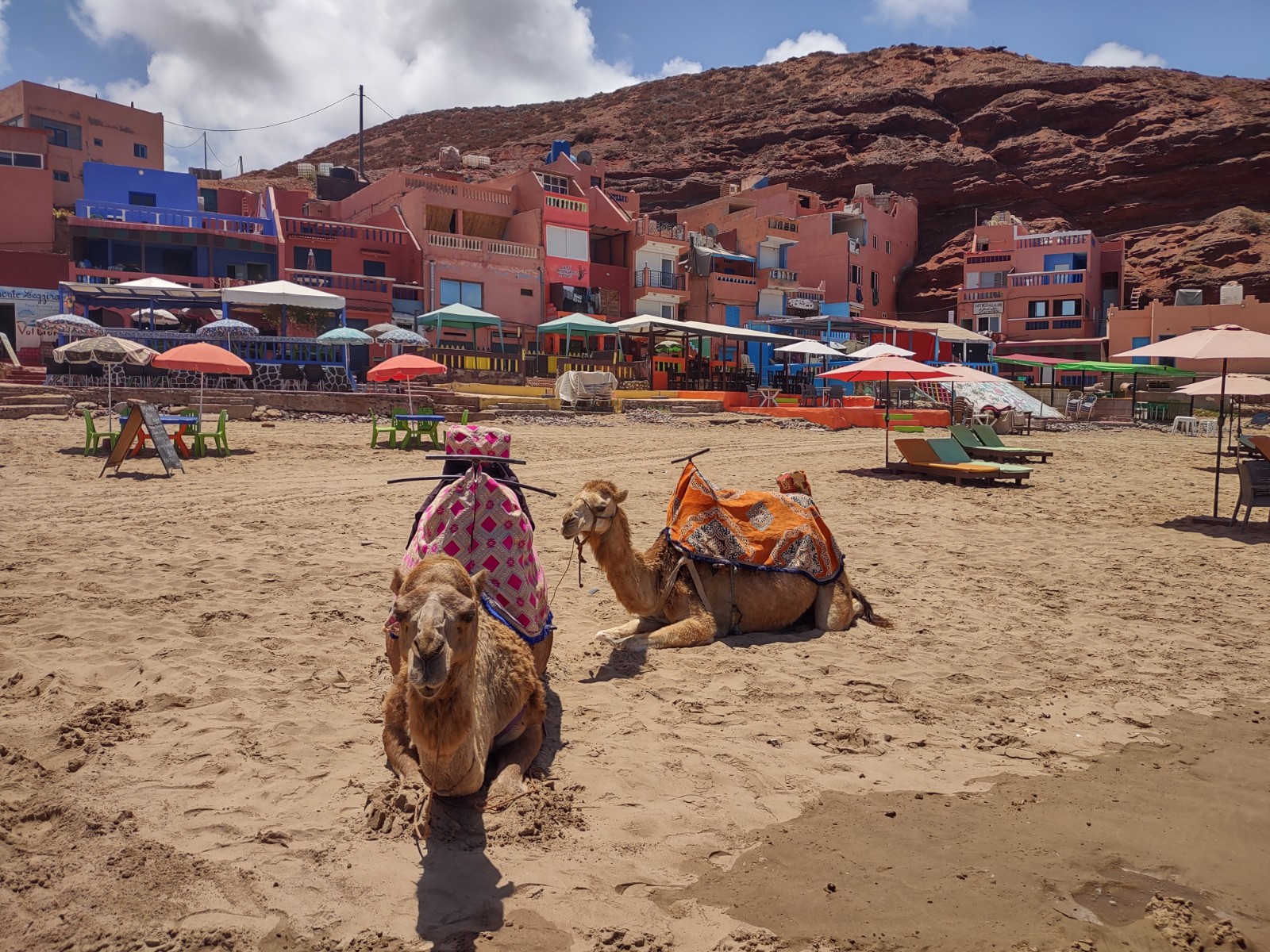
In some regards, Legzira Beach reminded us of Oludeniz Beach on the Turkish Aegean coast which we first visited on our honeymoon some 33 years ago. Legzira has a couple of small “touristic” motels and restaurants along with some camels which are available for rides up the beach, which is pretty much all that existed in Oludeniz when we first visited it. Unfortunately, when we went back there a couple of years ago we found that Oludeniz had developed into a crowded tourist town with something in excess of 300 hotels! We’re hoping that if we come back to Sidi Ifni in 30 years it will not have suffered a similar fate.

Our second interaction with a non-local occurred as we were leaving Legzira Beach when we passed a young man hitchhiking in our direction. I think maybe I had our son in my mind when I saw him (he too traveled solo for awhile in Morocco), but without even really thinking about it or any discussion with Colleen I pulled over and unlocked the back door. Predictably, he was on his way to Sidi Ifni (it’s really the only place where the road goes) which was of course also where we were going, so he got in. During our brief drive we learned that his name was Robin, that he was from the Netherlands, and that he was on his way south along the coast through Western Sahara to Mauritania, and that, coincidentally, he had been in Taghazout when we were there.
Its pretty hard not be impressed by the fearlessness of young people like Robin and their willingness to travel the world solo. We were also pretty impressed by how small his backpack was. I think that he was maybe a bit impressed by what we are doing and (as we heard from many other younger travelers) he said that he couldn’t wait to tell his parents about us. At the end of the short drive we dropped him in the center of town with some directions to the town market and we wished each other safe travels.
On our second full day in town, Saturday June 3rd, we resisted the urge to head back to Legzira and decided to go to the town beach instead. The town beach itself was nice, (but it was no Zegira which, I fear, has become our new standard for beaches). There were a couple of restaurants on the beach and a camping area where five or six RVs and vans were ready for business.
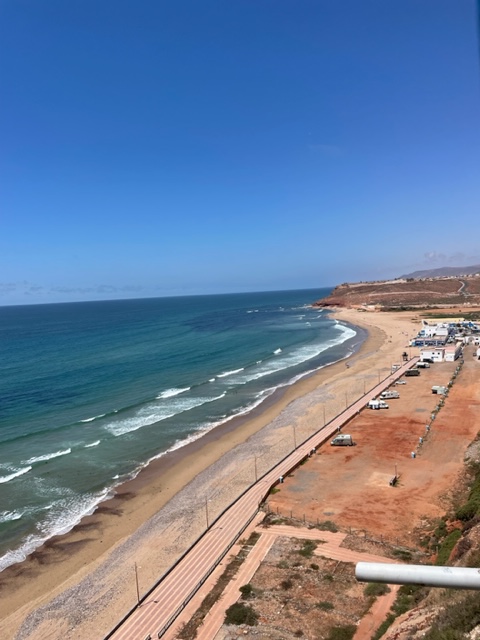
But, what really got our attention was the walk there. From our house we crossed two blocks over to the Boulevard Mulay Youssef, which is one of three boulevards which slope gently from Place Hassan III toward the beach. At the bottom of our neighborhood, these streets merged into a series of pedestrian plazas overlooking the beach which spilled into a set of wide terraced steps which wound the rest of the way down to the beach. The treads and nosings of the steps are painted bright colors with an aisle in the middle for hauling and are bracketed on each side with blue and white railings. The stairs swing widely around a large oddly boat-shaped building known, appropriately, as el Barco. It was really a beautiful feature and we were quite surprised that we hadn’t seen any pictures of it in any of our research before arriving, not does it appear on Instagram (well OK, it does now).
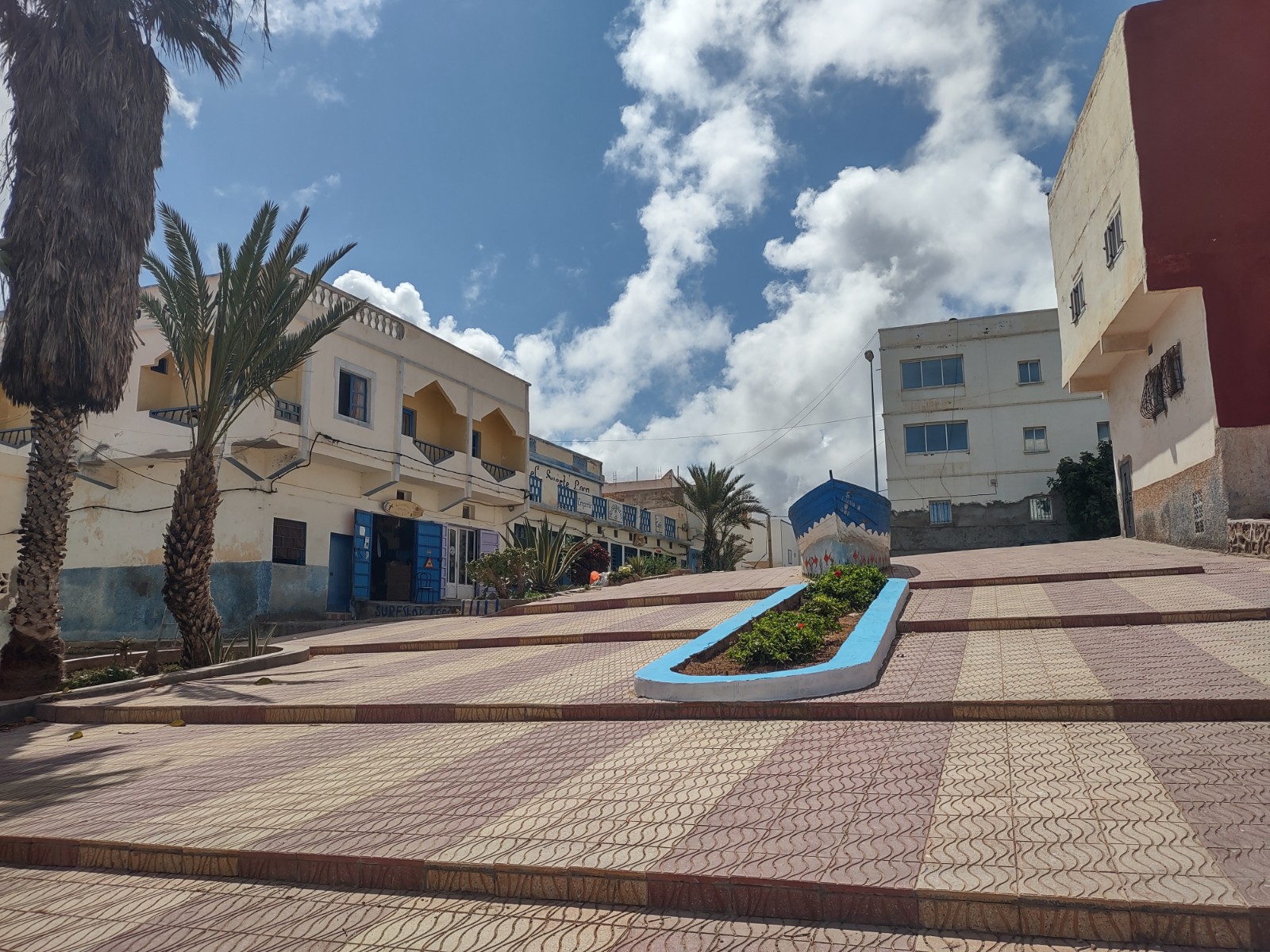
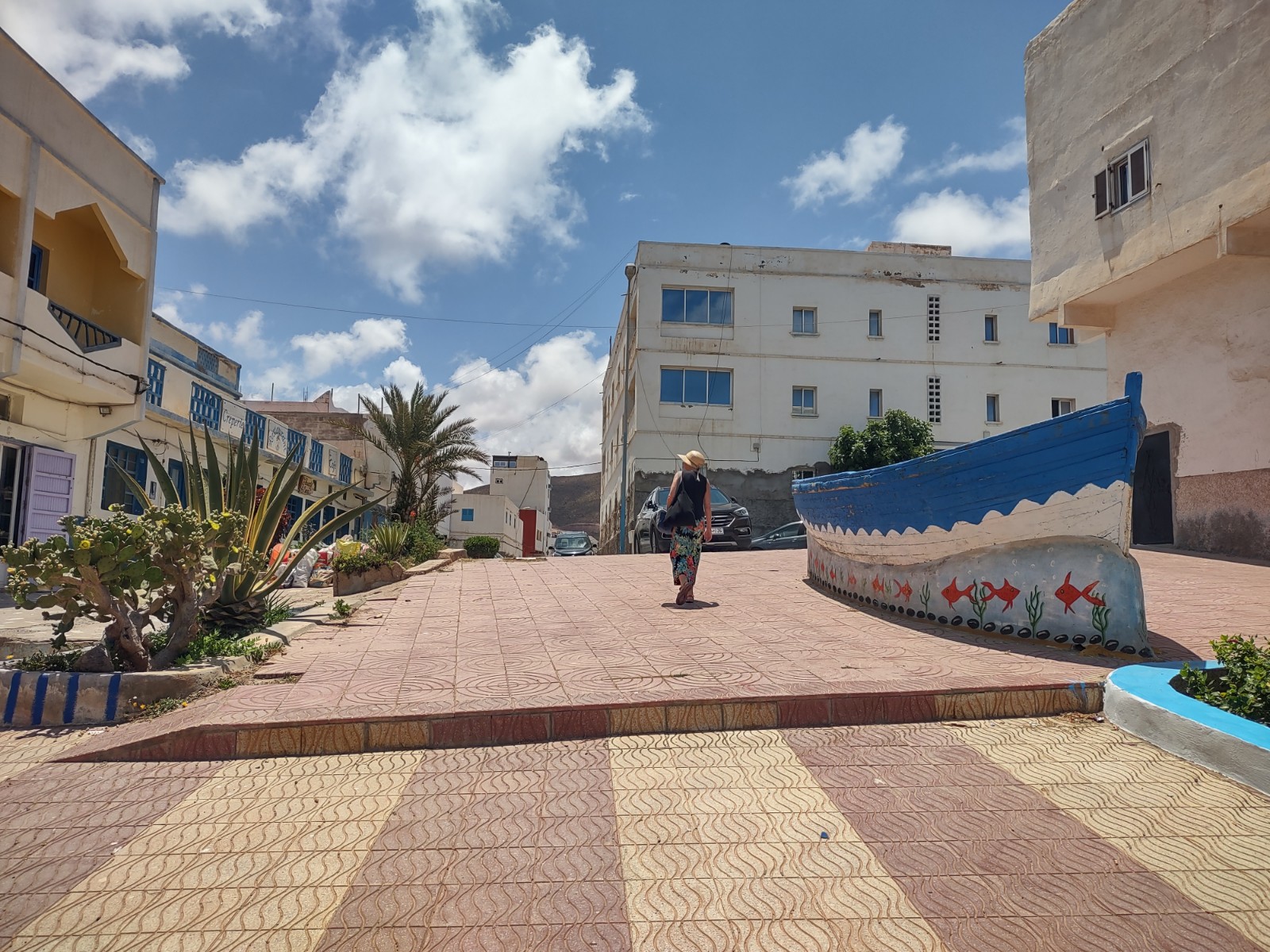
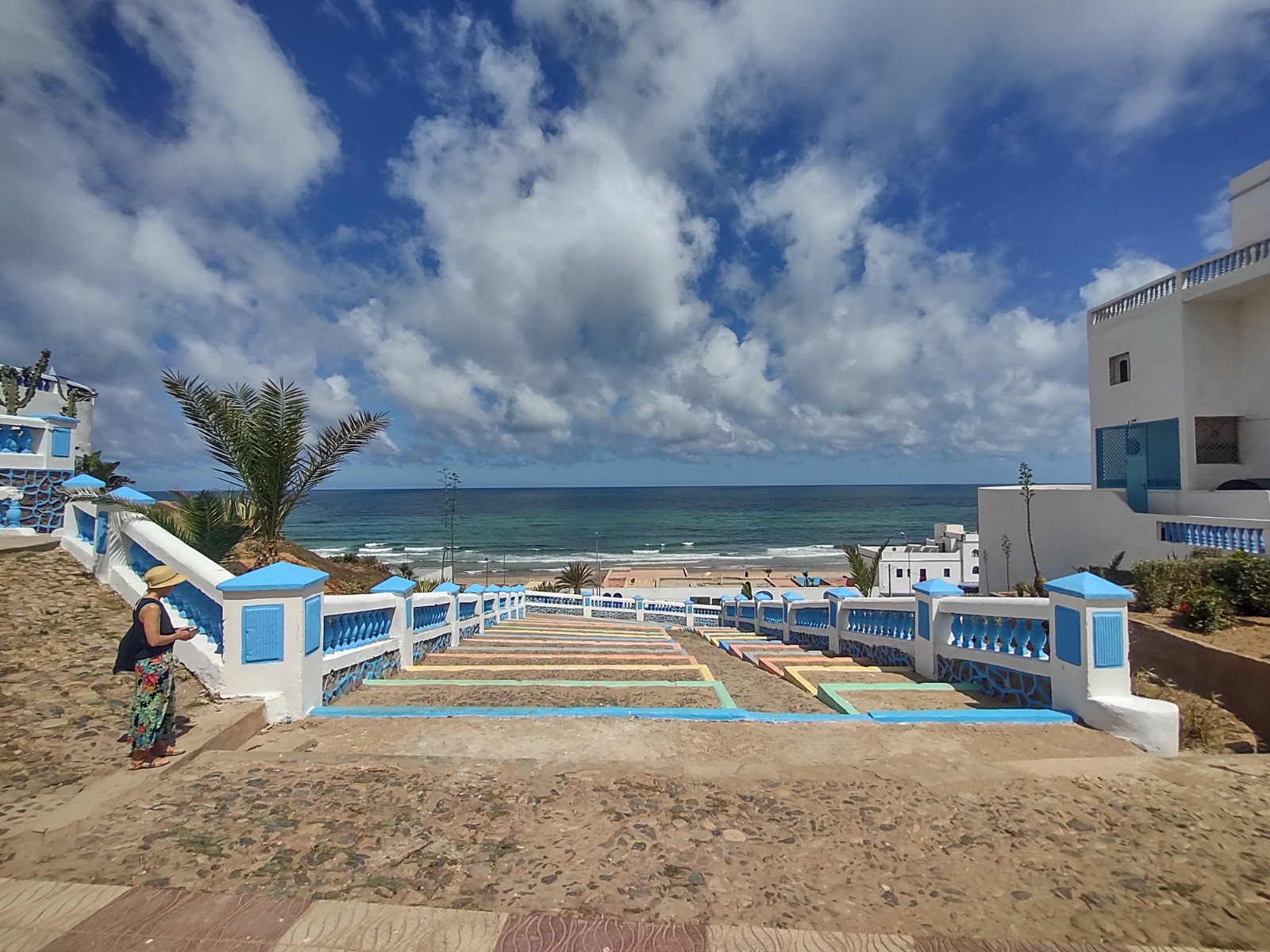

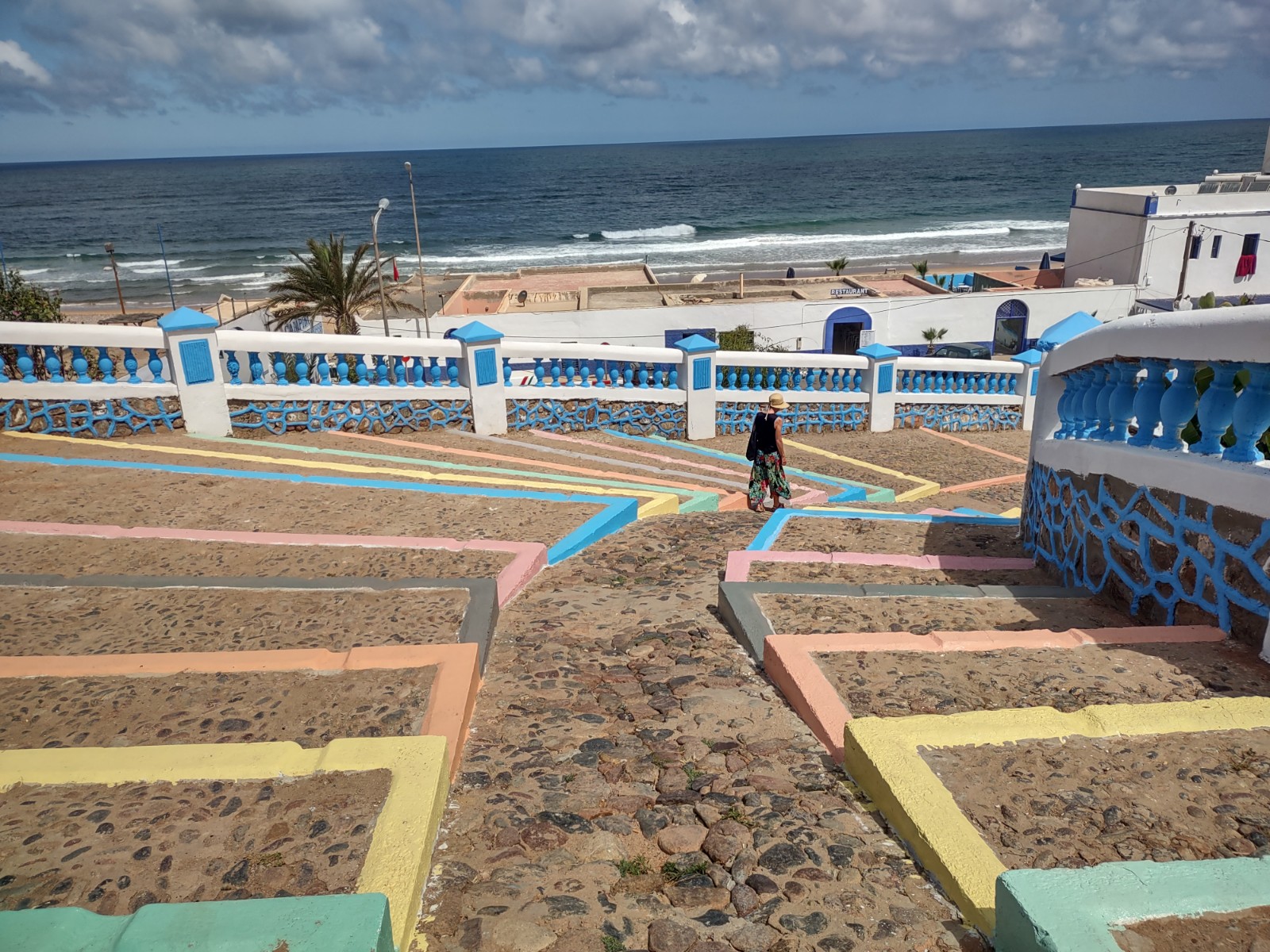
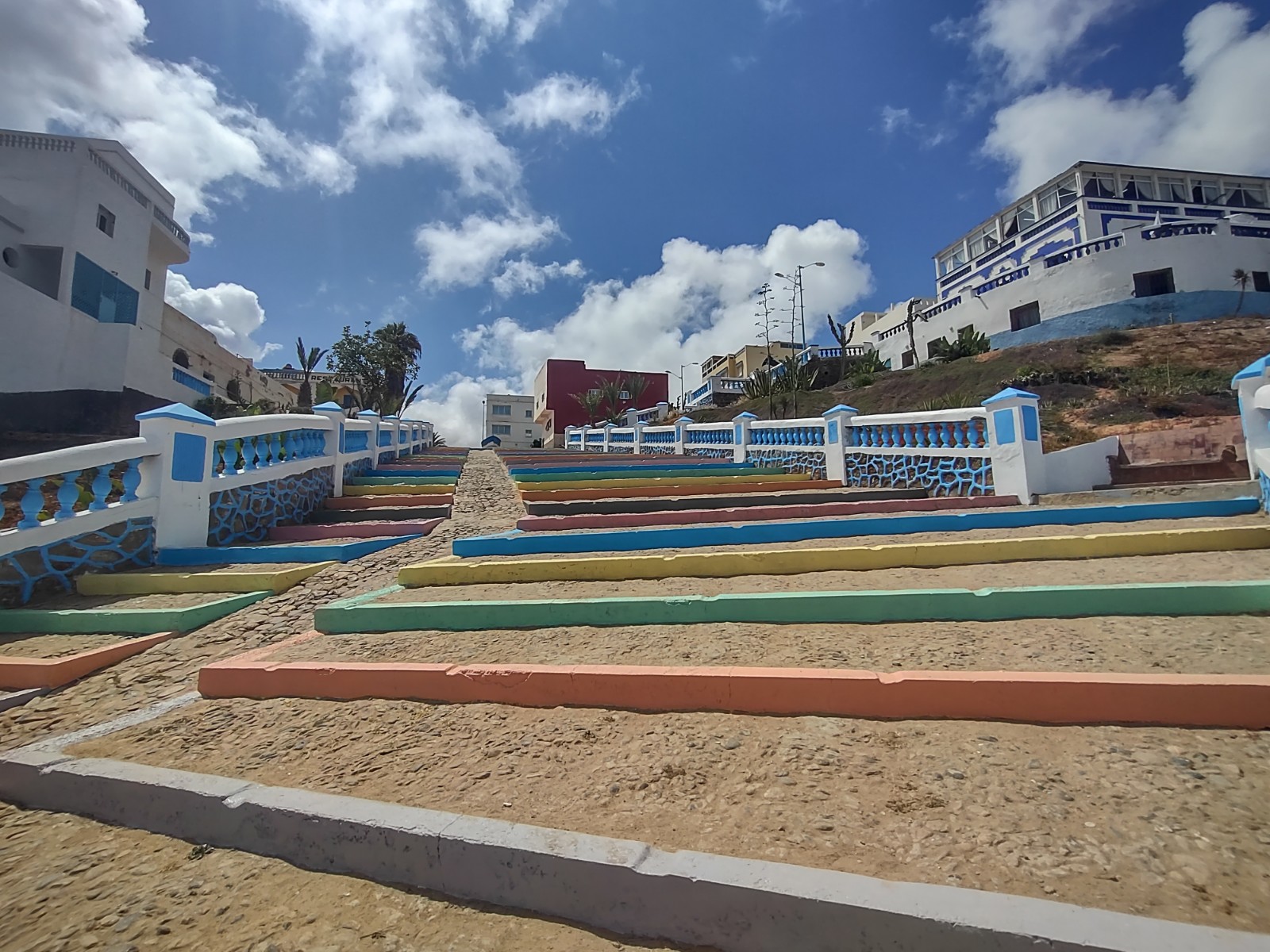
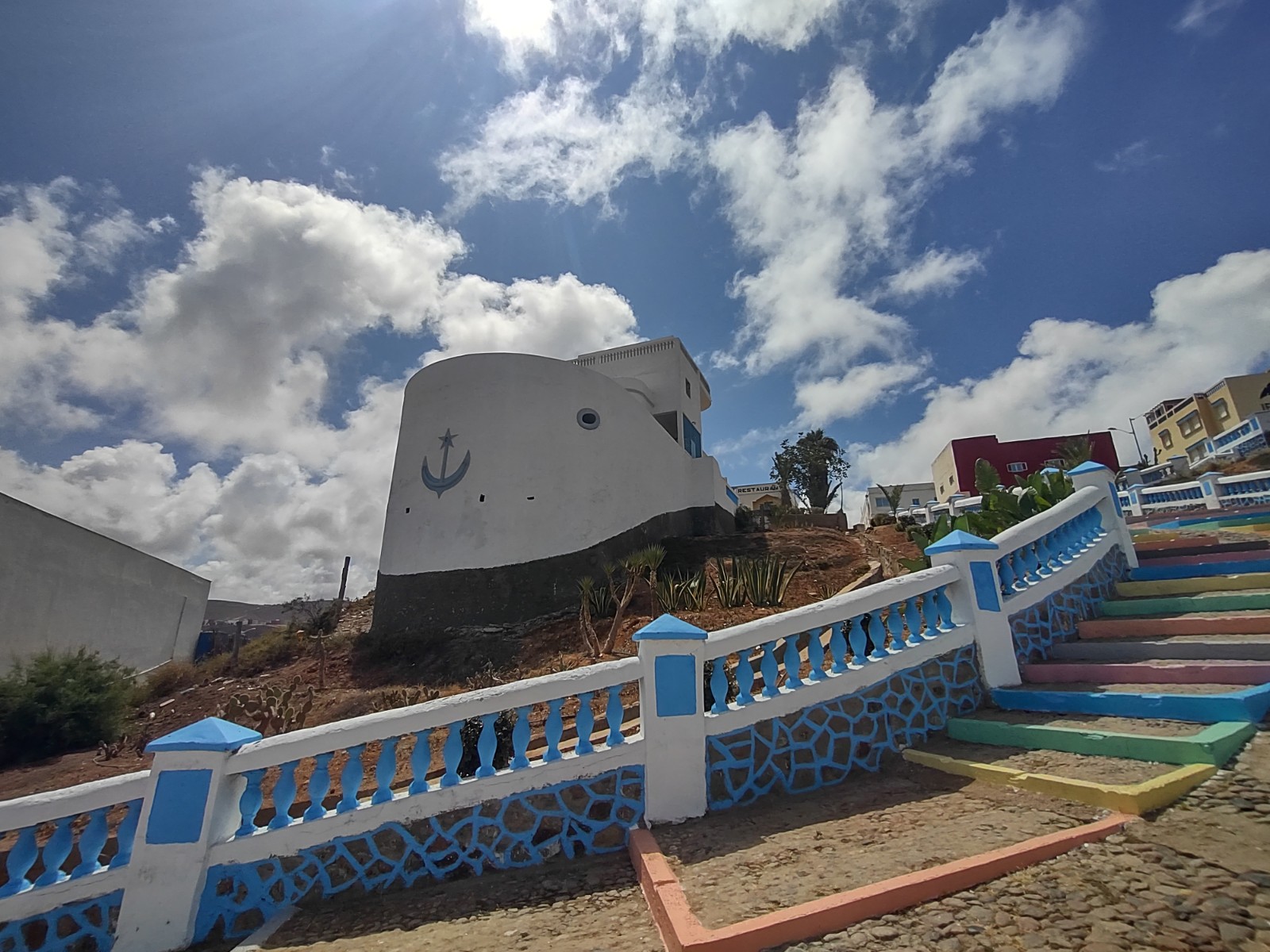
We went out for dinner Saturday night and found what seemed like most of the town out as well with families and small groups of friends strolling up and down the boulevards and around the various plazas, and dining al fresco at the restaurants, all of which appeared to be open and crowded. We strolled a bit ourselves and ended up grabbing a bite at a restaurant in a nice section of town on the other side of the main square called Safa. The food was good (but not memorable) and it was my suspicion that Colleen was actually starting to become comfortable with being the only woman in the room (which she later confirmed was not the case).
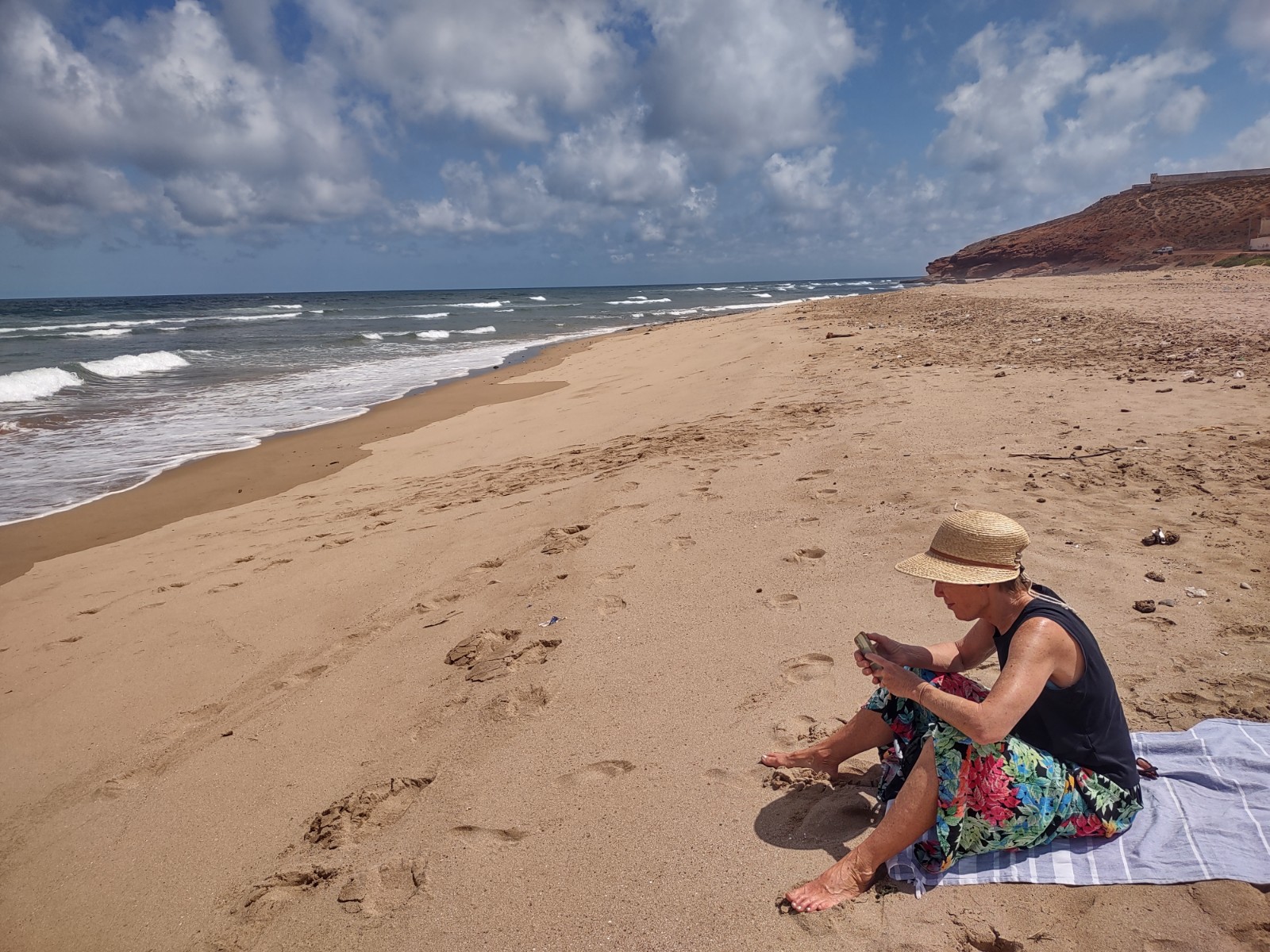
On our last day, Sunday June 4th (no mass this Sunday as the closest church was 170 kilometers away in Agadir), we headed back to Legzira Beach and had a nice relaxing day laying in the sun, listening to the sound of the crashing waves, and taking some cautious dips in the surf (the ocean is pretty rough here, but it is also a bit chilly). We went home and had dinner, caught up with some family members, then packed and went to bed early as we wanted to get an early start on what promised to be a long day of travel back to Marrakesh.
We came to Sidi Ifni looking for some nice beaches and hoping for some a glimpse of what Moroccan life is like without tourists. On the first count, we scored big a pretty much reset our scale for good beaches. As regards the second, I think we got a pretty good glimpse of what life is like here without tourists, but the reality is that, because we are tourists here, you can’t get it 100% unless you stay long enough to become one yourself. We also learned that trying to live like a local means just that and you have to be prepared to give up some of the luxuries and comforts which are only available when you stay in a tourist destination. All in all, it seemed a pretty fair trade and we walk away with some pretty amazing memories.
Next step, back to Marrakesh and then on to Fes!
 Burning the Inheritance
Leave a comment