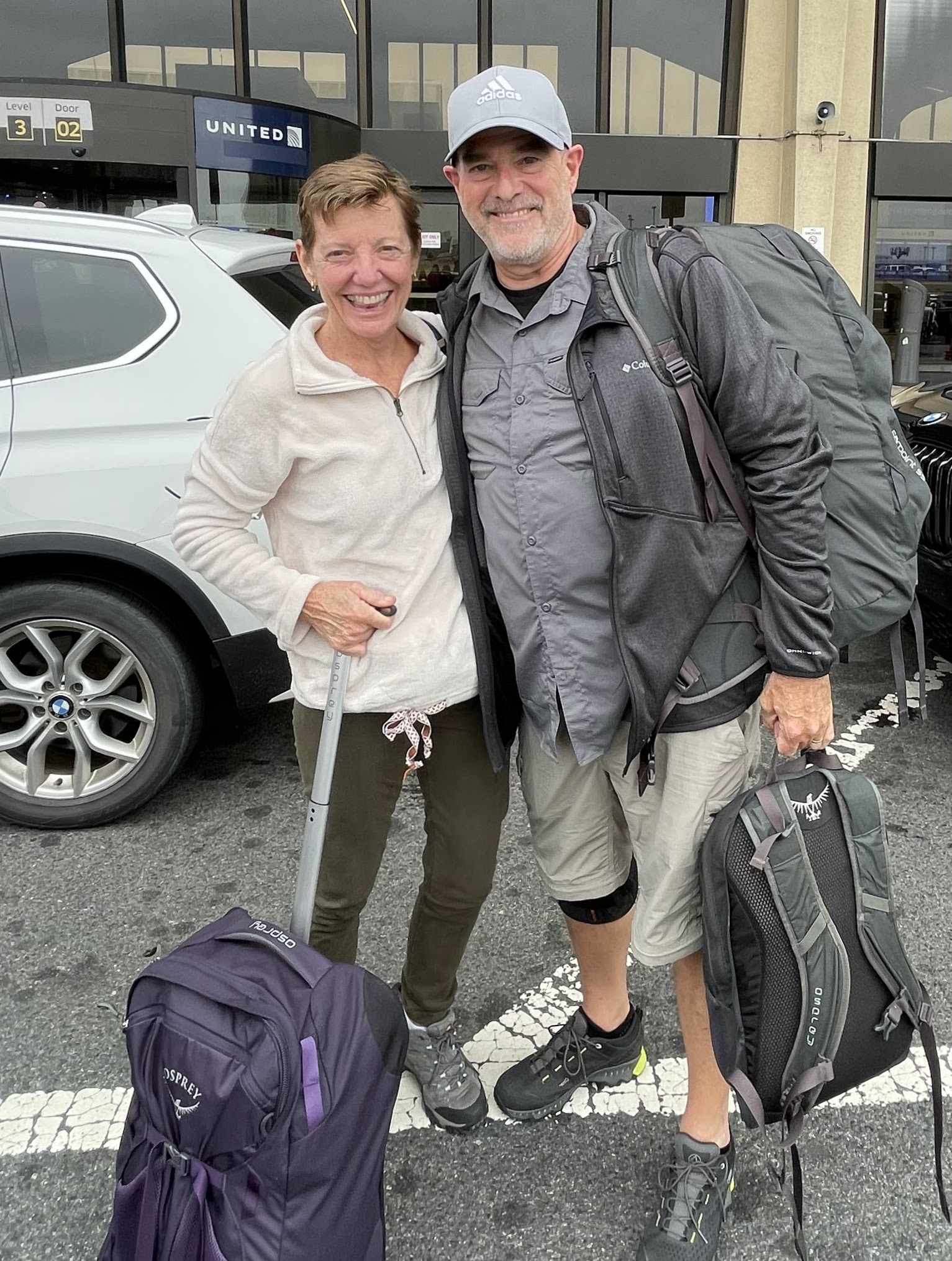

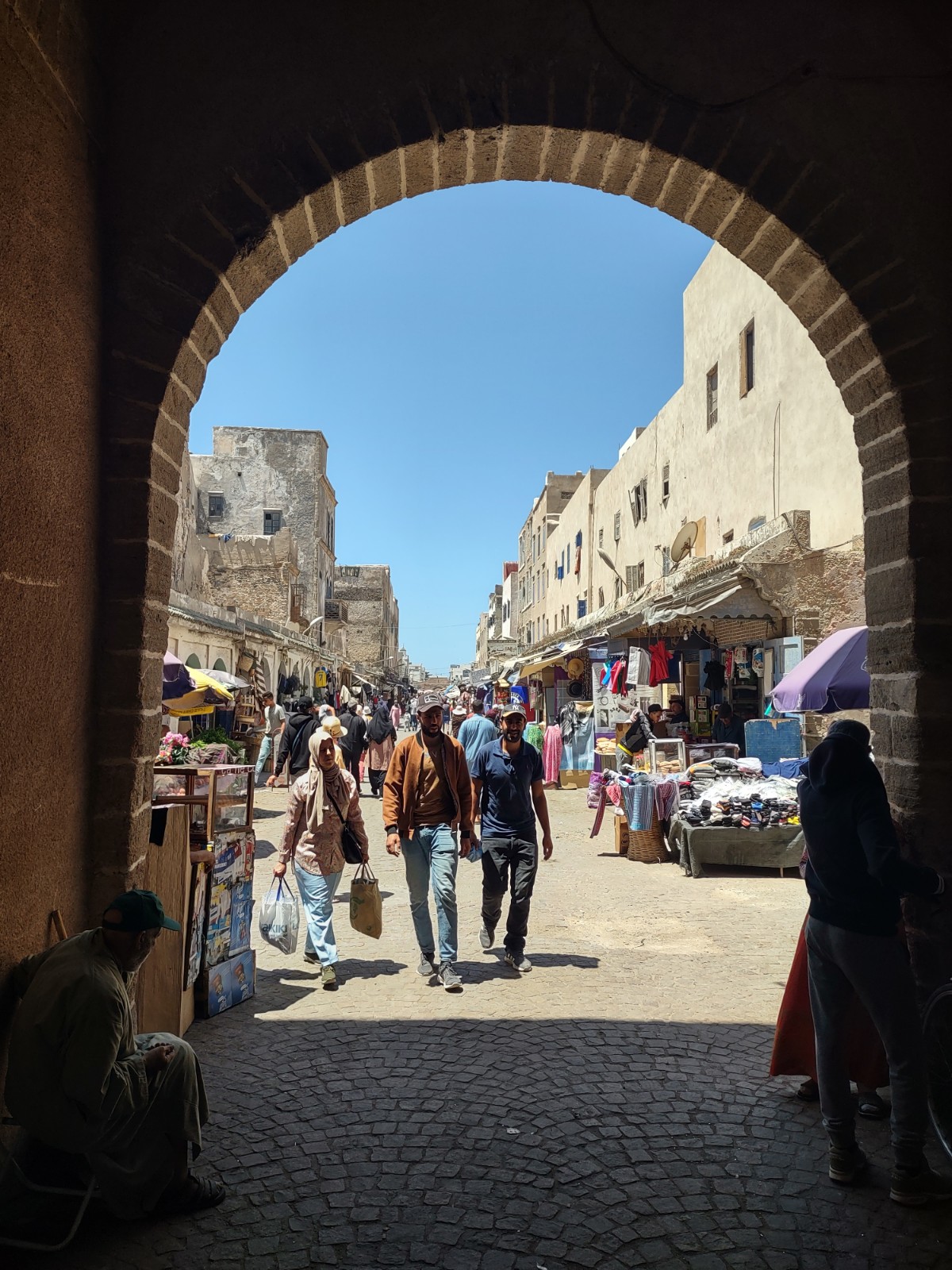
On Thursday May 25th, we took a taxi to the Marrakesh bus station and boarded a bus bound for the city of Essaouira, which is on the Moroccan Atlantic coast about 115 miles due east of Marrakesh. Our son had spent some time there in 2011 and strongly advocated that we include it in our Moroccan travels, which we did. Even better, after quite a bit of consideration, we decided to rent a car there and make it the first of 3 stops on the Moroccan Atlantic coast.
Essaouira, which was known as Mogador until the 1960’s, has been occupied since prehistoric times. It was the site of a dye processing factory established by the Berber king Juba II around the early 1st century and was the source of the purple dye used for the togas of Senators of Imperial Rome. It served as a Roman trading outpost for a number of centuries due to its location as well as its well-protected and calm harbor. In the 14th century, the king of Portugal ordered a fortress to be built there, but it fell to the local resistance within four years. During the 16th century, Spain, England, the Netherlands, and France all tried to conquer Essaouira and failed and it remained a locally controlled trading port as well as an anchorage for pirates.
The current city was built during the mid-18th century (a relatively new city by Morocco standards), the work of Moroccan Sultan Mohammed bin Abdullah (Mohammed III) who engaged several renowned architects and some captive French engineers to design and build a city adapted to the needs of foreign merchants. From that time until the end of the 19th century Essaouira served as Morocco’s principal port, offering goods which were transported via caravan from sub-Saharan Africa through (literally) Timbuktu and exported to the world. Today, Essaouira has a population of about 80,000 residents (about a tenth the size of Marrakesh) and, while no longer a major port, it is a busy vibrant place and a popular vacation destination for both Moroccan and French travellers.
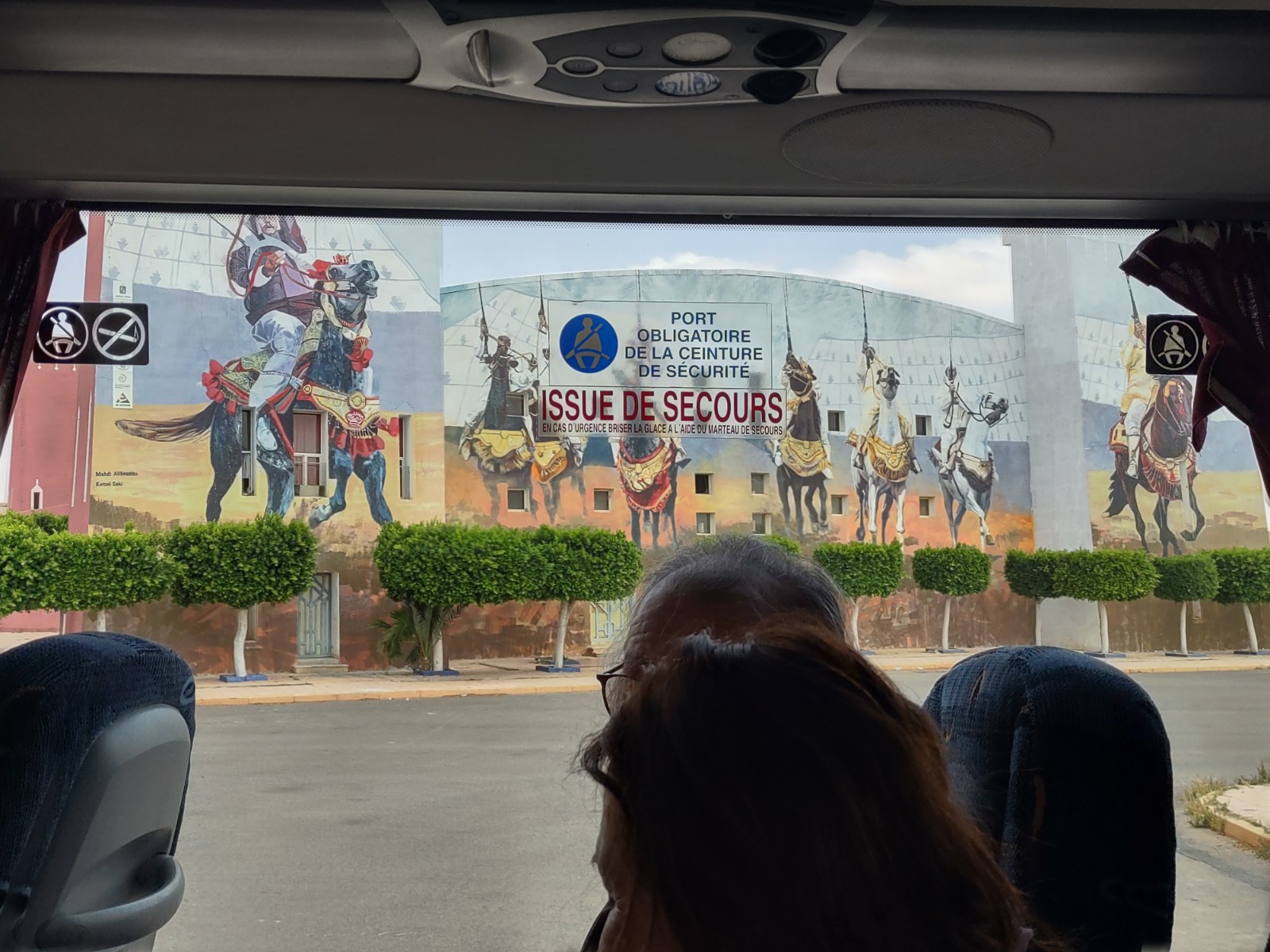
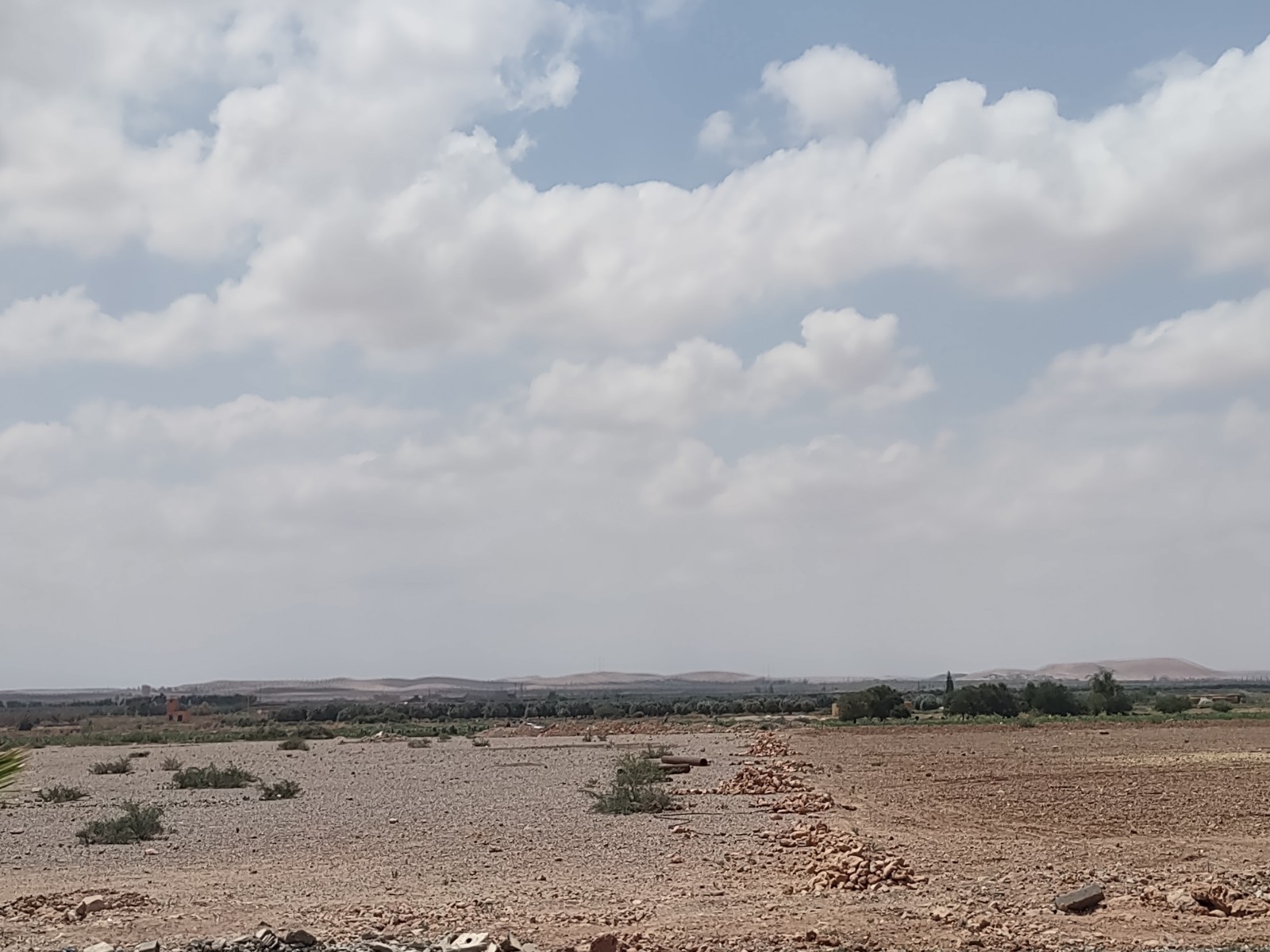
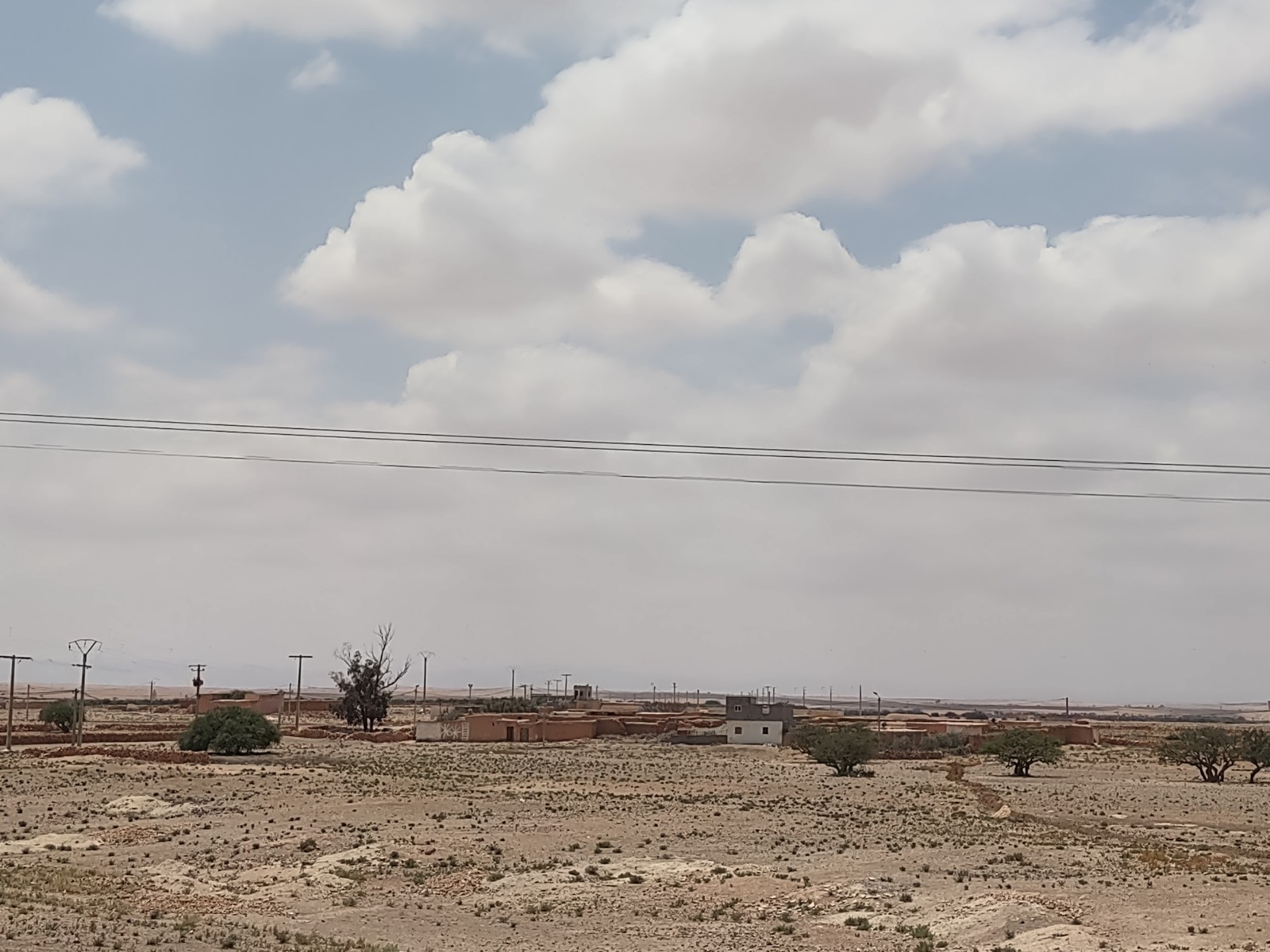
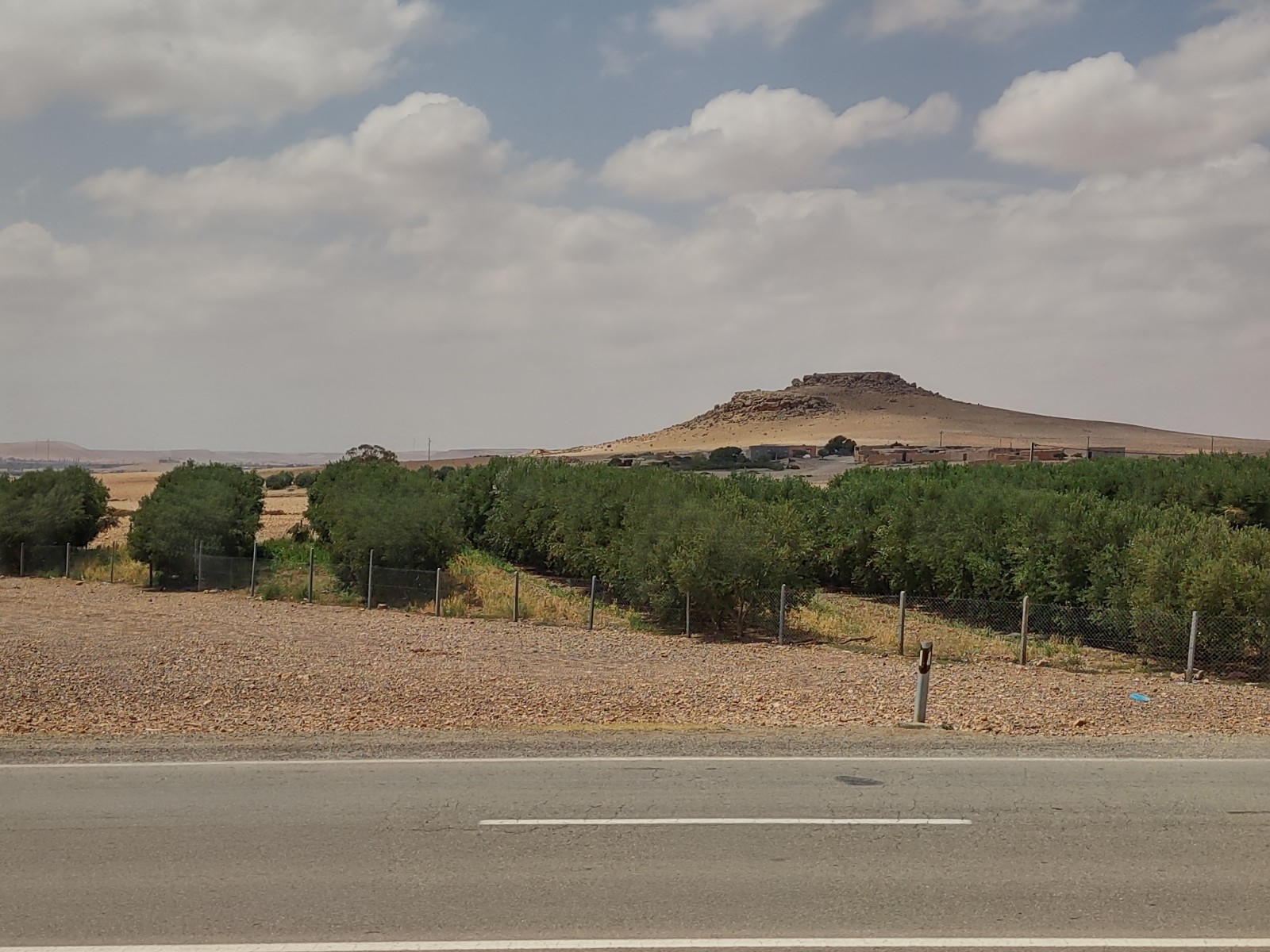
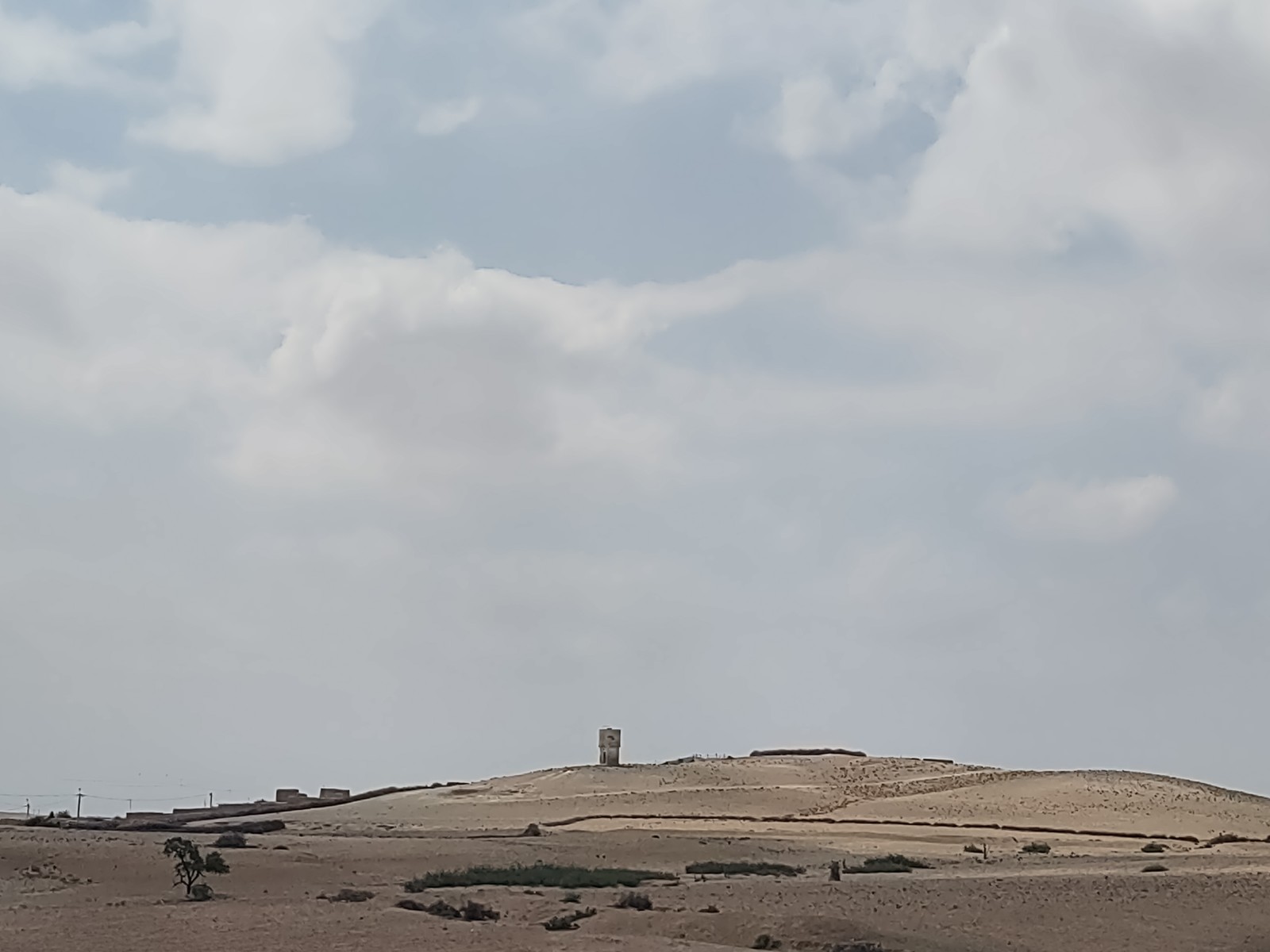
The trip to Essaouira took about 3 hours including a 20 minute stop for lunch in a small town called Chichaoua. Because we had yet to travel outside of Marrakesh, we were pretty excited about the ride and curious to see what the countryside looked like. While we did pass a few small towns and the occasional farm, most of what we saw was pretty dry and barren which really made you appreciate the fortitude of the people who live here.
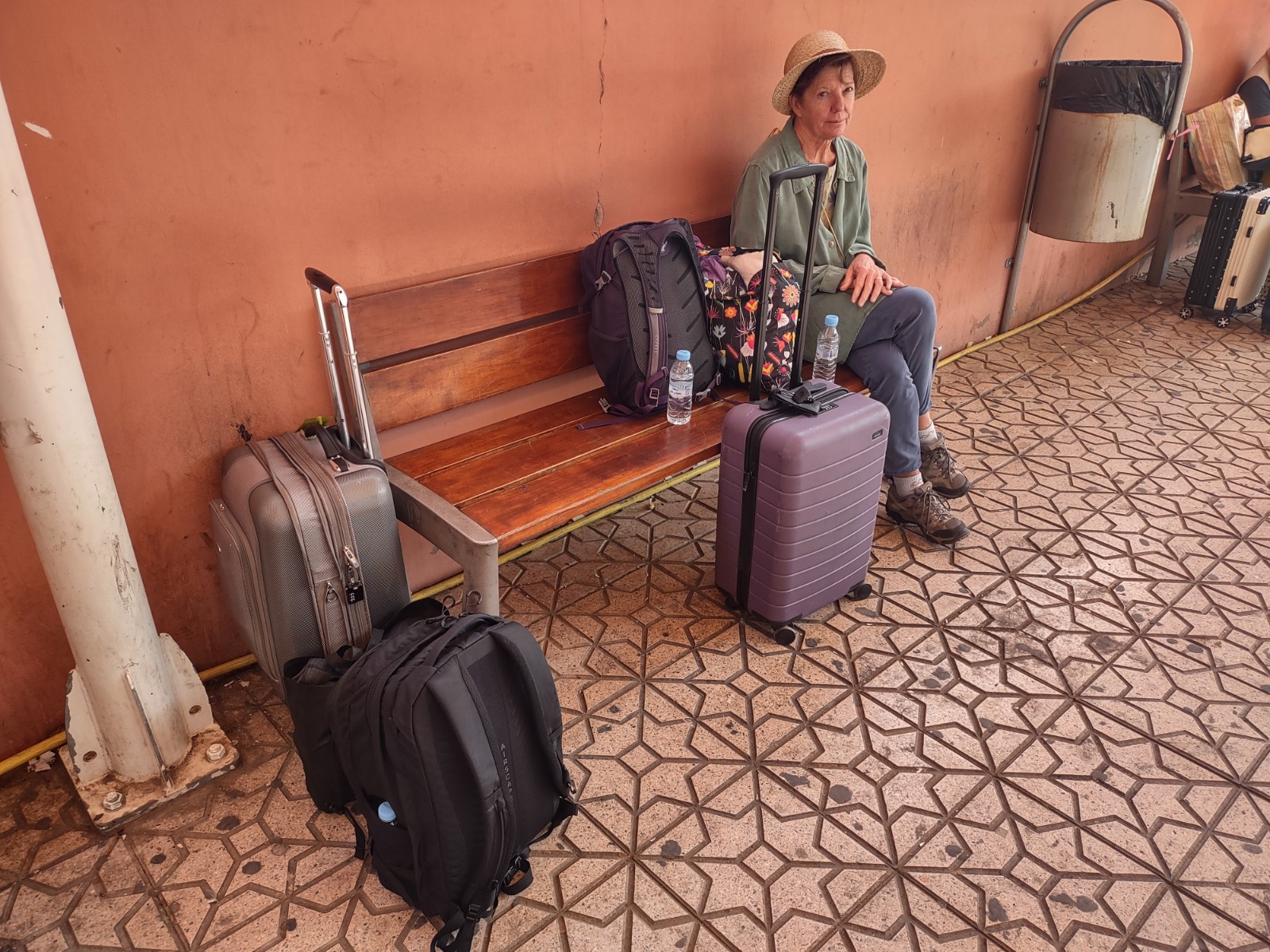


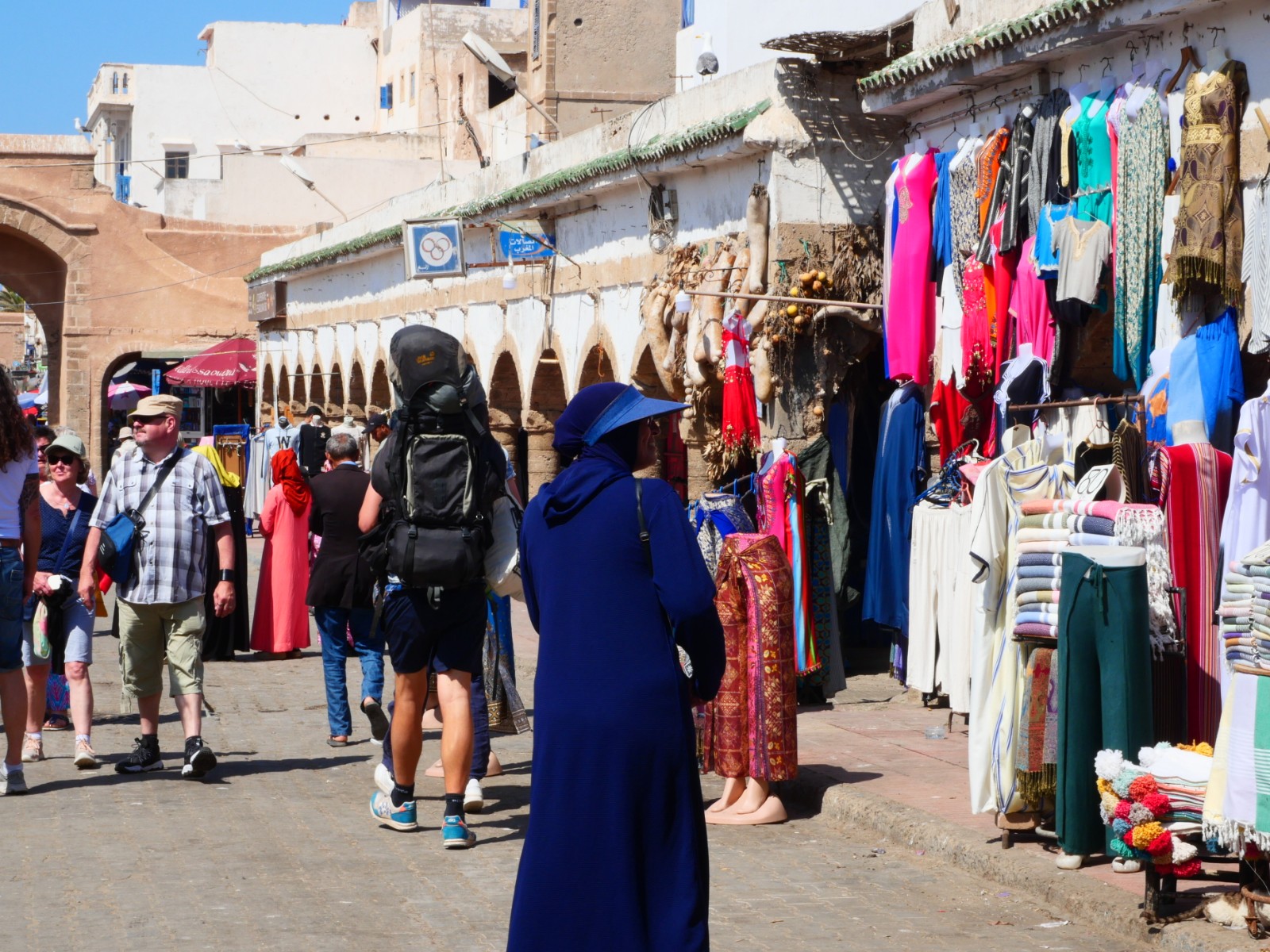
The host of our Airbnb had sent a representative named Fatima to meet us at the bus station and we were happy to see that she had brought a porter with a cart to carry our luggage which, like me, continues to get fatter and heavier. Fatima led us around and through the old walls of the Kasbah into the Medina which was alive with activity. We wound our way through streets lined with shop after shop, vendor after vendor, until we reached the place where we be living for the next four days.

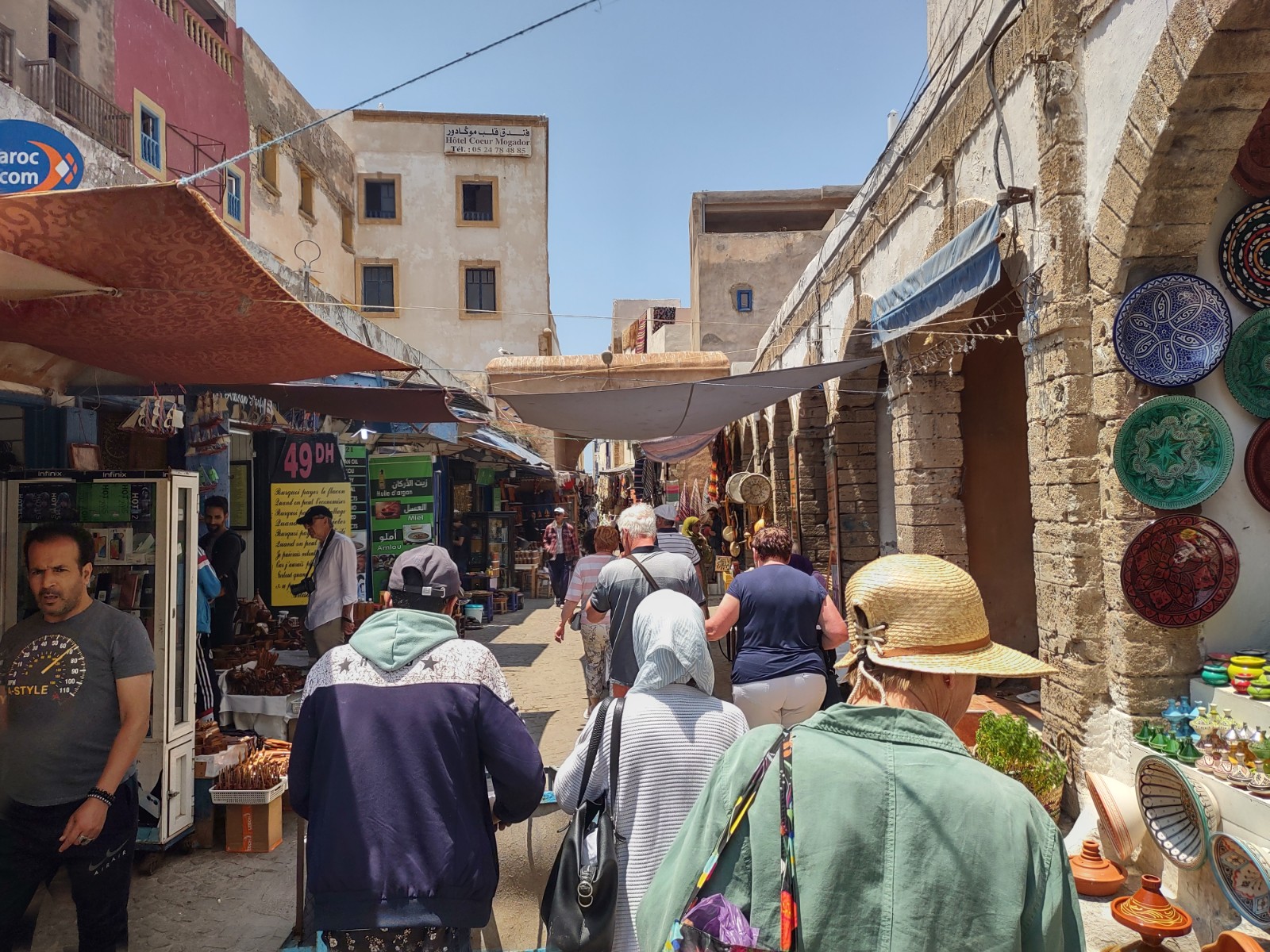
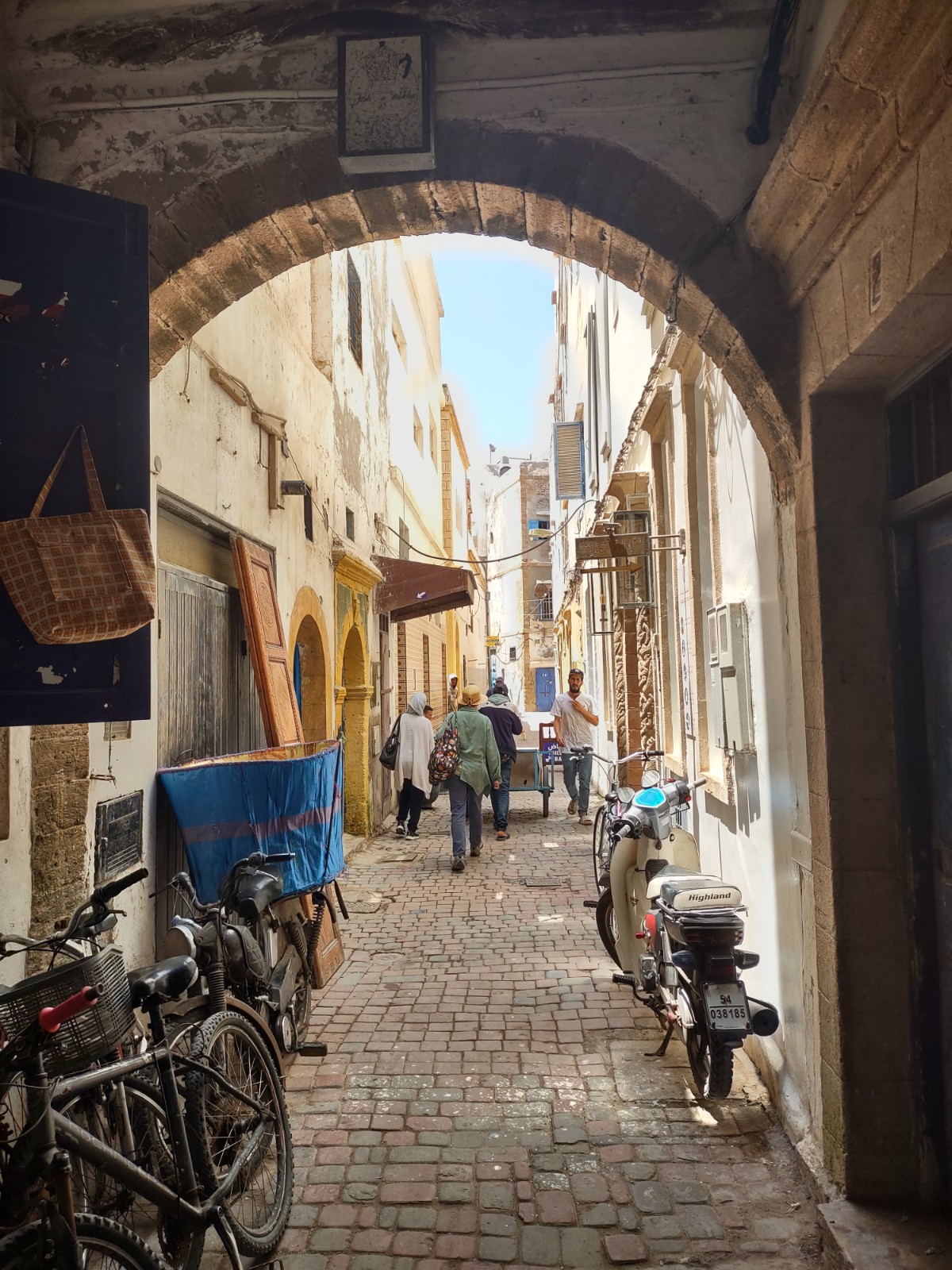
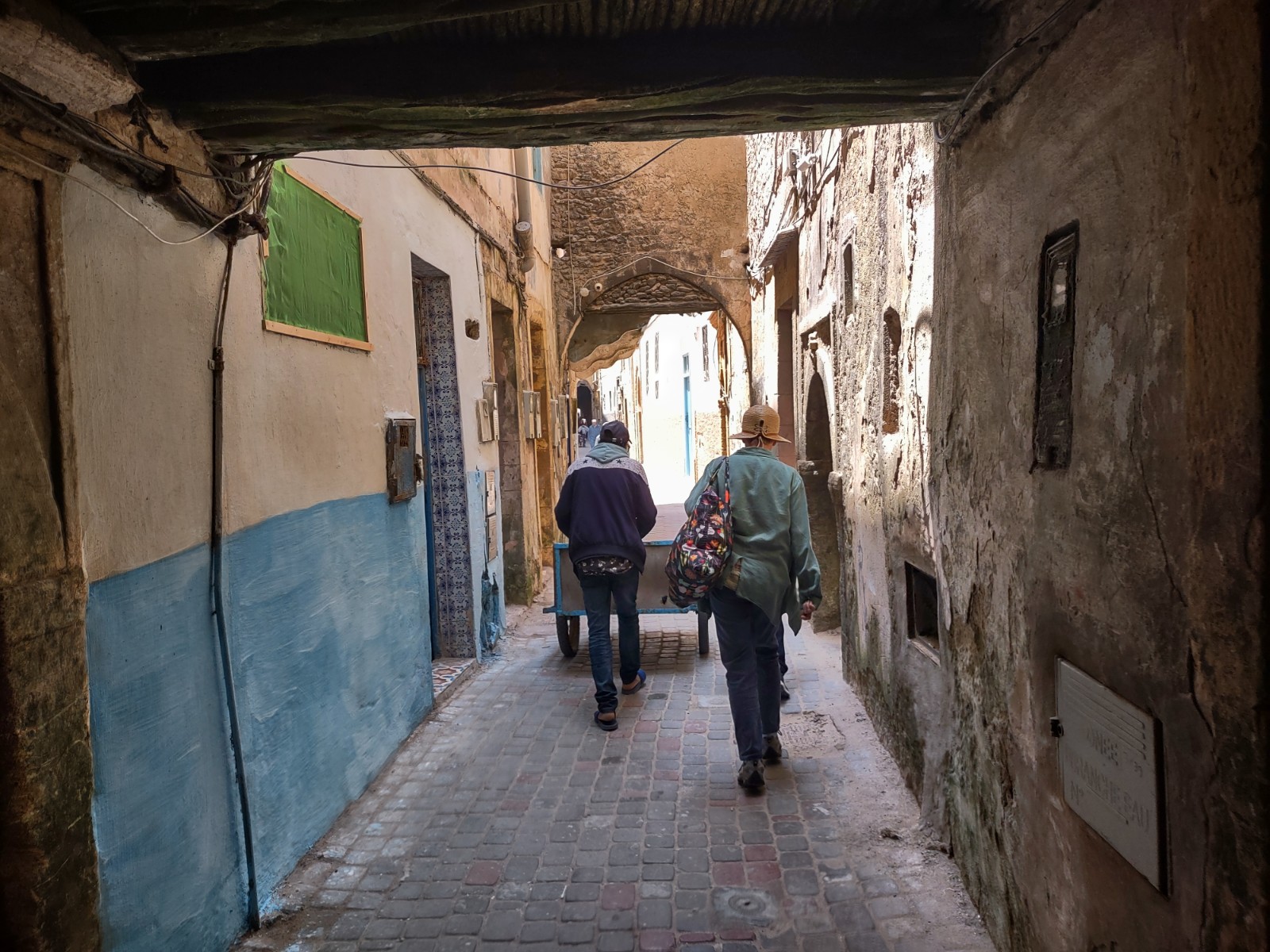
The place we rented In Essaouira (its the place at the end of the street in the left photo below) was a 200+ year old house called Dar-Oceane, redone by its French owner as a family vacation home and retreat. The house was located on the corner of two small back streets in the far northwestern corner of the Medina with a small coffee shop across the street (center photo) and a couple of small shops nearby, including one which occupied the first floor of our house. Like most dwellings here, our place at 25 Rue Touahen wasn’t much to look at from the outside, white painted plaster peeling here and there with all the trim painted a bright blue, but it did have a pretty cool studded steel door frame which made the place seem very secure.
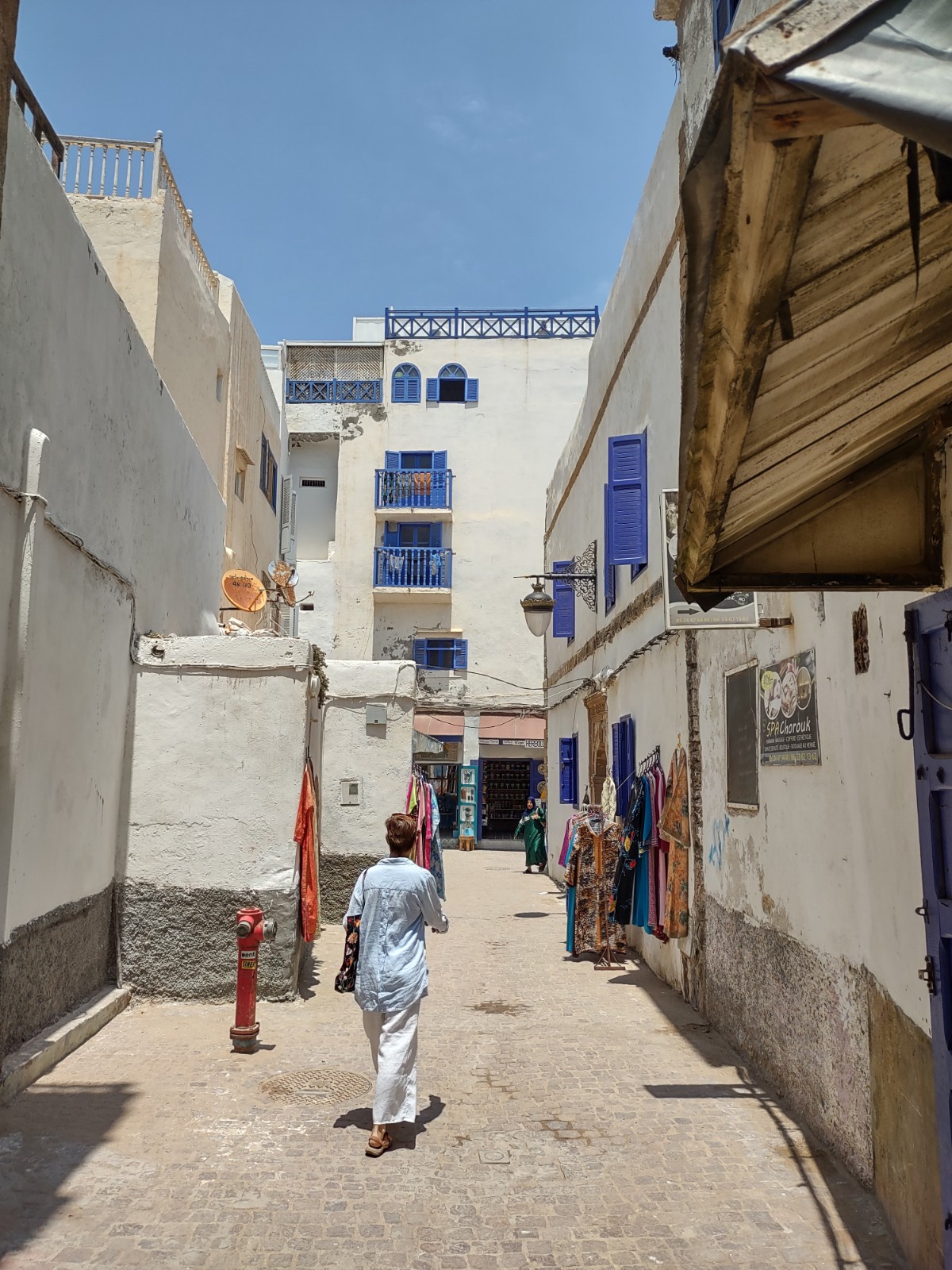
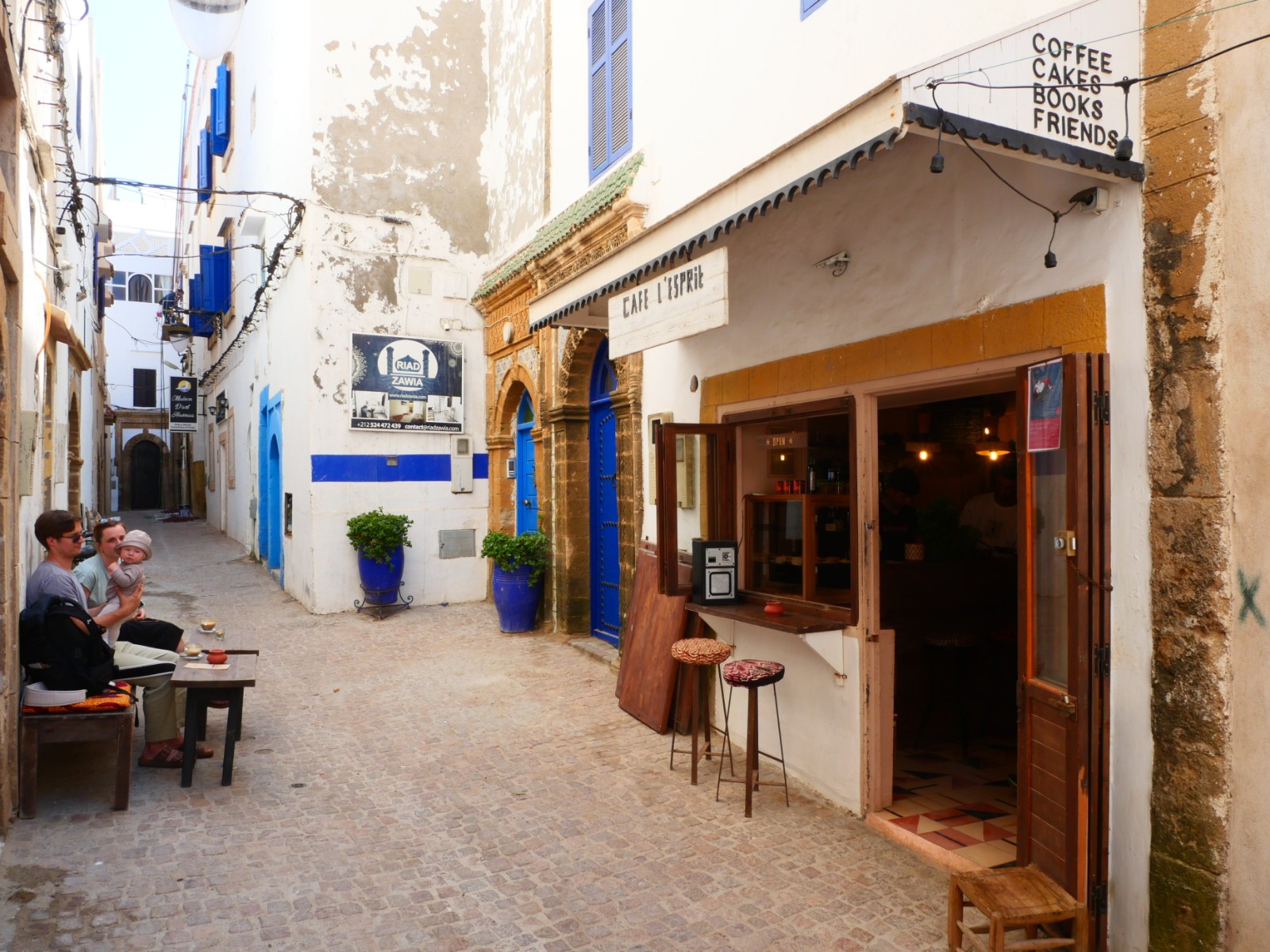
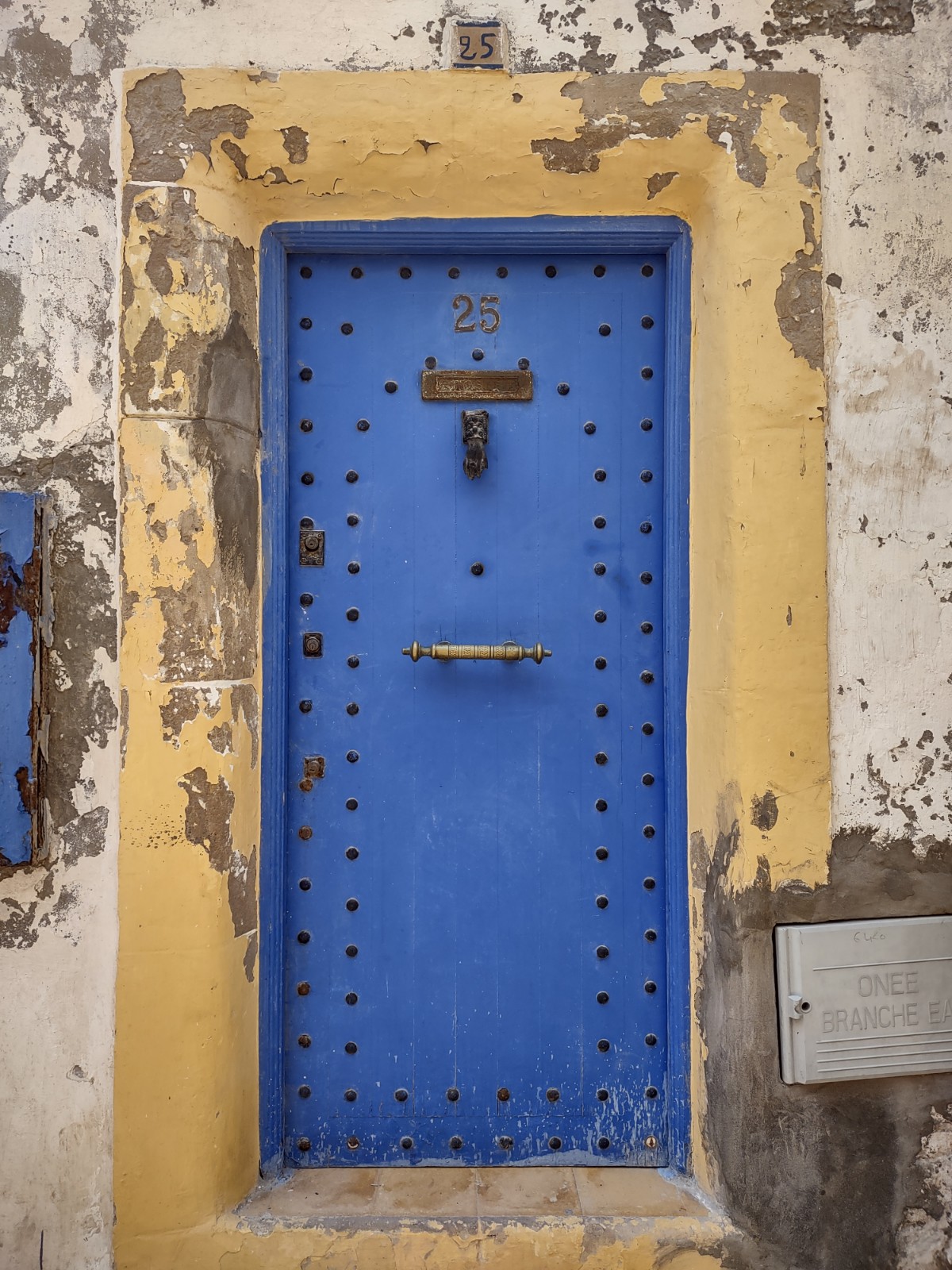
Beyond the entrance from the street, Dar-Oceane had a steep flight of stairs leading to the first floor which, in every place we have been in since leaving the U.S., is the first floor above ground but, in the U.S. would be called the second floor. (Anyone know why we are different from the rest of the world in this regard?) From the first floor there was a winding stair which connected it with the upper floors and which grew increasingly narrow as you climbed higher in the apartment. (The stairs proved to be a great form of exercise for my still not 100% knee as, unlike in the U.S., the height of stair risers is not limited to 8 inches.)

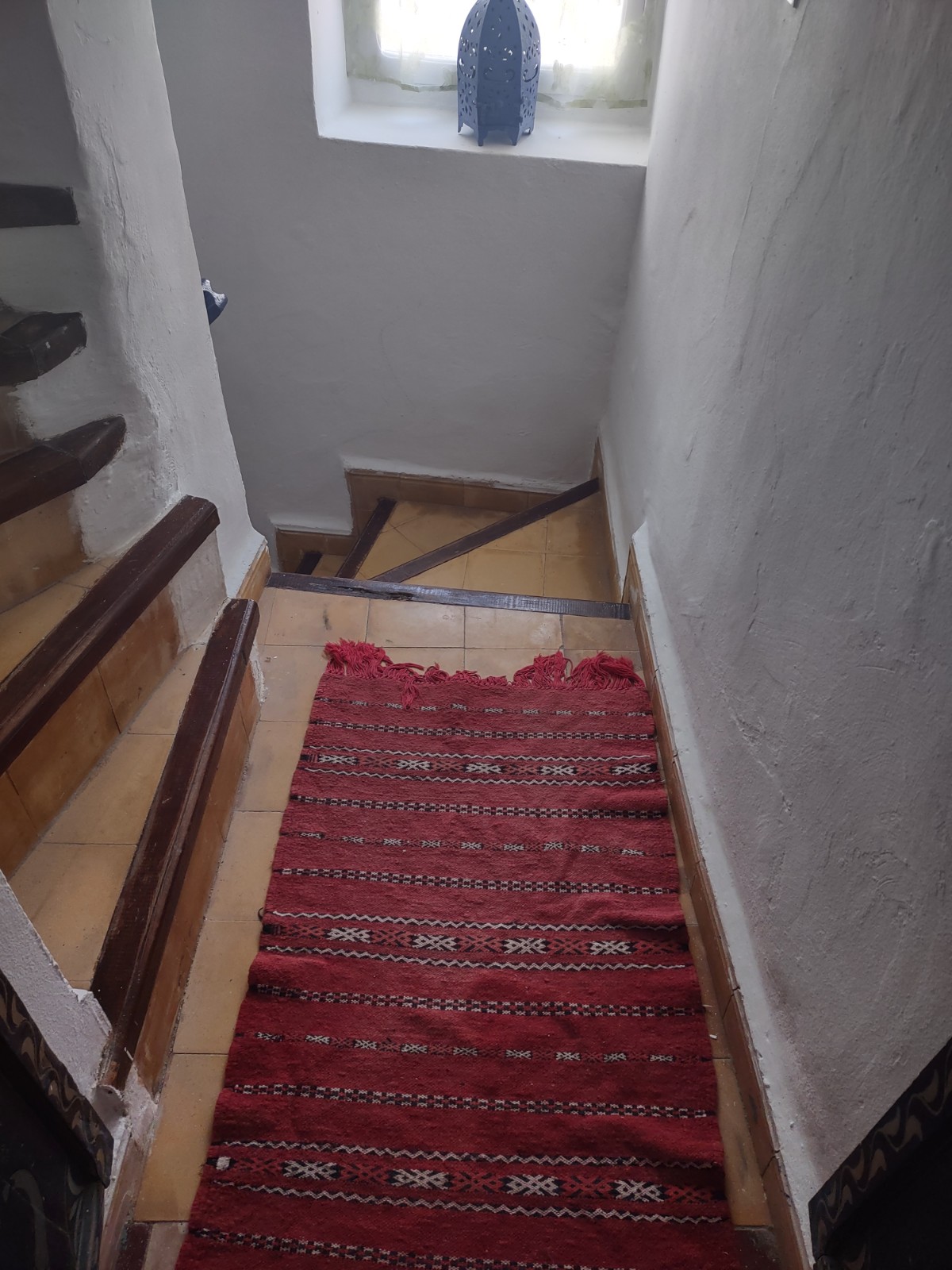
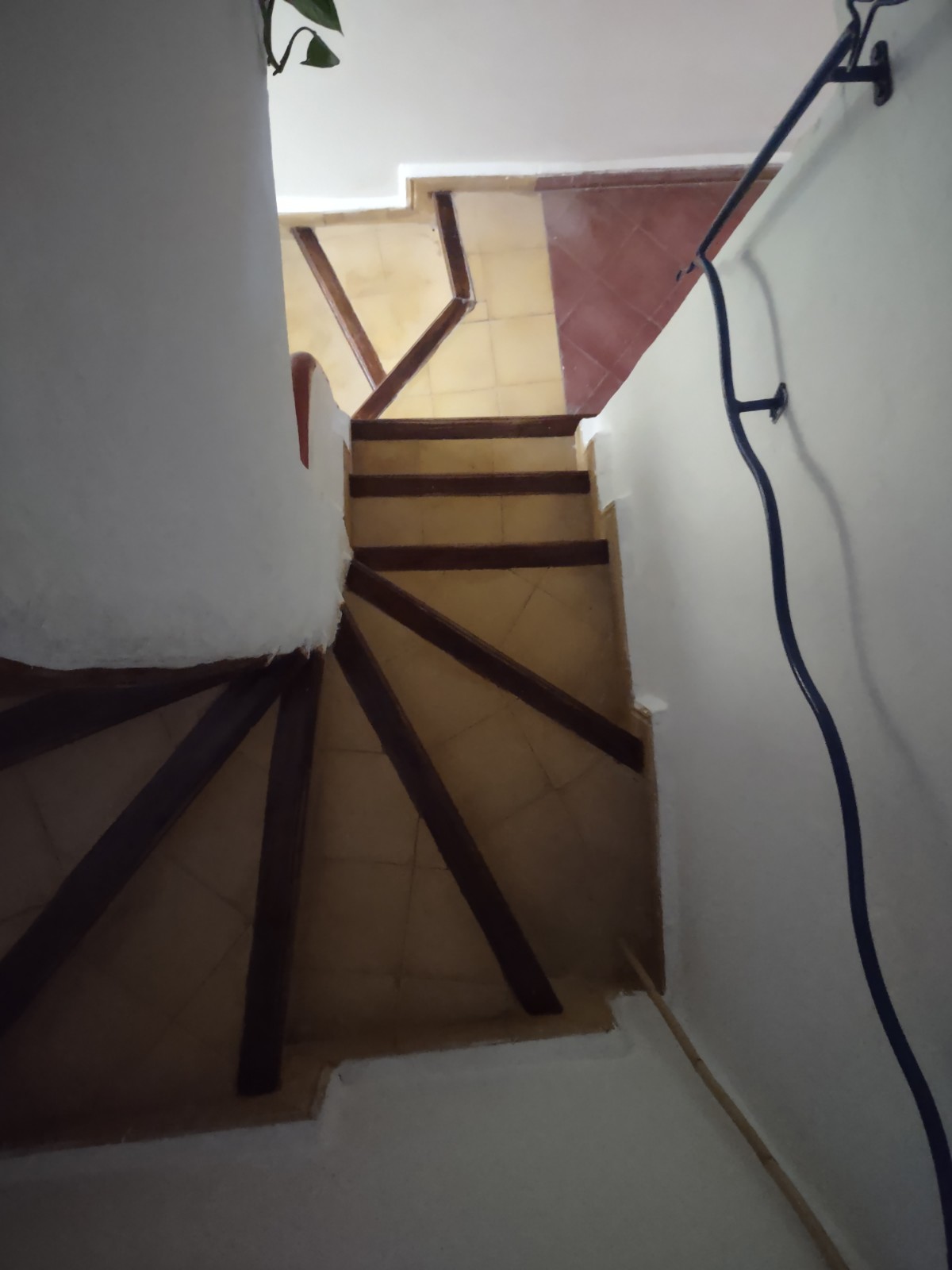
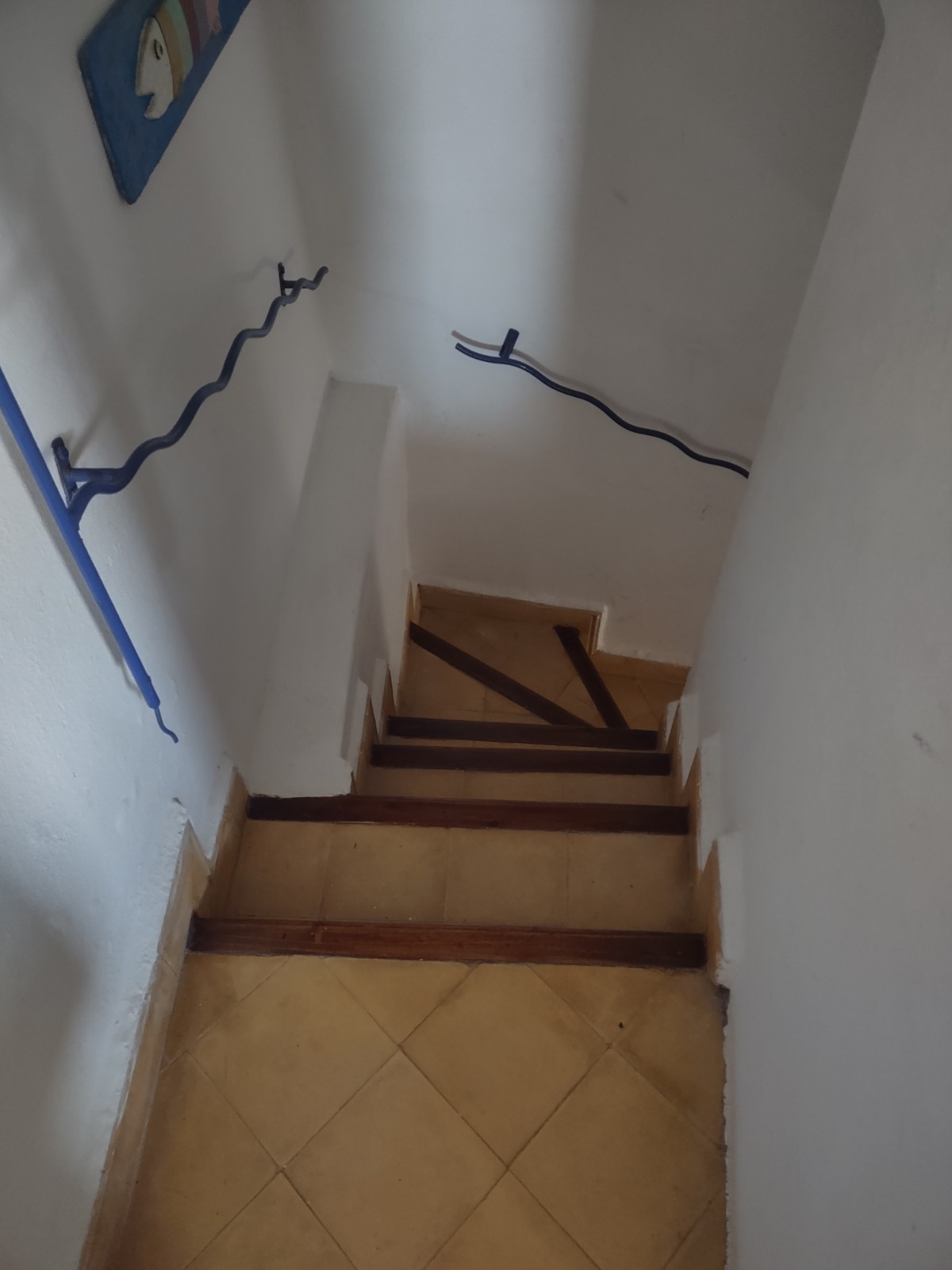
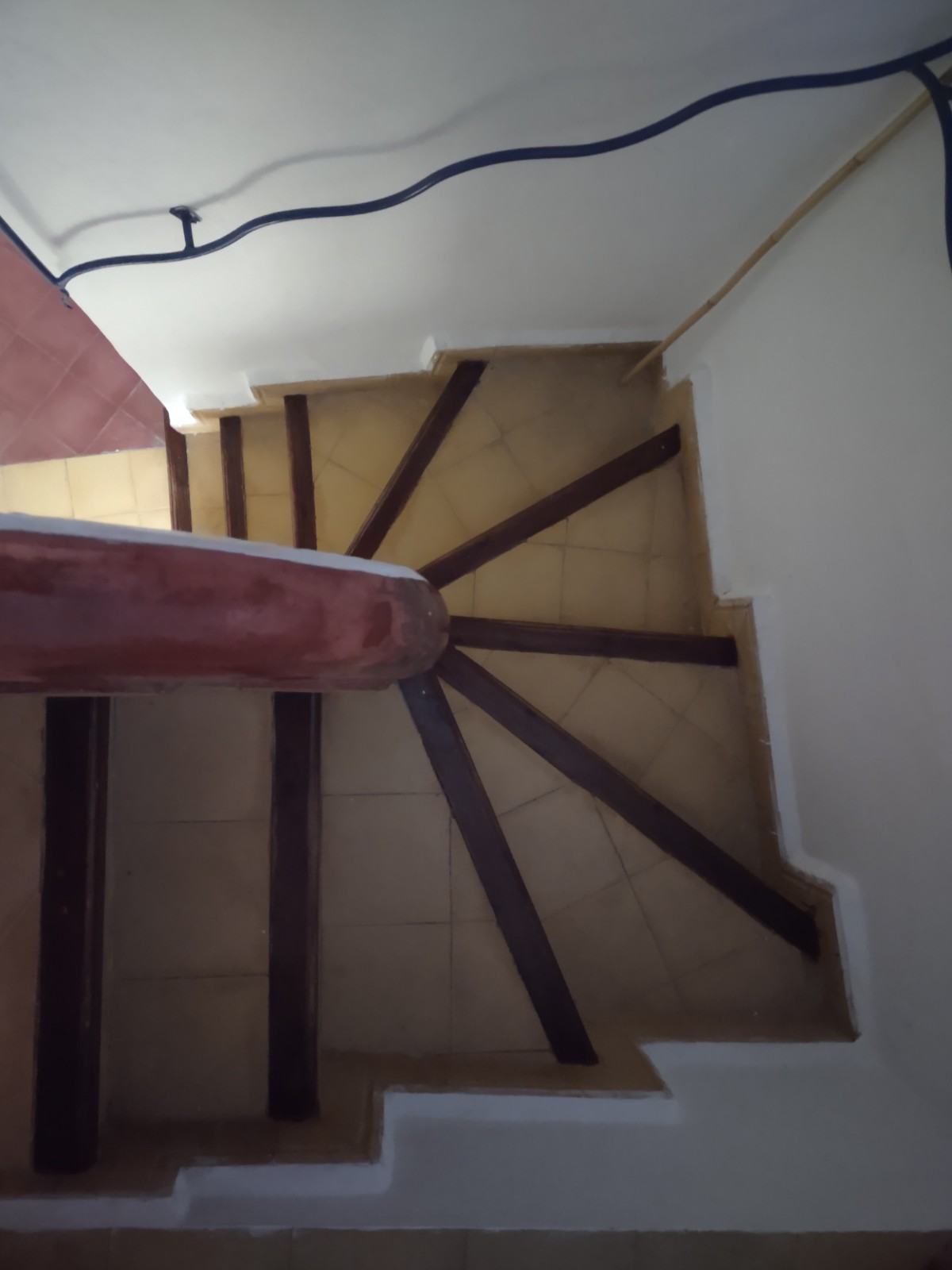
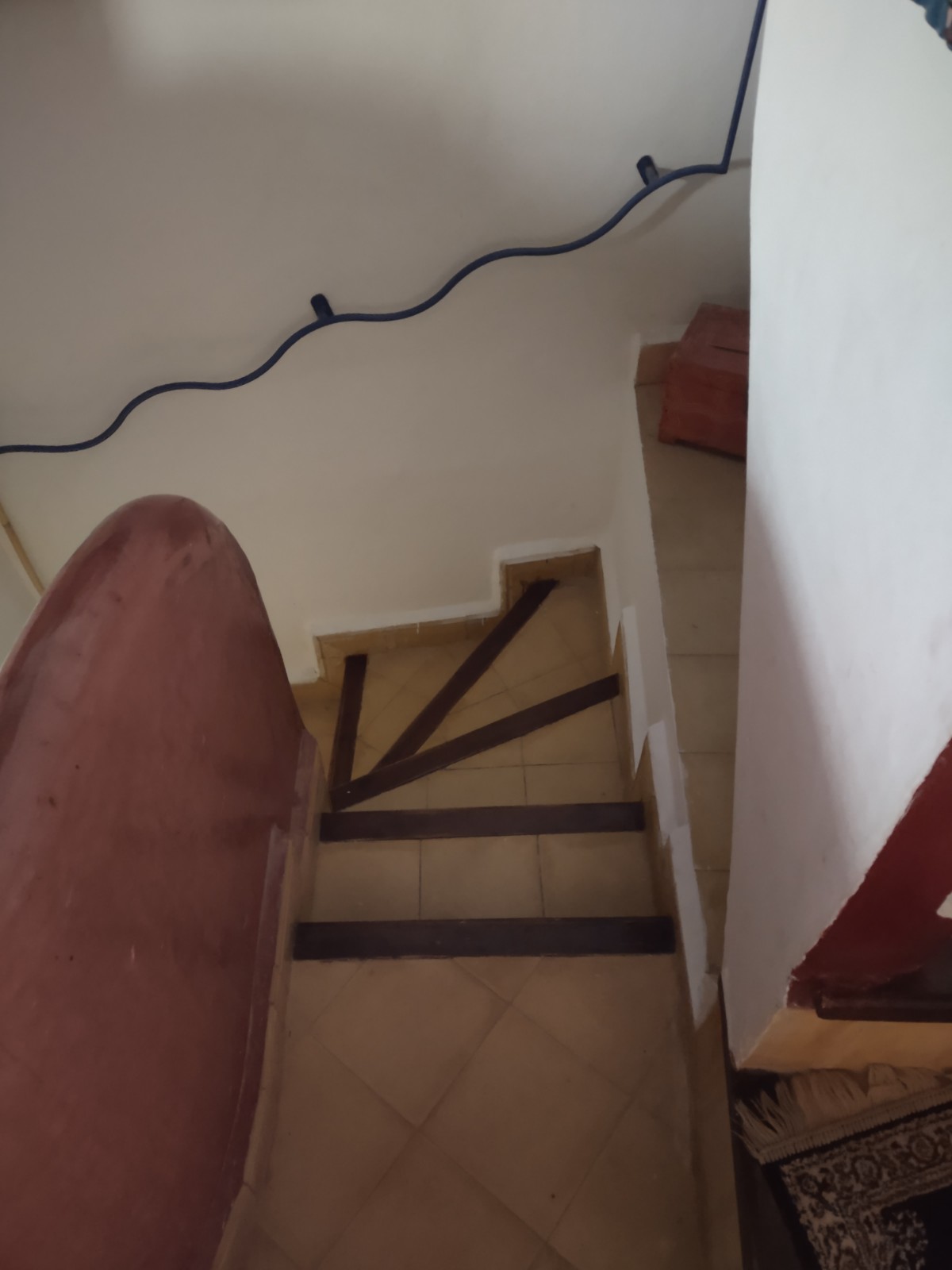
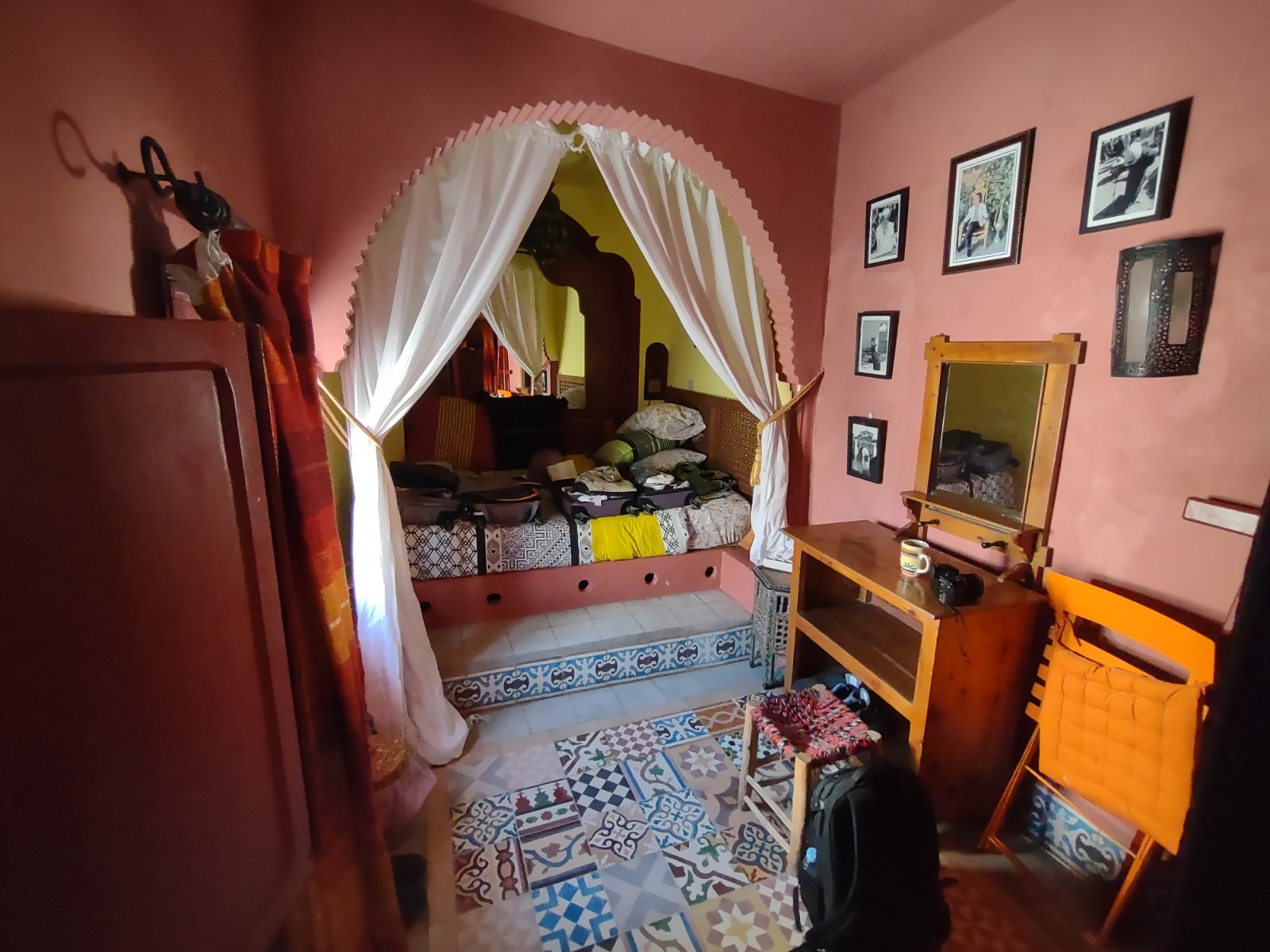
The arrangement of the apartment, which occupied the upper four floors of the house, was a bit reminiscent of a place we lived in Philadelphia thirty-odd years ago, what was called a trinity, with three floors (Father, Son, and Holy Ghost) plus a basement, with one room per floor. At times it did seem less than convenient having to use the stairs to get from room to room, but, as I said, you do get your exercise and the arrangement forces you to be pretty intentional about (and to remember) where you put things. On the first floor there was a bedroom with its own seating area (which we used as a dressing room), a kitchen and full bath on the second, a beautiful lounge space on the third, and a master bedroom with sink and shower (which became Colleen’s boudoir with personal shower) on the fourth floor.
The inside of the old house has been lovingly remade, over what must have been a number of years, into a beautiful blend of old and new, with tiled floors, brightly colored plaster walls, rich fabrics, furnishings, and accessories all coming together in a way which made the place feel incredibly inviting and comfortable. There were a number of nooks, crannies, and niches built into much of the plasterwork where artifacts were displayed and lots of unique decorative light fixtures to create a kasbah-like feel. I think our favorite feature was the traditional floor-ceiling construction above the third floor lounge, consisting of a log and stick deck ceiling over which the concrete for the floor above was poured. We had seen this type of construction in rough form in the ceilings of archways spanning streets, but here it had been cleaned and varnished in a shiny dark color which turned it into a work of art.
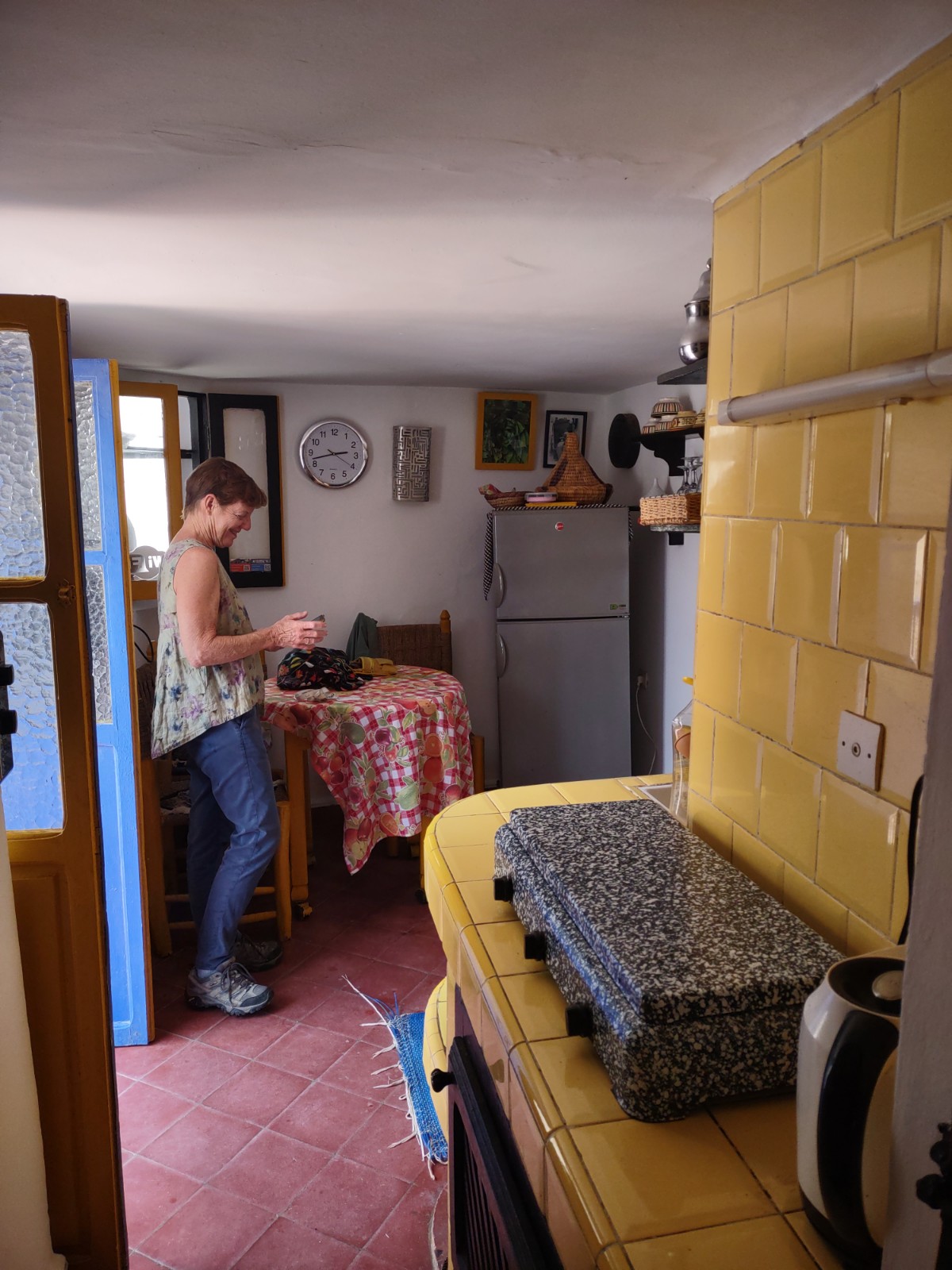
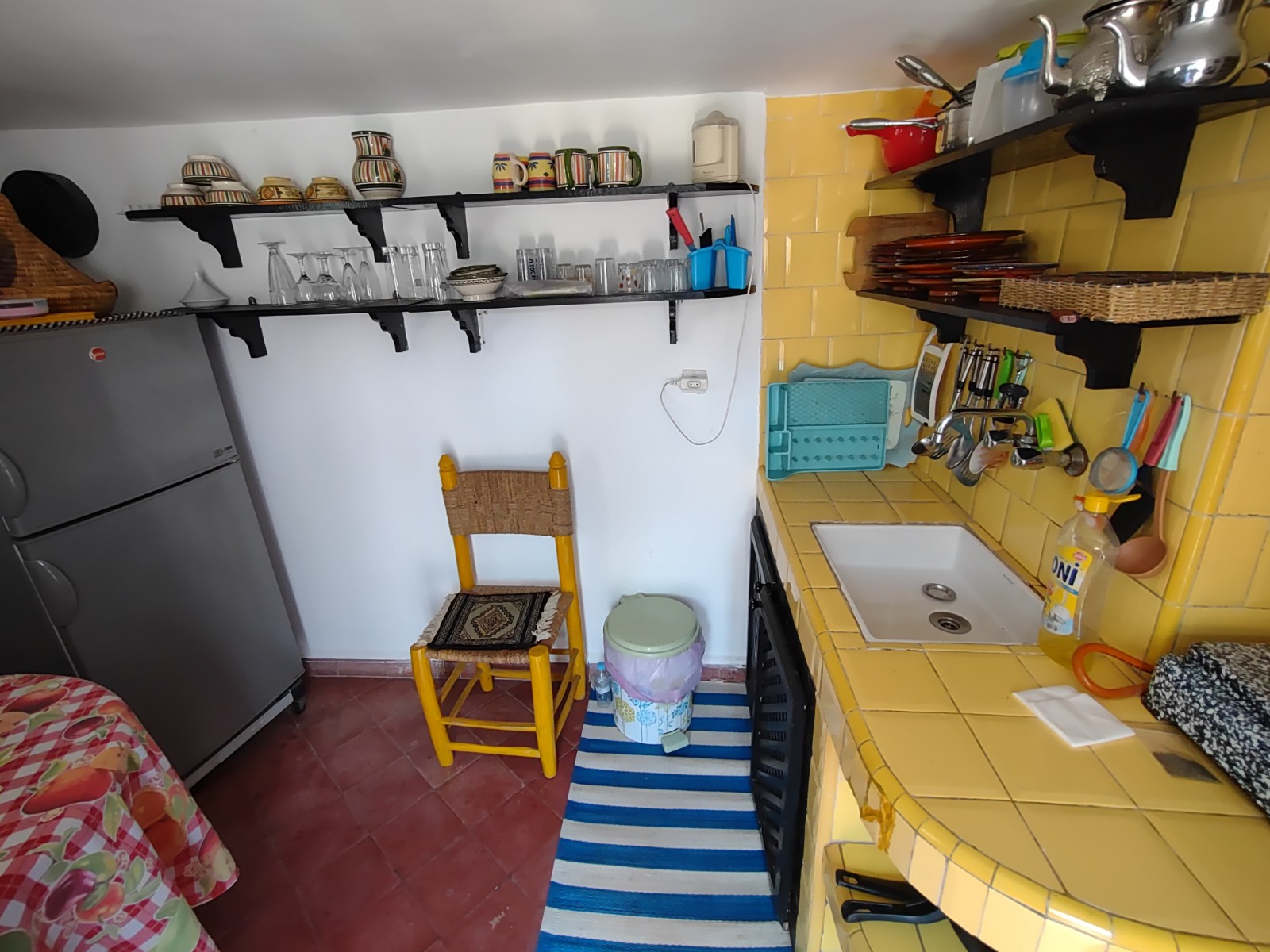
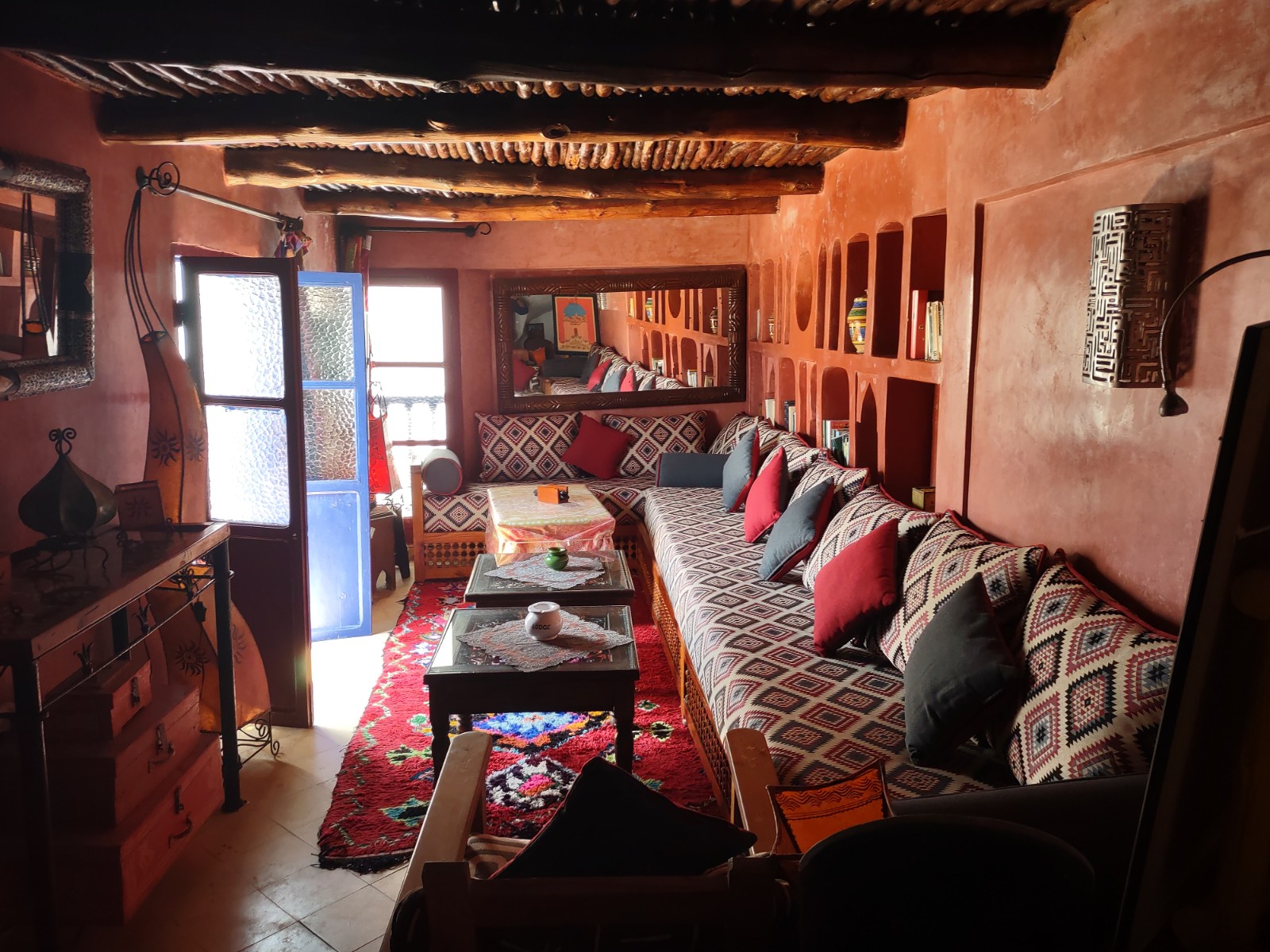

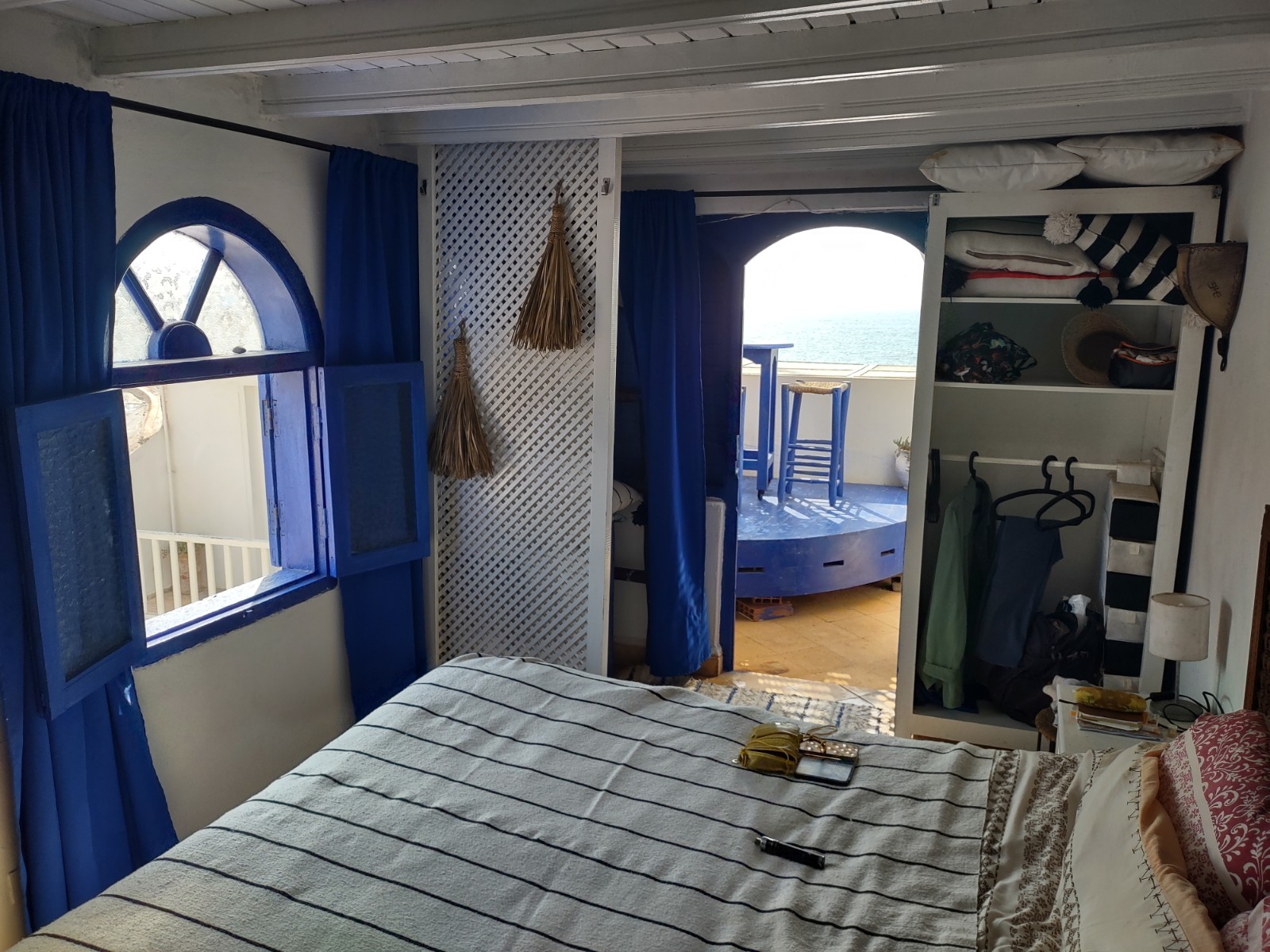
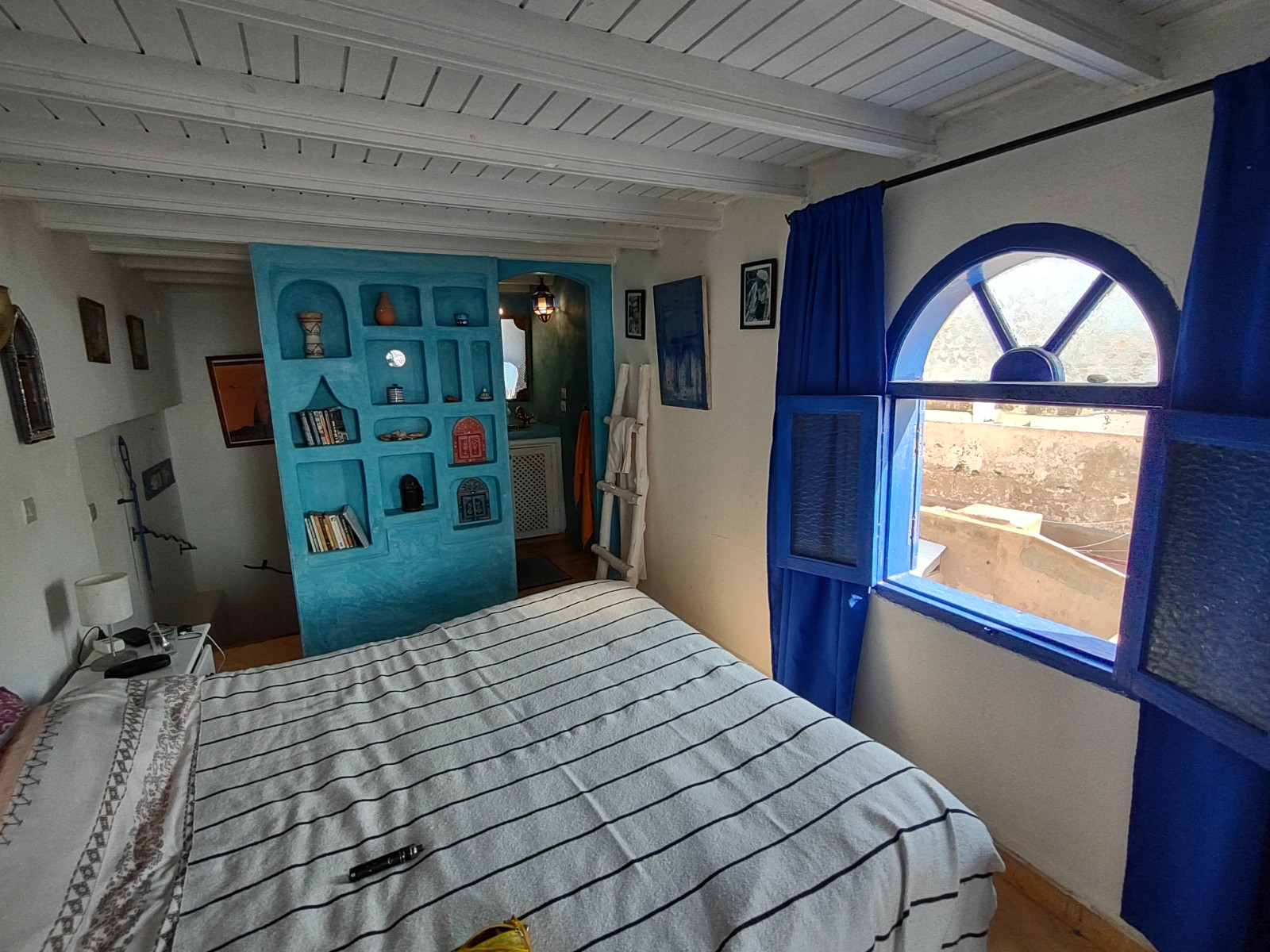
But, without doubt, the best part of the place was the terrace off the master bedroom and roof deck above which overlooked the western battements of the Medina with views of the rocks, beaches, and ocean beyond.
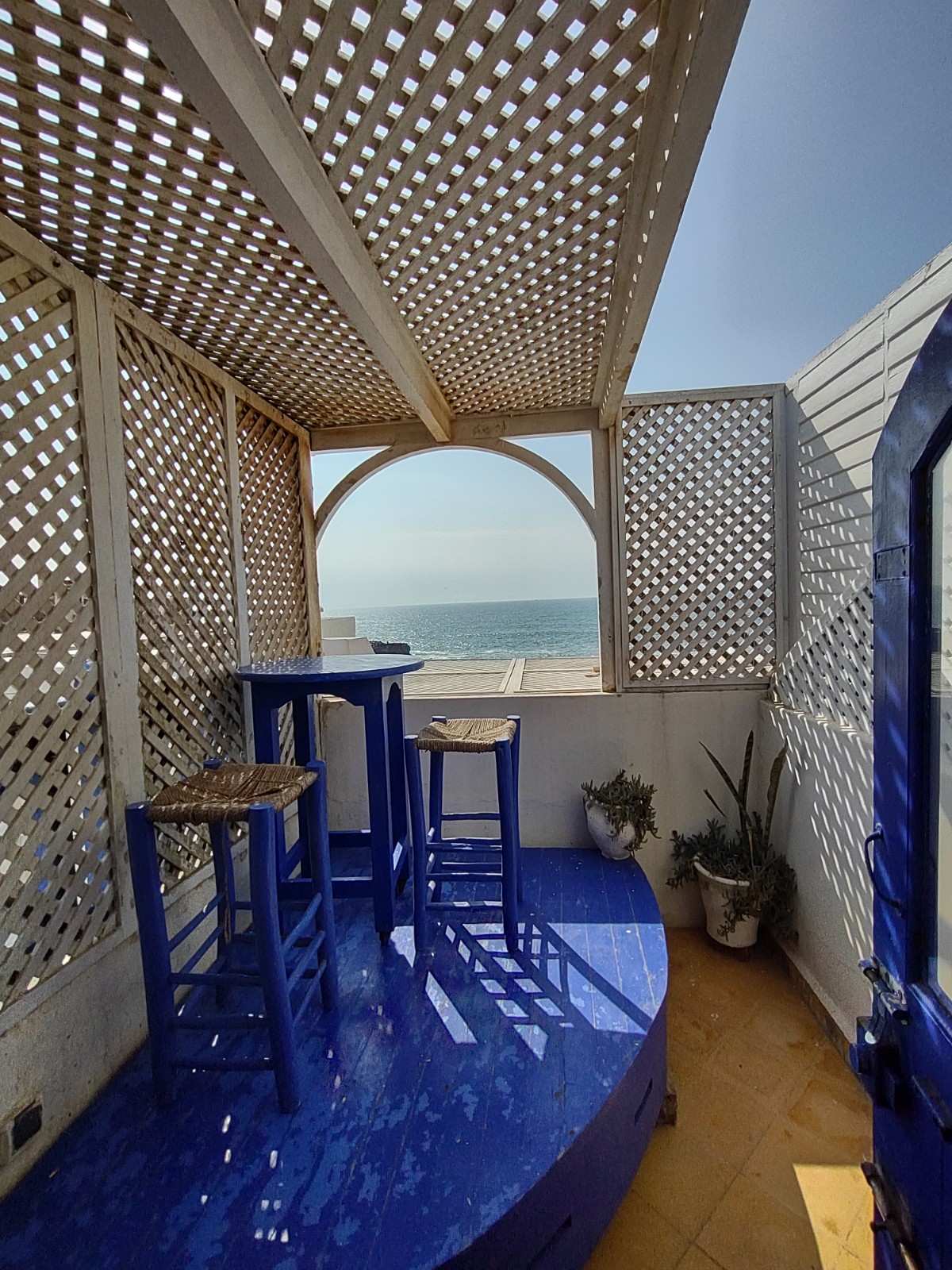

After moving in and doing a bit of unpacking, we set out to get our bearings and make some necessary purchases. We made our way back out of the Medina toward the beach to the south and found a nice sunny spot to have lunch and gaze out at the Atlantic Ocean with perhaps some sense of what a sight it must have been to behold for people travelling from the deserts to the east. After lunch we completed our shopping for provisions to stock the kitchen for a few days.The stores were well away from the Medina which gave us a feel for some of the rest of the city but also reinforced our instincts to stay in the Medina for the most part. We went back to our place and were drawn to the terrace where we watched the sun set over the Atlantic.

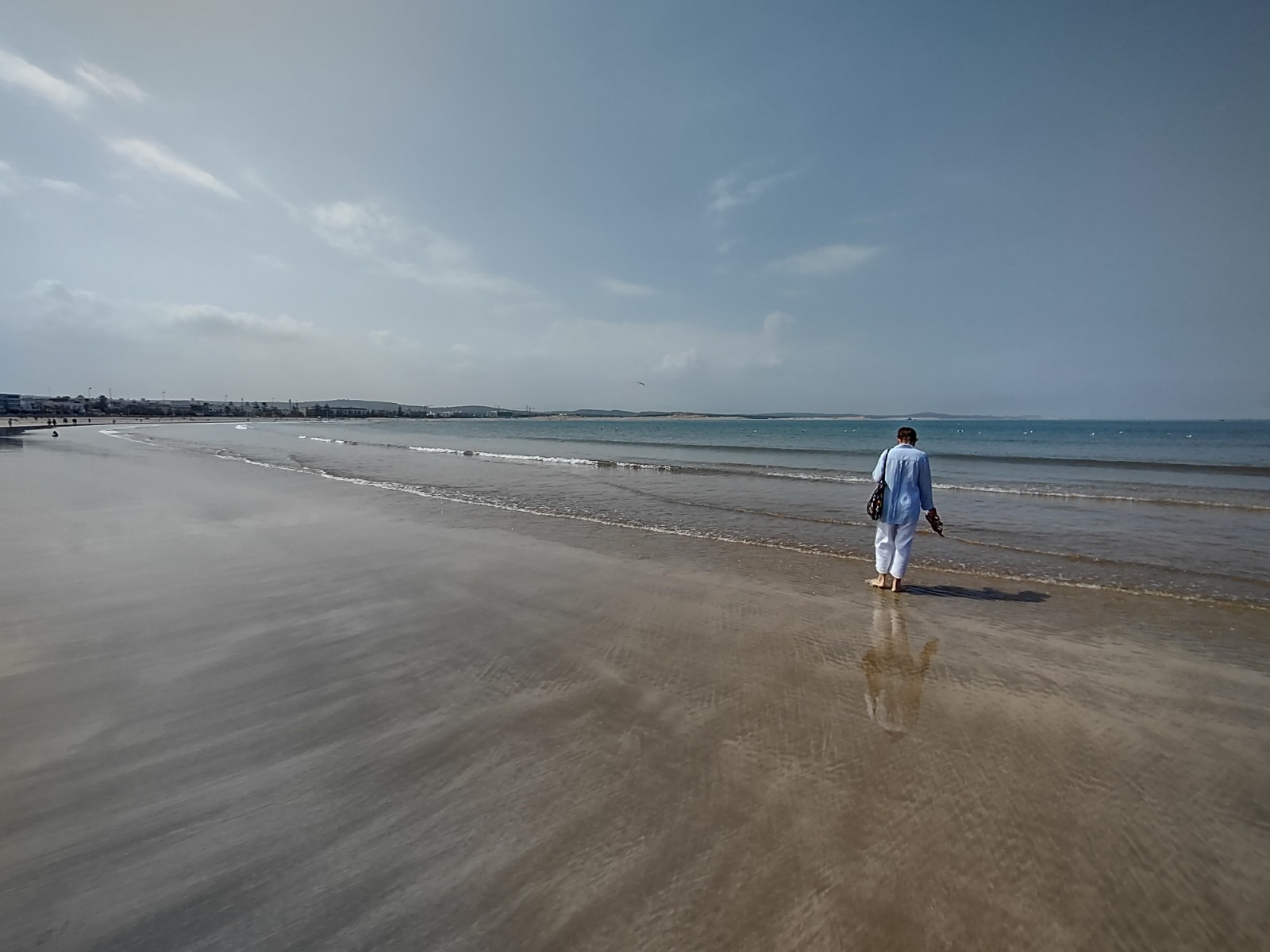
On our first full day in Essaouira, Friday May 26th, we made our way along the inside of the city battlements back to the beach south of the Medina and had a very nice very long walk to its far end finding a nice spot in the dunes to listen to the surf, soak up some rays and enjoy the view which occasionally included camel caravans of tourists.


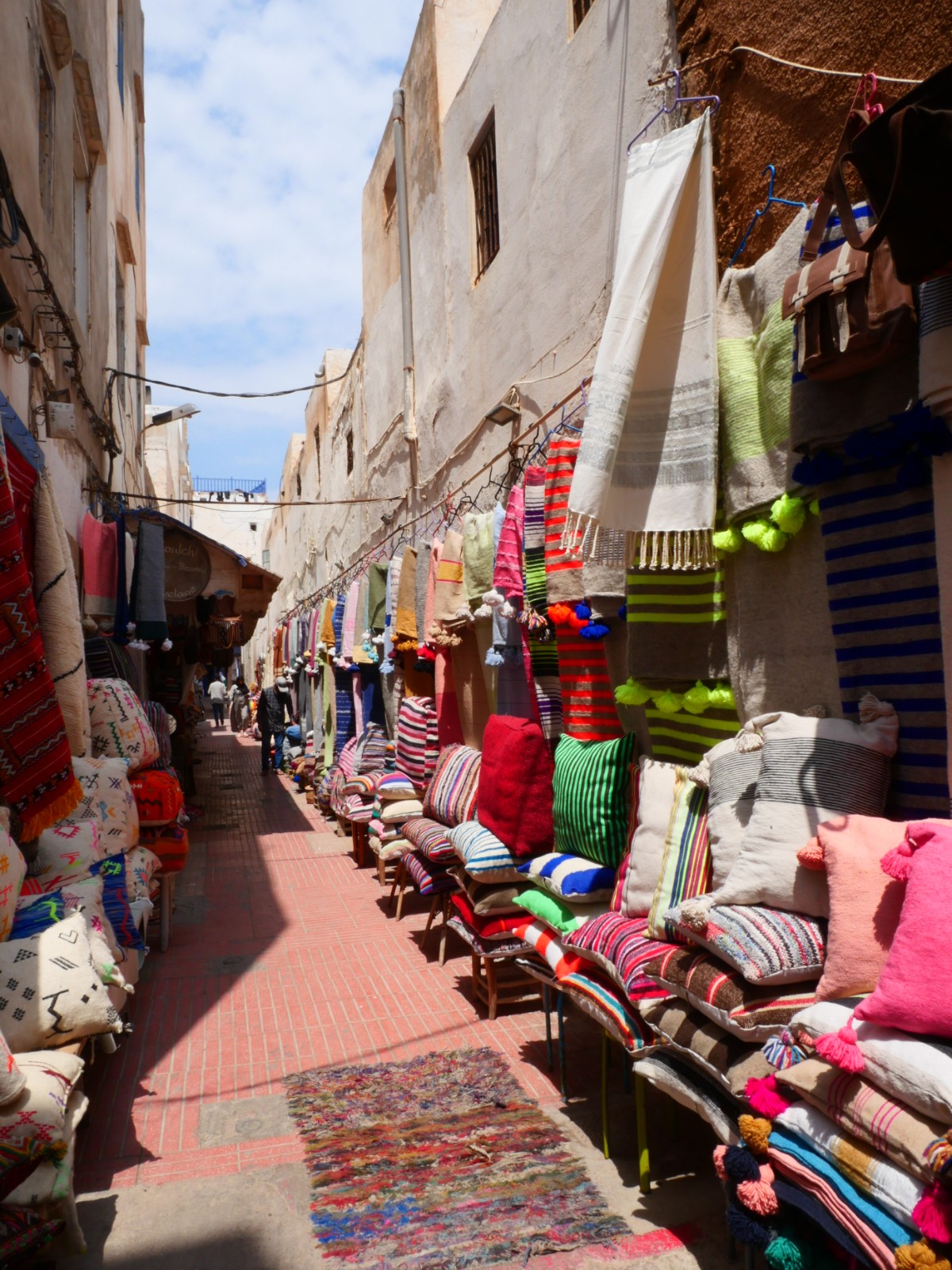
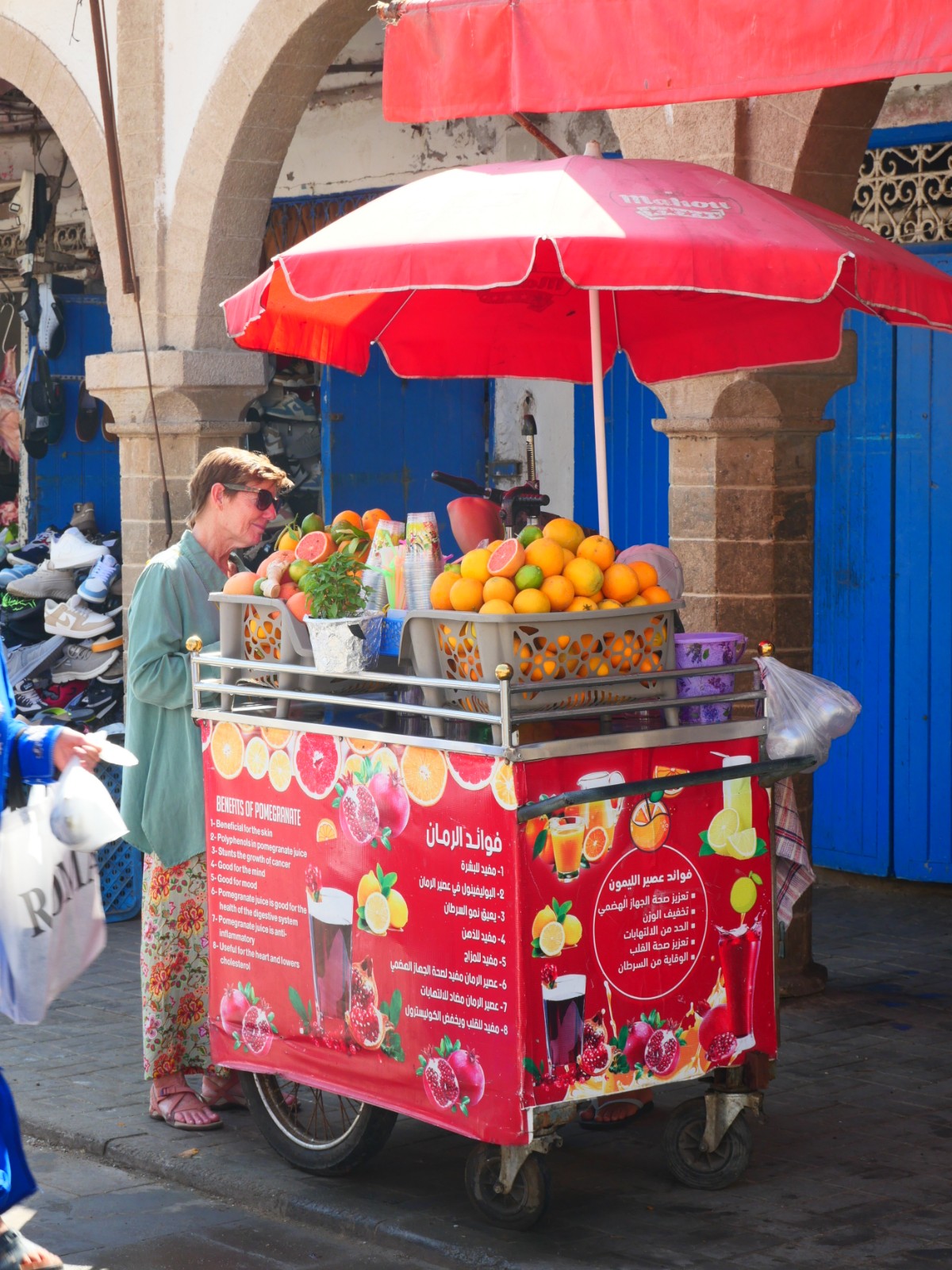
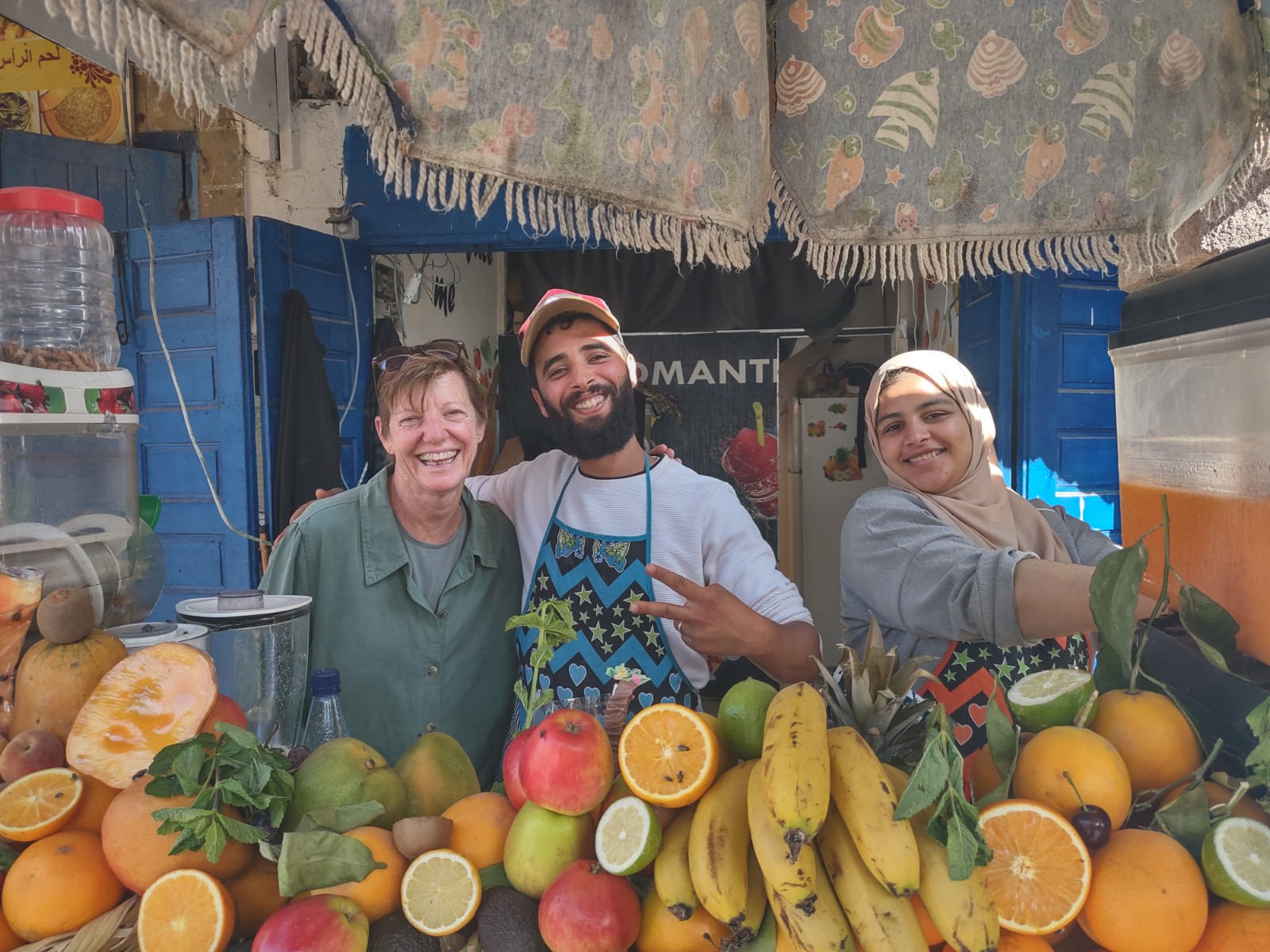
Hunger eventually drove us back into the Medina where we found a nice place (The Mandela Society) which served lunch on a nice roof deck overlooking one of the Medina’s main market streets. On the way home, we strolled the Medina a bit more and found the fresh fruit, vegetable, and seafood market and bought some freshly squeezed grapefruit juice to mix with our rum at home. Colleen put the juice in the freezer for a bit, then mixed in some rum to keep it from freezing completely and we ended up with this amazing grapefruit granita which we enjoyed while watching that night’s sunset. For the rest of our stay, the grapefruit juice stand in the Medina became a regular stop for us and Colleen became good friends with the manager and his staff.

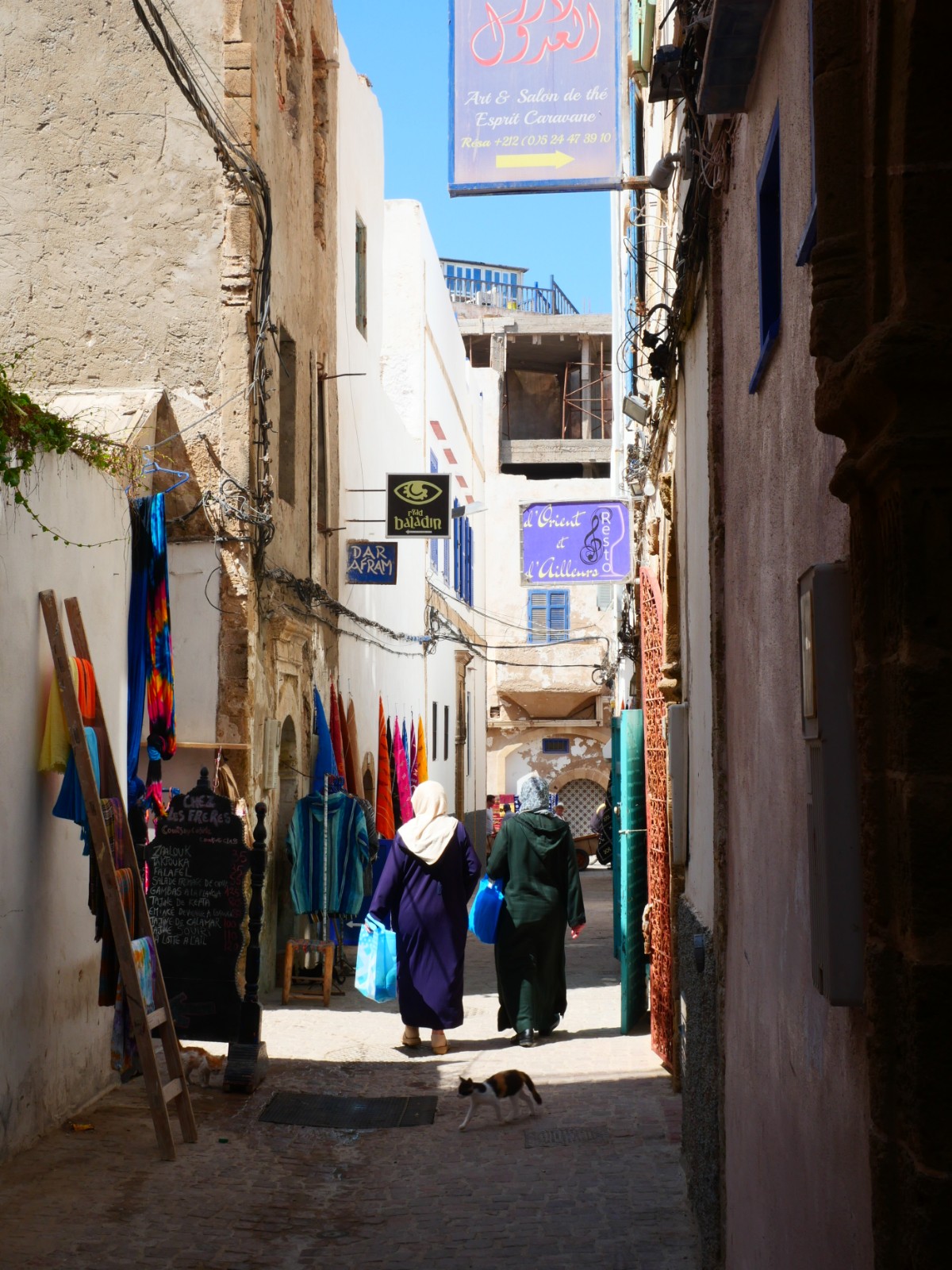
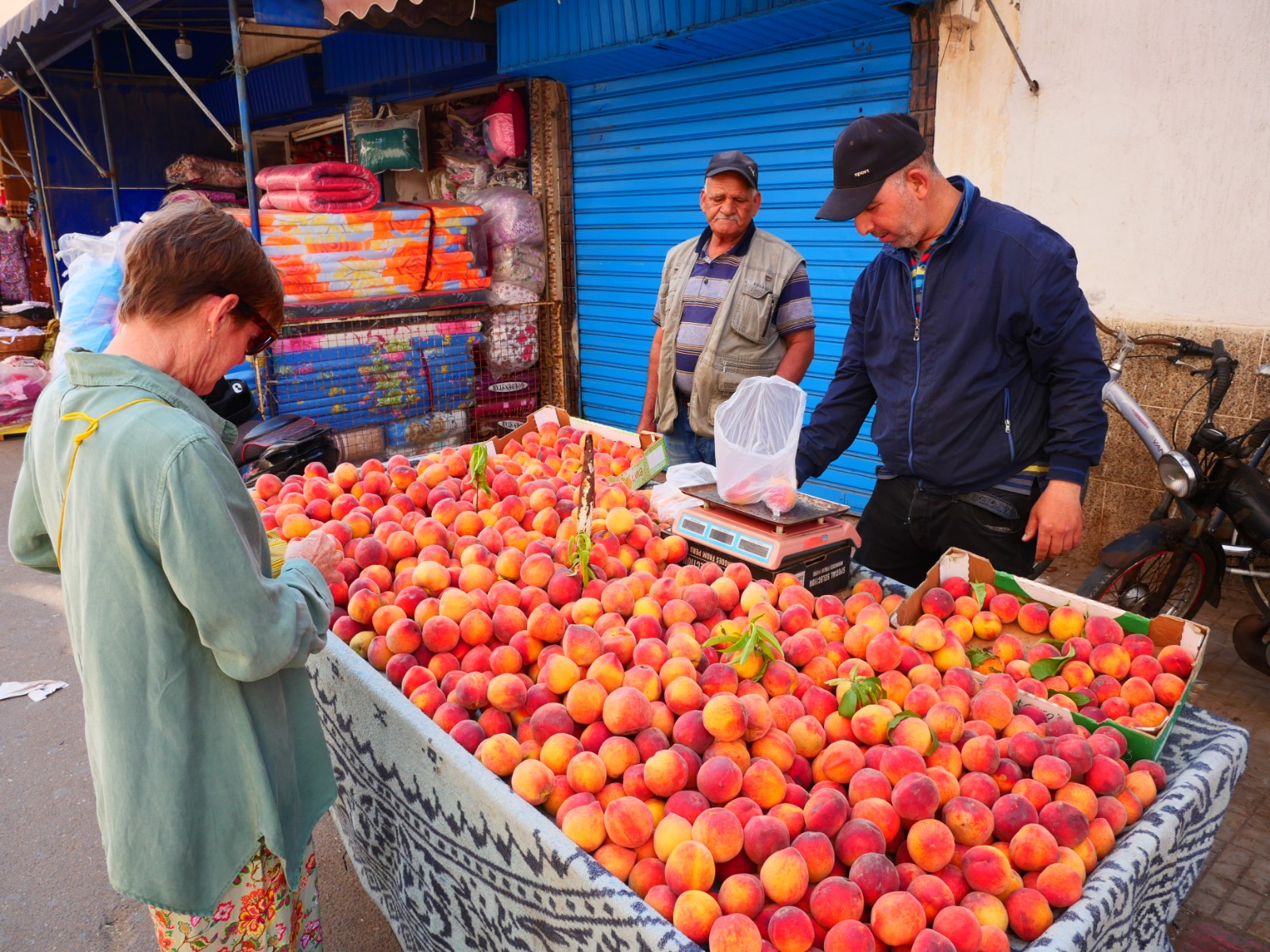
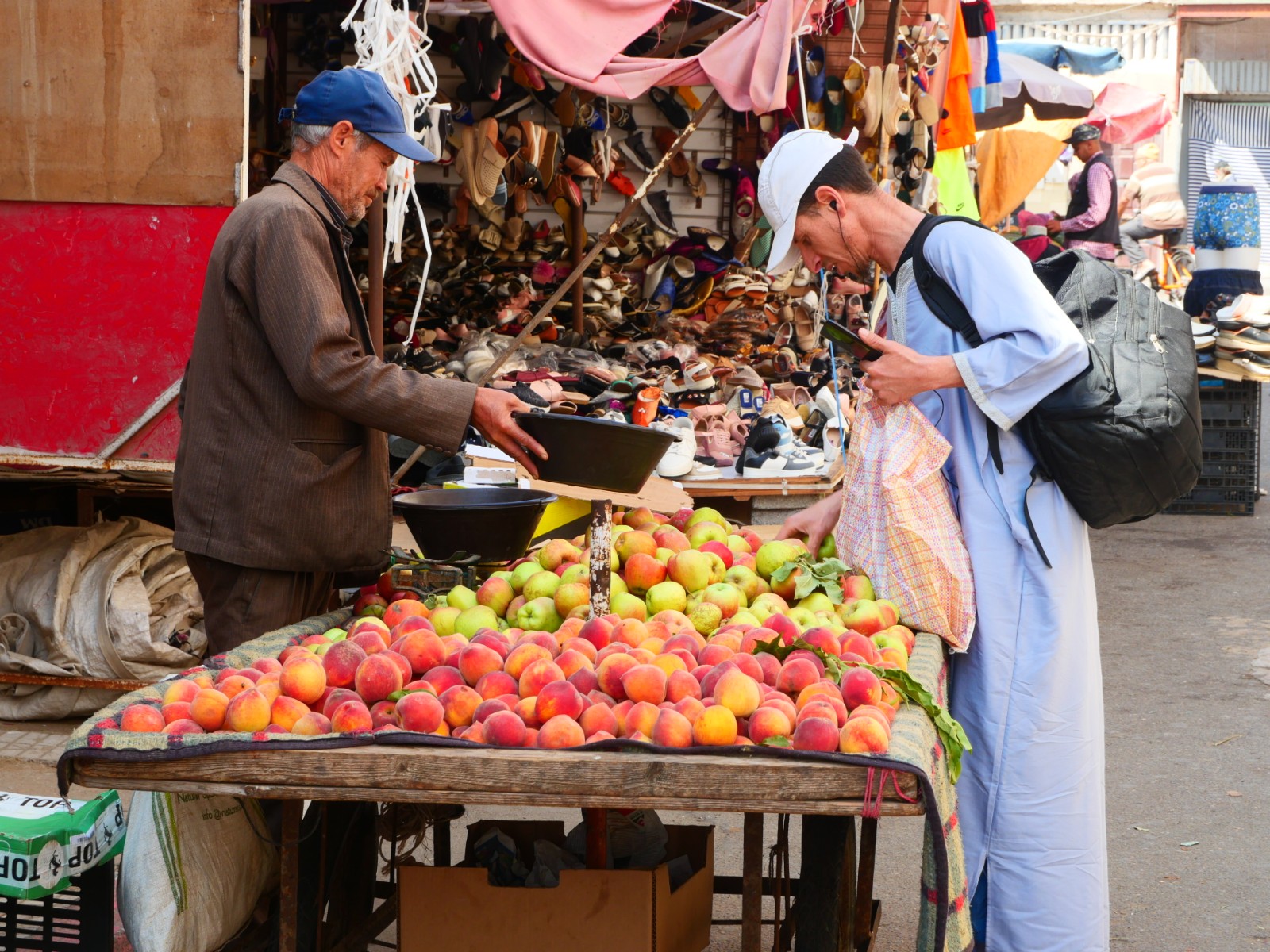

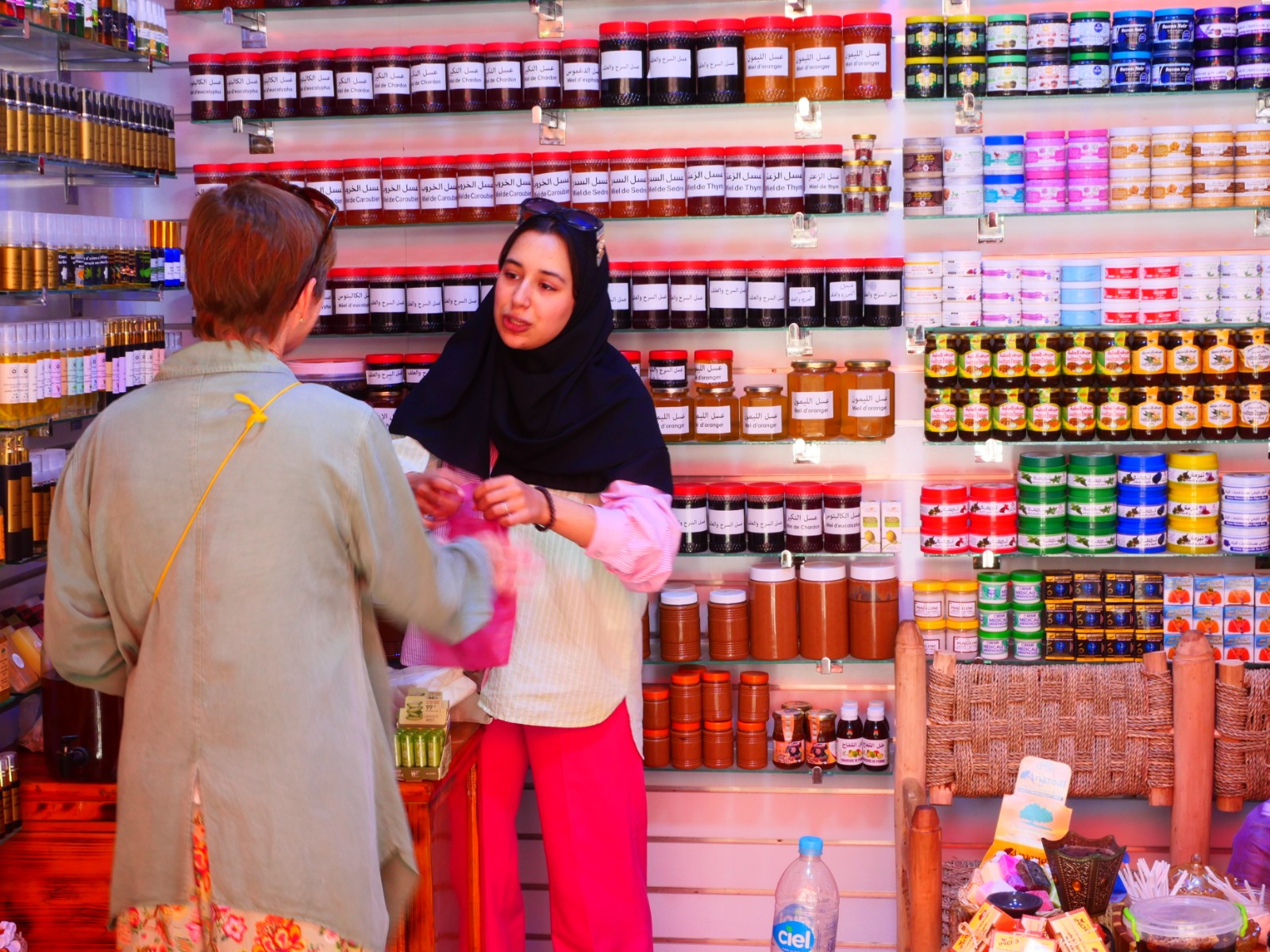
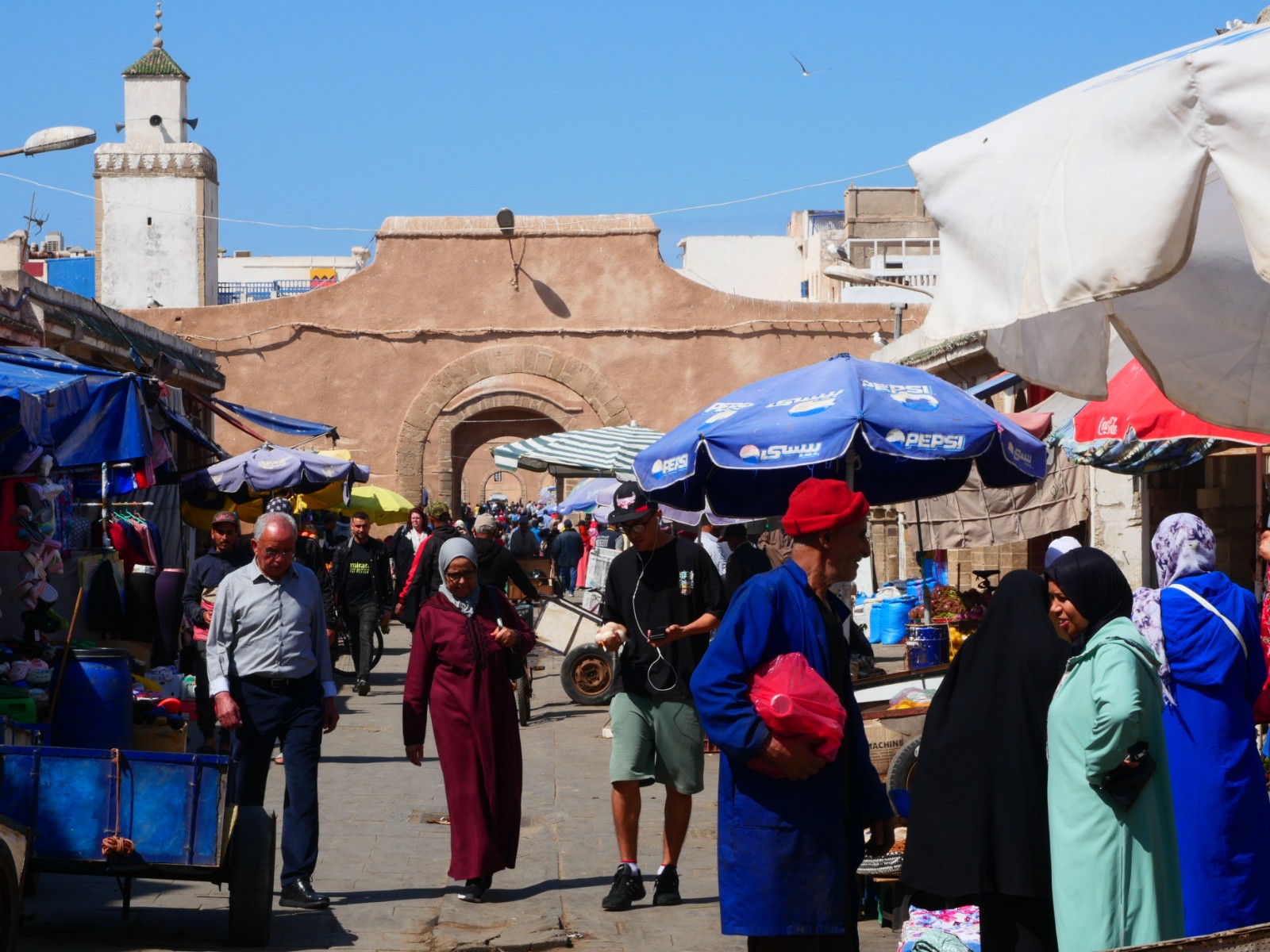

On Saturday May 27th we got moving early and went to the Grand Taxi Stand to catch a collectivo taxi (you have to wait until the cab fills up before leaving, but it is very cheap) for the thiry-minute ride to a town kind of in the middle of nowhere, called Had Dra. We went to Had Dra because Colleen had discovered there is a big market on the weekends drawing people from surrounding towns and countryside and we thought that we might find some artisanal works which were different or more interesting than what one finds in the markets in the larger towns and cities. While we didn’t find any of that there, what we did find was a very large but truly authentic traditional market which turned out to be a pretty overwhelming but amazing experience for us. It was very crowded, with lots of natives and very few fellow travelers with lots of men shouting and arguing over everything. (We saw a huge ruckus going on over some watermelons.) Apparently just the way things are done here.

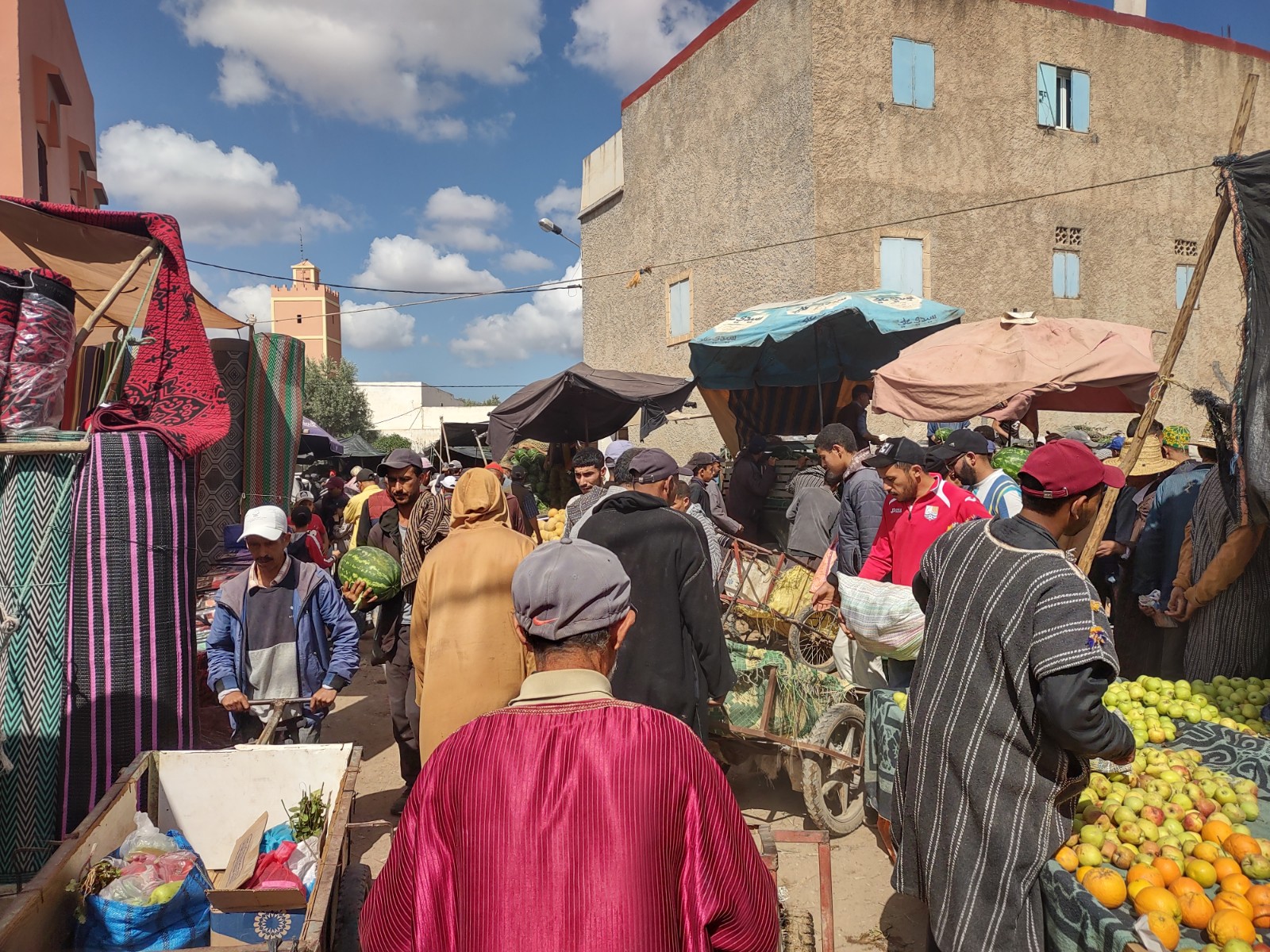
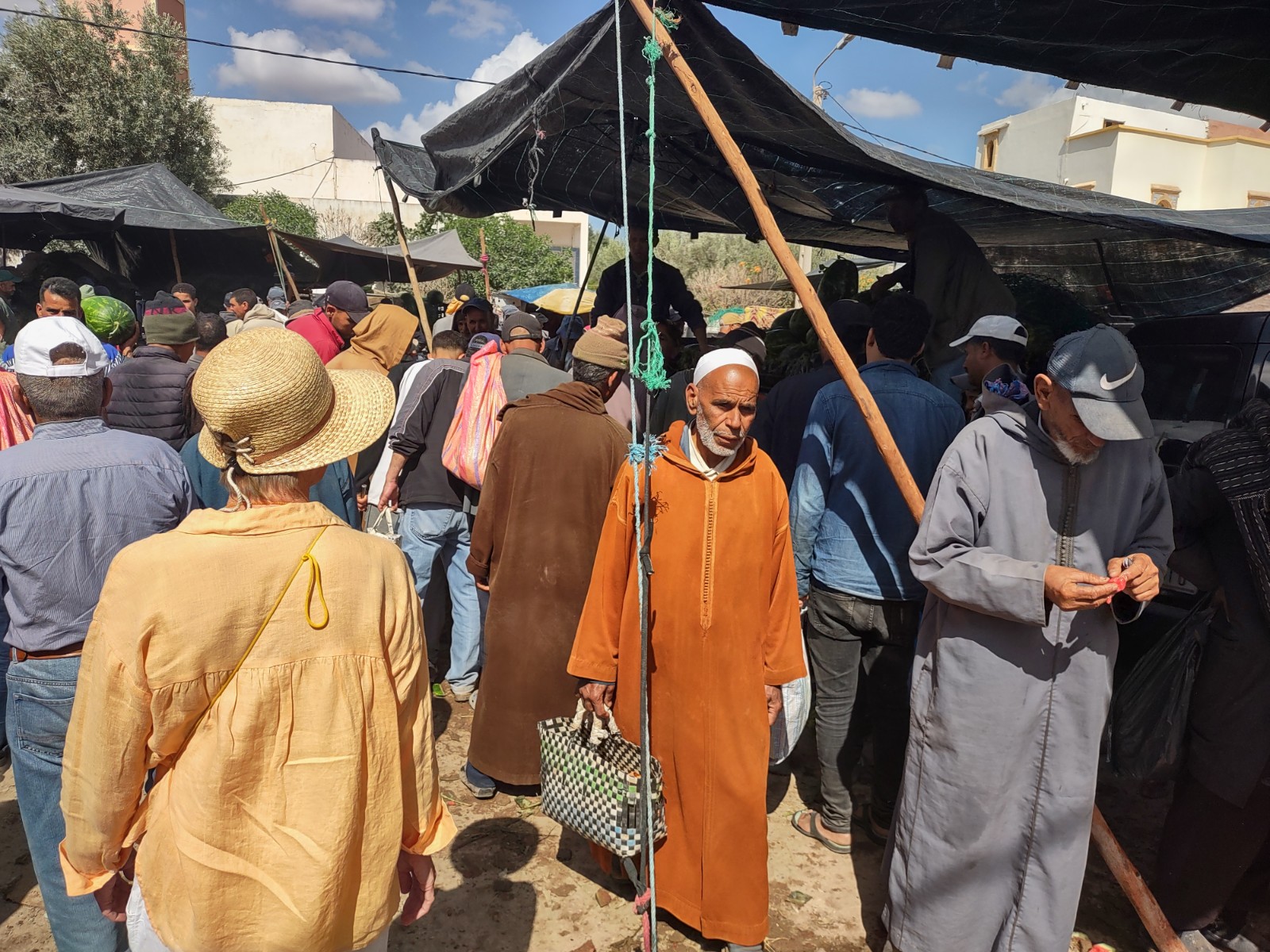
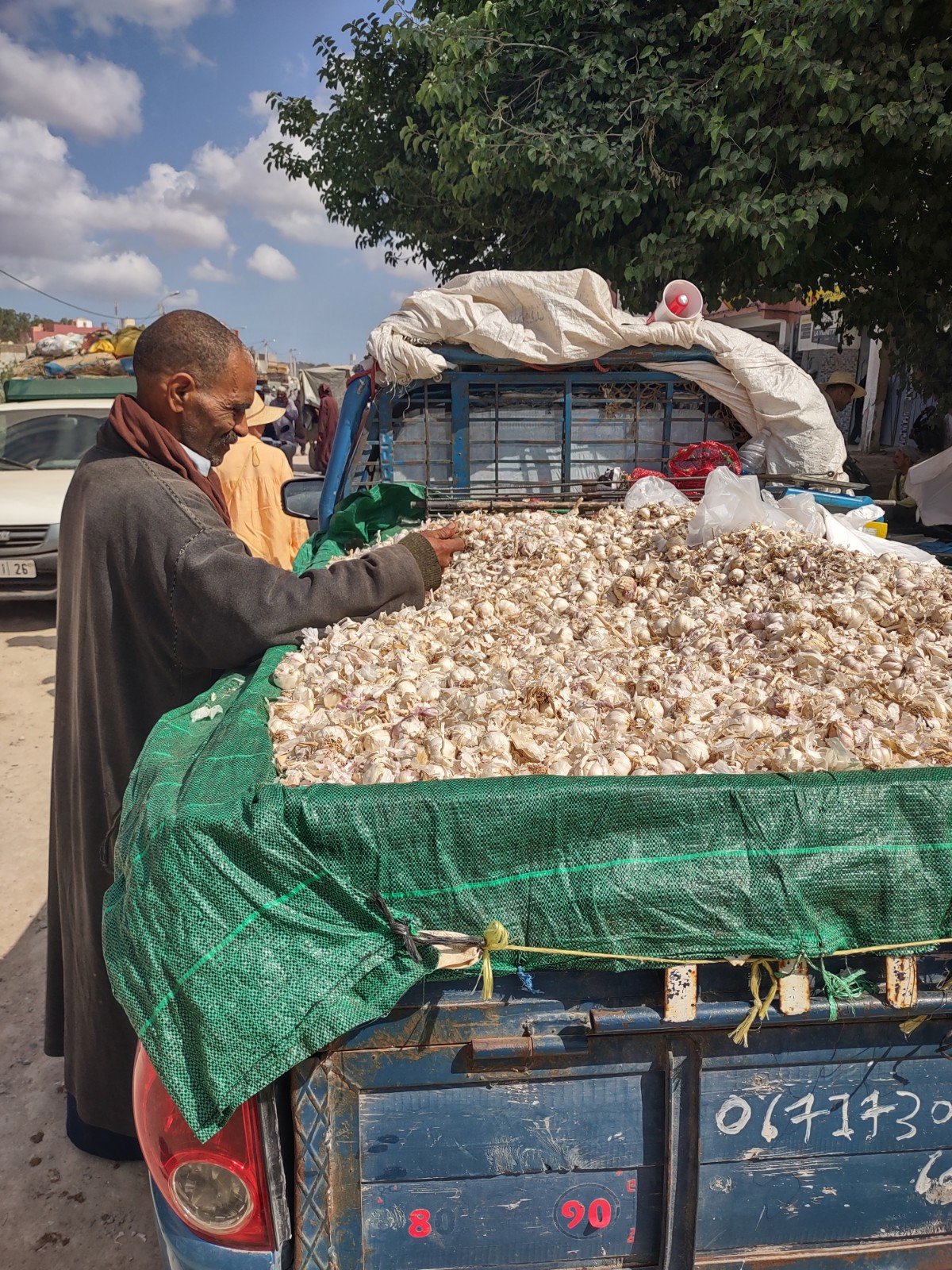
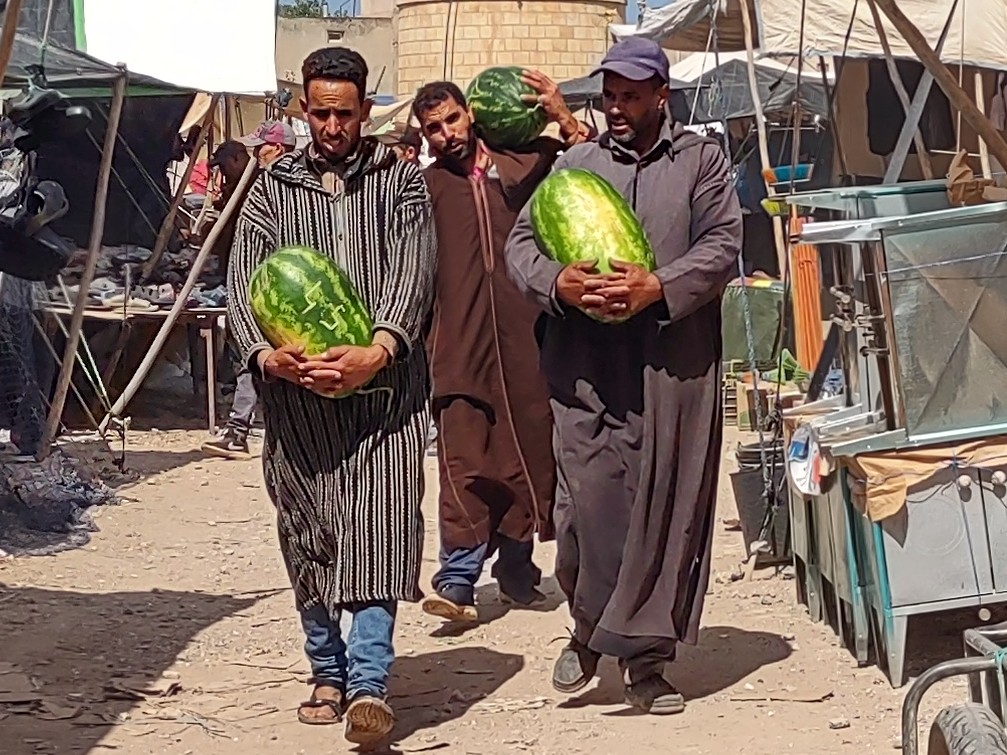

Like the Souks of Marrakesh, the market seemed to be organized in neighborhoods specializing in different types of products. We saw areas with vast quantities of fruits and vegetables (ever see a whole pick-up truck full of garlic?) and there was an unbelievably odorific fish and meat market where you could buy something and then take it to the adjoining restaurants to have it freshly grilled. At some point in our wanderings we stumbled into what we decided was the Home Depot section where construction materials like lumber were available as well as a nice selection of used tools.


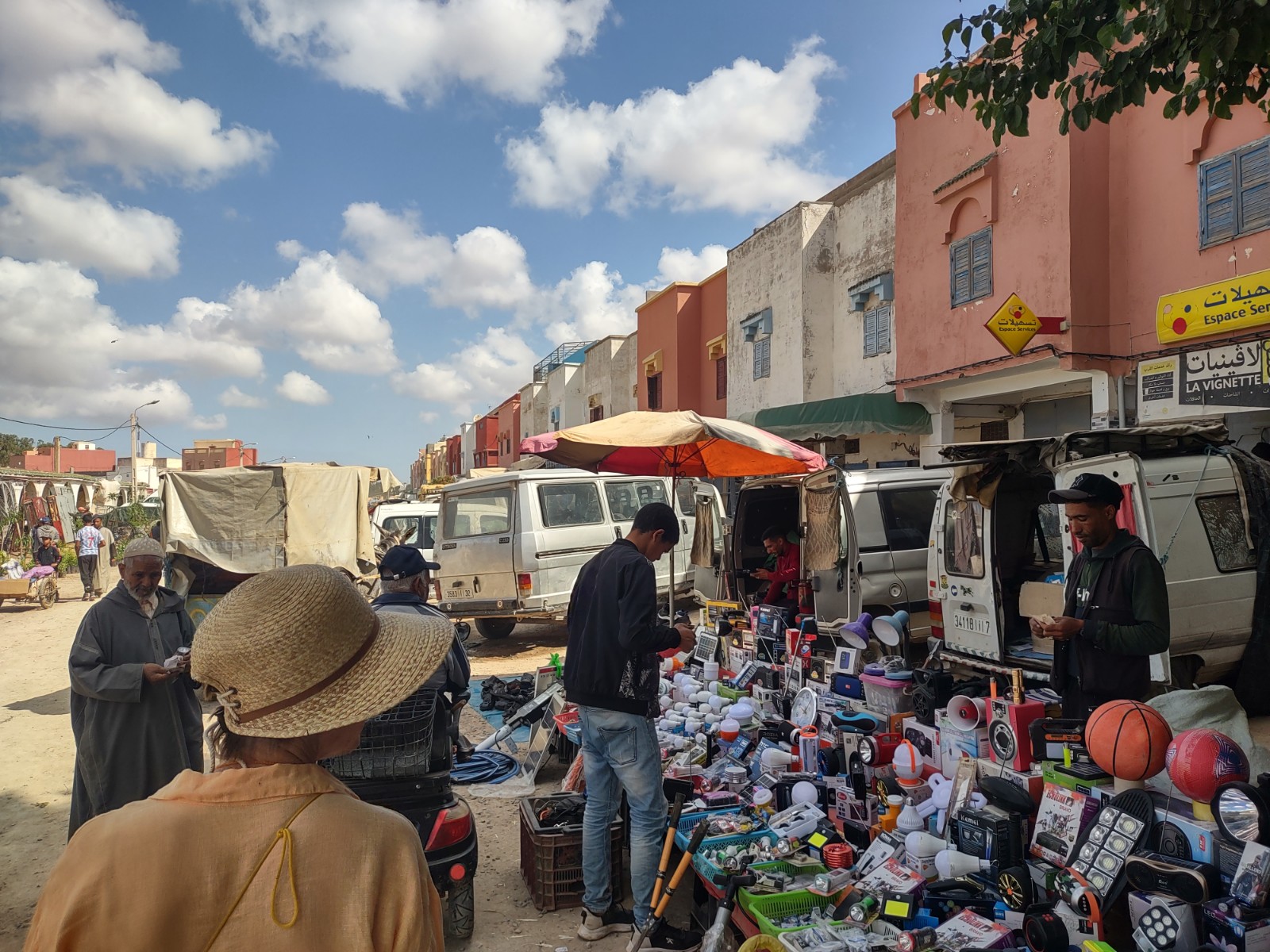


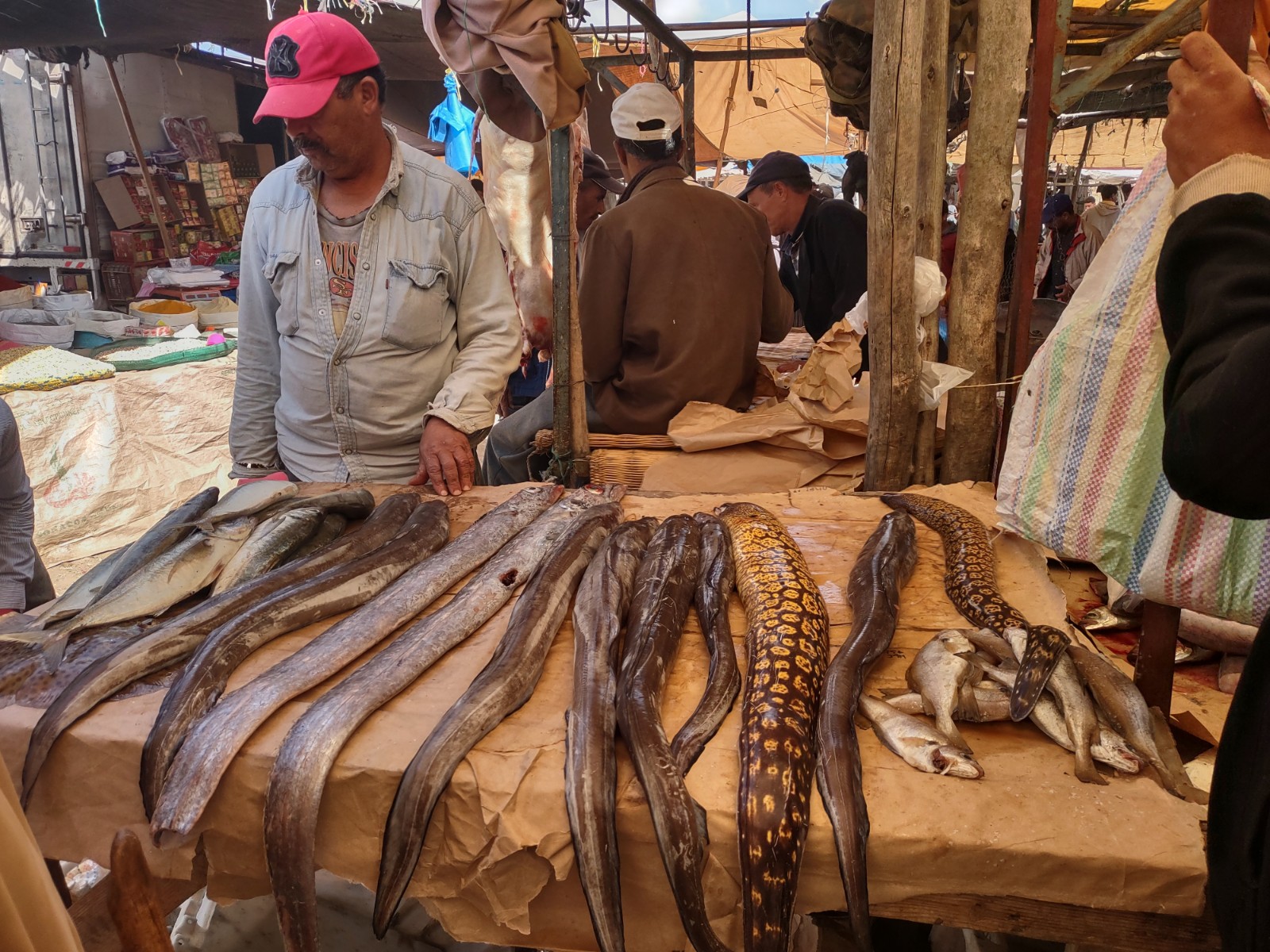
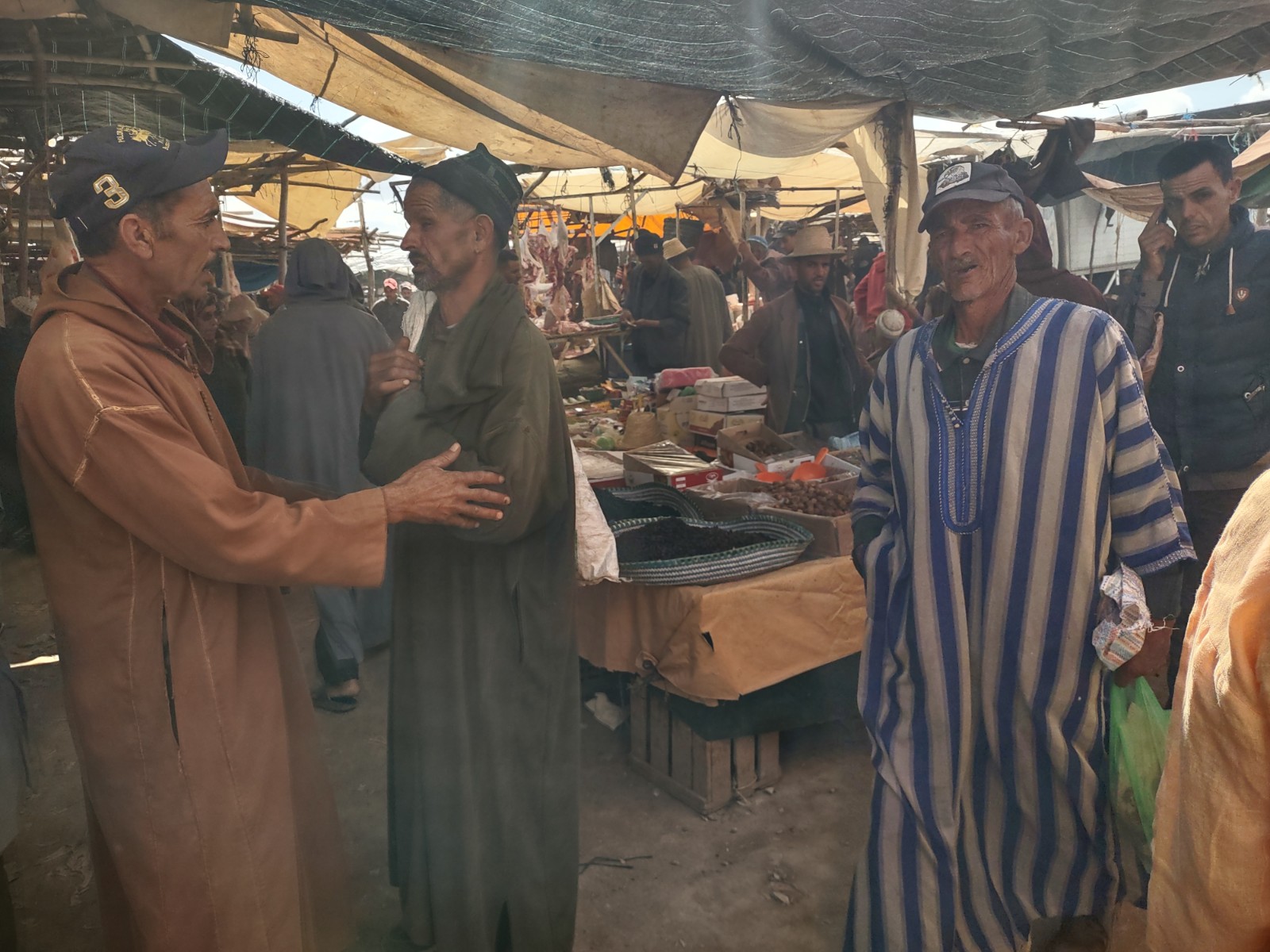
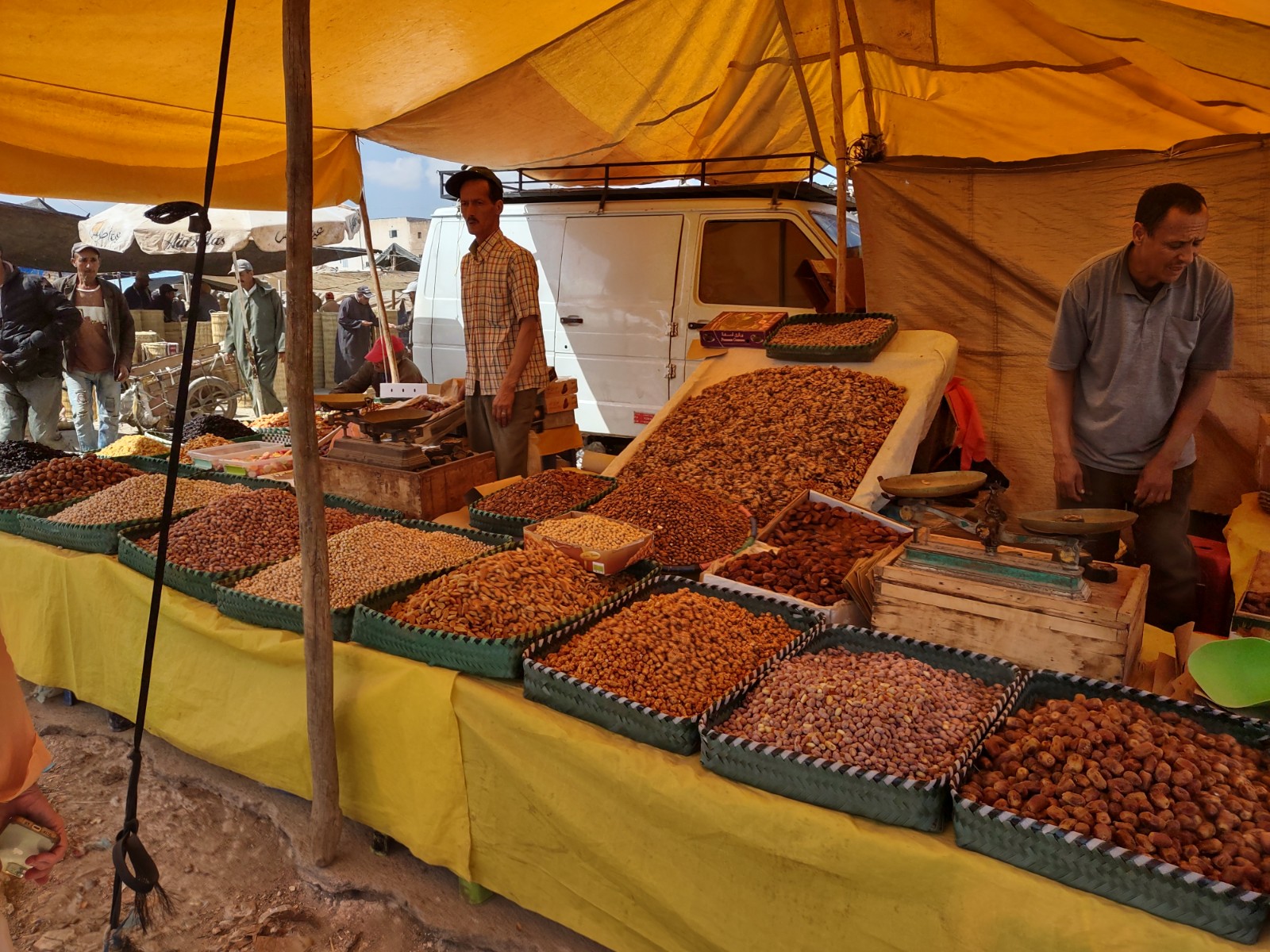
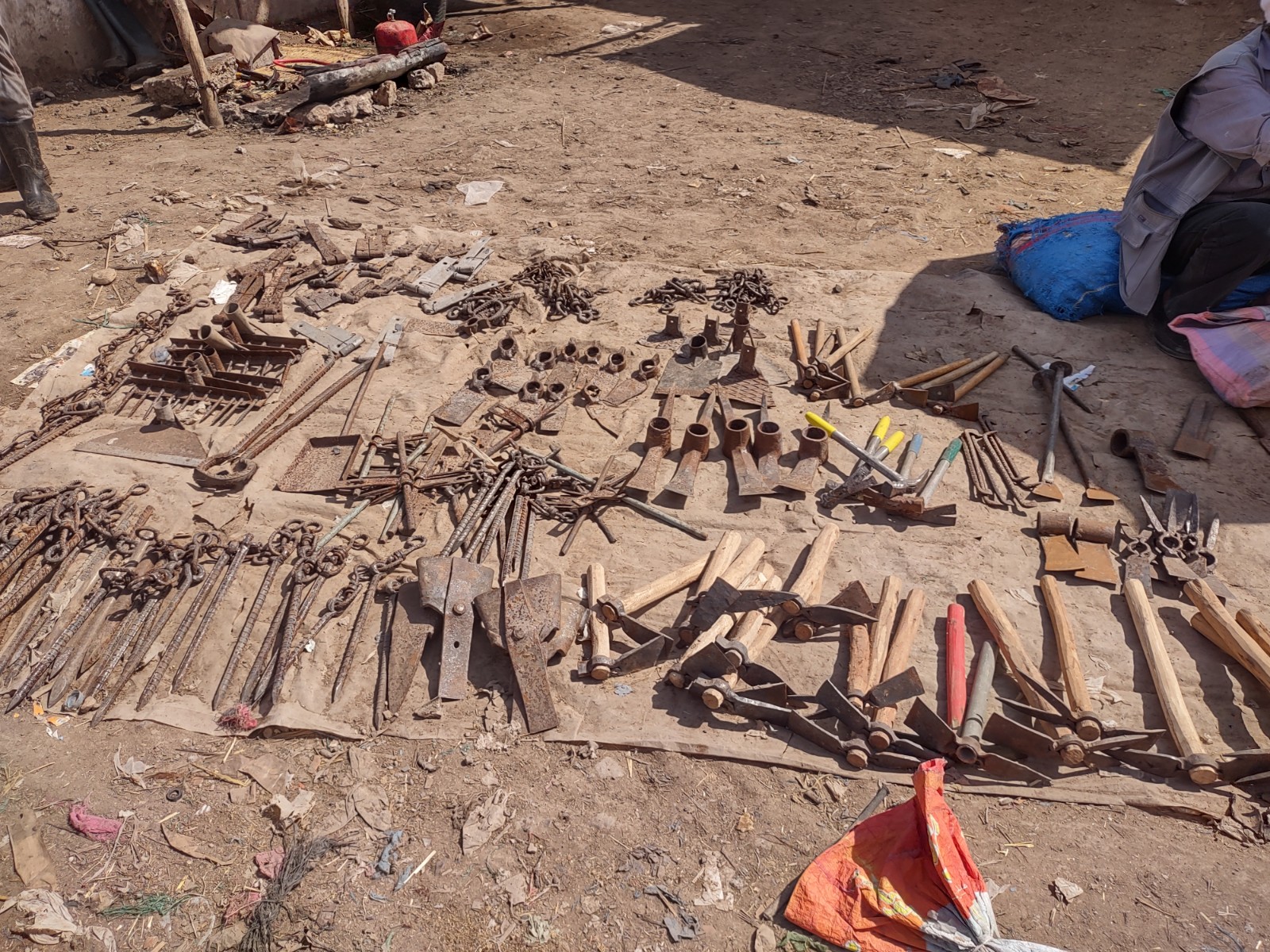
It was a pretty intense experience and we were kind of just swept away by it not really knowing exactly where we were most of the time. After what seemed like hours, but was actually a lot less, we found ourselves near the place where we had come in and, after being briefly distracted by a stall selling chicks to a pack of screaming boys, we extracted ourselves. We found a café and decided to stop for some tea. After averting the efforts of a bystander to serve as our impromptu waiter, we had some tea and watched the show from a little distance. The tea was very good, as was the show, but we eventually decided to call it a wrap and headed back to the collectivo taxis and the ride back to Essaouira.
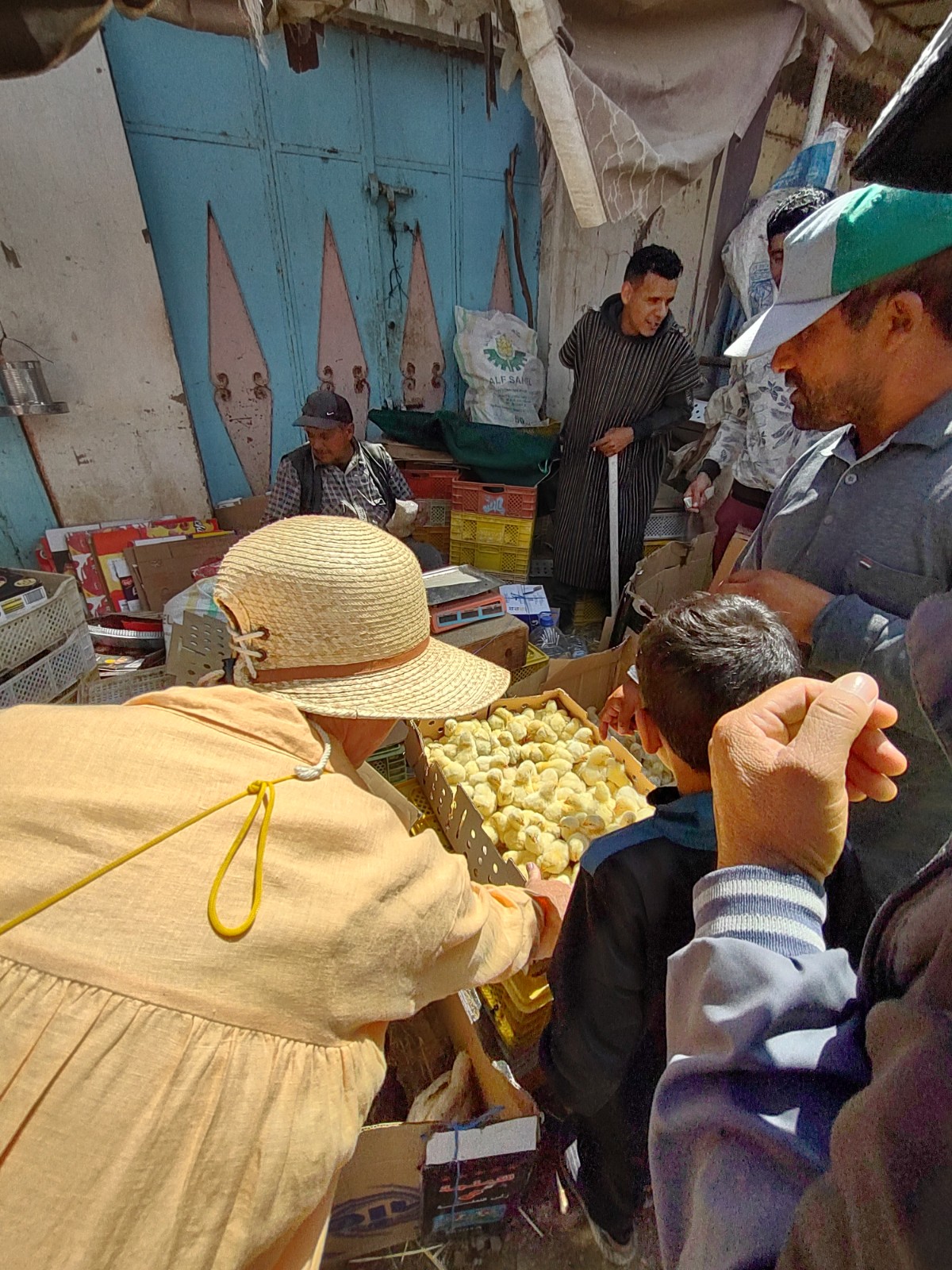
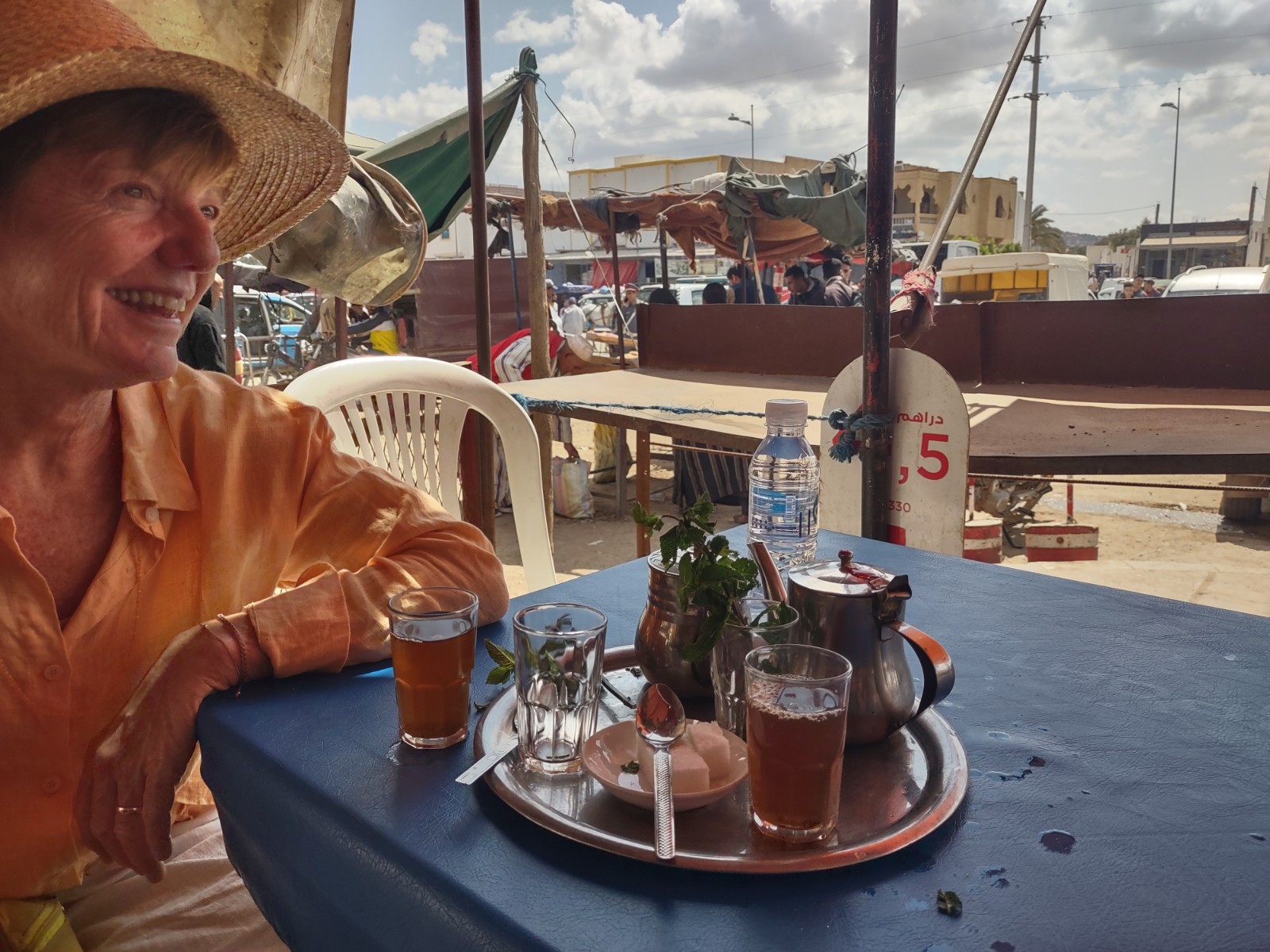
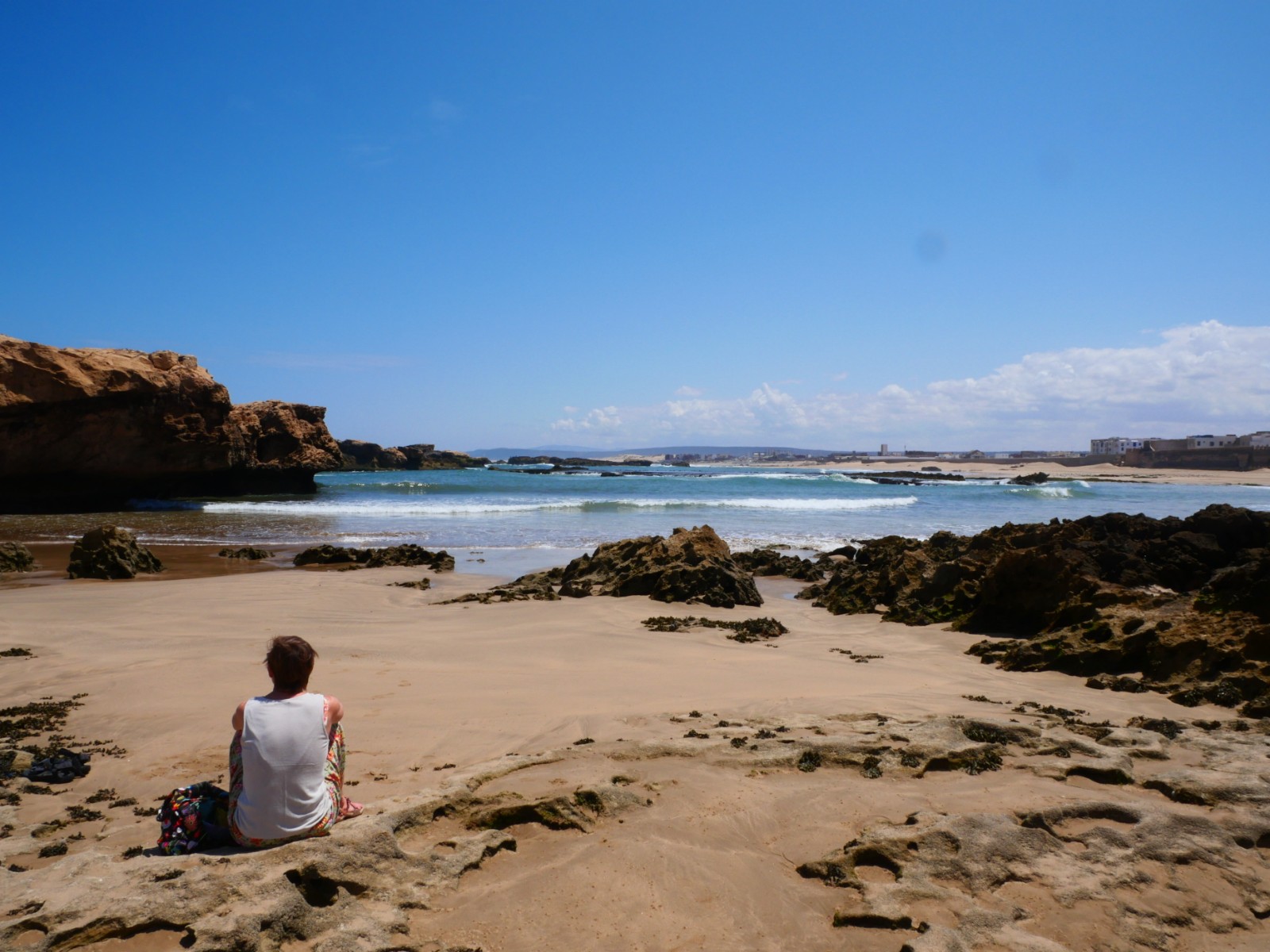
As it was still morning when we got back, we made a quick change and headed back out to see if we could find a path to a small and apparently uncrowded beach we had seen from our roof terrace. We exited the Medina and followed a path between the outer walls and the ocean and, after scrambling over some rocks and rounding one of the watchtowers, we found ourselves there. We found ourselves alone except for some fisherman who were perched on the other side of a very large rock in the surf and stretched out on the sand below the battlements and enjoyed the sound of the surf on a nice private beach.
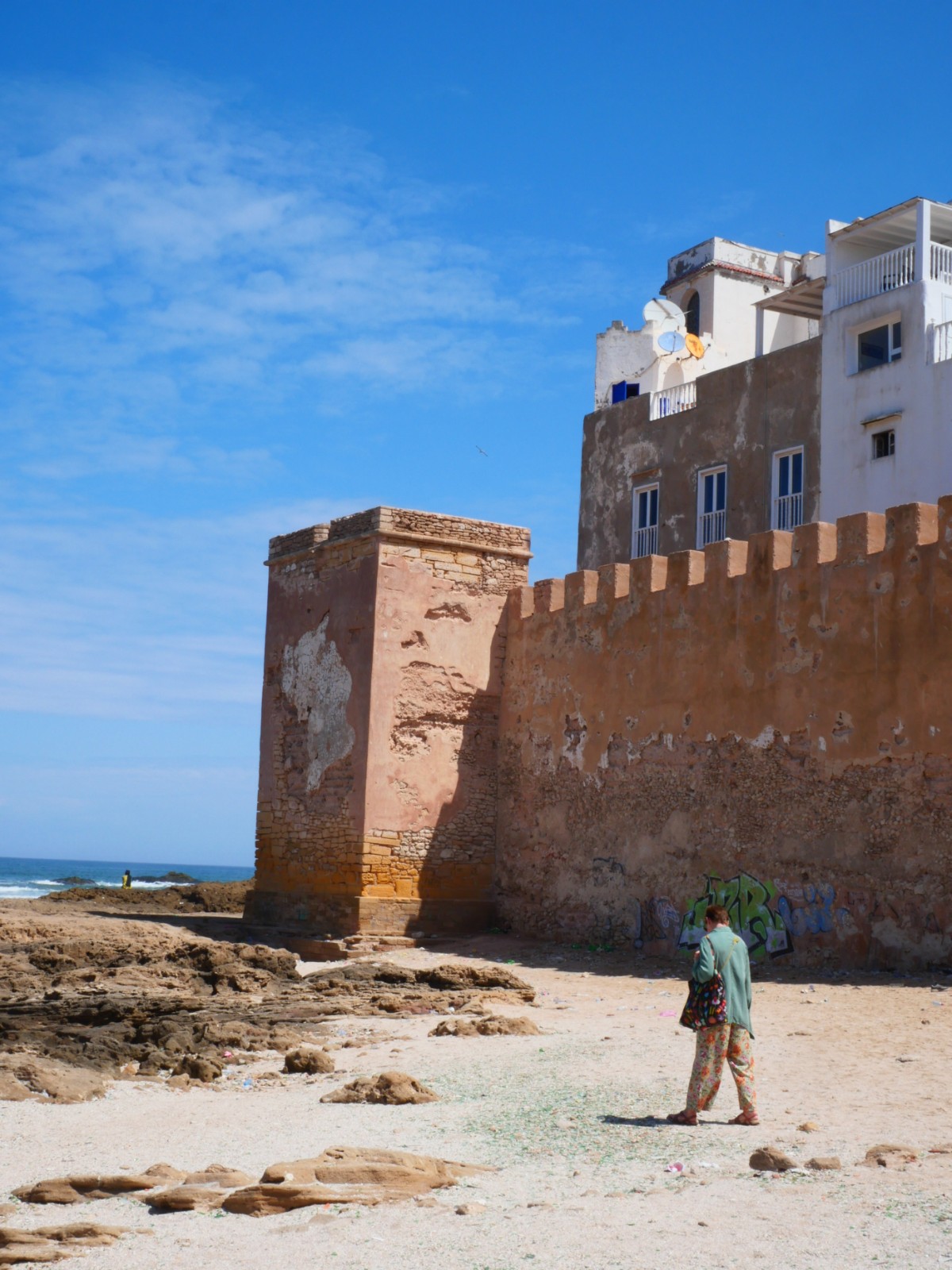
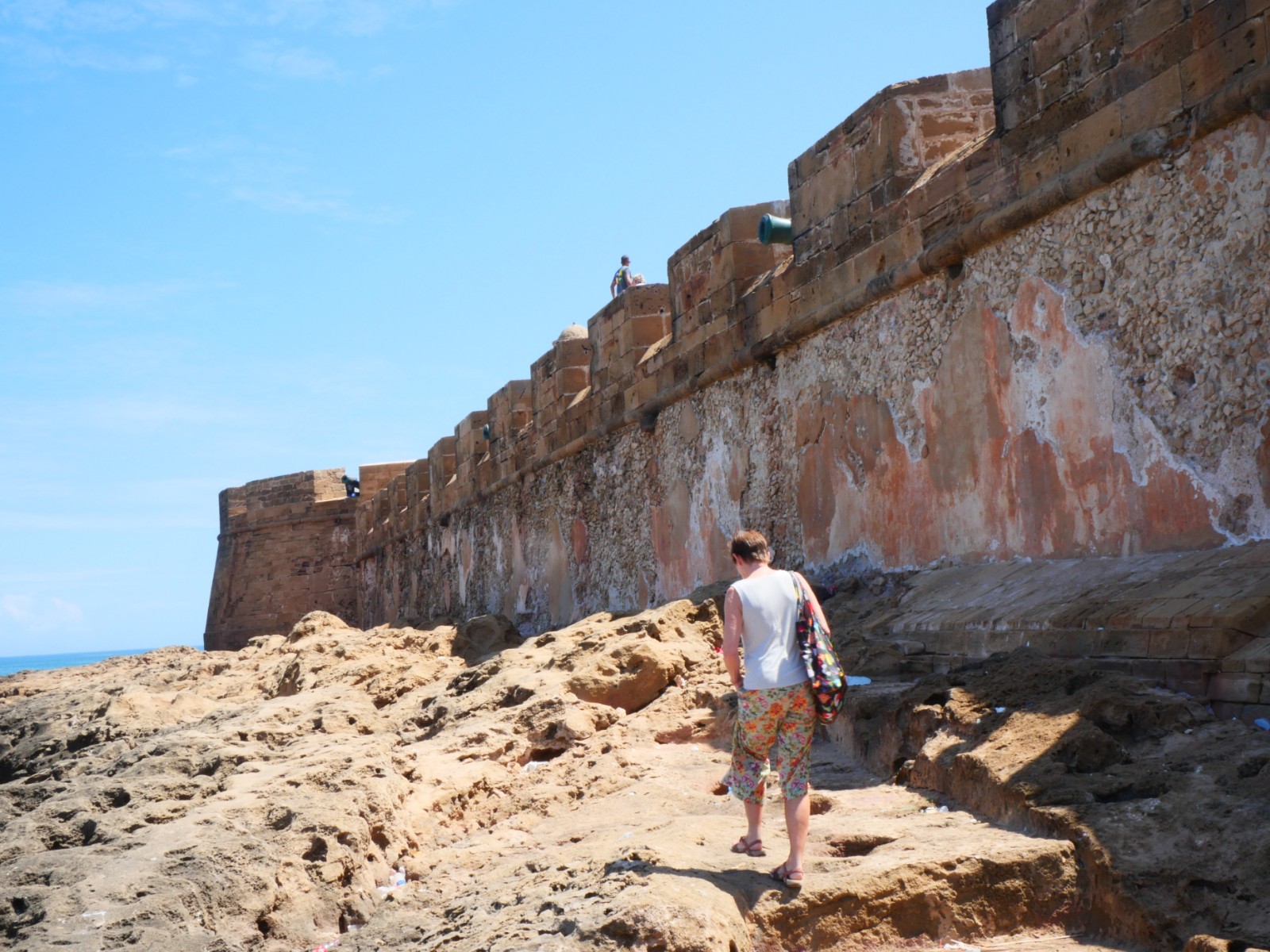
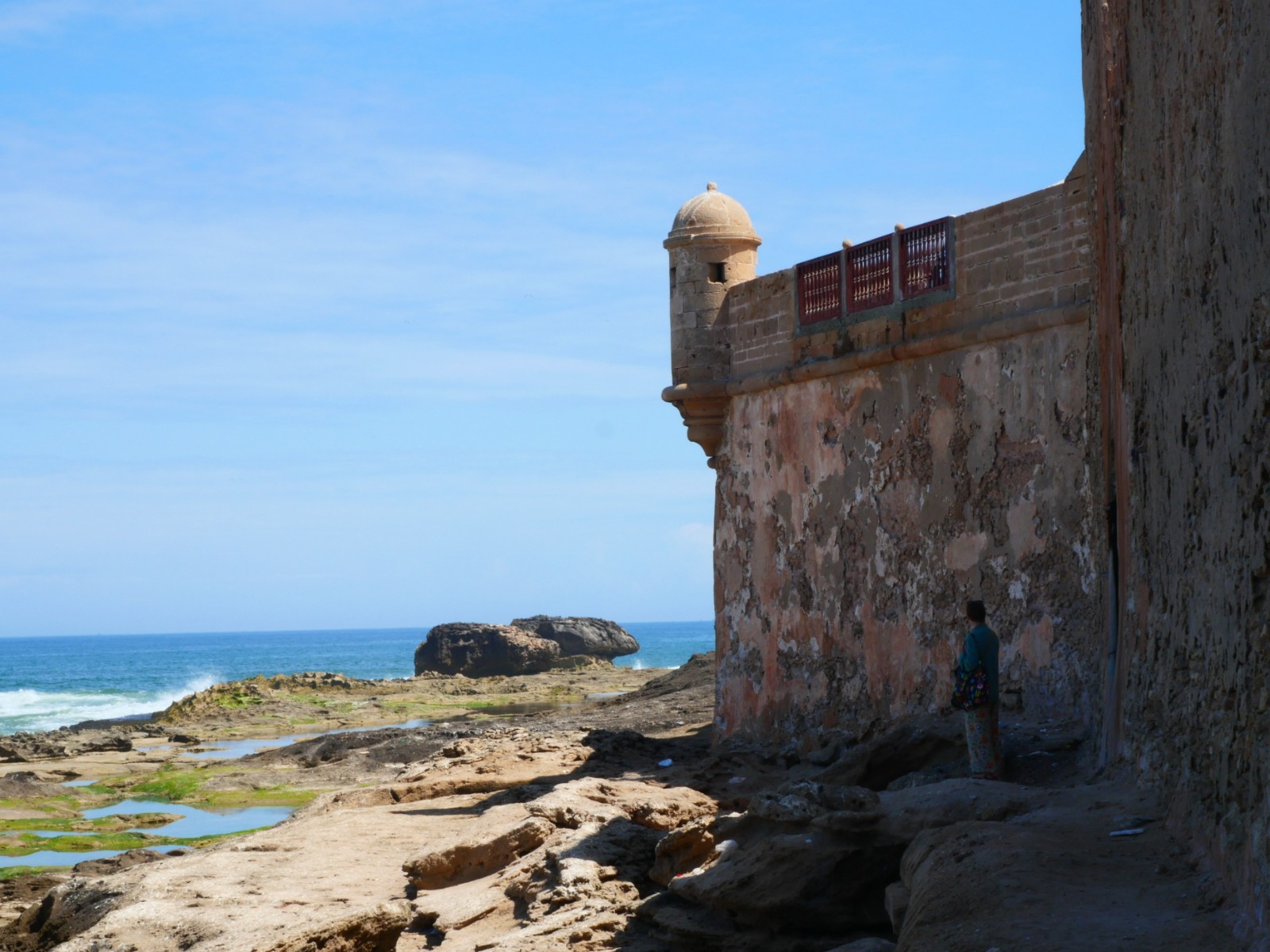
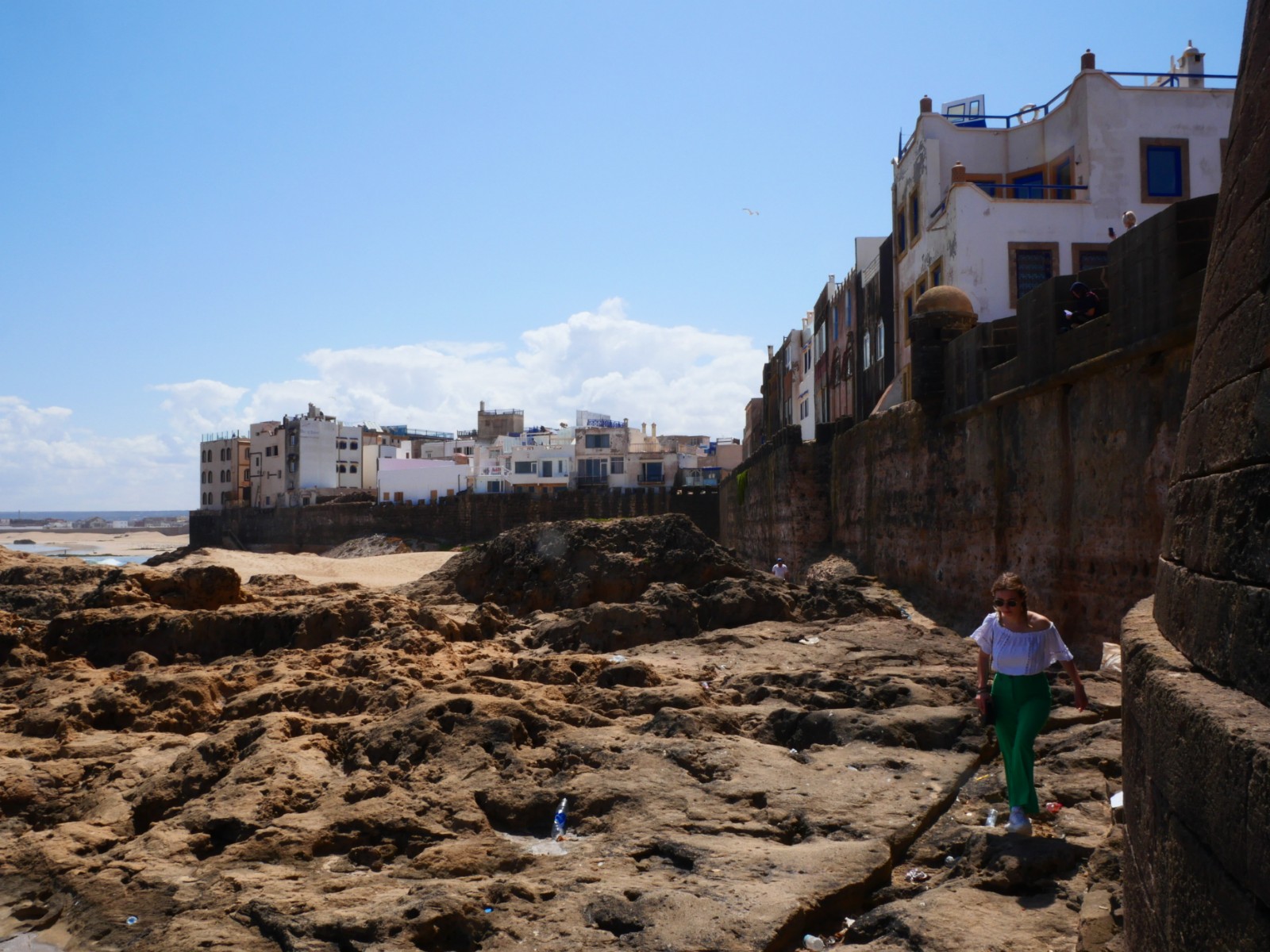


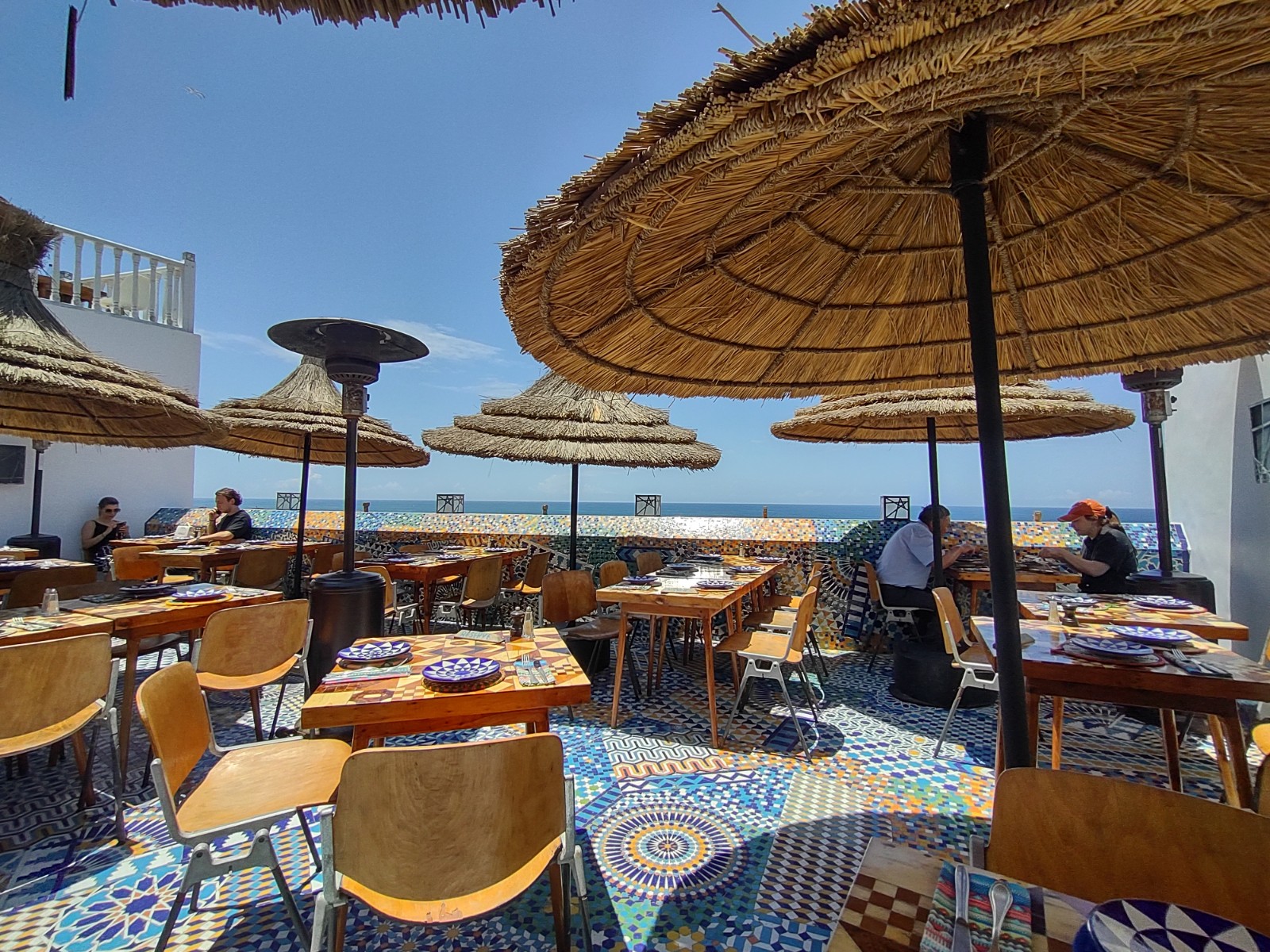
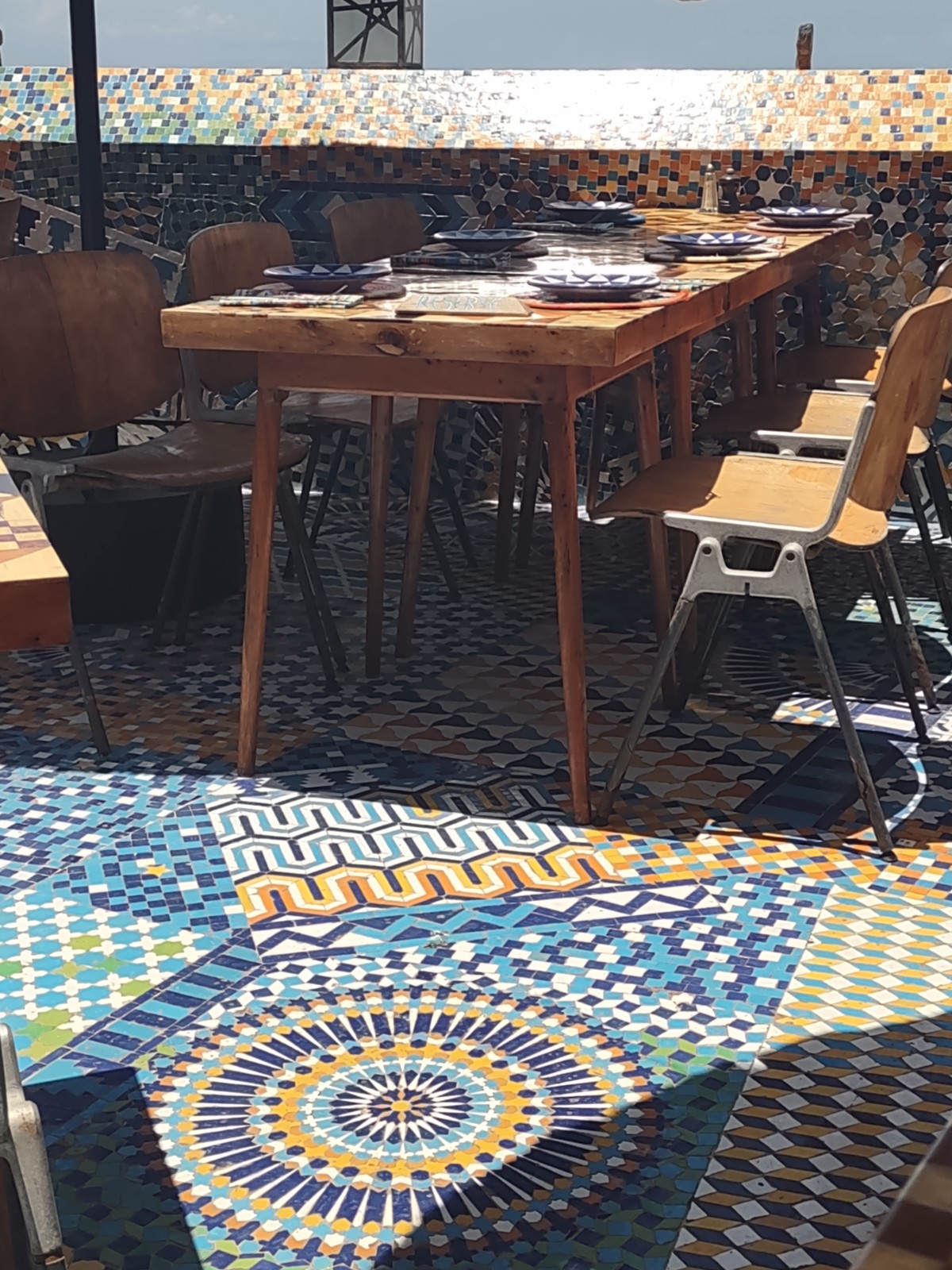
After a good while, other people started to pop up and we decided that we should try to find a late lunch. We again wandered the Medina and eventually found a rooftop bar and restaurant called Salut Maroc. While I have to say that both the food and drink were very good, we were very preoccupied with the tile work in this place which covered almost every surface. It was a hodgepodge of seemingly random patterns made up of tiles of various sizes and colors but, when you looked a little closer, you saw that every tile was handmade and had slight variations in size and color which turned what might have been something mundane and ugly into something really quite beautiful.

On our last full day in Essaouira, Sunday May 28th, we had booked a late afternoon walking tour with a guide we found online which promised to be interesting as we were the only ones scheduled to participate. Although we had already seen much of the Medina and surrounding area, we felt that a guide might provide some insights and explanation of things we weren’t aware of. We spent the morning catching up on some “chores” and relaxing on the roof deck and, at the appointed time, proceeded to the square in town where we were to meet our guide. We waited for about 20 minutes (Colleen claims that is the rule for college professors) and then proceeded to conduct our own self-guided tour of some to the streets in the Medina we had yet to visit.
We were on our way past our place to pick-up some fresh squeezed grapefruit juice for cocktails when we decided to stop and spend some time at a shop across the alley from our house. We had passed the shop, which was very small, two or three times every day since our arrival and had developed a bit of a “hello neighbor” relationship with the proprietor, a young man named Mohammed. Mohammed invited us in, and, after we expressed some interest in some of the pieces he was selling, he asked us to sit, and offered to fix tea for us, which we accepted. As he went about his tea preparations, we exchanged information about who we are and where we are from. Mohammed grew up in and, for awhile, worked in a small town to the east, but came to Essaouira a few years ago to make more money for himself and to help support his family.

Although his shop is quite small, Mohammed has a number of traditional hand-made pieces and, over tea, he explained to us what each one was, where it came from, and shared other interesting information. There were many small pieces that we really liked but narrowed it down to four and, after some traditional bartering (which Colleen cut short), we agreed on a price and made our purchases. I think we both found this to be a very interesting experience in contrast to what most of our shopping experiences have been like in Morocco thus far. (Perhaps more about this in a future installment.)
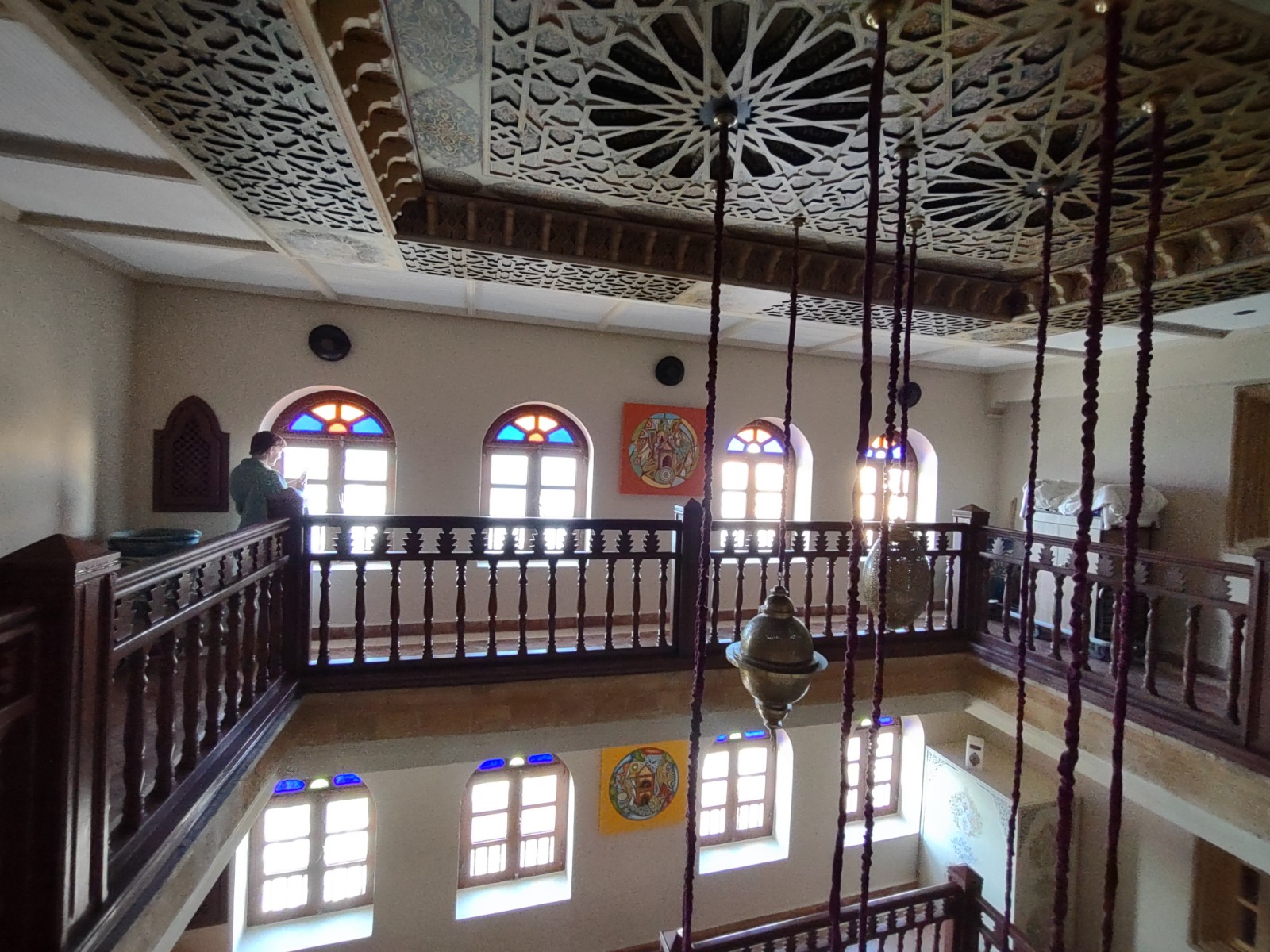
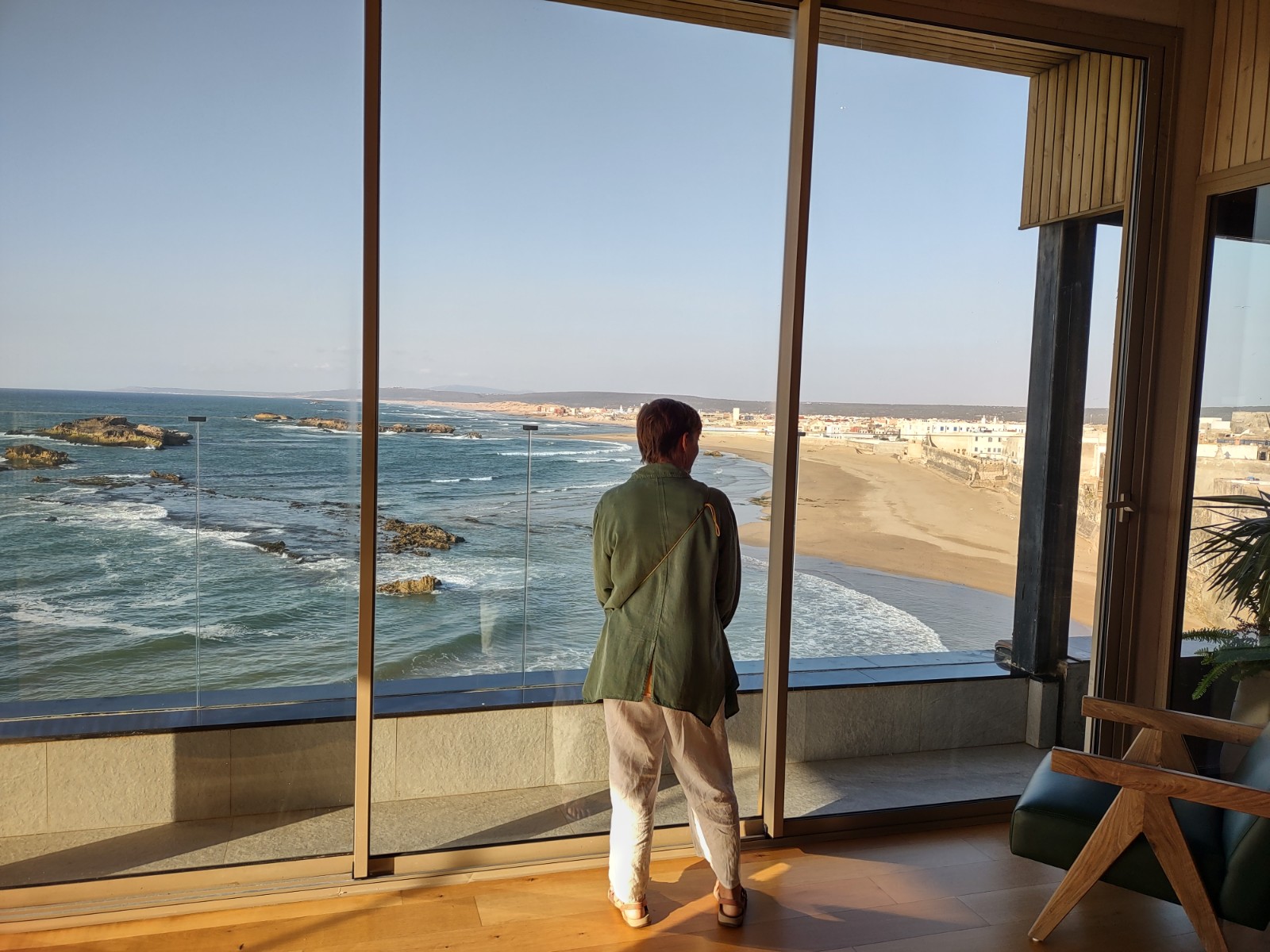
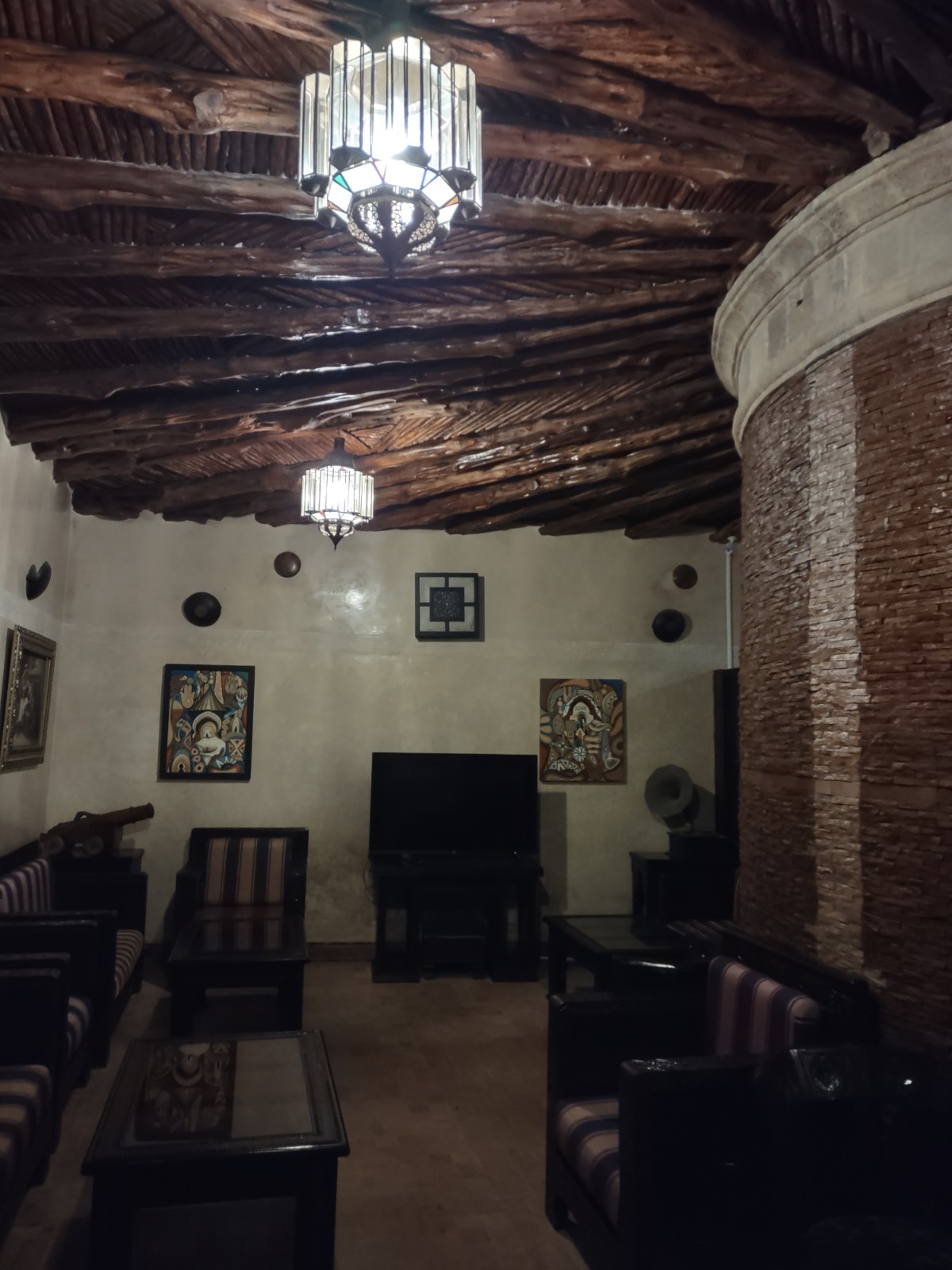
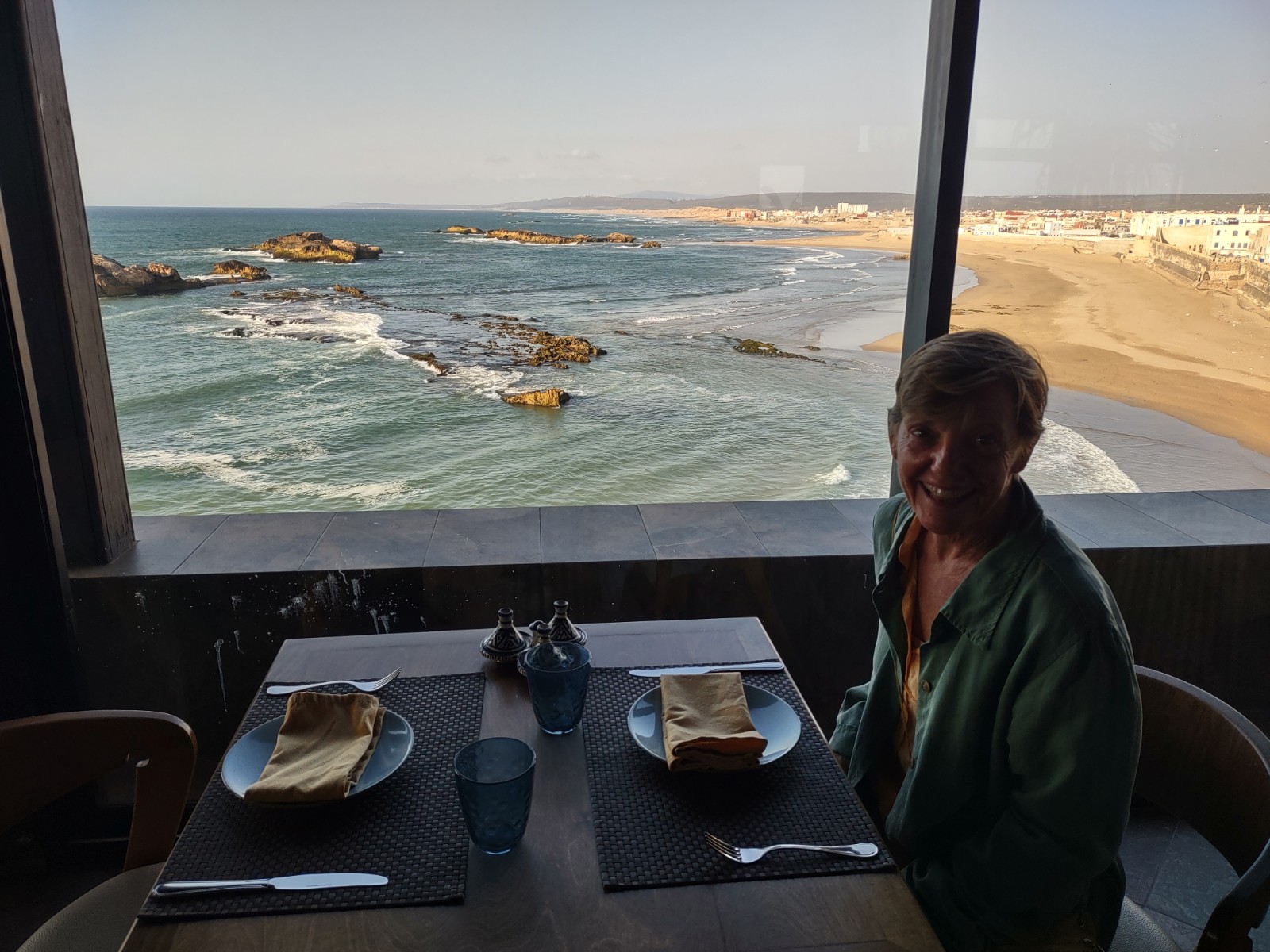
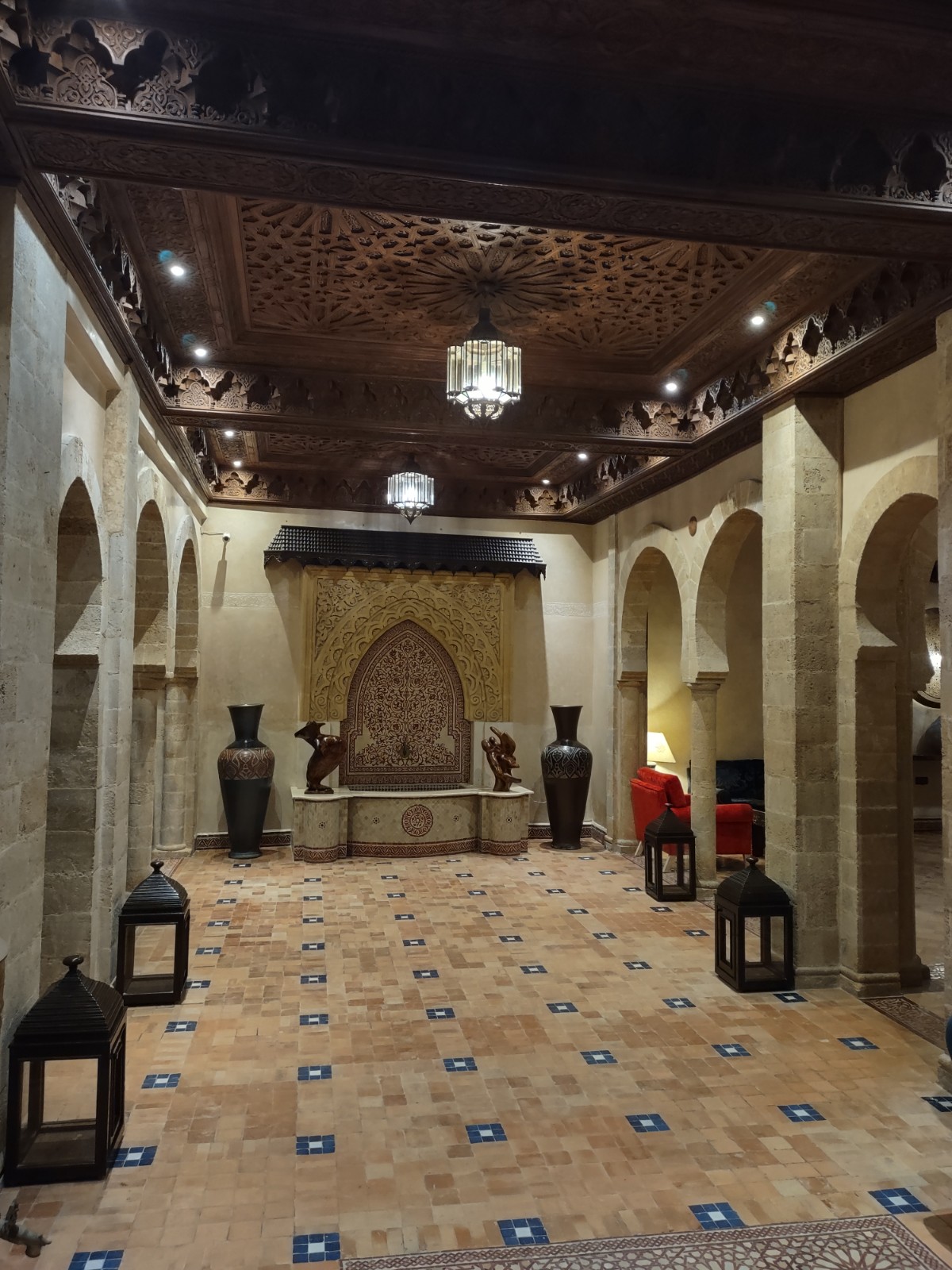
For our last dinner in Essaouira, we had made reservations at a place not far from our house, built against the sea ramparts of the city, called Riad Mimouna, which we had passed several times in our travels. We went there expecting some spectacular views from its roof-top restaurant and were not disappointed. The food, which included some incredibly fresh squid, was very good as were the views. On our way out we spent a little time wandering the hotel below the restaurant which was quite beautiful with some interesting design features.
We made our way home and did some facetime with a couple of our kids (Sundays are call days if we’re not travelling) and then got ourselves organized to hit the road the next day, bound for a place called Taghazout.
 Burning the Inheritance
Leave a comment