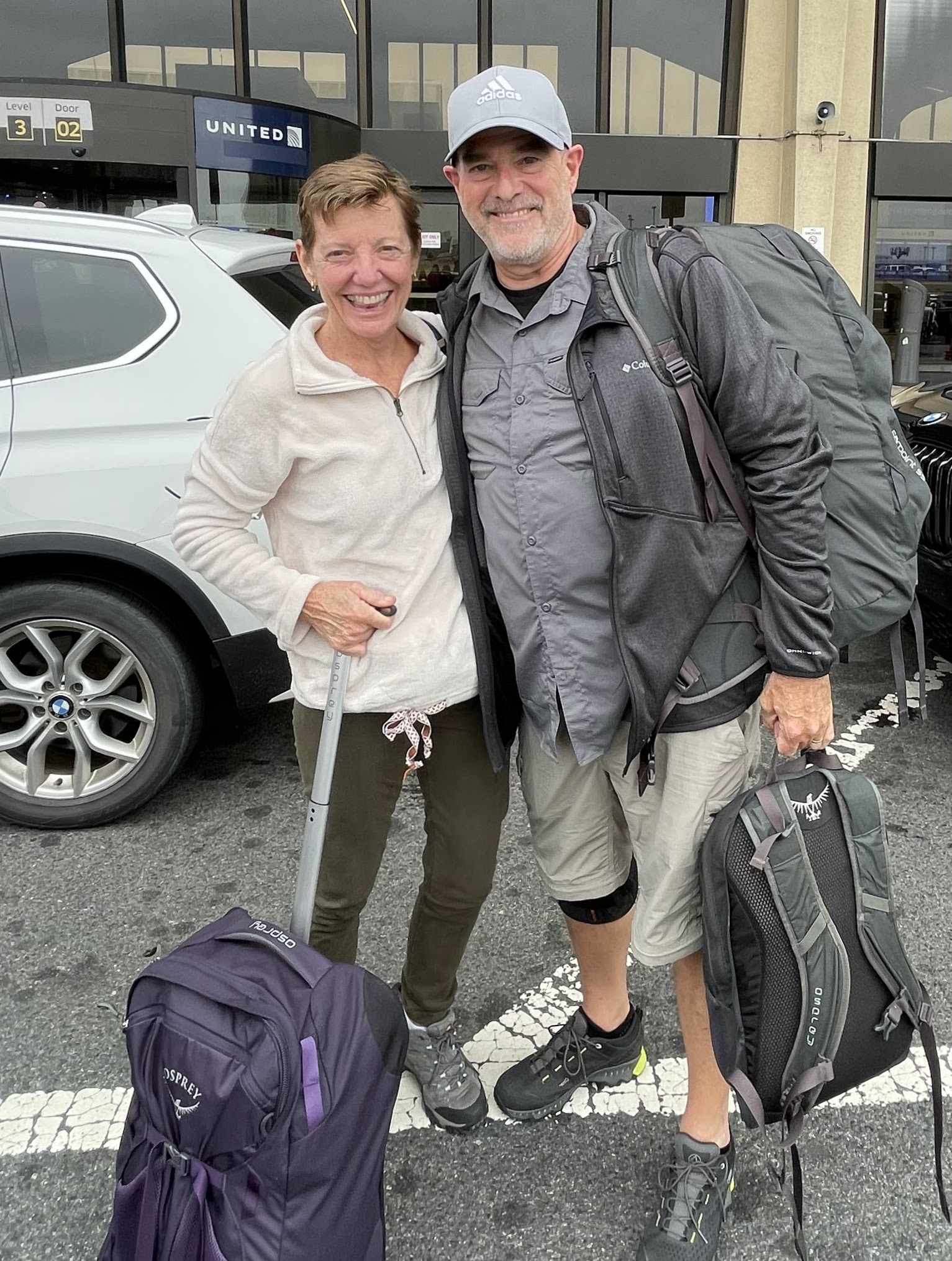
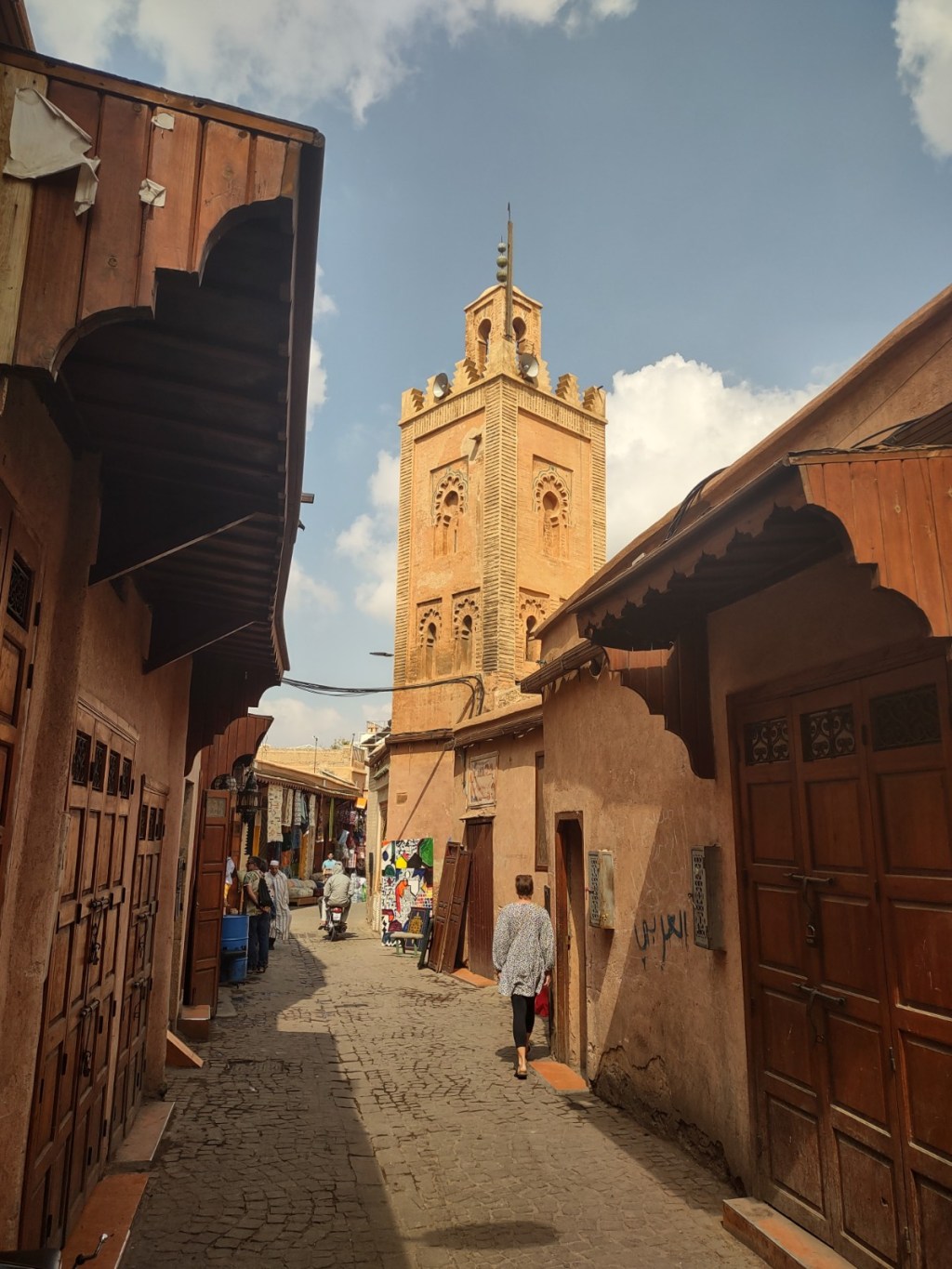
Our trip from Glasgow Scotland to Marrakesh Morocco was, in contrast to some of our more recent travels, fairly uneventful. As was the case when we came to Scotland, what seemed to make the most sense in getting from there to Morocco was to fly. As I’ve said before, we tend to have a preference for trains and buses over planes whenever possible for various reasons, but mostly because it is usually much less expensive, have the time, and really enjoy the transition from place to place that can really only be had by travelling overland (or oversea by boat as has sometimes been the case). But Colleen ran the numbers (she is our travel logistician) and, even with checking our carry-ons due to Ryan Air’s more restrictive size and weight limitations, it was less expensive and, of course, much quicker to fly to Marrakesh.
So fly we did, although I have to say that, the more we travel, the stranger (and more unnatural) I find flying when compared to overland and/or oversea travel. You start in one place, are herded (along with the other detainees) into a holding pen with an artificial environment, and are then suddenly and miraculously transported to a completely different place. For me at least, airports have come to feel like the process that was used (before Temple Grandin) to lead cows to slaughter, until they figured out that the related fear and stress builds up chemicals in the meat which make it less tender. (Yes, kind of a disturbing comparison, but that is how it often feels!)
We flew through London Standsted Airport (had never even heard of it before) and found that our two gates were about as far apart as was physically possible. Nonetheless, and despite having to reclaim and recheck our luggage and go through security again, it was a smooth transfer. For whatever it is worth, Standsted is yet another European airport where you are required to zig zag through Duty Free in order to get to all gates. This seems to be an increasingly typical thing in Europe.
We visited Morocco once before in 2011 with two of our children and so came with a bit of knowledge and experience. One lesson we had learned the hard way on our last trip is that the streets of the the old walled city of Marrakesh (the Medina) completely defy Google maps (and make fun of its mother). One of the lasting memories of that first trip here was arriving after dark and wandering the back alleys of the Medina trying, with little luck, to find the place where we were staying. This eventually led to our youngest daughter (14 at the time) looking up and saying to the two of us “I don’t know what the f**k you were thinking when you brought us here”. While everything got better from that point on in our last trip, we learned the lesson and this time Colleen made arrangements for a driver to meet us at the airport and take us to a drop-off point where a porter was waiting to help with our baggage and lead us to the Riad where we were staying.
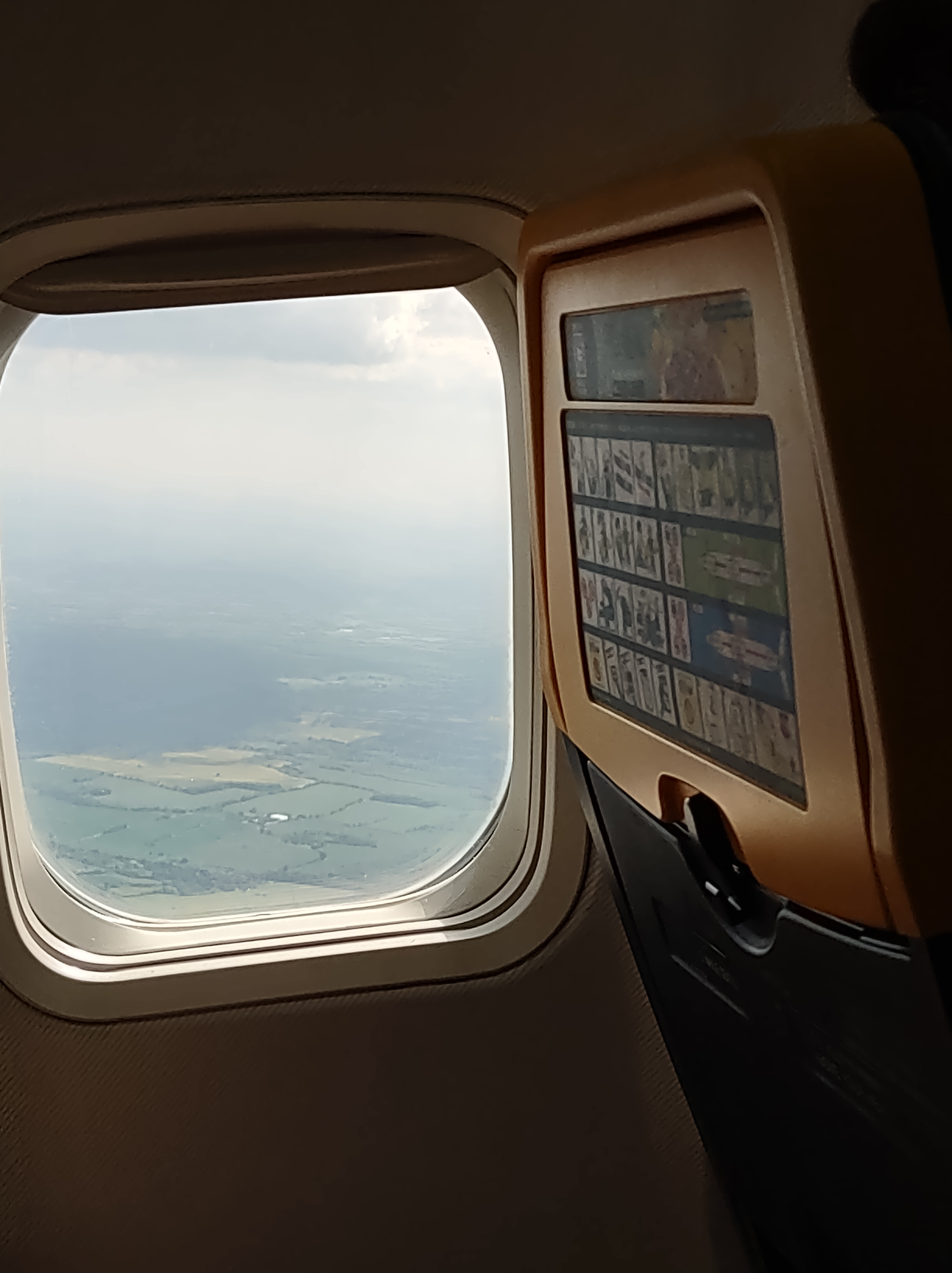
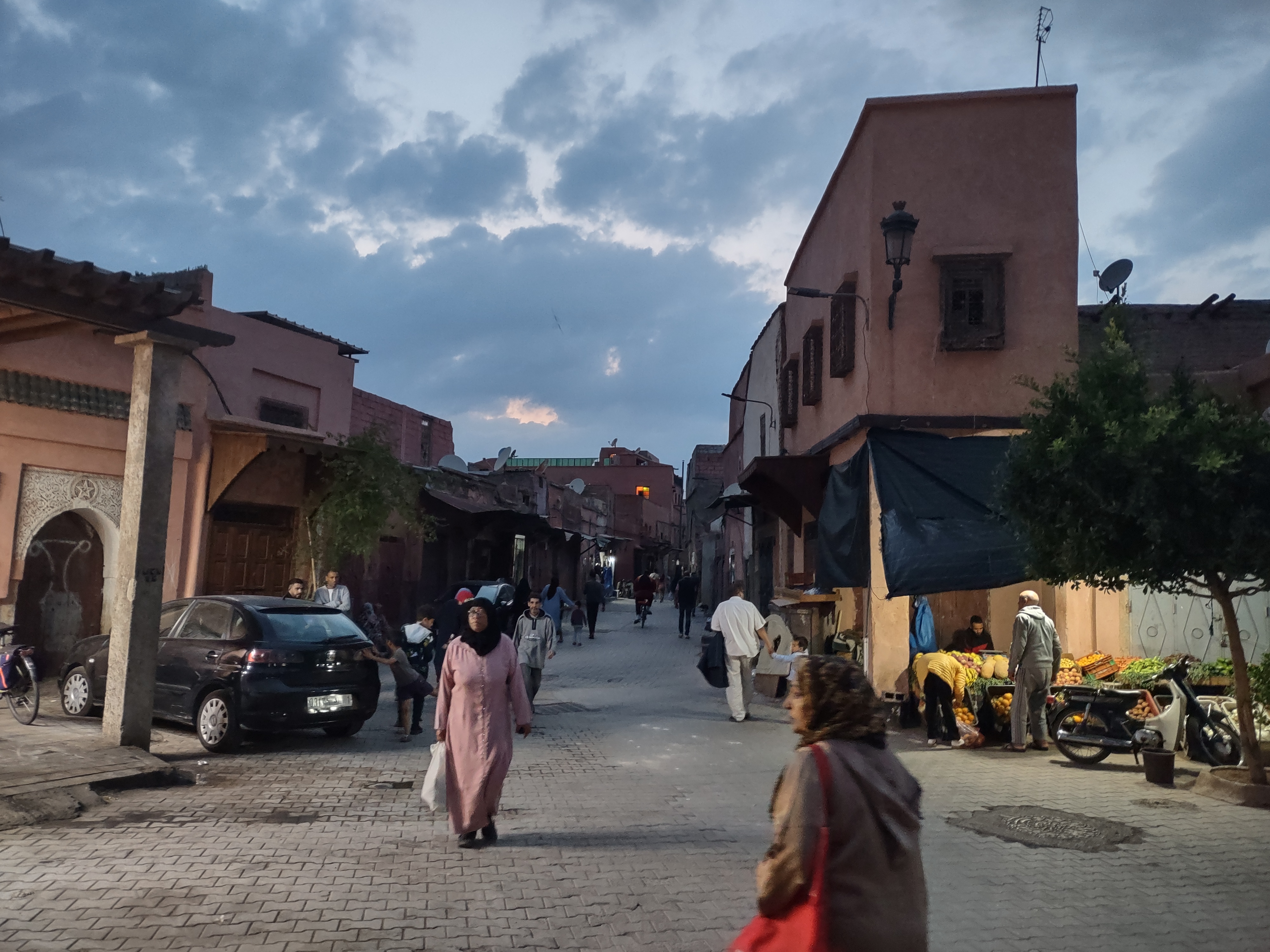
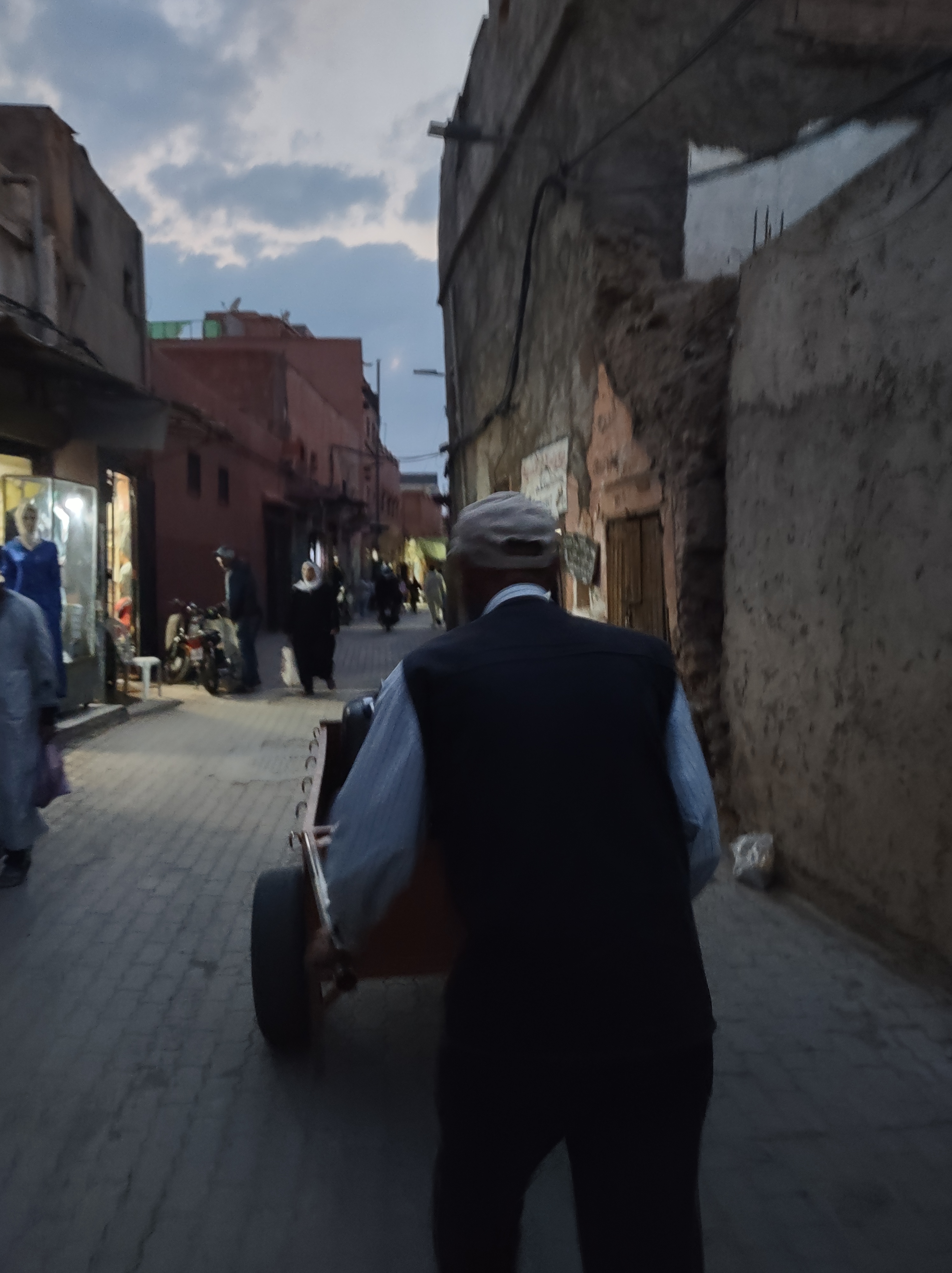
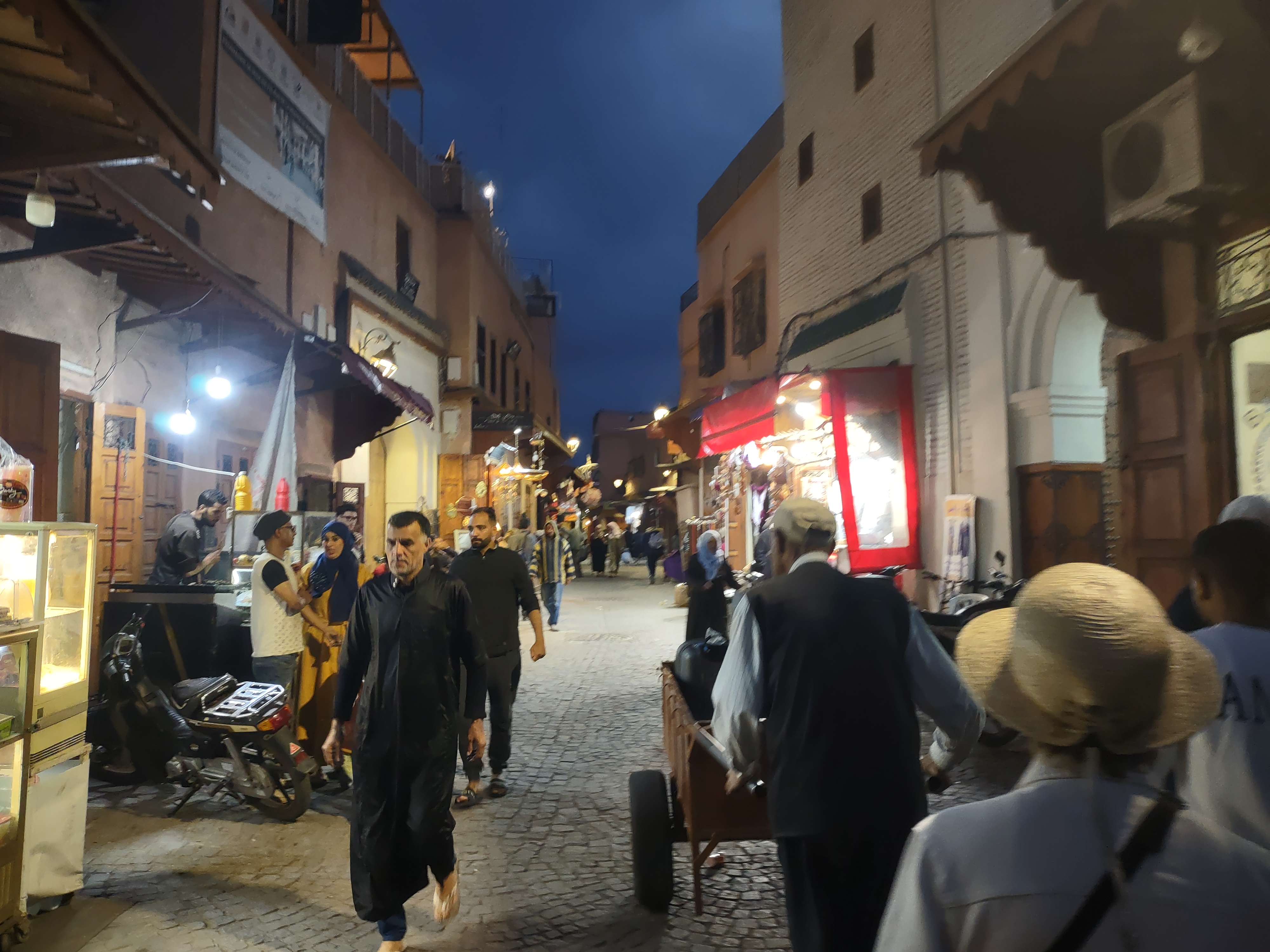
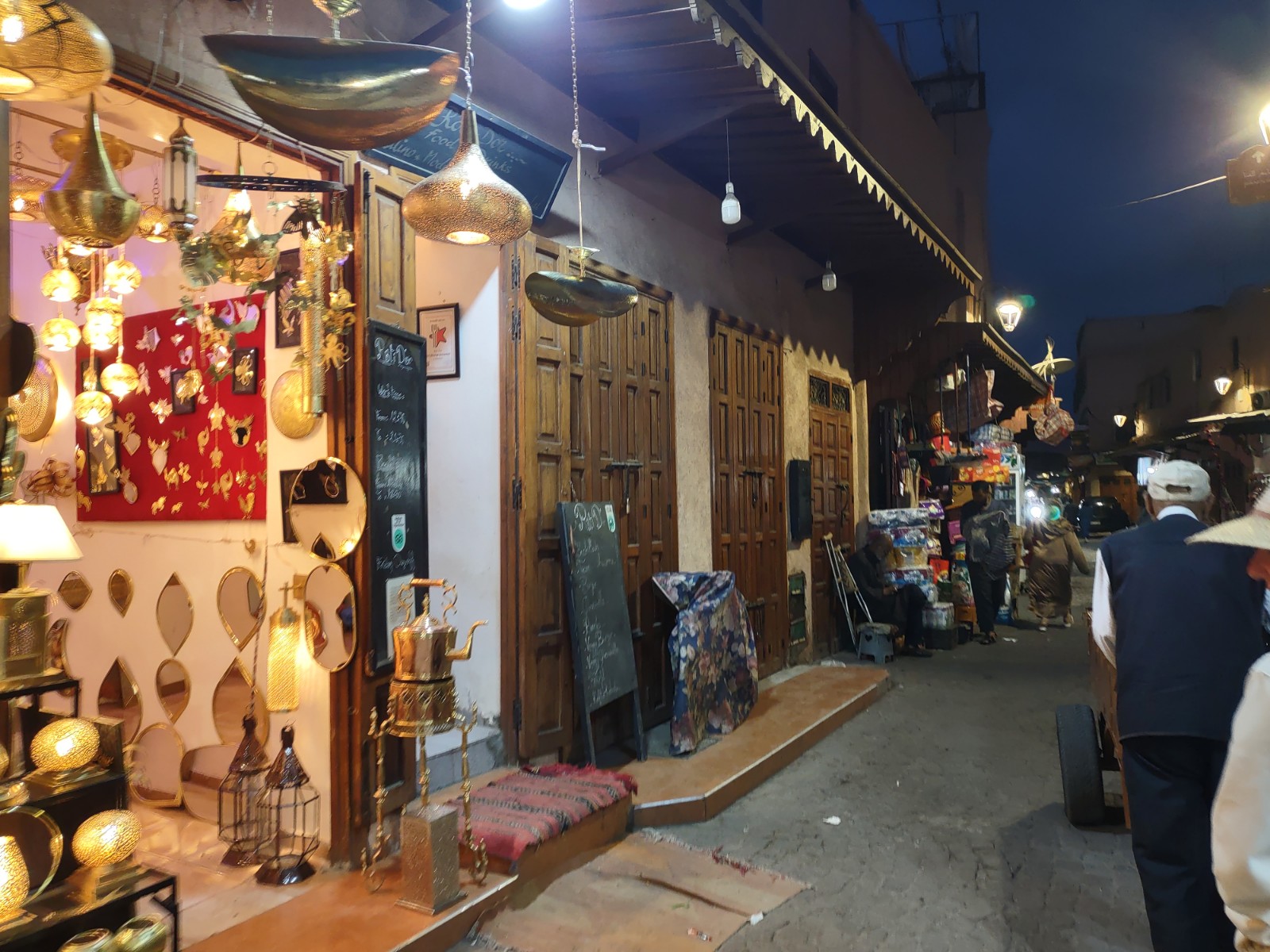
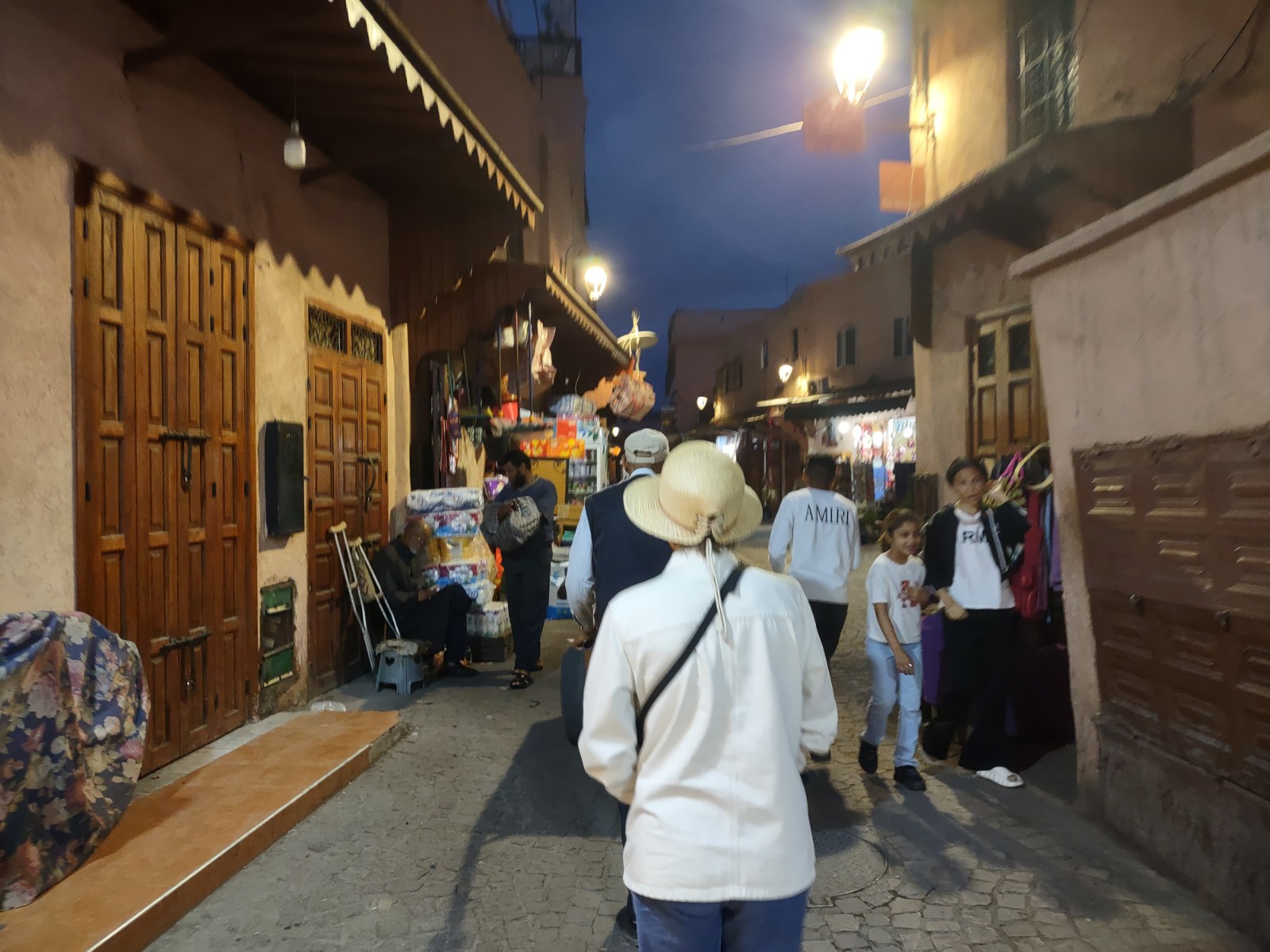

A little bit of background on Marrakesh is probably in order before continuing with our story. While Marrakesh (or Marrakech as it is sometimes spelled) is the fourth or fifth most populous city in Morocco with about 800,000 residents, it is probably the best known Moroccan city due, at least in part, to that Crosby, Stills, and Nash song. (We actually did ride the Marrakesh Express on our last trip here, travelling overnight to Tangier in a sleeper booth with our kids and, yes, we played the song.) Like many other cities in this part of the world, Marrakesh is a very old place, having been established over a millennium ago.
While we have visited any number of places with ruins that old, what distinguishes Marrakesh from many of them is the fact it is not abandoned ruins but, rather, a place which is still alive in very much the same way that it was some 1,000 years ago. The walls of the Medina here date back to the early 12th century with most of the buildings inside having been built between the 12th and 14th centuries. In contrast, the buildings of the “Old Town” of Edinburgh, which we recently visited, are only 200 to 300 years old. While tourism has certainly had its impact, when you enter the Medina of Marrakesh, it is very easy to feel like you have travelled back in time a millennium or more.

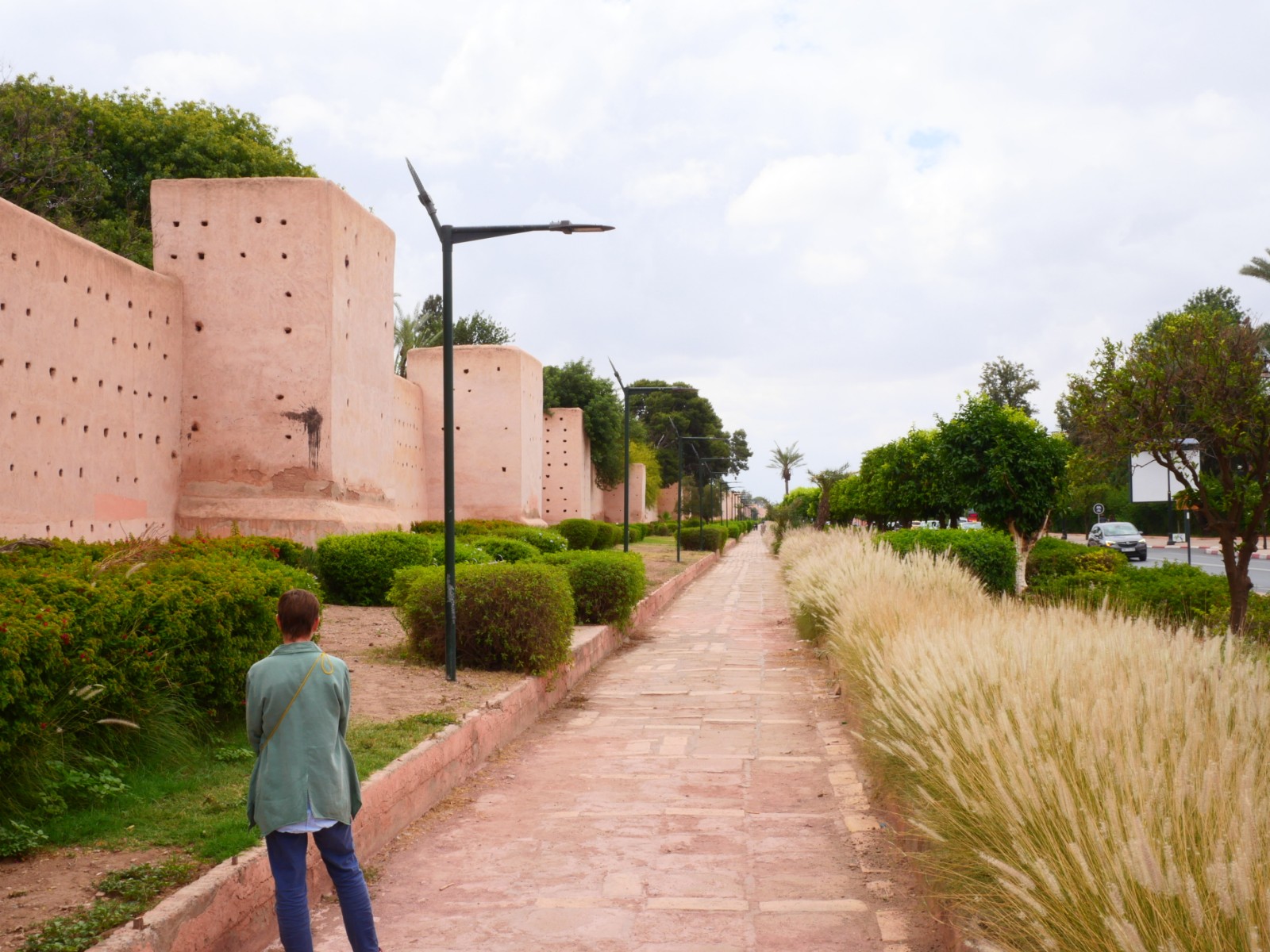
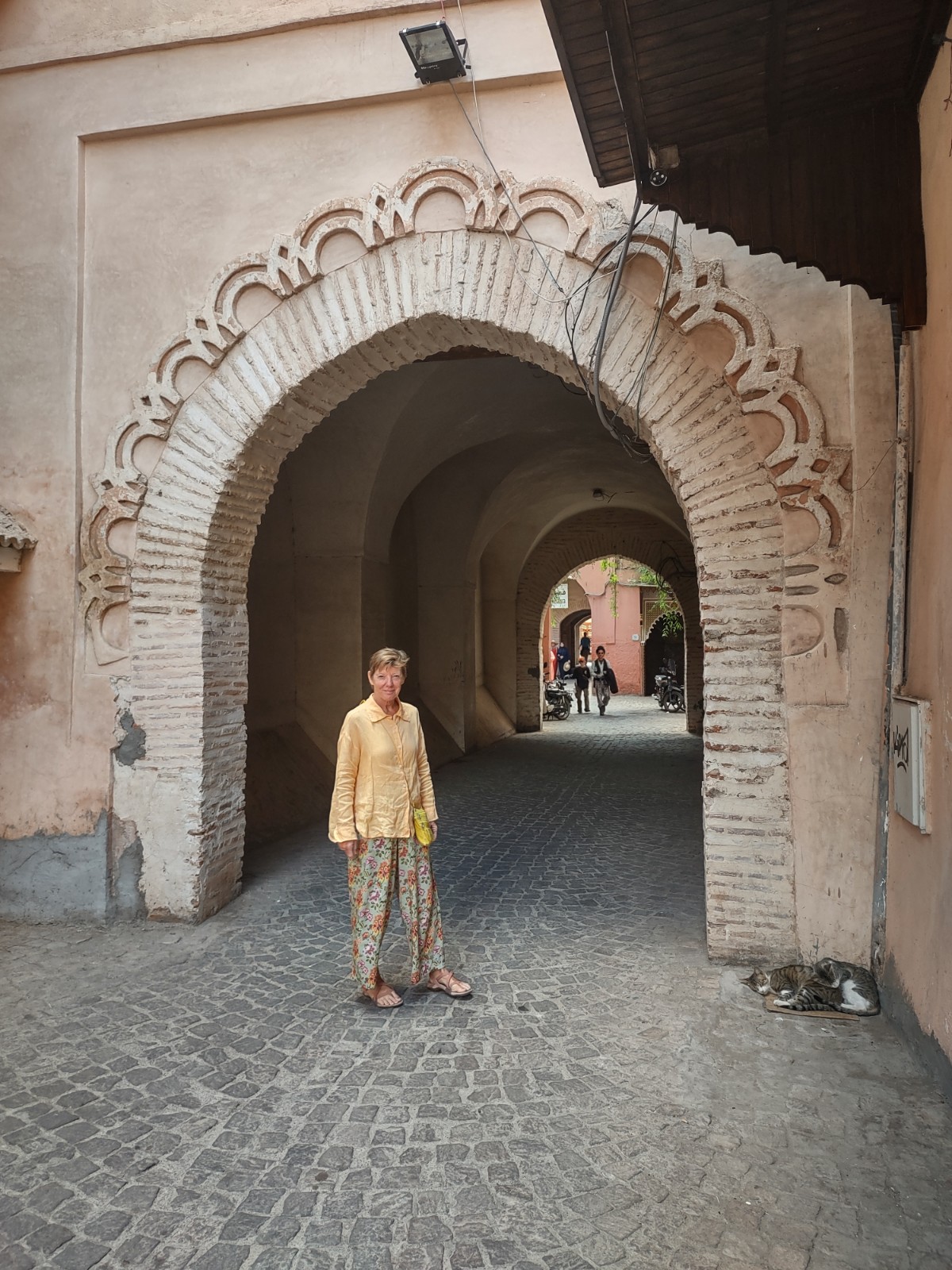
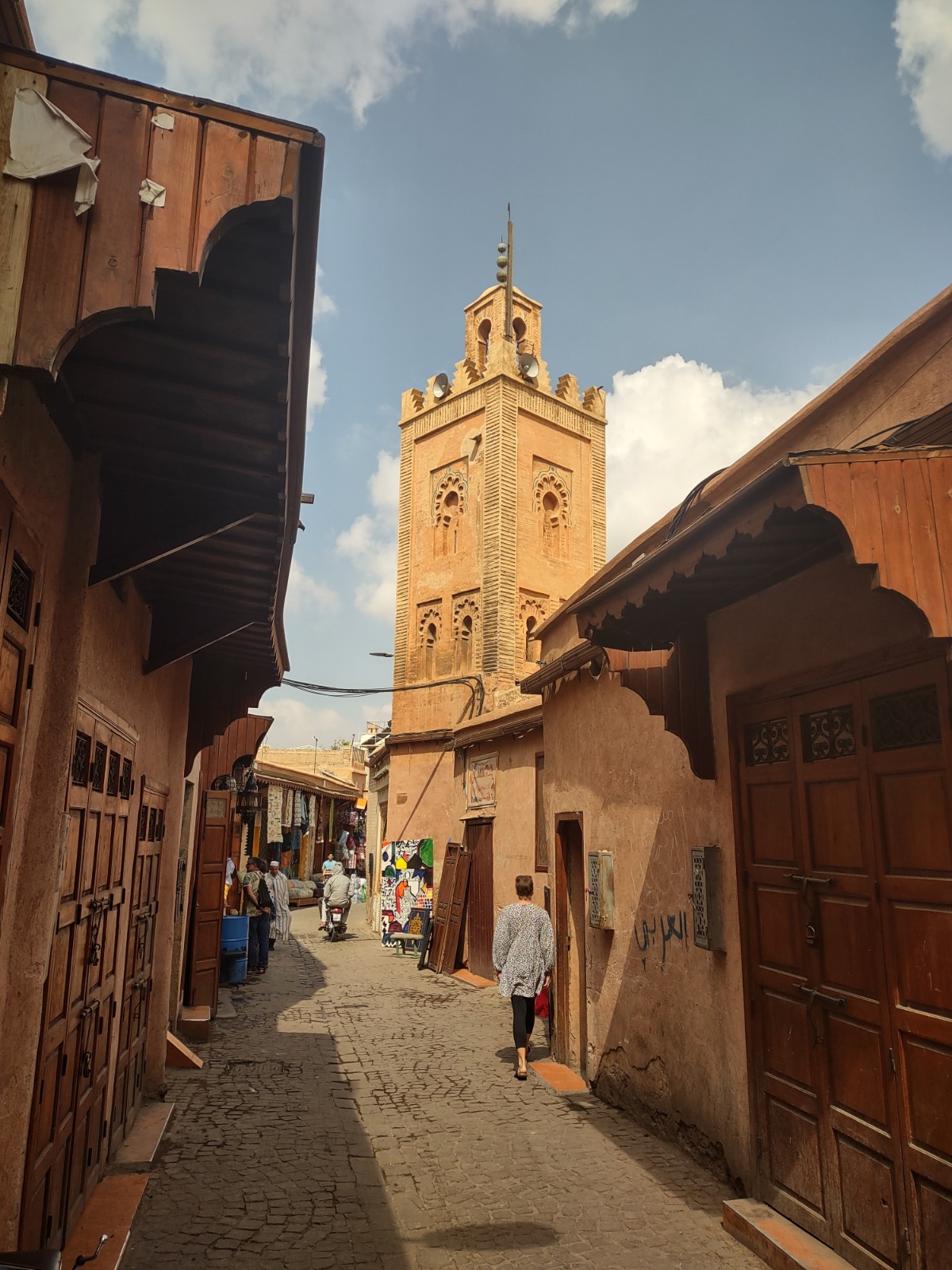
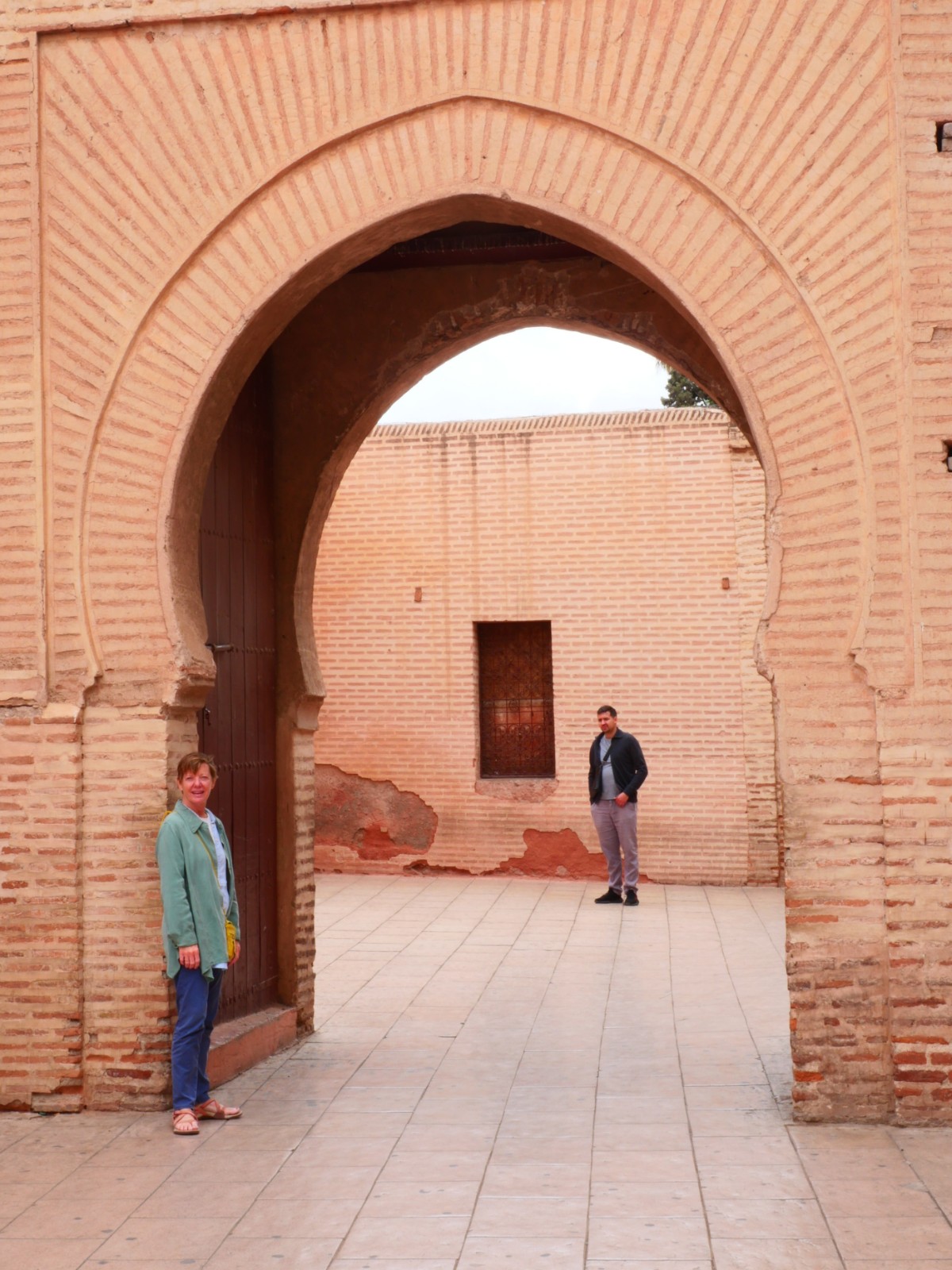
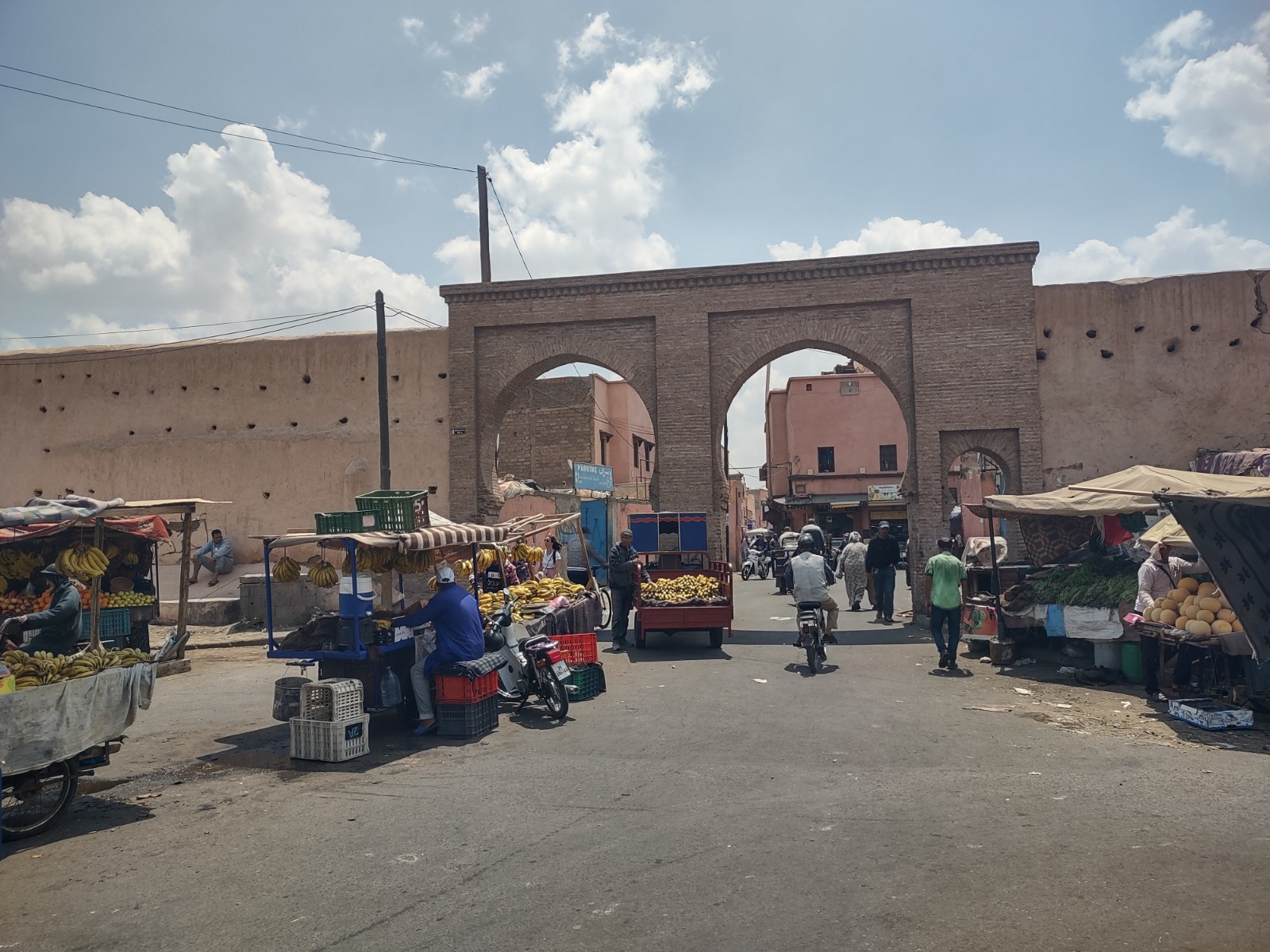
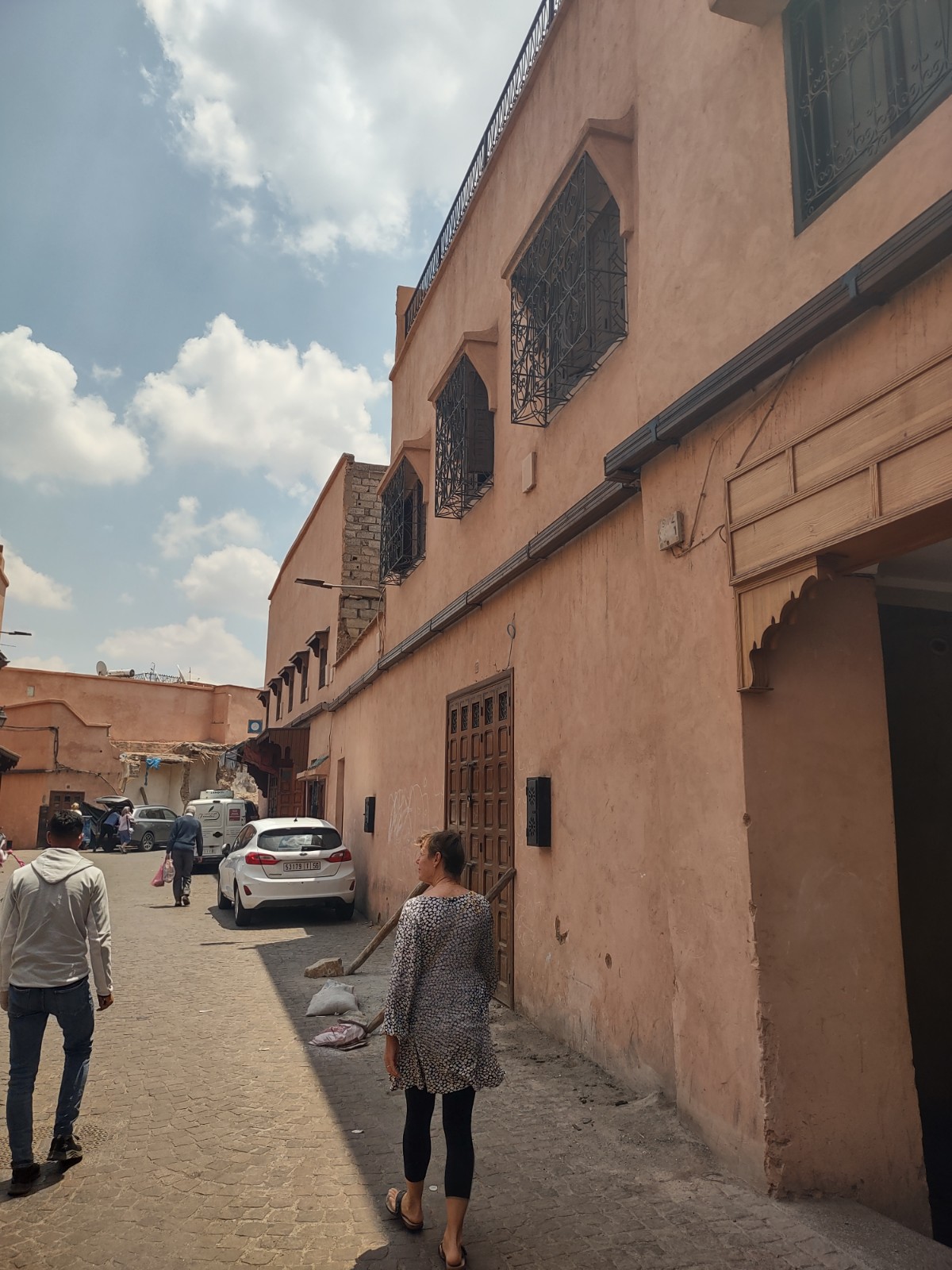
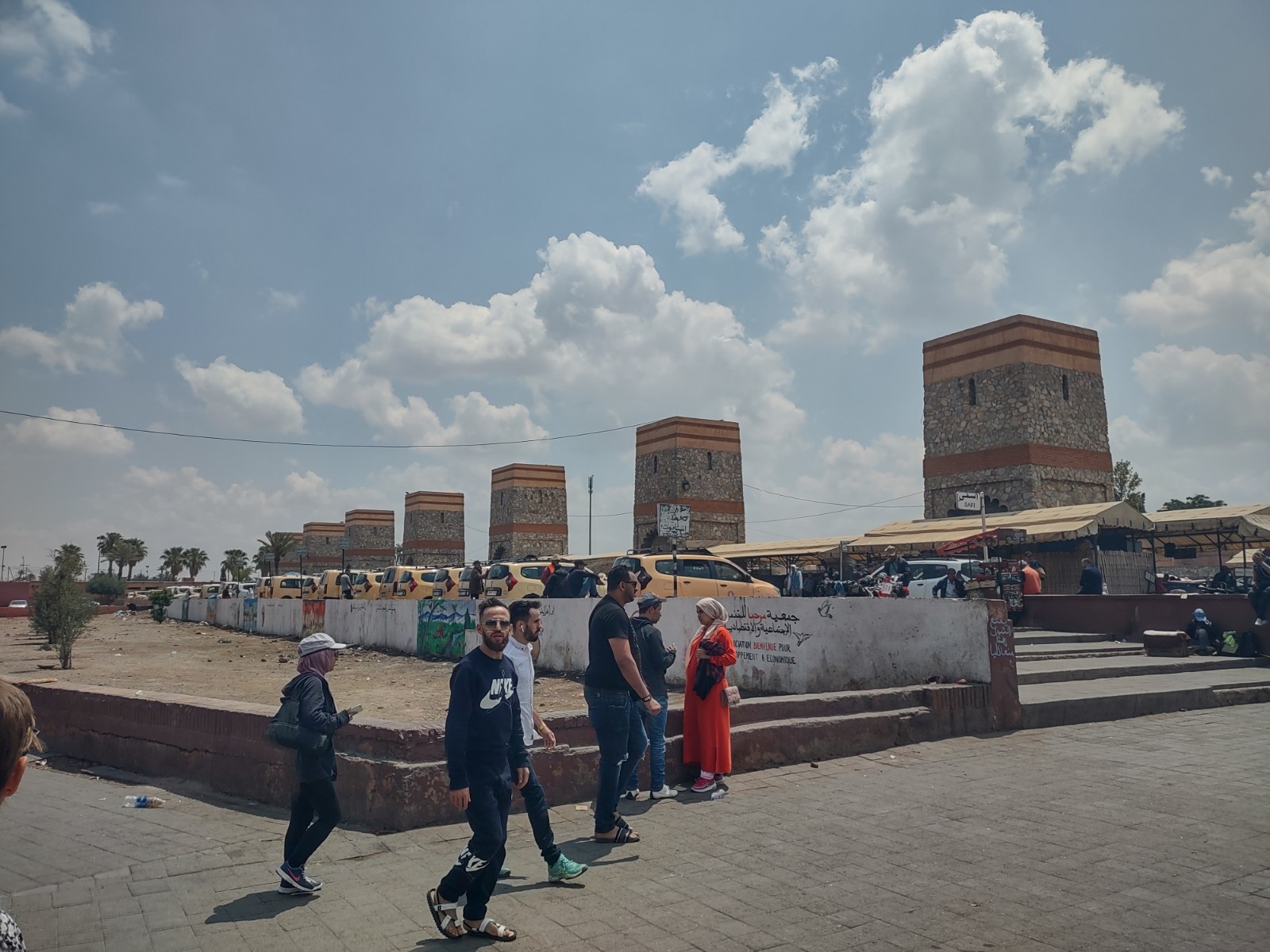
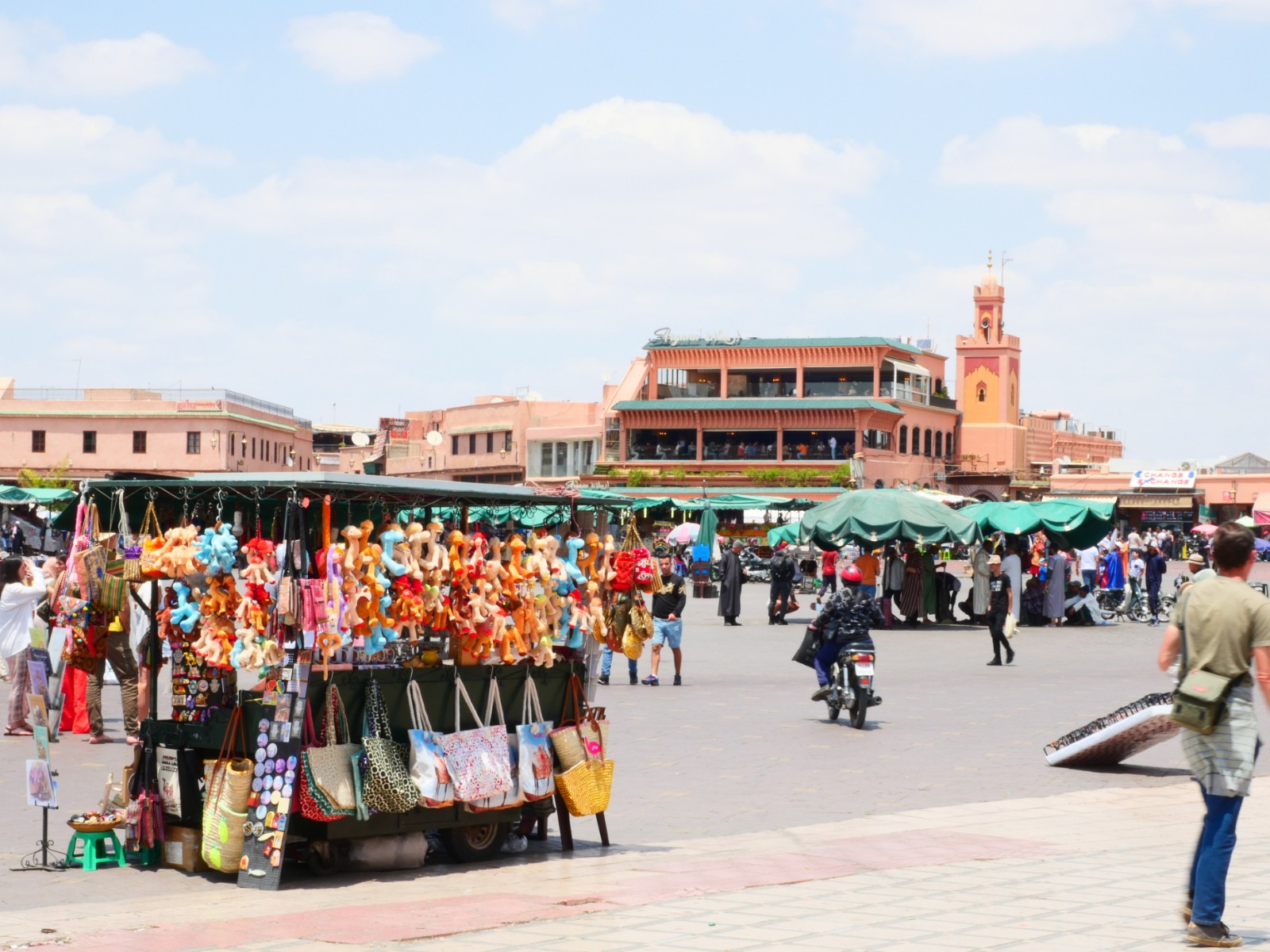
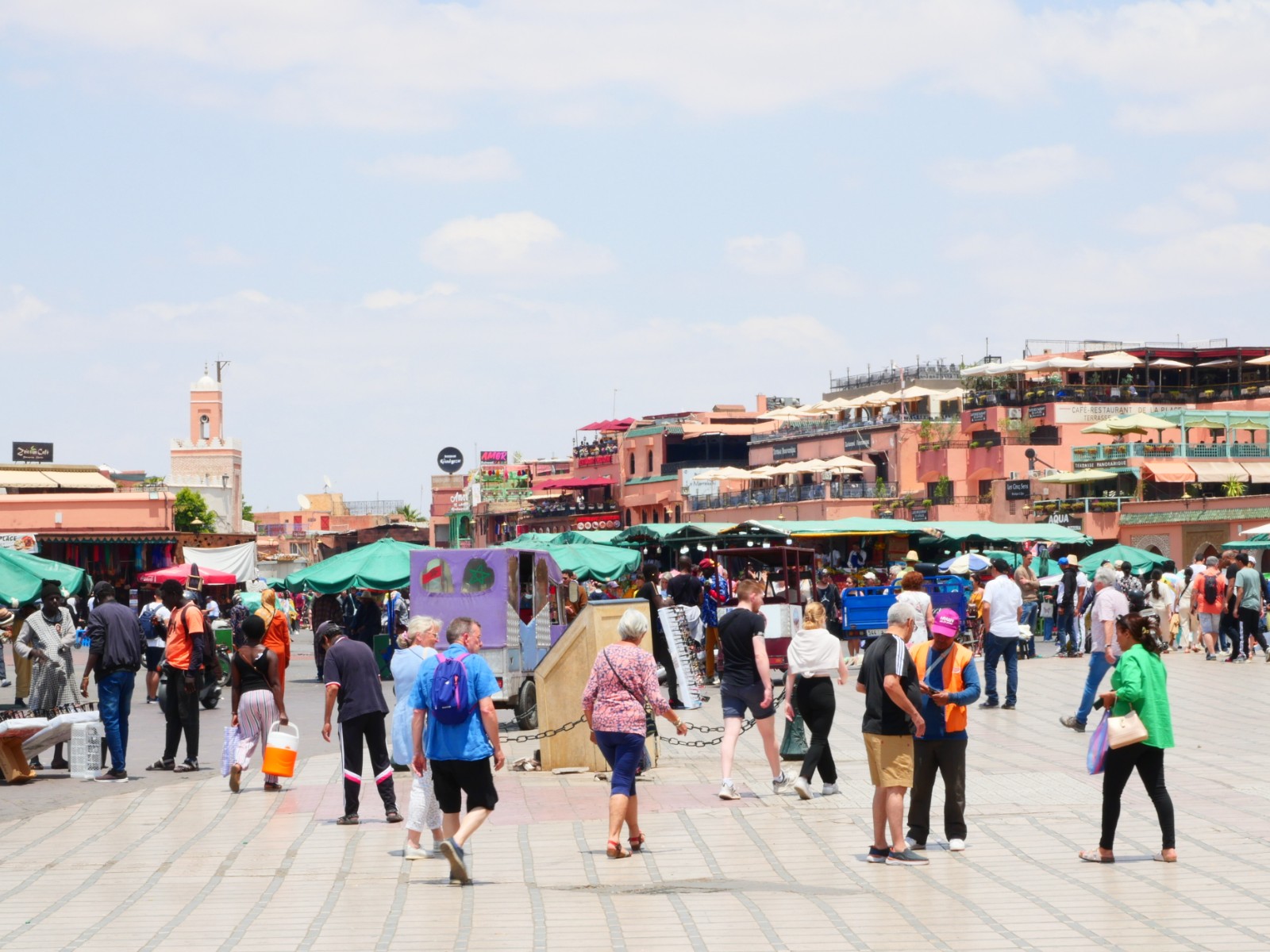
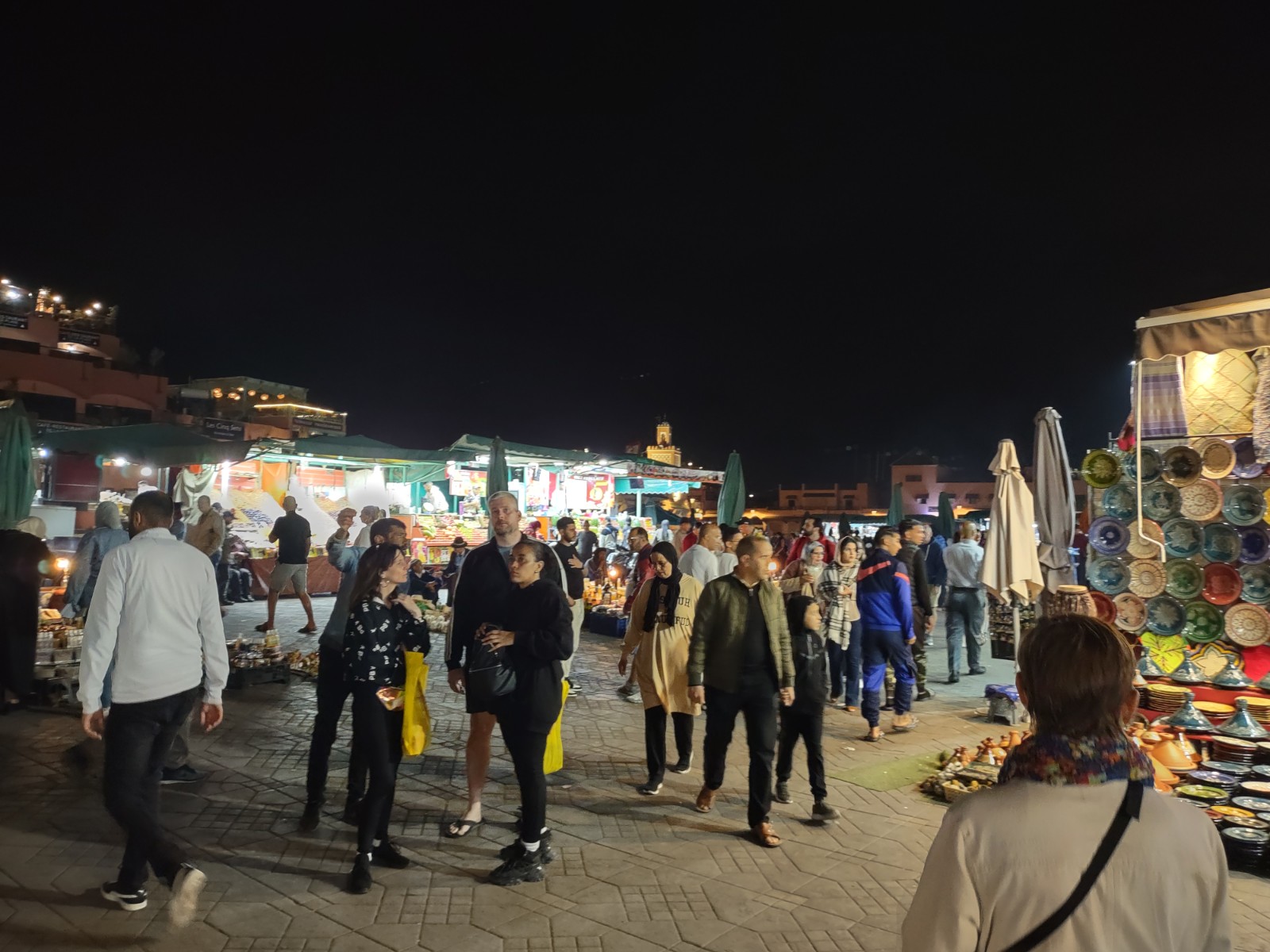
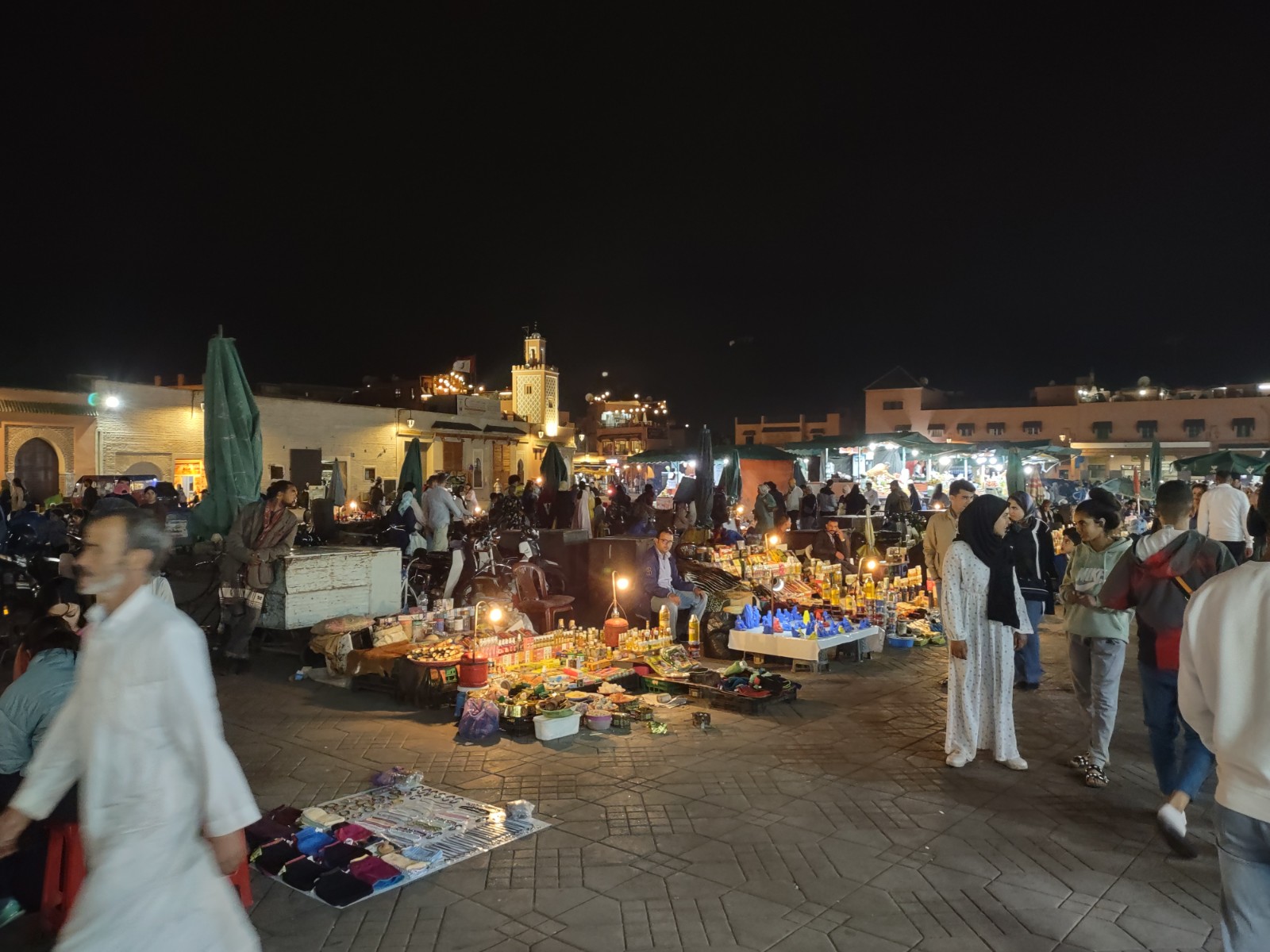
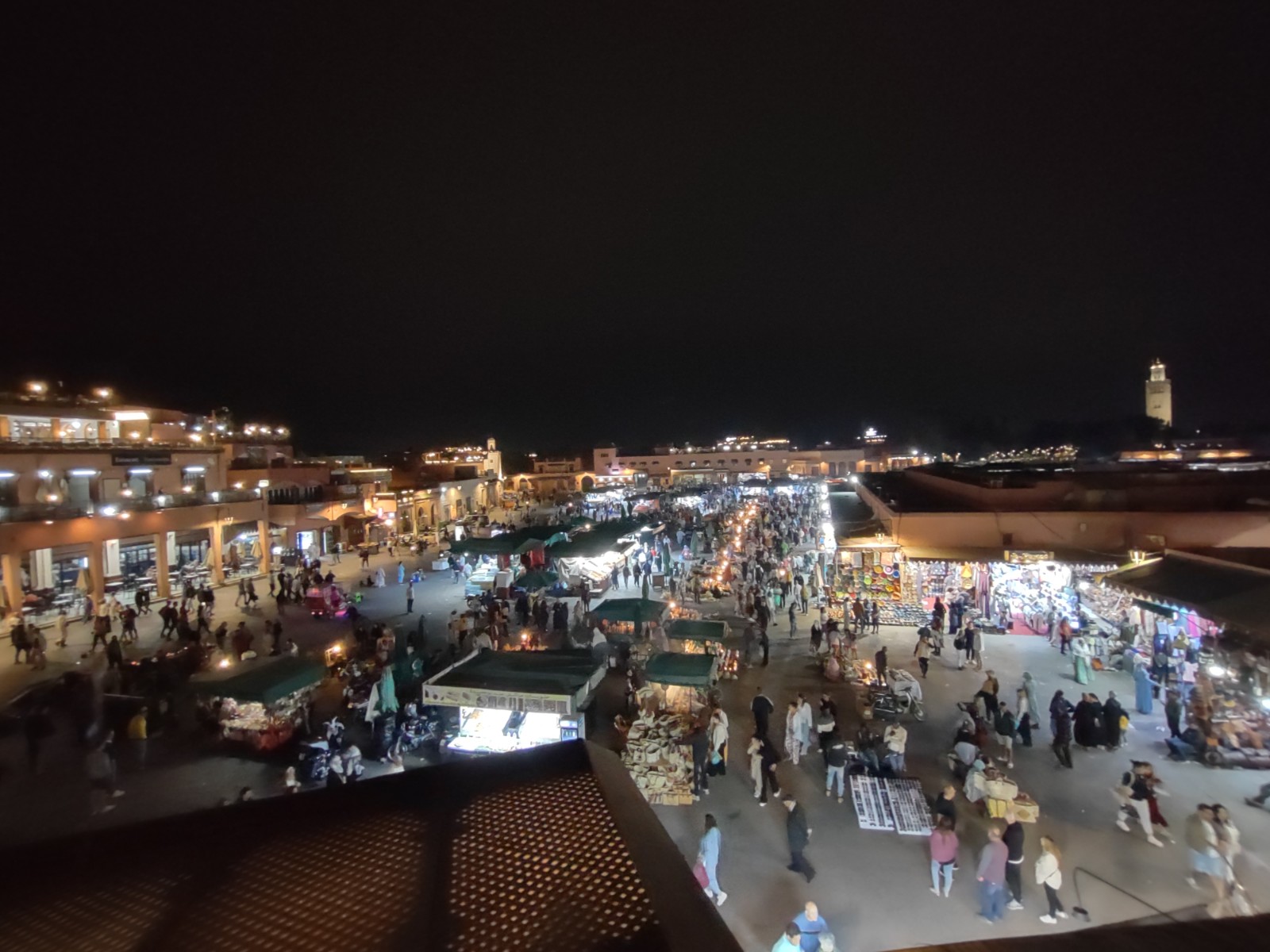
The heart of the Medina and the city is the Jemaa el-Fnaa, an enormous square and market place (and a UNESCO World Heritage Site) which swarms with vendors during the day and becomes the largest al fresco restaurant in the world at night with countless pop-up restaurants cooking meals over grills on the spot. Wandering it is a pretty intense experience, but it pales in comparison to the experience of wandering the streets, alleyways, and Souks of the Medina which surround it. (More about this later.)

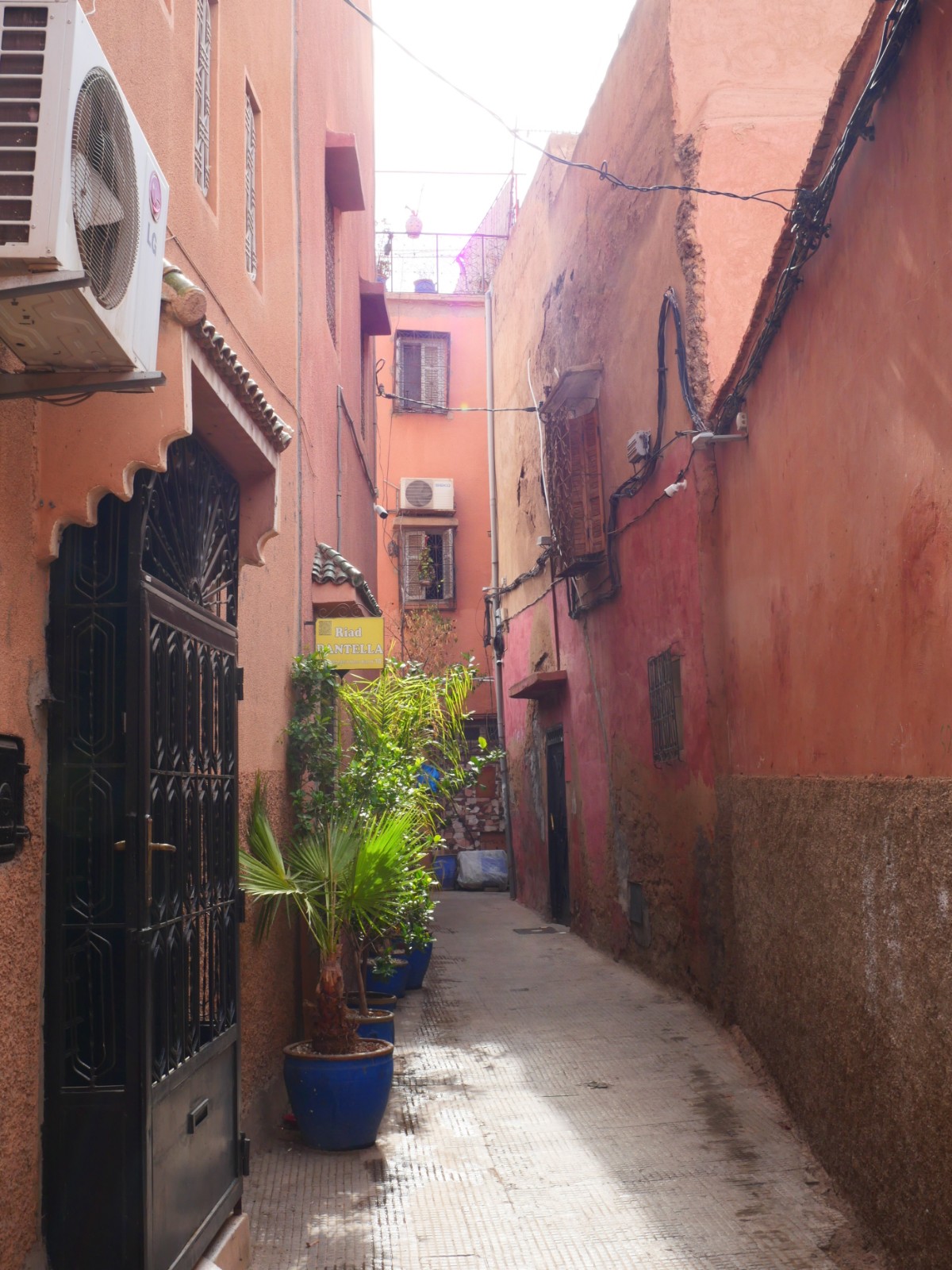
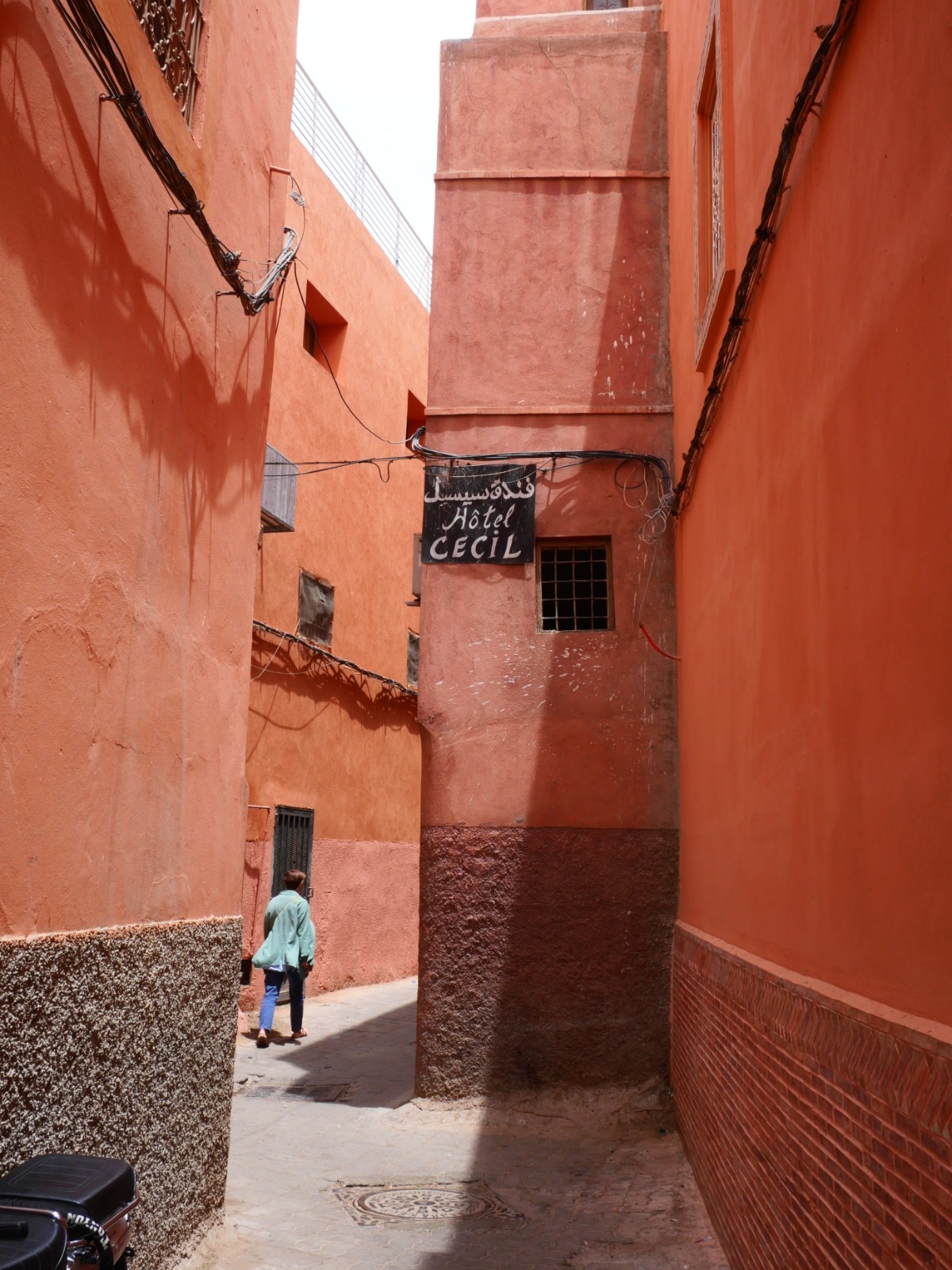
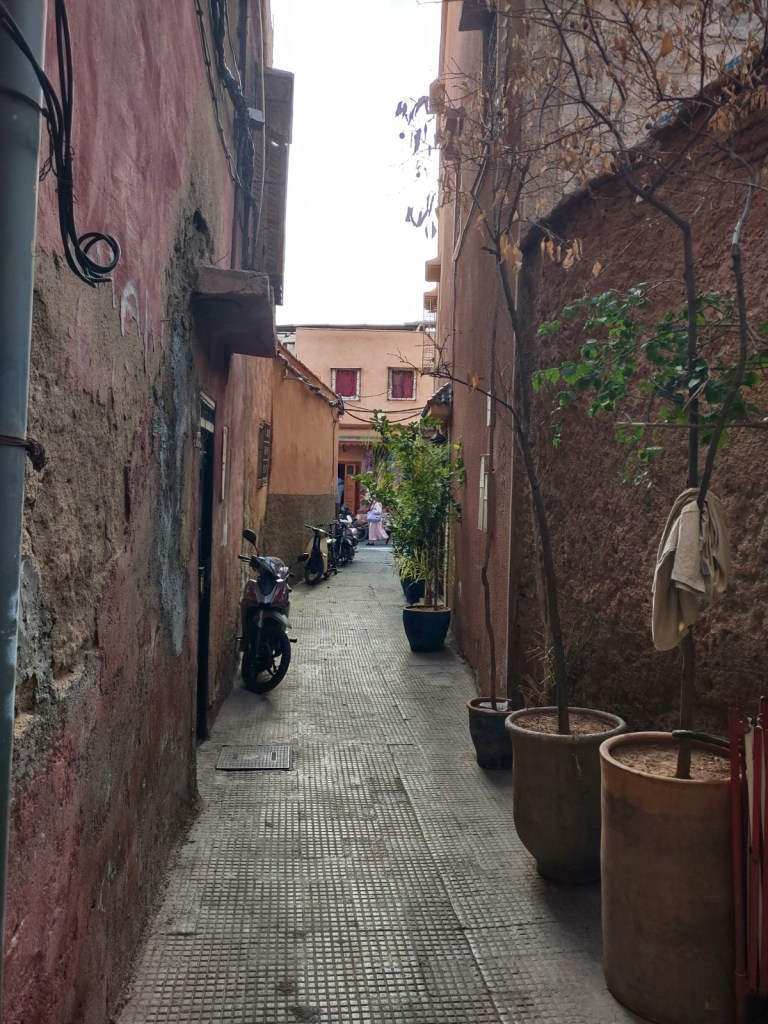
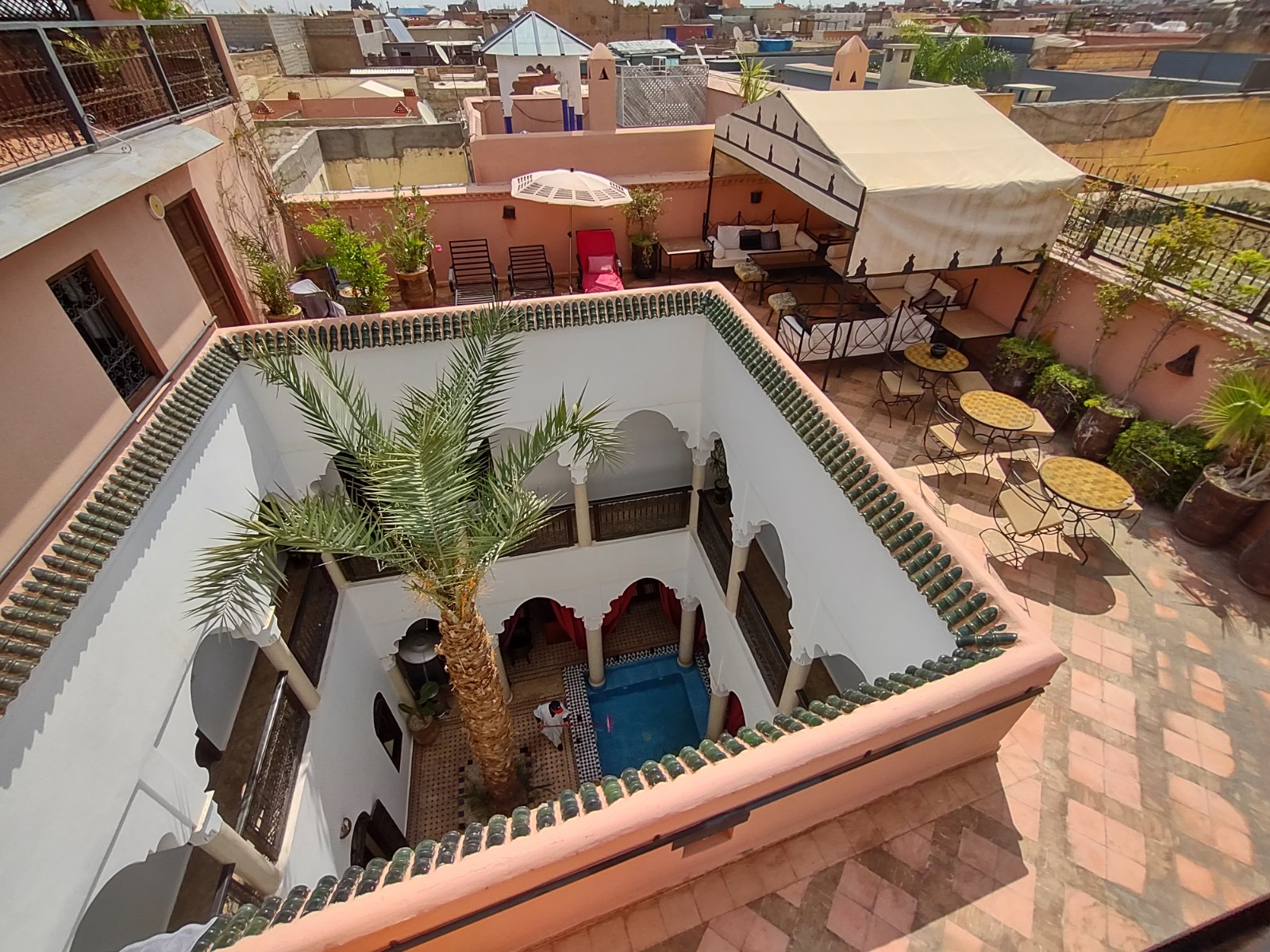
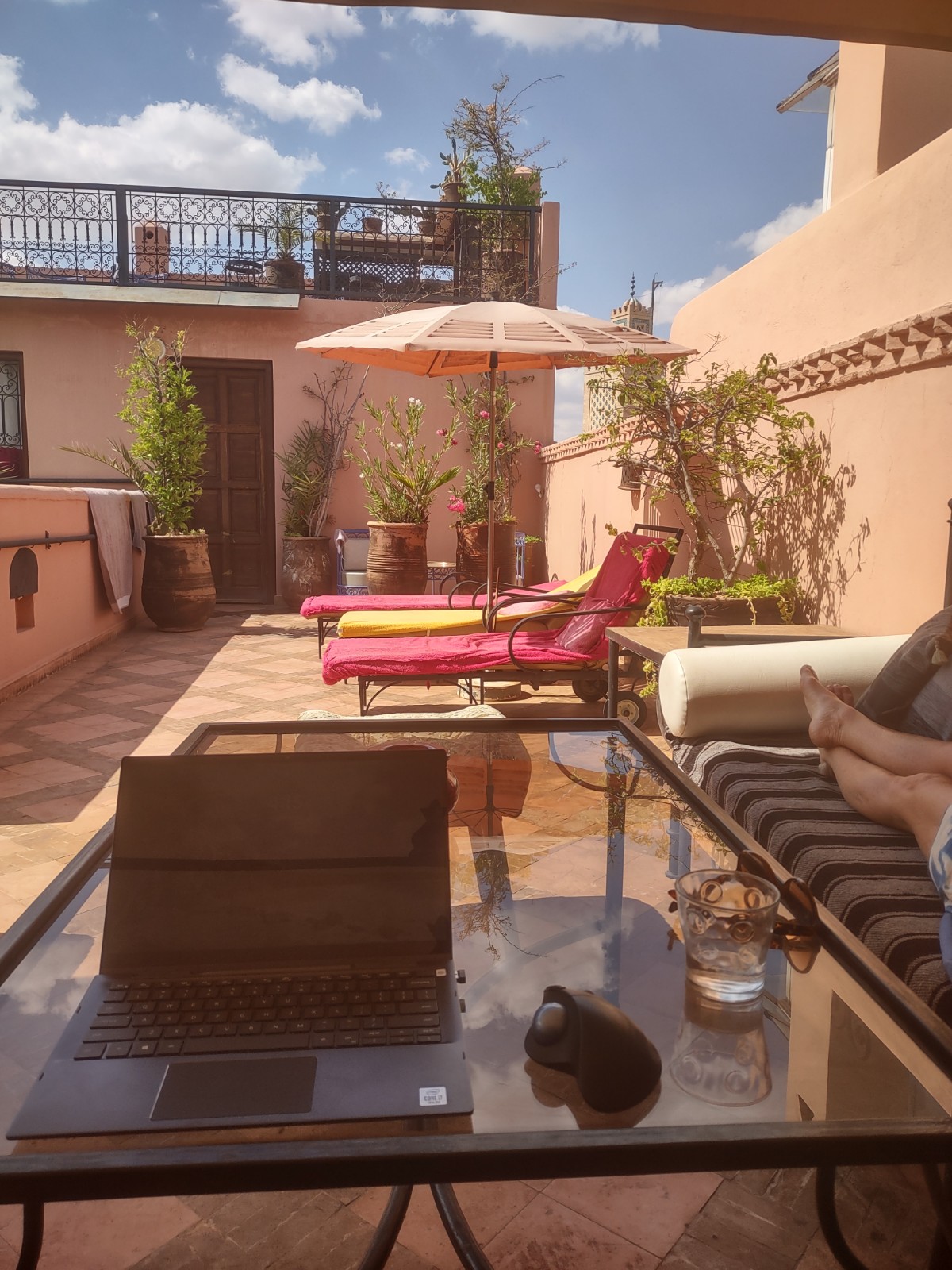
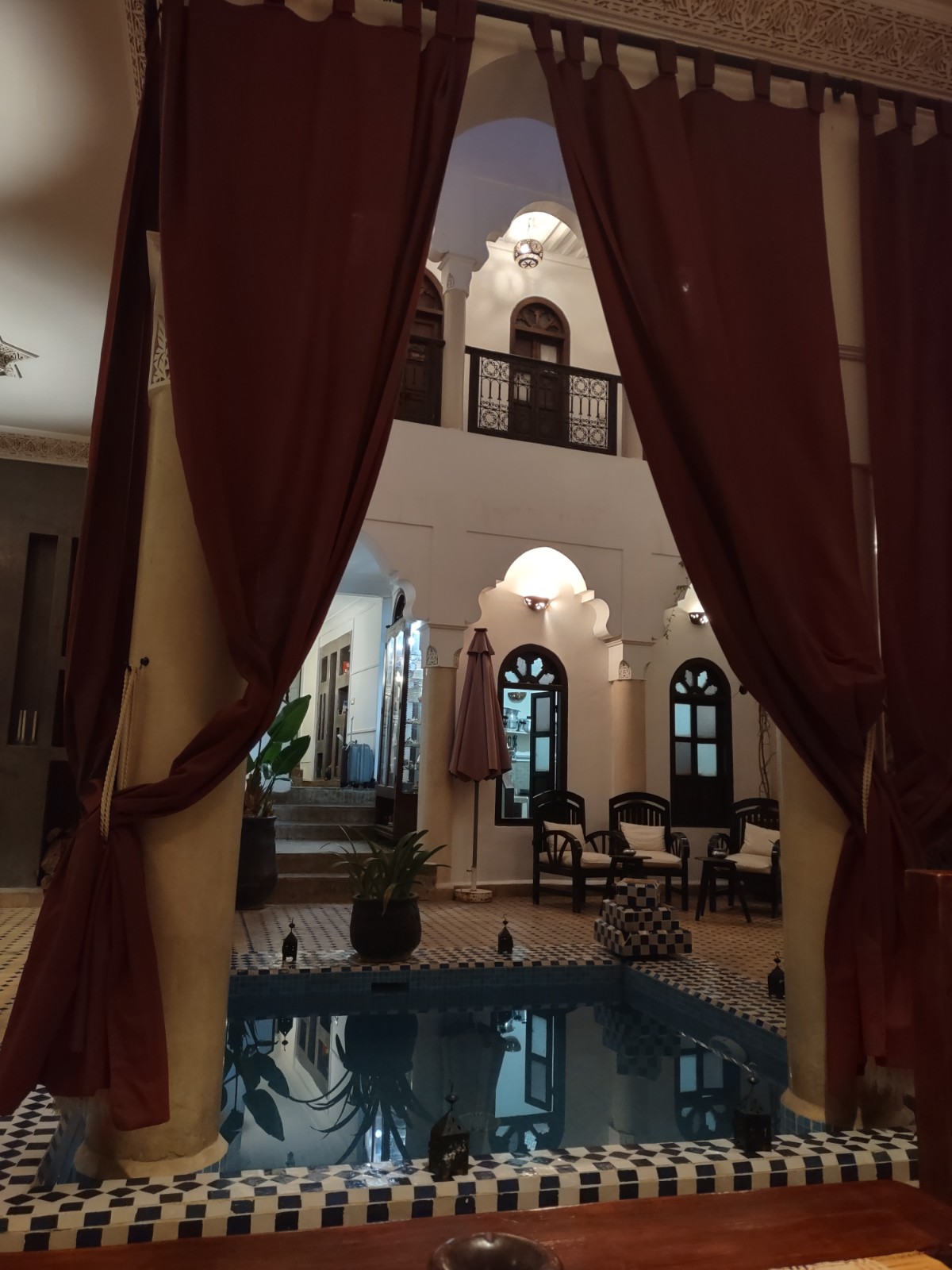
We arrived in Marrakesh the evening of Saturday May 20th and, as I mentioned, made our way to Riad Elias, the place where we would be staying for the next five days, without incident or excitement. A riad is traditional city dwelling in this part of the world. While riads do vary a bit in height and size, they are typically a collection of rooms which surrounds an interior courtyard and usually have a roof deck for enjoying the sun during the day and cool breezes at night. They are typically back to back with their neighbors, usually entered from very small alleyways, and generally not much to look at from the outside. But looks can be deceiving, and what one finds on the inside is usually very different from the outside, sometimes amazingly so.
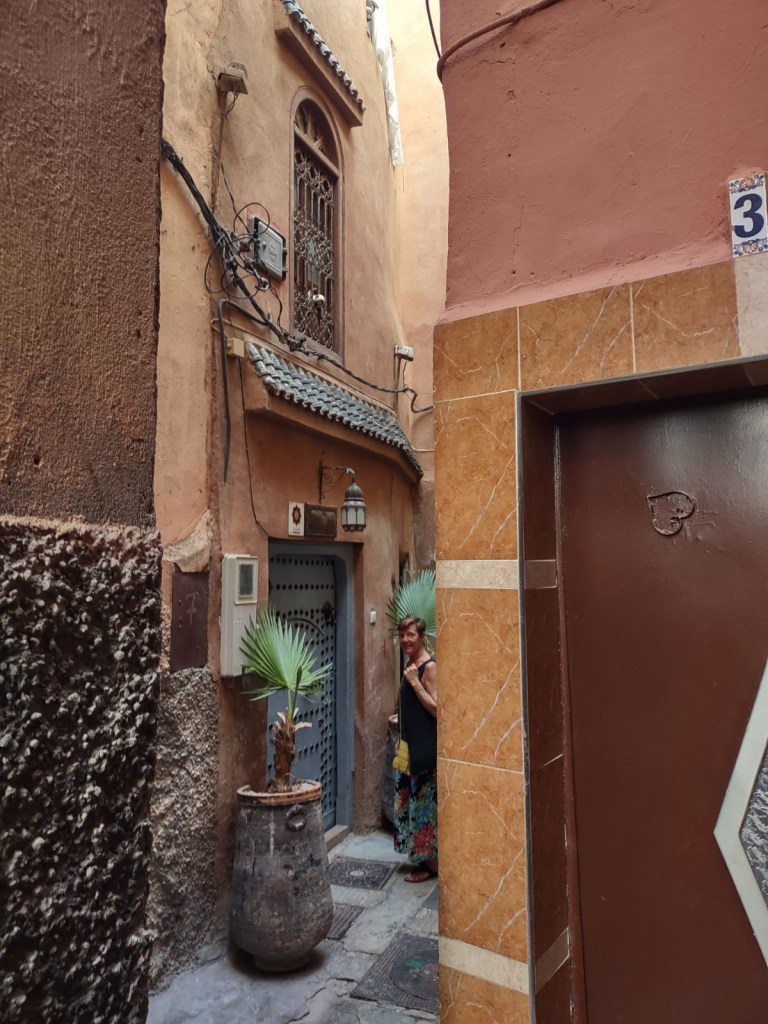
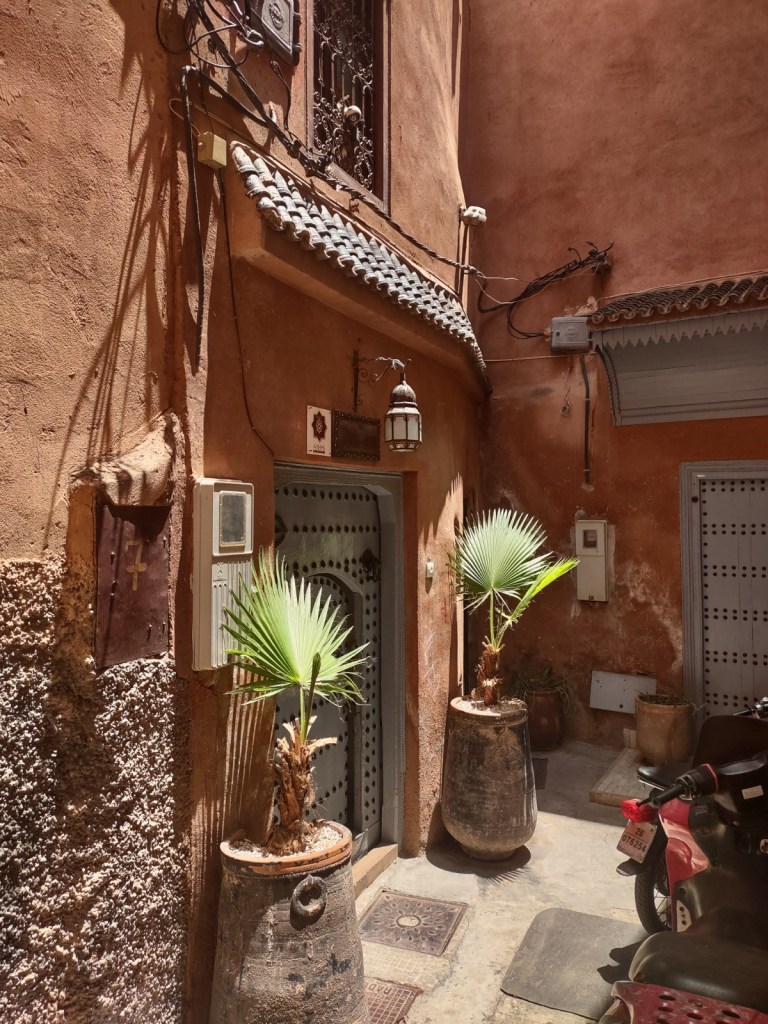
Riad Elias very much fit this mold. Its entrance was off of an alley off of a secondary street which twisted and turned and was less than six feet wide at its narrowest point. The entrance to the riad was unassuming but nice, flanked by a couple of potted palms and a tiled awning. Its entrance door was pretty unique with beautiful old wrought iron hardware and two overlapping leaves the smaller of which was arched and required you to bow when entering.

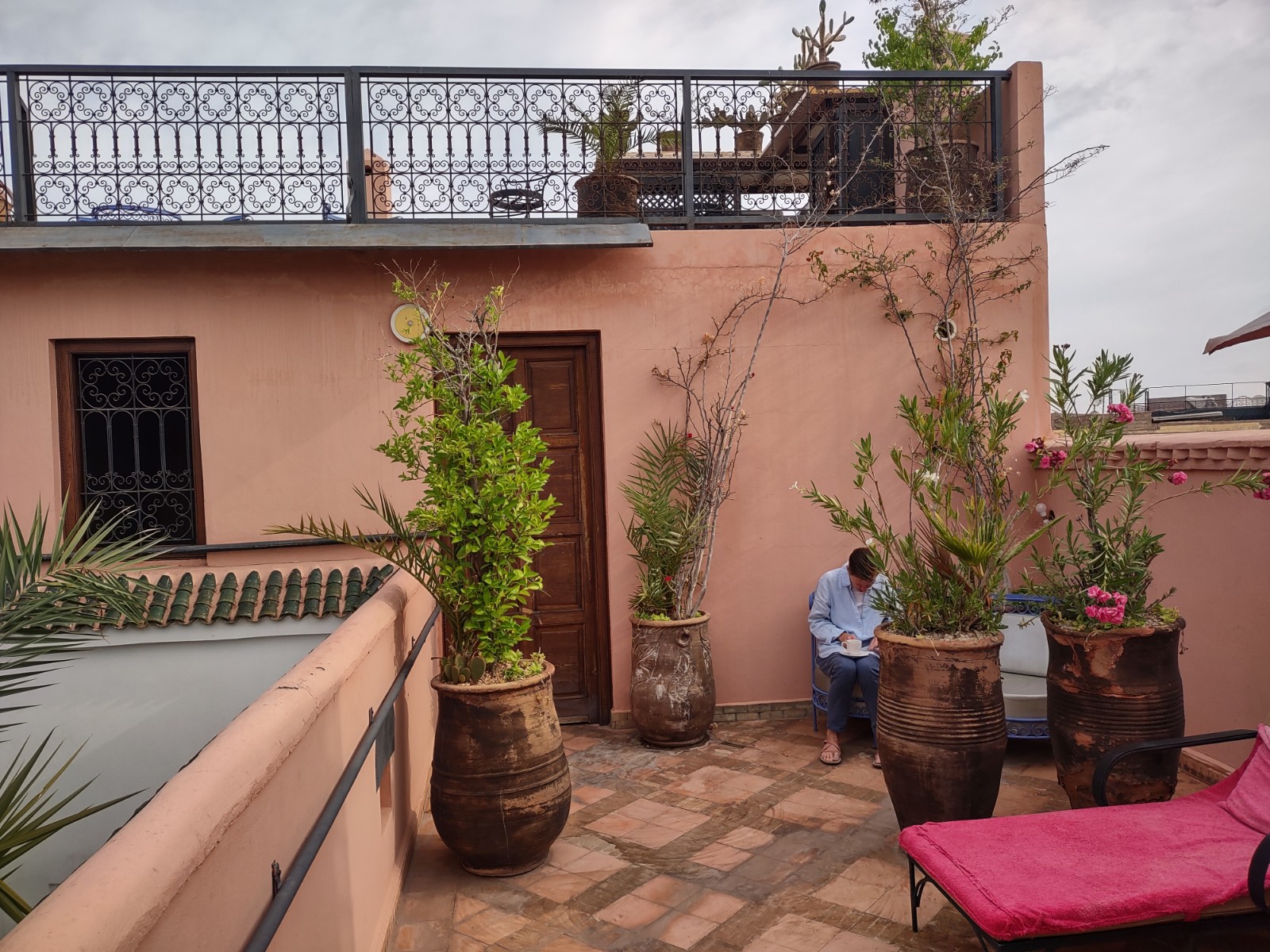
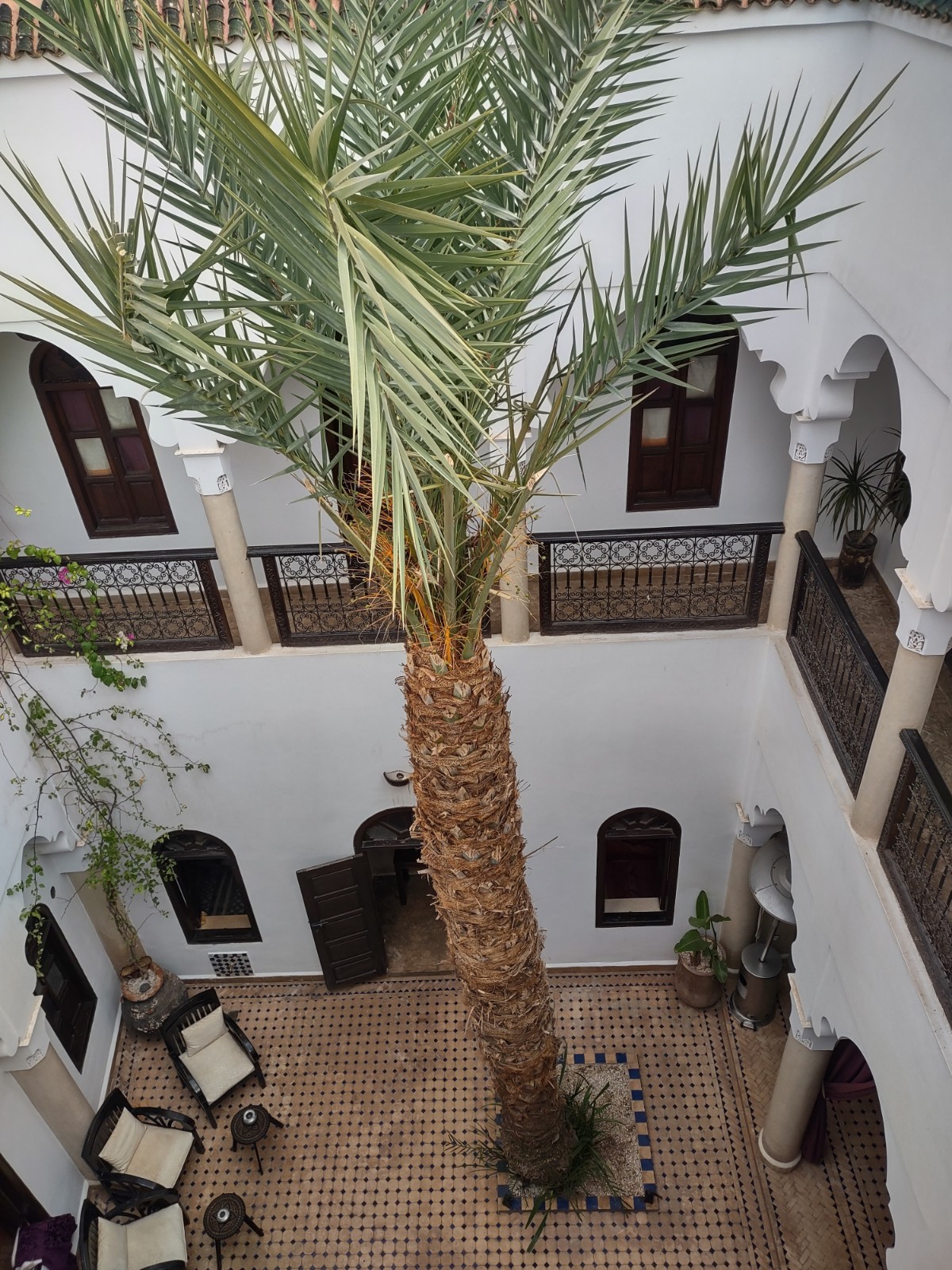
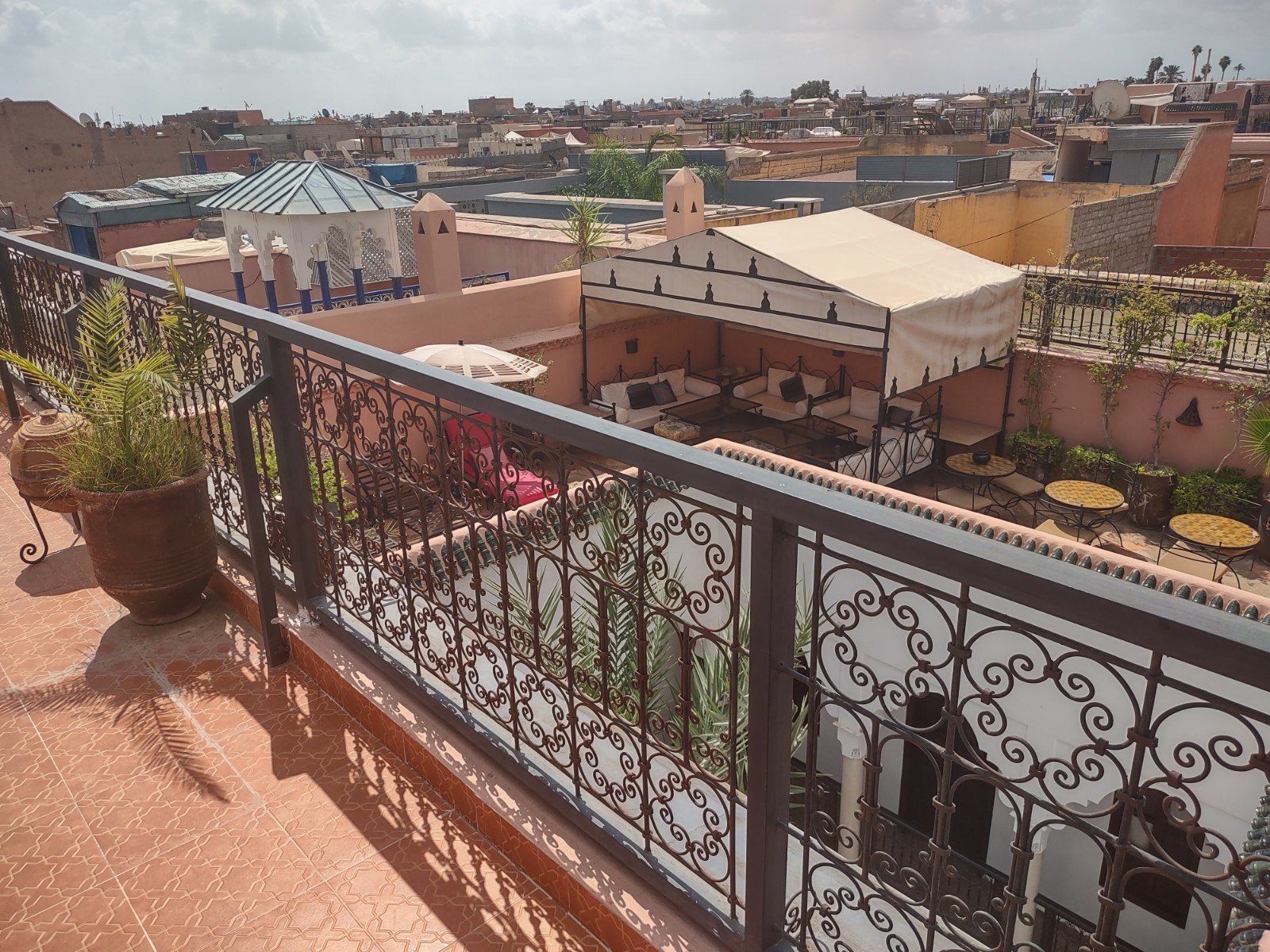
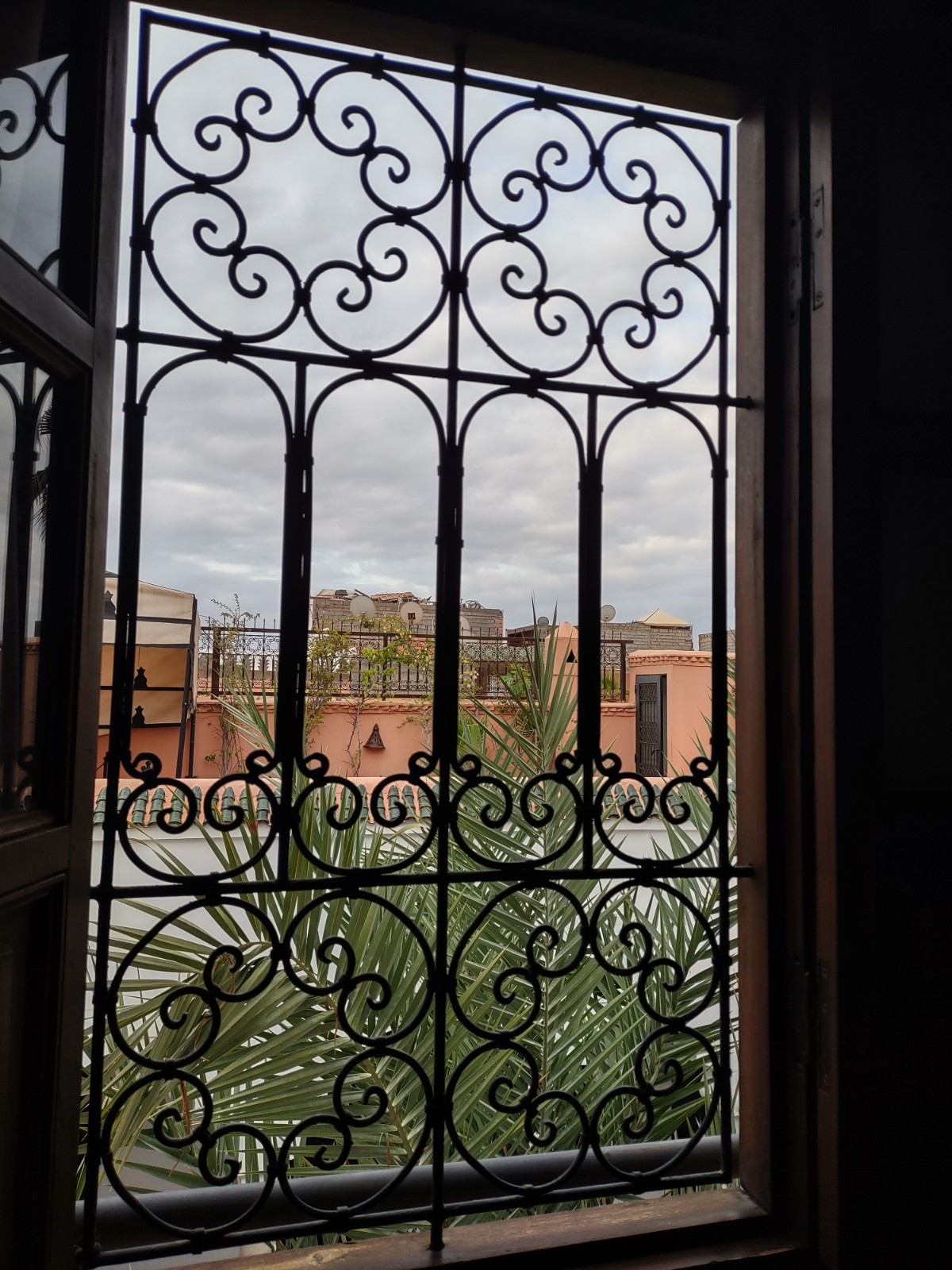
Our riad was four stories with a total of ten guest rooms surrounding a nicely appointed courtyard with a palm tree and dipping pool. The ground floor consisted of the kitchen and office and common spaces for dining and relaxing. Our room was located at the upper level which gave us direct access to the roof deck as well as a bit of privacy (but also lousy Wi-Fi). The riad was pretty well booked during our entire stay which was actually kind of nice. While our accommodations were fairly private, we had the opportunity to meet and talk with other guests, including some travelers from France and Australia, at breakfast.

On our first full day in Marrakesh, Sunday the 21st, we went to mass at the Church of Holy Martyrs which is located outside the Medina about a 30 minute walk from our riad. I’ve written before that, while we don’t consider ourselves to really be religious (despite a Catholic upbringing) we do enjoy going to mass when we can for the opportunity to have a little spiritual contemplation time. I will add that going to church on Sunday also helps tremendously in remembering what day of the week it is as this turns out to be a bit of a challenge when you travel the way we are.
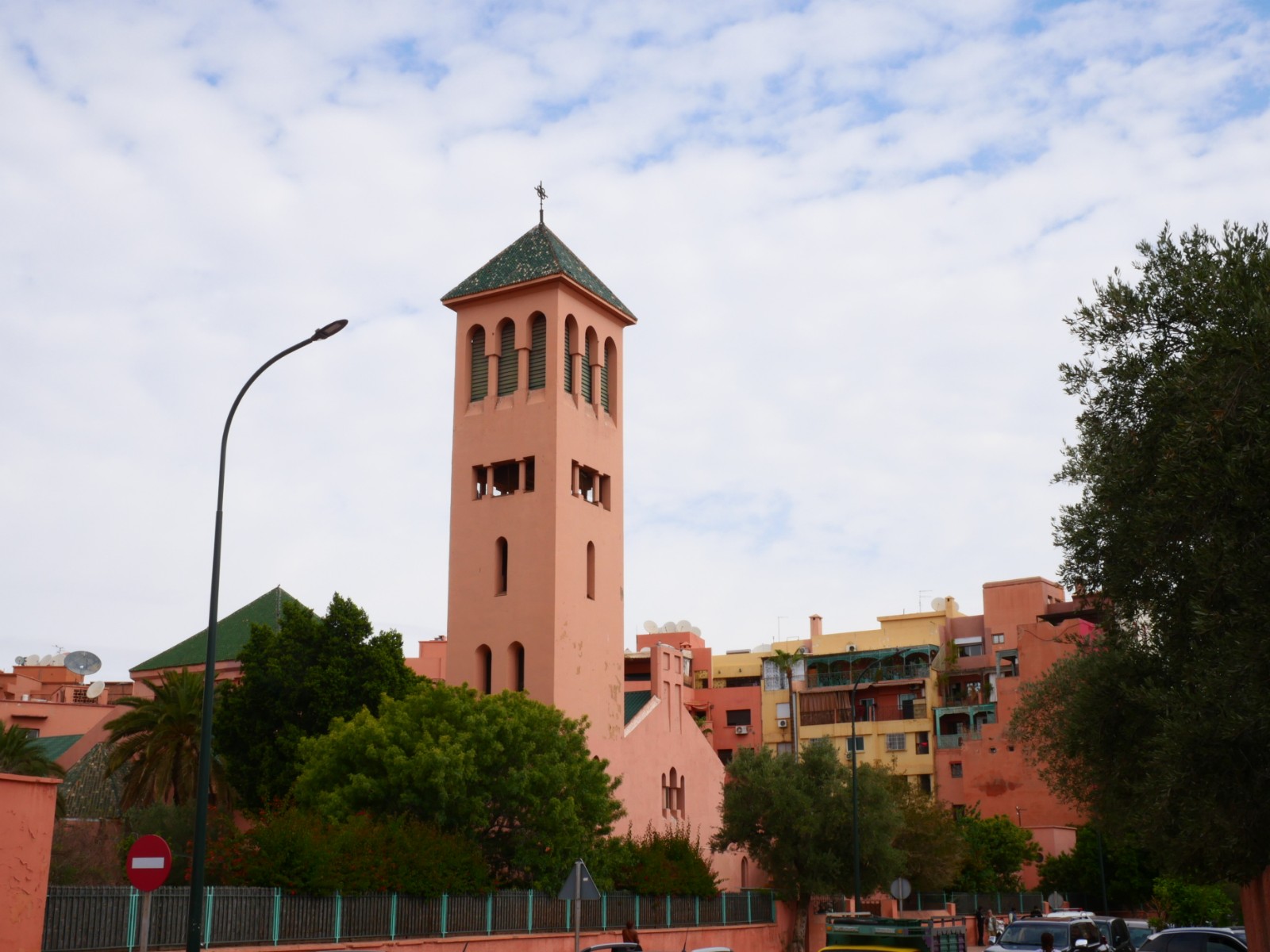

I have to say that mass at the Church of the Holy Martyrs was one of the more interesting church services that we have attended since we started this trip. The congregation of the church is an interesting mix of immigrant Africans and French ex-pats, perhaps not entirely surprising as virtually all of the native population here is Muslim and, as it happened, we were there for a first communion celebration. While we weren’t seated in a position where we could see the choir, the music they made was extraordinary with a wide assortment of musical instruments and songs in French, but with a definite African tempo and lilt and the congregation was definitely into it with a lot of swaying, almost dancing, going on. A truly unique and memorable experience!
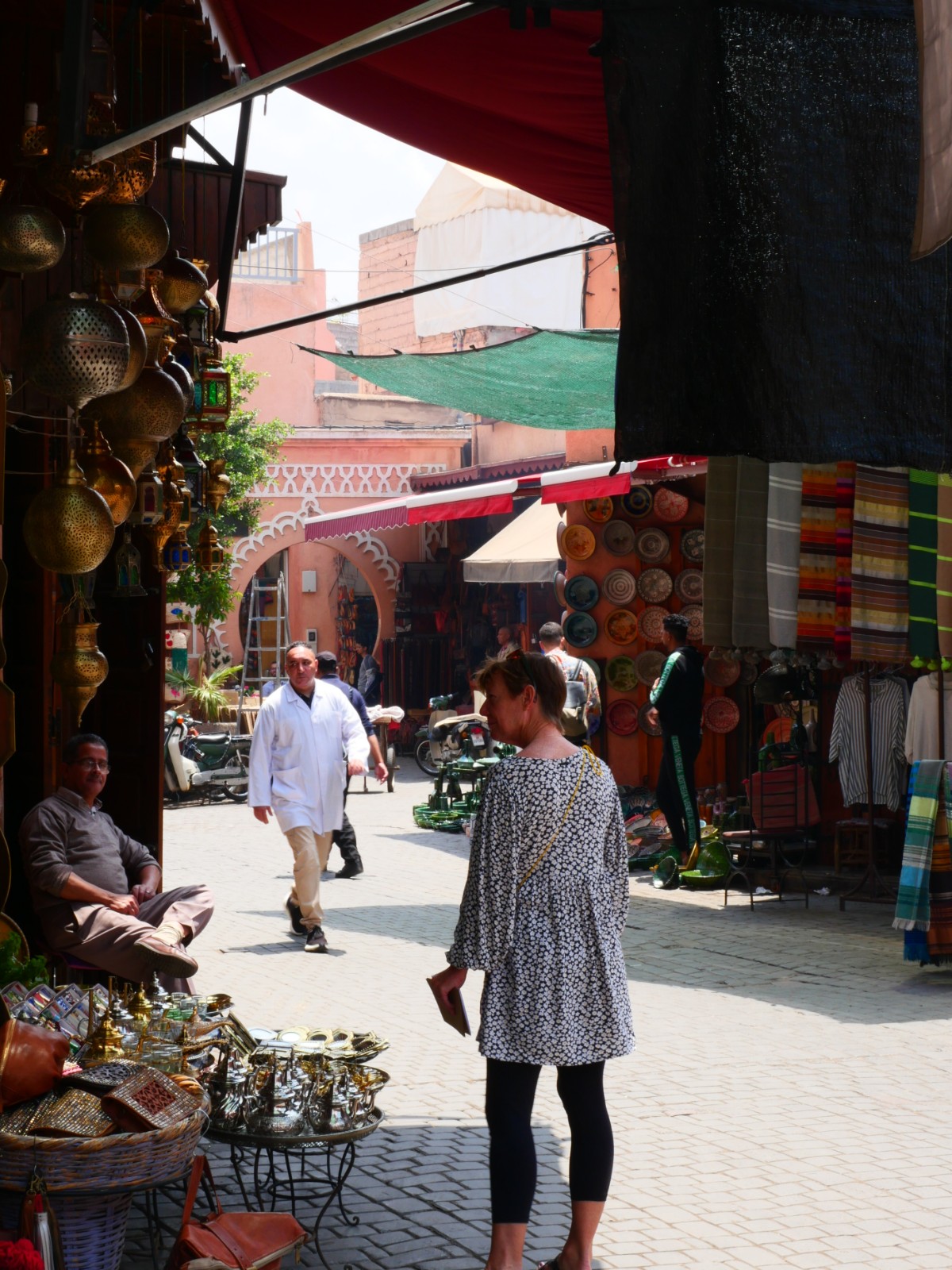
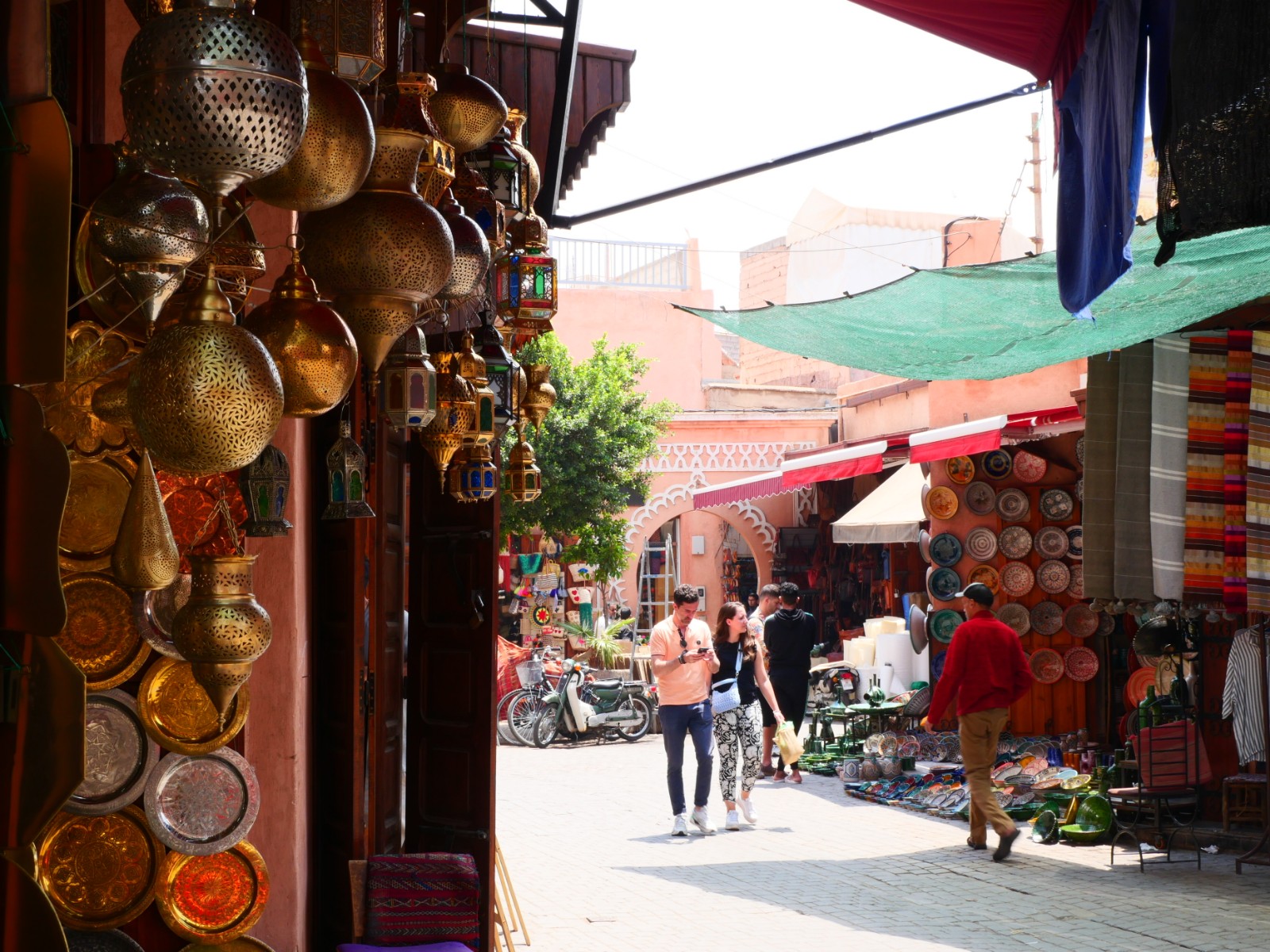
After mass we made our way back to the Medina and spent the afternoon wandering the streets, almost all of which are lined with shops and restaurants, which, as I alluded to earlier, can be a pretty intense experience. The wares in the shops, which are so different from what we are used to seeing, can be pretty overwhelming in themselves. Many (but not all) of the shop keepers are pretty aggressive and it is tough deciding whether or not to make eye contact. On the other hand, the restauranters tend to be more earnestly friendly and are generally happy to have the interaction end with “maybe later”.
There are also people roving within the markets offering a wide variety of unique “services”. (We learned on our last trip to not let that guy put his monkey on your daughter’s shoulder or it is going to cost you!) There are also beggars, who are invariably drawn to foreign tourists (try if you will, but you do stand out here). Some are apparently not healthy enough to find work but are more than able to relentlessly pursue you through the markets.
Despite (or maybe because of) the potential negatives, wandering the streets of the Medina is an experience like no other and was, honestly, one of the things we most looked forward to in coming here.
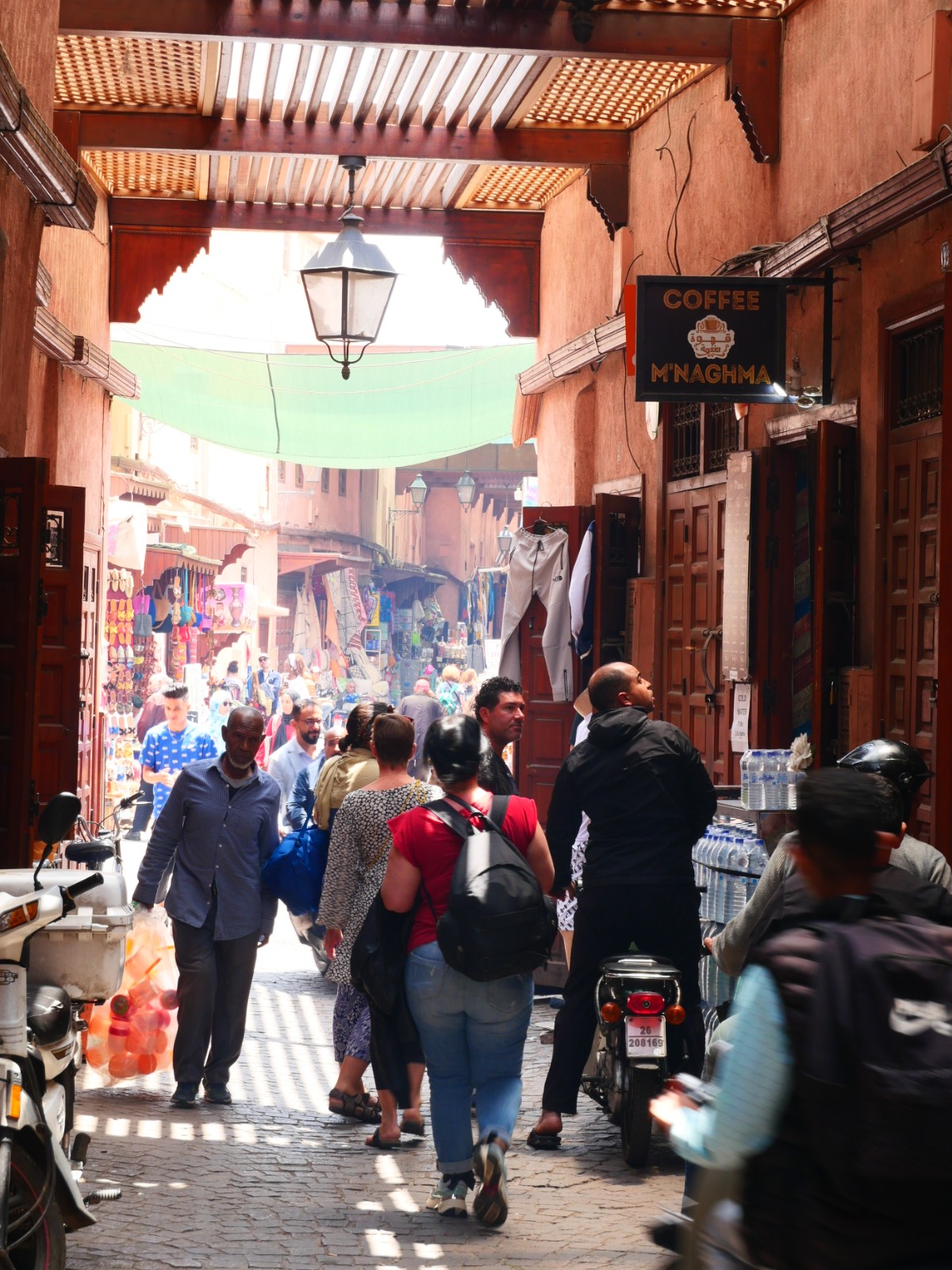
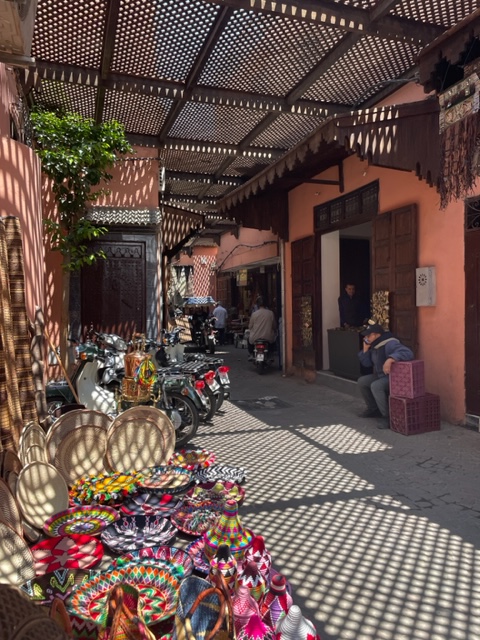

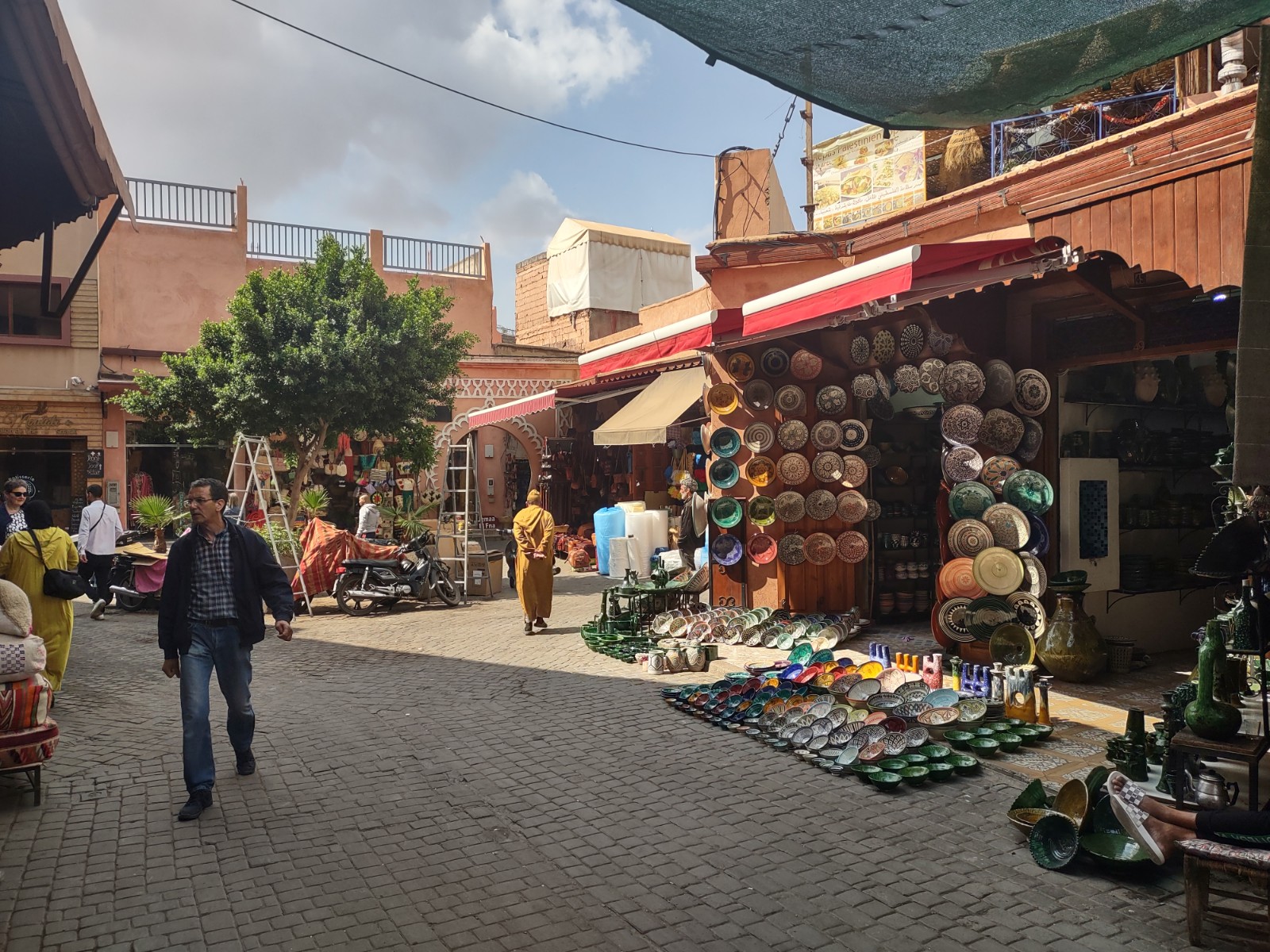
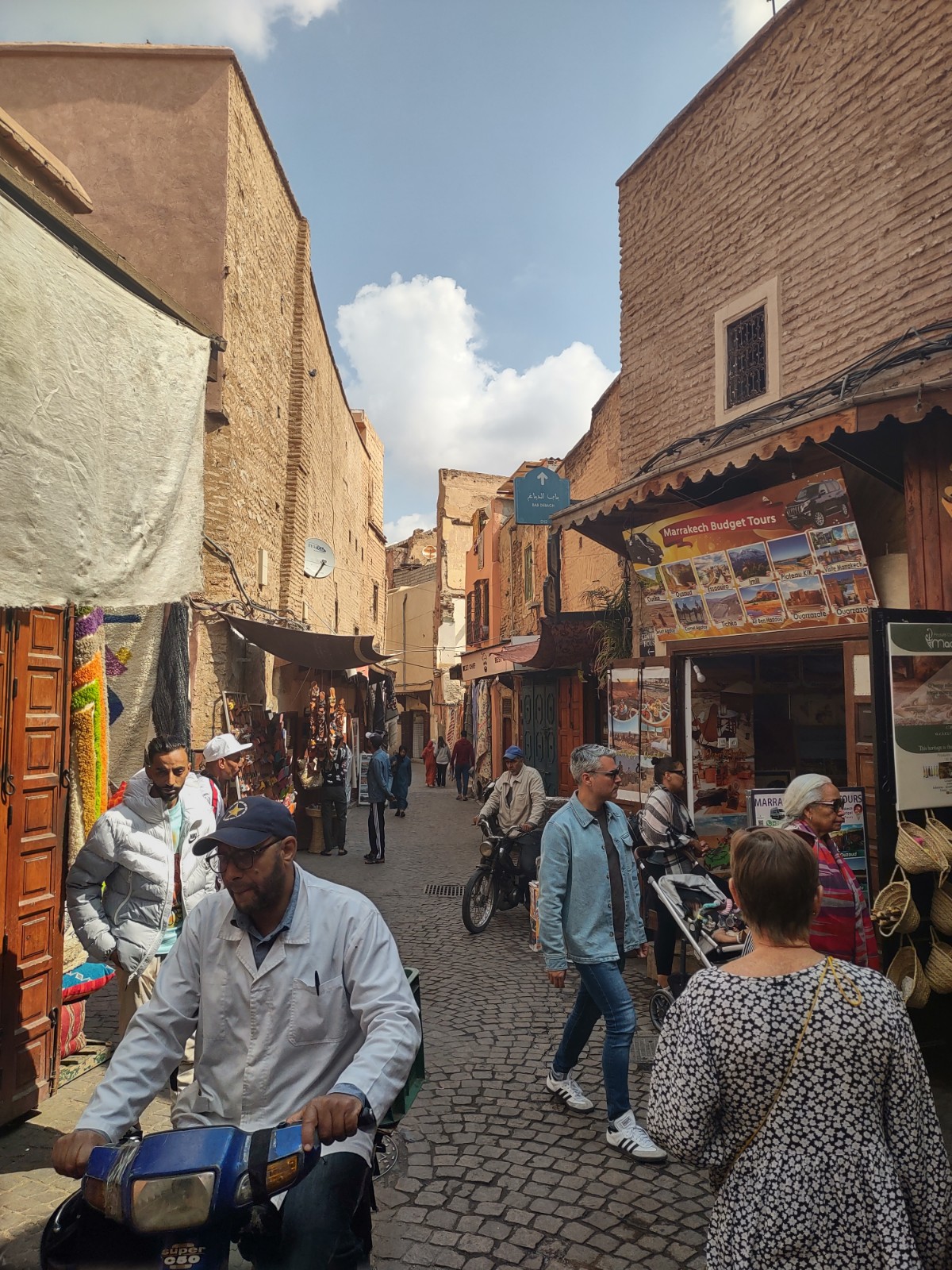
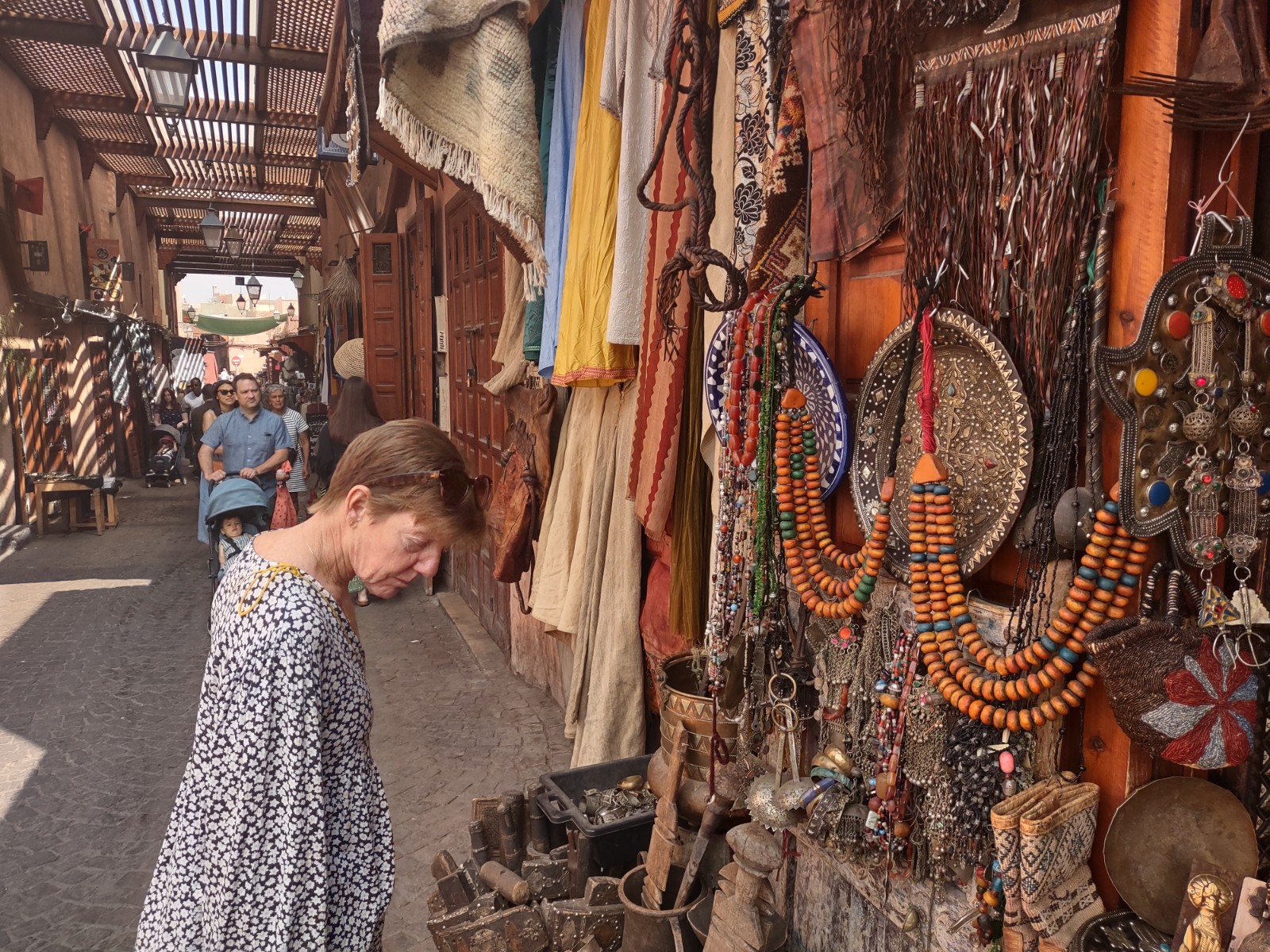
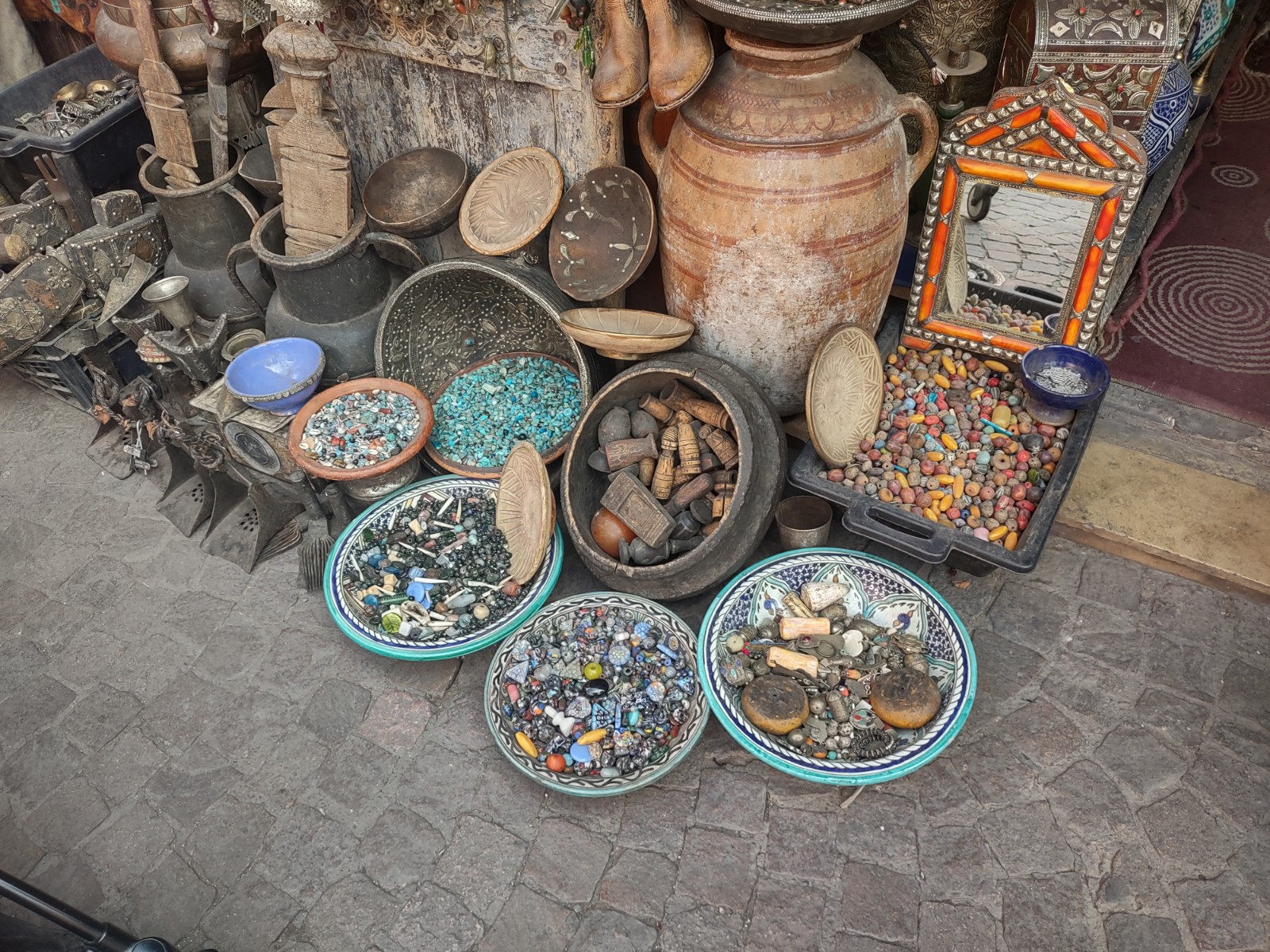
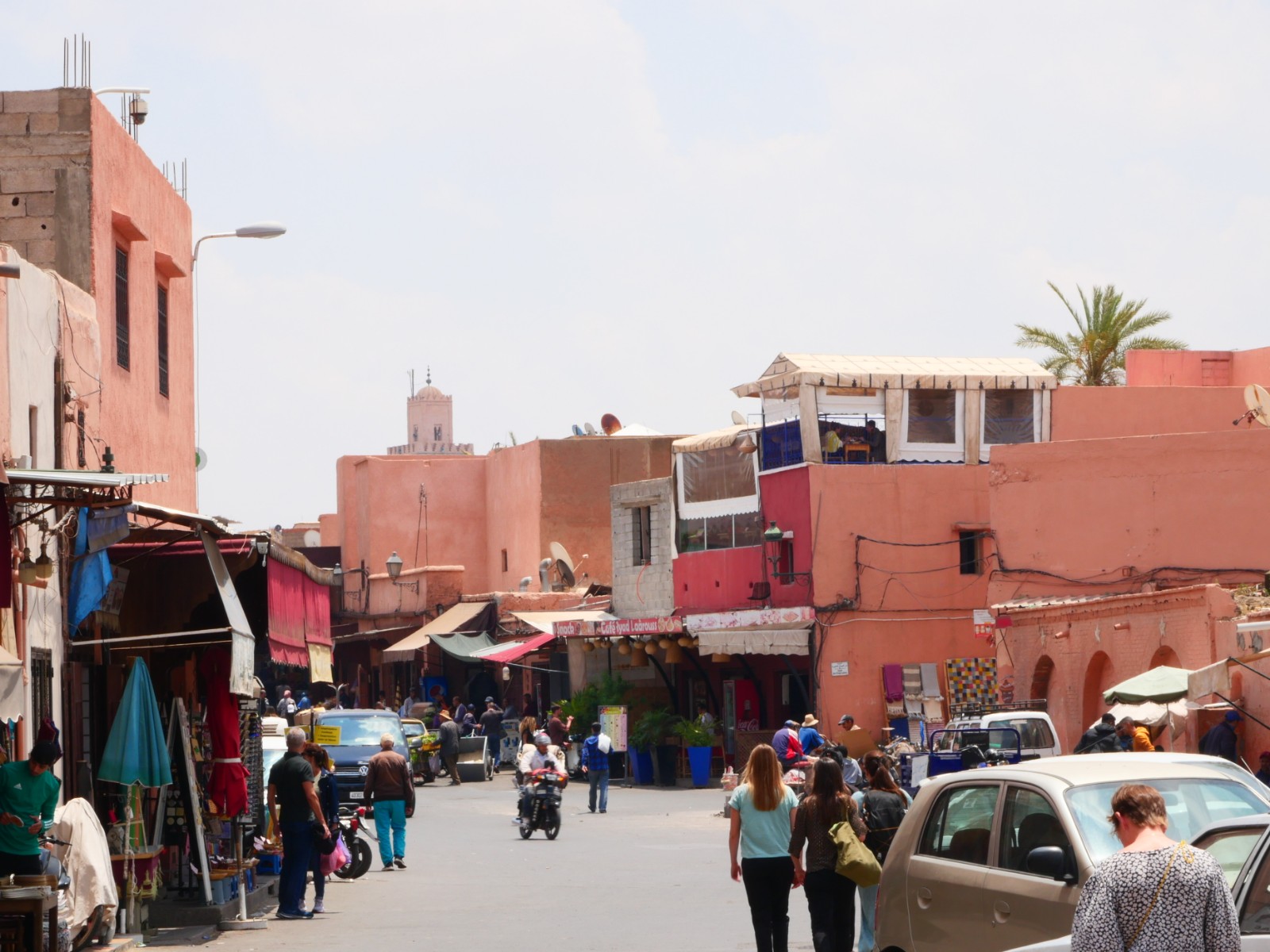
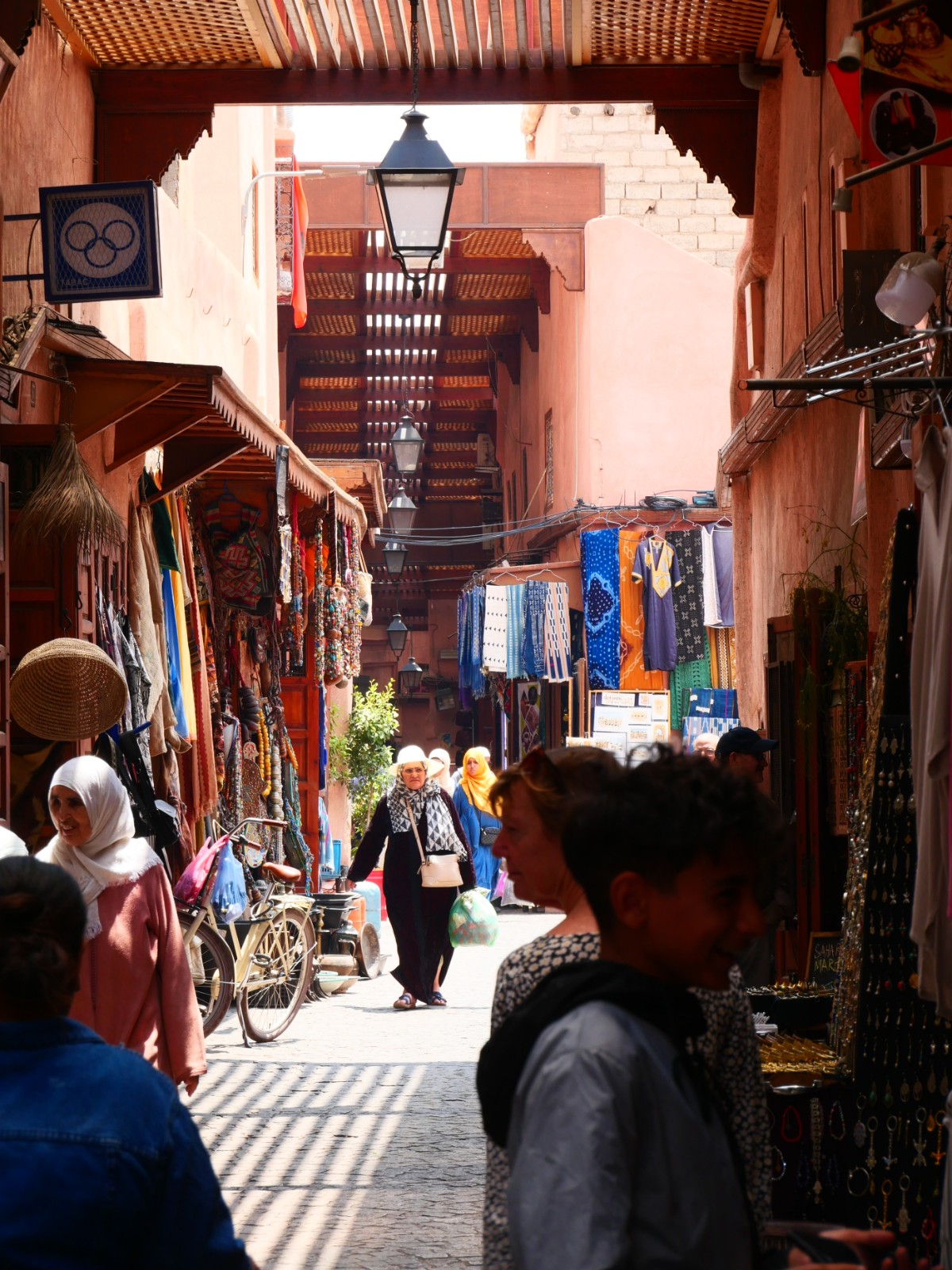
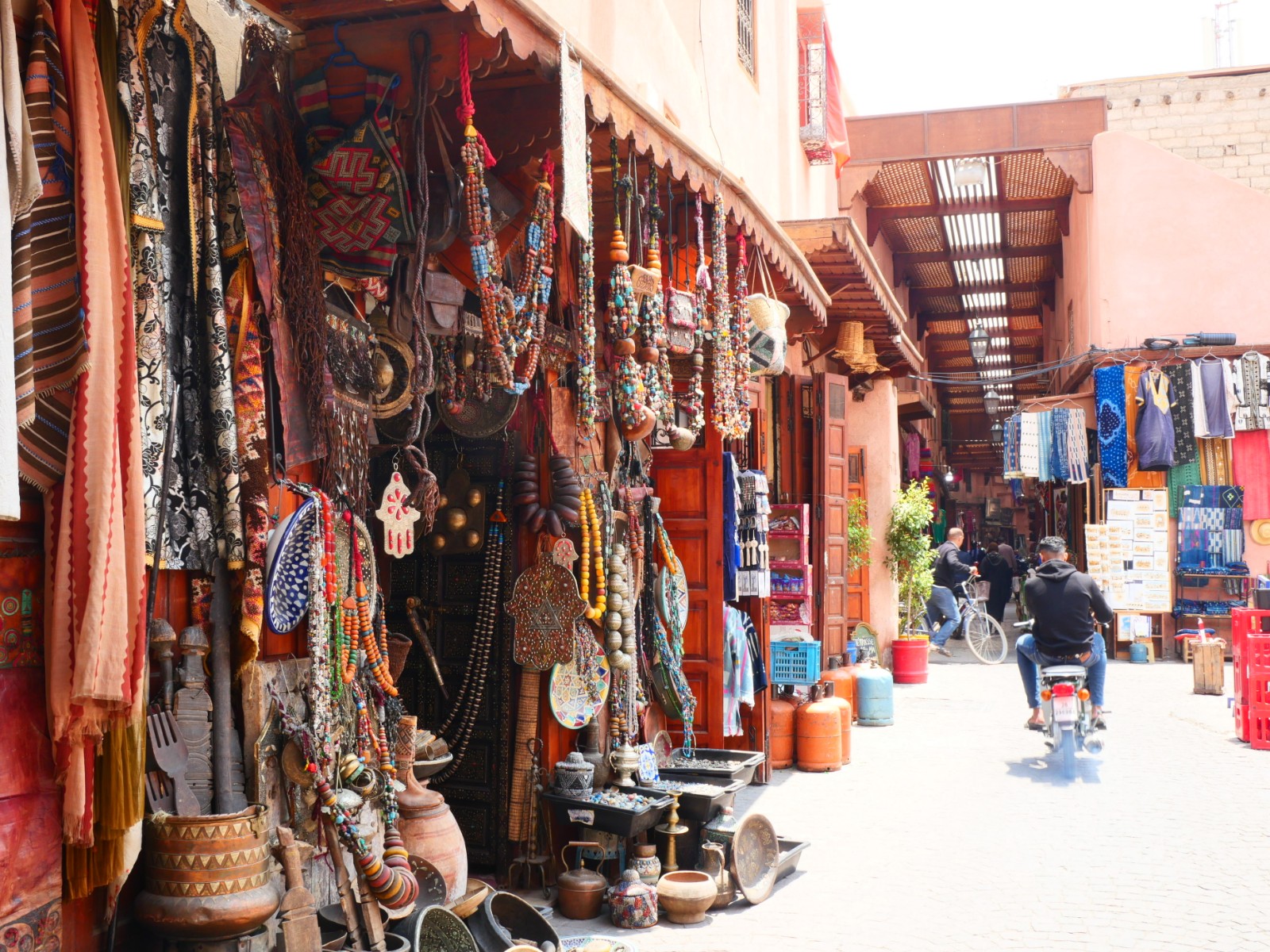
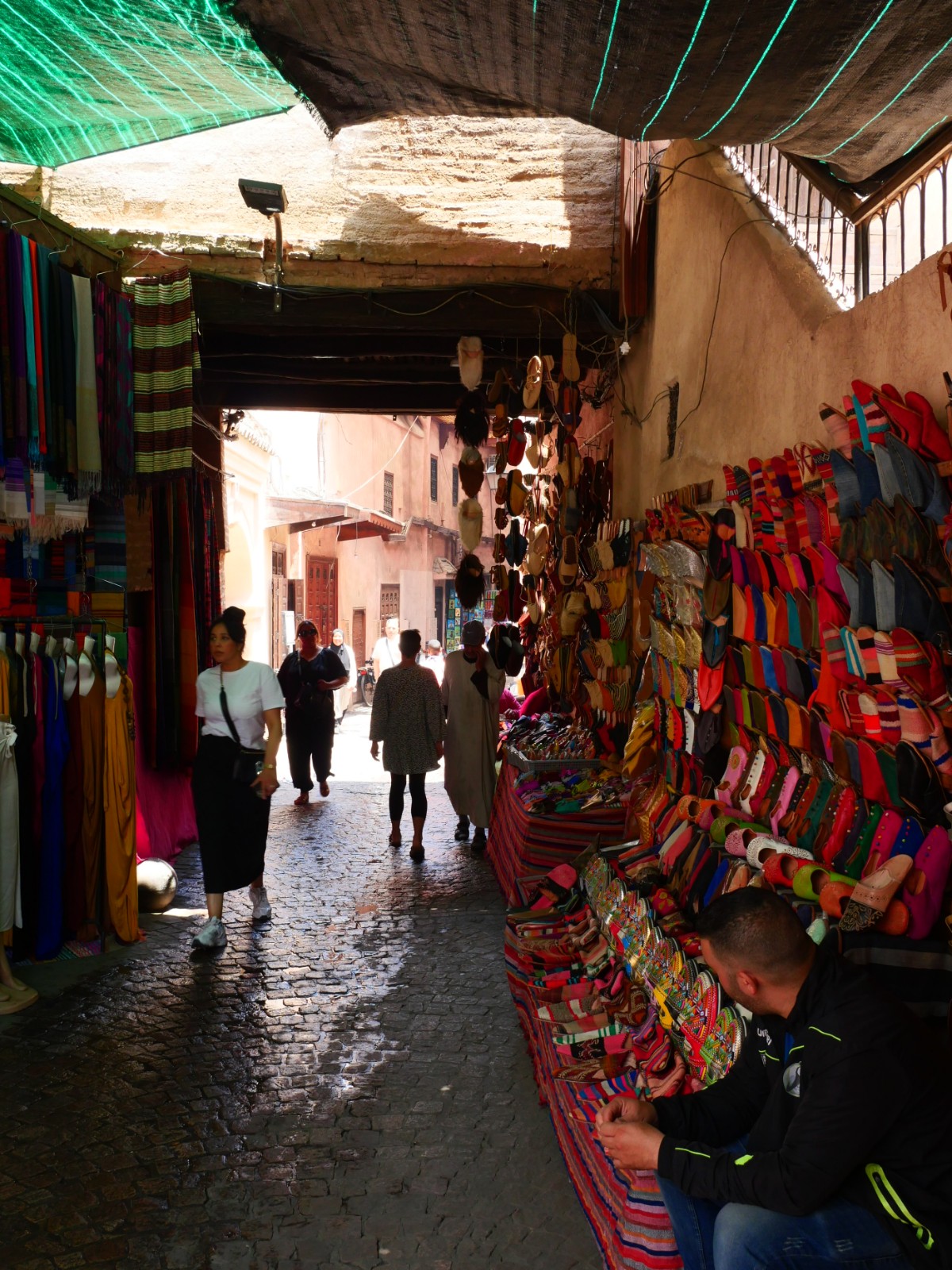
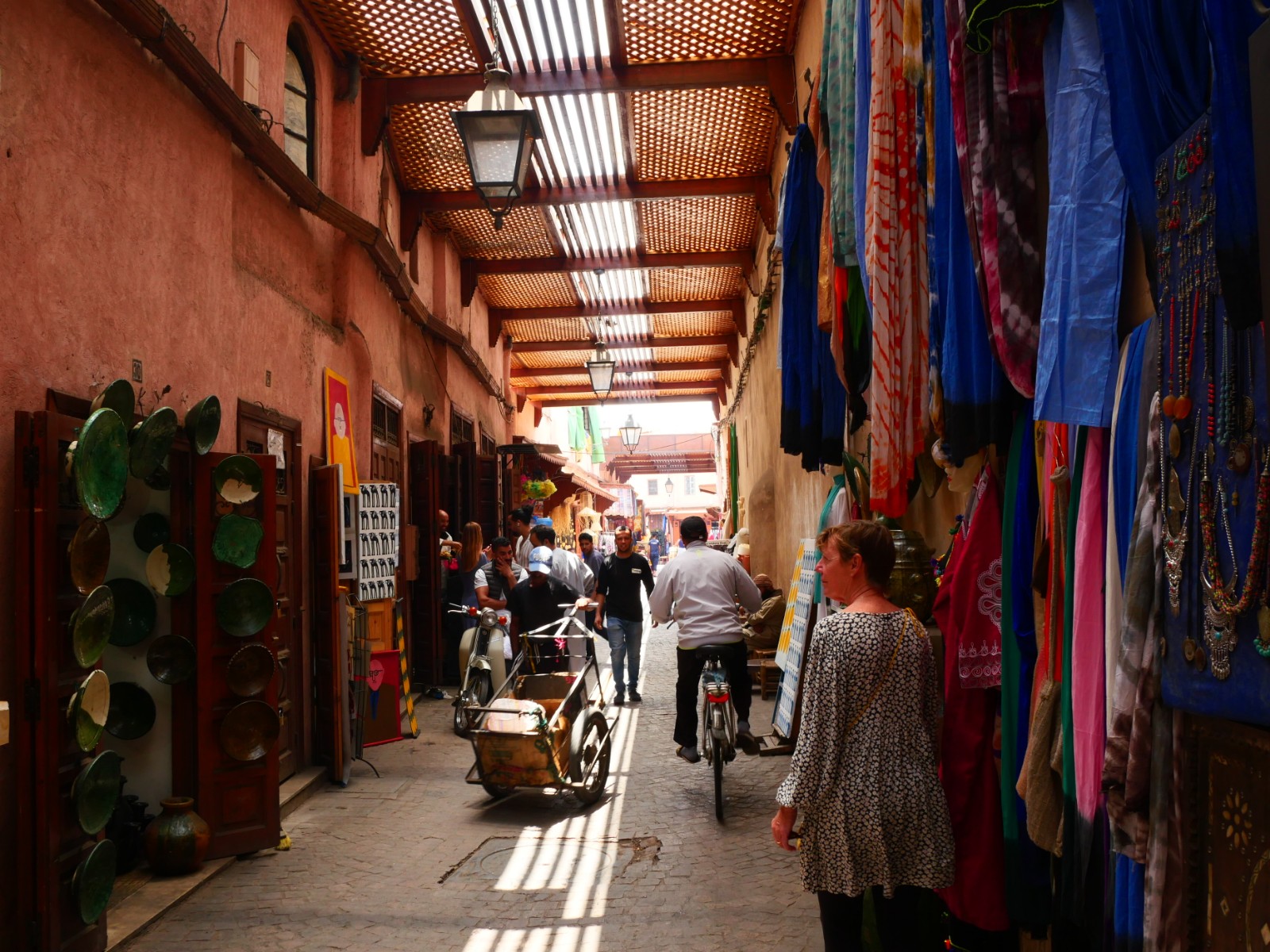
There are also a lot of pickpockets and scam artists to watch out for and, on our way home, we ran into one of the latter. As we walked home, we struck up a conversation with a young man who appeared to be travelling in the same direction as we were. He told us that there was a special Berber festival going on that day where we could see the traditional method for making and dying leather. He offered to lead us there saying it was a good opportunity for him to practice his English.
Let me say here that we consider ourselves to be pretty much savvy travelers (we’ve done quite a bit of it over the years) and are well aware of some scams which are inflicted on unsuspecting travelers. But, for me at least, it is always a bit of a risk-reward scenario as you can often find some truly unique experiences if you are willing to engage with the locals.
Unfortunately, in this instance we were scammed a bit. The festival, which was originally “just around the corner” never materialized and the “tour” of the leather making and dying facility left much to be desired. (Although, we were each provided with a bundle of mint to hold under our noses as the leather curing process involves the use of pigeon excrement.) At the end of a 3-minute tour of the leather dying facilities we were led to a leather shop to see the finished product, have tea, and, of course, spend money.

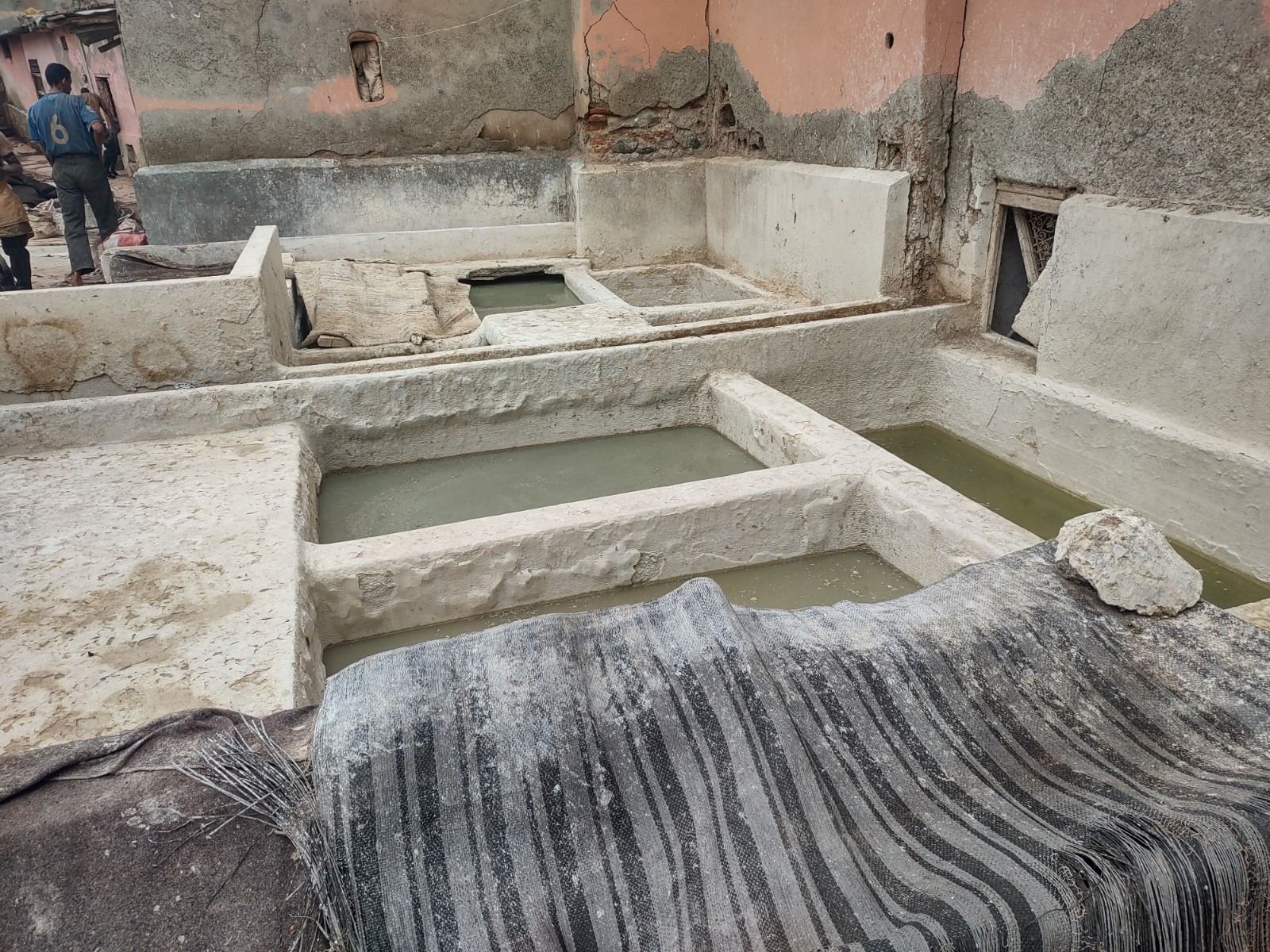
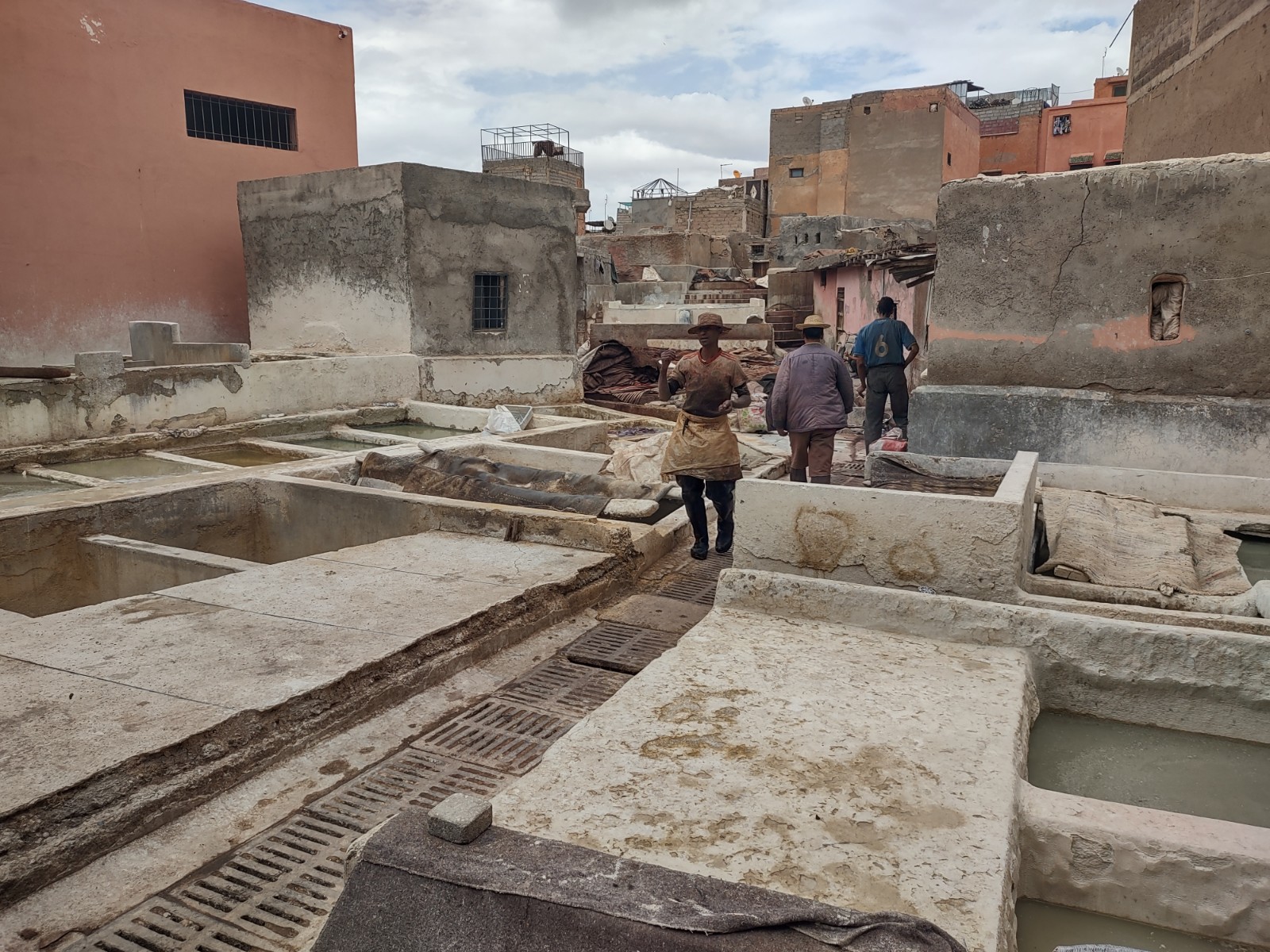


At this point, we had pretty much figured out what was going on and were very up front that we had no intention of buying anything which resulted in our “guide” and his “assistant” (who conducted the tour of the leather dying facility) demanding their tour-guide fees. While we had already decided that we should compensate our original guide for his time, he and his assistant demanded an unreasonably large sum of money for their services. We offered and paid them something less and made our way home, out a bit of time and a little money, but mostly just disappointed that we had been mislead and somewhat taken advantage of.
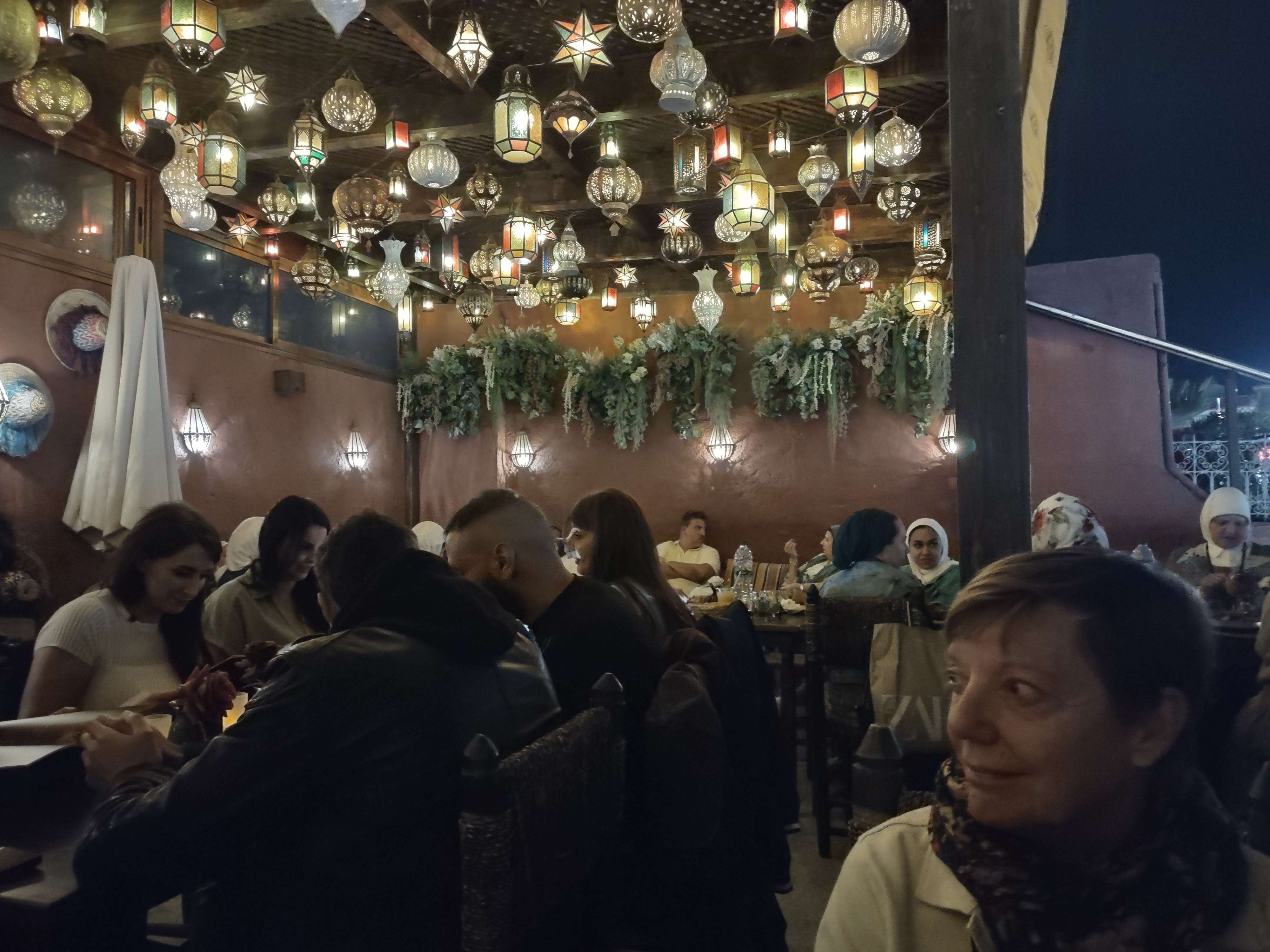
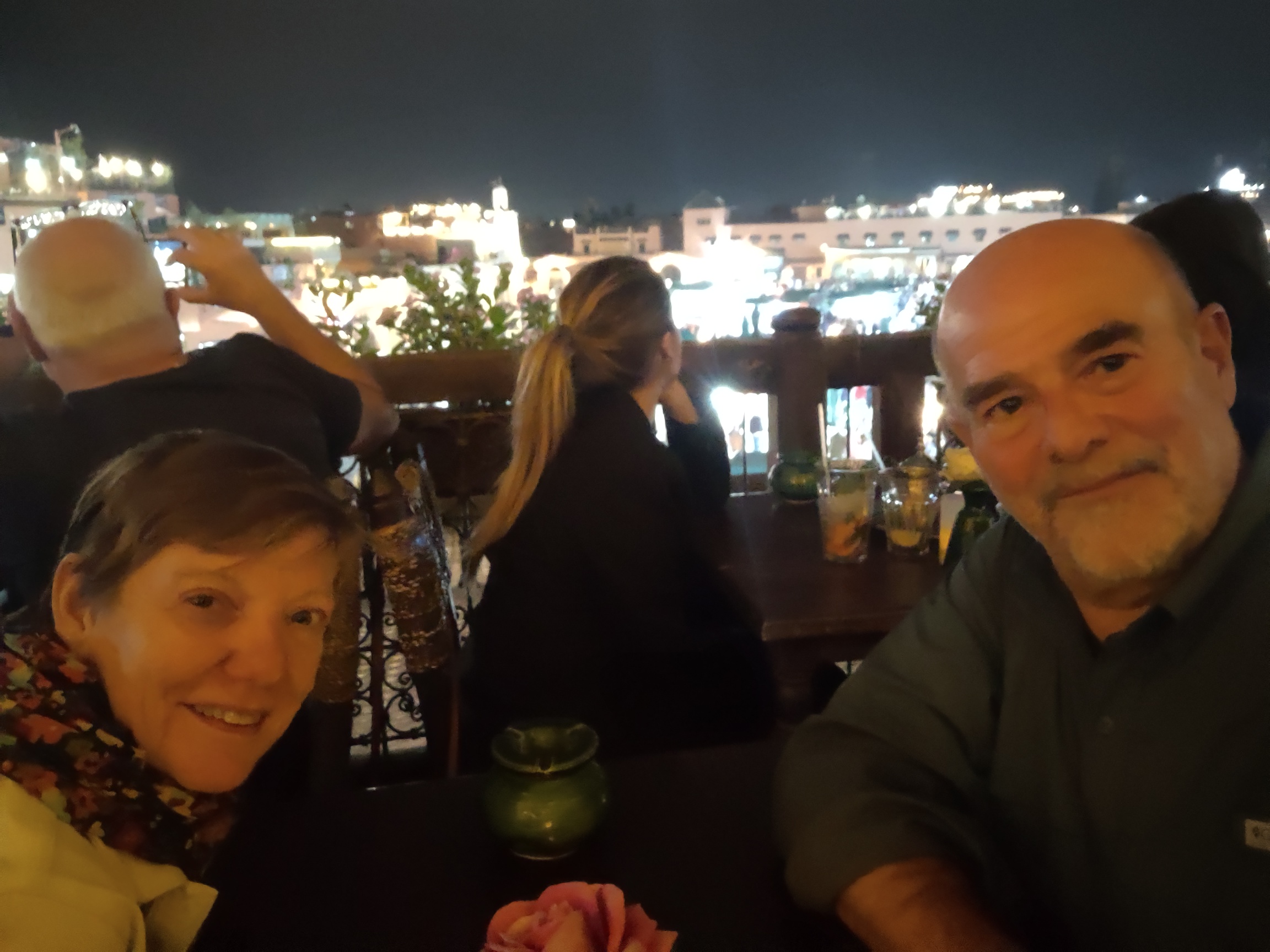
To wash away the bad feelings, we found a roof-top restaurant (the Zeitoun Café) overlooking the Jemaa el-Fnaa and had a very enjoyable meal, albeit without beer or wine, taking in all the action below. Because Morocco is a predominantly Muslim country, alcohol is not nearly as available here as it is elsewhere in the world. Knowing this, we did pick up some duty free rum at the Marrakesh airport on our way in. There are a very few restaurants in the Medina which serve alcohol and the magical combination of roof-top dining and alcohol has become something we now tend to seek out wherever we go in Morocco.

Aside from alcohol, the other thing one has to be mindful of in Muslim countries like Morocco is attire. For men, long pants are generally preferred and I picked up a couple of pairs of linen pants in Denia with that thought in mind. For women, modest clothing is essential anytime you are in public and, while you don’t need to wear a hijab, you need to show as little skin as possible with long pants or a skirt and long sleeves with shoulders covered. Being mindful of this from past travels, Colleen came with a linen wordrobe of her own. The reason for all of this is, of course, because we are visitors here and should be respectful of local customs and mindsets. Nonetheless, you do occasionally see a young woman wandering the markets in a bikini top or other revealing clothing. It’s actually a bit embarrassing to see this and, when it happens, above all else, we always hope that they are French and not American.
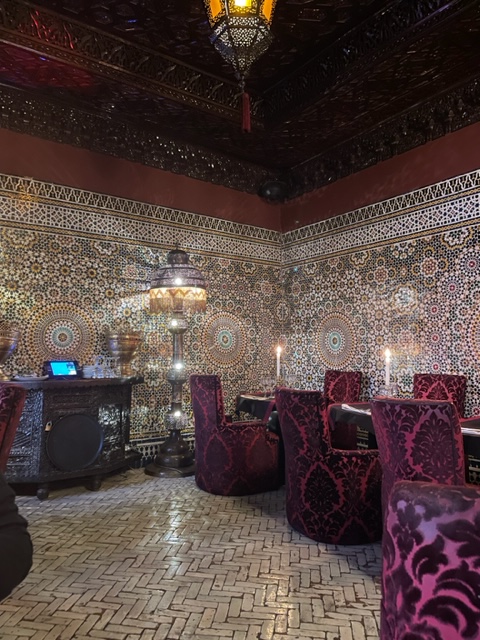
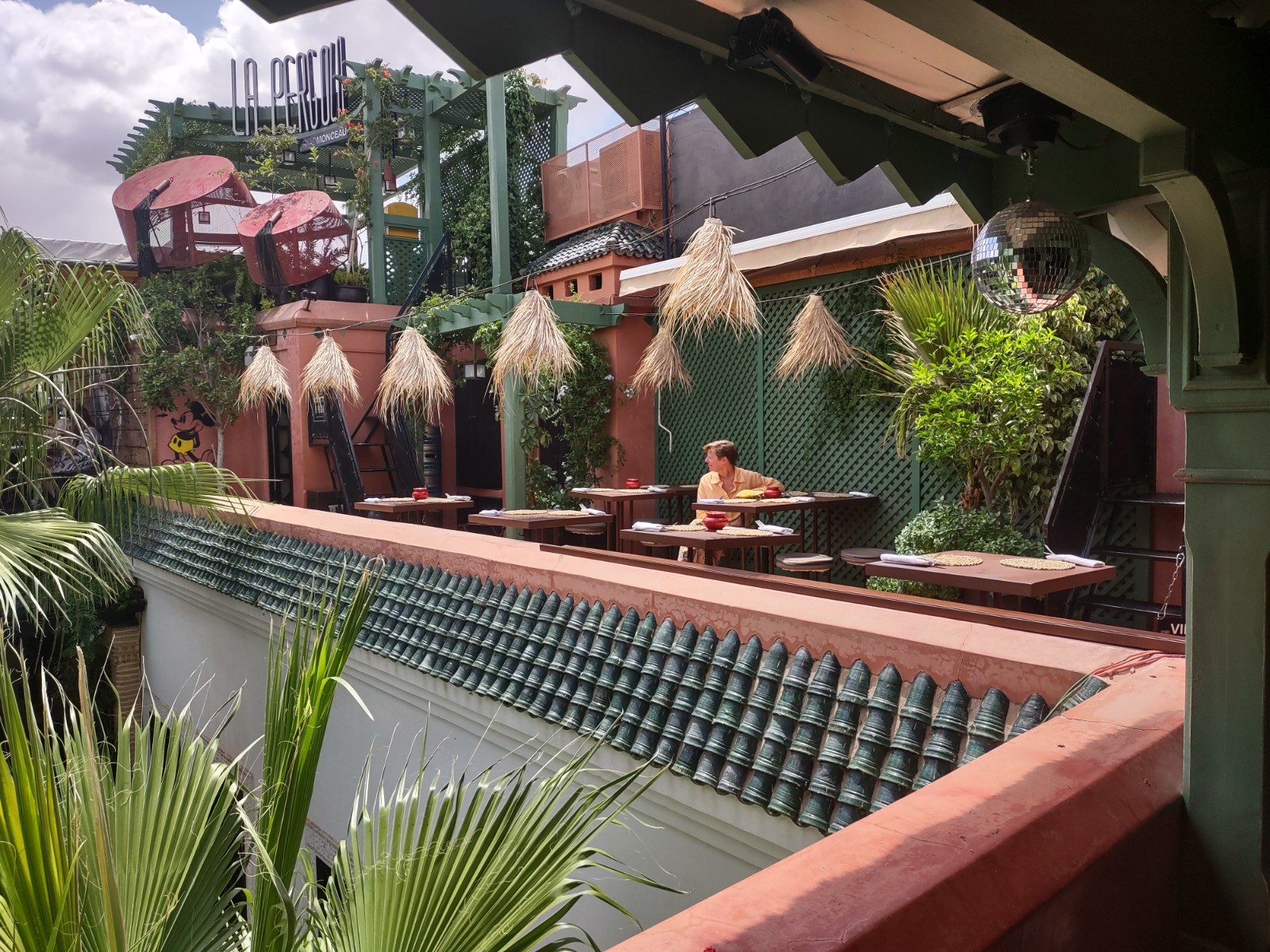
For the most part, we spent our days in Marrakesh just wandering the streets of the Medina, doing a little shopping and just soaking up the amazing vibe. We also continued to get lucky finding good restaurants with roof-top dining and (whenever possible) alcohol. These included La Merrakchi, a romantic spot with a beautifully tiled candle-lit dining room and a great wine list and La Pergola where I had an amazing smoked cheeseburger on a black bun. At a place called Dar Dar we had chicken pastilla (stuffed pastry) and, believe it or not, some really good tacos. All of these places also had some very exotic and interesting cocktails which we of course sampled as well. At a place called Terrasse des Espices, I ordered a tagine with beef and marrow which was essentially Moroccan osso buco, incredibly savory and delicious, and probably the single best dish I have had in quite some time.

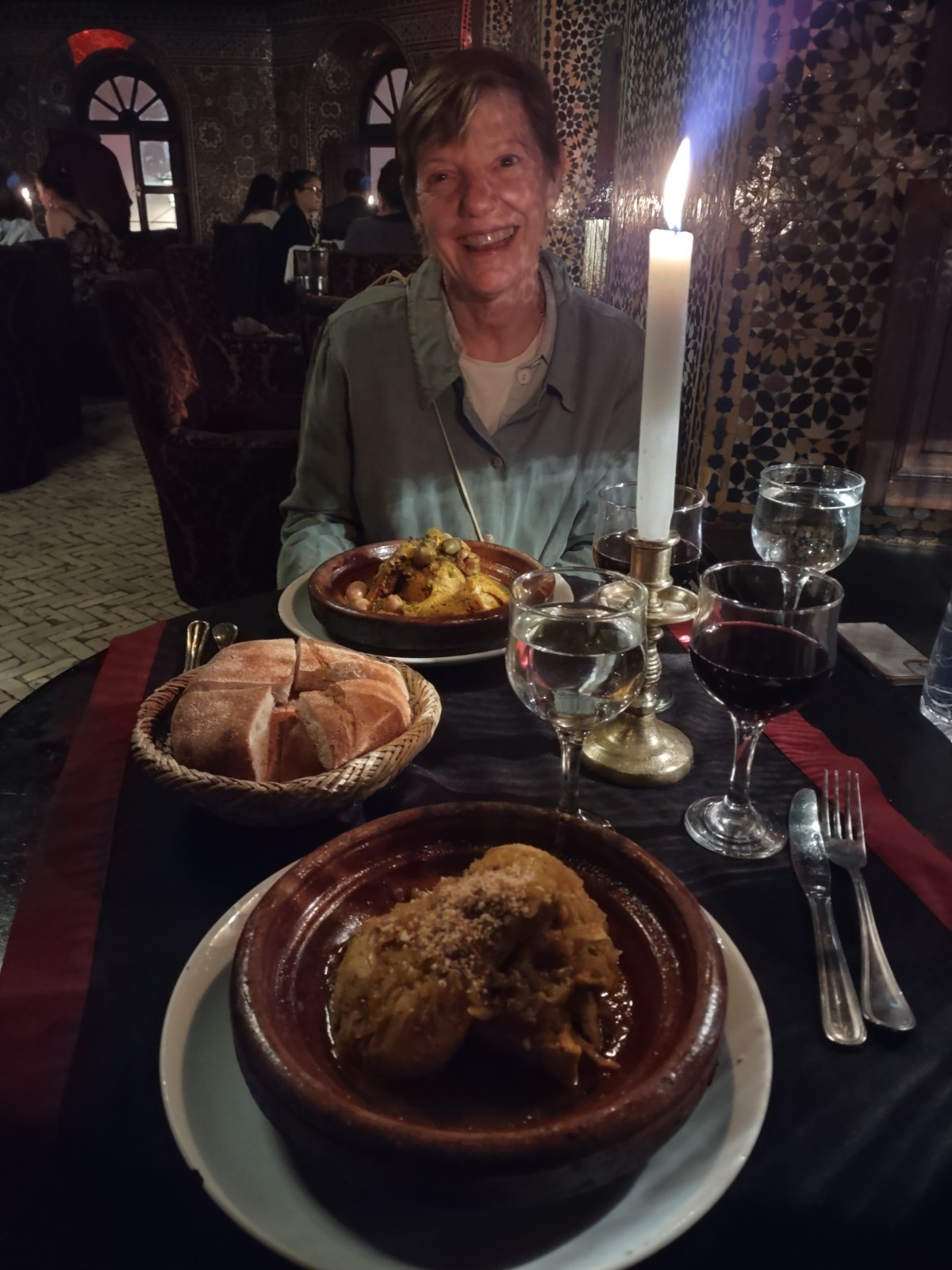
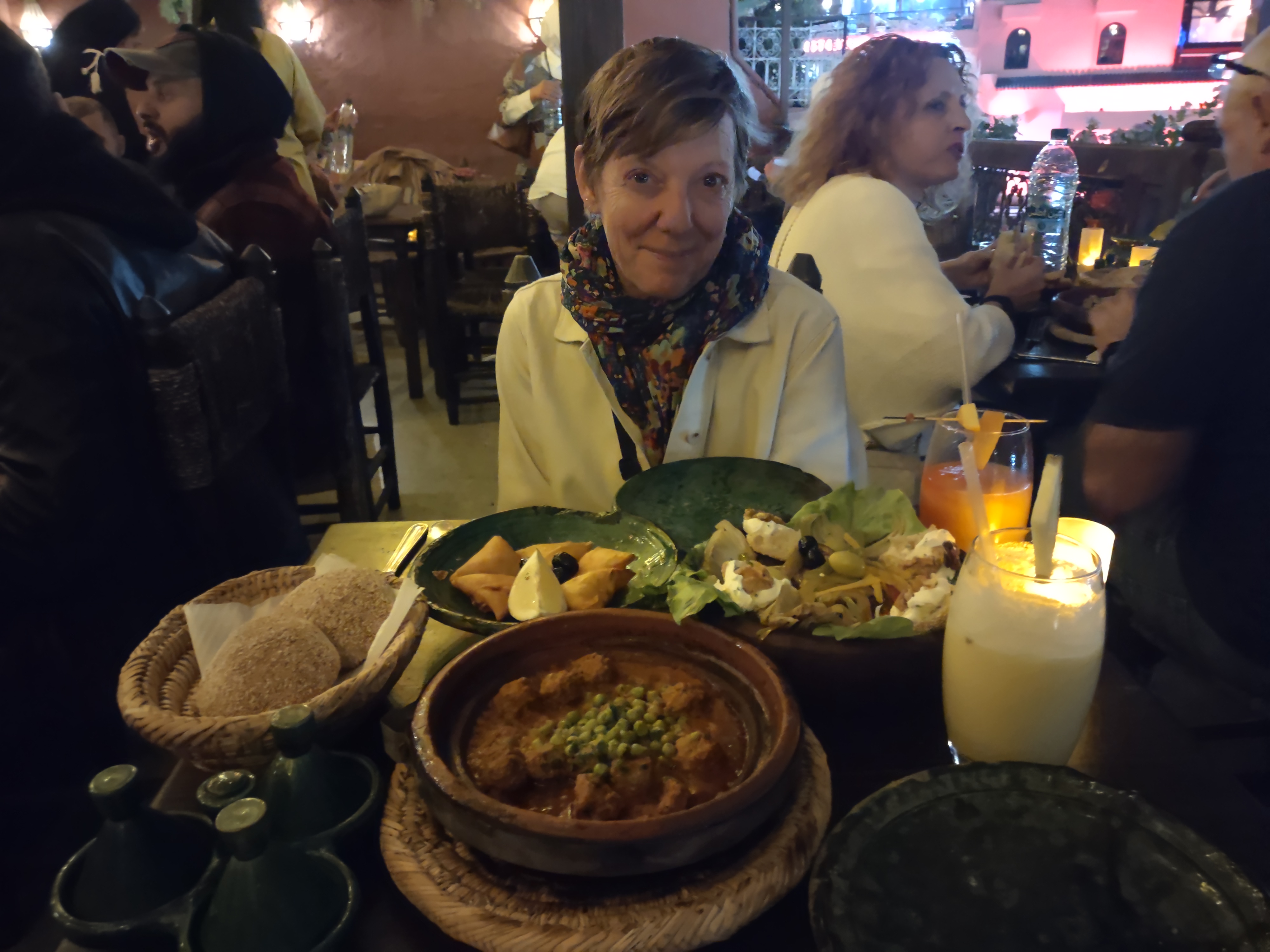
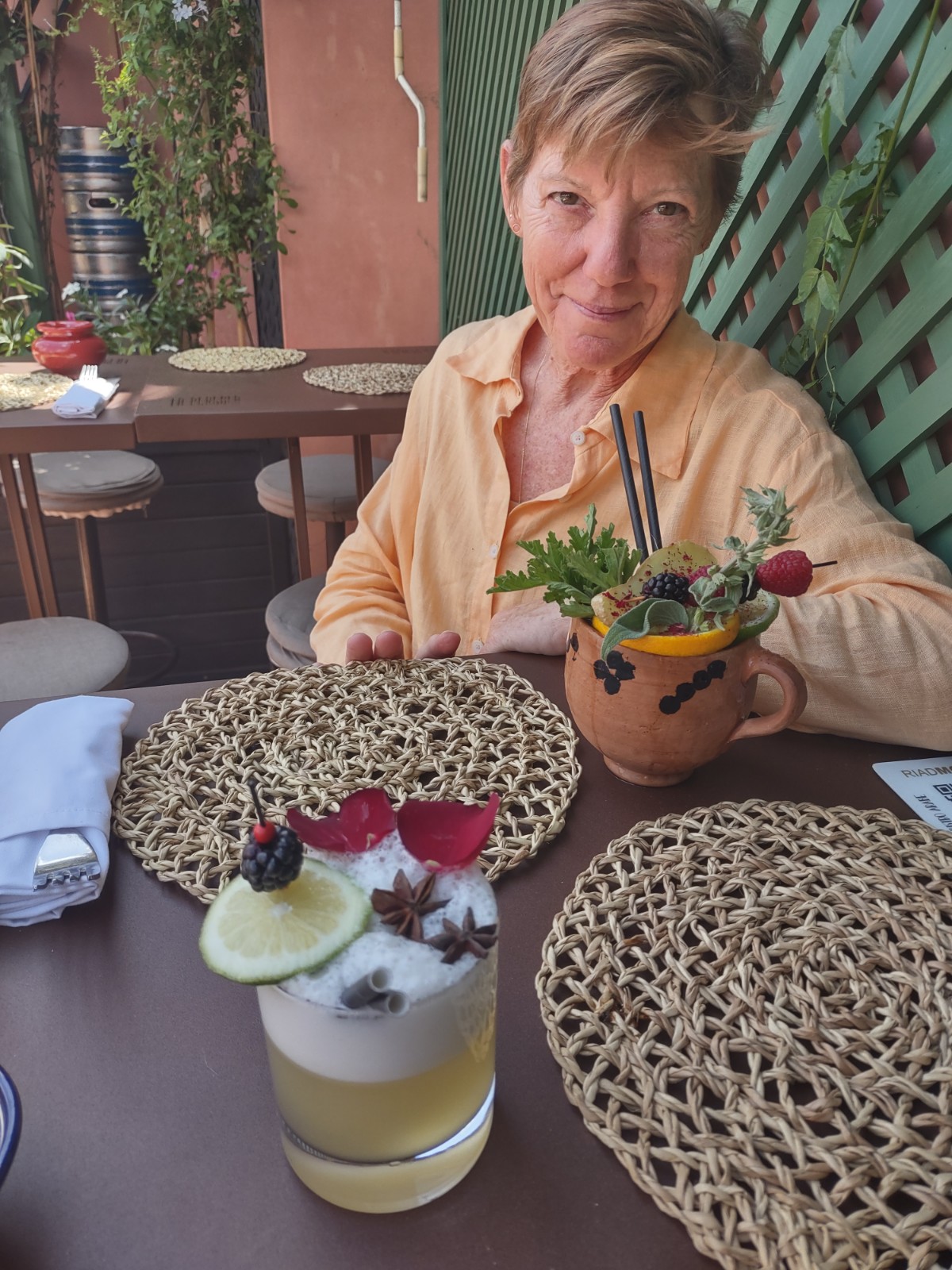
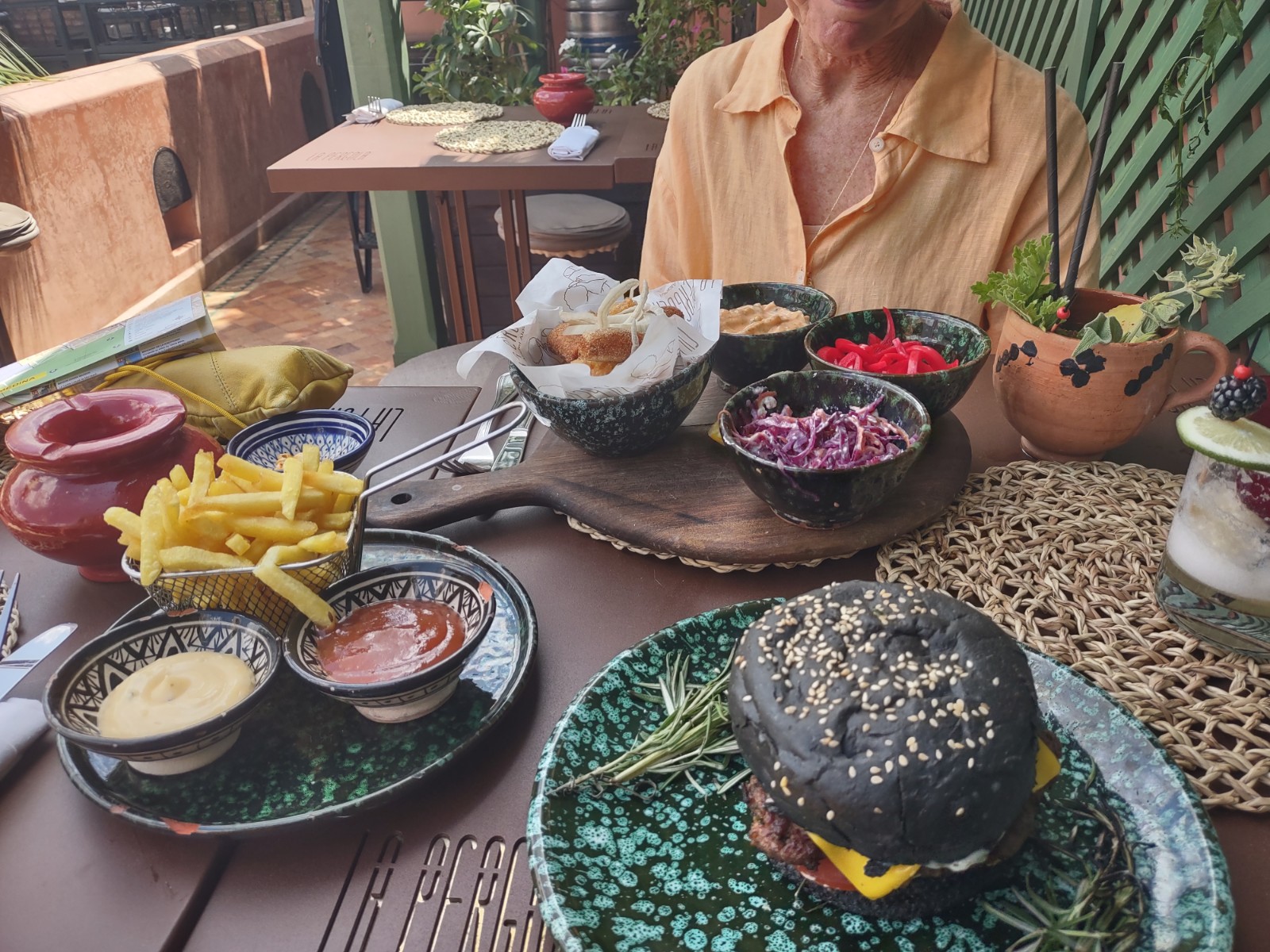
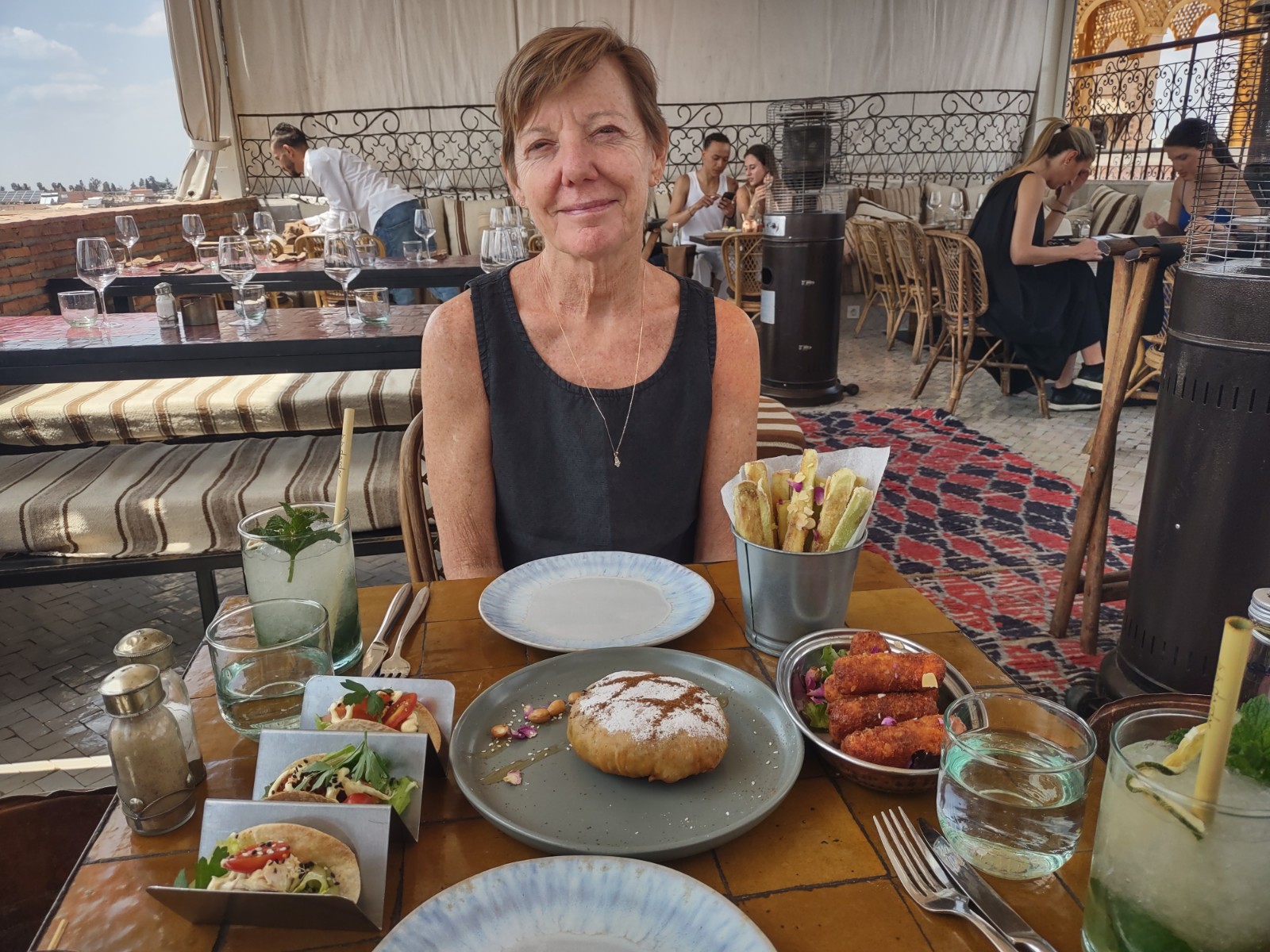
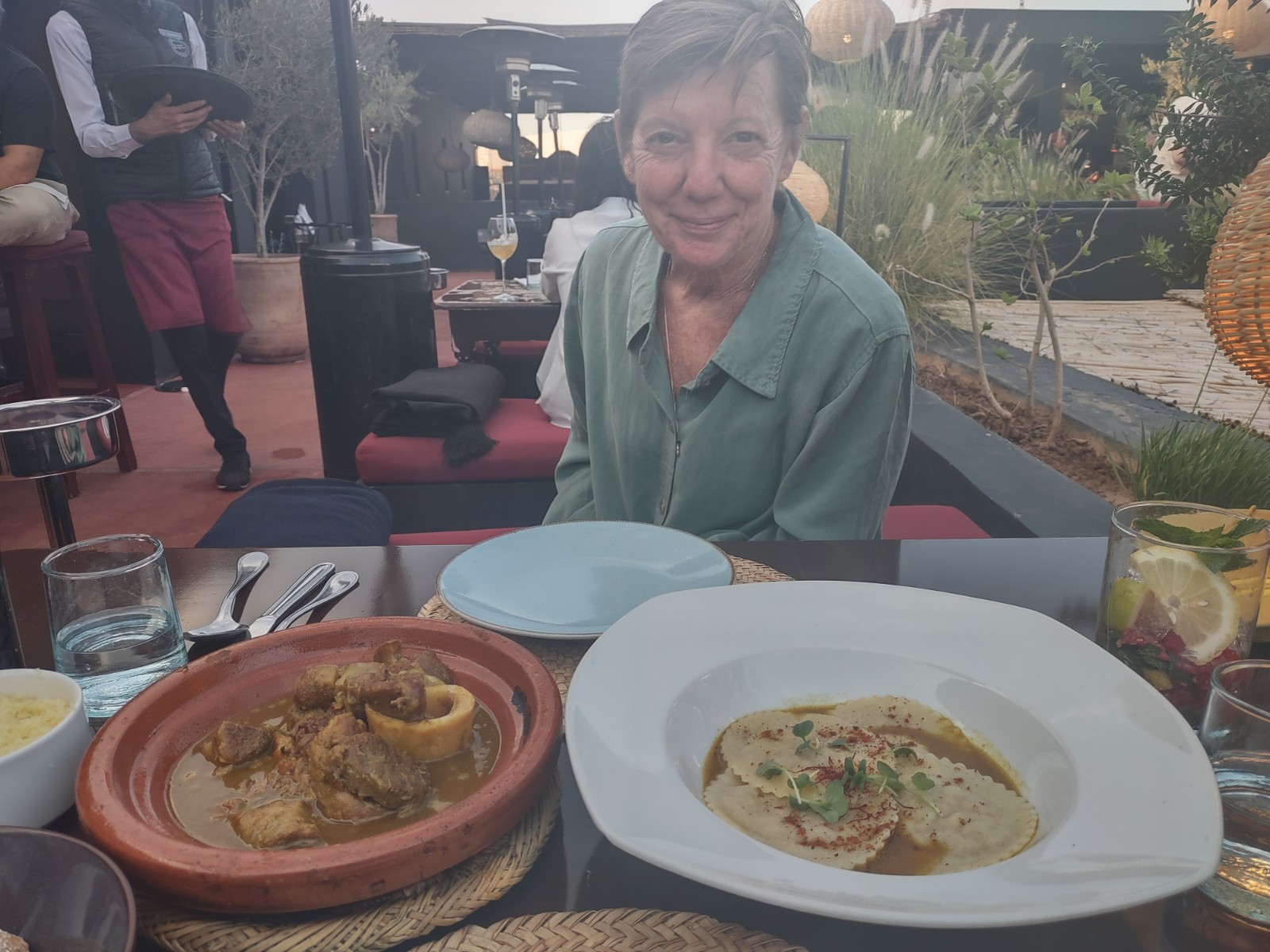
If you are not familiar with tajine, it is kind of a staple in all the restaurants here. It consists of any meat, seafood, or vegetables which are spiced and slow-cooked for several hours in a round clay dish with a steepled top (the tajine) which keeps the juices circulating. The results are pretty much what you would expect – juicy, tender, and incredibly savory. It is worth noting that while the food here is very spicy, it is not hot spicy. I can’t say that I know all the spices that are used, but they are incredibly aromatic and the smell of the food is almost as good as it’s taste.
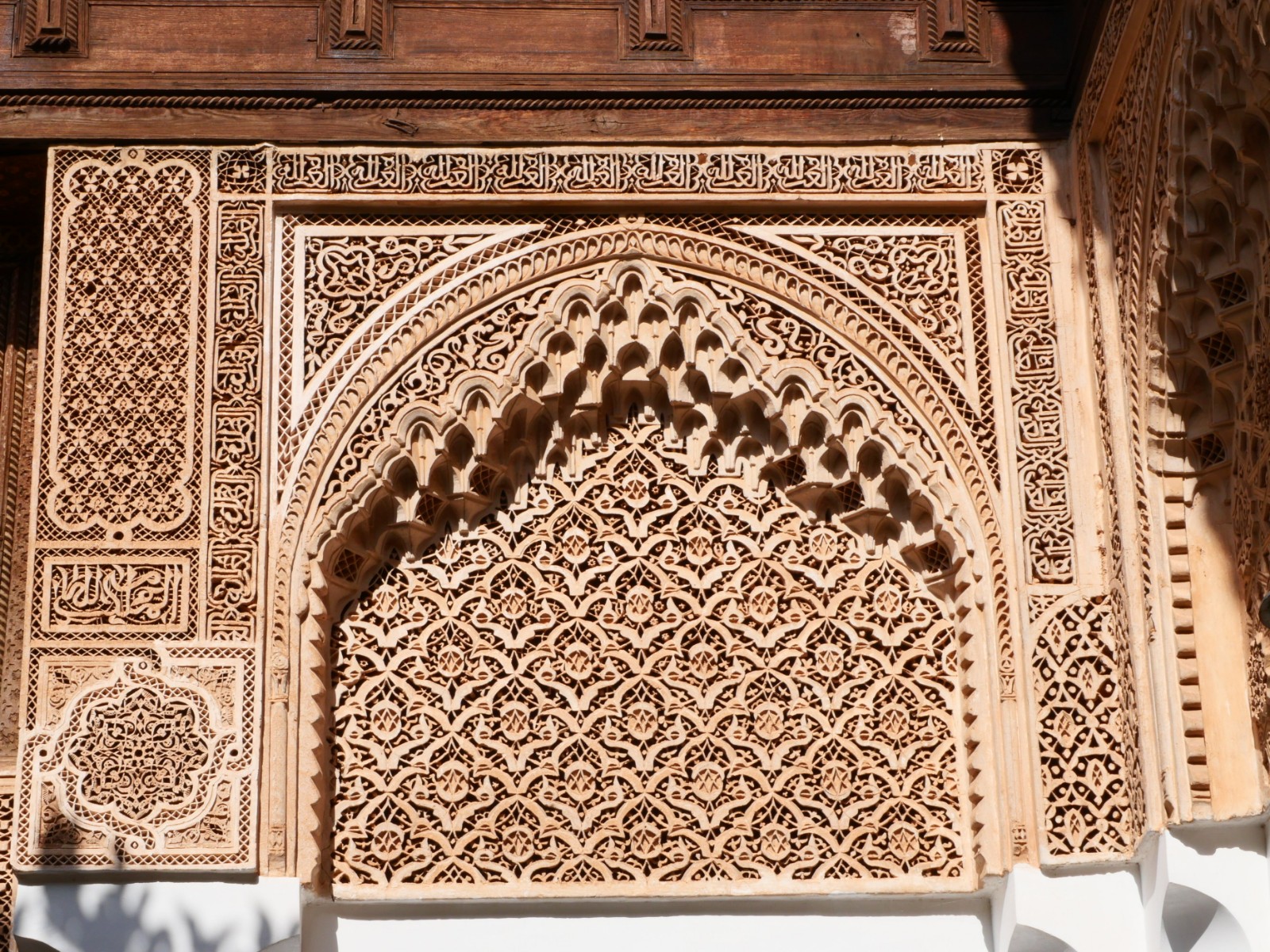
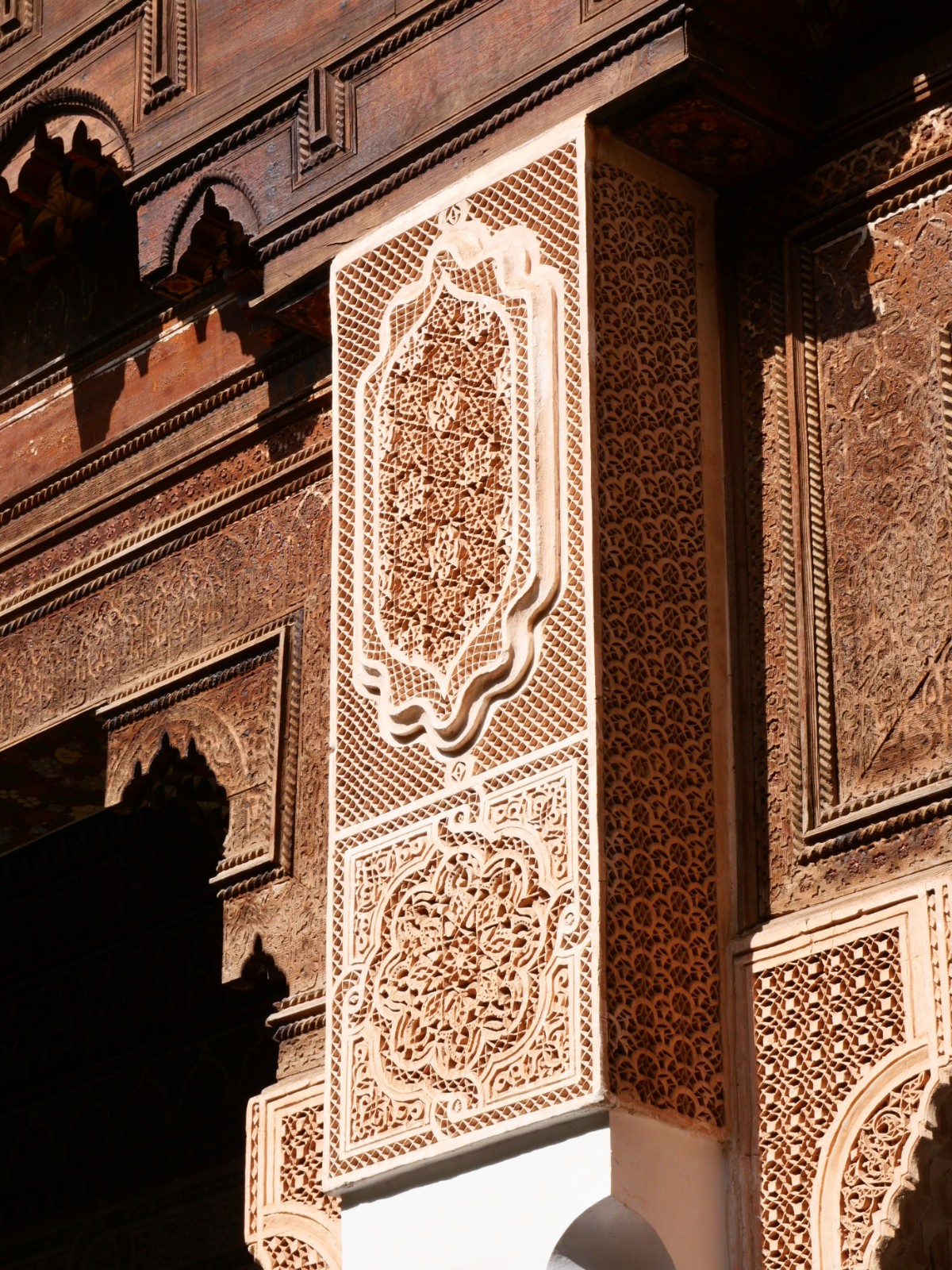
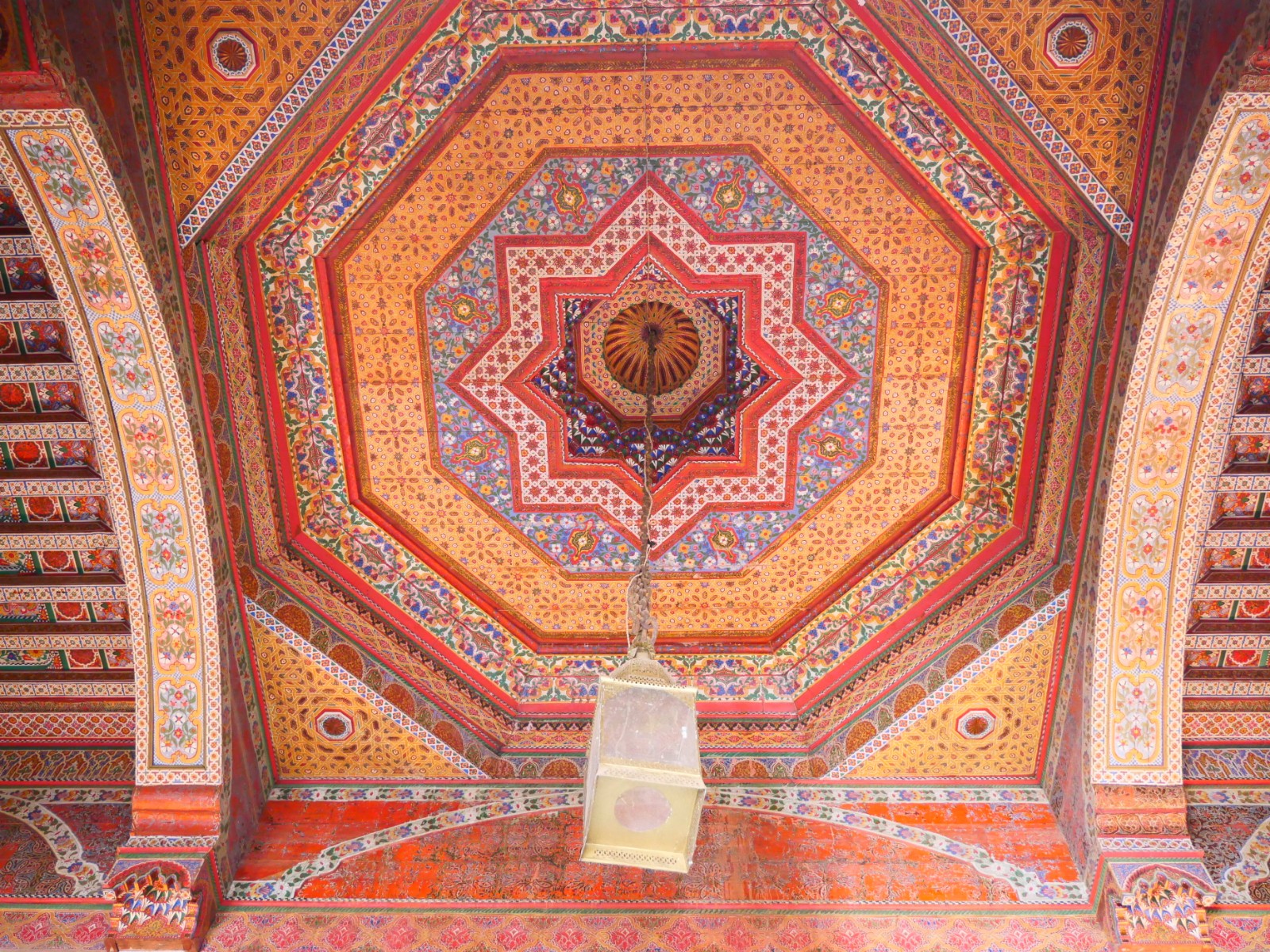
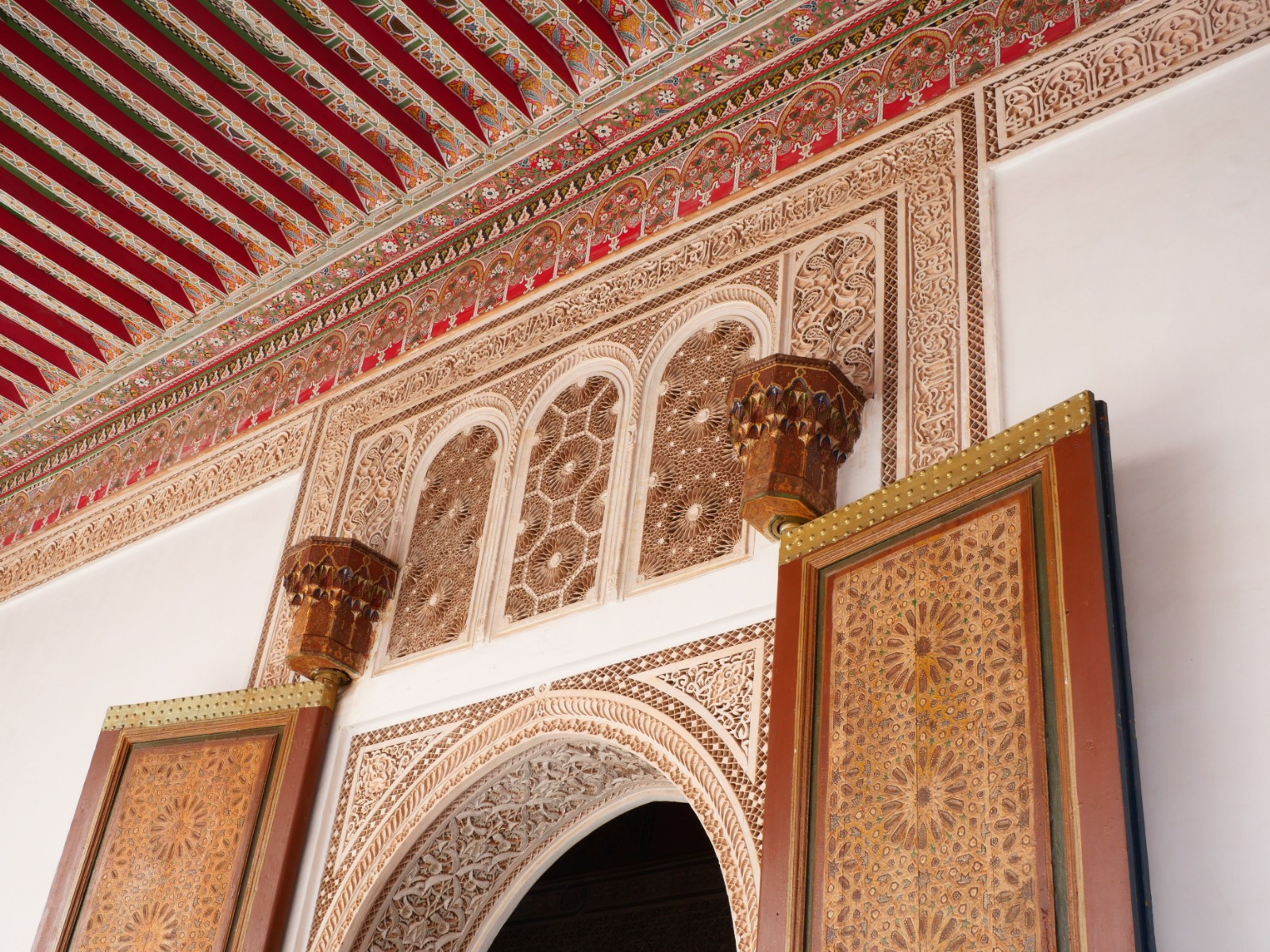
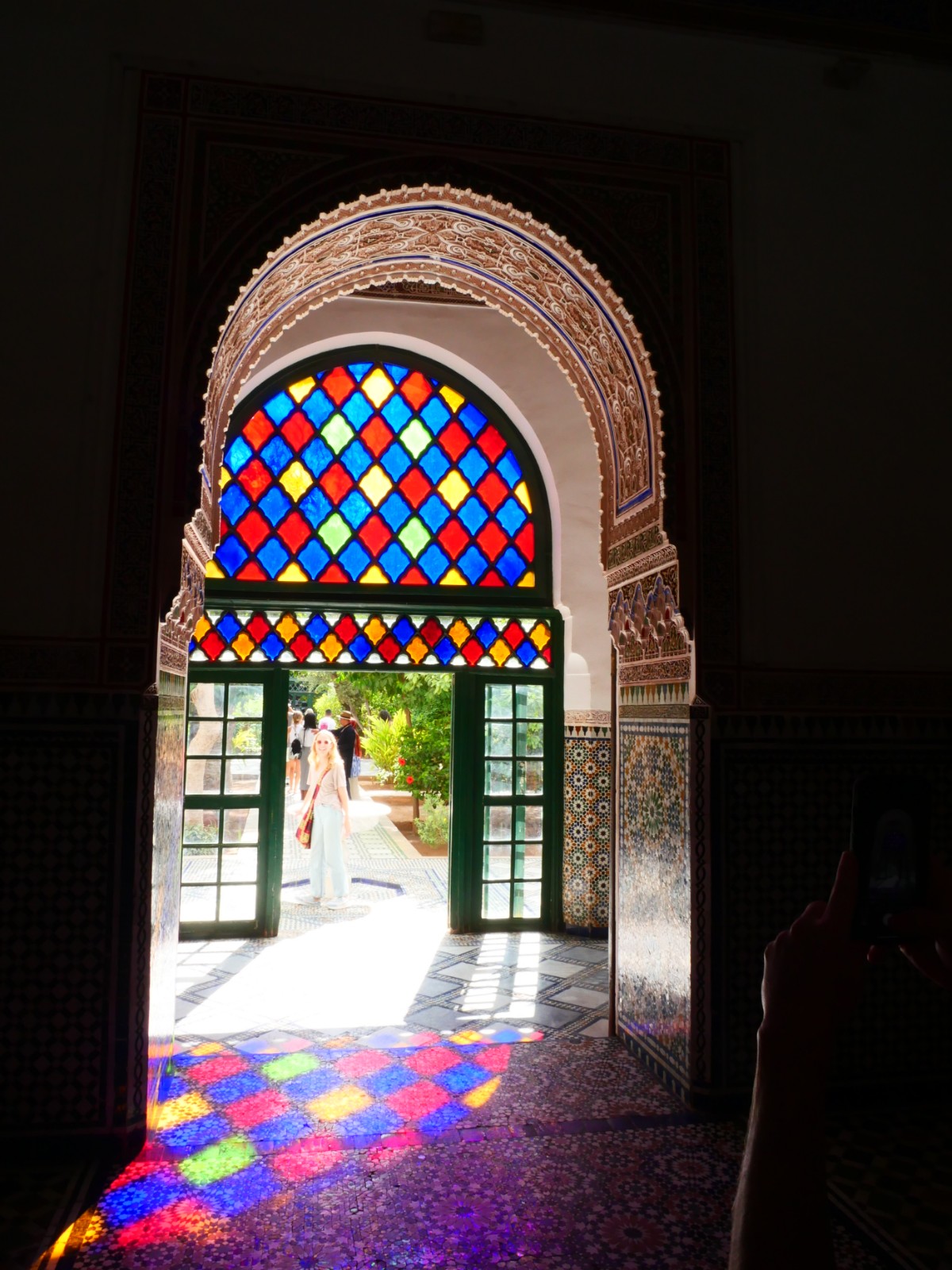
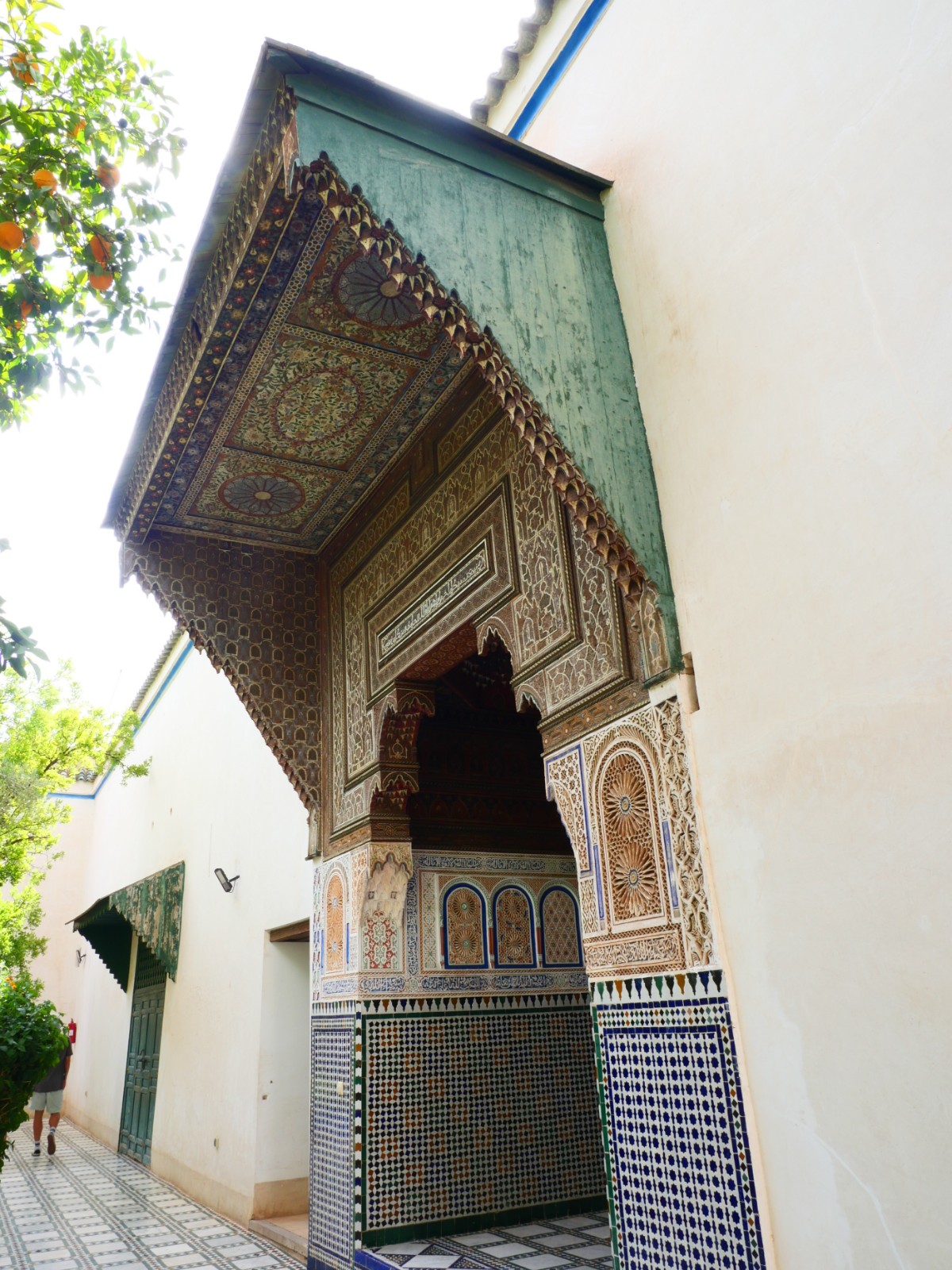
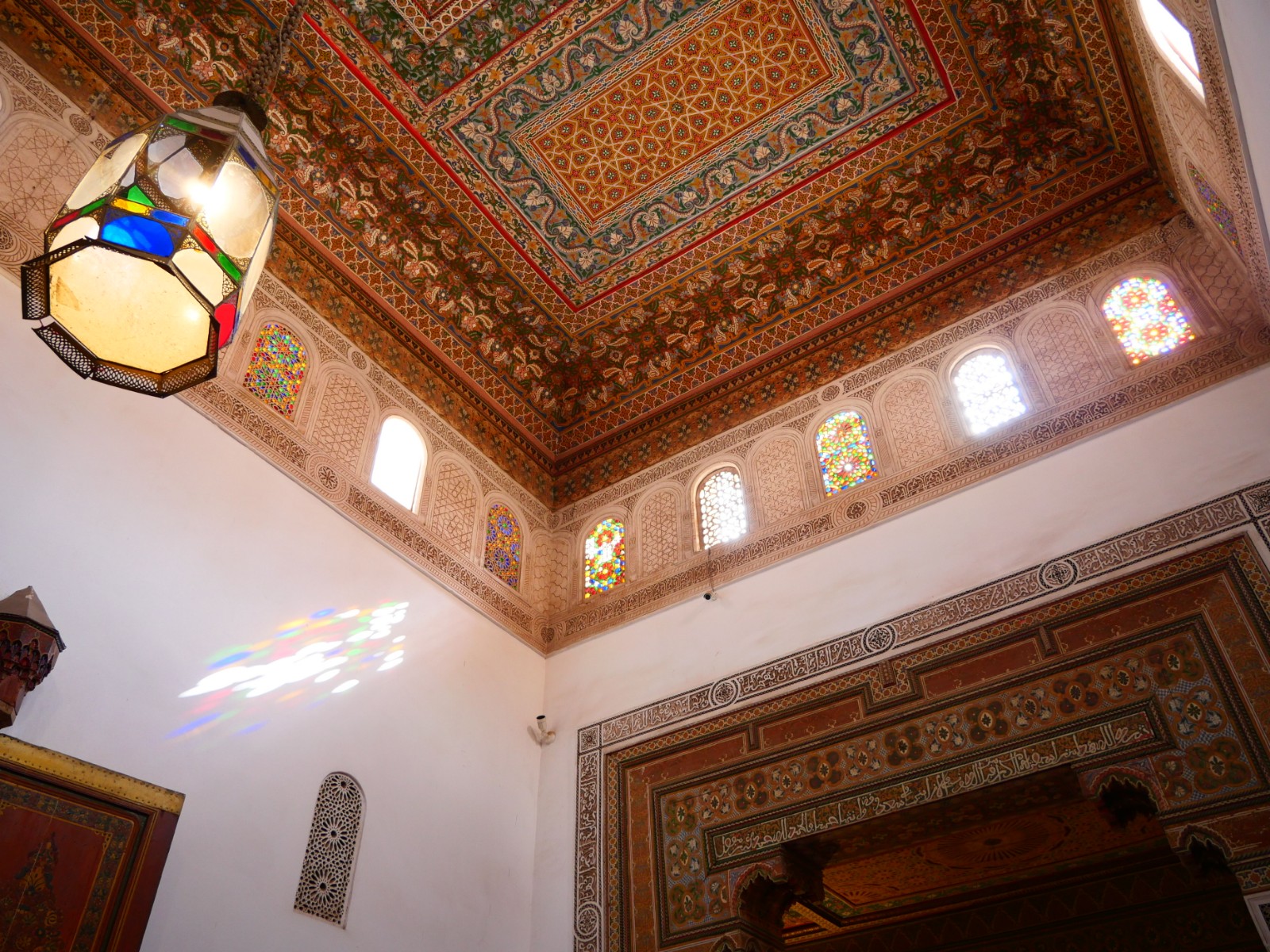
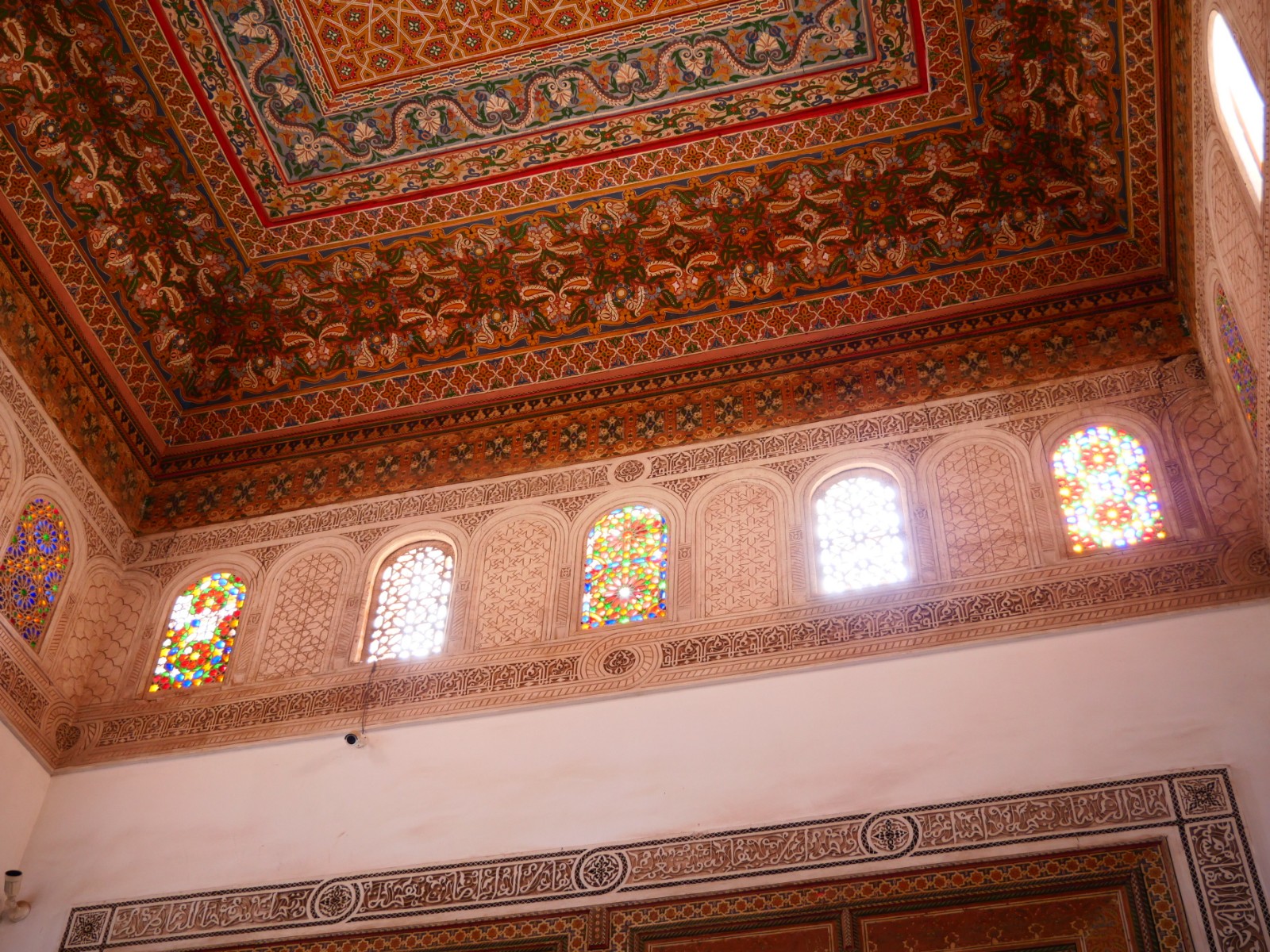
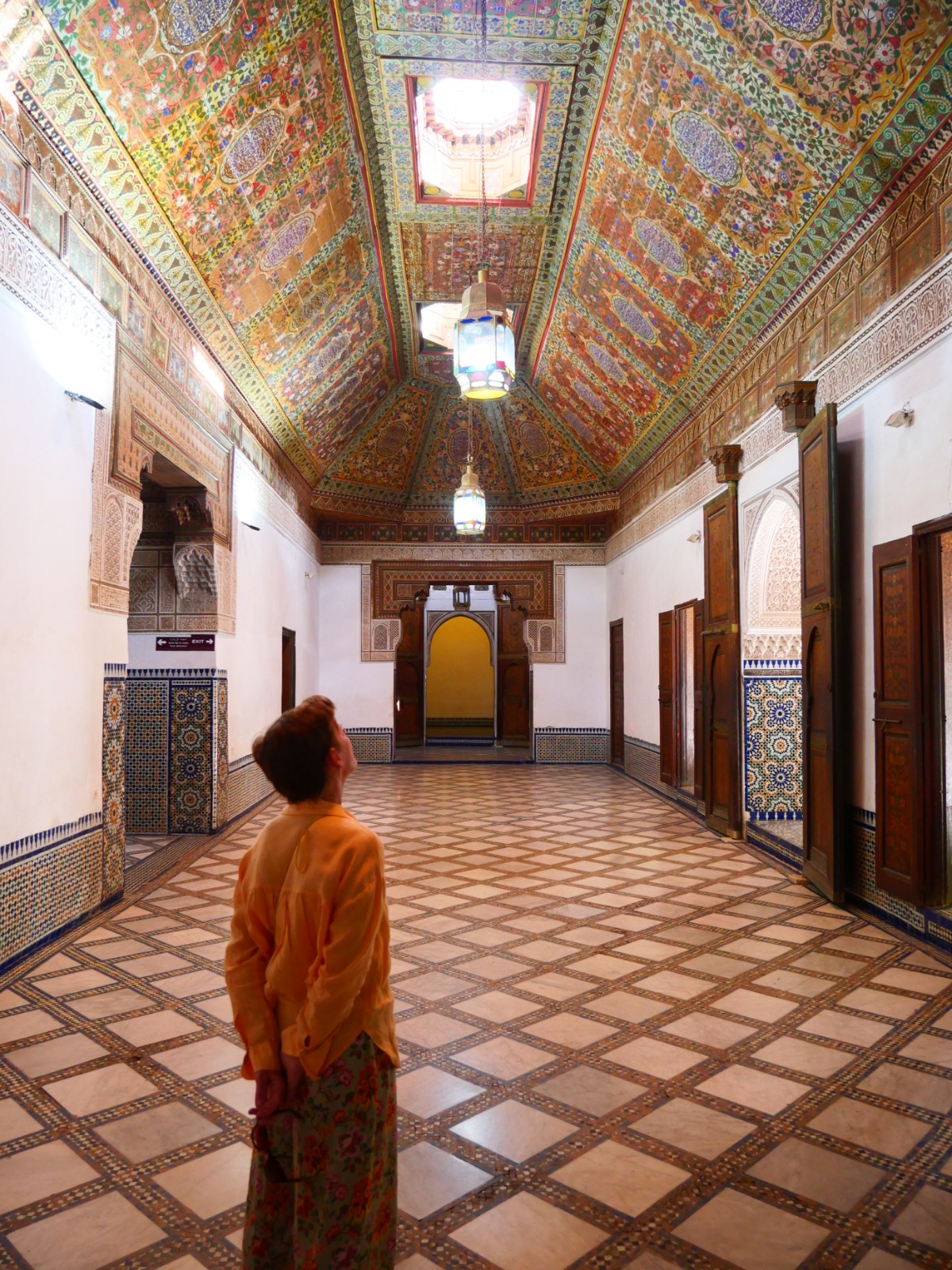
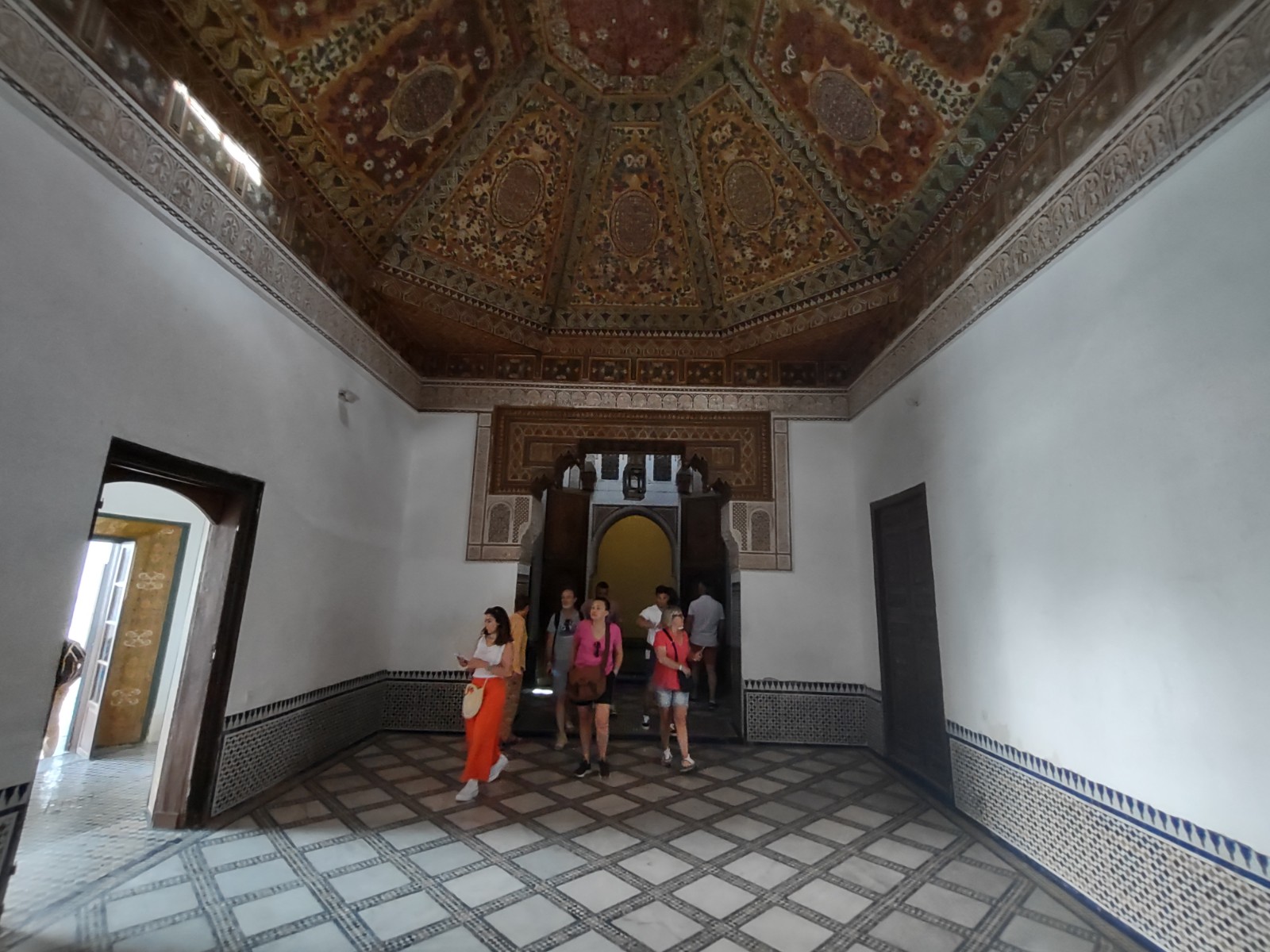
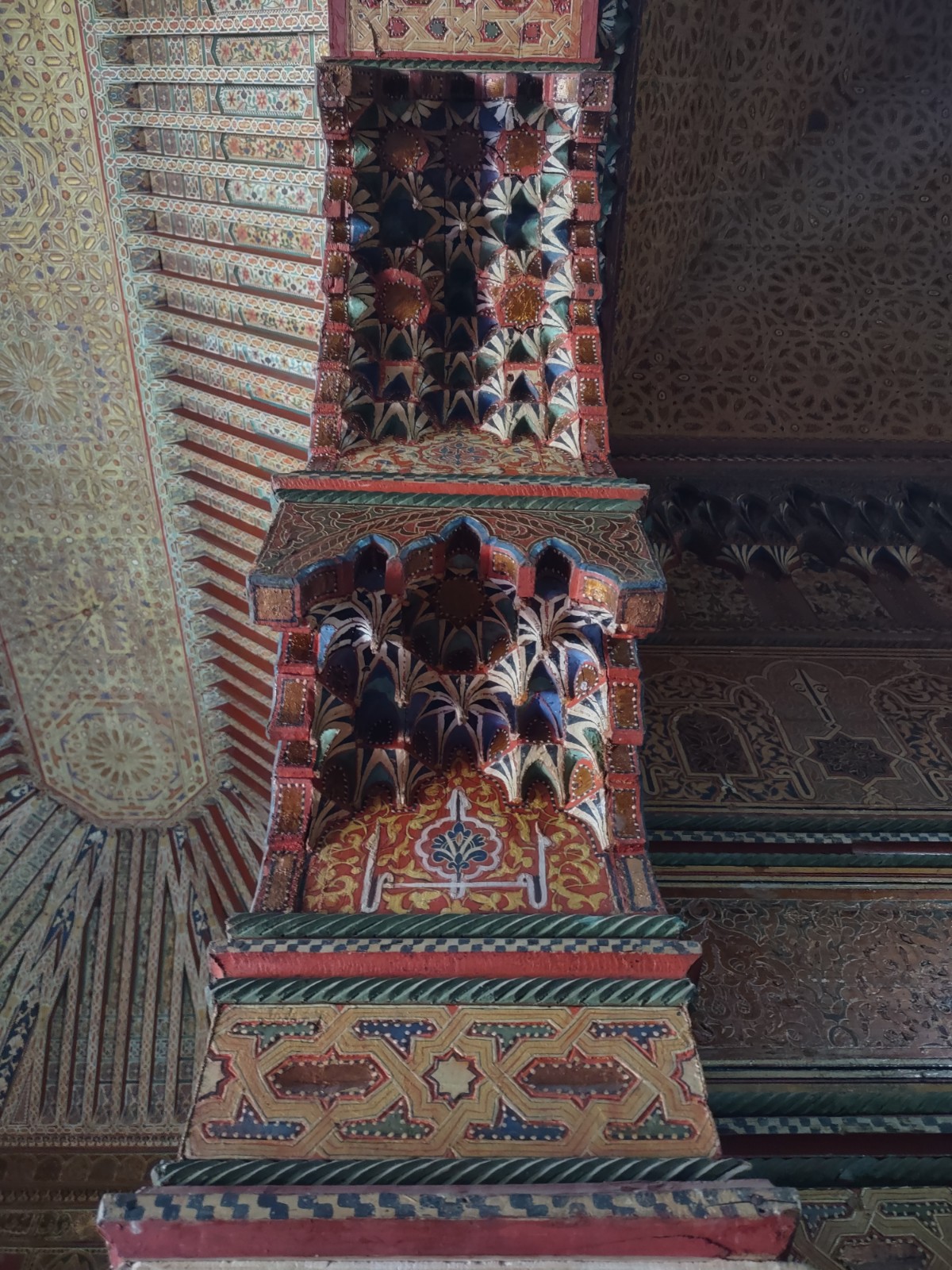
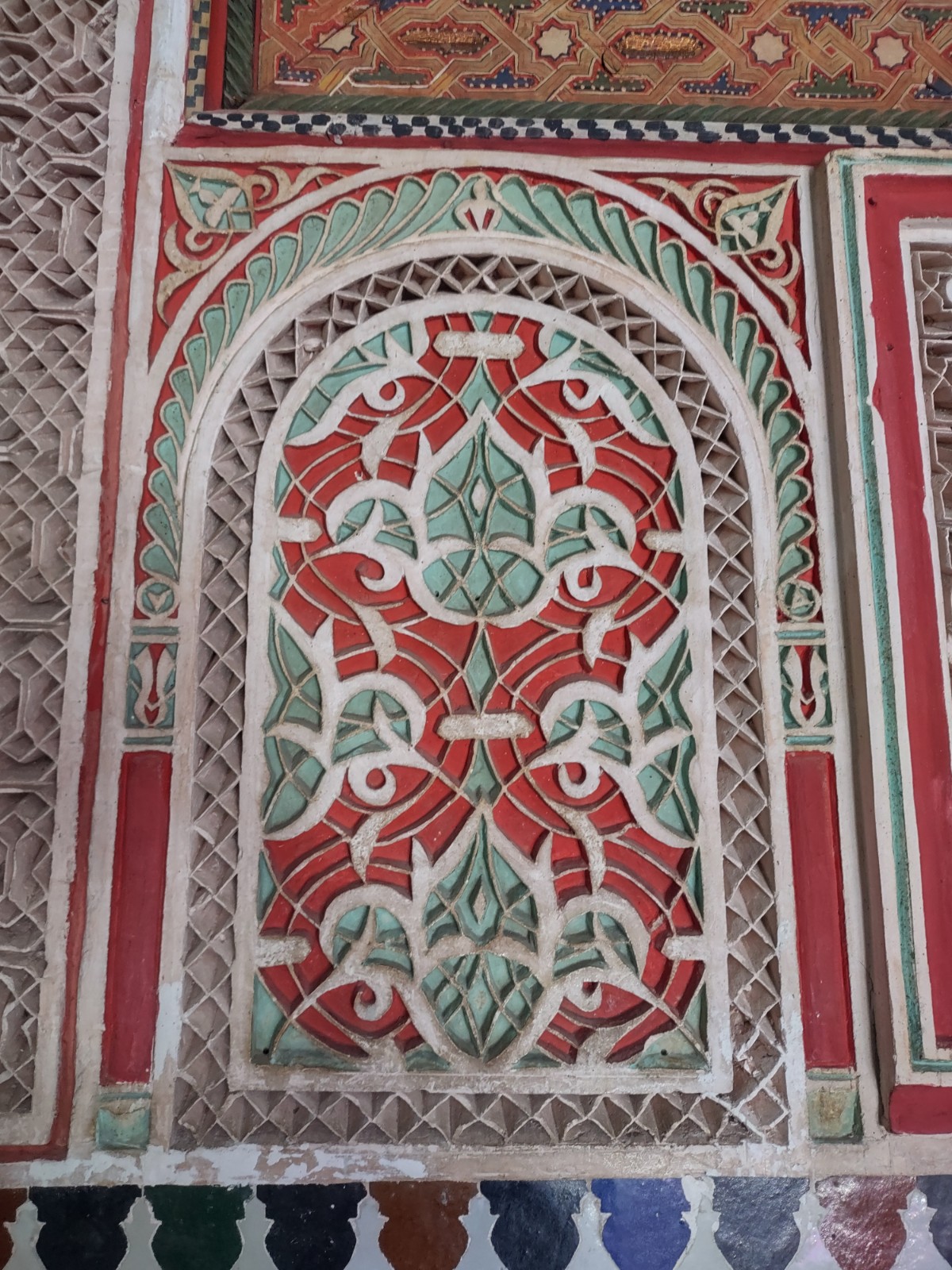
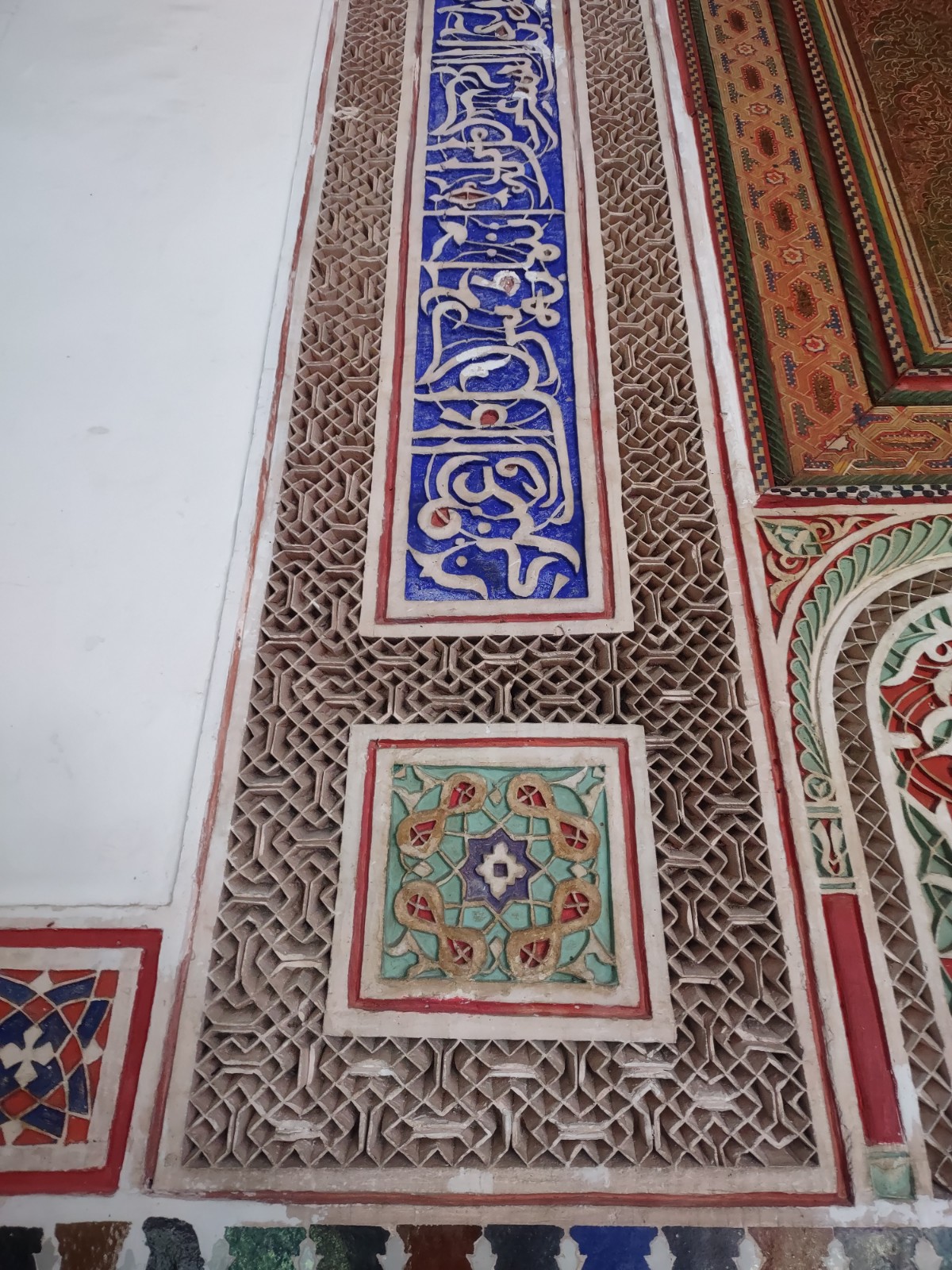
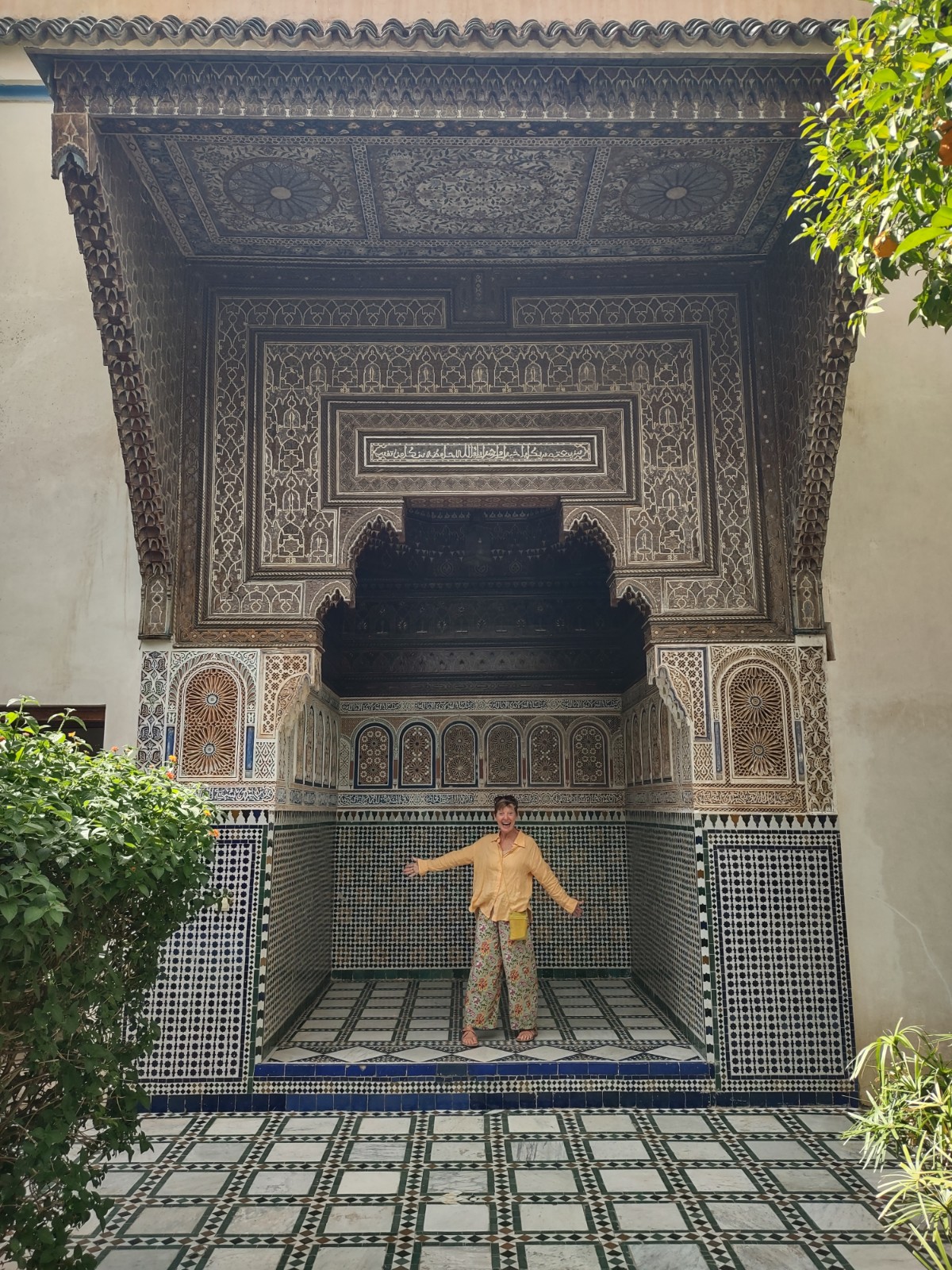
On Monday May 22nd, we visited the Bahia Palace, a nineteenth century structure which has some of the most amazing plaster and tile work we have ever seen (with the possible exception of The Alhambra in Granada Spain, also a Muslim palace). We visited the Bahia Palace in 2011 and were so taken with it that, when we came across it in our wanderings, we thought it was worth another go. We were again blown away, as we wandered its many rooms and courtyards, at the beautifully tiled floors and doorways, the beautifully painted ceilings, the stained glass, and the amazingly intricate hand-carved plaster work. Definitely worth a visit!



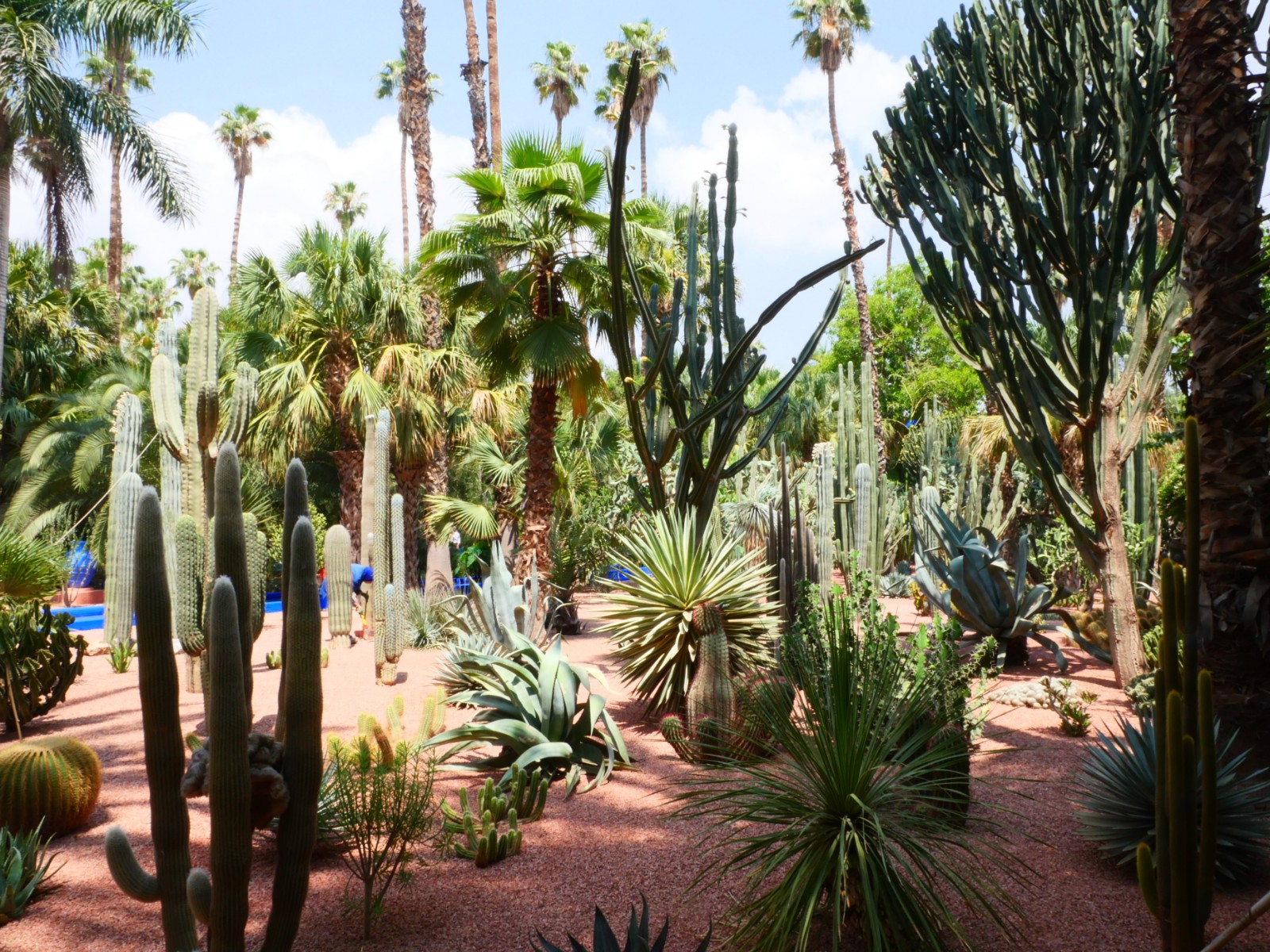
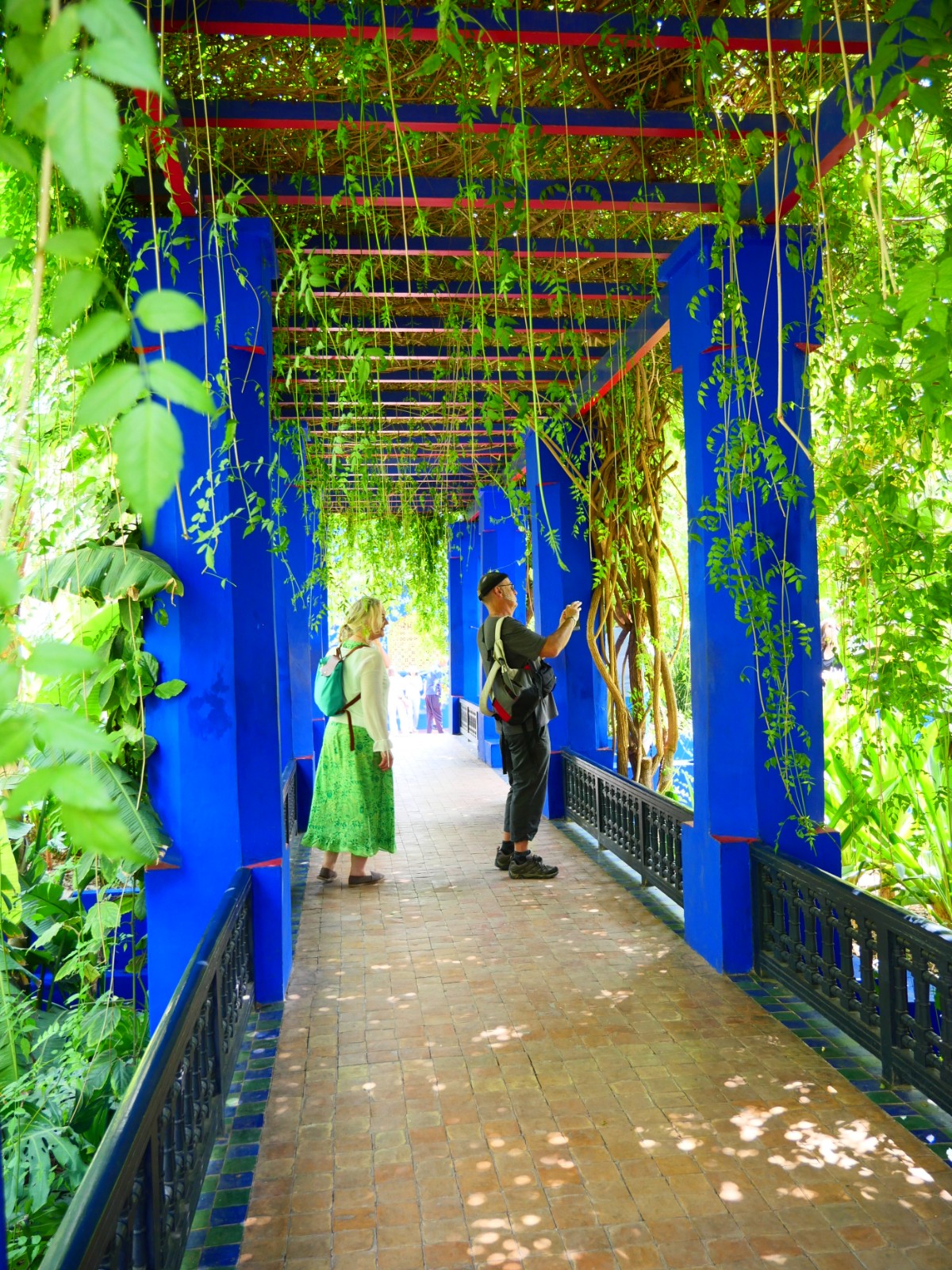
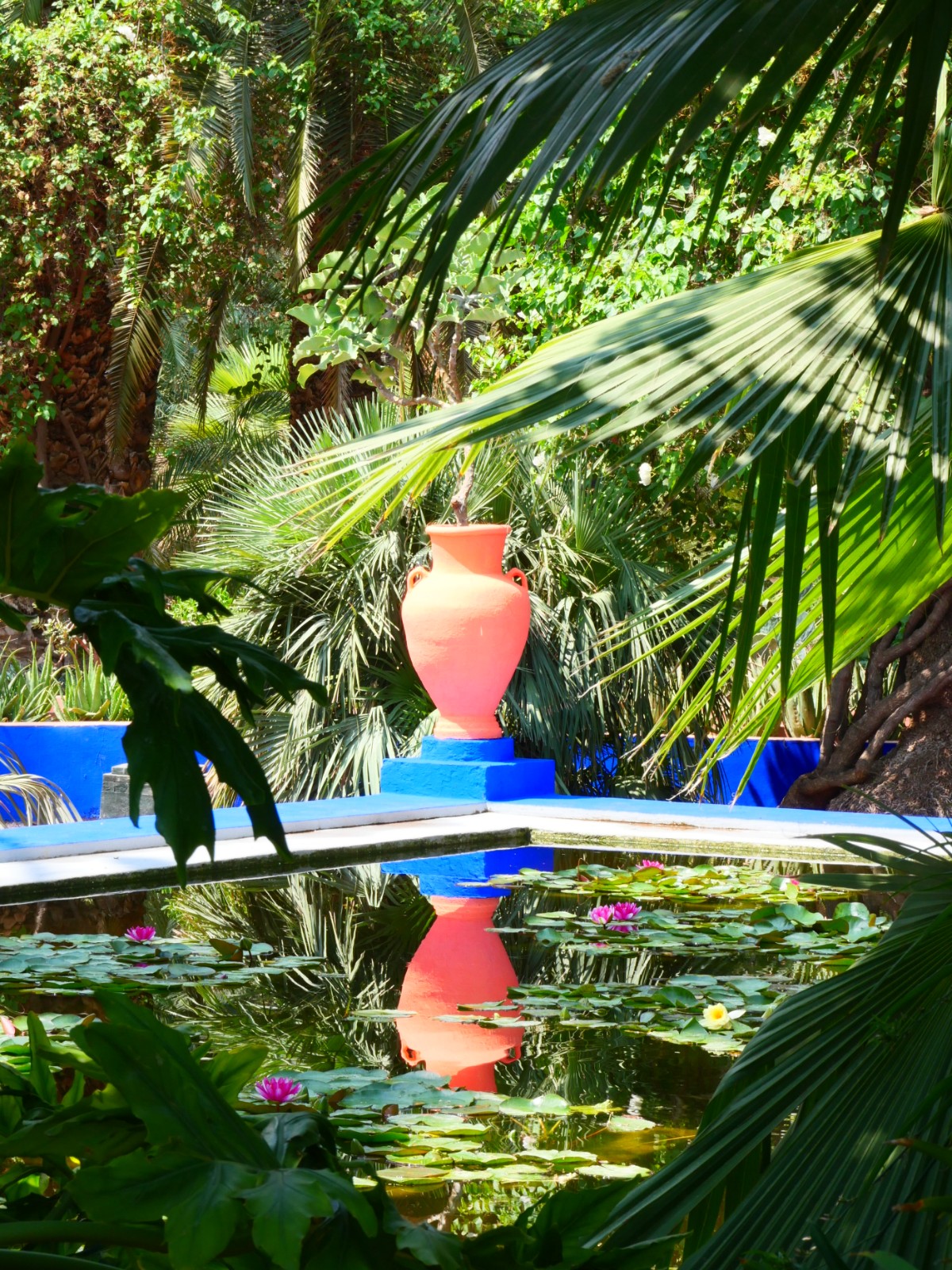
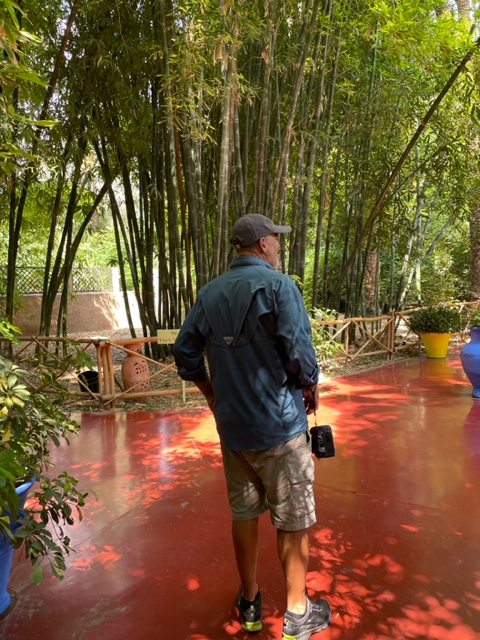
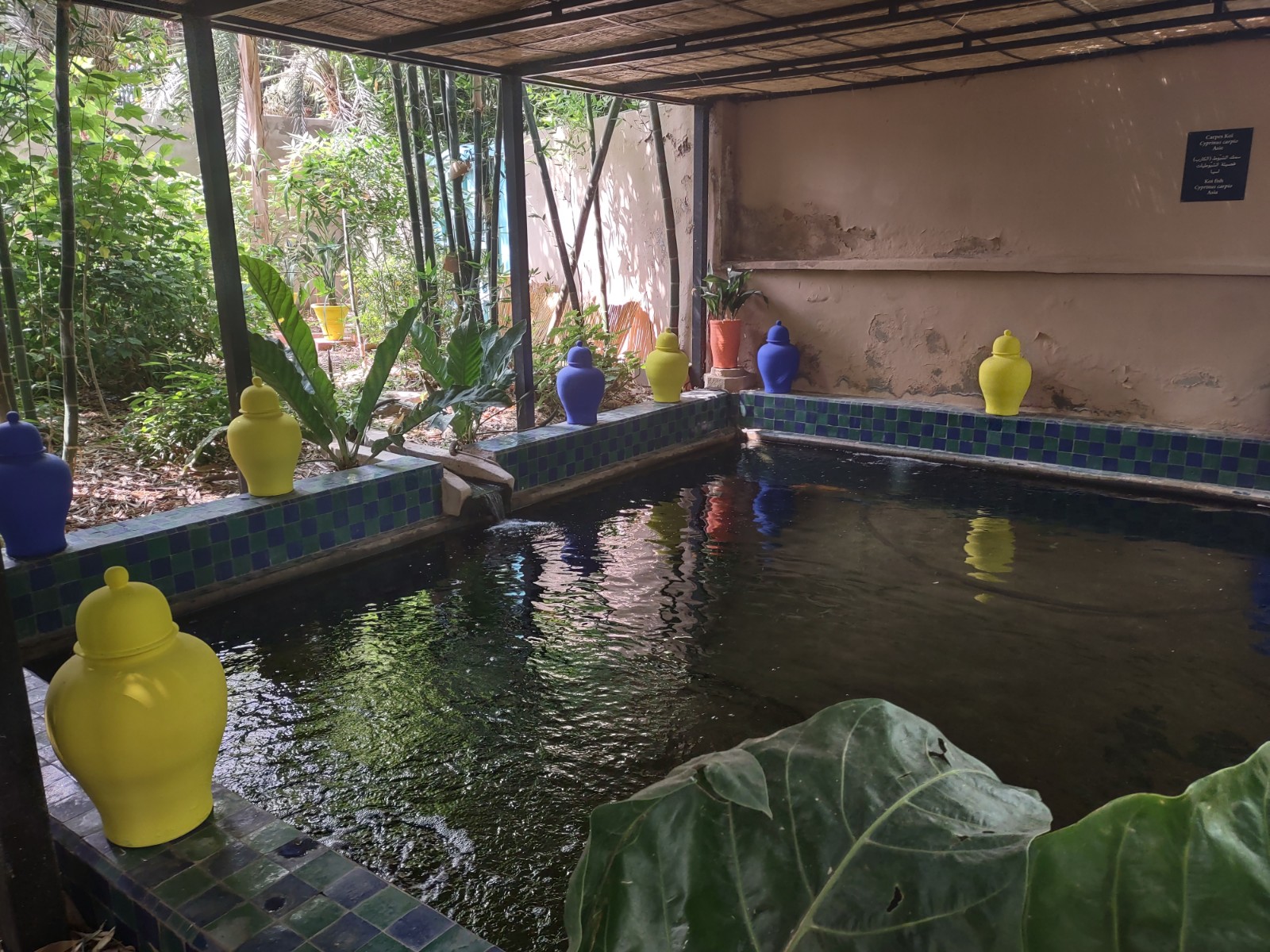
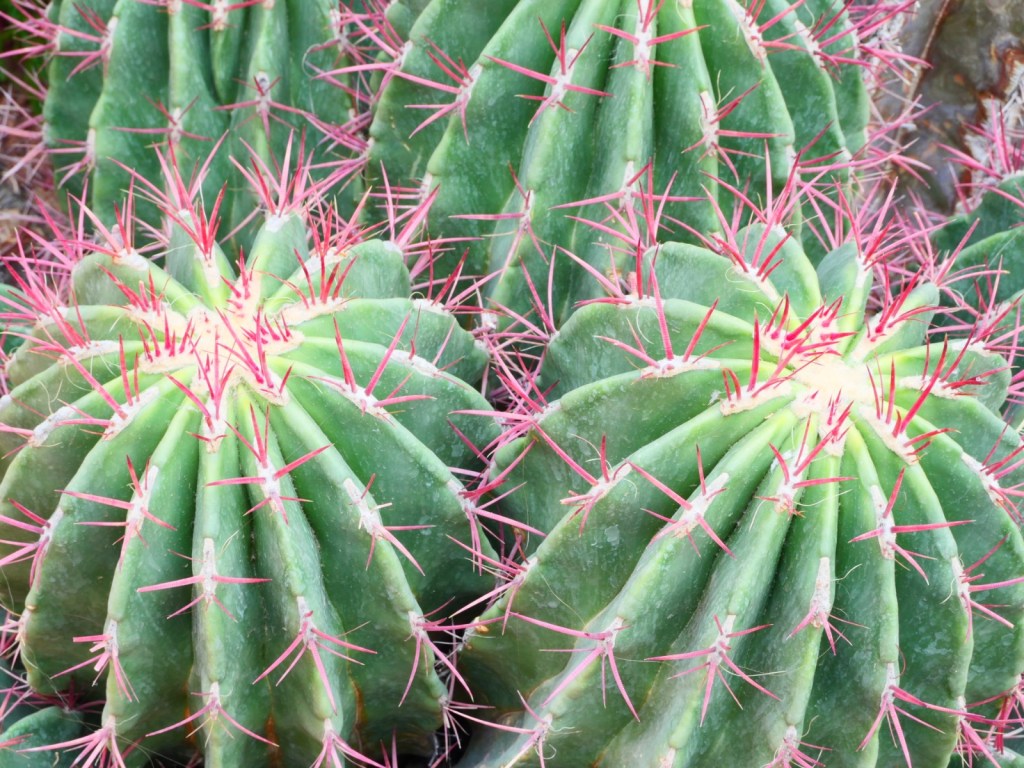
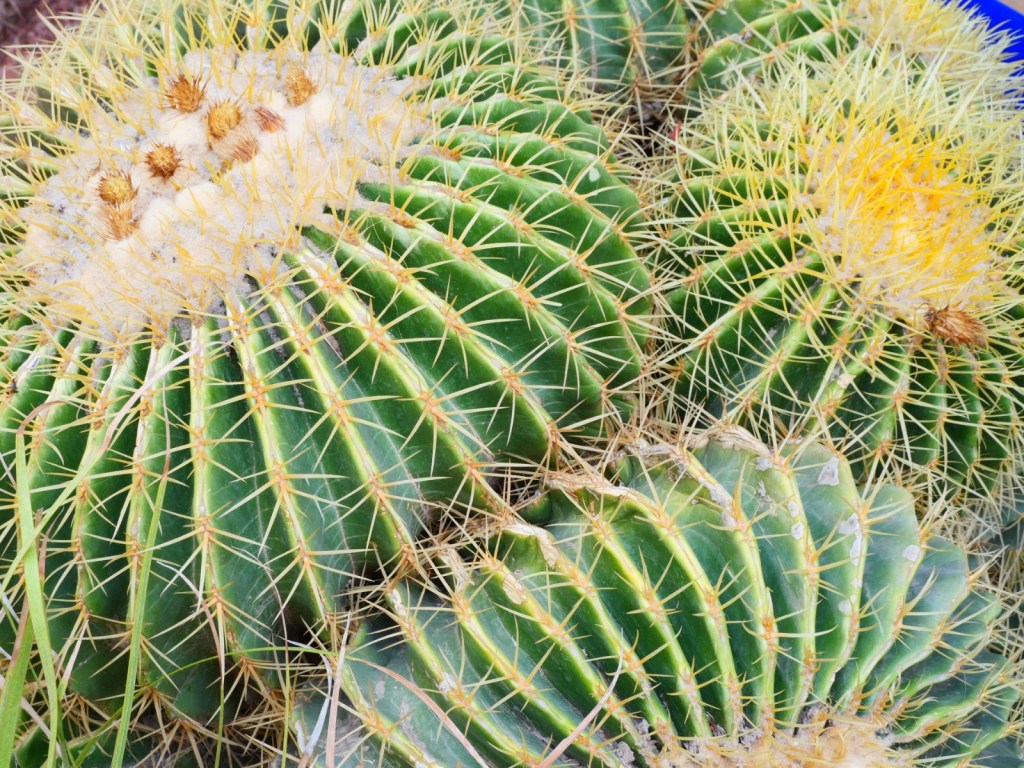
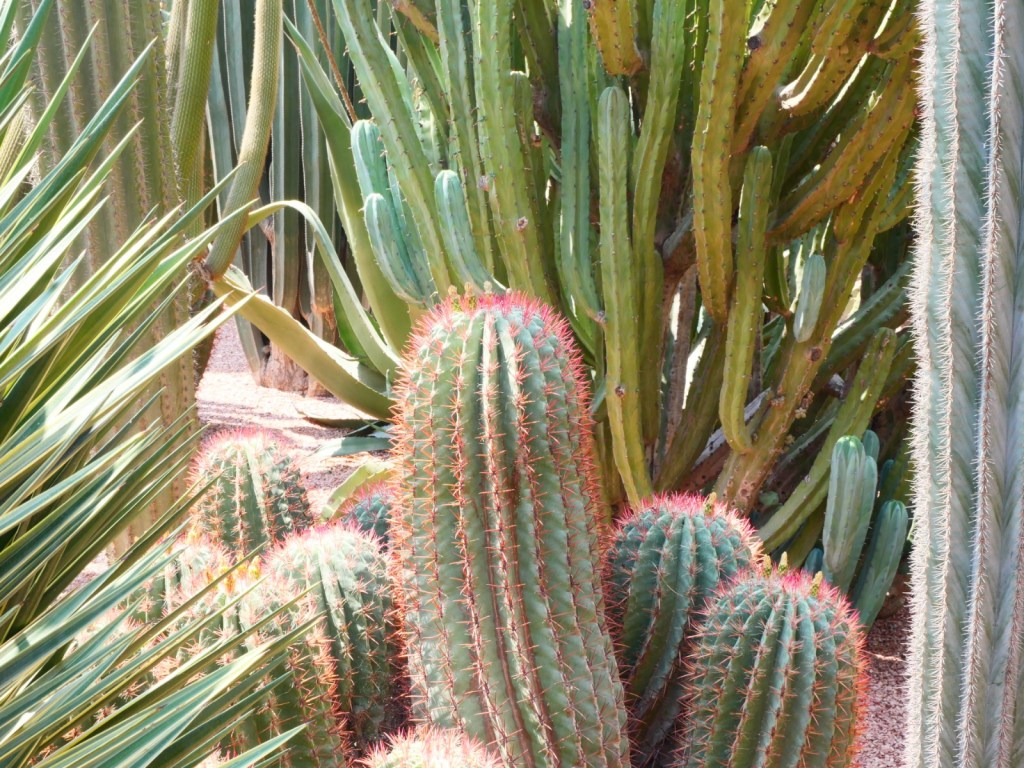
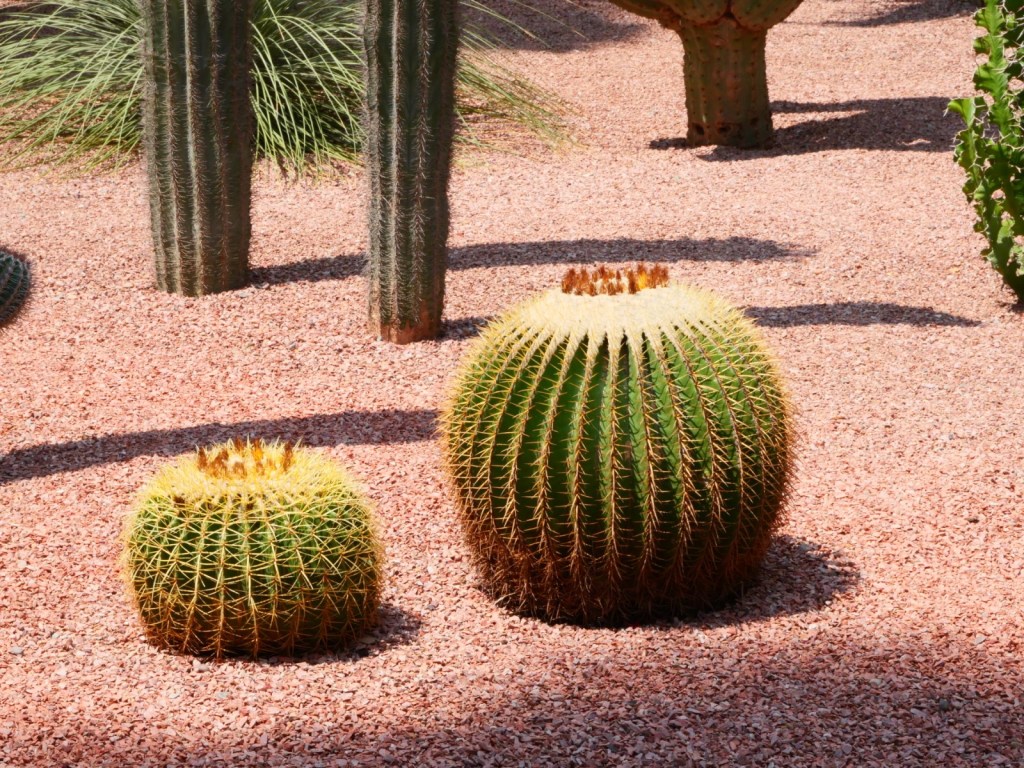
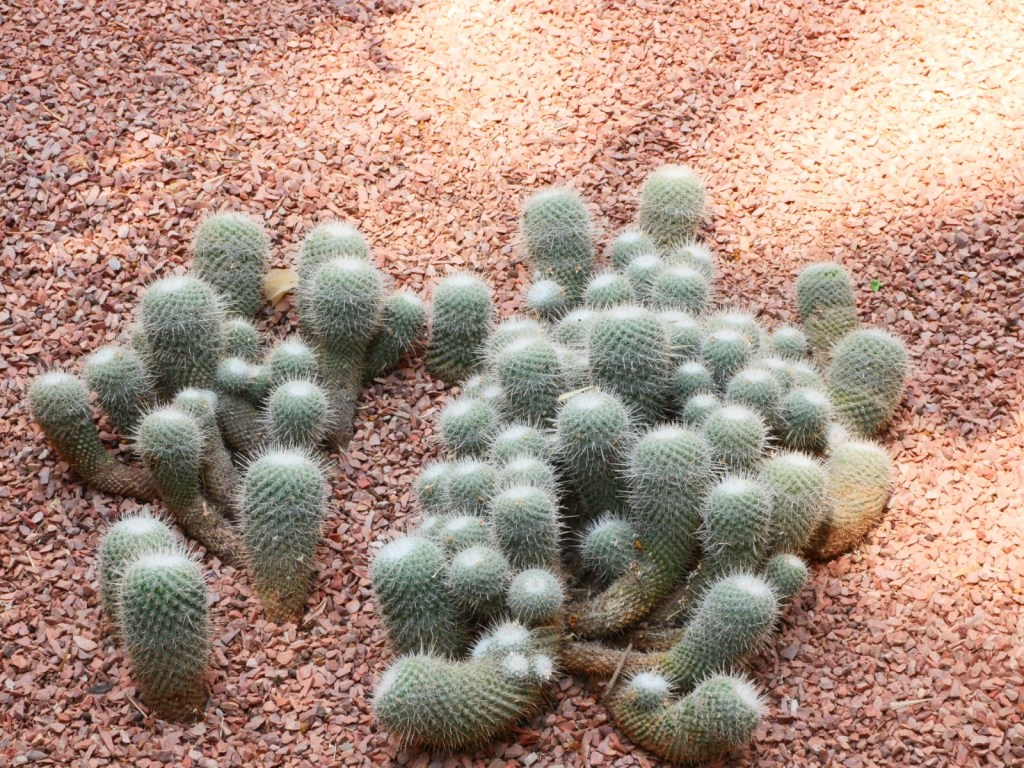
On Tuesday May 23rd, we ventured outside of the Medina to visit the Jardin Majorelle, an amazing garden of dessert plant species which was created by French artist and Orientalist Jacques Majorelle over a forty year period starting in 1923, but which fell into disuse and disrepair in later years. The property was purchased in the 1980’s by fashion designers Yves Saint-Laurent and Pierre Berge who restored it and then some. We found it to be a beautiful and amazing place but very crowded, despite its distance from the Medina. Unfortunately, Instagram has also discovered the Jardins and we found that many of the people there were more interested in taking their own pictures than actually seeing the garden. Ah well…






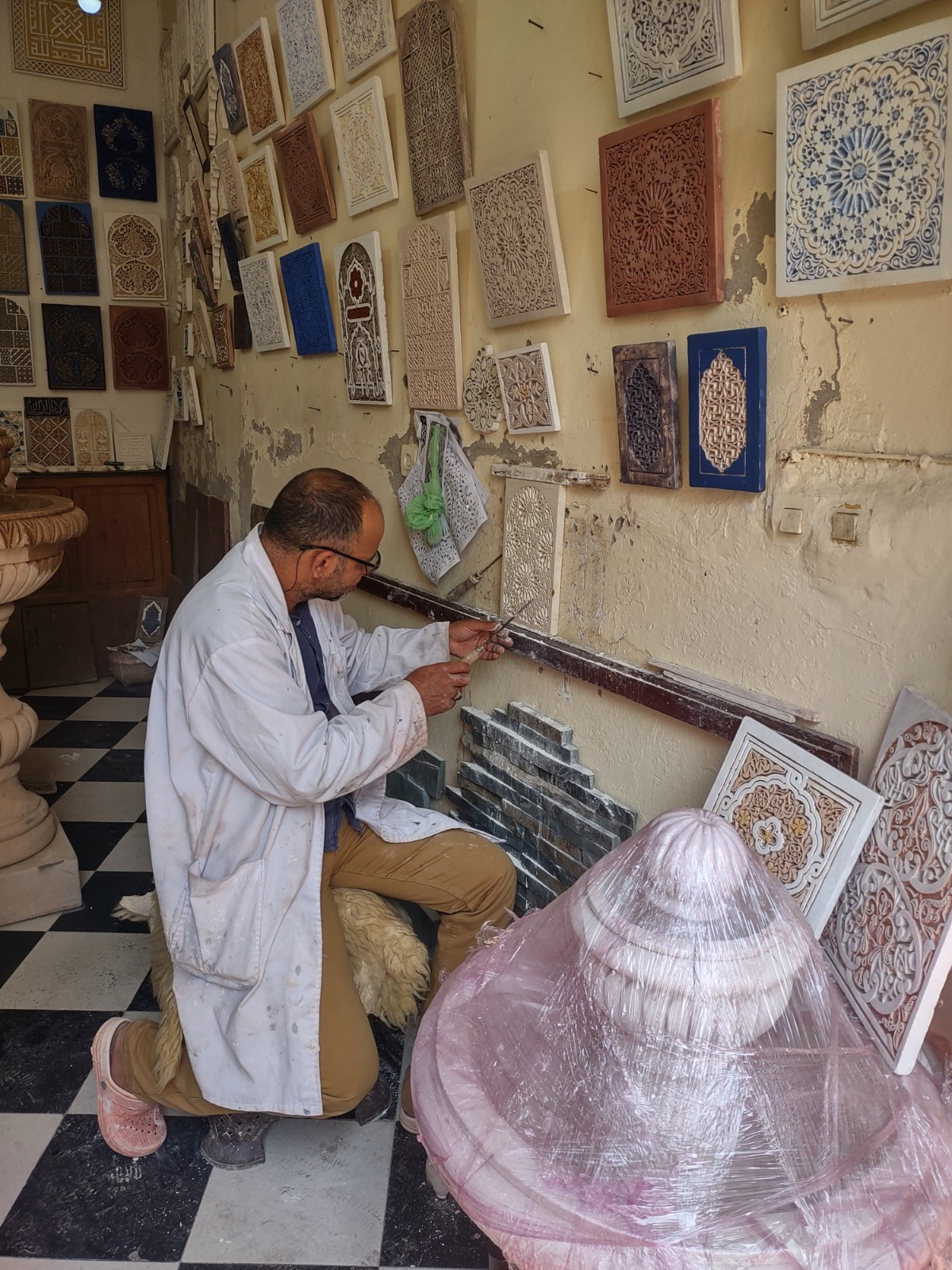
Again compensating with food, we stopped for some very good and very inexpensive falafel and hummus at a very small place we had spotted earlier on our way out of the Medina and then wandered the shops again. Amongst many other lovely things, we saw some amazing hand-made brass light fixtures with beautiful patterns (which would eventually prove to be our packing downfall here). We also stopped in a shop to watch an artisan working on a carved plaster panel similar to the ornamental plaster at the Bahia Palace. Seeing how this work is done, it was hard to imagine the amount of time, effort, and attention to detail which must have been necessary to execute it at the scale of the Bahia Palace. Thoroughly impressed, we purchased a small panel with a Muslim blessing in Arabic as a memento of our stay in Marrakesh.
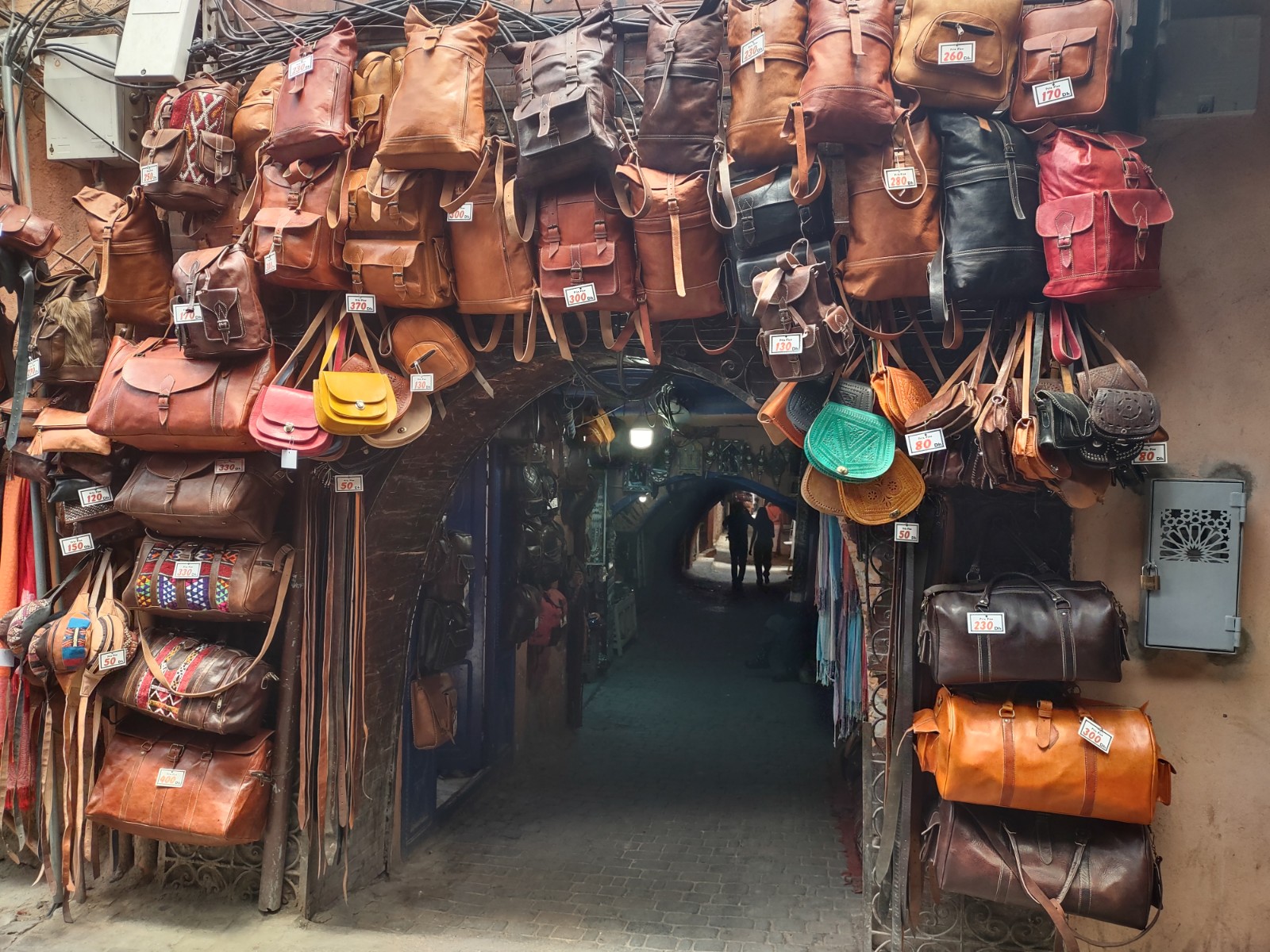
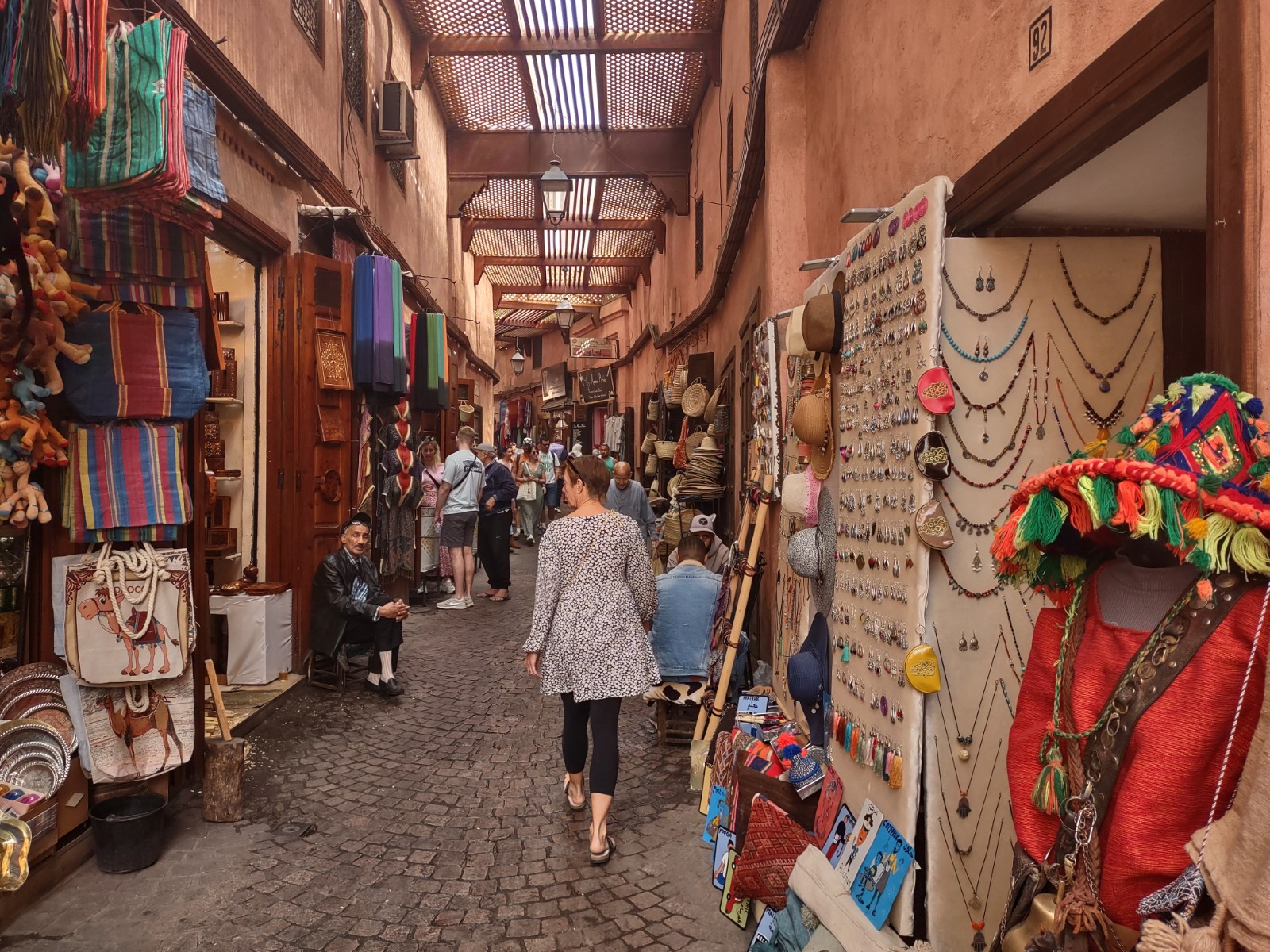
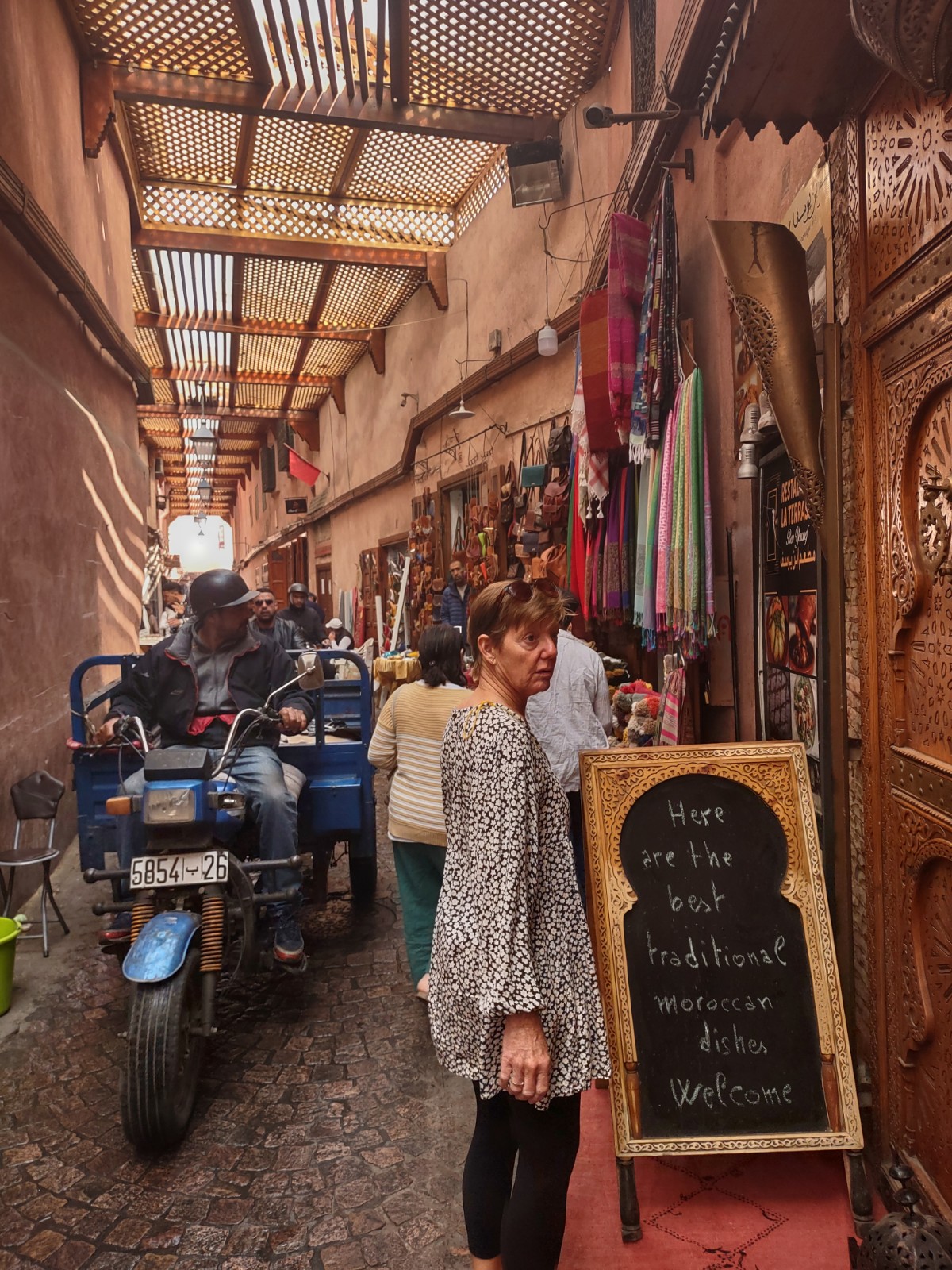
On Wednesday May 24th, our last full day in Marrakesh, we ventured into the Souks, which are the most intense shopping experience available here. The Souks are a labyrinth of small, covered alleyways and alcoves, reminiscent of the Grand Bazaar in Istanbul, with specific neighborhoods specializing in particular items – leather, carpets, shoes, wood carvings, ceramics, etc. In my mind I imagine the Souks of Marrakesh as a black hole with so much gravitational force that once you are sucked in it is almost impossible to escape. Google maps doesn’t even try to depict their layout and you just kind of have to give yourself up to them with the hope that you will, at some point, find your way back out again. After quite a bit of wandering and window shopping, Colleen purchased a nice collection of hand-made wooden spoons (for a purpose to be determined in the future) and we eventually did find our way out.
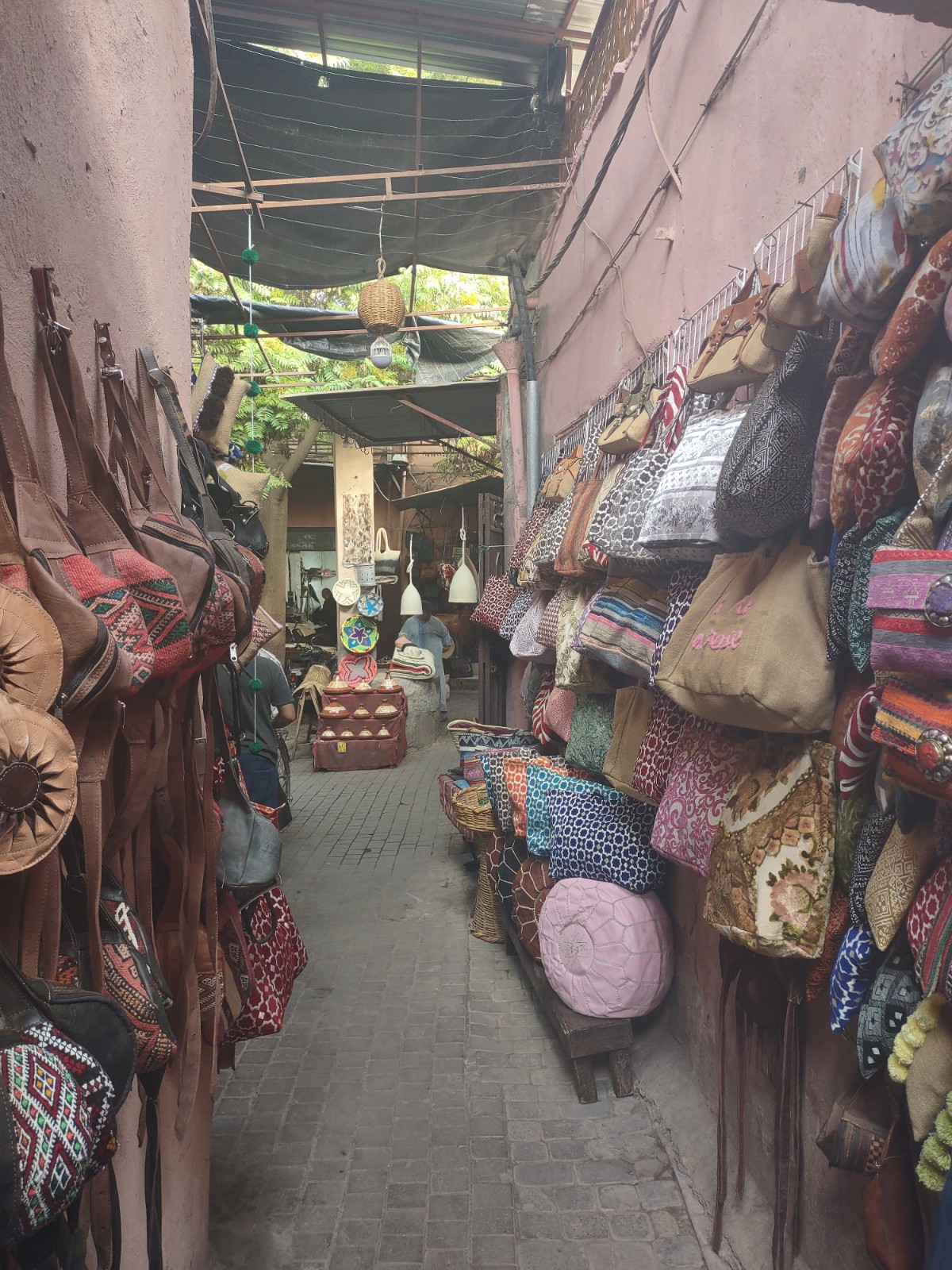
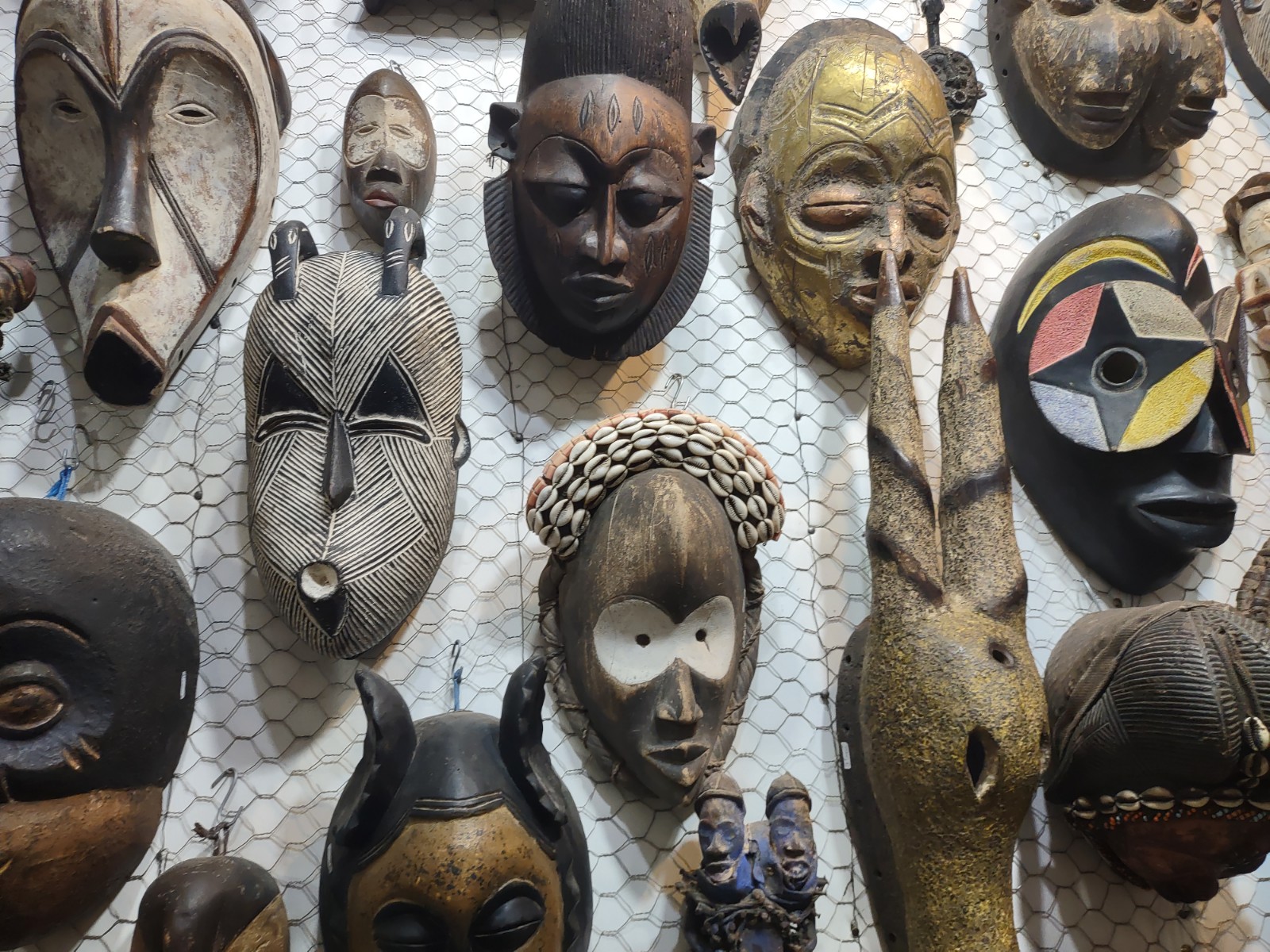
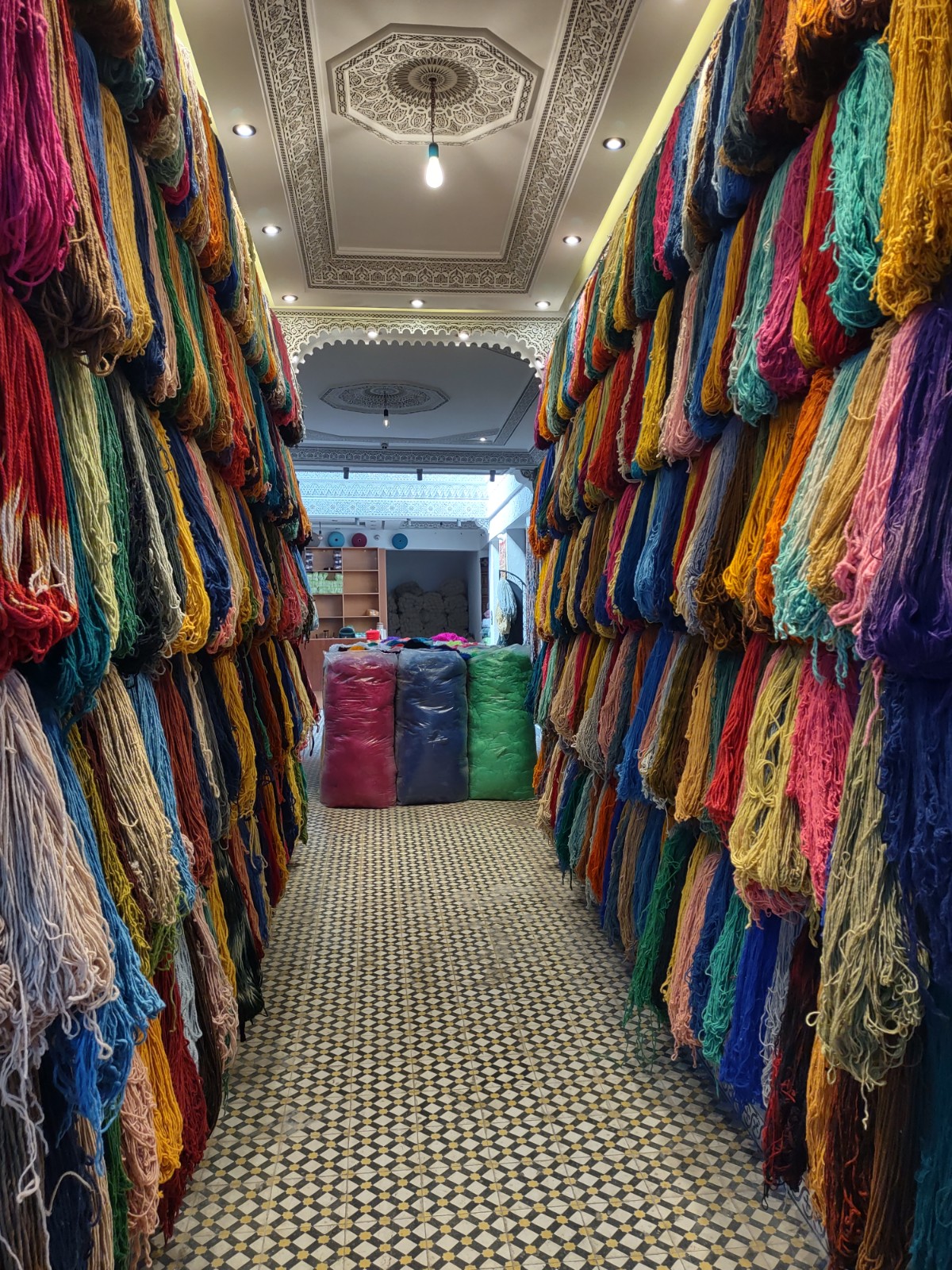
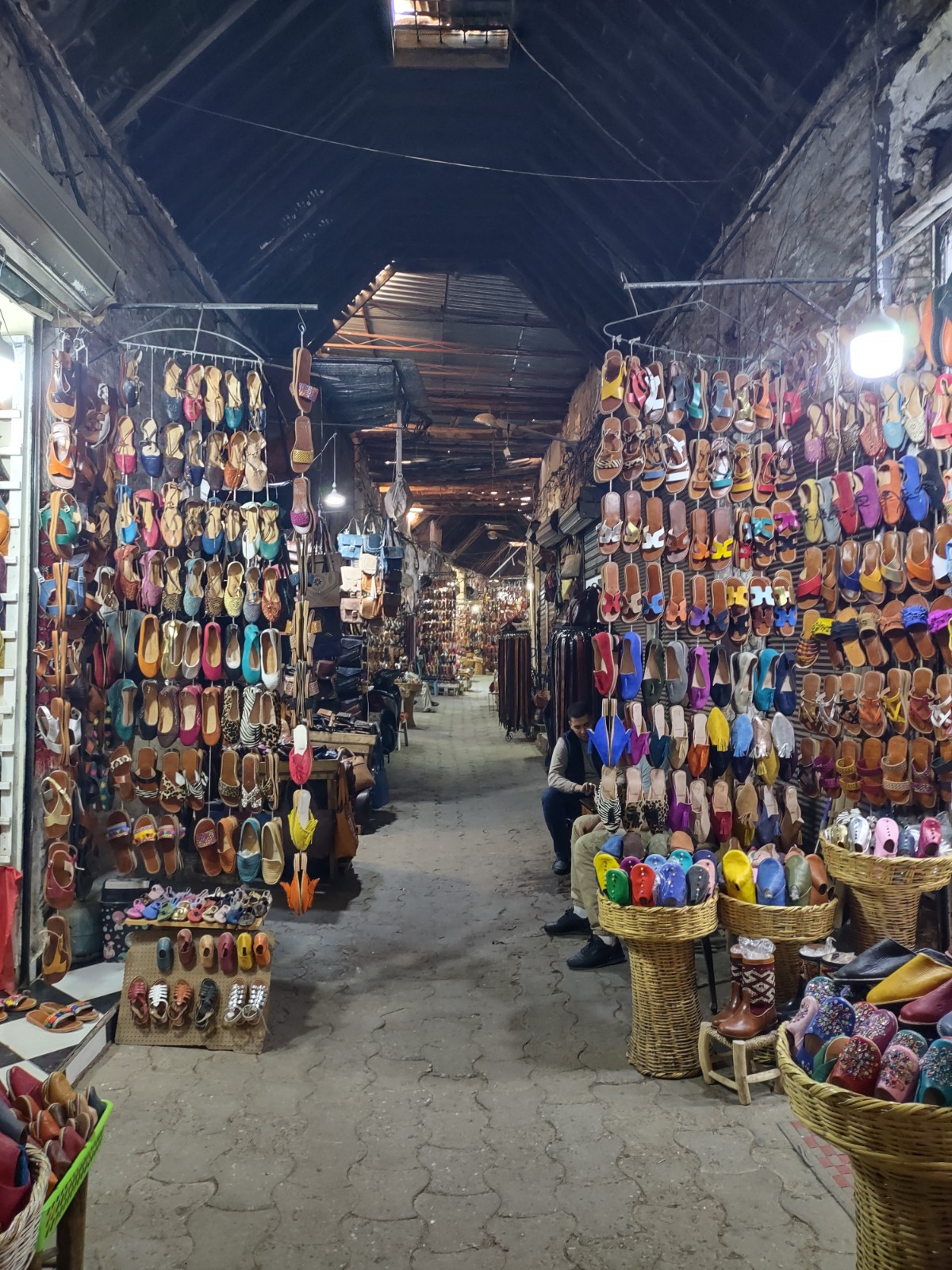
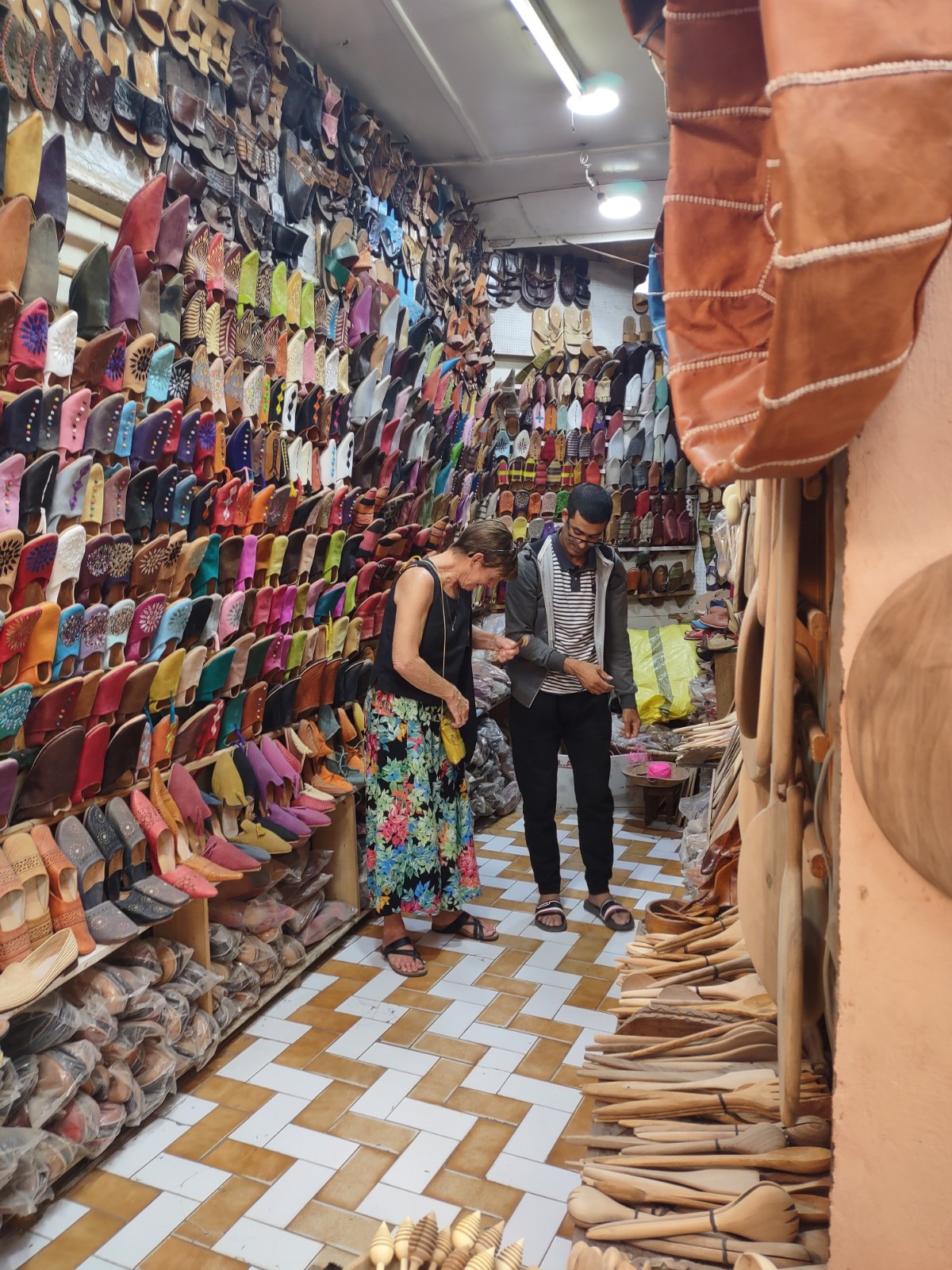
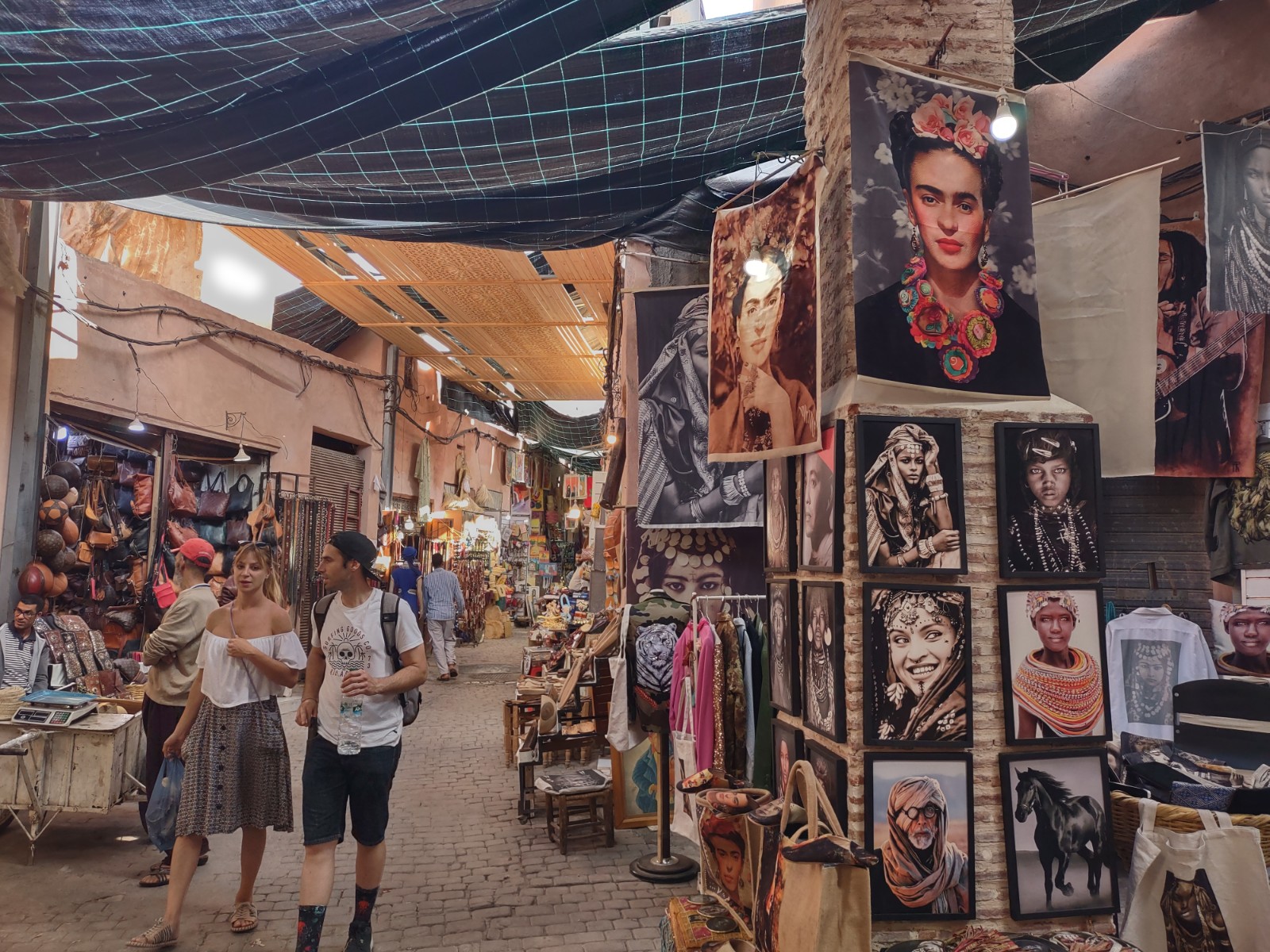

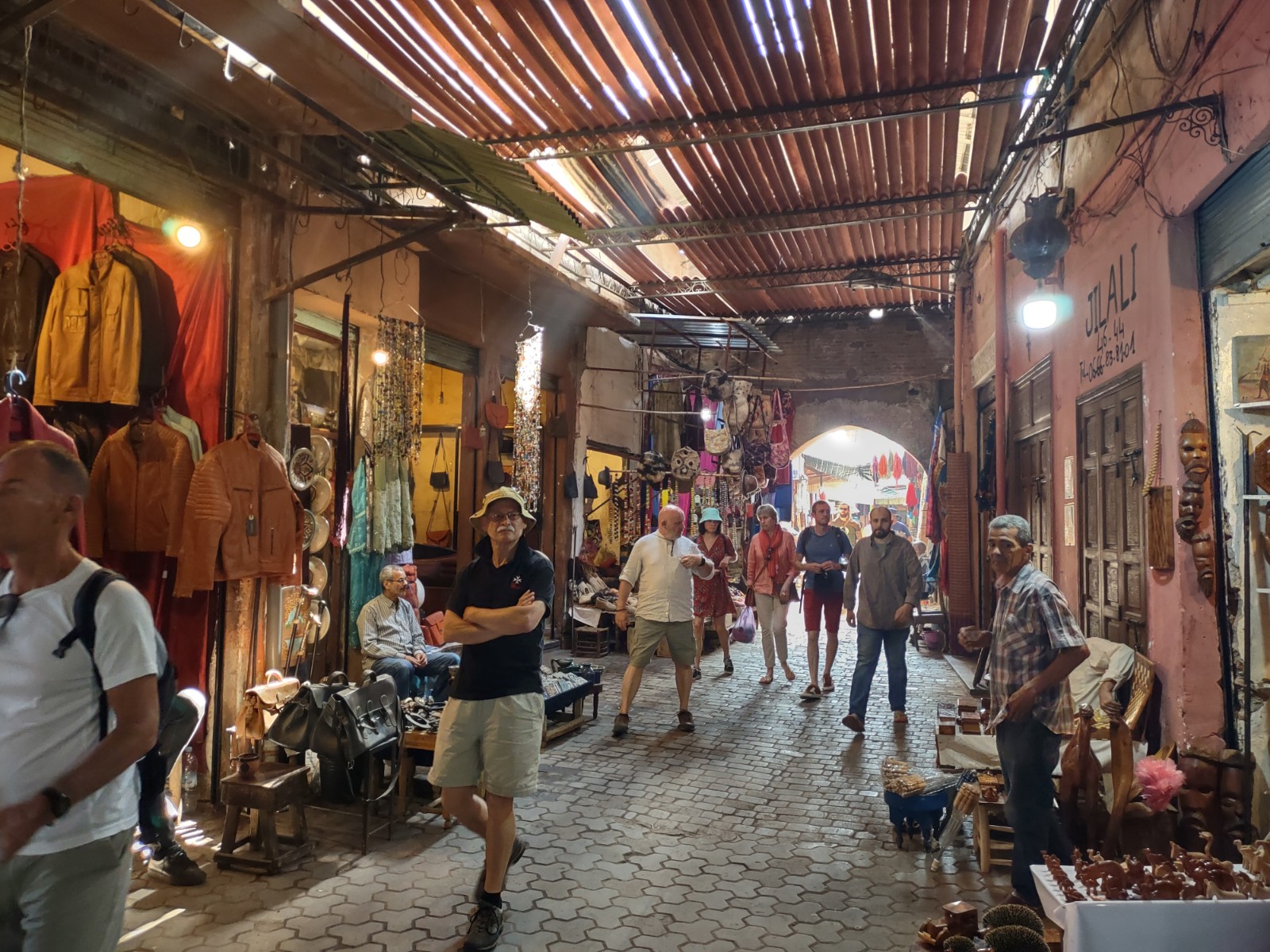
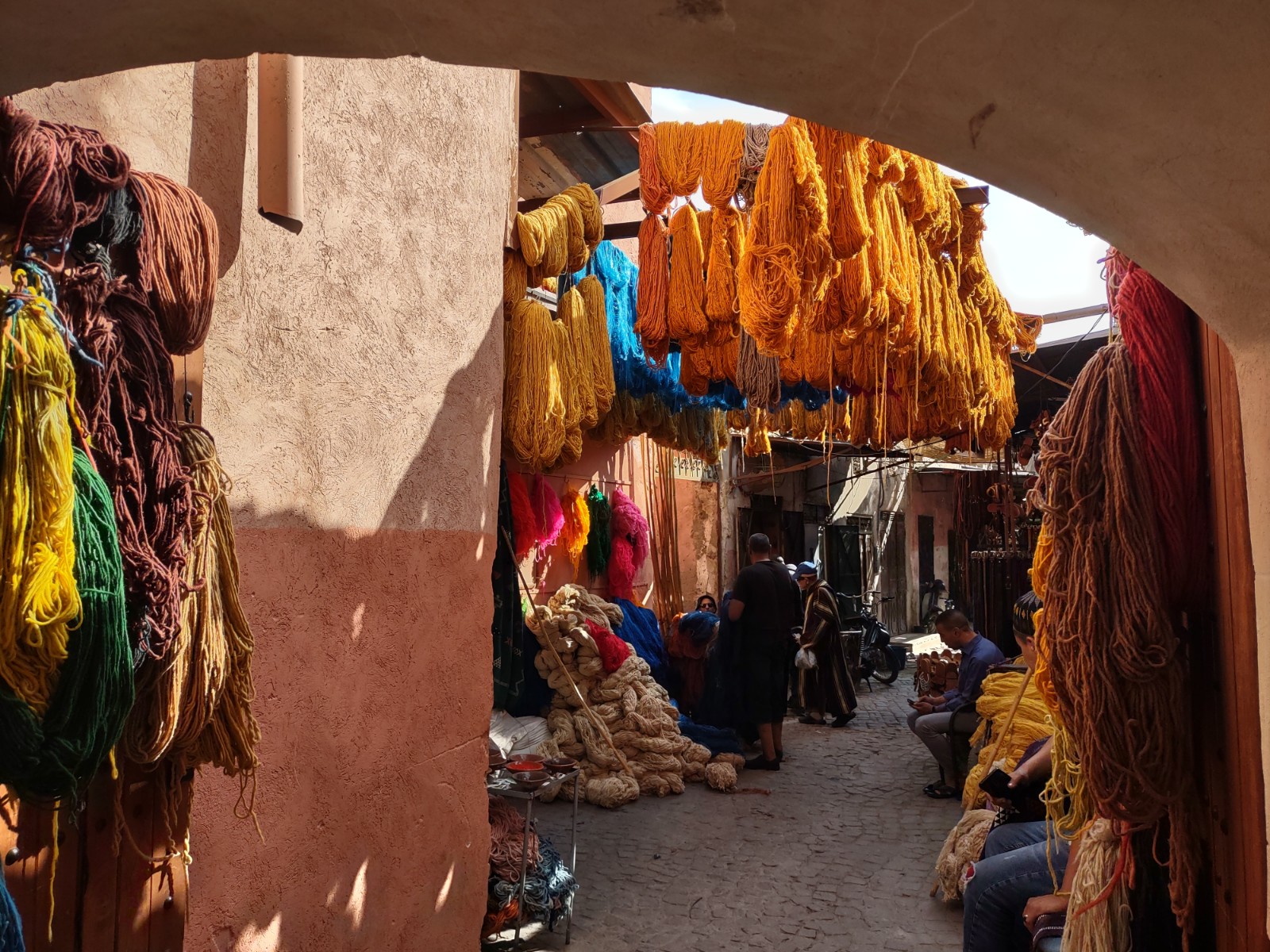
We had at some point during the prior 24 hours convinced ourselves that we could find a way to send home a package from Tangier when we arrived there, and so had decided that we were going to buy one of the brass light fixtures at the shop we had visited the day before. After retracing our steps from the previous day a couple of times we found what we thought to be the shop but discovered that it had already closed. With a mixture of disappointment and relief we turned for home but, as we rounded a corner near our riad, there it was! We had already decided that we liked a particular pattern called a “Berber tattoo” and narrowed our choices down to three lamps in this pattern. We ended up deciding on the largest of the three (sorry, made the same mistake in Burano, Italy and failed to take a picture before it was packed up) which Colleen felt comfortable she could carry in her “satellite bag” until we got to Fes and could ship it home.
Of course, now that we are committed to sending a package home, the shopping flood gates are open again! So, off to Essaouira, our next stop in Morocco, for more wandering, relaxing, and shopping!
 Burning the Inheritance
Leave a comment