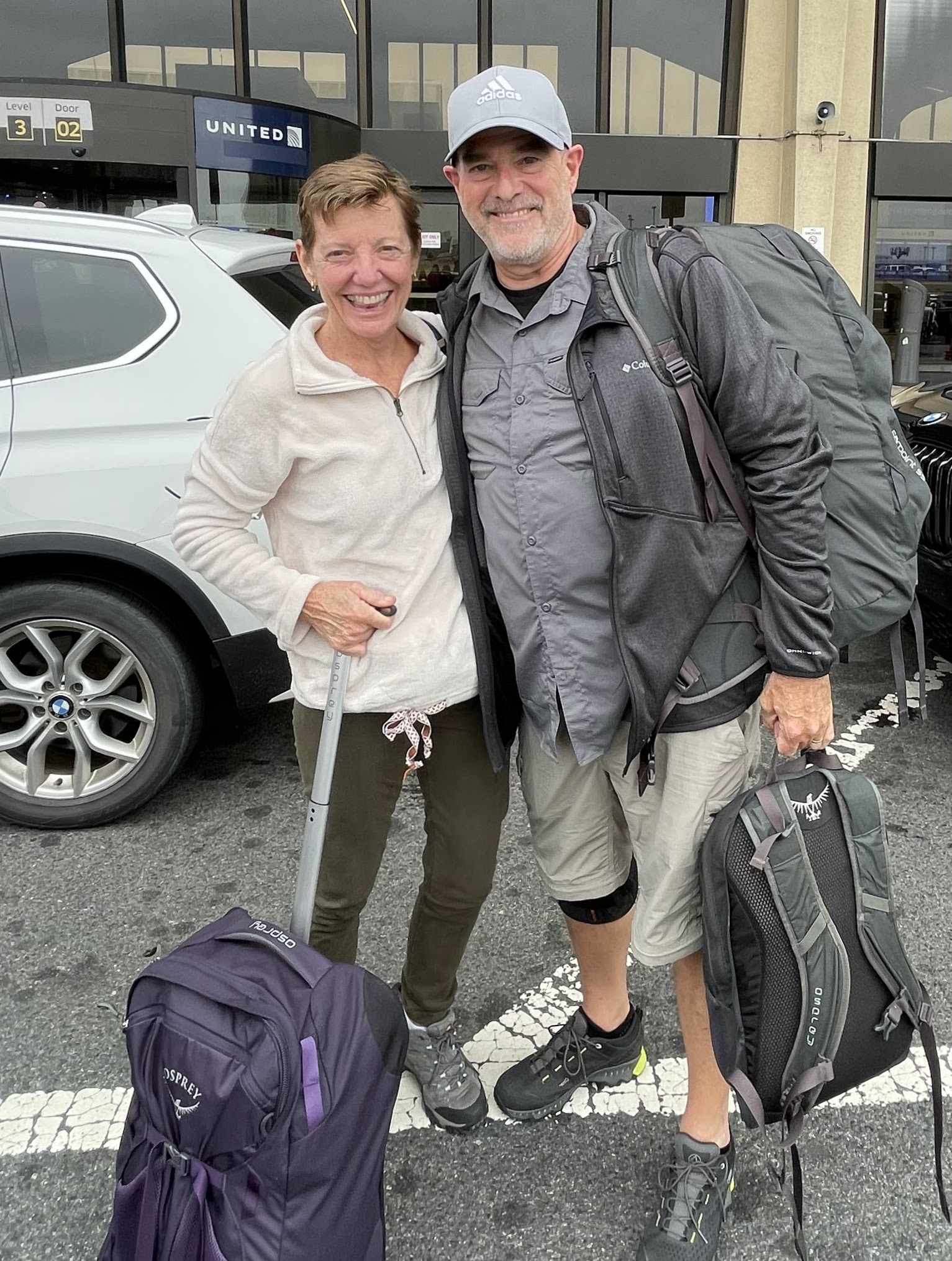
After a pretty busy swing through Northern Europe concluding in 16 jam-packed days in Paris, we were looking for some relaxing time. Our original itinerary had anticipated spending 3 or 4 weeks in Valencia, Spain, but we learned the hard way that when you plan on staying somewhere for more than a few days, it is best to book in advance. (All it takes is someone booking one weekend and the block of time you were looking for is no longer available.) So, after finding nothing we really liked in Valencia, we began looking up and down the Spanish Mediterranean coast and came across the town of Denia, Spain.
You’ve probably never heard of Denia (we hadn’t), but it is a small town located on the Spanish Costa Blanca, about 1-1/2 hours south of Valencia. It looked like the perfect place to chill out a bit and so, hoping for some warmer weather than what we had seen thus far, we booked what looked to be a great apartment for the 3 weeks prior to our scheduled rendezvous with friends from the U.S. in Scotland.
Getting to Denia
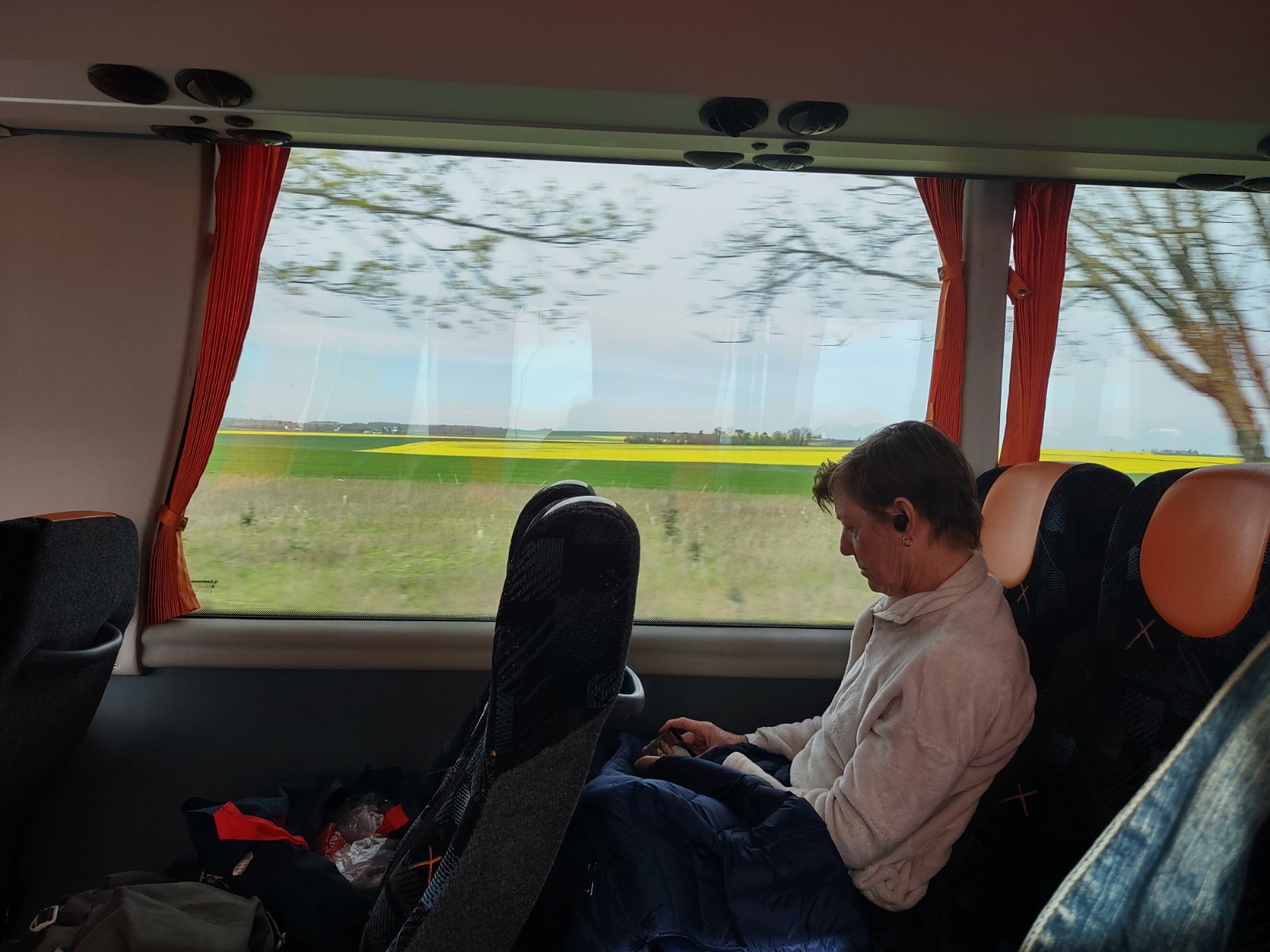
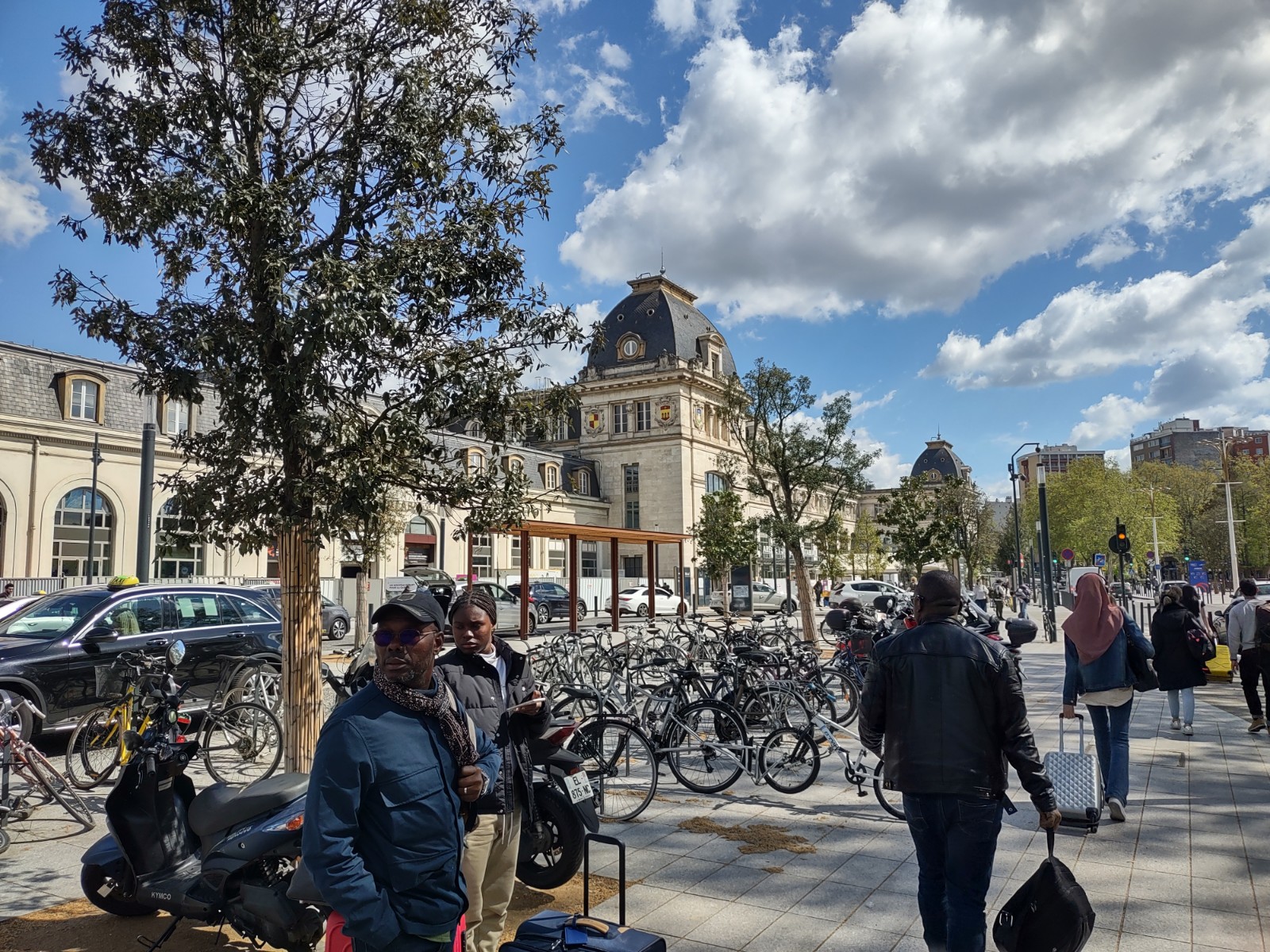
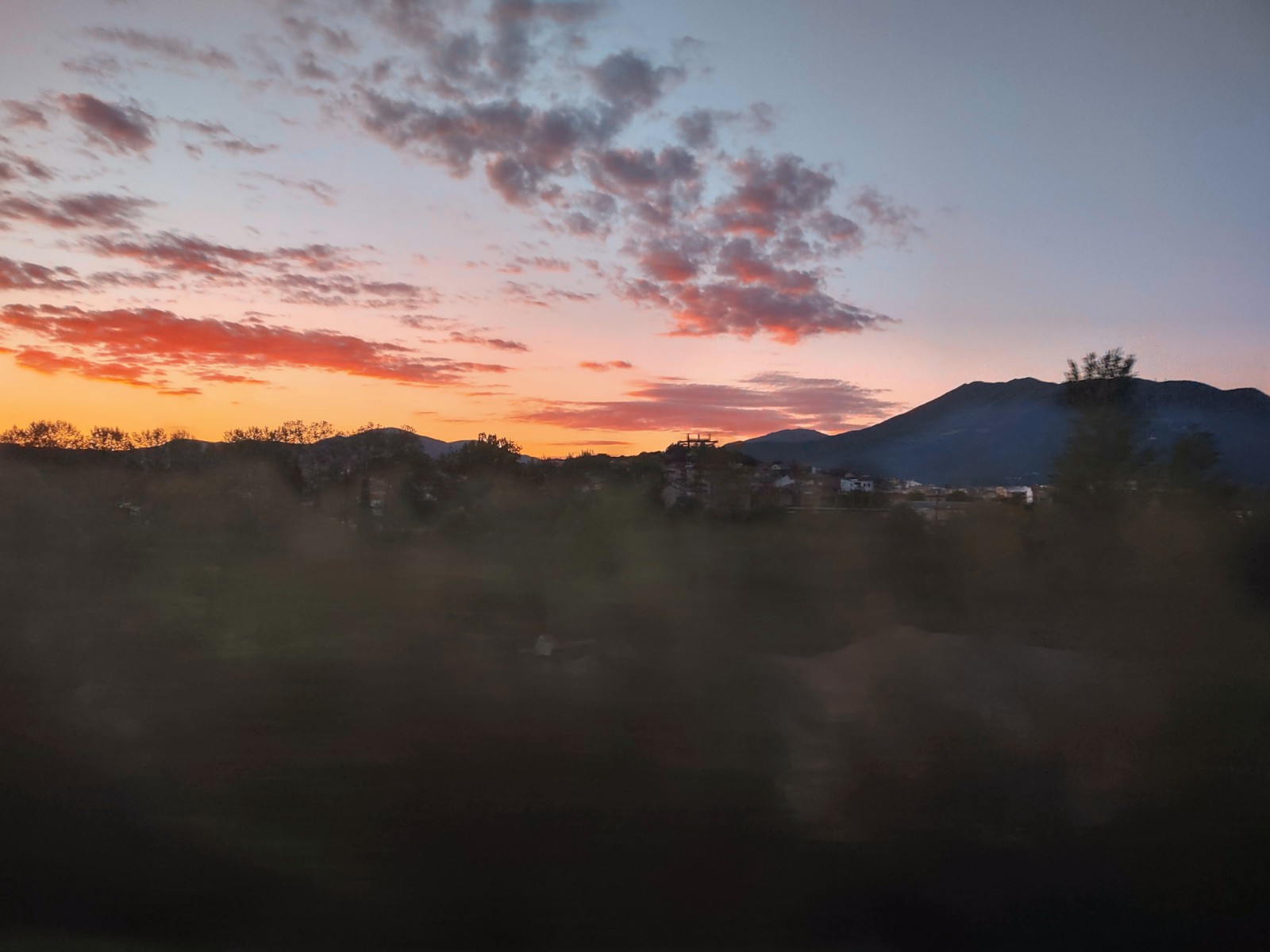
We travelled to Denia by bus from Paris. The first leg of the trip, which started early on a Sunday morning (April 16th), was a 12 hour ride to Barcelona. Although long, the ride was pleasant and comfortable with some interesting scenery including more fields of golden rape seed flowers. We stopped for lunch in Toulouse, which has a beautiful old train station next to the bus terminal and then continued south approaching the Pyrenees mountains as the sun set.


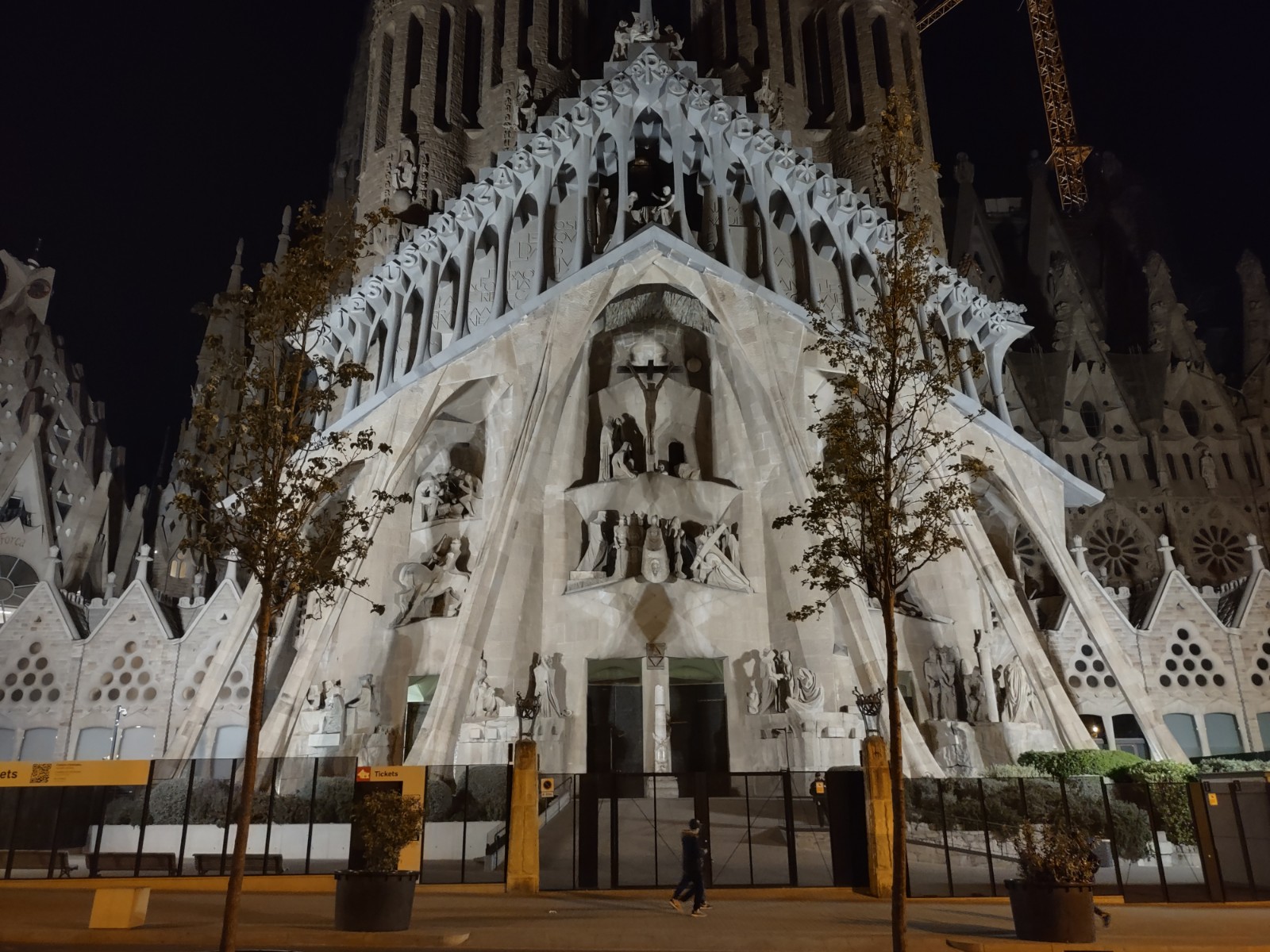
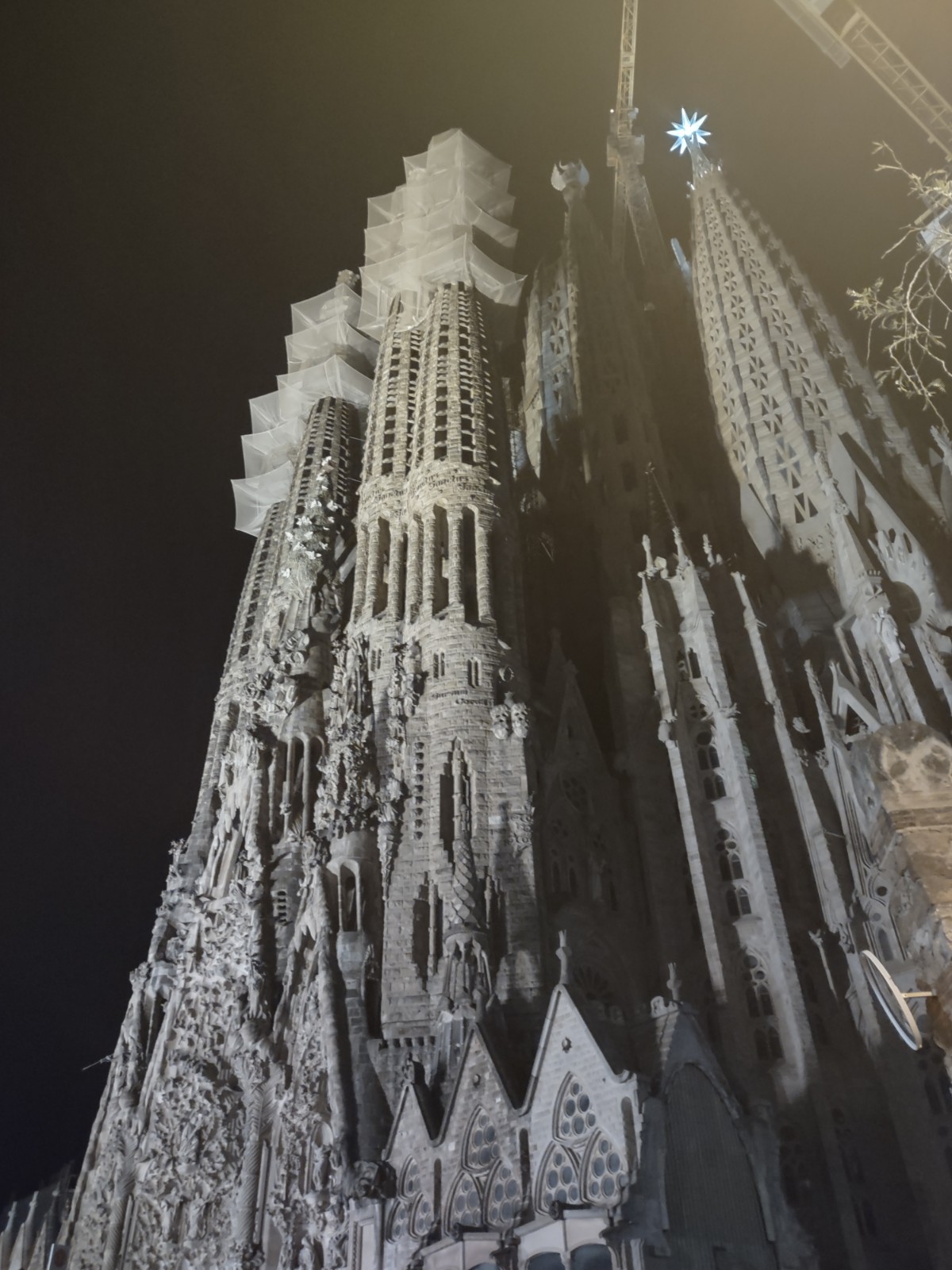
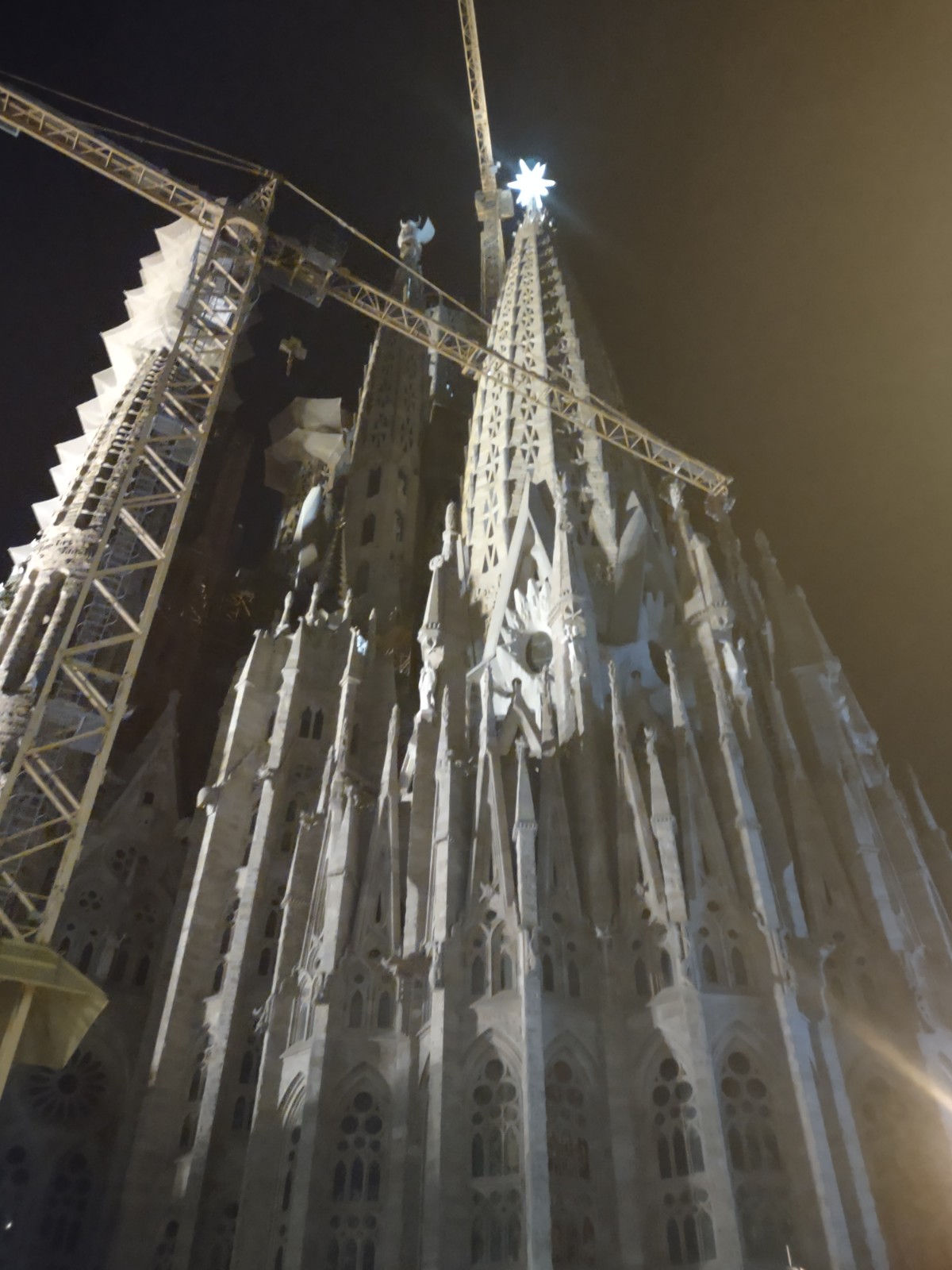
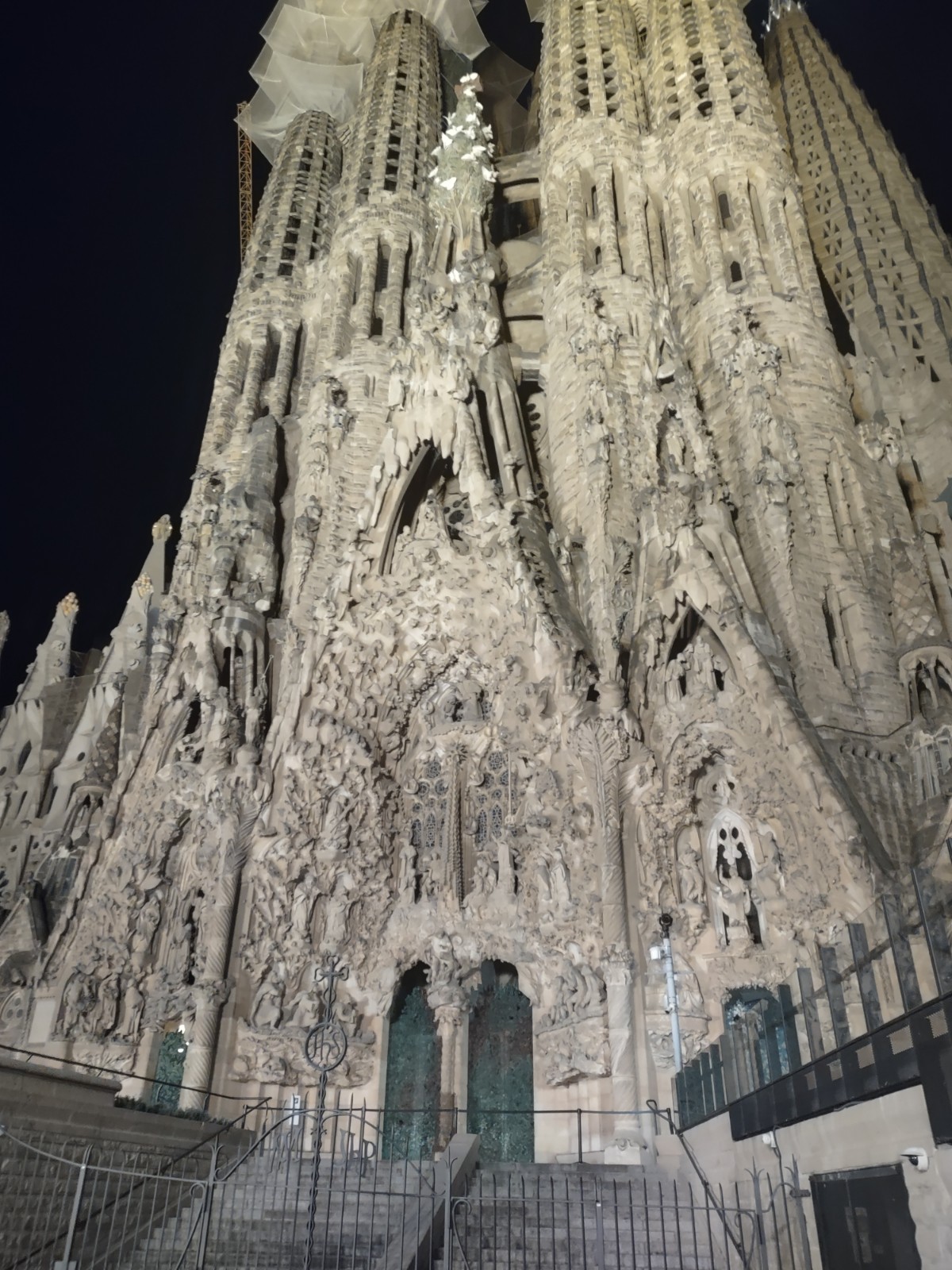
We arrived in Barcelona around 7 PM and took advantage of a four-hour layover to have some dinner (some good tapas and Spanish wine) and then walked up the hill to the Sagrada Familia Cathedral which was just a few blocks from the bus depot. Sagrada Familia is the masterwork of Spanish architect Antonio Gaudi which has been under construction for over 100 years. We had visited it 12 years ago on a family trip at which time most of the exterior was still surrounded by scaffolding. We had heard that construction was now complete and looked forward to seeing the finished product. Unfortunately, as is often the case with construction projects, there was still work going on and still some scaffolding on the exterior. Nevertheless, we enjoyed seeing the parts which were completed and then headed back to the bus station for the remaining ride to Denia.

The City of Denia
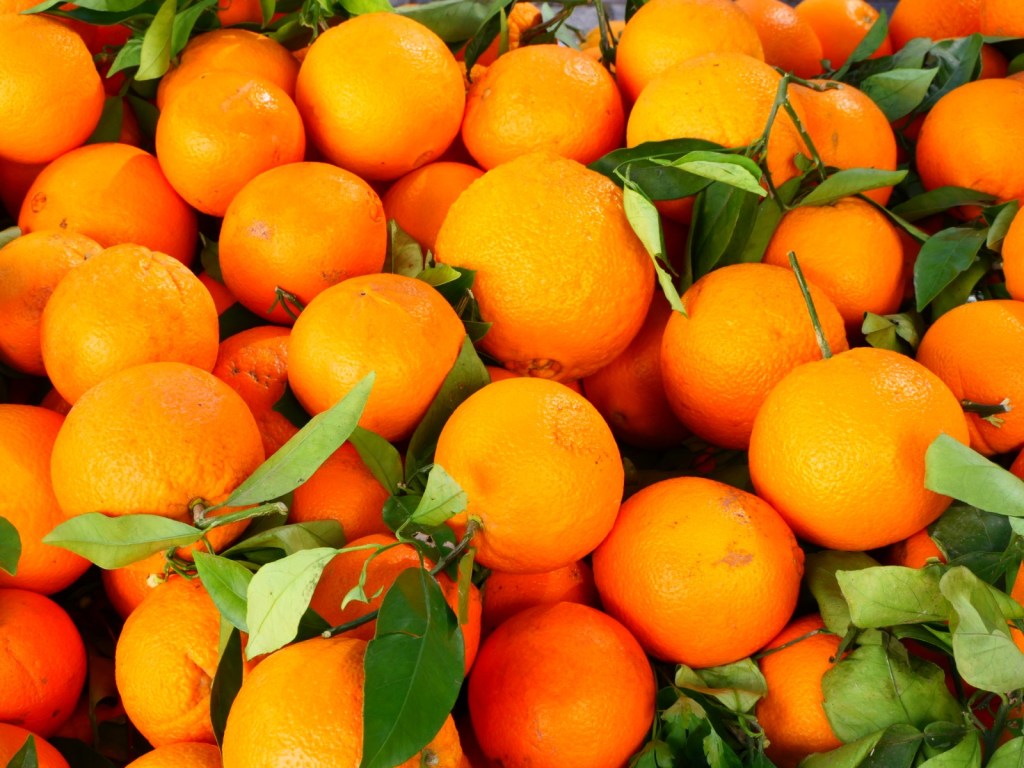
The City of Denia has a pretty rich history. There is evidence of prehistoric habitation in the area and Iberian ruins in its surrounding hills which date back to the 6th century BC. It became a Greek colony in the 4th century BC, then changed hands between a number of empires (Roman, Visigoth, Muslim, Spanish, French, then Spanish again) over the centuries. One of its most interesting archeological features is a castle (for some reason called the Castle of Denia) which sits on a rocky crag overlooking the city. (More about this later.) For much of its history it was an important trading center in the region, most notably olive oil In Roman times and raisins from 1800 until the late 1930s. Today Denia, like most of this region, is surrounded by orange groves, but its primary industry is tourism.
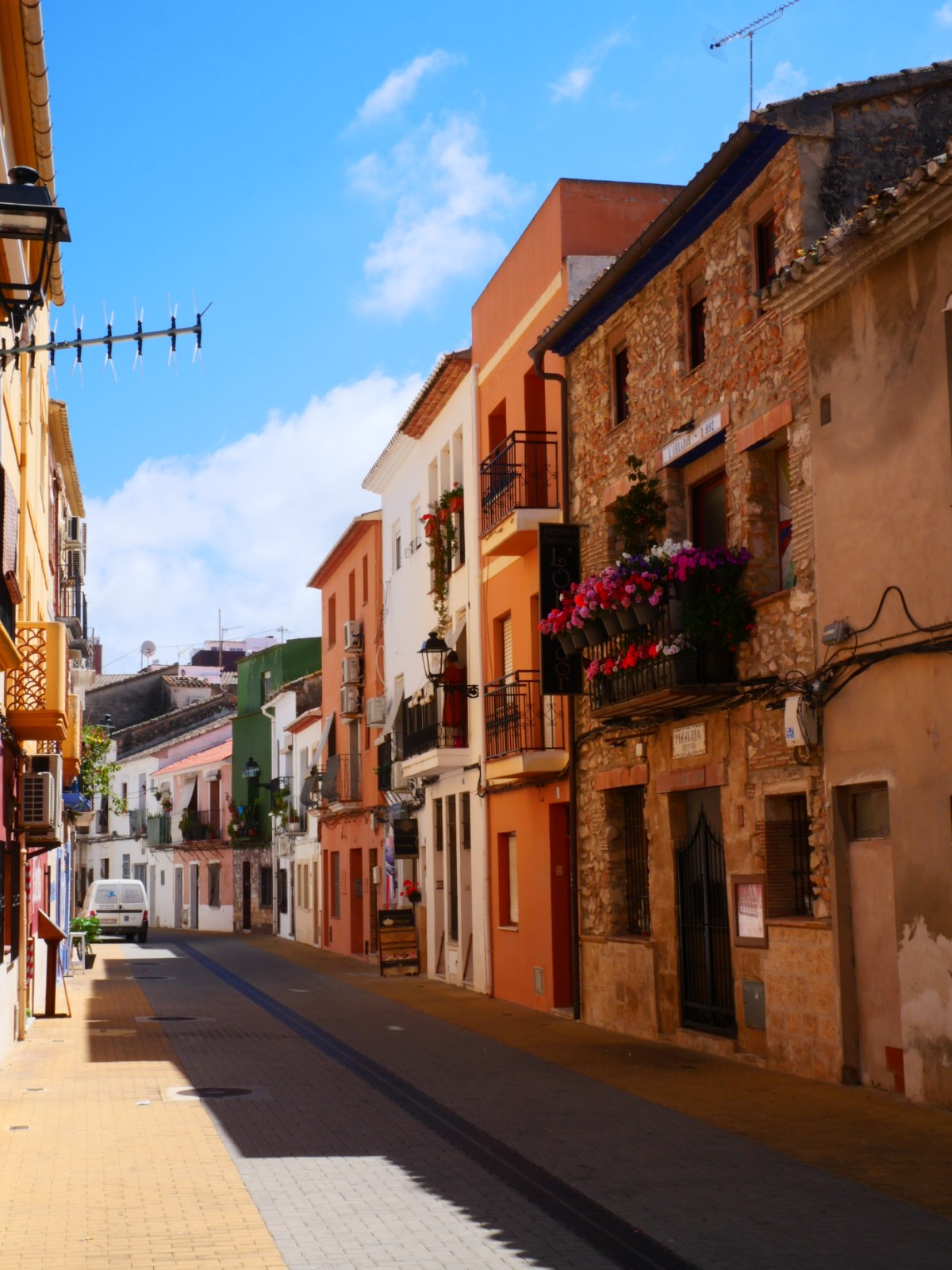

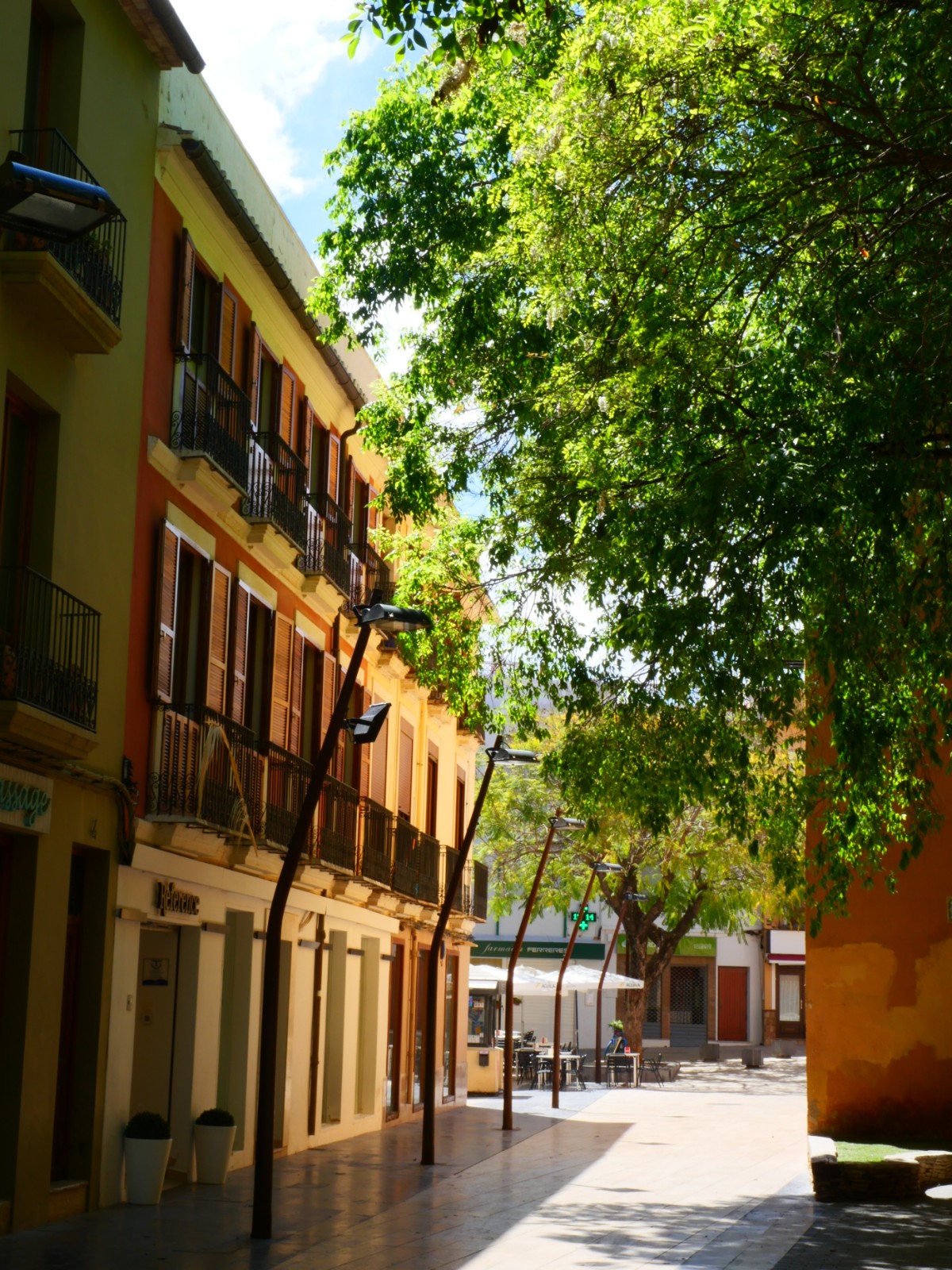
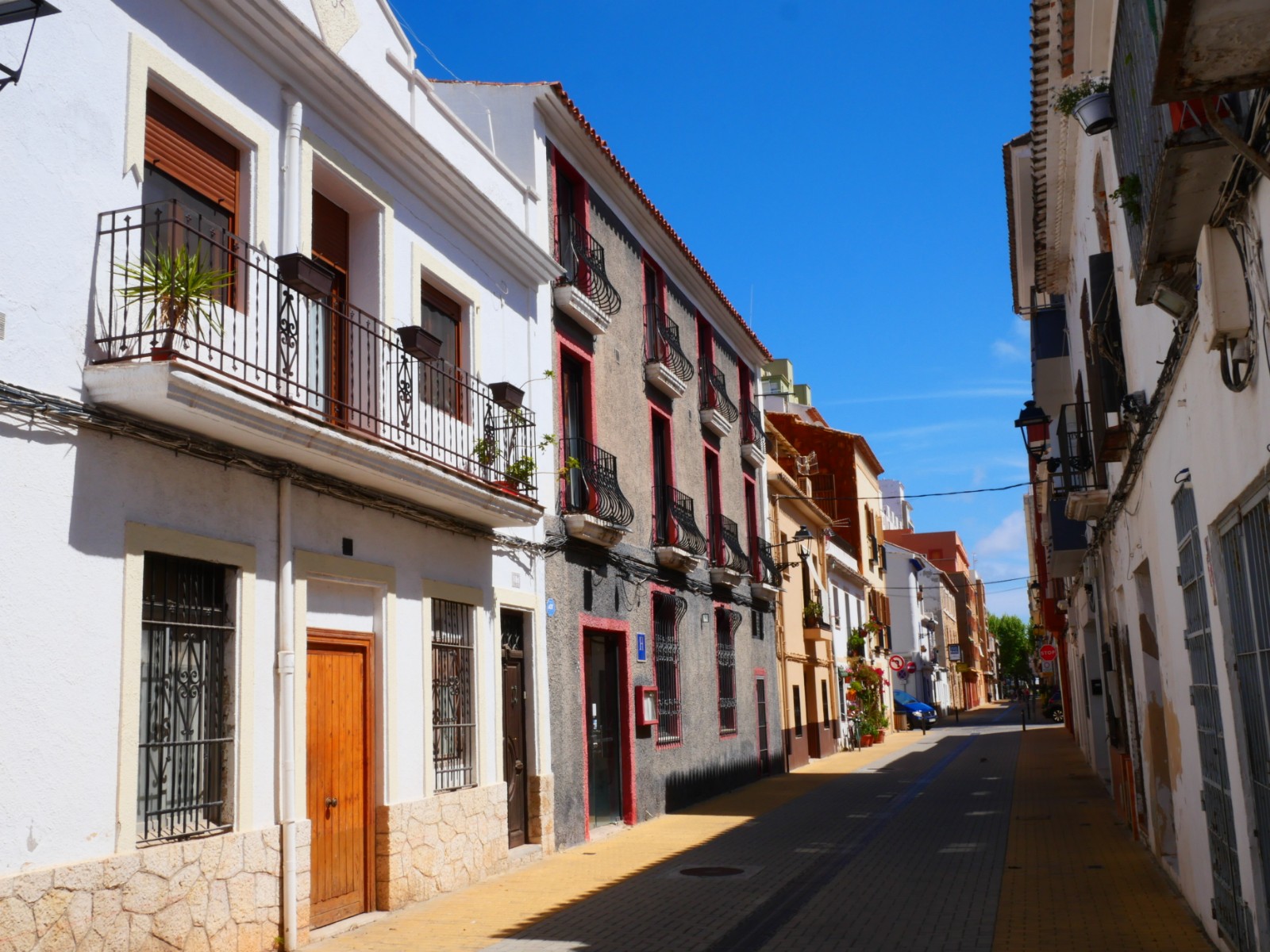

Denia is a nice sized city with a population of about 50,000 which doubles during the summer months. Because tourism is its primary industry, it has a disproportionately high number of shops and restaurants, all of which seemed to be open while we were there (not a “summer town”). From talking with locals, we gathered that it is more of a Spanish shore town than an international vacation destination and, again according to locals, retains the character of a traditional Spanish town. Our timing, arriving here in mid-April was pretty good – early enough to avoid the onslaught of tourists but late enough to get some nice weather.
Our Place in Denia
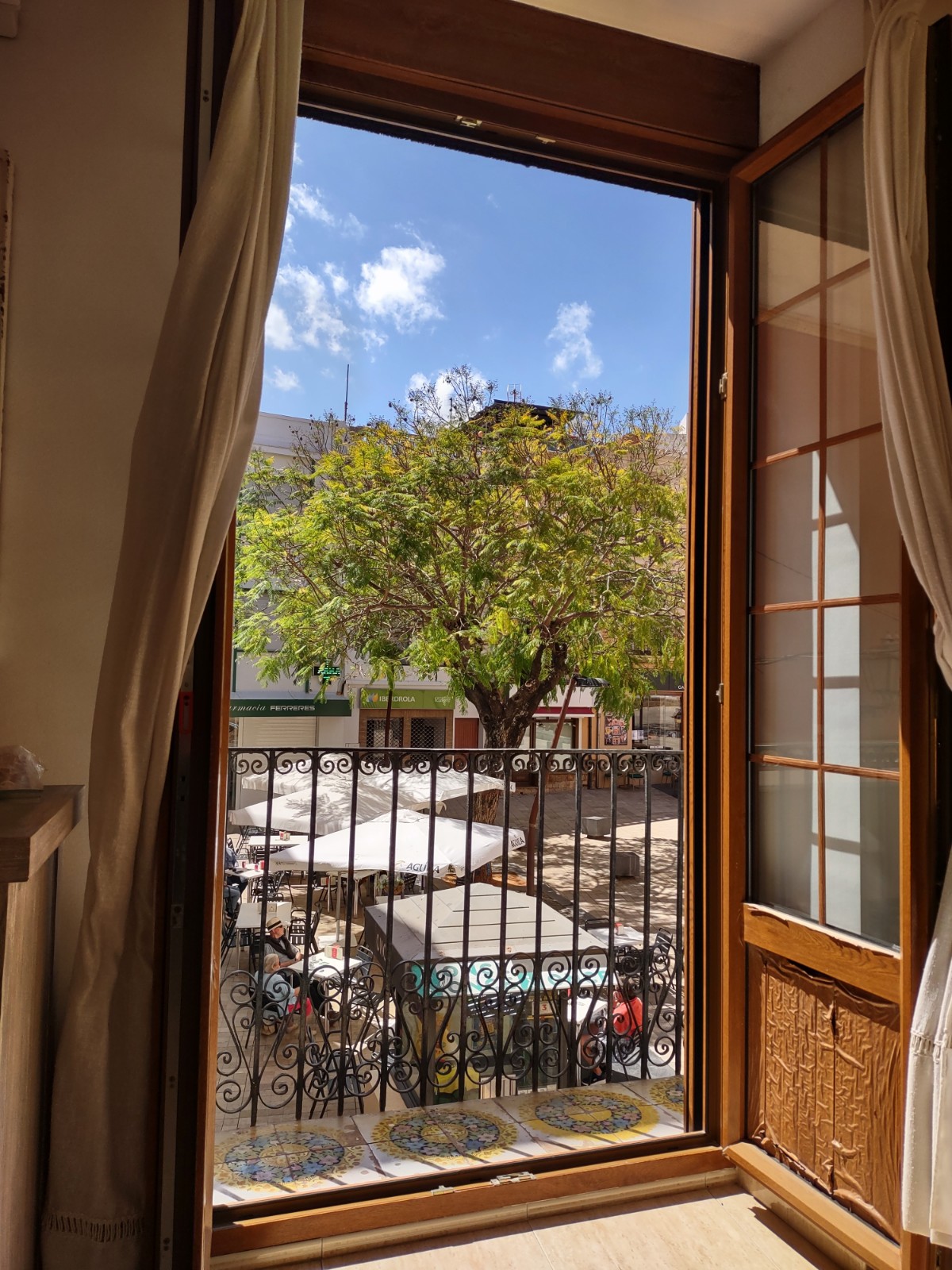
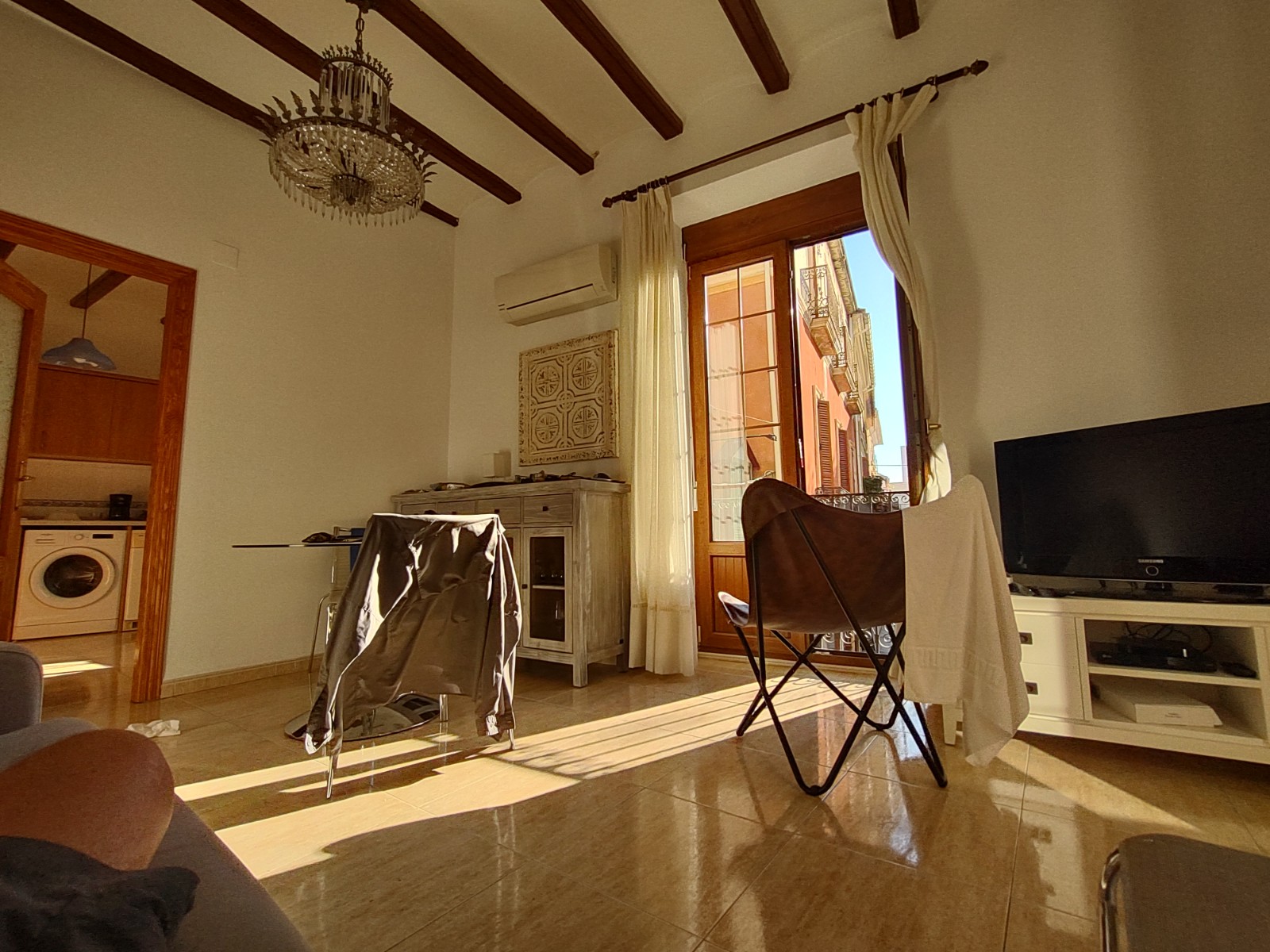
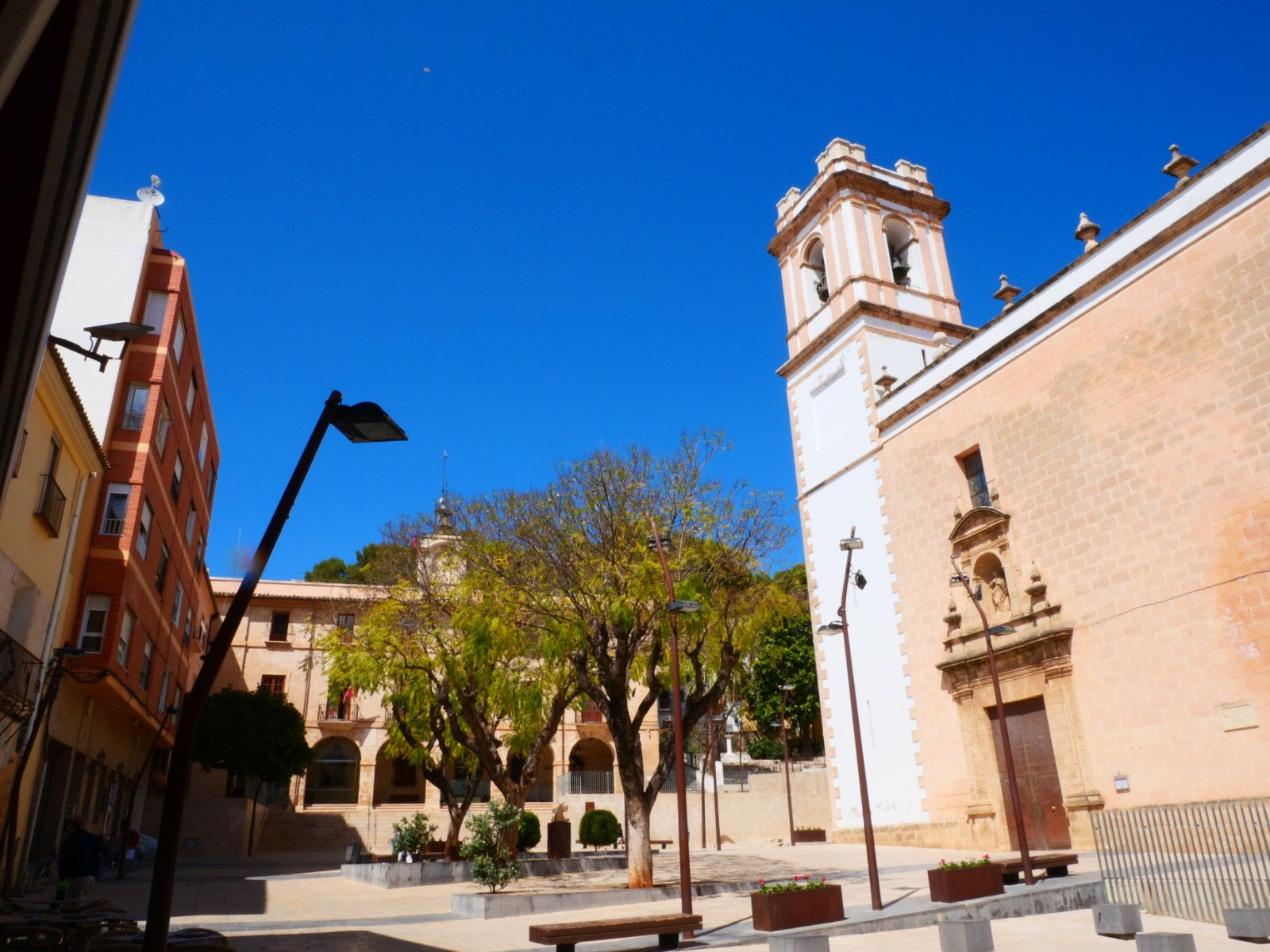
Our place in Denia was a second floor apartment located on the City’s main town square (the Placa de la Constitucio), framed by the City Hall building (with the Castle behind) dating back to the 17th century and the Church of Our Lady of the Assumption which dates to the 16th century, along with two restaurants, shops, and some apartments. This was one of those instances where the reality was even better than what the Airbnb images suggested. We had high French doors (always open when we were home) with balconies overlooking the square and church next door. During the day and into the evening there was always activity in the Placa which was endlessly entertaining, at least if you like people watching.



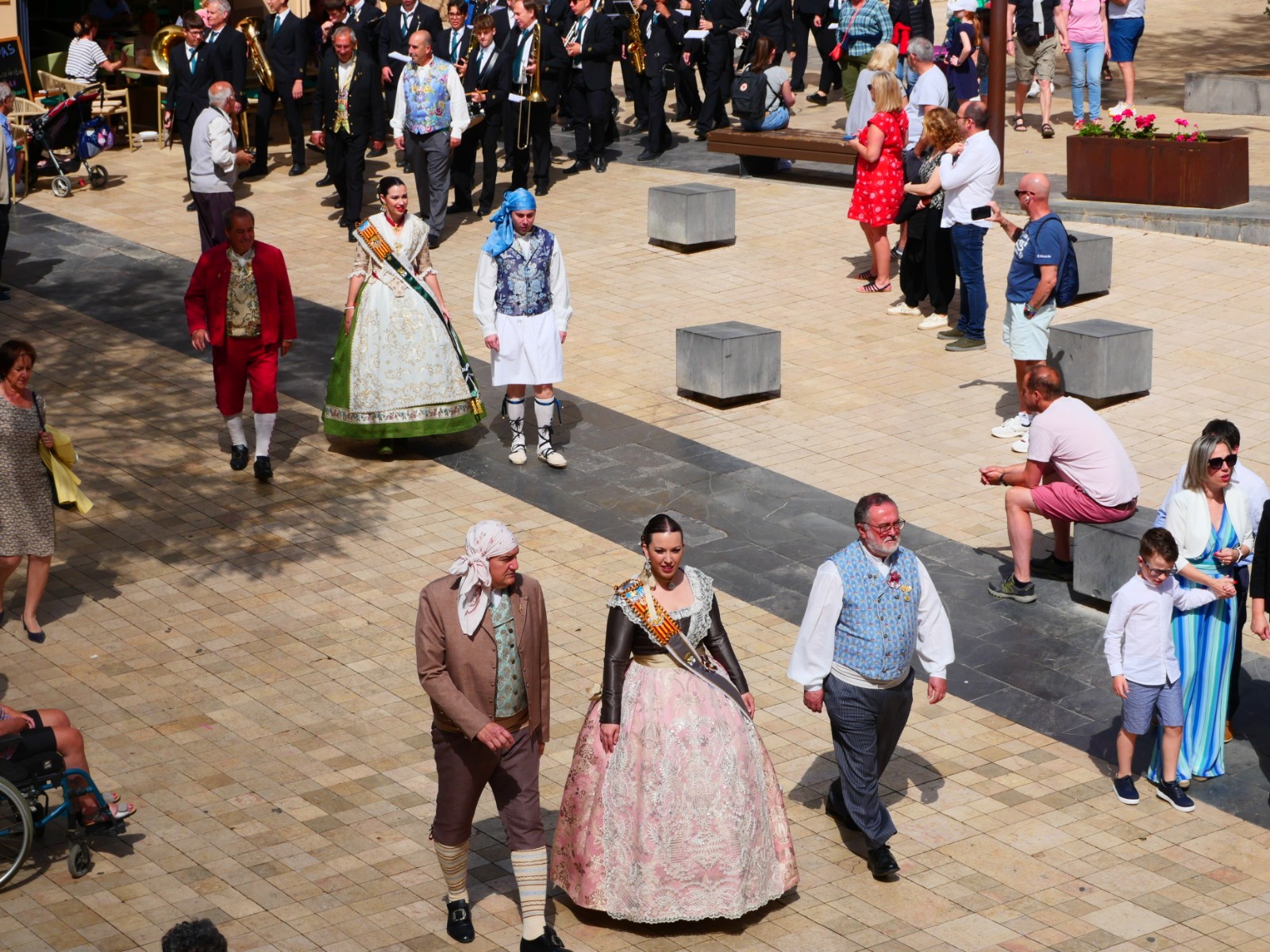
During our last week the town was celebrating their annual festival of the Earth Mother (?) culminating with Mother’s Day which was celebrated on May 7th in Spain (a week earlier than in the U.S.). During that week there were musical performances with a traditional reeded instrument called a dulzaina (kind of looks like a recorder), dancing, and parades in traditional Spanish dress. No need for TV with a show like this just outside your window!


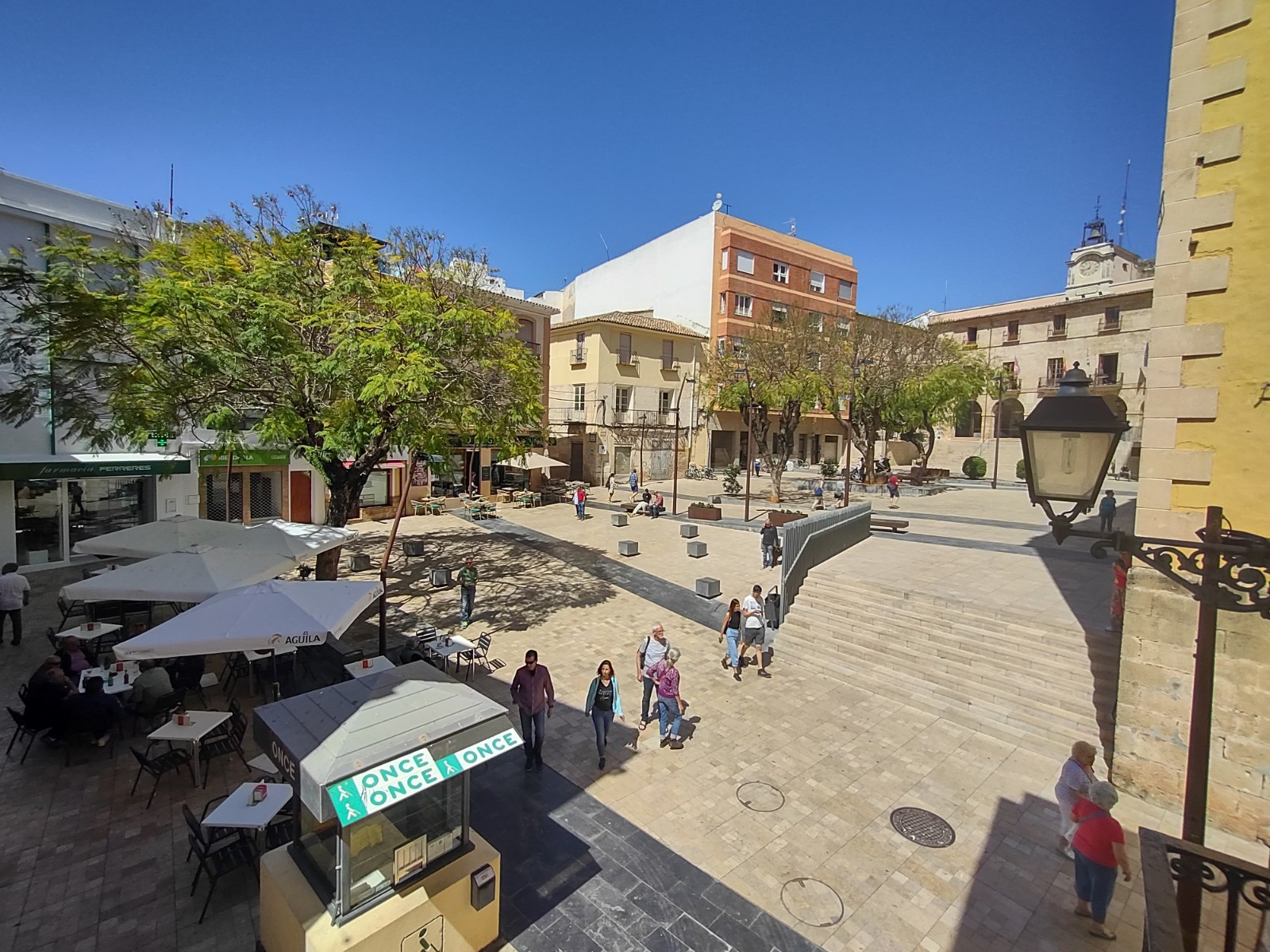
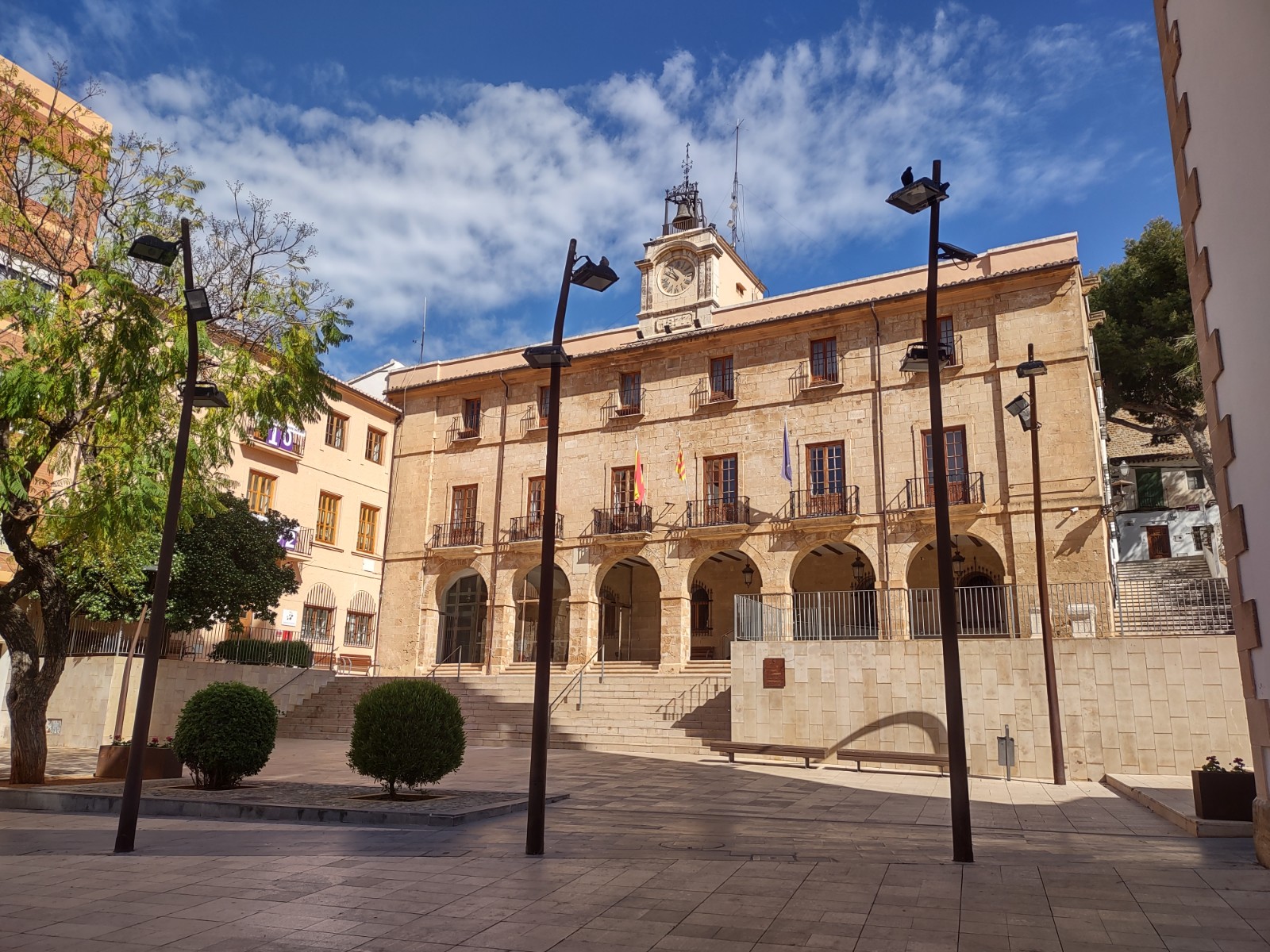
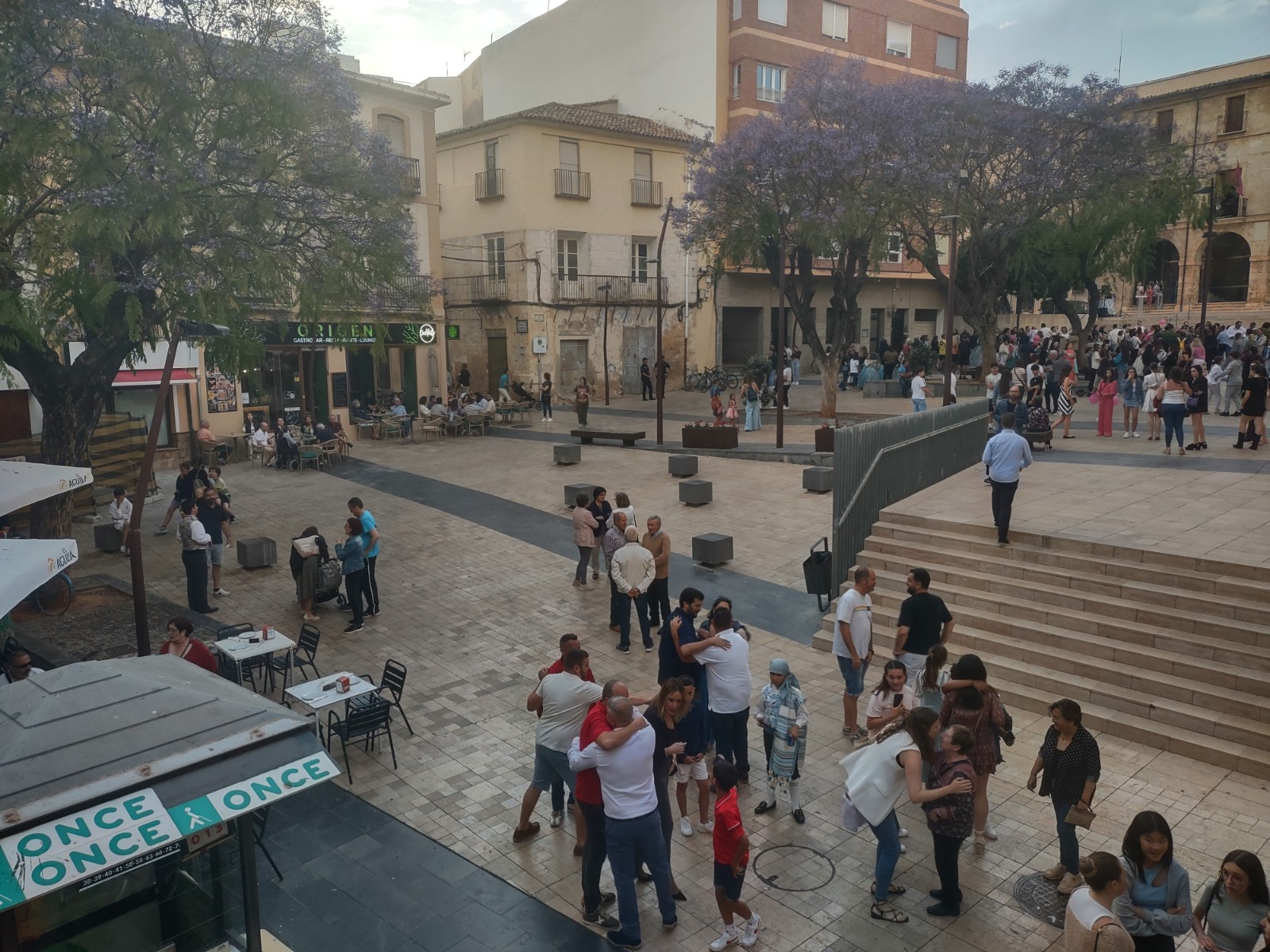
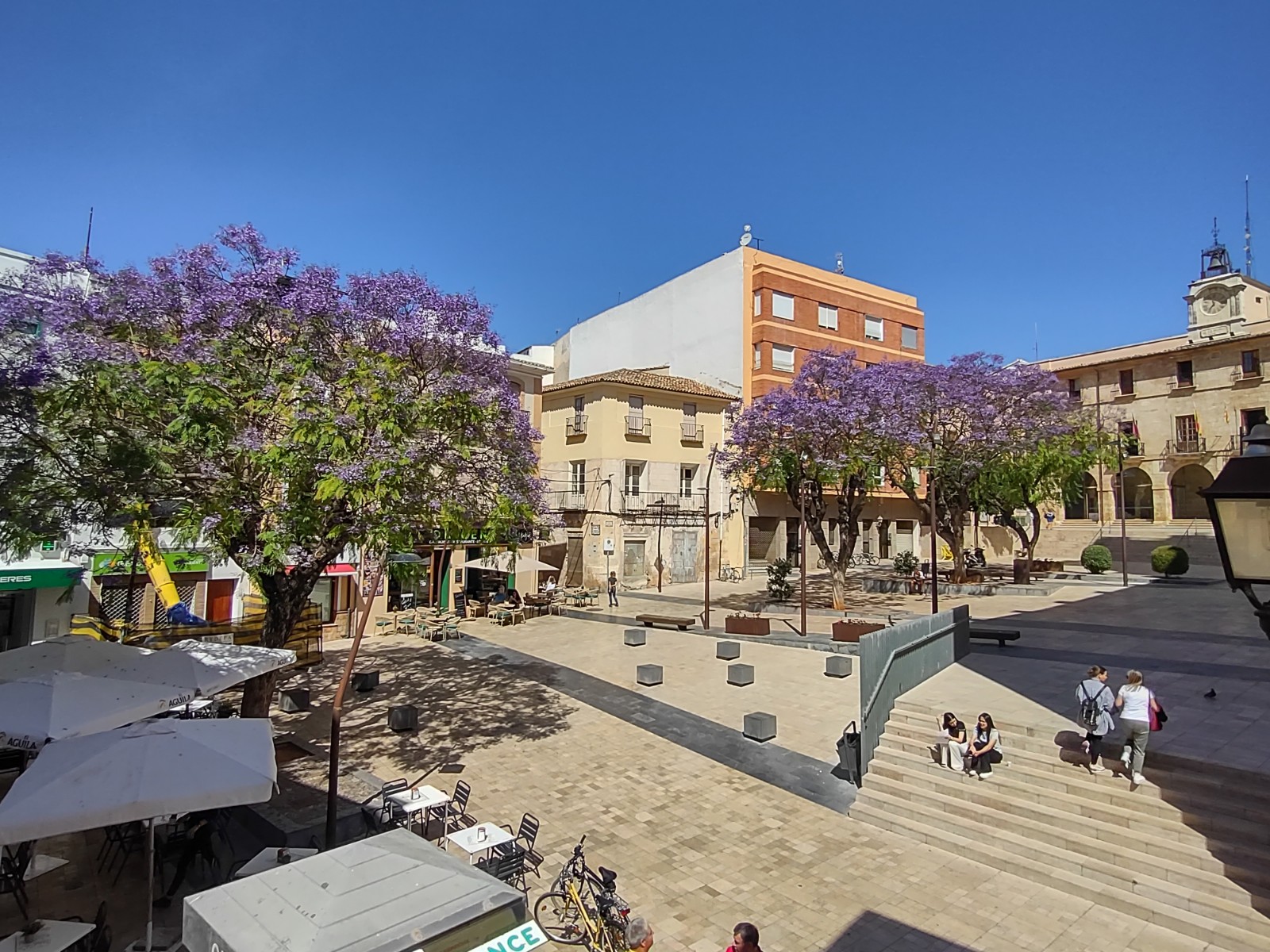
One other thing of interest in the Placa was our discovery of the Blue Jacaranda. Over the course of our travels we have seen a lot red, pink, and yellow jacaranda trees but were quite surprised to see, over the 3 weeks we were there, the trees in the Placa start to bloom in the most vivid shade of purple and were even more surprised to find that this is a species of Jacaranda we had never seen. Beautiful to see and a great visible reminder that Spring had truly arrived.

Biking and Beaches
We came to Denia with the intent of mostly relaxing and recharging our travel batteries. On our first day there we quickly realized that it would be good to have bicycles to get around and so rented a pair for the 3 weeks of our stay. There is a very nice greenway which extends north of Denia, through the orange groves, to a couple of small towns to which we rode on a couple of occasions in conjunction with a coast road which hits the beaches north of town. Never realized before what a nice scent orange trees have when you get enough of them together in one place, so some nice riding.
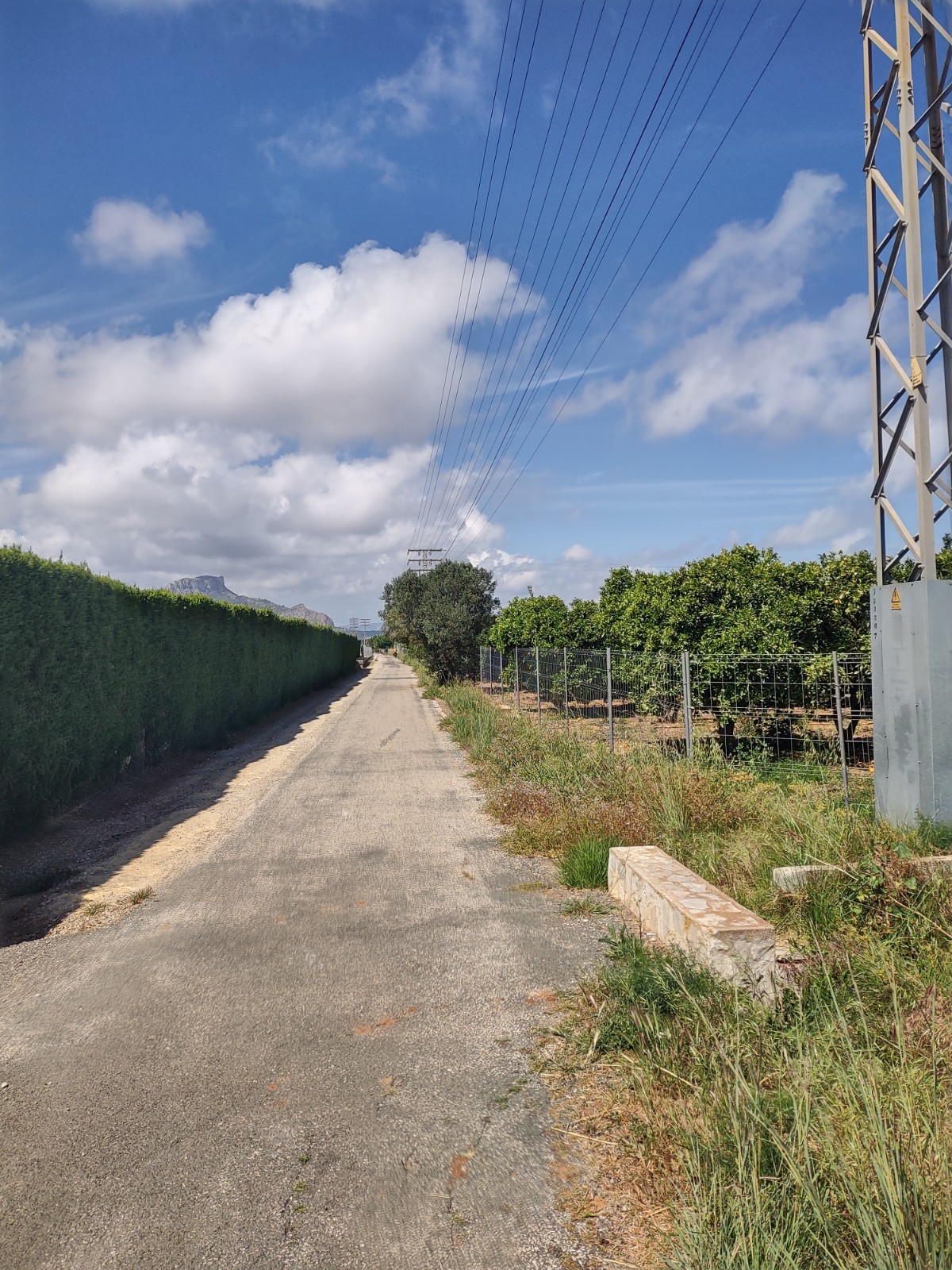

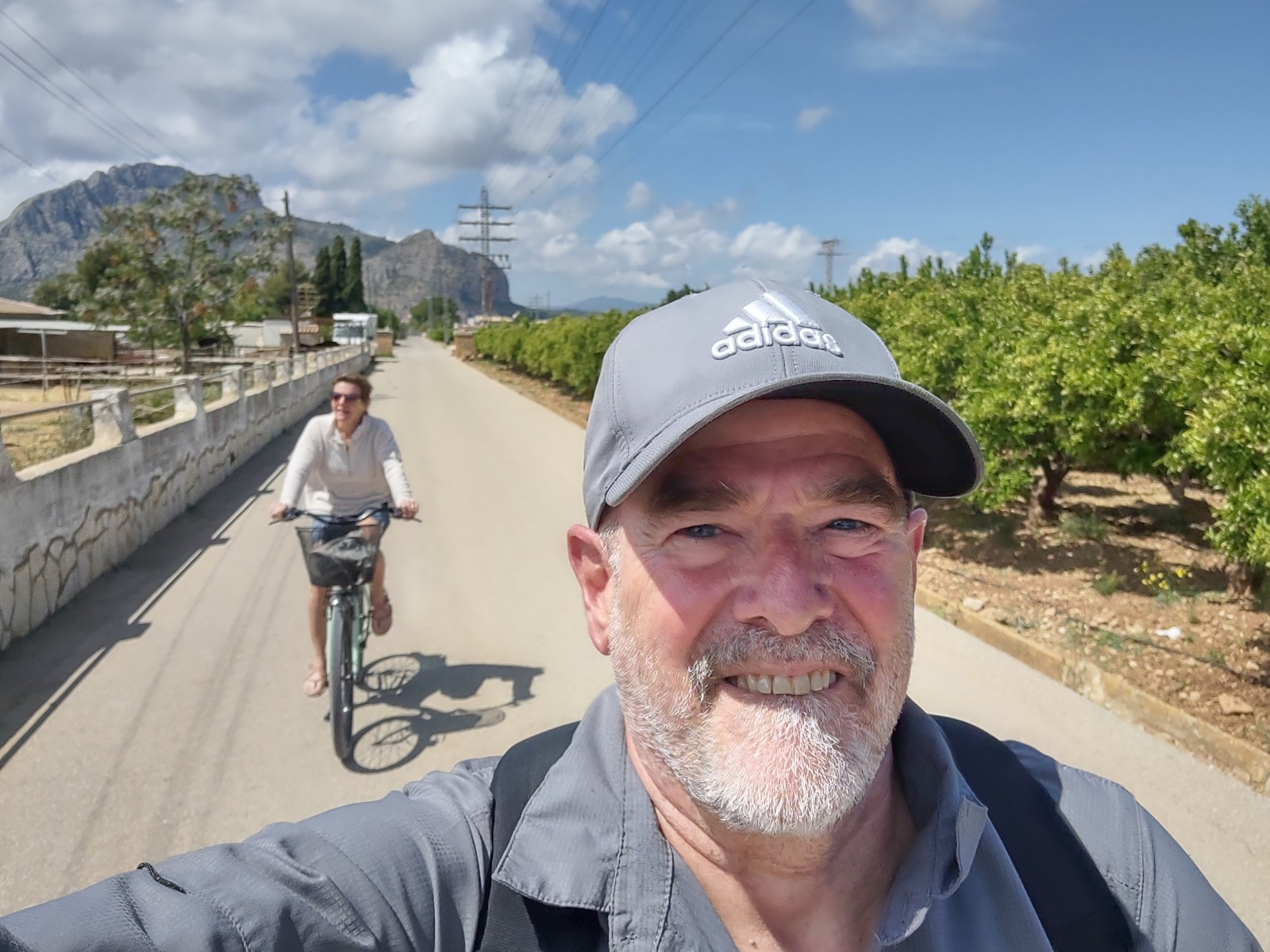
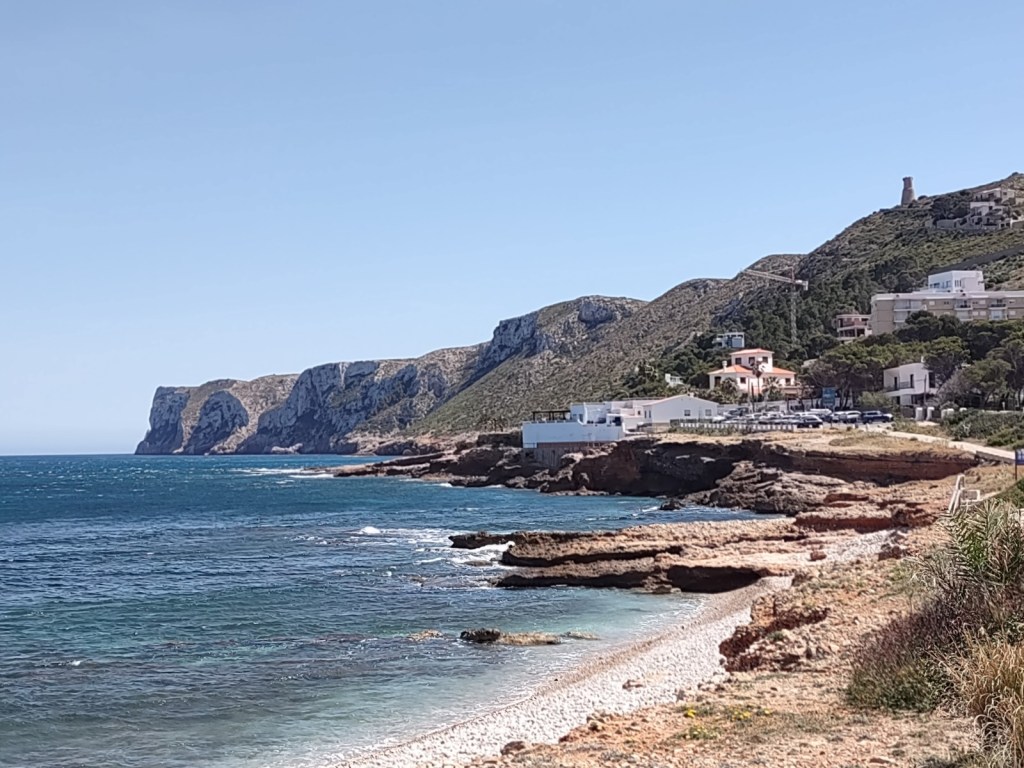
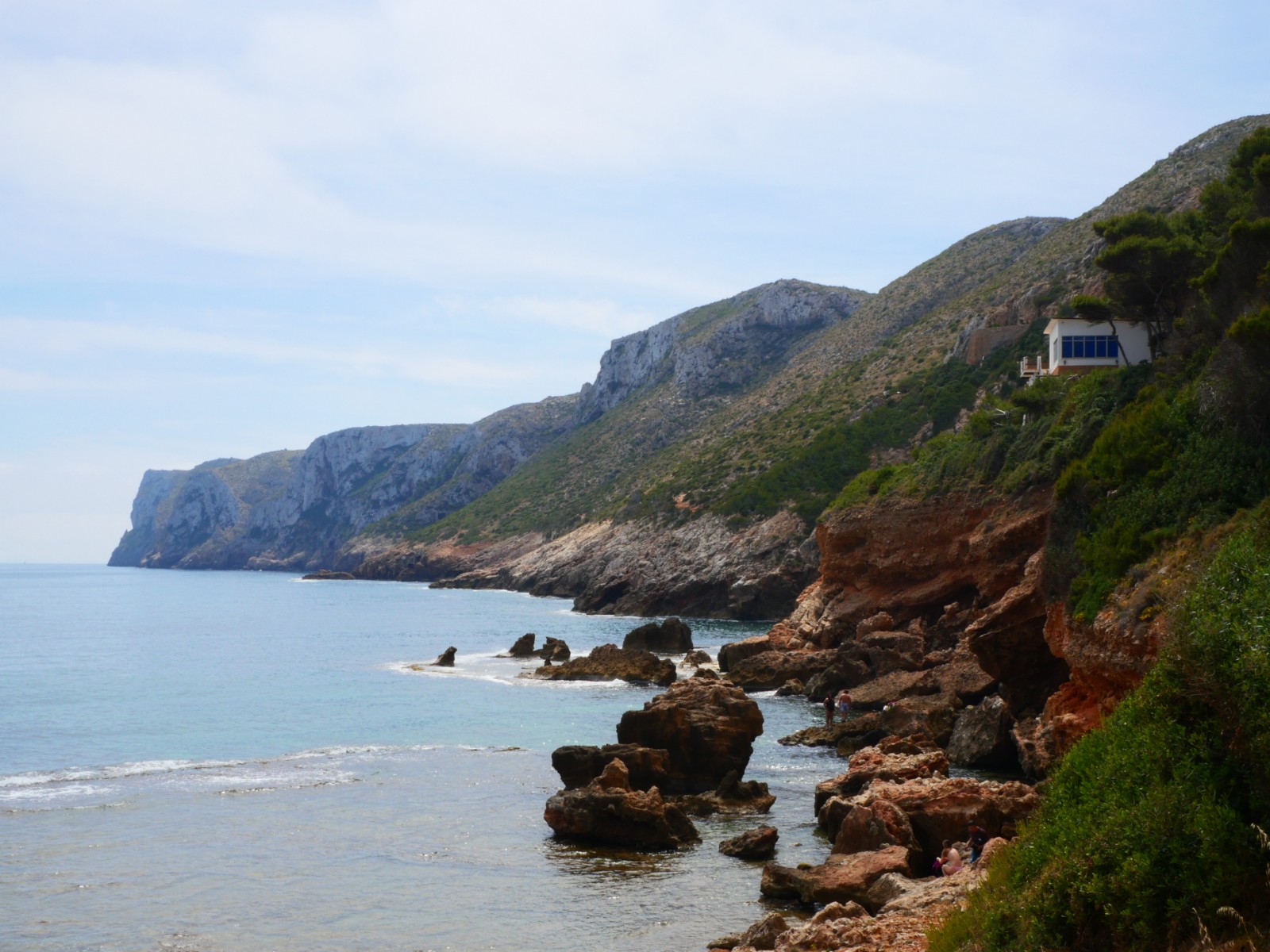
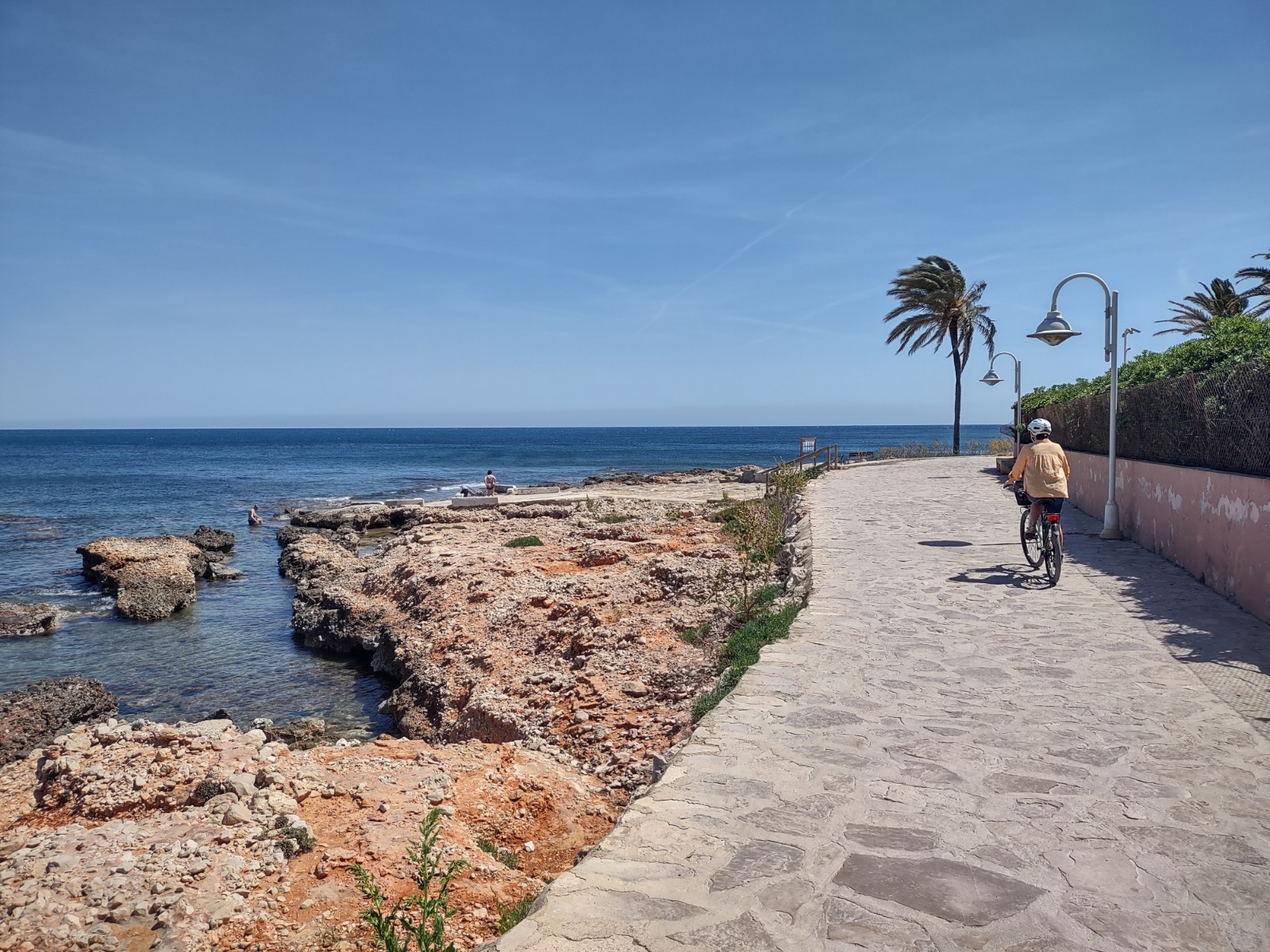
But, we did most of our riding along a string of bikeways, boardwalks, and pathways which run along the coast south of the City and spent the majority of our time in Denia lazing about on one beach or another. While there are some nice sand beaches near town, we found that the further south we went, the better the scenery was and so spent most of our time on rock and gravel beaches which actually have some merit over sand. We found it pretty easy to find nice spots which we had all to ourselves although there was one particularly beautiful spot which we eventually dubbed “Naked Man Beach” for reasons I probably don’t need to explain. Should probably add that we were very lucky with the weather which was unseasonably warm (lots of days in the 80’s) and also quite sunny (only rained on a couple of occasions).


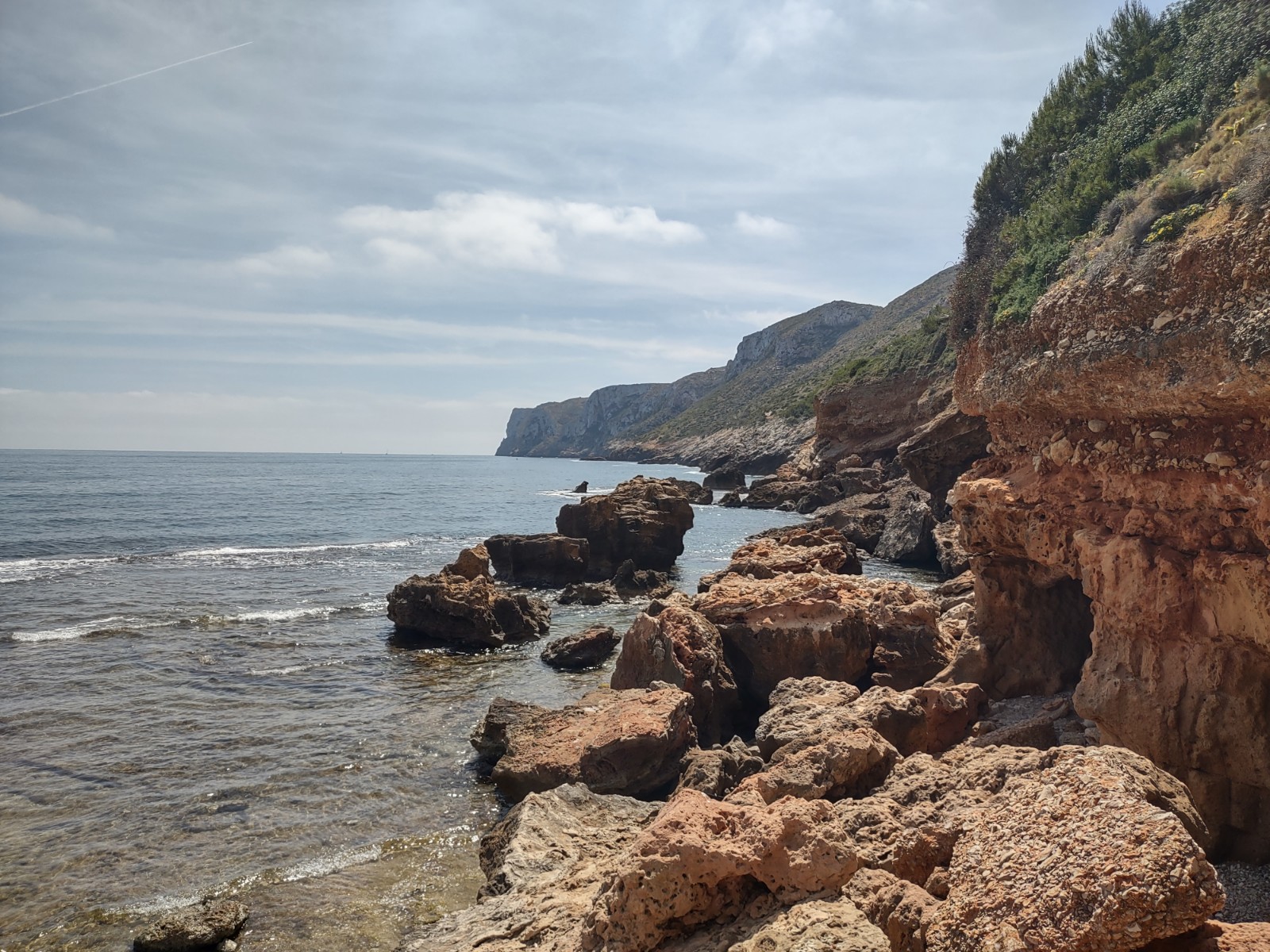
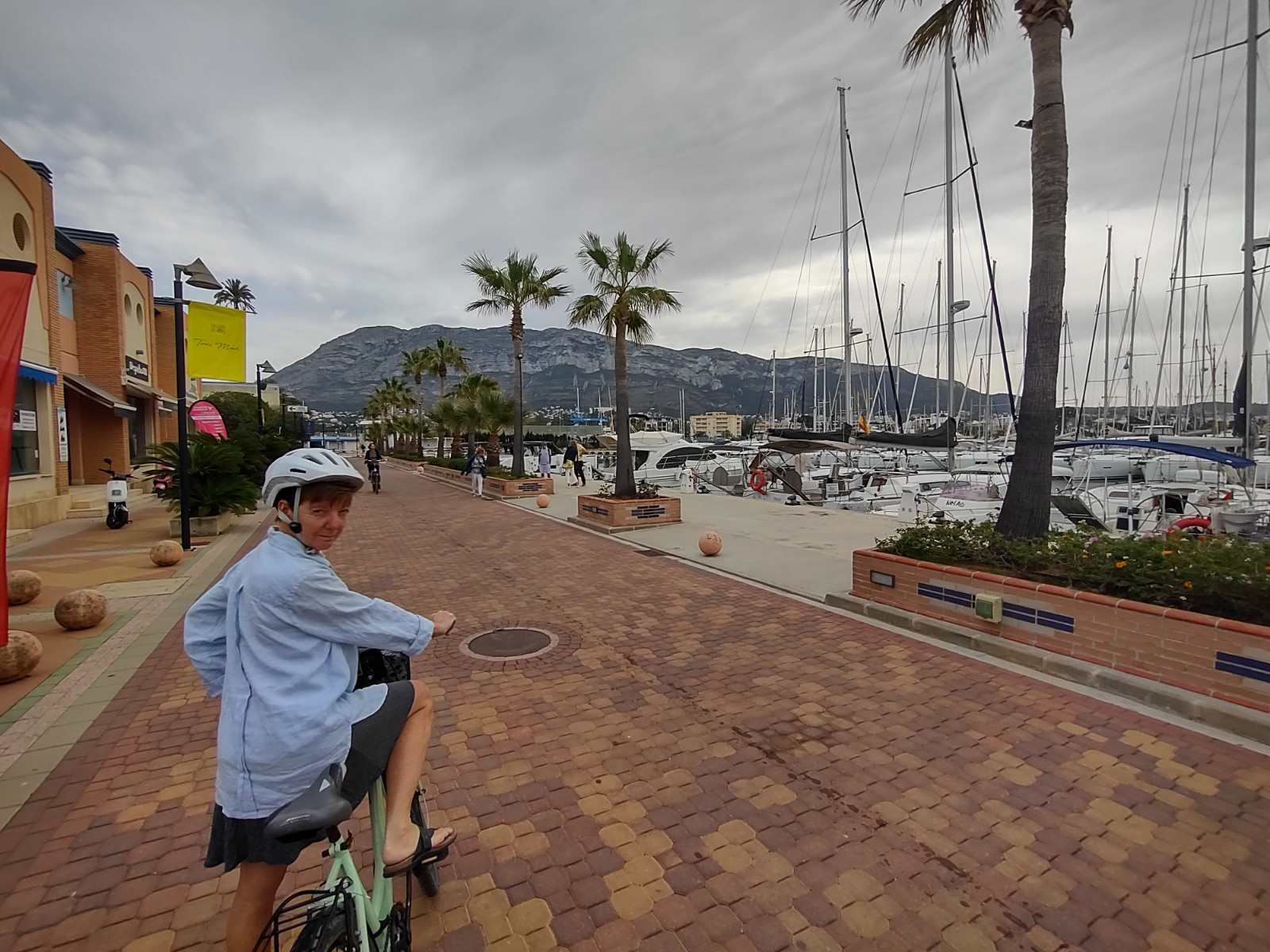
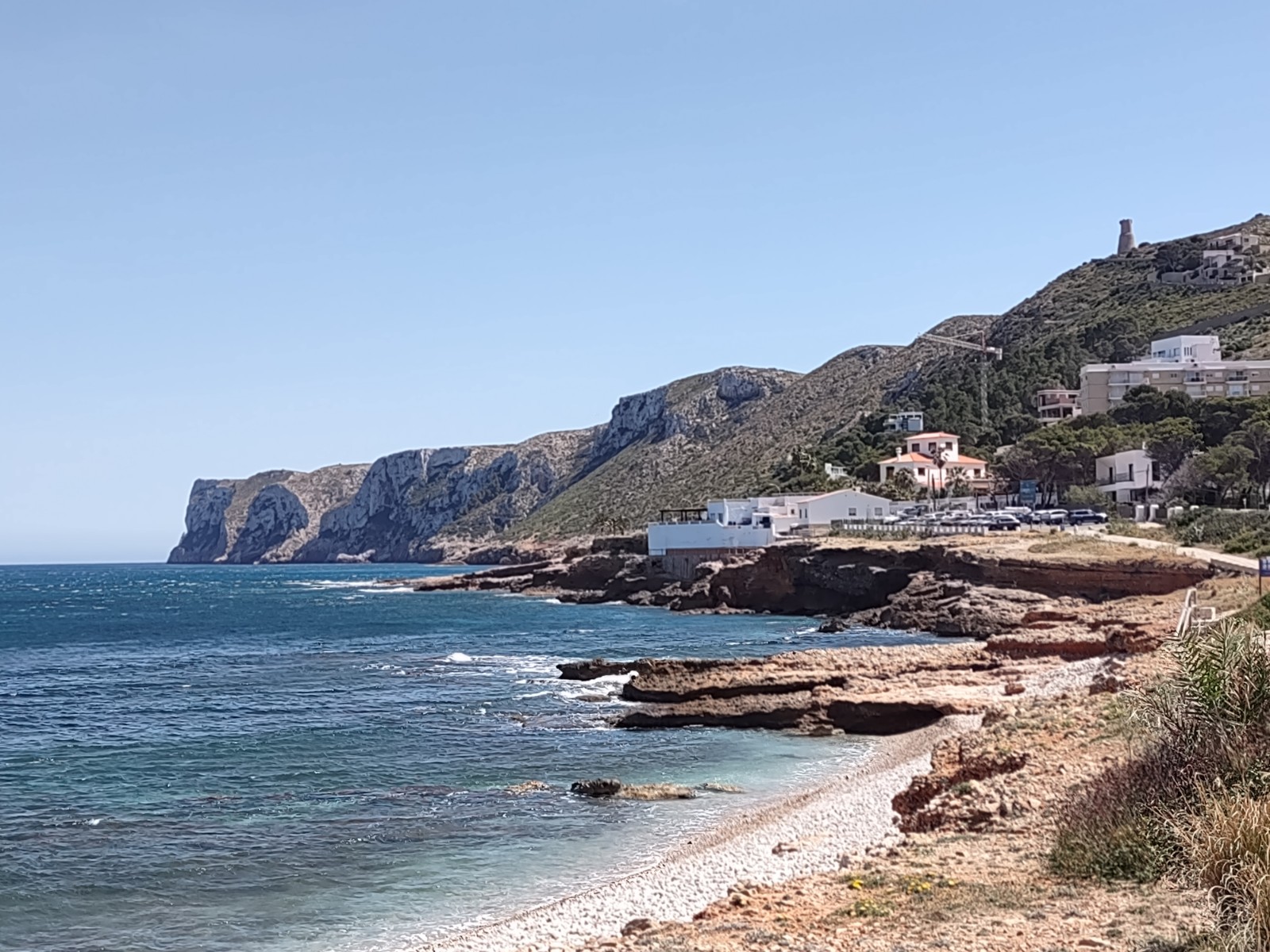
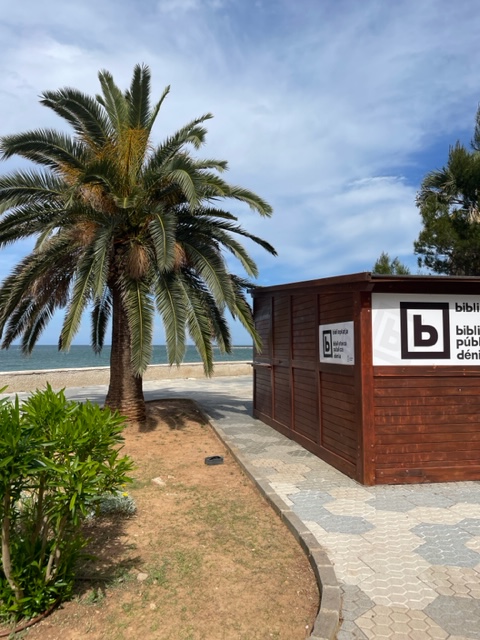
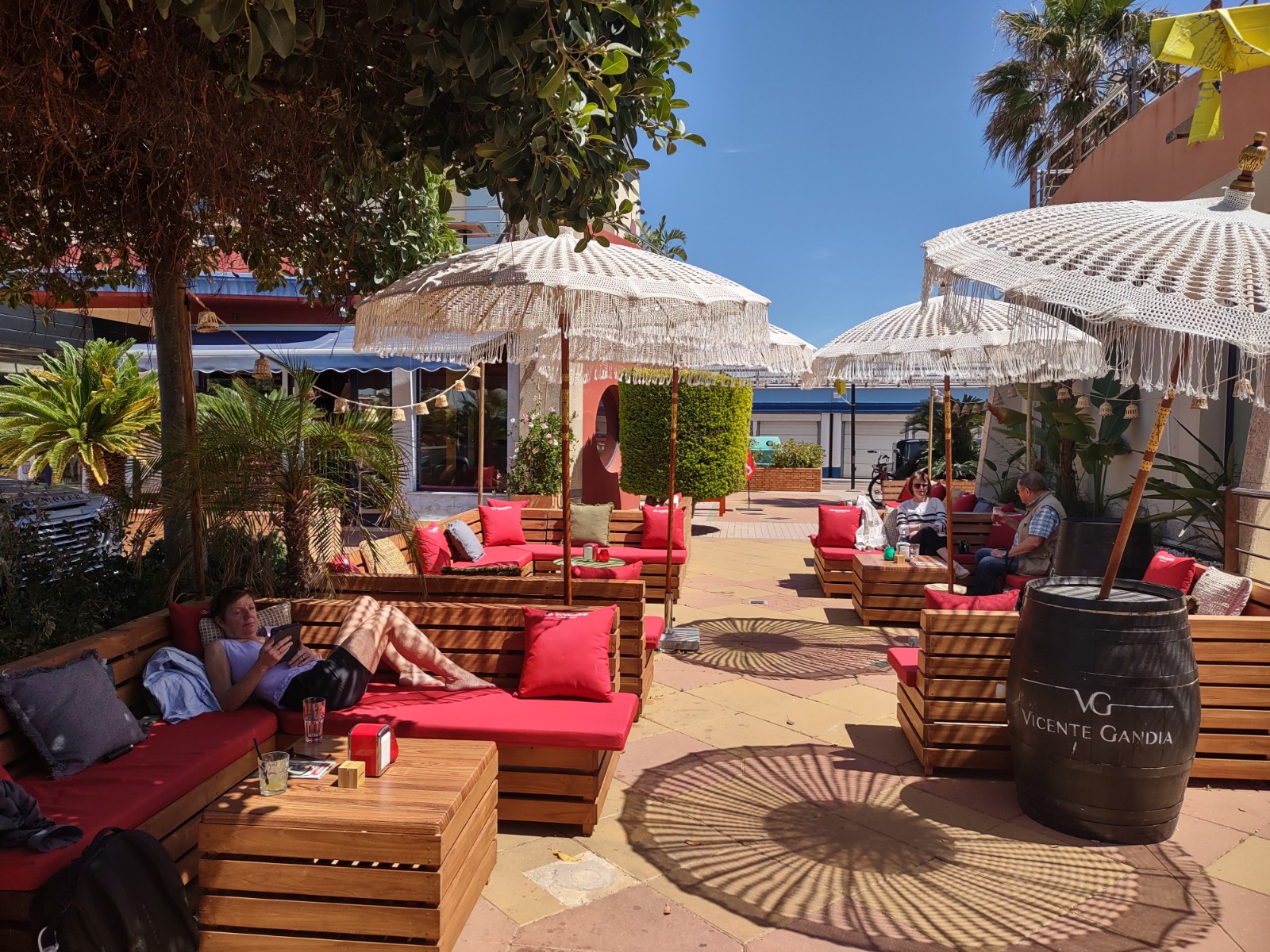
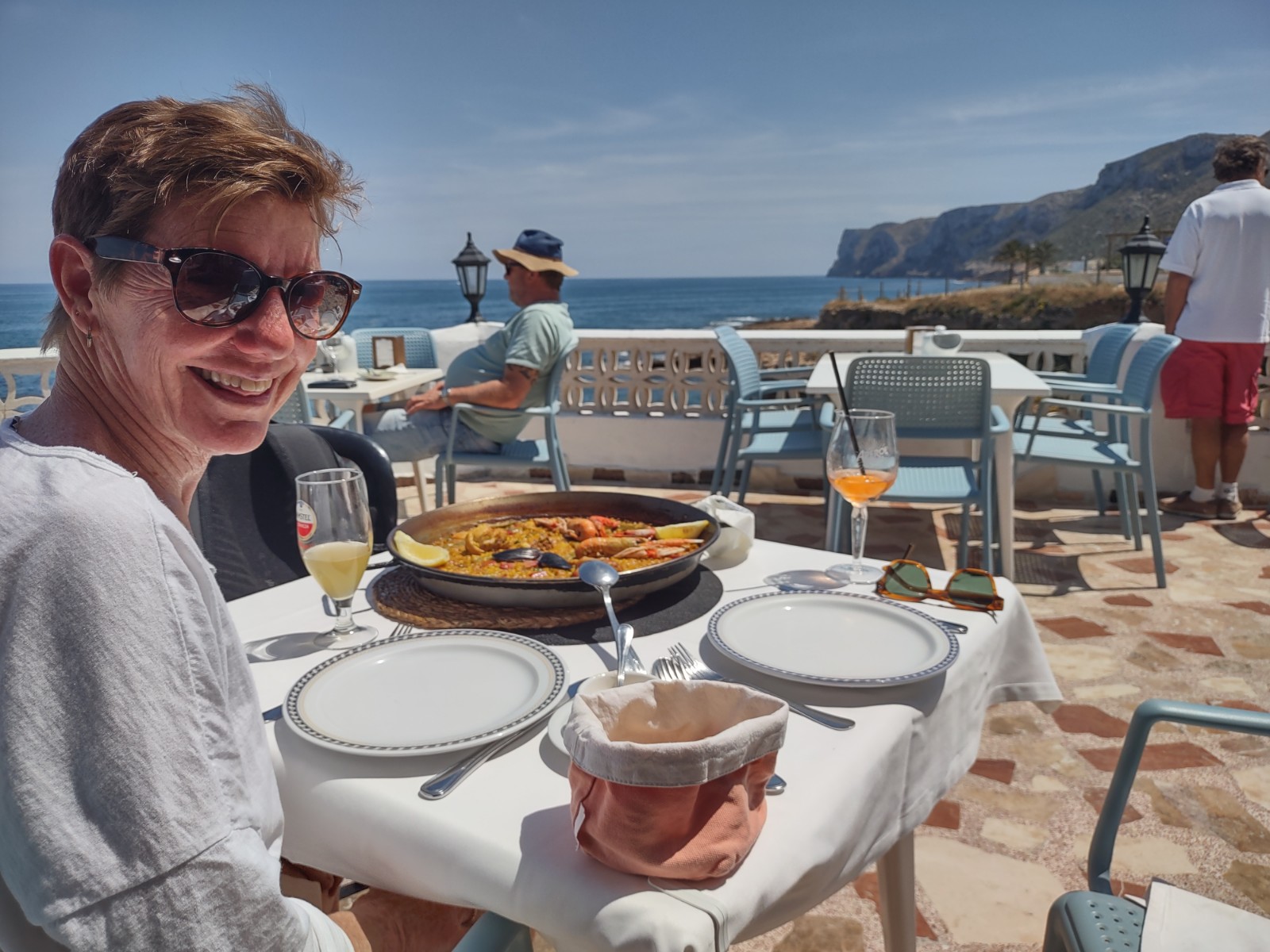
To Colleen’s chagrin, there was a lending library along this stretch of coast as well as a few bars and restaurants and, as we continued our habit of eating lunch out and dinner in, we had the opportunity to sample a few. We had some great paella at one called Helios which had an amazing view of the coast, and some good drinks and tapas at others. But, our go-to place ended up being a place near the marina called La Cubinita which had all you can eat taps for 20 euros. We went two or three times and would take our computers and kindles with us and spend the the entire afternoon nibbling, drinking, doing trip planning and writing, and mostly relaxing in the sun.
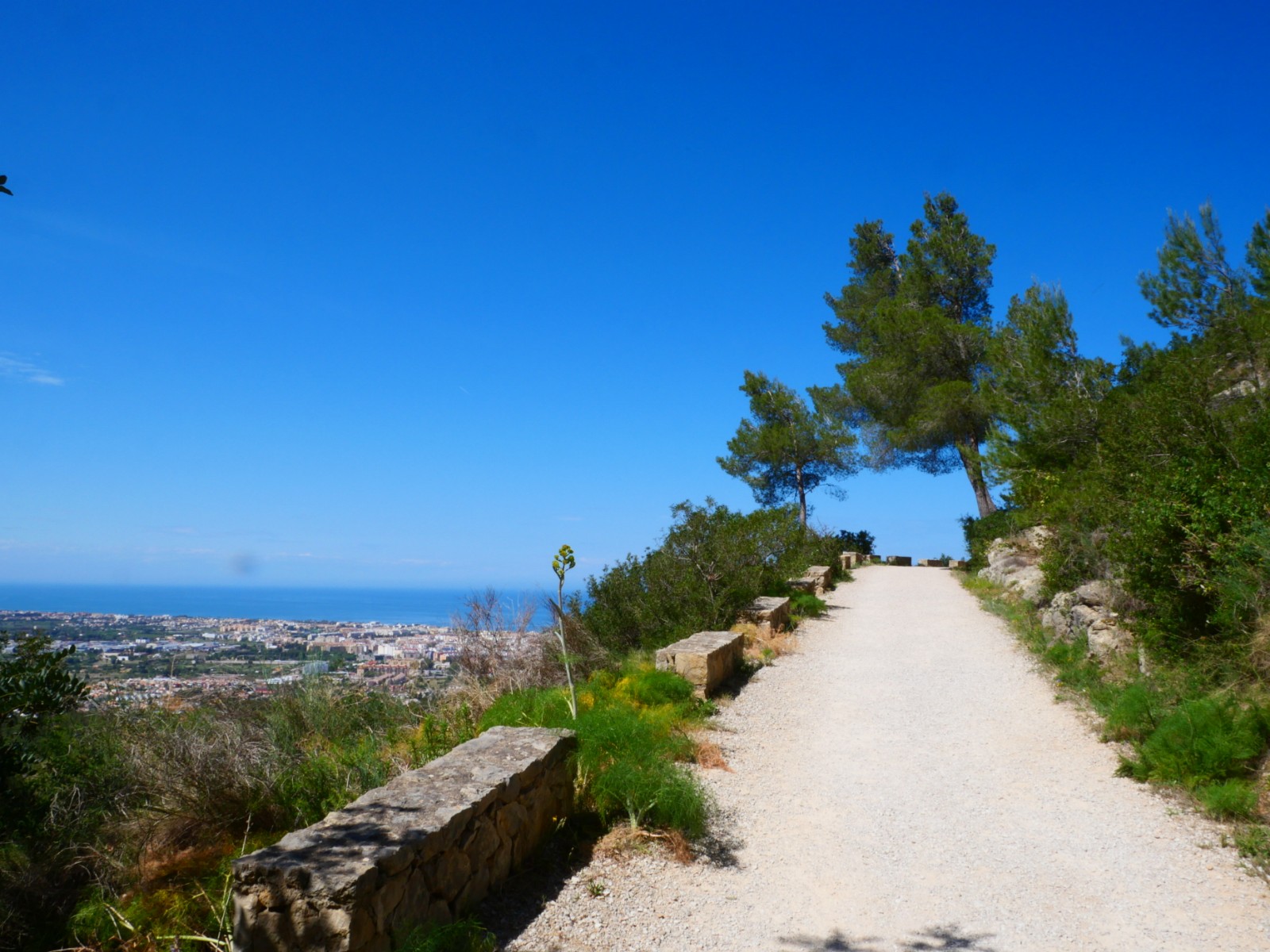
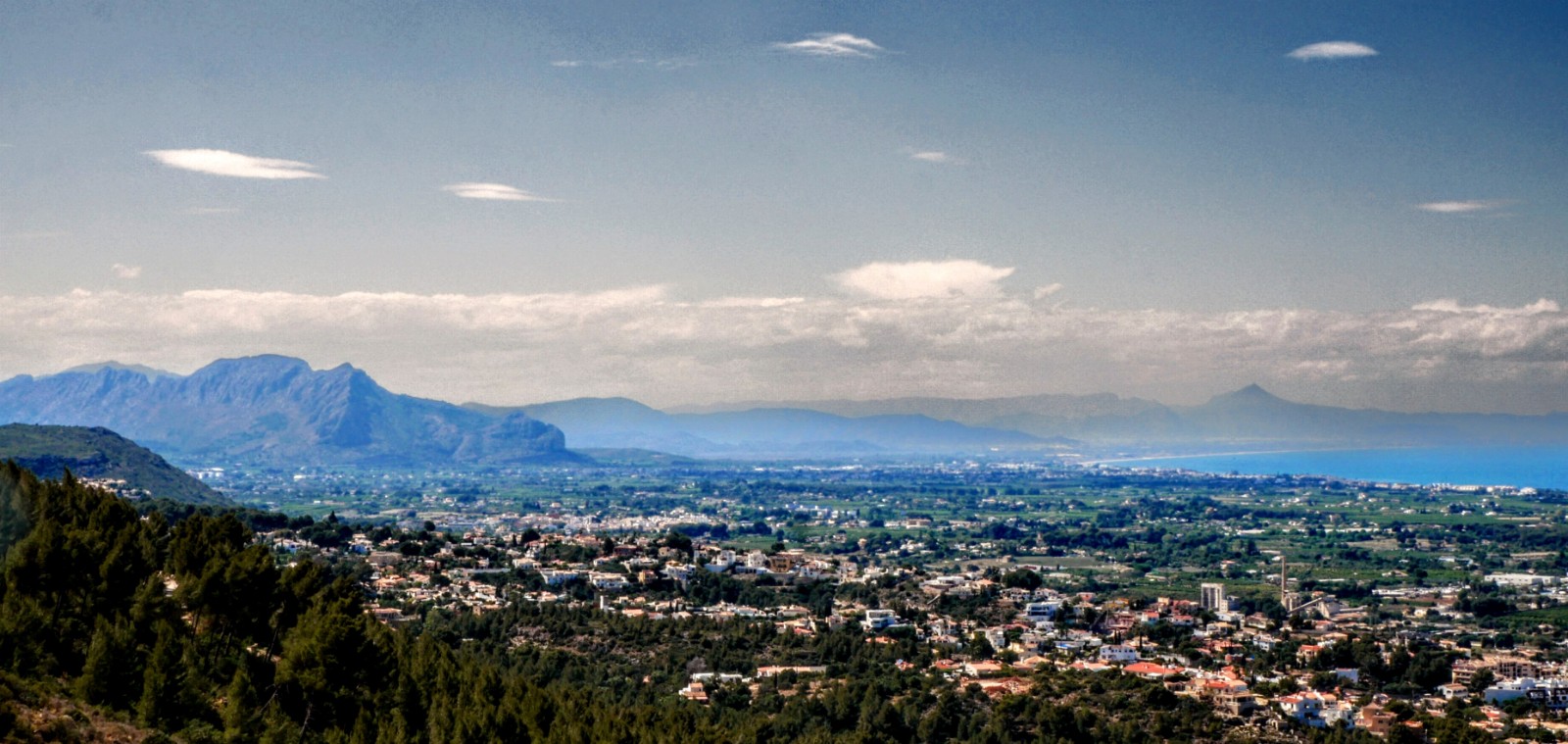
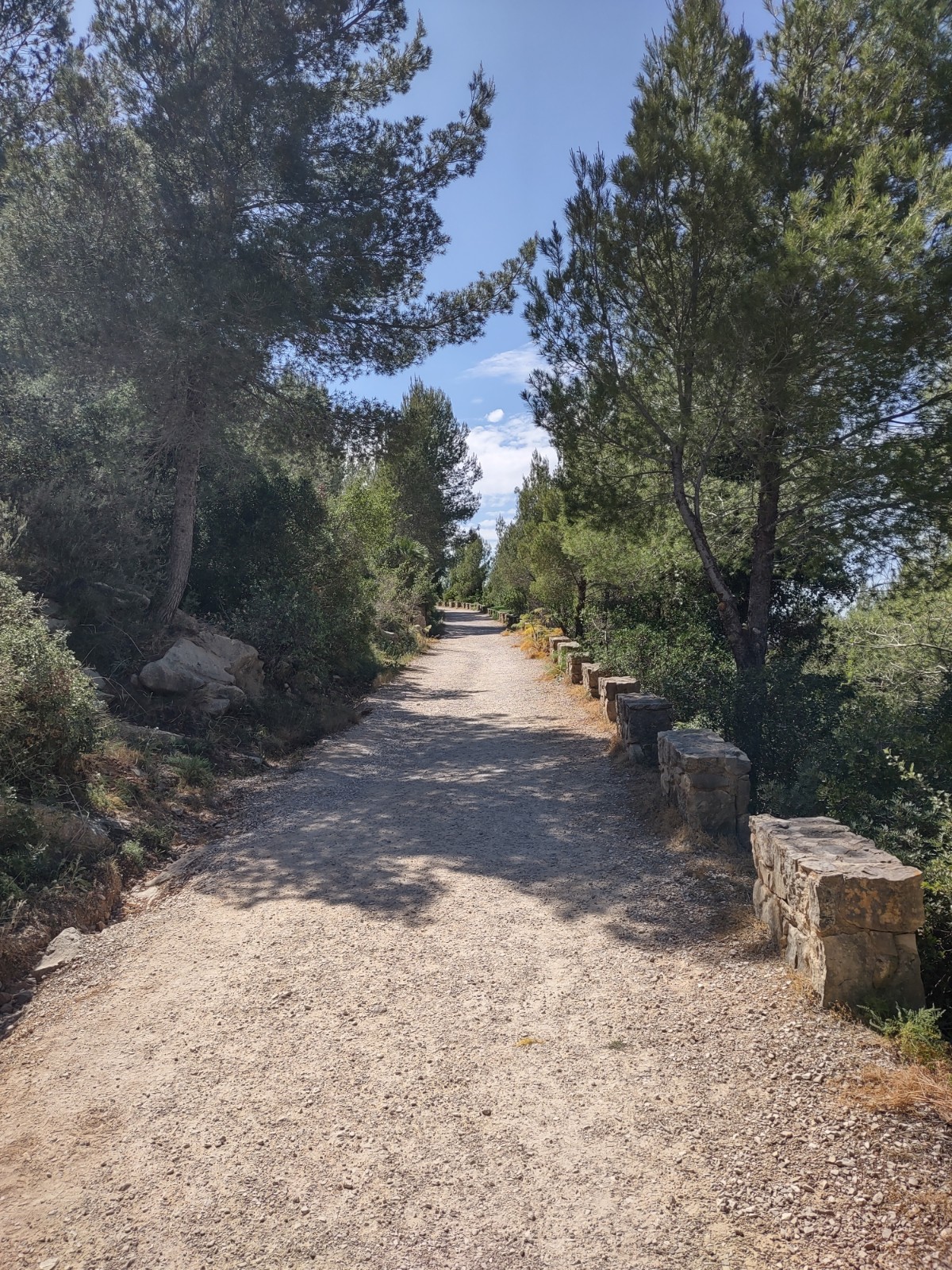
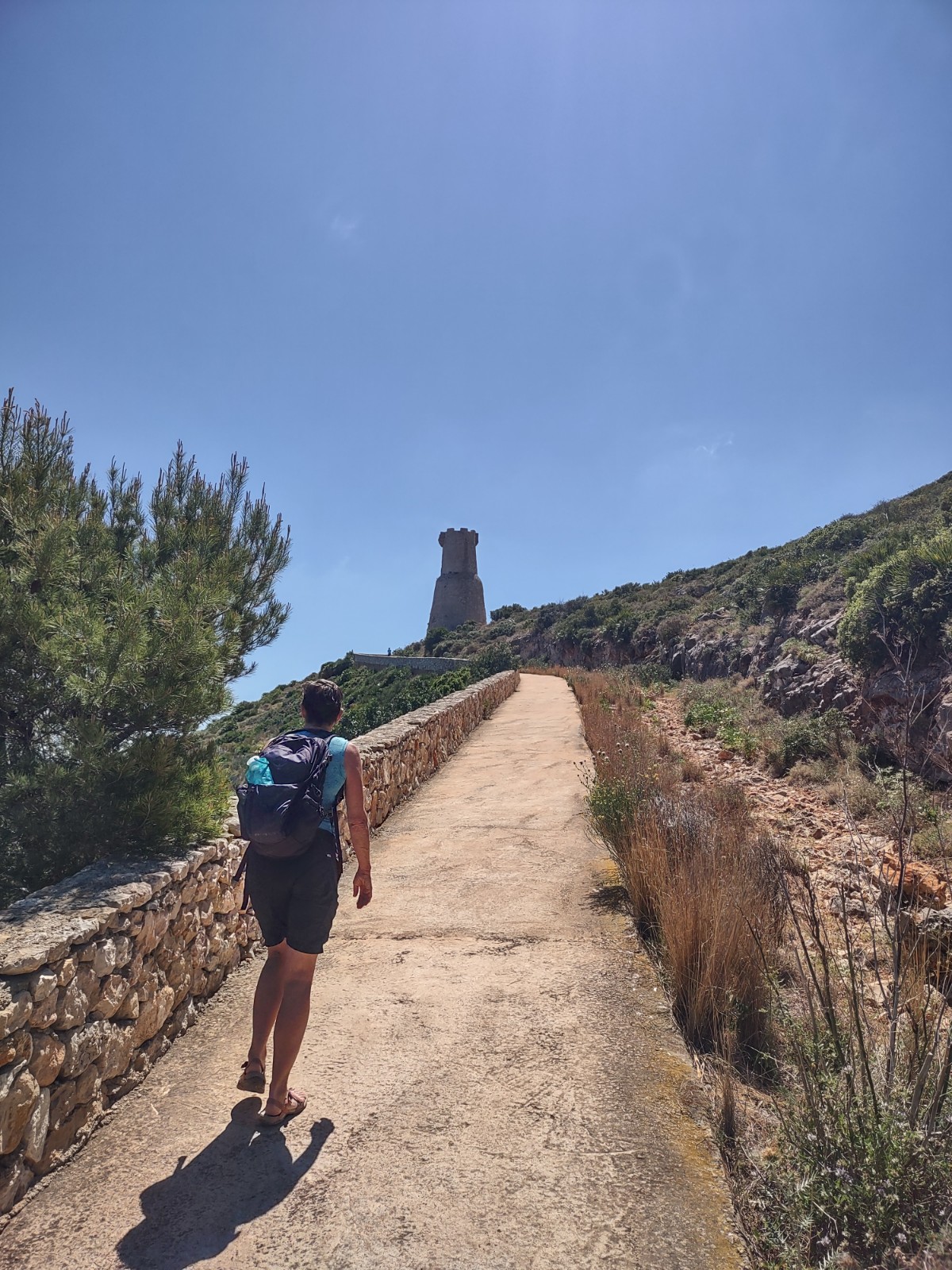
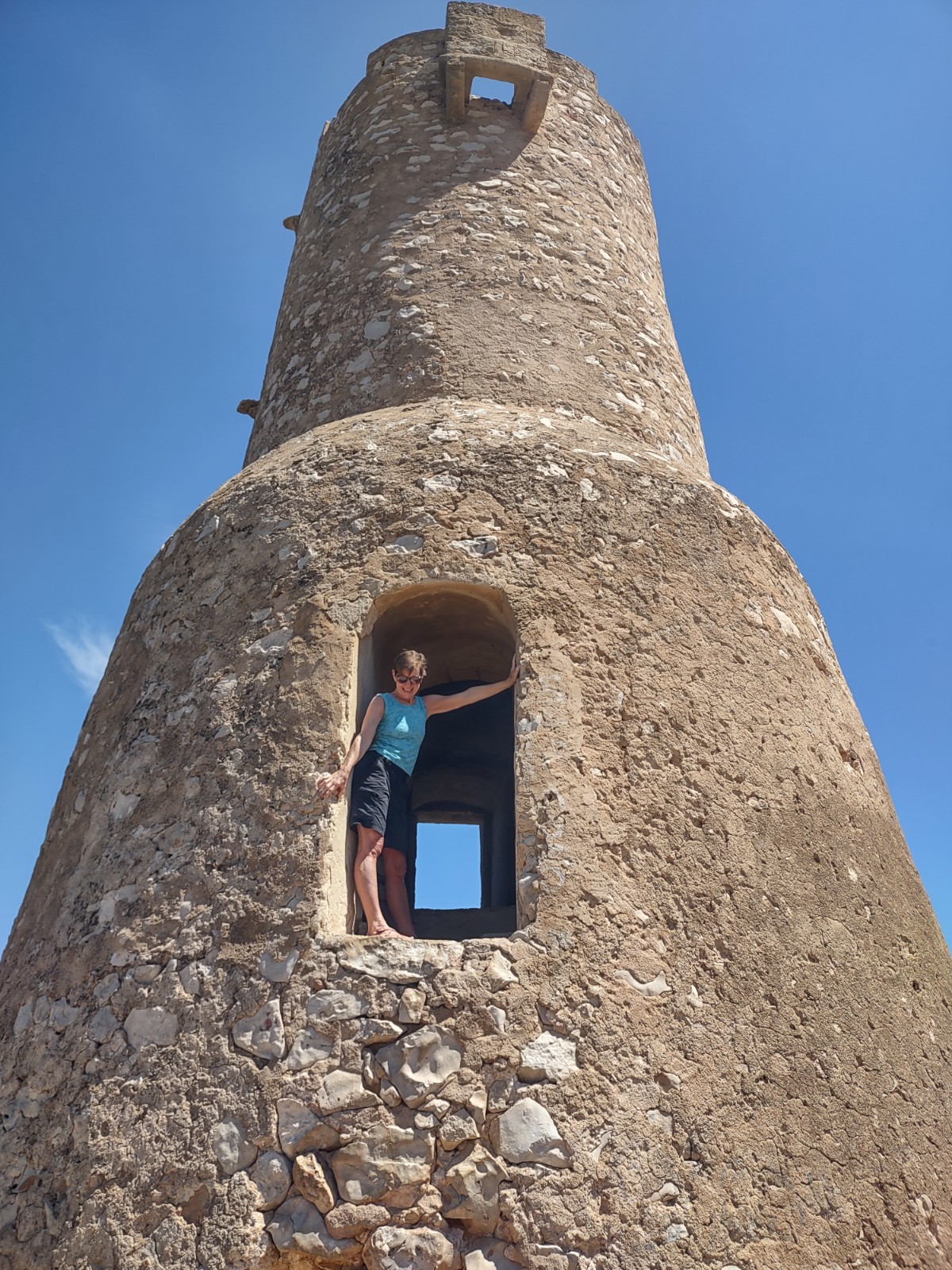
There were also some nice hiking trails in the area, particularly one which winds its way up the rock spine south of the City with spectacular views up and down the coast. There was also a trail which climbs to an old watchtower which made for some good photo opportunities once I boosted Colleen up into it.


The Castle of Denia
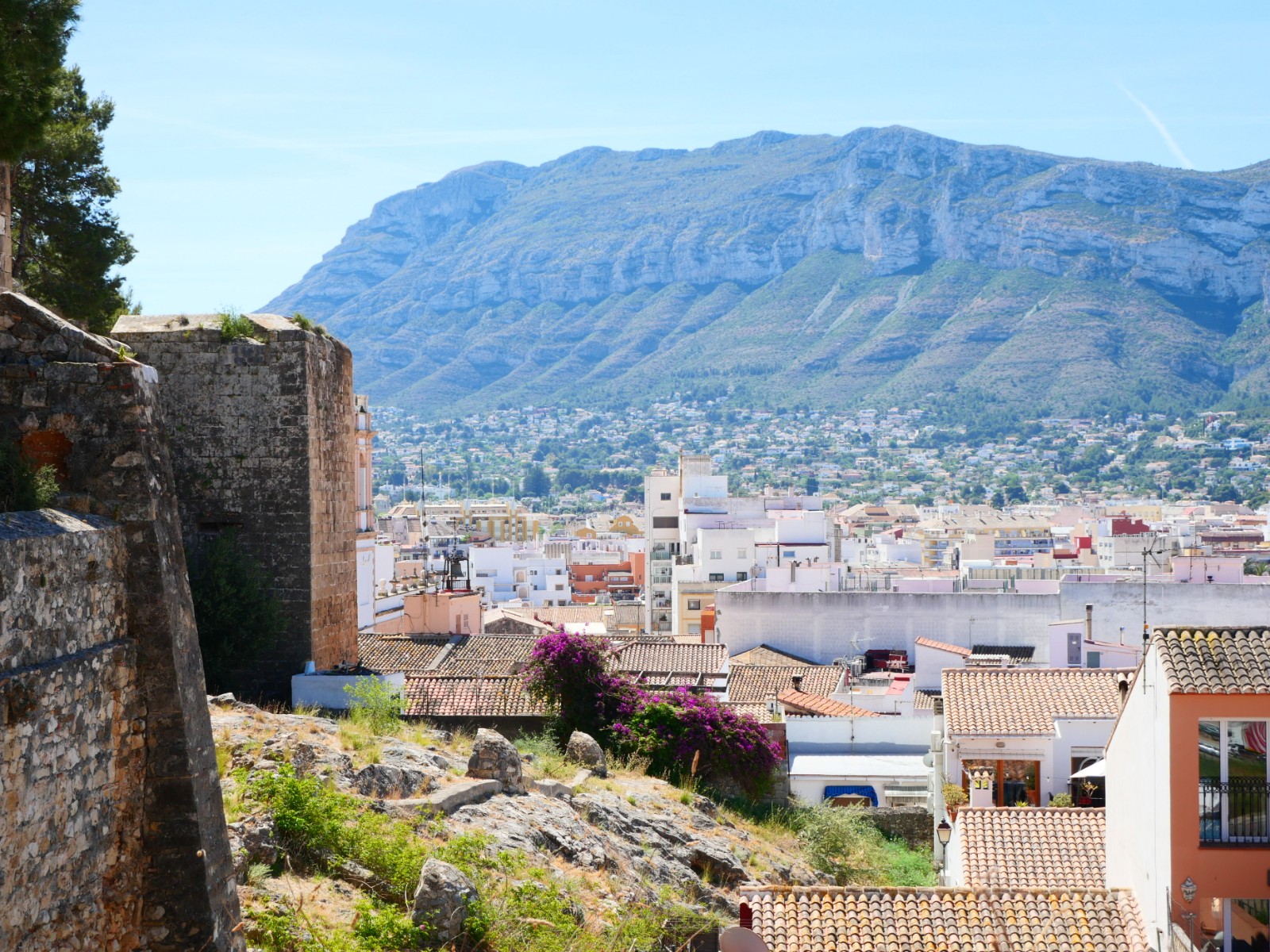
We took a tour of the Denia Castle early in our stay (self-guided but free!) along with the City Archeological Museum which is located in the Castle (also free!). The Castle itself was built in the 11th and 12th centuries and expanded and rebuilt over the years. While much of the current construction is obviously not original, it nonetheless gives you a great feel for what it must have been like to defend against a siege and the views are pretty incredible as well.



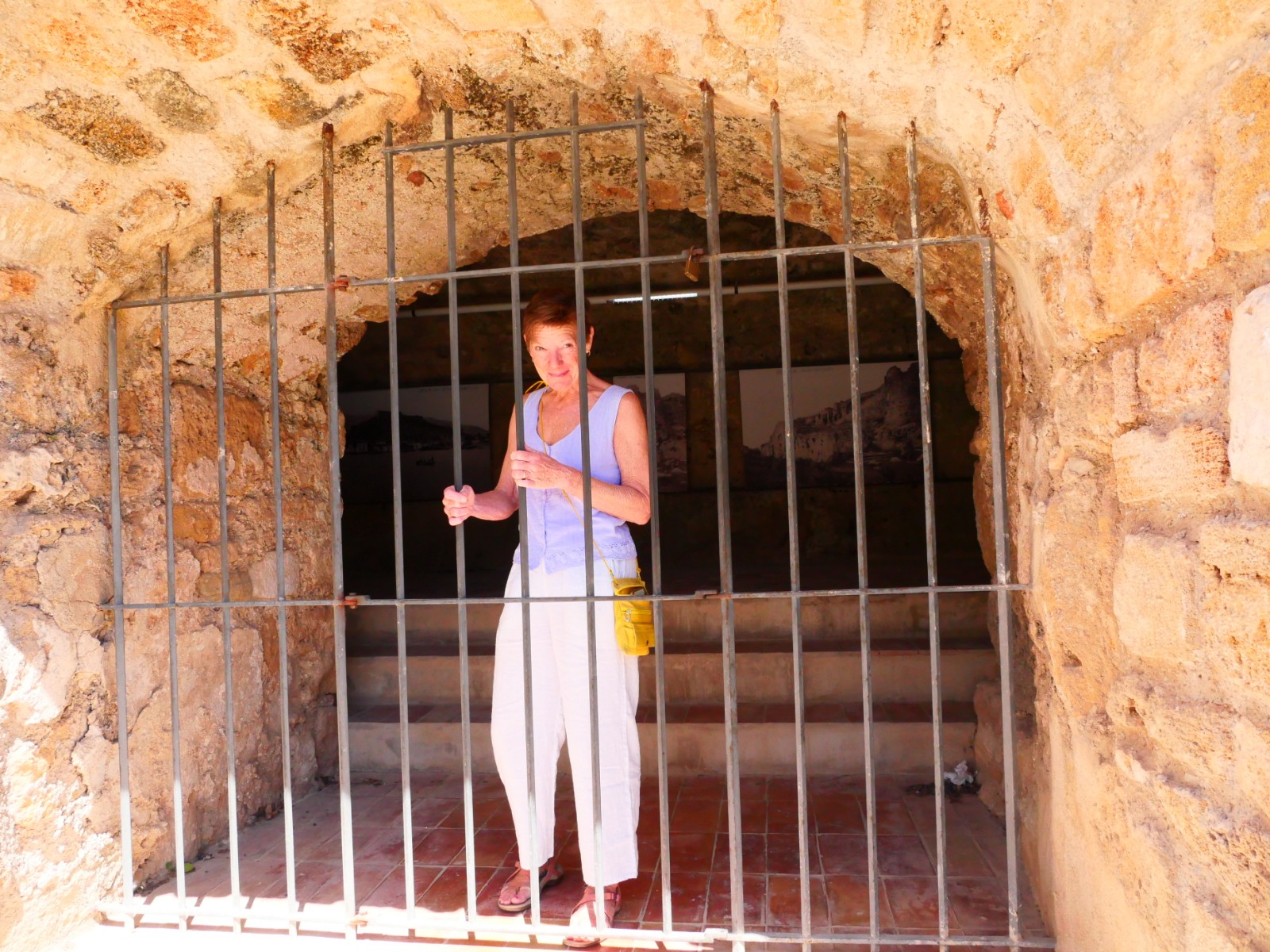
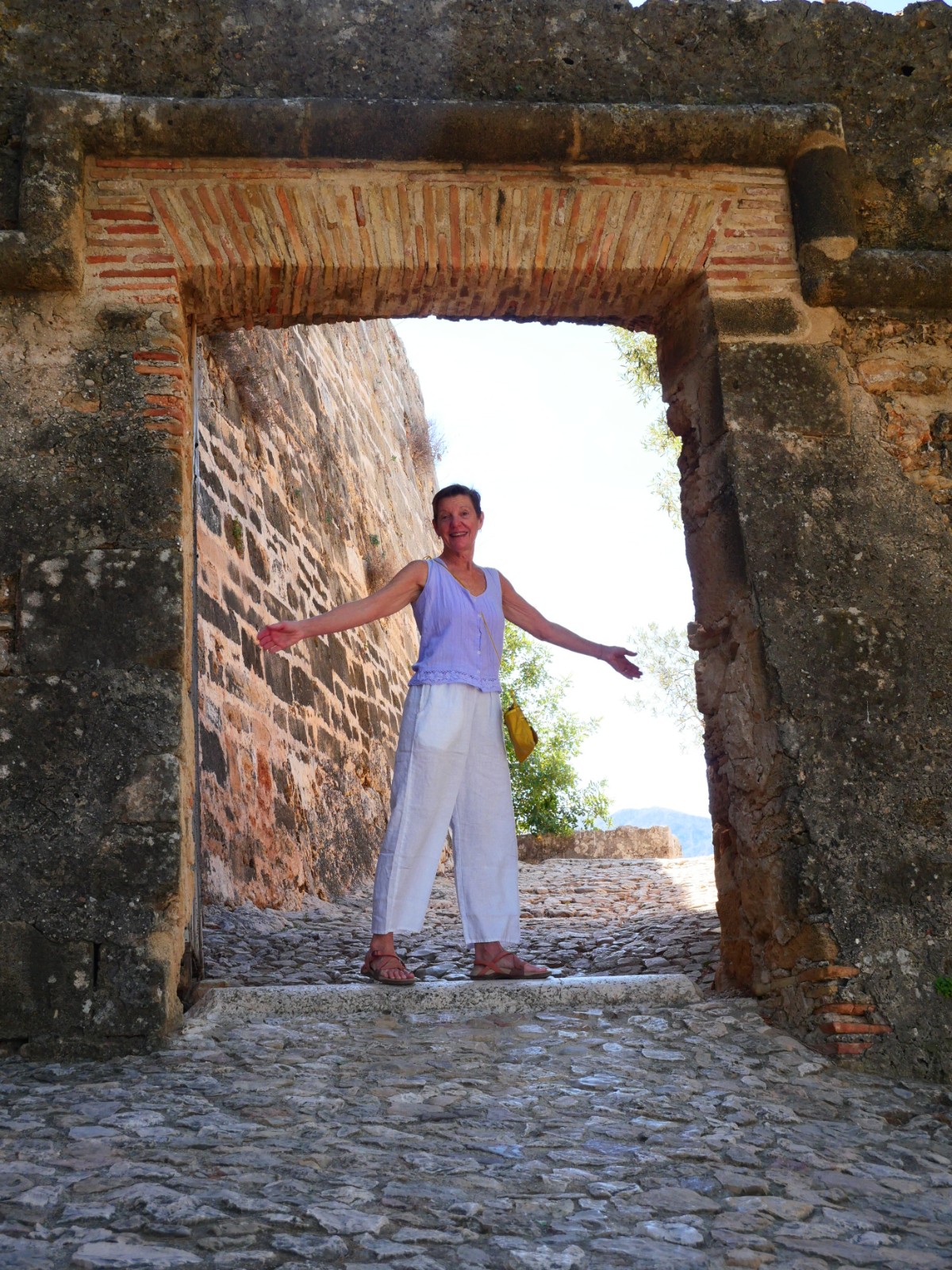

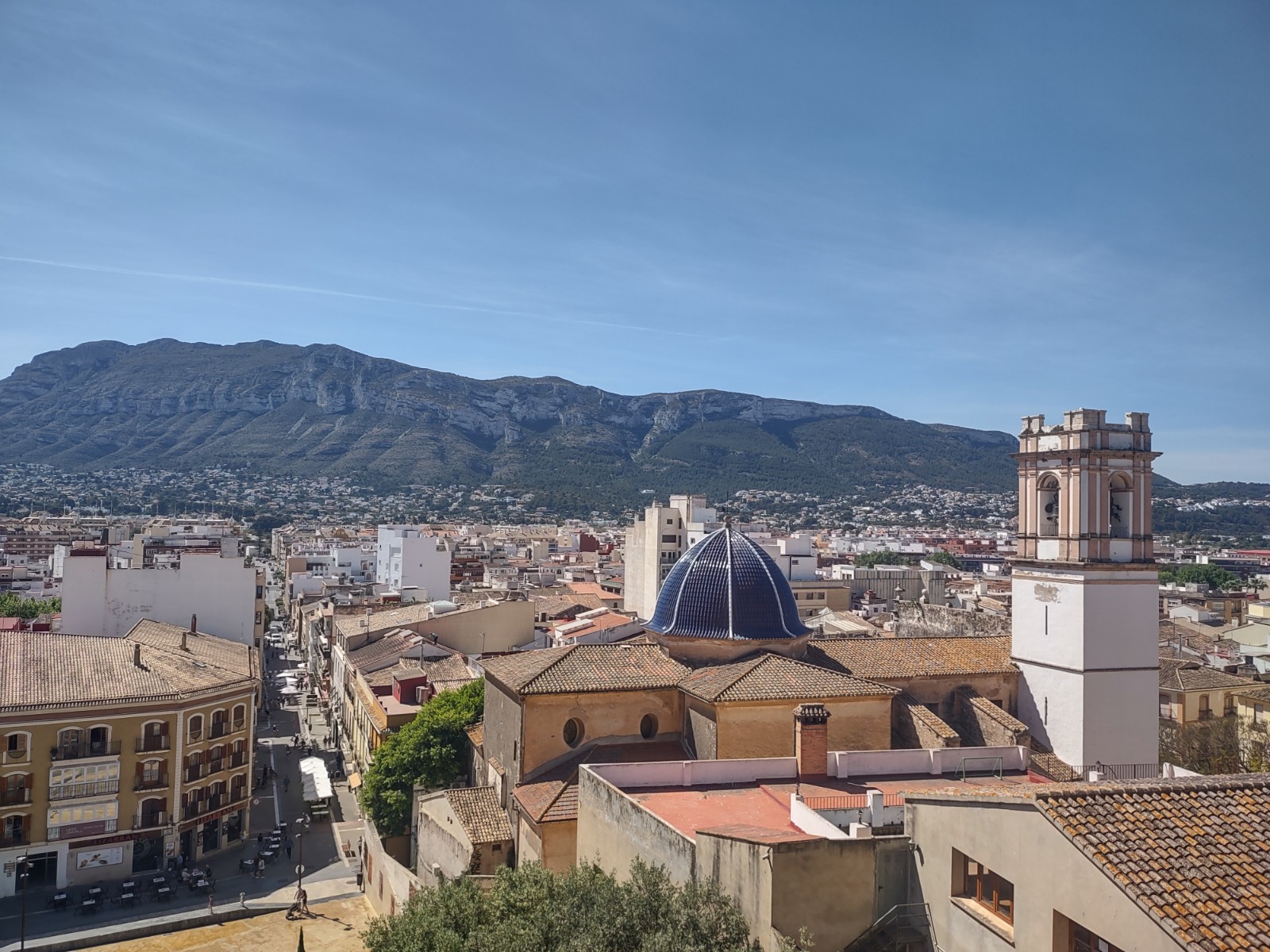
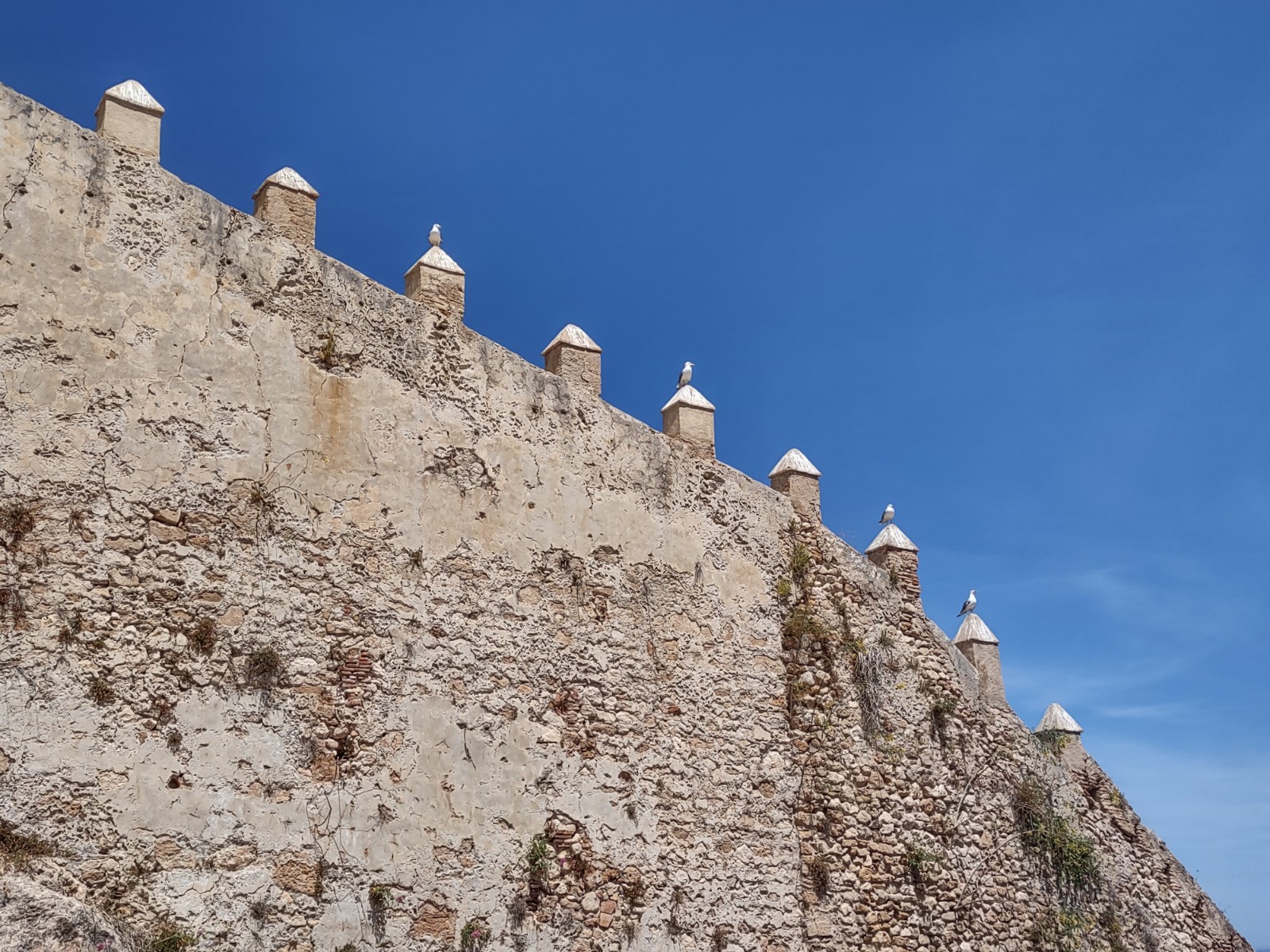
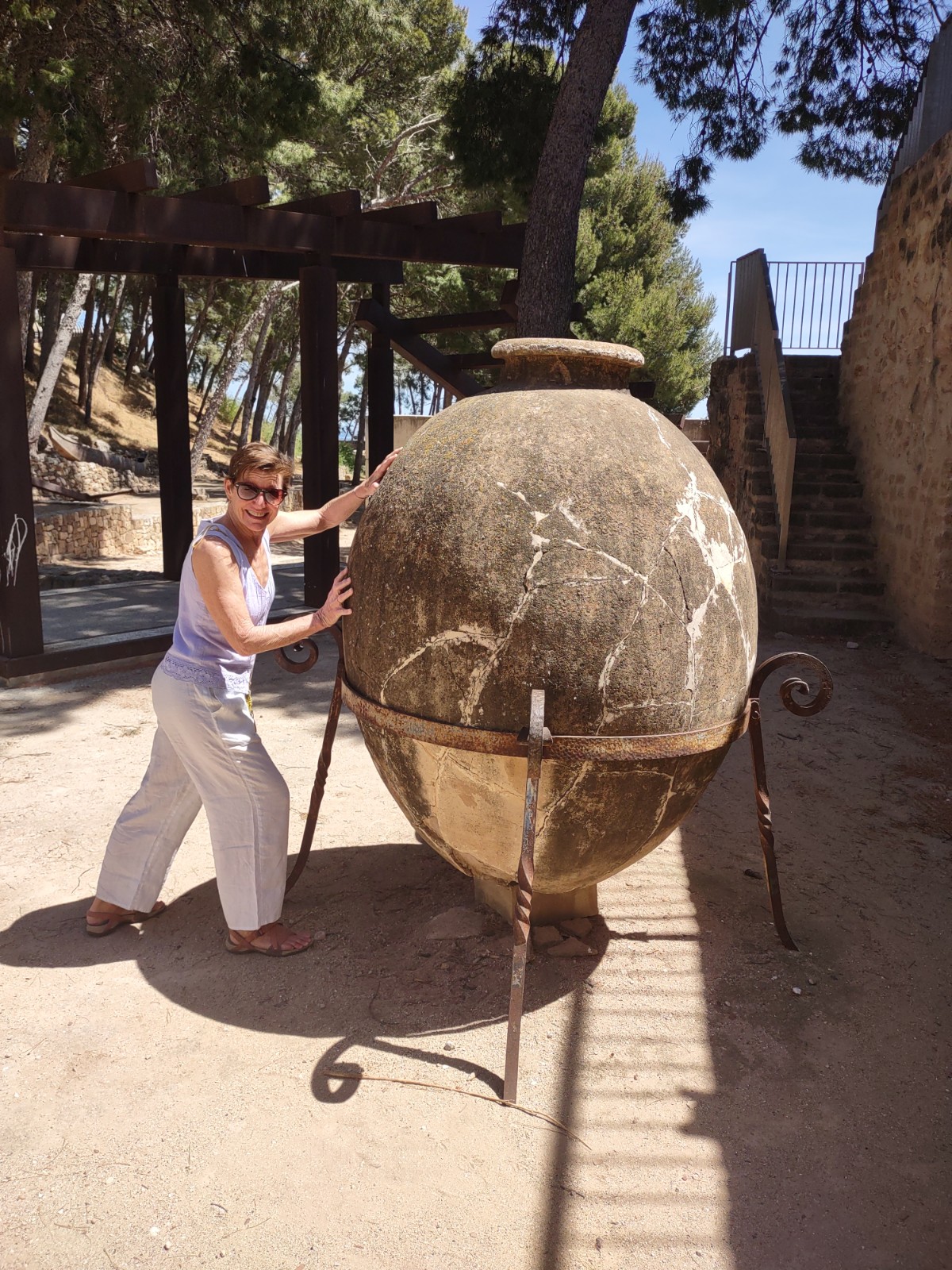


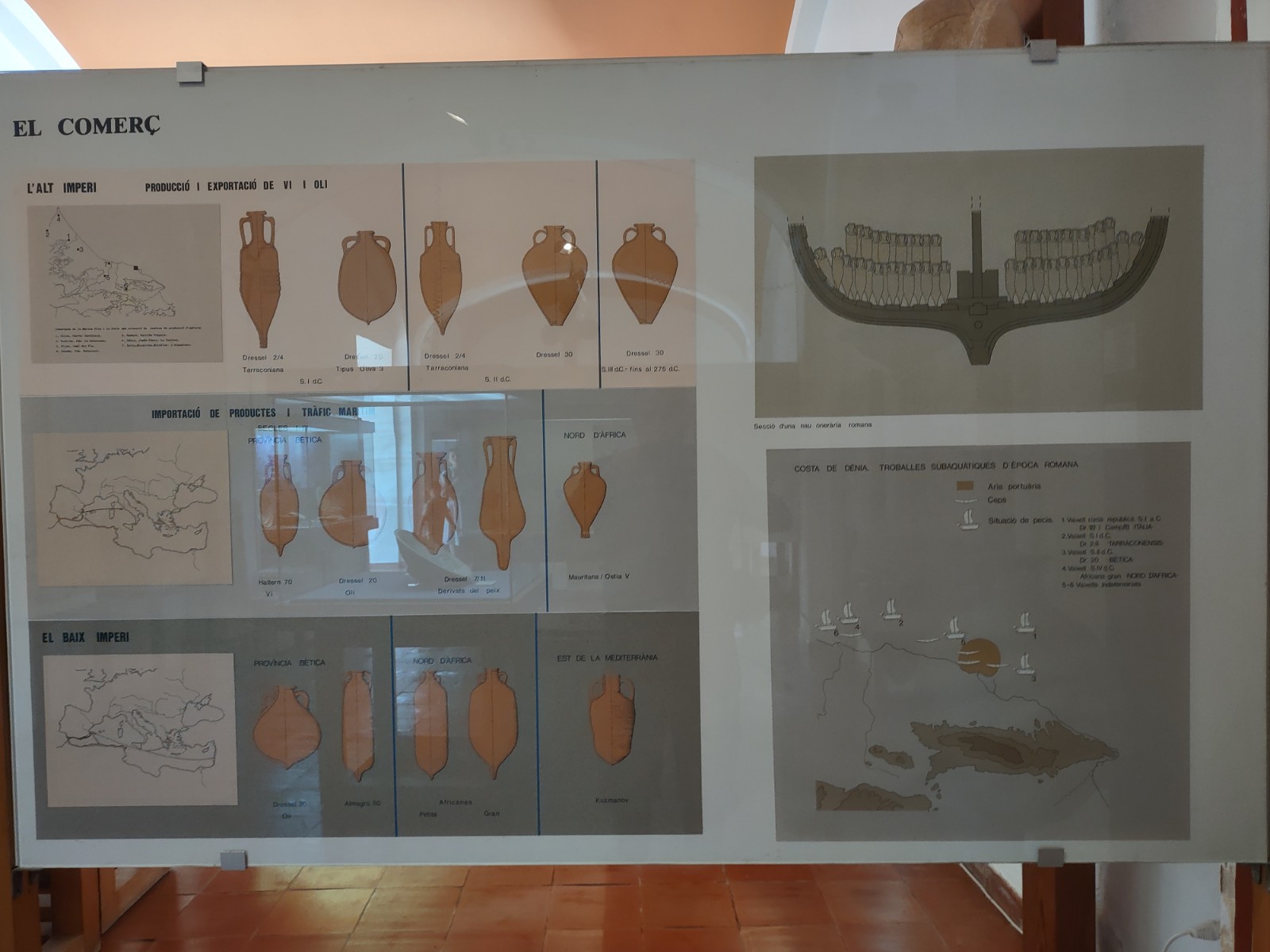
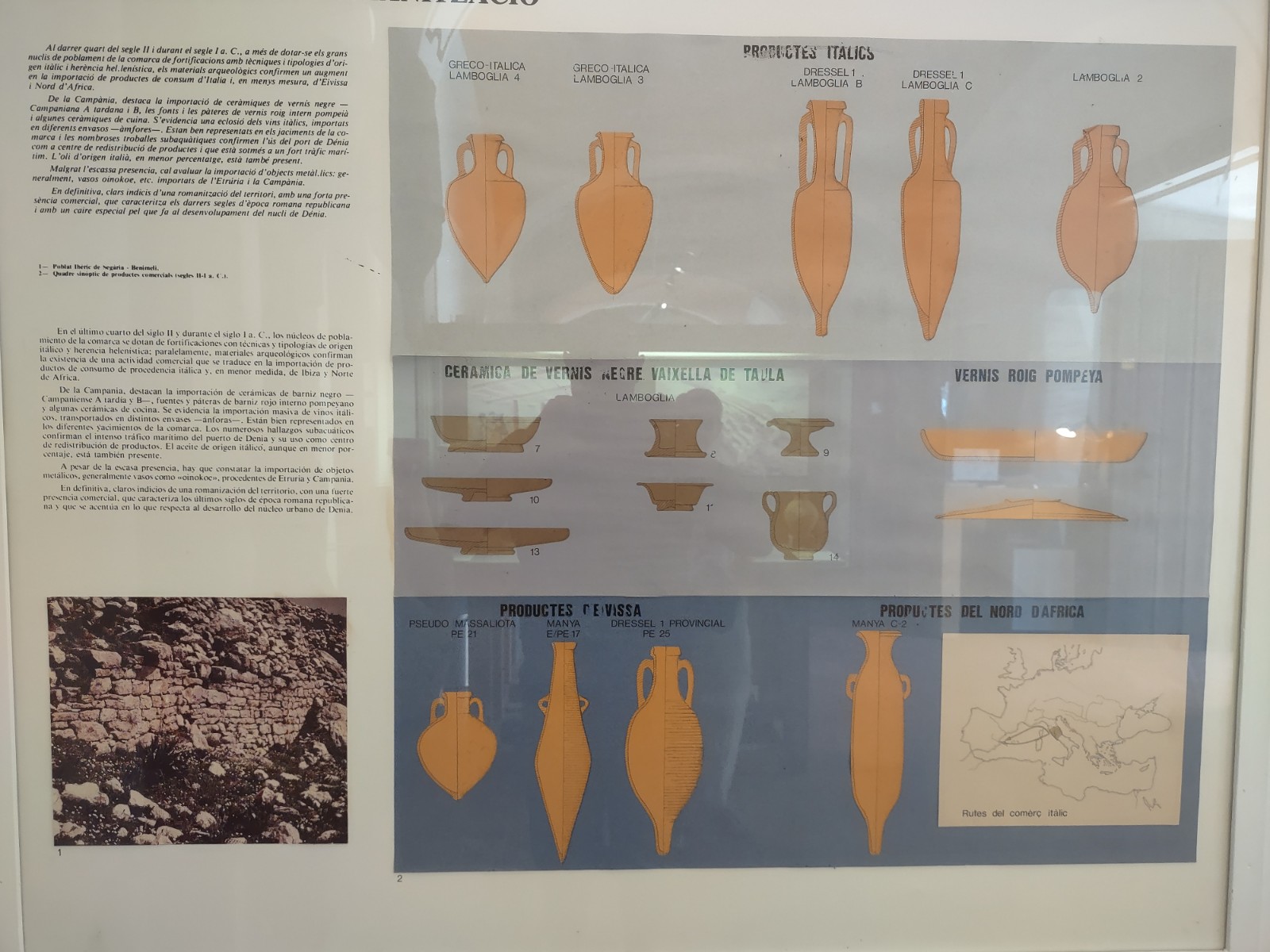
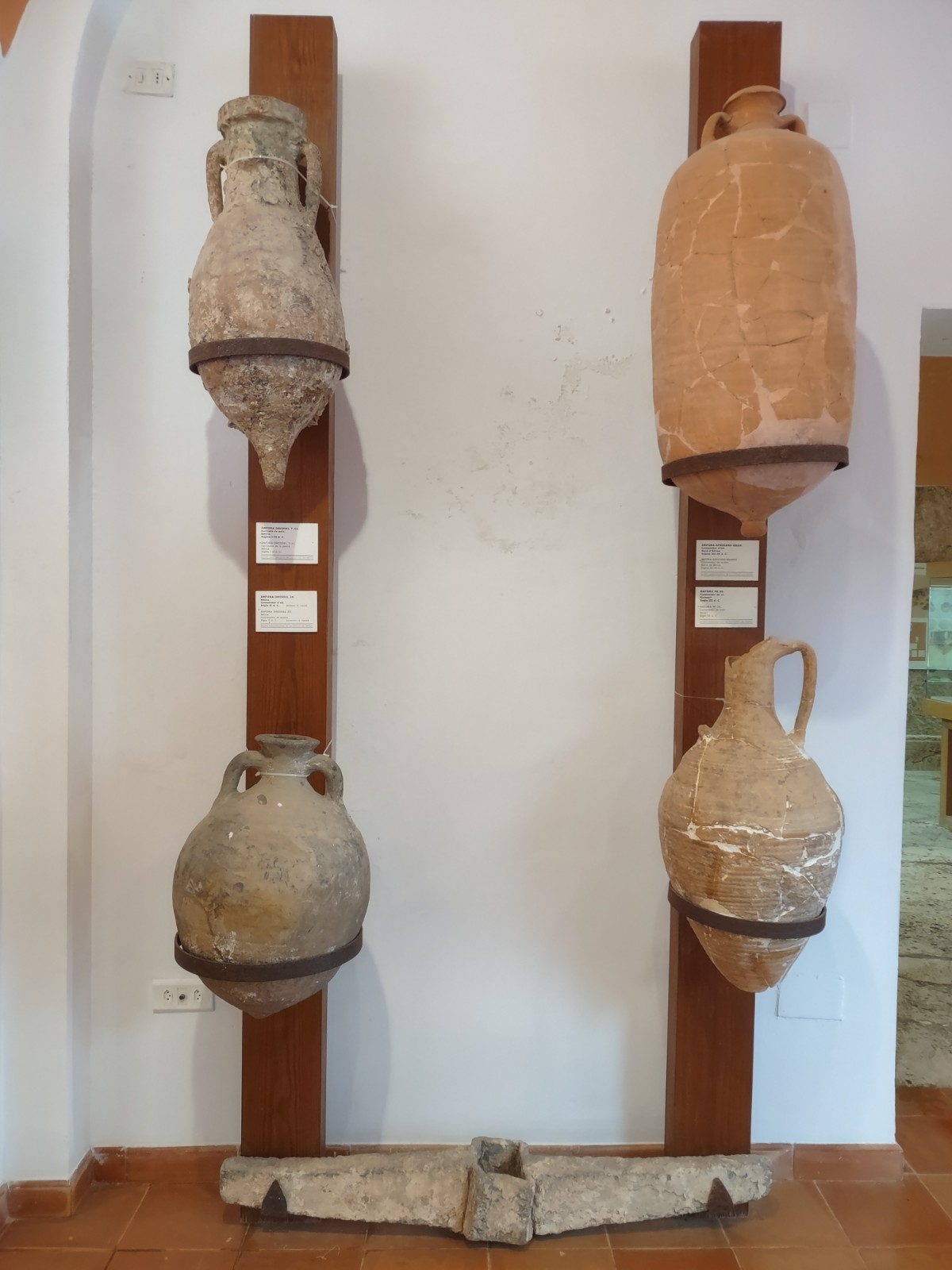
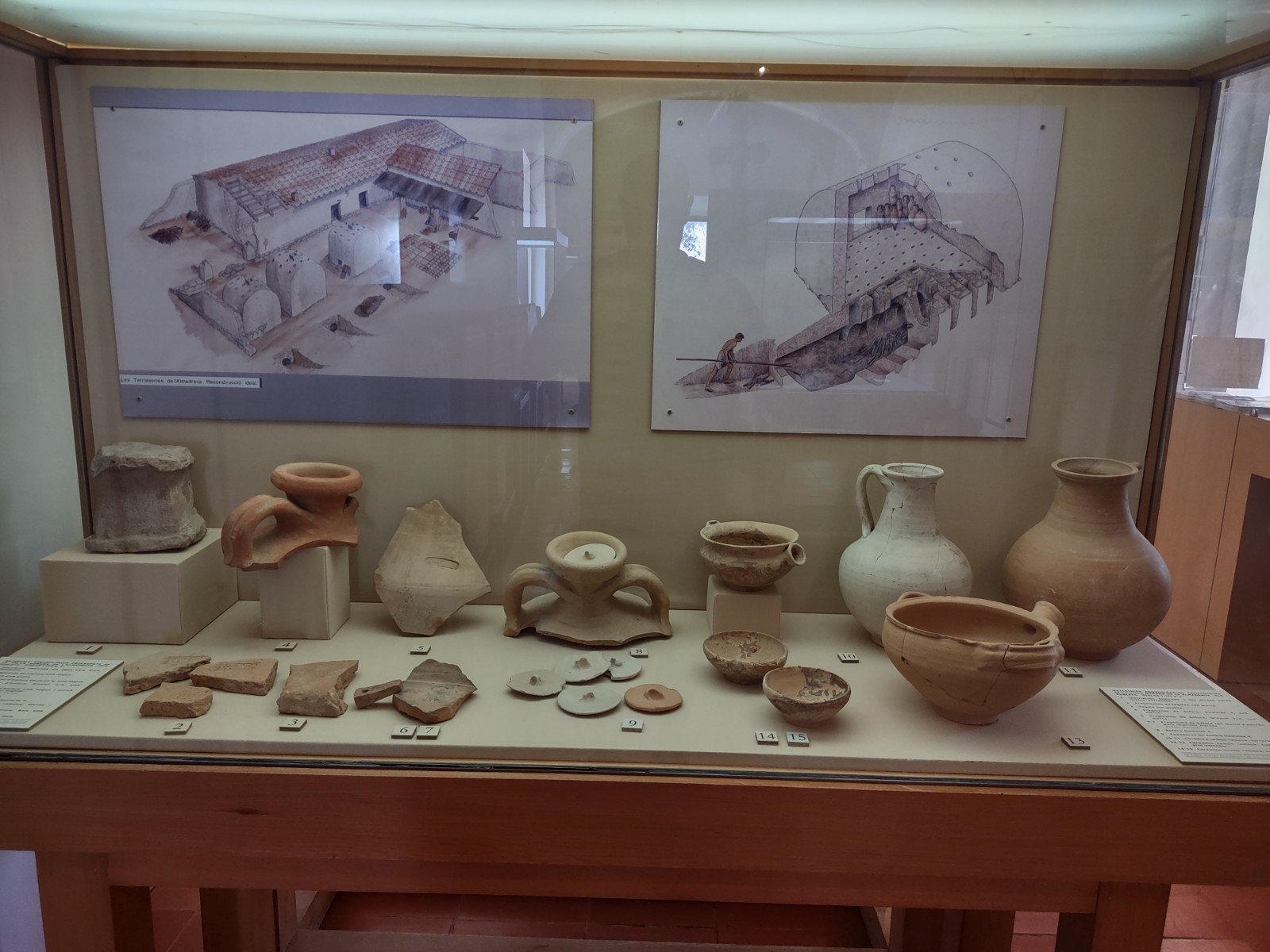
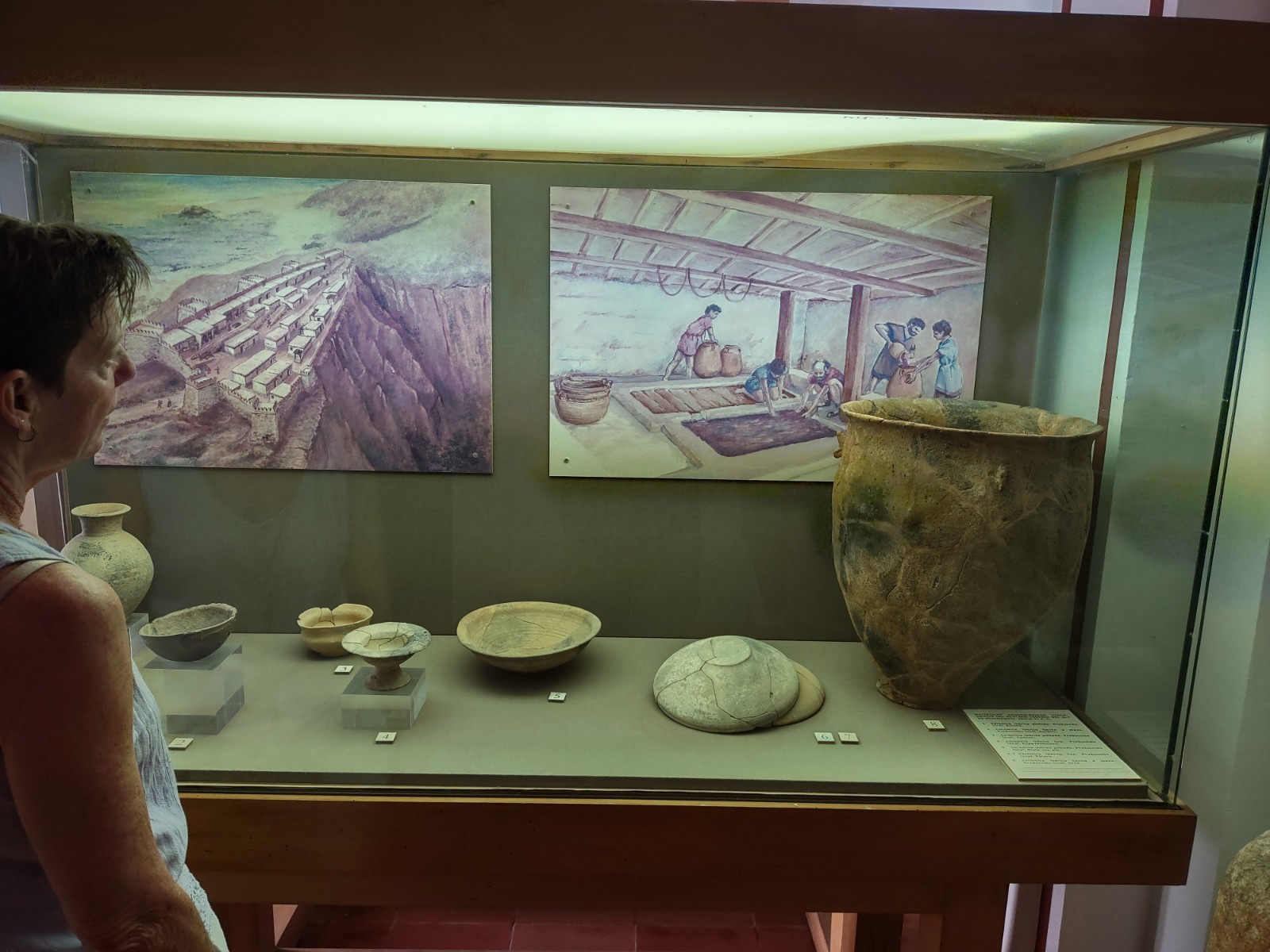
Exhibits in the Archeological Museum include artifacts from the various civilizations that have occupied the city over the years. It was particularly interesting to see the large clay vessels which were produced in massive quantities to ship olive oil during the Roman period. We were perplexed by the tapered (not flat) bottoms of these until we realized that the shape was intended to allow them to be stacked in the holds of ships for transport.

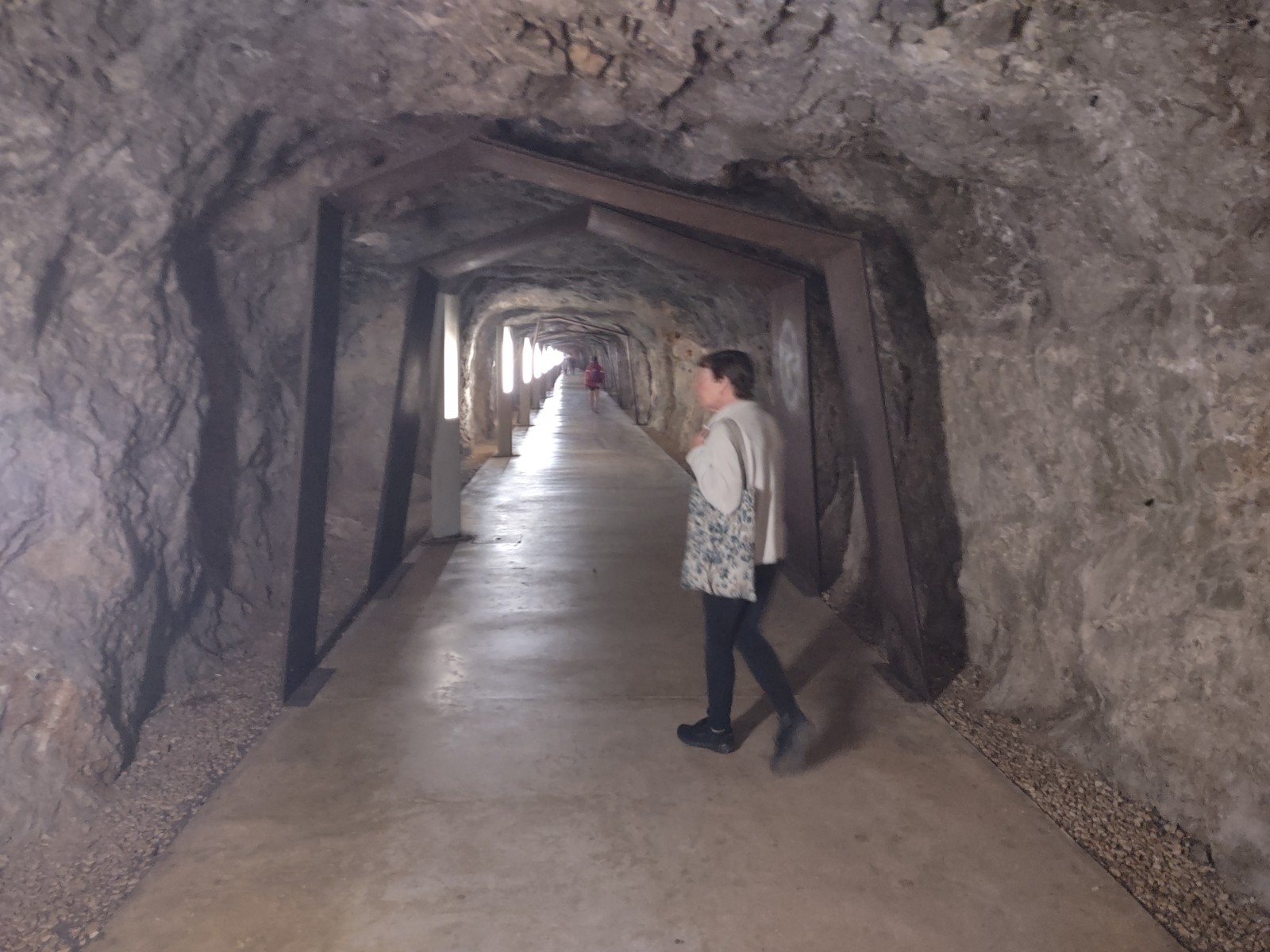
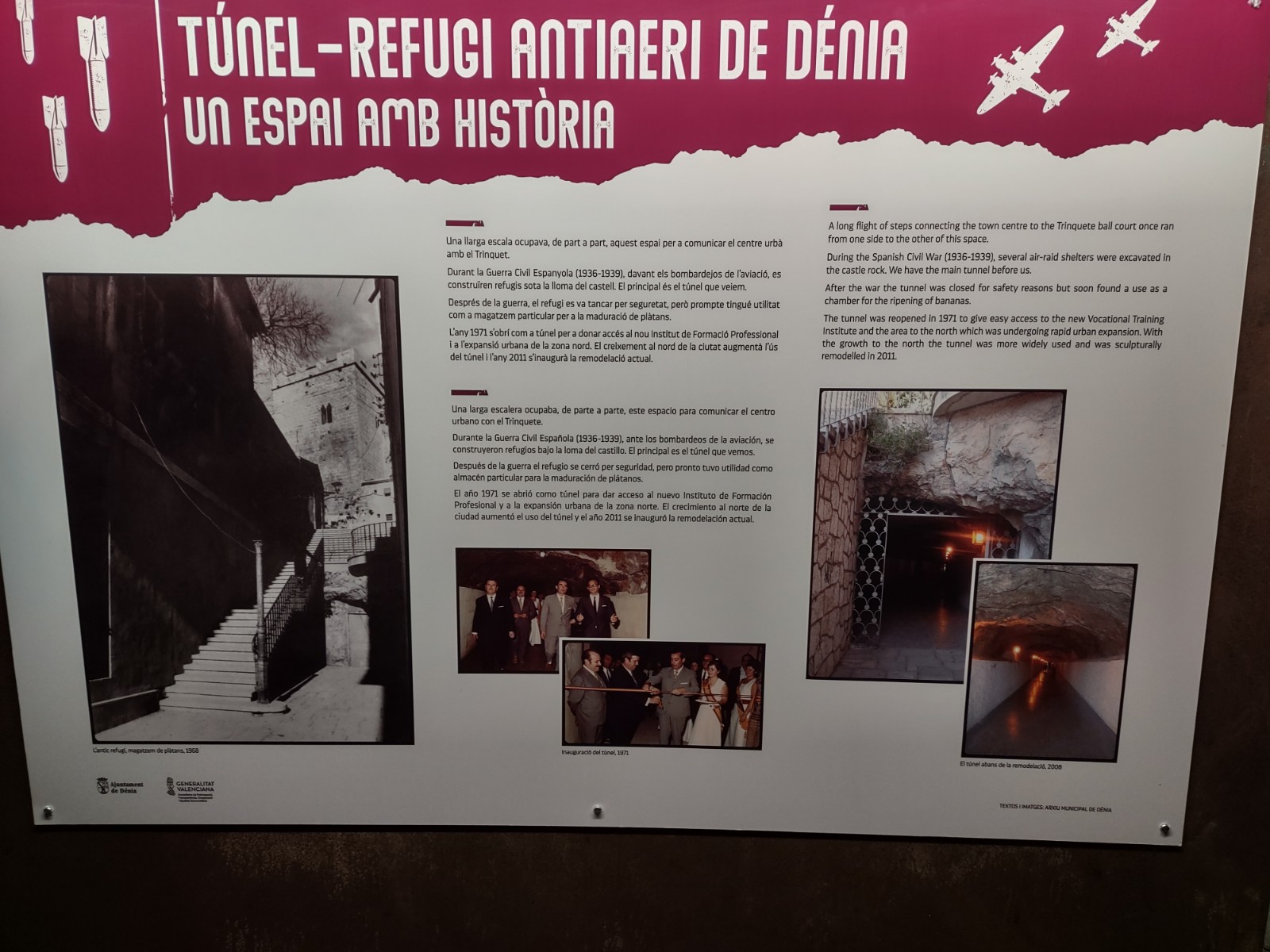
One other interesting feature here is a tunnel which runs under the Castle. The tunnel is unrelated to the Castle construction and, as near as we could figure out, appears to have been constructed as an air raid shelter during World War II. It was closed for some period due to structural concerns but was recently renovated as a sort of an art project with some interesting plate steel supports. It is apparently sometimes used as a display space but also serves as shortcut across town without having to travel around the Castle hill which we used on some occasions as one of the entrances was only a block from our apartment.

Excursion to Calp
Again, we weren’t looking to be overly active on this leg of the Big Trip, but we did take one day trip down the coast to the City of Calp (sometimes spelled Calpe). It’s a pretty easy trip of about 30 miles via a light tram line which takes about an hour and costs a whopping 2-1/2 euros per person round trip. (We continue to be amazed at the public transportation options available in Europe and how inexpensive they generally are.)
Calp is actually a little smaller than Denia in terms of population but has no coastal plain and thus a pretty densely developed seaside which makes it seem much larger than than it is. It also has long beautiful sandy beaches, ending with an enormous rock outcropping which dwarfs the city and makes for some incredible views.
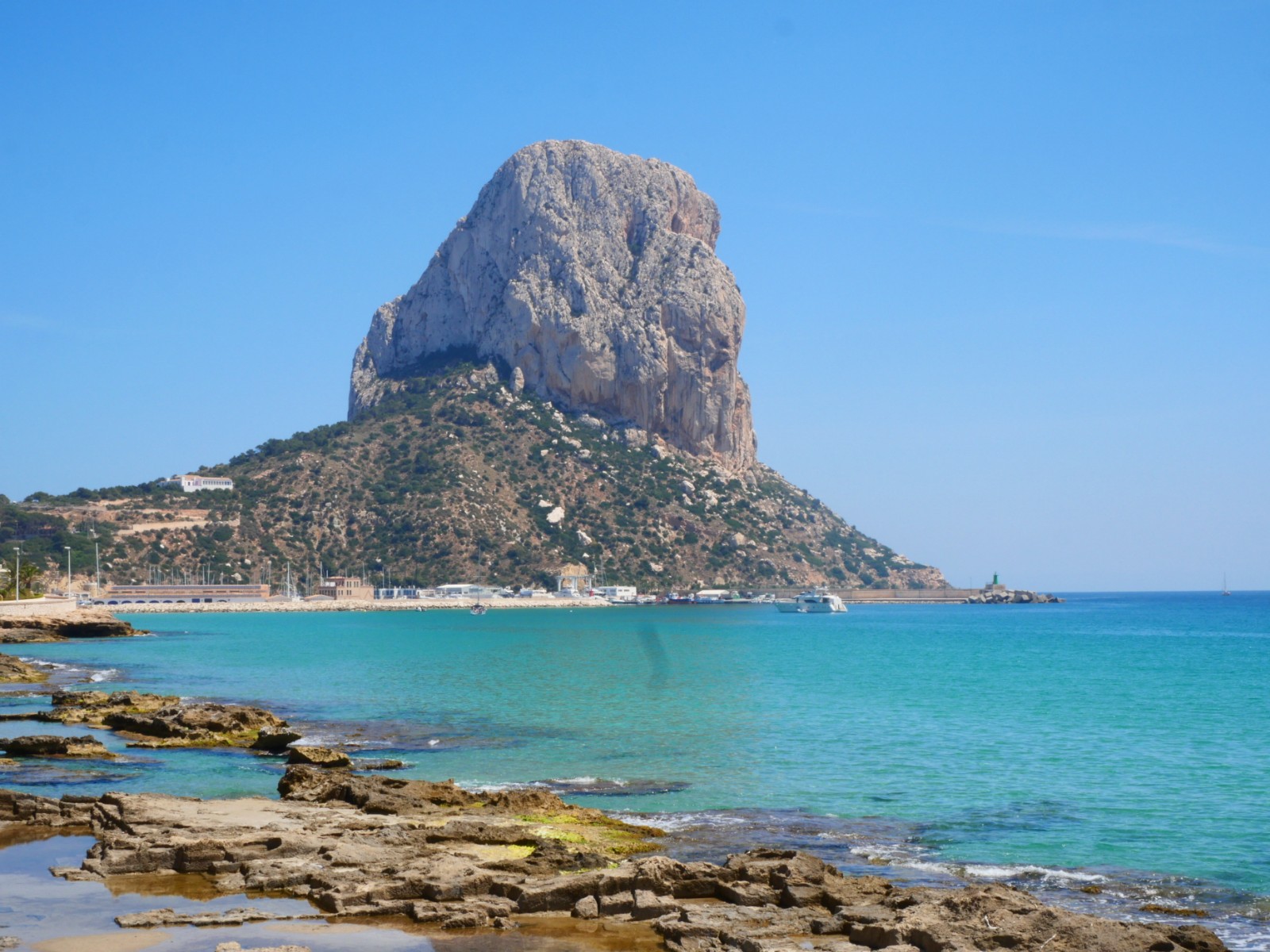
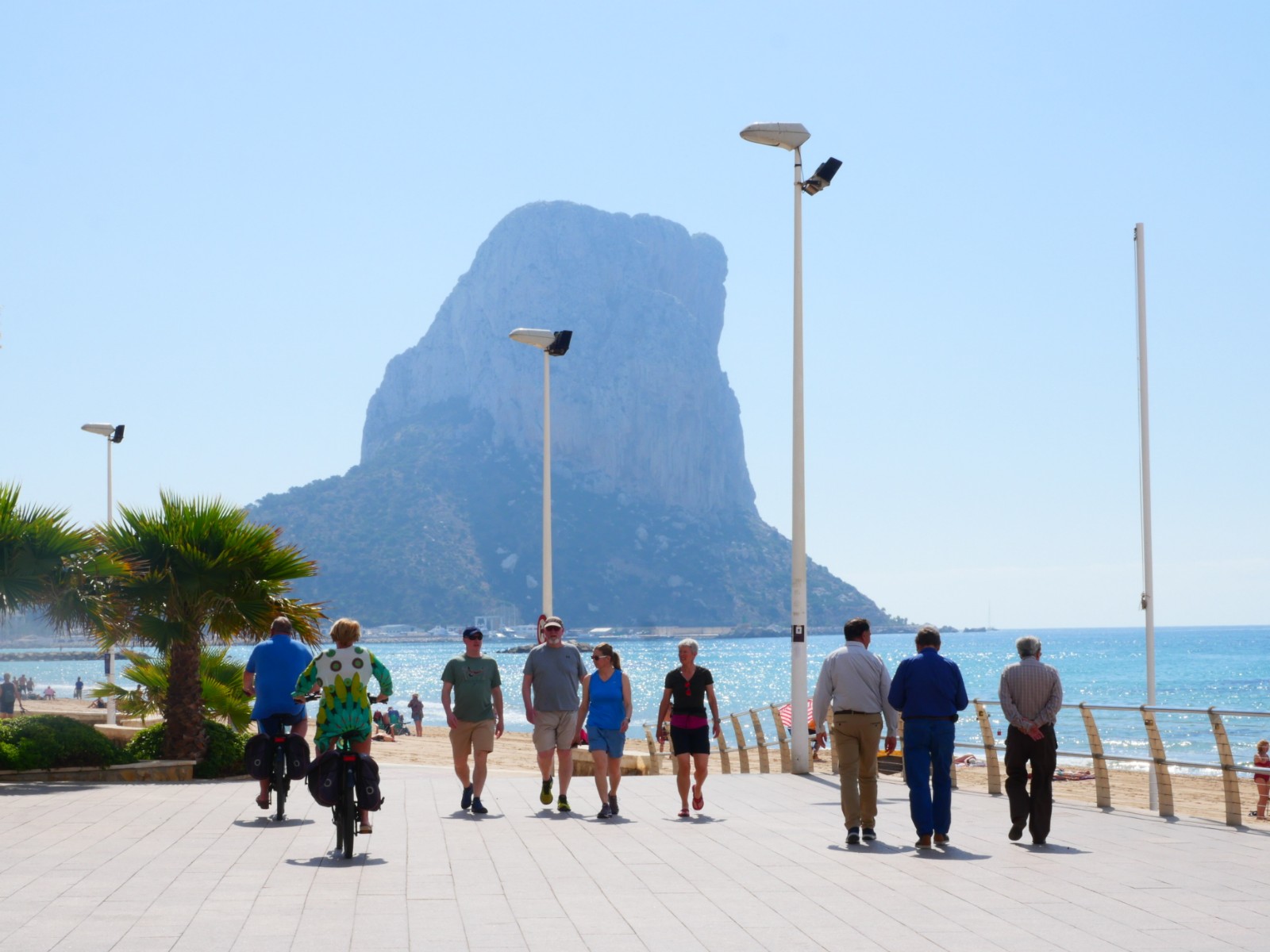
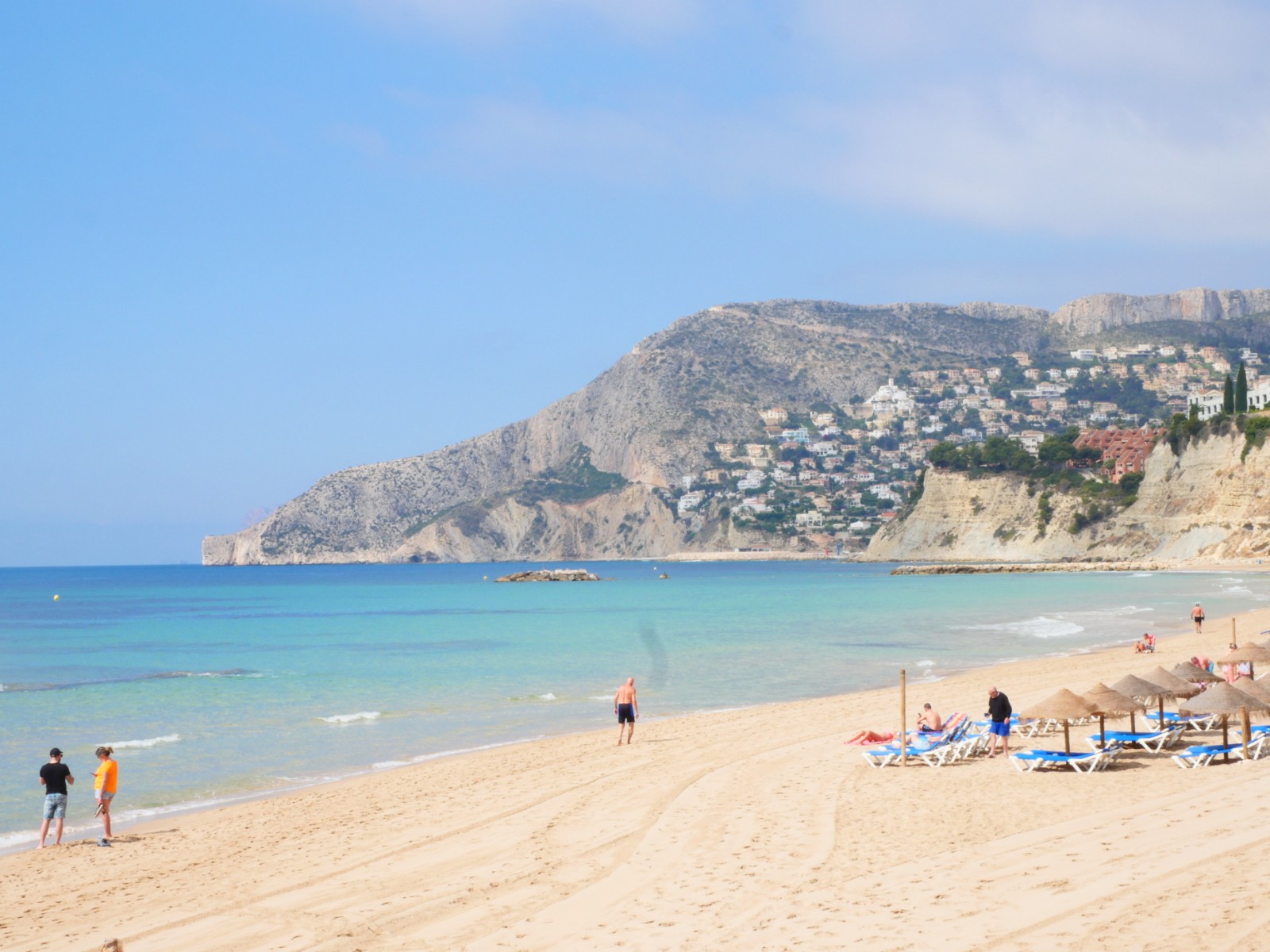
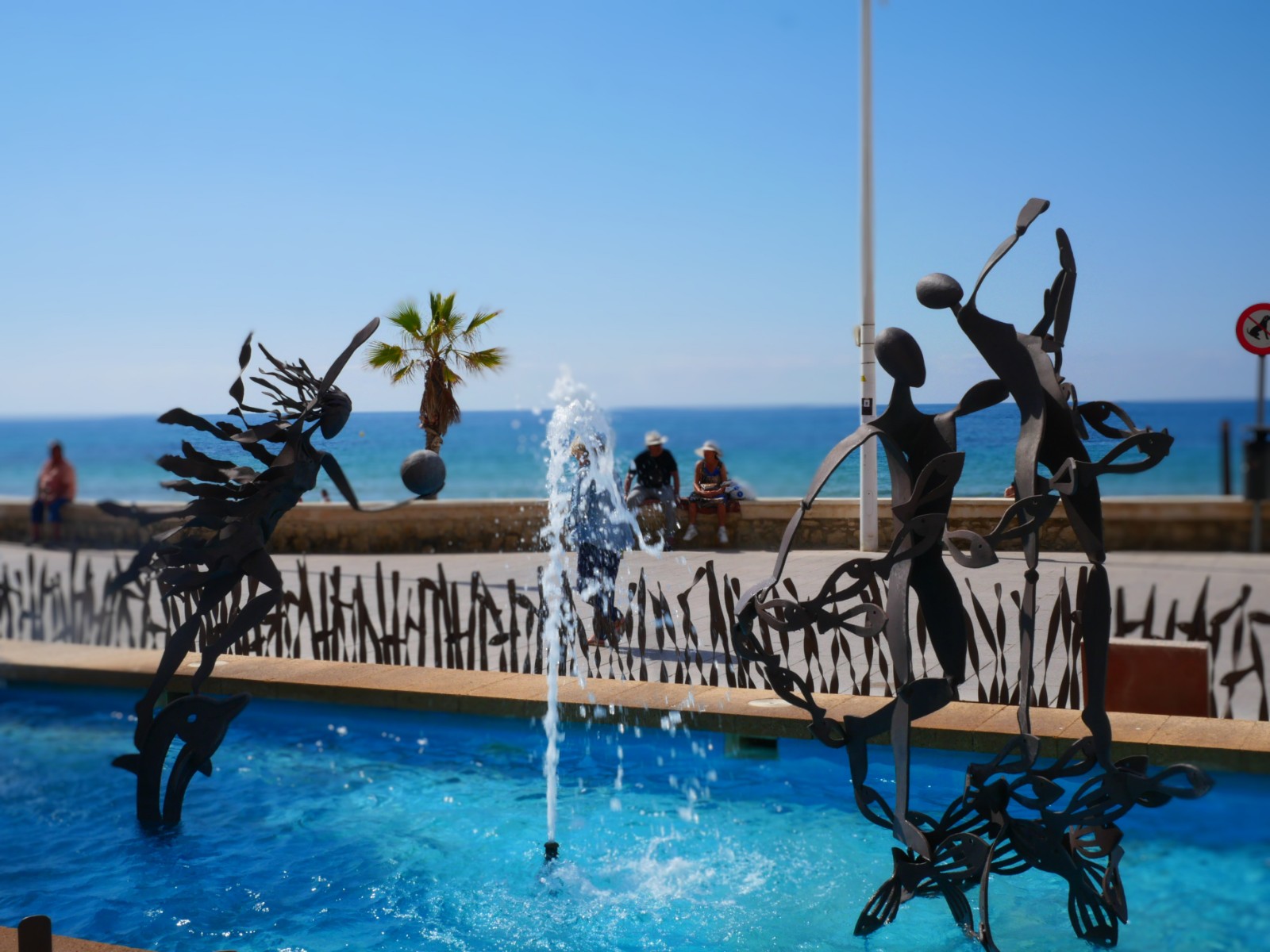
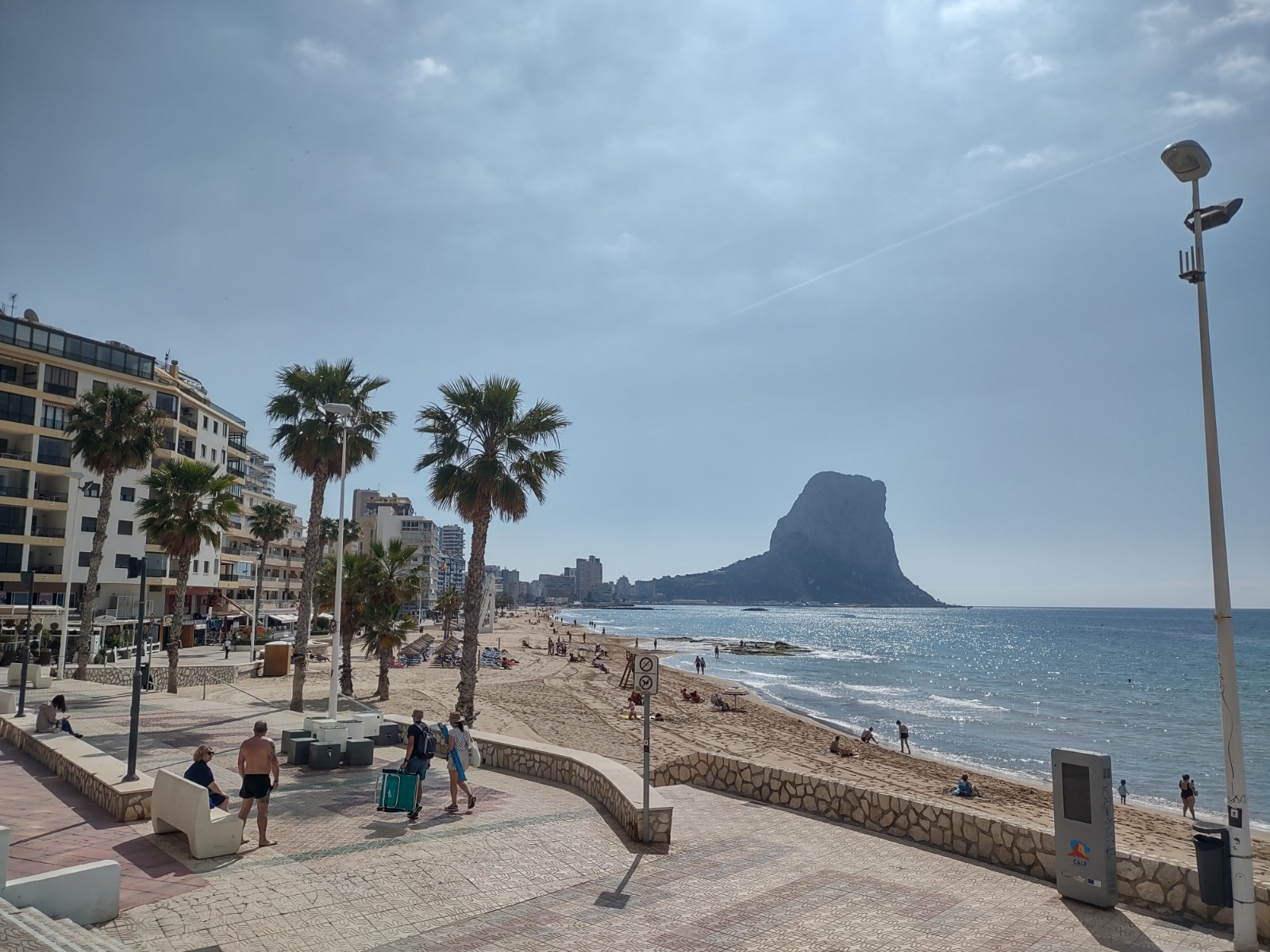
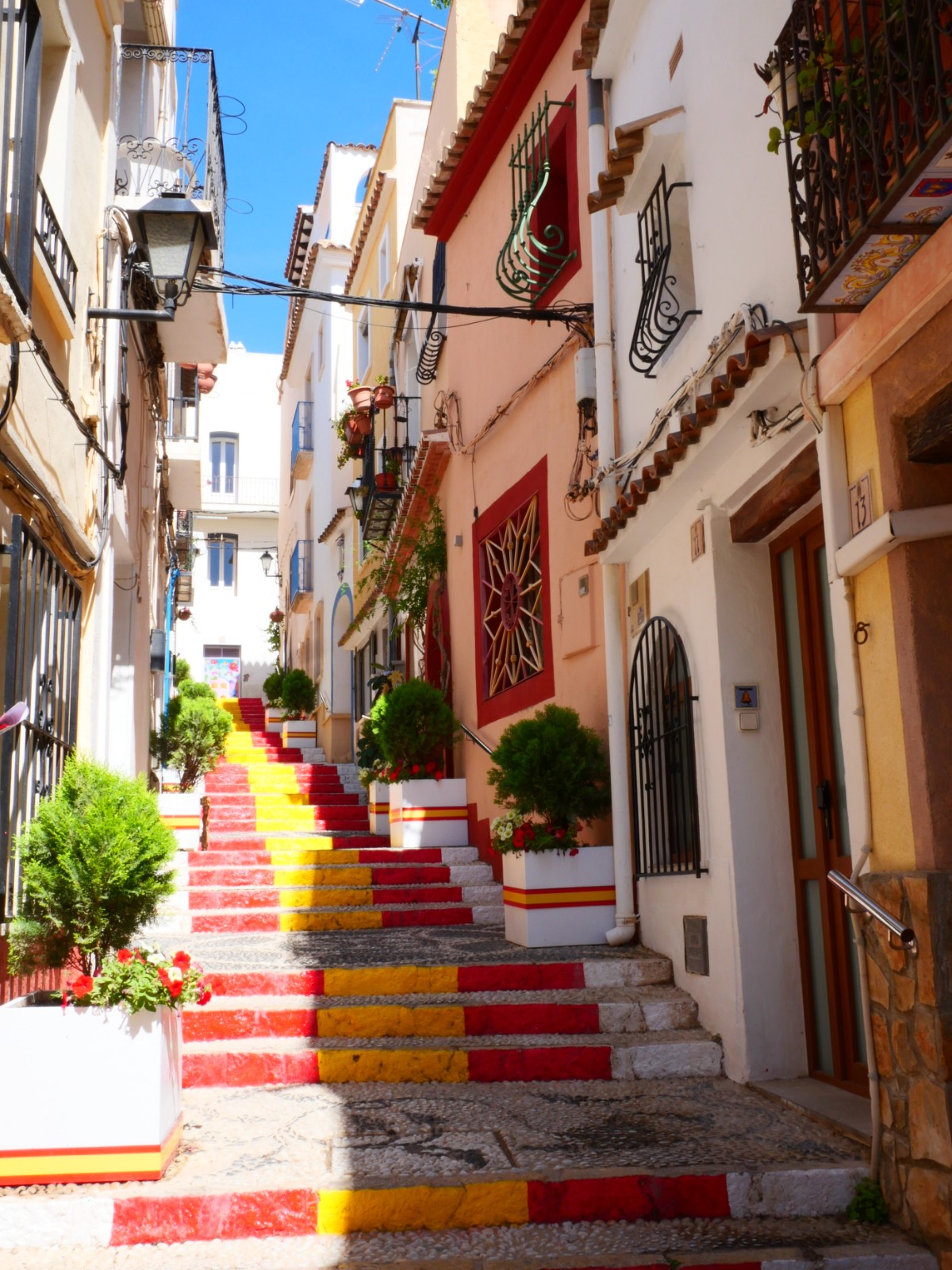
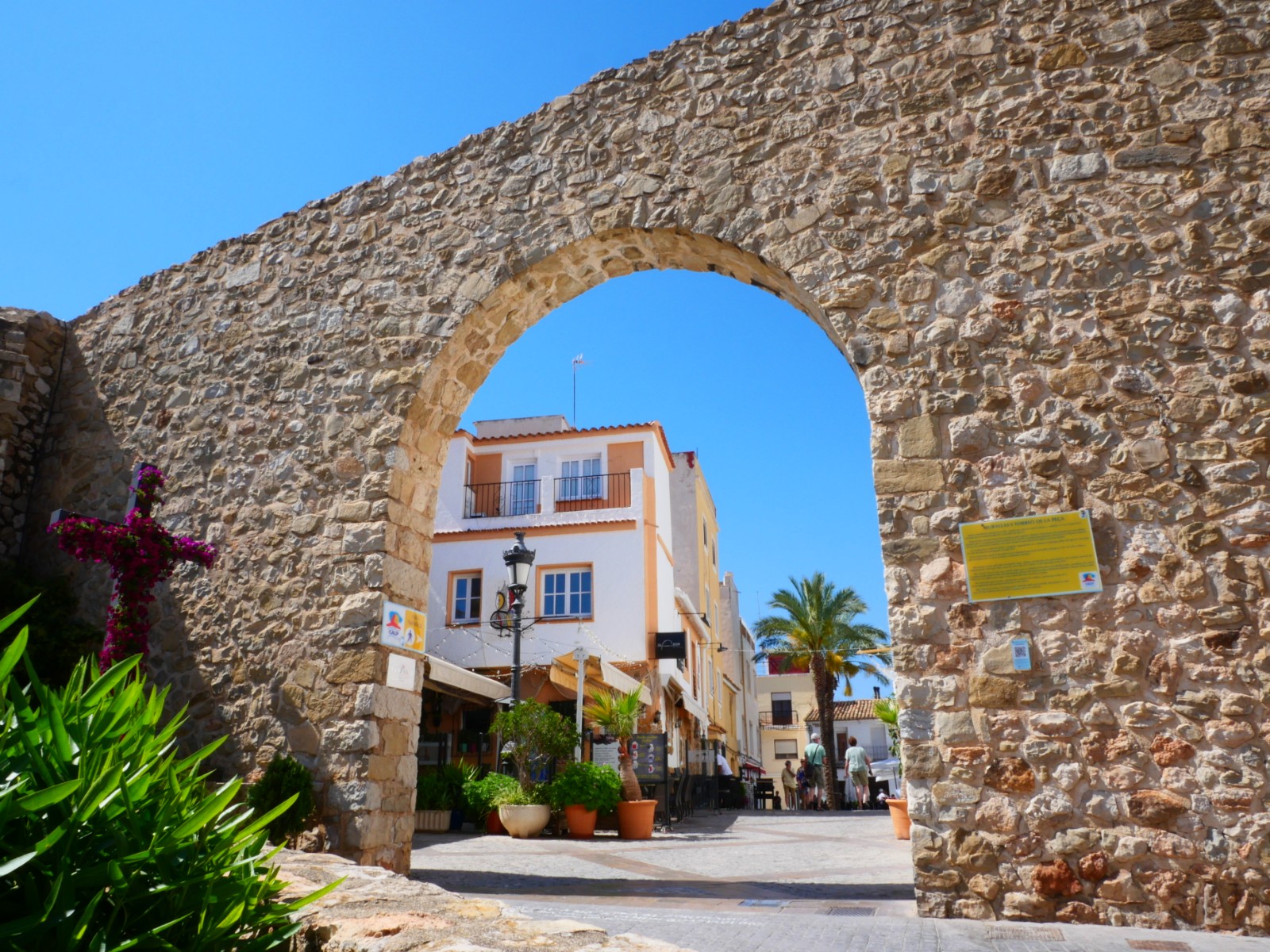
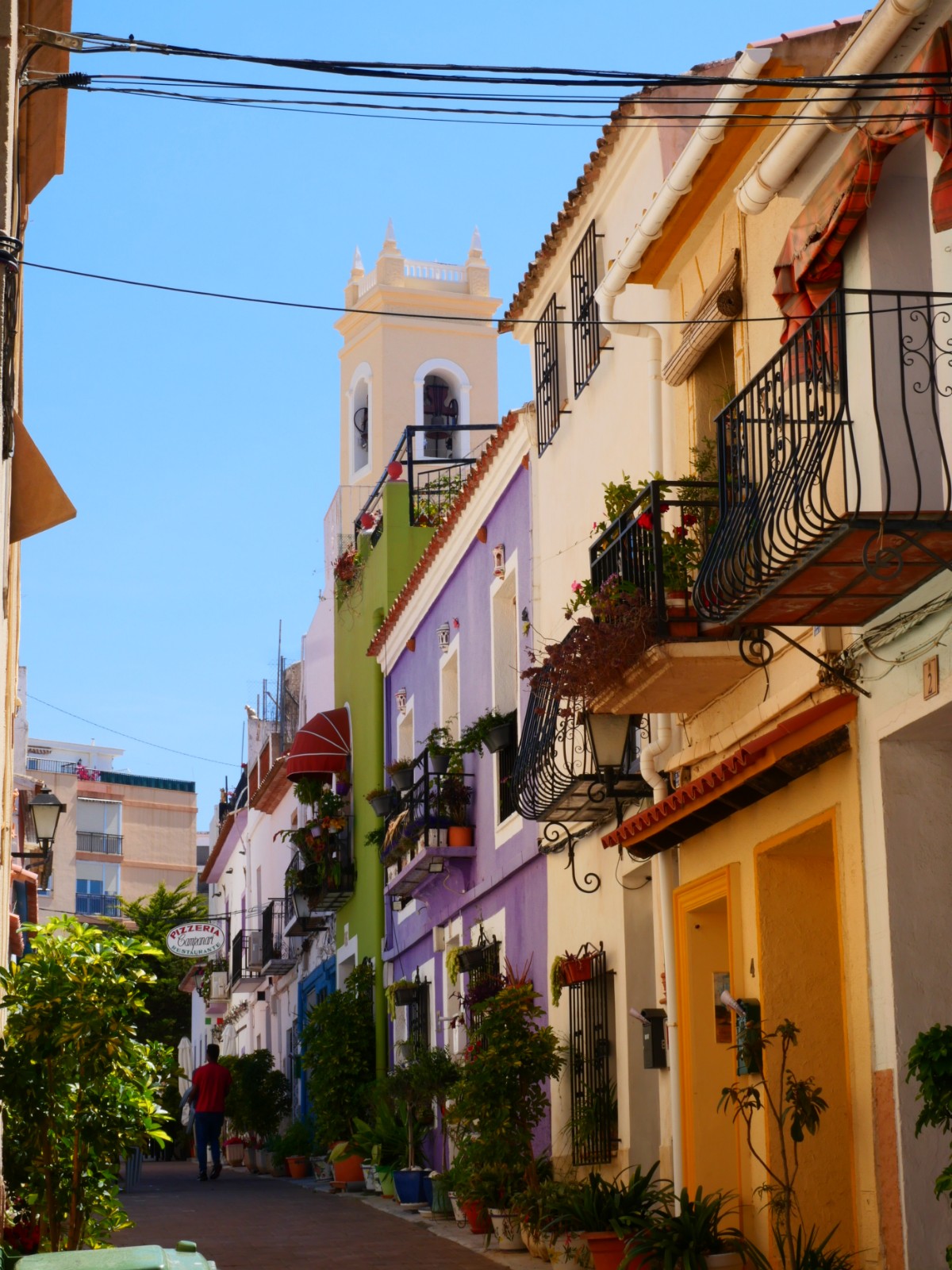
Calp also has a very picturesque old town which we enjoyed strolling although it is quite a climb to reach it. We strolled the town, had a nice lunch, and then spent some time relaxing on the beach below that enormous piece of rock.
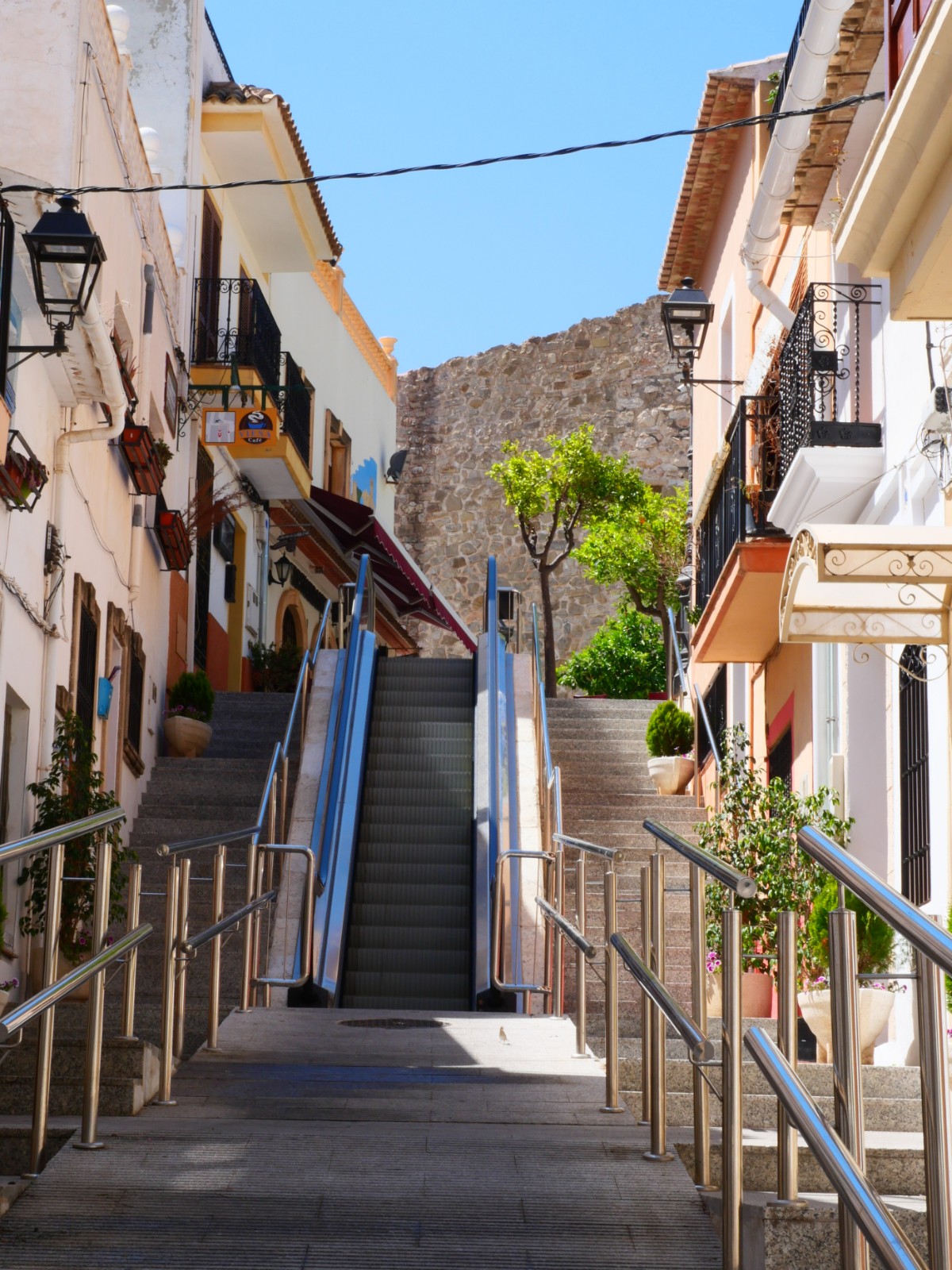
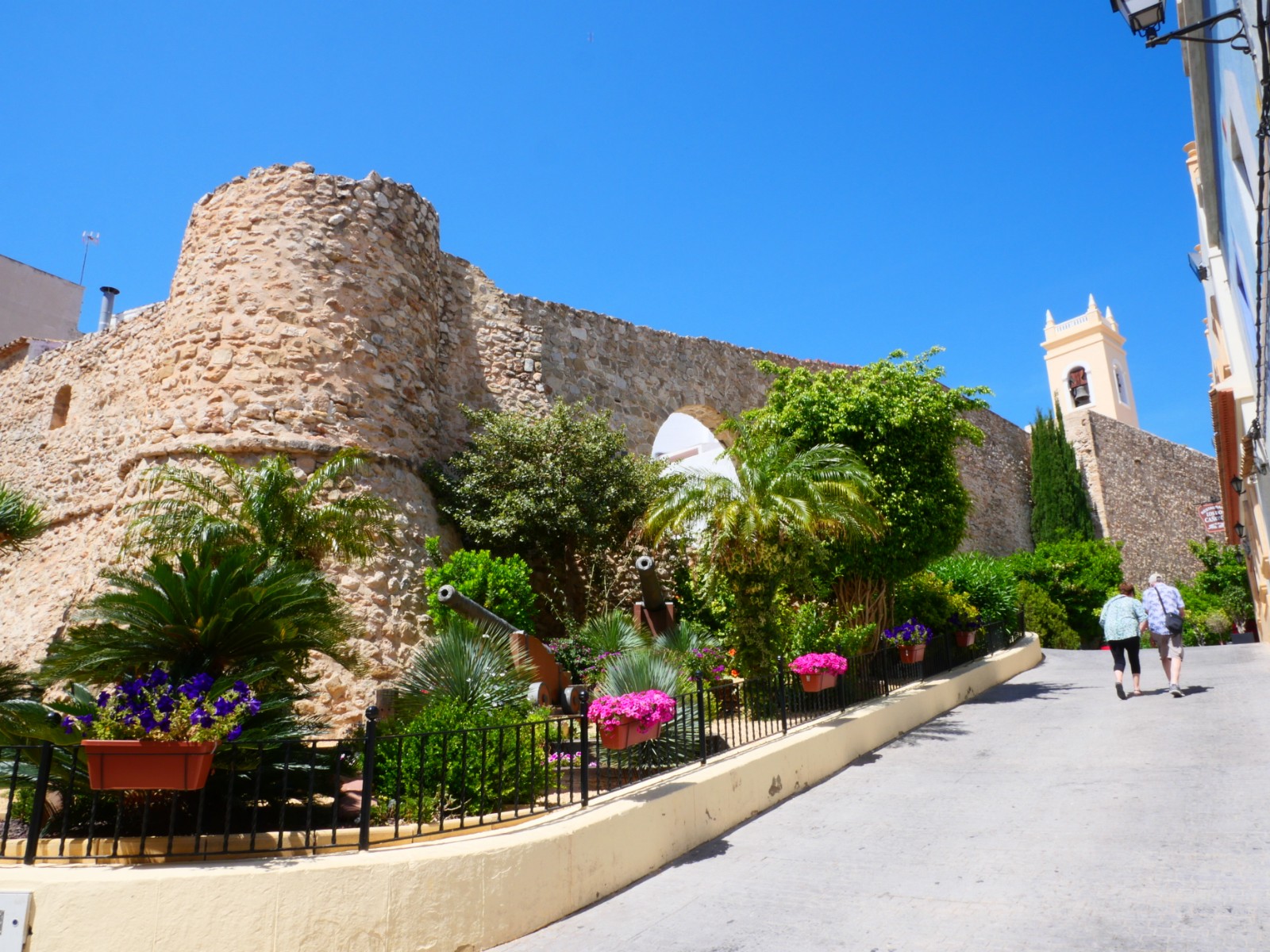

When we arrived in Calp, we had caught a waiting bus from the tram station to the center of town. But, as we made our way back to the tram station, we realized tbat there didn’t see to be any active bus stops where they were supposed to be and ended up walking all the way back to the tram station, Arriving just in time for the one we wanted to catch we made our way home after a great excursion day. (Excursions is the term we use in our budget for day trips like this.)
Yoga in Denia
While in Denia I was fortunate to discover a yoga studio that was a 7 minute walk from our apartment. The yoga studio was called Mangata Yoga Denia and is led by a lovely young yogi named Marta. Her focus is Hatha Yoga, which is a style of yoga that I do not have a lot of experience with, but was more than willing to learn.

What I did discover is Hatha yoga refers specifically to the physical practice of yoga, without chanting or any other aspect of yoga. The classes were not so much focused around a flow of poses, but more on sustaining the deeper stretches found in yoga poses for extended periods, ultimately with the goal of increased flexibility. While more gentle in approach, the holding of stretches and breathing into them was particularly beneficial to aging bodies. I found myself within a lovely cohort of somewhat older women who were consistent devotees to Marta’s practice. Very little English was spoken, unless I clearly needed redirection, so it evolved into an organic experience of listening carefully and peeking at my peers when necessary.
Marta, a lovely woman, with a young son and husband, could not have been more kind and compassionate with her devotees, offering alternative adjustments or simply exchanging soft laughter as we strove sometimes unsuccessfully to meet her expectations. In conclusion, if you find yourself in Denia and interested in yoga, I highly recommend Mangata Yoga Denia!
Eating, Drinking, and Shopping in Denia
As I mentioned earlier, because of its heavy reliance on tourism, Denia has a disproportionately high number of shops and restaurants. As has kind of become our practice (at least when we have a kitchen) we generally ate lunch while out and about and had dinner in our apartment. But we did eat dinner out a couple of times just to keep things interesting.
To celebrate Cinco de Mayo, we had dinner at a great barbeque restaurant called Black Market BBQ (the Mexican restaurant next door was closed because the owners were apparently off celebrating somewhere else). Black Market BBQ is run by a Spanish woman and her American husband, the chef. It was extremely interesting to hear how they dealt with COVID, setting up things to be able to safely provide carry out meals for their friends and neighbors. We were happy to find that their ribs were as good as any we have had, the meat just slipping off the bones.
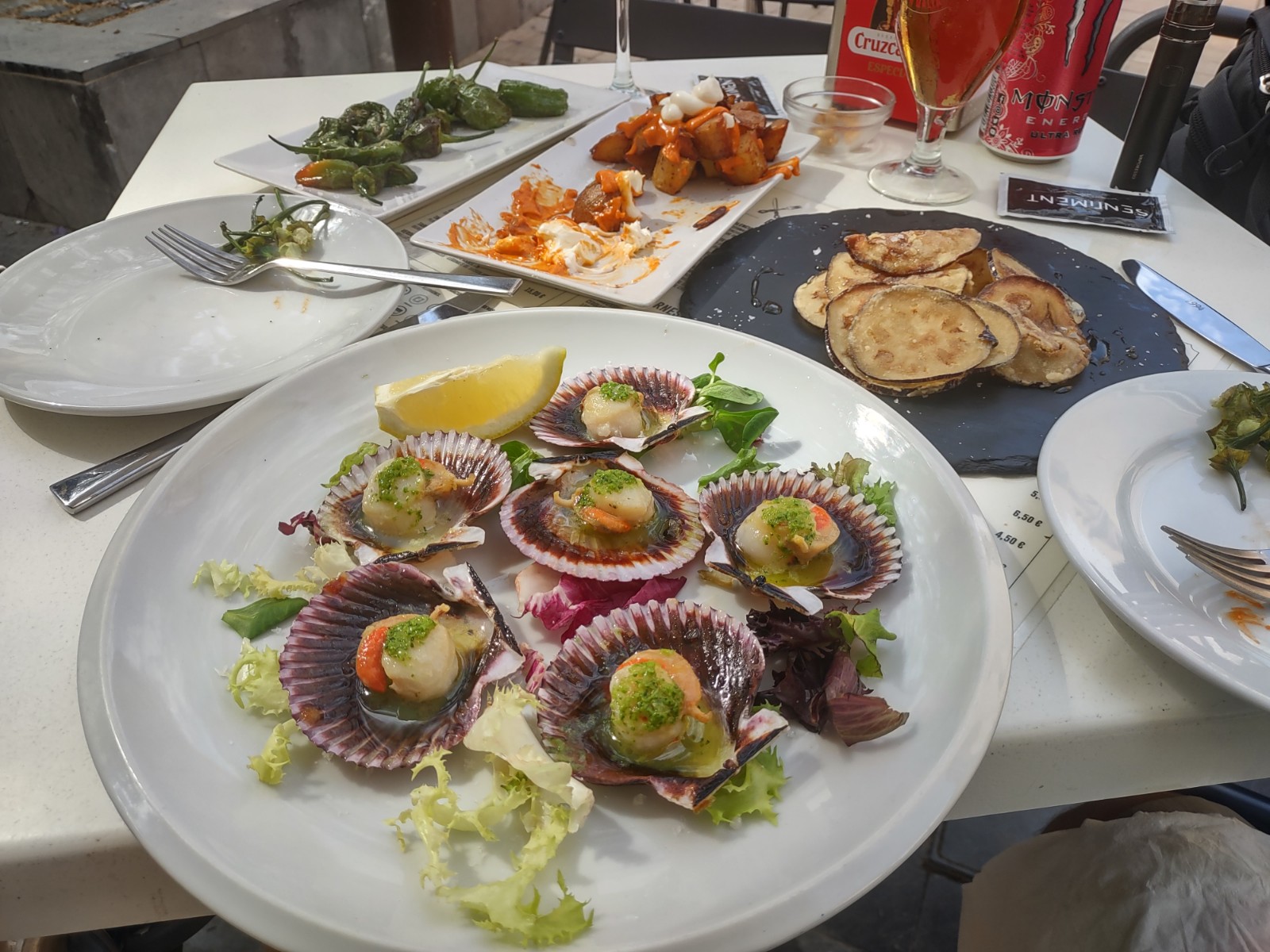
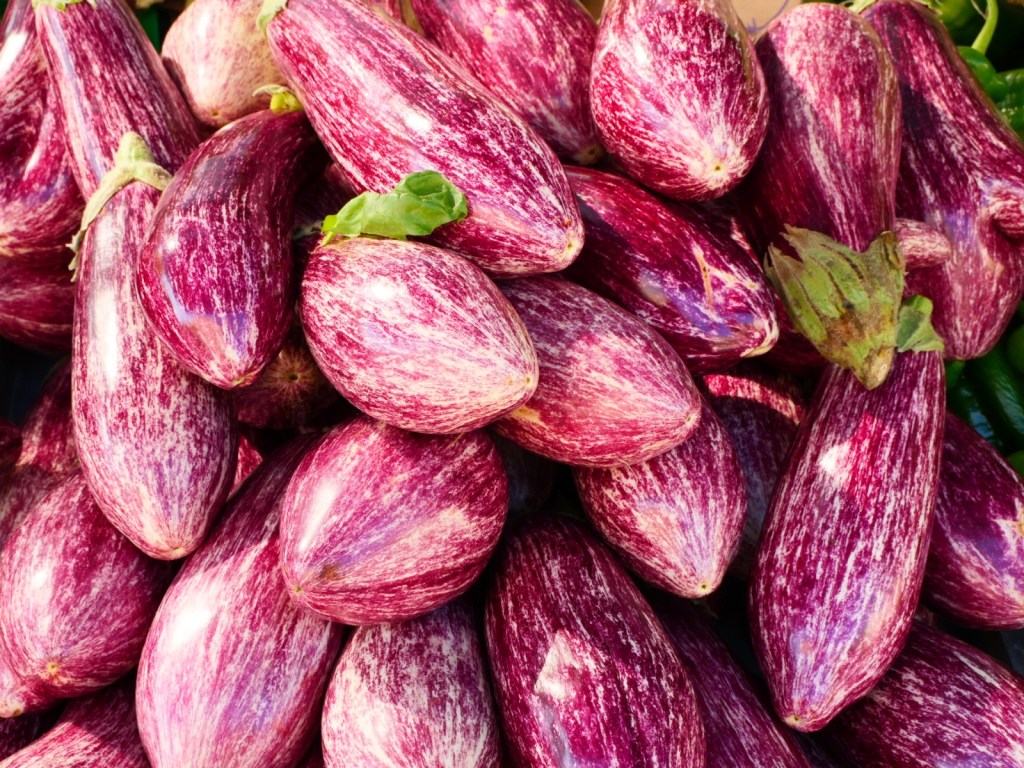
We also had some very good tapas in Denia. Maybe the best was from a place called Tasca la Carme, which was across the alley from our apartment on the Placa de la Constitucio. They serve these amazing abergine chips which are fried paper thin and drizzled with honey. We also had some amazing scallops on the half shell.

For beverages, we found an incredible gourmet foods shop just three doors down from our apartment, (Gourmet Point Denia) which kept a huge stock of craft beers from around the world including many from Spain. (For the record, Ritchard did not know about this place when we booked our apartment!) To Colleen’s delight, their stock included a good number of sour ales. “Happy wife, happy life”, as they say.
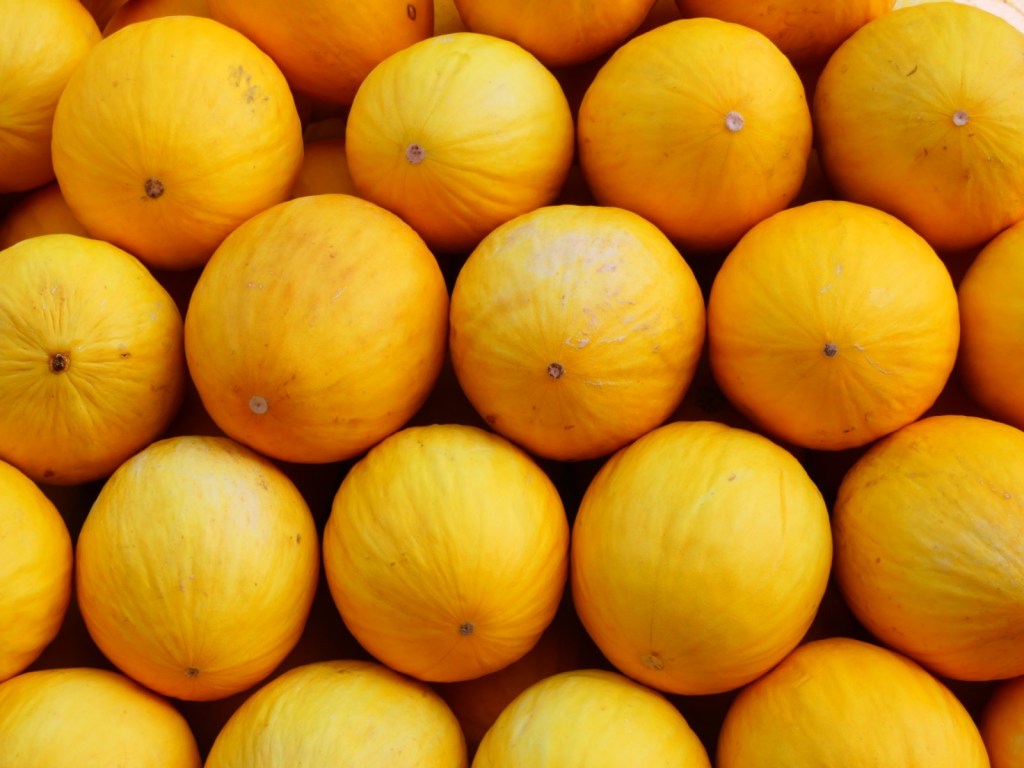
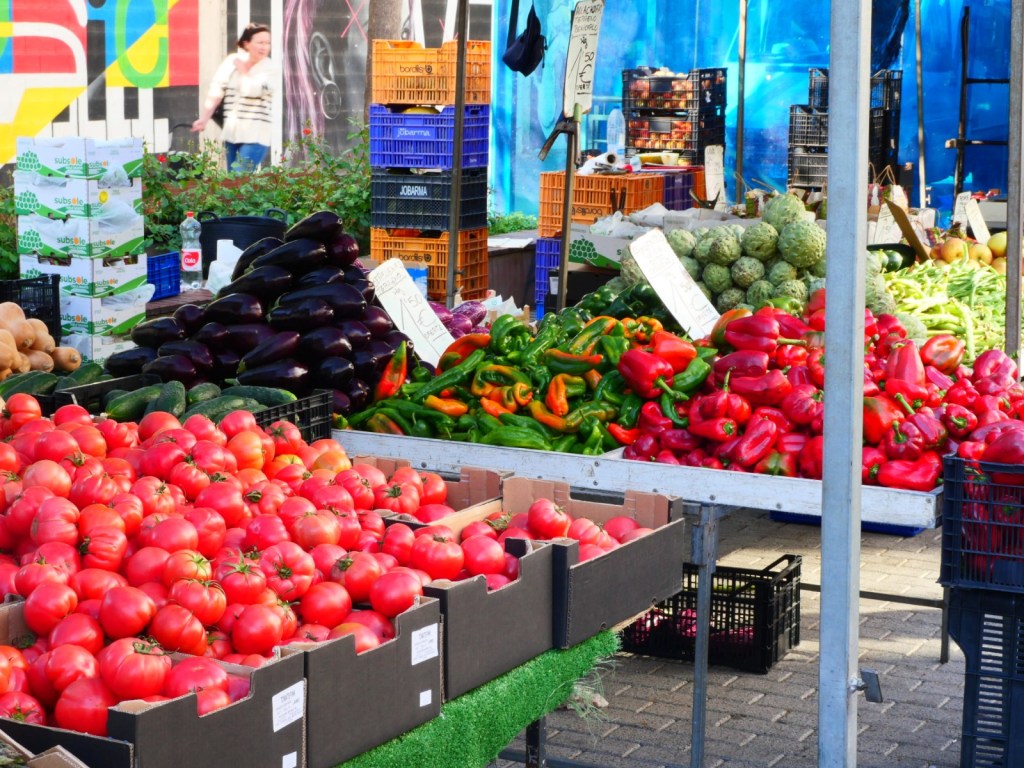
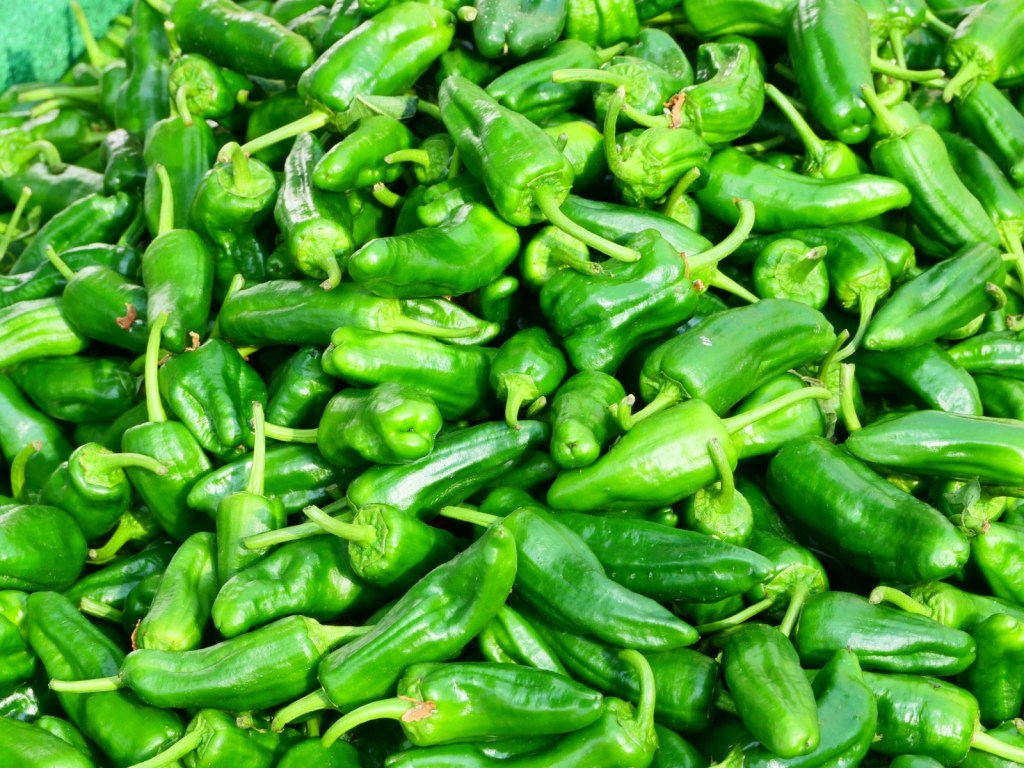
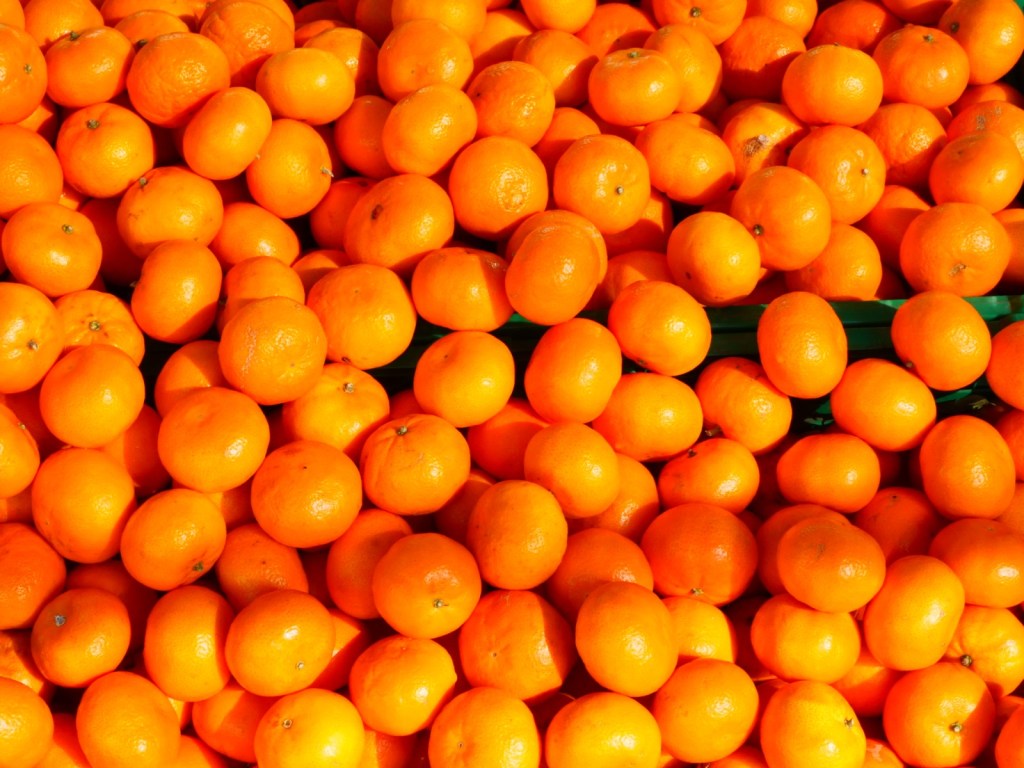
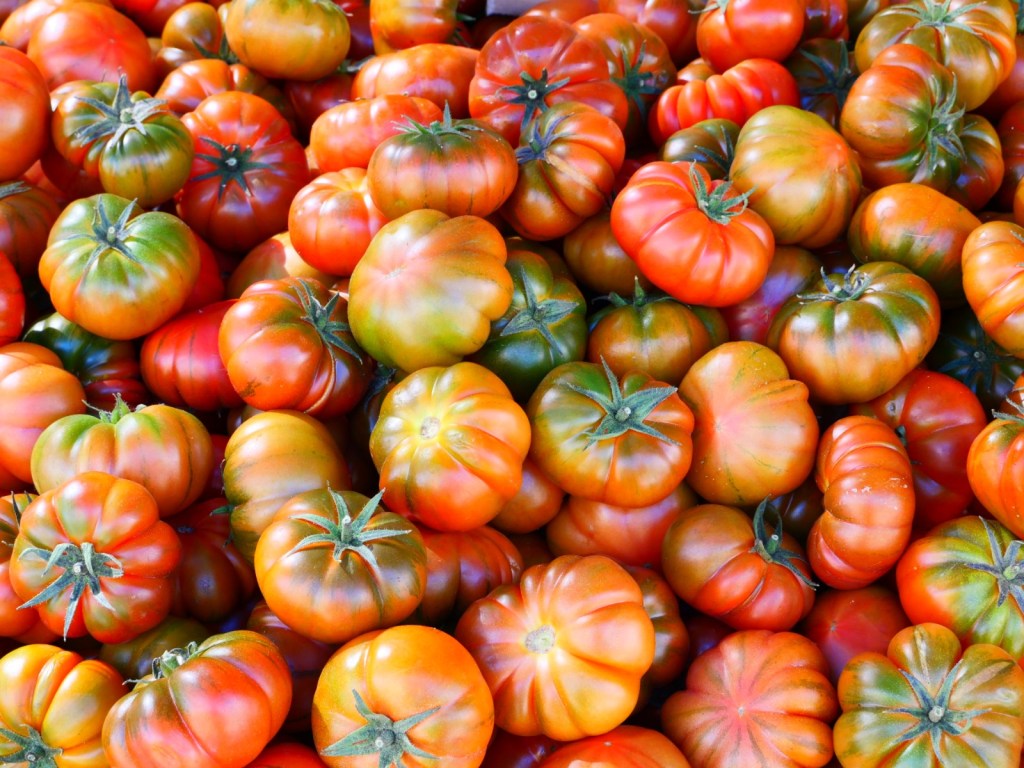
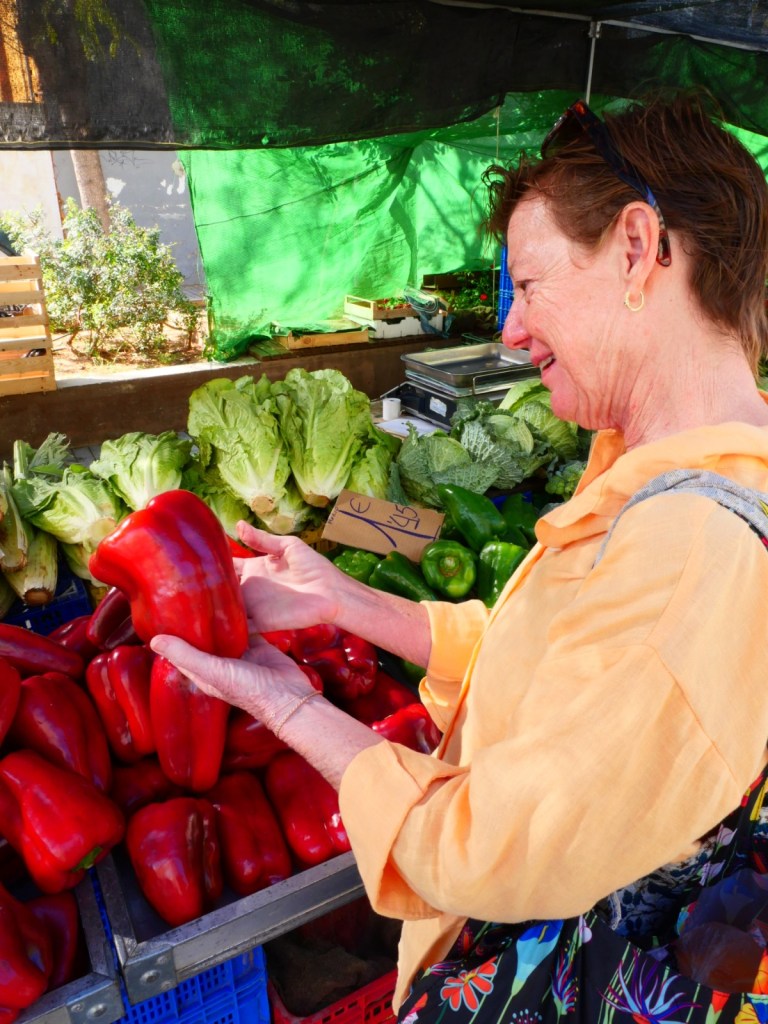
Because we were eating most of our meals at home, shopping for food and drink was a particular concern for us. There turned out to be a small but nice indoor market near our apartment along with a huge grocery stored called the Mercadon (we referred to it as the Megalodon!), and for more mundane grocery items, there was a great Lidl (they’re all over Europe) on the edge of town which we could swing by while biking back from the shore. But our go-to for fruits and vegetables was the Friday Farmers Market in town which had the best produce we have seen thus far in our travels.




There were very many nice clothing stores in Denia which we passed on a daily basis and, as our trip to Scotland drew closer, we started to develop a little bit of wardrobe paranoia. We had plans to meet friends from the U.S. there whom, we had no doubt, would be travelling with many large American suitcases. Although we had done some wardrobe replenishment in Paris, we became concerned with the likelihood that we would be eating in nicer restaurants which might require us to up our game a bit and we were also a bit concerned about the variety in our wardrobes. And so, we made a few more strategic purchases with the intent of being able to mix and match to create the impression of having more clothes than we actually do. (Will report back on how well this worked out in our Scotland installment.)
The 3 weeks in Denia seemed to fly by and, before we knew it, it was time to pack our bags and hit the road again. Next stop Scotland which will certainly be colder but where we will be meeting a couple of friends from the States whom we haven’t seen in a few months.
 Burning the Inheritance
Leave a comment