We traveled to Milan from Bolzano by bus on Tuesday March 28th and again enjoyed the scenery along the way – 4 hours of nice countryside and lots of grape vines.
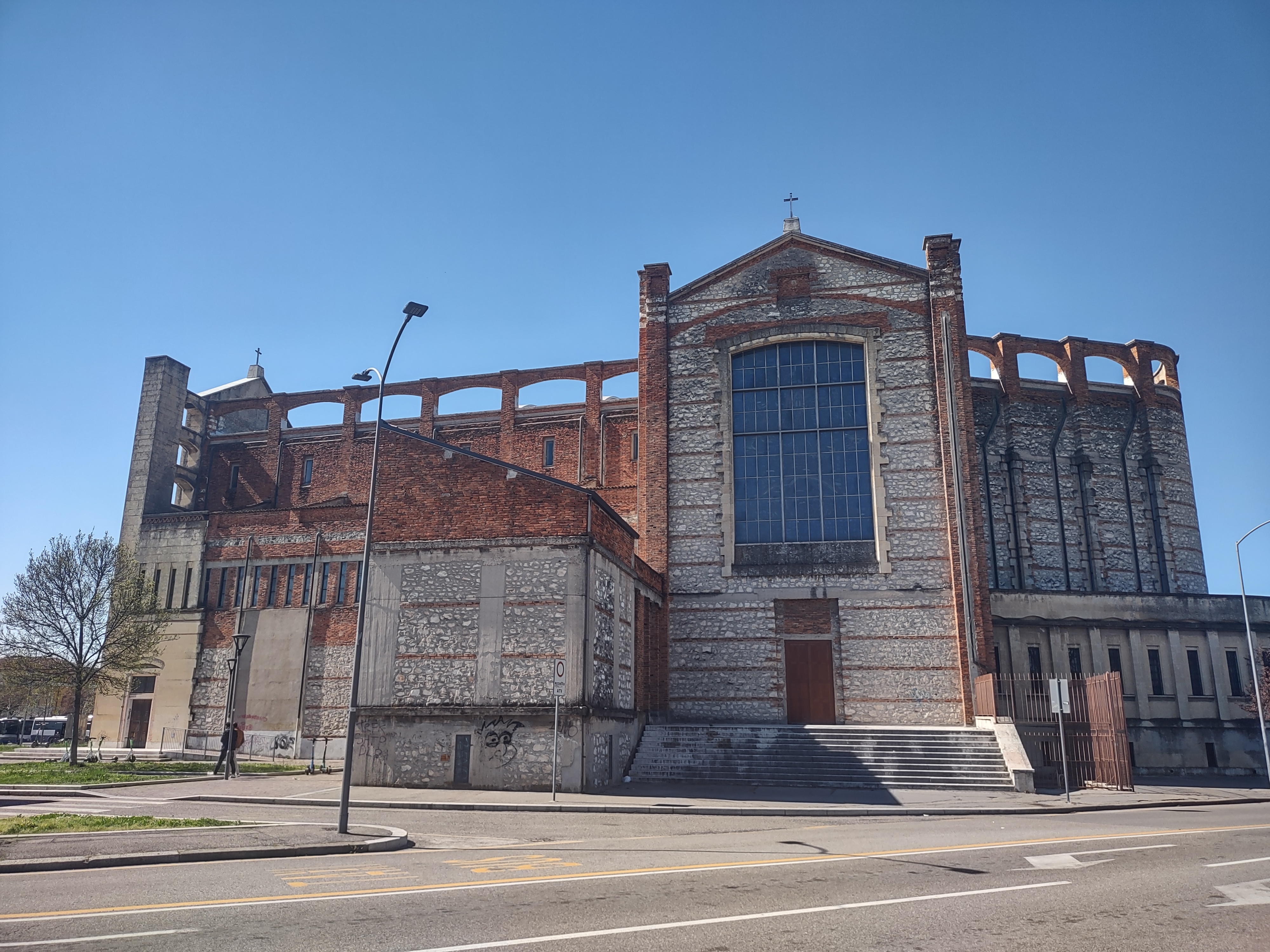
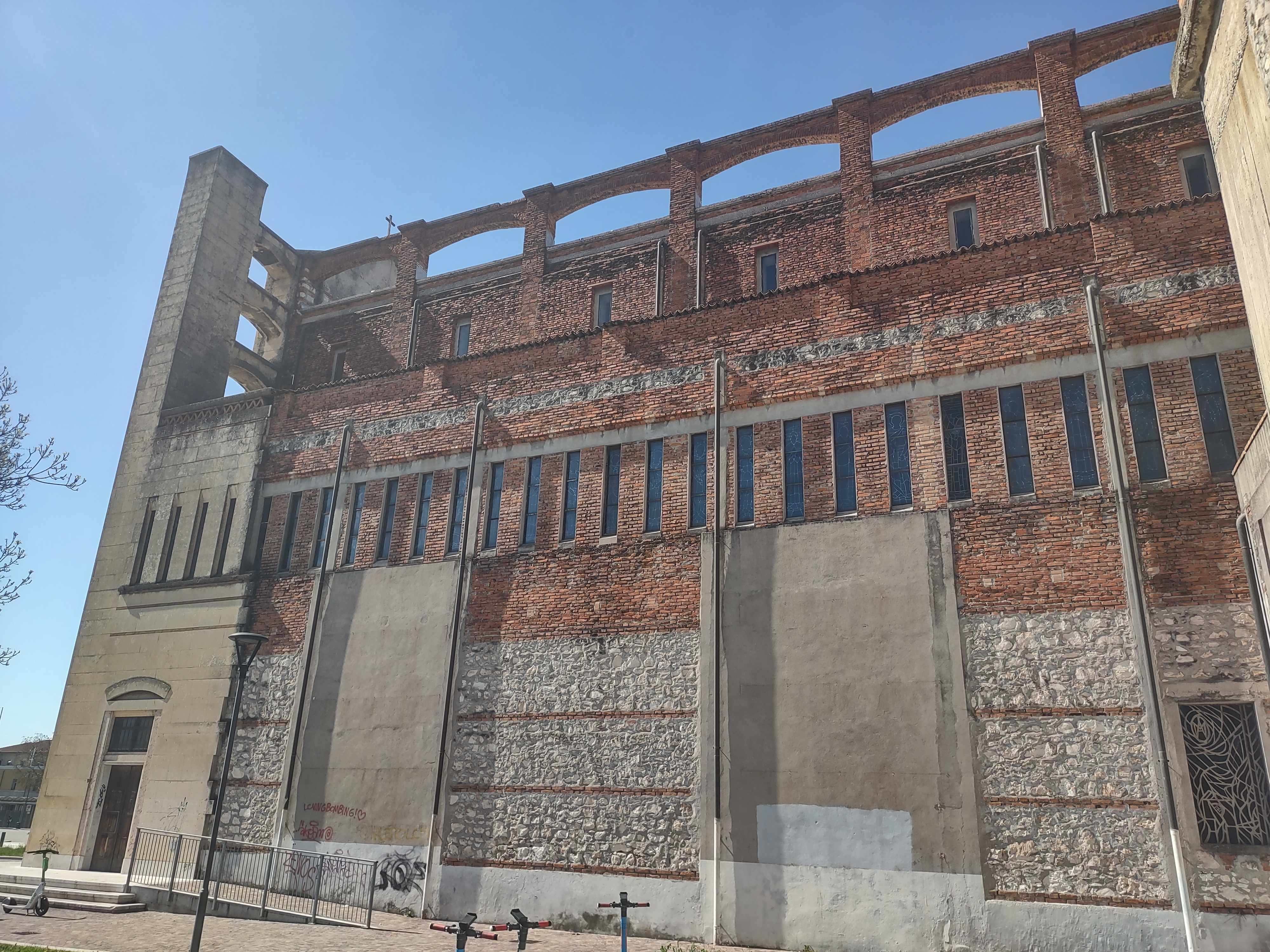
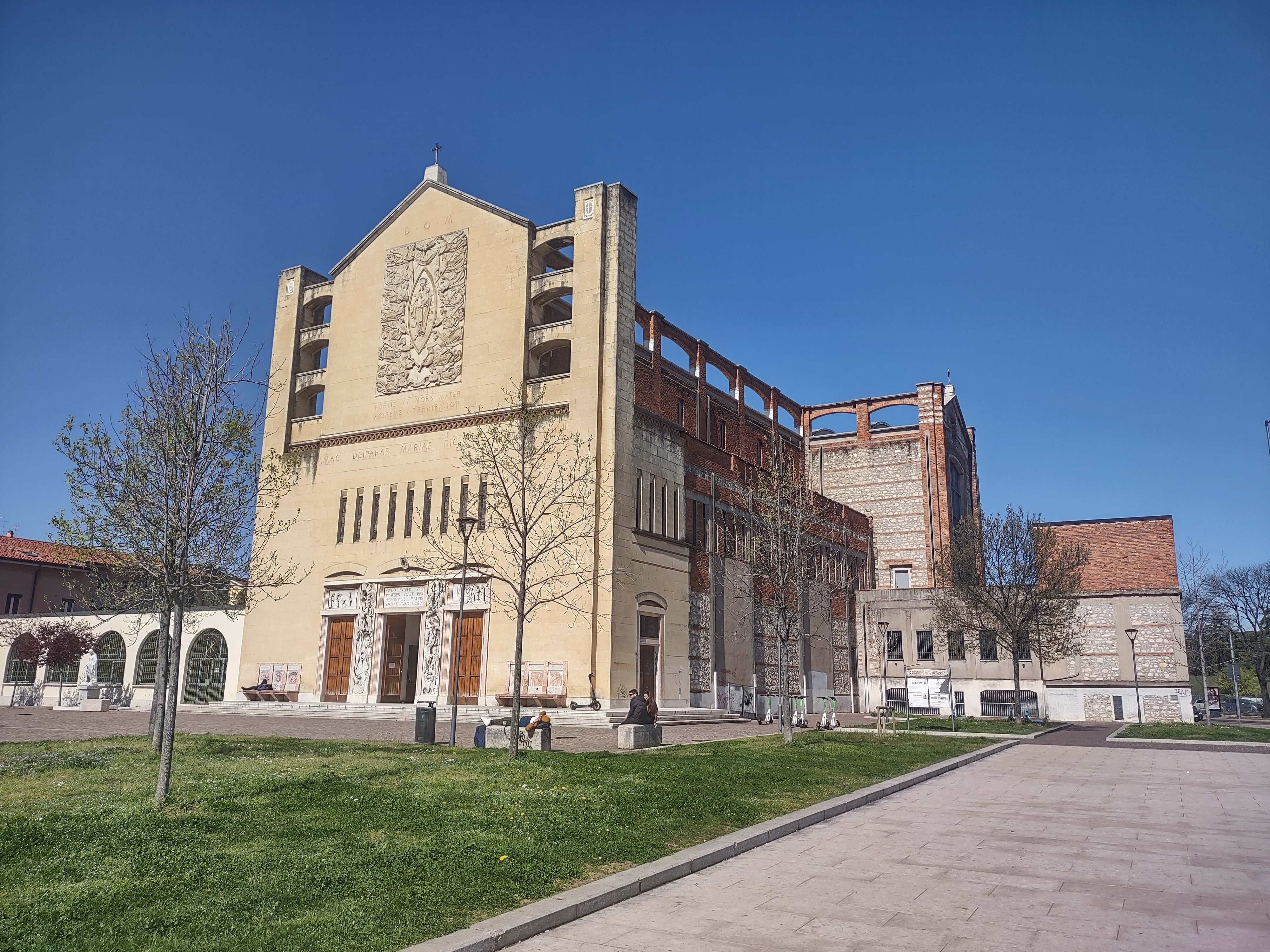
At a stop near the Verona train station, we discovered an interesting church built in the 1950’s which is kind of Brutalist Neo-Romanesque building with flying buttresses (which Colleen can now identify). Not something we would have ever seen if we were flying. (Just saying.)

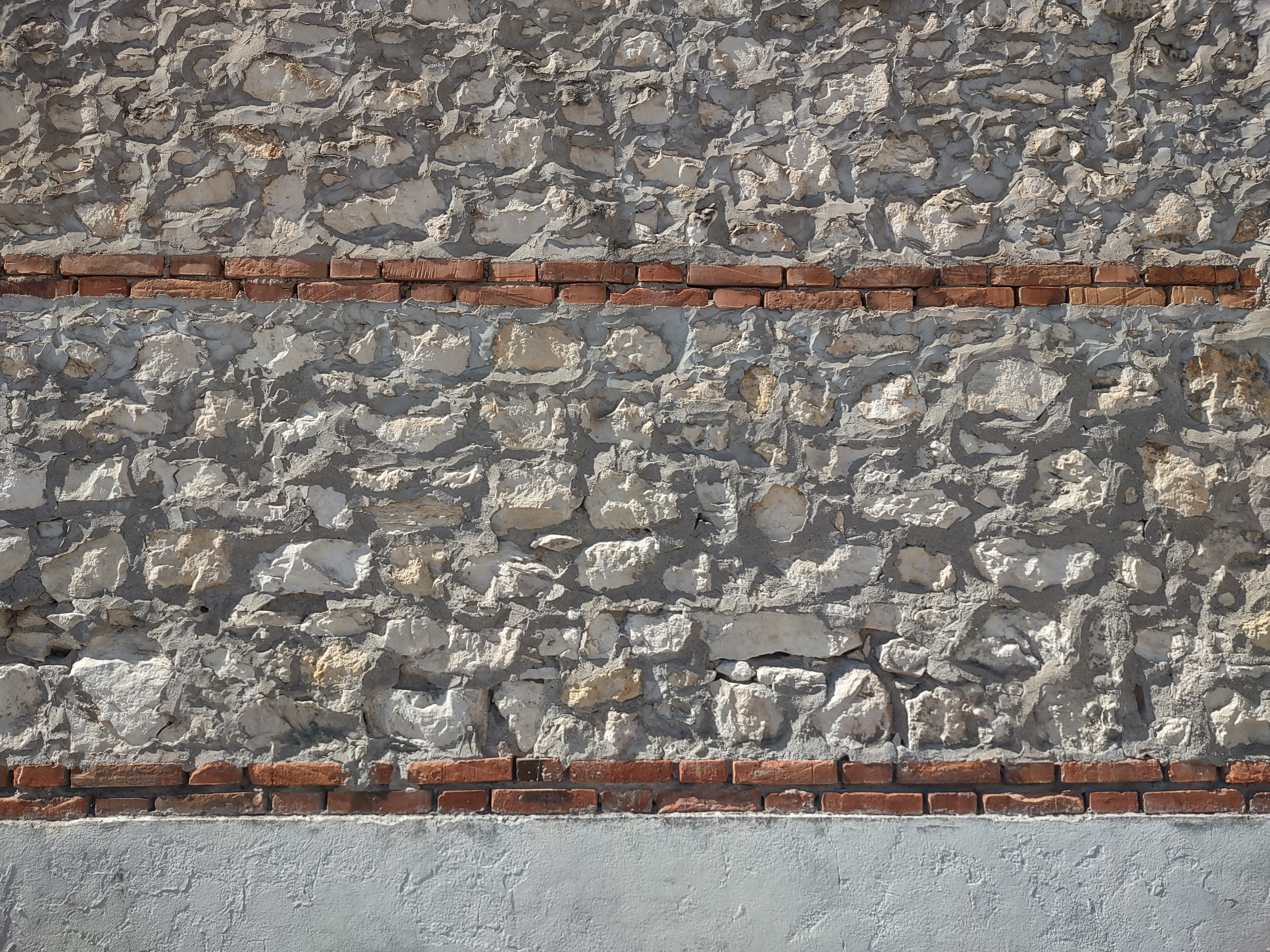
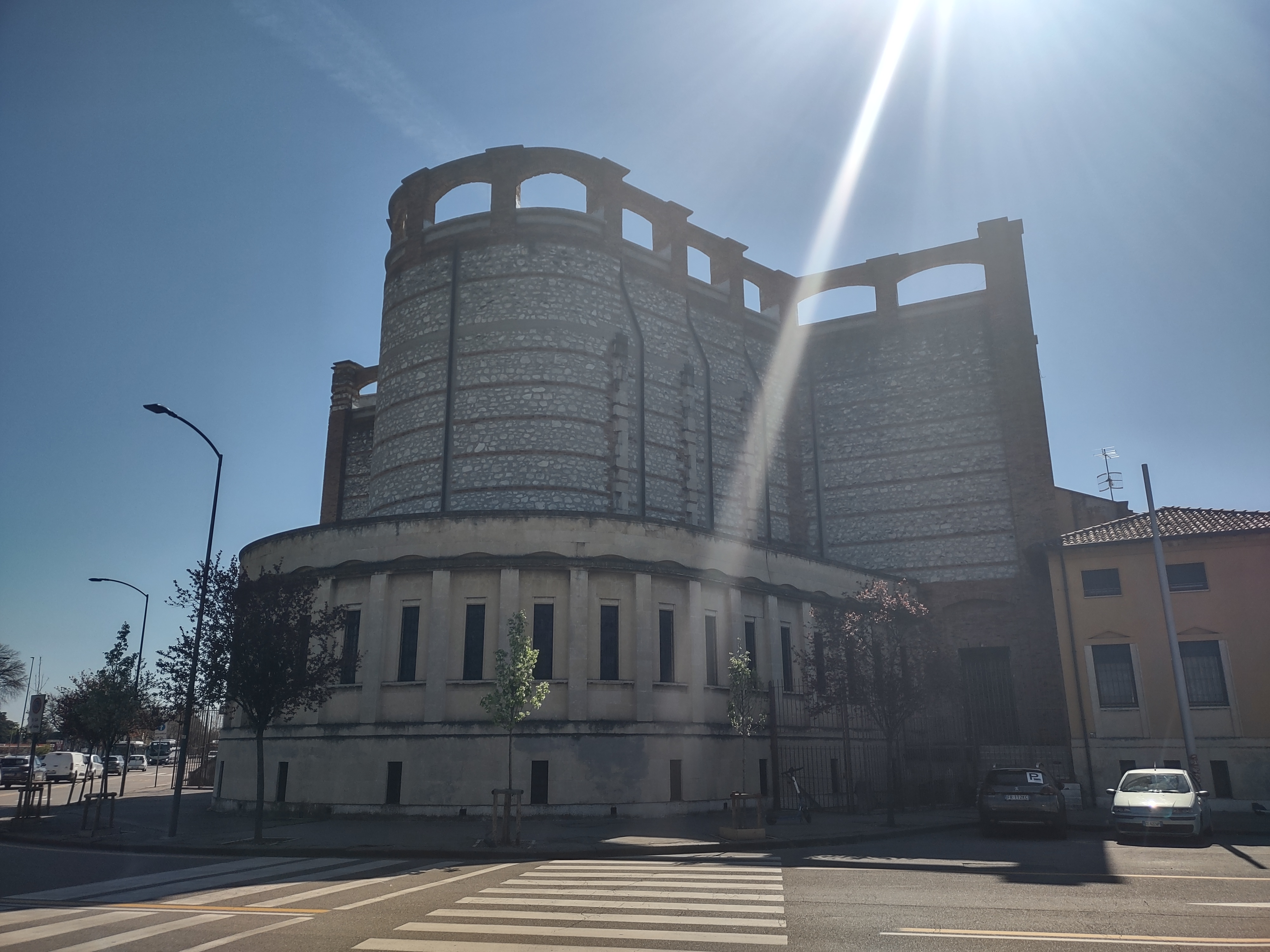
Because, until recently, we had planned on visiting Milan in late June, we had not done much research prior to our arrival here. Truth be told, as the date of our departure from Bolzano approached, we asked each other “why are we going there again?”. The answer ended up being that a good friend who had spent a good part of his life living in Europe said it was one of his favorite cities to visit. And so we went.
Located in the northern Lombardy region, Milan is the second largest city in Italy with a population of about 3.1 million. Home to the national stock exchange, it is considered to be Italy’s financial center and is also a global center for design and fashion – Armani, Dolce & Gabbana, Prada, and Versace, to name a few. It is also probably the most expensive city in Italy, known for its many high-end shops and restaurants.
We were in Milan for 3 days and spent most of our time in the Centro Storico (Historic Center). We walked everywhere we went, which we have come to learn is, when possible, absolutely the best way to get to know a city.
The street layout of the Centro Storico is probably one of the most chaotic we have encountered, and it becomes increasingly so as one approaches Piazza del Duomo (Cathedral Square), the ceremonial center of Milan. Aside from the street layout, it is a fairly manageable city to walk and its plethora of irregularly shaped blocks results in many interestingly shaped buildings and plazas.
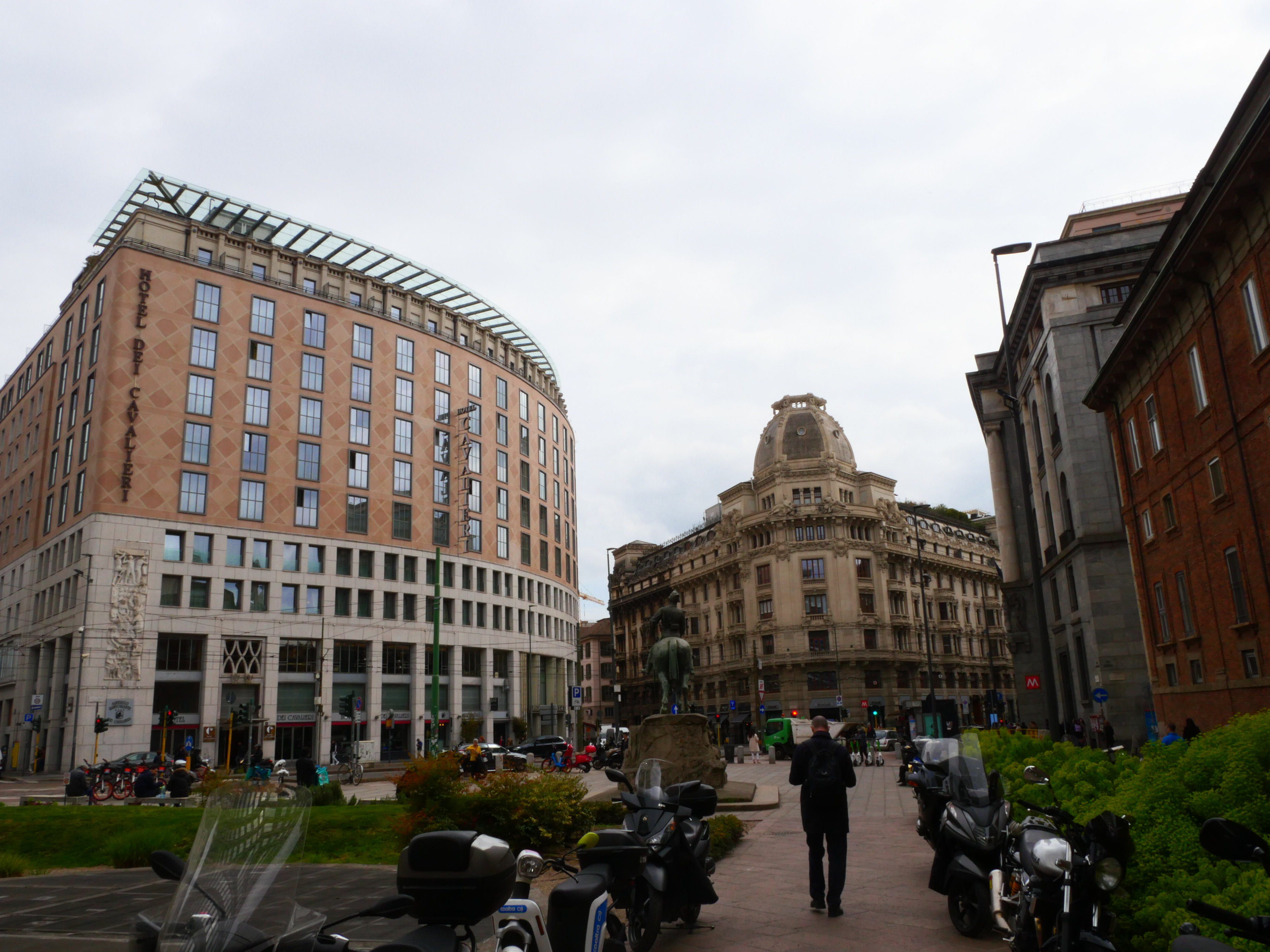

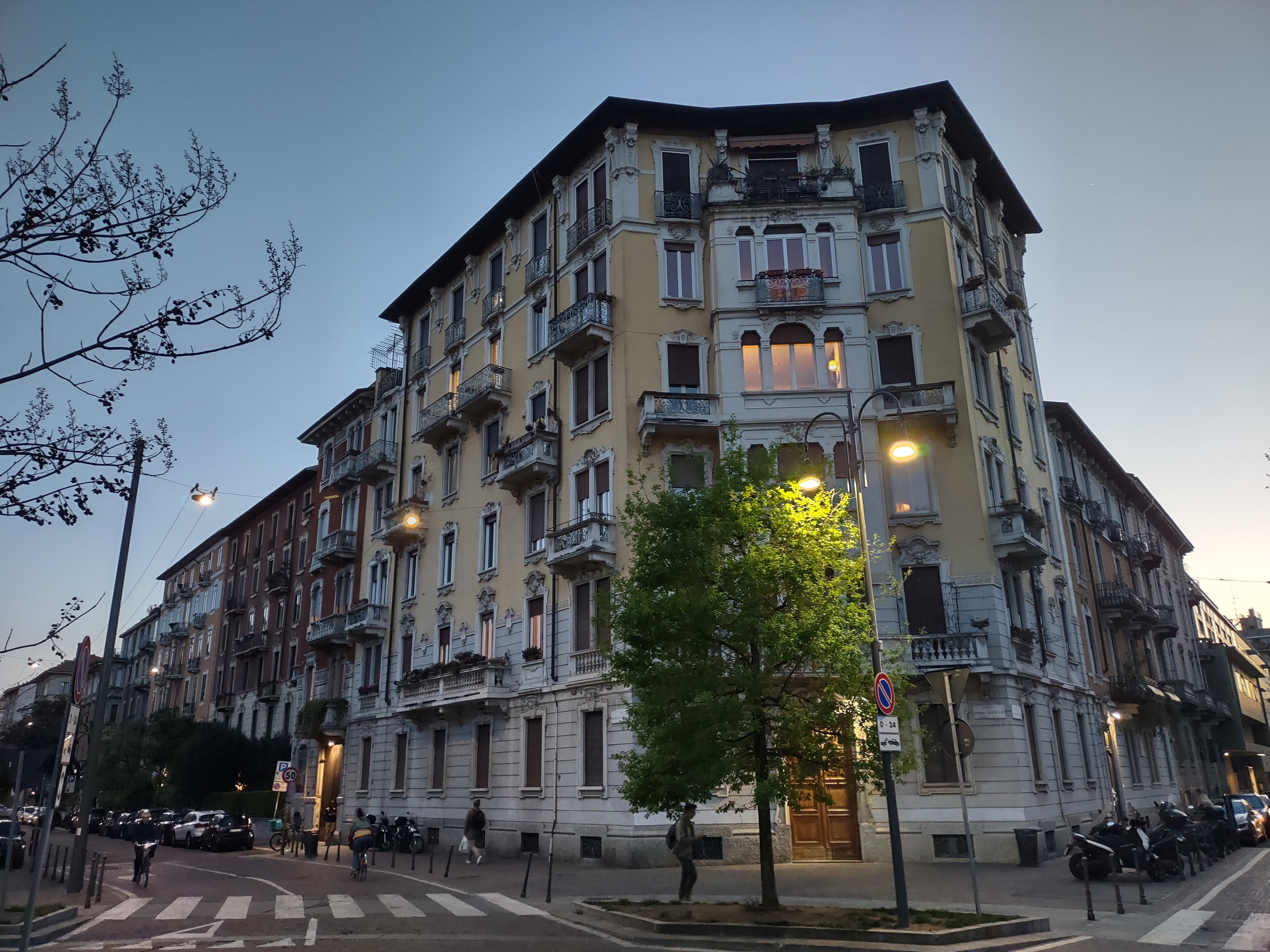
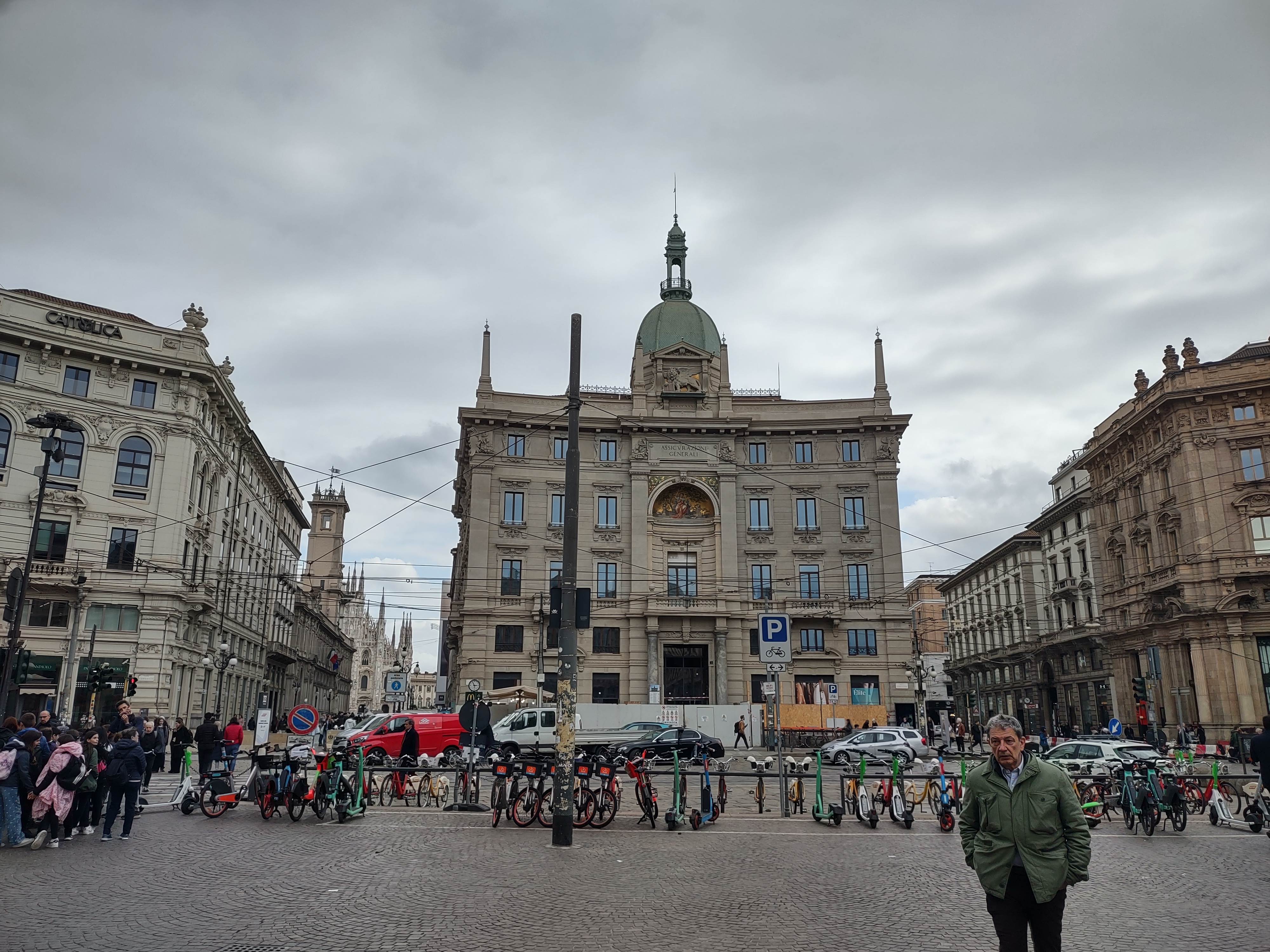
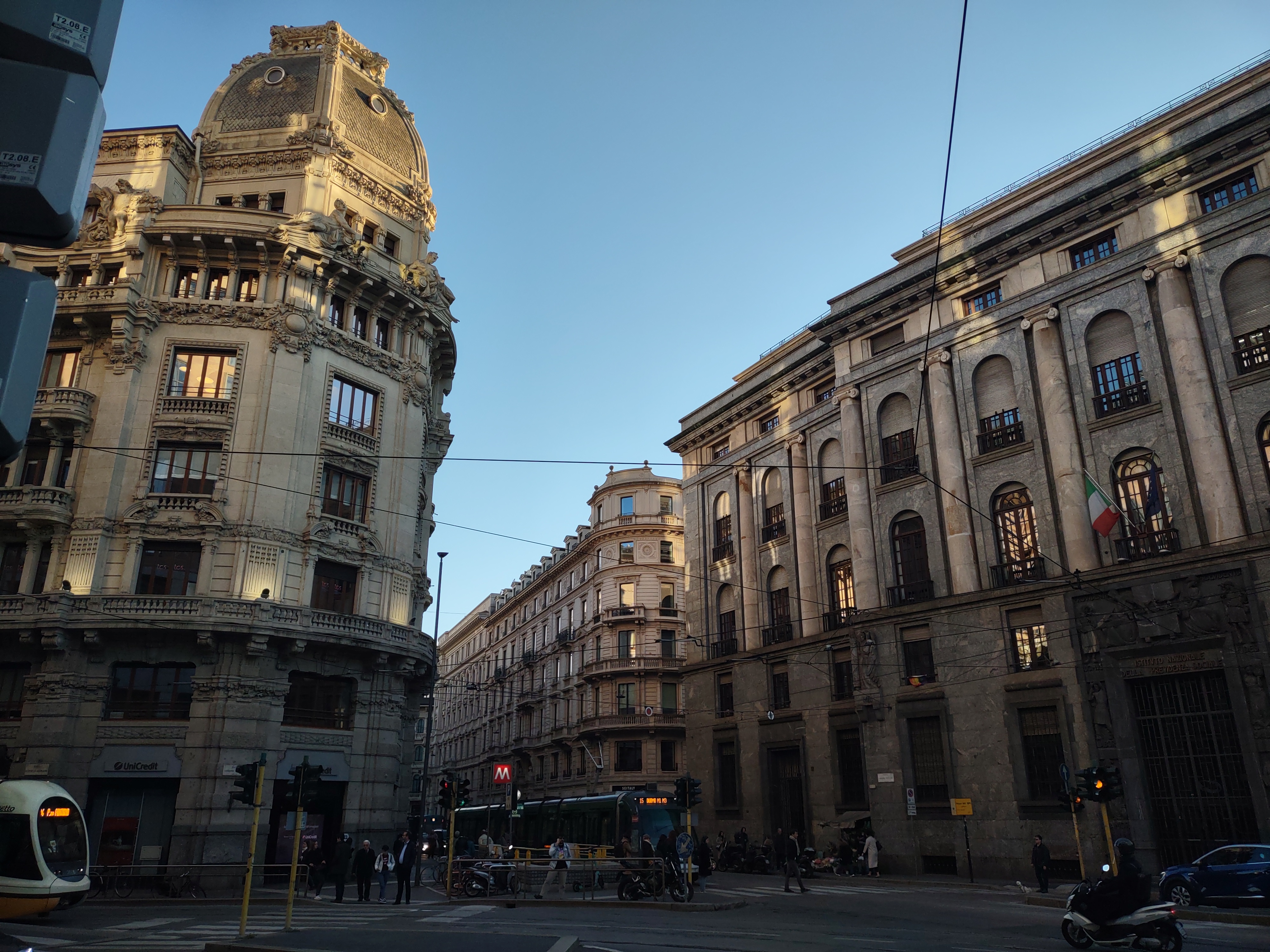
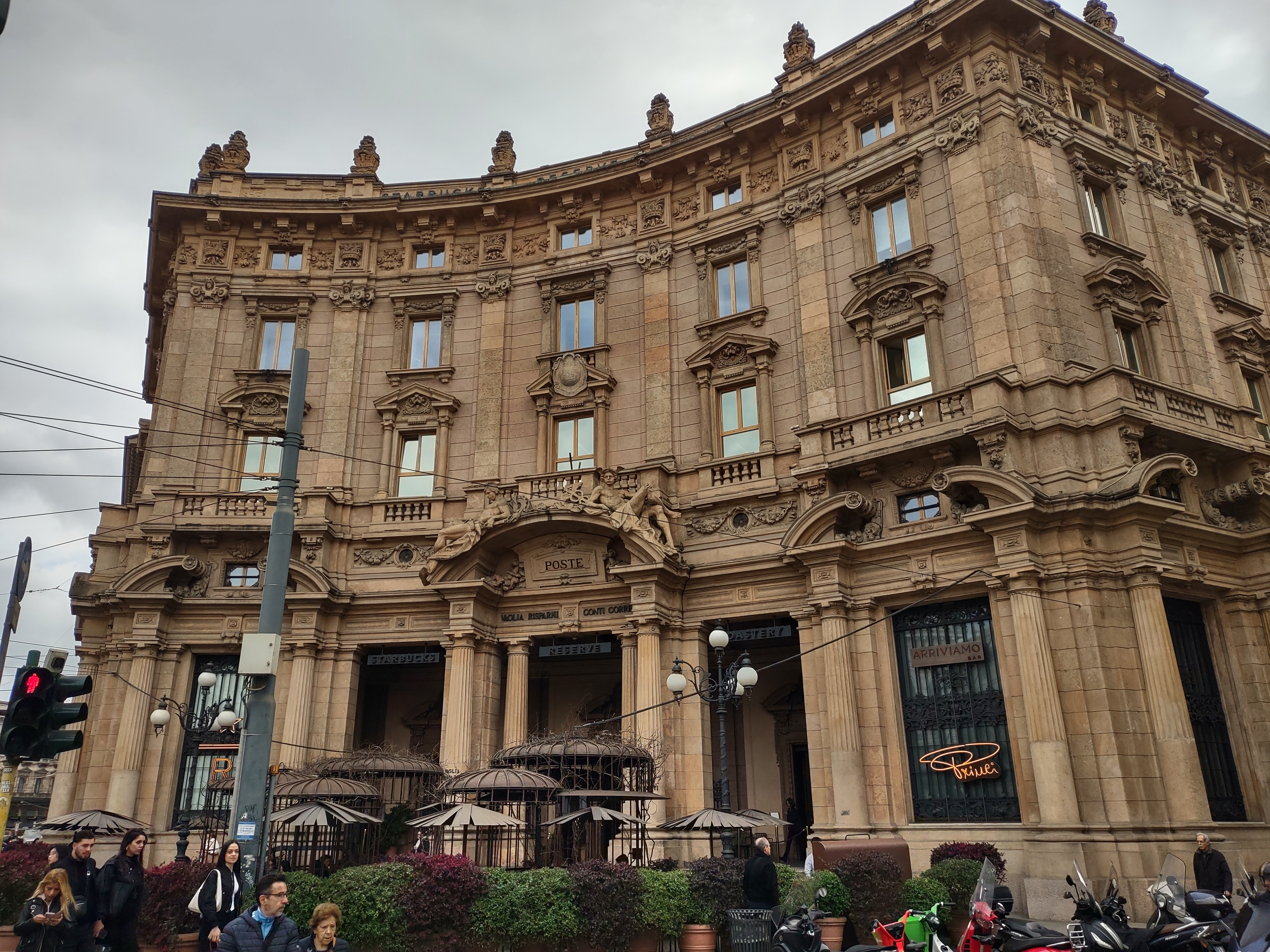
Over 3 days, we visited Cathedral Square three different times, approaching it from different directions, and each time felt pretty overwhelmed when we emerged onto it. Overwhelmed by the crowds, yes, but also by the space itself and the buildings which frame it.
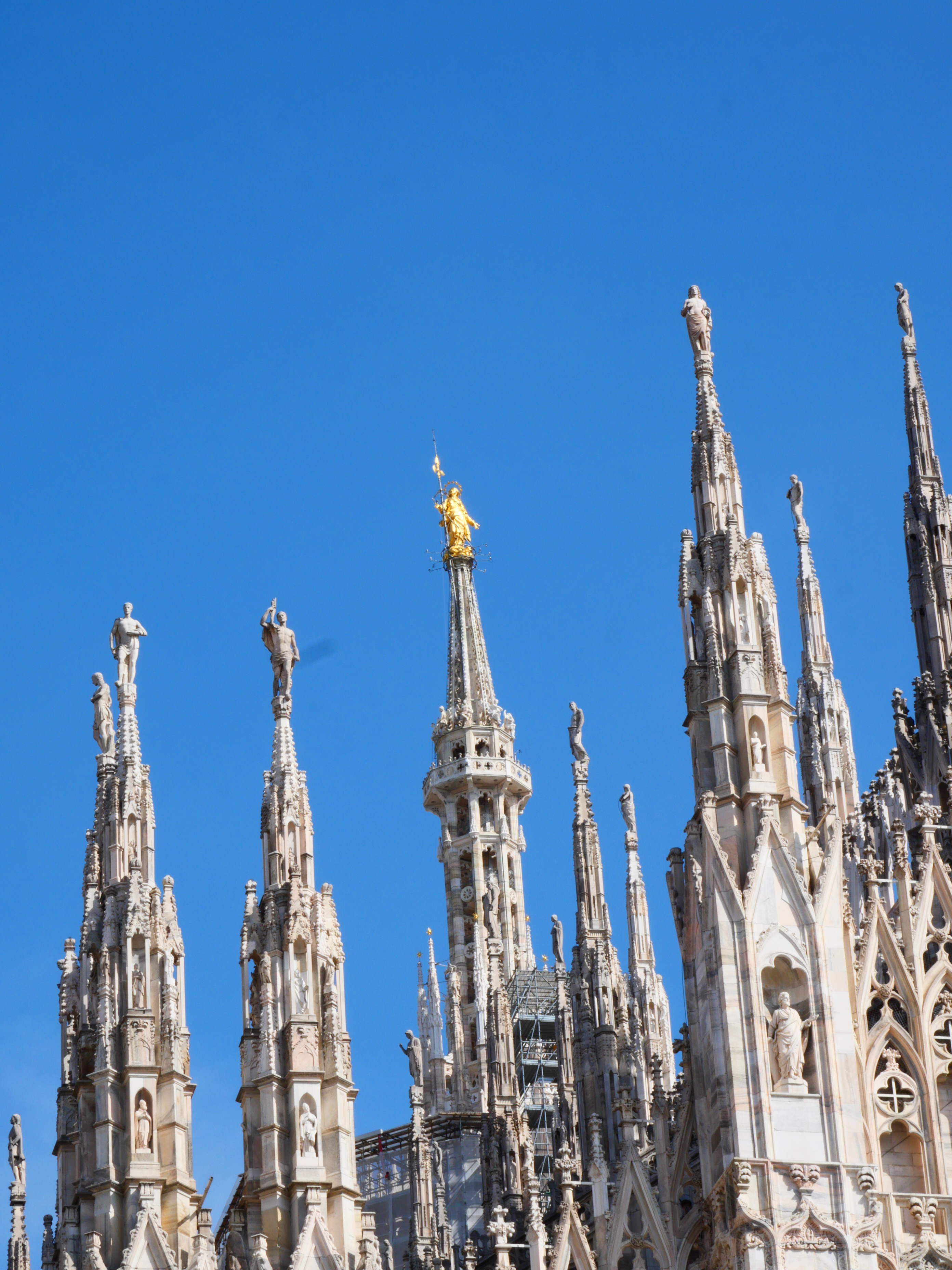
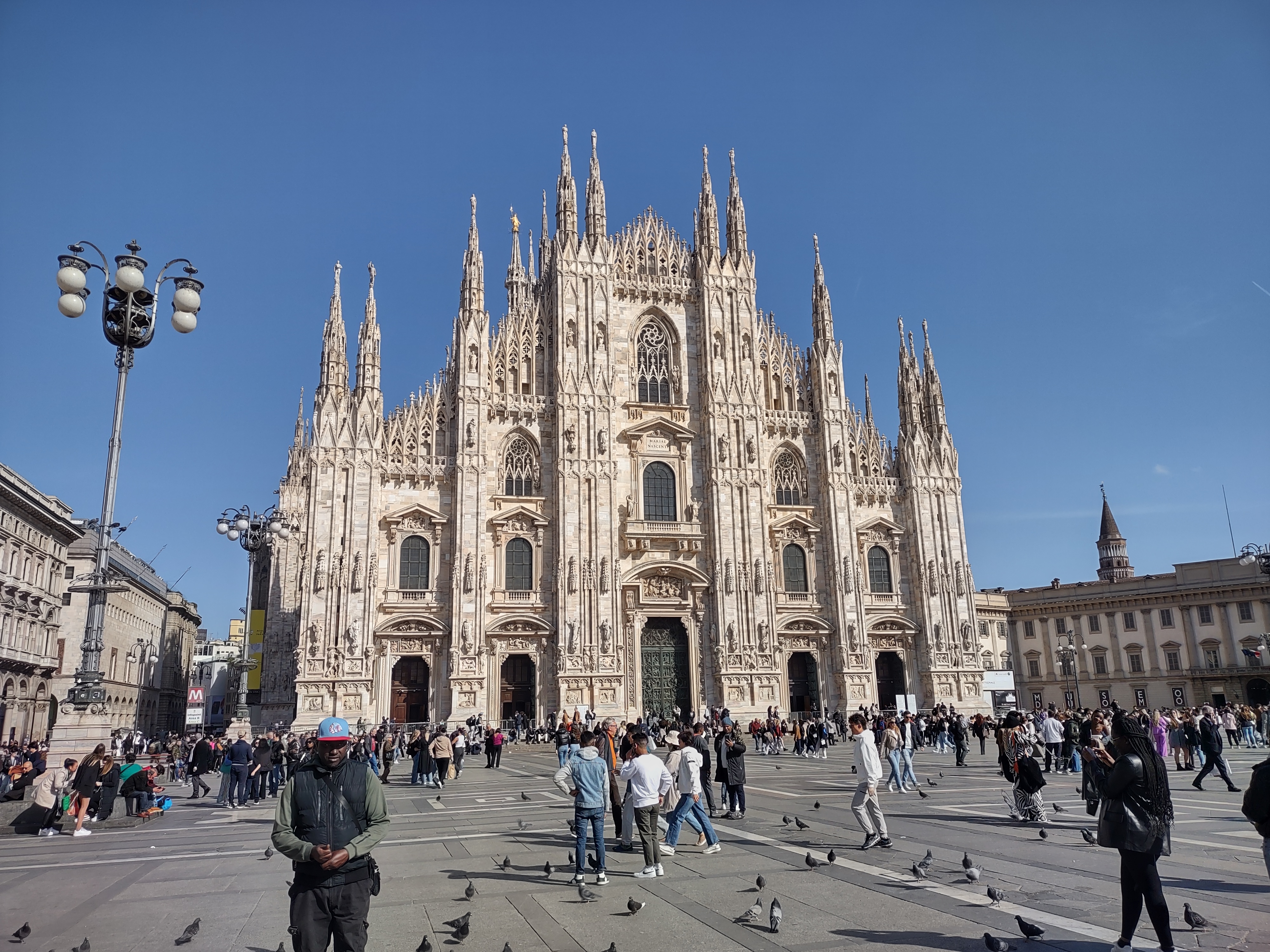
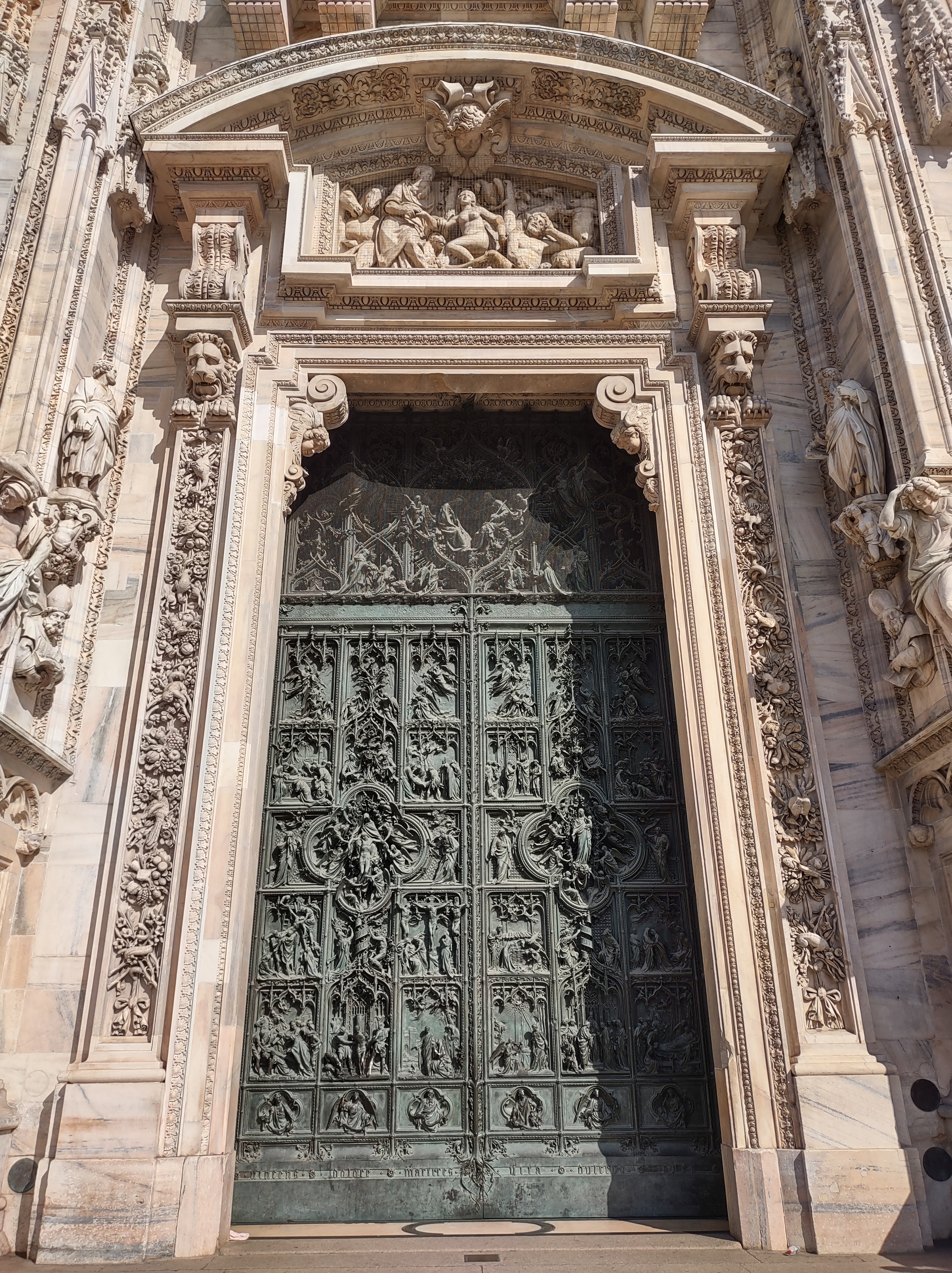
Chief of these is Milan’s cathedral, the Duomo, an enormous gothic style church which dominates the square with its presence. It is one of the largest catholic churches in the world, seating 40,000 and it and its construction, begun in 1386, took nearly six centuries to complete. Not only is it huge, but it is also probably one of the most ornate and opulent churches you will ever see. (Don’t know how to fact check this, but pretty sure it has more spires than any other church in the world, and everyone one of them has a statue on top!)
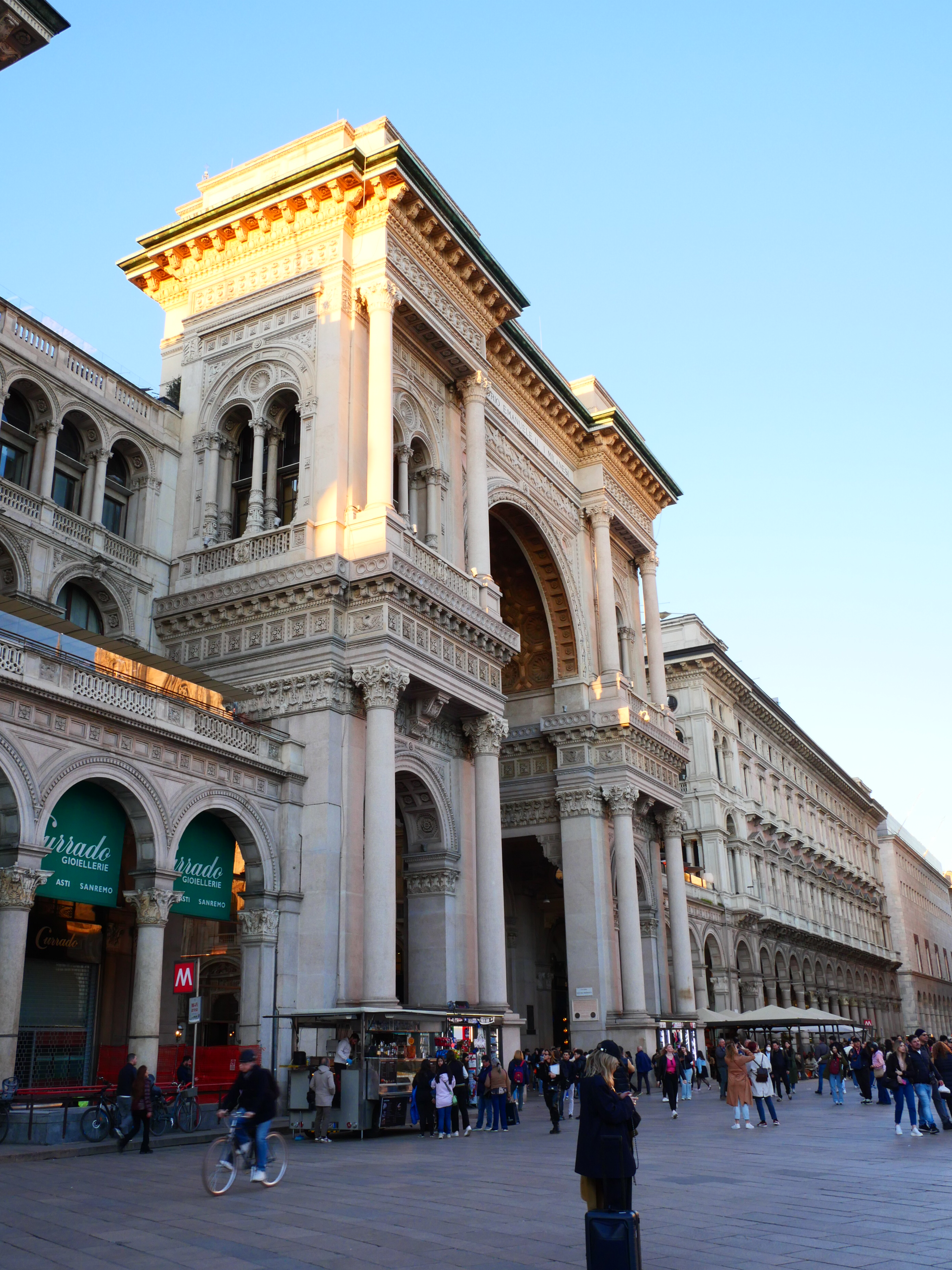
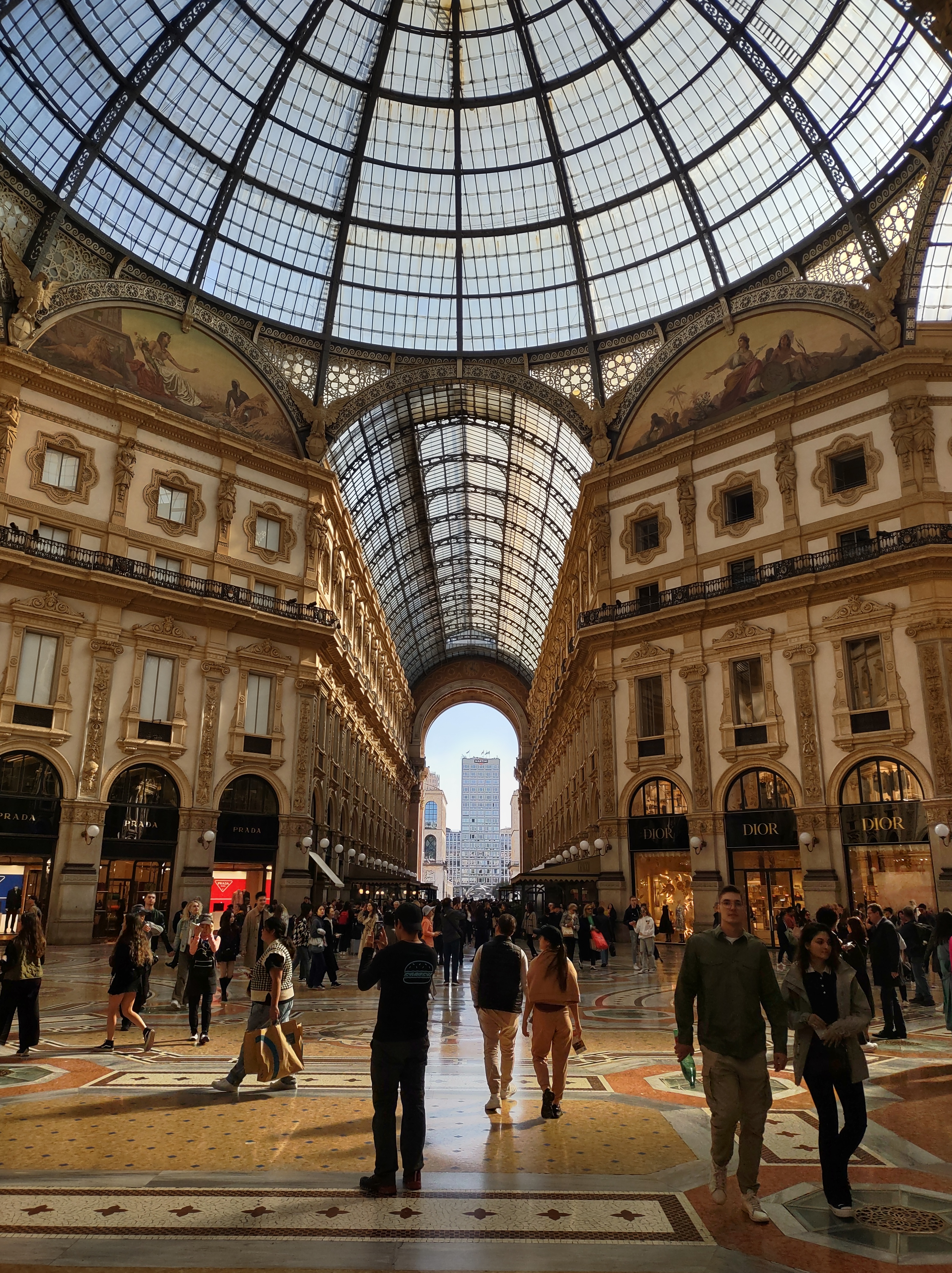
The other building which dominates Cathedral Square is the Galleria Vittorio Emanuele II, completed in 1877, the oldest active shopping gallery in Italy and a beautiful piece of neoclassical architecture. The structure consists of two four-story glass-vaulted arcades intersecting in a glass dome covering the street connecting Piazza del Duomo and Piazza della Scalla with a grand barrel-vaulted entry flanked by arcades which extend the length of the Square. Now housing flagship stores for all the major fashion houses, along with their jewelry and perfume counterparts, it is a grand temple to fashion and commerce.

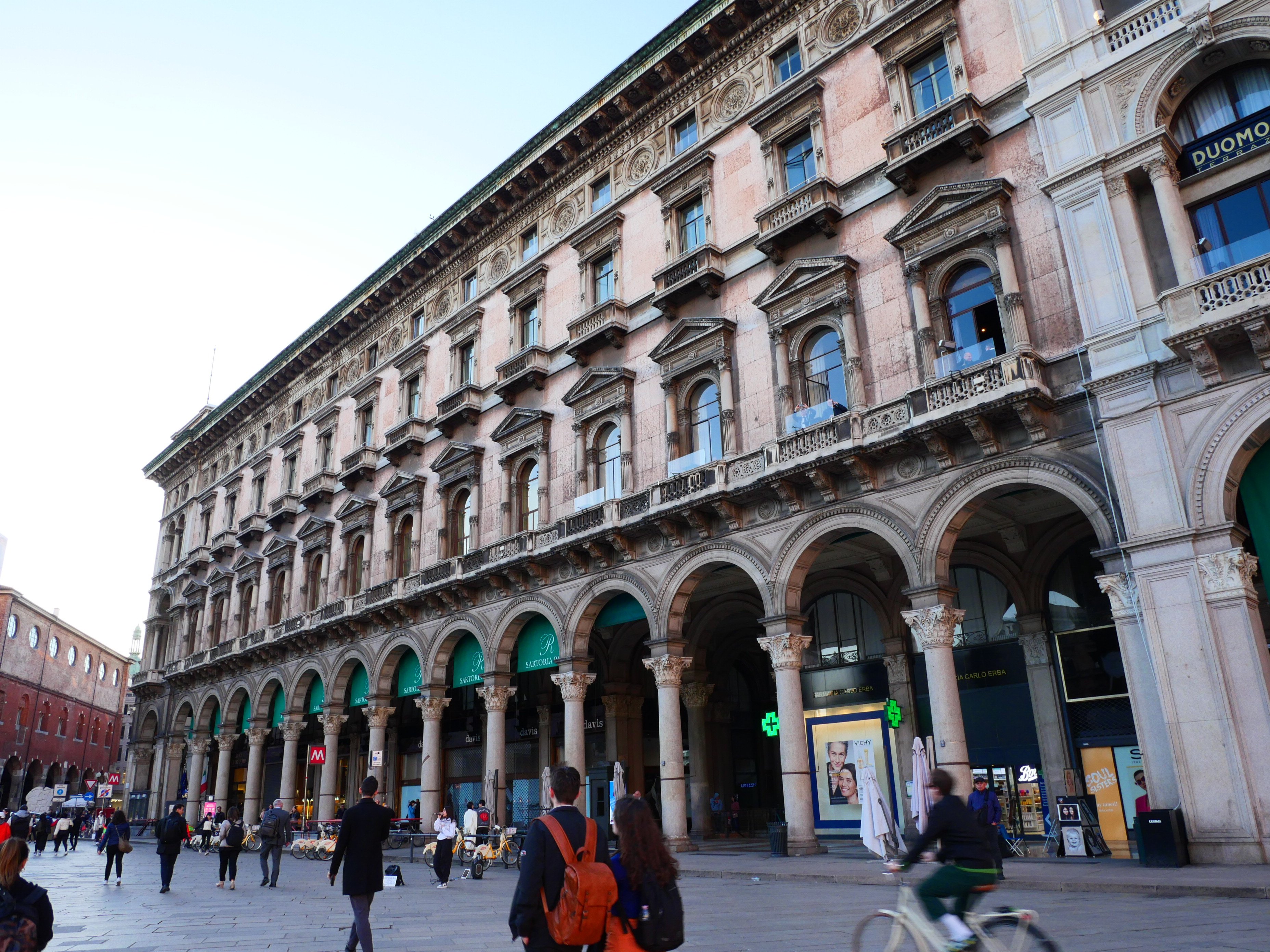
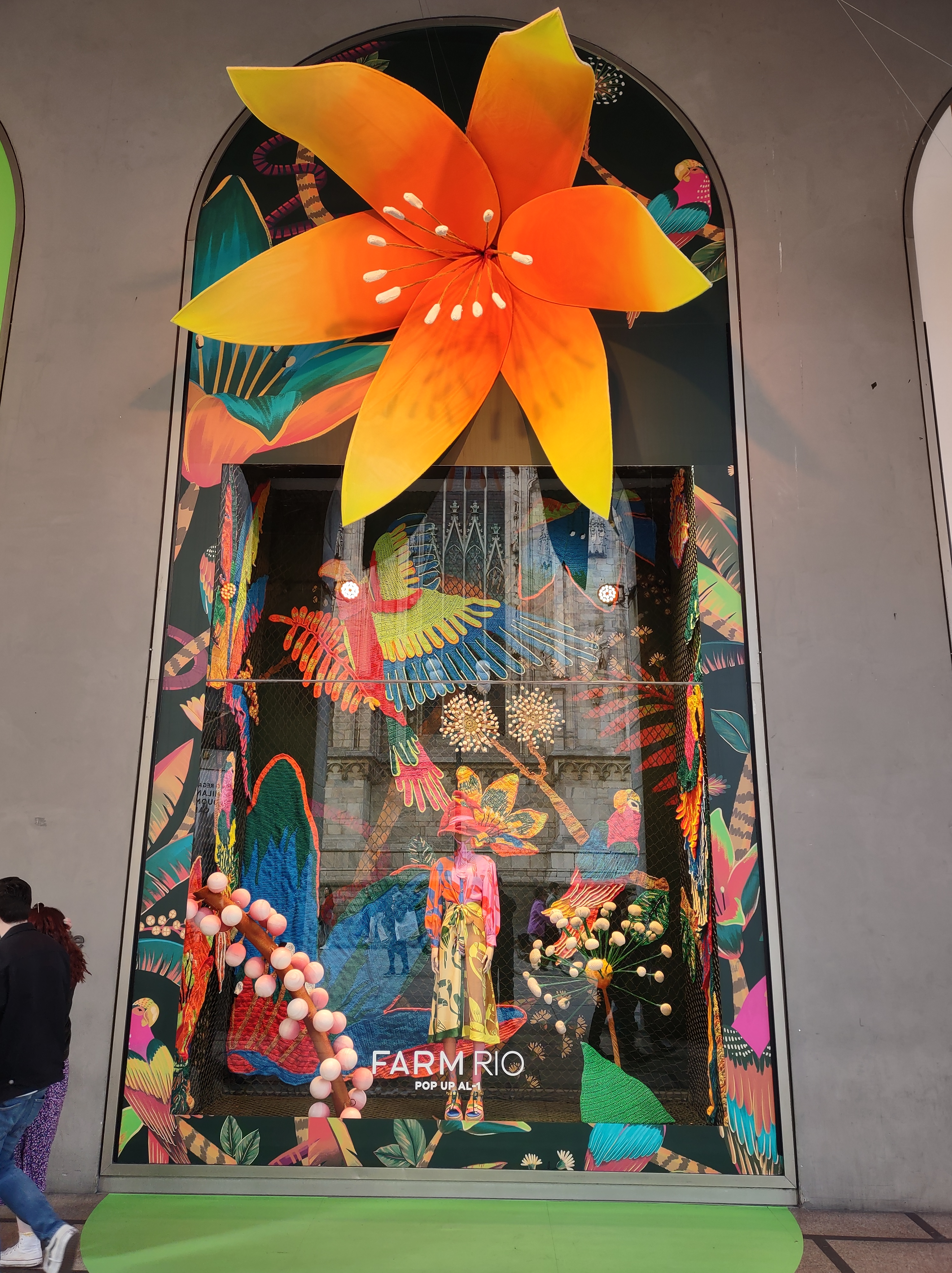

Together, these two structures suggest that, in Milan at least, what matters most is religion, fashion, and commerce (not necessarily in that order).
Ticinese
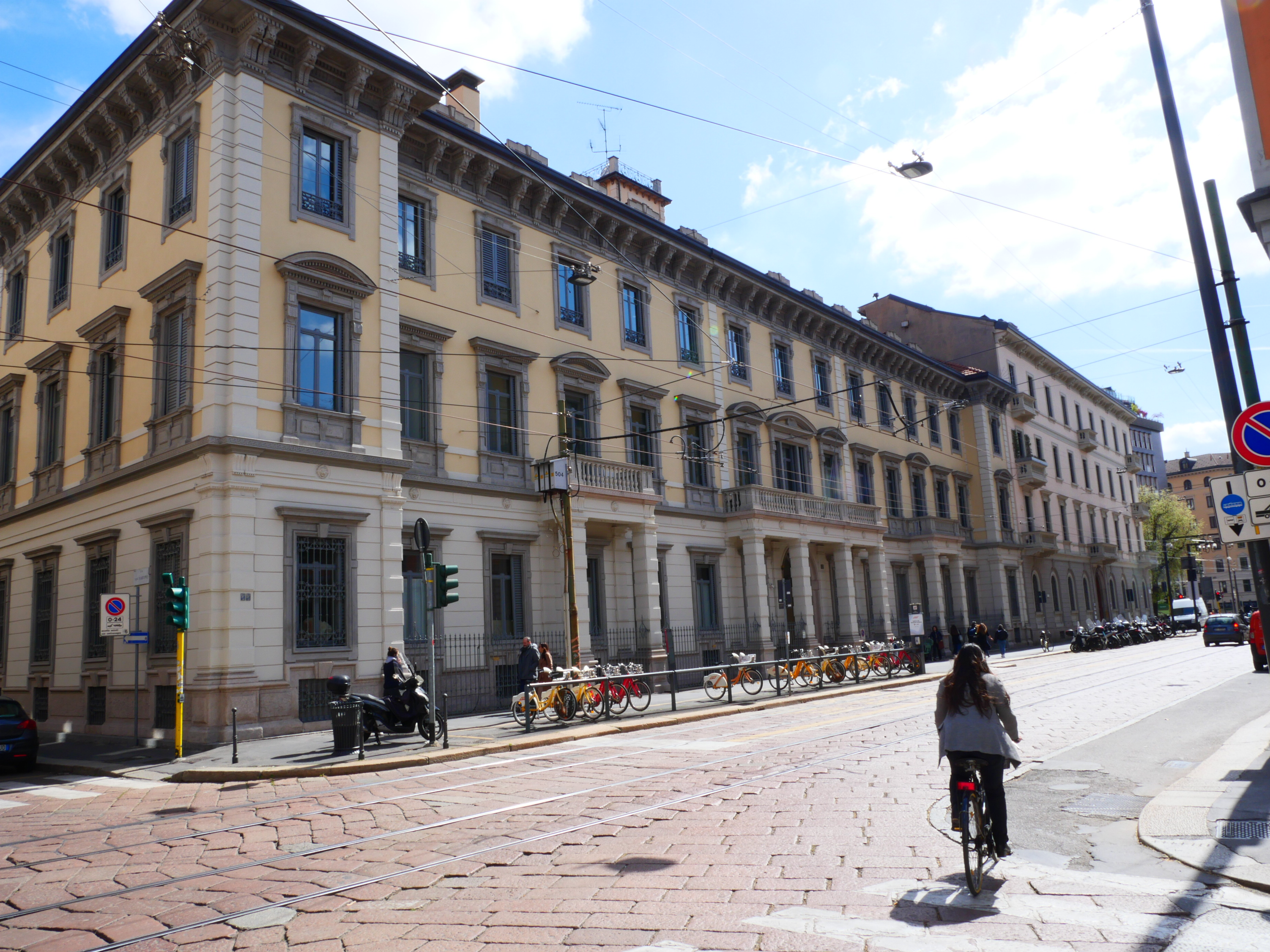
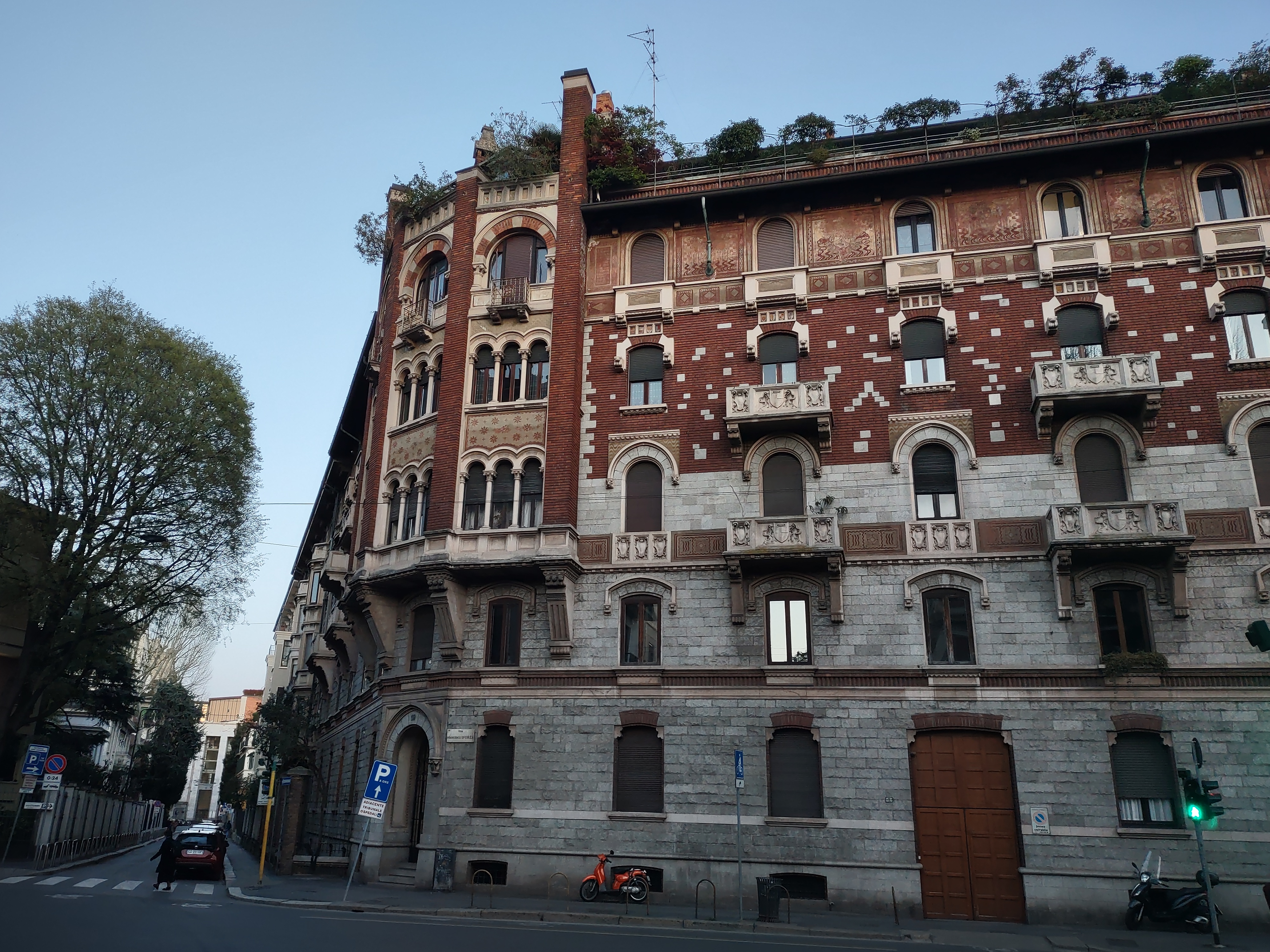
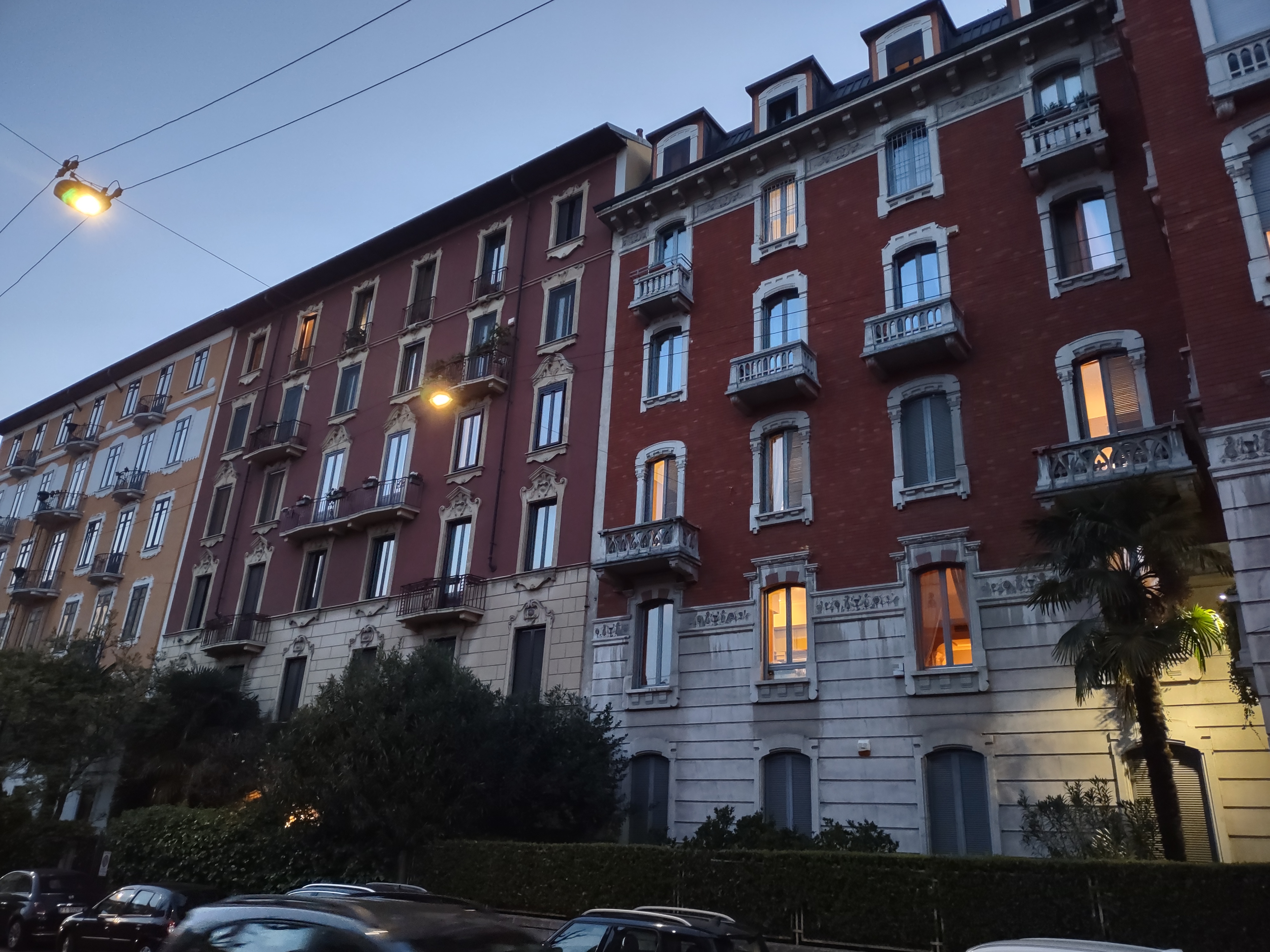
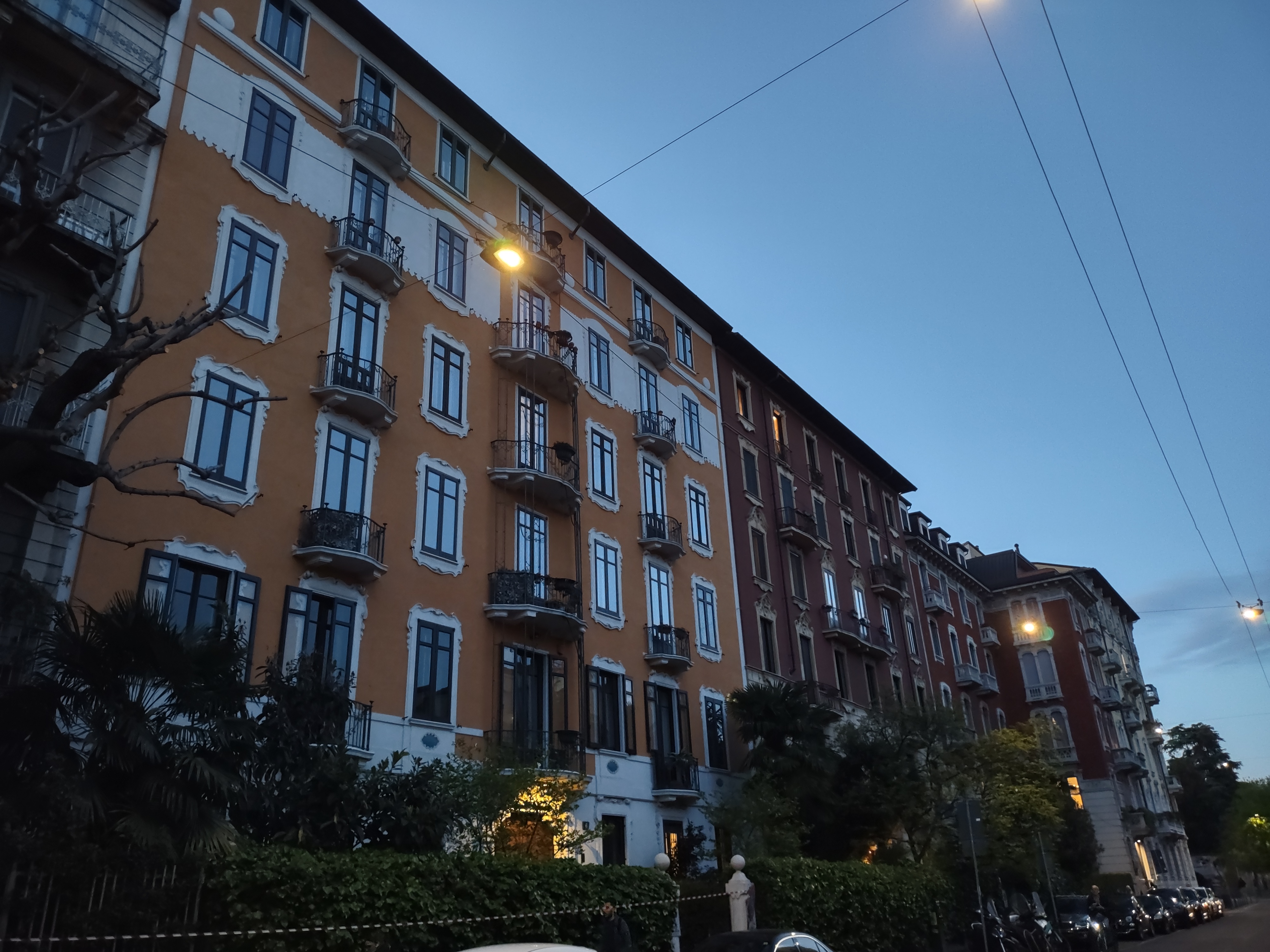
We stayed in Ticinese, a neighborhood on the southern side of the Centro Storico, about a 25-minute walk from Cathedral Square. Ticinese, which is one of the oldest neighborhoods of Milan, is a fairly bohemian neighborhood (although, in Milan, bohemian appears to be upper middle class). Some of the best-preserved Roman ruins are in Ticinese and here and there you come upon fragments of ancient structures and the remnants of the old city walls.
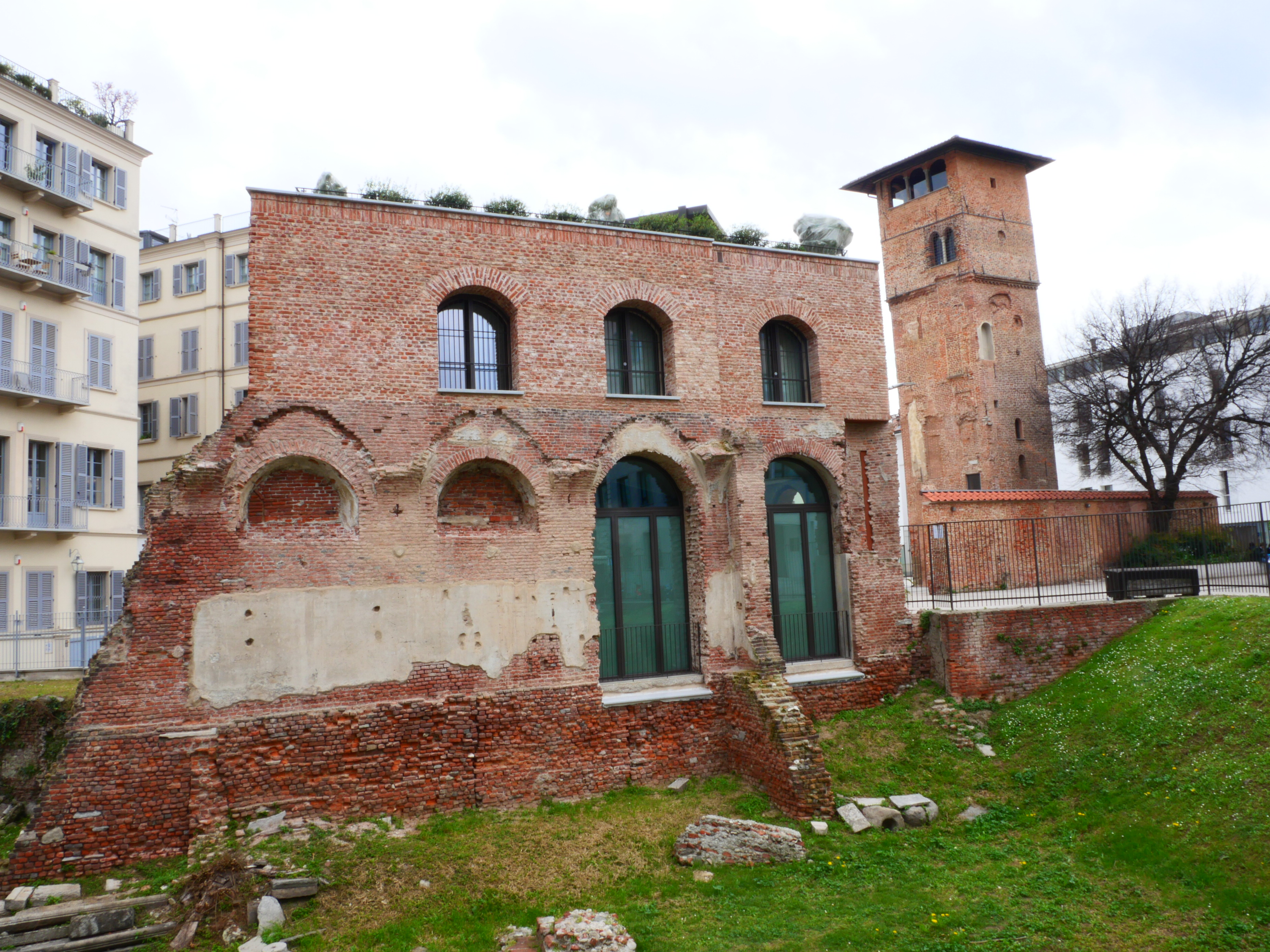
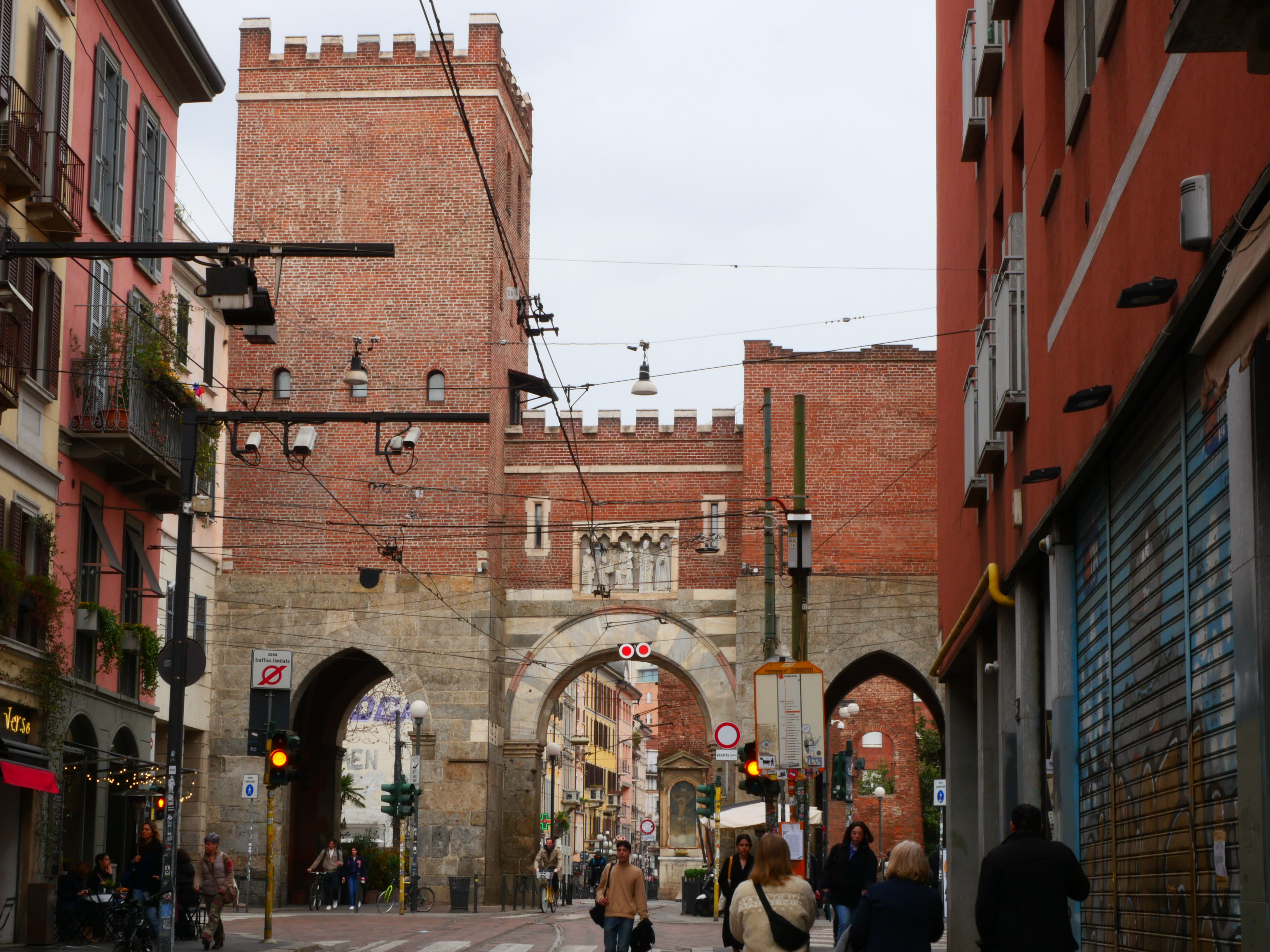

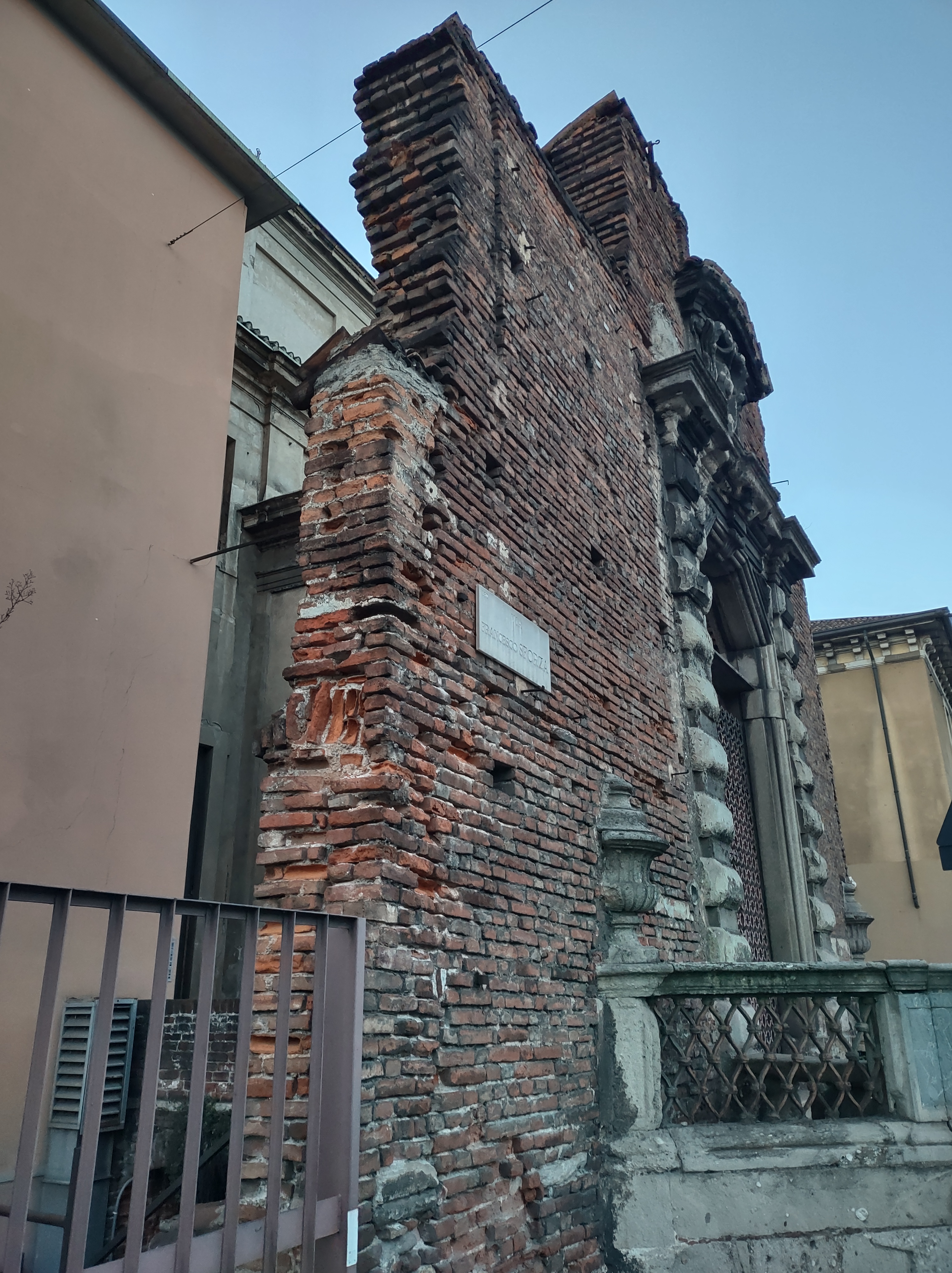

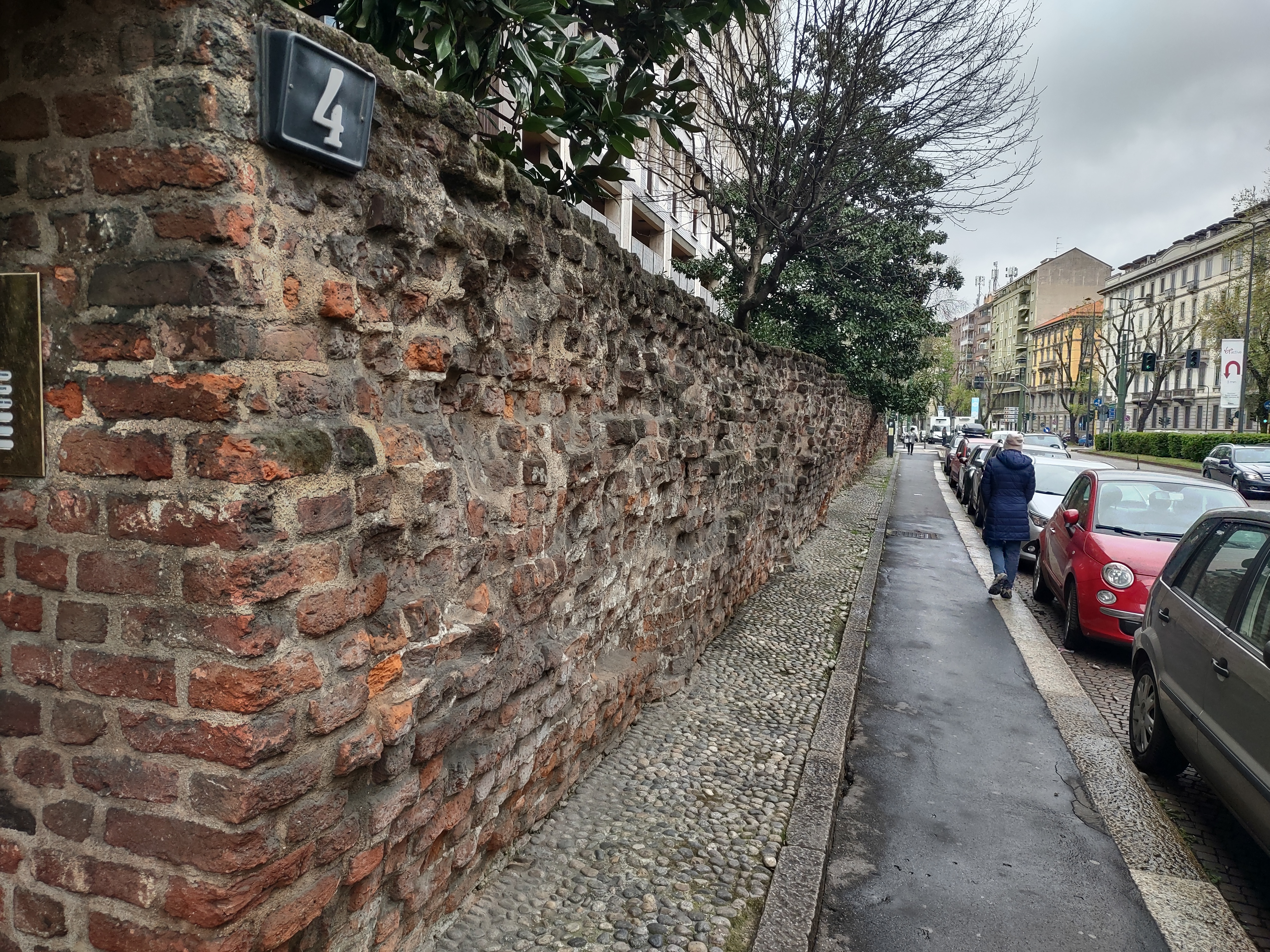
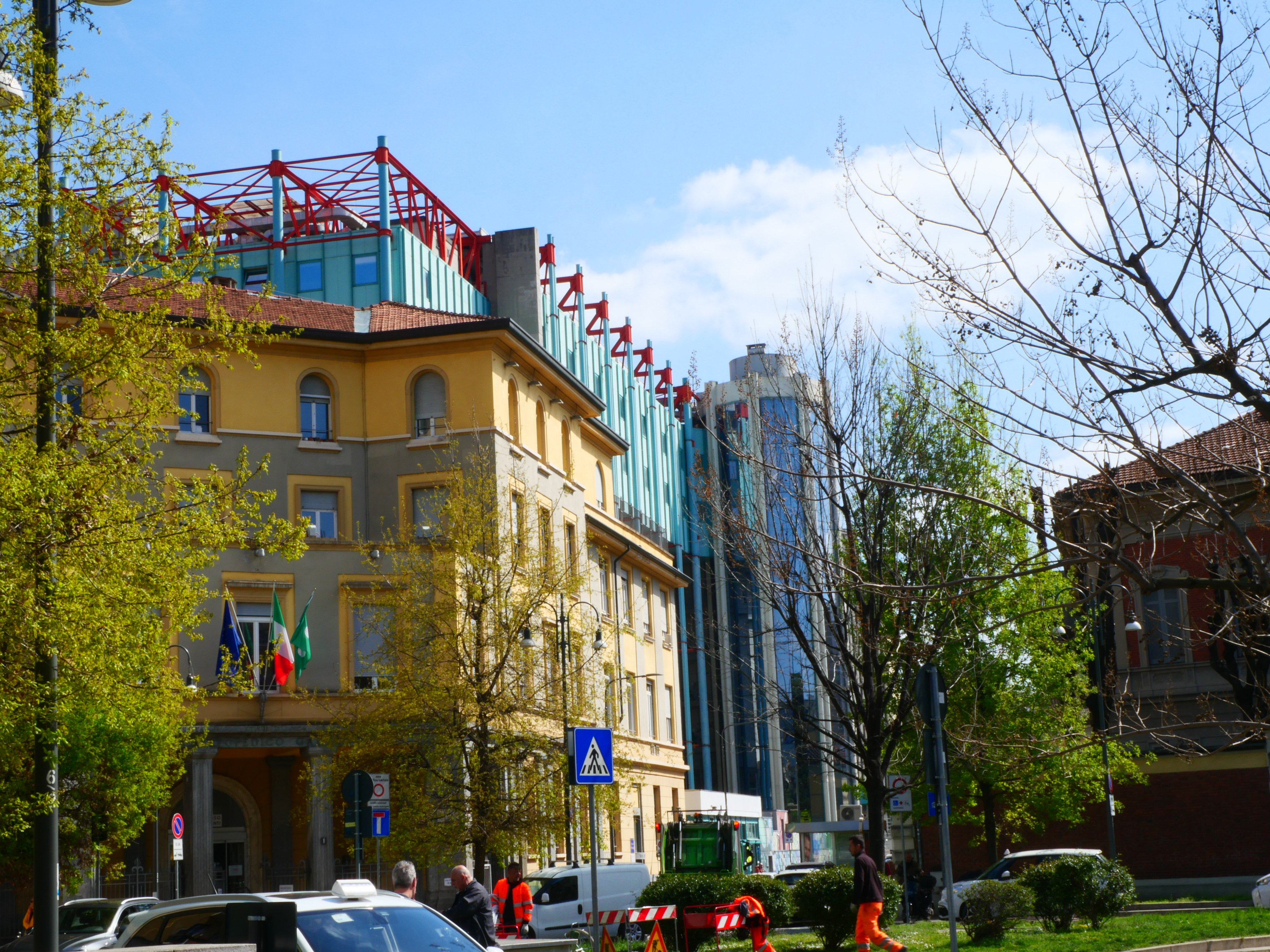
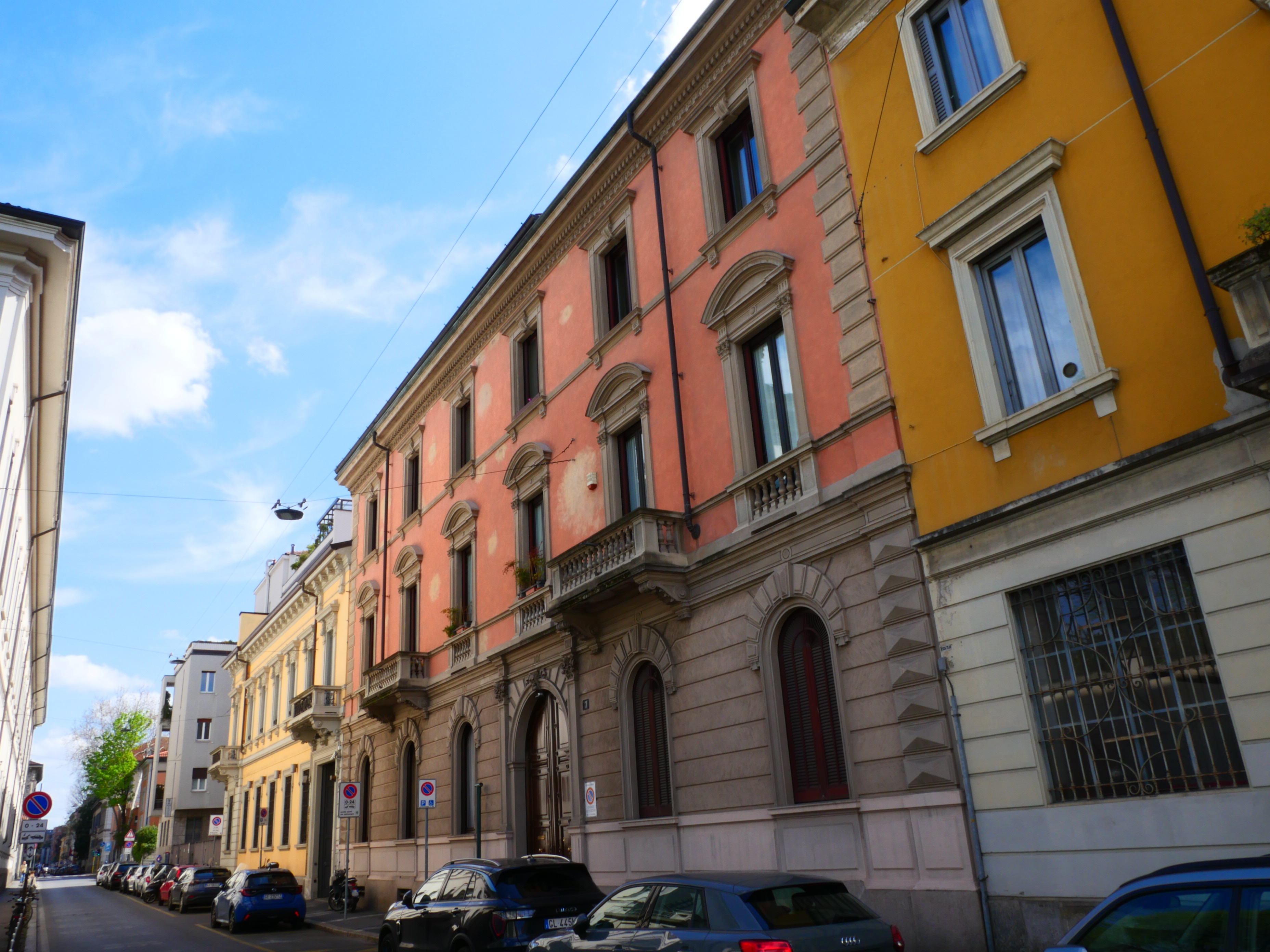
In addition to these older structures, Ticinese also has many beautiful 18th and 19th century palazzos, most of which have been converted to apartments. Although mostly residential, the neighborhood of Ticinese includes a wide variety of shops and restaurants, as well as a good number of open squares and parks, and is generally a great place to stroll although you do need to watch out for the Italian drivers and pay attention to where the bike lanes are!



Navigli
You might be surprised to hear that Milan once had a network of canals not unlike those in Amsterdam and Venice. While most major inland cities have a river flowing through them (London has the Thames, Paris has the Seine) Milan, one of the wealthiest cities in Europe, has none and so, the city had to make one for itself.
Between the 12th and 17th centuries, a network of navigli (canals) was constructed in order to grow the landlocked city’s wealth and influence. A canal system connected the city to the River Tincino 25 km to the west and the River Adda 35 km to the east, connecting with the Cerchia Interna (The Inner Ring) and a series of smaller canals withing the Centro Storico. But, as automobiles and trains replaced boats as the fastest modes of transport, the Inner Ring was covered with concrete and most of the other canals, were covered by new roads and buildings.
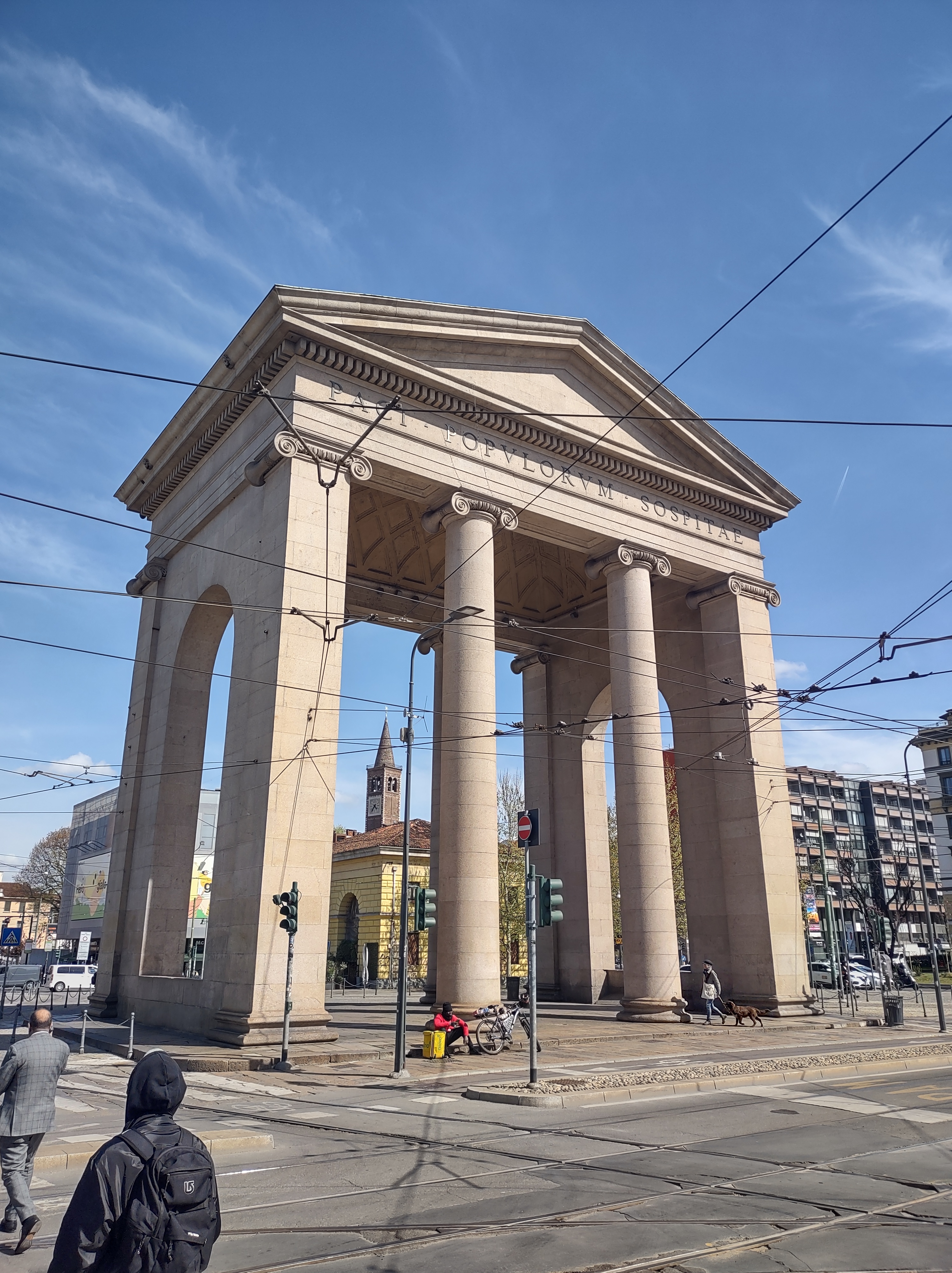
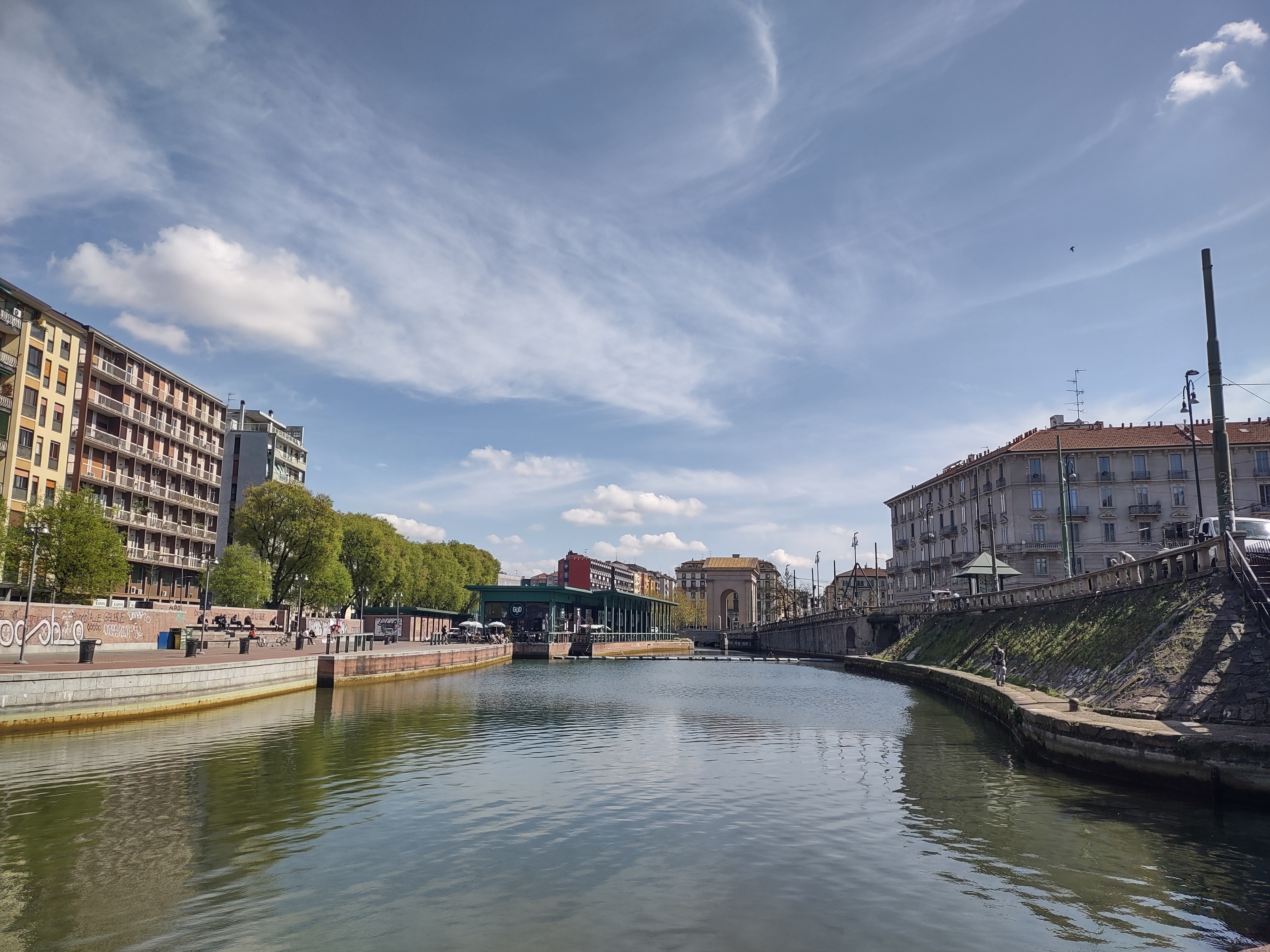
Two canals remain in the neighborhood of Navigli, which adjoins Ticinese to the west: the Naviglio Grande and the Naviglio Pavese, both of which flow into a large basin known as the Darsena (meaning “dock” or “shipyard”). The Darsena adjoins a plaza containing the Arco di Porta Ticinese, a neoclassical arch, one of two surviving gates into the old city, which is now a ceremonial entrance to the city through Ticinese.
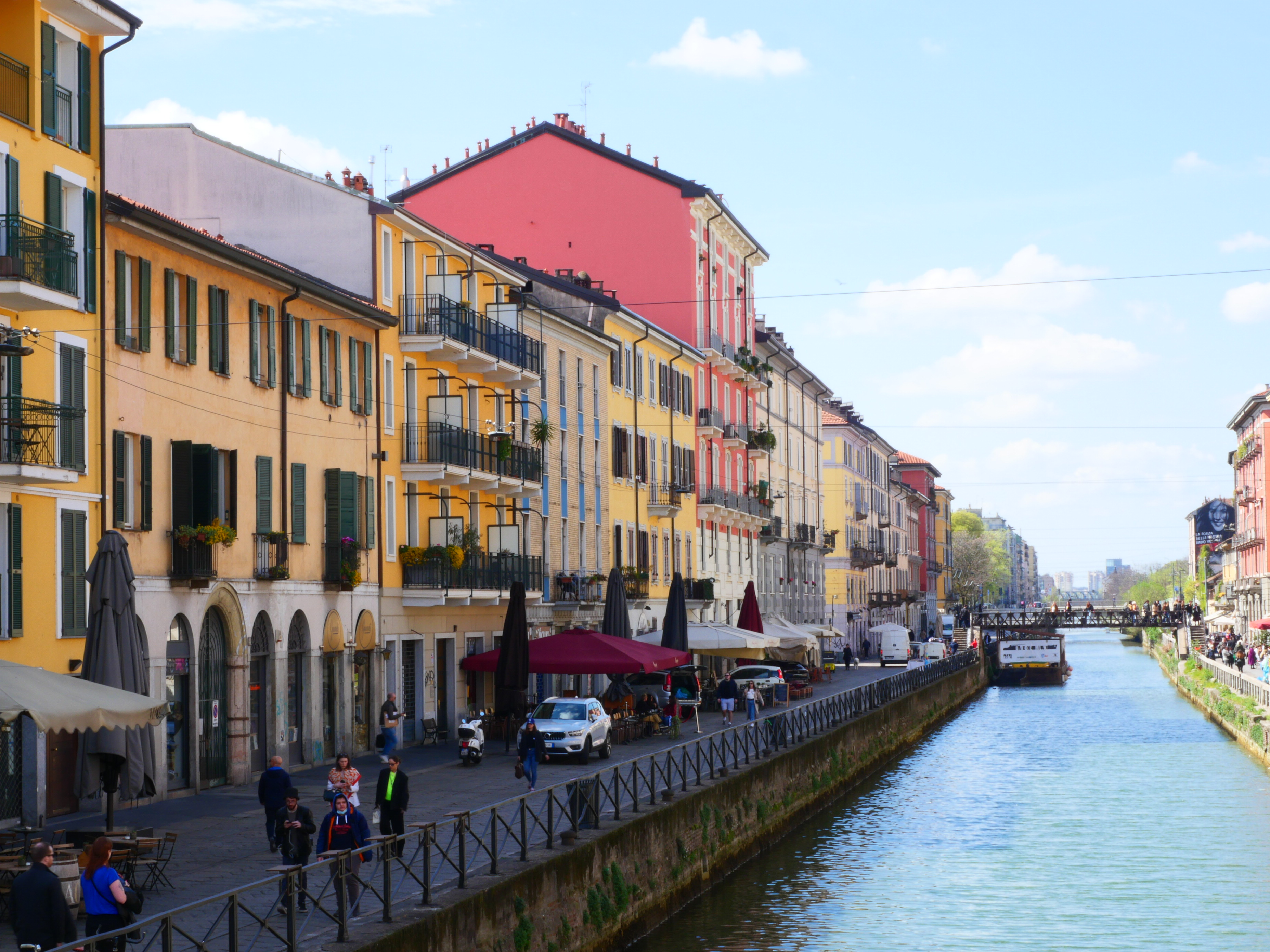
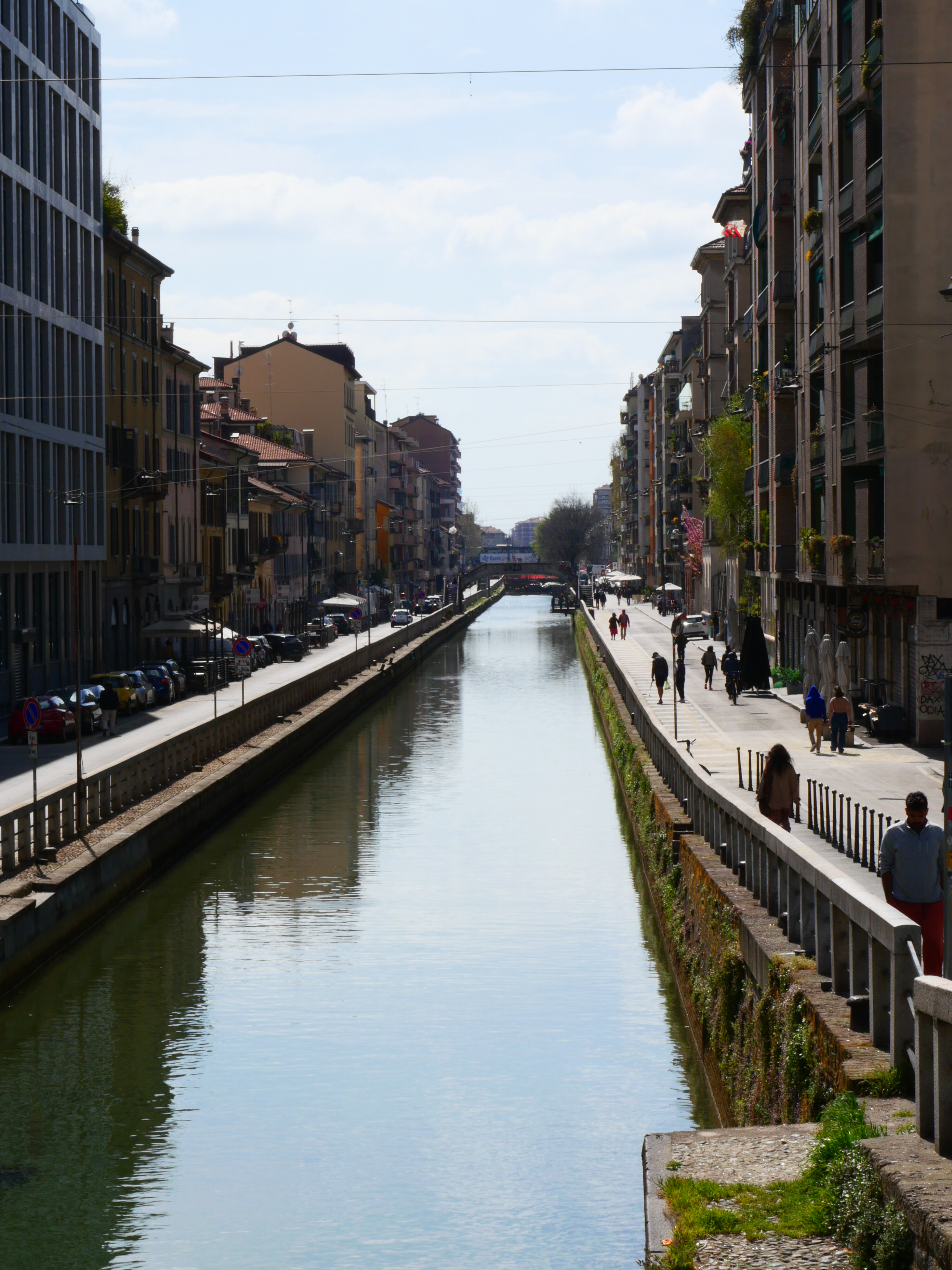
The Naviglio Grande (Grand Canal) of Milan could be in Venice, but, unlike most of Venice’s canals, it has wide pedestrian walkways which allow the numerous cafes and bars along it to provide plenty of outdoor seating. The sunny north side of this canal is closed to motor vehicles, so it was a particularly nice place to stroll this time of year. The Naviglio Pavese is more residential and has fewer restaurants but is also a very nice stroll.
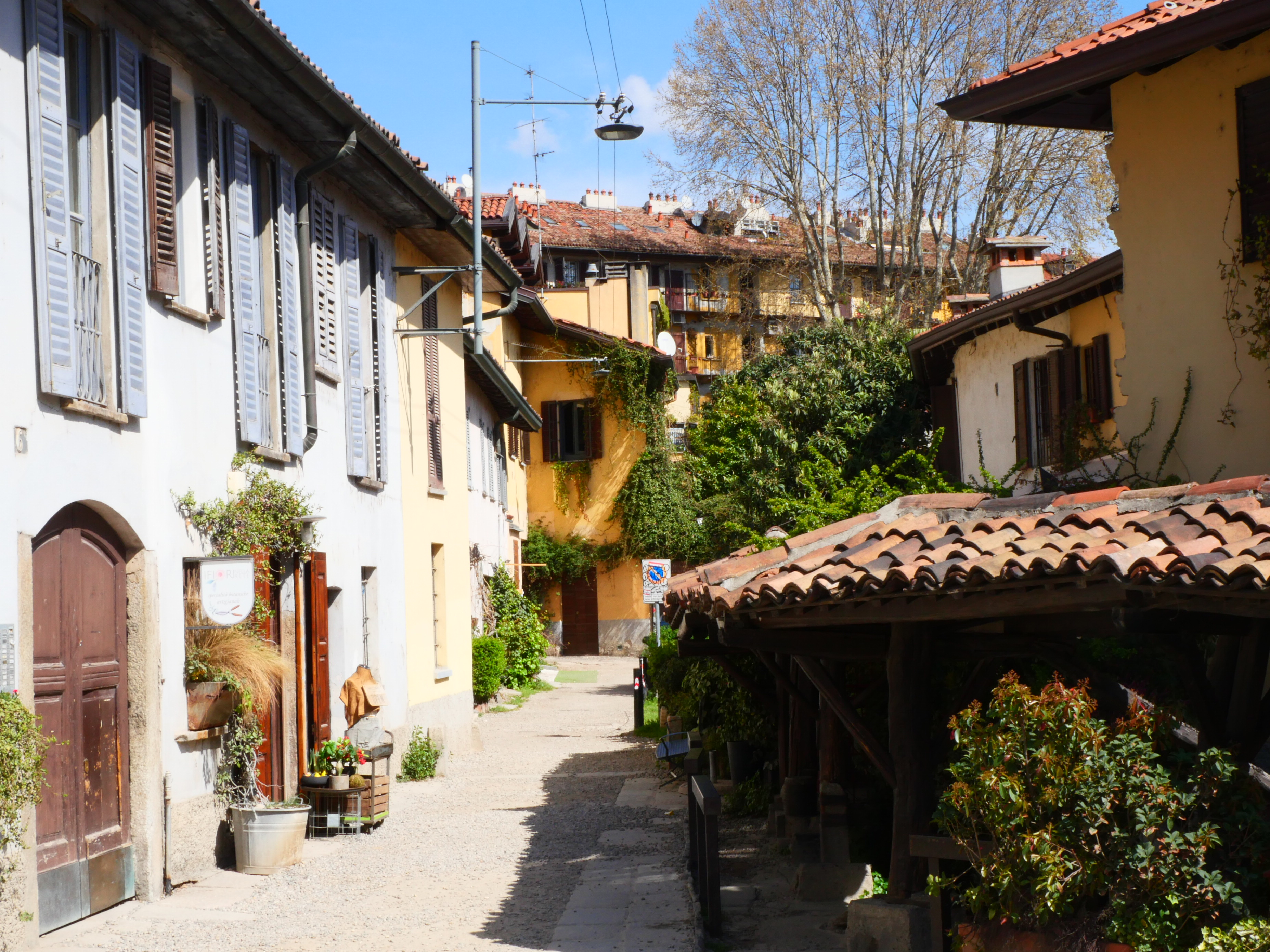


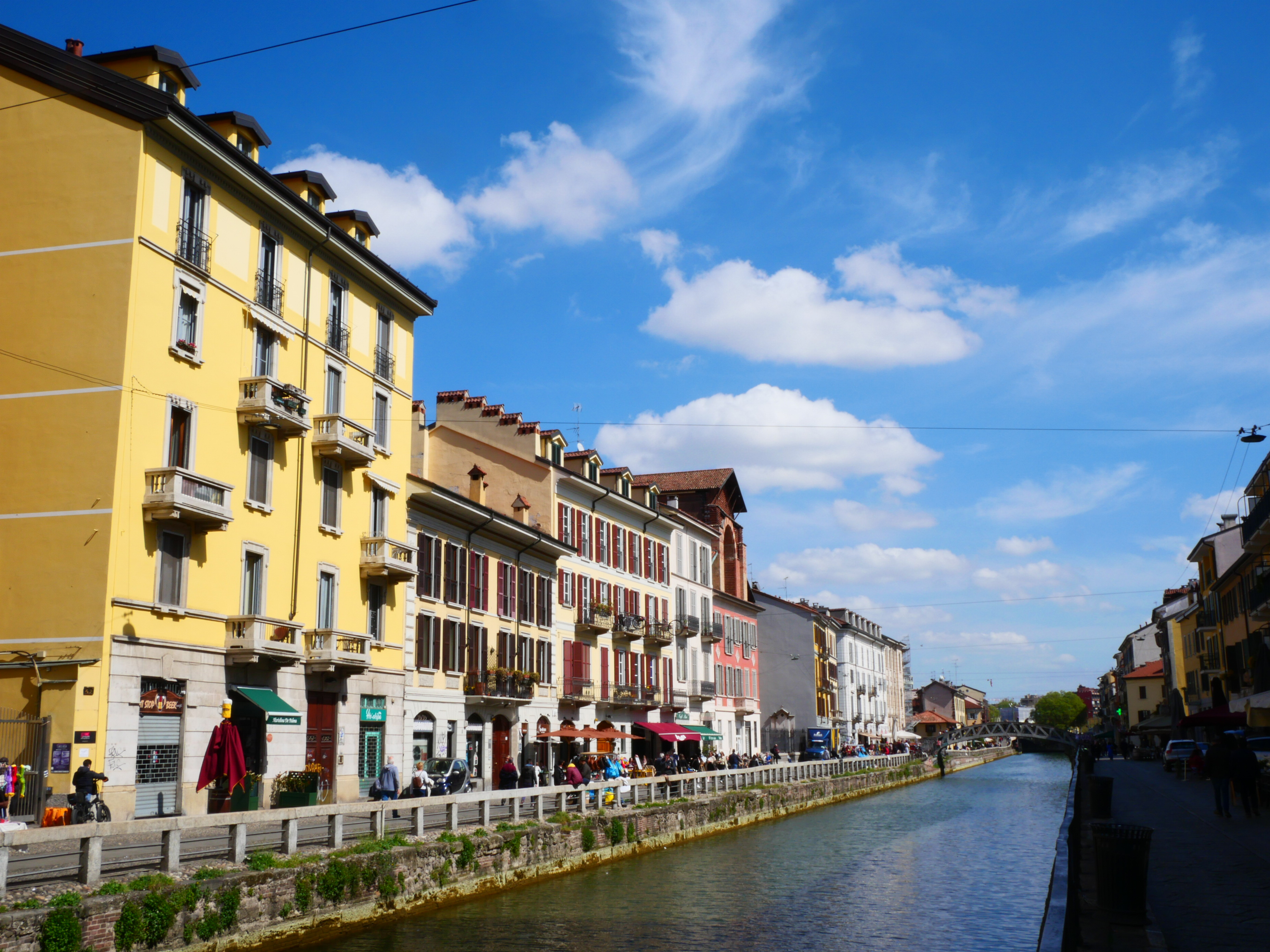
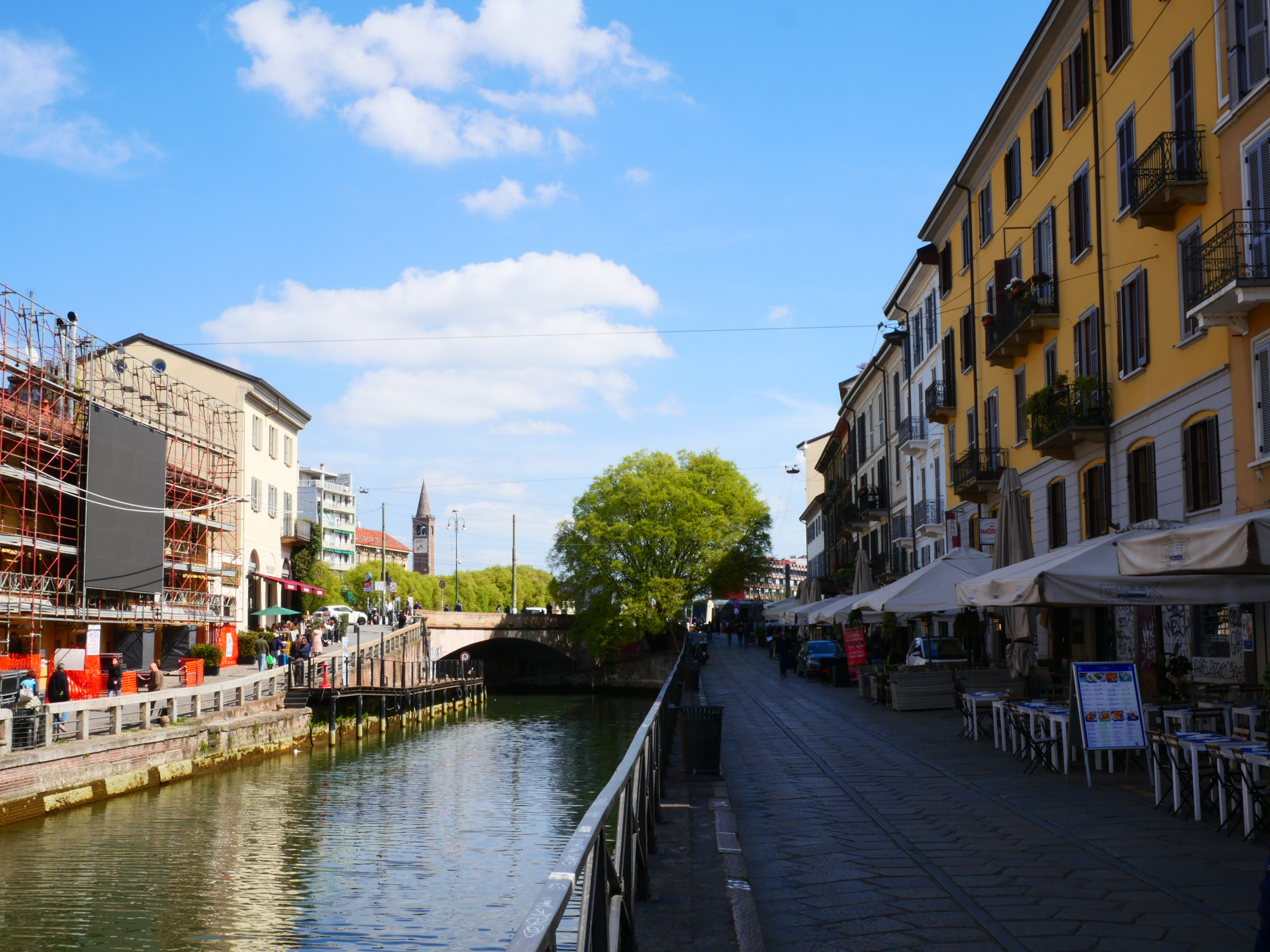
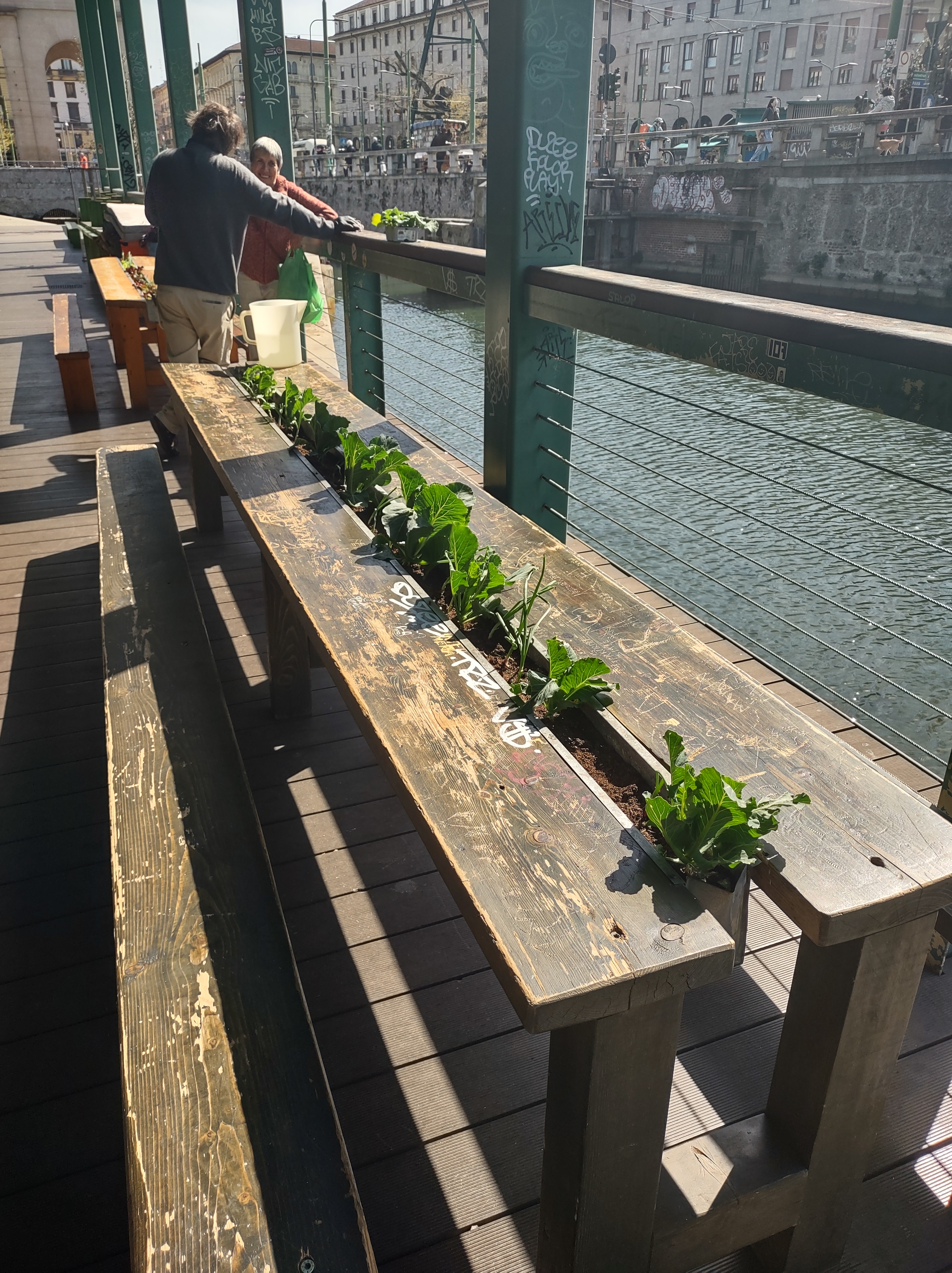
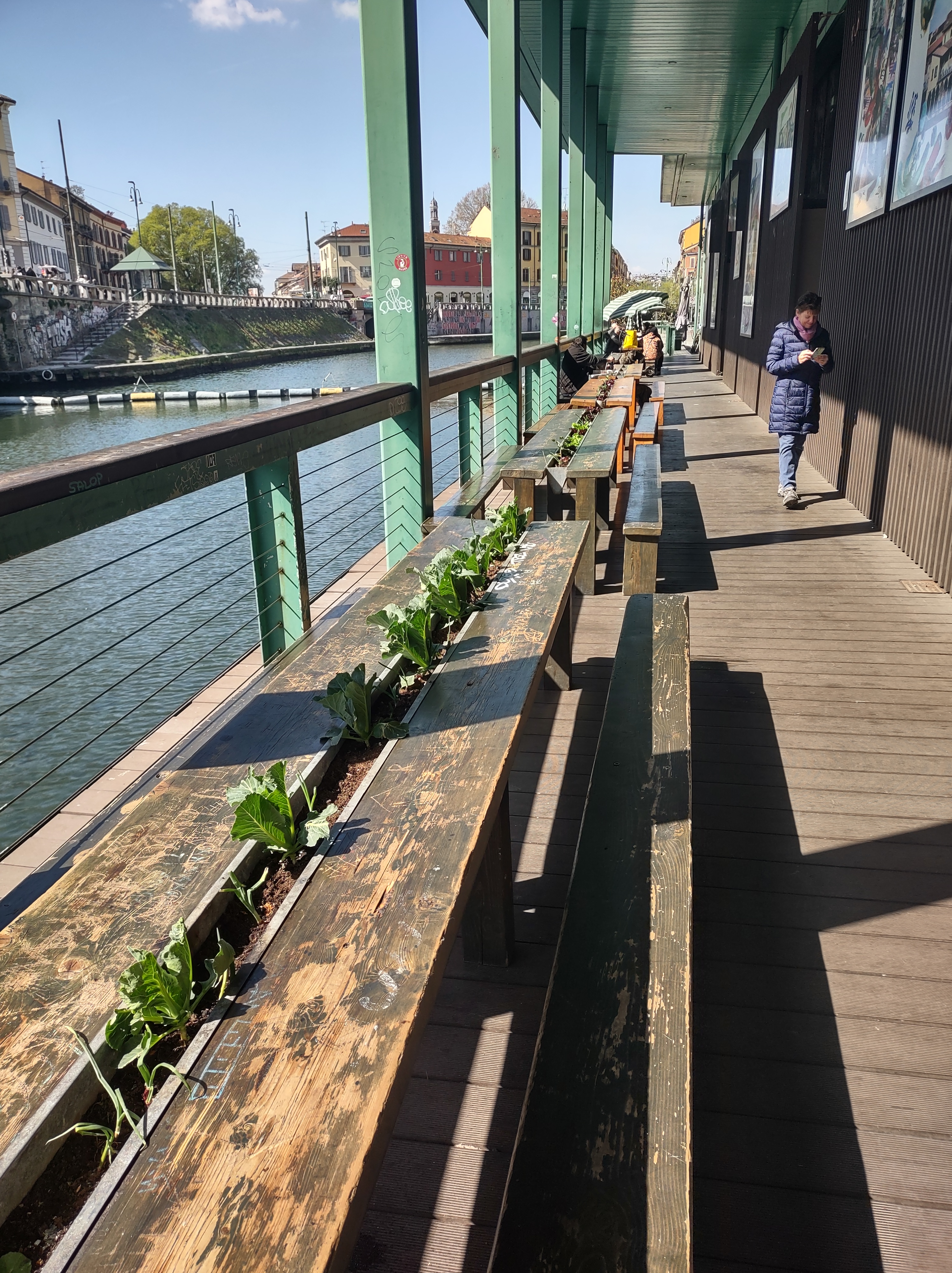
The area around the Darsena has been developed in recent years with pedestrian plazas and walkways and a large market with shops and restaurants. We grabbed a coffee there and discovered waterside tables overlooking the Darsena, each with a center planting strip where a restaurant in the market grows lettuce and scallions. (Pretty cool!) We noted after the fact that Navigli does pop up in “Things to Do in Milan” but, whether it is the distance from the City Center or it was just the time of year, we enjoyed the fact that most of the people strolling these canals appeared to be natives rather than tourists.

Churches of Milan
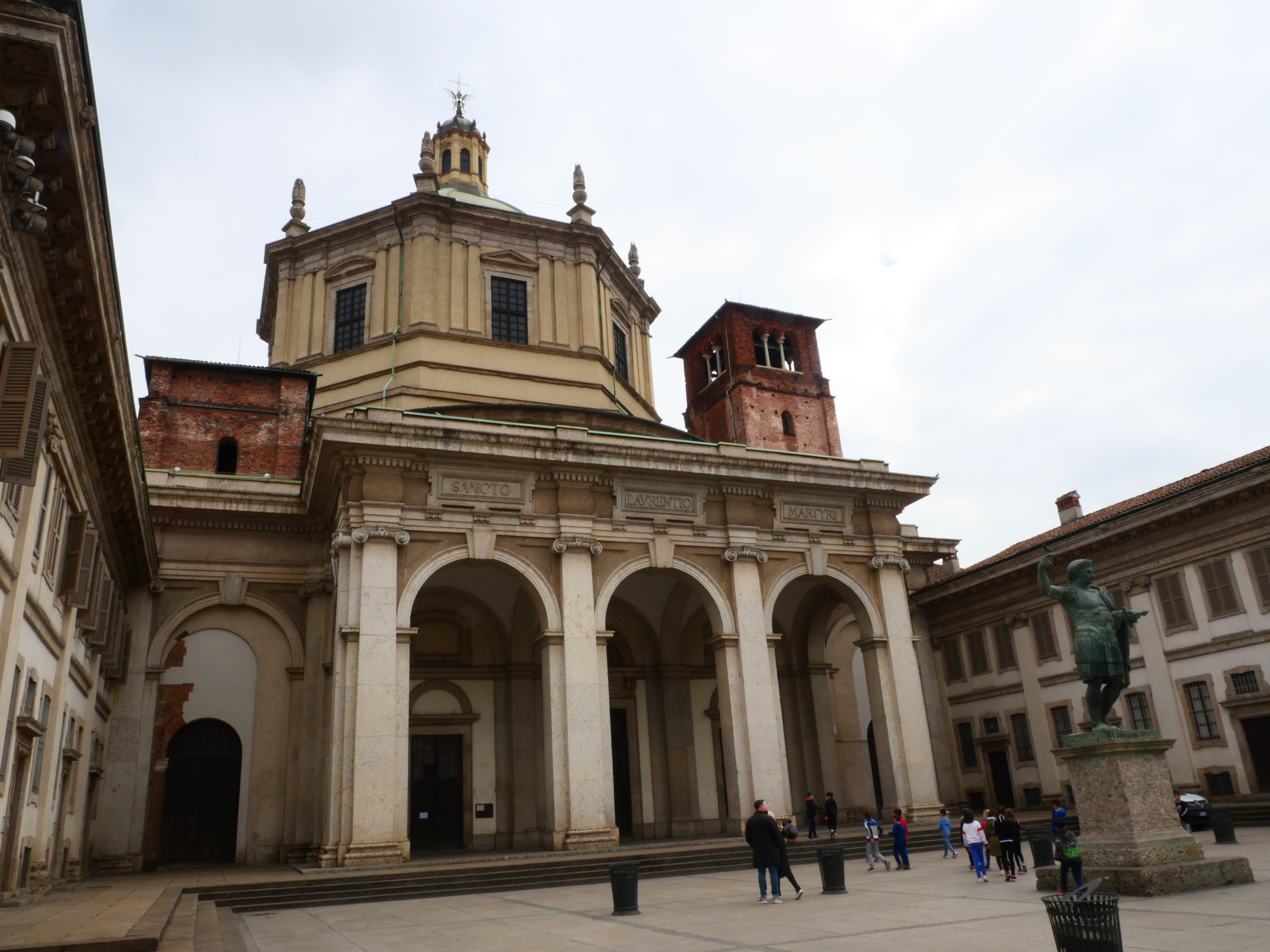
In addition to the Duomo (full disclosure: we were unwilling to wait in the lengthy line to get inside, so we only saw the exterior), we visited a number of churches in the Centro Storico, including the Basilica of San Lorenzo Maggiore in Ticinese.
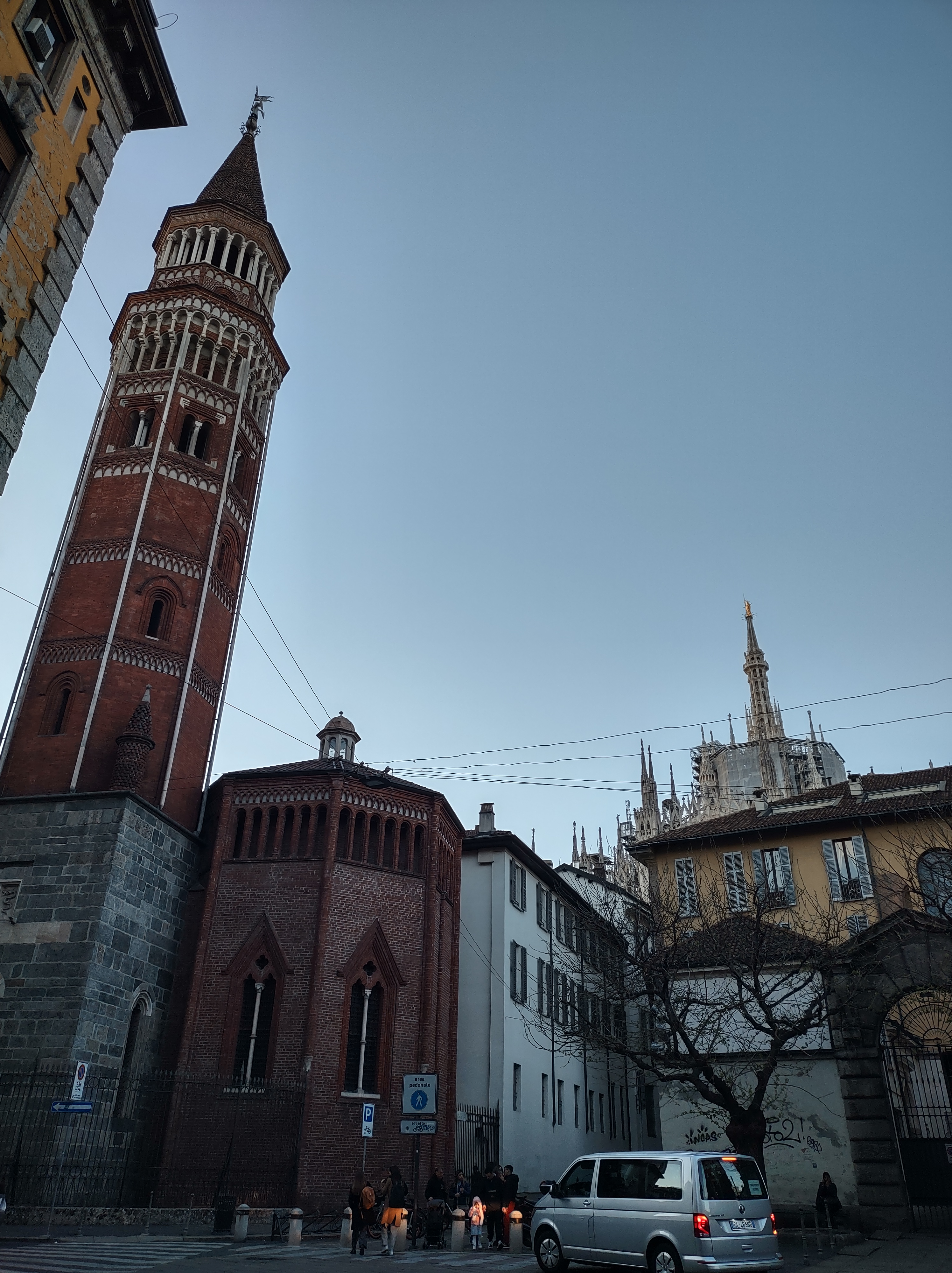
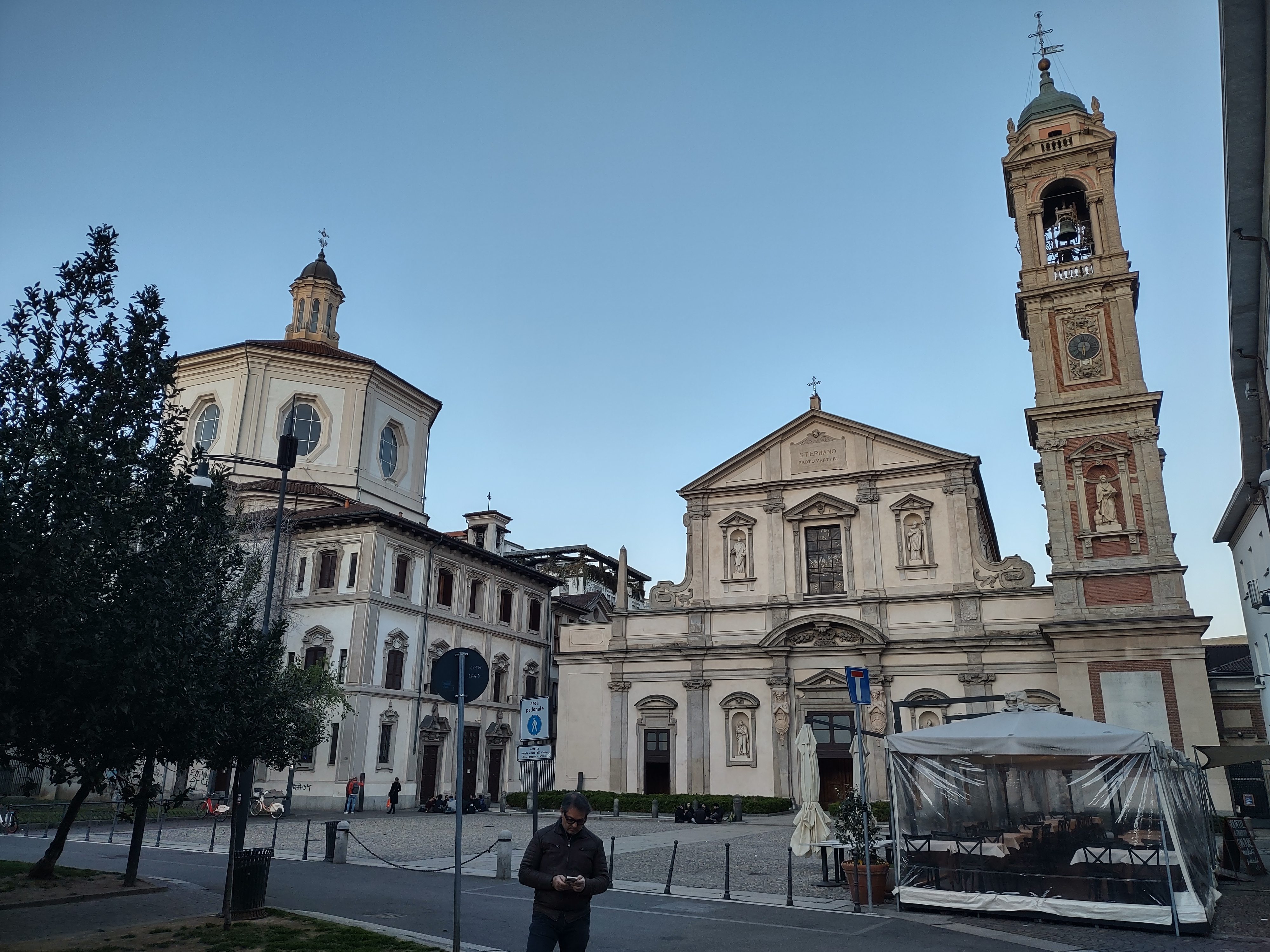

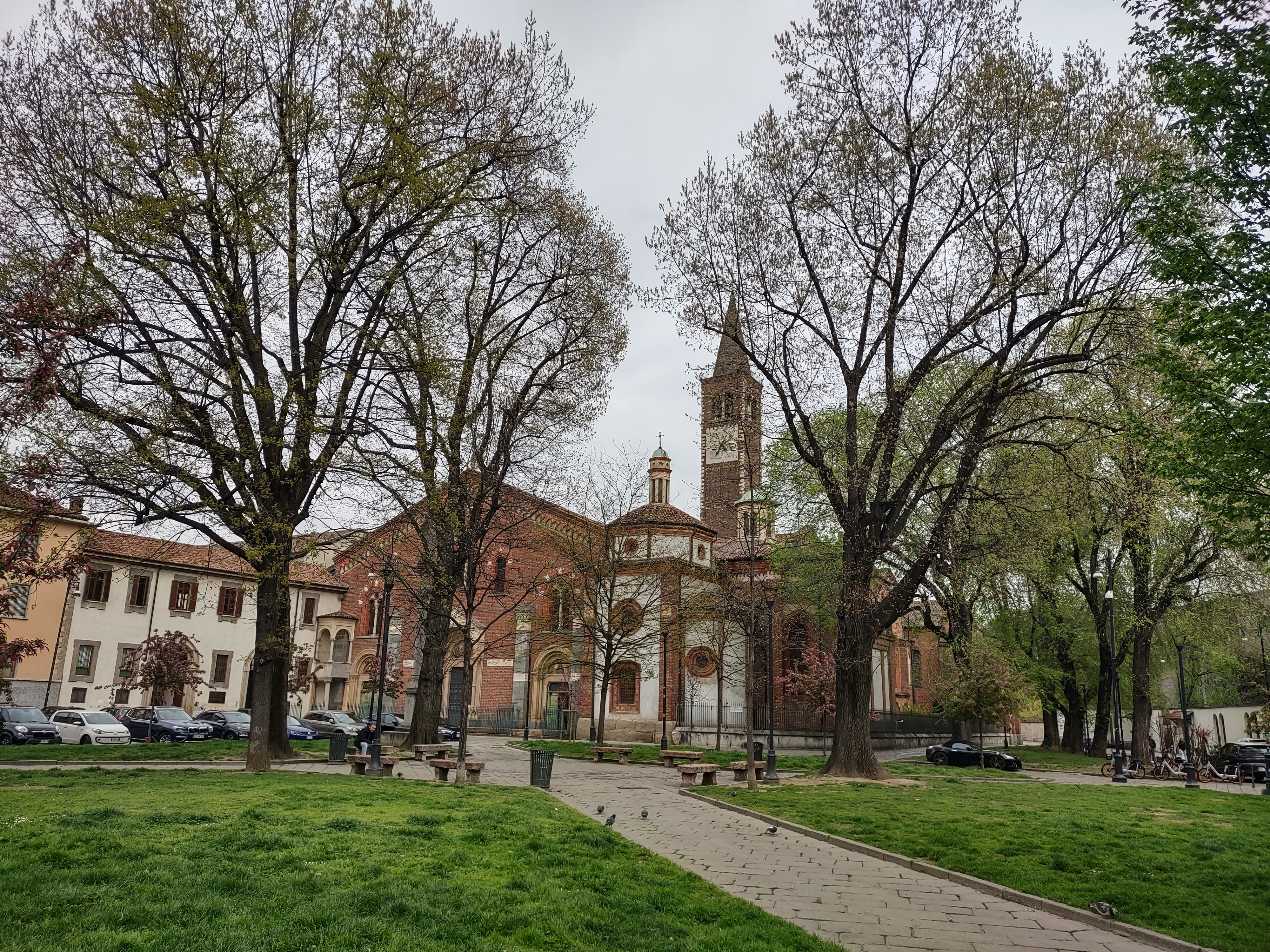
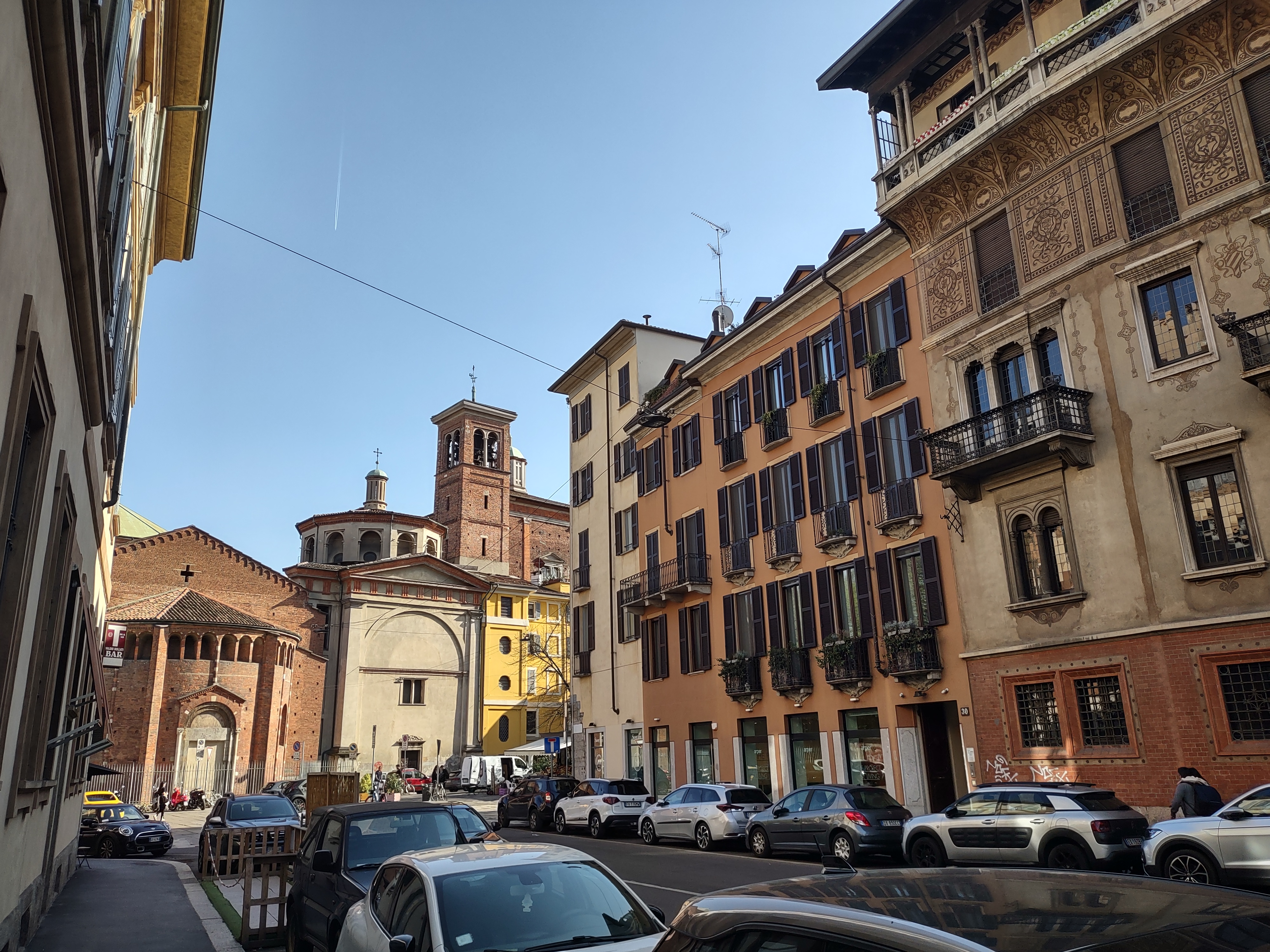

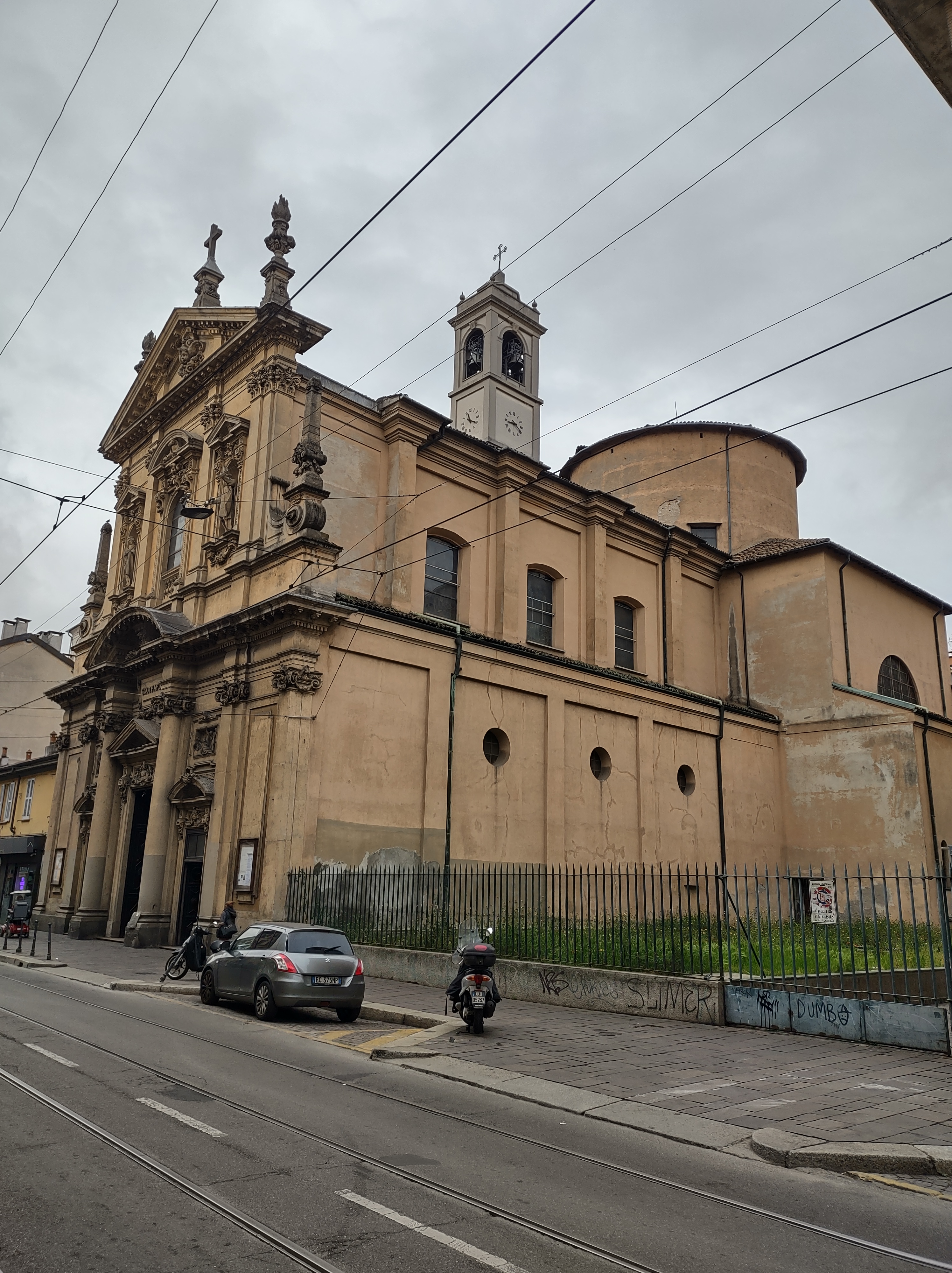
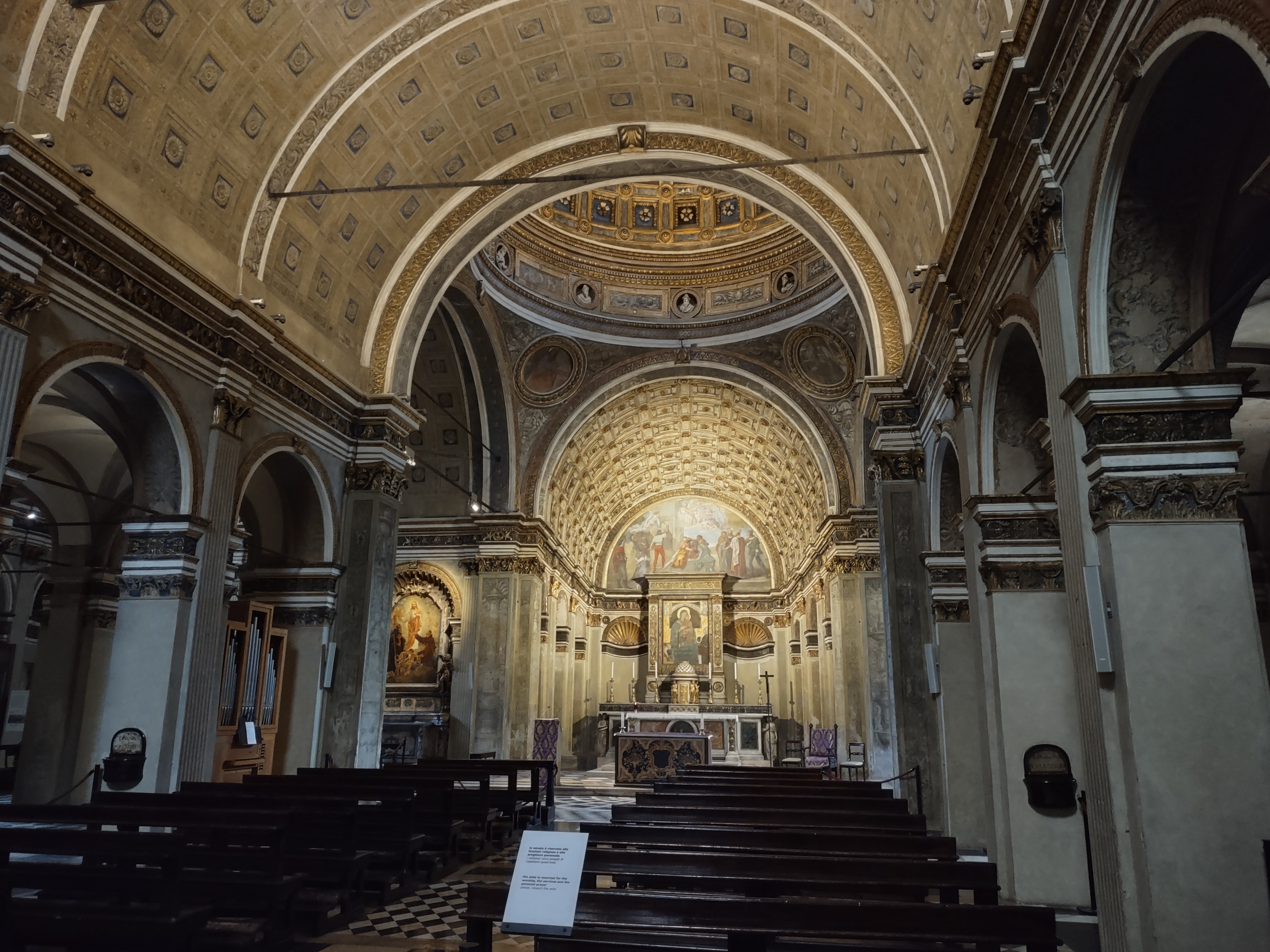
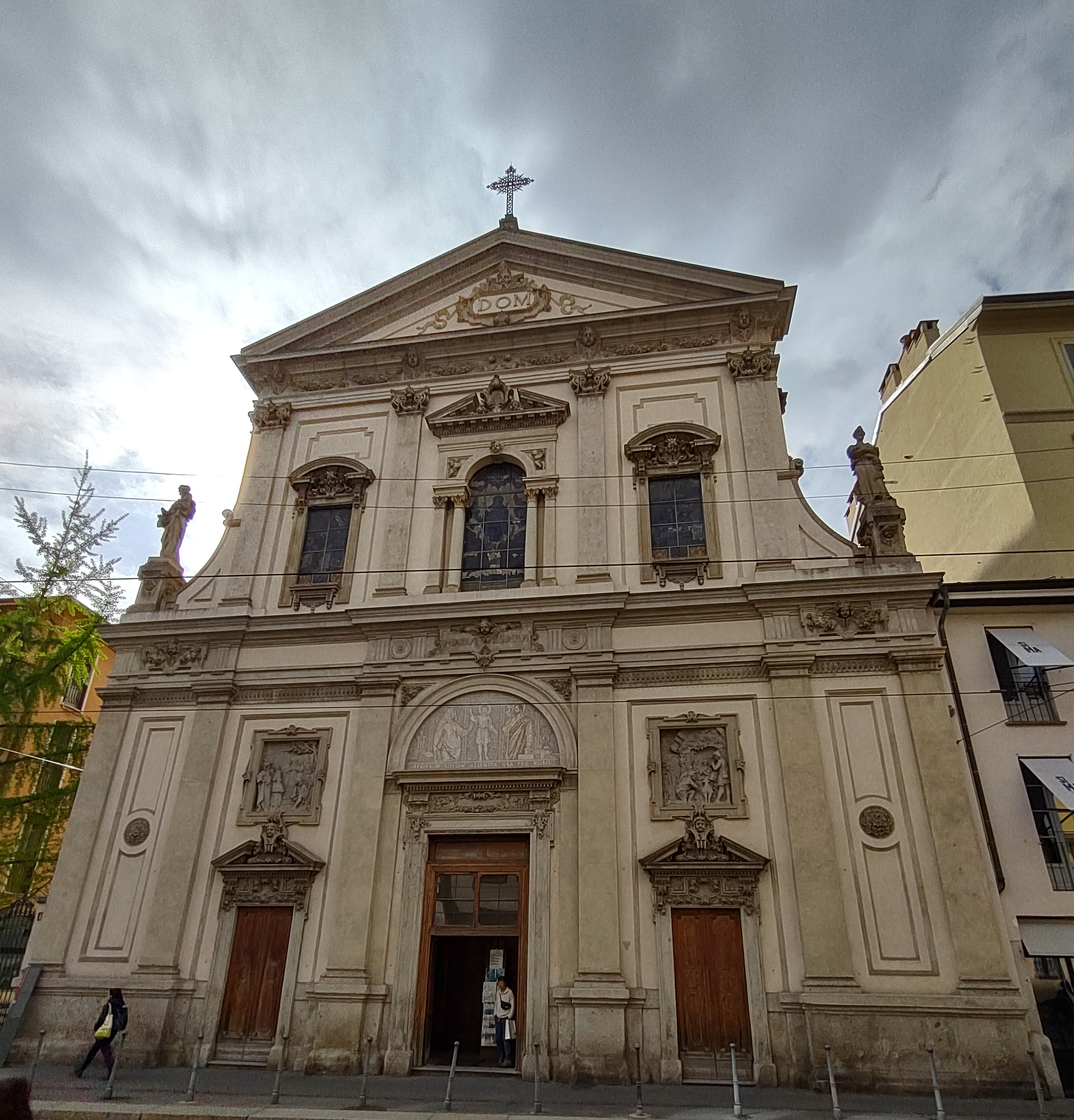
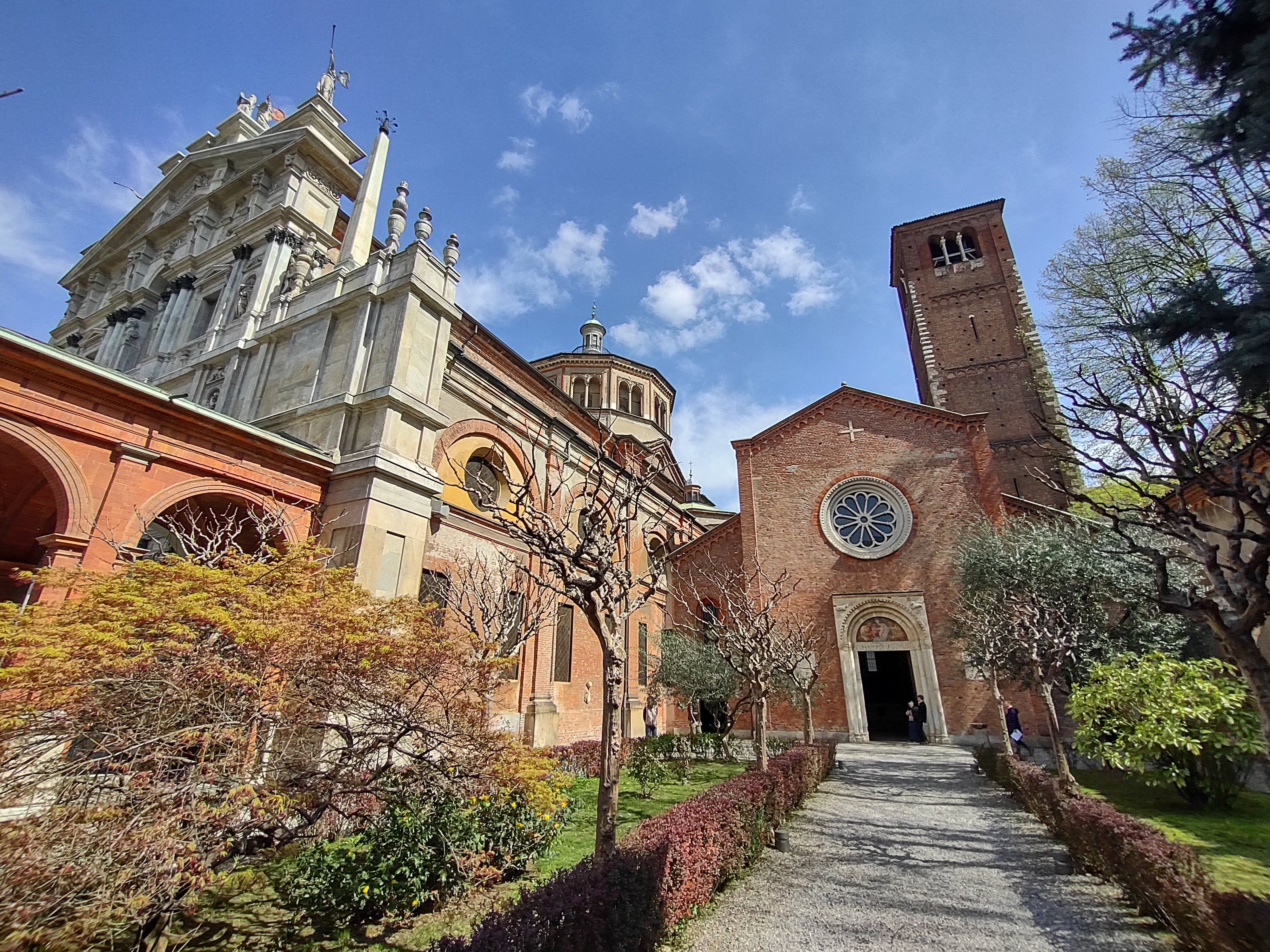
But it was a couple of lesser-known churches around the corner from our apartment which really caught our attention: the Church of Santa Maria dei Miracoli and the adjoining Church of San Celso.
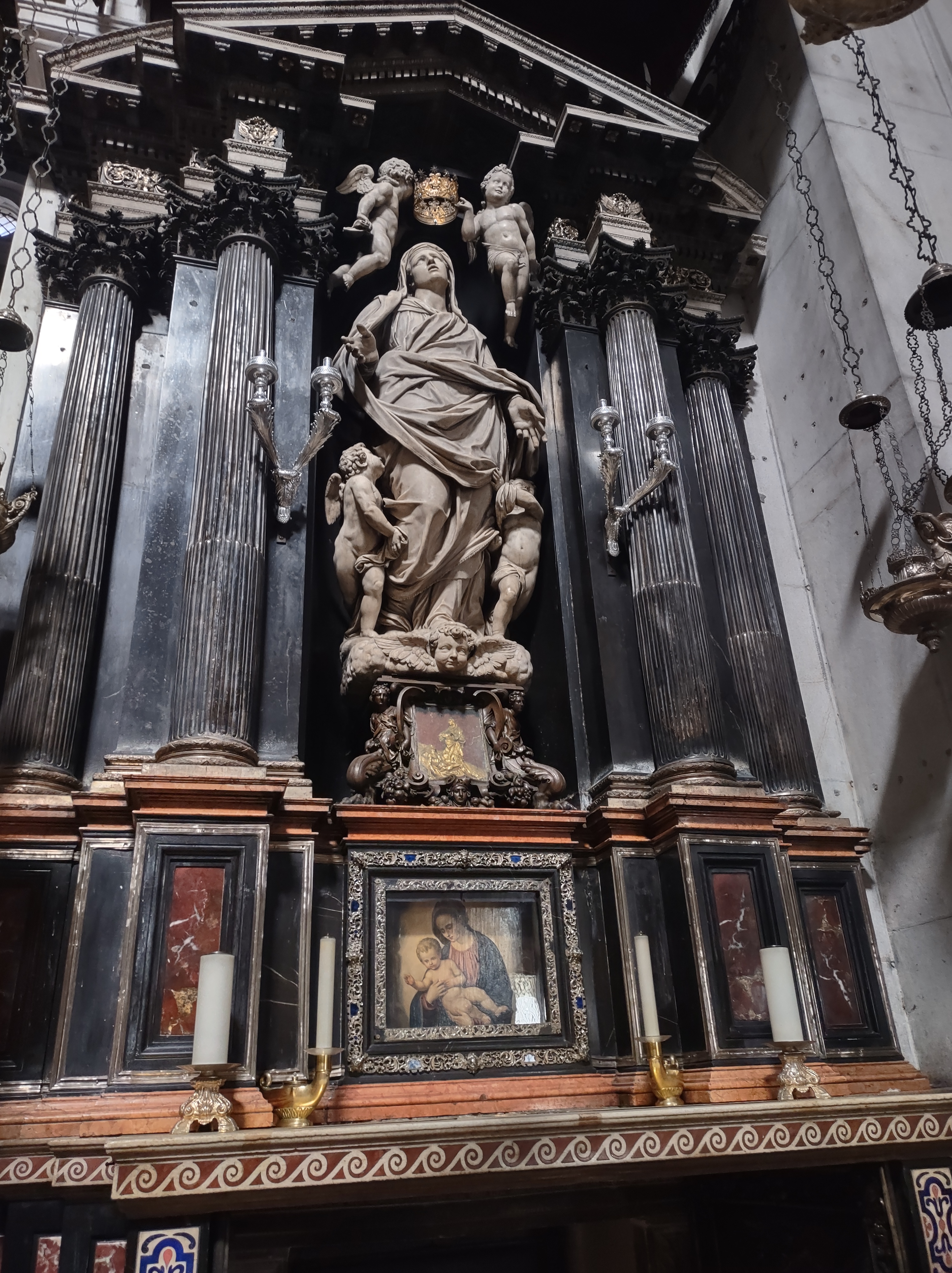
The original sanctuary of Santa Maria was begun in 1493 to house a miraculous icon of the Madonna (still on display today), and, as seems to be so typical here, its construction continued to evolve over the centuries. In 1506, a beautiful barrel-vaulted naïve and two side aisles were added. The sculptural plaster work of the vaults is unlike anything we have seen – incredibly sculptural! In the late 16th century, a square arcaded portico was added as was a beautiful marble façade in the Mannerist style. The end result is pretty exquisite.
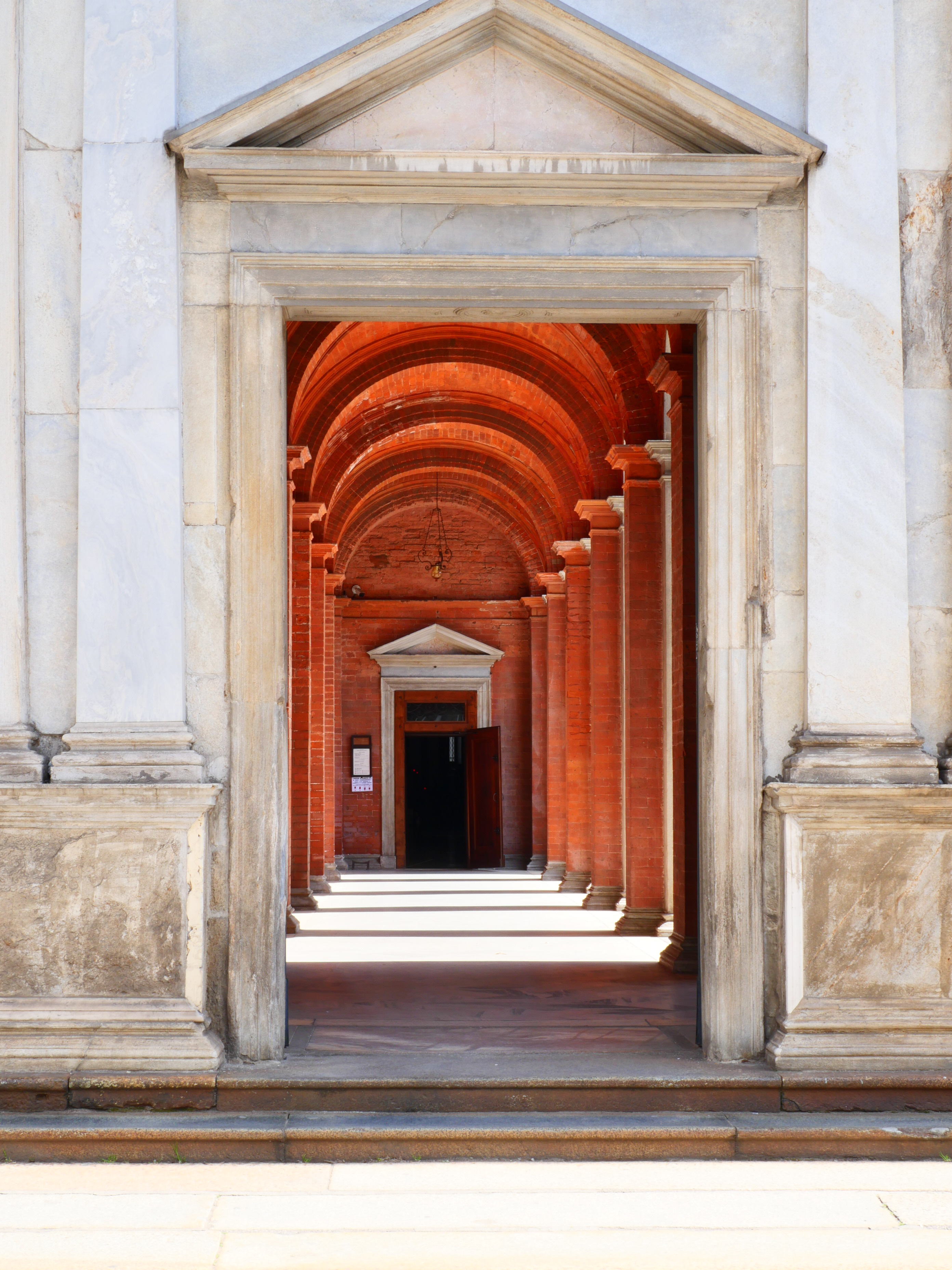
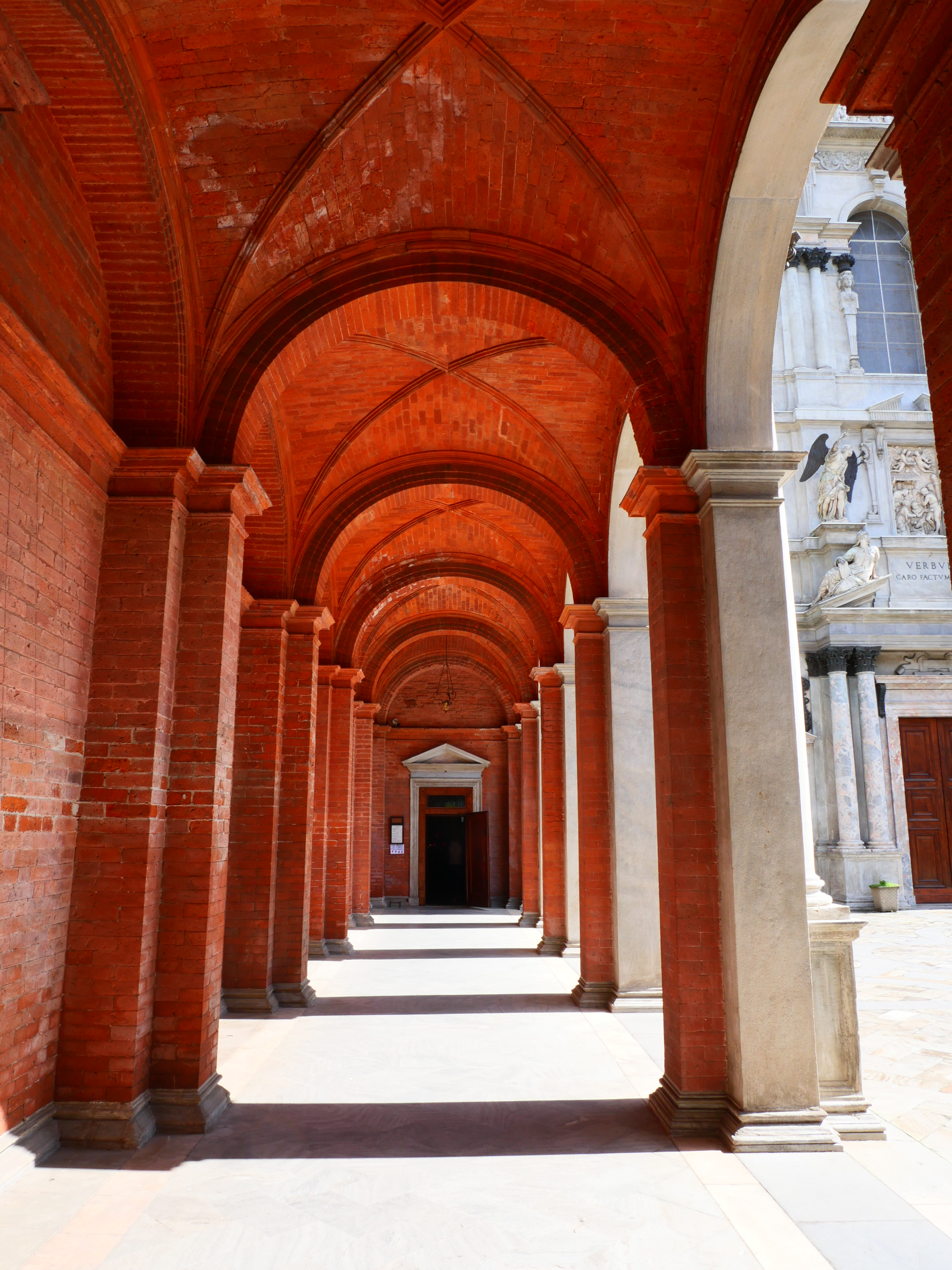
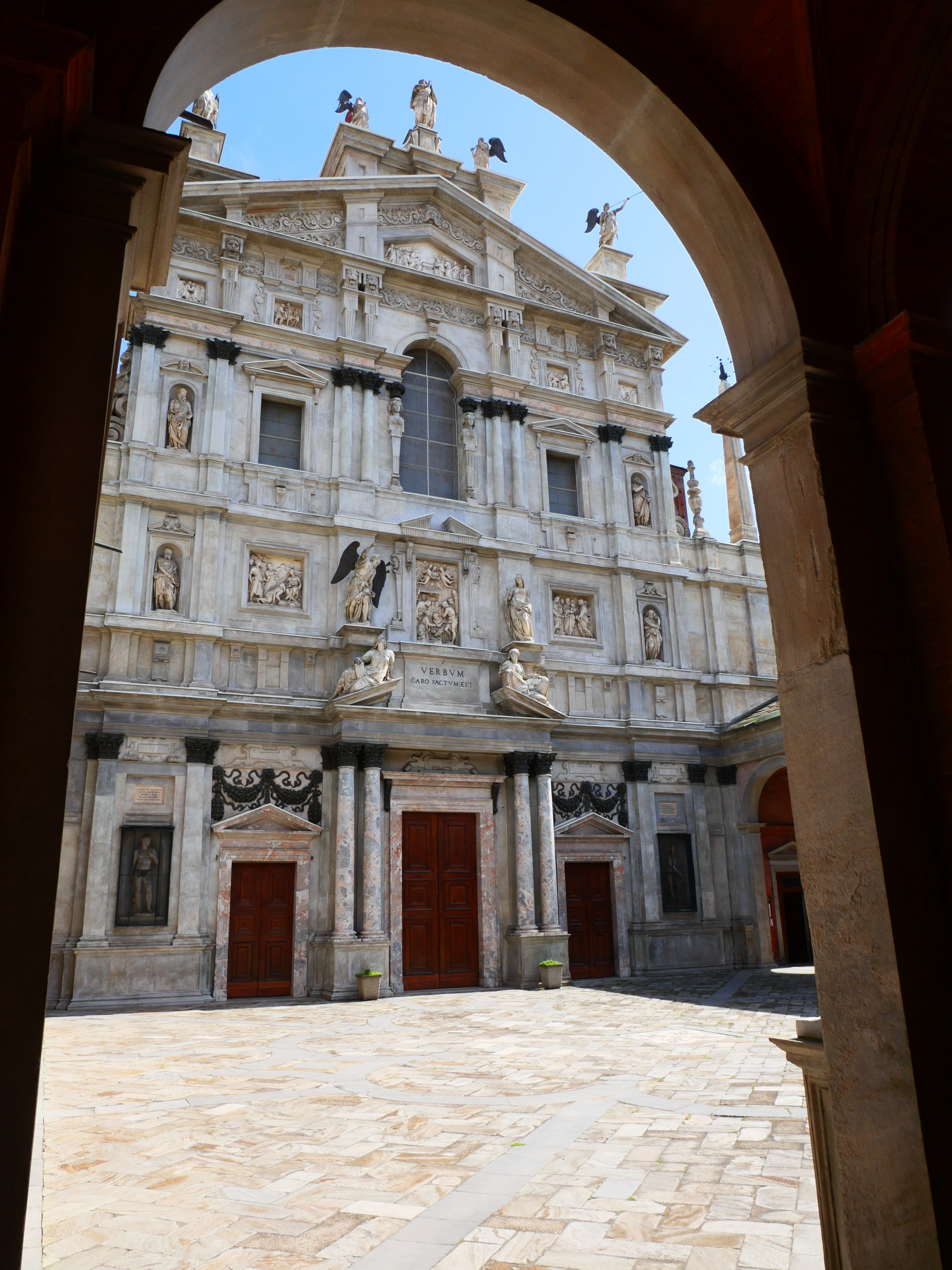
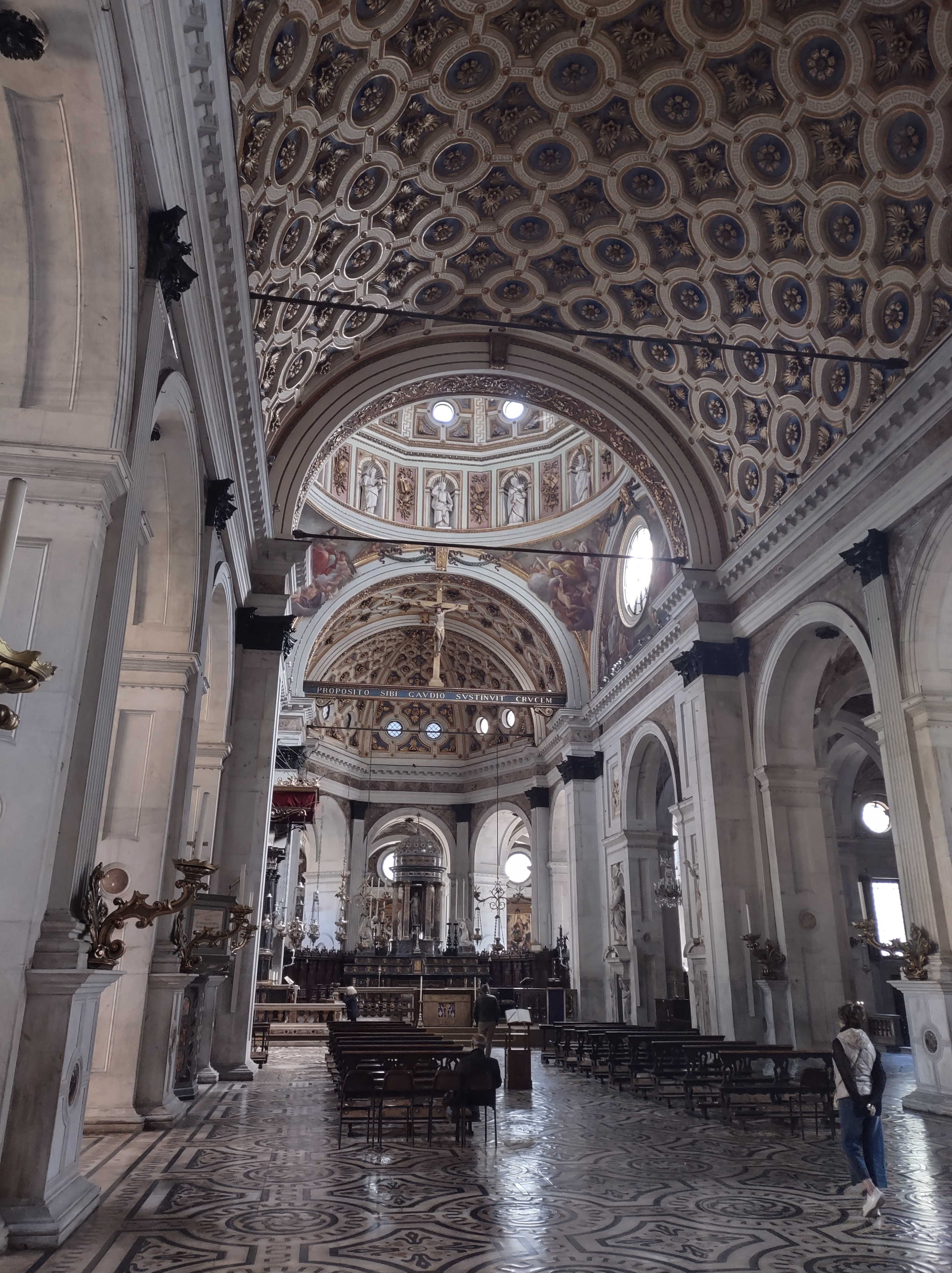
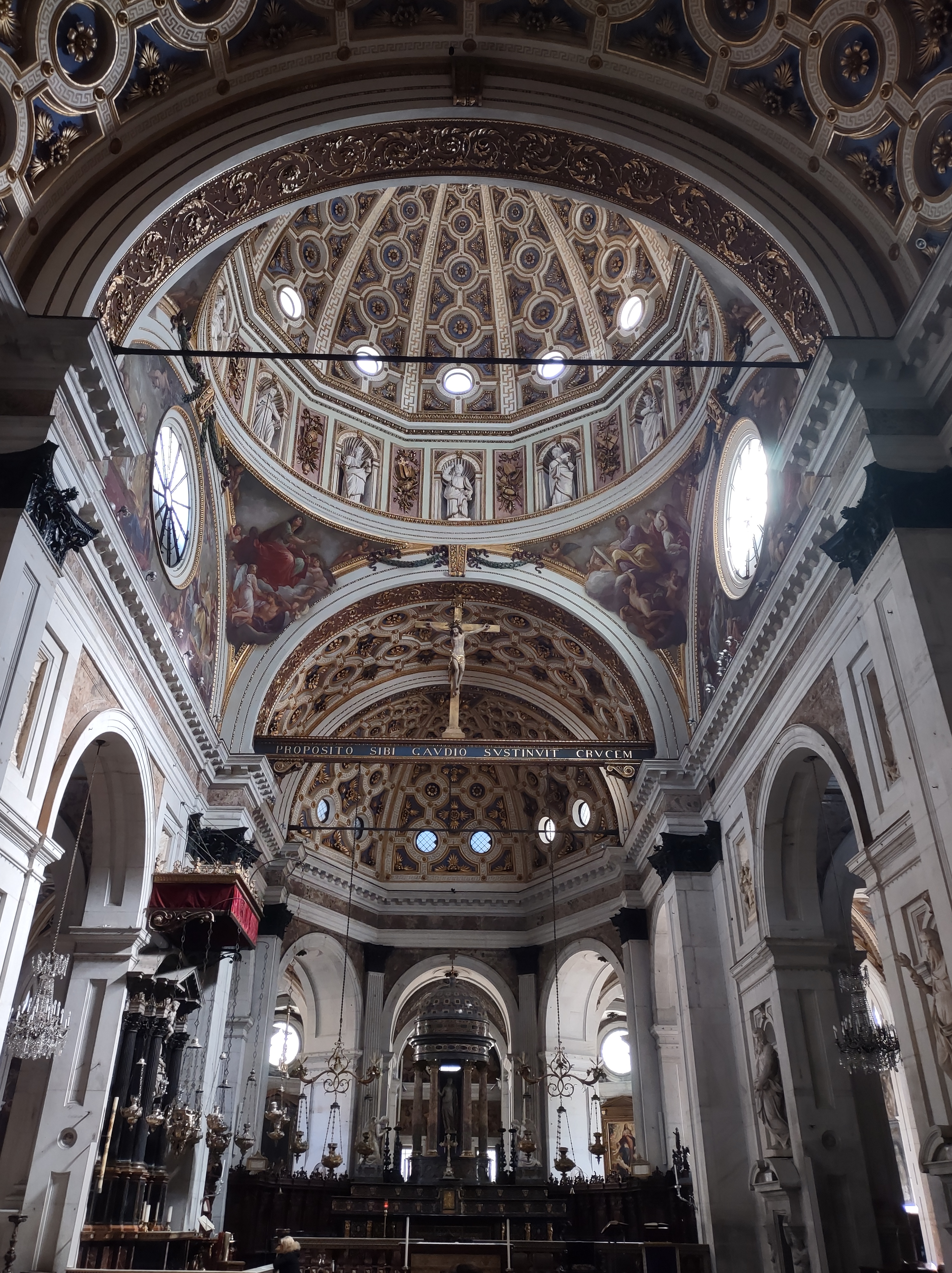

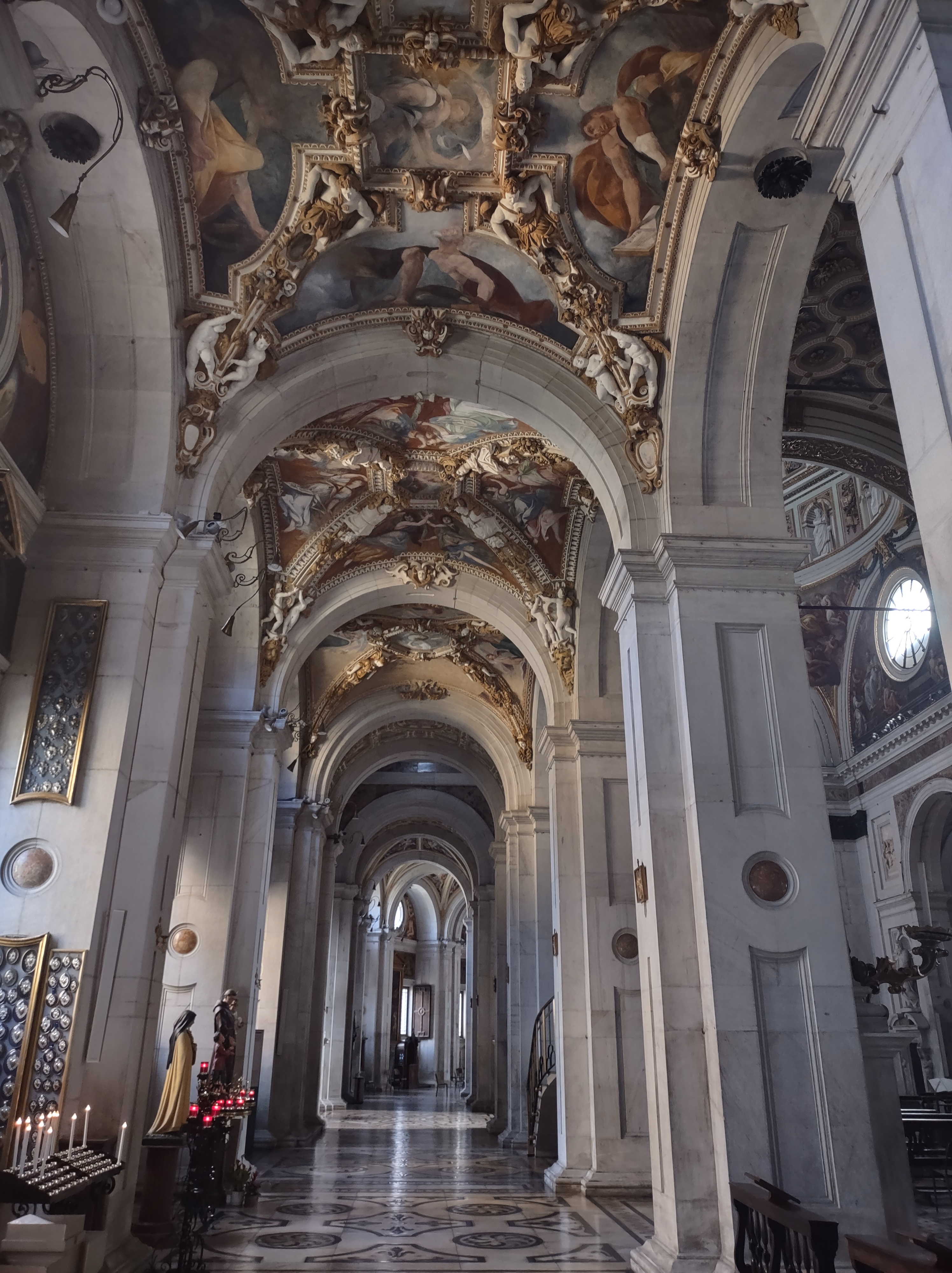

In contrast to Santa Maria, the Church of San Celso is the remains of a church founded in the 4th century, rebuilt in the Romanesque style in the 11th century, and then partially demolished. The remaining sanctuary of the original church now appears to function as a chapel for Santa Maria and, when we visited, it was being used as the site of an interesting art installation. San Celso’s bell tower is the oldest operational bell tower in Milan dating back over a millennium. It is known as Il Campanile dei Sospiri (The Bell Tower of Sighs), but we were unable to determine why this is (sigh…).
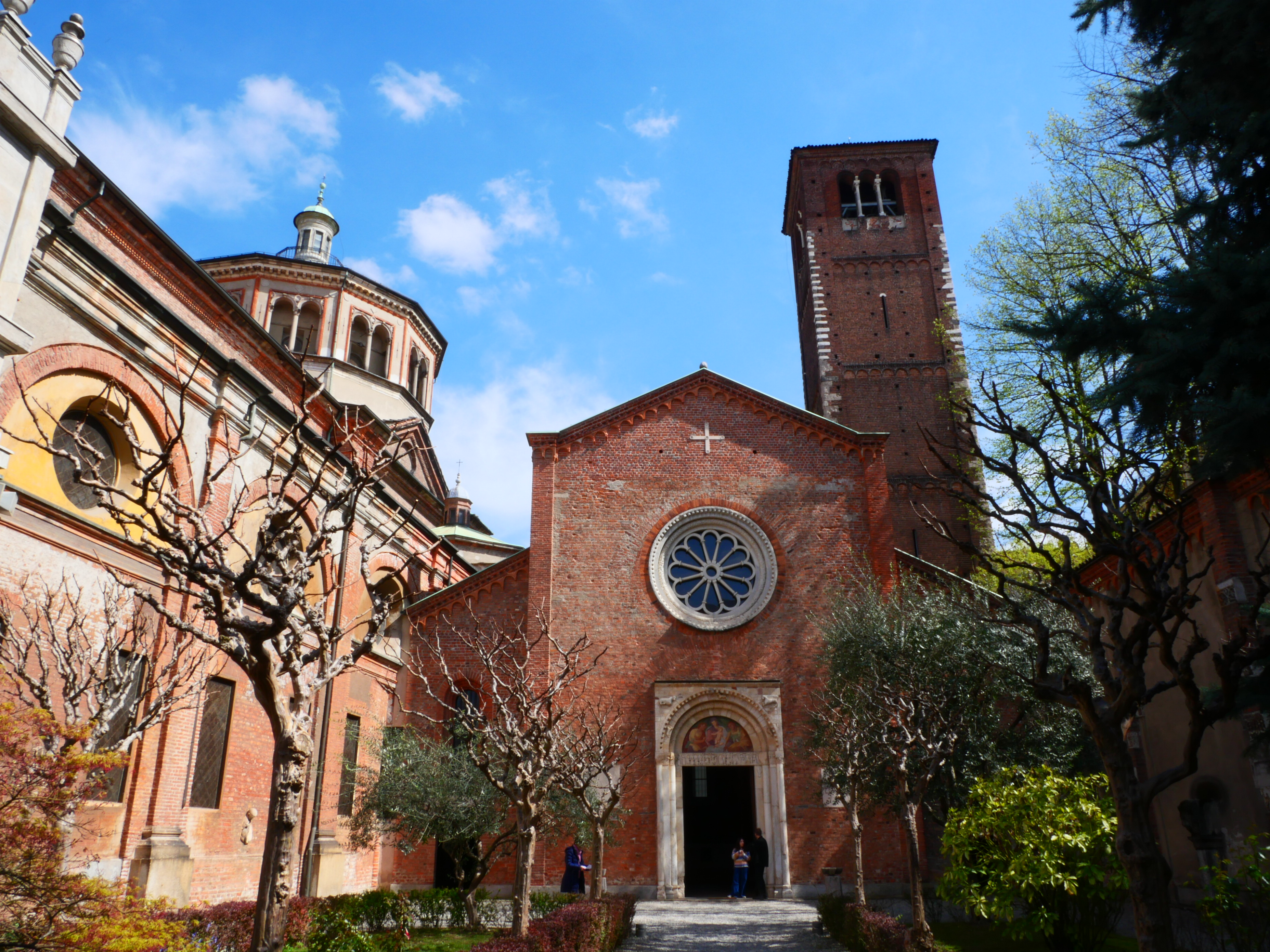

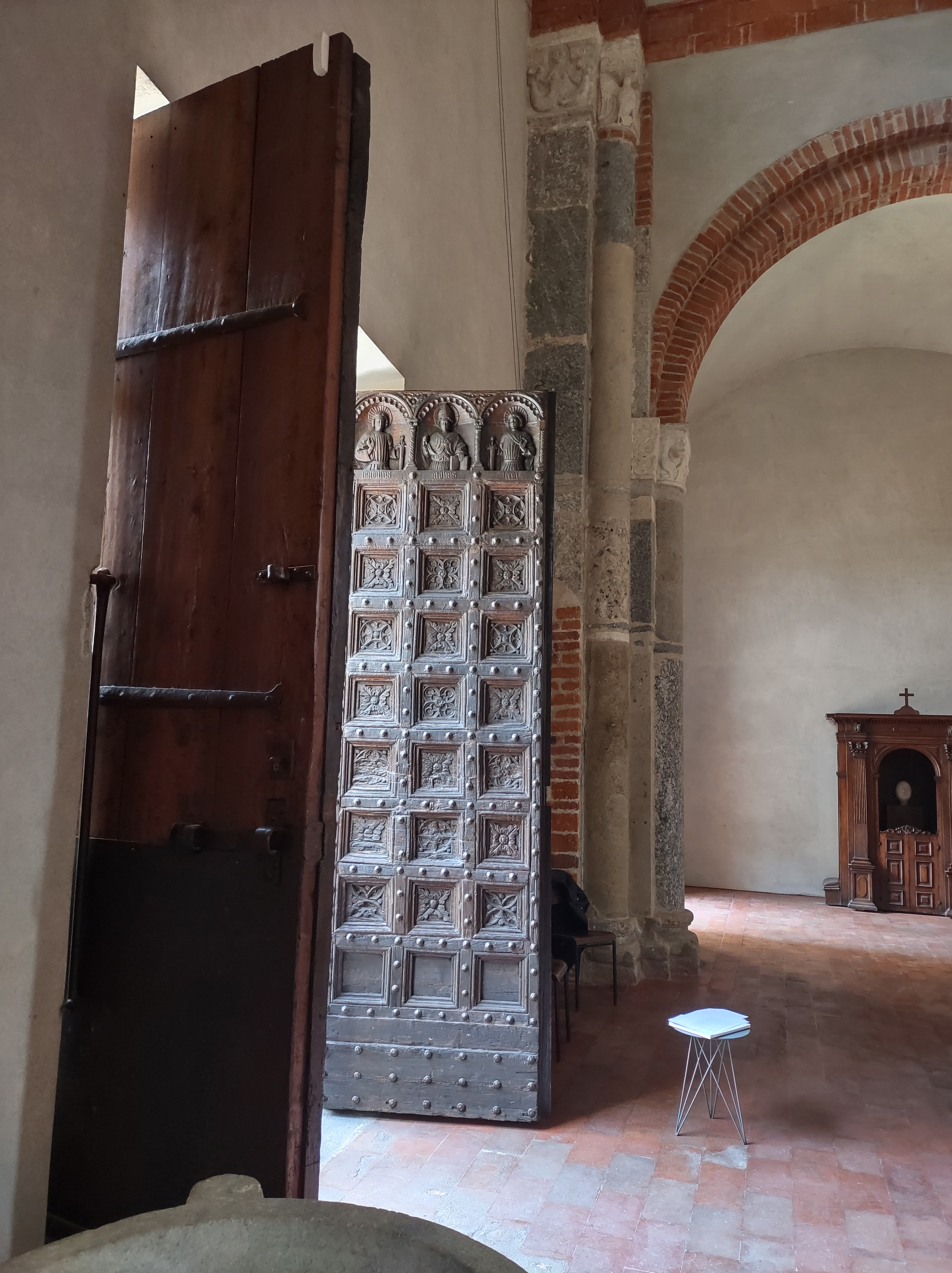
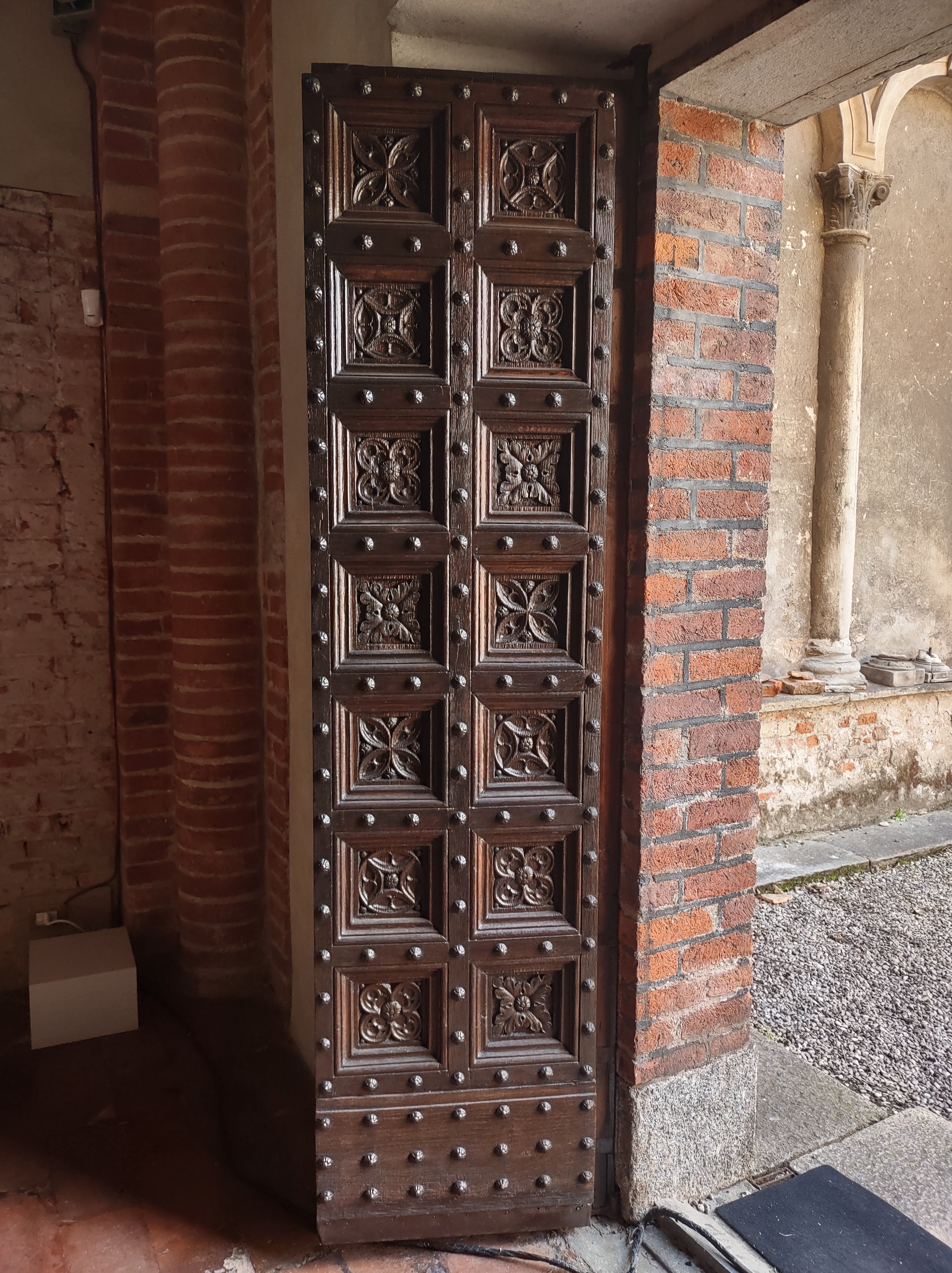

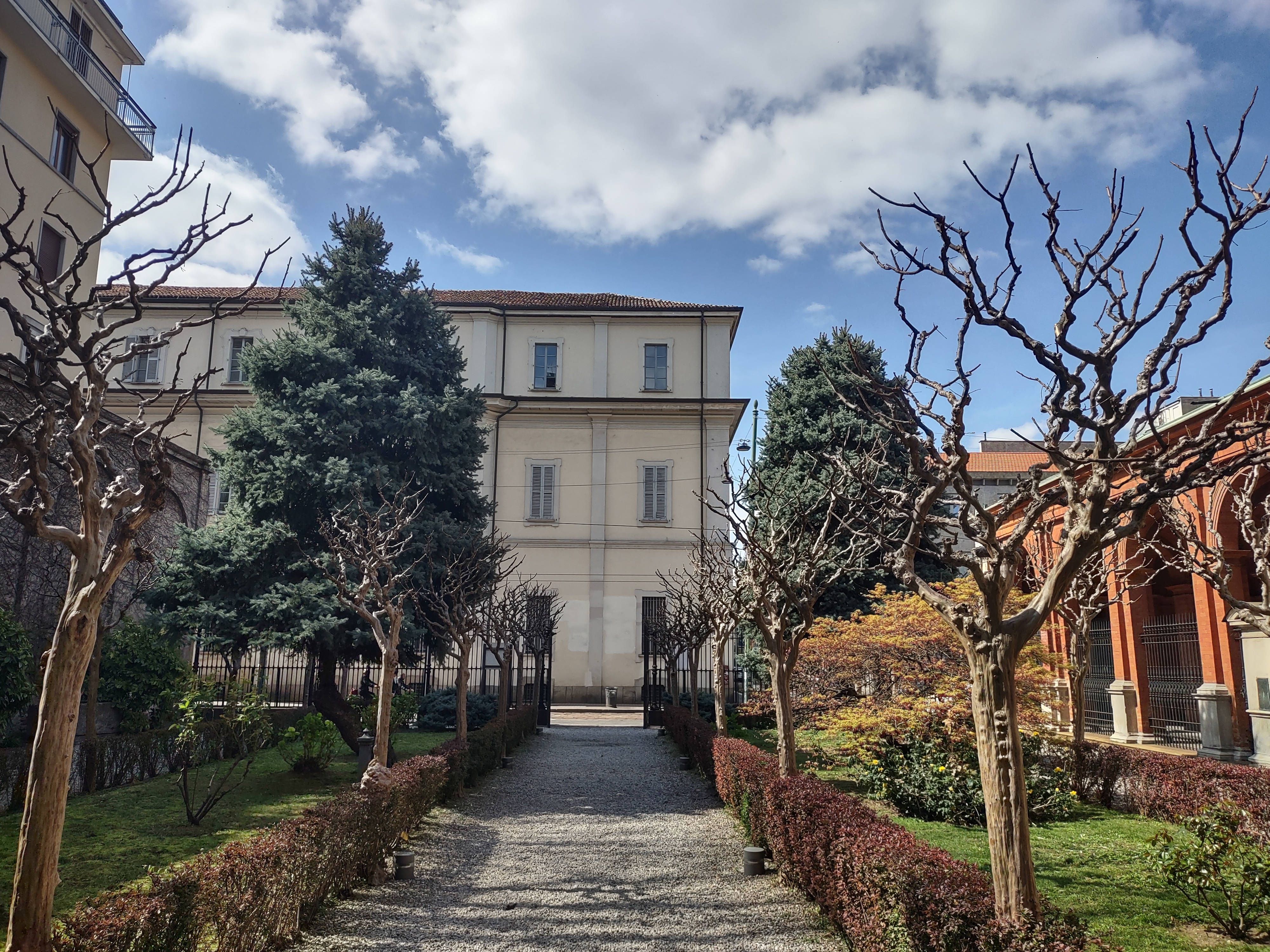
The portico of Santa Maria adjoins a fenced yard which serves as the formal entrance to San Celso, with an allee framed by some very ancient looking trees. The combination of all these elements – the two churches, the tower, the arcade, the churchyard and the plantings – is hard to describe, but it creates an incredible and authentic sense of place that continues to resonate for us every time we look at these photos.
Sforzesco Castel and the Pieta of Milan
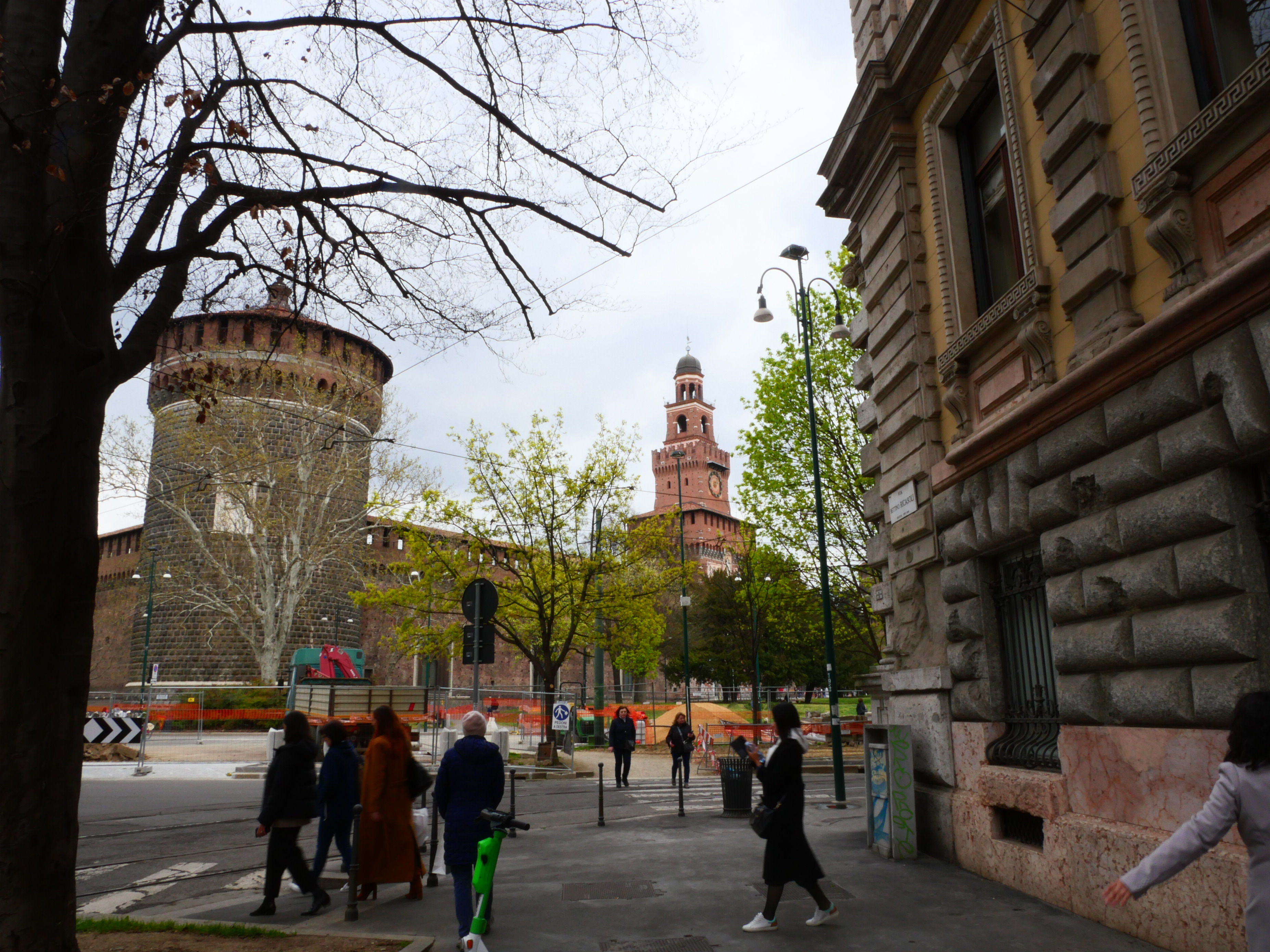
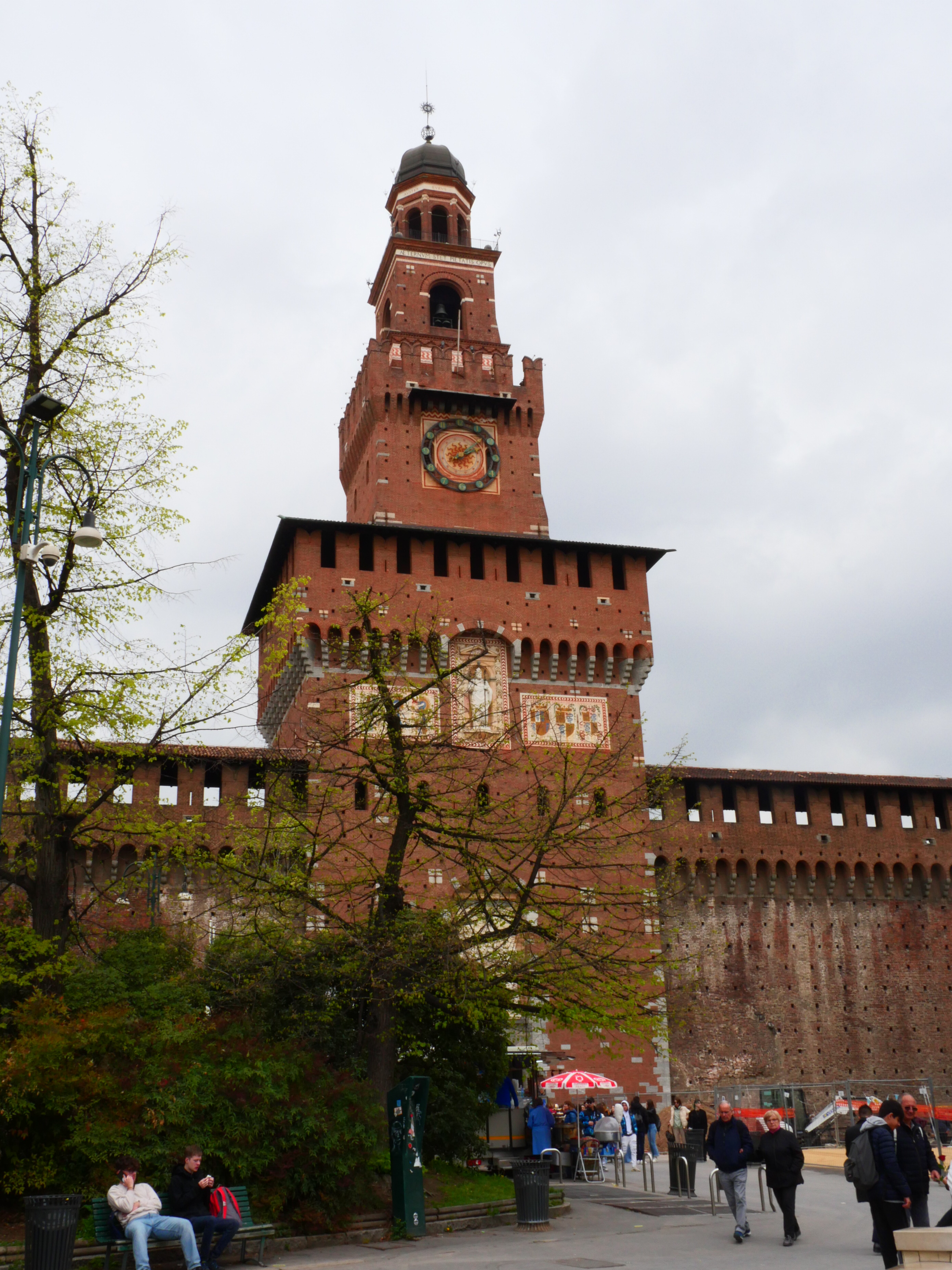
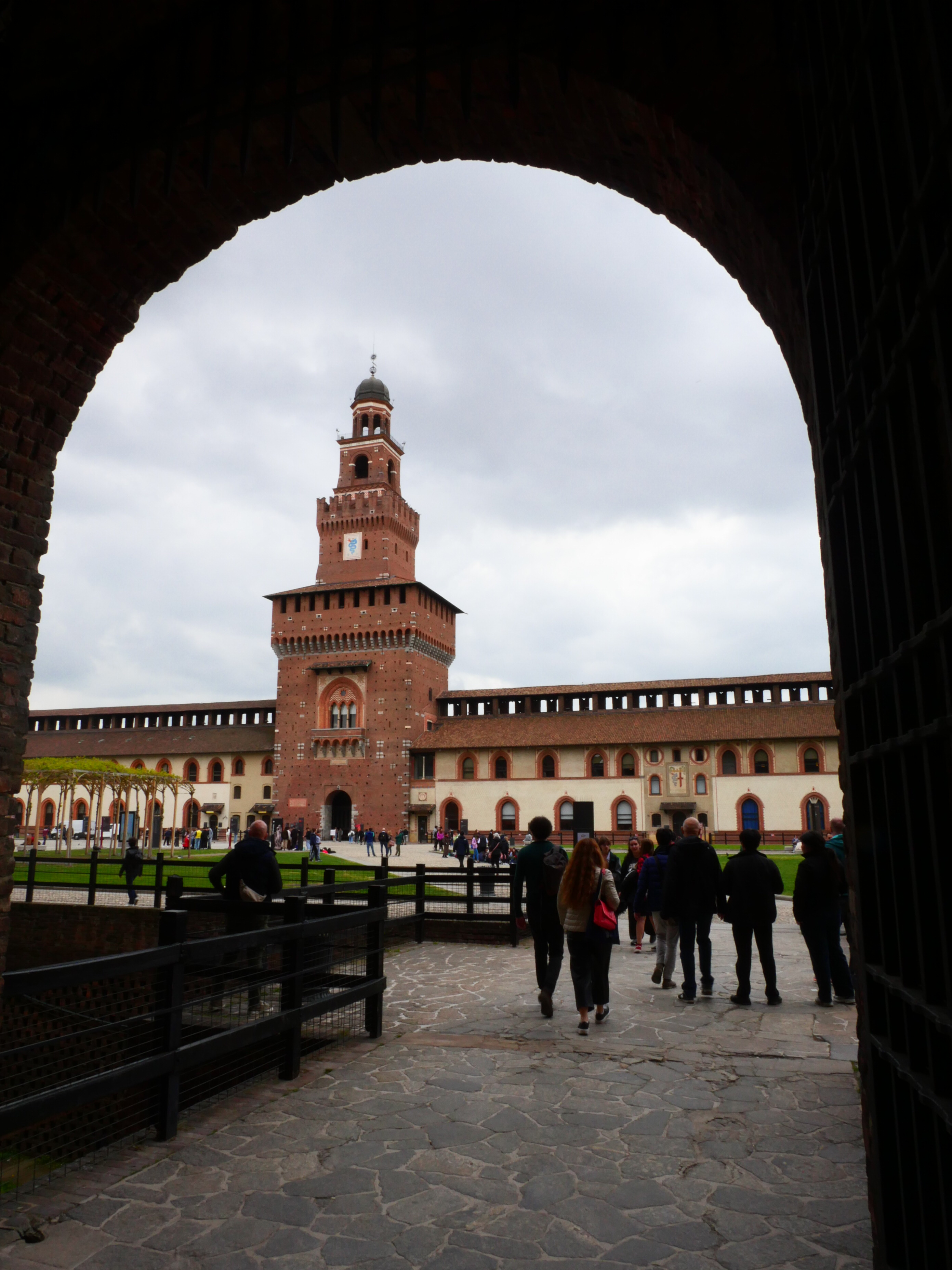
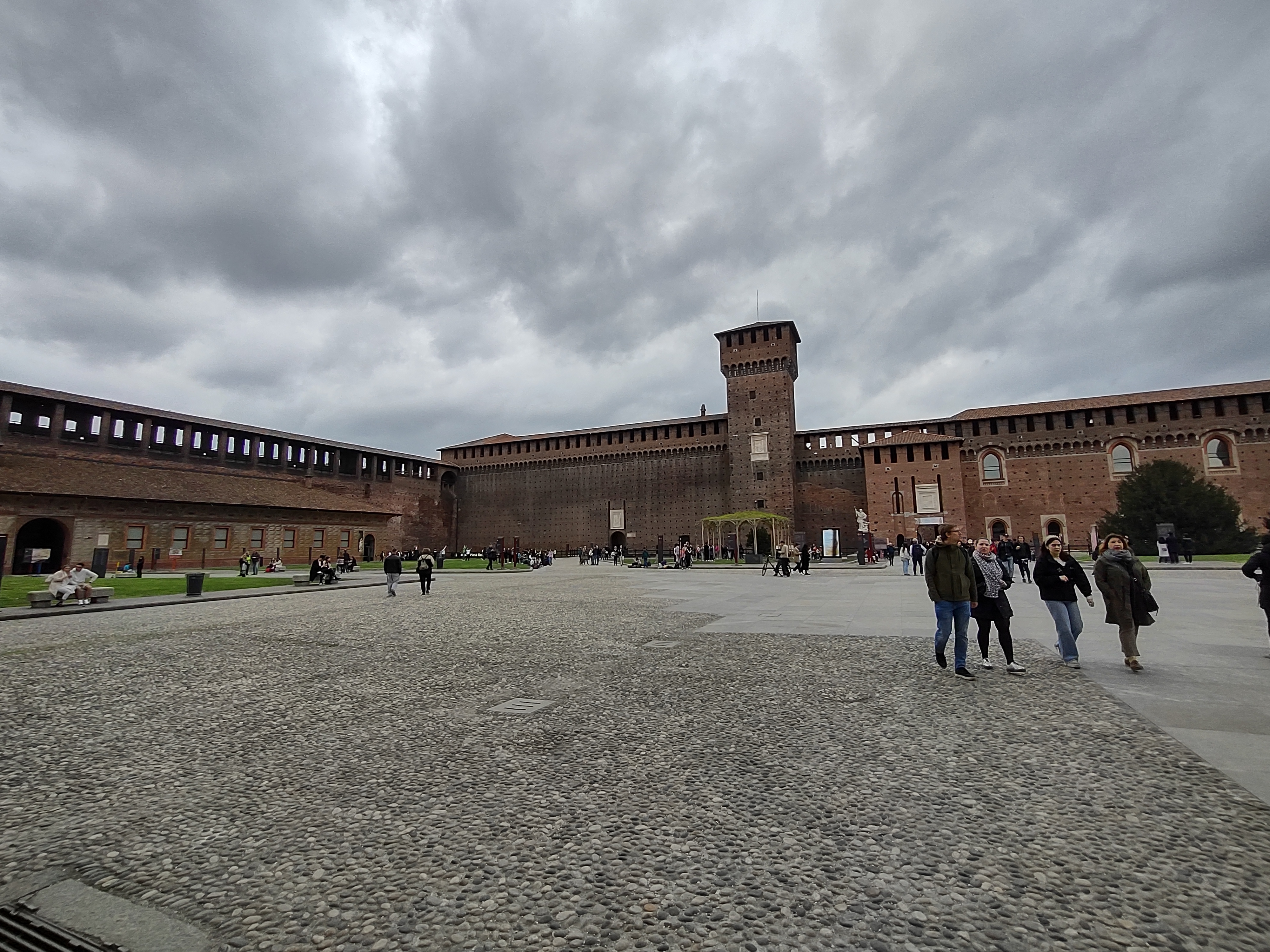
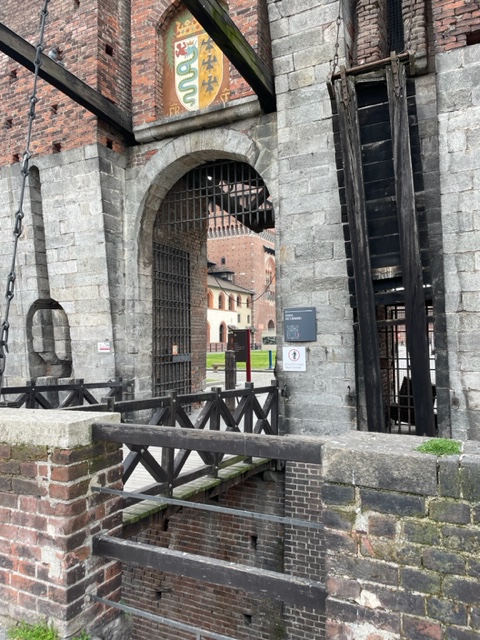
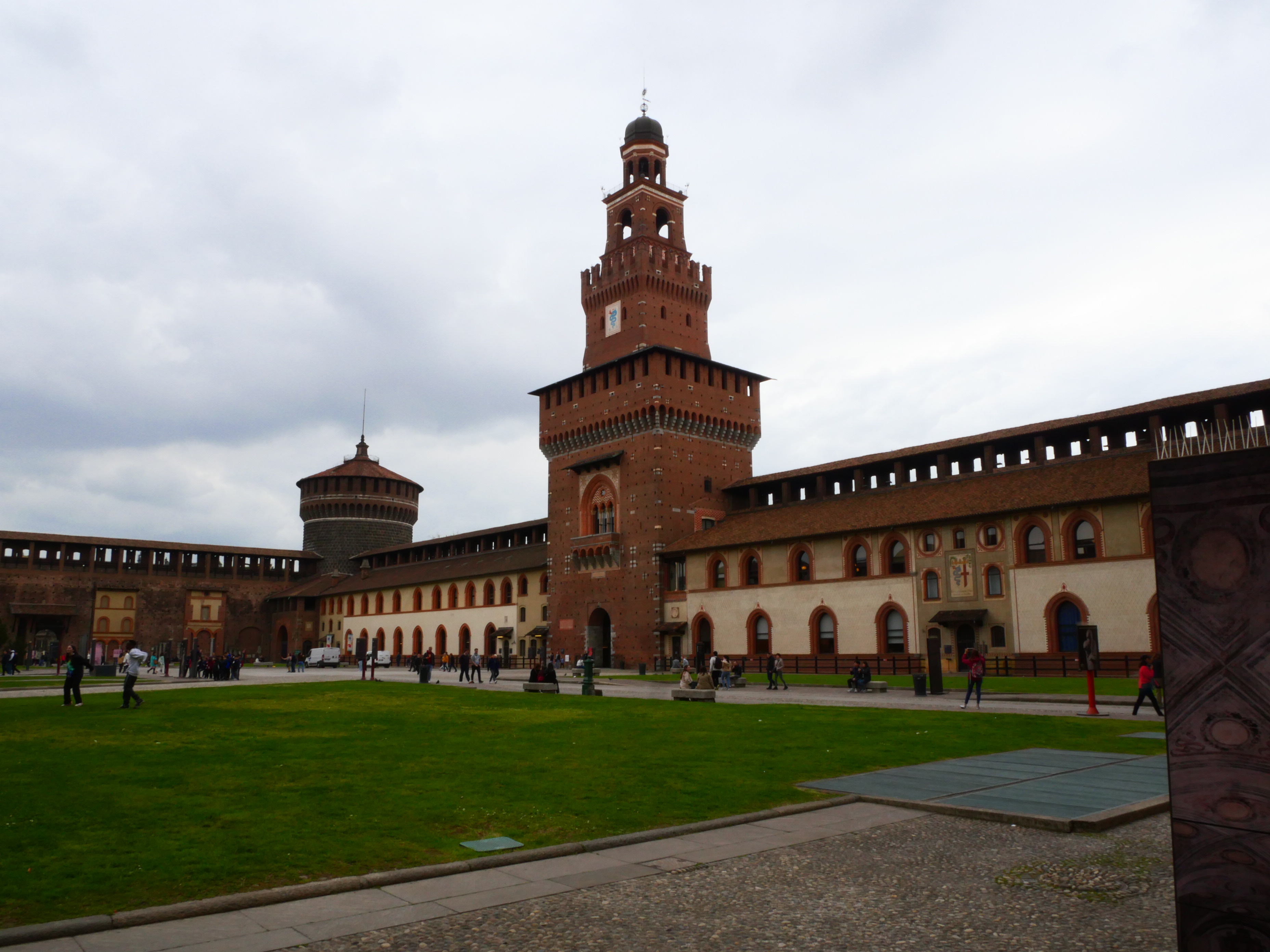
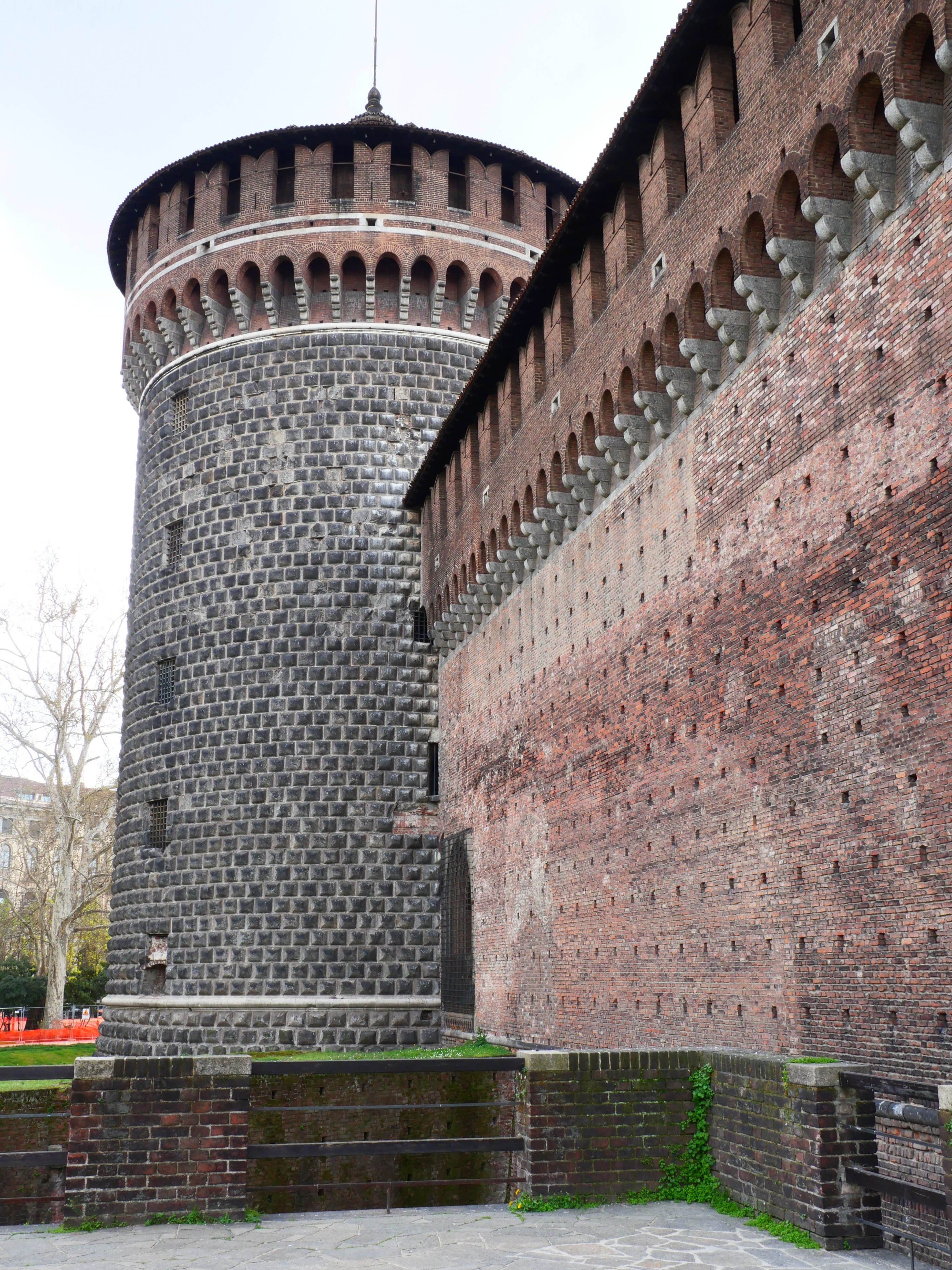
On our last day in Milan, we decided to visit another historic structure, the Castello Sforzesco, another one of those “Things to Do in Milan” places. The Castello, which was built in the 15th century on the remains of an earlier fortification and enlarged in the 16th and 17th centuries, is one of the largest citadels in Europe. While we actually came to the Castello for another reason, we found it (like so much of Milan) to be way over the top. You want walls, they’ve got some big ones. You want a moat and drawbridge, they’ve got one of those. You want towers, they’ve got one that was built by a duke’s widow as a retreat and to allow her to keep an eye on her husband’s brother who she suspected had assassinated the duke. Talk about historical intrigue! All very cool and feudal.
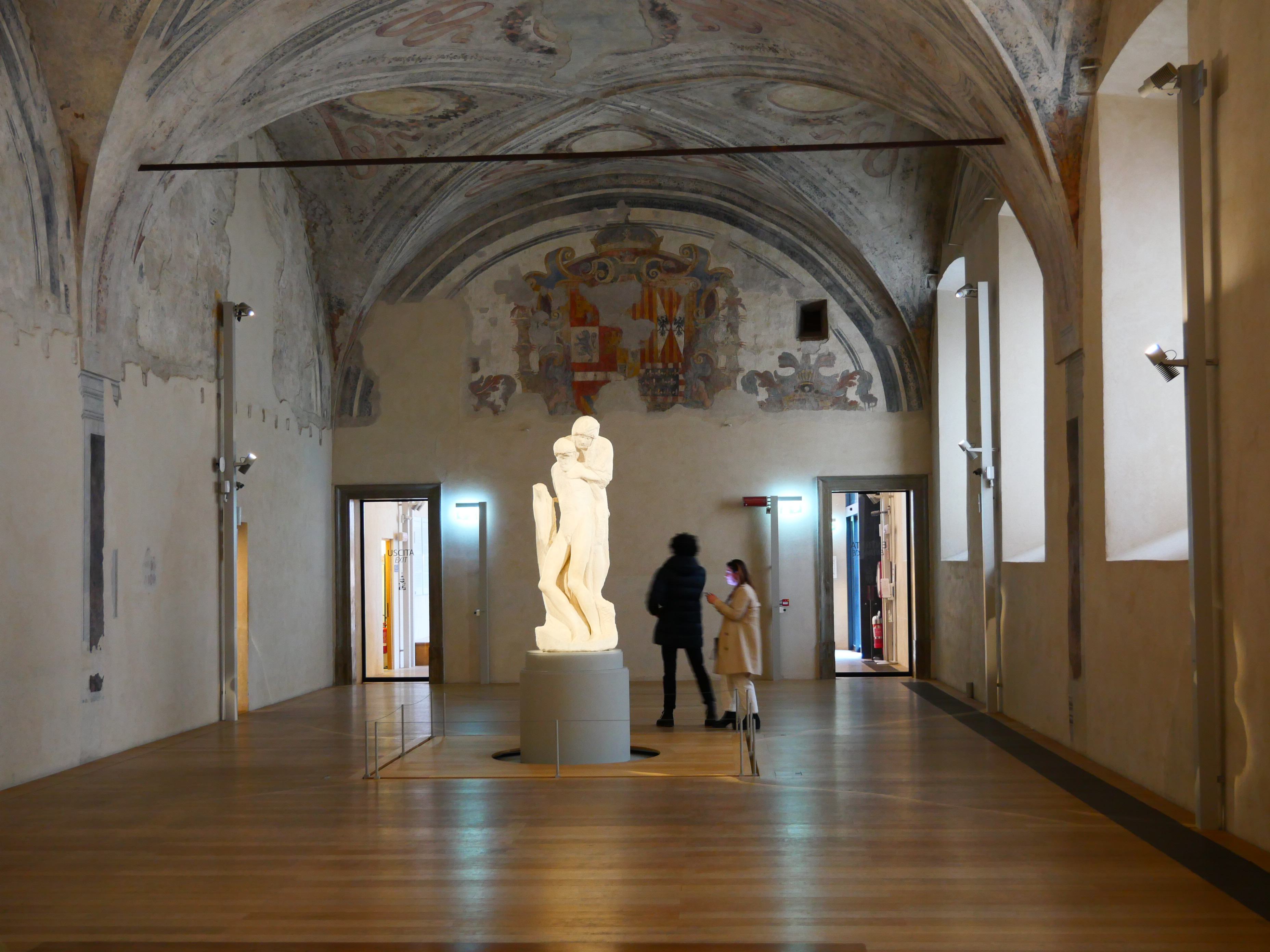
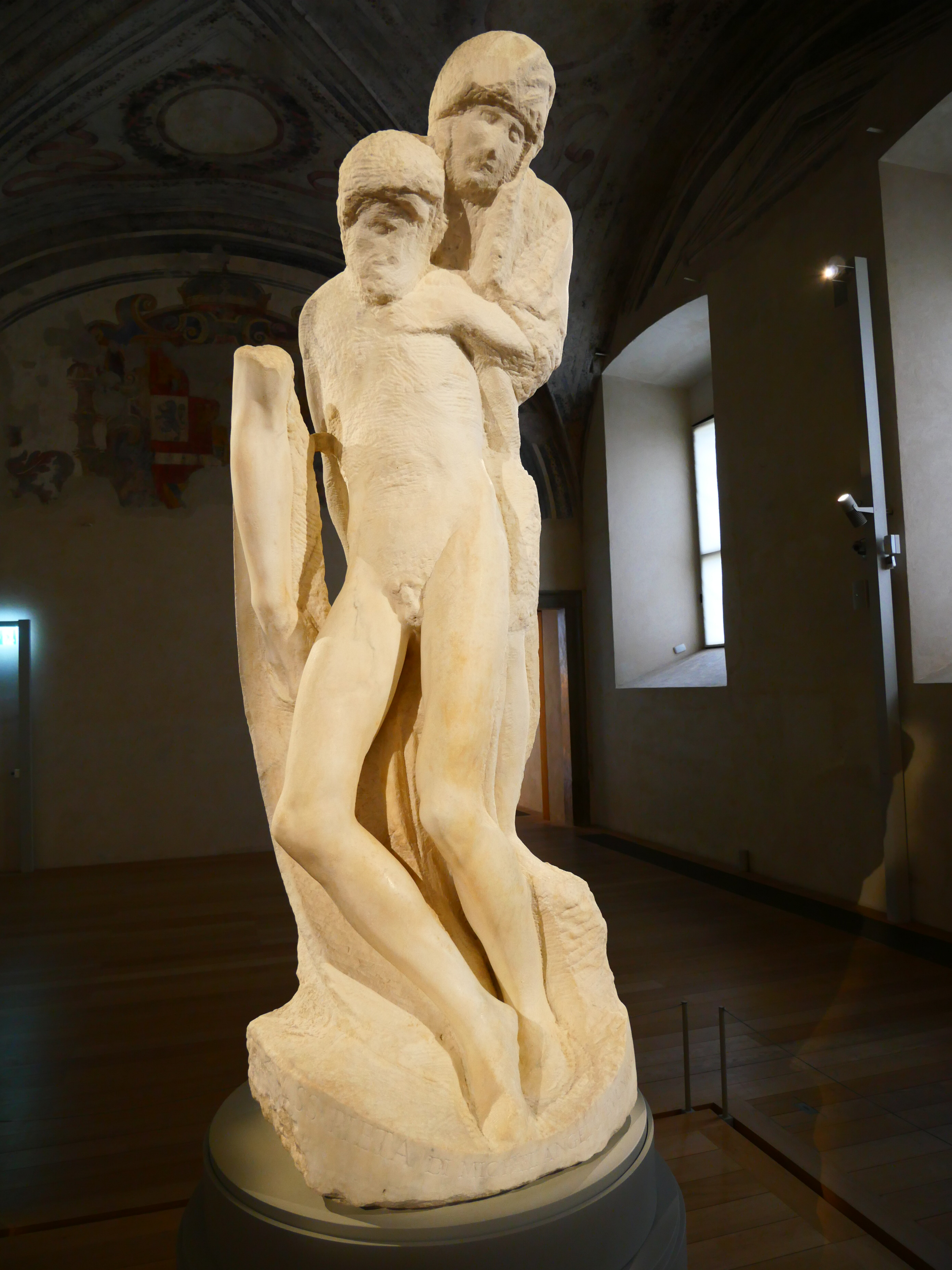
But, what we had actually come here to see is a relatively unknown work by Michelangelo. The theme of the Pieta (meaning pity) is one that many artists have worked with and originally it tended to be a tableau of many characters around the body of the crucified Jesus. Over the course of his career, Michelangelo made several efforts at creating Pietas, and it is his interpretation, with just Mary and the body of Jesus, which most people have come to associate with the name. The most well-known of these being the one in Saint Peters Basilica in Vatican City. As it turns out, there is another Michelangelo Pieta which is housed in a small museum in Castello Sforzesco.
The Pieta in Rome was Michelangelo’s first masterpiece, completed when he was 25 years old, a young emerging artist. The Milan Pieta, which was undertaken by Michelangelo when over the age of 80, represents the work of a fully developed artist. He worked on this version from 1552 until the last days of his life in 1564, making it his final attempt at a Pieta.
The piece has an interesting history. It “disappeared” for centuries after his death, was found but then disputed, and was finally rediscovered and acquired by the City of Milan early in the 20th century.
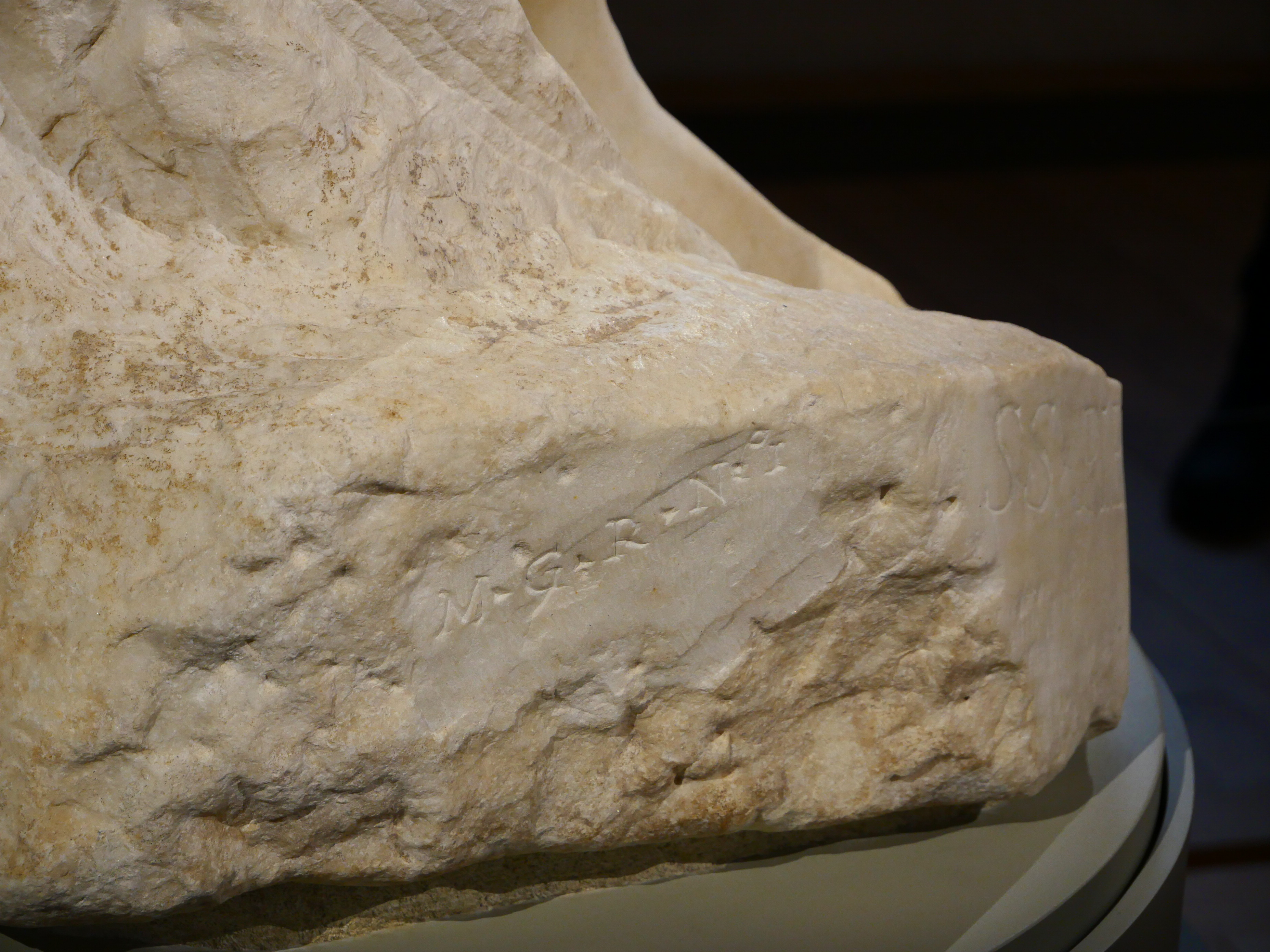
What makes this Pieta particularly interesting is the fact that Michelangelo did not complete it. While there are some parts (one of Jesus’ legs) which do appear complete, the rest of the sculpture is in various stages of development, including an earlier version of Jesus’ right arm which was to be removed. Seeing it feltlike visiting Michelangelo’s workshop and seeing the technique he employed in so many masterpieces. Pretty cool.
Stumbling Stones
We came across three more Stolpersteine (Stumbling Stones) during our walks in Milan: those of Romeo Garotta, Umberto Recalcati, and Luigi Monti, all of whom were arrested, deported to and killed at the Mauthausen concentration camp in Upper Austria.
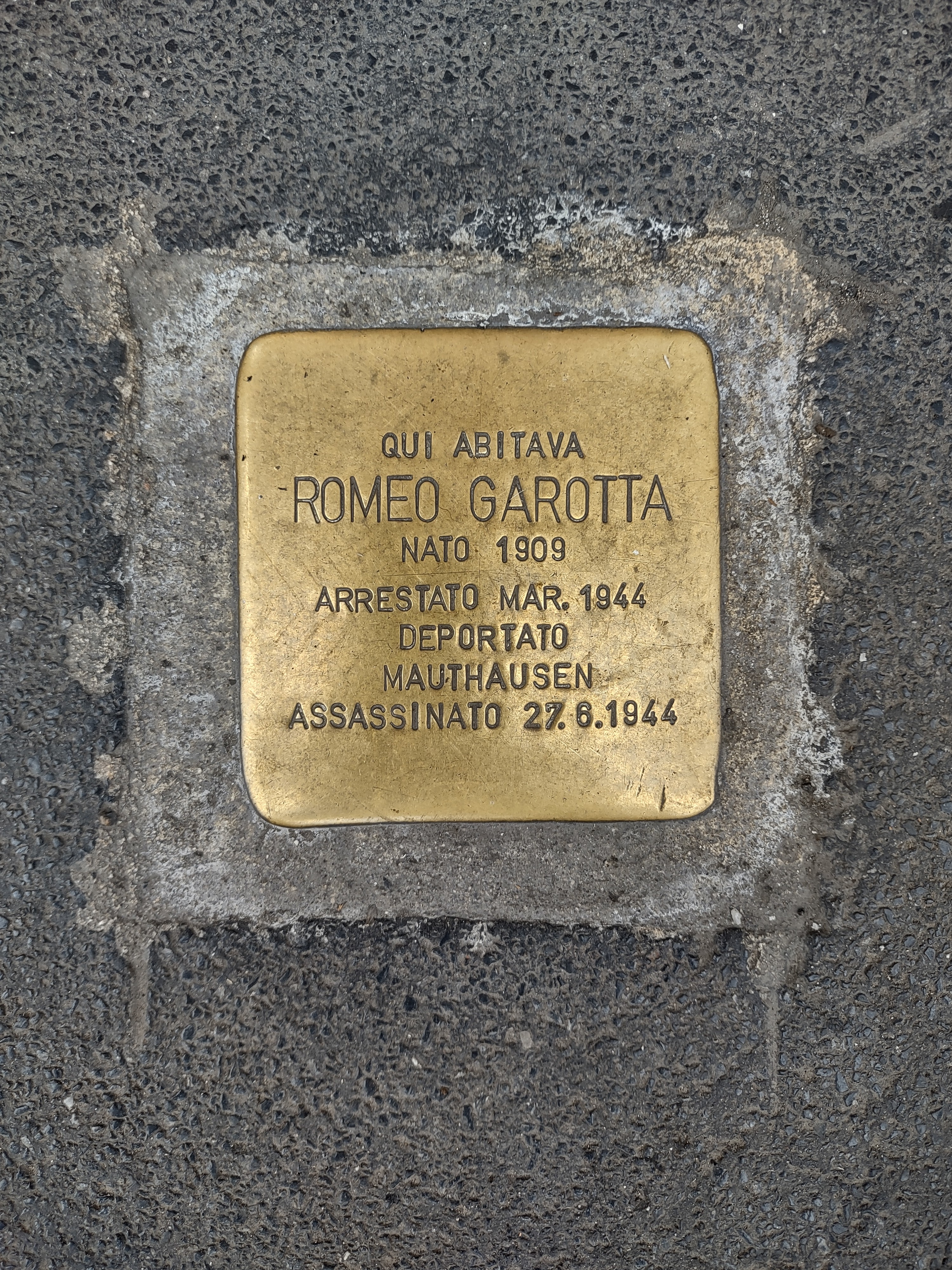

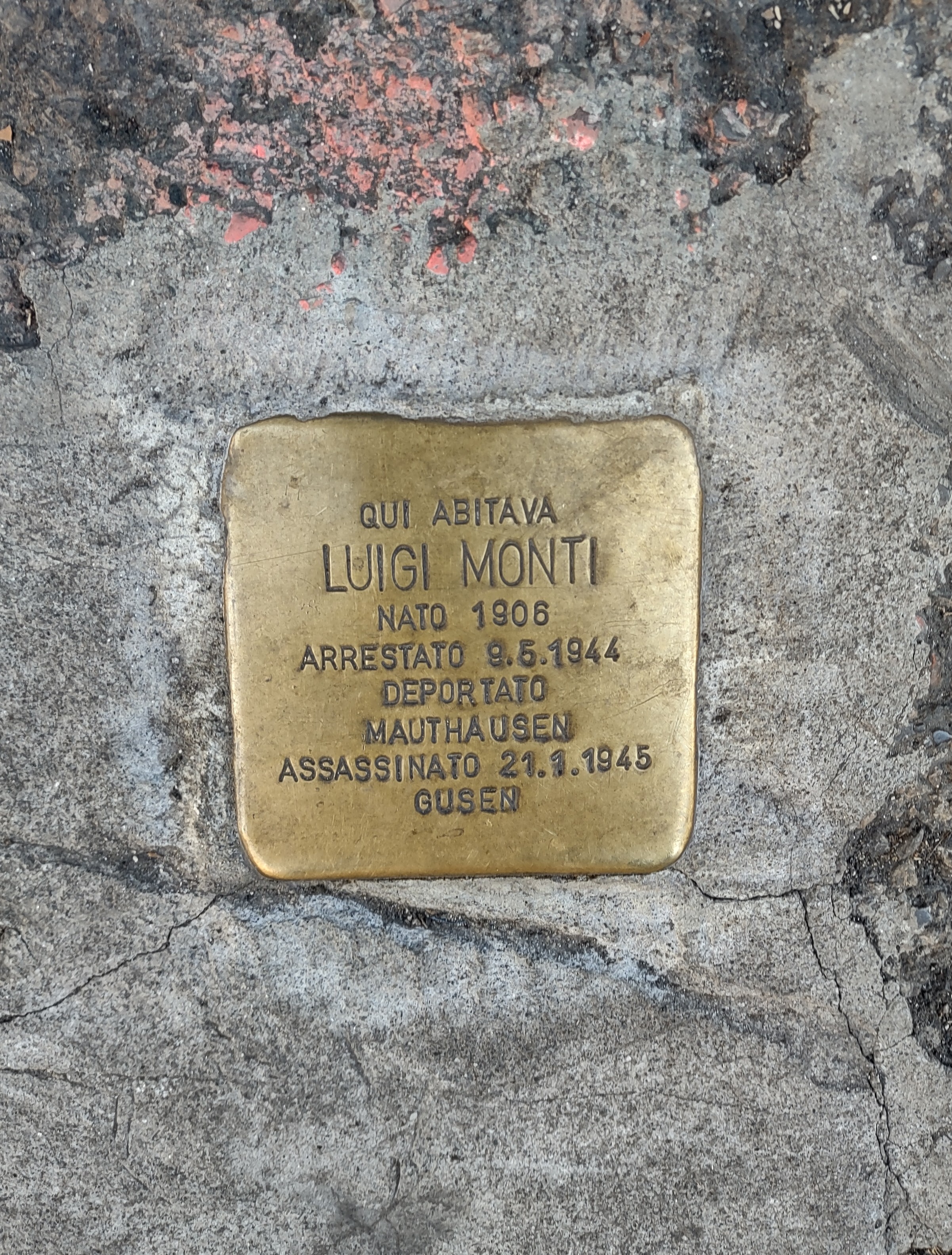
In researching this a bit, we came across a chilling bit of local history. At Milan’s Stazione Centrale the underground track used to load and unload mail bags was converted for loading cattle trucks with human cargo destined for the Nazi extermination and labour camps. The so-called Binario 21 (Platform 21) was deemed perfectly suited for this as it was out of sight of the local population.
Although we are not actively looking for Stumbling Stones, now that we know what they are and what they look like, we are seeing more of them. Colleen noted that it’s been interesting to see that when we find and photograph them this appears to make other pedestrians aware of them as well (seemingly for the first time?). It feels like they are doing what they are intended to do.
While we had not done much advance planning and were only there for three days, we found quite a bit to see in do in Milan, certainly more than we might have imagined and, again, much of it was places and things we discovered by simply walking around.

 Burning the Inheritance
Leave a comment