Why Bolzano?
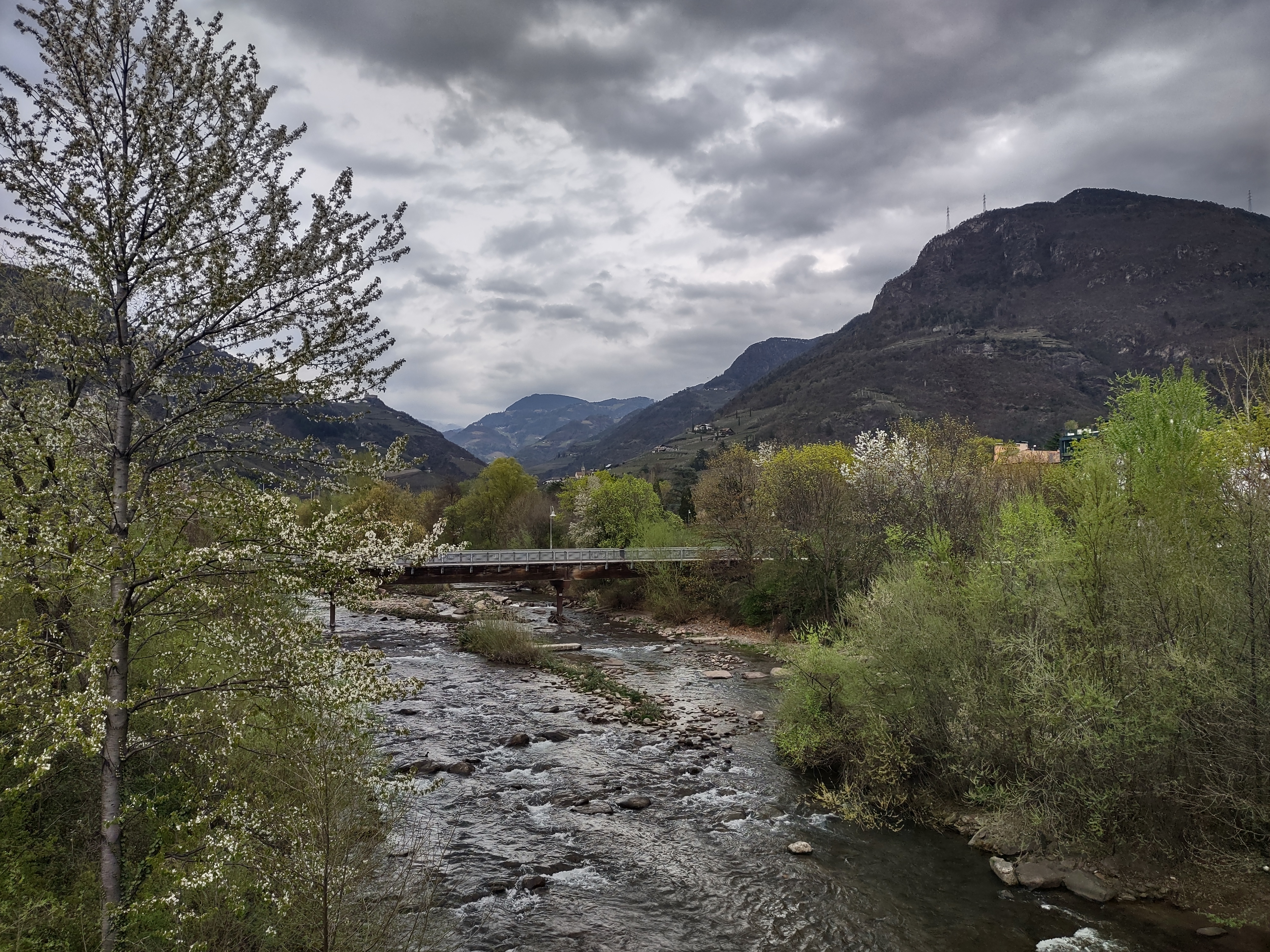
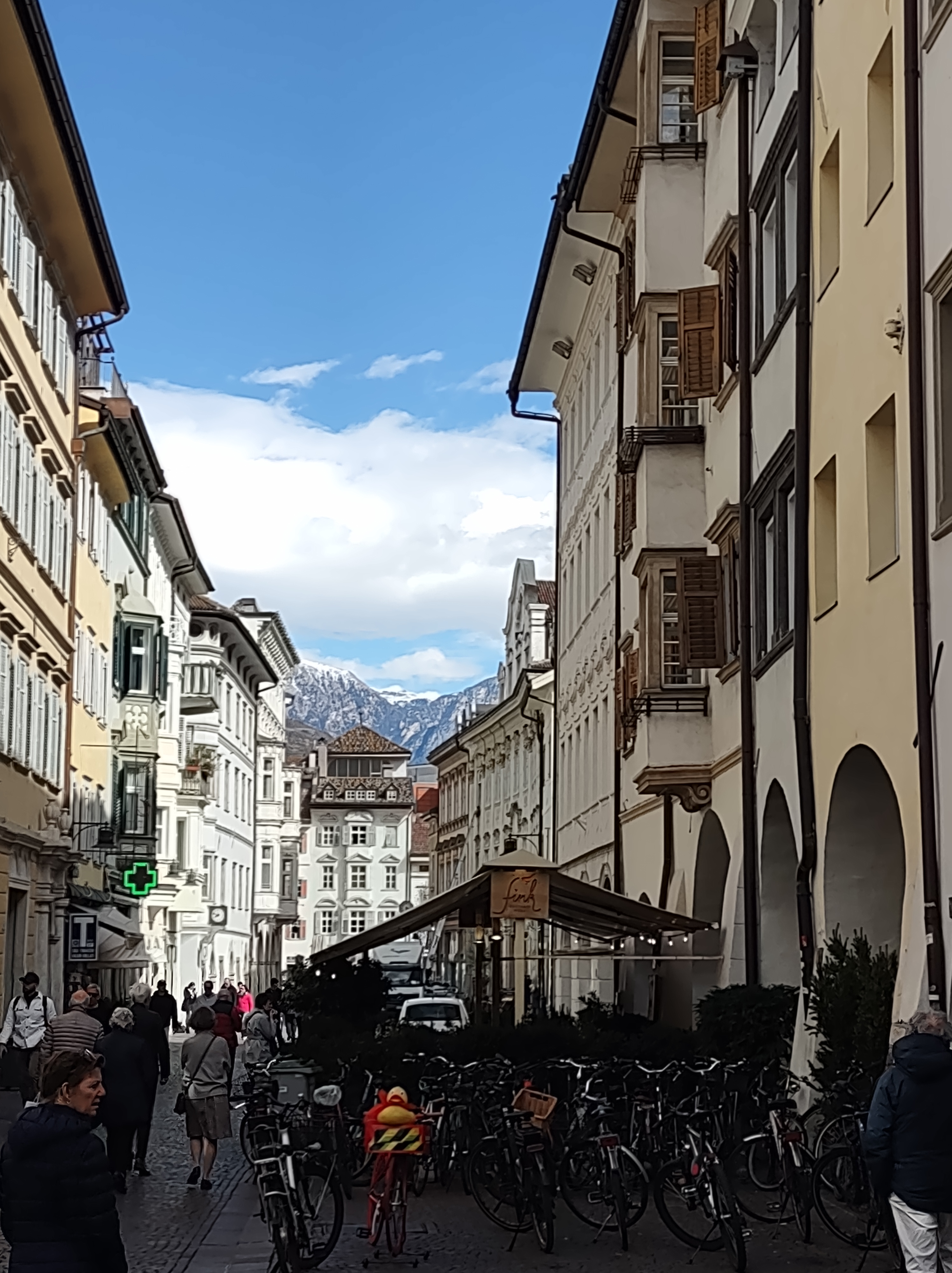

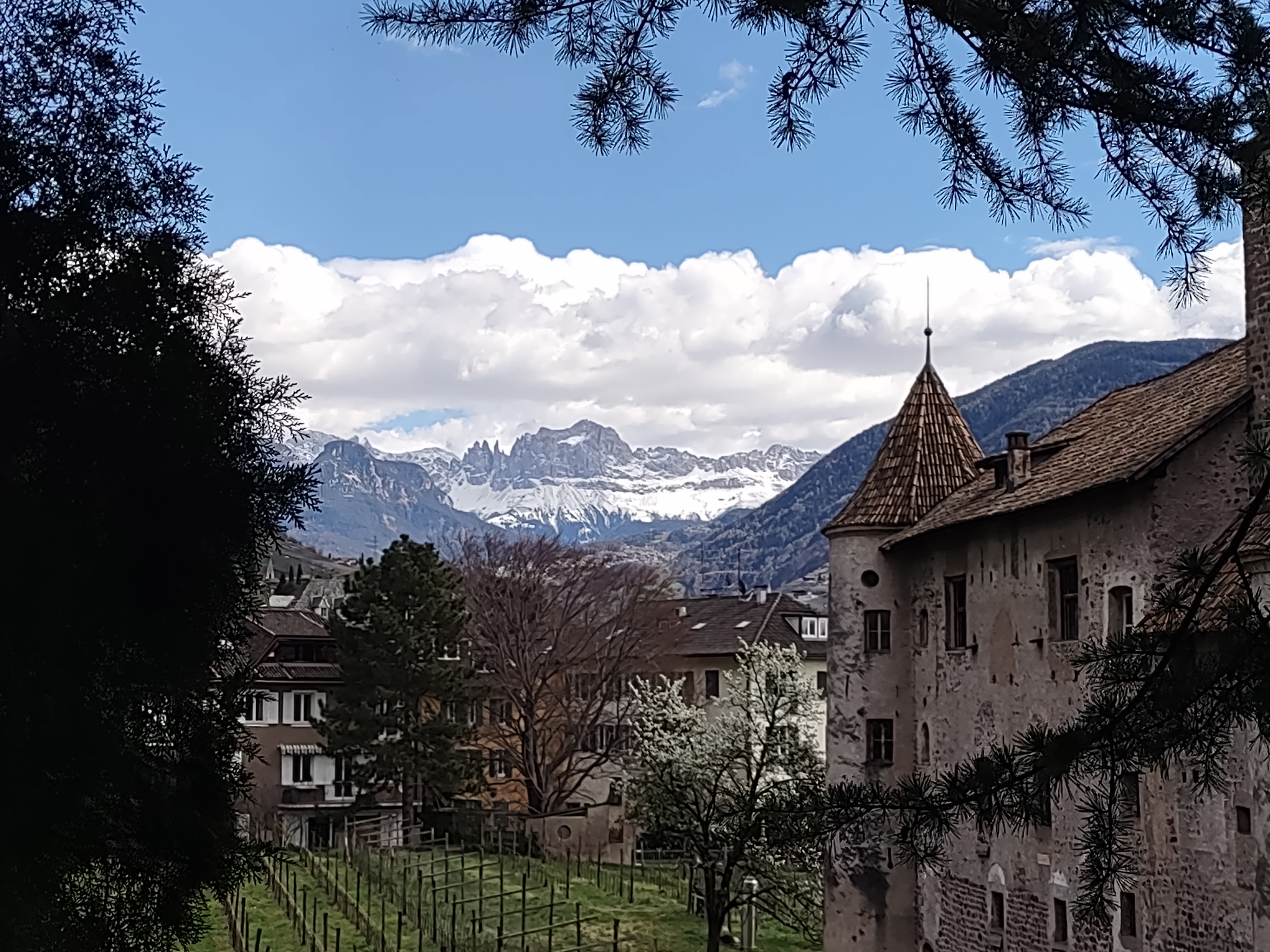
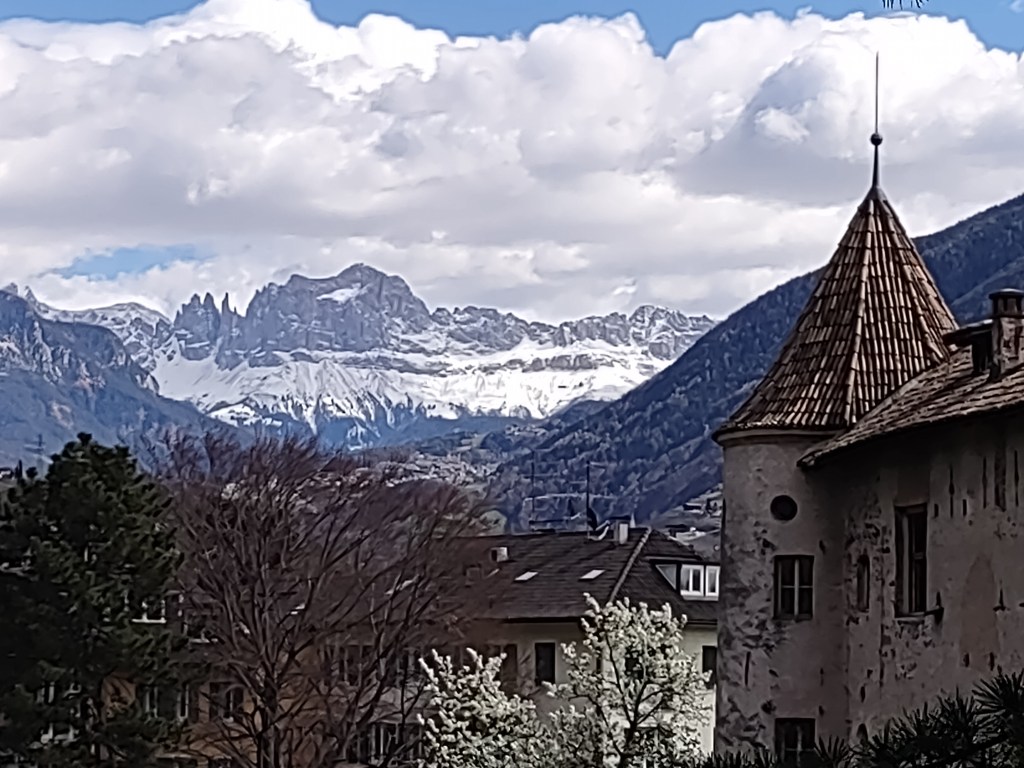
It is quite likely that you have never heard of Bolzano or Bozen, as it tends to be referred to locally. We came here primarily because Colleen had identified the Dolomite mountains in Sudtirol (South Tyrol) as something she thought we should see, particularly if we weren’t going through Switzerland, and Bolzano is the capital city of this Italian province. Just take a hard right at Verona, continue for about 2 hours, and you are there! Bolzano, which is situated in a wide valley surrounded by steep hills with snow-covered mountains in the distance, is both literally and figuratively the gateway to the Dolomites.
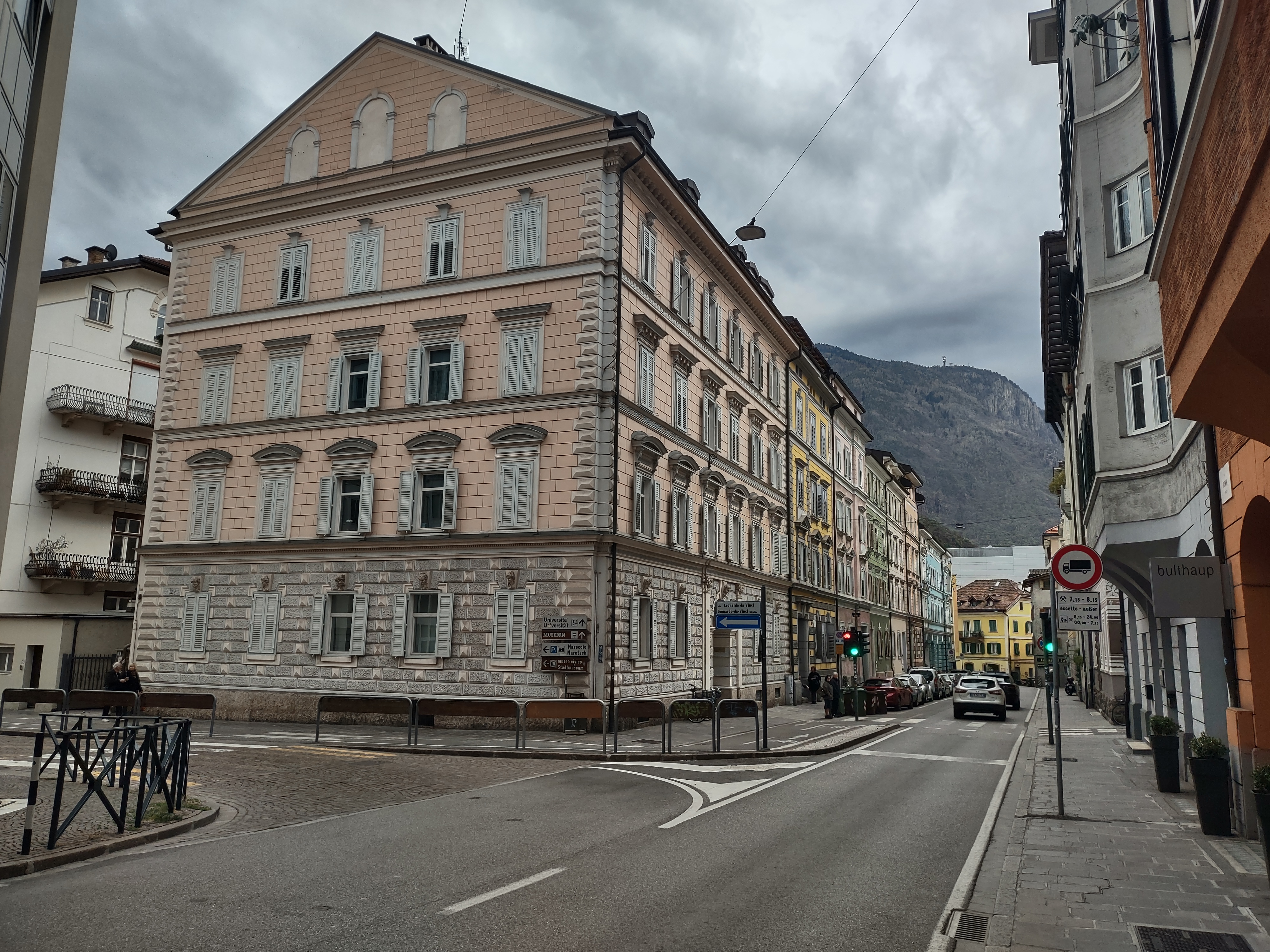
South Tyrol (officially the Autonomous Province of Bolzano) is itself a pretty interesting place. It is the northernmost Italian province, bordering Switzerland and Austria which it was part of until 1918 when it was annexed to Italy. Over 60% of the population uses German as their primary language and most of the signage in Bolzano is in both Italian and German. (Menus are also Italian and German and, sometimes, English.) There are definitely parts of Bolzano which feel more like Vienna than Italy and the places we visited outside Bolzano looked and felt like Swiss or Austrian mountain towns.
It’s tempting to say that Bolzano combines the best of Austria and Italy, certainly in regard to architecture, but also in regard to food, drink, and culture with a rich and interesting history. It became prominent in the 14th and 15th centuries as a center of trade (more on this later) and, because of this, it was a a true cultural crossroad in the region, very much bridging north and south.
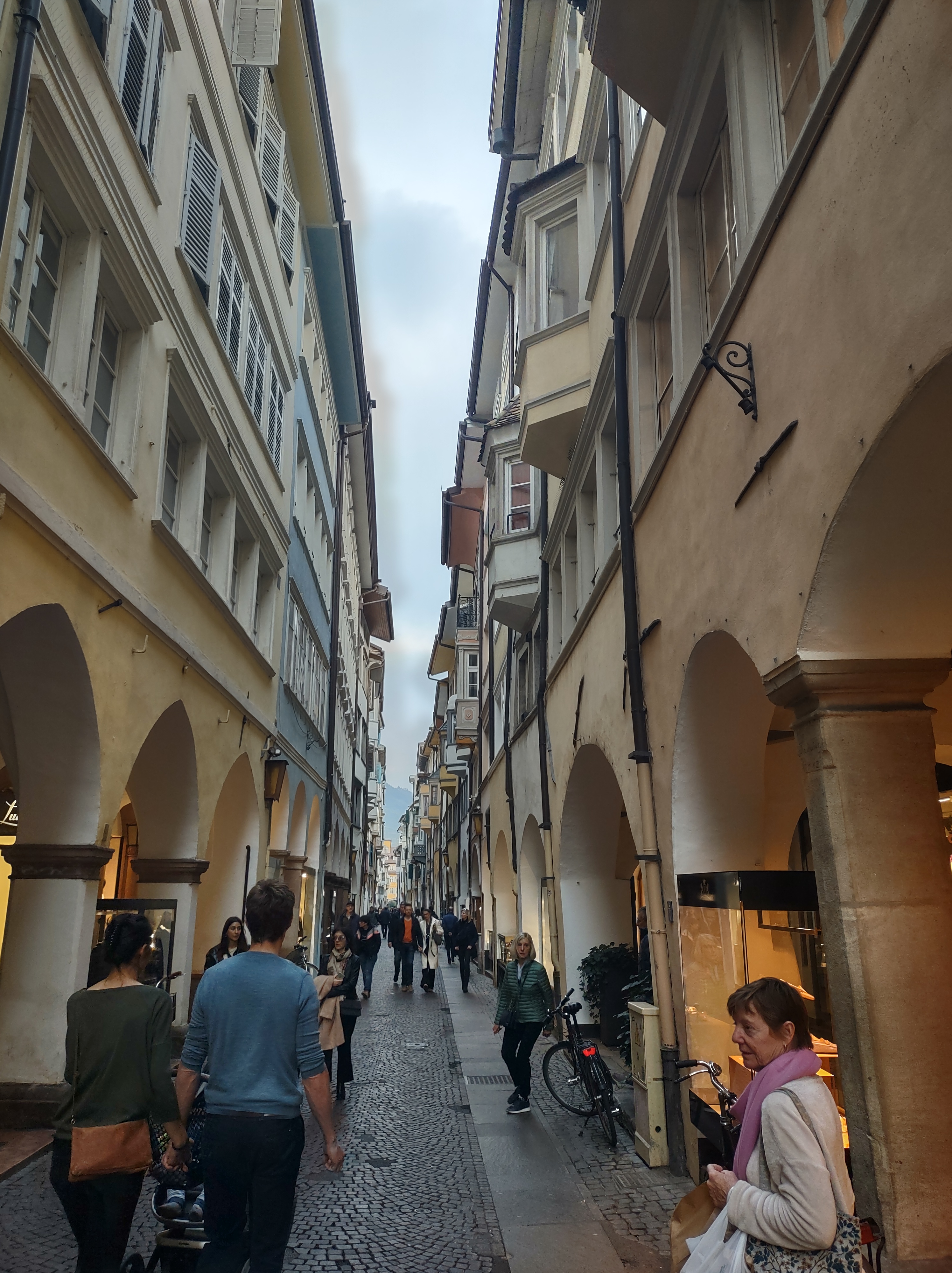
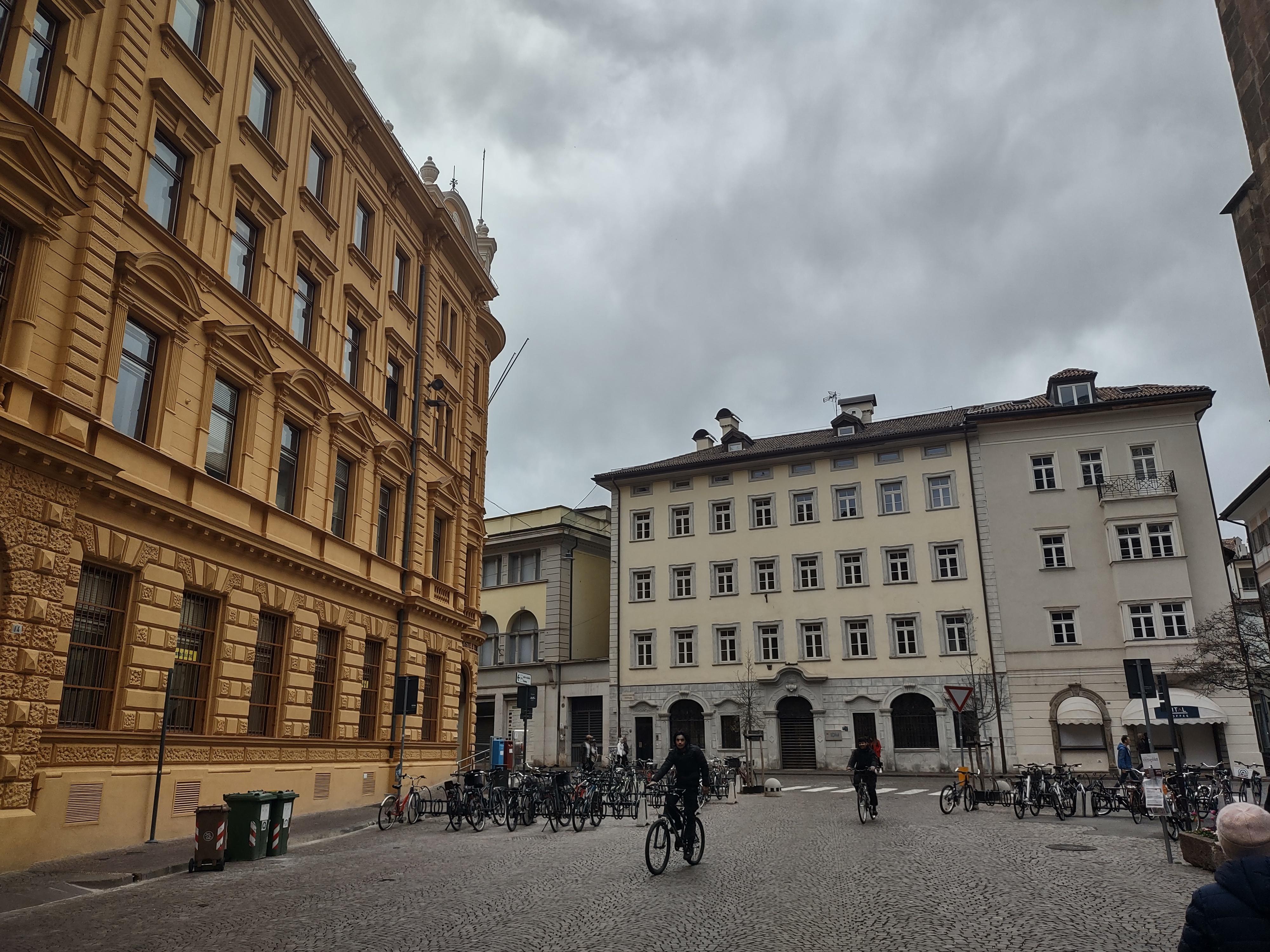
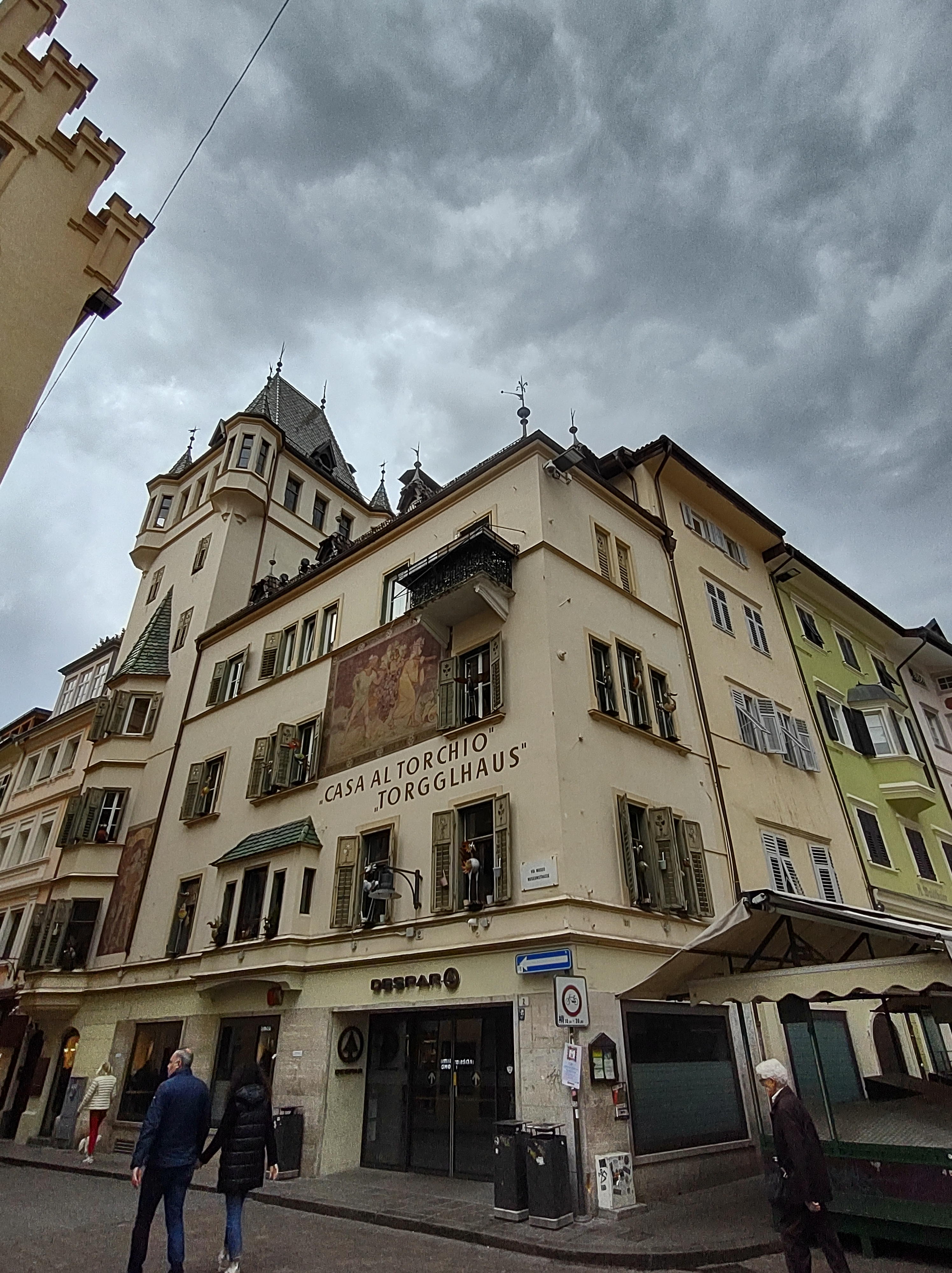
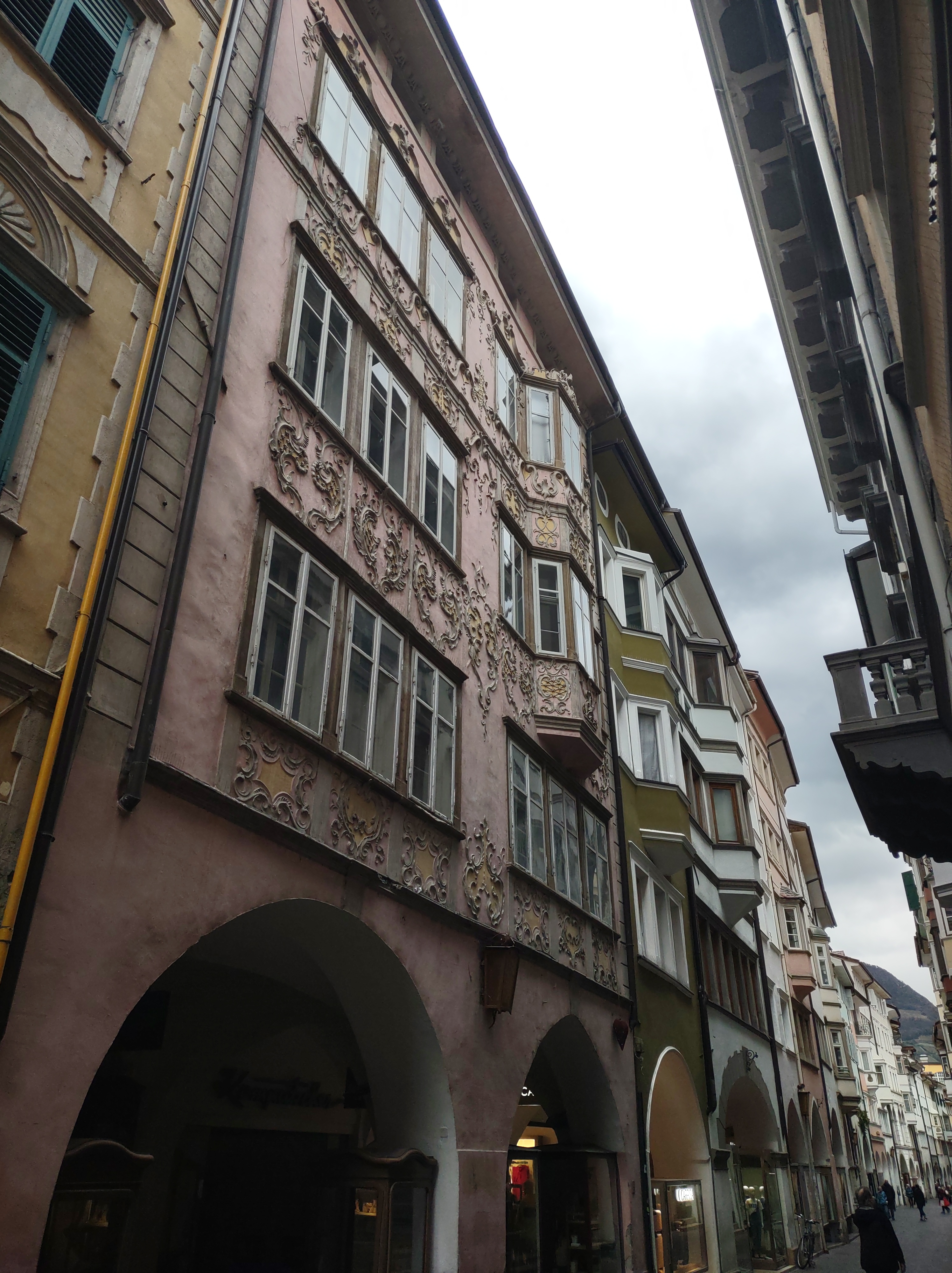
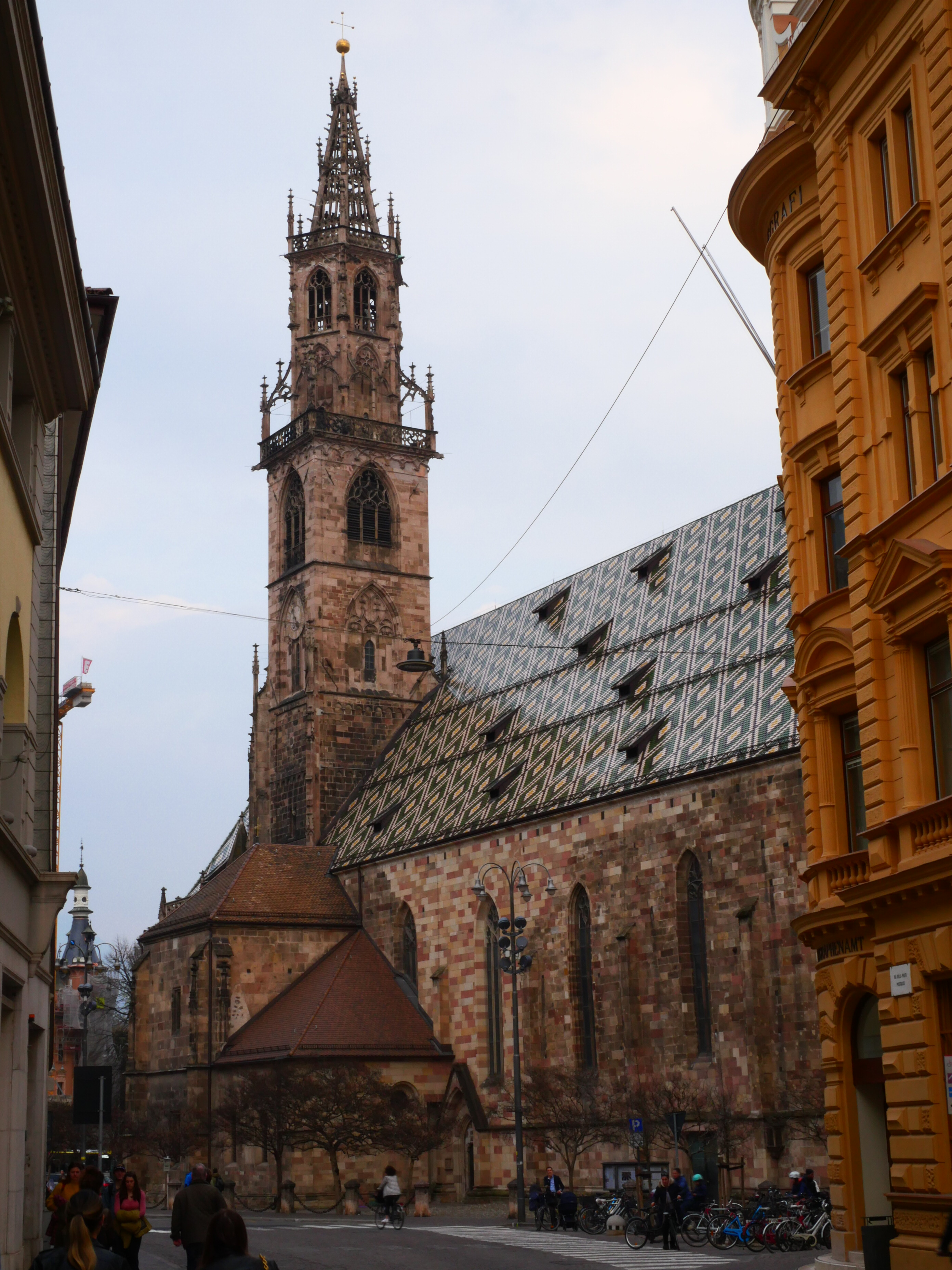
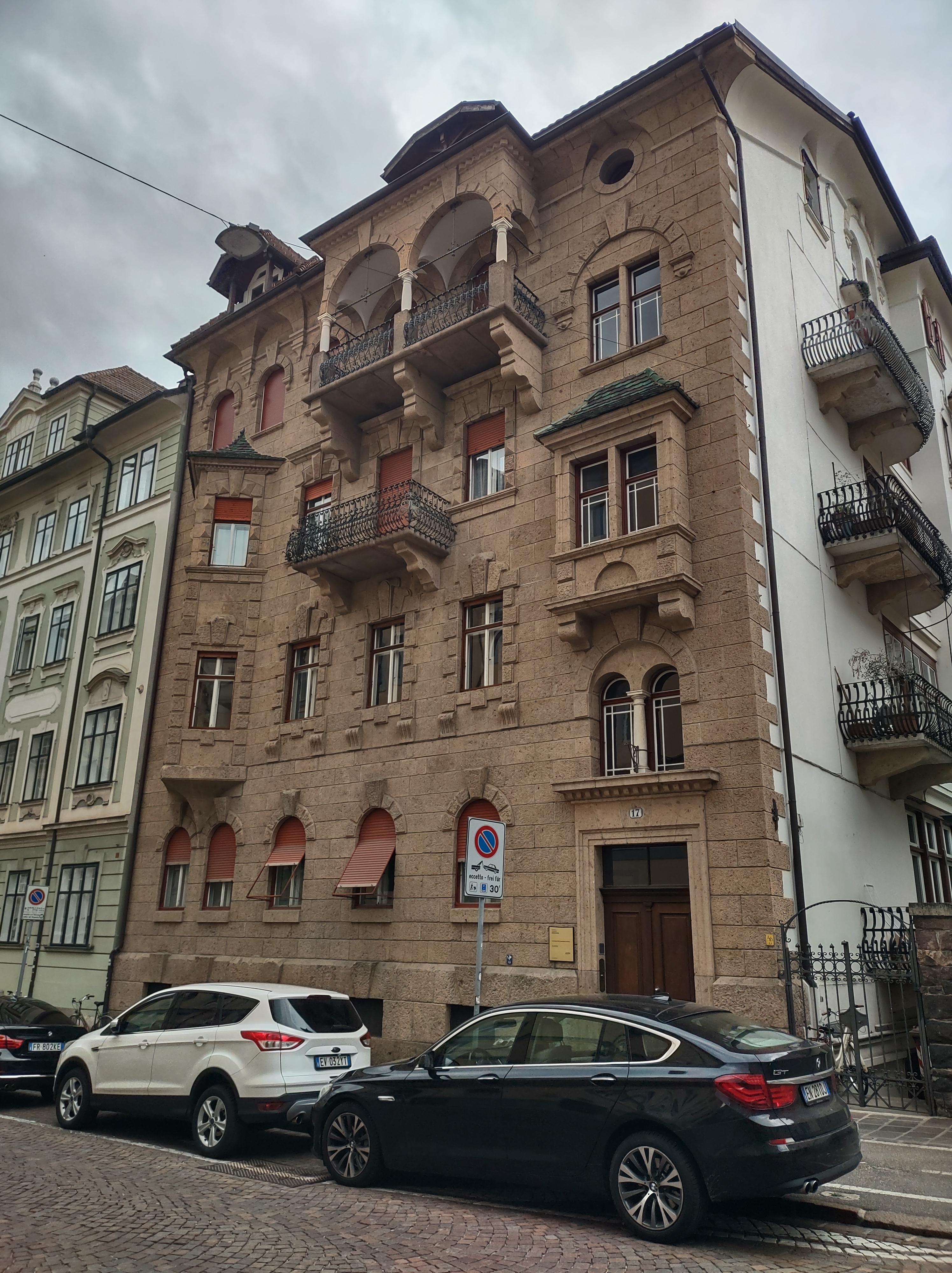
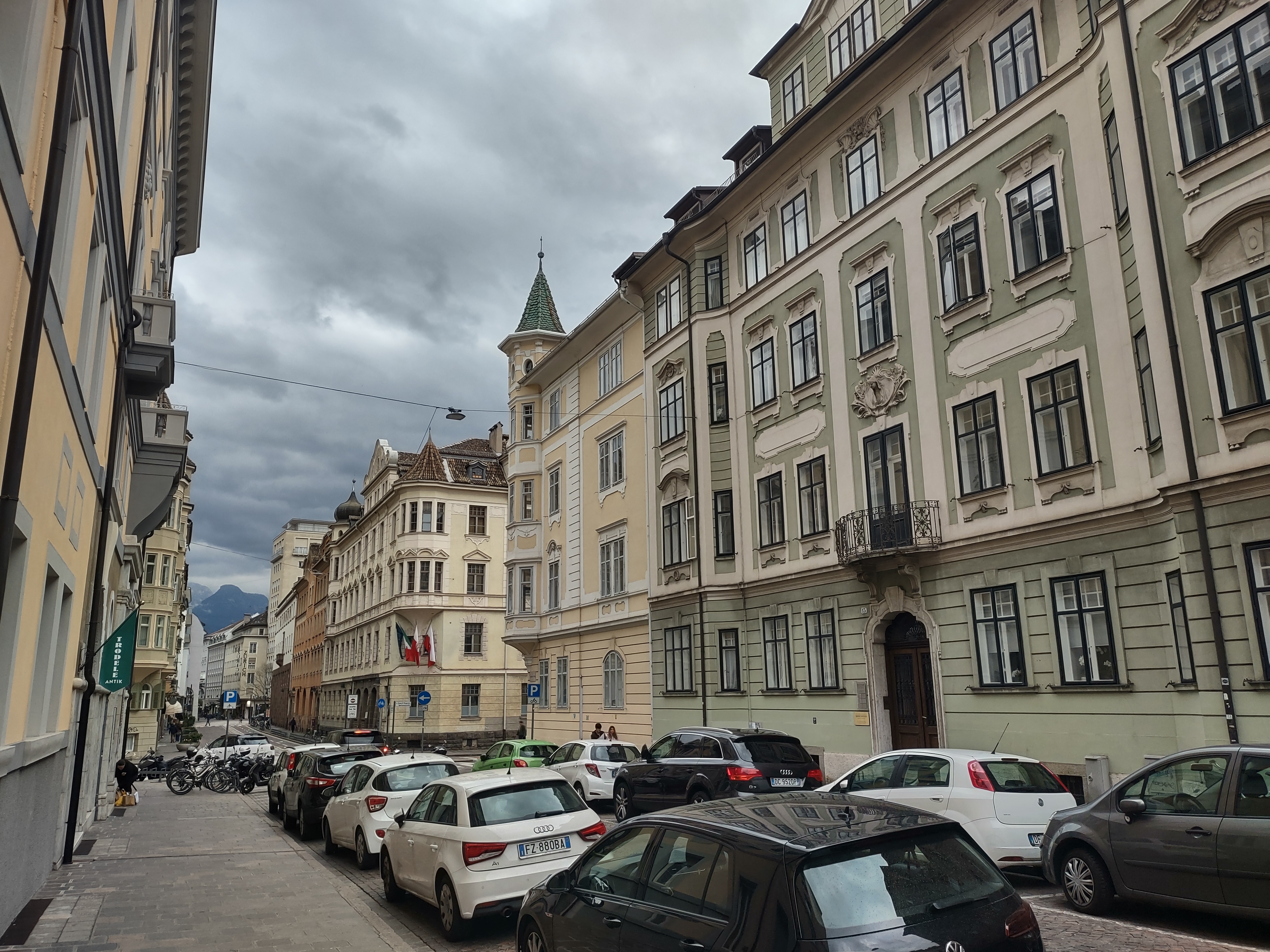
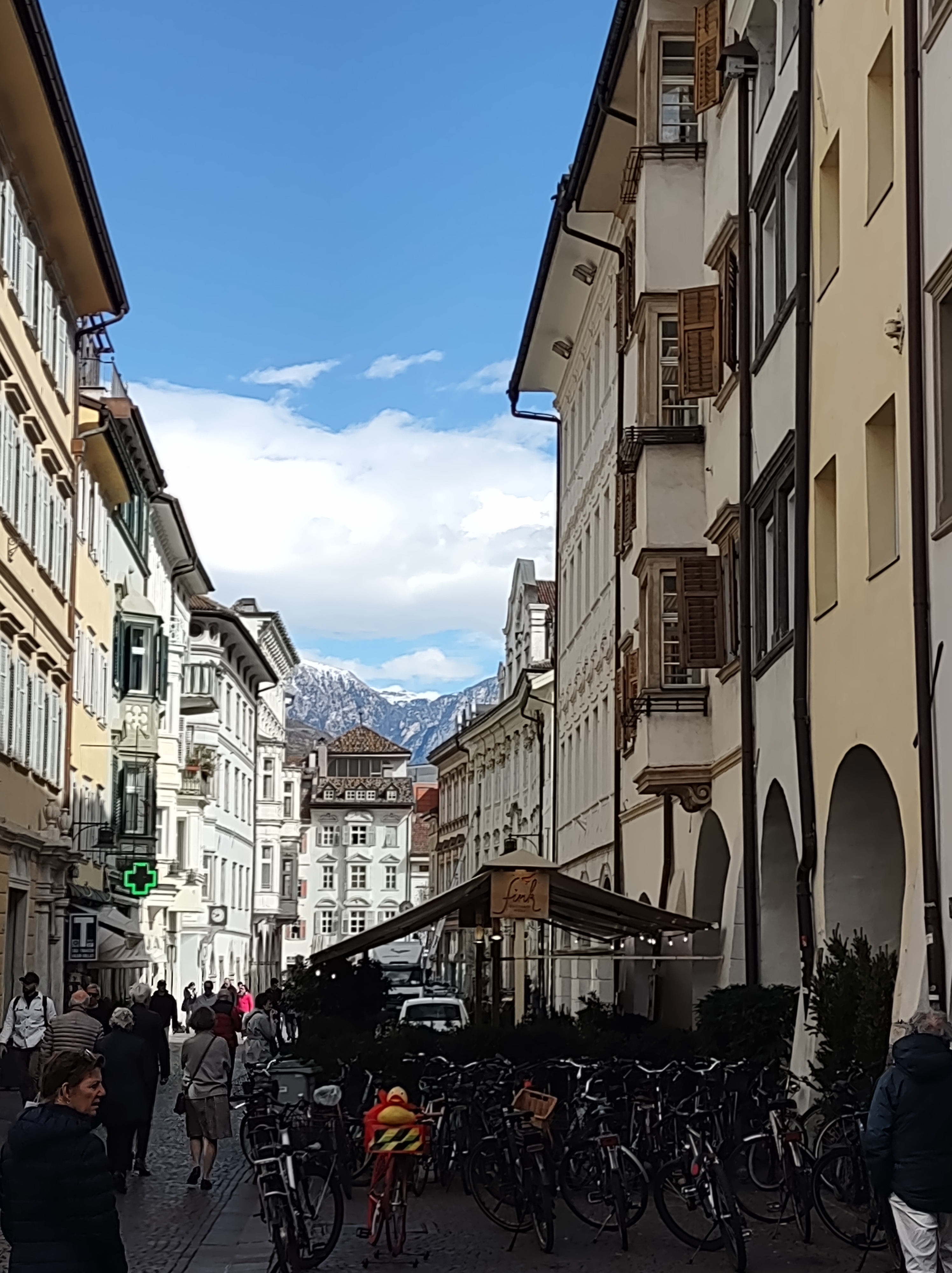
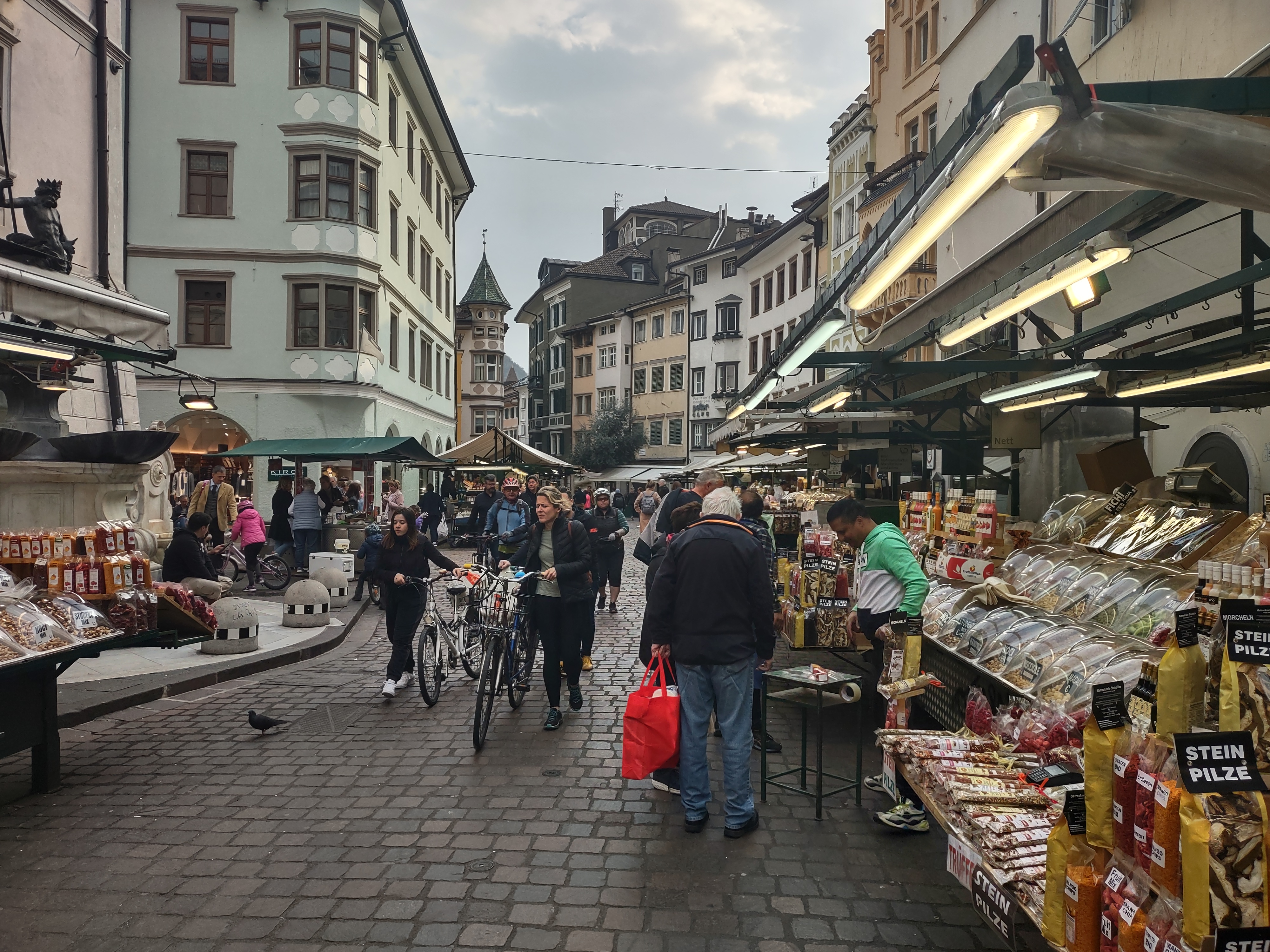
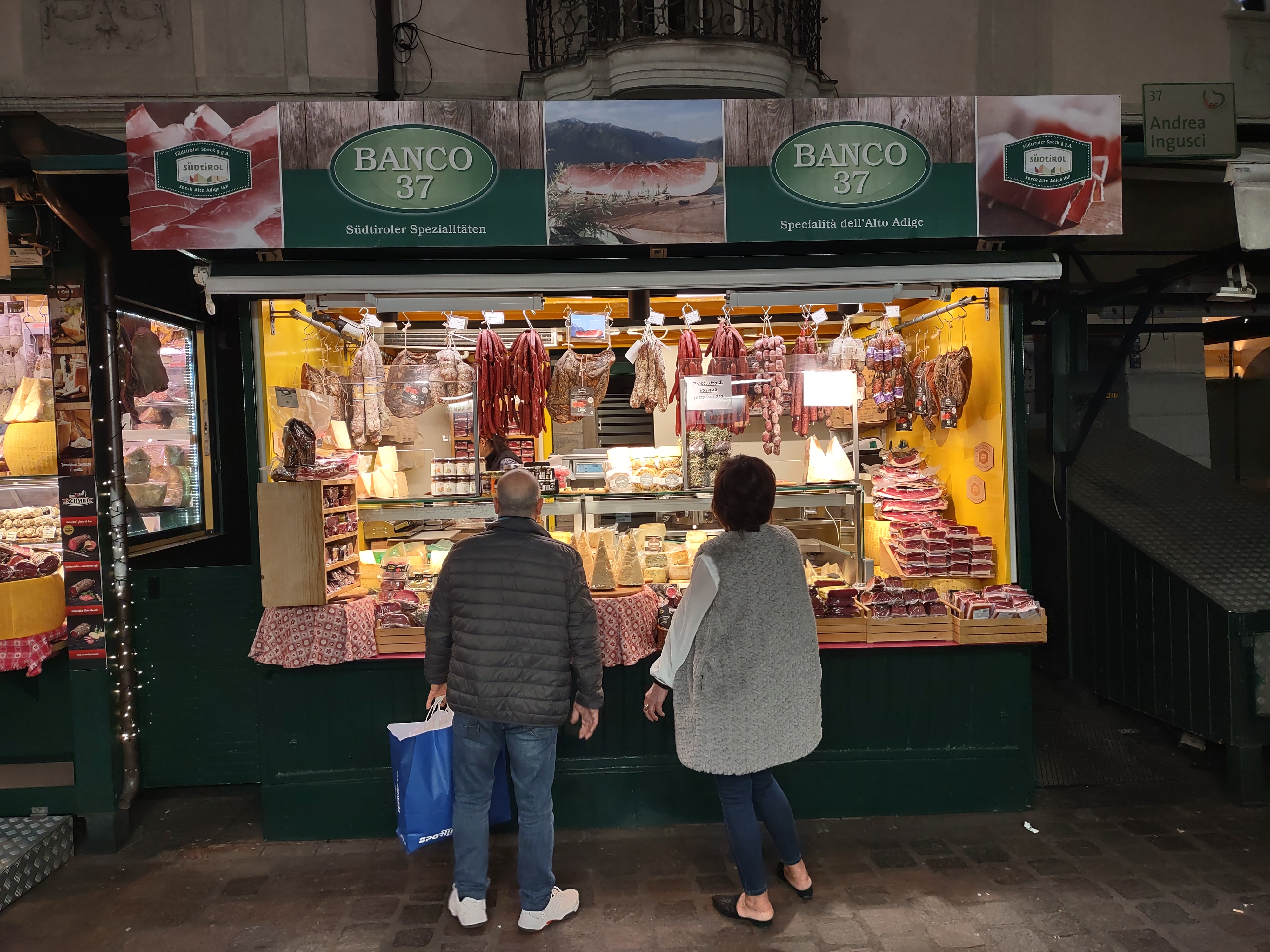
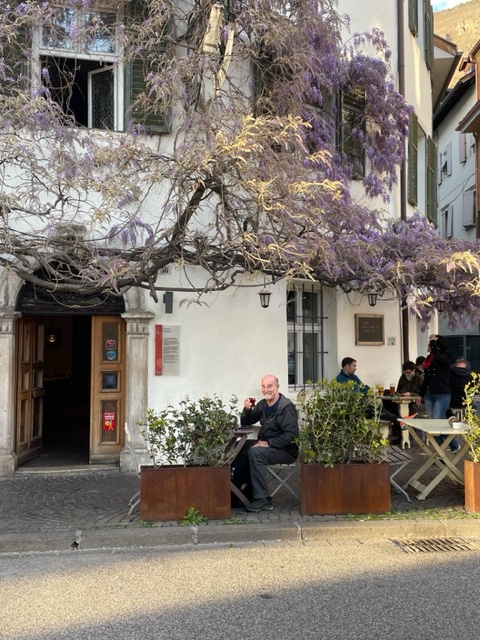
With a population of about 100,000, Bolzano is a very easy place to get around on foot. It is a beautiful city in a beautiful setting and the people are extraordinarily friendly. Like other cities in Italy, it has numerous street markets and outdoor cafes and like Vienna, it is extremely clean.
One particularly interesting thing about Bolzano that it took us a while to realize is the absence of surface parking lots. While there is some street-side parking on the perimeter of the city, virtually all the car parking in the center of town is underground. We noticed a similar phenomenon in the mountain towns we visited, and, in retrospect realized that this was also the case in Vienna. Not sure if this is an Austrian thing or (more likely) the result of wanting to maintain and preserve the old buildings.
In any case, because of this, there are very few cars on the streets of the town and virtually no traffic except on the perimeter. There are some bikes but, unlike some of the other European cities we have visited, pedestrians have the right of way over bikes. The end result of all this is a city which is extremely friendly to pedestrians and a wonderful place to just wander.

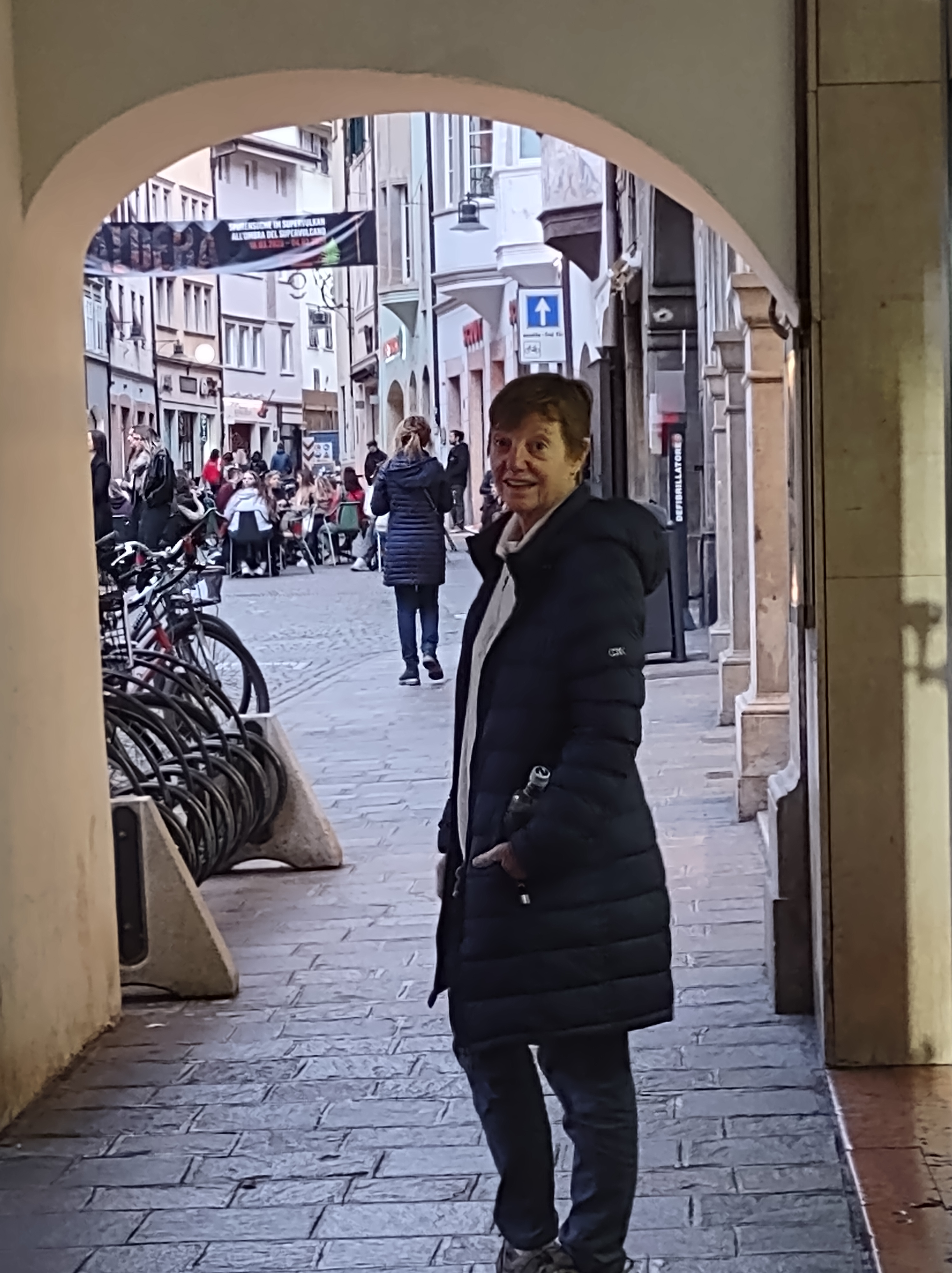
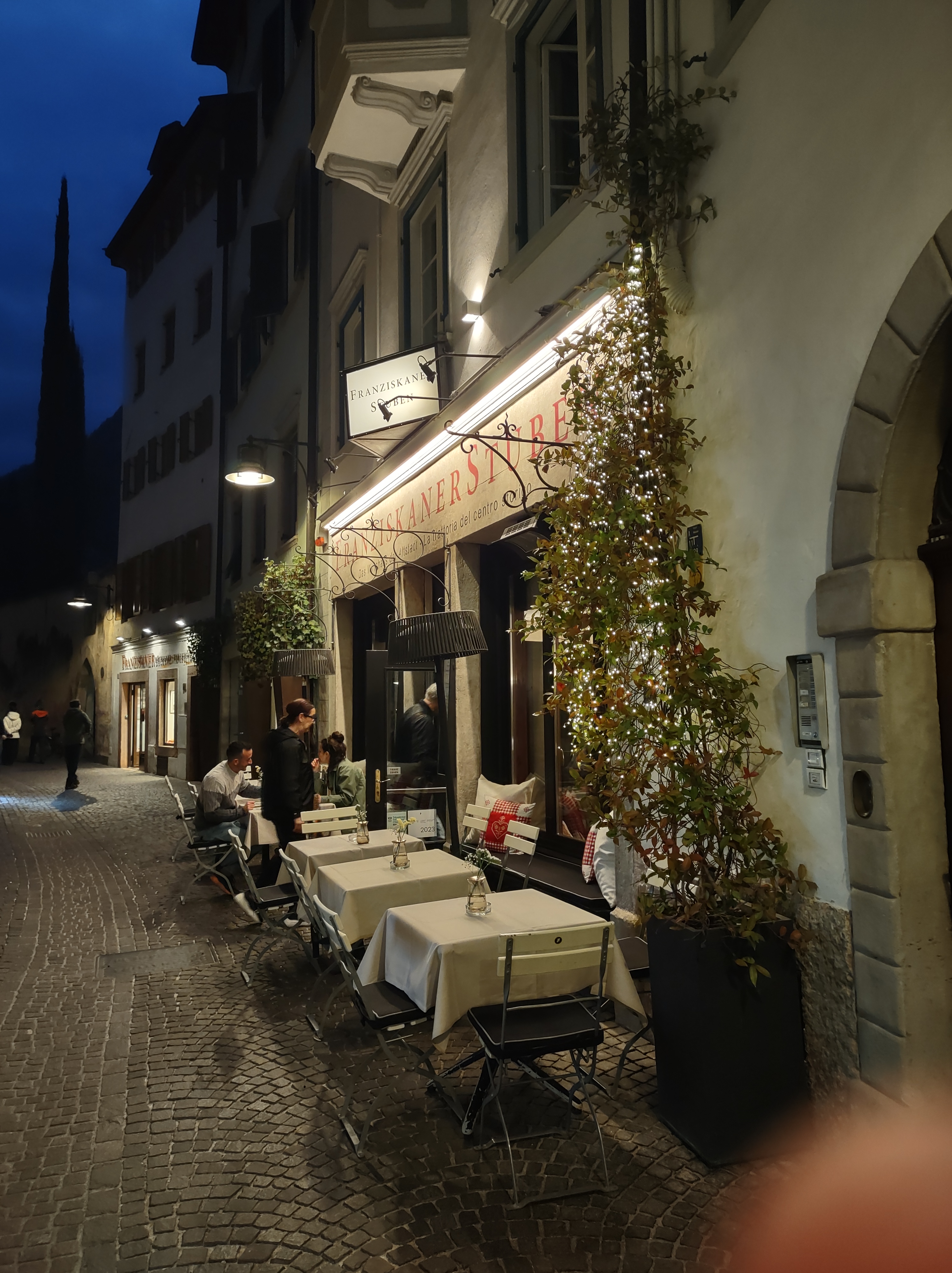
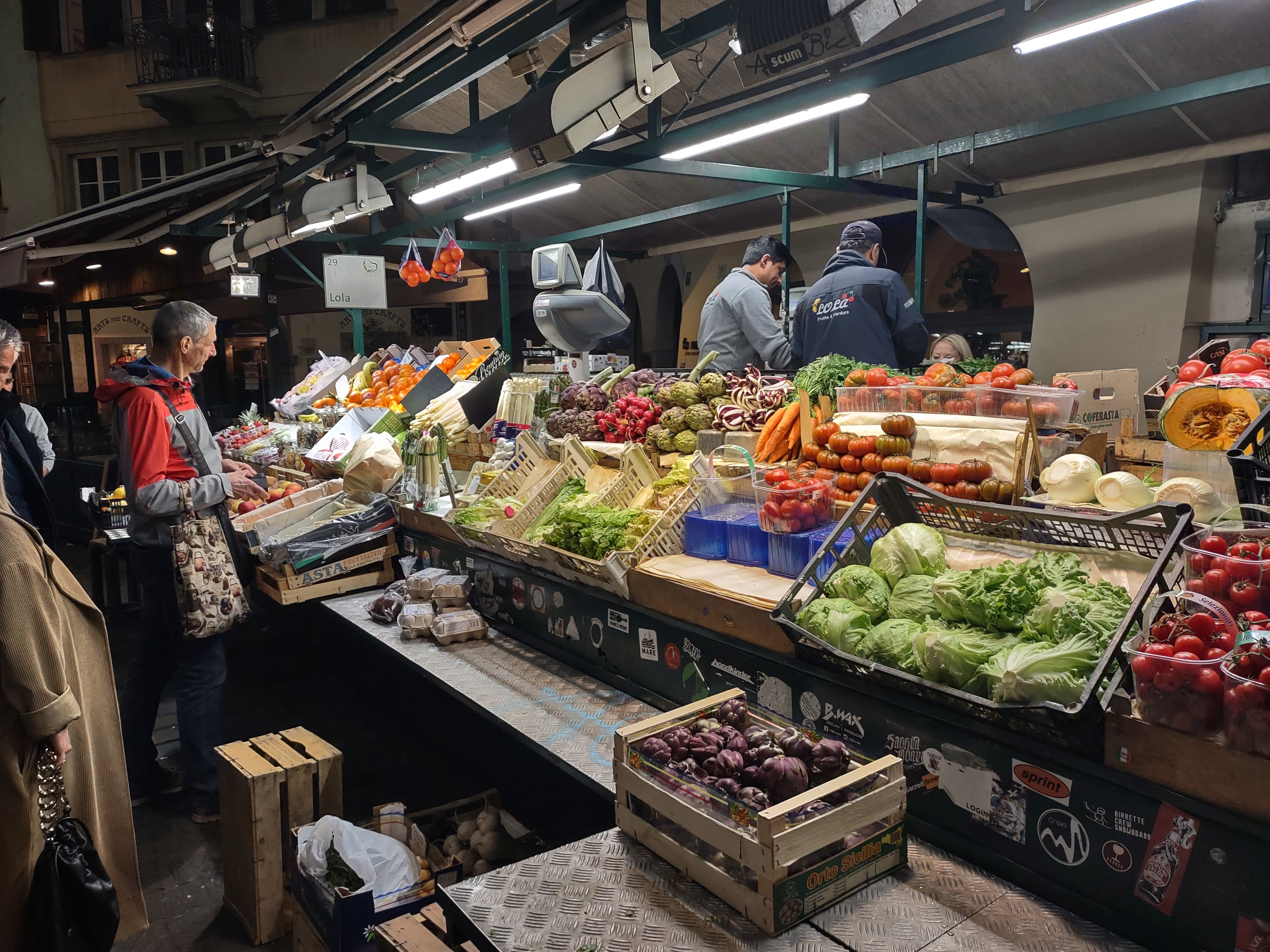
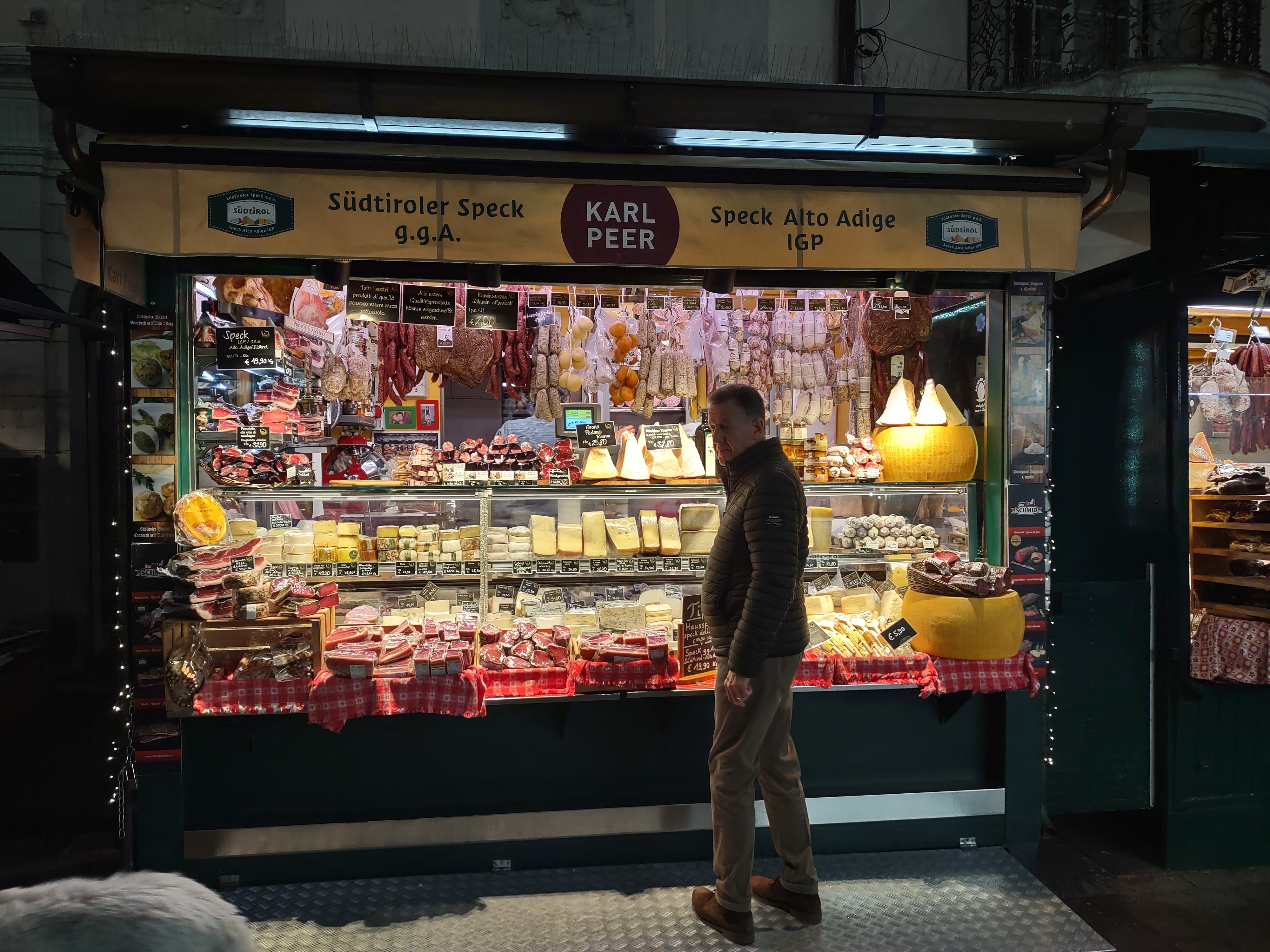

PS – It’s possible that you may know of Bolzano because of Otzi, also known as the Iceman. He lived around 3200 BC and his naturally mummified body was discovered on the Italian-Austrian border in 1991. His body is on display at the Museum of Archeology in Bolzano. For better or worse, the Museum was closed on the only day when we might have visited, so we were not able to see him so (sorry), no photos.
The Dolomites
We came to Bolzano with the understanding that we would need to travel into the surrounding area in order to experience the Dolomites. Originally, we had considered renting a car in order to accomplish this, but between the cost to rent and the cost to park, we had to rethink this. When we checked into our apartment (pricey, located on the oldest and most expensive shopping street in town, but really nice) we were provided with a visitor pass which we were told could be used for local buses as well as the cable cars which go up the hills around Bolzano. To Colleen’s disappointment, the cable cars were all closed for service, but we discovered that this visitor pass was also good for the regional buses, so this became our means of travel in the province (and made us feel a bit better about what the apartment was costing us).
Our first day trip was on Saturday to a town called Castelrotto (Italian), more commonly known as Kastelruth (German). Kastelruth, which was a little over an hour to the northeast of Bolzano, has a population of about 6,800. It is an idyllic little alpine village sitting in the shadow of some serious pieces of rock.


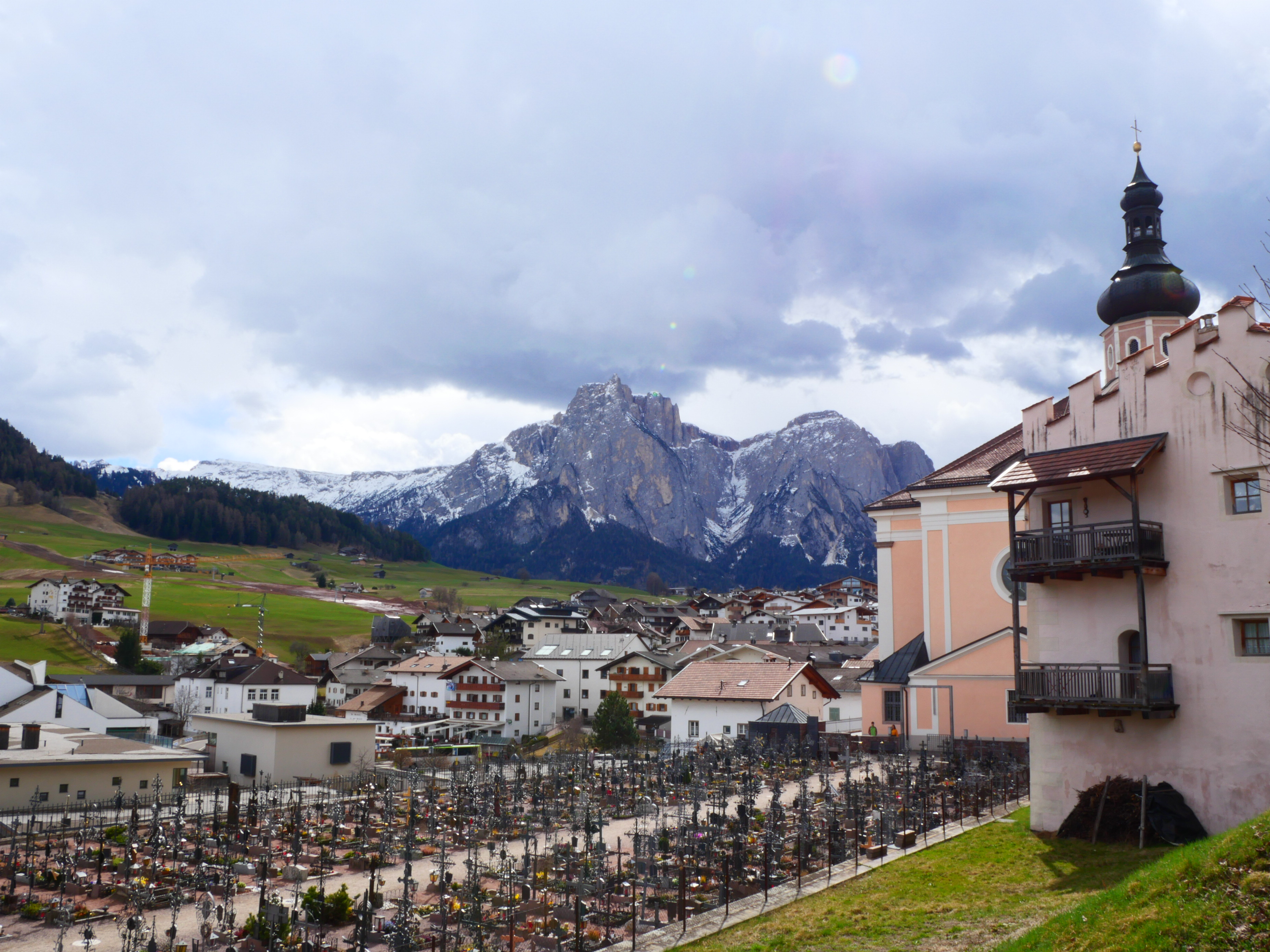
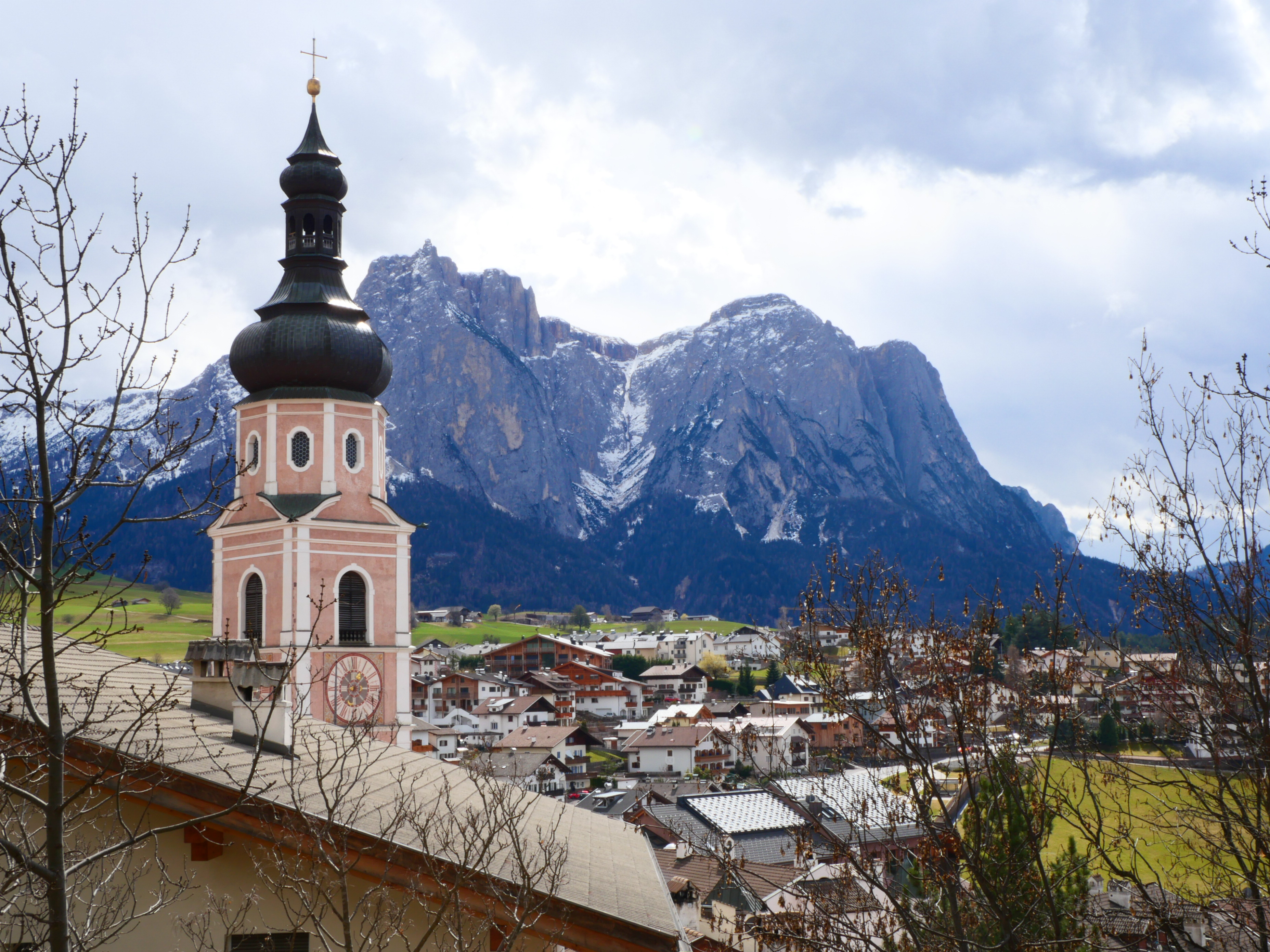
We started at the church in the center of town and hiked to the top of an adjoining hill which, is called Kalvarienberg and has an interesting cluster of chapels and religious buildings.
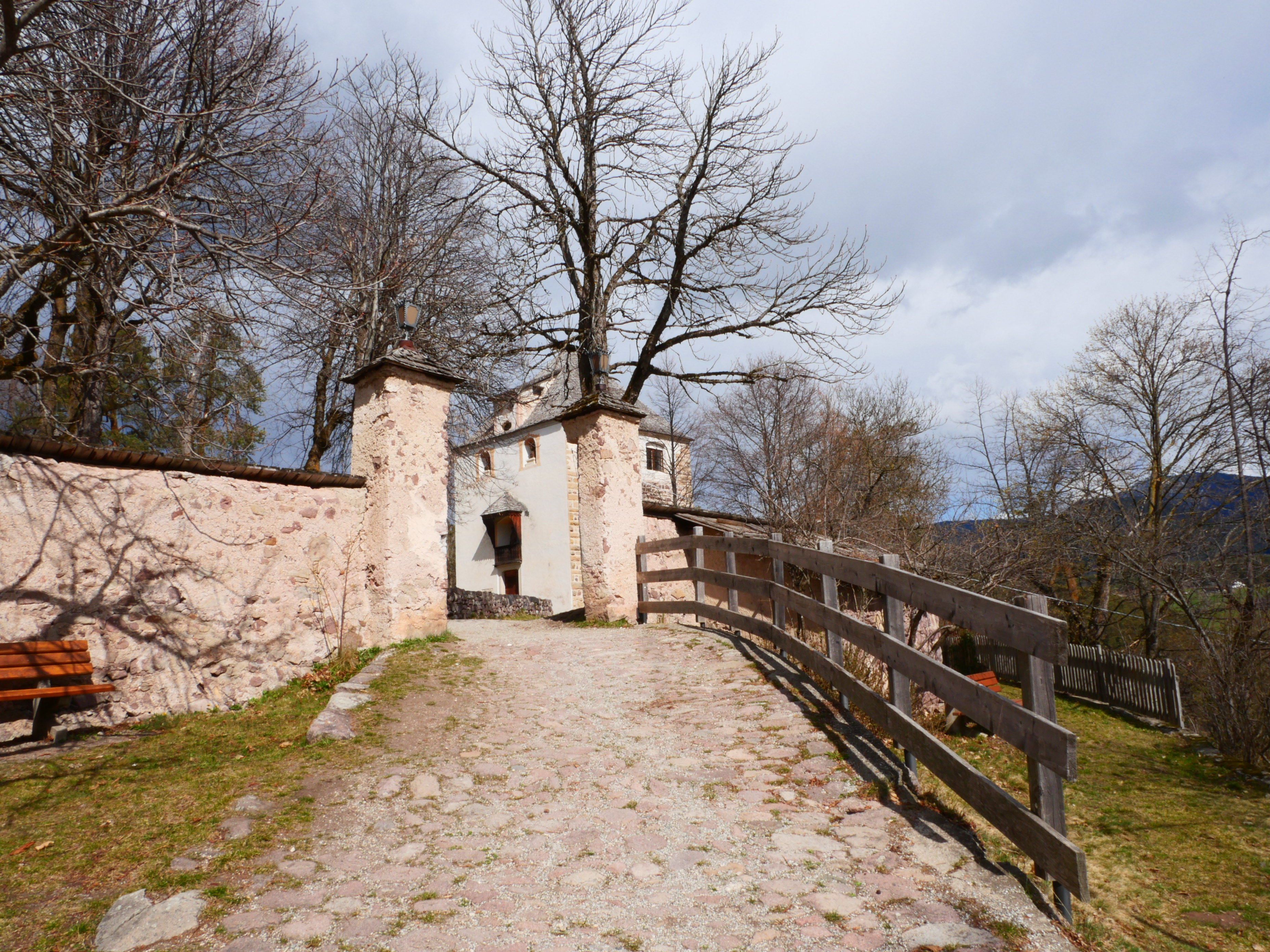

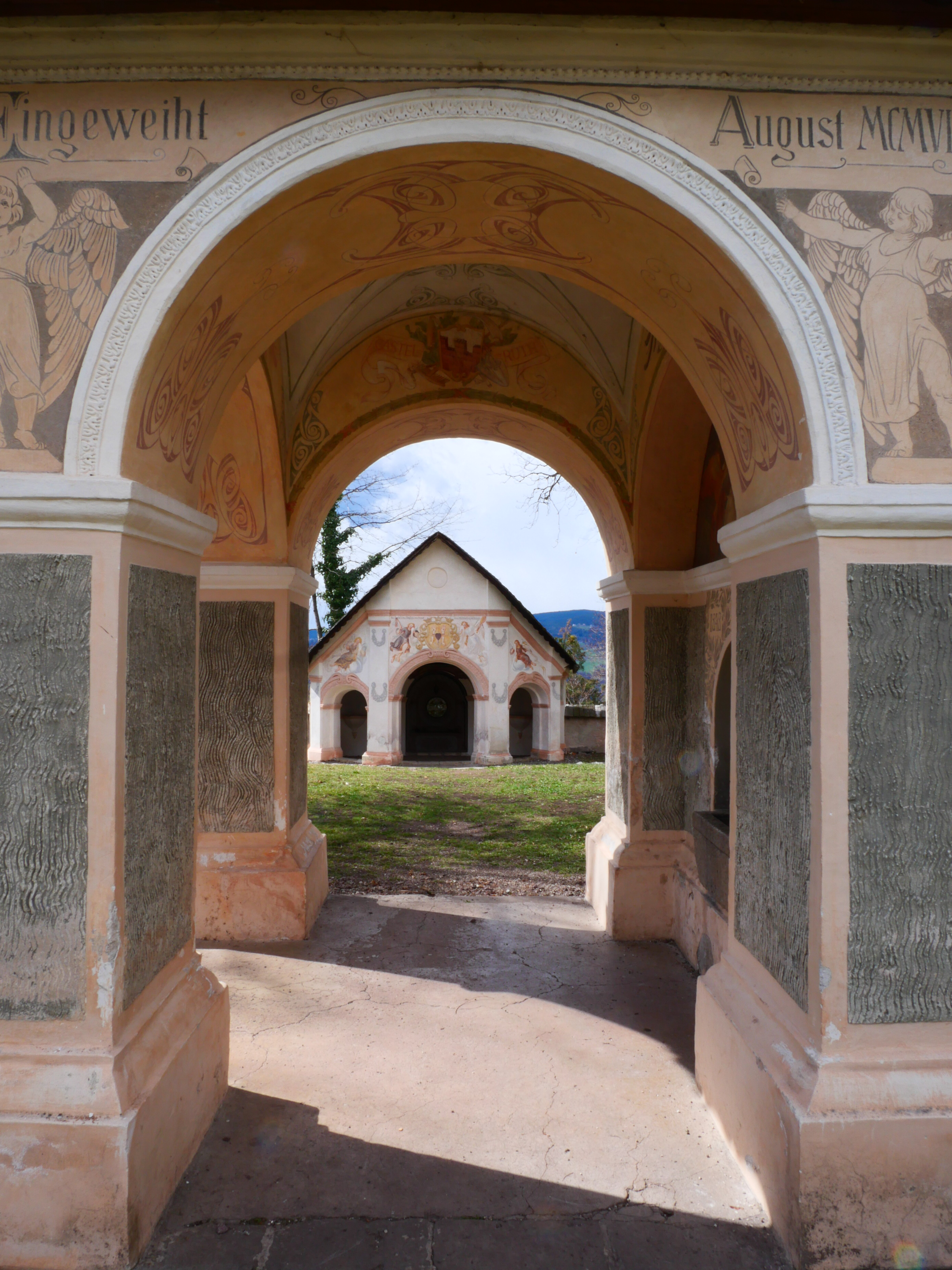
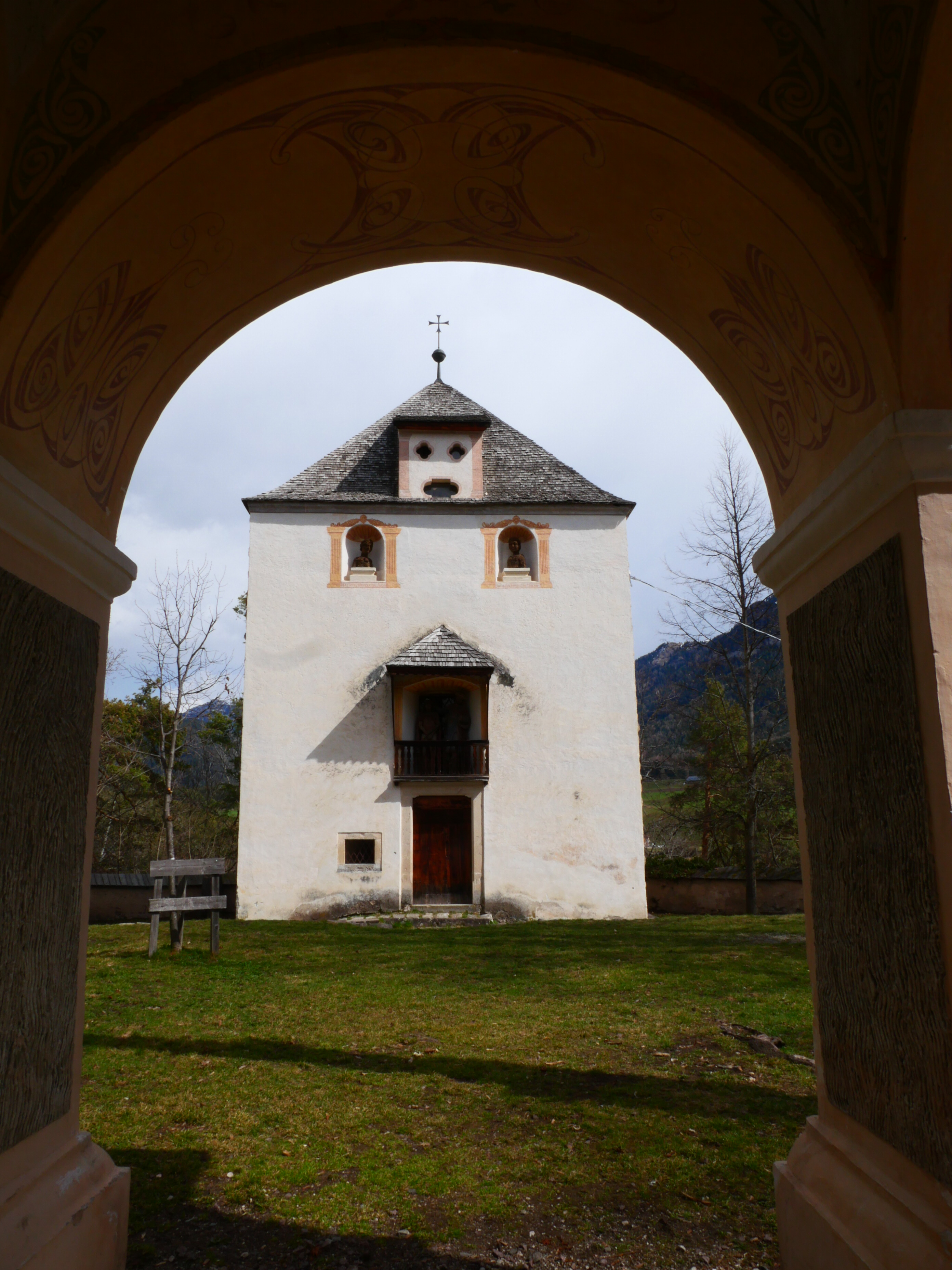
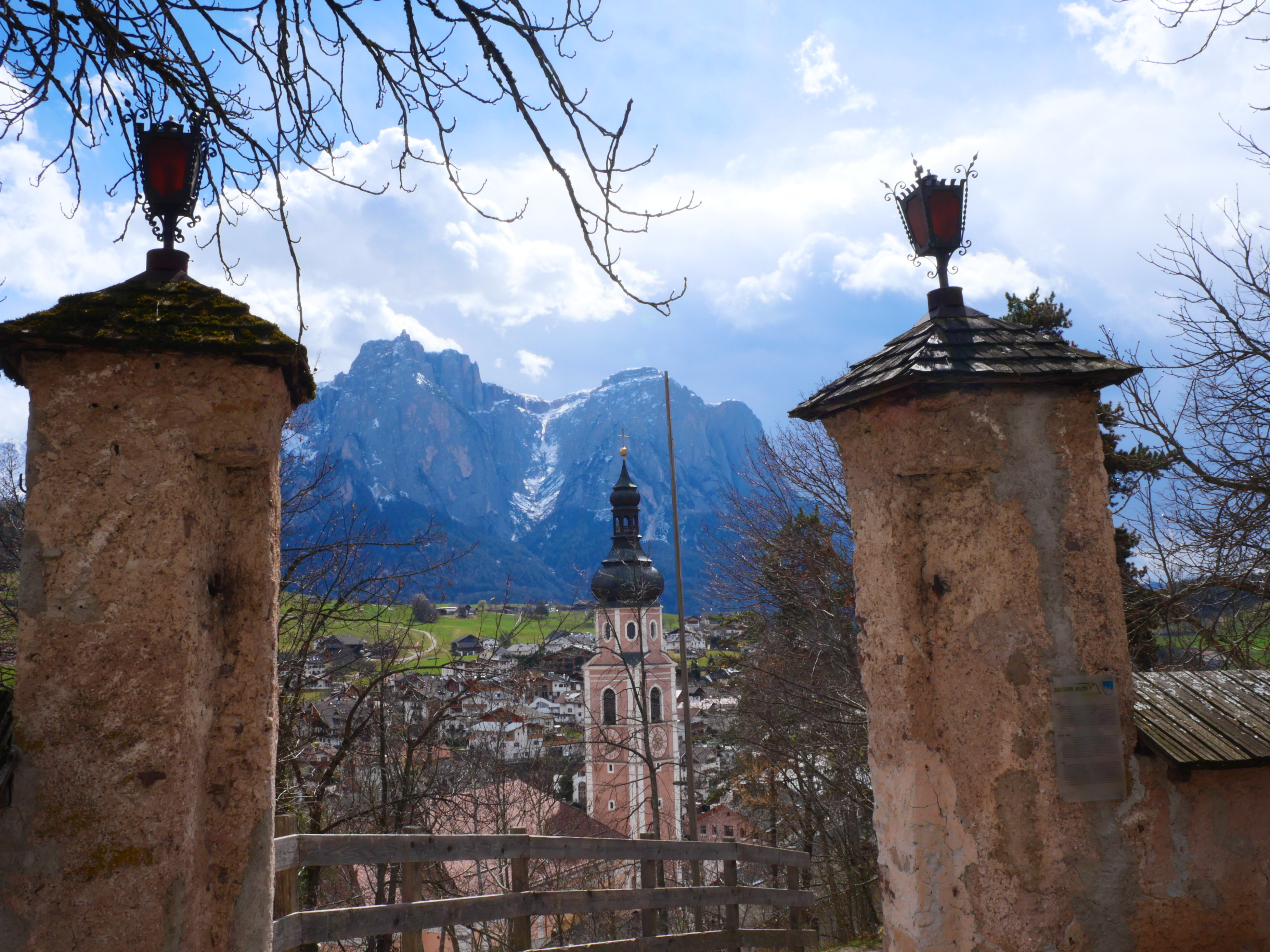
Using our trial membership for the AllTrails app, we were able to locate a trail into the adjoining valley. On our way into the valley, we noted a number of interesting trail markers and, when we got to the bottom, discovered that it is known as the “Path of Peace”.

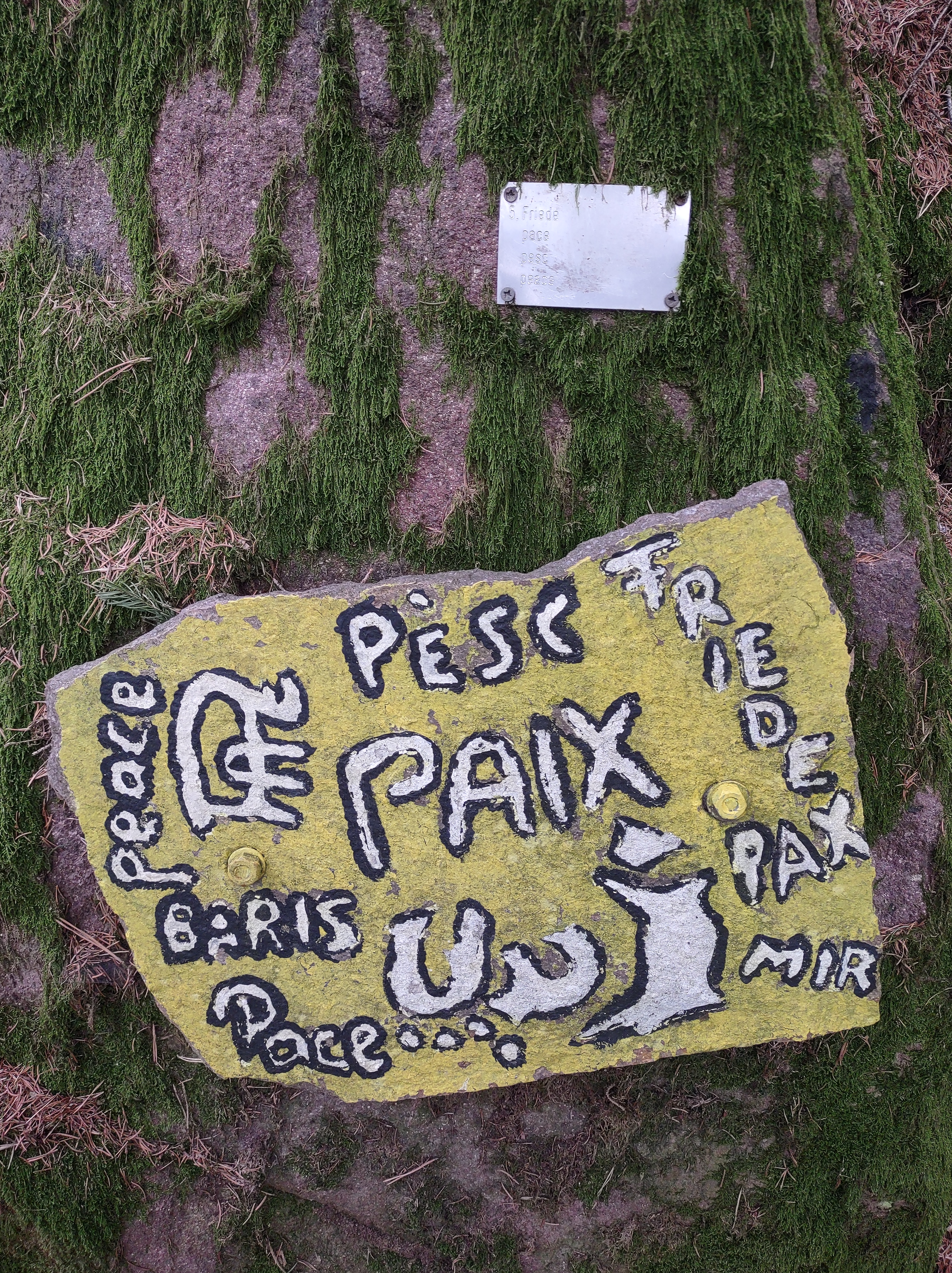
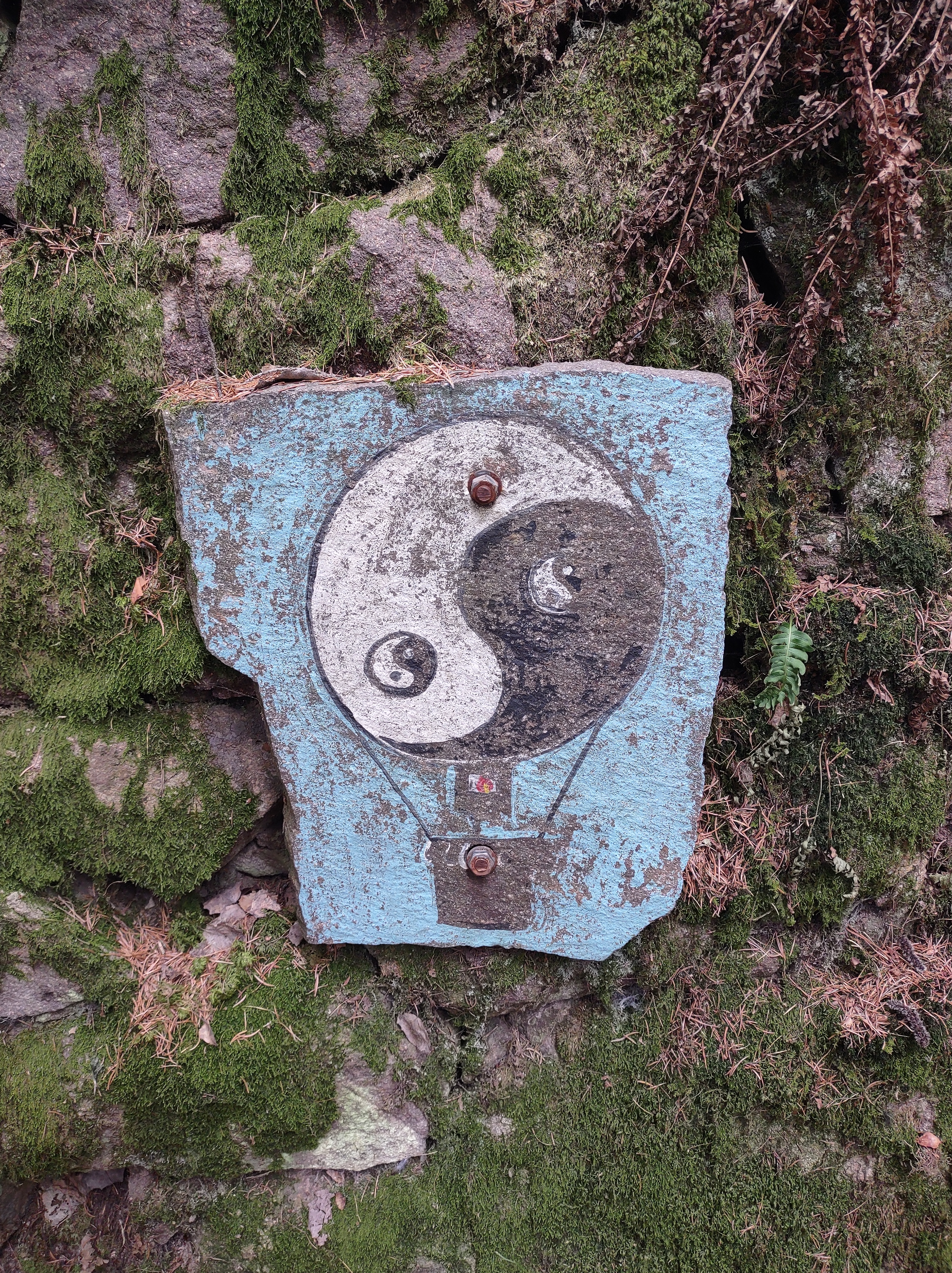
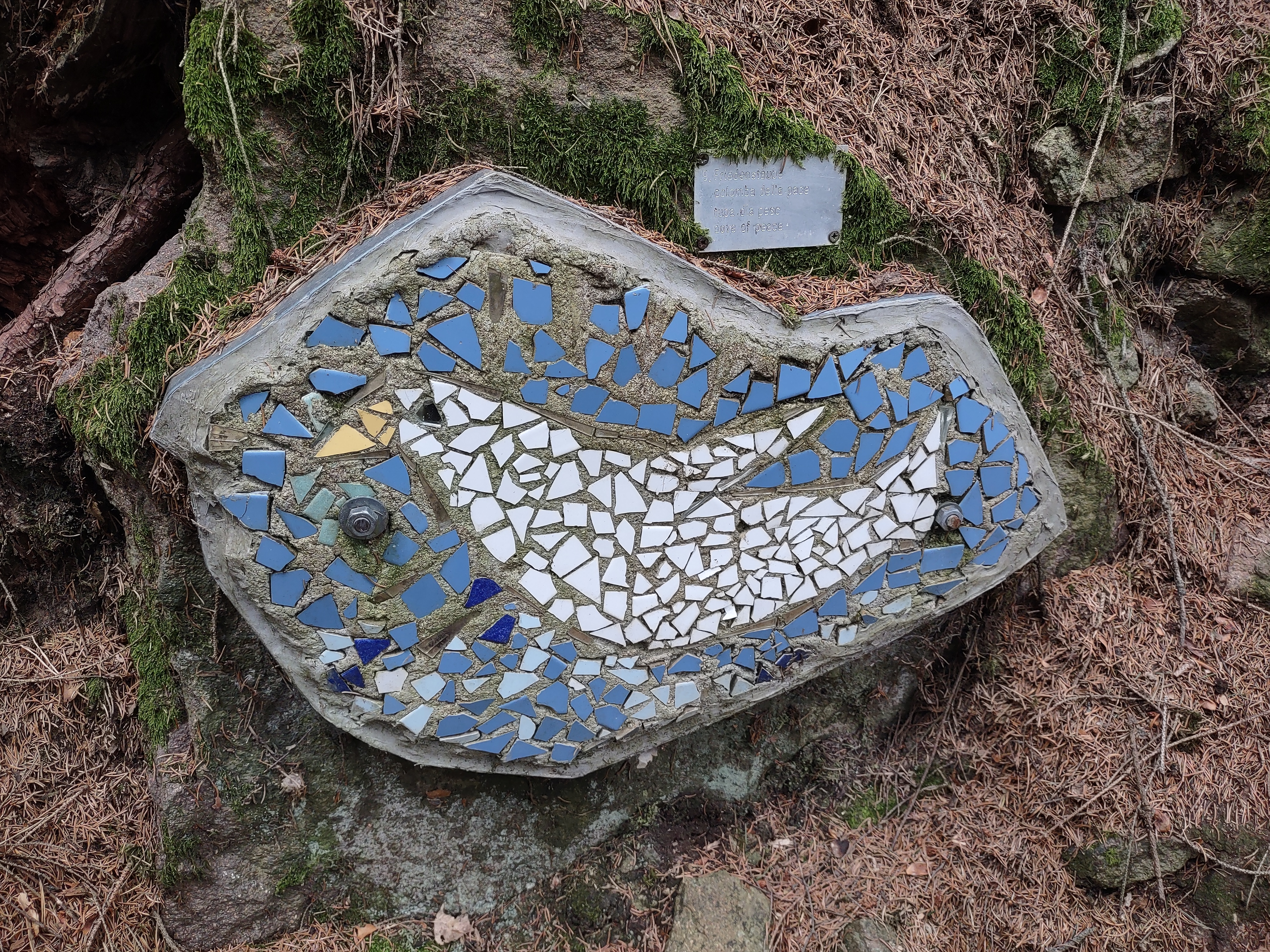


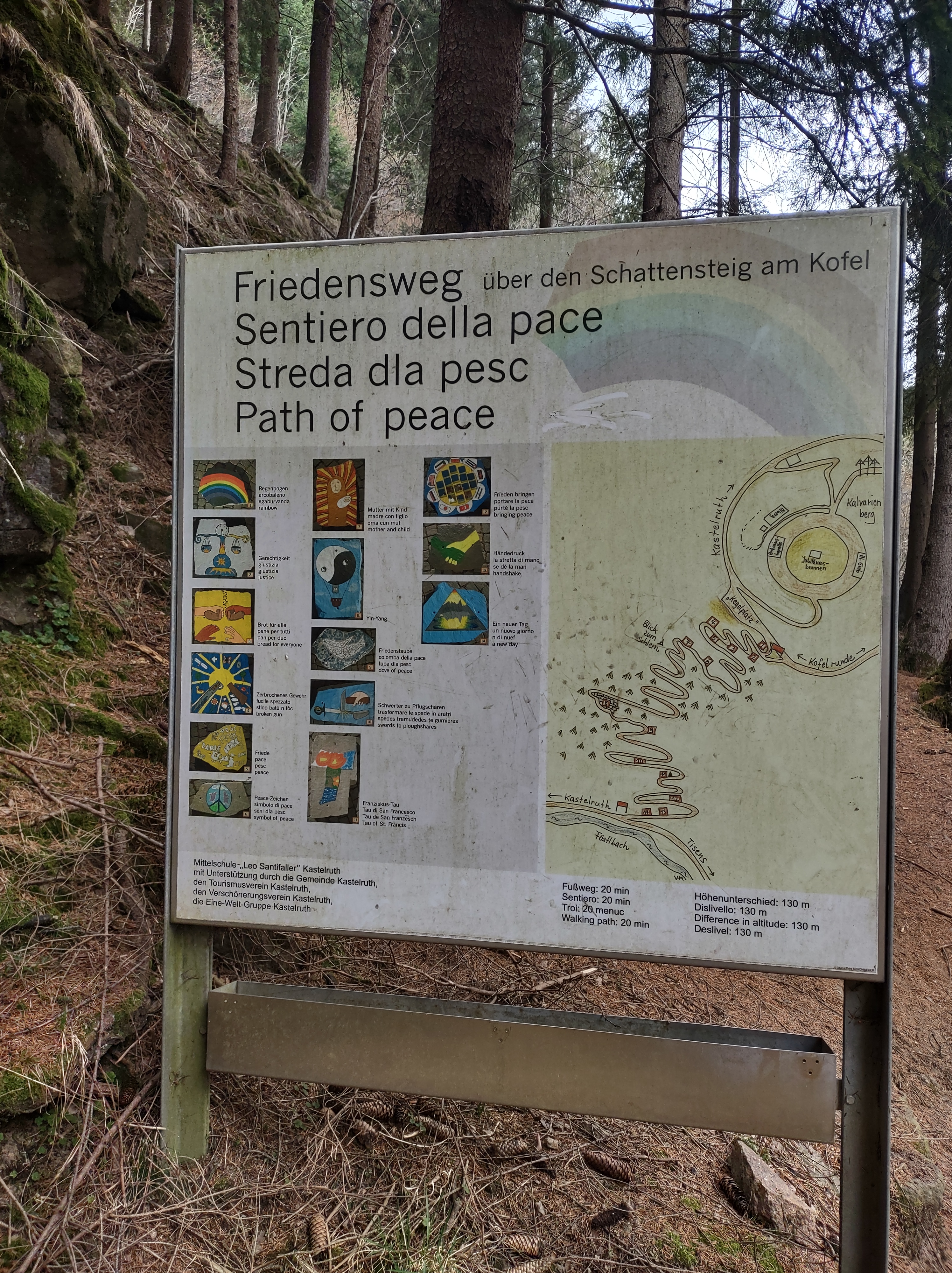
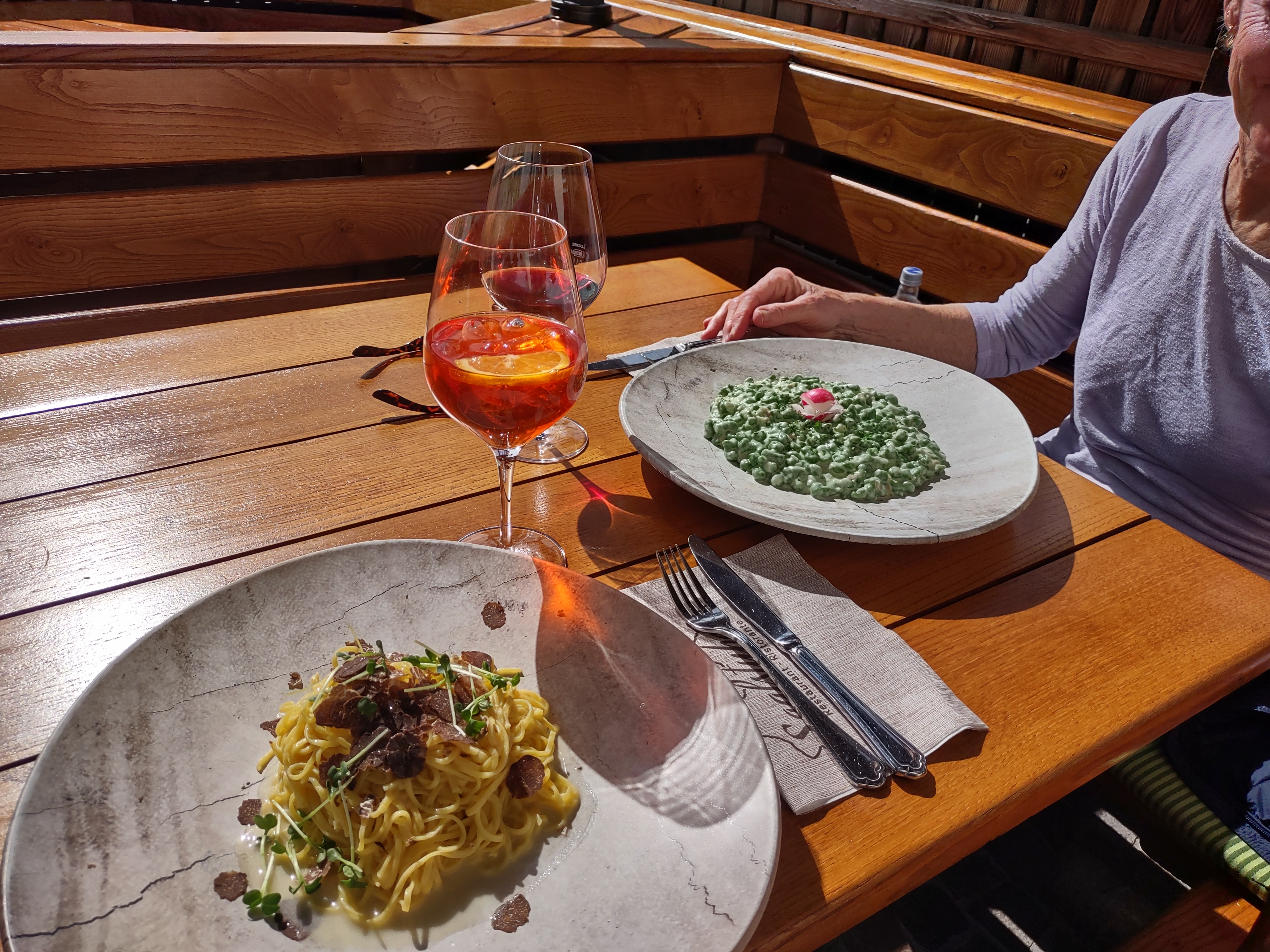
From there we continued our hike through the valley along a stream with waterfalls and rapids, and eventually looped around back to town. We wandered the town a bit and found a great spot in the sun for lunch, at a restaurant called Saalstuben. As many restaurants close in the late afternoon in Italy, we have gotten pretty good at sorting out menus quickly and, based on what we see, coming up with a meal game plan. Most times, we tend to go for appetizers and maybe one entrée and then share. At Saalstuben however we went with two entrees and, even then, it was a little tough to decide. Colleen had an amazing spinach gnochetti and Ritchard had the tagliatelle with black truffles. Probably the best pasta we’ve had so far! We wandered back to the bus stop and had a nice sleepy ride home.
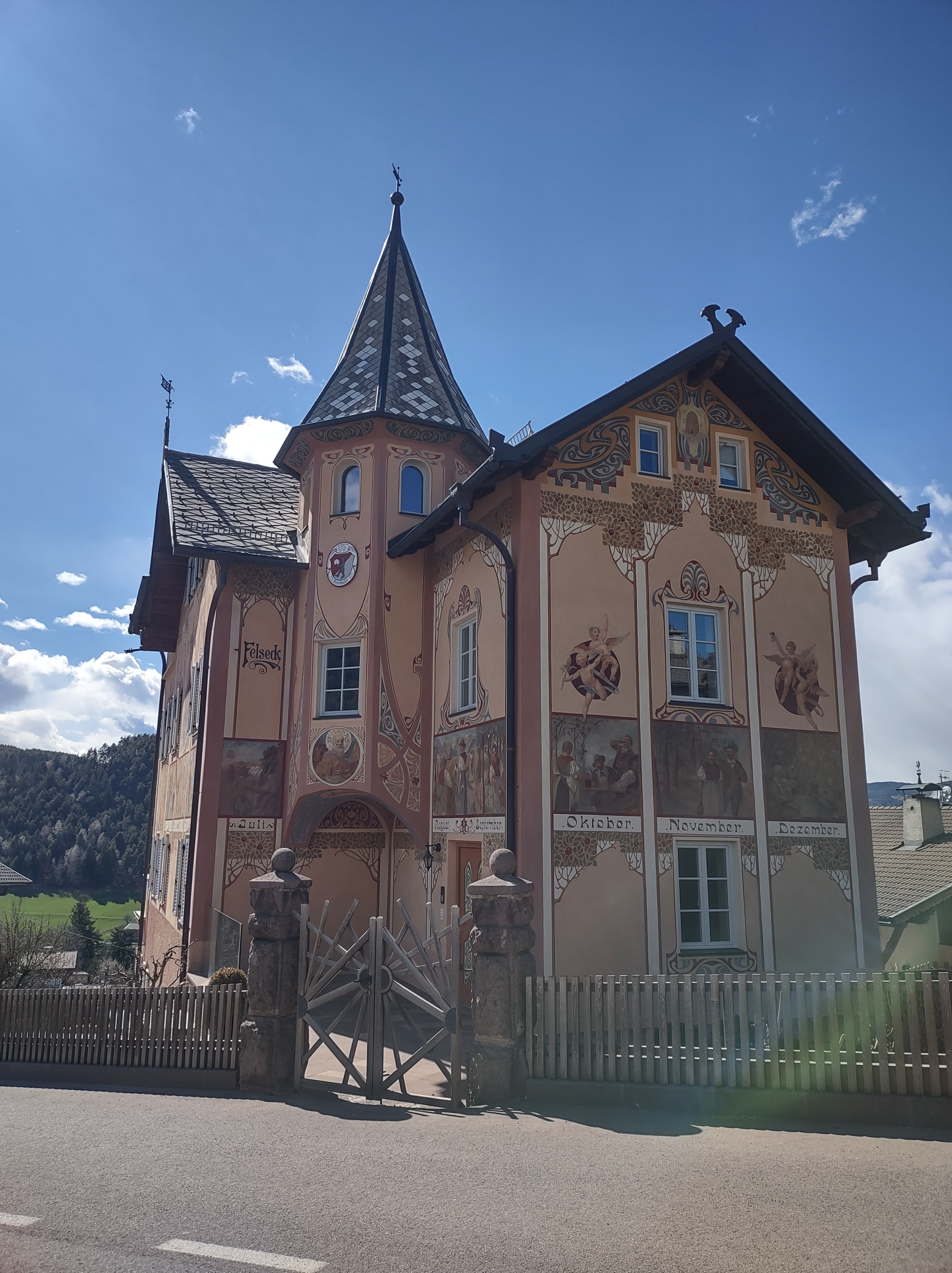


Our second day trip was on Sunday to the town of Santa Cristina Valgardena another small town in the Dolomites which, we discovered, is a center for downhill skiing in the region. We started the day with mass (in German) at the Bolzano Cathedral (a grand space with great acoustics and a great choir) and headed back to the bus station.
Santa Cristina is about 1-1/2 hours from Bolzano and (wished we’d checked this before we went there) is at an elevation of about 5,000 feet above sea level. As we got closer and saw more and more snow we checked the weather and discovered that the temperature in Santa Cristina is more than 20 degrees lower than in Bolzano. Fortunately, we had brought knit hats and gloves and Ritchard had a shell jacket in his backpack (Colleen had worn her down coat). This proved enough (just barely) to deal with the cold.
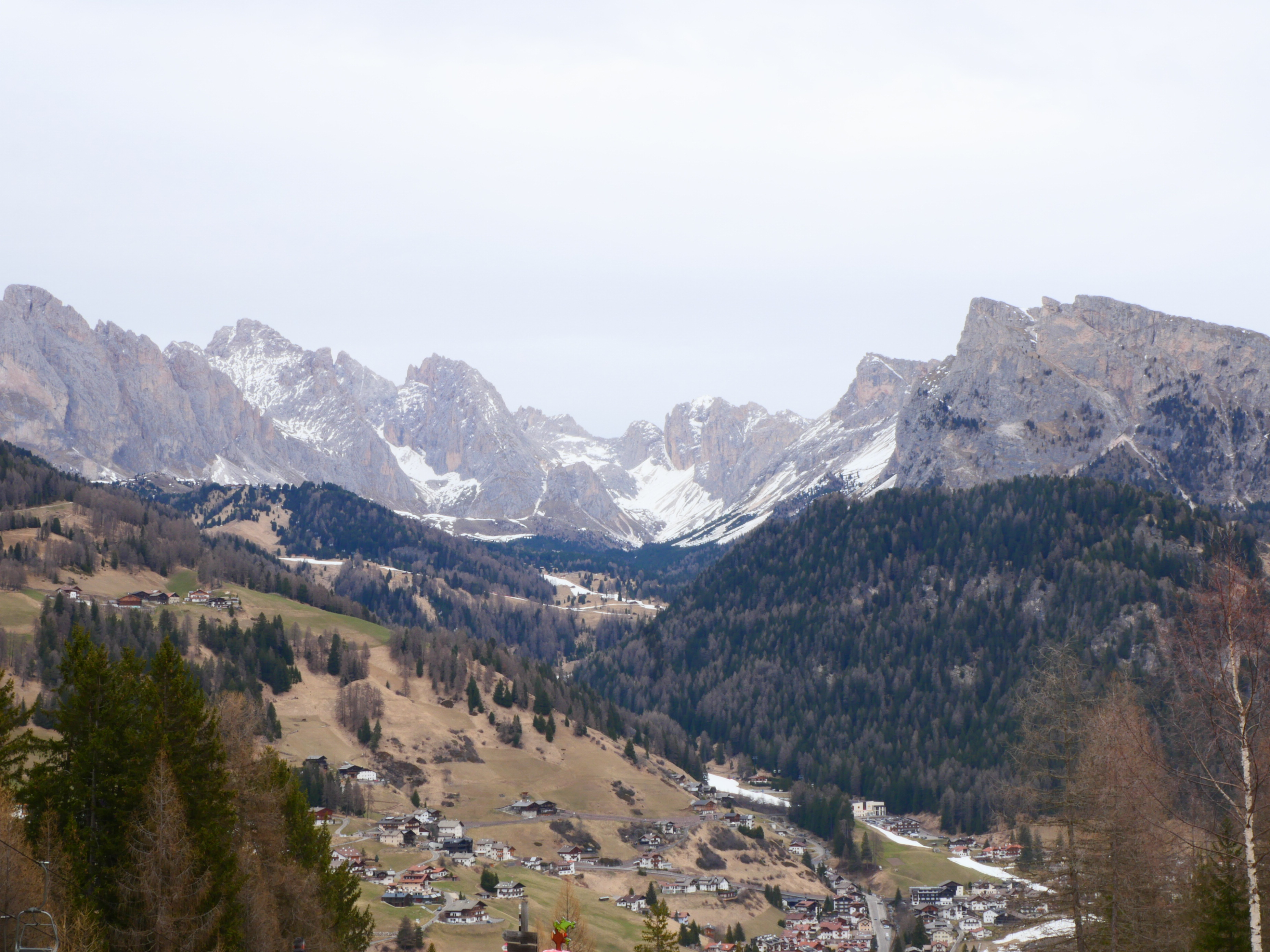

To Colleen’s delight (at least at first) we had to ride a ski lift up the mountain in order to get to the trail we planned on hiking. Let’s just say it got even colder on the ski lift. But, once we got to the top of the lift and started our hike our attention quickly shifted to the scenery, which was just awesome. Did not touch on this earlier, but the Dolomites, which are technically part of the Alps, have a rather unique appearance, typically with many very steep jagged peaks. As we walked up the trail and got closer to the peaks it just got better and better.
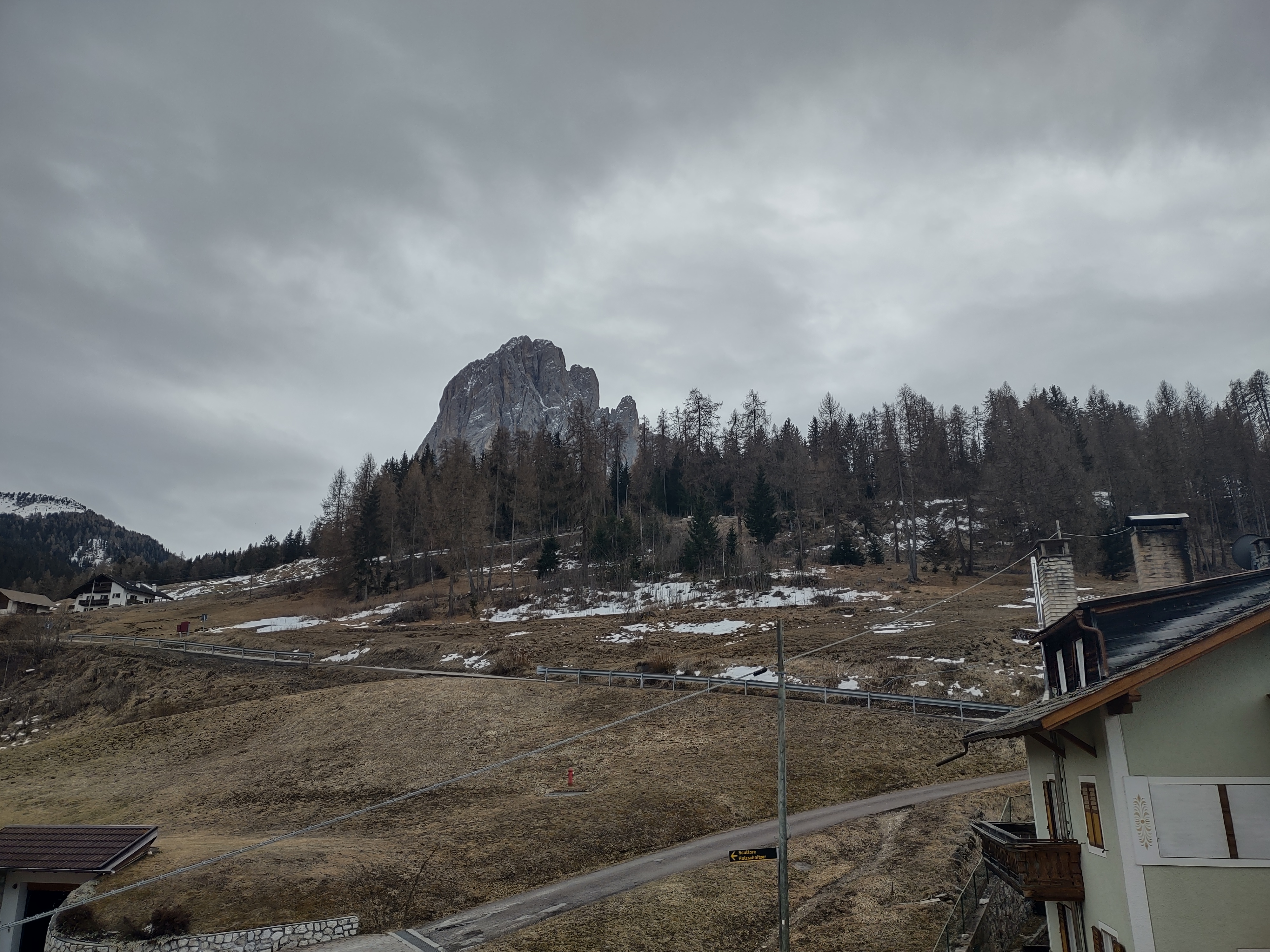
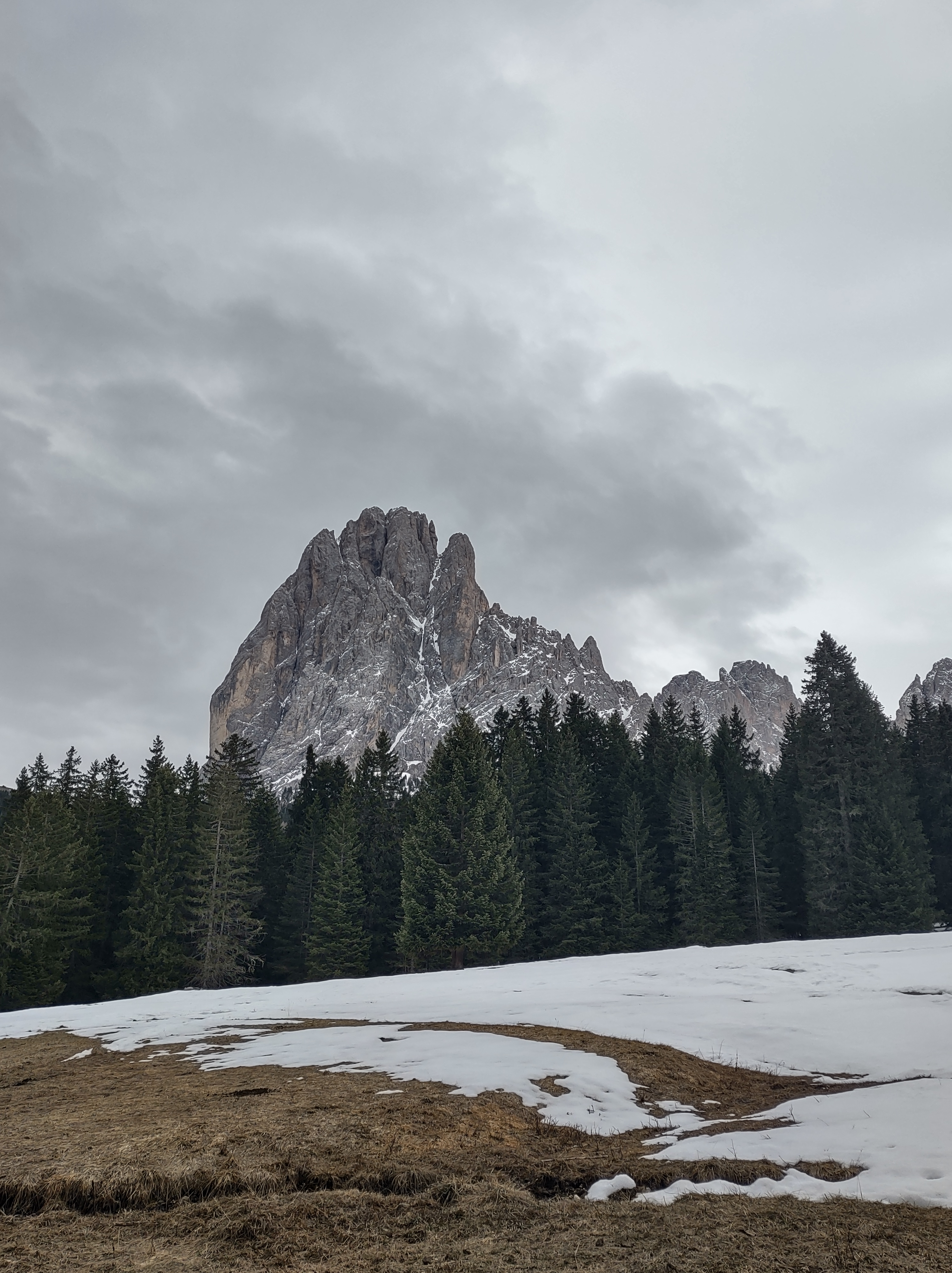


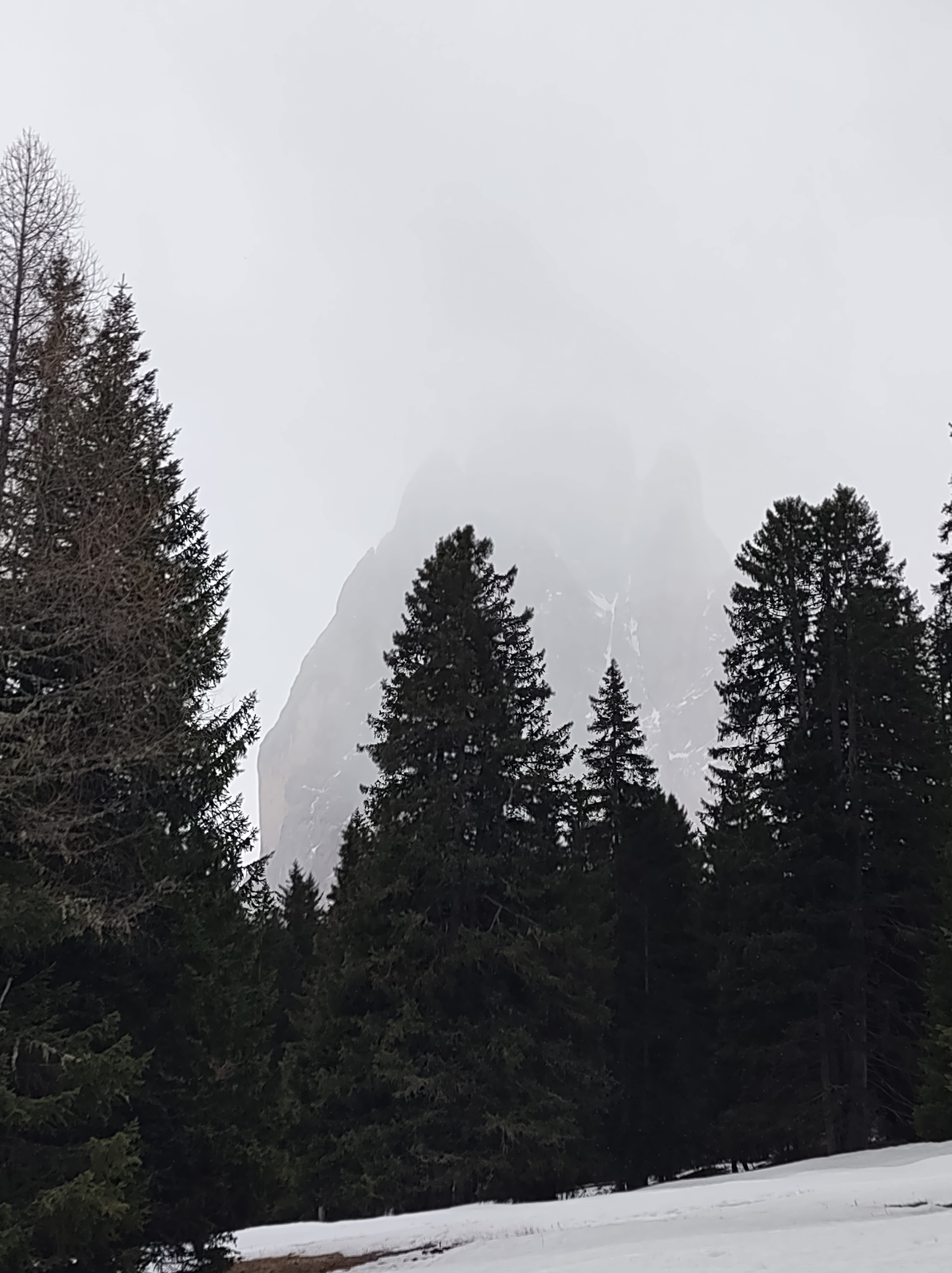
After hiking uphill for a couple of miles, we noticed that it was starting to snow lightly and decided to start back down. As we descended the trail the snow picked up and we noticed that the clouds were closing in and, by the time we reached the bottom, you could no longer see the mountain peaks above.
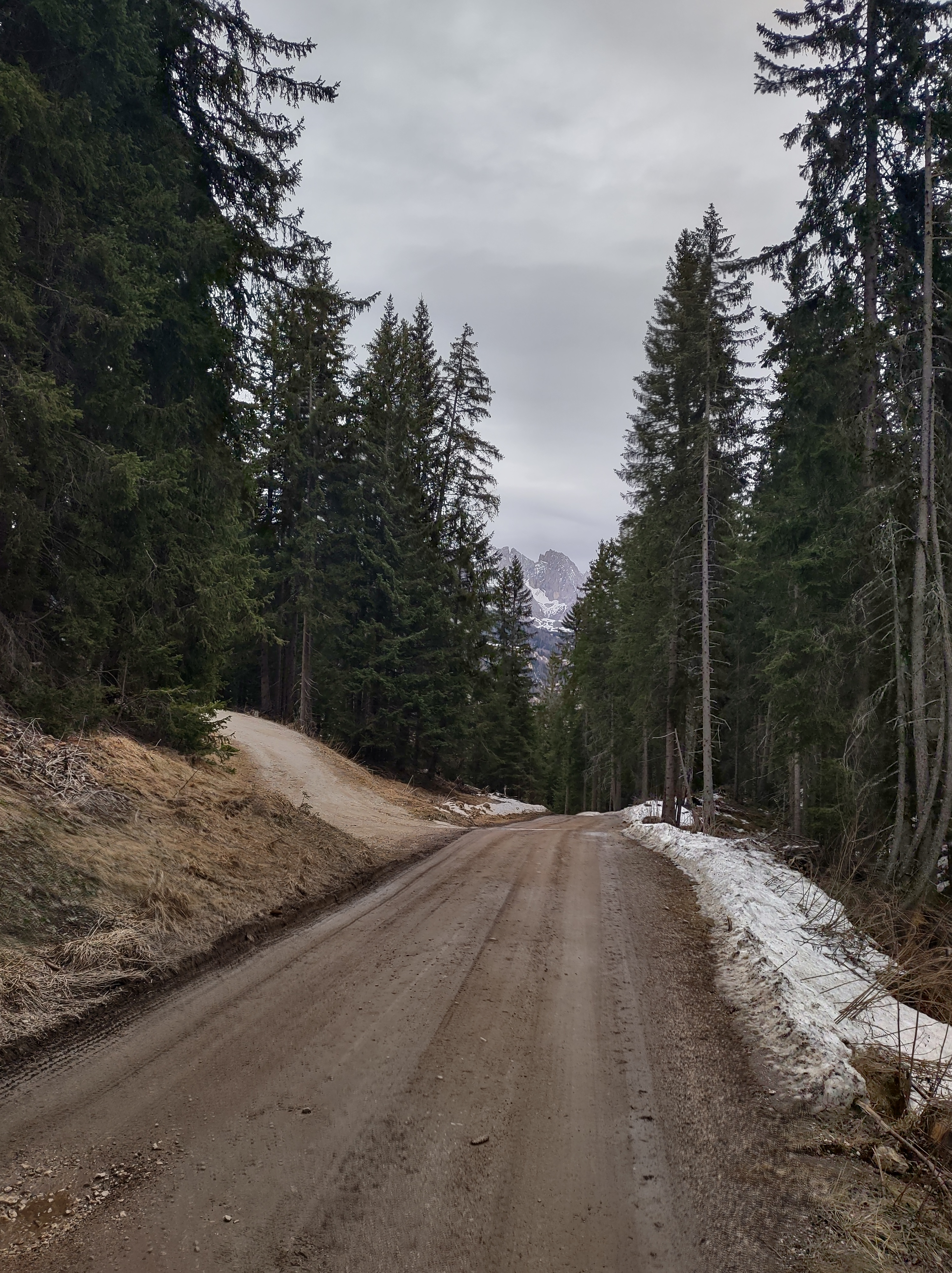
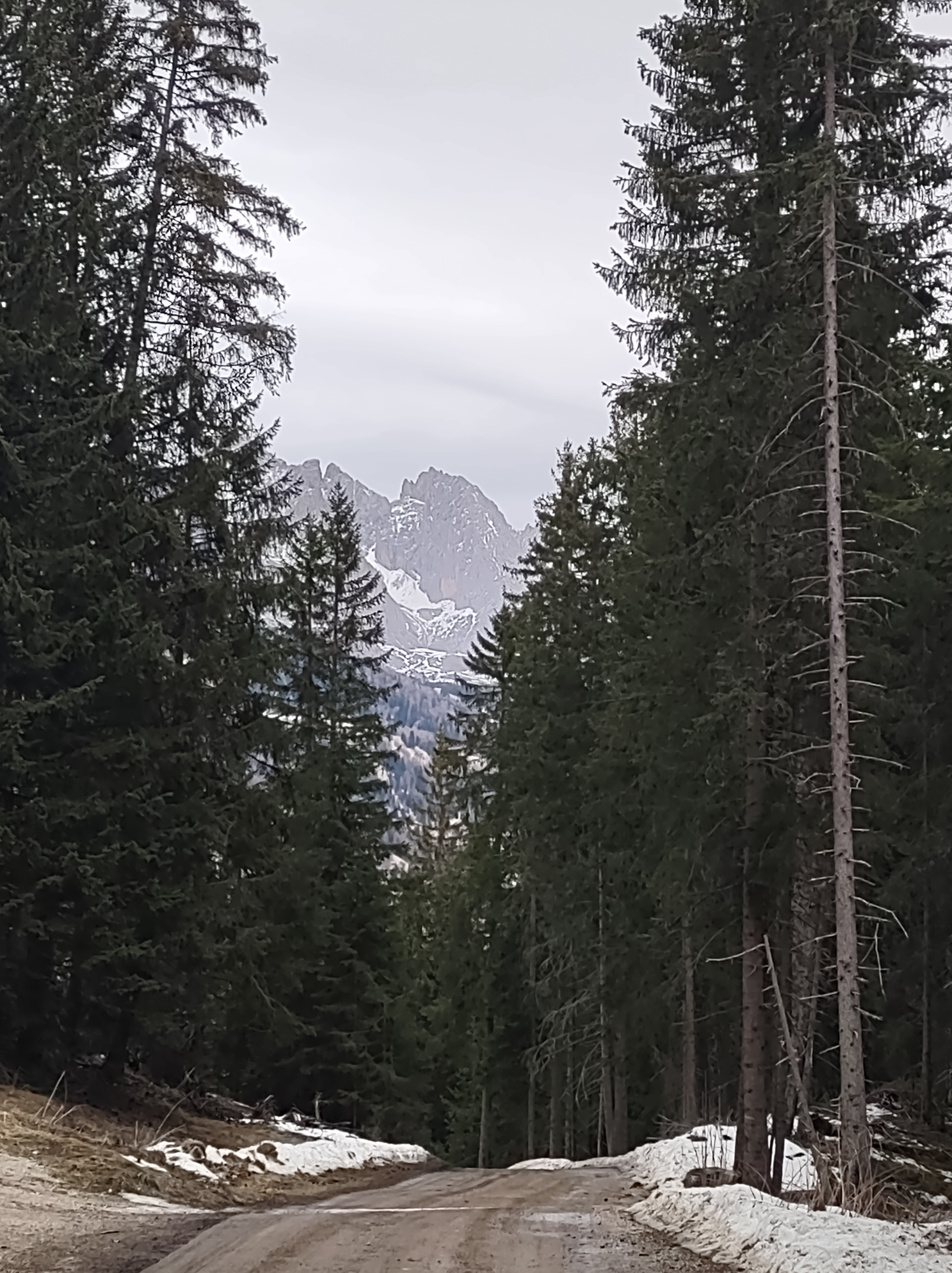


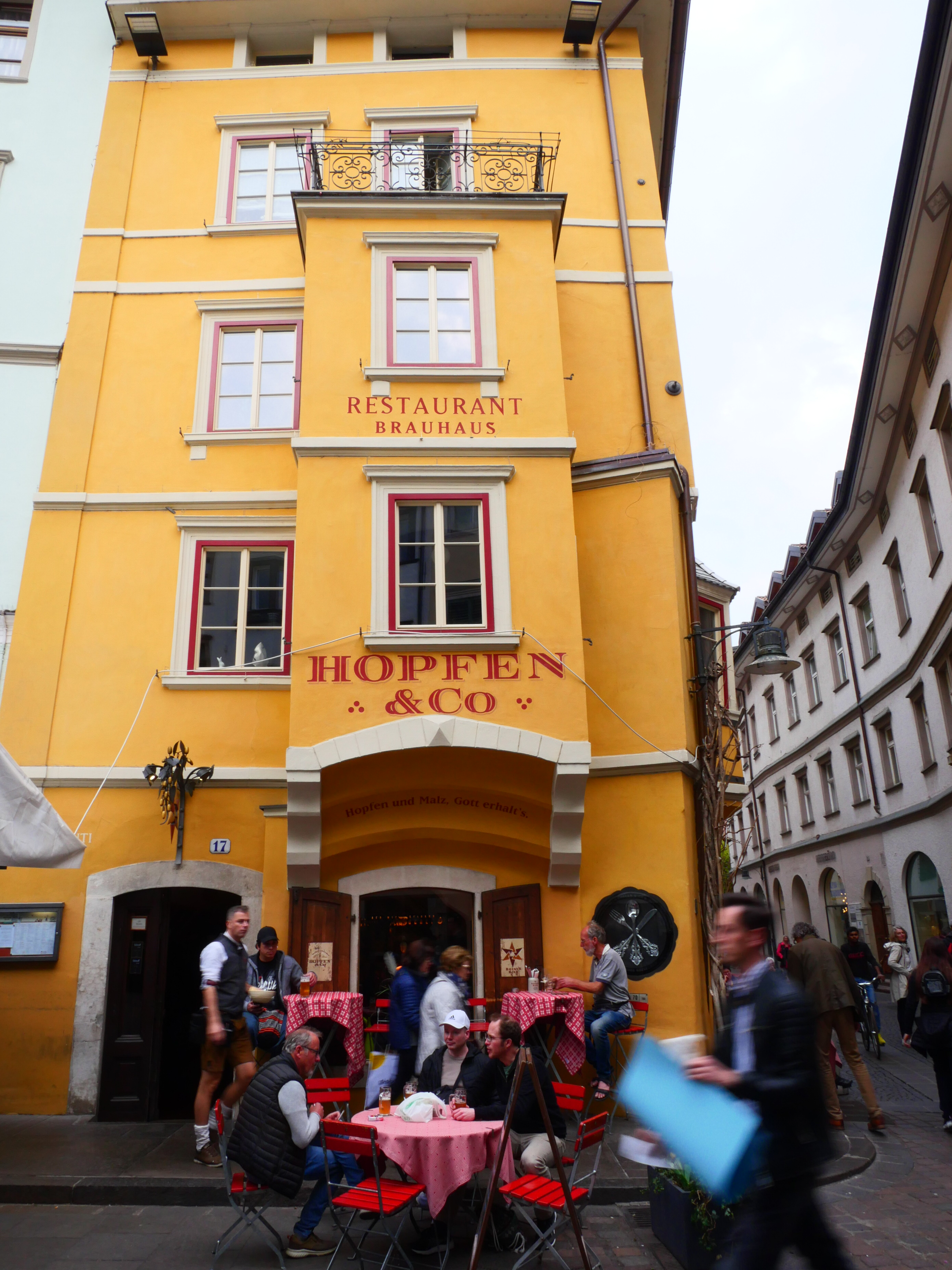
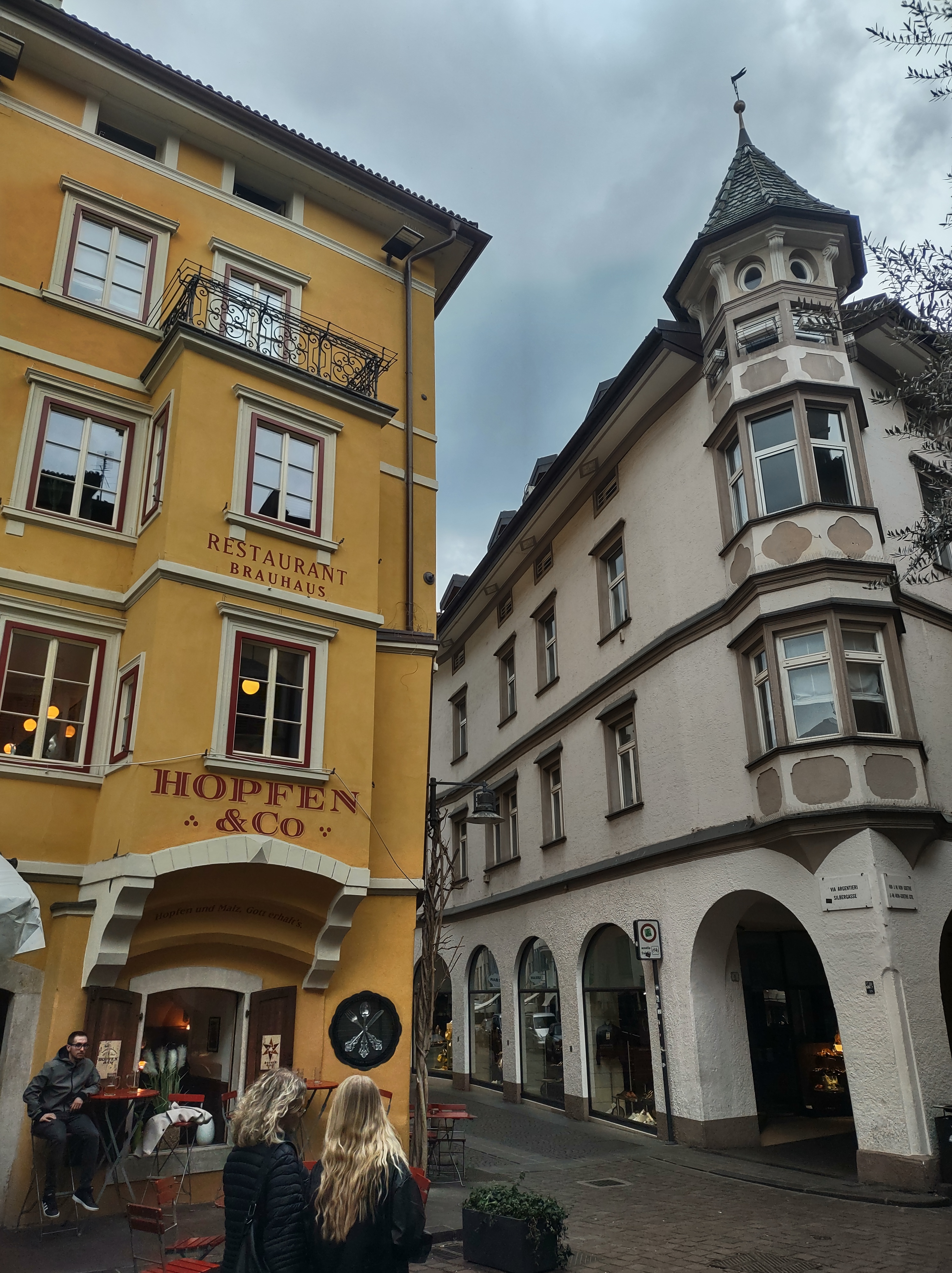
Our timing was good and we were able to hop on a bus almost right away and warm up on the ride home. We had another awesome meal at Hopfen & Co., the oldest craft brewery in South Tyrol (35 years and counting). Colleen had an amazing spicy ghoulish and Ritchard enjoyed a return to Vienna with the Weiner schnitzel accompanied with some great beer. A perfect meal after a cold day of hiking!


The Mercantile Museum
Because getting out of town was our priority in Bolzano, we had only one full day in town which, unfortunately, turned out to be a Monday – the day that most museums were closed. On previous days, we had noticed signs in the arcade where our apartment was located for a mercantile museum, just a couple of doors down. Ritchard had noticed that the museum also appeared to have an entrance on the other side of our block. However, the museum never appeared to be open. Upon further investigation, we were able to confirm that Monday was one of the days when it was open (but closing at 12:30 PM) so we started our last day there.
So, what, you might ask, is a mercantile museum? (we did) As the name suggests, the museum documents the mercantile history of Bolzano, but the building which houses it is interesting in its own right. Built in the 18th century, it was designed by the Veronese architect Francesco Perotti and, for over a century, it housed the Merchant Court, a special court founded in 1635 whose purpose was to resolve disputes during the four annual mercantile fairs in Bolzano. Kind of a people’s court for merchants. (Although probably worth remembering that the merchants came from several different provinces and countries, so there were a lot of politics at play here.)

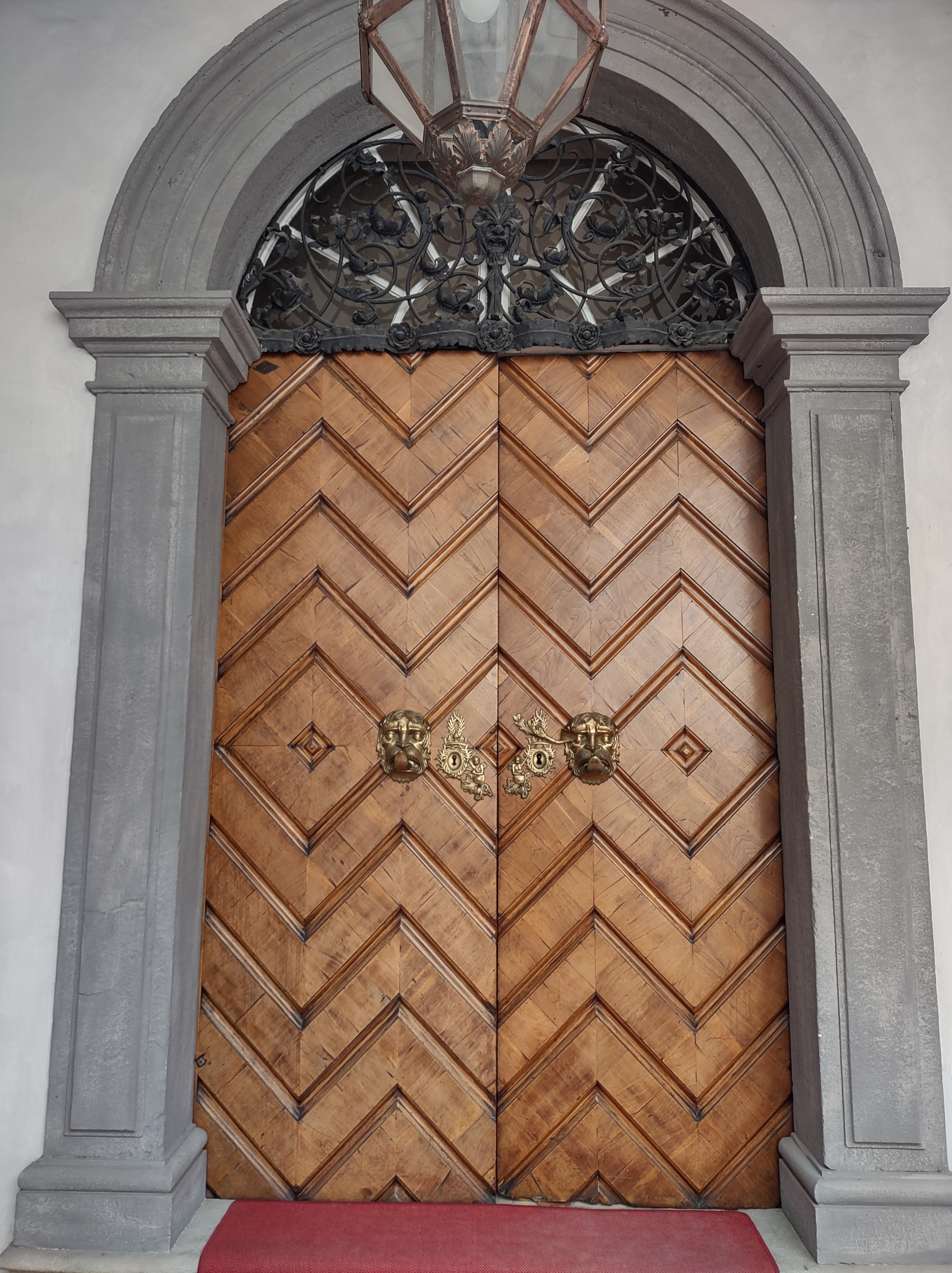
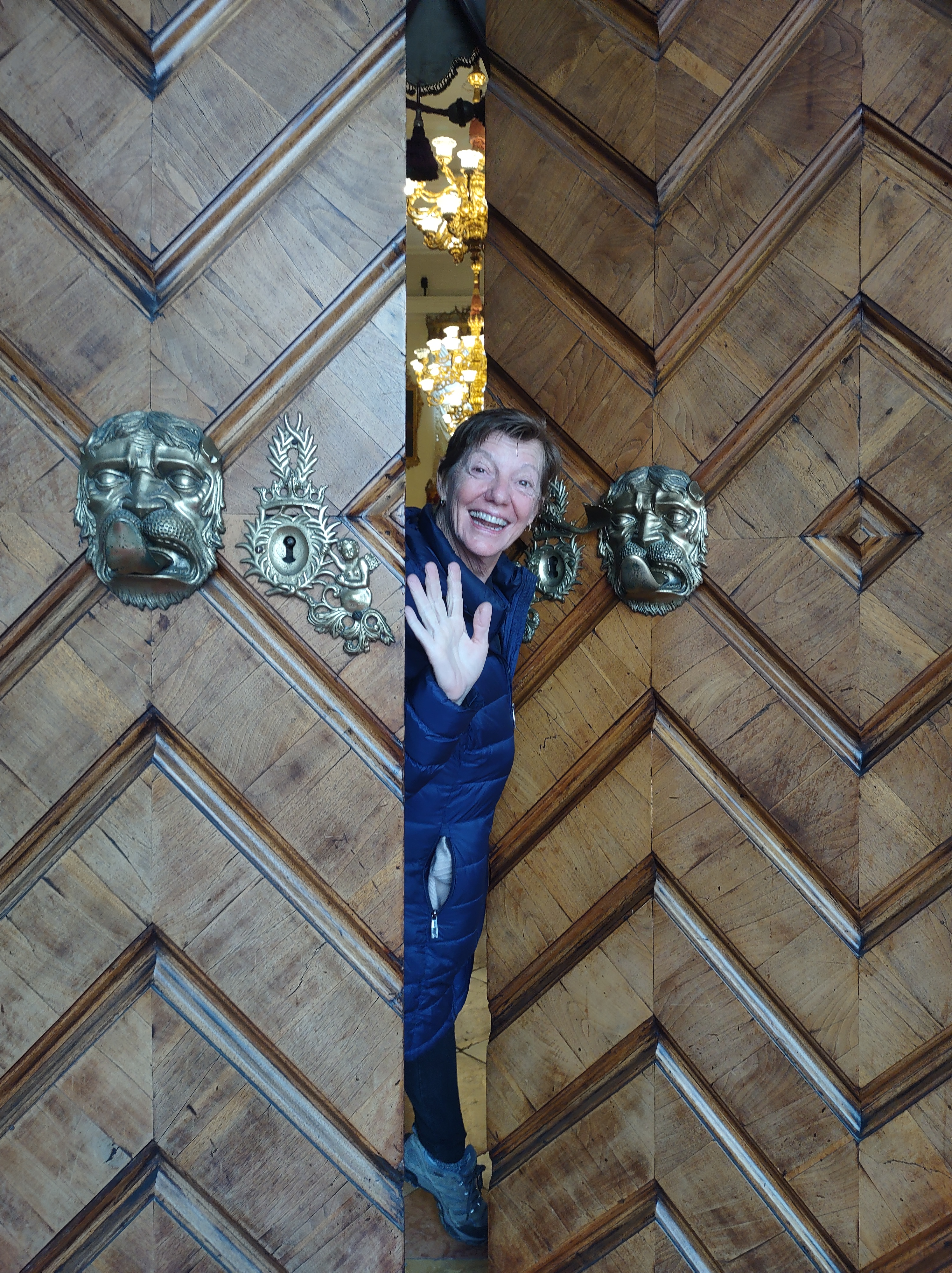

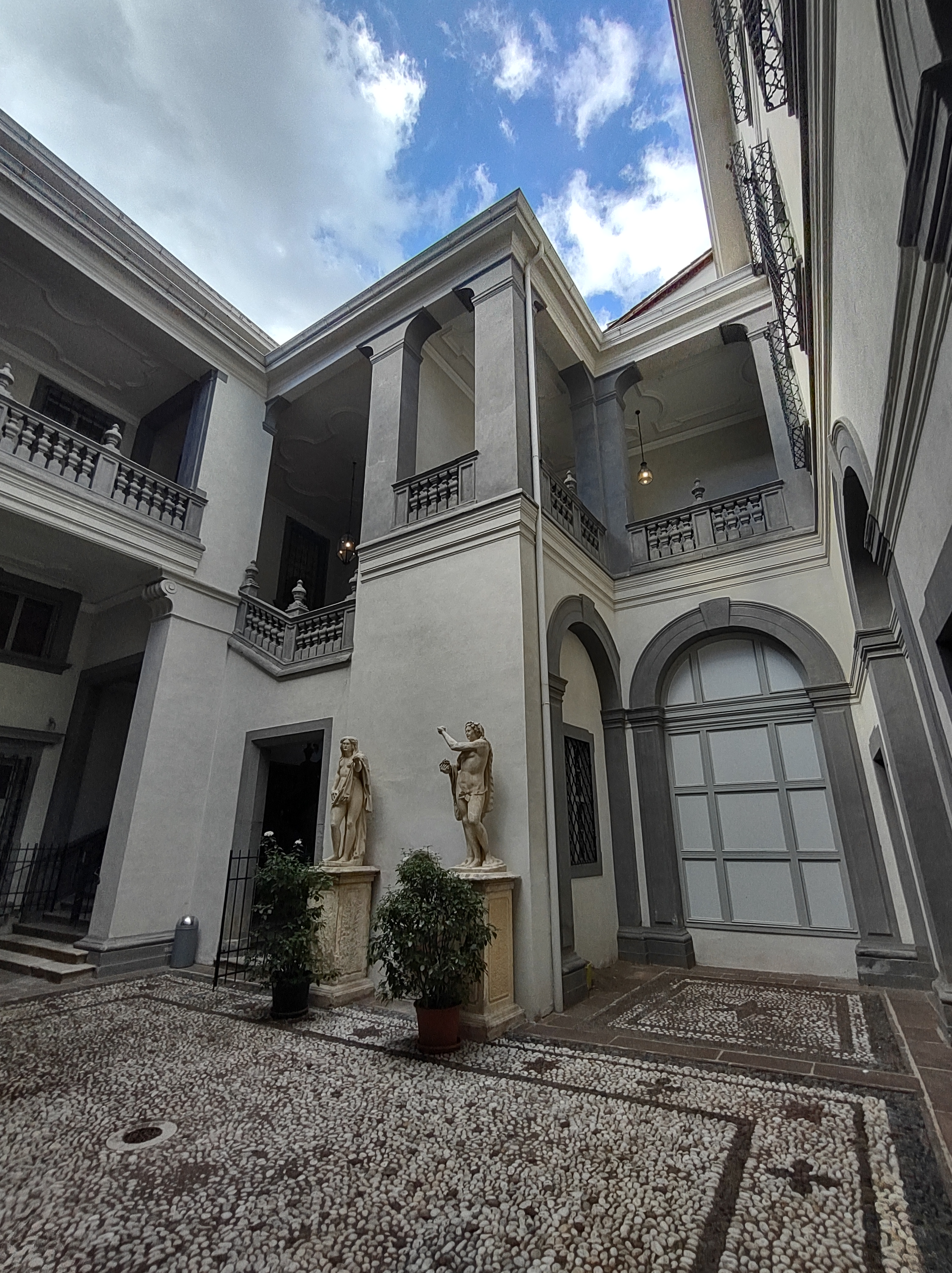
We discovered that the entrance near our apartment led through an original structure to a courtyard which joined it with the palazzo on the other side of the block, which more or less turns out to be the court house (if you will), while the structure on our side of the block housed administrative offices, among other things. The court room includes the original furnishings and has a “prosceniumed” area where the judges sat to preside over the proceedings with an adjoining dressing room for donning robes. It was easy to imagine merchants pleading their cases in this space.
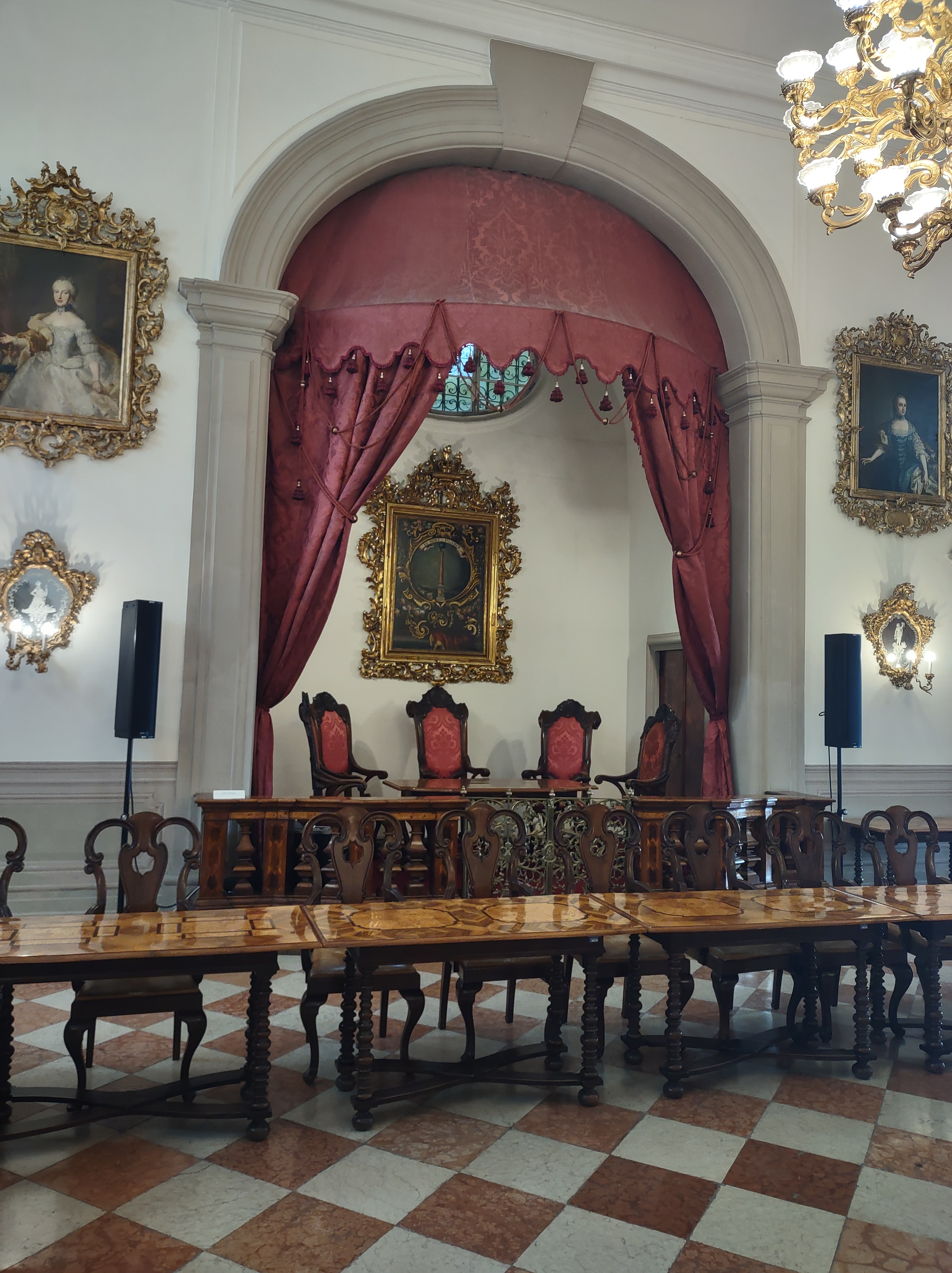
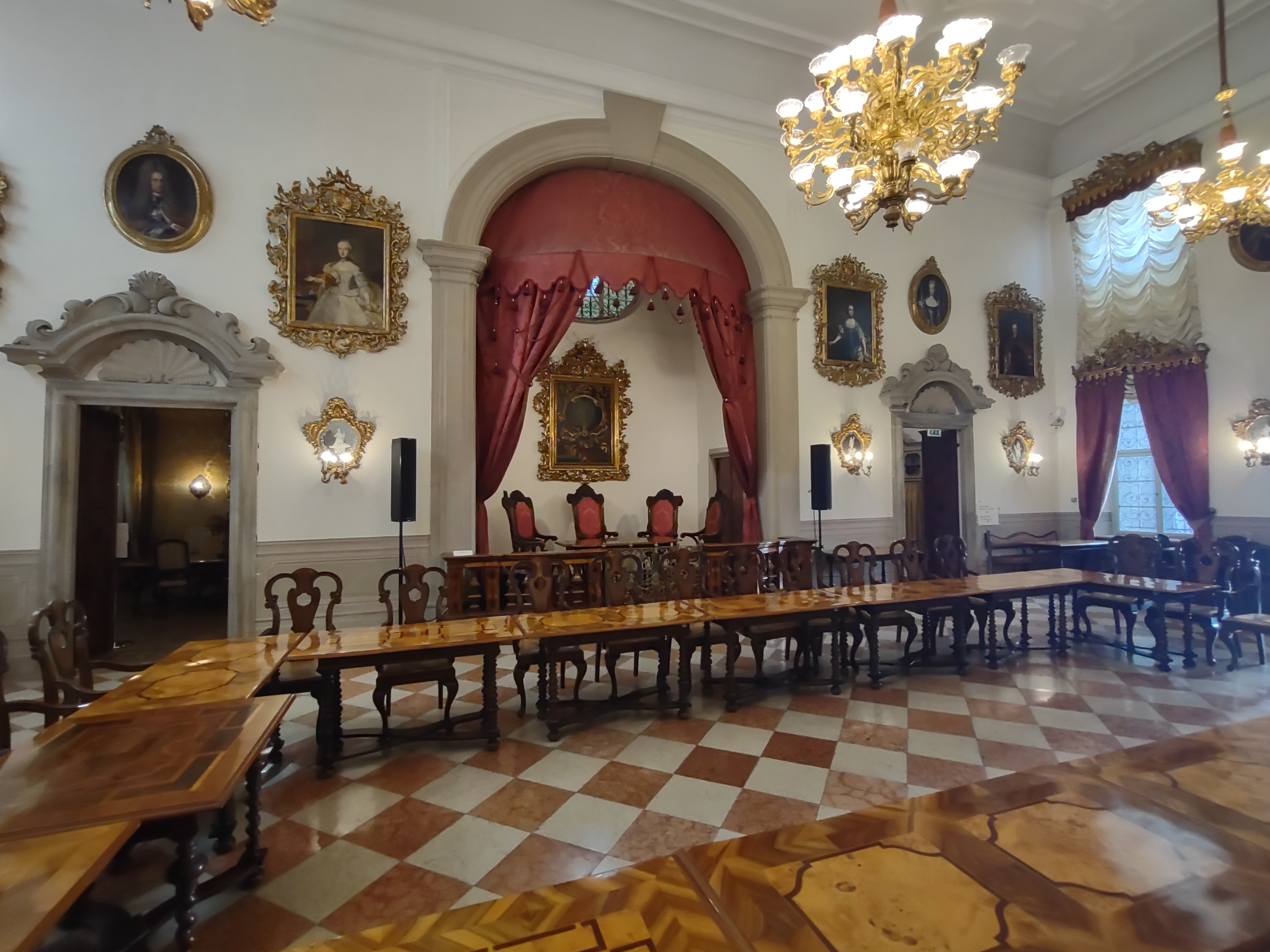
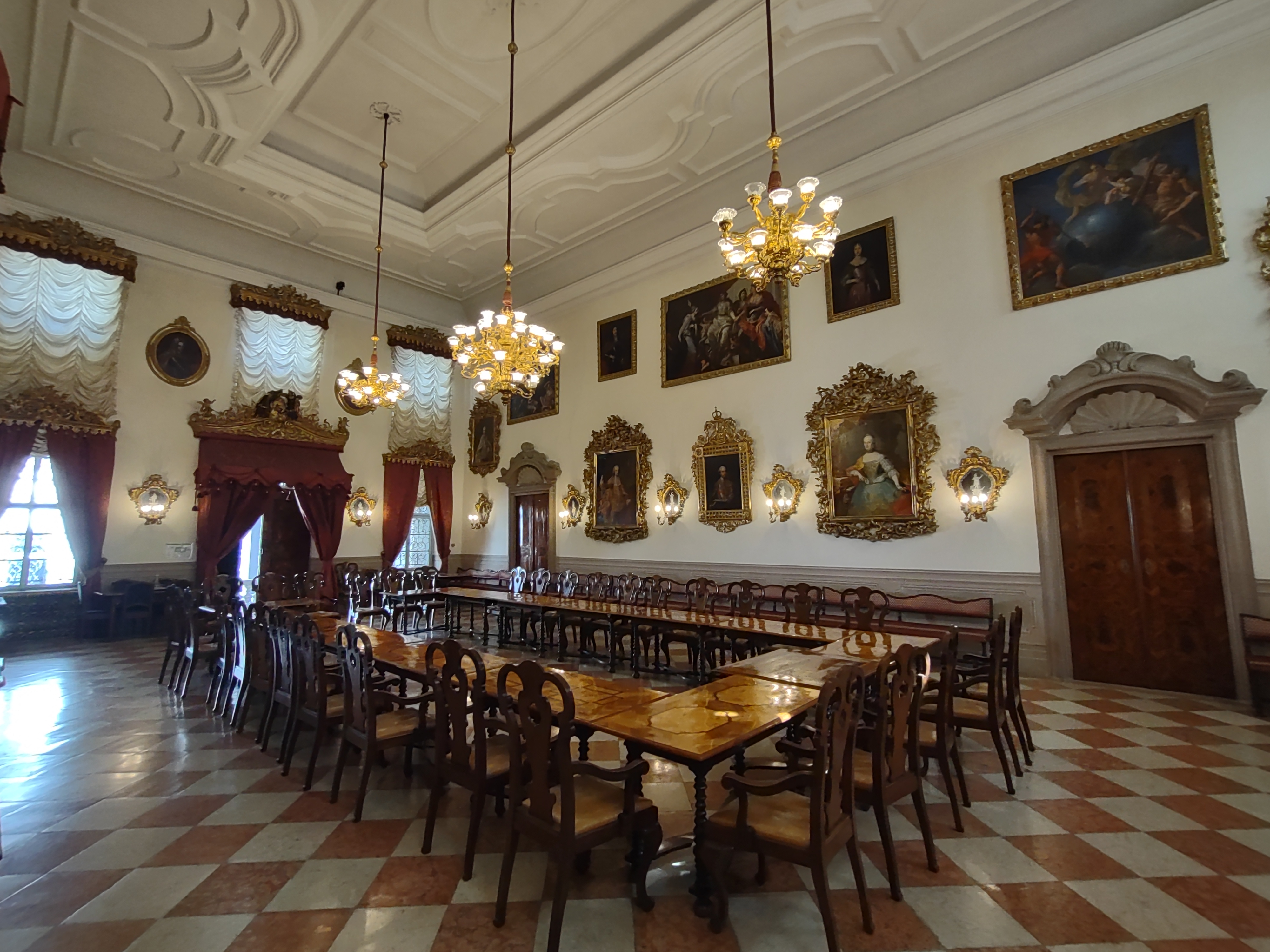
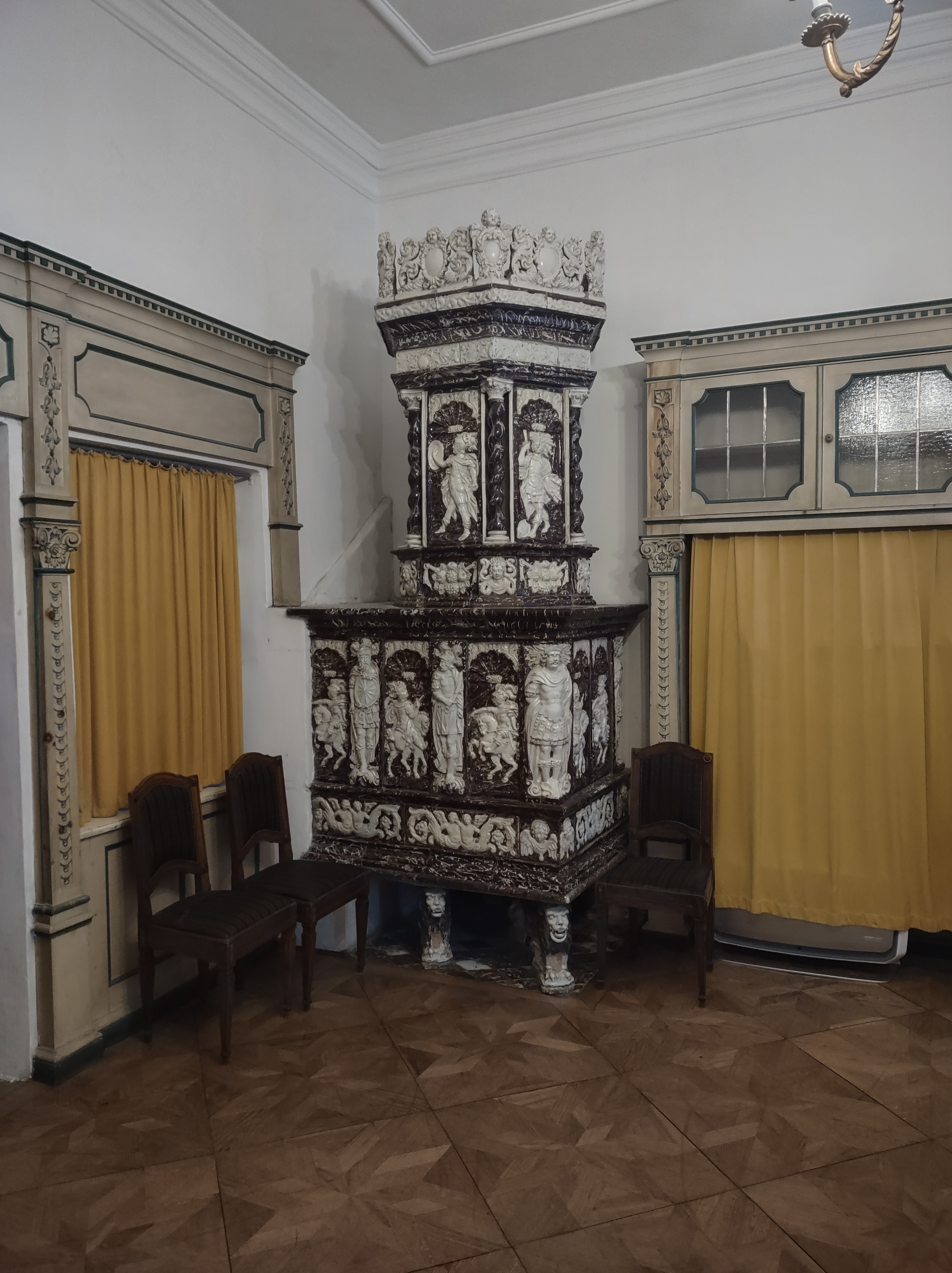
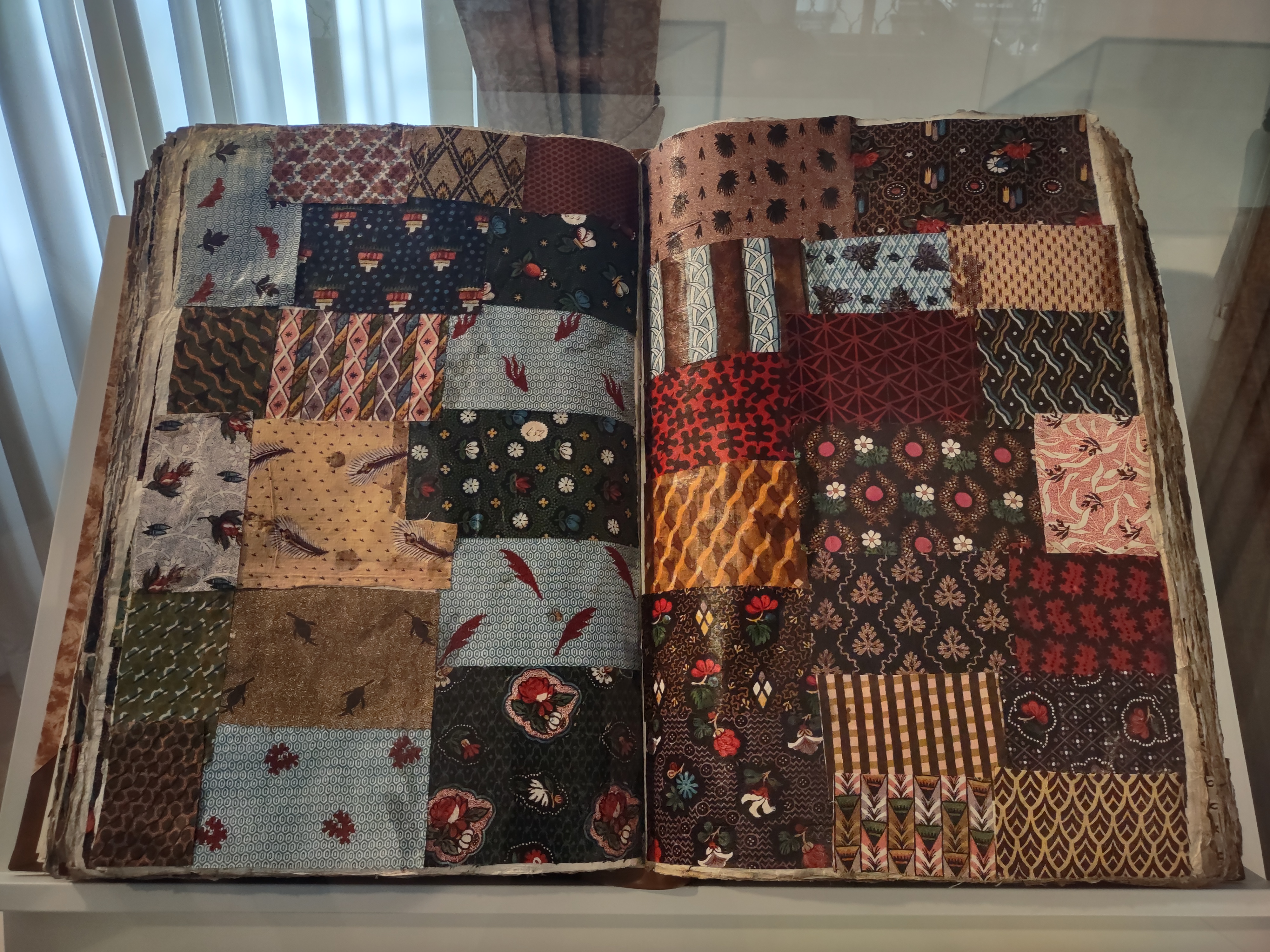
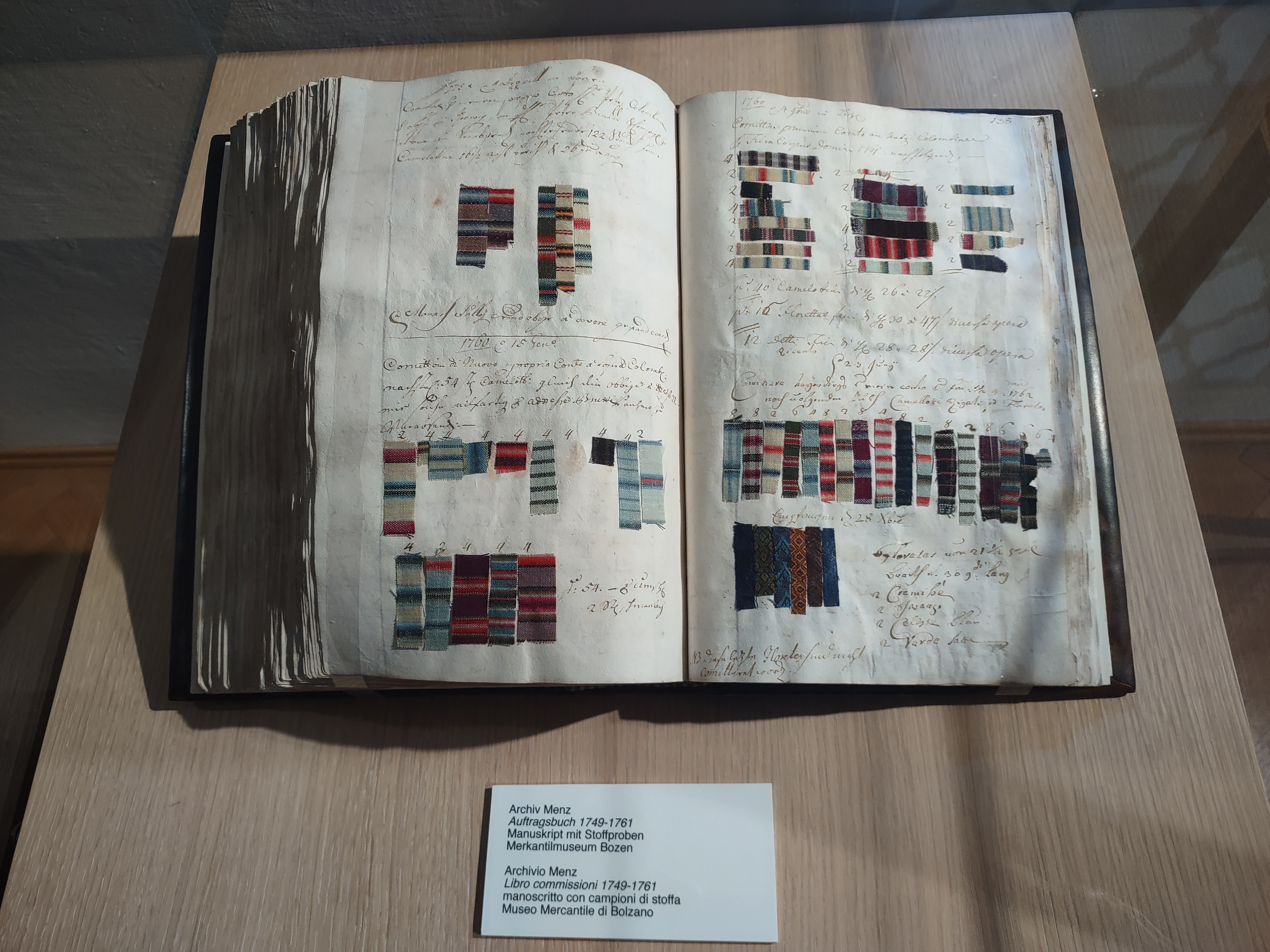
In addition to original furnishings, some of the rooms had ornate enameled cast iron stoves in them, but we couldn’t figure out where the smoke from these went. Where original furnishings were not included in some areas, there were displays on various topics related to the history of mercantilism and trade in Bolzano. Among some of the more interesting displays were these books which contained swatches of hundreds, if not thousands, of fabric weaving patterns. It appears that these patterns were registered and sort of patented and that the books were for reference in case of a dispute.

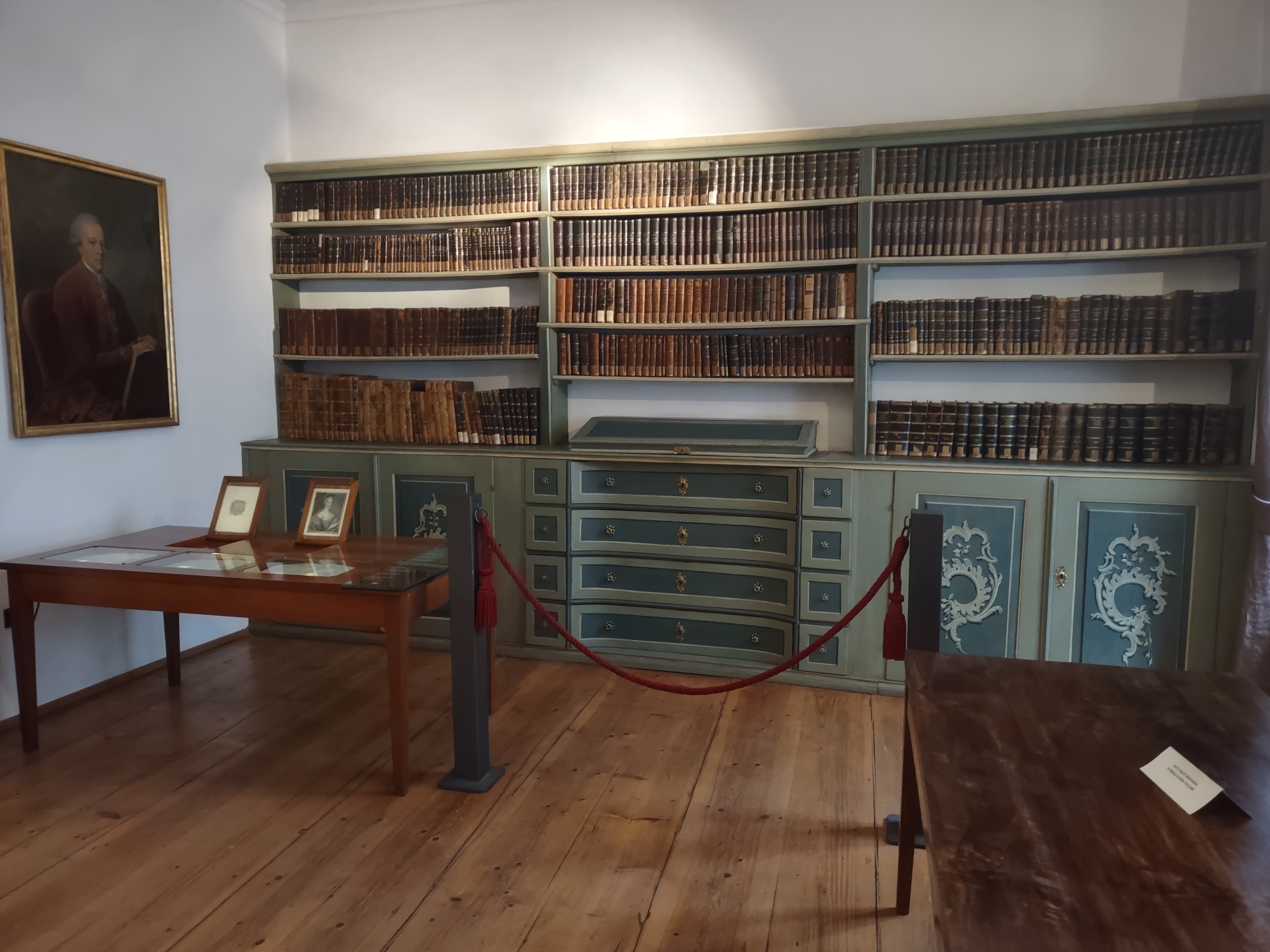



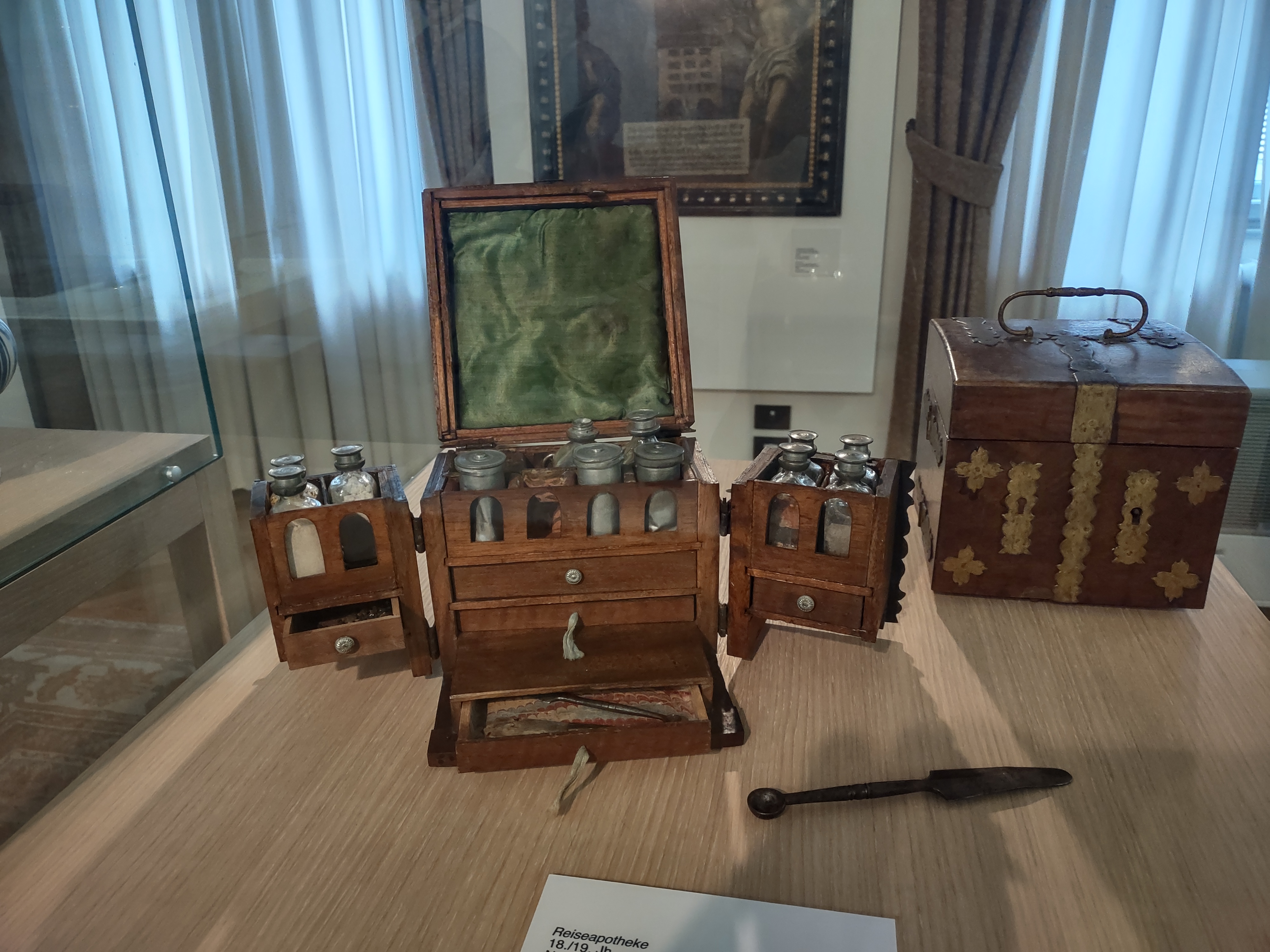
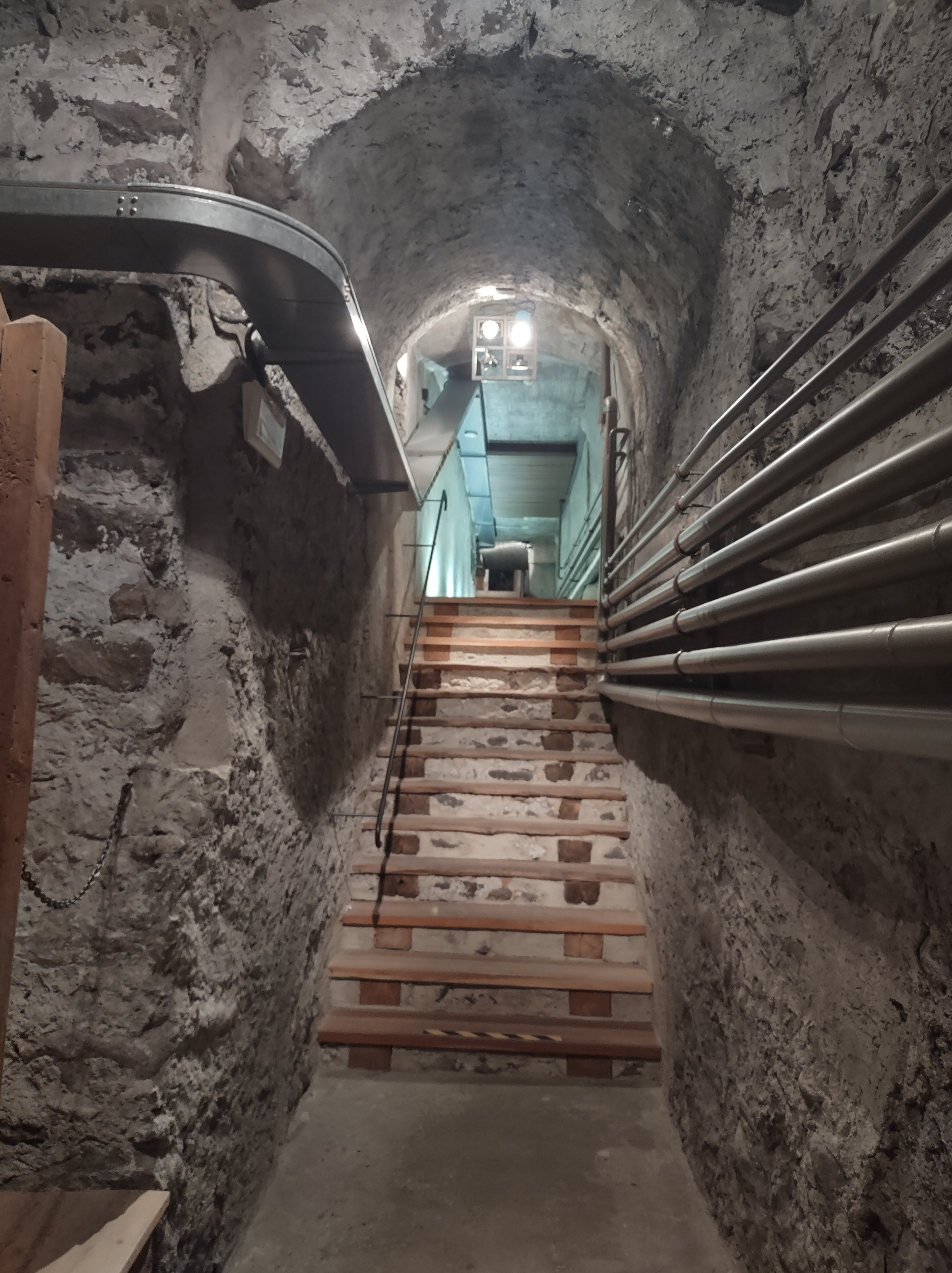
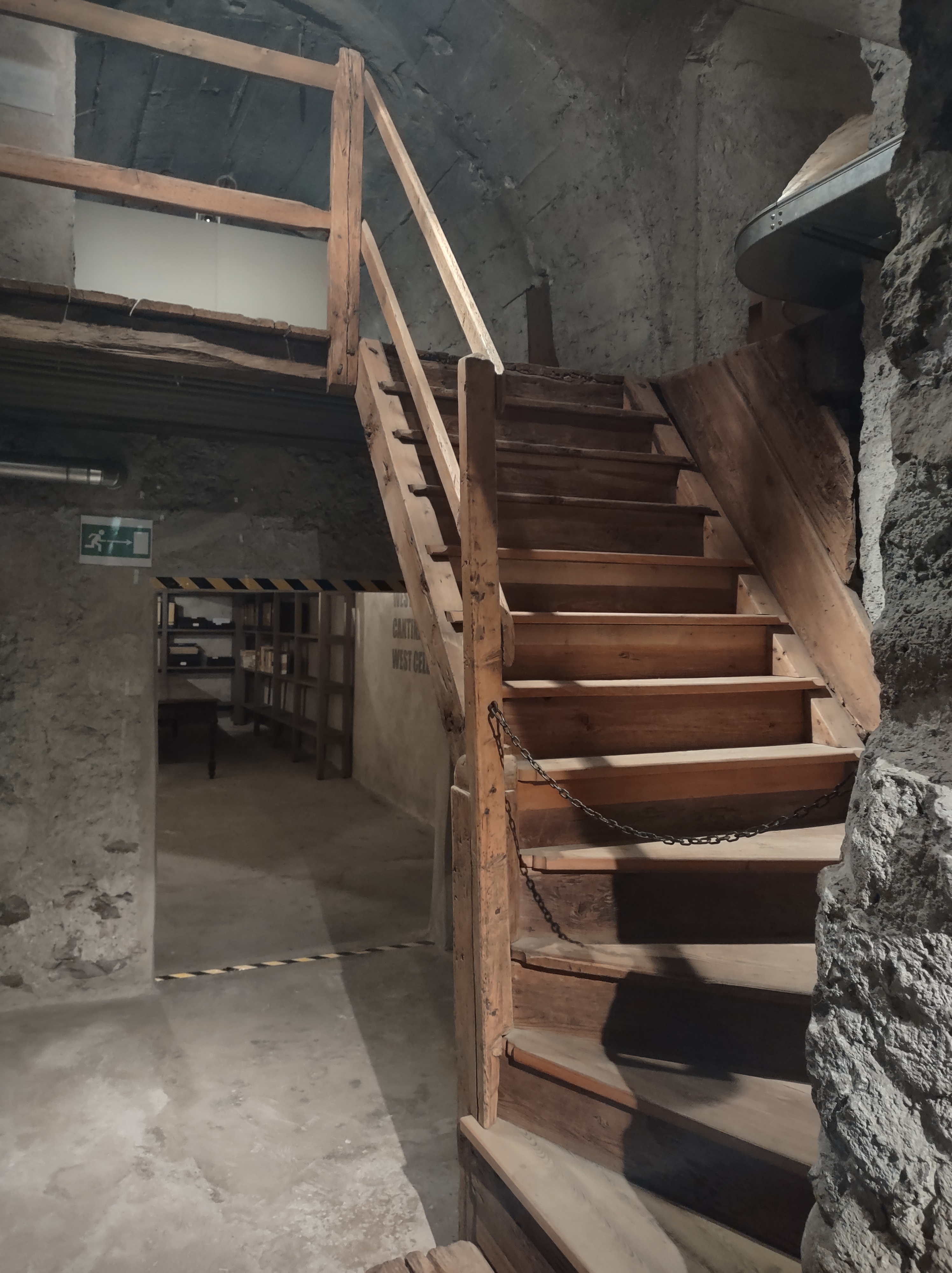
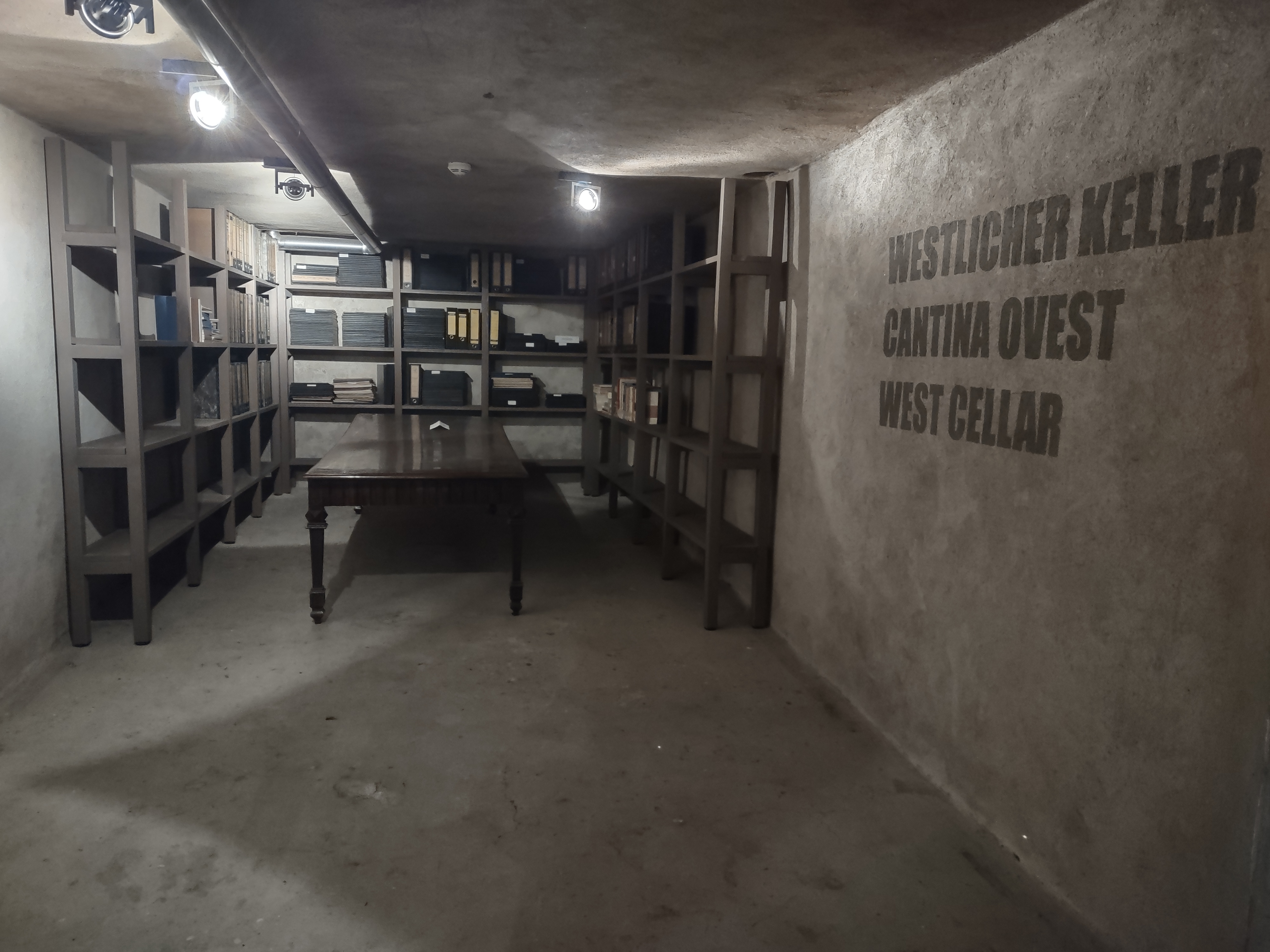
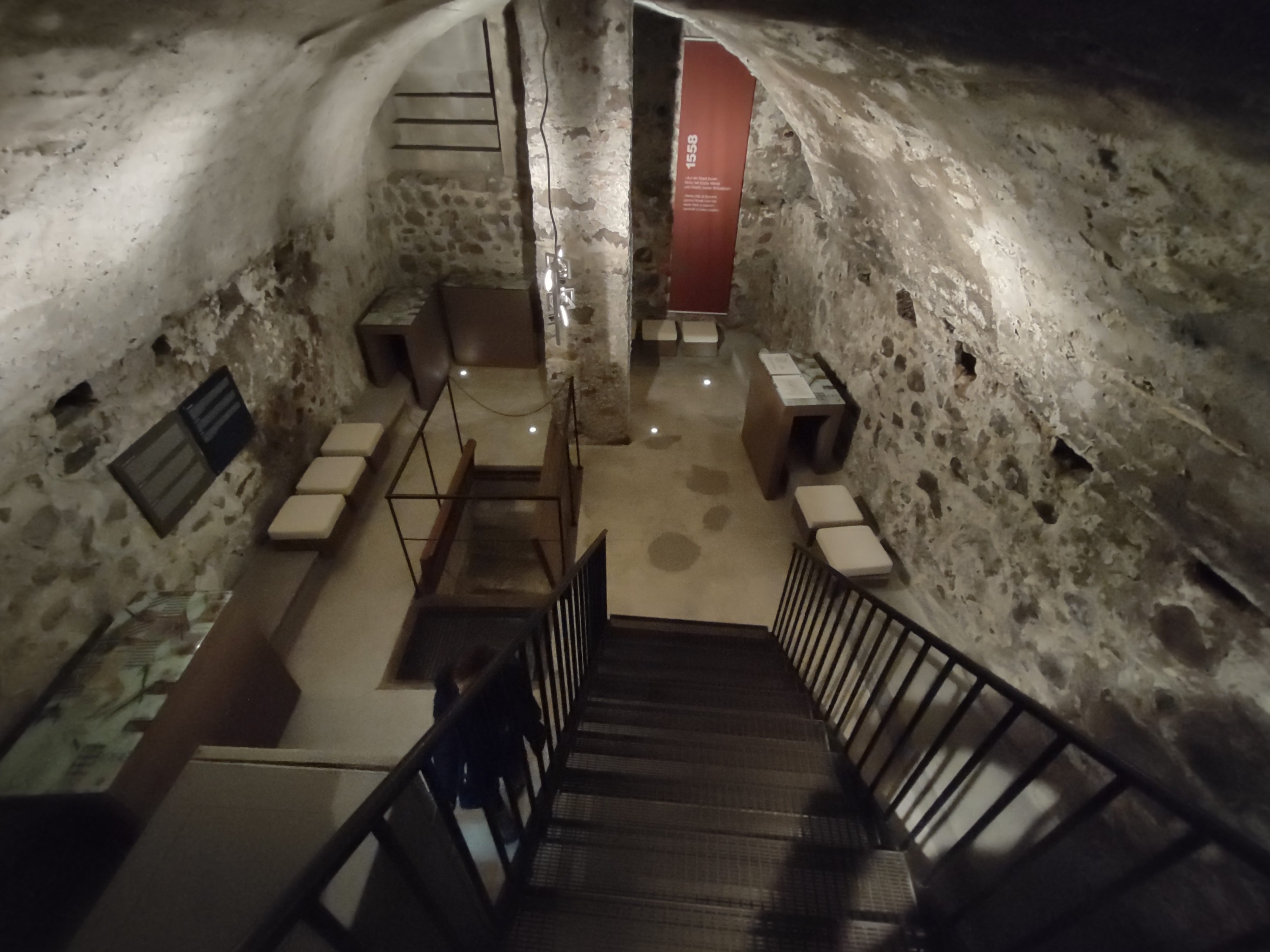
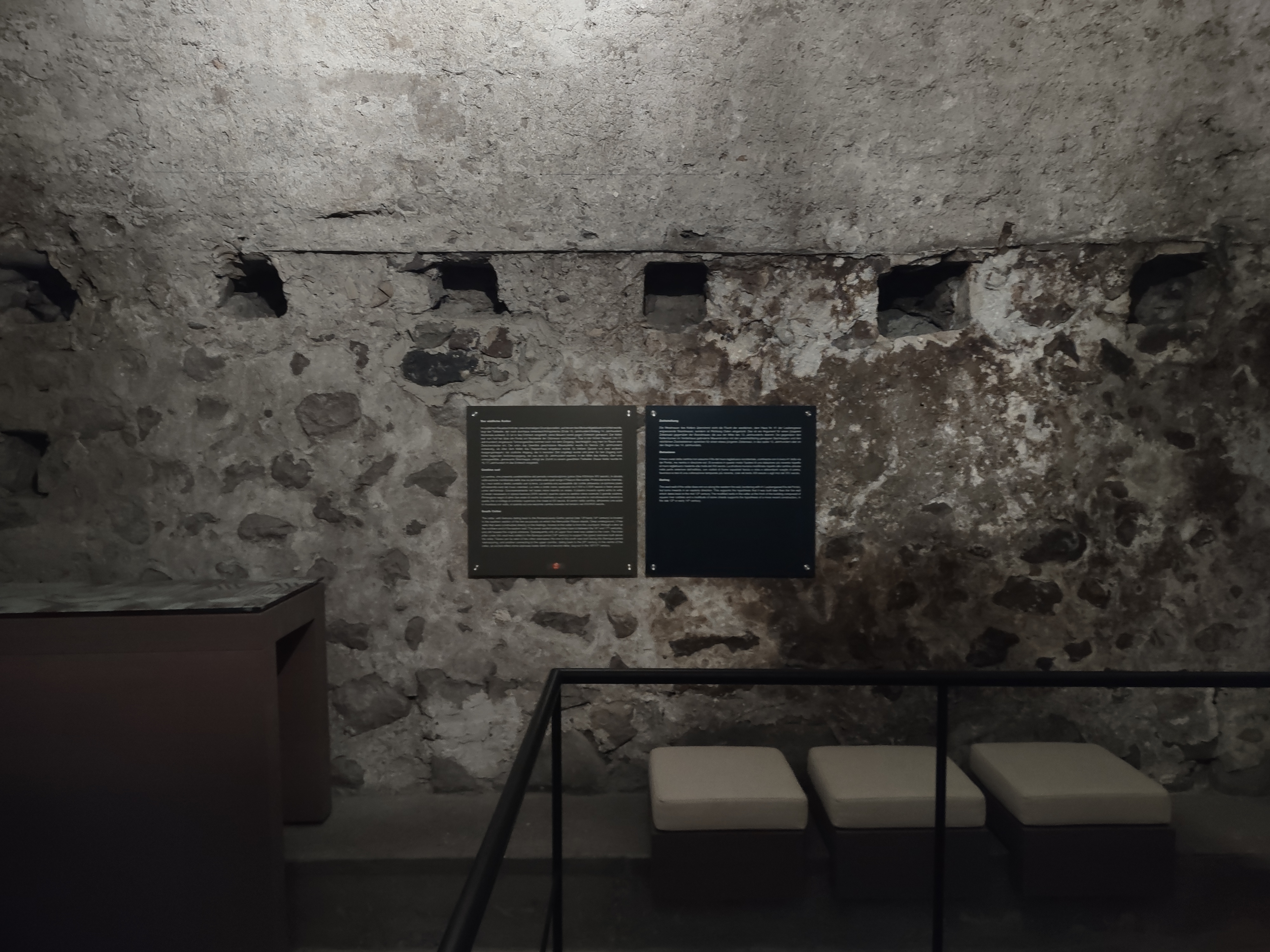
The museum spanned several floors and there was a lot more to see than we had anticipated. We thought we were on our way out the door when Colleen noticed a stair to what appeared to be a basement. The stair led to a vaulted subterranean rooms with passages and other stairs branching off into what became a bit of a labyrinth and we’re pretty sure that at some point we were under the street in front of our apartment. Fortunately, we were able to find our way out and proceeded to the gift shop and our exit.


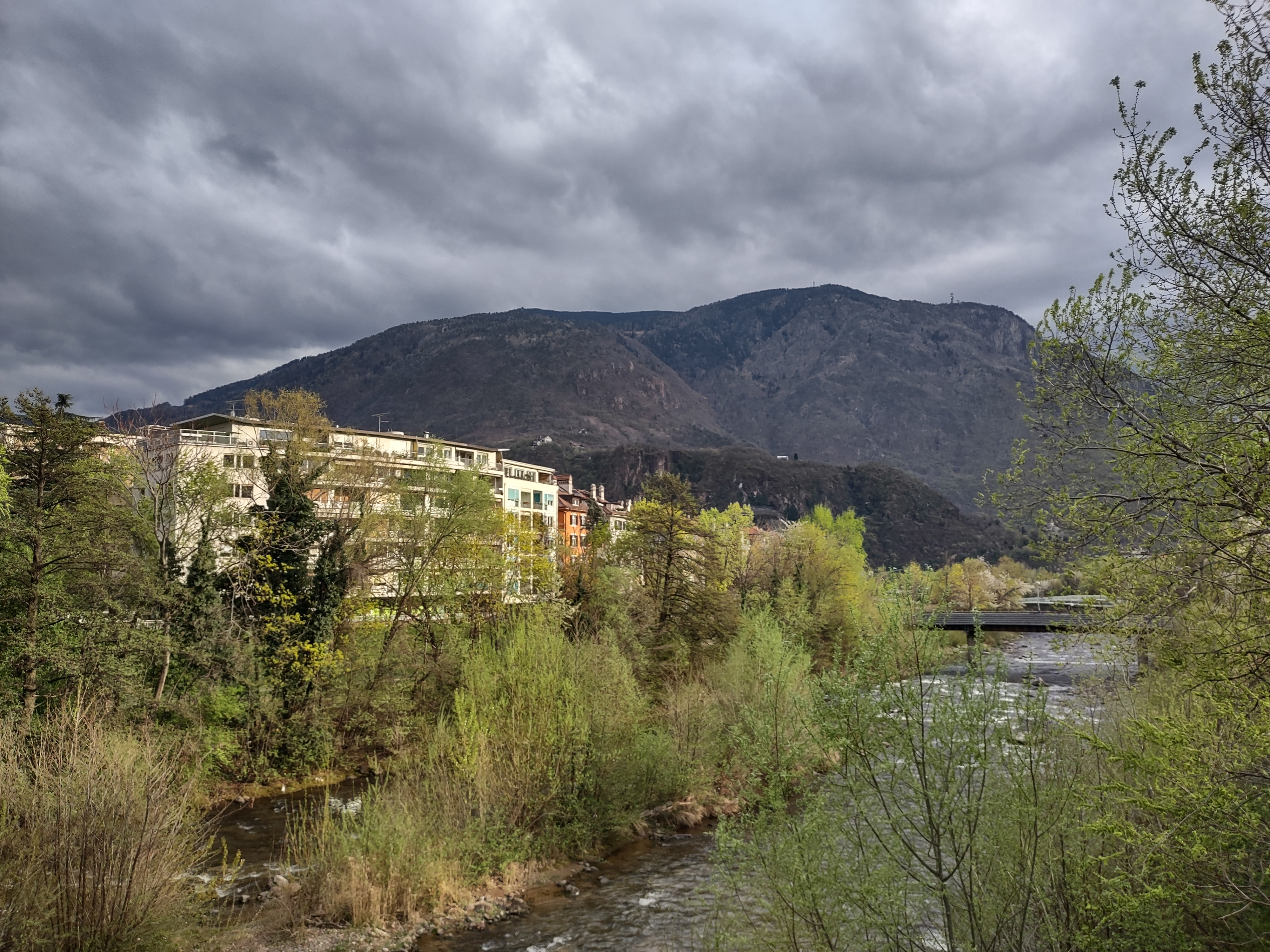
We spent our last afternoon in Bolzano walking along one of the two rivers which borders the town. We saw a couple of castles and meandered around the north part of town. We finished our last day in the town square at a table in a sunny spot with wine, pasta, and a view of the cathedral.
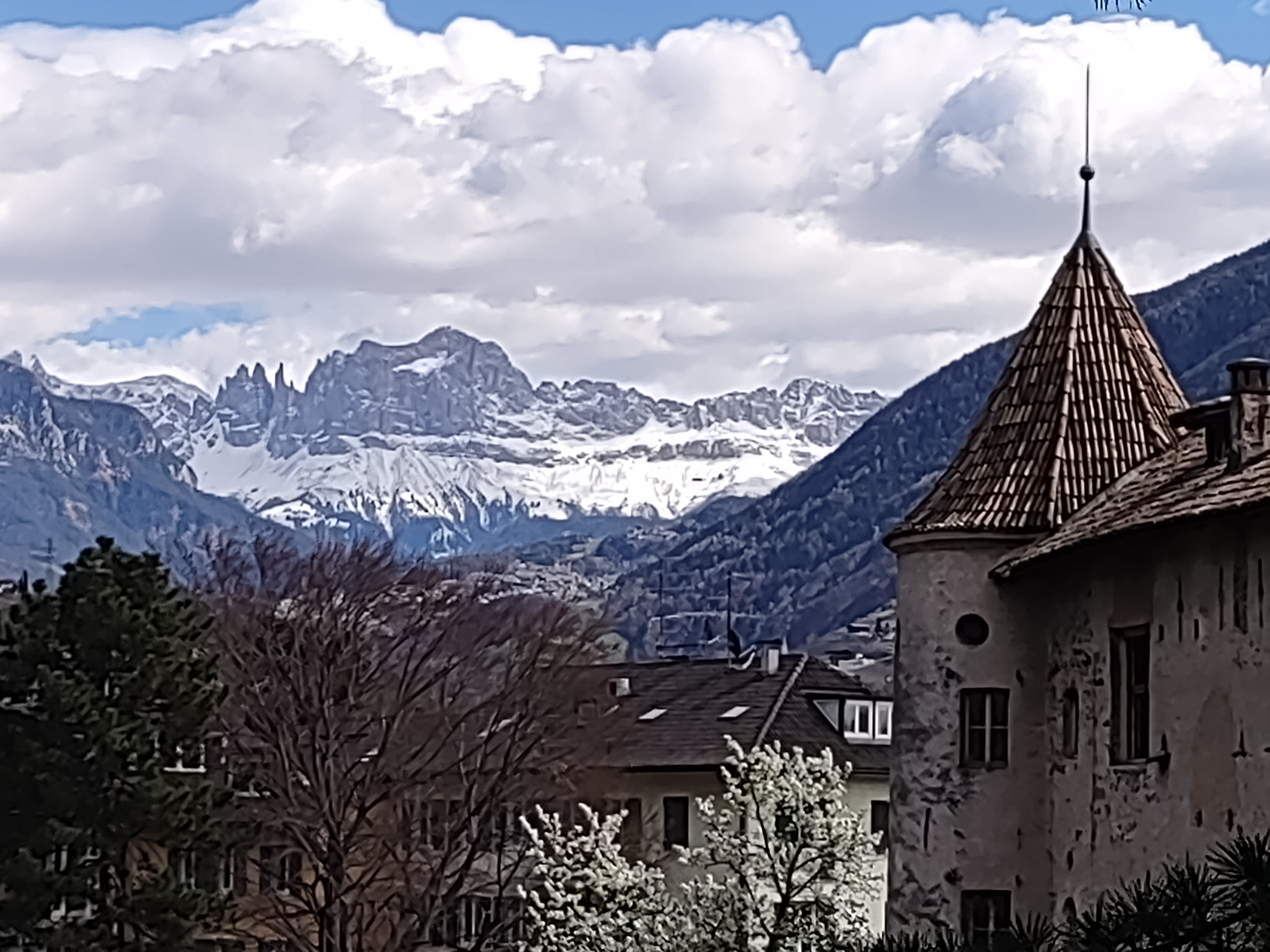

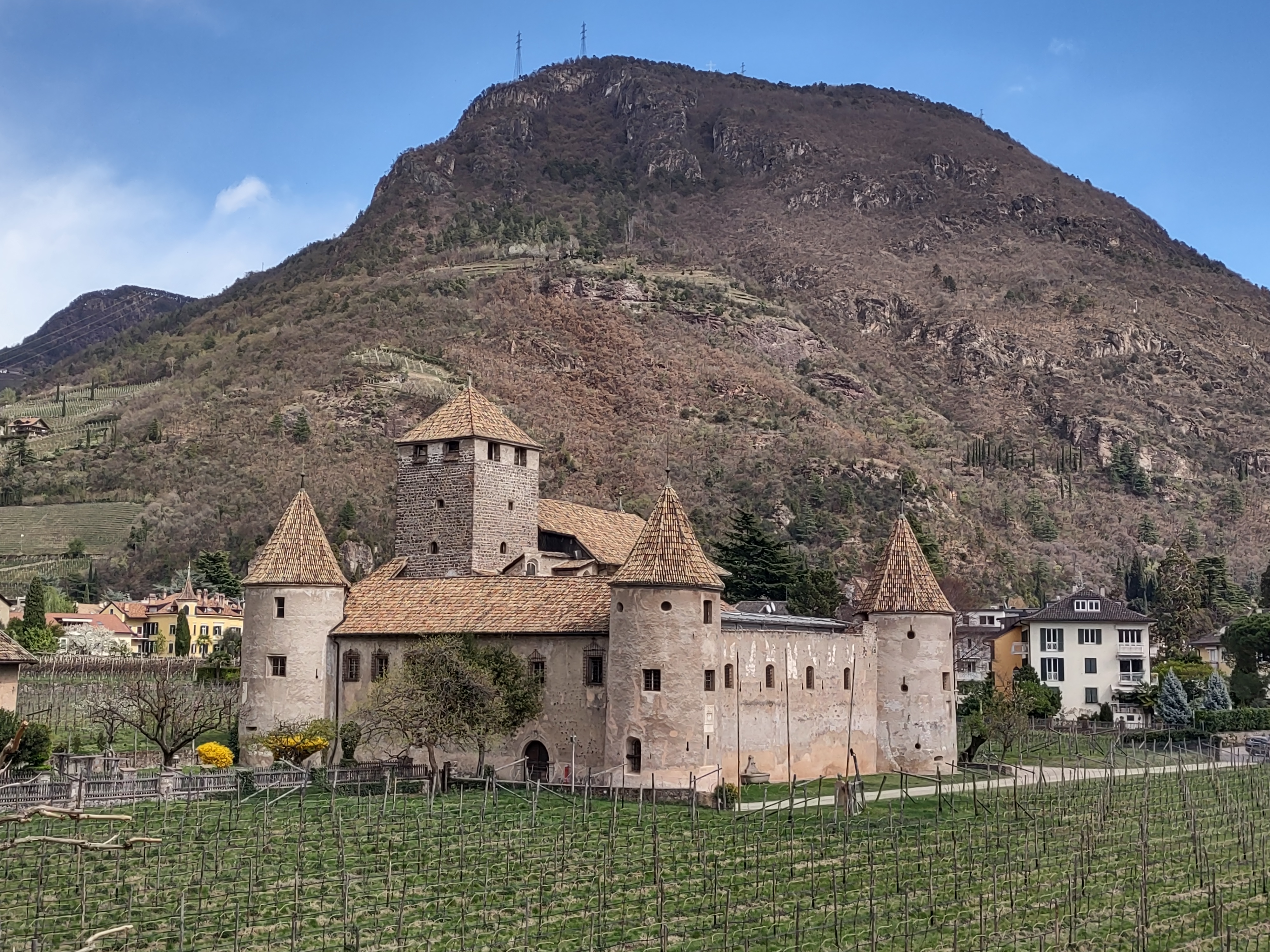
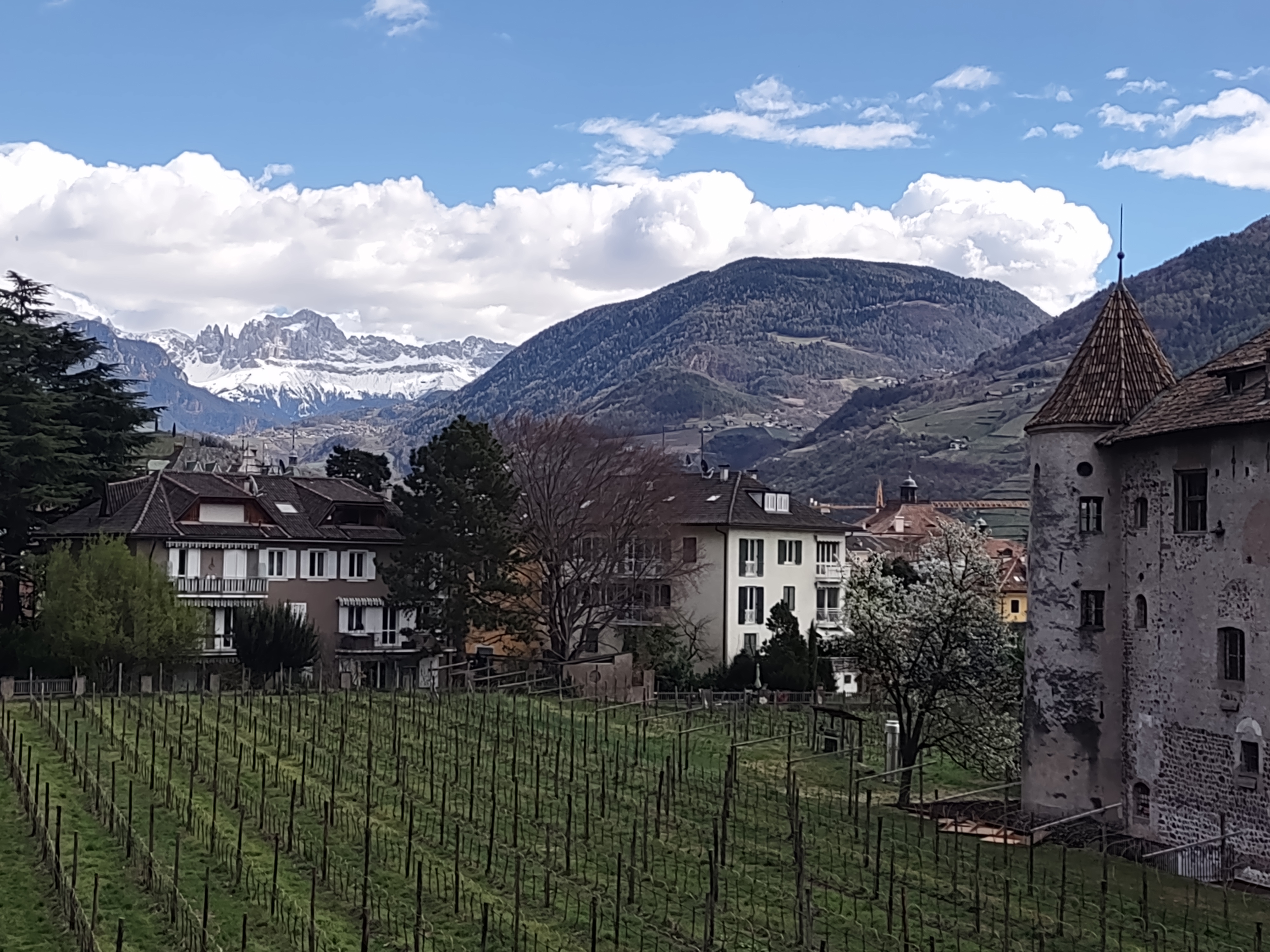
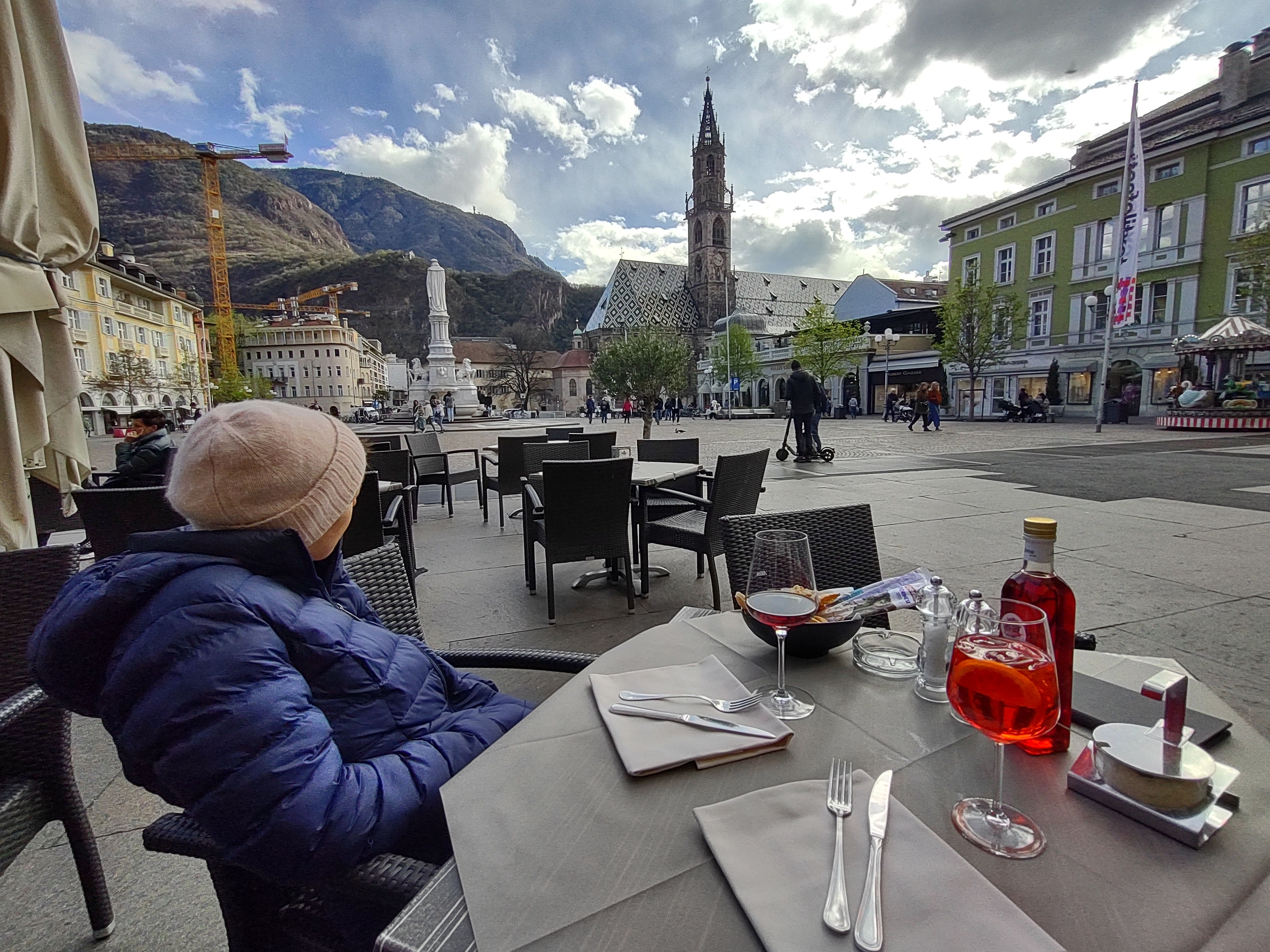
All and all, Bolzano was a great detour. A beautiful town to stroll around with friendly people and great food and drink, and as much great hiking as you could want in the area. Maybe next time we’ll come back when it’s a bit warmer!


 Burning the Inheritance
Leave a comment